AB 1185: California State Nonprofit Security Grant Program.
- Session Year: 2023-2024
- House: Assembly
- Latest Version Date: 2023-10-08
Current Status:
Passed
(2023-10-08: Chaptered by Secretary of State - Chapter 566, Statutes of 2023.)
Introduced
In Committee
First Chamber
In Committee
Second Chamber
Enacted
Existing law establishes the California State Nonprofit Security Grant Program under the administration of the Director of Emergency Services to provide grant funding to improve the physical security of nonprofit organizations that are at high risk of violent attacks or hate crimes due to ideology, beliefs, or mission. Existing law authorizes applicants to use grant funds for prescribed security enhancements, including security training. Existing law makes the operation of the program contingent upon an appropriation in the annual Budget Act.
This bill would require the grant program to provide the grants to nonprofit organizations and would authorize the grant program to provide grants to an applicant that provides support to the above-described at-risk nonprofit organizations for vulnerability assessments, security trainings, mass notification alert systems, monitoring and response systems, and lifesaving emergency equipment. The bill would prohibit the director from taking into account during the evaluation of an application the applicants prior history with or receipt of grant funding to improve its physical security. The bill would require the director, when evaluating applications, to consider whether an applicant is more likely to be a target of hate-motivated violence.
Existing law requires the Office of Emergency Services to provide ongoing technical assistance for nonprofit organizations that require a vulnerability assessment for a state application to the California State Nonprofit Security Grant Program or a threat assessment for a federal application to the Nonprofit Security Grant Program of the United States Department of Homeland Security.
This bill would require that the above-described technical assistance include a resource page on the offices internet website, as specified, and continuous outreach to stakeholders on available resources for vulnerability assessments outside the established grant cycle.
Existing law establishes the California State Nonprofit Security Grant Program under the administration of the Director of Emergency Services to provide grant funding to improve the physical security of nonprofit organizations that are at high risk of violent attacks or hate crimes due to ideology, beliefs, or mission. Existing law authorizes applicants to use grant funds for prescribed security enhancements, including security training. Existing law makes the operation of the program contingent upon an appropriation in the annual Budget Act.
This bill would require the grant program to provide the grants to nonprofit organizations and would authorize the grant program to provide grants to an applicant that provides support to the above-described at-risk nonprofit organizations for vulnerability assessments, security trainings, mass notification alert systems, monitoring and response systems, and lifesaving emergency equipment. The bill would prohibit the director from taking into account during the evaluation of an application the applicants prior history with or receipt of grant funding to improve its physical security. The bill would require the director, when evaluating applications, to consider whether an applicant is more likely to be a target of hate-motivated violence based on the demographics of the population whom the applicant serves. violence.
Existing law requires the Office of Emergency Services to provide ongoing technical assistance for nonprofit organizations that require a vulnerability assessment for a state application to the California State Nonprofit Security Grant Program or a threat assessment for a federal application to the Nonprofit Security Grant Program of the United States Department of Homeland Security.
This bill would require that the above-described technical assistance include a resource page on the offices internet website, as specified, and continuous outreach to stakeholders on available resources for vulnerability assessments outside the established grant cycle.
Existing law establishes the California State Nonprofit Security Grant Program under the administration of the Director of Emergency Services to provide grant funding to improve the physical security of nonprofit organizations that are at high risk of violent attacks or hate crimes due to ideology, beliefs, or mission. Existing law authorizes applicants to use grant funds for prescribed security enhancements, including security training. Existing law makes the operation of the program contingent upon an appropriation in the annual Budget Act.
This bill would require the grant program to provide the grants to nonprofit organizations and would authorize the grant program to provide grants to an applicant that provides support to those the above-described at-risk nonprofit organizations, as described, organizations for vulnerability assessments, security trainings, mass notification alert systems, monitoring and response systems, and lifesaving emergency equipment. The bill would prohibit the director from taking into account during the evaluation of an application the applicants prior history with or receipt of grant funding to improve its physical security. The bill would require the director, when evaluating applications, to consider whether an applicant is more likely to be a target of hate-motivated violence based on the demographics of the population whom the applicant serves.
Existing law establishes the California State Nonprofit Security Grant Program under the administration of the Director of Emergency Services to provide grant funding to improve the physical security of nonprofit organizations that are at high risk of violent attacks or hate crimes due to ideology, beliefs, or mission. Existing law authorizes applicants to use grant funds for prescribed security enhancements, including security training. Existing law makes the operation of the program contingent upon an appropriation in the annual Budget Act.
This bill would authorize the grant program to provide grants to a nonprofit organization or state or local governmental entity providing an applicant that provides support to those at-risk nonprofit organizations, as described, for vulnerability assessments, security trainings, mass notification alert systems, monitoring and response systems, and lifesaving emergency equipment. The bill would prohibit the director from taking into account during the evaluation of an application the applicants prior history with or receipt of grant funding to improve its physical security. The bill would require the director, when evaluating applications, to consider whether an applicant is more likely to be a target of hate-motivated violence based on the demographics of the population whom the applicant serves.
Existing law establishes the California State Nonprofit Security Grant Program under the administration of the Director of Emergency Services to provide grant funding to improve the physical security of nonprofit organizations that are at high risk of violent attacks or hate crimes due to ideology, beliefs, or mission. Existing law authorizes applicants to use grant funds for prescribed security enhancements, including security training. Existing law makes the operation of the program contingent upon an appropriation in the annual Budget Act.
This bill would require authorize the grant program to provide 10% of the total funds appropriated for the purposes of the program in the annual Budget Act grants to a nonprofit organization or state or local governmental entity providing support to a nonprofit organization or a cluster of nonprofit organizations at a high risk for violent attacks and hate crimes, as described. This bill would authorize applicants to use grant funds for the purpose of enhancing the security of a nonprofit organization at a high risk for violent attacks and hate crimes, as specified. those at-risk nonprofit organizations, as described, for vulnerability assessments, security trainings, mass notification alert systems, and lifesaving emergency equipment.
Existing law establishes the California State Nonprofit Security Grant Program under the administration of the Director of Emergency Services to provide grant funding to improve the physical security of nonprofit organizations that are at high risk of violent attacks or hate crimes due to ideology, beliefs, or mission. Existing law authorizes applicants to use grant funds for prescribed security enhancements, including security training. Existing law makes the operation of the program contingent upon an appropriation in the annual Budget Act.
This bill would require the grant program to provide 10% of the total funds appropriated for the purposes of the program in the annual Budget Act to a nonprofit organization or state or local governmental entity providing support to a nonprofit organization or a cluster of nonprofit organizations at a high risk for violent attacks and hate crimes, as described. This bill would authorize applicants to use grant funds for the purpose of enhancing the security of a nonprofit organization at a high risk for violent attacks and hate crimes, as specified.
This bill would state the intent of the Legislature to subsequently amend this bill to include provisions that would expand eligibility for the California State Nonprofit Security Grant Program to nonprofits that provide vulnerability assessments to other nonprofits.Existing law establishes the California State Nonprofit Security Grant Program under the administration of the Director of Emergency Services to provide grant funding to improve the physical security of nonprofit organizations that are at high risk of violent attacks or hate crimes due to ideology, beliefs, or mission.
This bill would state the intent of the Legislature to subsequently amend this bill to include provisions that would expand eligibility for the California State Nonprofit Security Grant Program to nonprofits that provide vulnerability assessments to other nonprofits.
(a)The California State Nonprofit Security Grant Program is hereby established under the administration of the director to improve the physical security of nonprofit organizations, including schools, clinics, community centers, churches, synagogues, mosques, temples, and similar locations that are at a high risk for violent attacks or hate crimes due to ideology, beliefs, or mission.
(b)The California State Nonprofit Security Grant Program shall do all of the following:
(1)Provide grants to nonprofit organizations for the purpose of hardening soft targets that are nonprofit organizations and at a high risk for violent attacks and hate crimes, as described in subdivision (a).
(A)Grant money may be distributed to an applicant for all of the following enhancements to that applicants security:
(i)Security guards.
(ii)Reinforced doors and gates.
(iii)High-intensity lighting and alarms.
(iv)Security training.
(v)Any other security enhancement consistent with the purpose of the California State Nonprofit Security Grant Program.
(B)Grant money may be distributed for all of the purposes described in this subparagraph to an applicant that provides support to another nonprofit organization or a cluster of other nonprofit organizations at a high risk for violent attacks and hate crimes, as described in subdivision (a).
(i)Vulnerability assessments.
(ii)Security trainings.
(iii)Mass notification alert systems.
(iv)Monitoring and response systems.
(v)Lifesaving emergency equipment.
(2)Allow award recipients to use grant funds for the purposes of paying staff or third-party contractors or consultants to assist with the management and administration of the grant funds awarded. Award recipients shall use no more than 5 percent of the grant funds awarded for the purpose stated in this paragraph.
(3)Limit construction or renovation activities done in support of the target hardening activities related to security, such as installing additional emergency exits, to one hundred thousand dollars ($100,000) of the grant funds awarded.
(c)An applicant shall not be granted an amount greater than five hundred thousand dollars ($500,000).
(d)The director shall not take an applicants prior history with or receipt of grant funding to improve its physical security into account during the evaluation of the entitys application.
(e)When evaluating applications, the director shall consider whether an applicant is more likely to be a target of hate-motivated violence.
(f)The operation of the California State Nonprofit Security Grant Program is contingent upon an appropriation in the annual Budget Act for purposes of this section.
(g)The director shall adopt, as necessary, application procedures, forms, administrative guidelines, and other requirements for purposes of implementing and administering the California State Nonprofit Security Grant Program. All application procedures, forms, administrative guidelines, and other requirements developed by the director pursuant to this subdivision shall be exempt from the rulemaking provisions of the Administrative Procedure Act (Chapter 3.5 (commencing with Section 11340) of Part 1 of Division 3).
(h)The Office of Emergency Services shall provide ongoing technical assistance for nonprofit organizations that require a vulnerability assessment for a state application to the California State Nonprofit Security Grant Program or a threat assessment for a federal application to the Nonprofit Security Grant Program of the United States Department of Homeland Security. This assistance shall include, but not be limited to, the following:
(1)A resource page, which includes a toll-free telephone number, on the Office of Emergency Services internet website that describes available resources for vulnerability assessments at no cost to the applicant.
(2)Continuous outreach to stakeholders on available resources for vulnerability assessments outside the established grant cycle.
(a)The California State Nonprofit Security Grant Program is hereby established under the administration of the director to improve the physical security of nonprofit organizations, including schools, clinics, community centers, churches, synagogues, mosques, temples, and similar locations that are at a high risk for violent attacks or hate crimes due to ideology, beliefs, or mission.
(b)The California State Nonprofit Security Grant Program shall do all of the following:
(1)Provide grants to nonprofit organizations for the purpose of hardening soft targets that are nonprofit organizations and at a high risk for violent attacks and hate crimes, as described in subdivision (a).
(A)Grant money may be distributed to an applicant for all of the following enhancements to that applicants security:
(i)Security guards.
(ii)Reinforced doors and gates.
(iii)High-intensity lighting and alarms.
(iv)Security training.
(v)Any other security enhancement consistent with the purpose of the California State Nonprofit Security Grant Program.
(B)Grant money may be distributed for all of the purposes described in this subparagraph to an applicant that provides support to another nonprofit organization or a cluster of other nonprofit organizations at a high risk for violent attacks and hate crimes, as described in subdivision (a).
(i)Vulnerability assessments.
(ii)Security trainings.
(iii)Mass notification alert systems.
(iv)Monitoring and response systems.
(v)Lifesaving emergency equipment.
(2)Allow award recipients to use grant funds for the purposes of paying staff or third-party contractors or consultants to assist with the management and administration of the grant funds awarded. Award recipients shall use no more than 5 percent of the grant funds awarded for the purpose stated in this paragraph.
(3)Limit construction or renovation activities done in support of the target hardening activities related to security, such as installing additional emergency exits, to one hundred thousand dollars ($100,000) of the grant funds awarded.
(c)An applicant shall not be granted an amount greater than five hundred thousand dollars ($500,000).
(d)The director shall not take an applicants prior history with or receipt of grant funding to improve its physical security into account during the evaluation of the entitys application.
(e)When evaluating applications, the director shall consider whether an applicant is more likely to be a target of hate-motivated violence based on the demographics of the population whom the applicant serves. violence.
(f)The operation of the California State Nonprofit Security Grant Program is contingent upon an appropriation in the annual Budget Act for purposes of this section.
(g)The director shall adopt, as necessary, application procedures, forms, administrative guidelines, and other requirements for purposes of implementing and administering the California State Nonprofit Security Grant Program. All application procedures, forms, administrative guidelines, and other requirements developed by the director pursuant to this subdivision shall be exempt from the rulemaking provisions of the Administrative Procedure Act (Chapter 3.5 (commencing with Section 11340) of Part 1 of Division 3).
(h)The Office of Emergency Services shall provide ongoing technical assistance for nonprofit organizations that require a vulnerability assessment for a state application to the California State Nonprofit Security Grant Program or a threat assessment for a federal application to the Nonprofit Security Grant Program of the United States Department of Homeland Security. This assistance shall include, but not be limited to, the following:
(1)A resource page, which includes a toll-free telephone number, on the Office of Emergency Services internet website that describes available resources for vulnerability assessments at no cost to the applicant.
(2)Continuous outreach to stakeholders on available resources for vulnerability assessments outside the established grant cycle.
(a)The California State Nonprofit Security Grant Program is hereby established under the administration of the director to improve the physical security of nonprofit organizations, including schools, clinics, community centers, churches, synagogues, mosques, temples, and similar locations that are at a high risk for violent attacks or hate crimes due to ideology, beliefs, or mission.
(b)The California State Nonprofit Security Grant Program shall do all of the following:
(1)Provide grants to nonprofit organizations for the purpose of hardening soft targets that are nonprofit organizations and at a high risk for violent attacks and hate crimes, as described in subdivision (a).
(A)Grant money may be distributed to an applicant for all of the following enhancements to that applicants security:
(i)Security guards.
(ii)Reinforced doors and gates.
(iii)High-intensity lighting and alarms.
(iv)Security training.
(v)Any other security enhancement consistent with the purpose of the California State Nonprofit Security Grant Program.
(B)Grant money may be distributed for all of the purposes described in this subparagraph to an applicant that provides support to another nonprofit organization or a cluster of other nonprofit organizations at a high risk for violent attacks and hate crimes, as described in subdivision (a).
(i)Vulnerability assessments.
(ii)Security trainings.
(iii)Mass notification alert systems.
(iv)Monitoring and response systems.
(v)Lifesaving emergency equipment.
(2)Allow award recipients to use grant funds for the purposes of paying staff or third-party contractors or consultants to assist with the management and administration of the grant funds awarded. Award recipients shall use no more than 5 percent of the grant funds awarded for the purpose stated in this paragraph.
(3)Limit construction or renovation activities done in support of the target hardening activities related to security, such as installing additional emergency exits, to one hundred thousand dollars ($100,000) of the grant funds awarded.
(c)An applicant shall not be granted an amount greater than five hundred thousand dollars ($500,000).
(d)The director shall not take an applicants prior history with or receipt of grant funding to improve its physical security into account during the evaluation of the entitys application.
(e)When evaluating applications, the director shall consider whether an applicant is more likely to be a target of hate-motivated violence based on the demographics of the population whom the applicant serves.
(f)The operation of the California State Nonprofit Security Grant Program is contingent upon an appropriation in the annual Budget Act for purposes of this section.
(g)The director shall adopt, as necessary, application procedures, forms, administrative guidelines, and other requirements for purposes of implementing and administering the California State Nonprofit Security Grant Program. All application procedures, forms, administrative guidelines, and other requirements developed by the director pursuant to this subdivision shall be exempt from the rulemaking provisions of the Administrative Procedure Act (Chapter 3.5 (commencing with Section 11340) of Part 1 of Division 3).
(h)The Office of Emergency Services shall provide ongoing technical assistance for nonprofit organizations that require a vulnerability assessment for a state application to the California State Nonprofit Security Grant Program or a threat assessment for a federal application to the Nonprofit Security Grant Program of the United States Department of Homeland Security.
(a)The California State Nonprofit Security Grant Program is hereby established under the administration of the director to improve the physical security of nonprofit organizations, including schools, clinics, community centers, churches, synagogues, mosques, temples, and similar locations that are at a high risk for violent attacks or hate crimes due to ideology, beliefs, or mission.
(b)The California State Nonprofit Security Grant Program shall do all of the following:
(1)Provide grants for the purpose of hardening soft targets that are nonprofit organizations and at a high risk for violent attacks and hate crimes, as described in subdivision (a).
(A)Grant money may be distributed to applicants an applicant for all of the following security enhancements: enhancements to that applicants security:
(i)Security guards.
(ii)Reinforced doors and gates.
(iii)High-intensity lighting and alarms.
(iv)Security training.
(v)Any other security enhancement consistent with the purpose of the California State Nonprofit Security Grant Program.
(B)Grant money may be distributed to either of the following entities for the purposes described in subparagraph (C):(i)A nonprofit organization providing support to a nonprofit organization or a cluster of nonprofit organizations at a high risk for violent attacks and hate crimes, as described in subdivision (a).(ii)A state or local governmental entity providing support to a nonprofit organization or a cluster of nonprofit organizations at a high risk for violent attacks and hate crimes, as described in subdivision (a).(C)(B)Grant money may be distributed to entities described in subparagraph (B) for all of the following: purposes described in this subparagraph to an applicant that provides support to another nonprofit organization or a cluster of other nonprofit organizations at a high risk for violent attacks and hate crimes, as described in subdivision (a).
(i)Vulnerability assessments.
(ii)Security trainings.
(iii)Mass notification alert systems.
(iv)Monitoring and response systems.
(iv)(v)Lifesaving emergency equipment.
(2)Allow award recipients to use grant funds for the purposes of paying staff or third-party contractors or consultants to assist with the management and administration of the grant funds awarded. Award recipients shall use no more than 5 percent of the grant funds awarded for the purpose stated in this paragraph.
(3)Limit construction or renovation activities done in support of the target hardening activities related to security, such as installing additional emergency exits, to one hundred thousand dollars ($100,000) of the grant funds awarded.
(c)An applicant shall not be granted an amount greater than five hundred thousand dollars ($500,000).
(d)The director shall not take an applicants prior history with or receipt of grant funding to improve its physical security into account during the evaluation of the entitys application.
(e)When evaluating applications, the director shall consider whether an applicant is more likely to be a target of hate-motivated violence based on the demographics of the population whom the applicant serves.
(d)(f)The operation of the California State Nonprofit Security Grant Program is contingent upon an appropriation in the annual Budget Act for purposes of this section.
(e)(g)The director shall adopt, as necessary, application procedures, forms, administrative guidelines, and other requirements for purposes of implementing and administering the California State Nonprofit Security Grant Program. All application procedures, forms, administrative guidelines, and other requirements developed by the director pursuant to this subdivision shall be exempt from the rulemaking provisions of the Administrative Procedure Act (Chapter 3.5 (commencing with Section 11340) of Part 1 of Division 3).
(f)(h)The Office of Emergency Services shall provide ongoing technical assistance for nonprofit organizations that require a vulnerability assessment for a state application to the California State Nonprofit Security Grant Program or a threat assessment for a federal application to the Nonprofit Security Grant Program of the United States Department of Homeland Security.
(a)The California State Nonprofit Security Grant Program is hereby established under the administration of the director to improve the physical security of nonprofit organizations, including schools, clinics, community centers, churches, synagogues, mosques, temples, and similar locations that are at a high risk for violent attacks or hate crimes due to ideology, beliefs, or mission.
(b)The California State Nonprofit Security Grant Program shall do all of the following:
(1)Provide grants for the purpose of hardening soft targets that are nonprofit organizations and at a high risk for violent attacks and hate crimes, as described in subdivision (a). Grant
(A)Grant money may be distributed to applicants for all of the following security enhancements:
(A)(i)Security guards.
(B)(ii)Reinforced doors and gates.
(C)(iii)High-intensity lighting and alarms.
(D)(iv)Security training.
(E)(v)Any other security enhancement consistent with the purpose of the California State Nonprofit Security Grant Program.
(2)(A)Provide 10 percent of the total funds appropriated for the purposes of this section in the annual Budget Act to at least one(B)Grant money may be distributed to either of the following entities for the purposes described in subparagraph (B): (C):
(i)A nonprofit organization providing support to a nonprofit organization or a cluster of nonprofit organizations at a high risk for violent attacks and hate crimes, as described in subdivision (a).
(ii)A state or local governmental entity providing support to a nonprofit organization or a cluster of nonprofit organizations at a high risk for violent attacks and hate crimes, as described in subdivision (a).
(B)(C)Grant money may be distributed to applicants for the purpose of enhancing the security of a nonprofit organization at a high risk for violent attacks and hate crimes, as described in subdivision (a), entities described in subparagraph (B) for all of the following:
(i)Vulnerability assessments.
(ii)Security trainings.
(iii)Mass notification alert systems.
(iv)Lifesaving emergency equipment.
(3)(2)Allow award recipients to use grant funds for the purposes of paying staff or third-party contractors or consultants to assist with the management and administration of the grant funds awarded. Award recipients shall use no more than 5 percent of the grant funds awarded for the purpose stated in this subparagraph. paragraph.
(4)(3)Limit construction or renovation activities done in support of the target hardening activities related to security, such as installing additional emergency exits, to one hundred thousand dollars ($100,000) of the grant funds awarded.
(c)An applicant shall not be granted an amount greater than five hundred thousand dollars ($500,000).
(d)The operation of the California State Nonprofit Security Grant Program is contingent upon an appropriation in the annual Budget Act for purposes of this section.
(e) The director shall adopt, as necessary, application procedures, forms, administrative guidelines, and other requirements for purposes of implementing and administering the California State Nonprofit Security Grant Program. All application procedures, forms, administrative guidelines, and other requirements developed by the director pursuant to this subdivision shall be exempt from the rulemaking provisions of the Administrative Procedure Act (Chapter 3.5 (commencing with Section 11340) of Part 1 of Division 3).
(f)The Office of Emergency Services shall provide ongoing technical assistance for nonprofit organizations that require a vulnerability assessment for a state application to the California State Nonprofit Security Grant Program or a threat assessment for a federal application to the Nonprofit Security Grant Program of the United States Department of Homeland Security.
(a)The California State Nonprofit Security Grant Program is hereby established under the administration of the director to improve the physical security of nonprofit organizations, including schools, clinics, community centers, churches, synagogues, mosques, temples, and similar locations that are at a high risk for violent attacks or hate crimes due to ideology, beliefs, or mission.
(b)The California State Nonprofit Security Grant Program shall do all of the following:
(1)Provide grants for the purpose of hardening soft targets that are nonprofit organizations and at a high risk for violent attacks and hate crimes, as described in subdivision (a). Grant money may be distributed to applicants for all of the following security enhancements:
(A)Security guards.
(B)Reinforced doors and gates.
(C)High-intensity lighting and alarms.
(D)Security training.
(E)Any other security enhancement consistent with the purpose of the California State Nonprofit Security Grant Program.
(2)(A)Provide 10 percent of the total funds appropriated for the purposes of this section in the annual Budget Act to at least one of the following entities for the purposes described in subparagraph (B):
(i)A nonprofit organization providing support to a nonprofit organization or a cluster of nonprofit organizations at a high risk for violent attacks and hate crimes, as described in subdivision (a).
(ii)A state or local governmental entity providing support to a nonprofit organization or a cluster of nonprofit organizations at a high risk for violent attacks and hate crimes, as described in subdivision (a).
(B)Grant money may be distributed to applicants for the purpose of enhancing the security of a nonprofit organization at a high risk for violent attacks and hate crimes, as described in subdivision (a), for all of the following:
(i)Vulnerability assessments.
(ii)Security trainings.
(iii)Mass notification alert systems.
(iv)Lifesaving emergency equipment.
(2)(3)Allow award recipients to use grant funds for the purposes of paying staff or third-party contractors or consultants to assist with the management and administration of the grant funds awarded. Award recipients shall use no more than 5 percent of the grant funds awarded for the purpose stated in this subparagraph.
(3)(4)Limit construction or renovation activities done in support of the target hardening activities related to security, such as installing additional emergency exits, to one hundred thousand dollars ($100,000) of the grant funds awarded.
(c)An applicant shall not be granted an amount greater than five hundred thousand dollars ($500,000).
(d)The operation of the California State Nonprofit Security Grant Program is contingent upon an appropriation in the annual Budget Act for purposes of this section.
(e) The director shall adopt, as necessary, application procedures, forms, administrative guidelines, and other requirements for purposes of implementing and administering the California State Nonprofit Security Grant Program. All application procedures, forms, administrative guidelines, and other requirements developed by the director pursuant to this subdivision shall be exempt from the rulemaking provisions of the Administrative Procedure Act (Chapter 3.5 (commencing with Section 11340) of Part 1 of Division 3 of Title 2 of the Government Code). 3).
(f)The Office of Emergency Services shall provide ongoing technical assistance for nonprofit organizations that require a vulnerability assessment for a state application to the California State Nonprofit Security Grant Program or a threat assessment for a federal application to the Nonprofit Security Grant Program of the United States Department of Homeland Security.
SECTION 1.It is the intent of the Legislature to amend this measure to include provisions that would expand eligibility for the California State Nonprofit Security Grant Program to nonprofits that provide vulnerability assessments to other nonprofits.It is the intent of the Legislature to amend this measure to include provisions that would expand eligibility for the California State Nonprofit Security Grant Program to nonprofits that provide vulnerability assessments to other nonprofits.
|
Date
|
Status
|
|---|---|
| Oct 8, 2023 | Chaptered by Secretary of State - Chapter 566, Statutes of 2023. |
| Oct 8, 2023 | Approved by the Governor. |
| Sep 21, 2023 | Enrolled and presented to the Governor at 3:30 p.m. |
| Sep 13, 2023 | Senate amendments concurred in. To Engrossing and Enrolling. (Ayes 80. Noes 0. Page 3409.). |
| Sep 12, 2023 | In Assembly. Concurrence in Senate amendments pending. |
| Sep 12, 2023 | Read third time. Passed. Ordered to the Assembly. (Ayes 38. Noes 0. Page 2642.). |
| Sep 11, 2023 | Read second time. Ordered to third reading. |
| Sep 8, 2023 | Read third time and amended. Ordered to second reading. |
| Sep 5, 2023 | Read second time. Ordered to third reading. |
| Sep 1, 2023 | Read second time and amended. Ordered returned to second reading. |
| Sep 1, 2023 | From committee: Amend, and do pass as amended. (Ayes 7. Noes 0.) (September 1). |
| Aug 14, 2023 | In committee: Referred to APPR suspense file. |
| Jun 27, 2023 | From committee: Do pass and re-refer to Com. on APPR. (Ayes 15. Noes 0.) (June 27). Re-referred to Com. on APPR. |
| Jun 21, 2023 | From committee chair, with author's amendments: Amend, and re-refer to committee. Read second time, amended, and re-referred to Com. on G.O. |
| Jun 7, 2023 | Referred to Com. on G.O. |
| May 31, 2023 | In Senate. Read first time. To Com. on RLS. for assignment. |
| May 30, 2023 | Read third time. Passed. Ordered to the Senate. (Ayes 79. Noes 0. Page 1930.) |
| May 22, 2023 | Read second time. Ordered to third reading. |
| May 18, 2023 | Read second time and amended. Ordered returned to second reading. |
| May 18, 2023 | From committee: Amend, and do pass as amended. (Ayes 11. Noes 0.) (May 18). |
| May 10, 2023 | In committee: Set, first hearing. Referred to APPR. suspense file. |
| May 3, 2023 | In committee: Hearing postponed by committee. |
| Apr 18, 2023 | From committee: Do pass and re-refer to Com. on APPR. with recommendation: To Consent Calendar. (Ayes 7. Noes 0.) (April 17). Re-referred to Com. on APPR. |
| Mar 27, 2023 | Re-referred to Com. on E.M. |
| Mar 23, 2023 | From committee chair, with author's amendments: Amend, and re-refer to Com. on E.M. Read second time and amended. |
| Mar 23, 2023 | Referred to Com. on E.M. |
| Feb 17, 2023 | From printer. May be heard in committee March 19. |
| Feb 16, 2023 | Read first time. To print. |
|
Date
|
Description
|
Location
|
Votes
|
|
|---|---|---|---|---|
| Sep 13, 2023 | AB 1185 Gabriel Concurrence in Senate Amendments | Assembly Floor |
Passed |
|
| Sep 12, 2023 | Assembly 3rd Reading AB1185 Gabriel et al. By Wiener | Senate Floor |
Passed |
|
| Sep 1, 2023 | Do pass as amended | Senate Standing Committee on Appropriations |
Passed |
|
| Aug 14, 2023 | Placed on suspense file | Senate Standing Committee on Appropriations |
Passed |
|
| Jun 27, 2023 | Do pass, but first be re-referred to the Committee on [Appropriations] | Senate Standing Committee on Governmental Organization |
Passed |
|
| May 30, 2023 | AB 1185 Gabriel Assembly Third Reading | Assembly Floor |
Passed |
|
| May 18, 2023 | Do pass as amended. | Assembly Standing Committee on Appropriations |
Passed |
|
| Apr 17, 2023 | Do pass and be re-referred to the Committee on [Appropriations] with recommendation: To Consent Calendar | Assembly Standing Committee on Emergency Management |
Passed |
This list shows positions taken on this bill by organizations on the date displayed, which is linked to the original source.
Positions by individuals are not included.
|
Organization
|
Position
|
Date
|
|---|---|---|
| 30 Years After | ** Support | |
| Agee Global Solutions | ** Support | |
| Agudath Israel Of America | ** Support | |
| American Jewish Committee, Los Angeles | ** Support | |
| American Jewish Committee, San Diego | ** Support | |
| American Jewish Committee, San Francisco | ** Support | |
| Anti-Defamation League | ** Support | |
| API Council of San Francisco | ** Support | |
| Armenian National Committee of America - Western Region | ** Support | |
| Asian and Pacific Islander Council | ** Support | |
| California Association Of Nonprofits | ** Support | |
| California Catholic Conference | ** Support | |
| California Democratic Party | ** Support | |
| CaliforniaHealth+ Advocates | ** Support | |
| Center for Asian Americans United for Self Empowerment | ** Support | |
| Equality California | ** Support | |
| ETTA | ** Support | |
| Fresno Metro Black Chamber of Commerce | ** Support | |
| Hadassah | ** Support | |
| Hindu American Foundation | ** Support | |
| Holocaust Museum LA | ** Support | |
| Japantown Task Force | ** Support | |
| Jewish Center for Justice | ** Support | |
| Jewish Community Federation and Endowment Fund | ** Support | |
| jewish community relations council of sacramento | ** Support | |
| Jewish Community Relations Council of Silicon Valley | ** Support | |
| Jewish Community Relations Council of the Bay Area | ** Support | |
| Jewish Democratic Club of Silicon Valley | ** Support | |
| Jewish Democratic Club of Solano County | ** Support | |
| Jewish Family & Children's Service of Long Beach and Orange County | ** Support | |
| Jewish Family & Community Services East Bay | ** Support | |
| Jewish Family Service of Los Angeles | ** Support | |
| Jewish Family Service of San Diego | ** Support | |
| Jewish Family Service of the Desert | ** Support | |
| Jewish Family Services of Silicon Valley | ** Support | |
| Jewish Family Services San Diego | ** Support | |
| Jewish Federation of Greater Santa Barbara | ** Support | |
| Jewish Federation of the Greater Los Angeles | ** Support | |
| Jewish Federation of The Greater San Gabriel and Pomona Valleys | ** Support | |
| Jewish Federation Of The Sacramento Region | ** Support | |
| Jewish Free Loan Association | ** Support | |
| Jewish Long Beach | ** Support | |
| Jewish Public Affairs Committee Of California | ** Support | |
| JVS SoCal | ** Support | |
| Los Angeles Area Chamber Of Commerce | ** Support | |
| Los Angeles Police Department | ** Support | |
| Planned Parenthood Affiliates Of California | ** Support | |
| Progressive Zionists of California | ** Support | |
| Self-Help for the Elderly | ** Support | |
| Solano County Democratic Central Committee | ** Support | |
| The Arc and United Cerebral Palsy California Collaboration | ** Support |
CONCURRENCE IN SENATE AMENDMENTS
CSA1 Bill Id:AB 1185
Author:(Gabriel)
As Amended Ver:September 8, 2023
Majority vote
SUMMARY
This bill authorizes the California State Nonprofit Security Grant Program (CSNSGP) to provide grants to an applicant that provides support to at-risk nonprofit organizations, as specified; prohibits consideration of prior history with or receipt of grant funding in evaluating applicants; and, requires consideration to whether an applicant is more likely to be a target of hate-motivated violence based on the demographic of the population served, as specified.
Senate Amendments
- Allows grant funds to an applicant that provides support to another nonprofit organization or cluster of other nonprofit organizations at a high risk for violent attacks and hate crimes, as opposed to nonprofit organizations and a state or local entity that would provide such support, as specified.
- Prohibits Cal OES from considering an applicant's prior history with or receipt of grant funding when evaluating applications.
- Requires Cal OES, when evaluating applications under this program, to consider whether an applicant is more likely to be a target of hate-motivated violence based on the demographics of the population whom the applicant serves.
COMMENTS
The purpose of the CSNSGP is to provide funding support for physical security enhancements and other security-related activities to nonprofit organizations that are at high risk for violent attacks and hate crimes due to ideology, beliefs, or mission. This funding is restricted to California nonprofit organizations that are described under Section 501(c)(3) of the Internal Revenue Code and exempt from tax.
The CSNSGP seeks to integrate the preparedness activities of nonprofit organizations with broader state and local preparedness efforts. The CSNSGP also promotes emergency preparedness coordination and collaboration activities between public and private community representatives as well as state and local government agencies.
It is a competitive program, therefore, scoring criteria have been established and funding is awarded to the top-scoring applications until all allocated funding is awarded. Applications are recommended for funding based on the threat, vulnerability, and consequence faced by a specific facility/location. Allowable costs are focused on target hardening and physical security enhancements, contracted security, planning, exercise and training.
According to the Author
The California State Nonprofit Security Grant Program has been very impactful since its creation in 2019, becoming the most popular grant program at Cal OES. Even with this success, there is a clear need to continue to remove barriers and bolster California's security support infrastructure. AB 1185 helps expand access to this program by expanding eligibility for community needs, ensuring California continues to protect our vulnerable communities targeted by hate.
Arguments in Support
The Jewish Public Affairs Committee of California writes in support, "the Jewish Public Affairs Committee of California (JPAC) – the largest single-state coalition of Jewish organizations in the nation – is proud to sponsor your Assembly Bill (AB) 1185, the California State Nonprofit Security Grant Program (CSNSGP) Expansion. As hate-motivated violence targeting all vulnerable communities has reached record levels, providing security assistance to targeted institutions has never been more important. The CSNSGP is now CalOES's most popular program, with 758 organizations applying in 2022 alone. However, nonprofits and Regional Fusion Centers who provide vulnerability assessments, security trainings, mass notification alert systems, and other lifesaving emergency resources to vulnerable institutions cannot themselves access security funding for these programs. This lack of resources has created a backlog in providing the critical services that the CSNSGP aims to support. Critically, some institutions are waiting many months to get the vulnerability assessment they need to even apply for a grant, rendering the program inaccessible."
The California Catholic Conference writes in support, "The California Catholic Conference (CCC) supports AB 1185 (Gabriel) as amended on March 23, 2023. This bill will provide critical security resources to organizations that are supporting at risk institutions with vulnerability assessments, security trainings, mass notification alert systems, and other lifesaving emergency resources. The Catholic bishops of California are heartbroken by repeated mass shootings and hate violence in our country, particularly instances in our own state. Our parishes, schools and agencies seek to fortify our structures and procedures to keep our parishioners and those we serve safe from violence, vandalism and other security risks.
Arguments in Opposition
None on file.
FISCAL COMMENTS
According to the Senate Appropriations Committee, "The Office of Emergency Services (OES) reports ongoing costs of approximately $232,000 for one additional staff to administer the subsection of the CSNSGP proposed in this bill (General Fund). OES notes that this would be in addition to the five percent of allocated program funds used for its administrative costs. The 2023-24 Budget Act appropriates $20 million General Fund to OES for the CSNSGP."
VOTES:
ASM EMERGENCY MANAGEMENT: 7-0-0
YES: Rodriguez, Waldron, Aguiar-Curry, Alvarez, Calderon, Megan Dahle, Schiavo
ASM APPROPRIATIONS: 11-0-5
YES: Holden, Bryan, Calderon, Wendy Carrillo, Mike Fong, Hart, Lowenthal, Papan, Pellerin, Weber, Ortega
ABS, ABST OR NV: Megan Dahle, Dixon, Mathis, Robert Rivas, Sanchez
ASSEMBLY FLOOR: 79-0-1
YES: Addis, Aguiar-Curry, Alanis, Alvarez, Arambula, Bains, Bauer-Kahan, Bennett, Berman, Boerner, Bonta, Bryan, Calderon, Juan Carrillo, Wendy Carrillo, Cervantes, Chen, Connolly, Megan Dahle, Davies, Dixon, Essayli, Flora, Mike Fong, Vince Fong, Friedman, Gabriel, Gallagher, Garcia, Gipson, Grayson, Haney, Hart, Holden, Hoover, Irwin, Jackson, Jones‑Sawyer, Kalra, Lackey, Lee, Low, Lowenthal, Maienschein, Mathis, McCarty, McKinnor, Muratsuchi, Stephanie Nguyen, Ortega, Pacheco, Papan, Jim Patterson, Joe Patterson, Pellerin, Petrie-Norris, Quirk-Silva, Ramos, Reyes, Luz Rivas, Robert Rivas, Rodriguez, Sanchez, Santiago, Schiavo, Soria, Ta, Ting, Valencia, Villapudua, Waldron, Wallis, Ward, Weber, Wicks, Wilson, Wood, Zbur, Rendon
ABS, ABST OR NV: Blanca Rubio
UPDATED
VERSION: September 8, 2023
CONSULTANT: Mike Dayton / E.M. / (916) 319-3802 FN: 0001443
SENATE RULES COMMITTEE Office of Senate Floor Analyses (916) 651-1520 Fax: (916) 327-4478 | AB 1185 |
THIRD READING
Bill No: AB 1185
Author: Gabriel (D), et al.
Amended: 9/8/23 in Senate
Vote: 21
SENATE GOVERNMENTAL ORG. COMMITTEE: 15-0, 6/27/23
AYES: Dodd, Wilk, Alvarado-Gil, Archuleta, Ashby, Bradford, Glazer, Jones, Nguyen, Ochoa Bogh, Padilla, Portantino, Roth, Rubio, Seyarto
SENATE APPROPRIATIONS COMMITTEE: 7-0, 9/1/23
AYES: Portantino, Jones, Ashby, Bradford, Seyarto, Wahab, Wiener
ASSEMBLY FLOOR: 79-0, 5/30/23 - See last page for vote
SUBJECT: California State Nonprofit Security Grant Program
SOURCE: Author
DIGEST:
This bill authorizes the California State Nonprofit Security Grant Program (CSNSGP) to provide grants to an applicant that provides support to at-risk nonprofit organizations, as specified; prohibits consideration of prior history with or receipt of grant funding in evaluating applicants; and, requires consideration to whether an applicant is more likely to be a target of hate-motivated violence based on the demographic of the population served, as specified.
Senate Floor Amendments of 9/8/23 strike a reference to the demographics of the population that the applicant serves and clarify the Office of Emergency Services’ (OES’) role in the application process, as specified.
ANALYSIS:
Existing law:
- Establishes the CSNSGP under the administration of the Director of OES to provide grant funding to improve the physical security of nonprofit organizations that are at high risk of violent attacks or hate crimes due to ideology, beliefs, or mission.
- Authorizes applicants to use grant funds for prescribed security enhancements, including security guards, reinforced doors and gates, high-intensity lighting and alarms, security training, and any other security enhancement consistent with the purpose of the CSNSGP.
- Conditions the operation of the CSNSGP upon an appropriation in the annual Budget Act.
This bill:
- Provides that CSNSGP grant money may be distributed to nonprofit organizations for specified enhancements to that applicant’s security.
- Provides that grant money may be distributed for all of the purposes below to an applicant that provides support to another nonprofit organization or a cluster of other nonprofit organizations at a high risk for violent attacks and hate crimes:
- Vulnerability assessments.
- Security trainings.
- Mass notification alert systems.
- Monitoring and response systems.
- Lifesaving emergency equipment.
- Specifies that an applicant’s prior history with or receipt of grant funding to improve its physical security cannot be taken into account during the evaluation of the entity’s application.
- Requires OES, when evaluating applications, to consider whether an applicant is more likely to be a target of hate-motivated violence.
- Requires the technical assistance provided by OES to include, but not be limited to, the following:
- A resource page, which includes a toll-free telephone number, on OES’ internet website that describes available resources for vulnerability assessments at no cost to the applicant.
- Continuous outreach to stakeholders on available resources for vulnerability assessments outside the established grant cycle.
Background
- Author Statement. According to the author’s office, “the California State Nonprofit Security Grant Program has been very impactful since its creation in 2019, becoming the most popular grant program at Cal OES. Even with this success, there is a clear need to continue to remove barriers and bolster California's security support infrastructure. AB 1185 helps expand access to this program by expanding eligibility for community needs, ensuring California continues to protect our vulnerable communities targeted by hate.”
- Hate Crimes in California. Local law enforcement agencies are required to report hate crimes to the California Department of Justice (DOJ). Hate crimes are criminal offenses against a person or property, motivated in whole or in part, because of one or more of the following actual or perceived characteristics of the victim: disability, gender, nationality, race or ethnicity, religion, sexual orientation, or association with a person or group with one or more of these actual or perceived characteristics.
The DOJ report titled Hate Crimes in California 2021 presents statistics on hate crimes reported by California law enforcement agencies that occurred during 2021 with prior years included for context. These statistics include the reported number of hate crime events, hate crime offenses, victims of hate crimes, and suspects of hate crimes. In the last 10 years, reported hate crime events have increased by approximately 90%.
The lowest year over the past decade for reported hate crime events was 2014 with 758 events. For 2021, the DOJ reports 1,736 hate crime events, representing a 32% increase year-over-year. Specifically, hate crime events are increasing year-over-year most rapidly include events involving a sexual orientation bias (48%), a racial bias (33%), and an anti-Jewish bias (32%).
Of the 610 hate crimes that were reported as referred for prosecution, 411 cases were filed by district attorneys and elected city attorneys for prosecution. Of the 411 cases that were filed for prosecution, 285 were filed as hate crimes and 126 were filed as non-bias motivated crimes.
- U.S. Department of Homeland Security Assessment. According to the U.S. Department of Homeland Security (DHS), “review of DHS information on domestic violent extremist (DVE) attacks and plots in the United States since 2010 reveals at least 30 likely ideologically-motivated attacks or attempted attacks targeting mosques, synagogues, churches and other religious centers and facilities and members of faith-based communities based on their actual or perceived religious affiliation. These attacks or attempted attacks were committed by DVEs with a variety of motivations including racial or ethnic grievances, anti-government or anti-authority grievances, and other personalized grievances. The most common weapons DVEs used in these attacks or plots were arson, which was followed closely by the use of firearms. The use of arson, in particular, is more common in the targeting of faith-based communities compared to other targets DVEs pursued during this time period."
- Pulse Nightclub Shooting. On June 12, 2016, a domestic terrorist targeted Pulse, a gay nightclub in Orlando, Florida, and killed 49 people and wounded 53 more in a mass shooting. Orlando Police officers shot and killed him after a three-hour standoff. Pulse was hosting a “Latin Night,” and most of the victims were Latino. It is the deadliest incident in the history of violence against LGBT people in the United States, surpassing the UpStairs Lounge arson attack in 1973, the deadliest terrorist attack in the United States since the September 11, 2001, attacks, and is second only to the 2017 Las Vegas shooting as the deadliest mass shooting in modern American history.
- Pittsburgh Synagogue Shooting. The Pittsburgh synagogue shooting was an anti-Semitic domestic terrorist attack that took place at the Tree of Life – Or L’Simcha Congregation synagogue in the Squirrel Hill neighborhood of Pittsburgh, Pennsylvania. The congregation, along with New Light Congregation and Congregation Dor Hadash, which also worshipped in the building, was attacked during Shabbat morning services on October 27, 2018. The perpetrator killed 11 people and wounded six, including several Holocaust survivors. It is the deadliest attack on the Jewish community in the United States.
- Colleyville, Texas Incident. On January 15, 2022, an individual armed with a pistol took four people hostage in the Congregation Beth Israel synagogue in Colleyville, Texas, during a Sabbath service. Rabbi Cytron-Walker recently testified before the U.S. House of Representatives Committee on Homeland Security about this ordeal. Rabbi Cytron-Walker stated, “on the one hand, I am devastated about what brings me before you today. It’s horrific that my congregants and I were held hostage in our sacred home. It feels so wrong to have those words come out of my mouth. We spent over ten hours with a terrorist pointing a gun at us in our sanctuary. We were concerned for ourselves and for one another. We were terrified. And what happened at Tree of Life in Pittsburgh and Chabad of Poway a few years ago was so much worse. Reform, Conservative, or Orthodox - those who hate Jews do not distinguish among us. Antisemitic attacks and incidents in every form have increased throughout the country. There’s a lot of concern in the Jewish community. We’re struggling. And we’re not alone.”
During his testimony, Rabbi Cytron-Walker underscored the importance of the federal Nonprofit Security Grant Program (FNSGP) and credited it for establishing relationships with local law enforcement and security trainings. Rabbi Cytron-Walker concluded, “like so many congregations – synagogues, churches and mosques – Congregation Beth Israel strives to be ‘a house of prayer for all people.’ At the same time, I also value security. When our members asked if I knew the person at the door, I was distracted, but I still did a visual inspection. I was running late, but I spent time to see if there were any red flags and I didn’t see any. Of course, I was wrong. I share this because despite all the plans and funding and courses – I still opened the door. But because of all the plans and funding and courses and literally dozens of small things that just happened to go our way, we were able to escape. And right now, there are far too many houses of worship that are just beginning the process we started six years ago. Right now, there are far too many houses of worship that have developed plans and are counting on the Nonprofit Security Grant Program to put them into place and help them feel more secure in their spiritual home. Right now, there are far too many houses of worship who won’t get the support they need.”
- Pride Flag Killing in California. In August of this year, 66-year old Laura Ann “Lauri” Carleton was murdered in connection with hanging a Pride Flag outside her Mag.Pi clothing store located in Cedar Glen, California. According to law enforcement, detectives learned that the killer made “several disparaging remarks about a rainbow flag that stood outside the store before shooting Carleton.” Carleton was a mother of nine, and an LGBTQ+ ally. According to a friend, Carleton experienced prior harassment due to her Pride Flags and once stated, “I’m scared that I’m going to get into an altercation some day.”
- Federal Grant Program. The Federal Emergency Management Agency’s (FEMA’s) FNSGP was authorized by the Homeland Security Act of 2002 and is subject to annual appropriations. The FNSGP provides funding support for target hardening and other physical security enhancements and activities to nonprofit organizations that are high risk of terrorist attack. The intent is to integrate nonprofit preparedness activities with broader state and local preparedness efforts. It is also designed to promote coordination and collaboration in emergency preparedness activities among public and private community representatives, as well as state and local government agencies. The FNSGP provides $152 million available for state nonprofits in fiscal year (FY) 2023.
- California State Nonprofit Security Grant Program. Since 2015, California had been augmenting the FNSGP with an additional $4.5 million, awarded to an additional 70 organizations. While the focus of the FNSGP has been on nonprofits located in urban areas, the California CSNSGP has enhanced security at nonprofits throughout the state. In 2019, AB 1548 (Gabriel, Chapter 734, Statutes of 2019) codified the CSNSGP and prescribed specific eligible security enhancements. The initial request for proposal by OES for the first $14.25 million of available funding received over 456 applications.
The CSNSGP intends to provide funding support for target hardening and other physical security enhancements to nonprofit organizations that are at high risk for violent attacks and hate crimes due to ideology, beliefs, or mission. This funding is restricted to California nonprofit organizations that are described under Section 501(c)(3) of the Internal Revenue Code and exempt from tax. The CSNSGP seeks to integrate the preparedness activities of nonprofit organizations with broader state and local preparedness efforts. The CSNSGP also promotes emergency preparedness coordination and collaboration activities between public and private community representatives as well as state and local government agencies.
It is a competitive program, therefore, scoring criteria have been established and funding is awarded to the top-scoring applications until all allocated funding is awarded. Applications are recommended for funding based on the threat, vulnerability, and consequence faced by a specific facility/location. Allowable costs are focused on target hardening and physical security enhancements, contracted security, planning, exercise and training.
The FY 2022-23 California Budget made approximately $47.5 million available for nonprofits through the CSNSGP. Applications were due in October 2022. According to the CSNSGP website, each nonprofit organization may submit up to three proposals, and each proposal must address a different physical location. Nonprofit organizations can request up to $200,000 per location for a total of $600,000. The CSNSGP is now OES’s most popular program, with over 750 organizations applying in 2022 alone.
This bill authorizes the provision of grants to an applicant that provides support to at-risk nonprofit organizations for vulnerability assessments, security trainings, mass notification alert systems, monitoring and response systems, and lifesaving emergency equipment. Additionally, this bill prohibits consideration of an applicant’s prior history with or receipt of grant funding to improve its physical security when evaluating application, and requires consideration of whether an applicant is more likely to be a target of hate-motivated violence.
This bill also clarifies OES’ role in providing ongoing technical assistance by requiring OES to include, but not be limited to, the following: a resource page, which includes a toll-free telephone number, on OES’ website that describe available resources for vulnerability assessments at no cost to the applicant; and, continuous outreach to stakeholders on available resources for vulnerability assessments outside the established grant cycle.
Related/Prior Legislation
SB 101 (Skinner, Chapter 12, Statutes of 2023) provided $20 million General Fund available for encumbrance or expenditure until June 30, 2025, for the CSNSGP which provides security assistance to nonprofit organizations at risk of hate motivated violence.
AB 1664 (Gabriel, Chapter 398, Statutes 2022) expanded eligible uses of funds by nonprofits for the CSNSGP, as specified; increased the maximum award amount to $500,000; and, deleted the CSNSGP sunset date of January 1, 2025, as specified.
AB 2282 (Bauer-Kahan, Chapter 397, Statutes of 2022) equalized the penalty for the crimes of hanging a noose, displaying a symbol of hate, including a Nazi swastika, and burning or desecrating religious symbols, on specified property, for the purpose of terrorizing, and expands and aligns the places where this conduct is prohibited for each offense.
AB 1548 (Gabriel, Chapter 734, Statutes of 2019) established the CSNSGP to improve the physical security of nonprofit organizations that are at high risk of terrorist attack due to ideology, beliefs, or mission.
FISCAL EFFECT: Appropriation: No Fiscal Com.: Yes Local: No
According to the Senate Appropriations Committee, OES reports ongoing costs of approximately $232,000 for one additional staff to administer the subsection of the CSNSGP proposed in this bill (General Fund). OES notes that this would be in addition to the five percent of allocated program funds used for its administrative costs. The FY 2023-24 Budget Act appropriates $20 million General Fund to OES for the CSNSGP.
SUPPORT: (Verified 9/8/23)
30 Years After
Agee Global Solutions
Agudath Israel of America
American Jewish Committee, Los Angeles
American Jewish Committee, San Diego
American Jewish Committee, San Francisco
Anti-Defamation League
API Council of San Francisco
Armenian National Committee of America - Western Region
Asian and Pacific Islander Council
California Association of Nonprofits
California Catholic Conference
California Democratic Party
CaliforniaHealth+ Advocates
Center for Asian Americans United for Self Empowerment
Equality California
ETTA
Fresno Metro Black Chamber of Commerce
Hadassah
Hindu American Foundation
Holocaust Museum LA
Japantown Task Force
Jewish Center for Justice
Jewish Community Federation and Endowment Fund
Jewish Community Relations Council of Sacramento
Jewish Community Relations Council of Silicon Valley
Jewish Community Relations Council of the Bay Area
Jewish Democratic Club of Silicon Valley
Jewish Democratic Club of Solano County
Jewish Family & Children's Service of Long Beach and Orange County
Jewish Family & Community Services East Bay
Jewish Family and Children's Services of San Francisco, the Peninsula, Marin and
Jewish Family Service of Los Angeles
Jewish Family Service of San Diego
Jewish Family Service of Silicon Valley
Jewish Family Service of the Desert
Jewish Federation of Greater Santa Barbara
Jewish Federation of the Greater Los Angeles
Jewish Federation of the Greater San Gabriel and Pomona Valleys
Jewish Federation of the Sacramento Region
Jewish Free Loan Association
Jewish Long Beach
Jewish Public Affairs Committee of California
JVS SoCal
Los Angeles Area Chamber of Commerce
Los Angeles Police Department
Planned Parenthood Affiliates of California
Progressive Zionists of California
Self-Help for the Elderly
Solano County Democratic Central Committee
Sonoma Counties
The Arc and United Cerebral Palsy California Collaboration
OPPOSITION: (Verified 9/8/23)
None received
ARGUMENTS IN SUPPORT: In support of this bill, the Jewish Public Affairs Committee of California (JPAC) writes that, “nonprofits and Regional Fusion Center who provide vulnerability assessments, security trainings, mass notification alert systems, and other lifesaving emergency resources to vulnerable institutions cannot themselves access security funding for these programs. This lack of resources has created a backlog in providing the critical services that the CSNSGP aims to support. Critically, some institutions are waiting many months to get the vulnerability assessment they need to even apply for a grant, rendering the program inaccessible.”
Further, JPAC writes that, “[i]t’s important to support organizations that are in turn supporting entire networks of communities. AB 1185 would do just that. It would expand eligibility of the grant program so that nonprofits and government entities who serve at-risk communities can provide more vulnerability assessments and better protect their network of institutions from threats. The CSNSGP would still be subject to approbation from the state, and the expanded eligibility created by this bill would not add significant additional costs to the stat eon its own.”
ASSEMBLY FLOOR: 79-0, 5/30/23
AYES: Addis, Aguiar-Curry, Alanis, Alvarez, Arambula, Bains, Bauer-Kahan, Bennett, Berman, Boerner, Bonta, Bryan, Calderon, Juan Carrillo, Wendy Carrillo, Cervantes, Chen, Connolly, Megan Dahle, Davies, Dixon, Essayli, Flora, Mike Fong, Vince Fong, Friedman, Gabriel, Gallagher, Garcia, Gipson, Grayson, Haney, Hart, Holden, Hoover, Irwin, Jackson, Jones-Sawyer, Kalra, Lackey, Lee, Low, Lowenthal, Maienschein, Mathis, McCarty, McKinnor, Muratsuchi, Stephanie Nguyen, Ortega, Pacheco, Papan, Jim Patterson, Joe Patterson, Pellerin, Petrie-Norris, Quirk-Silva, Ramos, Reyes, Luz Rivas, Robert Rivas, Rodriguez, Sanchez, Santiago, Schiavo, Soria, Ta, Ting, Valencia, Villapudua, Waldron, Wallis, Ward, Weber, Wicks, Wilson, Wood, Zbur, Rendon
NO VOTE RECORDED: Blanca Rubio
Prepared by: Brian Duke / G.O. / (916) 651-1530
9/11/23 12:50:02
**** END ****
SENATE RULES COMMITTEE Office of Senate Floor Analyses (916) 651-1520 Fax: (916) 327-4478 | AB 1185 |
THIRD READING
Bill No: AB 1185
Author: Gabriel (D), et al.
Amended: 9/1/23 in Senate
Vote: 21
SENATE GOVERNMENTAL ORG. COMMITTEE: 15-0, 6/27/23
AYES: Dodd, Wilk, Alvarado-Gil, Archuleta, Ashby, Bradford, Glazer, Jones, Nguyen, Ochoa Bogh, Padilla, Portantino, Roth, Rubio, Seyarto
SENATE APPROPRIATIONS COMMITTEE: 7-0, 9/1/23
AYES: Portantino, Jones, Ashby, Bradford, Seyarto, Wahab, Wiener
ASSEMBLY FLOOR: 79-0, 5/30/23 - See last page for vote
SUBJECT: California State Nonprofit Security Grant Program
SOURCE: Author
DIGEST:
This bill authorizes the California State Nonprofit Security Grant Program (CSNSGP) to provide grants to an applicant that provides support to at-risk nonprofit organizations, as specified; prohibits consideration of prior history with or receipt of grant funding in evaluating applicants; and, requires consideration to whether an applicant is more likely to be a target of hate-motivated violence based on the demographic of the population served, as specified.
ANALYSIS:
Existing law:
- Establishes the CSNSGP under the administration of the Director of the Office of Emergency Services (OES) to provide grant funding to improve the physical security of nonprofit organizations that are at high risk of violent attacks or hate crimes due to ideology, beliefs, or mission.
- Authorizes applicants to use grant funds for prescribed security enhancements, including security guards, reinforced doors and gates, high-intensity lighting and alarms, security training, and any other security enhancement consistent with the purpose of the CSNSGP.
- Conditions the operation of the CSNSGP upon an appropriation in the annual Budget Act.
This bill:
- Provides that CSNSGP grant money may be distributed to nonprofit organizations for specified enhancements to that applicant’s security.
- Provides that grant money may be distributed for all of the purposes below to an applicant that provides support to another nonprofit organization or a cluster of other nonprofit organizations at a high risk for violent attacks and hate crimes:
- Vulnerability assessments.
- Security trainings.
- Mass notification alert systems.
- Monitoring and response systems.
- Lifesaving emergency equipment.
- Specifies that an applicant’s prior history with or receipt of grant funding to improve its physical security cannot be taken into account during the evaluation of the entity’s application.
- Requires OES, when evaluating applications, to consider whether an applicant is more likely to be a target of hate-motivated violence based on the demographics of the population whom the applicant serves.
Background
- Author Statement. According to the author’s office, “the California State Nonprofit Security Grant Program has been very impactful since its creation in 2019, becoming the most popular grant program at Cal OES. Even with this success, there is a clear need to continue to remove barriers and bolster California's security support infrastructure. AB 1185 helps expand access to this program by expanding eligibility for community needs, ensuring California continues to protect our vulnerable communities targeted by hate.”
- Hate Crimes in California. Local law enforcement agencies are required to report hate crimes to the California Department of Justice (DOJ). Hate crimes are criminal offenses against a person or property, motivated in whole or in part, because of one or more of the following actual or perceived characteristics of the victim: disability, gender, nationality, race or ethnicity, religion, sexual orientation, or association with a person or group with one or more of these actual or perceived characteristics.
The DOJ report titled Hate Crimes in California 2021 presents statistics on hate crimes reported by California law enforcement agencies that occurred during 2021 with prior years included for context. These statistics include the reported number of hate crime events, hate crime offenses, victims of hate crimes, and suspects of hate crimes. In the last 10 years, reported hate crime events have increased by approximately 90%.
The lowest year over the past decade for reported hate crime events was 2014 with 758 events. For 2021, the DOJ reports 1,736 hate crime events, representing a 32% increase year-over-year. Specifically, hate crime events are increasing year-over-year most rapidly include events involving a sexual orientation bias (48%), a racial bias (33%), and an anti-Jewish bias (32%).
Of the 610 hate crimes that were reported as referred for prosecution, 411 cases were filed by district attorneys and elected city attorneys for prosecution. Of the 411 cases that were filed for prosecution, 285 were filed as hate crimes and 126 were filed as non-bias motivated crimes.
- U.S. Department of Homeland Security Assessment. According to the U.S. Department of Homeland Security (DHS), “review of DHS information on domestic violent extremist (DVE) attacks and plots in the United States since 2010 reveals at least 30 likely ideologically-motivated attacks or attempted attacks targeting mosques, synagogues, churches and other religious centers and facilities and members of faith-based communities based on their actual or perceived religious affiliation. These attacks or attempted attacks were committed by DVEs with a variety of motivations including racial or ethnic grievances, anti-government or anti-authority grievances, and other personalized grievances. The most common weapons DVEs used in these attacks or plots were arson, which was followed closely by the use of firearms. The use of arson, in particular, is more common in the targeting of faith-based communities compared to other targets DVEs pursued during this time period."
- Pulse Nightclub Shooting. On June 12, 2016, a domestic terrorist targeted Pulse, a gay nightclub in Orlando, Florida, and killed 49 people and wounded 53 more in a mass shooting. Orlando Police officers shot and killed him after a three-hour standoff. Pulse was hosting a “Latin Night,” and most of the victims were Latino. It is the deadliest incident in the history of violence against LGBT people in the United States, surpassing the UpStairs Lounge arson attack in 1973, the deadliest terrorist attack in the United States since the September 11, 2001, attacks, and is second only to the 2017 Las Vegas shooting as the deadliest mass shooting in modern American history.
- Pittsburgh Synagogue Shooting. The Pittsburgh synagogue shooting was an anti-Semitic domestic terrorist attack that took place at the Tree of Life – Or L’Simcha Congregation synagogue in the Squirrel Hill neighborhood of Pittsburgh, Pennsylvania. The congregation, along with New Light Congregation and Congregation Dor Hadash, which also worshipped in the building, was attacked during Shabbat morning services on October 27, 2018. The perpetrator killed 11 people and wounded six, including several Holocaust survivors. It is the deadliest attack on the Jewish community in the United States.
- Colleyville, Texas Incident. On January 15, 2022, an individual armed with a pistol took four people hostage in the Congregation Beth Israel synagogue in Colleyville, Texas, during a Sabbath service. Rabbi Cytron-Walker recently testified before the U.S. House of Representatives Committee on Homeland Security about this ordeal. Rabbi Cytron-Walker stated, “on the one hand, I am devastated about what brings me before you today. It’s horrific that my congregants and I were held hostage in our sacred home. It feels so wrong to have those words come out of my mouth. We spent over ten hours with a terrorist pointing a gun at us in our sanctuary. We were concerned for ourselves and for one another. We were terrified. And what happened at Tree of Life in Pittsburgh and Chabad of Poway a few years ago was so much worse. Reform, Conservative, or Orthodox - those who hate Jews do not distinguish among us. Antisemitic attacks and incidents in every form have increased throughout the country. There’s a lot of concern in the Jewish community. We’re struggling. And we’re not alone.”
During his testimony, Rabbi Cytron-Walker underscored the importance of the federal Nonprofit Security Grant Program (FNSGP) and credited it for establishing relationships with local law enforcement and security trainings. Rabbi Cytron-Walker concluded, “like so many congregations – synagogues, churches and mosques – Congregation Beth Israel strives to be ‘a house of prayer for all people.’ At the same time, I also value security. When our members asked if I knew the person at the door, I was distracted, but I still did a visual inspection. I was running late, but I spent time to see if there were any red flags and I didn’t see any. Of course, I was wrong. I share this because despite all the plans and funding and courses – I still opened the door. But because of all the plans and funding and courses and literally dozens of small things that just happened to go our way, we were able to escape. And right now, there are far too many houses of worship that are just beginning the process we started six years ago. Right now, there are far too many houses of worship that have developed plans and are counting on the Nonprofit Security Grant Program to put them into place and help them feel more secure in their spiritual home. Right now, there are far too many houses of worship who won’t get the support they need.”
- Pride Flag Killing in California. In August of this year, 66-year old Laura Ann “Lauri” Carleton was murdered in connection with hanging a Pride Flag outside her Mag.Pi clothing store located in Cedar Glen, California. According to law enforcement, detectives learned that the killer made “several disparaging remarks about a rainbow flag that stood outside the store before shooting Carleton.” Carleton was a mother of nine, and an LGBTQ+ ally. According to a friend, Carleton experienced prior harassment due to her Pride Flags and once stated, “I’m scared that I’m going to get into an altercation some day.”
- Federal Grant Program. The Federal Emergency Management Agency’s (FEMA’s) FNSGP was authorized by the Homeland Security Act of 2002 and is subject to annual appropriations. The FNSGP provides funding support for target hardening and other physical security enhancements and activities to nonprofit organizations that are high risk of terrorist attack. The intent is to integrate nonprofit preparedness activities with broader state and local preparedness efforts. It is also designed to promote coordination and collaboration in emergency preparedness activities among public and private community representatives, as well as state and local government agencies. The FNSGP provides $152 million available for state nonprofits in fiscal year (FY) 2023.
- California State Nonprofit Security Grant Program. Since 2015, California had been augmenting the FNSGP with an additional $4.5 million, awarded to an additional 70 organizations. While the focus of the FNSGP has been on nonprofits located in urban areas, the California CSNSGP has enhanced security at nonprofits throughout the state. In 2019, AB 1548 (Gabriel, Chapter 734, Statutes of 2019) codified the CSNSGP and prescribed specific eligible security enhancements. The initial request for proposal by OES for the first $14.25 million of available funding received over 456 applications.
The CSNSGP intends to provide funding support for target hardening and other physical security enhancements to nonprofit organizations that are at high risk for violent attacks and hate crimes due to ideology, beliefs, or mission. This funding is restricted to California nonprofit organizations that are described under Section 501(c)(3) of the Internal Revenue Code and exempt from tax. The CSNSGP seeks to integrate the preparedness activities of nonprofit organizations with broader state and local preparedness efforts. The CSNSGP also promotes emergency preparedness coordination and collaboration activities between public and private community representatives as well as state and local government agencies.
It is a competitive program, therefore, scoring criteria have been established and funding is awarded to the top-scoring applications until all allocated funding is awarded. Applications are recommended for funding based on the threat, vulnerability, and consequence faced by a specific facility/location. Allowable costs are focused on target hardening and physical security enhancements, contracted security, planning, exercise and training.
The FY 2022-23 California Budget made approximately $47.5 million available for nonprofits through the CSNSGP. Applications were due in October 2022. According to the CSNSGP website, each nonprofit organization may submit up to three proposals, and each proposal must address a different physical location. Nonprofit organizations can request up to $200,000 per location for a total of $600,000. The CSNSGP is now OES’s most popular program, with over 750 organizations applying in 2022 alone.
This bill authorizes the provision of grants to an applicant that provides support to at-risk nonprofit organizations for vulnerability assessments, security trainings, mass notification alert systems, monitoring and response systems, and lifesaving emergency equipment. Additionally, this bill prohibits consideration of an applicant’s prior history with or receipt of grant funding to improve its physical security when evaluating application, and requires consideration of whether an applicant is more likely to be a target of hate-motivated violence based on the demographics of the population served.
Related/Prior Legislation
SB 101 (Skinner, Chapter 12, Statutes of 2023) provided $20 million General Fund available for encumbrance or expenditure until June 30, 2025, for the CSNSGP which provides security assistance to nonprofit organizations at risk of hate motivated violence.
AB 1664 (Gabriel, Chapter 398, Statutes 2022) expanded eligible uses of funds by nonprofits for the CSNSGP, as specified; increased the maximum award amount to $500,000; and, deleted the CSNSGP sunset date of January 1, 2025, as specified.
AB 2282 (Bauer-Kahan, Chapter 397, Statutes of 2022) equalized the penalty for the crimes of hanging a noose, displaying a symbol of hate, including a Nazi swastika, and burning or desecrating religious symbols, on specified property, for the purpose of terrorizing, and expands and aligns the places where this conduct is prohibited for each offense.
AB 1548 (Gabriel, Chapter 734, Statutes of 2019) established the CSNSGP to improve the physical security of nonprofit organizations that are at high risk of terrorist attack due to ideology, beliefs, or mission.
FISCAL EFFECT: Appropriation: No Fiscal Com.: Yes Local: No
According to the Senate Appropriations Committee, OES reports ongoing costs of approximately $232,000 for one additional staff to administer the subsection of the CSNSGP proposed in this bill (General Fund). OES notes that this would be in addition to the five percent of allocated program funds used for its administrative costs. The FY 2023-24 Budget Act appropriates $20 million General Fund to OES for the CSNSGP.
SUPPORT: (Verified 9/1/23)
30 Years After
Agee Global Solutions
Agudath Israel of America
American Jewish Committee, Los Angeles
American Jewish Committee, San Diego
American Jewish Committee, San Francisco
Anti-Defamation League
API Council of San Francisco
Armenian National Committee of America - Western Region
Asian and Pacific Islander Council
California Association of Nonprofits
California Catholic Conference
California Democratic Party
California Health+ Advocates
Center for Asian Americans United for Self Empowerment
Equality California
ETTA
Fresno Metro Black Chamber of Commerce
Hadassah
Hindu American Foundation
Holocaust Museum LA
Jewish Center for Justice
Jewish Community Federation and Endowment Fund
Jewish Community Relations Council of Sacramento
Jewish Community Relations Council of Silicon Valley
Jewish Community Relations Council of The Bay Area
Jewish Democratic Club of Silicon Valley
Jewish Democratic Club of Solano County
Jewish Family & Children's Service of Long Beach and Orange County
Jewish Family & Community Services East Bay
Jewish Family and Children's Services of San Francisco, the Peninsula, Marin and
Sonoma Counties
Jewish Family Service of Los Angeles
Jewish Family Service of San Diego
Jewish Family Service of Silicon Valley
Jewish Family Service of The Desert
Jewish Federation of the Greater Los Angeles
Jewish Federation of Greater Santa Barbara
Jewish Federation of the Greater San Gabriel and Pomona Valleys
Jewish Federation of the Sacramento Region
Jewish Free Loan Association
Jewish Long Beach
Jewish Public Affairs Committee
JVS SoCal
Los Angeles Area Chamber of Commerce
Los Angeles Police Department
Planned Parenthood Affiliates of California
Progressive Zionists of California
Self-Help for The Elderly
Solano County Democratic Central Committee
The Arc and United Cerebral Palsy California Collaboration
OPPOSITION: (Verified 9/1/23)
None received
ARGUMENTS IN SUPPORT: In support of this bill, the Jewish Public Affairs Committee of California writes that, “nonprofits and Regional Fusion Center who provide vulnerability assessments, security trainings, mass notification alert systems, and other lifesaving emergency resources to vulnerable institutions cannot themselves access security funding for these programs. This lack of resources has created a backlog in providing the critical services that the CSNSGP aims to support. Critically, some institutions are waiting many months to get the vulnerability assessment they need to even apply for a grant, rendering the program inaccessible.”
Further, JPAC writes that, “[i]t’s important to support organizations that are in turn supporting entire networks of communities. AB 1185 would do just that. It would expand eligibility of the grant program so that nonprofits and government entities who serve at-risk communities can provide more vulnerability assessments and better protect their network of institutions from threats. The CSNSGP would still be subject to approbation from the state, and the expanded eligibility created by this bill would not add significant additional costs to the stat eon its own.”
ASSEMBLY FLOOR: 79-0, 5/30/23
AYES: Addis, Aguiar-Curry, Alanis, Alvarez, Arambula, Bains, Bauer-Kahan, Bennett, Berman, Boerner, Bonta, Bryan, Calderon, Juan Carrillo, Wendy Carrillo, Cervantes, Chen, Connolly, Megan Dahle, Davies, Dixon, Essayli, Flora, Mike Fong, Vince Fong, Friedman, Gabriel, Gallagher, Garcia, Gipson, Grayson, Haney, Hart, Holden, Hoover, Irwin, Jackson, Jones-Sawyer, Kalra, Lackey, Lee, Low, Lowenthal, Maienschein, Mathis, McCarty, McKinnor, Muratsuchi, Stephanie Nguyen, Ortega, Pacheco, Papan, Jim Patterson, Joe Patterson, Pellerin, Petrie-Norris, Quirk-Silva, Ramos, Reyes, Luz Rivas, Robert Rivas, Rodriguez, Sanchez, Santiago, Schiavo, Soria, Ta, Ting, Valencia, Villapudua, Waldron, Wallis, Ward, Weber, Wicks, Wilson, Wood, Zbur, Rendon
NO VOTE RECORDED: Blanca Rubio
Prepared by: Brian Duke / G.O. / (916) 651-1530
9/4/23 9:40:16
**** END ****
SENATE COMMITTEE ON
Senator Anthony Portantino, Chair
2023 - 2024 Regular Session
AB 1185 (Gabriel) - California State Nonprofit Security Grant Program
Version: | Policy Vote: |
Urgency: | Mandate: |
Hearing Date: | Consultant: |
Bill Summary:
AB 1185 authorizes California State Nonprofit Security Grant Program (CSNSGP) money to be distributed to an applicant providing vulnerability assessments, security trainings, mass notification alert systems, monitoring and response systems, or lifesaving emergency equipment to another nonprofit organization.
*********** ANALYSIS ADDENDUM – SUSPENSE FILE ***********
The following information is revised to reflect amendments
adopted by the committee on September 1, 2023
Fiscal Impact:
The Office of Emergency Services (OES) reports ongoing costs of approximately $232,000 for one additional staff to administer the subsection of the CSNSGP proposed in this bill (General Fund). OES notes that this would be in addition to the five percent of allocated program funds used for its administrative costs. The 2023-24 Budget Act appropriates $20 million General Fund to OES for the CSNSGP.
Author Amendments:
- Add a coauthor.
- Make a clarifying change.
-- END --
SENATE COMMITTEE ON APPROPRIATIONS
Senator Anthony Portantino, Chair
2023 - 2024 Regular Session
AB 1185 (Gabriel) - California State Nonprofit Security Grant Program
Version: June 21, 2023 | Policy Vote: G.O. 15 - 0 |
Urgency: No | Mandate: No |
Hearing Date: August 14, 2023 | Consultant: Janelle Miyashiro |
Bill Summary:
AB 1185 authorizes California State Nonprofit Security Grant Program (CSNSGP) money to be distributed to an applicant providing vulnerability assessments, security trainings, mass notification alert systems, monitoring and response systems, or lifesaving emergency equipment to another nonprofit organization.
Fiscal Impact:
The Office of Emergency Services (OES) reports ongoing costs of approximately $232,000 for one additional staff to administer the subsection of the CSNSGP proposed in this bill (General Fund). OES notes that this would be in addition to the five percent of allocated program funds used for its administrative costs. The 2023-24 Budget Act appropriates $20 million General Fund to OES for the CSNSGP.
Background:
The purpose of the CSNSGP is to provide funding support for physical security enhancements and other security-related activities to nonprofit organizations that are at high risk for violent attacks and hate crimes due to ideology, beliefs, or mission. This funding is restricted to California nonprofit organizations that are described under Section 501(c)(3) of the Internal Revenue Code and exempt from tax.
The CSNSGP seeks to integrate the preparedness activities of nonprofit organizations with broader state and local preparedness efforts. The CSNSGP also promotes emergency preparedness coordination and collaboration activities between public and private community representatives as well as state and local government agencies.
It is a competitive program, therefore, scoring criteria have been established and funding is awarded to the top-scoring applications until all allocated funding is awarded. Applications are recommended for funding based on the threat, vulnerability, and consequence faced by a specific facility/location. Allowable costs are focused on target hardening and physical security enhancements, contracted security, planning, exercise and training.
According to the CSNSGP website, each nonprofit organization may submit up to three proposals, and each proposal must address a different physical location. Nonprofit organizations can request up to $200,000 per location for a total of $600,000. The CSNSGP is now OES’s most popular program, with over 750 organizations applying in 2022 alone.
Proposed Law:
- Authorizes CSNSGP grant money to be to be distributed to an applicant providing vulnerability assessments, security trainings, mass notification alert systems, monitoring and response systems, or lifesaving emergency equipment to another nonprofit organization or a cluster of other nonprofit organizations.
- Prohibits the director from taking an applicant’s prior history with or receipt of grant funding to improve its physical security into account during the evaluation of the entity’s application.
- Requires the director to consider whether an applicant is more likely to be a target of hate-motivated violence based on the demographics of the population whom the applicant serves when evaluating applications for the program.
- Makes other technical and nonsubstantive changes.
-- END --
SENATE COMMITTEE ON GOVERNMENTAL ORGANIZATION
Senator Bill Dodd
Chair
2023 - 2024 Regular
Bill No: AB Hearing Date: 6/27/2023
Author: | Gabriel | ||
Version: | Amended | ||
Urgency: | Fiscal: | ||
Consultant: | |||
SUBJECT:
DIGEST: This bill authorizes the California State Nonprofit Security Grant Program (CSNSGP) to provide grants to an applicant that provides support to at-risk nonprofit organizations, as specified; prohibits consideration of prior history with or receipt of grant funding in evaluating applicants; and, requires consideration to whether an applicant is more likely to be a target of hate-motivated violence based on the demographic of the population served, as specified.
ANALYSIS:
Existing law:
- Establishes the CSNSGP under the administration of the Director of the Office of Emergency Services (OES) to provide grant funding to improve the physical security of nonprofit organizations that are at high risk of violent attacks or hate crimes due to ideology, beliefs, or mission.
- Authorizes applicants to use grant funds for prescribed security enhancements, including security guards, reinforced doors and gates, high-intensity lighting and alarms, security training, and any other security enhancement consistent with the purpose of the CSNSGP.
- Conditions the operation of the CSNSGP upon an appropriation in the annual Budget Act.
This bill:
- Provides that CSNSGP grant money may be distributed to an applicant for specified enhancements to that applicant’s security.
- Provides that grant money may be distributed for all of the purposes below to an applicant that provides support to another nonprofit organization or a cluster of other nonprofit organizations at a high risk for violent attacks and hate crimes:
- Vulnerability assessments.
- Security trainings.
- Mass notification alert systems.
- Monitoring and response systems.
- Lifesaving emergency equipment.
- Specifies that an applicant’s prior history with or receipt of grant funding to improve its physical security cannot be taken into account during the evaluation of the entity’s application.
- Requires OES, when evaluating applications, to consider whether an applicant is more likely to be a target of hate-motivated violence based on the demographics of the population whom the applicant serves.
Background
Author Statement. According to the author’s office, “the California State Nonprofit Security Grant Program has been very impactful since its creation in 2019, becoming the most popular grant program at Cal OES. Even with this success, there is a clear need to continue to remove barriers and bolster California's security support infrastructure. AB 1185 helps expand access to this program by expanding eligibility for community needs, ensuring California continues to protect our vulnerable communities targeted by hate.”
Hate Crimes in California. Local law enforcement agencies are required to report hate crimes to the California Department of Justice (DOJ). Hate crimes are criminal offenses against a person or property, motivated in whole or in part, because of one or more of the following actual or perceived characteristics of the victim: disability, gender, nationality, race or ethnicity, religion, sexual orientation, or association with a person or group with one or more of these actual or perceived characteristics.
The California Department of Justice (DOJ) report titled Hate Crimes in California 2021 presents statistics on hate crimes reported by California law enforcement agencies that occurred during 2021 with prior years included for context. These statistics include the reported number of hate crime events, hate crime offenses, victims of hate crimes, and suspects of hate crimes. In the last 10 years, reported hate crime events have increased by approximately 90%.
The lowest year over the past decade for reported hate crime events was 2014 with 758 events. For 2021, the DOJ reports 1,736 hate crime events, representing a 32% increase year-over-year. Specifically, hate crime events are increasing year-over-year most rapidly include events involving a sexual orientation bias (48%), a racial bias (33%), and an anti-Jewish bias (32%).
Of the 610 hate crimes that were reported as referred for prosecution, 411 cases were filed by district attorneys and elected city attorneys for prosecution. Of the 411 cases that were filed for prosecution, 285 were filed as hate crimes and 126 were filed as non-bias motivated crimes.
U.S. Department of Homeland Security Assessment. According to the U.S. Department of Homeland Security (DHS), “review of DHS information on domestic violent extremist (DVE) attacks and plots in the United States since 2010 reveals at least 30 likely ideologically-motivated attacks or attempted attacks targeting mosques, synagogues, churches and other religious centers and facilities and members of faith-based communities based on their actual or perceived religious affiliation. These attacks or attempted attacks were committed by DVEs with a variety of motivations including racial or ethnic grievances, anti-government or anti-authority grievances, and other personalized grievances. The most common weapons DVEs used in these attacks or plots were arson, which was followed closely by the use of firearms. The use of arson, in particular, is more common in the targeting of faith-based communities compared to other targets DVEs pursued during this time period."
Pulse Nightclub Shooting. On June 12, 2016, a domestic terrorist targeted Pulse, a gay nightclub in Orlando, Florida, and killed 49 people and wounded 53 more in a mass shooting. Orlando Police officers shot and killed him after a three-hour standoff. Pulse was hosting a “Latin Night,” and most of the victims were Latino. It is the deadliest incident in the history of violence against LGBT people in the United States, surpassing the UpStairs Lounge arson attack in 1973, the deadliest terrorist attack in the United States since the September 11 attacks, and is second only to the 2017 Las Vegas shooting as the deadliest mass shooting in modern American history.
Pittsburgh Synagogue Shooting. The Pittsburgh synagogue shooting was an anti-Semitic domestic terrorist attack that took place at the Tree of Life – Or L’Simcha Congregation synagogue in the Squirrel Hill neighborhood of Pittsburgh, Pennsylvania. The congregation, along with New Light Congregation and Congregation Dor Hadash, which also worshipped in the building, was attacked during Shabbat morning services on October 27, 2018. The perpetrator killed eleven people and wounded six, including several Holocaust survivors. It is the deadliest attack on the Jewish community in the United States.
Colleyville, Texas Incident. On January 15, 2022, an individual armed with a pistol took four people hostage in the Congregation Beth Israel synagogue in Colleyville, Texas, during a Sabbath service. Rabbi Cytron-Walker recently testified before the U.S. House of Representatives Committee on Homeland Security about this ordeal. Rabbi Cytron-Walker stated, “on the one hand, I am devastated about what brings me before you today. It’s horrific that my congregants and I were held hostage in our sacred home. It feels so wrong to have those words come out of my mouth. We spent over ten hours with a terrorist pointing a gun at us in our sanctuary. We were concerned for ourselves and for one another. We were terrified. And what happened at Tree of Life in Pittsburgh and Chabad of Poway a few years ago was so much worse. Reform, Conservative, or Orthodox - those who hate Jews do not distinguish among us. Antisemitic attacks and incidents in every form have increased throughout the country. There’s a lot of concern in the Jewish community. We’re struggling. And we’re not alone.”
During his testimony, Rabbi Cytron-Walker underscored the importance of the federal Nonprofit Security Grant Program and credited it for establishing relationships with local law enforcement and security trainings. Rabbi Cytron-Walker concluded, “like so many congregations – synagogues, churches and mosques -- Congregation Beth Israel strives to be ‘a house of prayer for all people.’ At the same time, I also value security. When our member asked if I knew the person at the door, I was distracted, but I still did a visual inspection. I was running late, but I spent time to see if there were any red flags and I didn’t see any. Of course, I was wrong. I share this because despite all the plans and funding and courses – I still opened the door. But because of all the plans and funding and courses and literally dozens of small things that just happened to go our way, we were able to escape. And right now, there are far too many houses of worship that are just beginning the process we started six years ago. Right now, there are far too many houses of worship that have developed plans and are counting on the Nonprofit Security Grant Program to put them into place and help them feel more secure in their spiritual home. Right now, there are far too many houses of worship who won’t get the support they need.”
Federal Grant Program. The Federal Emergency Management Agency’s (FEMA’s) Nonprofit Security Grant Program (FNSGP) was authorized by the Homeland Security Act of 2002 and is subject to annual appropriations. The FNSGP provides funding support for target hardening and other physical security enhancements and activities to nonprofit organizations that are high risk of terrorist attack. The intent is to integrate nonprofit preparedness activities with broader state and local preparedness efforts. It is also designed to promote coordination and collaboration in emergency preparedness activities among public and private community representatives, as well as state and local government agencies. The FNSGP provides $152 million available for state nonprofits in fiscal year 2023.
California State Nonprofit Security Grant Program. Since 2015, California had been augmenting the FNSGP with an additional $4.5 million, awarded to an additional 70 organizations. While the focus of the FNSGP has been on nonprofits located in urban areas, the California CSNSGP has enhanced security at nonprofits throughout the state. In 2019, AB 1548 (Gabriel, Chapter 734, Statutes of 2019) codified the CSNSGP and prescribed specific eligible security enhancements. The initial request for proposal by OES for the first $14.25 million of available funding received over 456 applications.
The CSNSGP is intended to provide funding support for target hardening and other physical security enhancements to nonprofit organizations that are at high risk for violent attacks and hate crimes due to ideology, beliefs, or mission. This funding is restricted to California nonprofit organizations that are described under Section 501(c)(3) of the Internal Revenue Code and exempt from tax. The CSNSGP seeks to integrate the preparedness activities of nonprofit organizations with broader state and local preparedness efforts. The CSNSGP also promotes emergency preparedness coordination and collaboration activities between public and private community representatives as well as state and local government agencies.
It is a competitive program, therefore, scoring criteria have been established and funding is awarded to the top-scoring applications until all allocated funding is awarded. Applications are recommended for funding based on the threat, vulnerability, and consequence faced by a specific facility/location. Allowable costs are focused on target hardening and physical security enhancements, contracted security, planning, exercise and training.
The 2022-23 Fiscal Year (FY) California Budget made approximately $47.5 million available for nonprofits through the CSNSGP. Applications were due in October 2022. According to the CSNSGP website, each nonprofit organization may submit up to three proposals, and each proposal must address a different physical location. Nonprofit organizations can request up to $200,000 per location for a total of $600,000. The CSNSGP is now OES’s most popular program, with over 750 organizations applying in 2022 alone.
This bill authorizes the provision of grants to an applicant that provides support to at-risk nonprofit organizations for vulnerability assessments, security trainings, mass notification alert systems, monitoring and response systems, and lifesaving emergency equipment. Additionally, this bill prohibits consideration of an applicant’s prior history with or receipt of grant funding to improve its physical security when evaluating applications; and requires consideration of whether an applicant is more likely to be a target of hate-motivated violence based on the demographics of the population served.
SB 101 (Skinner, 2023), the Budget Act of 2023-24, appropriates $20 million General Fund for encumbrance or expenditure for the CSNSGP until June 30, 2025. (Enrolled and presented to the Governor)
Prior/Related Legislation
SB 101 (Skinner, 2023) the 2023-24 Budget Act, among other things, provides $20 million General Fund available for encumbrance or expenditure until June 30, 2025, for the CSNSGP which provides security assistance to nonprofit organizations at risk of hate motivated violence. (Enrolled and presented to the Governor)
AB 1664 (Gabriel, Chapter 398, Statues 2022) expands eligible uses of funds by nonprofits for the CSNSGP, as specified; increases the maximum award amount to $500,000; and, deletes the CSNSGP sunset date of January 1, 2025, as specified.
AB 2282 (Bauer-Kahan, Chapter 397, Statutes of 2022) equalizes the penalty for the crimes of hanging a noose, displaying a symbol of hate, including a Nazi swastika, and burning or desecrating religious symbols, on specified property, for the purpose of terrorizing, and expands and aligns the places where this conduct is prohibited for each offense.
AB 1548 (Gabriel, Chapter 734, Statutes of 2019) established the CSNSGP to improve the physical security of nonprofit organizations that are at high risk of terrorist attack due to ideology, beliefs, or mission.
FISCAL EFFECT: Appropriation: No Fiscal Com.: Yes Local: No
SUPPORT:
30 Years After
Agee Global Solutions
Agudath Israel of America
American Jewish Committee – San Diego
American Jewish Committee – San Francisco
American Jewish Committee – Los Angeles
Anti-Defamation League
Arc and United Cerebral Palsy California Collaboration
Armenian National Committee of America – Western Region
Asian and Pacific Islander Council
California Catholic Conference
California Health Advocates
ETTA
Fresno Metro Black Chamber of Commerce
Hadassah
Hindu American Foundation
Holocaust Museum LA
JCRC Bay Area
Jewish Center for Justice
Jewish Community Federation and Endowment Fund
Jewish Community Relations Council of Sacramento
Jewish Community Relations Council of Silicon Valley
Jewish Community Relations Council of the Bay Area
Jewish Democratic Club of Silicon Valley
Jewish Democratic Club of Solano County
Jewish Family & Children's Service of Long Beach and Orange County
Jewish Family & Community Services East Bay
Jewish Family and Children's Services of San Francisco, the Peninsula, Marin and Sonoma Counties
Jewish Family Service of Los Angeles
Jewish Family Service of San Diego
Jewish Family Service of the Desert
Jewish Family Service San Diego
Jewish Family Services of Silicon Valley
Jewish Federation of Greater Los Angeles
Jewish Federation of Greater Santa Barbara
Jewish Federation of the Greater San Gabriel and Pomona Valleys
Jewish Federation of the Sacramento Region
Jewish Free Loan Association
Jewish Long Beach
Jewish Public Affairs Committee
JVS SoCal
Progressive Zionists of California
OPPOSITION:
None received
ARGUMENTS IN SUPPORT: In support of the bill, the Jewish Public Affairs Committee (JPAC) of California writes that, “nonprofits and Regional Fusion Center who provide vulnerability assessments, security trainings, mass notification alert systems, and other lifesaving emergency resources to vulnerable institutions cannot themselves access security funding for these programs. This lack of resources has created a backlog in providing the critical services that the CSNSGP aims to support. Critically, some institutions are waiting many months to get the vulnerability assessment they need to even apply for a grant, rendering the program inaccessible.”
Further, JPAC writes that, “[i]t’s important to support organizations that are in turn supporting entire networks of communities. AB 1185 would do just that. It would expand eligibility of the grant program so that nonprofits and government entities who serve at-risk communities can provide more vulnerability assessments and better protect their network of institutions from threats. The CSNSGP would still be subject to approbation from the state, and the expanded eligibility created by this bill would not add significant additional costs to the stat eon its own.”
ASSEMBLY THIRD READING
ATR Bill Id:AB 1185
Author:(Gabriel)
As Amended Ver:May 18, 2023
Majority vote
SUMMARY
Authorizes grants, under the California State Nonprofit Security Grant Program, to be awarded to a nonprofit organization or state or local governmental entity to support other nonprofits organizations that are at a high risk for violent attacks and hate crimes, as defined.
Major Provisions
- Authorizes Cal OES to provide funds appropriated for the California State Nonprofit Security Grant Program in the annual Budget Act to nonprofit organizations or a state of local governmental entity that provides support to other nonprofit organizations at a high risk for violent attacks and hate crimes.
- Provides grant funds awarded for this purpose may be used to enhance the security of a nonprofit organization at a high risk for violent attacks and hate crimes for vulnerability assessments, security trainings, mass notification alert systems, and lifesaving emergency equipment.
COMMENTS
Equity Impact: The Emergency Management Committee staff notes that this bill is designed to prevent ideologically-motivated attacks or attempted attacks targeting mosques, synagogues, churches and other religious centers and facilities and members of faith-based communities based on their actual or perceived religious affiliation.
Federal Bureau of Investigations (FBI) Hate Crime Statistics: On March 13, 2023, FBI's Uniform Crime Reporting (UCR) Program released a 2021 hate crime statistics supplement about bias-motivated incidents throughout the nation. Nationally, reported hate crime incidents increased 11.6% from 8,120 in 2020 to 9,065 in 2021.
According to the FBI, victims of hate crime incidents there were over 10,500 single-bias incidents that involved 12,411 victims. 64.5% of these victims were targeted because of the offenders' race, ethnicity, and/or ancestry bias and 14.1% were targeted because of the offenders' religious bias. Of the 3,817 hate crime offenses classified as crimes against property, 71.2% were acts of destruction, damage, and/or vandalism.
United States Department of Homeland Security (DHS) assessment: According to DHS, "A review of DHS information on domestic violent extremist (DVE) attacks and plots in the United States since 2010 reveals at least 30 likely ideologically-motivated attacks or attempted attacks targeting mosques, synagogues, churches and other religious centers and facilities and members of faith-based communities based on their actual or perceived religious affiliation. These attacks or attempted attacks were committed by DVEs with a variety of motivations including racial or ethnic grievances, anti-government or anti-authority grievances, and other personalized grievances. The most common weapons DVEs used in these attacks or plots were arson, which was followed closely by the use of firearms. The use of arson, in particular, is more common in the targeting of faith-based communities compared to other targets DVEs pursued during this time period."
Federal Grant Program: The Nonprofit Security Grant Program (NSGP) was authorized by the Homeland Security Act of 2002 and is subject to annual appropriations. In years prior to FY 2018, the NSGP was tailored to target hardening and other physical security enhancements to nonprofit organizations located inside urban areas designated to be at higher risk by the United States Department of Homeland Security. The NSGP is a competitive grant program and promotes emergency preparedness coordination and collaboration activities between public and private community representatives as well as state and local government agencies.
California's Supplemental Grant Program: Since 2015, the State of California has augmented the NSGP with an additional $4.5 million, awarded to an additional 70 organizations. While the focus of the federal Nonprofit Security Grant Program has been on nonprofits located in urban areas, the California State Nonprofit Security Grant Program (CSNPSGP) has enhanced security at nonprofits throughout the state.
Vulnerability Assessments: Applicants for the grant program must include a Vulnerability Assessment as part of their application. Many applicants request these assessment one of the fusion centers or their local law enforcement department. Although current law requires Cal OES to provide ongoing technical assistance to meet these requirements, several nonprofit entities still report difficulties in obtaining a timely vulnerability assessment.
On May 9, 2023, Cal OES submitted a Budget Change Proposal for $10 million one-time General Fund for the California State Nonprofit Security Grant Program (CSNSGP) in fiscal year 2023-24. Up to five percent of the $10 million requested could be used for administrative costs related to management and oversight of the grant and technical assistance to subrecipients.
According to the Author
The California State Nonprofit Security Grant Program has been very impactful since its creation in 2019, becoming the most popular grant program at Cal OES. Even with this success, there is a clear need to continue to remove barriers and bolster California's security support infrastructure. AB 1185 helps expand access to this program by expanding eligibility for community needs, ensuring California continues to protect our vulnerable communities targeted by hate.
Arguments in Support
The Jewish Public Affairs Committee of California writes in support, "The Jewish Public Affairs Committee of California (JPAC) – the largest single-state coalition of Jewish organizations in the nation – is proud to sponsor your Assembly Bill (AB) 1185, the California State Nonprofit Security Grant Program (CSNSGP) Expansion. As hate-motivated violence targeting all vulnerable communities has reached record levels, providing security assistance to targeted institutions has never been more important. The CSNSGP is now CalOES's most popular program, with 758 organizations applying in 2022 alone. However, nonprofits and Regional Fusion Centers who provide vulnerability assessments, security trainings, mass notification alert systems, and other lifesaving emergency resources to vulnerable institutions cannot themselves access security funding for these programs. This lack of resources has created a backlog in providing the critical services that the CSNSGP aims to support. Critically, some institutions are waiting many months to get the vulnerability assessment they need to even apply for a grant, rendering the program inaccessible."
The California Catholic Conference writes in support, "The California Catholic Conference (CCC) supports AB 1185 (Gabriel) as amended on March 23, 2023. This bill will provide critical security resources to organizations that are supporting at risk institutions with vulnerability assessments, security trainings, mass notification alert systems, and other lifesaving emergency resources. The Catholic bishops of California are heartbroken by repeated mass shootings and hate violence in our country, particularly instances in our own state. Our parishes, schools and agencies seek to fortify our structures and procedures to keep our parishioners and those we serve safe from violence, vandalism and other security risks."
Arguments in Opposition
None on file.
FISCAL COMMENTS
According to the Assembly Appropriations Committee, "Ongoing GF costs of an unknown amount, likely less than $232,000 to OES to develop new grant criteria."
VOTES
ASM EMERGENCY MANAGEMENT: 7-0-0
YES: Rodriguez, Waldron, Aguiar-Curry, Alvarez, Calderon, Megan Dahle, Schiavo
ASM APPROPRIATIONS: 11-0-5
YES: Holden, Bryan, Calderon, Wendy Carrillo, Mike Fong, Hart, Lowenthal, Papan, Pellerin, Weber, Ortega
ABS, ABST OR NV: Megan Dahle, Dixon, Mathis, Robert Rivas, Sanchez
UPDATED
VERSION: May 18, 2023
CONSULTANT: Mike Dayton / E.M. / (916) 319-3802 FN: 0000900
Date of Hearing: May 10, 2023
ASSEMBLY COMMITTEE ON APPROPRIATIONS
Chris Holden, Chair
ABPCA Bill Id:AB 1185
Author:(Gabriel) – As Amended Ver:March 23, 2023
Policy Committee: | Emergency Management | Vote: | 7 - 0 |
|
| ||
|
|
Urgency: No State Mandated Local Program: No Reimbursable: No
SUMMARY:
This bill requires the California State Nonprofit Security Grant Program (Program) to provide 10% of total funds appropriated for the Program in the annual Budget Act to specified entities providing support to a nonprofit organization or cluster of such organizations at high risk for violent attacks and hate crimes.
Specifically, this bill:
- Requires the Program to provide 10% of total state budget funds appropriated for the Program to at least one of the following entities:
- A nonprofit organization providing support to a nonprofit organization or cluster of nonprofit organizations at a high risk for violent attacks and hate crimes.
- A state or local governmental entity providing such above-described support.
- Allows grant money to be distributed to these applicant entities to enhance the security of a nonprofit organization via vulnerability assessments, security trainings, mass notification alert systems, and lifesaving emergency equipment.
FISCAL EFFECT:
- General Fund (GF) cost pressures of an unknown amount, depending on the amount of money appropriated in the annual Budget Act for the Program, as there would be less funding available for other potential Program recipients if 10% of funding is dedicated to the entities specified by this bill. The Budget Act of 2022 provided $50 million one-time GF for the Program, 10% of which is $5 million.
- Ongoing GF costs of approximately $232,000 to OES for an additional staff position to develop new grant criteria and separately administer this subsection of the Program, to the extent a substantive level of Program funding continues to be appropriated in the state budget.
COMMENTS:
- Purpose. According to the author, the Program has become the most popular grant program at OES. Despite the Program’s success, however, “there is a clear need to continue to remove barriers and bolster California’s security support infrastructure.” The author intends this bill to “expand access to this program by expanding eligibility for community needs, ensuring California continues to protect our vulnerable communities targeted by hate.” This bill is sponsored by the Jewish Public Affairs Committee of California and supported by other religious non-profit organizations.
- Background.
Federal Grant Program. The federal Nonprofit Security Grant Program was enacted in 2002 as a competitive grant program subject to annual appropriation. Funding can be used for the acquisition and installation of security equipment on real property owned or leased by the nonprofit organization, specifically in prevention of or protection against the risk of a terrorist attack. An applicant must complete a vulnerability assessment to be eligible for the program.
State Grant Program. Since 2015, California has augmented the federal grant program with state funds through the Program, including $50 million appropriated each fiscal year in the Budget Acts of 2021 and 2022, as well as $15 million appropriated in the Budget Act of 2019. AB 1664 (Gabriel), Chapter 398, Statutes of 2022, codified the state grant program indefinitely, while significantly expanding the program’s scope. AB 1664 allowed the use of funds for security training, increased the maximum grant amount from $200,000 to $500,000, and authorized up to 5% of grant funds to pay staff or contractors to assist with management and administration of grant funds.
This bill requires the Program to provide 10% of its total funds appropriated in the annual Budget Act to a non-profit organization or state or local governmental entity, such as law enforcement, to enhance the security of a nonprofit organization or cluster of such organizations at high risk for violent attacks and hate crimes, essentially creating a separate grant program within the Program. This segment of funding can be used for vulnerability assessments, security trainings, mass notification alert systems, and lifesaving emergency equipment. The author explains the need, as follows:
Due to religious custom, many Jewish neighborhoods with high-concentrations of nonprofits are at a particular vulnerability during the times of the week when individuals cannot use technology. These neighborhoods often try to accommodate their practices by utilizing a mass notification system when risks present themselves. But the nonprofits who wish to provide this infrastructure cannot apply for the current grant program because it supports multiple nonprofits, rather than just one. Further, the application system for this grant program relies heavily on vulnerability assessments, which must be performed by entities with law enforcement backgrounds.
Analysis Prepared by: Irene Ho / APPR. / (916) 319-2081
Date of Hearing: April 17, 2023
ASSEMBLY COMMITTEE ON EMERGENCY MANAGEMENT
Freddie Rodriguez, Chair
ABPCA Bill Id:AB 1185 (
Author:Gabriel) – As Amended Ver:March 23, 2023
SUBJECT: California State Nonprofit Security Grant Program
SUMMARY: Requires 10 percent of the California State Nonprofit Security Grant Program funds to be awarded to a nonprofit organization or state or local governmental entity to support other nonprofits organizations that are at a high risk for violent attacks and hate crimes, as defined. Specifically, this bill:
- Requires Cal OES to provide 10 percent of the total funds appropriated for the California State Nonprofit Security Grant Program in the annual Budget Act to at least one nonprofit organization or a state of local governmental entity that provides support to other nonprofit organizations at a high risk for violent attacks and hate crimes.
- Provides grant funds may be used to enhance the security of a nonprofit organization at a high risk for violent attacks and hate crimes for vulnerability assessments, security trainings, mass notification alert systems, and lifesaving emergency equipment.
EXISTING LAW:
- Under the California Emergency Services Act, establishes the California Office of Emergency Services (Cal OES) within the office of the Governor for the purpose of mitigating the effects of natural, manmade, or war-caused emergencies. (Government Code 8550)
- Requires Cal OES Director to coordinate all state disaster response, emergency planning, emergency preparedness, disaster recovery, disaster mitigation, and homeland security activities. (Government Code Section 8585.1)
- Establishes the California State Nonprofit Security Grant Program to be administered by the Director of Cal OES to improve the physical security of nonprofit organizations, including schools, clinics, community centers, churches, synagogues, mosques, temples, and similar locations that are at a high risk for violent attacks or hate crimes due to ideology, beliefs, or mission. (Government Code Section 8588.9)
- Authorizes the federal Nonprofit Security Grant Program (NSGP) authorized by Section 2003 of the Homeland Security Act of 2002, (Pub. L. No. 107-296)
FISCAL EFFECT: Unknown.
COMMENTS:
Purpose of the bill: According to the author, “The California State Nonprofit Security Grant Program has been very impactful since its creation in 2019, becoming the most popular grant program at Cal OES. Even with this success, there is a clear need to continue to remove barriers and bolster California's security support infrastructure. AB 1185 helps expand access to this program by expanding eligibility for community needs, ensuring California continues to protect our vulnerable communities targeted by hate.”
Equity Impact: The Committee staff notes this bill is designed to prevent ideologically-motivated attacks or attempted attacks targeting mosques, synagogues, churches and other religious centers and facilities and members of faith-based communities based on their actual or perceived religious affiliation.
Federal Bureau of Investigations (FBI) Hate Crime Statistics: On March 13, 2023, FBI’s Uniform Crime Reporting (UCR) Program released a 2021 hate crime statistics supplement about bias-motivated incidents throughout the nation. Nationally, reported hate crime incidents increased 11.6% from 8,120 in 2020 to 9,065 in 2021.
According to the FBI, victims of hate crime incidents there were over 10,500 single-bias incidents that involved 12,411 victims. 64.5% of these victims were targeted because of the offenders’ race, ethnicity, and/or ancestry bias and 14.1% were targeted because of the offenders’ religious bias. Of the 3,817 hate crime offenses classified as crimes against property, 71.2% were acts of destruction, damage, and/or vandalism.
U.S. Department of Homeland Security (DHS) assessment: According to DHS, “A review of DHS information on domestic violent extremist (DVE) attacks and plots in the United States since 2010 reveals at least 30 likely ideologically-motivated attacks or attempted attacks targeting mosques, synagogues, churches and other religious centers and facilities and members of faith-based communities based on their actual or perceived religious affiliation. These attacks or attempted attacks were committed by DVEs with a variety of motivations including racial or ethnic grievances, anti-government or anti-authority grievances, and other personalized grievances. The most common weapons DVEs used in these attacks or plots were arson, which was followed closely by the use of firearms. The use of arson, in particular, is more common in the targeting of faith-based communities compared to other targets DVEs pursued during this time period.”
Federal Grant Program: The Nonprofit Security Grant Program (NSGP) was authorized by the Homeland Security Act of 2002 and is subject to annual appropriations. In years prior to FY 2018, the NSGP was tailored to target hardening and other physical security enhancements to nonprofit organizations located inside urban areas designated to be at higher risk by the United States Department of Homeland Security. The NSGP is a competitive grant program and promotes emergency preparedness coordination and collaboration activities between public and private community representatives as well as state and local government agencies.
Allowable costs are focused on target hardening activities. Funding can be used for the acquisition and installation of security equipment on real property (including buildings and improvements) owned or leased by the nonprofit organization, specifically in prevention of and/or protection against the risk of a terrorist attack. Equipment acquired under this grant program is usually limited to physical security enhancement equipment and inspection and screening systems. Among other things, an applicant must complete a vulnerability assessment.
California’s Supplemental Grant Program: Since 2015, the State of California has augmented the NSGP with an additional $4.5 million, awarded to an additional 70 organizations. While the focus of the federal Nonprofit Security Grant Program has been on nonprofits located in urban areas, the California State Nonprofit Security Grant Program (CSNPSGP) has enhanced security at nonprofits throughout the state.
According to the author’s staff, “Cities like Los Angeles and New York place the number of Jewish hate crimes at near-record levels, according to the Center for the Study of Hate and Extremism. Projections by the Center are even higher for 2022. Hate crimes at large are consistently rising in prevalence, and causing rising concern from communities. The California State Nonprofit Security Grant Program has become Cal OES’s most-applied for grant, with 751 applicants in the 2022 cycle.”
The author’s staff notes, “The number of applicants can reasonably be expected to rise even higher if more of our most vulnerable nonprofits could apply. Due to religious custom, many Jewish neighborhoods with high-concentrations of nonprofits are at a particular vulnerability during the times of the week when individuals cannot use technology. These neighborhoods often try to accommodate their practices by utilizing a mass notification system when risks present themselves. But the nonprofits who wish to provide this infrastructure cannot apply for the current grant program because it supports multiple nonprofits, rather than just one. Further, the application system for this grant program relies heavily on vulnerability assessments, which must be performed by entities with law enforcement backgrounds.”
Arguments in support: The Jewish Public Affairs Committee of California writes in support, “the Jewish Public Affairs Committee of California (JPAC) – the largest single-state coalition of Jewish organizations in the nation – is proud to sponsor your Assembly Bill (AB) 1185, the California State Nonprofit Security Grant Program (CSNSGP) Expansion. As hate-motivated violence targeting all vulnerable communities has reached record levels, providing security assistance to targeted institutions has never been more important. The CSNSGP is now CalOES’s most popular program, with 758 organizations applying in 2022 alone. However, nonprofits and Regional Fusion Centers who provide vulnerability assessments, security trainings, mass notification alert systems, and other lifesaving emergency resources to vulnerable institutions cannot themselves access security funding for these programs. This lack of resources has created a backlog in providing the critical services that the CSNSGP aims to support. Critically, some institutions are waiting many months to get the vulnerability assessment they need to even apply for a grant, rendering the program inaccessible.”
The California Catholic Conference writes in support, “The California Catholic Conference (CCC) supports AB 1185 (Gabriel) as amended on March 23, 2023. This bill will provide critical security resources to organizations that are supporting at risk institutions with vulnerability assessments, security trainings, mass notification alert systems, and other lifesaving emergency resources. The Catholic bishops of California are heartbroken by repeated mass shootings and hate violence in our country, particularly instances in our own state. Our parishes, schools and agencies seek to fortify our structures and procedures to keep our parishioners and those we serve safe from violence, vandalism and other security risks.”
Prior legislation: AB 1664 (Gabriel) of the 2021-2022 Session. Extended the operation of and modifies the California Nonprofit Security Grant Program (CSNPSGP) administered by the California Office of Emergency Services (Cal OES), as specified. (Chapter 398, Statutes of 2022.)
AB 1548 (Gabriel) of the 2019-2020 Session. Established the California State Nonprofit Security Grant Program to improve the physical security of nonprofit organizations that are at high risk of terrorist attack due to ideology, beliefs, or mission. (Chapter 734, Statutes of 2019.)
REGISTERED SUPPORT / OPPOSITION:
Support
Jewish Public Affairs Committee (Sponsor)
California Catholic Conference
ETTA
Hadassah, the Women's Zionist of America, INC.
JCRC Bay Area
Jewish Community Relations Council of Sacramento
Jewish Family & Children's Service of Long Beach and Orange County
Jewish Family and Children's Services of San Francisco, Peninsula, Marin and Sonoma Counties
Jewish Family Service of San Diego
Jewish Family Services of Silicon Valley
Jewish Federation of Greater Los Angeles
Jewish Federation of the Greater San Gabriel and Pomona Valleys
Jewish Federation of the Sacramento Region
Jewish Long Beach
Opposition
None on file.
Analysis Prepared by: Mike Dayton / E.M. / (916) 319-3802
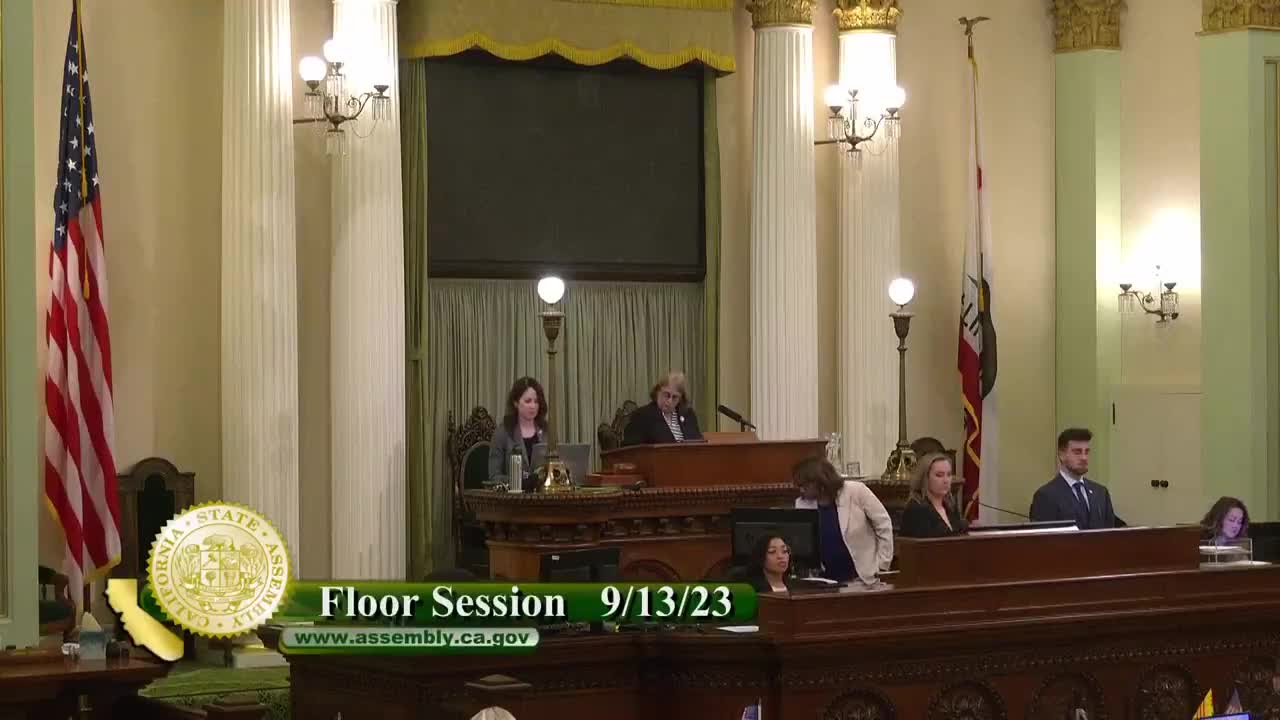
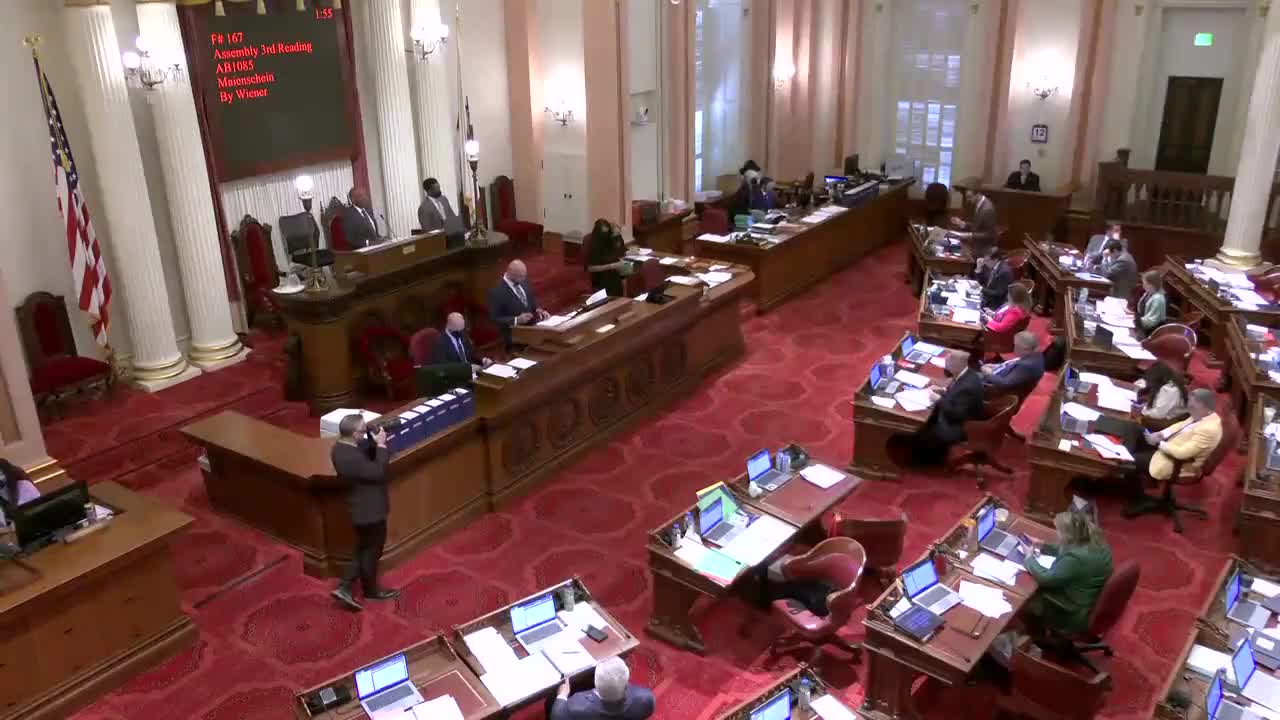

Bill Author










