AB 436: Guardian or conservator: powers and duties.
- Session Year: 2015-2016
- House: Assembly
- Latest Version Date: 2015-08-13
Existing law provides that, upon a courts findings that a conservatee has dementia, as defined, and a functional impairment, a conservator may place the conservatee in a prescribed secured residential or nursing facility and authorize the administration of prescribed medications appropriate for the care and treatment of dementia. A petition for authority to act under these provisions requires, among other things, that the conservatee be represented by an attorney, as provided.
This bill would require the court, upon granting or denying that authority to a conservator, to either discharge the attorney or order continuation of the representation, as specified.
Existing law provides that, upon a courts findings that a conservatee has dementia, as defined, and a functional impairment, a conservator may place the conservatee in a prescribed secured residential or nursing facility and authorize the administration of prescribed medications appropriate for the care and treatment of dementia. A petition for authority to act under these provisions requires, among other things, that the conservatee be represented by an attorney, as provided.
This bill would require the court, upon granting or denial of denying that authority to a conservator, to either discharge the attorney or order continuation of the representation, as specified.
Existing law provides that, upon a courts findings that a conservatee has dementia, as defined, and a functional impairment, a conservator may place the conservatee in a prescribed secured residential or nursing facility and authorize the administration of prescribed medications appropriate for the care and treatment of dementia. A petition for authority to act under these provisions requires, among other things, that the conservatee be represented by an attorney, as provided.
This bill would require the court, upon granting or denial of that authority to a conservator, to either discharge the attorney or order continuation of the representation.
(a)The Legislature hereby finds and declares:
(1)That people with dementia, as defined in the last published edition of the Diagnostic and Statistical Manual of Mental Disorders, should have a conservatorship to serve their unique and special needs.
(2)That, by adding powers to the probate conservatorship for people with dementia, their unique and special needs can be met. This will reduce costs to the conservatee and the family of the conservatee, reduce costly administration by state and county government, and safeguard the basic dignity and rights of the conservatee.
(3)That it is the intent of the Legislature to recognize that the administration of psychotropic medications has been, and can be, abused by caregivers and, therefore, granting powers to a conservator to authorize these medications for the treatment of dementia requires the protections specified in this section.
(b)Notwithstanding any other law, a conservator may authorize the placement of a conservatee in a secured perimeter residential care facility for the elderly operated pursuant to Section 1569.698 of the Health and Safety Code, and which has a care plan that meets the requirements of Section 87705 of Title 22 of the California Code of Regulations, upon a courts finding, by clear and convincing evidence, of all of the following:
(1)The conservatee has dementia, as defined in the last published edition of the Diagnostic and Statistical Manual of Mental Disorders.
(2)The conservatee lacks the capacity to give informed consent to this placement and has at least one mental function deficit pursuant to subdivision (a) of Section 811, and this deficit significantly impairs the persons ability to understand and appreciate the consequences of his or her actions pursuant to subdivision (b) of Section 811.
(3)The conservatee needs or would benefit from a restricted and secure environment, as demonstrated by evidence presented by the physician or psychologist referred to in paragraph (3) of subdivision (f).
(4)The court finds that the proposed placement in a locked facility is the least restrictive placement appropriate to the needs of the conservatee.
(c)Notwithstanding any other law, a conservator of a person may authorize the administration of medications appropriate for the care and treatment of dementia, upon a courts finding, by clear and convincing evidence, of all of the following:
(1)The conservatee has dementia, as defined in the last published edition of the Diagnostic and Statistical Manual of Mental Disorders.
(2)The conservatee lacks the capacity to give informed consent to the administration of medications appropriate to the care of dementia, and has at least one mental function deficit pursuant to subdivision (a) of Section 811, and this deficit or deficits significantly impairs the persons ability to understand and appreciate the consequences of his or her actions pursuant to subdivision (b) of Section 811.
(3)The conservatee needs or would benefit from appropriate medication as demonstrated by evidence presented by the physician or psychologist referred to in paragraph (3) of subdivision (f).
(d)Pursuant to subdivision (b) of Section 2355, in the case of a person who is an adherent of a religion whose tenets and practices call for a reliance on prayer alone for healing, the treatment required by the conservator under subdivision (c) shall be by an accredited practitioner of that religion in lieu of the administration of medications.
(e)A conservatee who is to be placed in a facility pursuant to this section shall not be placed in a mental health rehabilitation center as described in Section 5675 of the Welfare and Institutions Code, or in an institution for mental disease as described in Section 5900 of the Welfare and Institutions Code.
(f)A petition for authority to act under this section is governed by Section 2357, except:
(1)The conservatee shall be represented by an attorney pursuant to Chapter 4 (commencing with Section 1470) of Part 1. Upon granting or denying authority to a conservator under this section, the court shall discharge the attorney or order the continuation of the legal representation, consistent with the standard set forth in subdivision (a) of Section 1470.
(2)The conservatee shall be produced at the hearing, unless excused pursuant to Section 1893.
(3)The petition shall be supported by a declaration of a licensed physician, or a licensed psychologist within the scope of his or her licensure, regarding each of the findings required to be made under this section for any power requested, except that the psychologist has at least two years of experience in diagnosing dementia.
(4)The petition may be filed by any of the persons designated in Section 1891.
(g)The court investigator shall annually investigate and report to the court every two years pursuant to Sections 1850 and 1851 if the conservator is authorized to act under this section. In addition to the other matters provided in Section 1851, the conservatee shall be specifically advised by the investigator that the conservatee has the right to object to the conservators powers granted under this section, and the report shall also include whether powers granted under this section are warranted. If the conservatee objects to the conservators powers granted under this section, or the investigator determines that some change in the powers granted under this section is warranted, the court shall provide a copy of the report to the attorney of record for the conservatee. If no attorney has been appointed for the conservatee, one shall be appointed pursuant to Chapter 4 (commencing with Section 1470) of Part 1. The attorney shall, within 30 days after receiving this report, do one of the following:
(1)File a petition with the court regarding the status of the conservatee.
(2)File a written report with the court stating that the attorney has met with the conservatee and determined that the petition would be inappropriate.
(h)A petition to terminate authority granted under this section shall be governed by Section 2359.
(i)Nothing in this section shall be construed to affect a conservatorship of the estate of a person who has dementia.
(j)Nothing in this section shall affect the laws that would otherwise apply in emergency situations.
(k)Nothing in this section shall affect current law regarding the power of a probate court to fix the residence of a conservatee or to authorize medical treatment for any conservatee who has not been determined to have dementia.
(a)The Legislature hereby finds and declares:
(1)That people with dementia, as defined in the last published edition of the Diagnostic and Statistical Manual of Mental Disorders, should have a conservatorship to serve their unique and special needs.
(2)That, by adding powers to the probate conservatorship for people with dementia, their unique and special needs can be met. This will reduce costs to the conservatee and the family of the conservatee, reduce costly administration by state and county government, and safeguard the basic dignity and rights of the conservatee.
(3)That it is the intent of the Legislature to recognize that the administration of psychotropic medications has been, and can be, abused by caregivers and, therefore, granting powers to a conservator to authorize these medications for the treatment of dementia requires the protections specified in this section.
(b)Notwithstanding any other law, a conservator may authorize the placement of a conservatee in a secured perimeter residential care facility for the elderly operated pursuant to Section 1569.698 of the Health and Safety Code, and which has a care plan that meets the requirements of Section 87705 of Title 22 of the California Code of Regulations, upon a courts finding, by clear and convincing evidence, of all of the following:
(1)The conservatee has dementia, as defined in the last published edition of the Diagnostic and Statistical Manual of Mental Disorders.
(2)The conservatee lacks the capacity to give informed consent to this placement and has at least one mental function deficit pursuant to subdivision (a) of Section 811, and this deficit significantly impairs the persons ability to understand and appreciate the consequences of his or her actions pursuant to subdivision (b) of Section 811.
(3)The conservatee needs or would benefit from a restricted and secure environment, as demonstrated by evidence presented by the physician or psychologist referred to in paragraph (3) of subdivision (f).
(4)The court finds that the proposed placement in a locked facility is the least restrictive placement appropriate to the needs of the conservatee.
(c)Notwithstanding any other law, a conservator of a person may authorize the administration of medications appropriate for the care and treatment of dementia, upon a courts finding, by clear and convincing evidence, of all of the following:
(1)The conservatee has dementia, as defined in the last published edition of the Diagnostic and Statistical Manual of Mental Disorders.
(2)The conservatee lacks the capacity to give informed consent to the administration of medications appropriate to the care of dementia, and has at least one mental function deficit pursuant to subdivision (a) of Section 811, and this deficit or deficits significantly impairs the persons ability to understand and appreciate the consequences of his or her actions pursuant to subdivision (b) of Section 811.
(3)The conservatee needs or would benefit from appropriate medication as demonstrated by evidence presented by the physician or psychologist referred to in paragraph (3) of subdivision (f).
(d)Pursuant to subdivision (b) of Section 2355, in the case of a person who is an adherent of a religion whose tenets and practices call for a reliance on prayer alone for healing, the treatment required by the conservator under subdivision (c) shall be by an accredited practitioner of that religion in lieu of the administration of medications.
(e)A conservatee who is to be placed in a facility pursuant to this section shall not be placed in a mental health rehabilitation center as described in Section 5675 of the Welfare and Institutions Code, or in an institution for mental disease as described in Section 5900 of the Welfare and Institutions Code.
(f)A petition for authority to act under this section is governed by Section 2357, except:
(1)The conservatee shall be represented by an attorney pursuant to Chapter 4 (commencing with Section 1470) of Part 1. Upon granting or denial of denying authority to a conservator under subdivisions (b) or (c) this section, the court shall discharge the attorney or order the continuation of the legal representation, consistent with the standard set forth in subdivision (a) of Section 1470.
(2)The conservatee shall be produced at the hearing, unless excused pursuant to Section 1893.
(3)The petition shall be supported by a declaration of a licensed physician, or a licensed psychologist within the scope of his or her licensure, regarding each of the findings required to be made under this section for any power requested, except that the psychologist has at least two years of experience in diagnosing dementia.
(4)The petition may be filed by any of the persons designated in Section 1891.
(g)The court investigator shall annually investigate and report to the court every two years pursuant to Sections 1850 and 1851 if the conservator is authorized to act under this section. In addition to the other matters provided in Section 1851, the conservatee shall be specifically advised by the investigator that the conservatee has the right to object to the conservators powers granted under this section, and the report shall also include whether powers granted under this section are warranted. If the conservatee objects to the conservators powers granted under this section, or the investigator determines that some change in the powers granted under this section is warranted, the court shall provide a copy of the report to the attorney of record for the conservatee. If no attorney has been appointed for the conservatee, one shall be appointed pursuant to Chapter 4 (commencing with Section 1470) of Part 1. The attorney shall, within 30 days after receiving this report, do one of the following:
(1)File a petition with the court regarding the status of the conservatee.
(2)File a written report with the court stating that the attorney has met with the conservatee and determined that the petition would be inappropriate.
(h)A petition to terminate authority granted under this section shall be governed by Section 2359.
(i)Nothing in this section shall be construed to affect a conservatorship of the estate of a person who has dementia.
(j)Nothing in this section shall affect the laws that would otherwise apply in emergency situations.
(k)Nothing in this section shall affect current law regarding the power of a probate court to fix the residence of a conservatee or to authorize medical treatment for any conservatee who has not been determined to have dementia.
(a)The Legislature hereby finds and declares:
(1)That people with dementia, as defined in the last published edition of the Diagnostic and Statistical Manual of Mental Disorders, should have a conservatorship to serve their unique and special needs.
(2)That, by adding powers to the probate conservatorship for people with dementia, their unique and special needs can be met. This will reduce costs to the conservatee and the family of the conservatee, reduce costly administration by state and county government, and safeguard the basic dignity and rights of the conservatee.
(3)That it is the intent of the Legislature to recognize that the administration of psychotropic medications has been, and can be, abused by caregivers and, therefore, granting powers to a conservator to authorize these medications for the treatment of dementia requires the protections specified in this section.
(b)Notwithstanding any other law, a conservator may authorize the placement of a conservatee in a secured perimeter residential care facility for the elderly operated pursuant to Section 1569.698 of the Health and Safety Code, and which has a care plan that meets the requirements of Section 87705 of Title 22 of the California Code of Regulations, upon a courts finding, by clear and convincing evidence, of all of the following:
(1)The conservatee has dementia, as defined in the last published edition of the Diagnostic and Statistical Manual of Mental Disorders.
(2)The conservatee lacks the capacity to give informed consent to this placement and has at least one mental function deficit pursuant to subdivision (a) of Section 811, and this deficit significantly impairs the persons ability to understand and appreciate the consequences of his or her actions pursuant to subdivision (b) of Section 811.
(3)The conservatee needs or would benefit from a restricted and secure environment, as demonstrated by evidence presented by the physician or psychologist referred to in paragraph (3) of subdivision (f).
(4)The court finds that the proposed placement in a locked facility is the least restrictive placement appropriate to the needs of the conservatee.
(c)Notwithstanding any other law, a conservator of a person may authorize the administration of medications appropriate for the care and treatment of dementia, upon a courts finding, by clear and convincing evidence, of all of the following:
(1)The conservatee has dementia, as defined in the last published edition of the Diagnostic and Statistical Manual of Mental Disorders.
(2)The conservatee lacks the capacity to give informed consent to the administration of medications appropriate to the care of dementia, and has at least one mental function deficit pursuant to subdivision (a) of Section 811, and this deficit or deficits significantly impairs the persons ability to understand and appreciate the consequences of his or her actions pursuant to subdivision (b) of Section 811.
(3)The conservatee needs or would benefit from appropriate medication as demonstrated by evidence presented by the physician or psychologist referred to in paragraph (3) of subdivision (f).
(d)Pursuant to subdivision (b) of Section 2355, in the case of a person who is an adherent of a religion whose tenets and practices call for a reliance on prayer alone for healing, the treatment required by the conservator under subdivision (c) shall be by an accredited practitioner of that religion in lieu of the administration of medications.
(e)A conservatee who is to be placed in a facility pursuant to this section shall not be placed in a mental health rehabilitation center as described in Section 5675 of the Welfare and Institutions Code, or in an institution for mental disease as described in Section 5900 of the Welfare and Institutions Code.
(f)A petition for authority to act under this section shall be is governed by Section 2357, except:
(1)The conservatee shall be represented by an attorney pursuant to Chapter 4 (commencing with Section 1470) of Part 1. Upon granting or denial of authority to a conservator under subdivisions (b) or (c), the court shall discharge the attorney or order the continuation of the legal representation.
(2)The conservatee shall be produced at the hearing, unless excused pursuant to Section 1893.
(3)The petition shall be supported by a declaration of a licensed physician, or a licensed psychologist within the scope of his or her licensure, regarding each of the findings required to be made under this section for any power requested, except that the psychologist has at least two years of experience in diagnosing dementia.
(4)The petition may be filed by any of the persons designated in Section 1891.
(g)The court investigator shall annually investigate and report to the court every two years pursuant to Sections 1850 and 1851 if the conservator is authorized to act under this section. In addition to the other matters provided in Section 1851, the conservatee shall be specifically advised by the investigator that the conservatee has the right to object to the conservators powers granted under this section, and the report shall also include whether powers granted under this section are warranted. If the conservatee objects to the conservators powers granted under this section, or the investigator determines that some change in the powers granted under this section is warranted, the court shall provide a copy of the report to the attorney of record for the conservatee. If no attorney has been appointed for the conservatee, one shall be appointed pursuant to Chapter 4 (commencing with Section 1470) of Part 1. The attorney shall, within 30 days after receiving this report, do one of the following:
(1)File a petition with the court regarding the status of the conservatee.
(2)File a written report with the court stating that the attorney has met with the conservatee and determined that the petition would be inappropriate.
(h)A petition to terminate authority granted under this section shall be governed by Section 2359.
(i)Nothing in this section shall be construed to affect a conservatorship of the estate of a person who has dementia.
(j)Nothing in this section shall affect the laws that would otherwise apply in emergency situations.
(k)Nothing in this section shall affect current law regarding the power of a probate court to fix the residence of a conservatee or to authorize medical treatment for any conservatee who has not been determined to have dementia.
|
Date
|
Status
|
|---|---|
| Aug 13, 2015 | Chaptered by Secretary of State - Chapter 197, Statutes of 2015. |
| Aug 13, 2015 | Approved by the Governor. |
| Aug 3, 2015 | Enrolled and presented to the Governor at 3 p.m. |
| Jul 6, 2015 | In Assembly. Ordered to Engrossing and Enrolling. |
| Jul 6, 2015 | Read third time. Passed. Ordered to the Assembly. (Ayes 39. Noes 0. Page 1785.). |
| Jul 6, 2015 | Read third time. Passed. Ordered to the Assembly. |
| Jun 19, 2015 | Read second time. Ordered to third reading. |
| Jun 18, 2015 | From committee: Do pass. (Ayes 7. Noes 0.) (June 16). |
| May 7, 2015 | Referred to Com. on JUD. |
| Apr 9, 2015 | In Senate. Read first time. To Com. on RLS. for assignment. |
| Apr 9, 2015 | Read third time. Passed. Ordered to the Senate. (Ayes 78. Noes 0. Page 851.) |
| Apr 9, 2015 | Read third time. Passed. Ordered to the Senate. (Ayes 78. Noes 0.) |
| Apr 6, 2015 | Ordered to third reading. |
| Apr 6, 2015 | From consent calendar. |
| Mar 25, 2015 | Read second time. Ordered to consent calendar. |
| Mar 24, 2015 | From committee: Do pass. To Consent Calendar. (Ayes 10. Noes 0.) (March 24). |
| Mar 24, 2015 | From committee: Do pass. Ordered to Consent Calendar. (Ayes 10. Noes 0.) (March 24). |
| Mar 10, 2015 | Re-referred to Com. on JUD. |
| Mar 9, 2015 | From committee chair, with author's amendments: Amend, and re-refer to Com. on JUD. Read second time and amended. |
| Mar 2, 2015 | Referred to Com. on JUD. |
| Feb 20, 2015 | From printer. May be heard in committee March 22. |
| Feb 19, 2015 | Read first time. To print. |
|
Date
|
Description
|
Location
|
Votes
|
|
|---|---|---|---|---|
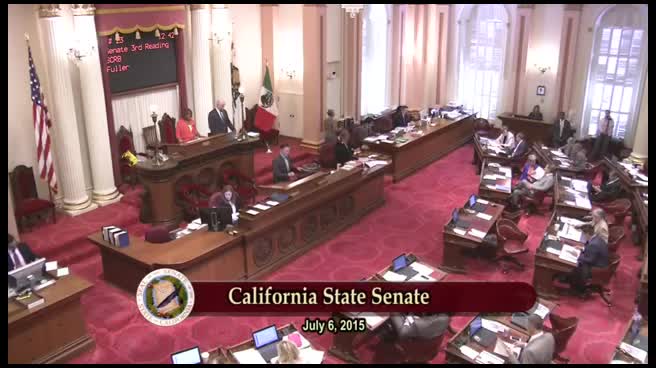
| Jul 6, 2015 | Assembly 3rd Reading AB436 Jones By Vidak | Senate Floor |
Passed |
|
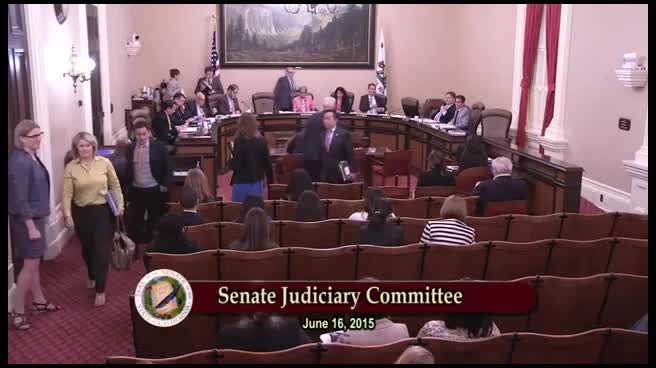
| Jun 16, 2015 | Do pass | Senate Standing Committee on Judiciary |
Passed |
|
| Apr 9, 2015 | AB 436 JONES Assembly Third Reading | Assembly Floor |
Passed |
|
| Mar 24, 2015 | Do pass. To Consent Calendar. | Assembly Standing Committee on Judiciary |
Passed |
This list shows positions taken on this bill by organizations on the date displayed, which is linked to the original source.
Positions by individuals are not included.
AB 436
Page 7
|
Office of Senate Floor Analyses (916) 651-1520 Fax: (916) 327-4478 |
THIRD READING
Bill No: AB 436
Amended: 3/9/15 in Assembly
SENATE JUDICIARY COMMITTEE: 7-0, 6/16/15
AYES: Jackson, Moorlach, Anderson, Hertzberg, Leno, Monning, Wieckowski
ASSEMBLY FLOOR: 78-0, 4/9/15 - See last page for vote
SUBJECT: Guardian or conservator: powers and duties
SOURCE: Conference of California Bar Associations
DIGEST: This bill requires a court, upon granting or denying authority to a conservator for the placement of a conservatee in a secured residential care facility or administration of medications for the care and treatment of dementia, to discharge the court-appointed attorney or order the continuation of the legal representation of the conservatee.
Existing law:
Authorizes a court to appoint a conservator to act on behalf of a person who is unable to adequately provide for his or her personal needs (a conservator of the person) or incapable of managing his or her property or other financial assets (a conservator of the estate).
Authorizes a proposed conservatee, or spouse, domestic partner, relative, friend of the conservatee, public administrator, or other interested person to petition the court for the appointment of a conservator of the proposed conservatee, and requires specified information to be included in the petition.
Authorizes a court, upon a showing of good cause, to appoint a temporary conservator or guardian to serve pending the appointment of a permanent conservator or guardian.
Provides, unless the court orders otherwise, the temporary conservator or guardian with only those powers and duties that are necessary to provide for temporary care of the conservatee or ward and to preserve and protect the property of the conservatee or ward from loss or injury.
Requires a court, when determining the capacity of a person to do a certain act or make a decision, including, but not limited to, making medical decisions, to make that determination based on evidence of a proposed conservatee’s deficit in at least one of a specified list of mental functions.
Authorizes the court to appoint private legal counsel for a conservatee or a proposed conservatee in any proceeding if the court determines the person is not otherwise represented by legal counsel and that the appointment would be helpful to the resolution of the matter or is necessary to protect the person’s interests.
Requires, if a person is furnished legal counsel, the court, upon conclusion of the matter, to fix a reasonable sum for compensation and expenses of counsel, and the sum may, in the court’s discretion, include compensation for services rendered, and expenses incurred, before the date of the order appointing counsel.
Provides that, if the conservatee requires medical treatment for an existing or continuing medical condition which is not otherwise authorized to be performed upon the conservatee, and the conservatee is unable to give an informed consent to this medical treatment, the conservator may petition the court for an order authorizing the medical treatment and authorizing the conservator to consent on behalf of the conservatee to the medical treatment.
Allows a conservator to authorize the placement of a conservatee in a secured perimeter residential care facility for the elderly (RCFE) upon a court’s finding, by clear and convincing evidence, all of the following: a) the conservatee has dementia, as defined; b) the conservatee lacks the capacity to give informed consent to this placement and has at least one mental function deficit, and this deficit significantly impairs the person’s ability to understand and appreciate the consequences of his or her actions; c) the conservatee needs or would benefit from a restricted and secure environment, as demonstrated by evidence presented by the physician or psychologist, as specified; and d) the court finds that the proposed placement in a locked facility is the least restrictive placement appropriate to the needs of the conservatee.
Allows a conservator of a person to authorize the administration of medications appropriate for the care and treatment of dementia, upon a court’s finding, by clear and convincing evidence, of all of the following: a) the conservatee has dementia, as defined; b) the conservatee lacks the capacity to give informed consent to the administration of medications appropriate to the care of dementia, and has at least one mental function deficit, and this deficit or deficits significantly impairs the person’s ability to understand and appreciate the consequences of his or her actions; and c) the conservatee needs or would benefit from appropriate medication as demonstrated by evidence presented by the physician or psychologist.
Requires that the conservatee be represented by an attorney during proceedings for the conservator’s petition for authority to act regarding secured facility placement or dementia medication administration.
This bill requires, upon granting or denying authority to a conservator to place the conservatee in a secured RCFE or administer dementia medications, the court to discharge the conservatee’s attorney or order the continuation of the legal representation.
Background
In 1996, about 500,000 to 600,000 people in California suffered from Alzheimer’s disease or stroke-related dementia, which placed them at risk for wandering away from unsecured residential facilities and becoming lost. At that time, many courts would not grant a conservator the authority to place a dementia patient in a secured facility, or to authorize administration of psychotropic medications, unless a conservatorship under the Lanterman-Petris-Short (LPS) Act was established, and renewed yearly.
An LPS conservatorship, among other things, is designed to provide safeguards for persons who are deemed to be gravely disabled as the result of a mental disorder who may, for some period, require placement in a locked facility or administration of psychotropic drugs. The nature of these mental disorders is such that, with the administration of the drugs, the patient’s condition may well improve. In such instances, the patient’s status needs to be reviewed periodically. For this reason, the LPS conservatorship is required to be renewed every year.
Recognizing the need to allow a conservator to place a person with dementia in a more appropriate secured facility and authorize the administration of psychotropic medications which permit management of patients with dementia in non-secure facilities, the Legislature enacted SB 1481 (Mello, Chapter 910, Statutes of 1996) to authorize a conservator to file a petition to place a conservatee with dementia in an appropriate secured facility and authorized the administration of psychotropic medications, which permit management of patients with dementia in non-secure facilities. As part of that process, a conservatee has the same rights to petition the court to contest and terminate this authority as any other conservatee has to contest and terminate a conservatorship, and the conservatee must be represented by an attorney during that process.
In order to clarify for both the courts and the court-appointed attorneys for conservatees, this bill requires a court, upon granting or denying authority to a conservator for the placement of a conservatee in a residential care facility or administration of medications for the care and treatment of dementia, to either discharge the court-appointed attorney or order the continuation of the legal representation of the conservatee.
Comments
The author writes:
Absent a court order either directing them to continue or dismissing them, court-appointed attorneys (CAAs) in dementia powers cases are on the horns of an ethical and legal dilemma once the hearing has been held and powers granted or denied. Attorneys are concerned that if they do nothing, they could be subject to discipline for client abandonment or possibly malpractice. On the other hand, if they proceed as if they are still functioning as counsel – e.g., checking in on the client and/or preparing a report - their actions can be subject to resentment and challenge by the conservator and/or the family, contending that it was only done to generate fees for the attorney. Without greater clarity, the Courts must also speculate as to the legislative intent regarding the scope of the appointment, and whether it is to terminate at the end of the appointment hearing or continue for monitoring. This uncertainty may have fostered an assumption in some courts that they are continuing appointments, and in others that they are meant to terminate.
AB 436 requires the court, after the petition seeking dementia powers is decided, to either discharge the attorney or order the continuation of such representation. The bill does not require such continuing representation, but gives the court the discretion to decide whether to require that counsel be retained. The bill does require that the decision about whether or not to continue the representation be based on the existing statutory constraint, which permits a court to appoint counsel if appointment either would be helpful in resolving matters or is necessary to protect the interest of the conservatee.
Prior Legislation
AB 2747 (Committee on Judiciary, Chapter 913, Statutes of 2014) corrected, among other things, the cross-references to the relevant California Code of Regulations requirements in the petition for placement of a conservatee in a locked and secured nursing facility which specializes in the care and treatment of people with dementia.
AB 167 (Harman, Chapter 32, Statutes of 2003) corrected, among other things, the cross-reference to findings of dementia under the petition for placement of a conservatee in an RCFE or for the administration of medications for the care of dementia.
AB 1172 (Kaloogian, Chapter 724, Statutes of 1997) authorized, among other things, a licensed psychologist to report his or her findings of dementia in a declaration submitted with a conservator’s petition for placement of a conservatee in an RCFE or for the administration of medications for the care of dementia.
SB 1481 (Mello, Chapter 910, Statutes of 1996) - See Background.
FISCAL EFFECT: Appropriation: No Fiscal Com.: No Local: No
Conference of California Bar Associations (source)
OPPOSITION: (Verified 6/18/15)
Coalition for Elder and Dependent Adult Rights
National Association to Stop Guardian Abuse
Nine individuals
ARGUMENTS IN SUPPORT: The Conference of California Bar Associations (CCBA) notes that this bill is the result of a bench-bar working group in San Diego, in response to concerns raised by attorneys in the field and the uncertainty of the local judges regarding court-appointed attorney responsibilities. CCBA argues that “Absent a court order either directing them to continue or dismissing them, court-appointed attorneys . . . in dementia powers cases are confronted with an ethical and legal dilemma once the hearing has been held and powers granted or denied. If they do nothing, attorneys are concerned they could be subject to discipline for client abandonment or possibly malpractice. Conversely, if they proceed as if they are still functioning as counsel – e.g., checking in on the client and/or preparing a report - their actions can be subject to resentment and challenge by the conservator and/or the family, contending that it was only done to generate fees for the attorney.” Further, the author states that this bill addresses whether appointed counsel is relieved of further duties or has further obligations to the conservatee, which can only be answered after the court has made its decision regarding the conservator’s dementia powers petition, and, therefore, cannot be reasonably included in the terms of a contract under the Business and Professions Code.
ARGUMENTS IN OPPOSITION: The opposition argues that this bill does not solve the real problem that courts do not have written fee agreements with attorneys appointed by courts to represent conservatee interests. The opposition requests that this bill be amended to instead require court-appointed attorneys to adhere to the written fee agreement requirements under the Business and Professions Code.
ASSEMBLY FLOOR: 78-0, 4/9/15
AYES: Achadjian, Alejo, Travis Allen, Baker, Bigelow, Bloom, Bonilla, Bonta, Brough, Brown, Burke, Campos, Chang, Chau, Chávez, Chiu, Chu, Cooley, Cooper, Dababneh, Dahle, Daly, Dodd, Eggman, Frazier, Beth Gaines, Gallagher, Cristina Garcia, Eduardo Garcia, Gatto, Gipson, Gomez, Gonzalez, Gordon, Gray, Grove, Hadley, Harper, Roger Hernández, Holden, Irwin, Jones, Jones-Sawyer, Kim, Lackey, Levine, Linder, Lopez, Low, Maienschein, Mathis, Mayes, McCarty, Medina, Melendez, Mullin, Nazarian, Obernolte, Olsen, Patterson, Perea, Quirk, Rendon, Ridley-Thomas, Rodriguez, Salas, Santiago, Steinorth, Mark Stone, Thurmond, Ting, Wagner, Waldron, Weber, Wilk, Williams, Wood, Atkins
NO VOTE RECORDED: Calderon, O'Donnell
Prepared by: Tara Welch / JUD. / (916) 651-4113
6/19/15 14:55:57
**** END ****
AB 436 (Jones)
Page 7 of 7
Senator Hannah-Beth Jackson, Chair
2015-2016 Regular Session
AB 436 (Jones)
Version: March 9, 2015
Hearing Date: June 16, 2015
Fiscal: No
Urgency: No
TMW
SUBJECT
Guardian or conservator: powers and duties
DESCRIPTION
This bill would require a court, upon granting or denying authority to a conservator for the placement of a conservatee in a residential care facility or administration of medications for the care and treatment of dementia, to discharge the court-appointed attorney or order the continuation of the legal representation of the conservatee.
BACKGROUND
In 1996, about 500,000 to 600,000 people in California suffered from Alzheimer’s disease or stroke-related dementia, which placed them at risk for wandering away from unsecure residential facilities and becoming lost. At that time, many courts would not grant a conservator the authority to place a dementia patient in a secured facility, or to authorize administration of psychotropic medications, unless a conservatorship under the Lanterman-Petris-Short (LPS) Act was established, and renewed yearly.
An LPS conservatorship, among other things, is designed to provide safeguards for persons who are deemed to be gravely disabled as the result of a mental disorder who may, for some period, require placement in a locked facility or administration of psychotropic drugs. The nature of these mental disorders is such that, with the administration of the drugs, the patient’s condition may well improve. In such instances, the patient’s status needs to be reviewed periodically. For this reason the LPS conservatorship is required to be renewed every year.
Recognizing the need to allow a conservator to place a person with dementia in a more appropriate secured facility and authorize the administration of psychotropic medications which permit management of patients with dementia in non-secure facilities, the Legislature enacted SB 1481 (Mello, Chapter 910, Statutes of 1996) to authorize a conservator to file a petition to place a conservatee with dementia in an appropriate secured facility and authorized the administration of psychotropic medications, which permit management of patients with dementia in non-secure facilities. As part of that process, a conservatee has the same rights to petition the court to contest and terminate this authority as any other conservatee has to contest and terminate a conservatorship, and the conservatee must be represented by an attorney during that process.
In order to clarify for both the courts and the court-appointed attorneys for conservatees, this bill would require a court, upon granting or denying authority to a conservator for the placement of a conservatee in a residential care facility or administration of medications for the care and treatment of dementia, to either discharge the court-appointed attorney or order the continuation of the legal representation of the conservatee.
CHANGES TO EXISTING LAW
Existing law authorizes a court to appoint a conservator to act on behalf of a person who is unable to adequately provide for his or her personal needs (a conservator of the person) or incapable of managing his or her property or other financial assets (a conservator of the estate). (Prob. Code Sec. 1800 et seq.)
Existing law authorizes a proposed conservatee, or spouse, domestic partner, relative, friend of the conservatee, public administrator, or other interested person to petition the court for the appointment of a conservator of the proposed conservatee. Existing law requires specified information to be included in the petition. (Prob. Code Secs. 1820, 1821.)
Existing law authorizes a court, upon a showing of good cause, to appoint a temporary conservator or guardian to serve pending the appointment of a permanent conservator or guardian. Unless the court orders otherwise, existing law provides the temporary conservator or guardian with only those powers and duties that are necessary to provide for temporary care of the conservatee or ward and to preserve and protect the property of the conservatee or ward from loss or injury. (Prob. Code Sec. 2250 et seq.)
Existing law requires a court, when determining the capacity of a person to do a certain act or make a decision, including, but not limited to, making medical decisions, to make that determination based on evidence of a proposed conservatee’s deficit in at least one of a specified list of mental functions. (Prob. Code Sec. 811(a).)
Existing law authorizes the court to appoint private legal counsel for a conservatee or a proposed conservatee in any proceeding if the court determines the person is not otherwise represented by legal counsel and that the appointment would be helpful to the resolution of the matter or is necessary to protect the person’s interests. (Prob. Code Sec. 1470(a).)
Existing law, if a person is furnished legal counsel, requires the court, upon conclusion of the matter, to fix a reasonable sum for compensation and expenses of counsel, and the sum may, in the court’s discretion, including compensation for services rendered, and expenses incurred, before the date of the order appointing counsel. (Prob. Code Sec. 1470(b).)
Existing law provides that, if the conservatee requires medical treatment for an existing or continuing medical condition which is not otherwise authorized to be performed upon the conservatee, and the conservatee is unable to give an informed consent to this medical treatment, the conservator may petition the court for an order authorizing the medical treatment and authorizing the conservator to consent on behalf of the conservatee to the medical treatment. (Prob. Code Sec. 2357(b).)
Existing law allows a conservator to authorize the placement of a conservatee in a secured perimeter residential care facility for the elderly (RCFE) upon a court’s finding, by clear and convincing evidence, all of the following: (1) the conservatee has dementia, as defined; (2) the conservatee lacks the capacity to give informed consent to this placement and has at least one mental function deficit, and this deficit significantly impairs the person’s ability to understand and appreciate the consequences of his or her actions; (3) the conservatee needs or would benefit from a restricted and secure environment, as demonstrated by evidence presented by the physician or psychologist, as specified; and (4) the court finds that the proposed placement in a locked facility is the least restrictive placement appropriate to the needs of the conservatee. (Prob. Code Sec. 2356.5(b).)
Existing law allows a conservator of a person to authorize the administration of medications appropriate for the care and treatment of dementia, upon a court’s finding, by clear and convincing evidence, of all of the following: (1) the conservatee has dementia, as defined; (2) the conservatee lacks the capacity to give informed consent to the administration of medications appropriate to the care of dementia, and has at least one mental function deficit, and this deficit or deficits significantly impairs the person’s ability to understand and appreciate the consequences of his or her actions; and (3) the conservatee needs or would benefit from appropriate medication as demonstrated by evidence presented by the physician or psychologist. (Prob. Code Sec. 2356.5(c).)
Existing law requires that the conservatee be represented by an attorney during proceedings for the conservator’s petition for authority to act regarding facility placement or dementia medication administration. (Prob. Code Sec. 2356.5(f)(1).)
This bill, upon granting or denying authority to a conservator to place the conservatee in a secured RCFE or administer dementia medications, would require the court to discharge the conservatee’s attorney or order the continuation of the legal representation.
COMMENT
1. Stated need for the bill
The author writes:
Absent a court order either directing them to continue or dismissing them, court-appointed attorneys (CAAs) in dementia powers cases are on the horns of an ethical and legal dilemma once the hearing has been held and powers granted or denied. Attorneys are concerned that if they do nothing, they could be subject to discipline for client abandonment or possibly malpractice. On the other hand, if they proceed as if they are still functioning as counsel – e.g., checking in on the client and/or preparing a report - their actions can be subject to resentment and challenge by the conservator and/or the family, contending that it was only done to generate fees for the attorney. Without greater clarity, the Courts must also speculate as to the legislative intent regarding the scope of the appointment, and whether it is to terminate at the end of the appointment hearing or continue for monitoring. This uncertainty may have fostered an assumption in some courts that they are continuing appointments, and in others that they are meant to terminate.
AB 436 requires the court, after the petition seeking dementia powers is decided, to either discharge the attorney or order the continuation of such representation. The bill does not require such continuing representation, but gives the court the discretion to decide whether to require that counsel be retained. The bill does require that the decision about whether or not to continue the representation be based on the existing statutory constraint, which permits a court to appoint counsel if appointment either would be helpful in resolving matters or is necessary to protect the interest of the conservatee.
2. Clarifying termination or continuation of court-appointed attorney representation of a conservatee
Although existing law authorizes a court to appoint an attorney to represent the interests of a conservatee in proceedings for the placement of the conservatee in a secured residential care facility for the elderly (RCFE) or the administration of dementia medications, the law does not specify when the attorney’s representation of the conservatee ends. Accordingly, this bill seeks to provide clarification of when the court-appointed attorney’s services ends or continues.
Notably, following the granting of a petition to place the conservatee in a secured RCFE or administration of dementia medications to the conservatee, the court investigator is required to annually investigate and report to the court every two years. (Prob. Code Sec. 2356.5(g).) If the conservatee objects to the conservator’s continued powers granted in that petition, or the investigator determines that some change in the powers granted in the petition proceeding is warranted, the court is required to provide a copy of the court investigator’s report to the attorney of record for the conservatee. (Id.) If no attorney has been appointed for the conservatee, an attorney is required to be appointed and take several enumerated actions on behalf of the conservatee. (Id.) If an attorney was court-appointed during the initial petition, but has had no contact with the conservatee or court following the granting of the petition, the attorney may believe he or she is no longer providing services to the conservatee. Yet, under existing law, that attorney may be called upon at any time following the initial petition to continue representation of the conservatee. As such, courts, court-appointed attorneys, conservators, and conservatees may be uncertain as to when the court-appointed attorney continues to represent the conservatee, years after the initial petition, or no longer represents the conservatee after the initial petition.
The Conference of California Bar Associations (CCBA), sponsor, notes that this bill is the result of a bench-bar working group in San Diego, in response to concerns raised by attorneys in the field and the uncertainty of the local judges regarding court-appointed attorney responsibilities. CCBA argues that “Absent a court order either directing them to continue or dismissing them, court-appointed attorneys . . . in dementia powers cases are confronted with an ethical and legal dilemma once the hearing has been held and powers granted or denied. If they do nothing, attorneys are concerned they could be subject to discipline for client abandonment or possibly malpractice. Conversely, if they proceed as if they are still functioning as counsel – e.g., checking in on the client and/or preparing a report - their actions can be subject to resentment and challenge by the conservator and/or the family, contending that it was only done to generate fees for the attorney.” Accordingly, this bill seeks to provide clarification for the court and interested parties by giving discretion to the court to either discharge the attorney when dementia powers are granted, or direct the court-appointed counsel to continue to represent the conservatee’s due process rights.
3. Opposition’s concerns
The Coalition for Elder and Dependent Adult Rights (CEDAR), opposed unless amended, argues that this bill would not solve the real problem that courts do not have written fee agreements with attorneys appointed by courts to represent conservatee interests. CEDAR requests that the bill be amended to instead require court-appointed attorneys to adhere to the written fee agreement requirements under the Business and Professions Code. In response, the author states that this bill addresses whether appointed counsel is relieved of further duties or has further obligations to the conservatee, which can only be answered after the court has made its decision regarding the conservator’s dementia powers petition, and, therefore, cannot be reasonably included in the terms of a contract under the Business and Professions Code.
Support: None Known
Opposition: Coalition for Elder and Dependent Adult Rights
HISTORY
Source: Conference of California Bar Association
Related Pending Legislation: None Known
Prior Legislation:
AB 2747 (Committee on Judiciary, Chapter 913, Statutes of 2014) among other things, corrected the cross-references to the relevant California Code of Regulations requirements in the petition for placement of a conservatee in a locked and secured nursing facilities which specializes in the care and treatment of people with dementia.
AB 167 (Harman, Chapter 32, Statutes of 2003), among other things, corrected the cross-reference to findings of dementia under the petition for placement of a conservatee in a residential care facility for the elder or for the administration of medications for the care of dementia.
AB 1172 (Kaloogian, Chapter 724, Statutes of 1997), among other things, authorized a licensed psychologist to report his or her findings of dementia in a declaration submitted with a conservator’s petition for placement of a conservatee in a residential care facility for the elder or for the administration of medications for the care of dementia.
SB 1481 (Mello, Chapter 910, Statutes of 1996) See Background.
Prior Vote:
Assembly Floor (Ayes 78, Noes 0)
Assembly Judiciary Committee (Ayes 10, Noes 0)
**************
AB 436
Page 3
ASSEMBLY THIRD READING
AB 436
(Jones)
As Amended March 9, 2015
Majority vote
Committee |
Votes |
Ayes |
Noes |
Judiciary |
10-0 |
Mark Stone, Wagner, Alejo, Chau, Chiu, Cristina Garcia, Gallagher, Holden, Maienschein, O'Donnell |
|
SUMMARY: Requires the court to specify whether an attorney representing a conservatee continues in that role after the court considers a petition seeking special dementia powers for the conservator. Specifically, this bill requires the court, upon granting or denying special dementia powers to a conservator, to discharge the court-appointed attorney or order continued representation, as provided.
EXISTING LAW:
Allows the court to appoint a conservator to act on behalf of a person who is unable to adequately provide for his or her personal needs (a conservator of the person) or incapable of managing his or her property or other financial assets (a conservator of the estate). Requires the court investigator to personally interview the proposed conservatee prior to the hearing and make specified determinations.
Permits the court to appoint an attorney to represent a conservatee or proposed conservatee if the court determines that the conservatee or proposed conservatee is not otherwise represented by counsel and appointment would be helpful in resolving matters or is necessary to protect the interest of the conservatee or proposed conservatee.
Sets out the powers and duties generally of a conservator of the person. Specifically prohibits a conservatee form being placed in a mental health treatment facility or from being administered experimental drugs, except as provided.
Allows a conservator to seek special powers for a conservatee with dementia, including the ability to place the conservatee in a secured residential care facility and administer certain drugs, as specified. Before the court may consider a petition for these special powers, requires that, among other things, the conservatee be represented by counsel.
FISCAL EFFECT: None
COMMENTS: This bill, sponsored by the Conference of California Bar Associations, seeks to clarify how long an appointed counsel represents a conservatee for whom the conservator seeks special dementia powers. In a typical conservatorship, a conservator may not confine the conservatee to a locked facility or administer certain medications. A court can grant these additional dementia powers to a conservator only after a hearing where the conservatee is represented by counsel. This bill requires the court, in those proceedings, to clarify how long the appointed counsel represents the conservatee.
In support of the bill, the author writes:
AB 436 removes the uncertainty that currently plagues counsel who have been appointed by the court to represent conservatees in dementia powers cases once those powers have been granted or denied, and provides needed guidance to the courts as to the intent of the legislature regarding the scope of the appointment of counsel currently required. Absent a court order either directing them to continue or dismissing them, court-appointed attorneys (CAAs) in dementia powers cases are on the horns of an ethical and legal dilemma once the hearing has been held and powers granted or denied. Attorneys are concerned that if they do nothing, they could be subject to discipline for client abandonment or possibly malpractice. On the other hand, if they proceed as if they are still functioning as counsel – e.g., checking in on the client and/or preparing a report - their actions can be subject to resentment and challenge by the conservator and/or the family, contending that it was only done to generate fees for the attorney. Without greater clarity, the Courts must also speculate as to the legislative intent regarding the scope of the appointment, and whether it is to terminate at the end of the appointment hearing or continue for monitoring. This uncertainty may have fostered an assumption in some courts that they are continuing appointments, and in others that they are meant to terminate.
Types of Conservatorships: A probate judge may appoint a conservator to act on behalf of a person who is unable to adequately provide for his or her personal needs (a "conservator of the person") or incapable of managing his or her property or other financial assets (a "conservator of the estate"). The Probate Code also offers a "limited conservatorship" for "developmentally disabled adults," under which the court limits the conservator's power so as to preserve the maximum amount of independence and self-sufficiency for the conservatee. In addition, the Lanterman-Petris-Short (LPS) Act created a special adult conservatorship for persons who were considered "gravely disabled" by reason of mental illness or chronic alcoholism and subject to confinement in a locked psychiatric facility and administration of psychotropic medication, subject to more extensive oversight than a probate conservatorship.
Conservatorship with Special Dementia Powers: In 1996, the Legislature created an alternative to the LPS conservatorship for people with dementia. AB 1481 (Mellow), Chapter 910, Statutes of 1996, allows a conservator under a Probate Code conservatorship to seek special powers to confine a conservatee with dementia in a "secured perimeter" residential care facility and to administer medication for dementia if various conditions, designed to protect the conservatee, are met. These conditions include the appointment of an attorney to represent the conservatee during the court's consideration of the conservator's petition for the dementia powers.
This Bill Seeks to Clarify How Long Appointed Counsel Serves: Under current law, while an attorney is required to represent a conservatee during the conservator's petition for dementia powers, it is unclear if the attorney will continue the representation after the petition is decided. This bill simply requires the court, after the petition seeking dementia powers is decided, to either discharge the attorney or order the continuation of such representation. It does not require such continuing representation, but gives the court the discretion to decide whether to require that counsel be retained. The bill does require that the decision about whether or not to continue the representation be based on the existing statutory constraint, which permits a court to appoint counsel if appointment either would be helpful in resolving matters or is necessary to protect the interest of the conservatee.
Analysis Prepared by: Leora Gershenzon / JUD. / (916) 319-2334 FN: 0000106
AB 436
Page 3
Date of Hearing: March 24, 2015
ASSEMBLY COMMITTEE ON JUDICIARY
Mark Stone, Chair
AB 436
(Jones) – As Amended March 9, 2015
PROPOSED CONSENT
SUBJECT: conservatorS DEMENTIA POWERS: APPOINTMENT OF COUNSEL
KEY ISSUE: IN ORDER TO ELIMINATE ANY AMBIGUITY, SHOULD A JUDGE BE REQUIRED TO CLARIFY WHETHER COUNSEL, APPOINTED FOR A PROCEEDING TO DETERMINE WHETHER A CONSERVATOR SHOULD BE GRANTED SPECIAL DEMENTIA POWERS, BE RETAINED OR DISCHARGED AFTER THE DEMENTIA POWERS DECISION IS MADE?
SYNOPSIS
This non-controversial bill, sponsored by the Conference of California Bar Associations, seeks to clarify how long an appointed counsel represents a conservatee for whom the conservator seeks special dementia powers. In a typical conservatorship, a conservator may not confine the conservatee to a locked facility or administer certain medications. A court can grant these additional dementia powers to a conservator only after a hearing where the conservatee is represented by counsel. This bill requires the court, in those proceedings, to clarify how long the appointed counsel represents the conservatee after the dementia powers decision is made. This bill has no known opposition.
SUMMARY: Requires the court to specify whether an attorney representing a conservatee continues in that role after the court considers a petition seeking special dementia powers for the conservator. Specifically, this bill requires the court, upon granting or denying special dementia powers to a conservator, to discharge the court-appointed attorney or order continued representation, as provided.
EXISTING LAW:
Allows the court to appoint a conservator to act on behalf of a person who is unable to adequately provide for his or her personal needs (a conservator of the person) or incapable of managing his or her property or other financial assets (a conservator of the estate). Requires the court investigator to personally interview the proposed conservatee prior to the hearing and make specified determinations. (Probate Code Section 1800 et seq. Unless stated otherwise, all further statutory references are to that code.)
Permits the court to appoint an attorney to represent a conservatee or proposed conservatee if the court determines that the conservatee or proposed conservatee is not otherwise represented by counsel and appointment would be helpful in resolving matters or is necessary to protect the interest of the conservatee or proposed conservatee. (Section 1470.)
Sets out the powers and duties generally of a conservator of the person. Specifically prohibits a conservatee form being placed in a mental health treatment facility or from being administered experimental drugs, except as provided. (Sections 2350 et seq. and 2356.)
Allows a conservator to seek special powers for a conservatee with dementia, including the ability to place the conservatee in a secured residential care facility and administer certain drugs, as specified. Before the court may consider a petition for these special powers, requires that, among other things, the conservatee be represented by counsel. (Section 2356.5.)
FISCAL EFFECT: As currently in print this bill is keyed non-fiscal.
COMMENTS: This bill, sponsored by the Conference of California Bar Associations, seeks to clarify how long an appointed counsel represents a conservatee for whom the conservator seeks special dementia powers. In a typical conservatorship, a conservator may not confine the conservatee to a locked facility or administer certain medications. A court can grant these additional dementia powers to a conservator only after a hearing where the conservatee is represented by counsel. This bill requires the court, in those proceedings, to clarify how long the appointed counsel represents the conservatee.
In support of the bill, the author writes:
AB 436 removes the uncertainty that currently plagues counsel who have been appointed by the court to represent conservatees in dementia powers cases once those powers have been granted or denied, and provides needed guidance to the courts as to the intent of the legislature regarding the scope of the appointment of counsel currently required []. Absent a court order either directing them to continue or dismissing them, court-appointed attorneys (CAAs) in dementia powers cases are on the horns of an ethical and legal dilemma once the hearing has been held and powers granted or denied. Attorneys are concerned that if they do nothing, they could be subject to discipline for client abandonment or possibly malpractice. On the other hand, if they proceed as if they are still functioning as counsel – e.g., checking in on the client and/or preparing a report - their actions can be subject to resentment and challenge by the conservator and/or the family, contending that it was only done to generate fees for the attorney. Without greater clarity, the Courts must also speculate as to the legislative intent regarding the scope of the appointment, and whether it is to terminate at the end of the appointment hearing or continue for monitoring. This uncertainty may have fostered an assumption in some courts that they are continuing appointments, and in others that they are meant to terminate.
Types of Conservatorships: A probate judge may appoint a conservator to act on behalf of a person who is unable to adequately provide for his or her personal needs (a "conservator of the person") or incapable of managing his or her property or other financial assets (a "conservator of the estate"). (Section 1800 et seq.) The Probate Code also offers a "limited conservatorship" for "developmentally disabled adults," under which the court limits the conservator's power so as to preserve the maximum amount of independence and self-sufficiency for the conservatee. (Section 1801(d).) In addition, the Lanterman-Petris-Short (LPS) Act created a special adult conservatorship for persons who were considered "gravely disabled" by reason of mental illness or chronic alcoholism and subject to confinement in a locked psychiatric facility and administration of psychotropic medication, subject to more extensive oversight than a probate conservatorship. (Welfare & Institutions Code Section 5330 et seq.)
Conservatorship with Special Dementia Powers: In 1996, the Legislature created an alternative to the LPS conservatorship for people with dementia. AB 1481 (Mellow), Chap. 910, Stats. 1996, allows a conservator under a Probate Code conservatorship to seek special powers to confine a conservatee with dementia in a "secured perimeter" residential care facility and to administer medication for dementia if various conditions, designed to protect the conservatee, are met. These conditions include the appointment of an attorney to represent the conservatee during the court's consideration of the conservator's petition for the dementia powers.
This Bill Seeks to Clarify How Long Appointed Counsel Serves: Under current law, while an attorney is required to represent a conservatee during the conservator's petition for dementia powers, it is unclear if the attorney will continue the representation after the petition is decided. This bill simply requires the court, after the petition seeking dementia powers is decided, to either discharge the attorney or order the continuation of such representation. It does not require such continuing representation, but gives the court the discretion to decide whether to require that counsel be retained. The bill does require that the decision about whether or not to continue the representation be based on the existing statutory constraint, which permits a court to appoint counsel if appointment either would be helpful in resolving matters or is necessary to protect the interest of the conservatee.
REGISTERED SUPPORT / OPPOSITION:
Support
Conference of California Bar Associations (sponsor)
Opposition
None on file
Analysis Prepared by: Leora Gershenzon / JUD. / (916) 319-2334
Discussed in Hearing
 1MIN
Senate Floor
 12MIN
Senate Standing Committee on Judiciary
 1MIN
Assembly Floor
Bill Author

Bill Co-Author(s):