AB 1271: Gambling Control Act: licenses.
- Session Year: 2023-2024
- House: Assembly
- Latest Version Date: 2023-10-04
Current Status:
Passed
(2023-10-04: Chaptered by Secretary of State - Chapter 302, Statutes of 2023.)
Introduced
In Committee
First Chamber
In Committee
Second Chamber
Enacted
Existing law, the Gambling Control Act, establishes the California Gambling Control Commission, which is responsible for licensing and regulating various gambling activities and establishments. Under the act, the Department of Justice is responsible for investigating any violations of, and enforcing, the act. Existing law requires a person who deals, operates, carries on, conducts, maintains, or exposes for play any controlled game in this state, or who receives any compensation or reward, or any percentage or share of the money or property played, for keeping, running, or carrying on any controlled game in this state, to apply for and obtain a valid state gambling license, key employee license, or work permit. Existing law provides that an owner of a gambling enterprise is known as the owner-licensee. Under existing law, other persons who also obtain a state gambling license do not receive a separate license certificate, but instead the license of those persons are endorsed on the license certificate that is issued to the owner-licensee. Under existing law, a key employee license entitles the holder to work as a key employee in any key employee position at any gambling establishment, provided that the key employee terminates employment with one gambling establishment before commencing work for another. Existing law also authorizes a key employee with a valid personal portable license to work as a key employee in any key employee position in more than one gambling establishment and requires the commission to establish a program for portable personal licenses for key employees.
This bill would repeal those provisions relating to key employees working at different gambling establishments, would authorize the commission to adopt regulations to waive any application requirement for an applicant who already possesses a license in good standing, and would require the commission to adopt regulations, as specified, implementing a new owner license that allows for a person or entity to be endorsed on the license certificate of multiple gambling enterprises.
Existing law requires a license issued by the commission to be renewed biennially.
Under this bill, a license would be valid for a period of 2 years from the date of issuance.
Under existing law, the purported sale, assignment, transfer, pledge, or other disposition of any security issued by a corporation that holds a gambling license is void unless approved in advance by the commission. Under existing law, a person who willfully violates any provision of the Gambling Control Act for which a penalty is not expressly provided is guilty of a misdemeanor.
This bill would expand this prohibition to a membership interest of a limited liability company or ownership interest of a partnership or sole proprietor that holds a gambling license. By expanding the scope of an existing crime, the bill would impose a state-mandated local program.
Existing law prohibits a person to be employed as a gambling enterprise employee, or serve as an independent agent, unless the person is a holder of a work permit issued as specified.
This bill would authorize a person with a work permit issued by the commission to act as a gambling enterprise employee, or serve as an independent agent, and entitle the holder of the work permit to work for any gambling enterprise for which the commission issues work permits as a gambling enterprise employee after proper notification to the department.
The bill would make other conforming changes.
The California Constitution requires the state to reimburse local agencies and school districts for certain costs mandated by the state. Statutory provisions establish procedures for making that reimbursement.
This bill would provide that no reimbursement is required by this act for a specified reason.
Existing law, the Gambling Control Act, establishes the California Gambling Control Commission, which is responsible for licensing and regulating various gambling activities and establishments. Under the act, the Department of Justice is responsible for investigating any violations of, and enforcing, the act. Existing law requires a person who deals, operates, carries on, conducts, maintains, or exposes for play any controlled game in this state, or who receives any compensation or reward, or any percentage or share of the money or property played, for keeping, running, or carrying on any controlled game in this state, to apply for and obtain a valid state gambling license, key employee license, or work permit. Existing law provides that an owner of a gambling enterprise is known as the owner-licensee. Under existing law, other persons who also obtain a state gambling license do not receive a separate license certificate, but instead the license of those persons are endorsed on the license certificate that is issued to the owner-licensee. Under existing law, a key employee license entitles the holder to work as a key employee in any key employee position at any gambling establishment, provided that the key employee terminates employment with one gambling establishment before commencing work for another. Existing law also authorizes a key employee with a valid personal portable license to work as a key employee in any key employee position in more than one gambling establishment and requires the commission to establish a program for portable personal licenses for key employees.
This bill would repeal those provisions relating to key employees working at different gambling establishments, would authorize the commission to adopt regulations to waive the requirement that an application be accompanied by a deposit and that an investigation be performed by the department, as specified, any application requirement for an applicant who already possesses a license in good standing, and would require the commission to adopt regulations regulations, as specified, implementing a new owner license that allows for a person or entity to be endorsed on the license certificate of multiple gambling enterprises.
Existing law requires a license issued by the commission to be renewed biennially.
Under this bill, a license would be valid for a period of 2 years from the date of issuance.
Under existing law, the purported sale, assignment, transfer, pledge, or other disposition of any security issued by a corporation that holds a gambling license is void unless approved in advance by the commission. Under existing law, a person who willfully violates any provision of the Gambling Control Act for which a penalty is not expressly provided is guilty of a misdemeanor.
This bill would expand this prohibition to a membership interest of a limited liability company or ownership interest of a partnership or sole proprietor that holds a gambling license. By expanding the scope of an existing crime, the bill would impose a state-mandated local program.
Existing law prohibits a person to be employed as a gambling enterprise employee, or serve as an independent agent, unless the person is a holder of a work permit issued as specified.
This bill would authorize a person with a work permit issued by the commission to act as a gambling enterprise employee, or serve as an independent agent, and entitle the holder of the work permit to work for any gambling enterprise for which the commission issues work permits as a gambling enterprise employee after proper notification to the department.
The bill would make other conforming changes.
The California Constitution requires the state to reimburse local agencies and school districts for certain costs mandated by the state. Statutory provisions establish procedures for making that reimbursement.
This bill would provide that no reimbursement is required by this act for a specified reason.
Existing law, the Gambling Control Act, establishes the California Gambling Control Commission, which is responsible for licensing and regulating various gambling activities and establishments. Under the act, the Department of Justice is responsible for investigating any violations of, and enforcing, the act. Existing law requires a person who deals, operates, carries on, conducts, maintains, or exposes for play any controlled game in this state, or who receives any compensation or reward, or any percentage or share of the money or property played, for keeping, running, or carrying on any controlled game in this state, to apply for and obtain a valid state gambling license, key employee license, or work permit. Existing law provides that an owner of a gambling enterprise is known as the owner-licensee. Under existing law, other persons who also obtain a state gambling license do not receive a separate license certificate, but instead the license of those persons are endorsed on the license certificate that is issued to the owner-licensee. Under existing law, a key employee license entitles the holder to work as a key employee in any key employee position at any gambling establishment, provided that the key employee terminates employment with one gambling establishment before commencing work for another. Existing law also authorizes a key employee with a valid personal portable license to work as a key employee in any key employee position in more than one gambling establishment and requires the commission to establish a program for portable personal licenses for key employees.
This bill would repeal those provisions relating to key employees working at different gambling establishments, would authorize the commission to adopt regulations to waive the requirement that an application be accompanied by a deposit and that an investigation be performed by the department, as specified, and would require the commission to adopt regulations implementing a new owner license that allows for a person or entity to be endorsed on the license certificate of multiple gambling enterprises.
Existing law requires a license issued by the commission to be renewed biennially.
Under this bill, a license would be valid for a period of 2 years from the date of issuance.
Under existing law, the purported sale, assignment, transfer, pledge, or other disposition of any security issued by a corporation that holds a gambling license is void unless approved in advance by the commission. Under existing law, a person who willfully violates any provision of the Gambling Control Act for which a penalty is not expressly provided is guilty of a misdemeanor.
This bill would expand this prohibition to a membership interest of a limited liability company or ownership interest of a partnership or sole proprietor that holds a gambling license. By expanding the scope of an existing crime, the bill would impose a state-mandated local program.
Existing law prohibits a person to be employed as a gambling enterprise employee, or serve as an independent agent, unless the person is a holder of a work permit issued as specified.
This bill would authorize a person with a work permit issued by the commission to act as a gambling enterprise employee, or serve as an independent agent, and entitle the holder of the work permit to work for any gambling enterprise for which the commission issues work permits as a gambling enterprise employee after proper notification to the department.
The California Constitution requires the state to reimburse local agencies and school districts for certain costs mandated by the state. Statutory provisions establish procedures for making that reimbursement.
This bill would provide that no reimbursement is required by this act for a specified reason.
(a)The owner of a gambling enterprise shall apply for and obtain a state gambling license. The owner of a gambling enterprise shall be known as the owner-licensee.
(b)Other persons who also obtain a state gambling license, as required by this chapter, shall not receive a separate license certificate, but the licenses of those persons shall be endorsed on the license certificate that is issued to the owner of the gambling enterprise.
(c)Notwithstanding any other law, the commission may adopt regulations, for any applicant who possesses a state gambling license in good standing as determined by the commission, to waive any application requirement, including, without limitation, any of the following:
(1)The requirement that an application be accompanied by supplemental forms pursuant to Section 19865.
(2)The requirement that an application be accompanied by a deposit pursuant to Section 19867.
(3)The requirement that an investigation be performed by the department.
(d)(1)The commission shall adopt regulations implementing a new owner license type that allows for a person or entity to be endorsed on the license certificate of multiple gambling enterprises.
(2)The regulations shall establish a process for a person or entity endorsed on the license certificate of multiple gambling enterprises to request at the time of submittal of an application for license renewal that their existing endorsements be converted to the new owner license type, provided that the applicants current state gambling licenses are held in good standing, as determined by the commission.
(3)To the extent feasible, the regulations shall allow individuals or entities with the new owner license type to renew all of their endorsements on the license certificates of multiple gambling enterprises with a single application for renewal. Notwithstanding this paragraph, if the license certificate of a gambling enterprise ceases to be valid, any endorsement thereon of an individual or entity with the new owner license type shall be invalid.
SEC. 2.Section 19852 of the Business and Professions Code is amended to read:19852.Except as provided in Section 19852.2, an owner of a gambling enterprise that is not a natural person shall not be eligible for a state gambling license unless each of the following persons individually holds a state gambling license:
(a)If the owner is a corporation, then each officer, director, and shareholder, other than a holding or intermediary company, of the owner. The foregoing does not apply to an owner that is either a publicly traded racing association or a qualified racing association.
(b)If the owner is a publicly traded racing association, then each officer, director, and owner, other than an institutional investor, of 5 percent or more of the outstanding shares of the publicly traded corporation.
(c)If the owner is a qualified racing association, then each officer, director, and shareholder, other than an institutional investor, of the subsidiary corporation and any owner, other than an institutional investor, of 5 percent or more of the outstanding shares of the publicly traded corporation.
(d)If the owner is a partnership, then every general and limited partner of, and every trustee or person, other than a holding or intermediary company, having or acquiring a direct or beneficial interest in, that partnership owner.
(e)If the owner is a trust, then the trustee and, in the discretion of the commission, any beneficiary and the trustor of the trust.
(f)If the owner is a limited liability company, every officer, manager, member, or owner.
(g)If the owner is a business organization other than a corporation, partnership, trust, or limited liability company, then all those persons as the commission may require, consistent with this chapter.
(h)Each person who receives, or is to receive, any percentage share of the revenue earned by the owner from gambling activities.
(i)Every employee, agent, guardian, personal representative, lender, or holder of indebtedness of the owner who, in the judgment of the commission, has the power to exercise a significant influence over the gambling operation.
SEC. 3.Section 19854 of the Business and Professions Code is repealed.SEC. 4.Section 19854 is added to the Business and Professions Code, to read:19854.(a)A person shall not be employed as a key employee unless that person applies for and obtains a key employee license.
(b)A person shall not be issued a key employee license unless the person would qualify for a state gambling license.
(c)A key employee license, once issued, shall authorize a person to act as a key employee until the expiration or revocation of that license and shall entitle the holder to work for any gambling enterprise as a key employee upon proper notice to the department.
SEC. 5.Section 19876 of the Business and Professions Code is amended to read:19876.(a)Subject to the power of the commission to deny, revoke, suspend, condition, or limit a license, as provided in this chapter, a license shall be valid for a period of two years from the date of issuance.
(b)An application for renewal of a gambling license shall be filed by the owner-licensee or key employee with the department no later than 120 calendar days prior to the expiration of the current license. The commission shall act upon an application for renewal prior to the date of expiration of the current license. Upon renewal of an owner license, the commission shall issue an appropriate renewal certificate or validating device or sticker.
(c)Notwithstanding subdivision (b), if an applicant has submitted an application for renewal prior to the original expiration date of the current license and the commission is unable to act on the application prior to the expiration date, the commission may extend the current license for up to 180 days.
(d)In addition to the penalties provided by law, an owner-licensee who deals, operates, carries on, conducts, maintains, or exposes for play a gambling game after the expiration date of the gambling license is liable to the state for all license fees and penalties that would have been due upon renewal.
(e)If an owner-licensee fails to renew the gambling license as provided in this chapter, the commission may order the immediate closure of the premises and a cessation of all gambling activity within the premises until the license is renewed.
(f)If an owner-licensee applicant submits an application for renewal of the gambling license after the deadline described in subdivision (b) but before the original expiration date of the license, the commission may assess reasonable delinquency fees not to exceed three times the usual application fee.
SEC. 6.Section 19904 of the Business and Professions Code is amended to read:19904.The purported sale, assignment, transfer, pledge, or other disposition of any security issued by a corporation, membership interest of a limited liability company, or ownership interest of a partnership or sole proprietor that holds a gambling license, or the grant of an option to purchase that interest or security, is void unless approved in advance by the commission.
SEC. 7.Section 19912 of the Business and Professions Code is amended to read:19912.(a)(1)A person shall not be employed as a gambling enterprise employee, or serve as an independent agent, except as provided in paragraph (2), (3), or (4), unless the person is the holder of one of the following:
(A)A valid work permit issued in accordance with the applicable ordinance or regulations of the county, city, or city and county in which the persons duties are performed.
(B)A work permit issued by the commission pursuant to regulations adopted by the commission for the issuance and renewal of work permits. A work permit issued by the commission shall be valid for two years. A work permit, once issued by the commission, shall authorize a person to act as a gambling enterprise employee, or serve as an independent agent, until the expiration or revocation of that work permit and shall entitle the holder to work for any gambling enterprise for which the commission issues work permits as a gambling enterprise employee after proper notification to the department.
(2)An independent agent is not required to hold a work permit if the independent agent is not a resident of this state and has registered with the department in accordance with regulations.
(3)A person whose job duties are not supervisory, not related to the operation or administration of gambling, and who does not perform employment duties in the area where gambling is conducted, may begin working as a gambling enterprise employee after applying for a work permit provided that the person wears a temporary badge on their outermost garment at chest level with their name, picture, and the words Non-Gaming Employee, Work Permit Pending. Except as provided in paragraph (4), after the person has received a work permit, the person may perform any duties for which a work permit is required. If the person is denied a work permit, the person shall not work as a gambling enterprise employee in any gaming or nongaming job.
(4)A person who is 18 through 20 years of age may be employed without a work permit and only in a position that is not supervisory, not related to the operation or administration of gambling, and not allowed to perform duties in an area in which gambling is conducted, until the person reaches 21 years of age, if the person wears a badge on their outermost garment at chest level with the words Non-Gaming Employee: Under 21. The badge shall have a different background color than the badges worn by other gambling enterprise employees.
(b)Except as provided in this section, a work permit shall not be issued by the commission or by any city, county, or city and county to any person who would be disqualified from holding a state gambling license for the reasons specified in subdivisions (a) to (g), inclusive, of Section 19859.
(c)The department may object to the issuance of a work permit by a city, county, or city and county for any cause specified under this chapter deemed reasonable by the department, and if the department objects to issuance of a work permit, the work permit issued by a city, county, or city and county shall be denied.
(1)The commission shall adopt regulations specifying particular grounds for objection to issuance of, or refusal to issue, a work permit.
(2)The ordinance of any city, county, or city and county relating to issuance of work permits shall permit the department to object to the issuance of any permit.
(3)Any person whose application for a work permit has been denied because of an objection by the department may apply to the commission for an evidentiary hearing in accordance with regulations.
(d)Application for a work permit for use in any jurisdiction where a locally issued work permit is not required by the licensing authority of a city, county, or city and county shall be made to the department, and may be granted or denied by the commission for any cause specified under this chapter.
(1)If the commission denies the application, it shall include in its notice of denial a statement of facts upon which it relied in denying the application.
(2)Upon receipt of an application for a work permit, the commission may issue a temporary work permit for a period specified by the commission, pending completion of the background investigation by the department and official action by the commission with respect to the work permit application.
(e)An order of the commission denying an application for, or placing restrictions or conditions on, a work permit, including an order declining to issue a work permit following review pursuant to paragraph (3) of subdivision (c), may be reviewed in accordance with subdivision (f) of Section 19870.
SEC. 8.No reimbursement is required by this act pursuant to Section 6 of Article XIIIB of the California Constitution because the only costs that may be incurred by a local agency or school district will be incurred because this act creates a new crime or infraction, eliminates a crime or infraction, or changes the penalty for a crime or infraction, within the meaning of Section 17556 of the Government Code, or changes the definition of a crime within the meaning of Section 6 of Article XIIIB of the California Constitution.
(a)The owner of a gambling enterprise shall apply for and obtain a state gambling license. The owner of a gambling enterprise shall be known as the owner-licensee.
(b)Other persons who also obtain a state gambling license, as required by this chapter, shall not receive a separate license certificate, but the licenses of those persons shall be endorsed on the license certificate that is issued to the owner of the gambling enterprise.
(c)Notwithstanding any other law, the commission may adopt regulations to waive the requirement that an application be accompanied by a deposit under Section 19867 and that an investigation be performed by the department when the applicant possesses a current state gambling license in good standing, as determined by the commission.(c)Notwithstanding any other law, the commission may adopt regulations, for any applicant who possesses a state gambling license in good standing as determined by the commission, to waive any application requirement, including, without limitation, any of the following:
(1)The requirement that an application be accompanied by supplemental forms pursuant to Section 19865.
(2)The requirement that an application be accompanied by a deposit pursuant to Section 19867.
(3)The requirement that an investigation be performed by the department.
(d)(1)The commission shall adopt regulations implementing a new owner license type that allows for a person or entity to be endorsed on the license certificate of multiple gambling enterprises.
(2)The regulations shall establish a process for a person or entity endorsed on the license certificate of multiple gambling enterprises to request at the time of submittal of an application for license renewal that their existing endorsements be converted to the new owner license type, provided that the applicants current state gambling licenses are held in good standing, as determined by the commission.
(3)To the extent feasible, the regulations shall allow individuals or entities with the new owner license type to renew all of their endorsements on the license certificates of multiple gambling enterprises with a single application for renewal. Notwithstanding this paragraph, if the license certificate of a gambling enterprise ceases to be valid, any endorsement thereon of an individual or entity with the new owner license type shall be invalid.
SEC. 2.Section 19852 of the Business and Professions Code is amended to read:19852.Except as provided in Section 19852.2, an owner of a gambling enterprise that is not a natural person shall not be eligible for a state gambling license unless each of the following persons individually applies for and obtains holds a state gambling license:
(a)If the owner is a corporation, then each officer, director, and shareholder, other than a holding or intermediary company, of the owner. The foregoing does not apply to an owner that is either a publicly traded racing association or a qualified racing association.
(b)If the owner is a publicly traded racing association, then each officer, director, and owner, other than an institutional investor, of 5 percent or more of the outstanding shares of the publicly traded corporation.
(c)If the owner is a qualified racing association, then each officer, director, and shareholder, other than an institutional investor, of the subsidiary corporation and any owner, other than an institutional investor, of 5 percent or more of the outstanding shares of the publicly traded corporation.
(d)If the owner is a partnership, then every general and limited partner of, and every trustee or person, other than a holding or intermediary company, having or acquiring a direct or beneficial interest in, that partnership owner.
(e)If the owner is a trust, then the trustee and, in the discretion of the commission, any beneficiary and the trustor of the trust.
(f)If the owner is a limited liability company, every officer, manager, member, or owner.
(g)If the owner is a business organization other than a corporation, partnership, trust, or limited liability company, then all those persons as the commission may require, consistent with this chapter.
(h)Each person who receives, or is to receive, any percentage share of the revenue earned by the owner from gambling activities.
(i)Every employee, agent, guardian, personal representative, lender, or holder of indebtedness of the owner who, in the judgment of the commission, has the power to exercise a significant influence over the gambling operation.
SEC. 2.SEC. 3.Section 19854 of the Business and Professions Code is repealed.SEC. 3.SEC. 4.Section 19854 is added to the Business and Professions Code, to read:19854.(a)A person shall not be employed as a key employee unless that person applies for and obtains a key employee license.
(b)A person shall not be issued a key employee license unless the person would qualify for a state gambling license.
(c)A key employee license, once issued, shall authorize a person to act as a key employee until the expiration or revocation of that license and shall entitle the holder to work for any gambling enterprise as a key employee upon proper notice to the department.
SEC. 4.SEC. 5.Section 19876 of the Business and Professions Code is amended to read:19876.(a)Subject to the power of the commission to deny, revoke, suspend, condition, or limit a license, as provided in this chapter, a license shall be valid for a period of two years from the date of issuance.
(b)An application for renewal of a gambling license shall be filed by the owner licensee owner-licensee or key employee with the department no later than 120 calendar days prior to the expiration of the current license. The commission shall act upon an application for renewal prior to the date of expiration of the current license. Upon renewal of an owner license, the commission shall issue an appropriate renewal certificate or validating device or sticker.
(c)Notwithstanding subdivision (b), if an applicant has submitted an application for renewal prior to the original expiration date of the current license and the commission is unable to act on the application prior to the expiration date, the commission may extend the current license for up to 180 days.
(d)In addition to the penalties provided by law, an owner licensee owner-licensee who deals, operates, carries on, conducts, maintains, or exposes for play a gambling game after the expiration date of the gambling license is liable to the state for all license fees and penalties that would have been due upon renewal.
(e)If an owner licensee owner-licensee fails to renew the gambling license as provided in this chapter, the commission may order the immediate closure of the premises and a cessation of all gambling activity within the premises until the license is renewed.
(f)If an owner licensee owner-licensee applicant submits an application for renewal of the gambling license after the deadline described in subdivision (b) but before the original expiration date of the license, the commission may assess reasonable delinquency fees not to exceed three times the usual application fee.
SEC. 5.SEC. 6.Section 19904 of the Business and Professions Code is amended to read:19904.The purported sale, assignment, transfer, pledge, or other disposition of any security issued by a corporation, membership interest of a limited liability company, or ownership interest of a partnership or sole proprietor that holds a gambling license, or the grant of an option to purchase that interest or security, is void unless approved in advance by the commission.
SEC. 6.SEC. 7.Section 19912 of the Business and Professions Code is amended to read:19912.(a)(1)A person shall not be employed as a gambling enterprise employee, or serve as an independent agent, except as provided in paragraph (2), (3), or (4), unless the person is the holder of one of the following:
(A)A valid work permit issued in accordance with the applicable ordinance or regulations of the county, city, or city and county in which the persons duties are performed.
(B)A work permit issued by the commission pursuant to regulations adopted by the commission for the issuance and renewal of work permits. A work permit issued by the commission shall be valid for two years. A work permit, once issued by the commission, shall authorize a person to act as a gambling enterprise employee, or serve as an independent agent, until the expiration or revocation of that work permit and shall entitle the holder to work for any gambling enterprise for which the commission issues work permits as a gambling enterprise employee after proper notification to the department.
(2)An independent agent is not required to hold a work permit if the independent agent is not a resident of this state and has registered with the department in accordance with regulations.
(3)A person whose job duties are not supervisory, not related to the operation or administration of gambling, and who does not perform employment duties in the area where gambling is conducted, may begin working as a gambling enterprise employee after applying for a work permit provided that the person wears a temporary badge on their outermost garment at chest level with their name, picture, and the words Non-Gaming Employee, Work Permit Pending. Except as provided in paragraph (4), after the person has received a work permit, the person many may perform any duties for which a work permit is required. If the person is denied a work permit, the person shall not work as a gambling enterprise employee in any gaming or nongaming job.
(4)A person who is 18 through 20 years of age may be employed without a work permit and only in a position that is not supervisory, not related to the operation or administration of gambling, and not allowed to perform duties in an area in which gambling is conducted, until the person reaches 21 years of age, if the person wears a badge on their outermost garment at chest level with the words Non-Gaming Employee: Under 21. The badge shall have a different background color than the badges worn by other gambling enterprise employees.
(b)Except as provided in this section, a work permit shall not be issued by the commission or by any city, county, or city and county to any person who would be disqualified from holding a state gambling license for the reasons specified in subdivisions (a) to (g), inclusive, of Section 19859.
(c)The department may object to the issuance of a work permit by a city, county, or city and county for any cause specified under this chapter deemed reasonable by the department, and if the department objects to issuance of a work permit, the work permit issued by a city, county, or city and county shall be denied.
(1)The commission shall adopt regulations specifying particular grounds for objection to issuance of, or refusal to issue, a work permit.
(2)The ordinance of any city, county, or city and county relating to issuance of work permits shall permit the department to object to the issuance of any permit.
(3)Any person whose application for a work permit has been denied because of an objection by the department may apply to the commission for an evidentiary hearing in accordance with regulations.
(d)Application for a work permit for use in any jurisdiction where a locally issued work permit is not required by the licensing authority of a city, county, or city and county shall be made to the department, and may be granted or denied by the commission for any cause specified under this chapter.
(1)If the commission denies the application, it shall include in its notice of denial a statement of facts upon which it relied in denying the application.
(2)Upon receipt of an application for a work permit, the commission may issue a temporary work permit for a period specified by the commission, pending completion of the background investigation by the department and official action by the commission with respect to the work permit application.
(e)An order of the commission denying an application for, or placing restrictions or conditions on, a work permit, including an order declining to issue a work permit following review pursuant to paragraph (3) of subdivision (c), may be reviewed in accordance with subdivision (f) of Section 19870.
SEC. 7.SEC. 8.No reimbursement is required by this act pursuant to Section 6 of Article XIIIB of the California Constitution because the only costs that may be incurred by a local agency or school district will be incurred because this act creates a new crime or infraction, eliminates a crime or infraction, or changes the penalty for a crime or infraction, within the meaning of Section 17556 of the Government Code, or changes the definition of a crime within the meaning of Section 6 of Article XIIIB of the California Constitution.
(a)The owner of a gambling enterprise shall apply for and obtain a state gambling license. The owner of a gambling enterprise shall be known as the owner-licensee.
(b)Other persons who also obtain a state gambling license, as required by this chapter, shall not receive a separate license certificate, but the license of every such person licenses of those persons shall be endorsed on the license certificate that is issued to the owner of the gambling enterprise.
(c)Notwithstanding any other law, the commission may adopt regulations to waive the requirement that an application be accompanied by a deposit under Section 19867 and that an investigation be performed by the department when the applicant possesses a current state gambling license in good standing, as determined by the commission.
(d)The commission shall adopt regulations implementing a new owner license type that allows for a person or entity to be endorsed on the license certificate of multiple gambling enterprises.
SEC. 2.Section 19854 of the Business and Professions Code is repealed.19854.(a)Every key employee shall apply for and obtain a key employee license.(b)No person may be issued a key employee license unless the person would qualify for a state gambling license.(c)(1)Except as provided in paragraph (2), a key employee license shall entitle the holder to work as a key employee in any key employee position at any gambling establishment, provided that the key employee terminates employment with one gambling establishment before commencing work for another.(2)Notwithstanding paragraph (1), a key employee with a valid personal portable license may work as a key employee in any key employee position in more than one gambling establishment.(d)The commission shall establish a program for portable personal licenses for key employees, as well as a process by which valid key employee licenses then in effect shall be converted to personal portable licenses. The commission may, as part of that process, establish a fee to be paid by a key employee when seeking a personal portable license. The commission shall seek to implement the requirements imposed by this subdivision on or before July 1, 2008.SEC. 3.Section 19854 is added to the Business and Professions Code, to read:19854.(a)A person shall not be employed as a key employee unless that person applies for and obtains a key employee license.
(b)A person shall not be issued a key employee license unless the person would qualify for a state gambling license.
(c)A key employee license, once issued, shall authorize a person to act as a key employee until the expiration or revocation of that license and shall entitle the holder to work for any gambling enterprise as a key employee upon proper notice to the department.
SEC. 4.Section 19876 of the Business and Professions Code is amended to read:19876.(a)Subject to the power of the commission to deny, revoke, suspend, condition, or limit any a license, as provided in this chapter, a license shall be renewed biennially. valid for a period of two years from the date of issuance.
(b)An application for renewal of a gambling license shall be filed by the owner licensee or key employee with the department no later than 120 calendar days prior to the expiration of the current license. The commission shall act upon any an application for renewal prior to the date of expiration of the current license. Upon renewal of any an owner license, the commission shall issue an appropriate renewal certificate or validating device or sticker.
(c)Notwithstanding the provisions of subdivision (b), if an applicant has submitted an application for renewal prior to the original expiration date of the current license and the commission is unable to act on the application prior to the expiration date, the commission may extend the current license for up to 180 days.
(d)Unless the commission determines otherwise, renewal of an owners gambling license shall be deemed to effectuate the renewal of every other gambling license endorsed thereon.(e)(d)In addition to the penalties provided by law, any an owner licensee who deals, operates, carries on, conducts, maintains, or exposes for play any a gambling game after the expiration date of the gambling license is liable to the state for all license fees and penalties that would have been due upon renewal.
(f)(e)If an owner licensee fails to renew the gambling license as provided in this chapter, the commission may order the immediate closure of the premises and a cessation of all gambling activity therein within the premises until the license is renewed.
(g)(f)If an owner licensee applicant submits an application for renewal of the gambling license after the deadline described in subdivision (b) but before the original expiration date of the license, the commission may assess reasonable delinquency fees not to exceed three times the usual application fee.
SEC. 5.Section 19904 of the Business and Professions Code is amended to read:19904.The purported sale, assignment, transfer, pledge, or other disposition of any security issued by a corporation corporation, membership interest of a limited liability company, or ownership interest of a partnership or sole proprietor that holds a gambling license, or the grant of an option to purchase that interest or security, is void unless approved in advance by the commission.
SEC. 6.Section 19912 of the Business and Professions Code is amended to read:19912.(a)(1)A person shall not be employed as a gambling enterprise employee, or serve as an independent agent, except as provided in paragraph (2), (3), or (4), unless the person is the holder of one of the following:
(A)A valid work permit issued in accordance with the applicable ordinance or regulations of the county, city, or city and county in which the persons duties are performed.
(B)A work permit issued by the commission pursuant to regulations adopted by the commission for the issuance and renewal of work permits. A work permit issued by the commission shall be valid for two years. A work permit, once issued by the commission, shall authorize a person to act as a gambling enterprise employee, or serve as an independent agent, until the expiration or revocation of that work permit and shall entitle the holder to work for any gambling enterprise for which the commission issues work permits as a gambling enterprise employee after proper notification to the department.
(2)An independent agent is not required to hold a work permit if the independent agent is not a resident of this state and has registered with the department in accordance with regulations.
(3)A person whose job duties are not supervisory, not related to the operation or administration of gambling, and who does not perform employment duties in the area where gambling is conducted, may begin working as a gambling enterprise employee after applying for a work permit provided that the person wears a temporary badge on their outermost garment at chest level with their name, picture, and the words Non-Gaming Employee, Work Permit Pending. Except as provided in paragraph (4), after the person has received a work permit, the person many perform any duties for which a work permit is required. If the person is denied a work permit, the person shall not work as a gambling enterprise employee in any gaming or nongaming job.
(4)A person who is 18 through 20 years of age may be employed without a work permit and only in a position that is not supervisory, not related to the operation or administration of gambling, and not allowed to perform duties in an area in which gambling is conducted, until the person reaches 21 years of age, if the person wears a badge on their outermost garment at chest level with the words Non-Gaming Employee: Under 21. The badge shall have a different background color than the badges worn by other gambling enterprise employees.
(b)Except as provided in this section, a work permit shall not be issued by the commission or by any city, county, or city and county to any person who would be disqualified from holding a state gambling license for the reasons specified in subdivisions (a) to (g), inclusive, of Section 19859.
(c)The department may object to the issuance of a work permit by a city, county, or city and county for any cause specified under this chapter deemed reasonable by the department, and if the department objects to issuance of a work permit, the work permit issued by a city, county, or city and county shall be denied.
(1)The commission shall adopt regulations specifying particular grounds for objection to issuance of, or refusal to issue, a work permit.
(2)The ordinance of any city, county, or city and county relating to issuance of work permits shall permit the department to object to the issuance of any permit.
(3)Any person whose application for a work permit has been denied because of an objection by the department may apply to the commission for an evidentiary hearing in accordance with regulations.
(d)Application for a work permit for use in any jurisdiction where a locally issued work permit is not required by the licensing authority of a city, county, or city and county shall be made to the department, and may be granted or denied by the commission for any cause specified under this chapter.
(1)If the commission denies the application, it shall include in its notice of denial a statement of facts upon which it relied in denying the application.
(2)Upon receipt of an application for a work permit, the commission may issue a temporary work permit for a period specified by the commission, pending completion of the background investigation by the department and official action by the commission with respect to the work permit application.
(e)An order of the commission denying an application for, or placing restrictions or conditions on, a work permit, including an order declining to issue a work permit following review pursuant to paragraph (3) of subdivision (c), may be reviewed in accordance with subdivision (e) (f) of Section 19870.
SEC. 7.No reimbursement is required by this act pursuant to Section 6 of Article XIIIB of the California Constitution because the only costs that may be incurred by a local agency or school district will be incurred because this act creates a new crime or infraction, eliminates a crime or infraction, or changes the penalty for a crime or infraction, within the meaning of Section 17556 of the Government Code, or changes the definition of a crime within the meaning of Section 6 of Article XIIIB of the California Constitution.
|
Date
|
Status
|
|---|---|
| Oct 4, 2023 | Chaptered by Secretary of State - Chapter 302, Statutes of 2023. |
| Oct 4, 2023 | Approved by the Governor. |
| Sep 19, 2023 | Enrolled and presented to the Governor at 4 p.m. |
| Sep 12, 2023 | Senate amendments concurred in. To Engrossing and Enrolling. (Ayes 80. Noes 0. Page 3300.). |
| Sep 12, 2023 | Assembly Rule 77 suspended. (Page 3228.) |
| Sep 11, 2023 | In Assembly. Concurrence in Senate amendments pending. May be considered on or after September 13 pursuant to Assembly Rule 77. |
| Sep 11, 2023 | Read third time. Passed. Ordered to the Assembly. (Ayes 38. Noes 0. Page 2587.). |
| Sep 7, 2023 | Read second time. Ordered to third reading. |
| Sep 6, 2023 | Action rescinded whereby the bill was read third time, passed, and to Assembly. |
| Sep 6, 2023 | Read third time and amended. Ordered to second reading. |
| Sep 6, 2023 | Ordered to third reading. |
| Aug 24, 2023 | In Senate. Held at Desk. |
| Aug 24, 2023 | Ordered to the Senate. |
| Aug 24, 2023 | Withdrawn from Engrossing and Enrolling. |
| Aug 17, 2023 | In Assembly. Ordered to Engrossing and Enrolling. |
| Aug 17, 2023 | Read third time. Passed. Ordered to the Assembly. (Ayes 38. Noes 0. Page 2140.). |
| Aug 15, 2023 | Read second time. Ordered to Consent Calendar. |
| Aug 14, 2023 | From committee: Be ordered to second reading file pursuant to Senate Rule 28.8 and ordered to Consent Calendar. |
| Jun 27, 2023 | From committee: Do pass and re-refer to Com. on APPR with recommendation: To Consent Calendar. (Ayes 15. Noes 0.) (June 27). Re-referred to Com. on APPR. |
| May 31, 2023 | Referred to Com. on G.O. |
| May 18, 2023 | In Senate. Read first time. To Com. on RLS. for assignment. |
| May 18, 2023 | Read third time. Passed. Ordered to the Senate. (Ayes 74. Noes 0. Page 1596.) |
| May 11, 2023 | Read second time. Ordered to Consent Calendar. |
| May 10, 2023 | From committee: Do pass. To Consent Calendar. (Ayes 14. Noes 0.) (May 10). |
| Apr 27, 2023 | From committee: Do pass and re-refer to Com. on APPR. (Ayes 22. Noes 0.) (April 26). Re-referred to Com. on APPR. |
| Mar 2, 2023 | Referred to Com. on G.O. |
| Feb 17, 2023 | From printer. May be heard in committee March 19. |
| Feb 16, 2023 | Read first time. To print. |
|
Date
|
Description
|
Location
|
Votes
|
|
|---|---|---|---|---|
| Sep 12, 2023 | AB 1271 Gipson Concurrence in Senate Amendments | Assembly Floor |
Passed |
|
| Sep 11, 2023 | Assembly 3rd Reading AB1271 Gipson By Roth | Senate Floor |
Passed |
|
| Aug 17, 2023 | Consent Calendar 2nd AB1271 Gipson | Senate Floor |
Passed |
|
| Jun 27, 2023 | Do pass, but first be re-referred to the Committee on [Appropriations] with the recommendation: To Consent Calendar | Senate Standing Committee on Governmental Organization |
Passed |
|
| May 18, 2023 | AB 1271 Gipson Consent Calendar Second Day Regular Session | Assembly Floor |
Passed |
|
| May 10, 2023 | Do pass. To Consent Calendar. | Assembly Standing Committee on Appropriations |
Passed |
|
| Apr 26, 2023 | Do pass and be re-referred to the Committee on [Appropriations] | Assembly Standing Committee on Governmental Organization |
Passed |
This list shows positions taken on this bill by organizations on the date displayed, which is linked to the original source.
Positions by individuals are not included.
|
Organization
|
Position
|
Date
|
|---|---|---|
| Community for California Cardrooms | ** Support |
CONCURRENCE IN SENATE AMENDMENTS
CSA1 Bill Id:AB 1271
Author:(Gipson)
As Amended Ver:September 6, 2023
Majority vote
SUMMARY
This bill recasts provisions relating to key employees working at different gambling establishments, as specified. This bill also authorizes the California Gambling Control Commission (CGCC) to adopt regulations, for any applicant who possesses a state gambling license in good standing, as specified. Additionally, this bill provides that a work permit entitles the holder to work for any gambling enterprise, as specified.
Senate Amendments
1) Conform the provisions of this bill to current law and make other technical and conforming changes.
2) Restate that the CGCC may adopt regulations to waive any application requirement for an applicant who already possesses a license in good standing, as specified.
3) Provide that the CGCC shall adopt regulations implementing a new owner license that allows for a person or entity to be endorsed on the license certificate of multiple gambling enterprises, as defined.
COMMENTS
Background.
Gambling Control Act. The Act provides the CGCC with jurisdiction over the operation of gambling establishments in California. The Act requires every owner, lessee, or employee of a gambling establishment to obtain and maintain a valid state gambling license. The Act assigns the CGCC the responsibility of assuring that gambling licenses are not issued to, or held by, unqualified or disqualified persons, or by persons whose operations are conducted in a manner that is harmful to the public health, safety, or welfare.
The Act directs the CGCC to issue licenses only to those persons of good character, honesty and integrity, whose prior activities, criminal record, if any, reputation, habits and associations do not pose a threat to the public interest of this state. The DOJ conducts background and field investigations and enforces the provisions of the Act in this regard. There are over 4,400 licenses processed per year, mainly license renewals and employee transfers.
As of April 2023, the CGCC reports that there are 82 licensed card clubs in California. These gaming establishments vary in size, from businesses with just a few gaming tables to large establishments with over 350 gaming tables. Card clubs offer poker and other table games to the public. Card clubs differ from tribal casinos in the way they generate revenue and the specific types of games they can offer.
Types of Gaming Licenses. For the purpose of processing, approving, and in any other way regulating gaming licenses for card rooms and related businesses, as well as their owners and employees, the Bureau and the CGCC perform the aforementioned tasks. Every gaming position in a card club, with the exception of the player in the card room, calls for a particular kind of license.
Many licenses go to individuals who work in the gaming industry, such as card dealers and floor supervisors. Licenses are required for workers in non-gaming positions like food service. The licenses held by business owners—individuals who partially or fully own card rooms or who provide players for specific types of games, as specified—are typically those that are the subject of the most thorough review. Although state law does not allow the licensure of new card rooms, individuals may buy existing card rooms, which require these individuals to apply for licenses.
Key Employees. The Act requires everyone employed by a gaming establishment to apply for a license as a key employee in a supervisory capacity or with the authority to make discretionary decisions over the regulation of the gaming operation. This includes, but is not limited to, gambling operation managers and assistant managers, managers, or supervisors of security employees, pit bosses, shift bosses, credit executives, and cashier operations supervisors. The Bureau's licensing staff is responsible for conducting in-depth background investigations on applicants to determine whether they are suitable to hold a key employee license. Suitability is determined by a number of factors including, but not limited to, the applicant's honesty, integrity, general character, reputation, habits, financial and criminal history. Under current law, a key employee license must be renewed biennially by the CGCC.
CGCC Work Permit. The Act requires that all individuals who are employed as gambling enterprise employees hold a valid work permit. An application for a work permit shall be made to the CGCC when the local licensing authority does not have a work permit process in place, or where a work permit is not required by the local licensing authority of a city, county, or city and county. In the event the work permit must be obtained from the state, the process entails a fingerprint scan and an ordinary criminal history background check performed by the Bureau. The work permit application process is streamlined and less stringent than the process to obtain a key employee license or any other state gambling license that requires a deeper background investigation by the Bureau. A work permit applicant is seeking the granting of a privilege and the burden of proving qualifications is at all times on the applicant.
A renewal application must be filled out and submitted with all necessary fees for each gambling establishment where a person with a valid work permit is currently employed and whose work permits must both be obtained from the CGCC.
Audit Report. In May 2019, the California State Auditor (CSA) released a report examining the licensing and enforcement practices of the CGCC and the Bureau. The audit focused on each entity's regulatory duties that the Gambling Control Fund supports, which include the licensing of individuals who own or work in card rooms. The CSA's report concluded that inefficiencies created unnecessary delays and backlogs in processing licenses. The report also found that fees charged to applicants did not match regulatory costs. The Bureau and the CGCC have each engaged in inefficient practices that delay licensing denials, and it may require legislative intervention to address the commission's delays.
According to the bill's supporters, by streamlining the process, it will benefit workers and their employers by decreasing the backlog of permit applications that is currently present. The CSA report is cited by the author as supporting evidence for the necessity of this bill.
According to the Author
According to the author's office, "AB 1271 seeks to support California cardroom workers by allowing for the portability of gaming licenses so that employees can hold similar positions with other gambling enterprises without having to reapply for a new license. Additionally, this bill authorizes a person or entity to submit their license or work permit number to the Commission to be endorsed on the license certificate of another gambling enterprise for that same position. This would greatly reduce unnecessary delays for these licenses. These delays have made it more difficult for middle class, hardworking Californians to find consistent work and support for their families. AB 1271 would assist the application process for state gambling licenses which is required for all workers that involve gambling activities under the jurisdiction of the Commission."
Arguments in Support
According to the Community for California Cardrooms, "currently, state gambling licenses are specific to each individual facility. For example, a person who owns more than one gaming establishment must apply for and go through the licensing process for each facility. This is redundant, burdensome, and can be expensive. Likewise, work permits for employees of gaming establishments have their ability to work restricted to the facility associated with their work permit. This bill seeks to remedy these issues by creating a single owner operator license and a portable work permit for employees."
Arguments in Opposition
None on file.
FISCAL COMMENTS
According to the Senate Appropriations Committee, pursuant to Senate Rule 28.8, negligible state costs.
VOTES:
ASM GOVERNMENTAL ORGANIZATION: 22-0-0
YES: Santiago, Lackey, Aguiar-Curry, Berman, Bryan, Cervantes, Megan Dahle, Davies, Garcia, Gipson, Jones-Sawyer, Low, Mathis, McCarty, McKinnor, Jim Patterson, Quirk-Silva, Ramos, Robert Rivas, Blanca Rubio, Ta, Villapudua
ASM APPROPRIATIONS: 14-0-2
YES: Holden, Megan Dahle, Calderon, Wendy Carrillo, Dixon, Mike Fong, Addis, Lowenthal, Papan, Pellerin, Robert Rivas, Sanchez, Weber, Wilson
ABS, ABST OR NV: Bryan, Mathis
ASSEMBLY FLOOR: 74-0-6
YES: Addis, Aguiar-Curry, Alanis, Alvarez, Arambula, Bains, Bauer-Kahan, Bennett, Berman, Boerner, Bonta, Bryan, Calderon, Juan Carrillo, Wendy Carrillo, Chen, Connolly, Megan Dahle, Davies, Dixon, Essayli, Flora, Mike Fong, Gabriel, Gallagher, Garcia, Gipson, Grayson, Haney, Hart, Holden, Hoover, Irwin, Jackson, Jones-Sawyer, Kalra, Lackey, Lee, Low, Lowenthal, Maienschein, Mathis, McCarty, McKinnor, Muratsuchi, Stephanie Nguyen, Ortega, Pacheco, Papan, Jim Patterson, Joe Patterson, Pellerin, Petrie-Norris, Quirk-Silva, Ramos, Reyes, Luz Rivas, Robert Rivas, Rodriguez, Blanca Rubio, Sanchez, Santiago, Schiavo, Soria, Ta, Ting, Valencia, Wallis, Ward, Weber, Wicks, Wood, Zbur, Rendon
ABS, ABST OR NV: Cervantes, Vince Fong, Friedman, Villapudua, Waldron, Wilson
SENATE FLOOR: 39-0-1
YES: Allen, Alvarado-Gil, Archuleta, Ashby, Atkins, Becker, Blakespear, Bradford, Cortese, Dahle, Dodd, Durazo, Eggman, Glazer, Gonzalez, Grove, Hurtado, Jones, Laird, Limón, McGuire, Menjivar, Min, Newman, Nguyen, Niello, Ochoa Bogh, Padilla, Portantino, Roth, Rubio, Seyarto, Skinner, Smallwood-Cuevas, Stern, Umberg, Wahab, Wiener, Wilk
ABS, ABST OR NV: Caballero
SENATE FLOOR: 38-0-2
YES: Allen, Alvarado-Gil, Archuleta, Ashby, Atkins, Becker, Blakespear, Bradford, Caballero, Cortese, Dahle, Dodd, Durazo, Glazer, Gonzalez, Grove, Hurtado, Jones, Limón, McGuire, Menjivar, Min, Newman, Nguyen, Niello, Ochoa Bogh, Padilla, Portantino, Roth, Rubio, Seyarto, Skinner, Smallwood-Cuevas, Stern, Umberg, Wahab, Wiener, Wilk
ABS, ABST OR NV: Eggman, Laird
UPDATED
VERSION: September 6, 2023
CONSULTANT: Eric Johnson / G.O. / (916) 319-2531 FN: 0002048
SENATE RULES COMMITTEE Office of Senate Floor Analyses (916) 651-1520 Fax: (916) 327-4478 | AB 1271 |
THIRD READING
Bill No: AB 1271
Author: Gipson (D)
Amended: 9/6/23 in Senate
Vote: 21
SENATE GOVERNMENTAL ORG. COMMITTEE: 15-0, 6/27/23
AYES: Dodd, Wilk, Alvarado-Gil, Archuleta, Ashby, Bradford, Glazer, Jones, Nguyen, Ochoa Bogh, Padilla, Portantino, Roth, Rubio, Seyarto
SENATE APPROPRIATIONS COMMITTEE: Senate Rule 28.8
SENATE FLOOR: 38-0, 8/17/23 (Consent)
AYES: Allen, Alvarado-Gil, Archuleta, Ashby, Atkins, Becker, Blakespear, Bradford, Caballero, Cortese, Dahle, Dodd, Durazo, Glazer, Gonzalez, Grove, Hurtado, Jones, Limón, McGuire, Menjivar, Min, Newman, Nguyen, Niello, Ochoa Bogh, Padilla, Portantino, Roth, Rubio, Seyarto, Skinner, Smallwood-Cuevas, Stern, Umberg, Wahab, Wiener, Wilk
NO VOTE RECORDED: Eggman, Laird
ASSEMBLY FLOOR: 74-0, 5/18/23 (Consent) - See last page for vote
SUBJECT: Gambling Control Act: licenses
SOURCE: Community for California Cardrooms
DIGEST: This bill recasts provisions relating to key employees working at different gambling establishments, as specified. This bill also authorizes the California Gambling Control Commission (Commission) to adopt regulations, for any applicant who possesses a state gambling license in good standing, as specified. Finally, this bill provides that a work permit entitles the holder to work for any gambling enterprise, as specified.
Senate Floor Amendments of 9/6/23 conform the provisions of this bill to current law and make other conforming changes.
ANALYSIS:
Existing law:
- Provides, under the Gambling Control Act (Act), for the licensure of certain individuals and establishments involved in various gambling activities, and for the regulation of those activities by the Commission, and for the enforcement of those activities by the Bureau of Gambling Control (Bureau) under the Department of Justice (DOJ).
- Requires the Bureau to investigate the qualification of applicants before any license or other approval is issued and, if necessary, recommend the denial or limitation, conditioning, or restriction of any license or other approval.
- Requires the Bureau to monitor the conduct of all licensees and other persons having material involvement with a gambling operation or its holding company for the purpose of ensuring that licenses are not issued or held by ineligible unqualified, disqualified, or unsuitable persons, or persons whose operations are conducted in a manner that is adverse to the public health, safety, and welfare.
- Requires a person who deals, operates, or conducts for play any controlled game, or who receives any compensation, or share of the money, for keeping, running, or carrying on any controlled game in this state, to apply for and obtain a valid state gambling license, key employee license, or work permit.
- Provides that an owner of a gambling enterprise is known as the owner-licensee. Other persons who also obtain a state gambling license do not receive a separate license certificate that is issued to the owner-licensee.
- Provides that a key employee license entitles the holder to work as a key employee in any key employee position at any gambling establishment provided that the key employee terminates employment with one gambling establishment before commencing work for another.
- Authorizes a key employee with a valid personal portable license to work as a key employee in any key employee position in more than one gambling establishment and requires the Commission to establish a program for portable licenses for key employees.
- Provides that the purported sale, assignment, transfer, pledge, or other disposition of any security issued by a corporation that holds a gambling license is void unless approved in advance by the Commission.
- Prohibits a person to be employed as a gambling enterprise employee, or serve as an independent agent, unless the person is a holder of a work permit issues as specified.
- Requires the Commission to issue approved licenses on a biennial basis.
This bill:
- Recasts various provisions in the Act relating to key employees working at different gambling establishments, as specified.
- Authorizes the Commission to adopt regulations to waive the requirement that an application be accompanied by a deposit and that an investigation be performed by the Bureau when the applicant possesses a current state gambling license in good standing, as determined by the Commission.
- Requires the Commission to adopt regulations, for any applicant who possesses a state gambling license in good standing, as specified.
- Provides that a license shall be valid for a period of two years from the date of issuance.
- States that the purported sale, assignment, transfer, pledge, or other disposition of any security issued by a corporation, membership interest of a limited liability company, or ownership interest or a partnership or sole proprietor that holds a gambling license, or the grant of an option to purchase that interest or security, is void unless approved in advance by the Commission.
- Provides that a work permit, once issued by the Commission, shall authorize a person to act as a gambling enterprise employee, or serve as an independent agent, until the expiration or revocation of that work permit and shall entitle the holder to work for any gambling enterprise for which the Commission issues work permits as a gambling enterprise employee after proper notification to the Bureau.
Background
Author Statement. According to the author’s office, “AB 1271 seeks to support California cardroom workers by allowing for the portability of gaming licenses so that employees can hold similar positions with other gambling enterprises without having to reapply for a new license. Additionally, this bill authorizes a person or entity to submit their license or work permit number to the Commission to be endorsed on the license certificate of another gambling enterprise for that same position. This would greatly reduce unnecessary delays for these licenses. These delays have made it more difficult for middle class, hardworking Californians to find consistent work and support for their families. AB 1271 would assist the application process for state gambling licenses which is required for all workers that involve gambling activities under the jurisdiction of the Commission.”
Gambling Regulation/Enforcement in California. The Act created a comprehensive scheme for statewide regulation of legal gambling under a bifurcated system of administration involving the Bureau within DOJ and the five-member Commission by the Governor. The Commission is authorized to establish minimum regulatory standards for the gambling industry and to ensure that the state gambling licenses are not issued to, or held by, unsuitable or unqualified individuals.
The Bureau monitors the conduct of gaming operations to ensure compliance with state gambling laws and conducts extensive background investigations of applicants seeking a state gambling license. The Bureau also conducts background checks for all key employees and state gambling licensees and vendor applications.
The Bureau inspects premises where gambling is conducted, examines gambling equipment, audits papers, books, and records of the gambling establishment, investigates suspected violations of gambling laws, and is ultimately responsible for enforcing compliance with all state laws pertaining to gambling.
There are over 4,400 licenses processed per year, mainly license renewals and employee transfers. As of April 2023, the Commission reports that there are 82 licensed card clubs in California. These gaming establishments vary in size, from businesses with just a few gaming tables to large establishments with over 350 gaming tables. Card clubs offer poker and other table games to the public. Card clubs differ from tribal casinos in the way they generate revenue and the specific types of games they can offer.
Types of Gaming Licenses. Every gaming position in a card club, with the exception of the player in the card room, calls for a particular kind of license. Many licenses go to individuals who work in the gaming industry, such as card dealers and floor supervisors. The licenses held by business owners—individuals who partially or fully own card rooms or who provide players for specific types of game are typically those that are the subject of the most thorough review. Although state law does not allow the licensure of new card rooms, individuals may buy existing card rooms, which require these individuals to apply for licenses.
Key Employees. The Act requires everyone employed by a gaming establishment to apply for a license as a key employee in a supervisory capacity or with the authority to make discretionary decisions over the regulation of the gaming operation. This includes, but is not limited to, gambling operation managers and assistant managers, managers, or supervisors of security employees, pit bosses, shift bosses, credit executives, and cashier operations supervisors. The Bureau's licensing staff is responsible for conducting in-depth background investigations on applicants to determine whether they are suitable to hold a key employee license. Suitability is determined by a number of factors including, but not limited to, the applicant's honesty, integrity, general character, reputation, habits, financial and criminal history. Under current law, a key employee licensee must be renewed biennially by the Commission.
Work Permits. The Act requires that all individuals who are employed as gambling enterprise employees hold a valid work permit. An application for a work permit is required to be made to the Commission when the local licensing authority does not have a work permit process in place, or where a work permit is not required by the local licensing authority of a city, county, or city and county. In the event the work permit must be obtained from the state, the process includes a fingerprint scan and an ordinary criminal history background check performed by the Bureau. The work permit application process is streamlined and less stringent than the process to obtain a key employee license or any other state gambling license that requires a deeper background investigation by the Bureau.
This bill authorizes a holder of a work permit to work for any gambling enterprise for which the Commission issues work permits as a gambling enterprise employee after proper notification to the Bureau.
Audit Report. In May 2019, the California State Auditor (Auditor) released a report examining the licensing and enforcement practices of the Commission and the Bureau. The audit focused on each entity's regulatory duties, which includes the licensing of individuals who own or work in card rooms. The Auditor’s report concluded that inefficiencies created unnecessary delays and backlogs in processing licenses. The audit also found that the Bureau and the Commission have inefficient practices that delay licensing denials.
According to this bill's supporters, by streamlining the process, it will benefit workers and their employers by decreasing the backlog of permit applications that is currently present.
Related/Prior Legislation
AB 341 (Ramos, Chapter 8, Statutes of 2023) reinstated a gambling moratorium until January 1, 2043, related to the expansion of cardroom gaming and the issuance of new gambling licenses in the state, except as provided. Additionally, this bill authorized a local jurisdiction to amend its local ordinance to increase the number of gambling tables that may be operated in a gambling establishment that operates fewer than 20 tables, by up to two additional tables the first year and up to two additional tables every four years thereafter, not to exceed 10 additional tables, as specified.
AB 553 (Ramos, 2023) requires the Bureau to develop and implement a formal time tracking policy and procedure for employees assigned to the Bureau to track those hours and other expenses that can be charged to the Indian Gaming Special Distribution Fund. The bill also requires quarterly audits of timekeeping to ensure that only those hours and expenses directly related to tribal gaming are charged to the fund. (Pending on the Senate Floor)
AB 782 (Lackey, 2023) would have increased the time period from 30 to 60 calendar days that a limited liability company must provide the Bureau, a copy of its annual federal income tax return, after the return is filed with the Internal Revenue Service. (Gutted and Amended to an unrelated issue)
AB 1834 (Gipson, 2022) would have repealed provisions in current law relating to key employees working at different gambling establishments and instead prohibits a person or entity that is issued a state gambling license from being required to apply for an additional license to hold that same position with another gambling establishment. Additionally, the bill would have required the Commission to issue approved licenses for key employees for an initial period of two years from the date of issuance and for a period of three years upon each renewal. (Held in the Senate Appropriation’s Suspense File)
AB 432 (Gipson, 2021) would have required the Commission to issue approved licenses for key employees for an initial period of two years from the date of issuance and for a period of three years upon each renewal. (Never Heard in the Assembly Governmental Organization Committee)
FISCAL EFFECT: Appropriation: No Fiscal Com.: Yes Local: Yes
SUPPORT: (Verified 9/6/23)
Community for California Cardrooms (source)
OPPOSITION: (Verified 9/6/23)
None received
ARGUMENTS IN SUPPORT: According to the Community for California Cardrooms, “currently, state gambling licenses are specific to each individual facility. For example, a person who owns more than one gaming establishment must apply for and go through the licensing process for each facility. This is redundant, burdensome, and can be expensive. Likewise, work permits for employees of gaming establishments have their ability to work restricted to the facility associated with their work permit. This bill seeks to remedy these issues by creating a single owner operator license and a portable work permit for employees.”
ASSEMBLY FLOOR: 74-0, 5/18/23
AYES: Addis, Aguiar-Curry, Alanis, Alvarez, Arambula, Bains, Bauer-Kahan, Bennett, Berman, Boerner, Bonta, Bryan, Calderon, Juan Carrillo, Wendy Carrillo, Chen, Connolly, Megan Dahle, Davies, Dixon, Essayli, Flora, Mike Fong, Gabriel, Gallagher, Garcia, Gipson, Grayson, Haney, Hart, Holden, Hoover, Irwin, Jackson, Jones-Sawyer, Kalra, Lackey, Lee, Low, Lowenthal, Maienschein, Mathis, McCarty, McKinnor, Muratsuchi, Stephanie Nguyen, Ortega, Pacheco, Papan, Jim Patterson, Joe Patterson, Pellerin, Petrie-Norris, Quirk-Silva, Ramos, Reyes, Luz Rivas, Robert Rivas, Rodriguez, Blanca Rubio, Sanchez, Santiago, Schiavo, Soria, Ta, Ting, Valencia, Wallis, Ward, Weber, Wicks, Wood, Zbur, Rendon
NO VOTE RECORDED: Cervantes, Vince Fong, Friedman, Villapudua, Waldron, Wilson
Prepared by: Felipe Lopez / G.O. / (916) 651-1530
9/7/23 10:24:25
**** END ****
SENATE COMMITTEE ON GOVERNMENTAL ORGANIZATION
Senator Bill Dodd
Chair
2023 - 2024 Regular
Bill No: 1271 Hearing Date: 6/27/2023
Author: | |||
Version: | 2/16/2023 Introduced | ||
Urgency: | No | Fiscal: | Yes |
Consultant: | Felipe Lopez | ||
SUBJECT: Gambling Control Act: licenses
DIGEST: This bill recasts provisions relating to key employees working at different gambling establishments, as specified. The bill also authorizes the California Gambling Control Commission (Commission) to adopt regulations implementing a new owner license that allows for a person or entity to be endorsed on the license certificate for multiple gambling enterprises. Finally, the bill provides that a work permit entitles the holder to work for any gambling enterprise, as specified.
ANALYSIS:
Existing law:
- Provides, under the Gambling Control Act (Act), for the licensure of certain individuals and establishments involved in various gambling activities, and for the regulation of those activities by the Commission, and for the enforcement of those activities by the Bureau of Gambling Control (Bureau) under the DOJ.
- Requires the Bureau to investigate the qualification of applicants before any license or other approval is issued and, if necessary, recommend the denial or limitation, conditioning, or restriction of any license or other approval.
- Requires the Bureau to monitor the conduct of all licensees and other persons having material involvement with a gambling operation or its holding company for the purpose of ensuring that licenses are not issued or held by ineligible unqualified, disqualified, or unsuitable persons, or persons whose operations are conducted in a manner that is adverse to the public health, safety, and welfare.
- Requires a person who deals, operates, or conducts for play any controlled game, or who receives any compensation, or share of the money, for keeping, running, or carrying on any controlled game in this state, to apply for and obtain a valid state gambling license, key employee license, or work permit.
- Provides that an owner of a gambling enterprise is known as the owner-licensee. Other persons who also obtain a state gambling license do not receive a separate license certificate that is issued to the owner-licensee.
- Provides that a key employee license entitles the holder to work as a key employee in any key employee position at any gambling establishment provided that the key employee terminates employment with one gambling establishment before commencing work for another.
- Authorizes a key employee with a valid personal portable license to work as a key employee in any key employee position in more than one gambling establishment and requires the Commission to establish a program for portable licenses for key employees.
- Provides that the purported sale, assignment, transfer, pledge, or other disposition of any security issued by a corporation that holds a gambling license is void unless approved in advance by the Commission.
- Prohibits a person to be employed as a gambling enterprise employee, or serve as an independent agent, unless the person is a holder of a work permit issues as specified.
- Requires the Commission to issue approved licenses on a biennial basis.
This bill:
- Recasts various provisions in the Act relating to key employees working at different gambling establishments to further state the following:
- A person shall not be employed as a key employee unless that person applies for and obtains a key employee license.
- A person shall not be issued a key employee license unless the person would qualify for a state gambling license.
- A key employee license, once issued, shall authorize a person to act as a key employee until the expiration or revocation of that license and shall entitle the holder to work for any gambling enterprise as a key employee upon proper notice to the Bureau.
- Authorizes the Commission to adopt regulations to waive the requirement that an application be accompanied by a deposit and that an investigation be performed by the Bureau when the applicant possesses a current state gambling license in good standing, as determined by the Commission.
- Requires the Commission to adopt regulations implementing a new owner license that allows for a person or entity to be endorsed on the license certificate of multiple gambling enterprises.
- Provides that a license shall be valid for a period of two years from the date of issuance.
- States that the purported sale, assignment, transfer, pledge, or other disposition of any security issued by a corporation, membership interest of a limited liability company, or ownership interest or a partnership or sole proprietor that holds a gambling license, or the grant of an option to purchase that interest or security, is void unless approved in advance by the Commission.
- Provides that a work permit, once issued by the Commission, shall authorize a person to act as a gambling enterprise employee, or serve as an independent agent, until the expiration or revocation of that work permit and shall entitle the holder to work for any gambling enterprise for which the Commission issues work permits as a gambling enterprise employee after proper notification to the Bureau.
Background
Author Statement. According to the author’s office, “AB 1271 seeks to support California cardroom workers by allowing for the portability of gaming licenses so that employees can hold similar positions with other gambling enterprises without having to reapply for a new license. Additionally, this bill authorizes a person or entity to submit their license or work permit number to the Commission to be endorsed on the license certificate of another gambling enterprise for that same position. This would greatly reduce unnecessary delays for these licenses. These delays have made it more difficult for middle class, hardworking Californians to find consistent work and support for their families. AB 1271 would assist the application process for state gambling licenses which is required for all workers that involve gambling activities under the jurisdiction of the Commission.”
Gambling Regulation/Enforcement in California. The Act created a comprehensive scheme for statewide regulation of legal gambling under a bifurcated system of administration involving the Bureau within DOJ and the five-member Commission by the Governor. The Commission is authorized to establish minimum regulatory standards for the gambling industry and to ensure that the state gambling licenses are not issued to, or held by, unsuitable or unqualified individuals.
The Bureau monitors the conduct of gaming operations to ensure compliance with state gambling laws and conducts extensive background investigations of applicants seeking a state gambling license. The Bureau also conducts background checks for all key employees and state gambling licensees and vendor applications.
The Bureau inspects premises where gambling is conducted, examines gambling equipment, audits papers, books, and records of the gambling establishment, investigates suspected violations of gambling laws, and is ultimately responsible for enforcing compliance with all state laws pertaining to gambling.
There are over 4,400 licenses processed per year, mainly license renewals and employee transfers. As of April 2023, the Commission reports that there are 82 licensed card clubs in California. These gaming establishments vary in size, from businesses with just a few gaming tables to large establishments with over 350 gaming tables. Card clubs offer poker and other table games to the public. Card clubs differ from tribal casinos in the way they generate revenue and the specific types of games they can offer.
Types of Gaming Licenses. Every gaming position in a card club, with the exception of the player in the card room, calls for a particular kind of license. Many licenses go to individuals who work in the gaming industry, such as card dealers and floor supervisors. The licenses held by business owners—individuals who partially or fully own card rooms or who provide players for specific types of game are typically those that are the subject of the most thorough review. Although state law does not allow the licensure of new card rooms, individuals may buy existing card rooms, which require these individuals to apply for licenses.
Key Employees. The Act requires everyone employed by a gaming establishment to apply for a license as a key employee in a supervisory capacity or with the authority to make discretionary decisions over the regulation of the gaming operation. This includes, but is not limited to, gambling operation managers and assistant managers, managers, or supervisors of security employees, pit bosses, shift bosses, credit executives, and cashier operations supervisors. The Bureau's licensing staff is responsible for conducting in-depth background investigations on applicants to determine whether they are suitable to hold a key employee license. Suitability is determined by a number of factors including, but not limited to, the applicant's honesty, integrity, general character, reputation, habits, financial and criminal history. Under current law, a key employee licensee must be renewed biennially by the Commission.
Work Permits. The Act requires that all individuals who are employed as gambling enterprise employees hold a valid work permit. An application for a work permit is required to be made to the Commission when the local licensing authority does not have a work permit process in place, or where a work permit is not required by the local licensing authority of a city, county, or city and county. In the event the work permit must be obtained from the state, the process includes a fingerprint scan and an ordinary criminal history background check performed by the Bureau. The work permit application process is streamlined and less stringent than the process to obtain a key employee license or any other state gambling license that requires a deeper background investigation by the Bureau.
This bill authorizes a holder of a work permit to work for any gambling enterprise for which the Commission issues work permits as a gambling enterprise employee after proper notification to the Bureau.
Audit Report. In May 2019, the California State Auditor (Auditor) released a report examining the licensing and enforcement practices of the Commission and the Bureau. The audit focused on each entity's regulatory duties, which includes the licensing of individuals who own or work in card rooms. The Auditor’s report concluded that inefficiencies created unnecessary delays and backlogs in processing licenses. The audit also found that the Bureau and the Commission have inefficient practices that delay licensing denials.
According to the bill's supporters, by streamlining the process, it will benefit workers and their employers by decreasing the backlog of permit applications that is currently present.
Prior/Related Legislation
AB 341 (Ramos, Chapter 8, Statutes of 2023) reinstated a gambling moratorium until January 1, 2043, related to the expansion of cardroom gaming and the issuance of new gambling licenses in the state, except as provided. Additionally, this bill authorized a local jurisdiction to amend its local ordinance to increase the number of gambling tables that may be operated in a gambling establishment that operates fewer than 20 tables, by up to two additional tables the first year and up to two additional tables every four years thereafter, not to exceed 10 additional tables, as specified.
AB 553 (Ramos, 2023) requires the Bureau to develop and implement a formal time tracking policy and procedure for employees assigned to the Bureau to track those hours and other expenses that can be charged to the Indian Gaming Special Distribution Fund. The bill also requires quarterly audits of timekeeping to ensure that only those hours and expenses directly related to tribal gaming are charged to the fund. (Pending in the Senate Governmental Organization Committee)
AB 782 (Lackey, 2023) increases the time period from 30 to 60 calendar days that a limited liability company must provide the Bureau, a copy of its annual federal income tax return, after the return is filed with the Internal Revenue Service. (Gutted and Amended to an Unrelated Issue)
AB 432 (Gipson, 2021) would have required the Commission to issue approved licenses for key employees for an initial period of two years from the date of issuance and for a period of three years upon each renewal. (Never Heard in the Assembly Governmental Organization Committee)
AB 1834 (Gipson, 2022) would have repealed provisions in current law relating to key employees working at different gambling establishments and instead prohibits a person or entity that is issued a state gambling license from being required to apply for an additional license to hold that same position with another gambling establishment. Additionally, the bill would have required the Commission to issue approved licenses for key employees for an initial period of two years from the date of issuance and for a period of three years upon each renewal. (Held in the Senate Appropriation’s Suspense File)
FISCAL EFFECT: Appropriation: Fiscal Com.: Local:
SUPPORT:
Community for California Cardrooms (Source)
OPPOSITION:
None received
ARGUMENTS IN SUPPORT: According to the Community for California Cardrooms, “currently, state gambling licenses are specific to each individual facility. For example, a person who owns more than one gaming establishment must apply for and go through the licensing process for each facility. This is redundant, burdensome, and can be expensive. Likewise, work permits for employees of gaming establishments have their ability to work restricted to the facility associated with their work permit. This bill seeks to remedy these issues by creating a single owner operator license and a portable work permit for employees.”
Date of Hearing: May 10, 2023
ASSEMBLY COMMITTEE ON APPROPRIATIONS
Chris Holden, Chair
ABPCA Bill Id:AB 1271
Author:(Gipson) – As Introduced Ver:February 16, 2023
Policy Committee: | Governmental Organization | Vote: | 22 - 0 |
|
| ||
|
|
Urgency: No State Mandated Local Program: Yes Reimbursable: No
SUMMARY:
This bill revises the Gambling Control Act (Act) to allow a key employee or a person with a work permit issued by the California Gambling Control Commission (CGCC) to work at multiple different gambling enterprises.
CGCC must adopt regulations implementing a new owner license that allows a person or entity to be endorsed on the license certificate of multiple gambling enterprises and is authorized to adopt regulations waiving specified license application requirements.
FISCAL EFFECT:
Gambling Control Fund fee revenue loss of approximately $36,000 over a two-year period due to a decrease in the number license applications, along with a commensurate reduction in application processing workload. CGCC estimates 221 fewer applications and fee revenue loss of $164 per application. Fee revenue loss, along with a commensurate reduction in workload, may also occur if this bill results in the elimination of some duplicative background investigations by the Bureau of Gambling Control (BGC).
COMMENTS:
- Purpose. According to the author:
AB 1271 seeks to support California cardroom workers by allowing for the portability of gaming licenses so that employees can hold similar positions with other gambling enterprises without having to reapply for a new license…This would greatly reduce unnecessary delays for these licenses. These delays have made it more difficult for middle class, hardworking Californians to find consistent work and support their families.
This bill is supported by the Community for California Cardrooms.
- CGCC. The Act requires every owner, lessee, or employee of a gambling establishment to obtain and maintain a valid state gambling license. CGCC is responsible for ensuring gambling licenses are not issued to unqualified persons or by persons whose conduct is harmful to public health, safety, or welfare. The BGC within the Department of Justice conducts background investigations on license applicants and field investigations to enforce the Act. CGCC processes over 4,400 licenses per year, primarily license renewals and employee transfers.
The Act requires every individual employed as a gambling enterprise employee to hold a valid work permit issued by a local jurisdiction or CGCC. Additionally, the Act requires an employee in a supervisory capacity or with authority to make discretionary decisions over the regulation of gaming operations to apply for a key employee license issued by CGCC. Key employees include gambling operation managers, security managers, pit bosses, credit executives, and cashier operations supervisors. This bill repeals existing law requiring a key employee, unless the key employee held a valid personal portable license, to terminate employment with one gambling establishment before commencing work for another, thus allowing a key employee to be employed by more than one establishment at a time. This bill also allows a person holding a CGCC-issued work permit to work for any gambling enterprise for which CGCC issues work permits.
- Prior Legislation. AB 1834 (Gipson), of the 2021-22 Legislative Session, was similar to this bill, except AB 1834 would have allowed renewed CGCC licenses to be approved for a period of three years instead of two years. AB 1834 was held on the Senate Committee on Appropriations’ suspense file.
Analysis Prepared by: Irene Ho / APPR. / (916) 319-2081
Date of Hearing: April 26, 2023
ASSEMBLY COMMITTEE ON GOVERNMENTAL ORGANIZATION
Miguel Santiago, Chair
ABPCA Bill Id:AB 1271 (
Author:Gipson) – As Introduced Ver:February 16, 2023
SUBJECT: Gambling Control Act: licenses
SUMMARY: Recasts the key employee license provisions of the Gambling Control Act (Act) to state that a key employee license, once issued, shall authorize a person to act as a key employee until the expiration or revocation of that license and shall entitle the holder to work for any gambling enterprise upon proper notice, as specified. The bill would require the California Gambling Control Commission (CGCC or commission) to adopt regulations implementing a new owner license that allows for a person or entity to be endorsed on the license certificate of multiple gambling enterprises. Lastly, the bill stipulates that a work permit once issued by the CGCC entitles the holder to act as a gambling enterprise employee, or serve as an independent agent, until the expiration or revocation of that work permit and shall entitle the holder to work for any gambling enterprise, as defined. Specifically, this bill:
1) Recasts a provision in the Act relating to key employees working at different gambling establishments to further state:
a) A person shall not be employed as a key employee unless that person applies for and obtains a key employee license.
b) A person shall not be issued a key employee license unless the person would qualify for a state gambling license.
c) A key employee license, once issued, shall authorize a person to act as a key employee until the expiration or revocation of that license and shall entitle the holder to work for any gambling enterprise as a key employee upon proper notice to the California Bureau of Gambling Control (Bureau or DOJ).
2) Provides a license shall be valid for a period of two years from the date of issuance.
3) States that the CGCC shall adopt regulations implementing a new owner license type that allows for a person or entity to be endorsed on the license certificate of multiple gambling enterprises.
4) Provides the CGCC may adopt regulations to waive the requirement that an application be accompanied by a deposit and that an investigation be performed by the DOJ when the applicant possesses a current state gambling license in good standing, as determined by the CGCC.
5) States that the purported sale, assignment, transfer, pledge, or other disposition of any security issued by a corporation, membership interest of a limited liability company, or ownership interest of a partnership or sole proprietor that holds a gambling license, or the grant of an option to purchase that interest or security, is void unless approved in advance by the CGCC.
6) States that a work permit, once issued by the CGCC, shall authorize a person to act as a gambling enterprise employee, or serve as an independent agent, until the expiration or revocation of that work permit and shall entitle the holder to work for any gambling enterprise for which the CGCC issues work permits as a gambling enterprise employee after proper notification to the DOJ.
EXISTING LAW:
1) Provides, under the Act for the licensure of certain individuals and establishments involved in various gambling activities, and for the regulation of those activities, by the CGCC and enforcement of those gambling activities by the Bureau.
2) Requires the Bureau to investigate the qualification of applicants before any license or other approval is issued and, if necessary, recommends the denial or limitation, conditioning, or restriction of any license or other approval.
3) Requires the Bureau to monitor the conduct of all licenses and other persons having a material involvement, directly or indirectly, with a gambling operation or its holding company, for the purpose of ensuring that licenses are not issued or held by, and that there is no direct or indirect material involvement with, a gambling operation or holding company by ineligible, unqualified, disqualified, or unsuitable persons, or persons whose operations are conducted in a manner that is adverse to the public health, safety or welfare. (California Business and Professions Code § 19826)
4) Requires a person who deals, operates, carries on, conducts, maintains, or exposes for play any controlled game in this state, or who receives any compensation or reward, or any percentage or share of the money or property played, for keeping, running, or carrying on any controlled game in this state, to apply for and obtain a valid state gambling license, key employee license, or work permit.
5) Provides, other persons who also obtain a state gambling license do not receive a separate license certificate, but instead the license of those persons are endorsed on the license certificate that is issued to the owner-licensee. (California Business and Professions Code § 19851)
6) Provides, a key employee license entitles the holder to work as a key employee in any key employee position at any gambling establishment, provided that the key employee terminates employment with one gambling establishment before commencing work for another. Existing law also authorizes a key employee with a valid personal portable license to work as a key employee in any key employee position in more than one gambling establishment and requires the commission to establish a program for portable personal licenses for key employees. (California Business and Professions Code § 19854)
7) Provides that an owner of a gambling enterprise is known as the owner-licensee. Under existing law, other persons who also obtain a state gambling license do not receive a separate license certificate that is issued to the owner-licensee. (California Business and Professions Code § 19851)
8) Provides, the purported sale, assignment, transfer, pledge, or other disposition of any security issued by a corporation that holds a gambling license is void unless approved in advance by the CGCC. (California Business and Professions Code § 19904)
9) Prohibits a person to be employed as a gambling enterprise employee, or serve as an independent agent, unless the person is a holder of a work permit issued as specified. (California Business and Professions Code § 19912)
10) Requires the CGCC to issue approved licenses on a biennial basis.
FISCAL EFFECT: This bill is keyed fiscal by Legislative Counsel.
COMMENTS:
Purpose of the bill. According to the author’s office, “AB 1271 seeks to support California cardroom workers by allowing for the portability of gaming licenses so that employees can hold similar positions with other gambling enterprises without having to reapply for a new license. Additionally, this bill authorizes a person or entity to submit their license or work permit number to the CGCC to be endorsed on the license certificate of another gambling enterprise for that same position. This would greatly reduce unnecessary delays for these licenses. These delays have made it more difficult for middle class, hardworking Californians to find consistent work and support their families. This bill would assist the application process for state gambling licenses which is required for all workers that involve gambling activities under the jurisdiction of the CGCC.”
Background.
Gambling Control Act. The Act provides the CGCC with jurisdiction over the operation of gambling establishments in California. The Act requires every owner, lessee, or employee of a gambling establishment to obtain and maintain a valid state gambling license. The Act assigns the CGCC the responsibility of assuring that gambling licenses are not issued to, or held by, unqualified or disqualified persons, or by persons whose operations are conducted in a manner that is harmful to the public health, safety, or welfare.
The Act directs the CGCC to issue licenses only to those persons of good character, honesty and integrity, whose prior activities, criminal record, if any, reputation, habits and associations do not pose a threat to the public interest of this state. The DOJ conducts background and field investigations and enforces the provisions of the Act in this regard. There are over 4,400 licenses processed per year, mainly license renewals and employee transfers.
As of April 2023, the CGCC reports that there are 82 licensed card clubs in California. These gaming establishments vary in size, from businesses with just a few gaming tables to large establishments with over 350 gaming tables. Card clubs offer poker and other table games to the public. Card clubs differ from tribal casinos in the way they generate revenue and the specific types of games they can offer.
Types of Gaming Licenses. For the purpose of processing, approving, and in any other way regulating gaming licenses for card rooms and related businesses, as well as their owners and employees, the Bureau and the CGCC perform the aforementioned tasks. Every gaming position in a card club, with the exception of the player in the card room, calls for a particular kind of license.
Many licenses go to individuals who work in the gaming industry, such as card dealers and floor supervisors. Licenses are required for workers in non-gaming positions like food service. The licenses held by business owners—individuals who partially or fully own card rooms or who provide players for specific types of games, as specified—are typically those that are the subject of the most thorough review. Although state law does not allow the licensure of new card rooms, individuals may buy existing card rooms, which require these individuals to apply for licenses.
Key Employees. The Act requires everyone employed by a gaming establishment to apply for a license as a key employee in a supervisory capacity or with the authority to make discretionary decisions over the regulation of the gaming operation. This includes, but is not limited to, gambling operation managers and assistant managers, managers, or supervisors of security employees, pit bosses, shift bosses, credit executives, and cashier operations supervisors. The Bureau's licensing staff is responsible for conducting in-depth background investigations on applicants to determine whether they are suitable to hold a key employee license. Suitability is determined by a number of factors including, but not limited to, the applicant's honesty, integrity, general character, reputation, habits, financial and criminal history. Under current law, a key employee license must be renewed biennially by the CGCC.
CGCC Work Permit. The Act requires that all individuals who are employed as gambling enterprise employees hold a valid work permit. An application for a work permit shall be made to the CGCC when the local licensing authority does not have a work permit process in place, or where a work permit is not required by the local licensing authority of a city, county, or city and county. In the event the work permit must be obtained from the state, the process entails a fingerprint scan and an ordinary criminal history background check performed by the Bureau. The work permit application process is streamlined and less stringent than the process to obtain a key employee license or any other state gambling license that requires a deeper background investigation by the Bureau. A work permit applicant is seeking the granting of a privilege and the burden of proving qualifications is at all times on the applicant.
A renewal application must be filled out and submitted with all necessary fees for each gambling establishment where a person with a valid work permit is currently employed and whose work permits must both be obtained from the CGCC.
Audit Report. In May 2019, the California State Auditor (CSA) released a report examining the licensing and enforcement practices of the CGCC and the Bureau. The audit focused on each entity's regulatory duties that the Gambling Control Fund supports, which include the licensing of individuals who own or work in card rooms. The CSA’s report concluded that inefficiencies created unnecessary delays and backlogs in processing licenses. The report also found that fees charged to applicants did not match regulatory costs. The Bureau and the CGCC have each engaged in inefficient practices that delay licensing denials, and it may require legislative intervention to address the commission's delays.
According to the bill's supporters, by streamlining the process, it will benefit workers and their employers by decreasing the backlog of permit applications that is currently present. The CSA report is cited by the author as supporting evidence for the necessity of this bill.
In support. According to the Communities for California Cardrooms, AB 1271 seeks to simplify the licensing process for owners and work permit holders of gambling establishments. The bill seeks to reduce redundant licensing requirements and allow licensed individuals to have portable licenses to work at more than a single licensed facility. Currently, state gambling licenses are specific to each individual facility. For example, a person who owns more than one gaming establishment must apply for and go through the licensing process for each facility. Similar to this, employees of gaming establishments with a work permit can only work at the location listed on their work permits. By establishing a single owner operator license and a portable work permit for employees, this bill aims remedy these issues.
Related legislation. AB 341 (Ramos) of 2023. This bill would reinstate a gambling moratorium until January 1, 2043, related to the expansion of cardroom gaming and the issuance of new gambling licenses in the state, except as provided in the bill. (Senate Committee on Governmental Organization)
AB 553 (Ramos) of 2023. This bill would require the DOJ, by no later than June 1, 2024, to develop and implement a formal time tracking policy and procedure for employees assigned to the Bureau of Gambling Control to track those hours and other expenses that can be charged to the Indian Gaming Special Distribution Fund. The bill would, commencing January 1, 2025, require quarterly audits of timekeeping to ensure that only those hours and expenses directly related to tribal gaming are charged to the fund. (Assembly Committee on Appropriations)
AB 782 (Lackey) of 2023. Would add 30 calendar days (from 30 to 60) to the time period that a limited liability company must provide to the DOJ, a copy of its annual federal income tax return, after the return is filed with the Internal Revenue Service. (Senate Committee on Governmental Organization)
Prior legislation. AB 1834 (Gipson) of 2022. Would have repealed provisions in current law relating to key employees working at different gambling establishments and instead prohibits a person or entity that is issued a state gambling license from being required to apply for an additional license to hold that same position with another gambling establishment. Additionally, the bill requires the CGCC to issue approved licenses for key employees for an initial period of two years from the date of issuance and for a period of three years upon each renewal. (Held under submission in Senate Appropriations Committee)
AB 432 (Gipson) of 2021. Would have required the CGCC to issue approved licenses for key employees for an initial period of two years from the date of issuance and for a period of three years upon each renewal. (Never heard in the Assembly Governmental Organization Committee)
AB 1082 (Low), Chapter 122, Statutes of 2020. This bill, for purposes of the Act, removed from the definition of applicant, a person who is about to apply for a state gambling license, or other specified licenses, permits, or approvals.
SB 730 (Florez), Chapter 438, Statutes of 2007. Made various changes to the licensing and regulatory processes related to key employees for gambling establishments under the Act.
AB 1753 (Governmental Organization Committee), Chapter 546, Statutes of 2005. Deleted the residency requirement for key employees of California card rooms and revised the penalties for violations of California's gambling related laws.
SB 8 (Lockyer), Chapter 867, Statutes of 1997. Repealed the Gaming Regulation Act, and
instead enacted the Act, which provided for DOJ to investigate and enforce controlled gambling in the state. It also established the CGCC to regulate gambling in this state to issue, suspend, or revoke gambling licenses.
REGISTERED SUPPORT / OPPOSITION:
Support
Communities for California Cardrooms
Opposition
None on file.
Analysis Prepared by: Eric Johnson / G.O. / (916) 319-2531
Discussed in Hearing
 53SEC
Assembly Floor
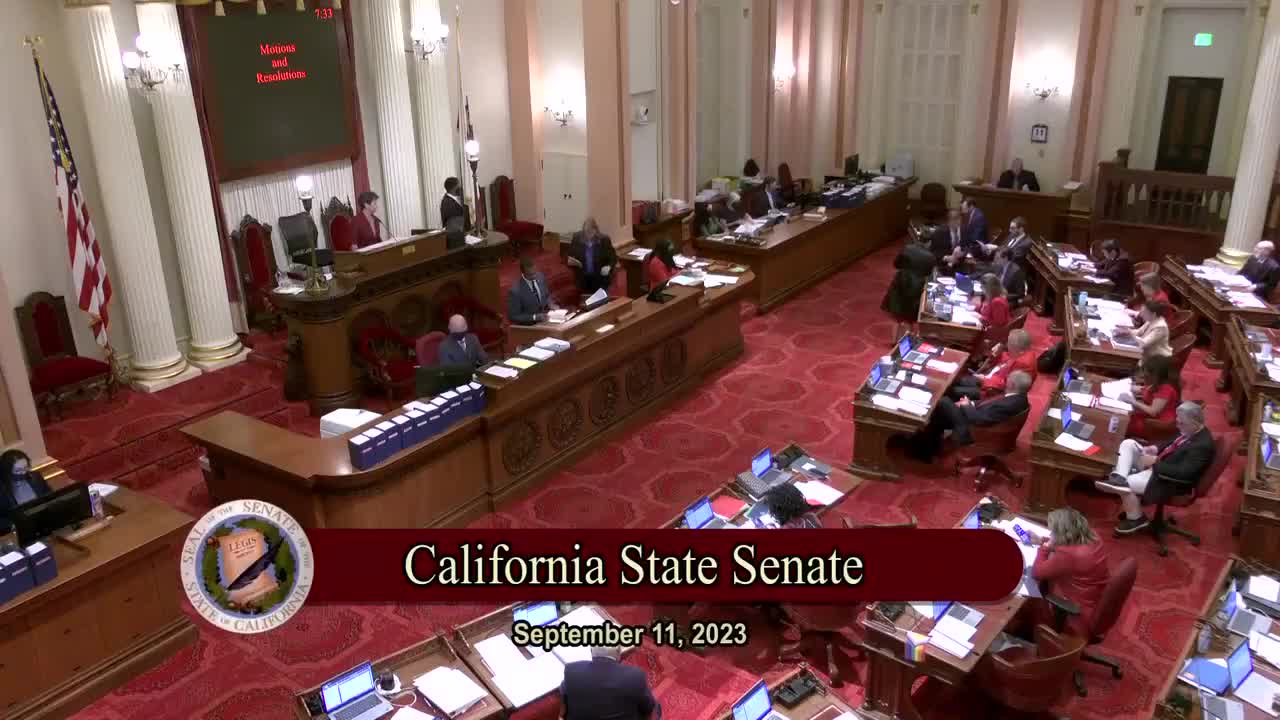 38SEC
Senate Floor
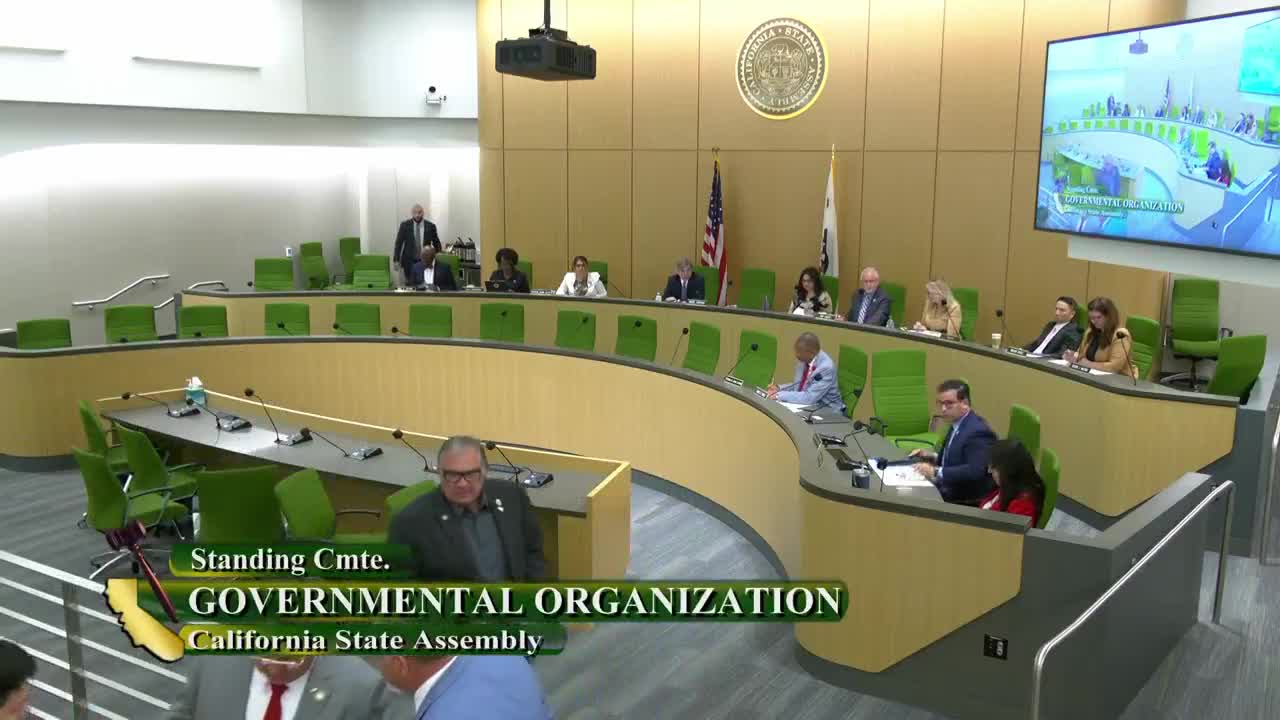 4MIN
Assembly Standing Committee on Governmental Organization
Bill Author

Bill Co-Author(s):