AB 1282: Mental health: impacts of social media.
- Session Year: 2023-2024
- House: Assembly
- Latest Version Date: 2024-09-28
Current Status:
Passed
(2024-09-28: Chaptered by Secretary of State - Chapter 807, Statutes of 2024.)
Introduced
In Committee
First Chamber
In Committee
Second Chamber
Enacted
Existing law, the Mental Health Services Act, an initiative measure enacted by the voters as Proposition 63 at the November 2, 2004, statewide general election, establishes the Mental Health Services Oversight and Accountability Commission, and authorizes the commission to take specified actions, including advising the Governor or the Legislature regarding actions the state may take to improve care and services for people with mental illness. Existing law authorizes the State Department of Public Health to, among other things, enforce its regulations and protect and preserve the public health.
This bill would require the department, in consultation with the commission, to report to specified policy committees of the Legislature, on or before December 31, 2026, a statewide strategy to understand, communicate, and mitigate mental health risks associated with the use of social media by children and youth. The bill would require the report to include, among other things, (1) the degree to which the mental health of children and youth is positively, negatively, or neutrally impacted by use of social media and (2) recommendations to strengthen children and youth resiliency strategies and Californias use of mental health services related to social media use. The bill would require the department to explore, among other things, the child and youth populations that use social media, including disproportionate rates and impacts among specific groups, and the negative behavioral health risks, as specified, associated with social media use and misuse among children and youth. The bill would require the department to additionally consult with certain communities in preparing the report, and prior to publication. The bill would repeal these provisions on January 1, 2030.
Existing law, the Mental Health Services Act, an initiative measure enacted by the voters as Proposition 63 at the November 2, 2004, statewide general election, establishes the Mental Health Services Oversight and Accountability Commission, and authorizes the commission to take specified actions, including advising the Governor or the Legislature regarding actions the state may take to improve care and services for people with mental illness. Existing law authorizes the State Department of Public Health to, among other things, enforce its regulations and protect and preserve the public health.
This bill would require the commission department, in consultation with the commission, to report to specified policy committees of the Legislature, on or before July 1, 2025, December 31, 2026, a statewide strategy to understand, communicate, and mitigate mental health risks associated with the use of social media by children and youth. The bill would require the report to include, among other things, (1) the degree to which individuals negatively impacted by social media are accessing and receiving mental health services the mental health of children and youth is positively, negatively, or neutrally impacted by use of social media and (2) recommendations to strengthen children and youth resiliency strategies and Californias use of mental health services to reduce the negative outcomes that may result from untreated mental illness, as specified. related to social media use. The bill would require the commission department to explore, among other things, the persons child and youth populations that use social media media, including disproportionate rates and impacts among specific groups, and the negative mental behavioral health risks risks, as specified, associated with social media and artificial intelligence, as defined. use and misuse among children and youth. The bill would require the department to additionally consult with certain communities in preparing the report, and prior to publication. The bill would repeal these provisions on January 1, 2029. 2030.
Existing law, the Mental Health Services Act, an initiative measure enacted by the voters as Proposition 63 at the November 2, 2004, statewide general election, establishes the Mental Health Services Oversight and Accountability Commission, and authorizes the commission to take specified actions, including advising the Governor or the Legislature regarding actions the state may take to improve care and services for people with mental illness.
This bill would require the commission to report to specified policy committees of the Legislature, on or before July 1, 2025, a statewide strategy to understand, communicate, and mitigate mental health risks associated with the use of social media by children and youth. The bill would require the report to include, among other things, (1) the degree to which individuals negatively impacted by social media are accessing and receiving mental health services and (2) recommendations to strengthen children and youth resiliency strategies and Californias use of mental health services to reduce the negative outcomes that may result from untreated mental illness, as specified. The bill would require the commission to explore, among other things, the persons and populations that use social media and the negative mental health risks associated with social media and artificial intelligence, as defined. The bill would repeal these provisions on January 1, 2029.
Existing law, the Mental Health Services Act, an initiative measure enacted by the voters as Proposition 63 at the November 2, 2004, statewide general election, establishes the Mental Health Services Oversight and Accountability Commission, and authorizes the commission to take specified actions, including advising the Governor or the Legislature regarding actions the state may take to improve care and services for people with mental illness.
This bill would require the commission to report to specified policy committees of the Legislature, on or before July 1, 2026, 2025, a statewide strategy to understand, communicate, and mitigate mental health risks associated with the use of social media by children and youth. The bill would require the report to include, among other things, (1) the degree to which individuals negatively impacted by social media are accessing and receiving mental health services and (2) recommendations to strengthen children and youth resiliency strategies and Californias use of mental health services to reduce the negative outcomes that may result from untreated mental illness, as specified. The bill would require the commission to explore, among other things, the persons and populations that use social media and the negative mental health risks associated with social media, as specified. media and artificial intelligence, as defined. The bill would repeal these provisions on January 1, 2029.
Existing law, the Mental Health Services Act, an initiative measure enacted by the voters as Proposition 63 at the November 2, 2004, statewide general election, establishes the Mental Health Services Oversight and Accountability Commission, and authorizes the commission to take specified actions, including advising the Governor or the Legislature regarding actions the state may take to improve care and services for people with mental illness.
This bill would require the commission to report to the relevant specified policy committees of the Legislature, on or before July 1, 2026, a statewide strategy to understand, communicate, and mitigate mental health risks associated with the use of social media by children and youth. The bill would require the report to include, among other things, (1) the degree to which individuals negatively impacted by social media are accessing and receiving mental health services and (2) recommendations to strengthen children and youth resiliency strategies and Californias use of mental health services to reduce the negative outcomes that may result from untreated mental illness, as specified. The bill would require the commission to explore, among other things, the persons and populations that use social media and the negative mental health risks associated with social media, as specified. The bill would repeal these provisions on January 1, 2029.
Existing law, the Mental Health Services Act, an initiative measure enacted by the voters as Proposition 63 at the November 2, 2004, statewide general election, establishes the Mental Health Services Oversight and Accountability Commission, and authorizes the commission to take specified actions, including advising the Governor or the Legislature regarding actions the state may take to improve care and services for people with mental illness.
This bill would require the commission to report to the relevant policy committees of the Legislature, on or before July 1, 2026, a statewide strategy to understand, communicate, and mitigate mental health risks associated with the use of social media by children and youth. The bill would require the report to include, among other things, (1) the degree to which individuals negatively impacted by social media are accessing and receiving mental health services and (2) recommendations to strengthen children and youth resiliency strategies and Californias use of mental health services to reduce the negative outcomes that may result from untreated mental illness, as specified. The bill would require the commission to explore, among other things, the persons and populations that use social media and the negative mental health risks associated with social media, as specified. The bill would repeal these provisions on January 1, 2029.
This bill would establish the Program for Researching the Impacts of Social Media on Mental Health (PRISMMH), which would require the commission to conduct research and gather information regarding the impacts of social media use on mental health. The bill would require the commission to issue a publicly available report, annually, to the Governor and the Legislature, beginning on or before July 1, 2025. The bill would require the report to include current research related to the impacts of social media use on mental health and recommendations for actions to be taken by the Governor and Legislature, including, but not limited to, policy solutions and legislation to address the impacts of social media use on mental health.Existing law, the Mental Health Services Act, an initiative measure enacted by the voters as Proposition 63 at the November 2, 2004, statewide general election, establishes the Mental Health Services Oversight and Accountability Commission, and authorizes the commission to take specified actions, including advising the Governor or the Legislature regarding actions the state may take to improve care and services for people with mental illness.
This bill would establish the Program for Researching the Impacts of Social Media on Mental Health (PRISMMH), which would require the commission to conduct research and gather information regarding the impacts of social media use on mental health. The bill would require the commission to issue a publicly available report, annually, to the Governor and the Legislature, beginning on or before July 1, 2025. The bill would require the report to include current research related to the impacts of social media use on mental health and recommendations for actions to be taken by the Governor and Legislature, including, but not limited to, policy solutions and legislation to address the impacts of social media use on mental health.
Existing law requires the State Department of Health Care Services to establish standards for specified mental health programs and to apply those standards to any facility licensed as a social rehabilitation facility. Under existing law, this requirement, however, does not limit the authority of the department to delegate the evaluation and enforcement of the program standards to a county mental health program if a licensed social rehabilitation facility has a contractual relationship with a county mental health program and the county has requested the delegation.This bill would make technical, nonsubstantive changes to that latter provision governing delegation.Existing law requires the State Department of Health Care Services to establish standards for specified mental health programs and to apply those standards to any facility licensed as a social rehabilitation facility. Under existing law, this requirement, however, does not limit the authority of the department to delegate the evaluation and enforcement of the program standards to a county mental health program if a licensed social rehabilitation facility has a contractual relationship with a county mental health program and the county has requested the delegation.
This bill would make technical, nonsubstantive changes to that latter provision governing delegation.
As used in this article, the following definitions apply:
(a)Children and youth means individuals up to 26 years of age.
(b)Department means the State Department of Public Health.
(c)Social media means a social media platform, as defined in Section 22675 of the Business and Professions Code.
124270.1.(a)The department, in consultation with the Behavioral Health Services Oversight and Accountability Commission, shall report to the Senate and Assembly Committees on Health, the Senate Committee on Judiciary, the Assembly Committee on Privacy and Consumer Protection, and other relevant policy committees of the Legislature, a statewide strategy to understand, communicate, and mitigate mental health risks associated with the use of social media by children and youth. The report shall include all of the following:
(1)The degree to which the mental health of children and youth is positively, negatively, or neutrally impacted by use of social media.
(2)Recommendations to strengthen children and youth resiliency strategies and Californias use of mental health services related to social media use.
(3)Any barriers to receiving data relevant to completing this report.
(b)In preparing the report, the department shall explore all of the following:
(1)The types of social media.
(2)The child and youth populations that use social media, including disproportionate rates and impacts among specific groups.
(3)Opportunities to support resilience and mental well-being among children and youth around social media use.
(4)Negative behavioral health risks, which includes mental health and substance misuse associated with social media use and misuse among children and youth.
(5)The factors that contribute to positive, negative, and neutral impacts among various populations of children and youth.
(c)In formulating this report, the department shall prioritize the perspectives of children and youth through a robust engagement process with a focus on transition-age youth, at-risk populations, in-need populations, and underserved cultural and linguistic populations.
(d)The department shall also consult with the California mental health community, including, but not limited to, consumers, children, youth, families, providers, educators, and other subject matter experts, as it develops the report and prior to the report being publicly reported as provided in subdivision (a).
(e)The report shall be submitted on or before December 31, 2026.
(f)The report shall be submitted in compliance with Section 9795 of the Government Code.
124270.2.This article shall remain in effect only until January 1, 2030, and as of that date is repealed.
SECTION 1.Part 4.3 (commencing with Section 5888) is added to Division 5 of the Welfare and Institutions Code, to read:4.3.Impacts of Social Media and Artificial Intelligence on Mental Health5888.As used in this part, the following definitions shall apply:(a)Children and youth means individuals up to 26 years of age. (b)Commission means the Mental Health Services Oversight and Accountability Commission established pursuant to Section 5845.(c)Social media means a social media platform, as defined in Section 22675 of the Business and Professions Code.(d)Artificial intelligence means a machine-based system that can, for a given set of human-defined objectives, make predictions, recommendations, or decisions influencing real or virtual environments. Artificial intelligence systems use machine- and human-based inputs to do all of the following: (1)Perceive real and virtual environments.(2)Abstract those perceptions into models through analysis in an automated manner.(3)Use model inferences to formulate options for information or action.5888.1.(a)The commission shall report to the Senate and Assembly Committees on Health, the Senate Committee on Judiciary, the Assembly Committee on Privacy and Consumer Protection, and other relevant policy committees of the Legislature a statewide strategy to understand, communicate, and mitigate mental health risks associated with the use of social media by children and youth. The report shall include all of the following:(1)The degree to which individuals negatively impacted by social media are accessing and receiving mental health services.(2)Recommendations to strengthen children and youth resiliency strategies and Californias use of mental health services to reduce the negative outcomes that may result from untreated mental illness enumerated in subdivision (d) of Section 5840.(3)Any barriers to receiving the data relevant to completing this report.(b)In preparing the report, the commission shall explore all of the following:(1)The types of social media.(2)The persons and populations that use social media.(3)Opportunities to support resilience.(4)Negative mental health risks associated with social media, including all of the following:(A)Suicide.(B)Eating disorders.(C)Self-harm.(D)Prolonged suffering.(E)Depression.(F)Anxiety.(G)Bullying.(H)Substance abuse.(I)Other mental health risks as determined by the commission.(5)The negative health risks associated with artificial intelligence.(c)In formulating this report, the commission shall prioritize the perspectives of children and youth through a robust engagement process with a focus on transition-age youth, at-risk populations, in-need populations and underserved cultural and linguistic populations. The commission shall also consult with the California mental health community, including, but not limited to, consumers, family members, providers, and other subject matter experts.(d)The report shall be submitted on or before July 1, 2025.5888.2.This part shall remain in effect only until January 1, 2029, and as of that date is repealed.As used in this part, the following definitions shall apply:
(a)Children and youth means individuals up to 26 years of age.
(b)Commission means the Mental Health Services Oversight and Accountability Commission established pursuant to Section 5845.
(c)Social media means a social media platform, as defined in Section 22675 of the Business and Professions Code.
(d)Artificial intelligence means a machine-based system that can, for a given set of human-defined objectives, make predictions, recommendations, or decisions influencing real or virtual environments. Artificial intelligence systems use machine- and human-based inputs to do all of the following:
(1)Perceive real and virtual environments.
(2)Abstract those perceptions into models through analysis in an automated manner.
(3)Use model inferences to formulate options for information or action.
5887.1.5888.1.(a)The commission shall report to the Senate and Assembly Committees on Health, the Senate Committee on Judiciary, the Assembly Committee on Privacy and Consumer Protection, and other relevant policy committees of the Legislature a statewide strategy to understand, communicate, and mitigate mental health risks associated with the use of social media by children and youth. The report shall include all of the following:
(1)The degree to which individuals negatively impacted by social media are accessing and receiving mental health services.
(2)Recommendations to strengthen children and youth resiliency strategies and Californias use of mental health services to reduce the negative outcomes that may result from untreated mental illness enumerated in subdivision (d) of Section 5840.
(3)Any barriers to receiving the data relevant to completing this report.
(b)In preparing the report, the commission shall explore all of the following:
(1)The types of social media.
(2)The persons and populations that use social media.
(3)Opportunities to support resilience.
(4)Negative mental health risks associated with social media, including all of the following:
(A)Suicide.
(B)Eating disorders.
(C)Self-harm.
(D)Prolonged suffering.
(E)Depression.
(F)Anxiety.
(G)Bullying.
(H)Substance abuse.
(I)Other mental health risks as determined by the commission.
(5)The negative health risks associated with artificial intelligence.
(c)In formulating this report, the commission shall prioritize the perspectives of children and youth through a robust engagement process with a focus on transition-age youth, at-risk populations, in-need populations and underserved cultural and linguistic populations. The commission shall also consult with the California mental health community, including, but not limited to, consumers, family members, providers, and other subject matter experts.
(d)The report shall be submitted on or before July 1, 2025.
5887.2.5888.2.This part shall remain in effect only until January 1, 2029, and as of that date is repealed.
As used in this part, the following definitions shall apply:
(a)Children and youth means individuals up to 26 years of age.
(b)Commission means the Mental Health Services Oversight and Accountability Commission established pursuant to Section 5845.
(c)Social media means a social media platform, as defined in Section 22675 of the Business and Professions Code.
(d)Artificial intelligence means a machine-based system that can, for a given set of human-defined objectives, make predictions, recommendations, or decisions influencing real or virtual environments. Artificial intelligence systems use machine- and human-based inputs to do all of the following:
(1)Perceive real and virtual environments.
(2)Abstract those perceptions into models through analysis in an automated manner.
(3)Use model inferences to formulate options for information or action.
5887.1.(a)The commission shall report to the Senate and Assembly Committees on Health, the Senate Committee on Judiciary, the Assembly Committee on Privacy and Consumer Protection, and other relevant policy committees of the Legislature a statewide strategy to understand, communicate, and mitigate mental health risks associated with the use of social media by children and youth. The report shall include all of the following:
(1)The degree to which individuals negatively impacted by social media are accessing and receiving mental health services.
(2)Recommendations to strengthen children and youth resiliency strategies and Californias use of mental health services to reduce the negative outcomes that may result from untreated mental illness enumerated in subdivision (d) of Section 5840.
(3)Any barriers to receiving the data relevant to completing this report.
(b)In preparing the report, the commission shall explore all of the following:
(1)The types of social media.
(2)The persons and populations that use social media.
(3)Opportunities to support resilience.
(4)Negative mental health risks associated with social media, including all of the following:
(A)Suicide.
(B)Eating disorders.
(C)Self-harm.
(D)Prolonged suffering.
(E)Depression.
(F)Anxiety.
(G)Bullying.
(H)Substance abuse.
(I)Other mental health risks as determined by the commission.
(5)The negative health risks associated with artificial intelligence.
(c)In formulating this report, the commission shall prioritize the perspectives of children and youth through a robust engagement process with a focus on transition-age youth, at-risk populations, in-need populations and underserved cultural and linguistic populations. The commission shall also consult with the California mental health community, including, but not limited to, consumers, family members, providers, and other subject matter experts.
(d)The report shall be submitted on or before July 1, 2026. 2025.
5887.2.This part shall remain in effect only until January 1, 2029, and as of that date is repealed.
As used in this part, the following definitions shall apply:
(a)Children and youth means individuals up to 26 years of age.
(a)(b)Commission means the Mental Health Services Oversight and Accountability Commission established pursuant to Section 5845.
(b)(c)Social media means a public or semipublic internet-based service or application that has users in California and that meets both of the following criteria: social media platform, as defined in Section 22675 of the Business and Professions Code.
(1)A substantial function of the service or application is to connect users in order to allow users to interact socially with each other within the service or application. A service or application that provides email or direct messaging services shall not be considered to meet this criterion on the basis of that function alone.(2)The service or application allows users to do all of the following:(A)Construct a public or semipublic profile for purposes of signing into and using the service or application.(B)Populate a list of other users with whom an individual shares a social connection within the system.(C)Create or post content viewable by other users, including, but not limited to, on message boards, in chat rooms, or through a landing page or main feed that presents the user with content generated by other users.5887.1.(a)The commission shall report to the Senate and Assembly Committees on Health, the Senate Committee on Judiciary, the Assembly Committee on Privacy and Consumer Protection, and other relevant policy committees of the Legislature a statewide strategy to understand, communicate, and mitigate mental health risks associated with the use of social media by children and youth. The report shall include all of the following:
(1)The degree to which individuals negatively impacted by social media are accessing and receiving mental health services.
(2)Recommendations to strengthen children and youth resiliency strategies and Californias use of mental health services to reduce the negative outcomes that may result from untreated mental illness enumerated in subdivision (d) of Section 5840.
(3)Any barriers to receiving the data relevant to completing this report.
(b)In preparing the report, the commission shall explore all of the following:
(1)The types of social media.
(2)The persons and populations that use social media.
(3)Opportunities to support resilience.
(4)Negative mental health risks associated with social media, including all of the following:
(A)Suicide.
(B)Eating disorders.
(C)Self-harm.
(D)Prolonged suffering.
(E)Depression.
(F)Anxiety.
(G)Bullying.
(H)Substance abuse.
(I)Other mental health risks as determined by the commission.
(c)In formulating this report, the commission shall prioritize the perspectives of children and youth through a robust engagement process with a focus on transition-aged transition-age youth, at-risk populations, in-need populations and underserved cultural and linguistic populations. The commission shall also consult with the California mental health community, including, but not limited to, consumers, family members, providers, and other subject matter experts.
(d)The report shall be submitted on or before July 1, 2026.
(e) A report to be submitted pursuant to this section shall be submitted in compliance with Section 9795 of the Government Code.5887.2.This part shall remain in effect only until January 1, 2029, and as of that date is repealed.
As used in this part, the following definitions shall apply:
(a)Commission means the Mental Health Services Oversight and Accountability Commission established pursuant to Section 5845.
(b)Social media means a public or semipublic internet-based service or application that has users in California and that meets both of the following criteria:
(1)A substantial function of the service or application is to connect users in order to allow users to interact socially with each other within the service or application. A service or application that provides email or direct messaging services shall not be considered to meet this criterion on the basis of that function alone.
(2)The service or application allows users to do all of the following:
(A)Construct a public or semipublic profile for purposes of signing into and using the service or application.
(B)Populate a list of other users with whom an individual shares a social connection within the system.
(C)Create or post content viewable by other users, including, but not limited to, on message boards, in chat rooms, or through a landing page or main feed that presents the user with content generated by other users.
5887.1.(a)The commission shall report to the relevant policy committees of the Legislature a statewide strategy to understand, communicate, and mitigate mental health risks associated with the use of social media by children and youth. The report shall include all of the following:
(1)The degree to which individuals negatively impacted by social media are accessing and receiving mental health services.
(2)Recommendations to strengthen children and youth resiliency strategies and Californias use of mental health services to reduce the negative outcomes that may result from untreated mental illness enumerated in subdivision (d) of Section 5840.
(3)Any barriers to receiving the data relevant to completing this report.
(b)In preparing the report, the commission shall explore all of the following:
(1)The types of social media.
(2)The persons and populations that use social media.
(3)Opportunities to support resilience.
(4)Negative mental health risks associated with social media, including all of the following:
(A)Suicide.
(B)Eating disorders.
(C)Self-harm.
(D)Prolonged suffering.
(E)Depression.
(F)Anxiety.
(G)Bullying.
(H)Substance abuse.
(I)Other mental health risks as determined by the commission.
(c)In formulating this report, the commission shall prioritize the perspectives of children and youth through a robust engagement process with a focus on transition-aged youth, at-risk populations, in-need populations and underserved cultural and linguistic populations. The commission shall also consult with the California mental health community, including, but not limited to, consumers, family members, providers, and other subject matter experts.
(d)The report shall be submitted on or before July 1, 2026.
(e) A report to be submitted pursuant to this section shall be submitted in compliance with Section 9795 of the Government Code.
5887.2.This part shall remain in effect only until January 1, 2029, and as of that date is repealed.
This part shall be known, and may be cited, as the Program for Researching the Impacts of Social Media on Mental Health (PRISMMH).
5887.1.As used in this part, the following definitions shall apply:
(a)Commission means the Mental Health Services Oversight and Accountability Commission established pursuant to Section 5845.
(b)Program means the Program for Researching the Impacts of Social Media on Mental Health (PRISMMH).
(c)Social media means a public or semipublic internet-based service or application that has users in California and that meets both of the following criteria:
(1)A substantial function of the service or application is to connect users in order to allow users to interact socially with each other within the service or application. A service or application that provides email or direct messaging services shall not be considered to meet this criterion on the basis of that function alone.
(2)The service or application allows users to do all of the following:
(A)Construct a public or semipublic profile for purposes of signing into and using the service or application.
(B)Populate a list of other users with whom an individual shares a social connection within the system.
(C)Create or post content viewable by other users, including, but not limited to, on message boards, in chat rooms, or through a landing page or main feed that presents the user with content generated by other users.
5887.2.(a)The Program for Researching the Impacts of Social Media on Mental Health (PRISMMH) is hereby established for the purpose of conducting research and gathering information regarding the impacts of social media use on mental health.
(b)The commission shall conduct research and gather information regarding the impacts of social media use on mental health.
(c)The commission may collaborate and consult with subject-matter experts and outside entities to conduct research and gather information.
(d)Notwithstanding Section 10231.5 of the Government Code, the commission shall issue a program report to the Governor and the Legislature, by July 1 of each year. The report shall be made publicly available and shall be displayed on the commissions internet website. The first annual report shall be made available on or before July 1, 2025.
(1)The report shall include all of the following:
(A)A description of the program activities conducted in the previous year.
(B)A thorough accounting of current research related to the impacts of social media use on mental health.
(C)Recommendations for actions to be taken by the Governor and the Legislature, including, but not limited to, policy solutions and legislation that will help the state respond to and address the impacts of social media use on mental health.
(2)A report to be submitted pursuant to subdivision (d) shall be submitted in compliance with Section 9795 of the Government Code.
SECTION 1.Section 4091 of the Welfare and Institutions Code is amended to read:4091.Section 4090 does not limit the authority of the State Department of Health Care Services to delegate the evaluation and enforcement of the program standards to a county mental health program if a licensed social rehabilitation facility has a contractual relationship with a county mental health program and the county has requested the delegation.Nothing in Section 4090 limits Section 4090 does not limit the authority of the State Department of Health Care Services to delegate the evaluation and enforcement of the program standards to a county mental health program when if a licensed social rehabilitation facility has a contractual relationship with a county mental health program and the county has requested the delegation.
|
Date
|
Status
|
|---|---|
| Sep 28, 2024 | Chaptered by Secretary of State - Chapter 807, Statutes of 2024. |
| Sep 28, 2024 | Approved by the Governor. |
| Sep 10, 2024 | Enrolled and presented to the Governor at 4:30 p.m. |
| Aug 28, 2024 | Senate amendments concurred in. To Engrossing and Enrolling. (Ayes 77. Noes 0.). |
| Aug 28, 2024 | Assembly Rule 77 suspended. |
| Aug 28, 2024 | In Assembly. Concurrence in Senate amendments pending. May be considered on or after August 30 pursuant to Assembly Rule 77. |
| Aug 27, 2024 | Read third time. Passed. Ordered to the Assembly. (Ayes 40. Noes 0.). |
| Aug 26, 2024 | Read second time. Ordered to third reading. |
| Aug 22, 2024 | Read third time and amended. Ordered to second reading. |
| Aug 13, 2024 | Read second time. Ordered to third reading. |
| Aug 12, 2024 | Ordered to second reading. |
| Aug 12, 2024 | From inactive file. |
| Sep 11, 2023 | Ordered to inactive file at the request of Senator Menjivar. |
| Sep 11, 2023 | From special consent calendar |
| Sep 8, 2023 | Ordered to special consent calendar. |
| Sep 5, 2023 | Read second time. Ordered to third reading. |
| Sep 1, 2023 | Read second time and amended. Ordered returned to second reading. |
| Sep 1, 2023 | From committee: Amend, and do pass as amended. (Ayes 7. Noes 0.) (September 1). |
| Aug 14, 2023 | In committee: Referred to APPR suspense file. |
| Jul 6, 2023 | From committee: Do pass and re-refer to Com. on APPR with recommendation: To Consent Calendar. (Ayes 11. Noes 0.) (July 6). Re-referred to Com. on APPR. |
| Jun 22, 2023 | From committee: Do pass and re-refer to Com. on JUD. with recommendation: To Consent Calendar. (Ayes 12. Noes 0.) (June 21). Re-referred to Com. on JUD. |
| Jun 13, 2023 | From committee chair, with author's amendments: Amend, and re-refer to committee. Read second time, amended, and re-referred to Com. on HEALTH. |
| Jun 7, 2023 | Referred to Coms. on HEALTH and JUD. |
| May 26, 2023 | In Senate. Read first time. To Com. on RLS. for assignment. |
| May 25, 2023 | Read third time. Passed. Ordered to the Senate. (Ayes 77. Noes 0. Page 1767.) |
| May 18, 2023 | Read second time. Ordered to third reading. |
| May 18, 2023 | From committee: Do pass. (Ayes 15. Noes 0.) (May 18). |
| May 18, 2023 | Joint Rule 62(a), file notice suspended. (Page 1580.) |
| May 17, 2023 | In committee: Set, first hearing. Referred to APPR. suspense file. |
| Apr 26, 2023 | From committee: Do pass and re-refer to Com. on APPR. with recommendation: To Consent Calendar. (Ayes 11. Noes 0.) (April 25). Re-referred to Com. on APPR. |
| Apr 24, 2023 | Re-referred to Com. on P. & C.P. |
| Apr 20, 2023 | Read second time and amended. |
| Apr 19, 2023 | From committee: Amend, and do pass as amended and re-refer to Com. on P. & C.P. with recommendation: To Consent Calendar. (Ayes 15. Noes 0.) (April 18). |
| Apr 7, 2023 | Re-referred to Com. on HEALTH. |
| Apr 6, 2023 | From committee chair, with author's amendments: Amend, and re-refer to Com. on HEALTH. Read second time and amended. |
| Mar 28, 2023 | In committee: Set, first hearing. Hearing canceled at the request of author. |
| Mar 13, 2023 | Re-referred to Com. on HEALTH. |
| Mar 9, 2023 | From committee chair, with author's amendments: Amend, and re-refer to Com. on HEALTH. Read second time and amended. |
| Mar 9, 2023 | Referred to Coms. on HEALTH and P. & C.P. |
| Feb 17, 2023 | From printer. May be heard in committee March 19. |
| Feb 16, 2023 | Read first time. To print. |
|
Date
|
Description
|
Location
|
Votes
|
|
|---|---|---|---|---|
| Aug 28, 2024 | AB 1282 Lowenthal Concurrence in Senate Amendments | Assembly Floor |
Passed |
|
| Aug 27, 2024 | Assembly 3rd Reading AB1282 Lowenthal et al. By Wiener | Senate Floor |
Passed |
|
| Sep 1, 2023 | Do pass as amended | Senate Standing Committee on Appropriations |
Passed |
|
| Aug 14, 2023 | Placed on suspense file | Senate Standing Committee on Appropriations |
Passed |
|
| Jul 6, 2023 | Do pass, but first be re-referred to the Committee on [Appropriations] with the recommendation: To Consent Calendar | Senate Standing Committee on Judiciary |
Passed |
|
| Jun 21, 2023 | Do pass, but first be re-referred to the Committee on [Judiciary] with the recommendation: To Consent Calendar | Senate Standing Committee on Health |
Passed |
|
| May 25, 2023 | AB 1282 Lowenthal Assembly Third Reading | Assembly Floor |
Passed |
|
| May 18, 2023 | Do pass. | Assembly Standing Committee on Appropriations |
Passed |
|
| Apr 25, 2023 | Do pass and be re-referred to the Committee on [Appropriations] with recommendation: To Consent Calendar | Assembly Standing Committee on Privacy and Consumer Protection |
Passed |
|
| Apr 18, 2023 | Do pass as amended, and be re-referred to the Committee on [Privacy and Consumer Protection] with recommendation: To Consent Calendar | Assembly Standing Committee on Health |
Passed |
This list shows positions taken on this bill by organizations on the date displayed, which is linked to the original source.
Positions by individuals are not included.
|
Organization
|
Position
|
Date
|
|---|---|---|
| Behavioral Health Services Oversight and Accountability Commission | ** Support | |
| California Academy of Child and Adolescent Psychiatry | ** Support | |
| California Academy Of Family Physicians | ** Support | |
| California Civil Liberties Advocacy | ** Support | |
| Los Angeles County Office Of Education | ** Support | |
| Mental Health Services Oversight and Accountability Commission | ** Support | |
| NextGen California | ** Support |
CONCURRENCE IN SENATE AMENDMENTS
CSA1 Bill Id:AB 1282
Author:(Lowenthal)
As Amended Ver:August 22, 2024
Majority vote
SUMMARY
Requires the Department of Public Health (DPH), in consultation with the Behavioral Health Services Oversight and Accountability Commission (BHSOAC) on or before December 31, 2026, to report to the relevant policy committees of the Legislature a statewide strategy to understand, communicate, and mitigate mental health risks associated with the use of social media by children and youth.
Senate Amendments
Incorporate technical assistance from Governor Newsom's Administration to revise and recast the provisions of this bill. Specifically, the amendments:
- Require DPH, in consultation with BHSOAC, on or before December 31, 2026, to report to the relevant policy committees of the Legislature a statewide strategy to understand, communicate and mitigate mental health risks associated with the use of social media by children and youth.
- Require the report to include the following:
- The degree to which the mental health of children and youth is positively, negatively, or neutrally impacted by the use of social media;
- Recommendations to strengthen children and youth resiliency strategies and California's use of mental health services related to social media use; and,
- Any barriers to receiving data relevant to completing this report.
- Requires, in preparing the report, DPH to explore all of the following:
- The types of social media;
- The child and youth populations that use social media, including disproportionate rates and impacts among specific groups;
- Opportunities to support resilience and mental well-being among children and youth around social media use;
- Negative behavioral health risks, which includes mental health and substance misuse associated with social media use and misuse among children and youth; and,
- The factors that contribute to positive, negative, and neutral impacts among various populations of children and youth.
- Require DPH to prioritize the perspectives of children and youth through a robust engagement process, as specified.
- Require DPH to consult with the mental health community, as specified.
- Sunset the provisions of this bill on January 1, 2030.
- Add coauthors.
COMMENTS
According to the United States Surgeon General, mental health challenges are the leading cause of disability and poor life outcomes in young people. Research indicates that half of all mental health conditions begin by the age of 14 and more than 75% of mental health challenges develop before a person reaches the age of 24.
- US Centers for Disease Control and Prevention's Youth Risk Behavior Survey Data Summary & Trends Report 2011-2021 (YRBS): According to the YRBS, in 2021, 16% of high school students were electronically bullied, including through texting, Instagram, Facebook, or other social media, during the past year. Female students were more likely than male students to be electronically bullied. American Indian or Alaska Native and white students were more likely than students from most other racial and ethnic groups to be electronically bullied. LGBTQ+ students and students who had any same-sex partners were more likely than their peers to be electronically bullied. The percentage of male students who were electronically bullied increased from 2011 to 2021. The YRBS also reported that in 2021, 42% of high school students felt so sad or hopeless almost every day for at least two weeks in a row that they stopped doing their usual activities. Female students were more likely than male students to experience persistent feelings of sadness or hopelessness. Hispanic and multiracial students were more likely than Asian, Black, and white students to experience persistent feelings of sadness or hopelessness. LGBTQ+ students and students who had any same-sex partners were also more likely than their peers to experience persistent feelings of sadness or hopelessness. Additionally, the survey found that 29% of high school students experienced poor mental health during the past 30 days. Female students were more likely than male students to experience poor mental health. Asian and Black students were less likely than Hispanic and multiracial students to experience poor mental health. Asian students were also less likely than white students to experience poor mental health. LGBTQ+ students and students who had any same-sex partners were more likely than their peers to experience poor mental health. Finally, the survey found that, in 2021, 22% of high school students seriously considered attempting suicide during the past year, 18% of high school students made a suicide plan during the past year, and 10% of high school students attempted suicide one or more times during the past year.
- School Districts Sue Social Media Companies. Education Week reported on January 31, 2024 that over 200 school districts have sued more than a dozen social media companies over the youth mental health crisis. In California, the San Mateo County School Board was the first of many California school boards and districts to file suit against the tech companies that run Facebook, Instagram, TikTok, Snapchat, WhatsApp, YouTube, and Google. According to a Calmatters report, the plaintiffs argue these platforms – and the algorithms designed to keep kids hooked – have caused unprecedented levels of anxiety, depression, bullying, eating disorders and suicidal ideation. The litigation points to research that has found a host of poor health, behavioral, and emotional outcomes associated with heavy social media use, such as depression, low self-esteem, cyberbullying, eating disorders, sleep deprivation, and more. The social media companies, in response to The San Diego Union-Tribune said they have taken many steps to regulate content for the sake of safety and well-being of their users. This is not the first issue over which school districts have engaged in mass litigation against corporate giants, alleging harm against their students. Hundreds of school districts nationwide had previously sued Juul Labs for its role in the youth vaping epidemic. Juul agreed to a nearly half-billion dollar settlement with six states, including California.
According to the Author
The presence and use of social media platforms globally has exploded over the last two decades. Many of the original platforms were designed to keep people connected and networked with one another for both personal and professional purposes; however, social media platforms have evolved into one of the primary means that individuals and organizations use to share ideas and information globally and this digital marketplace of ideas and information remains largely unregulated. Social media has proven to be a powerful tool that is capable of influencing people. The author continues, many countries around the world, including the US, are taking a much closer look at the impacts that social media has on its users and are trying to develop laws to regulate this digital space. As this policy and regulatory conversation unfolds, California has explored and passed legislation to help appropriately regulate social media platforms and more legislation is forthcoming in the state. While there has been legislation focused on regulating social media, including how to regulate this space to reduce future negative impacts on users, especially children and youth, the state does not currently have a game plan to address the current impacts that are being experienced by users who are children and youth and to develop strategies that promote resilience and help the state to understand, communicate, and mitigate mental health risks associated with the use of social media. The author concludes, this bill creates a game plan to make sure that children and youth throughout the state are receiving the support and resources they deserve to create resilience and mitigate the negative mental health impacts associated with social media use.
Arguments in Support
The California Academy of Family Physicians (CAFP) in support states that studies have linked social media usage to leading factors in children and youth developing anxiety, depression, and young girls developing body dysmorphic disorder. Without proper guardrails in place around social media usage, impressionable young children's mental health is at risk. This bill brings awareness to children and youth struggles with mental health. CAFP concludes this bill takes the necessary step to collect data and recommendation on the negative impact that social media has on children and youth and will aid in gathering recommendations on how to reduce the negative outcomes that may result from untreated mental illnesses.
Arguments in Opposition
None on file.
FISCAL COMMENTS
According to the Senate Appropriations Committee, BHSOAC estimates one-time costs of $125,000 (Mental Health Services Act funds) to develop the statewide strategy through literature review, identification of best practices, community engagement with an emphasis on rural and underrepresented communities, and consultation with subject matter experts.
VOTES:
ASM HEALTH: 15-0-0
YES: Wood, Waldron, Aguiar-Curry, Arambula, Boerner Horvath, Wendy Carrillo, Flora, Vince Fong, Maienschein, McCarty, Joe Patterson, Rodriguez, Santiago, Villapudua, Weber
ASM PRIVACY AND CONSUMER PROTECTION: 11-0-0
YES: Gabriel, Joe Patterson, Bauer-Kahan, Bennett, Essayli, Vince Fong, Irwin, Lowenthal, Papan, Wicks, Wilson
ASM APPROPRIATIONS: 15-0-1
YES: Holden, Megan Dahle, Bryan, Calderon, Wendy Carrillo, Dixon, Mike Fong, Hart, Lowenthal, Mathis, Papan, Pellerin, Sanchez, Weber, Ortega
ABS, ABST OR NV: Robert Rivas
ASSEMBLY FLOOR: 77-0-3
YES: Addis, Alanis, Alvarez, Arambula, Bains, Bauer-Kahan, Bennett, Berman, Boerner, Bonta, Bryan, Calderon, Juan Carrillo, Wendy Carrillo, Cervantes, Chen, Connolly, Megan Dahle, Davies, Dixon, Essayli, Flora, Mike Fong, Vince Fong, Friedman, Gabriel, Gallagher, Garcia, Gipson, Grayson, Haney, Hart, Holden, Hoover, Irwin, Jackson, Jones-Sawyer, Kalra, Lackey, Lee, Low, Lowenthal, Maienschein, McCarty, McKinnor, Muratsuchi, Stephanie Nguyen, Ortega, Pacheco, Jim Patterson, Joe Patterson, Pellerin, Petrie-Norris, Quirk-Silva, Ramos, Reyes, Luz Rivas, Robert Rivas, Rodriguez, Blanca Rubio, Sanchez, Santiago, Schiavo, Soria, Ta, Ting, Valencia, Villapudua, Waldron, Wallis, Ward, Weber, Wicks, Wilson, Wood, Zbur, Rendon
ABS, ABST OR NV: Aguiar-Curry, Mathis, Papan
SENATE FLOOR: 40-0-0
YES: Allen, Alvarado-Gil, Archuleta, Ashby, Atkins, Becker, Blakespear, Bradford, Caballero, Cortese, Dahle, Dodd, Durazo, Eggman, Glazer, Gonzalez, Grove, Hurtado, Jones, Laird, Limón, McGuire, Menjivar, Min, Newman, Nguyen, Niello, Ochoa Bogh, Padilla, Portantino, Roth, Rubio, Seyarto, Skinner, Smallwood-Cuevas, Stern, Umberg, Wahab, Wiener, Wilk
UPDATED
VERSION: August 22, 2024
CONSULTANT: Riana King / HEALTH / (916) 319-2097 FN: 0001632
SENATE RULES COMMITTEE Office of Senate Floor Analyses (916) 651-1520 Fax: (916) 327-4478 | AB 1282 |
THIRD READING
Bill No: AB 1282
Author: Lowenthal (D), et al.
Amended: 8/22/24 in Senate
Vote: 21
SENATE HEALTH COMMITTEE: 12-0, 6/21/23
AYES: Eggman, Nguyen, Glazer, Gonzalez, Grove, Hurtado, Limón, Menjivar, Roth, Rubio, Wahab, Wiener
SENATE JUDICIARY COMMITTEE: 11-0, 7/6/23
AYES: Umberg, Wilk, Allen, Ashby, Caballero, Durazo, Laird, Min, Niello, Stern, Wiener
SENATE APPROPRIATIONS COMMITTEE: 7-0, 9/1/23
AYES: Portantino, Jones, Ashby, Bradford, Seyarto, Wahab, Wiener
ASSEMBLY FLOOR: 77-0, 5/25/23 - See last page for vote
SUBJECT: Mental health: impacts of social media
SOURCE: Author
DIGEST:
This bill requires the California Department of Public Health, in consultation with the Behavioral Health Services Oversight and Accountability Commission, to report to specified legislative committees a statewide strategy to address mental health risks associated with the use of social media by children and youth. Sunsets the provisions in this bill on January 1, 2030.
Senate Floor Amendments of 8/22/24 incorporate technical assistance from Governor Newsom’s Administration, which help to address the impact of social media on the mental health of children and youth while restructuring the provisions in this bill, including:
- Shifting the responsibility for developing the statewide strategy from the Behavioral Health Services Oversight and Accountability Commission (BHSOAC) to the California Department of Public Health (CDPH);
- Removing the definition of and references to “artificial intelligence”;
- Shifting the scope of the report from focusing only on the negative impacts of social media use to a holistic assessment of the positive, negative, and neutral impacts of social media use on mental health;
- Extending the due date for the report from July 1, 2025 to December 31, 2026; and,
- Extending the repeal date from January 1, 2029 to January 1, 2030.
ANALYSIS:
Existing law:
- Establishes CDPH to be vested with all the duties, powers, purposes, functions, responsibilities, and jurisdiction as they relate to public health. [HSC §131050]
- Permits the BHSOAC to perform various functions in carrying out its duties and responsibilities, such as:
- Meeting at least once quarterly in locations convenient and open to the public;
- Establishing technical advisory committees, such as a committee of consumers and family members;
- Obtaining data and information from state or local entities that receive Mental Health Services Act (MHSA) funds to allow the BHSOAC to utilize in its oversight, review, training and technical assistance, accountability, and evaluation capacity, as specified;
- Assisting in providing technical assistance to accomplish the purposes of the MHSA;
- Establishing a framework and voluntary standard for mental health in the workplace, and provide guidance to California’s employer community to support the mental health and wellness of employees; and,
- Working in collaboration with the Department of Health Care Services (DHCS), the California Behavioral Health Planning Council, and the California Mental Health Directors Association, as specified, to design a joint plan for a coordinated evaluation of client outcomes in the community-based mental health system, as specified. [WIC §5845]
This bill:
- Requires CDPH, in consultation with the BHSAOC, to report to the Senate and Assembly Health Committees, Senate Judiciary Committee, Assembly Privacy and Consumer Protection Committee, and other relevant legislative committees, on or before December 31, 2026, a statewide strategy and report to understand, communicate, and mitigate mental health risks associated with the use of social media by children and youth aged up to 26 years. Requires the report to include:
- The degree to which the mental health of children and youth is positively, negatively, or neutrally impacted by use of social media;
- Recommendations to strengthen children and youth resiliency strategies and California’s use of mental health services related to social media use; and,
- Any barriers to receiving data relevant to completing the report.
- Requires CDPH to explore the following in preparing the report:
- The types of social media;
- The child and youth populations that use social media, including disproportionate rates and impacts among specific groups;
- Opportunities to support resilience and mental well-being among children and youth around social media use;
- Negative behavioral health risks, which includes mental health and substance misuse associated with social media use and misuse among children and youth; and,
- The factors that contribute to positive, negative, and neutral impacts among various populations of children and youth.
- Requires CDPH, in formulating the report, to prioritize the perspective of children and youth through a robust engagement process with a focus on transition-age youth, at-risk populations, in-need populations, and underserved cultural and linguistic populations. Requires CDPH to consult with specified stakeholders.
- Sunsets the provisions in this bill on January 1, 2030.
Comments
- Author’s statement. According to the author, the presence and use of social media platforms globally has exploded over the last two decades. Social media platforms have evolved into one of the primary means by which individuals and organizations share ideas and information globally, and this digital marketplace of ideas and information remains largely unregulated. Many countries, including the United States, are taking a much closer look at the impacts that social media has on its users and are trying to develop laws to regulate this digital space. As this policy and regulatory conversation unfolds, California has explored and passed legislation to help appropriately regulate social media platforms. While there has been legislation focused on regulating social media, including how to regulate this space to reduce future negative impacts on users, especially children and youth, the state does not currently have a game plan to address the current impacts that are being experienced by users who are children and youth, and develop strategies that promote resilience and help the state to understand, communicate, and mitigate mental health risks associated with the use of social media. This bill will create this game plan.
- U.S. Surgeon General’s (SG) Advisory. In a 2023 advisory, “Social Media and Youth Mental Health,” the SG states social media use by youth is nearly universal: up to 95% of youth ages 13-17 report using a social media platform, with more than a third saying they use social media almost constantly. Although age 13 is commonly, the required minimum age used by social media platforms in the U.S., nearly 40% of children aged eight to 12 use social media. Despite this widespread use among children and adolescents, robust independent safety analyses on the impact of social media on youth have not yet been conducted. There are increasing concerns among researchers, parents and caregivers, young people, health care experts, and others about the impact of social media on youth mental health. More research is needed to fully understand the impact of social media; however, the current body of evidence indicates that while social media may have benefits for some children and adolescents, there are ample indicators that social media can also have a profound risk of harm to the mental health and well-being of children and adolescents. A longitudinal cohort study of U.S. adolescents aged 12-15 that adjusted for baseline mental health status found that adolescents who spent more than three hours per day on social media faced double the risk of experiencing poor mental health outcomes, including symptoms of depression and anxiety. As of 2021, 8th and 10th graders now spend an average of 3.5 hours per day on social media. In a unique natural experiment that leveraged the staggered introduction of a social media platform across U.S. colleges, the rollout of the platform was associated with an increase in depression (9% over baseline) and anxiety (12% over baseline) among college-aged youth. The study’s co-author also noted that when applied across the entirety of the U.S. college population, the introduction of the social media platform may have contributed to more than 300,000 new cases of depression. The advisory states that if such sizable effects occurred in college-aged youth, these findings raise serious concerns about the risk of harm from social media exposure for children and adolescents who are at a more vulnerable stage of brain development. The SG notes that at this time there is not yet enough evidence to determine if social media is sufficiently safe for children and adolescents, but we must acknowledge the growing body of research about potential harms, increase our collective understanding of the risks associated with social media use, and urgently take action to create safe and healthy digital environments that minimize harm and safeguard children’s and adolescents’ mental health and well-being during critical stages of development.
- Centers for Disease Control and Prevention Youth Risk Behavior Survey Data Summary & Trends Report 2011-2021 (YRBS). According to the YRBS, in 2021, 16% of high school students were electronically bullied, including through texting, Instagram, Facebook, or other social media during the past year. Female students were more likely than male students to be electronically bullied, and American Indian or Alaska Native and White students were more likely than students from most other racial and ethnic groups to be electronically bullied. The percentage of male students who were electronically bullied increased from 2011 to 2021. Further, 42% of high school students felt so sad or hopeless almost every day for at least two weeks in a row that they stopped doing their usual activities. Female students were more likely than male students to experience persistent feelings of sadness or hopelessness. Hispanic and multiracial students were more likely than Asian, Black, and White students to experience persistent feelings of sadness or hopelessness. The survey found that 29% of high school students experienced poor mental health during the past 30 days. Female students were more likely than male students to experience poor mental health. Asian and Black students were less likely than Hispanic and multiracial students to experience poor mental health. Asian students were also less likely than White students to experience poor mental health. LGBTQ+ students and students who had any same-sex partners were more likely than their peers to be electronically bullied, experience persistent feelings of sadness or hopelessness, and experience poor mental health. Finally, the survey found that 22% of high school students seriously considered attempting suicide during the past year, 18% of high school students made a suicide plan during the past year, and 10% of high school students attempted suicide one or more times during the past year.
- BHSOAC. According to the BHSOAC, by partnering with public and private mental health agencies at all levels, it works to ensure that people get the care they need in a timely, comprehensive, effective, and culturally competent manner by vigorously promoting community collaboration. The MHSA directs the BHSOAC to empower stakeholders and put them at the center of its decision-making process. The BHSOAC’s primary function is to oversee the implementation of the MHSA, and distribute grants, collect and share spending and efficacy data on local programs, spread best practices, conduct research into critical subject areas like criminal justice involvement of people with mental health needs, and engage experts to develop policy proposals and other path-breaking solutions. Data collection is also an increasingly important focus, and the BHSOAC’s Transparency Suite is an online tool that provides high-level spending and outcome metrics for programs by county. The BHSOAC is also tasked with reviewing county spending of MHSA money for prevention and early intervention programs, and distributes MHSA money for local innovation projects that pioneer new approaches to administration and treatment, like youth drop-in centers. The BHSOAC continuously endeavors to develop ways to overcome the stigma that often faces people living with mental health challenges. The BHSOAC distributes grants to expand mental health services in schools, helping to develop voluntary standards to support mental health in the workplace, and to build a statewide suicide prevention plan. The BHSOAC works through partnerships to catalyze transformational changes across service systems so that everyone who needs mental health care has access to and receives effective and culturally competent care.
FISCAL EFFECT: Appropriation: No Fiscal Com.: Yes Local: No
According to the Senate Appropriations Committee, BHSOAC estimates one-time costs of $125,000 (Mental Health Services Act funds) to develop the statewide strategy through literature review, identification of best practices, community engagement with an emphasis on rural and underrepresented communities, and consultation with subject matter experts.
SUPPORT: (Verified 8/22/24)
California Academy of Child and Adolescent Psychiatry
California Academy of Family Physicians
California Civil Liberties Advocacy
Los Angeles County Office of Education
Behavioral Health Services Oversight and Accountability Commission
NextGen California
OPPOSITION: (Verified 8/22/24)
None received
ARGUMENTS IN SUPPORT: Supporters state that studies have linked social media usage to leading factors in children and youth developing anxiety and depression, and young girls developing body dysmorphic disorder, and without proper guardrails in place around social media usage, impressionable young children’s mental health is at risk. Supporters state this bill brings awareness to children and youth struggles with mental health, and this bill takes the necessary step to collect data on the negative impact that social media has on children and youth. Supporters further state this bill will aid in gathering recommendations on how to reduce the negative outcomes that may result from untreated mental illnesses.
ASSEMBLY FLOOR: 77-0, 5/25/23
AYES: Addis, Alanis, Alvarez, Arambula, Bains, Bauer-Kahan, Bennett, Berman, Boerner, Bonta, Bryan, Calderon, Juan Carrillo, Wendy Carrillo, Cervantes, Chen, Connolly, Megan Dahle, Davies, Dixon, Essayli, Flora, Mike Fong, Vince Fong, Friedman, Gabriel, Gallagher, Garcia, Gipson, Grayson, Haney, Hart, Holden, Hoover, Irwin, Jackson, Jones-Sawyer, Kalra, Lackey, Lee, Low, Lowenthal, Maienschein, McCarty, McKinnor, Muratsuchi, Stephanie Nguyen, Ortega, Pacheco, Jim Patterson, Joe Patterson, Pellerin, Petrie-Norris, Quirk-Silva, Ramos, Reyes, Luz Rivas, Robert Rivas, Rodriguez, Blanca Rubio, Sanchez, Santiago, Schiavo, Soria, Ta, Ting, Valencia, Villapudua, Waldron, Wallis, Ward, Weber, Wicks, Wilson, Wood, Zbur, Rendon
NO VOTE RECORDED: Aguiar-Curry, Mathis, Papan
Prepared by: Reyes Diaz / HEALTH / (916) 651-4111
8/23/24 21:36:11
**** END ****
SENATE RULES COMMITTEE Office of Senate Floor Analyses (916) 651-1520 Fax: (916) 327-4478 | AB 1282 |
THIRD READING
Bill No: AB 1282
Author: Lowenthal (D), et al.
Amended: 9/1/23 in Senate
Vote: 21
SENATE HEALTH COMMITTEE: 12-0, 6/21/23
AYES: Eggman, Nguyen, Glazer, Gonzalez, Grove, Hurtado, Limón, Menjivar, Roth, Rubio, Wahab, Wiener
SENATE JUDICIARY COMMITTEE: 11-0, 7/6/23
AYES: Umberg, Wilk, Allen, Ashby, Caballero, Durazo, Laird, Min, Niello, Stern, Wiener
ASSEMBLY FLOOR: 77-0, 5/25/23 - See last page for vote
SUBJECT: Mental health: impacts of social media
SOURCE: Author
DIGEST:
This bill requires the Mental Health Services Oversight and Accountability Commission to report to specified legislative committees a statewide strategy to address mental health risks associated with the use of social media by children and youth. Sunsets the provisions in this bill on January 1, 2029.
ANALYSIS:
Existing law:
- Establishes the Mental Health Services Oversight and Accountability Commission (MHSOAC) to develop strategies to overcome stigma, advise the Governor and the Legislature on mental health policy, and oversee the implementation of the Mental Health Services Act (MHSA), enacted by voters in 2004 as Proposition 63, which provides funds to counties to expand services and develop innovative programs and integrated service plans for mentally ill children, adults, and seniors through a 1% income tax on personal income above $1 million. [Welfare and Institutions Code (WIC) §5845]
- Permits the MHSOAC to perform various functions in carrying out its duties and responsibilities, such as:
- Meeting at least once quarterly in locations convenient and open to the public;
- Establishing technical advisory committees, such as a committee of consumers and family members;
- Obtaining data and information from state or local entities that receive MHSA funds, as specified, to allow the MHSOAC to utilize in its oversight, review, training and technical assistance, accountability, and evaluation capacity, as specified;
- Assisting in providing technical assistance to accomplish the purposes of the MHSA;
- Establishing a framework and voluntary standard for mental health in the workplace, and provide guidance to California’s employer community to support the mental health and wellness of employees; and,
- Working in collaboration with the Department of Health Care Services (DHCS), the California Behavioral Health Planning Council, and the California Mental Health Directors Association, as specified, to design a joint plan for a coordinated evaluation of client outcomes in the community-based mental health system, as specified. [WIC §5845]
This bill:
- Requires the MHSOAC to report to the Senate and Assembly Health Committees, Senate Judiciary Committee, Assembly Privacy and Consumer Protection Committee, and other relevant Legislative committees, on or before July 1, 2025, a statewide strategy to understand, communicate, and mitigate mental health risks associated with the use of social media by children and youth aged up to 26 years. Requires the report to include the following:
- The degree to which individuals negatively impacted by social media are accessing and receiving mental health services;
- Recommendations to strengthen children and youth resiliency strategies and California’s use of mental health services to reduce specified negative outcomes that may result from untreated mental illness; and,
- Any barriers to receiving data relevant to completing the report.
- Requires the MHSOAC to explore the following in preparing the report:
- The types of social media;
- The persons and populations that use social media;
- Opportunities to support resilience;
- Negative mental health risks associated with social media, such as suicide, eating disorders, self-harm, prolonged suffering, depression, anxiety, bullying, substance abuse, and other mental health risks determined by the MHSOAC; and,
- The negative health risks associated with artificial intelligence.
- Requires the MHSOAC, in formulating the report, to prioritize the perspective of children and youth through a process with a focus on transition-age youth, at-risk populations, in-need populations, and underserved cultural and linguistic populations. Requires the MHSOAC to consult with specified stakeholders.
- Sunsets the provisions in this bill on January 1, 2029.
Comments
- Author’s statement. According to the author, the presence and use of social media platforms globally has exploded over the last two decades. Social media platforms have evolved into one of the primary means by which individuals and organizations share ideas and information globally, and this digital marketplace of ideas and information remains largely unregulated. Many countries, including the United States, are taking a much closer look at the impacts that social media has on its users and are trying to develop laws to regulate this digital space. As this policy and regulatory conversation unfolds, California has explored and passed legislation to help appropriately regulate social media platforms. While there has been legislation focused on regulating social media, including how to regulate this space to reduce future negative impacts on users, especially children and youth, the state does not currently have a game plan to address the current impacts that are being experienced by users who are children and youth, and develop strategies that promote resilience and help the state to understand, communicate, and mitigate mental health risks associated with the use of social media. This bill will create this game plan.
- U.S. Surgeon General’s (SG) Advisory. In a 2023 advisory, “Social Media and Youth Mental Health,” the SG states social media use by youth is nearly universal: up to 95% of youth ages 13-17 report using a social media platform, with more than a third saying they use social media almost constantly. Although age 13 is commonly, the required minimum age used by social media platforms in the U.S., nearly 40% of children aged eight to 12 use social media. Despite this widespread use among children and adolescents, robust independent safety analyses on the impact of social media on youth have not yet been conducted. There are increasing concerns among researchers, parents and caregivers, young people, health care experts, and others about the impact of social media on youth mental health. More research is needed to fully understand the impact of social media; however, the current body of evidence indicates that while social media may have benefits for some children and adolescents, there are ample indicators that social media can also have a profound risk of harm to the mental health and well-being of children and adolescents. A longitudinal cohort study of U.S. adolescents aged 12-15 that adjusted for baseline mental health status found that adolescents who spent more than three hours per day on social media faced double the risk of experiencing poor mental health outcomes, including symptoms of depression and anxiety. As of 2021, 8th and 10th graders now spend an average of 3.5 hours per day on social media. In a unique natural experiment that leveraged the staggered introduction of a social media platform across U.S. colleges, the rollout of the platform was associated with an increase in depression (9% over baseline) and anxiety (12% over baseline) among college-aged youth. The study’s co-author also noted that when applied across the entirety of the U.S. college population, the introduction of the social media platform may have contributed to more than 300,000 new cases of depression. The advisory states that if such sizable effects occurred in college-aged youth, these findings raise serious concerns about the risk of harm from social media exposure for children and adolescents who are at a more vulnerable stage of brain development. The SG notes that at this time there is not yet enough evidence to determine if social media is sufficiently safe for children and adolescents, but we must acknowledge the growing body of research about potential harms, increase our collective understanding of the risks associated with social media use, and urgently take action to create safe and healthy digital environments that minimize harm and safeguard children’s and adolescents’ mental health and well-being during critical stages of development.
- Centers for Disease Control and Prevention Youth Risk Behavior Survey Data Summary & Trends Report 2011-2021 (YRBS). According to the YRBS, in 2021, 16% of high school students were electronically bullied, including through texting, Instagram, Facebook, or other social media during the past year. Female students were more likely than male students to be electronically bullied, and American Indian or Alaska Native and White students were more likely than students from most other racial and ethnic groups to be electronically bullied. The percentage of male students who were electronically bullied increased from 2011 to 2021. Further, 42% of high school students felt so sad or hopeless almost every day for at least two weeks in a row that they stopped doing their usual activities. Female students were more likely than male students to experience persistent feelings of sadness or hopelessness. Hispanic and multiracial students were more likely than Asian, Black, and White students to experience persistent feelings of sadness or hopelessness. The survey found that 29% of high school students experienced poor mental health during the past 30 days. Female students were more likely than male students to experience poor mental health. Asian and Black students were less likely than Hispanic and multiracial students to experience poor mental health. Asian students were also less likely than White students to experience poor mental health. LGBTQ+ students and students who had any same-sex partners were more likely than their peers to be electronically bullied, experience persistent feelings of sadness or hopelessness, and experience poor mental health. Finally, the survey found that 22% of high school students seriously considered attempting suicide during the past year, 18% of high school students made a suicide plan during the past year, and 10% of high school students attempted suicide one or more times during the past year.
- MHSOAC. According to the MHSOAC, by partnering with public and private mental health agencies at all levels, it works to ensure that people get the care they need in a timely, comprehensive, effective, and culturally competent manner by vigorously promoting community collaboration. The MHSA directs the MHSOAC to empower stakeholders and put them at the center of its decision-making process. The MHSOAC’s primary function is to oversee the implementation of the MHSA, and distribute grants, collect and share spending and efficacy data on local programs, spread best practices, conduct research into critical subject areas like criminal justice involvement of people with mental health needs, and engage experts to develop policy proposals and other path-breaking solutions. Data collection is also an increasingly important focus, and the MHSOAC’s Transparency Suite is an online tool that provides high-level spending and outcome metrics for programs by county. The MHSOAC is also tasked with reviewing county spending of MHSA money for prevention and early intervention programs, and distributes MHSA money for local innovation projects that pioneer new approaches to administration and treatment, like youth drop-in centers. The MHSOAC continuously endeavors to develop ways to overcome the stigma that often faces people living with mental health challenges. The MHSOAC distributes grants to expand mental health services in schools, helping to develop voluntary standards to support mental health in the workplace, and to build a statewide suicide prevention plan. The MHSOAC works through partnerships to catalyze transformational changes across service systems so that everyone who needs mental health care has access to and receives effective and culturally competent care.
FISCAL EFFECT: Appropriation: No Fiscal Com.: Yes Local: No
According to the Senate Appropriations Committee, MHSOAC estimates one-time costs of $125,000 (Mental Health Services Act funds) to develop the statewide strategy through literature review, identification of best practices, community engagement with an emphasis on rural and underrepresented communities, and consultation with subject matter experts.
SUPPORT: (Verified 9/1/23)
California Academy of Family Physicians
California Civil Liberties Advocacy
Los Angeles County Office of Education
Mental Health Services Oversight and Accountability Commission
NextGen California
OPPOSITION: (Verified 9/1/23)
None received
ARGUMENTS IN SUPPORT: Supporters state that studies have linked social media usage to leading factors in children and youth developing anxiety and depression, and young girls developing body dysmorphic disorder, and without proper guardrails in place around social media usage, impressionable young children’s mental health is at risk. Supporters state this bill brings awareness to children and youth struggles with mental health, and this bill takes the necessary step to collect data on the negative impact that social media has on children and youth. Supporters further state this bill will aid in gathering recommendations on how to reduce the negative outcomes that may result from untreated mental illnesses.
ASSEMBLY FLOOR: 77-0, 5/25/23
AYES: Addis, Alanis, Alvarez, Arambula, Bains, Bauer-Kahan, Bennett, Berman, Boerner, Bonta, Bryan, Calderon, Juan Carrillo, Wendy Carrillo, Cervantes, Chen, Connolly, Megan Dahle, Davies, Dixon, Essayli, Flora, Mike Fong, Vince Fong, Friedman, Gabriel, Gallagher, Garcia, Gipson, Grayson, Haney, Hart, Holden, Hoover, Irwin, Jackson, Jones-Sawyer, Kalra, Lackey, Lee, Low, Lowenthal, Maienschein, McCarty, McKinnor, Muratsuchi, Stephanie Nguyen, Ortega, Pacheco, Jim Patterson, Joe Patterson, Pellerin, Petrie-Norris, Quirk-Silva, Ramos, Reyes, Luz Rivas, Robert Rivas, Rodriguez, Blanca Rubio, Sanchez, Santiago, Schiavo, Soria, Ta, Ting, Valencia, Villapudua, Waldron, Wallis, Ward, Weber, Wicks, Wilson, Wood, Zbur, Rendon
NO VOTE RECORDED: Aguiar-Curry, Mathis, Papan
Prepared by: Reyes Diaz / HEALTH / (916) 651-4111
5/29/24 14:37:12
**** END ****
SENATE RULES COMMITTEE Office of Senate Floor Analyses (916) 651-1520 Fax: (916) 327-4478 | AB 1282 |
THIRD READING
Bill No: AB 1282
Author: Lowenthal (D), et al.
Amended: 9/1/23 in Senate
Vote: 21
SENATE HEALTH COMMITTEE: 12-0, 6/21/23
AYES: Eggman, Nguyen, Glazer, Gonzalez, Grove, Hurtado, Limón, Menjivar, Roth, Rubio, Wahab, Wiener
SENATE JUDICIARY COMMITTEE: 11-0, 7/6/23
AYES: Umberg, Wilk, Allen, Ashby, Caballero, Durazo, Laird, Min, Niello, Stern, Wiener
SENATE APPROPRIATIONS COMMITTEE: 7-0, 9/1/23
AYES: Portantino, Jones, Ashby, Bradford, Seyarto, Wahab, Wiener
ASSEMBLY FLOOR: 77-0, 5/25/23 - See last page for vote
SUBJECT: Mental health: impacts of social media
SOURCE: Author
DIGEST:
This bill requires the Mental Health Services Oversight and Accountability Commission to report to specified legislative committees a statewide strategy to address mental health risks associated with the use of social media by children and youth. Sunsets the provisions in this bill on January 1, 2029.
ANALYSIS:
Existing law:
- Establishes the Mental Health Services Oversight and Accountability Commission (MHSOAC) to develop strategies to overcome stigma, advise the Governor and the Legislature on mental health policy, and oversee the implementation of the Mental Health Services Act (MHSA), enacted by voters in 2004 as Proposition 63, which provides funds to counties to expand services and develop innovative programs and integrated service plans for mentally ill children, adults, and seniors through a 1% income tax on personal income above $1 million. [WIC §5845]
- Permits the MHSOAC to perform various functions in carrying out its duties and responsibilities, such as:
- Meeting at least once quarterly in locations convenient and open to the public;
- Establishing technical advisory committees, such as a committee of consumers and family members;
- Obtaining data and information from state or local entities that receive MHSA funds, as specified, to allow the MHSOAC to utilize in its oversight, review, training and technical assistance, accountability, and evaluation capacity, as specified;
- Assisting in providing technical assistance to accomplish the purposes of the MHSA;
- Establishing a framework and voluntary standard for mental health in the workplace, and provide guidance to California’s employer community to support the mental health and wellness of employees; and,
- Working in collaboration with the Department of Health Care Services (DHCS), the California Behavioral Health Planning Council, and the California Mental Health Directors Association, as specified, to design a joint plan for a coordinated evaluation of client outcomes in the community-based mental health system, as specified. [WIC §5845]
This bill:
- Requires the MHSOAC to report to the Senate and Assembly Health Committees, Senate Judiciary Committee, Assembly Privacy and Consumer Protection Committee, and other relevant legislative committees, on or before July 1, 2025, a statewide strategy to understand, communicate, and mitigate mental health risks associated with the use of social media by children and youth aged up to 26 years. Requires the report to include the following:
- The degree to which individuals negatively impacted by social media are accessing and receiving mental health services;
- Recommendations to strengthen children and youth resiliency strategies and California’s use of mental health services to reduce specified negative outcomes that may result from untreated mental illness; and,
- Any barriers to receiving data relevant to completing the report.
- Requires the MHSOAC to explore the following in preparing the report:
- The types of social media;
- The persons and populations that use social media;
- Opportunities to support resilience;
- Negative mental health risks associated with social media, such as suicide, eating disorders, self-harm, prolonged suffering, depression, anxiety, bullying, substance abuse, and other mental health risks determined by the MHSOAC; and,
- The negative health risks associated with artificial intelligence.
- Requires the MHSOAC, in formulating the report, to prioritize the perspective of children and youth through a process with a focus on transition-age youth, at-risk populations, in-need populations, and underserved cultural and linguistic populations. Requires the MHSOAC to consult with specified stakeholders.
- Sunsets the provisions in this bill on January 1, 2029.
Comments
- Author’s statement. According to the author, the presence and use of social media platforms globally has exploded over the last two decades. Social media platforms have evolved into one of the primary means by which individuals and organizations share ideas and information globally, and this digital marketplace of ideas and information remains largely unregulated. Many countries, including the United States, are taking a much closer look at the impacts that social media has on its users and are trying to develop laws to regulate this digital space. As this policy and regulatory conversation unfolds, California has explored and passed legislation to help appropriately regulate social media platforms. While there has been legislation focused on regulating social media, including how to regulate this space to reduce future negative impacts on users, especially children and youth, the state does not currently have a game plan to address the current impacts that are being experienced by users who are children and youth, and develop strategies that promote resilience and help the state to understand, communicate, and mitigate mental health risks associated with the use of social media. This bill will create this game plan.
- U.S. Surgeon General’s (SG) Advisory. In a 2023 advisory, “Social Media and Youth Mental Health,” the SG states social media use by youth is nearly universal: up to 95% of youth ages 13-17 report using a social media platform, with more than a third saying they use social media almost constantly. Although age 13 is commonly, the required minimum age used by social media platforms in the U.S., nearly 40% of children ages 8-12 use social media. Despite this widespread use among children and adolescents, robust independent safety analyses on the impact of social media on youth have not yet been conducted. There are increasing concerns among researchers, parents and caregivers, young people, health care experts, and others about the impact of social media on youth mental health. More research is needed to fully understand the impact of social media; however, the current body of evidence indicates that while social media may have benefits for some children and adolescents, there are ample indicators that social media can also have a profound risk of harm to the mental health and well-being of children and adolescents. A longitudinal cohort study of U.S. adolescents aged 12-15 that adjusted for baseline mental health status found that adolescents who spent more than three hours per day on social media faced double the risk of experiencing poor mental health outcomes, including symptoms of depression and anxiety. As of 2021, 8th and 10th graders now spend an average of 3.5 hours per day on social media. In a unique natural experiment that leveraged the staggered introduction of a social media platform across U.S. colleges, the rollout of the platform was associated with an increase in depression (9% over baseline) and anxiety (12% over baseline) among college-aged youth. The study’s co-author also noted that when applied across the entirety of the U.S. college population, the introduction of the social media platform may have contributed to more than 300,000 new cases of depression. The advisory states that if such sizable effects occurred in college-aged youth, these findings raise serious concerns about the risk of harm from social media exposure for children and adolescents who are at a more vulnerable stage of brain development. The SG notes that at this time there is not yet enough evidence to determine if social media is sufficiently safe for children and adolescents, but we must acknowledge the growing body of research about potential harms, increase our collective understanding of the risks associated with social media use, and urgently take action to create safe and healthy digital environments that minimize harm and safeguard children’s and adolescents’ mental health and well-being during critical stages of development.
- Centers for Disease Control and Prevention Youth Risk Behavior Survey Data Summary & Trends Report 2011-2021 (YRBS). According to the YRBS, in 2021, 16% of high school students were electronically bullied, including through texting, Instagram, Facebook, or other social media during the past year. Female students were more likely than male students to be electronically bullied, and American Indian or Alaska Native and White students were more likely than students from most other racial and ethnic groups to be electronically bullied. The percentage of male students who were electronically bullied increased from 2011 to 2021. Further, 42% of high school students felt so sad or hopeless almost every day for at least two weeks in a row that they stopped doing their usual activities. Female students were more likely than male students to experience persistent feelings of sadness or hopelessness. Hispanic and multiracial students were more likely than Asian, Black, and White students to experience persistent feelings of sadness or hopelessness. The survey found that 29% of high school students experienced poor mental health during the past 30 days. Female students were more likely than male students to experience poor mental health. Asian and Black students were less likely than Hispanic and multiracial students to experience poor mental health. Asian students were also less likely than White students to experience poor mental health. LGBTQ+ students and students who had any same-sex partners were more likely than their peers to be electronically bullied, experience persistent feelings of sadness or hopelessness, and experience poor mental health. Finally, the survey found that 22% of high school students seriously considered attempting suicide during the past year, 18% of high school students made a suicide plan during the past year, and 10% of high school students attempted suicide one or more times during the past year.
- MHSOAC. According to the MHSOAC, by partnering with public and private mental health agencies at all levels, it works to ensure that people get the care they need in a timely, comprehensive, effective, and culturally competent manner by vigorously promoting community collaboration. The MHSA directs the MHSOAC to empower stakeholders and put them at the center of its decision-making process. The MHSOAC’s primary function is to oversee the implementation of the MHSA, and distribute grants, collect and share spending and efficacy data on local programs, spread best practices, conduct research into critical subject areas like criminal justice involvement of people with mental health needs, and engage experts to develop policy proposals and other path-breaking solutions. Data collection is also an increasingly important focus, and the MHSOAC’s Transparency Suite is an online tool that provides high-level spending and outcome metrics for programs by county. The MHSOAC is also tasked with reviewing county spending of MHSA money for prevention and early intervention programs, and distributes MHSA money for local innovation projects that pioneer new approaches to administration and treatment, like youth drop-in centers. The MHSOAC continuously endeavors to develop ways to overcome the stigma that often faces people living with mental health challenges. The MHSOAC distributes grants to expand mental health services in schools, helping to develop voluntary standards to support mental health in the workplace, and to build a statewide suicide prevention plan. The MHSOAC works through partnerships to catalyze transformational changes across service systems so that everyone who needs mental health care has access to and receives effective and culturally competent care.
FISCAL EFFECT: Appropriation: No Fiscal Com.: Yes Local: No
According to the Senate Appropriations Committee, the MHSOAC estimates one-time costs of $125,000 (Mental Health Services Act funds) to develop the statewide strategy through literature review, identification of best practices, community engagement with an emphasis on rural and underrepresented communities, and consultation with subject matter experts.
SUPPORT: (Verified 9/1/23)
California Academy of Family Physicians
California Civil Liberties Advocacy
Los Angeles County Office of Education
Mental Health Services Oversight and Accountability Commission
NextGen California
OPPOSITION: (Verified 9/1/23)
None received
ARGUMENTS IN SUPPORT: Supporters state that studies have linked social media usage to leading factors in children and youth developing anxiety and depression, and young girls developing body dysmorphic disorder, and without proper guardrails in place around social media usage, impressionable young children’s mental health is at risk. Supporters state this bill brings awareness to children and youth struggles with mental health, and this bill takes the necessary step to collect data on the negative impact that social media has on children and youth. Supporters further state this bill will aid in gathering recommendations on how to reduce the negative outcomes that may result from untreated mental illnesses.
ASSEMBLY FLOOR: 77-0, 5/25/23
AYES: Addis, Alanis, Alvarez, Arambula, Bains, Bauer-Kahan, Bennett, Berman, Boerner, Bonta, Bryan, Calderon, Juan Carrillo, Wendy Carrillo, Cervantes, Chen, Connolly, Megan Dahle, Davies, Dixon, Essayli, Flora, Mike Fong, Vince Fong, Friedman, Gabriel, Gallagher, Garcia, Gipson, Grayson, Haney, Hart, Holden, Hoover, Irwin, Jackson, Jones-Sawyer, Kalra, Lackey, Lee, Low, Lowenthal, Maienschein, McCarty, McKinnor, Muratsuchi, Stephanie Nguyen, Ortega, Pacheco, Jim Patterson, Joe Patterson, Pellerin, Petrie-Norris, Quirk-Silva, Ramos, Reyes, Luz Rivas, Robert Rivas, Rodriguez, Blanca Rubio, Sanchez, Santiago, Schiavo, Soria, Ta, Ting, Valencia, Villapudua, Waldron, Wallis, Ward, Weber, Wicks, Wilson, Wood, Zbur, Rendon
NO VOTE RECORDED: Aguiar-Curry, Mathis, Papan
Prepared by: Reyes Diaz / HEALTH / (916) 651-4111
9/2/23 16:58:24
**** END ****
SENATE COMMITTEE ON APPROPRIATIONS
Senator Anthony Portantino, Chair
2023 - 2024 Regular Session
AB 1282 (Lowenthal) - Mental health: impacts of social media
Version: June 13, 2023 | Policy Vote: HEALTH 12 - 0, JUD. 11 - 0 |
Urgency: No | Mandate: No |
Hearing Date: September 1, 2023 | Consultant: Agnes Lee |
Bill Summary:
AB 1282 would require the Mental Health Services Oversight and Accountability Commission (MHSOAC) to provide a report on a statewide strategy to address mental health risks associated with the use of social media by children and youth.
*********** ANALYSIS ADDENDUM – SUSPENSE FILE ***********
The following information is revised to reflect amendments
adopted by the committee on September 1, 2023
Fiscal Impact:
The MHSOAC estimates one-time costs of $125,000 (Mental Health Services Act funds) to develop the statewide strategy through literature review, identification of best practices, community engagement with an emphasis on rural and underrepresented communities, and consultation with subject matter experts.
Author Amendments:
Author amendments make technical changes.
-- END --
SENATE COMMITTEE ON
Senator Anthony Portantino, Chair
2023 - 2024 Regular Session
AB 1282 (Lowenthal) - Mental health: impacts of social media
Version: | Policy Vote: |
Urgency: | Mandate: |
Hearing Date: August 14,2023 | Consultant: |
Bill Summary:
AB 1282 would require the Mental Health Services Oversight and Accountability Commission (MHSOAC) to provide a report on a statewide strategy to address mental health risks associated with the use of social media by children and youth.
Fiscal Impact:
The MHSOAC estimates one-time costs of $125,000 (Mental Health Services Act funds) to develop the statewide strategy through literature review, identification of best practices, community engagement with an emphasis on rural and underrepresented communities, and consultation with subject matter experts.
Background:
The Mental Health Services Act (MHSA), enacted by voters in 2004 as Proposition 63, provides funds to counties to expand services and develop innovative programs and integrated service plans for mentally ill children, adults, and seniors through a 1 percent income tax on personal income above $1 million. Current law establishes the Mental Health Services Oversight and Accountability Commission (MHSOAC) to develop strategies to overcome stigma, advise the Governor and the Legislature on mental health policy, and oversee the implementation of the MHSA.
Current law permits the MHSOAC to perform various functions in carrying out its duties and responsibilities, such as:
- Meeting at least once quarterly in locations convenient and open to the public;
- Establishing technical advisory committees, such as a committees of consumers and family members;
- Obtaining data and information from state or local entities that receive MHSA funds, as specified, to allow the MHSOAC to utilize in its oversight, review, training and technical assistance, accountability, and evaluation capacity, as specified;
- Assisting in providing technical assistance to accomplish the purposes of the MHSA;
- Establishing a framework and voluntary standard for mental health in the workplace, and provide guidance to California’s employer community to support the mental health and wellness of employees; and,
- Working in collaboration with the Department of Health Care Services, the California Behavioral Health Planning Council, and the California Mental Health Directors Association, as specified, to design a joint plan for a coordinated evaluation of client outcomes in the community-based mental health system, as specified.
Proposed Law:
Specific provisions of the bill would:
- Require the MHSOAC to report to the Senate and Assembly Health Committees, Senate Judiciary Committee, Assembly Privacy and Consumer Protection Committee, and other relevant legislative committees, on or before July 1, 2025, a statewide strategy to understand, communicate, and mitigate mental health risks associated with the use of social media by children and youth aged up to 26 years.
- Require the report to include the following:
- The degree to which individuals negatively impacted by social media are accessing and receiving mental health services;
- Recommendations to strengthen children and youth resiliency strategies and California’s use of mental health services to reduce specified negative outcomes that may result from untreated mental illness; and,
- Any barriers to receiving data relevant to completing the report.
- Sunset the provisions on January 1, 2029.
-- END --
Senator Thomas Umberg, Chair
2023-2024 Regular Session
Bill No: AB 1282 (Author:Lowenthal)
Version: June 13, 2023
Hearing Date: July 6, 2023
Fiscal: Yes
Urgency: No
Consultant: CK
SUBJECT
Mental health: impacts of social media
DIGEST
This bill requires the Mental Health Services Oversight and Accountability Commission to report, by July 1, 2025, to the Legislature a statewide strategy to understand, communicate, and mitigate mental health risks associated with the use of social media by children and youth, up to 26 years of age.
EXECUTIVE SUMMARY
In 2005, five percent of adults in the United States used social media. In just six years, that number jumped to half of all Americans. Today, over 70 percent of adults use at least one social media platform. Facebook alone is used by 69 percent of adults, and 70 percent of those adults say they use the platform on a daily basis. However, this explosion is not limited to adults. Survey data found that overall screen use among teens and tweens increased by 17 percent from 2019 to 2021 with the number of hours spent online spiking sharply during the pandemic. A recent survey found almost 40 percent of tweens stated that they used social media and estimates from 2018 put the number of teens on the sites at over 70 percent.
Given the reach of social media platforms and the increasing role they play in many children’s lives, concerns have arisen over the connection between social media usage and mental health, especially as the data shows troubling trends for youth mental health in this country. This bill seeks to learn more about these impacts by enlisting the Mental Health Services Oversight and Accountability Commission (the commission) to report to the Legislature a statewide strategy for understanding, communicating, and mitigating mental health risks associated with the use of social media by young people up to 26 years of age. The bill is author-sponsored. It is supported by various organizations, including the California Academy of Family Physicians. There is no known opposition. It passed out of the Senate Health Committee on a 12 to 0 vote.
PROPOSED CHANGES TO THE LAW
Existing law:
- Establishes the Mental Health Services Act (MHSA), enacted by voters in 2004 as Proposition 63, to provide funds to counties to expand services, develop innovative programs, and integrated service plans for mentally ill children, adults, and seniors through a 1% income tax on personal income above $1 million. (Proposition 63, 2004.)
- Establishes the commission to oversee the Adult and Older Adult Mental Health System of Care Act; Human Resources, Education, and Training Programs; Innovative Programs; Prevention and Early Intervention Programs; and the Children’s Mental Health Services Act. (Welf. & Inst. Code § 5845.)
- Provides that the Commission shall help provide technical assistance, adopt regulations, and report on outcomes in connection with mental health services provided in California, as provided. (Welf. & Inst. Code §§ 5845-5848.)
- Defines “social media platform” to mean a public or semipublic internet-based service or application that has users in California and that meets both of the following criteria:
- a substantial function of the service or application is to connect users in order to allow users to interact socially with each other within the service or application; and
- the service or application allows users to do all of the following:
- Construct a public or semipublic profile for purposes of signing into and using the service or application.
- Populate a list of other users with whom an individual shares a social connection within the system.
- Create or post content viewable by other users, including on message boards, in chat rooms, or through a landing page or main feed that presents the user with content generated by other users. (Bus. & Prof. Code § 22675.)
- Establishes the federal Children’s Online Privacy Protection Act (COPPA) to provide protections and regulations regarding the collection of personal information from children under the age of 13. (15 U.S.C. § 6501 et seq.)
- Establishes the Privacy Rights for California Minors in the Digital World (PRCMDW), which prohibits an operator of an internet website, online service, online application, or mobile application (“operator”) from the following:
- marketing or advertising specified products or services, such as firearms, cigarettes, and alcoholic beverages, on its internet website, online service, online application, or mobile application that is directed to minors;
- marketing or advertising such products or services to minors who the operator has actual knowledge are using its site, service, or application online and is a minor, if the marketing or advertising is specifically directed to that minor based upon the personal information of the minor; and
- knowingly using, disclosing, compiling, or allowing a third party to use, disclose, or compile, the personal information of a minor with actual knowledge that the use, disclosure, or compilation is for the purpose of marketing or advertising such products or services to that minor, where the website, service, or application is directed to minors or there is actual knowledge that a minor is using the website, service, or application. (Bus. & Prof. Code § 22580.)
- Requires, pursuant to the PRCMDW, certain operators to permit a minor user to remove the minor’s content or information and to further inform the minor of this right and the process for exercising it. (Bus. & Prof. Code § 22581.)
- Establishes the California Age-Appropriate Design Code Act, which places a series of obligations and restrictions on businesses that provide online services, products, or features likely to be accessed by children. (Civ. Code § 1798.99.28 et seq.)
- Requires a business that provides an online service, product, or feature likely to be accessed by children (“covered business”) to take specified actions, including to:
- undertake a Data Protection Impact Assessment for any online service, product, or feature likely to be accessed by children, as specified;
- estimate the age of child users with a reasonable level of certainty appropriate to the risks that arise from the data management practices of the business, or apply the privacy and data protections afforded to children to all consumers;
- provide any privacy information, terms of service, policies, and community standards concisely, prominently, and using clear language suited to the age of children likely to access that online service, product, or feature;
- if the online service, product, or feature allows the child’s parent, guardian, or any other consumer to monitor the child’s online activity or track the child’s location, provide an obvious signal to the child when the child is being monitored or tracked;
- enforce published terms, policies, and community standards established by the business, including, but not limited to, privacy policies and those concerning children; and
- provide prominent, accessible, and responsive tools to help children, or if applicable their parent or guardian, exercise their privacy rights and report concerns. (Civ. Code § 1798.99.31.)
- Provides that a covered business shall not engage in specified activity, including:
- using the personal information of any child in a way that the business knows or has reason to know is materially detrimental to the physical health, mental health, or well-being of a child;
- profiling a child by default, except as specified;
- collecting, selling, sharing, or retaining any personal information that is not necessary to provide an online service, product, or feature with which a child is actively and knowingly engaged, except as specified;
- using the personal information of a child for any reason other than a reason for which that personal information was collected, except as specified;
- collecting, selling, or sharing any precise geolocation information of children by default unless the collection of that precise geolocation information is strictly necessary to provide the service, product, or feature requested and then only for the limited time that the collection of precise geolocation information is necessary to provide the service, product, or feature; and
- collecting, selling, or sharing any precise geolocation information without providing an obvious sign to the child for the duration of that collection that precise geolocation information is being collected. (Civ. Code § 1798.99.31.)
This bill:
- Requires the Mental Health Services Oversight and Accountability Commission to report, by July 1, 2025, to the Senate and Assembly Committees on Health, the Senate Committee on Judiciary, the Assembly Committee on Privacy and Consumer Protection, and other relevant policy committees of the Legislature a statewide strategy to understand, communicate, and mitigate mental health risks associated with the use of social media by children and youth, up to 26 years of age.
- Requires the report to include all of the following:
- the degree to which individuals negatively impacted by social media are accessing and receiving mental health services;
- recommendations to strengthen children and youth resiliency strategies and California’s use of mental health services to reduce the negative outcomes that may result from untreated mental illness, as specified; and
- any barriers to receiving the data relevant to completing this report.
- Provides that the commission shall explore the types of social media, the persons and populations that use social media, opportunities to support resilience, and negative mental health risks associated with social media, including:
- suicide;
- eating disorders;
- self-harm;
- prolonged suffering;
- depression;
- anxiety;
- bullying;
- substance abuse; and
- other mental health risks as determined by the commission.
- Requires the commission to also explore the negative health risks associated with artificial intelligence. “Artificial intelligence” is defined as a machine-based system that can, for a given set of human-defined objectives, make predictions, recommendations, or decisions influencing real or virtual environments.
- Provides that the commission shall prioritize the perspectives of children and youth through a robust engagement process with a focus on transition-age youth, at-risk populations, in-need populations, and underserved cultural and linguistic populations. The commission shall also consult with the California mental health community, including consumers, family members, providers, and other subject matter experts.
- Provides that it is repealed as of January 1, 2029.
COMMENTS
- Social media and children
The effects of social media on our mental health and what should and can be done about it are pressing policy and societal questions that have become increasingly urgent. Evidence shows that engagement on social media has a clear effect on our emotions.
Researchers conducted a massive experiment on Facebook involving almost 700,000 users to test the emotional effects of social networks:
The results show emotional contagion. [For] people who had positive content reduced in their News Feed, a larger percentage of words in people’s status updates were negative and a smaller percentage were positive. When negativity was reduced, the opposite pattern occurred. These results suggest that the emotions expressed by friends, via online social networks, influence our own moods, constituting, to our knowledge, the first experimental evidence for massive-scale emotional contagion via social networks [. . .] and providing support for previously contested claims that emotions spread via contagion through a network.[1]
Research has shown that amongst American teenagers, YouTube, TikTok, Instagram, and Snapchat are the most popular social media sites, and 46 percent of teenagers stated that they are “online almost constantly.”[2] A meta-analysis of research on social networking site (SNS) use concluded the studies supported an association between problematic SNS use and psychiatric disorder symptoms, particularly in adolescents.[3] The study found most associations were between such problematic use and depression and anxiety.
As pointed out by Wall Street Journal reporting, the companies’ employees are aware of the dangers:
A Facebook Inc. team had a blunt message for senior executives. The company’s algorithms weren’t bringing people together. They were driving people apart.
“Our algorithms exploit the human brain’s attraction to divisiveness,” read a slide from a 2018 presentation. “If left unchecked,” it warned, Facebook would feed users “more and more divisive content in an effort to gain user attention & increase time on the platform.”
That presentation went to the heart of a question dogging Facebook almost since its founding: Does its platform aggravate polarization and tribal behavior?
The answer it found, in some cases, was yes.[4]
A recent New York Times article on leadership at Facebook elaborates:
To achieve its record-setting growth, [Facebook] had continued building on its core technology, making business decisions based on how many hours of the day people spent on Facebook and how many times a day they returned. Facebook’s algorithms didn’t measure if the magnetic force pulling them back to Facebook was the habit of wishing a friend happy birthday, or a rabbit hole of conspiracies and misinformation.
Facebook’s problems were features, not bugs.[5]
Another paper recently released provides “Recommendations to the Biden Administration,” and is relevant to the considerations here:
The Administration should work with Congress to develop a system of financial incentives to encourage greater industry attention to the social costs, or “externalities,” imposed by social media platforms. A system of meaningful fines for violating industry standards of conduct regarding harmful content on the internet is one example. In addition, the Administration should promote greater transparency of the placement of digital advertising, the dominant source of social media revenue. This would create an incentive for social media companies to modify their algorithms and practices related to harmful content, which their advertisers generally seek to avoid.[6]
A series of startling revelations unfolded after a Facebook whistle-blower, Frances Haugen, began sharing internal documents. The Wall Street Journal published many of the findings:
About a year ago, teenager Anastasia Vlasova started seeing a therapist. She had developed an eating disorder, and had a clear idea of what led to it: her time on Instagram.
She joined the platform at 13, and eventually was spending three hours a day entranced by the seemingly perfect lives and bodies of the fitness influencers who posted on the app.
“When I went on Instagram, all I saw were images of chiseled bodies, perfect abs and women doing 100 burpees in 10 minutes,” said Ms. Vlasova, now 18, who lives in Reston, Va.
Around that time, researchers inside Instagram, which is owned by Facebook Inc., were studying this kind of experience and asking whether it was part of a broader phenomenon. Their findings confirmed some serious problems.
“Thirty-two percent of teen girls said that when they felt bad about their bodies, Instagram made them feel worse,” the researchers said in a March 2020 slide presentation posted to Facebook’s internal message board, reviewed by The Wall Street Journal. “Comparisons on Instagram can change how young women view and describe themselves.”
For the past three years, Facebook has been conducting studies into how its photo-sharing app affects its millions of young users. Repeatedly, the company’s researchers found that Instagram is harmful for a sizable percentage of them, most notably teenage girls.
“We make body image issues worse for one in three teen girls,” said one slide from 2019, summarizing research about teen girls who experience the issues.
“Teens blame Instagram for increases in the rate of anxiety and depression,” said another slide. “This reaction was unprompted and consistent across all groups.”
Among teens who reported suicidal thoughts, 13% of British users and 6% of American users traced the desire to kill themselves to Instagram, one presentation showed.
Expanding its base of young users is vital to the company’s more than $100 billion in annual revenue, and it doesn’t want to jeopardize their engagement with the platform.
More than 40% of Instagram’s users are 22 years old and younger, and about 22 million teens log onto Instagram in the U.S. each day . . . .[7]
The released documents from Instagram make clear that “Facebook is acutely aware that the products and systems central to its business success routinely fail”:
The features that Instagram identifies as most harmful to teens appear to be at the platform’s core.
The tendency to share only the best moments, a pressure to look perfect and an addictive product can send teens spiraling toward eating disorders, an unhealthy sense of their own bodies and depression, March 2020 internal research states. It warns that the Explore page, which serves users photos and videos curated by an algorithm, can send users deep into content that can be harmful.
“Aspects of Instagram exacerbate each other to create a perfect storm,” the research states.[8]
It is these types of features that are most concerning and that are at the heart of the bill. In addition to the “Explore page” there are various other features that are believed to contribute to excessive social media use and preoccupation and attendant mental health issues in children. The referenced documents revealed that Facebook’s own internal research found “1 in 8 of its users reported compulsive social media use that interfered with their sleep, work, and relationships— what the social media platform calls ‘problematic use’ but is more commonly known as ‘internet addiction.’”[9]
Another increasing prevalent issue is the connection between social media and drug use in children. Drug use among teenagers and young adults has surged, in part due to the mental health harms caused by the COVID-19 pandemic.[10] Teenagers and young adults appear to prefer using prescription pills over opioids like heroin, due to “a skittishness about syringes” and “the false imprimatur of medical authority” that comes with prescription medication.[11]
For many young people seeking pills, they need look no further than the social media apps on their smartphones. Large numbers of drug dealers now use social media apps—particularly those with encrypted or disappearing messages—to offer drugs and make sales.[12] Snapchat, a social media app with features that allow messages to disappear and to be locked with a password, has been particularly widely criticized for facilitating drug sales to minors over its platform,[13] but the DEA has identified other social media platforms—including Facebook, Instagram, and TikTok—that are also used for drug sales.[14] Drug dealers have been able to exploit the built-in features of these platforms, as well as inconsistent content moderation by the platforms, to the point that “gaining access to illicit drugs via social media…is nearly as convenient as using one’s phone to order a pizza or call an Uber.”[15]
Representatives from Snap (Snapchat’s parent company) and other social media companies say that they have taken steps to identify drug dealer accounts and limit the sales of drugs on their platforms.[16] Some argue, however, that the steps are inadequate to meaningfully reduce the problem.[17] Others report that social media platforms have been slow to cooperate with law enforcement officials investigating drug sales arranged over the platforms, further thwarting efforts to protect minors.[18] In February 2023, the House Energy and Commerce Committee held a roundtable to discuss the problem of drug sales over social media and whether federal legislation is needed to limit the liability protections given to online platforms for injuries caused by drug sales facilitated by those platforms.[19]
A recent report by the Centers for Disease Control and Prevention revealed some troubling trends for mental health among the nation’s youth:
- Nearly all indicators of poor mental health and suicidal thoughts and behaviors increased from 2011 to 2021. The percentage of students who experienced persistent feelings of sadness or hopelessness, seriously considered attempting suicide, made a suicide plan, and attempted suicide increased.
- The percentage of female students who seriously considered attempting suicide, made a suicide plan, and attempted suicide increased.
- In 2021, 42% of high school students felt so sad or hopeless almost every day for at least two weeks in a row that they stopped doing their usual activities.
- In 2021, 22% of high school students seriously considered attempting suicide during the past year.
- In 2021, 10% of high school students attempted suicide one or more times during the past year.[20]
- Developing a strategy to address the youth mental health crisis
While a host of recent legislation has sought to hold social media platforms directly accountable for the emotional damage they cause children, this bill focuses on gaining more information and developing a state-wide strategy for understanding, communicating, and mitigating mental health risks associated with the use of social media. The report is to be sent to this Committee, the Senate and Assembly Committees on Health, the Assembly Committee on Privacy and Consumer Protection, and other relevant policy committees.
Included in the report will be data on how often youth that are negatively impacted by social media are accessing and receiving mental health services and ways to strengthen youth resiliency. The bill requires the report to include quantitative data regarding the various forms of social media, who uses it, and the negative mental health risks associated with it. The bill explicitly highlights some of these, including suicide, depression, anxiety, and substance abuse. This is particularly pertinent information given the discussion above.
Writing in support, the California Academy of Family Physicians states:
Studies have linked social media usage to leading factors in children and youth developing anxiety, depression, and young girls developing body dysmorphic disorder. Without proper guardrails in place around social media usage, impressionable young children's mental health is at risk. AB 1282 brings awareness to children and youth struggles with mental health. This bill takes the necessary step to collect data and recommendations on the negative impact that social media has on children and youth and will aid in gathering recommendations on how to reduce the negative outcomes that may result from untreated mental illnesses.
The Commission also writes in support:
Assembly Bill 1282 will provide a much-needed statewide strategy to ensure children and youth are receiving the support and resources they deserve to create resilience and mitigate the negative mental health impacts associated with social media use. In addition, the report would elevate the voice of children and youth by prioritizing their perspectives with a focus on transition-age youth, at-risk populations, in-need populations and underserved cultural and linguistic populations. Lastly, by broadening the scope of the report to include the negative health risks associated with artificial intelligence, the state will be able to consider the effects of this rapidly growing technology that is transforming not just social media but many aspects of Californians' lives.
SUPPORT
California Academy of Family Physicians
Los Angeles County Office of Education
Mental Health Services Oversight and Accountability Commission
Nextgen California
OPPOSITION
None known
RELATED LEGISLATION
Pending Legislation:
SB 287 (Skinner, 2023) prohibits a social media platform from using a design, algorithm, or feature that the platform knows or should have known causes child users to experience specified harms, including purchasing a controlled substance and developing an eating disorder. SB 287 is on the Senate Floor.
SB 764 (Padilla, 2023) prohibits a social media platform from adopting or implementing a policy or practice related to the targeting of content to minors that prioritizes user engagement of minor users over the safety, health, and well-being of the minor users if the social media platform knows or, should know that it has caused harm to minor users or it is reasonably foreseeable that it will cause harm to minor users. SB 764 is currently pending before the Senate Judiciary Committee.
SB 845 (Stern, 2023) requires large social media platforms, as defined, to create, maintain, and make available to third-party safety software providers a set of real-time application programming interfaces, through which a child or a parent or legal guardian of a child may delegate permission to a third-party safety software provider to manage the child’s online interactions, content, and account settings on the large social media platform on the same terms as the child, and for other purposes. SB 845 is pending before the Senate Judiciary Committee.
AB 1394 (Wicks, 2023) requires social media platforms to provide a mechanism for users to report child sexual abuse material in which they are depicted. It also provides victims of commercial sexual exploitation the right to sue social media platforms for having deployed features that were a substantial factor in causing their exploitation. AB 1394 is currently in this Committee.
Prior Legislation:
SB 1056 (Umberg, Ch. 881, Stats. 2022) required a social media platform, as defined, to clearly and conspicuously state whether it has a mechanism for reporting violent posts, as defined; and allows a person who is the target, or who believes they are the target, of a violent post to seek an injunction to have the violent post removed.
AB 587 (Gabriel, Ch. 269, Stats. 2022) required social media companies, as defined, to post their terms of service and report certain information to the Attorney General on a quarterly basis.
AB 1628 (Ramos, Ch. 432, Stats. 2022) required a social media platform, as defined, that operates in this state to create and publicly post a policy statement including specified information pertaining to the use of the platform to illegally distribute controlled substances, until January 1, 2028.
AB 2273 (Wicks, Ch. 320, Stats. 2022) established the California Age-Appropriate Design Code Act, placing a series of obligations and restriction on businesses that provide online services, products, or features likely to be accessed by a child.
AB 2408 (Cunningham, 2022) would have prohibited a social media platform from using a design, feature, or affordance that the platform knew, or which by the exercise of reasonable care it should have known, causes child users to become addicted to the platform. AB 2408 died in the Senate Appropriations Committee.
AB 2571 (Bauer-Kahan, Ch. 77, Stats. 2022) prohibited firearm industry members from advertising or marketing, as defined, firearm-related products to minors. AB 2571 restricted the use of minors’ personal information in connection with marketing or advertising firearm-related products to those minors.
AB 2879 (Low, Ch. 700, Stats. 2022) required a social media platform to disclose its cyberbullying reporting procedures in its terms of service and to have a mechanism for reporting cyberbullying that is available to individuals whether or not they have an account on the platform.
AB 1114 (Gallagher, 2021) would have required a social media company located in California to develop a policy or mechanism to address content or communications that constitute unprotected speech, including obscenity, incitement of imminent lawless action, and true threats, or that purport to state factual information that is demonstrably false. AB 1114 died in the Assembly Arts, Entertainment, Sports, Tourism, and Internet Media Committee.
SB 388 (Stern, 2021) would have required a social media platform company, as defined, that, in combination with each subsidiary and affiliate of the service, has 25,000,000 or more unique monthly visitors or users for a majority of the preceding 12 months, to report to the Department of Justice by April 1, 2022, and annually thereafter, certain information relating to its efforts to prevent, mitigate the effects of, and remove potentially harmful content. SB 388 died in the Senate Judiciary Committee.
PRIOR VOTES:
Senate Health Committee (Ayes 12, Noes 0)
Assembly Floor (Ayes 77, Noes 0)
Assembly Appropriations Committee (Ayes 15, Noes 0)
Assembly Privacy and Consumer Protection Committee (Ayes 11, Noes 0)
Assembly Health Committee (Ayes 15, Noes 0)
**************
Adam D. I. Kramer et al., Experimental Evidence of Massive-Scale Emotional Contagion through Social Networks (June 17, 2014) Proceedings of the National Academy of Sciences, vol. 111, No. 24, https://www.pnas.org/doi/full/10.1073/pnas.1320040111. All internet citations are current as of June 20, 2023. ↑
Emily Vogels et al., Teens, Social Media and Technology 2022 (Aug. 10, 2022) Pew Research Center, https://www.pewresearch.org/internet/2022/08/10/teens-social-media-and-technology-2022/; Zaheer Hussain and Mark D Griffiths, Problematic Social Networking Site Use and Comorbid Psychiatric Disorders: A Systematic Review of Recent Large-Scale Studies.”
(December 14, 2018) Frontiers in psychiatry vol. 9 686, https://www.ncbi.nlm.nih.gov/pmc/articles/PMC6302102/pdf/fpsyt-09-00686.pdf. ↑Ibid. ↑
Jeff Horowitz & Deepa Seetharaman, Facebook Executives Shut Down Efforts to Make the Site Less Divisive (May 26, 2020) Wall Street Journal, https://www.wsj.com/articles/facebook-knows-it-encourages-division-top-executives-nixed-solutions-11590507499. ↑
Sheera Frenkel & Cecilia Kang, Mark Zuckerberg and Sheryl Sandberg’s Partnership Did Not Survive Trump (July 8, 2021) The New York Times, https://www.nytimes.com/2021/07/08/business/mark-zuckerberg-sheryl-sandberg-facebook.html. ↑
Caroline Atkinson, et al., Recommendations to the Biden Administration On Regulating Disinformation and Other Harmful Content on Social Media (March 2021) Harvard Kennedy School & New York University Stern School of Business, https://static1.squarespace.com/static/5b6df958f8370af3217d4178/t/6058a456ca24454a73370dc8/1616421974691/TechnologyRecommendations_2021final.pdf. ↑
Georgia Wells et al., Facebook Knows Instagram Is Toxic for Teen Girls, Company Documents Show (September 14, 2021) The Wall Street Journal, https://www.wsj.com/articles/facebook-knows-instagram-is-toxic-for-teen-girls-company-documents-show-11631620739?mod=article_inline. ↑
Ibid. ↑
Kim Lyons, Facebook reportedly is aware of the level of ‘problematic use’ among its users (November 6, 2021) The Verge, www.theverge.com/2021/11/6/22766935/facebook-meta-aware-problematic-use-addiction-wellbeing. ↑
Hoffman, Fentanyl Tainted Pills Bought on Social Media Cause Youth Drug Deaths to Soar (May 19, 2022) N.Y. Times, https://www.nytimes.com/2022/05/19/health/pills-fentanyl-social-media.html. ↑
Ibid. ↑
Ibid.; Whitehurst, Group urges feds to investigate Snapchat over fentanyl sales (Dec. 22, 2022) L.A. Times, https://www.latimes.com/business/story/2022-12-23/group-urges-feds-investigate-snapchat-over-fentanyl-sales. ↑
Mann, Social media platforms face pressure to stop online drug dealers who target kids (Jan. 26, 2023) NPR, https://www.npr.org/2023/01/26/1151474285/social-media-platforms-face-pressure-to-stop-online-drug-dealers-who-target-kids. ↑
Whitehurst, Group urges feds to investigate Snapchat over fentanyl sales (Dec. 22, 2022) L.A. Times, https://www.latimes.com/business/story/2022-12-23/group-urges-feds-investigate-snapchat-over-fentanyl-sales. ↑
Colorado Department of Law, Social Media, Fentanyl, & Illegal Drug Sales: A Report from the Colorado Department of Law (2023), pp. 8-9. ↑
Mann, Social media platforms face pressure to stop online drug dealers who target kids (Jan. 26, 2023) NPR, https://www.npr.org/2023/01/26/1151474285/social-media-platforms-face-pressure-to-stop-online-drug-dealers-who-target-kids; Hoffman, Fentanyl Tainted Pills Bought on Social Media Cause Youth Drug Deaths to Soar (May 19, 2022) N.Y. Times, https://www.nytimes.com/2022/05/19/health/pills-fentanyl-social-media.html. ↑
Colorado Department of Law, Social Media, Fentanyl, & Illegal Drug Sales: A Report from the Colorado Department of Law, supra at p. 7. ↑
Id. at p. 87. ↑
Feiner, Snaptchat’s role in fentanyl crisis probed during house roundtable: “It’s a Snap-specific problem’ (Jan. 25, 2023) CNBC, https://www.cnbc.com/2023/01/25/snapchats-role-in-fentanyl-crisis-probed-during-house-roundtable.html. ↑
Youth Risk Behavior Survey Data Summary & Trends Report 2011-2021, Centers for Disease Control and Prevention, https://www.cdc.gov/healthyyouth/data/yrbs/pdf/YRBS_Data-Summary-Trends_Report2023_508.pdf. ↑
SENATE COMMITTEE ON HEALTH
Senator Dr. Susan Talamantes Eggman, Chair
BILL NO: AB 1282
AUTHOR: | Lowenthal | ||
VERSION: | June 13, 2023 | ||
HEARING DATE: | June 21, 2023 | ||
CONSULTANT: | Reyes Diaz | ||
SUBJECT: Mental health: impacts of social media
SUMMARY:
Requires the Mental Health Services Oversight and Accountability Commission to report to specified Legislative committees a statewide strategy to address mental health risks associated with the use of social media by children and youth. Sunsets the provisions in this bill on January 1, 2029.
Existing law:
- Establishes the Mental Health Services Oversight and Accountability Commission (MHSOAC) to develop strategies to overcome stigma, advise the Governor and the Legislature on mental health policy, and oversee the implementation of the Mental Health Services Act (MHSA), enacted by voters in 2004 as Proposition 63, which provides funds to counties to expand services and develop innovative programs and integrated service plans for mentally ill children, adults, and seniors through a 1% income tax on personal income above $1 million. [WIC §5845]
- Requires the MHSOAC to consist of 16 voting members as follows:
- The Attorney General or his or her designee;
- The Superintendent of Public Instruction or his or her designee;
- The Chair of the Senate Health and Human Services Committee or another member of the Senate selected by the President pro Tempore of the Senate;
- The Chair of the Assembly Health Committee or another member of the Assembly selected by the Speaker of the Assembly; and,
- Twelve members appointed by the Governor that include:
- Two people with a severe mental illness;
- A family member of an adult or senior with a severe mental illness;
- A family member of a child who has or has had a severe mental illness;
- A physician specializing in alcohol and drug treatment;
- A mental health professional;
- A county sheriff;
- A superintendent of a school district;
- A representative of a labor organization;
- A representative of an employer with less than 500 employees;
- A representative of an employer with more than 500 employees; and,
- A representative of a health care services plan or insurer. [WIC §5845]
- Permits the MHSOAC to perform various functions in carrying out its duties and responsibilities, such as:
- Meeting at least once quarterly in locations convenient and open to the public;
- Establishing technical advisory committees, such as a committee of consumers and family members;
- Obtaining data and information from state or local entities that receive MHSA funds, as specified, to allow the MHSOAC to utilize in its oversight, review, training and technical assistance, accountability, and evaluation capacity, as specified;
- Assisting in providing technical assistance to accomplish the purposes of the MHSA;
- Establishing a framework and voluntary standard for mental health in the workplace, and provide guidance to California’s employer community to support the mental health and wellness of employees; and,
- Working in collaboration with the Department of Health Care Services (DHCS), the California Behavioral Health Planning Council, and the California Mental Health Directors Association, as specified, to design a joint plan for a coordinated evaluation of client outcomes in the community-based mental health system, as specified. [WIC §5845]
This bill:
- Requires the MHSOAC to report to the Senate and Assembly Health Committees, Senate Judiciary Committee, Assembly Privacy and Consumer Protection Committee, and other relevant Legislative committees, on or before July 1, 2025, a statewide strategy to understand, communicate, and mitigate mental health risks associated with the use of social media by children and youth aged up to 26 years. Requires the report to include the following:
- The degree to which individuals negatively impacted by social media are accessing and receiving mental health services;
- Recommendations to strengthen children and youth resiliency strategies and California’s use of mental health services to reduce specified negative outcomes that may result from untreated mental illness; and,
- Any barriers to receiving data relevant to completing the report.
- Requires the MHSOAC to explore the following in preparing the report:
- The types of social media;
- The persons and populations that use social media;
- Opportunities to support resilience;
- Negative mental health risks associated with social media, such as suicide, eating disorders, self-harm, prolonged suffering, depression, anxiety, bullying, substance abuse, and other mental health risks determined by the MHSOAC; and,
- The negative health risks associated with artificial intelligence.
- Requires the MHSOAC, in formulating the report, to prioritize the perspective of children and youth through a process with a focus on transition-age youth, at-risk populations, in-need populations, and underserved cultural and linguistic populations. Requires the MHSOAC to consult with specified stakeholders.
- Sunsets the provisions in this bill on January 1, 2029.
FISCAL EFFECT:
According to the Assembly Appropriations Committee, the MHSOAC estimates one-time costs of approximately $125,000 to develop the statewide strategy through literature review, identification of best practices, community engagement with an emphasis on rural and underrepresented communities, and consultation with subject matter experts (Mental Health Services Act Fund).
PRIOR VOTES:
Assembly Floor: | 77 - 0 |
Assembly Appropriations Committee: | 15 - 0 |
Assembly Privacy and Consumer Protection Committee: | 11 - 0 |
Assembly Health Committee: | 15 - 0 |
COMMENTS:
- Author’s statement. According to the author, the presence and use of social media platforms globally has exploded over the last two decades. Social media platforms have evolved into one of the primary means by which individuals and organizations share ideas and information globally, and this digital marketplace of ideas and information remains largely unregulated. Many countries, including the United States, are taking a much closer look at the impacts that social media has on its users and are trying to develop laws to regulate this digital space. As this policy and regulatory conversation unfolds, California has explored and passed legislation to help appropriately regulate social media platforms. While there has been legislation focused on regulating social media, including how to regulate this space to reduce future negative impacts on users, especially children and youth, the state does not currently have a game plan to address the current impacts that are being experienced by users who are children and youth, and develop strategies that promote resilience and help the state to understand, communicate, and mitigate mental health risks associated with the use of social media. This bill will create this game plan.
- U.S. Surgeon General’s (SG) Advisory. In a 2023 advisory, “Social Media and Youth Mental Health,” the SG states social media use by youth is nearly universal: up to 95% of youth ages 13-17 report using a social media platform, with more than a third saying they use social media almost constantly. Although age 13 is commonly, the required minimum age used by social media platforms in the U.S., nearly 40% of children ages 8-12 use social media. Despite this widespread use among children and adolescents, robust independent safety analyses on the impact of social media on youth have not yet been conducted. There are increasing concerns among researchers, parents and caregivers, young people, health care experts, and others about the impact of social media on youth mental health. More research is needed to fully understand the impact of social media; however, the current body of evidence indicates that while social media may have benefits for some children and adolescents, there are ample indicators that social media can also have a profound risk of harm to the mental health and well-being of children and adolescents. A longitudinal cohort study of U.S. adolescents aged 12-15 that adjusted for baseline mental health status found that adolescents who spent more than three hours per day on social media faced double the risk of experiencing poor mental health outcomes, including symptoms of depression and anxiety. As of 2021, 8th and 10th graders now spend an average of 3.5 hours per day on social media. In a unique natural experiment that leveraged the staggered introduction of a social media platform across U.S. colleges, the rollout of the platform was associated with an increase in depression (9% over baseline) and anxiety (12% over baseline) among college-aged youth. The study’s co-author also noted that when applied across the entirety of the U.S. college population, the introduction of the social media platform may have contributed to more than 300,000 new cases of depression. The advisory states that if such sizable effects occurred in college-aged youth, these findings raise serious concerns about the risk of harm from social media exposure for children and adolescents who are at a more vulnerable stage of brain development. The SG notes that at this time there is not yet enough evidence to determine if social media is sufficiently safe for children and adolescents, but we must acknowledge the growing body of research about potential harms, increase our collective understanding of the risks associated with social media use, and urgently take action to create safe and healthy digital environments that minimize harm and safeguard children’s and adolescents’ mental health and well-being during critical stages of development.
- Centers for Disease Control and Prevention Youth Risk Behavior Survey Data Summary & Trends Report 2011-2021 (YRBS). According to the YRBS, in 2021, 16% of high school students were electronically bullied, including through texting, Instagram, Facebook, or other social media during the past year. Female students were more likely than male students to be electronically bullied, and American Indian or Alaska Native and White students were more likely than students from most other racial and ethnic groups to be electronically bullied. The percentage of male students who were electronically bullied increased from 2011 to 2021. Further, 42% of high school students felt so sad or hopeless almost every day for at least two weeks in a row that they stopped doing their usual activities. Female students were more likely than male students to experience persistent feelings of sadness or hopelessness. Hispanic and multiracial students were more likely than Asian, Black, and White students to experience persistent feelings of sadness or hopelessness. The survey found that 29% of high school students experienced poor mental health during the past 30 days. Female students were more likely than male students to experience poor mental health. Asian and Black students were less likely than Hispanic and multiracial students to experience poor mental health. Asian students were also less likely than White students to experience poor mental health. LGBTQ+ students and students who had any same-sex partners were more likely than their peers to be electronically bullied, experience persistent feelings of sadness or hopelessness, and experience poor mental health. Finally, the survey found that 22% of high school students seriously considered attempting suicide during the past year, 18% of high school students made a suicide plan during the past year, and 10% of high school students attempted suicide one or more times during the past year.
- MHSOAC. According to the MHSOAC, by partnering with public and private mental health agencies at all levels, it works to ensure that people get the care they need in a timely, comprehensive, effective, and culturally competent manner by vigorously promoting community collaboration. The MHSA directs the MHSOAC to empower stakeholders and put them at the center of its decision-making process. The MHSOAC’s primary function is to oversee the implementation of the MHSA, and distribute grants, collect and share spending and efficacy data on local programs, spread best practices, conduct research into critical subject areas like criminal justice involvement of people with mental health needs, and engage experts to develop policy proposals and other path-breaking solutions. Data collection is also an increasingly important focus, and the MHSOAC’s Transparency Suite is an online tool that provides high-level spending and outcome metrics for programs by county. The MHSOAC is also tasked with reviewing county spending of MHSA money for prevention and early intervention programs, and distributes MHSA money for local innovation projects that pioneer new approaches to administration and treatment, like youth drop-in centers. The MHSOAC continuously endeavors to develop ways to overcome the stigma that often faces people living with mental health challenges. The MHSOAC distributes grants to expand mental health services in schools, helping to develop voluntary standards to support mental health in the workplace, and to build a statewide suicide prevention plan. The MHSOAC works through partnerships to catalyze transformational changes across service systems so that everyone who needs mental health care has access to and receives effective and culturally competent care.
- Double referral. This bill is double referred. Should it pass out of this Committee, it will be referred to the Senate Judiciary Committee.
- Related legislation. SB 287 (Skinner) prohibits a social media platform from using a design, algorithm, practice, affordance, or feature that the platform knows, or which by the exercise of reasonable care should have known, causes child users to do any of the following: receive content that facilitate the purchase of a controlled substance; inflict harm on themselves or others; develop an eating disorder; receive content that facilitates suicide by offering information on how to die by suicide; receive content offering diet pills, diet products, or ways to reduce eating, purge food that has been eaten, or lose weight; experience addiction to the social media platform; and, receive content that facilitates a sale, purchase, or transfer of a firearm. SB 287 is on the Senate Floor Inactive File.
- Prior legislation. AB 2089 (Bauer-Kahan, 690, Statutes of 2022) includes mental health application information in the definition of “medical information,” and the businesses that offer mental health digital services to consumers in the definition of a provider of health care, for purposes of the Confidentiality of Medical Information Act.
AB 2273 (Wicks, Chapter 320, Statutes of 2022) enacts the California Age-Appropriate Design Code Act, which, commencing July 1, 2024, requires a business that provides an online service, product, or feature likely to be accessed by children to comply with specified requirements, including a requirement to configure all default privacy settings offered by the online service, product, or feature to the settings that offer a high level of privacy, unless the business can demonstrate a compelling reason that a different setting is in the best interests of children, and to provide privacy information, terms of service, policies, and community standards concisely, prominently, and using clear language suited to the age of children likely to access that online service, product, or feature.
AB 2408 (Cunningham of 2022) would have created the Social Media Platform Duty to Children Act prohibiting a social media platform, as defined from using a design, feature, or affordance that the platform knew, or by the exercise of reasonable care should have known, causes a child user, as defined, to become addicted to the platform. AB 2408 was held on the Senate Appropriations Committee suspense file.
AB 2879 (Low, Chapter 700, Statutes of 2022) requires a social media platform, as defined, and subject to specified exceptions, to disclose all cyberbullying and reporting procedures in the platform’s terms of service, and to establish a mechanism within its Internet-based service that allows an individual, whether or not that individual has a profile on the service, to report cyberbullying or any content that violates the existing terms of service, as specified.
- Support. Supporters state that studies have linked social media usage to leading factors in children and youth developing anxiety and depression, and young girls developing body dysmorphic disorder, and without proper guardrails in place around social media usage, impressionable young children’s mental health is at risk. Supporters state this bill brings awareness to children and youth struggles with mental health, and this bill takes the necessary step to collect data on the negative impact that social media has on children and youth. Supporters further state this bill will aid in gathering recommendations on how to reduce the negative outcomes that may result from untreated mental illnesses.
SUPPORT AND OPPOSITION:
Support: California Academy of Family Physicians
Los Angeles County Office of Education
Mental Health Services Oversight and Accountability Commission
Oppose: None received
-- END --
ASSEMBLY THIRD READING
ATR Bill Id:AB 1282
Author:(Lowenthal)
As Amended Ver:April 20, 2023
Majority vote
SUMMARY
Requires the Mental Health Services Oversight and Accountability Commission (Commission) on or before July 1, 2026, to report to the relevant policy committees of the Legislature a statewide strategy to understand, communicate, and mitigate mental health risks associated with the use of social media by children and youth.
Major Provisions
COMMENTS
- United States (US) Centers for Disease Control and Prevention (CDC)’s Youth Risk Behavior Survey Data Summary & Trends Report 2011-2021 (YRBS): According to the YRBS, in 2021, 16% of high school students were electronically bullied, including through texting, Instagram, Facebook, or other social media, during the past year. Female students were more likely than male students to be electronically bullied. American Indian or Alaska Native and white students were more likely than students from most other racial and ethnic groups to be electronically bullied. LGBTQ+ students and students who had any same-sex partners were more likely than their peers to be electronically bullied. The percentage of male students who were electronically bullied increased from 2011 to 2021. The YRBS also reported that in 2021, 42% of high school students felt so sad or hopeless almost every day for at least two weeks in a row that they stopped doing their usual activities. Female students were more likely than male students to experience persistent feelings of sadness or hopelessness. Hispanic and multiracial students were more likely than Asian, Black, and white students to experience persistent feelings of sadness or hopelessness. LGBTQ+ students and students who had any same-sex partners were also more likely than their peers to experience persistent feelings of sadness or hopelessness. Additionally, the survey found that 29% of high school students experienced poor mental health during the past 30 days. Female students were more likely than male students to experience poor mental health. Asian and Black students were less likely than Hispanic and multiracial students to experience poor mental health. Asian students were also less likely than white students to experience poor mental health. LGBTQ+ students and students who had any same-sex partners were more likely than their peers to experience poor mental health. Finally, the survey found that, in 2021, 22% of high school students seriously considered attempting suicide during the past year, 18% of high school students made a suicide plan during the past year, and 10% of high school students attempted suicide one or more times during the past year.
- Impact on Young Girls. In reporting out the YRBS, the CDC stated that teen girls specifically are “engulfed in a growing wave of violence and trauma” experiencing record high levels of violence, sadness, and suicide risk amid significant and “heartbreaking” declines in youth health and wellbeing overall. Overall, the number of psychiatric-related hospital visits among young people increased 31% last year. For young women this number was far more grievous. Suspected suicide attempts in girls increased 50.6% compared to a 3.7% increase in young men. An August 2016 report in the Harvard Health Publication reported that between 1999 and 2014 deaths as a result of suicide rose by 200% among girls age 10-14 rising most sharply from 2006 on. According to a researcher with the CDC, "There is no question from this data young people are telling us that they are in crisis. There is this growing wave of violence and trauma that's affecting young people, especially teen girls and LGBTQ+ youth. Social media plays a major role stating that for girls and their social networks, even when they're socializing, they are not socializing in person, they are socializing through their phone or through some type of device rather than in-person.” Social media also exposes girls to all kinds of negative social pressures. Body type expectations and the images that they're shown with the flood of information that we have available to us has detrimental effects and they are being exposed to them earlier and earlier in their lives when their brains are not prepared to deal with this information and know what to do with it.
- Why Social Media Addiction is a Real Thing and the Dangers Associated with it. A June 10, 2022, publication from Excelsior University reported that the majority of the dangers associated with social media stem from the idea that social media, like recreational drugs, sugar, etc., can be addicting.
- Attachment Styles. Social media allows humans to interact and form relationships on a grander level than ever before possible, connecting users across the globe in real-time. Relationships, whether in person or parasocial, (a one-sided relationship that a media user engages in with a media persona) are based on an individual’s attachment style. Attachment theory is a psychological theory that was developed in the 1950s and hypothesizes that the “affectional tie that individuals develop between themselves and another specific person is not based solely on food, safety, and other survival needs. Humans and other social animals need more—mainly love, affection, and acceptance.” There have been numerous studies that suggest that how people use social media and how much information they make publicly available relates to their attachment style in relationships. If an individual is in healthy and secure relationships, they use social media very differently from those who are in more unhealthy circumstances. Those who have toxic attachment styles use social media in vastly different ways even from each other. If someone has high attachment anxiety, they struggle with abandonment, are overwhelmed by emotion, tend to pursue someone emotionally unavailable, and will likely be over sharers on social media and try to compensate for what they do not find in in-person relationships. Those who have high attachment avoidance, who avoid intimacy, who push others away, and tend to not trust, are not typically active social media users. Both types of attachment anxiety have shown a significant positive association between the attachment and a dysfunctional use of the internet and social media sites. Based on attachment styles, it is fair to assume that those who do not have healthy interpersonal relationships seek them out on the internet, and thus are more susceptible to the dangers that can be associated with parasocial relationships.
- Social Media Addiction and Cyberbullying. The same studies that look at attachment theory as it relates to social media use can also be used to predict social media addiction. Those who are deeply preoccupied about relationships tend to use social media as a therapy tool, a place where they can find the emotional support lacking in their day-to-day lives. When this many people who are like-minded use a platform such as TikTok, where they crave the immediate response and attention you can get uniquely from social media. The age group at risk for social media addiction is young adults and preteens, and given the increased access to technology and social media that this age group has, social media also creates a bigger risk for cyberbullying and mental health concerns. Prior to the rise of social media, cyberbullying existed but was not as widespread. Social media amplifies the effect of cyberbullying. Interestingly, a study by the University of Georgia, published in March of 2021 entitled, “Social Media Addiction Linked to Cyberbullying” suggests that increased hours spent online, and on social media platforms, results in higher social media addiction scores (at least in males), significantly predicting perpetration of cyberbullying.
- Social Media Culture for Youth. Social media is an entirely different culture for many, particularly youth. There is a separate set of societal norms associated with interacting with their peers on social media as opposed to in person. With the anonymity of social media and the ability to avoid retaliation, perpetrators feel less remorse for their actions and are held less accountable with consequences for their behavior. In what may be the largest dopamine hit readily available, many perpetrators will feel rewarded from the likes, comments, and shares that their actions on social media receive, even if they are aggressive or bullying in nature, which in turn will cause them to want to continue the behavioral pattern, and this can border on an addiction. In addition, individuals who have certain psychiatric conditions may be more susceptible to internet addiction, and in particular, social media addiction. Individuals with conditions such as obsessive compulsive disorder (OCD), attention hyperactivity deficit disorder (ADHD), or other mood disorders are more likely to report excessive use of social media than their neurotypical peers. A study conducted in Norway suggests that those with ADHD are more likely to engage in excessive social networking as a form of self-medication, similar to those with anxious attachment styles. Whereas, those with OCD are driven to addictive social media use due to a “constant urge to check their networks for updates or fear of missing out.
- California School Districts Sue Social Media Companies. The San Diego Union-Tribune reported on Friday, April 14, 2023 that Oceanside, Coronado, and 14 other school districts have sued more than a dozen social media companies in San Francisco federal court on Wednesday, April 13, 2023. The defendants include the tech companies that run Facebook, Instagram, TikTok, Snapchat, WhatsApp, YouTube, and Google. The districts argue those companies have fueled a youth mental health epidemic that predates COVID-19 by targeting minors and designing apps in a way that entices people to use them for long periods of time. The school districts allege that the social media companies’ content, algorithms, and platform designs are addicting children and teens and have caused worsening anxiety, depression, and suicidal thoughts. The litigation points to research that has found a host of poor health, behavioral, and emotional outcomes associated with heavy social media use, such as depression, low self-esteem, cyberbullying, eating disorders, sleep deprivation, and more. The social media companies that responded to requests for comment by The San Diego Union-Tribune said they have taken many steps to regulate content for the sake of safety and well-being of their users. This is not the first issue over which school districts have engaged in mass litigation against corporate giants, alleging harm against their students. Hundreds of school districts nationwide had previously sued Juul Labs for its role in the youth vaping epidemic. Juul agreed this week to a nearly half-billion dollar settlement with six states, including California.
According to the Author
The presence and use of social media platforms globally has exploded over the last two decades. Many of the original platforms were designed to keep people connected and networked with one another for both personal and professional purposes; however, social media platforms have evolved into one of the primary means that individuals and organizations use to share ideas and information globally and this digital marketplace of ideas and information remains largely unregulated. Social media has proven to be a powerful tool that is capable of influencing people. The author continues, many countries around the world, including the US, are taking a much closer look at the impacts that social media has on its users and are trying to develop laws to regulate this digital space. As this policy and regulatory conversation unfolds, California has explored and passed legislation to help appropriately regulate social media platforms and more legislation is forthcoming in the state. While there has been legislation focused on regulating social media, including how to regulate this space to reduce future negative impacts on users, especially children and youth, the state does not currently have a game plan to address the current impacts that are being experienced by users who are children and youth and to develop strategies that promote resilience and help the state to understand, communicate, and mitigate mental health risks associated with the use of social media. The author concludes, this bill creates a game plan to make sure that children and youth throughout the state are receiving the support and resources they deserve to create resilience and mitigate the negative mental health impacts associated with social media use.
Arguments in Support
The California Academy of Family Physicians (CAFP) in support states that studies have linked social media usage to leading factors in children and youth developing anxiety, depression, and young girls developing body dysmorphic disorder. Without proper guardrails in place around social media usage, impressionable young children’s mental health is at risk. This bill brings awareness to children and youth struggles with mental health. CAFP concludes this bill takes the necessary step to collect data and recommendation on the negative impact that social media has on children and youth and will aid in gathering recommendations on how to reduce the negative outcomes that may result from untreated mental illnesses.
Arguments in Opposition
None on file.
FISCAL COMMENTS
According to the Assembly Appropriations Committee, the Commission estimates one-time costs of approximately $125,000 to develop the statewide strategy through literature review, identification of best practices, community engagement with an emphasis on rural and underrepresented communities, and consultation with subject matter experts (Mental Health Services Act Fund).
VOTES
ASM HEALTH: 15-0-0
YES: Wood, Waldron, Aguiar-Curry, Arambula, Boerner Horvath, Wendy Carrillo, Flora, Vince Fong, Maienschein, McCarty, Joe Patterson, Rodriguez, Santiago, Villapudua, Weber
ASM PRIVACY AND CONSUMER PROTECTION: 11-0-0
YES: Gabriel, Joe Patterson, Bauer-Kahan, Bennett, Essayli, Vince Fong, Irwin, Lowenthal, Papan, Wicks, Wilson
ASM APPROPRIATIONS: 15-0-1
YES: Holden, Megan Dahle, Bryan, Calderon, Wendy Carrillo, Dixon, Mike Fong, Hart, Lowenthal, Mathis, Papan, Pellerin, Sanchez, Weber, Ortega
ABS, ABST OR NV: Robert Rivas
UPDATED
VERSION: April 20, 2023
CONSULTANT: Judith Babcock / HEALTH / (916) 319-2097 FN: 0000545
Date of Hearing: May 17, 2023
ASSEMBLY COMMITTEE ON APPROPRIATIONS
Chris Holden, Chair
ABPCA Bill Id:AB 1282
Author:(Lowenthal) – As Amended Ver:April 20, 2023
Policy Committee: | Health | Vote: | 15 - 0 |
Privacy and Consumer Protection | 11 - 0 | ||
|
|
Urgency: No State Mandated Local Program: No Reimbursable: No
SUMMARY:
This bill requires the Mental Health Services Oversight and Accountability Commission (MHSOAC) to report to the Legislature a statewide strategy to understand, communicate, and mitigate mental health risks associated with the use of social media by children and youth.
The bill requires the report to include:
- The degree to which individuals negatively impacted by social media are accessing and receiving mental health services.
- Recommendations to strengthen children and youth resiliency strategies and California’s use of mental health services to reduce the negative outcomes that may result from untreated mental illness.
- Any barriers to receiving the data relevant to completing this report.
FISCAL EFFECT:
MHSOAC estimates one-time costs of approximately $125,000 to develop the statewide strategy through literature review, identification of best practices, community engagement with an emphasis on rural and underrepresented communities, and consultation with subject matter experts (Mental Health Services Act Fund).
COMMENTS:
- Purpose. According to the author:
…[S]ocial media platforms have evolved into one of the primary means that individuals and organizations share ideas and information globally and this digital marketplace of ideas and information remains largely unregulated. Social media has proven to be a powerful tool that is capable of influencing people. As the world has watched social media’s exponential growth, we have witnessed the good and bad that these platforms can manifest. Many countries around the world, including the United States, are taking a much closer look at the impacts that social media has on its users and are trying to develop laws to regulate this digital space…While there has been legislation focused on regulating social media, including how to regulate this space to reduce future negative impacts on users – especially children and youth, the state does not currently have a game plan to address the current impacts that are being experienced by…children and youth and develop strategies that promote resilience and help the state to understand, communicate, and mitigate mental health risks associated with the use of social media.
AB 1282 will create a game plan to make sure that children and youth throughout the state are receiving the support and resources they deserve to create resilience and mitigate the negative mental health impacts associated with social media use.
- Background. According to the U.S. Centers for Disease Control and Prevention (CDC) Youth Risk Behavior Survey (YRBS) Data Summary & Trends Report 2011-2021, in 2021, 16% of high school students were electronically bullied, including through texting and social media, during the past year. Female students were more likely than male students to be electronically bullied. American Indian or Alaska Native and white students were more likely than students from most other racial and ethnic groups to be electronically bullied. LGBTQ+ students and students who had any same-sex partners were more likely than their peers to be electronically bullied. The percentage of male students who were electronically bullied increased from 2011 to 2021.
The YRBS also reported that in 2021, 42% of high school students felt so sad or hopeless almost every day for at least two weeks in a row that they stopped doing their usual activities. Female students were more likely than male students to experience persistent feelings of sadness or hopelessness. Hispanic and multiracial students were more likely than Asian, Black, and white students to experience persistent feelings of sadness or hopelessness. LGBTQ+ students and students who had any same-sex partners were also more likely than their peers to experience persistent feelings of sadness or hopelessness. Additionally, the survey found that 29% of high school students experienced poor mental health during the past 30 days. Female students were more likely than male students to experience poor mental health. Asian and Black students were less likely than Hispanic and multiracial students to experience poor mental health. Asian students were also less likely than white students to experience poor mental health. LGBTQ+ students and students who had any same-sex partners were more likely than their peers to experience poor mental health. Finally, the survey found that, in 2021, 22% of high school students seriously considered attempting suicide during the past year, 18% of high school students made a suicide plan during the past year, and 10% of high school students attempted suicide one or more times during the past year.
Other potential harms of social media include addiction, human trafficking, low self-esteem, eating disorders, sleep deprivation, and support to perpetrate bullying.
In 2022, concerns about children’s online activity and its connection to health prompted the Assembly Committees on Privacy and Consumer Protection and Arts, Entertainment, Sports, and Tourism to hold a joint informational hearing on the topic of protecting children online. According to the background paper for that informational hearing:
Though the harms of digital technology are substantial, they are not insurmountable, and are particular to certain types of content, patterns of internet use, and design features. Adequately addressing online media that are problematic to the wellbeing of young people could accordingly allow children to utilize the considerable advantages online media provide over traditional media without endangering their mental and physical health.
Analysis Prepared by: Allegra Kim / APPR. / (916) 319-2081
Date of Hearing: April 25, 2023
ASSEMBLY COMMITTEE ON PRIVACY AND CONSUMER PROTECTION
Jesse Gabriel, Chair
ABPCA Bill Id:AB 1282 (
Author:Lowenthal) – As Amended Ver:April 20, 2023
Proposed Consent
SUBJECT: Mental health: impacts of social media
SYNOPSIS
This author-sponsored measure requires the Mental Health Services Oversight and Accountability Commission (Commission) to report to the Legislature a statewide strategy to understand, communicate, and mitigate mental health risks associated with the use of social media by children and youth.
A recent report by the Centers for Disease Control points to a significant deterioration in high school students’ mental health in the decade between 2011 and 2021. During that time, the percentage of male high school students who had experienced persistent feelings of sadness or hopelessness during the past year increased from 21% to 29%. For female students, the increase over the same period was tragically higher, from 36% to 57%.
A number of studies suggest that social media use may be a contributing factor to young people’s deteriorating mental health. Rather than simply characterize all social media use as negative, this bill calls on the Commission to include in its inquiry topics like “the types of social media” and “the persons and populations that use social media.” It is hoped that this exploration is sufficiently nuanced so as to help separate the benefits from the harms of social media use for various sub-groups among children and youth.
Moreover, as noted by the author, this bill is intended to fill a gap. Much of the legislation addressing the harms of social media use is prospective: that is, it is intended to prevent harm for future internet users. Yet studies suggest that many youth in the present may have already suffered significant harm to their mental health from social media use. By helping the Legislature “understand…mental health risks associated with the use of social media by children and youth” and “[t]he degree to which individuals negatively impacted by social media are accessing and receiving mental health services,” this bill may help address the needs of those whose mental health has already deteriorated due to unhealthy social media use.
This bill is supported by California Academy of Family Physicians. There is no opposition on file.
This bill was previously heard by the Assembly Health Committee, where it passed on consent.
SUMMARY: Requires the Mental Health Services Oversight and Accountability Commission (Commission) to report to the Legislature a statewide strategy to understand, communicate, and mitigate mental health risks associated with the use of social media by children and youth. Specifically, this bill:
- Requires the Commission, on or before July 1, 2026, to report to the Senate and Assembly Committees on Health, the Senate Committee on Judiciary, the Assembly Committee on Privacy and Consumer Protection, and other relevant policy committees of the Legislature a statewide strategy to understand, communicate, and mitigate mental health risks associated with the use of social media by children and youth.
- Requires the report to include all of the following:
- The degree to which individuals negatively impacted by social media are accessing and receiving mental health services.
- Recommendations to strengthen children and youth resiliency strategies and California’s use of mental health services to reduce the following negative outcomes that may result from untreated mental illness:
- Suicide.
- Incarceration.
- School failure or dropping out.
- Unemployment.
- Prolonged suffering.
- Homelessness.
- Removal of children from their homes.
- Any barriers to receiving the data relevant to completing this report.
- Requires the Commission to explore all of the following in preparing the report:
- The types of social media.
- The persons and populations that use social media.
- Opportunities to support resilience.
- Negative mental health risks associated with social media, including all of the following:
- Suicide.
- Eating disorders.
- Self-harm.
- Prolonged suffering.
- Depression.
- Anxiety.
- Bullying.
- Substance abuse.
- Other mental health risks as determined by the Commission.
- Requires the Commission, in formulating the report, to prioritize the perspectives of children and youth through a robust engagement process with a focus on transition-age youth, at-risk populations, in-need populations, and underserved cultural and linguistic populations.
- Requires the Commission to consult with the California mental health community, including, but not limited to, consumers, family members, providers, and other subject matter experts.
EXISTING LAW:
- Establishes the Mental Health Services Act (MHSA), enacted by voters in 2004 as Proposition 63, to provide funds to counties to expand services, develop innovative programs, and integrated service plans for mentally ill children, adults, and seniors through a 1% income tax on personal income above $1 million. (Proposition 63, Nov. 2, 2004 gen. elec.)
- Specifies that MHSA can only be amended by a two-thirds vote of both houses of the Legislature and only as long as the amendment is consistent with and furthers the intent of the MHSA. Permits provisions clarifying the procedures and terms of the MHSA to be amended by majority vote. (Ibid.)
- Establishes the 16 member Commission to oversee the implementation of the MHSA. (Welf. & Inst. Code § 5845.)
- Defines “social media platform” as a public or semipublic internet-based service or application that has users in California and that meets both of the following criteria:
- A substantial function of the service or application is to connect users in order to allow them to interact socially with each other within the service or application. (A service or application that provides email or direct messaging services does not meet this criterion based solely on that function.)
- The service or application allows users to do all of the following:
- Construct a public or semipublic profile for purposes of signing into and using the service or application.
- Populate a list of other users with whom an individual shares a social connection within the system.
- Create or post content viewable by other users, including, but not limited to, on message boards, in chat rooms, or through a landing page or main feed that presents the user with content generated by other users. (Bus. & Prof. Code § 22675(e).)
FISCAL EFFECT: As currently in print the bill is keyed fiscal.
COMMENTS:
1) Background. When the Centers for Disease Control released its Youth Risk Behavior Survey Data Summary & Trends Report 2011-2021 earlier this year, the report’s findings resonated nationwide. Among the most concerning results were the following:
- In the decade between 2011 and 2021, the percentage of male high school students who had experienced persistent feelings of sadness or hopelessness during the past year increased from 21% to 29%. For female students, the increase over the same period was tragically higher, from 36% to 57%.
- In 2021, 22% of high school students reported seriously considering attempting suicide during the past year.
- In 2021, 42% of high school students felt so sad or hopeless almost every day for at least two weeks in a row that they stopped doing their usual activities. Female students were more likely than male students to experience persistent feelings of sadness or hopelessness.
The full report may be found at https://www.cdc.gov/healthyyouth/data/yrbs/pdf/YRBS_Data-Summary-Trends_Report2023_508.pdf.
The connection between findings such as these and teens’ increased use of technologies such as smartphones and social media applications is increasingly the subject of both research and legislation. A meta-analysis of 20 research studies published worldwide between January 2010 and June 2020 revealed that “while social media can create a sense of community for the user, excessive and increased use of social media, particularly among those who are vulnerable, is correlated with depression and other mental health disorders.” (Ulvi, et al., Social Media Use and Mental Health: A Global Analysis, Epidemologia (Jan. 11, 2022), available at https://pubmed.ncbi.nlm.nih.gov/36417264/.) And, as can be seen from the “Related legislation” section of this analysis below, regulation of social media platforms, with an eye to ensuring children’s well-being online, has been a topic of significant bipartisan interest in the Legislature for several years.
In 2022, concerns about children’s health and its connection to their online activity prompted this Committee and the Assembly Arts, Entertainment, Sports, and Tourism Committee to hold a joint informational hearing on the topic of “Protecting Kids Online: Challenges & Opportunities in a Digital World.” The background paper for the informational hearing (Background Paper), which is referenced below, is available at https://privacycp.assembly.ca.gov/sites/privacycp.assembly.ca.gov/files/Background_032922pdf.pdf.
2) Author’s statement. According to the author:
The presence and use of social media platforms globally has exploded over the last two decades. Many of the original platforms were designed to keep people connected and networked with one another for both personal and professional purposes; however, social media platforms have evolved into one of the primary means that individuals and organizations share ideas and information globally and this digital marketplace of ideas and information remains largely unregulated. Social media has proven to be a powerful tool that is capable of influencing people. As the world has watched social media’s exponential growth, we have witnessed the good and bad that these platforms can manifest. Many countries around the world, including the United States, are taking a much closer look at the impacts that social media has on its users and are trying to develop laws to regulate this digital space. As this policy and regulatory conversation unfolds, California has explored and passed legislation to help appropriately regulate social media platforms and more legislation is forthcoming in the state. While there has been legislation focused on regulating social media, including how to regulate this space to reduce future negative impacts on users, especially children and youth, the state does not currently have a game plan to address the current impacts that are being experienced by users who are children and youth and develop strategies that promote resilience and help the state to understand, communicate, and mitigate mental health risks associated with the use of social media.
AB 1282 will create a game plan to make sure that children and youth throughout the state are receiving the support and resources they deserve to create resilience and mitigate the negative mental health impacts associated with social media use.
3) Analysis of this bill. This bill would require the Mental Health Services Oversight and Accountability Commission (Commission) to report to the Legislature a statewide strategy to understand, communicate, and mitigate mental health risks associated with the use of social media by children and youth. In its analysis of this bill, the Assembly Health Committee explained the role of the Commission as follows:
Proposition 63, the [Mental Health Services Act (MHSA)] was passed by voters in November, 2004. The MHSA imposes a 1% income tax on personal income in excess of $1 million for the purpose of addressing a broad continuum of prevention, early intervention and service needs as well as providing funding for infrastructure, technology, and training needs for the community mental health system. The MHSA creates the 16 member Commission charged with overseeing the implementation of MHSA. The MHSA requires each county mental health department to prepare and submit a three-year plan to the Department of Health Care Services (DHCS) that must be updated each year and approved by DHCS after review and comment by the Commission. Counties must submit their plans for approval to the Commission before the counties. There are five specific areas of expenditures authorized by MHSA: Community Services and Support, Prevention and Early Innovation, Capital Facilities and Technological Needs, and Workforce Education and Training. […] It is estimated that the MHSA will generate revenues of nearly $4 billion in the current fiscal year.
The question of whether it is appropriate, given the Commission’s various duties, to also task it with producing the report this bill calls for is a question within the jurisdiction of the Assembly Health Committee. Also within the Health Committee’s jurisdiction is the bill’s requirement that the report provide “[r]ecommendations to strengthen children and youth resiliency strategies and California’s use of mental health services to reduce the negative outcomes that may result from untreated mental illness,” such as dropping out of school, homelessness, and incarceration. It remains to be seen whether these outcomes and recommendations tie to social media use.
The question presented for this Committee is whether the report the Commission would produce would assist the Legislature in formulating policy to protect and strengthen young people’s mental health given their heavy social media use.
The answer is undoubtedly yes. One of the most notable points made in the informational hearing Background Paper cited above was the difficulty of disentangling the benefits from the harms of youths’ online activity, and the consequent nuance that is required when policymaking in this area:
Though the harms of digital technology are substantial, they are not insurmountable, and are particular to certain types of content, patterns of internet use, and design features. Adequately addressing online media that are problematic to the wellbeing of young people could accordingly allow children to utilize the considerable advantages online media provide over traditional media without endangering their mental and physical health. (Background Paper p. 8.)
Under this bill, the Commission, in preparing its report, is tasked with exploring topics like “[t]he types of social media” and “[t]he persons and populations that use social media.” It is hoped that this exploration is sufficiently nuanced so as to help separate the benefits from the harms of social media use for various sub-groups among children and youth.
Moreover, as noted by the author, this bill is intended to fill a gap. Much of the legislation addressing the harms of social media use is prospective: that is, it is intended to prevent harm for future internet users. Yet studies, such as the ones cited above, suggest that many youth in the present may have already suffered significant harm to their mental health from social media use. By helping the Legislature “understand…mental health risks associated with the use of social media by children and youth” and “[t]he degree to which individuals negatively impacted by social media are accessing and receiving mental health services,” this bill may help address the needs of those whose mental health has already deteriorated due to unhealthy social media use.
4) Related legislation. AB 1394 (Wicks, 2023) requires social media platforms to provide a mechanism for users to report child sexual abuse material in which they are depicted; provides platforms 30-60 days after receiving a report to verify the content of the material and block it from reappearing. The bill also provides victims of commercial sexual exploitation the right to sue social media platforms for having deployed features that were a substantial factor in causing their exploitation. Status: Assembly Judiciary Committee.
SB 287 (Skinner, 2023) would prohibit a social media platform from using a design, algorithm, practice, affordance, or feature that the platform knows or should have known causes child users to experience specified harms, including receiving content that facilitates purchase of a controlled substance and developing an eating disorder. Status: Senate Appropriations Committee.
SB 764 (Padilla, 2023) prohibits a social media platform from adopting or implementing a policy or practice related to the targeting of content to minors that prioritizes user engagement of minor users over the safety, health, and well-being of the minor users, if the social media platform knows or, should know that it has caused harm to minor users or it is reasonably foreseeable that it will cause harm to minor users. Status: Senate Judiciary Committee.
SB 845 (Stern, 2023) requires large social media platforms, as defined, to create, maintain, and make available to third-party safety software providers a set of real-time application programming interfaces, through which a child or a parent or legal guardian of a child may delegate permission to a third-party safety software provider to manage the child’s online interactions, content, and account settings on the platform. Status: Senate Judiciary Committee.
AB 2273 (Wicks, Chap. 320, Stats. 2022) established the California Age-Appropriate Design Code.
AB 2879 (Low, Chap. 700, Stats. 2022) required a social media platform to disclose its cyberbullying reporting procedures in its terms of service and to have a mechanism for reporting cyberbullying that is available to individuals whether or not they have an account on the platform.
AB 2408 (Cunningham, 2022) would have prohibited a social media platform from using a design, feature, or affordance that the platform knows, or should know by the exercise of reasonable care, causes a child user to become addicted to the platform. The bill was held in the Senate Appropriations Committee.
AB 1138 (Gallagher, 2019) would have prohibited a for-profit social media website or application from allowing a person under 16 years of age to create an account without first obtaining the consent of the person’s parent or guardian. The bill was vetoed by Governor Newsom.
ARGUMENTS IN SUPPORT: The California Academy of Family Physicians explains the importance of this bill:
Without proper guardrails in place around social media usage, impressionable young children’s mental health is at risk. AB 1282 brings awareness to children and youth struggles with mental health. This bill takes the necessary steps to collect data and recommendations on the negative impact that social media has on children and youth and will aid in gathering recommendations on how to reduce the negative outcomes that may result from untreated mental illnesses.
REGISTERED SUPPORT / OPPOSITION:
Support
California Academy of Family Physicians
Opposition
None on file
Analysis Prepared by: Jith Meganathan / P. & C.P. / (916) 319-2200
Date of Hearing: April 18, 2023
ASSEMBLY COMMITTEE ON HEALTH
Jim Wood, Chair
ABPCA Bill Id:AB 1282 (
Author:(Lowenthal) – As Amended Ver:April 6, 2023
SUBJECT: Mental health: impacts of social media.
SUMMARY: Requires the Mental Health Services Oversight and Accountability Commission (Commission) on or before July 1, 2026 to report to the relevant policy committees of the Legislature a statewide strategy to understand, communicate, and mitigate mental health risks associated with the use of social media by children and youth. Specifically, this bill:
- Requires the Commission on or before July 1, 2026 to report to the relevant policy committees of the Legislature a statewide strategy to understand, communicate, and mitigate mental health risks associated with the use of social media by children and youth.
- Requires the report to include all of the following:
- The degree to which individuals negatively impacted by social media are accessing and receiving mental health services;
- Recommendation to strengthen children and youth resiliency strategies and California’s use of mental health services to reduce the following negative outcomes that may result from untreated mental illness:
- Suicide;
- Incarcerations;
- School failure or dropout;
- Unemployment;
- Prolonged suffering;
- Homelessness;
- Removal of children from their homes; and,
- Any barriers to receiving the data relevant to completing this report.
- Requires in preparing the report, the Commission to explore all of the following:
- The types of social media;
- The persons and populations that use social media;
- Opportunities to support resilience;
- Negative mental health risks associated with social media, including all of the following:
- Suicide;
- Eating disorders;
- Self-harm;
- Prolonged suffering;
- Depression;
- Anxiety;
- Bullying;
- Substance abuse; and,
- Other mental health risks as determined by the Commission.
- Requires the Commission in formulating the report to prioritize the perspectives of children and youth through a robust engagement process with a focus on transition-aged youth, at-risk populations, in-need populations, and underserved cultural and linguistic populations.
- Requires the Commission to also consult with the California mental health community, including, but not limited to, consumers, family members, providers, and other subject matter experts.
EXISTING LAW:
- Establishes the Mental Health Services Act (MHSA), enacted by voters in 2004 as Proposition 63, to provide funds to counties to expand services, develop innovative programs, and integrated service plans for mentally ill children, adults, and seniors through a 1% income tax on personal income above $1 million. [Enacted November 2, 2004 by initiative, Proposition 63]
- Specifies that MHSA can only be amended by a two-thirds vote of both houses of the Legislature and only as long as the amendment is consistent with and furthers the intent of the MHSA. Permits provisions clarifying the procedures and terms of the MHSA to be amended by majority vote. [Enacted November 2, 2004 by initiative, Proposition 63]
- Establishes the 16 member Commission to oversee the implementation of the MHSA. [Welfare and Institutions Code § 5845]
- Establishes the Federal Children’s Online Privacy Protection Act (COPPA) providing parents tools to control what information is collected from their children online. Requires the Federal Trade Commission (FTC) to develop regulations requiring operators of commercial websites and online services directed to children under 13 or knowingly collecting personal information from children under 13 to: notify parents of their information practices; obtain verifiable parental consent for the collection, use, or disclosure of children’s personal information; let parents prevent further maintenance or use of, or future collection of their child’s personal information; provide parents access to their child’s personal information; not require a child to provide more personal information that is reasonably necessary to participate in activities; and, maintain reasonable procedures to protect the confidentiality, security and integrity of the personal information. [15 United States Code § 6501-6506]
- Establishes the California Age-Appropriate Design Code Act requiring a business that provides an online service, product, or feature likely to be accessed by children to comply with specified requirements, including a requirement to configure all default privacy settings offered by the online service, product, or feature to the settings that offer a high level of privacy, unless the business can demonstrate a compelling reason that a different setting is in the best interests of children, and to provide privacy information, terms of service, policies, and community standards concisely, prominently, and using clear language suited to the age of children likely to access that online service, product, or feature. [Civil Code (Civ) § 1798.99.28 et seq.]
- Establishes the California Consumer Privacy Act of 2018, which grants to a consumer various rights with respect to personal information, as defined, that is collected by a business, as defined, including the right to request that a business delete personal information about the consumer that the business has collected from the consumer. Authorizes a minor to disaffirm a contract before majority or within a reasonable time afterwards or, in case of the minor’s death within that period, by the minor’s heirs or personal representative. [Civ § 1798.199.10]
- Establishes the Privacy Rights for California Minors in the Digital World (PRCMDW), which prohibits an operator of an internet website, online service, online application, or mobile application (“operator”) from the following:
- Marketing or advertising specified products or services, such as firearms, cigarettes, and alcoholic beverages, on its internet website, online service, online application, or mobile application that is directed to minors;
- Marketing or advertising such products or services to minors who the operator has actual knowledge are using its site, service, or application online and is a minor, if the marketing or advertising is specifically directed to that minor based upon the personal information of the minor; and,
- Knowingly using, disclosing, compiling, or allowing a third party to use, disclose, or compile, the personal information of a minor with actual knowledge that the use, disclosure, or compilation is for the purpose of marketing or advertising such products or services to that minor, where the website, service, or application is directed to minors or there is actual knowledge that a minor is using the website, service, or application. (Business and Professions Code (BPC) § 22580.)
FISCAL EFFECT: Unknown. This bill has not yet been analyzed by a fiscal committee.
COMMENTS:
- PURPOSE OF THIS BILL. According to the author, the presence and use of social media platforms globally has exploded over the last two decades. Many of the original platforms were designed to keep people connected and networked with one another for both personal and professional purposes; however, social media platforms have evolved into one of the primary means that individuals and organizations use to share ideas and information globally and this digital marketplace of ideas and information remains largely unregulated. Social media has proven to be a powerful tool that is capable of influencing people. As the world has watched social media’s exponential growth, we have witnessed the good and bad that these platforms can manifest. The author continues, many countries around the world, including the US, are taking a much closer look at the impacts that social media has on its users and are trying to develop laws to regulate this digital space. As this policy and regulatory conversation unfolds, California has explored and passed legislation to help appropriately regulate social media platforms and more legislation is forthcoming in the state. While there has been legislation focused on regulating social media, including how to regulate this space to reduce future negative impacts on users, especially children and youth, the state does not currently have a game plan to address the current impacts that are being experienced by users who are children and youth and to develop strategies that promote resilience and help the state to understand, communicate, and mitigate mental health risks associated with the use of social media. The author concludes, this bill creates a game plan to make sure that children and youth throughout the state are receiving the support and resources they deserve to create resilience and mitigate the negative mental health impacts associated with social media use.
- BACKGROUND.
- US Centers for Disease Control and Prevention (CDC)’s Youth Risk Behavior Survey Data Summary & Trends Report 2011-2021 (YRBS): According to the YRBS, in 2021, 16% of high school students were electronically bullied, including through texting, Instagram, Facebook, or other social media, during the past year. Female students were more likely than male students to be electronically bullied. American Indian or Alaska Native and white students were more likely than students from most other racial and ethnic groups to be electronically bullied. LGBTQ+ students and students who had any same-sex partners were more likely than their peers to be electronically bullied. The percentage of male students who were electronically bullied increased from 2011 to 2021. The YRBS also reported that in 2021, 42% of high school students felt so sad or hopeless almost every day for at least two weeks in a row that they stopped doing their usual activities. Female students were more likely than male students to experience persistent feelings of sadness or hopelessness. Hispanic and multiracial students were more likely than Asian, Black, and white students to experience persistent feelings of sadness or hopelessness. LGBTQ+ students and students who had any same-sex partners were also more likely than their peers to experience persistent feelings of sadness or hopelessness. Additionally, the survey found that 29% of high school students experienced poor mental health during the past 30 days. Female students were more likely than male students to experience poor mental health. Asian and Black students were less likely than Hispanic and multiracial students to experience poor mental health. Asian students were also less likely than white students to experience poor mental health. LGBTQ+ students and students who had any same-sex partners were more likely than their peers to experience poor mental health. Finally, the survey found that, in 2021, 22% of high school students seriously considered attempting suicide during the past year, 18% of high school students made a suicide plan during the past year, and 10% of high school students attempted suicide one or more times during the past year.
- Impact on Young Girls. In reporting out the YRBS, the CDC stated that teen girls specifically are “engulfed in a growing wave of violence and trauma” experiencing record high levels of violence, sadness, and suicide risk amid significant and “heartbreaking” declines in youth health and wellbeing overall. Overall, the number of psychiatric-related hospital visits among young people increased 31% last year. For young women this number was far more grievous. Suspected suicide attempts in girls increased 50.6% compared to a 3.7% increase in young men. An August 2016 report in the Harvard Health Publication reported that between 1999 and 2014 deaths as a result of suicide rose by 200% among girls age 10-14 rising most sharply from 2006 on. According to a researcher with the CDC, "There is no question from this data young people are telling us that they are in crisis. There is this growing wave of violence and trauma that's affecting young people, especially teen girls and LGBTQ+ youth. Social media plays a major role stating that for girls and their social networks, even when they're socializing, they are not socializing in person, they are socializing through their phone or through some type of device rather than in-person.” Social media also exposes girls to all kinds of negative social pressures. Body type expectations and the images that they're shown with the flood of information that we have available to us has detrimental effects and they are being exposed to them earlier and earlier in their lives when their brains are not prepared to deal with this information and know what to do with it.
- Prevalence and Effect of Cyberbullying on Children and Young People: A Scoping Review of Social Media Studies. A literature review of existing publications that examine the health-related effects of cyberbullying via social media among children and adolescents was conducted in 2015. Eleven electronic databases were searched with studies screened by two independent reviewers. The findings included 36 studies in 34 publications. Most were conducted in the United States and sampled middle and high school populations and included adolescents who were 12 to 18 years of age. The review concluded that there is a consistent relationship across studies between cyberbullying and depression among children and adolescents; however the evidence further reflected the effect of cyberbully on other mental health conditions is inconsistent.
- Human Trafficking and the Internet. The majority of online recruitment in active sex trafficking cases in the US last year took place on Facebook, according to the Human Trafficking Institute's 2020 Federal Human Trafficking Report. According to the report, the internet has become the dominant tool that traffickers use to recruit victims, and they often recruit them on a number of very common social networking websites. According to Human Trafficking Institute CEO Victor Boutros "Facebook overwhelmingly is used by traffickers to recruit victims in active sex trafficking cases. Data from the last two decades included in the human trafficking report showed that 30% of all victims identified in federal sex trafficking cases since 2000 were recruited online. In 2020 in the US, 59% of online recruitment of identified victims in active cases took place on Facebook alone.” The report also states that 65% of identified child sex trafficking victims recruited on social media were recruited through Facebook. Instagram and Snapchat were the most frequently cited platforms after Facebook for recruiting child victims in 2020.
Research conducted by the United Nation’s Office on Drugs and Crime shows that in the US approximately 40% of sex trafficking victims are recruited online, making the internet the most common place where victim recruitment takes place. For over a decade, online advertising has been the main tactic used by traffickers to solicit buyers for commercial sex. In 2020, over 80% of the Justice Department’s sex trafficking prosecutions involved online advertising. The data show how victims are being targeted and recruited via social media and online dating platforms, where personal information and details of people’s locations are readily available. Sexual abuse and other forms of exploitation are taking place virtually and photos and videos sold further on different platforms to customers worldwide, resulting in even more money for the traffickers at no additional cost. Traffickers are currently using technology to profile, recruit, control, and exploit their victims as well as using the internet, especially the dark web, to hide illegal materials stemming from trafficking and their real identities from investigators.
- US Centers for Disease Control and Prevention (CDC)’s Youth Risk Behavior Survey Data Summary & Trends Report 2011-2021 (YRBS): According to the YRBS, in 2021, 16% of high school students were electronically bullied, including through texting, Instagram, Facebook, or other social media, during the past year. Female students were more likely than male students to be electronically bullied. American Indian or Alaska Native and white students were more likely than students from most other racial and ethnic groups to be electronically bullied. LGBTQ+ students and students who had any same-sex partners were more likely than their peers to be electronically bullied. The percentage of male students who were electronically bullied increased from 2011 to 2021. The YRBS also reported that in 2021, 42% of high school students felt so sad or hopeless almost every day for at least two weeks in a row that they stopped doing their usual activities. Female students were more likely than male students to experience persistent feelings of sadness or hopelessness. Hispanic and multiracial students were more likely than Asian, Black, and white students to experience persistent feelings of sadness or hopelessness. LGBTQ+ students and students who had any same-sex partners were also more likely than their peers to experience persistent feelings of sadness or hopelessness. Additionally, the survey found that 29% of high school students experienced poor mental health during the past 30 days. Female students were more likely than male students to experience poor mental health. Asian and Black students were less likely than Hispanic and multiracial students to experience poor mental health. Asian students were also less likely than white students to experience poor mental health. LGBTQ+ students and students who had any same-sex partners were more likely than their peers to experience poor mental health. Finally, the survey found that, in 2021, 22% of high school students seriously considered attempting suicide during the past year, 18% of high school students made a suicide plan during the past year, and 10% of high school students attempted suicide one or more times during the past year.
Today, the internet provides easy access to a much larger group of potential victims because traditional physical and geographical limitations no longer exist. Traffickers create fake websites or post advertisements on legitimate employment portals and social networking websites. Some of these sites feature the option of a live chat. This gives the trafficker immediate contact and the opportunity to obtain personal information, such as passport details, enhancing their power over the targeted victims. Victims can be repeatedly exploited through live streaming on multiple websites, and there is no limit on the number of times videos of their abuse may be viewed and by how many people.
- Why Social Media Addiction is a Real Thing and the Dangers Associated with it. A June 10, 2022, publication from Excelsior University reported that the majority of the dangers associated with social media stem from the idea that social media, like recreational drugs, sugar, etc., can be addicting.
- Attachment Styles. Social media allows humans to interact and form relationships on a grander level than ever before possible, connecting users across the globe in real-time. Relationships, whether in person or parasocial, (a one-sided relationship that a media user engages in with a media persona) are based on an individual’s attachment style. Attachment theory is a psychological theory that was developed in the 1950s and hypothesizes that the “affectional tie that individuals develop between themselves and another specific person is not based solely on food, safety, and other survival needs. Humans and other social animals need more—mainly love, affection, and acceptance.” There have been numerous studies that suggest that how people use social media and how much information they make publicly available relates to their attachment style in relationships. If an individual is in healthy and secure relationships, they use social media very differently from those who are in more unhealthy circumstances. Those who have toxic attachment styles use social media in vastly different ways even from each other. If someone has high attachment anxiety, they struggle with abandonment, are overwhelmed by emotion, tend to pursue someone emotionally unavailable, and will likely be over sharers on social media and try to compensate for what they do not find in in-person relationships. Those who have high attachment avoidance, who avoid intimacy, who push others away, and tend to not trust, are not typically active social media users. Both types of attachment anxiety have shown a significant positive association between the attachment and a dysfunctional use of the internet and social media sites. Based on attachment styles, it is fair to assume that those who do not have healthy interpersonal relationships seek them out on the internet, and thus are more susceptible to the dangers that can be associated with parasocial relationships.
- Social Media Addiction and Cyberbullying. The same studies that look at attachment theory as it relates to social media use can also be used to predict social media addiction. Those who are deeply preoccupied about relationships tend to use social media as a therapy tool, a place where they can find the emotional support lacking in their day-to-day lives. When this many people who are like-minded use a platform such as TikTok, where they crave the immediate response and attention you can get uniquely from social media. The age group at risk for social media addiction is young adults and preteens, and given the increased access to technology and social media that this age group has, social media also creates a bigger risk for cyberbullying and mental health concerns. Prior to the rise of social media, cyberbullying existed but was not as widespread. Social media amplifies the effect of cyberbullying. Interestingly, a study by the University of Georgia, published in March of 2021 entitled, “Social Media Addiction Linked to Cyberbullying” suggests that increased hours spent online, and on social media platforms, results in higher social media addiction scores (at least in males), significantly predicting perpetration of cyberbullying.
- Social Media Culture for Youth. Social media is an entirely different culture for many, particularly youth. There is a separate set of societal norms associated with interacting with their peers on social media as opposed to in person. With the anonymity of social media and the ability to avoid retaliation, perpetrators feel less remorse for their actions and are held less accountable with consequences for their behavior. In what may be the largest dopamine hit readily available, many perpetrators will feel rewarded from the likes, comments, and shares that their actions on social media receive, even if they are aggressive or bullying in nature, which in turn will cause them to want to continue the behavioral pattern, and this can border on an addiction. In addition, individuals who have certain psychiatric conditions may be more susceptible to internet addiction, and in particular, social media addiction. Individuals with conditions such as obsessive compulsive disorder (OCD), attention hyperactivity deficit disorder (ADHD), or other mood disorders are more likely to report excessive use of social media than their neurotypical peers. A study conducted in Norway suggests that those with ADHD are more likely to engage in excessive social networking as a form of self-medication, similar to those with anxious attachment styles. Whereas, those with OCD are driven to addictive social media use due to a “constant urge to check their networks for updates or fear of missing out.
- Federal COPPA. Prior to the introduction of COPPA in 1998 and its implementation in 2000, online privacy laws treated everybody the same, regardless of their age. With the passage of COPPA, additional protections are offered to minors. Under COPPA, if a company wants to collect the personal information of a child, they must first obtain parental consent. According to the FTC, COPPA applies to:
- Any website or web service that is targeted towards children under the age of 13 and that collects personal information about them;
- A website or web service that is targeted towards a general audience but has actual knowledge that it collects personal information about children under the age of 13; and,
- An ad network that collects personal information about users who visit a website or web service that is targeted towards children under the age of 13.
- Why Social Media Addiction is a Real Thing and the Dangers Associated with it. A June 10, 2022, publication from Excelsior University reported that the majority of the dangers associated with social media stem from the idea that social media, like recreational drugs, sugar, etc., can be addicting.
In order to be COPPA compliant there are a number of rules that all companies are required to follow, including:
- Prior to collecting the personal information of children, companies must post a clear privacy policy explaining exactly what data is being collected. This notice to also include a notice that parental consent is a legal requirement;
- Prior to collecting the personal information of children, companies are required to obtain verifiable consent from their parents. For example, the parents might be required to sign a consent form or answer knowledge-based questions;
- Parents must be given the option to revoke their consent at any time and the method for doing so must be clearly explained; and,
- A company choosing to collect the personal information of children must implement procedures for preventing that data from being stolen or kept longer than is necessary.
When COPPA was passed, many websites were forced to completely rewrite their data collection policies. If a company fails to meet the requirements of COPPA, they can be fined up to $43,280 per incident. Despite the heavy fines and potential for expensive litigation some companies do ignore COPPA. Evidence of this can be seen in the number of high profile cases that have occurred. Companies that have been prosecuted under COPPA include YELP who was fined $450,000 in 2014 and TikTok who was fined $5.7 million in 2019. However, in 2019, the FTC ordered Google to pay the largest fine ever collected under COPPA of $170 million. At the time, the FTC claimed that Google was knowingly collecting the personal information of children without obtaining parental consent. The settlement included an agreement for Google to make widespread changes to their platform.
- California School Districts Sue Social Media Companies. The San Diego Union-Tribune reported on Friday, April 14, 2023 that Oceanside, Coronado, and 14 other school districts have sued more than a dozen social media companies in San Francisco federal court on Wednesday, April 13, 2023. The defendants include the tech companies that run Facebook, Instagram, TikTok, Snapchat, WhatsApp, YouTube, and Google. The districts argue those companies have fueled a youth mental health epidemic that predates COVID-19 by targeting minors and designing apps in a way that entices people to use them for long periods of time. The school districts allege that the social media companies’ content, algorithms, and platform designs are addicting children and teens and have caused worsening anxiety, depression, and suicidal thoughts. The litigation points to research that has found a host of poor health, behavioral, and emotional outcomes associated with heavy social media use, such as depression, low self-esteem, cyberbullying, eating disorders, sleep deprivation, and more. The social media companies that responded to requests for comment by The San Diego Union-Tribune said they have taken many steps to regulate content for the sake of safety and well-being of their users. This is not the first issue over which school districts have engaged in mass litigation against corporate giants, alleging harm against their students. Hundreds of school districts nationwide had previously sued Juul Labs for its role in the youth vaping epidemic. Juul agreed this week to a nearly half-billion dollar settlement with six states, including California.
- Proposition 63/Commission. Proposition 63, the MHSA was passed by voters in November, 2004. The MHSA imposes a 1% income tax on personal income in excess of $1 million for the purpose of addressing a broad continuum of prevention, early intervention and service needs as well as providing funding for infrastructure, technology, and training needs for the community mental health system. The MHSA creates the 16 member Commission charged with overseeing the implementation of MHSA. The MHSA requires each county mental health department to prepare and submit a three-year plan to the Department of Health Care Services (DHCS) that must be updated each year and approved by DHCS after review and comment by the Commission. Counties must submit their plans for approval to the Commission before the counties. There are five specific areas of expenditures authorized by MHSA: Community Services and Support, Prevention and Early Innovation (PEI), Innovation, Capital Facilities and Technological Needs, and, Workforce Education and Training. Counties must submit their PEI and Innovation for approval to the Commission spending in those categories. It is estimated that the MHSA will generate revenues of nearly $4 billion in the current fiscal year.
- SUPPORT. The California Academy of Family Physicians (CAFP) in a support states that, studies have linked social media usage to leading factors in children and youth developing anxiety, depression, and young girls developing body dysmorphic disorder. Without proper guardrails in place around social media usage, impressionable young children’s mental health is at risk. This bill brings awareness to children and youth struggles with mental health. CAFP concludes this bill takes the necessary step to collect data and recommendation on the negative impact that social media has on children and youth and will aid in gathering recommendations on how to reduce the negative outcomes that may result from untreated mental illnesses.
- RELATED LEGISLATION.
- AB 1394 (Wicks) prohibits a social media platform, as defined, from knowingly, recklessly, or negligently facilitating, aiding, or abetting commercial sexual exploitation. Requires a court to award a civil penalty not exceeding $5 million and not less than $1 million for each act of commercial sexual exploitation facilitated, aided, or abetted by the social media platform. AB 1394 is pending in the Assembly Committee on Privacy and Consumer Protection.
- SB 287 (Skinner) prohibits a social media platform from using a design, algorithm, practice, affordance, or feature that the platform knows, or which by the exercise of reasonable care should have known, causes child users to do any of the following: receive content that facilitate the purchase of a controlled substance; inflict harm on themselves or others; develop an eating disorder; receive content that facilitates suicide by offering information on how to die by suicide; receive content offering diet pills, diet products, or ways to reduce eating, purge food that has been eaten, or lose weight; experience addiction to the social media platform; and, receive content that facilitates a sale, purchase, or transfer of a firearm. AB 287 is pending in the Senate Committee on Judiciary.
- SB 845 (Stern) establishes the “Let Parents Choose Protection Act of 2023” and requires beginning July 1, 2024, large social media platform providers to create, maintain, and make available to specified third-party safety software providers a set of third-party-accessible application programming interfaces to allow a third-party safety software provider, upon authorization by a child 13 years of age or older, or a parent or legal guardian of a child, to manage a child’s online interactions, content, and account settings and initiate secure transfers of the child’s user data for these purposes, as provided. Prohibits the third-party safety software provider from disclosing user data unless specified exceptions apply, and authorizes the child or the parent or legal guardian, as applicable, to revoke the authorization with the third-party safety software provider or disable registration with the large social media provider. SB 845 is pending in the Senate Committee on Judiciary.
- SB 764 (Padilla) prohibits a social media platform, as defined, from adopting or implementing a policy or practice related to the targeting of content to minors that prioritizes user engagement, as defined, of minor users with the platform over the safety, health, and well-being of the minor users, if the social media platform knows or, in the exercise or ordinary care, should know that prioritizing the user engagement of minor users with the platform over the safety, health, and well-being of the minor users has caused harm to minor users or it is reasonably foreseeable that it will cause harm to minor users. Makes a knowing violation of these provisions punishable by civil penalty of not more than $100 million per minor user of the social media platform, and any other violation of these provisions punishable by a civil penalty of not more than $250,000 per minor user. SB 764 is pending in the Senate Committee on Judiciary.
- PREVIOUS LEGISLATION.
- AB 587 (Gabriel), Chapter 269, Statutes of 2022, requires a social media company, as defined, to post their terms of service for each social media platform, as defined, owned or operated by the company in a specified manner and with additional specified information, subject to certain exceptions.
- AB 2273 (Wicks), Chapter 320, Statutes of 2022, enacts the California Age-Appropriate Design Code Act, which, commencing July 1, 2024, requires a business that provides an online service, product, or feature likely to be accessed by children to comply with specified requirements, including a requirement to configure all default privacy settings offered by the online service, product, or feature to the settings that offer a high level of privacy, unless the business can demonstrate a compelling reason that a different setting is in the best interests of children, and to provide privacy information, terms of service, policies, and community standards concisely, prominently, and using clear language suited to the age of children likely to access that online service, product, or feature.
- AB 2408 (Cunningham) of 2022 would have created the Social Media Platform Duty to Children Act prohibiting a social media platform, as defined from using a design, feature, or affordance that the platform knew, or by the exercise of reasonable care should have known, causes a child user, as defined, to become addicted to the platform. AB 2408 died in Senate Appropriations.
- AB 1628 (Ramos), Chapter 432, Statutes of 2022, requires until January 1, 2028, and subject to specified exceptions, a social media platform, as defined, that operates in the state to create and publicly post a policy statement that includes, among other things, the platform’s policy on the use of the platform to illegally distribute a controlled substance, as defined, and a link to the platform’s reporting mechanism for illegal or harmful content or behavior if one exists.
- AB 2879 (Low), Chapter 700, Statutes of 2022, requires a social media platform, as defined, and subject to specified exceptions, to disclose all cyberbullying, as defined, reporting procedures in the platform’s terms of service, and would require a platform to establish a mechanism within its internet-based service that allows an individual, whether or not that individual has a profile on the internet-based service, to report cyberbullying or any content that violates the existing terms of service, as specified.
- DOUBLE REFERRED: This bill is double-referred, upon passage of this committee, it will be referred to the Assembly Committee on Privacy and Consumer Protection.
- AMENDMENTS.
- This bill has a definition for social media but existing law (BPC) includes a definition. To ensure that the definition in this bill remains consistent with the definition in BPC, the Committee may wish to amend this bill to instead cross reference existing definitions into this bill.
- The phrase “children and youth” is defined various ways in existing statute depending on the program or age group being referenced. Some definitions refer to 0-18 years of age; others 0-21 years of age and when including transitional age youth or for purposes of health care coverage the definition may be 0-26 years of age. It is the intent of the author that this bill refers to children and youth 0-26 years of age. As such, this bill will be amended to codify author’s intent as follows:
Section 5887 is amended to add:
(c) “Children and youth” means individuals 0-26 years of age.
- This bill requires a report to be submitted to the Legislature but the Committee may recommend the report to also be submitted to the Senate and Assembly Health Committees, the Senate Judiciary Committee and the Assembly Privacy and Consumer Protection Committee.
Section 5887.1 is amended as follows:
(a) The commission shall report to the Senate and Assembly Health Committees, the Senate Judiciary Committee, the Assembly Committee on Privacy and Consumer Protection, and other relevant policy committees of the Legislature, a statewide strategy to understand, communicate, and mitigate mental health risks associated with the use of social media by children and youth. The report shall include all of the following:
REGISTERED SUPPORT / OPPOSITION:
Support
California Academy of Family Physicians
Opposition
None on file.
Analysis Prepared by: Judith Babcock / HEALTH / (916) 319-2097
Discussed in Hearing
 1MIN
Assembly Floor
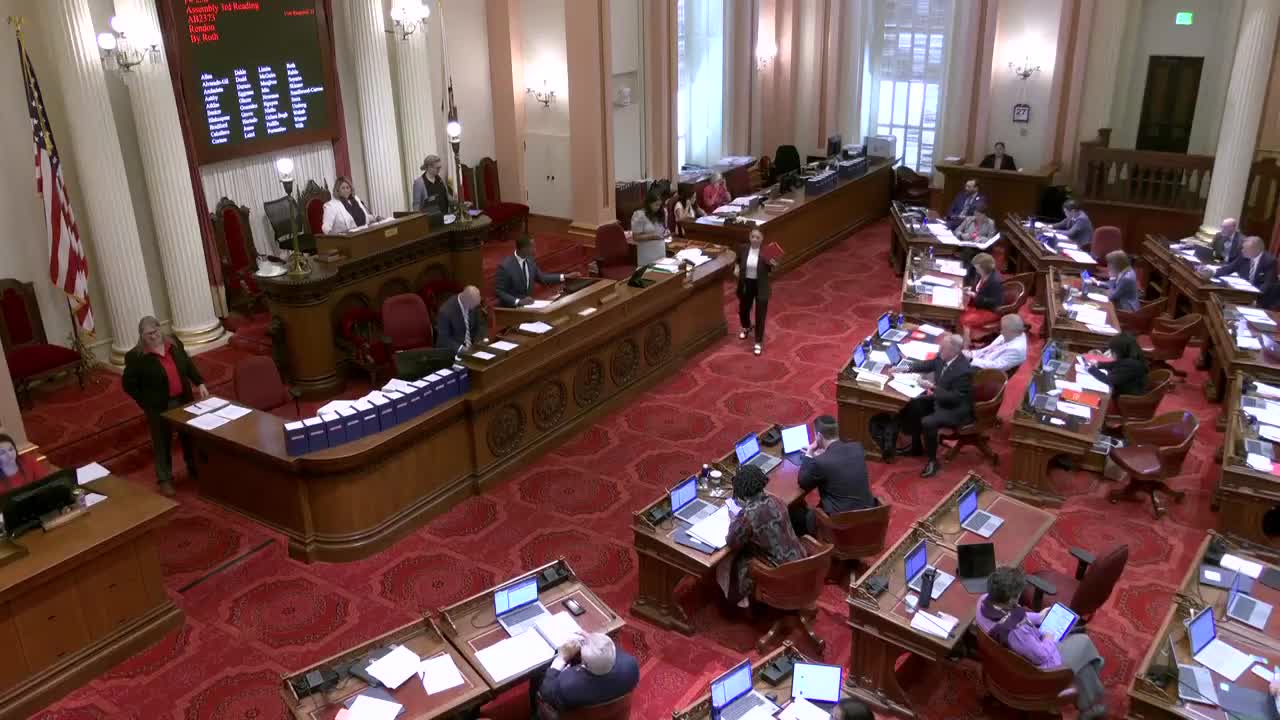 44SEC
Senate Floor
 50SEC
Senate Standing Committee on Appropriations
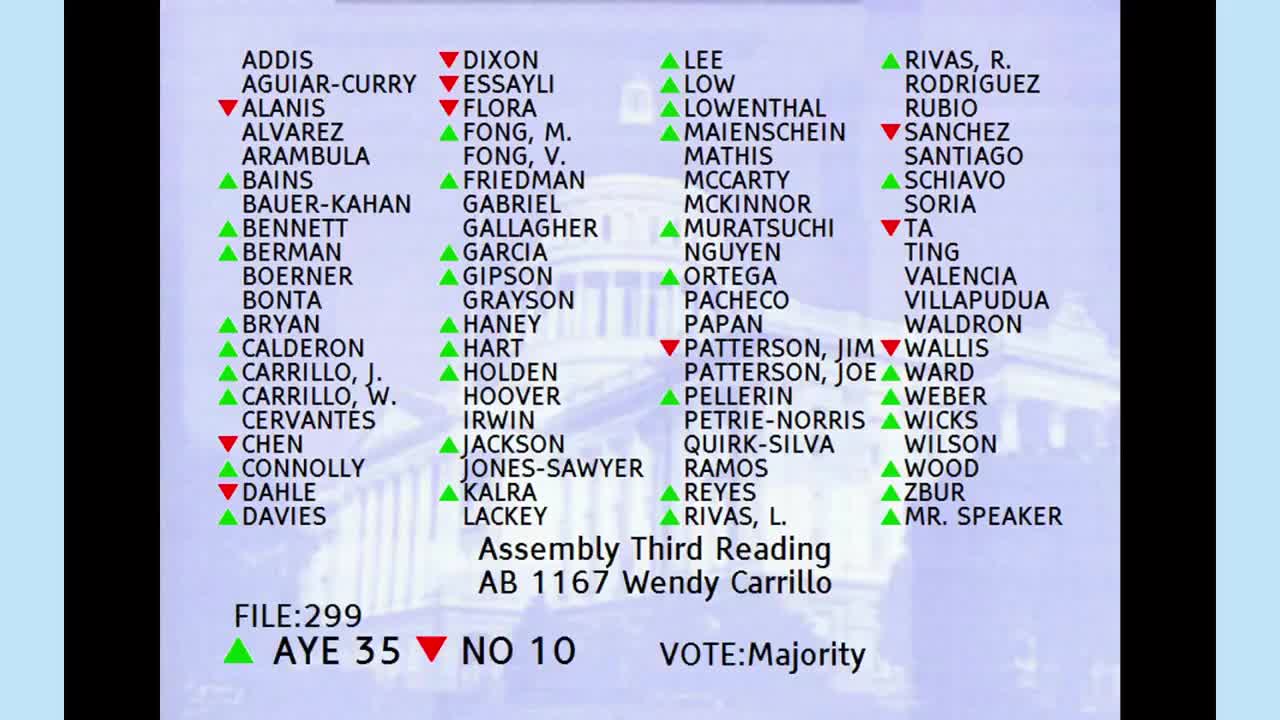 2MIN
Assembly Floor
Bill Author