AB 1283: Pupil health: emergency stock albuterol inhalers.
- Session Year: 2023-2024
- House: Assembly
- Latest Version Date: 2023-10-08
Current Status:
Passed
(2023-10-08: Chaptered by Secretary of State - Chapter 574, Statutes of 2023.)
Introduced
In Committee
First Chamber
In Committee
Second Chamber
Enacted
Existing law requires the governing board of any school district to give diligent care to the health and physical development of pupils and authorizes the governing board of a school district to employ properly certified persons for the work. Existing law requires school districts, county offices of education, and charter schools to provide emergency epinephrine auto-injectors to school nurses or trained personnel who have volunteered, and authorizes school nurses or trained personnel to use emergency epinephrine auto-injectors to provide emergency medical aid to persons suffering, or reasonably believed to be suffering, from an anaphylactic reaction, as provided.
This bill would authorize a school district, county office of education, or charter school to provide emergency stock albuterol inhalers, including, if necessary, single-use disposable holding chambers, as specified, to school nurses or trained personnel who have volunteered, and would authorize school nurses or trained personnel to use an emergency stock albuterol inhaler to provide emergency medical aid to persons suffering, or reasonably believed to be suffering, from respiratory distress, as provided. The bill would prohibit a local educational agency that elects to utilize stock albuterol inhalers for emergency aid from being liable for civil damages for this administration, except as provided, and would require those local educational agencies to provide defense and indemnity to an employee who volunteers under these provisions for any and all civil liability, as provided. The bill would require the Superintendent of Public Instruction to establish, and post on the State Department of Educations internet website, minimum standards of training for the administration of stock albuterol inhalers, as provided, and every 5 years or sooner, as provided, review those standards. The bill would define the terms, including, among others, stock albuterol inhaler and respiratory distress for purposes of these provisions.
Existing law requires the governing board of any school district to give diligent care to the health and physical development of pupils and authorizes the governing board of a school district to employ properly certified persons for the work. Existing law requires school districts, county offices of education, and charter schools to provide emergency epinephrine auto-injectors to school nurses or trained personnel who have volunteered, and authorizes school nurses or trained personnel to use emergency epinephrine auto-injectors to provide emergency medical aid to persons suffering, or reasonably believed to be suffering, from an anaphylactic reaction, as provided.
This bill would authorize a school district, county office of education, or charter school to provide emergency stock albuterol inhalers, including, if necessary, single-use disposable holding chambers, as specified, to school nurses or trained personnel who have volunteered, and would authorize school nurses or trained personnel to use an emergency stock albuterol inhaler to provide emergency medical aid to persons suffering, or reasonably believed to be suffering, from respiratory distress, as provided. The bill would require the Superintendent of Public Instruction to establish establish, and post on the State Department of Educations internet website, minimum standards of training for the administration of stock albuterol inhalers, as provided, and every 5 years or sooner, as provided, review those standards. The bill would define the terms, including, among others, stock albuterol inhaler and respiratory distress for purposes of these provisions.
Existing law requires the governing board of any school district to give diligent care to the health and physical development of pupils and authorizes the governing board of a school district to employ properly certified persons for the work. Existing law requires school districts, county offices of education, and charter schools to provide emergency epinephrine auto-injectors to school nurses or trained personnel who have volunteered, and authorizes school nurses or trained personnel to use emergency epinephrine auto-injectors to provide emergency medical aid to persons suffering, or reasonably believed to be suffering, from an anaphylactic reaction, as provided.
This bill would authorize a school district, county office of education, or charter school to provide emergency stock albuterol inhalers, including, if necessary, single-use disposable holding chambers, as specified, to school nurses or trained personnel who have volunteered, and would authorize school nurses or trained personnel to use an emergency stock albuterol inhaler to provide emergency medical aid to persons suffering, or reasonably believed to be suffering, from respiratory distress, as provided. The bill would require the Superintendent of Public Instruction to establish minimum standards of training for the administration of stock albuterol inhalers, as provided, and every 5 years or sooner, as provided, review those standards. The bill would define the terms, including, among others, stock albuterol inhaler and respiratory distress for purposes of these provisions.
Existing law authorizes a school nurse or other designated school personnel to assist any pupil who is required to take, during the regular schoolday, medication prescribed for the pupil by a physician or surgeon if the school district receives specified written statements.This bill would state the intent of the Legislature to enact future legislation related to asthma medication.Existing law authorizes a school nurse or other designated school personnel to assist any pupil who is required to take, during the regular schoolday, medication prescribed for the pupil by a physician or surgeon if the school district receives specified written statements.
This bill would state the intent of the Legislature to enact future legislation related to asthma medication.
(a)School districts, county offices of education, and charter schools may provide emergency stock albuterol inhalers, including, if necessary, single-use disposable holding chambers, to school nurses or trained personnel who have volunteered pursuant to subdivision (d), and school nurses or trained personnel may use an emergency stock albuterol inhaler to provide emergency medical aid to persons suffering, or reasonably believed to be suffering, from respiratory distress.
(b)For purposes of this section, the following definitions apply:
(1)Albuterol means a bronchodilator used to open the airways by relaxing the muscles around the bronchial tubes.
(2)Authorizing physician and surgeon may include, but is not limited to, a physician and surgeon employed by, or contracting with, a local educational agency, a medical director of the local health department, or a local emergency medical services director.
(3)Inhaler means a device used for the delivery of prescribed asthma medication that is inhaled.
(4)Local educational agency means a school district, county office of education, or charter school.
(5)Metered-dose inhaler (MDI) means a pressurized sprayer that delivers a measured amount of a medication.
(6)Qualified supervisor of health may include, but is not limited to, a school nurse.
(7)Respiratory distress means the sudden appearance of signs and symptoms of difficulty breathing. Signs and symptoms of respiratory distress may include one or more of the following:
(A)Complaints of a tight chest or chest pain.
(B)Wheezing or noisy breathing.
(C)Persistent coughing.
(D)Difficulty breathing.
(E)Appears to be in distress.
(F)Lips or fingernails turning blue.
(G)Shortness of breath.
(8)Stock albuterol inhaler means albuterol medication in the form of a metered-dose inhaler (MDI) that is ordered by a health care provider and is not prescribed for a specific person and also includes, if necessary, a single-use disposable holding chamber.
(9)Volunteer or trained personnel means an employee who has volunteered to administer stock albuterol inhalers to a person if the person is suffering, or reasonably believed to be suffering, from respiratory distress, has been designated by a school, and has received training pursuant to subdivision (d).
(c)Each private elementary and secondary school in the state may voluntarily determine whether or not to make emergency stock albuterol inhalers and trained personnel available at its school. In making this determination, a school shall evaluate the emergency medical response time to the school and determine whether initiating emergency medical services is an acceptable alternative to stock albuterol inhalers and trained personnel. A private elementary or secondary school choosing to exercise the authority provided under this subdivision shall not receive state funds specifically for purposes of this subdivision.
(d)(1)Each public and private elementary and secondary school in the state may designate one or more volunteers to receive initial and annual refresher training, based on the standards developed pursuant to subdivision (e), regarding the storage and emergency use of a stock albuterol inhaler from the school nurse or other qualified person designated by an authorizing physician and surgeon.
(2)Schools are encouraged and recommended to have a minimum of two trained school employees.
(e)(1)The Superintendent shall establish, and post on the departments internet website, minimum standards of training for the administration of stock albuterol inhalers that satisfies the requirements of paragraph (2). Every five years, or sooner as deemed necessary by the Superintendent, the Superintendent shall review minimum standards of training for the administration of stock albuterol inhalers that satisfy the requirements of paragraph (2). For purposes of this subdivision, the Superintendent shall consult with organizations and providers with expertise in administering stock albuterol inhalers and administering medication in a school environment, including, but not limited to, the State Department of Public Health, the Emergency Medical Services Authority, the American Academy of Allergy, Asthma and Immunology, the California School Nurses Organization, the California Medical Association, the American Academy of Pediatrics, the California Society of Allergy, Asthma and Immunology, the American College of Allergy, Asthma and Immunology, and others.
(2)Training established pursuant to this subdivision shall include all of the following:
(A)Techniques for recognizing symptoms of respiratory distress.
(B)Standards and procedures for the storage, restocking, and emergency use of stock albuterol inhalers.
(C)Emergency followup procedures, including calling the emergency 911 telephone number and contacting, if possible, the pupils parent or guardian and physician.
(D)Recommendations on the necessity of instruction and certification in cardiopulmonary resuscitation.
(E)Written materials covering the information required under this subdivision.
(3)Training established pursuant to this subdivision shall be consistent with the most recent guidelines for medication administration issued by the department.
(4)Training established pursuant to this subdivision shall be provided to a volunteer during the volunteers regular working hours and at no cost to the volunteer.
(5)A school shall retain for reference the written materials prepared under subparagraph (E) of paragraph (2).
(f)Any local educational agency electing to utilize stock albuterol inhalers for emergency aid shall distribute a notice at least once per school year to all staff that contains the following information:
(1)A description of the volunteer request stating that the request is for volunteers to be trained to administer a stock albuterol inhaler to a person if the person is suffering, or reasonably believed to be suffering, from respiratory distress, as specified in subdivision (b).
(2)A description of the training that the volunteer will receive pursuant to subdivision (d).
(g)(1)A qualified supervisor of health at a local educational agency electing to utilize stock albuterol inhalers for emergency aid shall obtain from an authorizing physician and surgeon a prescription for each school for stock albuterol inhalers. A qualified supervisor of health at a local educational agency shall be responsible for stocking the stock albuterol inhalers and restocking it if it is used.
(2)If a local educational agency does not have a qualified supervisor of health, an administrator at the local educational agency shall carry out the duties specified in paragraph (1).
(3)A prescription pursuant to this subdivision may be filled by local or mail order pharmacies or stock albuterol inhaler manufacturers.
(4)An authorizing physician and surgeon shall not be subject to professional review, be liable in a civil action, or be subject to criminal prosecution for the issuance of a prescription or order pursuant to this section, unless the physician and surgeons issuance of the prescription or order constitutes gross negligence or willful or malicious conduct.
(h)A school nurse or, if the school does not have a school nurse or the school nurse is not onsite or available, a volunteer may administer a stock albuterol inhaler to a person exhibiting potentially life-threatening symptoms of respiratory distress at school or a school activity when a physician is not immediately available. If the stock albuterol inhaler is used, it shall be restocked as soon as reasonably possible, but no later than two weeks after it is used. Stock albuterol inhalers shall be restocked before their expiration date.
(i)A volunteer shall initiate emergency medical services or other appropriate medical followup in accordance with the training materials retained pursuant to paragraph (5) of subdivision (e).
(j)(1)A local educational agency electing to utilize stock albuterol inhalers for emergency aid shall not be liable for any civil damages resulting from any act or omission, other than an act or omission constituting gross negligence or willful and wanton misconduct, in the emergency administration of an albuterol inhaler by any of its school nurses or trained volunteers who have volunteered pursuant to subdivision (d).
(2)An employee who volunteers under this section shall be provided defense and indemnification by the local educational agency for any and all civil liability, in accordance with, but not limited to, that provided in Division 3.6 (commencing with Section 810) of Title 1 of the Government Code. This information shall be reduced to writing, provided to the volunteer, and retained in the volunteers personnel file.
(k)A state agency, the department, or a public school may accept gifts, grants, and donations from any source for the support of the public school carrying out the provisions of this section, including, but not limited to, the acceptance of stock albuterol inhalers from a manufacturer or wholesaler.
(a)School districts, county offices of education, and charter schools may provide emergency stock albuterol inhalers, including, if necessary, single-use disposable holding chambers, to school nurses or trained personnel who have volunteered pursuant to subdivision (d), and school nurses or trained personnel may use an emergency stock albuterol inhaler to provide emergency medical aid to persons suffering, or reasonably believed to be suffering, from respiratory distress.
(b)For purposes of this section, the following definitions apply:
(1)Albuterol means a bronchodilator used to open the airways by relaxing the muscles around the bronchial tubes.
(2)Authorizing physician and surgeon may include, but is not limited to, a physician and surgeon employed by, or contracting with, a local educational agency, a medical director of the local health department, or a local emergency medical services director.
(3)Inhaler means a device for the delivery of prescribed asthma medication that is inhaled.
(4)Local educational agency means a school district, county office of education, or charter school.
(5)Metered-dose inhaler (MDI) means a pressurized sprayer that delivers a measured amount of a medication.
(6)Qualified supervisor of health may include, but is not limited to, a school nurse.
(7)Respiratory distress means the sudden appearance of signs and symptoms of difficulty breathing. Signs and symptoms of respiratory distress may include one or more of the following:
(A)Complaints of a tight chest or chest pain.
(B)Wheezing or noisy breathing.
(C)Persistent coughing.
(D)Difficulty breathing.
(E)Appears to be in distress.
(F)Lips or fingernails turning blue.
(G)Shortness of breath.
(8)Stock albuterol inhaler means albuterol medication in the form of a metered-dose inhaler (MDI) that is ordered by a health care provider and is not prescribed for a specific person and also includes, if necessary, a single-use disposable holding chamber.
(9)Volunteer or trained personnel means an employee who has volunteered to administer stock albuterol inhalers to a person if the person is suffering, or reasonably believed to be suffering, from respiratory distress, has been designated by a school, and has received training pursuant to subdivision (d).
(c)Each private elementary and secondary school in the state may voluntarily determine whether or not to make emergency stock albuterol inhalers and trained personnel available at its school. In making this determination, a school shall evaluate the emergency medical response time to the school and determine whether initiating emergency medical services is an acceptable alternative to stock albuterol inhalers and trained personnel. A private elementary or secondary school choosing to exercise the authority provided under this subdivision shall not receive state funds specifically for purposes of this subdivision.
(d)(1)Each public and private elementary and secondary school in the state may designate one or more volunteers to receive initial and annual refresher training, based on the standards developed pursuant to subdivision (e), regarding the storage and emergency use of a stock albuterol inhaler from the school nurse or other qualified person designated by an authorizing physician and surgeon.
(2)Schools are encouraged and recommended to have a minimum of two trained school employees.
(e)(1)The Superintendent shall establish, and post on the departments internet website, minimum standards of training for the administration of stock albuterol inhalers that satisfies the requirements of paragraph (2). Every five years, or sooner as deemed necessary by the Superintendent, the Superintendent shall review minimum standards of training for the administration of stock albuterol inhalers that satisfy the requirements of paragraph (2). For purposes of this subdivision, the Superintendent shall consult with organizations and providers with expertise in administering stock albuterol inhalers and administering medication in a school environment, including, but not limited to, the State Department of Public Health, the Emergency Medical Services Authority, the American Academy of Allergy, Asthma and Immunology, the California School Nurses Organization, the California Medical Association, the American Academy of Pediatrics, the California Society of Allergy, Asthma and Immunology, the American College of Allergy, Asthma and Immunology, and others.
(2)Training established pursuant to this subdivision shall include all of the following:
(A)Techniques for recognizing symptoms of respiratory distress.
(B)Standards and procedures for the storage, restocking, and emergency use of stock albuterol inhalers.
(C)Emergency followup procedures, including calling the emergency 911 telephone number and contacting, if possible, the pupils parent or guardian and physician.
(D)Recommendations on the necessity of instruction and certification in cardiopulmonary resuscitation.
(E)Written materials covering the information required under this subdivision.
(3)Training established pursuant to this subdivision shall be consistent with the most recent guidelines for medication administration issued by the department.
(4)Training established pursuant to this subdivision shall be provided to a volunteer during the volunteers regular working hours and at no cost to the volunteer.
(5)A school shall retain for reference the written materials prepared under subparagraph (E) of paragraph (2).
(f)Any local educational agency electing to utilize stock albuterol inhalers for emergency aid shall distribute a notice at least once per school year to all staff that contains the following information:
(1)A description of the volunteer request stating that the request is for volunteers to be trained to administer a stock albuterol inhaler to a person if the person is suffering, or reasonably believed to be suffering, from respiratory distress, as specified in subdivision (b).
(2)A description of the training that the volunteer will receive pursuant to subdivision (d).
(g)(1)A qualified supervisor of health at a local educational agency electing to utilize stock albuterol inhalers for emergency aid shall obtain from an authorizing physician and surgeon a prescription for each school for stock albuterol inhalers. A qualified supervisor of health at a local educational agency shall be responsible for stocking the stock albuterol inhalers and restocking it if it is used.
(2)If a local educational agency does not have a qualified supervisor of health, an administrator at the local educational agency shall carry out the duties specified in paragraph (1).
(3)A prescription pursuant to this subdivision may be filled by local or mail order pharmacies or stock albuterol inhaler manufacturers.
(4)An authorizing physician and surgeon shall not be subject to professional review, be liable in a civil action, or be subject to criminal prosecution for the issuance of a prescription or order pursuant to this section, unless the physician and surgeons issuance of the prescription or order constitutes gross negligence or willful or malicious conduct.
(h)A school nurse or, if the school does not have a school nurse or the school nurse is not onsite or available, a volunteer may administer a stock albuterol inhaler to a person exhibiting potentially life-threatening symptoms of respiratory distress at school or a school activity when a physician is not immediately available. If the stock albuterol inhaler is used, it shall be restocked as soon as reasonably possible, but no later than two weeks after it is used. Stock albuterol inhalers shall be restocked before their expiration date.
(i)A volunteer shall initiate emergency medical services or other appropriate medical followup in accordance with the training materials retained pursuant to paragraph (5) of subdivision (e).
(j)(1)A local educational agency electing to utilize stock albuterol inhalers for emergency aid shall ensure that each employee not be liable for any civil damages resulting from any act or omission, other than an act or omission constituting gross negligence or willful and wanton misconduct, in the emergency administration of an albuterol inhaler by any of its school nurses or trained volunteers who have volunteered pursuant to subdivision (d).
(2)An employee who volunteers under this section will shall be provided defense and indemnification by the local educational agency for any and all civil liability, in accordance with, but not limited to, that provided in Division 3.6 (commencing with Section 810) of Title 1 of the Government Code. This information shall be reduced to writing, provided to the volunteer, and retained in the volunteers personnel file.
(k)A state agency, the department, or a public school may accept gifts, grants, and donations from any source for the support of the public school carrying out the provisions of this section, including, but not limited to, the acceptance of stock albuterol inhalers from a manufacturer or wholesaler.
(a)School districts, county offices of education, and charter schools may provide emergency stock albuterol inhalers, including, if necessary, single-use disposable holding chambers, to school nurses or trained personnel who have volunteered pursuant to subdivision (d), and school nurses or trained personnel may use an emergency stock albuterol inhaler to provide emergency medical aid to persons suffering, or reasonably believed to be suffering, from respiratory distress.
(b)For purposes of this section, the following definitions apply:
(1)Albuterol means a bronchodilator used to open the airways by relaxing the muscles around the bronchial tubes.
(2)Authorizing physician and surgeon may include, but is not limited to, a physician and surgeon employed by, or contracting with, a local educational agency, a medical director of the local health department, or a local emergency medical services director.
(3)Inhaler means a device for the delivery of prescribed asthma medication that is inhaled.
(4)Local educational agency means a school district, county office of education, or charter school.
(5)Metered-dose inhaler (MDI) means a pressurized sprayer that delivers a measured amount of a medication.
(6)Qualified supervisor of health may include, but is not limited to, a school nurse.
(7)Respiratory distress means the sudden appearance of signs and symptoms of difficulty breathing. Signs and symptoms of respiratory distress may include one or more of the following:
(A)Complaints of a tight chest or chest pain.
(B)Wheezing or noisy breathing.
(C)Persistent coughing.
(D)Difficulty breathing.
(E)Appears to be in distress.
(F)Lips or fingernails turning blue.
(G)Shortness of breath.
(8)Stock albuterol inhaler means albuterol medication in the form of a metered-dose inhaler (MDI) that is ordered by a health care provider and is not prescribed for a specific person and also includes, if necessary, a single-use disposable holding chamber.
(9)Volunteer or trained personnel means an employee who has volunteered to administer stock albuterol inhalers to a person if the person is suffering, or reasonably believed to be suffering, from respiratory distress, has been designated by a school, and has received training pursuant to subdivision (d).
(c)Each private elementary and secondary school in the state may voluntarily determine whether or not to make emergency stock albuterol inhalers and trained personnel available at its school. In making this determination, a school shall evaluate the emergency medical response time to the school and determine whether initiating emergency medical services is an acceptable alternative to stock albuterol inhalers and trained personnel. A private elementary or secondary school choosing to exercise the authority provided under this subdivision shall not receive state funds specifically for purposes of this subdivision.
(d)(1)Each public and private elementary and secondary school in the state may designate one or more volunteers to receive initial and annual refresher training, based on the standards developed pursuant to subdivision (e), regarding the storage and emergency use of a stock albuterol inhaler from the school nurse or other qualified person designated by an authorizing physician and surgeon.
(2)Schools are encouraged and recommended to have a minimum of two trained school employees.
(e)(1)The Superintendent shall establish establish, and post on the departments internet website, minimum standards of training for the administration of stock albuterol inhalers that satisfies the requirements of paragraph (2). Every five years, or sooner as deemed necessary by the Superintendent, the Superintendent shall review minimum standards of training for the administration of stock albuterol inhalers that satisfy the requirements of paragraph (2). For purposes of this subdivision, the Superintendent shall consult with organizations and providers with expertise in administering stock albuterol inhalers and administering medication in a school environment, including, but not limited to, the State Department of Public Health, the Emergency Medical Services Authority, the American Academy of Allergy, Asthma and Immunology, the California School Nurses Organization, the California Medical Association, the American Academy of Pediatrics, the California Society of Allergy, Asthma and Immunology, the American College of Allergy, Asthma and Immunology, and others.
(2)Training established pursuant to this subdivision shall include all of the following:
(A)Techniques for recognizing symptoms of respiratory distress.
(B)Standards and procedures for the storage, restocking, and emergency use of stock albuterol inhalers.
(C)Emergency followup procedures, including calling the emergency 911 telephone number and contacting, if possible, the pupils parent or guardian and physician.
(D)Recommendations on the necessity of instruction and certification in cardiopulmonary resuscitation.
(E)Written materials covering the information required under this subdivision.
(3)Training established pursuant to this subdivision shall be consistent with the most recent guidelines for medication administration issued by the department.
(4)Training established pursuant to this subdivision shall be provided to a volunteer during the volunteers regular working hours and at no cost to the volunteer.
(4)(5)A school shall retain for reference the written materials prepared under subparagraph (E) of paragraph (2).
(f)Any local educational agency electing to utilize stock albuterol inhalers for emergency aid shall distribute a notice at least once per school year to all staff that contains the following information:
(1)A description of the volunteer request stating that the request is for volunteers to be trained to administer a stock albuterol inhaler to a person if the person is suffering, or reasonably believed to be suffering, from respiratory distress, as specified in subdivision (b).
(2)A description of the training that the volunteer will receive pursuant to subdivision (d).
(g)(1)A qualified supervisor of health at a local educational agency electing to utilize stock albuterol inhalers for emergency aid shall obtain from an authorizing physician and surgeon a prescription for each school for stock albuterol inhalers. A qualified supervisor of health at a local educational agency shall be responsible for stocking the stock albuterol inhalers and restocking it if it is used.
(2)If a local educational agency does not have a qualified supervisor of health, an administrator at the local educational agency shall carry out the duties specified in paragraph (1).
(3)A prescription pursuant to this subdivision may be filled by local or mail order pharmacies or stock albuterol inhaler manufacturers.
(4)An authorizing physician and surgeon shall not be subject to professional review, be liable in a civil action, or be subject to criminal prosecution for the issuance of a prescription or order pursuant to this section, unless the physician and surgeons issuance of the prescription or order constitutes gross negligence or willful or malicious conduct.
(h)A school nurse or, if the school does not have a school nurse or the school nurse is not onsite or available, a volunteer may administer a stock albuterol inhaler to a person exhibiting potentially life-threatening symptoms of respiratory distress at school or a school activity when a physician is not immediately available. If the stock albuterol inhaler is used, it shall be restocked as soon as reasonably possible, but no later than two weeks after it is used. Stock albuterol inhalers shall be restocked before their expiration date.
(i)A volunteer shall initiate emergency medical services or other appropriate medical followup in accordance with the training materials retained pursuant to paragraph (4) (5) of subdivision (e).
(j)A local educational agency electing to utilize stock albuterol inhalers for emergency aid shall ensure that each employee who volunteers under this section will be provided defense and indemnification by the local educational agency for any and all civil liability, in accordance with, but not limited to, that provided in Division 3.6 (commencing with Section 810) of Title 1 of the Government Code. This information shall be reduced to writing, provided to the volunteer, and retained in the volunteers personnel file.
(k)A state agency, the department, or a public school may accept gifts, grants, and donations from any source for the support of the public school carrying out the provisions of this section, including, but not limited to, the acceptance of stock albuterol inhalers from a manufacturer or wholesaler.
(a)School districts, county offices of education, and charter schools may provide emergency stock albuterol inhalers, including, if necessary, single-use disposable holding chambers, to school nurses or trained personnel who have volunteered pursuant to subdivision (d), and school nurses or trained personnel may use an emergency stock albuterol inhaler to provide emergency medical aid to persons suffering, or reasonably believed to be suffering, from respiratory distress.
(b)For purposes of this section, the following definitions apply:
(1)Albuterol means a bronchodilator used to open the airways by relaxing the muscles around the bronchial tubes.
(2)Authorizing physician and surgeon may include, but is not limited to, a physician and surgeon employed by, or contracting with, a local educational agency, a medical director of the local health department, or a local emergency medical services director.
(3)Inhaler means a device for the delivery of prescribed asthma medication that is inhaled.
(4)Local educational agency means a school district, county office of education, or charter school.
(5)Metered-dose inhaler (MDI) means a pressurized sprayer that delivers a measured amount of a medication.
(6)Qualified supervisor of health may include, but is not limited to, a school nurse.
(7)Respiratory distress means the sudden appearance of signs and symptoms of difficulty breathing. Signs and symptoms of respiratory distress may include one or more of the following:
(A)Complaints of a tight chest or chest pain.
(B)Wheezing or noisy breathing.
(C)Persistent coughing.
(D)Difficulty breathing.
(E)Appears to be in distress.
(F)Lips or fingernails turning blue.
(G)Shortness of breath.
(8)Stock albuterol inhaler means albuterol medication in the form of a metered-dose inhaler (MDI) that is ordered by a health care provider and is not prescribed for a specific person and also includes, if necessary, a single-use disposable holding chamber.
(9)Volunteer or trained personnel means an employee who has volunteered to administer stock albuterol inhalers to a person if the person is suffering, or reasonably believed to be suffering, from respiratory distress, has been designated by a school, and has received training pursuant to subdivision (d).
(c)Each private elementary and secondary school in the state may voluntarily determine whether or not to make emergency stock albuterol inhalers and trained personnel available at its school. In making this determination, a school shall evaluate the emergency medical response time to the school and determine whether initiating emergency medical services is an acceptable alternative to stock albuterol inhalers and trained personnel. A private elementary or secondary school choosing to exercise the authority provided under this subdivision shall not receive state funds specifically for purposes of this subdivision.
(d)(1)Each public and private elementary and secondary school in the state may designate one or more volunteers to receive initial and annual refresher training, based on the standards developed pursuant to subdivision (e), regarding the storage and emergency use of a stock albuterol inhaler from the school nurse or other qualified person designated by an authorizing physician and surgeon.
(2)Schools are encouraged and recommended to have a minimum of two trained school employees.
(e)(1)The Superintendent shall establish minimum standards of training for the administration of stock albuterol inhalers that satisfies the requirements of paragraph (2). Every five years, or sooner as deemed necessary by the Superintendent, the Superintendent shall review minimum standards of training for the administration of stock albuterol inhalers that satisfy the requirements of paragraph (2). For purposes of this subdivision, the Superintendent shall consult with organizations and providers with expertise in administering stock albuterol inhalers and administering medication in a school environment, including, but not limited to, the State Department of Public Health, the Emergency Medical Services Authority, the American Academy of Allergy, Asthma and Immunology, the California School Nurses Organization, the California Medical Association, the American Academy of Pediatrics, the California Society of Allergy, Asthma and Immunology, the American College of Allergy, Asthma and Immunology, and others.
(2)Training established pursuant to this subdivision shall include all of the following:
(A)Techniques for recognizing symptoms of respiratory distress.
(B)Standards and procedures for the storage, restocking, and emergency use of stock albuterol inhalers.
(C)Emergency followup procedures, including calling the emergency 911 telephone number and contacting, if possible, the pupils parent and physician.
(D)Recommendations on the necessity of instruction and certification in cardiopulmonary resuscitation.
(E)Written materials covering the information required under this subdivision.
(3)Training established pursuant to this subdivision shall be consistent with the most recent guidelines for medication administration issued by the department.
(4)A school shall retain for reference the written materials prepared under subparagraph (E) of paragraph (2).
(f)Any local educational agency electing to utilize stock albuterol inhalers for emergency aid shall distribute a notice at least once per school year to all staff that contains the following information:
(1)A description of the volunteer request stating that the request is for volunteers to be trained to administer a stock albuterol inhaler to a person if the person is suffering, or reasonably believed to be suffering, from respiratory distress, as specified in subdivision (b).
(2)A description of the training that the volunteer will receive pursuant to subdivision (d).
(g)(1)A qualified supervisor of health at a local educational agency electing to utilize stock albuterol inhalers for emergency aid shall obtain from an authorizing physician and surgeon a prescription for each school for stock albuterol inhalers. A qualified supervisor of health at a local educational agency shall be responsible for stocking the stock albuterol inhalers and restocking it if it is used.
(2)If a local educational agency does not have a qualified supervisor of health, an administrator at the local educational agency shall carry out the duties specified in paragraph (1).
(3)A prescription pursuant to this subdivision may be filled by local or mail order pharmacies or stock albuterol inhaler manufacturers.
(4)An authorizing physician and surgeon shall not be subject to professional review, be liable in a civil action, or be subject to criminal prosecution for the issuance of a prescription or order pursuant to this section, unless the physician and surgeons issuance of the prescription or order constitutes gross negligence or willful or malicious conduct.
(h)A school nurse or, if the school does not have a school nurse or the school nurse is not onsite or available, a volunteer may administer a stock albuterol inhaler to a person exhibiting potentially life-threatening symptoms of respiratory distress at school or a school activity when a physician is not immediately available. If the stock albuterol inhaler is used, it shall be restocked as soon as reasonably possible, but no later than two weeks after it is used. Stock albuterol inhalers shall be restocked before their expiration date.
(i)A volunteer shall initiate emergency medical services or other appropriate medical followup in accordance with the training materials retained pursuant to paragraph (4) of subdivision (e).
(j)A local educational agency electing to utilize stock albuterol inhalers for emergency aid shall ensure that each employee who volunteers under this section will be provided defense and indemnification by the local educational agency for any and all civil liability, in accordance with, but not limited to, that provided in Division 3.6 (commencing with Section 810) of Title 1 of the Government Code. This information shall be reduced to writing, provided to the volunteer, and retained in the volunteers personnel file.
(k)A state agency, the department, or a public school may accept gifts, grants, and donations from any source for the support of the public school carrying out the provisions of this section, including, but not limited to, the acceptance of stock albuterol inhalers from a manufacturer or wholesaler.
SECTION 1.It is the intent of the Legislature to enact future legislation related to asthma medication.It is the intent of the Legislature to enact future legislation related to asthma medication.
|
Date
|
Status
|
|---|---|
| Oct 8, 2023 | Chaptered by Secretary of State - Chapter 574, Statutes of 2023. |
| Oct 8, 2023 | Approved by the Governor. |
| Sep 19, 2023 | Enrolled and presented to the Governor at 4 p.m. |
| Sep 12, 2023 | Senate amendments concurred in. To Engrossing and Enrolling. (Ayes 80. Noes 0. Page 3238.). |
| Sep 12, 2023 | Assembly Rule 77 suspended. (Page 3228.) |
| Sep 11, 2023 | In Assembly. Concurrence in Senate amendments pending. May be considered on or after September 13 pursuant to Assembly Rule 77. |
| Sep 11, 2023 | Read third time. Passed. Ordered to the Assembly. (Ayes 39. Noes 0. Page 2550.). |
| Aug 22, 2023 | Read second time. Ordered to third reading. |
| Aug 21, 2023 | Read third time and amended. Ordered to second reading. |
| Aug 15, 2023 | Read second time. Ordered to third reading. |
| Aug 14, 2023 | From committee: Be ordered to second reading pursuant to Senate Rule 28.8. |
| Jul 13, 2023 | From committee: Do pass and re-refer to Com. on APPR. (Ayes 11. Noes 0.) (July 12). Re-referred to Com. on APPR. |
| Jun 27, 2023 | Read second time and amended. Re-referred to Com. on HEALTH. |
| Jun 26, 2023 | From committee: Amend, and do pass as amended and re-refer to Com. on HEALTH. (Ayes 7. Noes 0.) (June 21). |
| Jun 12, 2023 | In committee: Set, first hearing. Hearing canceled at the request of author. |
| May 31, 2023 | Referred to Coms. on ED. and HEALTH. |
| May 18, 2023 | In Senate. Read first time. To Com. on RLS. for assignment. |
| May 18, 2023 | Read third time. Passed. Ordered to the Senate. (Ayes 74. Noes 0. Page 1596.) |
| May 11, 2023 | Read second time. Ordered to Consent Calendar. |
| May 10, 2023 | From committee: Do pass. To Consent Calendar. (Ayes 14. Noes 0.) (May 10). |
| May 2, 2023 | Re-referred to Com. on APPR. |
| May 1, 2023 | Read second time and amended. |
| Apr 27, 2023 | From committee: Amend, and do pass as amended and re-refer to Com. on APPR. (Ayes 7. Noes 0.) (April 26). |
| Mar 27, 2023 | Re-referred to Com. on ED. |
| Mar 23, 2023 | From committee chair, with author's amendments: Amend, and re-refer to Com. on ED. Read second time and amended. |
| Mar 23, 2023 | Referred to Com. on ED. |
| Feb 17, 2023 | From printer. May be heard in committee March 19. |
| Feb 16, 2023 | Read first time. To print. |
|
Date
|
Description
|
Location
|
Votes
|
|
|---|---|---|---|---|
| Sep 12, 2023 | AB 1283 Chen Concurrence in Senate Amendments | Assembly Floor |
Passed |
|
| Sep 11, 2023 | Assembly 3rd Reading AB1283 Chen et al. By Grove | Senate Floor |
Passed |
|
| Jul 12, 2023 | Do pass, but first be re-referred to the Committee on [Appropriations] | Senate Standing Committee on Health |
Passed |
|
| Jun 21, 2023 | Do pass as amended, but first amend, and re-refer to the Committee on [Health] | Senate Standing Committee on Education |
Passed |
|
| May 18, 2023 | AB 1283 Chen Consent Calendar Second Day Regular Session | Assembly Floor |
Passed |
|
| May 10, 2023 | Do pass. To Consent Calendar. | Assembly Standing Committee on Appropriations |
Passed |
|
| Apr 26, 2023 | Do pass as amended and be re-referred to the Committee on [Appropriations] | Assembly Standing Committee on Education |
Passed |
This list shows positions taken on this bill by organizations on the date displayed, which is linked to the original source.
Positions by individuals are not included.
|
Organization
|
Position
|
Date
|
|---|---|---|
| American Lung Association in California | ** Support | |
| Association Of California School Administrators | ** Support | |
| Board of Registered Nursing | ** Support | |
| California Naturopathic Doctors Association | ** Support | |
| California School Nurses Organization | ** Support | |
| California Teachers Association | ** Against | |
| Comite Civico Del Valle | ** Support | |
| Community Action to Fight Asthma | ** Support | |
| Health Officers Association Of California | ** Support |
CONCURRENCE IN SENATE AMENDMENTS
CSA1 Bill Id:AB 1283
Author:(Chen)
As Amended Ver:August 21, 2023
Majority vote
SUMMARY
Authorizes a local educational agency (LEA) to make emergency stock albuterol inhalers available at school districts, county offices of education (COE), and charter schools and authorizes school nurses or trained personnel who have volunteered to administer an albuterol inhaler to persons suffering from, or reasonably believed to be suffering from, respiratory distress.
Senate Amendments
- Provide LEAs with protection from civil liability when its school nurses or trained volunteers utilize albuterol inhalers for emergency aide, other than for an act or omission constituting gross negligence or willful and wanton misconduct.
- Add Senator Rubio as a co-author.
COMMENTS
Asthma in school-aged children. Asthma is a chronic lung disease and the leading cause of absenteeism for students. It affects 10% of school-aged children nationwide and accounts for 5.2 million absences annually. The California Department of Public Health reports that in 2019-2020 14.5% of children ages five through 17 had been diagnosed with asthma.
Asthma often starts during childhood as children's immune systems are still developing. While the exact cause of asthma is unknown, certain factors combined can contribute to a child developing asthma including family history, exposure to things in the environment (allergens such as cigarette smoke or pollution) and viral infections (which affect the lungs).
According to the Author
"Asthma is a problem that effects many children who attend schools in the state. Schools should always be ready when an emergency falls up on a student. If a child has an Asthma attack, there should be someone on campus trained, stocked, and ready to assist. This is what AB 1283 aims to do. We want to make sure that our schools in California are well stocked and prepared to handle this type of emergency."
Arguments in Support
The California School Nurse's Organization (CSNO) writes, "Many of our students suffer from asthma, a chronic respiratory condition that can be life-threatening if not managed properly. When an asthma attack occurs, immediate treatment is necessary to prevent serious harm or even death. Unfortunately, in California, many schools do not have a school nurse on staff, and those that do may not have them on site at all times. As a result, if a student has an asthma attack while at school, they may not receive the timely care they need to manage the condition. Allowing trained personnel, in addition to school nurses, to administer emergency albuterol to students could help to mitigate this problem. If a trained school staff member were able to administer this medication to a student in distress, it could help to alleviate their symptoms and prevent the situation from escalating. This could be particularly important in cases where the student does not have their own inhaler with them, or where their inhaler is not readily accessible. Further, we feel this bill strikes the appropriate balance when considering school safety polices by authorizing, not requiring, schools to utilize albuterol inhalers. CSNO would like a credentialed school nurse to be on staff at every school in California. Unfortunately, due to a variety of circumstances, that is not a world in which we currently live. Allowing trained personnel to administer emergency albuterol to students could help to ensure that students with asthma receive the care they need in a timely manner. The health and safety of our students should always be one of California's top priorities. We feel the benefits of this policy change are significant and could save lives."
Arguments in Opposition
The California Teachers Association (CTA) writes, "CTA's internal organizational policy, written and adopted by locally elected members, states: CTA believes the health and safety needs of children are best met through the services of a credentialed school nurse and CTA believes California's schools, colleges and universities should employ sufficient learning support services staff including but not limited to school counselors, credentialed school nurses, librarians, credentialed teacher librarians, school social workers, and school psychologists to provide quality support programs and to ensure equal access for all students to achieve success. CTA does not believe non-medically trained school employee "volunteers" have the necessary medical knowledge and are sufficiently trained to protect the health and safety of students suffering medical emergencies."
FISCAL COMMENTS
According to the Senate Appropriations Committee, pursuant to Senate Rule 28.8, negligible state costs.
VOTES:
ASM EDUCATION: 7-0-0
YES: Muratsuchi, Megan Dahle, Juan Carrillo, Hoover, Lee, McCarty, Quirk-Silva
ASM APPROPRIATIONS: 14-0-2
YES: Holden, Megan Dahle, Calderon, Wendy Carrillo, Dixon, Mike Fong, Addis, Lowenthal, Papan, Pellerin, Robert Rivas, Sanchez, Weber, Wilson
ABS, ABST OR NV: Bryan, Mathis
ASSEMBLY FLOOR: 74-0-6
YES: Addis, Aguiar-Curry, Alanis, Alvarez, Arambula, Bains, Bauer-Kahan, Bennett, Berman, Boerner, Bonta, Bryan, Calderon, Juan Carrillo, Wendy Carrillo, Chen, Connolly, Megan Dahle, Davies, Dixon, Essayli, Flora, Mike Fong, Gabriel, Gallagher, Garcia, Gipson, Grayson, Haney, Hart, Holden, Hoover, Irwin, Jackson, Jones-Sawyer, Kalra, Lackey, Lee, Low, Lowenthal, Maienschein, Mathis, McCarty, McKinnor, Muratsuchi, Stephanie Nguyen, Ortega, Pacheco, Papan, Jim Patterson, Joe Patterson, Pellerin, Petrie-Norris, Quirk-Silva, Ramos, Reyes, Luz Rivas, Robert Rivas, Rodriguez, Blanca Rubio, Sanchez, Santiago, Schiavo, Soria, Ta, Ting, Valencia, Wallis, Ward, Weber, Wicks, Wood, Zbur, Rendon
ABS, ABST OR NV: Cervantes, Vince Fong, Friedman, Villapudua, Waldron, Wilson
SENATE FLOOR: 39-0-1
YES: Allen, Alvarado-Gil, Archuleta, Ashby, Atkins, Becker, Blakespear, Bradford, Cortese, Dahle, Dodd, Durazo, Eggman, Glazer, Gonzalez, Grove, Hurtado, Jones, Laird, Limón, McGuire, Menjivar, Min, Newman, Nguyen, Niello, Ochoa Bogh, Padilla, Portantino, Roth, Rubio, Seyarto, Skinner, Smallwood-Cuevas, Stern, Umberg, Wahab, Wiener, Wilk
ABS, ABST OR NV: Caballero
UPDATED
VERSION: August 21, 2023
CONSULTANT: Jocelyn Twilla, Debbie Look / ED. / (916) 319-2087 FN: 0001904
SENATE RULES COMMITTEE Office of Senate Floor Analyses (916) 651-1520 Fax: (916) 327-4478 | AB 1283 |
THIRD READING
Bill No: AB 1283
Author: Chen (R), et al.
Amended: 8/21/23 in Senate
Vote: 21
SENATE EDUCATION COMMITTEE: 7-0, 6/21/23
AYES: Newman, Ochoa Bogh, Cortese, Glazer, McGuire, Smallwood-Cuevas, Wilk
SENATE HEALTH COMMITTEE: 11-0, 7/12/23
AYES: Eggman, Nguyen, Glazer, Gonzalez, Hurtado, Limón, Menjivar, Roth, Rubio, Wahab, Wiener
NO VOTE RECORDED: Grove
SENATE APPROPRIATIONS COMMITTEE: Senate Rule 28.8
ASSEMBLY FLOOR: 74-0, 5/18/23 (Consent) - See last page for vote
SUBJECT: Pupil health: emergency stock albuterol inhalers
SOURCE: Author
DIGEST:
This bill authorizes a local educational agency (LEA), county offices of education (COE), and charter schools to make available emergency stock albuterol inhalers available at school sites and allows school nurses or trained personnel who have volunteered to administer an albuterol inhaler.
Senate Floor Amendments of 8/21/23 add a coauthor.
ANALYSIS:
Existing law:
- Authorizes a pupil who is required to take, during the regular schoolday, medication prescribed for the pupil by a physician or surgeon, to be assisted by the school nurse or other designated school personnel or may carry and self-administer inhaled asthma medication if the school district receives the appropriate written statement from the physician or surgeon detailing the name of the medication, method, amount, and time schedules by which the medication is to be taken and a written statement from the parent, foster parent, or guardian of the pupil requesting that the school district assist the pupil in the matters set forth in the statement of the physician or surgeon. (Education Code (EC) § 49423.1)
- Specifies in order for a pupil to carry and self-administer prescription inhaled asthma medication, the school district shall obtain both a written statement from the physician or surgeon detailing the name of the medication, method, amount, and time schedules by which the medication is to be taken, and confirming that the pupil is able to self-administer inhaled asthma medication, and a written statement from the parent, foster parent, or guardian of the pupil consenting to the self-administration, providing a release for the school nurse or other designated school personnel to consult with the health care provider of the pupil regarding any questions that may arise with regard to the medication, and releasing the school district and school personnel from civil liability if the self-administering pupil suffers an adverse reaction by taking medication pursuant to this section. (EC § 49423.1)
- Establishes the Office of School-Based Health at the California Department of Education (CDE) for the purpose of assisting LEAs regarding the current health-related programs under the purview of the CDE, and requires the scope of the office to include collaborating with the Department of Health Care Services (DHCS) and other departments in the provision of school-based health services, and assisting LEAs with information on, and participation in specified school-based health programs. (EC § 49419)
This bill:
- Allows each public and private elementary and secondary school in the state to determine whether or not, with no state funds specifically for the purpose, to make available emergency stock albuterol inhalers and trained personnel available at its school based on the emergency medical response time to the school and whether initiating emergency medical services is an acceptable alternative to stock albuterol inhalers and trained personnel.
- Encourages and recommends that each public and private elementary and secondary school in the state have at least two trained school employees available to administer an albuterol inhaler but allows each public and private elementary and secondary school to designate one or more volunteers to receive initial and annual refresher training, as specified, regarding the storage and emergency use of a stock albuterol inhaler from the school nurse or other qualified person designated by an authorizing physician and surgeon.
- Specifies that a school nurse or, if the school does not have a school nurse or the school nurse is not onsite or available, a school employee who has volunteered to administer an albuterol inhaler may administer a stock albuterol inhaler to a person exhibiting potentially life-threatening symptoms of respiratory distress at school or school activity when a physician is not immediately available.
- Specifies if the stock albuterol inhaler is used; it shall be restocked as soon as reasonably possible but no later than two weeks after it is used. Stock albuterol inhalers shall be restocked before their expiration date.
- Requires a school employee who has volunteered to administer an albuterol inhaler to initiate emergency medical services or another appropriate medical follow-up in accordance with the training materials retained by the school.
- Authorizes a state agency, the department, or a public school may accept gifts, grants, and donations from any source for the support of the public school carrying out the provisions of this section, including, but not limited to, the acceptance of stock albuterol inhalers from a manufacturer or wholesaler.
- Specifies an LEA, COE, or charter school electing to utilize stock albuterol inhalers for emergency aid shall ensure that each employee who volunteers under this section will be provided defense and indemnification by the LEA for any and all civil liability, as specified in Government Code, and should be reduced to writing provided to the volunteer, and retained in the volunteer’s personnel file.
- Requires the Superintendent of Public Instruction (SPI) to post on the CDE’s internet website the minimum training standards for the administration of stock albuterol inhalers every five years, or sooner as deemed necessary by the SPI in consultation with organizations and providers with expertise in administering stock albuterol inhalers and administering medication in a school environment, including, but not limited to, the State Department of Public Health, the Emergency Medical Services Authority, the American Academy of Allergy, Asthma and Immunology, the California School Nurses Organization, the California Medical Association, the American Academy of Pediatrics, the California Society of Allergy, Asthma and Immunology, the American College of Allergy, Asthma and Immunology, and others. The training shall include the following:
- Techniques for recognizing symptoms of respiratory distress.
- Standards and procedures for storing, restocking, and emergency using stock albuterol inhalers.
- Emergency follow-up procedures, including calling emergency 911 telephone number and contacting, if possible, the pupil’s parent or guardian and physician.
- Recommendations on the necessity of instruction and certification in cardiopulmonary resuscitation.
- Written materials.
- Specifies training established by the SPI must be consistent with the most recent guidelines for medication administration issued by the CDE, must be provided to a volunteer during the volunteer’s regular working hours, and at no cost to the volunteer, and retain written records.
- Requires a qualified supervisor of health at a LEA electing to utilize stock albuterol inhalers for emergency aid to obtain from an authorizing physician and surgeon a prescription, filled by local or mail order pharmacies, or stock albuterol inhaler manufacturers, for each school for stock albuterol inhalers and responsible for stocking the stock albuterol inhalers and restocking it if it is used.
- Clarifies that an authorizing physician and surgeon shall not be subject to professional review, be liable in a civil action, or be subject to criminal prosecution for the issuance of a prescription or order related to an albuterol inhaler for school purposes unless the physician and surgeon’s issuance of the prescription or order constitutes gross negligence or willful or malicious conduct.
- Specifies that if an LEA does not have a qualified supervisor of health, an administrator at the LEA agency shall carry out the duties of a qualified supervisor of health.
- Requires each LEA, COE, and charter school electing to utilize stock albuterol inhalers for emergency aid shall distribute a notice at least once per school year to all staff that contains the following information:
- A description of the volunteer request stating that the request is for volunteers to be trained to administer a stock albuterol inhaler to a person if the person is suffering, or reasonably believed to be suffering, from respiratory distress.
- A description of the volunteer’s training.
- Defines “albuterol” to mean a bronchodilator used to open the airways by relaxing the muscles around the bronchial tubes.
- Defines “authorizing physician and surgeon” that may include, but is not limited to, a physician and surgeon employed by, or contracting with, a LEA, a medical director of the local health department, or a local emergency medical services director.
- Defines “inhaler” to mean a device for the delivery of prescribed asthma medication that is inhaled.
- Defines “local educational agency” to mean a school district, COE, or charter school.
- Defines “metered-dose inhaler (MDI)” to mean a pressurized sprayer that delivers a measured amount of a medication.
- Defines “qualified supervisor of health” that may include, but is not limited to, a school nurse.
- Defines “respiratory distress” to mean the sudden appearance of signs and symptoms of difficulty breathing. Signs and symptoms of respiratory distress may include one or more of the following:
- Complaints of a tight chest or chest pain.
- Wheezing or noisy breathing.
- Persistent coughing.
- Difficulty breathing.
- Appears to be in distress.
- Lips or fingernails turning blue.
- Shortness of breath.
- Defines “stock albuterol inhaler” to mean albuterol medication in the form of a MDI that is ordered by a health care provider and is not prescribed for a specific person and also includes, if necessary, a single-use disposable holding chamber.
- Defines “volunteer” or “trained personnel” to mean an employee who has volunteered to administer stock albuterol inhalers to a person if the person is suffering, or reasonably believed to be suffering, from respiratory distress, has been designated by a school and has received training.
Comments
- Need for the bill. According to the author “Asthma is a problem that effects many children who attend schools in the state. Schools should always be ready when an emergency falls up on a student. If a child has an Asthma attack, there should be someone on campus trained, stocked, and ready to assist. This is what AB 1283 aims to do. We want to make sure that our schools in California are well stocked and prepared to handle this type of emergency.”
- Asthma In School-Aged Children. According to the California Asthma Dashboard, in 2019-2020, an estimated 12% of California children ages 1-17 had been diagnosed with asthma at some point in their lives, a decrease from 16% in 2005. While asthma does not result in hospitalization for most children, there were 7,670 hospitalizations for asthma among children ages 0-17 statewide in 2019.
Asthma is one of the most common chronic diseases among children in the U.S. and a leading cause of pediatric hospitalization. It also is the top reason for missed school days, accounting for more than 5.2 million absences annually. Asthma rates vary by region, demographics, environment, physician diagnostic practices, and access to care. Although identifying the impact of independent risk factors for asthma is difficult, children of color and those from low-income families are disproportionately at high risk for severe symptoms, missed school days, and hospital visits.
By race and ethnicity, African Americans in California suffer the most severe disparities. Compared to non-Hispanic Whites, asthma prevalence among African Americans is 40% higher, rates of emergency department (ED) visits and hospitalizations are about four times higher, and death rates are about two times higher. California’s American Indian\Alaska Native, Pacific Islander, and Filipino populations also are more adversely affected by asthma compared to non-Hispanic Whites.
- The Management Of Asthma In California Schools. The California Department of Public Health (CDPH) “Guidelines for the Management of Asthma in California Schools" and "Asthma Action Plan for Schools and Families" assist schools in effectively managing this chronic disease. The "Guidelines for the Management of Asthma in California Schools" were developed jointly by health professionals in the CDE and the California Asthma Public Health Initiative in statewide collaboration with asthma experts and stakeholders.
Further, the asthma program in the CDPH, California Breathing, works to improve the respiratory health of Californians and reduce asthma-related health disparities through education and environmental interventions where we live, work, learn, and play. Strategic Plan guides its work for Asthma in California, a document encompassing all aspects of asthma-related research, policy, and services.
This bill allows trained personnel or school staff who volunteer to administer albuterol inhaler in the event a student is suffering, or reasonably believed to be suffering, from respiratory distress in the similar manner as existing law allows a trained personnel or school staff who volunteer to administer naloxone, anti-seizure medication, and epinephrine.
FISCAL EFFECT: Appropriation: No Fiscal Com.: Yes Local: No
SUPPORT: (Verified 8/22/23)
American Lung Association in California
Association of California School Administrators
Board of Registered Nursing
California Naturopathic Doctors Association
California School Nurses Organization
Comite Civico del Valle
Community Action to Fight Asthma
Health Officers Association of California
OPPOSITION: (Verified 8//23)
California Teachers Association
ARGUMENTS IN SUPPORT: According to the Association of California School Administrators, “Asthma is one of the most common chronic diseases among children in the U.S. and a sudden, unexpected, and life-threatening exacerbation could occur at any time. Unfortunately, 86% of students who suffer from asthma don’t have access to their inhaler at school1 . This bill allows schools to better utilize the resources provided by House Resolution 2468 (Public Law 116-292) known as the School Based Allergies and Asthma Management Program Act (HR 2468) and administer aid with an emergency stock albuterol inhaler. For these reasons, ACSA supports AB 1283.”
ARGUMENTS IN OPPOSITION: According to the California Teachers Association (CTA), “CTA’s internal organizational policy, written and adopted by locally elected members, states: ‘CTA believes the health and safety needs of children are best met through the services of a credentialed school nurse and CTA believes California’s schools, colleges and universities should employ sufficient learning support services staff including but not limited to school counselors, credentialed school nurses, librarians, credentialed teacher librarians, school social workers, and school psychologists to provide quality support programs and to ensure equal access for all students to achieve success.’ CTA does not believe non-medically trained school employee ‘volunteers’ have the necessary medical knowledge and are sufficiently trained to protect the health and safety of students suffering medical emergencies. On behalf of the 310,000 members of the California Teachers Association, we look forward to resolving our concerns relative to AB 1283 should the measure move through the legislative process.”
ASSEMBLY FLOOR: 74-0, 5/18/23
AYES: Addis, Aguiar-Curry, Alanis, Alvarez, Arambula, Bains, Bauer-Kahan, Bennett, Berman, Boerner, Bonta, Bryan, Calderon, Juan Carrillo, Wendy Carrillo, Chen, Connolly, Megan Dahle, Davies, Dixon, Essayli, Flora, Mike Fong, Gabriel, Gallagher, Garcia, Gipson, Grayson, Haney, Hart, Holden, Hoover, Irwin, Jackson, Jones-Sawyer, Kalra, Lackey, Lee, Low, Lowenthal, Maienschein, Mathis, McCarty, McKinnor, Muratsuchi, Stephanie Nguyen, Ortega, Pacheco, Papan, Jim Patterson, Joe Patterson, Pellerin, Petrie-Norris, Quirk-Silva, Ramos, Reyes, Luz Rivas, Robert Rivas, Rodriguez, Blanca Rubio, Sanchez, Santiago, Schiavo, Soria, Ta, Ting, Valencia, Wallis, Ward, Weber, Wicks, Wood, Zbur, Rendon
NO VOTE RECORDED: Cervantes, Vince Fong, Friedman, Villapudua, Waldron, Wilson
Prepared by: Kordell Hampton / ED. / (916) 651-4105
8/23/23 15:17:23
**** END ****
SENATE COMMITTEE ON HEALTH
Senator Dr. Susan Talamantes Eggman, Chair
BILL NO: AB 1283
AUTHOR: | Chen | ||
VERSION: | June 27, 2023 | ||
HEARING DATE: | July 12, 2023 | ||
CONSULTANT: | Reyes Diaz | ||
SUBJECT: Pupil health: emergency stock albuterol inhalers
SUMMARY:
Permits school districts, county offices of education, and charter schools to provide emergency “stock albuterol inhalers,” as defined, to school nurses or trained personnel who have volunteered. Permits school nurses or trained personnel to use an emergency stock albuterol inhaler to provide emergency medical aid to persons suffering, or reasonably believed to be suffering, from respiratory distress.
Existing law:
- Permits a school nurse or trained personnel who have volunteered to provide emergency naloxone or another opioid antagonist, by nasal spray or by auto-injector, to persons suffering, or reasonably believed to be suffering, from an opioid overdose. [EDC §49414.3]
- Permits a pupil who is required to take, during the regular school day, medication prescribed for the pupil by a physician or surgeon, to be assisted by the school nurse or other designated school personnel, or to carry and self-administer inhaled asthma medication if the school district receives the appropriate written statements, as specified. [EDC §49423.1]
- Requires school districts, county offices of education (COEs), and charter schools to provide emergency epinephrine auto-injectors to school nurses or trained personnel who have volunteered, as specified. Permits school nurses or trained personnel to use epinephrine auto-injectors to provide emergency medical aid to persons suffering, or reasonably believed to be suffering, from an anaphylactic reaction. [EDC §49414]
This bill:
- Permits school districts, COEs, and charter schools to provide emergency “stock albuterol inhalers,” as defined, to school nurses or trained personnel who have volunteered. Permits school nurses or trained personnel to use an emergency stock albuterol inhaler to provide emergency medical aid to persons suffering, or reasonably believed to be suffering, from respiratory distress. Requires a volunteer to initiate emergency medical services or other appropriate medical follow-up.
- Defines “stock albuterol inhalers” as albuterol medication in the form of a metered-dose inhaler that is ordered by a health care provider and is not prescribed for a specific person and also includes, if necessary, a single-use disposable holding chamber.
- Permits each private elementary and secondary school in the state to voluntarily determine whether or not to make emergency stock albuterol inhalers and trained personnel available at its school.
- Permits each public and private elementary and secondary school in the state to designate one or more volunteers to receive initial and annual refresher training, based on developed standards regarding the storage and emergency use of a stock albuterol inhaler from the school nurse or other qualified person. Encourages and recommends schools to have a minimum of two trained school employees.
- Requires the Superintendent to establish and post, on the California Department of Education’s (CDE) website, minimum standards of training for the administration of stock albuterol inhalers. Requires the Superintendent every five years, or sooner as deemed necessary, to review minimum standards of training. Requires the Superintendent to consult with organizations and providers with expertise in administering stock albuterol inhalers and administering medication in a school environment, as specified.
- Requires any local educational agency (LEA) electing to utilize stock albuterol inhalers for emergency aid to distribute a notice at least once per school year to all staff that contains information volunteering and obtaining training.
- Requires a qualified supervisor of health at a LEA electing to utilize stock albuterol inhalers for emergency aid to obtain from an authorizing physician and surgeon a prescription for each school for stock albuterol inhalers. Requires a qualified supervisor of health, who may be a school nurse, at a LEA to be responsible for stocking the stock albuterol inhalers and restocking if it is used.
- Prohibits a LEA electing to utilize stock albuterol inhalers for emergency aid from being liable for any civil damages resulting from any act or omission, other than an act or omission constituting gross negligence or willful and wanton misconduct, in the emergency administration of an albuterol inhaler by any of its school nurses or trained volunteers.
- Requires an employee who volunteers to be provided defense and indemnification by the LEA for any and all civil liability.
- Permits a state agency, CDE, or a public school to accept gifts, grants, and donations from any source for the support of the public school carrying out the provisions of this bill, including, but not limited to, the acceptance of stock albuterol inhalers from a manufacturer or wholesaler.
FISCAL EFFECT:
One-time General Fund (GF) costs of between $30,000 and $60,000 for the CDE to establish minimum standards of training. CDE assumes administrative costs are to be incurred in the next fiscal year, although there is no deadline in the bill language for the minimum standards of training to be posted. In addition, ongoing negligible GF costs to CDE to periodically review and update the standards.
PRIOR VOTES:
Senate Education Committee: | 7 - 0 |
Assembly Floor: | 74 - 0 |
Assembly Appropriations Committee: | 14 - 0 |
Assembly Education Committee: | 7 - 0 |
COMMENTS:
- Author’s statement. According to the author, asthma is a problem that effects many children who attend schools in the state. Schools should always be ready when an emergency falls upon on a student. If a child has an asthma attack, there should be someone on campus trained, stocked, and ready to assist. This is what this bill aims to do. We want to make sure that our schools in California are well stocked and prepared to handle this type of emergency.
- Asthma in school-aged children. The California Department of Public Health’s (CDPH) California Breathing (CB) County Asthma Data Tool highlights that in 2019-2020 an estimated 12% of children ages one to 17 had been diagnosed with asthma at some point in their lives, a decrease from 16% in 2005. While asthma does not result in hospitalization for most children, there were 7,670 hospitalizations for asthma among children up to age 17 statewide in 2019. Asthma is one of the most common chronic diseases among children in the U.S. and a leading cause of pediatric hospitalization. It also is the top reason for missed school days, accounting for more than 5.2 million absences annually. Asthma rates vary by region, demographics, environment, physician diagnostic practices, and access to care. Although identifying the impact of independent risk factors for asthma is difficult, children of color and those from low-income families are disproportionately at high risk for severe symptoms, missed school days, and hospital visits. By race and ethnicity, African Americans in California suffer the most severe disparities. Compared to non-Hispanic Whites, asthma prevalence among African Americans is 40% higher; rates of emergency department visits and hospitalizations are about four times higher; and death rates are about two times higher. California’s American Indian/Alaska Native, Pacific Islander, and Filipino populations also are more adversely affected by asthma compared to non-Hispanic Whites.
- Asthma management in schools. According to CDE’s website, CDPH’s “Guidelines for the Management of Asthma in California Schools" and "Asthma Action Plan for Schools and Families" assist schools in effectively managing this chronic disease. The guidelines were developed jointly by health professionals in CDE and the California Asthma Public Health Initiative, in collaboration with statewide asthma experts and stakeholders. Further, CB works to improve the respiratory health of Californians and reduce asthma-related health disparities through education and environmental interventions where we live, work, learn, and play. Its work is guided by Strategic Plan for Asthma in California, a document encompassing all aspects of asthma-related research, policy, and services. CB provides resources for asthma management and environmental quality specifically designed for schools, including videos, tool kits, and curriculum.
- Double referral. This bill was heard in the Senate Education Committee on June 21, 2023, and passed with a 7-0 vote.
- Prior legislation. AB 1748 (Mayes, Chapter 557, Statutes of 2016) authorizes LEAs to provide an emergency opioid antagonist to school nurses or trained personnel to administer an opioid antagonist to a person suffering from an opioid overdose.
SB 738 (Huff, Chapter 132, Statutes of 2015) provided qualified immunity to a physician who issues a prescription for an epinephrine auto-injector to a school district, county office of education, or charter school.
SB 1266 (Huff, Chapter 321, Statutes of 2014) required school districts, county offices of education, and charter schools to provide emergency epinephrine auto-injectors to school nurses or trained personnel who have volunteered, as specified.
AB 2132 (Reyes, Chapter 832, Statutes of 2004) authorizes a pupil to carry and self-administer medication, including inhaled asthma medication or to receive assistance from school personnel, if the school district receives written statements, as specified.
- Support. Supporters of this bill argue that many of our students suffer from asthma, a chronic respiratory condition that can be life-threatening if not managed properly. When an asthma attack occurs, immediate treatment is necessary to prevent serious harm or even death. Unfortunately, in California, many schools do not have a school nurse on staff, and those that do may not have them on site at all times. As a result, if a student has an asthma attack while at school, they may not receive the timely care they need to manage the condition. Allowing trained personnel, in addition to school nurses, to administer emergency albuterol to students could help to mitigate this problem. If a trained school staff member were able to administer this medication to a student in distress, it could help to alleviate their symptoms and prevent the situation from escalating. This could be particularly important in cases where the student does not have their own inhaler with them, or where their inhaler is not readily accessible. The California School Nurses Organization (CSNO) argues this bill strikes the appropriate balance when considering school safety polices by authorizing, not requiring, schools to utilize albuterol inhalers. CSNO states it would like a credentialed school nurse to be on staff at every school in California, but due to a variety of circumstances, that is not a world in which we currently live. Allowing trained personnel to administer emergency albuterol to students could help to ensure that students with asthma receive the care they need in a timely manner.
- Opposition. The California Teachers Association (CTA) argues that its internal organizational policy, written and adopted by locally elected members, states that CTA believes the health and safety needs of children are best met through the services of a credentialed school nurse. CTA believes California’s schools, colleges, and universities should employ sufficient learning support services staff, including, but not limited to, school counselors, credentialed school nurses, librarians, credentialed teacher librarians, school social workers, and school psychologists, to provide quality support programs and ensure equal access for all students to achieve success. CTA does not believe non-medically trained school employee volunteers have the necessary medical knowledge or are sufficiently trained to protect the health and safety of students suffering medical emergencies.
SUPPORT AND OPPOSITION:
Support: American Lung Association in California
Association of California School Administrators
Board of Registered Nursing
California Naturopathic Doctors Association
California School Nurses Organization
Community Action to Fight Asthma
Health Officers Association of California
Oppose: California Teachers Association
-- END --
SENATE COMMITTEE ON EDUCATION
Senator Josh Newman, Chair
2023 - 2024 Regular
Bill No: AB 1283 Hearing Date: June 21, 2023
Author: | |||
Version: | May 1, 2023 | ||
Urgency: | No | Fiscal: | Yes |
Consultant: | Kordell Hampton | ||
Subject: Pupil health: emergency stock albuterol inhalers.
Note: This bill has been referred to the Committees on Education and Health. A "do pass" motion should include a referral to the Committee on Health.
SUMMARY
This bill authorizes a local educational agency (LEA), county offices of education (COE), and charter schools to make available emergency stock albuterol inhalers available at school sites and allows school nurses or trained personnel who have volunteered to administer an albuterol inhaler.
BACKGROUND
Existing Law:
Education Code (EC)
- Authorizes a pupil who is required to take, during the regular schoolday, medication prescribed for the pupil by a physician or surgeon, to be assisted by the school nurse or other designated school personnel or may carry and self-administer inhaled asthma medication if the school district receives the appropriate written statement from the physician or surgeon detailing the name of the medication, method, amount, and time schedules by which the medication is to be taken and a written statement from the parent, foster parent, or guardian of the pupil requesting that the school district assist the pupil in the matters set forth in the statement of the physician or surgeon. (EC § 49423.1)
- Specifies in order for a pupil to carry and self-administer prescription inhaled asthma medication, the school district shall obtain both a written statement from the physician or surgeon detailing the name of the medication, method, amount, and time schedules by which the medication is to be taken, and confirming that the pupil is able to self-administer inhaled asthma medication, and a written statement from the parent, foster parent, or guardian of the pupil consenting to the self-administration, providing a release for the school nurse or other designated school personnel to consult with the health care provider of the pupil regarding any questions that may arise with regard to the medication, and releasing the school district and school personnel from civil liability if the self-administering pupil suffers an adverse reaction by taking medication pursuant to this section. (EC § 49423.1)
- Establishes the Office of School-Based Health at the California Department of Education (CDE) for the purpose of assisting LEAs regarding the current health-related programs under the purview of the CDE, and requires the scope of the office to include collaborating with the Department of Health Care Services (DHCS) and other departments in the provision of school-based health services, and assisting LEAs with information on, and participation in specified school-based health programs. (EC § 49419)
- Requires the governing board of any school district to give diligent care to pupils’ health and physical development and authorizes it to employ properly certified persons to conduct this work. (EC § 49400)
California Code of Regulation (CCR)
- Specifies that school districts are not precluded from utilizing community-based service providers, including volunteers, individuals completing counseling-related internship programs, and state-licensed individuals and agencies to assist in providing pupil personnel services, provided that such individuals and agencies are supervised in their school-based activities by an individual holding a pupil personnel services authorization. (CCR, Title 5, § 80049.1(c))
Government Code (GOV)
- Under the Government Tort Claims Act, specifies rules of civil liability that apply to public entities and public employees in California. (GOV § 810)
ANALYSIS
This bill authorizes LEAs, COEs, and charter schools to make available emergency stock albuterol inhalers available at school sites and allows school nurses or trained personnel who have volunteered to administer an albuterol inhaler. Specifically, this bill:
Public and Private Elementary and Secondary Schools
- Allows each public and private elementary and secondary school in the state to determine whether or not, with no state funds specifically for the purpose, to make available emergency stock albuterol inhalers and trained personnel available at its school based on the emergency medical response time to the school and whether initiating emergency medical services is an acceptable alternative to stock albuterol inhalers and trained personnel.
- Encourages and recommends that each public and private elementary and secondary school in the state have at least two trained school employees available to administer an albuterol inhaler but allows each public and private elementary and secondary school to designate one or more volunteers to receive initial and annual refresher training, as specified, regarding the storage and emergency use of a stock albuterol inhaler from the school nurse or other qualified person designated by an authorizing physician and surgeon.
- Specifies that a school nurse or, if the school does not have a school nurse or the school nurse is not onsite or available, a school employee who has volunteered to administer an albuterol inhaler may administer a stock albuterol inhaler to a person exhibiting potentially life-threatening symptoms of respiratory distress at school or school activity when a physician is not immediately available.
- Specifies if the stock albuterol inhaler is used; it shall be restocked as soon as reasonably possible but no later than two weeks after it is used. Stock albuterol inhalers shall be restocked before their expiration date.
- Requires a school employee who has volunteered to administer an albuterol inhaler to initiate emergency medical services or another appropriate medical follow-up in accordance with the training materials retained by the school.
- Authorizes a state agency, the department, or a public school may accept gifts, grants, and donations from any source for the support of the public school carrying out the provisions of this section, including, but not limited to, the acceptance of stock albuterol inhalers from a manufacturer or wholesaler.
Civil Protections
- Specifies an LEA, COE, or charter school electing to utilize stock albuterol inhalers for emergency aid shall ensure that each employee who volunteers under this section will be provided defense and indemnification by the LEA for any and all civil liability, as specified in Government Code, and should be reduced to writing provided to the volunteer, and retained in the volunteer’s personnel file.
Minimum Standards of Training
- Requires the Superintendent of Public Instruction (SPI) to post on the CDE’s internet website the minimum training standards for the administration of stock albuterol inhalers every five years, or sooner as deemed necessary by the SPI in consultation with organizations and providers with expertise in administering stock albuterol inhalers and administering medication in a school environment, including, but not limited to, the State Department of Public Health, the Emergency Medical Services Authority, the American Academy of Allergy, Asthma and Immunology, the California School Nurses Organization, the California Medical Association, the American Academy of Pediatrics, the California Society of Allergy, Asthma and Immunology, the American College of Allergy, Asthma and Immunology, and others. The training shall include the following:
- Techniques for recognizing symptoms of respiratory distress.
- Standards and procedures for storing, restocking, and emergency using stock albuterol inhalers.
- Emergency follow-up procedures, including calling emergency 911 telephone number and contacting, if possible, the pupil’s parent or guardian and physician.
- Recommendations on the necessity of instruction and certification in cardiopulmonary resuscitation.
- Written materials.
- Specifies training established by the SPI must be consistent with the most recent guidelines for medication administration issued by the CDE, must be provided to a volunteer during the volunteer’s regular working hours, and at no cost to the volunteer, and retain written records.
General Provisions
- Requires a qualified supervisor of health at a LEA electing to utilize stock albuterol inhalers for emergency aid to obtain from an authorizing physician and surgeon a prescription, filled by local or mail order pharmacies, or stock albuterol inhaler manufacturers, for each school for stock albuterol inhalers and responsible for stocking the stock albuterol inhalers and restocking it if it is used.
- Clarifies that an authorizing physician and surgeon shall not be subject to professional review, be liable in a civil action, or be subject to criminal prosecution for the issuance of a prescription or order related to an albuterol inhaler for school purposes unless the physician and surgeon’s issuance of the prescription or order constitutes gross negligence or willful or malicious conduct.
- Specifies that if an LEA does not have a qualified supervisor of health, an administrator at the LEA agency shall carry out the duties of a qualified supervisor of health.
- Requires each LEA, COE, and charter school electing to utilize stock albuterol inhalers for emergency aid shall distribute a notice at least once per school year to all staff that contains the following information:
- A description of the volunteer request stating that the request is for volunteers to be trained to administer a stock albuterol inhaler to a person if the person is suffering, or reasonably believed to be suffering, from respiratory distress.
- A description of the volunteer’s training.
Definitions
- “Albuterol” means a bronchodilator used to open the airways by relaxing the muscles around the bronchial tubes.
- “Authorizing physician and surgeon” may include, but is not limited to, a physician and surgeon employed by, or contracting with, a LEA, a medical director of the local health department, or a local emergency medical services director.
- “Inhaler” means a device for the delivery of prescribed asthma medication that is inhaled.
- “Local educational agency” means a school district, COE, or charter school.
- “Metered-dose inhaler (MDI)” means a pressurized sprayer that delivers a measured amount of a medication.
- “Qualified supervisor of health” may include, but is not limited to, a school nurse.
- “Respiratory distress” means the sudden appearance of signs and symptoms of difficulty breathing. Signs and symptoms of respiratory distress may include one or more of the following:
- Complaints of a tight chest or chest pain.
- Wheezing or noisy breathing.
- Persistent coughing.
- Difficulty breathing.
- Appears to be in distress.
- Lips or fingernails turning blue.
- Shortness of breath.
- “Stock albuterol inhaler” means albuterol medication in the form of a MDI that is ordered by a health care provider and is not prescribed for a specific person and also includes, if necessary, a single-use disposable holding chamber.
- Volunteer” or “trained personnel” means an employee who has volunteered to administer stock albuterol inhalers to a person if the person is suffering, or reasonably believed to be suffering, from respiratory distress, has been designated by a school and has received training.
STAFF COMMENTS
- Need for the bill. According to the author “Asthma is a problem that effects many children who attend schools in the state. Schools should always be ready when an emergency falls up on a student. If a child has an Asthma attack, there should be someone on campus trained, stocked, and ready to assist. This is what AB 1283 aims to do. We want to make sure that our schools in California are well stocked and prepared to handle this type of emergency.”
- Asthma In School-Aged Children. According to the California Asthma Dashboard, in 2019-2020, an estimated 12% of California children ages 1-17 had been diagnosed with asthma at some point in their lives, a decrease from 16% in 2005. While asthma does not result in hospitalization for most children, there were 7,670 hospitalizations for asthma among children ages 0-17 statewide in 2019.
Asthma is one of the most common chronic diseases among children in the U.S. and a leading cause of pediatric hospitalization. It also is the top reason for missed school days, accounting for more than 5.2 million absences annually. Asthma rates vary by region, demographics, environment, physician diagnostic practices, and access to care. Although identifying the impact of independent risk factors for asthma is difficult, children of color and those from low-income families are disproportionately at high risk for severe symptoms, missed school days, and hospital visits.
By race and ethnicity, African Americans in California suffer the most severe disparities. Compared to non-Hispanic Whites, asthma prevalence among African Americans is 40% higher, rates of emergency department (ED) visits and hospitalizations are about 4 times higher, and death rates are about 2 times higher. California’s American Indian\Alaska Native, Pacific Islander, and Filipino populations also are more adversely affected by asthma compared to non-Hispanic Whites.
- The Management Of Asthma In California Schools. The California Department of Public Health (CDPH) “Guidelines for the Management of Asthma in California Schools" and "Asthma Action Plan for Schools and Families" assist schools in effectively managing this chronic disease. The "Guidelines for the Management of Asthma in California Schools" were developed jointly by health professionals in the CDE and the California Asthma Public Health Initiative in statewide collaboration with asthma experts and stakeholders.
Further, the asthma program in the CDPH, California Breathing, works to improve the respiratory health of Californians and reduce asthma-related health disparities through education and environmental interventions where we live, work, learn, and play. Strategic Plan guides its work for Asthma in California, a document encompassing all aspects of asthma-related research, policy, and services.
This bill allows trained personnel or school staff who volunteer to administer albuterol inhaler in the event a student is suffering, or reasonably believed to be suffering, from respiratory distress in the similar manner as existing law allows a trained personnel or school staff who volunteer to administer naloxone, anti-seizure medication, and epinephrine.
- School-Based Health Centers (SBHC). According to the California School-Based Health Alliance, SBHCs are uniquely situated to bring healthcare professionals and educators together to address the multifaceted needs of children, youth, and families. Some SBHCs serve only students, while others benefit family members or the school community. SBHCs offer a range of health services, with the most common being primary medical services. Many SBHCs play an essential role in managing students’ chronic illnesses, such as asthma and diabetes, and in responding to acute injuries or illnesses on campus. Some SBHCs in secondary schools offer reproductive health services, such as abstinence counseling, pregnancy prevention, and STD/HIV testing and treatment. Other services provided by SBHCs include dental care, mental health counseling, and youth development programs. Local school boards give final approval to the services provided by the SBHC. Standard services provided by SBHCs in California, and the percentage of SBHCs offering them, include:
- Medical services 85%;
- Mental health services 70%;
- Reproductive health 60%;
- Dental prevention 65%;
- Dental treatment 35%; and
- Youth engagement programs 51%
California SBHCs are funded through various sources that depend on their lead agencies, student populations, communities, and local resources. These funding sources include reimbursement from Medi-Cal and other third-party payers; local, state, and federal grants; private foundation or corporate grants; subsidies from their lead organizations; donations; and/or in-kind contributions from school districts and other partners.
- Committee Amendment. The committee recommends, and the author has agreed to, the following amendment:
- Provide a local educational agency that elects to utilize stock albuterol inhalers for emergency aid from being liable in a civil action for the administration by its employees.
- Related Legislation
AB 738 (Huff) Chapter 132, Statutes of 2015, requires a school district to accept the written statement from a physician who is contracted with a binational health plan for the purposes of authorizing a pupil to carry and self-administer inhaled asthma medication that the pupil is required to administer during the regular schoolday.
AB 2132 (Reyes) Chapter 832, Statutes of 2004, authorizes a pupil to carry and self-administer medication, including inhaled asthma medication or to receive assistance from school personnel, if the school district receives written statements, as specified.
AB 2185 (Frommer) Chapter 711, Statutes of 2004, requires specified health care service plans to provide coverage for equipment for treating pediatric asthma and coverage for pediatric asthma outpatient self-management training and education.
AB 2367 (Chan, 2004) would have required school districts that receive an asthma action plan to maintain the plan on file and provide it to teachers. This bill was held in Assembly Appropriations Committee.
SUPPORT
American Lung Association in California
California School Nurses Organization
Health Officers Association of California
OPPOSITION
California Teachers Association
-- END --
Date of Hearing: May 10, 2023
ASSEMBLY COMMITTEE ON APPROPRIATIONS
Chris Holden, Chair
ABPCA Bill Id:AB 1283
Author:(Chen) – As Amended Ver:May 1, 2023
Policy Committee: | Education | Vote: | 7 - 0 |
|
| ||
|
|
Urgency: No State Mandated Local Program: No Reimbursable: No
SUMMARY:
This bill authorizes a local education agency to provide emergency stock albuterol inhalers, including single-use disposable holding chambers, to school nurses or trained personnel who have volunteered. The bill also authorizes school nurses or trained personnel to use an emergency stock albuterol inhaler to provide emergency medical aid to persons suffering, or reasonably believed to be suffering, from respiratory distress.
In addition, this bill requires the Superintendent of Public Instruction to establish minimum standards of training for the administration of stock albuterol inhalers and review the standards every five years or sooner.
FISCAL EFFECT:
One-time General Fund costs of between $30,000 and $60,000 for the California Department of Education (CDE) to establish minimum standards of training. CDE assumes administrative costs are to be incurred in the next fiscal year, although there is no deadline in the bill language for the minimum standards of training to be posted. In addition, ongoing negligible General Fund costs to CDE to periodically review and update the standards.
COMMENTS:
- Background. An albuterol inhaler is an albuterol medication in the form of a metered-dose inhaler that is ordered by a health care provider and is not prescribed for a specific person and also includes, if necessary, a single-use disposable holding chamber.
- Related Legislation. AB 19 (Joe Patterson) of this legislative session requires each public school to maintain at least two doses of naloxone hydrochloride or another opioid antagonist on its campus. The bill is pending on this committee’s suspense file.
Analysis Prepared by: Natasha Collins / APPR. / (916) 319-2081
Date of Hearing: April 26, 2023
ASSEMBLY COMMITTEE ON EDUCATION
Al Muratsuchi, Chair
ABPCA Bill Id:AB 1283 (
Author:Chen) – As Amended Ver:March 23, 2023
SUBJECT: Pupil health: emergency stock albuterol inhalers
SUMMARY: Authorizes a local educational agency (LEA) to make emergency stock albuterol inhalers available at school sites and authorizes school nurses or trained personnel who have volunteered to administer an albuterol inhaler to persons suffering from, or reasonably believed to be suffering from, respiratory distress. Specifically, this bill:
- Requires the Superintendent of Public Instruction (SPI) to establish minimum standards of training for the administration of stock albuterol that includes:
- Techniques for recognizing symptoms of respiratory distress;
- Standards and procedures for the storage, restocking, and emergency use of albuterol inhalers;
- Emergency followup procedures, including calling 911 and contacting, if possible, the pupil’s parent and physician;
- Recommendations on the necessity of instruction and certification in cardiopulmonary resuscitation (CPR); and
- Written materials covering the above information.
- Requires the SPI to review the minimum standards of training for the administration of stock albuterol inhalers every five years or sooner.
- Requires the SPI to consult with organizations and providers with expertise in administering medication in a school environment including, but not limited to, such organizations the State Department of Public Health (CDPH), the Emergency Medical Services Authority, the American Academy of Allergy, Asthma and Immunology (AAAAI), the California School Nurses Organization (CSNO), the California Medical Association, the American Academy of Pediatrics (AAP), the California Society of Allergy, Asthma and Immunology, and the American College of Allergy, Asthma and Immunology.
- Encourages and recommends there be a minimum of two trained school employees at each schoolsite.
- Requires the training standards established by the SPI to be consistent with the most recent guidelines for medication administration issued by the California Department of Education (CDE).
- Requires the school to retain the written training materials for reference.
- Defines the following terms:
- “Albuterol” means a bronchodilator medication used to open the airways by relaxing the muscles around the bronchial tubes;
- “Local educational agency” means a school district, county office of education (COE), or charter school.
- “Authorizing physician and surgeon” may include a physician and surgeon employed by, or contracting with, an LEA, a medical director of the health department, or a local emergency medical services director;
- “Inhaler” means a device for the delivery of prescribed asthma medication that is inhaled;
- “Metered-dose inhaler (MDI)” means a pressurized sprayer that delivers a measured amount of a medication;
- “Qualified supervisor of health” may include, but is not limited to, a school nurse;
- “Respiratory distress” means the sudden appearance of signs and symptoms of difficulty breathing. Signs and symptoms of respiratory distress may include any one or more of the following: complaints of a tight chest or chest pain, wheezing or noisy breathing, persistent coughing, difficulty breathing, appears to be in distress, lips or fingernails turning blue, and shortness of breath;
- “Stock albuterol inhaler” means albuterol medication in the form of an MDI that is ordered by a health care provider, that is not prescribed for a specific person, and may include a single-use disposable holding chamber; and
- “Volunteer” or “trained personnel” means an employee who has volunteered to administer stock albuterol inhalers to a person who is, or reasonably believed to be, suffering from respiratory distress, has been designated by a school, and has received specified training.
- Requires an LEA electing to utilize stock albuterol inhalers for emergency aid to distribute a notice at least once per school year to all staff that states the following information:
- A description of the volunteer request stating that the request is for volunteers to be trained to administer a stock albuterol inhaler to a person who is suffering, or reasonably believed to be suffering, from respiratory distress; and
- A description of the training that the volunteer will receive.
- Requires a qualified supervisor of health at an LEA choosing to utilize stock albuterol inhalers for emergency aid to obtain from an authorizing physician and surgeon a prescription for stock albuterol inhalers at each school. Requires the qualified supervisor of health to be responsible for stocking and restocking, if used, the stock albuterol inhalers.
- Requires an administrator at the LEA to carry out the duties pertaining to utilizing and stocking albuterol inhalers if no qualified supervisor of health is employed at the LEA.
- Authorizes a prescription of stock albuterol inhalers to be filled by local or mail order pharmacies or stock albuterol manufacturers.
- Prohibits an authorizing physician and surgeon from being subject to professional review, liable in a civil action, or subject to criminal prosecution for the issuance of a prescription or order of stock albuterol inhalers, unless the physician and surgeon’s issuance of the prescription or order constitutes gross negligence or willful or malicious conduct.
- Authorizes a volunteer to administer a stock albuterol inhaler, if a school nurse is not available, to a person exhibiting potentially life-threatening symptoms of respiratory distress at school or a school activity when a physician is not immediately available. Requires the albuterol inhaler to be restocked as soon as reasonably possible, but no later than two weeks after use. Requires stock albuterol inhalers to be restocked before their expiration date.
- Requires the volunteer to initiate emergency medical services or other appropriate medical follow up in accordance with the training materials.
- Requires employees who volunteer to be trained in administering and stocking albuterol inhalers to be provided defense and indemnification by the LEA for any and all civil liability. Requires the information to be provided to the volunteer and kept in the volunteer’s personnel file.
- Authorizes a state agency, the CDE, or a public school to accept gifts, grants, and donations from any source for the support of the school, to include accepting of stock albuterol inhalers from a manufacturer or wholesaler.
EXISTING LAW:
- Authorizes pupils to carry and self-administer inhaled asthma medication during the schoolday if specified materials in writing are submitted to the LEA. (Education Code (EC) 49423.1)
- Requires school districts, COEs, and charter schools to provide emergency epinephrine auto-injectors to school nurses or trained personnel who have volunteered to provide emergency medical aid to persons suffering, or reasonably believed to be suffering, from an anaphylactic reaction.
- Requires the SPI to review minimum standards of training every five years or sooner for the administration of epinephrine auto-injectors. (EC 49414)
FISCAL EFFECT: Unknown
COMMENTS:
Need for the bill. According to the author, “Asthma is a problem that effects many children who attend schools in the state. Schools should always be ready when an emergency falls up on a student. If a child has an Asthma attack, there should be someone on campus trained, stocked, and ready to assist. This is what AB 1283 aims to do. We want to make sure that our schools in California are well stocked and prepared to handle this type of emergency.”
What is respiratory distress? Respiratory distress occurs when a person is experiencing a restriction in oxygen and is struggling to breathe. According to the Johns Hopkins University School of Medicine, symptoms of respiratory distress may include one or a combination of the following:
- Increased breathing rate;
- Change in color around the mouth, skin, or fingernails. A bluish tone around the mouth or the skin appearing gray or blue may indicate the person is not getting enough oxygen;
- Wheezing, which can sound as if a whistling or musical sound with each breath, indicating that the air passages may be tighter or smaller;
- Grunting sounds that can be heard each time a person exhales;
- Retractions, when the chest appears to sink in just below the neck or under the breastbone with each breath and can also be seen under the rib cage or in the muscles between the ribs;
- Increased sweat on the head, but the skin feels cool or clammy; and
- Flaring of the nostrils.
A person experiencing respiratory distress works harder in order to breath and may experience these symptoms. Various causes of respiratory distress include an infection, a blocked airway, and asthma. Uncontrolled asthma can lead to an asthma attack in which the airways become swollen and inflamed to a point where they contract, producing extra mucus causing the breathing or bronchial tubes to narrow. A person will experience coughing, wheezing, and trouble breathing. With prompt treatment, symptoms can improve, but a severe asthma attack, or a flare-up, which does not improve with quick treatment can become a life-threatening emergency.
Asthma in school-aged children. Asthma is a chronic lung disease and the leading cause of absenteeism for students. It affects 10% of school-aged children nationwide and accounts for 5.2 million absences annually. CDPH reports that in 2019-2020 15.1% of people in the state had been diagnosed with asthma by a healthcare provider and 14.5% of children ages 5 through 17 had been diagnosed. While rare, the recorded asthma death rates per one million state residents from 2017 through 2019 were 1.1 for children ages 0-17 and 11.5 for adults 18 years of age and older.
Asthma often starts during childhood as children’s immune systems are still developing. While the exact cause of asthma is unknown, certain factors combined can contribute to a child developing asthma including:
- Family history (parent or sibling having asthma);
- Exposure to things in the environment (allergens such as cigarette smoke or pollution); and
- Viral infections (which affect the lungs).
Asthma can also be triggered or set off by various elements such as:
- Indoor allergens (pet dander or dust mites);
- Outdoor allergens (mold or pollens);
- Physical activity;
- Infections (colds, influenza, or COVID-19);
- Poor air quality or very cold air; and
- Certain medications such as pain relievers.
Management of symptoms and cost of treatment for asthma. While there is no cure for asthma, treatment meant to alleviate symptoms include quick relief and long-term treatments. Treatments range from taking pills, utilizing a nebulizer (a machine that turns liquid medicine into mist to be more easily inhaled), to using an inhaler (a handheld, portable device that delivers medication to the user’s lungs).
Long-term medication for asthma is known as controller medication and is taken daily as an inhaled corticosteroid utilizing an inhaler. Taken consistently, corticosteroids decreases inflammation in the airways of the lungs and helps to prevent asthma flare-ups. The AAAAI states that corticosteroids are considered the most effective long-term medication for control and management of asthma.
Quick relief or “rescue medication” rapidly opens the airways of the lungs and relieves symptoms during an asthma flare-up. Bronchodilator medications such as long-acting beta-agonists (LABAs) can be combined with a corticosteroid in order to relax the muscles lining the airways that carry air to the lungs allowing the tubes to remain open and making breathing easier.
CDPH states that people with uncontrolled asthma may need to visit the emergency department (ED) in order to receive help with managing an asthma attack. More severe cases may require a person to be hospitalized. In 2019, there were 42.6 ED visits per 10,000 California residents. The rate for children 0-17 years of age in the state was 63.4 versus the rate of adults 18 years of age at 35.4. Black residents and Native Hawaiian Pacific Islander residents had higher rates of ED admittance at 153.2 and 107.4, respectively, while White and Asian residents’ rates were 30.1 and 17.1 respectively. Additionally, in 2019, 55.5% of ED visits resulting from asthma for California residents were insured by Medi-Cal, the state’s public health insurance program that provides health care services for low-income individuals including families with children, persons with disabilities, and foster care.
One study conducted, stated that the total annual per-person incremental medical cost of asthma for a pooled sample between 2008 and 2013 was $3,266, which included $1,830 for prescription medication and $176 for emergency room visits. For children younger than 18 years of age, the average medical cost was $1,737 (Nurmagambetov, 2018).
Side effects of albuterol inhaled medication. This bill proposes to utilize stock albuterol inhalers to provide emergency medical aid to treat a person suffering from difficulty breathing caused by lung disease such as asthma. Albuterol is in the class of bronchodilator medications that works by relaxing and opening air passages to the lungs in order to make breathing easier through inhaling the medication by mouth using an inhaler. The Mayo Clinic notes that along with a medication’s needed effects, inhaling albuterol may cause some of the following unintended effects including headache, throat or nasal irritation, or muscle aches. More serious, though less common, side effects are a racing heartbeat or heart palpitations. Side effects are less likely to occur with infrequent use and less likely through an inhaler rather than in pill or liquid form.
Stock albuterol in U.S. schools. According to the Asthma and Allergy Foundation of America (AAFA), 15 states have laws for stocking albuterol in schools and two states that have guidelines for stocking albuterol in schools (see figure, below). While all 50 states have laws that ensure children can self-carry and administer their prescribed asthma medication (California enacted the self-carry asthma medication law in 2005), it is estimated that as few as 14% of children have access to quick relief medication at school (Volerman, 2021). Common barriers include difficulty accessing health care, forgetting to refill the prescription, and challenges with obtaining asthma action plans and inhalers or valved holding chambers.
 State and federal programs to help schools better manage asthma. Recognizing that asthma is a leading cause of absenteeism, the CDE developed the document, “Guidelines for the Management of Asthma in California Schools” in collaboration with asthma experts and stakeholders. The CDE references guidelines on the web site of California Breathing (CB), the asthma program in the CDPH that “works to improve the respiratory health of Californians and reduce asthma-related health disparities through education and environmental interventions where we live, work, learn, and play.”
On the federal level, House Resolution 2468 (Public Law 116-292), known as the School-Based Allergies and Asthma Management Program Act, was signed in 2021. It establishes preferences for grants under the children’s asthma treatment program for states that require schools to establish allergy and asthma management programs and include individual action plans for students diagnosed with allergies or asthma.
Recommended Committee Amendments. Staff recommends that the bill be amended to include the following:
- Require the CDE to post the standards of training on their website;
- Require the training for nonmedical employee volunteers to be at no cost to the employee and to be during the volunteer’s regular working hours; and
- Other technical amendments.
Arguments in support. The California School Nurse’s Organization writes, “Many of our students suffer from asthma, a chronic respiratory condition that can be life-threatening if not managed properly. When an asthma attack occurs, immediate treatment is necessary to prevent serious harm or even death. Unfortunately, in California, many schools do not have a school nurse on staff, and those that do may not have them on site at all times. As a result, if a student has an asthma attack while at school, they may not receive the timely care they need to manage the condition.
Allowing trained personnel, in addition to school nurses, to administer emergency albuterol to students could help to mitigate this problem. If a trained school staff member were able to administer this medication to a student in distress, it could help to alleviate their symptoms and prevent the situation from escalating. This could be particularly important in cases where the student does not have their own inhaler with them, or where their inhaler is not readily accessible. Further, we feel this bill strikes the appropriate balance when considering school safety polices by authorizing, not requiring, schools to utilize albuterol inhalers.
CSNO would like a credentialed school nurse to be on staff at every school in California. Unfortunately, due to a variety of circumstances, that is not a world in which we currently live. Allowing trained personnel to administer emergency albuterol to students could help to ensure that students with asthma receive the care they need in a timely manner. The health and safety of our students should always be one of California’s top priorities. We feel the benefits of this policy change are significant and could save lives.”
Arguments in opposition. The California Teachers Association writes, “CTA’s internal organizational policy, written and adopted by locally elected members, states: CTA believes the health and safety needs of children are best met through the services of a credentialed school nurse and CTA believes California’s schools, colleges and universities should employ sufficient learning support services staff including but not limited to school counselors, credentialed school nurses, librarians, credentialed teacher librarians, school social workers, and school psychologists to provide quality support programs and to ensure equal access for all students to achieve success. CTA does not believe non-medically trained school employee “volunteers” have the necessary medical knowledge and are sufficiently trained to protect the health and safety of students suffering medical emergencies.”
Related legislation. AB 1386 (Low), Chapter 374, Statutes of 2016, authorizes LEAs to receive epinephrine auto-injectors (EAIs) if the EAIs are furnished exclusively for use at or in connection with an authorized entity.
AB 1748 (Mayes) Chapter 557, Statutes of 2016, authorizes school nurses and other trained personnel to use naloxone hydrochloride or another opioid antagonist to provide emergency medical aide to persons suffering, or reasonably believed to be suffering, from an opioid overdose.
AB 743 (Eduardo Garcia), Chapter 101, Statutes of 2019, requires a school district to accept the written statement from a physician who is contracted with a binational health plan for the purposes of authorizing a pupil to carry and self-administer inhaled asthma medication that the pupil is required to administer during the regular schoolday.
AB 2132 (Reyes), Chapter 832, Statutes of 2004, authorizes a pupil to carry and self-administer inhaled asthma medication during the schoolday if specified requirements are met.
REGISTERED SUPPORT / OPPOSITION:
Support
California School Nurses Organization
3 individuals
Opposition
California Teachers Association
Analysis Prepared by: Jocelyn Twilla / ED. / (916) 319-2087, Debbie Look / ED. / (916) 319-2087
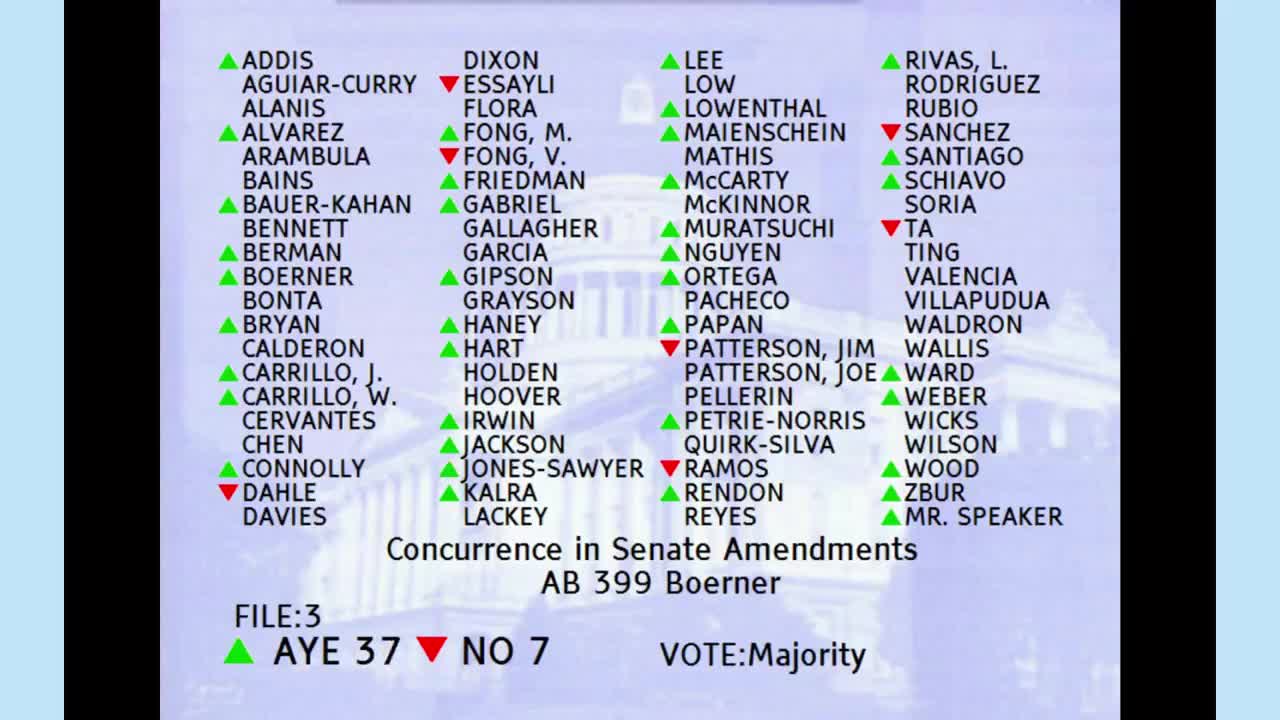
Bill Author
Bill Co-Author(s):
