AB 1290: Product safety: plastic packaging: substances.
- Session Year: 2023-2024
- House: Assembly
- Latest Version Date: 2023-03-21
Current Status:
Failed
(2024-02-01: Died on inactive file.)
Introduced
In Committee
First Chamber
In Committee
Second Chamber
Enacted
Existing law establishes the Plastic Pollution Prevention and Packaging Producer Responsibility Act, which covers certain single-use packaging and plastic single-use food serviceware, as provided. As part of its comprehensive statutory scheme, the act requires the producers, as defined, of these covered materials to source reduce covered plastic material, to ensure that covered material offered for sale, distributed, or imported in or into the state on or after January 1, 2032, is recyclable or compostable, and to ensure that covered plastic material offered for sale, distributed, or imported in or into the state meets specified recycling rates.
Existing law prohibits any person from distributing, selling, or offering for sale in the state any food packaging that contains regulated perfluoroalkyl and polyfluoroalkyl substances (PFAS), as defined, and requires a manufacturer to use the least toxic alternative when replacing regulated PFAS in food packaging to comply with this requirement. Existing law similarly prohibits, beginning July 1, 2025, a person from manufacturing, distributing, selling, or offering for sale in the state any new, not previously owned, textile articles that contain regulated PFAS, except as specified.
This bill would prohibit, beginning January 1, 2026, a person from manufacturing, selling, offering for sale, or distributing in the state, (1) opaque or pigmented polyethylene terephthalate plastic bottles, and (2) plastic packaging that contains certain chemicals, pigments, or additives, as specified. The bill would exclude from that prohibition packaging used for certain medical, drug, and federally regulated products. The bill would authorize the imposition of a civil penalty for a violation of that prohibition, as specified.
Existing law establishes the Plastic Pollution Prevention and Packaging Producer Responsibility Act, which covers certain single-use packaging and plastic single-use food serviceware, as provided. As part of its comprehensive statutory scheme, the act requires the producers, as defined, of these covered materials to source reduce covered plastic material, to ensure that covered material offered for sale, distributed, or imported in or into the state on or after January 1, 2032, is recyclable or compostable, and to ensure that covered plastic material offered for sale, distributed, or imported in or into the state meets specified recycling rates.
Existing law prohibits any person from distributing, selling, or offering for sale in the state any food packaging that contains regulated perfluoroalkyl and polyfluoroalkyl substances (PFAS), as defined, and requires a manufacturer to use the least toxic alternative when replacing regulated PFAS in food packaging to comply with this requirement. Existing law similarly prohibits, beginning July 1, 2025, a person from manufacturing, distributing, selling, or offering for sale in the state any new, not previously owned, textile articles that contain regulated PFAS, except as specified.
This bill would prohibit, beginning January 1, 2026, a person from manufacturing, selling, offering for sale, or distributing in the state, (1) opaque or pigmented polyethylene terephthalate plastic bottles, and (2) plastic packaging that contains certain chemicals, pigments, or additives, as specified.
(a)For purposes of this chapter, the following definitions apply:
(1)Nondetectable pigments means pigments added to plastic packaging to provide color to the plastic that are not detectable by technology used for recycling by mechanical means.
(2)Opaque or pigmented polyethylene terephthalate (PET) bottles means plastic bottles made with PET, as defined in Section 18013, that have added pigments or other additives that provide color to the bottles other than transparent blue or green or that cause the bottles to be opaque.
(3)Oxo-degradable additives means additives that, through oxidation, lead to the fragmentation of plastic material into micro-fragments or to chemical decomposition, including oxo-biodegradable additives.
(4)Packaging has the same meaning as in Section 42041.
(5)Perfluoroalkyl and polyfluoroalkyl substances or PFAS has the same meaning as in Section 108970 paragraph (2) of subdivision (a) of Section 109000 of the Health and Safety Code.
(6)Regulated perfluoroalkyl and polyfluoroalkyl substances or PFAS has the same meaning as in Section 108970 paragraph (3) of subdivision (a) of Section 109000 of the Health and Safety Code.
(7)Rigid plastic packaging containing polyethylene terephthalate glycol means a rigid plastic packaging container, as defined in Section 42301, that contains polyethylene terephthalate glycol.
(b)Commencing January 1, 2026, no person shall manufacture, sell, offer for sale, or distribute in the state any of the following:
(1)Opaque or pigmented polyethylene terephthalate bottles.
(2)Plastic packaging that contains any of the following:
(A)Nondetectable pigments.
(B)Oxo-degradable additives.
(C)Regulated perfluoroalkyl and polyfluoroalkyl substances or PFAS.
(D)Polyvinyl chloride.
(E)Polyvinylidene chloride.
(3)Rigid plastic packaging containing polyethylene terephthalate glycol.
(c)Notwithstanding any other law, the prohibition in subdivision (b) does not apply to any of the following:
(1)Packaging used for any of the following products:
(A)Medical products and products defined as devices or prescription drugs, as specified in the Federal Food, Drug, and Cosmetic Act (21 U.S.C. Secs. 321(g), 321(h), and 353(b)(1)).
(B)Drugs that are used for animal medicines, including, but not limited to, parasiticide products for animals.
(C)Products intended for animals that are regulated as animal drugs, biologics, parasiticides, medical devices, or diagnostics used to treat, or be administered to, animals under the Federal Food, Drug, and Cosmetic Act (21 U.S.C. Sec. 301 et seq.), the federal Virus-Serum-Toxin Act (21 U.S.C. Sec. 151 et seq.), or the Federal Insecticide, Fungicide, and Rodenticide Act (7 U.S.C. Sec. 136 et seq.).
(2)Packaging used to contain products regulated by the Federal Insecticide, Fungicide, and Rodenticide Act (7 U.S.C. Sec. 136 et seq.).
42091.(a)A city, a county, or the state may impose civil liability in the amount of five hundred dollars ($500) for the first violation of this chapter, one thousand dollars ($1,000) for the second violation, and two thousand dollars ($2,000) for the third and any subsequent violation.
(b)Any civil penalties collected pursuant to subdivision (a) shall be paid to the office of the city attorney, city prosecutor, district attorney, or Attorney General, whichever office brought the action. The penalties collected pursuant to this section by the Attorney General may be expended by the Attorney General, upon appropriation by the Legislature, to enforce this chapter.
(c)The remedies provided by this section are not exclusive and are in addition to the remedies that may be available pursuant to Chapter 5 (commencing with Section 17200) of Part 2 of Division 7 of the Business and Professions Code.
(d)The costs incurred by a state agency in carrying out this chapter shall be recoverable by the Attorney General, upon the request of the agency, from the liable person or persons.
(a)For purposes of this chapter, the following definitions apply:
(1)Nondetectable pigments means pigments added to plastic packaging to provide color to the plastic that are not detectable by technology used for recycling by mechanical means.
(2)Opaque or pigmented polyethylene terephthalate (PET) bottles means plastic bottles made with pigments or other additives that provide color to the bottles other than transparent blue or green or that cause the bottles to be opaque.
(3)Oxo-degradable additives means additives that, through oxidation, lead to the fragmentation of plastic material into micro-fragments or to chemical decomposition, including oxo-biodegradable additives.
(4)Packaging has the same meaning as in Section 42041.
(5)Perfluoroalkyl and polyfluoroalkyl substances or PFAS has the same meaning as in Section 108970 of the Health and Safety Code.
(6)Regulated perfluoroalkyl and polyfluoroalkyl substances or PFAS has the same meaning as in Section 108970 of the Health and Safety Code.
(7)Rigid plastic packaging containing polyethylene terephthalate glycol means a rigid plastic packaging container, as defined in Section 42301, that contains polyethylene terephthalate glycol.
(b)Commencing January 1, 2026, no person shall manufacture, sell, offer for sale, or distribute in the state any of the following:
(1)Opaque or pigmented polyethylene terephthalate bottles.
(2)Plastic packaging that contains any of the following:
(A)Nondetectable pigments.
(B)Oxo-degradable additives.
(C)Regulated perfluoroalkyl and polyfluoroalkyl substances or PFAS.
(D)Polyvinyl chloride.
(E)Polyvinylidene chloride.
(3)Rigid plastic packaging containing polyethylene terephthalate glycol.
|
Date
|
Status
|
|---|---|
| Feb 1, 2024 | Died on inactive file. |
| May 31, 2023 | Ordered to inactive file at the request of Assembly Member Luz Rivas. |
| May 4, 2023 | Read second time. Ordered to third reading. |
| May 3, 2023 | From committee: Do pass. (Ayes 12. Noes 4.) (May 3). |
| Apr 18, 2023 | From committee: Do pass and re-refer to Com. on APPR. (Ayes 8. Noes 3.) (April 17). Re-referred to Com. on APPR. |
| Mar 23, 2023 | In committee: Set, first hearing. Hearing canceled at the request of author. |
| Mar 22, 2023 | Re-referred to Com. on NAT. RES. |
| Mar 21, 2023 | From committee chair, with author's amendments: Amend, and re-refer to Com. on NAT. RES. Read second time and amended. |
| Mar 2, 2023 | Referred to Com. on NAT. RES. |
| Feb 17, 2023 | From printer. May be heard in committee March 19. |
| Feb 16, 2023 | Read first time. To print. |
|
Date
|
Description
|
Location
|
Votes
|
|
|---|---|---|---|---|
| May 3, 2023 | Do pass. | Assembly Standing Committee on Appropriations |
Passed |
|
| Apr 17, 2023 | Do pass and be re-referred to the Committee on [Appropriations] | Assembly Standing Committee on Natural Resources |
Passed |
This list shows positions taken on this bill by organizations on the date displayed, which is linked to the original source.
Positions by individuals are not included.
|
Organization
|
Position
|
Date
|
|---|---|---|
| 350 Ventura County Climate Hub | ** Support | |
| 5 Gyres Institute | ** Support | |
| Active San Gabriel Valley | ** Support | |
| American Chemistry Council | ** Against | |
| American Cleaning Institute | ** Against | |
| American Institute for Packaging and Environment | ** Against | |
| American Supply Association | ** Against | |
| Angelenos for Green Schools | ** Support | |
| Association of Plastic Recyclers | ** Against | |
| Auto Care Association | ** Against | |
| A Voice for Choice Advocacy | ** Support | |
| Azul | ** Support | |
| Ban SUP | ** Support | |
| Bay Area Youth Lobbying Initiative | ** Support | |
| Berry Global | ** Against | |
| Breast Cancer Prevention Partners | ** Support | |
| Breathe Southern Califoria | ** Support | |
| California Automotive Wholesalers' Association | ** Against | |
| California Cattlemen'S Association | ** Against | |
| California Chamber Of Commerce | ** Against | |
| California Coastal Protection Network | ** Support | |
| California Communities Against Toxics | ** Support | |
| California Compost Coalition | ** Support | |
| California Environmental Voters | ** Support | |
| California Food Producers | ** Against | |
| California Manufacturers & Technology Association | ** Against | |
| Californians Against Waste | ** Support | |
| California Nurses for Environmental Health and Justice | ** Support | |
| California Poultry Federation | ** Against | |
| California Product Stewardship Council | ** Support | |
| California Resource Recovery Association | ** Support | |
| California Restaurant Association | ** Against | |
| CALPIRG, California Public Interest Research Group | ** Support | |
| Center For Biological Diversity | ** Support | |
| Center For Environmental Health | ** Support | |
| Chemical Industry Council Of California | ** Against | |
| clean production action | ** Support | |
| Clean Seas Lobbying Coalition | ** Support | |
| Clean Water Action | ** Support | |
| Climate Reality Project, Los Angeles Chapter | ** Support | |
| Climate Reality Project, San Fernando Valley | ** Support | |
| Community 2.0 | ** Support | |
| Consumer Brands Association | ** Against | |
| Consumer Healthcare Products Association | ** Against | |
| Consumer Technology Association | ** Against | |
| County of Santa Barbara | ** Support | |
| Courage California | ** Support | |
| Dairy Institute Of California | ** Against | |
| Dart Container Corporation | ** Against | |
| Defenders Of Wildlife | ** Support | |
| Dr. Bronner'S | ** Support | |
| Ecology Center | ** Support | |
| Educate. Advocate. | ** Support | |
| Elders Climate Action, Norcal and Socal Chapters | ** Support | |
| Environmental Lead, Indivisible Alta Pasadena | ** Support | |
| Environmental Working Group | ** Support | |
| Facts: Families Advocating for Chemical & Toxics Safety | ** Support | |
| Flexible Packaging Association | ** Against | |
| Foodservice Packaging Institute | ** Against | |
| FracTracker Alliance | ** Support | |
| Friends Committee On Legislation Of California | ** Support | |
| Friends Of The Earth | ** Support | |
| Glendale Environmental Coalition | ** Support | |
| Green America | ** Support | |
| Greenpeace Usa | ** Support | |
| Green Science Policy Institute | ** Support | |
| Grove Collaborative | ** Support | |
| Heal The Bay | ** Support | |
| Household and Commercial Products Association | ** Against | |
| Indivisible Ca: Statestrong | ** Support | |
| Industrial Environmental Association | ** Against | |
| Irvine Ranch Water District | ** Support | |
| Last Plastic Straw | ** Support | |
| Los Angeles Alliance for a New Economy | ** Support | |
| National Marine Manufacturers Association | ** Against | |
| National Stewardship Action Council | ** Support | |
| Natural Resources Defense Council | ** Support | |
| Northern California Recycling Association | ** Support | |
| Pacific Environment | ** Support | |
| Pacoima Beautiful | ** Support | |
| Personal Care Products Council | ** Against | |
| Pet Food Institute | ** Against | |
| Plastic Free Future | ** Support | |
| Plastic Pollution Coalition | ** Support | |
| Plastics Industry Association | ** Against | |
| Republic Services - Western Region | ** Support | |
| Repurpose | ** Support | |
| Safer States | ** Support | |
| San Francisco Baykeeper | ** Support | |
| Save Our Shores | ** Support | |
| Sealed Air Corporation | ** Against | |
| Sierra Club California | ** Support | |
| Silicon Valley Youth Climate Action | ** Support | |
| South Bayside Waste Management Authority | ** Support | |
| Surfrider Foundation | ** Support | |
| The Keep a Breast Foundation | ** Support | |
| The Story of Stuff Project | ** Support | |
| The Toy Association | ** Against | |
| The Vinyl Institute | ** Against | |
| Transcontinental Packaging | ** Against | |
| UPSTREAM | ** Support | |
| Urban Ecology Project | ** Support | |
| Western Plastics Association | ** Against | |
| Western United Diaries | ** Against |
ASSEMBLY THIRD READING
ATR Bill Id:AB 1290
Author:(Luz Rivas)
As Amended Ver:March 21, 2023
Majority vote
SUMMARY
Bans specified toxic and nonrecyclable plastics and plastic additives on and after January 1, 2026.
Major Provisions
Specifically, this bill:
- Beginning January 1, 2026, with specified exemptions, prohibits the manufacture, sale, offer for sale, or distribution of:
- Opaque or pigmented polyethylene terephthalate (PET) bottles.
- Plastic packaging that contains any of the following: nondetectable pigments, oxo-degradable additives, regulated perfluoroalkyl and polyfluoroalkyl substances (PFAS), polyvinyl chloride (PVC), and polyvinylidene chloride (PVCD).
- Rigid plastic packaging containers containing polyethylene terephthalate glycol (PETG).
- Authorizes a city, county, or the state to impose civil liability in the amount of $500 for the first violation, $1,000 for the second violation, and $2,000 for any subsequent violations. Requires that any penalties collected be paid to the office of the city attorney, city prosecutor, district attorney, or Attorney General (AG), whichever brought the action.
- Provides that penalties collected by the AG may be expended, upon appropriation, to enforce this bill's requirements, and that costs incurred by a state agency under this bill are recoverable by the AG, as specified.
- Specifies that remedies associated with this bill are not exclusive and are in addition to remedies available under existing law.
COMMENTS
Plastic pollution. Plastic is everywhere. From the highest mountain on earth to the deepest parts of the sea, plastic pollutes. Production has continued to increase rapidly over the last several decades and far outpaces our capacity to manage it. In 1950, 2.3 million tons of plastic were generated. By 2015, that had ballooned to 448 million metric tons. Half of all plastic ever created was manufactured in the last 15 years. By 2050, production is expected to triple current production and account for one-fifth of global oil production. Between 1950 and 2015, approximately 9,500 million metric tons of plastic was generated. While the conversation around plastic has generally focused on its end of life, plastic pollution starts with fossil fuel extraction, and continues through manufacturing, transportation, usage, and finally disposal.
Some plastics and plastic additives pose health risks during their use. For example, additives like bisphenols and PFAS in plastic can leach from packaging into food, drinks, and personal care products. Bisphenols, including BPA, BPS, and other forms like bisphenol F, are endocrine disrupters that are associated with possible cancer and reproductive risks. PFAS, also known as forever chemicals because they do not break down naturally, are widely used in food and product packaging (both plastic and fiber) to make the containers stain, oil, heat, and water resistant. According to the Centers for Disease Control (CDC), animal studies indicate that PFAS may affect reproduction, thyroid function, immune response, liver damage, and raise kidney and testicular cancer risks. Since 1999, the CDC has been testing for PFAS in blood samples and found PFAS in the samples of nearly all people tested.
Plastic accounts for around 12% of California's disposed waste stream -- more than 4.5 million tons. Recycling figures are harder to estimate, as California has only recently begun collecting data from recycling facilities, but it appears that less than 15% of the plastic generated in California is recycled.
An estimated eight million metric tons of plastic waste enters the world's oceans annually. By 2040, that number is expected to triple to 24 million metric tons. Ocean plastic pollution is driven by ocean currents and accumulates in certain areas throughout the ocean. The North Pacific Central Gyre is the ultimate destination for much of the marine debris originating from the California coast. However, plastic generated in California pollutes oceans across the globe, as bales of plastic collected for recycling here are exported for processing and recycling. The plastic with value is collected and recycled, and the rest is discarded or incinerated.
As plastic circulates in the environment, it breaks down into smaller particles, known as microplastic. Microplastic refers to plastic particles that are less than 5 millimeters in length (about the size of a sesame seed). They come from a variety of sources, including primary microplastics, which are purposely manufactured for use in products, and pellets used for plastic manufacturing, and secondary microplastics that are generated as larger plastic debris degrades into smaller and smaller pieces over time. This fragmentation increases the surface area to volume ratio, which facilitates adherence and transport of harmful organisms and chemicals. As they are ingested by animals, they bioaccumulate in the food web.
Microplastics have become ubiquitous in the environment. They are floating in outdoor and indoor air, even in areas far from any identifiable source. The particles are small enough to be carried by wind currents. They make up a measurable component of household dust and, like dust, are inhaled. They have been found in waterways and drinking water. Humans are breathing and ingesting microplastics, but there is almost no research into their health impacts. A recent research review conducted by the California State Policy Evidence Consortium (CalSPEC) reports that microplastics have been found in human blood, breastmilk, liver, lung, and placenta samples. Based on the review of the limited animal studies available, the report concludes that "microplastics are suspected to promote deleterious human health impacts in the reproductive and digestive systems… CalSPEC concludes that respiratory harms from microplastics are also likely suspected."
Recycling plastic into new products is one way to reduce plastic pollution, as it keeps the recycled plastic out of the environment and reduces our dependence on virgin resin. Recycling is currently only feasible for some of the more common, and least toxic, forms of plastic. Many forms of plastic, like those included in this bill, contain toxic and nonrecyclable resins and additives that make them difficult or impossible to recycle. The abundance and variety of the types of plastic in our recycling system make it difficult to sort, and high contamination rates in bales of recycled plastic have caused many countries to stop accepting recycled plastic from the United States unless it meets stringent contamination rates.
Problematic and unnecessary materials. The United States (U.S.) Plastics Pact (Pact) is a consortium founded by The Recycling Partnership and World Wildlife Fund that is intended to connect public and private stakeholders to create a pathway to a circular economy for plastic in the United States by "eliminating plastics we don't need, innovating to ensure that the plastics we do need are reusable, recyclable, or compostable, and circulating all the plastic items we use to keep them in the economy and out of the environment." The Pact's advisory council includes representatives from environmental organizations, recyclers, local and state governments, and industry, and its "activators" (members) include an even broader range of more than 100 stakeholders with expertise and experience in the production and management of plastic.
The Pact identified 11 "problematic and unnecessary" plastic packaging items, resins, and additives that it works with its activators to eliminate by 2025. The Pact defines "problematic and unnecessary" as:
Plastic packaging items, components, or materials where consumption could be avoided through elimination, reuse, or replacement, and items that, post-consumption, commonly do not enter the recycling and/or composting systems, or where they do, are detrimental to the recycling or composting system due to their format, composition, or size.
The list includes cutlery, intentionally added PFAS, non-detectable pigments such as carbon black, opaque or pigmented PET (any color other than transparent blue or green), oxo-degradable additives, PETG in rigid packaging, problematic label constructions, polystyrene (including expanded polystyrene), PVC (including PVCD), stirrers, and straws.
SB 54 (Allen) Chapter 75, Statutes of 2022. SB 54 establishes sweeping new minimum recycling requirements for single-use plastic packaging and food service ware (covered material), source reduction requirements for plastic covered material, and prohibits the sale or distribution of expanded polystyrene unless it meets accelerated recycling rates. SB 54 requires producers to comply with the bill's requirements through an expanded producer responsibility program. This bill additionally requires producers, through the producer responsibility organization, to pay $500 million per year for ten years (from 2027 to 2037) to be deposited into the California Plastic Pollution Mitigation Fund, which is established to fund various environmental and public health programs.
This bill. This bill phases out a subset of the materials identified by the Pact as problematic and unnecessary that are the most toxic or pose the greatest challenges to recycling systems, specifically: opaque or pigmented PET bottles, which are a contaminant in the recycling stream; nondetectable pigments in packaging, which are pigments that cannot be detected by sorting systems in recycling operations and contaminate the recycling stream; oxo-degradable additives in packaging, which contribute to the proliferation of microplastics and contaminate both compost and recycling streams; PFAS in packaging, which poses health and environmental risks and act as contaminants in compost and recycling streams; PVC and PVCD in packaging, which are made from vinyl chloride, a known carcinogen, and are generally not recycled; and, rigid plastic packaging containing PETG, which is a contaminant in recycling streams.
Like SB 54, this bill applies to packaging materials, and the resins included in this bill are also subject to the requirements of that bill. Many of the materials included by this bill are the very materials that will hinder compliance with SB 54, and removing them from packaging should ease SB 54 compliance. Given the challenges that these materials pose to recycling systems, it is likely that most would be phased out under the SB 54 program eventually but the timeline for SB 54 implementation is lengthy. The program won't be fully implemented until 2032. Additionally, SB 54 does not regulate the use of toxic components like PFAS and PVC. SB 54 is a groundbreaking law that creates a long-term plan to create a circular economy for packaging waste, but it is not clear that Californians should not have to wait a decade for toxic and problematic plastics to be removed from the packaging they use. This bill takes near-term action to address materials and additives that pose the most significant environmental and health impacts.
According to the Author
The U.S. Plastics Pact, a group of over 100 industry stakeholders, including Target, The Coca-Cola Company, and Walmart identified numerous unnecessary plastic packaging materials and additives. They deemed these materials and additives could be avoided through elimination, reusables or replacement, and commonly do not enter the recycling and/or composting systems, or where they do, are detrimental to the recycling or composting system due to their format, composition, or size. Many of these materials and additives pose serious threats to human and environmental health. While SB 54 develops a long-term plan to address the plastic pollution crisis, California should take immediate action to align with the U.S. Plastic Pact's thoroughly researched goal to eliminate these problematic plastic materials and additives as quickly as possible. This will also make it easier for the state to meet its SB 54 goals. AB 1290 will prohibit the sale of the certain plastic packaging materials and additives by January 1, 2026 to protect public health and facilitate greater levels of effective and affordable recycling.
Arguments in Support
A coalition of organizations in support state:
The Plastic Pact "Activators," which include some of the largest corporations in the country such as Mondelez, The Coca-Cola Company, and Walmart, set a goal to eliminate these materials and additives by 2025. The US Plastics Pact is not the only one to take aim at these problematic plastics. The UK, France, South Africa, Kenya, and Portugal Plastics Pacts, as well as major brands like Nestle and Tesco, have also targeted these problematic plastics for elimination, some on even faster timelines… AB 1290 would eliminate these problematic plastics, delivering both health and environmental benefits. It would also help the state meet its ambitious recycling objectives pursuant to SB 54.
Arguments in Opposition
A coalition of organizations in opposition state:
The enactment of SB 54 [(Allen), Chapter 75,] Statutes of 2022 , along with SB 343 [(Allen) Chapter 507,] Statutes of 2021 has resulted in arguably the most comprehensive and rigorous single use packaging and plastics recycling and waste reduction requirements enacted domestically and internationally… These new laws will require significant resources to implement, both from the regulated community and CalRecycle. Given that the law was only passed and signed into law in June 2022, and the development of implementing regulations has only just begun, creating new packaging mandates as proposed in AB 1290 is unnecessary and counterproductive… The Legislature should allow for SB 54 and SB 343 to be fully implemented before imposing new packaging requirements and/or restrictions on producers.
FISCAL COMMENTS
The Department of Justice (DOJ) anticipates minor and absorbable costs as a result of this bill but notes as numerous bills this session may result in no significant impact to DOJ, should an aggregate of these bills become law, DOJ would need to request additional resources to process the increase to its workload.
VOTES
ASM NATURAL RESOURCES: 8-3-0
YES: Luz Rivas, Addis, Friedman, Muratsuchi, Pellerin, Ward, Wood, Zbur
NO: Flora, Hoover, Mathis
ASM APPROPRIATIONS: 12-4-0
YES: Holden, Bryan, Calderon, Wendy Carrillo, Mike Fong, Hart, Lowenthal, Papan, Pellerin, Robert Rivas, Weber, Wilson
NO: Megan Dahle, Dixon, Mathis, Sanchez
UPDATED
VERSION: March 21, 2023
CONSULTANT: Elizabeth MacMillan / NAT. RES. / (916) 319-2092 FN: 0000300
Date of Hearing: May 3, 2023
ASSEMBLY COMMITTEE ON APPROPRIATIONS
Chris Holden, Chair
ABPCA Bill Id:AB 1290
Author:(Luz Rivas) – As Amended Ver:March 21, 2023
Policy Committee: | Natural Resources | Vote: | 8 - 3 |
|
| ||
|
|
Urgency: No State Mandated Local Program: No Reimbursable: No
SUMMARY:
This bill, beginning January 1, 2026, bans specified toxic and nonrecyclable plastics and plastic additives.
Specifically, this bill:
- Beginning January 1, 2026, with specified exemptions, prohibits the manufacture, sale, offer for sale, or distribution of:
- Opaque or pigmented polyethylene terephthalate (PET) bottles.
- Plastic packaging that contains any of the following: nondetectable pigments, oxo-degradable additives, regulated PFAS, polyvinyl chloride (PVC), and polyvinylidene chloride (PVCD).
- Rigid plastic packaging containers containing polyethylene terephthalate glycol (PETG).
- Authorizes a city, county, or the state to impose civil liability in the amount of $500 for the first violation, $1,000 for the second violation, and $2,000 for any subsequent violations. Requires that any penalties collected be paid to the office of the city attorney, city prosecutor, district attorney, or Attorney General (AG), whichever brought the action.
- Provides that penalties collected by the AG may be expended, upon appropriation, to enforce this bill’s requirements, and that costs incurred by a state agency under this bill are recoverable by the AG, as specified.
- Specifies that remedies associated with this bill are not exclusive and are in addition to remedies available under existing law.
FISCAL EFFECT:
The Department of Justice (DOJ) anticipates minor and absorbable costs as a result of this bill but notes as numerous bills this session may result in no significant impact to DOJ, should an aggregate of these bills become law, DOJ would need to request additional resources to process the increase to its workload.
COMMENTS:
1) Purpose. According to the author:
The U.S. Plastics Pact, a group of over 100 industry stakeholders, including Target, The Coca-Cola Company, and Walmart identified numerous unnecessary plastic packaging materials and additives.They deemed these materials and additives could be avoided through elimination, reusables or replacement, and commonly do not enter the recycling and/or composting systems, or where they do, are detrimental to the recycling or composting system due to their format, composition, or size. Many of these materials and additives pose serious threats to human and environmental health. While SB 54 develops a long-term plan to address the plastic pollution crisis, California should take immediate action to align with the U.S. Plastic Pact’s thoroughly researched goal to eliminate these problematic plastic materials and additives as quickly as possible.
2) Background. Plastic pollution is a significant and rapidly growing threat to the environment, terrestrial wildlife and marine life, human health, environmental justice communities, local governments, and taxpayers. Approximately 150 million metric tons of plastic is already circulating in the marine environment. The International Energy Agency expects production of plastic in 2020 to be triple current production and, by midcentury, drive nearly half of oil demand growth. As plastic circulates in the environment, it breaks down into smaller particles, known as microplastics. Microplastics have become ubiquitous and accumulate in the environment. Plastic, across its entire lifecycle, is also a major contributor to greenhouse gas emissions and climate change.
The chemicals used in plastic production pose risks to the environment and public health, and some plastics and plastic additives pose health risks during their use. The advisory council of the U.S. Plastics Pact (Pact), a consortium founded by The Recycling Partnership and World Wildlife Fund, has identified 11 “problematic and unnecessary” plastic packaging items, resins, and additives that it is working to eliminate by 2025. This bill phases out a subset of these materials that are the most toxic or pose the greatest challenges to recycling systems, specifically: opaque or pigmented PET bottles, which are a contaminant in the recycling stream; nondetectable pigments in packaging, which are pigments that cannot be detected by sorting systems in recycling operations and contaminate the recycling stream; oxo-degradable additives in packaging, which contribute to the proliferation of microplastics and contaminate both compost and recycling streams; PFAS in packaging, which pose health and environmental risks and act as contaminants in compost and recycling streams; PVC and PVCD in packaging, which are made from vinyl chloride, a known carcinogen, and are generally not recycled; and, rigid plastic packaging containing PETG, which is a contaminant in recycling streams.
As detailed in the Assembly Natural Resources Committee analysis of this bill, SB 54 (Allen), Chapter 75, Statutes of 2022, among other things, established sweeping new minimum recycling requirements for single-use plastic packaging and food service ware (covered material), included source reduction requirements for plastic covered material, and prohibited the sale or distribution of expanded polystyrene unless it meets accelerated recycling rates. Like SB 54, this bill applies to packaging materials, and the resins included in this bill are also subject to the requirements of SB 54. Many of the materials included in this bill are the very materials that will likely hinder compliance with SB 54, and removing them from packaging should ease SB 54 compliance. Given the challenges these materials pose to recycling systems, it is likely that most would be phased out under the SB 54 program eventually, but the timeline for SB 54 implementation is lengthy. Additionally, SB 54 does not regulate the use of toxic components like PFAS and PVC. This bill takes near-term action to address materials and additives that pose the greatest environmental and health impacts.
Writing in support, a coalition of organizations states:
The Plastic Pact “Activators,” which include some of the largest corporations in the country such as Mondelez, The Coca-Cola Company, and Walmart, set a goal to eliminate these materials and additives by 2025. The US Plastics Pact is not the only one to take aim at these problematic plastics. The UK, France, South Africa, Kenya, and Portugal Plastics Pacts, as well as major brands like Nestle and Tesco, have also targeted these problematic plastics for elimination, some on even faster timelines… AB 1290 would eliminate these problematic plastics, delivering both health and environmental benefits. It would also help the state meet its ambitious recycling objectives pursuant to SB 54.
Writing in opposition, a coalition of organization states:
The enactment of SB 54 (Stats. 2022), along with SB 343 (Stats. 2021) has resulted in arguably the most comprehensive and rigorous single use packaging and plastics recycling and waste reduction requirements enacted domestically and internationally…These new laws will require significant resources to implement, both from the regulated community and CalRecycle. Given that the law was only passed and signed into law in June 2022, and the development of implementing regulations has only just begun, creating new packaging mandates as proposed in AB 1290 is unnecessary and counterproductive. Outright bans on certain materials do not consider potential important tradeoffs, including how certain packaging materials promote food safety or prevent food waste, a significant contributor to climate change as around 25% to 30% of global emissions come from our food systems. These types of factors are considered in SB 54 as it is implemented. The Legislature should allow for SB 54 and SB 343 to be fully implemented before imposing new packaging requirements and/or restrictions on producers.
Analysis Prepared by: Nikita Koraddi / APPR. / (916) 319-2081
Date of Hearing: April 17, 2023
ASSEMBLY COMMITTEE ON NATURAL RESOURCES
Luz Rivas, Chair
ABPCA Bill Id:AB 1290 (
Author:Luz Rivas) – As Amended Ver:March 21, 2023
SUBJECT: Product safety: plastic packaging: substances
SUMMARY: Bans specified toxic and nonrecyclable plastics and plastic additives on and after January 1, 2026.
EXISTING LAW:
- Defines “packaging” as any separable and distinct material component used for the containment, protection, handling, delivery, or presentation of goods by a producer for the user or consumer, ranging from raw materials to processed goods. Explicitly includes, but does not limit this definition to, sales or primary packaging, grouped packaging, and transport packaging. (Public Resources Code (PRC) 42041)
- Defines “perfluoroalkyl and polyfluoroalkyl substances” (PFAS) as a class of fluorinated organic chemicals containing at least one fully fluorinated carbon atom. (Health and Safety Code (HSC) 109000)
- Defines “polyethylene terephthalate” (PET) as plastic derived from a reaction between terephthalic acid or dimethyl terephthalate and monoethylene glycol, as specified. (PRC 18013)
- Defines “rigid plastic packaging containers” as any plastic package having a relatively inflexible finite shape or form, with a minimum capacity of eight fluid ounces or its equivalent volume and a maximum capacity of five fluid gallons or its equivalent volume, that is capable of maintaining its shape while holding other products, including, but not limited to, bottles, cartons, and other receptacles, for sale or distribution in the state. (PRC 42301)
- Prohibits the sale or distribution of food packaging that contains regulated PFAS, as specified. (HSC 109000)
- Prohibits the sale, distribution, and importation of products or packaging for which a deceptive or misleading environmental marketing claim is made about the recyclability of the product or package. Establishes standards for claims relating to recyclability and compostability. Establishes civil liability of up to $2,000 for violations. (PRC 42355-42358.5)
- Prohibits unfair competition, which is defined as meaning and including any unlawful, unfair, or fraudulent business acts of practices, and unfair, deceptive, untrue, or misleading advertising. Establishes civil penalties up to $2,500 for each violation. Specifies that any person who engages in unfair competition may be enjoined in a court of competent jurisdiction and authorizes the court to make such orders of judgements necessary to prevent the use or employment of any practice that constitutes unfair competition, or to restore to any person in interest any money or property that may have been acquired through unfair competition. (Business and Professions Code 17200 – 17210)
THIS BILL:
- Beginning January 1, 2026, prohibits the manufacture, sale, offer for sale, or distribution of:
- Opaque or pigmented PET bottles.
- Plastic packaging that contains:
- Nondetectable pigments;
- Oxo-degradable additives;
- Regulated PFAS;
- Polyvinyl chloride (PVC); and,
- Polyvinylidene chloride (PVCD).
- Rigid plastic packaging containers containing polyethylene terephthalate glycol (PETG).
- Defines terms used in the bill, including:
- “Nondetectable pigments” as pigments added to plastic packaging to provide color to the plastic that are not detectable by technology used for recycling by mechanical means.
- “Opaque or pigmented PET bottles” as bottles made with PET, which have added pigments or other additives that provide color to the bottles other than transparent blue or green or that cause the bottles to be opaque.
- “Oxo-degradable additives” as additives that, through oxidation, lead to the fragmentation of plastic material into micro-fragments or to chemical decomposition, including oxo-biodegradable additives.
- Exempts the following:
- Packaging used for:
- Medical products and products defined as medical devices or prescription drugs;
- Drugs that are used for animal medicines, including, but not limited to, parasiticide products for animals; and,
- Products that are intended for animals that are regulated as animal drugs, biologics, paraciticides, medical devices, or diagnostics used to treat, or be administered to, animals, as specified.
- Packaging used to contain products regulated by the Federal Insecticide, Fungicide, and Rodenticide Act.
- Packaging used for:
- Authorizes a city, county, or the state to impose civil liability in the amount of $500 for the first violation, $1,000 for the second violation, and $2,000 for any subsequent violations. Requires that any penalties collected be paid to the office of the city attorney, city prosecutor, district attorney, or Attorney General, whichever brought the action. Penalties collected by the Attorney General may be expended, upon appropriation, to enforce the bill’s requirements. Specifies that remedies associated with this bill are not exclusive and are in addition to remedies available pursuant to unfair business practice law. Specifies that costs incurred by a state agency under this chapter are recoverable by the Attorney General, as specified.
FISCAL EFFECT: Unknown
COMMENTS:
- Author’s statement:
The U.S. Plastics Pact, a group of over 100 industry stakeholders, including Target, The Coca-Cola Company, and Walmart identified numerous unnecessary plastic packaging materials and additives. They deemed these materials and additives could be avoided through elimination, reusables or replacement, and commonly do not enter the recycling and/or composting systems, or where they do, are detrimental to the recycling or composting system due to their format, composition, or size. Many of these materials and additives pose serious threats to human and environmental health. While SB 54 develops a long-term plan to address the plastic pollution crisis, California should take immediate action to align with the U.S. Plastic Pact’s thoroughly researched goal to eliminate these problematic plastic materials and additives as quickly as possible. This will also make it easier for the state to meet its SB 54 goals. AB 1290 will prohibit the sale of the certain plastic packaging materials and additives by January 1, 2026 to protect public health and facilitate greater levels of effective and affordable recycling.
- Plastic pollution. Plastic is everywhere. From the highest mountain on earth to the deepest parts of the sea, plastic pollutes. Production has continued to increase rapidly over the last several decades and far outpaces our capacity to manage it. In 1950, 2.3 million tons of plastic were generated. By 2015, that had ballooned to 448 million metric tons. Half of all plastic ever created was manufactured in the last 15 years. By 2050, production is expected to triple current production and account for one-fifth of global oil production. Between 1950 and 2015, approximately 9,500 million metric tons of plastic was generated.
While the conversation around plastic has generally focused on its end of life, plastic pollution starts with fossil fuel extraction, and continues through manufacturing, transportation, usage, and finally disposal. Hundreds of petrochemical facilities throughout the United States create the pellets used in the production of plastic products. The vast majority of plastic is synthesized from fossil fuels, including oil, coal, and natural gas. About 14% of oil is used in petrochemical manufacturing, a precursor to producing plastic. By 2050, it is predicted to account for 50% of oil and fracked gas demand growth.
Plastic production is a significant driver of climate change. According to the Organisation for Economic Co-operation and Development, plastics generated 18 billion metric tons of greenhouse gas (GHG) emissions in 2019. By 2060, GHG emissions from plastics are expected to reach 4.3 billion metric tons, given the ongoing exponential increase in production.
The chemicals used in plastic production pose risks to the environment and public health. Last month, a train derailed and caught fire in East Palestine, Ohio. According to news reports, eleven of the derailed train cars contained vinyl chloride and butyl acrylate, chemicals used in the production of plastics. The resulting spill and fire contaminated the surrounding air, water, and soil and drove thousands from their homes. When vinyl chloride is burned, the primary chemicals of concern are phosgene, which was used as a chemical weapon in World War I, and hydrogen chloride, which can turn into hydrochloric acid when inhaled. United States Environmental Protection Agency soil tests are showing dioxin levels that far exceed acceptable thresholds, which was likely created by the burning of vinyl chloride and dispersed throughout the area. Dioxin is highly persistent and can accumulate and remain in the environment long-term. It is linked to cancer, diabetes, heart disease, nervous system disorders, and other serious health issues.
Some plastics and plastic additives pose health risks during their use. For example, additives like bisphenols and PFAS in plastic can leach from packaging into food, drinks, and personal care products. Bisphenols, including BPA, BPS, and other forms like bisphenol F, are endocrine disrupters that are associated with possible cancer and reproductive risks. PFAS, also known as forever chemicals because they do not break down naturally, are widely used in food and product packaging (both plastic and fiber) to make the containers stain, oil, heat, and water resistant. According to the Centers for Disease Control (CDC), animal studies indicate that PFAS may affect reproduction, thyroid function, immune response, liver damage, and raise kidney and testicular cancer risks. Since 1999, the CDC has been testing for PFAS in blood samples and found PFAS in the samples of nearly all people tested.
Plastic accounts for around 12% of California's disposed waste stream -- more than 4.5 million tons. Recycling figures are harder to estimate, as California has only recently begun collecting data from recycling facilities, but it appears that less than 15% of the plastic generated in California is recycled.
An estimated eight million metric tons of plastic waste enters the world's oceans annually. By 2040, that number is expected to triple to 24 million metric tons. Ocean plastic pollution is driven by ocean currents and accumulates in certain areas throughout the ocean. The North Pacific Central Gyre is the ultimate destination for much of the marine debris originating from the California coast. However, plastic generated in California pollutes oceans across the globe, as bales of plastic collected for recycling here are exported for processing and recycling. The plastic with value is collected and recycled, and the rest is discarded or incinerated.
As plastic circulates in the environment, it breaks down into smaller particles, known as microplastic. Microplastic refers to plastic particles that are less than 5 millimeters in length (about the size of a sesame seed). They come from a variety of sources, including primary microplastics, which are purposely manufactured for use in products, such as “microbeads” used in cosmetics, household cleaners, and personal care products, and pellets used for plastic manufacturing, and secondary microplastics that are generated as larger plastic debris degrades into smaller and smaller pieces over time, and microfibers, which are small plastic fibers that are shed from polyester fabrics, such as polyester fleece, and from plastic-based textiles like upholstery and carpet. This fragmentation increases the surface area to volume ratio, which facilitates adherence and transport of harmful organisms and chemicals. As they are ingested by animals, they bioaccumulate in the food web.
Microplastics have become ubiquitous in the environment. They are floating in outdoor and indoor air, even in areas far from any identifiable source. The particles are small enough to be carried by wind currents. They make up a measurable component of household dust and, like dust, are inhaled. They have been found in waterways and drinking water. Like all plastic in the environment, these particles accumulate toxins like pesticides, heavy metals, and other chemicals. Humans are breathing and ingesting microplastics, but there is almost no research into their health impacts. A recent research review conducted by the California State Policy Evidence Consortium (CalSPEC) reports that microplastics have been found in human blood, breastmilk, liver, lung, and placenta samples. Based on the review of the limited animal studies available, the report concludes that “microplastics are suspected to promote deleterious human health impacts in the reproductive and digestive systems… CalSPEC concludes that respiratory harms from microplastics are also likely suspected.”
Recycling plastic into new products is one way to reduce plastic pollution, as it keeps the recycled plastic out of the environment and reduces our dependence on virgin resin. Recycling is currently only feasible for some of the more common, and least toxic, forms of plastic. Many forms of plastic, like those included in this bill, contain toxic and nonrecyclable resins and additives that make them difficult or impossible to recycle. The abundance and variety of the types of plastic in our recycling system make it difficult to sort, and high contamination rates in bales of recycled plastic have caused many countries to stop accepting recycled plastic from the United States unless it meets stringent contamination rates.
- Problematic and unnecessary materials. The U.S. Plastics Pact (Pact) is a consortium founded by The Recycling Partnership and World Wildlife Fund that is intended to connect public and private stakeholders to create a pathway to a circular economy for plastic in the United States by “eliminating plastics we don’t need, innovating to ensure that the plastics we do need are reusable, recyclable, or compostable, and circulating all the plastic items we use to keep them in the economy and out of the environment.” The Pact’s advisory council includes representatives from environmental organizations, recyclers, local and state governments, and industry, and its “activators” (members) include an even broader range of more than 100 stakeholders with expertise and experience in the production and management of plastic.
The Pact identified 11 “problematic and unnecessary” plastic packaging items, resins, and additives that it works with its activators to eliminate by 2025. The Pact defines “problematic and unnecessary” as:
Plastic packaging items, components, or materials where consumption could be avoided through elimination, reuse, or replacement, and items that, post-consumption, commonly do not enter the recycling and/or composting systems, or where they do, are detrimental to the recycling or composting system due to their format, composition, or size.
The list includes cutlery, intentionally added PFAS, non-detectable pigments such as carbon black, opaque or pigmented PET (any color other than transparent blue or green), oxo-degradable additives, PETG in rigid packaging, problematic label constructions, polystyrene (including expanded polystyrene), PVC (including PVCD), stirrers, and straws.
- SB 54. SB 54 (Allen, Chapter 75, Statutes of 2022) establishes sweeping new minimum recycling requirements for single-use plastic packaging and food service ware (covered material), source reduction requirements for plastic covered material, and prohibits the sale or distribution of expanded polystyrene unless it meets accelerated recycling rates. SB 54 requires producers to comply with the bill’s requirements through an expanded producer responsibility program. This bill additionally requires producers, through the producer responsibility organization, to pay $500 million per year for ten years (from 2027 to 2037) to be deposited into the California Plastic Pollution Mitigation Fund, which is established to fund various environmental and public health programs.
- This bill. This bill phases out a subset of the materials identified by the Pact as problematic and unnecessary that are the most toxic or pose the greatest challenges to recycling systems, specifically: opaque or pigmented PET bottles, which are a contaminant in the recycling stream; nondetectable pigments in packaging, which are pigments that cannot be detected by sorting systems in recycling operations and contaminate the recycling stream; oxo-degradable additives in packaging, which contribute to the proliferation of microplastics and contaminate both compost and recycling streams; PFAS in packaging, which poses health and environmental risks and act as contaminants in compost and recycling streams; PVC and PVCD in packaging, which are made from vinyl chloride, a known carcinogen, and are generally not recycled; and, rigid plastic packaging containing PETG, which is a contaminant in recycling streams.
Like SB 54, this bill applies to packaging materials, and the resins included in this bill are also subject to the requirements of that bill. Many of the materials included by this bill are the very materials that will hinder compliance with SB 54, and removing them from packaging should ease SB 54 compliance. Given the challenges that these materials pose to recycling systems, it is likely that most would be phased out under the SB 54 program eventually but the timeline for SB 54 implementation is lengthy. The recycling requirements phase in between 2028 and 2032, and the source reduction requirements do not begin to take effect until 2027. Additionally, SB 54, does not regulate the use of toxic components like PFAS and PVC. SB 54 is a groundbreaking law that creates a long-term plan to create a circular economy for packaging waste, but Californians should not have to wait a decade for toxic and problematic plastics to be removed from the packaging they use. This bill takes near-term action to address materials and additives that pose the greatest environmental and health impacts.
REGISTERED SUPPORT / OPPOSITION:
Support
350 Ventura County Climate Hub
5 Gyres Institute
A Voice for Choice Advocacy
Active San Gabriel Valley
Angelenos for Green Schools
Azul
Ban SUP
Bay Area Youth Lobbying Initiative
Breast Cancer Prevention Partners
Breathe Southern California
California Coastal Protection Network
California Communities Against Toxics
California Compost Coalition
California Environmental Voters
California Nurses for Environmental Health and Justice
California Product Stewardship Council
California Resource Recovery Association
Californians Against Waste
CALPIRG, California Public Interest Research Group
Center for Biological Diversity
Center for Environmental Health
Clean Production Action
Clean Seas Lobbying Coalition
Clean Water Action
Climate Reality Project, Los Angeles Chapter
Climate Reality Project, San Fernando Valley
Community 2.0
County of Santa Barbara
Courage California
Defenders of Wildlife
Dr. Bronner's
Ecology Center
Educate. Advocate.
Elders Climate Action, NorCal and SoCal Chapters
Environmental Lead, Indivisible Alta Pasadena
Environmental Working Group
Facts: Families Advocating for Chemical & Toxics Safety
Fractracker Alliance
Friends Committee on Legislation of California
Friends of The Earth
Glendale Environmental Coalition
Green America
Green Science Policy Institute
Greenpeace USA
Grove Collaborative
Heal the Bay
Indivisible CA: StateStrong
Irvine Ranch Water District
Last Plastic Straw
Los Angeles Alliance for A New Economy
National Stewardship Action Council
Natural Resources Defense Council
Northern California Recycling Association
Pacific Environment
Pacoima Beautiful
Plastic Free Future
Plastic Pollution Coalition
Republic Services - Western Region
Repurpose
Safer States
San Francisco Baykeeper
Save Our Shores
Sierra Club California
Silicon Valley Youth Climate Action
South Bayside Waste Management Authority
Surfrider Foundation
The Keep a Breast Foundation
The Story of Stuff Project
Upstream
Urban Ecology Project
Opposition
American Chemistry Council
American Cleaning Institute
American Institute for Packaging and Environment
American Supply Association
Association of Plastic Recyclers
Auto Care Association
Berry Global
California Automotive Wholesalers' Association
California Cattlemen's Association
California Chamber of Commerce
California Food Producers
California Manufacturers & Technology Association
California Poultry Federation
California Restaurant Association
Chemical Industry Council of California
Consumer Brands Association
Consumer Healthcare Products Association
Consumer Technology Association
Dairy Institute of California
Dart Container Corporation
Flexible Packaging Association
Foodservice Packaging Institute
Household and Commercial Products Association
Industrial Environmental Association
National Marine Manufacturers Association
Personal Care Products Council
Pet Food Institute
Plastics Industry Association
Sealed Air Corporation
The Toy Association
The Vinyl Institute
Transcontinental Packaging
Western Plastics Association
Western United Diaries
Analysis Prepared by: Elizabeth MacMillan / NAT. RES. /
Discussed in Hearing
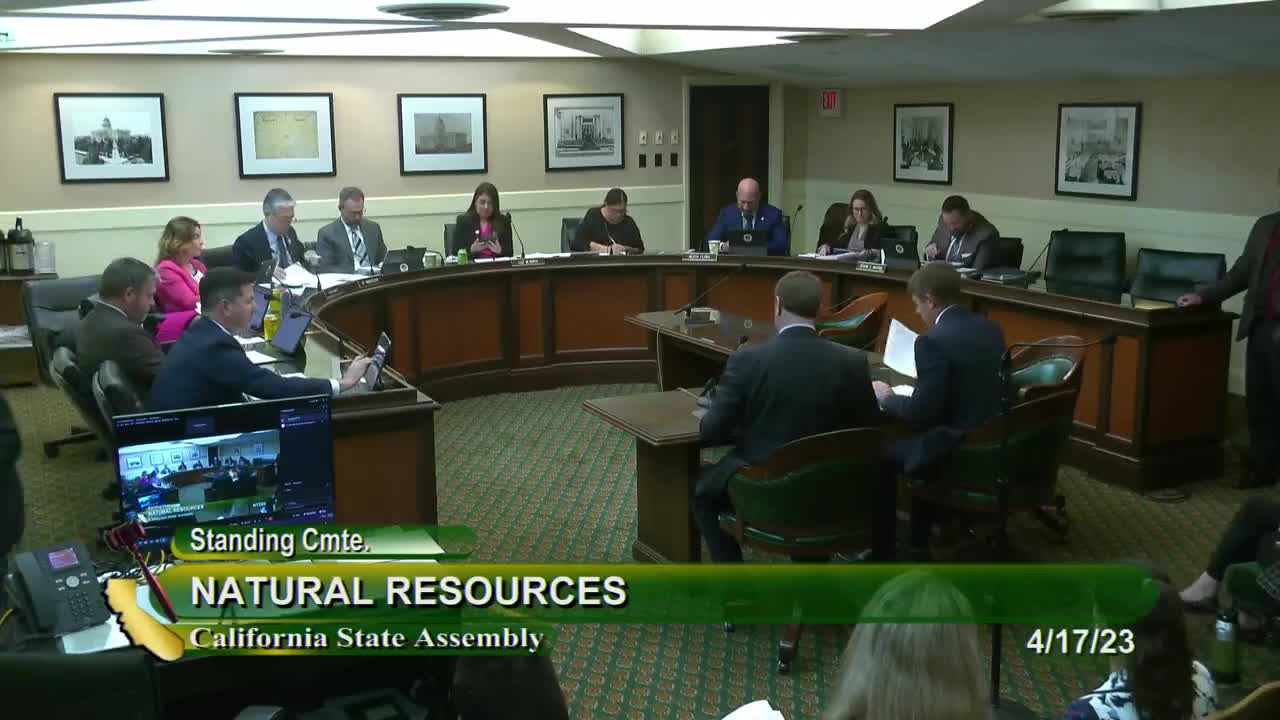 15MIN
Assembly Standing Committee on Natural Resources
Bill Author

Bill Co-Author(s):