AB 1306: State government: immigration enforcement.
- Session Year: 2023-2024
- House: Assembly
- Latest Version Date: 2023-09-12
Current Status:
Failed
(2024-01-30: Consideration of Governor's veto stricken from file.)
Introduced
In Committee
First Chamber
In Committee
Second Chamber
Enacted
Existing law, the California Values Act, prohibits a California law enforcement agency, defined as including both state and local agencies but excluding the Department of Corrections and Rehabilitation, from providing a persons release date or responding to a request for notification of a release date, unless that information is available to the public.
The bill would prohibit the Department of Corrections and Rehabilitation from detaining on the basis of a hold request, providing an immigration authority with release date information, or responding to a notification request, transferring to an immigration authority, or facilitating or assisting with a transfer request any individual who is eligible for release pursuant to specified provisions, including, among others, youth offender, elderly, and medical parole releases.
Existing law requires the Department of Corrections and Rehabilitation to cooperate with the United States Department of Homeland Security by providing the use of prison facilities, transportation, and general support, as needed, for the purposes of conducting and expediting deportation hearings and subsequent placement of deportation holds on undocumented immigrants who are incarcerated in state prison.
Existing law requires the department to identify inmates serving terms in state prison who are undocumented aliens subject to deportation. Existing law would require the department, upon the enactment of any federal law requiring these persons to be incarcerated in federal prison, to provide this information to the federal government, as specified.
This bill would repeal these provisions.
Existing law, the California Values Act, prohibits a California law enforcement agency, defined as including both state and local agencies but excluding the Department of Corrections and Rehabilitation, from providing a persons release date or responding to a request for notification of a release date, unless that information is available to the public.
The bill would prohibit the Department of Corrections and Rehabilitation from detaining on the basis of a hold request, providing an immigration authority with release date information, or responding to a notification request, transferring to an immigration authority, or facilitating or assisting with a transfer request any individual who is eligible for release pursuant to specified provisions, including, among others, youth offender, elderly, and medical parole releases.
Existing law sets forth the sole procedure by which local agencies and school districts may claim reimbursement for costs mandated by the state.This bill would make a nonsubstantive change to those provisions.Existing law sets forth the sole procedure by which local agencies and school districts may claim reimbursement for costs mandated by the state.
This bill would make a nonsubstantive change to those provisions.
The Legislature finds and declares all of the following:
(a)Californias punitive carceral system unjustly and disproportionately harms Black, Latinx, Indigenous, and Asian and Pacific Islander American communities. The California prison population peaked at more than 165,000 in 2006 in a system designed to house just 85,000 individuals due to decades of draconian laws that over-criminalized children of color, applied one-size-fits-all sentencing laws, and provided little to no opportunities for rehabilitated individuals to be considered for release on parole by the Board of Parole Hearings.
(b)In recent years, the Legislature and California voters have demonstrated a strong commitment to reforming our criminal system and ending mass incarceration by enacting the following landmark reforms. Through these reforms, certain incarcerated individuals have the opportunity to be considered for resentencing or release.
(c)With the passing of Senate Bill 260 of the 201314 Regular Session of the Legislature, Senate Bill 261 of the 20152016 Regular Session of the Legislature, Senate Bill 394 of the 201718 Regular Session of the Legislature, and Assembly Bill 1308 of the 20172018 Regular Session of the Legislature, based on the brain development of young people, the hallmark features of youth, and the ability for incarcerated young people to grow and mature, California created a parole process for people who were 25 years of age or younger at the time of their commitment offenses, and sentenced to life sentences or long determinate sentences.
(d)Through the elderly parole program, medical parole, and compassionate release processes, California acknowledged incarcerated populations who do not pose a threat to public safety and provided opportunities to be considered for release based on advanced age, fatal illness, or permanent incapacity.
(e)Through the enactment of both the California Racial Justice Act of 2020, and the Racial Justice Act for All, the California Legislature recognized discrimination in our criminal justice system based on race, ethnicity, or national origin. The legislation created an opportunity to challenge convictions and sentences sought, obtained, or imposed on the basis of race, ethnicity, or national origin.
(f)Acknowledging the injustice of convicting an individual of murder even if they did not kill anyone or intend to kill anyone, and that the felony murder legal theory has been weaponized to impose harsh convictions and sentences on persons of color and survivors of violence, the Legislature enacted Senate Bill 1437 of the 201718 Regular Session of the Legislature, which placed some limits on the legal basis for convicting someone of the crime of murder.
(g)Recognizing that the relevant experiences of survivors of human trafficking, intimate partner violence, and sexual violence should be considered by courts when survivors come into contact with the criminal system, the Legislature enacted Assembly Bill 124 of the 202122 Regular Session of the Legislature.
(h)Despite these reforms, when Californias jails and prisons voluntarily and unnecessarily transfer immigrant and refugee community members eligible for release from state or local custody to Immigration and Customs Enforcement (ICE) for immigration detention and deportation purposes, they subject these community members to double punishment and further trauma. Immigrant community members can be incarcerated by ICE, often for prolonged periods and with no right to bail, and deported, permanently banishing them from the country, from their families, their homes, their livelihoods and all that makes life worth living. Ng Fung Ho v. White, 259 U.S. 276, 284 (1922). The Supreme Court has repeatedly acknowledged that for many people deportation is a more severe penalty than any jail sentence. See, e.g., Lee v. U.S., 137 S.Ct. 1958, 1968 (2017); Padilla v. Kentucky, 559 U.S. 356, 364 (2010).
(i)Community members transferred to ICE are refugees, lawful permanent residents, people who entered the United States as children, parents, caretakers, essential workers, or are otherwise valued California residents. Ending ICE transfers in California for individuals who have earned their release from county jail and individuals released from the Department of Corrections and Rehabilitation pursuant to the reforms described in subdivisions (c) through (g) is a reflection of the states commitment to ending racial injustice and mass incarceration.
(j)The United States Constitution and the California Constitution protect all persons present within our borders from unreasonable searches and seizures, from deprivations of life, liberty or property without due process of law, from being deprived of equal protection under the law, including from being targeted on the basis of race or ethnicity. This act embodies and protects these values by ensuring that Californians, including refugees and immigrants, are treated equally by laws passed to advance much needed criminal justice reform. It is the intent of the Legislature to ensure the right of equal treatment under the United States Constitution, the California Constitution, and the above-referenced criminal justice reforms, which has been conferred to all immigrants and refugees in California.
(k)To ensure an equitable opportunity for noncarceral, rehabilitative and diversionary dispositions or custody status to all persons involved in the criminal legal system, irrespective of immigration status, it is the intent of the Legislature to abrogate case law that is inconsistent with this value, including, but not limited to, People v. Sanchez (1987) 190 Cal.App.3d 224; People v. Cisneros (2000) 84 Cal.App.4th 352; People v. Espinoza (2003) 107 Cal.App.4th 1069; People v. Arce (2017) 11 Cal.App.5th 613.
(l)This act shall be known, and may be cited, as the Harmonizing our Measures for Equality (HOME) Act.
SEC. 2.Section 7284.11 is added to the Government Code, to read:7284.11.The Department of Corrections and Rehabilitation shall not detain on the basis of a hold request, provide an immigration authority with release date information, or respond to a notification request, transfer to an immigration authority, or facilitate or assist with a transfer request any individual who is eligible for release pursuant to Section 1172.2, 3051, 3055, or 3550 of the Penal Code, released after resentencing pursuant to Section 1172.6 of the Penal Code, released after having a conviction and sentence vacated, or a judgment modified, pursuant to Section 745 of the Penal Code, released after having a conviction and sentence vacated, or a judgment modified, pursuant to Section 236.14 or 236.15 of the Penal Code, released after resentencing pursuant to paragraph (8) of subdivision (d) of Section 1170 of the Penal Code, or released after being granted clemency from the Governor.
SEC. 3.Section 5025 of the Penal Code, as amended by Section 5 of Chapter 565 of the Statutes of 1994, is repealed.SEC. 4.Section 5025 of the Penal Code, as amended by Section 49 of Chapter 296 of the Statutes of 2021, is repealed.SEC. 5.Section 5026 of the Penal Code is repealed.The Legislature finds and declares all of the following:
(a)Californias punitive carceral system unjustly and disproportionately harms Black, Latinx, Indigenous, and Asian and Pacific Islander American communities. The California prison population peaked at more than 165,000 in 2006 in a system designed to house just 85,000 individuals due to decades of draconian laws that over-criminalized children of color, applied one-size-fits-all sentencing laws, and provided little to no opportunities for rehabilitated individuals to be considered for release on parole by the Board of Parole Hearings.
(b)In recent years, the Legislature and California voters have demonstrated a strong commitment to reforming our criminal system and ending mass incarceration by enacting the following landmark reforms. Through these reforms, certain incarcerated individuals have the opportunity to be considered for resentencing or release.
(c)With the passing of Senate Bill 260 of the 201314 Regular Session of the Legislature, Senate Bill 261 of the 20152016 Regular Session of the Legislature, Senate Bill 394 of the 201718 Regular Session of the Legislature, and Assembly Bill 1308 of the 20172018 Regular Session of the Legislature, based on the brain development of young people, the hallmark features of youth, and the ability for incarcerated young people to grow and mature, California created a parole process for people who were 25 years of age or younger at the time of their commitment offenses, and sentenced to life sentences or long determinate sentences.
(d)Through the elderly parole program, medical parole, and compassionate release processes, California acknowledged incarcerated populations who do not pose a threat to public safety and provided opportunities to be considered for release based on advanced age, fatal illness, or permanent incapacity.
(e)Through the enactment of both the California Racial Justice Act of 2020, and the Racial Justice Act for All, the California Legislature recognized discrimination in our criminal justice system based on race, ethnicity, or national origin. The legislation created an opportunity to challenge convictions and sentences sought, obtained, or imposed on the basis of race, ethnicity, or national origin.
(f)Acknowledging the injustice of convicting an individual of murder even if they did not kill anyone or intend to kill anyone, and that the felony murder legal theory has been weaponized to impose harsh convictions and sentences on persons of color and survivors of violence, the Legislature enacted Senate Bill 1437 of the 201718 Regular Session of the Legislature, which placed some limits on the legal basis for convicting someone of the crime of murder.
(g)Recognizing that the relevant experiences of survivors of human trafficking, intimate partner violence, and sexual violence should be considered by courts when survivors come into contact with the criminal system, the Legislature enacted Assembly Bill 124 of the 202122 Regular Session of the Legislature.
(h)Despite these reforms, when Californias jails and prisons voluntarily and unnecessarily transfer immigrant and refugee community members eligible for release from state or local custody to Immigration and Customs Enforcement (ICE) for immigration detention and deportation purposes, they subject these community members to double punishment and further trauma. Immigrant community members can be incarcerated by ICE, often for prolonged periods and with no right to bail, and deported, permanently banishing them from the country, from their families, their homes, their livelihoods and all that makes life worth living. Ng Fung Ho v. White, 259 U.S. 276, 284 (1922). The Supreme Court has repeatedly acknowledged that for many people deportation is a more severe penalty than any jail sentence. See, e.g., Lee v. U.S., 137 S.Ct. 1958, 1968 (2017); Padilla v. Kentucky, 559 U.S. 356, 364 (2010).
(i)Community members transferred to ICE are refugees, lawful permanent residents, people who entered the United States as children, parents, caretakers, essential workers, or are otherwise valued California residents. Ending ICE transfers in California for individuals who have earned their release from county jail and individuals released from the Department of Corrections and Rehabilitation pursuant to the reforms described in subdivisions (c) through (g) is a reflection of the states commitment to ending racial injustice and mass incarceration.
(j)The United States Constitution and the California Constitution protect all persons present within our borders from unreasonable searches and seizures, from deprivations of life, liberty or property without due process of law, from being deprived of equal protection under the law, including from being targeted on the basis of race or ethnicity. This act embodies and protects these values by ensuring that Californians, including refugees and immigrants, are treated equally by laws passed to advance much needed criminal justice reform. It is the intent of the Legislature to ensure the right of equal treatment under the United States Constitution, the California Constitution, and the above-referenced criminal justice reforms, which has been conferred to all immigrants and refugees in California.
(k)To ensure an equitable opportunity for noncarceral, rehabilitative and diversionary dispositions or custody status to all persons involved in the criminal legal system, irrespective of immigration status, it is the intent of the Legislature to abrogate case law that is inconsistent with this value, including, but not limited to, People v. Sanchez (1987) 190 Cal.App.3d 224; People v. Cisneros (2000) 84 Cal.App.4th 352; People v. Espinoza (2003) 107 Cal.App.4th 1069; People v. Arce (2017) 11 Cal.App.5th 613.
(l)This act shall be known, and may be cited, as the Harmonizing our Measures for Equality (HOME) Act.
SEC. 2.Section 7284.11 is added to the Government Code, to read:7284.11.Notwithstanding Sections 5025 and 5026 of the Penal Code, the The Department of Corrections and Rehabilitation shall not detain on the basis of a hold request, provide an immigration authority with release date information, or respond to a notification request, transfer to an immigration authority, or facilitate or assist with a transfer request any individual who is eligible for release pursuant to Section 1172.2, 3051, 3055, or 3550 of the Penal Code, released after resentencing pursuant to Section 1172.6 of the Penal Code, released after having a conviction and sentence vacated, or a judgment modified, pursuant to Section 745 of the Penal Code, released after having a conviction and sentence vacated, or a judgment modified, pursuant to Section 236.14 or 236.15 of the Penal Code, released after resentencing pursuant to paragraph (8) of subdivision (d) of Section 1170 of the Penal Code, or released after being granted clemency from the Governor.
SEC. 3.Section 5025 of the Penal Code, as amended by Section 5 of Chapter 565 of the Statutes of 1994, is repealed.5025.(a)On or before July 1, 1993, the Department of Corrections shall implement and maintain procedures to identify inmates serving terms in state prison who are undocumented aliens subject to deportation. This identification procedure shall be completed, as to each inmate, within 90 days of the Department of Corrections having taken custody of the inmate.(b)The procedures implemented by the department, pursuant to subdivision (a), shall include, but not be limited to, the following criteria for determining the country of citizenship of any person serving a term in state prison:(1)Country of citizenship.(2)Place of birth.(3)Inmates statements.(4)Prior parole records.(5)Prior arrest records.(6)Probation Officers Report (POR).(7)Information from the Department of Justices Criminal Identification and Information Unit.(8)Other legal documents.(c)The Department of Corrections shall report annually to the Legislature the number of persons identified as undocumented aliens pursuant to subdivision (a). The reports shall contain the number of persons referred, the race, national origin, and national ancestry of persons referred, the offense or offenses for which the person was committed to state prison, and the disposition of the referral, if known.SEC. 4.Section 5025 of the Penal Code, as amended by Section 49 of Chapter 296 of the Statutes of 2021, is repealed.5025.(a)Immediately upon the effective date of the amendments to this section made at the 199394 First Extraordinary Session of the Legislature, the Department of Corrections and Rehabilitation and the Department of Youth and Community Restoration shall implement and maintain procedures to identify, within 90 days of assuming custody, inmates serving terms in state prison or wards of the Department of Youth and Community Restoration who are undocumented felons subject to deportation. The Department of Corrections and Rehabilitation and the Department of Youth and Community Restoration shall refer to the United States Department of Homeland Security the name and location of any inmate or ward who may be an undocumented immigrant and who may be subject to deportation for a determination of whether the inmate or ward is undocumented and subject to deportation. The Department of Corrections and Rehabilitation and the Department of Youth and Community Restoration shall make case files available to the United States Department of Homeland Security for purposes of investigation.(b)The procedures implemented by the department pursuant to subdivision (a) shall include, but not be limited to, the following criteria for determining the country of citizenship of any person serving a term in the state prison:(1)Country of citizenship.(2)Place of birth.(3)Inmates statements.(4)Prior parole records.(5)Prior arrest records.(6)Probation Officers Report (POR).(7)Information from the Department of Justices Criminal Identification and Information Unit.(8)Other legal documents.(c)Within 48 hours of identifying an inmate or ward as an undocumented felon pursuant to subdivision (a), the Department of Corrections and Rehabilitation and the Department of Youth and Community Restoration shall cause the inmate or ward to be transferred to the custody of the United States Attorney General for appropriate action. Once an inmate or ward has been identified as an undocumented felon by the United States Immigration and Naturalization Service, the inmate or ward shall not undergo any additional evaluation or classification procedures other than those required for the safety or security of the institution, the inmate or ward, or the public.(d)The Department of Corrections and Rehabilitation and the Department of Youth and Community Restoration shall report quarterly to the Legislature the number of persons referred to the United States Department of Homeland Security pursuant to subdivision (a). The report shall contain the number of persons transported, the race, national origin, and national ancestry of persons transported, the offense or offenses for which the persons were committed to state prison, and the facilities to which the persons were transported.(e)For purposes of this section, immigrant means a person who is not a citizen or national of the United States.SEC. 5.Section 5026 of the Penal Code is repealed.5026.(a)The Department of Corrections and Rehabilitation and the Department of Youth and Community Restoration shall cooperate with the United States Department of Homeland Security by providing the use of prison facilities, transportation, and general support, as needed, for the purposes of conducting and expediting deportation hearings and subsequent placement of deportation holds on undocumented immigrants who are incarcerated in state prison.(b)For purposes of this section, immigrant means a person who is not a citizen or national of the United States. REVISIONS: HeadingLine 4.The Legislature finds and declares all of the following:
(a)Californias punitive carceral system unjustly and disproportionately harms Black, Latinx, Indigenous, and Asian and Pacific Islander American communities. The California prison population peaked at more than 165,000 in 2006 in a system designed to house just 85,000 individuals due to decades of draconian laws that over-criminalized children of color, applied one-size-fits-all sentencing laws, and provided little to no opportunities for rehabilitated individuals to be considered for release on parole by the Board of Parole Hearings.
(b)In recent years, the Legislature and California voters have demonstrated a strong commitment to reforming our criminal system and ending mass incarceration by enacting the following landmark reforms. Through these reforms, certain incarcerated individuals have the opportunity to be considered for resentencing or release.
(c)With the passing of Senate Bill 260 of the 201314 Regular Session of the Legislature, Senate Bill 261 of the 20152016 Regular Session of the Legislature, Senate Bill 394 of the 201718 Regular Session of the Legislature, and Assembly Bill 1308 of the 20172018 Regular Session of the Legislature, based on the brain development of young people, the hallmark features of youth, and the ability for incarcerated young people to grow and mature, California created a parole process for people who were 25 years of age or younger at the time of their commitment offenses, and sentenced to life sentences or long determinate sentences.
(d)Through the elderly parole program, medical parole, and compassionate release processes, California acknowledged incarcerated populations who do not pose a threat to public safety and provided opportunities to be considered for release based on advanced age, fatal illness, or permanent incapacity.
(e)Through the enactment of both the California Racial Justice Act of 2020, and the Racial Justice Act for All, the California Legislature recognized discrimination in our criminal justice system based on race, ethnicity, or national origin. The legislation created an opportunity to challenge convictions and sentences sought, obtained, or imposed on the basis of race, ethnicity, or national origin.
(f)Acknowledging the injustice of convicting an individual of murder even if they did not kill anyone or intend to kill anyone, and that the felony murder legal theory has been weaponized to impose harsh convictions and sentences on persons of color and survivors of violence, the Legislature enacted Senate Bill 1437 of the 201718 Regular Session of the Legislature, which placed some limits on the legal basis for convicting someone of the crime of murder.
(g)Recognizing that the relevant experiences of survivors of human trafficking, intimate partner violence, and sexual violence should be considered by courts when survivors come into contact with the criminal system, the Legislature enacted Assembly Bill 124 of the 202122 Regular Session of the Legislature.
(h)Despite these reforms, when Californias jails and prisons voluntarily and unnecessarily transfer immigrant and refugee community members eligible for release from state or local custody to Immigration and Customs Enforcement (ICE) for immigration detention and deportation purposes, they subject these community members to double punishment and further trauma. Immigrant community members can be incarcerated by ICE, often for prolonged periods and with no right to bail, and deported, permanently banishing them from the country, from their families, their homes, their livelihoods and all that makes life worth living. Ng Fung Ho v. White, 259 U.S. 276, 284 (1922). The Supreme Court has repeatedly acknowledged that for many people deportation is a more severe penalty than any jail sentence. See, e.g., Lee v. U.S., 137 S.Ct. 1958, 1968 (2017); Padilla v. Kentucky, 559 U.S. 356, 364 (2010).
(i)Community members transferred to ICE are refugees, lawful permanent residents, people who entered the United States as children, parents, caretakers, essential workers, or are otherwise valued California residents. Ending ICE transfers in California for individuals who have earned their release from county jail and individuals released from the Department of Corrections and Rehabilitation pursuant to the reforms described in subdivisions (c) through (g) is a reflection of the states commitment to ending racial injustice and mass incarceration.
(j)The United States Constitution and the California Constitution protect all persons present within our borders from unreasonable searches and seizures, from deprivations of life, liberty or property without due process of law, from being deprived of equal protection under the law, including from being targeted on the basis of race or ethnicity. This act embodies and protects these values by ensuring that Californians, including refugees and immigrants, are treated equally by laws passed to advance much needed criminal justice reform. It is the intent of the Legislature to ensure the right of equal treatment under the United States Constitution, the California Constitution, and the above-referenced criminal justice reforms, which has been conferred to all immigrants and refugees in California.
(k)To ensure an equitable opportunity for noncarceral, rehabilitative and diversionary dispositions or custody status to all persons involved in the criminal legal system, irrespective of immigration status, it is the intent of the Legislature to abrogate case law that is inconsistent with this value, including, but not limited to, People v. Sanchez (1987) 190 Cal.App.3d 224; People v. Cisneros (2000) 84 Cal.App.4th 352; People v. Espinoza (2003) 107 Cal.App.4th 1069; People v. Arce (2017) 11 Cal.App.5th 613.
(l)This act shall be known, and may be cited, as the Harmonizing our Measures for Equality (HOME) Act.
SEC. 2.Section 7284.11 is added to the Government Code, to read:7284.11.Notwithstanding Sections 5025 and 5026 of the Penal Code, the Department of Corrections and Rehabilitation shall not detain on the basis of a hold request, provide an immigration authority with release date information, or respond to a notification request, transfer to an immigration authority, or facilitate or assist with a transfer request any individual who is eligible for release pursuant to Section 1172.2, 3051, 3055, or 3550 of the Penal Code, released after resentencing pursuant to Section 1172.6 of the Penal Code, released after having a conviction and sentence vacated, or a judgment modified, pursuant to Section 745 of the Penal Code, released after having a conviction and sentence vacated, or a judgment modified, pursuant to Section 236.14 or 236.15 of the Penal Code, released after resentencing pursuant to paragraph (8) of subdivision (d) of Section 1170 of the Penal Code, or released after being granted clemency from the Governor.
SECTION 1.Section 17552 of the Government Code is amended to read:17552.This chapter provides the sole and exclusive procedure by which a local agency or school district may claim reimbursement for costs mandated by the state as required by Section 6 of Article XIIIB of the California Constitution.This chapter shall provide provides the sole and exclusive procedure by which a local agency or school district may claim reimbursement for costs mandated by the state as required by Section 6 of Article XIIIB of the California Constitution.
|
Date
|
Status
|
|---|---|
| Jan 30, 2024 | Consideration of Governor's veto stricken from file. |
| Jan 3, 2024 | Consideration of Governor's veto pending. |
| Sep 22, 2023 | Vetoed by Governor. |
| Sep 19, 2023 | Enrolled and presented to the Governor at 4 p.m. |
| Sep 11, 2023 | In Assembly. Ordered to Engrossing and Enrolling. |
| Sep 11, 2023 | Read third time. Passed. Ordered to the Assembly. (Ayes 29. Noes 9. Page 2556.). |
| Sep 5, 2023 | Read second time. Ordered to third reading. |
| Sep 1, 2023 | From committee: Do pass. (Ayes 5. Noes 2.) (September 1). |
| Aug 14, 2023 | In committee: Referred to APPR suspense file. |
| Jun 28, 2023 | From committee: Do pass and re-refer to Com. on APPR. (Ayes 4. Noes 0.) (June 27). Re-referred to Com. on APPR. |
| Jun 7, 2023 | Referred to Com. on PUB S. |
| May 31, 2023 | In Senate. Read first time. To Com. on RLS. for assignment. |
| May 30, 2023 | Read third time. Passed. Ordered to the Senate. (Ayes 54. Noes 18. Page 1914.) |
| May 18, 2023 | Read second time. Ordered to third reading. |
| May 18, 2023 | From committee: Do pass. (Ayes 11. Noes 4.) (May 18). |
| May 18, 2023 | Coauthors revised. |
| May 3, 2023 | In committee: Set, first hearing. Referred to APPR. suspense file. |
| Apr 18, 2023 | From committee: Do pass and re-refer to Com. on APPR. (Ayes 8. Noes 3.) (April 18). Re-referred to Com. on APPR. |
| Apr 18, 2023 | Coauthors revised. |
| Apr 17, 2023 | Re-referred to Com. on JUD. |
| Apr 13, 2023 | Read second time and amended. |
| Apr 12, 2023 | From committee: Amend, and do pass as amended and re-refer to Com. on JUD. (Ayes 6. Noes 0.) (April 11). |
| Mar 20, 2023 | Re-referred to Com. on PUB. S. |
| Mar 16, 2023 | From committee chair, with author's amendments: Amend, and re-refer to Com. on PUB. S. Read second time and amended. |
| Mar 16, 2023 | Referred to Coms. on PUB. S. and JUD. |
| Feb 17, 2023 | From printer. May be heard in committee March 19. |
| Feb 16, 2023 | Read first time. To print. |
|
Date
|
Description
|
Location
|
Votes
|
|
|---|---|---|---|---|
| Sep 11, 2023 | Assembly 3rd Reading AB1306 Wendy Carrillo et al By Wiener | Senate Floor |
Passed |
|
| Sep 1, 2023 | Do pass | Senate Standing Committee on Appropriations |
Passed |
|
| Aug 14, 2023 | Placed on suspense file | Senate Standing Committee on Appropriations |
Passed |
|
| Jun 27, 2023 | Do pass, but first be re-referred to the Committee on [Appropriations] | Senate Standing Committee on Public Safety |
Passed |
|
| May 30, 2023 | AB 1306 Wendy Carrillo Assembly Third Reading | Assembly Floor |
Passed |
|
| May 18, 2023 | Do pass. | Assembly Standing Committee on Appropriations |
Passed |
|
| Apr 18, 2023 | Do pass and be re-referred to the Committee on [Appropriations] | Assembly Standing Committee on Judiciary |
Passed |
|
| Apr 11, 2023 | Do pass as amended and be re-referred to the Committee on [Judiciary] | Assembly Standing Committee on Public Safety |
Passed |
This list shows positions taken on this bill by organizations on the date displayed, which is linked to the original source.
Positions by individuals are not included.
|
Organization
|
Position
|
Date
|
|---|---|---|
| 18 Million Rising | ** Support | |
| AAPIs for Civic Empowerment Education Fund | ** Support | |
| Aclu California Action | ** Support | |
| Alianza | ** Support | |
| Alliance for Boys and Men of Color | ** Support | |
| Alliance of Californians for Community Empowerment Action | ** Support | |
| Alliance San Diego | ** Support | |
| Amnesty International Sacramento Group | ** Support | |
| Amnesty International USA | ** Support | |
| Amnesty Interntational USA, Group 30, San Francisco | ** Support | |
| API Equality-LA | ** Support | |
| Armenian National Committee of America - Western Region | ** Support | |
| Asian Americans Advancing Justice - Asian Law Caucus | ** Support | |
| Asian Americans Advancing Justice Southern California | ** Support | |
| Asian Pacific Islander Re-entry and Inclusion Through Support and Empowerment | ** Support | |
| Asian Prisoner Support Committee | ** Support | |
| Bend the Arc: Jewish Action, Southern California | ** Support | |
| Berkeley Society of Friends | ** Support | |
| Buen Vecino | ** Support | |
| CAIR Los Angeles | ** Support | |
| California Attorneys For Criminal Justice | ** Support | |
| California Coalition for Women Prisoners | ** Support | |
| California Collaborative for Immigrant Justice | ** Support | |
| California Commission on Asian and Pacific Islander American Affairs | ** Support | |
| California Immigrant Policy Center | ** Support | |
| California League of United Latin American Citizens | ** Support | |
| California Public Defenders Association | ** Support | |
| Center for Empowering Refugees and Immigrants | ** Support | |
| Chinese for Affirmative Action | ** Support | |
| Chinese Progressive Association | ** Support | |
| Coalition for Humane Immigrant Rights | ** Support | |
| Communities United for Restorative Youth Justice | ** Support | |
| Contra Costa Immigrant Rights Alliance | ** Support | |
| County of Los Angeles Board of Supervisors | ** Support | |
| Courage California | ** Support | |
| Cure California | ** Support | |
| Dolores Huerta Foundation | ** Support | |
| Drop Lwop Coalition | ** Support | |
| Ella Baker Center For Human Rights | ** Support | |
| Empowering Marginalized Asian Communities | ** Support | |
| Empowering Pacific Islander Communities | ** Support | |
| Episcopal Diocese of San Joaquin | ** Support | |
| Estela Bravo Soperanes | ** Support | |
| Felony Murder Elimination Project | ** Support | |
| Florin Japanese American Citizens League of Sacramento Valley | ** Support | |
| Freedom for Immigrants | ** Support | |
| Friends Committee On Legislation Of California | ** Support | |
| Grantmakers Concerned With Immigrants and Refugees | ** Support | |
| Grip Training Institute | ** Support | |
| Harbor Institute for Immigrant and Economic Justice | ** Support | |
| HomeRise San Francisco | ** Support | |
| Human Impact Partners | ** Support | |
| Ice Out of Marin | ** Support | |
| Immigrant Defense Advocates | ** Support | |
| Immigrant Legal Resource Center | ** Support | |
| Indivisible Ca Statestrong | ** Support | |
| Indivisible Sacramento | ** Support | |
| Indivisible San Francisco | ** Support | |
| Indivisible Sausalito | ** Support | |
| Initiate Justice | ** Support | |
| Inland Coalition for Immigrant Justice | ** Support | |
| Interfaith Movement for Human Integrity | ** Support | |
| Japanese American Citizens League, Northern California Western Nevada Pacific District District Youth Board | ** Support | |
| Kehilla Community Synagogue Immigration Committee | ** Support | |
| Knox Immigration Team, From Knox Presbyterian Church | ** Support | |
| Lakeshore Avenue Baptist Church | ** Support | |
| Legal Services for Prisoners with Children | ** Support | |
| Long Beach Immigrant Rights Coalition | ** Support | |
| milpa | ** Support | |
| Mujeres Unidas Y Activas | ** Support | |
| National Association Of Social Workers, California Chapter | ** Support | |
| National Day Laborer Organizing Network | ** Support | |
| Nikkei Progressives | ** Support | |
| Norcal Resist | ** Support | |
| Oakland Privacy | ** Support | |
| Orange County Congregation Community Organization | ** Support | |
| Orange County Equality Coalition | ** Support | |
| Orange County Rapid Response Network | ** Support | |
| People's Budget Orange County | ** Support | |
| Pomona Economic Opportunity Center | ** Support | |
| Project Rebound, San Francisco State University | ** Support | |
| Represent Justice | ** Support | |
| San Diego Immigrant Rights Consortium | ** Support | |
| San Diego North County Amnesty International Chapter | ** Support | |
| San Francisco Peninsula People Power | ** Support | |
| San Francisco Public Defender | ** Support | |
| San Jose Nikkei Resisters | ** Support | |
| San Mateo County Democracy for America | ** Support | |
| Santa Cruz Barrios Unidos | ** Support | |
| SEIU California | ** Support | |
| Silicon Valley De-Bug | ** Support | |
| Siren: Services Immigrant Rights and Education Network | ** Support | |
| Sister Warriors Freedom Coalition | ** Support | |
| Smart Justice California | ** Support | |
| South Asian Network | ** Support | |
| south bay people power | ** Support | |
| Southeast Asia Resource Action Center | ** Support | |
| Starting Over | ** Support | |
| The Orange County Justice Fund | ** Support | |
| The Transformative In-prison Workgroup | ** Support | |
| Transforming Justice Orange County | ** Support | |
| Tsuru for Solidarity | ** Support | |
| Uncommon Law | ** Support | |
| Urban Strategies Council | ** Support | |
| Venture County Community Healing Collaborative | ** Support | |
| VietRise | ** Support | |
| Youth Leadership Institute | ** Support |
GOVERNOR'S VETO
GV Bill Id:AB 1306
Author:(Wendy Carrillo)
As Enrolled Ver:September 12, 2023
2/3 vote
SUMMARY
Prohibits the California Department of Corrections and Rehabilitation (CDCR) from cooperating with the United States Department of Homeland Security (DHS), as specified.
Major Provisions
- Prohibits CDCR from cooperating with the DHS in the following manner when specified persons are being released:
- Detaining a person on the basis of an immigration hold request;
- Providing an immigration authority with release date information;
- Responding to a notification request; and,
- Transferring a person to an immigration authority, or facilitating or assisting with a transfer.
- Provides that these prohibitions apply to persons being released pursuant to a youth offender parole hearing, elderly parole, medical parole, compassionate release recall and resentencing, vacatur of a felony murder conviction and resentencing, vacatur of a conviction because the person was a victim of human trafficking or intimate partner violence, resentencing based on childhood trauma, being a youthful offender or a victim of human trafficking or intimate partner violence, resentencing pursuant to the California Racial Justice Act, or a grant of clemency.
- Repeals provisions of law, requiring CDCR to refer the name and location of any incarcerated person or ward who may be an undocumented immigrant and who may be subject to deportation to the DHS for a determination of whether the person is undocumented and subject to deportation and requiring CDCR to make case files available to the DHS for purposes of investigation.
- Repeals provisions of law, requiring CDCR to cooperate with the DHS by providing the use of prison facilities, transportation, and general support, as needed, for the purpose of conducting and expediting deportation hearings and subsequent placement of deportation holds on undocumented immigrants who are incarcerated in state prison.
- Contains legislative findings and declarations.
Governor’s Veto Message
This bill prohibits the California Department of Corrections and Rehabilitation (CDCR) from providing any information or responding to a request for coordination from the U.S. Immigration and Customs Enforcement (ICE), a federal law enforcement agency, regarding the imminent release of an incarcerated non-citizen, if the person is being released under specific circumstances.
The bill would prevent information sharing and coordination upon a person's release from CDCR custody for a significant number of people and, as a result, would impede CDCR's interaction with a federal law enforcement agency charged with assessing public safety risks.
I believe current law strikes the right balance on limiting interaction to support community trust and cooperation between law enforcement and local communities.
However, as an Administration, we recognize that improvements in this process are important. CDCR will limit how it communicates with ICE as a federal law enforcement agency, so information is only provided to ICE when a non-citizen individual enters prison and is approaching their release date. ICE will determine how it will proceed with its enforcement of federal law.
COMMENTS
According to the Author
"AB 1306, 'The HOME Act' is a more narrow approach to end transfers between the Department of Corrections and Rehabilitation (CDCR) and Immigration Customs Enforcement (ICE) for individuals who have served their time and been paroled. The bill focuses on previous restorative justice legislation that has been signed into law and ensures individuals under those policies are able to return home and restart their lives regardless of their citizenship status."
Arguments in Support
According to the California Coalition for Women Prisoners, a co-sponsor of this bill, "In recent years, the Legislature, California voters, and Governors have demonstrated a strong commitment to reforming our criminal legal system and addressing systemic racism and mass incarceration by enacting landmark reforms. Tragically, solely because of their place of birth, immigrants and refugees who would otherwise benefit from these reforms approved by the legislature are instead released to ICE and subjected to the double punishment of ICE detention and deportation. Once in immigration detention, immigrants face dire consequences including lack of due process, no appointed legal counsel, no right to bail, and an arbitrary second detention never handed down in a criminal court in facilities beyond state oversight where abuses are well documented. Moreover, this unjust practice perpetuates a criminal legal system that treats individuals unequally simply because of where they were born. The state's role in voluntarily sending California residents to the custody of ICE undercuts our progress towards a more equitable society, and unfairly targets immigrants and refugees.
"When California's prisons voluntarily and unnecessarily transfer immigrant and refugee community members eligible for release from state custody to ICE for immigration detention and deportation purposes, they also subject these community members to permanent separation from the country, their families, homes, and livelihoods. California should not be actively participating in the separation of immigrant and refugee families and inflict irreparable harm to those who came here fleeing war and genocide or to simply build a better life for themselves and their children.
"In addition, state collaboration in federal immigration enforcement programs has raised constitutional concerns, including arrests and detentions that violate the Fourth Amendment to the United States Constitution, and that target immigrants on the basis of race or ethnicity in violation of the Equal Protection Clause.
"Finally, transferring California residents to ICE custody is costly. By passing AB 1306 California stands to save state resources that can be invested in mental health, housing, youth development, and access to living wages– all of which have been proven to reduce crime and stabilize communities.
"As the state with the largest immigrant community, California has an ethical and moral obligation to be a national leader that ensures the steps the state has already taken towards reforming our criminal legal system includes our immigrants and refugee communities. California should not subject community members to double punishment, nor disregard otherwise applicable laws that would enable their return home purely because they are refugees or immigrants. Harmonizing broadly-supported reforms to ensure equal application to immigrants and refugees will reunite families, strengthen communities, and fulfill the state's commitment to addressing racial injustice and upholding our values of fairness and equality."
Arguments in Opposition
None Submitted.
FISCAL COMMENTS
According to the Assembly Appropriations Committee, potential costs to CDCR (General Fund) of an unknown but potentially significant amount. CDCR reports that if it stops cooperating with DHS as required by this bill, fewer formerly incarcerated people will be taken into DHS custody or deported. If that occurs, inmates who would have otherwise been deported or taken into DHS custody upon their release from prison may require parole supervision by CDCR. CDCR estimates that increased parole supervision costs resulting from this bill may be in the low millions of dollars, but it is difficult to predict these costs because there are so many potential intervening factors. For example, even without CDCR's cooperation, DHS would presumably detain and deport some formerly incarcerated people who are eligible for deportation, just as DHS does for other people in the community. CDCR also notes that this bill may result in additional habeas petitions and civil litigation, resulting in unknown but potentially significant litigation costs.
VOTES
ASM PUBLIC SAFETY: 6-0-2
YES: Jones-Sawyer, Bonta, Jackson, Ortega, Santiago, Zbur
ABS, ABST OR NV: Alanis, Lackey
ASM JUDICIARY: 8-3-0
YES: Maienschein, Connolly, Haney, Kalra, Pacheco, Papan, Reyes, Robert Rivas
NO: Essayli, Dixon, Sanchez
ASM APPROPRIATIONS: 11-4-1
YES: Holden, Bryan, Calderon, Wendy Carrillo, Mike Fong, Hart, Lowenthal, Papan, Pellerin, Weber, Ortega
NO: Megan Dahle, Dixon, Mathis, Sanchez
ABS, ABST OR NV: Robert Rivas
ASSEMBLY FLOOR: 54-18-8
YES: Addis, Aguiar-Curry, Alvarez, Arambula, Bennett, Berman, Boerner, Bonta, Bryan, Calderon, Juan Carrillo, Wendy Carrillo, Cervantes, Connolly, Mike Fong, Friedman, Gabriel, Garcia, Gipson, Grayson, Haney, Hart, Holden, Jackson, Jones-Sawyer, Kalra, Lee, Lowenthal, Maienschein, McCarty, McKinnor, Stephanie Nguyen, Ortega, Pacheco, Papan, Pellerin, Quirk-Silva, Ramos, Reyes, Luz Rivas, Robert Rivas, Rodriguez, Blanca Rubio, Santiago, Ting, Valencia, Villapudua, Ward, Weber, Wicks, Wilson, Wood, Zbur, Rendon
NO: Alanis, Chen, Megan Dahle, Davies, Dixon, Essayli, Flora, Vince Fong, Gallagher, Hoover, Lackey, Mathis, Muratsuchi, Jim Patterson, Joe Patterson, Sanchez, Ta, Waldron
ABS, ABST OR NV: Bains, Bauer-Kahan, Irwin, Low, Petrie-Norris, Schiavo, Soria, Wallis
SENATE FLOOR: 29-9-2
YES: Allen, Archuleta, Ashby, Atkins, Becker, Blakespear, Bradford, Cortese, Dodd, Durazo, Eggman, Glazer, Gonzalez, Laird, Limón, McGuire, Menjivar, Min, Newman, Padilla, Portantino, Roth, Rubio, Skinner, Smallwood-Cuevas, Stern, Umberg, Wahab, Wiener
NO: Alvarado-Gil, Dahle, Grove, Hurtado, Jones, Nguyen, Niello, Seyarto, Wilk
ABS, ABST OR NV: Caballero, Ochoa Bogh
UPDATED
VERSION: September 12, 2023
CONSULTANT: Sandy Uribe / PUB. S. / (916) 319-3744 FN: 0002467
SENATE RULES COMMITTEE Office of Senate Floor Analyses (916) 651-1520 Fax: (916) 327-4478 | AB 1306 |
THIRD READING
Bill No: AB 1306
Author: Wendy Carrillo (D), et al.
Amended: 4/13/23 in Assembly
Vote: 21
SENATE PUBLIC SAFETY COMMITTEE: 4-0, 6/27/23
AYES: Wahab, Bradford, Skinner, Wiener
NO VOTE RECORDED: Ochoa Bogh
SENATE APPROPRIATIONS COMMITTEE: 5-2, 9/1/23
AYES: Portantino, Ashby, Bradford, Wahab, Wiener
NOES: Jones, Seyarto
ASSEMBLY FLOOR: 54-18, 5/30/23 - See last page for vote
SUBJECT: State government: immigration enforcement
SOURCE: Alliance for Boys and Men of Color
Asian Americans Advancing Justice - Asian Law Caucus
Asian Americans Advancing Justice-Southern California
Asian Prisoner Support Committee
Buen Vecino
California Coalition for Women Prisoners
California Immigrant Policy Center
Communities United for Restorative Youth Justice
Freedom for Immigrants
Harbor Institute for Immigrant and Economic Justice
ICE Out of Marin; Indivisible Sausalito
Interfaith Movement for Human Integrity
National Day Laborer Organizing Network
Orange County Rapid Response Network
San Diego Immigrant Rights Consortium
San Francisco Public Defender
Siren: Services Immigrant Rights and Education Network
Tsuru for Solidarity
VietRISE
DIGEST:
This bill prohibits the California Department of Corrections and Rehabilitation (CDCR) from cooperating with the U.S. Department of Homeland Security (DHS), as specified, and repeals provisions of law requiring CDCR to cooperate with DHS.
ANALYSIS:
Existing federal law:
- Provides that any authorized immigration officer may at any time issue Immigration Detainer-Notice of Action, to any other federal, state, or local law enforcement agency. Provides that a detainer serves to advise another law enforcement agency that DHS seeks custody of an alien presently in the custody of that agency, for the purpose of arresting and removing the alien. Provides that the detainer is a request that such agency advise the DHS, prior to release of the alien, in order for the DHS to arrange to assume custody, in situations when gaining immediate physical custody is either impracticable or impossible. (8 CFR § 287.7(a).)
- Provides that upon a determination by the DHS to issue a detainer for an alien not otherwise detained by a criminal justice agency, such agency shall maintain custody of the alien for a period not to exceed 48 hours, excluding Saturdays, Sundays, and holidays in order to permit assumption of custody by the DHS. (8 CFR § 287.7(d).)
- Authorizes the Secretary of DHS to enter into agreements that delegate immigration powers to local police. Provides that the negotiated agreements between federal Immigration and Customs Enforcement (ICE) and the local police are documented in memorandum of agreements (MOAs). (8 U.S.C. § 1357(g).)
- Provides that notwithstanding any other provision of Federal, State, or local law, a Federal, State, or local government entity or official may not prohibit, or in any way restrict, any government entity or official from sending to, or receiving from, the Immigration and Naturalization Service information regarding the citizenship or immigration status, lawful or unlawful, of any individual. (8 U.S.C. 1373 (a).)
- Provides that notwithstanding any other provision of Federal, State, or local law, no State or local government entity may be prohibited, or in any way restricted, from sending to or receiving from the Immigration and Naturalization Service information regarding the immigration status, lawful or unlawful, of an alien in the United States. (8 U.S.C. 1644.)
Existing state law:
- Requires CDCR to refer to the name and location of any incarcerated person who may be an undocumented immigrant and who may be subject to deportation to DHS for a determination of whether the person is undocumented and subject to deportation. (Pen. Code, § 5025, subd. (a).)
- Requires CDCR to make case files available to DHS for purposes of investigation. (Pen. Code, § 5025, subd. (a).)
- Requires CDCR to cooperate with DHS by providing the use of prison facilities, transportation, and general support, as needed, for the purpose of conducting and expediting deportation hearings and subsequent placement of deportation holds on undocumented immigrants who are incarcerated in state prison. (Pen. Code, § 5026, subd. (a).)
- Prohibits law enforcement agencies (LEAs) from using resources to investigate, interrogate, detain, detect, or arrest people for immigration enforcement purposes, including:
- Inquiring into an individual’s immigration status;
- Detaining a person based on a hold request from ICE;
- Providing information regarding a person’s release date or responding to requests for notification by providing release dates or other information unless that information is available to the public;
- Providing personal information, as specified, including, but not limited to, name, social security number, home or work addresses, unless that information is available to the public;
- Arresting a person based on a civil immigration warrant;
- Participating in border patrol activities, including warrantless searches;
- Performing the functions of an immigration agent whether through agreements known as 287(g) agreements, or any program that deputizes police as immigration agents;
- Using ICE agents as interpreters;
- Transferring an individual to immigration authorities unless authorized by a judicial warrant or judicial probable cause determination, or except as otherwise specified;
- Providing office space exclusively for immigration authorities in a city or county law enforcement facility; and,
- Entering into a contract with the federal government to house or detain adult or minor non-citizens in a locked detention facility for purposes of immigration custody.
(Gov. Code, § 7284.6, subd. (a).)
- Defines “California law enforcement agency” as a state or local law enforcement agency, including school police or security departments. Specifies that California law enforcement agency does not include CDCR. (Gov. Code, § 7284.4, subd. (a).)
- Describes the circumstances under which a LEA has discretion to respond to transfer and notification requests from immigration authorities. Provides that LEAs cannot honor transfer and notification requests unless one of the following apply:
- The individual has been convicted of a serious or violent felony, as specified;
- The individual has been convicted of any felony which is punishable by imprisonment in state prison;
- The individual has been convicted within the last five years of a misdemeanor for a crime that is punishable either as a felony or misdemeanor (a wobbler);
- The individual has been convicted within the past 15 years for any one of a list of specified felonies;
- The individual is a current registrant on the California Sex and Arson Registry;
- The individual has been convicted of a federal crime that meets the definition of an aggravated felony as specified in the federal Immigration and Nationality Act;
- The individual is identified by ICE as the subject of an outstanding federal felony arrest warrant for any federal crime; or,
- The individual is arrested on a charge involving a serious or violent felony, as specified, or a felony that is punishable by imprisonment in state prison, and a magistrate makes a finding of probable cause as to that charge.
(Gov. Code, § 7282.5, subds. (a) & (b).)
- Requires local law enforcement agencies, to provide an individual in custody a written consent form as well as copies of specified documentation prior to an interview between ICE and the individual, and to notify the individual regarding the intent of the agency to comply with ICE requests. (Gov. Code, § 7283.1.)
- Defines “hold request” as an ICE request that a local law enforcement agency maintain custody of an individual currently in its custody beyond the time they would otherwise be eligible for release in order to facilitate transfer to ICE and includes, but is not limited to DHS Form I-247D. (Gov. Code, §§ 7283, subd. (b) & 7284.4, subd. (e).)
- Defines “notification request” as an ICE request that a local law enforcement agency inform ICE of the release date and time of an individual in its custody in advance of informing the public and includes, but is not limited to, DHS Form I-247N. (Gov. Code, §§ 7283, subd. (f) & 7284.4, subd. (e).)
- Defines “transfer request” as an ICE request that a local law enforcement agency facilitate the transfer of an individual in its custody to ICE, and includes, but is not limited to, DHS Form I-247X. (Gov. Code, §§ 7283, subd. (g) & 7284.4, subd. (e.).)
This bill:
- Prohibits CDCR from cooperating with DHS in the following manner when specified persons are being released:
- Detaining a person on the basis of an immigration hold request;
- Providing an immigration authority with release date information;
- Responding to a notification request; and,
- Transferring a person to an immigration authority, or facilitating or assisting with a transfer.
- Provides that these prohibitions apply to individuals being released pursuant to a youth offender parole hearing, elderly parole, medical parole, compassionate release recall and resentencing, vacatur of a felony murder conviction and resentencing, vacatur of a conviction because the person was a victim of human trafficking or intimate partner violence, resentencing based on childhood trauma, being a youthful offender or a victim of human trafficking or intimate partner violence, resentencing pursuant to the California Racial Justice Act, or a grant of clemency.
- Repeals provisions of law requiring CDCR to cooperate with DHS.
- Contains uncodified legislative findings and declarations.
Background
The Values Act, which went into effect on January 1, 2018, limits the involvement of state and local law enforcement agencies in federal immigration enforcement. It prohibits law enforcement agencies, including school police and security departments, from using resources to investigate, interrogate, detain, detect, or arrest people for immigration enforcement purposes. It also places limitations on the ways in which law enforcement agencies can collaborate with federal task forces that involve elements of immigration enforcement.
The Values Act was an expansion of prior state law, the TRUST Act, which prohibited law enforcement from honoring federal immigration holds unless the detainee had a criminal history involving a serious or violent felony. The Values Act contains some exceptions that allows law enforcement agencies to cooperate with immigration authorities. Under the Values Act, law enforcement is allowed to engage with immigration authorities to do the following:
- Provide a person’s release date or personal information, as specified, if such information is available to the public;
- Respond to notification and transfer requests when the individual had been convicted of specified crimes which reflected a higher public safety danger and are on the serious end of the criminal spectrum such as serious and violent felonies and offenses requiring an individual to register as a sex offender;
- Make inquiries into information necessary to certify an individual for a visa for a victim of domestic violence and human trafficking;
- Respond to a request from immigration authorities for information about a person’s criminal history;
- Participate with a joint law enforcement task force, as long as the primary purpose of the task force is not immigration enforcement; or,
- Give immigration authorities access to interview an individual in agency custody as long as the interview access complied with the requirements of the TRUTH Act.
CDCR is not considered a California law enforcement agency under the Values Act or under the TRUST Act. In fact, current law specifically requires CDCR to cooperate with ICE. (Pen. Code, §§ 5025 & 5026.)
This bill prohibits CDCR from cooperating with ICE but only as it pertains to some undocumented individuals. Specifically, this bill prohibits CDCR from providing information or assistance to ICE if the person is being released: on elderly parole; on medical parole; on compassionate release; pursuant to a youth offender parole hearing; due to the vacatur of a felony murder conviction and resentencing; due to the vacatur of a conviction because the subject was a victim of human trafficking or intimate partner violence; due to resentencing based on childhood trauma; due to being a youthful offender or a victim of human trafficking or intimate partner violence; due to resentencing pursuant to the California Racial Justice Act; or due to a grant of clemency.
This bill also repeals provisions of law that require CDCR to cooperate with DHS.
FISCAL EFFECT: Appropriation: No Fiscal Com.: Yes Local: No
According to the Senate Appropriations Committee, ongoing costs to CDCR, likely in the millions of dollars annually, in order to supervise parolees that otherwise would be in federal custody and possibly deported (General Fund).
SUPPORT: (Verified 9/1/23)
Alliance for Boys and Men of Color (co-source)
Asian Americans Advancing Justice - Asian Law Caucus (co-source)
Asian Americans Advancing Justice-Southern California (co-source)
Asian Prisoner Support Committee (co-source)
Buen Vecino (co-source)
California Coalition for Women Prisoners (co-source)
California Immigrant Policy Center (co-source)
Communities United for Restorative Youth Justice (co-source)
Freedom for Immigrants (co-source)
Harbor Institute for Immigrant and Economic Justice (co-source)
ICE Out of Marin (co-source)
Indivisible Sausalito (co-source)
Interfaith Movement for Human Integrity (co-source)
National Day Laborer Organizing Network (co-source)
Orange County Rapid Response Network (co-source)
San Diego Immigrant Rights Consortium (co-source)
San Francisco Public Defender (co-source)
SIREN: Services Immigrant Rights and Education Network (co-source)
Tsuru for Solidarity (co-source)
VietRISE (co-source)
18 Million Rising
AAPIs for Civic Empowerment Education Fund
ACLU California Action
Alianza
Alliance of Californians for Community Empowerment Action
Alliance San Diego
Amnesty International Sacramento Group
Amnesty International USA
Amnesty Interntational USA, Group 30, San Francisco
API Equality-LA
Armenian National Committee of America - Western Region
Bend the Arc: Jewish Action, Southern California
Berkeley Society of Friends
CAIR Los Angeles
California Attorneys for Criminal Justice
California Commission on Asian and Pacific Islander American Affairs
California League of United Latin American Citizens
California Public Defenders Association
Center for Empowering Refugees and Immigrants
Chinese for Affirmative Action
Chinese Progressive Association
Coalition for Humane Immigrant Rights
County of Los Angeles Board of Supervisors
Courage California
Dolores Huerta Foundation
Ella Baker Center for Human Rights
Empowering Marginalized Asian Communities
Empowering Pacific Islander Communities
Episcopal Diocese of San Joaquin
Estela Bravo Soperanes
Felony Murder Elimination Project
Florin Japanese American Citizens League - Sacramento Valley
Friends Committee on Legislation of California
Grantmakers Concerned With Immigrants and Refugees
GRIP Training Institute
Homerise San Francisco
Human Impact Partners
Immigrant Legal Resource Center
Indivisible CA Statestrong
Indivisible Sacramento
Indivisible San Francisco
Initiate Justice
Inland Coalition for Immigrant Justice
Japanese American Citizens League, Northern California Western Nevada Pacific District District Youth Board
Kehilla Community Synagogue Immigration Committee
Knox Immigration Team, From Knox Presbyterian Church
Lakeshore Avenue Baptist Church
Legal Services for Prisoners With Children
Long Beach Immigrant Rights Coalition
MILPA
National Association of Social Workers, California Chapter
Nikkei Progressives
Oakland Privacy
Orange County Congregation Community Organization
Orange County Equality Coalition
People’s Budget Orange County
Pomona Economic Opportunity Center
Project Rebound, San Francisco State University
Represent Justice
San Diego North County Amnesty International Chapter
San Francisco Peninsula People Power
San Jose Nikkei Resisters
San Mateo County Democracy for America
Santa Cruz Barrios Unidos
SEIU California
Silicon Valley De-Bug
Sister Warriors Freedom Coalition
Smart Justice California
South Asian Network
South Bay People Power
Southeast Asia Resource Action Center
Starting Over
The Orange County Justice Fund
Transforming Justice Orange County
UnCommon Law
Urban Strategies Council
Venture County Community Healing Collaborative
Youth Leadership Institute
OPPOSITION: (Verified 9/1/23)
None received
ASSEMBLY FLOOR: 54-18, 5/30/23
AYES: Addis, Aguiar-Curry, Alvarez, Arambula, Bennett, Berman, Boerner, Bonta, Bryan, Calderon, Juan Carrillo, Wendy Carrillo, Cervantes, Connolly, Mike Fong, Friedman, Gabriel, Garcia, Gipson, Grayson, Haney, Hart, Holden, Jackson, Jones-Sawyer, Kalra, Lee, Lowenthal, Maienschein, McCarty, McKinnor, Stephanie Nguyen, Ortega, Pacheco, Papan, Pellerin, Quirk-Silva, Ramos, Reyes, Luz Rivas, Robert Rivas, Rodriguez, Blanca Rubio, Santiago, Ting, Valencia, Villapudua, Ward, Weber, Wicks, Wilson, Wood, Zbur, Rendon
NOES: Alanis, Chen, Megan Dahle, Davies, Dixon, Essayli, Flora, Vince Fong, Gallagher, Hoover, Lackey, Mathis, Muratsuchi, Jim Patterson, Joe Patterson, Sanchez, Ta, Waldron
NO VOTE RECORDED: Bains, Bauer-Kahan, Irwin, Low, Petrie-Norris, Schiavo, Soria, Wallis
Prepared by: Stephanie Jordan / PUB. S. /
9/2/23 9:51:59
**** END ****
SENATE COMMITTEE ON
Senator Anthony Portantino, Chair
2023 - 2024 Regular Session
AB 1306 (Wendy Carrillo) - State government: immigration enforcement
Version: | Policy Vote: |
Urgency: | Mandate: |
Hearing Date: | Consultant: |
Bill Summary:
AB 1306 would prohibit the California Department of Corrections and Rehabilitation (CDCR) from cooperating with the U.S. Department of Homeland Security (DHS), as specified, and repeals provisions of law requiring CDCR to cooperate with the DHS.
Fiscal Impact:
Ongoing costs to CDCR, likely in the millions of dollars annually, in order to supervise parolees that otherwise would be in federal custody and possibly deported (General Fund). See Staff Comments for additional detail.
Background:
The Values Act, which became effective on January 1, 2018, limits the involvement of state and local law enforcement agencies in federal immigration enforcement. It prohibits law enforcement agencies (including school police and security departments) from using resources to investigate, interrogate, detain, detect, or arrest people for immigration enforcement purposes. It also places limitations on the ways in which law enforcement agencies can collaborate with federal task forces that involve elements of immigration enforcement. The Values Act was an expansion of prior state law, the TRUST Act which prohibited law enforcement from honoring federal immigration holds unless the detainee had a criminal history involving a serious or violent felony. CDCR is not considered a law enforcement agency under the Values Act or under the TRUST. In fact, there are provisions in the Penal Code which specifically require CDCR to cooperate with Federal immigration enforcement authorities.
Proposed Law:
- Prohibits CDCR from cooperating with DHS in the following manner when specified persons are being released:
- Detaining a person on the basis of an immigration hold request;
- Providing an immigration authority with release date information;
- Responding to a notification request; and,
- Transferring a person to an immigration authority, or facilitating or assisting with a transfer.
- Provides that these prohibitions apply to individuals being released pursuant to a youth offender parole hearing, elderly parole, medical parole, compassionate release recall and resentencing, vacatur of a felony murder conviction and resentencing, vacatur of a conviction because the person was a victim of human trafficking or intimate partner violence, resentencing based on childhood trauma, being a youthful offender or a victim of human trafficking or intimate partner violence, resentencing pursuant to the California Racial Justice Act, or a grant of clemency.
- Repeals provisions of law requiring CDCR to cooperate with DHS.
Related Legislation:
- AB 937 (Carrillo), of the 2021-2022 Legislative Session, would have, among other things, repealed statutory provisions directing CDCR to implement and maintain procedures to identify, within 90 days of assuming custody, incarcerated persons who are undocumented felons subject to deportation and refer them to ICE. AB 937 was refused passage in the Senate.
- AB 2596 (Bonta), of the 2019-2020 Legislative Session, would have eliminated the existing ability for law enforcement agencies to cooperate with federal immigration authorities by giving them notification of release for inmates or facilitating inmate transfers. AB 2596 was never heard in this committee due to Covid 19.
- AB 2948 (Allen), of the 2017-2018 Legislative Session, would have repealed the California Values Act. AB 2948 failed passage in this committee.
- AB 2931 (Patterson), of the 2017-2018 Legislative Session, would have expanded the list of qualifying criminal convictions which permit law enforcement to cooperate with federal immigration authorities. AB 2931 failed passage in this committee.
- AB 298 (Gallagher), of the 2017-2018 Legislative Session, would have repealed the TRUST Act and required law enforcement to cooperate with federal immigration by detaining an individual convicted of a felony for up to 48 hours on an immigration hold, as specified, after the person became eligible for release from custody. AB 298 failed passage in this committee.
- AB 1252 (Allen), of the 2017-2018 Legislative Session, would have repealed the TRUST Act and prohibited state grants to county and local “sanctuary jurisdictions.” AB 1252 failed passage in this committee.
- SB 54 (De Leon), Chapter 495, Statutes of 2017, limited the involvement of state and local law enforcement agencies in federal immigration enforcement.
- AB 2792 (Bonta), Chapter 768, Statutes of 2016, requires local law enforcement agencies to provide copies of specified documentation received from ICE to the individual in custody and to notify the individual regarding the intent of the agency to comply with ICE requests.
- AB 4 (Ammiano), Chapter 570, Statutes of 2013, prohibits a law enforcement official from detaining an individual on the basis of an ICE hold after that individual becomes eligible for release from custody, unless, at the time that the individual becomes eligible for release from custody, certain conditions are met, including, among other things, that the individual has been convicted of specified crimes.
Staff Comments:
According to proponents of AB 1306, there are approximately 1,412 releases from CDCR custody that result from the reforms specifically identified in the bill. Staff notes that two of those reforms – the Racial Justice Act and the Justice for Survivors reform (AB 124 (Kamlager)) – only fully went into effect in 2022. Due to their recent enactment, it is difficult to assess how many people will be released from CDCR custody as a result of those measures. The proponents of AB 1306, for their part, anticipate approximately four releases annually, which are incorporated into the total number of 1412.
According to the Public Policy Institute of California (PPIC), approximately 13.5% of California’s prison population was foreign born as of 2019. An additional 5.1% were of an unknown national origin. It cannot be known with certainty how many people released from CDCR custody as a result of the reforms enumerated in this bill would be subject to immigration proceedings and eventually deported. Numerous factors, such as dual-citizenship, naturalization, and whether a person is actually deported or granted some form of relief during immigration proceedings can affect whether a non-citizen will be placed on parole following release, put into Federal custody, or deported from the United States. For illustrative purposes, if 5% of the releasees would have to be supervised by CDCR under AB 1306 rather than going into Federal custody/immigration proceedings, that would be 70 additional parolees. 10% would be 141, and 18.6% would be 263.
The proposed per capita cost for a parolee in the 2023-24 budget is $15,579, which reflects a General Fund total, including Prop 98, Federal Funds, Reimbursements and Emergency Relief Fund. Assuming AB 1306 results in an additional 70 parolees that otherwise would not need to be supervised by CDCR, there would be annual General Fund costs of $1.1 million. 141 = $2.2 million, 282 = $4.1 million.
-- END --
SENATE COMMITTEE ON PUBLIC SAFETY
Senator Aisha Wahab, Chair
2023 - 2024 Regular
Bill No: AB 1306 Hearing Date: June 27, 2023
Author: | Wendy Carrillo | ||
Version: | April 13, 2023 | ||
Urgency: | No | Fiscal: | Yes |
Consultant: | SJ | ||
Subject: State government: immigration enforcement
HISTORY
Source: Alliance for Boys and Men of Color; Asian Americans Advancing Justice - Asian Law Caucus; Asian Americans Advancing Justice-Southern California; Asian Prisoner Support Committee; Buen Vecino; California Coalition for Women Prisoners; California Immigrant Policy Center; Communities United for Restorative Youth Justice; Freedom for Immigrants; Harbor Institute for Immigrant and Economic Justice; ICE Out of Marin; Indivisible Sausalito; Interfaith Movement for Human Integrity; National Day Laborer Organizing Network; Orange County Rapid Response Network; San Diego Immigrant Rights Consortium; San Francisco Public Defender; Siren: Services Immigrant Rights and Education Network; Tsuru for Solidarity; VietRISE
Prior Legislation: AB 937 (Carrillo), failed on the Senate Floor in 2022
AB 2596 (Bonta), not heard in 2020 due to COVID-19
SB 54 (DeLeon), Ch. 495, Stats. 2017
AB 2792 (Bonta), Ch. 768, Stats. 2016
AB 4 (Ammiano), Ch. 570, Stats. 2013
Support: 18 Million Rising; AAPIs for Civic Empowerment Education Fund; ACLU California Action; Alianza; Alliance of Californians for Community Empowerment Action; Amnesty International Sacramento Group; Amnesty International USA; Amnesty International USA Group 30 San Francisco; API Equality-LA; Armenian National Committee of America - Western Region; Bend the Arc: Jewish Action, Southern California; Buen Vecino; California Attorneys for Criminal Justice; California Commission on Asian and Pacific Islander American Affairs; California Public Defenders Association; Center for Empowering Refugees and Immigrants; Chinese for Affirmative Action; Chinese Progressive Association; Coalition for Humane Immigrant Rights; County of Los Angeles Board of Supervisors; Courage California; Dolores Huerta Foundation; Ella Baker Center for Human Rights; Empowering Marginalized Asian Communities; Empowering Pacific Islander Communities; Episcopal Diocese of San Joaquin; Estela Bravo Soperanes; Felony Murder Elimination Project; Florin Japanese American Citizens League - Sacramento Valley; Represent Justice; Friends Committee on Legislation of California; GRIP Training Institute; Homerise San Francisco; Human Impact Partners; Immigrant Legal Resource Center; Indivisible CA Statestrong; Indivisible Sacramento; Indivisible San Francisco; Initiate Justice; Inland Coalition for Immigrant Justice; Japanese American Citizens League, Northern California Western Nevada; Long Beach Immigrant Rights Coalition; Pacific District District Youth Board; Kehilla Community Synagogue Immigration Committee; Knox Immigration Team, From Knox Presbyterian Church; Lakeshore Avenue Baptist Church; Legal Services for Prisoners With Children; MILPA; Nikkei Progressives; Oakland Privacy; Orange County Congregation Community Organization; Orange County Equality Coalition; People’s Budget Orange County; Pomona Economic Opportunity Center; Represent Justice; San Diego North County Amnesty International Chapter; San Francisco Peninsula People Power; San Jose Nikkei Resisters; San Mateo County Democracy for America; Santa Cruz Barrios Unidos; Silicon Valley De-Bug; Sister Warriors Freedom Coalition; Smart Justice California; South Asian Network; South Bay People Power; Southeast Asia Resource Action Center; Starting Over; Transforming Justice Orange County; UnCommon Law; Urban Strategies Council; Venture County Community Healing Collaborative; Youth Leadership Institute
Opposition: None known
Assembly Floor Vote: 54 - 18
PURPOSE
The purpose of this bill is to prohibit the California Department of Corrections and Rehabilitation (CDCR) from cooperating with the U.S. Department of Homeland Security (DHS), as specified, and repeals provisions of law requiring CDCR to cooperate with DHS.
Existing federal law provides that any authorized immigration officer may at any time issue Immigration Detainer-Notice of Action, to any other federal, state, or local law enforcement agency. Provides that a detainer serves to advise another law enforcement agency that DHS seeks custody of an alien presently in the custody of that agency, for the purpose of arresting and removing the alien. Provides that the detainer is a request that such agency advise the DHS, prior to release of the alien, in order for the DHS to arrange to assume custody, in situations when gaining immediate physical custody is either impracticable or impossible. (8 CFR § 287.7(a).)
Existing federal law provides that upon a determination by the DHS to issue a detainer for an alien not otherwise detained by a criminal justice agency, such agency shall maintain custody of the alien for a period not to exceed 48 hours, excluding Saturdays, Sundays, and holidays in order to permit assumption of custody by the DHS. (8 CFR § 287.7(d).)
Existing federal law authorizes the Secretary of DHS to enter into agreements that delegate immigration powers to local police. Provides that the negotiated agreements between federal Immigration and Customs Enforcement (ICE) and the local police are documented in memorandum of agreements (MOAs). (8 U.S.C. § 1357(g).)
Existing federal law provides that notwithstanding any other provision of Federal, State, or local law, a Federal, State, or local government entity or official may not prohibit, or in any way restrict, any government entity or official from sending to, or receiving from, the Immigration and Naturalization Service information regarding the citizenship or immigration status, lawful or unlawful, of any individual. (8 U.S.C. 1373 (a).)
Existing federal law provides that notwithstanding any other provision of Federal, State, or local law, no State or local government entity may be prohibited, or in any way restricted, from sending to or receiving from the Immigration and Naturalization Service information regarding the immigration status, lawful or unlawful, of an alien in the United States. (8 U.S.C. 1644.)
Existing law requires CDCR to refer to the name and location of any incarcerated person who may be an undocumented immigrant and who may be subject to deportation to DHS for a determination of whether the person is undocumented and subject to deportation. (Pen. Code, § 5025, subd. (a).)
Existing law requires CDCR to make case files available to DHS for purposes of investigation. (Pen. Code, § 5025, subd. (a).)
Existing law requires CDCR to cooperate with DHS by providing the use of prison facilities, transportation, and general support, as needed, for the purpose of conducting and expediting deportation hearings and subsequent placement of deportation holds on undocumented immigrants who are incarcerated in state prison. (Pen. Code, § 5026, subd. (a).)
Existing law, the Values Act, prohibits law enforcement agencies (LEAs) from using resources to investigate, interrogate, detain, detect, or arrest people for immigration enforcement purposes, including:
- Inquiring into an individual’s immigration status;
- Detaining a person based on a hold request from ICE;
- Providing information regarding a person’s release date or responding to requests for notification by providing release dates or other information unless that information is available to the public;
- Providing personal information, as specified, including, but not limited to, name, social security number, home or work addresses, unless that information is available to the public;
- Arresting a person based on a civil immigration warrant;
- Participating in border patrol activities, including warrantless searches;
- Performing the functions of an immigration agent whether through agreements known as 287(g) agreements, or any program that deputizes police as immigration agents;
- Using ICE agents as interpreters;
- Transferring an individual to immigration authorities unless authorized by a judicial warrant or judicial probable cause determination, or except as otherwise specified;
- Providing office space exclusively for immigration authorities in a city or county law enforcement facility; and,
- Entering into a contract with the federal government to house or detain adult or minor non-citizens in a locked detention facility for purposes of immigration custody.
(Gov. Code, § 7284.6, subd. (a).)
Existing law defines “California law enforcement agency” as a state or local law enforcement agency, including school police or security departments. Specifies that California law enforcement agency does not include CDCR. (Gov. Code, § 7284.4, subd. (a).)
Existing law, the TRUST Act, describes the circumstances under which a LEA has discretion to respond to transfer and notification requests from immigration authorities. Provides that LEAs cannot honor transfer and notification requests unless one of the following apply:
- The individual has been convicted of a serious or violent felony, as specified;
- The individual has been convicted of any felony which is punishable by imprisonment in state prison;
- The individual has been convicted within the last five years of a misdemeanor for a crime that is punishable either as a felony or misdemeanor (a wobbler);
- The individual has been convicted within the past 15 years for any one of a list of specified felonies;
- The individual is a current registrant on the California Sex and Arson Registry;
- The individual has been convicted of a federal crime that meets the definition of an aggravated felony as specified in the federal Immigration and Nationality Act;
- The individual is identified by ICE as the subject of an outstanding federal felony arrest warrant for any federal crime; or,
- The individual is arrested on a charge involving a serious or violent felony, as specified, or a felony that is punishable by imprisonment in state prison, and a magistrate makes a finding of probable cause as to that charge.
(Gov. Code, § 7282.5, subds. (a) & (b).)
Existing law, the TRUTH Act, requires local law enforcement agencies, to provide an individual in custody a written consent form as well as copies of specified documentation prior to an interview between ICE and the individual, and to notify the individual regarding the intent of the agency to comply with ICE requests. (Gov. Code, § 7283.1.)
Existing law defines “hold request” as an ICE request that a local law enforcement agency maintain custody of an individual currently in its custody beyond the time they would otherwise be eligible for release in order to facilitate transfer to ICE and includes, but is not limited to DHS Form I-247D. (Gov. Code, §§ 7283, subd. (b) & 7284.4, subd. (e).)
Existing law defines “notification request” as an ICE request that a local law enforcement agency inform ICE of the release date and time of an individual in its custody in advance of informing the public and includes, but is not limited to, DHS Form I-247N. (Gov. Code, §§ 7283, subd. (f) & 7284.4, subd. (e).)
Existing law defines “transfer request” as an ICE request that a local law enforcement agency facilitate the transfer of an individual in its custody to ICE, and includes, but is not limited to, DHS Form I-247X. (Gov. Code, §§ 7283, subd. (g) & 7284.4, subd. (e.).)
This bill prohibits CDCR from cooperating with DHS in the following manner when specified persons are being released:
- Detaining a person on the basis of an immigration hold request;
- Providing an immigration authority with release date information;
- Responding to a notification request; and,
- Transferring a person to an immigration authority, or facilitating or assisting with a transfer.
This bill provides that these prohibitions apply to individuals being released pursuant to a youth offender parole hearing, elderly parole, medical parole, compassionate release recall and resentencing, vacatur of a felony murder conviction and resentencing, vacatur of a conviction because the person was a victim of human trafficking or intimate partner violence, resentencing based on childhood trauma, being a youthful offender or a victim of human trafficking or intimate partner violence, resentencing pursuant to the California Racial Justice Act, or a grant of clemency.
This bill repeals provisions of law requiring CDCR to cooperate with DHS.
This bill contains uncodified legislative findings and declarations.
COMMENTS
- Need For This Bill
According to the author:
AB 1306, “The HOME Act” is a more narrow approach to end transfers between the Department of Corrections and Rehabilitation (CDCR) and Immigration Customs Enforcement (ICE) for individuals who have served their time and been paroled. The bill focuses on previous restorative justice legislation that has been signed into law and ensures individuals under those policies are able to return home and restart their lives regardless of their citizenship status.
- California Values Act
The Values Act, which went into effect on January 1, 2018, limits the involvement of state and local law enforcement agencies in federal immigration enforcement. It prohibits law enforcement agencies, including school police and security departments, from using resources to investigate, interrogate, detain, detect, or arrest people for immigration enforcement purposes. It also places limitations on the ways in which law enforcement agencies can collaborate with federal task forces that involve elements of immigration enforcement.
The Values Act was an expansion of prior state law, the TRUST Act, which prohibited law enforcement from honoring federal immigration holds unless the detainee had a criminal history involving a serious or violent felony. The Values Act contains some exceptions that allows law enforcement agencies to cooperate with immigration authorities. Under the Values Act, law enforcement is allowed to engage with immigration authorities in the following circumstances:
- Provide a person’s release date or personal information, as specified, if such information is available to the public;
- Respond to notification and transfer requests when the individual had been convicted of specified crimes which reflected a higher public safety danger and are on the serious end of the criminal spectrum such as serious and violent felonies and offenses requiring an individual to register as a sex offender;
- Make inquiries into information necessary to certify an individual for a visa for a victim of domestic violence and human trafficking;
- Respond to a request from immigration authorities for information about a person’s criminal history;
- Participate with a joint law enforcement task force, as long as the primary purpose of the task force is not immigration enforcement; or,
- Give immigration authorities access to interview an individual in agency custody as long as the interview access complied with the requirements of the TRUTH Act.
CDCR is not considered a California law enforcement agency under the Values Act or under the TRUST Act. In fact, current law specifically requires CDCR to cooperate with ICE. (Pen. Code, §§ 5025 & 5026.)
This bill prohibits CDCR from cooperating with ICE but only as it pertains to some undocumented individuals. Specifically, this bill prohibits CDCR from providing information or assistance to ICE if the person is being released on: elderly parole; medical parole; compassionate release; pursuant to a youth offender parole hearing; due to the vacatur of a felony murder conviction and resentencing; the vacatur of a conviction because the subject was a victim of human trafficking or intimate partner violence; resentencing based on childhood trauma; being a youthful offender or a victim of human trafficking or intimate partner violence; resentencing pursuant to the California Racial Justice Act; or due to a grant of clemency.
This bill also repeals provisions of law that require CDCR to cooperate with DHS.
- Argument in Support
The Asian Prisoner Support Committee, one of the bill’s co-sponsors write:
[T]he HOME Act…would prevent CDCR from transferring any individual to immigration authorities who is eligible for release pursuant to specified provisions, including, youth offender, elderly, and medical parole releases. Those provisions also include clemency actions by the Governor, as well as re-sentencing or vacatur of one’s conviction under SB 1437 (Skinner, 2018), AB 256 (Kalra, 2021), or AB 124 (Kamlager, 2021).
In recent years, the Legislature, California voters, and Governors have demonstrated a strong commitment to reforming our criminal legal system and addressing systemic racism and mass incarceration by enacting landmark reforms. Tragically, solely because of their place of birth, immigrants and refugees who would otherwise benefit from these reforms approved by the legislature are instead released to ICE and subjected to the double punishment of ICE detention and deportation. Once in immigration detention, immigrants face dire consequences including lack of due process, no appointed legal counsel, no right to bail, and an arbitrary second detention never handed down in a criminal court in facilities beyond state oversight where abuses are well documented. Moreover, this unjust practice perpetuates a criminal legal system that treats individuals unequally simply because of where they were born. The state’s role in voluntarily sending California residents to the custody of ICE undercuts our progress towards a more equitable society, and unfairly targets immigrants and refugees.
When California’s prisons voluntarily and unnecessarily transfer immigrant and refugee community members eligible for release from state custody to ICE for immigration detention and deportation purposes, they also subject these community members to permanent separation from the country, their families, homes, and livelihoods. California should not be actively participating in the separation of immigrant and refugee families and inflict irreparable harm to those who came here fleeing war and genocide or to simply build a better life for themselves and their children.
In addition, state collaboration in federal immigration enforcement programs has raised constitutional concerns, including arrests and detentions that violate the Fourth Amendment to the United States Constitution, and that target immigrants on the basis of race or ethnicity in violation of the Equal Protection Clause.
Finally, transferring California residents to ICE custody is costly. By passing AB 1306 California stands to save state resources that can be invested in mental health, housing, youth development, and access to living wages– all of which have been proven to reduce crime and stabilize communities.
As the state with the largest immigrant community, California has an ethical and moral obligation to be a national leader that ensures the steps the state has already taken towards reforming our criminal legal system includes our immigrants and refugee communities. California should not subject community members to double punishment, nor disregard otherwise applicable laws that would enable their return home purely because they are refugees or immigrants. Harmonizing broadly-supported, exiting reforms to ensure equal application to immigrants and refugees will reunite families, strengthen communities, and fulfill the state’s commitment to addressing racial injustice and upholding our values of fairness and equality.
-- END --
ASSEMBLY THIRD READING
ATR Bill Id:AB 1306
Author:(Wendy Carrillo)
As Amended Ver:April 13, 2023
Majority vote
SUMMARY
Prohibits the California Department of Corrections and Rehabilitation (CDCR) from cooperating with the United States Department of Homeland Security (DHS), as specified.
Major Provisions
- Prohibits CDCR from cooperating with the DHS in the following manner when specified persons are being released:
- Detaining a person on the basis of an immigration hold request;
- Providing an immigration authority with release date information;
- Responding to a notification request; and,
- Transferring a person to an immigration authority, or facilitating or assisting with a transfer.
- Provides that these prohibitions apply to persons being released pursuant to a youth offender parole hearing, elderly parole, medical parole, compassionate release recall and resentencing, vacatur of a felony murder conviction and resentencing, vacatur of a conviction because the person was a victim of human trafficking or intimate partner violence, resentencing based on childhood trauma, being a youthful offender or a victim of human trafficking or intimate partner violence, resentencing pursuant to the California Racial Justice Act, or a grant of clemency.
- Repeals provisions of law, requiring CDCR to refer the name and location of any incarcerated person or ward who may be an undocumented immigrant and who may be subject to deportation to the DHS for a determination of whether the person is undocumented and subject to deportation and requiring CDCR to make case files available to the DHS for purposes of investigation.
- Repeals provisions of law, requiring CDCR to cooperate with the DHS by providing the use of prison facilities, transportation, and general support, as needed, for the purpose of conducting and expediting deportation hearings and subsequent placement of deportation holds on undocumented immigrants who are incarcerated in state prison.
- Contains legislative findings and declarations.
COMMENTS
According to the Author
"AB 1306, 'The HOME Act' is a more narrow approach to end transfers between the Department of Corrections and Rehabilitation (CDCR) and Immigration Customs Enforcement (ICE) for individuals who have served their time and been paroled. The bill focuses on previous restorative justice legislation that has been signed into law and ensures individuals under those policies are able to return home and restart their lives regardless of their citizenship status."
Arguments in Support
According to the California Coalition for Women Prisoners, a co-sponsor of this bill, "In recent years, the Legislature, California voters, and Governors have demonstrated a strong commitment to reforming our criminal legal system and addressing systemic racism and mass incarceration by enacting landmark reforms. Tragically, solely because of their place of birth, immigrants and refugees who would otherwise benefit from these reforms approved by the legislature are instead released to ICE and subjected to the double punishment of ICE detention and deportation. Once in immigration detention, immigrants face dire consequences including lack of due process, no appointed legal counsel, no right to bail, and an arbitrary second detention never handed down in a criminal court in facilities beyond state oversight where abuses are well documented. Moreover, this unjust practice perpetuates a criminal legal system that treats individuals unequally simply because of where they were born. The state's role in voluntarily sending California residents to the custody of ICE undercuts our progress towards a more equitable society, and unfairly targets immigrants and refugees.
"When California's prisons voluntarily and unnecessarily transfer immigrant and refugee community members eligible for release from state custody to ICE for immigration detention and deportation purposes, they also subject these community members to permanent separation from the country, their families, homes, and livelihoods. California should not be actively participating in the separation of immigrant and refugee families and inflict irreparable harm to those who came here fleeing war and genocide or to simply build a better life for themselves and their children.
"In addition, state collaboration in federal immigration enforcement programs has raised constitutional concerns, including arrests and detentions that violate the Fourth Amendment to the United States Constitution, and that target immigrants on the basis of race or ethnicity in violation of the Equal Protection Clause.
"Finally, transferring California residents to ICE custody is costly. By passing AB 1306 California stands to save state resources that can be invested in mental health, housing, youth development, and access to living wages– all of which have been proven to reduce crime and stabilize communities.
"As the state with the largest immigrant community, California has an ethical and moral obligation to be a national leader that ensures the steps the state has already taken towards reforming our criminal legal system includes our immigrants and refugee communities. California should not subject community members to double punishment, nor disregard otherwise applicable laws that would enable their return home purely because they are refugees or immigrants. Harmonizing broadly-supported reforms to ensure equal application to immigrants and refugees will reunite families, strengthen communities, and fulfill the state's commitment to addressing racial injustice and upholding our values of fairness and equality."
Arguments in Opposition
None Submitted.
FISCAL COMMENTS
According to the Assembly Appropriations Committee, potential costs to CDCR (General Fund) of an unknown but potentially significant amount. CDCR reports that if it stops cooperating with DHS as required by this bill, fewer formerly incarcerated people will be taken into DHS custody or deported. If that occurs, inmates who would have otherwise been deported or taken into DHS custody upon their release from prison may require parole supervision by CDCR. CDCR estimates that increased parole supervision costs resulting from this bill may be in the low millions of dollars, but it is difficult to predict these costs because there are so many potential intervening factors. For example, even without CDCR's cooperation, DHS would presumably detain and deport some formerly incarcerated people who are eligible for deportation, just as DHS does for other people in the community. CDCR also notes that this bill may result in additional habeas petitions and civil litigation, resulting in unknown but potentially significant litigation costs
VOTES
ASM PUBLIC SAFETY: 6-0-2
YES: Jones-Sawyer, Bonta, Jackson, Ortega, Santiago, Zbur
ABS, ABST OR NV: Alanis, Lackey
ASM JUDICIARY: 8-3-0
YES: Maienschein, Connolly, Haney, Kalra, Pacheco, Papan, Reyes, Robert Rivas
NO: Essayli, Dixon, Sanchez
ASM APPROPRIATIONS: 11-4-1
YES: Holden, Bryan, Calderon, Wendy Carrillo, Mike Fong, Hart, Lowenthal, Papan, Pellerin, Weber, Ortega
NO: Megan Dahle, Dixon, Mathis, Sanchez
ABS, ABST OR NV: Robert Rivas
UPDATED
VERSION: April 13, 2023
CONSULTANT: Sandy Uribe / PUB. S. / (916) 319-3744 FN: 0000689
Date of Hearing: May 3, 2023
ASSEMBLY COMMITTEE ON APPROPRIATIONS
Chris Holden, Chair
ABPCA Bill Id:AB 1306
Author:(Wendy Carrillo) – As Amended Ver:April 13, 2023
Policy Committee: | Public Safety | Vote: | 6 - 0 |
Judiciary | 8 - 3 | ||
|
|
Urgency: No State Mandated Local Program: No Reimbursable: No
SUMMARY:
This bill prohibits the California Department of Corrections and Rehabilitation (CDCR) from cooperating with the United States Department of Homeland Security (DHS) when specified incarcerated people are being released from CDCR custody, including by detaining someone who has an immigration hold request or providing an immigration authority with release date information.
FISCAL EFFECT:
Potential costs to CDCR (General Fund) of an unknown but potentially significant amount. CDCR reports that if it stops cooperating with DHS as required by this bill, fewer formerly incarcerated people will be taken into DHS custody or deported. If that occurs, inmates who would have otherwise been deported or taken into DHS custody upon their release from prison may require parole supervision by CDCR. CDCR estimates that increased parole supervision costs resulting from this bill may be in the low millions of dollars, but it is difficult to predict these costs because there are so many potential intervening factors. For example, even without CDCR’s cooperation, DHS would presumably detain and deport some formerly incarcerated people who are eligible for deportation, just as DHS does for other people in the community. CDCR also notes that this bill may result in additional habeas petitions and civil litigation, resulting in unknown but potentially significant litigation costs.
COMMENTS:
- Author’s Statement. According to the author:
AB 1306, ‘The HOME Act’ is a more narrow approach to end transfers between the Department of Corrections and Rehabilitation (CDCR) and Immigration Customs Enforcement (ICE) for individuals who have served their time and been paroled. The bill focuses on previous restorative justice legislation that has been signed into law and ensures individuals under those policies are able to return home and restart their lives regardless of their citizenship status.
- Background. Existing law limits the ability of law enforcement agencies from honoring federal immigration holds and using agency resources to investigate, detain, or arrest a person for the purpose of immigration enforcement. However, under existing law, CDCR is not considered a law enforcement agency for the purposes of these limitations on immigration enforcement activities. Although this bill does not subject CDCR to the same limitations that existing law places on law enforcement agencies’ involvement in immigration enforcement, it limits the circumstances in which CDCR may provide information to or coordinate with DHS on immigration matters.
This bill prohibits CDCR from cooperating with DHS when specified inmates are being released. Specifically, CDCR cannot detain a person on the basis of an immigration hold request, provide an immigration authority with an inmate’s release date information, respond to a notification request from an immigration authority, or transfer or facilitate transfer of a person to an immigration authority. The bill applies these prohibitions only on cooperation to incarcerate people released through a youth offender parole hearing, elderly parole, medical parole, compassionate release recall and resentencing, resentencing pursuant to the California Racial Justice Act, a grant of clemency, and other limited circumstances.
Analysis Prepared by: Annika Carlson / APPR. / (916) 319-2081
Date of Hearing: April 18, 2023
ASSEMBLY COMMITTEE ON JUDICIARY
Brian Maienschein, Chair
ABPCA Bill Id:AB 1306
Author:(Wendy Carrillo) – As Amended Ver:April 13, 2023
SUBJECT: State government: immigration enforcement
KEY ISSUE: SHOULD THE LEGISLATURE LIMIT THE ability of the CALIFORNIA DEPARTMENT OF CORRECTION AND REHABILITATION TO COORDINATE WITH IMMIGRATION AND CUSTOMS ENFORCEMENT REGARDING THE DETENTION, RELEASE, OR INFORMATION of SPECIFIC INMATES?
SYNOPSIS
In recent years, the Legislature has made various attempts to curb the role of California’s law enforcement in coordinating inmate transfers with the U.S. Immigration and Customs Enforcement (ICE). In 2017, SB 54 (De Leon), also referred to as the California Values Act, amended existing law to sharply limit the extent to which local law enforcement agencies are able to use their resources to facilitate the detention of undocumented persons in California. The Values Act, however, did not entirely preclude state law enforcement from collaborating with ICE. For example, the Values Act did not limit law enforcement’s ability to respond to a request from ICE for information regarding an incarcerated individual o to provide a release date if the requested information was already public, nor did it impose any of the prohibitions of cooperation on the California Department of Corrections and Rehabilitation (CDCR). Since 2017, several more attempts have been made to further expand the Values Act.
This bill would extend some of the prohibitions of the Values Act that are now imposed on local law enforcement agencies to CDCR. More specifically, this bill would prohibit CDCR from detaining an individual on the basis of a hold request; providing ICE with release date information; responding to a notification request; transferring an individual to ICE, or facilitating a transfer request if the incarcerated individual involved falls into one of ten categories that would qualify the individual for parole or clemency.
This bill is supported by a significant coalition of civil rights organizations and immigrant advocacy groups. There is no registered opposition. This bill was previously heard in the Assembly Committee on Public Safety, and passed out on a vote of 6-0.
SUMMARY: Restricts the California Department of Corrections and Rehabilitation (CDCR) from coordinating and cooperating with Immigration and Customs Enforcement (ICE) regarding the status, as specified, of individuals in CDCR custody who are eligible for specified forms of release. Specifically, this bill:
- Makes various findings and declarations regarding California’s prison system and the demographics of the state’s prison population. Also makes various findings and declarations regarding California’s efforts to reform the criminal justice system as well as its intersection with immigration policy.
- Establishes the Harmonizing our Measures for Equality (HOME) Act.
- Prohibits the Department of Corrections and Rehabilitation from detaining on the basis of a hold request, providing an immigration authority with release date information, or responding to a notification request; transferring to an immigration authority, or facilitating or assisting with a transfer request regarding any individual who is eligible for relief pursuant to specified forms of early release, parole, vacatur, or clemency.
- Repeals two sections of the Penal Code that require CDCR to comply with specified forms of requests from ICE.
EXISTING LAW:
- Provides that any authorized immigration officer may at any time issue an Immigration Detainer-Notice of Action, to any other federal, state, or local law enforcement agency, which serves to advise another law enforcement agency that the Department of Homeland Security (DHS) seeks custody of an alien presently in the custody of that agency, for the purpose of arresting and removing the alien; the detainer requests that the notified agency advise the DHS, prior to release of the alien, in order for the DHS to arrange to assume custody, in situations when gaining immediate physical custody is either impracticable or impossible. (8 C.F.R. Section 287.7 (a).)
- Requires that, upon a determination by the DHS to issue a detainer for an alien not otherwise detained by a criminal justice agency, such agency shall maintain custody of the alien for a period not to exceed 48 hours, excluding Saturdays, Sundays, and holidays in order to permit assumption of custody by the DHS. (8 C.F.R. Section 287.7 (d).)
- Authorizes the Secretary of Homeland Security to enter into agreements that delegate immigration powers to local police. (8 U.S.C. Section 1357 (g).)
- States that notwithstanding any other provision of Federal, State, or local law, a Federal, State, or local government entity or official may not prohibit, or in any way restrict, any government entity or official from sending to, or receiving from, the Immigration and Naturalization Service information regarding the citizenship or immigration status, lawful or unlawful, of any individual. (8 U.S.C. 1373 (a).)
- States that notwithstanding any other provision of Federal, State, or local law, no State or local government entity may be prohibited, or in any way restricted, from sending to or receiving from the Immigration and Naturalization Service information regarding the immigration status, lawful or unlawful, of an alien in the United States. (8 U.S.C. 1644.)
- Defines a “California law enforcement agency” to mean a state or local law enforcement agency, including school police or security departments, but not to include the Department of Corrections and Rehabilitation. (Government Code Section 7284.4 (a). All further statutory references are to the Government Code, unless otherwise indicated.)
- Provides that a law enforcement official shall have discretion to cooperate with immigration authorities only if doing so would not violate any federal, state, or local law, or local policy, and where permitted by the California Values Act. (Section 7282.5 (a).)
- Prohibits a California law enforcement agency from performing a number of immigration-related activities, including the following:
- Using agency or department moneys or personnel to investigate, interrogate, detain, detect, or arrest persons for immigration enforcement purposes, including providing information regarding a person’s release date or responding to requests for notification by providing release dates or other information unless that information is available to the public, or is in response to a notification request from immigration authorities. (Section 7284.6 (a)(1)(C).)
- Transferring an individual to immigration authorities unless authorized by a judicial warrant or judicial probable cause determination, or in accordance with existing law. (Section 7284.6 (a)(4).)
- Notwithstanding 3), above, allows any California law enforcement agency to do the following as long as it does not violate any policy of the law enforcement agency or any local law or policy of the jurisdiction in which the agency is operating:
- Investigating, enforcing, or detaining upon reasonable suspicion of, or arresting for a violation of a specified immigration offense that is detected during an unrelated law enforcement activity.
- Responding to a request from immigration authorities for information about a specific person’s criminal history, including previous criminal arrests, convictions, or similar criminal history information accessed through the California Law Enforcement Telecommunications System (CLETS), where otherwise permitted by state law. (Section 7284.6 (b).)
FISCAL EFFECT: As currently in print this bill is keyed fiscal.
COMMENTS: In recent years, the Legislature has made various attempts to curb the ability of California’s law enforcement to coordinate inmate transfers with Immigration Customs Enforcement (ICE). In 2017, SB 54 (De Leon), also referred to as the California Values Act (Act), sharply limited the extent to which local law enforcement agencies are able to use their resources to facilitate the detention of undocumented persons in California for the purpose of immigration enforcement. The Act, however, did not entirely preclude state law enforcement from collaborating with ICE. For example, the Act did not limit law enforcement’s ability to respond to a request from ICE for information regarding an incarcerated individual or provide a release date if the requested information was already public, nor did it impose any of its prohibitions on the California Department of Corrections and Rehabilitation (CDCR). Since 2017, several more attempts have been made to further expand the protections of the Act. Most recently, AB 937 (W. Carrillo, 2021) would have closed perceived loopholes and effectively terminated any ability of local and state law enforcement to cooperate with ICE in the detention or transfer of undocumented incarcerated individuals. AB 937 was criticized by opponents as unduly expansive. Some worried that precluding local law enforcement’s from engaging in any ICE-related activity would impede law enforcement’s ability to carry out their duties on a daily basis. Regardless of the merits of that position, this bill appears significantly more narrow than AB 937. According to the author:
AB 1306, “The HOME Act” is a more narrow approach to end transfers between the Department of Corrections and Rehabilitation (CDCR) and Immigration Customs Enforcement (ICE) for individuals who have served their time and been paroled. The bill focuses on previous restorative justice legislation that has been signed into law and ensures individuals under those policies are able to return home and restart their lives regardless of their citizenship status.
This bill would extend some of the prohibitions of the Act that are imposed on local law enforcement agencies to CDCR. More specifically, this bill would prohibit CDCR from detaining an individual on the basis of a hold request, providing ICE with release date information, responding to a notification request, transferring an individual to ICE, or facilitating a transfer request if the incarcerated individual falls into one of ten separate categories that qualify them for parole or clemency. These categories include the following: compassionate release (largely applies to individuals who have serious illnesses or who are permanently incapacitated); youth offender parole; elderly parole; medical parole; felony murder resentencing (which allows individuals who have previously been convicted of felony murder to have their conviction vacated under certain circumstances); vacated judgments due to a conviction based on race; vacated sentences for victims of human trafficking (which allows individuals who were convicted of certain offenses while they were a victim of human trafficking to petition for relief and resentencing); resentencing (typically available to individuals who have served 15 years of their sentence and were under 18 years old at the time of the crime); and clemency by the Governor. Additionally, this bill repeals provisions of the Penal Code that require CDCR to coordinate with ICE regarding the release or arrest of inmates under specified circumstances. The bill does not replace these provisions with any further requirement, and as such, is silent on the issue. Therefore, this bill would ultimately only limit CDCR’s ability to coordinate with ICE regarding the subset of inmates specified by the bill.
In summary, this bill is a much more narrowly tailored than previous iterations in that it is largely focused on avoiding doubly punishing individuals such as elderly parolees and those who have terminal illnesses with a subsequent detention and potential deportation by ICE.
Distinction between criminal and civil detention. It is important to briefly note that, while functionally very similar, immigration detention is a function of civil law, rather than criminal law. As such, detainees are subject to different rights regarding their detention as compared to those who are subject to criminal detention. As just one example, albeit a significant one, defendants in criminal cases have the right to be represented by a court-appointed attorney if they are unable to afford their own. Defendants in immigration proceedings have a recognized right to counsel to present their defense in immigration court. However, they are not assured representation if they are unable to afford an attorney. Individuals facing immigration proceedings after serving time in jail or prison who are unable to access a defense attorney ultimately deal with a heightened risk of subsequent detention in ICE custody. In the case of individuals who are subject to immigration proceedings because of a criminal conviction, these immigrants are arguably punished twice for the same behavior. This practice has been criticized as unjust; it has been challenged as a violation of individuals’ Fourth Amendment protections against unlawful searches and seizures under a theory that detention by ICE following a criminal charge or conviction constitutes a continued and illegal detention without probable cause. (Gonzalez v. Immigration and Customs Enforcement, 975 F.3d 788 (2019); Ochoa v. Campbell, 266 F. Supp. 3d 1237 (2017).)
While the legal foundation of civil detention may be distinct from criminal detention, as discussed in further detail, much of the experiences are substantively identical.
A brief history of mistreatment of detained immigrants. U.S. involvement in the Vietnam War and U.S.-led carpet bombing in Southeast Asia caused mass migration of refugees from Laos, Cambodia, and Vietnam to California. Southeast Asian refugees who resettled in California were generally housed in poor, hyper-criminalized, and under-resourced neighborhoods with little to no culturally competent support services. Southeast Asian refugee children – like other immigrants -- faced intense bullying. At the same time, all of these youth, as well as those who were Black, indigenous, and people of color (BIPOC), struggled to survive the 1990s — a decade marked by a proliferation of local and national “tough on crime” policies, including mandatory minimum sentences; the “war on drugs”; and trends favoring the trial, sentencing, and incarceration of children as if they were adults in criminal proceedings.
In 1996, the U.S. Congress passed an immigration bill that severely limited immigration relief for non-U.S. citizens with criminal convictions — including refugees and green card holders. By the time Southeast Asian refugee children, whose families survived famine and genocide, were teenagers, the school to prison to deportation pipeline was in full effect. The perfect storm of draconian criminal justice and immigration laws resulted in not only the mass incarceration of the immigrant and BIPOC communities, but also the mass deportation of immigrants to Central American, South American, and Southeast Asian refugees. Today, Southeast Asian refugees are at least three times more likely to be deported for past convictions than other immigrant communities. In 2018, at least 16,000 of the 2.7 million Southeast Asians in the United States had received final deportation orders, with more than 13,000 based on past criminal records. (Transactional Records Access Clearinghouse, “U.S. Deportation Outcomes by Charge, Completed Cases in Immigration Courts”, available at http://trac.syr.edu/phptools/immigration/court_backlog/deport_outcome_charge.php.) This means that 80% of the total Southeast Asian deportation orders were linked to old criminal records, compared to 29% of all immigrants with deportation orders. (Ibid.) Between 2017 and 2018, there was a 279% spike in deportations of Cambodian refugees and a 58% increase in the deportations of Vietnamese refugees (Ibid).
The recent rise in violence directed at the Asian Pacific Islander (API) Community is the latest development in a long history of bias and violence against marginalized communities, including by abuse of the immigration system. While the media and the public have focused on the recent rise of traumatic and horrendous interpersonal acts of violence against Asian and Pacific Islander American community members, it is also important to also recognize the less discussed large-scale and multi-generational impact of systemic violence against API communities. At such a time, California would be remiss to not reflect on and address its role in the criminalization, family separation, and perpetual punishment of API refugee communities. Southeast Asian refugees have been especially impacted by mass incarceration, ICE transfers, and deportation.
ICE regularly employs methods that range between inhumane and illegal. ICE was created in response to the tragic events of September 11, 2001, with a stated mission to protect the United States from cross-border crime and illegal immigration that threaten national security and public safety. However, critics claim that the agency has gained a notorious record of abuse, illegality, waste, and ineffectiveness in carrying out its intended purpose. ICE’s abusive tactics are well-documented. They include the separation of toddlers from their parents, forced sterilization, and inhumane treatment in facilities. ICE has therefore earned a reputation amongst immigration advocates as a dishonest and racist agency that regularly ignores legal limits. (See, e.g., Ms. L. v. ICE (S.D. Cal.) No. 3:18-cv-00428, filed February 26, 2018; Flores v. Garland (C.D. Cal.), No. 2:85-cv-04544-DMG-AGR, filed June 26, 2020; Crew et al. v. ICE (D.D.C.), No. 1:20-cv-03120, filed October 29, 2020.)
Immigration advocates began criticizing ICE during the George W. Bush administration. However, it was during the Obama administration that internal removal of immigrants by ICE reached what was then an all-time high. The Obama administration removed approximately 1,242,486 immigrants from the interior of the United States during its full eight years, averaging 155,311 removals per year. During his second term, President Obama responded to the outcry against the high rates of deportation, which led to a pronounced shift in focus to the removal of recent border crossers and criminals, rather than ordinary status violators apprehended in the interior of the U.S. Nevertheless, border removals stayed high and increased, from 207,525 to 279,022 over the same period. (See Transactional Records Access Clearinghouse, The Role of ICE Detainers Under Bush and Obama (Feb. 1, 2016), available at https://trac.syr.edu/immigration/reports/458/.) President Obama summarized this later policy as: “Felons, not families. Criminals, not children. Gang members, not a mom who’s working hard to provide for her kids.” (See Barack Obama, Remarks by the President in Address to the Nation on Immigration (Nov. 20, 2014), available at https://obamawhitehouse.archives.gov/the-press-office/2014/11/20/remarks-president-address-nation-immigration.)
The Trump administration, however, changed the federal government’s immigration enforcement priorities and tactics. Many of those changes emanate from Executive Order 13768: “Enhancing Public Safety in the Interior of the United States,” which President Trump issued on January 25, 2017, five days after taking office. (Executive Order No. 13768, 82 Fed. Reg. 8799.) President Trump largely echoed President Obama in his rhetoric regarding his immigration enforcement priorities, stating that he intended to focus on criminals. His actual policies, however, dramatically expanded the list of immigration enforcement priorities to include virtually every undocumented person. Pursuant to executive orders from President Trump, on February 20, 2017, Department of Homeland Security Secretary John Kelly issued a pair of memoranda changing immigration enforcement policy. In those memos, Secretary Kelly directed ICE to prioritize:
Removable aliens who: (1) have been convicted of any criminal offense; (2) have been charged with any criminal offense that has not been resolved; (3) have committed acts which constitute a chargeable criminal offense; (4) have engaged in fraud or willful misrepresentation in connection with any official matter before a governmental agency; (5) have abused any program related to receipt of public benefits; (6) are subject to a final order of removal but have not complied with their legal obligation to depart the United States; or (7) in the judgment of an immigration officer, otherwise pose a risk to public safety or national security. (See John Kelly, Enforcement of the Immigration Laws to Serve the National Interest, U.S. Department of Homeland Security (Feb. 20, 2017) at 2, available at https://www.dhs.gov/sites/default/files/publications/17_0220_S1_Enforcement-of-the-Immigration-Laws-to-Serve-the-National-Interest.pdf.)
In 2017, motivated by the Trump administration’s cruel and extreme immigration policies, California passed a number of measures to protect residents of the state, including undocumented immigrants. Among these were three “sanctuary bills”: AB 450 (Chiu, Chap. 492, Stats. 2017, dealing with immigration inspection of workplaces), AB 103 (Committee on Public Safety, Chap. 17, Stats. 2017, imposing inspection requirements on facilities that house civil immigration detainees), and, as previously mentioned, SB 54 or the Values Act (DeLeon, Chap. 495, Stats. 2017, limiting the cooperation between state and local law enforcement with federal immigration authorities). In response to a Trump administration challenge to the laws, the 9th Circuit Court of Appeals upheld most parts of all three of them. (U.S. v. California (9th Cir. 2019) 921 F.3d 865, cert. denied, U.S. v. California (2020) 141 S. Ct. 124.) And while Donald Trump’s presidency may have inspired the Values Act, it is also true that the suffering and abuse of immigrant communities inflicted by ICE that motivated the Legislature to enact SB 54 began long before the Trump administration and still persists today.
The Biden administration has received significant criticism from all sides of the political spectrum. While the administration has on the one hand made efforts to protect the Deferred Action for Childhood Arrivals (DACA) program, it has on the other hand increased targeted interior enforcement. In 2022, ICE conducted more than 72,000 removals, up around 22% from the previous year. (Biden at the Two-Year Mark: Significant Immigration Actions Eclipsed by Record Border Numbers, Muzaffar Chishti and Kathleen Bush-Joseph (Migration Policy Institute) January 26, 2023 available at: https://www.migrationpolicy.org/article/biden-two-years-immigration-record.) However, overall it appears that the current administration has made attempts to reduce ICE detention numbers, and instead focus on ICE’s alternatives to detention (ATD) programs, such as tracking individuals through apps or ankle monitors while their immigration case is pending, rather than detaining them. (Ibid.)
Criminal and immigration detention during the pandemic. The conditions immigrants experience in ICE detention were dire even before the onset of the Coronavirus pandemic in 2020, and since the pandemic these conditions have only worsened. In April 2020, the American Civil Liberties Union (ACLU) filed a class action lawsuit against ICE and one of the Department’s private contractors. The class action lawsuit alleged that two detention facilities, Mesa Verde and Yuba County Jail in California, had engaged in a number of practices that exacerbated unsafe conditions at the facilities, including delays in testing during an outbreak, continuing to house individuals with COVID symptoms in crowded dormitories, and misrepresenting details of their COVD response. (Groundbreaking COVID-19 Settlement to Yield Protections for Immigrants Detained by ICE, Limit Re-detention for People Released, Lawyers’ committee for Civil Rights of the SF Bay Area (January 27, 2022) available at: https://lccrsf.org/pressroom_posts/groundbreaking-covid-19-settlement-to-yield-protections-for-immigrants-detained-by-ice-limit-re-detention-for-people-released/.) According to a report by the Los Angeles Times from 2022, approximately 15% of the total detained population in ICE custody had tested positive for COVID-19. (California settlement limits ICE from re-detaining immigrants freed because of COVID, Andrea Castillo (Los Angeles Times), January 27, 2022, available at: https://www.latimes.com/world-nation/story/2022-01-27/california-lawsuit-settlement-limits-ice-detention-immigrants-freed-pandemic.)
While ultimately both the Mesa Verde and Yuba County Jail released the vast majority of their detained population over the course of the litigation, the settlement was nonetheless reflective of the heinous health and safety conditions that undocumented immigrants experience upon being detained by ICE. What’s more, the condition of the ICE detention centers was not unique to immigration detention. Over the course of the pandemic, jails and prisons also came under fire for the lack of care available to inmates. Likely due to overcrowding and a lack of ventilation, incarcerated individuals are five times more likely than the general public to be infected with the virus, and less than one year into the pandemic, at least 1,200 residents and 70 staff members of jails and prisons had died from COVID-19 nationwide. (For Prisoners, Pandemic Hits with Greater Force, Laura Kurtzman (University of California San Francisco) October 25, 2020, available at: For Prisoners, Pandemic Hits with Greater Force | UC San Francisco (ucsf.edu).)
AB 1306 would provide welcome protections to a population already burdened with inhumane living conditions. By prohibiting CDCR from coordinating regarding the release or detention of an undocumented individual, this bill would help ensure that detained individuals, many of whom have lived the majority of their lives in this country, are not subjected to duplicative punishment simply because of where they were born. Furthermore, this bill is very narrow, and would only explicitly prohibit coordination in the case of individuals who qualify for specified forms of parole, vacatur, resentencing, or clemency. In practice, these are individuals are terminally ill; victims of human trafficking; sentenced as a result of their race or ethnicity; or have a sufficiently compelling story to be able to obtain a grant of clemency from the Governor. Allowing them to return home and to the care of their families, rather than being subjected to another round of detention in an ICE facility, seems a small grace that arguably benefits the communities they are returning to with no apparent harm to California generally.
ARGUMENTS IN SUPPORT: This bill is supported by a large coalition of civil rights advocates, and is co-sponsored by 22 organizations. One of the bill’s co-sponsors, Asian Americans Advancing Justice – Southern California, writes:
In particular, the HOME Act (AB 1306) would prevent CDCR from transferring any individual to immigration authorities who is eligible for release pursuant to specified provisions, including, youth offender, elderly, and medical parole releases. Those provisions also include clemency actions by the Governor, as well as re-sentencing or vacatur of one's conviction under SB 1437 (Skinner, 2018), AB 256 (Kalra, 2021), or AB 124 (Kamlager, 2021).
In recent years, the Legislature, California voters, and Governors have demonstrated a strong commitment to reforming our criminal legal system, and addressing systemic racism and mass incarceration by enacting landmark reforms. Tragically, solely because of their place of birth, immigrants and refugees who would otherwise benefit from these reforms approved by the legislature are instead released to ICE and subjected to the double punishment of ICE detention and deportation. Once in immigration detention, immigrants face dire consequences including lack of due process, no appointed legal counsel, no right to bail, and an arbitrary second detention never handed down in a criminal court in facilities beyond state oversight where abuses are well documented. Moreover, this unjust practice perpetuates a criminal legal system that treats individuals unequally simply because of where they were born. The state’s role in voluntarily sending California residents to the custody of ICE undercuts our progress towards a more equitable society, and unfairly targets immigrants and refugees.
When California’s prisons voluntarily and unnecessarily transfer immigrant and refugee community members eligible for release from state custody to ICE for immigration detention and deportation purposes, they also subject these community members to permanent separation from the country, their families, homes, and livelihoods. California should not be actively participating in the separation of immigrant and refugee families and inflict irreparable harm to those who came here fleeing war and genocide or to simply build a better life for themselves and their children.
In addition, state collaboration in federal immigration enforcement programs has raised constitutional concerns, including arrests and detentions that violate the Fourth Amendment to the United States Constitution, and that target immigrants on the basis of race or ethnicity in violation of the Equal Protection Clause.
Finally, transferring California residents to ICE custody is costly. By passing AB 1306 California stands to save state resources that can be invested in mental health, housing, youth development, and access to living wages– all of which have been proven to reduce crime and stabilize communities.
As the state with the largest immigrant community, California has an ethical and moral obligation to be a national leader that ensures the steps the state has already taken towards reforming our criminal legal system includes our immigrants and refugee communities. California should not subject community members to double punishment, nor disregard otherwise applicable laws that would enable their return home purely because they are refugees or immigrants. Harmonizing broadly-supported reforms to ensure equal application to immigrants and refugees will reunite families, strengthen communities, and fulfill the state’s commitment to addressing racial injustice and upholding our values of fairness and equality.
Related Prior Legislation: AB 937 (Carrillo, 2021) would have eliminated the ability that law enforcement agencies have under existing law (the Values Act) to cooperate with federal immigration authorities by giving them notification of release for inmates or facilitating inmate transfers and to prohibit all state and local agencies from assisting, in any manner, the detention, deportation, interrogation, of an individual by immigration enforcement. Status: Failed, Sen Floor.
AB 2596 (Bonta, 2020) would have eliminated the existing ability for law enforcement agencies to cooperate with federal immigration authorities by giving them notification of release for inmates or facilitating inmate transfers. AB 2596 was never heard in the Assembly Public Safety Committee.
AB 2948 (Allen, 2018) would have repealed the California Values Act SB 54, which defines the circumstances under which law enforcement agencies may assist in the enforcement of federal immigration laws and participate in joint law enforcement task forces. AB 2948 failed passage in the Assembly Public Safety Committee.
AB 2931 (Patterson, 2018) would have expanded the list of qualifying criminal convictions which permit law enforcement to cooperate with federal immigration authorities. AB 2931 failed passage in the Assembly Public Safety Committee.
AB 298 (Gallagher, 2017) would have repealed the TRUST Act and required law enforcement to cooperate with federal immigration by detaining an individual convicted of a felony for up to 48 hours on an immigration hold, as specified, after the person became eligible for release from custody. AB 298 failed passage in the Assembly Public Safety Committee.
AB 1252 (Allen, 2017) would have repealed the TRUST Act and prohibited state grants to county and local “sanctuary jurisdictions.” AB 1252 failed passage in the Assembly Public Safety Committee.
SB 54 (De Leon, 2017) limits the involvement of state and local law enforcement agencies in federal immigration enforcement. Chapter 495, Statutes of 2017.
AB 2792 (Bonta, 2016), requires local law enforcement agencies to provide copies of specified documentation received from ICE to the individual in custody and to notify the individual regarding the intent of the agency to comply with ICE requests. Chapter 768, Statutes of 2016.
REGISTERED SUPPORT / OPPOSITION:
Support
Asian Americans Advancing Justice - Asian Law Caucus (co-sponsor)
Asian Americans Advancing Justice - Southern California (co-sponsor)
Asian Pacific Islander Re-entry and Inclusion Through Support and Empowerment (co-sponsor)
Asian Prisoner Support Committee (co-sponsor)
Buen Vecino (co-sponsor)
California Coalition for Women Prisoners (co-sponsor)
California Immigrant Policy Center (co-sponsor)
Communities United for Restorative Youth Justice (CURYJ) (co-sponsor)
Freedom for Immigrants (co-sponsor)
Harbor Institute for Immigrant and Economic Justice (co-sponsor)
Ice Out of Marin (co-sponsor)
Indivisible Sausalito (co-sponsor)
Interfaith Movement for Human Integrity (co-sponsor)
Legal Services for Prisoners With Children (co-sponsor)
Long Beach Immigrant Rights Coalition (co-sponsor)
National Day Laborer Organizing Network (NDLON) (co-sponsor)
Orange County Rapid Response Network (co-sponsor)
San Diego Immigrant Rights Consortium (co-sponsor)
San Francisco Public Defender (co-sponsor)
Siren: Services Immigrant Rights and Education Network (co-sponsor)
Tsuru for Solidarity (co-sponsor)
Vietrise (co-sponsor)
18 Million Rising
ACLU California Action
Alliance for Boys and Men of Color
Alliance San Diego
Amnesty International USA
Bend the Arc: Jewish Action, Southern California
California Collaborative for Immigrant Justice
Chinese Progressive Association
Contra Costa Immigrant Rights Alliance
Council on American-Islamic Relations, California
Courage California
Cure California
Dolores Huerta Foundation
Drop LWOP Coalition
Felony Murder Elimination Project
Homerise San Francisco
Human Impact Partners
Immigrant Defense Advocates
Immigrant Legal Resource Center
Indivisible CA Statestrong
Indivisible Sacramento
Indivisible San Francisco
Initiate Justice
Mujeres Unidas Y Activas
Norcal Resist
Orange County Equality Coalition
People's Budget Orange County
Santa Cruz Barrios Unidos INC.
Smart Justice California
Southeast Asia Resource Action Center
The Transformative In-prison Workgroup
Opposition
None on file
Analysis Prepared by: Manuela Boucher-de la Cadena / JUD. / (916) 319-2334
Date of Hearing:
Chief Counsel: Sandy Uribe
ASSEMBLY COMMITTEE ON PUBLIC SAFETY
Reginald Byron Jones-Sawyer, Sr., Chair
ABPCA Bill Id:AB 1306
Author:(Wendy Carrillo) – As Amended Ver:March 16, 2023
SUMMARY:
Prohibits the California Department of Corrections and Rehabilitation (CDCR) from cooperating with the United States Department of Homeland Security, as specified. Specifically, this bill:
- Prohibits, notwithstanding other laws, CDCR from cooperating with the Department of Homeland Security in the following manner when specified persons are being released:
- Detaining a person on the basis of an immigration hold request;
- Providing an immigration authority with release date information;
- Responding to a notification request; and,
- Transferring a person to an immigration authority, or facilitating or assisting with a transfer.
- Detaining a person on the basis of an immigration hold request;
- Provides that these prohibitions apply to persons being released pursuant to a youth offender parole hearing, elderly parole, medical parole, compassionate release recall and resentencing, vacatur of a felony murder conviction and resentencing, vacatur of a conviction because the person was a victim of human trafficking or intimate partner violence, resentencing based on childhood trauma, being a youthful offender or a victim of human trafficking or intimate partner violence, resentencing pursuant to the California Racial Justice Act, or a grant of clemency.
- Contains legislative findings and declarations.
EXISTING STATE LAW:
- Requires CDCR and the Department of Youth and Community Restoration (DYCR) to refer the name and location of any incarcerated person or ward who may be an undocumented immigrant and who may be subject to deportation to the Department of Homeland Security for a determination of whether the person is undocumented and subject to deportation. (Pen. Code, § 5025, subd. (a).)
- Requires CDCR and DYCR to make case files available to the Department of Homeland Security for purposes of investigation. (Pen. Code, § 5025, subd. (a).)
- Requires CDCR and DYCR to cooperate with the Department of Homeland Security by providing the use of prison facilities, transportation, and general support, as needed, for the purpose of conducting and expediting deportation hearings and subsequent placement of deportation holds on undocumented immigrants who are incarcerated in state prison. (Pen. Code, § 5026, subd. (a).)
- Prohibits law enforcement agencies (LEAs) (including school police and security departments) from using resources to investigate, interrogate, detain, detect, or arrest people for immigration enforcement purposes. These provisions are commonly known as the Values Act. Restrictions include:
- Inquiring into an individual's immigration status;
- Detaining a person based on a hold request from ICE;
- Providing information regarding a person’s release date or responding to requests for notification by providing release dates or other information unless that information is available to the public;
- Providing personal information, as specified, including, but not limited to, name, social security number, home or work addresses, unless that information is available to the public;
- Arresting a person based on a civil immigration warrant;
- Participating in border patrol activities, including warrantless searches;
- Performing the functions of an immigration agent whether through agreements known as 287(g) agreements, or any program that deputizes police as immigration agents;
- Using ICE agents as interpreters;
- Transferring an individual to immigration authorities unless authorized by a judicial warrant or judicial probable cause determination, or except as otherwise specified;
- Providing office space exclusively for immigration authorities in a city or county law enforcement facility; and,
- Entering into a contract with the federal government to house or detain adult or minor non-citizens in a locked detention facility for purposes of immigration custody. (Gov. Code, § 7284.6, subd. (a).)
- Describes the circumstances under which a LEA has discretion to respond to transfer and notification requests from immigration authorities. These provisions are known as the TRUST Act. LEAs cannot honor transfer and notification requests unless one of the following apply:
- The individual has been convicted of a serious or violent felony, as specified;
- The individual has been convicted of any felony which is punishable by imprisonment in state prison;
- The individual has been convicted within the last five years of a misdemeanor for a crime that is punishable either as a felony or misdemeanor (a wobbler);
- The individual has been convicted within the past 15 years for any one of a list of specified felonies;
- The individual is a current registrant on the California Sex and Arson Registry;
- The individual has been convicted of a federal crime that meets the definition of an aggravated felony as specified in the federal Immigration and Nationality Act; or,
- The individual is identified by ICE as the subject of an outstanding federal felony arrest warrant for any federal crime; or,
- The individual is arrested on a charge involving a serious or violent felony, as specified, or a felony that is punishable by imprisonment in state prison, and a magistrate makes a finding of probable cause as to that charge. (Gov. Code, § 7282.5, subd. (a).)
- The individual has been convicted of a serious or violent felony, as specified;
- Requires local law enforcement agencies, to provide an individual in custody a written consent form as well as copies of specified documentation prior to an interview between ICE and the individual, and to notify the individual regarding the intent of the agency to comply with ICE requests. These provisions are known as the TRUTH Act. (Gov. Code, § 7283.)
- Defines "hold request" as "a federal Immigration and Customs Enforcement (ICE) request that a local law enforcement agency maintain custody of an individual currently in its custody beyond the time they would otherwise be eligible for release in order to facilitate transfer to ICE” and includes, but is not limited to DHS Form I-247D." (Gov. Code, §§ 7283, subd. (b) & 7284.4, subd. (e).)
- Defines "notification request" as an Immigration and Customs Enforcement request that a local law enforcement agency inform ICE of the release date and time of an individual in its custody in advance of informing the public and includes, but is not limited to, DHS Form I-247N. (Gov. Code, §§ 7283, subd. (f) & 7284.4, subd. (e).)
- Defines "transfer request" as an Immigration and Customs Enforcement request that a local law enforcement agency facilitate the transfer of an individual in its custody to ICE, and includes, but is not limited to, DHS Form I-247X. (Gov. Code, §§ 7283, subd. (g) & 7284.4, subd. (e.).)
EXISTING FEDERAL LAW:
- Prohibits the federal government from “conscripting” the states to enforce federal regulatory programs. (U.S. Const. Tenth Amend.)
- Provides that any authorized immigration officer may at any time issue Immigration Detainer-Notice of Action, to any other federal, state, or local law enforcement agency. A detainer serves to advise another law enforcement agency that the Department of Homeland Security (DHS) seeks custody of an alien presently in the custody of that agency, for the purpose of arresting and removing the alien. The detainer is a request that such agency advise the DHS, prior to release of the alien, in order for the DHS to arrange to assume custody, in situations when gaining immediate physical custody is either impracticable or impossible. (8 CFR § 287.7(a).)
- States that upon a determination by the DHS to issue a detainer for an alien not otherwise detained by a criminal justice agency, such agency shall maintain custody of the alien for a period not to exceed 48 hours, excluding Saturdays, Sundays, and holidays in order to permit assumption of custody by the DHS. (8 CFR § 287.7(d).)
- Authorizes the Secretary of DHS to enter into agreements that delegate immigration powers to local police. The negotiated agreements between ICE and the local police are documented in memorandum of agreements (MOAs). (8 U.S.C. § 1357(g).)
- Provides that no state shall “deny to any person within its jurisdiction the equal protection of the laws.” (U.S. Const. Fourteenth Amend.)
FISCAL EFFECT:
Unknown
COMMENTS:
- Author's Statement: According to the author, “AB 1306, ‘The HOME Act’ is a more narrow approach to end transfers between the Department of Corrections and Rehabilitation (CDCR) and Immigration Customs Enforcement (ICE) for individuals who have served their time and been paroled. The bill focuses on previous restorative justice legislation that has been signed into law and ensures individuals under those policies are able to return home and restart their lives regardless of their citizenship status.”
- Cooperation with Immigration Authorities: The Values Act, which became effective on January 1, 2018, limits the involvement of state and local law enforcement agencies in federal immigration enforcement. It prohibits law enforcement agencies (including school police and security departments) from using resources to investigate, interrogate, detain, detect, or arrest people for immigration enforcement purposes. It also places limitations on the ways in which law enforcement agencies can collaborate with federal task forces that involve elements of immigration enforcement.
The Values Act was an expansion of prior state law, the TRUST Act which prohibited law enforcement from honoring federal immigration holds unless the detainee had a criminal history involving a serious or violent felony.
The Values Act contains some exceptions that allows law enforcement agencies to cooperate with immigration authorities. Under the Values Act, law enforcement is allowed to engage with immigration authorities in the following circumstances:- Provide a person’s release date or personal information, as specified, if such information is available to the public;
- Respond to notification and transfer requests when the individual had been convicted of specified crimes which reflected a higher public safety danger and are on the serious end of the criminal spectrum. Specifically, those crimes include serious and violent felonies, as well as offenses requiring an individual to register as a sex offender;
- Make inquiries into information necessary to certify an individual for a visa for a victim of domestic violence and human trafficking;
- Respond to a request from immigration authorities for information about a person’s criminal history;
- Participate with a joint law enforcement task force, as long as the primary purpose of the task force is not immigration enforcement; or,
- Give immigration authorities access to interview an individual in agency custody as long as the interview access complied with the requirements of the TRUTH Act.
- Provide a person’s release date or personal information, as specified, if such information is available to the public;
CDCR is not considered a law enforcement agency under the Values Act or under the TRUST. In fact, there are provisions in the Penal Code which specifically require CDCR to cooperate with ICE. (See Pen. Code, §§ 5025 & 5026.)
This bill does not repeal those provisions. Rather, this bill would prohibit CDCR from cooperating with ICE but only as it pertains to some undocumented individuals, depending on the reason for their release. This bill would prohibit CDCR from providing information or assistance to ICE if the subject is being released on: elderly parole; medical parole; compassionate release; pursuant to a youth offender parole hearing; due to the vacatur of a felony murder conviction and resentencing; the vacatur of a conviction because the subject was a victim of human trafficking or intimate partner violence; resentencing based on childhood trauma; being a youthful offender or a victim of human trafficking or intimate partner violence; resentencing pursuant to the California Racial Justice Act; or because of a grant of clemency.
- Equal Protection Issues: The Fourteenth Amendment’s Equal Protection Clause has been described as mandating that all persons in similar situations should be treated alike under the law. (City of Cleburne v. Cleburne Living Ctr. (1985) 473 U.S. 432, 439.) At its core, the principal of equal protection ensures that the government does not treat a group of people unequally without some justification. (People v. Chatman (2018) 4 Cal.5th 277, 288.) “[E]qual protection safeguards against the arbitrary denial of benefits to a certain defined class of individuals.” (People v. McKee (2010) 47 Cal.4th 1172, 1207.)
A person claiming that the state has created a classification that affects two or more similarly situated groups must show that the classification treats them in an unequal manner. The extent of justification required to survive equal protection scrutiny in a specific context depends on the nature or effect of the classification at issue. (People v. Chatman, supra 4 Cal.5th at p. 288.) If the classification draws a distinction based on a suspect classification, such as race, or affects a fundamental right, it will be given the most exacting scrutiny. In those cases, “the state has the burden of establishing it has a compelling interest that justifies the law and that the distinctions, or disparate treatment, made by that law are necessary to further its purpose. (Ibid.)
On the other end of the spectrum, where a challenged law does not draw a distinction based on suspect classification nor burden fundamental rights, a denial of equal protection will only be found if there is no rational relationship between a disparity in treatment and some legitimate government purpose. (People v. Chatman, supra 4 Cal.5th at pp. 288-289.) “A classification in a statute is presumed rational until the challenger shows that no rational basis for the unequal treatment is reasonably conceivable.” (Id. at p. 289.) A rational basis inquiry asks two questions. First, did the state adopted a classification affecting two or more groups that are similarly situated in an unequal manner? If so, does the challenged classification ultimately bear a rational relationship to a legitimate state purpose? (Ibid.) “A classification in a statute is presumed rational until the challenger shows that no rational basis for the unequal treatment is reasonably conceivable.” (People v. Ngo (2023) 2023 Cal.App. Lexis 182 [March 10, 2023, E078723].)
Applying even the lowest level of scrutiny, this bill potentially denies similarly situated undocumented immigrants being released from prison equal treatment under the law. Two people with the same exact criminal conviction could be treated differently simply due to the reason for their release. A similarly situated immigrant who has paid their debt to society in full could be transferred to ICE simply because they did not receive the benefit of an enumerated type of early release or legislative change in the law. Similarly, a person convicted of a less serious crime could be transferred to ICE while a person committing a much more serious crime could not because the former did not benefit from a form of early parole or a specified legislative criminal justice reform while the latter did. For example, what about an inmate firefighter who risks their life battling California wildfires but does not receive a pardon from the Governor? (Former inmate firefighter released from ICE custody, returns home to California (ktvu.com).) What about an individual who is resentenced because of the dismissal of a gun enhancement or repeal of another sentencing enhancement, such as a drug enhancement? What about an individual who is resentenced because of a referral from a district attorney or pursuant to CDCR’s exceptional conduct referral process under Penal Code section 1172.1?
In order to avoid potential equal protection challenges, should CDCR’s cooperation with ICE be prohibited altogether, or alternatively, be limited to those instances in which a local law enforcement entity would be allowed to cooperate with ICE, such as when the individual has committed a violent or serious offense, or one requiring sex offender registration (See Gov. Code, § 7282.5)? Additionally, should existing Penal Code provisions which direct CDCR to cooperate with ICE be repealed? - Argument in Support: According to the California Coalition for Women Prisoners, a co-sponsor of this bill, “In recent years, the Legislature, California voters, and Governors have demonstrated a strong commitment to reforming our criminal legal system and addressing systemic racism and mass incarceration by enacting landmark reforms. Tragically, solely because of their place of birth, immigrants and refugees who would otherwise benefit from these reforms approved by the legislature are instead released to ICE and subjected to the double punishment of ICE detention and deportation. Once in immigration detention, immigrants face dire consequences including lack of due process, no appointed legal counsel, no right to bail, and an arbitrary second detention never handed down in a criminal court in facilities beyond state oversight where abuses are well documented. Moreover, this unjust practice perpetuates a criminal legal system that treats individuals unequally simply because of where they were born. The state’s role in voluntarily sending California residents to the custody of ICE undercuts our progress towards a more equitable society, and unfairly targets immigrants and refugees.
“When California’s prisons voluntarily and unnecessarily transfer immigrant and refugee community members eligible for release from state custody to ICE for immigration detention and deportation purposes, they also subject these community members to permanent separation from the country, their families, homes, and livelihoods. California should not be actively participating in the separation of immigrant and refugee families and inflict irreparable harm to those who came here fleeing war and genocide or to simply build a better life for themselves and their children.
“In addition, state collaboration in federal immigration enforcement programs has raised constitutional concerns, including arrests and detentions that violate the Fourth Amendment to the United States Constitution, and that target immigrants on the basis of race or ethnicity in violation of the Equal Protection Clause.
“Finally, transferring California residents to ICE custody is costly. By passing AB 1306 California stands to save state resources that can be invested in mental health, housing, youth development, and access to living wages– all of which have been proven to reduce crime and stabilize communities.
“As the state with the largest immigrant community, California has an ethical and moral obligation to be a national leader that ensures the steps the state has already taken towards reforming our criminal legal system includes our immigrants and refugee communities. California should not subject community members to double punishment, nor disregard otherwise applicable laws that would enable their return home purely because they are refugees or immigrants. Harmonizing broadly-supported reforms to ensure equal application to immigrants and refugees will reunite families, strengthen communities, and fulfill the state’s commitment to addressing racial injustice and upholding our values of fairness and equality.”
- Related Legislation: AB 617 (Jones-Sawyer) would remove the prohibition on providing immigration-related legal services to an individual who has been convicted of, or who is currently appealing a conviction for, a violent or serious felony. AB 617 is pending in the Assembly Judiciary Committee.
- Prior Legislation:
- AB 937 (Carrillo), of the 2021-2022 Legislative Session, would have, among other things, repealed statutory provisions directing CDCR to implement and maintain procedures to identify, within 90 days of assuming custody, incarcerated persons who are undocumented felons subject to deportation and refer them to ICE. AB 937 was refused passage in the Senate.
- AB 2596 (Bonta), of the 2019-2020 Legislative Session, would have eliminated the existing ability for law enforcement agencies to cooperate with federal immigration authorities by giving them notification of release for inmates or facilitating inmate transfers. AB 2596 was never heard in this committee due to Covid 19.
- AB 2948 (Allen), of the 2017-2018 Legislative Session, would have repealed the California Values Act. AB 2948 failed passage in this committee.
- AB 2931 (Patterson), of the 2017-2018 Legislative Session, would have expanded the list of qualifying criminal convictions which permit law enforcement to cooperate with federal immigration authorities. AB 2931 failed passage in this committee.
- AB 298 (Gallagher), of the 2017-2018 Legislative Session, would have repealed the TRUST Act and required law enforcement to cooperate with federal immigration by detaining an individual convicted of a felony for up to 48 hours on an immigration hold, as specified, after the person became eligible for release from custody. AB 298 failed passage in this committee.
- AB 1252 (Allen), of the 2017-2018 Legislative Session, would have repealed the TRUST Act and prohibited state grants to county and local “sanctuary jurisdictions.” AB 1252 failed passage in this committee.
- SB 54 (De Leon), Chapter 495, Statutes of 2017, limited the involvement of state and local law enforcement agencies in federal immigration enforcement.
- AB 2792 (Bonta), Chapter 768, Statutes of 2016, requires local law enforcement agencies to provide copies of specified documentation received from ICE to the individual in custody and to notify the individual regarding the intent of the agency to comply with ICE requests.
- AB 4 (Ammiano), Chapter 570, Statutes of 2013, prohibits a law enforcement official from detaining an individual on the basis of an ICE hold after that individual becomes eligible for release from custody, unless, at the time that the individual becomes eligible for release from custody, certain conditions are met, including, among other things, that the individual has been convicted of specified crimes.
- AB 937 (Carrillo), of the 2021-2022 Legislative Session, would have, among other things, repealed statutory provisions directing CDCR to implement and maintain procedures to identify, within 90 days of assuming custody, incarcerated persons who are undocumented felons subject to deportation and refer them to ICE. AB 937 was refused passage in the Senate.
REGISTERED SUPPORT / OPPOSITION:
Support
Alliance for Boys and Men of Color (Co-Sponsor)
Asian Americans Advancing Justice - Asian Law Caucus (Co-Sponsor)
Asian Americans Advancing Justice-southern California (Co-Sponsor)
Asian Prisoner Support Committee (Co-Sponsor)
Buen Vecino (Co-Sponsor)
California Coalition for Women Prisoners (Co-Sponsor)
California Immigrant Policy Center (Co-Sponsor)
Communities United for Restorative Youth Justice (Co-Sponsor)
Freedom for Immigrants (Co-Sponsor)
Harbor Institute for Immigrant and Economic Justice (Co-Sponsor)
Ice Out of Marin (Co-Sponsor)
Indivisible Sausalito (Co-Sponsor)
Interfaith Movement for Human Integrity (Co-Sponsor)
National Day Laborer Organizing Network (Co-Sponsor)
Orange County Rapid Response Network (Co-Sponsor)
San Diego Immigrant Rights Consortium (Co-Sponsor)
San Francisco Public Defender (Co-Sponsor)
Siren: Services Immigrant Rights and Education Network (Co-Sponsor)
Tsuru for Solidarity (Co-Sponsor)
Vietrise (Co-Sponsor)
18 Million Rising
ACLU California Action
Alliance San Diego
Amnesty International USA
Asian Pacific Islander Re-entry and Inclusion Through Support and Empowerment
Bend the Arc: Jewish Action, Southern California
California Attorneys for Criminal Justice
California Collaborative for Immigrant Justice
California Public Defenders Association
Chinese Progressive Association
Contra Costa Immigrant Rights Alliance
Council on American-islamic Relations, California
Courage California
Cure California
Dolores Huerta Foundation
Drop Lwop Coalition
Felony Murder Elimination Project
Homerise San Francisco
Human Impact Partners
Immigrant Defense Advocates
Immigrant Legal Resource Center
Indivisible CA Statestrong
Indivisible Sacramento
Indivisible San Francisco
Initiate Justice
Long Beach Immigrant Rights Coalition
Mujeres Unidas Y Activas
Norcal Resist
Orange County Equality Coalition
People's Budget Orange County
Santa Cruz Barrios Unidos INC.
Smart Justice California
Southeast Asia Resource Action Center
The Transformative In-prison Workgroup
Opposition
None on file.
Analysis Prepared by:
Sandy Uribe / PUB. S. / (916) 319-3744
Discussed in Hearing
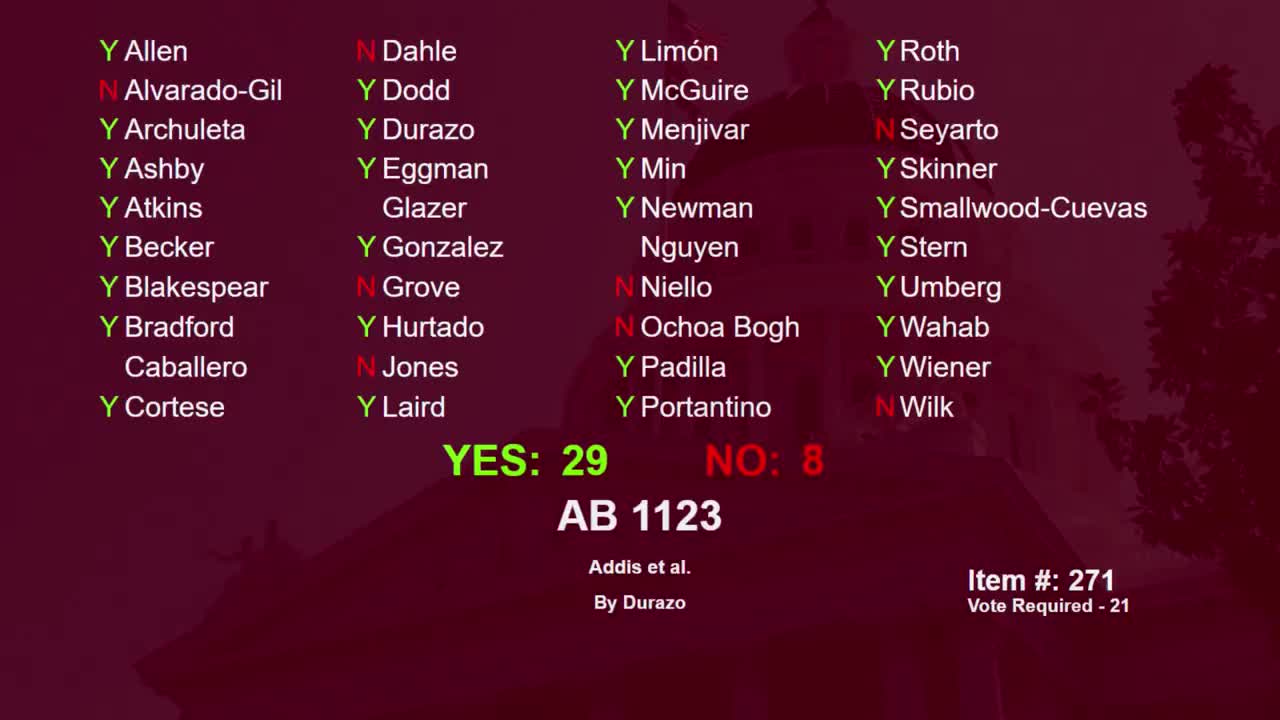 3MIN
Senate Floor
 45SEC
Senate Standing Committee on Appropriations
 18MIN
Senate Standing Committee on Public Safety
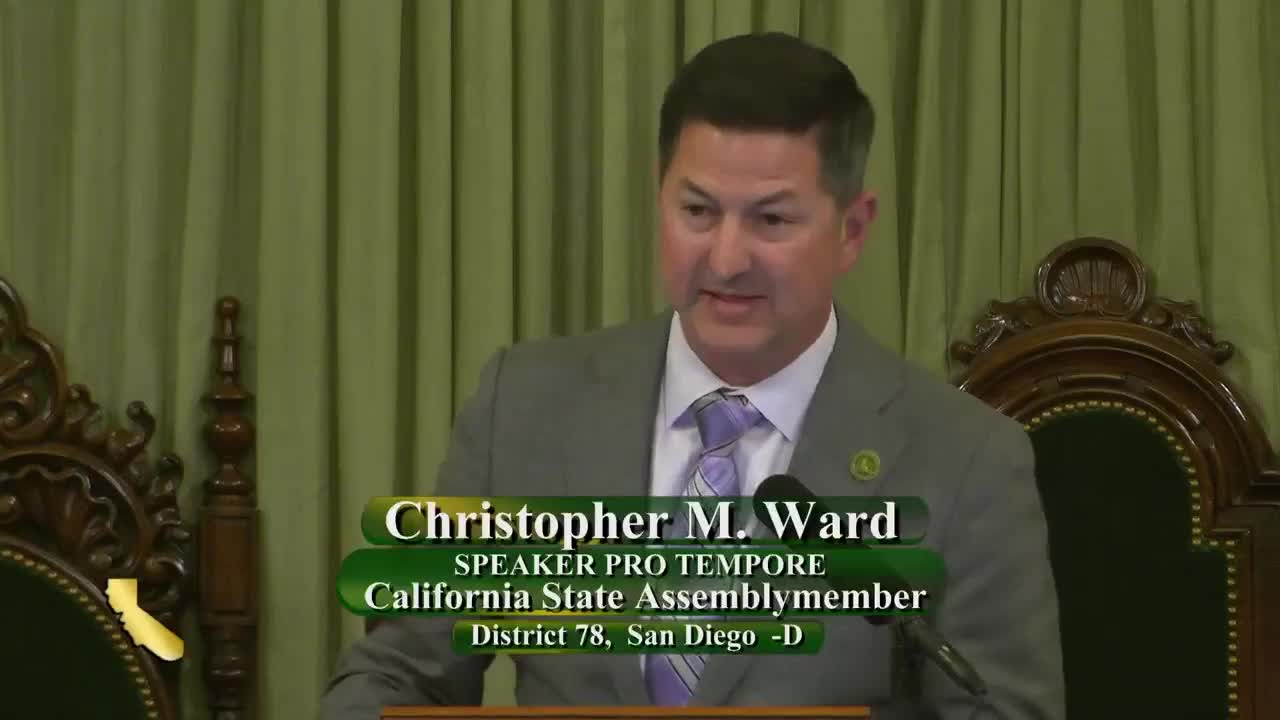 18MIN
Assembly Floor
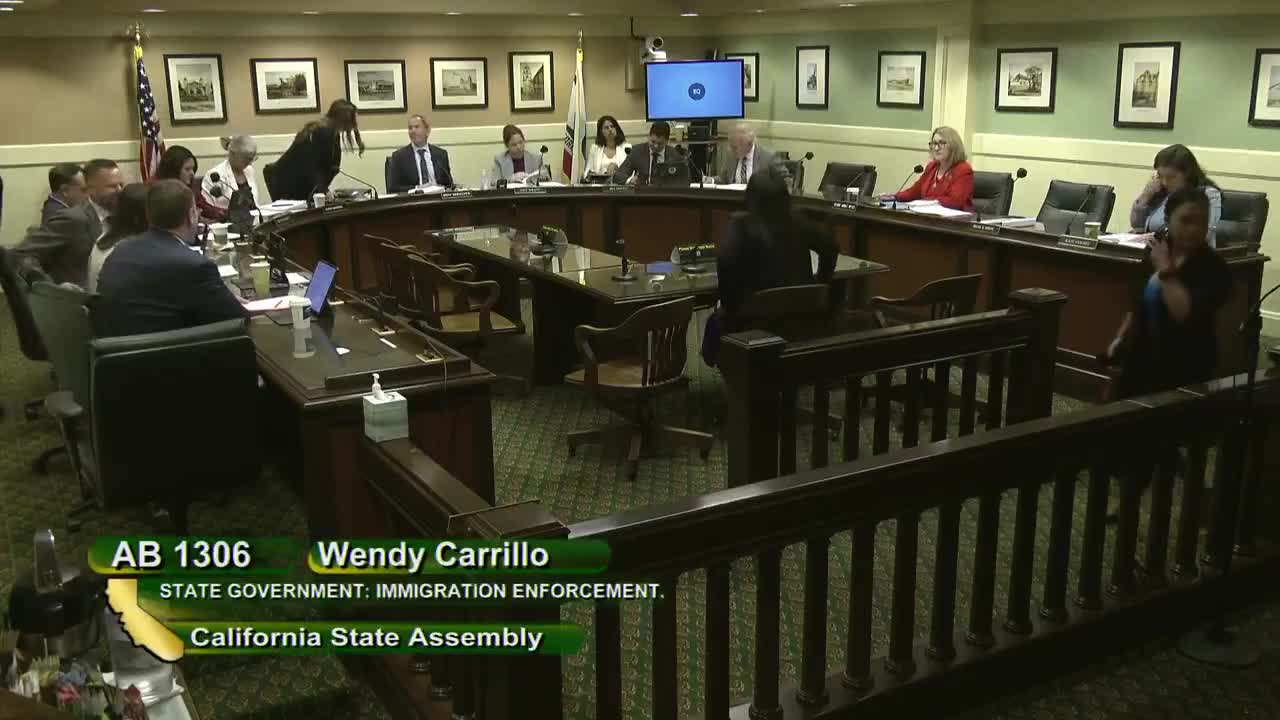 21MIN
Assembly Standing Committee on Judiciary
 16MIN
Assembly Standing Committee on Public Safety
Bill Author

Bill Co-Author(s):