AB 446: Baldwin Hills Conservancy.
- Session Year: 2015-2016
- House: Assembly
- Latest Version Date: 2015-10-08
The Baldwin Hills Conservancy Act establishes the Baldwin Hills Conservancy in the Natural Resources Agency to, among other things, acquire and manage public lands within the Baldwin Hills area, and provide recreational, open space, wildlife habitat restoration and protection, and lands for educational uses within the area. Existing law provides that the act will remain in effect until January 1, 2018.
This bill would extend the operation of the act until January 1, 2026.
The Baldwin Hills Conservancy Act establishes the Baldwin Hills Conservancy in the Natural Resources Agency to, among other things, acquire and manage public lands within the Baldwin Hills area, and provide recreational, open space, wildlife habitat restoration and protection, and lands for educational uses within the area. Existing law provides that the act will remain in effect until January 1, 2018.
This bill would eliminate the January 1, 2018, repeal date, thereby extending the operation of the act indefinitely. extend the operation of the act until January 1, 2026.
The Baldwin Hills Conservancy Act establishes the Baldwin Hills Conservancy in the Natural Resources Agency to, among other things, acquire and manage public lands within the Baldwin Hills area, and provide recreational, open space, wildlife habitat restoration and protection, and lands for educational uses within the area. Existing law provides that the act will remain in effect until January 1, 2018.
This bill would eliminate the January 1, 2018, repeal date, thereby extending the operation of the act indefinitely.
This division shall remain in effect only until January 1, 2026, and as of that date is repealed, unless a later enacted statute, that is enacted before January 1, 2026, deletes or extends that date.
This division shall remain in effect only until January 1, 2026, and as of that date is repealed, unless a later enacted statute, that is enacted before January 1, 2026, deletes or extends that date.
This division shall remain in effect only until January 1, 2018, 2026, and as of that date is repealed, unless a later enacted statute, that is enacted before January 1, 2018, 2026, deletes or extends that date.
SECTION 1.Section 32580 of the Public Resources Code is repealed.This division shall remain in effect only until January 1, 2018, and as of that date is repealed, unless a later enacted statute, that is enacted before January 1, 2018, deletes or extends that date.
|
Date
|
Status
|
|---|---|
| Oct 8, 2015 | Chaptered by Secretary of State - Chapter 624, Statutes of 2015. |
| Oct 8, 2015 | Approved by the Governor. |
| Sep 16, 2015 | Enrolled and presented to the Governor at 4 p.m. |
| Sep 3, 2015 | Senate amendments concurred in. To Engrossing and Enrolling. (Ayes 78. Noes 0. Page 2861.). |
| Sep 3, 2015 | Assembly Rule 77 suspended. (Page 2859.) |
| Sep 3, 2015 | Senate amendments concurred in. To Engrossing and Enrolling. (Ayes 78. Noes 0.). |
| Sep 3, 2015 | Assembly Rule 77 suspended. |
| Sep 2, 2015 | Read third time. Passed. Ordered to the Assembly. (Ayes 40. Noes 0. Page 2414.). |
| Sep 2, 2015 | In Assembly. Concurrence in Senate amendments pending. May be considered on or after September 4 pursuant to Assembly Rule 77. |
| Sep 2, 2015 | Read third time. Passed. Ordered to the Assembly. |
| Sep 1, 2015 | Read second time and amended. Ordered to third reading. |
| Aug 31, 2015 | From committee: Amend, and do pass as amended. (Ayes 7. Noes 0.) (August 27). |
| Aug 17, 2015 | In committee: Referred to APPR. suspense file. |
| Jul 15, 2015 | From committee: Do pass and re-refer to Com. on APPR. (Ayes 9. Noes 0.) (July 14). Re-referred to Com. on APPR. |
| Jun 11, 2015 | Referred to Com. on N.R. & W. |
| Jun 1, 2015 | In Senate. Read first time. To Com. on RLS. for assignment. |
| Jun 1, 2015 | Read third time. Passed. Ordered to the Senate. (Ayes 77. Noes 0. Page 1709.) |
| Jun 1, 2015 | Read third time. Passed. Ordered to the Senate. |
| May 28, 2015 | Read second time. Ordered to third reading. |
| May 28, 2015 | From committee: Do pass. (Ayes 17. Noes 0.) (May 28). |
| May 6, 2015 | In committee: Set, first hearing. Referred to APPR. suspense file. |
| Apr 28, 2015 | From committee: Do pass and re-refer to Com. on APPR. (Ayes 9. Noes 0.) (April 27). Re-referred to Com. on APPR. |
| Mar 5, 2015 | Referred to Com. on NAT. RES. |
| Feb 24, 2015 | From printer. May be heard in committee March 26. |
| Feb 23, 2015 | Read first time. To print. |
|
Date
|
Description
|
Location
|
Votes
|
|
|---|---|---|---|---|
| Sep 3, 2015 | AB 446 RIDLEY-THOMAS Concurrence in Senate Amendments | Assembly Floor |
Passed |
|
| Sep 2, 2015 | Assembly 3rd Reading AB446 Ridley-Thomas By Mitchell | Senate Floor |
Passed |
|
| Aug 27, 2015 | Do pass as amended | Senate Standing Committee on Appropriations |
Passed |
|
| Aug 17, 2015 | Placed on suspense file | Senate Standing Committee on Appropriations |
Passed |
|
| Jul 14, 2015 | Do pass, but first be re-referred to the Committee on [Appropriations] | Senate Standing Committee on Natural Resources and Water |
Passed |
|
| Jun 1, 2015 | AB 446 RIDLEY-THOMAS Assembly Third Reading | Assembly Floor |
Passed |
|
| May 28, 2015 | Do pass. | Assembly Standing Committee on Appropriations |
Passed |
|
| Apr 27, 2015 | Do pass and be re-referred to the Committee on [Appropriations] | Assembly Standing Committee on Natural Resources |
Passed |
This list shows positions taken on this bill by organizations on the date displayed, which is linked to the original source.
Positions by individuals are not included.
AB 446
Page 2
CONCURRENCE IN SENATE AMENDMENTS
AB 446
(Ridley-Thomas)
As Amended September 1, 2015
Majority vote
ASSEMBLY: |
77-0 |
(June 1, 2015) |
SENATE: |
40-0 |
(September 2, 2015) |
Original Committee Reference: NAT. RES.
SUMMARY: Extends the sunset date for the Baldwin Hills Conservancy (BHC) to January 1, 2026.
The Senate amendments extend the sunset of the Conservancy rather than eliminate it.
EXISTING LAW:
Established BHC in 2000 in the Natural Resources Agency (NRA) and authorizes the BHC to acquire and manage public lands within the Baldwin Hills area, is the land area currently within the Kenneth Hahn State Recreation Area, the Baldwin Hills community, and the surrounding property.
Prohibits BHC from regulating land use and exercising the power of eminent domain.
Authorizes BHC to fix and collect fees for the use of any land owned or controlled, or for any service provided, by BHC. Prohibits fees in excess of the cost of maintaining and operating the land or of providing the service for which the fee is charged.
Provides BHC with the first right of refusal to acquire lands suitable for park and open space within its prescribed territory, and authorizes BHC to accept private or public lands offered for recreational trails.
Specifies that the board of BHC consist of 13 voting members and 7 nonvoting members. The 13 voting members of the board include the Secretary of NRA, the Director of Parks and Recreation, the Director of Finance, the Director of the Los Angeles County Department of Parks, the member of the Los Angeles County Board of Supervisors within whose district the majority of the Baldwin Hills area is located, and 6 members of the public appointed by the Governor. The seven nonvoting members are: the Secretary of the California Environmental Protection Agency; the Executive Officer of the State Coastal Conservancy; the Executive Officer of the State Lands Commission; an appointee of the Governor with experience in developing contaminated sites, commonly referred to as "brownfields;" the Executive Director of the Santa Monica Mountains Conservancy; the Director of the Culver City Human Services Department; and the Director of the Department of Conservation. Allows designees to serve for members of the board.
FISCAL EFFECT: According to the Senate Appropriations Committee, this bill's annual costs are at least $350,000 beginning in 2018 through 2025 from the Environmental License Plate Fund (special) for conservancy’s administrative costs.
COMMENTS: BHC jurisdiction covers approximately two square miles and is the smallest of the state's 10 conservancies. BHC is located approximately six miles from downtown Los Angeles. There is significant oil production activity in the BHC's jurisdiction. BHC plans to restore former oil production lands to open space and make them available to the public as oil production ceases. The goal of BHC is to eventually connect public land into one big park (two square miles) to serve the area. This will help the surrounding residents have access to the open space in a region that is lacking in park space.
Analysis Prepared by: Michael Jarred / NAT. RES. / (916) 319-2092 FN: 0002051
AB 446
Page 4
|
Office of Senate Floor Analyses (916) 651-1520 Fax: (916) 327-4478 |
THIRD READING
Bill No: AB 446
Introduced: 9/1/15 in Senate
SENATE NATURAL RES. & WATER COMMITTEE: 9-0, 7/14/15
AYES: Pavley, Stone, Allen, Hertzberg, Hueso, Jackson, Monning, Vidak, Wolk
SENATE APPROPRIATIONS COMMITTEE: 7-0, 8/27/15
AYES: Lara, Bates, Beall, Hill, Leyva, Mendoza, Nielsen
ASSEMBLY FLOOR: 77-0, 6/1/15 - See last page for vote
SUBJECT: Baldwin Hills Conservancy
DIGEST: This bill extends the sunset date for the Baldwin Hills Conservancy to January 1, 2026.
Existing law:
Establishes the Baldwin Hills Conservancy (conservancy) in the Natural Resources Agency (agency). The conservancy, among other things, may acquire and manage public lands within the Baldwin Hills area and provide recreational, open space, wildlife habitation restoration and protection, and lands for educational uses within the area.
Provides that the Baldwin Hills Conservancy Act which established the conservancy will remain in effect until January 1, 2018.
This bill extends the sunset date for the conservancy to January 1, 2026.
Background
The conservancy’s territory is located in the heavily urbanized Baldwin Hills area of the Los Angeles Basin. The territory includes parts of the Cities of Los Angeles and Culver City, unincorporated portions of Los Angeles County, the Kenneth Hahn State Recreation Area and some adjacent lands. Lands under its jurisdiction are approximately two square miles, although the conservancy does not own or control all of these lands. There is considerable on-going oil development and production within the conservancy’s territory. The conservancy is the smallest of the state’s conservancies and was established in 2000.
Comments
Conservancies and sunset dates. The Santa Monica Mountains Conservancy was created with a sunset date that was extended three times prior to its eventual removal. The conservancy was created with an initial sunset date of January 1, 2008, which has already been extended once to its current date. The conservancy is one of two conservancies that have active sunset dates (the other is the San Diego River Conservancy). (AB 392 (Atkins) is currently seeking to remove the sunset date for the San Diego River Conservancy.)
Proposition 1 and the conservancy. There are $10 million in Proposition 1 funds, approved by the voters in November 2014, to be spent on “multibenefit water quality, water supply, watershed protection and restoration projects.”
Related Legislation
AB 392 (Atkins, 2015) removes the sunset date for the San Diego River Conservancy. The bill is currently on the Senate Floor.
FISCAL EFFECT: Appropriation: No Fiscal Com.: Yes Local: No
According to the Senate Appropriations Committee, this bill’s annual costs are at least $350,000 beginning in 2018 through 2025 from the Environmental License Plate Fund (special) for conservancy’s administrative costs.
Ballona Creek Renaissance
Cherrywood/Leimert Block Club
City of Beverly Hills
City of Culver City
City of Santa Monica
Community Health Councils, Inc.
Council for Watershed Health
Empowerment Congress West Area Neighborhood Development Council
Ladera Heights Civic Association
Los Angeles Audobon Society
Los Angeles County Board of Supervisors
Mujeres de la Tierra
Natural Resources Defense Council
Sara Amir, Chair, Baldwin Hills Conservancy Board
Social Justice Learning Institute
The Nature Conservancy
OPPOSITION: (Verified 8/27/15)
None received
ARGUMENTS IN SUPPORT: According to the author, “without the conservancy, the area will continue to face many of the challenges that led to the conservancy’s creation. […] The communities in and around the Baldwin Hills are quantifiably park poor, with only one acre per thousand residents; the region falls far below the National Recreation and Parks Association standard of six acres per thousand residents.”
“Neighborhoods populated by minorities and recent immigrants are especially short of park space. […] Because of the disproportionate burden of chronic disease that affects minority communities it is essential that urban open space is promoted and protected. […] With the lack of urban open space and public parks accessible to minority communities, the protection of Baldwin Hills is the centerpiece of a legacy for park equity in urban Los Angeles.”
Additionally, the author notes that there are dedicated bond funds for the conservancy and the obstacles to pursuing multi-year projects supported by bond funds given the conservancy’s current sunset date.
The Nature Conservancy “supports AB 446 in light of the biodiversity value of Baldwin Hills and the importance of continued acquisition and restoration efforts by the Baldwin Hills Conservancy.”
AYES: Achadjian, Alejo, Travis Allen, Baker, Bigelow, Bloom, Bonilla, Bonta, Brough, Brown, Burke, Calderon, Campos, Chang, Chau, Chávez, Chiu, Chu, Cooley, Cooper, Dababneh, Dahle, Daly, Dodd, Frazier, Gallagher, Cristina Garcia, Eduardo Garcia, Gatto, Gipson, Gomez, Gonzalez, Gray, Grove, Hadley, Harper, Roger Hernández, Holden, Irwin, Jones, Jones-Sawyer, Kim, Lackey, Levine, Linder, Lopez, Low, Maienschein, Mathis, Mayes, McCarty, Medina, Melendez, Mullin, Nazarian, Obernolte, O'Donnell, Olsen, Patterson, Perea, Quirk, Rendon, Ridley-Thomas, Rodriguez, Salas, Santiago, Steinorth, Mark Stone, Thurmond, Ting, Wagner, Waldron, Weber, Wilk, Williams, Wood, Atkins
NO VOTE RECORDED: Eggman, Beth Gaines, Gordon
Prepared by: Katharine Moore / N.R. & W. / (916) 651-4116
9/1/15 21:19:52
**** END ****
AB 446 (Ridley-Thomas) Page 0 of 1
SENATE COMMITTEE ON APPROPRIATIONS
Senator Ricardo Lara, Chair
2015 - 2016 Regular Session
AB 446 (Ridley-Thomas) - Baldwin Hills Conservancy.
|
|
Version: February 23, 2015 |
Policy Vote: N.R. & W. 9 - 0 |
Urgency: No |
Mandate: No |
Hearing Date: August 27, 2015 |
Consultant: Marie Liu |
*********** ANALYSIS ADDENDUM – SUSPENSE FILE ***********
The following information is revised to reflect amendments
adopted by the committee on August 27, 2015
Bill Summary:
Bill Summary:
AB 446 would extend the sunset date on the Baldwin Hills Conservancy (conservancy) for 10 years.
Fiscal Impact:
Annual costs of at least $350,000 beginning in 2018 through 2025 from the Environmental License Plate Fund (special) for conservancy’s administrative costs.
Committee Amendments:
To reinstate a 10 year sunset date for the conservancy.
-- END --
AB 446 (Ridley-Thomas) Page 2 of 2
SENATE COMMITTEE ON APPROPRIATIONS
Senator Ricardo Lara, Chair
2015 - 2016 Regular Session
AB 446 (Ridley-Thomas) - Baldwin Hills Conservancy.
|
|
Version: February 23, 2015 |
Policy Vote: N.R. & W. 9 - 0 |
Urgency: No |
Mandate: No |
Hearing Date: August 17, 2015 |
Consultant: Marie Liu |
This bill meets the criteria for referral to the Suspense File.
Bill Summary:
AB 446 would delete the sunset date on the Baldwin Hills Conservancy (conservancy).
Fiscal Impact:
Annual costs of at least $350,000 beginning in 2018 from the Environmental License Plate Fund (special) for conservancy’s administrative costs.
Background:
In 2000, the Baldwin Hills Conservancy Act (act) established the conservancy within the Natural Resources Agency (agency). The act provides that the conservancy, among other things, may acquire and manage public lands within the Baldwin Hills area and provide recreational, open space, wildlife habitation restoration and protection, and lands for educational uses within the area.
The conservancy’s territory is located in the heavily urbanized Baldwin Hills area of the Los Angeles Basin. The territory includes parts of the Cities of Los Angeles and Culver City, unincorporated portions of Los Angeles County, the Kenneth Hahn State Recreation Area and some adjacent lands.
The act, and therefore the conservancy, is set to sunset on January 1, 2018.
Proposition 1, which was approved by the voters in November 2014, authorized $10 million to the conservancy for projects that have multiple benefits for water quality, water supply, and water protection and restoration of watersheds.
Proposed Law:
This bill would delete the sunset date on the conservancy thereby instating the conservancy as a permanent body.
Staff Comments:
The conservancy has had annual operating costs of approximately $385,000. These costs are currently being paid for by the Environmental License Plate Fund, which has a structural deficiency, though the conservancy can receive funding from other special funds or the General Fund. By eliminating the sunset date of the conservancy, this bill will extend the conservancy’s operating costs beyond 2018.
Staff notes that the annual cost of $385,000 is for the base administration of the SRDC. To administer the $10 million made available by Proposition 1, the conservancy will incur additional administrative costs, which will be covered by bond monies. Staff assumes that expending Proposition 1 monies will take up to 10 years.
-- END --
AB 446 (Ridley-Thomas) Page 3 of 3
SENATE COMMITTEE ON NATURAL RESOURCES AND WATER
Senator Fran Pavley, Chair
2015 - 2016 Regular
Bill No: AB 446 Hearing Date: July 14, 2015
Author: |
Ridley-Thomas |
|
|
Version: |
February 23, 2015 Introduced |
||
Urgency: |
No |
Fiscal: |
Yes |
Consultant: |
Katharine Moore |
||
Subject: Baldwin Hills Conservancy.
BACKGROUND AND EXISTING LAW
In 2000, the Baldwin Hills Conservancy Act (act) established the Baldwin Hills Conservancy (conservancy) in the Natural Resources Agency (agency).
The act provides that the conservancy, among other things, may acquire and manage public lands within the Baldwin Hills area and provide recreational, open space, wildlife habitation restoration and protection, and lands for educational uses within the area. Additionally, the act allows the conservancy to fix and collect fees, as specified, for certain activities, provides the conservancy with the right of first refusal to acquire lands suitable for park and open space within its territory, to recruit and coordinate volunteers, and authorizes the conservancy to accept private or public lands offered for recreational trails.
The conservancy’s territory is located in the heavily urbanized Baldwin Hills area of the Los Angeles Basin. The territory includes parts of the Cities of Los Angeles and Culver City, unincorporated portions of Los Angeles County, the Kenneth Hahn State Recreation Area and some adjacent lands. Lands under its jurisdiction are about 2 square miles, although the conservancy does not own or control all of these lands. There is considerable on-going oil development and production within the conservancy’s territory. The conservancy is the smallest of the state’s conservancies.
Existing law provides that the act will remain in effect until January 1, 2018. The act was created with an initial sunset date of January 1, 2008, and was extended once to its current date (via an environment budget trailer bill (SB 85, Committee on Budget and Fiscal Review, c. 178, Statutes of 2007)).
PROPOSED LAW
This bill would eliminate the sunset date for the act and extend the operation of the act (and the conservancy) indefinitely.
ARGUMENTS IN SUPPORT
According to the author, “removing the sunset date would allow the [conservancy] to continue its mission in parity with the other eight out of ten conservancies that do not have a sunset date impacting their ability to develop ongoing multiyear projects.”
“Without the conservancy, the area will continue to face many of the challenges that led to the conservancy’s creation. […] The communities in and around the Baldwin Hills are quantifiably park poor, with only one acre per thousand residents; the region falls far below the National Recreation and Parks Association standard of six acres per thousand residents.”
“Neighborhoods populated by minorities and recent immigrants are especially short of park space. […] Because of the disproportionate burden of chronic disease that affects minority communities it is essential that urban open space is promoted and protected. […] With the lack of urban open space and public parks accessible to minority communities, the protection of Baldwin Hills is the centerpiece of a legacy for park equity in urban Los Angeles.”
Additionally, the author notes that there are dedicated bond funds for the conservancy and the obstacles to pursuing multi-year projects supported by bond funds given the conservancy’s current sunset date.
The Nature Conservancy “supports AB 446 in light of the biodiversity value of Baldwin Hills and the importance of continued acquisition and restoration efforts by the Baldwin Hills Conservancy.”
ARGUMENTS IN OPPOSITION
None received.
COMMENTS
Most state conservancies do not have sunset dates. Only two of the ten conservancies located in the agency have sunset dates: the Baldwin Hills and San Diego River Conservancies. (AB 392 (Atkins) is currently seeking to remove the sunset date for the San Diego River Conservancy.) While many of the state’s conservancies were created without sunset dates, it is not without precedent to eliminate the sunset date for a state conservancy: the Santa Monica Mountains Conservancy was created with a sunset date that was extended 3 times prior to its eventual repeal.
Proposition 1 and the conservancy. There is $10 million in Proposition 1 funds, approved by the voters in November 2014, to be spent on “multibenefit water quality, water supply, watershed protection and restoration projects.”
Recent audit results. In 2008 the Department of Finance audited the conservancy. The audit found deficiencies with the conservancy’s pre-awarding processes, monitoring and oversight of projects. The conservancy responded to the audit and agreed to take several corrective actions to address the deficiencies found.
Recent related legislation
AB 392 (Atkins, 2015) would remove the sunset date for the San Diego River Conservancy. (passed this Committee 9 – 0, currently on the Senate Appropriations Committee Suspense file)
SUPPORT
Ballona Creek Renaissance
City of Beverly Hills
Cherrywood/Leimert Block Club
Community Health Councils, Inc.
Council for Watershed Health
City of Culver City
Empowerment Congress West Area Neighborhood Development Council
Ladera Heights Civic Association
Los Angeles Audobon Society
Los Angeles County Board of Supervisors
Mujeres de la Tierra
Natural Resources Defense Council
The Nature Conservancy
City of Santa Monica
Sara Amir, Chair, Baldwin Hills Conservancy Board
Social Justice Learning Institute
OPPOSITION
None Received
-- END --
AB 446
Page 2
ASSEMBLY THIRD READING
AB 446
(Ridley-Thomas)
As Introduced February 23, 2015
Majority vote
Committee |
Votes |
Ayes |
Noes |
Natural Resources |
9-0 |
Williams, Dahle, Cristina Garcia, Hadley, Harper, McCarty, Rendon, Mark Stone, Wood |
|
Appropriations |
17-0 |
Gomez, Bigelow, Bonta, Calderon, Chang, Daly, Eggman, Gallagher, Eduardo Garcia, Gordon, Holden, Jones, Quirk, Rendon, Wagner, Weber, Wood |
|
SUMMARY: Eliminates the 2018 sunset date for the Baldwin Hills Conservancy (BHC).
FISCAL EFFECT: According to the Assembly Appropriation Committee, increased annual administrative state costs of between $369,000 and $615,000 per year (special funds) beginning in fiscal year 2017-18.
COMMENTS:
Conservancy. BHC jurisdiction covers approximately two square miles and is the smallest of the state's 10 conservancies. BHC is located approximately 6 miles from downtown Los Angeles. There is significant oil production activity in the BHC's jurisdiction. BHC plans to restore former oil production lands to open space and make them available to the public as oil production ceases. The goal of BHC is to eventually connect public land into one big park (two square miles) to serve the area. This will help the surrounding residents have access to the open space in a region that is lacking in park space.
Is sunset elimination appropriate at this time? BHC does not sunset until 2018; therefore, BHC will continue for several years even with its current sunset. BHC has shown progress toward achieving its mission and has worked well with local organizations and other state agencies. BHC provides open space and an educational component to communities that don’t have many other opportunities to be in and learn about nature. BHC was subject to a Department of Finance (DOF) audit in 2008, which found deficiencies with BHC's pre-awarding processes, monitoring of project status, and oversight over bond funded projects. BHC responded to the audit and agreed to take several corrective actions to address the deficiencies found. BHC received an allocation of $40 million from Proposition 40 (2002), $10 million from Proposition 84 (2006), and $10 million from Proposition 1 (2014). The Proposition 1 funds are meant for multi-benefit water quality, water supply, and watershed protection and restoration projects. Another sunset review of BHC, could allow the Legislature to scrutinize the spending of the bond funds allocated to BHC, and the actions BHC has taken to respond to DOF’s audit.
Analysis Prepared by: Michael Jarred / NAT. RES. / (916) 319-2092 FN: 0000705
AB 446
Page 2
Date of Hearing: May 6, 2015
ASSEMBLY COMMITTEE ON APPROPRIATIONS
Jimmy Gomez, Chair
AB 446
(Ridley-Thomas) – As Introduced February 23, 2015
Policy Committee: |
Natural Resources |
Vote: |
9 - 0 |
|
|
|
|
|
|
|
|
Urgency: No State Mandated Local Program: No Reimbursable: No
SUMMARY:
This bill eliminates the 2018 sunset date for the Baldwin Hills Conservancy (BHC), thereby extending the conservancy indefinitely.
FISCAL EFFECT:
Increased annual administrative state costs of between $369,000 and $615,000 per year (special funds) beginning in FY 2017-18.
The BHC’s administrative support and operations budget is from the Environmental License Plate Fund (ELPF) and has averaged $369,000 over the last three years. There are also two bond funded support positions budgeted for $246,000 (Proposition 1).
COMMENTS:
Purpose. According to the author, neighborhoods across Los Angeles populated by minorities and recent immigrants are especially short of park space. Access to park space is important for Greater Los Angeles because of the proven health benefits of public parks.
The author further notes the BHC has achieved great success to date and has outlined an innovative vision for the future. Allowing the Baldwin Hills Conservancy to sunset would deny Los Angeles access to open space and the healthier future envisioned by the Conservancy. Additionally, removing the sunset date would allow the Baldwin Hills Conservancy to continue its mission in parity with the other eight out of ten conservancies that do not have a sunset date impacting their ability to develop ongoing multiyear projects.
Background. The BHC was established in 2000 in the Natural Resources Agency (NRA BHC to acquire public lands within the Baldwin Hills area. BHC jurisdiction covers approximately 2 square miles and it is the smallest of the state’s 10 conservancies.
BHC is located approximately 6 miles from downtown Los Angeles. There is significant oil production activity in the BHC’s jurisdiction. BHC plans to restore former oil production lands and open them to the public as oil production ceases. The goal of BHC is to eventually connect public land into one big park (2 square miles) to serve the area. This will provide access to open space in a region that is lacking parks.
BHC was subject to a Department of Finance (DOF) audit in 2008, which found deficiencies with BHC’s pre-awarding processes, monitoring and oversight of projects. BHC responded to the audit and agreed to take several corrective actions to address the deficiencies found.
To ensure proper oversight, the Legislature may wish to consider extending the sunset date rather than eliminating it.
Resource Bond Funding. BHC received an allocation of $40 million from Proposition 40 (2002), $10 million from Proposition 84 (2006), and $10 million from Proposition 1 (2014). The Proposition 1 funds are meant for multi-benefit water quality, water supply, and watershed protection and restoration projects.
State Conservancies. There are currently 10 state conservancies located within the Natural Resources Agency: a) Sierra Nevada Conservancy; b) California Tahoe Conservancy; c) State Coastal Conservancy; d) San Joaquin River Conservancy; e) Sacramento-San Joaquin Delta Conservancy; f) Coachella Mountains Conservnacy; g) San Gabriel and Lower Los Angeles Rivers Conservancy; h) Santa Monica Mountains Conservancy; i) Baldwin Hills Conservancy; and j) San Diego River Conservancy.
Analysis Prepared by: Jennifer Galehouse / APPR. / (916) 319-2081
AB 446
Page 2
Date of Hearing: April 27, 2015
ASSEMBLY COMMITTEE ON NATURAL RESOURCES
Das Williams, Chair
AB 446
(Ridley-Thomas) – As Introduced February 23, 2015
SUBJECT: Baldwin Hills Conservancy
SUMMARY: Eliminates the 2018 sunset date for the Baldwin Hills Conservancy (BHC).
EXISTING LAW:
Established BHC in 2000 in the Natural Resources Agency (NRA) and authorizes the BHC to acquire and manage public lands within the Baldwin Hills area, is the land area currently within the Kenneth Hahn State Recreation Area, the Baldwin Hills community, and the surrounding property.
Prohibits BHC from regulating land use and exercising the power of eminent domain.
Authorizes BHC to fix and collect fees for the use of any land owned or controlled, or for any service provided, by BHC. Prohibits fees in excess of the cost of maintaining and operating the land or of providing the service for which the fee is charged.
Provides BHC with the first right of refusal to acquire lands suitable for park and open space within its prescribed territory, and authorizes BHC to accept private or public lands offered for recreational trails.
Specifies that the board of BHC consist of 13 voting members and 7 nonvoting members. The 13 voting members of the board include the Secretary of NRA, the Director of Parks and Recreation, the Director of Finance, the Director of the Los Angeles County Department of Parks, the member of the Los Angeles County Board of Supervisors within whose district the majority of the Baldwin Hills area is located, and 6 members of the public appointed by the Governor. The 7 nonvoting members are: the Secretary of the California Environmental Protection Agency; the Executive Officer of the State Coastal Conservancy; the Executive Officer of the State Lands Commission; an appointee of the Governor with experience in developing contaminated sites, commonly referred to as “brownfields;” the Executive Director of the Santa Monica Mountains Conservancy; the Director of the Culver City Human Services Department; and the Director of the Department of Conservation. Allows designees to serve for members of the board.
FISCAL EFFECT: Unknown
COMMENTS:
Conservancy. BHC jurisdiction covers approximately 2 square miles and is the smallest of the state’s 10 conservancies. BHC is located approximately 6 miles from downtown Los Angeles. There is significant oil production activity in the BHC’s jurisdiction. BHC plans to restore former oil production lands to open space and make them available to the public as oil production ceases. The goal of BHC is to eventually connect public land into one big park (2 square miles) to serve the area. This will help the surrounding residents have access to the open space in a region that is lacking in park space.
Is sunset elimination appropriate at this time? BHC does not sunset until 2018; therefore, BHC will continue for several years even with its current sunset. BHC has shown progress toward achieving its mission and has worked well with local organizations and other state agencies. BHC provides open space and an educational component to communities that don’t have many other opportunities to be in and learn about nature. BHC was subject to a Department of Finance (DOF) audit in 2008, which found deficiencies with BHC’s pre-awarding processes, monitoring of project status, and oversight over bond funded projects. BHC responded to the audit and agreed to take several corrective actions to address the deficiencies found. BHC received an allocation of $40 million from Proposition 40 (2002), $10 million from Proposition 84 (2006), and $10 million from Proposition 1 (2014). The Proposition 1 funds are meant for multibenefit water quality, water supply, and watershed protection and restoration projects. Another sunset review of BHC, could allow the Legislature to scrutinize the spending of the bond funds allocated to BHC, and the actions BHC has taken to respond to DOF’s audit.
Oversight. NRA is responsible for overseeing all land conservation activities and spending in the state. Yet the NRA has not taken an active role in evaluating conservancies or providing them with guidance or best practices. In addition, only three of ten conservancies (State Coastal Conservancy, Santa Monica Mountains Conservancy, and Sierra Nevada Conservancy) submit reports to the Legislature.
REGISTERED SUPPORT / OPPOSITION:
Support
California State Parks Foundation
City of Culver City
Council for Watershed Health, Board of Directors
County of Los Angeles Board of Supervisors
Los Angeles Audubon Society
Natural Resources Defense Council
Opposition
None on file
Analysis Prepared by: Michael Jarred / NAT. RES. / (916) 319-2092
Discussed in Hearing
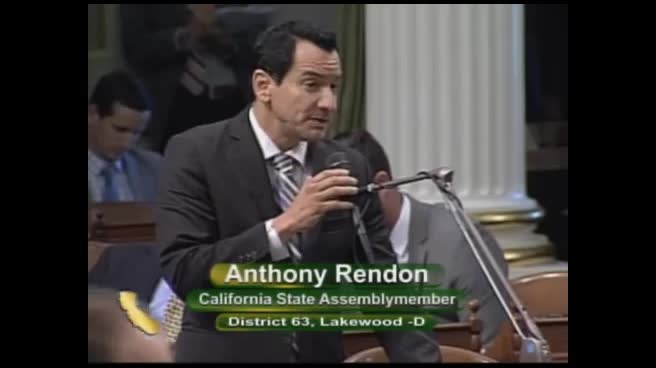 1MIN
Assembly Floor
 1MIN
Senate Floor
 44SEC
Senate Standing Committee on Appropriations
 3MIN
Senate Standing Committee on Natural Resources and Water
 55SEC
Assembly Floor
 2MIN
Assembly Standing Committee on Natural Resources
Bill Author

Bill Co-Author(s):