AB 1395: Licensed Physicians and Dentists from Mexico Pilot Program: requirements.
- Session Year: 2023-2024
- House: Assembly
- Latest Version Date: 2023-09-22
Current Status:
Passed
(2023-09-22: Chaptered by Secretary of State - Chapter 205, Statutes of 2023.)
Introduced
In Committee
First Chamber
In Committee
Second Chamber
Enacted
Existing law governs professions and vocations that are regulated by various boards within the Department of Consumer Affairs, including the Medical Board of California and the Dental Board of California. Existing law requires those boards to require a licensee, at the time of issuance of a license, to provide specified federal taxpayer information, including the applicants social security number or individual taxpayer identification number. Existing law prohibits a licensing board from processing an application for an initial license unless the applicant provides that information where requested on the application.
Existing law, the Licensed Physicians and Dentists from Mexico Pilot Program, allows licensed physicians and dentists from Mexico to be issued a license by the Medical Board of California or a permit by the Dental Board of California to practice medicine or dentistry in California for a period not to exceed 3 years and establishes requirements for the participants in the program, as specified.
This bill would, for purposes of the pilot program, notwithstanding the above-described requirements to provide specified federal taxpayer information, require the Medical Board of California to issue a 3-year nonrenewable license to an applicant who has not provided an individual taxpayer identification number or social security number if the applicant meets specified conditions. Pursuant to these conditions, the applicant would be required to immediately seek an appropriate 3-year visa and social security number from the federal government within 14 days of being issued the medical license and immediately provide the medical board with their social security number within 10 days of issuance of that card by the federal government. The bill would prohibit the applicant from engaging in the practice of medicine until the board determines that these conditions have been met. The bill would require the board to notify the applicant of their eligibility to practice medicine if the board determines the applicant has met these conditions.
This bill would declare that it is to take effect immediately as an urgency statute.
(a)The Licensed Physicians and Dentists from Mexico Pilot Program is hereby created. This program shall allow up to 30 licensed physicians specializing in family practice, internal medicine, pediatrics, and obstetrics and gynecology, and up to 30 licensed dentists from Mexico to practice medicine or dentistry in California for a period not to exceed three years, in accordance with this section. The program shall also maintain an alternate list of program participants.
(b)The Medical Board of California shall issue three-year nonrenewable licenses to practice medicine to licensed Mexican physicians and the Dental Board of California shall issue three-year nonrenewable permits to practice dentistry to licensed Mexican dentists.
(c) Physicians from Mexico eligible to participate in this program shall comply with the following:
(1)Be licensed, certified or recertified, and in good standing in their medical specialty in Mexico. This certification or recertification shall be performed, as appropriate, by the Consejo Mexicano de Ginecologia y Obstetricia, A.C., the Consejo Mexicano de Certificacion en Medicina Familiar, A.C., the Consejo Mexicano de Medicina Interna, A.C., or the Consejo Mexicano de Certificacion en Pediatria, A.C.
(2)Prior to leaving Mexico, each physician shall have completed the following requirements:
(A)Passed the board review course with a score equivalent to that registered by United States applicants when passing a board review course for the United States certification examination in each of the physicians specialty areas and passed an interview examination developed by the National Autonomous University of Mexico (UNAM) for each specialty area. Family practitioners who include obstetrics and gynecology in their practice shall also be required to have appropriately documented, as specified by United States standards, 50 live births. Mexican obstetricians and gynecologists shall be fellows in good standing of the American College of Obstetricians and Gynecologists.
(B)(i)Satisfactorily completed a six-month orientation program that addressed medical protocol, community clinic history and operations, medical administration, hospital operations and protocol, medical ethics, the California medical delivery system, health maintenance organizations and managed care practices, and pharmacology differences. This orientation program shall be approved by the Medical Board of California to ensure that it contains the requisite subject matter and meets appropriate California law and medical standards where applicable.
(ii)Additionally, Mexican physicians participating in the program shall be required to be enrolled in adult English-as-a-second-language (ESL) classes that focus on both verbal and written subject matter. Each physician participating in the program shall have transcripts sent to the Medical Board of California from the appropriate Mexican university showing enrollment and satisfactory completion of these classes.
(C)Representatives from the UNAM in Mexico and a medical school in good standing or a facility conducting an approved medical residency training program in California shall confer to develop a mutually agreed upon distant learning program for the six-month orientation program required pursuant to subparagraph (B).
(3)Upon satisfactory completion of the requirements in paragraphs (1) and (2), and after having received their three-year nonrenewable medical license, the Mexican physicians shall be required to obtain continuing education pursuant to Section 2190. Each physician shall obtain an average of 25 continuing education units per year for a total of 75 units for a full three years of program participation.
(4)Upon satisfactory completion of the requirements in paragraphs (1) and (2), the applicant shall receive a three-year nonrenewable license to work in nonprofit community health centers and shall also be required to participate in a six-month externship at the applicants place of employment. This externship shall be undertaken after the participant has received a license and is able to practice medicine. The externship shall ensure that the participant is complying with the established standards for quality assurance of nonprofit community health centers and medical practices. The externship shall be affiliated with a medical school in good standing in California. Complaints against program participants shall follow the same procedures contained in the Medical Practice Act (Chapter 5 (commencing with Section 2000)).
(5)After arriving in California, Mexican physicians participating in the program shall be required to be enrolled in adult ESL classes at institutions approved by the Bureau of Private Post Secondary and Vocational Education or accredited by the Western Association of Schools and Colleges. These classes shall focus on verbal and written subject matter to assist a physician in obtaining a level of proficiency in English that is commensurate with the level of English spoken at community clinics where the physician will practice. The community clinic employing a physician shall submit documentation confirming approval of an ESL program to the board for verification. Transcripts of satisfactory completion of the ESL classes shall be submitted to the Medical Board of California as proof of compliance with this provision.
(6)(A)Nonprofit community health centers employing Mexican physicians in the program shall be required to have medical quality assurance protocols and either be accredited by the Joint Commission on Accreditation of Health Care Organizations or have protocols similar to those required by the Joint Commission on Accreditation of Health Care Organizations. These protocols shall be submitted to the Medical Board of California prior to the hiring of Mexican physicians.
(B)In addition, after the program participant successfully completes the six-month externship program, a free standing health care organization that has authority to provide medical quality certification, including, but not limited to, health plans, hospitals, and the Integrated Physician Association, is responsible for ensuring and overseeing the compliance of nonprofit community health centers medical quality assurance protocols, conducting site visits when necessary, and developing any additional protocols, surveys, or assessment tools to ensure that quality of care standards through quality assurance protocols are being appropriately followed by physicians participating in the program.
(7)Participating hospitals shall have the authority to establish criteria necessary to allow individuals participating in this three-year pilot program to be granted hospital privileges in their facilities.
(8)The Medical Board of California shall provide oversight review of both the implementation of this program and the evaluation required pursuant to subdivision (k). The board shall consult with the medical schools applying for funding to implement and evaluate this program, executive and medical directors of nonprofit community health centers wanting to employ program participants, and hospital administrators who will have these participants practicing in their hospital, as it conducts its oversight responsibilities of this program and evaluation. Any funding necessary for the implementation of this program, including the evaluation and oversight functions, shall be secured from nonprofit philanthropic entities. Implementation of this program may not proceed unless appropriate funding is secured from nonprofit philanthropic entities. The board shall report to the Legislature every January during which the program is operational regarding the status of the program and the ability of the program to secure the funding necessary to carry out its required provisions. Notwithstanding Section 11005 of the Government Code, the board may accept funds from nonprofit philanthropic entities. The board shall, upon appropriation in the annual Budget Act, expend funds received from nonprofit philanthropic entities for this program.
(d)(1)Dentists from Mexico eligible to participate in this program shall comply with the following requirements or the requirements contained in paragraph (2):
(A)Be graduates from the National Autonomous University of Mexico School of Faculty Dentistry (Facultad de Odontologia).
(B)Meet all criteria required for licensure in Mexico that is required and being applied by the National Autonomous University of Mexico School of Faculty Dentistry (Facultad de Odontologia), including, but not limited to:
(i)A minimum grade point average.
(ii)A specified English language comprehension and conversational level.
(iii)Passage of a general examination.
(iv)Passage of an oral interview.
(C)Enroll and complete an orientation program that focuses on the following:
(i)Practical issues in pharmacology that shall be taught by an instructor who is affiliated with a California dental school approved by the Dental Board of California.
(ii)Practical issues and diagnosis in oral pathology that shall be taught by an instructor who is affiliated with a California dental school approved by the Dental Board of California.
(iii)Clinical applications that shall be taught by an instructor who is affiliated with a California dental school approved by the Dental Board of California.
(iv)Biomedical sciences that shall be taught by an instructor who is affiliated with a California dental school approved by the Dental Board of California.
(v)Clinical history management that shall be taught by an instructor who is affiliated with a California dental school approved by the Dental Board of California.
(vi)Special patient care that shall be taught by an instructor who is affiliated with a California dental school approved by the Dental Board of California.
(vii)Sedation techniques that shall be taught by an instructor who is affiliated with a California dental school approved by the Dental Board of California.
(viii)Infection control guidelines that shall be taught by an instructor who is affiliated with a California dental school approved by the Dental Board of California.
(ix)Introduction to health care systems in California.
(x)Introduction to community clinic operations.
(2)(A)Graduate within the three-year period prior to enrollment in the program, from a foreign dental school that has received provisional approval or certification by November of 2003 from the Dental Board of California under the Foreign Dental School Approval Program.
(B)Enroll and satisfactorily complete an orientation program that focuses on the health care system and community clinic operations in California.
(C)Enroll and satisfactorily complete a course taught by an approved foreign dental school on infection control approved by the Dental Board of California.
(3)Upon satisfactory completion to a competency level of the requirements in paragraph (1) or (2), dentists participating in the program shall be eligible to obtain employment in a nonprofit community health center pursuant to subdivision (f) within the structure of an extramural dental program for a period not to exceed three years.
(4)Dentists participating in the program shall be required to complete the necessary continuing education units required by the Dental Practice Act (Chapter 4 (commencing with Section 1600)).
(5)The program shall accept 30 participating dentists. The program shall also maintain an alternate list of program applicants. If an active program participant leaves the program for any reason, a participating dentist from the alternate list shall be chosen to fill the vacancy. Only active program participants shall be required to complete the orientation program specified in subparagraph (C) of paragraph (1).
(6)(A)Additionally, an extramural dental facility may be identified, qualified, and approved by the board as an adjunct to, and an extension of, the clinical and laboratory departments of an approved dental school.
(B)As used in this subdivision, extramural dental facility includes, but is not limited to, any clinical facility linked to an approved dental school for the purposes of monitoring or overseeing the work of a dentist licensed in Mexico participating in this program and that is employed by an approved dental school for instruction in dentistry that exists outside or beyond the walls, boundaries, or precincts of the primary campus of the approved dental school, and in which dental services are rendered. These facilities shall include nonprofit community health centers.
(C)Dental services provided to the public in these facilities shall constitute a part of the dental education program.
(D)Approved dental schools shall register extramural dental facilities with the board. This registration shall be accompanied by information supplied by the dental school pertaining to faculty supervision, scope of treatment to be rendered, arrangements for postoperative care, the name and location of the facility, the date operations shall commence at the facility, and a description of the equipment and facilities available. This information shall be supplemented with a copy of the agreement between the approved dental school and the affiliated institution establishing the contractual relationship. Any change in the information initially provided to the board shall be communicated to the board.
(7)The program shall also include issues dealing with program operations, and shall be developed in consultation by representatives of community clinics, approved dental schools, or the National Autonomous University of Mexico School of Faculty Dentistry (Facultad de Odontologia).
(8)The Dental Board of California shall provide oversight review of the implementation of this program and the evaluation required pursuant to subdivision (k). The board shall consult with dental schools in California that have applied for funding to implement and evaluate this program and executive and dental directors of nonprofit community health centers wanting to employ program participants, as it conducts its oversight responsibilities of this program and evaluation. Implementation of this program may not proceed unless appropriate funding is secured from nonprofit philanthropic entities. The board shall report to the Legislature every January during which the program is operational regarding the status of the program and the ability of the program to secure the funding necessary to carry out its required provisions. Notwithstanding Section 11005 of the Government Code, the board may accept funds from nonprofit philanthropic entities.
(e)Nonprofit community health centers that employ participants shall be responsible for ensuring that participants are enrolled in local English-language instruction programs and that the participants attain English-language fluency at a level that would allow the participants to serve the English-speaking patient population when necessary and have the literacy level to communicate with appropriate hospital staff when necessary.
(f)Physicians and dentists from Mexico having met the applicable requirements set forth in subdivisions (c) and (d) shall be placed in a pool of candidates who are eligible to be recruited for employment by nonprofit community health centers in California, including, but not limited to, those located in the Counties of Ventura, Los Angeles, San Bernardino, Imperial, Monterey, San Benito, Sacramento, San Joaquin, Santa Cruz, Yuba, Orange, Colusa, Glenn, Sutter, Kern, Tulare, Fresno, Stanislaus, San Luis Obispo, and San Diego. The Medical Board of California shall ensure that all Mexican physicians participating in this program have satisfactorily met the requirements set forth in subdivision (c) prior to placement at a nonprofit community health center.
(g)Nonprofit community health centers in the counties listed in subdivision (f) shall apply to the Medical Board of California and the Dental Board of California to hire eligible applicants who shall then be required to complete a six-month externship that includes working in the nonprofit community health center and a corresponding hospital. Once enrolled in this externship, and upon payment of the required fees, the Medical Board of California shall issue a three-year nonrenewable license to practice medicine and the Dental Board of California shall issue a three-year nonrenewable dental special permit to practice dentistry. For purposes of this program, the fee for a three-year nonrenewable license to practice medicine shall be nine hundred dollars ($900) and the fee for a three-year nonrenewable dental permit shall be five hundred forty-eight dollars ($548). A licensee or permitholder shall practice only in the nonprofit community health center that offered the licensee or permitholder employment and the corresponding hospital. This three-year nonrenewable license or permit shall be deemed to be a license or permit in good standing pursuant to the provisions of this chapter for the purpose of participation and reimbursement in all federal, state, and local health programs, including managed care organizations and health maintenance organizations.
(h)The three-year nonrenewable license or permit shall terminate upon notice by certified mail, return receipt requested, to the licensees or permitholders address of record, if, in the Medical Board of California or Dental Board of Californias sole discretion, it has determined that either:
(1)The license or permit was issued by mistake.
(2)A complaint has been received by either board against the licensee or permitholder that warrants terminating the license or permit pending an investigation and resolution of the complaint.
(i)(1)Notwithstanding subdivisions (a) to (d), inclusive, of Section 30, the Medical Board of California shall issue a three-year nonrenewable license pursuant to this section to an applicant who has not provided an individual taxpayer identification number or social security number if the board staff determines the applicant is otherwise eligible for a license only under the Licensed Physicians from Mexico Pilot Program pursuant to this section, subject to the following conditions:
(A)The applicant shall immediately seek both an appropriate three-year visa and the accompanying social security number from the United States government within 14 days of being issued a medical license under this section.
(B)The applicant shall immediately provide to the Medical Board of California a social security number obtained in accordance with subparagraph (A) within 10 days of the federal government issuing the social security card related to the issued visa.
(C)The applicant shall not engage in the practice of medicine pursuant to this section until the Medical Board of California determines that the conditions in subparagraphs (A) and (B) have been met.
(2)The Medical Board of California, if it determines that an applicant has met the conditions in paragraph (1), shall notify the applicant that the applicant may engage in the practice of medicine under the license in accordance with this section.
(j)All applicable employment benefits, salary, and policies provided by nonprofit community health centers to their current employees shall be provided to medical and dental practitioners from Mexico participating in this pilot program. This shall include nonprofit community health centers providing malpractice insurance coverage.
(k)Beginning 12 months after this pilot program has commenced, an evaluation of the program shall be undertaken with funds provided from philanthropic foundations. The evaluation shall be conducted jointly by one medical school and one dental school in California and either UNAM or a foreign dental school approved by the Dental Board of California, in consultation with the Medical Board of California. If the evaluation required pursuant to this section does not begin within 15 months after the pilot project has commenced, the evaluation may be performed by an independent consultant selected by the Director of Consumer Affairs. This evaluation shall include, but not be limited to, the following issues and concerns:
(1)Quality of care provided by doctors and dentists licensed under this pilot program.
(2)Adaptability of these licensed practitioners to California medical and dental standards.
(3)Impact on working and administrative environment in nonprofit community health centers and impact on interpersonal relations with medical licensed counterparts in health centers.
(4)Response and approval by patients.
(5)Impact on cultural and linguistic services.
(6)Increases in medical encounters provided by participating practitioners to limited-English-speaking patient populations and increases in the number of limited-English-speaking patients seeking health care services from nonprofit community health centers.
(7)Recommendations on whether the program should be continued, expanded, altered, or terminated.
(8)Progress reports on available data listed shall be provided to the Legislature on achievable time intervals beginning the second year of implementation of this pilot program. An interim final report shall be issued three months before termination of this pilot program. A final report shall be submitted to the Legislature at the time of termination of this pilot program on all of the above data. The final report shall reflect and include how other initiatives concerning the development of culturally and linguistically competent medical and dental providers within California and the United States are impacting communities in need of these health care providers.
(l)Costs for administering this pilot program shall be secured from philanthropic entities.
(m)Program applicants shall be responsible for working with the governments of Mexico and the United States in order to obtain the necessary three-year visa required for program participation.
SEC. 2.This act is an urgency statute necessary for the immediate preservation of the public peace, health, or safety within the meaning of Article IV of the California Constitution and shall go into immediate effect. The facts constituting the necessity are:
In order to allow licensed physicians from Mexico to be issued a license by the Medical Board of California pursuant to Section 853 of the Business and Professions Code as soon as possible, and to ensure that those physicians are able to provide vital medical services throughout the timeframe of their license, thereby preserving the health of Californians, it is necessary for this act to take effect immediately.
(a)The Licensed Physicians and Dentists from Mexico Pilot Program is hereby created. This program shall allow up to 30 licensed physicians specializing in family practice, internal medicine, pediatrics, and obstetrics and gynecology, and up to 30 licensed dentists from Mexico to practice medicine or dentistry in California for a period not to exceed three years. years, in accordance with this section. The program shall also maintain an alternate list of program participants.
(b)The Medical Board of California shall issue three-year nonrenewable licenses to practice medicine to licensed Mexican physicians and the Dental Board of California shall issue three-year nonrenewable permits to practice dentistry to licensed Mexican dentists.
(c) Physicians from Mexico eligible to participate in this program shall comply with the following:
(1)Be licensed, certified or recertified, and in good standing in their medical specialty in Mexico. This certification or recertification shall be performed, as appropriate, by the Consejo Mexicano de Ginecologia y Obstetricia, A.C., the Consejo Mexicano de Certificacion en Medicina Familiar, A.C., the Consejo Mexicano de Medicina Interna, A.C., or the Consejo Mexicano de Certificacion en Pediatria, A.C.
(2)Prior to leaving Mexico, each physician shall have completed the following requirements:
(A)Passed the board review course with a score equivalent to that registered by United States applicants when passing a board review course for the United States certification examination in each of his or her the physicians specialty areas and passed an interview examination developed by the National Autonomous University of Mexico (UNAM) for each specialty area. Family practitioners who shall include obstetrics and gynecology in their practice shall also be required to have appropriately documented, as specified by United States standards, 50 live births. Mexican obstetricians and gynecologists shall be fellows in good standing of the American College of Obstetricians and Gynecologists.
(B)(i)Satisfactorily completed a six-month orientation program that addressed medical protocol, community clinic history and operations, medical administration, hospital operations and protocol, medical ethics, the California medical delivery system, health maintenance organizations and managed care practices, and pharmacology differences. This orientation program shall be approved by the Medical Board of California to ensure that it contains the requisite subject matter and meets appropriate California law and medical standards where applicable.
(ii)Additionally, Mexican physicians participating in the program shall be required to be enrolled in adult English-as-a-second-language (ESL) classes that focus on both verbal and written subject matter. Each physician participating in the program shall have transcripts sent to the Medical Board of California from the appropriate Mexican university showing enrollment and satisfactory completion of these classes.
(C)Representatives from the UNAM in Mexico and a medical school in good standing or a facility conducting an approved medical residency training program in California shall confer to develop a mutually agreed upon distant learning program for the six-month orientation program required pursuant to subparagraph (B).
(3)Upon satisfactory completion of the requirements in paragraphs (1) and (2), and after having received their three-year nonrenewable medical license, the Mexican physicians shall be required to obtain continuing education pursuant to Section 2190. Each physician shall obtain an average of 25 continuing education units per year for a total of 75 units for a full three years of program participation.
(4)Upon satisfactory completion of the requirements in paragraphs (1) and (2), the applicant shall receive a three-year nonrenewable license to work in nonprofit community health centers and shall also be required to participate in a six-month externship at his or her the applicants place of employment. This externship shall be undertaken after the participant has received a license and is able to practice medicine. The externship shall ensure that the participant is complying with the established standards for quality assurance of nonprofit community health centers and medical practices. The externship shall be affiliated with a medical school in good standing in California. Complaints against program participants shall follow the same procedures contained in the Medical Practice Act (Chapter 5 (commencing with Section 2000)).
(5)After arriving in California, Mexican physicians participating in the program shall be required to be enrolled in adult ESL classes at institutions approved by the Bureau of Private Post Secondary and Vocational Education or accredited by the Western Association of Schools and Colleges. These classes shall focus on verbal and written subject matter to assist a physician in obtaining a level of proficiency in English that is commensurate with the level of English spoken at community clinics where he or she the physician will practice. The community clinic employing a physician shall submit documentation confirming approval of an ESL program to the board for verification. Transcripts of satisfactory completion of the ESL classes shall be submitted to the Medical Board of California as proof of compliance with this provision.
(6)(A)Nonprofit community health centers employing Mexican physicians in the program shall be required to have medical quality assurance protocols and either be accredited by the Joint Commission on Accreditation of Health Care Organizations or have protocols similar to those required by the Joint Commission on Accreditation of Health Care Organizations. These protocols shall be submitted to the Medical Board of California prior to the hiring of Mexican physicians.
(B)In addition, after the program participant successfully completes the six-month externship program, a free standing health care organization that has authority to provide medical quality certification, including, but not limited to, health plans, hospitals, and the Integrated Physician Association, is responsible for ensuring and overseeing the compliance of nonprofit community health centers medical quality assurance protocols, conducting site visits when necessary, and developing any additional protocols, surveys, or assessment tools to ensure that quality of care standards through quality assurance protocols are being appropriately followed by physicians participating in the program.
(7)Participating hospitals shall have the authority to establish criteria necessary to allow individuals participating in this three-year pilot program to be granted hospital privileges in their facilities.
(8)The Medical Board of California shall provide oversight review of both the implementation of this program and the evaluation required pursuant to subdivision (j). (k). The board shall consult with the medical schools applying for funding to implement and evaluate this program, executive and medical directors of nonprofit community health centers wanting to employ program participants, and hospital administrators who will have these participants practicing in their hospital, as it conducts its oversight responsibilities of this program and evaluation. Any funding necessary for the implementation of this program, including the evaluation and oversight functions, shall be secured from nonprofit philanthropic entities. Implementation of this program may not proceed unless appropriate funding is secured from nonprofit philanthropic entities. The board shall report to the Legislature every January during which the program is operational regarding the status of the program and the ability of the program to secure the funding necessary to carry out its required provisions. Notwithstanding Section 11005 of the Government Code, the board may accept funds from nonprofit philanthropic entities. The board shall, upon appropriation in the annual Budget Act, expend funds received from nonprofit philanthropic entities for this program.
(d)(1)Dentists from Mexico eligible to participate in this program shall comply with the following requirements or the requirements contained in paragraph (2):
(A)Be graduates from the National Autonomous University of Mexico School of Faculty Dentistry (Facultad de Odontologia).
(B)Meet all criteria required for licensure in Mexico that is required and being applied by the National Autonomous University of Mexico School of Faculty Dentistry (Facultad de Odontologia), including, but not limited to:
(i)A minimum grade point average.
(ii)A specified English language comprehension and conversational level.
(iii)Passage of a general examination.
(iv)Passage of an oral interview.
(C)Enroll and complete an orientation program that focuses on the following:
(i)Practical issues in pharmacology that shall be taught by an instructor who is affiliated with a California dental school approved by the Dental Board of California.
(ii)Practical issues and diagnosis in oral pathology that shall be taught by an instructor who is affiliated with a California dental school approved by the Dental Board of California.
(iii)Clinical applications that shall be taught by an instructor who is affiliated with a California dental school approved by the Dental Board of California.
(iv)Biomedical sciences that shall be taught by an instructor who is affiliated with a California dental school approved by the Dental Board of California.
(v)Clinical history management that shall be taught by an instructor who is affiliated with a California dental school approved by the Dental Board of California.
(vi)Special patient care that shall be taught by an instructor who is affiliated with a California dental school approved by the Dental Board of California.
(vii)Sedation techniques that shall be taught by an instructor who is affiliated with a California dental school approved by the Dental Board of California.
(viii)Infection control guidelines which that shall be taught by an instructor who is affiliated with a California dental school approved by the Dental Board of California.
(ix)Introduction to health care systems in California.
(x)Introduction to community clinic operations.
(2)(A)Graduate within the three-year period prior to enrollment in the program, from a foreign dental school that has received provisional approval or certification by November of 2003 from the Dental Board of California under the Foreign Dental School Approval Program.
(B)Enroll and satisfactorily complete an orientation program that focuses on the health care system and community clinic operations in California.
(C)Enroll and satisfactorily complete a course taught by an approved foreign dental school on infection control approved by the Dental Board of California.
(3)Upon satisfactory completion to a competency level of the requirements in paragraph (1) or (2), dentists participating in the program shall be eligible to obtain employment in a nonprofit community health center pursuant to subdivision (f) within the structure of an extramural dental program for a period not to exceed three years.
(4)Dentists participating in the program shall be required to complete the necessary continuing education units required by the Dental Practice Act (Chapter 4 (commencing with Section 1600)).
(5)The program shall accept 30 participating dentists. The program shall also maintain an alternate list of program applicants. If an active program participant leaves the program for any reason, a participating dentist from the alternate list shall be chosen to fill the vacancy. Only active program participants shall be required to complete the orientation program specified in subparagraph (C) of paragraph (1).
(6)(A)Additionally, an extramural dental facility may be identified, qualified, and approved by the board as an adjunct to, and an extension of, the clinical and laboratory departments of an approved dental school.
(B)As used in this subdivision, extramural dental facility includes, but is not limited to, any clinical facility linked to an approved dental school for the purposes of monitoring or overseeing the work of a dentist licensed in Mexico participating in this program and that is employed by an approved dental school for instruction in dentistry that exists outside or beyond the walls, boundaries, or precincts of the primary campus of the approved dental school, and in which dental services are rendered. These facilities shall include nonprofit community health centers.
(C)Dental services provided to the public in these facilities shall constitute a part of the dental education program.
(D)Approved dental schools shall register extramural dental facilities with the board. This registration shall be accompanied by information supplied by the dental school pertaining to faculty supervision, scope of treatment to be rendered, arrangements for postoperative care, the name and location of the facility, the date operations shall commence at the facility, and a description of the equipment and facilities available. This information shall be supplemented with a copy of the agreement between the approved dental school and the affiliated institution establishing the contractual relationship. Any change in the information initially provided to the board shall be communicated to the board.
(7)The program shall also include issues dealing with program operations, and shall be developed in consultation by representatives of community clinics, approved dental schools, or the National Autonomous University of Mexico School of Faculty Dentistry (Facultad de Odontologia).
(8)The Dental Board of California shall provide oversight review of the implementation of this program and the evaluation required pursuant to subdivision (j). (k). The board shall consult with dental schools in California that have applied for funding to implement and evaluate this program and executive and dental directors of nonprofit community health centers wanting to employ program participants, as it conducts its oversight responsibilities of this program and evaluation. Implementation of this program may not proceed unless appropriate funding is secured from nonprofit philanthropic entities. The board shall report to the Legislature every January during which the program is operational regarding the status of the program and the ability of the program to secure the funding necessary to carry out its required provisions. Notwithstanding Section 11005 of the Government Code, the board may accept funds from nonprofit philanthropic entities.
(e)Nonprofit community health centers that employ participants shall be responsible for ensuring that participants are enrolled in local English-language instruction programs and that the participants attain English-language fluency at a level that would allow the participants to serve the English-speaking patient population when necessary and have the literacy level to communicate with appropriate hospital staff when necessary.
(f)Physicians and dentists from Mexico having met the applicable requirements set forth in subdivisions (c) and (d) shall be placed in a pool of candidates who are eligible to be recruited for employment by nonprofit community health centers in California, including, but not limited to, those located in the Counties of Ventura, Los Angeles, San Bernardino, Imperial, Monterey, San Benito, Sacramento, San Joaquin, Santa Cruz, Yuba, Orange, Colusa, Glenn, Sutter, Kern, Tulare, Fresno, Stanislaus, San Luis Obispo, and San Diego. The Medical Board of California shall ensure that all Mexican physicians participating in this program have satisfactorily met the requirements set forth in subdivision (c) prior to placement at a nonprofit community health center.
(g)Nonprofit community health centers in the counties listed in subdivision (f) shall apply to the Medical Board of California and the Dental Board of California to hire eligible applicants who shall then be required to complete a six-month externship that includes working in the nonprofit community health center and a corresponding hospital. Once enrolled in this externship, and upon payment of the required fees, the Medical Board of California shall issue a three-year nonrenewable license to practice medicine and the Dental Board of California shall issue a three-year nonrenewable dental special permit to practice dentistry. For purposes of this program, the fee for a three-year nonrenewable license to practice medicine shall be nine hundred dollars ($900) and the fee for a three-year nonrenewable dental permit shall be five hundred forty-eight dollars ($548). A licensee or permitholder shall practice only in the nonprofit community health center that offered him or her the licensee or permitholder employment and the corresponding hospital. This three-year nonrenewable license or permit shall be deemed to be a license or permit in good standing pursuant to the provisions of this chapter for the purpose of participation and reimbursement in all federal, state, and local health programs, including managed care organizations and health maintenance organizations.
(h)The three-year nonrenewable license or permit shall terminate upon notice by certified mail, return receipt requested, to the licensees or permitholders address of record, if, in the Medical Board of California or Dental Board of Californias sole discretion, it has determined that either:
(1)The license or permit was issued by mistake.
(2)A complaint has been received by either board against the licensee or permitholder that warrants terminating the license or permit pending an investigation and resolution of the complaint.
(i)(1)Notwithstanding subdivisions (a) to (d), inclusive, of Section 30, the Medical Board of California shall issue a three-year nonrenewable license pursuant to this section to an applicant who has not provided an individual taxpayer identification number or social security number if the board staff determines the applicant is otherwise eligible for a license only under the Licensed Physicians from Mexico Pilot Program pursuant to this section, subject to the following conditions:
(A)The applicant shall immediately seek both an appropriate three-year visa and the accompanying social security number from the United States government within 14 days of being issued a medical license under this section.
(B)The applicant shall immediately provide to the Medical Board of California a social security number obtained in accordance with subparagraph (A) within 10 days of the federal government issuing the social security card related to the issued visa.
(C)The applicant shall not engage in the practice of medicine pursuant to this section until the Medical Board of California determines that the conditions in subparagraphs (A) and (B) have been met.
(2)The Medical Board of California, if it determines that an applicant has met the conditions in paragraph (1), shall notify the applicant that the applicant may engage in the practice of medicine under the license in accordance with this section.
(j)(j)All applicable employment benefits, salary, and policies provided by nonprofit community health centers to their current employees shall be provided to medical and dental practitioners from Mexico participating in this pilot program. This shall include nonprofit community health centers providing malpractice insurance coverage.
(j)(k)Beginning 12 months after this pilot program has commenced, an evaluation of the program shall be undertaken with funds provided from philanthropic foundations. The evaluation shall be conducted jointly by one medical school and one dental school in California and either UNAM or a foreign dental school approved by the Dental Board of California, in consultation with the Medical Board of California. If the evaluation required pursuant to this section does not begin within 15 months after the pilot project has commenced, the evaluation may be performed by an independent consultant selected by the Director of the Department of Consumer Affairs. This evaluation shall include, but not be limited to, the following issues and concerns:
(1)Quality of care provided by doctors and dentists licensed under this pilot program.
(2)Adaptability of these licensed practitioners to California medical and dental standards.
(3)Impact on working and administrative environment in nonprofit community health centers and impact on interpersonal relations with medical licensed counterparts in health centers.
(4)Response and approval by patients.
(5)Impact on cultural and linguistic services.
(6)Increases in medical encounters provided by participating practitioners to limited-English-speaking patient populations and increases in the number of limited-English-speaking patients seeking health care services from nonprofit community health centers.
(7)Recommendations on whether the program should be continued, expanded, altered, or terminated.
(8)Progress reports on available data listed shall be provided to the Legislature on achievable time intervals beginning the second year of implementation of this pilot program. An interim final report shall be issued three months before termination of this pilot program. A final report shall be submitted to the Legislature at the time of termination of this pilot program on all of the above data. The final report shall reflect and include how other initiatives concerning the development of culturally and linguistically competent medical and dental providers within California and the United States are impacting communities in need of these health care providers.
(k)(l)Costs for administering this pilot program shall be secured from philanthropic entities.
(l)(m)Program applicants shall be responsible for working with the governments of Mexico and the United States in order to obtain the necessary three-year visa required for program participation.
SEC. 2.This act is an urgency statute necessary for the immediate preservation of the public peace, health, or safety within the meaning of Article IV of the California Constitution and shall go into immediate effect. The facts constituting the necessity are:
In order to allow licensed physicians from Mexico to be issued a license by the Medical Board of California pursuant to Section 853 of the Business and Professions Code as soon as possible, and to ensure that those physicians are able to provide vital medical services throughout the timeframe of their license, thereby preserving the health of Californians, it is necessary for this act to take effect immediately.
REVISIONS: HeadingLine 2.|
Date
|
Status
|
|---|---|
| Sep 22, 2023 | Chaptered by Secretary of State - Chapter 205, Statutes of 2023. |
| Sep 22, 2023 | Approved by the Governor. |
| Sep 13, 2023 | Enrolled and presented to the Governor at 3 p.m. |
| Sep 6, 2023 | In Assembly. Ordered to Engrossing and Enrolling. |
| Sep 6, 2023 | Read third time. Passed. Ordered to the Assembly. (Ayes 40. Noes 0. Page 2413.). |
| Jun 27, 2023 | Read second time. Ordered to third reading. |
| Jun 26, 2023 | From committee: Be ordered to second reading pursuant to Senate Rule 28.8. |
| Jun 5, 2023 | From committee: Do pass and re-refer to Com. on APPR. (Ayes 13. Noes 0.) (June 5). Re-referred to Com. on APPR. |
| May 10, 2023 | Referred to Com. on B., P. & E. D. |
| Apr 27, 2023 | In Senate. Read first time. To Com. on RLS. for assignment. |
| Apr 27, 2023 | Read third time. Urgency clause adopted. Passed. Ordered to the Senate. (Ayes 80. Noes 0. Page 1359.). |
| Apr 20, 2023 | Read second time. Ordered to third reading. |
| Apr 19, 2023 | From committee: Do pass. (Ayes 15. Noes 0.) (April 19). |
| Mar 28, 2023 | From committee: Do pass and re-refer to Com. on APPR. (Ayes 17. Noes 0.) (March 28). Re-referred to Com. on APPR. |
| Mar 28, 2023 | Coauthors revised. |
| Mar 2, 2023 | Referred to Com. on B. & P. |
| Feb 18, 2023 | From printer. May be heard in committee March 20. |
| Feb 17, 2023 | Read first time. To print. |
|
Date
|
Description
|
Location
|
Votes
|
|
|---|---|---|---|---|
| Sep 6, 2023 | Assembly 3rd Reading AB1395 Garcia et al. By Archuleta Urgency Clause | Senate Floor |
Passed |
|
| Jun 5, 2023 | Do pass, but first be re-referred to the Committee on [Appropriations] | Senate Standing Committee on Business, Professions and Economic Development |
Passed |
|
| Apr 27, 2023 | AB 1395 Garcia Third Reading Urgency | Assembly Floor |
Passed |
|
| Apr 19, 2023 | Do pass. | Assembly Standing Committee on Appropriations |
Passed |
|
| Mar 28, 2023 | Do pass and be re-referred to the Committee on [Appropriations] | Assembly Standing Committee on Business and Professions |
Passed |
This list shows positions taken on this bill by organizations on the date displayed, which is linked to the original source.
Positions by individuals are not included.
|
Organization
|
Position
|
Date
|
|---|---|---|
| AltaMed Health Services | ** Support | |
| Altura Centers For Health | ** Support | |
| California Health+Advocates | ** Support | |
| Grower-Shipper Association of Central California | ** Support | |
| Medical Board of California | ** Support |
SENATE RULES COMMITTEE Office of Senate Floor Analyses (916) 651-1520 Fax: (916) 327-4478 | AB 1395 |
THIRD READING
Bill No: AB 1395
Author: Garcia (D), et al.
Introduced: 2/17/23
Vote: 27 - Urgency
SENATE BUS., PROF. & ECON. DEV. COMMITTEE: 13-0, 6/5/23
AYES: Roth, Nguyen, Alvarado-Gil, Archuleta, Ashby, Becker, Dodd, Eggman, Glazer, Niello, Smallwood-Cuevas, Wahab, Wilk
SENATE APPROPRIATIONS COMMITTEE: Senate Rule 28.8
ASSEMBLY FLOOR: 80-0, 4/27/23 - See last page for vote
SUBJECT: Licensed Physicians and Dentists from Mexico Pilot Program: requirements
SOURCE: Author
DIGEST:
This bill authorizes the Medical Board of California (MBC) issue a license for three years to an individual who would otherwise be eligible for licensure under the Licensed Physicians and Dentists from Mexico Pilot Program (Mexico Pilot Program) but does not yet have an individual taxpayer identification number (ITIN) or social security number (SSN), according to specified conditions.
ANALYSIS:
Existing law:
- Establishes the Mexico Pilot Program to allow up to 30 licensed physicians specializing in family practice, internal medicine, pediatrics, and obstetrics and gynecology who are certified or recertified and in good standing in their medical specialty in Mexico, and up to 30 licensed dentists from Mexico to practice medicine or dentistry in California for three years according to certain requirements. (Business and Professions Code (BPC) § 853).
- Specifies that physician program participants, prior to leaving Mexico, must complete a six-month orientation program which addresses medical protocol, community clinic history and operations, medical administration, hospital operations and protocol, medical ethics, the California medical delivery system, health maintenance organizations and managed care practices, and pharmacology differences. Requires National Autonomous University of Mexico (UNAM) and a medical school in good standing, or a facility conducting an approved medical residency training program in California, to confer to develop a mutually agreed upon distant learning program for the six-month orientation. Requires MBC to approve the orientation to ensure that it contains the requisite subject matter and meets appropriate California law and medical standards where applicable. (BPC §§ 853(c)(2)(B)(i) and 853 (c)(2)(C)).
- Authorizes physician applicants to receive a three-year nonrenewable license to work in nonprofit community health centers and requires them to participate in a six-month externship at their place of employment. Specifies that the externship commences after licensure, that the externship ensures the participant is complying with the established standards for quality assurance of nonprofit community health centers and medical practices, and that the externship be affiliated with a medical school in good standing in California. Specifies that nonprofit community health centers employing physician program participants must have medical quality assurance protocols and either be accredited by the Joint Commission on Accreditation of Health Care Organizations (Joint Commission) or have protocols similar to those required by the Joint Commission. Requires protocols to be submitted to MBC prior to the hiring of physicians. (BPC §§ 853 (c)(4) and 853 (c)(6)).
- Requires MBC and the Dental Board of California (DBC) to provide oversight review of program implementation. Requires MBC and DBC to consult with the medical schools and dental schools applying for funding to implement and evaluate this program, executive and medical and dental directors of nonprofit community health centers wanting to employ program participants, and for MBC, hospital administrators who will have these participants practicing in their hospital. Requires MBC and DBC to report to the Legislature every January during which the Mexico Pilot Program is operational regarding the status of the program and the ability of the program to secure the funding necessary to carry out its required provisions. (BPC § 853 (c)(8) and BPC § 853 (d)(8))
- Specifies that any funding necessary for the implementation of the Mexico Pilot Program by MBC and DBC, including the evaluation and oversight functions, shall be secured from nonprofit philanthropic entities. Specifies that implementation of the Mexico Pilot Program by MBC and DBC may not proceed unless appropriate funding is secured from nonprofit philanthropic entities. Authorizes MBC to accept funds from nonprofit philanthropic entities and, upon appropriation in the annual Budget Act, expend funds received from nonprofit philanthropic entities for the Mexico Pilot Program. Authorizes DBC to accept funds from nonprofit philanthropic entities. (Id.)
- Requires applicants for physician and surgeon licensure by MBC, who graduated from a MBC approved international medical school, to complete two years of Accreditation Council for Graduate Medical Education (U.S.) or Royal College of Physicians and Surgeons of Canada (Canada) accredited postgraduate training and three years beginning January 1, 2020. (BPC § 2096).
This bill:
- Authorizes MBC to issue a license for three years to an individual who would otherwise be eligible for licensure under the Mexico Pilot Program but does not provide MBC an individual taxpayer identification number (ITIN) or social security number (SSN).
- Requires the individual to seek a three-year visa and SSN from the United States government within 14 days of being issued a license pursuant to 1) and requires them to immediately provide MBC a SSN within 10 days of issuance.
- Prohibits the individual from engaging in the practice of medicine until they apply for a visa and obtain a SSN and requires MBC to notify the individual when they can engage in the practice of medicine after having met these requirements.
Background
The Mexico Pilot Program, established by AB 1045 (Firebaugh, Chapter 1157, Statutes of 2002), was designed to bring physicians and dentists from Mexico with rural experience, who speak the language, understand the culture, and know how to apply this knowledge in serving the large Latino communities in rural areas who have limited or no access to primary health care services. Proponents of the measure were concerned about addressing primary care physician and dentist shortages while maintaining a high quality of care.
The bill authorized up to 30 licensed physicians specializing in family practice, internal medicine, pediatrics, and obstetrics and gynecology and up to 30 licensed dentists from Mexico to practice medicine or dentistry in California for up to three years, and required the individuals to meet certain requirements related to training and education.
AB 1045 tasked MBC with oversight review of both the implementation of the program and an evaluation of the program once it is implemented. The bill specified that any funding necessary for the implementation of the program, including the evaluation and oversight functions, was to be secured from nonprofit philanthropic entities and further stated that implementation of the program could not move forward unless appropriate funding was secured from nonprofit philanthropic entities.
Program participants are required to undergo a six-month orientation program approved by MBC that addresses medical protocol, community clinic history and operations, medical administration, hospital operations and protocol, medical ethics, the California medical delivery system, health maintenance organizations and managed care practices and pharmacology differences.
MBC received the necessary philanthropic funding in 2018 to initiate the program and began taking the necessary steps for implementation. As of April 2019, MBC began accepting applications for the Mexico Pilot Program. MBC received the required funding commitments necessary for program implementation in December 2020. MBC reports that as of September 2022, MBC had issued 21 licenses to qualified Mexico Pilot Program applicants. One qualified applicant asked MBC to delay issuing their license pending submittal of their visa applications. The Board anticipates approving a cohort of eight additional applicants (for a total of 30, the maximum under the law) in spring 2023. Mexico Pilot Program physicians are authorized to practice in the following MBC-approved community health clinics: Clinica de Salud del Valle de Salinas in Monterey County; San Benito Health Foundation in San Benito County; Altura Centers for Health in Tulare County and; AltaMed Health Services Corporation
In August 2022, the Center for Reducing Health Disparities (CRHD) at the University of California, Davis released its first annual progress report of the Mexico Pilot Program. The initial report covers the two FYs of the Mexico Pilot Program’s operations, FY 20/21 and 21/21 and includes baseline data results in three of the requisite categories.
Discussions continue between the original sponsors of AB 1045 who remain supportive of the Mexico Pilot Program’s goals, MBC staff, and CRHD representatives about what context and factors for capturing baseline data should be take into consideration in order to provide an effective evaluation.
BPC Section 853 (l) specifies, “Program applicants shall be responsible for working with the governments of Mexico and the United States in order to obtain the necessary three-year visa required for program participation.” Representatives of the Mexico Pilot Program participants report to MBC and the Committees that they continue to face challenges in obtaining visas. While California statute and MBC cannot control for decisions at the federal level, they have requested that the Act be amended to require MBC to issue a license to an applicant who would otherwise be eligible for the Mexico Pilot Program but are precluded from applying because they are not able to provide an individual taxpayer identification number or social security which MBC requires for all physician and surgeon applications. While providing a license, the proposal would prohibit an applicant from engaging in the practice of medicine until they provide an individual taxpayer identification number or social security number to MBC once they have an approved visa and those have been issued.
FISCAL EFFECT: Appropriation: No Fiscal Com.: Yes Local: No
SUPPORT: (Verified 6/26/23)
AltaMed Health Services
Altura Centers for Health
California Health+Advocates
Grower-Shipper Association of Central California
Medical Board of California
OPPOSITION: (Verified 6/26/23)
None received
ARGUMENTS IN SUPPORT: The Medical Board of California notes that “The Board recognizes the unique challenges that some MPP applicants are facing. This modest bill will provide qualified applicants an MPP license to facilitate their effort to obtain a necessary visa from the federal government and begin serving patients here in California. Subject to the requirements of the bill, these applicants would not be able to begin practicing medicine until obtaining an SSN and providing that to the Board. This bill furthers the purposes of this existing program; therefore, the Board supports AB 1395.”
Altura Centers for Health writes that it is fortunate to be participating in the Mexico Pilot Program and believes this bill is vital and urgent. The organization advises that the provisions in this bill will allow doctors to begin practicing in areas “of the critical need for greater access to essential primary health care services.”
AltaMed Health Services supports this bill, noting that it would “address barriers to licensing currently experienced by healthcare professionals that are exacerbating the physician healthcare shortage impacting Californians.”
ASSEMBLY FLOOR: 80-0, 4/27/23
AYES: Addis, Aguiar-Curry, Alanis, Alvarez, Arambula, Bains, Bauer-Kahan, Bennett, Berman, Boerner, Bonta, Bryan, Calderon, Juan Carrillo, Wendy Carrillo, Cervantes, Chen, Connolly, Megan Dahle, Davies, Dixon, Essayli, Flora, Mike Fong, Vince Fong, Friedman, Gabriel, Gallagher, Garcia, Gipson, Grayson, Haney, Hart, Holden, Hoover, Irwin, Jackson, Jones-Sawyer, Kalra, Lackey, Lee, Low, Lowenthal, Maienschein, Mathis, McCarty, McKinnor, Muratsuchi, Stephanie Nguyen, Ortega, Pacheco, Papan, Jim Patterson, Joe Patterson, Pellerin, Petrie-Norris, Quirk-Silva, Ramos, Reyes, Luz Rivas, Robert Rivas, Rodriguez, Blanca Rubio, Sanchez, Santiago, Schiavo, Soria, Ta, Ting, Valencia, Villapudua, Waldron, Wallis, Ward, Weber, Wicks, Wilson, Wood, Zbur, Rendon
Prepared by: Sarah Mason / B., P. & E.D. /
6/28/23 10:41:51
**** END ****
SENATE COMMITTEE ON
BUSINESS, PROFESSIONS AND ECONOMIC DEVELOPMENT
Senator Richard Roth, Chair
2023 - 2024 Regular
Bill No: AB 1395 Hearing Date: June 5, 2023
Author: | Garcia | ||
Version: |
| ||
Urgency: | Fiscal: | ||
Consultant: | |||
Subject: Licensed Physicians and Dentists from Mexico Pilot Program: requirements
SUMMARY:
An urgency measure that authorizes the Medical Board of California (MBC) issue a license for three years to an individual who would otherwise be eligible for licensure under the Licensed Physicians and Dentists from Mexico Pilot Program (Mexico Pilot Program) but does not yet have an individual taxpayer identification number (ITIN) or social security number (SSN), according to specified conditions.
Existing law:
- Establishes the Mexico Pilot Program to allow up to 30 licensed physicians specializing in family practice, internal medicine, pediatrics, and obstetrics and gynecology who are certified or recertified and in good standing in their medical specialty in Mexico, and up to 30 licensed dentists from Mexico to practice medicine or dentistry in California for three years according to certain requirements. (Business and Professions Code (BPC) § 853).
- Specifies that physician program participants, prior to leaving Mexico, must complete a six-month orientation program which addresses medical protocol, community clinic history and operations, medical administration, hospital operations and protocol, medical ethics, the California medical delivery system, health maintenance organizations and managed care practices, and pharmacology differences. Requires National Autonomous University of Mexico (UNAM) and a medical school in good standing, or a facility conducting an approved medical residency training program in California, to confer to develop a mutually agreed upon distant learning program for the six-month orientation. Requires MBC to approve the orientation to ensure that it contains the requisite subject matter and meets appropriate California law and medical standards where applicable. (BPC §§ 853(c)(2)(B)(i) and 853 (c)(2)(C)).
- Authorizes physician applicants to receive a three-year nonrenewable license to work in nonprofit community health centers and requires them to participate in a six-month externship at their place of employment. Specifies that the externship commences after licensure, that the externship ensures the participant is complying with the established standards for quality assurance of nonprofit community health centers and medical practices, and that the externship be affiliated with a medical school in good standing in California. Specifies that nonprofit community health centers employing physician program participants must have medical quality assurance protocols and either be accredited by the Joint Commission on Accreditation of Health Care Organizations (Joint Commission) or have protocols similar to those required by the Joint Commission. Requires protocols to be submitted to MBC prior to the hiring of physicians. (BPC §§ 853 (c)(4) and 853 (c)(6)).
- Requires MBC and the Dental Board of California (DBC) to provide oversight review of program implementation. Requires MBC and DBC to consult with the medical schools and dental schools applying for funding to implement and evaluate this program, executive and medical and dental directors of nonprofit community health centers wanting to employ program participants, and for MBC, hospital administrators who will have these participants practicing in their hospital. Requires MBC and DBC to report to the Legislature every January during which the Mexico Pilot Program is operational regarding the status of the program and the ability of the program to secure the funding necessary to carry out its required provisions. (BPC § 853 (c)(8) and BPC § 853 (d)(8))
- Specifies that any funding necessary for the implementation of the Mexico Pilot Program by MBC and DBC, including the evaluation and oversight functions, shall be secured from nonprofit philanthropic entities. Specifies that implementation of the Mexico Pilot Program by MBC and DBC may not proceed unless appropriate funding is secured from nonprofit philanthropic entities. Authorizes MBC to accept funds from nonprofit philanthropic entities and, upon appropriation in the annual Budget Act, expend funds received from nonprofit philanthropic entities for the Mexico Pilot Program. Authorizes DBC to accept funds from nonprofit philanthropic entities. (Id.)
- Requires applicants for physician and surgeon licensure by MBC, who graduated from a MBC approved international medical school, to complete two years of Accreditation Council for Graduate Medical Education (U.S.) or Royal College of Physicians and Surgeons of Canada (Canada) accredited postgraduate training and three years beginning January 1, 2020. (BPC § 2096).
This bill:
- Authorizes MBC to issue a license for three years to an individual who would otherwise be eligible for licensure under the Mexico Pilot Program but does not provide MBC an individual taxpayer identification number (ITIN) or social security number (SSN).
- Requires the individual to seek a three-year visa and SSN from the United States government within 14 days of being issued a license pursuant to 1) and requires them to immediately provide MBC a SSN within 10 days of issuance.
- Prohibits the individual from engaging in the practice of medicine until they apply for a visa and obtain a SSN and requires MBC to notify the individual when they can engage in the practice of medicine after having met these requirements.
FISCAL EFFECT:
This bill is keyed fiscal by Legislative Counsel. According to the Assembly Committee on Appropriations, this bill will not result in any state costs.
COMMENTS:
- Purpose. The Author is the Sponsor of this bill. According to the Author, “The problem that this bill seeks to address is the severe and structural physician shortage and lack of cultural and linguistic competency physicians in communities…One of the requirements doctors must meet to receive a California medical license is a social security number or an Individual Tax Identification Number (ITIN). The ITIN is issued by the Internal Revenue Service (IRS), and currently, there is a three to five-month wait. More importantly, an ITIN is only issued to immigrants who have worked in the United States. The remaining six doctors have met all the criteria to be issued a medical license. Still, they have never worked or resided in the U.S. Unless the doctor has dual citizenship or is a permanent resident alien, these doctors will not have a social security number. This bill would allow for doctors who are culturally and linguistically prepared to serve all medically underserved areas (MUAs) and health professional shortage areas (HPSA).”
- Background. The Mexico Pilot Program, established by AB 1045 (Firebaugh, Chapter 1157, Statutes of 2002), was designed to bring physicians and dentists from Mexico with rural experience, who speak the language, understand the culture, and know how to apply this knowledge in serving the large Latino communities in rural areas who have limited or no access to primary health care services. Proponents of the measure were concerned about addressing primary care physician and dentist shortages while maintaining a high quality of care.
The bill authorized up to 30 licensed physicians specializing in family practice, internal medicine, pediatrics, and obstetrics and gynecology and up to 30 licensed dentists from Mexico to practice medicine or dentistry in California for up to three years, and required the individuals to meet certain requirements related to training and education.
AB 1045 tasked MBC with oversight review of both the implementation of the program and an evaluation of the program once it is implemented. The bill specified that any funding necessary for the implementation of the program, including the evaluation and oversight functions, was to be secured from nonprofit philanthropic entities and further stated that implementation of the program could not move forward unless appropriate funding was secured from nonprofit philanthropic entities.
Program participants are required to undergo a six-month orientation program approved by MBC that addresses medical protocol, community clinic history and operations, medical administration, hospital operations and protocol, medical ethics, the California medical delivery system, health maintenance organizations and managed care practices and pharmacology differences.
MBC received the necessary philanthropic funding in 2018 to initiate the program and began taking the necessary steps for implementation. As of April 2019, MBC began accepting applications for the Mexico Pilot Program. MBC received the required funding commitments necessary for program implementation in December 2020. MBC reports that as of September 2022, MBC had issued 21 licenses to qualified Mexico Pilot Program applicants. One qualified applicant asked MBC to delay issuing their license pending submittal of their visa applications. The Board anticipates approving a cohort of eight additional applicants (for a total of 30, the maximum under the law) in spring 2023. Mexico Pilot Program physicians are authorized to practice in the following MBC-approved community health clinics: Clinica de Salud del Valle de Salinas in Monterey County; San Benito Health Foundation in San Benito County; Altura Centers for Health in Tulare County and; AltaMed Health Services Corporation
In August 2022, the Center for Reducing Health Disparities (CRHD) at the University of California, Davis released its first annual progress report of the Mexico Pilot Program. The initial report covers the two FYs of the Mexico Pilot Program’s operations, FY 20/21 and 21/21 and includes baseline data results in three of the requisite categories. Per BPC Section 853 (j), the evaluation must include, but not be limited to:
- Quality of care provided by doctors and dentists licensed under this pilot program.
- Adaptability of these licensed practitioners to California medical and dental standards.
- Impact on working and administrative environment in nonprofit community health centers and impact on interpersonal relations with medical licensed counterparts in health centers.
- Response and approval by patients.
- Impact on cultural and linguistic services.
- Increases in medical encounters provided by participating practitioners to limited-English-speaking patient populations and increases in the number of limited-English-speaking patients seeking health care services from nonprofit community health centers.
- Recommendations on whether the program should be continued, expanded, altered, or terminated.
Discussions continue between the original sponsors of AB 1045 who remain supportive of the Mexico Pilot Program’s goals, MBC staff, and CRHD representatives about what context and factors for capturing baseline data should be take into consideration in order to provide an effective evaluation.
BPC Section 853 (l) specifies, “Program applicants shall be responsible for working with the governments of Mexico and the United States in order to obtain the necessary three-year visa required for program participation.” Representatives of the Mexico Pilot Program participants report to MBC and the Committees that they continue to face challenges in obtaining visas. While California statute and MBC cannot control for decisions at the federal level, they have requested that the Act be amended to require MBC to issue a license to an applicant who would otherwise be eligible for the Mexico Pilot Program but are precluded from applying because they are not able to provide an individual taxpayer identification number or social security which MBC requires for all physician and surgeon applications. While providing a license, the proposal would prohibit an applicant from engaging in the practice of medicine until they provide an individual taxpayer identification number or social security number to MBC once they have an approved visa and those have been issued.
- Arguments in Support. The Medical Board of California notes that “The Board recognizes the unique challenges that some MPP applicants are facing. This modest bill will provide qualified applicants an MPP license to facilitate their effort to obtain a necessary visa from the federal government and begin serving patients here in California. Subject to the requirements of the bill, these applicants would not be able to begin practicing medicine until obtaining an SSN and providing that to the Board. This bill furthers the purposes of this existing program; therefore, the Board supports AB 1395.”
Altura Centers for Health writes that it is fortunate to be participating in the Mexico Pilot Program and believes this bill is vital and urgent. The organization advises that the provisions in this bill will allow doctors to begin practicing in areas “of the critical need for greater access to essential primary health care services.”
AltaMed Health Services supports this bill, noting that it would “address barriers to licensing currently experienced by healthcare professionals that are exacerbating the physician healthcare shortage impacting Californians.”
SUPPORT AND OPPOSITION:
Support:
Altamed Health Services
Altura Centers for Health
California Health+Advocates
Grower-Shipper Association of Central California
Medical Board of California
Opposition:
None received
-- END --
ASSEMBLY THIRD READING
ATR Bill Id:AB 1395
Author:(Garcia)
As Introduced Ver:February 17, 2023
2/3 vote. Urgency
SUMMARY
Requires the Medical Board of California (MBC) to issue a license to applicants for participation in the Licensed Physicians and Dentists from Mexico Pilot Program who do not currently possess federal documentation but otherwise meet the pilot program's requirements.
Major Provisions
- Requires the MBC to issue a three-year nonrenewable license to an applicant for participation in the pilot program who has not provided an ITIN (Individual Taxpayer Identification Number) or SSN (Social Security Number), if the MBC determines the applicant is otherwise eligible for that license.
- Requires applicants for the pilot program who receive a license without submitting an ITIN or SSN to immediately seek both a three-year visa and the accompanying SSN from the United States government within 14 days.
- Further requires applicants to immediately provide the MBC with their SSN within 10 days of the federal government issuing the social security card related to the issued visa.
- Prohibits applicants from engaging in the practice of medicine until the MBC determines that they have met the above requirements.
- Requires the MBC to notify applicants once it has determined that the applicant may engage in the practice of medicine.
- States that in order to allow physicians from Mexico to be issued a license by the MBC as soon as possible, and to ensure that those physicians are able to provide vital medical services throughout the timeframe of their license, thereby preserving the health of Californians, it is necessary for the bill to take effect immediately.
COMMENTS
Over the past several decades, there has been a decline in the number of accessible primary care physicians, both in California and nationally. This purported physician shortage has disproportionately impacted communities with concentrated populations of immigrant families and people of color. A recent study found that between 2010 and 2019, the number of primary care physicians in proportion to population remained largely unchanged nationally, and that counties with a high proportion of minorities saw a decline during that period.
There have been additional concerns that those physicians who are accessible in vulnerable communities do not necessarily possess the linguistic or cultural competence to appropriately treat all patients. A 2018 study published by the Latino Policy & Politics Initiative at the University of California, Los Angeles found that while nearly 44% of the California population speaks a language other than English at home, many of the state's most commonly spoken languages are underrepresented by the physician workforce, including Spanish, Filipino, Thai/Lao, and Vietnamese as underrepresented languages.
In part to address the primary care physician shortage and to increase the number of physicians who already possess cultural and linguistic competence in the treatment of communities with high proportions of immigrant families from countries like Mexico, the Legislature enacted AB 1045 (Firebaugh), Chapter 1157, in 2002. This bill created the Licensed Physicians and Dentists from Mexico Pilot Program. The pilot program allows a limited number of qualifying physicians and dentists to come to California and practice for a limited time under a three-year nonrenewable license.
The first annual progress report on the pilot program, submitted to the Legislature by the University of California, Davis in August 2022, found that many patients had positive experiences with physicians practicing through the pilot program. In particular, patients reportedly had substantially positive experiences communicating with their doctor, and frequently felt welcome. While the overall efficacy of the pilot program is still under review, initial reports appear positive.
However, there have been reports of certain barriers in the process through which physicians from Mexico receive approval to participate in the pilot program. As noncitizens, applicants typically will not have an ITIN or SSN, which is required by all regulatory boards, including the MBC, as a condition of receiving a license. However, applicants typically cannot apply to receive a visa and accompanying SSN without proof that they may legally work in California, which they cannot demonstrate without a license from the MBC.
This bill would resolve the above issue by creating a process through which the MBC grants a license to applicants who meet all requirements except the ability to submit an ITIN or SSN. The applicant may then use that license to apply for and obtain the needed documentation, at which point they would submit that documentation to the MBC in order to finalize approval of their participation in the pilot program. The physicians would be prohibited from engaging in the practice of Medicine in California until the MBC determines that they have completed all the requirements of participation, including submission of the required documentation.
According to the Author
"AB 1395 is necessary to streamline the process in which Doctors are able to obtain their medical license. As it stands in order for doctors to get their medical license they must have a social security number of Individual Tax identification number (ITIN), right now the process to get an ITIN number 3 to 5 months. This bill includes an urgency clause to specifically allow the remaining doctors from the program to be able to get their medical license without a social security number or ITIN."
Arguments in Support
The Medical Board of California supports this bill, writing: "The Board recognizes the unique challenges that some MPP applicants are facing. This modest bill will provide qualified applicants an MPP license to facilitate their effort to obtain a necessary visa from the federal government and begin serving patients here in California. Subject to the requirements of the bill, these applicants would not be able to begin practicing medicine until obtaining an SSN and providing that to the Board. This bill furthers the purposes of this existing program; therefore, the Board supports AB 1395."
Arguments in Opposition
None on file.
FISCAL COMMENTS
According to the Assembly Committee on Appropriations, no state costs.
VOTES
ASM BUSINESS AND PROFESSIONS: 17-0-2
YES: Berman, Flora, Alvarez, Bains, Bonta, Chen, Dixon, Gipson, Grayson, Irwin, Jackson, Lee, Lowenthal, McKinnor, Stephanie Nguyen, Joe Patterson, Ting
ABS, ABST OR NV: Alanis, McCarty
ASM APPROPRIATIONS: 15-0-1
YES: Holden, Megan Dahle, Calderon, Wendy Carrillo, Dixon, Mike Fong, Hart, Lowenthal, Mathis, Papan, Pellerin, Robert Rivas, Sanchez, Weber, Wilson
ABS, ABST OR NV: Bryan
UPDATED
VERSION: February 17, 2023
CONSULTANT: Robert Sumner / B. & P. / (916) 319-3301 FN: 0000219
Date of Hearing: April 19, 2023
ASSEMBLY COMMITTEE ON APPROPRIATIONS
Chris Holden, Chair
ABPCA Bill Id:AB 1395
Author:(Garcia) – As Introduced Ver:February 17, 2023
Policy Committee: | Business and Professions | Vote: | 17 - 0 |
|
| ||
|
|
Urgency: Yes State Mandated Local Program: No Reimbursable: No
SUMMARY:
This bill requires the Medical Board of California (MBC) to issue a three-year, nonrenewable license to a physician who is applying to participate in the Licensed Physicians and Dentists from Mexico Pilot Program (program) and meets the program’s requirements, except possession of a social security number (SSN) or an individual taxpayer identification number (ITIN). This bill requires an applicant who receives a license without submitting an ITIN or SSN to immediately seek both a three-year visa and the accompanying SSN, and to provide the MBC with the SSN within 10 days of the federal government issuing the social security card. This bill is an urgency statute necessary to allow the MBC to issue licenses to the program physicians as soon as possible.
FISCAL EFFECT:
No state costs.
COMMENTS:
- Purpose. According to the author:
…[T]his bill seeks to address…the severe and structural physician shortage and lack of cultural and linguistic competency physicians in communities. [The program] allows 30 doctors and 30 dentists from Mexico to practice medicine in…federally designated Health Professional Shortage Areas (HPSAs) and Medically Underserved Areas (MUAs). Doctors must meet specific criteria for a three-year nonrenewable California medical license.
One of the requirements doctors must meet to receive a California medical license is [possession of an SSN or ITIN, for which there is currently a three to five-month wait].…[A]n ITIN is only issued to immigrants who have worked in the United States. …[S]ix doctors have met all the criteria to be issued a medical license, [but]…they have never worked or resided in the U.S. Unless a doctor has dual citizenship or is a permanent resident alien, the doctor will not have an SSN. State law does not allow [such] doctors to practice medicine without visa applications. In order to [apply for a visa], however, they must have their medical licenses, and they cannot acquire these medical licenses without an ITIN [or SSN].
- Background. A 2018 study published by the Latino Policy & Politics Initiative at the University of California, Los Angeles found that while nearly 44 percent of the California population speaks a language other than English at home, many of the state’s most commonly spoken languages are underrepresented by the physician workforce.
In part to address the primary care physician shortage and to increase the number of physicians who already possess cultural and linguistic competence in the treatment of communities with high proportions of immigrant families from Mexico, the Legislature enacted AB 1045 (Firebaugh), Chapter 1157, Statutes of 2002, establishing the program.
Physicians from Mexico have encountered some barriers in the process to receive approval to participate in the program. As noncitizens, applicants typically do not have an ITIN or SSN, which is required by all regulatory boards, including the MBC, as a condition of receiving a license. However, applicants typically cannot apply to receive a visa and accompanying SSN without proof that they may legally work in California, which they cannot demonstrate without a license from the MBC.
This bill creates a process through which the MBC grants a license to applicants who meet all requirements except the ability to submit an ITIN or SSN. The applicant may then use that license to apply for and obtain the needed documentation, at which point they would submit that documentation to the MBC in order to finalize approval of their participation in the program. The physicians would be prohibited from practicing medicine in California until the MBC determines that they have completed all the requirements of participation, including submission of the required documentation.
- Related Legislation.
- AB 470 (Valencia) would update continuing medical education standards to further promote cultural and linguistic competency and enhance the quality of physician-patient communication. AB 470 is pending in this committee.
- AB 1396 (Garcia) is substantially similar to this proposal and additionally authorizes the MBC to extend the nonrenewable licenses of physicians currently participating in the pilot program. This bill is pending in the Assembly Committee on Business and Professions.
Analysis Prepared by: Allegra Kim / APPR. / (916) 319-2081
Date of Hearing: March 28, 2023
ASSEMBLY COMMITTEE ON BUSINESS AND PROFESSIONS
Marc Berman, Chair
ABPCA Bill Id:AB 1395
Author:(Garcia) – As Introduced Ver:February 17, 2023
SUBJECT: Licensed Physicians and Dentists from Mexico Pilot Program: requirements.
SUMMARY: Requires the Medical Board of California (MBC) to issue a license to applicants for participation in the Licensed Physicians and Dentists from Mexico Pilot Program who do not currently possess federal documentation but otherwise meet the pilot program’s requirements.
EXISTING LAW:
- Establishes the Medical Practice Act, which provides for the licensure and regulation of physicians and surgeons. (Business and Professions Code (BPC) §§ 2000 et seq.)
- Establishes the MBC, a regulatory board within the Department of Consumer Affairs comprised of 15 appointed members. (BPC § 2001)
- Requires all continuing medical education courses to contain curriculum that includes cultural and linguistic competency in the practice of medicine and the understanding of implicit bias. (BPC § 2190.1)
- Establishes the Licensed Physicians and Dentists from Mexico Pilot Program, which allows up to 30 physicians from Mexico specializing in family practice, internal medicine, pediatrics, and obstetrics and gynecology to practice medicine in California. (BPC § 853(a))
- Provides that the MBC shall issue three-year nonrenewable licenses to practice medicine to licensed Mexican physicians who are eligible to participate in the pilot program. (BPC § 853(b))
- Requires physicians from Mexico to comply with various requirements to participate in the pilot program, including education and practice requirements. (BPC § 853(c))
- Requires all boards under the Department of Consumer Affairs to require individual applicants for licensure to provide a social security number (SSN) or, for certain individuals who do not have an SSN, an individual taxpayer identification number (ITIN). (BPC § 30)
THIS BILL:
- Requires the MBC to issue a three-year nonrenewable license to an applicant for participation in the pilot program who has not provided an ITIN or SSN, if the MBC determines the applicant is otherwise eligible for that license.
- Requires applicants for the pilot program who receive a license without submitting an ITIN or SSN to immediately seek both a three-year visa and the accompanying SSN from the United States government within 14 days.
- Further requires applicants to immediately provide the MBC with their SSN within 10 days of the federal government issuing the social security card related to the issued visa.
- Prohibits applicants from engaging in the practice of medicine until the MBC determines that they have met the above requirements.
- Requires the MBC to notify applicants once it has determined that the applicant may engage in the practice of medicine.
- States that in order to allow physicians from Mexico to be issued a license by the MBC as soon as possible, and to ensure that those physicians are able to provide vital medical services throughout the timeframe of their license, thereby preserving the health of Californians, it is necessary for the bill to take effect immediately.
FISCAL EFFECT: Unknown; this bill is keyed fiscal by the Legislative Counsel.
COMMENTS:
Purpose. According to the author: “AB 1395 is necessary to streamline the process in which Doctors are able to obtain their medical license. As it stands in order for doctors to get their medical license they must have a social security number of Individual Tax identification number (ITIN), right now the process to get an ITIN number 3 to 5 months. This bill includes an urgency clause to specifically allow the remaining doctors from the program to be able to get their medical license without a social security number or ITIN.”
Background.
Over the course of the past several decades, there has been an acknowledged decline in the number of accessible primary care physicians, both in California and nationally. This purported physician shortage has disproportionately impacted communities with concentrated populations of immigrant families and people of color. A recent study found that between 2010 and 2019, the number of primary care physicians in proportion to population remained largely unchanged nationally, and that counties with a high proportion of minorities saw a decline during that period.[1]
There have been additional concerns that those physicians who are accessible in vulnerable communities do not necessarily possess the linguistic or cultural competence to appropriately treat all patients. A 2018 study published by the Latino Policy & Politics Initiative at the University of California, Los Angeles found that while nearly 44 percent of the California population speaks a language other than English at home, many of the state’s most commonly spoken languages are underrepresented by the physician workforce, including Spanish, Filipino, Thai/Lao, and Vietnamese as underrepresented languages.
In part to address the primary care physician shortage and to increase the number of physicians who already possess cultural and linguistic competence in the treatment of communities with high proportions of immigrant families from countries like Mexico, the Legislature enacted Assembly Bill 1045 (Firebaugh) in 2002. This bill created the Licensed Physicians and Dentists from Mexico Pilot Program. The pilot program allows a limited number of qualifying physicians and dentists to come to California and practice for a limited time under a three-year nonrenewable license.
The first annual progress report on the pilot program, submitted to the Legislature by the University of California, Davis in August 2022, found that many patients had positive experiences with physicians practicing through the pilot program. In particular, patients reportedly had substantially positive experiences communicating with their doctor, and frequently felt welcome. While the overall efficacy of the pilot program is still under review, initial reports appear positive.
However, there have been reports of certain barriers in the process through which physicians from Mexico receive approval to participate in the pilot program. As noncitizens, applicants typically will not have an ITIN or SSN, which is required by all regulatory boards, including the MBC, as a condition of receiving a license. However, applicants typically cannot apply to receive a visa and accompanying SSN without proof that they may legally work in California, which they cannot demonstrate without a license from the MBC.
This bill would resolve the above issue by creating a process through which the MBC grants a license to applicants who meet all requirements except the ability to submit an ITIN or SSN. The applicant may then use that license to apply for and obtain the needed documentation, at which point they would submit that documentation to the MBC in order to finalize approval of their participation in the pilot program. The physicians would be prohibited from engaging in the practice of Medicine in California until the MBC determines that they have completed all the requirements of participation, including submission of the required documentation.
Current Related Legislation. AB 470 (Valencia) would update continuing medical education standards to further promote cultural and linguistic competency and enhance the quality of physician-patient communication. This bill is pending in this committee.
AB 1396 (Garcia) is substantially similar to this proposal and additionally authorizes the MBC to extend the nonrenewable licenses of physicians currently participating in the pilot program. This bill is pending in this committee.
Prior Related Legislation. AB 1045 (Firebaugh, Chapter 1157, Statutes of 2002) established the Licensed Physicians and Dentists from Mexico Pilot Program.
ARGUMENTS IN SUPPORT:
The Medical Board of California supports this bill, writing: “The Board recognizes the unique challenges that some MPP applicants are facing. This modest bill will provide qualified applicants an MPP license to facilitate their effort to obtain a necessary visa from the federal government and begin serving patients here in California. Subject to the requirements of the bill, these applicants would not be able to begin practicing medicine until obtaining an SSN and providing that to the Board. This bill furthers the purposes of this existing program; therefore, the Board supports AB 1395.”
CaliforniaHealth+ Advocates also supports this bill, writing: “Twenty-two physicians are currently practicing at our member health centers. Many of our health centers are interested in participating and hosting eligible physicians to bring culturally and linguistically competent physicians to provide care to communities in need. As the committee well knows, the physician shortage, particularly in rural and underserved communities, is at a critical point; efforts to bring in highly trained physicians from Mexico to provide care in disenfranchised communities must be prioritized.”
ARGUMENTS IN OPPOSITION:
None on file.
REGISTERED SUPPORT:
AltaMed Health Services
Altura Centers for Health
California Health+ Advocates
Grower-shipper Association of Central California
Medical Board of California
REGISTERED OPPOSITION:
None on file.
Analysis Prepared by: Robert Sumner / B. & P. / (916) 319-3301
Liu M, Wadhera RK. Primary Care Physician Supply by County-Level Characteristics, 2010-2019. ↑
Discussed in Hearing
 1MIN
Senate Floor
 6MIN
Senate Standing Committee on Business, Professions and Economic Development
 2MIN
Assembly Floor
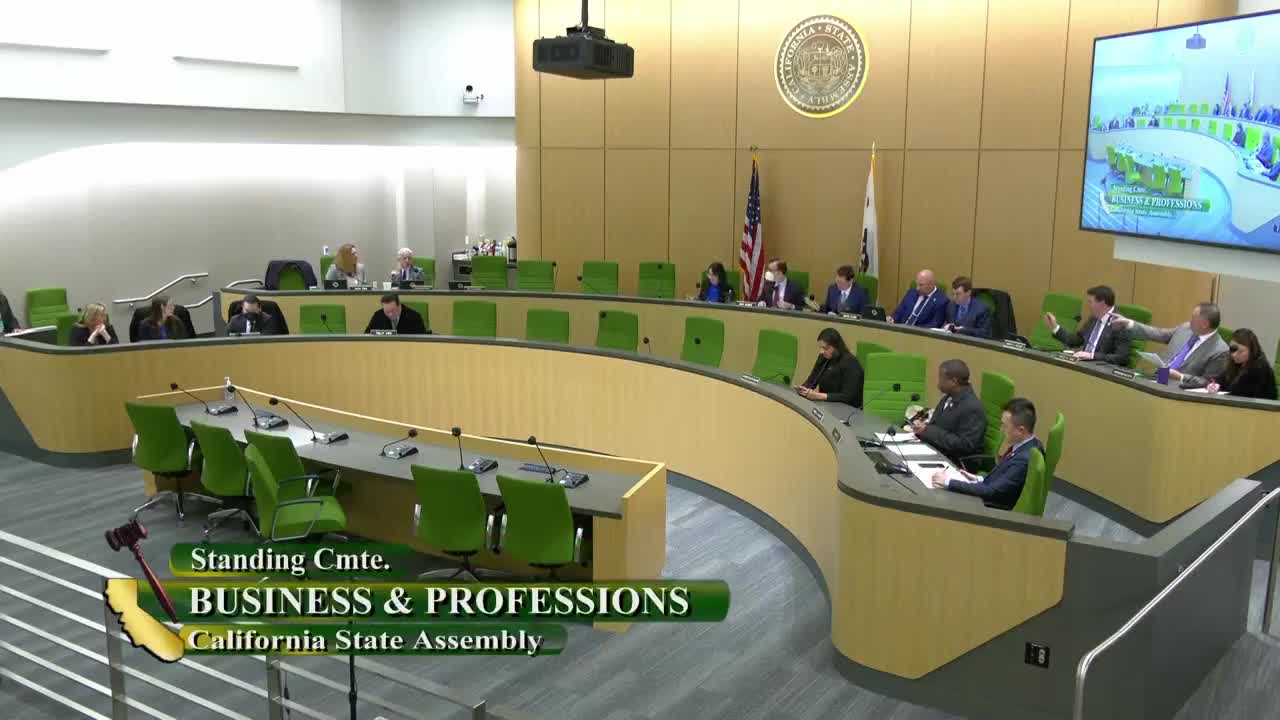 11MIN
Assembly Standing Committee on Business and Professions
Bill Author