AB 1400: Student financial aid: College Access Tax Credit Fund: community college student transfers: Historically Black Colleges and Universities.
- Session Year: 2023-2024
- House: Assembly
- Latest Version Date: 2023-09-30
Current Status:
Passed
(2023-09-30: Chaptered by Secretary of State - Chapter 278, Statutes of 2023.)
Introduced
In Committee
First Chamber
In Committee
Second Chamber
Enacted
Existing law, the Ortiz-Pacheco-Poochigian-Vasconcellos Cal Grant Program (Cal Grant Program), establishes the Cal Grant A and B Entitlement Awards, the California Community College Expanded Entitlement Awards, the California Community College Transfer Entitlement Awards, the Competitive Cal Grant A and B Awards, the Cal Grant C Awards, and the Cal Grant T Awards under the administration of the Student Aid Commission, and establishes the eligibility requirements for awards under these programs for participating students attending qualifying institutions.
Existing law governing the taxation of insurers, the Personal Income Tax Law and the Corporation Tax Law, allow various credits against the taxes imposed by those laws, including a credit, for taxable years beginning on or after January 1, 2017, and before January 1, 2023, equal to 50% of a contribution to the College Access Tax Credit Fund, as provided. Existing law provides that moneys in the College Access Tax Credit Fund shall be allocated first to the General Fund, then, upon appropriation, to specified agencies for administrative costs related to this credit, and lastly continuously appropriated to the commission for awarding Cal Grants, as provided.
This bill would instead require the College Access Tax Credit Fund moneys continuously appropriated to the commission to be used for awards for qualifying community college student transfers to regionally accredited Historically Black Colleges and Universities that have associate degree for transfer memoranda of understanding on file with the office of the Chancellor of the California Community Colleges. The bill would make an appropriation by changing the purposes for which moneys are used in a continuously appropriated fund.
Existing law, the Ortiz-Pacheco-Poochigian-Vasconcellos Cal Grant Program (Cal Grant Program), establishes the Cal Grant A and B Entitlement Awards, the California Community College Expanded Entitlement Awards, the California Community College Transfer Entitlement Awards, the Competitive Cal Grant A and B Awards, the Cal Grant C Awards, and the Cal Grant T Awards under the administration of the Student Aid Commission, and establishes the eligibility requirements for awards under these programs for participating students attending qualifying institutions.
Existing law governing the taxation of insurers, the Personal Income Tax Law and the Corporation Tax Law, allow various credits against the taxes imposed by those laws, including a credit, for taxable years beginning on or after January 1, 2017, and before January 1, 2023, equal to 50% of a contribution to the College Access Tax Credit Fund, as provided. Existing law provides that moneys in the College Access Tax Credit Fund shall be allocated first to the General Fund, then, upon appropriation, to specified agencies for administrative costs related to this credit, and lastly continuously appropriated to the commission for awarding Cal Grants, as provided.
This bill would instead require the College Access Tax Credit Fund moneys continuously appropriated to the commission to be used for awards for qualifying community college student transfers to regionally accredited Historically Black Colleges and Universities that have associate degree for transfer memoranda of understanding on file with the office of the Chancellor of the California Community Colleges. The bill would make an appropriation by changing the purposes for which moneys are used in a continuously appropriated fund.
Existing law, the Ortiz-Pacheco-Poochigian-Vasconcellos Cal Grant Program (Cal Grant Program), establishes the Cal Grant A and B Entitlement Awards, the California Community College Expanded Entitlement Awards, the California Community College Transfer Entitlement Awards, the Competitive Cal Grant A and B Awards, the Cal Grant C Awards, and the Cal Grant T Awards under the administration of the Student Aid Commission, and establishes the eligibility requirements for awards under these programs for participating students attending qualifying institutions.
Existing law governing the taxation of insurers, the Personal Income Tax Law and the Corporation Tax Law, allow various credits against the taxes imposed by those laws, including a credit, for taxable years beginning on or after January 1, 2017, and before January 1, 2023, equal to 50% of a contribution to the College Access Tax Credit Fund, as provided. Existing law provides that moneys in the College Access Tax Credit Fund shall be allocated first to the General Fund, then, upon appropriation, to specified agencies for administrative costs related to this credit, and lastly continuously appropriated to the commission for awarding Cal Grants, as provided.
This bill would instead require the College Access Tax Credit Fund moneys continuously appropriated to the commission to be used for awards for qualifying community college student transfers to regionally accredited Historically Black Colleges and Universities that have associate degree for transfer memoranda of understanding on file with the office of the Chancellor of the California Community Colleges. The bill would make an appropriation by changing the purposes for which moneys are used in a continuously appropriated fund.
Existing law, the Ortiz-Pacheco-Poochigian-Vasconcellos Cal Grant Program (Cal Grant Program), establishes the Cal Grant A and B Entitlement Awards, the California Community College Expanded Entitlement Awards, the California Community College Transfer Entitlement Awards, the Competitive Cal Grant A and B Awards, the Cal Grant C Awards, and the Cal Grant T Awards under the administration of the Student Aid Commission, and establishes the eligibility requirements for awards under these programs for participating students attending qualifying institutions.
Existing law governing the taxation of insurers, the Personal Income Tax Law and the Corporation Tax Law, allow various credits against the taxes imposed by those laws, including a credit, for taxable years beginning on or after January 1, 2017, and before January 1, 2023, equal to 50% of a contribution to the College Access Tax Credit Fund, as provided. Existing law provides that moneys in the College Access Tax Credit Fund shall be allocated first to the General Fund, then, upon appropriation, to specified agencies for administrative costs related to this credit, and lastly continuously appropriated to the commission for awarding Cal Grants, as provided.
This bill would instead require the College Access Tax Credit Fund moneys continuously appropriated to the commission to be used for awards for qualifying community college student transfers to Historically Black Colleges and Universities that have associate degree for transfer memoranda of understanding on file with the office of the Chancellor of the California Community Colleges. The bill would make an appropriation by changing the purposes for which moneys are used in a continuously appropriated fund.
Existing law, the Ortiz-Pacheco-Poochigian-Vasconcellos Cal Grant Program (Cal Grant Program), establishes the Cal Grant A and B Entitlement Awards, the California Community College Expanded Entitlement Awards, the California Community College Transfer Entitlement Awards, the Competitive Cal Grant A and B Awards, the Cal Grant C Awards, and the Cal Grant T Awards under the administration of the Student Aid Commission, and establishes the eligibility requirements for awards under these programs for participating students attending qualifying institutions.
Existing law governing the taxation of insurers, the Personal Income Tax Law and the Corporation Tax Law, allow various credits against the taxes imposed by those laws, including a credit, for taxable years beginning on or after January 1, 2017, and before January 1, 2023, equal to 50% of a contribution to the College Access Tax Credit Fund, as provided. Existing law provides that moneys in the College Access Tax Credit Fund shall be allocated first to the General Fund, then, upon appropriation, to specified agencies for administrative costs related to this credit, and lastly continuously appropriated to the commission for awarding Cal Grants, as provided.
This bill would instead require the College Access Tax Credit Fund moneys continuously appropriated to the commission to be used for awards for qualifying community college student transfers to Historically Black Colleges and Universities that have associate degree for transfer memoranda of understanding on file with the office of the Chancellor of the California Community Colleges. The bill would make an appropriation by changing the purposes for which moneys are used in a continuously appropriated fund.
Existing law governing the taxation of insurers, the Personal Income Tax Law and the Corporation Tax Law, allow various credits against the taxes imposed by those laws, including a credit, for taxable years beginning on or after January 1, 2017, and before January 1, 2023, equal to 50% of a contribution to the College Access Tax Credit Fund, as provided. Existing law provides that moneys in the College Access Tax Credit Fund shall be allocated first to the General Fund, then, upon appropriation, to specified agencies for administrative costs related to this credit, and lastly continuously appropriated to the Student Aid Commission for awarding Cal Grants, as prescribed.This bill would state the intent of the Legislature to enact subsequent legislation relating to the College Access Tax Credit Fund.Existing law governing the taxation of insurers, the Personal Income Tax Law and the Corporation Tax Law, allow various credits against the taxes imposed by those laws, including a credit, for taxable years beginning on or after January 1, 2017, and before January 1, 2023, equal to 50% of a contribution to the College Access Tax Credit Fund, as provided. Existing law provides that moneys in the College Access Tax Credit Fund shall be allocated first to the General Fund, then, upon appropriation, to specified agencies for administrative costs related to this credit, and lastly continuously appropriated to the Student Aid Commission for awarding Cal Grants, as prescribed.
This bill would state the intent of the Legislature to enact subsequent legislation relating to the College Access Tax Credit Fund.
The Legislature finds and declares all of the following:
(a)The College Access Tax Credit Fund (CATCF) program seeks to increase Cal Grant B funding to provide a greater level of support for low-income students. However, the CATCF program lacks adequate resources to accommodate the overwhelming student demand for Cal Grant B awards.
(b)The CATCF program cannot currently meet its goal of providing meaningful award increases to Cal Grant B recipients.
(c)This act targets CATCF program resources on a smaller student population, thereby facilitating substantive increases to CATCF-funded grants. This act would ensure that the CATCF program meets its goal of providing additional financial aid to low-income students and helps the award recipients cover a larger portion of their total cost of attendance.
(d)In the 202122 fiscal year, a total of 53 California Community Colleges (CCC) transfer students enrolled at 39 Historically Black Colleges and Universities (HBCUs) that have associate degree for transfer memoranda of understanding on file with the office of the Chancellor of the California Community Colleges. By reducing the pool of eligible CATCF-funded grant applicants to less than 100 students, this act would enable the CATCF program to issue awards of up to $5,000.
(e)This act provides the Student Aid Commission flexibility to make financial aid decisions that best serve students, while achieving efficient operations of the CATCF program.
(f)HBCUs, as designated by the federal Higher Education Act of 1965, provide a uniquely supportive educational environment built on a history of diversity, cultural awareness, and positive racial identity.
SEC. 2.Section 69431.7 of the Education Code is amended to read:69431.7.(a)As used in this section, fund means the College Access Tax Credit Fund created by Section 17053.87 of the Revenue and Taxation Code.
(b)Any moneys allocated to the commission from the fund for purposes of this section shall be in addition to, and are intended to supplement, other moneys appropriated for the Cal Grant Program. Upon the creation of the fund, and during its existence, the amount of the Cal Grant B access award as established in the annual Budget Act shall not be adjusted below the amount set forth in the Budget Act of 2012.
(c)(1)The moneys allocated to the commission pursuant to Section 17053.87 of the Revenue and Taxation Code shall be available for the purpose of making awards to students in accordance with this section.
(2)The commission shall make disbursements from the moneys allocated to the commission to supplement awards made for access costs under Article 3 (commencing with Section 69435), Article 4 (commencing with Section 69436), and Article 5 (commencing with Section 69437). The amount of the supplemental award, when added to the amount of the award made for access costs established by the annual Budget Act, shall not exceed five thousand dollars ($5,000). An award under this section is payable only to the extent that moneys are available from the fund. The commission shall inform each recipient of an award under this section that the award is for one academic year only, is not an entitlement, and that future supplemental awards are subject to the availability of moneys in the fund.
(3)The commission may make disbursements in any fiscal year in which it determines there are sufficient funds. If the commission determines it would be in the best interest of the program, the commission may roll over moneys allocated to the commission for disbursement in future fiscal years.
(d)If, after making supplemental awards pursuant to subdivision (c), moneys remain in the fund, those moneys shall remain in the fund for allocation in future fiscal years.
(e)This section shall become inoperative on June 30, 2024, and, as of January 1, 2025, is repealed.
SEC. 3.Article 16 (commencing with Section 69840) is added to Chapter 2 of Part 42 of Division 5 of Title 3 of the Education Code, to read:16.College Access Tax Credit Awards69840.(a)As used in this section, the following definitions apply:
(1)Chancellors office means the office of the Chancellor of the California Community Colleges.
(2)Fund means the College Access Tax Credit Fund established pursuant to Section 17053.87 of the Revenue and Taxation Code.
(3)HBCUs means the colleges and universities listed as Historically Black Colleges and Universities by the National Center for Education Statistics.
(4)Participating students means students who have completed the associate degree for transfer pathway, are enrolled at a partnered HBCU, and qualify to receive an award pursuant to this section.
(5)Partnered HBCUs means HBCUs that satisfy all of the following:
(A)Have associate degree for transfer memoranda of understanding on file with the chancellors office.
(B)Satisfy subparagraphs (C) and (F) of paragraph (3) of subdivision (l) of Section 69432.7.
(C)Are regionally accredited by an agency recognized by the United States Department of Education.
(6)Postsecondary costs means any costs of attendance of participating students at partnered HBCUs.
(b)The moneys allocated to the commission pursuant to Section 17053.87 of the Revenue and Taxation Code shall be available for the purpose of making awards for participating students pursuant to this section.
(c)(1)Commencing with the 202425 award year, the commission may make disbursements of awards from the moneys allocated to the commission directly to partnered HBCUs for postsecondary costs of their participating students.
(2)A participating student may only receive one award pursuant to this section in an amount that does not exceed five thousand dollars ($5,000), as determined by the commission based on the availability of moneys allocated to the commission and the financial need of the student.
(3)In making awards pursuant to this section, the commission shall give priority to students with the greatest unmet financial need, as defined in subdivision (b) of Section 69432.9, who do not exceed the maximum household income and asset level for an applicant for a Cal Grant B award, as set forth in Section 69432.7.
(4)An award under this section is payable only to the extent that moneys are available from the fund. The commission shall inform each recipient of an award under this section that the award is a one-time grant.
(5)A participating student shall file a statement of intent form stating that the student will enroll at a partnered HBCU and return to California after graduation from a partnered HBCU.
(d)The commission may make disbursements in any fiscal year in which it determines there are sufficient funds. If the commission determines it would be in the best interest of the program, the commission may roll over moneys allocated to the commission for disbursement in future fiscal years.
(e)If, after making awards pursuant to subdivision (c), moneys remain in the fund, those moneys shall remain in the fund for allocation in future fiscal years.
(f)The commission may adopt regulations for purposes of implementing and administering this section.
SEC. 4.Section 17053.87 of the Revenue and Taxation Code is amended to read:17053.87.(a)For the taxable years beginning on or after January 1, 2017, and before January 1, 2028, there shall be allowed as a credit against the net tax, as defined in Section 17039, an amount equal to 50 percent of the amount contributed by the taxpayer for the taxable year to the College Access Tax Credit Fund, as allocated and certified by the California Educational Facilities Authority.
(b)(1)The aggregate amount of credit that may be allocated and certified pursuant to this section, Section 12207, and Section 23687 shall be an amount equal to five hundred million dollars ($500,000,000).
(2)(A)For the purposes of this section, the California Educational Facilities Authority shall do all of the following:
(i)On a first-come-first-served basis, allocate and certify tax credits to taxpayers under this section.
(ii)Establish a procedure for taxpayers to contribute to the College Access Tax Credit Fund and to obtain from the California Educational Facilities Authority a certification for the credit allowed by this section. The procedure shall require the California Educational Facilities Authority to certify the contribution amount eligible for credit within 45 days following receipt of the contribution.
(iii)Provide to the Franchise Tax Board a copy of each credit certificate issued for the calendar year by March 1 of the calendar year immediately following the year in which those certificates are issued.
(B)(i)The California Educational Facilities Authority shall adopt any regulations necessary or appropriate to implement this paragraph.
(ii)The Administrative Procedure Act (Chapter 3.5 (commencing with Section 11340) of Part 1 of Division 3 of Title 2 of the Government Code) shall not apply to any regulation adopted by the California Educational Facilities Authority pursuant to clause (i).
(c)(1)In the case where the credit allowed by this section exceeds the net tax, the excess may be carried over to reduce the net tax in the following year, and succeeding five years if necessary, until the credit is exhausted.
(2)A deduction shall not be allowed under this part for amounts taken into account under this section in calculating the credit allowed by this section.
(d)(1)The College Access Tax Credit Fund is hereby created as a special fund in the State Treasury. All revenue in this special fund shall be allocated as follows:
(A)First to the General Fund in an amount equal to the aggregate amount of certified credits allowed pursuant to this section and Section 23687 for the taxable year. Funds allocated to the General Fund shall be considered General Fund revenues for purposes of Sections 8 and 8.5 of Article XVI of the California Constitution.
(B)Second, upon appropriation, to the Department of Insurance, the Franchise Tax Board, the California Educational Facilities Authority, the Controller, and the Student Aid Commission for reimbursement of all administrative costs incurred by those agencies in connection with their duties under this section, Section 12207, Section 23687, and Section 69431.7 of the Education Code.
(C)Third, upon appropriation, to the California Educational Facilities Authority for outreach purposes to inform taxpayers about the College Access Tax Credit Fund and the credits allowed by this section, Section 12207, and Section 23687.
(D)Fourth, notwithstanding Section 13340 of the Government Code, the remaining revenue shall be continuously appropriated to the Student Aid Commission for purposes of awarding students pursuant to Article 16 (commencing with Section 69840) of Chapter 2 of Part 42 of Division 5 of Title 3 of the Education Code.
(2)The tax credit allowed by subdivision (a), subdivision (a) of Section 12207, and subdivision (a) of Section 23687 for donations to the College Access Tax Credit Fund shall be known as the College Access Tax Credit.
(e)This section shall remain in effect only until December 1, 2028, and as of that date is repealed.
The Legislature finds and declares all of the following:
(a)The College Access Tax Credit Fund (CATCF) program seeks to increase Cal Grant B funding to provide a greater level of support for low-income students. However, the CATCF program lacks adequate resources to accommodate the overwhelming student demand for Cal Grant B awards.
(b)The CATCF program cannot currently meet its goal of providing meaningful award increases to Cal Grant B recipients.
(c)This act targets CATCF program resources on a smaller student population, thereby facilitating substantive increases to CATCF-funded grants. This act would ensure that the CATCF program meets its goal of providing additional financial aid to low-income students and helps the award recipients cover a larger portion of their total cost of attendance.
(d)In the 202122 fiscal year, a total of 53 California Community Colleges (CCC) transfer students enrolled at 39 Historically Black Colleges and Universities (HBCUs) that have associate degree for transfer memoranda of understanding on file with the office of the Chancellor of the California Community Colleges. By reducing the pool of eligible CATCF-funded grant applicants to less than 100 students, this act would enable the CATCF program to issue awards of up to $5,000.
(e)This act provides the Student Aid Commission flexibility to make financial aid decisions that best serve students, while achieving efficient operations of the CATCF program.
(f)HBCUs, as designated by the federal Higher Education Act of 1965, provide a uniquely supportive educational environment built on a history of diversity, cultural awareness, and positive racial identity.
SEC. 2.Section 69431.7 of the Education Code is amended to read:69431.7.(a)As used in this section, fund means the College Access Tax Credit Fund created by Section 17053.87 of the Revenue and Taxation Code.
(b)Any moneys allocated to the commission from the fund for purposes of this section shall be in addition to, and are intended to supplement, other moneys appropriated for the Cal Grant Program. Upon the creation of the fund, and during its existence, the amount of the Cal Grant B access award as established in the annual Budget Act shall not be adjusted below the amount set forth in the Budget Act of 2012.
(c)(1)The moneys allocated to the commission pursuant to Section 17053.87 of the Revenue and Taxation Code shall be available for the purpose of making awards to students in accordance with this section.
(2)The commission shall make disbursements from the moneys allocated to the commission to supplement awards made for access costs under Article 3 (commencing with Section 69435), Article 4 (commencing with Section 69436), and Article 5 (commencing with Section 69437). The amount of the supplemental award, when added to the amount of the award made for access costs established by the annual Budget Act, shall not exceed five thousand dollars ($5,000). An award under this section is payable only to the extent that moneys are available from the fund. The commission shall inform each recipient of an award under this section that the award is for one academic year only, is not an entitlement, and that future supplemental awards are subject to the availability of moneys in the fund.
(3)The commission may make disbursements in any fiscal year in which it determines there are sufficient funds. If the commission determines it would be in the best interest of the program, the commission may roll over moneys allocated to the commission for disbursement in future fiscal years.
(d)If, after making supplemental awards pursuant to subdivision (c), moneys remain in the fund, those moneys shall remain in the fund for allocation in future fiscal years.
(e)This section shall become inoperative on June 30, 2024, and, as of January 1, 2025, is repealed.
SEC. 3.Article 16 (commencing with Section 69840) is added to Chapter 2 of Part 42 of Division 5 of Title 3 of the Education Code, to read:16.College Access Tax Credit Awards69840.(a)As used in this section, the following definitions apply:
(1)Chancellors office means the office of the Chancellor of the California Community Colleges.
(2)Fund means the College Access Tax Credit Fund established pursuant to Section 17053.87 of the Revenue and Taxation Code.
(3)HBCUs means the colleges and universities listed as Historically Black Colleges and Universities by the National Center for Education Statistics.
(4)Participating students means students who have completed the associate degree for transfer pathway, are enrolled at a partnered HBCU, and qualify to receive an award pursuant to this section.
(5)Partnered HBCUs means HBCUs that satisfy all of the following:
(A)Have associate degree for transfer memoranda of understanding on file with the chancellors office.
(B)Satisfy subparagraphs (C) and (F) of paragraph (3) of subdivision (l) of Section 69432.7.
(C)Are regionally accredited by an agency recognized by the United States Department of Education.
(6)Postsecondary costs means any costs of attendance of participating students at partnered HBCUs.
(b)The moneys allocated to the commission pursuant to Section 17053.87 of the Revenue and Taxation Code shall be available for the purpose of making awards for participating students pursuant to this section.
(c)(1)Commencing with the 202425 award year, the commission may make disbursements of awards from the moneys allocated to the commission directly to partnered HBCUs for postsecondary costs of their participating students.
(2)A participating student may only receive one award pursuant to this section in an amount that does not exceed five thousand dollars ($5,000), as determined by the commission based on the availability of moneys allocated to the commission and the financial need of the student.
(3)In making awards pursuant to this section, the commission shall give priority to students with the greatest unmet financial need, as defined in subdivision (b) of Section 69432.9, who do not exceed the maximum household income and asset level for an applicant for a Cal Grant B award, as set forth in Section 69432.7.
(4)An award under this section is payable only to the extent that moneys are available from the fund. The commission shall inform each recipient of an award under this section that the award is a one-time grant.
(5)A participating student shall file a statement of intent form stating that the student will enroll at a partnered HBCU and return to California after graduation from a partnered HBCU.
(d)The commission may make disbursements in any fiscal year in which it determines there are sufficient funds. If the commission determines it would be in the best interest of the program, the commission may roll over moneys allocated to the commission for disbursement in future fiscal years.
(e)If, after making awards pursuant to subdivision (c), moneys remain in the fund, those moneys shall remain in the fund for allocation in future fiscal years.
(f)The commission may adopt regulations for purposes of implementing and administering this section.
SEC. 4.Section 17053.87 of the Revenue and Taxation Code is amended to read:17053.87.(a)For the taxable years beginning on or after January 1, 2017, and before January 1, 2028, there shall be allowed as a credit against the net tax, as defined in Section 17039, an amount equal to 50 percent of the amount contributed by the taxpayer for the taxable year to the College Access Tax Credit Fund, as allocated and certified by the California Educational Facilities Authority.
(b)(1)The aggregate amount of credit that may be allocated and certified pursuant to this section, Section 12207, and Section 23687 shall be an amount equal to five hundred million dollars ($500,000,000).
(2)(A)For the purposes of this section, the California Educational Facilities Authority shall do all of the following:
(i)On a first-come-first-served basis, allocate and certify tax credits to taxpayers under this section.
(ii)Establish a procedure for taxpayers to contribute to the College Access Tax Credit Fund and to obtain from the California Educational Facilities Authority a certification for the credit allowed by this section. The procedure shall require the California Educational Facilities Authority to certify the contribution amount eligible for credit within 45 days following receipt of the contribution.
(iii)Provide to the Franchise Tax Board a copy of each credit certificate issued for the calendar year by March 1 of the calendar year immediately following the year in which those certificates are issued.
(B)(i)The California Educational Facilities Authority shall adopt any regulations necessary or appropriate to implement this paragraph.
(ii)The Administrative Procedure Act (Chapter 3.5 (commencing with Section 11340) of Part 1 of Division 3 of Title 2 of the Government Code) shall not apply to any regulation adopted by the California Educational Facilities Authority pursuant to clause (i).
(c)(1)In the case where the credit allowed by this section exceeds the net tax, the excess may be carried over to reduce the net tax in the following year, and succeeding five years if necessary, until the credit is exhausted.
(2)A deduction shall not be allowed under this part for amounts taken into account under this section in calculating the credit allowed by this section.
(d)(1)The College Access Tax Credit Fund is hereby created as a special fund in the State Treasury. All revenue in this special fund shall be allocated as follows:
(A)First to the General Fund in an amount equal to the aggregate amount of certified credits allowed pursuant to this section and Section 23687 for the taxable year. Funds allocated to the General Fund shall be considered General Fund revenues for purposes of Sections 8 and 8.5 of Article XVI of the California Constitution.
(B)Second, upon appropriation, to the Department of Insurance, the Franchise Tax Board, the California Educational Facilities Authority, the Controller, and the Student Aid Commission for reimbursement of all administrative costs incurred by those agencies in connection with their duties under this section, Section 12207, Section 23687, and Section 69431.7 of the Education Code.
(C)Third, upon appropriation, to the California Educational Facilities Authority for outreach purposes to inform taxpayers about the College Access Tax Credit Fund and the credits allowed by this section, Section 12207, and Section 23687.
(D)Fourth, notwithstanding Section 13340 of the Government Code, the remaining revenue shall be continuously appropriated to the Student Aid Commission for purposes of awarding students pursuant to Article 16 (commencing with Section 69840) of Chapter 2 of Part 42 of Division 5 of Title 3 of the Education Code.
(2)The tax credit allowed by subdivision (a), subdivision (a) of Section 12207, and subdivision (a) of Section 23687 for donations to the College Access Tax Credit Fund shall be known as the College Access Tax Credit.
(e)This section shall remain in effect only until December 1, 2028, and as of that date is repealed.
The Legislature finds and declares all of the following:
(a)The College Access Tax Credit Fund (CATCF) program seeks to increase Cal Grant B funding to provide a greater level of support for low-income students. However, the CATCF program lacks adequate resources to accommodate the overwhelming student demand for Cal Grant B awards.
(b)The CATCF program cannot currently meet its goal of providing meaningful award increases to Cal Grant B recipients.
(c)This act targets CATCF program resources on a smaller student population, thereby facilitating substantive increases to CATCF-funded grants. This act would ensure that the CATCF program meets its goal of providing additional financial aid to low-income students and helps the award recipients cover a larger portion of their total cost of attendance.
(d)In the 202122 fiscal year, a total of 53 California Community Colleges (CCC) transfer students enrolled at 39 Historically Black Colleges and Universities (HBCUs) that have associate degree for transfer memoranda of understanding on file with the office of the Chancellor of the California Community Colleges. By reducing the pool of eligible CATCF-funded grant applicants to less than 100 students, this act would enable the CATCF program to issue awards of up to $5,000.
(e)This act provides the Student Aid Commission flexibility to make financial aid decisions that best serve students, while achieving efficient operations of the CATCF program.
(f)HBCUs, as designated by the federal Higher Education Act of 1965, provide a uniquely supportive educational environment built on a history of diversity, cultural awareness, and positive racial identity.
SEC. 2.Section 69431.7 of the Education Code is amended to read:69431.7.(a)As used in this section, fund means the College Access Tax Credit Fund created by Section 17053.87 of the Revenue and Taxation Code.
(b)Any moneys allocated to the commission from the fund for purposes of this section shall be in addition to, and are intended to supplement, other moneys appropriated for the Cal Grant Program. Upon the creation of the fund, and during its existence, the amount of the Cal Grant B access award as established in the annual Budget Act shall not be adjusted below the amount set forth in the Budget Act of 2012.
(c)(1)The moneys allocated to the commission pursuant to Section 17053.87 of the Revenue and Taxation Code shall be available for the purpose of making awards to students in accordance with this section.
(2)The commission shall make disbursements from the moneys allocated to the commission to supplement awards made for access costs under Article 3 (commencing with Section 69435), Article 4 (commencing with Section 69436), and Article 5 (commencing with Section 69437). The amount of the supplemental award, when added to the amount of the award made for access costs established by the annual Budget Act, shall not exceed five thousand dollars ($5,000). An award under this section is payable only to the extent that moneys are available from the fund. The commission shall inform each recipient of an award under this section that the award is for one academic year only, is not an entitlement, and that future supplemental awards are subject to the availability of moneys in the fund.
(3)The commission may make disbursements in any fiscal year in which it determines there are sufficient funds. If the commission determines it would be in the best interest of the program, the commission may roll over moneys allocated to the commission for disbursement in future fiscal years.
(d)If, after making supplemental awards pursuant to subdivision (c), moneys remain in the fund, those moneys shall remain in the fund for allocation in future fiscal years.
(e)This section shall become inoperative on June 30, 2024, and, as of January 1, 2025, is repealed.
SEC. 3.Article 16 (commencing with Section 69840) is added to Chapter 2 of Part 42 of Division 5 of Title 3 of the Education Code, to read:16.College Access Tax Credit Awards69840.(a)As used in this section, the following definitions apply:
(1)Chancellors office means the office of the Chancellor of the California Community Colleges.
(2)Fund means the College Access Tax Credit Fund established pursuant to Section 17053.87 of the Revenue and Taxation Code.
(3)HBCUs means the colleges and universities listed as Historically Black Colleges and Universities by the National Center for Education Statistics.
(4)Participating students means students who have completed the associate degree for transfer pathway pathway, are enrolled at a partnered HBCU, and qualify to receive an award pursuant to this section.
(5)Partnered HBCUs means HBCUs that satisfy both all of the following:
(A)Have associate degree for transfer memoranda of understanding on file with the chancellors office.
(B)Satisfy subparagraphs (C) and (F) of paragraph (3) of subdivision (l) of Section 69432.7.
(C)Are regionally accredited by an agency recognized by the United States Department of Education.
(6)Postsecondary costs means any costs of attendance of participating students at partnered HBCUs.
(b)The moneys allocated to the commission pursuant to Section 17053.87 of the Revenue and Taxation Code shall be available for the purpose of making awards for participating students pursuant to this section.
(c)(1)Commencing with the 202425 award year, the commission may make disbursements of awards from the moneys allocated to the commission directly to partnered HBCUs for postsecondary costs of their participating students.
(2)A participating student may only receive one award pursuant to this section in an amount that does not exceed five thousand dollars ($5,000), as determined by the commission based on the availability of moneys allocated to the commission and the financial need of the student.
(3)In making awards pursuant to this section, the commission shall give priority to students with the greatest unmet financial need, as defined in subdivision (b) of Section 69432.9, who do not exceed the maximum household income and asset level for an applicant for a Cal Grant B award, as set forth in Section 69432.7.
(4)An award under this section is payable only to the extent that moneys are available from the fund. The commission shall inform each recipient of an award under this section that the award is a one-time grant.
(5)A participating student shall file a statement of intent form stating that the student will enroll at a partnered HBCU and return to California after graduation from a partnered HBCU.
(d)The commission may make disbursements in any fiscal year in which it determines there are sufficient funds. If the commission determines it would be in the best interest of the program, the commission may roll over moneys allocated to the commission for disbursement in future fiscal years.
(e)If, after making awards pursuant to subdivision (c), moneys remain in the fund, those moneys shall remain in the fund for allocation in future fiscal years.
(f)The commission may adopt regulations for purposes of implementing and administering this section.
SEC. 4.Section 17053.87 of the Revenue and Taxation Code is amended to read:17053.87.(a)For the taxable years beginning on or after January 1, 2017, and before January 1, 2028, there shall be allowed as a credit against the net tax, as defined in Section 17039, an amount equal to 50 percent of the amount contributed by the taxpayer for the taxable year to the College Access Tax Credit Fund, as allocated and certified by the California Educational Facilities Authority.
(b)(1)The aggregate amount of credit that may be allocated and certified pursuant to this section, Section 12207, and Section 23687 shall be an amount equal to five hundred million dollars ($500,000,000).
(2)(A)For the purposes of this section, the California Educational Facilities Authority shall do all of the following:
(i)On a first-come-first-served basis, allocate and certify tax credits to taxpayers under this section.
(ii)Establish a procedure for taxpayers to contribute to the College Access Tax Credit Fund and to obtain from the California Educational Facilities Authority a certification for the credit allowed by this section. The procedure shall require the California Educational Facilities Authority to certify the contribution amount eligible for credit within 45 days following receipt of the contribution.
(iii)Provide to the Franchise Tax Board a copy of each credit certificate issued for the calendar year by March 1 of the calendar year immediately following the year in which those certificates are issued.
(B)(i)The California Educational Facilities Authority shall adopt any regulations necessary or appropriate to implement this paragraph.
(ii)The Administrative Procedure Act (Chapter 3.5 (commencing with Section 11340) of Part 1 of Division 3 of Title 2 of the Government Code) shall not apply to any regulation adopted by the California Educational Facilities Authority pursuant to clause (i).
(c)(1)In the case where the credit allowed by this section exceeds the net tax, the excess may be carried over to reduce the net tax in the following year, and succeeding five years if necessary, until the credit is exhausted.
(2)A deduction shall not be allowed under this part for amounts taken into account under this section in calculating the credit allowed by this section.
(d)(1)The College Access Tax Credit Fund is hereby created as a special fund in the State Treasury. All revenue in this special fund shall be allocated as follows:
(A)First to the General Fund in an amount equal to the aggregate amount of certified credits allowed pursuant to this section and Section 23687 for the taxable year. Funds allocated to the General Fund shall be considered General Fund revenues for purposes of Sections 8 and 8.5 of Article XVI of the California Constitution.
(B)Second, upon appropriation, to the Department of Insurance, the Franchise Tax Board, the California Educational Facilities Authority, the Controller, and the Student Aid Commission for reimbursement of all administrative costs incurred by those agencies in connection with their duties under this section, Section 12207, Section 23687, and Section 69431.7 of the Education Code.
(C)Third, upon appropriation, to the California Educational Facilities Authority for outreach purposes to inform taxpayers about the College Access Tax Credit Fund and the credits allowed by this section, Section 12207, and Section 23687.
(D)Fourth, notwithstanding Section 13340 of the Government Code, the remaining revenue shall be continuously appropriated to the Student Aid Commission for purposes of awarding students pursuant to Article 16 (commencing with Section 69840) of Chapter 2 of Part 42 of Division 5 of Title 3 of the Education Code.
(2)The tax credit allowed by subdivision (a), subdivision (a) of Section 12207, and subdivision (a) of Section 23687 for donations to the College Access Tax Credit Fund shall be known as the College Access Tax Credit.
(e)This section shall remain in effect only until December 1, 2028, and as of that date is repealed.
The Legislature finds and declares all of the following:
(a)The College Access Tax Credit Fund (CATCF) program seeks to increase Cal Grant B funding to provide a greater level of support for low-income students. However, the CATCF program lacks adequate resources to accommodate the overwhelming student demand for Cal Grant B awards.
(b)The CATCF program cannot currently meet its goal of providing meaningful award increases to Cal Grant B recipients.
(c)This act targets CATCF program resources on a smaller student population, thereby facilitating substantive increases to CATCF-funded grants. This act would ensure that the CATCF program meets its goal of providing additional financial aid to low-income students and helps the award recipients cover a larger portion of their total cost of attendance.
(d)In the 202122 fiscal year, a total of 53 California Community Colleges (CCC) transfer students enrolled at 39 Historically Black Colleges and Universities (HBCUs) that have associate degree for transfer memoranda of understanding on file with the office of the Chancellor of the California Community Colleges. By reducing the pool of eligible CATCF-funded grant applicants to less than 100 students, this act would enable the CATCF program to issue awards of up to $5,000.
(e)This act provides the Student Aid Commission flexibility to make financial aid decisions that best serve students, while achieving efficient operations of the CATCF program.
(f)HBCUs, as designated by the federal Higher Education Act of 1965, provide a uniquely supportive educational environment built on a history of diversity, cultural awareness, and positive racial identity.
SEC. 2.Section 69431.7 of the Education Code is amended to read:69431.7.(a)As used in this section, fund means the College Access Tax Credit Fund created by Section 17053.87 of the Revenue and Taxation Code.
(b)Any moneys allocated to the commission from the fund for purposes of this section shall be in addition to, and are intended to supplement, other moneys appropriated for the Cal Grant Program. Upon the creation of the fund, and during its existence, the amount of the Cal Grant B access award as established in the annual Budget Act shall not be adjusted below the amount set forth in the Budget Act of 2012.
(c) (1) The moneys allocated to the commission pursuant to Section 17053.87 of the Revenue and Taxation Code shall be available for the purpose of making awards to students in accordance with this section.
(2)The commission shall make disbursements from the moneys allocated to the commission to supplement awards made for access costs under Article 3 (commencing with Section 69435), Article 4 (commencing with Section 69436), and Article 5 (commencing with Section 69437). The amount of the supplemental award, when added to the amount of the award made for access costs established by the annual Budget Act, shall not exceed five thousand dollars ($5,000). An award under this section is payable only to the extent that moneys are available from the fund. The commission shall inform each recipient of an award under this section that the award is for one academic year only, is not an entitlement, and that future supplemental awards are subject to the availability of moneys in the fund.
(3)The commission may make disbursements in any fiscal year in which it determines there are sufficient funds. If the commission determines it would be in the best interest of the program, the commission may roll over moneys allocated to the commission for disbursement in future fiscal years.
(d)If, after making supplemental awards pursuant to subdivision (c), moneys remain in the fund, those moneys shall remain in the fund for allocation in future fiscal years.
(e)This section shall become inoperative on June 30, 2024, and, as of January 1, 2025, is repealed.
SEC. 3.Article 16 (commencing with Section 69840) is added to Chapter 2 of Part 42 of Division 5 of Title 3 of the Education Code, to read:16.College Access Tax Credit Awards69840.(a)As used in this section, the following definitions apply:
(1)Chancellors office means the office of the Chancellor of the California Community Colleges.
(2)Fund means the College Access Tax Credit Fund established pursuant to Section 17053.87 of the Revenue and Taxation Code.
(3)HBCUs means the colleges and universities listed as Historically Black Colleges and Universities by the National Center for Education Statistics.
(4)Participating students means students who have completed the associate degree for transfer pathway and qualify to receive of an award pursuant to this section.
(5)Partnered HBCUs means HBCUs that satisfy both of the following:
(A)Have associate degree for transfer memoranda of understanding on file with the chancellors office.
(B)Satisfy subparagraphs (C) and (F) of paragraph (3) of subdivision (l) of Section 69432.7.
(6)Postsecondary costs means any costs of attendance of participating students at partnered HBCUs.
(b)The moneys allocated to the commission pursuant to Section 17053.87 of the Revenue and Taxation Code shall be available for the purpose of making awards for participating students pursuant to this section.
(c)(1)Commencing with the 202425 award year, the commission may make disbursements of awards from the moneys allocated to the commission directly to partnered HBCUs for postsecondary costs of their participating students.
(2)A participating student may only receive one award pursuant to this section in an amount that does not exceed five thousand dollars ($5,000), as determined by the commission based on the availability of moneys allocated to the commission and the financial need of the student.
(3)In making awards pursuant to this section, the commission shall give priority to students with the greatest unmet financial need, as defined in subdivision (b) of Section 69432.9, who do not exceed the maximum household income and asset level for an applicant for a Cal Grant B award, as set forth in Section 69432.7.
(3)
(4)An award under this section is payable only to the extent that moneys are available from the fund. The commission shall inform each recipient of an award under this section that the award is a one-time grant.
(4)(5)A participating student shall file a statement of intent form stating that the student will enroll at a partnered HBCU and return to California after graduation from a partnered HBCU.
(d)The commission may make disbursements in any fiscal year in which it determines there are sufficient funds. If the commission determines it would be in the best interest of the program, the commission may roll over moneys allocated to the commission for disbursement in future fiscal years.
(e)If, after making awards pursuant to subdivision (c), moneys remain in the fund, those moneys shall remain in the fund for allocation in future fiscal years.
(f)The commission may adopt regulations for purposes of implementing and administering this section.
SEC. 4.Section 17053.87 of the Revenue and Taxation Code is amended to read:17053.87.(a)For the taxable years beginning on or after January 1, 2017, and before January 1, 2028, there shall be allowed as a credit against the net tax, as defined in Section 17039, an amount equal to 50 percent of the amount contributed by the taxpayer for the taxable year to the College Access Tax Credit Fund, as allocated and certified by the California Educational Facilities Authority.
(b)(1)The aggregate amount of credit that may be allocated and certified pursuant to this section, Section 12207, and Section 23687 shall be an amount equal to five hundred million dollars ($500,000,000).
(2)(A)For the purposes of this section, the California Educational Facilities Authority shall do all of the following:
(i)On a first-come-first-served basis, allocate and certify tax credits to taxpayers under this section.
(ii)Establish a procedure for taxpayers to contribute to the College Access Tax Credit Fund and to obtain from the California Educational Facilities Authority a certification for the credit allowed by this section. The procedure shall require the California Educational Facilities Authority to certify the contribution amount eligible for credit within 45 days following receipt of the contribution.
(iii)Provide to the Franchise Tax Board a copy of each credit certificate issued for the calendar year by March 1 of the calendar year immediately following the year in which those certificates are issued.
(B)(i)The California Educational Facilities Authority shall adopt any regulations necessary or appropriate to implement this paragraph.
(ii)The Administrative Procedure Act (Chapter 3.5 (commencing with Section 11340) of Part 1 of Division 3 of Title 2 of the Government Code) shall not apply to any regulation adopted by the California Educational Facilities Authority pursuant to clause (i).
(c)(1)In the case where the credit allowed by this section exceeds the net tax, the excess may be carried over to reduce the net tax in the following year, and succeeding five years if necessary, until the credit is exhausted.
(2)A deduction shall not be allowed under this part for amounts taken into account under this section in calculating the credit allowed by this section.
(d)(1)The College Access Tax Credit Fund is hereby created as a special fund in the State Treasury. All revenue in this special fund shall be allocated as follows:
(A)First to the General Fund in an amount equal to the aggregate amount of certified credits allowed pursuant to this section and Section 23687 for the taxable year. Funds allocated to the General Fund shall be considered General Fund revenues for purposes of Sections 8 and 8.5 of Article XVI of the California Constitution.
(B)Second, upon appropriation, to the Department of Insurance, the Franchise Tax Board, the California Educational Facilities Authority, the Controller, and the Student Aid Commission for reimbursement of all administrative costs incurred by those agencies in connection with their duties under this section, Section 12207, Section 23687, and Section 69431.7 of the Education Code.
(C)Third, upon appropriation, to the California Educational Facilities Authority for outreach purposes to inform taxpayers about the College Access Tax Credit Fund and the credits allowed by this section, Section 12207, and Section 23687.
(D)Fourth, notwithstanding Section 13340 of the Government Code, the remaining revenue shall be continuously appropriated to the Student Aid Commission for purposes of awarding students pursuant to Article 16 (commencing with Section 69840) of Chapter 2 of Part 42 of Division 5 of Title 3 of the Education Code.
(2)The tax credit allowed by subdivision (a), subdivision (a) of Section 12207, and subdivision (a) of Section 23687 for donations to the College Access Tax Credit Fund shall be known as the College Access Tax Credit.
(e)This section shall remain in effect only until December 1, 2028, and as of that date is repealed.
The Legislature finds and declares all of the following:
(a)The College Access Tax Credit Fund (CATCF) program seeks to increase Cal Grant B funding to provide a greater level of support for low-income students. However, the CATCF program lacks adequate resources to accommodate the overwhelming student demand for Cal Grant B awards.
(b)The CATCF program cannot currently meet its goal of providing meaningful award increases to Cal Grant B recipients.
(c)This act targets CATCF program resources on a smaller student population, thereby facilitating substantive increases to CATCF-funded grants. This act would ensure that the CATCF program meets its goal of providing additional financial aid to low-income students and helps the award recipients cover a larger portion of their total cost of attendance.
(d)In the 202122 fiscal year, a total of 53 California Community Colleges (CCC) transfer students enrolled at 39 Historically Black Colleges and Universities (HBCUs) that have associate degree for transfer memoranda of understanding on file with the office of the Chancellor of the California Community Colleges. By reducing the pool of eligible CATCF-funded grant applicants to less than 100 students, this act would enable the CATCF program to issue awards of up to $5,000.
(e)This act provides the Student Aid Commission flexibility to make financial aid decisions that best serve students, while achieving efficient operations of the CATCF program.
SEC. 2.Section 69431.7 of the Education Code is amended to read:69431.7.(a)As used in this section, fund means the College Access Tax Credit Fund created by Sections 17053.86 and Section 17053.87 of the Revenue and Taxation Code.
(b)Any moneys allocated to the commission from the fund for purposes of this section shall be in addition to, and are intended to supplement, other moneys appropriated for the Cal Grant Program. Upon the creation of the fund, and during its existence, the amount of the Cal Grant B access award as established in the annual Budget Act shall not be adjusted below the amount set forth in the Budget Act of 2012.
(c) (1) The moneys allocated to the commission pursuant to Sections 17053.86 and Section 17053.87 of the Revenue and Taxation Code shall be available for the purpose of making awards to students in accordance with this section.
(2)The commission shall make disbursements from the moneys allocated to the commission to supplement awards made for access costs under Article 3 (commencing with Section 69435), Article 4 (commencing with Section 69436), and Article 5 (commencing with Section 69437). The amount of the supplemental award, when added to the amount of the award made for access costs established by the annual Budget Act, shall not exceed five thousand dollars ($5,000). An award under this section is payable only to the extent that moneys are available from the fund. The commission shall inform each recipient of an award under this section that the award is for one academic year only, is not an entitlement, and that future supplemental awards are subject to the availability of moneys in the fund.
(3)The commission may make disbursements in any fiscal year in which it determines there are sufficient funds. If the commission determines it would be in the best interest of the program, the commission may roll over moneys allocated to the commission for disbursement in future fiscal years.
(d)If, after making supplemental awards pursuant to subdivision (c), moneys remain in the fund, those moneys shall remain in the fund for allocation in future fiscal years.
(e)This section shall become inoperative on June 30, 2024, and, as of January 1, 2025, is repealed.
SEC. 3.Article 16 (commencing with Section 69840) is added to Chapter 2 of Part 42 of Division 5 of Title 3 of the Education Code, to read:16.College Access Tax Credit Awards69840.(a)As used in this section, the following definitions apply:
(1)Chancellors office means the office of the Chancellor of the California Community Colleges.
(2)Fund means the College Access Tax Credit Fund established pursuant to Section 17053.87 of the Revenue and Taxation Code.
(3)HBCUs means the colleges and universities listed as Historically Black Colleges and Universities by the National Center for Education Statistics.
(4)Participating students means students who have completed the associate degree for transfer pathway and qualify to receive of an award pursuant to this section.
(5)Partnered HBCUs means HBCUs that satisfy both of the following:
(A)Have associate degree for transfer memoranda of understanding on file with the chancellors office.
(B)Satisfy subparagraphs (C) and (F) of paragraph (3) of subdivision (l) of Section 69432.7.
(6)Postsecondary costs means any costs of attendance of participating students at partnered HBCUs.
(b)The moneys allocated to the commission pursuant to Section 17053.87 of the Revenue and Taxation Code shall be available for the purpose of making awards for participating students pursuant to this section.
(c)(1)Commencing with the 202425 award year, the commission may make disbursements of awards from the moneys allocated to the commission directly to partnered HBCUs for postsecondary costs of their participating students.
(2)A participating student may only receive one award pursuant to this section in an amount that does not exceed five thousand dollars ($5,000), as determined by the commission based on the availability of moneys allocated to the commission and the financial need of the student.
(3)An award under this section is payable only to the extent that moneys are available from the fund. The commission shall inform each recipient of an award under this section that the award is a one-time grant.
(4)A participating student shall file a statement of intent form stating that the student will enroll at a partnered HBCU and return to California after graduation from a partnered HBCU.
(d)The commission may make disbursements in any fiscal year in which it determines there are sufficient funds. If the commission determines it would be in the best interest of the program, the commission may roll over moneys allocated to the commission for disbursement in future fiscal years.
(e)If, after making awards pursuant to subdivision (c), moneys remain in the fund, those moneys shall remain in the fund for allocation in future fiscal years.
(f)The commission may adopt regulations for purposes of implementing and administering this section.
SEC. 4.Section 17053.87 of the Revenue and Taxation Code is amended to read:17053.87.(a)For the taxable years beginning on or after January 1, 2017, and before January 1, 2028, there shall be allowed as a credit against the net tax, as defined in Section 17039, an amount equal to 50 percent of the amount contributed by the taxpayer for the taxable year to the College Access Tax Credit Fund, as allocated and certified by the California Educational Facilities Authority.
(b)(1)The aggregate amount of credit that may be allocated and certified pursuant to this section, Section 12207, and Section 23687 shall be an amount equal to five hundred million dollars ($500,000,000).
(2)(A)For the purposes of this section, the California Educational Facilities Authority shall do all of the following:
(i)On a first-come-first-served basis, allocate and certify tax credits to taxpayers under this section.
(ii)Establish a procedure for taxpayers to contribute to the College Access Tax Credit Fund and to obtain from the California Educational Facilities Authority a certification for the credit allowed by this section. The procedure shall require the California Educational Facilities Authority to certify the contribution amount eligible for credit within 45 days following receipt of the contribution.
(iii)Provide to the Franchise Tax Board a copy of each credit certificate issued for the calendar year by March 1 of the calendar year immediately following the year in which those certificates are issued.
(B)(i)The California Educational Facilities Authority shall adopt any regulations necessary or appropriate to implement this paragraph.
(ii)The Administrative Procedure Act (Chapter 3.5 (commencing with Section 11340) of Part 1 of Division 3 of Title 2 of the Government Code) shall not apply to any regulation adopted by the California Educational Facilities Authority pursuant to clause (i).
(c)(1)In the case where the credit allowed by this section exceeds the net tax, the excess may be carried over to reduce the net tax in the following year, and succeeding five years if necessary, until the credit is exhausted.
(2)A deduction shall not be allowed under this part for amounts taken into account under this section in calculating the credit allowed by this section.
(d)(1)The College Access Tax Credit Fund is hereby created as a special fund in the State Treasury. All revenue in this special fund shall be allocated as follows:
(A)First to the General Fund in an amount equal to the aggregate amount of certified credits allowed pursuant to this section and Section 23687 for the taxable year. Funds allocated to the General Fund shall be considered General Fund revenues for purposes of Sections 8 and 8.5 of Article XVI of the California Constitution.
(B)Second, upon appropriation, to the Department of Insurance, the Franchise Tax Board, the California Educational Facilities Authority, the Controller, and the Student Aid Commission for reimbursement of all administrative costs incurred by those agencies in connection with their duties under this section, Section 12207, Section 23687, and Section 69431.7 of the Education Code.
(C)Third, upon appropriation, to the California Educational Facilities Authority for outreach purposes to inform taxpayers about the College Access Tax Credit Fund and the credits allowed by this section, Section 12207, and Section 23687.
(D)Fourth, notwithstanding Section 13340 of the Government Code, the remaining revenue shall be continuously appropriated to the Student Aid Commission for purposes of awarding Cal Grants to students subject to Section 69431.7 of the Education Code. pursuant to Article 16 (commencing with Section 69840) of Chapter 2 of Part 42 of Division 5 of Title 3 of the Education Code.
(2)The tax credit allowed by subdivision (a), subdivision (a) of Section 12207, and subdivision (a) of Section 23687 for donations to the College Access Tax Credit Fund shall be known as the College Access Tax Credit.
(e)This section shall remain in effect only until December 1, 2028, and as of that date is repealed.
SECTION 1.It is the intent of the Legislature to enact subsequent legislation relating to the College Access Tax Credit Fund.It is the intent of the Legislature to enact subsequent legislation relating to the College Access Tax Credit Fund.
|
Date
|
Status
|
|---|---|
| Sep 30, 2023 | Chaptered by Secretary of State - Chapter 278, Statutes of 2023. |
| Sep 30, 2023 | Approved by the Governor. |
| Sep 19, 2023 | Enrolled and presented to the Governor at 4 p.m. |
| Sep 12, 2023 | Senate amendments concurred in. To Engrossing and Enrolling. (Ayes 79. Noes 0. Page 3240.). |
| Sep 12, 2023 | Assembly Rule 77 suspended. (Page 3228.) |
| Sep 11, 2023 | In Assembly. Concurrence in Senate amendments pending. May be considered on or after September 13 pursuant to Assembly Rule 77. |
| Sep 11, 2023 | Read third time. Passed. Ordered to the Assembly. (Ayes 37. Noes 0. Page 2557.). |
| Sep 5, 2023 | Read second time. Ordered to third reading. |
| Sep 1, 2023 | From committee: Do pass. (Ayes 6. Noes 0.) (September 1). |
| Aug 14, 2023 | In committee: Referred to APPR suspense file. |
| Jul 13, 2023 | From committee: Do pass and re-refer to Com. on APPR with recommendation: To Consent Calendar. (Ayes 8. Noes 0.) (July 12). Re-referred to Com. on APPR. |
| Jul 5, 2023 | Read second time and amended. Re-referred to Com. on GOV. & F. |
| Jul 3, 2023 | From committee: Amend, and do pass as amended and re-refer to Com. on GOV. & F. (Ayes 7. Noes 0.) (June 28). |
| Jun 19, 2023 | From committee chair, with author's amendments: Amend, and re-refer to committee. Read second time, amended, and re-referred to Com. on ED. |
| Jun 7, 2023 | Referred to Coms. on ED. and GOV. & F. |
| May 26, 2023 | In Senate. Read first time. To Com. on RLS. for assignment. |
| May 25, 2023 | Read third time. Passed. Ordered to the Senate. (Ayes 76. Noes 0. Page 1772.) |
| May 18, 2023 | Read second time. Ordered to third reading. |
| May 18, 2023 | From committee: Do pass. (Ayes 14. Noes 0.) (May 18). |
| May 10, 2023 | In committee: Set, first hearing. Referred to APPR. suspense file. |
| Apr 25, 2023 | From committee: Do pass and re-refer to Com. on APPR. (Ayes 11. Noes 0.) (April 24). Re-referred to Com. on APPR. |
| Apr 19, 2023 | From committee: Do pass and re-refer to Com. on REV. & TAX. (Ayes 11. Noes 0.) (April 18). Re-referred to Com. on REV. & TAX. |
| Mar 27, 2023 | Re-referred to Com. on HIGHER ED. |
| Mar 23, 2023 | From committee chair, with author's amendments: Amend, and re-refer to Com. on HIGHER ED. Read second time and amended. |
| Mar 23, 2023 | Referred to Coms. on HIGHER ED. and REV. & TAX. |
| Feb 18, 2023 | From printer. May be heard in committee March 20. |
| Feb 17, 2023 | Read first time. To print. |
|
Date
|
Description
|
Location
|
Votes
|
|
|---|---|---|---|---|
| Sep 12, 2023 | AB 1400 Bryan Concurrence in Senate Amendments | Assembly Floor |
Passed |
|
| Sep 11, 2023 | Assembly 3rd Reading AB1400 Bryan By Smallwood-Cuevas | Senate Floor |
Passed |
|
| Sep 1, 2023 | Do pass | Senate Standing Committee on Appropriations |
Passed |
|
| Aug 14, 2023 | Placed on suspense file | Senate Standing Committee on Appropriations |
Passed |
|
| Jul 12, 2023 | Do pass, but first be re-referred to the Committee on [Appropriations] with the recommendation: To Consent Calendar | Senate Standing Committee on Governance and Finance |
Passed |
|
| Jun 28, 2023 | Do pass as amended, but first amend, and re-refer to the Committee on [Governance and Finance] | Senate Standing Committee on Education |
Passed |
|
| May 25, 2023 | AB 1400 Bryan Assembly Third Reading | Assembly Floor |
Passed |
|
| May 18, 2023 | Do pass. | Assembly Standing Committee on Appropriations |
Passed |
|
| Apr 24, 2023 | Do pass and be re-referred to the Committee on [Appropriations] | Assembly Standing Committee on Revenue and Taxation |
Passed |
|
| Apr 18, 2023 | Do pass and be re-referred to the Committee on [Revenue and Taxation] | Assembly Standing Committee on Higher Education |
Passed |
This list shows positions taken on this bill by organizations on the date displayed, which is linked to the original source.
Positions by individuals are not included.
|
Organization
|
Position
|
Date
|
|---|---|---|
| African American Community Services Agency | ** Support | |
| African American Male Education Network & Development | ** Support | |
| Asian American Pacific Islander Trustee and Administrator Caucus of the Community College League of California | ** Support | |
| California Community Colleges | ** Support | |
| California Community Colleges, Chancellor's Office | ** Support | |
| California Community Colleges Transfer Guarantee Agreement to Historically Black Colleges & Universities | ** Support | |
| California Faculty Association | ** Support | |
| California Student Aid Commission | ** Support | |
| Campaign For College Opportunity | ** Support | |
| Cerritos College | ** Support | |
| Cerritos Community College District | ** Support | |
| Chabot Las Positas Community College District | ** Support | |
| Citrus Community College District | ** Support | |
| cleanearth4kids.org | ** Support | |
| College of the Desert | ** Support | |
| College of the Redwoods | ** Support | |
| College of the Sequoias | ** Support | |
| Community College League of California | ** Support | |
| Compton College | ** Support | |
| Compton Community College District | ** Support | |
| Cosumnes River College | ** Support | |
| County of Monterey | ** Support | |
| El Camino Community College District | ** Support | |
| Foothill-De Anza Community College District | ** Support | |
| Generation Up | ** Support | |
| Greater Sacramento Urban League | ** Support | |
| Grossmont-Cuyamaca Community College District | ** Support | |
| Howe & Associates | ** Support | |
| Imperial Community College District | ** Support | |
| Initiate Justice | ** Support | |
| Los Angeles Community College District | ** Support | |
| Los Rios Community College District | ** Support | |
| Mendocino Community College District | ** Support | |
| miracosta community college district | ** Support | |
| Monterey Peninsula College | ** Support | |
| Mt. San Antonio College | ** Support | |
| NextGen California | ** Support | |
| Norco College | ** Support | |
| Northern California College Promise Coalition | ** Support | |
| North Orange County Community College District | ** Support | |
| Office of Lieutenant Governor Eleni Kounalakis | ** Support | |
| Palomar Community College District | ** Support | |
| Pasadena Area Community College District | ** Support | |
| Public Advocates | ** Support | |
| Rio Hondo College | ** Support | |
| Riverside Community College District | ** Support | |
| San Diego City College | ** Support | |
| San Diego City College President's Office | ** Support | |
| San Diego College of Continuing Education | ** Support | |
| San Diego Community College District | ** Support | |
| San Diego Miramar College | ** Support | |
| San Jose-Evergreen Community College District | ** Support | |
| San Luis Obispo County Community College District / Cuesta College | ** Support | |
| Santa Clarita Community College District - College of the Canyons | ** Support | |
| Santa Rosa Junior College | ** Support | |
| Solano Community College | ** Support | |
| Southern University Alumni Federation, Sacramento Chapter | ** Support | |
| South Orange County Community College District | ** Support | |
| Southwestern Community College District | ** Support | |
| Student Senate for California Community Colleges | ** Support | |
| The Education Trust - West | ** Support | |
| The Institute for College Access & Success | ** Support | |
| uAspire | ** Support | |
| Umoja Community Education Foundation | ** Support | |
| West Hills Community College District | ** Support | |
| Yuba Community College District | ** Support |
CONCURRENCE IN SENATE AMENDMENTS
CSA1 Bill Id:AB 1400
Author:(Bryan)
As Amended Ver:July 5, 2023
Majority vote
SUMMARY
Re-purposes the College Access Tax Credit Fund (CATC), which was established to supplement Cal Grant awards for students enrolled at California-based colleges, to instead be used to cover college costs for California Community College (CCC) students seeking to transfer to Historically Black Colleges and Universities (HBCUs) located outside of California, as defined.
Senate Amendments
- Declare that HBCUs, as designated by the federal Higher Education Act of 1965, provide a uniquely supportive educational environment built on a history of diversity, cultural awareness, and positive racial identity.
- Require the California Student Aid Commission (CSAC) to give priority to eligible students with the greatest unmet financial need, as defined, and who do not exceed the maximum household income and asset level for an applicant for a Cal Grant B award.
- Make technical and clarifying amendments.
COMMENTS
The CATC. Established by SB 798 (De León), Chapter 367, Statutes of 2014, the CATC is designed to encourage taxpayers to make charitable contributions to the Cal Grant program, which provides financial aid to low-income California students pursuing postsecondary education.
The structure of the credit is based on a 2013 publication by Phillip Blackman, then Associate Director of Development at the Penn State Dickinson School of Law, and Kirk Stark, Professor and then Vice Dean at the UCLA School of Law, which detailed a means for states to leverage federal funds at minimal cost by creating a state tax credit for cash contributions to a state entity. Titled, Capturing Federal Dollars with State Charitable Tax Credits, this concept was based on the Internal Revenue Service's (IRS) position that charitable contributions to non-profits, state governments, or local governments are eligible to be federally deducted as a charitable contribution. While a contribution would not be made with a charitable intent if the contributor expects a direct or indirect benefit, a federal or charitable contribution deduction is not regarded as a return benefit that negates charitable intent.
The original CATC provided a 60% credit, 55% credit, and 50% credit in the 2014, 2015, and 2016 taxable years, respectively, to offset state tax obligations under the Personal Income Tax (PIT) Law, and Corporation Tax (CT) Law. For instance, a taxpayer making a $100 contribution in 2014 would receive a $60 credit from the state to reduce state tax liability. The taxpayer could then deduct the full $100 amount as a charitable contribution on their federal return, which could be worth as much as $28 depending on the taxpayer's federal tax rate. Thus, the $100 contribution would only cost the taxpayer $12, while the remaining $40 from the contribution could then, upon appropriation, reimburse relevant state agencies for their costs resulting from administration of CATC and CATC Fund, with the remaining revenue allocated to the Commission for awarding Cal Grants.
SB 81 (Committee on Budget and Fiscal Review), Chapter 22, Statutes 2015, recast certain provisions of the CATC and extended its operation to taxable years beginning on or after January 1, 2017, and before January 1, 2018. Changes to the CATC included expansion to the Insurance Tax (IT) Law, so insurers could apply the credit to their annual tax on gross premiums and continuous appropriation of funds from the CATC Fund to the CSAC for purposes of awarding Cal Grants, rather than upon appropriation. Additionally, for taxable year 2017, SB 81 fixed the CATC at 50% of the amount contributed by a taxpayer, and limited the annual maximum aggregate amount of credit that could be allocated and certified by California Education Facilities Authority (CEFA) to $500 million, rather than rolling over amounts of unallocated and uncertified credits from the previous year.
The CATC was extended again by AB 490 (Quirk-Silva), Chapter 527, Statutes of 2017, which amended the sunset date of the CATC from taxable years beginning before January 1, 2018, to taxable years beginning before January 1, 2023.
Further, AB 2880 (Mia Bonta), Chapter 976, Statutes of 2022, in part, extended the operation of the CATC to taxable years beginning before January 1, 2028.
Historically Black Colleges and Universities. According to National Center for Education Statistics (NCES), HBCUs are institutions that were established prior to 1964 with the principal mission of educating Black individuals. These institutions were founded and developed in an environment of legal segregation and, by providing access to higher education, they have contributed substantially to the progress Black Americans made in improving their status.
The institutions that comprise HBCUs have a proud history and legacy of achievement. HBCUs vary in size and academic focus and serve a range of diverse students and communities in urban rural, and suburban settings. HBCU alumni are leaders in every field and include barrier-breaking public servants, scientists, physicians, artists, attorneys, judges, engineers, educators, and business owners.
Per the NCES, as of 2022, there are over 100 HBCUs located in 19 states, the District of Columbia, and the U.S. Virgin Islands. Of the over 100 HBCUs, at least 50 are public institutions and at least 49 are private nonprofit institutions. According to the NCES, the number of HBCU students increased by 47% (from 223,000 to 327,000 students) between 1976 and 2010, then decreased by 15% (to 279,000 students) between 2010 and 2020. In comparison, the number of students in all degree-granting institutions increased 91% (from 11 million to 21 million students) between 1976 and 2010, then decreased 10% (to 19 million students) between 2010 and 2020.
Although HBCUs were originally founded to educate Black students, they enroll students of other races as well. The composition of HBCUs has changed over time. In 2020, non-Black students made up 24% of enrollment at HBCUs, compared with 15% in 1976.
While Black student enrollment at HBCUs increased by 11% between 1976 and 2020, the total number of Black students enrolled in all degree-granting postsecondary institutions more than doubled during this period. As a result, the percentage of Black students enrolled at HBCUs fell from 18% in 1976 to 8% in 2014 and then increased to 9% in 2020.
State higher education partnerships with HBCUs. In November of 2013, the El Camino Community College District was awarded a continuation of a one-award grant. The grant was initially labeled as a pilot with a short duration of 14 months and minimal funding of $40,000. The primary objective of the pilot was to explore the possibility of formalizing transfer pathway agreements between HBCU institutions and the CCC system, using ADTs as the framework to support the agreements. The pilot represented the CCC system's first attempt beyond the CSU system to forge new partnerships using ADTs as articulation at the degree-level, and representative of lower-division transfer preparation fulfillment in both general education and major preparation.
Before ADTs, the CCC system's relationship with HBCUs comprised of individual college efforts using traditional course-to-course articulation methods. According to the CCC Chancellor's Office (CCCCO), the objective, then and now, is to leverage ADTs, versus traditional course-to-course articulation, to simplify the articulation process while also establishing an equitable transfer pathway statewide for all community college students with a specific focus on Black students.
The pilot has grown over the span of several years; the name has changed to the California Community Colleges Transfer Guarantee to HBCUs Program.
The CCC Transfer Guarantee to HBCUs Program. The objective of the CCC Transfer Guarantee to HBCUs Program is the development of transfer pathways that will facilitate a smooth transition for students from all of the CCC to partnered HBCUs. These pathways will simplify the transfer process and reduce students' need to take unnecessary courses, thereby shortening the time to degree completion and saving student costs. According to the CCCCO, 39 HBCUs have MOUs in place with the CCC.
Proposition 209 and first of its kind? While some entities have questioned if the provisions of this measure violate Proposition 209, because HBCUs offer admission to any qualified applicant regardless of ethnicity, it does not appear that this measure would violate Proposition 209.
Some entities have also questioned if this measure will be the first of its kind, whereby eligible California students would be able to use State dollars to apply to their cost of attendance at an out-of-state college or university. However, this would not be a first. Despite the misconception that the Chafee Grant [which provides financial aid to eligible current and former foster youth] is only federally funded, it is not. The State funds portions of the Grant, and the CSAC administers the Grant. Students with the Chaffee Grant can use their Chaffee Grant award funds and attend any California or out-of- state college or university.
According to the Author
"The many programs established under the CSAC and by other legislation seek to provide pathways to higher education that are responsive to the unique backgrounds and barriers faced by California students, such as the California Chafee Grant for Foster Youth, the Law Enforcement Personnel Dependents Grant Program (LEPD), the California Dream Act, and others."
The author states, "decades of studies show the persistent social and economic barriers Black students face resulting in overall lower academic performance and educational attainment than their peers as well as the long-term effects of lower income and less professional stability and growth. Attendance at an HBCU is one of the clear positive influences on these academic and professional outcomes for Black students. They provide culturally responsive, racially sensitive environments where they can fully engage with confidence."
Lastly, per the author, "AB 1400 would allocate this existing funding stream in a more targeted fashion, providing meaningful financial support (a $5,000 award per eligible student) to Californians transferring from Community College to HBCUs. By refocusing this support on students committed to returning to California after graduation, we will help build a valuable educational and economic pipeline from California to HBCUs nationwide – and back to California."
Arguments in Support
According to the CSAC, sponsors of this measure, "AB 1400 would enhance the College Access Tax Credit to transform the lives of students from disadvantaged and low-income backgrounds. In 2017, a federal law, H.R. 1 ("The Tax Cuts and Jobs Act'), represented the most significant tax code overhaul in over three decades; however, after its enactment the annual revenue derived from the College Access Tax Credit fell from approximately $5.9 million to $412,000 due to the impact of the change in the federal tax code on the financial benefit of this tax credit.
At this new level of revenue, the Commission cannot provide a meaningful augmentation to the Cal Grant B awards that the program was initially designed to supplement. In 2021-22, there were 268,901 Cal Grant B recipients and with only $412,000 in CATC Funds it would have provided only a $1.50 for each recipient.
AB 1400 addresses both the College Access Tax Credit funding issues and another gap in California's college affordability provisions by revising eligibility criteria to focus on a smaller population student, substantially increasing award levels. AB 1400 would utilize funds generated by the tax credit to provide an award of up to $5,000 to CCC transfer students that enroll in HBCU institutions with a formal transfer agreement with the CCC Chancellor's Office.
Given other initiatives underway by professional or graduate schools in California to recruit HBCU graduates, AB 1400 would be a valuable tool in fostering an HBCU-California pipeline that helps further diversify those programs and related professions, as well as providing greater choice to our CCC transfer students."
Arguments in Opposition
None on file as it pertains to this measure.
FISCAL COMMENTS
According to the Senate Committee on Appropriations:
- The CSAC estimates a fund shift of about $412,000 each year from the College Access Tax Credit Fund from one purpose to another. Assuming that each student receives the full award amount of $5,000, there would 80 students that receive an award each year. As currently structured, the grant only provides $1.50 to each of the 289,000 Cal Grant B recipients.
- The CSAC estimates that any costs to administer the program would be minor and absorbable within existing resources, as it would shift staff from the administration of the prior program to the new program. However, there could be one-time General Fund costs of about $52,000 to make changes necessary to implement the program, such as adopting regulations.
VOTES:
ASM HIGHER EDUCATION: 11-0-1
YES: Mike Fong, Ta, Addis, Arambula, Gabriel, Irwin, Low, Ortega, Santiago, Wallis, Weber
ABS, ABST OR NV: Sanchez
ASM REVENUE AND TAXATION: 11-0-0
YES: Irwin, Wallis, Bains, Grayson, Pacheco, Jim Patterson, Petrie-Norris, Luz Rivas, Ta, Valencia, Zbur
ASM APPROPRIATIONS: 14-0-2
YES: Holden, Megan Dahle, Bryan, Calderon, Wendy Carrillo, Dixon, Mike Fong, Hart, Lowenthal, Mathis, Papan, Pellerin, Weber, Ortega
ABS, ABST OR NV: Robert Rivas, Sanchez
ASSEMBLY FLOOR: 76-0-4
YES: Addis, Alanis, Alvarez, Arambula, Bains, Bauer-Kahan, Bennett, Berman, Boerner, Bonta, Bryan, Calderon, Juan Carrillo, Wendy Carrillo, Cervantes, Chen, Connolly, Megan Dahle, Davies, Dixon, Essayli, Flora, Mike Fong, Vince Fong, Friedman, Gabriel, Gallagher, Garcia, Gipson, Grayson, Haney, Hart, Holden, Hoover, Irwin, Jackson, Jones‑Sawyer, Kalra, Lackey, Lee, Low, Lowenthal, Maienschein, McCarty, McKinnor, Muratsuchi, Stephanie Nguyen, Ortega, Pacheco, Jim Patterson, Joe Patterson, Pellerin, Petrie‑Norris, Quirk-Silva, Ramos, Reyes, Luz Rivas, Robert Rivas, Rodriguez, Blanca Rubio, Santiago, Schiavo, Soria, Ta, Ting, Valencia, Villapudua, Waldron, Wallis, Ward, Weber, Wicks, Wilson, Wood, Zbur, Rendon
ABS, ABST OR NV: Aguiar-Curry, Mathis, Papan, Sanchez
SENATE FLOOR: 37-0-3
YES: Allen, Alvarado-Gil, Archuleta, Ashby, Atkins, Becker, Blakespear, Bradford, Cortese, Dahle, Dodd, Durazo, Eggman, Glazer, Gonzalez, Grove, Hurtado, Laird, Limón, McGuire, Menjivar, Min, Newman, Niello, Ochoa Bogh, Padilla, Portantino, Roth, Rubio, Seyarto, Skinner, Smallwood-Cuevas, Stern, Umberg, Wahab, Wiener, Wilk
ABS, ABST OR NV: Caballero, Jones, Nguyen
UPDATED
VERSION: July 5, 2023
CONSULTANT: Jeanice Warden / HIGHER ED. / (916) 319-3960 FN: 0002359
SENATE RULES COMMITTEE Office of Senate Floor Analyses (916) 651-1520 Fax: (916) 327-4478 | AB 1400 |
THIRD READING
Bill No: AB 1400
Author: Bryan (D)
Amended: 7/5/23 in Senate
Vote: 21
SENATE EDUCATION COMMITTEE: 7-0, 6/28/23
AYES: Newman, Ochoa Bogh, Cortese, Glazer, McGuire, Smallwood-Cuevas, Wilk
SENATE GOVERNANCE & FIN. COMMITTEE: 8-0, 7/12/23
AYES: Caballero, Seyarto, Blakespear, Dahle, Durazo, Glazer, Skinner, Wiener
SENATE APPROPRIATIONS COMMITTEE: 6-0, 9/1/23
AYES: Portantino, Ashby, Bradford, Seyarto, Wahab, Wiener
NO VOTE RECORDED: Jones
ASSEMBLY FLOOR: 76-0, 5/25/23 - See last page for vote
SUBJECT: Student financial aid: College Access Tax Credit Fund: community college student transfers: Historically Black Colleges and Universities
SOURCE: California Student Aid Commission
DIGEST:
This bill re-purposes the College Access Tax Credit Fund (CATC), which was established to supplement Cal Grant awards for students enrolled at California-based colleges, to instead be used to cover college costs for California Community College (CCC) students seeking to transfer to a historically black colleges and universities (HBCU) located outside of California, as defined.
ANALYSIS:
Existing law:
- Defines the term “HBCU” (specifying it as part B institutions) as a school of higher learning that was accredited and established before 1964, whose principal mission was, and is, the education of Black Americans, and that is accredited by a nationally recognized accrediting agency or association determined by the Secretary of Education to be a reliable authority as to the quality of training offered or is, according to such an agency or association, making reasonable progress toward accreditation, except that any branch campus of a southern institution of higher education that prior to September 30, 1986, received a grant as an institution with special needs, as specified, and was formally recognized by the National Center for Education Statistics (NCES) as a HBCU, but was determined not to be a part B institution on or after October 17, 1986, shall, from July 18, 1988, be considered a part B institution (Section 322(a) of the Higher Education Act of 1965, as amended. (HEA); 20 U.S.C., § 1061)
- Authorizes the HBCUs program and the Historically Black Graduate Institutions (HBGI) program, both of which award grants to eligible institutions to assist them in strengthening their academic, administrative, and fiscal capabilities. These programs are typically funded through annual discretionary appropriations. (HEA, Title III-B)
- Stipulates that in order to be eligible to participate in either the HBCU or HBGI program, per 2) above, entities must meet the following requirements:
- Be legally authorized by the State in which it is located.
- Be at least a junior or community college.
- Provide an educational program for which it awards a bachelor's degree.
- Be accredited or preaccredited by a nationally recognized accrediting agency or association. (Title 34, Subtitle B, Chapter VI, Part 608, Subpart A, § 608.2(a), Code of Federal Regulations (CFR))
- Lists the specific institutions of higher education that have been deemed a HBCU, per 1) above. (Title 34, Subtitle B, Chapter VI, Part 608, Subpart A, § 608.2(b), CFR)
- Allows, for taxable years beginning on or after January 1, 2017, and before January 1, 2028, a CATC against the “net tax,” as specified, in an amount equal to 50% of the amount contributed by a taxpayer to the CATC Fund, as allocated and certified by the California Educational Facilities Authority (CEFA). Limits the maximum aggregate amount of credit that may be allocated and certified by CEFA to $500 million. Provides that any unused credits may be carried forward for up to six years and creates the CATC Fund as a special fund in the State Treasury, and allocates revenues as specified. (Revenue and Taxation Code § 17053.87)
This bill repurposes the CATC Fund, which was established to supplement Cal Grant awards for students enrolled at California-based colleges, to instead be used to cover college costs for CCC students seeking to transfer to an HBCU located outside of California. Specifically, this bill:
- Sunsets provisions that establish the CATC Fund for purposes of supplementing other moneys appropriated for the Cal Grant Program.
- Requires that moneys allocated to the Student Aid Commission (Commission) from the CATC Fund, as prescribed, be made available for the purpose of making awards for participating students.
- Authorizes, commencing with the 2024–25 award year, the Commission to make disbursements of awards for the specified allocation directly to partnered HBCUs for postsecondary costs of their participating students and requires that the awards:
- Be limited to one award per participating student.
- Not exceed $5,000, as determined by the commission based on the availability of moneys allocated to the commission and the financial need of the student.
- Are payable only to the extent that moneys are available from the fund.
- Requires the Commission to inform each recipient that the award is a one-time grant, and in making awards, give priority to students with the greatest unmet financial need who do not exceed the maximum household income and asset level for an applicant for a Cal Grant B award.
- Requires a participating student to file a statement of intent form stating that the student will enroll at a partnered HBCU and return to California after graduation from a partnered HBCU.
- Authorizes the Commission to make disbursements in any fiscal year in which it determines there are sufficient funds and provides that if the Commission determines it would be in the best interest of the program, it can roll over moneys for disbursement in future fiscal years.
- Requires, if, after making disbursements as prescribed in this bill, moneys remain in the fund, those moneys remain in the fund for allocation in future fiscal years.
- Authorizes the Commission to adopt regulations for purposes of implementing and administering the bill’s provisions.
- Defines various terms for purposes of this bill, including:
- “Fund” means the College Access Tax Credit Fund established pursuant to Section 17053.87 of the Revenue and Taxation Code.
- “HBCUs” means the colleges and universities listed as “Historically Black Colleges and Universities” by the NCES.
- “Participating students” means students who have completed the associate degree for transfer pathway, are enrolled at a partnering HBCU, and qualify to receive an award pursuant to this bill.
- “Partnered HBCUs” means HBCUs that satisfy all of the following:
- Have an associate degree for transfer memoranda of understanding on file with the chancellor’s office.
- Satisfy a three-year student loan cohort default and not have a graduation rate of less than 30 percent, as specified in current law for Cal Grant eligibility.
- Are regionally accredited by an agency recognized by the United States Department of Education.
- “Postsecondary costs” means any costs of attendance for participating students at partnered HBCUs.
- Makes various findings and declarations relating to the CATC Fund program not meeting its goal of providing meaningful award increases to Cal Grant B recipients, and this bill’s provisions would target its resources on a smaller student population, thereby facilitating substantive increases to program funded grants.
- Makes conforming changes to the tax code.
Comments
Need for the bill. According to the author, “The many programs established under the California Student Aid Commission (CSAC) and by other legislation seek to provide pathways to higher education that are responsive to the unique backgrounds and barriers faced by California students, such as the California Chafee Grant for Foster Youth, the Law Enforcement Personnel Dependents Grant Program (LEPD), the California Dream Act, and others. Decades of studies show the persistent social and economic barriers Black students face resulting in overall lower academic performance and educational attainment than their peers as well as the long-term effects of lower income and less professional stability and growth. Attendance at an HBCU is one of the clear positive influences on these academic and professional outcomes for Black students. They provide culturally responsive, racially sensitive environments where they can fully engage with confidence.
“Today, in part due to changes in Federal tax law, the College Access Tax Credit (CATC) as currently structured provides only $1.50 to each eligible student. AB 1400 would allocate this existing funding stream in a more targeted fashion, providing meaningful financial support (a $5,000 award per eligible student) to Californians transferring from Community College to HBCUs. By refocusing this support on students committed to returning to California after graduation, we will help build a valuable educational and economic pipeline from California to HBCUs nationwide – and back to California.”
Historically Black Colleges and Universities. There are no HBCUs in California. According to NCES, HBCUs are institutions that were established prior to 1964 with the principal mission of educating Black individuals. These institutions were founded and developed in an environment of legal segregation and, by providing access to higher education, they have contributed substantially to the progress Black Americans made in improving their status.
HBCUs include public and private institutions that vary in size and degree programs and are located primarily in the South and on the East Coast. Specifically, per the NCES, as of 2022, there are over 100 HBCUs located in 19 states, the District of Columbia, and the U.S. Virgin Islands. Of the over 100 HBCUs, at least 50 are public institutions and at least 49 are private nonprofit institutions.
Although HBCUs were originally founded to educate Black students, they enroll students of other races as well. The composition of HBCUs has changed over time. In 2020, non-Black students made up 24% of enrollment at HBCUs, compared with 15% in 1976.
California Community College Transfer Agreements. In November of 2013, the El Camino Community College District initiated a pilot program to explore the possibility of formalizing transfer pathway agreements between HBCU institutions and the CCC system, using Associate Degrees for Transfer, as the framework to support the agreements. The pilot represented the CCC system’s first attempt beyond the CSU system to forge new partnerships using ADTs as articulation at the degree-level, and representative of lower-division transfer preparation fulfillment in both general education and major preparation. Before ADTs, the CCC system’s relationship with HBCUs comprised of individual college efforts using traditional course-to-course articulation methods. The pilot has grown over the span of several years; the name has changed to the California Community Colleges Transfer Guarantee to HBCUs Program.
The objective of the CCC Transfer Guarantee to HBCUs Program is the development of transfer pathways that will facilitate a smooth transition for students from all of the CCC to partnered HBCUs. These pathways will simplify the transfer process and reduce students’ need to take unnecessary courses, thereby shortening the time to degree completion and saving student costs.
According to the CCC Chancellor’s Office, 39 HBCUs have MOUs in place with the CCC. All of these institutions are regionally accredited by an agency recognized by the United State Department of Education. While data for academic year 2022–23 is still being collected, the most recent data shows how many California students with ADTs transferred to participating HBCUs: 93 in 2019–2020, 73 in 2020–21, and 60 in 2021–2022.
The College Access Tax Credit. CATC allows taxpayers to make charitable contributions to provide financial aid to postsecondary students receiving a Cal Grant B award from the Commission. Cal Grant B eligibility is limited to in-state colleges. At its height, the program generated $5.9 million total and provided about $25 per student. However, after decreases to the tax credit’s revenue to $412,000 annually due to federal tax changes, the Commission reports the program provides $1.50 per student. About 289,000 students receive a Cal Grant B. This bill grants priority to low income students who meet the income threshold set in Cal Grant B, students who exceed that limit may qualify for an award, but are last in line.
FISCAL EFFECT: Appropriation: Yes Fiscal Com.: Yes Local: No
According to the Senate Appropriations Committee:
- The Commission estimates a fund shift of about $412,000 each year from the College Access Tax Credit Fund from one purpose to another. Assuming that each student receives the full award amount of $5,000, there would 80 students that receive an award each year. As currently structured, the grant only provides $1.50 to each of the 289,000 Cal Grant B recipients.
- The Commission estimates that any costs to administer the program would be minor and absorbable within existing resources, as it would shift staff from the administration of the prior program to the new program. However, there could be one-time General Fund costs of about $52,000 to make changes necessary to implement the program, such as adopting regulations.
SUPPORT: (Verified 9/1/23)
California Student Aid Commission (source)
Office of Lieutenant Governor Eleni Kounalakis
African American Community Services Agency
African American Male Education Network & Development
Asian American Pacific Islander Trustee and Administrator Caucus of the Community College League of California
California Community Colleges Transfer Guarantee Agreement to Historically Black Colleges & Universities
California Community Colleges, Chancellor's Office
California Faculty Association
Campaign for College Opportunity
Cerritos College
Chabot Las Positas Community College District
Citrus Community College District
CleanEarth4kids.org
College of the Desert
College of the Redwoods
Community College League of California
Cosumnes River College
County of Monterey
El Camino Community College District
Foothill-De Anza Community College District
Generation Up
Greater Sacramento Urban League
Grossmont-Cuyamaca Community College District
Imperial Community College District
Initiate Justice
Los Angeles Community College District
Mendocino Community College District
MiraCosta Community College District
Monterey Peninsula College
Mt. San Antonio College
NextGen California
Norco College
Northern California College Promise Coalition
Palomar Community College District
Pasadena Area Community College District
Public Advocates
Rio Hondo College
San Diego City College President's Office
San Diego College of Continuing Education
San Diego Community College District
San Diego Miramar College
San Jose-Evergreen Community College District
San Luis Obispo County Community College District / Cuesta College
Santa Clarita Community College District - College of the Canyons
Santa Rosa Junior College
South Orange County Community College District
Southwestern Community College District
Student Senate for California Community Colleges
The Education Trust - West
The Institute for College Access & Success
uAspire
Umoja Community Education Foundation
Yuba Community College District
OPPOSITION: (Verified 9/1/23)
None received
ASSEMBLY FLOOR: 76-0, 5/25/23
AYES: Addis, Alanis, Alvarez, Arambula, Bains, Bauer-Kahan, Bennett, Berman, Boerner, Bonta, Bryan, Calderon, Juan Carrillo, Wendy Carrillo, Cervantes, Chen, Connolly, Megan Dahle, Davies, Dixon, Essayli, Flora, Mike Fong, Vince Fong, Friedman, Gabriel, Gallagher, Garcia, Gipson, Grayson, Haney, Hart, Holden, Hoover, Irwin, Jackson, Jones-Sawyer, Kalra, Lackey, Lee, Low, Lowenthal, Maienschein, McCarty, McKinnor, Muratsuchi, Stephanie Nguyen, Ortega, Pacheco, Jim Patterson, Joe Patterson, Pellerin, Petrie-Norris, Quirk-Silva, Ramos, Reyes, Luz Rivas, Robert Rivas, Rodriguez, Blanca Rubio, Santiago, Schiavo, Soria, Ta, Ting, Valencia, Villapudua, Waldron, Wallis, Ward, Weber, Wicks, Wilson, Wood, Zbur, Rendon
NO VOTE RECORDED: Aguiar-Curry, Mathis, Papan, Sanchez
Prepared by: Olgalilia Ramirez / ED. / (916) 651-4105
9/4/23 8:53:06
**** END ****
SENATE COMMITTEE ON
Senator Anthony Portantino, Chair
2023 - 2024 Regular Session
AB 1400 (Bryan) - Student financial aid: College Access Tax Credit Fund: community college student transfers: Historically Black Colleges and Universities
Version: | Policy Vote: |
Urgency: | Mandate: |
Hearing Date: | Consultant: |
Bill Summary:
This bill re-purposes the College Access Tax Credit Fund (CATC), which was established to supplement Cal Grant awards for students enrolled at California-based colleges, to instead be used to cover college costs for California Community College (CCC) students seeking to transfer to historically black colleges and universities (HBCU) located outside of California.
Fiscal Impact:
- The California Student Aid Commission (CSAC) estimates a fund shift of about $412,000 each year from the College Access Tax Credit Fund from one purpose to another. Assuming that each student receives the full award amount of $5,000, there would 80 students that receive an award each year. As currently structured, the grant only provides $1.50 to each of the 289,000 Cal Grant B recipients.
- The CSAC estimates that any costs to administer the program would be minor and absorbable within existing resources, as it would shift staff from the administration of the prior program to the new program. However, there could be one-time General Fund costs of about $52,000 to make changes necessary to implement the program, such as adopting regulations.
Background:
Existing federal law defines the term “HBCU” (specifying it as part B institutions) as a school of higher learning that was accredited and established before 1964, whose principal mission was, and is, the education of Black Americans, and that is accredited by a nationally recognized accrediting agency or association determined by the Secretary of Education to be a reliable authority as to the quality of training offered or is, according to such an agency or association, making reasonable progress toward accreditation, except that any branch campus of a southern institution of higher education that prior to September 30, 1986, received a grant as an institution with special needs, as specified, and was formally recognized by the National Center for Education Statistics (NCES) as a HBCU, but was determined not to be a part B institution on or after October 17, 1986, shall, from July 18, 1988, be considered a part B institution (Section 322(a) of the Higher Education Act of 1965, as amended.
Existing federal law authorizes the HBCUs program and the Historically Black Graduate Institutions (HBGI) program, both of which award grants to eligible institutions to assist them in strengthening their academic, administrative, and fiscal capabilities. These programs are typically funded through annual discretionary appropriations.
There are no HBCUs in California. According to NCES, HBCUs are institutions that were established prior to 1964 with the principal mission of educating Black individuals. These institutions were founded and developed in an environment of legal segregation and, by providing access to higher education, they have contributed substantially to the progress Black Americans made in improving their status. HBCUs include public and private institutions that vary in size and degree programs and are located primarily in the South and on the East Coast. Specifically, per the NCES, as of 2022, there are over 100 HBCUs located in 19 states, the District of Columbia, and the U.S. Virgin Islands. Of the over 100 HBCUs, at least 50 are public institutions and at least 49 are private nonprofit institutions.
Proposed Law:
This bill sunsets provisions that establish the CATC Fund for purposes of supplementing other moneys appropriated for the Cal Grant Program.
This bill, commencing with the 2024–25 award year, authorizes the Commission to make disbursements of awards for the specified allocation directly to partnered HBCUs for postsecondary costs of their participating students and requires that the awards: be limited to one award per participating student; not exceed $5,000, as determined by the commission based on the availability of moneys allocated to the commission and the financial need of the student; and are payable only to the extent that moneys are available from the fund.
This bill requires the Commission to inform each recipient that the award is a one-time grant, and in making awards, give priority to students with the greatest unmet financial need who do not exceed the maximum household income and asset level for an applicant for a Cal Grant B award.
This bill requires a participating student to file a statement of intent form stating that the student will enroll at a partnered HBCU and return to California after graduation from a partnered HBCU.
This bill authorizes the Commission to make disbursements in any fiscal year in which it determines there are sufficient funds and provides that if the Commission determines it would be in the best interest of the program, it can roll over moneys for disbursement in future fiscal years. It requires, if, after making disbursements as prescribed in the bill, moneys remain in the fund, those moneys remain in the fund for allocation in future fiscal years.
This bill defines “HBCUs” to mean the colleges and universities listed as “Historically Black Colleges and Universities” by the NCES and “Partnered HBCUs” as HBCUs that satisfy both of the following: have an associate degree for transfer memoranda of understanding on file with the chancellor’s office and satisfy a three-year student loan cohort default; not have a graduation rate of less than 30 percent, as specified in current law for Cal Grant eligibility; and be regionally accredited by an agency recognized by the United States Department of Education.
This bill specifies that a student must be enrolled in one of the HBCUs with an MOU as part of the California Community College HBCU Transfer Guarantee program to qualify to receive an award. The bill also specifies that an award recipient who does not enroll in an eligible program within one academic year of earning their Associate Degree for Transfer or return to California within two academic years of earning their baccalaureate degree shall agree to repay the state the total funds received.
Staff Comments:
The CATC allows taxpayers to make charitable contributions to provide financial aid to postsecondary students receiving a Cal Grant B award from the Commission. Cal Grant B eligibility is limited to in-state colleges. At its height, the program generated $5.9 million total and provided about $25 per student. However, after decreases to the tax credit’s revenue to $412,000 annually due to federal tax changes, the Commission reports that the program currently provides $1.50 to each of 289,000 Cal Grant B recipients.
-- END --
SENATE COMMITTEE ON
Senator Anthony Portantino, Chair
2023 - 2024 Regular Session
AB 1400 (Bryan) - Student financial aid: College Access Tax Credit Fund: community college student transfers: Historically Black Colleges and Universities
Version: | Policy Vote: |
Urgency: | Mandate: |
Hearing Date: | Consultant: |
Bill Summary:
This bill re-purposes the College Access Tax Credit Fund (CATC), which was established to supplement Cal Grant awards for students enrolled at California-based colleges, to instead be used to cover college costs for California Community College (CCC) students seeking to transfer to historically black colleges and universities (HBCU) located outside of California.
Fiscal Impact:
- The California Student Aid Commission (CSAC) estimates a fund shift of about $412,000 each year from the College Access Tax Credit Fund from one purpose to another. Assuming that each student receives the full award amount of $5,000, there would 80 students that receive an award each year. As currently structured, the grant only provides $1.50 to each of the 289,000 Cal Grant B recipients.
- The CSAC estimates that any costs to administer the program would be minor and absorbable within existing resources, as it would shift staff from the administration of the prior program to the new program. However, there could be one-time General Fund costs of about $52,000 to make changes necessary to implement the program, such as adopting regulations.
Background:
Existing federal law defines the term “HBCU” (specifying it as part B institutions) as a school of higher learning that was accredited and established before 1964, whose principal mission was, and is, the education of Black Americans, and that is accredited by a nationally recognized accrediting agency or association determined by the Secretary of Education to be a reliable authority as to the quality of training offered or is, according to such an agency or association, making reasonable progress toward accreditation, except that any branch campus of a southern institution of higher education that prior to September 30, 1986, received a grant as an institution with special needs, as specified, and was formally recognized by the National Center for Education Statistics (NCES) as a HBCU, but was determined not to be a part B institution on or after October 17, 1986, shall, from July 18, 1988, be considered a part B institution (Section 322(a) of the Higher Education Act of 1965, as amended.
Existing federal law authorizes the HBCUs program and the Historically Black Graduate Institutions (HBGI) program, both of which award grants to eligible institutions to assist them in strengthening their academic, administrative, and fiscal capabilities. These programs are typically funded through annual discretionary appropriations.
There are no HBCUs in California. According to NCES, HBCUs are institutions that were established prior to 1964 with the principal mission of educating Black individuals. These institutions were founded and developed in an environment of legal segregation and, by providing access to higher education, they have contributed substantially to the progress Black Americans made in improving their status. HBCUs include public and private institutions that vary in size and degree programs and are located primarily in the South and on the East Coast. Specifically, per the NCES, as of 2022, there are over 100 HBCUs located in 19 states, the District of Columbia, and the U.S. Virgin Islands. Of the over 100 HBCUs, at least 50 are public institutions and at least 49 are private nonprofit institutions.
Proposed Law:
This bill sunsets provisions that establish the CATC Fund for purposes of supplementing other moneys appropriated for the Cal Grant Program.
This bill, commencing with the 2024–25 award year, authorizes the Commission to make disbursements of awards for the specified allocation directly to partnered HBCUs for postsecondary costs of their participating students and requires that the awards: be limited to one award per participating student; not exceed $5,000, as determined by the commission based on the availability of moneys allocated to the commission and the financial need of the student; and are payable only to the extent that moneys are available from the fund.
This bill requires the Commission to inform each recipient that the award is a one-time grant, and in making awards, give priority to students with the greatest unmet financial need who do not exceed the maximum household income and asset level for an applicant for a Cal Grant B award.
This bill requires a participating student to file a statement of intent form stating that the student will enroll at a partnered HBCU and return to California after graduation from a partnered HBCU.
This bill authorizes the Commission to make disbursements in any fiscal year in which it determines there are sufficient funds and provides that if the Commission determines it would be in the best interest of the program, it can roll over moneys for disbursement in future fiscal years. It requires, if, after making disbursements as prescribed in the bill, moneys remain in the fund, those moneys remain in the fund for allocation in future fiscal years.
This bill defines “HBCUs” to mean the colleges and universities listed as “Historically Black Colleges and Universities” by the NCES and “Partnered HBCUs” as HBCUs that satisfy both of the following: have an associate degree for transfer memoranda of understanding on file with the chancellor’s office and satisfy a three-year student loan cohort default; not have a graduation rate of less than 30 percent, as specified in current law for Cal Grant eligibility; and be regionally accredited by an agency recognized by the United States Department of Education.
This bill specifies that a student must be enrolled in one of the HBCUs with an MOU as part of the California Community College HBCU Transfer Guarantee program to qualify to receive an award. The bill also specifies that an award recipient who does not enroll in an eligible program within one academic year of earning their Associate Degree for Transfer or return to California within two academic years of earning their baccalaureate degree shall agree to repay the state the total funds received.
Staff Comments:
The CATC allows taxpayers to make charitable contributions to provide financial aid to postsecondary students receiving a Cal Grant B award from the Commission. Cal Grant B eligibility is limited to in-state colleges. At its height, the program generated $5.9 million total and provided about $25 per student. However, after decreases to the tax credit’s revenue to $412,000 annually due to federal tax changes, the Commission reports that the program currently provides $1.50 to each of 289,000 Cal Grant B recipients.
-- END --
SENATE COMMITTEE ON GOVERNANCE AND FINANCE
Senator Anna M. Caballero, Chair
2023 - 2024 Regular
Bill No: | AB 1400 | Hearing Date: | 7/12/23 |
Author: | Bryan | Tax Levy: | No |
Version: | 7/5/23 Amended | Fiscal: | Yes |
Consultant: | Grinnell | ||
Student financial aid: College Access Tax Credit Fund: community college student transfers: Historically Black Colleges and Universities
Redirects proceeds from the College Access Tax Credit Fund that currently supplement Cal Grant B awards, to instead be made available for grants to students completing associate degrees in California and transferring to a Historically Black College or University.
Background
Tax expenditures. California law allows various income tax credits, deductions, exemptions, and exclusions. The Legislature enacts such tax incentives either to compensate taxpayers for incurring certain expenses, such as child adoption, or to influence certain behavior, such as charitable giving. The Legislature uses tax incentives to encourage taxpayers to do something that but for the tax credit, they would otherwise not do. The Department of Finance is required annually to publish a list of state tax expenditures, currently totaling around $81.1 billion per year.
College Access Tax Credit. In 2014, the Legislature enacted a new tax credit to induce taxpayers into contributing to the College Access Tax Credit Fund, which helps fund the Cal Grant B High School Entitlement Program (SB 798, De Leon, 2014). Administered by the California Student Aid Commission (Commission), Cal Grants fund eligible low-income high school graduates who have a minimum grade point average, and apply to college within one year of graduation. The award provides up to $1,648 for books and living expenses for the first year and each year following for up to four years (or equivalent of four full-time years). After the first year, the award also provides tuition fee funding at qualifying postsecondary institutions.
The California Educational Facilities Authority (CEFA), housed in the Office of the State Treasurer, administers the tax credit, which implements a novel model that allows the taxpayer to combine the value of the state tax credit and the charitable deduction at the federal level to make a contribution either mostly or fully offset by its tax benefits. Taxpayers make cash contributions to CEFA, who then issues the taxpayer a credit certificate with a credit of 50% of the value of the contribution, which the taxpayer keeps after claiming the credit on his or her return. CEFA then deposits contribution proceeds in the College Access Tax Credit Fund. Fund proceeds first offset the foregone General Fund revenue resulting from the credit, and then are appropriated by the Legislature to the Franchise Tax Board (FTB), CEFA, the State Controller and the Student Aid Commission to reimburse any administrative costs. Any funds remaining are then continuously appropriated to the California Student Aid Commission (CSAC) to supplement other moneys funding Cal Grants. CEFA can allocate up $500 million in credits each year on a first-come, first-served, basis.
The credit initially applied only to the Personal Income and Corporation Taxes, and was set to expire after the 2016 taxable year. However, the Legislature extended the credit through the 2017 taxable year, provided a flat 50% credit percentage instead of the declining levels initially enacted, expanded the credit to apply against the Gross Premiums Tax, and allowed the credit to offset tax below the tentative minimum tax (SB 81, Committee on Budget and Fiscal Review, 2015). The Legislature extended the credit in AB 490 (Quirk-Silva, 2017) to January 1, 2023, and again through the 2027 taxable year (AB 2880, M. Bonta, 2022).
When enacted, the College Access Tax Credit provided combined federal and state tax benefits almost equal to the amount of donations. Prior to 2019, taxpayers could claim both a credit at the state level and the charitable contributions deduction at the federal level for the same donation.
For example, presume Jane contributed $10,000 to the CTAC Fund, so CEFA gave her a certificate for a $5,000 credit reservation (50% × $10,000). Jane could then claim a $5,000 credit on her California tax return, and a $10,000 charitable contribution deduction on her federal return. However, she could not be able to claim a charitable contribution on her California return.
However, in 2019, the IRS issued Treasury Decision 9864 that finalized proposed regulations that, among other things, changed how charitable contribution amounts that are acknowledged with state tax credits are treated on the federal tax return. Specifically, the decision requires a taxpayer to reduce the amount of federal charitable contribution deduction by the amount of state tax credit provided for the same contribution. Therefore, a $10,000 contribution now entitles the taxpayer to a $5,000 state tax credit and the taxpayer is allowed to claim $5,000 as a deduction on their federal return, rather than the whole $10,000 they could claim prior to 2019. Ultimately, this ruling appears to have reduced the overall incentive to contribute to the CATC Fund. While the fund collected $13.8 million in contributions in 2015, it only received $957,250 in 2020, and $1.18 million in 2021. The number of taxpayers contributing fell from a high of 355 in 2014 to only 94 in 2020. With 279,000 Cal-Grant B recipients, CATC adds at between $1.50 and $2 to each grant.
Historically Black Colleges and Universities (HBCUs). According to the National Center for Education Statistics (NCES), HBCUs are institutions established prior to 1964 with the principal mission of educating Black individuals. These institutions were founded and developed in an environment of legal segregation and, by providing access to higher education, they have contributed substantially to the progress Black Americans made in improving their status.
HBCUs include public and private institutions that vary in size and degree programs and are located primarily in the South and on the East Coast. Specifically, per the NCES, as of 2022, there are over 100 HBCUs located in 19 states, the District of Columbia, and the U.S. Virgin Islands. Of the over 100 HBCUs, at least 50 are public institutions and at least 49 are private nonprofit institutions. There are no HBCUs in California.
Although HBCUs were originally founded to educate Black students, they enroll students of other races as well. The composition of HBCUs has changed over time. In 2020, non-Black students made up 24% of enrollment at HBCUs, compared with 15% in 1976.
In November 2013, the El Camino Community College District initiated a pilot program to explore the possibility of formalizing transfer pathway agreements between HBCU institutions and the California Community College (CCC) system, using Associate Degrees for Transfer (ADTs), as the framework to support the agreements. The pilot represented the CCC system’s first attempt beyond the California State University (CSU) system to forge new partnerships. Before ADTs, the CCC system’s relationship with HBCUs comprised of individual college efforts using traditional methods. The pilot has grown over the span of several years; the name has changed to the California Community Colleges Transfer Guarantee to HBCUs Program.
The objective of the CCC Transfer Guarantee to HBCUs Program is to develop transfer pathways to facilitate a smooth transition for students from a CCC campus to partnered HBCUs. These pathways will simplify the transfer process and reduce students’ need to take unnecessary or duplicative courses, thereby shortening the time to degree completion and saving student costs.
According to the CCC Chancellor’s Office, 39 HBCUs have MOUs in place with the CCC. All of these institutions are regionally accredited by an agency recognized by the United States Department of Education. While data for the 2022-23 academic year is still being collected, the most recent data shows how many California students with ADTs transferred to participating HBCUs: 93 in 2019–2020, 73 in 2020–21, and 60 in 2021–2022.
Seeking to improve overall returns on contributions to the College Access Tax Credit Fund, the Commission wants to redirect the money from Cal Grants to awards for students attending HBCUs.
Proposed Law
Assembly Bill 1400 redirects proceeds from the College Access Tax Credit Fund that are currently continuously appropriated to supplement other moneys funding Cal Grants, to instead be made available to the Commission for purposes of making grants to students who have completed ADTs for the costs of attending an HBCU. The bill makes the change effective for the 2024-25 fiscal year, and repeals previous law directing CATC Fund proceeds to Cal Grants.
The Commission may make disbursements of awards for the specified allocation directly to partnered HBCUs for postsecondary costs of their participating students and requires the Commission to determine award amounts based on the financial need of the student, not to exceed $5,000, with grants limited to one per student.
The Commission must inform each recipient that the award is a one-time grant, and in making awards, give priority to students with the greatest unmet financial need who do not exceed the maximum household income and asset level for an applicant for a Cal Grant B award. Students must file a statement of intent form stating they will enroll at a partnered HBCU and return to California after graduation from a partnered HBCU. The bill allows the Commission to make disbursements in any fiscal year in which it determines there are sufficient funds and provides if the Commission determines it would be in the best interest of the program, it can roll over moneys for disbursement in future fiscal years. Moneys remain in the fund for allocation in future fiscal years.
The bill allows the Commission to adopt regulations for purposes of implementing and administering the bill’s provisions, defines several terms, makes conforming changes, and makes legislative findings and declarations supporting its purposes.
State Revenue Impact
No estimate.
Comments
1. Purpose of the bill. According to the author, “The many programs established under the California Student Aid Commission (CSAC) and by other legislation seek to provide pathways to higher education that are responsive to the unique backgrounds and barriers faced by California students, such as the California Chafee Grant for Foster Youth, the Law Enforcement Personnel Dependents Grant Program (LEPD), the California Dream Act, and others. Decades of studies show the persistent social and economic barriers Black students face resulting in overall lower academic performance and educational attainment than their peers as well as the long-term effects of lower income and less professional stability and growth. Attendance at an HBCU is one of the clear positive influences on these academic and professional outcomes for Black students. They provide culturally responsive, racially sensitive environments where they can fully engage with confidence. Today, in part due to changes in Federal tax law, the College Access Tax Credit (CATC) as currently structured provides only $1.50 to each eligible student. AB 1400 would allocate this existing funding stream in a more targeted fashion, providing meaningful financial support (a $5,000 award per eligible student) to Californians transferring from Community College to HBCUs. By refocusing this support on students committed to returning to California after graduation, we will help build a valuable educational and economic pipeline from California to HBCUs nationwide – and back to California.”
2. Right target? The federal Higher Education Act of 1965 defines an HBCU as “…any historically black college or university that was established prior to 1964, whose principal mission was, and is, the education of black Americans.” According to the President’s Board of Advisors on Historically Black Colleges and Universities (2005), HBCUs were formed to eliminate the adverse residue from slavery, plus a century of legally sanctioned discrimination, against United States citizens of African descent. While the social and economic benefits are HBCUs are well documented, there are no HBCUs in California. While AB 1400’s grants can only be awarded to California community college students who complete ABTs, and who sign a declaration of intent to return to California, the bill would shift funds contributed by state taxpayers from in-state institutions to out-of-state ones.
3. Double-referred. The Senate Rules Committee has ordered a double-referral of AB 1400—first to the Senate Education Committee, which has jurisdiction over higher education policy and the California Student Aid Commission, and then to the Senate Governance & Finance Committee which has policy jurisdiction over tax policy. The Senate Education Committee approved AB 1400 by a vote of 7 to 0 at its June 28, 2023, hearing.
Assembly Actions
Assembly Higher Education Committee: 11-0
Assembly Revenue and Taxation Committee: 11-0
Assembly Appropriations Committee: 14-0
Assembly Floor: 76-0
Support and Opposition
(7/7/23)
Support: California Student Aid Commission (Sponsor)
Eleni Kounalakis - Lieutenant Governor
African American Community Services Agency
California Community Colleges
California Community Colleges Transfer Guarantee Agreement to Historically Black Colleges & Universities
California Faculty Association
Campaign for College Opportunity
Cerritos Community College District
Citrus Community College District
College of The Desert
College of the Sequoias
Community College League of California
Compton College
Compton Community College District
Cosumnes River College
El Camino Community College District
Foothill-de Anza Community College District
Genup
Los Angeles Community College District
Monterey Peninsula College
Norco College
Public Advocates INC.
Rio Hondo College
San Diego City College
San Diego Miramar College
Student Senate for California Community Colleges
Uaspire
Umoja Community Education Foundation
West Hills Community College District
Opposition: None received.
-- END --
SENATE COMMITTEE ON EDUCATION
Senator Josh Newman, Chair
2023 - 2024 Regular
Bill No: AB 1400 Hearing Date: June 28, 2023
Author: | |||
Version: | June 19, 2023 | ||
Urgency: | No | Fiscal: | Yes |
Consultant: | Olgalilia Ramirez | ||
Subject: Student financial aid: College Access Tax Credit Fund: community college student transfers: Historically Black Colleges and Universities.
Note: This bill has been referred to the Committees on Education and Governance and Finance. A "do pass" motion should include referral to the Committee on Governance and Finance.
SUMMARY
This bill re-purposes the College Access Tax Credit Fund (CATC), which was established to supplement Cal Grant awards for students enrolled at California-based colleges, to instead be used to cover college costs for California Community College (CCC) students seeking to transfer to a historically black colleges and universities (HBCU) located outside of California, as defined.
BACKGROUND
Existing law:
Federal law
1) Defines the term “HBCU” (specifying it as part B institutions) as a school of higher learning that was accredited and established before 1964, whose principal mission was, and is, the education of Black Americans, and that is accredited by a nationally recognized accrediting agency or association determined by the Secretary of Education to be a reliable authority as to the quality of training offered or is, according to such an agency or association, making reasonable progress toward accreditation, except that any branch campus of a southern institution of higher education that prior to September 30, 1986, received a grant as an institution with special needs, as specified, and was formally recognized by the National Center for Education Statistics (NCES) as a HBCU, but was determined not to be a part B institution on or after October 17, 1986, shall, from July 18, 1988, be considered a part B institution (Section 322(a) of the Higher Education Act of 1965, as amended. (HEA); 20 U.S.C., Section 1061)
2) Authorizes the HBCUs program and the Historically Black Graduate Institutions (HBGI) program, both of which award grants to eligible institutions to assist them in strengthening their academic, administrative, and fiscal capabilities. These programs are typically funded through annual discretionary appropriations. (HEA, Title III-B)
3) Stipulates that in order to be eligible to participate in either the HBCU or HBGI program, per (2) above, entities must meet the following requirements:
- Be legally authorized by the State in which it is located.
- Be at least a junior or community college.
- Provide an educational program for which it awards a bachelor's degree.
- Be accredited or preaccredited by a nationally recognized accrediting agency or association. (Title 34, Subtitle B, Chapter VI, Part 608, Subpart A, Section 608.2(a), Code of Federal Regulations (CFR))
4) Lists the specific institutions of higher education that have been deemed a HBCU, per (1) above. (Title 34, Subtitle B, Chapter VI, Part 608, Subpart A, Section 608.2(b), CFR)
State law
5) Establishes the California Student Aid Commission (Commission) for the purpose of administering specified student financial aid programs (Education Code (EC) Section 69510, et seq.)
6) Establishes the Cal Grant program, administered by the Commission, to provide grants to financially needy students to attend a college or university. The Cal Grant programs include both the entitlement and the competitive Cal Grant awards. The program consists of the Cal Grant A, Cal Grant B, and Cal Grant C programs, and eligibility is based upon financial need, grade point average (GPA), California residency, and other criteria. Maximum award amounts for California State University and University of California are established in the annual Budget Act and have traditionally covered all systemwide tuition and fees. Supplemental Cal Grant awards programs are available to students with dependent child(ren) and former and current foster youth attending CSU, UC, or a CCC to assist with non-tuition costs such as living expenses. (EC Sections 69430 – 69433 and Sections 69465 - 69470)
7) Allows, for taxable years beginning on or after January 1, 2017, and before January 1, 2028, a CATC against the “net tax,” as specified, in an amount equal to 50% of the amount contributed by a taxpayer to the CATC Fund, as allocated and certified by the California Educational Facilities Authority (CEFA). Limits the maximum aggregate amount of credit that may be allocated and certified by CEFA to $500 million. Provides that any unused credits may be carried forward for up to six years and creates the CATC Fund as a special fund in the State Treasury, and allocates revenues as follows:
a) First to the General Fund in an amount equal to the aggregate amount of credits allowed, as specified.
b) Second, upon appropriation, to the Department of Insurance, Franchise Tax Board (FTB), CEFA, State Controller, and the commission for reimbursement of all administrative costs incurred in connection with the CATC and CATC Fund.
c) Third, upon appropriation, to CEFA for outreach purpose to inform taxpayers about the CATC Fund and the credits allowed.
d) Fourth, continuous appropriation of remaining revenue to CSAC for purposes of awarding Cal Grants, as specified. (Revenue and Taxation Code Section 17053.87)
ANALYSIS
This bill repurposes the CATC Fund, which was established to supplement Cal Grant awards for students enrolled at California-based colleges, to instead be used to cover college costs for CCC students seeking to transfer to an HBCU located outside of California. Specifically, it:
- Sunsets provisions that establish the CATC Fund for purposes of supplementing other moneys appropriated for the Cal Grant Program.
- Requires that moneys allocated to the Commission from the CATC Fund, as prescribed, be made available for the purpose of making awards for participating students.
- Commencing with the 2024–25 award year, authorizes the Commission to make disbursements of awards for the specified allocation directly to partnered HBCUs for postsecondary costs of their participating students and requires that the awards:
- Be limited to one award per participating student.
- Not exceed $5,000, as determined by the commission based on the
availability of moneys allocated to the commission and the financial need of the student.
- Are payable only to the extent that moneys are available from
the fund.
- Requires the Commission to inform each recipient that the award is a one-time grant, and in making awards, give priority to students with the greatest unmet financial need who do not exceed the maximum household income and asset level for an applicant for a Cal Grant B award.
- Requires a participating student to file a statement of intent form stating that the student will enroll at a partnered HBCU and return to California after graduation from a partnered HBCU.
- Authorizes the commission to make disbursements in any fiscal year in which it determines there are sufficient funds and provides that if the Commission determines it would be in the best interest of the program, it can roll over moneys for disbursement in future fiscal years.
- Requires, if, after making disbursements as prescribed in the bill, moneys remain in the fund, those moneys remain in the fund for allocation in future fiscal years.
- Authorizes the Commission to adopt regulations for purposes of implementing and administering the bill’s provisions.
- Defines various terms for purposes of the bill, including:
- “Fund” means the College Access Tax Credit Fund established pursuant
to Section 17053.87 of the Revenue and Taxation Code.
- “HBCUs” means the colleges and universities listed as “Historically
Black Colleges and Universities” by the NCES.
- “Participating students” means students who have completed the
associate degree for transfer pathway and qualify to receive an award pursuant to this section.
- “Partnered HBCUs” means HBCUs that satisfy both of the following:
- Have an associate degree for transfer memoranda of
- “Partnered HBCUs” means HBCUs that satisfy both of the following:
understanding on file with the chancellor’s office.
- Satisfy a three-year student loan cohort default and not have a
graduation rate of less than 30 percent, as specified in current law for Cal Grant eligibility.
- “Postsecondary costs” means any costs of attendance for participating
students at partnered HBCUs.
- Makes various findings and declarations relating to the CATC Fund program not meeting its goal of providing meaningful award increases to Cal Grant B recipients, and the bill’s provisions would target its resources on a smaller student population, thereby facilitating substantive increases to program funded grants.
- Makes conforming changes to the tax code.
STAFF COMMENTS
- Need for the bill. According to the author, “The many programs established under the California Student Aid Commission (CSAC) and by other legislation seek to provide pathways to higher education that are responsive to the unique backgrounds and barriers faced by California students, such as the California Chafee Grant for Foster Youth, the Law Enforcement Personnel Dependents Grant Program (LEPD), the California Dream Act, and others. Decades of studies show the persistent social and economic barriers Black students face resulting in overall lower academic performance and educational attainment than their peers as well as the long-term effects of lower income and less professional stability and growth. Attendance at an HBCU is one of the clear positive influences on these academic and professional outcomes for Black students. They provide culturally responsive, racially sensitive environments where they can fully engage with confidence.
Today, in part due to changes in Federal tax law, the College Access Tax Credit (CATC) as currently structured provides only $1.50 to each eligible student. AB 1400 would allocate this existing funding stream in a more targeted fashion, providing meaningful financial support (a $5,000 award per eligible student) to Californians transferring from Community College to HBCUs. By refocusing this support on students committed to returning to California after graduation, we will help build a valuable educational and economic pipeline from California to HBCUs nationwide – and back to California.”
- Historically Black Colleges and Universities. There are no HBCUs in California. According to NCES, HBCUs are institutions that were established prior to 1964 with the principal mission of educating Black individuals. These institutions were founded and developed in an environment of legal segregation and, by providing access to higher education, they have contributed substantially to the progress Black Americans made in improving their status.
HBCUs include public and private institutions that vary in size and degree programs and are located primarily in the South and on the East Coast. Specifically, per the NCES, as of 2022, there are over 100 HBCUs located in 19 states, the District of Columbia, and the U.S. Virgin Islands. Of the over 100 HBCUs, at least 50 are public institutions and at least 49 are private nonprofit institutions.
Although HBCUs were originally founded to educate Black students, they enroll students of other races as well. The composition of HBCUs has changed over time. In 2020, non-Black students made up 24% of enrollment at HBCUs, compared with 15% in 1976.
- California Community College Transfer Agreements. In November of 2013, the El Camino Community College District initiated a pilot program to explore the possibility of formalizing transfer pathway agreements between HBCU institutions and the CCC system, using Associate Degrees for Transfer, as the framework to support the agreements. The pilot represented the CCC system’s first attempt beyond the CSU system to forge new partnerships using ADTs as articulation at the degree-level, and representative of lower-division transfer preparation fulfillment in both general education and major preparation. Before ADTs, the CCC system’s relationship with HBCUs comprised of individual college efforts using traditional course-to-course articulation methods. The pilot has grown over the span of several years; the name has changed to the California Community Colleges Transfer Guarantee to HBCUs Program.
The objective of the CCC Transfer Guarantee to HBCUs Program is the development of transfer pathways that will facilitate a smooth transition for students from all of the CCC to partnered HBCUs. These pathways will simplify the transfer process and reduce students’ need to take unnecessary courses, thereby shortening the time to degree completion and saving student costs.
According to the CCC Chancellor’s Office, 39 HBCUs have MOUs in place with the CCC. All of these institutions are regionally accredited by an agency recognized by the United State Department of Education. While data for academic year 2022–23 is still being collected, the most recent data shows how many California students with ADTs transferred to participating HBCUs: 93 in 2019–2020, 73 in 2020–21, and 60 in 2021–2022.
- The College Access Tax Credit. CATC allows taxpayers to make charitable contributions to provide financial aid to postsecondary students receiving a Cal Grant B award from the Commission. Cal Grant B eligibility is limited to in-state colleges. At its height, the program generated $5.9 million total and provided about $25 per student. However, after decreases to the tax credit’s revenue to $412,000 annually due to federal tax changes, the Commission reports the program provides $1.50 per student. About 289,000 students receive a Cal Grant B. This bill grants priority to low income students who meet the income threshold set in Cal Grant B, students who exceed that limit may qualify for an award, but are last in line.
- Things to consider. This bill attempts to reallocate a pre-existing fund that was initially created to provide additional financial aid to low-income students enrolled in California-based colleges and universities. Although the CATC Fund has experienced a reduction in its funding, which has resulted in its inability to effectively serve the number of students eligible for the benefit, the committee may wish to consider whether funding out-of-state college costs is the appropriate use of those funds. Could a similar objective be achieved while retaining and supporting students within the state?
Only one other program, aimed at foster youth, permits students to use their awards outside of California (most recipients stay in California). However, that program additionally receives federal funding and was not established for that sole purpose. The program established in this bill would be the only grant aid program established for students leaving the state with no in-state option. The state has no oversight or consumer protection control over colleges operating outside of this state. If it is the desire of the committee to move this policy forward, it may wish to consider the conditions that the state should impose on any out-of-state college to qualify for state financial aid funding.
- Amendments. The following amendments are intended to strengthen criteria around institutional quality, college enrollment, and the statement of intent to return to California:
- In order to ensure and codify an additional measure of institutional quality, staff recommends that the bill be amended to modify the definition of “Partnered HBCUs” so that, in addition to satisfying the requirements prescribed in the bill, a Partnered HBCU must be regionally accredited by an agency recognized by the United States Department of Education in order to be considered a Partnered HBCU.
- Under the bill’s provisions, it is implied that a student be enrolled in a Partnered HBCU, but not explicitly stated. Staff recommends that the bill be amended to modify the definition of “participating students” to clarify that a student must be enrolled in one of the HBCUs with an MOU as part of the “California Community College HBCU Transfer Guarantee” program to qualify to receive an award.
- This bill requires participating students to file a statement of intent form stating that they will return to California and enroll at a Partnered HBCU. The bill is silent on what happens if the student does not return to the state or enroll. As such, staff recommends amending the bill to specify that an award recipient (pursuant to the bill’s provisions) who does not enroll in an eligible program within one academic year of earning their Associate Degree for Transfer or return to California within two academic years of earning their baccalaureate degree shall agree to repay the state the total funds received.
SUPPORT
California Student Aid Commission (Sponsor)
African American Male Education Network & Development
California Community Colleges, Chancellor's Office
California Faculty Association
Campaign for College Opportunity
Cerritos College
Citrus Community College District
College of the Desert
Community College League of California
Cosumnes River College
Foothill-De Anza Community College District
Greater Sacramento Urban League
Initiate Justice
Monterey Peninsula College
Norco College
Office of Lieutenant Governor Eleni Kounalakis
Pasadena Area Community College District
Public Advocates Inc.
San Diego City College President's Office
San Diego College of Continuing Education
Student Senate for California Community Colleges
The Education Trust - West
The Institute for College Access & Success
uAspire
Umoja Community Education Foundation
OPPOSITION
None received
-- END --
ASSEMBLY THIRD READING
ATR Bill Id:AB 1400
Author:(Bryan)
As Amended Ver:March 23, 2023
Majority vote
SUMMARY
Authorizes the College Access Tax Credit (CATC) Fund moneys that are continuously appropriated to the California Student Aid Commission (CSAC) to be used for awards for qualifying California Community College (CCC) student transfers to Historically Black Colleges and Universities (HBCUs) that have an Associate Degree for Transfer (ADT) memoranda of understanding (MOU) with the CCC Chancellor's Office (CCCCO).
Major Provisions
- Specifies, commencing with the 2024-2025 award year, CSAC may make disbursements of awards from the moneys allocated to CSAC directly to partnered HBCUs for postsecondary costs of their participating students.
- Authorizes that a participating student may only receive one award in an amount that does not exceed $5,000, as determined by CSAC based on the availability of moneys allocated to CSAC and the financial need of the student.
- Requires a participating student must file a statement of intent form stating that the student will enroll at a partnered HBCU and return to California after graduating from a partnered HBCU.
- Authorizes CSAC to make disbursements in any fiscal year in which CSAC determines that there are sufficient funds. If CSAC determines it would be in the best interest of the program, CSAC may roll over moneys allocated to CSAC for disbursement in future fiscal years.
- Authorizes CSAC to adopt regulations for purposes of implementing and administering the provisions of this measure.
COMMENTS
The CATC. Established by SB 798 (De León), Chapter 367, Statutes of 2014, the CATC is designed to encourage taxpayers to make charitable contributions to the Cal Grant program, which provides financial aid to low-income California students pursuing postsecondary education.
The structure of the credit is based on a 2013 publication by Phillip Blackman, then Associate Director of Development at the Penn State Dickinson School of Law, and Kirk Stark, Professor and then Vice Dean at the UCLA School of Law, which detailed a means for states to leverage federal funds at minimal cost by creating a state tax credit for cash contributions to a state entity. Titled, Capturing Federal Dollars with State Charitable Tax Credits, this concept was based on the Internal Revenue Service's (IRS) position that charitable contributions to non-profits, state governments, or local governments are eligible to be federally deducted as a charitable contribution. While a contribution would not be made with a charitable intent if the contributor expects a direct or indirect benefit, a federal or charitable contribution deduction is not regarded as a return benefit that negates charitable intent.
The original CATC provided a 60% credit, 55% credit, and 50% credit in the 2014, 2015, and 2016 taxable years, respectively, to offset state tax obligations under the Personal Income Tax (PIT) Law, and Corporation Tax (CT) Law. For instance, a taxpayer making a $100 contribution in 2014 would receive a $60 credit from the state to reduce state tax liability. The taxpayer could then deduct the full $100 amount as a charitable contribution on their federal return, which could be worth as much as $28 depending on the taxpayer's federal tax rate. Thus, the $100 contribution would only cost the taxpayer $12, while the remaining $40 from the contribution could then, upon appropriation, reimburse relevant state agencies for their costs resulting from administration of CATC and CATC Fund, with the remaining revenue allocated to the Commission for awarding Cal Grants.
SB 81 (Budget and Fiscal Review Committee), Chapter 22, Statutes of 2015, recast certain provisions of the CATC and extended its operation to taxable years beginning on or after January 1, 2017, and before January 1, 2018. Changes to the CATC included expansion to the Insurance Tax (IT) Law, so insurers could apply the credit to their annual tax on gross premiums and continuous appropriation of funds from the CATC Fund to the CSAC for purposes of awarding Cal Grants, rather than upon appropriation. Additionally, for taxable year 2017, SB 81 fixed the CATC at 50% of the amount contributed by a taxpayer, and limited the annual maximum aggregate amount of credit that could be allocated and certified by California Education Facilities Authority (CEFA) to $500 million, rather than rolling over amounts of unallocated and uncertified credits from the previous year.
The CATC was extended again by AB 490 (Quirk-Silva), Chapter 527, Statutes of 2017, which amended the sunset date of the CATC from taxable years beginning before January 1, 2018, to taxable years beginning before January 1, 2023.
Further, AB 2880 (Mia Bonta), Chapter 976, Statutes of 2022, in part, extended the operation of the CATC to taxable years beginning before January 1, 2028.
Historically Black Colleges and Universities. According to National Center for Education Statistics (NCES), HBCUs are institutions that were established prior to 1964 with the principal mission of educating Black individuals. These institutions were founded and developed in an environment of legal segregation and, by providing access to higher education, they have contributed substantially to the progress Black Americans made in improving their status.
The institutions that comprise HBCUs have a proud history and legacy of achievement. HBCUs vary in size and academic focus and serve a range of diverse students and communities in urban rural, and suburban settings. HBCU alumni are leaders in every field and include barrier-breaking public servants, scientists, physicians, artists, attorneys, judges, engineers, educators, and business owners.
Per the NCES, as of 2022, there are over 100 HBCUs located in 19 states, the District of Columbia, and the U.S. Virgin Islands. Of the over 100 HBCUs, at least 50 are public institutions and at least 49 are private nonprofit institutions. According to the NCES, the number of HBCU students increased by 47% (from 223,000 to 327,000 students) between 1976 and 2010, then decreased by 15% (to 279,000 students) between 2010 and 2020. In comparison, the number of students in all degree-granting institutions increased 91% (from 11 million to 21 million students) between 1976 and 2010, then decreased 10% (to 19 million students) between 2010 and 2020.
Although HBCUs were originally founded to educate Black students, they enroll students of other races as well. The composition of HBCUs has changed over time. In 2020, non-Black students made up 24% of enrollment at HBCUs, compared with 15% in 1976.
While Black student enrollment at HBCUs increased by 11% between 1976 and 2020, the total number of Black students enrolled in all degree-granting postsecondary institutions more than doubled during this period. As a result, the percentage of Black students enrolled at HBCUs fell from 18% in 1976 to 8% in 2014 and then increased to 9% in 2020.
State higher education partnerships with HBCUs. In November of 2013, the El Camino Community College District was awarded a continuation of a one-award grant. The grant was initially labeled as a pilot with a short duration of 14 months and minimal funding of $40,000. The primary objective of the pilot was to explore the possibility of formalizing transfer pathway agreements between HBCU institutions and the CCC system, using ADTs as the framework to support the agreements. The pilot represented the CCC system's first attempt beyond the CSU system to forge new partnerships using ADTs as articulation at the degree-level, and representative of lower-division transfer preparation fulfillment in both general education and major preparation.
Before ADTs, the CCC system's relationship with HBCUs comprised of individual college efforts using traditional course-to-course articulation methods. According to the CCC Chancellor's Office (CCCCO), the objective, then and now, is to leverage ADTs, versus traditional course-to-course articulation, to simplify the articulation process while also establishing an equitable transfer pathway statewide for all community college students with a specific focus on Black students.
The pilot has grown over the span of several years; the name has changed to the California Community Colleges Transfer Guarantee to HBCUs Program.
The CCC Transfer Guarantee to HBCUs Program. The objective of the CCC Transfer Guarantee to HBCUs Program is the development of transfer pathways that will facilitate a smooth transition for students from all of the CCC to partnered HBCUs. These pathways will simplify the transfer process and reduce students' need to take unnecessary courses, thereby shortening the time to degree completion and saving student costs. According to the CCCCO, 39 HBCUs have MOUs in place with the CCC.
Proposition 209 and first of its kind? While some entities have questioned if the provisions of this measure violate Proposition 209, because HBCUs offer admission to any qualified applicant regardless of ethnicity, it does not appear that this measure would violate Proposition 209.
Some entities have also questioned if this measure will be the first of its kind, whereby eligible California students would be able to use State dollars to apply to their cost of attendance at an out-of-state college or university. However, this would not be a first. Despite the misconception that the Chafee Grant [which provides financial aid to eligible current and former foster youth] is only federally funded, it is not. The State funds portions of the Grant, and the CSAC administers the Grant. Students with the Chaffee Grant can use their Chaffee Grant award funds and attend any California or out-of- state college or university.
According to the Author
"The many programs established under the California Student Aid Commission (CSAC) and by other legislation seek to provide pathways to higher education that are responsive to the unique backgrounds and barriers faced by California students, such as the California Chafee Grant for Foster Youth, the Law Enforcement Personnel Dependents Grant Program (LEPD), the California Dream Act, and others."
The author states, "decades of studies show the persistent social and economic barriers Black students face resulting in overall lower academic performance and educational attainment than their peers as well as the long-term effects of lower income and less professional stability and growth. Attendance at an HBCU is one of the clear positive influences on these academic and professional outcomes for Black students. They provide culturally responsive, racially sensitive environments where they can fully engage with confidence."
Lastly, per the author, "AB 1400 would allocate this existing funding stream in a more targeted fashion, providing meaningful financial support (a $5,000 award per eligible student) to Californians transferring from Community College to HBCUs. By refocusing this support on students committed to returning to California after graduation, we will help build a valuable educational and economic pipeline from California to HBCUs nationwide – and back to California."
Arguments in Support
According to the CSAC, sponsors of this measure, "AB 1400 would enhance the College Access Tax Credit to transform the lives of students from disadvantaged and low-income backgrounds. In 2017, a federal law, H.R. 1 ("The Tax Cuts and Jobs Act'), represented the most significant tax code overhaul in over three decades; however, after its enactment the annual revenue derived from the College Access Tax Credit fell from approximately $5.9 million to $412,000 due to the impact of the change in the federal tax code on the financial benefit of this tax credit.
At this new level of revenue, the Commission cannot provide a meaningful augmentation to the Cal Grant B awards that the program was initially designed to supplement. In 2021-22, there were 268,901 Cal Grant B recipients and with only $412,000 in CATC Funds it would have provided only a $1.50 for each recipient.
AB 1400 addresses both the College Access Tax Credit funding issues and another gap in California's college affordability provisions by revising eligibility criteria to focus on a smaller population student, substantially increasing award levels. AB 1400 would utilize funds generated by the tax credit to provide an award of up to $5,000 to CCC transfer students that enroll in HBCU institutions with a formal transfer agreement with the CCC Chancellor's Office.
Given other initiatives underway by professional or graduate schools in California to recruit HBCU graduates, AB 1400 would be a valuable tool in fostering an HBCU-California pipeline that helps further diversify those programs and related professions, as well as providing greater choice to our CCC transfer students."
Arguments in Opposition
None on file.
FISCAL COMMENTS
According to the Assembly Appropriations Committee:
- Fund shift of about $400,000 annually from the College Access Tax Credit Fund from one purpose to another. Assuming each student receives the full award amount of $5,000, 80 students would receive an award annually.
- Minor and absorbable ongoing General Fund costs to CSAC to administer the program, as it would shift staff from administration of the prior program to the new program.
- One-time General Fund costs to CSAC of about $52,000 to make changes necessary to implement this program, such as adopting regulations.
VOTES
ASM HIGHER EDUCATION: 11-0-1
YES: Mike Fong, Ta, Addis, Arambula, Gabriel, Irwin, Low, Ortega, Santiago, Wallis, Weber
ABS, ABST OR NV: Sanchez
ASM REVENUE AND TAXATION: 11-0-0
YES: Irwin, Wallis, Bains, Grayson, Pacheco, Jim Patterson, Petrie-Norris, Luz Rivas, Ta, Valencia, Zbur
ASM APPROPRIATIONS: 14-0-2
YES: Holden, Megan Dahle, Bryan, Calderon, Wendy Carrillo, Dixon, Mike Fong, Hart, Lowenthal, Mathis, Papan, Pellerin, Weber, Ortega
ABS, ABST OR NV: Robert Rivas, Sanchez
UPDATED
VERSION: March 23, 2023
CONSULTANT: Jeanice Warden / HIGHER ED. / (916) 319-3960 FN: 0000643
Date of Hearing: May 10, 2023
ASSEMBLY COMMITTEE ON APPROPRIATIONS
Chris Holden, Chair
ABPCA Bill Id:AB 1400
Author:(Bryan) – As Amended Ver:March 23, 2023
Policy Committee: | Higher Education | Vote: | 11 - 0 |
Revenue and Taxation | 11 - 0 | ||
|
|
Urgency: No State Mandated Local Program: No Reimbursable: No
SUMMARY:
This bill repeals, effective January 1, 2025, language allocating funding from the College Access Tax Credit Fund to the California Student Aid Commission (CSAC) to supplement funding to students receiving the Cal Grant “B” award. Instead, beginning with the 2024-25 award year, the bill allocates this funding to CSAC to administer a new program. The new program is to provide grants to California Community College (CCC) transfer students attending a Historically Black College or University (HBCU) that has a transfer agreement with the CCC Chancellor’s Office. A grant recipient may be awarded up to $5,000 and must file a statement of intent form that they will enroll at a partnered HBCU and return to California after graduation from a partnered HBCU. The bill also requires CSAC to adopt regulations for this program.
FISCAL EFFECT:
- Fund shift of about $400,000 annually from the College Access Tax Credit Fund from one purpose to another. Assuming each student receives the full award amount of $5,000, 80 students would receive an award annually.
- Minor and absorbable ongoing General Fund costs to CSAC to administer the program, as it would shift staff from administration of the prior program to the new program.
- One-time General Fund costs to CSAC of about $52,000 to make changes necessary to implement this program, such as adopting regulations.
COMMENTS:
Background. The College Access Tax Credit allows taxpayers to make charitable contributions to provide financial aid to postsecondary students receiving a Cal Grant “B” award from CSAC. At its height, the program generated $5.9 million total and provided about $25 per student. However, after decreases to the tax credit’s revenue to $412,000 annually due to federal tax changes, CSAC reports the program provides $1.50 per student. About 289,000 students receive a Cal Grant B.
According to CSAC, it has identified a more impactful way to use College Access Tax Credit dollars by providing aid to students looking to transfer to one of the country’s 39 HBCUs that have a transfer agreement with a CCC and bring their talents back to California. In the 2021-22 academic year, 53 CCC transfer students attended one of the 39 HBCUs with a transfer agreement with CCC. CSAC indicates additional transfer agreements between CCC and HBCUs are underway. The country has a total of 107 HBCUs.
Analysis Prepared by: Natasha Collins / APPR. / (916) 319-2081
Date of Hearing: April 24, 2023
ASSEMBLY COMMITTEE ON REVENUE AND TAXATION
Jacqui Irwin, Chair
ABPCA Bill Id:AB 1400 (
Author:Bryan) – As Amended Ver:March 23, 2023
Majority vote. Fiscal committee.
SUBJECT: Student financial aid: College Access Tax Credit Fund: community college student transfers: Historically Black Colleges and Universities
SUMMARY: Provides that moneys in the College Access Tax Credit (CATC) Fund be continuously appropriated to the California Student Aid Commission (Commission) to provide grants for qualifying California Community College (CCC) students who transfer to Historically Black Colleges and Universities (HBCUs), as specified. Specifically, the tax-related provisions of this bill:
- Make several legislative findings and declarations, including but not limited to, the following:
- The CATC Fund Program seeks to increase Cal Grant B funding to provide a greater level of support for low-income students. However, the CATC Fund Program lacks adequate resources to accommodate the overwhelming student demand for Cal Grant B awards;
- The CATC Fund Program cannot currently meet its goal of providing meaningful award increases to Cal Grant B recipients; and,
- By reducing the pool of eligible CATC Fund-funded grant applicants to less than 100 students, this measure would enable the CATC Fund Program to issue awards of up to $5,000.
- Modify the use of moneys allocated from the CATC Fund from supporting Cal Grant awards to instead support grants for CCC transfer students that attend HBCUs that have an Associate Degree for Transfer (ADT) memoranda of understanding (MOU) with the CCC Chancellor's Office (CCCCO).
EXISTING LAW:
- Establishes the Commission for the purpose of administering specified student financial aid programs (Education Code (EDC) Section 69510 et seq.)
- Establishes the Cal Grant program, administered by the Commission, to provide grants to financially needy students to attend a college or university. The Cal Grant programs include both the entitlement and the competitive Cal Grant awards. The program consists of the Cal Grant A, Cal Grant B, and Cal Grant C programs, and eligibility is based upon financial need, grade point average (GPA), California residency, and other criteria. Maximum award amounts for CSU and UC are established in the annual Budget Act and have traditionally covered all systemwide tuition and fees. Supplemental Cal Grant awards programs are available to students with dependent child(ren) and former and current foster youth attending CSU, UC, or a CCC to assist with non-tuition costs such as living expenses (EDC Sections 69430 – 69433 and Sections 69465 - 69470).
- Allows, for taxable years beginning on or after January 1, 2017, and before January 1, 2028, a credit in an amount equal to 50% of the amount contributed by a taxpayer to the CATC Fund, as allocated and certified by the California Educational Facilities Authority (CEFA). Additionally, this credit:
- Limits the maximum aggregate amount of credit that may be allocated and certified by CEFA to $500 million;
- Provides that any unused credits may be carried forward for up to six years; and,
- Creates the CATC Fund as a special fund in the State Treasury, and allocates revenues as follows:
- First to the General Fund in an amount equal to the aggregate amount of credits allowed, as specified;
- Second, upon appropriation, to the Department of Insurance, Franchise Tax Board (FTB), CEFA, State Controller, and Commission for reimbursement of all administrative costs incurred in connection with the CATC and CATC Fund;
- Third, upon appropriation, to CEFA for outreach purposes to inform taxpayers about the CATC Fund and the credits allowed; and,
- Fourth, continuous appropriation of remaining revenue to the Commission for purposes of awarding Cal Grants, as specified (Revenue and Taxation Code (R&TC) Section 17053.87).
FISCAL EFFECT: None, according to the FTB.
COMMENTS:
- The author has provided the following statement in support of this bill:
The many programs established under the California Student Aid Commission and by other legislation seek to provide pathways to higher education that are responsive to the unique backgrounds and barriers faced by California students, such as the California Chafee Grant for Foster Youth, the Law Enforcement Personnel Dependents Grant Program, the California Dream Act, and others. Decades of studies show the persistent social and economic barriers Black students face resulting in overall lower academic performance and educational attainment than their peers as well as the long term effects of lower income and less professional stability and growth. Attendance at an HBCU is one of the clear positive influences on these academic and professional outcomes for Black students. They provide culturally responsive, racially sensitive environments where they can fully engage with confidence.
Today, in part due to changes in Federal tax law, the College Access Tax Credit (CATC) as currently structured provides only $1.50 to each eligible student. AB 1400 would allocate this existing funding stream in a more targeted fashion, providing meaningful financial support (a $5,000 award per eligible student) to Californians transferring from Community College to HBCUs. By refocusing this support on students committed to returning to California after graduation, we will help build a valuable educational and economic pipeline from California to HBCUs nationwide and back to California.
- The California Student Aid Commission, the sponsor of this bill, notes, in part:
AB 1400 would enhance the College Access Tax Credit to transform the lives of students from disadvantaged and low-income backgrounds. In 2017, a federal law, H.R. 1 (The Tax Cuts and Jobs Act), represented the most significant tax code overhaul in over three decades; however, after its enactment the annual revenue derived from the College Access Tax Credit fell from approximately $5.9 million to $412,000 due to the impact of the change in the federal tax code on the financial benefit of this tax credit. At this new level of revenue, the Commission cannot provide a meaningful augmentation to the Cal Grant B awards that the program was initially designed to supplement. In 2021-22, there were 268,901 Cal Grant B recipients and with only $412,000 in CATC funds it would have provided only a $1.50 for each recipient. This bill would not change existing law regarding the tax credit mechanism that allows taxpayers to make contributions to the CATC Fund.
- In support of this bill, the African American Male Education Network and Development (A2MEND) notes, in part:
HBCUs offer a unique experience for students that is not available in California and require students to enroll out of state to pursue. While HBCUs primarily serve Black students, the campuses also have a vibrant and diverse mix of students from many cultural and ethnic backgrounds. AB 1400 not only enhances the impact of the College Access Tax Credit but will also support California students in making the choice to enroll at an HBCU – and to return to California afterward – more viable.
- Committee Staff Comments:
- Double referred: This bill was double referred with the Assembly Committee on Higher Education, which passed this bill on April 18, 2023 by a vote of 11 to 0. For a complete summary of the higher education provisions of this bill, please refer to that Committee's analysis.
- History of the College Access Tax Credit: Established by SB 798 (De León), Chapter 367, Statutes of 2014, the CATC is designed to encourage taxpayers to make charitable contributions to the Cal Grant program, which provides financial aid to low-income California students pursuing post-secondary education.
The structure of the credit is based on a 2013 publication by Phillip Blackman, then Associate Director of Development at the Penn State Dickinson School of Law, and Kirk Stark, Professor and then Vice Dean at the UCLA School of Law, which detailed a means for states to leverage federal funds at minimal cost by creating a state tax credit for cash contributions to a state entity. Titled Capturing Federal Dollars with State Charitable Tax Credits, this concept was based on the Internal Revenue Service (IRS) position that charitable contributions to non-profits, state governments, or local governments are eligible to be federally deducted as a charitable contribution.
The original CATC provided a 60% credit, 55% credit, and 50% credit in the 2014, 2015, and 2016 taxable years, respectively, to offset state tax obligations under the Personal Income Tax Law and the Corporation Tax Law. For instance, a taxpayer making a $100 contribution in 2014 would receive a $60 credit from the state to reduce state tax liability. The taxpayer could then deduct the full $100 amount as a charitable contribution on their federal return, which could be worth as much as $28 depending on the taxpayer's federal tax rate. Thus, the $100 contribution would only cost the taxpayer $12, while the remaining $40 from the contribution could then, upon appropriation, reimburse relevant state agencies for their costs resulting from administration of CATC and CATC Fund, with the remaining revenue allocated to the Commission for awarding Cal Grants.
SB 81 (Committee on Budget and Fiscal Review), Chapter 22, Statutes 2015, recast certain provisions of the CATC and extended its operation to taxable years beginning on or after January 1, 2017, and before January 1, 2018. Changes to the CATC included expansion to the Insurance Tax Law so insurers could apply the credit to their annual tax on gross premiums and continuous appropriation of funds from the CATC Fund to the Commission for purposes of awarding Cal Grants, rather than upon appropriation. Additionally, for taxable year 2017, SB 81 fixed the CATC at 50% of the amount contributed by a taxpayer and limited the annual maximum aggregate amount of credit that could be allocated and certified by CEFA to $500 million, rather than rolling over amounts of unallocated and uncertified credits from the previous year.
The latest extension of the credit was enacted by AB 2880 (Mia Bonta), Chapter 976, Statutes of 2022, which amended the sunset date of the CATC from taxable years beginning before January 1, 2023 to taxable years beginning before January 1, 2028. Additionally, AB 2880 allocated a portion of the moneys in the CATC Fund, upon appropriation by the Legislature, to CEFA for outreach purposes to inform taxpayers about the CATC Fund and specified tax credits allowed.
- The Tax Cuts and Jobs Act and subsequent IRS rulings: In 2017, the Tax Cuts and Jobs Act (TCJA) was signed into law. Among other provisions, the TCJA limited the amount of the State and Local Tax (SALT) deduction that may be taken as an itemized deduction on a federal return to $10,000, or $5,000 if married and filing separately. In response, a number of states attempted to partially circumvent this limitation by utilizing the same incentive structure as the CATC. In California, two bills, SB 227 (De León), of the 2017-18 Legislative Session, and AB 2217 (Burke), of the 2017-18 Legislative Session, sought to enact programs that would have mitigated the impact of changes in the TCJA for taxpayers who itemize their deductions. While slightly different in structure, both bills would have implemented state tax credits to acknowledge contribution amounts by taxpayers who could then deduct those amounts on their federal return.
However, before either measure was enacted, the IRS issued a series of rulings which addressed the federal treatment of contribution amounts that are acknowledged with state tax credits. Specifically, in 2019, Treasury Decision 9864 finalized a 2018 proposed regulation that generally required a taxpayer to reduce the amount of federal charitable contribution deduction by the amount of state tax credit provided for the same contribution. Therefore, a $100 contribution made to the CATC Fund in 2019 would entitle the taxpayer to a $50 state tax credit and the taxpayer would be allowed to claim $50 as a deduction on their federal return, rather than the whole $100. Ultimately, this ruling likely reduced the overall incentive to contribute to the CATC Fund.
- Contributions to the CATC Fund: According to the most recent report by CEFA to the Treasurer, contributions to the CATC Fund have dropped precipitously:

The Treasurer notes that just over $1.1 million was contributed to the CATC Fund in the 2021 taxable year. These statistics largely confirm that Treasury Decision 9864 has significantly limited the overall incentive of the CATC. Nevertheless, the number of contributions and the total amount contributed in 2021 was slightly higher than the preceding two years.
- What problem is this bill attempting to solve? As noted by the sponsor, the declining contributions to the CATC Fund have reduced the benefit provided to Cal Grant awards, resulting in augmentations of as little as $1.50 for each recipient. According to the author, this bill recognizes the diminished incentive for taxpayers to contribute to the CATC Fund and seeks to reallocate the funding that results from contributions to the CATC Fund to a smaller population of students. Specifically, this bill is targeted toward CCC students who are transferring to a qualifying HBCU. This population of students is approximately 50 in a given year, according to the author and sponsor of this bill.
- Repurposing funds: Historically, taxpayers who contributed to the CATC Fund did so under the impression that their contribution would support students attending college in California through the augmentation to Cal Grant awards. The Committee may wish to consider whether changing the purpose of these funds to supporting students attending HBCUs, which happen to be located outside of California, could conflict with the expectations of taxpayers who had previously contributed to the CATC Fund.
- Prior legislation:
- AB 2880 (Mia Bonta), Chapter 976, Statutes of 2022, extended the operation of the CATC to taxable years beginning before January 1, 2028, and allocated a portion of the moneys in the CATC Fund to be used by CEFA for outreach purposes to increase contributions from taxpayers.
- AB 490 (Quirk-Silva), Chapter 527, Statutes of 2017, extended the operation of the CATC to taxable years beginning before January 1, 2023.
- SB 81 (Committee on Budget and Fiscal Review), Chapter 22, Statutes 2015, recast certain provisions of the CATC and extended its operation to taxable years beginning on or after January 1, 2017, and before January 1, 2018.
- SB 798 (De León), Chapter 367, Statutes of 2014, created the CATC Fund, allowed a credit equal to a certain percentage of a qualifying taxpayer's contribution to the CATC Fund for taxable years 2014 through 2017, and required CEFA to perform certain duties with regard to allocating and certifying the tax credits allowed.
REGISTERED SUPPORT / OPPOSITION:
Support
African American Male Education Network and Development (A2MEND)
California Community Colleges Transfer Guarantee Agreement to Historically Black Colleges & Universities
California Community Colleges, Chancellor's Office
California Student Aid Commission
Campaign for College Opportunity
Community College League of California
Compton Community College District
Greater Sacramento Urban League
Howe & Associates
Initiate Justice
Los Angeles Community College District
Los Rios Community College District
North Orange County Community College District
Riverside Community College District
Solano Community College
Southern University Alumni Federation, Sacramento Chapter
uAspire
Opposition
None on file
Analysis Prepared by: Wesley Whitaker / REV. & TAX. / (916) 319-2098
Date of Hearing: April 18, 2023
ASSEMBLY COMMITTEE ON HIGHER EDUCATION
Mike Fong, Chair
ABPCA Bill Id:AB 1400 (
Author:Bryan) – As Amended Ver:March 23, 2023
[Note: This bill is double referred to the Assembly Committee on Revenue and Taxation and will be heard by that Committee as it relates to issues under its jurisdiction.]
SUBJECT: Student financial aid: College Access Tax Credit Fund: community college student transfers: Historically Black Colleges and Universities.
SUMMARY: Authorizes the College Access Tax Credit (CATC) Fund moneys that are continuously appropriated to the California Student Aid Commission (CSAC) to be used for awards for qualifying California Community College (CCC) student transfers to Historically Black Colleges and Universities (HBCUs) that have an Associate Degree for Transfer (ADT) memoranda of understanding (MOU) with the CCC Chancellor’s Office (CCCCO). Specifically, this bill:
- Makes several Legislative findings and declarations, including, but not limited to, the following:
- The College Access Tax Credit Fund (CATC) Fund Program seeks to increase Cal Grant B funding to provide a greater level of support for low-income students. However, the CATC Fund Program lacks adequate resources to accommodate the overwhelming student demand for Cal Grant B awards;
- The CATC Fund Program cannot currently meet its goal of providing meaningful award increases to Cal Grant B recipients; and,
- By reducing the pool of eligible CATC Fund-funded grant applicants to less than 100 students, this measure would enable the CATC Fund Program to issue awards of up to $5,000.
- Specifies, commencing with the 2024-2025 award year, CSAC may make disbursements of awards from the moneys allocated to CSAC directly to partnered HBCUs for postsecondary costs of their participating students.
- Authorizes that a participating student may only receive one award in an amount that does not exceed $5,000, as determined by CSAC based on the availability of moneys allocated to CSAC and the financial need of the student.
- Stipulates that an award is payable only to the extent that moneys are available from the CATC Fund.
- Requires CSAC to inform each recipient of an award that the award is a one-time grant.
- Requires a participating student must file a statement of intent form stating that the student will enroll at a partnered HBCU and return to California after graduating from a partnered HBCU.
- Authorizes CSAC to make disbursements in any fiscal year in which CSAC determines that there are sufficient funds. If CSAC determines it would be in the best interest of the program, CSAC may roll over moneys allocated to CSAC for disbursement in future fiscal years.
- Authorizes CSAC to adopt regulations for purposes of implementing and administering the provisions of this measure.
- Defines the following terms for purposes of this measure:
- “Chancellor’s office” means the office of the Chancellor of the California Community Colleges;
- “Fund” means the CATC Fund established, as specified;
- “HBCUs” means the colleges and universities listed as “Historically Black Colleges and Universities” by the National Center for Education Statistics (NCES);
- “Participating students” means students who have completed the ADT pathway and qualify to receive of an award pursuant to this section;
- “Partnered HBCUs” means HBCUs that satisfy both of the following:
- Have an ADT transfer MOU on file with the chancellor’s office; and,
- Satisfy specified conditions.
- “Postsecondary costs” means any costs of attendance of participating students at partnered HBCUs.
EXISTING LAW:
Federal law.
- Defines the term “HBCU” (specifying it as part B institutions) as a school of higher learning that was accredited and established before 1964, whose principal mission was, and is, the education of Black Americans, and that is accredited by a nationally recognized accrediting agency or association determined by the Secretary of Education to be a reliable authority as to the quality of training offered or is, according to such an agency or association, making reasonable progress toward accreditation, except that any branch campus of a southern institution of higher education that prior to September 30, 1986, received a grant as an institution with special needs, as specified, and was formally recognized by the NCES as a Historically Black College or University, but was determined not to be a part B institution on or after October 17, 1986, shall, from July 18, 1988, be considered a part B institution (Section 322(a) of the Higher Education Act of 1965, as amended (HEA); 20 U.S.C., Section 1061).
- Authorizes the HBCUs program and the Historically Black Graduate Institutions (HBGI) program, both of which award grants to eligible institutions to assist them in strengthening their academic, administrative, and fiscal capabilities. These programs are typically funded through annual discretionary appropriations (HEA, Title III-B).
- Stipulates that in order to be eligible to participate in either the HBCU or HBGI program, per (2) above, entities must meet the following requirements:
- Be legally authorized by the State in which it is located;
- Be at least a junior or community college;
- Provide an educational program for which it awards a bachelor's degree; and,
- Be accredited or preaccredited by a nationally recognized accrediting agency or association (Title 34, Subtitle B, Chapter VI, Part 608, Subpart A, Section 608.2(a), Code of Federal Regulations (CFR)).
- Lists the specific institutions of higher education that have been deemed a HBCU, per (1) above (Title 34, Subtitle B, Chapter VI, Part 608, Subpart A, Section 608.2(b), CFR).
State law.
- Establishes the CSAC for the purpose of administering specified student financial aid programs (Education Code (EC) Section 69510, et seq.)
- Establishes the Cal Grant program, administered by the CSAC, to provide grants to financially needy students to attend a college or university. The Cal Grant programs include both the entitlement and the competitive Cal Grant awards. The program consists of the Cal Grant A, Cal Grant B, and Cal Grant C programs, and eligibility is based upon financial need, grade point average (GPA), California residency, and other criteria. Maximum award amounts for CSU and UC are established in the annual Budget Act and have traditionally covered all systemwide tuition and fees. Supplemental Cal Grant awards programs are available to students with dependent child(ren) and former and current foster youth attending CSU, UC, or a CCC to assist with non-tuition costs such as living expenses (EC Sections 69430 – 69433 and Sections 69465 - 69470).
- Allows, for taxable years beginning on or after January 1, 2017, and before January 1, 2028, a CATC against the “net tax,” as specified, in an amount equal to 50% of the amount contributed by a taxpayer to the CATC Fund, as allocated and certified by the California Educational Facilities Authority (CEFA). Limits the maximum aggregate amount of credit that may be allocated and certified by CEFA to $500 million. Provides that any unused credits may be carried forward for up to six years; and,
Creates the CATC Fund as a special fund in the State Treasury, and allocates revenues as follows:
- First to the General Fund in an amount equal to the aggregate amount of credits allowed, as specified;
- Second, upon appropriation, to the Department of Insurance, Franchise Tax Board (FTB), CEFA, State Controller, and CSAC for reimbursement of all administrative costs incurred in connection with the CATC and CATC Fund;
- Third, upon appropriation, to CEFA for outreach purpose to inform taxpayers about the CATC Fund and the credits allowed; and,
- Fourth, continuous appropriation of remaining revenue to CSAC for purposes of awarding Cal Grants, as specified (Revenue and Taxation Code Section 17053.87).
FISCAL EFFECT: Unknown
COMMENTS: Purpose of the measure. According to the author, “the many programs established under the California Student Aid Commission (CSAC) and by other legislation seek to provide pathways to higher education that are responsive to the unique backgrounds and barriers faced by California students, such as the California Chafee Grant for Foster Youth, the Law Enforcement Personnel Dependents Grant Program (LEPD), the California Dream Act, and others.”
The author states, “decades of studies show the persistent social and economic barriers Black students face resulting in overall lower academic performance and educational attainment than their peers as well as the long-term effects of lower income and less professional stability and growth. Attendance at an HBCU is one of the clear positive influences on these academic and professional outcomes for Black students. They provide culturally responsive, racially sensitive environments where they can fully engage with confidence.”
Additionally, the author states, “today, in part due to changes in Federal tax law, the College Access Tax Credit (CATC) as currently structured provides only $1.50 to each eligible student.”
Lastly, per the author, “AB 1400 would allocate this existing funding stream in a more targeted fashion, providing meaningful financial support (a $5,000 award per eligible student) to Californians transferring from Community College to HBCUs. By refocusing this support on students committed to returning to California after graduation, we will help build a valuable educational and economic pipeline from California to HBCUs nationwide – and back to California.”
The CATC. Established by SB 798 (De León), Chapter 367, Statutes of 2014, the CATC is designed to encourage taxpayers to make charitable contributions to the Cal Grant program, which provides financial aid to low-income California students pursuing postsecondary education.
The structure of the credit is based on a 2013 publication by Phillip Blackman, then Associate Director of Development at the Penn State Dickinson School of Law, and Kirk Stark, Professor and then Vice Dean at the UCLA School of Law, which detailed a means for states to leverage federal funds at minimal cost by creating a state tax credit for cash contributions to a state entity. Titled, Capturing Federal Dollars with State Charitable Tax Credits, this concept was based on the Internal Revenue Service’s (IRS) position that charitable contributions to non-profits, state governments, or local governments are eligible to be federally deducted as a charitable contribution. While a contribution would not be made with a charitable intent if the contributor expects a direct or indirect benefit, a federal or charitable contribution deduction is not regarded as a return benefit that negates charitable intent.
The original CATC provided a 60% credit, 55% credit, and 50% credit in the 2014, 2015, and 2016 taxable years, respectively, to offset state tax obligations under the Personal Income Tax (PIT) Law, and Corporation Tax (CT) Law. For instance, a taxpayer making a $100 contribution in 2014 would receive a $60 credit from the state to reduce state tax liability. The taxpayer could then deduct the full $100 amount as a charitable contribution on their federal return, which could be worth as much as $28 depending on the taxpayer's federal tax rate. Thus, the $100 contribution would only cost the taxpayer $12, while the remaining $40 from the contribution could then, upon appropriation, reimburse relevant state agencies for their costs resulting from administration of CATC and CATC Fund, with the remaining revenue allocated to the Commission for awarding Cal Grants.
SB 81 (Committee on Budget and Fiscal Review), Chapter 22, Statutes 2015, recast certain provisions of the CATC and extended its operation to taxable years beginning on or after January 1, 2017, and before January 1, 2018. Changes to the CATC included expansion to the Insurance Tax (IT) Law, so insurers could apply the credit to their annual tax on gross premiums and continuous appropriation of funds from the CATC Fund to the CSAC for purposes of awarding Cal Grants, rather than upon appropriation. Additionally, for taxable year 2017, SB 81 fixed the CATC at 50% of the amount contributed by a taxpayer, and limited the annual maximum aggregate amount of credit that could be allocated and certified by California Education Facilities Authority (CEFA) to $500 million, rather than rolling over amounts of unallocated and uncertified credits from the previous year.
The CATC was extended again by AB 490 (Quirk-Silva), Chapter 527, Statutes of 2017, which amended the sunset date of the CATC from taxable years beginning before January 1, 2018, to taxable years beginning before January 1, 2023.
Further, AB 2880 (Mia Bonta), Chapter 976, Statutes of 2022, in part, extended the operation of the CATC to taxable years beginning before January 1, 2028.
Historically Black Colleges and Universities. According to NCES, HBCUs are institutions that were established prior to 1964 with the principal mission of educating Black individuals. These institutions were founded and developed in an environment of legal segregation and, by providing access to higher education, they have contributed substantially to the progress Black Americans made in improving their status.
The institutions that comprise HBCUs have a proud history and legacy of achievement. HBCUs vary in size and academic focus and serve a range of diverse students and communities in urban rural, and suburban settings. HBCU alumni are leaders in every field and include barrier-breaking public servants, scientists, physicians, artists, attorneys, judges, engineers, educators, and business owners.
Per the NCES, as of 2022, there are over 100 HBCUs located in 19 states, the District of Columbia, and the U.S. Virgin Islands. Of the over 100 HBCUs, at least 50 are public institutions and at least 49 are private nonprofit institutions. According to the NCES, the number of HBCU students increased by 47% (from 223,000 to 327,000 students) between 1976 and 2010, then decreased by 15% (to 279,000 students) between 2010 and 2020. In comparison, the number of students in all degree-granting institutions increased 91% (from 11 million to 21 million students) between 1976 and 2010, then decreased 10% (to 19 million students) between 2010 and 2020.
Although HBCUs were originally founded to educate Black students, they enroll students of other races as well. The composition of HBCUs has changed over time. In 2020, non-Black students made up 24% of enrollment at HBCUs, compared with 15% in 1976.
While Black student enrollment at HBCUs increased by 11% between 1976 and 2020, the total number of Black students enrolled in all degree-granting postsecondary institutions more than doubled during this period. As a result, the percentage of Black students enrolled at HBCUs fell from 18% in 1976 to 8% in 2014 and then increased to 9% in 2020.
Historic Investments in HBCUs. Despite the record of success of HBCUs and disparities in resources and opportunities for HBCUs, their students persist to obtain degrees. The COVID-19 pandemic highlighted continuing and new challenges for HBCUs. With that in mind, the Biden-Harris Administration prioritized and delivered historic levels of investment in support for HBCUs. Said actions include, in part, the following:
- American Rescue Plan – which provided nearly $3.7 billion in relief funding to HBCUs; and,
- Fiscal Year (FY) 21 Grant Funding – which, in FY 2021 USDE awarded a total of $1 billion to build the capacity of institutions that serve large numbers of students of color and low-income students..
Additionally, the Administration signed an Executive Order (EO) to re-establish the White House Initiative on Advancing Educational Equity, Excellence, and Economic Opportunity through HBCUs and issued a proclamation recognizing National HBCU Week. The EO also recognizes the historic underfunding of HBCUs and other institutions that serve large numbers of students of color, with a plan to invest $20 billion in upgrading research infrastructure for HBCUs. Further, the EO proposes creating a new national lab focused on climate that would be affiliated with an HBCU.
State higher education partnerships with HBCUs. In November of 2013, the El Camino Community College District was awarded a continuation of a one-award grant. The grant was initially labeled as a pilot with a short duration of 14 months and minimal funding of $40,000. The primary objective of the pilot was to explore the possibility of formalizing transfer pathway agreements between HBCU institutions and the CCC system, using ADTs as the framework to support the agreements. The pilot represented the CCC system’s first attempt beyond the CSU system to forge new partnerships using ADTs as articulation at the degree-level, and representative of lower-division transfer preparation fulfillment in both general education and major preparation.
Before ADTs, the CCC system’s relationship with HBCUs comprised of individual college efforts using traditional course-to-course articulation methods. According to the CCC Chancellor’s Office (CCCCO), the objective, then and now, is to leverage ADTs, versus traditional course-to-course articulation, to simplify the articulation process while also establishing an equitable transfer pathway statewide for all community college students with a specific focus on Black students.
The pilot has grown over the span of several years; the name has changed to the California Community Colleges Transfer Guarantee to HBCUs Program.
The CCC Transfer Guarantee to HBCUs Program. The objective of the CCC Transfer Guarantee to HBCUs Program is the development of transfer pathways that will facilitate a smooth transition for students from all of the CCC to partnered HBCUs. These pathways will simplify the transfer process and reduce students’ need to take unnecessary courses, thereby shortening the time to degree completion and saving student costs.
According to the CCCCO, 39 HBCUs have MOUs in place with the CCC. While data for academic year 2022-23 is still being collected, the table below shows recent data of how many California students with ADTs transferred to participating HBCUs:
HBCU | 2019-2020 | 2020-2021 | 2021-2022 |
Alabama State University | 1 | 2 | 3 |
Alcorn State University | 5 | 1 | |
Arkansas Baptist College | |||
Benedict College | 1 | 2 | 1 |
Bennett College | |||
Bethune-Cookman University | 2 | 2 | 3 |
Bowie State University | 3 | 3 | 1 |
Central State University | |||
Claflin University | 1 | 1 | |
Clark Atlanta University | 15 | 9 | 8 |
Dillard University | 6 | 3 | 1 |
Edward Waters University | |||
Fisk University | 1 | 1 | |
Florida Memorial University | 1 | ||
Fort Valley State University | 1 | ||
Grambling State University | 3 | 6 | 3 |
Hampton University | 1 | 8 | 2 |
HBCU | 2019-2020 | 2020-2021 | 2021-2022 |
Harris-Stowe State University | 1 | 1 | |
Huston-Tillotson University | 1 | 2 | 1 |
Kentucky State University | 3 | ||
Lane College | 3 | 1 | |
Lincoln University (Missouri) | 1 | 7 | 4 |
Lincoln University (Pennsylvania) | 1 | ||
Mississippi Valley State University | 2 | 2 | |
North Carolina Central University | 6 | 2 | 1 |
Philander Smith College | |||
Shaw University | 1 | 2 | |
Southern University at New Orleans | 2 | 1 | |
Southern University and A&M College | 3 | 3 | 3 |
Stillman Collge | 2 | ||
Talladega College | 3 | 5 | |
Tennessee State University | 3 | 2 | 4 |
Texas Southern University | 15 | 7 | 8 |
Tougaloo College | |||
Tuskegee University | 4 | 2 | |
Virginia State University | 2 | ||
West Virginia State University | 2 | 2 | |
Wiley College | 1 | ||
Xavier University of Louisiana | 3 | 2 | 4 |
Total | 93 | 73 | 60 |
Committee comments. While some entities questions if the provisions of this measure violate Proposition 209, because HBCUs offer admission to any qualified applicant regardless of ethnicity, it does not appear that this measure would violate Proposition 209.
Another concern was raised questioning if this measure will be the first of its kind, whereby eligible California students would be able to use State dollars to apply to their cost of attendance at an out-of-state college or university. However, this would not be a first. Despite the misconception that the Chafee Grant [which provides financial aid to eligible current and former foster youth] is only federally funded, it is not. The State funds portions of the Grant, and the CSAC administers the Grant. Students with the Chaffee Grant can use their Chaffee Grant award funds and attend any California or out-of- state college or university.
Additionally, as currently drafted, this measure requires a participating student to file a statement of intent form stating that the student will enroll at a partnered HBCU and return to California after graduating from a partnered HBCU. However, the bill is silent as to how CSAC will know if the student has returned to the State upon graduation. Further, if an award recipient fails to return to the State, will the student have to repay the amount of the grant the student received? What entity would be responsible for collecting repayment from the student?
Moving forward, the author may wish to continue to work with CSAC in determining if more specificity is needed surrounding the return of the student to the State.
Lastly, it appears that the data in the findings and declarations may not be the most recent figures.
Moving forward, the author may wish to work with CSAC and the CCCCO in order to ensure the most accurate figures are included in the findings and declarations.
Arguments in support. According to the CSAC, sponsors of this measure, “AB 1400 would enhance the College Access Tax Credit to transform the lives of students from disadvantaged and low-income backgrounds. In 2017, a federal law, H.R. 1 (“The Tax Cuts and Jobs Act’), represented the most significant tax code overhaul in over three decades; however, after its enactment the annual revenue derived from the College Access Tax Credit fell from approximately $5.9 million to $412,000 due to the impact of the change in the federal tax code on the financial benefit of this tax credit.
At this new level of revenue, the Commission cannot provide a meaningful augmentation to the Cal Grant B awards that the program was initially designed to supplement. In 2021-22, there were 268,901 Cal Grant B recipients and with only $412,000 in CATC Funds it would have provided only a $1.50 for each recipient.
AB 1400 addresses both the College Access Tax Credit funding issues and another gap in California’s college affordability provisions by revising eligibility criteria to focus on a smaller population student, substantially increasing award levels. AB 1400 would utilize funds generated by the tax credit to provide an award of up to $5,000 to CCC transfer students that enroll in HBCU institutions with a formal transfer agreement with the CCC Chancellor’s Office. In 2021-22, 53 CCC transfer students enrolled at 39 eligible HBCU campuses. Unlike other programs, like the Chafee Grant, which current or former foster youth can utilize at out-of-state institutions, there is no such state support available for California students seeking the campus experience that an HBCU can provide.
Given other initiatives underway by professional or graduate schools in California to recruit HBCU graduates, AB 1400 would be a valuable tool in fostering an HBCU-California pipeline that helps further diversify those programs and related professions, as well as providing greater choice to our CCC transfer students.”
REGISTERED SUPPORT / OPPOSITION:
Support
California Community Colleges, Chancellor's Office
California Student Aid Commission (Sponsor)
Campaign for College Opportunity
Compton Community College District
Greater Sacramento Urban League
Initiate Justice
Los Angeles Community College District
uAspire
Two Individuals
Opposition
None on file.
Analysis Prepared by: Jeanice Warden / HIGHER ED. / (916) 319-3960
Discussed in Hearing
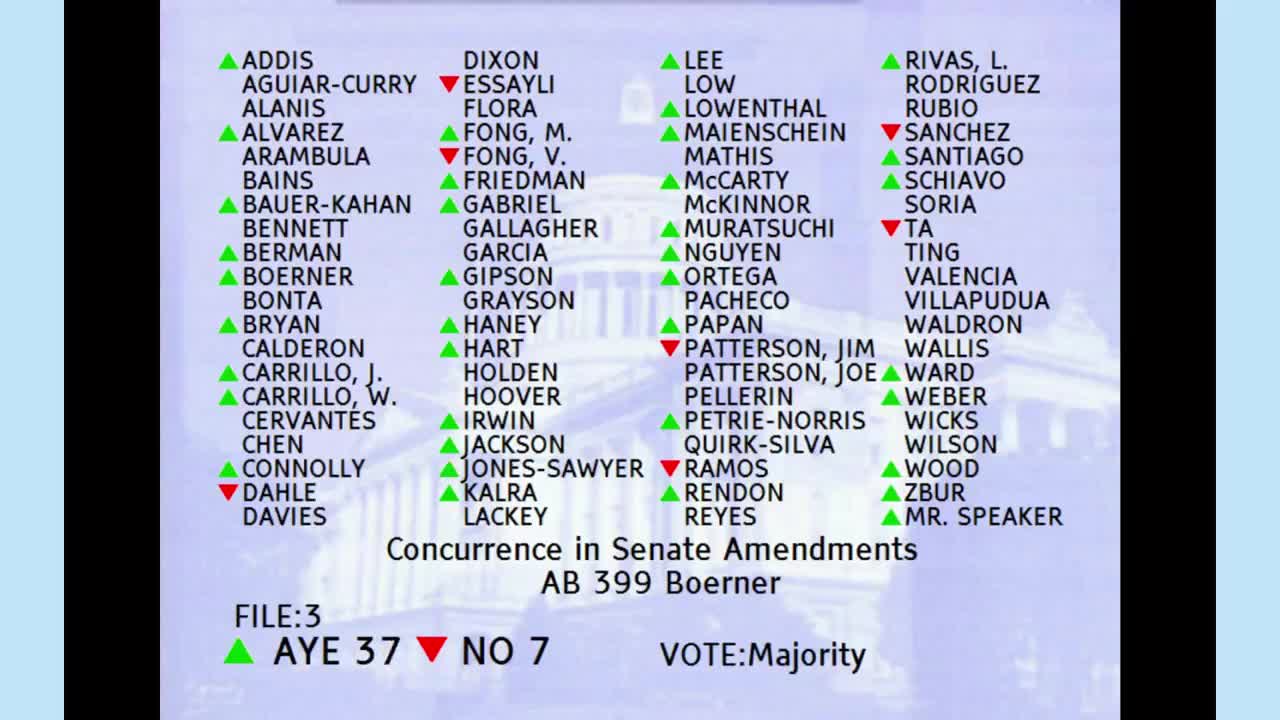 41SEC
Assembly Floor
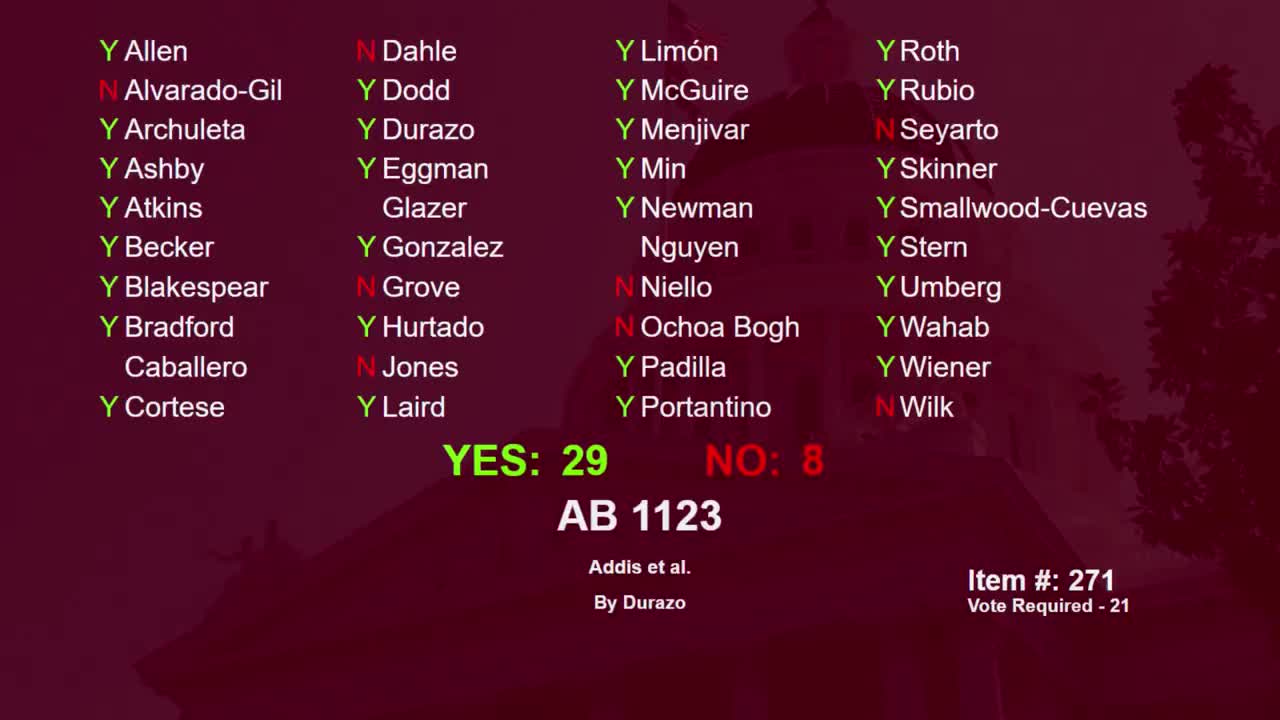 3MIN
Senate Floor
 1MIN
Senate Standing Committee on Appropriations
 9MIN
Senate Standing Committee on Education
 1MIN
Assembly Floor
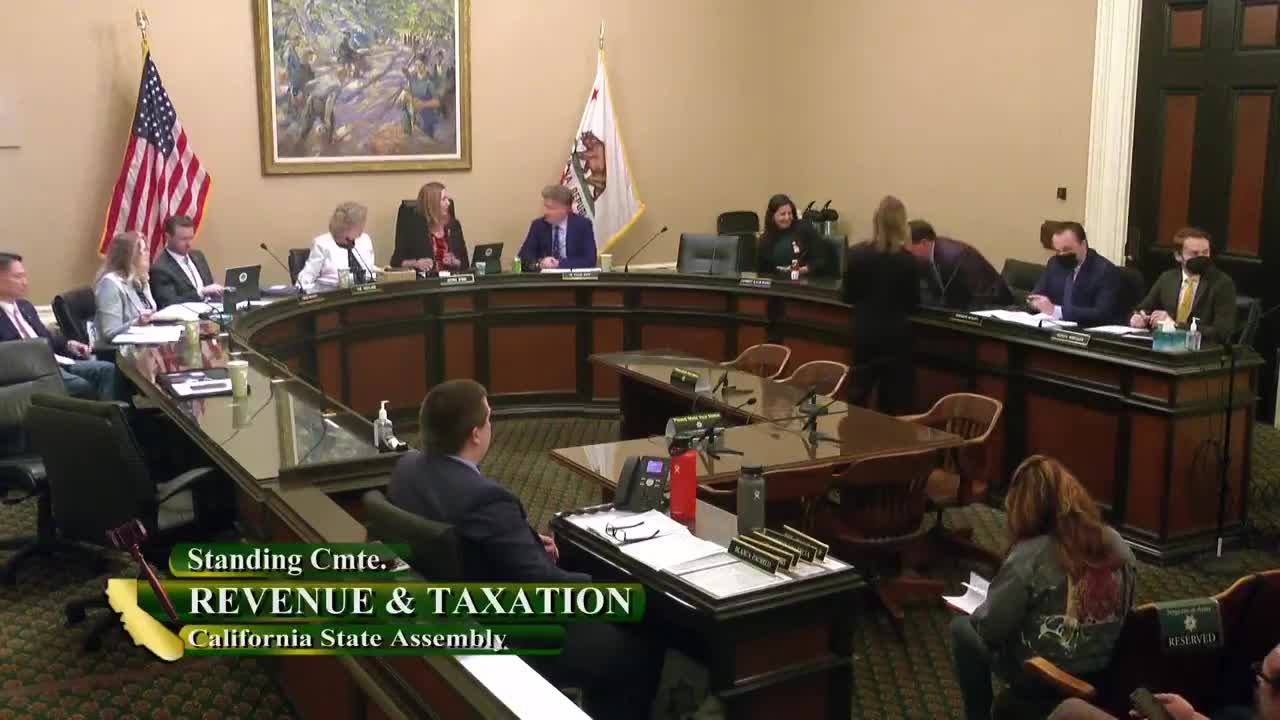 8MIN
Assembly Standing Committee on Revenue and Taxation
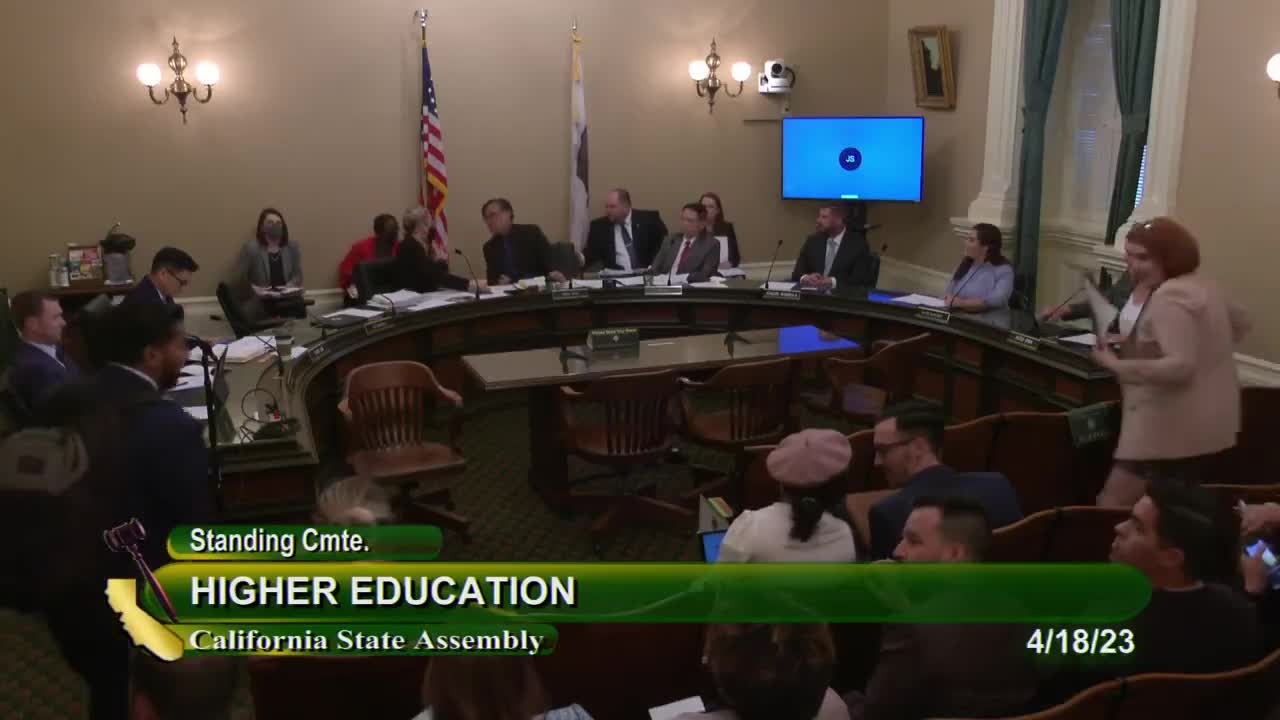 14MIN
Assembly Standing Committee on Higher Education
Bill Author
Bill Co-Author(s):