AB 1414: Civil actions: consumer debt.
- Session Year: 2023-2024
- House: Assembly
- Latest Version Date: 2023-10-10
Current Status:
Passed
(2023-10-10: Chaptered by Secretary of State - Chapter 688, Statutes of 2023.)
Introduced
In Committee
First Chamber
In Committee
Second Chamber
Enacted
Existing law prescribes periods for commencement of various actions. Among others, an action upon book account must be commenced within 4 years of the date of the last item on the account, as specified. Existing law defines book account for these purposes as a detailed statement constituting the principal record of transactions between a debtor and a creditor.
This bill would exclude consumer debt from the definition of book account. The bill would define consumer debt to mean any obligation or alleged obligation, incurred on or after July 1, 2024, of a consumer to pay money arising out of a transaction in which the money, property, insurance, or services that are the subject of the transaction are primarily for personal, family, or household purposes and where the obligation to pay appears on the face of a note or written contract.
Existing law permits actions to recover money damages. Under existing case law, courts recognize that common counts may be used to do so as a simplified form of pleading to assert the existence of various forms of monetary indebtedness.
This bill would prohibit the use of common counts, as defined, to recover consumer debt, as defined.
Existing law prescribes periods for commencement of various actions. Among others, an action upon book account must be commenced within 4 years of the date of the last item on the account, as specified. Existing law defines book account for these purposes as a detailed statement constituting the principal record of transactions between a debtor and a creditor.
This bill would exclude consumer debt from the definition of book account. The bill would define consumer debt to mean any obligation or alleged obligation, incurred on or after July 1, 2024, of a consumer to pay money arising out of a transaction in which the money, property, insurance, or services that are the subject of the transaction are primarily for personal, family, or household purposes and where the obligation to pay appears on the face of a note or written contract.
Existing law permits actions to recover money damages. Under existing case law, courts recognize that common counts may be used to do so as a simplified form of pleading to assert the existence of various forms of monetary indebtedness.
This bill would prohibit the use of common counts, as defined, to recover consumer debt, as defined.
Existing law prescribes periods for commencement of various actions. Among others, an action upon book account must be commenced within 4 years of the date of the last item on the account, as specified. Existing law defines book account for these purposes as a detailed statement constituting the principal record of transactions between a debtor and a creditor.
This bill would exclude consumer debt from the definition of book account. The bill would require a creditor in an action alleging a book account to have in the creditors possession records of all debits and credits forming each and every transaction used to determine the amount alleged to be due if the obligation, incurred on or after January 1, 2024, is not initially payable on the face of a note or contract. The bill would define consumer debt to mean any obligation or alleged obligation, incurred on or after January July 1, 2024, of a consumer to pay money arising out of a transaction in which the money, property, insurance, or services that are the subject of the transaction are primarily for personal, family, or household purposes and that is initially payable where the obligation to pay appears on the face of a note or written contract.
Existing law permits actions to recover money damages. Under existing case law, courts recognize that common counts may be used to do so as a simplified form of pleading to assert the existence of various forms of monetary indebtedness.
This bill would prohibit the use of common counts, as defined, to recover consumer debt, as defined.
Existing law prescribes periods for commencement of various actions. Among others, an action upon book account must be commenced within 4 years of the date of the last item on the account, as specified. Existing law defines book account for these purposes as a detailed statement constituting the principal record of transactions between a debtor and a creditor.
This bill would exclude consumer debt from the definition of book account. The bill would require a creditor in an action alleging a book account to have in the creditors possession records of all debits and credits forming each and every transaction used to determine the amount alleged to be due if the obligation, incurred on or after January 1, 2024, is not initially payable on the face of a note or contract. The bill would define consumer debt to mean any obligation or alleged obligation, incurred on or after January 1, 2024, of a consumer to pay money arising out of a transaction in which the money, property, insurance, or services that are the subject of the transaction are primarily for personal, family, or household purposes and that is initially payable on the face of a note or contract.
Existing law permits actions to recover money damages. Under existing case law, courts recognize that common counts may be used to do so as a simplified form of pleading to assert the existence of various forms of monetary indebtedness.
This bill would prohibit the use of common counts, as defined, to recover consumer debt, as defined.
Existing law prescribes periods for commencement of various actions. Among others, an action upon book account must be commenced within 4 years of the date of the last item on the account, as specified. Existing law defines book account for these purposes as a detailed statement constituting the principal record of transactions between a debtor and a creditor.
This bill would exclude consumer debt from the definition of book account. The bill would require a creditor in an action alleging a book account to have in the creditors possession records of all debits and credits forming each and every transaction used to determine the amount alleged to be due if the obligation, incurred on or after January 1, 2024, is not initially payable on the face of a note or contract. The bill would define consumer debt to mean any obligation or alleged obligation obligation, incurred on or after January 1, 2024, of a consumer to pay money arising out of a transaction in which the money, property, insurance, or services that are the subject of the transaction are primarily for personal, family, or household purposes and that is initially payable on the face of a note or contract.
Existing law permits actions to recover money damages. Under existing case law, courts recognize that common counts may be used to do so as a simplified form of pleading to assert the existence of various forms of monetary indebtedness.
This bill would prohibit the use of common counts, as defined, to recover consumer debt, as defined.
Existing law prescribes periods for commencement of various actions. Among others, an action upon book account must be commenced within 4 years of the date of the last item on the account, as specified. Existing law defines book account for these purposes as a detailed statement constituting the principal record of transactions between a debtor and a creditor.
This bill would exclude consumer credit accounts debt from the definition of book account. The bill would define consumer debt to mean any obligation or alleged obligation of a consumer to pay money arising out of a transaction in which the money, property, insurance, or services that are the subject of the transaction are primarily for personal, family, or household purposes and that is initially payable on the face of a note or contract.
Existing law permits actions to recover money damages. Under existing case law, courts recognize that common counts may be used to do so as a simplified form of pleading to assert the existence of various forms of monetary indebtedness.
This bill would prohibit the use of common counts, as defined, to recover consumer debt. debt, as defined.
Existing law prescribes periods for commencement of various actions. Among others, an action upon book account must be commenced within 4 years of the date of the last item on the account, as specified. Existing law defines book account for these purposes as a detailed statement constituting the principal record of transactions between a debtor and a creditor.
This bill would exclude consumer credit accounts from the definition of book account.
Existing law permits actions to recover money damages. Under existing case law, courts recognize that common counts may be used to do so as a simplified form of pleading to assert the existence of various forms of monetary indebtedness.
This bill would prohibit the use of common counts, as defined, to recover consumer debt.
(a)The term book account means a detailed statement which constitutes the principal record of one or more transactions between a debtor and a creditor arising out of a contract or some fiduciary relation, and shows the debits and credits in connection therewith, and against whom and in favor of whom entries are made, is entered in the regular course of business as conducted by such creditor or fiduciary, and is kept in a reasonably permanent form and manner and is (1) in a bound book, or (2) on a sheet or sheets fastened in a book or to backing but detachable therefrom, or (3) on a card or cards of a permanent character, or is kept in any other reasonably permanent form and manner. A book account does not include consumer debt.
(b)For purposes of this section, consumer debt means any obligation or alleged obligation, incurred on or after July 1, 2024, of a consumer to pay money arising out of a transaction in which the money, property, insurance, or services that are the subject of the transaction are primarily for personal, family, or household purposes and where the obligation to pay appears on the face of a note or in a written contract.
SEC. 2.Section 425.30 is added to the Code of Civil Procedure, to read:425.30.(a)In an action for collection of consumer debt, common counts may not be used. For purposes of this section, a common count includes, but is not limited to, a claim for recovery of any of the following:
(1)An open book account for money due.
(2)An account stated in writing by and between plaintiff and defendant in which it was agreed that defendant was indebted to plaintiff.
(3)Money had and received by defendant for the use and benefit of plaintiff.
(4)Work, labor, services, and materials rendered at the special instance and request of defendant and for which defendant promised to pay plaintiff.
(5)Goods, wares, and merchandise sold and delivered to defendant and for which defendant promised to pay plaintiff.
(6)Money lent by plaintiff to defendant at defendants request.
(7)Money paid out, laid out, and expended to or for defendant at defendants special instance and request.
(b)For purposes of this section, consumer debt means any obligation or alleged obligation, incurred on or after July 1, 2024, of a consumer to pay money arising out of a transaction in which the money, property, insurance, or services that are the subject of the transaction are primarily for personal, family, or household purposes and where the obligation to pay appears on the face of a note or in a written contract.
(c)In an action under this section for the collection of consumer debt brought by a debt buyer, as defined in Section 1788.50 of the Civil Code, the debt buyer shall also comply with Section 1788.58 of the Civil Code and the remaining provisions of Title 1.6C.5 (commencing with Section 1788.50) of Part 4 of Division 3 of the Civil Code.
(a)The term book account means a detailed statement which constitutes the principal record of one or more transactions between a debtor and a creditor arising out of a contract or some fiduciary relation, and shows the debits and credits in connection therewith, and against whom and in favor of whom entries are made, is entered in the regular course of business as conducted by such creditor or fiduciary, and is kept in a reasonably permanent form and manner and is (1) in a bound book, or (2) on a sheet or sheets fastened in a book or to backing but detachable therefrom, or (3) on a card or cards of a permanent character, or is kept in any other reasonably permanent form and manner. A book account does not include consumer debt.
(b)For purposes of this section, consumer debt means any obligation or alleged obligation, incurred on or after July 1, 2024, of a consumer to pay money arising out of a transaction in which the money, property, insurance, or services that are the subject of the transaction are primarily for personal, family, or household purposes and where the obligation to pay appears on the face of a note or in a written contract.
SEC. 2.Section 425.30 is added to the Code of Civil Procedure, to read:425.30.(a)In an action for collection of consumer debt, common counts may not be used. For purposes of this section, a common count includes, but is not limited to, a claim for recovery of any of the following:
(1)An open book account for money due.
(2)An account stated in writing by and between plaintiff and defendant in which it was agreed that defendant was indebted to plaintiff.
(3)Money had and received by defendant for the use and benefit of plaintiff.
(4)Work, labor, services, and materials rendered at the special instance and request of defendant and for which defendant promised to pay plaintiff.
(5)Goods, wares, and merchandise sold and delivered to defendant and for which defendant promised to pay plaintiff.
(6)Money lent by plaintiff to defendant at defendants request.
(7)Money paid out, laid out, and expended to or for defendant at defendants special instance and request.
(b)For purposes of this section, consumer debt means any obligation or alleged obligation, incurred on or after July 1, 2024, of a consumer to pay money arising out of a transaction in which the money, property, insurance, or services that are the subject of the transaction are primarily for personal, family, or household purposes and where the obligation to pay appears on the face of a note or in a written contract.
(c)In an action under this section for the collection of consumer debt brought by a debt buyer, as defined in Section 1788.50 of the Civil Code, the debt buyer shall also comply with Section 1788.58 of the Civil Code and the remaining provisions of Title 1.6C.5 (commencing with Section 1788.50) of Part 4 of Division 3 of the Civil Code.
(a)The term book account means a detailed statement which constitutes the principal record of one or more transactions between a debtor and a creditor arising out of a contract or some fiduciary relation, and shows the debits and credits in connection therewith, and against whom and in favor of whom entries are made, is entered in the regular course of business as conducted by such creditor or fiduciary, and is kept in a reasonably permanent form and manner and is (1) in a bound book, or (2) on a sheet or sheets fastened in a book or to backing but detachable therefrom, or (3) on a card or cards of a permanent character, or is kept in any other reasonably permanent form and manner. The term A book account does not include consumer debt. If an obligation incurred on or after January 1, 2024, is not initially payable on the face of a note or contract, a creditor alleging a book account shall have in the creditors possession records of all debits and credits forming each and every transaction used to determine the amount alleged to be due.
(b)For purposes of this section, consumer debt means any obligation or alleged obligation, incurred on or after January July 1, 2024, of a consumer to pay money arising out of a transaction in which the money, property, insurance, or services that are the subject of the transaction are primarily for personal, family, or household purposes and that is initially payable where the obligation to pay appears on the face of a note or in a written contract.
SEC. 2.Section 425.30 is added to the Code of Civil Procedure, to read:425.30.(a)In an action for collection of consumer debt, common counts may not be used. For purposes of this section, a common count includes, but is not limited to, a claim for recovery of any of the following:
(1)An open book account for money due.
(2)An account stated in writing by and between plaintiff and defendant in which it was agreed that defendant was indebted to plaintiff.
(3)Money had and received by defendant for the use and benefit of plaintiff.
(4)Work, labor, services, and materials rendered at the special instance and request of defendant and for which defendant promised to pay plaintiff.
(5)Goods, wares, and merchandise sold and delivered to defendant and for which defendant promised to pay plaintiff.
(6)Money lent by plaintiff to defendant at defendants request.
(7)Money paid out, laid out, and expended to or for defendant at defendants special instance and request.
(b)For purposes of this section, consumer debt means any obligation or alleged obligation, incurred on or after January July 1, 2024, of a consumer to pay money arising out of a transaction in which the money, property, insurance, or services that are the subject of the transaction are primarily for personal, family, or household purposes and that is initially payable where the obligation to pay appears on the face of a note or in a written contract.
(c)In an action under this section for the collection of consumer debt brought by a debt buyer, as defined in Section 1788.50 of the Civil Code, the debt buyer shall also comply with Section 1788.58 of the Civil Code and the remaining provisions of Title 1.6C.5 (commencing with Section 1788.50) of Part 4 of Division 3 of the Civil Code.
(a)The term book account means a detailed statement which constitutes the principal record of one or more transactions between a debtor and a creditor arising out of a contract or some fiduciary relation, and shows the debits and credits in connection therewith, and against whom and in favor of whom entries are made, is entered in the regular course of business as conducted by such creditor or fiduciary, and is kept in a reasonably permanent form and manner and is (1) in a bound book, or (2) on a sheet or sheets fastened in a book or to backing but detachable therefrom, or (3) on a card or cards of a permanent character, or is kept in any other reasonably permanent form and manner. The term book account does not include consumer debt. If an obligation incurred on or after January 1, 2024, is not initially payable on the face of a note or contract, a creditor alleging a book account shall have in the creditors possession records of all debits and credits forming each and every transaction used to determine the amount alleged to be due.
(b)For purposes of this section, consumer debt means any obligation or alleged obligation, incurred on or after January 1, 2024, of a consumer to pay money arising out of a transaction in which the money, property, insurance, or services that are the subject of the transaction are primarily for personal, family, or household purposes and that is initially payable on the face of a note or contract.
SEC. 2.Section 425.30 is added to the Code of Civil Procedure, to read:425.30.(a)In an action for collection of consumer debt, common counts may not be used. For purposes of this section, a common count includes, but is not limited to, a claim for recovery of any of the following:
(1)An open book account for money due.
(2)An account stated in writing by and between plaintiff and defendant in which it was agreed that defendant was indebted to plaintiff.
(3)Money had and received by defendant for the use and benefit of plaintiff.
(4)Work, labor, services, and materials rendered at the special instance and request of defendant and for which defendant promised to pay plaintiff.
(5)Goods, wares, and merchandise sold and delivered to defendant and for which defendant promised to pay plaintiff.
(6)Money lent to by plaintiff to defendant and at defendants request.
(7)Money paid out, laid out, and expended to or for defendant at defendants special instance and request.
(b)For purposes of this section, consumer debt means any obligation or alleged obligation, incurred on or after January 1, 2024, of a consumer to pay money arising out of a transaction in which the money, property, insurance, or services that are the subject of the transaction are primarily for personal, family, or household purposes and that is initially payable on the face of a note or contract.
(a)The term book account means a detailed statement which constitutes the principal record of one or more transactions between a debtor and a creditor arising out of a contract or some fiduciary relation, and shows the debits and credits in connection therewith, and against whom and in favor of whom entries are made, is entered in the regular course of business as conducted by such creditor or fiduciary, and is kept in a reasonably permanent form and manner and is (1) in a bound book, or (2) on a sheet or sheets fastened in a book or to backing but detachable therefrom, or (3) on a card or cards of a permanent character, or is kept in any other reasonably permanent form and manner. The term book account does not include consumer debt. If an obligation incurred on or after January 1, 2024, is not initially payable on the face of a note or contract, a creditor alleging a book account shall have in the creditors possession records of all debits and credits forming each and every transaction used to determine the amount alleged to be due.
(b)For purposes of this section, consumer debt means any obligation or alleged obligation obligation, incurred on or after January 1, 2024, of a consumer to pay money arising out of a transaction in which the money, property, insurance, or services that are the subject of the transaction are primarily for personal, family, or household purposes and that is initially payable on the face of a note or contract.
SEC. 2.Section 425.30 is added to the Code of Civil Procedure, to read:425.30.(a)In an action for collection of consumer debt, common counts may not be used. For purposes of this section, a common count includes, but is not limited to, a claim for recovery of any of the following:
(1)An open book account for money due.
(2)An account stated in writing by and between plaintiff and defendant in which it was agreed that defendant was indebted to plaintiff.
(3)Money had and received by defendant for the use and benefit of plaintiff.
(4)Work, labor, services, and materials rendered at the special instance and request of defendant and for which defendant promised to pay plaintiff.
(5)Goods, wares, and merchandise sold and delivered to defendant and for which defendant promised to pay plaintiff.
(6)Money lent to plaintiff to defendant and defendants request.
(7)Money paid out, laid out, and expended to or for defendant at defendants special instance and request.
(b)For purposes of this section, consumer debt means any obligation or alleged obligation obligation, incurred on or after January 1, 2024, of a consumer to pay money arising out of a transaction in which the money, property, insurance, or services that are the subject of the transaction are primarily for personal, family, or household purposes and that is initially payable on the face of a note or contract.
(a)The term book account means a detailed statement which constitutes the principal record of one or more transactions between a debtor and a creditor arising out of a contract or some fiduciary relation, and shows the debits and credits in connection therewith, and against whom and in favor of whom entries are made, is entered in the regular course of business as conducted by such creditor or fiduciary, and is kept in a reasonably permanent form and manner and is (1) in a bound book, or (2) on a sheet or sheets fastened in a book or to backing but detachable therefrom, or (3) on a card or cards of a permanent character, or is kept in any other reasonably permanent form and manner. The term book account does not include consumer credit accounts. debt.
(b)For purposes of this section, consumer debt means any obligation or alleged obligation of a consumer to pay money arising out of a transaction in which the money, property, insurance, or services that are the subject of the transaction are primarily for personal, family, or household purposes and that is initially payable on the face of a note or contract.
SEC. 2.Section 425.30 is added to the Code of Civil Procedure, to read:425.30.(a)In an action for collection of consumer debt, common counts may not be used. For the purpose purposes of this section, a common count includes, but is not limited to, a claim for recovery of any of the following:
(a)(1)An open book account for money due.
(b)(2)An account stated in writing by and between plaintiff and defendant in which it was agreed that defendant was indebted to plaintiff.
(c)(3)Money had and received by defendant for the use and benefit of plaintiff.
(d)(4)Work, labor, services, and materials rendered at the special instance and request of defendant and for which defendant promised to pay plaintiff.
(e)(5)Goods, wares, and merchandise sold and delivered to defendant and for which defendant promised to pay plaintiff.
(f)(6)Money lent to plaintiff to defendant and defendants request.
(g)(7)Money paid out, laid out, and expended to or for defendant at defendants special instance and request.
(b)For purposes of this section, consumer debt means any obligation or alleged obligation of a consumer to pay money arising out of a transaction in which the money, property, insurance, or services that are the subject of the transaction are primarily for personal, family, or household purposes and that is initially payable on the face of a note or contract.
The term book account means a detailed statement which constitutes the principal record of one or more transactions between a debtor and a creditor arising out of a contract or some fiduciary relation, and shows the debits and credits in connection therewith, and against whom and in favor of whom entries are made, is entered in the regular course of business as conducted by such creditor or fiduciary, and is kept in a reasonably permanent form and manner and is (1) in a bound book, or (2) on a sheet or sheets fastened in a book or to backing but detachable therefrom, or (3) on a card or cards of a permanent character, or is kept in any other reasonably permanent form and manner. The term book account does not include consumer credit accounts.
SEC. 2.Section 425.30 is added to the Code of Civil Procedure, to read:425.30.In an action for collection of consumer debt, common counts may not be used. For the purpose of this section, a common count includes, but is not limited to, a claim for recovery of any of the following:
(a)An open book account for money due.
(b)An account stated in writing by and between plaintiff and defendant in which it was agreed that defendant was indebted to plaintiff.
(c)Money had and received by defendant for the use and benefit of plaintiff.
(d)Work, labor, services, and materials rendered at the special instance and request of defendant and for which defendant promised to pay plaintiff.
(e)Goods, wares, and merchandise sold and delivered to defendant and for which defendant promised to pay plaintiff.
(f)Money lent to plaintiff to defendant and defendants request.
(g)Money paid out, laid out, and expended to or for defendant at defendants special instance and request.
|
Date
|
Status
|
|---|---|
| Oct 10, 2023 | Chaptered by Secretary of State - Chapter 688, Statutes of 2023. |
| Oct 10, 2023 | Approved by the Governor. |
| Sep 21, 2023 | Enrolled and presented to the Governor at 3:30 p.m. |
| Sep 13, 2023 | Senate amendments concurred in. To Engrossing and Enrolling. (Ayes 56. Noes 18. Page 3412.). |
| Sep 12, 2023 | In Assembly. Concurrence in Senate amendments pending. |
| Sep 12, 2023 | Read third time. Passed. Ordered to the Assembly. (Ayes 30. Noes 7. Page 2643.). |
| Sep 11, 2023 | Read second time. Ordered to third reading. |
| Sep 8, 2023 | Read third time and amended. Ordered to second reading. |
| Jul 10, 2023 | Read second time and amended. Ordered to third reading. |
| Jul 6, 2023 | From committee: Amend, and do pass as amended. (Ayes 9. Noes 2.) (July 6). |
| Jun 14, 2023 | Referred to Com. on JUD. |
| Jun 1, 2023 | In Senate. Read first time. To Com. on RLS. for assignment. |
| May 31, 2023 | Read third time. Passed. Ordered to the Senate. (Ayes 53. Noes 18. Page 1952.) |
| Apr 27, 2023 | Read second time. Ordered to third reading. |
| Apr 26, 2023 | Read second time and amended. Ordered returned to second reading. |
| Apr 25, 2023 | From committee: Amend, and do pass as amended. (Ayes 9. Noes 1.) (April 24). |
| Apr 17, 2023 | Re-referred to Com. on B. & F. |
| Apr 12, 2023 | Read second time and amended. |
| Apr 11, 2023 | From committee: Amend, and do pass as amended and re-refer to Com. on B. & F. (Ayes 8. Noes 3.) (April 11). |
| Mar 16, 2023 | Referred to Coms. on JUD. and B. & F. |
| Feb 18, 2023 | From printer. May be heard in committee March 20. |
| Feb 17, 2023 | Read first time. To print. |
|
Date
|
Description
|
Location
|
Votes
|
|
|---|---|---|---|---|
| Sep 13, 2023 | AB 1414 Kalra Concurrence in Senate Amendments | Assembly Floor |
Passed |
|
| Sep 12, 2023 | Assembly 3rd Reading AB1414 Kalra By Umberg | Senate Floor |
Passed |
|
| Jul 6, 2023 | Do pass as amended | Senate Standing Committee on Judiciary |
Passed |
|
| May 31, 2023 | AB 1414 Kalra Assembly Third Reading | Assembly Floor |
Passed |
|
| Apr 24, 2023 | Do pass as amended. | Assembly Standing Committee on Banking and Finance |
Passed |
|
| Apr 11, 2023 | Do pass as amended and be re-referred to the Committee on [Banking and Finance] | Assembly Standing Committee on Judiciary |
Passed |
This list shows positions taken on this bill by organizations on the date displayed, which is linked to the original source.
Positions by individuals are not included.
|
Organization
|
Position
|
Date
|
|---|---|---|
| Bay Area Legal Aid | ** Support | |
| Bet Tzedek Legal Services | ** Support | |
| California Association Of Collectors | ** Against | |
| California Bankers Association | ** Against | |
| California Chamber Of Commerce | ** Against | |
| California Civil Liberties Advocacy | ** Support | |
| California Community Banking Network | ** Against | |
| California Creditors Bar Association | ** Against | |
| California Credit Union League | ** Against | |
| California Financial Services Association | ** Against | |
| California Low-Income Consumer Coalition | ** Support | |
| California Nurses Association | ** Support | |
| Centro Legal de la Raza | ** Support | |
| Community Legal Services in East Palo Alto | ** Support | |
| Elder Law & Advocacy | ** Support | |
| Katharine & George Alexander Community Law Center | ** Support | |
| Legal Aid of Marin | ** Support | |
| Legal Aid Society of San Bernardino | ** Support | |
| Legal Aid Society of San Diego | ** Support | |
| Legal Assistance for Seniors | ** Support | |
| National Consumer Law Center | ** Support | |
| Neighborhood Legal Services of Los Angeles County | ** Support | |
| OneJustice | ** Support | |
| Open Door Legal | ** Support | |
| PRA Group | ** Against | |
| Public Counsel | ** Support | |
| Public Law Center | ** Support | |
| Riverside Legal Aid | ** Support | |
| Santa Clara University, Alexander Community Law Center | ** Support | |
| Senior Advocacy Network-senior Law Project | ** Support | |
| Senior Citizens Legal Services | ** Support | |
| Watsonville Law Center | ** Support | |
| western center on law and poverty | ** Support |
SENATE RULES COMMITTEE Office of Senate Floor Analyses (916) 651-1520 Fax: (916) 327-4478 | AB 1414 |
THIRD READING
Bill No: AB 1414
Author: Kalra (D)
Amended: 9/8/23 in Senate
Vote: 21
SENATE JUDICIARY COMMITTEE: 9-2, 7/6/23
AYES: Umberg, Allen, Ashby, Caballero, Durazo, Laird, Min, Stern, Wiener
NOES: Wilk, Niello
ASSEMBLY FLOOR: 53-18, 5/31/23 - See last page for vote
SUBJECT: Civil actions: consumer debt
SOURCE: California Low-Income Consumer Coalition
Public Counsel
DIGEST:
This bill prohibits the use of common counts in actions for collection of consumer debt. This bill excludes consumer debt from the definition of “book account.”
Senate Floor Amendments of 9/8/23 remove language that applies to obligations not initially payable on the face of a note or contract, clarify application to debt buyers, and delay implementation to July 1, 2024.
ANALYSIS:
Existing law:
- Establishes the Rosenthal Act with the purpose to prohibit debt collectors from engaging in unfair or deceptive acts or practices in the collection of consumer debts and to require debtors to act fairly in entering into and honoring such debts. (Civ. Code § 1788 et seq.)
- Defines, for purposes of the Rosenthal Act, “debt collection” as any act or practice in connection with the collection of consumer debts. (Civ. Code § 1788.2(b).) Defines “debt collector” as any person who, in the ordinary course of business, regularly, on behalf of that person or others, engages in debt collection; this includes any person who composes and sells, or offers to compose and sell, forms, letters, and other collection media used or intended to be used for debt collection. (Civ. Code § 1788.2(c).)
- Defines “consumer debt” to mean money, property, or their equivalent, due or owing or alleged to be due or owing from a natural person by reason of a consumer credit transaction. (Civ. Code § 1788.2(e), (f).)
- Establishes the Fair Debt Buying Practices Act (FDBPA), which defines “debt buyer” as a person or entity that is regularly engaged in the business of purchasing charged-off consumer debt for collection purposes, whether it collects the debt itself, hires a third party for collection, or hires an attorney-at-law for collection litigation. (Civ. Code § 1788.50 et seq.) Defines “Charged-off consumer debt” to mean a consumer debt that has been removed from a creditor’s books as an asset and treated as a loss or expense. (Civ. Code § 1788.50.)
- Prohibits, under the FDBPA, a debt buyer from making any written statement to a debtor in an attempt to collect a consumer debt unless the debt buyer possesses specified information:
- That the debt buyer is the sole owner of the debt at issue or has authority to assert the rights of all owners of the debt;
- The debt balance at charge off and an explanation of the amount, nature, and reason for all post-charge-off interest and fees, if any, imposed by the charge-off creditor or any subsequent purchasers of the debt. This paragraph shall not be deemed to require a specific itemization, but the explanation shall identify separately the charge-off balance, the total of any post-charge-off interest, and the total of any post-charge-off fees;
- The date of default or the date of the last payment;
- The name and an address of the charge-off creditor at the time of charge off, and the charge-off creditor’s account number associated with the debt. The charge-off creditor’s name and address shall be in sufficient form so as to reasonably identify the charge-off creditor;
- The name and last known address of the debtor as they appeared in the charge-off creditor’s records prior to the sale of the debt. If the debt was sold prior to January 1, 2014, the name and last known address of the debtor as they appeared in the debt owner’s records on December 31, 2013, shall be sufficient;
- The names and addresses of all persons or entities that purchased the debt after charge off, including the debt buyer making the written statement. The names and addresses shall be in sufficient form so as to reasonably identify each such purchaser; and
- The California license number of the debt buyer. (Civ. Code § 1788.52(a).)
- Requires a debt buyer to provide this information or documents to the debtor without charge within 15 calendar days of receipt of a debtor’s written request for information regarding the debt or proof of the debt. (Civ. Code § 1788.52.)
- Establishes, pursuant to federal law, the Fair Debt Collection Practices Act (FDCPA), to eliminate abusive debt collection practices by debt collectors, to insure that those debt collectors who refrain from using abusive debt collection practices are not competitively disadvantaged, and to promote consistent State action to protect consumers against debt collection abuses. (15 U.S.C. § 1692.)
- Provides that the term “book account” means a detailed statement which constitutes the principal record of one or more transactions between a debtor and a creditor arising out of a contract or some fiduciary relation, and shows the debits and credits in connection therewith, and against whom and in favor of whom entries are made, is entered in the regular course of business as conducted by such creditor or fiduciary, and is kept in a reasonably permanent form and manner and is (a) in a bound book, or (b) on a sheet or sheets fastened in a book or to backing but detachable therefrom, or (c) on a card or cards of a permanent character, or is kept in any other reasonably permanent form and manner. (Code Civ. Proc. § 337a.)
This bill:
- Provides that a “book account” does not include consumer debt.
- Prohibits the use of common counts in an action for collection of consumer debt. Provides that a “common count” includes a claim for recovery of any of the following:
- An open book account for money due.
- An account stated in writing by and between plaintiff and defendant in which it was agreed that defendant was indebted to plaintiff.
- Money had and received by defendant for the use and benefit of plaintiff.
- Work, labor, services, and materials rendered at the special instance and request of defendant and for which defendant promised to pay plaintiff.
- Goods, wares, and merchandise sold and delivered to defendant and for which defendant promised to pay plaintiff.
- Money lent by plaintiff to defendant at defendant’s request.
- Money paid out, laid out, and expended to or for defendant at defendant’s special instance and request.
- Clarifies that in an action under this section for the collection of consumer debt brought by a debt buyer, as defined, the debt buyer shall also comply with the Fair Debt Buying Practices Act.
- Defines “consumer debt” to mean any obligation or alleged obligation, incurred on or after July 1, 2024, of a consumer to pay money arising out of a transaction in which the money, property, insurance, or services that are the subject of the transaction are primarily for personal, family, or household purposes and where the obligation to pay appears on the face of a note or in a written contract.
Background
Federal and state laws place various documentation and notification requirements and protections for borrowers related to the practices of debt collection and debt purchasing. For instance, the FDCPA prohibits debt collectors from engaging in abusive, unfair, or deceptive practices to collect debts. Under the FDCPA, a debt collector must send a debtor written validation letters containing information such as the amount of debt and the name of the creditor to whom the debt is owed. The California Legislature has also seen borrower protections as vitally important. The Rosenthal Act places reasonable limits on the kinds of activities that creditors and debt collectors can employ when collecting payments. The FDBPA provides protections to consumers whose debts were sold to a debt buyer.
Concerns have arisen that despite these laws, creditors, debt buyers, and debt collectors are using procedural mechanisms in state court to subvert the protections provided by those laws. This bill prohibits the use of common counts in actions for the collection of consumer debt and provides that a “book account” does not include consumer debt.
The only change to the law where the debt obligation does not appear on the face of a note or contract was removed from the bill in the most recent round of amendments. Therefore, the bill would not impact debt being sought by those operating without a contract, such as gardeners or drycleaners. This bill is sponsored by the California Low-Income Consumer Coalition and Public Counsel. It is supported by the California Nurses Association and a coalition of legal services entities, including the Western Center on Law and Poverty. The bill is opposed by the California Association of Collectors and the PRA Group.
[NOTE: A more thorough discussion of this bill is found in the Senate Judiciary Committee analysis, which is incorporated herein by reference.]
Comments
Reforming the use of common counts and book accounts
This bill seeks to address problematic practices in the consumer debt collection industry by reforming the use of common counts and limiting the use of book accounts in this context.
This bill prohibits the use of common counts in actions for collection of consumer debt. Consumer debt is defined to include any obligation or alleged obligation of a consumer to pay money arising out of a transaction in which the money, property, insurance, or services that are the subject of the transaction are primarily for personal, family, or household purposes. This applies prospectively only to debt incurred on or after July 1, 2024.
Consumer debt only includes specified debts where the obligation to pay appears on the face of a note or in a written contract. Therefore, common counts remain available if there is no such agreement at the outset of the relevant financial relationship.
This bill also excludes consumer debt from what can be considered a “book account.” These changes bolster the documentation requirements for consumer debt collection and apply equally to original creditors, debt buyers, and debt collectors.
According to the author:
The COVID-19 pandemic has exacerbated financial hardships for many low-income individuals resulting in missing bill payments with stacked on late fees that inflate debt burdens and increase their exposure to debt buyers. These debt collectors then bring tens of thousands of lawsuits based on outdated causes of action called “common counts” such as “account stated” and “open book account” that can lead to wages and bank accounts being seized without the plaintiff creditor ever having to produce a contract in court. Such practices have only further driven people into poverty and have allowed debt buyers to evade modern consumer protection standards.
AB 1414 would protect consumers against predatory debt collection lawsuits by requiring debt collectors to produce and sue on a contract rather than “common counts.” In doing so, this bill simply puts the same burden on debt collectors as any other business.
FISCAL EFFECT: Appropriation: No Fiscal Com.: No Local: No
SUPPORT: (Verified 9/12/23)
California Low-Income Consumer Coalition (co-source)
Public Counsel (co-source)
Bet Tzedek Legal Services
California Civil Liberties Advocacy
California Nurses Association
Centro Legal De LA Raza
Community Legal Services in East Palo Alto
Elder Law & Advocacy
Katharine & George Alexander Community Law Center
Legal Aid of Marin
Legal Aid Society of San Bernardino
Legal Assistance for Seniors
National Consumer Law Center
Open Door Legal
Public Law Center
Riverside Legal Aid
Santa Clara University, Alexander Community Law Center
Watsonville Law Center
Western Center on Law and Poverty
OPPOSITION: (Verified 9/12/23)
California Association of Collectors
California Bankers Association
California Chamber of Commerce
California Community Banking Network
California Credit Union League
California Creditors Bar Association
California Financial Services Association
PRA Group
ARGUMENTS IN SUPPORT: The California Low-Income Consumer Coalition and Public Counsel write:
Current law allows debt collectors to bring lawsuits based on outdated causes of action like “account stated” and “open book account.” These archaic “common counts” allow debt collectors to seize people’s wages and bank accounts – without ever having to prove there was actually a contract for the debt.
Tens of thousands of lawsuits each year are filed using outdated common counts seeking remedies under a contract – a contract that the plaintiff debt collector does not show the court. Both original creditors and debt buyers use these common counts. Original creditors – retailers, credit card companies, service providers – should be able to produce the agreement. Debt buyers – which buy debt for pennies on the dollar – should make sure to obtain it when they purchase the borrower’s file. Common counts are a holdover from a different era. They make debt collection cases, which can cause extreme hardship for consumers, subject to lesser evidence standards than all other lawsuits. They allow evasion of modern consumer protection standards. They give debt collectors special treatment in court.
ARGUMENTS IN OPPOSITION: The California Association of Collectors writes:
This bill is anti-consumer in a variety of ways, is confusing as written and will dramatically hurt small businesses in California who use open book accounts.
Open book accounts are typically used by small businesses to extend credit to customers, patients, and homeowners. Typical professions that extend credit through an open book account are everyone from dentists, doctors, dry cleaners, pool services, gardeners, landscapers, designers etc. They provide a service and bill monthly. This bill would stop their ability to collect on delinquent accounts. The net effect would be to drive them to require payment at the time the service is rendered. How does that help consumers? This bill would create chaos for small businesses.
It appears that the sponsors somehow believe collection of consumer debt should only be based on a written contract. For this unclear goal they would upset the business model of hundreds of thousands of California small businesses and erode the availability of credit.
ASSEMBLY FLOOR: 53-18, 5/31/23
AYES: Addis, Aguiar-Curry, Alvarez, Arambula, Bauer-Kahan, Bennett, Berman, Boerner, Bonta, Bryan, Calderon, Juan Carrillo, Wendy Carrillo, Cervantes, Connolly, Mike Fong, Friedman, Gabriel, Garcia, Gipson, Grayson, Haney, Hart, Holden, Irwin, Jackson, Jones-Sawyer, Kalra, Lee, Low, Lowenthal, Maienschein, McCarty, McKinnor, Ortega, Papan, Pellerin, Petrie-Norris, Quirk-Silva, Reyes, Luz Rivas, Robert Rivas, Santiago, Schiavo, Soria, Ting, Villapudua, Ward, Weber, Wicks, Wilson, Zbur, Rendon
NOES: Alanis, Chen, Megan Dahle, Davies, Dixon, Essayli, Flora, Vince Fong, Gallagher, Hoover, Lackey, Mathis, Jim Patterson, Joe Patterson, Sanchez, Ta, Waldron, Wallis
NO VOTE RECORDED: Bains, Muratsuchi, Stephanie Nguyen, Pacheco, Ramos, Rodriguez, Blanca Rubio, Valencia, Wood
Prepared by: Christian Kurpiewski / JUD. / (916) 651-4113
9/12/23 11:34:48
**** END ****
CONCURRENCE IN SENATE AMENDMENTS
CSA1 Bill Id:AB 1414
Author:(Kalra)
As Amended Ver:September 8, 2023
Majority vote
SUMMARY
Prohibits the use of common counts – and their lesser evidentiary burden – in consumer debt cases where the alleged debt obligation arose from a breach of contract.
Major Provisions
- Clarifies that the term "book account" does not include consumer debt.
- Defines "consumer debt" as any obligation or alleged obligation of a consumer to pay money arising out of a transaction in which the money, property, insurance, or services that are the subject of the transaction are primarily for personal, family, or household purposes and where the obligation to pay appears on the face of a note or written contract.
- Prohibits the use of common counts in an action for collection of consumer debt, as defined.
- Defines "common count" as including a claim for recovery of any of the following:
- An open book account for any money due;
- An account stated in writing by and between plaintiff and defendant in which it was agreed that defendant was indebted to plaintiff;
- Money had and received by defendant for the use and benefit of plaintiff;
- Work, labor, services, and materials rendered at the special instance and request of defendant and for which defendant promised to pay plaintiff;
- Goods, wares, and merchandise sold and delivered to defendant and for which defendant promised to pay plaintiff;
- Money lent to plaintiff to defendant and defendant's request;
- Money paid out, laid out, and expended to or for defendant at defendant's special instance and request.
- Clarifies that any action for the collection of consumer debt brought by a debt buyer is required also to comply with the California Fair Debt Buying Practices Act.
- Clarifies that the prohibitions and requirements in this bill apply only to obligations incurred on or after July 1, 2024.
Senate Amendments
Delay implementation for six months to permit compliance, clarify required compliance with other provisions of the California Fair Debt Buying Practices Act, and make other clarifying changes.
COMMENTS
This bill will address a gap left open by the California Fair Debt Buying Practices Act (CFDBA), which requires debt buyers to document and establish certain key elements about the debt and the debtor before filing a complaint in court. Debt buyers have successfully evaded these requirements by bringing debt collection cases as "common counts" – a holdover from a bygone era that is subjected to a lesser evidentiary standard than breach of contract claims. To avoid this practice, this bill will require all creditors, including original creditors, debt collectors, and debt buyers to sue on a contract, if there was a written contract between the debtor and the creditor that gave rise to the claim.
This bill focuses on strengthening existing law with respect to required documentation to establish proof of debt. This bill prohibits the use of common counts – and their lower evidentiary burden – for cases involving consumer debt, where a contract was entered into. This means that if a credit card company, for example, has entered into a contract with a consumer, and they now allege that the consumer has an outstanding debt, the credit card company must bring a breach of contract claim, and produce the actual contract between the parties, evincing how and when the debt arose. This bill prevents creditors from evading this documentary obligation.
It only applies to obligations incurred on or after July 1, 2024.
Opposition arguments. The opposition's concerns center on two areas: First, the bill as introduced appeared to prohibit the ability of creditors to sue on consumer debt via open book accounts, and the opposition contended that this prohibition would hurt small businesses that rely on open book accounts to extend credit to their customers. Second, a breach of contract pleading and its more complex proof requirement could "exponentiate the number of potential issues" to deal with at trial.
Amendments taken in Judiciary and Banking and Finance Committees attempt to address the first concern by clarifying that a common count can still be filed in instances where no contract was entered into between the parties. Thus, small businesses that regularly extend credit to their customers and bill them monthly, would still be free to bring forward claims based on an open book account.
The second concern raised by the opposition is far less compelling. A breach of contract claim is more complex and requires a higher evidentiary burden – that is a feature, not a bug. The opposition has not raised any policy rationale for permitting creditors to avoid these requirements, where any other Californian who brings a claim based on a breach of contract theory must meet them.
In negotiations concerning this bill, the opposition has expressed that many creditors do not have a practice of retaining their contracts for more than a couple of years, and that the requirement to produce a contract in support of their claims would be onerous. They point to the federal Equal Credit Opportunity Act (ECOA), which requires financial institutions to retain records for only 25 months after the date that a creditor receives an application from the applicant. But this requirement is intended for enforcement purposes – if a creditor is accused of violating the ECOA and does not have these records within the 25 months after the adverse credit decision, then they may be in violation. If a company anticipates or has entered into litigation (such as, for example, suing to collect an outstanding debt), then their evidentiary requirements are much broader. Creditors should not be able to evade these evidentiary requirements by claiming that they are no longer in possession of the original contract. Like any other plaintiff, a creditor must have the records necessary to meet their burden of proving their claim.
In light of arguments that creditors do not have a practice of retaining applications for a period exceeding 25 months, amendments taken in Banking & Finance Committee make the bill prospective, in order to place creditors on notice that their document retention policy should be revised and the retention period extended. Requiring creditors to maintain records to prove their claims – similar to what is required of any other plaintiff – is not overly burdensome, especially in today's digital world. Senate amendments delaying implementation until July 1, 2024 will provide even further time and opportunity for creditors to comply.
According to the Author
The COVID-19 pandemic has exacerbated financial hardships for many low-income individuals resulting in missing bill payments with stacked on late fees that inflate debt burdens and increase their exposure to debt buyers. These debt collectors then bring tens of thousands of lawsuits based on outdated causes of action called "common counts" such as "account stated" and "open book account" that can lead to wages and bank accounts being seized without the plaintiff creditor ever having to produce a contract in court. Such practices have only further driven people into poverty and have allowed debt buyers to evade modern consumer protection standards.
Arguments in Support
Numerous legal aid and services organizations support this measure, such as Bet Tzedek and Centro Legal De La Raza, as well as the National Consumer Law Center and Public Counsel. The bill's co-sponsors, explain the need for this bill:
Debt collectors are making money off the backs of the working poor and people of color despite lacking the most important evidence to prove their claims. Research establishes that debt buyers – the most frequent users of common counts – are more likely to pursue people of color. A 2017 report from the Consumer Financial Protection Bureau established that while 29% of white respondents reported having been contacted about a debt in collection, 44% of people of color – a rate one-and-a-half times greater – reported the same. California should no longer tolerate special, outdated laws that make it easier for debt buyers to disproportionately target and drain the assets of communities of color.
The remedy here is simple: put the same burden on debt collectors as any other business. If collectors want to collect damages resulting from the breach of a contract, they must have the contract. If they cannot produce the contract, they – like everyone else – should not be able to sue on it.
Arguments in Opposition
The California Creditors Bar Association opposes:
AB 1414 seeks to prohibit the use of common counts in consumer debt collection cases and prohibits the use of book account being applied to consumer credit accounts. We believe that the bill's approach is fundamentally misguided and will have far reaching consequences throughout California. While seemingly designed to target the consumer debt collection industry and limit the types of cases being brought against consumers, AB 1414 will present limits to everyday individuals working hard to produce a living. Many businesses do not use a typical contract per say, but instead use work orders or logs to track payments, debits, and credits. For example, a mechanic might use a work order or an estimate to perform a vehicle repair or a co-op store might sell goods on credit while keeping an open book of the account due. These examples are a direct result of this bill's proposed restriction on use of book accounts for consumer debts and we do not believe the recent amendments taken to address these small businesses are adequate to exempting them from the bill's restrictions.
The California Association of Collectors, raises similar concerns:
Open book accounts are typically used by small businesses to extend credit to customers, patients, and homeowners. Typical professions that extend credit through an open book account are everyone from dentists, doctors, dry cleaners, pool services, gardeners, landscapers, designers etc. They provide a service and bill monthly. This bill would stop their ability to collect on delinquent accounts. The net effect would be to drive them to require payment at the time the service is rendered. How does that help consumers? This bill would create chaos for small businesses.
The California Chamber of Commerce likewise opposes:
This measure will pose numerous unintended and detrimental consequences: the proposed change will make it more difficult for creditors to be made whole after lending and will make it more difficult for small businesses to collect. From a creditor standpoint, when collection activities are hampered, the availability of credit necessarily tightens, harming those individuals who typically need credit the most. Further, restricting the collection ability of small businesses, like pool maintenance or gardeners, may put them out of business altogether, which is an undesirable result for business owners and the communities that they serve.
FISCAL COMMENTS
None
VOTES:
ASM JUDICIARY: 8-3-0
YES: Maienschein, Connolly, Haney, Kalra, Pacheco, Papan, Reyes, Robert Rivas
NO: Essayli, Dixon, Sanchez
ASM BANKING AND FINANCE: 9-1-2
YES: Grayson, Bauer-Kahan, Cervantes, Mike Fong, Gabriel, Petrie-Norris, Soria, Wicks, Wilson
NO: Dixon
ABS, ABST OR NV: Chen, Waldron
ASSEMBLY FLOOR: 53-18-9
YES: Addis, Aguiar-Curry, Alvarez, Arambula, Bauer-Kahan, Bennett, Berman, Boerner, Bonta, Bryan, Calderon, Juan Carrillo, Wendy Carrillo, Cervantes, Connolly, Mike Fong, Friedman, Gabriel, Garcia, Gipson, Grayson, Haney, Hart, Holden, Irwin, Jackson, Jones‑Sawyer, Kalra, Lee, Low, Lowenthal, Maienschein, McCarty, McKinnor, Ortega, Papan, Pellerin, Petrie-Norris, Quirk-Silva, Reyes, Luz Rivas, Robert Rivas, Santiago, Schiavo, Soria, Ting, Villapudua, Ward, Weber, Wicks, Wilson, Zbur, Rendon
NO: Alanis, Chen, Megan Dahle, Davies, Dixon, Essayli, Flora, Vince Fong, Gallagher, Hoover, Lackey, Mathis, Jim Patterson, Joe Patterson, Sanchez, Ta, Waldron, Wallis
ABS, ABST OR NV: Bains, Muratsuchi, Stephanie Nguyen, Pacheco, Ramos, Rodriguez, Blanca Rubio, Valencia, Wood
UPDATED
VERSION: September 8, 2023
CONSULTANT: Shiran Zohar / JUD. / (916) 319-2334 FN: FN: 0002224
Senator Thomas Umberg, Chair
2023-2024 Regular Session
Bill No: AB 1414 (Author:Kalra)
Version: April 26, 2023
Hearing Date: July 6, 2023
Fiscal: No
Urgency: No
Consultant: CK
SUBJECT
Civil actions: consumer debt
DIGEST
This bill prohibits the use of common counts in actions for collection of consumer debt. The bill excludes consumer debt from the definition of “book account.”
EXECUTIVE SUMMARY
Federal and state laws place various documentation and notification requirements and protections for borrowers related to the practices of debt collection and debt purchasing. For instance, the federal Fair Debt Collection Practices Act (FDCPA) prohibits debt collectors from engaging in abusive, unfair, or deceptive practices to collect debts. Under the FDCPA, a debt collector must send a debtor written validation letters containing information such as the amount of debt and the name of the creditor to whom the debt is owed. The California Legislature has also seen borrower protections as vitally important. The Rosenthal Act places reasonable limits on the kinds of activities that creditors and debt collectors can employ when collecting payments. The Fair Debt Buying Practices Act (FDBPA) provides protections to consumers whose debts were sold to a debt buyer.
Concerns have arisen that despite these laws, creditors, debt buyers, and debt collectors are using procedural mechanisms in state court to subvert the protections provided by those laws. This bill prohibits the use of common counts in actions for the collection of consumer debt and provides that a “book account” does not include consumer debt, which is initially payable on the face of a note or contract. Creditors alleging book accounts for debts that are not so initially payable, must provide specified documentation. This bill is sponsored by the California Low-Income Consumer Coalition and Public Counsel. It is supported by the California Nurses Association and a coalition of legal services entities, including the Western Center on Law and Poverty. The bill is opposed by the California Association of Collectors.
PROPOSED CHANGES TO THE LAW
Existing law:
- Establishes the Rosenthal Act with the purpose to prohibit debt collectors from engaging in unfair or deceptive acts or practices in the collection of consumer debts and to require debtors to act fairly in entering into and honoring such debts. (Civ. Code § 1788 et seq.)
- Defines, for purposes of the Rosenthal Act, “debt collection” as any act or practice in connection with the collection of consumer debts. (Civ. Code § 1788.2(b).) It defines “debt collector” as any person who, in the ordinary course of business, regularly, on behalf of that person or others, engages in debt collection. The term includes any person who composes and sells, or offers to compose and sell, forms, letters, and other collection media used or intended to be used for debt collection. (Civ. Code § 1788.2(c).)
- Defines “consumer debt” to mean money, property, or their equivalent, due or owing or alleged to be due or owing from a natural person by reason of a consumer credit transaction. (Civ. Code § 1788.2(e), (f).)
- Establishes the FDBPA, which defines “debt buyer” as a person or entity that is regularly engaged in the business of purchasing charged-off consumer debt for collection purposes, whether it collects the debt itself, hires a third party for collection, or hires an attorney-at-law for collection litigation. (Civ. Code § 1788.50 et seq.) “Charged-off consumer debt” means a consumer debt that has been removed from a creditor’s books as an asset and treated as a loss or expense. (Civ. Code § 1788.50.)
- Prohibits, under the FDBPA, a debt buyer from making any written statement to a debtor in an attempt to collect a consumer debt unless the debt buyer possesses the following information:
- that the debt buyer is the sole owner of the debt at issue or has authority to assert the rights of all owners of the debt;
- the debt balance at charge off and an explanation of the amount, nature, and reason for all post-charge-off interest and fees, if any, imposed by the charge-off creditor or any subsequent purchasers of the debt. This paragraph shall not be deemed to require a specific itemization, but the explanation shall identify separately the charge-off balance, the total of any post-charge-off interest, and the total of any post-charge-off fees;
- the date of default or the date of the last payment;
- the name and an address of the charge-off creditor at the time of charge off, and the charge-off creditor’s account number associated with the debt. The charge-off creditor’s name and address shall be in sufficient form so as to reasonably identify the charge-off creditor;
- the name and last known address of the debtor as they appeared in the charge-off creditor’s records prior to the sale of the debt. If the debt was sold prior to January 1, 2014, the name and last known address of the debtor as they appeared in the debt owner’s records on December 31, 2013, shall be sufficient;
- the names and addresses of all persons or entities that purchased the debt after charge off, including the debt buyer making the written statement. The names and addresses shall be in sufficient form so as to reasonably identify each such purchaser; and
- the California license number of the debt buyer. (Civ. Code § 1788.52(a).)
- Prohibits a debt buyer from making any written statement to a debtor in an attempt to collect a consumer debt unless the debt buyer has access to a copy of a contract or other document evidencing the debtor’s agreement to the debt. If the claim is based on debt for which no signed contract or agreement exists, the debt buyer shall have access to a copy of a document provided to the debtor while the account was active, demonstrating that the debt was incurred by the debtor. For a revolving credit account, the most recent monthly statement recording a purchase transaction, last payment, or balance transfer shall be deemed sufficient to satisfy this requirement. (Civ. Code § 1788.52(b).)
- Requires a debt buyer to provide this information or documents to the debtor without charge within 15 calendar days of receipt of a debtor’s written request for information regarding the debt or proof of the debt. (Civ. Code § 1788.52.)
- Establishes, pursuant to federal law, the Fair Debt Collection Practices Act (FDCPA), to eliminate abusive debt collection practices by debt collectors, to insure that those debt collectors who refrain from using abusive debt collection practices are not competitively disadvantaged, and to promote consistent State action to protect consumers against debt collection abuses. (15 U.S.C. § 1692.)
- Provides that the term “book account” means a detailed statement which constitutes the principal record of one or more transactions between a debtor and a creditor arising out of a contract or some fiduciary relation, and shows the debits and credits in connection therewith, and against whom and in favor of whom entries are made, is entered in the regular course of business as conducted by such creditor or fiduciary, and is kept in a reasonably permanent form and manner and is (1) in a bound book, or (2) on a sheet or sheets fastened in a book or to backing but detachable therefrom, or (3) on a card or cards of a permanent character, or is kept in any other reasonably permanent form and manner. (Code Civ. Proc. § 337a.)
This bill:
- Provides that the term “book account” does not include consumer debt.
- Provides that if an obligation incurred on or after January 1, 2024, is not initially payable on the face of a note or contract, a creditor alleging a book account shall have in the creditor’s possession records of all debits and credits forming each and every transaction used to determine the amount alleged to be due.
- Prohibits the use of common counts in an action for collection of consumer debt. A “common count” includes a claim for recovery of any of the following:
- An open book account for money due.
- An account stated in writing by and between plaintiff and defendant in which it was agreed that defendant was indebted to plaintiff.
- Money had and received by defendant for the use and benefit of plaintiff.
- Work, labor, services, and materials rendered at the special instance and request of defendant and for which defendant promised to pay plaintiff.
- Goods, wares, and merchandise sold and delivered to defendant and for which defendant promised to pay plaintiff.
- Money lent by plaintiff to defendant at defendant’s request.[1]
- Money paid out, laid out, and expended to or for defendant at defendant’s special instance and request.
- Defines “consumer debt” to mean any obligation or alleged obligation, incurred on or after January 1, 2024, of a consumer to pay money arising out of a transaction in which the money, property, insurance, or services that are the subject of the transaction are primarily for personal, family, or household purposes and that is initially payable on the face of a note or contract.
COMMENTS
- Consumer protection laws in connection with consumer debt
In federal law, the Fair Debt Collection Practices Act seeks to eliminate abusive debt collection practices by debt collectors, to insure that those debt collectors who refrain from using abusive debt collection practices are not competitively disadvantaged, and to promote consistent State action to protect consumers against debt collection abuses. (15 U.S.C. § 1692.) The federal act specifically provides that it does not affect or exempt any person subject to it from complying with applicable state laws with respect to debt collection practices, except to the extent state law is inconsistent. (15 U.S.C. § 1692n.) However, a state law is not deemed inconsistent if it affords greater protections to consumers.
Existing law regulates the collection of consumer debt under the Rosenthal Fair Debt Collections Practices Act. The purpose of the Act is to prohibit debt collectors from engaging in unfair or deceptive acts or practices in the collection of consumer debts and to require debtors to act fairly in entering into and honoring such debts. (Civ. Code Sec. 1788 et seq.) The Act generally prohibits deceptive, dishonest, unfair, and unreasonable debt collection practices by debt collectors and regulates the form and content of communications by debt collectors to debtors and others. The law also provides a private right of action for harmed consumers, though nothing in the Rosenthal Act provides that the debt collector prove they have the right to collect the debt.
The Fair Debt Buying Practices Act (FDBPA) places obligations and restrictions on debt buyers. Debt buyers are companies that purchase delinquent or charged-off debts from a creditor for a fraction of the face value of the debt. After these companies became subject to increased scrutiny due to numerous complaints on behalf of consumers, SB 233 (Leno and Correa, Ch. 64, Stats. 2013), sponsored by Attorney General Kamala Harris, established the FDBPA. It requires a person who buys delinquent or charged-off consumer debt to maintain certain documentation and requires a debt buyer to provide disclosures to consumers when the buyer attempts to collect debts that are beyond the applicable statute of limitations. Relevant here, a debt buyer may provide “[an]other document” as opposed to a contract to meet its documentary requirement.
- Consumer concerns in the debt collection industry
The last few decades have seen a significant increase in the amount of consumer debt-related actions in state courts. With that rise, has come increased concerns about whether there are adequate protections for consumer debtors, who are often unrepresented and usually subject to default judgments. A recent report by Pew stated the stark numbers:
- Debt claims grew to dominate state civil court dockets in recent decades. From 1993 to 2013, the number of debt collection suits more than doubled nationwide, from less than 1.7 million to about 4 million, and consumed a growing share of civil dockets, rising from an estimated 1 in 9 civil cases to 1 in 4. In a handful of states, the available data extend to 2018, and those figures suggest that the growth of debt collections as a share of civil dockets has continued to outpace most other categories of cases.
- People sued for debts rarely have legal representation, but those who do tend to have better outcomes. Research on debt collection lawsuits from 2010 to 2019 has shown that less than 10 percent of defendants have counsel, compared with nearly all plaintiffs. According to studies in multiple jurisdictions, consumers with legal representation in a debt claim are more likely to win their case outright or reach a mutually agreed settlement with the plaintiff.
- Debt lawsuits frequently end in default judgment, indicating that many people do not respond when sued for a debt. Over the past decade in the jurisdictions for which data are available, courts have resolved more than 70 percent of debt collection lawsuits with default judgments for the plaintiff. Unlike most court rulings, these judgments are issued, as the name indicates, by default and without consideration of the facts of the complaint—and instead are issued in cases where the defendant does not show up to court or respond to the suit. The prevalence of these judgments indicates that millions of consumers do not participate in debt claims against them.
- Default judgments exact heavy tolls on consumers. Courts routinely order consumers to pay accrued interest as well as court fees, which together can exceed the original amount owed. Other harmful consequences can include garnishment of wages or bank accounts, seizure of personal property, and even incarceration.[2]
It is because of these issues that many of the laws discussed in the previous section were passed and subsequently strengthened. In fact, a recent report by the Center for Responsible Lending (CRL) points to modest success in certain areas of concern. However, the report also found that the above issues affecting the nation are just as omnipresent in California:
[D]efault judgment rates, rates of representation, and the lack of documentation provided in collections cases still show that the decks remain stacked in favor of debt buyers and against consumers. Debt buyers in California continue to abuse the court system to pursue likely document-unsupported debts, and California borrowers are still at risk of default judgments and garnishments that will force them to pay debts they may not owe. On the one hand, the CFDBPA may have been one factor contributing to the decline in the total number of case filings and the decline in filings by top debt collectors, and the legislation likely led to a modest increase in cases that were supported by minimum required documentation. On the other hand, case filings were likely down for macroeconomic reasons, filings have been inching upwards in more recent years, and case documentation remains insufficient in the majority of all cases.
Among the key findings of the report:
- Consumer complaints continue to highlight debt collection in California as a major problem. Complaints about debt collection still represent one in five complaints submitted to the Consumer Financial Protection Bureau (CFPB), and thousands of complaints are submitted each year on the topic. Analysis of the complaints reveals that one in every four complainants allege that the debt is not theirs, indicating serious and persistent documentation problems.
- Almost two out of every three cases that were resolved resulted in default judgments in favor of the plaintiff. For resolved cases not subject to the CFDBPA, the default judgment rate was 63.7%, and for those cases subject to the CFDBPA, the default judgment rate was 66.3%. Collections after a default judgment occur both voluntarily and involuntarily, and 27% of all cases ended in wage garnishment, an involuntary payment that is taken directly from a person’s wages. Almost one-third of cases were dismissed, and failure to provide notice was the most common reason for dismissal. Cases were dismissed for lack of proper documentation only 4% of the time, and consumers mounted successful defenses in only 2% of cases.
- Defendants are almost never represented in court. Over 98% of defendants did not have representation by an attorney. In the small number of cases where defendants had attorneys, the case was dismissed 100% of the time. When consumers represented themselves, their cases were dismissed 70% of the time, a worse outcome than for those who were represented by attorneys, but a better outcome than for those who never appeared in court.
- Debt buyers continue to win cases without sufficient documentation. A majority of cases (61%) were filed without the minimum documentary evidence required by statute. Furthermore, the evidence provided in some cases was insufficient to establish proof of debt. Almost one in four default judgments were granted in cases where the minimum required documentation was not provided, suggesting that evidentiary requirements were not reliably enforced even for cases subject to the CFDBPA. Required documentation was less likely to be filed when cases were processed by clerks of court.
- Documentary evidence is insufficient to establish the validity and ownership of debt. Although many cases were filed without evidence tying the current person to the correct debt in the correct amount, dismissals due to insufficient documentation are uncommon, representing only 4% of dismissals. Many cases end in default judgment despite their lack of documentation: for cases that were subject to the CFDBPA, almost 25% of all default judgments were for cases lacking legally required documentation.
In response to these findings, the call from many consumer advocates has been for stronger documentation requirements, to ensure a fairer debt collection industry. This bill seeks to do that by reforming the use of common counts in California.
- Common counts and book accounts
The term “book account” means a detailed statement which constitutes the principal record of one or more transactions between a debtor and a creditor arising out of either a contract or a fiduciary relationship, and shows the debits and credits in connection therewith, and against whom and in favor of whom entries are made, is entered in the regular course of business as conducted by such creditor or fiduciary, and is kept in a reasonably permanent form and manner, as provided.
A common count is not a specific cause of action; rather, it is a simplified form of pleading normally used to aver the existence of various forms of monetary indebtedness, including that arising from an alleged duty to make restitution under an assumpsit theory.[3] For context, various forms of common counts require the following elements:
Common Count: Money Had and Received
Plaintiff must prove that the defendant received money that was intended to be used for the benefit of plaintiff; the money was not used for the benefit of plaintiff; and defendant has not given the money to plaintiff.[4]
Common Count: Goods and Services Rendered
Plaintiff must prove that defendant requested, by words or conduct, that plaintiff perform services/deliver goods for the benefit of defendant; plaintiff performed the services/delivered the goods as requested; defendant has not paid for the services/goods; and the reasonable value of the goods/services that were provided.[5]
Common Count: Open Book Account
Plaintiff asserts that there was an open book account in which financial transactions between the parties were recorded and that defendant owes money on the account. The plaintiff must prove that the plaintiff and defendant had financial transactions with each other; plaintiff, in the regular course of business, kept a written or electronic account of the debits and credits involved in the transactions; defendant owes plaintiff money on the account; and the amount of money owed.[6]
Common Count: Account Stated
An account stated is an agreement between the parties, based on prior transactions between them establishing a debtor-creditor relationship, that a particular amount is due and owing from the debtor to the creditor. The agreement may be oral, in writing, or implied from the parties’ words and conduct. To establish this claim, the plaintiff must prove that defendant owed plaintiff money from previous financial transactions; plaintiff and defendant, by words or conduct, agreed that the amount that plaintiff claimed to be due from defendant was the correct amount owed; the defendant, by words or conduct, promised to pay the stated amount to the plaintiff; the defendant has not paid plaintiff the amount owed under this account; and the amount of money owed.[7]
- Reforming the use of common counts and book accounts
This bill seeks to address problematic practices in the consumer debt collection industry by reforming the use of common counts and limiting the use of book accounts in this context.
The bill prohibits the use of common counts in actions for collection of consumer debt. This includes, but is not limited to, the common counts discussed above. Consumer debt is defined to include any obligation or alleged obligation of a consumer to pay money arising out of a transaction in which the money, property, insurance, or services that are the subject of the transaction are primarily for personal, family, or household purposes. This applies prospectively only to debt incurred on or after January 1, 2024.
Consumer debt only includes specified debts that are initially payable on the face of a note or contract. Therefore, common counts remain available if there is no written agreement at the outset of the relevant financial relationship.
The bill also excludes consumer debt from what can be considered a book account. Additionally, if the obligation is not initially payable by note or contract, a creditor alleging a book account must possess records of all debits and credits forming each and every transaction used to determine the amount alleged to be due. This requirement means that in the case of a small business bringing a claim against a homeowner for an unpaid balance, they must bring forward supporting documentation, for instance, that shows the payment history, so that the balance due is properly substantiated.
These changes bolster the documentation requirements for consumer debt collection and apply equally to original creditors, debt buyers, and debt collectors.
According to the author:
The COVID-19 pandemic has exacerbated financial hardships for many low-income individuals resulting in missing bill payments with stacked on late fees that inflate debt burdens and increase their exposure to debt buyers. These debt collectors then bring tens of thousands of lawsuits based on outdated causes of action called “common counts” such as “account stated” and “open book account” that can lead to wages and bank accounts being seized without the plaintiff creditor ever having to produce a contract in court. Such practices have only further driven people into poverty and have allowed debt buyers to evade modern consumer protection standards.
AB 1414 would protect consumers against predatory debt collection lawsuits by requiring debt collectors to produce and sue on a contract rather than “common counts.” In doing so, this bill simply puts the same burden on debt collectors as any other business.
The bill is co-sponsored by the California Low-Income Consumer Coalition and Public Counsel, who explain the need for the bill:
Current law allows debt collectors to bring lawsuits based on outdated causes of action like “account stated” and “open book account.” These archaic “common counts” allow debt collectors to seize people’s wages and bank accounts – without ever having to prove there was actually a contract for the debt.
Tens of thousands of lawsuits each year are filed using outdated common counts seeking remedies under a contract – a contract that the plaintiff debt collector does not show the court. Both original creditors and debt buyers use these common counts. Original creditors – retailers, credit card companies, service providers – should be able to produce the agreement. Debt buyers – which buy debt for pennies on the dollar – should make sure to obtain it when they purchase the borrower’s file. Common counts are a holdover from a different era. They make debt collection cases, which can cause extreme hardship for consumers, subject to lesser evidence standards than all other lawsuits. They allow evasion of modern consumer protection standards. They give debt collectors special treatment in court.
The Western Center on Law and Poverty writes in support:
Debt collectors are making money off the backs of the working poor and people of color despite lacking the most important evidence to prove their claims. Research establishes that debt buyers – the most frequent users of common counts – are more likely to pursue people of color. A 2017 report from the Consumer Financial Protection Bureau established that while 29% of white respondents reported having been contacted about a debt in collection, 44% of people of color – a rate one-and-a-half times greater – reported the same. California should no longer tolerate special, outdated laws that make it easier for debt buyers to disproportionately target and drain the assets of communities of color.
The remedy here is simple: put the same burden on debt collectors as any other business. If collectors want to collect damages resulting from the breach of a contract, they must have the contract. If they cannot produce the contract, they – like everyone else – should not be able to sue on it.
- Opposition concerns
Writing in opposition, the California Association of Collectors argues:
This bill is anti-consumer in a variety of ways, is confusing as written and will dramatically hurt small businesses in California who use open book accounts.
Open book accounts are typically used by small businesses to extend credit to customers, patients, and homeowners. Typical professions that extend credit through an open book account are everyone from dentists, doctors, dry cleaners, pool services, gardeners, landscapers, designers etc. They provide a service and bill monthly. This bill would stop their ability to collect on delinquent accounts. The net effect would be to drive them to require payment at the time the service is rendered. How does that help consumers? This bill would create chaos for small businesses.
It appears that the sponsors somehow believe collection of consumer debt should only be based on a written contract. For this unclear goal they would upset the business model of hundreds of thousands of California small businesses and erode the availability of credit.
SUPPORT
California Low-Income Consumer Coalition (co-sponsor)
Public Counsel (co-sponsor)
Bet Tzedek Legal Services
California Civil Liberties Advocacy
California Nurses Association
Centro Legal De LA Raza
Community Legal Services in East Palo Alto
Elder Law & Advocacy
Katharine & George Alexander Community Law Center
Legal Aid of Marin
Legal Aid Society of San Bernardino
Legal Assistance for Seniors
National Consumer Law Center
Open Door Legal
Public Law Center
Riverside Legal Aid
Santa Clara University, Alexander Community Law Center
Watsonville Law Center
Western Center on Law and Poverty
OPPOSITION
California Association of Collectors
RELATED LEGISLATION
Pending Legislation: AB 1119 (Wicks, 2023) establishes an alternative for judgment debtors in consumer actions to submit financial information concerning their claim of exemption and removes the threat of arrest upon a debtor's failure to comply. AB 1119 is currently in this Committee.
Prior Legislation:
Bill No: SB 531 (Author:Wieckowski, Ch. 455, Stats. 2021) required specified notices to be provided to debtors in connection with the sale or assignment of delinquent consumer debt. It also established certain documentation requirements for debt collectors and provided a right to request specified information from those collecting on sold or assigned delinquent debt.
AB 1526 (Kalra, Ch. 247, Stats. 2018) required debt collectors to provide certain notices to consumers when attempting to collect on time-barred debts. It also provided that the limitations period on commencing actions to collect on certain debts is an outright bar on initiating such proceedings, rather than allowing the expiration of the statute of limitations to serve simply as an affirmative defense.
AB 2825 (Jones-Sawyer, 2018) would have generally applied the protections of the Rosenthal Fair Debt Collections Practices Act and the Fair Debt Buying Practices Act to the collection of certain government debts and debts arising from the towing, impounding, and storing of vehicles. AB 2825 died in the Senate Appropriations Committee.
SB 233 (Leno, Ch. 64, Stats. 2013) established the Fair Debt Buying Practices Act.
PRIOR VOTES:
Assembly Floor (Ayes 53, Noes 18)
Assembly Banking and Finance Committee (Ayes 9, Noes 1)
Assembly Judiciary Committee (Ayes 8, Noes 3)
**************
The author has agreed to an amendment that corrects the wording this provision. ↑
How Debt Collectors Are Transforming the Business of State Courts (May 6, 2020) Pew Charitable Trusts, https://www.pewtrusts.org/en/research-and-analysis/reports/2020/05/how-debt-collectors-are-transforming-the-business-of-state-courts. Emphasis in original. All internet citations are current as of June 26, 2023. ↑
See McBride v. Boughton (2004) 123 Cal. App. 4th 379, 394-95; Zumbrun v. University of Southern California (1972) 25 Cal. App. 3d 1, 14–15; ↑
1 CACI 370 (2023). ↑
1 CACI 371 (2023). ↑
1 CACI 372 (2023). ↑
1 CACI 373 (2023). ↑
ASSEMBLY THIRD READING
ATR Bill Id:AB 1414
Author:(Kalra)
As Amended Ver:April 26, 2023
Majority vote
SUMMARY
Prohibits the use of common counts – and their lesser evidentiary burden – in consumer debt cases where the alleged debt obligation arose from a breach of contract.
Major Provisions
- Clarifies that the term "book account" does not include consumer debt.
- Defines "consumer debt" as any obligation or alleged obligation of a consumer to pay money arising out of a transaction in which the money, property, insurance, or services that are the subject of the transaction are primarily for personal, family, or household purposes and that is initially payable on the face of a note or contract.
- Provides that where an obligation is not initially payable on the face of a note or a contract, a creditor alleging a book account must have in its possession records of all debits and credits that forms each and every transaction used to determine the amount alleged to be due.
- Prohibits the use of common counts in an action for collection of consumer debt, as defined.
- Defines "common count" as including a claim for recovery of any of the following:
- An open book account for any money due;
- An account stated in writing by and between plaintiff and defendant in which it was agreed that defendant was indebted to plaintiff;
- Money had and received by defendant for the use and benefit of plaintiff;
- Work, labor, services, and materials rendered at the special instance and request of defendant and for which defendant promised to pay plaintiff;
- Goods, wares, and merchandise sold and delivered to defendant and for which defendant promised to pay plaintiff;
- Money lent to plaintiff to defendant and defendant's request;
- Money paid out, laid out, and expended to or for defendant at defendant's special instance and request.
- Clarifies that the prohibitions and requirements in this bill apply only to obligations incurred on or after January 1, 2024.
COMMENTS
This bill will address a gap left open by the California Fair Debt Buying Practices Act (CFDBA), which requires debt buyers to document and establish certain key elements about the debt and the debtor before filing a complaint in court. Debt buyers have successfully evaded these requirements by bringing debt collection cases as "common counts" – a holdover from a bygone era that is subjected to a lesser evidentiary standard than breach of contract claims. To avoid this practice, this bill will require all creditors, including original creditors, debt collectors, and debt buyers to sue on a contract, if there was a written contract between the debtor and the creditor that gave rise to the claim.
This bill focuses on strengthening existing law with respect to required documentation to establish proof of debt. This bill prohibits the use of common counts – and their lower evidentiary burden – for cases involving consumer debt, where a contract was entered into. This means that if a credit card company, for example, has entered into a contract with a consumer, and they now allege that the consumer has an outstanding debt, the credit card company must bring a breach of contract claim, and produce the actual contract between the parties, evincing how and when the debt arose. This bill prevents creditors from evading this documentary obligation.
The bill also provides that where no contract exists, and the debt arose from an open book account, the plaintiff must produce all debits and credits for each transaction between the parties. This requirement means that in the case of a small business bringing a claim against a homeowner for an unpaid balance, they must bring forward documentation showing the payment history, so that the balance due is properly substantiated. This bill applies to debt buyers, debt collectors, and original creditors in equal force. It only applies to obligations incurred on or after January 1, 2024.
Opposition arguments. The opposition's concerns center on two areas: First, the bill as introduced appeared to prohibit the ability of creditors to sue on consumer debt via open book accounts, and the opposition contended that this prohibition would hurt small businesses that rely on open book accounts to extend credit to their customers. Second, a breach of contract pleading and its more complex proof requirement could "exponentiate the number of potential issues" to deal with at trial.
Amendments taken in Judiciary and Banking and Finance Committees attempt to address the first concern by clarifying that a common count can still be filed in instances where no contract was entered into between the parties. Thus, small businesses that regularly extend credit to their customers and bill them monthly, would still be free to bring forward claims based on an open book account.
The second concern raised by the opposition is far less compelling. A breach of contract claim is more complex and requires a higher evidentiary burden – that is a feature, not a bug. The opposition has not raised any policy rationale for permitting creditors to avoid these requirements, where any other Californian who brings a claim based on a breach of contract theory must meet them.
In negotiations concerning this bill, the opposition has expressed that many creditors do not have a practice of retaining their contracts for more than a couple of years, and that the requirement to produce a contract in support of their claims would be onerous. They point to the federal Equal Credit Opportunity Act (ECOA), which requires financial institutions to retain records for only 25 months after the date that a creditor receives an application from the applicant. But this requirement is intended for enforcement purposes – if a creditor is accused of violating the ECOA and does not have these records within the 25 months after the adverse credit decision, then they may be in violation. If a company anticipates or has entered into litigation (such as, for example, suing to collect an outstanding debt), then their evidentiary requirements are much broader. Creditors should not be able to evade these evidentiary requirements by claiming that they are no longer in possession of the original contract. Like any other plaintiff, a creditor must have the records necessary to meet their burden of proving their claim.
In light of arguments that creditors do not have a practice of retaining applications for a period exceeding 25 months, amendments taken in Banking & Finance Committee make the bill prospective, in order to place creditors on notice that their document retention policy should be revised and the retention period extended. Requiring creditors to maintain records to prove their claims—similar to what is required of any other plaintiff— is not overly burdensome, especially in today's digital world.
According to the Author
The COVID-19 pandemic has exacerbated financial hardships for many low-income individuals resulting in missing bill payments with stacked on late fees that inflate debt burdens and increase their exposure to debt buyers. These debt collectors then bring tens of thousands of lawsuits based on outdated causes of action called "common counts" such as "account stated" and "open book account" that can lead to wages and bank accounts being seized without the plaintiff creditor ever having to produce a contract in court. Such practices have only further driven people into poverty and have allowed debt buyers to evade modern consumer protection standards.
Arguments in Support
Numerous legal aid and services organizations support this measure, such as Bet Tzedek and Centro Legal De La Raza, as well as the National Consumer Law Center and Public Counsel. The bill's co-sponsors, explain the need for this bill:
Debt collectors are making money off the backs of the working poor and people of color despite lacking the most important evidence to prove their claims. Research establishes that debt buyers – the most frequent users of common counts – are more likely to pursue people of color. A 2017 report from the Consumer Financial Protection Bureau established that while 29% of white respondents reported having been contacted about a debt in collection, 44% of people of color – a rate one-and-a-half times greater – reported the same. California should no longer tolerate special, outdated laws that make it easier for debt buyers to disproportionately target and drain the assets of communities of color.
The remedy here is simple: put the same burden on debt collectors as any other business. If collectors want to collect damages resulting from the breach of a contract, they must have the contract. If they cannot produce the contract, they – like everyone else – should not be able to sue on it.
Arguments in Opposition
The California Creditors Bar Association opposes:
AB 1414 seeks to prohibit the use of common counts in consumer debt collection cases and prohibits the use of book account being applied to consumer credit accounts. We believe that the bill's approach is fundamentally misguided and will have far reaching consequences throughout California. While seemingly designed to target the consumer debt collection industry and limit the types of cases being brought against consumers, AB 1414 will present limits to everyday individuals working hard to produce a living. Many businesses do not use a typical contract per say, but instead use work orders or logs to track payments, debits, and credits. For example, a mechanic might use a work order or an estimate to perform a vehicle repair or a co-op store might sell goods on credit while keeping an open book of the account due. These examples are a direct result of this bill's proposed restriction on use of book accounts for consumer debts and we do not believe the recent amendments taken to address these small businesses are adequate to exempting them from the bill's restrictions.
The California Association of Collectors, raises similar concerns:
Open book accounts are typically used by small businesses to extend credit to customers, patients, and homeowners. Typical professions that extend credit through an open book account are everyone from dentists, doctors, dry cleaners, pool services, gardeners, landscapers, designers etc. They provide a service and bill monthly. This bill would stop their ability to collect on delinquent accounts. The net effect would be to drive them to require payment at the time the service is rendered. How does that help consumers? This bill would create chaos for small businesses.
The California Chamber of Commerce likewise opposes:
This measure will pose numerous unintended and detrimental consequences: the proposed change will make it more difficult for creditors to be made whole after lending and will make it more difficult for small businesses to collect. From a creditor standpoint, when collection activities are hampered, the availability of credit necessarily tightens, harming those individuals who typically need credit the most. Further, restricting the collection ability of small businesses, like pool maintenance or gardeners, may put them out of business altogether, which is an undesirable result for business owners and the communities that they serve.
FISCAL COMMENTS
None
VOTES
ASM JUDICIARY: 8-3-0
YES: Maienschein, Connolly, Haney, Kalra, Pacheco, Papan, Reyes, Robert Rivas
NO: Essayli, Dixon, Sanchez
ASM BANKING AND FINANCE: 9-1-2
YES: Grayson, Bauer-Kahan, Cervantes, Mike Fong, Gabriel, Petrie-Norris, Soria, Wicks, Wilson
NO: Dixon
ABS, ABST OR NV: Chen, Waldron
UPDATED
VERSION: April 26, 2023
CONSULTANT: Shiran Zohar / JUD. / (916) 319-2334 FN: 0000247
Date of Hearing: April 24, 2023
ASSEMBLY COMMITTEE ON BANKING AND FINANCE
Timothy Grayson, Chair
ABPCA Bill Id:AB 1414 (
Author:Kalra) – As Amended Ver:April 12, 2023
SUBJECT: Civil actions: consumer debt
SUMMARY: Prohibits the use of common counts in consumer debt cases where the alleged debt obligation arose from a breach of contract.
Specifically, this bill:
- Clarifies that the term “book account” does not include consumer debt.
- Defines “consumer debt” as any obligation or alleged obligation of a consumer to pay money arising out of a transaction in which the money, property, insurance, or services that are the subject of the transaction are primarily for personal, family, or household purposes and that is initially payable on the face of a note or contract.
- Prohibits the use of common counts in an action for collection of consumer debt, as defined.
- Defines “common count” as including a claim for recovery of any of the following:
- An open book account for any money due;
- An account stated in writing by and between plaintiff and defendant in which it was agreed that defendant was indebted to plaintiff;
- Money had and received by defendant for the use and benefit of plaintiff;
- Work, labor, services, and materials rendered at the special instance and request of defendant and for which defendant promised to pay plaintiff;
- Goods, wares, and merchandise sold and delivered to defendant and for which defendant promised to pay plaintiff;
- Money lent to plaintiff to defendant and defendant’s request;
- Money paid out, laid out, and expended to or for defendant at defendant’s special instance and request.
EXISTING LAW:
- Defines “book account” as a detailed statement that is the principal record of one or more transactions between a debtor and a creditor arising out of a contract or some fiduciary relation. (Code of Civil Procedure Section 337a.)
- Establishes that book accounts show the debits and credits in connection with the transaction described in 1). (Ibid.)
- Establishes that book accounts are entered in the regular course of business by the creditor or the fiduciary and is kept in a reasonably permanent form and manner.
- Establishes that a “reasonably permanent form and manner” is (1) in a bound book, (2) on a sheet or sheets fastened in a book or to the backing but detachable therefrom, or (3) on a card or cards of a permanent character, or is kept in any other reasonably permanent form and manner. (Ibid.)
- Establishes a cause of action for the common count of money had and received, by plaintiff establishing that (1) defendant received money that was intended to be used for the benefit of plaintiff; (2) the money was not used for the benefit of plaintiff; and (3) defendant has not given money to the defendant. (California Civil Jury Instruction No. 370.)
- Recognizes the common law cause of action for the common count of goods and services rendered, by plaintiff establishing that: (1) they were acting pursuant to either an express or implied request for services from the defendant; (2) the services provided were intended to, and did benefit the defendant; and (3) defendant has not paid for the services/goods. (California Civil Jury Instruction No. 371.)
- Recognizes the common law cause of action for the common count of an open book account, by plaintiff establishing that: (1) plaintiff and defendant had financial transactions with each other; (2) plaintiff kept an account of the debits and credits involved in these transactions; (3) defendant owes plaintiff money on the account; and (4) the amount of money owed. (California Civil Jury Instruction No. 372.)
- Recognizes the common law cause of action for the common count of account stated, by plaintiff establishing that: (1) plaintiff and defendant had financial transactions with each other; (2) an agreement, either express or implied, on the amount due from the debtor to the creditor existed by the parties; and (3) that defendant made an express or implied promise to pay the amount due. (California Civil Jury Instruction No. 373.)
- Prohibits a debt buyer from bringing suit, initiating another proceeding, or taking any other action to collect a consumer debt if the applicable statute of limitations on the cause of action has expired. (Civil Code Section 1788.56.)
- Requires specific information regarding the underlying debt, the debt buyer, the debtor, and charge-off creditors to be so stated in any action brought by a debt buyer on a consumer debt. (Civil Code Section 1788.58.)
- Provides that in an action initiated by a debt buyer, no default of other judgment may be entered against a debtor unless the following authenticated documents have been submitted by the debt buyer to the court:
- Business records establishing facts about the debt, debtor, and charge-off creditors that are required by this act to be alleged in the complaint; and
- A copy of a contract or other document evidencing the debtor's agreement to the debt, or if no signed contract exists, demonstrating that the debt was incurred by the debtor. (Civil Code Section 1788.60.)
FISCAL EFFECT: None. This bill is keyed nonfiscal by Legislative Counsel.
COMMENTS:
- Purpose.
According to the author:
The COVID-19 pandemic has exacerbated financial hardships for many low-income individuals resulting in missing bill payments with stacked on late fees that inflate debt burdens and increase their exposure to debt buyers. These debt collectors then bring tens of thousands of lawsuits based on outdated causes of action called “common counts” such as “account stated” and “open book account” that can lead to wages and bank accounts being seized without the plaintiff creditor ever having to produce a contract in court. Such practices have only further driven people into poverty and have allowed debt buyers to evade modern consumer protection standards.
AB 1414 would protect consumers against predatory debt collection lawsuits by requiring debt collectors to produce and sue on a contract rather than “common counts.” In doing so, this bill simply puts the same burden on debt collectors as any other business.
- Background on laws related to debt purchasing and debt collection.
Federal and state laws place various documentation and notification requirements and protections for borrowers related to the practices of debt collection and debt purchasing. Specifically:
- The federal Fair Debt Collection Practices Act (FDCPA). In 1977, the federal government established the FDCPA to prohibit debt collectors from engaging in abusive, unfair, or deceptive practices to collect debts. Violations of the FDCPA are enforceable through a private right of action or class action, or through administrative action. Under the FDCPA, a debt collector must send a debtor written validation letters containing information such as the amount of debt and the name of the creditor to whom the debt is owed.
- The Rosenthal Act. The Legislature passed the Rosenthal Act in 1977 to place reasonable limits on the kinds of activities that creditors and debt collectors can employ when collecting payments. The Rosenthal Act, like the FDCPA, prohibits deceptive, dishonest, unfair, and unreasonable debt collection practices, and many of the law’s provisions govern how debt collectors can interact and communicate with consumers. The law also provides a private right of action for harmed consumers, though nothing in the Rosenthal Act provides that the debt collector prove they have the right to collect the debt.
The Fair Debt Buying Practices Act (FDBPA). The Legislature passed the FDBPA in 2013 to provide protections to consumers whose debts were sold to a debt buyer. It requires a person who buys delinquent or charged-off consumer debt to maintain certain documentation and requires a debt buyer to provide disclosures to consumers when the buyer attempts to collect debts that are beyond the applicable statute of limitations. While the FDBPA applies only to instances when the transfer of collection is structured as a sale, it also contains stronger validation requirements than the Rosenthal Act and the federal FDCPA. Relevant to AB 1414, a debt buyer may provide “[an]other document” as opposed to a contract to meet its documentary requirement.
- Debt Collection Licensing Act. SB 908 (Wieckowski), Chapter 163, Statutes of 2020, establishes a program within the Department of Financial Protection and Innovation (DFPI) to license and oversee debt collectors and debt buyers in California. While this licensing program does not add significant new requirements for these entities, the new licensing program adds a layer of regulatory oversight over them. Under the Act, a debt collector and debt buyer must obtain a license and must comply with both the Rosenthal Act and FDBPA. A licensee must pay an annual fee and requires DFPI to examine a licensee for compliance.
- Debt collection trends and the impact on courts and debtors
Reforming debt collection processes remains an area of active interest in California and across the country. One reason for this has been the dramatic rise in debt collection-related matters in state civil courts over the last few decades. According to a May 2020 report from the Pew Charitable Trusts evaluating lawsuit trends across a selection of state courts, between 1993 and 2013 the number of debt collection suits more than doubled, from 1.7 million to 4 million, and represented a growing share of civil dockets.[1] And, the Pew Study found that more than 70% of debt collection lawsuits resulted in a default judgment for the plaintiff, meaning that the judgment was issued because the defendant did not appear to respond to the suit. As the authors note, “the prevalence of these judgments indicates that millions of consumers do not participate in debt claims against them.”
In California, the trends appear to be similar. For example, a Center for Responsible Lending (CRL) study specific to California highlights the scale of debt collection efforts in the last decade. From 2012 to 2017, the top 20 debt buyers in California filed nearly 440,000 collection cases in the 10 largest counties in the state.[2] The CRL report highlights a myriad of ways the collection industry have worked around the FDPA, describes some debt buyer operations as “lawsuit factories” who bring unsubstantiated legal actions or win cases without the minimum documentary evidence. These findings, on top of showing significant harm for debtors, suggest that the FDBPA and other statutory requirements are not adequately enforced. As the author’s office notes, these trends have a disproportionate impact on marginalized populations, with people of color far more likely to be contacted about a debt in collection.
- Common counts versus breach of contract.
The statutes discussed in Comment #2 give mistreated debts a way to seek redress and place guardrails on the debt collection and debt purchasing process. However, they do not necessarily address the appropriate legal remedy for the collection of a debt, which is the focus of AB 1414’s reforms.
AB 1414 focuses on “common counts,” which is a general pleading that seeks recovery of money without specifying the nature of the claim. As the California Courts website explains, a common counts cause of action “tells the court and the other side that you contend that the other side owes you money based on one or more of several common business practices.” AB 1414 supporters note that a common counts claim was historically used to recover money paid by mistake or some other unfair advantage. Supporters provided committee staff the following simple scenario: if a contract called for the payment of $400 for a horse, but the defendant was accidentally paid $4,000, the plaintiff could recover the $3,600 overpayment via common counts because there was no remedy at law for recovery.
There are different types of common counts, including the following:
- A common count of open book account: Under an open book account, a debt buyer or collector or creditor must establish the following: Plaintiff and defendant had financial transactions with each other; Plaintiff kept an account of the debits and credits involved in these transactions; Defendant owes plaintiff money on the account; and the amount of money owed.
- A common count for account stated: With a common count for account stated, a debt buyer or collector or creditor must establish the following: the plaintiff and defendant had financial transactions with each other; An agreement, either express or implied, on the amount due from the debtor to the creditor existed by the parties; That defendant made an express or implied promise to pay the amount due.
In contrast, a breach of contract claim, requires a plaintiff to establish that: there was a valid contract; the plaintiff performed their part of the contract; the defendant failed to perform their part of the contract; the plaintiff sustained damages caused by the defendant’s breach.
As the Assembly Judiciary Committee notes, the requirement in a breach of contract case to prove that a valid contract exists can be onerous, and means that if a written contract was entered into, the written contract generally must be produced. For a deeper analysis of these legal concepts, please refer to the Assembly Judiciary Committee analysis.
- How will this affect debt collectors, debt buyers, and creditors?
Opponents argue that AB 1414 will hinder efforts to collect legally owed debts. Meanwhile, supporters contend that AB 1414 will eliminate the special treatment that debt collectors, debt buyers, and creditors receive in court by subjecting them to the same evidentiary standards as other lawsuits.
AB 1414 will make it more cumbersome to sue on consumer debt because that is precisely the point of the bill. A breach of contract case is more complex, which will impose costs on debt buyers and similar actors, but supporters make a compelling argument that such a claim is far more likely to produce fairer and more appropriate outcomes for debtors. The Legislature has shown repeatedly that it remains concerned about the tactics employed by some in the debt collection and debt buying industries, and AB 1414 is consistent with prior legislative efforts to ensure fairness for debtors. Because the deck has become so stacked against debtors over the years, it is appropriate for the Legislature to revisit the “ways things have always been done” in order to recalibrate the process by which a company buys or collects a debt.
However, there remain questions about how AB 1414 would play out in practice. Opponents argue that federal law requires financial institutions keep records for only 25 months after the date that a creditor receives an application from the applicant, though importantly this requirement does not apply to litigation where evidentiary requirements are much broader. Moreover, it may be possible for a debt buyer to purchase a debt without obtaining the original contract because the FDBPA allows for “other documents” evidencing the debt to be used by a debt buyer in order for the debt buyer to meet its documentation requirements. Thus, there may be situations where a debt buyer, who is otherwise complying with the FDBPA, does not have the contract and cannot get one because the creditor is not legally obligated to provide one. These situations are likely uncommon, but they speak to some of the uncertainties introduced by AB 1414, especially for debts already purchased or incurred.
Making AB 1414 apply prospectively will allow all parties to modify their documentation retention practices to prepare for the bill’s requirements moving forward.
- Support
AB 1414 is sponsored by Public Counsel and the California Low-income Consumer Coalition (CLICC), which argue that California should “no longer tolerate special, outdated laws that make it easier for debt buyers to disproportionately target and drain the assets of communities of color. Their letter states:
The remedy here is simple: put the same burden on debt collectors as any other business. If collectors want to collect damages resulting from the breach of a contract, they must have the contract. If they cannot produce the contract, they – like everyone else – should not be able to sue on it.
A coalition of legal aid groups, such as Bet Tzedek Legal Services, Public Law center, and Riverside Legal Aid, also supports AB 1414, arguing:
Tens of thousands of lawsuits each year are filed using outdated common counts seeking remedies under a contract – a contract that the plaintiff debt collector does not show the court. Both original creditors and debt buyers use these common counts. Original creditors – retailers, credit card companies, service providers – should be able to produce the agreement. Debt buyers – which buy debt for pennies on the dollar – should make sure to obtain the actual contract when they purchase the borrower’s file. Common counts are a holdover from a different era. They make debt collection cases, which can cause extreme hardship for consumers, subject to lesser evidentiary standards than all other lawsuits. They allow evasion of modern consumer protection standards. They give debt collectors special treatment in court.
- Oppose
The California Creditors Bar Association opposes AB 1414, arguing:
The state purpose for AB 1414 is to limit collections because of an unfounded fear that consumers are unfairly being attacked and default judgments are being sought and obtained using common counts. Every California Superior Court judge and clerk staff review each filing to ensure that the judgment creditor has a fundamental right to seek collection, whether on the filing occurred by common counts, open books, or breach of contract. If a consumer feels they have been unfairly harmed, the consumer already has existing rights to challenge such collections, and routinely do so. AB 1414 restricts not only our members’ ability to collect on a debt that is fairly owed. Further, this bill will impact the rights of Californians to seek redress and impose impossible requirements by requiring contracts in everyday life for minor items.
The California Bankers Association, California Credit Union League, and the California Community Banking Network also write in opposition. In their letter, the groups articulate the additional complexity introduced by breach-of-contract pleading:
This measure…requires a breach of contract pleading, in which a plaintiff must prove: 1.) The existence and terms of the contract; 2.) That the defendant breached the contract and that the plaintiff did not breach; 3.) That the plaintiff suffered damages; and 4.) That the defendant’s breach was the cause of the plaintiff’s damages. The more complicated the pleading and the more complicated the proof required could exponentialize the number of potential issues that those seeking to collect will have to address at trial. It is also worth noting that we additionally anticipate that current debt evasion websites will be revised and new services will likely proliferate to offer advice on how to defeat any collections attempts at trial. This will negatively impactful California’s broader economy and will hurt its communities.
- Amendments
As a result of a clerical error, the following amendment agreed to in Assembly Judiciary Committee was not included in the latest version of the bill:
The term “book account” does not include consumer credit accounts. consumer debt where the obligation is initially payable on the face of a note or contract. If an obligation is not initially payable on the face of a note or contract, a creditor alleging a book account must have in its possession records of all debits and credits forming each and every transaction used to determine the amount alleged to be due.
The committee recommends adopting these amendments to honor the agreement made in the previous policy committee, as well as amendments to make the bill’s provisions apply prospectively.
REGISTERED SUPPORT / OPPOSITION:
Support
Bay Area Legal Aid
Bet Tzedek Legal Services
California Low-income Consumer Coalition
Centro Legal De LA Raza
Community Legal Services in East Palo Alto
Elder Law & Advocacy
Katharine & George Alexander Community Law Center
Legal Aid of Marin
Legal Aid Society of San Bernardino
Legal Aid Society of San Diego
Legal Assistance for Seniors
National Consumer Law Center, INC.
Neighborhood Legal Services of Los Angeles County
OneJustice
Open Door Legal
Public Counsel
Public Law Center
Riverside Legal Aid
Senior Advocacy Network-senior Law Project
Senior Citizens Legal Services
Watsonville Law Center
Western Center on Law & Poverty
Oppose
California Creditors Bar Association
California Credit Union League
California Bankers Association
California Community Banking Network
Analysis Prepared by: Luke Reidenbach / B. & F. / (916) 319-3081
Date of Hearing: April 11, 2023
ASSEMBLY COMMITTEE ON JUDICIARY
Brian Maienschein, Chair
ABPCA Bill Id:AB 1414
Author:(Kalra) – As Introduced Ver:February 17, 2023
As Proposed to be Amended
SUBJECT: Civil actions: consumer debt
KEY ISSUE: SHOULD DEBT BUYERS, DEBT COLLECTORS, AND ORIGINAL CREDITORS BE REQUIRED TO SUE ON A BREACH OF CONTRACT CLAIM AND PRODUCE THE CONTRACT THAT GAVE RISE TO THEIR CLAIM RATHER THAN EVADING THESE EVIDENTIARY REQUIREMENTS BY BRINGING A LESS ONEROUS COMMON COUNT CLAIM?
SYNOPSIS
The California Fair Debt Buying Practices Act (CFDBA), passed by the Legislature in 2013, requires debt buyers to document and establish certain key elements about the debt and the debtor before filing a complaint in court. Debt buyers have successfully evaded these requirements by bringing debt collection cases as “common counts” – a holdover from a bygone era that is subjected to a lesser evidentiary standard than breach of contract claims. This bill focuses on strengthening existing law with respect to required documentation to establish proof of debt. First, it prohibits the use of common counts—and their lower evidentiary burden—for cases involving consumer debt, where a contract was entered into. This means that if a credit card company, for example, has entered into a contract with a consumer, and they now allege that the consumer has an outstanding debt, the credit card company must bring a breach of contract claim, and produce the actual contract between the parties, evincing how and when the debt arose. This bill ensures that credit card companies could no longer evade this requirement by bringing a common count claim for open books and records and failing to produce the actual contract that gave rise to the claims. Second, this bill also provides that where no contract exists, and the debt arose from an open book account, the plaintiff must produce all debits and credits for each transaction between the parties. This requirement means that in the case of a small business such as a gardener bringing a claim against a homeowner for an unpaid balance, they are required to bring forward documentation showing the payment history, so that the balance due is properly substantiated. Finally, this bill applies to debt buyers, debt collectors, and original creditors in equal force.
This bill, co-sponsored by the National Consumer Law Center and Public Counsel, would protect consumers against predatory debt collection lawsuits by requiring debt collectors to produce and sue on a contract, to the extent one was entered into, rather than on a “common counts.” In doing so, they argue, this bill simply puts the same burden on debt collectors as any other business. Opponents argue that this will present limits to small businesses that do not use a typical contract per se, but instead use work orders or logs to track payments, debits, and credits. The author’s proposed amendments, addressing this concern, are discussed in greater detail below with a particular focus on how the prohibition on common counts does not apply where a contract was not entered into. The opposition has acknowledged that this is a step in the right direction, but continues to have concerns. The author has expressed commitment to working with the opposition in the event this bill moves forward. Should this bill be approved, it would be referred to the Banking & Finance Committee.
SUMMARY: Prohibits the use of common counts—and their lesser evidentiary burden—in consumer debt cases where the alleged debt obligation arose from a breach of contract. Specifically, this bill:
- Clarifies that the term “book account” does not include consumer debt.
- Defines “consumer debt” as any obligation or alleged obligation of a consumer to pay money arising out of a transaction in which the money, property, insurance, or services that are the subject of the transaction are primarily for personal, family, or household purposes and that is initially payable on the face of a note or contract.
- Provides that where an obligation is not initially payable on the face of a note or a contract, a creditor alleging a book account must have in its possession records of all debits and credits that forms each and every transaction used to determine the amount alleged to be due.
- Prohibits the use of common counts in an action for collection of consumer debt, as defined.
- Defines “common count” as including a claim for recovery of any of the following:
- An open book account for any money due;
- An account stated in writing by and between plaintiff and defendant in which it was agreed that defendant was indebted to plaintiff;
- Money had and received by defendant for the use and benefit of plaintiff;
- Work, labor, services, and materials rendered at the special instance and request of defendant and for which defendant promised to pay plaintiff;
- Goods, wares, and merchandise sold and delivered to defendant and for which defendant promised to pay plaintiff;
- Money lent to plaintiff to defendant and defendant’s request;
- Money paid out, laid out, and expended to or for defendant at defendant’s special instance and request.
EXISTING LAW:
- Defines “book account” as a detailed statement that is the principal record of one or more transactions between a debtor and a creditor arising out of a contract or some fiduciary relation. (Code of Civil Procedure Section 337a.)
- Establishes that book accounts show the debits and credits in connection with the transaction described in 1). (Ibid.)
- Establishes that book accounts are entered in the regular course of business by the creditor or the fiduciary and is kept in a reasonably permanent form and manner.
- Establishes that a “reasonably permanent form and manner” is (1) in a bound book, or (2) on a sheet or sheets fastened in a book or to backing but detachable therefrom, or (3) on a card or cards of a permanent character, or is kept in any other reasonably permanent form and manner. (Ibid.)
- Establishes a cause of action for the common count of money had and received, by plaintiff establishing that (1) defendant received money that was intended to be used for the benefit of plaintiff; (2) the money was not used for the benefit of plaintiff; and (3) defendant has not given money to the defendant. (California Civil Jury Instruction No. 370.)
- Recognizes the common law cause of action for the common count of goods and services rendered, by plaintiff establishing that: (1) they were acting pursuant to either an express or implied request for services from the defendant; (2) the services provided were intended to, and did benefit the defendant; and (3) defendant has not paid for the services/goods. (California Civil Jury Instruction No. 371.)
- Recognizes the common law cause of action for the common count of open book account, by plaintiff establishing that: (1) plaintiff and defendant had financial transactions with each other; (2) plaintiff kept an account of the debits and credits involved in these transactions; (3) defendant owes plaintiff money on the account; and (4) the amount of money owed. (California Civil Jury Instruction No. 372.)
- Recognizes the common law cause of action for the common count of account stated, by plaintiff establishing that: (1) plaintiff and defendant had financial transactions with each other; (2) an agreement, either express or implied, on the amount due from the debtor to the creditor existed by the parties; and (3) that defendant made an express or implied promise to pay the amount due. (California Civil Jury Instruction No. 373.)
- Prohibits a debt buyer from bringing suit, initiating another proceeding, or taking any other action to collect a consumer debt if the applicable statute of limitations on the cause of action has expired. (Civil Code Section 1788.56.)
- Requires specific information regarding the underlying debt, the debt buyer, the debtor, and charge-off creditors to be so stated in any action brought by a debt buyer on a consumer debt. (Civil Code Section 1788.58.)
- Provides that in an action initiated by a debt buyer, no default of other judgment may be entered against a debtor unless the following authenticated documents have been submitted by the debt buyer to the court:
- Business records establishing facts about the debt, debtor, and charge-off creditors that are required by this act to be alleged in the complaint; and
- A copy of a contract or other document evidencing the debtor's agreement to the debt, or if no signed contract exists, demonstrating that the debt was incurred by the debtor. (Civil Code Section 1788.60.)
FISCAL EFFECT: As currently in print this bill is keyed non-fiscal.
COMMENTS: This bill will address a gap left open by the California Fair Debt Buying Practices Act (CFDBA), which requires debt buyers to document and establish certain key elements about the debt and the debtor before filing a complaint in court. Debt buyers have successfully evaded these requirements by bringing debt collection cases as “common counts” – a holdover from a bygone era that is subjected to a lesser evidentiary standard than breach of contract claims. To avoid this practice, this bill will require all creditors, including original creditors, debt collectors, and debt buyers to sue on a contract, if there was a written contract between the debtor and the creditor that gave rise to the claim. According the author:
The COVID-19 pandemic has exacerbated financial hardships for many low-income individuals resulting in missing bill payments with stacked on late fees that inflate debt burdens and increase their exposure to debt buyers. These debt collectors then bring tens of thousands of lawsuits based on outdated causes of action called “common counts” such as “account stated” and “open book account” that can lead to wages and bank accounts being seized without the plaintiff creditor ever having to produce a contract in court. Such practices have only further driven people into poverty and have allowed debt buyers to evade modern consumer protection standards.
Consumer debt, and predatory debt collection, is a serious problem. Over the past 50 years, wage stagnation, as well as the rising costs associated with housing, health care, and education have dramatically increased debt loads for the average family. This past year, which has seen some wage growth, has nevertheless seen an even greater increase in consumer debt: The cost of living is rising faster than incomes, forcing many Americans to take on more debt to make ends meet. Interest rates that have increased in response to inflation are making debt more costly. The online finance site NerdWallet’s annual study finds credit card debt surging with the cost of living. (2022 American Household Credit Card Debt Study – NerdWallet, available at: https://www.nerdwallet.com/article/credit-cards/average-credit-card-debt-household.) In the past year, median household income has grown just 4%, while the overall cost of living has jumped 8%. The survey found that nearly half of employed Americans (45%) say their pay hasn’t increased enough over the past 12 months to keep up with inflation. Against this backdrop, there has been substantial growth in the collection industry in recent decades. A subset of the collection industry, debt buying, emerged in the wake of this growth in consumer debt. After a debt has gone unpaid for several months (120–180 days), it is often sold as a part of a larger portfolio of delinquent debts to a third-party collector for pennies on the dollar. Despite being sold at a significant discount, it is legal to collect the full balance of the original debt plus interest, fees, and other collection costs. Debt buyers purchase these portfolios in hopes that they can collect on them through phone calls, mail, digital communications, or legal collections actions. Debt buyers rely on litigation to collect on their portfolios, but often fail to provide sufficient evidence linking the debt to the consumer or establishing their ownership of the debt.
Current requirements for collection suits filed by debt buyers. In 2011, the Federal Trade Commission (FTC) issued an extensive report in which it found that complaints filed by debt collectors to initiate collection actions against debtors frequently did not provide sufficient information to the defendant-debtor or the court about the underlying debt or the collector's right to collect. The FTC’s report explained that “the function of debt collection complaints in a notice pleading system is to provide sufficient information so that: (1) consumers can determine whether to admit or deny the complaint allegations and assert affirmative defenses in their answers; and (2) judges can determine whether to grant a motion for a more definite statement or enter a default judgment.” (Federal Trade Commission, Repairing A Broken System: Protecting Consumers in Debt Collection Litigation and Arbitration, July 2010.)
To address these problems identified by the FTC, the Legislature passed the Attorney General-sponsored California Fair Debt Buying Practices Act (CFDBA) in 2013. The CFDBA promotes greater transparency and clarity with respect to the allegations required in a lawsuit filed by a debt buyer, as well as the evidence required of a debt buyer to obtain a judgment in a collection suit. First, the CFDBA requires the complaint in any collection suit to allege, among other things, the nature of the underlying debt and the consumer transactions from which it is derived, and that the debt buyer is the sole owner of the debt at issue or has the right to collect the debt. The complaint is also required to allege the same specific factual information about the debt that the debt buyer is required to possess in order to initiate a written contact with the debtor, as discussed above. The CFDBA was passed to ensure that a consumer debt collection complaint provides essential information about the underlying debt at issue to not only the consumer being sued, but the court itself, which needs reliable information if it is to enter a judgment for either party.
According to the FTC, about 95% of collection lawsuits end in default judgments, which the author contends is the business model for some debt buyers who file thousands of collection lawsuits each year. The FTC’s report noted concern about the number of default judgments, and recommended that states take steps to “increase consumer participation in debt collection litigation to help decrease the prevalence of default judgments.” The CFDBA also prohibits entry of a default or other judgment against the debtor unless the debt buyer submits to the court: (1) authenticated business records establishing the factual information about the debt that the debt buyer is required to possess and allege in the complaint; and (2) a copy of a contract or other document evidencing the debtor's agreement to the debt, or responsibility for incurring the debt. In addition, if a debt buyer seeks a default judgment but has not complied with the requirements of the CFDBA, a court is prohibited from entering a default judgment for the debt buyer and allows the court, in its discretion, to dismiss the action. This provision seeks to provide a strong incentive for the debt buyer to provide all required information to the court prior to pursuing a default judgment.
Ultimately, the goal of the CFDBA was to end that basic unfairness in collection cases where the debt buyer does not substantiate or support the claim with adequate information. Unfortunately, the results of the CFDBA have fallen short.
The gaps under existing law. In spite of significant steps by the Legislature, debt collectors are able to evade requirements in multiple ways. First, because the CFDBA applies only to debt buyers, debt collectors and original creditors do not have to comply with its documentary requirements. Second, the CFDBA’s documentary requirement is to produce the contract or other document evidencing the debtor’s agreement to the debt, or responsibility for incurring the debt. (Civil Code Section 1788.52.) By permitting a debt buyer to produce “[an]other document” as opposed to the original contract, debt buyers can bring suits against debtors and produce a credit card statement, for example, that does not provide substantiation for the total amount allegedly owed. A debt buyer can do this by bringing a common count as opposed to breach of contract claim.
What is a common count and open book account? In order to better understand the issues in this measure, a basic review of the terms at play may be helpful. A common count is a general pleading which seeks recovery of money without specifying the nature of the claim. There are several types of common counts typically used by debt buyers, where they must establish the following:
A common count for goods and services rendered:
(1) They were acting pursuant to either an express or implied request for services from the defendant;
(2) The services provided were intended to, and did benefit the defendant; and
(3) Defendant has not paid for the services/goods.
A common count of open book account:
(1) Plaintiff and defendant had financial transactions with each other;
(2) Plaintiff kept an account of the debits and credits involved in these transactions;
(3) Defendant owes plaintiff money on the account; and
(4) The amount of money owed.
A common count for account stated:
(1) Plaintiff and defendant had financial transactions with each other;
(2) An agreement, either express or implied, on the amount due from the debtor to the creditor existed by the parties; and
(3) That defendant made an express or implied promise to pay the amount due.
In contrast, a breach of contract claim, requires a plaintiff to establish that:
(1) There was a valid contract;
(2) Defendant performed their part of the contract;
(3) That defendant failed to perform their part of the contract and
(4) Plaintiff sustained damages caused by the defendant’s breach.
The requirement in a breach of contract case to prove that a valid contract exists can be onerous, and means that if a written contract was entered into, the written contract generally must be produced. Debt buyers, debt collectors, and original creditors can avoid this requirement altogether by bringing a common count, which does not require showing that a valid contract existed. And because the CFDBA applies only to debt buyers, and allows a debt buyer to provide “[an]other document” as opposed to a contract to meet the documentary requirement, debt buyers can bring a common count claim, even where the obligation between the parties actually arose under contract.
In some cases, the obligation between the parties did not arise under contract. For example, many small businesses extend credit to customers, patients, and homeowners through an open book account, whereby a small business provides service and bills monthly. The opposition notes numerous typical professions that extend credit this way: dentists, doctors, dry cleaners, pool servicers, gardeners, etc.
This bill focuses on strengthening existing law with respect to required documentation to establish proof of debt. This bill prohibits the use of common counts—and their lower evidentiary burden—for cases involving consumer debt, where a contract was entered into. This means that if a credit card company, for example, has entered into a contract with a consumer, and they now allege that the consumer has an outstanding debt, the credit card company must bring a breach of contract claim, and produce the actual contract between the parties, evincing how and when the debt arose. This bill prevents creditors from evading this documentary obligation.
The bill also provides that where no contract exists, and the debt arose from an open book account, the plaintiff must produce all debits and credits for each transaction between the parties. This requirement means that in the case of a small business bringing a claim against a homeowner for an unpaid balance, they must bring forward documentation showing the payment history, so that the balance due is properly substantiated. Finally, this bill applies to debt buyers, debt collectors, and original creditors in equal force.
Opposition arguments. The opposition’s concerns center on two areas: First, the bill in print appears to prohibit the ability of creditors to sue on consumer debt via open book accounts, and the opposition contends that this prohibition would hurt small businesses that rely on open book accounts to extend credit to their customers. Second, a breach of contract pleading and its more complex proof requirement could “exponentiate the number of potential issues” to deal with at trial.
The Committee shared in the first concern raised by the opposition, and the author has proposed amendments addressing this concern, by clarifying that a common count can still be filed in instances where no contract was entered into between the parties. Thus, small businesses that regularly extend credit to their customers and bill them monthly, would still be free to bring forward claims based on an open book account.
The second concern raised by the opposition is far less compelling. A breach of contract claim is more complex and requires a higher evidentiary burden—that is a feature, not a bug. The opposition has not raised any policy rationale for permitting creditors to avoid these requirements, where any other Californian who brings a claim based on a breach of contract theory must meet them.
In negotiations concerning this bill, the opposition has expressed that many creditors do not have a practice of retaining their contracts for more than a couple of years, and that the requirement to produce a contract in support of their claims would be onerous. They point to the federal Equal Credit Opportunity Act (ECOA), which requires financial institutions to retain records for only 25 months after the date that a creditor receives an application from the applicant. But this requirement is intended for enforcement purposes—if a creditor is accused of violating the ECOA and does not have these records within the 25 months after the adverse credit decision, then they may be in violation. If a company anticipates or has entered into litigation (such as, for example, suing to collect an outstanding debt), then their evidentiary requirements are much broader. Creditors should not be able to evade these evidentiary requirements by claiming that they are no longer in possession of the original contract. Like any other plaintiff, a creditor must have the records necessary to meet their burden of proving their claim.
In light of arguments that creditors do not have a practice of retaining applications for a period exceeding 25 months, the author may consider amending the bill so it applies prospectively to place creditors on notice that their document retention policy should be revised and the retention period significantly extended. Requiring creditors to maintain records to prove their claims—similar to what is required of any other plaintiff— is not overly burdensome, especially in today’s digital world.
Author Amendments. In order to address the above discussed concerns regarding the overly-broad applicability of the bill in print to small business creditors where no contract was entered into that gave rise to the alleged debt obligation, the author proposes the following amendments:
Code of Civil Procedure Section 337a will now read:
The term “book account” does not include consumer credit accounts consumer debt. If an obligation is not initially payable on the face of a note or contract, a creditor alleging a book account must have in its possession records of all debits and credits forming each and every transaction used to determine the amount alleged to be due.
For purposes of this section, “consumer debt” means any obligation or alleged obligation of a consumer to pay money arising out of a transaction in which the money, property, insurance, or services that are the subject of the transaction are primarily for personal, family, or household purposes and that is initially payable on the face of a note or contract.
Additional amendments will add the following clarifying paragraph to the end of Code of Civil Procedure Section 425.30, so it will now read:
For purposes of this section, “consumer debt” means any obligation or alleged obligation of a consumer to pay money arising out of a transaction in which the money, property, insurance, or services that are the subject of the transaction are primarily for personal, family, or household purposes and that is initially payable on the face of a note or contract.
These amendments have been discussed with the bill’s opposition, and while they do not fully resolve their concerns, they go in the right direction. The parties have been engaged in meaningful conversation, and are committed to continuing those conversations. The author may wish to consider making the bill prospective, and amending provisions of the CFDBA in line with the amendments proposed in this bill.
ARGUMENTS IN SUPPORT: Numerous legal aid and services organizations support this measure, such as Bet Tzedek and Centro Legal De La Raza, as well as the National Consumer Law Center and Public Counsel. The bill’s co-sponsors, explain the need for this bill:
Tens of thousands of lawsuits each year are filed using outdated common counts seeking remedies under a contract – a contract that the plaintiff debt collector does not show the court. Both original creditors and debt buyers use these common counts. Original creditors – retailers, credit card companies, service providers – should be able to produce the agreement. Debt buyers – which buy debt for pennies on the dollar – should make sure to obtain it when they purchase the borrower’s file. Common counts are a holdover from a different era. They make debt collection cases, which can cause extreme hardship for consumers, subject to lesser evidence standards than all other lawsuits. They allow evasion of modern consumer protection standards. They give debt collectors special treatment in court.
Debt collectors are making money off the backs of the working poor and people of color despite lacking the most important evidence to prove their claims. Research establishes that debt buyers – the most frequent users of common counts – are more likely to pursue people of color. A 2017 report from the Consumer Financial Protection Bureau established that while 29% of white respondents reported having been contacted about a debt in collection, 44% of people of color – a rate one-and-a-half times greater – reported the same. California should no longer tolerate special, outdated laws that make it easier for debt buyers to disproportionately target and drain the assets of communities of color.
The remedy here is simple: put the same burden on debt collectors as any other business. If collectors want to collect damages resulting from the breach of a contract, they must have the contract. If they cannot produce the contract, they – like everyone else – should not be able to sue on it.
ARGUMENTS IN OPPOSITION: The California Creditors Bar Association opposes the bill in print:
AB 1414 seeks to prohibit the use of common counts in consumer debt collection cases and prohibits the use of book account being applied to consumer credit accounts. We believe that the bill’s approach is fundamentally misguided and will have far reaching consequences throughout California. While seemingly designed to target the consumer debt collection industry and limit the types of cases being brought against consumers, AB 1414 will present limits to everyday individuals working hard to produce a living. Many businesses do not use a typical contract per say, but instead use work orders or logs to track payments, debits, and credits. For example, a mechanic might use a work order or an estimate to perform a vehicle repair or a co-op store might sell goods on credit while keeping an open book of the account due. These examples are a direct result of this bill’s proposed restriction on use of book accounts for consumer debts.
According to the background materials provided by the author, we believe that AB 1414’s prevention of common counts is misdirected. The state purpose for AB 1414 is to limit collections because of an unfounded fear that consumers are unfairly being attacked and default judgments are being sought and obtained using common counts. Every California Superior Court judge and clerk staff review each filing to ensure that the judgment creditor has a fundamental right to seek collection, whether on the filing occurred by common counts, open books, or breach of contract. If a consumer feels they have been unfairly harmed, the consumer already has existing rights to challenge such collections, and routinely do so. AB 1414 restricts not only our members’ ability to collect on a debt that is fairly owed. Further, this bill will impact the rights of Californians to seek redress and impose impossible requirements by requiring contracts in everyday life for minor items.
The California Association of Collectors, raises similar concerns:
Open book accounts are typically used by small businesses to extend credit to customers, patients, and homeowners. Typical professions that extend credit through an open book account are everyone from dentists, doctors, dry cleaners, pool services, gardeners, landscapers, designers etc. They provide a service and bill monthly. This bill would stop their ability to collect on delinquent accounts. The net effect would be to drive them to require payment at the time the service is rendered. How does that help consumers? This bill would create chaos for small businesses.
Bank and credit unions have also come out in opposition, identifying the potential challenges this bill, in print, would have on small businesses:
Currently, the majority of these trials are decided on the basis of an account stated: a cause of action for payment where a party, such as a gardener, sent an invoice to the other, their client, and the recipient failed to object within a reasonable period. By failing to timely object, the recipient of an invoice may be liable for the entire amount of the invoice. This measure instead requires a breach of contract pleading, in which a plaintiff must prove 1. The existence and terms of the contract; 2. That the defendant breached the contract, and the plaintiff did not breach; 3. That the plaintiff suffered damages; and 4. That the defendant’s breach was the cause of the plaintiff’s damages.
The more complicated the pleading and the more complex the proof required could exponentiate the number of potential issues that both creditors and Main Street businesses alike have to address at trial. We additionally anticipate that current debt evasion websites will be revised and new services will likely proliferate to offer advice on how to defeat any collections attempts at trial. This will negatively impactful California’s broader economy and will hurt its communities.
REGISTERED SUPPORT / OPPOSITION:
Support
Public Counsel (co-sponsor)
National Consumer Law Center, Inc. (co-sponsor)
Bet Tzedek Legal Services
California Low-income Consumer Coalition
Centro Legal De LA Raza
Community Legal Services in East Palo Alto
Elder Law & Advocacy
Katharine & George Alexander Community Law Center
Legal Aid of Marin
Legal Aid Society of San Bernardino
Legal Assistance for Seniors
Open Door Legal
Public Law Center
Riverside Legal Aid
Watsonville Law Center
Opposition
California Association of Collectors, INC
California Creditors Bar Association
California Bankers Association
California Community Banking Network
California Credit Union League
Analysis Prepared by: Shiran Zohar / JUD. / (916) 319-2334
Discussed in Hearing
 1MIN
Assembly Floor
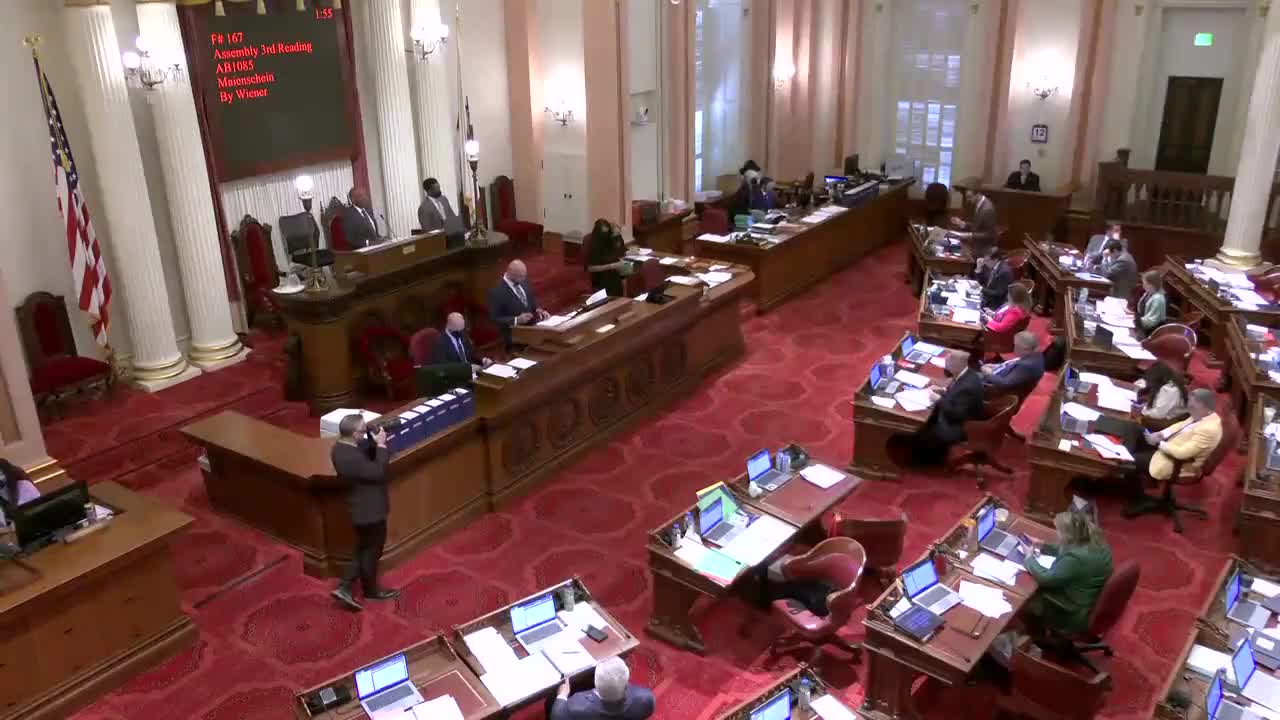 3MIN
Senate Floor
 41MIN
Senate Standing Committee on Judiciary
 2MIN
Assembly Floor
 39MIN
Assembly Standing Committee on Banking and Finance
 2MIN
Assembly Standing Committee on Judiciary
Bill Author

Bill Co-Author(s):