AB 1415: Outdoor advertising: City of Los Angeles.
- Session Year: 2023-2024
- House: Assembly
- Latest Version Date: 2023-10-10
Current Status:
Passed
(2023-10-10: Chaptered by Secretary of State - Chapter 689, Statutes of 2023.)
Introduced
In Committee
First Chamber
In Committee
Second Chamber
Enacted
Existing law, the Outdoor Advertising Act, provides for the regulation by the Department of Transportation of an advertising display, as defined, within view of public highways. The act regulates the placement of an off-premises advertising display along highways that generally advertises business conducted or services rendered or goods produced or sold at a location other than the property where the display is located.
The act exempts from specified provisions advertising displays located in 2 geographic areas in the City of Los Angeles if those displays meet prescribed conditions and requirements, including the condition that the advertising display is authorized by, or in accordance with, an ordinance adopted by the City of Los Angeles that regulates advertising displays, as provided. Existing law makes the City of Los Angeles primarily responsible for ensuring that an authorized advertising display remains in conformance with the ordinance and the requirements described above, and requires the city to indemnify and hold the department harmless if the city fails to do so.
This bill would exempt advertising displays in 3 additional geographic areas in the City of Los Angeles from the specified provisions of the act, subject to those same conditions and requirements. By expanding the responsibilities of the City of Los Angeles related to authorized advertising displays, the bill would impose a state-mandated local program.
This bill would make legislative findings and declarations as to the necessity of a special statute for the City of Los Angeles.
The California Constitution requires the state to reimburse local agencies and school districts for certain costs mandated by the state. Statutory provisions establish procedures for making that reimbursement.
This bill would provide that, if the Commission on State Mandates determines that the bill contains costs mandated by the state, reimbursement for those costs shall be made pursuant to the statutory provisions noted above.
Existing law, the Outdoor Advertising Act, provides for the regulation by the Department of Transportation of an advertising display, as defined, within view of public highways. The act regulates the placement of an off-premises advertising display along highways that generally advertises business conducted or services rendered or goods produced or sold at a location other than the property where the display is located.
The act exempts from specified provisions advertising displays located in certain 2 geographic areas in the City of Los Angeles if those displays meet prescribed conditions and requirements, including the condition that the advertising display is authorized by, or in accordance with, an ordinance adopted by the City of Los Angeles that regulates advertising displays, as provided. Existing law makes the City of Los Angeles primarily responsible for ensuring that an authorized advertising display remains in conformance with the ordinance and the requirements described above, and requires the city to indemnify and hold the department harmless if the city fails to do so.
This bill would expand one of the geographic areas described above and add an additional geographic area exempt advertising displays in 3 additional geographic areas in the City of Los Angeles where advertising displays meeting prescribed conditions and requirements are exempt from the specified provisions of the act. act, subject to those same conditions and requirements. By expanding the responsibilities of the City of Los Angeles related to authorized advertising displays, the bill would impose a state-mandated local program.
This bill would make legislative findings and declarations as to the necessity of a special statute for the City of Los Angeles.
The California Constitution requires the state to reimburse local agencies and school districts for certain costs mandated by the state. Statutory provisions establish procedures for making that reimbursement.
This bill would provide that, if the Commission on State Mandates determines that the bill contains costs mandated by the state, reimbursement for those costs shall be made pursuant to the statutory provisions noted above.
Existing law, the Outdoor Advertising Act, provides for the regulation by the Department of Transportation of an advertising display, as defined, within view of public highways. The act regulates the placement of an off-premises advertising display along highways that generally advertises business conducted or services rendered or goods produced or sold at a location other than the property where the display is located.
The act exempts from specified provisions advertising displays located in certain geographic areas in the City of Los Angeles if those displays meet prescribed conditions and requirements, including the condition that the advertising display is authorized by, or in accordance with, an ordinance adopted by the City of Los Angeles that regulates advertising displays, as provided. Existing law makes the City of Los Angeles primarily responsible for ensuring that an authorized advertising display remains in conformance with the ordinance and the requirements described above, and requires the city to indemnify and hold the department harmless if the city fails to do so.
This bill would expand one of the geographic areas described above and add an additional geographic area in the City of Los Angeles as where advertising displays meeting prescribed conditions and requirements are exempt from the specified provisions of the act. The bill would additionally exempt an advertising display located within those geographic areas of the city from the specified provisions of the act if the display was in existence and legally permitted as of January 1, 2023, regardless of whether it meets the prescribed conditions and requirements in existing law. By expanding the responsibilities of the City of Los Angeles related to authorized advertising displays, the bill would impose a state-mandated local program.
This bill would make legislative findings and declarations as to the necessity of a special statute for the City of Los Angeles.
The California Constitution requires the state to reimburse local agencies and school districts for certain costs mandated by the state. Statutory provisions establish procedures for making that reimbursement.
This bill would provide that, if the Commission on State Mandates determines that the bill contains costs mandated by the state, reimbursement for those costs shall be made pursuant to the statutory provisions noted above.
Existing law, the Outdoor Advertising Act, provides for the regulation by the Department of Transportation of an advertising display, as defined, within view of public highways. The act regulates the placement of an off-premises advertising display along highways that generally advertises business conducted or services rendered or goods produced or sold at a location other than the property where the display is located.
The act exempts from specified provisions advertising displays located in certain geographic areas in the City of Los Angeles if those displays meet prescribed conditions and requirements, including the condition that the advertising display is authorized by, or in accordance with, an ordinance adopted by the City of Los Angeles that regulates advertising displays, as provided. Existing law makes the City of Los Angeles primarily responsible for ensuring that an authorized advertising display remains in conformance with the ordinance and the requirements described above, and requires the city to indemnify and hold the department harmless if the city fails to do so.
This bill would expand one of the geographic areas described above and add an additional geographic area in the City of Los Angeles as exempt from the specified provisions of the act. The bill would additionally exempt an advertising display located within those geographic areas of the city from the specified provisions of the act if the display was in existence and legally permitted as of January 1, 2023, regardless of whether it meets the prescribed conditions and requirements in existing law. By expanding the responsibilities of the City of Los Angeles related to authorized advertising displays, the bill would impose a state-mandated local program.
This bill would make legislative findings and declarations as to the necessity of a special statute for the City of Los Angeles.
The California Constitution requires the state to reimburse local agencies and school districts for certain costs mandated by the state. Statutory provisions establish procedures for making that reimbursement.
This bill would provide that, if the Commission on State Mandates determines that the bill contains costs mandated by the state, reimbursement for those costs shall be made pursuant to the statutory provisions noted above.
The California State Lottery Act of 1984 authorizes a California State Lottery and provides for its operation and administration by the California State Lottery Commission and the Director of the California State Lottery. Existing law requires the commission to make quarterly reports of the operation of the Lottery to the Governor, the Attorney General, the Controller, the Treasurer, and the Legislature. Existing law requires the reports to include a full and complete statement of lottery revenues, prize disbursements, expenses, net revenues, and all other financial transactions involving lottery funds.This bill would specify that the quarterly reports shall be written and would additionally require the reports to be made to specified committees of the Legislature.The California State Lottery Act of 1984 authorizes a California State Lottery and provides for its operation and administration by the California State Lottery Commission and the Director of the California State Lottery. Existing law requires the commission to make quarterly reports of the operation of the Lottery to the Governor, the Attorney General, the Controller, the Treasurer, and the Legislature. Existing law requires the reports to include a full and complete statement of lottery revenues, prize disbursements, expenses, net revenues, and all other financial transactions involving lottery funds.
This bill would specify that the quarterly reports shall be written and would additionally require the reports to be made to specified committees of the Legislature.
(a)With the exception of Article 4 (commencing with Section 5300) and Sections 5400 to 5404, inclusive, this chapter does not apply to any advertising display located in the geographic area in the City of Los Angeles bounded by Wilshire Boulevard on the northeast, S. Figueroa Street on the southeast, Interstate 10 on the southwest, and State Route 110 on the northwest, or to any advertising display located in the geographic area in the City of Los Angeles on the westerly side of State Route 110 bounded by West 8th Place, James M. Wood Boulevard, and Golden Avenue and bounded by 7th Street, South Bixel Street, West 8th Street, and Garland Avenue, or to any advertising display located in the geographic area in the City of Los Angeles on the westerly side of State Route 101 bounded by West Sunset Boulevard, North Bronson Avenue, Harold Way, and North Van Ness Avenue, and bounded by State Route 101, Vista Del Mar Avenue, Yucca Street, and Argyle Avenue, if all of the following conditions are met:
(1)The advertising display is authorized by, or in accordance with, an ordinance, including, but not limited to, a specific plan or sign district, adopted by the City of Los Angeles that regulates advertising displays by identifying the specific displays or establishing regulations that include, at a minimum, all of the following:
(A)Number of signs and total signage area allowed.
(B)Maximum individual signage area.
(C)Minimum sign separation.
(D)Illumination restrictions and regulations, including signage refresh rate, scrolling, and brightness.
(E)Illuminated sign hours of operation.
(2)The owner of the advertising display has submitted to the department a copy of the ordinance adopted by the City of Los Angeles authorizing the advertising display and identification of the provisions of the ordinance required under paragraph (1) and the department has certified that the ordinance meets the minimum requirements contained in paragraph (1).
(3)The advertising display will not advertise products, goods, or services related to tobacco, firearms, or sexually explicit material.
(4)(A)Except as otherwise provided in subparagraph (B), there shall be at least 500 feet between any two advertising displays located on the same side of the freeway unless the advertising displays are separated by buildings or other obstructions in a manner that only one of the advertising displays is visible from any given location on the freeway. For purposes of determining compliance with the spacing requirement, the distance between advertising displays shall be measured along the nearest edge of pavement between points directly opposite the advertising displays along each side of the freeway.
(B)The spacing requirement in subparagraph (A) does not apply to an advertising display that advertises only the business conducted, services rendered, or goods produced and sold upon the property upon which the advertising display is located and that, accordingly, is not subject to the requirements of this chapter.
(C)When counting the number of advertising displays and measuring the distance between them for purposes of subparagraph (A), the advertising displays described in subparagraph (B) shall be excluded from the count, and no measurements shall be made relative to the excluded advertising displays for purposes of subparagraph (A).
(5)This chapter does not limit the City of Los Angeles from adopting ordinances prohibiting or further restricting the size, number, or type of advertising displays permitted by this section.
(6)If the advertising display is a message center, the owner of the display shall do one of the following:
(A)Make the message center display available on a space-available basis for use by the department or the Department of the California Highway Patrol for public service messages, including Emergency Alert System (Amber Alert) messages disseminated pursuant to Section 8594 of the Government Code, and messages containing, among other things, reports of commute times, drunk driving awareness messages, reports of accidents of a serious nature, and emergency disaster communications.
(B)Make a message center display not subject to this section that is under the control of the owner of the advertising display available on a space-available basis for public service messages in a location acceptable to the department and the Department of the California Highway Patrol.
(C)Provide funding to the department for the installation of a message center display to accommodate those public service messages, which may include funding as part of mitigation in connection with the approval of development of the property on which the message center display is located by the City of Los Angeles.
(b)(1)Before the advertising display authorized pursuant to subdivision (a) may be placed, the department shall determine that the display will not cause a reduction in federal aid funds or otherwise be inconsistent with any federal law, regulation, or agreement between the state and a federal agency or department.
(2)If the department is unable to make the determination required pursuant to paragraph (1), the department shall request the Federal Highway Administration (FHWA) of the United States Department of Transportation to make the determination. Upon receipt of a determination by the FHWA that makes the finding described in paragraph (1), the advertising display may be placed.
(c)The City of Los Angeles shall have primary responsibility for ensuring that a display authorized pursuant to subdivision (a) remains in conformance with all provisions of the ordinance and of this section. If the City of Los Angeles fails to ensure that the display remains in conformance with all provisions of the ordinance and of this section after 30 days of receipt of a written notice from the department, the City of Los Angeles shall hold the department harmless and indemnify the department for all costs incurred by the department to ensure compliance with the ordinance and this section or to defend actions challenging the adoption of the ordinance allowing the displays.
SEC. 2.The Legislature finds and declares that a special statute is necessary and that a general statute cannot be made applicable within the meaning of Section 16 of Article IV of the California Constitution because of the unique circumstances concerning the locations in the City of Los Angeles of the advertising displays set forth in this act and the need for advertising in those locations.
SEC. 3.If the Commission on State Mandates determines that this act contains costs mandated by the state, reimbursement to local agencies and school districts for those costs shall be made pursuant to Part 7 (commencing with Section 17500) of Division 4 of Title 2 of the Government Code.
(a)With the exception of Article 4 (commencing with Section 5300) and Sections 5400 to 5404, inclusive, this chapter does not apply to any advertising display located in the geographic area in the City of Los Angeles bounded by Wilshire Boulevard on the northeast, S. Figueroa Street on the southeast, Interstate 10 on the southwest, and State Route 110 on the northwest, or to any advertising display located in the geographic area in the City of Los Angeles on the westerly side of State Route 110 bounded by West 8th Place, James M. Wood Boulevard, and Golden Avenue and bounded by 7th Street, South Bixel Street, West 8th Street, and Garland Avenue, or to any advertising display located in the geographic area in the City of Los Angeles on the westerly side of State Route 101 bounded by Sunset Boulevard, North Bronson Avenue, Harold Way, and North Van Ness Avenue, if the advertising display is in existence and is legally permitted as of January 1, 2023, or if all of the following conditions are met:
(1)The advertising display is authorized by, or in accordance with, an ordinance, including, but not limited to, a specific plan or sign district, adopted by the City of Los Angeles that regulates advertising displays by identifying the specific displays or establishing regulations that include, at a minimum, all of the following:
(A)Number of signs and total signage area allowed.
(B)Maximum individual signage area.
(C)Minimum sign separation.
(D)Illumination restrictions and regulations, including signage refresh rate, scrolling, and brightness.
(E)Illuminated sign hours of operation.
(2)The owner of the advertising display has submitted to the department a copy of the ordinance adopted by the City of Los Angeles authorizing the advertising display and identification of the provisions of the ordinance required under paragraph (1) and the department has certified that the ordinance meets the minimum requirements contained in paragraph (1).
(3)The advertising display will not advertise products, goods, or services related to tobacco, firearms, or sexually explicit material.
(4)(A)Except as otherwise provided in subparagraph (B), there shall be at least 500 feet between any two advertising displays located on the same side of the freeway unless the advertising displays are separated by buildings or other obstructions in a manner that only one of the advertising displays is visible from any given location on the freeway. For purposes of determining compliance with the spacing requirement, the distance between advertising displays shall be measured along the nearest edge of pavement between points directly opposite the advertising displays along each side of the freeway.
(B)The spacing requirement in subparagraph (A) does not apply to an advertising display that advertises only the business conducted, services rendered, or goods produced and sold upon the property upon which the advertising display is located and that, accordingly, is not subject to the requirements of this chapter.
(C)When counting the number of advertising displays and measuring the distance between them for purposes of subparagraph (A), the advertising displays described in subparagraph (B) shall be excluded from the count, and no measurements shall be made relative to the excluded advertising displays for purposes of subparagraph (A).
(5)This chapter does not limit the City of Los Angeles from adopting ordinances prohibiting or further restricting the size, number, or type of advertising displays permitted by this section.
(6)If the advertising display is a message center, the owner of the display shall do one of the following:
(A)Make the message center display available on a space-available basis for use by the department or the Department of the California Highway Patrol for public service messages, including Emergency Alert System (Amber Alert) messages disseminated pursuant to Section 8594 of the Government Code, and messages containing, among other things, reports of commute times, drunk driving awareness messages, reports of accidents of a serious nature, and emergency disaster communications.
(B)Make a message center display not subject to this section that is under the control of the owner of the advertising display available on a space-available basis for public service messages in a location acceptable to the department and the Department of the California Highway Patrol.
(C)Provide funding to the department for the installation of a message center display to accommodate those public service messages, which may include funding as part of mitigation in connection with the approval of development of the property on which the message center display is located by the City of Los Angeles.
(b)(1)Before the advertising display authorized pursuant to subdivision (a) may be placed, the department shall determine that the display will not cause a reduction in federal aid funds or otherwise be inconsistent with any federal law, regulation, or agreement between the state and a federal agency or department.
(2)If the department is unable to make the determination required pursuant to paragraph (1), the department shall request the Federal Highway Administration (FHWA) of the United States Department of Transportation to make the determination. Upon receipt of a determination by the FHWA that makes the finding described in paragraph (1), the advertising display may be placed.
(c)The City of Los Angeles shall have primary responsibility for ensuring that a display authorized pursuant to subdivision (a) remains in conformance with all provisions of the ordinance and of this section. If the City of Los Angeles fails to ensure that the display remains in conformance with all provisions of the ordinance and of this section after 30 days of receipt of a written notice from the department, the City of Los Angeles shall hold the department harmless and indemnify the department for all costs incurred by the department to ensure compliance with the ordinance and this section or to defend actions challenging the adoption of the ordinance allowing the displays.
SEC. 2.The Legislature finds and declares that a special statute is necessary and that a general statute cannot be made applicable within the meaning of Section 16 of Article IV of the California Constitution because of the unique circumstances concerning the locations in the City of Los Angeles of the advertising displays set forth in this act and the need for advertising in those locations.
SEC. 3.If the Commission on State Mandates determines that this act contains costs mandated by the state, reimbursement to local agencies and school districts for those costs shall be made pursuant to Part 7 (commencing with Section 17500) of Division 4 of Title 2 of the Government Code.
(a)With the exception of Article 4 (commencing with Section 5300) and Sections 5400 to 5404, inclusive, this chapter does not apply to any advertising display located in the geographic area in the City of Los Angeles bounded by Wilshire Boulevard on the northeast, S. Figueroa Street on the southeast, Interstate 10 on the southwest, and State Route 110 on the northwest, or to any advertising display located in the geographic area in the City of Los Angeles on the westerly side of State Route 110 bounded by West 8th Place, James M. Wood Boulevard, and Golden Avenue, Avenue and bounded by 7th Street, South Bixel Street, West 8th Street, and Garland Avenue, or to any advertising display located in the geographic area in the City of Los Angeles on the westerly side of State Route 101 bounded by Sunset Boulevard, North Bronson Avenue, Harold Way, and North Van Ness Avenue, if the advertising display is in existence and is legally permitted as of January 1, 2023, or if all of the following conditions are met:
(1)The advertising display is authorized by, or in accordance with, an ordinance, including, but not limited to, a specific plan or sign district, adopted by the City of Los Angeles that regulates advertising displays by identifying the specific displays or establishing regulations that include, at a minimum, all of the following:
(A)Number of signs and total signage area allowed.
(B)Maximum individual signage area.
(C)Minimum sign separation.
(D)Illumination restrictions and regulations, including signage refresh rate, scrolling, and brightness.
(E)Illuminated sign hours of operation.
(2)The owner of the advertising display has submitted to the department a copy of the ordinance adopted by the City of Los Angeles authorizing the advertising display and identification of the provisions of the ordinance required under paragraph (1) and the department has certified that the ordinance meets the minimum requirements contained in paragraph (1).
(3)The advertising display will not advertise products, goods, or services related to tobacco, firearms, or sexually explicit material.
(4)(A)Except as otherwise provided in subparagraph (B), there shall be at least 500 feet between any two advertising displays located on the same side of the freeway unless the advertising displays are separated by buildings or other obstructions in a manner that only one of the advertising displays is visible from any given location on the freeway. For purposes of determining compliance with the spacing requirement, the distance between advertising displays shall be measured along the nearest edge of pavement between points directly opposite the advertising displays along each side of the freeway.
(B)The spacing requirement in subparagraph (A) does not apply to an advertising display that advertises only the business conducted, services rendered, or goods produced and sold upon the property upon which the advertising display is located and that, accordingly, is not subject to the requirements of this chapter.
(C)When counting the number of advertising displays and measuring the distance between them for purposes of subparagraph (A), the advertising displays described in subparagraph (B) shall be excluded from the count, and no measurements shall be made relative to the excluded advertising displays for purposes of subparagraph (A).
(5)This chapter does not limit the City of Los Angeles from adopting ordinances prohibiting or further restricting the size, number, or type of advertising displays permitted by this section.
(6)If the advertising display is a message center, the owner of the display shall do one of the following:
(A)Make the message center display available on a space-available basis for use by the department or the Department of the California Highway Patrol for public service messages, including Emergency Alert System (Amber Alert) messages disseminated pursuant to Section 8594 of the Government Code, and messages containing, among other things, reports of commute times, drunk driving awareness messages, reports of accidents of a serious nature, and emergency disaster communications.
(B)Make a message center display not subject to this section that is under the control of the owner of the advertising display available on a space-available basis for public service messages in a location acceptable to the department and the Department of the California Highway Patrol.
(C)Provide funding to the department for the installation of a message center display to accommodate those public service messages, which may include funding as part of mitigation in connection with the approval of development of the property on which the message center display is located by the City of Los Angeles.
(b)(1)Before the advertising display authorized pursuant to subdivision (a) may be placed, the department shall determine that the display will not cause a reduction in federal aid funds or otherwise be inconsistent with any federal law, regulation, or agreement between the state and a federal agency or department.
(2)If the department is unable to make the determination required pursuant to paragraph (1), the department shall request the Federal Highway Administration (FHWA) of the United States Department of Transportation to make the determination. Upon receipt of a determination by the FHWA that makes the finding described in paragraph (1), the advertising display may be placed.
(c)The City of Los Angeles shall have primary responsibility for ensuring that a display authorized pursuant to subdivision (a) remains in conformance with all provisions of the ordinance and of this section. If the City of Los Angeles fails to ensure that the display remains in conformance with all provisions of the ordinance and of this section after 30 days of receipt of a written notice from the department, the City of Los Angeles shall hold the department harmless and indemnify the department for all costs incurred by the department to ensure compliance with the ordinance and this section or to defend actions challenging the adoption of the ordinance allowing the displays.
SEC. 2.The Legislature finds and declares that a special statute is necessary and that a general statute cannot be made applicable within the meaning of Section 16 of Article IV of the California Constitution because of the unique circumstances concerning the locations in the City of Los Angeles of the advertising displays set forth in this act and the need for advertising in those locations.
SEC. 3.If the Commission on State Mandates determines that this act contains costs mandated by the state, reimbursement to local agencies and school districts for those costs shall be made pursuant to Part 7 (commencing with Section 17500) of Division 4 of Title 2 of the Government Code.
SECTION 1.Section 8880.22 of the Government Code is amended to read:8880.22.The commission shall make written quarterly reports of the operation of the Lottery to the Governor, the Attorney General, the Controller, the Treasurer, and the Legislature, including to the Senate and Assembly Committees on Governmental Organization and the relevant budget subcommittees of each house of the Legislature. The reports shall be due 75 days after the close of the quarter for which the information is being required. The reports shall include a full and complete statement of lottery revenues, prize disbursements, expenses, net revenues, and all other financial transactions involving lottery funds, including a statement of assets, statement of revenues, expenses, changes in net assets, and changes in financial position with all attached financial notes. CORRECTIONS: TextPage 3.The Commission commission shall make written quarterly reports of the operation of the Lottery to the Governor, the Attorney General, the Controller, the Treasurer, and the Legislature. Legislature, including to the Senate and Assembly Committees on Governmental Organization and the relevant budget subcommittees of each house of the Legislature. The reports shall be due 75 days after the close of the quarter for which the information is being required. The reports shall include a full and complete statement of lottery revenues, prize disbursements, expenses, net revenues, and all other financial transactions involving lottery funds, including a statement of assets, statement of revenues, expenses, changes in net assets, and changes in financial position with all attached financial notes.
|
Date
|
Status
|
|---|---|
| Oct 10, 2023 | Chaptered by Secretary of State - Chapter 689, Statutes of 2023. |
| Oct 10, 2023 | Approved by the Governor. |
| Sep 21, 2023 | Enrolled and presented to the Governor at 3:30 p.m. |
| Sep 13, 2023 | Senate amendments concurred in. To Engrossing and Enrolling. (Ayes 79. Noes 0. Page 3372.). |
| Sep 12, 2023 | In Assembly. Concurrence in Senate amendments pending. |
| Sep 12, 2023 | Read third time. Passed. Ordered to the Assembly. (Ayes 38. Noes 0. Page 2637.). |
| Sep 11, 2023 | Read second time. Ordered to third reading. |
| Sep 7, 2023 | Read third time and amended. Ordered to second reading. |
| Sep 5, 2023 | Read second time. Ordered to third reading. |
| Sep 1, 2023 | From committee: Do pass. (Ayes 7. Noes 0.) (September 1). |
| Aug 14, 2023 | In committee: Referred to APPR suspense file. |
| Jul 13, 2023 | Read second time and amended. Re-referred to Com. on APPR. |
| Jul 12, 2023 | From committee: Amend, and do pass as amended and re-refer to Com. on APPR. (Ayes 15. Noes 0.) (July 11). |
| Jun 14, 2023 | Referred to Com. on TRANS. |
| Jun 1, 2023 | In Senate. Read first time. To Com. on RLS. for assignment. |
| May 31, 2023 | Read third time. Passed. Ordered to the Senate. (Ayes 78. Noes 0. Page 2081.) |
| May 18, 2023 | Read second time. Ordered to third reading. |
| May 18, 2023 | From committee: Do pass. (Ayes 15. Noes 0.) (May 18). |
| May 18, 2023 | Joint Rule 62(a), file notice suspended. (Page 1580.) |
| May 17, 2023 | In committee: Set, first hearing. Referred to APPR. suspense file. |
| May 10, 2023 | In committee: Hearing postponed by committee. |
| Apr 27, 2023 | From committee: Do pass and re-refer to Com. on APPR. (Ayes 22. Noes 0.) (April 26). Re-referred to Com. on APPR. |
| Mar 15, 2023 | Re-referred to Com. on G.O. |
| Mar 15, 2023 | Measure version as amended on March 14 corrected. |
| Mar 14, 2023 | From committee chair, with author's amendments: Amend, and re-refer to Com. on G.O. Read second time and amended. |
| Mar 9, 2023 | Referred to Com. on G.O. |
| Feb 18, 2023 | From printer. May be heard in committee March 20. |
| Feb 17, 2023 | Read first time. To print. |
|
Date
|
Description
|
Location
|
Votes
|
|
|---|---|---|---|---|
| Sep 13, 2023 | AB 1415 Santiago Concurrence in Senate Amendments | Assembly Floor |
Passed |
|
| Sep 12, 2023 | Assembly 3rd Reading AB1415 Santiago By Allen | Senate Floor |
Passed |
|
| Sep 1, 2023 | Do pass | Senate Standing Committee on Appropriations |
Passed |
|
| Aug 14, 2023 | Placed on suspense file | Senate Standing Committee on Appropriations |
Passed |
|
| Jul 11, 2023 | Do pass as amended, but first amend, and re-refer to the Committee on [Appropriations] | Senate Standing Committee on Transportation |
Passed |
|
| May 31, 2023 | AB 1415 Santiago Assembly Third Reading | Assembly Floor |
Passed |
|
| May 18, 2023 | Do pass. | Assembly Standing Committee on Appropriations |
Passed |
|
| Apr 26, 2023 | Do pass and be re-referred to the Committee on [Appropriations] | Assembly Standing Committee on Governmental Organization |
Passed |
This list shows positions taken on this bill by organizations on the date displayed, which is linked to the original source.
Positions by individuals are not included.
|
Organization
|
Position
|
Date
|
|---|---|---|
| Los Angeles Area Chamber Of Commerce | ** Support | |
| Scenic Los Angeles, a Chapter of Scenic America | ** Against |
CONCURRENCE IN SENATE AMENDMENTS
CSA1 Bill Id:AB 1415
Author:(Santiago)
As Amended Ver:September 7, 2023
Majority vote
SUMMARY
This bill would expand the geographic areas in the City of Los Angeles that are subject to an exemption from the Outdoor Advertising Act (OAA) for advertising displays that meet specified conditions:
- Adds three locations in Los Angeles where the City assumes primary responsibility for ensuring advertising signs remain in conformance to state and local laws and indemnifies the state from all costs incurred by the department to ensure compliance.
- Defines those specified locations as:
- A geographic area in the City of Los Angeles bounded by 7th Street, South Bixel Street, West 8th Street, and Garland Avenue.
- A geographic area in the City of Los Angeles on the westerly side of State Route 101 bounded by Sunset Boulevard, North Bronson Avenue, Harold Way, and North Van Ness Avenue.
- A geographic area in the City of Los Angeles bounded by State Route 101, Vista Del Mar Avenue, Yucca Street, and Argyle Avenue.
Senate Amendments:
- Add an additional geographic area in the City of Los Angeles that is bounded by State Route 101, Vista Del Mar Avenue, Yucca Street, and Argyle Avenue.
- Make clarifying and clarifying changes.
COMMENTS
Background.
A combination of state and federal requirements govern the placement and operation of all outdoor advertising in California. Caltrans regulates the placement of outdoor advertising displays that are visible from California highways. Caltrans performs regular reviews of freeways and highways identified on the National Highway System to enforce outdoor advertising requirements under the Federal Highway Beautification Act and the State's OAA.
Outdoor Advertising Act. The OAA regulates the placement of advertising displays (i.e., billboards) and signs along interstate or primary highways, landscaped highways, and similar designated highways. OAAs are also generally required to comply with various federal laws, including the Highway Beautification Act of 1965 (23 United States Code Part (USC) 131 et seq.). The OAA sets standards for the structures, including their size, identification and location, and requires compliance with application procedures and conditions administered by Caltrans. The OAA prohibits any advertising display from being placed or maintained on property adjacent to a section of a freeway that has been landscaped if the advertising display is designed to be viewed primarily by persons traveling on the main-traveled way of the landscaped freeway.
The OAA generally does not apply to "on-premise" advertising displays, which include those advertising the sale of the property upon which it is placed or that advertise the business conducted, services rendered, or goods produced or sold on the property. Except for certain safety requirements, local governments regulate on premise displays.
While state and federal law generally regulates billboards and similar advertising displays, local governments may also impose restrictions equal to or greater than any restriction imposed by state law, but local governments may not allow a display that is in violation of state law. Local governments are also entitled to a portion of fees and fines under state law, and they may also require advertisers to obtain licenses and permits, in addition to any licenses required by state law.
The OAA provides for general exemptions and specified exceptions to the prohibition on advertising along landscaped freeways, including exemptions for signs advertising the property's sale or lease, signs designating the premises or its owner, and signs advertising goods or services manufactured or produced on the property itself. In addition, since 1995, a number of bills have created exemptions for specific cities, including an exemption for advertising on "street furniture" in San Francisco, five signs situated on the property of the Oakland-Alameda County Coliseum complex, one sign each in the cities of Costa Mesa and Richmond, and four signs within the Mid-City Recovery Redevelopment Project Area within Los Angeles.
Existing state law (AB 1373 (Santiago), Chapter 853, Statutes of 2016) exempts advertising displays in an eight-block area adjacent to State Route (SR) 110 and Interstate 10 in the City of Los Angeles from the OAA if certain conditions are met, including compliance with an ordinance adopted by the City of Los Angeles regulating advertising displays. This area is known as the Avenue of the Angels and encompasses the Los Angeles Convention Center, Staples Center, and Nokia Theatre. The stated purpose of AB 1373 was to permit the use of revenue-generating advertising displays within a small area of downtown Los Angeles. The author stated that the bill would spur the construction of needed hotels in support of the Los Angeles Convention Center, the Sports and Entertainment District, and the city's financial district. The bill also enabled the City of Los Angeles to further control its urban streetscape and interface with the state highways bisecting its urban core.
This bill would exempt advertising displays in three additional geographic areas in the City of Los Angeles from the specified provisions of the Act, subject to those same conditions and requirements. However, any added display remains subject to existing limitations to prevent the loss of federal highway funding.
One geographic area affected by this bill is adjacent to the area established in AB 1373. It abuts State Route 110 and is in very close proximity to the Metropolis Project, the new Intercontinental Hotel tower, Financial District, LA Live, the Los Angeles Convention Center and the Avenue of the Angels. A second geographic area affected by this bill is in Hollywood near the historic Sunset Bronson Studios, KTLA 5 towers, and Netflix, adjacent to the Hollywood Freeway. This area has historically been a significant hub for entertainment and commerce. The final geographic area exemption is also in Hollywood, adjacent to the Hollywood Freeway and within walking distance of the historic Capitol Records Building, Pantages Theatre, ArcLight Hollywood Theater, and the Hollywood Walk of Fame.
The Federal Highway Administration (FHWA) periodically audits Caltrans. The July 16, 2022, audit of Caltrans by the FHWA found that displays in arenas and redevelopment agency zones may not be in compliance with federal law, which is more restrictive than state law governing advertising displays. The FHWA recommended Caltrans pursue compliance with federal law and, in some cases, pursue the removal of signs to not jeopardize losing federal highway funding.
The state of California enforces the provisions of federal law through a compact that was developed between the state and the federal government in 1967. If the state fails to properly administer the federal program, the state is subject to a sanction that would reduce its federal highway funding allocations by 10%.
According to the Author
The goal of this bill, according to the author's office, is to further allow the use of revenue generating advertising displays in a designated area of downtown Los Angeles for critically needed economic development. This bill will encourage the necessary revitalization of the area's infrastructure. The geographic areas of the city, as described in the bill, differ significantly from other freeway-facing areas in the state in that they are highly urbanized and have an abundance of entertainment, hospitality, and tourism options."
"This legislation aims to build on the achievements of AB 1373 (Santiago), Chapter 853 of 2016 that encouraged development in downtown Los Angeles and contributed to the region's economic renaissance. This bill will assist in raising the much-needed funds to enable development in downtown Los Angeles, generate thousands of new jobs, and increase economic activity since there are no longer any redevelopment agencies. The city of Los Angeles will retain the authority to determine the rules for billboard signs in the specified geographic areas, including whether they can be digital displays. The federal government's safety standards would still need to be met by the billboards in that area and must not result in a loss of federal dollars."
Arguments in Support
This bill is sponsored by the Los Angeles Area Chamber of Commerce, which argues "the ability to generate new signage will help commercial property owners who have been greatly impacted by the COVID-19 pandemic which has put into question the viability of Downtown and Hollywood as major entertainment and commercial areas."
Arguments in Opposition
This bill is opposed by Scenic Los Angeles, which argues "Surrendering control of billboard rules in the expanded zones named in the bill will remove those zones from Caltrans purview and subject them to local oversight, where billboard companies have more sway and city council members often claim spot zoning authority.
FISCAL COMMENTS
According to the Senate Appropriations Committee, unknown costs for Caltrans to review local ordinances or other discretionary local approvals, and review each proposal to place an advertising display to determine consistency with state and federal law and the state's FHWA obligations. Caltrans costs for each review would likely be in the low tens of thousands of dollars and overall costs could range from minor to potentially over $150,000, depending on the number of signs proposed in the expanded areas. (State Highway Account)
VOTES:
ASM GOVERNMENTAL ORGANIZATION: 22-0-0
YES: Santiago, Lackey, Aguiar-Curry, Berman, Bryan, Cervantes, Megan Dahle, Davies, Garcia, Gipson, Jones-Sawyer, Low, Mathis, McCarty, McKinnor, Jim Patterson, Quirk-Silva, Ramos, Robert Rivas, Blanca Rubio, Ta, Villapudua
ASM APPROPRIATIONS: 15-0-1
YES: Holden, Megan Dahle, Bryan, Calderon, Wendy Carrillo, Dixon, Mike Fong, Hart, Lowenthal, Mathis, Papan, Pellerin, Sanchez, Weber, Ortega
ABS, ABST OR NV: Robert Rivas
ASSEMBLY FLOOR: 78-0-2
YES: Addis, Aguiar-Curry, Alanis, Alvarez, Arambula, Bains, Bauer-Kahan, Bennett, Berman, Boerner, Bonta, Bryan, Calderon, Juan Carrillo, Wendy Carrillo, Cervantes, Chen, Connolly, Megan Dahle, Davies, Dixon, Essayli, Flora, Mike Fong, Vince Fong, Friedman, Gallagher, Garcia, Gipson, Grayson, Haney, Holden, Hoover, Irwin, Jackson, Jones-Sawyer, Kalra, Lackey, Lee, Low, Lowenthal, Maienschein, Mathis, McCarty, McKinnor, Muratsuchi, Stephanie Nguyen, Ortega, Pacheco, Papan, Jim Patterson, Joe Patterson, Pellerin, Petrie-Norris, Quirk‑Silva, Ramos, Reyes, Luz Rivas, Robert Rivas, Rodriguez, Blanca Rubio, Sanchez, Santiago, Schiavo, Soria, Ta, Ting, Valencia, Villapudua, Waldron, Wallis, Ward, Weber, Wicks, Wilson, Wood, Zbur, Rendon
ABS, ABST OR NV: Gabriel, Hart
UPDATED
VERSION: September 7, 2023
CONSULTANT: Eric Johnson / G.O. / (916) 319-2531 FN: 0002320
SENATE RULES COMMITTEE Office of Senate Floor Analyses (916) 651-1520 Fax: (916) 327-4478 | AB 1415 |
THIRD READING
Bill No: AB 1415
Author: Santiago (D)
Amended: 9/7/23 in Senate
Vote: 21
SENATE TRANSPORTATION COMMITTEE: 15-0, 7/11/23
AYES: Gonzalez, Niello, Allen, Archuleta, Becker, Cortese, Dahle, Durazo, Laird, Limón, McGuire, Newman, Nguyen, Seyarto, Umberg
NO VOTE RECORDED: Blakespear
SENATE APPROPRIATIONS COMMITTEE: 7-0, 9/1/23
AYES: Portantino, Jones, Ashby, Bradford, Seyarto, Wahab, Wiener
ASSEMBLY FLOOR: 78-0, 5/31/23 - See last page for vote
SUBJECT: Outdoor advertising: City of Los Angeles
SOURCE: Author
DIGEST:
This bill creates an exemption from the Outdoor Advertising Act for advertising displays erected in specified areas of Los Angeles pursuant to specified conditions, including preapproval by Caltrans.
Senate Floor Amendments of 9/7/23 add one additional area to the exemption. That additional area is adjacent to State Route 101 in Hollywood.
ANALYSIS:
Existing law:
- Establishes the Outdoor Advertising Act (OAA), which regulates the placement of advertising displays adjacent to and within specified distances of highways that are part of the national system of interstate, defense highways, and federal-aid highways.
- Prohibits any advertising display from being placed or maintained on property adjacent to a section of a freeway that has been landscaped if the advertising display is designed to be viewed primarily by persons traveling on the main-traveled way of the landscaped freeway.
- Provides for limited exemptions to the prohibition on advertising along system and landscaped freeways, including exemptions for signs advertising goods or services manufactured or produced on the property itself.
- Exempts on-premise advertising displays from the OAA, including signs that advertise the business conducted, services rendered, or goods produced or sold on the property. Local government regulates on premise displays, except for certain safety requirements.
- Provides, by contractual agreement, for Caltrans to administer the federal Outdoor Advertising Control (OAC) program, which has restrictions similar to California’s OAA program, including maximum sign size, sign spacing, location, illumination, and content. If the state fails to properly administer the federal program, the state shall lose 10% of its federal highway funding.
- Requires Caltrans to assess penalties for a violation of the OAA, as specified. If an advertising display is placed or maintained in a location that does not conform to the relevant statutes or local ordinances, and is not removed within thirty days of written notice from the department or the city or the county with land use jurisdiction over the property upon which the advertising display is located, a penalty of $10,000 plus $100 for each day the advertising display is placed or maintained after the department sends written notice shall be assessed and the gross revenues received by the violator shall be disgorged. Caltrans may also request recovery of its legal costs.
- Makes, for advertising displays located in specified locations in Los Angeles (near LA Live), the City of Los Angeles primarily responsible for ensuring that advertising displays in specified locations remain in conformance with the local advertising display ordinance and the requirements described above, and requires the city to indemnify and hold Caltrans harmless if the city fails to do so. (California Business and Professions Code § 5272.2)
This bill:
- Adds three locations in Los Angeles where the City assumes primary responsibility for ensuring advertising signs remain in conformance to state and local laws and indemnifies the state from all costs incurred by the department to ensure compliance.
- Defines those specified locations as:
- the area in the City of Los Angeles bounded by 7th Street, South Bixel Street, West 8th Street, and Garland Avenue,
- the area in the City of Los Angeles on the westerly side of State Route 101 bounded by Sunset Boulevard, North Bronson Avenue, Harold Way, and North Van Ness Avenue,
- the area in the City of Los Angeles bounded by State Route 101, Vista Del Mar Avenue, Yucca Street, and Argyle Avenue.
Comments
Recent Amendments. The September 7, 2023 amendments add one additional area to the exemption established by this bill. That additional area is adjacent to State Route 101 in Hollywood.
- Author’s Statement. “The goal of this bill, according to the author's office, is to further allow the use of revenue generating advertising displays in a designated area of downtown Los Angeles for critically needed economic development. This bill will encourage the necessary revitalization of the area's infrastructure. The geographic areas of the city, as described in the bill, differ significantly from other freeway-facing areas in the state in that they are highly urbanized and have an abundance of entertainment, hospitality, and tourism options.”
“This legislation aims to build on the achievements of AB 1373 (Santiago), Chapter 853 of 2016 that encouraged development in downtown Los Angeles and contributed to the region's economic renaissance. This bill will assist in raising the much-needed funds to enable development in downtown Los Angeles, generate thousands of new jobs, and increase economic activity since there are no longer any redevelopment agencies. The city of Los Angeles will retain the authority to determine the rules for billboard signs in the specified geographic areas, including whether they can be digital displays. The federal government's safety standards would still need to be met by the billboards in that area and must not result in a loss of federal dollars.”
- Outdoor Advertising Act (OAA) Exemption. This bill is an exemption from the OAA. The long-standing policy of the Senate Transportation Committee is to prohibit OAA exemptions. That policy was waived in 2016 to authorize Los Angeles to permit specified signs in areas adjacent to and nearby the areas contemplated by this bill (AB 1373; Santiago). Importantly, that legislation contained provisions requiring pre-approval by Caltrans for any signs to ensure there was no jeopardy to any state transportation funds.
- Where? One area affected by this bill is adjacent to the area established in AB 1373. It abuts State Route 110 and is in very close proximity to the Metropolis Project, the new Intercontinental Hotel tower, Financial District, LA Live, the Los Angeles Convention Center and the Avenue of the Angels. A second area affected by this bill is in Hollywood near Capitol Records and Netflix headquarters, adjacent to the Hollywood Freeway. This area has historically been a significant hub for entertainment and commerce and is about six miles from the original area established in AB 1373.
- LA Convention Center, Part 2. This author carried the original 2016 legislation giving Los Angeles additional authority over outdoor advertising in a small area next to the LA Convention Center. The purpose was to provide financial support for the construction of needed hotels in support of that center, the adjacent sports and entertainment district, and the city’s financial district. Success seems to have been achieved as the area contains Crypto.com arena, home to professional basketball and hockey teams, and LA Live. However, it seems that this success was not dependent on Los Angeles using its AB 1373 authority to erect new signs.
- Honoring Our Commitments. Caltrans is obligated to the federal government to enforce the Outdoor Advertising Control program, which has similar requirements to the OAA. A 2022 Federal Highway Administration audit found severe shortcomings in Caltrans efforts and threatened a reduction in federal highway funding. This audit was taken seriously by the Administration resulting in a veto of a bill which had little opposition. The Governor’s veto message noted that the “potential impact to California of falling out of FHWA compliance could be a reduction of over $400 million of federal transportation funding annually.” This bill avoids that possibility by requiring Caltrans preapproval of any new signs.
FISCAL EFFECT: Appropriation: No Fiscal Com.: Yes Local: Yes
According to the Senate Appropriations Committee, unknown costs for the Department of Transportation (Caltrans) to review local ordinances or other discretionary local approvals, and review each proposal to place an advertising display to determine consistency with state and federal law and the state’s Federal Highway Administration (FHWA) obligations. Caltrans costs for each review would likely be in the low tens of thousands of dollars and overall costs could range from minor to potentially over $150,000, depending on the number of signs proposed in the expanded areas. (State Highway Account)
SUPPORT: (Verified 9/8/23)
Los Angeles Area Chamber of Commerce
OPPOSITION: (Verified 9/8/23)
None received
ASSEMBLY FLOOR: 78-0, 5/31/23
AYES: Addis, Aguiar-Curry, Alanis, Alvarez, Arambula, Bains, Bauer-Kahan, Bennett, Berman, Boerner, Bonta, Bryan, Calderon, Juan Carrillo, Wendy Carrillo, Cervantes, Chen, Connolly, Megan Dahle, Davies, Dixon, Essayli, Flora, Mike Fong, Vince Fong, Friedman, Gallagher, Garcia, Gipson, Grayson, Haney, Holden, Hoover, Irwin, Jackson, Jones-Sawyer, Kalra, Lackey, Lee, Low, Lowenthal, Maienschein, Mathis, McCarty, McKinnor, Muratsuchi, Stephanie Nguyen, Ortega, Pacheco, Papan, Jim Patterson, Joe Patterson, Pellerin, Petrie-Norris, Quirk-Silva, Ramos, Reyes, Luz Rivas, Robert Rivas, Rodriguez, Blanca Rubio, Sanchez, Santiago, Schiavo, Soria, Ta, Ting, Valencia, Villapudua, Waldron, Wallis, Ward, Weber, Wicks, Wilson, Wood, Zbur, Rendon
NO VOTE RECORDED: Gabriel, Hart
Prepared by: Randy Chinn / TRANS. / (916) 651-4121
9/11/23 12:01:56
**** END ****
SENATE RULES COMMITTEE Office of Senate Floor Analyses (916) 651-1520 Fax: (916) 327-4478 | AB 1415 |
THIRD READING
Bill No: AB 1415
Author: Santiago (D)
Amended: 9/7/23 in Senate
Vote: 21
SENATE TRANSPORTATION COMMITTEE: 15-0, 7/11/23
AYES: Gonzalez, Niello, Allen, Archuleta, Becker, Cortese, Dahle, Durazo, Laird, Limón, McGuire, Newman, Nguyen, Seyarto, Umberg
NO VOTE RECORDED: Blakespear
SENATE APPROPRIATIONS COMMITTEE: 7-0, 9/1/23
AYES: Portantino, Jones, Ashby, Bradford, Seyarto, Wahab, Wiener
ASSEMBLY FLOOR: 78-0, 5/31/23 - See last page for vote
SUBJECT: Outdoor advertising: City of Los Angeles
SOURCE: Author
DIGEST:
This bill creates an exemption from the Outdoor Advertising Act for advertising displays erected in specified areas of Los Angeles pursuant to specified conditions, including preapproval by Caltrans.
Senate Floor Amendments of 9/7/23 add one additional area to the exemption. That additional area is adjacent to State Route 101 in Hollywood.
ANALYSIS:
Existing law:
- Establishes the Outdoor Advertising Act (OAA), which regulates the placement of advertising displays adjacent to and within specified distances of highways that are part of the national system of interstate, defense highways, and federal-aid highways.
- Prohibits any advertising display from being placed or maintained on property adjacent to a section of a freeway that has been landscaped if the advertising display is designed to be viewed primarily by persons traveling on the main-traveled way of the landscaped freeway.
- Provides for limited exemptions to the prohibition on advertising along system and landscaped freeways, including exemptions for signs advertising goods or services manufactured or produced on the property itself.
- Exempts on-premise advertising displays from the OAA, including signs that advertise the business conducted, services rendered, or goods produced or sold on the property. Local government regulates on premise displays, except for certain safety requirements.
- Provides, by contractual agreement, for Caltrans to administer the federal Outdoor Advertising Control (OAC) program, which has restrictions similar to California’s OAA program, including maximum sign size, sign spacing, location, illumination, and content. If the state fails to properly administer the federal program, the state shall lose 10% of its federal highway funding.
- Requires Caltrans to assess penalties for a violation of the OAA, as specified. If an advertising display is placed or maintained in a location that does not conform to the relevant statutes or local ordinances, and is not removed within thirty days of written notice from the department or the city or the county with land use jurisdiction over the property upon which the advertising display is located, a penalty of $10,000 plus $100 for each day the advertising display is placed or maintained after the department sends written notice shall be assessed and the gross revenues received by the violator shall be disgorged. Caltrans may also request recovery of its legal costs.
- Makes, for advertising displays located in specified locations in Los Angeles (near LA Live), the City of Los Angeles primarily responsible for ensuring that advertising displays in specified locations remain in conformance with the local advertising display ordinance and the requirements described above, and requires the city to indemnify and hold Caltrans harmless if the city fails to do so. (California Business and Professions Code § 5272.2)
This bill:
- Adds three locations in Los Angeles where the City assumes primary responsibility for ensuring advertising signs remain in conformance to state and local laws and indemnifies the state from all costs incurred by the department to ensure compliance.
- Defines those specified locations as:
- the area in the City of Los Angeles bounded by 7th Street, South Bixel Street, West 8th Street, and Garland Avenue,
- the area in the City of Los Angeles on the westerly side of State Route 101 bounded by Sunset Boulevard, North Bronson Avenue, Harold Way, and North Van Ness Avenue,
- the area in the City of Los Angeles bounded by State Route 101, Vista Del Mar Avenue, Yucca Street, and Argyle Avenue.
Comments
Recent Amendments. The September 7, 2023 amendments add one additional area to the exemption established by this bill. That additional area is adjacent to State Route 101 in Hollywood.
- Author’s Statement. “The goal of this bill, according to the author's office, is to further allow the use of revenue generating advertising displays in a designated area of downtown Los Angeles for critically needed economic development. This bill will encourage the necessary revitalization of the area's infrastructure. The geographic areas of the city, as described in the bill, differ significantly from other freeway-facing areas in the state in that they are highly urbanized and have an abundance of entertainment, hospitality, and tourism options.”
“This legislation aims to build on the achievements of AB 1373 (Santiago), Chapter 853 of 2016 that encouraged development in downtown Los Angeles and contributed to the region's economic renaissance. This bill will assist in raising the much-needed funds to enable development in downtown Los Angeles, generate thousands of new jobs, and increase economic activity since there are no longer any redevelopment agencies. The city of Los Angeles will retain the authority to determine the rules for billboard signs in the specified geographic areas, including whether they can be digital displays. The federal government's safety standards would still need to be met by the billboards in that area and must not result in a loss of federal dollars.”
- Outdoor Advertising Act (OAA) Exemption. This bill is an exemption from the OAA. The long-standing policy of the Senate Transportation Committee is to prohibit OAA exemptions. That policy was waived in 2016 to authorize Los Angeles to permit specified signs in areas adjacent to and nearby the areas contemplated by this bill (AB 1373; Santiago). Importantly, that legislation contained provisions requiring pre-approval by Caltrans for any signs to ensure there was no jeopardy to any state transportation funds.
- Where? One area affected by this bill is adjacent to the area established in AB 1373. It abuts State Route 110 and is in very close proximity to the Metropolis Project, the new Intercontinental Hotel tower, Financial District, LA Live, the Los Angeles Convention Center and the Avenue of the Angels. A second area affected by this bill is in Hollywood near Capitol Records and Netflix headquarters, adjacent to the Hollywood Freeway. This area has historically been a significant hub for entertainment and commerce and is about six miles from the original area established in AB 1373.
- LA Convention Center, Part 2. This author carried the original 2016 legislation giving Los Angeles additional authority over outdoor advertising in a small area next to the LA Convention Center. The purpose was to provide financial support for the construction of needed hotels in support of that center, the adjacent sports and entertainment district, and the city’s financial district. Success seems to have been achieved as the area contains Crypto.com arena, home to professional basketball and hockey teams, and LA Live. However, it seems that this success was not dependent on Los Angeles using its AB 1373 authority to erect new signs.
- Honoring Our Commitments. Caltrans is obligated to the federal government to enforce the Outdoor Advertising Control program, which has similar requirements to the OAA. A 2022 Federal Highway Administration audit found severe shortcomings in Caltrans efforts and threatened a reduction in federal highway funding. This audit was taken seriously by the Administration resulting in a veto of a bill which had little opposition. The Governor’s veto message noted that the “potential impact to California of falling out of FHWA compliance could be a reduction of over $400 million of federal transportation funding annually.” This bill avoids that possibility by requiring Caltrans preapproval of any new signs.
FISCAL EFFECT: Appropriation: No Fiscal Com.: Yes Local: Yes
According to the Senate Appropriations Committee, unknown costs for the Department of Transportation (Caltrans) to review local ordinances or other discretionary local approvals, and review each proposal to place an advertising display to determine consistency with state and federal law and the state’s Federal Highway Administration (FHWA) obligations. Caltrans costs for each review would likely be in the low tens of thousands of dollars and overall costs could range from minor to potentially over $150,000, depending on the number of signs proposed in the expanded areas. (State Highway Account)
SUPPORT: (Verified 9/8/23)
Los Angeles Area Chamber of Commerce
OPPOSITION: (Verified 9/8/23)
None received
ASSEMBLY FLOOR: 78-0, 5/31/23
AYES: Addis, Aguiar-Curry, Alanis, Alvarez, Arambula, Bains, Bauer-Kahan, Bennett, Berman, Boerner, Bonta, Bryan, Calderon, Juan Carrillo, Wendy Carrillo, Cervantes, Chen, Connolly, Megan Dahle, Davies, Dixon, Essayli, Flora, Mike Fong, Vince Fong, Friedman, Gallagher, Garcia, Gipson, Grayson, Haney, Holden, Hoover, Irwin, Jackson, Jones-Sawyer, Kalra, Lackey, Lee, Low, Lowenthal, Maienschein, Mathis, McCarty, McKinnor, Muratsuchi, Stephanie Nguyen, Ortega, Pacheco, Papan, Jim Patterson, Joe Patterson, Pellerin, Petrie-Norris, Quirk-Silva, Ramos, Reyes, Luz Rivas, Robert Rivas, Rodriguez, Blanca Rubio, Sanchez, Santiago, Schiavo, Soria, Ta, Ting, Valencia, Villapudua, Waldron, Wallis, Ward, Weber, Wicks, Wilson, Wood, Zbur, Rendon
NO VOTE RECORDED: Gabriel, Hart
Prepared by: Randy Chinn / TRANS. / (916) 651-4121
9/8/23 16:26:42
**** END ****
SENATE COMMITTEE ON APPROPRIATIONS
Senator Anthony Portantino, Chair
2023 - 2024 Regular Session
AB 1415 (Santiago) - Outdoor advertising: City of Los Angeles
Version: July 13, 2023 | Policy Vote: TRANS. 15 - 0 |
Urgency: No | Mandate: Yes |
Hearing Date: August 14, 2023 | Consultant: Mark McKenzie |
Bill Summary:
AB 1415 would expand the geographic areas in the City of Los Angeles that are subject to an exemption from the Outdoor Advertising Act (OAA) for advertising displays that meet specified conditions.
Fiscal Impact:
- Unknown costs for the Department of Transportation (Caltrans) to review local ordinances or other discretionary local approvals, and review each proposal to place an advertising display to determine consistency with state and federal law and the state’s Federal Highway Administration (FHWA) obligations. Caltrans costs for each review would likely be in the low tens of thousands of dollars and overall costs could range from minor to potentially over $150,000, depending on the number of signs proposed in the expanded areas. (State Highway Account)
Background:
The OAA regulates the size, illumination, orientation, and location of advertising displays adjacent to and within specified distances of interstate or primary highways. The OAA, with some exceptions, specifically prohibits the placement of any advertising display on property adjacent to a section of landscaped highway if the display is designed to be viewed primarily by persons traveling on the highway. State law generally does not apply to “on premise” advertising displays, including those that advertise the sale, lease, or exchange of property upon which it is placed and those that advertise the business conducted, services rendered, or the goods produced or sold on the property. Apart from certain safety requirements in state law, the regulation of “on-premise” displays is a local matter. Caltrans also administers the federal Outdoor Advertising Control (OAC) program, which imposes similar restrictions to the OAA on the size, illumination, orientation, spacing, and location of advertising displays adjacent to and within specified distances of interstate or primary highways. If Caltrans fails to properly administer the federal program, the state is subject to sanction that would reduce federal highway funding allocations by 10%.
Existing law provides for a number of exemptions to the OAA in specified jurisdictions, and for certain advertising displays authorized by a local ordinance that are located on the premises of a sports arena, as specified. One such exemption, enacted by AB 1373 (Santiago), Chap. 853/2016, exempts advertising displays in an eight-block area adjacent to State Route (SR) 110 and Interstate 10 in the City of Los Angeles from the OAA if certain conditions are met, including compliance with an ordinance adopted by the City of Los Angeles regulating advertising displays. This area is known as the “Avenue of the Angels” and encompasses the Los Angeles Convention Center, Staples Center, and Nokia Theatre. The city is responsible for ensuring an exempt display remains compliant with the ordinance and must hold Caltrans harmless and indemnify the department for any costs incurred to ensure compliance with the ordinance or defend actions challenging the ordinance. Before a display can be placed, Caltrans must review the proposal and determine that the display will not cause a reduction in federal highway funds or otherwise be inconsistent with any federal law, regulation or agreement between the state and federal government. If Caltrans is unable to make such a determination, the department must seek explicit approval from the FHWA for the placement of the display.
Proposed Law:
SB 1415 would expand the specified locations in the City of Los Angeles that are subject to a specified exemption from the OAA to include the following:
- The geographic area on the westerly side of State Route 110 bounded by 7th Street, South Bixel Street, West 8th Street, and Garland Avenue.
- The geographic area on the westerly side of State Route 101 bounded by Sunset Boulevard, North Bronson Avenue, Harold Way, and North Van Ness Avenue.
Related Legislation:
AB 1175 (Quirk-Silva), which is currently pending in this Committee, would allow Caltrans, upon request of a city or county from January 1, 2024 to January 1, 2025, to provide a two year extension of the date by which an advertising display must be removed that was placed in a former redevelopment area under provisions that allow such signs to be treated as an on-premise display, as specified.
AB 1673 (Pacheco/Santiago), which is currently pending on the Senate Floor, would clarify the circumstances in which an advertising display may be relocated and/or converted to an electronic billboard, pursuant to a relocation agreement between a sign owner and a local entity.
AB 1373 (Santiago), Chap. 853/2016, provided an exemption from the OAA for signs located in the “Avenue of the Angels” geographic area in Los Angeles, subject to specified conditions, including conformity with a local ordinance and a determination from Caltrans or the FHWA that the display will not cause a reduction in federal highway funds.
Staff Comments:
One geographic area affected by this bill’s expanded OAA exemption is adjacent to the area established in AB 1373. It abuts State Route 110 and is in very close proximity to the Metropolis Project, the new Intercontinental Hotel tower, Financial District, LA Live, the Los Angeles Convention Center and the Avenue of the Angels. The second geographic area affected by this bill is in Hollywood near the historic Sunset Bronson Studios, KTLA 5 towers, and Netflix, adjacent to the Hollywood Freeway. This area has historically been a significant hub for entertainment and commerce and is about six miles from the original area established in AB 1373. The fiscal impact of this bill would depend upon how many proposals for new advertising displays in the expanded geographic areas are reviewed by Caltrans, including inspection of proposed sites, review of the local ordinance, and determination of consistency with federal laws, regulations, and agreements. As noted above, these impacts could be minor, but may require additional staff resources. Caltrans reports that there have been no requests to review proposed advertising displays subject to the existing OAA exemption in Los Angeles.
-- END --
SENATE COMMITTEE ON TRANSPORTATION
Senator Lena Gonzalez, Chair
2023 - 2024 Regular
Bill No: Hearing Date: 7/11/23
Author: | Santiago | ||
Version: | 3/14/2023 | ||
Urgency: | No | Fiscal: | Yes |
Consultant: | Randy Chinn | ||
SUBJECT:
DIGEST: This bill creates an exemption from the Outdoor Advertising Act for advertising displays erected in specified areas of Los Angeles pursuant to specified conditions, including preapproval by Caltrans.
ANALYSIS:
Existing law:
- Establishes the Outdoor Advertising Act (OAA), which regulates the placement of advertising displays adjacent to and within specified distances of highways that are part of the national system of interstate, defense highways, and federal-aid highways.
- Prohibits any advertising display from being placed or maintained on property adjacent to a section of a freeway that has been landscaped if the advertising display is designed to be viewed primarily by persons traveling on the main-traveled way of the landscaped freeway.
- Provides for limited exemptions to the prohibition on advertising along system and landscaped freeways, including exemptions for signs advertising goods or services manufactured or produced on the property itself.
- Generally exempts on-premise advertising displays from the OAA, including signs that advertise the business conducted, services rendered, or goods produced or sold on the property. Local government regulates on premise displays, except for certain safety requirements.
- Provides, by contractual agreement, for Caltrans to administer the federal Outdoor Advertising Control (OAC) program, which has restrictions similar to California’s OAA program, including maximum sign size, sign spacing, location, illumination, and content. If the state fails to properly administer the federal program, the state shall lose 10% of its federal highway funding.
- Requires Caltrans to assess penalties for a violation of the OAA, as specified. If an advertising display is placed or maintained in a location that does not conform to the relevant statutes or local ordinances, and is not removed within thirty days of written notice from the department or the city or the county with land use jurisdiction over the property upon which the advertising display is located, a penalty of $10,000 plus $100 for each day the advertising display is placed or maintained after the department sends written notice shall be assessed and the gross revenues received by the violator shall be disgorged. Caltrans may also request recovery of its legal costs.
- For advertising displays located in specified locations in Los Angeles (near LA Live), makes the City of Los Angeles primarily responsible for ensuring that advertising displays in specified locations remain in conformance with the local advertising display ordinance and the requirements described above, and requires the city to indemnify and hold Caltrans harmless if the city fails to do so. (California Business and Professions Code § 5272.2)
This bill
- Expands the specified locations in Los Angeles where the City assumes primary responsibility for ensuring advertising signs remain in conformance to state and local laws and indemnifies the state from all costs incurred by the department to ensure compliance.
- Defines those specified locations as the area in the City of Los Angeles bounded by 7th Street, South Bixel Street, West 8th Street, and Garland Avenue, and in the geographic area in the City of Los Angeles on the westerly side of State Route 101 bounded by Sunset Boulevard, North Bronson Avenue, Harold Way, and North Van Ness Avenue.
COMMENTS:
- Author’s Statement. “The goal of this bill, according to the author's office, is to further allow the use of revenue generating advertising displays in a designated area of downtown Los Angeles for critically needed economic development. This bill will encourage the necessary revitalization of the area's infrastructure. The geographic areas of the city, as described in the bill, differ significantly from other freeway-facing areas in the state in that they are highly urbanized and have an abundance of entertainment, hospitality, and tourism options.”
“This legislation aims to build on the achievements of AB 1373 (Santiago), Chapter 853 of 2016 that encouraged development in downtown Los Angeles and contributed to the region's economic renaissance. This bill will assist in raising the much-needed funds to enable development in downtown Los Angeles, generate thousands of new jobs, and increase economic activity since there are no longer any redevelopment agencies. The city of Los Angeles will retain the authority to determine the rules for billboard signs in the specified geographic areas, including whether they can be digital displays. The federal government's safety standards would still need to be met by the billboards in that area and must not result in a loss of federal dollars.”
- Outdoor Advertising Act (OAA) Exemption. This bill is an exemption from the OAA. The policy of this Committee is to prohibit OAA exemptions. That policy was waived in 2016 to authorize Los Angeles to permit specified signs in areas adjacent to and nearby the areas contemplated by this bill (AB 1373; Santiago). Importantly, that legislation contained provisions requiring pre-approval by Caltrans for any signs to ensure there was no jeopardy to any state transportation funds. Given that this bill is an extension of the prior bill authorization and that the Caltrans preapproval safeguards remain, it may be appropriate to waive the committee policy and hear this bill.
- Where? One area affected by this bill is adjacent to the area established in AB 1373. It abuts State Route 110 and is in very close proximity to the Metropolis Project, the new Intercontinental Hotel tower, Financial District, LA Live, the Los Angeles Convention Center and the Avenue of the Angels. A second area affected by this bill is in Hollywood near the historic Sunset Bronson Studios, KTLA 5 towers, and Netflix adjacent to the Hollywood Freeway. This area has historically been a significant hub for entertainment and commerce and is about six miles from the original area established in AB 1373.
- LA Convention Center, Part 2. This author carried the original 2016 legislation giving Los Angeles additional authority over outdoor advertising in a small area next to the LA Convention Center. The purpose was to provide financial support for the construction of needed hotels in support of that center, the adjacent sports and entertainment district, and the city’s financial district. Success seems to have been achieved as the area contains Crypto.com arena, home to professional basketball and hockey teams, and LA Live. However, it seems that this success was not dependent on Los Angeles using its AB 1373 authority to erect new signs.
- Honoring Our Commitments. Caltrans is obligated to the federal government to enforce the Outdoor Advertising Control program, which has similar requirements to the OAA. A 2022 Federal Highway Administration audit found severe shortcomings in Caltrans efforts and threatened a reduction in federal highway funding. This audit was taken seriously by the Administration resulting in a veto of a bill which had little opposition. The Governor’s veto message noted that the “potential impact to California of falling out of FHWA compliance could be a reduction of over $400 million of federal transportation funding annually.” This bill avoids that possibility by requiring Caltrans preapproval of any new signs.
- Clean Up. In subdivision (a) the bill adds the phrase “if the advertising display is in existence and is legally permitted as of January 1, 2023”. This is unnecessary as no new billboards have been permitted as a result of the author’s prior bill. The author and committee may wish to delete this phrase.
Related Legislation:
AB 476 (Villapudua) of 2023. The OAA authorizes displays on property zoned commercial or industrial, as specified. This bill would authorize displays on public property for noncommercial public messages and announcements, as specified. This bill is pending in the Senate.
AB 1175 (Quirk-Silva) of 2023. From January 1, 2024, to January 1, 2025, this bill would allow the applicable city, county, or city and county to request from Caltrans a 10-year extension for treating a display in a redevelopment agency project, as described, as an on-premises display if the display meets the criteria for a finding of good cause, was in use on December 31, 2022, and complies with specified provisions of the OAA, including, but not limited to, the Act’s licensing and zoning requirements. The bill would require Caltrans to provide the extension upon a finding of good cause. This bill is pending in the Senate.
AB 1673 (Pacheco) of 2023. The bill would explicitly state, among other things, that the removal or relocation of advertising displays by specific types of local governmental action constitutes "development in a planned manner without expenditure of public funds." Would exempt a relocated advertising display or an existing display that is changed to a message center in accordance with a relocation agreement between the display owner, the permit owner, or a local entity, provided that this does not lead to a net increase in advertising displays on landscaped freeway segments. This bill is pending in the Senate.
SB 1309 (Durazo) of 2022. This bill would have extended the special provisions authorizing outdoor advertising for sports arenas to January 1, 2028, as specified, and requires the Caltrans prescreening for new advertising signs to determine compliance with federal law and California’s obligations to the Federal Highway Administration. (Vetoed by the Governor)
AB 3168 (Rubio), Chapter 926 of 2018. Revised the OAA to facilitate the relocation and conversion of advertising displays adjacent to freeways. Specifically, the bill narrowed the definition of landscaped freeway and allow displays to be relocated, increased in height, or converted to a message center, if there is not a net increase in the number of displays statewide or a reduction of federal highway funds.
AB 700 (Jones-Sawyer), Chapter 337 of 2017. Extended the deadline by an additional two years (January 1, 2019 to January 1, 2021) for a sports arena advertising display to be authorized by local ordinance in order to qualify for an OAA exemption.
SB 1199 (Hall), Chapter 869 of 2016. Authorized two existing advertising displays along Interstate 405 in the City of Inglewood to be considered on-premise displays, until January 1, 2023, and therefore exempt from the OAA. This authorization is valid as long as it does not cause a reduction of federal transportation funds.
AB 1373 (Santiago), Chapter 853 of 2016. Provided an exemption from regulations of the OAA for signs allowed by a City of Los Angeles ordinance in relation to the number and location of billboards in an area bounded by West 8th Street on the northeast, South Figueroa Street on the southeast, Interstate 10 on the southwest, and State Route 110 on the northwest, and a small, adjacent parcel if certain conditions are satisfied.
SB 684 (Hill), Chapter 544, Statutes of 2013. Amended the redevelopment agency exemption to OAA to reflect the elimination of redevelopment agencies.
SB 694 (Correa), Chapter 545, Statutes of 2013. Exempted, from the OAA, advertising displays at a publicly owned multimodal transit facility (MTF) that is to serve as a station for the high-speed train system, as specified, and requires revenues from the advertising display to be used to support the construction, operation, and maintenance of the MTF.
SB 31 (Padilla), Chapter 542 of 2013. Established the current authorization that allows arenas to display advertising for products, goods, or services sold on premises as well as part of a sponsorship marketing plan if the arena is on public land and has a capacity of 15,000 or more seats. The bill established the 2019 deadline for these arenas to qualify for the OAA exemption by obtaining local authorization.
FISCAL EFFECT: Appropriation: No Fiscal Com.: Yes Local: Yes
From the Assembly Appropriations Committee:
Costs of an unknown, but potentially significant amount, in excess of $150,000, to the Department of Transportation (Caltrans), depending on the number of advertising displays Caltrans must review in the geographic area to determine whether the display will cause a reduction in federal funds (State Highway Account). Caltrans notes it would not be compensated via a permit fee, which Caltrans receives for other types of outdoor advertising permits.
If Caltrans is unable to make the above-described determination, Caltrans must request the Federal Highway Administration (FHWA) to make a determination. The advertising display may be placed only if permitted by FHWA. Thus, this bill contains a mechanism to ensure this OAA exemption is properly administered to prevent the loss of federal highway funding.
POSITIONS: (Communicated to the committee before noon on Wednesday,
July 6, 2023.)
SUPPORT:
Los Angeles Chamber of Commerce (sponsor)
OPPOSITION:
None Received
-- END --
ASSEMBLY THIRD READING
ATR Bill Id:AB 1415
Author:(Santiago)
As Amended Ver:March 14, 2023
Majority vote
SUMMARY
This bill would expand one of the geographic areas in the City of Los Angeles and add an additional geographic area in the City of Los Angeles as exempt from the specified provisions of the Outdoor Advertising Act (OAA or Act). The measure would additionally exempt an advertising display located within those geographic areas of the city from the specified provisions of the Act if the display was in existence and legally permitted as of January 1, 2023, as specified. The bill mandates that the advertising signs be pre-screened by the California Department of Transportation (Caltrans) to ensure that they comply with federal law and the state's obligations to the Federal Highway Administration (FHWA).
Major Provisions
- Provides an exemption from provisions of the OAA for signs allowed by a City of Los Angeles ordinance in relation to the number and location of billboards in an area bounded by 7th Street, South Bixel Street, West 8th Street, and Garland Avenue, or to any advertising display located in the geographic area in the City of Los Angeles on the westerly side of State Route 101 bounded by Sunset Boulevard, North Bronson Avenue, Harold Way, and North Van Ness Avenue, if the advertising display is in existence and is legally permitted as of January 1, 2023, or if all of the following conditions are met:
- The advertising display is authorized by, or in accordance with, an ordinance, including, but not limited to, a specific plan or sign district, adopted by the City of Los Angeles that regulates advertising displays by identifying the specific displays or establishing regulations that include, at a minimum, all of the following:
- Maximum number of signs and total signage allowed
- Maximum individual signage area
- Minimum sign separation
- Illumination restrictions
- Illuminated sign hours of operation
- Requires at least 500 feet between any two advertising displays located on the same side of the freeway unless the advertising displays are separated by buildings or other obstructions in a manner that only one of the advertising displays is visible from any given location on the freeway. Provides the spacing requirement does not apply to an advertising display that advertises only the business conducted, services rendered, or goods produced and sold upon the property upon which the advertising display is located.
- Specifies that the owner of the advertising display has submitted to Caltrans a copy of the ordinance adopted by the City of Los Angeles authorizing the advertising display and identification of the provisions of the ordinance required, as defined and the department has certified that the ordinance meets designed minimum requirements.
- Provides the advertising display will not advertise products, goods, or services related to tobacco, firearms, or sexually explicit material.
- Provides this bill would not limit the City of Los Angeles from adopting ordinances prohibiting or further restricting the size, number, or type of advertising displays permitted by this bill.
- Provides that if the advertising display is a message center, the owner of the display shall either make or fund the use of a sign by Caltrans or the California Highway Patrol for public service messages, including Emergency Alert System (Amber Alert) messages, and messages containing, among other things, reports of commute times, drunk driving awareness messages, reports of accidents of a serious nature, and emergency disaster communications.
- Provides before the advertising display may be placed, Caltrans shall determine that the display will not cause a reduction in federal aid funds or otherwise be inconsistent with any federal law, regulation, or agreement between the state and a federal agency or the department. If Caltrans is unable to make the determination, the department shall request the FHWA to make the determination, as specified.
- Makes the City of Los Angeles primarily responsible for ensuring that a display remains in compliance with the ordinance and the bill's requirements, and would require the city to indemnify and hold Caltrans harmless if the city fails to do so.
- Makes legislative findings and declarations as to the necessity of a special statute for the City of Los Angeles.
COMMENTS
Background.
A combination of state and federal requirements govern the placement and operation of all outdoor advertising in California. Caltrans regulates the placement of outdoor advertising displays that are visible from California highways. Caltrans performs regular reviews of freeways and highways identified on the National Highway System to enforce outdoor advertising requirements under the Federal Highway Beautification Act and the State's OAA.
Outdoor Advertising Act. The OAA regulates the placement of advertising displays (i.e., billboards) and signs along interstate or primary highways, landscaped highways, and similar designated highways. OAAs are also generally required to comply with various federal laws, including the Highway Beautification Act of 1965 (23 United States Code Part (USC) 131 et seq.). The OAA sets standards for the structures, including their size, identification and location, and requires compliance with application procedures and conditions administered by Caltrans. The OAA prohibits any advertising display from being placed or maintained on property adjacent to a section of a freeway that has been landscaped if the advertising display is designed to be viewed primarily by persons traveling on the main-traveled way of the landscaped freeway.
The OAA generally does not apply to "on-premise" advertising displays, which include those advertising the sale of the property upon which it is placed or that advertise the business conducted, services rendered, or goods produced or sold on the property. Except for certain safety requirements, local governments regulate on premise displays.
While state and federal law generally regulates billboards and similar advertising displays, local governments may also impose restrictions equal to or greater than any restriction imposed by state law, but local governments may not allow a display that is in violation of state law. Local governments are also entitled to a portion of fees and fines under state law, and they may also require advertisers to obtain licenses and permits, in addition to any licenses required by state law.
The OAA provides for general exemptions and specified exceptions to the prohibition on advertising along landscaped freeways, including exemptions for signs advertising the property's sale or lease, signs designating the premises or its owner, and signs advertising goods or services manufactured or produced on the property itself. In addition, since 1995, a number of bills have created exemptions for specific cities, including an exemption for advertising on "street furniture" in San Francisco, five signs situated on the property of the Oakland-Alameda County Coliseum complex, one sign each in the cities of Costa Mesa and Richmond, and four signs within the Mid-City Recovery Redevelopment Project Area within Los Angeles.
Existing state law (AB 1373 (Santiago), Chapter 853, Statutes of 2016) exempts advertising displays in an eight-block area adjacent to State Route (SR) 110 and Interstate 10 in the City of Los Angeles from the OAA if certain conditions are met, including compliance with an ordinance adopted by the City of Los Angeles regulating advertising displays. This area is known as the Avenue of the Angels and encompasses the Los Angeles Convention Center, Staples Center, and Nokia Theatre. The stated purpose of AB 1373 was to permit the use of revenue-generating advertising displays within a small area of downtown Los Angeles. The author stated that the bill would spur the construction of needed hotels in support of the Los Angeles Convention Center, the Sports and Entertainment District, and the city's financial district. The bill also enabled the City of Los Angeles to further control its urban streetscape and interface with the state highways bisecting its urban core.
AB 1415 expands the existing exempt geographic area to cover nearby streets and adds a separate exempt area in Hollywood near SR 101. However, any added display remains subject to existing limitations to prevent the loss of federal highway funding.
Federal Highway Beautification Act of 1965. The Highway Beautification Act (HBA) was created to protect the public investment, promote the safety and recreational value of public travel, and to preserve the natural beauty of highways in the nation. The HBA specifies that states have the responsibility to enforce provisions regarding the placement and maintenance of outdoor advertising signs, displays and devices along the Interstate and National Highway System. The state of California enforces the provisions of federal law through a compact that was developed between the state and the federal government in 1967. If the state fails to properly administer the federal program, the state is subject to a sanction that would reduce its federal highway funding allocations by 10%.
FHWA periodically audits Caltrans. The July 16, 2022, audit of Caltrans by the FHWA found that displays in arenas and redevelopment agency zones may not be in compliance with federal law, which is more restrictive than state law governing advertising displays. FHWA recommended that Caltrans pursue compliance with federal law and, in some cases, pursue removal of the signs under threat of the loss of 10% of the state's annual federal-aid funds.
Under the requirements of AB 1415, Caltrans will be required to preapprove new signs to ensure conformity with federal law and will not cause a reduction in federal aid funds or otherwise be inconsistent with any federal law, regulation, or agreement between the state and a federal agency or department. Caltrans shall ask the FHWA to make the determination if they are unable to do so, as defined. This provision should ensure that this bill will not create no new jeopardy for the state.
According to the Author
The goal of this bill, according to the author's office, is to further allow the use of revenue-generating advertising displays in a designated area of downtown Los Angeles for critically needed economic development. This bill will encourage the necessary revitalization of the area's infrastructure. The geographic areas of the city, as described in the bill, differ significantly from other freeway-facing areas in the state in that they are highly urbanized and have an abundance of entertainment, hospitality, and tourism options.
This legislation aims to build on the achievements of AB 1373 (Santiago), Chapter 853 of 2016 that encouraged development in downtown Los Angeles and contributed to the region's economic renaissance. This bill will assist in raising the much-needed funds to enable development in downtown Los Angeles, generate thousands of new jobs, and increase economic activity since there are no longer any redevelopment agencies. The city of Los Angeles will retain the authority to determine the rules for billboard signs in the specified geographic areas, including whether they can be digital displays. The federal government's safety standards would still need to be met by the billboards in that area and must not result in a loss of federal dollars.
Arguments in Support
This bill is sponsored by the Los Angeles Area Chamber of Commerce, which argues "the ability to generate new signage will help commercial property owners who have been greatly impacted by the COVID-19 pandemic which has put into question the viability of Downtown and Hollywood as major entertainment and commercial areas."
Arguments in Opposition
This bill is opposed by Scenic Los Angeles, which argues "Surrendering control of billboard rules in the expanded zones named in the bill will remove those zones from Caltrans purview and subject them to local oversight, where billboard companies have more sway and city council members often claim spot zoning authority."
FISCAL COMMENTS
According to the Assembly Committee on Appropriations analysis, Costs of an unknown, but potentially significant amount, in excess of $150,000, to the Caltrans, depending on the number of advertising displays Caltrans must review in the geographic area to determine whether the display will cause a reduction in federal funds (State Highway Account). Caltrans notes it would not be compensated via a permit fee, which Caltrans receives for other types of outdoor advertising permits. If Caltrans is unable to make the above-described determination, Caltrans must request the FHWA to make a determination. The advertising display may be placed only if permitted by FHWA. Thus, this bill contains a mechanism to ensure this OAA exemption is properly administered to prevent the loss of federal highway funding.
VOTES
ASM GOVERNMENTAL ORGANIZATION: 22-0-0
YES: Santiago, Lackey, Aguiar-Curry, Berman, Bryan, Cervantes, Megan Dahle, Davies, Garcia, Gipson, Jones-Sawyer, Low, Mathis, McCarty, McKinnor, Jim Patterson, Quirk-Silva, Ramos, Robert Rivas, Blanca Rubio, Ta, Villapudua
ASM APPROPRIATIONS: 15-0-1
YES: Holden, Megan Dahle, Bryan, Calderon, Wendy Carrillo, Dixon, Mike Fong, Hart, Lowenthal, Mathis, Papan, Pellerin, Sanchez, Weber, Ortega
ABS, ABST OR NV: Robert Rivas
UPDATED
VERSION: March 14, 2023
CONSULTANT: Eric Johnson / G.O. / (916) 319-2531 FN: 0000748
Date of Hearing: May 17, 2023
ASSEMBLY COMMITTEE ON APPROPRIATIONS
Chris Holden, Chair
ABPCA Bill Id:AB 1415
Author:(Santiago) – As Amended Ver:March 14, 2023
Policy Committee: | Governmental Organization | Vote: | 22 - 0 |
|
| ||
|
|
Urgency: No State Mandated Local Program: Yes Reimbursable: No
SUMMARY:
This bill expands an existing exemption from the Outdoor Advertising Act (OAA) in specified geographic areas in the City of Los Angeles for advertising displays that are in existence and legally permitted as of January 1, 2023, or meet certain conditions.
FISCAL EFFECT:
Costs of an unknown, but potentially significant amount, in excess of $150,000, to the Department of Transportation (Caltrans), depending on the number of advertising displays Caltrans must review in the geographic area to determine whether the display will cause a reduction in federal funds (State Highway Account). Caltrans notes it would not be compensated via a permit fee, which Caltrans receives for other types of outdoor advertising permits.
If Caltrans is unable to make the above-described determination, Caltrans must request the Federal Highway Administration (FHWA) to make a determination. The advertising display may be placed only if permitted by FHWA. Thus, this bill contains a mechanism to ensure this OAA exemption is properly administered to prevent the loss of federal highway funding.
COMMENTS:
- Purpose. According to the author, this bill builds upon the author’s prior legislation that encouraged development in downtown Los Angeles and contributed to the region’s economic renaissance. The author intends this bill to further allow the use of revenue-generating advertising displays in a geographic area of the city that differs significantly from other freeway-facing areas in the state, as the areas are highly urbanized and have an abundance of entertainment, hospitality, and tourism options. The author notes the displays must still meet the federal government’s safety standards and must not result in a loss of federal dollars.
- Support and Opposition. This bill is sponsored by the Los Angeles Area Chamber of Commerce, which argues “the ability to generate new signage will help commercial property owners who have been greatly impacted by the COVID-19 pandemic which has put into question the viability of Downtown and Hollywood as major entertainment and commercial areas.”
This bill is opposed by Scenic Los Angeles, which argues “Surrendering control of billboard rules in the expanded zones named in the bill will remove those zones from CalTrans purview and subject them to local oversight, where billboard companies have more sway and city council members often claim spot zoning authority.”
- Background.
OAA. An existing combination of federal and state law govern the placement and operation of all outdoor advertising in California. Caltrans is the administrator of the federal Outdoor Advertising Control program, which imposes similar restrictions as the state OAA on the size, illumination, orientation, and location of advertising displays adjacent to and within specified distances of interstate or primary highways. If the state fails to properly administer the federal program, the state is subject to a sanction reducing federal highway funding allocations by 10%.
Federal Audit. The July 16, 2022, audit of Caltrans by the FHWA found that displays in arenas and redevelopment agency zones may not be in compliance with federal law, which is more restrictive than state law governing advertising displays. The FHWA recommended Caltrans pursue compliance with federal law and, in some cases, pursue the removal of signs to not jeopardize losing federal highway funding.
Exempt Geographic Areas. Existing state law exempts advertising displays in an eight-block area adjacent to State Route (SR) 110 and Interstate 10 in the City of Los Angeles from the OAA if certain conditions are met, including compliance with an ordinance adopted by the City of Los Angeles regulating advertising displays. This area is known as the Avenue of the Angels and encompasses the Los Angeles Convention Center, Staples Center, and Nokia Theatre. The city is responsible for ensuring an exempt display remains compliant with the ordinance and must hold Caltrans harmless and indemnify Caltrans for any costs incurred to ensure compliance with the ordinance or defend actions challenging the ordinance. Before a display can be placed, Caltrans must determine the display will not cause a reduction in federal highway funds or seek explicit approval of the display from the FHWA. This bill expands the existing exempt geographic area to cover nearby streets and adds a separate exempt area in Hollywood near SR 101. However, any added display remains subject to existing limitations to prevent the loss of federal highway funding.
- Related Legislation. AB 1175 (Quirk-Silva) allows a local jurisdiction to request a five-year extension from Caltrans to treat specified advertising displays as an on-premises display. AB 1175 is pending hearing in this committee.
AB 1673 (Pacheco) defines “relocation,” “relocated display,” and related terms under the OAA. AB 1673 is pending hearing in this committee.
- Prior Legislation. SB 1309 (Durazo) would have reauthorized and revised exceptions to the OAA for specified advertising displays associated with a professional sports arena. SB 1309 was vetoed by Governor Newsom, who stated:
While I appreciate that revenues generated by these billboards provide certain local economic benefits, this bill disregards recent correspondence from the [FHWA], which indicates that the state’s transportation funding is at risk due to federal regulations restricting the use of this kind of advertisement.
Caltrans has been officially notified that the existing arena billboards do not comply with federal law and exemptions in state law do not provide Caltrans with the ability to maintain effective control of outdoor advertising. The potential impact to California of falling out of FHWA compliance could be a reduction of over $400 million of federal transportation funding annually.
Analysis Prepared by: Irene Ho / APPR. / (916) 319-2081
Date of Hearing: April 26, 2023
ASSEMBLY COMMITTEE ON GOVERNMENTAL ORGANIZATION
Miguel Santiago, Chair
ABPCA Bill Id:AB 1415 (
Author:Santiago) – As Amended Ver:March 14, 2023
SUBJECT: Outdoor advertising: City of Los Angeles
SUMMARY: This bill would expand one of the geographic areas in the City of Los Angeles and add an additional geographic area in the City of Los Angeles as exempt from the specified provisions of the Outdoor Advertising Act (OAA or Act). The measure would additionally exempt an advertising display located within those geographic areas of the city from the specified provisions of the Act if the display was in existence and legally permitted as of January 1, 2023, regardless of whether it meets the prescribed conditions and requirements in existing law. The bill mandates that the advertising signs be pre-screened by the California Department of Transportation (Caltrans) to ensure that they comply with federal law and the state’s obligations to the Federal Highway Administration (FHA). Specifically, this bill:
1) Provides an exemption from provisions of the OAA for signs allowed by a City of Los Angeles ordinance in relation to the number and location of billboards in an area bounded by 7th Street, South Bixel Street, West 8th Street, and Garland Avenue, or to any advertising display located in the geographic area in the City of Los Angeles on the westerly side of State Route 101 bounded by Sunset Boulevard, North Bronson Avenue, Harold Way, and North Van Ness Avenue, if the advertising display is in existence and is legally permitted as of January 1, 2023, or if all of the following conditions are met:
2) The advertising display is authorized by, or in accordance with, an ordinance, including, but not limited to, a specific plan or sign district, adopted by the City of Los Angeles that regulates advertising displays by identifying the specific displays or establishing regulations that include, at a minimum, all of the following:
a) Maximum number of signs and total signage allowed
b) Maximum individual signage area
c) Minimum sign separation
d) Illumination restrictions
e) Illuminated sign hours of operation
3) Requires at least 500 feet between any two advertising displays located on the same side of the freeway unless the advertising displays are separated by buildings or other obstructions in a manner that only one of the advertising displays is visible from any given location on the freeway. Provides the spacing requirement does not apply to an advertising display that advertises only the business conducted, services rendered, or goods produced and sold upon the property upon which the advertising display is located.
4) Specifies that the owner of the advertising display has submitted to Caltrans a copy of the ordinance adopted by the City of Los Angeles authorizing the advertising display and identification of the provisions of the ordinance required, as defined and the department has certified that the ordinance meets designed minimum requirements.
5) Provides the advertising display will not advertise products, goods, or services related to tobacco, firearms, or sexually explicit material.
6) Provides this bill would not limit the City of Los Angeles from adopting ordinances prohibiting or further restricting the size, number, or type of advertising displays permitted by this bill.
7) Provides that if the advertising display is a message center, the owner of the display shall either make or fund the use of a sign by Caltrans or the California Highway Patrol for public service messages, including Emergency Alert System (Amber Alert) messages, and messages containing, among other things, reports of commute times, drunk driving awareness messages, reports of accidents of a serious nature, and emergency disaster communications.
8) Provides before the advertising display may be placed, Caltrans shall determine that the display will not cause a reduction in federal aid funds or otherwise be inconsistent with any federal law, regulation, or agreement between the state and a federal agency or the department. If Caltrans is unable to make the determination, the department shall request the Federal Highway Administration (FHWA) to make the determination, as specified.
9) Makes the City of Los Angeles primarily responsible for ensuring that a display remains in compliance with the ordinance and the bill's requirements, and would require the city to indemnify and hold Caltrans harmless if the city fails to do so.
10) Makes legislative findings and declarations as to the necessity of a special statute for the City of Los Angeles.
EXISTING LAW:
1) Creates the OAA, a regulatory scheme administered by Caltrans to govern installation and operation of outdoor advertising displays (i.e., billboards) that are visible from state highways. The OAA and related regulations determine the size, illumination, orientation, and location of advertising displays adjacent to and within specified distances of interstate or primary highways, and, with some exceptions, specifically prohibit any advertising display from being placed or maintained on property adjacent to a section of landscaped highway.
2) Regulates the placement of an off-premises advertising display along highways that generally advertises business conducted or services rendered or goods produced or sold at a location other than the property where the display is located.
3) Exempts from specified provisions advertising displays located in certain geographic areas in the City of Los Angeles if those displays meet prescribed conditions and requirements, including the condition that the advertising display is authorized by, or in accordance with, an ordinance adopted by the City of Los Angeles that regulates advertising displays, as provided. (California Business and Professions Code § 5272.2)
4) Makes the City of Los Angeles primarily responsible for ensuring that an authorized advertising display remains in conformance with the ordinance and the requirements described above, and requires the city to indemnify and hold Caltrans harmless if the city fails to do so. (California Business and Professions Code § 5272.2)
5) Exempts advertising displays associated with sports arenas, as defined, from specific provisions of the OAA, provided that advertising display only includes products, goods, or services sold within that area on a regular basis, or marketed or promoted in that area pursuant to a sponsorship marketing plan, provided that the display is authorized by January 1, 2021. Advertising for distilled spirits, tobacco, firearms, or sexually explicitly material is not permitted. (California Business and Professions Code § 5272)
6) Establishes, by contractual agreement, Caltrans as the administrator of the federal Outdoor Advertising Control (OAC) program, which has restrictions similar to California’s OAA program, including maximum sign size, sign spacing, location, illumination, and content. If the state fails to properly administer the federal program, the state shall lose 10% of its federal highway funding.
FISCAL EFFECT: This bill has been keyed by Legislative Counsel.
COMMENTS:
Purpose of the bill. The goal of this bill, according to the author's office, is to further allow the use of revenue-generating advertising displays in a designated area of downtown Los Angeles for critically needed economic development. This bill will encourage the necessary revitalization of the area's infrastructure. The geographic areas of the city, as described in the bill, differ significantly from other freeway-facing areas in the state in that they are highly urbanized and have an abundance of entertainment, hospitality, and tourism options.
This legislation aims to build on the achievements of AB 1373 (Santiago), Chapter 853 of 2016 that encouraged development in downtown Los Angeles and contributed to the region's economic renaissance. This bill will assist in raising the much-needed funds to enable development in downtown Los Angeles, generate thousands of new jobs, and increase economic activity since there are no longer any redevelopment agencies. The city of Los Angeles will retain the authority to determine the rules for billboard signs in the specified geographic areas, including whether they can be digital displays. The federal government's safety standards would still need to be met by the billboards in that area and must not result in a loss of federal dollars.
Where? One area affected by this bill is a downtown portion of the newly created geographic area, which is adjacent to State Route 110 and is in very close proximity to the Metropolis Project, the new Intercontinental Hotel tower, Financial District, LA Live, and the Los Angeles Convention Center. It is in close proximity to the Avenue of the Angels, directly on the other side of State Route 110. In the Hollywood portion of the newly created geographic area, the historic Sunset Bronson Studios, KTLA 5 towers, and Netflix are directly adjacent to the exemption zone along with the Hollywood Freeway. This area has historically been, and will continue to be, a significant hub for entertainment and commerce. It is home to several major studios and is in close proximity to planned media and studio campus projects.
The outlook and viability of downtown Los Angeles as a significant entertainment and commercial area have been significantly altered by the Covid-19 pandemic. The expansion of signage rights in the area next to Avenue of the Stars will help to attract more hotel development to serve the area and incentivize existing property owners to develop their properties in accordance. There is still a shortage of hotel keys needed to support the Los Angeles Convention Center.
In order to avoid misunderstandings, costly litigation, and any potential for the state to lose federal highway funds, AB 1415 provides that the advertising displays shall be preapproved by either Caltrans or the FHWA. This will provide some flexibility for the city while ensuring that driver safety is not jeopardized by the displays
Background.
A combination of state and federal requirements govern the placement and operation of all outdoor advertising in California. Caltrans regulates the placement of outdoor advertising displays that are visible from California highways. Caltrans performs regular reviews of freeways and highways identified on the National Highway System to enforce outdoor advertising requirements under the Federal Highway Beautification Act and the State's OAA.
Outdoor Advertising Act. The OAA regulates the placement of advertising displays (i.e., billboards) and signs along interstate or primary highways, landscaped highways, and similar designated highways. OAAs are also generally required to comply with various federal laws, including the Highway Beautification Act of 1965 (23 United States Code Part (USC) 131 et seq.). The OAA sets standards for the structures, including their size, identification and location, and requires compliance with application procedures and conditions administered by Caltrans. The OAA prohibits any advertising display from being placed or maintained on property adjacent to a section of a freeway that has been landscaped if the advertising display is designed to be viewed primarily by persons traveling on the main-traveled way of the landscaped freeway.
The OAA generally does not apply to "on-premise" advertising displays, which include those advertising the sale of the property upon which it is placed or that advertise the business conducted, services rendered, or goods produced or sold on the property. Except for certain safety requirements, local governments regulate on premise displays.
While state and federal law generally regulates billboards and similar advertising displays, local governments may also impose restrictions equal to or greater than any restriction imposed by state law, but local governments may not allow a display that is in violation of state law. Local governments are also entitled to a portion of fees and fines under state law, and they may also require advertisers to obtain licenses and permits, in addition to any licenses required by state law.
The OAA provides for general exemptions and specified exceptions to the prohibition on advertising along landscaped freeways, including exemptions for signs advertising the property's sale or lease, signs designating the premises or its owner, and signs advertising goods or services manufactured or produced on the property itself. In addition, since 1995, a number of bills have created exemptions for specific cities, including an exemption for advertising on "street furniture" in San Francisco, five signs situated on the property of the Oakland-Alameda County Coliseum complex, one sign each in the cities of Costa Mesa and Richmond, and four signs within the Mid-City Recovery Redevelopment Project Area within Los Angeles.
AB 1373 (Santiago) of 2016, provided an exemption from regulations of the OAA for signs allowed by a City of Los Angeles ordinance in a small area of downtown Los Angeles known as the Avenue of the Angels. It encompassed an eight block area adjacent to State Route 110 and Interstate 10. The area is a major entertainment and commercial area encompassing the Los Angeles Convention Center, the Staples Center, the Nokia Theatre, and a Marriott hotel. The bill stated that the advertising displays shall be preapproved by either Caltrans or the FHA. The bill allowed the city to develop its own billboard regulations, while the state retained the responsibility for enforcing the specific provisions of the federal OAC program. The bill provided the city flexibility, but it is constrained by the federal oversight that restricts billboard spacing, location, size, illumination, and content.
The stated purpose of AB 1373 was to permit the use of revenue-generating advertising displays within a small area of downtown Los Angeles. The author stated that the bill would spur the construction of needed hotels in support of the Los Angeles Convention Center, the Sports and Entertainment District, and the city’s financial district. The bill also enabled the City of Los Angeles to further control its urban streetscape and interface with the state highways bisecting its urban core.
AB 1415 would expand one of the geographic areas allowed under the previous authorization and add an additional geographic area in the City of Los Angeles that would not be subject to OAA's specific regulations.
Federal Highway Beautification Act of 1965. The Highway Beautification Act (HBA) was created to protect the public investment, promote the safety and recreational value of public travel, and to preserve the natural beauty of highways in the nation. The HBA specifies that states have the responsibility to enforce provisions regarding the placement and maintenance of outdoor advertising signs, displays and devices along the Interstate and National Highway System. The state of California enforces the provisions of federal law through a compact that was developed between the state and the federal government in 1967. If the state fails to properly administer the federal program, the state is subject to a sanction that would reduce its federal highway funding allocations by 10%.
FHWA periodically audits Caltrans. Caltrans is periodically audited by the Federal Highway Administration (FHA) to make sure it is carrying out its responsibilities as the administrator of the federal laws and regulations governing billboards. The FHWA discovered in its most recent report (Outdoor Advertising Review - June 16, 2022) that displays in arenas and redevelopment zones might not be in compliance with federal law. While the signs comply with state law, which was expressly revised to authorize many of these signs, federal law is more restrictive. The FHWA review discovered, specifically, that certain signs exceeded the size limits (1200 square feet), too close together, and showed full motion video. FHWA recommended that Caltrans pursue compliance with federal law and, in some cases, pursue removal of the signs under threat of the loss of 10% of the state’s annual federal-aid funds.
Under the requirements of AB 1415, Caltrans will be required to preapprove new signs to ensure conformity with federal law and will not cause a reduction in federal aid funds or otherwise be inconsistent with any federal law, regulation, or agreement between the state and a federal agency or department. Caltrans shall ask the FHWA to make the determination if they are unable to do so, as defined. This provision should ensure that this bill will not create no new jeopardy for the state.
In opposition. Scenic Los Angeles writes in opposition, “This bill will loosen restrictions regarding the size, quantity, and placement of billboards along major highways near downtown Los Angeles. The current Caltrans rules prioritize traffic safety in considering roadside signs along many state roads. Surrendering control of billboard rules in the expanded zones named in the bill will remove those zones from Caltrans purview and subject them to local oversight, where billboard companies have more sway and city council members often claim spot-zoning authority. The result will be more billboards, more visual blight, and worse traffic safety outcomes. This bill will become a template for further erosion of Caltrans control over billboards in other areas, with further deleterious effects on traffic safety and visual character.”
Related legislation. AB 476 (Villapudua) of 2023. The OAA authorizes displays on property zoned commercial or industrial, as specified. This bill would authorize displays on public property for noncommercial public messages and announcements, as specified. (Assembly Committee on Governmental Organization)
AB 1175 (Quirk-Silva) of 2023. From January 1, 2024, to January 1, 2025, this the bill would allow the applicable city, county, or city and county to request from Caltrans a 10-year extension for treating a display in a redevelopment agency project, as described, as an on-premises display if the display meets the criteria for a finding of good cause, was in use on December 31, 2022, and complies with specified provisions of the OAA, including, but not limited to, the Act’s licensing and zoning requirements. The bill would require Caltrans to provide the extension upon a finding of good cause. (Assembly Committee on Governmental Organization)
AB 1673 (Pacheco) of 2023. The bill would explicitly state, among other things, that the removal or relocation of advertising displays by specific types of local governmental action constitutes "development in a planned manner without expenditure of public funds." Would exempt a relocated advertising display or an existing display that is changed to a message center in accordance with a relocation agreement between the display owner, the permit owner, or a local entity, provided that this does not lead to a net increase in advertising displays on landscaped freeway segments. (Assembly Committee on Governmental Organization)
Prior legislation. SB 1309 (Durazo) of 2022. This bill would have extended the special provisions authorizing outdoor advertising for sports arenas to January 1, 2028, as specified, and requires the Caltrans prescreening for new advertising signs to determine compliance with federal law and California’s obligations to the Federal Highway Administration. (Vetoed by the Governor)
AB 3168 (Rubio), Chapter 926 of 2018. Revised the OAA to facilitate the relocation and conversion of advertising displays adjacent to freeways. Specifically, the bill narrowed the definition of landscaped freeway and allow displays to be relocated, increased in height, or converted to a message center, if there is not a net increase in the number of displays statewide or a reduction of federal highway funds.
AB 700 (Jones-Sawyer), Chapter 337 of 2017. Extended the deadline by an additional two years (January 1, 2019 to January 1, 2021) for a sports arena advertising display to be authorized by local ordinance in order to qualify for an OAA exemption.
SB 1199 (Hall), Chapter 869 of 2016. Authorized two existing advertising displays along Interstate 405 in the City of Inglewood to be considered on-premise displays, until January 1, 2023, and therefore exempt from the OAA. This authorization is valid as long as it does not cause a reduction of federal transportation funds.
AB 1373 (Santiago), Chapter 853 of 2016. Provided an exemption from regulations of the OAA for signs allowed by a City of Los Angeles ordinance in relation to the number and location of billboards in an area bounded by West 8th Street on the northeast, South Figueroa Street on the southeast, Interstate 10 on the southwest, and State Route 110 on the northwest, and a small, adjacent parcel if certain conditions are satisfied.
SB 684 (Hill), Chapter 544, Statutes of 2013. Amended the redevelopment agency exemption to OAA to reflect the elimination of redevelopment agencies.
SB 694 (Correa), Chapter 545, Statutes of 2013. Exempted, from the OAA, advertising displays at a publicly owned multimodel transit facility (MTF) that is to serve as a station for the high-speed train system, as specified, and requires revenues from the advertising display to be used to support the construction, operation, and maintenance of the MTF.
SB 31 (Padilla), Chapter 542 of 2013. Established the current authorization that allows arenas to display advertising for products, goods, or services sold on premises as well as part of a sponsorship marketing plan if the arena is on public land and has a capacity of 15,000 or more seats. The bill established the 2019 deadline for these arenas to qualify for the OAA exemption by obtaining local authorization.
AB 2756 (Blumenfield), Chapter 615, Statutes of 2010. Defines "mobile billboard advertising display" and allows a local authority to regulate these displays.
SB 2339 (Solorio), Chapter 493 of 2008. Exempted from the OAA displays advertising any products, goods, or services sold by persons on the premise of a publicly-owned sports arena located on public land if the arena had a capacity of 5,000 seats and had an advertising display in existence before January 1, 2009.
AB 762 (Núñez), Chapter 725, Statutes of 2003. Created an exemption to the OAA by allowing the National Latino Arts Council to place an advertisement on the roof of a not-for-profit educational academy.
SB 190 (Perata), Chapter 54, Statutes of 2001. Exempted from the OAA the prohibition against placing advertising displays adjacent to landscaped freeways, up to five advertising structures or signs (billboards) used to support the Oakland-Alameda County Coliseum Complex.
REGISTERED SUPPORT / OPPOSITION:
Support
None on file
Oppose
Scenic Los Angeles, a Chapter of Scenic America
Analysis Prepared by: Eric Johnson / G.O. / (916) 319-2531
Discussed in Hearing
 56SEC
Assembly Floor
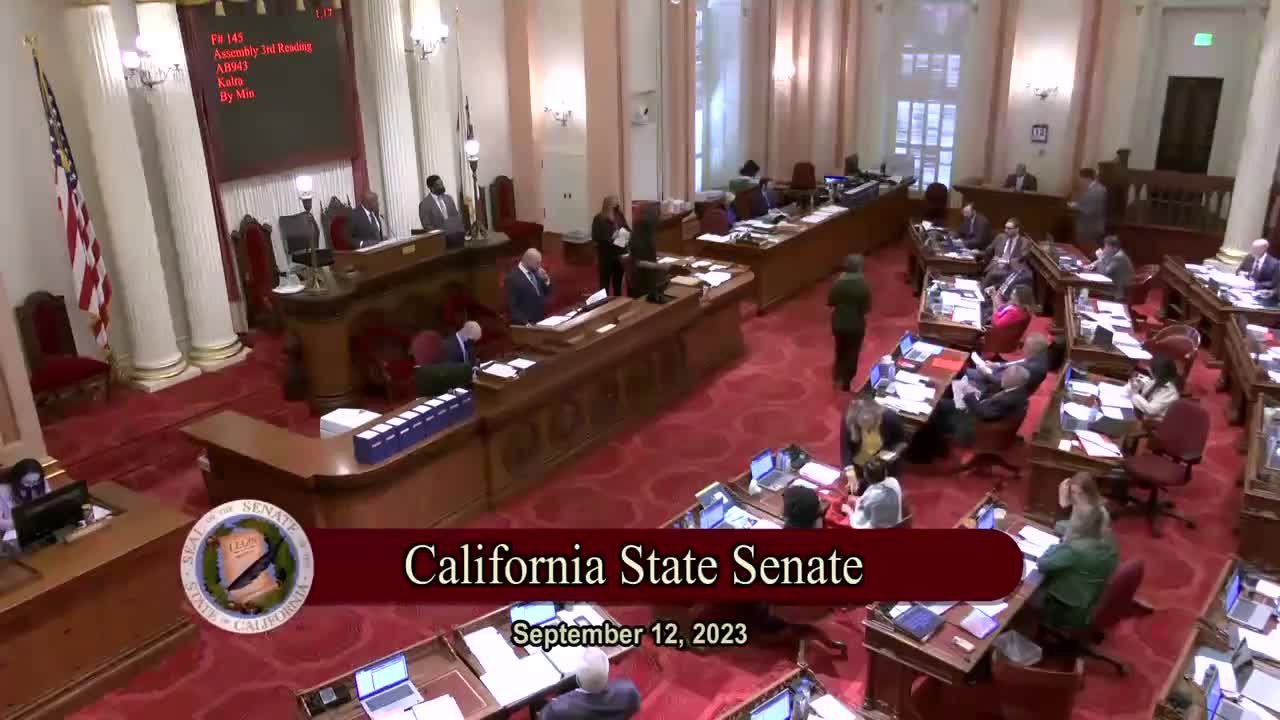 54SEC
Senate Floor
 1MIN
Senate Standing Committee on Appropriations
 13SEC
Senate Standing Committee on Transportation
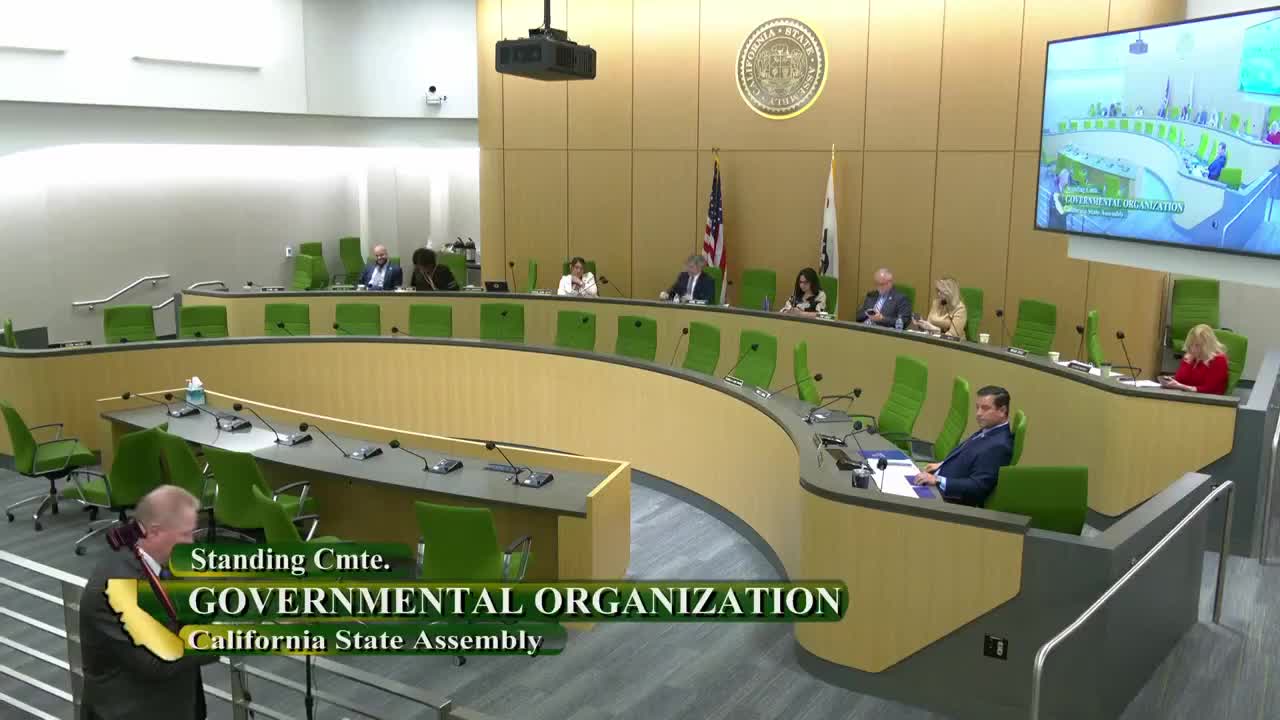 7MIN
Assembly Standing Committee on Governmental Organization
Bill Author

Bill Co-Author(s):