AB 458: Postsecondary education: instructional strategies.
- Session Year: 2015-2016
- House: Assembly
- Latest Version Date: 2015-02-23
Existing provisions of the California Constitution provide that the University of California constitutes a public trust administered by the Regents of the University of California, a corporation in the form of a board, with full powers of organization and government, subject to legislative control only for specified purposes. Existing law requests the Regents of the University of California, with the approval of the Concurrence Committee, to establish and maintain cooperative endeavors designed to accomplish specified purposes.
This bill would add to these purposes conducting a feasibility study to determine the appropriate grade level and subject area and potential costs for a pilot program to develop standards-aligned content and instructional software for use on portable electronic devices.
(a)With funds appropriated therefor, and with the approval of the Concurrence Committee, the Regents of the University of California are requested to establish and maintain cooperative endeavors designed to accomplish the following:
(1)Develop and enhance teachers subject matter and content knowledge in the subject matter areas specified in Section 99201.
(2)Develop and enhance teachers instructional strategies to improve pupil learning and academic performance as measured against State Board of Education standards adopted pursuant to Sections 60605 and 60605.8 and, where applicable, to standards adopted pursuant to Section 60811 and any subsequently adopted standards.
(3)Provide teachers with instructional strategies for working with English learners.
(4)Provide teachers with instructional strategies for delivering career-oriented, integrated academic and technical content in a manner that is linked to high priority industry sectors identified in the California career technical education model curriculum standards as adopted by the State Board of Education. The Concurrence Committee, in consultation with the appropriate state entities, industry leaders, representatives of organized labor, educators, and other parties, shall determine the priority of industry sectors.
(5)Provide teachers with access to and opportunity to examine current research that is demonstrably linked to improved pupil learning and achievement as measured by performance levels on state tests administered pursuant to Section 60605, or any successor assessment system, or on English language development assessments developed, pursuant to Chapter 7 (commencing with Section 60810) of Part 33 of Division 4 of Title 2, or any successor assessments, for English language learners.
(6)Maintain subject-specific professional communities that create and encourage ongoing opportunities for teacher collaboration, learning, and research.
(7)Develop and deploy as teacher leaders, teachers with demonstrated levels of expertise in the classroom and certifiable levels of content knowledge.
(8)Provide teachers with instructional strategies for ongoing collaboration on the delivery of career-oriented, integrated academic and technical content.
(9)Conduct a feasibility study to determine the appropriate grade level and subject area and potential cost for a pilot program to develop standards-aligned content and instructional software for use on portable electronic devices.
(b)The duties of the Concurrence Committee shall include, but need not be limited to, all of the following:
(1)Ensuring that the statewide and local subject matter projects comply with requirements of this chapter.
(2)Developing rules and regulations for the statewide subject matter projects.
(3)On or before January 1, 2016, providing a report on the subject matter projects to the Governor and to appropriate policy and fiscal committees of the Legislature. The report shall include, but need not be limited to, all of the following information, compiled for a four-year period:
(A)The number, and level of experience, of participants in each subject matter project.
(B)The total amount of funds expended, on an annual basis, for each subject matter project.
(C)An explanation of the type of professional development activities offered pursuant to each subject matter project, including the extent to which teachers were provided professional development focused on delivering career-oriented, integrated academic and technical content.
(D)A list of the name and location of each school affiliated with a subject matter project.
(c)Grants to establish local sites of statewide subject matter projects shall be available to institutions of higher education, county offices of education and school districts, or any combination thereof, with a subject matter proposal approved pursuant to this article. Once established, each subject matter project shall be administered by the University of California in cooperation with the Concurrence Committee. Local sites of statewide subject matter projects shall be distributed throughout the state so that elementary, secondary, and postsecondary school personnel located in rural, urban, and suburban areas may avail themselves of subject matter projects.
(d)The Concurrence Committee shall be composed of individuals who are affiliated with leadership, management, or instruction in education or education policy entities, including educational expertise on instructional strategies for English learners and academic language acquisition. They shall be selected as follows:
(1)One representative selected by the Regents of the University of California.
(2)One representative selected by the Board of Trustees of the California State University.
(3)One representative selected by the State Board of Education, who has significant experience with direct classroom instruction.
(4)One representative selected by the Governor.
(5)One representative selected by the Superintendent of Public Instruction.
(6)One representative selected by the Commission on Teacher Credentialing.
(7)One representative selected by the Curriculum Development and Supplemental Materials Commission.
(8)One representative of the California Community Colleges selected by the Board of Governors of the California Community Colleges.
(9)One representative of an independent postsecondary institution selected by the Association of Independent California Colleges and Universities.
(e)(1)The requirement for submitting a report pursuant to paragraph (3) of subdivision (b) is inoperative on January 1, 2018, pursuant to Section 10231.5 of the Government Code.
(2)A report to be submitted pursuant to paragraph (3) of subdivision (b) shall be in compliance with Section 9795 of the Government Code.
|
Date
|
Status
|
|---|---|
| Feb 1, 2016 | From committee: Filed with the Chief Clerk pursuant to Joint Rule 56. |
| Jan 31, 2016 | Died pursuant to Article IV, Sec. 10(c) of the Constitution. |
| May 28, 2015 | In committee: Held under submission. |
| Apr 22, 2015 | In committee: Set, first hearing. Referred to APPR. suspense file. |
| Apr 8, 2015 | From committee: Do pass and re-refer to Com. on APPR. (Ayes 11. Noes 1.) (April 7). Re-referred to Com. on APPR. |
| Mar 5, 2015 | Referred to Com. on HIGHER ED. |
| Feb 24, 2015 | From printer. May be heard in committee March 26. |
| Feb 23, 2015 | Read first time. To print. |
|
Date
|
Description
|
Location
|
Votes
|
|
|---|---|---|---|---|
| Apr 7, 2015 | Do pass and be re-referred to the Committee on [Appropriations] | Assembly Standing Committee on Higher Education |
Passed |
This list shows positions taken on this bill by organizations on the date displayed, which is linked to the original source.
Positions by individuals are not included.
AB 458
Page 1
Date of Hearing: April 22, 2015
ASSEMBLY COMMITTEE ON APPROPRIATIONS
Jimmy Gomez, Chair
AB 458
(O'Donnell) – As Introduced February 23, 2015
Policy Committee: |
Higher Education |
Vote: |
11 - 1 |
|
|
|
|
|
|
|
|
Urgency: No State Mandated Local Program: No Reimbursable: No
SUMMARY:
This bill requests the California Subject Matters Project (CSMP), within the University of California (UC), to conduct a feasibility study to determine the appropriate grade level and subject area and potential cost for a pilot program to develop standards-aligned content and instructional software for use on portable electronic devices.
FISCAL EFFECT:
Minor one-time General Fund costs (under $50,000) to UC for the CSMP to conduct the feasibility study.
COMMENTS:
Purpose. According to the author, "As California transitions to the Common Core State Standards (CCSS), we need to invest in instructional materials that are aligned to those new standards. At the same time, there is an increased demand for portable electronic devices to provide curriculum content. Although electronic materials are being created by private publishers, they are developed for a national market and may not suit the unique needs of California's students." The author contends that the state could realize significant cost savings by using publicly-resourced materials. AB 458 is intended to examine the feasibility and cost of developing such materials. The author believes that the CSMP should do the study, as the only interdisciplinary and intersegmental public entity working directly with teachers to improve classroom instruction in specified content areas.
Background. CSMP is an intersegmental effort of postsecondary education institutions that connects K-12 educators with faculty in the various disciplines from UC, California State University, and private higher education colleges and universities to provide professional development designed to enhance teachers’ content knowledge and instructional strategies to improve student learning and academic performance.
Analysis Prepared by: Chuck Nicol / APPR. / (916) 319-2081
AB 458
Page 2
Date of Hearing: April 7, 2015
ASSEMBLY COMMITTEE ON HIGHER EDUCATION
Jose Medina, Chair
AB 458
(O'Donnell) – As Introduced February 23, 2015
SUBJECT: Postsecondary education: instructional strategies
SUMMARY: Requests the California Subject Matters Project (CSMP) housed within the University of California (UC) to conduct a feasibility study to determine the appropriate grade level and subject area and potential cost for a pilot program to develop standards-aligned content and instructional software for use on portable electronic devices.
EXISTING LAW:
Requires the UC Regents, with the approval of an intersegmental Concurrence Committee, to establish and maintain the projects and specifies the composition of the concurrence committee to be representatives of the various segments of education. Requires the advisory board of each subject matter project to use specified criteria in recommending funding for local project sites (Education Code Section 99200).
Provides for the establishment and maintenance of nine CSMPs for the purpose of developing and enhancing teachers’ subject matter knowledge and pedagogical skills, as follows:
The California Writing Project;
The California Reading and Literature Project;
The California Mathematics Project;
The California Science Project;
The California History-Social Science Project;
The World History and International Studies Project;
The California Physical Education-Health Project;
The California Arts Project; and,
The California World Language Project (EC Section 99201).
Authorizes UC to establish other subject matter projects and specifies that no funds allocated in the annual Budget Act shall be used for subject matter projects in subjects not specifically authorized in statute (EC Section 99201.5).
Sunsets CSMP on June 30, 2017, and repeals the authorizing statute on January 1, 2018, unless a later-enacted statute deletes or extends those dates (EC Section 99206).
FISCAL EFFECT: Unknown
COMMENTS: Purpose of the measure. According to the author, "As California transitions to the Common Core State Standards (CCSS), we need to invest in instructional materials that are aligned to those new standards. At the same time, there is an increased demand for portable electronic devices to provide curriculum content. Although electronic materials are being created by private publishers, they are developed for a national market and may not suit the unique needs of California's students." The author contends that, "The state could realize significant cost savings through the use of publicly-resourced materials. The purpose of this bill is to explore the feasibility and cost of developing such materials. The California Subject Matters Project (CSMP) should do this study, because it is the only interdisciplinary and intersegmental public entity that works directly with teachers to improve classroom instruction in specified content areas."
Background. As California transitions to the CCSS and as other content standards are updated, school districts need new instructional materials that are aligned to said standards. At the same time, school districts are increasingly making use of portable electronic devices in order to provide curriculum content. Although private publishers are developing electronic instructional software, those products can be costly and are geared towards a national market. California's schools need a source of high-quality, cost-effective materials that are tailored to the many needs of our students.
California Subject Matters Project. CSMP is an intersegmental effort of postsecondary education institutions that connects K-12 educators with faculty in the various disciplines from UC, California State University, and private higher education colleges and universities to provide professional development designed to enhance teachers’ content knowledge and instructional strategies to improve student learning and academic performance as measured against the state’s K-12 academic content standards. Additionally, the CSMP provide teachers with instructional strategies for working with English learners and help teachers use research and data to improve student learning and achievement.
REGISTERED SUPPORT / OPPOSITION:
Support
None on file.
Opposition
None on file.
Analysis Prepared by: Jeanice Warden / HIGHER ED. / (916) 319-3960
Discussed in Hearing
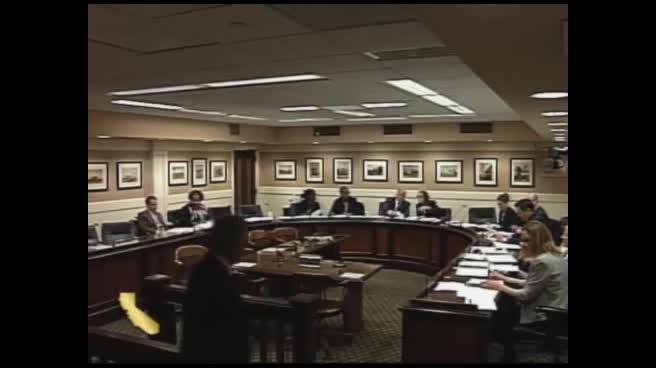 7MIN
Assembly Standing Committee on Higher Education
Bill Author

Bill Co-Author(s):