AB 1482: Electric vehicle charging infrastructure: local publicly owned electric utilities.
- Session Year: 2023-2024
- House: Assembly
- Latest Version Date: 2023-05-01
Current Status:
Failed
(2024-02-01: From committee: Filed with the Chief Clerk pursuant to Joint Rule 56.)
Introduced
In Committee
First Chamber
In Committee
Second Chamber
Enacted
Existing law vests the Public Utilities Commission (PUC) with regulatory jurisdiction over public utilities, including electrical corporations, while local publicly owned electric utilities are under the direction of their governing board. Under its existing regulatory authority, the PUC adopted a resolution establishing, for electrical corporations, an average service energization time for electric vehicle charging infrastructure of 125 business days, except as provided, and requiring electrical corporations to provide certain information to the PUC regarding service energization time for electric vehicle infrastructure projects.
This bill would require each electrical corporation, consistent with the commission resolution, to achieve a 125-business-day average service energization target starting from when a customer submits an application for service to the energization of an electric vehicle charging infrastructure project, except as provided. The bill would establish, for local publicly owned electric utilities, an average service energization time for electric vehicle charging infrastructure of 125 business days, and would require local publicly owned electric utilities to annually report certain information to the State Energy Resources Conservation and Development Commission (Energy Commission) regarding the service energization time for electric vehicle charging infrastructure projects. The bill would require the PUC and the Energy Commission, in consultation with electrical corporations and local publicly owned electric utilities, to jointly host an annual public workshop to review and evaluate the information submitted by electrical corporations under the PUCs resolution and the information submitted by local publicly owned electric utilities, as required by the bill, and to revise, if needed, the average service energization time for electric vehicle charging infrastructure.
Existing law establishes the Clean Transportation Program, which is administered by the Energy Commission, to provide competitive grants, revolving loans, loan guarantees, loans, or other appropriate funding measures to develop and deploy innovative technologies and alternative and renewable fuels in the marketplace. Existing law specifies that alternative and renewable fuel infrastructure, fueling stations, and equipment are eligible for funding under the program.
This bill would require the Energy Commission, in providing financial assistance under the Clean Transportation Program or other programs for the installation of electric vehicle charging infrastructure, to give preference to projects that receive permits from a local jurisdiction that has established expedited electric vehicle charging permitting processes.
By imposing additional duties on local publicly owned electric utilities, this bill would impose a state-mandated local program.
The California Constitution requires the state to reimburse local agencies and school districts for certain costs mandated by the state. Statutory provisions establish procedures for making that reimbursement.
This bill would provide that no reimbursement is required by this act for a specified reason.
Existing law vests the Public Utilities Commission (PUC) with regulatory jurisdiction over public utilities, including electrical corporations, while local publicly owned electric utilities are under the direction of their governing board. Under its existing regulatory authority, the PUC adopted a resolution establishing, for electrical corporations, an average service energization time for electric vehicle charging infrastructure of 125 business days, except as provided, and requiring electrical corporations to provide certain information to the PUC regarding service energization time for electric vehicle infrastructure projects.
This bill would establish, for local publicly owned electric utilities, an average service energization time for electric vehicle charging infrastructure of 125 business days, and would require local publicly owned electric utilities to annually report certain information to the State Energy Resources Conservation and Development Commission (Energy Commission) regarding the service energization time for electric vehicle charging infrastructure projects. The bill would require the PUC and the Energy Commission, in consultation with electrical corporations and local publicly owned electric utilities, to jointly host an annual public workshop to review and evaluate the information submitted by electrical corporations under the PUCs resolution and the information submitted by local publicly owned electric utilities, as required by the bill, and to revise, if needed, the average service energization time for electric vehicle charging infrastructure.
Existing law establishes the Clean Transportation Program, which is administered by the Energy Commission, to provide competitive grants, revolving loans, loan guarantees, loans, or other appropriate funding measures to develop and deploy innovative technologies and alternative and renewable fuels in the marketplace. Existing law specifies that alternative and renewable fuel infrastructure, fueling stations, and equipment are eligible for funding under the program.
This bill would require the Energy Commission, in providing financial assistance under the Clean Transportation Program or other programs for the installation of electric vehicle charging infrastructure, to give preference to projects that receive certain permits from a local jurisdiction and projects in the service territory of an electrical corporation or a local publicly owned electric utility with an average service energization time of no more than 125 business days or the time established pursuant to the public workshop described above. that has established expedited electric vehicle charging permitting processes.
By imposing additional duties on local publicly owned electric utilities, this bill would impose a state-mandated local program.
The California Constitution requires the state to reimburse local agencies and school districts for certain costs mandated by the state. Statutory provisions establish procedures for making that reimbursement.
This bill would provide that no reimbursement is required by this act for a specified reason.
Existing law vests the Public Utilities Commission (PUC) with regulatory jurisdiction over public utilities, including electrical corporations, while local publicly owned electric utilities are under the direction of their governing board. Under its existing regulatory authority, the PUC adopted a resolution establishing, for electrical corporations, an average service energization time for electric vehicle charging infrastructure of 125 business days, except as provided, and requiring electrical corporations to provide certain information to the PUC regarding service energization time for electric vehicle infrastructure projects.
This bill would establish, for local publicly owned electric utilities, an average service energization time for electric vehicle charging infrastructure of 125 business days, and would require local publicly owned electric utilities to annually report certain information to the State Energy Resources Conservation and Development Commission (Energy Commission) regarding the service energization time for electric vehicle charging infrastructure projects. The bill would require the PUC and the Energy Commission, in consultation with electrical corporations and local publicly owned electric utilities, to jointly host an annual public workshop to review and evaluate the information submitted by electrical corporations under the PUCs resolution and the information submitted by local publicly owned electric utilities, as required by the bill, and to revise, if needed, the average service energization time for electric vehicle charging infrastructure.
Existing law establishes the Clean Transportation Program, which is administered by the Energy Commission, to provide competitive grants, revolving loans, loan guarantees, loans, or other appropriate funding measures to develop and deploy innovative technologies and alternative and renewable fuels in the marketplace. Existing law specifies that alternative and renewable fuel infrastructure, fueling stations, and equipment are eligible for funding under the program.
This bill would require the Energy Commission, in providing financial assistance under the Clean Transportation Program or other programs for the installation of electric vehicle charging infrastructure, to give preference to projects that receive certain permits from a local jurisdiction and projects in the service territory of an electrical corporation or a local publicly owned electric utility with an average service energization time of no more than 125 business days or the time established pursuant to the public workshop described above.
By imposing additional duties on local publicly owned electric utilities, this bill would impose a state-mandated local program.
The California Constitution requires the state to reimburse local agencies and school districts for certain costs mandated by the state. Statutory provisions establish procedures for making that reimbursement.
This bill would provide that no reimbursement is required by this act for a specified reason.
(a)It is the intent of the Legislature that the state rapidly deploy a complete, equitable, cost-effective, and future-proof electric vehicle charging infrastructure network to support the states climate change and transportation electrification goals.
(b)To advance the state policies set forth in Section 2848 of the Public Utilities Code, in providing financial assistance under the Clean Transportation Program or other programs for the installation of electric vehicle charging infrastructure, the commission shall give preference to electric vehicle charging projects that have received permits from a local jurisdiction that has established expedited electric vehicle charging permitting processes pursuant to Sections 65850.7 and 65850.71 of the Government Code.
SEC. 2.Chapter 8.5 (commencing with Section 2848) is added to Part 2 of Division 1 of the Public Utilities Code, to read:8.5.Transportation Electrification2848.(a)It is the policy of the state for electrical corporations and local publicly owned electric utilities to do both of the following:
(1)Expedite service energization of electric vehicle charging infrastructure to support the states transportation electrification goals.
(2)Achieve an average service energization time of no more than 125 business days for projects installing electric vehicle charging infrastructure, as set forth in commission Resolution E-5247 (December 15, 2022), or the average service energization time established pursuant to subdivision (d).
(b)Consistent with commission Resolution E-5247, each local publicly owned electric utility shall do all of the following:(1)(A)(b)(1)Except as provided in subparagraph (B), paragraph (2) and consistent with commission Resolution E-5247, each electrical corporation and local publicly owned electric utility shall achieve a 125-business days 125-business-day average service energization target starting from when a customer submits an application for service to the energization of an electric vehicle charging infrastructure project.
(B)Subparagraph (A)
(2)Paragraph (1) does not apply to any of the following:
(i)(A)A project with an installed capacity of greater than 2 megawatts.
(ii)(B)A project that requires a substantial upstream capacity upgrade in addition to the electrical distribution infrastructure on the electrical corporations or the local publicly owned electric utilitys side of the customers meter, including poles, vaults, service drops, transformers, mounting pads, trenching, conduit, wire, cable, meters, other equipment as necessary, and associated engineering and civil construction work.
(iii)(C)A project that requires a substation upgrade.
(c)Consistent with commission Resolution E-5247, each local publicly owned electric utility shall do all of the following:
(2)(1)List all projects that exceed the 125-business days 125-business-day service energization target, the reasons for the delay for each project, and the number of days each project exceeded that target.
(3)(2)List all projects that met the 125-business days 125-business-day service energization target, the service energization time for each project, and the reasons and best practices that allowed each project to meet the target.
(4)(3)List all projects specified in subparagraph (B) of paragraph (1) paragraph (2) of subdivision (b) and the service energization time for each project.
(c)(d)On or before December 31, 2024, and annually thereafter, each local publicly owned electric utility shall provide to the Energy Commission the information specified in paragraphs (2) to (4), inclusive, of subdivision (b). subdivision (c).
(d)(e)On or before June 30, 2025, and annually thereafter, the commission and the Energy Commission, in consultation with electrical corporations and local publicly owned electric utilities, shall jointly host a public workshop to review and evaluate the information submitted under commission Resolution E-5247 or subdivision (b) (c) and revise or establish, if needed, the average service energization time for projects, including projects specified in subparagraph (B) of paragraph (1) (2) of subdivision (b), to support the states transportation electrification goals.
SEC. 3.No reimbursement is required by this act pursuant to Section 6 of Article XIIIB of the California Constitution because a local agency or school district has the authority to levy service charges, fees, or assessments sufficient to pay for the program or level of service mandated by this act, within the meaning of Section 17556 of the Government Code.
(a)It is the intent of the Legislature that the state rapidly deploy a complete, equitable, cost-effective, and future-proof electric vehicle charging infrastructure network to support the states climate change and transportation electrification goals.
(b)To advance the state policies set forth in Section 2847 2848 of the Public Utilities Code, in providing financial assistance under the Clean Transportation Program or other programs for the installation of electric vehicle charging infrastructure, the commission shall do both of the following: give preference to electric vehicle charging projects that have received permits from a local jurisdiction that has established expedited electric vehicle charging permitting processes pursuant to Sections 65850.7 and 65850.71 of the Government Code.
(1)Give preference to projects that have received permits from a local jurisdiction pursuant to Sections 65850.7 and 65850.71 of the Government Code.(2)Give preference to projects in the service territory of an electrical corporation or a local publicly owned electric utility with an average service energization time of no more than 125 business days or the average service energization time established pursuant to subdivision (d) of Section 2847 of the Public Utilities Code.SEC. 2.Chapter 8.5 (commencing with Section 2847) is added to Part 2 of Division 1 of the Public Utilities Code, to read:SEC. 2.Chapter 8.5 (commencing with Section 2848) is added to Part 2 of Division 1 of the Public Utilities Code, to read:8.5.Transportation Electrification2847.2848.(a)It is the policy of the state for electrical corporations and local publicly owned electric utilities to do both of the following:
(1)Expedite service energization of electric vehicle charging infrastructure to support the states transportation electrification goals.
(2)Achieve an average service energization time of no more than 125 business days for projects installing electric vehicle charging infrastructure, as set forth in commission Resolution E-5247 (December 15, 2022), or the average service energization time established pursuant to subdivision (d).
(b)Consistent with commission Resolution E-5247, each local publicly owned electric utility shall do all of the following:
(1)(A)Except as provided in subparagraph (B), achieve a 125-business days average service energization target starting from when a customer submits an application for service to the energization of an electric vehicle charging infrastructure project.
(B)Subparagraph (A) does not apply to any of the following:
(i)A project with an installed capacity of greater than 2 megawatts.
(ii)A project that requires a distribution line extension upgrade. substantial upstream capacity upgrade in addition to the electrical distribution infrastructure on the utilitys side of the customers meter, including poles, vaults, service drops, transformers, mounting pads, trenching, conduit, wire, cable, meters, other equipment as necessary, and associated engineering and civil construction work.
(iii)A project that requires a substation upgrade.
(2)List all projects that exceed the 125-business days service energization target, the reasons for the delay for each project, and the number of days each project exceeded that target.
(3)List all projects that met the 125-business days service energization target, the service energization time for each project, and the reasons and best practices that allowed each project to meet the target.
(3)(4)List all projects specified in subparagraph (B) of paragraph (1) and the service energization time for each project.
(c)On or before December 31, 2024, and annually thereafter, each local publicly owned electric utility shall provide to the Energy Commission the information specified in paragraphs (2) and (3) to (4), inclusive, of subdivision (b).
(d)On or before June 30, 2025, and annually thereafter, the commission and the Energy Commission, in consultation with electrical corporations and local publicly owned electric utilities, shall jointly host a public workshop to review and evaluate the information submitted under commission Resolution E-5247 or subdivision (b) and revise or establish, if needed, the average service energization time for projects, including projects specified in subparagraph (B) of paragraph (1) of subdivision (b), to support the states transportation electrification goals.
SEC. 3.No reimbursement is required by this act pursuant to Section 6 of Article XIIIB of the California Constitution because a local agency or school district has the authority to levy service charges, fees, or assessments sufficient to pay for the program or level of service mandated by this act, within the meaning of Section 17556 of the Government Code.
(a)It is the intent of the Legislature that the state rapidly deploy a complete, equitable, cost-effective, and future-proof electric vehicle charging infrastructure network to support the states climate change and transportation electrification goals.
(b)To advance the state policies set forth in Section 2847 of the Public Utilities Code, in providing financial assistance under the Clean Transportation Program or other programs for the installation of electric vehicle charging infrastructure, the commission shall do both of the following:
(1)Give preference to projects that have received permits from a local jurisdiction pursuant to Sections 65850.7 and 65850.71 of the Government Code.
(2)Give preference to projects in the service territory of an electrical corporation or a local publicly owned electric utility with an average service energization time of no more than 125 business days or the average service energization time established pursuant to subdivision (d) of Section 2847 of the Public Utilities Code.
SEC. 2.Chapter 8.5 (commencing with Section 2847) is added to Part 2 of Division 1 of the Public Utilities Code, to read:8.5.Transportation Electrification2847.(a)It is the policy of the state for electrical corporations and local publicly owned electric utilities to do both of the following:
(1)Expedite service energization of electric vehicle charging infrastructure to support the states transportation electrification goals.
(2)Achieve an average service energization time of no more than 125 business days for projects installing electric vehicle charging infrastructure, as set forth in commission Resolution E-5247 (December 15, 2022), or the average service energization time established pursuant to subdivision (d).
(b)Consistent with commission Resolution E-5247, each local publicly owned electric utility shall do all of the following:
(1)(A)Except as provided in subparagraph (B), achieve a 125-business days average service energization target starting from when a customer submits an application for service to the energization of an electric vehicle charging infrastructure project.
(B)Subparagraph (A) does not apply to any of the following:
(i)A project with an installed capacity of greater than 2 megawatts.
(ii)A project that requires a distribution line extension upgrade.
(iii)A project that requires a substation upgrade.
(2)List all projects that exceed the 125-business days service energization target, the reasons for the delay for each project, and the number of days each project exceeded that target.
(3)List all projects specified in subparagraph (B) of paragraph (1) and the service energization time for each project.
(c)On or before December 31, 2024, and annually thereafter, each local publicly owned electric utility shall provide to the Energy Commission the information specified in paragraphs (2) and (3) of subdivision (b).
(d)On or before June 30, 2025, and annually thereafter, the commission and the Energy Commission, in consultation with electrical corporations and local publicly owned electric utilities, shall jointly host a public workshop to review and evaluate the information submitted under commission Resolution E-5247 or subdivision (b) and revise or establish, if needed, the average service energization time for projects, including projects specified in subparagraph (B) of paragraph (1) of subdivision (b), to support the states transportation electrification goals.
SEC. 3.No reimbursement is required by this act pursuant to Section 6 of Article XIIIB of the California Constitution because a local agency or school district has the authority to levy service charges, fees, or assessments sufficient to pay for the program or level of service mandated by this act, within the meaning of Section 17556 of the Government Code.
|
Date
|
Status
|
|---|---|
| Feb 1, 2024 | From committee: Filed with the Chief Clerk pursuant to Joint Rule 56. |
| Jan 31, 2024 | Died pursuant to Art. IV, Sec. 10(c) of the Constitution. |
| May 18, 2023 | In committee: Held under submission. |
| May 18, 2023 | Joint Rule 62(a), file notice suspended. (Page 1580.) |
| May 17, 2023 | In committee: Set, first hearing. Referred to APPR. suspense file. |
| May 2, 2023 | Re-referred to Com. on APPR. |
| May 1, 2023 | Read second time and amended. |
| Apr 27, 2023 | From committee: Amend, and do pass as amended and re-refer to Com. on APPR. (Ayes 10. Noes 2.) (April 26). |
| Mar 21, 2023 | Re-referred to Com. on U. & E. |
| Mar 20, 2023 | From committee chair, with author's amendments: Amend, and re-refer to Com. on U. & E. Read second time and amended. |
| Mar 9, 2023 | Referred to Com. on U. & E. |
| Feb 18, 2023 | From printer. May be heard in committee March 20. |
| Feb 17, 2023 | Read first time. To print. |
|
Date
|
Description
|
Location
|
Votes
|
|
|---|---|---|---|---|
| Apr 26, 2023 | Do pass as amended and be re-referred to the Committee on [Appropriations] | Assembly Standing Committee on Utilities and Energy |
Passed |
This list shows positions taken on this bill by organizations on the date displayed, which is linked to the original source.
Positions by individuals are not included.
|
Organization
|
Position
|
Date
|
|---|---|---|
| Electrify America LLC | ** Support |
Date of Hearing: May 17, 2023
ASSEMBLY COMMITTEE ON APPROPRIATIONS
Chris Holden, Chair
ABPCA Bill Id:AB 1482
Author:(Gabriel) – As Amended Ver:May 1, 2023
Policy Committee: | Utilities and Energy | Vote: | 10 - 2 |
|
| ||
|
|
Urgency: No State Mandated Local Program: Yes Reimbursable: Yes
SUMMARY:
This bill establishes the policy of the state to expedite service energization of electric vehicle (EV) charging infrastructure to support the state’s transportation electrification goals and makes requirements to further that policy.
Specifically, this bill:
- With some exceptions, requires each electrical corporation and each local publicly owned electric utility (POU) to achieve a 125-business-day average service energization target starting from when a customer submits an application for service to the energization of an EV charging infrastructure project.
- Consistent with California Public Utilities Commission (CPUC) Resolution E-5247, requires a POU list the following information and provide the lists to the California Energy Commission (CEC) annually:
- List all projects that exceed the 125-business-day service energization target, the reasons for the delay for each project and the number of days each project exceeded that target.
- List all projects that met the 125-business-day service energization target, the service energization time for each project and the reasons and best practices that allowed each project to meet the target.
- List all projects statutorily excepted from the 125-day energization target.
- Requires, on or before June 30, 2025, and annually thereafter, the CPUC and the CEC, in consultation with electrical corporations and POUs, to jointly host a public workshop to review and evaluate EV infrastructure energization information and revise or establish, if needed, the average service energization time for such projects to support the state’s transportation electrification goals.
FISCAL EFFECT:
The CEC anticipates needing an additional staff person, or the equivalent in workload, to collect, organize, review and evaluate data submitted and to host the annual workshop. The CPUC will also experience relatively minor costs to host the workshop. Taken together, these cost will likely total less than $200,000 annually.
By imposing new duties on POUs, the state is imposing a local mandate. Costs to the POU’s to comply with the bill are unknown; however, collectively, they might be significant. To the extent the Commission on State Mandates determines these costs to be a reimbursable mandate, the state would need to pay these costs (General Fund).
COMMENTS:
- Purpose. The author intends this bill to accelerate EV deployment by making EV infrastructure energization faster. According to the author:
In order for California to deliver on its ambitious goals of fully electrifying its transportation sector, we must focus on creating a more robust electric vehicle (EV) infrastructure for consumers. One particular concern is the stagnant pace at which applications for public EV chargers are approved and implemented, which delays the charger from being installed, energized, and utilized by drivers. Long timelines to energize chargers are well documented, and have resulted in chargers being installed in public places but not being able to supply power to customers. AB 1482 will mitigate this issue by ensuring that our public EV chargers are energized within 125 days on average, thereby establishing an effective statewide EV charger energization policy that will efficiently advance California’s clean transportation and environmental goals.
- Background. The state has ambitious clean energy goals: a reduction of statewide greenhouse gas (GHG) emissions to 40% below the 1990 level by 2030, and carbon neutrality as soon as possible, but no later than 2045.
100% Zero Emission. To these ends, in September of 2020, the Governor issued Executive Order (EO) N-79-20, which proclaims the following goals:
- 100% of in-state sales of new passenger cars and trucks be zero-emission by 2035.
- 100% of medium- and heavy-duty vehicles in the state be zero-emission by 2045 for all operations where feasible and by 2035 for drayage trucks.
- 100% of off-road vehicles and equipment zero-emission by 2035, where feasible.
The Air Resources Board (ARB) is working on regulations to realize the goals of EO N-79-20. In addition, ARB, CEC, CPUC and the Governor’s Office of Business Development, along with other state, local and private entities, undertake various efforts to project demand and plan for zero-emission vehicle deployment.
Time to Energize EV Infrastructure. The CPUC is trying to lessen the time it takes the energize EV infrastructure. The CPUC issued Resolution E-5247, which established an interim 125-business day average service energization timeline for projects taking service in an electric investor-owned utilities (IOU) territory under the EV Infrastructure Rules, in December 2022. The timeline excludes projects that require distribution line extensions or capacity upgrades, projects above two megawatts and projects that require upgrades to a substation. The resolution directs the IOUs to collect one year of EV Infrastructure Rule implementation data to inform an updated proposal for a permanent service energization timeline. As directed in Resolution E-5247, the IOUs will likely propose an updated service energization timeline, after holding a public workshop, by December 2023. Unlike this bill, the CPUC resolution does not apply to POUs.
- Related Legislation. AB 50 (Wood) requires CPUC determine the criteria for timely energization for electric customers. AB 50 is pending on this committee’s suspense file.
AB 643 (Berman) directs CPUC, on or before March 31, 2024, commence consideration of adopting mechanisms for distributed renewable generation interconnections to enforce timelines, reduce administrative burden and provide transparency and certainty to customers. AB 643 is pending in this committee.
AB 1293 (Irwin) requires CPUC provide guidance to electrical corporations for the prioritization of projects in each electrical corporation’s distribution interconnection queue and customer service connections, including prioritization of projects that are shovel-ready, as determined by the CPUC. AB1293 is pending in this committee.
Analysis Prepared by: Jay Dickenson / APPR. / (916) 319-2081
Date of Hearing: April 26, 2023
ASSEMBLY COMMITTEE ON UTILITIES AND ENERGY
Eduardo Garcia, Chair
ABPCA Bill Id:AB 1482 (
Author:Gabriel) – As Amended Ver:March 20, 2023
SUBJECT: Electric vehicle charging infrastructure: local publicly owned electric utilities
SUMMARY: Establishes, for Publically Owned Utilities (POUs), an average service energization time for electric vehicle (EV) charging infrastructure of 125 business days, and requires the California Public Utilities Commission (CPUC) and the California Energy Commission (CEC), in consultation with investor-owned utilities (IOUs) and POUs, to jointly host an annual public workshop to review and revise, if needed, the average service energization time for EV charging infrastructure.
Specifically, this bill:
- Establishes an average service energization time for EV charging infrastructure of 125 business days for POUs, with exceptions for:
- Projects with an installed capacity of greater than 2 megawatts.
- Projects that require a substantial upstream capacity upgrade in addition to the electrical distribution infrastructure on the utility’s side of the customer’s meter.
- Projects that require a substation upgrade.
- Requires each POU to, on or before December 31, 2024, provide information to the CEC, including:
- A list of all projects that exceed the 125-business day service energization target, the reasons for the delay for each project, and the number of days each project exceeded that target.
- A list of all projects that met the 125-business day service energization target, the service energization time for each project, and the reasons and best practices that allowed each project to meet the target.
- A list of all projects with an installed capacity of greater than 2 megawatts, require a substantial upstream capacity upgrade, or require a substation upgrade, and the service energization time for each project.
- On or before June 30, 2025, and annually thereafter, requires the CPUC and the CEC, in consultation with IOUs and POUs, to jointly host a public workshop to review and evaluate the aforementioned information, as well as information submitted under CPUC Resolution E-5247, and revise or establish, if needed, the average service energization time for EV charging projects to support the state’s transportation electrification goals.
EXISTING LAW:
- Requires the CEC, working with the California Air Resources Board (CARB) and the CPUC, to prepare a statewide assessment of the EV charging infrastructure needed to support the levels of EV adoption required for the state to meet its goals of putting at least five million zero-emission vehicles (ZEVs) on California roads by 2030, and of reducing emissions of greenhouse gases (GHG) to 40% below 1990 levels by 2030. (Public Resources Code § 25229)
- Requires the CEC, in consultation with CARB, to assess whether charging station infrastructure is disproportionately deployed by population density, geographical area, or population income level. (Public Resources Code § 25231)
- Creates the Alternative and Renewable Fuel and Vehicle Technology Fund to be administered by the CEC to implement the Clean Transportation Program (CTP). Requires the CEC to include in the biennial integrated energy policy report (IEPR) a list of projects funded, the expected benefits in terms of specified characteristics, the overall contribution of the funded projects toward specified goals, key obstacles and challenges to meeting the goals, and recommendations for future actions. (Public Resources Code § 44273)
- Establishes that the implementation of consistent statewide standards to achieve the timely and cost-effective installation of EV charging stations and hydrogen-fueling stations is a matter of statewide concern, and that it is the policy of the state to promote the use of EV charging stations and hydrogen-fueling stations and to limit obstacles to their use. (Government Code § 65850.7)
FISCAL EFFECT: Unknown. This bill is keyed fiscal and will be referred to the Committee on Appropriations for its review.
BACKGROUND:
ZEVerything, ZEVerywhere, All At Once? – California’s transportation sector is currently the largest source of GHG emissions in the state and, in the interest of meeting the state’s emissions reduction targets, California has set a goal that 100% of new passenger vehicles sales will be ZEVs by 2035.[1] Meeting the state’s ZEV goals will require a significant increase in the number of light-, medium-, and heavy-duty ZEVs on the road and a drastic increase in the infrastructure to support these vehicles. Cumulative sales of ZEVs, which include EVs, in California reached 1.1 million in the first quarter of 2022, with ZEVs accounting for 16% of new car sales.
To support the rapid deployment of ZEVs, in 2018 the governor set a goal of having 250,000 chargers, including 10,000 direct current fast chargers, operating in California by 2025.[2] As of January 2021, California has installed more than 70,000 public and shared chargers, including nearly 6,000 direct current fast chargers (DCFC). The CEC found that an additional 123,000 are planned, approximately 3,600 of which are fast chargers, which leaves a gap of about 57,000 installations, from the goal of 250,000 chargers.[3] By 2030, the CEC projects over 700,000 public and shared private chargers will be needed to support the charging needs of 5 million ZEVs, and nearly 1.2 million chargers would be required to support 8 million ZEVs. An additional 157,000 chargers are needed to support 180,000 medium- and heavy-duty vehicles anticipated for 2030. Statewide, the Clean Transportation Program (CTP) receives $100 million per year through revenue from various fees, while the Governor’s proposed budget for 2023-24 includes about $2.1 billion for programs that expand affordable and convenient ZEV infrastructure access in low-income communities.[4]
EV infrastructure deployment incentives are generally aligned to EV ownership. However, this can create a chicken-or-the-egg scenario, where the lack of EV infrastructure in communities can influence those communities’ residents to delay buying and using EVs. While lower rates of EV adoption in areas might discourage companies from deploying charging infrastructure, the lack of charging infrastructure in those communities contributes to “range anxiety,” which leads drivers to avoid using and buying EVs due to a fear of not having a reliable charging location. Range anxiety is particularly concerning for drivers who regularly drive longer-than-average distances, including those with long commutes, rideshare drivers, and Californians living in rural areas. These drivers’ lack of reliable EV infrastructure can limit EV adoption, which subsequently disincentivizes further EV infrastructure deployment and limits potential emissions reduction benefits from transitioning drivers with higher vehicle miles from petroleum to electric-fueled cars.
Going on the Grid – Rules governing the ability of new buildings, electricity generation, and storage resources to connect to the electric distribution grid are generally determined by statute, CPUC rules, and tariffs[5] for each of the IOUs. New service connections, also known as “energization”, involve extending an electricity line or expanding distribution infrastructure to service new or expanded customer load. Energizations are subject to provisions specified in Electric Tariff Rule 15 and Electric Tariff Rule 16.
Electric Tariff Rule 15 relates to distribution line extensions. Specifically, new distribution facilities that are a continuation of, or branch from, the nearest available existing permanent distribution line (including any facility rearrangements and relocations necessary to accommodate the extension) to the point of connection of the last service. Rule 15 generally pertains to electric distribution grid equipment used by multiple customers, for example, a transformer serving multiple homes.
Electric Tariff Rule 16 relates to service line extensions. Specifically, the overhead and underground primary or secondary facilities (including but not limited to utility-owned service facilities and applicant owned service facilities) extending from the point of connection at the distribution line to the service delivery point. Rule 16 generally pertains to network equipment used by just one customer.
Electric Tariff Rules 15 and 16 establish the guidelines for design, cost allocation, and responsibilities of a project applicant and a utility for electric distribution line extensions. The ability to connect to the larger electrical system can take months (or years, in some cases) as the process can require designs and assessments on cost allocations associated with improvements on the electric distribution system to allow for the connection, among other issues. In the case of new building developments, electric service extensions may be required in phases over the span of months or years, depending on the size of the development.
Timelines for Electric Lines – The demands for new service connections and/or upgrades to existing distribution lines have been increasing, especially as California advances policies to deploy more infrastructure to charge electric vehicles, shift from natural gas to electricity in buildings, and increase the housing supply.[6] These projects all rely on access to the electrical grid and often require upgrades to the distribution system. Additionally, the COVID-19 pandemic has created supply shortages and challenges affecting many sectors of the economy, including limiting access to electrical equipment needed to connect new customers or expand energy load, such as transformers.[7] These factors have led to increasing reports of extensive delays in customer requests for energization, and much frustration from impacted communities, businesses, and elected officials.[8],[9]
A New Year’s Resolution – The CPUC issued Resolution E-5247, which established an interim 125-business day average service energization timeline for projects taking service in IOU territory under the EV Infrastructure Rules, in December 2022. The timeline excludes projects that require distribution line extensions or capacity upgrades, projects above two megawatts, and projects that require upgrades to a substation. The resolution directs the electric IOUs to collect one year of EV Infrastructure Rule implementation data to inform an updated proposal for a permanent service energization timeline. As directed in Resolution E-5247, the IOUs will likely propose an updated service energization timeline, after holding a public workshop, by December 2023. With the benefit of a full year of implementation data, the CPUC has the ability to issue another resolution adopting a permanent service energization timeline in 2024.[10] The ability to reevaluate and revise the timeline based on data from 2023 is central to the resolution because the CPUC, “does not have sufficient data to determine an appropriate permanent average service energization timeline at this time.”[11] As the CPUC deemed the existing data insufficient to take permanent action, the 125-business day interim energization timeline is the product of a compromise. Again in the words of the CPUC, “a 125-business days service energization average target, starting from when a customer submits an application for service through the EV Infrastructure Rules to the energization of the EVSE, balances the Joint EV Industry’s recommended 90-day target, and the Joint IOUs proposed 160-day target, and signals the intent for the IOUs to improve current practices while still acknowledging the growing state of the market.”[12]
COMMENTS:
- Author’s Statement. According to the author, “In order for California to deliver on its ambitious goals of fully electrifying its transportation sector, we must focus on creating a more robust electric vehicle (EV) infrastructure for consumers. One particular concern is the stagnant pace at which applications for public EV chargers are approved and implemented, which delays the charger from being installed, energized, and utilized by drivers. Long timelines to energize chargers are well documented, and have resulted in chargers being installed in public places but not being able to supply power to customers. AB 1482 will mitigate this issue by ensuring that our public EV chargers are energized within 125 days on average, thereby establishing an effective statewide EV charger energization policy that will efficiently advance California’s clean transportation and environmental goals.”
- Taking Your Timeline. In Resolution E-5247, the CPUC states that there is not enough data to set a well-informed, data-driven timeline that would maximize the buildout of EV charging infrastructure while minimizing the burden on the IOUs required to adhere to it. The 125-business day number represents a compromise, buoyed by the understanding that the data will be crucial in setting a permanent standard. It is also a value established by the CPUC through deliberations with, and presumably using data sourced from, the IOUs. It is not clear how much, if any, input the POUs were allowed during the process, or how representative the 125-day timeline is of POU energization efforts or deficiencies. The application of an interim CPUC decision with clearly acknowledged data limitations to a separate set of utilities, which are largely independent of the CPUC, raises questions as to the appropriateness of the timeline proposed by this bill. However, much like the CPUC’s efforts to just “pick a value” as a point of discussion and future evaluation, this bill begins a conversation and seeks to establish a uniform, statewide standard. Presumably such a standard timeline will provide certainty to third-party EV charging developers seeking to connect to the grid, that regardless of utility territory they know approximately what energization time to plan and budget for.
- Lack of Data on POU Energization Delays. Most of the reports of customer frustration with energization delays have originated in IOU territory, but there has been comparatively little public discourse about project delays in areas served by POUs. POUs generally operate their queues for energization projects on a first-come first-serve basis, with exceptions for larger projects that require more extensive processes. The initial design phase of energization projects, which includes permitting, is followed by construction of support infrastructure and subsequent installation of the customer-facing equipment. Some POUs are required to obtain City Council approval for projects which, though it can be pursued simultaneously with other steps, may delay project completion. POUs cite staff time and workforce limitations, particularly for smaller POUs which may have fewer and less specialized employees, as well as supply chain issues leading to scarcity of crucial materials, including transformers, as primary drivers of project duration. However, the committee is unaware of evidence of widespread energization delays in POU territories that would rise to the level documented in areas served by IOUs. This may indicate shorter and more consistent project completion timelines, less publicity around localized project delays, or the lack of a high-profile, statewide regulatory dialogue comparable to that which occurs between the CPUC and the IOUs. Regardless, this bill applies an energization timeline originally conceived of for IOUs to POUs, despite substantially less evidence of pervasive delays in POU territories.
- Expanding the Scope. This bill applies a 125-business day EV infrastructure timeline to POUs, but does not explicitly include the IOUs, though the IOUs are required to be consulted during the timeline reevaluation proceedings. The application of the timeline to IOUs would broaden the scope of the bill and potentially increase the rate of EV infrastructure installation statewide, rather than just in the areas served by POUs. The author has expressed his intent to have the timeline specified in the bill apply to both IOUs and POUs. As such, the author and committee may wish to consider amendments to clarify that the bill applies the 125-business day EV infrastructure energization timeline the IOUs as well as POUs.
- Getting Good Reviews? This bill requires the CPUC and the CEC, in consultation with the POUs and IOUs, to host a public workshop to review and potentially revise the average service energization time for EV charging projects. This review is critical, as it provides protection to the utilities from being locked into a rigid energization timeline, at least in the long-term. If it is determined through the review process that the 125-business day is too onerous, either for certain POUs or across the board, and convincing data are provided to make that case, the timeline can be revised. This review process may inform some of the specific aspects of the timeline, including which projects are exempt due to project scope of the amount of additional infrastructure required. The review may also serve as an effective, if not immediate, remedy for concerns about the potential for a differential burden of a uniform, statewide energization timeline for EV projects across POUs of different size, staffing, and degree of EV adoption in their localities. Another potential issue is that of incomplete customer applications seeking energization, leaving the utility with a shorter timeline once all required materials are submitted, as the 125-day clock starts at the first application submission. If truncated timelines due to incomplete applications or differential impact across POUs become substantial issues, the review called for under this bill provides a forum for those issues to be recognized and a mechanism for those, and other, issues to be addressed.
However, in the short-term, before any such review is initiated or complete, the utilities will be subject to the firm 125-business day average service energization timeline proposed by this bill. While the CPUC currently has flexibility in enforcing any violations during this interim period, as the 125-day timeline exists solely as a CPUC Resolution applicable to only the IOUs, it is unclear how much discretion will be available to the CPUC once the timeline is codified in statute. Any violation of the timeline would be a violation of law. This is especially true of the POUs, which would not have the CPUC to arbitrate any disputes brought for violations of this statute. This could create unintended consequences during this interim period before supporting data and review occur, holding utilities to a standard that may not be appropriate.
- Related Legislation.
AB 1293 (Irwin) would require the CPUC provide guidance to electrical corporations for the prioritization of interconnection projects, including that the project is shovel-ready. Status: pending hearing in this committee on April 26th, 2023.
SB 507 (Gonzalez) expands the scope of information the CEC must consider when assessing the state’s need for EV charging infrastructure. Status: pending hearing in the Senate Committee on Transportation, after passage in the Senate Committee on Energy, Utilities, and Communications on a 17-0-1 vote.
- Prior Legislation.
AB 970 (McCarty) requires jurisdictions to limit EV charger project review to health and safety requirements, and adds specific binding timelines to review period based on the size of the project. Status: Chapter 710, Statutes of 2021.
AB 2127 (Ting) required the CEC to assess the amount of EV infrastructure—including chargers, make-ready electrical equipment, and supporting hardware and software—needed to meet the goals of putting at least five million ZEVs on the road and reducing GHG emissions 40% below 1990 levels by 2030, to be updated at least once every two years. Status: Chapter 365, Statutes of 2018.
SB 1000 (Lara) among several provisions, required the CEC to assess whether EV chargers, including DC fast chargers, are disproportionately deployed by population density, geographical area, or population income level, including low, middle, and high income levels. Status: Chapter 368, Statutes of 2018.
AB 1236 (Chiu, 2015) requires all California cities and counties to develop a streamlined permitting process for EV charging stations and requires electric vehicle charging stations to meet specified standards. Status: Chapter 598, Statutes of 2015.
REGISTERED SUPPORT / OPPOSITION:
Support
Electrify America, LLC
Opposition
None on file.
Analysis Prepared by: Samuel Mahanes / U. & E. / (916) 319-2083
Executive Order N-79-20 ↑
Executive Order B-48-18 ↑
CEC; “Electric Vehicle Charging Infrastructure Assessment - AB 2127”; July 2021 ↑
Mobile Source Air Pollution Reduction Review Committee (MSRC); “Clean Transportation Funding Reduced in Proposed 2023-24 State Budget”; March 2023; http://www.cleantransportationfunding.org/news/2023/clean-transportation-funding-reduced-proposed-2023-24-state-budget ↑
Documents that specify rates, charges, rules, and conditions under which an IOU will provide service. ↑
California Energy Markets; “Interconnection Delays Disrupting Housing Markets, Causing 'Chaos'”; March 2023; https://www.newsdata.com/california_energy_markets/regional_roundup/interconnection-delays-disrupting-housing-markets-causing-chaos/article_a577776a-c4fc-11ed-9e15-5ffc130cbd98.html ↑
Bakersfield Californian; “Power connection work delays local development projects”; November 2022; https://www.bakersfield.com/news/power-connection-work-delays-local-development-projects/article_8bc9ed88-6d0f-11ed-b3ee-973f5213928a.html ↑
Fresno Bee; “California homes face PG&E delays for power connections. Frustrated leaders seek options”; October 2022; https://www.fresnobee.com/news/local/article267995517.html ↑
San Francisco Chronicle; “Big holdup for new Northern California housing? PG&E”; March 2023; https://www.sfchronicle.com/politics/article/california-housing-projects-pge-17828169.php ↑
Resolution E-5247 ↑
Pg. 29, Resolution E-5247 ↑
Pg. 15, Resolution E-5247 ↑
Discussed in Hearing
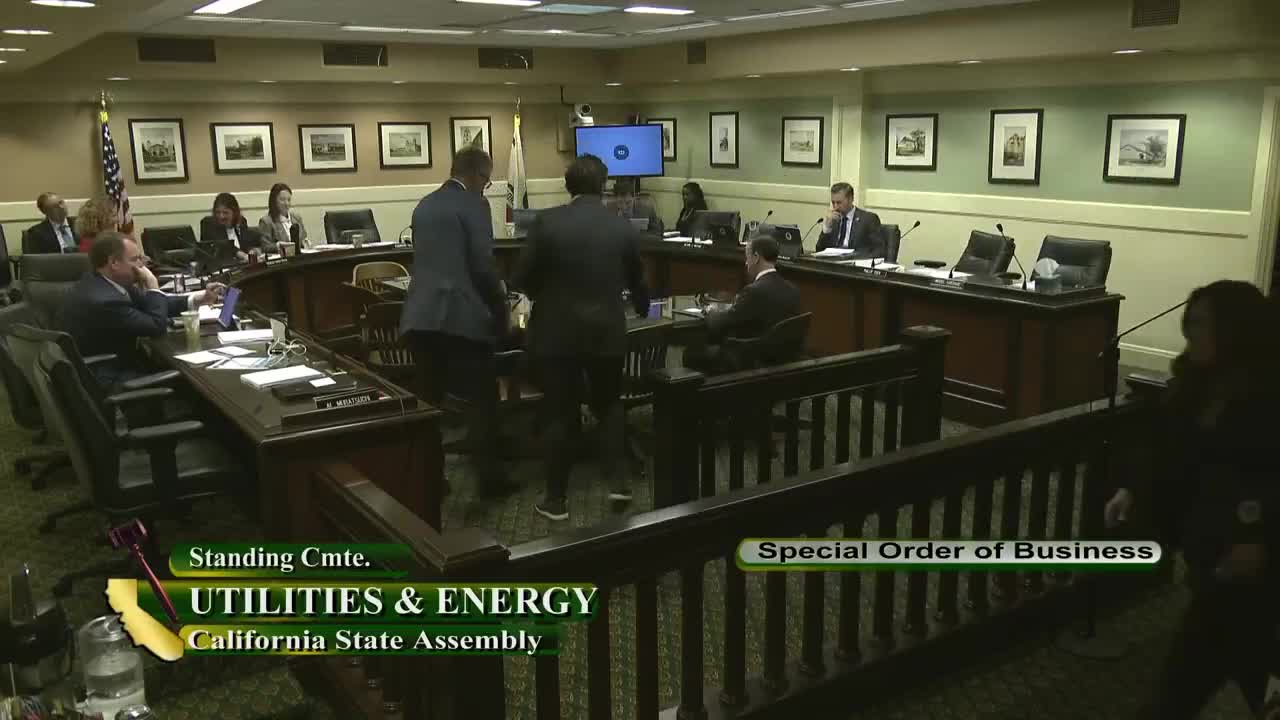 13MIN
Assembly Standing Committee on Utilities and Energy
Bill Author

Bill Co-Author(s):