AB 1484: Temporary public employees.
- Session Year: 2023-2024
- House: Assembly
- Latest Version Date: 2023-10-10
Current Status:
Passed
(2023-10-10: Chaptered by Secretary of State - Chapter 691, Statutes of 2023.)
Introduced
In Committee
First Chamber
In Committee
Second Chamber
Enacted
(1)Existing law, the Meyers-Milias-Brown Act (act), authorizes local public employees, as defined, to form, join, and participate in the activities of employee organizations of their own choosing for the purpose of representation on matters of labor relations. Existing law generally requires that the scope of representation under the act include all matters relating to employment conditions and employer-employee relations, while excepting the consideration of the merits, necessity, or organization of any service or activity provided by law or executive order. Existing law states that the Legislature finds and declares that the duties and responsibilities of local agency employer representatives under the act are substantially similar to the duties and responsibilities required under existing collective bargaining enforcement procedures and therefore the costs incurred by the local agency employer representatives in performing those duties and responsibilities under that act are not reimbursable as state-mandated costs.
This bill would impose specified requirements with respect to the temporary employees, as defined, of a public employer who have been hired to perform the same or similar type of work that is performed by permanent employees represented by a recognized employee organization, subject to limited exceptions. In this regard the bill would require those temporary employees to be automatically included in the same bargaining unit as the permanent employees if the requested classification of temporary employees is not presently within the unit. The bill would further require the public employer to promptly participate in collective bargaining to establish certain employment conditions for the newly added temporary employees if the parties current memorandum of understanding does not address them, as specified. The bill would also require a public employer to, upon hire, provide each temporary employee with their job description, wage rates, and eligibility for benefits, anticipated length of employment, and procedures to apply for open, permanent positions. By imposing new duties on local agencies that employ temporary employees, the bill would impose a state-mandated local program. The bill would require complaints alleging a violation of its provisions to be processed as unfair practice charges under the act. The bill would additionally include the same findings and declarations as set forth above.
(2)The California Constitution requires the state to reimburse local agencies and school districts for certain costs mandated by the state. Statutory provisions establish procedures for making that reimbursement.
This bill would provide that no reimbursement shall be made pursuant to these statutory provisions for costs mandated by the state pursuant to this act, but would recognize that a local agency or school district may pursue any available remedies to seek reimbursement for these costs.
(1)Existing law, the Meyers-Milias-Brown Act (act), authorizes local public employees, as defined, to form, join, and participate in the activities of employee organizations of their own choosing for the purpose of representation on matters of labor relations. Existing law generally requires that the scope of representation under the act include all matters relating to employment conditions and employer-employee relations, while excepting the consideration of the merits, necessity, or organization of any service or activity provided by law or executive order. Existing law states that the Legislature finds and declares that the duties and responsibilities of local agency employer representatives under the act are substantially similar to the duties and responsibilities required under existing collective bargaining enforcement procedures and therefore the costs incurred by the local agency employer representatives in performing those duties and responsibilities under that act are not reimbursable as state-mandated costs.
This bill would impose specified requirements with respect to the temporary employees, as defined, of a public employer who have been hired to perform the same or similar type of work that is performed by permanent employees represented by a recognized employee organization, subject to limited exceptions. In this regard the bill would require those temporary employees to be automatically included in the same bargaining unit as the permanent employees, as specified, upon the request of the recognized employee organization. employees if the requested classification of temporary employees is not presently within the unit. The bill would further require the public employer to promptly participate in collective bargaining to establish certain employment conditions for the newly added temporary employees if the parties current memorandum of understanding does not address them, as specified. The bill would also require a public employer to, upon hire, provide each temporary employee with their job description, wage rates, and eligibility for benefits, anticipated length of employment, and procedures to apply for open, permanent positions. By imposing new duties on local agencies that employ temporary employees, the bill would impose a state-mandated local program. The bill would require complaints alleging a violation of its provisions to be processed as unfair practice charges under the act. The bill would additionally include the same findings and declarations as set forth above.
(2)The California Constitution requires the state to reimburse local agencies and school districts for certain costs mandated by the state. Statutory provisions establish procedures for making that reimbursement.
This bill would provide that no reimbursement shall be made pursuant to these statutory provisions for costs mandated by the state pursuant to this act, but would recognize that a local agency or school district may pursue any available remedies to seek reimbursement for these costs.
(1)Existing law, the Meyers-Milias-Brown Act (act), authorizes local public employees, as defined, to form, join, and participate in the activities of employee organizations of their own choosing for the purpose of representation on matters of labor relations. Existing law generally requires that the scope of representation under the act include all matters relating to employment conditions and employer-employee relations, while excepting the consideration of the merits, necessity, or organization of any service or activity provided by law or executive order. Existing law states that the Legislature finds and declares that the duties and responsibilities of local agency employer representatives under the act are substantially similar to the duties and responsibilities required under existing collective bargaining enforcement procedures and therefore the costs incurred by the local agency employer representatives in performing those duties and responsibilities under that act are not reimbursable as state-mandated costs.
This bill would impose specified requirements with respect to the temporary employees, as defined, of a public employer who have been hired to perform the same or similar type of work that is performed by permanent employees represented by a recognized employee organization. organization, subject to limited exceptions. In this regard the bill would require those temporary employees to be automatically included in the same bargaining unit as the permanent employees, as specified, upon the request of the recognized employee organization. The bill would also require a public employer to, upon hire, provide each temporary employee with their job description, wage rates, and eligibility for benefits, anticipated length of employment, and procedures to apply for open, permanent positions. By imposing new duties on local agencies that employ temporary employees, the bill would impose a state-mandated local program. The bill would require complaints alleging a violation of its provisions to be processed as unfair practice charges under the act. The bill would additionally include the same findings and declarations as set forth above.
(2)The California Constitution requires the state to reimburse local agencies and school districts for certain costs mandated by the state. Statutory provisions establish procedures for making that reimbursement.
This bill would provide that no reimbursement shall be made pursuant to these statutory provisions for costs mandated by the state pursuant to this act, but would recognize that a local agency or school district may pursue any available remedies to seek reimbursement for these costs.
(1)Existing law, the Meyers-Milias-Brown Act (act), authorizes local public employees, as defined, to form, join, and participate in the activities of employee organizations of their own choosing for the purpose of representation on matters of labor relations. Existing law generally requires that the scope of representation under the act include all matters relating to employment conditions and employer-employee relations, while excepting the consideration of the merits, necessity, or organization of any service or activity provided by law or executive order. Existing law states that the Legislature finds and declares that the duties and responsibilities of local agency employer representatives under the act are substantially similar to the duties and responsibilities required under existing collective bargaining enforcement procedures and therefore the costs incurred by the local agency employer representatives in performing those duties and responsibilities under that act are not reimbursable as state-mandated costs.
This bill would impose specified requirements with respect to the temporary employees, as defined, of a public employer who have been hired to perform the same or similar type of work that is performed by permanent employees represented by a recognized employee organization. In this regard the bill would require those temporary employees to be automatically included in the same bargaining unit as the permanent employees, as specified, upon the request of the recognized employee organization. The bill would also require a public employer to, upon hire, provide each temporary employee with their job description, wage rates, and eligibility for benefits, anticipated length of employment, and procedures to apply for open, permanent positions. By imposing new duties on local agencies that employ temporary employees, the bill would impose a state-mandated local program. The bill would require complaints alleging a violation of its provisions to be processed as unfair practice charges under the act. The bill would additionally include the same findings and declarations as set forth above.
(2)The California Constitution requires the state to reimburse local agencies and school districts for certain costs mandated by the state. Statutory provisions establish procedures for making that reimbursement.
This bill would provide that no reimbursement shall be made pursuant to these statutory provisions for costs mandated by the state pursuant to this act, but would recognize that a local agency or school district may pursue any available remedies to seek reimbursement for these costs.
(1)Existing law, the Meyers-Milias-Brown Act (act), authorizes local public employees, as defined, to form, join, and participate in the activities of employee organizations of their own choosing for the purpose of representation on matters of labor relations. Existing law generally requires that the scope of representation under the act include all matters relating to employment conditions and employer-employee relations, while excepting the consideration of the merits, necessity, or organization of any service or activity provided by law or executive order. Existing law states that the Legislature finds and declares that the duties and responsibilities of local agency employer representatives under the act are substantially similar to the duties and responsibilities required under existing collective bargaining enforcement procedures and therefore the costs incurred by the local agency employer representatives in performing those duties and responsibilities under that act are not reimbursable as state-mandated costs.
This bill would impose specified requirements with respect to the temporary employees, as defined, of a public employer who have been hired to perform the same or similar type of work that is performed by permanent employees represented by a recognized employee organization. In this regard the bill would require those temporary employees to be automatically included in the same bargaining unit as the permanent employees, as specified, upon the request of the recognized employee organization. The bill would also require a public employer to, upon hire, provide each temporary employee with their job description, wage rates, and eligibility for benefits, anticipated length of employment, and procedures to apply for open, permanent positions. By imposing new duties on local agencies that employ temporary employees, the bill would impose a state-mandated local program. The bill would additionally include the same findings and declarations as set forth above.
(2)The California Constitution requires the state to reimburse local agencies and school districts for certain costs mandated by the state. Statutory provisions establish procedures for making that reimbursement.
This bill would provide that no reimbursement shall be made pursuant to these statutory provisions for costs mandated by the state pursuant to this act, but would recognize that a local agency or school district may pursue any available remedies to seek reimbursement for these costs.
The Legislature finds and declares all of the following:
(a)Local governments have increasingly hired temporary employees to provide public services.
(b)Temporary employees are disproportionately women and people of color, and the lesser rights of temporary employees exacerbate race and gender inequity in public employment.
(c)There is a statewide interest in ensuring that temporary employees are protected by state laws providing for fair labor relations and that the increasing use of temporary employees does not undermine public employee labor relations.
(d)Section 2 of this act is intended to apply to all public employers covered by the Meyers-Milias-Brown Act (Chapter 10 (commencing with Section 3500) of Division 4 of Title 1 of the Government Code).
SEC. 2.Section 3507.7 is added to the Government Code, to read:3507.7.(a)(1)(A)For purposes of this section, temporary employee means a temporary employee, casual employee, seasonal employee, periodic employee, extra-help employee, relief employee, limited-term employee, per diem employee, and any other public employee who has not been hired for a permanent position.
(B)Temporary employee shall not include an employee employed by a temporary services employer as defined in Section 201.3 of the Labor Code.
(2)Nothing in this section is intended to prevent the board, or an employee relations commission referred to in Section 3509, from determining that a public employer is or is not the single or joint employer for collective bargaining purposes of employees of a temporary services employer or from including or excluding such employees from bargaining units based on the standards that were in effect prior to the adoption of this section, nor shall any provision of this section serve as the legal or other basis or support for any such determination.
(b)Notwithstanding any other law, the following requirements apply with respect to temporary employees of a public employer who have been hired to perform the same or similar type of work that is performed by permanent employees represented by a recognized employee organization:
(1)Upon the request of the recognized employee organization to the public employer, the following apply:
(A)Temporary employees shall be automatically included in the same bargaining unit as the permanent employees if the requested classification of temporary employees is not presently within the unit. This subparagraph does not require the same terms and conditions of employment for permanent and temporary employees.
(B)The public employer shall promptly participate in collective bargaining to establish wages, hours, and terms and conditions of employment for the newly added temporary employees if the parties current memorandum of understanding does not address them. The parties shall include the bargained for terms and conditions of employment for temporary workers as an addendum to the existing memorandum of understanding. Thereafter, the terms and conditions of employment of permanent and temporary employees in the same bargaining unit shall be addressed in a single memorandum of understanding if requested by the recognized employee organization. This subparagraph does not require the same terms and conditions of employment for permanent and temporary employees.
(2)The public employer shall provide, upon hire, each temporary employee with their job description, wage rates, and eligibility for benefits, anticipated length of employment, and procedures to apply for open, permanent positions. The same information shall be provided to the recognized employee organization, within five business days of hiring the temporary employee.
(3)The public employer shall include, when providing the employee organization with the employee information required by Section 3558, the anticipated end date of employment for each temporary employee or actual end date if the temporary employee has been released from service since the last list was provided.
(4)(A)Whether a temporary employee who subsequently obtains permanent employment receives seniority or other credit or benefit for their time spent in temporary employment shall be a matter within the scope of representation in bargaining units that include permanent employees.
(B)Whether a temporary employee receives a hiring preference over external candidates for permanent positions shall be a matter within the scope of representation in bargaining units that include temporary employees.
(C)This paragraph shall apply to the extent that the memorandum of understanding may lawfully address these subjects. This paragraph shall be effective only with respect to a memorandum of understanding entered into after the effective date of this section.
(c)Complaints alleging violations of this section shall be processed as unfair practice charges pursuant to Section 3509.
(d)Nothing in this section supersedes or provides any exemption to the restrictions or requirements related to individuals working after retirement from a public retirement system.
(e)The Legislature finds and declares that the duties and responsibilities of local agency employer representatives under this section are substantially similar to the duties and responsibilities required under existing collective bargaining enforcement procedures and therefore, the costs incurred by the local agency employer representatives in performing those duties and responsibilities under this section are not reimbursable as state-mandated costs.
(f)This section shall not apply to temporary employees hired pursuant to a written agreement between a public employer and a labor organization that primarily represents employees in the building and construction trades.
SEC. 3.No reimbursement shall be made pursuant to Part 7 (commencing with Section 17500) of Division 4 of Title 2 of the Government Code for costs mandated by the state pursuant to this act. It is recognized, however, that a local agency or school district may pursue any remedies to obtain reimbursement available to it under Part 7 (commencing with Section 17500) and any other law.
The Legislature finds and declares all of the following:
(a)Local governments have increasingly hired temporary employees to provide public services.
(b)Temporary employees are disproportionately women and people of color, and the lesser rights of temporary employees exacerbate race and gender inequity in public employment.
(c)There is a statewide interest in ensuring that temporary employees are protected by state laws providing for fair labor relations and that the increasing use of temporary employees does not undermine public employee labor relations.
(d)Section 2 of this act is intended to apply to all public employers covered by the Meyers-Milias-Brown Act (Chapter 10 (commencing with Section 3500) of Division 4 of Title 1 of the Government Code).
SEC. 2.Section 3507.7 is added to the Government Code, to read:3507.7.(a)(1)(A)For purposes of this section, temporary employee means a temporary employee, casual employee, seasonal employee, periodic employee, extra-help employee, relief employee, limited-term employee, per diem employee, and any other public employee who has not been hired for a permanent position.
(B)Temporary employee shall not include an employee employed by a temporary services employer as defined in Section 201.3 of the Labor Code.
(2)Nothing in this section is intended to prevent the board, or an employee relations commission referred to in Section 3509, from determining that a public employer is or is not the single or joint employer for collective bargaining purposes of employees of a temporary services employer or from including or excluding such employees from bargaining units based on the standards that were in effect prior to the adoption of this section, nor shall any provision of this section serve as the legal or other basis or support for any such determination.
(b)Notwithstanding any other law, the following requirements apply with respect to temporary employees of a public employer who have been hired to perform the same or similar type of work that is performed by permanent employees represented by a recognized employee organization:
(1)Upon the request of the recognized employee organization to the public employer, the following apply:
(A)Temporary employees shall be automatically included in the same bargaining unit as the permanent employees if the requested classification of temporary employees are is not presently within the unit definition. unit. This subparagraph does not require the same terms and conditions of employment for permanent and temporary employees.
(B)The public employer shall promptly participate in collective bargaining to establish wages, hours, and terms and conditions of employment for the newly added temporary employees if the parties current memorandum of understanding does not address them. The parties shall include the bargained for terms and conditions of employment for temporary workers as an addendum to the existing memorandum of understanding. Thereafter, the terms and conditions of employment of permanent and temporary employees in the same bargaining unit shall be addressed in a single memorandum of understanding. This subparagraph shall apply upon the expiration of the existing memoranda of understanding that covers the permanent and temporary employees, unless the recognized employee organization and public employer agree to an earlier date. understanding if requested by the recognized employee organization. This subparagraph does not require the same terms and conditions of employment for permanent and temporary employees.
(2)The public employer shall provide, upon hire, each temporary employee with their job description, wage rates, and eligibility for benefits, anticipated length of employment, and procedures to apply for open, permanent positions. The same information shall be provided to the recognized employee organization, along with the employee information required under Section 3558 for the temporary employee, within five business days of hiring the temporary employee.
(3)The public employer shall include, when providing the employee organization with the employee information required by Section 3558, the anticipated end date of employment for each temporary employee or actual end date if the temporary employee has been released from service since the last list was provided.
(4)(A)Whether a temporary employee who subsequently obtains permanent employment receives seniority or other credit or benefit for their time spent in temporary employment shall be a matter within the scope of representation in bargaining units that include permanent employees.
(B)Whether a temporary employee receives a hiring preference over external candidates for permanent positions shall be a matter within the scope of representation in bargaining units that include temporary employees.
(C)This paragraph shall apply to the extent that the memorandum of understanding may lawfully address these subjects. This paragraph shall be effective only with respect to any a memorandum of understanding covering permanent employees entered into after the effective date of this section.
(5)Unless a memorandum of understanding that covers both temporary and permanent employees expressly refers to this paragraph and waives its requirements, temporary employees in that bargaining unit who have been employed for more than 60 calendar days shall be entitled to use any grievance procedure in the memorandum of understanding to challenge any discipline without cause. This paragraph shall be effective only with respect to a memorandum of understanding entered into after the effective date of this section. This paragraph does not require public employers to retain temporary employees whose services are no longer needed, to require pretermination hearings before the dismissal of temporary employees, or to prevent a public employer from replacing temporary employees with employees hired for permanent positions.(c)Complaints alleging violations of this section shall be processed as unfair practice charges pursuant to Section 3509.
(d)Nothing in this section supersedes or provides any exemption to the restrictions or requirements related to individuals working after retirement from a public retirement system.
(e)The Legislature finds and declares that the duties and responsibilities of local agency employer representatives under this section are substantially similar to the duties and responsibilities required under existing collective bargaining enforcement procedures and therefore, the costs incurred by the local agency employer representatives in performing those duties and responsibilities under this section are not reimbursable as state-mandated costs.
(f)This section shall not apply to temporary employees hired pursuant to a written agreement between a public employer and a labor organization that primarily represents employees in the building and construction trades.
SEC. 3.No reimbursement shall be made pursuant to Part 7 (commencing with Section 17500) of Division 4 of Title 2 of the Government Code for costs mandated by the state pursuant to this act. It is recognized, however, that a local agency or school district may pursue any remedies to obtain reimbursement available to it under Part 7 (commencing with Section 17500) and any other law.
The Legislature finds and declares all of the following:
(a)Local governments have increasingly hired temporary employees to provide public services.
(b)Temporary employees are disproportionately women and people of color, and the lesser rights of temporary employees exacerbate race and gender inequity in public employment.
(c)There is a statewide interest in ensuring that temporary employees are protected by state laws providing for fair labor relations and that the increasing use of temporary employees does not undermine public employee labor relations.
(d)Section 2 of this act is intended to apply to all public employers covered by the Meyers-Milias-Brown Act (Chapter 10 (commencing with Section 3500) of Division 4 of Title 1 of the Government Code).
SEC. 2.Section 3507.7 is added to the Government Code, to read:3507.7.(a)(1)(A)For purposes of this section, temporary employee means a temporary employee, casual employee, seasonal employee, periodic employee, extra-help employee, relief employee, limited-term employee, per diem employee, and any other public employee who has not been hired for a permanent position.
(B)Temporary employee shall not include an employee employed by a temporary services employer as defined in Section 201.3 of the Labor Code.
(2)Nothing in this section is intended to prevent the board, or an employee relations commission referred to in Section 3509, from determining that a public employer is or is not the single or joint employer for collective bargaining purposes of employees of a temporary services employer or from including or excluding such employees from bargaining units based on the standards that were in effect prior to the adoption of this section, nor shall any provision of this section serve as the legal or other basis or support for any such determination.
(b)Notwithstanding any other law, the following requirements apply with respect to temporary employees of a public employer who have been hired to perform the same or similar type of work that is performed by permanent employees represented by a recognized employee organization:
(1)Upon the request of the recognized employee organization to the public employer, the following apply:
(A)Temporary employees shall be automatically included in the same bargaining unit as the permanent employees if temporary employees are not presently within the unit definition. This subparagraph does not require the same terms and conditions of employment for permanent and temporary employees.
(B)The terms and conditions of employment of permanent and temporary employees in the same bargaining unit shall be addressed in a single memorandum of understanding. This subparagraph shall apply upon the expiration of the existing memoranda of understanding that covers the permanent and temporary employees, unless the recognized employee organization and public employer agree to an earlier date. This subparagraph does not require the same terms and conditions of employment for permanent and temporary employees.
(2)The public employer shall provide, upon hire, each temporary employee with their job description, wage rates, and eligibility for benefits, anticipated length of employment, and procedures to apply for open, permanent positions. The same information shall be provided to the recognized employee organization, along with the employee information required under Section 3558 for the temporary employee, within five business days of hiring the temporary employee.
(3)The public employer shall include, when providing the employee organization with the employee information required by Section 3558, the anticipated end date of employment for each temporary employee or actual end date if the temporary employee has been released from service since the last list was provided.
(4)(A)Whether a temporary employee who subsequently obtains permanent employment receives seniority or other credit or benefit for their time spent in temporary employment shall be a matter within the scope of representation in bargaining units that include permanent employees.
(B)Whether a temporary employee receives a hiring preference over external candidates for permanent positions shall be a matter within the scope of representation in bargaining units that include temporary employees.
(C)This paragraph shall apply to the extent that the memorandum of understanding may lawfully address these subjects. This paragraph shall be effective with respect to any memorandum of understanding covering permanent employees entered into after the effective date of this section.
(5)Unless a memorandum of understanding that covers both temporary and permanent employees expressly refers to this paragraph and waives its requirements, temporary employees in that bargaining unit who have been employed for more than 30 60 calendar days shall be entitled to use any grievance procedure in the memorandum of understanding to challenge any discipline without cause. This paragraph shall be effective only with respect to a memorandum of understanding entered into after the effective date of this section. This paragraph does not require public employers to retain temporary employees whose services are no longer needed, to require pretermination hearings before the dismissal of temporary employees, or to prevent a public employer from replacing temporary employees with employees hired for permanent positions.
(c)Complaints alleging violations of this section shall be processed as unfair practice charges pursuant to Section 3509.
(d)Nothing in this section supersedes or provides any exemption to the restrictions or requirements related to individuals working after retirement from a public retirement system.
(e)The Legislature finds and declares that the duties and responsibilities of local agency employer representatives under this section are substantially similar to the duties and responsibilities required under existing collective bargaining enforcement procedures and therefore, the costs incurred by the local agency employer representatives in performing those duties and responsibilities under this section are not reimbursable as state-mandated costs.
(f)This section shall not apply to temporary employees hired pursuant to a written agreement between a public employer and a labor organization that primarily represents employees in the building and construction trades.
SEC. 3.No reimbursement shall be made pursuant to Part 7 (commencing with Section 17500) of Division 4 of Title 2 of the Government Code for costs mandated by the state pursuant to this act. It is recognized, however, that a local agency or school district may pursue any remedies to obtain reimbursement available to it under Part 7 (commencing with Section 17500) and any other law.
The Legislature finds and declares all of the following:
(a)Local governments have increasingly hired temporary employees to provide public services.
(b)Temporary employees are disproportionately women and people of color, and the lesser rights of temporary employees exacerbate race and gender inequity in public employment.
(c)There is a statewide interest in ensuring that temporary employees are protected by state laws providing for fair labor relations and that the increasing use of temporary employees does not undermine public employee labor relations.
(d)Section 2 of this act is intended to apply to all public employers covered by the Meyers-Milias-Brown Act (Chapter 10 (commencing with Section 3500) of Division 4 of Title 1 of the Government Code).
SEC. 2.Section 3507.7 is added to the Government Code, to read:3507.7.(a)For purposes of this section, temporary employee means a temporary employee, casual employee, seasonal employee, periodic employee, extra-help employee, relief employee, limited-term employee, per diem employee, and any other public employee who has not been hired for a permanent position.
(b)Notwithstanding any other law, the following requirements apply with respect to temporary employees of a public employer who have been hired to perform the same or similar type of work that is performed by permanent employees represented by a recognized employee organization:
(1)Upon the request of the recognized employee organization to the public employer, the following apply:
(A)Temporary employees shall be automatically included in the same bargaining unit as the permanent employees if temporary employees are not presently within the unit definition. This subparagraph does not require the same terms and conditions of employment for permanent and temporary employees.
(B)The terms and conditions of employment of permanent and temporary employees in the same bargaining unit shall be addressed in a single memorandum of understanding. This subparagraph shall apply upon the expiration of the existing memoranda of understanding that covers the permanent and temporary employees, unless the recognized employee organization and public employer agree to an earlier date. This subparagraph does not require the same terms and conditions of employment for permanent and temporary employees.
(2)The public employer shall provide, upon hire, each temporary employee with their job description, wage rates, and eligibility for benefits, anticipated length of employment, and procedures to apply for open, permanent positions. The same information shall be provided to the recognized employee organization, along with the employee information required under Section 3558 for the temporary employee, within five business days of hiring the temporary employee.
(3)The public employer shall include, when providing the employee organization with the employee information required by Section 3558, the anticipated end date of employment for each temporary employee or actual end date if the temporary employee has been released from service since the last list was provided.
(4)(A)Whether a temporary employee who subsequently obtains permanent employment receives seniority or other credit or benefit for their time spent in temporary employment shall be a matter within the scope of representation in bargaining units that include permanent employees.
(B)Whether a temporary employee receives a hiring preference over external candidates for permanent positions shall be a matter within the scope of representation in bargaining units that include temporary employees.
(C)This paragraph shall apply to the extent that the memorandum of understanding may lawfully address these subjects. This paragraph shall be effective with respect to any memorandum of understanding covering permanent employees entered into after the effective date of this section.
(5)Unless a memorandum of understanding that covers both temporary and permanent employees expressly refers to this paragraph and waives its requirements, temporary employees in that bargaining unit who have been employed for more than 30 calendar days shall be entitled to use any grievance procedure in the memorandum of understanding to challenge any discipline without cause. This paragraph shall be effective only with respect to a memorandum of understanding entered into after the effective date of this section. This paragraph does not require public employers to retain temporary employees whose services are no longer needed, to require pretermination hearings before the dismissal of temporary employees, or to prevent a public employer from replacing temporary employees with employees hired for permanent positions.
(c)Complaints alleging violations of this section shall be processed as unfair practice charges pursuant to Section 3509.
(d)Nothing in this section supersedes or provides any exemption to the restrictions or requirements related to individuals working after retirement from a public retirement system.
(d)(e)The Legislature finds and declares that the duties and responsibilities of local agency employer representatives under this section are substantially similar to the duties and responsibilities required under existing collective bargaining enforcement procedures and therefore, the costs incurred by the local agency employer representatives in performing those duties and responsibilities under this section are not reimbursable as state-mandated costs.
SEC. 3.No reimbursement shall be made pursuant to Part 7 (commencing with Section 17500) of Division 4 of Title 2 of the Government Code for costs mandated by the state pursuant to this act. It is recognized, however, that a local agency or school district may pursue any remedies to obtain reimbursement available to it under Part 7 (commencing with Section 17500) and any other law.
The Legislature finds and declares all of the following:
(a)Local governments have increasingly hired temporary employees to provide public services.
(b)Temporary employees are disproportionately women and people of color, and the lesser rights of temporary employees exacerbate race and gender inequity in public employment.
(c)There is a statewide interest in ensuring that temporary employees are protected by state laws providing for fair labor relations and that the increasing use of temporary employees does not undermine public employee labor relations.
(d)Section 2 of this act is intended to apply to all public employers covered by the Meyers-Milias-Brown Act (Chapter 10 (commencing with Section 3500) of Division 4 of Title 1 of the Government Code).
SEC. 2.Section 3507.7 is added to the Government Code, to read:3507.7.(a)For purposes of this section, temporary employee means a temporary employee, casual employee, seasonal employee, periodic employee, extra-help employee, relief employee, limited-term employee, per diem employee, and any other public employee who has not been hired for a permanent position.
(b)Notwithstanding any other law, the following requirements apply with respect to temporary employees of a public employer who have been hired to perform the same or similar type of work that is performed by permanent employees represented by a recognized employee organization:
(1)Upon the request of the recognized employee organization to the public employer, the following apply:
(A)Temporary employees shall be automatically included in the same bargaining unit as the permanent employees if temporary employees are not presently within the unit definition.
(B)The terms and conditions of employment of permanent and temporary employees in the same bargaining unit shall be addressed in a single memorandum of understanding. This subparagraph shall apply upon the expiration of the existing memoranda of understanding that covers the permanent and temporary employees, unless the recognized employee organization and public employer agree to an earlier date.
(2)The public employer shall provide, upon hire, each temporary employee with their job description, wage rates, and eligibility for benefits, anticipated length of employment, and procedures to apply for open, permanent positions. The same information shall be provided to the recognized employee organization, along with the employee information required under Section 3558 for the temporary employee, within five business days of hiring the temporary employee.
(3)The public employer shall include, when providing the employee organization with the employee information required by Section 3558, the anticipated end date of employment for each temporary employee or actual end date if the temporary employee has been released from service since the last list was provided.
(4)(A)Whether a temporary employee who subsequently obtains permanent employment receives service credit and seniority or other credit or benefit for their time spent in temporary employment shall be a matter within the scope of representation in bargaining units that include permanent employees.
(B)Whether a temporary employee receives a hiring preference over external candidates for permanent positions shall be a matter within the scope of representation in bargaining units that include temporary employees.
(C)This paragraph shall apply to the extent that the memorandum of understanding may lawfully address these subjects. This paragraph shall be effective with respect to any memorandum of understanding covering permanent employees entered into after the effective date of this section.
(5)Unless a memorandum of understanding that covers both temporary and permanent employees expressly refers to this paragraph and waives its requirements, temporary employees in that bargaining unit who have been employed for more than 30 calendar days shall be entitled to use any grievance procedure in the memorandum of understanding to challenge any discipline without cause. This paragraph shall be effective only with respect to a memorandum of understanding entered into after the effective date of this section. This paragraph does not require public employers to retain temporary employees whose services are no longer needed, to require pretermination hearings before the dismissal of temporary employees, or to prevent a public employer from replacing temporary employees with employees hired for permanent positions.
(c)Complaints alleging violations of this section shall be processed as unfair practice charges pursuant to Section 3509.
(c)(d)The Legislature finds and declares that the duties and responsibilities of local agency employer representatives under this section are substantially similar to the duties and responsibilities required under existing collective bargaining enforcement procedures and therefore, the costs incurred by the local agency employer representatives in performing those duties and responsibilities under this section are not reimbursable as state-mandated costs.
SEC. 3.No reimbursement shall be made pursuant to Part 7 (commencing with Section 17500) of Division 4 of Title 2 of the Government Code for costs mandated by the state pursuant to this act. It is recognized, however, that a local agency or school district may pursue any remedies to obtain reimbursement available to it under Part 7 (commencing with Section 17500) and any other law.
REVISIONS: HeadingLine 2.The Legislature finds and declares all of the following:
(a)Local governments have increasingly hired temporary employees to provide public services.
(b)Temporary employees are disproportionately women and people of color, and the lesser rights of temporary employees exacerbate race and gender inequity in public employment.
(c)There is a statewide interest in ensuring that temporary employees are protected by state laws providing for fair labor relations and that the increasing use of temporary employees does not undermine public employee labor relations.
(d)Section 2 of this act is intended to apply to all public employers covered by the Meyers-Milias-Brown Act (Chapter 10 (commencing with Section 3500) of Division 4 of Title 1 of the Government Code).
SEC. 2.Section 3507.7 is added to the Government Code, to read:3507.7.(a)For purposes of this section, temporary employee means a temporary employee, casual employee, seasonal employee, periodic employee, extra-help employee, relief employee, limited-term employee, per diem employee, and any other public employee who has not been hired for a permanent position.
(b)Notwithstanding any other law, the following requirements apply with respect to temporary employees of a public employer who have been hired to perform the same or similar type of work that is performed by permanent employees represented by a recognized employee organization:
(1)Upon the request of the recognized employee organization to the public employer, the following apply:
(A)Temporary employees shall be automatically included in the same bargaining unit as the permanent employees if temporary employees are not presently within the unit definition.
(B)The terms and conditions of employment of permanent and temporary employees in the same bargaining unit shall be addressed in a single memorandum of understanding. This subparagraph shall apply upon the expiration of the existing memoranda of understanding that covers the permanent and temporary employees, unless the recognized employee organization and public employer agree to an earlier date.
(2)The public employer shall provide, upon hire, each temporary employee with their job description, wage rates, and eligibility for benefits, anticipated length of employment, and procedures to apply for open, permanent positions. The same information shall be provided to the recognized employee organization, along with the employee information required under Section 3558 for the temporary employee, within five business days of hiring the temporary employee.
(3)The public employer shall include, when providing the employee organization with the employee information required by Section 3558, the anticipated end date of employment for each temporary employee or actual end date if the temporary employee has been released from service since the last list was provided.
(4)(A)Whether a temporary employee who subsequently obtains permanent employment receives service credit and seniority for their time spent in temporary employment shall be a matter within the scope of representation in bargaining units that include permanent employees.
(B)Whether a temporary employee receives a hiring preference over external candidates for permanent positions shall be a matter within the scope of representation in bargaining units that include temporary employees.
(C)This paragraph shall apply to the extent that the memorandum of understanding may lawfully address these subjects. This paragraph shall be effective with respect to any memorandum of understanding covering permanent employees entered into after the effective date of this section.
(5)Unless a memorandum of understanding that covers both temporary and permanent employees expressly refers to this paragraph and waives its requirements, temporary employees in that bargaining unit who have been employed for more than 30 calendar days shall be entitled to use any grievance procedure in the memorandum of understanding to challenge any discipline without cause. This paragraph shall be effective only with respect to a memorandum of understanding entered into after the effective date of this section. This paragraph does not require public employers to retain temporary employees whose services are no longer needed, to require pretermination hearings before the dismissal of temporary employees, or to prevent a public employer from replacing temporary employees with employees hired for permanent positions.
(c)The Legislature finds and declares that the duties and responsibilities of local agency employer representatives under this section are substantially similar to the duties and responsibilities required under existing collective bargaining enforcement procedures and therefore, the costs incurred by the local agency employer representatives in performing those duties and responsibilities under this section are not reimbursable as state-mandated costs.
SEC. 3.No reimbursement shall be made pursuant to Part 7 (commencing with Section 17500) of Division 4 of Title 2 of the Government Code for costs mandated by the state pursuant to this act. It is recognized, however, that a local agency or school district may pursue any remedies to obtain reimbursement available to it under Part 7 (commencing with Section 17500) and any other law.
|
Date
|
Status
|
|---|---|
| Oct 10, 2023 | Chaptered by Secretary of State - Chapter 691, Statutes of 2023. |
| Oct 10, 2023 | Approved by the Governor. |
| Sep 21, 2023 | Enrolled and presented to the Governor at 3:30 p.m. |
| Sep 13, 2023 | Senate amendments concurred in. To Engrossing and Enrolling. (Ayes 59. Noes 15. Page 3488.). |
| Sep 13, 2023 | In Assembly. Concurrence in Senate amendments pending. |
| Sep 13, 2023 | Read third time. Passed. Ordered to the Assembly. (Ayes 25. Noes 11. Page 2717.). |
| Sep 11, 2023 | Read second time. Ordered to third reading. |
| Sep 8, 2023 | Read third time and amended. Ordered to second reading. |
| Sep 5, 2023 | Read second time. Ordered to third reading. |
| Sep 1, 2023 | Read second time and amended. Ordered returned to second reading. |
| Sep 1, 2023 | From committee: Amend, and do pass as amended. (Ayes 5. Noes 2.) (September 1). |
| Aug 14, 2023 | In committee: Referred to APPR suspense file. |
| Jul 12, 2023 | From committee: Do pass and re-refer to Com. on APPR. (Ayes 4. Noes 1.) (July 12). Re-referred to Com. on APPR. |
| Jun 14, 2023 | Referred to Com. on L., P.E. & R. |
| Jun 1, 2023 | In Senate. Read first time. To Com. on RLS. for assignment. |
| May 31, 2023 | Read third time. Passed. Ordered to the Senate. (Ayes 62. Noes 18. Page 2014.) |
| May 22, 2023 | Read second time. Ordered to third reading. |
| May 18, 2023 | Read second time and amended. Ordered returned to second reading. |
| May 18, 2023 | From committee: Amend, and do pass as amended. (Ayes 11. Noes 3.) (May 18). |
| May 3, 2023 | In committee: Set, first hearing. Referred to APPR. suspense file. |
| Apr 26, 2023 | In committee: Hearing postponed by committee. |
| Apr 12, 2023 | From committee: Do pass and re-refer to Com. on APPR. (Ayes 5. Noes 2.) (April 12). Re-referred to Com. on APPR. |
| Apr 12, 2023 | Coauthors revised. |
| Mar 29, 2023 | Re-referred to Com. on P.E. & R. |
| Mar 28, 2023 | From committee chair, with author's amendments: Amend, and re-refer to Com. on P.E. & R. Read second time and amended. |
| Mar 9, 2023 | Referred to Com. on P.E. & R. |
| Feb 18, 2023 | From printer. May be heard in committee March 20. |
| Feb 17, 2023 | Read first time. To print. |
|
Date
|
Description
|
Location
|
Votes
|
|
|---|---|---|---|---|
| Sep 13, 2023 | AB 1484 Zbur Concurrence in Senate Amendments | Assembly Floor |
Passed |
|
| Sep 13, 2023 | Assembly 3rd Reading AB1484 Zbur et al. By Smallwood-Cuevas | Senate Floor |
Passed |
|
| Sep 1, 2023 | Do pass as amended | Senate Standing Committee on Appropriations |
Passed |
|
| Aug 14, 2023 | Placed on suspense file | Senate Standing Committee on Appropriations |
Passed |
|
| Jul 12, 2023 | Do pass, but first be re-referred to the Committee on [Appropriations] | Senate Standing Committee on Labor, Public Employment and Retirement |
Passed |
|
| May 31, 2023 | AB 1484 Zbur Assembly Third Reading | Assembly Floor |
Passed |
|
| May 18, 2023 | Do pass as amended. | Assembly Standing Committee on Appropriations |
Passed |
|
| Apr 12, 2023 | Do pass and be re-referred to the Committee on [Appropriations] | Assembly Standing Committee on Public Employment and Retirement |
Passed |
This list shows positions taken on this bill by organizations on the date displayed, which is linked to the original source.
Positions by individuals are not included.
|
Organization
|
Position
|
Date
|
|---|---|---|
| American Federation of State, County and Municipal Employees | ** Support | |
| Association of California Healthcare Districts | ** Against | |
| California Association Of Code Enforcement Officers | ** Against | |
| California Association Of Joint Powers Authorities | ** Against | |
| California Association Of Public Hospitals Health Systems | ** Against | |
| California Association Of Recreation & Park Districts | ** Against | |
| California Contract Cities Association | ** Against | |
| California Employment Lawyers Association | ** Support | |
| California Labor Federation | ** Support | |
| California League of Cities | ** Against | |
| California Municipal Utilities Association | ** Against | |
| California Special Districts Association | ** Against | |
| California State Association Of Counties | ** Against | |
| California State Council of Service Employees International Union | ** Support | |
| California Teachers Association | ** Support | |
| City Of Beverly Hills | ** Against | |
| City of Brentwood | ** Against | |
| City of Buena Park | ** Against | |
| city of carlsbad | ** Against | |
| City of Chino | ** Against | |
| City of Citrus Heights | ** Against | |
| City of Colton | ** Against | |
| City of Concord | ** Against | |
| City of Corona | ** Against | |
| City of Coronado | ** Against | |
| City of Fortuna | ** Against | |
| City of Fremont | ** Against | |
| City Of Fullerton | ** Against | |
| City Of Garden Grove | ** Against | |
| City of Gustine | ** Against | |
| City of Hesperia | ** Against | |
| City Of Kerman | ** Against | |
| City of La Palma | ** Against | |
| City Of Lathrop | ** Against | |
| City of La Verne | ** Against | |
| City of Lodi | ** Against | |
| City of Montclair | ** Against | |
| City of Morro Bay | ** Against | |
| City Of Newark | ** Against | |
| City of Newark, California | ** Against | |
| City of Norwalk | ** Against | |
| City of Oceanside | ** Against | |
| City of Palm Desert | ** Against | |
| City Of Placentia | ** Against | |
| City Of Pleasanton | ** Against | |
| City of Rancho Cucamonga | ** Against | |
| City of Rancho Palos Verdes | ** Against | |
| City of Rocklin | ** Against | |
| City of Sand City | ** Against | |
| City of San Marcos | ** Against | |
| City of Sunnyvale | ** Against | |
| City Of Temecula | ** Against | |
| City of Thousand Oaks | ** Against | |
| City Of Tracy | ** Against | |
| City Of Waterford | ** Against | |
| City of Whittier | ** Against | |
| City of Yucaipa | ** Against | |
| County Of Del Norte | ** Against | |
| County Of Kern | ** Against | |
| County of San Bernardino | ** Against | |
| Del Norte County Board of Supervisors | ** Against | |
| El Dorado Irrigation District | ** Against | |
| Equal Rights Advocates | ** Support | |
| kiwa | ** Support | |
| Las Virgenes Municipal Water District | ** Against | |
| League Of California Cities | ** Against | |
| Los Angeles County Division, League of California Cities | ** Against | |
| Marin County Council of Mayors and Council Members | ** Against | |
| North Valley Labor Federation | ** Support | |
| Orange County Employees Association | ** Support | |
| Peace Officers Research Association Of California | ** Support | |
| Public Risk Innovation Solutions and Management | ** Against | |
| Rural County Representatives of California | ** Against | |
| san mateo labor council | ** Support | |
| South Bay AFL-CIO Labor Council | ** Support | |
| Tech Equity Collaborative | ** Support | |
| Town of Apple Valley | ** Against | |
| Town of Truckee | ** Against | |
| United Food and Commercial Workers Union, Western States Council | ** Support | |
| Urban Counties of California | ** Against | |
| western center on law & poverty | ** Support |
CONCURRENCE IN SENATE AMENDMENTS
CSA1 Bill Id:AB 1484
Author:(Zbur)
As Amended Ver:September 8, 2023
Majority vote
SUMMARY
Amends the Meyers-Milias-Brown Act (MMBA) to require inclusion of temporary employees in the same bargaining unit as permanent employees, among other provisions.
Senate Amendments
- Clarify that the term "temporary employee" must not include an employee employed by a temporary services employer as defined in Section 201.3 of the Labor Code.
- Exclude temporary employees hired pursuant to a written agreement between a public employer and a labor organization that primarily represents employees in the building and construction trades.
- Establish that these provisions are not intended to prevent the Public Employment Relations Board (PERB) or local employee relations commission, as provided, from determining whether a public employer is or is not the single or joint employer for collective bargaining purposes of employees of a temporary services employer, or from including or excluding such employees from the bargaining unit based on the standards that were in effect prior to adoption of these provisions, and that also must not serve as the legal or other basis or support for any such determination.
- Change the duration in which temporary employees in a bargaining unit who have been employed from 30 calendar days, to instead, 60 calendar days relating to use of any grievance procedure in a memorandum of understanding to challenge any discipline without cause, and as provided.
- Clarify by requiring that temporary employees be automatically included in the same bargaining unit as permanent employees, if the requested classification of temporary employees is not presently within the unit.
- Require: (a) the public employer to promptly participate in collective bargaining to establish certain employment conditions for newly added temporary employees if the parties' current memorandum of understanding (MOU) does not address them; (b) inclusion of the bargained-for terms and conditions for those employees as an addendum to the existing MOU; and, (c) that those terms and conditions be addressed in a single MOU, if requested by the recognized employee organization.
- Remove the requirement that the public employer provide the recognized employee organization with employee information required under the Public Employee Communication Chapter, as provided, for the temporary employee.
- Make other technical, clarifying, nonsubstantive, and conforming changes for these purposes.
COMMENTS
- Brief History of the MMBA and the PERB
The MMBA is one of several successor public collective bargaining laws in California to the former George M. Brown Act ("Brown Act"), which was California's first public sector collective bargaining law enacted in 1961. The Brown Act originally covered all public sector employees in California and primarily recognized the right of employees to participate in, and be represented by, employee organizations, and gave such organizations the right to meet and confer with the employer before taking action on matters affecting employment conditions.
In recognizing the unique needs of both public sector employers and their employees from the others throughout California public employment, the scope of the Brown Act was gradually reduced over time in favor of several public sector collective bargaining statutes that separately cover the range of California's public employees (i.e., state, local government, higher education, education, etc., respectively).
Enacted in 1968, enforcement of the MMBA initially was vested in the courts where it remained until 2001. After the Legislature's enactment of the Educational Employment Relations Act (EERA) in 1976, which at that time, created the Educational Employment Relations Board (EERB), the EERB was later renamed as the PERB and in 2001, the PERB became the entity responsible for administering the MMBA.
Today, the MMBA stands as one among the several California public sector employer-employee relations frameworks, and is the framework for local public employer-employee relations.
- This Bill
This bill does not prevent local public employers from hiring temporary employees. Rather, it imposes specific requirements with respect to such employees, and affords these employees an opportunity to achieve parity with permanent employees regarding employer-employee relations.
- Equity Solutions and Maximizing Benefits for Underserved and Marginalized Communities
Pursuant to House Resolution (HR) 39 (Gipson, 2021), to continue the Assembly's commitment to investing in equity solutions and maximizing benefits for underserved and marginalized communities, legislative analyses of the Assembly must discuss the equity impact that a bill will, or may, have on such communities, if any.
This bill does not present a particular focus towards addressing equity in relation to maximizing benefits for underserved or marginalized communities as articulated in HR 39. However, under a broader context, the author asserts that, "African Americans were significantly overrepresented in the City of Oakland's employees who were discharged due to seasonal or temporary work. A survey of the temporary help workers in the U.S. found that temp workers tend to be female and African American, younger than the average worker, less likely to be married, and less likely to have a degree beyond a bachelor’s, and generally earn a lower hourly wage than their permanent counterparts in the same occupation. This bill would provide a means for these groups to bargain for benefits alongside their permanent colleagues."
4) Please see the policy committee analysis for a full discussion of this bill.
According to the Author
"The ability of workers to bargain for basic workplace rights and protections is a bedrock value in our state. Temporary employees are a vital part of the public workforce for many local governments and are often employed for long periods of time, yet they are often not allowed to bargain alongside their permanent coworkers for good wages, benefits, and working conditions. [This bill] provides temporary employees of cities and counties the option to join existing bargaining units, providing them with basic workers' rights without significantly increasing costs or limiting the employer's ability to hire temporary workers as needed."
Arguments in Support
Various employee organizations express in part that, private sector businesses have shifted to a reliance on contingent work instead of hiring worker for full-time, regular employment. This model is also being copied in the public sector that undermines employment standards, and threatens the quality and sustainability of providing public service, and disproportionately affects women and people of color. As such, this bill is intended to improve working conditions in the public sector.
Arguments in Opposition
Various local government entities express, among other things, that this bill would harm temporary employees; increase costs for, and discourage local governments to hire, such employees; reduce temporary employment opportunities statewide; cement barriers to upward mobility and income equality for individuals who would seek temporary employment; and, because it would be detrimental to individuals throughout California who seek such employment, it will negatively impact public services.
FISCAL COMMENTS
The Senate Appropriations Committee notes that the PERB indicates it would incur annual General Fund costs of up to $236,000 to implement the provisions of the bill, and that by increasing the duties of local public employers, as provided, this bill creates a state-mandated local program. To the extent the Commission on State Mandates determines that the provisions of this bill create a new program or impose a higher level of service on local agencies, local agencies could claim reimbursement of those costs (General Fund). The magnitude is unknown, but potentially in excess of $50,000 annually.
VOTES:
ASM PUBLIC EMPLOYMENT AND RETIREMENT: 5-2-0
YES: McKinnor, Addis, Haney, Stephanie Nguyen, Schiavo
NO: Lackey, Vince Fong
ASM APPROPRIATIONS: 11-3-2
YES: Holden, Bryan, Calderon, Wendy Carrillo, Mike Fong, Hart, Lowenthal, Papan, Pellerin, Weber, Ortega
NO: Megan Dahle, Dixon, Sanchez
ABS, ABST OR NV: Mathis, Robert Rivas
ASSEMBLY FLOOR: 62-16-2
YES: Addis, Aguiar-Curry, Alanis, Alvarez, Arambula, Bains, Bauer-Kahan, Bennett, Berman, Boerner, Bonta, Bryan, Calderon, Juan Carrillo, Wendy Carrillo, Cervantes, Connolly, Mike Fong, Friedman, Gabriel, Garcia, Gipson, Grayson, Haney, Hart, Holden, Irwin, Jackson, Jones‑Sawyer, Kalra, Lee, Low, Lowenthal, Maienschein, McCarty, McKinnor, Muratsuchi, Stephanie Nguyen, Ortega, Pacheco, Papan, Pellerin, Quirk-Silva, Ramos, Reyes, Luz Rivas, Robert Rivas, Rodriguez, Blanca Rubio, Santiago, Schiavo, Soria, Ting, Valencia, Villapudua, Ward, Weber, Wicks, Wilson, Wood, Zbur, Rendon
NO: Chen, Megan Dahle, Davies, Dixon, Essayli, Flora, Vince Fong, Gallagher, Hoover, Lackey, Jim Patterson, Joe Patterson, Sanchez, Ta, Waldron, Wallis
ABS, ABST OR NV: Mathis, Petrie-Norris
UPDATED
VERSION: September 8, 2023
CONSULTANT: Michael Bolden / P. E. & R. / (916) 319-3957 FN: 0002432
SENATE RULES COMMITTEE Office of Senate Floor Analyses (916) 651-1520 Fax: (916) 327-4478 | AB 1484 |
THIRD READING
Bill No: AB 1484
Author: Zbur (D), et al.
Amended: 9/8/23 in Senate
Vote: 21
SENATE LABOR, PUB. EMP. & RET. COMMITTEE: 4-1, 7/12/23
AYES: Cortese, Durazo, Laird, Smallwood-Cuevas
NOES: Wilk
SENATE APPROPRIATIONS COMMITTEE: 5-2, 9/1/23
AYES: Portantino, Ashby, Bradford, Wahab, Wiener
NOES: Jones, Seyarto
ASSEMBLY FLOOR: 62-16, 5/31/23 - See last page for vote
SUBJECT: Temporary public employees
SOURCE: American Federation of State, County and Municipal Employees California Labor Federation
California State Council of Service Employees International Union
DIGEST:
This bill requires local public employers to include temporary employees, as specified, in the same bargaining unit as permanent employees.
Senate Floor Amendments of 9/8/23 require public employers to include bargained agreements for temporary employees, as an addendum to the existing memorandum of understanding (MOU), instead of when the current MOU expires. Also, eliminate provisions that would provide temporary employees employed for more than 30 days the right to challenge discipline.
ANALYSIS:
Existing law:
- Governs collective bargaining in the private sector under the federal National Labor Relations Act (NLRA), but leaves it to the states to regulate collective bargaining in their respective public sectors. (29 USC 151)
While the NLRA and the decisions of its National Labor Relations Board (NLRB) often provide persuasive precedent in interpreting state collective bargaining law, public employees have no collective bargaining rights absent specific statutory authority establishing those rights.
- Provides several statutory frameworks under California law to provide public employees collective bargaining rights, govern public employer-employee relations, and limit labor strife and economic disruption in the public sector through a reasonable method of resolving disputes regarding wages, hours and other terms and conditions of employment between public employers and recognized public employee organizations or their exclusive representatives. Among these, the Meyers-Milias-Brown Act (MMBA) governs public employer-employee relations for local public employees. (Government Code (GC) § 3500 et seq.)
- Defines, under the MMBA, “public employee” to mean any person employed by any public agency, including employees of fire departments and fire services of counties, cities and counties, districts, and other political subdivisions of the state, except a superior court, and persons elected by popular vote or appointed to office by the Governor. (GC §§ 3501 and 3501.5)
- Prohibits a public employee from being subject to punitive action or denied promotion, or threatened with any such treatment, for the lawful exercise of action as an elected, appointing, or recognized representative of any employee bargaining unit. (GC §3502.1)
- Establishes under the MMBA, that the scope of representation must include all matters relating to employment conditions and employer-employee relations, including, but not limited to, wages, hours, and other terms and conditions of employment, except, consideration of the merits, necessity, or organization of any service or activity provided by law or executive order. (GC § 3504)
- Authorizes under the MMBA, a public agency to adopt reasonable rules and regulations after consulting in good faith with representatives of a recognized employee organization or organizations for the administration of employer-employee relations. (GC § 3507)
- Establishes the Public Employment Relations Board (PERB), a quasi-judicial administrative agency charged with administering certain statutory frameworks governing employer-employee relations, resolving disputes, and enforcing the statutory duties and rights of public agency employers and employee organizations, but provides the City and County of Los Angeles a local alternative to PERB oversight. (GC § 3509 and § 3541)
- Establishes the Public Employee Communication Chapter (PECC) that, among other provisions, requires public employers subject to specified collective bargaining statutes to provide employee exclusive representatives with the names and home addresses of newly hired employees, as well as their job titles, departments, work locations, telephone numbers, and personal email addresses, within 30 days of hire or by the first pay period of the month following hire. In addition, public employers must provide this information for all employees in a bargaining unit at least every 120 days, except as specified. (GC § 3555)
This bill:
- Defines “temporary employee” to mean a temporary employee, casual employee, seasonal employee, periodic employee, extra-help employee, relief employee, limited-term employee, per diem employee, and any other public employee who has not been hired for a permanent position.
- Excludes from the definition of “temporary employee” an employee employed by a temporary services employer as defined in California Labor Code Section 201.3, but provides that this bill is not intended to prevent PERB or the Los Angeles city and county employee relations commissions from determining that a public employer is or is not the single employer or joint employer for collective bargaining purposes of a temporary service employers’ employees.
- Applies the following requirements to a public employer’s temporary employees who have been hired to perform the same or similar type of work that is performed by permanent employees represented by a recognized employee organization:
- Upon the request of the recognized employee organization to the public employer, this bill:
- Requires employers to automatically include temporary employees in the same bargaining unit as permanent employees if the requested classification of temporary employees is not presently within the unit. This subparagraph does not require the same terms and conditions of employment for permanent and temporary employees.
- Requires the public employer to promptly participate in collective bargaining to establish wages, hours, and terms and conditions of employment for the newly added temporary employees if the parties’ current MOU does not address them, and to include the bargained agreement as an addendum to the existing MOU.
- Requires the parties, thereafter, to address the terms and conditions of employment of permanent and temporary employees in the same bargaining in a single MOU, if the union so requests. This subparagraph does not require the same terms and conditions of employment for permanent and temporary employees.
- Requires the public employer to provide, upon hire, each temporary employee with their job description, wage rates, and eligibility for benefits, anticipated length of employment, and procedures to apply for open, permanent positions. The employer shall provide the same information to the recognized employee organization within five business days of hiring the temporary employee.
- Requires the public employer to include, when providing the employee organization with the required PECC information, the anticipated end date of employment for each temporary employee or actual end date if the employer has released the temporary employee from service since employer provided the last list.
- Requires the following:
- That the scope of representation, to the extent that the MOU may lawfully address these subjects:
- Includes, in bargaining units that include permanent employees, the matter of whether a temporary employee who subsequently obtains permanent employment receives seniority or other credit or benefit for their time spent in temporary employment.
- Includes, in bargaining units that include temporary employees, the matter of whether a temporary employee receives a hiring preference over external candidates for permanent positions.
- This provision shall only apply with respect to an MOU entered into after this bill’s effective date.
- That the scope of representation, to the extent that the MOU may lawfully address these subjects:
- Upon the request of the recognized employee organization to the public employer, this bill:
- Requires that complaints alleging violations of this bill’s provision be processed as unfair practice charges with PERB pursuant to its powers under MMBA.
- Provides that nothing in this bill’s provisions supersedes or provides any exemption to the restrictions or requirements related to individuals working after retirement from a public retirement system.
- Makes the following legislative findings and declarations:
- Local governments have increasingly hired temporary employees to provide public services.
- Temporary employees are disproportionately women and people of color, and the lesser rights of temporary employees exacerbate race and gender inequity in public employment.
- There is a statewide interest in ensuring that temporary employees are protected by state laws providing for fair labor relations and that the increasing use of temporary employees does not undermine public employee labor relations.
- The specified provisions relating to temporary employees is intended to apply to all public employers covered by the MMBA.
- Makes further legislative findings and declarations that the duties and responsibilities of local agency employer representatives under the bill’s provisions are substantially similar to the duties and responsibilities required under existing collective bargaining enforcement procedures and therefore, the costs incurred by the local agency employer representatives in performing those duties and responsibilities under this section are not reimbursable as state-mandated costs.
- Exempts from this bill’s provisions temporary employees hired pursuant to a written agreement between a public employer and labor organization that primarily represents employees in the building and construction trades.
- Prohibits any reimbursement for state mandated costs, as specified, but recognizes that a local agency or school district may pursue any remedies to obtain reimbursement available to it under Part 7 (commencing with Section 17500) and any other law.
Comments
Need for this bill? According to the author, “The problem this bill seeks to remedy is that cities and counties have grown increasingly reliant on temporary employees to address long-term staffing needs, but these employees do not receive the same retirement, health insurance, disability, job security, or union benefits as permanent employees. According to SEIU Local 521 and AFSCME Local 829, an estimated 20% of the workforce employed by San Mateo County are classified as temporary employees and are filling positions for years. SEIU Local 1021 also estimates that 40% of the employees at the City of Oakland are classified as temporary. SEIU locals have also reported that temporary employees make up a considerable percentage of the work force in San Francisco, Santa Cruz, Santa Barbara, and San Diego.”
FISCAL EFFECT: Appropriation: No Fiscal Com.: Yes Local: Yes
According to the Senate Appropriations Committee:
- PERB indicates that it would incur annual General Fund costs of up to $236,000 to implement the provisions of this bill.
- By increasing the duties of local public employers, as specified, this bill creates a state-mandated local program. To the extent the Commission on State Mandates determines that the provisions of this bill create a new program or impose a higher level of service on local agencies, local agencies could claim reimbursement of those costs (General Fund). The magnitude is unknown, but potentially in excess of $50,000 annually.
SUPPORT: (Verified 9/11/23)
American Federation of State, County and Municipal Employees (co-source)
California Labor Federation (co-source)
California State Council of Service Employees International Union (co-source)
California Employment Lawyers Association
California Teachers Association
Equal Rights Advocates
KIWA
North Valley Labor Federation
Orange County Employees Association
Peace Officers Research Association of California
San Mateo Labor Council
South Bay AFL-CIO Labor Council
Tech Equity Collaborative
United Food and Commercial Workers Union, Western States Council
Western Center on Law & Poverty
OPPOSITION: (Verified 9/11/23)
Association of California Healthcare Districts
California Association of Code Enforcement Officers
California Association of Joint Powers Authorities
California Association of Public Hospitals & Health Systems
California Association of Recreation & Park Districts
California Contract Cities Association
California League of Cities
California Municipal Utilities Association
California Special Districts Association
California State Association of Counties
City of Beverly Hills
City of Brentwood
City of Buena Park
City of Carlsbad
City of Chino
City of Citrus Heights
City of Colton
City of Concord
City of Corona
City of Coronado
City of Fortuna
City of Fremont
City of Fullerton
City of Garden Grove
City of Gustine
City of Hesperia
City of Kerman
City of La Palma
City of La Verne
City of Lathrop
City of Lodi
City of Montclair
City of Morro Bay
City of Newark
City of Norwalk
City of Oceanside
City of Palm Desert
City of Placentia
City of Pleasanton
City of Rancho Cucamonga
City of Rancho Palos Verdes
City of Rocklin
City of San Marcos
City of Sand City
City of Sunnyvale
City of Temecula
City of Thousand Oaks
City of Tracy
City of Waterford
City of Whittier
City of Yucaipa
County of Del Norte
County of Kern
County of San Bernardino
Del Norte County Board of Supervisors
El Dorado Irrigation District
Las Virgenes Municipal Water District
League of California Cities
Los Angeles County Division, League of California Cities
Marin County Council of Mayors and Council Members
Public Risk Innovation, Solutions, and Management
Rural County Representatives of California
Town of Apple Valley
Town of Truckee
Urban Counties of California
ARGUMENTS IN SUPPORT: According to the author,
The ability of workers to bargain for basic workplace rights and protections is a bedrock value in our state. Temporary employees are a vital part of the public workforce for many local governments and are often employed for long periods of time, yet they are often not allowed to bargain alongside their permanent coworkers for good wages, benefits, and working conditions. AB 1484 provides temporary employees of cities and counties the option to join existing bargaining units, providing them with basic workers’ rights without significantly increasing costs or limiting the employer’s ability to hire temporary workers as needed.
According to the California Labor Federation:
Historically, the public sector has offered a pathway to the middle class for people of color. As job quality has been eroded, it has undermined this promise. Today, we see that workers classified as temporary are disproportionately women and people of color, underscoring the inequity of this two-tier system.”
AB 1484 will help improve working conditions for public sector temporary workers by allowing a union representing permanent employees who perform similar work to request that temporary employees be included in the same bargaining unit. This will allow the union to advocate for these workers and to push for greater fairness for temporary workers.
ARGUMENTS IN OPPOSITION: According to a coalition of local agency employers, including the California League of Cities and the California State Association of Counties:
AB 1484 includes requirements that will be difficult, if not impossible, for public employers to fulfill, including provisions that conflict with existing law for permanent employees.
The coalition argues that the bill includes an overly broad definition of temporary employee that would cover “extra help”, “casual employees”, and “retired annuitants” retained for seasonal or “surge” needs, such as nurses, election workers, paid interns, mosquito and vector control technicians, and parks and recreation staff, like lifeguards and summer camp counselors who lack a sufficient community of interest with regular or temporary employees due to their sporadic or intermittent relationship with the employer.
The coalition further argues that the bill upsets existing law providing for a robust process for determining bargaining units by requiring that temporary employees be included in the same bargaining unit as permanent employees even though temporary employees would be ineligible for many of the benefits that would be the subject of bargaining, thus creating undue tension in the bargaining process.
Another problematic aspect of the bill from the opposition’s perspective stems from its grant to temporary employees of a grievance procedure. The opposition argues the following: that the bill undermines existing law by potentially creating a property interest in the employees’ temporary positions that currently does not exist; that disciplinary procedures, to the extent temporary employees are granted collective bargaining rights, should be in the scope of bargaining not set in statute; and that the grant gives temporary employees greater rights than permanent employees who have not completed their probationary period.
ASSEMBLY FLOOR: 62-16, 5/31/23
AYES: Addis, Aguiar-Curry, Alanis, Alvarez, Arambula, Bains, Bauer-Kahan, Bennett, Berman, Boerner, Bonta, Bryan, Calderon, Juan Carrillo, Wendy Carrillo, Cervantes, Connolly, Mike Fong, Friedman, Gabriel, Garcia, Gipson, Grayson, Haney, Hart, Holden, Irwin, Jackson, Jones-Sawyer, Kalra, Lee, Low, Lowenthal, Maienschein, McCarty, McKinnor, Muratsuchi, Stephanie Nguyen, Ortega, Pacheco, Papan, Pellerin, Quirk-Silva, Ramos, Reyes, Luz Rivas, Robert Rivas, Rodriguez, Blanca Rubio, Santiago, Schiavo, Soria, Ting, Valencia, Villapudua, Ward, Weber, Wicks, Wilson, Wood, Zbur, Rendon
NOES: Chen, Megan Dahle, Davies, Dixon, Essayli, Flora, Vince Fong, Gallagher, Hoover, Lackey, Jim Patterson, Joe Patterson, Sanchez, Ta, Waldron, Wallis
NO VOTE RECORDED: Mathis, Petrie-Norris
Prepared by: Glenn Miles / L., P.E. & R. / (916) 651-1556
9/11/23 18:19:04
**** END ****
SENATE RULES COMMITTEE Office of Senate Floor Analyses (916) 651-1520 Fax: (916) 327-4478 | AB 1484 |
THIRD READING
Bill No: AB 1484
Author: Zbur (D), et al.
Amended: 9/1/23 in Senate
Vote: 21
SENATE LABOR, PUB. EMP. & RET. COMMITTEE: 4-1, 7/12/23
AYES: Cortese, Durazo, Laird, Smallwood-Cuevas
NOES: Wilk
SENATE APPROPRIATIONS COMMITTEE: 5-2, 9/1/23
AYES: Portantino, Ashby, Bradford, Wahab, Wiener
NOES: Jones, Seyarto
ASSEMBLY FLOOR: 62-16, 5/31/23 - See last page for vote
SUBJECT: Temporary public employees
SOURCE: American Federation of State, County and Municipal Employees California Labor Federation
California State Council of Service Employees International Union
DIGEST:
This bill requires local public employers to include temporary employees, as specified, in the same bargaining unit as permanent employees
ANALYSIS:
Existing law:
- Governs collective bargaining in the private sector under the federal National Labor Relations Act (NLRA), but leaves it to the states to regulate collective bargaining in their respective public sectors. (29 USC 151)
While the NLRA and the decisions of its National Labor Relations Board (NLRB) often provide persuasive precedent in interpreting state collective bargaining law, public employees have no collective bargaining rights absent specific statutory authority establishing those rights.
- Provides several statutory frameworks under California law to provide public employees collective bargaining rights, govern public employer-employee relations, and limit labor strife and economic disruption in the public sector through a reasonable method of resolving disputes regarding wages, hours and other terms and conditions of employment between public employers and recognized public employee organizations or their exclusive representatives. Among these, the Meyers-Milias-Brown Act (MMBA) governs public employer-employee relations for local public employees. (Government Code (GC) § 3500 et seq.)
- Defines, under the MMBA, “public employee” to mean any person employed by any public agency, including employees of fire departments and fire services of counties, cities and counties, districts, and other political subdivisions of the state, except a superior court, and persons elected by popular vote or appointed to office by the Governor. (GC §§ 3501 and 3501.5)
- Prohibits a public employee from being subject to punitive action or denied promotion, or threatened with any such treatment, for the lawful exercise of action as an elected, appointing, or recognized representative of any employee bargaining unit. (GC §3502.1)
- Establishes under the MMBA, that the scope of representation must include all matters relating to employment conditions and employer-employee relations, including, but not limited to, wages, hours, and other terms and conditions of employment, except, consideration of the merits, necessity, or organization of any service or activity provided by law or executive order. (GC § 3504)
- Authorizes under the MMBA, a public agency to adopt reasonable rules and regulations after consulting in good faith with representatives of a recognized employee organization or organizations for the administration of employer-employee relations. (GC § 3507)
- Establishes the Public Employment Relations Board (PERB), a quasi-judicial administrative agency charged with administering certain statutory frameworks governing employer-employee relations, resolving disputes, and enforcing the statutory duties and rights of public agency employers and employee organizations, but provides the City and County of Los Angeles a local alternative to PERB oversight.
- Establishes the Public Employee Communication Chapter (PECC) that, among other provisions, requires public employers subject to specified collective bargaining statutes to provide employee exclusive representatives with the names and home addresses of newly hired employees, as well as their job titles, departments, work locations, telephone numbers, and personal email addresses, within 30 days of hire or by the first pay period of the month following hire. In addition, public employers must provide this information for all employees in a bargaining unit at least every 120 days, except as specified. (GC § 3555)
This bill:
- Defines “temporary employee” to mean a temporary employee, casual employee, seasonal employee, periodic employee, extra-help employee, relief employee, limited-term employee, per diem employee, and any other public employee who has not been hired for a permanent position.
- Excludes from the definition of “temporary employee” an employee employed by a temporary services employer as defined in California Labor Code Section 201.3, but provides that this bill is not intended to prevent PERB or the Los Angeles city and county employee relations commissions from determining that a public employer is or is not the single employer or joint employer for collective bargaining purposes of a temporary service employers’ employees.
- Applies the following requirements to temporary employees of a public employer who have been hired to perform the same or similar type of work that is performed by permanent employees represented by a recognized employee organization:
- Upon the request of the recognized employee organization to the public employer, this bill requires:
- Temporary employees to be automatically included in the same bargaining unit as the permanent employees if temporary employees are not presently within the unit definition. This subparagraph does not require the same terms and conditions of employment for permanent and temporary employees.
- The terms and conditions of employment of permanent and temporary employees in the same bargaining unit to be addressed in a single memorandum of understanding. This subparagraph shall apply upon the expiration of the existing memoranda of understanding that covers the permanent and temporary employees, unless the recognized employee organization and public employer agree to an earlier date. This subparagraph does not require the same terms and conditions of employment for permanent and temporary employees.
- Requires the public employer to provide, upon hire, each temporary employee with their job description, wage rates, and eligibility for benefits, anticipated length of employment, and procedures to apply for open, permanent positions. The same information shall be provided to the recognized employee organization, along with the employee information required under PECC for the temporary employee, within five business days of hiring the temporary employee.
- Requires the public employer to include, when providing the employee organization with the employee information required by PECC, the anticipated end date of employment for each temporary employee or actual end date if the temporary employee has been released from service since the last list was provided.
- Requires that the scope of representation in bargaining units:
- That include permanent employees includes the matter of whether a temporary employee who subsequently obtains permanent employment receives seniority or other credit or benefit for their time spent in temporary employment shall be a matter within the scope of representation.
- That include temporary employees includes the matter of whether a temporary employee receives a hiring preference over external candidates for permanent positions.
- Are not subject to the above two matters unless the memorandum of understanding may lawfully address those subjects.
- Apply to any memorandum of understanding covering permanent employees entered into after the effective date of this section.
- Grants temporary employees in a bargaining unit who have been employed for more than 60 calendar days use of any grievance procedure in a memorandum of understanding that covers both temporary and permanent employees to challenge any discipline without cause unless the memorandum of understanding expressly refers to this paragraph and waives its requirements.
- This provision is effective only with respect to a memorandum of understanding entered into after the effective date of this section.
- This provision does not require public employers to retain temporary employees whose services are no longer needed, to require pretermination hearings before the dismissal of temporary employees, or to prevent a public employer from replacing temporary employees with employees hired for permanent positions.
- Upon the request of the recognized employee organization to the public employer, this bill requires:
- Requires that complaints alleging violations of this bill’s provision be processed as unfair practice charges with the PERB pursuant to its powers under MMBA.
- Provides that nothing in the bill’s provisions supersede or provide any exemption to the restrictions or requirements related to individuals working after retirement from a public retirement system.
- Makes the following legislative findings and declarations:
- Local governments have increasingly hired temporary employees to provide public services.
- Temporary employees are disproportionately women and people of color, and the lesser rights of temporary employees exacerbate race and gender inequity in public employment.
- There is a statewide interest in ensuring that temporary employees are protected by state laws providing for fair labor relations and that the increasing use of temporary employees does not undermine public employee labor relations.
- The specified provisions relating to temporary employees is intended to apply to all public employers covered by the MMBA (Chapter 10 (commencing with Section 3500) of Division 4 of Title 1 of the Government Code).
- Makes further legislative findings and declarations that the duties and responsibilities of local agency employer representatives under the bill’s provisions are substantially similar to the duties and responsibilities required under existing collective bargaining enforcement procedures and therefore, the costs incurred by the local agency employer representatives in performing those duties and responsibilities under this section are not reimbursable as state-mandated costs.
- Exempts from this bill’s provisions temporary employees hired pursuant to a written agreement between a public employer and labor organization that primarily represents employees in the building and construction trades.
- Prohibits any reimbursement for state mandated costs, as specified, but recognizes that a local agency or school district may pursue any remedies to obtain reimbursement available to it under Part 7 (commencing with Section 17500) and any other law.
Comments
Need for this bill? According to the author, “The problem this bill seeks to remedy is that cities and counties have grown increasingly reliant on temporary employees to address long-term staffing needs, but these employees do not receive the same retirement, health insurance, disability, job security, or union benefits as permanent employees. According to SEIU Local 521 and AFSCME Local 829, an estimated 20% of the workforce employed by San Mateo County are classified as temporary employees and are filling positions for years. SEIU Local 1021 also estimates that 40% of the employees at the City of Oakland are classified as temporary. SEIU locals have also reported that temporary employees make up a considerable percentage of the work force in San Francisco, Santa Cruz, Santa Barbara, and San Diego.”
FISCAL EFFECT: Appropriation: No Fiscal Com.: Yes Local: Yes
According to the Senate Appropriations Committee:
- PERB indicates that it would incur annual General Fund costs of up to $236,000 to implement the provisions of this bill.
- By increasing the duties of local public employers, as specified, this bill creates a state-mandated local program. To the extent the Commission on State Mandates determines that the provisions of this bill create a new program or impose a higher level of service on local agencies, local agencies could claim reimbursement of those costs (General Fund). The magnitude is unknown, but potentially in excess of $50,000 annually.
SUPPORT: (Verified 9/1/23)
American Federation of State, County and Municipal Employees (co-source)
California Labor Federation (co-source)
California State Council of Service Employees International Union (co-source)
California Employment Lawyers Association
California Teachers Association
Equal Rights Advocates
KIWA
North Valley Labor Federation
Orange County Employees Association
Peace Officers Research Association of California
San Mateo Labor Council
South Bay AFL-CIO Labor Council
Tech Equity Collaborative
United Food and Commercial Workers Union, Western States Council
Western Center on Law & Poverty
OPPOSITION: (Verified 9/6/23)
Association of California Healthcare Districts
California Association of Code Enforcement Officers
California Association of Joint Powers Authorities
California Association of Public Hospitals & Health Systems
California Association of Recreation & Park Districts
California Contract Cities Association
California League of Cities
California Municipal Utilities Association
California Special Districts Association
California State Association of Counties
City of Beverly Hills
City of Brentwood
City of Buena Park
City of Carlsbad
City of Chino
City of Citrus Heights
City of Colton
City of Concord
City of Corona
City of Coronado
City of Fortuna
City of Fremont
City of Fullerton
City of Garden Grove
City of Gustine
City of Hesperia
City of Kerman
City of La Palma
City of La Verne
City of Lathrop
City of Lodi
City of Montclair
City of Morro Bay
City of Newark, California
City of Norwalk
City of Oceanside
City of Palm Desert
City of Placentia
City of Pleasanton
City of Rancho Cucamonga
City of Rancho Palos Verdes
City of Rocklin
City of San Marcos
City of Sand City
City of Sunnyvale
City of Temecula
City of Thousand Oaks
City of Tracy
City of Waterford
City of Whittier
City of Yucaipa
County of Del Norte
County of Kern
County of San Bernardino
Del Norte County Board of Supervisors
El Dorado Irrigation District
Las Virgenes Municipal Water District
League of California Cities
Los Angeles County Division, League of California Cities
Marin County Council of Mayors and Council Members
Public Risk Innovation, Solutions, and Management
Rural County Representatives of California
Town of Apple Valley
Town of Truckee
Urban Counties of California
ARGUMENTS IN SUPPORT: According to the author,
The ability of workers to bargain for basic workplace rights and protections is a bedrock value in our state. Temporary employees are a vital part of the public workforce for many local governments and are often employed for long periods of time, yet they are often not allowed to bargain alongside their permanent coworkers for good wages, benefits, and working conditions. AB 1484 provides temporary employees of cities and counties the option to join existing bargaining units, providing them with basic workers’ rights without significantly increasing costs or limiting the employer’s ability to hire temporary workers as needed.
According to the California Labor Federation:
Historically, the public sector has offered a pathway to the middle class for people of color. As job quality has been eroded, it has undermined this promise. Today, we see that workers classified as temporary are disproportionately women and people of color, underscoring the inequity of this two-tier system.”
AB 1484 will help improve working conditions for public sector temporary workers by allowing a union representing permanent employees who perform similar work to request that temporary employees be included in the same bargaining unit. This will allow the union to advocate for these workers and to push for greater fairness for temporary workers.
ARGUMENTS IN OPPOSITION: According to a coalition of local agency employers, including the California League of Cities and the California State Association of Counties:
AB 1484 includes requirements that will be difficult, if not impossible, for public employers to fulfill, including provisions that conflict with existing law for permanent employees.
The coalition argues that the bill includes an overly broad definition of temporary employee that would cover “extra help”, “casual employees”, and “retired annuitants” retained for seasonal or “surge” needs, such as nurses, election workers, paid interns, mosquito and vector control technicians, and parks and recreation staff, like lifeguards and summer camp counselors who lack a sufficient community of interest with regular or temporary employees due to their sporadic or intermittent relationship with the employer.
The coalition further argues that the bill upsets existing law providing for a robust process for determining bargaining units by requiring that temporary employees be included in the same bargaining unit as permanent employees even though temporary employees would be ineligible for many of the benefits that would be the subject of bargaining, thus creating undue tension in the bargaining process.
Another problematic aspect of the bill from the opposition’s perspective stems from its grant to temporary employees of a grievance procedure. The opposition argues the following: that the bill undermines existing law by potentially creating a property interest in the employees’ temporary positions that currently does not exist; that disciplinary procedures, to the extent temporary employees are granted collective bargaining rights, should be in the scope of bargaining not set in statute; and that the grant gives temporary employees greater rights than permanent employees who have not completed their probationary period.
ASSEMBLY FLOOR: 62-16, 5/31/23
AYES: Addis, Aguiar-Curry, Alanis, Alvarez, Arambula, Bains, Bauer-Kahan, Bennett, Berman, Boerner, Bonta, Bryan, Calderon, Juan Carrillo, Wendy Carrillo, Cervantes, Connolly, Mike Fong, Friedman, Gabriel, Garcia, Gipson, Grayson, Haney, Hart, Holden, Irwin, Jackson, Jones-Sawyer, Kalra, Lee, Low, Lowenthal, Maienschein, McCarty, McKinnor, Muratsuchi, Stephanie Nguyen, Ortega, Pacheco, Papan, Pellerin, Quirk-Silva, Ramos, Reyes, Luz Rivas, Robert Rivas, Rodriguez, Blanca Rubio, Santiago, Schiavo, Soria, Ting, Valencia, Villapudua, Ward, Weber, Wicks, Wilson, Wood, Zbur, Rendon
NOES: Chen, Megan Dahle, Davies, Dixon, Essayli, Flora, Vince Fong, Gallagher, Hoover, Lackey, Jim Patterson, Joe Patterson, Sanchez, Ta, Waldron, Wallis
NO VOTE RECORDED: Mathis, Petrie-Norris
Prepared by: Glenn Miles / L., P.E. & R. / (916) 651-1556
9/6/23 9:12:06
**** END ****
SENATE COMMITTEE ON APPROPRIATIONS
Senator Anthony Portantino, Chair
2023 - 2024 Regular Session
AB 1484 (Zbur) - Temporary public employees
Version: May 18, 2023 | Policy Vote: L., P.E. & R. 4 - 1 |
Urgency: No | Mandate: Yes |
Hearing Date: September 1, 2023 | Consultant: Robert Ingenito |
Bill Summary:
AB 1484 would require inclusion of temporary employees in the same bargaining unit as permanent employees upon request of the recognized employee organization to a local public employer.
*********** ANALYSIS ADDENDUM – SUSPENSE FILE ***********
The following information is revised to reflect amendments
adopted by the committee on September 1, 2023
Fiscal Impact:
- The Public Employment Relations Board (PERB) indicates that it would incur annual General Fund costs of up to $236,000 to implement the provisions of the bill.
- By increasing the duties of local public employers, as specified, this bill creates a state-mandated local program. To the extent the Commission on State Mandates determines that the provisions of this bill create a new program or impose a higher level of service on local agencies, local agencies could claim reimbursement of those costs (General Fund). The magnitude is unknown, but potentially in excess of $50,000 annually.
Author Amendments:
Delay access to grievance procedures from 30 days to 60 days and clarify that “Temporary employee” shall not include an employee employed by a temporary services employer as defined in California Labor Code Section 201.3, unless the public employer is determined to be a joint or single employer.
-- END --
SENATE COMMITTEE ON
Senator Anthony Portantino, Chair
2023 - 2024 Regular Session
AB 1484 (Zbur) - Temporary public employees
Version: | Policy Vote: |
Urgency: | Mandate: |
Hearing Date: | Consultant: |
Bill Summary:
AB 1484 would require inclusion of temporary employees in the same bargaining unit as permanent employees upon request of the recognized employee organization to a local public employer.
Fiscal Impact:
- The Public Employment Relations Board (PERB) indicates that it would incur annual General Fund costs of up to $236,000 to implement the provisions of the bill.
- By increasing the duties of local public employers, as specified, this bill creates a state-mandated local program. To the extent the Commission on State Mandates determines that the provisions of this bill create a new program or impose a higher level of service on local agencies, local agencies could claim reimbursement of those costs (General Fund). The magnitude is unknown, but potentially in excess of $50,000 annually.
Background:
Temporary employees are employees who have not been hired for a permanent position. Although these workers are classified as temporary, these employees are often rehired by employers year after year, suggesting that their need is permanent. Temporary employees may be excluded from union contracts that cover permanent workers doing similar work and often do not receive the same wages, rights, or benefits a permanent employees.
In recent years, the proportionate number of temporary employees to permanent employees has reportedly increased. For example, the author’s office cites estimates that temporary employees account for 20 percent of San Mateo County’s workforce, and 40 percent in Oakland.
PERB is a quasi-judicial administrative agency charged with administering the collective bargaining statutes covering employees of California’s public schools, colleges, and universities, employees of the State of California, employees of California local public agencies (cities, counties and special districts), trial court employees, trial court interpreters, supervisory employees of the Los Angeles County Metropolitan Transportation Authority, Judicial Council employees, Orange County Transportation Authority employees, Bay Area Rapid Transit District (BART) employees, Sacramento Regional Transit District employees, Santa Cruz Metropolitan Transit District employees, Santa Clara Valley Transportation Authority employees, and child care providers who participate in a state-funded early care and education program.
Proposed Law:
This bill would, among other things, do the following:
- Apply the following requirements to temporary employees (as defined) of a public employer who have been hired to perform the same or similar type of work that is performed by permanent employees represented by a recognized employee organization:
- Upon the request of the recognized employee organization to the public employer, the bill would require:
- Temporary employees to be automatically included in the same bargaining unit as the permanent employees if temporary employees are not presently within the unit definition. This subparagraph does not require the same terms and conditions of employment for permanent and temporary employees.
- The terms and conditions of employment of permanent and temporary employees in the same bargaining unit to be addressed in a single memorandum of understanding. This subparagraph shall apply upon the expiration of the existing memoranda of understanding that covers the permanent and temporary employees, unless the recognized employee organization and public employer agree to an earlier date. This subparagraph does not require the same terms and conditions of employment for permanent and temporary employees.
- Require the public employer to provide, upon hire, each temporary employee with their job description, wage rates, and eligibility for benefits, anticipated length of employment, and procedures to apply for open, permanent positions. The same information shall be provided to the recognized employee organization, as specified.
- Require the public employer to include, when providing the employee organization with the employee information required by PECC, the anticipated end date of employment for each temporary employee or actual end date if the temporary employee has been released from service since the last list was provided.
- Require that the scope of representation in bargaining units:
- That include permanent employees includes the matter of whether a temporary employee who subsequently obtains permanent employment receives seniority or other credit or benefit for their time spent in temporary employment shall be a matter within the scope of representation.
- That include temporary employees includes the matter of whether a temporary employee receives a hiring preference over external candidates for permanent positions.
- Are not subject to the above two matters unless the memorandum of understanding may lawfully address those subjects.
- Apply to any memorandum of understanding covering permanent employees entered into after the effective date of this section.
- Grant temporary employees in a bargaining unit who have been employed for more than 30 calendar days use of any grievance procedure in a memorandum of understanding that covers both temporary and permanent employees to challenge any discipline without cause unless the memorandum of understanding expressly refers to this paragraph and waives its requirements.
- This provision is effective only with respect to a memorandum of understanding entered into after the effective date of this section.
- This provision does not require public employers to retain temporary employees whose services are no longer needed, to require pretermination hearings before the dismissal of temporary employees, or to prevent a public employer from replacing temporary employees with employees hired for permanent positions.
- Upon the request of the recognized employee organization to the public employer, the bill would require:
- Require that complaints alleging violations of this bill’s provision be processed as unfair practice charges with PERB pursuant to its powers under the Myers-Milias-Brown Act (MMBA).
Related Legislation:
AB 1752 (Santiago, 2022) would have required community college districts (CCD) to adopt terms of compensation for part-time faculty of at least the same ratio to the full-time faculty for comparable duties to ensure pay parity for part-time faculty and would have required districts that do not have collective bargaining agreements with their part-time employees to bargain with them, as specified. The bill was held under submission on the Suspense File of the Assembly Appropriations Committee.
Staff Comments:
Staff notes that while the bill has been crafted in an effort to eliminate the potential of creating a new mandate, the Commission on State Mandates cites two decisions where the courts have determined that the evidence contradicts what is in statute. For example, Carmel Valley Fire Protection Dist v. State of California (1987) 190 Cal. App. 3rd 521, 541 notes: As a general defense against the order to reimburse, State insists that the Legislature itself concluded that the claimed costs are not reimbursable. This determination took the combined form of disclaimers, findings, and budget control language. State interprets this self-serving legislation, as well as the legislative and gubernatorial deletions, as forever sweeping away State’s obligation to reimburse the state-mandated costs at issue. Consequently, any order that ignores these restrictions on payments would amount to a court-ordered appropriation. As we shall conclude, these efforts are merely transparent attempts to do indirectly that which cannot lawfully be done directly.
Also, Long Beach Unified School District v. State of California (1990) 225 Cal App. 3rd 155, 184 notes: Having concluded that certain appropriations are generally available to reimburse Long Beach Unified School District (LBUSD), we turn to an additional issue raised by the State: that the “finding” by the Legislature that the Executive Order does not impose a “state mandated local program” prevents reimbursement. Unsupported legislative disclaimers are insufficient to defeat reimbursement. (Carmel Valley.) As discussed, LBUSD, pursuant to Section 6, has a constitutional right to reimbursement of its costs in providing an increased service mandated by the state. The Legislature cannot limit a constitutional right. (Hale v. Bohannon (1952) 38 Cal. 2nd 458, 471 [2441 P. 2d 4].
As noted above, this bill would result in labor organizations filing unfair practice charges with PERB where the public agency (1) refuses to move temporary employees into a bargaining unit after a request by the exclusive representative, (2) fails to provide information about its temporary employees, or (3) refuses to bargain in good faith over terms and conditions for temporary employees. Because public agencies must move temporary employees into an established bargaining unit only if they perform the “same or similar” work as the permanent employees, PERB notes that it is likely that disputes would arise involving whether the duties are the same or similar. Similarly, disputes would arise about whether a temporary employee is a public employee or employed by a staffing agency. PERB further notes that questions that concern the identity of the employer are fact intensive and often legally complex, potentially resulting in protracted adjudication of these disputes.
PERB anticipates that other ambiguities in the language would result in unfair practice charges as well. For example, it is unclear whether the public agency must immediately bargain over terms and conditions for temporary employees where the current MOU does not cover them. Overall, these disputes would likely result in an increase of 20-25 charges per year. PERB estimates that, on average, each unfair practice case costs about $9,447 to adjudicate. Therefore, this bill would increase PERB’s annual costs from $189,000 to $236,000.
-- END --
SENATE COMMITTEE ON LABOR, PUBLIC EMPLOYMENT AND RETIREMENT
Senator Dave Cortese, Chair
2023 - 2024 Regular
Bill No: AB 1484 Hearing Date: July 12, 2023
Author: | Zbur | ||
Version: | May 18, 2023 | ||
Urgency: | No | Fiscal: | Yes |
Consultant: | Glenn Miles | ||
SUBJECT: Temporary public employees.
KEY ISSUE
Should the Meyers-Milias-Brown Act (MMBA) require local public employers to include temporary employees, as specified, in the same bargaining unit as permanent employees?
ANALYSIS
Existing law:
- Governs collective bargaining in the private sector under the federal National Labor
Relations Act (NLRA), but leaves it to the states to regulate collective bargaining in their
respective public sectors. (29 USC 151)
While the NLRA and the decisions of its National Labor Relations Board (NLRB) often
provide persuasive precedent in interpreting state collective bargaining law, public employees have no collective bargaining rights absent specific statutory authority
establishing those rights.
2) Provides several statutory frameworks under California law to provide public employees
collective bargaining rights, govern public employer-employee relations, and limit labor
strife and economic disruption in the public sector through a reasonable method of resolving
disputes regarding wages, hours and other terms and conditions of employment between
public employers and recognized public employee organizations or their exclusive
representatives. Among these, the MMBA governs public employer-employee relations for
local public employees. (Government Code (GC) § 3500 et seq.)
3) Defines, under the MMBA, “public employee” to mean any person employed by any public
agency, including employees of fire departments and fire services of counties, cities and
counties, districts, and other political subdivisions of the state, except a superior court, and
persons elected by popular vote or appointed to office by the Governor. (GC §§ 3501 and 3501.5)
4) Prohibits a public employee from being subject to punitive action or denied promotion, or
threatened with any such treatment, for the lawful exercise of action as an elected,
appointing, or recognized representative of any employee bargaining unit. (GC §3502.1)
5) Establishes under the MMBA, that the scope of representation must include all matters
relating to employment conditions and employer-employee relations, including, but not
limited to, wages, hours, and other terms and conditions of employment, except,
consideration of the merits, necessity, or organization of any service or activity provided by
law or executive order. (GC § 3504)
6) Authorizes under the MMBA, a public agency to adopt reasonable rules and regulations after
consulting in good faith with representatives of a recognized employee organization or
organizations for the administration of employer-employee relations. (GC § 3507)
7) Establishes the Public Employment Relations Board (PERB), a quasi-judicial administrative
agency charged with administering certain statutory frameworks governing employer-employee relations, resolving disputes, and enforcing the statutory duties and rights of public
agency employers and employee organizations, but provides the City and County of Los
Angeles a local alternative to PERB oversight.
8) Establishes the Public Employee Communication Chapter (PECC) that, among other
provisions, requires public employers subject to specified collective bargaining statutes to
provide employee exclusive representatives with the names and home addresses of newly
hired employees, as well as their job titles, departments, work locations, telephone numbers,
and personal email addresses, within 30 days of hire or by the first pay period of the month
following hire. In addition, public employers must provide this information for all
employees in a bargaining unit at least every 120 days, except as specified. (GC § 3555)
This bill:
- Defines “temporary employee” to mean a temporary employee, casual employee, seasonal employee, periodic employee, extra-help employee, relief employee, limited-term employee, per diem employee, and any other public employee who has not been hired for a permanent position.
- Applies the following requirements to temporary employees of a public employer who have been hired to perform the same or similar type of work that is performed by permanent employees represented by a recognized employee organization:
- Upon the request of the recognized employee organization to the public employer, the bill requires:
- Temporary employees to be automatically included in the same bargaining unit as the permanent employees if temporary employees are not presently within the unit definition. This subparagraph does not require the same terms and conditions of employment for permanent and temporary employees.
- The terms and conditions of employment of permanent and temporary employees in the same bargaining unit to be addressed in a single memorandum of understanding. This subparagraph shall apply upon the expiration of the existing memoranda of understanding that covers the permanent and temporary employees, unless the recognized employee organization and public employer agree to an earlier date. This subparagraph does not require the same terms and conditions of employment for permanent and temporary employees.
- Upon the request of the recognized employee organization to the public employer, the bill requires:
- Requires the public employer to provide, upon hire, each temporary employee with their job description, wage rates, and eligibility for benefits, anticipated length of employment, and procedures to apply for open, permanent positions. The same information shall be provided to the recognized employee organization, along with the employee information required under the Public Employee Communication Chapter (PECC) for the temporary employee, within five business days of hiring the temporary employee.
- Requires the public employer to include, when providing the employee organization with the employee information required by PECC, the anticipated end date of employment for each temporary employee or actual end date if the temporary employee has been released from service since the last list was provided.
- Requires that the scope of representation in bargaining units:
- That include permanent employees includes the matter of whether a temporary employee who subsequently obtains permanent employment receives seniority or other credit or benefit for their time spent in temporary employment shall be a matter within the scope of representation.
- That include temporary employees includes the matter of whether a temporary employee receives a hiring preference over external candidates for permanent positions.
- Are not subject to the above two matters unless the memorandum of understanding may lawfully address those subjects.
- Apply to any memorandum of understanding covering permanent employees entered into after the effective date of this section.
- Grants temporary employees in a bargaining unit who have been employed for more than 30 calendar days use of any grievance procedure in a memorandum of understanding that covers both temporary and permanent employees to challenge any discipline without cause unless the memorandum of understanding expressly refers to this paragraph and waives its requirements.
- This provision is effective only with respect to a memorandum of understanding entered into after the effective date of this section.
- This provision does not require public employers to retain temporary employees whose services are no longer needed, to require pretermination hearings before the dismissal of temporary employees, or to prevent a public employer from replacing temporary employees with employees hired for permanent positions.
- Requires that complaints alleging violations of this bill’s provision be processed as unfair practice charges with the Public Employment Relations Board pursuant to its powers under the Myers-Milias-Brown Act.
- Provides that nothing in the bill’s provisions supersede or provide any exemption to the restrictions or requirements related to individuals working after retirement from a public retirement system.
- Makes the following legislative findings and declarations:
- Local governments have increasingly hired temporary employees to provide public services.
- Temporary employees are disproportionately women and people of color, and the lesser rights of temporary employees exacerbate race and gender inequity in public employment.
- There is a statewide interest in ensuring that temporary employees are protected by state laws providing for fair labor relations and that the increasing use of temporary employees does not undermine public employee labor relations.
- The specified provisions relating to temporary employees is intended to apply to all public employers covered by the Meyers-Milias-Brown Act (Chapter 10 (commencing with Section 3500) of Division 4 of Title 1 of the Government Code).
- Makes further legislative findings and declarations that the duties and responsibilities of local agency employer representatives under the bill’s provisions are substantially similar to the duties and responsibilities required under existing collective bargaining enforcement procedures and therefore, the costs incurred by the local agency employer representatives in performing those duties and responsibilities under this section are not reimbursable as state-mandated costs.
- Prohibits any reimbursement for state mandated costs, as specified, but recognizes that a local agency or school district may pursue any remedies to obtain reimbursement available to it under Part 7 (commencing with Section 17500) and any other law.
COMMENTS
1. Need for this bill?
According to the author,
“The problem this bill seeks to remedy is that cities and counties have grown increasingly reliant on temporary employees to address long-term staffing needs, but these employees do not receive the same retirement, health insurance, disability, job security, or union benefits as permanent employees. According to SEIU Local 521 and AFSCME Local 829, an estimated 20% of the workforce employed by San Mateo County are classified as temporary employees and are filling positions for years. SEIU Local 1021 also estimates that 40% of the employees at the City of Oakland are classified as temporary. SEIU locals have also reported that temporary employees make up a considerable percentage of the work force in San Francisco, Santa Cruz, Santa Barbara, and San Diego.”
2. Proponent Arguments
According to the author,
“The ability of workers to bargain for basic workplace rights and protections is a bedrock value in our state. Temporary employees are a vital part of the public workforce for many local governments and are often employed for long periods of time, yet they are often not allowed to bargain alongside their permanent coworkers for good wages, benefits, and working conditions. AB 1484 provides temporary employees of cities and counties the option to join existing bargaining units, providing them with basic workers’ rights without significantly increasing costs or limiting the employer’s ability to hire temporary workers as needed.”
According to the California Labor Federation,
“Historically, the public sector has offered a pathway to the middle class for people of color. As job quality hs been eroded, it has undermined this promise. Today, we see that workers classified as temporary are disproportionately women and people of color, underscoring the inequity of this two-tier system.”
AB 1484 will help improve working conditions for public sector temporary workers by allowing a union representing permanent employees who perform similar work to request that temporary employees be included in the same bargaining unit. This will allow the union to advocate for these workers and to push for greater fairness for temporary workers.”
3. Opponent Arguments:
According to a coalition of local agency employers, including the California League of Cities and the California State Association of Counties, “AB 1484 includes requirements that will be difficult, if not impossible, for public employers to fulfill, including provisions that conflict with existing law for permanent employees.”
The coalition argues that the bill includes an overly broad definition of temporary employee that would cover “extra help”, “casual employees”, and “retired annuitants” retained for seasonal or “surge” needs, such as nurses, election workers, paid interns, mosquito and vector control technicians, and parks and recreation staff, like lifeguards and summer camp counselors who lack a sufficient community of interest with regular or temporary employees due to their sporadic or intermittent relationship with the employer.
The coalition further argues that the bill upsets existing law providing for a robust process for determining bargaining units by requiring that temporary employees be included in the same bargaining unit as permanent employees even thought temporary employees would be ineligible for many of the benefits that would be the subject of bargaining, thus creating undue tension in the bargaining process.
Another problematic aspect of the bill from the opposition’s perspective stems from its grant to temporary employees of a grievance procedure. The opposition argues the following: that the bill undermines existing law by potentially creating a property interest in the employees’ temporary positions that currently does not exist; that disciplinary procedures, to the extent temporary employees are granted collective bargaining rights, should be in the scope of bargaining not set in statute; and that the grant gives temporary employees greater rights than permanent employees who have not completed their probationary period.
Application to employees hired by a staffing company – Not directly applicable but concern over possible PERB interpretation
According to the Association of Health Care Districts and the California Association of Public Hospitals & Health Systems, who oppose the bill unless it is amended to exempt temporary employees who practice in a health care setting, AB 1484 would potentially cover employees through a staffing agency, such as a nurse registry, through application of PERB’s “joint-employment” precedents.
“PERB defines ‘joint employment’ as follows: two entities that ‘share influence over, or co-determine, one or more terms or conditions of employment.’ Given the nature of the healthcare environment, it is not hard to imagine PERB concluding that a hospital and staffing agency are joint employers because the hospital controls the “manner and means” by which the work is performed-setting schedules, providing direct supervision, requiring the individual to follow hospital protocol, performing the same works as employees, etc.”
Meanwhile, the American Staffing Association, informs the committee that it currently has a neutral position on the bill based on assurances from the bill sponsors confirming “that there is no intention to include employees of temporary staffing companies in the provisions of the bill. While an amendment to clarify the that point might be prudent to assist the casual reader of the bill, the plain letter language of the bill and existing law is clear that temporary staffing company employees are not covered by AB 1484.”
4. Prior Legislation:
AB 1752 (Santiago, 2022) would have required community college districts (CCD) to adopt terms of compensation for part-time faculty of at least the same ratio to the full-time faculty for comparable duties to ensure pay parity for part-time faculty and would have required districts that do not have collective bargaining agreements with their part-time employees to bargain with them, as specified. The bill died in the Assembly Appropriations Committee.
SUPPORT
American Federation of State, County and Municipal Employees (Co-sponsor)
California Labor Federation (Co-Sponsor)
California State Council of Service Employees International Union (Co-sponsor)
California Employment Lawyers Association
California Teachers Association
Equal Rights Advocates
KIWA
North Valley Labor Federation
Orange County Employees Association
Peace Officers Research Association of California (PORAC)
San Mateo Labor Council
South Bay AFL-CIO Labor Council
Tech Equity
United Food and Commercial Workers Union, Western States Council
Western Center on Law & Poverty
OPPOSITION
Association of California Healthcare Districts
California Association of Code Enforcement Officers
California Association of Joint Powers Authorities
California Association of Public Hospitals & Health Systems
California Association of Recreation & Park Districts
California Municipal Utilities Association (CMUA)
California Special Districts Association
California State Association of Counties
City of Buena Park
City of Carlsbad
City of Concord
City of Fremont
City of Garden Grove
City of Placentia
City of Rancho Cucamonga
City of Rancho Palos Verdes
City of San Marcos
City of Sunnyvale
City of Whittier
County of Del Norte
County of Kern
County of San Bernardino
El Dorado Irrigation District
Las Virgenes Municipal Water District
League of California Cities
Los Angeles County Division, League of California Cities
Marin County Council of Mayors and Councilmembers
Public Risk Innovation, Solutions, and Management
Rural County Representatives of California
Town of Truckee
Urban Counties of California
-- END --
ASSEMBLY THIRD READING
ATR Bill Id:AB 1484
Author:(Zbur)
As Amended Ver:May 18, 2023
Majority vote
SUMMARY
Amends the Meyers-Milias-Brown Act (MMBA) to require inclusion of temporary employees, as defined, in the same bargaining unit as permanent employees upon request of the recognized employee organization to the public employer, among other provisions.
Major Provisions
- Define "temporary employee" to mean a temporary, casual, seasonal, periodic, extra-help, relief, limited-term, or per diem employee, or any other public employee who has not been hired for a permanent position.
- With respect to temporary employees of a local public employer who have been hired to perform the same or similar type of work that is performed by permanent local public employees represented by a recognized employee organization, establish the following requirements upon a local public employer if requested by the recognized employee organization:
- Automatic inclusion of temporary employees in the same bargaining unit as permanent employees if temporary employees are not presently within the unit definition; however, permanent and temporary employees are not required to have the same terms and conditions of employment.
- The terms and conditions of employment of permanent and temporary employees in the same bargaining unit must be addressed in a single memorandum of understanding (MOU); however, this requirement only applies after the present MOU has expired that covers the permanent and temporary employees, unless the recognized employee organization and public employer agree to an earlier date, and permanent and temporary employees are not required to have the same terms and conditions of employment.
- To provide each employee, upon hire, with their job description, wage rates and eligibility for benefits, anticipated length of employment, and procedures to apply for open, permanent positions; and, provide the same information to a recognized employee organization along with information pursuant to the Public Employee Communication Chapter, within five business days of hiring the temporary employee.
- When the public employer is providing the information pursuant to the Public Employee Communication Chapter, to include the anticipated end date of employment for each temporary employee or actual end date if the temporary employee has been released from service since the last list was provided.
- Whether: i) a temporary employee who subsequently obtains permanent employment and receives seniority or other credit or benefit for time in temporary employment must be a matter within the scope of representation in bargaining units that include permanent employees, and, ii) a temporary employee receives a hiring preference over external candidates for permanent positions must be a matter within the scope of representation in bargaining units that include temporary employees. However, these apply only to the extent that a MOU may lawfully address these subjects. Further, these provisions are effective with respect to any MOU covering permanent employees entered into after the effective date of these provisions.
Moreover, if the MOU that covers both temporary and permanent employees expressly refers to these requirements, temporary employees in that bargaining unit who have been employed for more than 30 calendar days must be entitled to use any grievance procedure in the MOU to challenge any discipline without cause. Similar to above, this also must be effective only with respect to a MOU entered into after the effect date of these provisions, as provided; however, local public employers are not required to retain temporary employees whose services are no longer needed; to require pretermination hearings before the dismissal of temporary employees; or, to prevent a local public employer from replacing temporary employees with employees hired for permanent positions.
- Establish that complaints alleging violations of these provisions must be processed as an unfair practice charge pursuant to the MMBA.
- Establish that the provisions of this bill do not supersede or provide any exemption to the restrictions or requirements relating to individuals working after retirement from a public retirement system.
COMMENTS
- Brief History of the MMBA and the PERB
The MMBA is one of several successor public collective bargaining laws in California to the former George M. Brown Act ("Brown Act"), which was California's first public sector collective bargaining law enacted in 1961. The Brown Act originally covered all public sector employees in California and primarily recognized the right of employees to participate in, and be represented by, employee organizations, and gave such organizations the right to meet and confer with the employer before taking action on matters affecting employment conditions.
In recognizing the unique needs of both public sector employers and their employees from the others throughout California public employment, the breadth of the Brown Act was gradually reduced over time in favor of several public sector collective bargaining statutes that separately cover the range of California's public employees (i.e., state, local government, higher education, education, etc., respectively).
Enacted in 1968, enforcement of the MMBA initially was vested in the courts where it remained until 2001. After the Legislature's enactment of the Educational Employment Relations Act (EERA) in 1976, which at that time, created the Educational Employment Relations Board (EERB), the EERB was later renamed as the Public Employment Relations Board (PERB) and in 2001, the PERB became the entity responsible for administering the MMBA.
Today, the MMBA stands as one among the several California public sector employer-employee relations frameworks, and is the framework for local public employer-employee relations.
- Equity Solutions and Maximizing Benefits for Underserved and Marginalized Communities
Pursuant to House Resolution (HR) 39 (Gipson, 2021), to continue the Assembly's commitment to investing in equity solutions and maximizing benefits for underserved and marginalized communities, legislative analyses of the Assembly must discuss the equity impact that a bill will, or may, have on such communities, if any.
This bill does not present a particular focus towards addressing equity in relation to maximizing benefits for underserved or marginalized communities as articulated in HR 39. However, under a broader context, information provided by the author states that, "African Americans were significantly overrepresented in the City of Oakland's employees who were discharged due to seasonal or temporary work. A survey of the temporary help workers in the U.S. found that temp workers tend to be female and African American, younger than the average worker, less likely to be married, and less likely to have a degree beyond a bachelor's, and generally earn a lower hourly wage than their permanent counterparts in the same occupation. This bill would provide a means for these groups to bargain for benefits alongside their permanent colleagues."
- Please see the respective policy committee analyses for a full discussion of this bill.
According to the Author
"The ability of workers to bargain for basic workplace rights and protections is a bedrock value in our state. Temporary employees are a vital part of the public workforce for many local governments and are often employed for long periods of time, yet they are often not allowed to bargain alongside their permanent coworkers for good wages, benefits, and working conditions. [This bill] provides temporary employees of cities and counties the option to join existing bargaining units, providing them with basic workers' rights without significantly increasing costs or limiting the employer's ability to hire temporary workers as needed."
Arguments in Support
The Service Employees International Union California states in part that, "[t]emporary employees are employees who have not been hired for a permanent position. These workers may be called limited-term, intermittent, seasonal, per-diem, contingent, or other names, but the definition remains the same; these employees are not permanent. Although these workers are classified as temporary, many of these employees are rehired by employers year after year, demonstrating that their need is permanent. Temporary employees may be excluded from union contracts that cover permanent workers doing similar work and often do not receive the same wages, rights, or benefits as permanent employees.
Further, "[t]he increasing reliance on temporary workers creates an overlooked class of workers who do not receive retirement, health insurance, disability, job security, or union benefits. These workers are also likely to earn less per hour despite performing the same jobs as permanent employees. Temporary employees are disproportionately identified as women and people of color without college degrees, highlighting the inequity of this two-class employment system. [This bill] would allow a union representing permanent employees who perform similar work to request that temporary employees be included in the same bargaining unit…," and "[will help] address inequities exacerbated by a two-class employment system by creating a pathway for temporary employees to bargain alongside their permanent colleagues."
Arguments in Opposition
A coalition letter by the California Association of Code Enforcement Officers, California Association of Joint Powers Authorities, California Association of Recreation and Park Districts, California State Association of Counties, League of California Cities, Rural County Representatives of California, and Urban Counties of California states in part that, although this bill is intended to benefit temporary employees, it will cause harm by limiting their future employment opportunities for temporary employment; reduces employer flexibility regarding mandatory subjects of collective bargaining (i.e., wages, hours, and other terms and conditions of employment), and intrudes upon the "community of interest" provisions under existing law regarding bargaining unit determinations, among other concerns
The Association of California Health Districts (ACHD) states in part that, "[h]ospitals and clinics may use temporary employees for short or long periods. Temporary employees, particularly registry nurses, have been an essential part of the healthcare delivery system for years, and proved especially necessary during emergencies such as COVID-19. In this critical environment, it is more important than ever for public hospitals to maintain a certain level of flexibility in order to rapidly address access concerns and meet fluctuations in patient acuity and demand. California law appropriately requires providers in the health care setting to provide specified meal and rest periods to employees, operate and maintain certain staffing levels, have adequate patient-provider ratios, and allow employees sick, bereavement, and other emergency leave.
FISCAL COMMENTS
According to the Assembly Appropriations Committee, this bill would result in the following:
- Unknown costs to local entities' districts' human resources departments for administrative efforts to add temporary employees to a collective bargaining unit and to agreements. These costs could be offset by the costs local entities already incur for existing collective bargaining activities for permanent employees.
- Potential increased costs to local entities to the extent temporary employees bargain more generous wages and benefits as a result of this measure.
- Potential costs to local entities related to newly granting temporary employees access to a grievance process. The state would need to reimburse these costs to local entities, if the Commission on State Mandates determines the bill's requirements to be a reimbursable state mandate.
VOTES
ASM PUBLIC EMPLOYMENT AND RETIREMENT: 5-2-0
YES: McKinnor, Addis, Haney, Stephanie Nguyen, Schiavo
NO: Lackey, Vince Fong
ASM APPROPRIATIONS: 11-3-2
YES: Holden, Bryan, Calderon, Wendy Carrillo, Mike Fong, Hart, Lowenthal, Papan, Pellerin, Weber, Ortega
NO: Megan Dahle, Dixon, Sanchez
ABS, ABST OR NV: Mathis, Robert Rivas
UPDATED
VERSION: May 18, 2023
CONSULTANT: Michael Bolden / P. E. & R. / (916) 319-3957 FN: 0000698
Date of Hearing: May 3, 2023
ASSEMBLY COMMITTEE ON APPROPRIATIONS
Chris Holden, Chair
ABPCA Bill Id:AB 1484
Author:(Zbur) – As Amended Ver:March 28, 2023
Policy Committee: | Public Employment and Retirement | Vote: | 5 - 2 |
|
| ||
|
|
Urgency: No State Mandated Local Program: Yes Reimbursable: Yes
SUMMARY:
This bill requires inclusion of temporary employees in the same bargaining unit as permanent employees upon request of the recognized employee organization to a local public employer.
Specifically, this bill:
- Defines “temporary employee” to mean a temporary, casual, seasonal, periodic, extra-help, relief, limited-term, or per diem employee, or any other public employee who has not been hired for a permanent position.
- Establishes various requirements upon a local public employer if requested by the recognized employee organization, such as requiring terms and conditions of employment of permanent and temporary employees in the same bargaining unit be addressed in a single memorandum of understanding and requiring a public employer to provide, upon hire, each temporary employee with their job description, wage rates, and eligibility for benefits, anticipated length of employment, and procedures to apply for open, permanent positions.
- Establishes that complaints alleging violations of these provisions must be processed as an unfair practice charge.
- Specifies that the state shall not reimburse local entities for mandated costs, but recognizes that a local agency or school district may pursue any available remedies to seek reimbursement for these costs.
FISCAL EFFECT:
- Unknown costs to local entities’ districts’ human resources departments for administrative efforts to add temporary employees to a collective bargaining unit and to agreements. These costs could be offset by the costs local entities already incur for existing collective bargaining activities for permanent employees.
- Potential increased costs to local entities to the extent temporary employees bargain more generous wages and benefits as a result of this measure.
- Potential costs to local entities related to newly granting temporary employees access to a grievance process.
The state would need to reimburse these costs to local entities, if the Commission on State Mandates determines the bill’s requirements to be a reimbursable state mandate.
COMMENTS:
- Purpose. According to Service Employees International Union California, a sponsor of this bill:
AB 1484 would allow a union representing permanent employees who perform similar work to request that temporary employees be included in the same bargaining unit. This bill helps address inequities exacerbated by a two-class employment system by creating a pathway for temporary employees to bargain alongside their permanent colleagues.
This bill does not restrict a city or county’s ability to employ temporary employees, nor does it give temporary employees permanent status. It merely allows temporary employees to bargain alongside permanent employees and, in some cases, provides a disciplinary process to improve worker performance and retention.
- Background. Temporary employees are employees who have not been hired for a permanent position. Although these workers are classified as temporary, many of these employees are rehired by employers year after year, demonstrating that their need is permanent. Temporary employees may be excluded from union contracts that cover permanent workers doing similar work and often do not receive the same wages, rights, or benefits a permanent employees.
In recent years, the proportionate number of temporary employees to permanent employees has significantly increased. For example, temporary employees account for 20% of San Mateo County’s workforce, and around 40% in Oakland.
This bill requires local entities to allow local temporary employees to join the same bargaining unit as permanent employees.
- Opposition. This bill is opposed by various organizations, including the League of California Cities, who write:
"Extra help" employees are often retained for seasonal or “surge” needs, such as nurses, health care workers, election workers, mosquito and vector control technicians, agricultural field inspectors, and parks and recreation staff, like lifeguards and summer camp counselors. This bill would significantly increase the costs for local governments to hire such employees, thereby reducing levels of service to the detriment of public health and well-being…Temporary employees are typically at-will, and consequently do not have a constitutionally protected property interest in their position. AB 1484 mandates that temporary employees be granted access to the grievance process if discharged. This may be argued to grant such employees a property interest in their temporary positions, leading to disputes and litigation that will further discourage public agencies from utilizing temporary employees, and increase costs when they do so.
Analysis Prepared by: Natasha Collins / APPR. / (916) 319-2081
Date of Hearing: April 12, 2023
ASSEMBLY COMMITTEE ON PUBLIC EMPLOYMENT AND RETIREMENT
Tina S. McKinnor, Chair
ABPCA Bill Id:AB 1484 (
Author:Zbur) – As Amended Ver:March 28, 2023
SUBJECT: Temporary public employees
SUMMARY: Amends the Meyers-Milias-Brown Act (MMBA) to require inclusion of temporary employees, as defined, in the same bargaining unit as permanent employees upon request of the recognized employee organization to the public employer, among other provisions. Specifically, this bill:
- Defines for these purposes, “temporary employee” to mean a temporary, casual, seasonal, periodic, extra-help, relief, limited-term, or per diem employee, or any other public employee who has not been hired for a permanent position.
- With respect to temporary employees of a local public employer who have been hired to perform the same or similar type of work that is performed by permanent local public employees represented by a recognized employee organization, establishes the following requirements upon a local public employer if requested by the recognized employee organization:
- Automatic inclusion of temporary employees in the same bargaining unit as permanent employees if temporary employees are not presently within the unit definition.
- The terms and conditions of employment of permanent and temporary employees in the same bargaining unit must be addressed in a single memorandum of understanding (MOU); however, this requirement only applies after the present MOU has expired that covers the permanent and temporary employees, unless the recognized employee organization and public employer agree to an earlier date.
- To provide each employee, upon hire, with their job description, wage rates and eligibility for benefits, anticipated length of employment, and procedures to apply for open, permanent positions; and, provide the same information to a recognized employee organization along with information pursuant to the Public Employee Communication Chapter, as specified, within five business days of hiring the temporary employee.
- When the public employer is providing the information pursuant to the Public Employee Communication Chapter, as specified, to include the anticipated end date of employment for each temporary employee or actual end date if the temporary employee has been released from service since the last list was provided.
- Whether: (i) a temporary employee who subsequently obtains permanent employment and receives seniority or other credit or benefit for time in temporary employment must be a matter within the scope of representation in bargaining units that include permanent employees, and, (ii) a temporary employee receives a hiring preference over external candidates for permanent positions must be a matter within the scope of representation in bargaining units that include temporary employees. However, these apply only to the extent that a MOU may lawfully address these subjects. Further, these provisions are effective with respect to any MOU covering permanent employees entered into after the effective date of these provisions, as provided.
Moreover, if the MOU that covers both temporary and permanent employees expressly refers to these requirements, temporary employees in that bargaining unit who have been employed for more than 30 calendar days must be entitled to use any grievance procedure in the MOU to challenge any discipline without cause. Similar to above, this also must be effective only with respect to a MOU entered into after the effect date of these provisions, as provided; however, local public employers are not required to retain temporary employees whose services are no longer needed; to require pretermination hearings before the dismissal of temporary employees; or, to prevent a local public employer from replacing temporary employees with employees hired for permanent positions.
- Establishes that complaints alleging violations of these provisions must be processed as an unfair practice charge pursuant to the MMBA, as specified.
- Includes a codified legislative finding and declaration that the duties and responsibilities of local agency employer representatives, as provided, are substantially similar to those required under existing collective bargaining enforcement procedures. As such, the costs incurred by the local agency employer representatives in performing those duties and responsibilities are not reimbursable as state-mandated costs.
- Includes other uncodified legislative findings and declarations for these purposes.
EXISTING LAW:
- Governs collective bargaining in the private sector under the federal National Labor Relations Act (NLRA), but leaves it to the states to regulate collective bargaining in their respective public sectors.[1]
While the NLRA and the decisions of its National Labor Relations Board (NLRB) often provide persuasive precedent in interpreting state collective bargaining law, public employees have no collective bargaining rights absent specific statutory authority establishing those rights.
- Provides several statutory frameworks under California law to provide public employees collective bargaining rights, govern public employer-employee relations, and limit labor strife and economic disruption in the public sector through a reasonable method of resolving disputes regarding wages, hours and other terms and conditions of employment between public employers and recognized public employee organizations or their exclusive representatives. Among these, the MMBA governs public employer-employee relations for local public employees.[2]
- Defines, under the MMBA, “public employee” to mean any person employed by any public agency, including employees of fire departments and fire services of counties, cities and counties, districts, and other political subdivisions of the state, except a superior court, and persons elected by popular vote or appointed to office by the Governor.[3]
- Prohibits a public employee from being subject to punitive action or denied promotion, or threatened with any such treatment, for the lawful exercise of action as an elected, appointing, or recognized representative of any employee bargaining unit.[4]
- Establishes under the MMBA, that the scope of representation must include all matters relating to employment conditions and employer-employee relations, including, but not limited to, wages, hours, and other terms and conditions of employment, except, consideration of the merits, necessity, or organization of any service or activity provided by law or executive order.[5]
- Authorizes under the MMBA, a public agency to adopt reasonable rules and regulations after consulting in good faith with representatives of a recognized employee organization or organizations for the administration of employer-employee relations.[6]
- Establishes the Public Employment Relations Board (PERB), a quasi-judicial administrative agency charged with administering certain statutory frameworks governing employer-employee relations, resolving disputes, and enforcing the statutory duties and rights of public agency employers and employee organizations, but provides the City and County of Los Angeles a local alternative to PERB oversight.
- Establishes the Public Employee Communication Chapter (PECC) that, among other provisions, requires public employers subject to specified collective bargaining statutes to provide employee exclusive representatives with the names and home addresses of newly hired employees, as well as their job titles, departments, work locations, telephone numbers, and personal email addresses, within 30 days of hire or by the first pay period of the month following hire. In addition, public employers must provide this information for all employees in a bargaining unit at least every 120 days, except as specified. [7]
FISCAL EFFECT: Unknown. This bill is flagged as fiscal by Legislative Counsel.
COMMENTS: According to information from the author, “[t]his bill is needed because cities and counties are increasingly reliant on temporary employees to meet long-term staffing needs. Temporary employees are performing the same jobs as permanent employees, but are paid less and do not receive the same benefits. This bill allows temporary employees who have been hired to perform the same or similar type of work that is performed by permanent employees to join existing bargaining units. At the request of the union, these temporary employees would be included in the same bargaining unit as the permanent employees. Employers would also be required to provide, upon hire, each temporary employee with their job description, wage rates, eligibility for benefits, anticipated length of employment, and procedures to apply for open, permanent positions.”
According to the author, “[t]he ability of workers to bargain for basic workplace rights and protections is a bedrock value in our state. Temporary employees are a vital part of the public workforce for many local governments and are often employed for long periods of time, yet they are often not allowed to bargain alongside their permanent coworkers for good wages, benefits, and working conditions. [This bill] provides temporary employees of cities and counties the option to join existing bargaining units, providing them with basic workers’ rights without significantly increasing costs or limiting the employer’s ability to hire temporary workers as needed.”
- Brief History of the MMBA and the PERB
The MMBA is one of several successor public collective bargaining laws in California to the former George M. Brown Act (“Brown Act”), which was California’s first public sector collective bargaining law enacted in 1961. The Brown Act originally covered all public sector employees in California and primarily recognized the right of employees to participate in, and be represented by, employee organizations, and gave such organizations the right to meet and confer with the employer before taking action on matters affecting employment conditions.
In recognizing the unique needs of both public sector employers and their employees from the others throughout California public employment, the scope of the Brown Act was gradually reduced over time in favor of several public sector collective bargaining statutes that separately cover the range of California’s public employees (i.e., state, local government, higher education, education, etc., respectively).
Enacted in 1968, enforcement of the MMBA initially was vested in the courts where it remained until 2001. After the Legislature’s enactment of the Educational Employment Relations Act (EERA) in 1976, which at that time, created the Educational Employment Relations Board (EERB), the EERB was later renamed as the PERB and in 2001, the PERB became the entity responsible for administering the MMBA.
Today, the MMBA stands as one among the several California public sector employer-employee relations frameworks, and is the framework for local public employer-employee relations.
- This Bill
It is noted that this bill does not foreclose local public employers from hiring temporary employees. Instead, it imposes specific requirements with respect to such employees, and affords these employees an opportunity to achieve parity with permanent employees regarding employer-employee relations.
- Suggested Amendment to the Author for Consideration
- Rights of Temporary Employees in Comparison to Permanent Employees
Among other things, this bill would require temporary employees to automatically be included in the same bargaining unit as permanent employees upon request of the recognized employee organization.
To the extent that temporary employees may be afforded certain rights that may be construed to be equal or superior to those of permanent employees relating to probationary periods or as a result of this bill, the author may wish to address this matter.
- Consistency of Bargaining Unit Determination and Its Application
Because this bill may accrete employees covered by its provisions into an existing bargaining unit of the recognized exclusive representative if such employees are not already within the appropriate bargaining unit, to the extent that it does so, it may be necessary to ensure that such results are consistent with existing law relating to bargaining unit determination pursuant to the MMBA.
In addition, consideration also should be given with respect to the potential accretion of retired annuitants who are temporary employees into an existing bargaining unit, and the feasibility as to whether this is practical and consistent with the MMBA, PERB regulations, and regulations by the California Public Employees’ Retirement System regarding retired annuitants in which the representation of a recognized exclusive representative may occur.
- Consistency with the PECC
As stated under “Existing Law,” the PECC requires public employers to provide exclusive employee representatives with specified information of public employees within 30 days of hire or by the first pay period of the month following hire. (Emphasis added.) In addition, public employers must provide this information for all employees in a bargaining unit at least every 120 days, except as specified, among other provisions.[8]
However, this bill would require that the public employer provide specified information to the recognized employee organization relating to employees covered by its provisions, within five business days of hiring the temporary employee. (Emphasis added.)
Because of similarities in the requirements for public employers to provide the prescribed information in existing law and as proposed by this bill, but dissimilar timeframes among each, this may result in confusion and mistakes by employers as to compliance with the PECC and the provisions of this bill. Therefore, the author should consider appropriately amending this bill to address this inconsistency by aligning the timeframe in this bill to the timeframe prescribed in the PECC.
- Equity Solutions and Maximizing Benefits for Underserved and Marginalized Communities
Pursuant to House Resolution (HR) 39 (Gipson, 2021), to continue the Assembly’s commitment to investing in equity solutions and maximizing benefits for underserved and marginalized communities, legislative analyses of the Assembly must discuss the equity impact that a bill will, or may, have on such communities, if any.
This bill does not present a particular focus towards addressing equity in relation to maximizing benefits for underserved or marginalized communities as articulated in HR 39. However, under a broader context, information provided by the author states that, “African Americans were significantly overrepresented in the City of Oakland’s employees who were discharged due to seasonal or temporary work. A survey of the temporary help workers in the U.S. found that temp workers tend to be female and African American, younger than the average worker, less likely to be married, and less likely to have a degree beyond a bachelor’s, and generally earn a lower hourly wage than their permanent counterparts in the same occupation. [9] This bill would provide a means for these groups to bargain for benefits alongside their permanent colleagues.”
- Prior or Related Legislation
Chapter 722, Statutes of 2021 (Senate Bill 206, McGuire) applies the Firefighters Procedural Bill of Rights Act to the seasonal temporary appointment firefighters.
H.R. 7638 (Rep. Joseph P. Kennedy, (Ill.), 116th Congress). Titled the “Restoring Worker Power Act of 2020,” this bill proposed to establish various requirements related to temporary workers, including providing such workers with wages that are not less than those of permanent employees performing substantially similar work; descriptions of work assignments; and, itemized statements of wages. On September 8, 2020, this bill was referred to the United States House Subcommittee on Oversight and Investigations.
Chapter 867, Statutes of 2002 (Assembly Bill 500, Goldberg) requires the governing body of a school district and community college district, before employing a short-term employee, to specify the service required to be performed by the employee.
- Comments by Supporters
The Service Employees International Union California states in part that, “[t]emporary employees are employees who have not been hired for a permanent position. These workers may be called limited-term, intermittent, seasonal, per-diem, contingent, or other names, but the definition remains the same; these employees are not permanent. Although these workers are classified as temporary, many of these employees are rehired by employers year after year, demonstrating that their need is permanent. Temporary employees may be excluded from union contracts that cover permanent workers doing similar work and often do not receive the same wages, rights, or benefits as permanent employees.
“In recent years, the proportionate number of temporary employees to permanent employees has significantly increased as cities and counties rely on these workers to address long-term staffing needs instead of filling vacancies or creating permanent positions. For example, temporary employees account for 20 percent of San Mateo County’s workforce, and in Oakland, around 40 percent of employees are classified as temporary.”
Further, “[t]he increasing reliance on temporary workers creates an overlooked class of workers who do not receive retirement, health insurance, disability, job security, or union benefits. These workers are also likely to earn less per hour despite performing the same jobs as permanent employees. Temporary employees are disproportionately identified as women and people of color without college degrees, highlighting the inequity of this two-class employment system. [This bill] would allow a union representing permanent employees who perform similar work to request that temporary employees be included in the same bargaining unit…,” and “[will help] address inequities exacerbated by a two-class employment system by creating a pathway for temporary employees to bargain alongside their permanent colleagues.”
The California Labor Federation, AFL-CIO states in part that, “[o]ver the past few decades, corporations have shifted to a reliance on contingent work. Rather than hire workers directly or maintain a regular full-time workforce, they have moved toward the use of contractors and temporary workers to cut costs and avoid paying for benefits. The result has been an increase in income inequality as jobs that once offered workers economic stability and a career path have been replaced by precarious work.
“Unfortunately, this trend has not been limited to the private sector. Even in our state, cities, and counties we have seen a move toward a contingent workforce. This does not just undermine worker standards, it also threatens the quality and sustainability of public services as we see higher turnover, prolonged vacancies, and reduced accountability.”
“Historically, the public sector has offered a pathway to the middle class for people of color. As job quality has been eroded, it has undermined this promise. Today, we see that workers classified as temporary are disproportionately women and people of color, underscoring the inequity of this two-tier system. [This bill] will help improve working conditions [for these public sector workers.]”
- Comments by Opponents
A coalition letter by the California Association of Code Enforcement Officers, California Association of Joint Powers Authorities, California Association of Recreation and Park Districts, California State Association of Counties, League of California Cities, Rural County Representatives of California, and Urban Counties of California states in part that, although this bill is intended to benefit temporary employees, it will harm by limiting their future employment opportunities for temporary employment. It reduces employer flexibility regarding mandatory subjects of collective bargaining (i.e., wages, hours, and other terms and conditions of employment), and intrudes upon the “community of interest” provisions under existing law regarding bargaining unit determinations. The coalition also expresses, among other things, that temporary employment provides flexibility to employees who may not need or desire a full-time permanent position, and that temporary employment fills critical needs on an “as-needed” basis such as during seasonal surges, particularly in public health and healthcare, elections, mosquito and vector control, agriculture, parks and recreations staff, and lifeguards, and to backfill permanent positions that have not yet been filled, as examples.
Further, the coalition states that, because many temporary employees are retired annuitants, their inclusion in a bargaining unit of permanent employees will produce friction and anomalous results; it may be unclear whether temporary employees are, in fact, employees of the local public agency employer who would be included in a bargaining unit, if the employees were obtained through a staffing agency, which could lead to uncertainty and litigation; this bill would capture student internship positions for inclusion in the bargaining unit, grant temporary employees a constitutionally protected property interest in their position due to grievances processes being made available to them, resulting in disputes and litigation; is inconsistent with the PECC as to employers being required to provider certain information to recognized employee organizations; creates challenges for employers to provide temporary employees with a finite date of employment, and that because of these, this bill places severe limits on local public agency employer flexibility to use temporary employees to provide services.
The Association of California Health Districts (ACHD) states in part that, “[h]ospitals and clinics may use temporary employees for short or long periods. Temporary employees, particularly registry nurses, have been an essential part of the healthcare delivery system for years, and proved especially necessary during emergencies such as COVID-19. In this critical environment, it is more important than ever for public hospitals to maintain a certain level of flexibility in order to rapidly address access concerns and meet fluctuations in patient acuity and demand. California law appropriately requires providers in the health care setting to provide specified meal and rest periods to employees, operate and maintain certain staffing levels, have adequate patient-provider ratios, and allow employees sick, bereavement, and other emergency leave. Without the ability to rely on temporary employees to fill gaps, public and district hospitals may fall out of compliance with other requirements, to the detriment of their existing workforce.”
Among other things, the ACHD states that, “[t]his bill fails to account for the complexity of collective bargaining agreements and the challenges and expenses associated with adding employees to these agreements. Temporary employees may charge rates significantly higher than negotiated with existing staff under CBA. While public and district hospitals have no control over what rate they pay for temporary employees, this pay discrepancy, in some cases, may force open the CBA,” and that, “… [p]ublic and district hospitals and clinics are committed to recruiting and retaining a robust workforce to meet the needs of their communities. These providers invest significant resources in workforce pipeline programs, training, and protections for existing staff. However, California is in a statewide provider shortage, and as providers adjust to surges in patient volumes and fluctuations in staffing levels, they must have the tools available to them to bring on additional staffing quickly to fill gaps…,” and “… [this bill] does not account for public entities who provide health care services and will negatively impact the ability of these providers to deliver care.”
REGISTERED SUPPORT / OPPOSITION:
Support
American Federation of State, County and Municipal Employees, AFL-CIO (Co-sponsor)
California Labor Federation, AFL-CIO (Co-sponsor)
Service Employees International Union, California (Co-sponsor)
California Teachers Association
TechEquity Collaborative
United Food and Commercial Workers - Western States Council
Opposition
Association of California Healthcare Districts (Oppose Unless Amended)
California Association of Code Enforcement Officers
California Association of Joint Powers Authorities
California Association of Recreation & Park Districts
California Special Districts Association
California State Association of Counties
League of California Cities
Rural County Representatives of California
Urban Counties of California
Analysis Prepared by: Michael Bolden / P. E. & R. / (916) 319-3957
Sections 151 et seq., Title 29, United States Code. ↑
Sections 3500 et seq. of the Government (Gov.) Code. ↑
Sections 3501 and 3501.5, ibid. ↑
Section 3502.1, ibid. ↑
Section 3504 of the Gov. Code. ↑
Section 3507, ibid. ↑
Sections 3555 et seq. of the Gov. Code. ↑
Section 3558, inclusive, of the Gov. Code. ↑
“Temporary Help Workers in the U.S. Labor Market.” Economics and Statistical Administration (ESA) Issue Brief #03-15. U.S. Department of Commerce, July 1, 2015. ↑
Discussed in Hearing
 3MIN
Senate Floor
 1MIN
Assembly Floor
 2MIN
Senate Standing Committee on Appropriations
 22MIN
Senate Standing Committee on Labor, Public Employment and Retirement
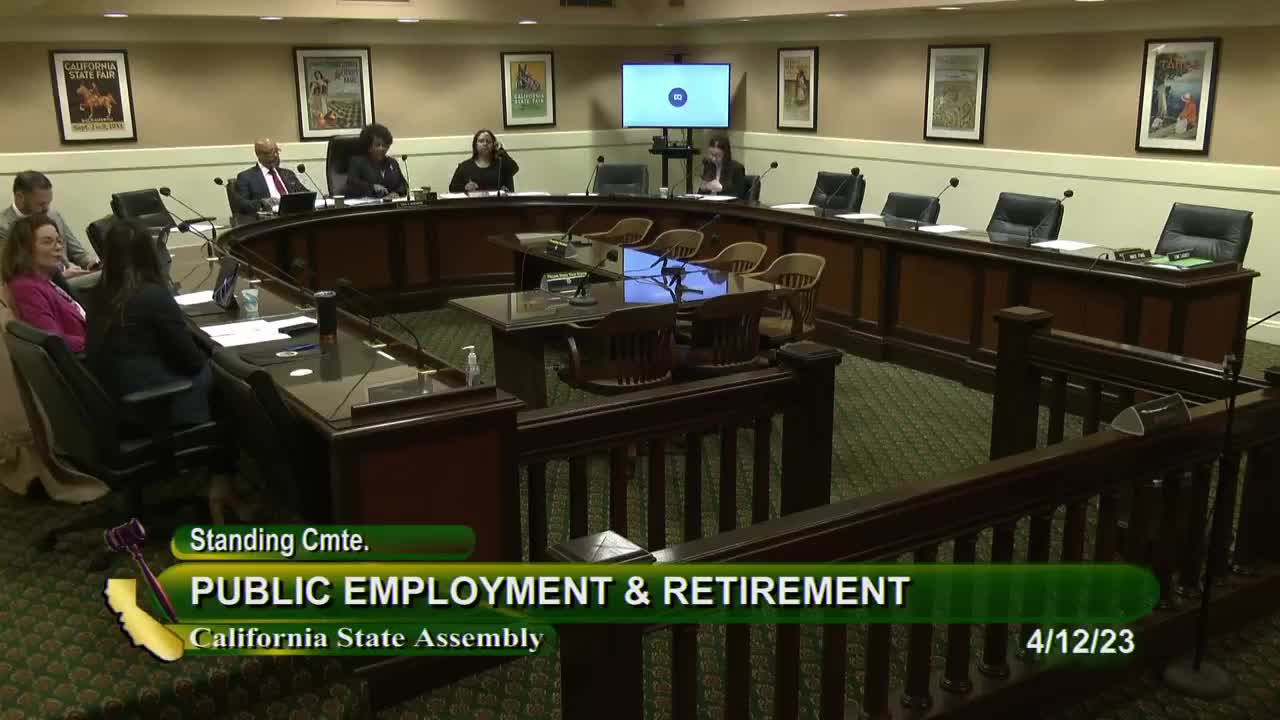 18MIN
Assembly Standing Committee on Public Employment and Retirement
Bill Author



