AB 1490: Affordable housing development projects: adaptive reuse.
- Session Year: 2023-2024
- House: Assembly
- Latest Version Date: 2023-10-11
Current Status:
Passed
(2023-10-11: Chaptered by Secretary of State - Chapter 764, Statutes of 2023.)
Introduced
In Committee
First Chamber
In Committee
Second Chamber
Enacted
Existing law requires the Department of Housing and Community Development to give priority with respect to funding under the Multifamily Housing Program to projects that prioritize adaptive reuse in existing developed areas served with public infrastructure, as specified. Existing law, the Housing Accountability Act, which is part of the Planning and Zoning Law, prohibits a local agency from disapproving, or conditioning approval in a manner that renders infeasible, a housing development project, as defined for purposes of the act, for very low, low-, or moderate-income households or an emergency shelter unless the local agency makes specified written findings based on a preponderance of the evidence in the record. That act states that it shall not be construed to prohibit a local agency from requiring a housing development project to comply with objective, quantifiable, written development standards, conditions, and policies appropriate to, and consistent with, meeting the jurisdictions share of the regional housing need, except as provided. That act further provides that a housing development project or emergency shelter shall be deemed consistent, compliant, and in conformity with an applicable plan, program, policy, ordinance, standard, requirement, or other similar provision if there is substantial evidence that would allow a reasonable person to conclude that the housing development project or emergency shelter is consistent, compliant, or in conformity.
Under this bill, a housing development that is, among other requirements, an extremely affordable adaptive reuse project on an infill parcel that is not located on or adjoined to a site where more than 1/3 of the square footage on the site is dedicated to industrial use, as specified, would be an allowable use. The bill would authorize a local agency to impose objective design review standards, except as specified. The bill would authorize a local agency to deny the project if it is proposed to be located on a site or adjoined to any site where any of the square footage on the site is dedicated to industrial use and the local agency makes written findings that approving the development would have an adverse effect on public health and safety. The bill would provide that for purposes of the Housing Accountability Act, a proposed housing development project is consistent, compliant, and in conformity with an applicable plan, program, policy, ordinance, standard, requirement, or other similar provision if the housing development project is consistent with the standards specified in these provisions. The bill would require a local agency to determine whether the proposed development meets those standards within specified timeframes. The bill would define an extremely affordable adaptive reuse project for these purposes to mean a multifamily housing development project that involves retrofitting and repurposing of a residential or commercial building that currently allows temporary dwelling or occupancy, and that meets specified affordability requirements, including that 100% of the units be dedicated to lower income households, 50% of which shall be dedicated to very low income households, as specified. Because the bill would require local officials to provide a higher level of service, the bill would impose a state-mandated local program.
This bill would require a local source of funding that can be used for the development of affordable housing to include adaptive reuse as an eligible project and prohibit an agency with control of a local source of funding from prohibiting or excluding a development proposal that uses an adaptive reuse model for an affordable housing project development solely on the basis that the proposal is for an adaptive reuse project.
The bill would include findings that changes proposed by this bill address a matter of statewide concern rather than a municipal affair and, therefore, apply to all cities, including charter cities.
The California Constitution requires the state to reimburse local agencies and school districts for certain costs mandated by the state. Statutory provisions establish procedures for making that reimbursement.
This bill would provide that, if the Commission on State Mandates determines that the bill contains costs mandated by the state, reimbursement for those costs shall be made pursuant to the statutory provisions noted above.
Existing law requires the Department of Housing and Community Development to give priority with respect to funding under the Multifamily Housing Program to projects that prioritize adaptive reuse in existing developed areas served with public infrastructure, as specified. Existing law, the Housing Accountability Act, which is part of the Planning and Zoning Law, prohibits a local agency from disapproving, or conditioning approval in a manner that renders infeasible, a housing development project, as defined for purposes of the act, for very low, low-, or moderate-income households or an emergency shelter unless the local agency makes specified written findings based on a preponderance of the evidence in the record. That act states that it shall not be construed to prohibit a local agency from requiring a housing development project to comply with objective, quantifiable, written development standards, conditions, and policies appropriate to, and consistent with, meeting the jurisdictions share of the regional housing need, except as provided. That act further provides that a housing development project or emergency shelter shall be deemed consistent, compliant, and in conformity with an applicable plan, program, policy, ordinance, standard, requirement, or other similar provision if there is substantial evidence that would allow a reasonable person to conclude that the housing development project or emergency shelter is consistent, compliant, or in conformity.
Under this bill, a housing development that is, among other requirements, an extremely affordable adaptive reuse project on an infill parcel that is not located on or adjoined to an industrial use site a site where more than 1/3 of the square footage on the site is dedicated to industrial use, as specified, would be an allowable use. The bill would authorize a local agency to impose objective design review standards, except as specified. The bill would authorize a local agency to deny the project if it is proposed to be located on a site or adjoined to any site where any of the square footage on the site is dedicated to industrial use and the local agency makes written findings that approving the development would have an adverse effect on public health and safety. The bill would provide that for purposes of the Housing Accountability Act, a proposed housing development project is consistent, compliant, and in conformity with an applicable plan, program, policy, ordinance, standard, requirement, or other similar provision if the housing development project is consistent with the standards specified in these provisions. The bill would require a local agency to determine whether the proposed development meets those standards within specified timeframes. The bill would define an extremely affordable adaptive reuse project for these purposes to mean a multifamily housing development project that involves retrofitting and repurposing of a residential or commercial building that currently allows temporary dwelling or occupancy, and that meets specified affordability requirements, including that 100% of the units be dedicated to lower income households, 50% of which shall be dedicated to very low income households, as specified. Because the bill would require local officials to provide a higher level of service, the bill would impose a state-mandated local program.
This bill would require a local source of funding that can be used for the development of affordable housing to include adaptive reuse as an eligible project and prohibit an agency with control of a local source of funding from prohibiting or excluding a development proposal that uses an adaptive reuse model for an affordable housing project development solely on the basis that the proposal is for an adaptive reuse project.
The bill would include findings that changes proposed by this bill address a matter of statewide concern rather than a municipal affair and, therefore, apply to all cities, including charter cities.
The California Constitution requires the state to reimburse local agencies and school districts for certain costs mandated by the state. Statutory provisions establish procedures for making that reimbursement.
This bill would provide that, if the Commission on State Mandates determines that the bill contains costs mandated by the state, reimbursement for those costs shall be made pursuant to the statutory provisions noted above.
Existing law requires the Department of Housing and Community Development to give priority with respect to funding under the Multifamily Housing Program to projects that prioritize adaptive reuse in existing developed areas served with public infrastructure, as specified. Existing law, the Housing Accountability Act, which is part of the Planning and Zoning Law, prohibits a local agency from disapproving, or conditioning approval in a manner that renders infeasible, a housing development project, as defined for purposes of the act, for very low, low-, or moderate-income households or an emergency shelter unless the local agency makes specified written findings based on a preponderance of the evidence in the record. That act states that it shall not be construed to prohibit a local agency from requiring a housing development project to comply with objective, quantifiable, written development standards, conditions, and policies appropriate to, and consistent with, meeting the jurisdictions share of the regional housing need, except as provided. That act further provides that a housing development project or emergency shelter shall be deemed consistent, compliant, and in conformity with an applicable plan, program, policy, ordinance, standard, requirement, or other similar provision if there is substantial evidence that would allow a reasonable person to conclude that the housing development project or emergency shelter is consistent, compliant, or in conformity.
Under this bill, an extremely affordable adaptive reuse project on an infill parcel that is not located on or adjoined to an industrial use site would be an allowable use. The bill would authorize a local agency to impose objective design review standards, except as specified. The bill would provide that for purposes of the Housing Accountability Act, a proposed housing development project is consistent, compliant, and in conformity with an applicable plan, program, policy, ordinance, standard, requirement, or other similar provision if the housing development project is consistent with the standards specified in these provisions. The bill would require a local agency to determine whether the proposed development meets those standards within specified timeframes. The bill would define an extremely extremely affordable adaptive reuse project project for these purposes to mean a multifamily housing development project that involves retrofitting and repurposing of an existing building that includes residential units, as specified, a residential or commercial building that currently allows temporary dwelling or occupancy, and that meets specified affordability requirements, including that 100% of the units be dedicated to lower income households, 50% of which shall be dedicated to very low income households, as specified. Because the bill would require local officials to provide a higher level of service, the bill would impose a state-mandated local program.
This bill would require a local source of funding that can be used for the development of affordable housing to include adaptive reuse as an eligible project and prohibit an agency with control of a local source of funding from prohibiting or excluding a development proposal that uses an adaptive reuse model for an affordable housing project development solely on the basis that the proposal is for an adaptive reuse project.
The bill would include findings that changes proposed by this bill address a matter of statewide concern rather than a municipal affair and, therefore, apply to all cities, including charter cities.
The California Constitution requires the state to reimburse local agencies and school districts for certain costs mandated by the state. Statutory provisions establish procedures for making that reimbursement.
This bill would provide that, if the Commission on State Mandates determines that the bill contains costs mandated by the state, reimbursement for those costs shall be made pursuant to the statutory provisions noted above.
Existing law requires the Department of Housing and Community Development to give priority with respect to funding under the Multifamily Housing Program to projects that prioritize adaptive reuse in existing developed areas served with public infrastructure, as specified. Existing law establishes various streamlined, ministerial review processes for housing development proposals meetings specified standards. law, the Housing Accountability Act, which is part of the Planning and Zoning Law, prohibits a local agency from disapproving, or conditioning approval in a manner that renders infeasible, a housing development project, as defined for purposes of the act, for very low, low-, or moderate-income households or an emergency shelter unless the local agency makes specified written findings based on a preponderance of the evidence in the record. That act states that it shall not be construed to prohibit a local agency from requiring a housing development project to comply with objective, quantifiable, written development standards, conditions, and policies appropriate to, and consistent with, meeting the jurisdictions share of the regional housing need, except as provided. That act further provides that a housing development project or emergency shelter shall be deemed consistent, compliant, and in conformity with an applicable plan, program, policy, ordinance, standard, requirement, or other similar provision if there is substantial evidence that would allow a reasonable person to conclude that the housing development project or emergency shelter is consistent, compliant, or in conformity.
ThisUnder this bill, an extremely affordable adaptive reuse project on an infill parcel that is not located on or adjoined to an industrial use site would be an allowable use. The bill would authorize a local agency to impose objective design review standards, except as specified. The bill would provide that for purposes of the Housing Accountability Act, a proposed housing development project is consistent, compliant, and in conformity with an applicable plan, program, policy, ordinance, standard, requirement, or other similar provision if the housing development project is consistent with the standards specified in these provisions. The bill would require a local agency to determine whether the proposed development meets those standards within specified timeframes. The bill would define adaptive reuse as the retrofitting and repurposing of an existing building to create new residential units. The bill would require a local government to approve a development proposal for an extremely affordable adaptive reuse project for these purposes to mean a multifamily housing development project that is an adaptive reuse project involves retrofitting and repurposing of an existing building that includes residential units, as specified, and that meets specified affordability and site requirements, including that 100% of the units be made available for dedicated to lower income households, 50% of which shall be made available dedicated to very low income households, pursuant to a streamlined, ministerial review process. The bill would declare a project meeting these requirements to be a use by right. The bill would require a project approved by a local government pursuant to this ministerial review process to meet specified labor standards and would prohibit a local government from imposing certain requirements on the project, including a maximum density requirement or floor area ratio requirement. as specified. Because the bill would require local officials to provide a higher level of service, the bill would impose a state-mandated local program.
The California Environmental Quality Act (CEQA) requires a lead agency, as defined, to prepare, or cause to be prepared, and certify the completion of, an environmental impact report on a project that it proposes to carry out or approve that may have a significant effect on the environment or to adopt a negative declaration if it finds that the project will not have that effect. CEQA also requires a lead agency to prepare a mitigated negative declaration for a project that may have a significant effect on the environment if revisions in the project would avoid or mitigate that effect and there is no substantial evidence that the project, as revised, would have a significant effect on the environment. CEQA does not apply to the approval of ministerial projects.This bill would define use by right for purposes of the above-described projects, in part, as a development project that is not a project for purposes of CEQA, and would deem the approval process established by the bill to be ministerial in nature, thereby exempting the approval of development projects subject to that approval process from CEQA.This bill would require a local source of funding that can be used for the development of affordable housing to include adaptive reuse as an eligible project and prohibit an agency with control of a local source of funding from prohibiting or excluding a development proposal that uses an adaptive reuse model for an affordable housing project development solely on the basis that the proposal is for an adaptive reuse project.
The bill would include findings that changes proposed by this bill address a matter of statewide concern rather than a municipal affair and, therefore, apply to all cities, including charter cities.
The California Constitution requires the state to reimburse local agencies and school districts for certain costs mandated by the state. Statutory provisions establish procedures for making that reimbursement.
This bill would provide that, if the Commission on State Mandates determines that the bill contains costs mandated by the state, reimbursement for those costs shall be made pursuant to the statutory provisions noted above.
Existing law requires the Department of Housing and Community Development to give priority with respect to funding under the Multifamily Housing Program to projects that prioritize adaptive reuse in existing developed areas served with public infrastructure, as specified. Existing law establishes various streamlined, ministerial review processes for housing development proposals meetings specified standards.
This bill would define adaptive reuse as the retrofitting and repurposing of an existing building to create new residential units. The bill would require a local government to provide an affordable housing approve a development proposal for a multifamily housing development project that is an adaptive reuse project and that guarantees meets specified affordability and site requirements, including that 100% of the units be made available for lower income households, 50% of which shall be made available to extremely low income households or very low income households, specified benefits and exemptions by local government agencies, including, among other things, approval of all entitlements and permits applicable to the project in 30 days or less, exemption from any minimum floor area ratio, and waiver of local building and permit fees, as specified. households, pursuant to a streamlined, ministerial review process. The bill would declare a project meeting these requirements to be a use by right. The bill would require a project approved by a local government pursuant to this ministerial review process to meet specified labor standards and would prohibit a local government from imposing certain requirements on the project, including a maximum density requirement or floor area ratio requirement. Because the bill would require local officials to provide a higher level of service, the bill would impose a state-mandated local program.
The California Environmental Quality Act (CEQA) requires a lead agency, as defined, to prepare, or cause to be prepared, and certify the completion of, an environmental impact report on a project that it proposes to carry out or approve that may have a significant effect on the environment or to adopt a negative declaration if it finds that the project will not have that effect. CEQA also requires a lead agency to prepare a mitigated negative declaration for a project that may have a significant effect on the environment if revisions in the project would avoid or mitigate that effect and there is no substantial evidence that the project, as revised, would have a significant effect on the environment. CEQA does not apply to the approval of ministerial projects.
This bill would define use by right for purposes of the above-described projects, in part, as a development project that is not a project for purposes of CEQA, and would deem the approval process established by the bill to be ministerial in nature, thereby exempting the approval of development projects subject to that approval process from CEQA.
This bill would require a local source of funding that can be used for the development of affordable housing to include adaptive reuse as an eligible project and prohibit an agency with control of a local source of funding from prohibiting or excluding a development proposal that uses an adaptive reuse model for an affordable housing project development solely on the basis that the proposal is for an adaptive reuse project.
The bill would include findings that changes proposed by this bill address a matter of statewide concern rather than a municipal affair and, therefore, apply to all cities, including charter cities.
The California Constitution requires the state to reimburse local agencies and school districts for certain costs mandated by the state. Statutory provisions establish procedures for making that reimbursement.
This bill would provide that, if the Commission on State Mandates determines that the bill contains costs mandated by the state, reimbursement for those costs shall be made pursuant to the statutory provisions noted above.
Existing law requires the Department of Housing and Community Development to give priority with respect to funding under the Multifamily Housing Program to projects that prioritize adaptive reuse in existing developed areas served with public infrastructure, as specified.
This bill would define adaptive reuse as the retrofitting and repurposing of an existing building to create new residential units. The bill would require a local government to provide an affordable housing project that is an adaptive reuse project and that guarantees that 100% of the units be made available for lower income households, 50% of which shall be made available to extremely low income households or very low income households, specified benefits and exemptions by local government agencies, including, among other things, approval of all entitlements and permits applicable to the project in 30 days or less, exemption from any minimum floor area ratio, and waiver of local building and permit fees, as specified. Because the bill would require local officials to provide a higher level of service, the bill would impose a state-mandated local program.
This bill would require a local source of funding that can be used for the development of affordable housing to include adaptive reuse as an eligible project and prohibit an agency with control of a local source of funding from prohibiting or excluding a development proposal that uses an adaptive reuse model for an affordable housing project development solely on the basis that the proposal is for an adaptive reuse project.
The bill would include findings that changes proposed by this bill address a matter of statewide concern rather than a municipal affair and, therefore, apply to all cities, including charter cities.
The California Constitution requires the state to reimburse local agencies and school districts for certain costs mandated by the state. Statutory provisions establish procedures for making that reimbursement.
This bill would provide that, if the Commission on State Mandates determines that the bill contains costs mandated by the state, reimbursement for those costs shall be made pursuant to the statutory provisions noted above.
(a)For purposes of this section, the following terms have the following meanings:
(1)Dedicated to industrial use means any of the following:
(A)The square footage is currently being used as an industrial use.
(B)The most recently permitted use of the square footage is an industrial use.
(C)The site was designated for industrial use in the latest version of a local governments general plan adopted before January 1, 2022.
(2)Development proponent means a developer who submits a housing development project application to a local agency pursuant to this section.
(3)Extremely affordable adaptive reuse project means a housing development project that meets the following criteria:
(A)The development is a multifamily housing development project.
(B)The development involves the retrofitting and repurposing of a residential building or commercial building that currently allows temporary dwelling or occupancy, to create new residential units.
(C)The development will be entirely within the envelope of the existing building.
(D)The development meets all of the following affordability criteria:
(i)One hundred percent of the units within the development project, excluding managers units, shall be dedicated to lower income households at an affordable housing cost, as defined by Section 50052.5 of the Health and Safety Code, or an affordable rent set in an amount consistent with the rent limits established by the California Tax Credit Allocation Committee.
(ii)At least 50 percent of the units within the development project shall be dedicated to very low income households at an affordable housing cost, as defined by Section 50052.5 of the Health and Safety Code, or an affordable rent set in an amount consistent with the rent limits established by the California Tax Credit Allocation Committee.
(iii)The units shall be subject to a recorded deed restriction for a period of 55 years for rental units and 45 years for owner-occupied units.
(4)Housing development project has the same meaning as defined in Section 65589.5.
(5)Industrial use means utilities, manufacturing, transportation storage and maintenance facilities, and warehousing uses. Industrial use does not include power substations or utility conveyances such as power lines, broadband wires, and pipes.
(6)Infill parcel means a parcel that is either of the following:
(A)At least 75 percent of the perimeter of the site of the development adjoins parcels that are developed with urban uses. For purposes of this paragraph, parcels that are separated by a street or highway shall be considered adjoined.
(B)The parcel is within one-half mile of public transit.
(7)Local agency means a city, including a charter city, a county, including a charter county, or a city and county, including a charter city and county.
(8)Lower income households has the same meaning as defined in Section 50079.5 of the Health and Safety Code.
(9)Public transit means a major transit stop as defined in Section 21064.3 of the Public Resources Code.
(10)Very low income households has the same meaning as defined in Section 50105 of the Health and Safety Code.
(b)(1)Notwithstanding any inconsistent provision of a local agencys general plan, specific plan, zoning ordinance, or regulation, a housing development project submitted pursuant to this section shall be an allowable use if it meets the following objective planning standards:
(A)The development is an extremely affordable adaptive reuse project.
(B)The development is proposed to be located on a site that is an infill parcel.
(C)The development is not proposed to be located on a site or adjoined to any site where more than one-third of the square footage on the site is dedicated to industrial use. For purposes of this paragraph, parcels only separated by a street or highway shall be considered adjoined.
(D)The development does not eliminate any existing open space on the parcel.
(E)For developments of 50 units or more, the development shall provide onsite management services.
(2)Except as specified in paragraph (3), a local agency may impose objective design review standards for a housing development project submitted pursuant to this section.
(3)A local agency shall not impose or require the curing of any preexisting deficit of or conflict with any of the following standards on a project submitted for review pursuant to this section:
(A)Any maximum density requirements.
(B)Any maximum floor area ratio requirements.
(C)Any requirement to add additional parking.
(D)Any requirement to add additional open space.
(4)A local agency may deny a project specified in paragraph (1) that is proposed to be located on a site or adjoined to any site where any of the square footage on the site is dedicated to industrial use if the local agency makes written findings that approving the development would have an adverse effect on public health and safety.
(c)(1)For purposes of the Housing Accountability Act (Section 65589.5), a proposed housing development that is consistent with the provisions of subdivision (b) shall be deemed consistent, compliant, and in conformity with an applicable plan, program, policy, ordinance, standard, requirement, or other similar provision.
(2)If a local agency determines that a development submitted pursuant to this section is in conflict with any of the objective planning standards specified in or an objective design review standard imposed pursuant to subdivision (b), it shall provide the development proponent written documentation of which standard or standards the development conflicts with, and an explanation for the reason or reasons the development conflicts with that standard or standards, within the following timeframes:
(A)Within 60 days of submittal of the completed proposal for the development project to the local agency if the development contains 150 or fewer housing units.
(B)Within 90 days of submittal of the completed proposal for the development project to the local agency if the development contains more than 150 housing units.
(3)If a local agency does not make a timely determination within the timeframes described in paragraph (2), the application shall be deemed consistent, compliant, and in conformity with an applicable plan, program, policy, ordinance, standard, requirement, or other similar provision.
SEC. 2.Section 65960.1 is added to the Government Code, to read:65960.1.(a)Any local source of funding that can be used for the development of affordable housing shall include adaptive reuse as an eligible project. No agency with control of a local source of funding shall prohibit or exclude a project proposal that uses an adaptive reuse model for an affordable housing project development solely on the basis that the proposal is for an adaptive reuse project.
(b)For purposes of this section adaptive reuse means the retrofitting and repurposing of an existing building to create new residential units.
SEC. 3.The Legislature finds and declares that developing affordable housing in a timely and cost-effective manner through the adaptive reuse of existing properties is a matter of statewide concern and is not a municipal affair as that term is used in Section 5 of Article XI of the California Constitution. Therefore, Sections 1 and 2 of this act adding Sections 65913.12 and 65960.1 to the Government Code apply to all cities, including charter cities.
SEC. 4.If the Commission on State Mandates determines that this act contains costs mandated by the state, reimbursement to local agencies and school districts for those costs shall be made pursuant to Part 7 (commencing with Section 17500) of Division 4 of Title 2 of the Government Code.
(a)For purposes of this section, the following terms have the following meanings:
(1)Dedicated to industrial use means any of the following:
(A)The square footage is currently being used as an industrial use.
(B)The most recently permitted use of the square footage is an industrial use.
(C)The site was designated for industrial use in the latest version of a local governments general plan adopted before January 1, 2022.
(2)Development proponent means a developer who submits a housing development project application to a local agency pursuant to this section.
(3)Extremely affordable adaptive reuse project means a housing development project that meets the following criteria:
(A)The development is a multifamily housing development project.
(B)The development involves the retrofitting and repurposing of a residential building or commercial building that currently allows temporary dwelling or occupancy, to create new residential units.
(C)The development will be entirely within the envelope of the existing building.
(D)The development meets all of the following affordability criteria:
(i)One hundred percent of the units within the development project, excluding managers units, shall be dedicated to lower income households at an affordable housing cost, as defined by Section 50052.5 of the Health and Safety Code, or an affordable rent set in an amount consistent with the rent limits established by the California Tax Credit Allocation Committee.
(ii)At least 50 percent of the units within the development project shall be dedicated to very low income households at an affordable housing cost, as defined by Section 50052.5 of the Health and Safety Code, or an affordable rent set in an amount consistent with the rent limits established by the California Tax Credit Allocation Committee.
(iii)The units shall be subject to a recorded deed restriction for a period of 55 years for rental units and 45 years for owner-occupied units.
(4)Housing development project has the same meaning as defined in Section 65589.5.
(5)Industrial use means utilities, manufacturing, transportation storage and maintenance facilities, and warehousing uses. Industrial use does not include power substations or utility conveyances such as power lines, broadband wires, and pipes.
(6)Infill parcel means a parcel that is either of the following:
(A)At least 75 percent of the perimeter of the site of the development adjoins parcels that are developed with urban uses. For purposes of this paragraph, parcels that are separated by a street or highway shall be considered adjoined.
(B)The parcel is within one-half mile of public transit.
(7)Local agency means a city, including a charter city, a county, including a charter county, or a city and county, including a charter city and county.
(8)Lower income households has the same meaning as defined in Section 50079.5 of the Health and Safety Code.
(9)Public transit means a major transit stop as defined in Section 21064.3 of the Public Resources Code.
(10)Very low income households has the same meaning as defined in Section 50105 of the Health and Safety Code.
(b)(1)Notwithstanding any inconsistent provision of a local agencys general plan, specific plan, zoning ordinance, or regulation, a housing development project submitted pursuant to this section shall be an allowable use if it meets the following objective planning standards:
(A)The development is an extremely affordable adaptive reuse project.
(B)The development is proposed to be located on a site that is an infill parcel.
(C)The development is not proposed to be located on a site or adjoined to any site where more than one-third of the square footage on the site is dedicated to industrial use. For purposes of this paragraph, parcels only separated by a street or highway shall be considered adjoined.
(D)The development does not eliminate any existing open space on the parcel.
(E)For developments of 50 units or more, the development shall provide onsite management services.
(2)Except as specified in paragraph (3), a local agency may impose objective design review standards for a housing development project submitted pursuant to this section.
(3)A local agency shall not impose or require the curing of any preexisting deficit of or conflict with any of the following standards on a project submitted for review pursuant to this section:
(A)Any maximum density requirements.
(B)Any maximum floor area ratio requirements.
(C)Any requirement to add additional parking.
(D)Any requirement to add additional open space.
(4)A local agency may deny a project specified in paragraph (1) that is proposed to be located on a site or adjoined to any site where any of the square footage on the site is dedicated to industrial use if the local agency makes written findings that approving the development would have an adverse effect on public health and safety.
(c)(1)For purposes of the Housing Accountability Act (Section 65589.5), a proposed housing development that is consistent with the provisions of subdivision (b) shall be deemed consistent, compliant, and in conformity with an applicable plan, program, policy, ordinance, standard, requirement, or other similar provision.
(2)If a local agency determines that a development submitted pursuant to this section is in conflict with any of the objective planning standards specified in or an objective design review standard imposed pursuant to subdivision (b), it shall provide the development proponent written documentation of which standard or standards the development conflicts with, and an explanation for the reason or reasons the development conflicts with that standard or standards, within the following timeframes:
(A)Within 60 days of submittal of the completed proposal for the development project to the local agency if the development contains 150 or fewer housing units.
(B)Within 90 days of submittal of the completed proposal for the development project to the local agency if the development contains more than 150 housing units.
(3)If a local agency does not make a timely determination within the timeframes described in paragraph (2), the application shall be deemed consistent, compliant, and in conformity with an applicable plan, program, policy, ordinance, standard, requirement, or other similar provision.
SEC. 2.Section 65960.1 is added to the Government Code, to read:65960.1.(a)Any local source of funding that can be used for the development of affordable housing shall include adaptive reuse as an eligible project. No agency with control of a local source of funding shall prohibit or exclude a project proposal that uses an adaptive reuse model for an affordable housing project development solely on the basis that the proposal is for an adaptive reuse project.
(b)For purposes of this section adaptive reuse means the retrofitting and repurposing of an existing building to create new residential units.
SEC. 3.The Legislature finds and declares that Section 1 of this act adding Section 65913.12 to the Government Code and Section 2 of this act adding Section 65960.1 to the Government Code address developing affordable housing in a timely and cost-effective manner through the adaptive reuse of existing properties is a matter of statewide concern rather than and is not a municipal affair as that term is used in Section 5 of Article XI of the California Constitution. Therefore, Sections 1 and 2 of this act adding Sections 65913.12 and 65960.1 to the Government Code apply to all cities, including charter cities.
SEC. 4.If the Commission on State Mandates determines that this act contains costs mandated by the state, reimbursement to local agencies and school districts for those costs shall be made pursuant to Part 7 (commencing with Section 17500) of Division 4 of Title 2 of the Government Code.
(a)For purposes of this section, the following terms have the following meanings:
(1)Dedicated to industrial use means any of the following:
(A)The square footage is currently being used as an industrial use.
(B)The most recently permitted use of the square footage is an industrial use.
(C)The site was designated for industrial use in the latest version of a local governments general plan adopted before January 1, 2022.
(2)Development proponent means a developer who submits a housing development project application to a local agency pursuant to this section.
(3)Extremely affordable adaptive reuse project means a housing development project that meets the following criteria:
(A)The development is a multifamily housing development project.
(B)The development involves the retrofitting and repurposing of an existing building that currently includes residential dwelling units, including temporary or single occupancy residential units, a residential building or commercial building that currently allows temporary dwelling or occupancy, to create new residential units.
(C)The development will be entirely within the envelope of the existing building.
(D)The development meets all of the following affordability criteria:
(i)One hundred percent of the units within the development project, excluding managers units, shall be dedicated to lower income households at an affordable housing cost, as defined by Section 50052.5 of the Health and Safety Code, or an affordable rent set in an amount consistent with the rent limits established by the California Tax Credit Allocation Committee.
(ii)At least 50 percent of the units within the development project shall be dedicated to very low income households at an affordable housing cost, as defined by Section 50052.5 of the Health and Safety Code, or an affordable rent set in an amount consistent with the rent limits established by the California Tax Credit Allocation Committee.
(iii)The units shall be subject to a recorded deed restriction for a period of 55 years for rental units and 45 years for owner-occupied units.
(4)Housing development project has the same meaning as defined in Section 65589.5.
(5)Industrial use means utilities, manufacturing, transportation storage and maintenance facilities, and warehousing uses. Industrial use does not include power substations or utility conveyances such as power lines, broadband wires, and pipes.
(6)Infill parcel means a parcel that is either of the following:
(A)At least 75 percent of the perimeter of the site of the development adjoins parcels that are developed with urban uses. For purposes of this paragraph, parcels that are separated by a street or highway shall be considered adjoined.
(B)The parcel is within one-half mile of public transit.
(7)Local agency means a city, including a charter city, a county, including a charter county, or a city and county, including a charter city and county.
(8)Lower income households has the same meaning as defined in Section 50079.5 of the Health and Safety Code.
(9)Public transit means a major transit stop as defined in Section 21064.3 of the Public Resources Code.
(10)Very low income households has the same meaning as defined in Section 50105 of the Health and Safety Code.
(b)(1)Notwithstanding any inconsistent provision of a local agencys general plan, specific plan, zoning ordinance, or regulation, a housing development project submitted pursuant to this section shall be an allowable use if it meets the following objective planning standards:
(A)The development is an extremely affordable adaptive reuse project.
(B)The development is proposed to be located on a site that is an infill parcel.
(C)The development is not proposed to be located on a site or adjoined to any site where more than one-third of the square footage on the site is dedicated to industrial use. For purposes of this paragraph, parcels only separated by a street or highway shall be considered adjoined.
(2)Except as specified in paragraph (3), a local agency may impose objective design review standards for a housing development project submitted pursuant to this section.
(3)A local agency shall not impose or require the curing of any preexisting deficit of or conflict with any of the following standards on a project submitted for review pursuant to this section:
(A)Any maximum density requirements.
(B)Any maximum floor area ratio requirements.
(C)Any requirement to add additional parking.
(D)Any requirement to add additional open space.
(c)(1)For purposes of the Housing Accountability Act (Section 65589.5), a proposed housing development that is consistent with the provisions of subdivision (b) shall be deemed consistent, compliant, and in conformity with an applicable plan, program, policy, ordinance, standard, requirement, or other similar provision.
(2)If a local agency determines that a development submitted pursuant to this section is in conflict with any of the objective planning standards specified in or an objective design review standard imposed pursuant to subdivision (b), it shall provide the development proponent written documentation of which standard or standards the development conflicts with, and an explanation for the reason or reasons the development conflicts with that standard or standards, within the following timeframes:
(A)Within 60 days of submittal of the completed proposal for the development project to the local agency if the development contains 150 or fewer housing units.
(B)Within 90 days of submittal of the completed proposal for the development project to the local agency if the development contains more than 150 housing units.
(3)If a local agency does not make a timely determination within the timeframes described in paragraph (2), the application shall be deemed consistent, compliant, and in conformity with an applicable plan, program, policy, ordinance, standard, requirement, or other similar provision.
SEC. 2.Section 65960.1 is added to the Government Code, to read:65960.1.(a)Any local source of funding that can be used for the development of affordable housing shall include adaptive reuse as an eligible project. No agency with control of a local source of funding shall prohibit or exclude a project proposal that uses an adaptive reuse model for an affordable housing project development solely on the basis that the proposal is for an adaptive reuse project.
(b)For purposes of this section adaptive reuse means the retrofitting and repurposing of an existing building to create new residential units.
SEC. 3.The Legislature finds and declares that Section 1 of this act adding Section 65913.12 to the Government Code and Section 2 of this act adding Section 65960.1 to the Government Code address a matter of statewide concern rather than a municipal affair as that term is used in Section 5 of Article XI of the California Constitution. Therefore, Sections 1 and 2 of this act apply to all cities, including charter cities.
SEC. 4.If the Commission on State Mandates determines that this act contains costs mandated by the state, reimbursement to local agencies and school districts for those costs shall be made pursuant to Part 7 (commencing with Section 17500) of Division 4 of Title 2 of the Government Code.
(a)For purposes of this section, the following terms have the following meanings:
(1)Dedicated to industrial use means any of the following:
(A)The square footage is currently being used as an industrial use.
(B)The most recently permitted use of the square footage is an industrial use.
(C)The site was designated for industrial use in the latest version of a local governments general plan adopted before January 1, 2022.
(2)Development proponent means a developer who submits a housing development project application to a local agency pursuant to this section.
(3)Extremely affordable adaptive reuse project means a housing development project that meets the following criteria:
(A)The development is a multifamily housing development project.
(B)The development involves the retrofitting and repurposing of an existing building that currently includes residential dwelling units, including temporary or single occupancy residential units, to create new residential units.
(C)The development will be entirely within the envelope of the existing building.
(D)The development meets all of the following affordability criteria:
(i)One hundred percent of the units within the development project, excluding managers units, shall be dedicated to lower income households at an affordable housing cost, as defined by Section 50052.5 of the Health and Safety Code, or an affordable rent set in an amount consistent with the rent limits established by the California Tax Credit Allocation Committee.
(ii)At least 50 percent of the units within the development project shall be dedicated to very low income households at an affordable housing cost, as defined by Section 50052.5 of the Health and Safety Code, or an affordable rent set in an amount consistent with the rent limits established by the California Tax Credit Allocation Committee.
(iii)The units shall be subject to a recorded deed restriction for a period of 55 years for rental units and 45 years for owner-occupied units.
(4)Housing development project has the same meaning as defined in Section 65589.5.
(5)Industrial use means utilities, manufacturing, transportation storage and maintenance facilities, and warehousing uses. Industrial use does not include power substations or utility conveyances such as power lines, broadband wires, and pipes.
(6)Infill parcel means a parcel that is either of the following:
(A)At least 75 percent of the perimeter of the site of the development adjoins parcels that are developed with urban uses. For purposes of this paragraph, parcels that are separated by a street or highway shall be considered adjoined.
(B)The parcel is within one-half mile of public transit.
(7)Local agency means a city, including a charter city, a county, including a charter county, or a city and county, including a charter city and county.
(8)Lower income households has the same meaning as defined in Section 50079.5 of the Health and Safety Code.
(9)Public transit means a major transit stop as defined in Section 21064.3 of the Public Resources Code.
(10)Very low income households has the same meaning as defined in Section 50105 of the Health and Safety Code.
(b)(1)Notwithstanding any inconsistent provision of a local agencys general plan, specific plan, zoning ordinance, or regulation, a housing development project submitted pursuant to this section shall be an allowable use if it meets the following objective planning standards:
(A)The development is an extremely affordable adaptive reuse project.
(B)The development is proposed to be located on a site that is an infill parcel.
(4)(C)The development is not proposed to be located on a site or adjoined to any site where more than one-third of the square footage on the site is dedicated to industrial use. For purposes of this paragraph, parcels only separated by a street or highway shall be considered adjoined.
(2)Except as specified in paragraph (3), a local agency may impose objective design review standards for a housing development project submitted pursuant to this section.
(3)A local agency shall not impose or require the curing of any preexisting deficit of or conflict with any of the following standards on a project submitted for review pursuant to this section:
(A)Any maximum density requirements.
(B)Any maximum floor area ratio requirements.
(C)Any requirement to add additional parking.
(D)Any requirement to add additional open space.
(b)(1)If the local government determines that a development submitted pursuant to this section is consistent with the objective planning standards specified in to subdivision (a), it shall approve the development.(c)(1)For purposes of the Housing Accountability Act (Section 65589.5), a proposed housing development that is consistent with the provisions of subdivision (b) shall be deemed consistent, compliant, and in conformity with an applicable plan, program, policy, ordinance, standard, requirement, or other similar provision.
(2)If a local government agency determines that a development submitted pursuant to this section is in conflict with any of the objective planning standards specified in or an objective design review standard imposed pursuant to subdivision (a), (b), it shall provide the development proponent written documentation of which standard or standards the development conflicts with, and an explanation for the reason or reasons the development conflicts with that standard or standards, within the following timeframes:
(A)Within 60 days of submittal of the completed proposal for the development project to the local government agency if the development contains 150 or fewer housing units.
(B)Within 90 days of submittal of the completed proposal for the development project to the local government agency if the development contains more than 150 housing units.
(3)The determination of whether a proposed project submitted pursuant to this section is or is not in conflict with the objective planning standards is not a project as defined in Section 21065 of the Public Resources Code.(c)A local government shall not impose any of the following standards on a project approved pursuant to this section:(1)Any maximum density requirements.(2)Any maximum floor area ratio requirements.(3)Any requirement to add additional parking.(4)Any requirement to add additional open space.(d)(1)A development project approved by a local government pursuant to this section shall meet the labor standards provided in Section 65912.130.(2)A development project of 50 or more housing units approved by a local government pursuant to this section shall also meet the labor standards provided in Section 65912.131.(e)For purposes of this section, the following terms have the following meanings:(1)Adaptive reuse means the retrofitting and repurposing of an existing building to create new residential units.(2)Dedicated to industrial use means any of the following:(A)The square footage is currently being used as an industrial use.(B)The most recently permitted use of the square footage is an industrial use.(C)The site was designated for industrial use in the latest version of a local governments general plan adopted before January 1, 2022.(3)Development proponent means a developer who submits a housing development project application to a local government under the streamlined, ministerial review process pursuant to this section.(4)Housing development project has the same meaning as defined in Section 65589.5.(5)Industrial use means utilities, manufacturing, transportation storage and maintenance facilities, and warehousing uses. Industrial use does not include power substations or utility conveyances such as power lines, broadband wires, and pipes.(6)Local government means a city, including a charter city, a county, including a charter county, or a city and county, including a charter city and county.(7)Lower income households has the same meaning as defined in Section 50079.5 of the Health and Safety Code.(8)Use by right means a development project that satisfies both of the following conditions:(A)The development project does not require a conditional use permit, planned unit development permit, or other discretionary local government review.(B)The development project is not a project for purposes of Division 13 (commencing with Section 21000) of the Public Resources Code.(9)Very low income households has the same meaning as defined in Section 50105 of the Health and Safety Code.(3)If a local agency does not make a timely determination within the timeframes described in paragraph (2), the application shall be deemed consistent, compliant, and in conformity with an applicable plan, program, policy, ordinance, standard, requirement, or other similar provision.
SEC. 2.Section 65960.1 is added to the Government Code, to read:65960.1.(a)Any local source of funding that can be used for the development of affordable housing shall include adaptive reuse as an eligible project. No agency with control of a local source of funding shall prohibit or exclude a project proposal that uses an adaptive reuse model for an affordable housing project development solely on the basis that the proposal is for an adaptive reuse project.
(b)For purposes of this section adaptive reuse means the retrofitting and repurposing of an existing building to create new residential units.
SEC. 3.The Legislature finds and declares that Section 1 of this act adding Section 65913.12 to the Government Code and Section 2 of this act adding Section 65960.1 to the Government Code address a matter of statewide concern rather than a municipal affair as that term is used in Section 5 of Article XI of the California Constitution. Therefore, Section 1 Sections 1 and 2 of this act applies apply to all cities, including charter cities.
SEC. 4.If the Commission on State Mandates determines that this act contains costs mandated by the state, reimbursement to local agencies and school districts for those costs shall be made pursuant to Part 7 (commencing with Section 17500) of Division 4 of Title 2 of the Government Code.
(a)Notwithstanding any inconsistent provision of a local governments general plan, specific plan, zoning ordinance, or regulation, a development proponent may submit an application for a project that shall be a use by right and that shall be subject to a streamlined, ministerial review pursuant to subdivision (b) if the proposed housing development satisfies all of the following objective planning standards:
(1)The development is a multifamily housing development project.
(2)The development is an adaptive reuse project.
(3)The development meets all of the following affordability criteria.
(A)One hundred percent of the units within the development project, excluding managers units, shall be dedicated to lower income households at an affordable housing cost, as defined by Section 50052.5 of the Health and Safety Code, or an affordable rent set in an amount consistent with the rent limits established by the California Tax Credit Allocation Committee.
(B)At least 50 percent of the units within the development project shall be dedicated to very low income households at an affordable housing cost, as defined by Section 50052.5 of the Health and Safety Code, or an affordable rent set in an amount consistent with the rent limits established by the California Tax Credit Allocation Committee.
(C)The units shall be subject to a recorded deed restriction for a period of 55 years for rental units and 45 years for owner-occupied units.
(4)The development is not proposed to be located on a site or adjoined to any site where more than one-third of the square footage on the site is dedicated to industrial use. For purposes of this paragraph, parcels only separated by a street or highway shall be considered adjoined.
(b)(1)If the local government determines that a development submitted pursuant to this section is consistent with the objective planning standards specified in to subdivision (a), it shall approve the development.
(2)If a local government determines that a development submitted pursuant to this section is in conflict with any of the objective planning standards specified in subdivision (a), it shall provide the development proponent written documentation of which standard or standards the development conflicts with, and an explanation for the reason or reasons the development conflicts with that standard or standards, within the following timeframes:
(A)Within 60 days of submittal of the completed proposal for the development project to the local government if the development contains 150 or fewer housing units.
(B)Within 90 days of submittal of the completed proposal for the development project to the local government if the development contains more than 150 housing units.
(3)The determination of whether a proposed project submitted pursuant to this section is or is not in conflict with the objective planning standards is not a project as defined in Section 21065 of the Public Resources Code.
(c)A local government shall not impose any of the following standards on a project approved pursuant to this section:
(1)Any maximum density requirements.
(2)Any maximum floor area ratio requirements.
(3)Any requirement to add additional parking.
(4)Any requirement to add additional open space.
(d)(1)A development project approved by a local government pursuant to this section shall meet the labor standards provided in Section 65912.130.
(2)A development project of 50 or more housing units approved by a local government pursuant to this section shall also meet the labor standards provided in Section 65912.131.
(e)For purposes of this section, the following terms have the following meanings:
(1)Adaptive reuse means the retrofitting and repurposing of an existing building to create new residential units.
(2)Dedicated to industrial use means any of the following:
(A)The square footage is currently being used as an industrial use.
(B)The most recently permitted use of the square footage is an industrial use.
(C)The site was designated for industrial use in the latest version of a local governments general plan adopted before January 1, 2022.
(3)Development proponent means a developer who submits a housing development project application to a local government under the streamlined, ministerial review process pursuant to this section.
(4)Housing development project has the same meaning as defined in Section 65589.5.
(5)Industrial use means utilities, manufacturing, transportation storage and maintenance facilities, and warehousing uses. Industrial use does not include power substations or utility conveyances such as power lines, broadband wires, and pipes.
(6)Local government means a city, including a charter city, a county, including a charter county, or a city and county, including a charter city and county.
(7)Lower income households has the same meaning as defined in Section 50079.5 of the Health and Safety Code.
(8)Use by right means a development project that satisfies both of the following conditions:
(A)The development project does not require a conditional use permit, planned unit development permit, or other discretionary local government review.
(B)The development project is not a project for purposes of Division 13 (commencing with Section 21000) of the Public Resources Code.
(9)Very low income households has the same meaning as defined in Section 50105 of the Health and Safety Code.
SECTION 1.SEC. 2.Section 65960.1 is added to the Government Code, to read:65960.1.(a)Notwithstanding any other provision of law, a local government shall provide, to an affordable housing project that is an adaptive reuse project and that guarantees that 100 percent of the units shall be made available for lower income households, 50 percent of which shall be made available to extremely low income households or very low income households, all of the following:(1)All entitlements and permits applicable to the project shall be approved within 30 days or less from the date of submission of the entitlement or permit application. This paragraph shall apply to any agency that governs provision of water or power for a local jurisdiction and that operates independently from the local jurisdiction.(2)Local building and permit fees for the project shall be waived.(3)Low-income utility rates that are available to low-income projects shall be available to adaptive reuse projects when utilities are not separately metered.(4)The project shall be exempt from any minimum floor area ratio, provided that the size of a unit is no less than the size of the unit under its previous occupancy permit, and that the unit is compliant with the Americans with Disabilities Act of 1990 (Public Law 101-336; 42 U.S.C. Sec. 12101 et seq.) and any other state or federal disability design requirements.(5)The number of parking spaces required for the project shall be no more than the number of parking spaces required under the previous occupancy permit, without regard to any change in the zoning of the property that might result from the adaptive reuse of the property.(b)65960.1.(a)Any local source of funding that can be used for the development of affordable housing shall include adaptive reuse as an eligible project. No agency with control of a local source of funding shall prohibit or exclude a project proposal that uses an adaptive reuse model for an affordable housing project development solely on the basis that the proposal is for an adaptive reuse project.
(c)As used in this section, all of the following definitions shall apply:(1)Adaptive(b)For purposes of this section adaptive reuse means the retrofitting and repurposing of an existing building to create new residential units.
(2)Lower income households shall have the same meaning as in Section 50079.5 of the Health and Safety Code.(3)Very low income households shall have the same meaning as in Section 50105 of the Health and Safety Code.(4)Extremely low income households shall have the same meaning as in Section 50106 of the Health and Safety Code.SEC. 2.SEC. 3.The Legislature finds and declares that Section 1 of this act adding Section 65913.12 to the Government Code and Section 2 of this act adding Section 65960.1 to the Government Code address a matter of statewide concern rather than a municipal affair as that term is used in Section 5 of Article XI of the California Constitution. Therefore, Section 1 of this act applies to all cities, including charter cities.
SEC. 3.SEC. 4.If the Commission on State Mandates determines that this act contains costs mandated by the state, reimbursement to local agencies and school districts for those costs shall be made pursuant to Part 7 (commencing with Section 17500) of Division 4 of Title 2 of the Government Code.
REVISIONS: HeadingLine 2.(a)Notwithstanding any other provision of law, a local government shall provide, to an affordable housing project that is an adaptive reuse project and that guarantees that 100 percent of the units shall be made available for lower income households, 50 percent of which shall be made available to extremely low income households or very low income households, all of the following:
(1)All entitlements and permits applicable to the project shall be approved within 30 days or less from the date of submission of the entitlement or permit application. This paragraph shall apply to any agency that governs provision of water or power for a local jurisdiction and that operates independently from the local jurisdiction.
(2)Local building and permit fees for the project shall be waived.
(3)Low-income utility rates that are available to low-income projects shall be available to adaptive reuse projects when utilities are not separately metered.
(4)The project shall be exempt from any minimum floor area ratio, provided that the size of a unit is no less than the size of the unit under its previous occupancy permit, and that the unit is compliant with the Americans with Disabilities Act of 1990 (Public Law 101-336; 42 U.S.C. Sec. 12101 et seq.) and any other state or federal disability design requirements.
(5)The number of parking spaces required for the project shall be no more than the number of parking spaces required under the previous occupancy permit, without regard to any change in the zoning of the property that might result from the adaptive reuse of the property.
(b)Any local source of funding that can be used for the development of affordable housing shall include adaptive reuse as an eligible project. No agency with control of a local source of funding shall prohibit or exclude a project proposal that uses an adaptive reuse model for an affordable housing project development solely on the basis that the proposal is for an adaptive reuse project.
(c)As used in this section, all of the following definitions shall apply:
(1)Adaptive reuse means the retrofitting and repurposing of an existing building to create new residential units.
(2)Lower income households shall have the same meaning as in Section 50079.5 of the Health and Safety Code.
(3)Very low income households shall have the same meaning as in Section 50105 of the Health and Safety Code.
(4)Extremely low income households shall have the same meaning as in Section 50106 of the Health and Safety Code.
SEC. 2.The Legislature finds and declares that Section 1 of this act adding Section 65960.1 to the Government Code address a matter of statewide concern rather than a municipal affair as that term is used in Section 5 of Article XI of the California Constitution. Therefore, Section 1 of this act applies to all cities, including charter cities.
SEC. 3.If the Commission on State Mandates determines that this act contains costs mandated by the state, reimbursement to local agencies and school districts for those costs shall be made pursuant to Part 7 (commencing with Section 17500) of Division 4 of Title 2 of the Government Code.
|
Date
|
Status
|
|---|---|
| Oct 11, 2023 | Chaptered by Secretary of State - Chapter 764, Statutes of 2023. |
| Oct 11, 2023 | Approved by the Governor. |
| Sep 21, 2023 | Enrolled and presented to the Governor at 3:30 p.m. |
| Sep 13, 2023 | Senate amendments concurred in. To Engrossing and Enrolling. (Ayes 77. Noes 0. Page 3374.). |
| Sep 12, 2023 | In Assembly. Concurrence in Senate amendments pending. |
| Sep 12, 2023 | Read third time. Passed. Ordered to the Assembly. (Ayes 29. Noes 7. Page 2620.). |
| Sep 5, 2023 | Read second time. Ordered to third reading. |
| Sep 1, 2023 | From committee: Do pass. (Ayes 5. Noes 2.) (September 1). |
| Aug 14, 2023 | In committee: Referred to APPR suspense file. |
| Jul 10, 2023 | Read second time and amended. Re-referred to Com. on APPR. |
| Jul 6, 2023 | From committee: Amend, and do pass as amended and re-refer to Com. on APPR. (Ayes 5. Noes 2.) (July 5). |
| Jun 27, 2023 | From committee chair, with author's amendments: Amend, and re-refer to committee. Read second time, amended, and re-referred to Com. on GOV. & F. |
| Jun 21, 2023 | From committee: Do pass and re-refer to Com. on GOV. & F. (Ayes 10. Noes 1.) (June 20). Re-referred to Com. on GOV. & F. |
| Jun 7, 2023 | Referred to Coms. on HOUSING and GOV. & F. |
| May 26, 2023 | In Senate. Read first time. To Com. on RLS. for assignment. |
| May 25, 2023 | Read third time. Passed. Ordered to the Senate. (Ayes 72. Noes 1. Page 1788.) |
| May 18, 2023 | Read second time. Ordered to third reading. |
| May 18, 2023 | From committee: Do pass. (Ayes 14. Noes 1.) (May 18). |
| May 18, 2023 | Joint Rule 62(a), file notice suspended. (Page 1580.) |
| May 17, 2023 | In committee: Set, first hearing. Referred to APPR. suspense file. |
| May 2, 2023 | Re-referred to Com. on APPR. |
| May 1, 2023 | Read second time and amended. |
| Apr 27, 2023 | From committee: Amend, and do pass as amended and re-refer to Com. on APPR. (Ayes 7. Noes 1.) (April 26). |
| Apr 19, 2023 | From committee: Do pass and re-refer to Com. on L. GOV. (Ayes 6. Noes 1.) (April 19). Re-referred to Com. on L. GOV. |
| Apr 19, 2023 | Coauthors revised. |
| Apr 12, 2023 | In committee: Set, first hearing. Hearing canceled at the request of author. |
| Apr 11, 2023 | Re-referred to Com. on H. & C.D. |
| Apr 10, 2023 | From committee chair, with author's amendments: Amend, and re-refer to Com. on H. & C.D. Read second time and amended. |
| Mar 9, 2023 | Referred to Coms. on H. & C.D. and L. GOV. |
| Feb 18, 2023 | From printer. May be heard in committee March 20. |
| Feb 17, 2023 | Read first time. To print. |
|
Date
|
Description
|
Location
|
Votes
|
|
|---|---|---|---|---|
| Sep 13, 2023 | AB 1490 Lee Concurrence in Senate Amendments | Assembly Floor |
Passed |
|
| Sep 12, 2023 | Assembly 3rd Reading AB1490 Lee et al. By Umberg | Senate Floor |
Passed |
|
| Sep 1, 2023 | Do pass | Senate Standing Committee on Appropriations |
Passed |
|
| Aug 14, 2023 | Placed on suspense file | Senate Standing Committee on Appropriations |
Passed |
|
| Jul 5, 2023 | Do pass as amended, but first amend, and re-refer to the Committee on [Appropriations] | Senate Standing Committee on Governance and Finance |
Passed |
|
| Jun 20, 2023 | Do pass, but first be re-referred to the Committee on [Governance and Finance] | Senate Standing Committee on Housing |
Passed |
|
| May 25, 2023 | AB 1490 Lee Assembly Third Reading | Assembly Floor |
Passed |
|
| May 18, 2023 | Do pass. | Assembly Standing Committee on Appropriations |
Passed |
|
| Apr 26, 2023 | Do pass as amended and be re-referred to the Committee on [Appropriations] | Assembly Standing Committee on Local Government |
Passed |
|
| Apr 19, 2023 | Do pass and be re-referred to the Committee on [Local Government] | Assembly Standing Committee on Housing and Community Development |
Passed |
This list shows positions taken on this bill by organizations on the date displayed, which is linked to the original source.
Positions by individuals are not included.
|
Organization
|
Position
|
Date
|
|---|---|---|
| Advisory Council for Sourcewise | ** Support | |
| Aids Healthcare Foundation | ** Support | |
| California Apartment Association | ** Support | |
| California Association Of Realtors | ** Against | |
| California Contract Cities Association | ** Against | |
| California Special Districts Association | ** Against | |
| City of Manhattan Beach | ** Against | |
| City of Rosemead | ** Against | |
| City of San Marcos | ** Against | |
| City of Santa Clarita | ** Against | |
| City of Thousand Oaks | ** Against | |
| City of Whittier | ** Against | |
| East Bay YIMBY | ** Support | |
| Grow the Richmond | ** Support | |
| How to ADU | ** Support | |
| League Of California Cities | ** Against | |
| Mountain View YIMBY | ** Support | |
| Napa-Solano for Everyone | ** Support | |
| Northern Neighbors | ** Support | |
| Peninsula for Everyone | ** Support | |
| People For Housing Orange County | ** Support | |
| Progress Noe Valley | ** Support | |
| San Francisco Yimby | ** Support | |
| Santa Cruz Yimby | ** Support | |
| Santa Rosa Yimby | ** Support | |
| SLO County YIMBY | ** Support | |
| South Bay Yimby | ** Support | |
| Southside Forward | ** Support | |
| Urban Environmentalists | ** Support | |
| Ventura County YIMBY | ** Support | |
| Yimby Action | ** Support |
CONCURRENCE IN SENATE AMENDMENTS
CSA1 Bill Id:AB 1490
Author:(Lee)
As Amended Ver:July 10, 2023
Majority vote
SUMMARY
Makes an affordable housing project that adaptively reuses an existing building an allowable use under specified conditions, and limits the local government from imposing specified requirements, notwithstanding any inconsistencies between the project and any local plans, zoning, or regulations.
Senate Amendments
- Specify that the adaptive reuse housing project can occur in a commercial building that currently allows temporary dwelling or occupancy.
- Specify that the adaptive reuse housing project must meet the following objective standards, in addition to those already specified in the bill:
- The development cannot eliminate any existing open space on the parcel; and
- For developments of 50 units or more, the development must provide onsite management services.
- Enables a local agency to deny the adaptive reuse housing project if it is proposed to be located on a site or adjoined to any site where any of the square footage on the site is dedicated to industrial use, if the local agency makes written findings that approving the development would have an adverse effect on public health and safety.
COMMENTS
Adaptive Reuse to Housing: Adaptive reuse is the process of converting an existing non-residential building to housing. The ability to adaptively reuse a building is highly dependent on the initially designed use. For example, uses such as warehouses and big box retail could not functionally be adaptively reused, because their tall ceilings, single stories, and rudimentary plumbing would need to be completely reconstituted to be appropriate for human habitation. By contrast, office buildings maintain some potential for conversion, because their multi-floor layout is conducive to housing. However, the large-floorplate configuration of most office buildings makes it impossible to provide the necessary light and air that is required for residential units.
The use that is most readily converted to housing are hotels and motels. These uses are already divided into quarters designed for short-term human habitation. Those quarters can readily be converted to housing with the addition of kitchens. The viability of this conversion is visible in the success of Project Homekey, which has created 6,863 units of housing with an expenditure of slightly less than $2 billion.[1] The cost of under $300,000 per unit is substantially less than the current cost to build newly constructed housing.
This bill would make the adaptive reuse of existing buildings to 100% affordable housing projects an allowable use, even if such a use conflicted with any local plans, zoning ordinances, or regulations. To qualify, the affordable housing project would need to ensure that all of the households were lower income, and at least half of the units were dedicated to very-low income households. The building would also need to be in an infill location and not be on or adjacent to an industrial site. Finally, the existing building would need to include residential units or have a commercial use that currently allows temporary dwelling or occupancy. Such uses include hotels and motels.
Local governments would be required to approve an adaptive reuse project that met the bill's specifications in an expedited timeframe. Additionally, the bill prohibits the local government from imposing specified objective standards that would be difficult to implement in an adaptive reuse project, because of the physical constraints of the existing building. This includes the provision of additional parking or open space, or a maximum density or floor area ratio.
Adaptive Reuse Funding: In the past three years, the Legislature has taken multiple actions to support adaptive reuse. As mentioned above, Project Homekey has received nearly $2 billion to convert hotels and motels to housing for the formerly homeless. Additionally, the 2022-2023 budget included $450 million one-time General Fund ($200 million in 2022-23 and $250 million in 2023-24) to convert existing commercial or office space to affordable housing. Finally, AB 1695 (Santiago), Chapter 639, Statutes of 2022, requires any notice of funding availability issued by the Department of Housing and Community Development (HCD) for an affordable multi-family housing loan and grant program to state that adaptive reuse of a property for an affordable housing purpose is an eligible activity.
This bill applies the premise of AB 1695 to local funding sources, by requiring that any local source of funding that can be used for the development of affordable housing must include adaptive reuse as an eligible project. This bill also specifies that an agency with control of a local source of funding cannot prohibit or exclude a project proposal solely on the basis that the proposal is for an adaptive reuse project. These requirements could open up the potential for more affordable housing projects. They may also be difficult for some local governments to implement if the local funding source is based on a voter-approved initiative.
According to the Author
"Adaptive reuse" refers to retrofitting and repurposing an existing building to create housing. For example, the Governor's Project Homekey and Project Roomkey programs have successfully turned hotels and motels into low-income housing.
AB 1490 will increase implementation of adaptive reuse affordable housing projects by providing developments that meet certain qualifications with incentives, such as guaranteed permit turnaround times and subsidized energy bills. Eligible developments must guarantee 100% of their units be made available for lower income tenants and 50% be made available for the lowest income households."
Arguments in Support
Supporters of the bill argue that it will help facilitate more affordable housing by lowering the cost to do so. According to the AIDS Healthcare Foundation, the sponsor, "AB 1490 provides direction to local governments so that local development policies can better align with the state's embrace of adaptive reuse."
Arguments in Opposition
The opponents of the bill include the League of California Cities, as well as some of its member cities. They argue that the bill limits the conditions they can impose on these projects, and that such limits (such as the inability to require additional parking) will have negative impacts on these cities.
FISCAL COMMENTS
According to the Assembly Appropriations Committee, HCD estimates ongoing General Fund costs of $195,000 annually for one additional staff position to handle additional requests sent to the Housing Accountability Unit for technical assistance and enforcement.
VOTES:
ASM HOUSING AND COMMUNITY DEVELOPMENT: 6-1-1
YES: Wicks, Wendy Carrillo, Zbur, Kalra, Quirk-Silva, Ward
NO: Sanchez
ABS, ABST OR NV: Joe Patterson
ASM LOCAL GOVERNMENT: 7-1-0
YES: Aguiar-Curry, Dixon, Boerner, Pacheco, Ramos, Robert Rivas, Wilson
NO: Waldron
ASM APPROPRIATIONS: 14-1-1
YES: Holden, Bryan, Calderon, Wendy Carrillo, Dixon, Mike Fong, Hart, Lowenthal, Mathis, Papan, Pellerin, Sanchez, Weber, Ortega
NO: Megan Dahle
ABS, ABST OR NV: Robert Rivas
ASSEMBLY FLOOR: 72-1-7
YES: Addis, Alanis, Alvarez, Arambula, Bains, Bauer-Kahan, Bennett, Berman, Boerner, Bonta, Bryan, Juan Carrillo, Wendy Carrillo, Cervantes, Chen, Connolly, Davies, Dixon, Flora, Mike Fong, Vince Fong, Friedman, Gabriel, Gallagher, Garcia, Gipson, Grayson, Haney, Hart, Holden, Hoover, Irwin, Jackson, Jones-Sawyer, Kalra, Lackey, Lee, Low, Lowenthal, Maienschein, McCarty, McKinnor, Stephanie Nguyen, Ortega, Pacheco, Jim Patterson, Pellerin, Petrie-Norris, Quirk-Silva, Ramos, Reyes, Luz Rivas, Robert Rivas, Rodriguez, Blanca Rubio, Sanchez, Santiago, Schiavo, Soria, Ta, Ting, Valencia, Villapudua, Waldron, Wallis, Ward, Weber, Wicks, Wilson, Wood, Zbur, Rendon
NO: Megan Dahle
ABS, ABST OR NV: Aguiar-Curry, Calderon, Essayli, Mathis, Muratsuchi, Papan, Joe Patterson
UPDATED
VERSION: July 10, 2023
CONSULTANT: Steve Wertheim / H. & C.D. / (916) 319-2085 FN: 0002213
SENATE RULES COMMITTEE Office of Senate Floor Analyses (916) 651-1520 Fax: (916) 327-4478 | AB 1490 |
THIRD READING
Bill No: AB 1490
Author: Lee (D), et al.
Amended: 7/10/23 in Senate
Vote: 21
SENATE HOUSING COMMITTEE: 10-1, 6/20/23
AYES: Wiener, Ochoa Bogh, Blakespear, Caballero, Cortese, McGuire, Padilla, Skinner, Umberg, Wahab
NOES: Seyarto
SENATE GOVERNANCE & FIN. COMMITTEE: 5-2, 7/5/23
AYES: Caballero, Blakespear, Durazo, Skinner, Wiener
NOES: Seyarto, Dahle
NO VOTE RECORDED: Glazer
SENATE APPROPRIATIONS COMMITTEE: 5-2, 9/1/23
AYES: Portantino, Ashby, Bradford, Wahab, Wiener
NOES: Jones, Seyarto
ASSEMBLY FLOOR: 72-1, 5/25/23 - See last page for vote
SUBJECT: Affordable housing development projects: adaptive reuse
SOURCE: AIDS Healthcare Foundation
DIGEST:
This bill authorizes an extremely affordable adaptive reuse housing development project to be an allowable use, regardless of the general plan, specific plan, zoning ordinance or regulation, as specified.
ANALYSIS:
Existing law:
- Establishes Project Homekey, which provides housing for individuals and families who are experiencing homelessness or who are at risk of homelessness, by enabling a by-right process for the acquisition and rehabilitation of motels, hotels, and hostels into housing.
- Enacts, pursuant to SB 6 (Caballero, Chapter 659, Statutes of 2022), the Middle Class Housing Act of 2022, which establishes housing as an allowable use on any parcel zoned for office or retail uses.
- Establishes, pursuant to AB 2011 (Wicks, Chapter 647, Statutes of 2022), a streamlined, ministerial approval process, not subject to CEQA, for certain infill multifamily affordable housing projects that are located on land that is zoned for retail, office, or parking.
- Establishes, pursuant to SB 35 (Wiener, Chapter 366, Statutes of 2017), a streamlined, ministerial approval process, not subject to CEQA, for certain infill multifamily affordable housing projects that are compliant with local zoning and objective standards that are proposed in local jurisdictions that have not met their regional housing needs allocation.
- Establishes the Housing Accountability Act (HAA) which, among other provisions, establishes the following:
- When a proposed housing development project, as defined, complies with applicable, objective general plan, zoning, and subdivision standards and criteria in effect at the time that the project’s application is complete, but the local agency proposes to disapprove the project or to impose a condition that the project be developed at a lower density, the local agency shall base its decision regarding the proposed project upon specified written findings.
- A proposed housing development project, as defined, is not inconsistent with the applicable zoning standards and criteria, and shall not require a rezoning, if the project is consistent with the objective general plan standards and criteria but the zoning for the project site is inconsistent with the general plan, as specified.
- A housing development project, as defined, or emergency shelter shall be deemed consistent, compliant, and in conformity with an applicable plan, program, policy, ordinance, standard, requirement, or other similar provision if there is substantial evidence that would allow a reasonable person to conclude that the project is consistent, compliant, or in conformity.
This bill:
- Defines “dedicated to industrial use” as any of the following: the square footage is used as an industrial use; the most recently permitted use of the square footage is an industrial use; or the site was designated industrial use in the general plan updated before January 1, 2022.
- Defines “extremely affordable adaptive reuse project” as a housing development project that meets all the following criteria:
- The development is multifamily;
- The development involves the retrofitting and repurposing of a residential building or commercial building that currently allows temporary dwelling or occupancy, including temporary or single occupancy residential units to create new residential units;
- The development will be entirely within the envelope of the existing building;
- The development meets all of the following affordability criterial:
- 100% of the units are dedicated to lower income households at an affordable housing cost or an affordable rent, as specified.
- At least 50% of the units shall be dedicated to very low income households at an affordable housing cost or affordable rent as specified.
- The units shall be subject to a recorded deed restriction for 55 years for rental units and 45 years for owner-occupied units.
- Defines “industrial use” as utilities, manufacturing, transportation storage and maintenance facilities, and warehousing uses. “Industrial use” does not include power substations or utility conveyances such as power lines, broadband wires, and pipes.
- Defines “infill parcel” as a parcel that is either at least 75% of the perimeter of the site adjoins parcels developed with urban uses or the parcel is within ½ mile of public transit, as specified.
- Authorizes a housing development project submitted under this section to be an allowable use, regardless of the general plan, specific plan, zoning ordinance or regulation, if it meets the following standards:
- The development is an extremely affordable adaptive reuse project;
- The development is proposed to be located on an infill parcel;
- The development is not proposed to be located on a site or adjoined on a site where more that the square footage is dedicated to industrial use;
- The development does not eliminate any existing open space on the parcel.
- For developments of 50 units or more, the development shall provide onsite management services.
- A local agency may impose objective design review standards for a development submitted pursuant to this section, except that it shall not impose or require the curing of any preexisting deficit of or conflict with the following standards:
- Any maximum density requirements.
- Any maximum floor area ratio requirements.
- Any requirement to add additional parking.
- Any requirement to add open space.
- Requires a local agency that determines a development is in conflict with any of the objective planning standards in 3) above, to provide the development proponent written documentation of the standards the development conflicts with, and an explanation for the reasons the development conflicts with the standards, within 60 days of submittal of the completed proposal if the development contains 150 or fewer housing units, and within 90 days for proposals containing more than 150 housing units. If the local agency does not provide such documentation in the specified timeframe, the project must be deemed consistent.
- Requires the following regarding local sources of funding for affordable housing:
- Any source of funding that can be used for the development of affordable housing must include adaptive reuse as an eligible project; and
- An agency with control of a local source of funding cannot prohibit or exclude a project proposal solely on the basis that the proposal is for an adaptive reuse project.
Background
California’s Housing Crisis. California faces a severe housing shortage. A variety of causes contributes to the lack of housing production. Recent reports by the Legislative Analyst’s Office and others point to local approval processes as a major factor. They argue that local governments control most of the decisions about where, when, and how to build new housing, and those governments are quick to respond to vocal community members that may not want new neighbors. The building industry also points to CEQA as an impediment, and housing advocates note a lack of a dedicated source of funds for affordable housing.
A major cause of the housing crisis is the mismatch between the supply of housing and the need for housing. The Statewide Housing Plan, adopted by the Department of Housing and Community Development (HCD) in 2022, found that California needs approximately 2.5 million units of housing, including one million units affordable to lower income households, in order to address this mismatch over the next eight years. That would require production of over 300,000 units a year, including over 120,000 units a year of housing affordable to lower income households. By contrast, production in the past decade has been under 100,000 units per year – including less than 10,000 units of affordable housing per year.
Comments
- Adaptive Reuse to Housing. Adaptive reuse is the process of converting an existing non-residential building to housing. The ability to adaptively reuse a building is highly dependent on the initially designed use. For example, uses such as warehouses and big box retail could not functionally be adaptively reused, because their tall ceilings, single stories, and rudimentary plumbing would need to be completely reconstituted to be appropriate for human habitation. Office buildings maintain some potential for conversion, because their multi-floor layout is conducive to housing; however, the large configuration of most office buildings makes it impossible to provide the necessary light and air that is required for residential units. For these conversions to occur, it would also need to be financially attractive to the property owner – something that has increased due to the sharp downturn in the downtown office market since the beginning of the COVID-19 pandemic.
This bill would make the adaptive reuse of existing buildings to 100% affordable housing projects an allowable use, even if such a use conflicted with any local plans, zoning ordinances, or regulations. To qualify, the affordable housing project would need to ensure that all of the households were lower-income, and at least half of the units were dedicated to very-low income households. The building would also need to be in an infill location and not be on or adjacent to an industrial site. Finally, the existing building would need to include residential units, including temporary housing or single occupancy residential units. As such, this bill would not apply to hotels, motels, or office buildings.
Local governments would be required to approve an adaptive reuse project that met the bill's specifications in an expedited timeframe. Additionally, the bill prohibits the local government from imposing specified objective standards that would be difficult to implement in an adaptive reuse project, because of the physical constraints of the existing building. This includes the provision of additional parking or open space, or a maximum density or floor area ratio.
- Adaptive Reuse Funding. In the past three years, the Legislature has taken multiple actions to support adaptive reuse. As mentioned above, Project Homekey has received nearly $2 billion to convert hotels and motels to housing for the formerly homeless. Additionally, the 2022-2023 budget included $450 million one-time General Fund ($200 million in 2022-23 and $250 million in 2023-24) to convert existing commercial or office space to affordable housing. Finally, AB 1695 (Santiago, Chapter 639, Statutes of 2022) requires any notice of funding availability issued by HCD for an affordable multi-family housing loan and grant program to state that adaptive reuse of a property for an affordable housing purpose is an eligible activity.
This bill applies the premise of AB 1695 to local funding sources, by requiring that any local source of funding that can be used for the development of affordable housing must include adaptive reuse as an eligible project. This bill also specifies that an agency with control of a local source of funding cannot prohibit or exclude a project proposal solely on the basis that the proposal is for an adaptive reuse project. These requirements could open up the potential for more affordable housing projects. They may also be difficult for some local governments to implement if the local funding source is based on a voter-approved initiative.
FISCAL EFFECT: Appropriation: No Fiscal Com.: Yes Local: Yes
According to the Senate Appropriations Committee:
- The Department of Housing and Community Development (HCD) estimates annual costs of approximately $195,000 for 1.0 PY of projected staff time to provide additional technical assistance within the Housing Accountability Unit and conduct enforcement activities. (General Fund)
- Unknown local mandated costs. While the bill could impose new costs on local agencies to revise planning requirements and considerations for certain housing developments, these costs are not state-reimbursable because local agencies have general authority to charge and adjust planning and permitting fees to cover their administrative expenses associated with new planning mandates. Staff notes, however, that the bill may impose a higher level of service on local agencies by requiring any local source of funding for the development of affordable housing to include adaptive reuse as an eligible project. Local costs associated with this provision could be state-reimbursable, subject to a determination by the Commission on State Mandates. (local funds)
SUPPORT: (Verified 9/1/23)
AIDS Healthcare Foundation (source)
Advisory Council for Sourcewise
California Apartment Association
East Bay YIMBY
Grow the Richmond
How to ADU
Mountain View YIMBY
Napa-Solano for Everyone
Northern Neighbors
Peninsula for Everyone
People for Housing Orange County
Progress Noe Valley
San Francisco YIMBY
Santa Cruz YIMBY
Santa Rosa YIMBY
SLO County YIMBY
South Bay YIMBY
Southside Forward
Urban Environmentalists
Ventura County YIMBY
YIMBY Action
OPPOSITION: (Verified 9/1/23)
California Contract Cities Association
City of Manhattan Beach
City of Rosemead
City of San Marcos
City of Santa Clarita
City of Thousand Oaks
City of Whittier
League of California Cities
ARGUMENTS IN SUPPORT: According to the author, “[‘Adaptive reuse’] refers to retrofitting and repurposing an existing building to create housing. For example, the Governor’s Project Homekey and Project Roomkey programs have successfully turned hotels and motels into low-income housing. AB 1490 will increase implementation of adaptive reuse affordable housing projects by providing developments that meet certain qualifications with incentives, such as guaranteed permit turnaround times and subsidized energy bills. Eligible developments must guarantee 100% of their units be made available for lower income tenants and 50% be made available for the lowest income households.”
ARGUMENTS IN OPPOSITION: Those in opposition, all writing to prior versions of the bill, are concerned about the timelines for processing permits and loss of local control, specifically around zoning and parking requirements.
ASSEMBLY FLOOR: 72-1, 5/25/23
AYES: Addis, Alanis, Alvarez, Arambula, Bains, Bauer-Kahan, Bennett, Berman, Boerner, Bonta, Bryan, Juan Carrillo, Wendy Carrillo, Cervantes, Chen, Connolly, Davies, Dixon, Flora, Mike Fong, Vince Fong, Friedman, Gabriel, Gallagher, Garcia, Gipson, Grayson, Haney, Hart, Holden, Hoover, Irwin, Jackson, Jones-Sawyer, Kalra, Lackey, Lee, Low, Lowenthal, Maienschein, McCarty, McKinnor, Stephanie Nguyen, Ortega, Pacheco, Jim Patterson, Pellerin, Petrie-Norris, Quirk-Silva, Ramos, Reyes, Luz Rivas, Robert Rivas, Rodriguez, Blanca Rubio, Sanchez, Santiago, Schiavo, Soria, Ta, Ting, Valencia, Villapudua, Waldron, Wallis, Ward, Weber, Wicks, Wilson, Wood, Zbur, Rendon
NOES: Megan Dahle
NO VOTE RECORDED: Aguiar-Curry, Calderon, Essayli, Mathis, Muratsuchi, Papan, Joe Patterson
Prepared by: Alison Hughes / HOUSING / (916) 651-4124
9/2/23 14:07:44
**** END ****
SENATE COMMITTEE ON
Senator Anthony Portantino, Chair
2023 - 2024 Regular Session
AB 1490 (Lee) - Affordable housing development projects: adaptive reuse
Version: | Policy Vote: |
Urgency: | Mandate: |
Hearing Date: | Consultant: |
Bill Summary:
AB 1490 would specify that an “extremely affordable adaptive reuse project,” as defined, is an allowable use, regardless of any inconsistencies with a local agency’s general plan, specific plan, zoning ordinance, or regulation.
Fiscal Impact:
- The Department of Housing and Community Development (HCD) estimates annual costs of approximately $195,000 for 1.0 PY of projected staff time to provide additional technical assistance within the Housing Accountability Unit and conduct enforcement activities. (General Fund)
- Unknown local mandated costs. While the bill could impose new costs on local agencies to revise planning requirements and considerations for certain housing developments, these costs are not state-reimbursable because local agencies have general authority to charge and adjust planning and permitting fees to cover their administrative expenses associated with new planning mandates. Staff notes, however, that the bill may impose a higher level of service on local agencies by requiring any local source of funding for the development of affordable housing to include adaptive reuse as an eligible project. Local costs associated with this provision could be state-reimbursable, subject to a determination by the Commission on State Mandates. (local funds)
Background:
Existing law, the Housing Accountability Act (HAA), also known as the “Anti-NIMBY” law, limits the ability of local agencies to reject housing developments or make them infeasible without a thorough analysis of the economic, social, and environmental effects of the action. Specifically, the HAA provides that when a proposed housing development complies with objective general plan and zoning standards, including design review standards, a local agency that intends to disapprove the project, or approve it on the condition that it be developed at a lower density, must make written findings based on a preponderance of the evidence that the project would have a specific, adverse impact on the public health or safety, and that there are no feasible methods to mitigate or avoid those impacts other than disapproval or conditioning of the project. A local agency must consider a proposed development to be consistent with the applicable zoning standards and criteria, and does not require a rezoning, if the project is consistent with the objective general plan standards and criteria, but the zoning for the project sit is inconsistent with the general plan. A project is deemed consistent, compliant, and in conformity with applicable standards if there is substantial evidence that would allow a reasonable person to conclude that the project is consistent, compliant, or in conformity. The HAA also facilitates timely decision making by using the established timeframes of the Permit Streamlining Act.
Existing law defines “adaptive reuse” as the repurposing of building structures for residential purposes, such as former office use, commercial use, or business parks. When referring to building structures, adaptive reuse means retrofitting and repurposing of existing buildings that create new residential rental units, and expressly excludes a project that involves rehabilitation of any construction affecting existing residential units that are, or have been, recently occupied. The ability to adaptively reuse a building is highly dependent on the initially designed use. For example, uses such as warehouses and big box retail are not generally suitable to adaptive reuse, while office buildings maintain some potential for conversion, because their multi-floor layout is conducive to housing, but the large configuration of most office buildings makes it difficult to provide the necessary light and air that is required for residential units. Other commercial properties, however, like hotels and motels, are more conducive to adaptive reuse, since they are already designed for short-term human habitation, consisting of separate residential units, often with bathrooms.
In recent years, the Legislature has taken multiple actions to support adaptive reuse. One program, Project Homekey, has received nearly $2 billion to convert hotels and motels to housing for the formerly homeless, creating 6,863 units of housing at a cost of less than $300,000 per unit. Additionally, the 2022-2023 budget included a one-time General Fund augmentation ($200 million in 2022-23 and $250 million in 2023-24) to convert existing commercial or office space to affordable housing. Finally, AB 1695 (Santiago), Chap. 639/2022, requires any notice of funding availability issued by HCD for an affordable multi-family housing program to state that adaptive reuse of a property for an affordable housing purpose is an eligible activity.
Proposed Law:
AB 1490 would require a housing development project that is an extremely affordable adaptive reuse project to be an allowable use, regardless of any inconsistent provision of a local agency’s general plan, specific plan, zoning ordinance, or regulation. Specifically, this bill would:
- Define an “extremely affordable adaptive reuse project” as a housing development project that meets the following criteria:
- The development is a multifamily housing development project.
- The development involves the retrofitting and repurposing of a residential or commercial building that currently allows temporary dwelling or occupancy, to create new residential units.
- The development meets specified affordability criteria, including 100% of the units must be dedicated to lower income households at an affordable cost or rent, at least 50% of the units must be dedicated to very low-income households, and the units must be subject to a recorded deed restriction for a period of 55 years for rental units and 45 years for owner-occupied units.
- Require the project to meet the following objective planning standards to qualify as an allowable use:
- The development is an extremely affordable adaptive reuse project.
- The development is proposed to be located on an infill parcel, as specified.
- The development is not proposed to be located on a site or adjoined to a site where more than 1/3 of the square footage is dedicated to industrial use, as specified.
- The development does not eliminate any open space on the parcel.
- The development provides for onsite management services if it is 50 units or more.
- Authorize a local agency to deny a project that is proposed on a site or adjoined to a site where any of the square footage is dedicated to industrial use if the agency makes a written finding that approving the project would have an adverse effect on public health and safety.
- Authorize a local agency to impose objective design review standards, but specifies that it cannot impose, or require the curing of any preexisting deficit of or conflict with any maximum density or floor area ratio requirements, additional parking requirements, or any additional open space requirements.
- Require, for purposes of the HAA, that a project that meets the above requirements must be deemed consistent, and in conformity with applicable local regulations. If a local agency determines a project is in conflict with objective planning or design review standards, it must provide the development proponent with written documentation of those conflicts within 60 days for projects of 150 units or less, or 90 days for those with more than 150 units. A project would be deemed consistent, compliant, and in conformity with applicable local regulations if a local agency fails to meet these requirements.
- Require any local source of funding that can be used for the development of affordable housing to include adaptive reuse as an eligible project, and specify that a local agency must not prohibit or exclude a project solely on the basis that the proposal is for an adaptive reuse project.
Related Legislation:
AB 529 (Gabriel), which is currently pending in this Committee, would expand the list of local policies and actions that HCD considers when designating a local agency as prohousing to include those that facilitate adaptive reuse, as specified. The bill would also require HCD to research and develop proposed building standards pertaining to requirements for adaptive reuse development projects.
AB 1695 (Santiago), Chap. 639/2022, required HCD to include a statement in all notices of funding availability (NOFAs) for an affordable multifamily housing loan program that adaptive reuse of a property for affordable housing purposes is an eligible activity.
-- END --
SENATE COMMITTEE ON GOVERNANCE AND FINANCE
Senator Anna M. Caballero, Chair
2023 - 2024 Regular
Bill No: | AB 1490 | Hearing Date: | 7/5/23 |
Author: | Lee | Tax Levy: | No |
Version: | 6/27/23 | Fiscal: | Yes |
Consultant: | Peterson | ||
Affordable housing development projects: adaptive reuse
Authorizes an extremely affordable adaptive reuse housing development project to be an allowable use, regardless of the general plan, specific plan, zoning ordinance or regulation.
Background
Planning and approving new housing is mainly a local responsibility. The California Constitution allows cities and counties to “make and enforce within its limits, all local, police, sanitary and other ordinances and regulations not in conflict with general laws.” It is from this fundamental power (commonly called the police power) that cities and counties derive their authority to regulate behavior to preserve the health, safety, and welfare of the public—including land use authority.
Zoning and approval processes. Local governments use their police power to enact zoning ordinances that shape development, such as setting maximum heights and densities for housing units, minimum numbers of required parking spaces, setbacks to preserve privacy, lot coverage ratios to increase open space, and others. These ordinances can also include imposing conditions on developments to address aesthetics, community impacts, or other particular site-specific considerations.
Planning and Zoning Law. State law provides additional powers and duties for cities and counties regarding land use. Each city and county must prepare and periodically update a comprehensive, long-range general plan to guide future planning decisions. The general plan has seven mandatory elements: land use, circulation, housing, conservation, open-space, noise, and safety. General plans must also either include an eighth element on environmental justice, or incorporate environmental justice concerns throughout the other elements. Cities and counties may adopt optional elements that address issues of their choosing, and once adopted, those elements have the same legal force as the mandatory elements. The general plan must be “internally consistent,” which means the various elements cannot have conflicting information or assumptions.
Although state law spells out the plans’ minimum contents, it also says local officials can address these topics to the extent to which they exist in their cities and counties, and with a specificity and level of detail reflecting local circumstances. Similarly, state law doesn’t require cities and counties to regularly revise their general plans (except for the housing element, which must generally be revised every eight years).
Local governments have broad authority to define the specific approval processes needed to satisfy these considerations. Some housing projects can be permitted by city or county planning staff “ministerially” or without further approval from elected officials, but most large housing projects require “discretionary” approvals from local governments, such as a conditional use permit or a change in zoning laws. This process requires hearings by the local planning commission and public notice and may require additional approvals.
The Planning and Zoning Law also establishes a planning agency in each city and county, which may be a separate planning commission, administrative body, or the legislative body of the city or county itself. Public notice must be given at least 10 days in advance of hearings where most permitting decisions will be made. The law also allows residents to appeal permitting decisions and other actions to either a board of appeals or the legislative body of the city or county. Cities and counties may adopt ordinances governing the appeals process, which can entail appeals of decisions by planning officials to the planning commission and the city council or county board of supervisors.
Local land use policies and decisions, including zoning, specific plans, development agreements, and subdivision map approvals, of general law cities (and counties) must be consistent with their general plan. However, charter cities are exempt from many provisions in law that apply to local planning and zoning ordinances, except where state law specifically states it applies to charter cities. Charter cities may also adopt an ordinance or charter amendment that requires compliance with state planning and zoning laws, including the requirement for consistency. Approximately one-quarter of charter cities have adopted such a requirement.
City or county zoning ordinances, including charter cities, must be consistent with the general plan. To comply with this requirement, a county or city must adopt a general plan, and ensure the various land uses the ordinance authorizes are compatible with the objectives, policies, general land uses, and programs the plan specifies. Any resident or property owner in the city or county can bring an action in superior court to enforce compliance within 90 days of a new zoning ordinance or amendment’s enactment. If a zoning ordinance becomes inconsistent with a general plan due to an amendment to the general plan, or any of its elements, the city or county must amend the zoning ordinance in a reasonable time so it is consistent with the amended general plan.
California’s Housing Crisis. California faces a severe housing shortage. A variety of factors have contributed to the lack of housing production. Recent reports by the Legislative Analyst’s Office and others point to local approval processes as a major factor. They argue local governments control most of the decisions about where, when, and how to build new housing, and those governments are quick to respond to vocal community members who may not want new neighbors. The building industry also points to the California Environmental Quality Act as an impediment, and housing advocates note a lack of a dedicated source of funds for affordable housing.
A major cause of the housing crisis is the mismatch between the supply and demand for housing. The Statewide Housing Plan adopted by the Department of Housing and Community Development in 2022 found California needs approximately 2.5 million units of housing, including one million units affordable to lower income households, to address this mismatch over the next eight years. That would require production of over 300,000 units a year, including over 120,000 units a year of housing affordable to lower income households. However, production in the past decade has lagged at under 100,000 units per year – including less than 10,000 units of affordable housing per year.
Housing Accountability Act. The Legislature has enacted a variety of statutes to facilitate and encourage the provision of housing, particularly affordable housing and housing to support individuals with disabilities or other needs. Among them is the Housing Accountability Act (HAA), enacted in 1982 in response to concerns over a growing rejection of housing development by local governments due to not-in-my-backyard (NIMBY) sentiments among local residents (SB 2011, Greene). The HAA restricts a local agency’s ability to disapprove, or require density reductions in, housing projects that devote at least 2/3rds of their floor area to residential units.
Under the HAA, when a proposed development complies with applicable, objective general plan, zoning and subdivision standards and criteria in effect when the application is complete, a local agency cannot deny a project, or reduce its density, unless it finds the project would have a specific, adverse impact on public health or safety, and no methods exist to mitigate those impacts, other than rejecting the project. Inconsistency with the zoning ordinance or general plan land use designation cannot be considered an adverse impact on public health or safety. A local agency must consider a proposed development to be consistent with the applicable zoning standards and criteria, and does not require a rezoning, if the project is consistent with the objective general plan standards and criteria, but the zoning for the project site is inconsistent with the general plan.
If a court finds a local agency in violation of the HAA, a court may issue an order or judgement compelling compliance with the HAA within 60 days. The HAA also allows a court, upon a determination the locality has failed to comply with the order or judgment within 60 days, to impose fines on a local agency that has violated the HAA and to deposit any fine into a local housing trust fund or elect to deposit the fine in a state account. The fine shall be a minimum of $10,000 per unit. Additional fines may be imposed if the court finds the locality acted in bad faith.
Adaptive reuse. Adaptive reuse is the process of converting an existing non-residential building to housing. The ability to adaptively reuse a building is highly dependent on the initially designed use. For example, uses such as warehouses and big box retail are not generally suitable to adaptive reuse, because their tall ceilings, single stories, and rudimentary plumbing would need to be completely redone to be appropriate for human habitation. Office buildings maintain some potential for conversion, because their multi-floor layout is conducive to housing; however, the large configuration of most office buildings makes it difficult to provide the necessary light and air that is required for residential units. For these conversions to occur, it would also need to be financially attractive to the property owner – something that has increased due to the sharp downturn in the downtown office market since the beginning of the COVID-19 pandemic. However, other commercial properties, like hotels and motels, are more conducive to adaptive reuse, since they already have separate residential units often with bathrooms.
Recent state adaptive reuse efforts. One of the state’s primary efforts to address homelessness during the COVID-19 pandemic involved turning existing hotels and motels into housing for individuals experiencing homelessness, known as Project Homekey. Project Homekey has received nearly $2 billion to convert hotels and motels to housing for the formerly homeless, which has created 6,863 units of housing with an expenditure of slightly less than $2 billion. The cost of under $300,000 per unit is substantially less than the current cost to build newly constructed housing. Additionally, the 2022-23 budget included $450 million one-time General Fund ($200 million in 2022-23 and $250 million in 2023-24) to convert existing commercial or office space to affordable housing. Finally, AB 1695 (Santiago, 2022) requires state funding sources to include adaptive reuse as an eligible activity.
The Legislature has also enacted other policies to facilitate the conversion of commercial properties into housing. This includes:
- SB 6 (Caballero, 2022) which enacts the Middle Class Housing Act of 2022, which establishes housing as an allowable use on any parcel zoned for office or retail uses.
- AB 2011 (Wicks, 2022) establishes a streamlined, ministerial approval process, not subject to CEQA, for certain infill multifamily affordable housing projects that are located on land that is zoned for retail, office, or parking.
The AIDS Healthcare Foundation wants to increase the implementation of affordable adaptive reuse projects.
Proposed Law
Assembly Bill 1490 makes “extremely affordable adaptive reuse projects” an allowable use, even if it is inconsistent with a local agency’s general plan, specific plan, or regulation, if it:
- Meets objective planning standards;
- Is proposed to be located on an infill parcel, which the measure defines as either:
- At least 75% of the site’s perimeter adjoins parcels with urban uses, parcels separated by a street or highway are considered adjoined.
- The parcel is within one-half mile of public transit.
- Is not proposed to be located on, or adjoined to, a site where more than 1/3 of the square footage is dedicated to industrial use.
Under the measure, a housing development project is an “extremely affordable adaptive reuse project” if it meets the following:
- Is a multifamily housing development project;
- Involves the retrofitting and repurposing of a residential building or a commercial building that currently allows temporary dwelling or occupancy, to create new residential units;
- Will be entirely within the envelope, or existing shell, of the building;
- Meets all the following affordability criteria:
- 100% of units, excluding managers’ units, are dedicated to lower-income households at an affordable rent cost as defined.
- At least 50% of units are dedicated to very low-income households at an affordable housing cost.
- Units are subject to recorded deed restrictions for 55 years for rental units and 45 years for owner-occupied units.
AB 1490 allows a local agency to impose objective design review standards for these reuse projects, but cannot impose, or require the curing of any preexisting deficit or conflict with, the following:
- Maximum density requirements;
- Maximum floor area ratio requirements;
- Any requirement to add additional parking; or
- Any requirement to add additional open space.
For purposes of the HAA, an AB 1490 project that meets all the above requirements must be deemed consistent, and in conformity with applicable local regulations. If a local agency determines a development is in conflict with objective planning or design review standards, it must provide the development proponent written documentation of which standards the development conflicts with, along with an explanation for the conflict within:
- 60 days of submittal if the development contains 150 housing units or less;
- 90 days of submittal if the development contains more than 150 housing units.
If the local agency does not make a determination within these timeframes, the application is deemed consistent, compliant, and in conformity with applicable local regulations.
AB 1490 also requires that any local source of funding that can be used for affordable housing development must include adaptive reuse as an eligible project. No agency that controls a local funding source can prohibit or exclude adaptive reuse projects solely because they are adaptive reuse projects.
AB 1490 defines its terms.
State Revenue Impact
No estimate.
Comments
1. Purpose of the bill. According to the author, “[‘Adaptive reuse’] refers to retrofitting and repurposing an existing building to create housing. For example, the Governor’s Project Homekey and Project Roomkey programs have successfully turned hotels and motels into low-income housing. AB 1490 will increase implementation of adaptive reuse affordable housing projects by providing developments that meet certain qualifications with incentives, such as guaranteed permit turnaround times and subsidized energy bills. Eligible developments must guarantee 100% of their units be made available for lower income tenants and 50% be made available for the lowest income households.”
2. Home rule. Local officials are elected to represent the interests of all their constituents and to look broadly at how new development might impact their community. For example, concerns over where housing development occurs prompts some local agencies to limit where housing is an allowable use. Regardless of whether local officials have decided that housing should not occur in certain parts of the city or county, AB 1490 overrides their decisions for extremely affordable adaptive reuse projects. Additionally, AB 1490 prohibits local agencies from imposing, or requiring the curing of any preexisting deficit or conflict with, certain density, parking, floor area ratio, and open space requirements for these extremely affordable adaptive reuse projects. On the one hand, local agencies impose these requirements to ensure that developments meet minimum space and parking requirements. On the other hand, residents living in extremely affordable adaptive reuse projects may be less likely to need additional parking. Additionally, relaxing floor-area ratio requirements could help maximize the units that an extremely affordable adaptive reuse project can build, allowing more people to move into sheltered housing developments. Should the Legislature require all local agencies to make extremely affordable adaptive reuse projects an allowable use regardless of local requirements?
3. Don’t forget the basics. AB 1490 prohibits local agencies from imposing, or requiring the curing of any preexisting deficit or conflict with certain local standards, like parking, open space, and floor-area-ratio requirements. While overriding these requirements ensures that developers of these projects can maximize the number of units they can bring online as quickly as possible to bring people off the street, it is important to ensure the residents of these projects do not lack basic amenities. The Committee may wish to consider amending the bill to ensure that projects have some basic amenities like on-site management and outdoor spaces.
4. Industrial. AB 1490 requires local agencies to make extremely affordable adaptive reuse projects an allowable use even if the parcel is located on, or adjoined to, a site where less than 1/3 of the square footage is dedicated to industrial use. Existing adaptive reuse efforts have shied away from industrial properties, and AB 1490 only allows extremely affordable adaptive reuse projects in areas with minimal industrial use. Additionally, AB 1490 only allows for projects that involve the retrofitting and repurposing of a residential building or a commercial building that currently allows temporary dwelling or occupancy to create new residential units. In other words, properties that already allow for people to stay there. However, not all sites where less than 1/3 of the square footage is dedicated to industrial use are appropriate places to live. In some places, industrial use might mean supporting the motion picture industry. In other places, industrial use might mean using, producing, or storing toxic chemicals. By deeming “extremely affordable adaptive reuse projects” allowable uses, even if they run contrary to a local agency’s general plan, specific plan, or regulation, there may be limited opportunity to consider the impact the existing industrial uses could have on a project meant to accommodate homeowners and renters. Should the Legislature allow for extremely affordable adaptive reuse projects on parcels with some portion of industrial uses? The Committee may wish to consider amending the bill to allow a local agency to deny an extremely affordable adaptive reuse project if it makes findings that it would have an adverse effect on public health and safety.
5. Charter city. The California Constitution allows cities that adopt charters to control their own “municipal affairs.” In all other matters, charter cities must follow the general, statewide laws. Because the Constitution does not define “municipal affairs,” the courts determine whether a topic is a municipal affair or an issue of statewide concern. AB 1490 says that its statutory provisions apply to charter cities. However, the measure does not state a reason why the bill’s provisions constitute a matter of statewide concern. The Committee may wish to consider amending the bill to clarify why AB 1490’s provisions constitute a matter of statewide concern.
6. Mandate. The California Constitution requires the state to reimburse local governments for the costs of new or expanded state mandated local programs. Because AB 1490 imposes new duties on local officials regarding development approvals, Legislative Counsel says that the bill imposes a new state mandate. The measure states that if the Commission on State Mandates determines that the bill imposes a reimbursable mandate, then reimbursement must be made pursuant to existing statutory provisions.
7. Incoming! The Senate Housing Committee approved AB 1490 at its June 20th hearing on a vote of 10-1. The Senate Governance and Finance Committee is hearing AB 1490 as the committee of second reference.
Assembly Actions
Assembly Housing and Community Development Committee: 6-1
Assembly Local Government Committee: 7-1
Assembly Appropriations Committee: 14-1
Assembly Floor: 72-1
Support and Opposition
(6/30/23)
Support: Advisory Council for Sourcewise
Aids Healthcare Foundation
California Apartment Association
East Bay Yimby
Grow the Richmond
How to Adu
Mountain View Yimby
Napa-Solano for Everyone
Northern Neighbors
Peninsula for Everyone
People for Housing Orange County
Progress Noe Valley
San Francisco Yimby
Santa Cruz Yimby
Santa Rosa Yimby
Slo County Yimby
South Bay Yimby
Southside Forward
Urban Environmentalists
Ventura County Yimby
Yimby Action
Opposition: City of Rosemead
City of Santa Clarita
City of Thousand Oaks
City of Whittier
League of California Cities
-- END --
SENATE COMMITTEE ON HOUSING
Senator Scott Wiener, Chair
2023 - 2024 Regular
Bill No: AB 1490 Hearing Date: 6/20/2023
Author: | Lee | ||
Version: | 5/1/2023 | ||
Urgency: | No | Fiscal: | Yes |
Consultant: | Alison Hughes | ||
SUBJECT: Affordable housing development projects: adaptive reuse
DIGEST: This bill authorizes an extremely affordable adaptive reuse housing development project to be an allowable use, regardless of the general plan, specific plan, zoning ordinance or regulation, as specified.
ANALYSIS:
Existing law:
- Establishes Project Homekey, which provides housing for individuals and families who are experiencing homelessness or who are at risk of homelessness, by enabling a by-right process for the acquisition and rehabilitation of motels, hotels, and hostels into housing.
- Enacts, pursuant to SB 6 (Caballero, Chapter 659, Statutes of 2022), the Middle Class Housing Act of 2022, which establishes housing as an allowable use on any parcel zoned for office or retail uses.
- Establishes, pursuant to AB 2011 (Wicks, Chapter 647, Statutes of 2022), a streamlined, ministerial approval process, not subject to CEQA, for certain infill multifamily affordable housing projects that are located on land that is zoned for retail, office, or parking.
- Establishes, pursuant to SB 35 (Wiener, Chapter 366, Statutes of 2017), a streamlined, ministerial approval process, not subject to CEQA, for certain infill multifamily affordable housing projects that are compliant with local zoning and objective standards that are proposed in local jurisdictions that have not met their regional housing needs allocation.
- Establishes the Housing Accountability Act (HAA) which, among other provisions, establishes the following:
- When a proposed housing development project, as defined, complies with applicable, objective general plan, zoning, and subdivision standards and criteria in effect at the time that the project’s application is complete, but the local agency proposes to disapprove the project or to impose a condition that the project be developed at a lower density, the local agency shall base its decision regarding the proposed project upon specified written findings.
- A proposed housing development project, as defined, is not inconsistent with the applicable zoning standards and criteria, and shall not require a rezoning, if the project is consistent with the objective general plan standards and criteria but the zoning for the project site is inconsistent with the general plan, as specified.
- A housing development project, as defined, or emergency shelter shall be deemed consistent, compliant, and in conformity with an applicable plan, program, policy, ordinance, standard, requirement, or other similar provision if there is substantial evidence that would allow a reasonable person to conclude that the project is consistent, compliant, or in conformity.
This bill:
- Defines “dedicated to industrial use” as any of the following: the square footage is used as an industrial use; the most recently permitted use of the square footage is an industrial use; or the site was designated industrial use in the general plan updated before January 1, 2022.
- Defines “extremely affordable adaptive reuse project” as a housing development project that meets all the following criteria:
- The development is multifamily;
- The development involves the retrofitting and repurposing of an existing building that currently includes residential dwelling units, including temporary or single occupancy residential units, to create new residential units;
- The development will be entirely within the envelope of the existing building;
- The development meets all of the following affordability criterial:
- 100% of the units are dedicated to lower income households at an affordable housing cost or an affordable rent, as specified.
- At least 50% of the units shall be dedicated to very low income households at an affordable housing cost or affordable rent as specified.
- The units shall be subject to a recorded deed restriction for 55 years for rental units and 45 years for owner-occupied units.
- Defines “industrial use” as utilities, manufacturing, transportation storage and maintenance facilities, and warehousing uses. “Industrial use” does not include power substations or utility conveyances such as power lines, broadband wires, and pipes.
- Defines “infill parcel” as a parcel that is either at least 75% of the perimeter of the site adjoins parcels developed with urban uses or the parcel is within ½ mile of public transit, as specified.
- Authorizes a housing development project submitted under this section to be an allowable use, regardless of the general plan, specific plan, zoning ordinance or regulation, if it meets the following standards:
- The development is an extremely affordable adaptive reuse project;
- The development is proposed to be located on an infill parcel;
- The development is not proposed to be located on a site or adjoined on a site where more that the square footage is dedicated to industrial use;
- A local agency may impose objective design review standards for a development submitted pursuant to this section, except that it shall not impose or require the curing of any preexisting deficit of or conflict with the following standards:
Any maximum density requirements.
Any maximum floor area ratio requirements.
Any requirement to add additional parking.
Any requirement to add open space.
- Requires a local agency that determines a development is in conflict with any of the objective planning standards in 3) above, to provide the development proponent written documentation of the standards the development conflicts with, and an explanation for the reasons the development conflicts with the standards, within 60 days of submittal of the completed proposal if the development contains 150 or fewer housing units, and within 90 days for proposals containing more than 150 housing units. If the local agency does not provide such documentation in the specified timeframe, the project must be deemed consistent.
- Requires the following regarding local sources of funding for affordable housing:
- Any source of funding that can be used for the development of affordable housing must include adaptive reuse as an eligible project; and
- An agency with control of a local source of funding cannot prohibit or exclude a project proposal solely on the basis that the proposal is for an adaptive reuse project.
COMMENTS:
- Author’s Statement. “[‘Adaptive reuse’] refers to retrofitting and repurposing an existing building to create housing. For example, the Governor’s Project Homekey and Project Roomkey programs have successfully turned hotels and motels into low-income housing. AB 1490 will increase implementation of adaptive reuse affordable housing projects by providing developments that meet certain qualifications with incentives, such as guaranteed permit turnaround times and subsidized energy bills. Eligible developments must guarantee 100% of their units be made available for lower income tenants and 50% be made available for the lowest income households.”
- California’s Housing Crisis. California faces a severe housing shortage. A variety of causes contributes to the lack of housing production. Recent reports by the Legislative Analyst’s Office and others point to local approval processes as a major factor. They argue that local governments control most of the decisions about where, when, and how to build new housing, and those governments are quick to respond to vocal community members that may not want new neighbors. The building industry also points to CEQA as an impediment, and housing advocates note a lack of a dedicated source of funds for affordable housing.
A major cause of the housing crisis is the mismatch between the supply of housing and the need for housing. The Statewide Housing Plan, adopted by the Department of Housing and Community Development (HCD) in 2022, found that California needs approximately 2.5 million units of housing, including one million units affordable to lower income households, in order to address this mismatch over the next eight years. That would require production of over 300,000 units a year, including over 120,000 units a year of housing affordable to lower income households. By contrast, production in the past decade has been under 100,000 units per year – including less than 10,000 units of affordable housing per year.
- Adaptive Reuse to Housing. Adaptive reuse is the process of converting an existing non-residential building to housing. The ability to adaptively reuse a building is highly dependent on the initially designed use. For example, uses such as warehouses and big box retail could not functionally be adaptively reused, because their tall ceilings, single stories, and rudimentary plumbing would need to be completely reconstituted to be appropriate for human habitation. Office buildings maintain some potential for conversion, because their multi-floor layout is conducive to housing; however, the large configuration of most office buildings makes it impossible to provide the necessary light and air that is required for residential units. For these conversions to occur, it would also need to be financially attractive to the property owner – something that has increased due to the sharp downturn in the downtown office market since the beginning of the COVID-19 pandemic.
According to an April 24, 2020 brief published by McKinsey and Company, the onset of COVID-19 has aggravated the existing challenges that the retail sector faces, including:
- A shift to online purchasing over brick-and-mortar sales;
- Customers seeking safe and healthy purchasing options;
- Increased emphasis on value for money when purchasing goods;
- Movement towards more flexible and versatile labor; and
- Reduced consumer loyalty in favor of less expensive brands.
The buildings most readily converted to housing are hotels and motels. These uses are already divided into quarters designed for short-term human habitation, and units can readily be converted to housing with the addition of kitchens. The viability of this conversion is visible in the success of Project Homekey, which has created 6,863 units of housing with an expenditure of slightly less than $2 billion.[1] The cost of under $300,000 per unit is substantially less than the current cost to build newly constructed housing.
This bill would make the adaptive reuse of existing buildings to 100% affordable housing projects an allowable use, even if such a use conflicted with any local plans, zoning ordinances, or regulations. To qualify, the affordable housing project would need to ensure that all of the households were lower-income, and at least half of the units were dedicated to very-low income households. The building would also need to be in an infill location and not be on or adjacent to an industrial site. Finally, the existing building would need to include residential units, including temporary housing or single occupancy residential units. As such, this bill would not apply to hotels, motels, or office buildings.
Local governments would be required to approve an adaptive reuse project that met the bill's specifications in an expedited timeframe. Additionally, the bill prohibits the local government from imposing specified objective standards that would be difficult to implement in an adaptive reuse project, because of the physical constraints of the existing building. This includes the provision of additional parking or open space, or a maximum density or floor area ratio.
- Adaptive Reuse Funding. In the past three years, the Legislature has taken multiple actions to support adaptive reuse. As mentioned above, Project Homekey has received nearly $2 billion to convert hotels and motels to housing for the formerly homeless. Additionally, the 2022-2023 budget included $450 million one-time General Fund ($200 million in 2022-23 and $250 million in 2023-24) to convert existing commercial or office space to affordable housing. Finally, AB 1695 (Santiago, Chapter 639, Statutes of 2022) requires any notice of funding availability issued by HCD for an affordable multi-family housing loan and grant program to state that adaptive reuse of a property for an affordable housing purpose is an eligible activity.
This bill applies the premise of AB 1695 to local funding sources, by requiring that any local source of funding that can be used for the development of affordable housing must include adaptive reuse as an eligible project. This bill also specifies that an agency with control of a local source of funding cannot prohibit or exclude a project proposal solely on the basis that the proposal is for an adaptive reuse project. These requirements could open up the potential for more affordable housing projects. They may also be difficult for some local governments to implement if the local funding source is based on a voter-approved initiative.
- Opposition. Those in opposition, all writing to prior versions of the bill, are concerned about the timelines for processing permits and loss of local control, specifically around zoning and parking requirements.
- Double-referral. This bill was also referred to the Senate Governance and Finance Committee.
Related Legislation:
SB 6 (Caballero, Chapter 659, Statutes of 2022) — enacted the Middle Class Housing Act of 2022, which establishes housing as an allowable use on any parcel zoned for office or retail uses.
AB 1695 (Santiago, Chapter 639, Statutes of 2022) — required any notice of funding availability issued by HCD for an affordable multi-family housing loan and grant program to state that adaptive reuse of a property for an affordable housing purpose is an eligible activity.
AB 2011 (Wicks, Chapter 647, Statutes of 2022) — established a streamlined, ministerial approval process, not subject to CEQA, for certain infill multifamily affordable housing projects that are located in land that is zoned for retail, office, or parking.
SB 35 (Wiener, Chapter 366, Statutes of 2017) — established a streamlined, ministerial approval process, not subject to CEQA, for certain infill multifamily affordable housing projects that are compliant with local zoning and objective standards that are proposed in local jurisdictions that have not met their regional housing needs allocation.
FISCAL EFFECT: Appropriation: Fiscal Com.: Local:
POSITIONS: (Communicated to the committee before noon on Wednesday,
June 14, 2023.)
SUPPORT:
Aids Healthcare Foundation (Sponsor)
Advisory Council for Sourcewise
California Apartment Association
East Bay YIMBY
Grow the Richmond
How to ADU
Mountain View YIMBY
Napa-Solano for Everyone
Northern Neighbors
Peninsula for Everyone
People for Housing Orange County
Progress Noe Valley
San Francisco YIMBY
Santa Cruz YIMBY
Santa Rosa YIMBY
Slo County YIMBY
South Bay YIMBY
Southside Forward
Urban Environmentalists
Ventura County YIMBY
YIMBY Action
OPPOSITION:
City of Rosemead
City of San Marcos
City of Santa Clarita
City of Thousand Oaks
City of Whittier
-- END --
ASSEMBLY THIRD READING
ATR Bill Id:AB 1490
Author:(Lee)
As Amended Ver:May 1, 2023
Majority vote
SUMMARY
Makes an affordable housing project that adaptively reuse existing residential buildings an allowable use, and limits the local government from imposing specified requirements, notwithstanding any inconsistencies between the project and any local plans, zoning, or regulations.
Major Provisions
- Defines "extremely affordable adaptive reuse project" to mean a housing development project that meets the following criteria:
- The development is a multifamily development project where at least two-thirds of the square footage is dedicated to housing;
- The development involves the retrofitting and repurposing of an existing building that currently includes residential dwelling units, including temporary or single occupancy residential units, to create new residential units.
- The development will be entirely within the envelope of the existing building;
- The development meets all of the following affordability criteria:
- One hundred percent of the units within the development project, excluding managers' units, must be dedicated to lower income households at an affordable housing cost, as specified;
- At least 50% of the units within the development project must be dedicated to very low-income households at an affordable housing cost, as specified;
- The units must be subject to a recorded deed restriction for a period of 55 years for rental units and 45 years for owner-occupied units.
- Requires, notwithstanding a local agency's general plan, specific plan, zoning ordinance or regulation, a housing development project submitted pursuant to this bill to be an allowable use under the Housing Accountability Act if the development is an extremely affordable adaptive reuse project on an infill parcel not located on or adjoined to an industrial site, as specified.
- Allows a local agency to impose objective design review standards for a housing development project submitted pursuant to this bill, except a local government may not impose or require the curing of any preexisting deficit of or conflict with any maximum density or floor area ratio requirements, and any requirement to add additional parking or open space.
- Requires a local agency that determines a development is in conflict with any of the objective planning standards in 3) above, to provide the development proponent written documentation of the standards the development conflicts with, and an explanation for the reasons the development conflicts with the standards, within 60 days of submittal of the completed proposal if the development contains 150 or fewer housing units, and within 90 days for proposals containing more than 150 housing units. If the local agency does not provide such documentation in the specified timeframe, the project must be deemed consistent.
- Requires the following regarding local sources of funding for affordable housing:
- Any source of funding that can be used for the development of affordable housing must include adaptive reuse as an eligible project; and
- An agency with control of a local source of funding cannot prohibit or exclude a project proposal solely on the basis that the proposal is for an adaptive reuse project.
- Provides that the Legislature finds and declares that this act addresses a matter of statewide concern rather than a municipal affair. Therefore, it applies to all cities, including charter cities.
COMMENTS
Adaptive Reuse to Housing: Adaptive reuse is the process of converting an existing non-residential building to housing. The ability to adaptively reuse a building is highly dependent on the initially designed use. For example, uses such as warehouses and big box retail could not functionally be adaptively reused, because their tall ceilings, single stories, and rudimentary plumbing would need to be completely reconstituted to be appropriate for human habitation. By contrast, office buildings maintain some potential for conversion, because their multi-floor layout is conducive to housing. However, the large-floorplate configuration of most office buildings makes it impossible to provide the necessary light and air that is required for residential units. For example, a recent study of downtown San Francisco's office buildings found that one-third of the buildings could physically be converted to housing.[1] For such conversion to occur, it would also need to be financially attractive to the property owner – the potential for which has increased due to the sharp downturn in the office market since the beginning of the COVID-19 pandemic. However, despite that downturn, in the past two years only one office building has applied for conversion in San Francisco.
The use that is most readily converted to housing are hotels and motels. These uses are already divided into quarters designed for short-term human habitation. Those quarters can readily be converted to housing with the addition of kitchens. The viability of this conversion is visible in the success of Project Homekey, which has created 6,863 units of housing with an expenditure of slightly less than $2 billion.[2] The cost of under $300,000 per unit is substantially less than the current cost to build newly constructed housing.
This bill would make the adaptive reuse of existing buildings to 100% affordable housing projects an allowable use, even if such a use conflicted with any local plans, zoning ordinances, or regulations. To qualify, the affordable housing project would need to ensure that all of the households were lower income, and at least half of the units were dedicated to very-low income households. The building would also need to be in an infill location and not be on or adjacent to an industrial site. Finally, the existing building would need to include residential units, including temporary housing or single occupancy residential units. As such, this bill would not apply to hotels, motels, or office buildings.
Local governments would be required to approve an adaptive reuse project that met the bill's specifications in an expedited timeframe. Additionally, the bill prohibits the local government from imposing specified objective standards that would be difficult to implement in an adaptive reuse project, because of the physical constraints of the existing building. This includes the provision of additional parking or open space, or a maximum density or floor area ratio.
Adaptive Reuse Funding: In the past three years, the Legislature has taken multiple actions to support adaptive reuse. As mentioned above, Project Homekey has received nearly $2 billion to convert hotels and motels to housing for the formerly homeless. Additionally, the 2022-2023 budget included $450 million one-time General Fund ($200 million in 2022-23 and $250 million in 2023-24) to convert existing commercial or office space to affordable housing. Finally, AB 1695 (Santiago), Chapter 639, Statutes of 2022, requires any notice of funding availability issued by the Department of Housing and Community Development (HCD) for an affordable multi-family housing loan and grant program to state that adaptive reuse of a property for an affordable housing purpose is an eligible activity.
This bill applies the premise of AB 1695 to local funding sources, by requiring that any local source of funding that can be used for the development of affordable housing must include adaptive reuse as an eligible project. This bill also specifies that an agency with control of a local source of funding cannot prohibit or exclude a project proposal solely on the basis that the proposal is for an adaptive reuse project. These requirements could open up the potential for more affordable housing projects. They may also be difficult for some local governments to implement if the local funding source is based on a voter-approved initiative.
According to the Author
"Adaptive reuse" refers to retrofitting and repurposing an existing building to create housing. For example, the Governor's Project Homekey and Project Roomkey programs have successfully turned hotels and motels into low-income housing.
AB 1490 will increase implementation of adaptive reuse affordable housing projects by providing developments that meet certain qualifications with incentives, such as guaranteed permit turnaround times and subsidized energy bills. Eligible developments must guarantee 100% of their units be made available for lower income tenants and 50% be made available for the lowest income households."
Arguments in Support
Supporters of the bill argue that it will help facilitate more affordable housing by lowering the cost to do so. According to the AIDS Healthcare Foundation, the sponsor, "AB 1490 provides direction to local governments so that local development policies can better align with the state's embrace of adaptive reuse."
Arguments in Opposition
The opponents of the bill are predominantly cities that opposed some of its provisions, such as the requirement to approve and permit the project in 30 days, and that they could not levy building and permitting fees on the project. These provisions were all struck from the bill in the version of the bill amended on April 10, 2023.
FISCAL COMMENTS
According to the Assembly Appropriations Committee: HCD estimates ongoing General Fund costs of $195,000 annually for one additional staff position to handle additional requests sent to the Housing Accountability Unit for technical assistance and enforcement.
VOTES
ASM HOUSING AND COMMUNITY DEVELOPMENT: 6-1-1
YES: Wicks, Wendy Carrillo, Zbur, Kalra, Quirk-Silva, Ward
NO: Sanchez
ABS, ABST OR NV: Joe Patterson
ASM LOCAL GOVERNMENT: 7-1-0
YES: Aguiar-Curry, Dixon, Boerner, Pacheco, Ramos, Robert Rivas, Wilson
NO: Waldron
ASM APPROPRIATIONS: 14-1-1
YES: Holden, Bryan, Calderon, Wendy Carrillo, Dixon, Mike Fong, Hart, Lowenthal, Mathis, Papan, Pellerin, Sanchez, Weber, Ortega
NO: Megan Dahle
ABS, ABST OR NV: Robert Rivas
UPDATED
VERSION: May 1, 2023
CONSULTANT: Steve Wertheim / H. & C.D. / (916) 319-2085 FN: 0000403
Date of Hearing: May 17, 2023
ASSEMBLY COMMITTEE ON APPROPRIATIONS
Chris Holden, Chair
ABPCA Bill Id:AB 1490
Author:(Lee) – As Amended Ver:May 1, 2023
Policy Committee: | Housing and Community Development | Vote: | 6 - 1 |
Local Government | 7 - 1 | ||
|
|
Urgency: No State Mandated Local Program: Yes Reimbursable: Yes
SUMMARY:
This bill, for purposes of the Housing Accountability Act, deems a housing development project to be an allowable use if the development is an “extremely affordable adaptive reuse project” on an infill parcel not located on or adjoined to an industrial site.
Specifically, this bill:
- Defines “extremely affordable adaptive reuse project” to mean a multifamily housing development project that involves the retrofitting and repurposing of an existing building to create new residential units where 100% of the units are dedicated to lower income households and at least 50% of the units are dedicated to very low income households at an affordable cost or rent, as prescribed, and all units are subject to a recorded deed restriction of 55 years for rental units and 45 years for owner-occupied units.
- Requires, notwithstanding a local agency’s general plan, specific plan, zoning ordinance or regulation, a housing development project submitted pursuant to this bill to be an allowable use under the Housing Accountability Act if the development is an extremely affordable adaptive reuse project on an infill parcel not located on or adjoined to an industrial site.
- Allows a local agency to impose objective design review standards for a housing development project submitted pursuant to this bill, except a local government may not impose or require the curing of any preexisting deficit of or conflict with any maximum density or floor area ratio requirements, and any requirement to add additional parking or open space.
- Requires a local agency that determines a development is in conflict with any of the objective planning standards in 3) above, to provide the development proponent written documentation of the standards the development conflicts with, and an explanation for the reasons the development conflicts with the standards, within 60 days of submittal of the completed proposal if the development contains 150 or fewer housing units, and within 90 days for proposals containing more than 150 housing units.
- Requires, if a local agency does not make a determination within the timeframes described in 4), the application to be deemed consistent, compliant, and in conformity with an applicable plan, program, policy, ordinance, standard, or other similar provision.
- Requires any local source of funding that can be used for affordable housing development to include adaptive reuse, as defined, as an eligible project and provides that an agency with control of a local funding source cannot prohibit or exclude a project proposal solely on the basis that the proposal is for an adaptive reuse project.
FISCAL EFFECT:
The Department of Housing and Community Development (HCD) estimates ongoing General Fund costs of $195,000 annually for one additional staff position to handle additional requests sent to the Housing Accountability Unit for technical assistance and enforcement.
COMMENTS:
- Purpose. The author of this bill seeks to encourage adaptive reuse projects for affordable housing on infill parcels.
- Background. The Statewide Housing Plan adopted by HCD in 2022 found the state needs approximately 2.5 million units of housing, including one million units affordable to lower income households, to meet housing need over the next eight years. This requires the production of over 300,000 units a year, including over 120,000 units a year affordable to lower income households. By contrast, production in the past decade has been under 100,000 units per year – including less than 10,000 units of affordable housing per year.
Adaptive Reuse. Adaptive reuse refers to the repurposing of existing building structures for new uses. This can include small projects like converting an old church into a storefront or restaurant, or large projects, such as converting former offices, malls, or business parks into mixed-use spaces or multifamily housing. Adaptive reuse eliminates the need to demolish the existing building, which can be an expensive component of the overall costs of a project.
The ability to reuse a building for housing is highly dependent on the initially designed use. Office buildings maintain some potential for conversion, because their multi-floor layout is conducive to housing. Hotels and motels are more readily converted to housing because they are already designed for short-term human habitation. The viability of this conversion is visible in the success of Project Homekey, which has created 6,863 units of housing with an expenditure of slightly less than $2 billion. The cost of under $300,000 per unit is substantially less than the current cost to build newly constructed housing.
Adaptive Reuse Funding. In recent years, the Legislature has taken multiple actions to support adaptive reuse. Project Homekey received nearly $2 billion to convert hotels and motels to housing for the formerly homeless. Additionally, the 2022-23 state budget included a $450 million one-time General Fund allocation ($200 million in 2022-23 and $250 million in 2023-24) to convert existing commercial or office space to affordable housing. Finally, AB 1695 (Santiago), Chapter 639, Statutes of 2022, required any notice of funding availability issued by HCD for an affordable multi-family housing loan and grant program to state adaptive reuse of a property for an affordable housing purpose is an eligible activity.
- Related Legislation. AB 529 (Gabriel) includes adaptive reuse in the list of activities HCD may consider as a “pro-housing” policy and requires HCD to develop building standards for adaptive reuse development projects. AB 529 is pending in this committee.
Analysis Prepared by: Jennifer Swenson / APPR. / (916) 319-2081
Date of Hearing: April 26, 2023
ASSEMBLY COMMITTEE ON LOCAL GOVERNMENT
Cecilia Aguiar-Curry, Chair
ABPCA Bill Id:AB 1490 (
Author:Lee) – As Amended Ver:April 10, 2023
SUBJECT: Affordable housing development projects: adaptive reuse.
SUMMARY: Creates a ministerial, streamlined approval process for the adaptive reuse of buildings into 100 percent affordable housing. Specifically, this bill:
- Defines “adaptive reuse” to mean the retrofitting and repurposing of an existing building to create new residential units.
- Defines “use by right” to mean a development project does not require discretionary local government review and is not a “project” for purposes of the California Environmental Quality Act (CEQA).
- Allows a development proponent to submit an application for a project that is a use by right, notwithstanding any inconsistent provision of a local government’s general plan, specific plan, zoning ordinance, or regulation, if the proposed housing development satisfies all of the following objective planning standards:
- The development contains multiple housing units and the square footage of the development is at least two-thirds residential.
- The development is an adaptive reuse project.
- The development meets all of the following affordability criteria:
- It dedicates one hundred percent of the units within the development project, excluding managers’ units, to lower-income households at an affordable housing cost or an affordable rent, as specified.
- It dedicates at least 50 percent of the units within the development project to very-low income households at an affordable housing cost or an affordable rent, consistent with the rent limits established by the California Tax Credit Allocation Committee.
- The units are subject to a recorded deed restriction for a period of 55 years for rental units and 45 years for owner-occupied units.
- The development is not proposed to be located on a site or adjoined to any site where more than one-third of the square footage on the site is dedicated to industrial use, as specified.
- Specifies the following approval process:
- Requires a local government to approve a development if the local government determines that the development is consistent with the objective planning standards specified in the bill.
- If a local government determines that a development is in conflict with any of the objective planning standards specified in (3), it must provide the development proponent written documentation of which standard(s) the development conflicts with, and an explanation for the reason(s) the development conflicts with that standard(s), within specified timeframes.
- Specifies that a local government cannot impose any of the following standards on a project approved pursuant to this act:
- Any maximum density requirements.
- Any maximum floor area ratio requirements.
- Any requirement to add additional parking.
- Any requirement to add additional open space.
- Requires the project to meet specified labor standards, including:
- Payment of the prevailing wage for all construction workers.
- For projects of 50 or more units, health benefits for all construction workers.
- All contractors must either participate in a state-approved apprenticeship program or request the dispatch of apprentices from a program. If no apprentice workers are available, enables the project to move forward, but no workers can receive apprentice wages.
- Allows the labor standards to be enforced by any of the following:
- The Labor Commissioner through the issuance of a civil wage and penalty assessment, as specified, within 18 months after the completion of the development.
- An underpaid worker through an administrative complaint or civil action.
- A joint labor-management committee through a civil action, as specified.
- Requires the following regarding local sources of funding for affordable housing:
- That any source of funding that can be used for the development of affordable housing must include adaptive reuse as an eligible project.
- That an agency with control of a local source of funding cannot prohibit or exclude a project proposal solely on the basis that the proposal is for an adaptive reuse project.
- Provides that the Legislature finds and declares that this bill addresses a matter of statewide concern rather than a municipal affair. Therefore, it applies to all cities, including charter cities.
- Requires that, if the Commission on State Mandates determines that this bill contains costs mandated by the state, the state must reimburse local agencies and school districts for those costs.
EXISTING LAW:
- Establishes Project Homekey, which provides housing for individuals and families who are experiencing homelessness or who are at risk of homelessness, including by enables a by right process for the acquisition and rehabilitation of motels, hotels, and hostels into housing (Health and Safety Code § 50675.1.1-50675.1.3).
- Establishes, pursuant to AB 2011 (Wicks, Chapter 647, Statutes of 2022), a streamlined, ministerial approval process, not subject to CEQA, for certain infill multifamily affordable housing projects that are located in land that is zoned for retail, office, or parking (Government Code (GC) § 65912.100-65912.140).
- Establishes, pursuant to SB 35 (Wiener, Chapter 366, Statutes of 2017), a streamlined, ministerial approval process, not subject to CEQA, for certain infill multifamily affordable housing projects that are compliant with local zoning and objective standards that are proposed in local jurisdictions that have not met their regional housing needs allocation (RHNA) (GC § 65913.4).
- Establishes CEQA, which requires lead agencies with the principal responsibility for carrying out or approving a proposed project to prepare a negative declaration, mitigated negative declaration, or environmental impact report (EIR) for this action, unless the project is exempt from CEQA (Public Resources Code § 21000, et seq.).
- Establishes the Housing Accountability Act (HAA) which, among other provisions, establishes the following:
- When a proposed housing development project, as defined, complies with applicable, objective general plan, zoning, and subdivision standards and criteria in effect at the time that the project’s application is complete, but the local agency proposes to disapprove the project or to impose a condition that the project be developed at a lower density, the local agency shall base its decision regarding the proposed project upon specified written findings.
- A proposed housing development project, as defined, is not inconsistent with the applicable zoning standards and criteria, and shall not require a rezoning, if the project is consistent with the objective general plan standards and criteria but the zoning for the project site is inconsistent with the general plan, as specified.
- A housing development project, as defined, or emergency shelter shall be deemed consistent, compliant, and in conformity with an applicable plan, program, policy, ordinance, standard, requirement, or other similar provision if there is substantial evidence that would allow a reasonable person to conclude that the project is consistent, compliant, or in conformity (GC § 65589.5).
FISCAL EFFECT: This bill is keyed fiscal and contains a state-mandated local program.
COMMENTS:
- Bill Summary. This bill would make the adaptive reuse of existing buildings for 100-percent affordable housing projects a “use by right.” This means that a local government would not have the discretion to deny the project, nor would the project be subject to review under the CEQA. To qualify, the affordable housing project would need to ensure that all of the households were lower income, and at least half of the units were dedicated to very-low income households. Additionally, the adaptive reuse could not occur on or adjacent to an industrial site. The project proponent would be required to meet specified labor standards, including paying all workers the prevailing wage.
This bill requires that any local source of funding that can be used for the development of affordable housing must include adaptive reuse as an eligible project. This bill also specifies that an agency with control of a local source of funding cannot prohibit or exclude a project proposal solely on the basis that the proposal is for an adaptive reuse project.
This bill is sponsored by the AIDS Healthcare Foundation.
- Author’s Statement. According to the author, “[‘Adaptive reuse’] refers to retrofitting and repurposing an existing building to create housing. For example, the Governor’s Project Homekey and Project Roomkey programs have successfully turned hotels and motels into low-income housing.
“AB 1490 will increase implementation of adaptive reuse affordable housing projects by providing developments that meet certain qualifications with incentives, such as guaranteed permit turnaround times and subsidized energy bills. Eligible developments must guarantee 100% of their units be made available for lower income tenants and 50% be made available for the lowest income households.”
- California’s Housing Crisis. California faces a severe housing shortage. A variety of causes contributes to the lack of housing production. Recent reports by the Legislative Analyst’s Office and others point to local approval processes as a major factor. They argue that local governments control most of the decisions about where, when, and how to build new housing, and those governments are quick to respond to vocal community members that may not want new neighbors. The building industry also points to CEQA as an impediment, and housing advocates note a lack of a dedicated source of funds for affordable housing.
A major cause of the housing crisis is the mismatch between the supply of housing and the need for housing. The Statewide Housing Plan adopted by the Department of Housing and Community Development in 2022 found that California needs approximately 2.5 million units of housing, including one million units affordable to lower income households, in order to address this mismatch over the next eight years. That would require production of over 300,000 units a year, including over 120,000 units a year of housing affordable to lower income households. By contrast, production in the past decade has been under 100,000 units per year – including less than 10,000 units of affordable housing per year.
- Adaptive Reuse to Housing. Adaptive reuse is the process of converting an existing non-residential building to housing. The ability to adaptively reuse a building is highly dependent on the initially designed use. For example, uses such as warehouses and big box retail could not functionally be adaptively reused, because their tall ceilings, single stories, and rudimentary plumbing would need to be completely reconstituted to be appropriate for human habitation. By contrast, office buildings maintain some potential for conversion, because their multi-floor layout is conducive to housing. However, the large-floorplate configuration of most office buildings makes it impossible to provide the necessary light and air that is required for residential units. For example, a recent study of downtown San Francisco’s office buildings found that one-third of the buildings could physically be converted to housing.[1] For such conversion to occur, it would also need to be financially attractive to the property owner – something that has increased due to the sharp downturn in the downtown office market since the beginning of the COVID-19 pandemic. However, despite that downturn, in the past two years only one office building has applied for conversion in San Francisco.
The use that is most readily converted to housing are hotels and motels. These uses are already divided into quarters designed for short-term human habitation. Those quarters can readily be converted to housing with the addition of kitchens. The viability of this conversion is visible in the success of Project Homekey, which has created 6,863 units of housing with an expenditure of slightly less than $2 billion.[2] The cost of under $300,000 per unit is substantially less than the current cost to build newly constructed housing.
- Adaptive Reuse Funding. In the past three years, the Legislature has taken multiple actions to support adaptive reuse. As mentioned above, Project Homekey has received nearly $2 billion to convert hotels and motels to housing for the formerly homeless. Additionally, the 2022-2023 budget included $450 million one-time General Fund ($200 million in 2022-23 and $250 million in 2023-24) to convert existing commercial or office space to affordable housing. Finally, AB 1695 (Santiago, Chapter 639, Statutes of 2022) requires any notice of funding availability issued by the Department Housing and Community Development for an affordable multi-family housing loan and grant program to state that adaptive reuse of a property for an affordable housing purpose is an eligible activity.
- Zoning Ordinances and CEQA. CEQA establishes a process for evaluating the environmental effects of a project. Under CEQA, a local agency carrying out a discretionary project must first determine if the project may have a significant effect on the environment. Projects can include jurisdiction-wide efforts such as the update of a general plan, approval of jurisdiction-wide contracts (e.g., waste hauling contracts or water service), and zoning ordinance amendments. A project can also include individual development actions such as the approval of housing developments, stadiums, gas storage facilities, and other types of developments. In the case of any discretionary project, if a local agency finds that the potential for significant environmental impacts exists, CEQA requires the agency to prepare and certify the completion of an EIR. While CEQA includes certain statutory and categorical exemptions, the provisions of CEQA explicitly apply to “discretionary projects proposed to be carried out or approved by public agencies, including, but not limited to, the enactment and amendment of zoning ordinances, the issuance of zoning variances, the issuance of conditional use permits, and the approval of tentative subdivision maps unless the project is exempt from this division.” (Emphasis added).
- CEQA and Ministerial Review. CEQA requires the state and local governments to study and mitigate, to the extent feasible, the environmental impacts of proposed projects, providing a key protection for the environment and residents of California. Ministerial approvals remove a project from all discretionary decisions of a local government, including an environmental review under CEQA. Thus, establishing processes to approve certain types of projects ministerially also creates exemptions from CEQA.
A CEQA exemption can provide a tremendous benefit to property owners, developers, local governments and other parties involved in the approval of a project as it allows for the project to be completed in an expedited fashion. In light of the state’s ongoing housing crisis, the Legislature has created several exemptions to CEQA that are designed to increase the production of housing. The protection of resources afforded by CEQA is not exempted lightly. The Legislature balances the risk of allowing projects to proceed without a full environmental review by limiting exemptions to projects that comply with scores of objective standards and criteria. These standards and criteria are an expression of the state’s values and ensure that exempt projects do not result in harm to public health and safety and the environment.
- Policy Considerations. The Committee may wish to consider the following: this bill requires local agencies to ministerially approve projects that meet the criteria specified in the bill. While streamlining the review process may be warranted for these projects, a complete CEQA exemption eliminates an important step in the project review phase. Further, the committee may wish to consider whether these development projects should be limited to infill locations.
- Committee Amendments. In order to address the policy considerations noted above, the Committee may wish to consider the following amendments:
- Define adaptive reuse projects as projects that are entirely within the envelope of the existing building that will be retrofitted.
- Remove the ministerial approval provisions and workforce provisions associated with ministerial approval from the bill.
- Replace the ministerial approval provision with an expedited approval process that includes the following provisions:
- Make adaptive reuse projects an allowable use on infill parcels that are located near major transit stops.
- Specify that, for purposes of the HAA, a proposed adaptive reuse project that is consistent with the provisions of the bill shall be deemed consistent, compliant, and in conformity with an applicable plan, program, policy, ordinance, standard, requirement, or other similar provision.
- Require that if a local agency does not make a timely determination an application shall be deemed consistent, compliant, and in conformity with an applicable plan, program, policy, ordinance, standard, requirement, or other similar provision.
- Make other technical and conforming changes.
- Double-Referral. This bill is double-referred to the Housing and Community Development Committee, where it passed on a 6-1 vote on April 19, 2022.
- Arguments in Support. The Aids Healthcare Foundation writes in support, “[The Aids Healthcare Foundation] has completed 14 adaptive reuse affordable housing developments with over 14000 unites dedicated to [extremely low income] and [very low income] households. In [our] experience, city processes do not always accommodate the urgency that is necessary to get an adaptive reuse affordable housing project up and running so that people who are homeless or at risk of homelessness have a roof over their heads as quickly as possible…
“AB 1490 would require local governments to ease the path to completion for adaptive reuse projects by speeding the entitlement and permitting processes and exempting the project from ordinances regarding parking requirement[s] and floor area rations.”
- Arguments in Opposition. The California Associations of Realtors writes in opposition, “The California Association of REALTORS® (C.A.R.) will OPPOSE AB 1490 (Lee) unless it is amended to expand the proposed CEQA exemption for 100% affordable adaptive reuse projects to entry level market rate housing development intended for owner occupancy by our state low- and moderate-income families.”
REGISTERED SUPPORT / OPPOSITION:
Support
The Aids Healthcare Foundation [SPONSOR]
California Apartment Association
East Bay Yimby
Grow the Richmond
How to ADU
Mountain View Yimby
Napa-solano for Everyone
Northern Neighbors
Peninsula for Everyone
People for Housing Orange County
Progress Noe Valley
San Francisco Yimby
San Luis Obispo Yimby
Santa Cruz Yimby
Santa Rosa Yimby
South Bay Yimby
Southside Forward
Urban Environmentalists
Ventura County Yimby
Yimby Action
Opposition
City of San Marcos
City of Whittier
City of Whittier
Oppose Unless Amended
California Associations of Realtors
Analysis Prepared by: Hank Brady / L. GOV. / (916) 319-3958
Date of Hearing: April 19, 2023
ASSEMBLY COMMITTEE ON HOUSING AND COMMUNITY DEVELOPMENT
Buffy Wicks, Chair
ABPCA Bill Id:AB 1490 (
Author:Lee) – As Amended Ver:April 10, 2023
SUBJECT: Affordable housing development projects: adaptive reuse
SUMMARY: Creates a ministerial, streamlined approval process for the adaptive reuse of buildings into 100 percent affordable housing. Specifically, this bill:
- Defines “adaptive reuse” to mean the retrofitting and repurposing of an existing building to create new residential units.
- Defines “use by right” to mean a development project does not require discretionary local government review and is not a “project” for purposes of the California Environmental Quality Act (CEQA).
- Allows a development proponent to submit an application for a project that is a use by right, notwithstanding any inconsistent provision of a local government’s general plan, specific plan, zoning ordinance, or regulation, if the proposed housing development satisfies all of the following objective planning standards:
- The development contains multiple housing units and the square footage of the development is at least two-thirds residential;
- The development is an adaptive reuse project;
- The development meets all of the following affordability criteria:
- It dedicates 100 percent of the units within the development project, excluding managers’ units, to lower-income households at an affordable housing cost or an affordable rent, as specified;
- It dedicates at least 50 percent of the units within the development project to very low-income households at an affordable housing cost or an affordable rent, consistent with the rent limits established by the California Tax Credit Allocation Committee; and
- The units are subject to a recorded deed restriction for a period of 55 years for rental units and 45 years for owner-occupied units.
- The development is not proposed to be located on a site or adjoined to any site where more than one-third of the square footage on the site is dedicated to industrial use, as specified.
- Specifies the following approval process:
- Requires a local government to approve a development if the local government determines that the development is consistent with the objective planning standards specified in 3); and
- If a local government determines that a development is in conflict with any of the objective planning standards specified in 3), it must provide the development proponent written documentation of which standard the development conflicts with, and an explanation for the reason the development conflicts with that standard, within specified timeframes.
- Specifies that a local government cannot impose any of the following standards on a project approved pursuant to this act:
- Any maximum density requirements;
- Any maximum floor area ratio requirements;
- Any requirement to add additional parking; and
- Any requirement to add additional open space.
- Requires the project to meet specified labor standards, including:
- Payment of the prevailing wage for all construction workers;
- For projects of 50 or more units, health benefits for all construction workers;
- All contractors must either participate in a state-approved apprenticeship program or request the dispatch of apprentices from a program. If no apprentice workers are available, enables the project to move forward, but no workers can receive apprentice wages; and
- Allows the labor standards to be enforced by any of the following:
- The Labor Commissioner through the issuance of a civil wage and penalty assessment, as specified, within 18 months after the completion of the development;
- An underpaid worker through an administrative complaint or civil action; and
- A joint labor-management committee through a civil action, as specified.
- Requires the following regarding local sources of funding for affordable housing:
- Any source of funding that can be used for the development of affordable housing must include adaptive reuse as an eligible project; and
- An agency with control of a local source of funding cannot prohibit or exclude a project proposal solely on the basis that the proposal is for an adaptive reuse project.
- Provides that the Legislature finds and declares that this act addresses a matter of statewide concern rather than a municipal affair. Therefore, it applies to all cities, including charter cities.
- Requires that, if the Commission on State Mandates determines that this act contains costs mandated by the state, the state must reimburse local agencies and school districts for those costs.
EXISTING LAW:
- Establishes Project Homekey, which provides housing for individuals and families who are experiencing homelessness or who are at risk of homelessness, including by enabling a by-right process for the acquisition and rehabilitation of motels, hotels, and hostels into housing. (Health and Safety Code Sections 50675.1.1-50675.1.3)
- Establishes, pursuant to AB 2011 (Wicks, Chapter 647, Statutes of 2022), a streamlined, ministerial approval process, not subject to CEQA, for certain infill multifamily affordable housing projects that are located on land that is zoned for retail, office, or parking. (Government Code (GC) Sections 65912.100-65912.140)
- Establishes, pursuant to SB 35 (Wiener, Chapter 366, Statutes of 2017), a streamlined, ministerial approval process, not subject to CEQA, for certain infill multifamily affordable housing projects that are compliant with local zoning and objective standards and that are proposed in local jurisdictions that have not met their regional housing needs allocation. (GC 65913.4)
- Establishes, pursuant to AB 2162 (Chiu, Chapter 753, Statutes of 2018), a streamlined, ministerial approval process, not subject to CEQA, for certain multifamily affordable housing projects that include a specified percentage of supportive housing for formerly homeless individuals that are compliant with local zoning and objective standards and that are proposed in local jurisdictions that have not met their regional housing needs allocation. (GC 65650)
FISCAL EFFECT: Unknown.
COMMENTS:
Author’s Statement: According to the author, ““Adaptive reuse” refers to retrofitting and repurposing an existing building to create housing. For example, the Governor’s Project Homekey and Project Roomkey programs have successfully turned hotels and motels into low-income housing.
AB 1490 will increase implementation of adaptive reuse affordable housing projects by providing developments that meet certain qualifications with incentives, such as guaranteed permit turnaround times and subsidized energy bills. Eligible developments must guarantee 100% of their units be made available for lower income tenants and 50% be made available for the lowest income households.”
California’s Housing Crisis: California is in the midst of a housing crisis. Over two-thirds of low-income renters are paying more than 30 percent of their income toward housing, a “rent burden” that means they have to sacrifice other essentials such as food, transportation, and health care.[1] In 2022, over 170,000 Californians experienced homelessness on a given night.[2] Californians rank housing affordability and homelessness as the two most important issues for the state to address.[3]
A major cause of our housing crisis is the mismatch between the supply of housing and the need for housing. The Statewide Housing Plan adopted by the Department of Housing and Community Development (HCD) in 2022 found that California needs approximately 2.5 million units of housing, including one million units affordable to lower income households, in order to address this mismatch over the next eight years.[4] That would require production of over 300,000 units a year, including over 120,000 units a year of housing affordable to lower income households. By contrast, production in the past decade has been under 100,000 units per year – including less than 10,000 units of affordable housing per year.[5]
Adaptive Reuse to Housing: Adaptive reuse is the process of converting an existing non-residential building to housing. The ability to adaptively reuse a building is highly dependent on the initially designed use. For example, uses such as warehouses and big box retail could not functionally be adaptively reused, because their tall ceilings, single stories, and rudimentary plumbing would need to be completely reconstituted to be appropriate for human habitation. By contrast, office buildings maintain some potential for conversion, because their multi-floor layout is conducive to housing. However, the large-floorplate configuration of most office buildings makes it impossible to provide the necessary light and air that is required for residential units. For example, a recent study of downtown San Francisco’s office buildings found that one-third of the buildings could physically be converted to housing.[6] For such conversion to occur, it would also need to be financially attractive to the property owner – the potential for which has increased due to the sharp downturn in the office market since the beginning of the COVID-19 pandemic. However, despite that downturn, in the past two years only one office building has applied for conversion in San Francisco.
The use that is most readily converted to housing are hotels and motels. These uses are already divided into quarters designed for short-term human habitation. Those quarters can readily be converted to housing with the addition of kitchens. The viability of this conversion is visible in the success of Project Homekey, which has created 6,863 units of housing with an expenditure of slightly less than $2 billion.[7] The cost of under $300,000 per unit is substantially less than the current cost to build newly constructed housing.
This bill would make the adaptive reuse of existing buildings to 100-percent affordable housing projects a “use by right.” This means that a local government would not have the discretion to deny the project, nor would the project be subject to review under CEQA. To qualify, the affordable housing project would need to ensure that all of the households were lower income, and at least half of the units were dedicated to very-low income households. Additionally, the adaptive reuse could not occur on or adjacent to an industrial site. The project proponent would be required to meet specified labor standards, including paying all workers the prevailing wage, and enforcement of labor standards by an underpaid worker or a joint labor-management committee.
Local governments would be required to approve an adaptive reuse project that met the bill’s specifications in an expedited timeframe. Additionally, the bill prohibits the local government from imposing specified objective standards that would be difficult to implement in an adaptive reuse project, because of the physical constraints of the existing building. This includes the provision of additional parking or open space, or a maximum density or floor area ratio.
Adaptive Reuse Funding: In the past three years, the Legislature has taken multiple actions to support adaptive reuse. As mentioned above, Project Homekey has received nearly $2 billion to convert hotels and motels to housing for the formerly homeless. Additionally, the 2022-2023 budget included $450 million one-time General Fund ($200 million in 2022-23 and $250 million in 2023-24) to convert existing commercial or office space to affordable housing. Finally, AB 1695 (Santiago), Chapter 639, Statutes of 2022, requires any notice of funding availability issued by the Department of Housing and Community Development for an affordable multi-family housing loan and grant program to state that adaptive reuse of a property for an affordable housing purpose is an eligible activity.
This bill applies the premise of AB 1695 to local funding sources, by requiring that any local source of funding that can be used for the development of affordable housing must include adaptive reuse as an eligible project. This bill also specifies that an agency with control of a local source of funding cannot prohibit or exclude a project proposal solely on the basis that the proposal is for an adaptive reuse project. These requirements could open up the potential for more affordable housing projects. They may also be difficult for some local governments to implement if the local funding source is based on a voter-approved initiative.
Arguments in Support: Supporters of the bill argue that it will help facilitate more affordable housing by lowering the cost to do so. According to the AIDS Healthcare Foundation, the sponsor, “AB 1490 provides direction to local governments so that local development policies can better align with the state’s embrace of adaptive reuse.”
Arguments in Opposition: The opponents of the bill are predominantly cities that opposed some of its provisions, such as the requirement to approve and permit the project in 30 days, and that they could not levy building and permitting fees on the project. These provisions were all struck from the bill in the version of the bill amended on April 10, 2023.
Related Legislation:
AB 529 (Gabriel) of the current legislative session adds adaptive reuse ordinances to the list of prohousing designation criteria and requests updates to the California Building Standards Code to facilitate adaptive reuse projects. This bill recently passed out of this committee on an 8-0 vote and is pending before the Assembly Committee on Local Government.
AB 1532 (Haney) of the current legislative session would permit the by right adaptive reuse of office buildings for projects that meet specified affordability and labor standards. This bill is pending hearing in this Committee.
AB 1695 (Santiago), Chapter 639, Statutes of 2022: Requires any notice of funding availability issued by the Department Housing and Community Development for an affordable multi-family housing loan and grant program to state that adaptive reuse of a property for an affordable housing purpose is an eligible activity.
AB 2011 (Wicks), Chapter 647, Statutes of 2022: Enacts the “Affordable Housing and High Road Jobs Act of 2022” to create a by right approval process for 100 percent affordable housing projects in commercial zones and for mixed-income housing projects along commercial corridors, as specified. The bill would also impose specified labor standards on those projects.
SB 35 (Wiener), Chapter 366, Statutes of 2017: Creates a by right approval process, in cities that have not met their Regional Housing Needs Assessment targets, for housing projects that conform with local zoning and objective standards and that meets specified affordability and labor standards.
Double Referred: This bill was also referred to the Assembly Committee on Local Government, where it will be heard should it pass out of this committee.
REGISTERED SUPPORT / OPPOSITION:
Support
AIDS Healthcare Foundation (Sponsor)
California Apartment Association
East Bay YIMBY
Grow the Richmond
How to ADU
Mountain View YIMBY
Napa-Solano for Everyone
Northern Neighbors
Peninsula for Everyone
People for Housing Orange County
Progress Noe Valley
San Francisco YIMBY
San Luis Obispo YIMBY
Santa Cruz YIMBY
Santa Rosa YIMBY
South Bay YIMBY
Southside Forward
Urban Environmentalists
Ventura County YIMBY
YIMBY Action
Opposition
California Special Districts Association
City of San Marcos
City of Whittier
Oppose Unless Amended
California Association of Realtors
League of California Cities
Analysis Prepared by: Steve Wertheim / H. & C.D. / (916) 319-2085
Per the California Housing Partnership’s Housing Needs Dashboard, update May 2022: https://chpc.net/housingneeds/ ↑
US Department of Housing and Urban Development, “The 2022 Annual Homelessness Assessment Report (AHAR) to Congress”: https://www.huduser.gov/portal/sites/default/files/pdf/2022-AHAR-Part-1.pdf ↑
UC Berkeley’s Institute of Governmental Studies, April 2022: https://escholarship.org/uc/item/7sn293xs ↑
HCD, March 2022, “California Statewide Housing Plan: A Home for Every Californian”: https://storymaps.arcgis.com/stories/94729ab1648d43b1811c1698a748c136 ↑
https://www.hcd.ca.gov/policy-research/housing-challenges.shtml ↑
https://www.gensler.com/blog/office-to-residential-conversions-revitalize-san-francisco ↑
https://www.hcd.ca.gov/grants-and-funding/homekey/awards-dashboard ↑
Discussed in Hearing
 38SEC
Assembly Floor
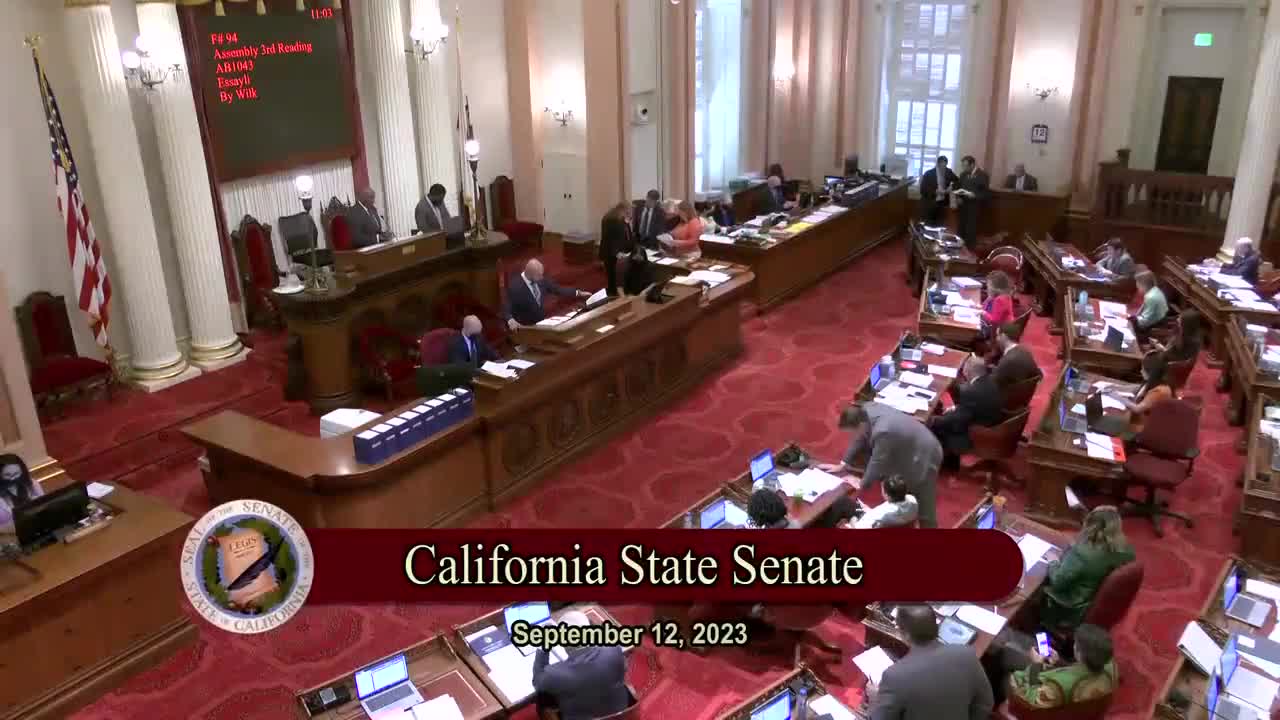 2MIN
Senate Floor
 47SEC
Senate Standing Committee on Appropriations
 3MIN
Senate Standing Committee on Governance and Finance
 6MIN
Senate Standing Committee on Housing
 1MIN
Assembly Floor
 4MIN
Assembly Standing Committee on Local Government
 10MIN

