AB 1511: State government: diverse, ethnic, and community media.
- Session Year: 2023-2024
- House: Assembly
- Latest Version Date: 2024-09-22
Current Status:
Passed
(2024-09-22: Chaptered by Secretary of State - Chapter 352, Statutes of 2024.)
Introduced
In Committee
First Chamber
In Committee
Second Chamber
Enacted
Existing law establishes the Office of Community Partnerships and Strategic Communications, within the Office of Planning and Research in the office of the Governor, to serve as the manager of the states highest priority public awareness and community outreach efforts.
This bill would require the office to assist state agencies and departments in marketing, advertising, and outreach to certain priority populations, as defined.
The bill would require a state agency or department that expends funds on marketing, advertising, or outreach to develop a plan for increasing expenditures directed to ethnic and community media outlets serving priority populations and to annually report via its internet website on its progress in implementing the plan, as specified. The bill would require the Department of General Services to develop a template for this report no later than December 1, 2025.
This bill would make these provisions inoperative on July 1, 2028, and would repeal them as of January 1, 2029.
This bill would also make related legislative findings and declarations.
Existing law establishes the Office of Community Partnerships and Strategic Communications, within the Office of Planning and Research in the office of the Governor, to serve as the manager of the states highest priority public awareness and community outreach efforts.
This bill would create the Diverse, Ethnic, and Community Media Program in the Office of Community Partnerships and Strategic Communications for the purpose of helping state departments integrate ethnic and community media into their marketing, advertising, or outreach strategies. The bill would require the office, in administering the program, require the office to assist state agencies and departments in marketing, advertising, and outreach to certain priority populations. populations, as defined.
The bill would require a state agency or department that expends funds on marketing, advertising, or outreach to direct a certain percentage of those annual total expenditures to ethnic media outlets and community media outlets serving certain populations, as specified, except as provided. The bill would specify that of the amount directed to ethnic media outlets, state agencies shall seek to direct at least 25% to outlets that are small businesses, including microbusinesses, as specified. The bill would require any private agency or intermediary that receives funds intended to purchase advertising for the state in ethnic media outlets or community media outlets to transmit at least 80% of those funds directly to the outlets and to reserve no more than 20% for activities managed by the agency or an intermediary, except as specified. develop a plan for increasing expenditures directed to ethnic and community media outlets serving priority populations and to annually report via its internet website on its progress in implementing the plan, as specified. The bill would require the Department of General Services to develop a template for this report no later than December 1, 2025.
This bill would make these provisions inoperative on July 1, 2028, and would repeal them as of January 1, 2029.
This bill would also make related legislative findings and declarations.
Existing law establishes the Office of Community Partnerships and Strategic Communications, within the Office of Planning and Research in the office of the Governor, to serve as the manager of the states highest priority public awareness and community outreach efforts.
This bill would create the Diverse, Ethnic, and Community Media Program in the Office of Community Partnerships and Strategic Communications for the purpose of helping state departments integrate ethnic and community media into their marketing, advertising, or outreach strategies. The bill would require the office, in administering the program, to assist state agencies and departments in marketing, advertising, and outreach to certain priority populations.
The bill would require a state agency or department that expends funds on marketing, advertising, or outreach to direct a certain percentage of those annual total expenditures to ethnic media outlets and community media outlets serving certain populations, as specified. specified, except as provided. The bill would specify that of the amount directed to ethnic media outlets, state agencies shall seek to direct at least 25% to outlets that are small businesses, including microbusinesses, as specified. The bill would require any private agency or intermediary that receives funds intended to purchase advertising for the state in ethnic media outlets or community media outlets to transmit at least 80% of those funds directly to the outlets and to reserve no more than 20% for activities managed by the agency or an intermediary, except as specified.
This bill would also make related legislative findings and declarations.
Existing law establishes the Office of Community Partnerships and Strategic Communications, within the Office of Planning and Research in the office of the Governor, to serve as the manager of the states highest priority public awareness and community outreach efforts.
This bill would create the Ethnic Diverse, Ethnic, and Community Media Program in the Office of Community Partnerships and Strategic Communications for the purpose of helping state departments integrate ethnic and community media into their marketing, advertising, or outreach strategies. The bill would require the office, in administering the program, to assist state agencies and departments in marketing, advertising, and outreach to certain priority populations. The bill would authorize the office to provide assistance by various methods, including by developing and maintaining a database of eligible ethnic media outlets and community media outlets. The bill would require the office, on or before January 1, 2029, to submit a report to the Legislature containing related information on these efforts, and to publish that report on the offices internet website, as specified. The bill would also authorize the office to make regulations that are reasonably necessary to further the purposes of the program.
The bill would require a state agency or department that expends funds on marketing, advertising, or outreach to direct a certain percentage of it those annual total expenditures to ethnic media outlets and community media outlets serving certain populations, as specified. The bill would specify that of the amount directed to ethnic media outlets, state agencies shall seek to direct at least 25% to outlets that are small businesses, including microbusinesses, as specified. The bill would require any private agency or intermediary that receives funds intended to purchase advertising communications or outreach for the state in ethnic media outlets or community media outlets to transmit at least 80% of those funds directly to the outlets and to reserve no more than 20% for activities managed by the agency or an intermediary. intermediary, except as specified.
This bill would also make related legislative findings and declarations.
Existing law establishes the Office of Community Partnerships and Strategic Communications, an office within the Office of Planning and Research in the office of the Governor, to serve as the manager of the states highest priority public awareness and community outreach efforts.
This bill would create the Ethnic and Community Media Program in the Office of Community Partnerships and Strategic Communications led by a director, appointed by the Governor, to help Communications for the purpose of helping state departments integrate ethnic and community media into their public outreach and engagement marketing, advertising, or outreach strategies. The bill would require the department, office, in administering the program, to develop and maintain a database of ethnic and community media outlets, conduct education and outreach campaigns, cultivate relationships with ethnic and community media outlets, and advise state departments on tailoring ethnic and community media strategies for specific communities. assist state agencies and departments in marketing, advertising, and outreach to certain priority populations. The bill would authorize the office to provide assistance by various methods, including by developing and maintaining a database of eligible ethnic media outlets and community media outlets. The bill would require the director or their designee office, on or before January 1, 2029, to submit a report to the Legislature on or before January 1, 2029, relating to ethnic media outlets, containing related information on these efforts, and to publish that report on the offices internet website, as specified. The bill would also authorize the director office to make regulations that are reasonably necessary to further the purposes of the program.
The bill would require a state agency or department that expends funds on paid advertising, communications, or outreach to direct 45% of its total expenditures to ethnic media outlets and community media outlets, marketing, advertising, or outreach to direct a certain percentage of it expenditures to ethnic media outlets and community media outlets serving certain populations, as specified. The bill would require any private agency or intermediary that receives funds intended to purchase advertising communications or outreach for the state in ethnic media outlets or community media outlets to transmit at least 80% of those funds directly to the outlets and to reserve no more than 20% for activities managed by the agency or an intermediary.
(3)Existing law, until July 1, 2023, requires the Department of General Services to publish a report by July 1 each year that identifies, among other things, each state agency that paid for the placement of marketing or outreach advertising material pursuant to a contract and the amounts paid by each state agency to each media platform pursuant to a contract to place the marketing or outreach material.This bill would recast the provisions described above and delete the January 1, 2024, repeal date, thereby making these provisions operative indefinitely. The bill would require the department to report the amounts paid by each state agency to each media platform pursuant to a contract or agreement, including a subcontract or other agreement with a third party or intermediary, to place marketing or outreach advertising material, and to further disaggregate the information to report information on contracts and subcontracts for the placement of material targeting specific ethnic or community groups served by ethnic or community media outlets. The bill would require the report to state the populations to which the expenditures were directed, as specified. The bill would authorize the Director of General Services, in consultation with the Director of the Ethnic and Community Media Program, to adopt regulations to ensure compliance with these provisions. The bill would make other nonsubstantive changes.(4)ThisThis bill would also make related legislative findings and declarations.
(1)Existing law creates in state government an agency known as the California State Library (library) under the control of an executive who is a technically trained librarian, appointed by the Governor, known as the State Librarian. Existing law, the Grant Information Act of 2018, requires the California State Library to create a funding opportunities internet website that provides a centralized location for grant seekers to find state grant opportunities. Existing law requires each state agency to register every grant the state agency administers with the California State Library before commencing a solicitation or award process for distribution of the grant.
This bill would require any state agency or department that expends funds on paid advertising, communications, or outreach to direct at least 5% of its total expenditures for those efforts to the Ethnic and Community Media Outreach Grant Program administered by the library. The bill would require the library to use these funds to award grants to ethnic media outlets and community media outlets to provide independent news coverage in topic areas relating to the agency or department from which the funds were provided. The bill would require the library to report annually on its internet website and to the Legislature the total amount of expenditures made to provide grants and the populations to which the expenditures were directed, as specified.
(2)Existing law establishes the Office of Community Partnerships and Strategic Communications, an office within the Office of Planning and Research in the office of the Governor, to serve as the manager of the states highest priority public awareness and community outreach efforts.
This bill would create the Ethnic and Community Media Program in GO-Biz, the Office of Community Partnerships and Strategic Communications led by a director, appointed by the Governor to serve a 5-year term, Governor, to help state departments integrate ethnic and community media into their public outreach and engagement strategies. The bill would require GO-Biz, the department, in administering the program, to develop and maintain an ethnic media database, a database of ethnic and community media outlets, conduct education and outreach campaigns, cultivate relationships with ethnic and community media outlets, and advise state departments on tailoring ethnic and community media integration strategies, subject to appropriation by the Legislature. strategies for specific communities. The bill would require the director or their designee to submit a report to the Legislature on or before January 1, 2029, relating to ethnic media outlets, as specified. The bill would also authorize the director to make regulations that are reasonably necessary to further the purposes of the program.
This bill would require the director of the program or their designee, by January 1, 2029, to submit a report to the Legislature with specified information relating to coverage and translation of ethnic media and to the challenges, efforts to overcome challenges, and options to improve the program.The bill would require a state agency or department that expends funds on paid advertising, communications, or outreach to direct 45% of its total expenditures to ethnic media outlets and community media outlets, as specified. The bill would require any private agency or intermediary that receives funds intended to purchase advertising communications or outreach for the state in ethnic media outlets or community media outlets to transmit at least 80% of those funds directly to the outlets and to reserve no more than 20% for activities managed by the agency or an intermediary.
(3)Existing law, until July 1, 2023, requires the Department of General Services to publish a report by July 1 each year that identifies, among other things, each state agency that paid for the placement of marketing or outreach advertising material pursuant to a contract and the amounts paid by each state agency to each media platform pursuant to a contract to place the marketing or outreach material.
This bill would recast the provisions described above and delete the January 1, 2024, repeal date, thereby making these provisions operative indefinitely. The bill would require the department to report the amounts paid by each state agency to each media platform pursuant to a contract or agreement, including a subcontract or other agreement with a third party or intermediary, to place marketing or outreach advertising material, and to further disaggregate the information to report information on contracts and subcontracts for the placement of material targeting specific ethnic or community groups served by ethnic or community media outlets. The bill would require the report to state the populations to which the expenditures were directed, as specified. The bill would authorize the Director of General Services, in consultation with the Director of the Ethnic and Community Media Program, to adopt regulations to ensure compliance with these provisions. The bill would make other nonsubstantive changes.
This(4)This bill would also make related legislative findings and declarations.
Existing law establishes the Governors Office of Business and Economic Development, known as GO-Biz, within the Governors office to serve the Governor as the lead entity for economic strategy and the marketing of California on issues relating to business development, private sector investment, and economic growth.
This bill would create the Ethnic Media Program in GO-Biz, led by a director, appointed by the Governor to serve a 5-year term, to help state departments integrate ethnic media into their public outreach and engagement strategies. The bill would require GO-Biz, in administering the program, to develop and maintain an ethnic media database, conduct education and outreach campaigns, cultivate relationships with ethnic media outlets, and advise state departments on ethnic media integration strategies, subject to appropriation by the Legislature. The bill would also authorize the director to make regulations that are reasonably necessary to further the purposes of the program.
This bill would require the director of the program or their designee, by January 1, 2029, to submit a report to the Legislature with specified information relating to coverage and translation of ethnic media and to the challenges, efforts to overcome challenges, and options to improve the program.
This bill would also make related legislative findings and declarations.
Existing law authorizes the chairperson of the Judicial Council to appoint committees, as prescribed, to advise with the council in studying various matters relating to the business of the courts, simplifying and improving the administration of justice, and other duties of the council.This bill would make technical, nonsubstantive changes to that provision.Existing law authorizes the chairperson of the Judicial Council to appoint committees, as prescribed, to advise with the council in studying various matters relating to the business of the courts, simplifying and improving the administration of justice, and other duties of the council.
This bill would make technical, nonsubstantive changes to that provision.
The Legislature finds and declares all of the following:
(a)California is the most diverse state in the nation and it spends considerable resources seeking to communicate messages of public interest to its residents. It is imperative that the states communication reach all of its residents, including, but not limited to, People of Color, rural communities, non-English speakers, working class neighborhoods, and other hard-to-reach communities. Those communication efforts will require new strategies and approaches that reflect the states demographics, take into account the changing media landscape, and put equity at the center of these efforts.
(b)Californias ethnic media sector consists of roughly 300 media outlets that publish and broadcast in California, serving at least 38 different ethnic, racial, and cultural communities with trusted, community-specific information and news coverage. Community media outlets often serve small communities that are not served by larger sources of news and culture. These outlets are the ideal medium through which to reach underserved communities, but have been underutilized in the deployment of state outreach and advertising campaigns.
(c)This act will remedy that disparity by directing state agencies to develop a plan for increasing, and annually report on progress toward increasing, outreach to and investment in ethnic and community media, including small businesses, to help them remain viable platforms for their communities to learn of news of interest to them and to have access to state communications of importance to them and their families.
SEC. 2.Article 5.7 (commencing with Section 65054) is added to Chapter 1.5 of Division 1 of Title 7 of the Government Code, to read:5.7.Diverse, Ethnic, and Community Media65054.For the purposes of this article, the following definitions apply:
(a)(1)Ethnic media means any organization that produces news or culturally relevant media that serves ethnic, racial, or cultural communities residing in California, including priority populations, racial and linguistic minorities, immigrant communities, indigenous groups, and other historically underserved and underrepresented groups.
(2)For purposes of paragraph (1), priority populations for purposes of this article, mean members of underserved, disadvantaged, and hard-to-reach communities, including, but not limited to, people who are any of the following:
(A)Asian American.
(B)Black or African American.
(C)Immigrants or refugees.
(D)Native American or members of Tribal communities.
(E)Latinx.
(F)LGBTQ+.
(G)Limited English proficiency (LEP).
(H)Middle Eastern or North African.
(I)Native Hawaiian or Pacific Islander.
(J)People with disabilities.
(K)Religious minorities.
(L)Low-income communities.
(b)Ethnic media outlet means an entity that provides a substantial amount of ethnic media content through broadcast, print, or digital means, including television, radio, or online outlets on a daily, weekly, or other regular interval, and that has continuously produced that content for at least one year.
(c)Community media outlet means a nonprofit organization, small business, or microbusiness, as defined in paragraphs (1) and (2) of subdivision (d) of Section 14837, in which at least one-half of the content is originally produced community news and cultural content of specific interest to a community, city, neighborhood, or region in the state through broadcast, print, or digital means, including television, radio, or online outlets on a daily, weekly, or other regular interval, and that has continuously produced that content for at least one year.
(d)Office means the Office of Community Partnerships and Strategic Communications.
65054.1.The office shall assist state agencies and departments in marketing, advertising, and outreach to priority populations identified in paragraph (2) of subdivision (a) of Section 65054.
65054.2.(a)A state agency or department that expends funds on marketing, advertising, or outreach shall, no later than July 1, 2025, develop a plan for increasing expenditures directed to ethnic media outlets and community media outlets serving the populations identified in paragraph (2) of subdivision (a) of Section 65054 to improve outreach to and engagement of members of populations served by those outlets, particularly when the target audience for the campaign aligns with populations served by such media outlets.
(b)Each state agency or department that is required to develop a plan pursuant to subdivision (a) shall report annually on its progress in implementing the plan, including total expenditures directed to ethnic media outlets and community media outlets serving the populations identified in paragraph (2) of subdivision (a) of Section 65054 during the preceding fiscal year. The report shall be posted on the agencys or departments internet website no later than September 1 each year.
(c)The Department of General Services shall develop a template for the report required pursuant to subdivision (b) and make it available to all state agencies and departments no later than December 1, 2025.
65054.3.This article shall become inoperative on July 1, 2028, and, as of January 1, 2029, is repealed.
The Legislature finds and declares all of the following:
(a)California is the most diverse state in the nation and it spends considerable resources seeking to communicate messages of public interest to its residents. It is imperative that the states communication reach all of its residents, including, but not limited to, People of Color, rural communities, non-English speakers, working class neighborhoods, and other hard-to-reach communities. Those communication efforts will require new strategies and approaches that reflect the states demographics, take into account the changing media landscape, and put equity at the center of these efforts.
(b)Californias ethnic media sector consists of roughly 300 media outlets that publish and broadcast in California, serving at least 38 different ethnic, racial, and cultural communities with trusted, community-specific information and news coverage. Community media outlets often serve small communities that are not served by larger sources of news and culture. These outlets are the ideal medium through which to reach underserved communities, but have been underutilized in the deployment of state outreach and advertising campaigns.
(c)This act will remedy that disparity by directing more of the states expenditures on state agencies to develop a plan for increasing, and annually report on progress toward increasing, outreach to and investment in ethnic and community media media, including small businesses, to help them remain viable platforms for their communities to learn of news of interest to them and to have access to state communications of importance to them and their families.
SEC. 2.Article 5.7 (commencing with Section 65054) is added to Chapter 1.5 of Division 1 of Title 7 of the Government Code, to read:5.7.Diverse, Ethnic, and Community Media Program65054.(a)The Diverse, Ethnic, and Community Media Program is hereby established in the Office of Community Partnerships and Strategic Communications, an office within the Office of Planning and Research in the office of the Governor, for the purpose of helping state departments integrate ethnic and community media into their marketing, advertising, or outreach strategies.(b)For65054.For the purposes of this article, the following definitions apply:
(1)(A)(a)(1)Ethnic media means any organization that produces news or culturally relevant media that serves ethnic, racial, or cultural communities residing in California, including priority populations, racial and linguistic minorities, immigrant communities, indigenous groups, and other historically underserved and underrepresented groups.
(B)(2)For purposes of subparagraph (A), paragraph (1), priority populations for purposes of this article, mean members of underserved, disadvantaged, and hard-to-reach communities, including, but not limited to, people who are any of the following:
(i)(A)Asian American.
(ii)(B)Black or African American.
(iii)(C)Immigrants or refugees.
(iv)(D)Native American or members of Tribal communities.
(v)(E)Latinx.
(vi)(F)LGBTQ+.
(vii)(G)Limited English proficiency (LEP).
(viii)(H)Middle Eastern or North African.
(ix)(I)Native Hawaiian or Pacific Islander.
(x)(J)People with disabilities.
(xi)(K)Religious minorities.
(xii)(L)Low-income communities.
(2)(b)Ethnic media outlet means an entity that provides a substantial amount of ethnic media content through broadcast, print, or digital means, including television, radio, or online outlets on a daily, weekly, or other regular interval, and that has continuously produced that content for at least one year.
(3)(c)Community media outlet means a nonprofit organization, small business, or microbusiness, as defined in paragraphs (1) and (2) of subdivision (d) of Section 14837, in which at least one-half of the content is originally produced community news and cultural content of specific interest to a community, city, neighborhood, or region in the state through broadcast, print, or digital means, including television, radio, or online outlets on a daily, weekly, or other regular interval, and that has continuously produced that content for at least one year.
(4)(d)Office means the Office of Community Partnerships and Strategic Communications.
(5)Program means the Diverse, Ethnic, and Community Media Program established pursuant to subdivision (a).65054.1.The office shall assist state agencies and departments in marketing, advertising, and outreach to priority populations identified in subparagraph (B) of paragraph (1) of subdivision (b) paragraph (2) of subdivision (a) of Section 65054.
65054.2.(a)A state agency or department that expends funds on marketing, advertising, or outreach shall direct expenditures shall, no later than July 1, 2025, develop a plan for increasing expenditures directed to ethnic media outlets and community media outlets serving the populations identified in subparagraph (B) of paragraph (1) of subdivision (b) paragraph (2) of subdivision (a) of Section 65054 as follows: to improve outreach to and engagement of members of populations served by those outlets, particularly when the target audience for the campaign aligns with populations served by such media outlets.
(1)From July 1, 2025, to June 30, 2026, inclusive, at least 30 percent of an agencys annual total of expenditures on marketing, advertising, and outreach shall be directed to ethnic media outlets and community media outlets. Of the amount directed to ethnic media outlets, state agencies shall seek to direct at least 25 percent to outlets that are small businesses, including microbusinesses, as defined in Section 14837 of the Government Code.(2)From July 1, 2026, to June 30, 2027, inclusive, at least 40 percent of an agencys annual total of expenditures on marketing, advertising, and outreach shall be directed to ethnic media outlets and community media outlets. Of the amount directed to ethnic media outlets, state agencies shall seek to direct at least 25 percent to outlets that are small businesses, including microbusinesses, as defined in Section 14837 of the Government Code.(3)Beginning July 1, 2027, at least 50 percent of an agencys annual total of expenditures on marketing, advertising, and outreach shall be directed to ethnic media outlets and community media outlets. Of the amount directed to ethnic media outlets, state agencies shall seek to direct at least 25 percent to outlets that are small businesses, including microbusinesses, as defined in Section 14837 of the Government Code.(b)The set-aside for spending on ethnic media outlets and community media outlets shall not apply to each marketing, advertising, or outreach campaign, as long as the agency meets the minimum thresholds described in subdivision (a) as a percentage of its annual total spending on marketing, advertising, and outreach. (c)To the extent that subdivision (a) conflicts with a state agencys or departments obligation to issue notices required by law to be posted or distributed in specified media outlets, subdivision (a) shall not apply.(d)(1)A state agency or department may apply to the executive officer of the office for a waiver of the requirements described in subdivision (a) for a specific advertising or outreach campaign. The application shall provide a particularized explanation regarding the public purpose that would be served by the issuance of a waiver. (2)If the executive officer of the office finds that a public purpose would be served by granting the waiver, it may do so, in which case the waiver shall be posted on a website managed or operated by the office together with the explanation for the waiver.(3)If a state agency of department is granted a waiver, any spending on a campaign granted a waiver shall not count as part of the department or agencys expenditures for calculating the amounts required to be spent on marketing, advertising, or outreach in ethnic or community media. (e)A private agency or intermediary that receives funds intended to purchase advertising for the state in ethnic media outlets or community media outlets shall transmit at least 80 percent of those funds directly to the outlets, and shall reserve no more than 20 percent for administration, commissions, or communications managed by the agency or an intermediary. This requirement shall not apply to spending for communications or outreach that does not involve advertising in ethnic or community media.(b)Each state agency or department that is required to develop a plan pursuant to subdivision (a) shall report annually on its progress in implementing the plan, including total expenditures directed to ethnic media outlets and community media outlets serving the populations identified in paragraph (2) of subdivision (a) of Section 65054 during the preceding fiscal year. The report shall be posted on the agencys or departments internet website no later than September 1 each year.
(c)The Department of General Services shall develop a template for the report required pursuant to subdivision (b) and make it available to all state agencies and departments no later than December 1, 2025.
65054.3.This article shall become inoperative on July 1, 2028, and, as of January 1, 2029, is repealed.
The Legislature finds and declares all of the following:
(a)California is the most diverse state in the nation and it spends considerable resources seeking to communicate messages of public interest to its residents. It is imperative that the states communication reach all of its residents, including, but not limited to, People of Color, rural communities, non-English speakers, working class neighborhoods, and other hard-to-reach communities. Those communication efforts will require new strategies and approaches that reflect the states demographics, take into account the changing media landscape, and put equity at the center of these efforts.
(b)Californias ethnic media sector consists of roughly 300 media outlets that publish and broadcast in California, serving at least 38 different ethnic, racial, and cultural communities with trusted, community-specific information and news coverage. Community media outlets often serve small communities that are not served by larger sources of news and culture. These outlets are the ideal medium through which to reach underserved communities, but have been underutilized in the deployment of state outreach and advertising campaigns.
(c)This act will remedy that disparity by directing more of the states expenditures on outreach to ethnic and community media to help them remain viable platforms for their communities to learn of news of interest to them and to have access to state communications of importance to them and their families.
SEC. 2.Article 5.7 (commencing with Section 65054) is added to Chapter 1.5 of Division 1 of Title 7 of the Government Code, to read:5.7.Diverse, Ethnic, and Community Media Program65054.(a)The Diverse, Ethnic, and Community Media Program is hereby established in the Office of Community Partnerships and Strategic Communications, an office within the Office of Planning and Research in the office of the Governor, for the purpose of helping state departments integrate ethnic and community media into their marketing, advertising, or outreach strategies.
(b)For the purposes of this article, the following definitions apply:
(1)(A)Ethnic media means any organization that produces news or culturally relevant media that serves ethnic, racial, or cultural communities residing in California, including priority populations, racial and linguistic minorities, immigrant communities, indigenous groups, and other historically underserved and underrepresented groups.
(B)For purposes of subparagraph (A), priority populations for purposes of this article, mean members of underserved, disadvantaged, and hard-to-reach communities, including, but not limited to, people who are any of the following:
(i)Asian American.
(ii)Black or African American.
(iii)Immigrants or refugees.
(iv)Native American or members of Tribal communities.
(v)Latinx.
(vi)LGBTQ+.
(vii)Limited English proficiency (LEP).
(viii)Middle Eastern or North African.
(ix)Native Hawaiian or Pacific Islander.
(x)People with disabilities.
(xi)Religious minorities.
(xii)Low-income communities.
(2)Ethnic media outlet means an entity that provides a substantial amount of ethnic media content through broadcast, print, or digital means, including television, radio, or online outlets on a daily, weekly, or other regular interval, and that has continuously produced that content for at least one year.
(3)Community media outlet means a nonprofit organization, small business, or microbusiness, as defined in paragraphs (1) and (2) of subdivision (d) of Section 14837, in which at least one-half of the content is originally produced community news and cultural content of specific interest to a community, city, neighborhood, or region in the state through broadcast, print, or digital means, including television, radio, or online outlets on a daily, weekly, or other regular interval, and that has continuously produced that content for at least one year.
(4)Office means the Office of Community Partnerships and Strategic Communications.
(5)Program means the Diverse, Ethnic, and Community Media Program established pursuant to subdivision (a).
65054.1.The office shall assist state agencies and departments in marketing, advertising, and outreach to priority populations identified in subparagraph (B) of paragraph (1) of subdivision (b) of Section 65054.
65054.2.(a)A state agency or department that expends funds on marketing, advertising, or outreach shall direct expenditures to ethnic media outlets and community media outlets serving the populations identified in subparagraph (B) of paragraph (1) of subdivision (b) of Section 65054 as follows:
(1)From July 1, 2025, to June 30, 2026, inclusive, at least 30 percent of an agencys annual total of expenditures on marketing, advertising, and outreach shall be directed to ethnic media outlets and community media outlets. Of the amount directed to ethnic media outlets, state agencies shall seek to direct at least 25 percent to outlets that are small businesses, including microbusinesses, as defined in Section 14837 of the Government Code.
(2)From July 1, 2026, to June 30, 2027, inclusive, at least 40 percent of an agencys annual total of expenditures on marketing, advertising, and outreach shall be directed to ethnic media outlets and community media outlets. Of the amount directed to ethnic media outlets, state agencies shall seek to direct at least 25 percent to outlets that are small businesses, including microbusinesses, as defined in Section 14837 of the Government Code.
(3)Beginning July 1, 2027, at least 50 percent of an agencys annual total of expenditures on marketing, advertising, and outreach shall be directed to ethnic media outlets and community media outlets. Of the amount directed to ethnic media outlets, state agencies shall seek to direct at least 25 percent to outlets that are small businesses, including microbusinesses, as defined in Section 14837 of the Government Code.
(b)The set-aside for spending on ethnic media outlets and community media outlets shall not apply to each marketing, advertising, or outreach campaign, as long as the agency meets the minimum thresholds described in subdivision (a) as a percentage of its annual total spending on marketing, advertising, and outreach.
(c)To the extent that subdivision (a) conflicts with a state agencys or departments obligation to issue notices required by law to be posted or distributed in specified media outlets, subdivision (a) shall not apply.
(d)(1)A state agency or department may apply to the executive officer of the office for a waiver of the requirements described in subdivision (a) for a specific advertising or outreach campaign. The application shall provide a particularized explanation regarding the public purpose that would be served by the issuance of a waiver.
(2)If the executive officer of the office finds that a public purpose would be served by granting the waiver, it may do so, in which case the waiver shall be posted on a website managed or operated by the office together with the explanation for the waiver.
(3)If a state agency of department is granted a waiver, any spending on a campaign granted a waiver shall not count as part of the department or agencys expenditures for calculating the amounts required to be spent on marketing, advertising, or outreach in ethnic or community media.
(c)(e)A private agency or intermediary that receives funds intended to purchase advertising for the state in ethnic media outlets or community media outlets shall transmit at least 80 percent of those funds directly to the outlets, and shall reserve no more than 20 percent for administration, commissions, or communications managed by the agency or an intermediary. This requirement shall not apply to spending for communications or outreach that does not involve advertising in ethnic or community media.
The Legislature finds and declares all of the following:
(a)California is the most diverse state in the nation and it spends considerable resources seeking to communicate messages of public interest to its residents. It is imperative that the states communication reach all of its residents, including, but not limited to, People of Color, rural communities, non-English speakers, working class neighborhoods, and other hard-to-reach communities. Those communication efforts will require new strategies and approaches that reflect the states demographics, take into account the changing media landscape, and put equity at the center of these efforts.
(b)Californias ethnic media sector consists of roughly 300 media outlets that publish and broadcast in California, serving at least 38 different ethnic, racial, and cultural communities with trusted, community-specific information and news coverage. Community media outlets often serve small communities that are not served by larger sources of news and culture. These outlets are the ideal medium through which to reach underserved communities, but have been underutilized in the deployment of state outreach and advertising campaigns.
(c)This act will remedy that disparity by directing more of the states expenditures on outreach to ethnic and community media to help them remain viable platforms for their communities to learn of news of interest to them and to have access to state communications of importance to them and their families.
SEC. 2.Article 5.7 (commencing with Section 65054) is added to Chapter 1.5 of Division 1 of Title 7 of the Government Code, to read:5.7.Ethnic Diverse, Ethnic, and Community Media Program65054.(a)The Ethnic Diverse, Ethnic, and Community Media Program is hereby established in the Office of Community Partnerships and Strategic Communications, an office within the Office of Planning and Research in the office of the Governor, for the purpose of helping state departments integrate ethnic and community media into their marketing, advertising, or outreach strategies.
(b)For the purposes of this article, the following definitions apply:
(1)(A)Ethnic media means any organization that produces news or culturally relevant media that serves ethnic, racial, or cultural communities residing in California, including priority populations, racial and linguistic minorities, immigrant communities, indigenous groups, and other historically underserved and underrepresented groups.
(B)For purposes of subparagraph (A), priority populations for purposes of this article, mean members of underserved, disadvantaged, and hard-to-reach communities, including, but not limited to, people who are any of the following:
(i)Asian American.
(ii)Black or African American.
(iii)Immigrants or refugees.
(iv)Native American or members of Tribal communities.
(v)Latinx.
(vi)LGBTQ+.
(vii)Limited English proficiency (LEP).
(viii)Middle Eastern or North African.
(ix)Native Hawaiian or Pacific Islander.
(x)People with disabilities.
(xi)Religious minorities.
(xii)Low-income communities.
(2)Ethnic media outlet means an entity that provides a substantial amount of ethnic media content through broadcast, print, or digital means, including television, radio, or online outlets on a daily, weekly, or other regular interval, and that has continuously produced that content for at least one year.
(3)Community media outlet means a nonprofit organization, small business, or microbusiness, as defined in paragraphs (1) and (2) of subdivision (d) of Section 14837, in which at least one-half of the content is originally produced community news and cultural content of specific interest to a community, city, neighborhood, or region in the state through broadcast, print, or digital means, including television, radio, or online outlets on a daily, weekly, or other regular interval, and that has continuously produced that content for at least one year.
(4)Office means the Office of Community Partnerships and Strategic Communications.
(5)Program means the Ethnic Diverse, Ethnic, and Community Media Program established pursuant to subdivision (a).
65054.1.The office shall assist state agencies and departments in marketing, advertising, and outreach to priority populations identified in subparagraph (B) of paragraph (1) of subdivision (b) of Section 65054. Assistance may include, but is not limited to, the following:
(1)Developing and maintaining a database of eligible ethnic media outlets and community media outlets.(2)Conducting education and outreach campaigns to agencies and departments to advocate for the importance of ethnic and community media, and promoting inclusive and equitable engagement strategies.(3)Advising agencies and departments on tailoring ethnic and community media strategies for specific communities.(4)Advising agencies and departments on tailoring outreach campaigns for specific communities.(5)Cultivating relationships with ethnic and community media outlets.(b)(1)On or before January 1, 2029, the office shall submit to the Legislature, and publish on the offices internet website, a report that includes all of the following information:(A)Each state agency or department that paid for placement of marketing or outreach advertising material pursuant to a contract.(B)A list of ethnic media outlets and community media outlets that received a contract to place marketing or outreach advertising material.(C)The amounts paid by each state agency to each media platform pursuant to a contract, including pursuant to a subcontract, to place marketing or outreach advertising material.(D)The recipients of the spending, including the individual advertising contract and the amount of the contract.(E)A list of all languages in which marketing or outreach advertising material has been provided.(F)An analysis of the major challenges the program has faced, if any, the ongoing efforts to address those challenges, and recommendations to improve the program.(2)A report to be submitted pursuant to this subdivision shall be submitted in compliance with Section 9795.(3)The requirement imposed pursuant to this subdivision is inoperative on July 1, 2029.(c)The office may make any regulations that are reasonably necessary to effectuate the purposes of this section.65054.2.(a)A state agency or department that expends funds on marketing, advertising, or outreach shall direct expenditures to ethnic media outlets and community media outlets serving the populations identified in subparagraph (B) of paragraph (1) of subdivision (b) of Section 65054 as follows:
(1)From July 1, 2025, to June 30, 2026, inclusive, at least 30 percent of an agencys annual total of expenditures on marketing, advertising, and outreach shall be directed to ethnic media outlets and community media outlets. Of the amount directed to ethnic media outlets, state agencies shall seek to direct at least 25 percent to outlets that are small businesses, including microbusinesses, as defined in Section 14837 of the Government Code.
(2)From July 1, 2026, to June 30, 2027, inclusive, at least 40 percent of an agencys annual total of expenditures on marketing, advertising, and outreach shall be directed to ethnic media outlets and community media outlets. Of the amount directed to ethnic media outlets, state agencies shall seek to direct at least 25 percent to outlets that are small businesses, including microbusinesses, as defined in Section 14837 of the Government Code.
(3)Beginning July 1, 2027, at least 50 percent of an agencys annual total of expenditures on marketing, advertising, and outreach shall be directed to ethnic media outlets and community media outlets. Of the amount directed to ethnic media outlets, state agencies shall seek to direct at least 25 percent to outlets that are small businesses, including microbusinesses, as defined in Section 14837 of the Government Code.
(b)The set-aside for spending on ethnic media outlets and community media outlets shall not apply to each marketing, advertising, or outreach campaign, as long as the agency meets the minimum thresholds described in subdivision (a) as a percentage of its annual total spending on marketing, advertising, and outreach.
(b)(c)A private agency or intermediary that receives funds intended to purchase advertising communications or outreach for the state in ethnic media outlets or community media outlets shall transmit at least 80 percent of those funds directly to the outlets, and shall reserve no more than 20 percent for administration, commissions, or communications managed by the agency or an intermediary. This requirement shall not apply to spending for communications or outreach that does not involve advertising in ethnic or community media.
The Legislature finds and declares all of the following:
(a)California is the most diverse state in the nation and it spends considerable resources seeking to communicate messages of public interest to its residents. It is imperative that the states communication reach all of its residents, including, but not limited to, People of Color, rural communities, non-English speakers, working class neighborhoods, and other hard-to-reach communities. Those communication efforts will require new strategies and approaches that reflect the states demographics, take into account the changing media landscape, and put equity at the center of these efforts.
(b)Californias ethnic media sector consists of roughly 300 media outlets that publish and broadcast in California, serving at least 38 different ethnic, racial, and cultural communities with trusted, community-specific information and news coverage. Community media outlets often serve small communities that are not served by larger sources of news and culture. These outlets are the ideal medium through which to reach underserved communities, but have been underutilized in the deployment of state outreach and advertising campaigns.
(c)This act will remedy that disparity by directing more of the states expenditures on outreach to ethnic and community media, and by providing grants to ethnic and community media media to help them remain viable platforms for their communities to learn of news of interest to them and to have access to state communications of importance to them and their families.
SEC. 2.Article 7 (commencing with Section 19360) is added to Chapter 7 of Part 11 of Division 1 of Title 1 of the Education Code, to read:7.Ethnic and Community Media Outreach Grant Program19360.(a)A state agency or department that expends funds on paid advertising, communications, or outreach shall direct at least 5 percent of its total advertising, communication, and outreach expenditures to the Ethnic and Community Media Outreach Grant Program administered by the California State Library.(b)The library shall use funds provided pursuant to subdivision (a) to award grants to ethnic media outlets and community media outlets, as defined in paragraphs (3) and (4) of subdivision (b) of Section 65054 of the Government Code, to provide independent news coverage in topic areas related to the agency or department from which the funds were provided. Other than specifying the area of coverage, neither the library nor anyone in state government shall influence the content of the news coverage by the media outlets that receive the grant.(c)All grants shall be awarded directly to ethnic and community media outlets, as defined. A marketing firm that is acting as an intermediary shall be prohibited from being awarded any funds pursuant to subdivision (b).(d)(1)The California State Library shall report annually on its website and to the Legislature the total amount of expenditures made to provide grants pursuant to subdivision (b).(2)The report shall state with particularity the populations to which the expenditures were directed by reporting on, among other related information, the names and types of ethnic and cultural media outlets, and the regions, geographies, racial groups, ethnic groups, and other cultural groups served by the ethnic and community media outlets that received the grants.(3)A report to be submitted pursuant to this subdivision shall be submitted in compliance with Section 9795 of the Government Code.SEC. 3.SEC. 2.Article 5.7 (commencing with Section 65054) is added to Chapter 1.5 of Division 1 of Title 7 of the Government Code, to read:5.7.Ethnic and Community Media Program65054.(a)The Ethnic and Community Media Program is hereby established in the Office of Community Partnerships and Strategic Communications, an office within the Office of Planning and Research in the office of the Governor, for the purpose of helping state departments integrate ethnic and community media into their public outreach and engagement strategies. The program shall be led by a director, appointed by the Governor. marketing, advertising, or outreach strategies.
(b)For the purposes of this article, the following definitions apply:
(1)Director means the director of the Ethnic and Community Medial Program appointed by the Governor pursuant to subdivision (a).(2)(1)(A)Ethnic media means any organization that produces news or culturally relevant media that serves ethnic, racial, or cultural communities residing in California, including priority populations, racial and linguistic minorities, immigrant communities, indigenous groups, and other historically underserved and underrepresented groups.
(B)For purposes of subparagraph (A), priority populations for purposes of this article, mean members of underserved, disadvantaged, and hard-to-reach communities, including, but not limited to, people who are any of the following:
(i)Asian American.
(ii)Black or African American.
(iii)Immigrants or refugees.
(iv)Native American or members of Tribal communities.
(v)Latinx.
(vi)LGBTQ+.
(vii)Limited English proficiency (LEP).
(viii)Middle Eastern or North African.
(ix)Native Hawaiian or Pacific Islander.
(x)People with disabilities.
(xi)Religious minorities.
(3)(2)Ethnic media outlet means an entity that provides a substantial amount of ethnic media content through broadcast, print, or digital means, including television, radio, or online outlets on a daily, weekly, or other regular interval, and that has continuously produced that content for at least one year.
(4)(3)Community media outlet means a nonprofit organization, small business business, or microbusiness, as defined in paragraphs (1) and (2) of subdivision (d) of Section 14837, that provides a substantial amount of in which at least one-half of the content is originally produced community news and cultural content of specific interest to a community, city, neighborhood, or region in the state through broadcast, print, or digital means, including television, radio, or online outlets on a daily, weekly, or other regular interval, and that has continuously produced that content for at least one year.
(4)Office means the Office of Community Partnerships and Strategic Communications.
(5)Program means the Ethnic and Community Media Program established pursuant to subdivision (a).
65054.1.(a)To assist state agencies and departments in placing the states advertising and outreach messages in ethnic media outlets and community media outlets, the program shall do all of65054.1.The office shall assist state agencies and departments in marketing, advertising, and outreach to priority populations identified in subparagraph (B) of paragraph (1) of subdivision (b) of Section 65054. Assistance may include, but is not limited to, the following:
(1)Develop and maintain Developing and maintaining a database of eligible ethnic media outlets and community media outlets, including their media kits. outlets.
(2)Conduct Conducting education and outreach campaigns to agencies and departments to advocate for the importance of ethnic and community media, and promote promoting inclusive and equitable engagement strategies.
(3)Advise Advising agencies and departments on tailoring ethnic and community media strategies for specific communities.
(4)Advise Advising agencies and departments on tailoring outreach campaigns for specific communities.
(5)Cultivate Cultivating relationships with ethnic and community media outlets.
(b)(1)The director or their designee On or before January 1, 2029, the office shall submit a report to the Legislature, on or before January 1, 2029, Legislature, and publish on the offices internet website, a report that includes all of the following information:
(A)Each state agency or department that paid for placement of marketing or outreach advertising material pursuant to a contract.
(A)(B)A list of ethnic media outlets and community media outlets that provided coverage of state programs and services. received a contract to place marketing or outreach advertising material.
(C)The amounts paid by each state agency to each media platform pursuant to a contract, including pursuant to a subcontract, to place marketing or outreach advertising material.
(D)The recipients of the spending, including the individual advertising contract and the amount of the contract.
(B)(E)A list of all languages in which ethnic media coverage of state programs and services marketing or outreach advertising material has been provided.
(C)The number of press releases that have been translated.(D)A list of all languages into which press releases have been translated.(E)The number of press releases that have been translated into each language.(F)A discussion An analysis of the major challenges the program has faced, if any, the ongoing efforts to address those challenges, and options recommendations to improve the program.
(2)A report to be submitted pursuant to this subdivision shall be submitted in compliance with Section 9795.
(3)The requirement imposed pursuant to this subdivision is inoperative on January July 1, 2029.
(c)The director office may make any regulations that are reasonably necessary to effectuate the purposes of this section.
65054.2.(a)A state agency or department that expends funds on paid advertising, communications, or outreach shall direct at least 45 percent of its total advertising, communications, and outreach expenditures to ethnic media outlets and community media outlets serving the populations identified in subparagraph (B) of paragraph (2) of subdivision (b) of Section 65054.65054.2.(a)A state agency or department that expends funds on marketing, advertising, or outreach shall direct expenditures to ethnic media outlets and community media outlets serving the populations identified in subparagraph (B) of paragraph (1) of subdivision (b) of Section 65054 as follows:
(1)From July 1, 2025, to June 30, 2026, inclusive, at least 30 percent of expenditures shall be directed to ethnic media outlets and community media outlets.
(2)From July 1, 2026, to June 30, 2027, inclusive, at least 40 percent of expenditures shall be directed to ethnic media outlets and community media outlets.
(3)Beginning July 1, 2027, at least 50 percent of expenditures shall be directed to ethnic media outlets and community media outlets.
(b)A private agency or intermediary that receives funds intended to purchase advertising communications or outreach for the state in ethnic media outlets or community media outlets shall transmit at least 80 percent of those funds directly to the outlets, and shall reserve no more than 20 percent for administration, commissions, or communications managed by the agency or an intermediary.
SEC. 4.Section 11802 of the Public Contract Code is amended to read:11802.(a)The department shall publish, by July 1 of each year and on the departments internet website, a report that identifies all of the following:(1)Each state agency that paid for placement of marketing or outreach advertising material pursuant to a contract.(2)The amounts paid by each state agency to each media platform pursuant to a contract or agreement, including pursuant to a subcontract or other agreement with a third party intermediary, to place marketing or outreach advertising material.(3)The recipients of the amounts paid by each state agency to media platforms, including to any subcontractors or third party intermediaries, with which the agency contracted, subcontracted, or entered into an agreement to place marketing or outreach advertising materials.(4)The information required in paragraphs (1) to (3), inclusive, shall be further disaggregated to report information on contracts, including on subcontracts, for the placement of marketing or outreach advertising material targeting specific ethnic or community groups served by ethnic or community media, as defined in Section 65054 of the Government Code.(5)The report shall state with particularity the populations to which the expenditures were directed by reporting on, among other related information, the names and types of ethnic and cultural media outlets, and the regions, geographies, racial groups, ethnic groups, and other cultural groups served by the ethnic and community media outlets that received the funds.(b)The Director of General Services, in consultation with the Director of the Ethnic and Community Media Program, established pursuant to Section 65054 of the Government Code, shall adopt regulations to ensure compliance with this section by state agencies and departments, and to ensure compliance by any marketing or communications firms with which those state agencies or departments contract to place advertising in the media.SEC. 5.Section 11804 of the Public Contract Code is repealed.The Legislature finds and declares all of the following:
(a)California is the most diverse state in the nation and it spends considerable resources seeking to communicate messages of public interest to its residents. It is imperative that the states communication reach all of its residents, including, but not limited to, People of Color, rural communities, non-English speakers, working class neighborhoods, and other hard-to-reach communities. Those communication efforts will require new strategies and approaches that reflect the states demographics, take into account the changing media landscape, and put equity at the center of these efforts.
(b)Californias ethnic media sector consists of roughly 300 media outlets that publish and broadcast in California, serving at least 38 different ethnic, racial, and cultural communities with trusted, community-specific information and news coverage. Community media outlets often serve small communities that are not served by larger sources of news and culture. These outlets are the ideal medium through which to reach underserved communities, but have been underutilized in the deployment of state outreach and advertising campaigns.
(c)This act will remedy that disparity by directing more of the states expenditures on outreach to ethnic and community media, and by providing grants to ethnic and community media to help them remain viable platforms for their communities to learn of news of interest to them and to have access to state communications of importance to them and their families.
SEC. 2.Article 7 (commencing with Section 19360) is added to Chapter 7 of Part 11 of Division 1 of Title 1 of the Education Code, to read:7.Ethnic and Community Media Outreach Grant Program19360.(a)A state agency or department that expends funds on paid advertising, communications, or outreach shall direct at least 5 percent of its total advertising, communication, and outreach expenditures to the Ethnic and Community Media Outreach Grant Program administered by the California State Library.
(b)The library shall use funds provided pursuant to subdivision (a) to award grants to ethnic media outlets and community media outlets, as defined in paragraphs (3) and (4) of subdivision (b) of Section 65054 of the Government Code, to provide independent news coverage in topic areas related to the agency or department from which the funds were provided. Other than specifying the area of coverage, neither the library nor anyone in state government shall influence the content of the news coverage by the media outlets that receive the grant.
(c)All grants shall be awarded directly to ethnic and community media outlets, as defined. A marketing firm that is acting as an intermediary shall be prohibited from being awarded any funds pursuant to subdivision (b).
(d)(1)The California State Library shall report annually on its website and to the Legislature the total amount of expenditures made to provide grants pursuant to subdivision (b).
(2)The report shall state with particularity the populations to which the expenditures were directed by reporting on, among other related information, the names and types of ethnic and cultural media outlets, and the regions, geographies, racial groups, ethnic groups, and other cultural groups served by the ethnic and community media outlets that received the grants.
(3)A report to be submitted pursuant to this subdivision shall be submitted in compliance with Section 9795 of the Government Code.
SEC. 2.Article 13.5 5.7 (commencing with Section 12100.145) is added to Chapter 1.6 of Part 2 of Division 3 of Title 2 of the Government Code, to read:13.5.Ethnic Media Program12100.145.SEC. 3.Article 5.7 (commencing with Section 65054) is added to Chapter 1.5 of Division 1 of Title 7 of the Government Code, to read:5.7.Ethnic and Community Media Program65054.(a)The Ethnic and Community Media Program is hereby established in the Governors Office of Business and Economic Development (GO-Biz) Office of Community Partnerships and Strategic Communications, an office within the Office of Planning and Research in the office of the Governor, for the purpose of helping state departments integrate ethnic and community media into their public outreach and engagement strategies. The program shall be led by a director, appointed by the Governor to serve a five-year term. Governor.
(b)For the purposes of this section, article, the following definitions apply:
(1)Director means the director of the Ethnic and Community Medial Program appointed by the Governor pursuant to subdivision (a).
(1)(2)(A)Ethnic media means any media produced by and for ethnic, racial, or cultural minorities. organization that produces news or culturally relevant media that serves ethnic, racial, or cultural communities residing in California, including priority populations, racial and linguistic minorities, immigrant communities, indigenous groups, and other historically underserved and underrepresented groups.
(2)Media outlet means a publication that provides news or other media content through print or digital means and any television or radio outlet.(c)Upon appropriation by the Legislature for the express purpose of this section, Go-Biz, in administering the program, shall do all of the following:(1)Develop and maintain a database of ethnic media outlets including their media kits.(2)Conduct education and outreach campaigns to departments to advocate for the importance of ethnic media and promote inclusive, equitable engagement strategies.(3)Advise departments on tailoring ethnic media strategies for specific communities.(4)Cultivate relationships with ethnic media outlets.(d)(1)The director of the program or their designee shall submit a report to the Legislature, on or before January 1, 2029, that includes all of the following information:(A)A list of ethnic media outlets that provided coverage of state programs and services.(B)A list of all languages in which ethnic media coverage of state programs and services has been provided.(C)The number of press releases that have been translated.(D)A list of all languages into which press releases have been translated.(E)The number of press releases that have been translated into each language.(F)A discussion of the major challenges the program has faced, the ongoing efforts to address those challenges, and options to improve the program.(2)A report to be submitted pursuant to this subdivision shall be submitted in compliance with Section 9795.(3)The requirement imposed under this subdivision is inoperative on January 1, 2029.(e)The director may make any regulations that are reasonably necessary to effectuate the purposes of this section.(B)For purposes of subparagraph (A), priority populations for purposes of this article, mean members of underserved, disadvantaged, and hard-to-reach communities, including, but not limited to, people who are any of the following:
(i)Asian American.
(ii)Black or African American.
(iii)Immigrants or refugees.
(iv)Native American or members of Tribal communities.
(v)Latinx.
(vi)LGBTQ+.
(vii)Limited English proficiency (LEP).
(viii)Middle Eastern or North African.
(ix)Native Hawaiian or Pacific Islander.
(x)People with disabilities.
(xi)Religious minorities.
(3)Ethnic media outlet means an entity that provides a substantial amount of ethnic media content through broadcast, print, or digital means, including television, radio, or online outlets on a daily, weekly, or other regular interval, and that has continuously produced that content for at least one year.
(4)Community media outlet means a small business or microbusiness, as defined in paragraphs (1) and (2) of subdivision (d) of Section 14837, that provides a substantial amount of originally produced community news and cultural content of specific interest to a community, city, neighborhood, or region in the state through broadcast, print, or digital means, including television, radio, or online outlets on a daily, weekly, or other regular interval, and that has continuously produced that content for at least one year.
(5)Program means the Ethnic and Community Media Program established pursuant to subdivision (a).
65054.1.(a)To assist state agencies and departments in placing the states advertising and outreach messages in ethnic media outlets and community media outlets, the program shall do all of the following:
(1)Develop and maintain a database of ethnic and community media outlets, including their media kits.
(2)Conduct education and outreach campaigns to departments to advocate for the importance of ethnic and community media, and promote inclusive and equitable engagement strategies.
(3)Advise departments on tailoring ethnic and community media strategies for specific communities.
(4)Advise departments on tailoring outreach campaigns for specific communities.
(5)Cultivate relationships with ethnic and community media outlets.
(b)(1)The director or their designee shall submit a report to the Legislature, on or before January 1, 2029, that includes all of the following information:
(A)A list of ethnic media outlets that provided coverage of state programs and services.
(B)A list of all languages in which ethnic media coverage of state programs and services has been provided.
(C)The number of press releases that have been translated.
(D)A list of all languages into which press releases have been translated.
(E)The number of press releases that have been translated into each language.
(F)A discussion of the major challenges the program has faced, the ongoing efforts to address those challenges, and options to improve the program.
(2)A report to be submitted pursuant to this subdivision shall be submitted in compliance with Section 9795.
(3)The requirement imposed pursuant to this subdivision is inoperative on January 1, 2029.
(c)The director may make any regulations that are reasonably necessary to effectuate the purposes of this section.
65054.2.(a)A state agency or department that expends funds on paid advertising, communications, or outreach shall direct at least 45 percent of its total advertising, communications, and outreach expenditures to ethnic media outlets and community media outlets serving the populations identified in subparagraph (B) of paragraph (2) of subdivision (b) of Section 65054.
(b)A private agency or intermediary that receives funds intended to purchase advertising communications or outreach for the state in ethnic media outlets or community media outlets shall transmit at least 80 percent of those funds directly to the outlets, and shall reserve no more than 20 percent for administration, commissions, or communications managed by the agency or an intermediary.
SEC. 4.Section 11802 of the Public Contract Code is amended to read:11802.(a)Beginning July 1, 2021, the The department shall publish, by July 1 of each year and on the departments internet website, a report that identifies all of the following:
(1)Each state agency that paid for placement of marketing or outreach advertising material pursuant to a contract.
(2)The amounts paid by each state agency to each media platform pursuant to a contract, contract or agreement, including pursuant to a subcontract if the information is available, or other agreement with a third party intermediary, to place marketing or outreach advertising material.
(3)The recipients of the amounts paid by each state agency to media platforms, including to any subcontractors if the information is available, or third party intermediaries, with which the agency contracted or subcontracted contracted, subcontracted, or entered into an agreement to place marketing or outreach advertising materials.
(4)The information required in paragraphs (1) to (3), inclusive, shall be further disaggregated to report information on contracts, including on subcontracts if the information is available, for both of the following: subcontracts, for the placement of marketing or outreach advertising material targeting specific ethnic or community groups served by ethnic or community media, as defined in Section 65054 of the Government Code.
(A)For the placement of marketing or outreach advertising material targeting specific ethnic communities, including, but not limited to, Latino, African American, Asian-Pacific Islander, Indigenous, and Middle Eastern communities.(B)For the placement of marketing or outreach advertising material targeting the LGBTQIA community.(5)The report shall state with particularity the populations to which the expenditures were directed by reporting on, among other related information, the names and types of ethnic and cultural media outlets, and the regions, geographies, racial groups, ethnic groups, and other cultural groups served by the ethnic and community media outlets that received the funds.
(b)The Director of General Services, in consultation with the Director of the Ethnic and Community Media Program, established pursuant to Section 65054 of the Government Code, shall adopt regulations to ensure compliance with this section by state agencies and departments, and to ensure compliance by any marketing or communications firms with which those state agencies or departments contract to place advertising in the media.
SEC. 5.Section 11804 of the Public Contract Code is repealed.11804.This chapter shall become inoperative on July 1, 2023, and, as of January 1, 2024, is repealed.The Legislature finds and declares all of the following:
(a)Californias ethnic media sector is robust and diverse. Roughly 300 ethnic media outlets publish and broadcast in California, serving at least 38 different ethnic, racial, and cultural communities.
(b)Californias ethnic media sector has a long history of providing trusted, community-specific information and stories, and it is constantly evolving. They are a key community institution, carry significant local coverage, and have deep ties with the communities they serve. In addition to providing news and information, they play multiple roles, including information call center, event organizer, community advocate, connector of community assets, and providing a voice for their audience.
(c)The sector is dominated by small-scale, independent, local media, strapped for resources and financially vulnerable. The COVID-19 pandemic has exacerbated the challenge of sustainability.
(d)Ethnic media can serve as trusted brokers between the government and their diverse constituents, ensuring culturally relevant, effective messaging and facilitating problem solving. However, government agencies have underinvested in the states ethnic media, resulting in inequities for ethnic media and the communities they serve, and in missed opportunities for leveraging a key asset to strengthen the work of government.
SEC. 2.Article 13.5 (commencing with Section 12100.145) is added to Chapter 1.6 of Part 2 of Division 3 of Title 2 of the Government Code, to read:13.5.Ethnic Media Program12100.145.(a)The Ethnic Media Program is hereby established in the Governors Office of Business and Economic Development (GO-Biz) for the purpose of helping state departments integrate ethnic media into their public outreach and engagement strategies. The program shall be led by a director, appointed by the Governor to serve a five-year term.
(b)For the purposes of this section, the following definitions apply:
(1)Ethnic media means any media produced by and for ethnic, racial, or cultural minorities.
(2)Media outlet means a publication that provides news or other media content through print or digital means and any television or radio outlet.
(c)Upon appropriation by the Legislature for the express purpose of this section, Go-Biz, in administering the program, shall do all of the following:
(1)Develop and maintain a database of ethnic media outlets including their media kits.
(2)Conduct education and outreach campaigns to departments to advocate for the importance of ethnic media and promote inclusive, equitable engagement strategies.
(3)Advise departments on tailoring ethnic media strategies for specific communities.
(4)Cultivate relationships with ethnic media outlets.
(d)(1)The director of the program or their designee shall submit a report to the Legislature, on or before January 1, 2029, that includes all of the following information:
(A)A list of ethnic media outlets that provided coverage of state programs and services.
(B)A list of all languages in which ethnic media coverage of state programs and services has been provided.
(C)The number of press releases that have been translated.
(D)A list of all languages into which press releases have been translated.
(E)The number of press releases that have been translated into each language.
(F)A discussion of the major challenges the program has faced, the ongoing efforts to address those challenges, and options to improve the program.
(2)A report to be submitted pursuant to this subdivision shall be submitted in compliance with Section 9795.
(3)The requirement imposed under this subdivision is inoperative on January 1, 2029.
(e)The director may make any regulations that are reasonably necessary to effectuate the purposes of this section.
SECTION 1.Section 68501 of the Government Code is amended to read:68501.The chairperson of the Judicial Council may appoint committees composed of official court reporters, judges, retired judges, attorneys, and experts in specialized fields, or any combination thereof, to advise with the Judicial Council in studying the condition of business in the several courts and the means for simplifying and improving the administration of justice, and in the performance of any other duties of the council authorized or imposed by law.The chairman chairperson of the Judicial Council may appoint committees composed of official court reporters, judges, retired judges, attorneys attorneys, and experts in specialized fields, or any combination thereof, to advise with the Judicial Council in studying the condition of business in the several courts and the means for simplifying and improving the administration of justice justice, and in the performance of any other duties of the council authorized or imposed by law.
|
Date
|
Status
|
|---|---|
| Sep 22, 2024 | Chaptered by Secretary of State - Chapter 352, Statutes of 2024. |
| Sep 22, 2024 | Approved by the Governor. |
| Sep 11, 2024 | Enrolled and presented to the Governor at 4 p.m. |
| Aug 29, 2024 | Senate amendments concurred in. To Engrossing and Enrolling. (Ayes 75. Noes 0.). |
| Aug 29, 2024 | Assembly Rule 77 suspended. |
| Aug 28, 2024 | In Assembly. Concurrence in Senate amendments pending. May be considered on or after August 30 pursuant to Assembly Rule 77. |
| Aug 28, 2024 | Read third time. Passed. Ordered to the Assembly. (Ayes 38. Noes 0.). |
| Aug 22, 2024 | Read second time. Ordered to third reading. |
| Aug 21, 2024 | Read third time and amended. Ordered to second reading. |
| Aug 19, 2024 | Read second time. Ordered to third reading. |
| Aug 15, 2024 | From committee: Do pass. (Ayes 5. Noes 0.) (August 15). |
| Aug 5, 2024 | In committee: Referred to APPR suspense file. |
| Jun 26, 2024 | Read second time and amended. Re-referred to Com. on APPR. |
| Jun 25, 2024 | From committee: Amend, and do pass as amended and re-refer to Com. on APPR. (Ayes 11. Noes 0.) (June 25). |
| Jun 18, 2024 | From committee chair, with author's amendments: Amend, and re-refer to committee. Read second time, amended, and re-referred to Com. on G.O. |
| May 29, 2024 | Re-referred to Com. on G.O. |
| May 20, 2024 | From committee chair, with author's amendments: Amend, and re-refer to committee. Read second time, amended, and re-referred to Com. on RLS. |
| Jul 5, 2023 | Re-referred to Com. on RLS. |
| Jul 5, 2023 | Withdrawn from committee. |
| Jul 5, 2023 | In committee: Hearing postponed by committee. |
| Jul 3, 2023 | From committee chair, with author's amendments: Amend, and re-refer to committee. Read second time, amended, and re-referred to Com. on B., P. & E. D. |
| Jun 15, 2023 | In committee: Set, first hearing. Hearing canceled at the request of author. |
| Jun 14, 2023 | Referred to Com. on B., P. & E. D. |
| Jun 1, 2023 | In Senate. Read first time. To Com. on RLS. for assignment. |
| Jun 1, 2023 | Read third time. Passed. Ordered to the Senate. (Ayes 78. Noes 0. Page 2130.) |
| May 18, 2023 | Read second time. Ordered to third reading. |
| May 18, 2023 | From committee: Do pass. (Ayes 15. Noes 0.) (May 18). |
| May 10, 2023 | In committee: Set, first hearing. Referred to APPR. suspense file. |
| Apr 25, 2023 | From committee: Do pass and re-refer to Com. on APPR. (Ayes 7. Noes 0.) (April 25). Re-referred to Com. on APPR. |
| Mar 27, 2023 | Re-referred to Com. on J., E.D., & E. |
| Mar 23, 2023 | From committee chair, with author's amendments: Amend, and re-refer to Com. on J., E.D., & E. Read second time and amended. |
| Mar 23, 2023 | Referred to Com. on J., E.D., & E. |
| Feb 18, 2023 | From printer. May be heard in committee March 20. |
| Feb 17, 2023 | Read first time. To print. |
|
Date
|
Description
|
Location
|
Votes
|
|
|---|---|---|---|---|
| Aug 29, 2024 | AB 1511 Santiago Concurrence in Senate Amendments | Assembly Floor |
Passed |
|
| Aug 28, 2024 | Assembly 3rd Reading AB1511 Santiago et al. By Rubio | Senate Floor |
Passed |
|
| Aug 15, 2024 | Do pass | Senate Standing Committee on Appropriations |
Passed |
|
| Aug 5, 2024 | Placed on suspense file | Senate Standing Committee on Appropriations |
Passed |
|
| Jun 25, 2024 | Do pass as amended, but first amend, and re-refer to the Committee on [Appropriations] | Senate Standing Committee on Governmental Organization |
Passed |
|
| Jun 1, 2023 | AB 1511 Santiago Assembly Third Reading | Assembly Floor |
Passed |
|
| May 18, 2023 | Do pass. | Assembly Standing Committee on Appropriations |
Passed |
|
| Apr 25, 2023 | Do pass and be re-referred to the Committee on [Appropriations] | Assembly Standing Committee on Jobs, Economic Development, and the Economy |
Passed |
This list shows positions taken on this bill by organizations on the date displayed, which is linked to the original source.
Positions by individuals are not included.
|
Organization
|
Position
|
Date
|
|---|---|---|
| Alianza Metropolitan News | ** Support | |
| Calexico Wellness Center | ** Support | |
| California Human Development | ** Support | |
| Center for Employment Training | ** Support | |
| Central Valley Opportunity Center | ** Support | |
| Comite Civico Del Valle | ** Support | |
| Disability Rights California | ** Support | |
| El Informador Del Valle | ** Support | |
| El Popular | ** Support | |
| First Day Foundation | ** Support | |
| Hispanic La, LLC | ** Support | |
| imperial valley lgbt resource center | ** Support | |
| ImpreMedia | ** Support | |
| Impulso | ** Support | |
| Inland Coalition for Immigrant Justice | ** Support | |
| Koreatown Youth and Community Center | ** Support | |
| KVCR Public Media | ** Support | |
| la Cooperativa Campesina de California | ** Support | |
| LA Nueva Voz | ** Support | |
| LA Opinion | ** Support | |
| Latinocalifornia.com | ** Support | |
| Latino, Equity, Advocacy, & Policy Institute | ** Support | |
| Latino Media Collaborative | ** Support | |
| Latino Times | ** Support | |
| Los Amigos de la Comunidad | ** Support | |
| Proteus, Inc. | ** Support | |
| Radio Bilingue | ** Support | |
| San Fernando Sun | ** Support | |
| San Fernando Valley Sun | ** Support | |
| The Leap Institute | ** Support | |
| The San Fernando Valley Sun | ** Support |
CONCURRENCE IN SENATE AMENDMENTS
CSA1 Bill Id:AB 1511
Author:(Santiago)
As Amended Ver:August 21, 2024
Majority vote
SUMMARY
With about 300 ethnic media outlets serving at least 38 different communities in California, the bill mandates state agencies to allocate marketing and outreach funds to these diverse outlets.
The bill requires the Department of General Services to develop a template for this report no later than December 1, 2025. This bill would make these provisions inoperative on July 1, 2028, and would repeal them as of January 1, 2029.
Senate Amendments
- Delete the creation of the Diverse, Ethnic, and Community Media Program and instead require state agencies to develop a plan for increasing expenditures directed to ethnic media outlets and community media outlets. Additionally, the amendments add a sunset date of July 1, 2028.
COMMENTS
The OCPSC, part of the Office of Planning and Research (OPR) under the Governor's Office, manages top-priority public awareness and community outreach efforts. Recent legislation, SB 164, reorganized OPR and established the Governor's Office of Service and Community Engagement, relocating OCPSC to this new office. The 2024-25 Budget allocates 29 positions for OCPSC. Existing law establishes the Office of Community Partnerships and Strategic Communications, within the Office of Planning and Research in the office of the Governor, to serve as the manager of the state's highest priority public awareness and community outreach efforts. This bill would require the office to assist state agencies and departments in marketing, advertising, and outreach to certain priority populations, as defined. The bill requires a state agency or department that expends funds on marketing, advertising, or outreach to develop a plan for increasing expenditures directed to ethnic and community media outlets serving priority populations and to annually report via its website on its progress in implementing the plan.
According to the Author
AB 1511 connects ALL Californians to state resources and information by utilizing inclusive engagement strategies and trusted messengers. This bill establishes the Ethnic & Community Media Program to assist state agencies and departments to maximize the use of ethnic and community media outlets for advertising and outreach, expanding the state's ability to reach California's diverse communities.
Arguments in Support
According to the Latino Media Collaborative, since 2021, California has tracked state government advertising and outreach spending, revealing that despite Latinos comprising 40% of the population, less than 10% of outreach funds target Latino media. AB 1511 proposes creating an Ethnic Media Program within GO-Biz to enhance the use of ethnic and community media in state outreach. With New York City and Chicago allocating 50% of their outreach budgets to ethnic media, this bill aims to move California in a similar direction.
Arguments in Opposition
No opposition on file.
FISCAL COMMENTS
According to the Senate appropriations committee
- The Office of Planning and Research (OPR) reports ongoing costs of approximately $702,000 (General Fund) to assist state agencies and departments in marketing, advertising, and outreach to priority populations, as well as to process waiver applications. OPR notes that to the extent that OCPSC would be required to track state agency and department compliance with the proposed media expenditure requirements, additional staff resources would be required that would increase OPR's total costs to approximately $1.06 million (General Fund).
- Unknown, likely significant total fiscal impact across all state agencies, to the extent that a state entity would have regular expenditures that would qualify under this bill and is not already working with ethnic and community media outlet partners. While not all agencies and departments will require the same level of resources to comply with the mandates of this bill, costs will likely be significant. (See Staff Comments)
VOTES:
ASM JOBS, ECONOMIC DEVELOPMENT, AND THE ECONOMY: 7-0-0
YES: Villapudua, Hoover, Haney, Jackson, Petrie-Norris, Ramos, Wallis
ASM APPROPRIATIONS: 15-0-1
YES: Holden, Megan Dahle, Bryan, Calderon, Wendy Carrillo, Dixon, Mike Fong, Hart, Lowenthal, Mathis, Papan, Pellerin, Sanchez, Weber, Ortega
ABS, ABST OR NV: Robert Rivas
ASSEMBLY FLOOR: 78-0-2
YES: Addis, Aguiar-Curry, Alanis, Alvarez, Arambula, Bains, Bauer-Kahan, Bennett, Berman, Boerner, Bonta, Bryan, Calderon, Juan Carrillo, Wendy Carrillo, Cervantes, Chen, Connolly, Megan Dahle, Davies, Dixon, Flora, Mike Fong, Vince Fong, Friedman, Gallagher, Garcia, Gipson, Grayson, Haney, Hart, Holden, Hoover, Irwin, Jackson, Jones-Sawyer, Kalra, Lackey, Lee, Low, Lowenthal, Maienschein, Mathis, McCarty, McKinnor, Muratsuchi, Stephanie Nguyen, Ortega, Pacheco, Papan, Jim Patterson, Joe Patterson, Pellerin, Petrie-Norris, Quirk-Silva, Ramos, Reyes, Luz Rivas, Robert Rivas, Rodriguez, Blanca Rubio, Sanchez, Santiago, Schiavo, Soria, Ta, Ting, Valencia, Villapudua, Waldron, Wallis, Ward, Weber, Wicks, Wilson, Wood, Zbur, Rendon
ABS, ABST OR NV: Essayli, Gabriel
SENATE FLOOR: 39-0-1
YES: Allen, Archuleta, Ashby, Atkins, Becker, Blakespear, Bradford, Caballero, Cortese, Dahle, Dodd, Durazo, Eggman, Glazer, Gonzalez, Grove, Hurtado, Jones, Laird, Limón, McGuire, Menjivar, Min, Newman, Nguyen, Niello, Ochoa Bogh, Padilla, Portantino, Roth, Rubio, Seyarto, Skinner, Smallwood-Cuevas, Stern, Umberg, Wahab, Wiener, Wilk
ABS, ABST OR NV: Alvarado-Gil
UPDATED
VERSION: August 21, 2024
CONSULTANT: Carla Castilla / J., E.D., & E. / (916) 319-2090 FN: 0004945
SENATE RULES COMMITTEE Office of Senate Floor Analyses (916) 651-1520 Fax: (916) 327-4478 | AB 1511 |
THIRD READING
Bill No: AB 1511
Author: Santiago (D), et al.
Amended: 8/21/24 in Senate
Vote: 21
SENATE GOVERNMENTAL ORG. COMMITTEE: 11-0, 6/25/24
AYES: Dodd, Wilk, Alvarado-Gil, Archuleta, Ashby, Bradford, Glazer, Padilla, Roth, Rubio, Smallwood-Cuevas
NO VOTE RECORDED: Jones, Nguyen, Ochoa Bogh, Portantino, Seyarto
SENATE APPROPRIATIONS COMMITTEE: 5-0, 8/15/24
AYES: Caballero, Ashby, Becker, Bradford, Wahab
NO VOTE RECORDED: Jones, Seyarto
ASSEMBLY FLOOR: 78-0, 6/1/23 - See last page for vote
SUBJECT: State government: Ethnic and Community Media Program
SOURCE: Latino Media Collaborative
DIGEST: This bill requires state agencies that expend funds on marketing, advertising, or outreach to develop a plan for increasing expenditures directed to ethnic media outlets and community media outlets, as specified.
Senate Floor Amendments of 8/21/24 delete the creation of the Diverse, Ethnic, and Community Media Program and instead require state agencies to develop a plan for increasing expenditures directed to ethnic media outlets and community media outlets. Additionally, the amendments add a sunset date of July 1, 2028.
ANALYSIS:
Existing law:
- Establishes the Office of Community Partnerships and Strategic Communications within the Office of Planning and Research in the Office of the Governor, to serve as the manager of the state’s highest priority public awareness and community outreach efforts.
- Establishes the Governor’s Office of Business and Economic Development, known, as “GO-Biz” within the Governor’s office to serve the Governor as the lead entity for economic strategy and the marketing of California on issues relating to business development, private sector investment, and economic growth.
- Requires, until July 1, 2023, the Department of General Services (DGS) to publish a report by July 1 of each year that identifies, among other things, each state agency that paid for the placement of marketing or outreach advertising material pursuant to a contract and the amounts paid by each state agency to each media platform pursuant to a contract to place the marketing or outreach material.
This bill:
- Requires state agencies or departments, no later than July 1, 2025, that expends funds on marketing, advertising, or outreach to develop a plan for increasing expenditures directed to ethnic media outlets and community media outlets to improve outreach to and engagement of members of populations served by those outlets, particularly when the target audience for the campaign aligns with populations served by such media outlets.
- Requires each state agency or department that is required to develop a plan to report annually on its progress implementing the plan, including total expenditures directed to ethnic media outlets and community media outlets serving the priority populations identified by this bill during the preceding fiscal year, as specified.
- Requires the Office to assist state agencies and departments in marketing, advertising, and outreach to priority populations.
- Defines “ethnic media” to mean any organization that produces news or culturally relevant media that serves ethnic, racial, or cultural communities residing in California, including priority populations, racial and linguistic minorities, immigrant communities, indigenous groups, and other historically undeserved and underrepresented groups.
- Defines “priority populations” to mean members of underserved, disadvantage, and hard-to-reach communities, including, but not limited to, people who are any of the following:
- Asian American.
- Black or African American.
- Immigrants or refugees.
- Native American or members of Tribal communities.
- Latinx.
- LGBTQ+
- Limited English proficiency.
- Middle Easter or North African.
- Native Hawaiian or Pacific Islander.
- People with disabilities.
- Religious minorities.
- Low-income communities.
- Defines “community media outlet” to mean a nonprofit organization, small business, or microbusiness, in which at least one-half of the content is originally produced community news and cultural content of specific interest to a community, city, neighborhood, or region in the state through broadcast, print, or digital means, including television, radio, or online outlets, as specified.
- Includes a sunset date of July 1, 2028.
Background
Author’s Statement. According to the author’s office, “AB 1511 connects ALL Californians to state resources and information by utilizing inclusive engagement strategies and trusted messengers. This bill establishes the Ethnic & Community Media Program to assist state agencies and departments to maximize the use of ethnic and community media outlets for advertising and outreach, expanding the state’s ability to reach California’s diverse communities.”
Decline of Local Journalism. According to the Pew Research Center, daily newspaper circulation in the United States hovered between 60 million and 64 million for the 1970s and 1980s, but then began to fall sharply in the 1990s. Since 2005, the country has lost more than 25% of its newspapers, or over 2,500 publications. According to the Northwestern Local News Initiative, by 2017 daily newspaper circulation decreased to 31 million and 34 million for weekdays and Sundays.
Coinciding with the decrease in print newspaper circulation, advertising has also declined. According to a Harvard Business School report, titled “the Comprehensive Effects of Digital Paywall Sales Strategy,” publicly traded U.S. print media firms experienced an average decrease of nine percent per year in print advertising revenue between 2010 and 2017. Although digital advertising revenue makes up an increasingly large portion of total advertising revenue, the amount is still relatively small compared to that of print advertising for publicly traded U.S. print media firms. Digital advertising revenue accounted for only 29 percent of the total advertising revenue of publicly traded U.S. print media firms in 2017. Furthermore, the growth in digital advertising revenue has not offset the decline in traditional advertising revenue, as the U.S. newspaper industry’s total advertising revenue fell from $26 billion in 2010 to $18 billion in 2017.
New York City Example. The New York City Ethnic Media Program officially began under the administration of Mayor Bill de Blasio in 2019. It was established as part of his efforts to recognize and bolster the city’s ethnic and community media outlets. The initiative was formalized with the creation of the Mayor’s Office of Ethnic and Community Media in 2020. This office was tasked with coordinating the city’s outreach and support to these media outlets, ensuring they have the resources and access needed to serve their diverse audiences effectively.
The office’s establishment was a response to long-standing advocacy for greater support and recognition of ethnic media’s role in New York City. The program aims to bridge communication gaps and ensure that all city residents, regardless of language or cultural background, have access to vital information and city services. Under the program, at least 50 percent of the city’s annual advertising budget must be directed to ethnic and community outlets. This mandate was formalized by Executive Order 47, signed by Mayor Bill de Blasio in March of 2021. The directive is designed to ensure that these media outlets, which serve diverse and often underrepresented communities, receive a significant share of city advertising spending, thereby supporting their financial sustainability and helping to disseminate information more broadly across all demographics. This allocation was designed not only to boost the revenue for ethnic media but also to ensure city communications reach a wider audience, including those who might not engage with mainstream English-language media.
While the previous version of this bill sought to create a similar program in California, recent amendments simply require state agencies and departments who expend funds on marketing, advertising, or outreach to develop a plan for increasing expenditures directed to ethnic media outlets and community media outlets serving the priority populations identified in this bill.
FISCAL EFFECT: Appropriation: No Fiscal Com.: Yes Local: No
According to the Senate Appropriations Committee, the Office of Planning and Research (OPR) reports ongoing costs of approximately $702,000 (General Fund) to assist state agencies and departments in marketing, advertising, and outreach to priority populations, as well as to process waiver applications. OPR notes that to the extent that OCPSC would be required to track state agency and department compliance with the proposed media expenditure requirements, additional staff resources would be required that would increase OPR’s total costs to approximately $1.06 million (General Fund).
Unknown, likely significant total fiscal impact across all state agencies, to the extent that a state entity would have regular expenditures that would qualify under this bill and is not already working with ethnic and community media outlet partners. While not all agencies and departments will require the same level of resources to comply with the mandates of this bill, costs will likely be significant.
SUPPORT: (Verified 8/15/24)
Latino Media Collaborative (source)
Alianza Metropolitan News
Calexico Wellness Center
California Human Development
Center for Employment Training
Central Valley Opportunity Center
Comite Civico del Valle
Disability Rights California
El Informador Del Valle
El Popular
First Day Foundation
Hispanic La, LLC
Imperial Valley Lgbt Resource Center
Impulso
Inland Coalition for Immigrant Justice
Koreantown Youth and Community Center
KVCR Public Media
LA Cooperativa Campesina De California
LA Nueva Voz
Latino Times
Latinocalifornia.com
Latino, Equity, Advocacy, & Policy Institute
La Opinion
Los Amigos de la Comunidad
Proteus, INC.
Radio Bilingue
San Fernando Valley Su
The San Fernando Valley Sun
OPPOSITION: (Verified 8/15/24)
None received
ARGUMENTS IN SUPPORT: According to the Latino Media Collaborative, “since 2021 California has been tracking the advertising and outreach spending by state government agencies and identifying the communities at which those messages are targeted. Unfortunately, those figures show that despite Latinos accounting for 40 percent of the state’s population, less than 10 percent of outreach dollars are spent in media that focus on our community. AB 1511 would create an Ethnic Media Program within GO-Biz to help maximize the use of ethnic and community media in carrying the state’s advertising and outreach messages. California needs to step up its effort in this realm. New York City and Chicago have both committed 50 percent of their advertising and outreach budgets to placing messages in ethnic and community media. This bill will help move California in the same direction.”
ASSEMBLY FLOOR: 78-0, 6/1/23
AYES: Addis, Aguiar-Curry, Alanis, Alvarez, Arambula, Bains, Bauer-Kahan, Bennett, Berman, Boerner, Bonta, Bryan, Calderon, Juan Carrillo, Wendy Carrillo, Cervantes, Chen, Connolly, Megan Dahle, Davies, Dixon, Flora, Mike Fong, Vince Fong, Friedman, Gallagher, Garcia, Gipson, Grayson, Haney, Hart, Holden, Hoover, Irwin, Jackson, Jones-Sawyer, Kalra, Lackey, Lee, Low, Lowenthal, Maienschein, Mathis, McCarty, McKinnor, Muratsuchi, Stephanie Nguyen, Ortega, Pacheco, Papan, Jim Patterson, Joe Patterson, Pellerin, Petrie-Norris, Quirk-Silva, Ramos, Reyes, Luz Rivas, Robert Rivas, Rodriguez, Blanca Rubio, Sanchez, Santiago, Schiavo, Soria, Ta, Ting, Valencia, Villapudua, Waldron, Wallis, Ward, Weber, Wicks, Wilson, Wood, Zbur, Rendon
NO VOTE RECORDED: Essayli, Gabriel
Prepared by: Felipe Lopez / G.O. / (916) 651-1530
8/22/24 16:10:20
**** END ****
SENATE RULES COMMITTEE Office of Senate Floor Analyses (916) 651-1520 Fax: (916) 327-4478 | AB 1511 |
THIRD READING
Bill No: AB 1511
Author: Santiago (D), et al.
Amended: 6/26/24 in Senate
Vote: 21
SENATE GOVERNMENTAL ORG. COMMITTEE: 11-0, 6/25/24
AYES: Dodd, Wilk, Alvarado-Gil, Archuleta, Ashby, Bradford, Glazer, Padilla, Roth, Rubio, Smallwood-Cuevas
NO VOTE RECORDED: Jones, Nguyen, Ochoa Bogh, Portantino, Seyarto
SENATE APPROPRIATIONS COMMITTEE: 5-0, 8/15/24
AYES: Caballero, Ashby, Becker, Bradford, Wahab
NO VOTE RECORDED: Jones, Seyarto
ASSEMBLY FLOOR: 78-0, 6/1/23 - See last page for vote
SUBJECT: State government: Ethnic and Community Media Program
SOURCE: Latino Media Collaborative
DIGEST: This bill requires state agencies or departments that expends funds on marketing, advertising, or outreach to direct expenditures to diverse, ethnic media outlets and community media outlets, as specified.
ANALYSIS:
Existing law:
- Establishes the Office of Community Partnerships and Strategic Communications within the Office of Planning and Research in the Office of the Governor, to serve as the manager of the state’s highest priority public awareness and community outreach efforts.
- Establishes the Governor’s Office of Business and Economic Development, known, as “GO-Biz” within the Governor’s office to serve the Governor as the lead entity for economic strategy and the marketing of California on issues relating to business development, private sector investment, and economic growth.
- Requires, until July 1, 2023, the Department of General Services (DGS) to publish a report by July 1 of each year that identifies, among other things, each state agency that paid for the placement of marketing or outreach advertising material pursuant to a contract and the amounts paid by each state agency to each media platform pursuant to a contract to place the marketing or outreach material.
This bill:
- Requires state agencies or departments that expends funds on marketing, advertising, or outreach to direct expenditures to ethnic media outlets and community media outlets as follows:
- From July 1, 2025, to June 30, 2026, inclusive, at least 30 percent of an agency’s annual total of expenditures on marketing, advertising, and outreach shall be directed to ethnic media outlets and community media outlets. Of the amount directed to ethnic media outlets, state agencies shall seek to direct at least 25 percent to outlets that are small businesses.
- From July 1, 2026, to June 30, 2027, inclusive, at least 40 percent of agency’s annual total of expenditures on marketing, advertising, and outreach shall be directed to ethnic media outlets and community media outlets. Of the amount directed to ethnic media outlets, state agencies shall seek to direct at least 25 percent to outlets that are small businesses.
- Beginning July 1, 2027, at least 50 percent of agency’s annual total of expenditures on marketing, advertising, and outreach shall be directed to ethnic media outlets and community media outlets. Of the amount directed to ethnic media outlets, state agencies shall seek to direct at least 25 percent to outlets that are small businesses.
- Provides that to the extent that the above-referenced provisions conflict with a stae agency’s or department’s obligation to issue notices required by law to be posted or distributed in specified media outlets, then the requirements of this bill shall not apply.
- Authorizes a state agency or department to apply to the executive officer of the Office of Community Partnerships and Strategic Communications (Office) for a waiver of the requirements of this bill for a specified advertising or outreach campaign, as specified. The application shall provide a particularized explanation regarding the public purpose that would be served by the issuance of a waiver.
- Provides that a private agency or intermediary that receives funds intended to purchase advertising communications or outreach of the state in ethnic media outlets or community media outlets to transmit at least 80 percent of those funds directly to the outlets, and shall reserve no more than 20 percent for administration, commissions, or communications managed by the agency or an intermediary.
- Establishes the Diverse Ethnic and Community Media Program in the Office, for the purpose of helping state departments integrate ethnic and community media into their marketing, advertising, or outreach strategies.
- Requires the Office to assist state agencies and departments in marketing, advertising, and outreach to priority populations.
- Defines “ethnic media” to mean any organization that produces news or culturally relevant media that serves ethnic, racial, or cultural communities residing in California, including priority populations, racial and linguistic minorities, immigrant communities, indigenous groups, and other historically undeserved and underrepresented groups.
- Defines “priority populations” to mean members of underserved, disadvantage, and hard-to-reach communities, including, but not limited to, people who are any of the following:
- Asian American.
- Black or African American.
- Immigrants or refugees.
- Native American or members of Tribal communities.
- Latinx.
- LGBTQ+
- Limited English proficiency.
- Middle Easter or North African.
- Native Hawaiian or Pacific Islander.
- People with disabilities.
- Religious minorities.
- Low-income communities.
- Defines “community media outlet” to mean a nonprofit organization, small business, or microbusiness, in which at least one-half of the content is originally produced community news and cultural content of specific interest to a community, city, neighborhood, or region in the state through broadcast, print, or digital means, including television, radio, or online outlets, as specified.
- Includes various legislative findings.
Background
Author’s Statement. According to the author’s office, “AB 1511 connects ALL Californians to state resources and information by utilizing inclusive engagement strategies and trusted messengers. This bill establishes the Ethnic & Community Media Program to assist state agencies and departments to maximize the use of ethnic and community media outlets for advertising and outreach, expanding the state’s ability to reach California’s diverse communities.”
Decline of Local Journalism. According to the Pew Research Center, daily newspaper circulation in the United States hovered between 60 million and 64 million for the 1970s and 1980s, but then began to fall sharply in the 1990s. Since 2005, the country has lost more than 25% of its newspapers, or over 2,500 publications. According to the Northwestern Local News Initiative, by 2017 daily newspaper circulation decreased to 31 million and 34 million for weekdays and Sundays.
Coinciding with the decrease in print newspaper circulation, advertising has also declined. According to a Harvard Business School report, titled “the Comprehensive Effects of Digital Paywall Sales Strategy,” publicly traded U.S. print media firms experienced an average decrease of nine percent per year in print advertising revenue between 2010 and 2017. Although digital advertising revenue makes up an increasingly large portion of total advertising revenue, the amount is still relatively small compared to that of print advertising for publicly traded U.S. print media firms. Digital advertising revenue accounted for only 29 percent of the total advertising revenue of publicly traded U.S. print media firms in 2017. Furthermore, the growth in digital advertising revenue has not offset the decline in traditional advertising revenue, as the U.S. newspaper industry’s total advertising revenue fell from $26 billion in 2010 to $18 billion in 2017.
New York City Example. The New York City Ethnic Media Program officially began under the administration of Mayor Bill de Blasio in 2019. It was established as part of his efforts to recognize and bolster the city’s ethnic and community media outlets. The initiative was formalized with the creation of the Mayor’s Office of Ethnic and Community Media in 2020. This office was tasked with coordinating the city’s outreach and support to these media outlets, ensuring they have the resources and access needed to serve their diverse audiences effectively.
The office’s establishment was a response to long-standing advocacy for greater support and recognition of ethnic media’s role in New York City. The program aims to bridge communication gaps and ensure that all city residents, regardless of language or cultural background, have access to vital information and city services. Under the program, at least 50 percent of the city’s annual advertising budget must be directed to ethnic and community outlets. This mandate was formalized by Executive Order 47, signed by Mayor Bill de Blasio in March of 2021. The directive is designed to ensure that these media outlets, which serve diverse and often underrepresented communities, receive a significant share of city advertising spending, thereby supporting their financial sustainability and helping to disseminate information more broadly across all demographics. This allocation was designed not only to boost the revenue for ethnic media but also to ensure city communications reach a wider audience, including those who might not engage with mainstream English-language media.
Diverse Ethic and Community Media Program. This bill seeks to create the Diverse Ethnic and Community Media Program, similar to the program created in New York city, designed to boost revenue for ethnic and community media outlets. It does this by specifying minimum amounts, beginning on July 1, 2015, that state agencies and departments must spend on these types of media outlets. Beginning on July 1, 2025, state agencies would be required to spend at least 40 percent of an agency’s annual total expenditures on marketing, advertising, and outreach to ethnic and community media outlets. This percentage would increase to 50 percent for the fiscal year beginning on July 1, 2025. According to the author’s office, ethnic and community media outlets can serve as trusted brokers between the government and diverse constituencies. This bill seeks to ensure culturally responsive and effective messaging, while facilitating access to vital information and resources.
FISCAL EFFECT: Appropriation: No Fiscal Com.: Yes Local: No
According to the Senate Appropriations Committee,
The Office of Planning and Research (OPR) reports ongoing costs of approximately $702,000 (General Fund) to assist state agencies and departments in marketing, advertising, and outreach to priority populations, as well as to process waiver applications. OPR notes that to the extent that OCPSC would be required to track state agency and department compliance with the proposed media expenditure requirements, additional staff resources would be required that would increase OPR’s total costs to approximately $1.06 million (General Fund).
Unknown, likely significant total fiscal impact across all state agencies, to the extent that a state entity would have regular expenditures that would qualify under this bill and is not already working with ethnic and community media outlet partners. While not all agencies and departments will require the same level of resources to comply with the mandates of this bill, costs will likely be significant.
SUPPORT: (Verified 8/15/24)
Latino Media Collaborative (source)
Alianza Metropolitan News
Calexico Wellness Center
California Human Development
Center for Employment Training
Central Valley Opportunity Center (CVOC)
Comite Civico del Valle
Disability Rights California
El Informador Del Valle
El Popular
First Day Foundation
Hispanic La, LLC
Imperial Valley Lgbt Resource Center
Impulso
Inland Coalition for Immigrant Justice
Koreantown Youth and Community Center
KVCR Public Media
LA Cooperativa Campesina De California
LA Nueva Voz
Latino Times
Latinocalifornia.com
Latino, Equity, Advocacy, & Policy Institute
La Opinion
Los Amigos de la Comunidad
Proteus, INC.
Radio Bilingue
San Fernando Valley Su
The San Fernando Valley Sun
OPPOSITION: (Verified 8/15/24)
None received
ARGUMENTS IN SUPPORT: According to the Latino Media Collaborative, “since 2021 California has been tracking the advertising and outreach spending by state government agencies and identifying the communities at which those messages are targeted. Unfortunately, those figures show that despite Latinos accounting for 40 percent of the state’s population, less than 10 percent of outreach dollars are spent in media that focus on our community. AB 1511 would create an Ethnic Media Program within GO-Biz to help maximize the use of ethnic and community media in carrying the state’s advertising and outreach messages. California needs to step up its effort in this realm. New York City and Chicago have both committed 50 percent of their advertising and outreach budgets to placing messages in ethnic and community media. This bill will help move California in the same direction.”
ASSEMBLY FLOOR: 78-0, 6/1/23
AYES: Addis, Aguiar-Curry, Alanis, Alvarez, Arambula, Bains, Bauer-Kahan, Bennett, Berman, Boerner, Bonta, Bryan, Calderon, Juan Carrillo, Wendy Carrillo, Cervantes, Chen, Connolly, Megan Dahle, Davies, Dixon, Flora, Mike Fong, Vince Fong, Friedman, Gallagher, Garcia, Gipson, Grayson, Haney, Hart, Holden, Hoover, Irwin, Jackson, Jones-Sawyer, Kalra, Lackey, Lee, Low, Lowenthal, Maienschein, Mathis, McCarty, McKinnor, Muratsuchi, Stephanie Nguyen, Ortega, Pacheco, Papan, Jim Patterson, Joe Patterson, Pellerin, Petrie-Norris, Quirk-Silva, Ramos, Reyes, Luz Rivas, Robert Rivas, Rodriguez, Blanca Rubio, Sanchez, Santiago, Schiavo, Soria, Ta, Ting, Valencia, Villapudua, Waldron, Wallis, Ward, Weber, Wicks, Wilson, Wood, Zbur, Rendon
NO VOTE RECORDED: Essayli, Gabriel
Prepared by: Felipe Lopez / G.O. / (916) 651-1530
8/18/24 8:50:50
**** END ****
SENATE COMMITTEE ON APPROPRIATIONS
Senator Anna Caballero, Chair
2023 - 2024 Regular Session
AB 1511 (Santiago) - State government: Ethnic and Community Media Program
Version: June 26, 2024 | Policy Vote: G.O. 11 - 0 |
Urgency: No | Mandate: No |
Hearing Date: August 5, 2024 | Consultant: Janelle Miyashiro |
Bill Summary:
AB 1511 requires state agencies and departments that expend funds on marketing, advertising, or outreach to direct a specified percentage of these expenditures to ethnic and community media outlets serving priority populations, as specified. AB 1511 also requires the Office of Community Partnerships and Strategic Communications (OCPSC) to help state departments integrate ethnic and community media into their marketing, advertising, or outreach strategies.
Fiscal Impact:
- The Office of Planning and Research (OPR) reports ongoing costs of approximately $702,000 (General Fund) to assist state agencies and departments in marketing, advertising, and outreach to priority populations, as well as to process waiver applications. OPR notes that to the extent that OCPSC would be required to track state agency and department compliance with the proposed media expenditure requirements, additional staff resources would be required that would increase OPR’s total costs to approximately $1.06 million (General Fund).
- Unknown, likely significant total fiscal impact across all state agencies, to the extent that a state entity would have regular expenditures that would qualify under this bill and is not already working with ethnic and community media outlet partners. While not all agencies and departments will require the same level of resources to comply with the mandates of this bill, costs will likely be significant. (See Staff Comments)
Background:
The OCPSC within OPR in the Office of the Governor serves as the manager of the state’s highest priority public awareness and community outreach efforts. Most recently, SB 164 (Committee on Budget and Fiscal Review, Chapter 41, Statutes of 2024), among other things, reorganized OPR and established the Governor’s Office of Service and Community Engagement. SB 164 also moved OCPSC to this new office. The 2024-25 Budget provides for 29.0 positions for OCPSC.
Proposed Law:
- Establishes the Diverse, Ethnic, and Community Media Program in the OCPSC within OPR to help state departments integrate ethnic and community media into their marketing, advertising, or outreach strategies.
- Establishes the following definitions:
- “Ethnic media” means any organization that produces news or culturally relevant media that serves ethnic, racial, or cultural communities residing in California, including priority populations, racial and linguistic minorities, immigrant communities, indigenous groups, and other historically underserved and underrepresented groups.
- “Priority populations” means members of underserved, disadvantaged, and hard-to-reach communities, including, but not limited to, people who are any of the following: Asian American; black or African American; immigrants or refugees; Native American or members of tribal communities; Latinx; LGBTQ+; limited English proficiency; Middle Eastern or North African; Native Hawaiian or Pacific Islander; people with disabilities; religious minorities; or low-income communities.
- “Ethnic media outlet” means an entity that provides a substantial amount of ethnic media content through broadcast, print, or digital means, including television, radio, or online outlets on a daily, weekly, or other regular interval, and that has continuously produced that content for at least one year.
- “Community media outlet” means a nonprofit organization, small business, or microbusiness in which at least one-half of the content is originally produced community news and cultural content of specific interest to a community, city, neighborhood, or region in the state through broadcast, print, or digital means, including television, radio, or online outlets on a daily, weekly, or other regular interval, and that has continuously produced that content for at least one year.
- Requires OPCSC to assist state agencies and department in marketing, advertising, and outreach to priority populations.
- Requires a state agency or department that expends funds on marketing, advertising, or outreach to direct these expenditures to ethnic media outlets and community media outlets serving priority populations as follows:
- Between July 1, 2025 to June 30, 2026, at least 30 percent of an agency’s annual total of expenditures. Of the amount directed to ethnic media outlets, requires state agencies to seek to direct at least 25 percent to outlets that are small business.
- Between July 1, 2026 to June 30, 2027, at least 40 percent of an agency’s annual total of expenditures. Of the amount directed to ethnic media outlets, requires state agencies to seek to direct at least 25 percent to outlets that are small business.
- Beginning July 1, 2027, at least 50 percent of an agency’s annual total expenditures. Of the amount directed to ethnic media outlets, requires state agencies to seek to direct at least 25 percent to outlets that are small business.
- Provides that the set-aside for spending on ethnic media outlets and community media outlets shall not apply to each marketing, advertising, or outreach campaign as long as the agency meets the minimum threshold criteria outlined above as a percentage of its annual total expenditures.
- Provides that the above requirements to do apply to the extent that they conflict with a stat agency’s obligation to issue notices required by law.
- Authorizes a state agency or department to apply to OPCSC for a waiver.
- Authorizes OPCSC to grant a waiver if it finds that a public purpose would be served by granting the waiver.
- Requires a private agency or intermediary that receives funds intended to purchase advertising for the state in ethnic media outlets or community media outlets to transmit at least 80 percent of those funds directly to the outlets, and reserve no more than 20 percent for administration, commissions, or communications managed by the agency or an intermediary.
- States legislative findings and declarations.
Staff Comments:
Actual costs to each impacted state agency will depend on, among other things, the marketing, advertising, and outreach activities that agency engages in, the budget allocated to complete these activities, and the extent a state agency might already be working with ethnic and community media outlet partners. For example, some state entities provided the following cost estimates:
- The Department of Real Estate reports costs of $239,000 in the first year and $227,000 ongoing annually (Real Estate Fund) to develop and maintain a list of ethnic media outlets, identify underserved and under-resourced communities in need of educational resources regarding real estate consumer protection, and develop and implement an annual community outreach plan to reach diverse audiences.
- The California Department of Insurance reports costs of $224,000 in Fiscal Year (FY) 2024-25, $169,000 in FY 2025-26, and $160,000 ongoing (Insurance Fund).
- The Department of General Services reports:
- Ongoing costs of approximately $170,000 for its Office of Small Business and Disabled Veteran Business Enterprises (OSDS). DGS notes that OSDS works with partners who conduct targeted outreach and marking for the Small Business and Disabled Veteran Business Enterprises (SB/DVBE) program. To the extent that those partners do not meet the definition of ethnic media or community media outlet as specified, there may be a negative effect on OSDS’s budget that would necessitate additional funding to offset the redirection of resources. OSDS may need to increase its budget by approximately 30-50 percent under this bill.
- Ongoing costs of approximately $170,000 for its Statewide Supplier Diversity Program to expand and promote more a more inclusive supplier base.
- The Department of Justice and the Employment Development Department anticipate minor and absorbable costs.
While the above estimates are not reflective of all state agencies’ potential fiscal impacts, to the extent that even a modest number of state entities anticipate similar costs, the total fiscal impact of this bill will range well into the millions of dollars.
Staff notes that a number of state entities that would be impacted by this bill are special funded and generally do not receive General Fund support. This bill may create significant new cost pressures that impact these entities’ operating costs and may necessitate or accelerate the need for future regulatory or license fee increases, or impact future budget requests.
-- END --
SENATE COMMITTEE ON GOVERNMENTAL ORGANIZATION
Senator Bill Dodd
Chair
2023 - 2024 Regular
Bill No: 1511 Hearing Date: 6/25/2024
Author: | , et al. | ||
Version: | 6/18/2024 Amended | ||
Urgency: | No | Fiscal: | Yes |
Consultant: | Felipe Lopez | ||
SUBJECT: State government: Ethnic and Community Media Program
DIGEST: This bill requires state agencies or departments that expends funds on marketing, advertising, or outreach to direct expenditures to diverse, ethnic media outlets and community media outlets, as specified.
ANALYSIS:
Existing law:
- Establishes the Office of Community Partnerships and Strategic Communications within the Office of Planning and Research in the Office of the Governor, to serve as the manager of the state’s highest priority public awareness and community outreach efforts.
- Establishes the Governor’s Office of Business and Economic Development, known, as “GO-Biz” within the Governor’s office to serve the Governor as the lead entity for economic strategy and the marketing of California on issues relating to business development, private sector investment, and economic growth.
- Requires, until July 1, 2023, the Department of General Services (DGS) to publish a report by July 1 of each year that identifies, among other things, each state agency that paid for the placement of marketing or outreach advertising material pursuant to a contract and the amounts paid by each state agency to each media platform pursuant to a contract to place the marketing or outreach material.
This bill:
- Requires state agencies or departments that expends funds on marketing, advertising, or outreach to direct expenditures to ethnic media outlets and community media outlets as follows:
- From July 1, 2025, to June 30, 2026, inclusive, at least 30 percent of an agency’s annual total of expenditures on marketing, advertising, and outreach shall be directed to ethnic media outlets and community media outlets. Of the amount directed to ethnic media outlets, state agencies shall seek to direct at least 25 percent to outlets that are small businesses.
- From July 1, 2026, to June 30, 2027, inclusive, at least 40 percent of agency’s annual total of expenditures on marketing, advertising, and outreach shall be directed to ethnic media outlets and community media outlets. Of the amount directed to ethnic media outlets, state agencies shall seek to direct at least 25 percent to outlets that are small businesses.
- Beginning July 1, 2027, at least 50 percent of agency’s annual total of expenditures on marketing, advertising, and outreach shall be directed to ethnic media outlets and community media outlets. Of the amount directed to ethnic media outlets, state agencies shall seek to direct at least 25 percent to outlets that are small businesses.
- Provides that a private agency or intermediary that receives funds intended to purchase advertising communications or outreach of the state in ethnic media outlets or community media outlets to transmit at least 80 percent of those funds directly to the outlets, and shall reserve no more than 20 percent for administration, commissions, or communications managed by the agency or an intermediary.
- Establishes the Diverse Ethnic and Community Media Program in the Office of Community Partnerships and Strategic Communications (Office), for the purpose of helping state departments integrate ethnic and community media into their marketing, advertising, or outreach strategies.
- Requires the Office to assist state agencies and departments in marketing, advertising, and outreach to priority populations.
- Defines “ethnic media” to mean any organization that produces news or culturally relevant media that serves ethnic, racial, or cultural communities residing in California, including priority populations, racial and linguistic minorities, immigrant communities, indigenous groups, and other historically undeserved and underrepresented groups.
- Defines “priority populations” to mean members of underserved, disadvantage, and hard-to-reach communities, including, but not limited to, people who are any of the following:
- Asian American.
- Black or African American.
- Immigrants or refugees.
- Native American or members of Tribal communities.
- Latinx.
- LGBTQ+.
- Limited English proficiency.
- Middle Easter or North African.
- Native Hawaiian or Pacific Islander.
- People with disabilities.
- Religious minorities.
- Low-income communities.
- Defines “community media outlet” to mean a nonprofit organization, small business, or microbusiness, in which at least one-half of the content is originally produced community news and cultural content of specific interest to a community, city, neighborhood, or region in the state through broadcast, print, or digital means, including television, radio, or online outlets, as specified.
- Includes various legislative findings.
Background
Author Statement. According to the author’s office, “AB 1511 connects ALL Californians to state resources and information by utilizing inclusive engagement strategies and trusted messengers. This bill establishes the Ethnic & Community Media Program to assist state agencies and departments to maximize the use of ethnic and community media outlets for advertising and outreach, expanding the state’s ability to reach California’s diverse communities.”
Decline of Local Journalism. According to the Pew Research Center, daily newspaper circulation in the United States hovered between 60 million and 64 million for the 1970s and 1980s, but then began to fall sharply in the 1990s. Since 2005, the country has lost more than 25% of its newspapers, or over 2,500 publications. According to the Northwestern Local News Initiative, by 2017 daily newspaper circulation decreased to 31 million and 34 million for weekdays and Sundays.
Coinciding with the decrease in print newspaper circulation, advertising has also declined. According to a Harvard Business School report, titled “the Comprehensive Effects of Digital Paywall Sales Strategy,” publicly traded U.S. print media firms experienced an average decrease of nine percent per year in print advertising revenue between 2010 and 2017. Although digital advertising revenue makes up an increasingly large portion of total advertising revenue, the amount is still relatively small compared to that of print advertising for publicly traded U.S. print media firms. Digital advertising revenue accounted for only 29 percent of the total advertising revenue of publicly traded U.S. print media firms in 2017. Furthermore, the growth in digital advertising revenue has not offset the decline in traditional advertising revenue, as the U.S. newspaper industry’s total advertising revenue fell from $26 billion in 2010 to $18 billion in 2017.
New York City Example. The New York City Ethnic Media Program officially began under the administration of Mayor Bill de Blasio in 2019. It was established as part of his efforts to recognize and bolster the city’s ethnic and community media outlets. The initiative was formalized with the creation of the Mayor’s Office of Ethnic and Community Media in 2020. This office was tasked with coordinating the city’s outreach and support to these media outlets, ensuring they have the resources and access needed to serve their diverse audiences effectively.
The office’s establishment was a response to long-standing advocacy for greater support and recognition of ethnic media’s role in New York City. The program aims to bridge communication gaps and ensure that all city residents, regardless of language or cultural background, have access to vital information and city services. Under the program, at least 50 percent of the city’s annual advertising budget must be directed to ethnic and community outlets. This mandate was formalized by Executive Order 47, signed by Mayor Bill de Blasio in March of 2021. The directive is designed to ensure that these media outlets, which serve diverse and often underrepresented communities, receive a significant share of city advertising spending, thereby supporting their financial sustainability and helping to disseminate information more broadly across all demographics. This allocation was designed not only to boost the revenue for ethnic media but also to ensure city communications reach a wider audience, including those who might not engage with mainstream English-language media.
Diverse Ethic and Community Media Program. This bill seeks to create the Diverse Ethnic and Community Media Program, similar to the program created in New York city, designed to boost revenue for ethnic and community media outlets. It does this by specifying minimum amounts, beginning on July 1, 2015, that state agencies and departments must spend on these types of media outlets. Beginning on July 1, 2025, state agencies would be required to spend at least 40 percent of an agency’s annual total expenditures on marketing, advertising, and outreach to ethnic and community media outlets. This percentage would increase to 50 percent for the fiscal year beginning on July 1, 2025. According to the author’s office, ethnic and community media outlets can serve as trusted brokers between the government and diverse constituencies. This bill seeks to ensure culturally responsive and effective messaging, while facilitating access to vital information and resources.
Author Amendments. The author will be taking the amendments below to provide flexibility to state agencies in cases where state agencies might be obligated by law to post in specified media outlets or for specific advertising or outreach campaigns as follows:
(c) To the extent subdivision (a) of this section conflicts with a state agency's obligation to issue notices required by law to be posted or distributed in media outlets, the terms of subdivision (a) of this section shall not apply.
(d) A state agency or department may apply to the executive director of the office for a waiver of the requirements described in subdivision (a) for a specific advertising or outreach campaign. Any such application shall provide a particularized explanation regarding the public purpose that would be served by the issuance of a waiver. If a waiver is granted by the executive director, it shall be posted on a website managed or operated by the office together with the explanation for the waiver. Any spending on a campaign granted a waiver shall not count as part of the department or agency’s expenditures for calculating the amounts required to be spent on marketing, advertising, or outreach in ethnic or community media.
Prior/Related Legislation
SB 1327 (Glazer, 2024) imposes a Data Extraction Mitigation Fee; enacts credits against the Personal Income and Corporate taxes for news media entities that pay wages for current or newly employed journalists, or acquire freelance content, and directs fee revenue to specified purposes, including to reimburse foregone General Fund revenue resulting from the credits. (Pending on the Senate Floor)
SB 911 (Glazer, 2022) enacts the California Public Interest Media Act of 2022, which establishes the California Board of Fund Public Interest Media and the California Fund for Public Interest Media to encourage independent, local public service news coverage, and awarding grants to individuals or organizations, as specified. (Pending in the Assembly Appropriations Community)
AB 886 (Wicks, 2023) creates the California Journalism Preservation Act, which requires a covered platform, as defined, to remit a journalism usage fee to an eligible digital journalism provider, as defined, in an amount determined by a prescribed arbitration process; requires the provider to spend at least 70 percent of the fee received on new journalists and support staff; and prohibits retaliation against a provider who exercises their right to demand the fee. (Pending in the Senate Judiciary Committee)
AB 2064 (Irwin, 2022) establishes the Media Literacy Through Critical Thinking Program for purposes of supporting media literacy across multiple languages for pupils and their families, and developing media literacy skills for pupils and their families to help navigate issues of public health and representation, as specified. (Pending in the Assembly Appropriations Committee)
AB 2284 (Gabriel, 2022) establishes a grant program for the purposes of supporting media literacy and digital literacy through local educational agency leadership teams, as specified. (Held in the Senate Appropriations Suspense File)
FISCAL EFFECT: Appropriation: Fiscal Com.: Local:
SUPPORT:
Latino Media Collaborative (Source)
Alianza Metropolitan News
Calexico Wellness Center
California Human Development
Center for Employment Training
Central Valley Opportunity Center (CVOC)
Comite Civico del Valle
El Informador Del Valle
El Popular
First Day Foundation
Hispanic La, LLC
Imperial Valley Lgbt Resource Center
Impulso
Inland Coalition for Immigrant Justice
Koreantown Youth and Community Center
KVCR Public Media
LA Cooperativa Campesina De California
LA Nueva Voz
Latino Times
Latinocalifornia.com
Latino, Equity, Advocacy, & Policy Institute
La Opinion
Los Amigos de la Comunidad
Proteus, INC.
Radio Bilingue
San Fernando Valley Su
The San Fernando Valley Sun
OPPOSITION:
None received
ARGUMENTS IN SUPPORT: According to the Latino Media Collaborative, “since 2021 California has been tracking the advertising and outreach spending by state government agencies and identifying the communities at which those messages are targeted. Unfortunately, those figures show that despite Latinos accounting for 40 percent of the state’s population, less than 10 percent of outreach dollars are spent in media that focus on our community. AB 1511 would create an Ethnic Media Program within GO-Biz to help maximize the use of ethnic and community media in carrying the state’s advertising and outreach messages. California needs to step up its effort in this realm. New York City and Chicago have both committed 50 percent of their advertising and outreach budgets to placing messages in ethnic and community media. This bill will help move California in the same direction.”
ASSEMBLY THIRD READING
ATR Bill Id:AB 1511
Author:(Santiago)
As Amended Ver:March 23, 2023
Majority vote
SUMMARY
California's ethnic media sector is robust and diverse. This bill would create the Ethnic Media Program in GO-Biz, led by a director, appointed by the Governor to serve a 5-year term, to help state departments integrate ethnic media into their public outreach and engagement strategies. Roughly 300 ethnic media outlets publish and broadcast in California, serving at least 38 different ethnic, racial, and cultural communities.
Major Provisions
- Requires GO-Biz, in administering the program, to develop and maintain an ethnic media database, conduct education and outreach campaigns, cultivate relationships with ethnic media outlets, and advise state departments on ethnic media integration strategies, subject to appropriation by the Legislature.
- Requires the director of the program or their designee, by January 1, 2029, to submit a report to the Legislature with specified information relating to coverage and translation of ethnic media and to the challenges, efforts to overcome challenges, and options to improve the program.
- Authorizes the director to make regulations that are reasonably necessary to further the purposes of the program.
COMMENTS
According to the Author
"AB 1511 connects ALL Californians to current events through the unique lens of their respective cultural and ethnic background. This bill establishes the Ethnic Media Program that promotes ethnic media and encourages collaboration between state departments and ethnic media outlets, including expanding press release translations, education campaigns and inclusive engagement strategies."
Arguments in Support
AB 1511 would create an Ethnic Media Program within government to help maximize the use of ethnic and community media in carrying the state's advertising and outreach messages. AB 1511 is necessary to end the historical exclusion and under-resourcing of ethnic and community media in the distribution of state media and outreach dollars.
Arguments in Opposition
No opposition on file.
FISCAL COMMENTS
According to Assembly Appropriations Committee:
Ongoing General Fund costs, likely of between $1 million and $2 million annually over the life of the five-year program, to GO-Biz to organize and administer the Ethnic Media Program. According to GO-Biz, it would need to hire the director required by the bill, a deputy director, and several more staff.
VOTES
ASM JOBS, ECONOMIC DEVELOPMENT, AND THE ECONOMY: 7-0-0
YES: Villapudua, Hoover, Haney, Jackson, Petrie-Norris, Ramos, Wallis
ASM APPROPRIATIONS: 15-0-1
YES: Holden, Megan Dahle, Bryan, Calderon, Wendy Carrillo, Dixon, Mike Fong, Hart, Lowenthal, Mathis, Papan, Pellerin, Sanchez, Weber, Ortega
ABS, ABST OR NV: Robert Rivas
UPDATED
VERSION: March 23, 2023
CONSULTANT: Ashley Bennett / J., E.D., & E. / (916) 319-2090 FN: 0000862
Date of Hearing: May 10, 2023
ASSEMBLY COMMITTEE ON APPROPRIATIONS
Chris Holden, Chair
ABPCA Bill Id:AB 1511
Author:(Santiago) – As Amended Ver:March 23, 2023
Policy Committee: | Jobs, Economic Development, and the Economy | Vote: | 7 - 0 |
|
| ||
|
|
Urgency: No State Mandated Local Program: No Reimbursable: No
SUMMARY:
This bill creates, subject to appropriation, the Ethnic Media Program at the Governor’s Office of Business and Economic Development (GO-Biz). The program is to help state agencies integrate ethnic media into their public outreach and engagement strategies. The program is to be led by a director, appointed by the Governor, to serve a five-year term. The bill also requires the program submit, by January 1, 2029, a report to the Legislature about the program’s work and options to improve the program.
Specifically, this bill requires the Ethnic Media Program to develop and maintain an ethnic media database, conduct education and outreach campaigns, cultivate relationships with ethnic media outlets, and advise state agencies on ethnic media integration strategies.
FISCAL EFFECT:
Ongoing General Fund costs, likely of between $1 million and $2 million annually over the life of the five-year program, to GO-Biz to organize and administer the Ethnic Media Program. According to GO-Biz, it would need to hire the director required by the bill, a deputy director, and several more staff.
COMMENTS:
Purpose. According to the findings and declarations of this bill:
Roughly 300 ethnic media outlets publish and broadcast in California, serving at least 38 different ethnic, racial, and cultural communities…Ethnic media can serve as trusted brokers between the government and their diverse constituents, ensuring culturally relevant, effective messaging and facilitating problem solving. However, government agencies have underinvested in the state’s ethnic media, resulting in inequities for ethnic media and the communities they serve, and in missed opportunities for leveraging a key asset to strengthen the work of government.
Analysis Prepared by: Natasha Collins / APPR. / (916) 319-2081
Date of Hearing: April 25, 2023
ASSEMBLY COMMITTEE ON JOBS, ECONOMIC DEVELOPMENT, AND THE ECONOMY
Carlos Villapudua, Chair
ABPCA Bill Id:AB 1511 (
Author:Santiago) – As Amended Ver:March 23, 2023
SUBJECT: State government: Ethnic Media Program
SUMMARY: California’s ethnic media sector is robust and diverse. This bill would create the Ethnic Media Program in GO-Biz, led by a director, appointed by the Governor to serve a 5-year term, to help state departments integrate ethnic media into their public outreach and engagement strategies. Roughly 300 ethnic media outlets publish and broadcast in California, serving at least 38 different ethnic, racial, and cultural communities.
Specifically, this bill:
- The bill would require GO-Biz, in administering the program, to develop and maintain an ethnic media database, conduct education and outreach campaigns, cultivate relationships with ethnic media outlets, and advise state departments on ethnic media integration strategies, subject to appropriation by the Legislature.
- This bill would require the director of the program or their designee, by January 1, 2029, to submit a report to the Legislature with specified information relating to coverage and translation of ethnic media and to the challenges, efforts to overcome challenges, and options to improve the program.
- The bill would also authorize the director to make regulations that are reasonably necessary to further the purposes of the program. This bill would also make related legislative findings and declarations.
EXISTING LAW:
- Existing law establishes the Governor’s Office of Business and Economic Development, known as “GO-Biz,” within the Governor’s office to serve the Governor as the lead entity for economic strategy and the marketing of California on issues relating to business development, private sector investment, and economic growth.
- Section 641, Title VI, Part 3 of the National Energy Conservation Policy Act of 1978 The Office of Minority Economic Impact, now titled the Office of Economic Impact and Diversity was established in 1979. Specifically, The Office of Economic Impact and Diversity develops and executes Department-wide policies to implement applicable legislation and Executive Orders that strengthen diversity and inclusion goals affecting equal employment opportunities, small and disadvantaged businesses, minority educational institutions, and historically under-represented communities.
FISCAL EFFECT: This bill is expected to have an anticipated cost.
COMMENTS: According to the 2021 Annual Business Survey (ABS), approximately 1.15 million or 19.9% of employer businesses in 2020 were minority-owned; 320,864 (5.6%) were veteran-owned; and around 1.24 million (21.4%) were owned by women.
In California, there were 1.4 million minority-owned firms in 2021, which accounted for 42.2% of all firms in the state. The number of minority-owned firms in California increased by 30.5% between 2012 and 2021.
- Hispanic-owned firms were the largest minority group, with 879,162 firms in California in 2021. This accounted for 26.5% of all firms.
- Asian-owned firms were the second-largest minority group, with 524,614 firms in California. This accounted for 15.8% of all firms in the state.
- African American-owned firms accounted for 4.6% of all firms in California, with 153,535 firms.
- Native American-owned firms accounted for 0.9% of all firms in California, with 29,797 firms.
- Women-owned firms accounted for 36.3% of all firms in California, with 1.2 million firms of these, 40.4% were minority-owned.
These statistics show that minority-owned businesses play a significant role in California's economy and are growing at a faster rate than non-minority-owned firms. Additionally, women are a significant factor in the minority-owned business landscape in California.
As the state takes measurable steps to establish greater equity in contracting and resource distribution and in finding ways to best reach and serve hard-to-reach and underserved populations, new strategies and approaches that reflect new demographics, consider the changing media landscape, and put equity at the center should be embraced. In addition, the state must take proactive measures to end the historical exclusion and or under-resourcing of ethnic and community media in the distribution of state media and outreach dollars.
New York City’s 2019 executive order mandating that city agencies spend at least 50% of their advertising budgets on ad buys with community media. In addition to committing a sizable portion of the city’s advertising dollars to community media, the executive order required agencies to engage in a centralized and coordinated effort to prioritize community media investment
Seattle’s Ethnic Media Program provides another example of the importance of relationship-building and coordination in community media investment. The Program, housed under the Office of Immigrant and Refugee Affairs, acts as a central liaison between city departments and community media, coordinating ad buys and partnerships and advocating for outlets within the city government.
REGISTERED SUPPORT / OPPOSITION:
Support
Comite Civico Del Valle, INC
El Informador Del Valle
Hispanic La, LLC
Impremedia
LA Opinion
Latino Media Collaborative
Latino Times
Latinocalifornia.com
Los Amigos De LA Comunidad, INC.
Radio Bilingüe, INC.
San Fernando Sun
The Leap Institute
Opposition
None on file
Analysis Prepared by: Carla Castilla / J., E.D., & E. / (916) 319-2090
Discussed in Hearing
 34SEC
Assembly Floor
 2MIN
Senate Floor
 1MIN
Senate Standing Committee on Appropriations
 4MIN
Senate Standing Committee on Governmental Organization
 1MIN
Assembly Floor
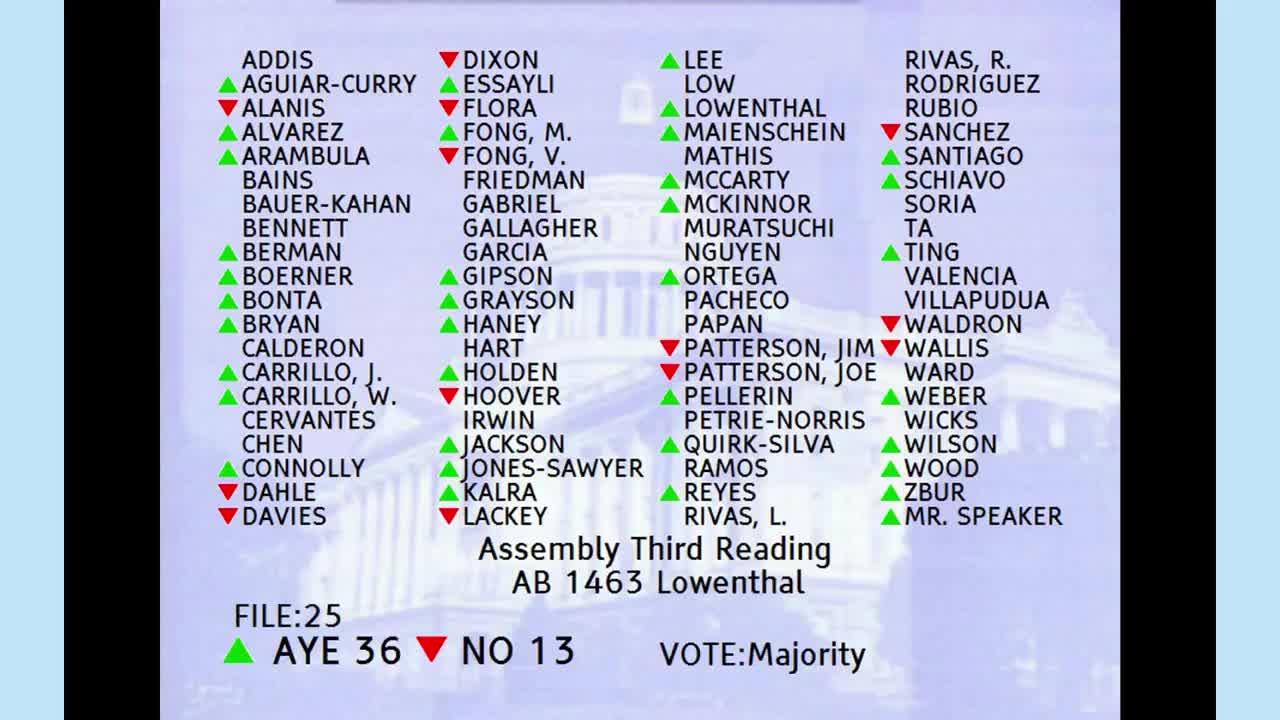 29SEC
Assembly Floor
Bill Author



