AB 1536: Cash Assistance Program for Aged, Blind, and Disabled Immigrants.
- Session Year: 2023-2024
- House: Assembly
- Latest Version Date: 2023-09-18
Current Status:
Failed
(2024-01-30: Consideration of Governor's veto stricken from file.)
Introduced
In Committee
First Chamber
In Committee
Second Chamber
Enacted
Existing law requires the State Department of Social Services to establish and supervise a county- or county consortia-administered program to provide cash assistance for aged, blind, or disabled legal immigrants who are not citizens who, due to their immigration status, are not eligible for the Supplemental Security Income/State Supplementary Program for the Aged, Blind, and Disabled, also known as SSI/SSP benefits. Under existing law, an individual is eligible for this program if their immigration status meets SSI/SSP eligibility criteria but they are not eligible for those benefits solely due to their immigration status, as specified. Existing law also requires any person who is found to be eligible by the department for federally funded SSI to apply for SSI benefits.
This bill would expand eligibility for that program to aged, blind, and disabled individuals regardless of immigration status if the individual meets the eligibility criteria for the program and is not eligible solely due to their immigration status. This bill would exempt individuals who are not qualified immigrants, as specified, from having to apply for SSI in order to receive benefits. The bill would also delete several inoperative provisions. The bill would make the implementation of these substantive changes contingent upon an appropriation for its express purposes. By expanding county duties under the program, this bill would impose a state-mandated local program.
The California Constitution requires the state to reimburse local agencies and school districts for certain costs mandated by the state. Statutory provisions establish procedures for making that reimbursement.
This bill would provide that, if the Commission on State Mandates determines that the bill contains costs mandated by the state, reimbursement for those costs shall be made pursuant to the statutory provisions noted above.
Existing law requires the State Department of Social Services to establish and supervise a county- or county consortia-administered program to provide cash assistance for aged, blind, or disabled legal immigrants who are not citizens who, due to their immigration status, are not eligible for the Supplemental Security Income/State Supplementary Program for the Aged, Blind, and Disabled, also known as SSI/SSP benefits. Under existing law, an individual is eligible for this program if their immigration status meets SSI/SSP eligibility criteria but they are not eligible for those benefits solely due to their immigration status, as specified. Existing law also requires any person who is found to be eligible by the department for federally funded SSI to apply for SSI benefits.
This bill would expand eligibility for that program to aged, blind, and disabled individuals regardless of immigration status if the individual meets the eligibility criteria for the program and is not eligible solely due to their immigration status. This bill would exempt individuals who are not qualified immigrants, as specified, from having to apply for SSI in order to receive benefits. The bill would also delete several inoperative provisions. By expanding county duties under the program, this bill would impose a state-mandated local program.
The California Constitution requires the state to reimburse local agencies and school districts for certain costs mandated by the state. Statutory provisions establish procedures for making that reimbursement.
This bill would provide that, if the Commission on State Mandates determines that the bill contains costs mandated by the state, reimbursement for those costs shall be made pursuant to the statutory provisions noted above.
(a)The State Department of Social Services shall establish and supervise a county- or county consortia-administered program to provide cash assistance to aged, blind, and disabled legal immigrants who are not citizens and who successfully complete an application process. No application shall be required of individuals described in paragraph (1) of subdivision (b) of Section 18944. The department shall conduct the evaluations of disability for the program. If the federal government agrees to administer the program, the department shall contract with the federal government for this purpose, and the county responsibilities shall be reduced by the duties and responsibilities undertaken by the federal government.
(b)This section shall become inoperative upon an appropriation for the express purpose of implementing Sections 18937, 18938, and 18939, as added by the act that added this subdivision, and as of January 1 of the following year is repealed.
SEC. 3.Section 18937 is added to the Welfare and Institutions Code, to read:18937.(a)The State Department of Social Services shall establish and supervise a county- or county consortia-administered program to provide cash assistance to aged, blind, and disabled individuals, regardless of immigration status, who successfully complete an application process. No application shall be required of individuals described in paragraph (1) of subdivision (b) of Section 18944. The department shall conduct the evaluations of disability for the program. If the federal government agrees to administer the program, the department shall contract with the federal government for this purpose, and the county responsibilities shall be reduced by the duties and responsibilities undertaken by the federal government.
(b)This chapter is intended to satisfy Section 1621(d) of Title 8 of the United States Code.
(c)This section shall become operative upon an appropriation for the express purpose of implementing Sections 18937, 18938, and 18939, as added by the act that added this section.
SEC. 4.Section 18938 of the Welfare and Institutions Code is amended to read:18938.(a)(1)Subject to paragraphs (2) and (3), an individual, upon application, shall be eligible for the program established pursuant to Section 18937 if their immigration status meets the eligibility criteria of the Supplemental Security Income/State Supplementary Program for the Aged, Blind, and Disabled (SSI/SSP) in effect on August 21, 1996, but the individual is not eligible for SSI/SSP benefits solely due to their immigration status under Title IV of Public Law 104-193 and any subsequent amendments thereto.
(2)An applicant who is otherwise eligible for the program, but who entered the United States on or after August 22, 1996, shall be eligible for aid under this chapter only if the applicant is sponsored and one of the following conditions is met:
(A)The sponsor has died.
(B)The sponsor is disabled, as defined in subparagraph (A) of paragraph (3) of subdivision (b) of Section 11320.3.
(C)The applicant, after entry into the United States, is a victim of abuse by the sponsor or the spouse of the sponsor if the spouse is living with the sponsor.
(3)An applicant who is otherwise eligible for the program but who entered the United States on or after August 22, 1996, and who does not meet one of the conditions of paragraph (2) shall be eligible for aid under this chapter beginning on October 1, 1999.
(4)The applicant shall be required to provide verification that one of the conditions of subparagraph (A), (B), or (C) of paragraph (2) has been met.
(5)(A)For purposes of subparagraph (C) of paragraph (2), abuse shall be defined in the same manner as provided in Section 11495.1 and Section 11495.12. A sworn statement of abuse by a victim, or the representative of the victim if the victim is not able to competently swear, shall be sufficient to establish abuse if one or more additional items of evidence of abuse is also provided. Additional evidence may include, but is not limited to, the following:
(i)Police, government agency, or court records or files.
(ii)Documentation from a domestic violence program, legal, clinical, medical, or other professional from whom the applicant or recipient has sought assistance in dealing with abuse.
(iii)A statement from any other individual with knowledge of the circumstances that provided the basis for the claim.
(iv)Physical evidence of abuse.
(B)If the victim cannot provide additional evidence of abuse, then the sworn statement shall be sufficient if the county makes a determination documented in the case file that the applicant is credible.
(b)The department shall periodically redetermine the eligibility of each individual.
(c)The department shall take all steps necessary to qualify any benefits paid under this section to be eligible for reimbursement as federal Interim Assistance, including requiring a repayment agreement.
(d)This section shall become inoperative upon an appropriation for the express purpose of implementing Sections 18937, 18938, and 18939, as added by the act that added this subdivision, and as of January 1 of the following year is repealed.
SEC. 5.Section 18938 is added to the Welfare and Institutions Code, to read:18938.(a)(1)Subject to paragraphs (2) and (3), an individual, upon application, shall be eligible for the program established pursuant to Section 18937 if the individual meets the eligibility criteria of the Supplemental Security Income/State Supplementary Program for the Aged, Blind, and Disabled (SSI/SSP) but is not eligible for SSI/SSP benefits solely due to the individuals immigration status.
(2)An applicant who is otherwise eligible for the program, but who entered the United States on or after August 22, 1996, shall be eligible for aid under this chapter only if the applicant is sponsored and one of the following conditions is met:
(A)The sponsor has died.
(B)The sponsor is disabled, as defined in subparagraph (A) of paragraph (3) of subdivision (b) of Section 11320.3.
(C)The applicant, after entry into the United States, is a victim of abuse by the sponsor or the spouse of the sponsor if the spouse is living with the sponsor.
(3)An applicant who is otherwise eligible for the program but who entered the United States on or after August 22, 1996, and who does not meet one of the conditions of paragraph (2) shall be eligible for aid under this chapter beginning on October 1, 1999.
(4)The applicant shall be required to provide verification that one of the conditions of subparagraph (A), (B), or (C) of paragraph (2) has been met.
(5)(A)For purposes of subparagraph (C) of paragraph (2), abuse shall be defined in the same manner as provided in Section 11495.1 and Section 11495.12. A sworn statement of abuse by a victim, or the representative of the victim if the victim is not able to competently swear, shall be sufficient to establish abuse if one or more additional items of evidence of abuse is also provided. Additional evidence may include, but is not limited to, the following:
(i)Police, government agency, or court records or files.
(ii)Documentation from a domestic violence program, legal, clinical, medical, or other professional from whom the applicant or recipient has sought assistance in dealing with abuse.
(iii)A statement from any other individual with knowledge of the circumstances that provided the basis for the claim.
(iv)Physical evidence of abuse.
(B)If the victim cannot provide additional evidence of abuse, then the sworn statement shall be sufficient if the county makes a determination documented in the case file that the applicant is credible.
(b)The department shall periodically redetermine the eligibility of each individual.
(c)The department shall take all steps necessary to qualify any benefits paid under this section to be eligible for reimbursement as federal Interim Assistance, including requiring a repayment agreement.
(d)This section shall become operative upon an appropriation for the express purpose of implementing Sections 18937, 18938, and 18939, as added by the act that added this section.
SEC. 6.Section 18939 of the Welfare and Institutions Code is amended to read:18939.(a)Any person who is found to be eligible for federally funded SSI by the department shall be required to apply for SSI benefits. An individual may continue to receive benefits under this article if the individual fully cooperates in the application and administrative appeal process of the Social Security Administration. An individual shall continue to be eligible to receive benefits under this article if the individual receives an unfavorable decision from the Social Security Administration.
(b)(1)The State Department of Social Services shall require counties with a base caseload of recipients of aid under this chapter of 70 or more to establish an advocacy program to assist applicants and recipients of aid under this chapter in the application process for the SSI program. The department shall encourage counties with a base caseload of recipients of aid under this chapter of 69 or less to establish a similar advocacy program. Counties may, at their option, contract to provide any or all of the required advocacy services.
(2)The department shall provide assistance to counties in their efforts to implement an SSI advocacy program (SSIAP) for applicants and recipients of aid under this chapter.
(c)The State Department of Social Services shall ensure that its Disability Evaluation Division (DED) expedites the disability evaluations for applicants and recipients of aid under this chapter by utilizing its existing case records sharing procedures to ensure that information from previous DED evaluations for the Medi-Cal program are shared expeditiously with the federal component of the division that is adjudicating the SSI disability application.
(d)The State Department of Social Services shall reimburse counties for legal fees incurred by attorneys or other authorized representatives during the appeals phase of the SSI application process only when the county demonstrates that the legal representative successfully secures approval of SSI benefits. The legal fees for each case shall not exceed twice the difference between the maximum monthly individual payment under this chapter and the maximum monthly SSP payment.
(e)The department shall report to the Legislature, by July 1, 2007, on the outcomes of county SSI advocacy programs, including the numbers of cases that transitioned to SSI and the amount of savings realized through the transfers.
(f)Subdivisions (b) to (e), inclusive, of this section shall become inoperative on July 1, 2011.
(g)This section shall become inoperative upon an appropriation for the express purpose of implementing Sections 18937, 18938, and 18939, as added by the act that added this subdivision, and as of January 1 of the following year is repealed.
SEC. 7.Section 18939 is added to the Welfare and Institutions Code, to read:18939.(a)Any person who is found to be eligible for federally funded SSI by the department shall be required to apply for SSI benefits. An individual may continue to receive benefits under this article if the individual fully cooperates in the application and administrative appeal process of the Social Security Administration. An individual shall continue to be eligible to receive benefits under this article if the individual receives an unfavorable decision from the Social Security Administration.
(b)Notwithstanding subdivision (a), an individual who is not a qualified immigrant pursuant to Section 1641 of Title 8 of the United States Code shall not be required to apply for SSI in order to receive benefits.
(c)This section shall become operative upon an appropriation for the express purpose of implementing Sections 18937, 18938, and 18939, as added by the act that added this section.
SEC. 8.If the Commission on State Mandates determines that this act contains costs mandated by the state, reimbursement to local agencies and school districts for those costs shall be made pursuant to Part 7 (commencing with Section 17500) of Division 4 of Title 2 of the Government Code.
(a)The State Department of Social Services shall establish and supervise a county- or county consortia-administered program to provide cash assistance to aged, blind, and disabled legal immigrants who are not citizens and who successfully complete an application process. No application shall be required of individuals described in paragraph (1) of subdivision (b) of Section 18944. The department shall conduct the evaluations of disability for the program. If the federal government agrees to administer the program, the department shall contract with the federal government for this purpose, and the county responsibilities shall be reduced by the duties and responsibilities undertaken by the federal government.
(b)This section shall become inoperative upon an appropriation for the express purpose of implementing Sections 18937, 18938, and 18939, as added by the act that added this subdivision, and as of January 1 of the following year is repealed.
SEC. 3.Section 18937 is added to the Welfare and Institutions Code, to read:18937.(a)The State Department of Social Services shall establish and supervise a county- or county consortia-administered program to provide cash assistance to aged, blind, and disabled individuals, regardless of immigration status, who successfully complete an application process. No application shall be required of individuals described in paragraph (1) of subdivision (b) of Section 18944. The department shall conduct the evaluations of disability for the program. If the federal government agrees to administer the program, the department shall contract with the federal government for this purpose, and the county responsibilities shall be reduced by the duties and responsibilities undertaken by the federal government.
(b)This chapter is intended to satisfy Section 1621(d) of Title 8 of the United States Code.
(c)This section shall become operative upon an appropriation for the express purpose of implementing Sections 18937, 18938, and 18939, as added by the act that added this section.
SEC. 4.Section 18938 of the Welfare and Institutions Code is amended to read:18938.(a)(1)Subject to paragraphs (2) and (3), an individual, upon application, shall be eligible for the program established pursuant to Section 18937 if his or her their immigration status meets the eligibility criteria of the Supplemental Security Income/State Supplementary Program for the Aged, Blind, and Disabled (SSI/SSP) in effect on August 21, 1996, but he or she the individual is not eligible for SSI/SSP benefits solely due to his or her their immigration status under Title IV of Public Law 104-193 and any subsequent amendments thereto.
(2)An applicant who is otherwise eligible for the program, but who entered the United States on or after August 22, 1996, shall be eligible for aid under this chapter only if he or she the applicant is sponsored and one of the following conditions is met:
(A)The sponsor has died.
(B)The sponsor is disabled, as defined in subparagraph (A) of paragraph (3) of subdivision (b) of Section 11320.3.
(C)The applicant, after entry into the United States, is a victim of abuse by the sponsor or the spouse of the sponsor if the spouse is living with the sponsor.
(3)An applicant who is otherwise eligible for the program but who entered the United States on or after August 22, 1996, and who does not meet one of the conditions of paragraph (2) shall be eligible for aid under this chapter beginning on October 1, 1999.
(4)The applicant shall be required to provide verification that one of the conditions of subparagraphs subparagraph (A), (B), or (C) of paragraph (2) has been met.
(5)(A)For purposes of subparagraph (C) of paragraph (2), abuse shall be defined in the same manner as provided in Section 11495.1 and Section 11495.12. A sworn statement of abuse by a victim, or the representative of the victim if the victim is not able to competently swear, shall be sufficient to establish abuse if one or more additional items of evidence of abuse is also provided. Additional evidence may include, but is not limited to, the following:
(i)Police, government agency, or court records or files.
(ii)Documentation from a domestic violence program, legal, clinical, medical, or other professional from whom the applicant or recipient has sought assistance in dealing with abuse.
(iii)A statement from any other individual with knowledge of the circumstances that provided the basis for the claim.
(iv)Physical evidence of abuse.
(B)If the victim cannot provide additional evidence of abuse, then the sworn statement shall be sufficient if the county makes a determination documented in the case file that the applicant is credible.
(b)The department shall periodically redetermine the eligibility of each individual.
(c)The department shall take all steps necessary to qualify any benefits paid under this section to be eligible for reimbursement as federal Interim Assistance Assistance, including requiring a repayment agreement.
(d)This section shall become inoperative upon an appropriation for the express purpose of implementing Sections 18937, 18938, and 18939, as added by the act that added this subdivision, and as of January 1 of the following year is repealed.
SEC. 5.Section 18938 is added to the Welfare and Institutions Code, to read:18938.(a)(1)Subject to paragraphs (2) and (3), an individual, upon application, shall be eligible for the program established pursuant to Section 18937 if the individual meets the eligibility criteria of the Supplemental Security Income/State Supplementary Program for the Aged, Blind, and Disabled (SSI/SSP) but is not eligible for SSI/SSP benefits solely due to the individuals immigration status.
(2)An applicant who is otherwise eligible for the program, but who entered the United States on or after August 22, 1996, shall be eligible for aid under this chapter only if the applicant is sponsored and one of the following conditions is met:
(A)The sponsor has died.
(B)The sponsor is disabled, as defined in subparagraph (A) of paragraph (3) of subdivision (b) of Section 11320.3.
(C)The applicant, after entry into the United States, is a victim of abuse by the sponsor or the spouse of the sponsor if the spouse is living with the sponsor.
(3)An applicant who is otherwise eligible for the program but who entered the United States on or after August 22, 1996, and who does not meet one of the conditions of paragraph (2) shall be eligible for aid under this chapter beginning on October 1, 1999.
(4)The applicant shall be required to provide verification that one of the conditions of subparagraph (A), (B), or (C) of paragraph (2) has been met.
(5)(A)For purposes of subparagraph (C) of paragraph (2), abuse shall be defined in the same manner as provided in Section 11495.1 and Section 11495.12. A sworn statement of abuse by a victim, or the representative of the victim if the victim is not able to competently swear, shall be sufficient to establish abuse if one or more additional items of evidence of abuse is also provided. Additional evidence may include, but is not limited to, the following:
(i)Police, government agency, or court records or files.
(ii)Documentation from a domestic violence program, legal, clinical, medical, or other professional from whom the applicant or recipient has sought assistance in dealing with abuse.
(iii)A statement from any other individual with knowledge of the circumstances that provided the basis for the claim.
(iv)Physical evidence of abuse.
(B)If the victim cannot provide additional evidence of abuse, then the sworn statement shall be sufficient if the county makes a determination documented in the case file that the applicant is credible.
(b)The department shall periodically redetermine the eligibility of each individual.
(c)The department shall take all steps necessary to qualify any benefits paid under this section to be eligible for reimbursement as federal Interim Assistance, including requiring a repayment agreement.
(d)This section shall become operative upon an appropriation for the express purpose of implementing Sections 18937, 18938, and 18939, as added by the act that added this section.
SEC. 6.Section 18939 of the Welfare and Institutions Code is amended to read:18939.(a)Any person who is found to be eligible for federally funded SSI by the department shall be required to apply for SSI benefits. An individual may continue to receive benefits under this article if he or she the individual fully cooperates in the application and administrative appeal process of the Social Security Administration. An individual shall continue to be eligible to receive benefits under this article if he or she the individual receives an unfavorable decision from the Social Security Administration.
(b)(1)The State Department of Social Services shall require counties with a base caseload of recipients of aid under this chapter of 70 or more to establish an advocacy program to assist applicants and recipients of aid under this chapter in the application process for the SSI program. The department shall encourage counties with a base caseload of recipients of aid under this chapter of 69 or less to establish a similar advocacy program. Counties may, at their option, contract to provide any or all of the required advocacy services.
(2)The department shall provide assistance to counties in their efforts to implement an SSI advocacy program (SSIAP) for applicants and recipients of aid under this chapter.
(c)The State Department of Social Services shall ensure that its Disability Evaluation Division (DED) expedites the disability evaluations for applicants and recipients of aid under this chapter by utilizing its existing case records sharing procedures to ensure that information from previous DED evaluations for the Medi-Cal program are shared expeditiously with the federal component of the division that is adjudicating the SSI disability application.
(d)The State Department of Social Services shall reimburse counties for legal fees incurred by attorneys or other authorized representatives during the appeals phase of the SSI application process only when the county demonstrates that the legal representative successfully secures approval of SSI benefits. The legal fees for each case shall not exceed twice the difference between the maximum monthly individual payment under this chapter and the maximum monthly SSP payment.
(e)The department shall report to the Legislature, by July 1, 2007, on the outcomes of county SSI advocacy programs, including the numbers of cases that transitioned to SSI and the amount of savings realized through the transfers.
(f)Subdivisions (b) to (e), inclusive, of this section shall become inoperative on July 1, 2011.
(g)This section shall become inoperative upon an appropriation for the express purpose of implementing Sections 18937, 18938, and 18939, as added by the act that added this subdivision, and as of January 1 of the following year is repealed.
SEC. 7.Section 18939 is added to the Welfare and Institutions Code, to read:18939.(a)Any person who is found to be eligible for federally funded SSI by the department shall be required to apply for SSI benefits. An individual may continue to receive benefits under this article if the individual fully cooperates in the application and administrative appeal process of the Social Security Administration. An individual shall continue to be eligible to receive benefits under this article if the individual receives an unfavorable decision from the Social Security Administration.
(b)Notwithstanding subdivision (a), an individual who is not a qualified immigrant pursuant to Section 1641 of Title 8 of the United States Code shall not be required to apply for SSI in order to receive benefits.
(c)This section shall become operative upon an appropriation for the express purpose of implementing Sections 18937, 18938, and 18939, as added by the act that added this section.
SEC. 5.SEC. 8.If the Commission on State Mandates determines that this act contains costs mandated by the state, reimbursement to local agencies and school districts for those costs shall be made pursuant to Part 7 (commencing with Section 17500) of Division 4 of Title 2 of the Government Code.
(a)The State Department of Social Services shall establish and supervise a county- or county consortia-administered program to provide cash assistance to aged, blind, and disabled individuals, regardless of immigration status, and who successfully complete an application process. No application shall be required of individuals described in paragraph (1) of subdivision (b) of Section 18944. The department shall conduct the evaluations of disability for the program. If the federal government agrees to administer the program, the department shall contract with the federal government for this purpose, and the county responsibilities shall be reduced by the duties and responsibilities undertaken by the federal government.
(b)This chapter is intended to satisfy Section 1621(d) of Title 8 of the United States Code.
SEC. 3.Section 18938 of the Welfare and Institutions Code is amended to read:18938.(a)(1)Subject to paragraphs (2) and (3), an individual, upon application, shall be eligible for the program established pursuant to Section 18937 if the individual meets the eligibility criteria of the Supplemental Security Income/State Supplementary Program for the Aged, Blind, and Disabled (SSI/SSP) but is not eligible for SSI/SSP benefits solely due to the individuals immigration status.
(2)An applicant who is otherwise eligible for the program, but who entered the United States on or after August 22, 1996, shall be eligible for aid under this chapter only if the applicant is sponsored and one of the following conditions is met:
(A)The sponsor has died.
(B)The sponsor is disabled, as defined in subparagraph (A) of paragraph (3) of subdivision (b) of Section 11320.3.
(C)The applicant, after entry into the United States, is a victim of abuse by the sponsor or the spouse of the sponsor if the spouse is living with the sponsor.
(3)An applicant who is otherwise eligible for the program but who entered the United States on or after August 22, 1996, and who does not meet one of the conditions of paragraph (2) shall be eligible for aid under this chapter beginning on October 1, 1999.
(4)The applicant shall be required to provide verification that one of the conditions of subparagraphs (A), (B), or (C) of paragraph (2) has been met.
(5)(A)For purposes of subparagraph (C) of paragraph (2), abuse shall be defined in the same manner as provided in Section 11495.1 and Section 11495.12. A sworn statement of abuse by a victim, or the representative of the victim if the victim is not able to competently swear, shall be sufficient to establish abuse if one or more additional items of evidence of abuse is also provided. Additional evidence may include, but is not limited to, the following:
(i)Police, government agency, or court records or files.
(ii)Documentation from a domestic violence program, legal, clinical, medical, or other professional from whom the applicant or recipient has sought assistance in dealing with abuse.
(iii)A statement from any other individual with knowledge of the circumstances that provided the basis for the claim.
(iv)Physical evidence of abuse.
(B)If the victim cannot provide additional evidence of abuse, then the sworn statement shall be sufficient if the county makes a determination documented in the case file that the applicant is credible.
(b)The department shall periodically redetermine the eligibility of each individual.
(c)The department shall take all steps necessary to qualify any benefits paid under this section to be eligible for reimbursement as federal Interim Assistance including requiring a repayment agreement.
SEC. 4.Section 18939 of the Welfare and Institutions Code is amended to read:18939.(a)Any person who is found to be eligible for federally funded SSI by the department shall be required to apply for SSI benefits. An individual may continue to receive benefits under this article if the individual fully cooperates in the application and administrative appeal process of the Social Security Administration. An individual shall continue to be eligible to receive benefits under this article if the individual receives an unfavorable decision from the Social Security Administration.
(b)Notwithstanding subdivision (a), an individual who is not a qualified immigrant pursuant to Section 1641 of Title 8 of the United States Code shall not be required to apply for SSI in order to receive benefits.
SEC. 5.If the Commission on State Mandates determines that this act contains costs mandated by the state, reimbursement to local agencies and school districts for those costs shall be made pursuant to Part 7 (commencing with Section 17500) of Division 4 of Title 2 of the Government Code.
(a)The State Department of Social Services shall establish and supervise a county- or county consortia-administered program to provide cash assistance to aged, blind, and disabled legal immigrants who are not citizens individuals, regardless of immigration status, and who successfully complete an application process. No application shall be required of individuals described in paragraph (1) of subdivision (b) of Section 18944. The department shall conduct the evaluations of disability for the program. If the federal government agrees to administer the program, the department shall contract with the federal government for this purpose, and the county responsibilities shall be reduced by the duties and responsibilities undertaken by the federal government.
(b)This chapter is intended to satisfy Section 1621(d) of Title 8 of the United States Code.
SEC. 3.Section 18938 of the Welfare and Institutions Code is amended to read:18938.(a)(1)Subject to paragraphs (2) and (3), an individual, upon application, shall be eligible for the program established pursuant to Section 18937 if his or her immigration status the individual meets the eligibility criteria of the Supplemental Security Income/State Supplementary Program for the Aged, Blind, and Disabled (SSI/SSP) in effect on August 21, 1996, but he or she is not eligible for SSI/SSP benefits solely due to his or her immigration status under Title IV of Public Law 104-193 and any subsequent amendments thereto. but is not eligible for SSI/SSP benefits solely due to the individuals immigration status.
(2)An applicant who is otherwise eligible for the program, but who entered the United States on or after August 22, 1996, shall be eligible for aid under this chapter only if he or she the applicant is sponsored and one of the following conditions is met:
(A)The sponsor has died.
(B)The sponsor is disabled, as defined in subparagraph (A) of paragraph (3) of subdivision (b) of Section 11320.3.
(C)The applicant, after entry into the United States, is a victim of abuse by the sponsor or the spouse of the sponsor if the spouse is living with the sponsor.
(3)An applicant who is otherwise eligible for the program but who entered the United States on or after August 22, 1996, and who does not meet one of the conditions of paragraph (2) shall be eligible for aid under this chapter beginning on October 1, 1999.
(4)The applicant shall be required to provide verification that one of the conditions of subparagraphs (A), (B), or (C) of paragraph (2) has been met.
(5)(A)For purposes of subparagraph (C) of paragraph (2), abuse shall be defined in the same manner as provided in Section 11495.1 and Section 11495.12. A sworn statement of abuse by a victim, or the representative of the victim if the victim is not able to competently swear, shall be sufficient to establish abuse if one or more additional items of evidence of abuse is also provided. Additional evidence may include, but is not limited to, the following:
(i)Police, government agency, or court records or files.
(ii)Documentation from a domestic violence program, legal, clinical, medical, or other professional from whom the applicant or recipient has sought assistance in dealing with abuse.
(iii)A statement from any other individual with knowledge of the circumstances that provided the basis for the claim.
(iv)Physical evidence of abuse.
(B)If the victim cannot provide additional evidence of abuse, then the sworn statement shall be sufficient if the county makes a determination documented in the case file that the applicant is credible.
(b)The department shall periodically redetermine the eligibility of each individual.
(c)The department shall take all steps necessary to qualify any benefits paid under this section to be eligible for reimbursement as federal Interim Assistance including requiring a repayment agreement.
SEC. 4.Section 18939 of the Welfare and Institutions Code is amended to read:18939.(a)Any person who is found to be eligible for federally funded SSI by the department shall be required to apply for SSI benefits. An individual may continue to receive benefits under this article if he or she the individual fully cooperates in the application and administrative appeal process of the Social Security Administration. An individual shall continue to be eligible to receive benefits under this article if he or she the individual receives an unfavorable decision from the Social Security Administration.
(b)(1)The State Department of Social Services shall require counties with a base caseload of recipients of aid under this chapter of 70 or more to establish an advocacy program to assist applicants and recipients of aid under this chapter in the application process for the SSI program. The department shall encourage counties with a base caseload of recipients of aid under this chapter of 69 or less to establish a similar advocacy program. Counties may, at their option, contract to provide any or all of the required advocacy services.(2)The department shall provide assistance to counties in their efforts to implement an SSI advocacy program (SSIAP) for applicants and recipients of aid under this chapter.(c)The State Department of Social Services shall ensure that its Disability Evaluation Division (DED) expedites the disability evaluations for applicants and recipients of aid under this chapter by utilizing its existing case records sharing procedures to ensure that information from previous DED evaluations for the Medi-Cal program are shared expeditiously with the federal component of the division that is adjudicating the SSI disability application.(d)The State Department of Social Services shall reimburse counties for legal fees incurred by attorneys or other authorized representatives during the appeals phase of the SSI application process only when the county demonstrates that the legal representative successfully secures approval of SSI benefits. The legal fees for each case shall not exceed twice the difference between the maximum monthly individual payment under this chapter and the maximum monthly SSP payment.(e)The department shall report to the Legislature, by July 1, 2007, on the outcomes of county SSI advocacy programs, including the numbers of cases that transitioned to SSI and the amount of savings realized through the transfers.(f)Subdivisions (b) to (e), inclusive, of this section shall become inoperative on July 1, 2011.(b)Notwithstanding subdivision (a), an individual who is not a qualified immigrant pursuant to Section 1641 of Title 8 of the United States Code shall not be required to apply for SSI in order to receive benefits.
SEC. 5.If the Commission on State Mandates determines that this act contains costs mandated by the state, reimbursement to local agencies and school districts for those costs shall be made pursuant to Part 7 (commencing with Section 17500) of Division 4 of Title 2 of the Government Code.
REVISIONS: HeadingLines 3 and 4.|
Date
|
Status
|
|---|---|
| Jan 30, 2024 | Consideration of Governor's veto stricken from file. |
| Jan 3, 2024 | Consideration of Governor's veto pending. |
| Oct 8, 2023 | Vetoed by Governor. |
| Sep 21, 2023 | Enrolled and presented to the Governor at 3:30 p.m. |
| Sep 13, 2023 | Senate amendments concurred in. To Engrossing and Enrolling. (Ayes 64. Noes 7. Page 3472.). |
| Sep 13, 2023 | In Assembly. Concurrence in Senate amendments pending. |
| Sep 13, 2023 | Read third time. Passed. Ordered to the Assembly. (Ayes 32. Noes 2. Page 2702.). |
| Sep 5, 2023 | Read second time. Ordered to third reading. |
| Sep 1, 2023 | Read second time and amended. Ordered returned to second reading. |
| Sep 1, 2023 | From committee: Amend, and do pass as amended. (Ayes 5. Noes 2.) (September 1). |
| Aug 14, 2023 | In committee: Referred to APPR suspense file. |
| Jul 5, 2023 | From committee: Do pass and re-refer to Com. on APPR. (Ayes 5. Noes 0.) (July 3). Re-referred to Com. on APPR. |
| Jun 21, 2023 | From committee chair, with author's amendments: Amend, and re-refer to committee. Read second time, amended, and re-referred to Com. on HUMAN S. |
| Jun 14, 2023 | Referred to Com. on HUMAN S. |
| Jun 1, 2023 | In Senate. Read first time. To Com. on RLS. for assignment. |
| May 31, 2023 | Read third time. Passed. Ordered to the Senate. (Ayes 65. Noes 5. Page 2045.) |
| May 18, 2023 | Read second time. Ordered to third reading. |
| May 18, 2023 | From committee: Do pass. (Ayes 11. Noes 4.) (May 18). |
| Apr 19, 2023 | In committee: Set, first hearing. Referred to APPR. suspense file. |
| Mar 29, 2023 | From committee: Do pass and re-refer to Com. on APPR. (Ayes 6. Noes 1.) (March 28). Re-referred to Com. on APPR. |
| Mar 29, 2023 | Coauthors revised. |
| Mar 9, 2023 | Referred to Com. on HUM. S. |
| Feb 18, 2023 | From printer. May be heard in committee March 20. |
| Feb 17, 2023 | Read first time. To print. |
|
Date
|
Description
|
Location
|
Votes
|
|
|---|---|---|---|---|
| Sep 13, 2023 | AB 1536 Juan Carrillo Concurrence in Senate Amendments | Assembly Floor |
Passed |
|
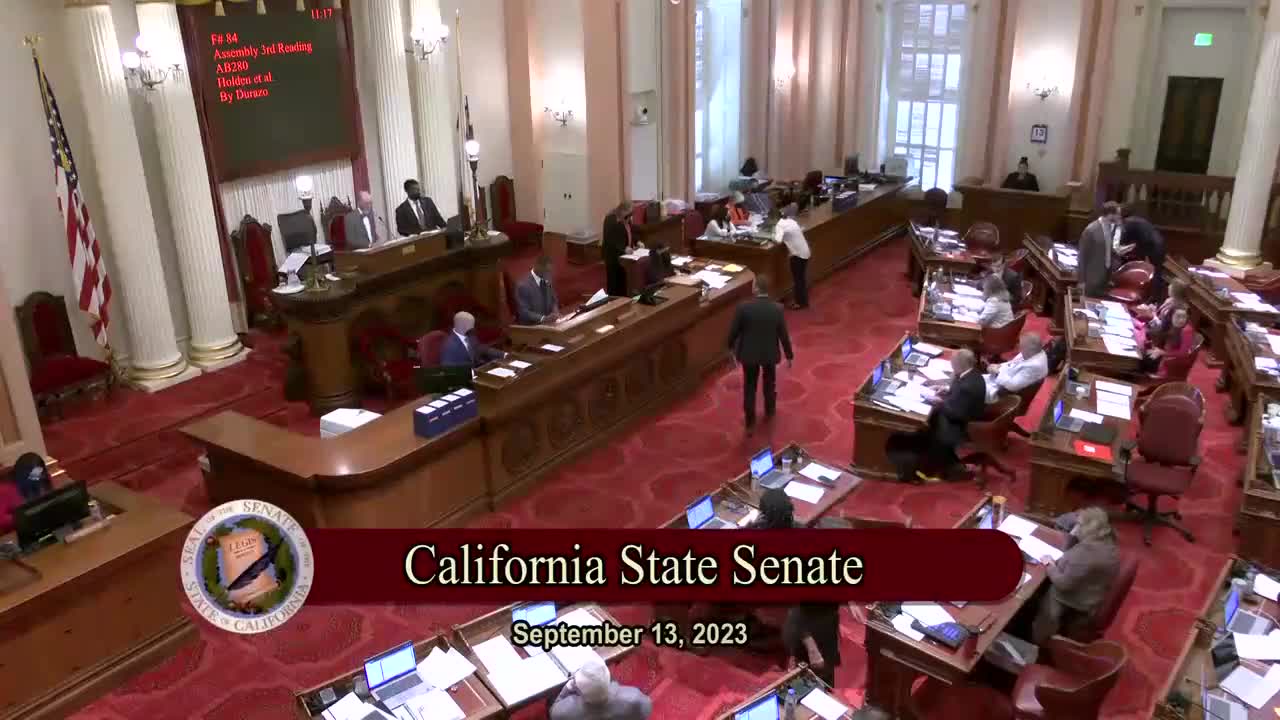
| Sep 13, 2023 | Assembly 3rd Reading AB1536 Juan Carrillo et al. By Durazo | Senate Floor |
Passed |
|
| Sep 1, 2023 | Do pass as amended | Senate Standing Committee on Appropriations |
Passed |
|
| Aug 14, 2023 | Placed on suspense file | Senate Standing Committee on Appropriations |
Passed |
|
| Jul 3, 2023 | Do pass, but first be re-referred to the Committee on [Appropriations] | Senate Standing Committee on Human Services |
Passed |
|
| May 31, 2023 | AB 1536 Juan Carrillo Assembly Third Reading | Assembly Floor |
Passed |
|
| May 18, 2023 | Do pass. | Assembly Standing Committee on Appropriations |
Passed |
|
| Mar 28, 2023 | Do pass and be re-referred to the Committee on [Appropriations] | Assembly Standing Committee on Human Services |
Passed |
This list shows positions taken on this bill by organizations on the date displayed, which is linked to the original source.
Positions by individuals are not included.
|
Organization
|
Position
|
Date
|
|---|---|---|
| API Equality-LA | ** Support | |
| Asian Americans Advancing Justice Southern California | ** Support | |
| Bend the Arc California | ** Support | |
| Buen Vecino | ** Support | |
| California Association Of Food Banks | ** Support | |
| California Catholic Conference | ** Support | |
| California Commission on Aging | ** Support | |
| california health professional student alliance | ** Support | |
| California Immigrant Policy Center | ** Support | |
| California OneCare | ** Support | |
| California Pan - Ethnic Health Network | ** Support | |
| California Rural Legal Assistance Foundation, Inc. | ** Support | |
| California State Council of Service Employees International Union | ** Support | |
| Central Valley Immigrant Integration Collaborative | ** Support | |
| City of Long Beach | ** Support | |
| Coalition for Humane Immigrant Rights | ** Support | |
| Coalition of California Welfare Rights Organizations | ** Support | |
| County of Los Angeles Board of Supervisors | ** Support | |
| County Welfare Directors Association of California | ** Support | |
| Disability Rights California | ** Support | |
| Friends Committee On Legislation Of California | ** Support | |
| GRACE Institute - End Child Poverty in California | ** Support | |
| Having Our Say Coalition | ** Support | |
| Immigrant Defense Advocates | ** Support | |
| Immigration Services Coordinator | ** Support | |
| Inland Coalition for Immigrant Justice | ** Support | |
| Jewish Family Service of Los Angeles | ** Support | |
| Justice in Aging | ** Support | |
| KRC in Action | ** Support | |
| Latino Coalition for a Healthy California | ** Support | |
| Los Angeles County | ** Support | |
| National Association Of Social Workers, California Chapter | ** Support | |
| Nourish California | ** Support | |
| pilipino workers center | ** Support | |
| puente de la costa sur | ** Support | |
| Salva | ** Support | |
| Union De Guatemaltecos Emigrantes | ** Support | |
| western center on law & poverty | ** Support |
GOVERNOR'S VETO
GV Bill Id:AB 1536
Author:(Juan Carrillo and Santiago)
As Enrolled Ver:September 18, 2023
2/3 vote
SUMMARY
Upon appropriation, expands eligibility for the Cash Assistance for Aged, Blind, and Disabled Legal Immigrants (CAPI) to all individuals regardless of immigration status; deletes obsolete language; deletes requirements to apply for Supplemental Security Income/State Supplementary Program for the Aged, Blind, and Disabled (SSI/SSP) in order to qualify for CAPI
Senate amendments
- Made provisions of this bill operative upon appropriation.
- Added Senator Durazo and Rubio as coauthors.
Governor’s Veto Message
This bill would expand eligibility for the Cash Assistance Program for Aged, Blind, and Disabled Legal Immigrants (CAPI) program to include all eligible immigrants, regardless of their legal immigration status.
While I appreciate the author's goal to expand CAPI eligibility regardless of immigration status, enacting this policy without providing funding would not be prudent nor would it meet its intended purpose. My Administration has taken significant steps to support the undocumented community, including the recent expansion of eligibility for full-scope Medi-Cal, regardless of immigration status. This year, the 2023 Budget Act includes $40 million to begin automation and outreach efforts to expand the California Food Assistance Program to incomeeligible individuals aged 55 years or older, regardless of their immigration status.
This bill would result in significant costs of over $100 million General Fund annually, because CAPI is a state-only program. These costs must be considered alongside other budgetary priorities as part of the annual budget process. In partnership with the Legislature, we enacted a budget that closed a shortfall of more than $30 billion through balanced solutions that avoided deep program cuts and protected education, health care, climate, public safety, and social service programs that are relied on by millions of Californians. This year, however, the Legislature sent me bills outside of this budget process that, if all enacted, would add nearly $19 billion of unaccounted costs in the budget, of which $11 billion would be ongoing.
With our state facing continuing economic risk and revenue uncertainty, it is important to remain disciplined when considering bills with significant fiscal implications, such as this measure.
COMMENTS
Cash Assistance Program for Aged, Blind, and Disabled Immigrants is a state-funded program that provides monthly cash aid to aging, blind, and immigrants that are not eligible for SSI/SSP based on immigration status. In 1996, the Personal Responsibility and Work Opportunity Act excluded noncitizen immigrants from SSI/SSP eligibility. The following are CAPI requirements:
- 65 or over, blind or disabled.
- A non-citizen and meet the immigration status criteria in effect for SSI/SSP as of August 21, 1996.
- Ineligible for SSI/SSP solely due to their immigration status.
- California resident.
- Their income must be less than the CAPI standards.
- Resources must be below $2,000 for an individual or $3,000 for a couple.
In November 2022, CDSS posted an All County Letter notifying the updated 2023 rates to reflect new SSI/SSP rates. The 2023 CAPI rates are as follows:
Payment Standards for Individuals Payment Standard Category | January 2023 CAPI Grant |
Aged or Disabled | $1,133.73 |
Blind | $1,211.00 |
Non-Medical Out-of-Home Care | $1,492.82 |
Aged or Disabled without cooking facilities | $1,251.74 |
Disabled Minor | $1,003.07 |
Disabled Minor (Household of Another) | $703.23 |
Aged or Disabled (Reduced Needs) | $833.89 |
Blind (Household of Another) | $911.16 |
Non-Medical Out-of-Home Care (Reduced Needs) | $1,181.14 |
Title XIX Medical Facility Standard | $59.00 |
In 2021, the "Golden State Grant Program" provided a one-time payment of $600 to SSI/SSP and CAPI recipients to assist and provide relief from hardship due to the COVID-19 pandemic.
Currently to apply for CAPI, an applicant must go to their local county office to seek an application and submit the application as prescribed by their county social services agency. While CAPI applicants may be eligible for CalFresh, Medi-Cal, or In-Home Supportive Services (IHSS), there is not currently an automated system to link CAPI eligibility with other safety net programs. CAPI is currently being integrated into CalSAWS and is estimated to be fully automated by June 2025. Once integrated, when applicants apply for CalFresh, Medi-Cal, or IHSS, the system will help determine eligibility for other programs such as CAPI and help applicants receive services more quickly and efficiently.
As currently described in statute, an applicant must prove they are unable to qualify or receive benefits from SSI/SSP due to their immigration status. This means applicants must show proof of their ineligibility by applying for SSI/SSP and receiving a notice of denial based on their immigration status alone, or proof of ineligibility from the Social Security Administration. Undocumented immigrants may not want to jeopardize their status by giving all of their personal identifying information on a federal government application. This requirement is counterintuitive to the goals of this program.
The Center for Migration Studies estimates that over 700,000 undocumented immigrants in California have lived and worked in California for over 20 years. Data from the expansion of Medi-Cal to undocumented seniors indicate there are 235,000 people who are aging into retirement age and will be in need of retirement benefits. Despite often working and contributing to the California economy through their years of work, undocumented seniors are currently ineligible to receive Social Security benefits. Without immigration reform at the federal level, undocumented seniors are aging into uncertainty, without the resources to meet their basic needs.
Need for this bill: California's aging population continues outpace services. According to the California Department of Finance, the population over age 60 will have an overall increase of 166 % between 2010 and 2060. This bill helps expand a necessary safety net to allow aging with dignity and access to basic needs through cash assistance regardless of immigration status. Due to the lack of federal immigration reform, undocumented immigrants continue to pay into SSI/SSP, but are unable to draw down funds they contributed. This bill removes barriers to apply for this safety net program.
In an academic paper titled, "Elderly Undocumented Latinos and Their Retirement Strategies" the authors found that, "In 2014, the Latino population reached a high 55.4 million and its undocumented sector expanded to 11.3 million. Of the 11.3 million undocumented Latinos, approximately 850,000 were over the age of 55 and approximately 150,000 were over the age of 65."
Considering the number of people that will need help as they age, it is not only morally prudent, but fiscally and societally prudent to consider proactive steps to help ensure this population is taken care of.
Equity Implications: Undocumented immigrants face discrimination and hardships on a regular basis. It is important to recognize all aging, blind, and disabled members of community deserve to live with dignity. Cash assistance is one tool in the safety net program to help the community.
In 2019, an analysis by the Center for Migration Studies of the American Communities Survey found there are about 16,800 undocumented seniors age 65 and over in California. Of these seniors, about 7,000 of these indicated they did not have a job or were not in the labor force and 2,200 indicated they were at or below poverty level.
Expansion of the CAPI program to include undocumented seniors would allow our most vulnerable seniors with a disability and who are immigrants to access a critical lifeline to sustain them in their elder years and when they need it the most. Based on the number of aging immigrants and resource scarcity, this population will likely need assistance in the near future, this bill provides a proactive approach by expanding an existing program.
According to the Author
"Across our state, the aging, undocumented population is increasing, especially our immigrant seniors, many of whom have no retirement despite years of working in this country. [This bill] will serve as a building block on the work we have accomplished to ensure our undocumented senior population can age with dignity. Although California has made historic investments in expanding food assistance benefits and unlocking Medi-Cal for undocumented seniors, it has fallen short in doing the same for the Cash Assistance Program for Immigrants (CAPI). This program leaves behind thousands of our undocumented seniors and disabled individuals struggling to afford their housing, prescription medicine, and necessities amid skyrocketing costs due to inflation rates, and much more.
"These undocumented seniors 65 and older are the same seniors who have contributed significant money to our economy through taxes, household expenses and much more. It is a benefit they deserve. As a proud Mexican immigrant, I am committed to fighting for what I believe is right, which means all immigrants' rights. ¡Si Se Puede!"
Arguments in Support
The Coalition for Humane Immigrant Rights, "This program will be a vital lifeline for those aged, blind and disabled individuals who would be eligible to receive benefits under the program expansion. Expanding access is particularly timely as California is in the midst of recovering from COVID-19, but the pandemic significantly impacted already vulnerable communities and has left individuals in more precarious financial situations, especially those older individuals who are no longer able to work and provide for themselves"
Arguments in Opposition
No opposition on file
FISCAL COMMENTS
According to the Senate Appropriations Committee:
- CDSS estimates:
- Ongoing General Fund costs of $179.2 million for local assistance (includes $164.3 million for the expanded CAPI caseload and $14.9 million for local administration).
- General Fund costs of $1,940,000 in 2023-24 and $1,892,000 in 2024-25 for state administration.
- Cost to counties for administration would be potentially reimbursable by the state, subject to a determination by the Commission on State Mandates.
VOTES
ASM HUMAN SERVICES: 6-1-1
YES: Jackson, Arambula, Bonta, Bryan, Calderon, Garcia
NO: Sanchez
ABS, ABST OR NV: Alanis
ASM APPROPRIATIONS: 11-4-1
YES: Holden, Bryan, Calderon, Wendy Carrillo, Mike Fong, Hart, Lowenthal, Papan, Pellerin, Weber, Ortega
NO: Megan Dahle, Dixon, Mathis, Sanchez
ABS, ABST OR NV: Robert Rivas
ASSEMBLY FLOOR: 65-5-10
YES: Addis, Aguiar-Curry, Alanis, Alvarez, Arambula, Bains, Bauer-Kahan, Bennett, Berman, Boerner, Bonta, Bryan, Calderon, Juan Carrillo, Wendy Carrillo, Cervantes, Connolly, Mike Fong, Friedman, Gabriel, Garcia, Gipson, Grayson, Haney, Hart, Holden, Irwin, Jackson, Jones-Sawyer, Kalra, Lee, Low, Lowenthal, Maienschein, McCarty, McKinnor, Muratsuchi, Stephanie Nguyen, Ortega, Pacheco, Papan, Pellerin, Petrie-Norris, Quirk-Silva, Ramos, Reyes, Luz Rivas, Robert Rivas, Rodriguez, Blanca Rubio, Santiago, Schiavo, Soria, Ting, Valencia, Villapudua, Waldron, Wallis, Ward, Weber, Wicks, Wilson, Wood, Zbur, Rendon
NO: Chen, Flora, Gallagher, Mathis, Sanchez
ABS, ABST OR NV: Megan Dahle, Davies, Dixon, Essayli, Vince Fong, Hoover, Lackey, Jim Patterson, Joe Patterson, Ta
SENATE FLOOR: 32-2-6
YES: Allen, Alvarado-Gil, Archuleta, Ashby, Atkins, Becker, Blakespear, Bradford, Cortese, Dodd, Durazo, Eggman, Glazer, Gonzalez, Hurtado, Laird, Limón, McGuire, Menjivar, Min, Newman, Ochoa Bogh, Padilla, Portantino, Roth, Rubio, Skinner, Smallwood-Cuevas, Stern, Umberg, Wahab, Wiener
NO: Jones, Seyarto
ABS, ABST OR NV: Caballero, Dahle, Grove, Nguyen, Niello, Wilk
ASSEMBLY FLOOR: 64-7-9
YES: Addis, Aguiar-Curry, Alanis, Alvarez, Arambula, Bains, Bennett, Berman, Boerner, Bonta, Bryan, Calderon, Juan Carrillo, Wendy Carrillo, Cervantes, Connolly, Mike Fong, Friedman, Gabriel, Garcia, Gipson, Grayson, Haney, Hart, Holden, Irwin, Jackson, Jones‑Sawyer, Kalra, Lee, Low, Lowenthal, Maienschein, McCarty, McKinnor, Muratsuchi, Stephanie Nguyen, Ortega, Pacheco, Papan, Pellerin, Petrie-Norris, Quirk-Silva, Ramos, Rendon, Reyes, Luz Rivas, Rodriguez, Blanca Rubio, Santiago, Schiavo, Soria, Ting, Valencia, Villapudua, Waldron, Wallis, Ward, Weber, Wicks, Wilson, Wood, Zbur, Robert Rivas
NO: Chen, Megan Dahle, Vince Fong, Gallagher, Mathis, Joe Patterson, Sanchez
ABS, ABST OR NV: Bauer-Kahan, Davies, Dixon, Essayli, Flora, Hoover, Lackey, Jim Patterson, Ta
UPDATED
VERSION: September 18, 2023
CONSULTANT: Alexandria Smith / HUM. S. / (916) 319-2089 FN: 0002520
CONCURRENCE IN SENATE AMENDMENTS
CSA1 Bill Id:AB 1536
Author:(Juan Carrillo and Santiago)
As Amended Ver:September 1, 2023
Majority vote
SUMMARY
Upon appropriation, expands eligibility for the Cash Assistance for Aged, Blind, and Disabled Legal Immigrants (CAPI) to all individuals regardless of immigration status; deletes obsolete language; deletes requirements to apply for Supplemental Security Income/State Supplementary Program for the Aged, Blind, and Disabled (SSI/SSP) in order to qualify for CAPI.
Senate Amendments
- Make provisions of this bill operative upon appropriation.
- Add Senator Durazo and Rubio as coauthors.
COMMENTS
Cash Assistance Program for Aged, Blind, and Disabled Immigrants is a state-funded program that provides monthly cash aid to aging, blind, and immigrants that are not eligible for SSI/SSP based on immigration status. In 1996, the Personal Responsibility and Work Opportunity Act excluded noncitizen immigrants from SSI/SSP eligibility. The following are CAPI requirements:
- 65 or over, blind or disabled.
- A non-citizen and meet the immigration status criteria in effect for SSI/SSP as of August 21, 1996.
- Ineligible for SSI/SSP solely due to their immigration status.
- California resident.
- Their income must be less than the CAPI standards.
- Resources must be below $2,000 for an individual or $3,000 for a couple.
In November 2022, CDSS posted an All County Letter notifying the updated 2023 rates to reflect new SSI/SSP rates. The 2023 CAPI rates are as follows:
Payment Standards for Individuals Payment Standard Category | January 2023 CAPI Grant |
Aged or Disabled | $1,133.73 |
Blind | $1,211.00 |
Non-Medical Out-of-Home Care | $1,492.82 |
Aged or Disabled without cooking facilities | $1,251.74 |
Disabled Minor | $1,003.07 |
Disabled Minor (Household of Another) | $703.23 |
Aged or Disabled (Reduced Needs) | $833.89 |
Blind (Household of Another) | $911.16 |
Non-Medical Out-of-Home Care (Reduced Needs) | $1,181.14 |
Title XIX Medical Facility Standard | $59.00 |
In 2021, the "Golden State Grant Program" provided a one-time payment of $600 to SSI/SSP and CAPI recipients to assist and provide relief from hardship due to the COVID-19 pandemic.
Currently to apply for CAPI, an applicant must go to their local county office to seek an application and submit the application as prescribed by their county social services agency. While CAPI applicants may be eligible for CalFresh, Medi-Cal, or In-Home Supportive Services (IHSS), there is not currently an automated system to link CAPI eligibility with other safety net programs. CAPI is currently being integrated into CalSAWS and is estimated to be fully automated by June 2025. Once integrated, when applicants apply for CalFresh, Medi-Cal, or IHSS, the system will help determine eligibility for other programs such as CAPI and help applicants receive services more quickly and efficiently.
As currently described in statute, an applicant must prove they are unable to qualify or receive benefits from SSI/SSP due to their immigration status. This means applicants must show proof of their ineligibility by applying for SSI/SSP and receiving a notice of denial based on their immigration status alone, or proof of ineligibility from the Social Security Administration. Undocumented immigrants may not want to jeopardize their status by giving all of their personal identifying information on a federal government application. This requirement is counterintuitive to the goals of this program.
The Center for Migration Studies estimates that over 700,000 undocumented immigrants in California have lived and worked in California for over 20 years. Data from the expansion of Medi-Cal to undocumented seniors indicate there are 235,000 people who are aging into retirement age and will be in need of retirement benefits. Despite often working and contributing to the California economy through their years of work, undocumented seniors are currently ineligible to receive Social Security benefits. Without immigration reform at the federal level, undocumented seniors are aging into uncertainty, without the resources to meet their basic needs.
Need for this bill: California's aging population continues outpace services. According to the California Department of Finance, the population over age 60 will have an overall increase of 166 % between 2010 and 2060. This bill helps expand a necessary safety net to allow aging with dignity and access to basic needs through cash assistance regardless of immigration status. Due to the lack of federal immigration reform, undocumented immigrants continue to pay into SSI/SSP, but are unable to draw down funds they contributed. This bill removes barriers to apply for this safety net program.
In an academic paper titled, "Elderly Undocumented Latinos and Their Retirement Strategies" the authors found that, "In 2014, the Latino population reached a high 55.4 million and its undocumented sector expanded to 11.3 million. Of the 11.3 million undocumented Latinos, approximately 850,000 were over the age of 55 and approximately 150,000 were over the age of 65."
Considering the number of people that will need help as they age, it is not only morally prudent, but fiscally and societally prudent to consider proactive steps to help ensure this population is taken care of.
Equity Implications: Undocumented immigrants face discrimination and hardships on a regular basis. It is important to recognize all aging, blind, and disabled members of community deserve to live with dignity. Cash assistance is one tool in the safety net program to help the community.
In 2019, an analysis by the Center for Migration Studies of the American Communities Survey found there are about 16,800 undocumented seniors age 65 and over in California. Of these seniors, about 7,000 of these indicated they did not have a job or were not in the labor force and 2,200 indicated they were at or below poverty level.
Expansion of the CAPI program to include undocumented seniors would allow our most vulnerable seniors with a disability and who are immigrants to access a critical lifeline to sustain them in their elder years and when they need it the most. Based on the number of aging immigrants and resource scarcity, this population will likely need assistance in the near future, this bill provides a proactive approach by expanding an existing program.
According to the Author
"Across our state, the aging, undocumented population is increasing, especially our immigrant seniors, many of whom have no retirement despite years of working in this country. [This bill] will serve as a building block on the work we have accomplished to ensure our undocumented senior population can age with dignity. Although California has made historic investments in expanding food assistance benefits and unlocking Medi-Cal for undocumented seniors, it has fallen short in doing the same for the Cash Assistance Program for Immigrants (CAPI). This program leaves behind thousands of our undocumented seniors and disabled individuals struggling to afford their housing, prescription medicine, and necessities amid skyrocketing costs due to inflation rates, and much more.
"These undocumented seniors 65 and older are the same seniors who have contributed significant money to our economy through taxes, household expenses and much more. It is a benefit they deserve. As a proud Mexican immigrant, I am committed to fighting for what I believe is right, which means all immigrants' rights. ¡Si Se Puede!"
Arguments in Support
The Coalition for Humane Immigrant Rights, “This program will be a vital lifeline for those aged, blind and disabled individuals who would be eligible to receive benefits under the program expansion. Expanding access is particularly timely as California is in the midst of recovering from COVID-19, but the pandemic significantly impacted already vulnerable communities and has left individuals in more precarious financial situations, especially those older individuals who are no longer able to work and provide for themselves.
Arguments in Opposition
No opposition on file
FISCAL COMMENTS
According to the Senate Appropriations Committee:
- CDSS estimates:
- Ongoing General Fund costs of $179.2 million for local assistance (includes $164.3 million for the expanded CAPI caseload and $14.9 million for local administration).
- General Fund costs of $1,940,000 in 2023-24 and $1,892,000 in 2024-25 for state administration.
- Cost to counties for administration would be potentially reimbursable by the state, subject to a determination by the Commission on State Mandates.
VOTES:
ASM HUMAN SERVICES: 6-1-1
YES: Jackson, Arambula, Bonta, Bryan, Calderon, Garcia
NO: Sanchez
ABS, ABST OR NV: Alanis
ASM APPROPRIATIONS: 11-4-1
YES: Holden, Bryan, Calderon, Wendy Carrillo, Mike Fong, Hart, Lowenthal, Papan, Pellerin, Weber, Ortega
NO: Megan Dahle, Dixon, Mathis, Sanchez
ABS, ABST OR NV: Robert Rivas
ASSEMBLY FLOOR: 65-5-10
YES: Addis, Aguiar-Curry, Alanis, Alvarez, Arambula, Bains, Bauer-Kahan, Bennett, Berman, Boerner, Bonta, Bryan, Calderon, Juan Carrillo, Wendy Carrillo, Cervantes, Connolly, Mike Fong, Friedman, Gabriel, Garcia, Gipson, Grayson, Haney, Hart, Holden, Irwin, Jackson, Jones-Sawyer, Kalra, Lee, Low, Lowenthal, Maienschein, McCarty, McKinnor, Muratsuchi, Stephanie Nguyen, Ortega, Pacheco, Papan, Pellerin, Petrie-Norris, Quirk-Silva, Ramos, Reyes, Luz Rivas, Robert Rivas, Rodriguez, Blanca Rubio, Santiago, Schiavo, Soria, Ting, Valencia, Villapudua, Waldron, Wallis, Ward, Weber, Wicks, Wilson, Wood, Zbur, Rendon
NO: Chen, Flora, Gallagher, Mathis, Sanchez
ABS, ABST OR NV: Megan Dahle, Davies, Dixon, Essayli, Vince Fong, Hoover, Lackey, Jim Patterson, Joe Patterson, Ta
UPDATED
VERSION: September 1, 2023
CONSULTANT: Alexandria Smith / HUM. S. / (916) 319-2089 FN: 0002203
SENATE RULES COMMITTEE Office of Senate Floor Analyses (916) 651-1520 Fax: (916) 327-4478 | AB 1536 |
THIRD READING
Bill No: AB 1536
Author: Juan Carrillo (D) and Santiago (D), et al.
Amended: 9/1/23 in Senate
Vote: 21
SENATE HUMAN SERVICES COMMITTEE: 5-0, 7/3/23
AYES: Alvarado-Gil, Ochoa Bogh, Hurtado, Menjivar, Wahab
SENATE APPROPRIATIONS COMMITTEE: 5-2, 9/1/23
AYES: Portantino, Ashby, Bradford, Wahab, Wiener
NOES: Jones, Seyarto
ASSEMBLY FLOOR: 65-5, 5/31/23 - See last page for vote
SUBJECT: Cash Assistance Program for Aged, Blind, and Disabled Immigrants
SOURCE: Coalition for Humane Immigrant Rights
DIGEST:
This bill expands eligibility for the Cash Assistance Program for Aged, Blind, and Disabled Legal Immigrants (CAPI) to all individuals regardless of immigration status, if the individual otherwise meets the eligibility criteria for the program.
ANALYSIS:
Existing law:
- Establishes the Personal Responsibility and Work Opportunity Reconciliation Act of 1996 which eliminated Supplemental Security Income/State Supplementary Payment (SSI/SSP) eligibility for most non-citizens. (Title IV of Public Law 104-193)
- Establishes the State Supplementary Program for Aged, Blind and Disabled Persons who are receiving federal supplemental security income benefits, or who but for their income, are eligible to receive such benefits under Title XVI of the Social Security Act, or who are made eligible for supplemental benefits by other specified provisions. (WIC 12000- 12351)
- Establishes the Cash Assistance Program for Aged, Blind, and Disabled Legal Immigrants for certain non-citizens who are not eligible for SSI/SSP. (WIC 18937-18944)
This bill:
- Expands eligibility for CAPI to all individuals regardless of immigration status, if the individual otherwise meets the eligibility criteria for the program.
- Renames the Cash Assistance Program for Aged, Blind, and Disabled Legal Immigrants to the Cash Assistance Program for Aged, Blind, and Disabled Immigrants.
- Exempts an individual who is not a qualified immigrant as defined by Section 1641 of Title 8 of the United States Code from being required to apply for SSI in order to receive CAPI benefits.
- Makes provisions contingent upon an appropriation.
Comments
According to the author, “Across our state, the aging, undocumented population is increasing, especially our immigrant seniors, many of whom have no retirement or access to social security benefits despite years of living and working in this country. [This bill] will serve as a building block on the work we have accomplished to ensure our undocumented senior population can age with dignity. This bill will also work to support undocumented disabled individuals. Although California has made historic investments in expanding food assistance benefits and unlocking Medi-Cal for undocumented seniors, it has fallen short in doing the same for the Cash Assistance Program for Immigrants (CAPI). This program leaves behind thousands of our undocumented seniors and disabled individuals struggling to afford their housing, prescription medicine, and necessities amid skyrocketing costs due to inflation rates, and much more. Specifically, undocumented seniors 65 and older, who would qualify for this program are the same seniors who have contributed significant money to our economy through taxes, household expenses and much more. It is a benefit they deserve. As a proud Mexican immigrant, I am committed to fighting for what I believe is right, which means all immigrants’ rights. ¡Si Se Puede!”
Supplemental Security Income/State Supplementary Payment (SSI/SSP). The SSI Program is a federally-funded program which provides income support to eligible individuals who are aged 65 or older, blind or disabled. SSI benefits are also available to qualified blind or disabled children. The SSP Program is the state-funded program which augments SSI. Both SSI and SSP benefits are administered by the federal Social Security Administration (SSA). Eligibility for both programs is determined by SSA using federal criteria. If an eligible individual qualifies for SSI, they qualify for SSP. The benefits are in the form of cash assistance.
According to the California Department of Social Services (CDSS), effective January 1, 2023, the maximum SSI/SSP monthly payment for individuals for the most commonly used payment standard is $1,133.73. The maximum SSI/SSP monthly payment for couples for the most commonly used payment standard is $1,927.62.
Cash Assistance Program for Aged, Blind, and Disabled Legal Immigrants (CAPI). CAPI is a 100 percent state-funded program designed to provide monthly cash benefits to aged, blind, and disabled non-citizens who are ineligible for SSI/SSP solely due to their immigrant status. The federal welfare reform act of 1996 eliminated SSI/SSP eligibility for most noncitizens. CAPI payment amounts vary depending on a person's marital status, living arrangements and other income. CAPI payment standards are equivalent to the amount of SSI/SSP benefits. To qualify for CAPI, an individual must:
- Meet all other SSI/SSP eligibility criteria except for immigration status.
- Be aged, blind, or disabled.
- Be a resident of California.
- Have resources below the allowable limits of $2,000 for an individual or $3,000 for a couple.
- Have income less than the CAPI standards.
- Be a non-citizen and meet the immigration status criteria in effect for SSI/SSP as of August 21, 1996.
- Be ineligible for SSI/SSP solely due to immigration status.
This bill provides a specified exemption from the requirement that CAPI applicants must apply for SSI/SSP benefits.
Safety Net Programs for Immigrants. A report in 2021 by the Public Policy Institute of California, California’s Future: Safety Net, examined the state’s safety net programs and noted that undocumented immigrants face particular challenges. Only citizens and documented immigrants who meet certain requirements are eligible for federal safety net programs. This creates gaps for families with undocumented members, and the poverty rate for these families is more than double that of other families. In recent years, California has adopted several programs to provide supports for low-income immigrants. These include: Golden State Grant Program; Medi-Cal expansion; and California Food Assistance Program (CFAP) expansion.
This bill expands CAPI to provide benefits for all individuals who would otherwise qualify for the program, but for immigration status.
Related/Prior Legislation
SB 88 (Committee on Budget and Fiscal Review, Chapter 8, Statutes of 2021), among other provisions, established the Golden State Grant Program to provide one-time grants in the amount of $600 for CAPI recipients in order to provide relief to low-income Californians impacted by the COVID-19 emergency.
FISCAL EFFECT: Appropriation: No Fiscal Com.: Yes Local: Yes
According to the Senate Appropriations Committee:
- CDSS estimates:
- Ongoing General Fund costs of $179.2 million for local assistance (includes $164.3 million for the expanded CAPI caseload and $14.9 million for local administration).
- General Fund costs of $1,940,000 in 2023-24 and $1,892,000 in 2024-25 for state administration.
- Cost to counties for administration would be potentially reimbursable by the state, subject to a determination by the Commission on State Mandates.
SUPPORT: (Verified 9/2/23)
Coalition for Humane Immigrant Rights (source)
API Equality-LA
Asian Americans Advancing Justice - Southern California
Bend the Arc California
Buen Vecino
California Association of Food Banks
California Catholic Conference
California Commission on Aging
California Health Professional Student Alliance
California Immigrant Policy Center
California Onecare
California Pan - Ethnic Health Network
California Rural Legal Assistance Foundation, Inc.
California State Council of Service Employees International Union
Central Valley Immigrant Integration Collaborative
City of Long Beach
Coalition of California Welfare Rights Organizations
County of Los Angeles Board of Supervisors
County Welfare Directors Association of California
Disability Rights California
Friends Committee on Legislation of California
Grace Institute - End Child Poverty in California
Having Our Say Coalition
Immigrant Defense Advocates
Immigration Services Coordinator
Inland Coalition for Immigrant Justice
Jewish Family Service of Los Angeles
Justice in Aging
KRC in Action
Latino Coalition for a Healthy California
Los Angeles County
National Association of Social Workers, California Chapter
Nourish California
Pilipino Workers Center
Puente De LA Costa Sur
Salva
Union De Guatemaltecos Emigrantes
Western Center on Law & Poverty
OPPOSITION: (Verified 9/2/23)
None received
ASSEMBLY FLOOR: 65-5, 5/31/23
AYES: Addis, Aguiar-Curry, Alanis, Alvarez, Arambula, Bains, Bauer-Kahan, Bennett, Berman, Boerner, Bonta, Bryan, Calderon, Juan Carrillo, Wendy Carrillo, Cervantes, Connolly, Mike Fong, Friedman, Gabriel, Garcia, Gipson, Grayson, Haney, Hart, Holden, Irwin, Jackson, Jones-Sawyer, Kalra, Lee, Low, Lowenthal, Maienschein, McCarty, McKinnor, Muratsuchi, Stephanie Nguyen, Ortega, Pacheco, Papan, Pellerin, Petrie-Norris, Quirk-Silva, Ramos, Reyes, Luz Rivas, Robert Rivas, Rodriguez, Blanca Rubio, Santiago, Schiavo, Soria, Ting, Valencia, Villapudua, Waldron, Wallis, Ward, Weber, Wicks, Wilson, Wood, Zbur, Rendon
NOES: Chen, Flora, Gallagher, Mathis, Sanchez
NO VOTE RECORDED: Megan Dahle, Davies, Dixon, Essayli, Vince Fong, Hoover, Lackey, Jim Patterson, Joe Patterson, Ta
Prepared by: Heather Hopkins / HUMAN S. / (916) 651-1524
9/4/23 9:26:42
**** END ****
SENATE COMMITTEE ON APPROPRIATIONS
Senator Anthony Portantino, Chair
2023 - 2024 Regular Session
AB 1536 (Juan Carrillo) - Cash Assistance Program for Aged, Blind, and Disabled Immigrants
Version: June 21, 2023 | Policy Vote: HUMAN S. 5 - 0 |
Urgency: No | Mandate: Yes |
Hearing Date: September 1, 2023 | Consultant: Agnes Lee |
Bill Summary:
AB 1536 would expand eligibility for the Cash Assistance Program for Aged, Blind, and Disabled Legal Immigrants (CAPI) to all individuals regardless of immigration status, if the individual otherwise meets the eligibility criteria for the program.
*********** ANALYSIS ADDENDUM – SUSPENSE FILE ***********
The following information is revised to reflect amendments
adopted by the committee on September 1, 2023
Fiscal Impact:
- The California Department of Social Services estimates:
- Ongoing General Fund costs of $179.2 million for local assistance (includes $164.3 million for the expanded CAPI caseload and $14.9 million for local administration).
- General Fund costs of $1,940,000 in 2023-24 and $1,892,000 in 2024-25 for state administration.
- Cost to counties for administration would be potentially reimbursable by the state, subject to a determination by the Commission on State Mandates.
Committee Amendments:
Committee amendments make the provisions contingent upon an appropriation.
-- END --
SENATE COMMITTEE ON APPROPRIATIONS
Senator Anthony Portantino, Chair
2023 - 2024 Regular Session
AB 1536 (Juan Carrillo) - Cash Assistance Program for Aged, Blind, and Disabled Immigrants
Version: June 21, 2023 | Policy Vote: HUMAN S. 5 - 0 |
Urgency: No | Mandate: Yes |
Hearing Date: August 14, 2023 | Consultant: Agnes Lee |
Bill Summary:
AB 1536 would expand eligibility for the Cash Assistance Program for Aged, Blind, and Disabled Legal Immigrants (CAPI) to all individuals regardless of immigration status, if the individual otherwise meets the eligibility criteria for the program.
Fiscal Impact:
- The California Department of Social Services estimates:
- Ongoing General Fund costs of $179.2 million for local assistance (includes $164.3 million for the expanded CAPI caseload and $14.9 million for local administration).
- General Fund costs of $1,940,000 in 2023-24 and $1,892,000 in 2024-25 for state administration.
- Cost to counties for administration would be potentially reimbursable by the state, subject to a determination by the Commission on State Mandates.
Background:
The Supplemental Security Income (SSI) Program is a federally-funded program which provides income support to eligible individuals who are aged 65 or older, blind or disabled. SSI benefits are also available to qualified blind or disabled children. The State Supplementary Payment (SSP) Program is the state-funded program which augments SSI. Both SSI and SSP benefits are administered by the federal Social Security Administration (SSA). Eligibility for both programs is determined by SSA using federal criteria. If an eligible individual qualifies for SSI, they qualify for SSP. The benefits are in the form of cash assistance.
CAPI is a 100 percent state-funded program designed to provide monthly cash benefits to aged, blind, and disabled non-citizens who are ineligible for SSI/SSP solely due to their immigrant status. The federal welfare reform act of 1996 eliminated SSI/SSP eligibility for most non-citizens. CAPI payment amounts vary depending on a person's marital status, living arrangements and other income. CAPI payment standards are equivalent to the amount of SSI/SSP benefits. To qualify for CAPI, an individual must:
- Meet all other SSI/SSP eligibility criteria except for immigration status.
- Be aged, blind, or disabled.
- Be a resident of California.
- Have resources below the allowable limits of $2,000 for an individual or $3,000 for a couple.
- Have income less than the CAPI standards.
- Be a non-citizen and meet the immigration status criteria in effect for SSI/SSP as of August 21, 1996.
- Be ineligible for SSI/SSP solely due to immigration status. This means a CAPI applicant must apply for SSI/SSP, or submit other proof of ineligibility from the Social Security Administration.
Proposed Law:
Specific provisions of the bill would:
- Expand eligibility for CAPI to all individuals regardless of immigration status, if the individual otherwise meets the eligibility criteria for the program.
- Exempt an individual who is not a qualified immigrant, as defined, from being required to apply for SSI in order to receive CAPI benefits.
-- END --
SENATE COMMITTEE ON HUMAN SERVICES
Senator Alvarado-Gil, Chair
2023 - 2024 Regular
Bill No: | AB 1536 | ||
Author: | Juan Carrillo | ||
Version: | June 21, 2023 | Hearing Date: | July 3, 2023 |
Urgency: | No | Fiscal: | Yes |
Consultant: | Heather Hopkins | ||
Subject: Cash Assistance Program for Aged, Blind, and Disabled Immigrants
SUMMARY
Expands eligibility for the Cash Assistance Program for Aged, Blind, and Disabled Legal Immigrants (CAPI) to all individuals regardless of immigration status, if the individual otherwise meets the eligibility criteria for the program.
ABSTRACT
Existing Law:
- Establishes the Personal Responsibility and Work Opportunity Reconciliation Act of 1996 which eliminated Supplemental Security Income/State Supplementary Payment (SSI/SSP) eligibility for most non-citizens. (Title IV of Public Law 104-193)
- Establishes the State Supplementary Program for Aged, Blind and Disabled Persons who are receiving federal supplemental security income benefits, or who but for their income, are eligible to receive such benefits under Title XVI of the Social Security Act, or who are made eligible for supplemental benefits by other specified provisions. (WIC 12000- 12351)
- Establishes the Cash Assistance Program for Aged, Blind, and Disabled Legal Immigrants for certain non-citizens who are not eligible for SSI/SSP. (WIC 18937-18944)
This Bill:
- Expands eligibility for CAPI to all individuals regardless of immigration status, if the individual otherwise meets the eligibility criteria for the program.
- Renames the Cash Assistance Program for Aged, Blind, and Disabled Legal Immigrants to the Cash Assistance Program for Aged, Blind, and Disabled Immigrants.
- Exempts an individual who is not a qualified immigrant as defined by Section 1641 of Title 8 of the United States Code from being required to apply for SSI in order to receive CAPI benefits.
- Makes other conforming changes.
- Deletes an obsolete statute that became inoperative in 2011.
FISCAL IMPACT
According to the Assembly Appropriations Committee:
- Estimated ongoing General Fund (GF) costs in the low hundreds-of-millions of dollars annually to provide an income benefit under CAPI to the otherwise eligible undocumented population. For illustration, if the current CAPI caseload of 14,520 individuals doubled as a result of this bill and each individual received a monthly grant of $1,133, the current rate for the aged and disabled, annual costs would be approximately $197 million. Actually costs would vary depending on the number of individuals participating and the level of benefit received. The author is requesting $35 million in the budget for this program to support 2,200 individuals for one year.
- Estimated ongoing GF costs in the hundreds-of-thousands of dollars to the low millions-of-dollars annually to CDSS for additional staff to implement and monitor the expanded program and manage the increased caseload. This includes additional administrative law judges to manage the anticipated increase in state hearings associated with benefit denial challenges. These costs will be commensurate with actual caseload.
- One-time automation costs of an unknown amount, but likely in the hundreds of thousands of dollars, to make the necessary programing changes to accommodate the new population.
BACKGROUND AND DISCUSSION
Purpose of the Bill:
According to the author, “Across our state, the aging, undocumented population is increasing, especially our immigrant seniors, many of whom have no retirement or access to social security benefits despite years of living and working in this country. [This bill] will serve as a building block on the work we have accomplished to ensure our undocumented senior population can age with dignity. This bill will also work to support undocumented disabled individuals. Although California has made historic investments in expanding food assistance benefits and unlocking Medi-Cal for undocumented seniors, it has fallen short in doing the same for the Cash Assistance Program for Immigrants (CAPI). This program leaves behind thousands of our undocumented seniors and disabled individuals struggling to afford their housing, prescription medicine, and necessities amid skyrocketing costs due to inflation rates, and much more. Specifically, undocumented seniors 65 and older, who would qualify for this program are the same seniors who have contributed significant money to our economy through taxes, household expenses and much more. It is a benefit they deserve. As a proud Mexican immigrant, I am committed to fighting for what I believe is right, which means all immigrants’ rights. ¡Si Se Puede!”
Supplemental Security Income/State Supplementary Payment (SSI/SSP)
The SSI Program is a federally-funded program which provides income support to eligible individuals who are aged 65 or older, blind or disabled. SSI benefits are also available to qualified blind or disabled children. The SSP Program is the state-funded program which augments SSI. Both SSI and SSP benefits are administered by the federal Social Security Administration (SSA). Eligibility for both programs is determined by SSA using federal criteria. If an eligible individual qualifies for SSI, they qualify for SSP. The benefits are in the form of cash assistance.
According to the California Department of Social Services (CDSS), effective January 1, 2023, the maximum SSI/SSP monthly payment for individuals for the most commonly used payment standard is $1,133.73. The maximum SSI/SSP monthly payment for couples for the most commonly used payment standard is $1,927.62.
Cash Assistance Program for Aged, Blind, and Disabled Legal Immigrants (CAPI)
CAPI is a 100 percent state-funded program designed to provide monthly cash benefits to aged, blind, and disabled non-citizens who are ineligible for SSI/SSP solely due to their immigrant status. The federal welfare reform act of 1996 eliminated SSI/SSP eligibility for most non-citizens. CAPI payment amounts vary depending on a person's marital status, living arrangements and other income. CAPI payment standards are equivalent to the amount of SSI/SSP benefits. To qualify for CAPI, an individual must:
- Meet all other SSI/SSP eligibility criteria except for immigration status.
- Be aged, blind, or disabled.
- Be a resident of California.
- Have resources below the allowable limits of $2,000 for an individual or $3,000 for a couple.
- Have income less than the CAPI standards.
- Be a non-citizen and meet the immigration status criteria in effect for SSI/SSP as of August 21, 1996.
- Be ineligible for SSI/SSP solely due to immigration status. This means a CAPI applicant must apply for SSI/SSP, or submit other proof of ineligibility from the Social Security Administration.
This bill provides a specified exemption from the requirement that CAPI applicants must apply for SSI/SSP benefits.
Safety Net Programs for Immigrants
A report in 2021 by the Public Policy Institute of California, California’s Future: Safety Net, examined the state’s safety net programs and noted that undocumented immigrants face particular challenges. Only citizens and documented immigrants who meet certain requirements are eligible for federal safety net programs. This creates gaps for families with undocumented members, and the poverty rate for these families is more than double that of other families.
In recent years, California has adopted several programs to provide supports for low-income immigrants. These include:
- Golden State Grant Program: This program authorized a one-time payment of $600 to CAPI recipients to provide relief from hardship due to the COVID-19 pandemic.
- Medi-Cal Expansion: Current law authorizes Medi-Cal to provide health coverage to all individuals who would otherwise qualify for Medi-Cal, but for immigration status. Eligible individuals ages 26 to 49, regardless of immigration status, will be covered under this expansion beginning January 1, 2024; those under age 26 and over 49 years of age are currently covered under Medi-Cal.
- California Food Assistance Program (CFAP) Expansion: Current law authorizes CFAP, which currently provides state-funded food and nutrition benefits to certain immigrants who do not qualify for CalFresh, to provide benefits to all individuals ages 55 or older who would otherwise qualify for benefits but for immigration status. This provision becomes operative once the necessary state automation system changes are made.
This bill would expand CAPI to provide benefits for all individuals who would otherwise qualify for the program, but for immigration status.
Related/Prior Legislation:
SB 88 (Committee on Budget and Fiscal Review, Chapter 8, Statutes of 2021), among other provisions, established the Golden State Grant Program to provide one-time grants in the amount of $600 for CAPI recipients in order to provide relief to low-income Californians impacted by the COVID-19 emergency.
COMMENTS
This bill is consistent with the intention behind recent laws that have been enacted to recognize the economic contributions of California’s immigrant population and would build on efforts to fill the gaps in the state’s safety net programs for low-income seniors and persons with disabilities.
PRIOR VOTES
Assembly Floor: | 65 - 5 |
Assembly Appropriations Committee: | 11 - 4 |
Assembly Human Services Committee: | 6 - 1 |
POSITIONS
Support:
Coalition for Humane Immigrant Rights (Sponsor)
California Catholic Conference
California Commission on Aging
California Pan - Ethnic Health Network
California State Council of Service Employees International Union (SEIU California)
City of Long Beach
County of Los Angeles Board of Supervisors
Disability Rights California
Having Our Say Coalition
Oppose:
None received
-- END --
ASSEMBLY THIRD READING
ATR Bill Id:AB 1536
Author:(Juan Carrillo and Santiago)
As Introduced Ver:February 17, 2023
Majority vote
SUMMARY
Expands eligibility for the Cash Assistance for Aged, Blind, and Disabled Legal Immigrants (CAPI) to all individuals regardless of immigration status; deletes obsolete language; deletes requirements to apply for Supplemental Security Income/State Supplementary Program for the Aged, Blind, and Disabled (SSI/SSP) in order to qualify for CAPI.
Major Provisions
- Renames the Cash Assistance for Aged, Blind, and Disabled Legal Immigrants Program to the Cash Assistance for Aged, Blind, and Disabled Immigrants Program.
- Deletes provision referring to potential applicants as "legal immigrants who are not citizens", and instead updates language to permit individuals to qualify for CAPI regardless of immigration status.
- Prohibits the California Department of Social Services (CDSS) from requiring an individual who is not a qualified immigrant as defined by Section 1641 of Title 8 of the United States Code from being required to apply for SSI in order to receive benefits.
- Clarifies these provisions are intended to satisfy requirements of federal law authorizing a state to provide that an undocumented immigrant is eligible for any state or local public benefits through the enactment of a state law.
- Makes various gender neutral conforming changes.
- Deletes an obsolete statute that became inoperative in 2011.
COMMENTS
Cash Assistance Program for Aged, Blind, and Disabled Immigrants is a state-funded program that provides monthly cash aid to aging, blind, and immigrants that are not eligible for SSI/SSP based on immigration status. In 1996, the Personal Responsibility and Work Opportunity Act excluded noncitizen immigrants from SSI/SSP eligibility. The following are CAPI requirements:
- 65 or over, blind or disabled.
- A non-citizen and meet the immigration status criteria in effect for SSI/SSP as of August 21, 1996.
- Ineligible for SSI/SSP solely due to their immigration status.
- California resident.
- Their income must be less than the CAPI standards.
- Resources must be below $2,000 for an individual or $3,000 for a couple.
In November 2022, CDSS posted an All County Letter notifying the updated 2023 rates to reflect new SSI/SSP rates. The 2023 CAPI rates are as follows:
Payment Standards for Individuals Payment Standard Category | January 2023 CAPI Grant |
Aged or Disabled | $1,133.73 |
Blind | $1,211.00 |
Non-Medical Out-of-Home Care | $1,492.82 |
Aged or Disabled without cooking facilities | $1,251.74 |
Disabled Minor | $1,003.07 |
Disabled Minor (Household of Another) | $703.23 |
Aged or Disabled (Reduced Needs) | $833.89 |
Blind (Household of Another) | $911.16 |
Non-Medical Out-of-Home Care (Reduced Needs) | $1,181.14 |
Title XIX Medical Facility Standard | $59.00 |
In 2021, the "Golden State Grant Program" provided a one-time payment of $600 to SSI/SSP and CAPI recipients to assist and provide relief from hardship due to the COVID-19 pandemic.
Currently to apply for CAPI, an applicant must go to their local county office to seek an application and submit the application as prescribed by their county social services agency. While CAPI applicants may be eligible for CalFresh, Medi-Cal, or In-Home Supportive Services (IHSS), there is not currently an automated system to link CAPI eligibility with other safety net programs. CAPI is currently being integrated into CalSAWS and is estimated to be fully automated by June 2025. Once integrated, when applicants apply for CalFresh, Medi-Cal, or IHSS, the system will help determine eligibility for other programs such as CAPI and help applicants receive services more quickly and efficiently.
As currently described in statute, an applicant must prove they are unable to qualify or receive benefits from SSI/SSP due to their immigration status. This means applicants must show proof of their ineligibility by applying for SSI/SSP and receiving a notice of denial based on their immigration status alone, or proof of ineligibility from the Social Security Administration. Undocumented immigrants may not want to jeopardize their status by giving all of their personal identifying information on a federal government application. This requirement is counterintuitive to the goals of this program.
The Center for Migration Studies estimates that over 700,000 undocumented immigrants in California have lived and worked in California for over 20 years. Data from the expansion of Medi-Cal to undocumented seniors indicate there are 235,000 people who are aging into retirement age and will be in need of retirement benefits. Despite often working and contributing to the California economy through their years of work, undocumented seniors are currently ineligible to receive Social Security benefits. Without immigration reform at the federal level, undocumented seniors are aging into uncertainty, without the resources to meet their basic needs.
Need for this bill: California's aging population continues outpace services. According to the California Department of Finance, the population over age 60 will have an overall increase of 166 % between 2010 and 2060. This bill helps expand a necessary safety net to allow aging with dignity and access to basic needs through cash assistance regardless of immigration status. Due to the lack of federal immigration reform, undocumented immigrants continue to pay into SSI/SSP, but are unable to draw down funds they contributed. This bill removes barriers to apply for this safety net program.
In an academic paper titled, "Elderly Undocumented Latinos and Their Retirement Strategies" the authors found that, "In 2014, the Latino population reached a high 55.4 million and its undocumented sector expanded to 11.3 million. Of the 11.3 million undocumented Latinos, approximately 850,000 were over the age of 55 and approximately 150,000 were over the age of 65."
Considering the number of people that will need help as they age, it is not only morally prudent, but fiscally and societally prudent to consider proactive steps to help ensure this population is taken care of.
Equity Implications: Undocumented immigrants face discrimination and hardships on a regular basis. It is important to recognize all aging, blind, and disabled members of community deserve to live with dignity. Cash assistance is one tool in the safety net program to help the community.
In 2019, an analysis by the Center for Migration Studies of the American Communities Survey found there are about 16,800 undocumented seniors age 65 and over in California. Of these seniors, about 7,000 of these indicated they did not have a job or were not in the labor force and 2,200 indicated they were at or below poverty level.
Expansion of the CAPI program to include undocumented seniors would allow our most vulnerable seniors with a disability and who are immigrants to access a critical lifeline to sustain them in their elder years and when they need it the most. Based on the number of aging immigrants and resource scarcity, this population will likely need assistance in the near future, this bill provides a proactive approach by expanding an existing program.
According to the Author
"Across our state, the aging, undocumented population is increasing, especially our immigrant seniors, many of whom have no retirement despite years of working in this country. [This bill] will serve as a building block on the work we have accomplished to ensure our undocumented senior population can age with dignity. Although California has made historic investments in expanding food assistance benefits and unlocking Medi-Cal for undocumented seniors, it has fallen short in doing the same for the Cash Assistance Program for Immigrants (CAPI). This program leaves behind thousands of our undocumented seniors and disabled individuals struggling to afford their housing, prescription medicine, and necessities amid skyrocketing costs due to inflation rates, and much more.
"These undocumented seniors 65 and older are the same seniors who have contributed significant money to our economy through taxes, household expenses and much more. It is a benefit they deserve. As a proud Mexican immigrant, I am committed to fighting for what I believe is right, which means all immigrants' rights. ¡Si Se Puede!"
Arguments in Support
According to the sponsor, Coalition for Humane Immigrant Rights, "there were an estimated 16,800 undocumented seniors age 65 and over in California, according to an analysis of the 2019 American Communities Survey done by Center for Migration Studies. Around seven thousand of these individuals were reported to not have a job or were not in the labor force and 2,200 identified as being at or below the poverty level. Just behind this population is a large number of individuals who will continue to age, undocumented in California and who continue to work into their senior years. Estimates from the work done to expand Medi-Cal to undocumented individuals 50 years of age and older, estimated a population of 235,000. This number highlights the large number of individuals who, in the next decade, will be approaching ages 60 and 65, years that are often associated with retirement and access to retirement benefits.
As California works to unlock access to safety net programs and invest in needed benefits, our commitment to equity is strengthened. This work should absolutely include and prioritize our senior and disabled population. Retirement and the ability to retire is often out of reach for undocumented seniors who have, in some cases, lived decades in the United State and work up until they pass. While CAPI is not an expansive retirement solution, it would provide the first step needed support for our most vulnerable seniors to be able to age with dignity."
Arguments in Opposition
None on file
FISCAL COMMENTS
According to the Assembly Appropriations Committee on April 19, 2023:
- CDSS estimates General Fund (GF) costs of $193,000 in the first year and $182,000 ongoing, for one position to support increased workload.
- CDSS estimates onetime costs of up to $1 million (GF) for automation changes necessary to implement the bill. Automation is unlikely to be implemented until 2024, after statewide implementation of the statewide automated welfare system (CalSAWS) is complete.
- Estimated GF costs, of an unknown but likely minor amount, to restore lost EBT benefits, primarily CalWORKs ancillary benefits, newly eligible for reimbursement under this bill. CDSS receives an annual budget allocation to reimburse electronically stolen CalWORKs cash benefits and county general assistance and general relief, which are eligible for reimbursement under current law.
- No additional state costs to replace electronically stolen CalFresh benefits. CDSS is required to reimburse these benefits as a result of the Ortega decision. This bill codifies the existing regulations regarding this requirement. Recent federal action provides federal funding for this purpose, as well as for benefit theft prevention. The State has submitted a plan to secure these funds and is awaiting a response.
- Estimated costs to counties, of an unknown amount, for administrative workload to investigate claims for reimbursement of benefits and to track recipient claims and benefit reimbursement for cases subject to electronic benefit theft. These costs are potentially reimbursable by the state, subject to a determination by the Commission on State Mandates.
Costs associated with this bill are not provided for in the state budget. However, the Governor's January budget proposal allocates $50 million over the next three years to update the software and protections for EBT cards that could significantly curb electronic benefit theft.
VOTES
ASM HUMAN SERVICES: 6-1-1
YES: Jackson, Arambula, Bonta, Bryan, Calderon, Garcia
NO: Sanchez
ABS, ABST OR NV: Alanis
ASM APPROPRIATIONS: 11-4-1
YES: Holden, Bryan, Calderon, Wendy Carrillo, Mike Fong, Hart, Lowenthal, Papan, Pellerin, Weber, Ortega
NO: Megan Dahle, Dixon, Mathis, Sanchez
ABS, ABST OR NV: Robert Rivas
UPDATED
VERSION: February 17, 2023
CONSULTANT: Alexandria Smith / HUM. S. / (916) 319-2089 FN: 0000653
Date of Hearing: April 19, 2023
ASSEMBLY COMMITTEE ON APPROPRIATIONS
Chris Holden, Chair
ABPCA Bill Id:AB 1536
Author:(Juan Carrillo) – As Introduced Ver:February 17, 2023
Policy Committee: | Human Services | Vote: | 6 - 1 |
|
| ||
|
|
Urgency: No State Mandated Local Program: Yes Reimbursable: Yes
SUMMARY:
This bill expands eligibility for the Cash Assistance for Aged, Blind, and Disabled Legal Immigrants (CAPI) to all eligible individuals regardless of immigration status, and exempts undocumented individuals from having to apply for Supplemental Security Income/State Supplementary Program (SSI/SSP) in order to receive benefits under CAPI.
FISCAL EFFECT:
- Estimated ongoing General Fund (GF) costs in the low hundreds-of-millions of dollars annually to provide an income benefit under CAPI to the otherwise eligible undocumented population. For illustration, if the current CAPI caseload of 14,520 individuals doubled as a result of this bill and each individual received a monthly grant of $1,133, the current rate for the aged and disabled, annual costs would be approximately $197 million. Actually costs would vary depending on the number of individuals participating and the level of benefit received. The author is requesting $35 million in the budget for this program to support 2,200 individuals for one year.
- Estimated ongoing GF costs in the hundreds-of-thousands of dollars to the low millions-of-dollars annually to CDSS for additional staff to implement and monitor the expanded program and manage the increased caseload. This includes additional administrative law judges to manage the anticipated increase in state hearings associated with benefit denial challenges. These costs will be commensurate with actual caseload.
- One-time automation costs of an unknown amount, but likely in the hundreds of thousands of dollars, to make the necessary programing changes to accommodate the new population.
COMMENTS:
- Purpose. This bill seeks to provide greater assistance to the undocumented senior population by providing this population access to cash assistance through CAPI. According to the author:
Across our state, the aging, undocumented population is increasing, especially our immigrant seniors, many of whom have no retirement despite years of working in this country. [This bill] will serve as a building block on the work we have accomplished to ensure our undocumented senior population can age with dignity. Although California has made historic investments in expanding food assistance benefits and unlocking Medi-Cal for undocumented seniors, it has fallen short in doing the same for the Cash Assistance Program for Immigrants (CAPI). This program leaves behind thousands of our undocumented seniors and disabled individuals struggling to afford their housing, prescription medicine, and necessities amid skyrocketing costs due to inflation rates, and much more.
- Background. In 1996, the federal Personal Responsibility and Work Opportunity Act excluded noncitizen immigrants from SSI/SSP State Supplementary Program eligibility. In response, the state established CAPI, a state-funded program that provides monthly cash aid to aged, blind, and disabled legal immigrants not eligible for SSI/SSP based solely on immigration status. CAPI payments are equivalent to SSI/SSP payments. As of January 2023, the monthly CAPI grant is $1,133 for an individual who is aged or disabled and is $1,211 for an individual who is blind. An estimated 14,520 individuals receive CAPI benefits each month.
Under existing law, a CAPI applicant must prove they are unable to qualify or receive benefits from SSI solely due to their immigration status. Required documentation for CAPI eligibility includes an SSI eligibility notice of denial based on immigration status alone or other communication from the Social Security Administration indicating ineligibility, or a county determination that the applicant is not a qualified immigrant.
The Center for Migration Studies estimates that over 700,000 undocumented immigrants in California have lived and worked in California for over 20 years. Data from the expansion of Medi-Cal to undocumented seniors indicate there are 235,000 people who are aging into retirement age and will be in need of retirement benefits. Undocumented seniors are currently ineligible to receive Social Security benefits.
This bill expands CAPI eligibility to also include undocumented immigrants and, to protect personally identifying information, waives the requirement they must apply for SSI to be eligible for CAPI benefits.
Analysis Prepared by: Jennifer Swenson / APPR. / (916) 319-2081
Date of Hearing: March 28, 2023
ASSEMBLY COMMITTEE ON HUMAN SERVICES
Corey A. Jackson, Chair
ABPCA Bill Id:AB 1536 (
Author:Juan Carrillo) – As Introduced Ver:February 17, 2023
SUBJECT: Cash Assistance Program for Aged, Blind, and Disabled Immigrants
SUMMARY: Expands eligibility for the Cash Assistance for Aged, Blind, and Disabled Legal Immigrants (CAPI) to all individuals regardless of immigration status; deletes obsolete language; deletes requirements to apply for Supplemental Security Income/State Supplementary Program for the Aged, Blind, and Disabled (SSI/SSP) in order to qualify for CAPI. Specifically, this bill:
- Renames the Cash Assistance for Aged, Blind, and Disabled Legal Immigrants Program to the Cash Assistance for Aged, Blind, and Disabled Immigrants Program.
- Deletes provision referring to potential applicants as “legal immigrants who are not citizens”, and instead updates language to permit individuals to qualify for CAPI regardless of immigration status.
- Prohibits the California Department of Social Services (CDSS) from requiring an individual who is not a qualified immigrant as defined by Section 1641 of Title 8 of the United States Code from being required to apply for SSI in order to receive benefits.
- Clarifies these provisions are intended to satisfy requirements of federal law authorizing a state to provide that an undocumented immigrant is eligible for any state or local public benefits through the enactment of a state law.
- Makes various gender neutral conforming changes.
- Deletes an obsolete statute that became inoperative in 2011.
EXISTING LAW:
- Establishes the Personal Responsibility and Work Opportunity Reconciliation Act of 1996 creating the welfare to work program; prohibits immigrants from receiving SSI/SSP benefits. (Title IV of Public Law 104-193)
- Provides that an immigrant who is not lawfully present in the United States is eligible for any state or local public benefit through the enactment of a state law after August 22, 1996, which affirmatively provides for such eligibility. (8 United States Code 1621(d))
- Requires CDSS to establish and supervise a county- or county consortia-administered program to provide cash assistance to the Cash Assistance Program for Aged, Blind, and Disabled Legal Immigrants that are not eligible for SSI/SSP. (Welfare and Institutions Code Section [WIC] 18937-18944)
- Provides CAPI payments are equivalent to SSI/SSP payments. (WIC 18941)
- Establishes documentation required for CAPI eligibility by requiring the following:
- Formal denial letter, informal denial letter, or other communication from the Social Security Administration issued after August 1, 1998, and within six months of the CAPI application that states the person is ineligible for SSI/SSP due to immigration status.
- A county determination that the applicant is not a qualified immigrant. (CDSS Manual of Policies and Procedures, Division 49)
FISCAL EFFECT: Unknown, this bill has not been analyzed by a fiscal committee.
COMMENTS:
Background: Cash Assistance Program for Aged, Blind, and Disabled Immigrants is a state-funded program that provides monthly cash aid to aging, blind, and immigrants that are not eligible for SSI/SSP based on immigration status. In 1996, the Personal Responsibility and Work Opportunity Act excluded noncitizen immigrants from SSI/SSP eligibility. The following are CAPI requirements:
- 65 or over, blind or disabled.
- A non-citizen and meet the immigration status criteria in effect for SSI/SSP as of August 21, 1996.
- Ineligible for SSI/SSP solely due to their immigration status.
- California resident.
- Their income must be less than the CAPI standards.
- Resources must be below $2,000 for an individual or $3,000 for a couple.
In November 2022, CDSS posted an All County Letter notifying the updated 2023 rates to reflect new SSI/SSP rates. The 2023 CAPI rates are as follows:
Payment Standards for Individuals Payment Standard Category | January 2023 CAPI Grant |
Aged or Disabled | $1,133.73 |
Blind | $1,211.00 |
Non-Medical Out-of-Home Care | $1,492.82 |
Aged or Disabled without cooking facilities | $1,251.74 |
Disabled Minor | $1,003.07 |
Disabled Minor (Household of Another) | $703.23 |
Aged or Disabled (Reduced Needs) | $833.89 |
Blind (Household of Another) | $911.16 |
Non-Medical Out-of-Home Care (Reduced Needs) | $1,181.14 |
Title XIX Medical Facility Standard | $59.00 |
In 2021, the “Golden State Grant Program” provided a one-time payment of $600 to SSI/SSP and CAPI recipients to assist and provide relief from hardship due to the COVID-19 pandemic.
Currently to apply for CAPI, an applicant must go to their local county office to seek an application and submit the application as prescribed by their county social services agency. While CAPI applicants may be eligible for CalFresh, Medi-Cal, or In-Home Supportive Services (IHSS), there is not currently an automated system to link CAPI eligibility with other safety net programs. CAPI is currently being integrated into CalSAWS and is estimated to be fully automated by June 2025. Once integrated, when applicants apply for CalFresh, Medi-Cal, or IHSS, the system will help determine eligibility for other programs such as CAPI and help applicants receive services more quickly and efficiently.
As currently described in statute, an applicant must prove they are unable to qualify or receive benefits from SSI/SSP due to their immigration status. This means applicants must show proof of their ineligibility by applying for SSI/SSP and receiving a notice of denial based on their immigration status alone, or proof of ineligibility from the Social Security Administration. Undocumented immigrants may not want to jeopardize their status by giving all of their personal identifying information on a federal government application. This requirement is counterintuitive to the goals of this program.
The Center for Migration Studies estimates that over 700,000 undocumented immigrants in California have lived and worked in California for over 20 years. Data from the expansion of Medi-Cal to undocumented seniors indicate there are 235,000 people who are aging into retirement age and will be in need of retirement benefits. Despite often working and contributing to the California economy through their years of work, undocumented seniors are currently ineligible to receive Social Security benefits. Without immigration reform at the federal level, undocumented seniors are aging into uncertainty, without the resources to meet their basic needs.
Author’s Statement: According to the Author, “Across our state, the aging, undocumented population is increasing, especially our immigrant seniors, many of whom have no retirement despite years of working in this country. [This bill] will serve as a building block on the work we have accomplished to ensure our undocumented senior population can age with dignity. Although California has made historic investments in expanding food assistance benefits and unlocking Medi-Cal for undocumented seniors, it has fallen short in doing the same for the Cash Assistance Program for Immigrants (CAPI). This program leaves behind thousands of our undocumented seniors and disabled individuals struggling to afford their housing, prescription medicine, and necessities amid skyrocketing costs due to inflation rates, and much more.
“These undocumented seniors 65 and older are the same seniors who have contributed significant money to our economy through taxes, household expenses and much more. It is a benefit they deserve. As a proud Mexican immigrant, I am committed to fighting for what I believe is right, which means all immigrants’ rights. ¡Si Se Puede!”
Need for this bill: California’s aging population continues outpace services. According to the California Department of Finance, the population over age 60 will have an overall increase of 166 % between 2010 and 2060. This bill helps expand a necessary safety net to allow aging with dignity and access to basic needs through cash assistance regardless of immigration status. Due to the lack of federal immigration reform, undocumented immigrants continue to pay into SSI/SSP, but are unable to draw down funds they contributed. This bill removes barriers to apply for this safety net program.
In an academic paper titled, “Elderly Undocumented Latinos and Their Retirement Strategies” the authors found that, “In 2014, the Latino population reached a high 55.4 million and its undocumented sector expanded to 11.3 million. Of the 11.3 million undocumented Latinos, approximately 850,000 were over the age of 55 and approximately 150,000 were over the age of 65.”
Considering the number of people that will need help as they age, it is not only morally prudent, but fiscally and societally prudent to consider proactive steps to help ensure this population is taken care of.
Equity Implications: Undocumented immigrants face discrimination and hardships on a regular basis. It is important to recognize all aging, blind, and disabled members of community deserve to live with dignity. Cash assistance is one tool in the safety net program to help the community.
In 2019, an analysis by the Center for Migration Studies of the American Communities Survey found there are about 16,800 undocumented seniors age 65 and over in California. Of these seniors, about 7,000 of these indicated they did not have a job or were not in the labor force and 2,200 indicated they were at or below poverty level.
Expansion of the CAPI program to include undocumented seniors would allow our most vulnerable seniors with a disability and who are immigrants to access a critical lifeline to sustain them in their elder years and when they need it the most. Based on the number of aging immigrants and resource scarcity, this population will likely need assistance in the near future, this bill provides a proactive approach by expanding an existing program.
RELATED AND PRIOR LEGISLATION:
AB 435 (Cervantes) will require CalSAWS to add CAPI, along with the Refugee Cash Assistance Program, and the Trafficking and Crime Victims Assistance Program (TCVAP), into the automated application process. AB 435 is pending before this committee and set for hearing on March 28, 2023.
SB 184 (Committee of Budget and Fiscal Review), Chapter 47, Statutes of 2021, expands eligibility for full scope Medi-Cal benefits to individuals who are 26 to 49 years of age, inclusive, and who do not have satisfactory immigration status or are unable to establish satisfactory immigration status, if they are otherwise eligible for full-scope Medi-Cal benefits.
REGISTERED SUPPORT / OPPOSITION:
Support
Coalition for Humane Immigrant Rights (CHIRLA) (Sponsor)
API Equality-LA
Buen Vecino
California Association of Food Banks
California Health Professional Student Alliance
California Immigrant Policy Center
California Rural Legal Assistance Foundation, INC.
California State Council of Service Employees International Union (SEIU California)
Central Valley Immigrant Integration Collaborative
Coalition of California Welfare Rights Organizations
County Welfare Directors Association of California (CWDA)
Friends Committee on Legislation of California
Grace Institute - End Child Poverty in CA
Immigrant Defense Advocates
Inland Coalition for Immigrant Justice
Jewish Family Service of Los Angeles (UNREG)
Justice in Aging
Latino Coalition for a Healthy California
National Association of Social Workers, California Chapter
Nourish California
SALVA
Union De Guatemaltecos Emigrantes
Western Center on Law & Poverty
Opposition
None on file
Analysis Prepared by: Alexandria Smith / HUM. S. / (916) 319-2089