AB 1540: Postsecondary education: nonresident tuition: exemption.
- Session Year: 2023-2024
- House: Assembly
- Latest Version Date: 2023-10-08
Current Status:
Passed
(2023-10-08: Chaptered by Secretary of State - Chapter 584, Statutes of 2023.)
Introduced
In Committee
First Chamber
In Committee
Second Chamber
Enacted
Existing law exempts a student, except as specified, from paying nonresident tuition at the California State University and the California Community Colleges if, among other conditions, the student has a total of 3 or more years of full-time attendance in certain California schools or attainment of equivalent credits earned while in those schools, as specified, or the student completes 3 or more years of full-time high school coursework in California and a total of 3 or more years of attendance in California elementary schools or California secondary schools, and, in the case of a person without lawful immigration status, has filed an affidavit with the institution of higher education stating that the student has filed an application to legalize the students immigration status, or will file an application as soon as the student is eligible to do so.
This bill would require the California State University and California Community Colleges, and request the University of California and independent institutions of higher education, to accept an affidavit provided to the Student Aid Commission as part of the students financial aid application for purposes of the affidavit requirement described above, as specified. By imposing new duties on community college districts, the bill would impose a state-mandated local program.
The California Constitution requires the state to reimburse local agencies and school districts for certain costs mandated by the state. Statutory provisions establish procedures for making that reimbursement.
This bill would provide that, if the Commission on State Mandates determines that the bill contains costs mandated by the state, reimbursement for those costs shall be made pursuant to the statutory provisions noted above.
Existing law exempts a student, except as specified, from paying nonresident tuition at the California State University and the California Community Colleges if, among other conditions, the student has a total of 3 or more years of full-time attendance in certain California schools or attainment of equivalent credits earned while in those schools, as specified, or the student completes 3 or more years of full-time high school coursework in California and a total of 3 or more years of attendance in California elementary schools or California secondary schools, and, in the case of a person without lawful immigration status, has filed an affidavit with the institution of higher education stating that the student has filed an application to legalize the students immigration status, or will file an application as soon as the student is eligible to do so.
This bill would authorize the institution of higher education require the California State University and California Community Colleges, and request the University of California and independent institutions of higher education, to accept an affidavit provided to the Student Aid Commission as part of the students financial aid application for purposes of the affidavit requirement described above. above, as specified. By imposing new duties on community college districts, the bill would impose a state-mandated local program.
The California Constitution requires the state to reimburse local agencies and school districts for certain costs mandated by the state. Statutory provisions establish procedures for making that reimbursement.
This bill would provide that, if the Commission on State Mandates determines that the bill contains costs mandated by the state, reimbursement for those costs shall be made pursuant to the statutory provisions noted above.
Existing law exempts a student, except as specified, from paying nonresident tuition at the California State University and the California Community Colleges if, among other conditions, the student has a total of 3 or more years of full-time attendance in certain California schools or attainment of equivalent credits earned while in those schools, as specified, or the student completes 3 or more years of full-time high school coursework in California and a total of 3 or more years of attendance in California elementary schools or California secondary schools, and, in the case of a person without lawful immigration status, has filed an affidavit with the institution of higher education stating that the student has filed an application to legalize the students immigration status, or will file an application as soon as the student is eligible to do so.
This bill would authorize the institution of higher education to accept an affidavit provided to the Student Aid Commission as part of the students financial aid application for purposes of the affidavit requirement described above.
Notwithstanding any other law:
(a)A student, other than a person excluded from the term immigrant, for purposes of the federal Immigration and Nationality Act (8 U.S.C. Sec. 1101), pursuant to paragraph (15) of subsection (a) of Section 1101 of Title 8 of the United States Code, shall be exempt from paying nonresident tuition at the California State University and the California Community Colleges if the student meets all of the following requirements:
(1)Satisfaction of the requirements of either subparagraph (A) or subparagraph (B):
(A)A total attendance of, or attainment of credits earned while in California equivalent to, three or more years of full-time attendance or attainment of credits at any of the following:
(i)California high schools.
(ii)California high schools established by the State Board of Education.
(iii)California adult schools established by any of the following entities:
(I)A county office of education.
(II)A unified school district or high school district.
(III)The Department of Corrections and Rehabilitation.
(iv)Campuses of the California Community Colleges.
(v)A combination of those schools set forth in clauses (i) to (iv), inclusive.
(B)Three or more years of full-time high school coursework in California, and a total of three or more years of attendance in California elementary schools, California secondary schools, or a combination of California elementary and secondary schools.
(C)(i)Full-time attendance at a campus of the California Community Colleges counted towards the requirements of this paragraph shall comprise either a minimum of 12 units of credit per semester or quarter equivalent per year or a minimum of 420 class hours per year or semester or quarter equivalent per year in noncredit courses authorized pursuant to Section 84757.
(ii)Full-time attendance at a California adult school counted towards the requirements of this paragraph shall be a minimum of 420 class hours of attendance for each school year in classes or courses authorized pursuant to Section 41976 or Sections 2053 to 2054.2, inclusive, of the Penal Code.
(2)Satisfaction of any of the following:
(A)Graduation from a California high school or attainment of the equivalent thereof.
(B)Attainment of an associate degree from a campus of the California Community Colleges.
(C)Fulfillment of the minimum transfer requirements established for the University of California or the California State University for students transferring from a campus of the California Community Colleges.
(3)Registration as an entering student at, or current enrollment at, an accredited institution of higher education in California not earlier than the fall semester or quarter of the 200102 academic year.
(4)(A)In the case of a person without lawful immigration status, the filing of an affidavit with the institution of higher education stating that the student has filed an application to legalize the students immigration status, or will file an application as soon as the student is eligible to do so.
(B)(i)The California State University and California Community Colleges shall, and the University of California and independent institutions of higher education are requested to, accept an affidavit provided to the Student Aid Commission as part of the students financial aid application for purposes of meeting the requirement in subparagraph (A).
(ii)An institution that receives an affidavit from the Student Aid Commission pursuant to clause (i) shall share the affidavit with any departments within the institution that require such an affidavit to ensure that students are not required to submit multiple affidavits.
(iii)The institution of higher education shall not require a student to file a separate affidavit. This shall not preclude the institution of higher education from verifying the information provided on the affidavit, as the institution deems necessary.
(iv)Notwithstanding clause (i), the institution of higher education may provide an affidavit for students who do not apply for state financial aid to submit for the purposes of complying with subparagraph (A).
(b)A student who is exempt from nonresident tuition under this section may be reported by a community college district as a full-time equivalent student for apportionment purposes.
(c)The Board of Governors of the California Community Colleges and the Trustees of the California State University shall prescribe rules and regulations for the implementation of this section.
(d)Student information obtained in the implementation of this section is confidential.
(e)For purposes of this section, independent institutions of higher education has the same meaning as in Section 66010.
SEC. 2.If the Commission on State Mandates determines that this act contains costs mandated by the state, reimbursement to local agencies and school districts for those costs shall be made pursuant to Part 7 (commencing with Section 17500) of Division 4 of Title 2 of the Government Code.
Notwithstanding any other law:
(a)A student, other than a person excluded from the term immigrant, for purposes of the federal Immigration and Nationality Act (8 U.S.C. Sec. 1101), pursuant to paragraph (15) of subsection (a) of Section 1101 of Title 8 of the United States Code, shall be exempt from paying nonresident tuition at the California State University and the California Community Colleges if the student meets all of the following requirements:
(1)Satisfaction of the requirements of either subparagraph (A) or subparagraph (B):
(A)A total attendance of, or attainment of credits earned while in California equivalent to, three or more years of full-time attendance or attainment of credits at any of the following:
(i)California high schools.
(ii)California high schools established by the State Board of Education.
(iii)California adult schools established by any of the following entities:
(I)A county office of education.
(II)A unified school district or high school district.
(III)The Department of Corrections and Rehabilitation.
(iv)Campuses of the California Community Colleges.
(v)A combination of those schools set forth in clauses (i) to (iv), inclusive.
(B)Three or more years of full-time high school coursework in California, and a total of three or more years of attendance in California elementary schools, California secondary schools, or a combination of California elementary and secondary schools.
(C)(i)Full-time attendance at a campus of the California Community Colleges counted towards the requirements of this paragraph shall comprise either a minimum of 12 units of credit per semester or quarter equivalent per year or a minimum of 420 class hours per year or semester or quarter equivalent per year in noncredit courses authorized pursuant to Section 84757.
(ii)Full-time attendance at a California adult school counted towards the requirements of this paragraph shall be a minimum of 420 class hours of attendance for each school year in classes or courses authorized pursuant to Section 41976 or Sections 2053 to 2054.2, inclusive, of the Penal Code.
(2)Satisfaction of any of the following:
(A)Graduation from a California high school or attainment of the equivalent thereof.
(B)Attainment of an associate degree from a campus of the California Community Colleges.
(C)Fulfillment of the minimum transfer requirements established for the University of California or the California State University for students transferring from a campus of the California Community Colleges.
(3)Registration as an entering student at, or current enrollment at, an accredited institution of higher education in California not earlier than the fall semester or quarter of the 200102 academic year.
(4)(A)In the case of a person without lawful immigration status, the filing of an affidavit with the institution of higher education stating that the student has filed an application to legalize the students immigration status, or will file an application as soon as the student is eligible to do so.
(B)(i)The California State University and California Community Colleges shall, and the University of California and independent institutions of higher education are requested to, accept an affidavit provided to the Student Aid Commission as part of the students financial aid application for purposes of meeting the requirement in subparagraph (A).
(ii)An institution that receives an affidavit from the Student Aid Commission pursuant to clause (i) shall share the affidavit with any departments within the institution that require such an affidavit to ensure that students are not required to submit multiple affidavits.
(ii)If the institution of higher education accepts an affidavit pursuant to clause (i), the(iii)The institution of higher education shall not require a student to file a separate affidavit. This shall not preclude the institution of higher education from verifying the information provided on the affidavit, as the institution deems necessary.
(iii)(iv)Notwithstanding clause (i), the institution of higher education may provide an affidavit for students who do not apply for state financial aid to submit for the purposes of complying with subparagraph (A).
(b)A student who is exempt from nonresident tuition under this section may be reported by a community college district as a full-time equivalent student for apportionment purposes.
(c)The Board of Governors of the California Community Colleges and the Trustees of the California State University shall prescribe rules and regulations for the implementation of this section.
(d)Student information obtained in the implementation of this section is confidential.
(e)For purposes of this section, independent institutions of higher education has the same meaning as in Section 66010.
SEC. 2.If the Commission on State Mandates determines that this act contains costs mandated by the state, reimbursement to local agencies and school districts for those costs shall be made pursuant to Part 7 (commencing with Section 17500) of Division 4 of Title 2 of the Government Code.
Notwithstanding any other law:
(a)A student, other than a person excluded from the term immigrant, for purposes of the federal Immigration and Nationality Act (8 U.S.C. Sec. 1101), pursuant to paragraph (15) of subsection (a) of Section 1101 of Title 8 of the United States Code, shall be exempt from paying nonresident tuition at the California State University and the California Community Colleges if the student meets all of the following requirements:
(1)Satisfaction of the requirements of either subparagraph (A) or subparagraph (B):
(A)A total attendance of, or attainment of credits earned while in California equivalent to, three or more years of full-time attendance or attainment of credits at any of the following:
(i)California high schools.
(ii)California high schools established by the State Board of Education.
(iii)California adult schools established by any of the following entities:
(I)A county office of education.
(II)A unified school district or high school district.
(III)The Department of Corrections and Rehabilitation.
(iv)Campuses of the California Community Colleges.
(v)A combination of those schools set forth in clauses (i) to (iv), inclusive.
(B)Three or more years of full-time high school coursework in California, and a total of three or more years of attendance in California elementary schools, California secondary schools, or a combination of California elementary and secondary schools.
(C)(i)Full-time attendance at a campus of the California Community Colleges counted towards the requirements of this paragraph shall comprise either a minimum of 12 units of credit per semester or quarter equivalent per year or a minimum of 420 class hours per year or semester or quarter equivalent per year in noncredit courses authorized pursuant to Section 84757.
(ii)Full-time attendance at a California adult school counted towards the requirements of this paragraph shall be a minimum of 420 class hours of attendance for each school year in classes or courses authorized pursuant to Section 41976 or Sections 2053 to 2054.2, inclusive, of the Penal Code.
(2)Satisfaction of any of the following:
(A)Graduation from a California high school or attainment of the equivalent thereof.
(B)Attainment of an associate degree from a campus of the California Community Colleges.
(C)Fulfillment of the minimum transfer requirements established for the University of California or the California State University for students transferring from a campus of the California Community Colleges.
(3)Registration as an entering student at, or current enrollment at, an accredited institution of higher education in California not earlier than the fall semester or quarter of the 200102 academic year.
(4)(A)In the case of a person without lawful immigration status, the filing of an affidavit with the institution of higher education stating that the student has filed an application to legalize the students immigration status, or will file an application as soon as the student is eligible to do so.
(B)The institution of higher education may accept an affidavit provided to the Student Aid Commission as part of the students financial aid application for purposes of meeting the requirement in subparagraph (A).(B)(i)The California State University and California Community Colleges shall, and the University of California and independent institutions of higher education are requested to, accept an affidavit provided to the Student Aid Commission as part of the students financial aid application for purposes of meeting the requirement in subparagraph (A).
(ii)If the institution of higher education accepts an affidavit pursuant to clause (i), the institution of higher education shall not require a student to file a separate affidavit. This shall not preclude the institution of higher education from verifying the information provided on the affidavit, as the institution deems necessary.
(iii)Notwithstanding clause (i), the institution of higher education may provide an affidavit for students who do not apply for state financial aid to submit for the purposes of complying with subparagraph (A).
(b)A student who is exempt from nonresident tuition under this section may be reported by a community college district as a full-time equivalent student for apportionment purposes.
(c)The Board of Governors of the California Community Colleges and the Trustees of the California State University shall prescribe rules and regulations for the implementation of this section.
(d)Student information obtained in the implementation of this section is confidential.
(e)For purposes of this section, independent institutions of higher education has the same meaning as in Section 66010.
SEC. 2.If the Commission on State Mandates determines that this act contains costs mandated by the state, reimbursement to local agencies and school districts for those costs shall be made pursuant to Part 7 (commencing with Section 17500) of Division 4 of Title 2 of the Government Code.
Notwithstanding any other law:
(a)A student, other than a person excluded from the term immigrant, for purposes of the federal Immigration and Nationality Act (8 U.S.C. Sec. 1101), pursuant to paragraph (15) of subsection (a) of Section 1101 of Title 8 of the United States Code, shall be exempt from paying nonresident tuition at the California State University and the California Community Colleges if the student meets all of the following requirements:
(1)Satisfaction of the requirements of either subparagraph (A) or subparagraph (B):
(A)A total attendance of, or attainment of credits earned while in California equivalent to, three or more years of full-time attendance or attainment of credits at any of the following:
(i)California high schools.
(ii)California high schools established by the State Board of Education.
(iii)California adult schools established by any of the following entities:
(I)A county office of education.
(II)A unified school district or high school district.
(III)The Department of Corrections and Rehabilitation.
(iv)Campuses of the California Community Colleges.
(v)A combination of those schools set forth in clauses (i) to (iv), inclusive.
(B)Three or more years of full-time high school coursework in California, and a total of three or more years of attendance in California elementary schools, California secondary schools, or a combination of California elementary and secondary schools.
(C)(i)Full-time attendance at a campus of the California Community Colleges counted towards the requirements of this paragraph shall comprise either a minimum of 12 units of credit per semester or quarter equivalent per year or a minimum of 420 class hours per year or semester or quarter equivalent per year in noncredit courses authorized pursuant to Section 84757.
(ii)Full-time attendance at a California adult school counted towards the requirements of this paragraph shall be a minimum of 420 class hours of attendance for each school year in classes or courses authorized pursuant to Section 41976 or Sections 2053 to 2054.2, inclusive, of the Penal Code.
(2)Satisfaction of any of the following:
(A)Graduation from a California high school or attainment of the equivalent thereof.
(B)Attainment of an associate degree from a campus of the California Community Colleges.
(C)Fulfillment of the minimum transfer requirements established for the University of California or the California State University for students transferring from a campus of the California Community Colleges.
(3)Registration as an entering student at, or current enrollment at, an accredited institution of higher education in California not earlier than the fall semester or quarter of the 200102 academic year.
(4)(A)In the case of a person without lawful immigration status, the filing of an affidavit with the institution of higher education stating that the student has filed an application to legalize the students immigration status, or will file an application as soon as the student is eligible to do so.
(B)The institution of higher education may accept an affidavit provided to the Student Aid Commission as part of the students financial aid application for purposes of meeting the requirement in subparagraph (A).
(b)A student who is exempt from nonresident tuition under this section may be reported by a community college district as a full-time equivalent student for apportionment purposes.
(c)The Board of Governors of the California Community Colleges and the Trustees of the California State University shall prescribe rules and regulations for the implementation of this section.
(d)Student information obtained in the implementation of this section is confidential.
|
Date
|
Status
|
|---|---|
| Oct 8, 2023 | Chaptered by Secretary of State - Chapter 584, Statutes of 2023. |
| Oct 8, 2023 | Approved by the Governor. |
| Sep 20, 2023 | Enrolled and presented to the Governor at 4 p.m. |
| Sep 12, 2023 | Senate amendments concurred in. To Engrossing and Enrolling. (Ayes 70. Noes 1. Page 3229.). |
| Sep 7, 2023 | In Assembly. Concurrence in Senate amendments pending. May be considered on or after September 9 pursuant to Assembly Rule 77. |
| Sep 7, 2023 | Read third time. Passed. Ordered to the Assembly. (Ayes 40. Noes 0. Page 2454.). |
| Sep 5, 2023 | Read second time. Ordered to third reading. |
| Sep 1, 2023 | From committee: Do pass. (Ayes 5. Noes 0.) (September 1). |
| Aug 14, 2023 | In committee: Referred to APPR suspense file. |
| Jul 13, 2023 | From committee: Do pass and re-refer to Com. on APPR. (Ayes 7. Noes 0.) (July 12). Re-referred to Com. on APPR. |
| Jun 26, 2023 | In committee: Set, first hearing. Hearing canceled at the request of author. |
| Jun 19, 2023 | From committee chair, with author's amendments: Amend, and re-refer to committee. Read second time, amended, and re-referred to Com. on ED. |
| Jun 14, 2023 | Referred to Com. on ED. |
| Jun 1, 2023 | In Senate. Read first time. To Com. on RLS. for assignment. |
| May 31, 2023 | Read third time. Passed. Ordered to the Senate. (Ayes 67. Noes 1. Page 2046.) |
| May 18, 2023 | Read second time. Ordered to third reading. |
| May 18, 2023 | From committee: Do pass. (Ayes 11. Noes 2.) (May 18). |
| May 3, 2023 | In committee: Set, first hearing. Referred to APPR. suspense file. |
| Apr 19, 2023 | From committee: Do pass and re-refer to Com. on APPR. (Ayes 8. Noes 1.) (April 18). Re-referred to Com. on APPR. |
| Apr 11, 2023 | Re-referred to Com. on HIGHER ED. |
| Apr 10, 2023 | From committee chair, with author's amendments: Amend, and re-refer to Com. on HIGHER ED. Read second time and amended. |
| Mar 9, 2023 | Referred to Com. on HIGHER ED. |
| Feb 18, 2023 | From printer. May be heard in committee March 20. |
| Feb 17, 2023 | Read first time. To print. |
|
Date
|
Description
|
Location
|
Votes
|
|
|---|---|---|---|---|
| Sep 12, 2023 | AB 1540 Mike Fong Concurrence in Senate Amendments | Assembly Floor |
Passed |
|
| Sep 7, 2023 | Assembly 3rd Reading AB1540 Mike Fong By Durazo | Senate Floor |
Passed |
|
| Sep 1, 2023 | Do pass | Senate Standing Committee on Appropriations |
Passed |
|
| Aug 14, 2023 | Placed on suspense file | Senate Standing Committee on Appropriations |
Passed |
|
| Jul 12, 2023 | Do pass, but first be re-referred to the Committee on [Appropriations] | Senate Standing Committee on Education |
Passed |
|
| May 31, 2023 | AB 1540 Mike Fong Assembly Third Reading | Assembly Floor |
Passed |
|
| May 18, 2023 | Do pass. | Assembly Standing Committee on Appropriations |
Passed |
|
| Apr 18, 2023 | Do pass and be re-referred to the Committee on [Appropriations] | Assembly Standing Committee on Higher Education |
Passed |
This list shows positions taken on this bill by organizations on the date displayed, which is linked to the original source.
Positions by individuals are not included.
|
Organization
|
Position
|
Date
|
|---|---|---|
| Alliance for A Better Community | ** Support | |
| California Community Colleges Chancellor's Office | ** Support | |
| California Faculty Association | ** Support | |
| California Federation Of Teachers | ** Support | |
| California Student Aid Commission | ** Support | |
| California Undocumented Higher Education Coalition | ** Support | |
| Cal State Student Association | ** Support | |
| Coalition for Humane Immigrant Rights | ** Support | |
| Faculty Association Of California Community Colleges | ** Support | |
| GENup | ** Support | |
| Go Public Schools | ** Support | |
| Hispanas Organized for Political Equality | ** Support | |
| Immigrants Rising | ** Support | |
| Los Angeles Area Chamber Of Commerce | ** Support | |
| NextGen California | ** Support | |
| Office of Lieutenant Governor Eleni Kounalakis | ** Support | |
| Public Advocates | ** Support | |
| San Jose-Evergreen Community College District | ** Support | |
| Southern California College Attainment Network | ** Support | |
| Student Senate for California Community Colleges | ** Support | |
| The Education Trust - West | ** Support | |
| The Institute for College Access & Success | ** Support | |
| uAspire | ** Support | |
| Unite-LA | ** Support | |
| University Of California Student Association | ** Support |
CONCURRENCE IN SENATE AMENDMENTS
CSA1 Bill Id:AB 1540
Author:(Mike Fong)
As Amended Ver:June 19, 2023
Majority vote
SUMMARY
Authorizes the California Student Aid Commission (CSAC) to collect an AB 540 affidavit from a student; and, requires the California State University (CSU) and the California Community Colleges (CCC), and requests the University of California (UC) and independent institutions of higher education, to accept an AB 540 affidavit provided by CSAC.
Senate Amendments
Clarify the AB 540 affidavit process, to require that an institution of higher education (IHE) that receives an AB 540 affidavit from CSAC, to share the AB 540 affidavit with any departments within the institution that require an AB 540 affidavit to ensure that students are not required to submit multiple AB 540 affidavits.
COMMENTS
Background on AB 540 Affidavit. In 2001, AB 540 (Firebaugh), Chapter 814, was signed into law [as fully described in the Existing Law section of the Assembly Committee on Higher Education Policy Analysis], exempting eligible students, regardless of their documentation status, from paying nonresident or out-of-state tuition if students meet certain criteria, including spending three or more years in a California high school, graduating from a California high school, and signing an affidavit promising to adjust their immigration status as soon as they are eligible to do so.
Since the enactment of AB 540, several legislative measures have modified or expanded eligibility for the exemption from nonresident tuition in order to better accommodate the diverse student population.
Under current law, CSAC is only permitted to provide undocumented students with state financial aid if they apply for aid through the California Dream Act Application (CADAA).
The CADAA. In 2011, AB 131 (Cedillo), Chapter 604, Statutes of 2011, allowed students with AB 540 status to apply and be eligible for state financial aid such as the Cal Grant. AB 131 also charged CSAC with establishing and administering procedures and forms to enable eligible undocumented students' access to state aid. As a result, CSAC developed the CADAA and made it available to students in Fall 2012. Aid was dispersed for CADAA applicants in the Summer of 2013.
According to CSAC, more than half of California's undocumented students (approximately 53%), do not fill out the CADAA. Further, according to 2021-22 CSAC data, among undocumented students in postsecondary education who do fill out a CADAA, only 30% ultimately enroll and receive state financial aid. Additionally, only 14% of California's estimated undocumented student population in postsecondary education receives financial aid to support their higher education goals.
The table below shows the number of CADAA Applications versus AB 540 Students by Segment for 2021-22:
Public Segment | Number of CADAA Applicants | Number of AB 540 Students |
CCC | 11,529 | 62,417 |
CSU | 6,877 | 9,500 |
UC | 3,386 | 4,469 |
At each of the public segments of higher education, many students are submitting AB 540 affidavits, but do not fill out the CADAA. At the CCC, close to 50,000 students did not submit a CADAA, despite having secured AB 540 status. While it is unclear why this data is alarmingly low, according to CSAC, one possible solution to this issue is that AB 540 status (not CADAA submission) is a pre-requisite for eligibility for a CCC Promise Grant, which waives tuition and fees; students may not be aware of their eligibility for additional state aid, like the Cal Grant, through the CADAA.
However, students that submit a CADAA ultimately still cannot receive in-state tuition rates, nor state financial aid, if they do not complete the AB 540 affidavit process.
Purpose of this measure. As aforementioned, existing law requires that the AB 540 affidavit only be submitted to the IHE an undocumented student attends; however, the CADAA is submitted to CSAC. Requiring students to complete the CADAA and then the AB 540 affidavit is a two-step process that is often expected for undocumented students to figure out on their own, having to navigate a labyrinth of multiple websites, documents, and entities on and off-campus.
This measure authorizes CSAC to collect the AB 540 affidavit with the CADAA form. The CSAC would forward the AB 540 affidavit to the IHE the student will enroll.
Undocumented Student Affordability Work Group. In 2022, CSAC convened an Undocumented Student Affordability Work Group comprised of student, campus, and administrative representative from all segments of higher education, immigrant right leaders, and higher education advocates to identify administrative and policy opportunities to improve undocumented students' experience with the CADAA and receipt of financial aid. Work group members expressed the need to raise awareness and streamline the AB 540 affidavit process. It was found that the AB 540 affidavit process serves as a leading barrier to students' ability to access financial aid opportunities.
Several students in the focus groups expressed frustration over a lack of accurate and timely information about the AB 540 status requirement and process. Some students even reported that they were being charged out-of-state tuition because they were never notified about the AB 540 affidavit requirement. According to the work group, because the AB 540 process is currently administered at a campus level, individual student notification and follow-up varies campus by campus; in fact, in some cases, the follow-up is non-existent.
The CSAC, based on findings from the work group, released a report in March of 2023, Renewing the Dream: Improving Financial Aid & College Affordability for California's Undocumented Students. The report documents many financial aid and college affordability challenges for undocumented students. Further, in order to improve current situations faced by undocumented students, the report provides several administrative and policy recommendations.
This measure aligns with a policy recommendation in the report.
According to the Author
"As a former trustee of the Los Angeles Community College District, it's important to me to ensure that all students have an opportunity for learning, especially underserved communities. I worked to establish 'Dream Centers' and 'DACA and Undocumented Financial Aid Workshops' to support our undocumented students as equitably as possible."
Further, the author states that, "AB 1540 will streamline the process that undocumented students use to apply for in-state tuition and financial aid. This bill will help more eligible undocumented students apply for and receive aid to support their education."
Lastly, the author states that, "AB 1540 was introduced in response to barriers faced by undocumented students, who are underrepresented in higher education. AB 1540 will remove barriers in the financial aid process and eliminate financial constraints for students, encouraging more students to attend and complete higher education."
Arguments in Support
According to the CSAC, sponsors of this measure, "many students that complete an affidavit for purposes of receiving a Promise Grant to cover community college tuition and fees do not realize that they may submit a CA Dream Act Application to receive additional aid to help with non-tuition expenses. This disjointed approach to financial aid applications and AB 540 affidavits creates confusion and administrative barriers, resulting in students receiving less financial aid."
Further, CSAC contends that, "AB 1540 emerged as a direct recommendation from the work group convened by the Commission to streamline the process for students and campus administration by embedding the affidavit within the CA Dream Act Application. By removing unnecessary administrative barriers, AB 1540 will help more students receive their financial aid awards and continue to pursue a college degree."
Arguments in Opposition
None on file.
FISCAL COMMENTS
According to the Senate Appropriations Committee:
- The CSAC estimates ongoing General Fund costs of approximately $226,000 each year for increased Cal Grant financial aid costs. This estimate assumes a one percent increase in the number of awards paid to this group students at each higher education segment. However, the CSAC indicates this bill does not change the underlying requirements for AB 540 status or eligibility requirements for students to receive Cal Grants, therefore these costs would be the result of instances where students may not have received their Cal Grant awards due to issues with submitting the AB 540 forms.
- The CSAC estimates minor and absorbable costs to collect an AB 540 affidavit from students, as it would embed the affidavit into a form it already collects – the CADAA. The CSAC indicates this process would save time and costs for financial aid administrators at the CSU, CCC, and UC since they would no longer need to collect the affidavit themselves.
VOTES:
ASM HIGHER EDUCATION: 8-1-3
YES: Mike Fong, Addis, Gabriel, Irwin, Ortega, Santiago, Wallis, Weber
NO: Sanchez
ABS, ABST OR NV: Ta, Arambula, Low
ASM APPROPRIATIONS: 11-2-3
YES: Holden, Bryan, Calderon, Wendy Carrillo, Mike Fong, Hart, Lowenthal, Papan, Pellerin, Weber, Ortega
NO: Dixon, Sanchez
ABS, ABST OR NV: Megan Dahle, Mathis, Robert Rivas
ASSEMBLY FLOOR: 67-1-12
YES: Addis, Aguiar-Curry, Alanis, Alvarez, Arambula, Bains, Bauer-Kahan, Bennett, Berman, Boerner, Bonta, Bryan, Calderon, Juan Carrillo, Wendy Carrillo, Cervantes, Connolly, Flora, Mike Fong, Vince Fong, Friedman, Gabriel, Garcia, Gipson, Grayson, Haney, Hart, Holden, Irwin, Jackson, Jones-Sawyer, Kalra, Lee, Low, Lowenthal, Maienschein, McCarty, McKinnor, Muratsuchi, Stephanie Nguyen, Ortega, Pacheco, Papan, Pellerin, Petrie-Norris, Quirk-Silva, Ramos, Reyes, Luz Rivas, Robert Rivas, Rodriguez, Blanca Rubio, Santiago, Schiavo, Soria, Ting, Valencia, Villapudua, Waldron, Wallis, Ward, Weber, Wicks, Wilson, Wood, Zbur, Rendon
NO: Sanchez
ABS, ABST OR NV: Chen, Megan Dahle, Davies, Dixon, Essayli, Gallagher, Hoover, Lackey, Mathis, Jim Patterson, Joe Patterson, Ta
SENATE FLOOR: 40-0-0
YES: Allen, Alvarado-Gil, Archuleta, Ashby, Atkins, Becker, Blakespear, Bradford, Caballero, Cortese, Dahle, Dodd, Durazo, Eggman, Glazer, Gonzalez, Grove, Hurtado, Jones, Laird, Limón, McGuire, Menjivar, Min, Newman, Nguyen, Niello, Ochoa Bogh, Padilla, Portantino, Roth, Rubio, Seyarto, Skinner, Smallwood-Cuevas, Stern, Umberg, Wahab, Wiener, Wilk
UPDATED
VERSION: June 19, 2023
CONSULTANT: Jeanice Warden / HIGHER ED. / (916) 319-3960 FN: 0001989
SENATE RULES COMMITTEE Office of Senate Floor Analyses (916) 651-1520 Fax: (916) 327-4478 | AB 1540 |
THIRD READING
Bill No: AB 1540
Author: Mike Fong (D)
Amended: 6/19/23 in Senate
Vote: 21
SENATE EDUCATION COMMITTEE: 7-0, 7/12/23
AYES: Newman, Ochoa Bogh, Cortese, Glazer, McGuire, Smallwood-Cuevas, Wilk
SENATE APPROPRIATIONS COMMITTEE: 5-0, 9/1/23
AYES: Portantino, Ashby, Bradford, Wahab, Wiener
NO VOTE RECORDED: Jones, Seyarto
ASSEMBLY FLOOR: 67-1, 5/31/23 - See last page for vote
SUBJECT: Postsecondary education: nonresident tuition: exemption
SOURCE: California Student Aid Commission
DIGEST:
This bill authorizes the California Student Aid Commission (Commission) to collect an AB 540 affidavit from a student. It further requires the California State University (CSU) and the California Community Colleges (CCC) and requests the University of California (UC) and independent institutions of higher education to accept an AB 540 affidavit provided by the Commission.
ANALYSIS:
Existing law:
- Establishes the Donahoe Higher Education Act, setting forth the mission of the UC, CSU, and CCC; and, defines "independent institutions of higher education" as nonpublic higher education institutions that grant undergraduate degrees, graduate degrees, or both, and that are formed as nonprofit corporations in California and are accredited by an agency recognized by the United States Department of Education. (Education Code (EC) § 66010, et seq.)
- Establishes the Commission for the purpose of administering specified student financial aid programs. (EC § 69510, et seq.)
- Exempts California nonresident students, via AB 540 (Firebaugh, Chapter 814, Statutes of 2001), regardless of citizenship status (also referred to as AB 540 student), from paying nonresident tuition at California public colleges and universities who meet all of the following requirements:
- Satisfied requirements of either (i) or (ii):
- A total attendance of, or attainment of credits earned while in California equivalent to, three or more years of full-time attendance or attainment of credits at any of the following:
- California high schools;
- California high schools established by the State Board of Education;
- California adult schools established by any of the following entities:
- A county office of education;
- A unified school district or high school district; and,
- The Department of Corrections and Rehabilitation.
- Campuses of the CCC.
- A combination of those schools set forth in (1) to (4), inclusive.
- Three or more years of full-time high school coursework in California, and a total of three or more years of attendance in California elementary schools, California secondary schools, or a combination of California elementary and secondary schools.
- A total attendance of, or attainment of credits earned while in California equivalent to, three or more years of full-time attendance or attainment of credits at any of the following:
- Satisfied any of the following:
- Graduation from a California high school or attainment of the equivalent;
- Attainment of an associate degree from a campus of the CCC; and/or,
- Fulfillment of the minimum transfer requirements established for UC or CSU for students transferring from a campus of the CCC.
- Stipulates that in the case of a person without lawful immigration status, the student must file an affidavit with the institution of higher education stating that the student has filed an application to legalize the student’s immigration status, or will file an application as soon as the student is eligible to do so. (EC § 68130.5)
- Satisfied requirements of either (i) or (ii):
- Provides that a student who meets the nonresident tuition exemption requirements under EC § 68130.5 or who meets equivalent requirements adopted by the UC is eligible to apply for any financial aid program administered by the state to the full extent permitted by federal law. (EC § 69508.5)
- Requires the Commission to establish procedures and forms that enable students who are exempt from paying nonresident tuition under § 68130.5, or who meet equivalent requirements adopted by the regents, to apply for, and participate in, all student financial aid programs administered by the State of California to the full extent permitted by federal law. (EC § 69508.5 (b))
- Provides that a student attending a CCC, CSU, or UC who is exempt from paying nonresident tuition under EC § 68130.5 is eligible to receive a scholarship derived from non-state funds received, for the purpose of scholarships, by the segment (i.e. CCC, CSU, or UC) at which the student is enrolled. (EC § 66021.7)
This bill:
- Requires the CSU and the CCC and requests the UC and independent institutions of higher education to accept an affidavit provided to the Commission as part of the student’s financial aid application for purposes of meeting the requirement.
- Requires an institution that receives an affidavit from the Commission to share the affidavit with any departments within the institution that require such an affidavit to ensure that students are not required to submit multiple affidavits.
- Prohibits the institution of higher education from requiring a student to file a separate affidavit and allows the institution of higher education to verify the information provided on the affidavit as the institution deems necessary.
- Allows an institution of higher education to provide an affidavit for students who do not apply for state financial aid to submit for the purposes of complying with affidavit filing requirements established in current law for California Dream Act applicants.
- Defines, for purposes of the bill, “independent institutions of higher education” to have the same meaning as in Section 66010.
Comments
- Need for the bill. According to the author, “AB 1540 allows the CSAC to collect the AB 540 affidavit with the CADAA form. The CSAC would then forward the AB 540 affidavit to the higher education institution the student plans to enroll. Allowing CSAC to collect the AB 540 affidavit and distribute to the university the student will be attending will help streamline the process and ensure that the student is able to apply for both in-state tuition as well as state financial aid. AB 1540 will remove barriers in the financial aid process and eliminate financial constraints for students, thereby encouraging more students to attend and complete higher education.”
- Simplifies the process for students. Current law requires students eligible for the exemption from nonresident tuition established by AB 540 (Firebaugh, Chapter 814, Statutes of 2001) and who are without lawful immigration status to file an affidavit with the college stating that the student has filed an application to legalize the student’s immigration status or will file an application (a California Dream Act application) upon being eligible to do so. It further extends eligibility to these students to apply for financial aid programs administered by the state and requires the Commission to establish procedures and forms that enable students to participate in financial aid programs. This bill seeks to simplify the process of submitting an application for purposes of qualifying for the exemption for nonresident tuition with the college and applying for financial aid with the Commission.
- Commission workgroup on undocumented students. According to information provided by the author’s office, the Commission convened an Undocumented Student Affordability Work Group to identify policy interventions to ensure undocumented students have the resources necessary to afford and succeed in college. A diverse group of experts representing campus practitioners, higher education leaders, immigrant rights advocates, and students tackled the most pressing college affordability issues. This bill is based on one of the recommendations from the work group’s report released in March. Specifically, the report noted that undocumented students have to complete multiple applications, including the California Dream Act Application and AB 540 affidavit, that are processed by different entities, which creates extra hurdles and confusion for students and discourages some from seeking additional aid. It was also found that the process for verifying that students are eligible for AB 540 status varies across higher education segments and even between campuses, making it difficult for students to know what is required of them to become exempt from paying nonresident tuition. This is especially challenging for undocumented transfer students, who have to go through this process at each campus they attend. In response to these issues, the report recommends that state policy be enacted to authorize the Commission to embed the AB 540 affidavit into the California Dream Act Application so that students only need to submit a single form through a single entity.
FISCAL EFFECT: Appropriation: No Fiscal Com.: Yes Local: Yes
According to the Senate Appropriations Committee:
- The CSAC estimates ongoing General Fund costs of approximately $226,000 each year for increased Cal Grant financial aid costs. This estimate assumes a one percent increase in the number of awards paid to this group students at each higher education segment. However, the CSAC indicates this bill does not change the underlying requirements for AB 540 status or eligibility requirements for students to receive Cal Grants, therefore these costs would be the result of instances where students may not have received their Cal Grant awards due to issues with submitting the AB 540 forms.
- The CSAC estimates minor and absorbable costs to collect an AB 540 affidavit from students, as it would embed the affidavit into a form it already collects—the California Dream Act Application (CADAA). The CSAC indicates this process would save time and costs for financial aid administrators at the CSU, CCC, and UC since they would no longer need to collect the affidavit themselves.
SUPPORT: (Verified 8/31/23)
California Student Aid Commission (source)
Office of Lieutenant Governor Eleni Kounalakis
Alliance for a Better Community
Cal State Student Association
California Community Colleges Chancellor's Office
California Faculty Association
California Federation of Teachers
Coalition for Humane Immigrant Rights
Faculty Association of California Community Colleges
Go Public Schools
Hispanas Organized for Political Equality
Immigrants Rising
Los Angeles Area Chamber of Commerce
NextGen California
Public Advocates
Southern California College Attainment Network
Student Senate for California Community Colleges
The Education Trust - West
The Institute for College Access & Success
uAspire
Unite-LA
University of California Student Association
OPPOSITION: (Verified 8/21/23)
None received
ASSEMBLY FLOOR: 67-1, 5/31/23
AYES: Addis, Aguiar-Curry, Alanis, Alvarez, Arambula, Bains, Bauer-Kahan, Bennett, Berman, Boerner, Bonta, Bryan, Calderon, Juan Carrillo, Wendy Carrillo, Cervantes, Connolly, Flora, Mike Fong, Vince Fong, Friedman, Gabriel, Garcia, Gipson, Grayson, Haney, Hart, Holden, Irwin, Jackson, Jones-Sawyer, Kalra, Lee, Low, Lowenthal, Maienschein, McCarty, McKinnor, Muratsuchi, Stephanie Nguyen, Ortega, Pacheco, Papan, Pellerin, Petrie-Norris, Quirk-Silva, Ramos, Reyes, Luz Rivas, Robert Rivas, Rodriguez, Blanca Rubio, Santiago, Schiavo, Soria, Ting, Valencia, Villapudua, Waldron, Wallis, Ward, Weber, Wicks, Wilson, Wood, Zbur, Rendon
NOES: Sanchez
NO VOTE RECORDED: Chen, Megan Dahle, Davies, Dixon, Essayli, Gallagher, Hoover, Lackey, Mathis, Jim Patterson, Joe Patterson, Ta
Prepared by: Olgalilia Ramirez / ED. / (916) 651-4105
9/2/23 16:44:10
**** END ****
SENATE COMMITTEE ON APPROPRIATIONS
Senator Anthony Portantino, Chair
2023 - 2024 Regular Session
AB 1540 (Mike Fong) - Postsecondary education: nonresident tuition: exemption
Version: June 19, 2023 | Policy Vote: ED. 7 - 0 |
Urgency: No | Mandate: Yes |
Hearing Date: August 14, 2023 | Consultant: Lenin Del Castillo |
Bill Summary:
This bill authorizes the California Student Aid Commission (CSAC) to collect an AB 540 affidavit from a student, and requires the California State University (CSU) and the California Community Colleges (CCC) and requests the University of California (UC) and independent institutions of higher education to accept an AB 540 affidavit provided by the CSAC.
Fiscal Impact:
- The CSAC estimates ongoing General Fund costs of approximately $226,000 each year for increased Cal Grant financial aid costs. This estimate assumes a one percent increase in the number of awards paid to this group students at each higher education segment. However, the CSAC indicates this bill does not change the underlying requirements for AB 540 status or eligibility requirements for students to receive Cal Grants, therefore these costs would be the result of instances where students may not have received their Cal Grant awards due to issues with submitting the AB 540 forms.
- The CSAC estimates minor and absorbable costs to collect an AB 540 affidavit from students, as it would embed the affidavit into a form it already collects—the California Dream Act Application (CADAA). The CSAC indicates this process would save time and costs for financial aid administrators at the CSU, CCC, and UC since they would no longer need to collect the affidavit themselves.
Background:
Existing law, established by AB 540 (Firebaugh, Chapter 814, Statutes of 2001), exempts California nonresident students from paying nonresident tuition at California public colleges and universities, regardless of citizenship status and who are without lawful immigration status. The law requires these students to file an affidavit with the college stating that the student has filed an application to legalize the student’s immigration status or will file a California Dream Act application upon being eligible to do so. Existing law also extends eligibility to these students to apply for financial aid programs administered by the state and requires the CSAC to establish procedures and forms that enable students to participate in financial aid programs.
Proposed Law:
This bill requires the CSU and the CCC, and requests the UC and independent institutions of higher education, to accept an affidavit provided to the Commission as part of the student’s financial aid application for purposes of meeting the requirement. The bill requires an institution that receives an affidavit from the Commission to share the affidavit with any departments within the institution that require such an affidavit to ensure that students are not required to submit multiple affidavits.
This bill prohibits the institution of higher education from requiring a student to file a separate affidavit and allows the institution of higher education to verify the information provided on the affidavit as the institution deems necessary. It also allows an institution of higher education to provide an affidavit for students who do not apply for state financial aid to submit for the purposes of complying with affidavit filing requirements established in current law for California Dream Act applicants.
-- END --
SENATE COMMITTEE ON EDUCATION
Senator Josh Newman, Chair
2023 - 2024 Regular
Bill No: Hearing Date: July 12, 2023
Author: | Mike Fong | ||
Version: |
| ||
Urgency: | Fiscal: | ||
Consultant: | |||
Subject: .
SUMMARY
This bill authorizes the California Student Aid Commission (Commission) to collect an AB 540 affidavit from a student. It further requires the California State University (CSU) and the California Community Colleges (CCC) and requests the University of California (UC) and independent institutions of higher education to accept an AB 540 affidavit provided by the Commission.
BACKGROUND
Existing law:
1) Establishes the Donahoe Higher Education Act, setting forth the mission of the UC, CSU, and CCC; and, defines "independent institutions of higher education" as nonpublic higher education institutions that grant undergraduate degrees, graduate degrees, or both, and that are formed as nonprofit corporations in California and are accredited by an agency recognized by the United States Department of Education (Education Code (EC) Section 66010, et seq.)
2) Establishes the Commission for the purpose of administering specified student financial aid programs. (EC § 69510, et seq.)
3) Exempts California nonresident students, via AB 540 (Firebaugh, Chapter 814, Statutes of 2001), regardless of citizenship status (also referred to as AB 540 student), from paying nonresident tuition at California public colleges and universities who meet all of the following requirements:
a) Satisfied requirements of either (i) or (ii):
i) A total attendance of, or attainment of credits earned while in California equivalent to, three or more years of full-time attendance or attainment of credits at any of the following:
(1) California high schools;
(2) California high schools established by the State Board of Education;
(3) California adult schools established by any of the following entities:
(a) A county office of education;
(b) A unified school district or high school district; and,
(c) The Department of Corrections and Rehabilitation.
(4) Campuses of the CCC.
(5) A combination of those schools set forth in (1) to (4), inclusive.
ii) Three or more years of full-time high school coursework in California, and a total of three or more years of attendance in California elementary schools, California secondary schools, or a combination of California elementary and secondary schools.
b) Satisfied any of the following:
i) Graduation from a California high school or attainment of the equivalent;
ii) Attainment of an associate degree from a campus of the CCC; and/or,
iii) Fulfillment of the minimum transfer requirements established for UC or CSU for students transferring from a campus of the CCC.
c) Stipulates that in the case of a person without lawful immigration status, the student must file an affidavit with the institution of higher education stating that the student has filed an application to legalize the student’s immigration status, or will file an application as soon as the student is eligible to do so. (EC § 68130.5)
2) Provides that a student who meets the nonresident tuition exemption requirements under EC § 68130.5 or who meets equivalent requirements adopted by the UC is eligible to apply for any financial aid program administered by the state to the full extent permitted by federal law. (EC § 69508.5)
3) Requires the Commission to establish procedures and forms that enable students who are exempt from paying nonresident tuition under § 68130.5, or who meet equivalent requirements adopted by the regents, to apply for, and participate in, all student financial aid programs administered by the State of California to the full extent permitted by federal law. (EC § 69508.5 (b))
4) Provides that a student attending a CCC, CSU, or UC who is exempt from paying nonresident tuition under EC § 68130.5 is eligible to receive a scholarship derived from non-state funds received, for the purpose of scholarships, by the segment (i.e. CCC, CSU, or UC) at which the student is enrolled. (EC § 66021.7)
ANALYSIS
This bill:
- Requires the CSU and the CCC and requests the UC and independent institutions of higher education to accept an affidavit provided to the Commission as part of the student’s financial aid application for purposes of meeting the requirement.
- Requires an institution that receives an affidavit from the Commission to share the affidavit with any departments within the institution that require such an affidavit to ensure that students are not required to submit multiple affidavits.
- Prohibits the institution of higher education from requiring a student to file a separate affidavit and allows the institution of higher education to verify the information provided on the affidavit as the institution deems necessary.
- Allows an institution of higher education to provide an affidavit for students who do not apply for state financial aid to submit for the purposes of complying with affidavit filing requirements established in current law for California Dream Act applicants.
- Defines, for purposes of the bill, “independent institutions of higher education” to have the same meaning as in Section 66010.
STAFF COMMENTS
- Need for the bill. According to the author, “AB 1540 allows the CSAC to collect the AB 540 affidavit with the CADAA form. The CSAC would then forward the AB 540 affidavit to the higher education institution the student plans to enroll. Allowing CSAC to collect the AB 540 affidavit and distribute to the university the student will be attending will help streamline the process and ensure that the student is able to apply for both in-state tuition as well as state financial aid. AB 1540 will remove barriers in the financial aid process and eliminate financial constraints for students, thereby encouraging more students to attend and complete higher education.”
- Simplifies the process for students. Current law requires students eligible for the exemption from nonresident tuition established by AB 540 (Firebaugh, Chapter 814, Statutes of 2001) and who are without lawful immigration status to file an affidavit with the college stating that the student has filed an application to legalize the student’s immigration status or will file an application (a California Dream Act application) upon being eligible to do so. It further extends eligibility to these students to apply for financial aid programs administered by the state and requires the Commission to establish procedures and forms that enable students to participate in financial aid programs. This bill seeks to simplify the process of submitting an application for purposes of qualifying for the exemption for nonresident tuition with the college and applying for financial aid with the Commission.
- Commission workgroup on undocumented students. According to information provided by the author’s office, the Commission convened an Undocumented Student Affordability Work Group to identify policy interventions to ensure undocumented students have the resources necessary to afford and succeed in college. A diverse group of experts representing campus practitioners, higher education leaders, immigrant rights advocates, and students tackled the most pressing college affordability issues. This bill is based on one of the recommendations from the work group’s report released in March. Specifically, the report noted that undocumented students have to complete multiple applications, including the California Dream Act Application and AB 540 affidavit, that are processed by different entities, which creates extra hurdles and confusion for students and discourages some from seeking additional aid. It was also found that the process for verifying that students are eligible for AB 540 status varies across higher education segments and even between campuses, making it difficult for students to know what is required of them to become exempt from paying nonresident tuition. This is especially challenging for undocumented transfer students, who have to go through this process at each campus they attend. In response to these issues, the report recommends that state policy be enacted to authorize the Commission to embed the AB 540 affidavit into the California Dream Act Application so that students only need to submit a single form through a single entity.
SUPPORT
California Student Aid Commission (Sponsor)
Alliance for A Better Community
Cal State Student Association
California Community Colleges Chancellor's Office
California Faculty Association
Coalition for Humane Immigrant Rights
Faculty Association of California Community Colleges
Go Public Schools
Hispanas Organized for Political Equality
Immigrants Rising
Office of Lieutenant Governor Eleni Kounalakis
Public Advocates
Southern California College Attainment Network
Student Senate for California Community Colleges
The Education Trust - West
The Institute for College Access & Success
uAspire
Unite-LA
University of California Student Association
OPPOSITION
None received
-- END --
ASSEMBLY THIRD READING
ATR Bill Id:AB 1540
Author:(Mike Fong)
As Amended Ver:April 10, 2023
Majority vote
SUMMARY
Requires the California State University (CSU) and the California Community Colleges (CCC), and requests the University of California (UC) and independent institutions of higher education (ICCU), to accept an affidavit provided to the California Student Aid Commission (CSAC) as part of the student's financial aid application for purposes of the affidavit requirement, as specified.
Major Provisions
- Stipulates that if an institution of higher education (IHE), as enumerated in the summary above, accepts an affidavit, the IHE shall not require a student to file a separate affidavit. The IHE will still be able to verify the information provided on the affidavit, as the IHE deems necessary.
- Authorizes the IHE to provide an affidavit for students who do not apply for state financial aid to submit, for the purposes of complying with existing law, [which stipulates that in the case of a person without lawful immigration status, the student must file an affidavit with the IHE stating that the student has filed an application to legalize the student's immigration status, or will file an application as soon as the student is eligible to do so].
COMMENTS
Background on AB 540 Affidavit. In 2001, AB 540 (Firebaugh), Chapter 814, Statutes of 2001 was signed into law [as fully described in the Existing Law section of this analysis], exempting eligible students, regardless of their documentation status, from paying nonresident or out-of-state tuition if students meet certain criteria, including spending three or more years in a California high school, graduating from a California high school, and signing an affidavit promising to adjust their immigration status as soon as they are eligible to do so.
Since the enactment of AB 540, several legislative measures have modified or expanded eligibility for the exemption from nonresident tuition in order to better accommodate the diverse student population.
Under current law, CSAC is only permitted to provide undocumented students with state financial aid if they apply for aid through the California Dream Act Application (CADAA).
The CADAA. In 2011, AB 131(Cedillo), Chapter 604, Statutes of 2011, allowed students with AB 540 status to apply and be eligible for state financial aid such as the Cal Grant. AB 131 also charged CSAC with establishing and administering procedures and forms to enable eligible undocumented students' access to state aid. As a result, CSAC developed the CADAA and made it available to students in Fall 2012. Aid was dispersed for CADAA applicants in the Summer of 2013.
According to CSAC, more than half of California's undocumented students (approximately 53%), do not fill out the CADAA. Further, according to 2021-22 CSAC data, among undocumented students in postsecondary education who do fill out a CADAA, only 30% ultimately enroll and receive state financial aid. Additionally, only 14% of California's estimated undocumented student population in postsecondary education receives financial aid to support their higher education goals.
The table below shows the number of CADAA Applications versus AB 540 Students by Segment for 2021-22:
Public Segment | Number of CADAA Applicants | Number of AB 540 Students |
CCC | 11,529 | 62,417 |
CSU | 6,877 | 9,500 |
UC | 3,386 | 4,469 |
At each of the public segments of higher education, many students are submitting AB 540 affidavits, but do not fill out the CADAA. At the CCC, close to 50,000 students did not submit a CADAA, despite having secured AB 540 status. While it is unclear why this data is alarmingly low, according to CSAC, one possible solution to this issue is that AB 540 status (not CADAA submission) is a pre-requisite for eligibility for a CCC Promise Grant, which waives tuition and fees; students may not be aware of their eligibility for additional state aid, like the Cal Grant, through the CADAA.
However, students that submit a CADAA ultimately still cannot receive in-state tuition rates, nor state financial aid, if they do not complete the AB 540 affidavit process.
Purpose of this measure. As aforementioned, existing law requires that the AB 540 affidavit only be submitted to the IHE an undocumented student attends; however, the CADAA is submitted to CSAC. Requiring students to complete the CADAA and then the AB 540 affidavit is a two-step process that is often expected for undocumented students to figure out on their own, having to navigate a labyrinth of multiple websites, documents, and entities on and off-campus.
This measure authorizes CSAC to collect the AB 540 affidavit with the CADAA form. The CSAC would forward the AB 540 affidavit to the IHE the student will enroll.
Undocumented Student Affordability Work Group. In 2022, CSAC convened an Undocumented Student Affordability Work Group comprised of student, campus, and administrative representative from all segments of higher education, immigrant right leaders, and higher education advocates to identify administrative and policy opportunities to improve undocumented students' experience with the CADAA and receipt of financial aid. Work group members expressed the need to raise awareness and streamline the AB 540 affidavit process. It was found that the AB 540 affidavit process serves as a leading barrier to students' ability to access financial aid opportunities.
Several students in the focus groups expressed frustration over a lack of accurate and timely information about the AB 540 status requirement and process. Some students even reported that they were being charged out-of-state tuition because they were never notified about the AB 540 affidavit requirement. According to the work group, because the AB 540 process is currently administered at a campus level, individual student notification and follow-up varies campus by campus; in fact, in some cases, the follow-up is non-existent.
The CSAC, based on findings from the work group, released a report in March of 2023, Renewing the Dream: Improving Financial Aid & College Affordability for California's Undocumented Students. The report documents many financial aid and college affordability challenges for undocumented students. Further, in order to improve current situations faced by undocumented students, the report provides several administrative and policy recommendations.
This measure aligns with a policy recommendation in the report.
According to the Author
"As a former trustee of the Los Angeles Community College District, it's important to me to ensure that all students have an opportunity for learning, especially underserved communities. I worked to establish 'Dream Centers' and 'DACA and Undocumented Financial Aid Workshops' to support our undocumented students as equitably as possible."
Further, the author states that, "AB 1540 will streamline the process that undocumented students use to apply for in-state tuition and financial aid. This bill will help more eligible undocumented students apply for and receive aid to support their education."
Lastly, the author states that, "AB 1540 was introduced in response to barriers faced by undocumented students, who are underrepresented in higher education. AB 1540 will remove barriers in the financial aid process and eliminate financial constraints for students, encouraging more students to attend and complete higher education."
Arguments in Support
According to the CSAC, sponsors of this measure, "many students that complete an affidavit for purposes of receiving a Promise Grant to cover community college tuition and fees do not realize that they may submit a CA Dream Act Application to receive additional aid to help with non-tuition expenses. This disjointed approach to financial aid applications and AB 540 affidavits creates confusion and administrative barriers, resulting in students receiving less financial aid."
Further, CSAC contends that, "AB 1540 emerged as a direct recommendation from the work group convened by the Commission to streamline the process for students and campus administration by embedding the affidavit within the CA Dream Act Application. By removing unnecessary administrative barriers, AB 1540 will help more students receive their financial aid awards and continue to pursue a college degree."
Arguments in Opposition
None on file.
FISCAL COMMENTS
According to the Assembly Committee on Appropriations:
- Minor and absorbable General Fund costs to CSAC to collect an AB 540 affidavit from a student. According to CSAC, it plans to imbed the affidavit into a form it already collects from an often-times overlapping student population: the CADAA. CSAC indicates it plans to soon update the CADAA to match federal financial aid form requirements and will imbed the AB 540 affidavit as part of this process. According to CSAC, this imbedding will save financial aid administrators at CSU, CCC, and UC time and costs as this bill requires them to accept an AB 540 affidavit provided by CSAC, therefore potentially eliminating the need to collect the affidavit themselves.
The state would need to reimburse any costs to CCC associated with accepting the form from CSAC, if the Commission on State Mandates determines the bill's requirements to be a reimbursable state mandate.
- Ongoing General Fund increases, of an unknown amount, but potentially in the hundreds of thousands of dollars annually, for increased Cal Grant financial aid costs, to the extent more students qualify for Cal Grants as a result of this bill. Cal Grants generally provide financial aid to a student equivalent to the cost of tuition at the institution of higher education they attend.
While this bill does not change the underlying eligibility requirements for certain students to receive Cal Grants, the bill could result in more students accessing Cal Grants who are not currently accessing them due to administrative burden. If 1% more students at each CSU, CCC, UC, and independent institutions of higher education accessed a Cal Grant annually as a result of this bill, costs would be about $230,000 annually.
VOTES
ASM HIGHER EDUCATION: 8-1-3
YES: Mike Fong, Addis, Gabriel, Irwin, Ortega, Santiago, Wallis, Weber
NO: Sanchez
ABS, ABST OR NV: Ta, Arambula, Low
ASM APPROPRIATIONS: 11-2-3
YES: Holden, Bryan, Calderon, Wendy Carrillo, Mike Fong, Hart, Lowenthal, Papan, Pellerin, Weber, Ortega
NO: Dixon, Sanchez
ABS, ABST OR NV: Megan Dahle, Mathis, Robert Rivas
UPDATED
VERSION: April 10, 2023
CONSULTANT: Jeanice Warden / HIGHER ED. / (916) 319-3960 FN: 0000695
Date of Hearing: May 3, 2023
ASSEMBLY COMMITTEE ON APPROPRIATIONS
Chris Holden, Chair
ABPCA Bill Id:AB 1540
Author:(Mike Fong) – As Amended Ver:April 10, 2023
Policy Committee: | Higher Education | Vote: | 8 - 1 |
|
| ||
|
|
Urgency: No State Mandated Local Program: Yes Reimbursable: Yes
SUMMARY:
This bill authorizes California Student Aid Commission (CSAC) to collect an AB 540 affidavit from a student. The bill requires the California State University (CSU) and the California Community Colleges (CCC), and requests the University of California (UC) and independent institutions of higher education, to accept an AB 540 affidavit provided by CSAC.
FISCAL EFFECT:
- Minor and absorbable General Fund costs to CSAC to collect an AB 540 affidavit from a student. According to CSAC, it plans to imbed the affidavit into a form it already collects from an often-times overlapping student population: the California Dream Act Application (CADAA). CSAC indicates it plans to soon update the CADAA to match federal financial aid form requirements and will imbed the AB 540 affidavit as part of this process. According to CSAC, this imbedding will save financial aid administrators at CSU, CCC, and UC time and costs as this bill requires them to accept an AB 540 affidavit provided by CSAC, therefore potentially eliminating the need to collect the affidavit themselves.
The state would need to reimburse any costs to CCC associated with accepting the form from CSAC, if the Commission on State Mandates determines the bill’s requirements to be a reimbursable state mandate.
- Ongoing General Fund increases, of an unknown amount, but potentially in the hundreds of thousands of dollars annually, for increased Cal Grant financial aid costs, to the extent more students qualify for Cal Grants as a result of this bill. Cal Grants generally provide financial aid to a student equivalent to the cost of tuition at the institution of higher education they attend.
While this bill does not change the underlying eligibility requirements for certain students to receive Cal Grants, the bill could result in more students accessing Cal Grants who are not currently accessing them due to administrative burden. If 1% more students at each CSU, CCC, UC, and independent institutions of higher education accessed a Cal Grant annually as a result of this bill, costs would be about $230,000 annually.
COMMENTS:
- Purpose. According to the CSAC, sponsors of this measure:
Many students that complete an affidavit for purposes of receiving a Promise Grant to cover community college tuition and fees do not realize that they may submit a CA Dream Act Application to receive additional aid to help with non-tuition expenses. This disjointed approach to financial aid applications and AB 540 affidavits creates confusion and administrative barriers, resulting in students receiving less financial aid…By removing unnecessary administrative barriers, AB 1540 will help more students receive their financial aid awards and continue to pursue a college degree.
- Background. AB 540 (Firebaugh) Chapter 814, Statutes of 2001, exempts eligible students, regardless of their immigration status, from paying nonresident tuition if a student meets certain criteria, including spending three or more years in a California high school, graduating from a California high school. In addition, the student must submit an affidavit (known as an “AB 540 affidavit”) to the college or university campus they attend committing to adjust their immigration status as soon as they are eligible to do so in order to receive an exemption from paying nonresident tuition.
AB 131(Cedillo), Chapter 604, Statutes of 2011, allows students with AB 540 status to apply for state financial aid such as the Cal Grant. The law directed CSAC to develop a financial aid application for these students, known as the California Dream Act Application (CADAA). CSAC is permitted to provide undocumented students with state financial aid only if they apply for aid using the CADAA.
In 2022, CSAC convened an Undocumented Student Affordability Work Group comprised of student, campus, and administrative representative from all segments of higher education, immigrant right leaders, and higher education advocates to identify administrative and policy opportunities to improve undocumented students’s experience with financial aid. The work group found the AB 540 affidavit process serves as a barrier to undocumented students’s ability to access financial aid. According to the work group, the process to submit one form (the AB 540 affidavit) to their campus and the CADAA to CSAC is confusing. Moreover, students indicated that follow up on the AB 540 affidavit at the campus level is inconsistent.
CSAC released a report based on the workgroup’s findings in March 2023. The report recommended allowing students to submit both the CADAA and AB 540 affidavit to CSAC and to allow CSAC to pass the AB 540 affidavit to campuses. This bill is consistent with this recommendation.
- Related Legislation. AB 680 (Blanca Rubio) of this legislative session would exempt any nonresident student who completes either 60-semester units of credit or 90-quarter units of credit at any CCC campus or earns an Associate Degree for Transfer at a CCC from paying nonresident tuition for any future enrollment at California’s public colleges and universities. The bill is pending in this committee.
Analysis Prepared by: Natasha Collins / APPR. / (916) 319-2081
Date of Hearing: April 18, 2023
ASSEMBLY COMMITTEE ON HIGHER EDUCATION
Mike Fong, Chair
ABPCA Bill Id:AB 1540 (
Author:Mike Fong) – As Amended Ver:April 10, 2023
SUBJECT: Postsecondary education: nonresident tuition: exemption.
SUMMARY: Requires the California State University (CSU) and the California Community Colleges (CCC), and requests the University of California (UC) and independent institutions of higher education (ICCU), to accept an affidavit provided to the California Student Aid Commission (CSAC) as part of the student’s financial aid application for purposes of the affidavit requirement, as specified. Specifically, this bill:
- Stipulates that if an institution of higher education (IHE), as enumerated in the summary above, accepts an affidavit, the IHE shall not require a student to file a separate affidavit. The IHE will still be able to verify the information provided on the affidavit, as the IHE deems necessary.
- Authorizes the IHE to provide an affidavit for students who do not apply for state financial aid to submit, for the purposes of complying with existing law, [which stipulates that in the case of a person without lawful immigration status, the student must file an affidavit with the IHE stating that the student has filed an application to legalize the student’s immigration status, or will file an application as soon as the student is eligible to do so].
- Expresses that ICCU has the same meaning as in existing a law (as addressed in the Existing Law section of this analysis).
EXISTING LAW:
- Establishes the Donahoe Higher Education Act, setting forth the mission of the UC, CSU, and CCC; and, defines "independent institutions of higher education" as nonpublic higher education institutions that grant undergraduate degrees, graduate degrees, or both, and that are formed as nonprofit corporations in California and are accredited by an agency recognized by the United States Department of Education (Education Code (EC) Section 66010, et seq.).
- Establishes the CSAC for the purpose of administering specified student financial aid programs (EC Section 69510, et seq.)
- Exempts California nonresident students, via AB 540 (Firebaugh, Chapter 814, Statutes of 2001), regardless of citizenship status (also referred to as AB 540 student), from paying nonresident tuition at California public colleges and universities who meet all of the following requirements:
- Satisfied requirements of either (i) or (ii):
- A total attendance of, or attainment of credits earned while in California equivalent to, three or more years of full-time attendance or attainment of credits at any of the following:
- California high schools;
- California high schools established by the State Board of Education;
- California adult schools established by any of the following entities:
- A county office of education;
- A unified school district or high school district; and,
- The Department of Corrections and Rehabilitation.
- Campuses of the CCC.
- A combination of those schools set forth in (1) to (4), inclusive.
- Three or more years of full-time high school coursework in California, and a total of three or more years of attendance in California elementary schools, California secondary schools, or a combination of California elementary and secondary schools.
- A total attendance of, or attainment of credits earned while in California equivalent to, three or more years of full-time attendance or attainment of credits at any of the following:
- Satisfied any of the following:
- Graduation from a California high school or attainment of the equivalent;
- Attainment of an associate degree from a campus of the CCC; and/or,
- Fulfillment of the minimum transfer requirements established for UC or CSU for students transferring from a campus of the CCC
- Stipulates that in the case of a person without lawful immigration status, the student must file an affidavit with the IHE stating that the student has filed an application to legalize the student’s immigration status, or will file an application as soon as the student is eligible to do so (EC Section 68130.5).
- Satisfied requirements of either (i) or (ii):
- Provides that a student who meets the nonresident tuition exemption requirements under EC Section 68130.5 or who meets equivalent requirements adopted by the UC is eligible to apply for any financial aid program administered by the state to the full extent permitted by federal law (EC Section 69508.5).
- Provides that a student attending a CCC, CSU, or UC who is exempt from paying nonresident tuition under EC Section 68130.5 is eligible to receive a scholarship derived from non-state funds received, for the purpose of scholarships, by the segment (i.e. CCC, CSU, or UC) at which the student is enrolled (EC Section 66021.7).
FISCAL EFFECT: Unknown
COMMENTS: Background on AB 540 Affidavit. In 2001, AB 540 (Firebaugh) was signed into law [as fully described in the Existing Law section of this analysis], exempting eligible students, regardless of their documentation status, from paying nonresident or out-of-state tuition if students meet certain criteria, including spending three or more years in a California high school, graduating from a California high school, and signing an affidavit promising to adjust their immigration status as soon as they are eligible to do so.
Since the enactment of AB 540, several legislative measures have modified or expanded eligibility for the exemption from nonresident tuition in order to better accommodate the diverse student population.
Under current law, CSAC is only permitted to provide undocumented students with state financial aid if they apply for aid through the California Dream Act Application (CADAA).
The CADAA. In 2011, AB 131(Cedillo), Chapter 604, Statutes of 2011, allowed students with AB 540 status to apply and be eligible for state financial aid such as the Cal Grant. AB 131 also charged CSAC with establishing and administering procedures and forms to enable eligible undocumented students’ access to state aid. As a result, CSAC developed the CADAA and made it available to students in Fall 2012. Aid was dispersed for CADAA applicants in the Summer of 2013.
According to CSAC, more than half of California’s undocumented students (approximately 53%), do not fill out the CADAA. Further, according to 2021-22 CSAC data, among undocumented students in postsecondary education who do fill out a CADAA, only 30% ultimately enroll and receive state financial aid. Additionally, only 14% of California’s estimated undocumented student population in postsecondary education receives financial aid to support their higher education goals.
The table below shows the number of CADAA Applications versus AB 540 Students by Segment for 2021-22:
Public Segment | Number of CADAA Applicants | Number of AB 540 Students |
CCC | 11,529 | 62,417 |
CSU | 6,877 | 9,500 |
UC | 3,386 | 4,469 |
At each of the public segments of higher education, many students are submitting AB 540 affidavits, but do not fill out the CADAA. At the CCC, close to 50,000 students did not submit a CADAA, despite having secured AB 540 status. While it is unclear why this data is alarmingly low, according to CSAC, one possible solution to this issue is that AB 540 status (not CADAA submission) is a pre-requisite for eligibility for a CCC Promise Grant, which waives tuition and fees; students may not be aware of their eligibility for additional state aid, like the Cal Grant, through the CADAA.
However, students that submit a CADAA ultimately still cannot receive in-state tuition rates, nor state financial aid, if they do not complete the AB 540 affidavit process.
Purpose of this measure. As aforementioned, existing law requires that the AB 540 affidavit only be submitted to the IHE an undocumented student attends; however, the CADAA is submitted to CSAC. Requiring students to complete the CADAA and then the AB 540 affidavit is a two-step process that is often expected for undocumented students to figure out on their own, having to navigate a labyrinth of multiple websites, documents, and entities on and off-campus.
This measure authorizes CSAC to collect the AB 540 affidavit with the CADAA form. The CSAC would forward the AB 540 affidavit to the IHE the student will enroll.
According to the author, “as a former trustee of the Los Angeles Community College District, it’s important to me to ensure that all students have an opportunity for learning, especially underserved communities. I worked to establish ‘Dream Centers’ and ‘DACA and Undocumented Financial Aid Workshops’ to support our undocumented students as equitably as possible.”
Further, the author states that, “AB 1540 will streamline the process that undocumented students use to apply for in-state tuition and financial aid. This bill will help more eligible undocumented students apply for and receive aid to support their education.”
Lastly, the author states that, “AB 1540 was introduced in response to barriers faced by undocumented students, who are underrepresented in higher education. AB 1540 will remove barriers in the financial aid process and eliminate financial constraints for students, encouraging more students to attend and complete higher education.”
Undocumented Student Affordability Work Group. In 2022, CSAC convened an Undocumented Student Affordability Work Group comprised of student, campus, and administrative representative from all segments of higher education, immigrant right leaders, and higher education advocates to identify administrative and policy opportunities to improve undocumented students’ experience with the CADAA and receipt of financial aid. Work group members expressed the need to raise awareness and streamline the AB 540 affidavit process. It was found that the AB 540 affidavit process serves as a leading barrier to students’ ability to access financial aid opportunities.
Several students in the focus groups expressed frustration over a lack of accurate and timely information about the AB 540 status requirement and process. Some students even reported that they were being charged out-of-state tuition because they were never notified about the AB 540 affidavit requirement. According to the work group, because the AB 540 process is currently administered at a campus level, individual student notification and follow-up varies campus by campus; in fact, in some cases, the follow-up is non-existent.
The CSAC, based on findings from the work group, released a report in March of 2023, Renewing the Dream: Improving Financial Aid & College Affordability for California’s Undocumented Students. The report documents many financial aid and college affordability challenges for undocumented students. Further, in order to improve current situations faced by undocumented students, the report provides several administrative and policy recommendations.
This measure aligns with a policy recommendation in the report.
Arguments in support. According to the CSAC, sponsors of this measure, “many students that complete an affidavit for purposes of receiving a Promise Grant to cover community college tuition and fees do not realize that they may submit a CA Dream Act Application to receive additional aid to help with non-tuition expenses. This disjointed approach to financial aid applications and AB 540 affidavits creates confusion and administrative barriers, resulting in students receiving less financial aid.”
Further, CSAC contends that, “AB 1540 emerged as a direct recommendation from the work group convened by the Commission to streamline the process for students and campus administration by embedding the affidavit within the CA Dream Act Application. By removing unnecessary administrative barriers, AB 1540 will help more students receive their financial aid awards and continue to pursue a college degree.”
REGISTERED SUPPORT / OPPOSITION:
Support
Alliance for A Better Community
California Community Colleges Chancellor's Office
California Student Aid Commission (Sponsor)
California Undocumented Higher Education Coalition
Coalition for Humane Immigrant Rights (CHIRLA)
Faculty Association of California Community Colleges
GENup
Immigrants Rising
NextgGen California
Public Advocates, Inc.
San Jose-Evergreen Community College District
Southern California College Attainment Network
Student Senate for California Community Colleges
The Education Trust - West
The Institute for College Access & Success
uAspire
University of California Student Association
Opposition
None on file.
Analysis Prepared by: Jeanice Warden / HIGHER ED. / (916) 319-3960
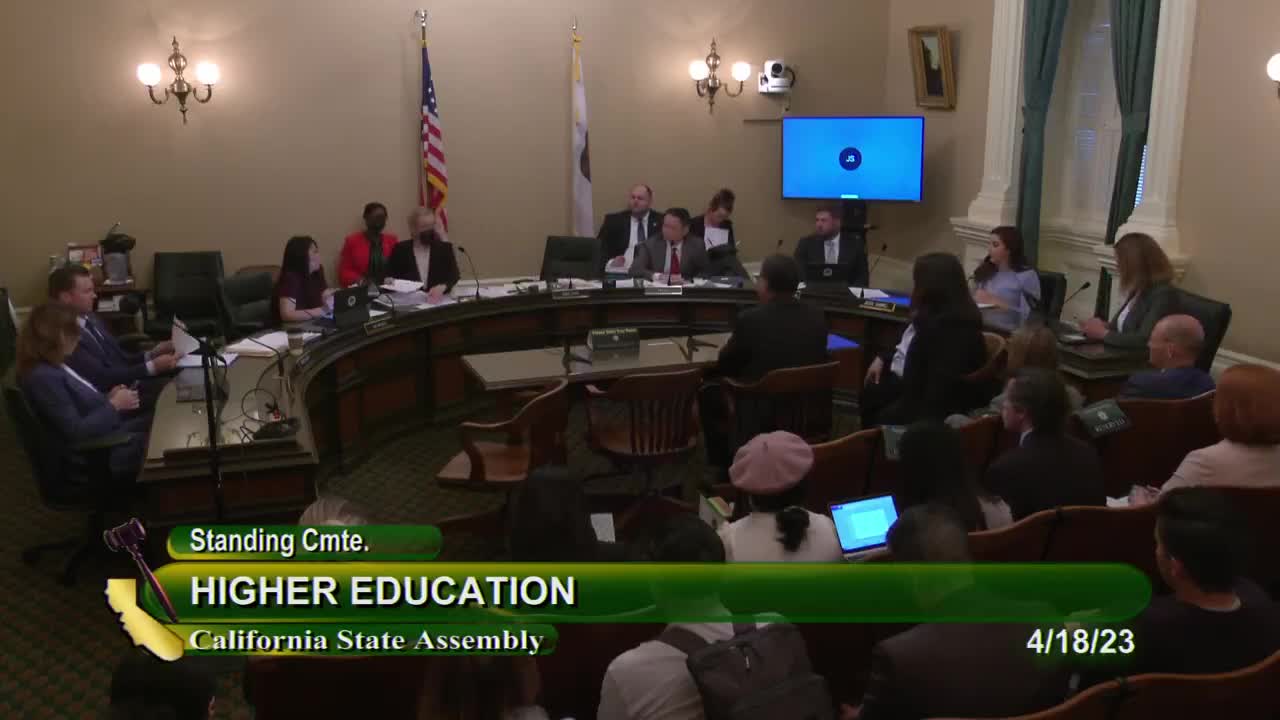
Bill Author

Bill Co-Author(s):