AB 47: State preschool program.
- Session Year: 2015-2016
- House: Assembly
- Latest Version Date: 2015-09-16
Existing law requires the Superintendent of Public Instruction to administer all California state preschool programs, which include part-day age and developmentally appropriate programs for 3- and 4-year-old children, as provided. Existing law provides that 3- and 4-year-old children are eligible for the state part-day preschool program if the family meets one of several eligibility requirements, including income eligibility.
This bill would require, on or before June 30, 2018, all eligible children who are not enrolled in transitional kindergarten to have access to the state preschool program the year before they enter kindergarten, if their parents wish to enroll them, contingent upon the appropriation of sufficient funding in the annual Budget Act for this purpose.
Existing law requires the Superintendent of Public Instruction to administer all California state preschool programs, which include part-day age and developmentally appropriate programs for 3- and 4-year-old children, as provided. Existing law provides that 3- and 4-year-old children are eligible for the state part-day preschool program if the family meets one of several eligibility requirements, including income eligibility.
This bill would require, on or before January 1, 2017, June 30, 2018, all eligible children, who do not have access to children who are not enrolled in transitional kindergarten or the federal Head Start program, to have access to the state preschool program the year before they enter kindergarten, if their parents wish to enroll them, contingent upon the appropriation of sufficient funding in the annual Budget Act for this purpose.
Existing law requires the Superintendent of Public Instruction to administer all California state preschool programs, which include part-day age and developmentally appropriate programs for 3- and 4-year-old children, as provided. Existing law provides that 3- and 4-year-old children are eligible for the state part-day preschool program if the family meets one of several eligibility requirements, including income eligibility.
This bill would require, on or before January 1, 2017, all eligible children children, who do not have access to transitional kindergarten or the federal Head Start program, to have access to the state preschool program the year before they enter kindergarten, if their parents wish to enroll them, contingent upon the appropriation of sufficient funding in the annual Budget Act for this purpose.
Existing law requires the Superintendent of Public Instruction to administer all California state preschool programs, which include part-day age and developmentally appropriate programs for 3- and 4-year-old children, as provided. Existing law provides that 3- and 4-year-old children are eligible for the state part-day preschool program if the family meets one of several eligibility requirements, including income eligibility.
This bill would require, on or before January 1, 2017, all eligible children to have access to the state preschool program the year before they enter kindergarten, if their parents wish to enroll them. The bill would state that it is the intent of the Legislature to provide them, contingent upon the appropriation of sufficient funding in the annual Budget Act for this purpose.
Existing law requires the Superintendent of Public Instruction to administer all California state preschool programs, which include part-day age and developmentally appropriate programs for 3- and 4-year-old children, as provided. Existing law provides that 3- and 4-year-old children are eligible for the state part-day preschool program if the family meets one of several eligibility requirements, including income eligibility.
This bill would state the intent of the Legislature that no later than January 1, 2017, the state budget shall include an appropriation for the state preschool program sufficient to provide all children who are eligible for the program, and whose parents wish to enroll them, the opportunity to enroll in the program in the year before they enter kindergarten. require, on or before January 1, 2017, all eligible children to have access to the state preschool program the year before they enter kindergarten, if their parents wish to enroll them. The bill would state that it is the intent of the Legislature to provide sufficient funding in the annual Budget Act for this purpose.
Existing law requires the Superintendent of Public Instruction to administer all California state preschool programs, which include part-day age and developmentally appropriate programs for 3- and 4-year-old children, as provided. Existing law provides that 3- and 4-year-old children are eligible for the state part-day preschool program if the family meets one of several eligibility requirements, including income eligibility.
This bill would require the Department of Education to report to the Legislature and Department of Finance, by June 1, 2016, a plan for expanding the state preschool program to all eligible low-income children who do not have access to one year of state preschool or transitional kindergarten. The bill would require the report to contain an analysis of the need for new facilities for the state preschool program in order to provide access to all eligible children.
This bill would state the intent of the Legislature that no later than January 1, 2017, the state budget shall include an appropriation for the state preschool program sufficient to provide all children who are eligible for the program, and whose parents wish to enroll them, the opportunity to enroll in the program in the year before they enter kindergarten.
Existing law requires the Superintendent of Public Instruction to administer all California state preschool programs, which include part-day age and developmentally appropriate programs for 3- and 4-year-old children, as provided. Existing law provides that 3- and 4-year-old children are eligible for the state part-day preschool program if the family meets one of several eligibility requirements, including income eligibility.
This bill would require the Department of Education to report to the Legislature and Department of Finance, by June 1, 2016, a plan for expanding the state preschool program to all eligible low-income children who do not have access to one year of state preschool or transitional kindergarten. The bill would require the report to contain an analysis of the need for new facilities for the state preschool program in order to provide access to all eligible children.
This act shall be known, and may be cited, as the Preschool for All Act of 2015.
SEC. 2.The Legislature hereby finds and declares all of the following:
(a)Recent reforms such as the common core state standards and the local control funding formula establish greater quality and equity in Californias public K12 education system.
(b)None of these reforms, however, address the reality that the achievement gap is present well before children first step through the kindergarten classroom door.
(c)Recent research shows that by the age of two, low-income children are six months behind in language development relative to their higher income peers. By age five, low-income children are more than two years behind in language development.
(d)Research shows that California children with the largest gaps in school readiness and achievement are the least likely to participate in any preschool program and the least likely to attend high-quality programs.
(e)Tens of thousands of eligible children do not attend state preschool or federal Head Start services, and only one-quarter of all four-year-old children are eligible to attend transitional kindergarten.
(f)Children who are not reading proficiently by the end of 3rd grade are four times more likely to not graduate from high school on time.
(g)Only 48 percent of California 3rd grade pupils test proficient or better in English-language arts.
(h)More than 100 studies nationally have shown that high-quality preschool significantly improves childrens school readiness and school performance.
(i)Numerous longitudinal studies show that high-quality preschool decreases grade retention and special education placements, and increases high school graduation rates, college enrollment, and earnings as adults as well as decreases costs in criminal justice and welfare.
(j)Research over the last decade has shown that early learning in two or more languages increases childrens ability to think flexibly and builds skills that are increasingly critical to later success in college and career.
(k)In the 201415 annual Budget Act, the Legislature and Governor committed to providing all low-income children with at least one year of state preschool or transitional kindergarten.
(l)An independent research analysis of over 20 preschool programs demonstrated that quality preschool provides a return of $15,000 for every child served.
(m)If California were to invest in high-quality preschool, the overall savings in prison system expenditures alone are estimated to be $1.1 billion a year due to the reduction in prison population by 13,000.
SEC. 3.Section 8235.1 is added to the Education Code, to read:8235.1.On or before June 30, 2018, all eligible children, pursuant to subdivision (a) of Section 8263, who are not enrolled in transitional kindergarten shall have access to the state preschool program the year before they enter kindergarten, if their parents wish to enroll them, contingent upon the appropriation of sufficient funding in the annual Budget Act for this purpose.
This act shall be known, and may be cited, as the Preschool for All Act of 2015.
SEC. 2.The Legislature hereby finds and declares all of the following:
(a)Recent reforms such as the common core state standards and the local control funding formula establish greater quality and equity in Californias public K12 education system.
(b)None of these reforms, however, address the reality that the achievement gap is present well before children first step through the kindergarten classroom door.
(c)Recent research shows that by the age of two, low-income children are six months behind in language development relative to their higher income peers. By age five, low-income children are more than two years behind in language development.
(d)Research shows that California children with the largest gaps in school readiness and achievement are the least likely to participate in any preschool program and the least likely to attend high-quality programs.
(e)Tens of thousands of eligible children do not attend state preschool or federal Head Start services, and only one-quarter of all four-year-old children are eligible to attend transitional kindergarten.
(f)Children who are not reading proficiently by the end of 3rd grade are four times more likely to not graduate from high school on time.
(g)Only 48 percent of California 3rd grade pupils test proficient or better in English-language arts.
(h)More than 100 studies nationally have shown that high-quality preschool significantly improves childrens school readiness and school performance.
(i)Numerous longitudinal studies show that high-quality preschool decreases grade retention and special education placements, and increases high school graduation rates, college enrollment, and earnings as adults as well as decreases costs in criminal justice and welfare.
(j)Research over the last decade has shown that early learning in two or more languages increases childrens ability to think flexibly and builds skills that are increasingly critical to later success in college and career.
(k)In the 201415 annual Budget Act, the Legislature and Governor committed to providing all low-income children with at least one year of state preschool or transitional kindergarten.
(l)An independent research analysis of over 20 preschool programs demonstrated that quality preschool provides a return of $15,000 for every child served.
(m)If California were to invest in high-quality preschool, the overall savings in prison system expenditures alone are estimated to be $1.1 billion a year due to the reduction in prison population by 13,000.
SEC. 3.It is the intent of the Legislature that both of the following occur:
(a)All low-income children have access to either a state preschool program or a transitional kindergarten program.
(b) Funds are allocated to expand the state preschool program to provide full day, full year preschool for all eligible low-income children who otherwise would not be served in state preschool, transitional kindergarten, or the federal Head Start program.
SEC. 4.SEC. 3.Section 8235.1 is added to the Education Code, to read:8235.1.On or before January 1, 2017, June 30, 2018, all eligible children, pursuant to subdivision (a) of Section 8263, who do not have access to are not enrolled in transitional kindergarten or the federal Head Start program, shall have access to the state preschool program the year before they enter kindergarten, if their parents wish to enroll them, contingent upon the appropriation of sufficient funding in the annual Budget Act for this purpose.
This act shall be known, and may be cited, as the Preschool for All Act of 2015.
SEC. 2.The Legislature hereby finds and declares all of the following:
(a)Recent reforms such as the common core state standards and the local control funding formula establish greater quality and equity in Californias public K12 education system.
(b)None of these reforms, however, address the reality that the achievement gap is present well before children first step through the kindergarten classroom door.
(c)Recent research shows that by the age of two, low-income children are six months behind in language development relative to their higher income peers. By age five, low-income children are more than two years behind in language development.
(d)Research shows that California children with the largest gaps in school readiness and achievement are the least likely to participate in any preschool program and the least likely to attend high-quality programs.
(e)Tens of thousands of eligible children do not attend state preschool or federal Head Start services, and only one-quarter of all four-year-old children are eligible to attend transitional kindergarten.
(f)Children who are not reading proficiently by the end of 3rd grade are four times more likely to not graduate from high school on time.
(g)Only 48 percent of California 3rd grade pupils test proficient or better in English-language arts.
(h)More than 100 studies nationally have shown that high-quality preschool significantly improves childrens school readiness and school performance.
(i)Numerous longitudinal studies show that high-quality preschool decreases grade retention and special education placements, and increases high school graduation rates, college enrollment, and earnings as adults as well as decreases costs in criminal justice and welfare.
(j)Research over the last decade has shown that early learning in two or more languages increases childrens ability to think flexibly and builds skills that are increasingly critical to later success in college and career.
(k)In the 201415 annual Budget Act, the Legislature and Governor committed to providing all low-income children with at least one year of state preschool or transitional kindergarten.
(l)An independent research analysis of over 20 preschool programs demonstrated that quality preschool provides a return of $15,000 for every child served.
(m)If California were to invest in high-quality preschool, the overall savings in prison system expenditures alone are estimated to be $1.1 billion a year due to the reduction in prison population by 13,000.
SEC. 3.It is the intent of the Legislature that both of the following occur:
(a)All low-income children have access to either a state preschool program or a transitional kindergarten program.
(b) Funds are allocated to expand the state preschool program to provide full day, full year preschool for all eligible low-income children who otherwise would not be served in either state preschool or preschool, transitional kindergarten. kindergarten, or the federal Head Start program.
SEC. 4.Section 8235.1 is added to the Education Code, to read:8235.1.On or before January 1, 2017, all eligible children, pursuant to subdivision (a) of Section 8263, who do not have access to transitional kindergarten or the federal Head Start program, shall have access to the state preschool program the year before they enter kindergarten, if their parents wish to enroll them, contingent upon the appropriation of sufficient funding in the annual Budget Act for this purpose.
This act shall be known, and may be cited, as the Preschool for All Act of 2015.
SEC. 2.The Legislature hereby finds and declares all of the following:
(a)Recent reforms such as the common core state standards and the local control funding formula establish greater quality and equity in Californias public K12 education system.
(b)None of these reforms, however, address the reality that the achievement gap is present well before children first step through the kindergarten classroom door.
(c)Recent research shows that by the age of two, low-income children are six months behind in language development relative to their higher income peers. By age five, low-income children are more than two years behind in language development.
(d)Research shows that California children with the largest gaps in school readiness and achievement are the least likely to participate in any preschool program and the least likely to attend high-quality programs.
(e)Tens of thousands of eligible children do not attend state preschool or federal Head Start services, and only one-quarter of all four-year-old children are eligible to attend transitional kindergarten.
(f)Children who are not reading proficiently by the end of 3rd grade are four times more likely to not graduate from high school on time.
(g)Only 48 percent of California 3rd grade pupils test proficient or better in English-language arts.
(h)More than 100 studies nationally have shown that high-quality preschool significantly improves childrens school readiness and school performance.
(i)Numerous longitudinal studies show that high-quality preschool decreases grade retention and special education placements, and increases high school graduation rates, college enrollment, and earnings as adults as well as decreases costs in criminal justice and welfare.
(j)Research over the last decade has shown that early learning in two or more languages increases childrens ability to think flexibly and builds skills that are increasingly critical to later success in college and career.
(k)In the 201415 annual Budget Act, the Legislature and Governor committed to providing all low-income children with at least one year of state preschool or transitional kindergarten.
(l)An independent research analysis of over 20 preschool programs demonstrated that quality preschool provides a return of $15,000 for every child served.
(m)If California were to invest in high-quality preschool, the overall savings in prison system expenditures alone are estimated to be $1.1 billion a year due to the reduction in prison population by 13,000.
SEC. 3.It is the intent of the Legislature that both of the following occur:
(a)All low-income children have access to either a state preschool program or a transitional kindergarten program.
(b) Funds are allocated to expand the state preschool program to provide full day, full year preschool for all eligible low-income children who otherwise would not be served in either state preschool or transitional kindergarten.
SEC. 4.Section 8235.1 is added to the Education Code, to read:8235.1.On or before January 1, 2017, all eligible children, pursuant to subdivision (a) of Section 8263, shall have access to the state preschool program the year before they enter kindergarten, if their parents wish to enroll them. It is the intent of the Legislature to provide them, contingent upon the appropriation of sufficient funding in the annual Budget Act for this purpose.
This act shall be known, and may be cited, as the Preschool for All Act of 2015.
SEC. 2.The Legislature hereby finds and declares all of the following:
(a)Recent reforms such as the common core state standards and the local control funding formula establish greater quality and equity in Californias public K12 education system.
(b)None of these reforms, however, address the reality that the achievement gap is present well before children first step through the kindergarten classroom door.
(c)Recent research shows that by the age of two, low-income children are six months behind in language development relative to their higher income peers. By age five, low-income children are more than two years behind in language development.
(d)Research shows that California children with the largest gaps in school readiness and achievement are the least likely to participate in any preschool program and the least likely to attend high-quality programs.
(e)Tens of thousands of eligible children do not attend state preschool or federal Head Start services, and only one-quarter of all four-year-old children are eligible to attend transitional kindergarten.
(f)Children who are not reading proficiently by the end of 3rd grade are four times more likely to not graduate from high school on time.
(g)Only 48 percent of California 3rd graders 3rd grade pupils test proficient or better in English-language arts.
(h)More than 100 studies nationally have shown that high-quality preschool significantly improves childrens school readiness and school performance.
(i)Numerous longitudinal studies show that high-quality preschool decreases grade retention and special education placements, and increases high school graduation rates, college enrollment, and earnings as adults as well as decreases costs in criminal justice and welfare.
(j)Research over the last decade has shown that early learning in two or more languages increases childrens ability to think flexibly and builds skills that are increasingly critical to later success in college and career.
(k)In the 201415 annual Budget Act, the Legislature and Governor committed to providing all low-income children with at least one year of state preschool or transitional kindergarten.
(l)An independent research analysis of over 20 preschool programs demonstrated that quality preschool provides a return of $15,000 for every child served.
(m)If California were to invest in high-quality preschool, the overall savings in prison system expenditures alone are estimated to be $1.1 billion a year due to the reduction in prison population by 13,000.
SEC. 3.It is the intent of the Legislature that both of the following occur:
(a)All low-income children have access to either a state preschool program or a transitional kindergarten program.
(b) Funds are allocated to expand the state preschool program to provide full day, full year preschool for all eligible low-income children who otherwise would not be served in either state preschool or transitional kindergarten.
SEC. 4.Section 8235.1 is added to the Education Code, to read:8235.1.It is the intent of the Legislature that no later than January 1, 2017, the state budget shall include an appropriation for the state preschool program sufficient to provide all children who are eligible for the program, and whose parents wish to enroll them, the opportunity to enroll in the program in the year before they enter kindergarten.
8235.1.On or before January 1, 2017, all eligible children, pursuant to subdivision (a) of Section 8263, shall have access to the state preschool program the year before they enter kindergarten, if their parents wish to enroll them. It is the intent of the Legislature to provide sufficient funding in the annual Budget Act for this purpose.
This act shall be known, and may be cited, as the Preschool for All Act of 2015.
SEC. 2.The Legislature hereby finds and declares all of the following:
(a)Recent reforms such as the common core state standards and the local control funding formula establish greater quality and equity in Californias public K12 education system.
(b)None of these reforms, however, address the reality that the achievement gap is present well before children first step through the kindergarten classroom door.
(c)Recent research shows that by the age of two, low-income children are six months behind in language development relative to their higher income peers. By age five, low-income children are more than two years behind in language development.
(d)Research shows that California children with the largest gaps in school readiness and achievement are the least likely to participate in any preschool program and the least likely to attend high-quality programs.
(e)Only one-half of California low-income preschoolers receive Tens of thousands of eligible children do not attend state preschool or federal Head Start services, and only one-quarter of all four-year-old children are eligible to attend transitional kindergarten.
(f)Children who are not reading proficiently by the end of 3rd grade are four times more likely to not graduate from high school on time.
(g)Only 48 percent of California 3rd graders test proficient or better in English-language arts.
(h)More than 100 studies nationally have shown that high-quality preschool significantly improves childrens school readiness and school performance.
(i)Numerous longitudinal studies show that high-quality preschool decreases grade retention and special education placements, and increases high school graduation rates, college enrollment, and earnings as adults as well as decreases costs in criminal justice and welfare.
(j)Research over the last decade has shown that early learning in two or more languages increases childrens ability to think flexibly and builds skills that are increasingly critical to later success in college and career.
(j)
(k)In the 201415 annual Budget Act, the Legislature and Governor committed to providing all low-income children with at least one year of state preschool or transitional kindergarten.
(k)
(l)An independent research analysis of over 20 preschool programs demonstrated that quality preschool provides a return of $15,000 for every child served.
(l)
(m)If California were to invest in high-quality preschool, the overall savings in the prison system expenditures alone are estimated to be $1.1 billion a year due to the reduction in prison population by 13,000.
SEC. 3.It is the intent of the Legislature that both of the following occur:
(a)All low-income children have access to either a state preschool program or a transitional kindergarten. kindergarten program.(b) Funds are allocated to expand the state preschool program to provide full day, full year preschool for all eligible low-income children who otherwise would not be served in either state preschool or transitional kindergarten.SEC. 4.Section 8235.1 is added to the Education Code, to read:8235.1.(a)By June 1, 2016, the department shall report to the Legislature and the Department of Finance a plan for expanding the state preschool program to all eligible low-income children who do not have access to one year of the preschool program or a transitional kindergarten program.
(b)The department shall include in the report required pursuant to subdivision (a) an analysis of the need for new facilities for the state preschool program in order to provide access to all eligible children.
(c)(1)The report required to be submitted to the Legislature pursuant to this section shall be submitted in compliance with Section 9795 of the Government Code.
(2)This section is inoperative on June 1, 2020, pursuant to Section 10231.5 of the Government Code, and as of January 1, 2021 is repealed.
SEC. 4.Section 8235.1 is added to the Education Code, to read:8235.1.It is the intent of the Legislature that no later than January 1, 2017, the state budget shall include an appropriation for the state preschool program sufficient to provide all children who are eligible for the program, and whose parents wish to enroll them, the opportunity to enroll in the program in the year before they enter kindergarten.
This act shall be known, and may be cited, as the Preschool for All Act of 2015.
SEC. 2.The Legislature hereby finds and declares all of the following:
(a)Recent reforms such as the common core state standards and the local control funding formula establish greater quality and equity in Californias public K12 education system.
(b)None of these reforms, however, address the reality that the achievement gap is present well before children first step through the kindergarten classroom door.
(c)Recent research shows that by the age of two, low-income children are six months behind in language development relative to their higher income peers. By age five, low-income children are more than two years behind in language development.
(d)Research shows that California children with the largest gaps in school readiness and achievement are the least likely to participate in any preschool and the least likely to attend high-quality programs.
(e)Only one-half of California low-income preschoolers receive state preschool or federal Head Start services, and only one-quarter of all children attend transitional kindergarten.
(f)Children who are not reading proficiently by the end of 3rd grade are four times more likely to not graduate from high school on time.
(g)Only 48 percent of California 3rd graders test proficient or better in English-language arts.
(h)More than 100 studies nationally have shown that high-quality preschool significantly improves childrens school readiness and school performance.
(i)Numerous longitudinal studies show that high-quality preschool decreases grade retention and special education placements, and increases high school graduation rates, college enrollment, and earnings as adults as well as decreases costs in criminal justice and welfare.
(j)In the 201415 annual Budget Act, the Legislature and Governor committed to providing all low-income children with at least one year of state preschool or transitional kindergarten.
(k)An independent research analysis of over 20 preschool programs demonstrated that quality preschool provides a return of $15,000 for every child served.
(l)If California were to invest in high-quality preschool, the savings in the prison system alone are estimated to be $1.1 billion a year due to the reduction in prison population by 13,000.
SEC. 3.It is the intent of the Legislature that both of the following occur:
(a)All low-income children have access to either a state preschool program or a transitional kindergarten.
(b)Funds are allocated to expand the state preschool program to provide full day, full year preschool for all eligible low-income children who otherwise would not be served in either state preschool or transitional kindergarten.
SEC. 4.Section 8235.1 is added to the Education Code, to read:8235.1.(a)By June 1, 2016, the department shall report to the Legislature and the Department of Finance a plan for expanding the state preschool program to all eligible low-income children who do not have access to one year of the preschool program or a transitional kindergarten program.
(b)The department shall include in the report required pursuant to subdivision (a) an analysis of the need for new facilities for the state preschool program in order to provide access to all eligible children.
(c)(1)The report required to be submitted to the Legislature pursuant to this section shall be submitted in compliance with Section 9795 of the Government Code.
(2)This section is inoperative on June 1, 2020, pursuant to Section 10231.5 of the Government Code, and as of January 1, 2021 is repealed.
|
Date
|
Status
|
|---|---|
| Jan 15, 2016 | Consideration of Governor's veto stricken from file. |
| Oct 9, 2015 | Vetoed by Governor. |
| Sep 23, 2015 | Enrolled and presented to the Governor at 4 p.m. |
| Sep 11, 2015 | Senate amendments concurred in. To Engrossing and Enrolling. (Ayes 69. Noes 4. Page 3137.). |
| Sep 11, 2015 | Senate amendments concurred in. To Engrossing and Enrolling. (Ayes 69. Noes 4.). |
| Sep 11, 2015 | Senate amendments concurred in. To Engrossing and Enrolling. |
| Sep 10, 2015 | Read third time. Passed. Ordered to the Assembly. (Ayes 29. Noes 11. Page 2693.). |
| Sep 10, 2015 | In Assembly. Concurrence in Senate amendments pending. |
| Sep 10, 2015 | Read third time. Passed. Ordered to the Assembly. |
| Sep 8, 2015 | Read second time. Ordered to third reading. |
| Sep 4, 2015 | Read third time and amended. Ordered to second reading. |
| Aug 31, 2015 | Read second time. Ordered to third reading. |
| Aug 27, 2015 | From committee: Do pass. (Ayes 5. Noes 2.) (August 27). |
| Aug 17, 2015 | In committee: Referred to APPR. suspense file. |
| Jul 8, 2015 | From committee: Do pass and re-refer to Com. on APPR. (Ayes 6. Noes 1.) (July 8). Re-referred to Com. on APPR. |
| Jul 2, 2015 | From committee chair, with author's amendments: Amend, and re-refer to committee. Read second time, amended, and re-referred to Com. on ED. |
| Jun 18, 2015 | Referred to Com. on ED. |
| Jun 3, 2015 | In Senate. Read first time. To Com. on RLS. for assignment. |
| Jun 3, 2015 | Read third time. Passed. Ordered to the Senate. (Ayes 56. Noes 22. Page 1859.) |
| Jun 3, 2015 | Read third time. Passed. Ordered to the Senate. |
| Jun 2, 2015 | Read second time. Ordered to third reading. |
| Jun 1, 2015 | Read second time and amended. Ordered returned to second reading. |
| May 28, 2015 | From committee: Amend, and do pass as amended. (Ayes 12. Noes 3.) (May 28). |
| May 20, 2015 | In committee: Set, first hearing. Referred to APPR. suspense file. |
| May 20, 2015 | In committee: Set, first hearing. Referred to suspense file. |
| May 7, 2015 | Re-referred to Com. on APPR. |
| May 6, 2015 | Read second time and amended. |
| May 5, 2015 | From committee: Amend, and do pass as amended and re-refer to Com. on APPR. (Ayes 6. Noes 0.) (April 29). |
| Apr 23, 2015 | Re-referred to Com. on ED. |
| Apr 22, 2015 | From committee chair, with author's amendments: Amend, and re-refer to Com. on ED. Read second time and amended. |
| Jan 22, 2015 | Referred to Com. on ED. |
| Dec 2, 2014 | From printer. May be heard in committee January 1. |
| Dec 1, 2014 | Read first time. To print. |
|
Date
|
Description
|
Location
|
Votes
|
|
|---|---|---|---|---|
| Sep 11, 2015 | AB 47 MCCARTY Concurrence in Senate Amendments | Assembly Floor |
Passed |
|
| Sep 10, 2015 | Assembly 3rd Reading AB47 McCarty By Leno | Senate Floor |
Passed |
|
| Aug 27, 2015 | Do pass | Senate Standing Committee on Appropriations |
Passed |
|
| Aug 17, 2015 | Placed on suspense file | Senate Standing Committee on Appropriations |
Passed |
|
| Jul 8, 2015 | Do pass, but first be re-referred to the Committee on [Appropriations] | Senate Standing Committee on Education |
Passed |
|
| Jun 3, 2015 | AB 47 MCCARTY Assembly Third Reading | Assembly Floor |
Passed |
|
| May 28, 2015 | Do pass as amended. | Assembly Standing Committee on Appropriations |
Passed |
|
| Apr 29, 2015 | Do pass as amended and be re-referred to the Committee on [Appropriations] | Assembly Standing Committee on Education |
Passed |
This list shows positions taken on this bill by organizations on the date displayed, which is linked to the original source.
Positions by individuals are not included.
GOVERNOR'S VETO
AB 47
(McCarty)
As Enrolled September 16, 2015
2/3 vote
ASSEMBLY: |
56-22 |
(June 3, 2015) |
SENATE: |
29-11 |
(September 10, 2015) |
ASSEMBLY: |
69-4 |
(September 11, 2015) |
|
|
|
Original Committee Reference: ED.
SUMMARY: Establishes the Preschool for All Act of 2015 and requires, on or before June 30, 2018, all eligible children who are not enrolled in transitional kindergarten to have access to the California State Preschool Program (CSPP) the year before they enter kindergarten, if their parents wish to enroll them and contingent upon the appropriation of sufficient funding in the annual Budget Act for this purpose. Finds and declares that studies have shown that high-quality preschool significantly improves children's school readiness and school performance, that quality preschool provides a return of $15,000 for every child served, and that investment in high-quality preschool will result in savings in prison expenditures.
The Senate amendments clarify that eligible children who shall have access to the state preschool program are those who do not have access to transitional kindergarten, changes the effective date from January 1, 2017 to June 30, 2018, and strikes the intent of the Legislature to provide all low-income children with access to a CSPP or a transitional kindergarten program.
FISCAL EFFECT: According to the Senate Appropriations Committee:
Cost pressures in the low hundreds of millions to provide all eligible children that do not have access to transitional kindergarten access to the CSPP the year before they enter kindergarten.
Administrative costs to the California Department of Education (CDE) of 8.0 positions and about $917,000, including travel costs for additional site visits. (General Fund)
COMMENTS: Background on child care and development programs. The CDE administers a child care and development system, maintaining over 1,300 service contracts with approximately 750 public and private agencies supporting and providing services to children from birth through 12 years of age. Contractors include school districts, county offices of education, cities, colleges, other public entities, community-based organizations, and private agencies. According to the Legislative Analyst's Office (LAO), overall funding for the child care and development programs decreased by almost $1 billion between 2008-09 and 2012-13, with the elimination of 110,000 slots. Last year, state and federal funds provided an increase of $281 million, with a $2.4 billion allocation for child care and development programs, offering 355,000 slots.
CSPP. The CSPP offers part-day and full-day preschool programs through contracts with local educational agencies, private contractors, and colleges. These programs are required to comply with health and safety standards under Title 22 regulations and higher developmental and teacher qualification standards under Title 5 regulations adopted by the CDE. Priority for enrollment goes to four- or three-year-old neglected or abused children who are recipients of Child Protective Services or recipients who are at risk of being neglected or abused, without regard to income. Second priority goes to four-year-old children who were enrolled in CSPP as a three-year-old, followed by four-year-old children with the lowest income ranking. Three-year-old children may be enrolled after four-year-olds are enrolled. Income eligibility is 70% of the state median income ($46,896 for a family of four). Part-day preschool operates three hours per day for 175 days. The General Child Care program provides "wrap around" to provide full-day care.
Fiscal Year (FY) 2014-15 budget increases. In FY 2014-15, CSPP received $664 million in Proposition 98 (1988) General fund for the part-day preschool program. The 2014-15 budget included 7,500 additional slots for preschool, plus an additional 4,000 slots that would be effective on June 15, 2015. According to the CDE, when the 4,000 part day slots were offered to contractors and school districts, the CDE received requests for over 32,301 slots.
The FY 2015-16 budget provides an additional $265 million for child care and development programs, which includes an additional 9,500 slots for the CSPP and an additional 6,800 slots for the Alternative Payment Program.
What does this bill do? This bill provides all eligible children who are not enrolled in transitional kindergarten with access to the CSPP the year before they enter kindergarten, if their parents wish to enroll them and contingent upon sufficient funding provided in the annual Budget Act. Transitional kindergarten is a modified kindergarten program provided by school districts for children who turn five-years-old between September 2 and December 2.
The author states, "A powerful body of research shows that investing in quality early education is highly effective in promoting student academic success. Early intervention in a child’s education increases cognitive, language, social, and emotional development. This leads to increased high school graduation rates, college attendance, decreasing crime, and builds a stronger middle class. Recently, California has led the way with historic reforms with the common core standards and the local control funding formula. Though both reforms strive to create greater quality and equity in California's public education system, these reforms will not close the achievement gap before a child first enters a kindergarten classroom. AB 47 expands on last year's commitment from the Governor and Legislature to expand the state preschool program for all low income families who do not have access to one year of state preschool or transitional kindergarten. Now is the time to make a wise investment to expand preschool to all eligible low income students."
What is the estimated need? It is challenging to determine the full extent of the need of families that meet eligibility criteria. From 2005 to 2011, funds were provided to establish centralized eligibility lists (CEL), providing data on the number of families waiting for subsidized care in all 58 counties. While some counties voluntarily maintained the CEL, there is no longer a statewide source of data collection. The LAO estimates approximately 31,500 four-year-old children who have need for full-day preschool out of 250,000 four-year-olds who meet eligibility criteria.
Value of preschool. Studies, such as those from the RAND corporation, have shown that quality early childhood education programs have a number of benefits, including improving children's readiness for school, higher test scores, reduced grade-level retention, higher rates of school completion, and higher likelihood of college attendance.
Arguments in support. First 5 California supports this bill and states, "A powerful body of research shows that investing in high-quality preschool programs enhances the quality of care and education that children receive. Studies conclude that high-quality preschool programs improve school readiness and lead to better long-term academic achievement. Research also shows a child's brain develops most dramatically during the early years of life. The school and life success of at-risk children can be significantly increased through high-quality early learning programs, which also are essential to preventing the achievement gap. In California, too many children miss out on a critical developmental window of opportunity. Only half of California's low-income, preschool-aged children are served in State Preschool or Head Start, and only one-quarter of all children are eligible for the current transitional kindergarten program."
Arguments in opposition. California Right to Life Committee, Inc. (CRLC) states, "CRLC does not support early childhood education by governmental schools. Young children need parental guidance in their early years, especially. When this is not possible, families should locate childcare within their families or in private agencies."
The bill would require state preschool programs to be available to all children, who are not already in transitional kindergarten and are eligible for subsidies, by June 30, 2018, contingent on a sufficient appropriation.
Last year's education omnibus trailer bill already codified the intent to make preschool and other full-day, full year early education and care opportunities available to all low-income children. The discussion on expanding state preschool - which takes into account rates paid to providers as well as access and availability for families - should be considered in the budget process, as it is every year. A bill that sets an arbitrary deadline, contingent on a sufficient appropriation, is unnecessary.
Analysis Prepared by: Sophia Kwong Kim / ED. / (916) 319-2087 FN: 0002480
AB 47
Page 3
CONCURRENCE IN SENATE AMENDMENTS
AB 47
(McCarty)
As Amended September 4, 2015
Majority vote
ASSEMBLY: |
56-22 |
(June 3, 2015) |
SENATE: |
29-11 |
(September 10, 2015) |
Original Committee Reference: ED.
SUMMARY: Establishes the Preschool for All Act of 2015 and requires, on or before June 30, 2018, all eligible children who are not enrolled in transitional kindergarten to have access to the California State Preschool Program (CSPP) the year before they enter kindergarten, if their parents wish to enroll them and contingent upon the appropriation of sufficient funding in the annual Budget Act for this purpose. Finds and declares that studies have shown that high-quality preschool significantly improves children's school readiness and school performance, that quality preschool provides a return of $15,000 for every child served, and that investment in high-quality preschool will result in savings in prison expenditures.
The Senate amendments clarify that eligible children who shall have access to the state preschool program are those who do not have access to transitional kindergarten, changes the effective date from January 1, 2017, to June 30, 2018, and strikes the intent of the Legislature to provide all low-income children with access to a CSPP or a transitional kindergarten program.
FISCAL EFFECT: According to the Senate Appropriations Committee:
Cost pressures in the low hundreds of millions to provide all eligible children that do not have access to transitional kindergarten access to the CSPP the year before they enter kindergarten.
Administrative costs to the California Department of Education (CDE) of 8.0 positions and about $917,000, including travel costs for additional site visits. (General Fund)
COMMENTS: Background on child care and development programs. The CDE administers a child care and development system, maintaining over 1,300 service contracts with approximately 750 public and private agencies supporting and providing services to children from birth through 12 years of age. Contractors include school districts, county offices of education, cities, colleges, other public entities, community-based organizations, and private agencies. According to the Legislative Analyst's Office (LAO), overall funding for the child care and development programs decreased by almost $1 billion between 2008-09 and 2012-13, with the elimination of 110,000 slots. Last year, state and federal funds provided an increase of $281 million, with a $2.4 billion allocation for child care and development programs, offering 355,000 slots.
CSPP. The CSPP offers part-day and full-day preschool programs through contracts with local educational agencies, private contractors, and colleges. These programs are required to comply with health and safety standards under Title 22 regulations and higher developmental and teacher qualification standards under Title 5 regulations adopted by the CDE. Priority for enrollment goes to four- or three-year-old neglected or abused children who are recipients of Child Protective Services or recipients who are at risk of being neglected or abused, without regard to income. Second priority goes to four-year-old children who were enrolled in CSPP as a three-year-old, followed by four-year-old children with the lowest income ranking. Three-year-old children may be enrolled after four-year-olds are enrolled. Income eligibility is 70% of the state median income ($46,896 for a family of four). Part-day preschool operates three hours per day for 175 days. The General Child Care program provides "wrap around" to provide full-day care.
Fiscal Year (FY) 2014-15 budget increases. In FY 2014-15, CSPP received $664 million in Proposition 98 (1988) General fund for the part-day preschool program. The 2014-15 budget included 7,500 additional slots for preschool, plus an additional 4,000 slots that would be effective on June 15, 2015. According to the CDE, when the 4,000 part day slots were offered to contractors and school districts, the CDE received requests for over 32,301 slots.
The FY 2015-16 budget provides an additional $265 million for child care and development programs, which includes an additional 9,500 slots for the CSPP and an additional 6,800 slots for the Alternative Payment Program.
What does this bill do? This bill provides all eligible children who are not enrolled in transitional kindergarten with access to the CSPP the year before they enter kindergarten, if their parents wish to enroll them and contingent upon sufficient funding provided in the annual Budget Act. Transitional kindergarten is a modified kindergarten program provided by school districts for children who turn five-years-old between September 2 and December 2.
The author states, "A powerful body of research shows that investing in quality early education is highly effective in promoting student academic success. Early intervention in a child's education increases cognitive, language, social, and emotional development. This leads to increased high school graduation rates, college attendance, decreasing crime, and builds a stronger middle class. Recently, California has led the way with historic reforms with the common core standards and the local control funding formula. Though both reforms strive to create greater quality and equity in California’s public education system, these reforms will not close the achievement gap before a child first enters a kindergarten classroom. AB 47 expands on last year's commitment from the Governor and Legislature to expand the state preschool program for all low income families who do not have access to one year of state preschool or transitional kindergarten. Now is the time to make a wise investment to expand preschool to all eligible low income students."
What is the estimated need? It is challenging to determine the full extent of the need of families that meet eligibility criteria. From 2005 to 2011, funds were provided to establish centralized eligibility lists (CEL), providing data on the number of families waiting for subsidized care in all 58 counties. While some counties voluntarily maintained the CEL, there is no longer a statewide source of data collection. The LAO estimates approximately 31,500 four-year-old children who have need for full-day preschool out of 250,000 four-year-olds who meet eligibility criteria.
Value of preschool. Studies, such as those from the RAND corporation, have shown that quality early childhood education programs have a number of benefits, including improving children's readiness for school, higher test scores, reduced grade-level retention, higher rates of school completion, and higher likelihood of college attendance.
Arguments in support. First 5 California supports this bill and states, "A powerful body of research shows that investing in high-quality preschool programs enhances the quality of care and education that children receive. Studies conclude that high-quality preschool programs improve school readiness and lead to better long-term academic achievement. Research also shows a child's brain develops most dramatically during the early years of life. The school and life success of at-risk children can be significantly increased through high-quality early learning programs, which also are essential to preventing the achievement gap. In California, too many children miss out on a critical developmental window of opportunity. Only half of California's low-income, preschool-aged children are served in State Preschool or Head Start, and only one-quarter of all children are eligible for the current transitional kindergarten program."
Arguments in opposition. California Right to Life Committee, Inc. (CRLC) states, "CRLC does not support early childhood education by governmental schools. Young children need parental guidance in their early years, especially. When this is not possible, families should locate childcare within their families or in private agencies."
Analysis Prepared by: Sophia Kwong Kim / ED. / (916) 319-2087 FN: 0002252
AB 47
Page 6
|
Office of Senate Floor Analyses (916) 651-1520 Fax: (916) 327-4478 |
THIRD READING
Bill No: AB 47
Amended: 9/4/15 in Senate
SENATE EDUCATION COMMITTEE: 6-1, 7/8/15
AYES: Liu, Hancock, Leyva, Monning, Pan, Vidak
NOES: Runner
NO VOTE RECORDED: Block, Mendoza
SENATE APPROPRIATIONS COMMITTEE: 5-2, 8/27/15
AYES: Lara, Beall, Hill, Leyva, Mendoza
NOES: Bates, Nielsen
ASSEMBLY FLOOR: 56-22, 6/3/15 - See last page for vote
SUBJECT: State preschool program
DIGEST: This bill requires that by June, 30 2018, all children eligible for state subsidized child development services that are not enrolled in transitional kindergarten (TK), have access to the state preschool program the year before they enter kindergarten, contingent upon funding in the annual Budget Act.
Senate Floor Amendments of 9/4/15 delete legislative intent language, change the date of implementation from January 1, 2017 to June 30, 2018, and modify eligibility criteria to allow for children enrolled in the federal Head Start program to be included in the state preschool guarantee, as specified.
Existing law:
Establishes the California state preschool program for purposes of providing part-day and full-day developmentally appropriate programs designed to facilitate the transition to kindergarten for three- and four-year old children in educational development, health services, social services, nutritional services, parent education and participation, evaluation, and staff development. (Education Code § 8235)
Provides that three- and four-year old children are eligible for state preschool if the family meets one of the following:
Current CalWORKs recipient.
Income eligible.
Children are recipients of protective services (abused, neglected, exploited or at risk of being abused, neglected or exploited). (EC § 8235)
Provides that three- and four-year olds are eligible for wraparound child care services to supplement part-day state preschool if the family is eligible for state preschool and the parents need care for at least one of the following reasons:
The child is a recipient of protective services, or at risk.
The parents are engaged in vocational training, as specified, employed or seeking employment, seeking permanent housing, or are incapacitated. (EC § 8239)
Defines “transitional kindergarten” as the first year of a two-year kindergarten program that uses a modified kindergarten curriculum that is age and developmentally appropriate. (EC § 48000(d))
This bill:
Requires by June 30, 2018, all children eligible for state subsidized child development services who are not enrolled in TK, have access to the state preschool program a year before entering kindergarten.
Makes funding contingent upon the appropriation of sufficient funding in the annual Budget Act for this purpose.
States legislative findings and declarations relative to improving school readiness and performance through high-quality preschool and the value of the state’s investment into high-quality preschool programs.
Comments
Need for the bill. According to research provided by the author, early intervention in a child’s education increases cognitive, language, social and emotional development and investing in quality, early education is highly effective in promoting student academic success. The author contends that despite the state’s commitment to fund early childhood learning and child development in the 2014-15 Budget Act, the California Department of Education (CDE) received over 32,000 applications for state preschool and could not meet the demand. This bill seeks expand the state preschool program to ensure that all eligible low-income families have access to this service.
Existing programs for three- and four- year olds. The state preschool program provides both part-day and full-day services that offer age and developmentally appropriate curriculum to children. The program prioritizes four–year–olds for enrollment and may serve three–year olds if space is available after enrolling all eligible four–year olds. The state preschool program also provides meals and snacks to children, parent education, referrals to health and social services for families, and staff development opportunities to employees. The program is administered through local educational agencies (LEAs), colleges, community-action agencies, and private nonprofit agencies. State preschool can be offered at a child care center, a family child care network home, a school district, or a county office of education. LEAs provide preschool programs serving approximately two-thirds of all children enrolled in state preschool. While not all school districts offer state preschool, most school districts offer TK to some four–year–olds.
TK currently serves “older” four–year–olds and “young” five–year–olds who have their fifth birthday after the cut-off date for kindergarten (between October 2 and December 2 for the current school year, and between September 2 and December 2 beginning with the 2014–15 school year). Eligibility for TK is limited to this cohort of students because they would have been eligible for kindergarten under the previous entry-age.
Head Start and Early Head Start programs support children from birth to age five, in centers, child care partner locations, and in their own homes. Three- and four–year old preschoolers made up over 80 percent of the children served by Head Start last year. Early Head Start services are provided for at least six hours per day and Head Start preschool services may be half-day or full-day. Like state preschool, Head Start provides wraparound services that include early learning, health, and family well-being. Head Start programs prioritize enrollment for children in foster care, children with disabilities, and children whose families are homeless. California's Head Start program is the largest in the nation and is administered through a system of 74 grantees and 88 delegate agencies. The majority of these agencies also have contracts with CDE, to administer general child care and/or State Preschool programs. Many of the programs are located at the same site.
This bill aims to guarantee state preschool to low-income families, who are not, enrolled in Transitional Kindergarten. As mentioned, the existing state preschool program prioritizes four–year–olds for enrollment and may serve three–year–olds if space is available. It’s unclear if the provisions in this bill would require access for all eligible three-year-olds. This bill does not appropriate funds for this purpose but makes the expansion of preschool to all eligible children contingent upon the appropriation of sufficient funding in the annual budget act. This bill does not mandate preschool rather it attempts to provide a space for those children whose parents wish to enroll them.
Full day. This bill expresses legislative intent for funding for preschool to be used to provide services for eligible children, including augmenting state preschool to provide full-day, full-year learning for participants.
Related Budget activity. The 2015 Budget Act restores funding for 7,030 full-day preschool slots effective January 1, 2016, of which 5,830 are for LEAs and 1,200 are for non-LEA providers. The estimated cost for these slots is $34.3 million ($30.9 million Proposition 98). Finally, the budget agreement includes $12.1 million in Proposition 98 funds for 2,500 additional part-day preschool slots.
FISCAL EFFECT: Appropriation: No Fiscal Com.: Yes Local: No
According to the Senate Appropriations Committee:
Cost pressures in the low hundreds of millions to provide all eligible children that do not have access to the transitional kindergarten or the federal Head Start program access to the state preschool program the year before they enter kindergarten. A separate provision in this bill that provides legislative intent for state preschool expansion could create cost pressures of over one billion depending on its interpretation. (General Fund and Proposition 98)
Administrative costs to CDE of 8.0 positions and about $917,000, including travel costs for additional site visits. (General Fund)
Insurance Commissioner Dave Jones
Advancement Project
Association of California School Administrators
Bay Area Council
Butte County Office of Education
California Association for Bilingual Education
California Association for the Education of Young Children
California Catholic Conference, Inc.
California Federation of Teachers
California State PTA
California School Employees Association
Californians Together
Children’s Network
Children Now
Compton Unified School District
Common Sense Kids Action
Congregation Beth AM
Early Edge California
Fight Crime Invest in Kids California
Frist 5 California
Frist 5 Fresno County
Los Angeles Area Chamber of Commerce
LAUP
Los Angeles Unified School District
Los Angeles Universal Preschool
Lutheran Office of Public Policy California
National Association of Social Workers
North Bay Leadership Council
Monterey County Board of Supervisors
Sacramento County office of Education
Santa Barbara Unified
Santa Clara County Office of Education
SEIU Local 1000
Silicon Valley Community Foundation
United Way
California Right to Life Committee, Inc.
ASSEMBLY FLOOR: 56-22, 6/3/15
AYES: Alejo, Bloom, Bonilla, Bonta, Brown, Burke, Calderon, Campos, Chau, Chávez, Chiu, Chu, Cooley, Cooper, Dababneh, Daly, Dodd, Eggman, Frazier, Cristina Garcia, Eduardo Garcia, Gatto, Gipson, Gomez, Gonzalez, Gordon, Gray, Roger Hernández, Holden, Irwin, Jones-Sawyer, Levine, Linder, Lopez, Low, Maienschein, McCarty, Medina, Mullin, Nazarian, O'Donnell, Patterson, Perea, Quirk, Rendon, Ridley-Thomas, Rodriguez, Salas, Santiago, Mark Stone, Thurmond, Ting, Weber, Williams, Wood, Atkins
NOES: Achadjian, Travis Allen, Baker, Bigelow, Brough, Dahle, Beth Gaines, Gallagher, Grove, Hadley, Harper, Jones, Kim, Lackey, Mathis, Mayes, Melendez, Obernolte, Steinorth, Wagner, Waldron, Wilk
NO VOTE RECORDED: Chang, Olsen
Prepared by: Olgalilia Ramirez / ED. / (916) 651-4105
9/8/15 15:27:17
**** END ****
AB 47
Page 6
|
Office of Senate Floor Analyses (916) 651-1520 Fax: (916) 327-4478 |
THIRD READING
Bill No: AB 47
Amended: 7/2/15 in Senate
SENATE EDUCATION COMMITTEE: 6-1, 7/8/15
AYES: Liu, Hancock, Leyva, Monning, Pan, Vidak
NOES: Runner
NO VOTE RECORDED: Block, Mendoza
SENATE APPROPRIATIONS COMMITTEE: 5-2, 8/27/15
AYES: Lara, Beall, Hill, Leyva, Mendoza
NOES: Bates, Nielsen
ASSEMBLY FLOOR: 56-22, 6/3/15 - See last page for vote
SUBJECT: State preschool program
DIGEST: This bill requires by January 1, 2017, all eligible children that qualify for the state preschool program, to have access to the program the year before they enter kindergarten if their parents wish to enroll them, contingent upon the appropriation of sufficient funding in the annual Budget Act for this purpose.
Existing law:
Establishes the California state preschool program for purposes of providing part-day and full-day developmentally appropriate programs designed to facilitate the transition to kindergarten for three- and four-year old children in educational development, health services, social services, nutritional services, parent education and participation, evaluation, and staff development. (Education Code § 8235)
Provides that three- and four-year old children are eligible for state preschool if the family meets one of the following:
Current CalWORKs recipient.
Income eligible.
Children are recipients of protective services (abused, neglected, exploited or at risk of being abused, neglected or exploited). (EC § 8235)
Provides that three- and four-year olds are eligible for wraparound child care services to supplement part-day state preschool if the family is eligible for state preschool and the parents need care for at least one of the following reasons:
The child is a recipient of protective services, or at risk.
The parents are engaged in vocational training, as specified, employed or seeking employment, seeking permanent housing, or are incapacitated.
(EC § 8239)
Defines “transitional kindergarten” as the first year of a two-year kindergarten program that uses a modified kindergarten curriculum that is age and developmentally appropriate. (EC § 48000(d))
This bill:
Requires by January 1, 2017, all eligible children who do not have access to transitional kindergarten or the federal Head Start, to have access to the state preschool program the year before they enter kindergarten if their parents so choose.
Makes funding contingent upon the appropriation of sufficient funding in the annual Budget Act for this purpose.
Declares legislative intent that all low-income children have access to either state preschool or transitional kindergarten and funds provided for this purpose should be used to expand full-day, full-year preschool for all eligible low-income children who otherwise would not be served.
States legislative findings and declarations relative to improving school readiness and performance through high-quality preschool and the value of the state’s investment into high-quality preschool programs.
Comments
Need for the bill. According to research provided by the author, early intervention in a child’s education increases cognitive, language, social and emotional development and investing in quality, early education is highly effective in promoting student academic success. The author contends that despite the state’s commitment to fund early childhood learning and child development in the 2014–15 Budget Act, the California Department of Education (CDE) received over 32,000 applications for state preschool and could not meet the demand. This bill seeks expand the state preschool program to ensure that all eligible low-income families have access to this service.
Existing programs for three- and four- year olds. The state preschool program provides both part-day and full-day services that offer age and developmentally appropriate curriculum to children. The program prioritizes four–year–olds for enrollment and may serve three–year–olds if space is available after enrolling all eligible four–year–olds. The state preschool program also provides meals and snacks to children, parent education, referrals to health and social services for families, and staff development opportunities to employees. The program is administered through local educational agencies (LEAs), colleges, community-action agencies, and private nonprofit agencies. State preschool can be offered at a child care center, a family child care network home, a school district, or a county office of education. LEAs provide preschool programs serving approximately two-thirds of all children enrolled in state preschool. While not all school districts offer state preschool, most school districts offer transitional kindergarten to some four–year–olds.
Transitional kindergarten currently serves “older” four–year–olds and “young” five–year–olds who have their fifth birthday after the cut-off date for kindergarten (between October 2 and December 2 for the current school year, and between September 2 and December 2 beginning with the 2014–15 school year). Eligibility for transitional kindergarten is limited to this cohort of students because they would have been eligible for kindergarten under the previous entry-age.
Head Start and Early Head Start programs support children from birth to age 5, in centers, child care partner locations, and in their own homes. Three- and four–year–old preschoolers made up over 80 percent of the children served by Head Start last year. Early Head Start services are provided for at least six hours per day and Head Start preschool services may be half-day or full-day. Like state preschool, Head Start provides wraparound services that include early learning, health, and family well-being. Head Start programs prioritize enrollment for children in foster care, children with disabilities, and children whose families are homeless. California's Head Start program is the largest in the nation and is administered through a system of 74 grantees and 88 delegate agencies. The majority of these agencies also have contracts with CDE, to administer general child care and/or State Preschool programs. Many of the programs are located at the same site.
This bill aims to provide preschool to low-income families, who are not served by Transitional Kindergarten, federal Head Start, or State Preschool programs a year before enrolling in kindergarten. As mentioned, the existing state preschool program prioritizes four–year–olds for enrollment and may serve three–year–olds if space is available. It’s unclear if the provisions in this bill would require access for all eligible three-year-olds. This bill does not appropriate funds for this purpose but makes the expansion of preschool to all eligible children contingent upon the appropriation of sufficient funding in the annual budget act. This bill does not mandate preschool rather it attempts to provide a space for those children whose parents wish to enroll them.
Full day. This bill expresses legislative intent for funding for preschool to be used to provide services for eligible children, including augmenting state preschool to provide full-day, full-year learning for participants.
Related Budget activity. The 2015 Budget Act restores funding for 7,030 full-day preschool slots effective January 1, 2016, of which 5,830 are for LEAs and 1,200 are for non-LEA providers. The estimated cost for these slots is $34.3 million ($30.9 million Proposition 98). Finally, the budget agreement includes $12.1 million in Proposition 98 funds for 2,500 additional part-day preschool slots.
FISCAL EFFECT: Appropriation: No Fiscal Com.: Yes Local: No
According to the Senate Appropriations Committee:
Cost pressures in the low hundreds of millions to provide all eligible children that do not have access to the transitional kindergarten or the federal Head Start program access to the state preschool program the year before they enter kindergarten. A separate provision in the bill that provides Legislative intent for state preschool expansion could create cost pressures of over one billion depending on its interpretation. See staff comments. (General Fund and Proposition 98)
Administrative costs to CDE of 8.0 positions and about $917,000, including travel costs for additional site visits. (General Fund)
Insurance Commissioner Dave Jones
Advancement Project
Association of California School Administrators
Bay Area Council
Butte County Office of Education
California Association for Bilingual Education
California Association for the Education of Young Children
California Catholic Conference, Inc.
California Federation of Teachers
California State PTA
California School Employees Association
Californians Together
Children’s Network
Children Now
Compton Unified School District
Common Sense Kids Action
Congregation Beth AM
Early Edge California
Fight Crime Invest in Kids California
Frist 5 California
Frist 5 Fresno County
Los Angeles Area Chamber of Commerce
LAUP
Los Angeles Unified School District
Los Angeles Universal Preschool
Lutheran Office of Public Policy California
National Association of Social Workers
North Bay Leadership Council
Monterey County Board of Supervisors
Sacramento County office of Education
Santa Barbara Unified
Santa Clara County Office of Education
SEIU Local 1000
Silicon Valley Community Foundation
United Way
OPPOSITION: (Verified 8/28/15)
California Right to Life Committee, Inc.
ASSEMBLY FLOOR: 56-22, 6/3/15
AYES: Alejo, Bloom, Bonilla, Bonta, Brown, Burke, Calderon, Campos, Chau, Chávez, Chiu, Chu, Cooley, Cooper, Dababneh, Daly, Dodd, Eggman, Frazier, Cristina Garcia, Eduardo Garcia, Gatto, Gipson, Gomez, Gonzalez, Gordon, Gray, Roger Hernández, Holden, Irwin, Jones-Sawyer, Levine, Linder, Lopez, Low, Maienschein, McCarty, Medina, Mullin, Nazarian, O'Donnell, Patterson, Perea, Quirk, Rendon, Ridley-Thomas, Rodriguez, Salas, Santiago, Mark Stone, Thurmond, Ting, Weber, Williams, Wood, Atkins
NOES: Achadjian, Travis Allen, Baker, Bigelow, Brough, Dahle, Beth Gaines, Gallagher, Grove, Hadley, Harper, Jones, Kim, Lackey, Mathis, Mayes, Melendez, Obernolte, Steinorth, Wagner, Waldron, Wilk
NO VOTE RECORDED: Chang, Olsen
Prepared by: Olgalilia Ramirez / ED. / (916) 651-4105
8/30/15 19:48:55
**** END ****
AB 47 (McCarty) Page 3 of 3
SENATE COMMITTEE ON APPROPRIATIONS
Senator Ricardo Lara, Chair
2015 - 2016 Regular Session
AB 47 (McCarty) - State preschool program.
|
|
Version: July 2, 2015 |
Policy Vote: ED. 6 - 1 |
Urgency: No |
Mandate: No |
Hearing Date: August 17, 2015 |
Consultant: Jillian Kissee |
This bill meets the criteria for referral to the Suspense File.
Bill Summary:
This bill requires that by January 1, 2017, all children eligible for state subsidized child development services that do not have access to transitional kindergarten (TK) or the federal Head Start program, have access to the state preschool program the year before they enter kindergarten, contingent upon funding in the annual Budget Act. This bill also provides Legislative intent that funds be allocated to expand the state preschool program to provide full day, full year preschool for all eligible low-income children, as specified.
Fiscal Impact:
Cost pressures in the low hundreds of millions to provide all eligible children that do not have access to TK or the federal Head Start program access to the state preschool program the year before they enter kindergarten. A separate provision in the bill that provides Legislative intent for State Preschool expansion could create cost pressures of over one billion depending on its interpretation. See staff comments. (General Fund and Proposition 98)
Administrative costs to the California Department of Education (CDE) of 8.0 positions and about $917,000, including travel costs for additional site visits. (General Fund)
Background:
Existing law establishes the state preschool program for purposes of providing part-day and full-day developmentally appropriate programs designed to facilitate the transition to kindergarten for three- and four-year-old children in educational development, health services, social services, nutritional services, parent education and participation, evaluation, and staff development. Existing law requires that first priority go to three- or four-year-old neglected or abused children who are recipients of child protective services, or who are at risk of being neglected, abused, or exploited upon written referral from a legal, medical, or social service agency. After this priority is satisfied then the next priority is given to eligible four-year-old children who are not enrolled in a state-funded TK program before enrolling eligible three-year-old children. (Education Code § 8235 and 8236) The General Child Care program provides the remainder of a full–day program as well as additional days of care.
Existing law defines TK as the first year of a two year kindergarten program that uses a modified kindergarten curriculum that is age and developmentally appropriate, and requires schools, as a condition of receiving apportionments for TK, to admit a child who will have their fifth birthday between September 2 and December 2. (EC § 48000 (d))
Head
Start programs support children from birth to age five, in centers,
child care partner locations, and in their own homes. Three- and
four–year–old preschoolers made up over 80 percent of the
children served by Head Start last year. Head Start preschool
services may be half-day or full-day. Like the state preschool
program, Head Start provides wraparound services that include early
learning, health, and family well-being. Head Start programs
prioritize enrollment for children in foster care, children with
disabilities, and children whose families are homeless. The state’s
Head Start program is the largest in the nation and is administered
through a system of 74 grantees and 88 delegate agencies. The
majority of these agencies also have contracts with the CDE to
administer general child care and/or State Preschool programs. Many
of the programs are located at the same site.
Existing
law requires a child to be admitted to kindergarten if the
child will have his or her fifth birthday on or before September 1 of
the school year. (EC § 48000)
The Budget Act of 2014 provided $67 million to add 7,500 full-day, full-year State Preschool slots and an additional $3 million for 4,000 more slots beginning June 15, 2015. The Budget Act of 2015 restores funding for 7,030 full-day preschool slots effective January 1, 2016 for an estimated cost of $34.3 million ($30.9 million Proposition 98). The budget also includes $12.1 million in Proposition 98 funds for 2,500 additional part-day preschool slots.
Proposed Law:
This bill requires that by January 1, 2017, all eligible children, as
specified, that do not have access to TK or the federal Head Start
program, have access to the state preschool program the year before
they enter kindergarten, if their parents wish to enroll them and
contingent upon funding in the annual Budget Act.
This bill also provides Legislative intent that: (1) all low-income children have access to either a state preschool program or TK, and (2) funds be are allocated to expand the state preschool program to provide full day, full year preschool for all eligible low-income children who otherwise would not be served in state preschool, TK, or the federal Head Start program.
Related Legislation:
SB 858 (Chapter 32, Statutes of 2014), the education omnibus trailer bill, included Legislative intent: (1) to provide quality preschool opportunities for all low-income children whose families wish to enroll them, and (2) that the state provide all low-income four-year-old children from working families with full-day, full-year early education and care.
Staff Comments:
This bill guarantees all eligible children access to the state preschool program the year before they enter kindergarten if the following apply: (1) they do not have access to TK or the federal Head Start program; (2) their parents wish to enroll them; and (3) if there is an appropriation in the annual Budget Act for this purpose. Ultimately, costs will depend on the number of children currently not being served, funding made available, and parental choice. Assuming half of the approximately 35,000 eligible four-year-olds in California not served by TK, the state preschool program, or federal Head Start would qualify and receive full-day, full-year preschool (at a rate of $9,633) and the other half would receive part-day preschool (at a rate of $4,177), costs could be roughly $240 million.
This bill also provides Legislative intent that funds be allocated to expand the state preschool program to provide full-day, full-year preschool for all eligible low-income children who otherwise would not be served in state preschool, TK, or the federal Head Start program. This provision could be interpreted to expand full-day preschool to all eligible three-year-olds, in conflict with the provision described above. Including three-year-olds could require an additional roughly $740 million, assuming half are eligible for full-day preschool. However, because this provision specifically calls out full-day, full-year preschool, intent could be interpreted to provide full-day, full-year preschool to all low-income children regardless of whether the family establishes a need, such as the parents working. This interpretation would significantly increase cost pressures by roughly another $387 million. Depending on how this provision is interpreted, cost pressures could range significantly from the high hundreds of millions to over one billion.
This bill is related to the Legislative intent provided in SB 858, though not identical. One main difference appears to be that this bill includes intent to provide full day, full year preschool to both eligible three- and four-year-olds whereas SB 858 seems to only apply to four-year-olds. It is unclear how intent language of SB 858 and this bill would interact with one another.
The CDE indicates that this bill would likely drive administrative costs of about 8.0 positions and over $900,000, ongoing. With these positions, the CDE would address such things as increases in the number of contracts, apportionments, and the need for technical assistance; and workload related to verifying eligibility and attendance, site visits, and contract monitoring. The CDE would issue a request for applications for available funding for state preschool slots and then allocate funds to qualified contractors.
It is unclear what the response would be from the field and whether they will be able to provide additional children preschool services, as required by this bill, if funding is provided in the budget. Also, the expanded access to preschool could drive cost pressures at the local level for such things as additional facilities for instruction to take place.
-- END --
AB 47 (McCarty) Page 4 of 4
SENATE COMMITTEE ON EDUCATION
Senator Carol Liu, Chair
2015 - 2016 Regular
Bill No: AB 47
Author: |
McCarty |
||
Version: |
July 2, 2015 Hearing Date: July 8, 2015 |
||
Urgency: |
No |
Fiscal: |
Yes |
Consultant: |
Olgalilia Ramirez |
||
Subject: State preschool program
SUMMARY
This bill requires by January 1, 2017, all eligible children that qualify for the State Preschool Program, to have access to the program the year before they enter kindergarten if their parents wish to enroll them, contingent upon the appropriation of sufficient funding in the annual Budget Act for this purpose.
BACKGROUND
Existing law:
Establishes the California State Preschool Program for purposes of providing part-day and full-day developmentally appropriate programs designed to facilitate the transition to kindergarten for three- and four-year old children in educational development, health services, social services, nutritional services, parent education and participation, evaluation, and staff development. (Education Code § 8235)
Provides that three- and four-year old children are eligible for State Preschool if the family meets one of the following:
Current CalWORKs recipient.
Income eligible.
Children are recipients of protective services (abused, neglected, exploited or at risk of being abused, neglected or exploited). (EC § 8235)
Provides that three- and four-year olds are eligible for wraparound child care services to supplement part-day State Preschool if the family is eligible for State Preschool and the parents need care for at least one of the following reasons:
The child is a recipient of protective services, or at risk.
The parents are engaged in vocational training, as specified, employed or seeking employment, seeking permanent housing, or are incapacitated.
(EC § 8239)
Defines “transitional kindergarten” as the first year of a two-year kindergarten program that uses a modified kindergarten curriculum that is age and developmentally appropriate. (EC § 48000(d))
ANALYSIS
This bill requires by January 1, 2017, all eligible children who do not have access to transitional kindergarten or the federal Head Start, to have access to the State Preschool program the year before they enter kindergarten if their parents wish to enroll them, contingent upon the appropriation of sufficient funding in the annual Budget Act for this purpose.
Declares legislative intent that all low-income children have access to either state preschool or transitional kindergarten and funds provided for this purpose should be used to expand full-day, full-year preschool for all eligible low-income children who otherwise would not be served.
States legislative findings and declarations relative to improving school readiness and performance through high-quality preschool and the value of the state’s investment into high-quality preschool programs.
STAFF
COMMENTS
Need for the bill. According to research provided by the author, early intervention in a child’s education increases cognitive, language, social and emotional development and investing in quality, early education is highly effective in promoting student academic success. The author contends that despite the state’s commitment in the 2014–15 Budget Act to fund early childhood learning and child development, the California Department of Education received over 32,000 applications for state preschool and was unable to meet the demand. This bill seeks to expand the state preschool for all eligible low-income families.
Existing programs for 3- and 4- year olds. The State Preschool program provides both part-day and full-day services that offer age and developmentally appropriate curriculum to children. The program prioritizes four–year–olds for enrollment and may serve three–year–olds if space is available after enrolling all eligible four–year–olds. The State Preschool program also provides meals and snacks to children, parent education, referrals to health and social services for families, and staff development opportunities to employees. The program is administered through local educational agencies (LEAs), colleges, community-action agencies, and private nonprofit agencies. State Preschool can be offered at a child care center, a family child care network home, a school district, or a county office of education. LEAs provide preschool programs serving approximately two-thirds of all children enrolled in State Preschool. While not all school districts offer State Preschool, most school districts offer transitional kindergarten to some four–year–olds.
Transitional kindergarten currently serves “older” four–year–olds and “young” five–year–olds who have their fifth birthday after the cut-off date for kindergarten (between October 2 and December 2 for the current school year, and between September 2 and December 2 beginning with the 2014–15 school year). Eligibility for transitional kindergarten is limited to this cohort of students because they would have been eligible for kindergarten under the previous entry-age.
Head Start and Early Head Start programs support children from birth to age 5, in centers, child care partner locations, and in their own homes. Three- and four–year–old preschoolers made up over 80 percent of the children served by Head Start last year. Early Head Start services are provided for at least six hours per day and Head Start preschool services may be half-day or full-day. Like State Preschool, Head Start provides wraparound services that include early learning, health, and family well-being. Head Start programs prioritize enrollment for children in foster care, children with disabilities, and children whose families are homeless. California's Head Start program is the largest in the nation and is administered through a system of 74 grantees and 88 delegate agencies. The majority of these agencies also have contracts with California Department of Education, to administer general child care and/or State Preschool programs. Many of the programs are located at the same site.
This bill seeks to strengthen the state’s commitment to ensure that children have access to preschool by providing preschool to low-income families a year before enrolling in kindergarten who are not served by Transitional Kindergarten, federal Head Start, or State Preschool programs. This bill does not appropriate funds for this purpose but makes the expansion of preschool to all eligible children contingent upon the appropriation of sufficient funding in the annual budget act. This bill does not mandate preschool rather it attempts to provide a space for those children whose parents wish to enroll them.
Full day. This bill expresses legislative intent for funding for preschool to be used to provide services for eligible children, including augmenting State Preschool to provide full-day, full-year learning for participants.
Related Budget Activity. The 2015 Budget Act restores funding for 7,030 full-day preschool slots effective January 1, 2016, of which 5,830 are for local education agencies (LEAs) and 1,200 are for non-LEA providers. The estimated cost for these slots is $34.3 million ($30.9 million Proposition 98). Finally, the budget agreement includes $12.1 million in Proposition 98 funds for 2,500 additional part-day preschool slots.
SUPPORT
Advancement Project
Association of California School Administrators
Butte County Office of Education
Children Now
Early Edge California
Fight Crime Invest in Kids California
Los Angeles Area Chamber of Commerce
Los Angeles Universal Preschool
Lutheran Office of Public Policy California
Santa Clara County Office of Education
OPPOSITION
None received on this version.
-- END --
AB 47
Page 3
ASSEMBLY THIRD READING
AB 47
(McCarty)
As Amended June 1, 2015
Majority vote
Committee |
Votes |
Ayes |
Noes |
Education |
6-0 |
O'Donnell, Chávez, McCarty, Santiago, Thurmond, Weber |
|
Appropriations |
12-3 |
Gomez, Bonta, Calderon, Daly, Eggman, Eduardo Garcia, Gordon, Holden, Quirk, Rendon, Weber, Wood |
Bigelow, Jones, Wagner |
SUMMARY: Establishes the Preschool for All Act of 2015 and requires, on or before January 1, 2017, all eligible children to have access to the state preschool program the year before they enter kindergarten, if their parents wish to enroll them, contingent upon the appropriation of sufficient funding in the annual Budget Act for this purpose. Finds and declares that studies have shown that high-quality preschool significantly improves children's school readiness and school performance, that quality preschool provides a return of $15,000 for every child served, and that investment in high-quality preschool will result in savings in prison expenditures. Further expresses the intent of the Legislature that all low-income children have access to either a state preschool program or a transitional kindergarten program and to provide funds to expand the state preschool program to provide full day, full year preschool for all eligible low-income children.
FISCAL EFFECT: According to the Assembly Appropriations Committee, ongoing costs in the hundreds of millions to provide all eligible children access to the California State Preschool Program (CSPP). To provide an additional 100,000 slots, the state would need to provide approximately $400 million Proposition 98 (morning portion of 100,000 slots) and $391 million non-Proposition 98 General Fund (for 75,000 of the remaining cost of the full day, full year slots).
COMMENTS: Background on child care and development programs. The California Department of Education (CDE) administers a child care and development system, maintaining over 1,300 service contracts with approximately 750 public and private agencies supporting and providing services to children from birth through 12 years of age. Contractors include school districts, county offices of education, cities, colleges, other public entities, community-based organizations, and private agencies. According to the Legislative Analyst's Office (LAO), overall funding for the child care and development programs decreased by almost $1 billion between 2008-09 and 2012-13, with the elimination of 110,000 slots. Last year, state and federal funds provided an increase of $281 million, with a $2.4 billion allocation for child care and development programs, offering 355,000 slots.
CSPP. The CSPP offers part-day and full-day preschool programs through contracts with local educational agencies, private contractors, and colleges. These programs are required to comply with health and safety standards under Title 22 regulations and higher developmental and teacher qualification standards under Title 5 regulations adopted by the CDE. Priority for enrollment goes to four- or three-year-old neglected or abused children who are recipients of Child Protective Services or recipients who are at risk of being neglected or abused, without regard to income. Second priority goes to four-year-old children who were enrolled in CSPP as a three-year-old, followed by four-year-old children with the lowest income ranking. Three-year-old children may be enrolled after four-year-olds are enrolled. Income eligibility is 70% of the state median income ($46,896 for a family of four). Part-day preschool operates three hours per day for 175 days. The General Child Care program provides "wrap around" to provide full-day care.
Fiscal Year (FY) 2014-15 budget increases. In FY 2014-15, CSPP received $664 million in Proposition 98 General fund for the part-day preschool program. The 2014-15 budget included 7,500 additional slots for preschool, plus an additional 4,000 slots that would be effective on June 15, 2015. According to the CDE, when the 4,000 part day slots were offered to contractors and school districts, the CDE received requests for over 32,301 slots. The Governor's proposed 2015-16 budget includes funds for 153,177 slots, 38,913 more slots than in 2008-09.
The Assembly's recently adopted FY 2015-16 budget includes funds to provide 10,500 additional full day CSPP slots, beginning March 1, 2016, while the Senate's budget increases General Child Care and Development funds for infants and toddlers. Both budgets include funds for additional slots through the Alternative Payment Program.
What does this bill do? This bill provides all eligible children with access to the CSPP the year before they enter kindergarten, if their parents wish to enroll them, contingent upon sufficient funding provided in the annual Budget Act.
The author states, "A powerful body of research shows that investing in quality early education is highly effective in promoting student academic success. Early intervention in a child’s education increases cognitive, language, social, and emotional development. This leads to increased high school graduation rates, college attendance, decreasing crime, and builds a stronger middle class. Recently, California has led the way with historic reforms with the common core standards and the local control funding formula. Though both reforms strive to create greater quality and equity in California’s public education system, these reforms will not close the achievement gap before a child first enters a kindergarten classroom. AB 47 expands on last year’s commitment from the Governor and Legislature to expand the state preschool program for all low income families who do not have access to one year of state preschool or transitional kindergarten. Now is the time to make a wise investment to expand preschool to all eligible low income students."
What is the estimated need? It is challenging to determine the full extent of the need of families that meet eligibility criteria. From 2005 to 2011, funds were provided to establish centralized eligibility lists (CEL), providing data on the number of families waiting for subsidized care in all 58 counties. While some counties voluntarily maintained the CEL, there is no longer a statewide source of data collection. The LAO estimates approximately 31,500 four-year-old children who have need for full-day preschool out of 250,000 four-year-olds who meet eligibility criteria.
Value of preschool. Studies, such as those from the RAND corporation, have shown that quality early childhood education programs have a number of benefits, including improving children's readiness for school, higher test scores, reduced grade-level retention, higher rates of school completion, and higher likelihood of college attendance.
Arguments in support. First 5 California supports the bill and states, "A powerful body of research shows that investing in high-quality preschool programs enhances the quality of care and education that children receive. Studies conclude that high-quality preschool programs improve school readiness and lead to better long-term academic achievement. Research also shows a child's brain develops most dramatically during the early years of life. The school and life success of at-risk children can be significantly increased through high-quality early learning programs, which also are essential to preventing the achievement gap. In California, too many children miss out on a critical developmental window of opportunity. Only half of California's low-income, preschool-aged children are served in State Preschool or Head Start, and only one-quarter of all children are eligible for the current transitional kindergarten program."
Arguments in opposition. California Right to Life Committee, Inc. (CRLC) states, "CRLC does not support early childhood education by governmental schools. Young children need parental guidance in their early years, especially. When this is not possible, families should locate childcare within their families or in private agencies."
Analysis Prepared by: Sophia Kwong Kim / ED. / (916) 319-2087 FN: 0000699
AB 47
Page 2
Date of Hearing: May 20, 2015
ASSEMBLY COMMITTEE ON APPROPRIATIONS
Jimmy Gomez, Chair
AB 47
(McCarty) – As Amended May 6, 2015
Policy Committee: |
Education |
Vote: |
6 - 0 |
|
|
|
|
|
|
|
|
Urgency: No State Mandated Local Program: No Reimbursable: No
SUMMARY:
This bill requires, on or before January 1, 2017, all eligible children that qualify for the State Preschool Program (SPP), to have access to the program the year before they enter kindergarten, if their parents wish to enroll them. It also expresses Legislative intent to provide sufficient funding in the annual Budget Act to provide all low-income children access to either the SPP or a transitional kindergarten (TK) program and, expresses further intent that these programs be full-day/full-year programs.
FISCAL EFFECT:
Ongoing costs in the hundreds of millions to provide all eligible children access to the SPP. There are approximately 250,000 four year olds eligible for the SPP. Of those children, roughly half have either two working parents or one parent working (in a one parent household), making 125,000 children eligible for a full-day program.
The Governor’s January budget provided funding for just under 152,000 SPP slots (of which 54,046 were full day). To provide an additional 100,000 slots (75,000 of which would need to be full day, full year to meet the eligible population) it would cost $400 million (Prop. 98/GF) (morning portion of 100,000 slots) and $391 million non-Prop. 98/GF (for 75,000 the remaining cost of the full day, full year slots).
COMMENTS:
Background. The SPP offers part-day and full-day preschool programs through contracts with local educational agencies, private contractors, and colleges. Income eligibility is 70% of the SMI ($46,896 for a family of four). Part-day preschool operates three hours per day for 175 days. The General Child Care program provides "wrap around" to provide full-day care.
Purpose. The 2014-15 Budget Act provided $664 million for the SSP for the part-day program. This included 7,500 additional slots for preschool, plus an additional 4,000 slots to become effective on June 15, 2015. According to the CDE, when the 4,000 part day slots were offered to contractors and school districts, the CDE received requests for over 32,301 slots.
Early Edge California is sponsoring this bill to "expand on last year’s commitment from the
Governor and Legislature to expand the state preschool program to all low income families who do not have access to one year of state preschool or transitional kindergarten."
Analysis Prepared by: Misty Feusahrens / APPR. / (916) 319-2081
AB 47
Page 4
Date of Hearing: April 29, 2015
ASSEMBLY COMMITTEE ON EDUCATION
Patrick O'Donnell, Chair
AB 47
McCarty – As Amended April 22, 2015
SUBJECT: State preschool program
SUMMARY: Expresses the intent of the Legislature that no later than January 1, 2017, the State Budget shall include an appropriation for the California State Preschool Program (CSPP) sufficient to provide all children who are eligible for the program, and whose parents wish to enroll them, the opportunity to enroll in the program in the year before they enter kindergarten. The bill finds and declares that studies have shown that high-quality preschool significantly improves children's school readiness and school performance, that quality preschool provides a return of $15,000 for every child served, and that investment in high-quality preschool will result in savings in prison expenditures. The bill further expresses the intent of the Legislature that all low-income children have access to either a state preschool program or a transitional kindergarten program and to provide funds to expand the CSPP to provide full day, full year preschool for all eligible low-income children.
EXISTING LAW:
Establishes eligibility for child care services and child development programs administered by the California Department of Education (CDE) and requires the Superintendent of Public Instruction (SPI) to adopt rules and regulations on eligibility, enrollment and priority of services needed for implementation (Education Code (EC) Section 8263).
Specifies that in order to be eligible for federal and state subsidized child development services, families must meet at least one requirement in each of the following areas:
A family is (A) a current aid recipient, (B) income eligible, (C) homeless or (D) one whose children are recipients of protective services, or whose children have been identified as being abused, neglected, or exploited, or at risk of being abused, neglected, or exploited; and,
A family needs the child care services (A) because the child is identified by a legal, medical, social services agency, or emergency shelter as (i) a recipient of protective services or (ii) being neglected, abused, or exploited, or at risk of neglect, abuse or exploitation, or (B) because the parents are (i) engaged in vocational training leading directly to a recognized trade, paraprofession or profession, (ii) employed or seeking employment, (iii) seeking permanent housing for family stability, or (iv) incapacitated. (EC Section 8263(a))
Establishes the CSPP and provides that the programs shall include, but not be limited to, part-day age and developmentally appropriate programs designed to facilitate the transition to kindergarten for three- and four-year-old children in educational development, health services, social services, nutritional services, parent education and parent participation, evaluation, and staff development. (EC Section 8235).
Defines "income eligible" as a family whose adjusted monthly income is at or below 70% of the state median income (SMI), adjusted for family size, and adjusted annually. For the 2014-15 fiscal year, the income eligibility shall be 70% of the SMI that was in use for the 2007-08 fiscal year, adjusted for family size. (EC Section 8263.1)
FISCAL EFFECT: None. This bill is keyed non-fiscal by the Legislative Counsel.
COMMENTS: Background on child care and development programs. The CDE administers a child care and development system, maintaining over 1,300 service contracts with approximately 750 public and private agencies supporting and providing services to children from birth through 12 years of age. Contractors include school districts, county offices of education, cities, colleges, other public entities, community-based organizations, and private agencies. According to the Legislative Analyst's Office, overall funding for the child care and development programs decreased by almost $1 billion between 2008-09 and 2012-13, with the elimination of 110,000 slots. Last year, state and federal funds provided an increase of $281 million, with a $2.4 billion allocation for child care and development programs, offering 355,000 slots.
CSPP. The CSPP offers part-day and full-day preschool programs through contracts with local educational agencies, private contractors, and colleges. These programs are required to comply with health and safety standards under Title 22 regulations and higher developmental and teacher qualification standards under Title 5 regulations adopted by the CDE. Priority for enrollment goes to four- or three-year-old neglected or abused children who are recipients of Child Protective Services or recipients who are at risk of being neglected or abused, without regard to income. Second priority goes to four-year-old children who were enrolled in CSPP as a three-year-old, followed by four-year-old children with the lowest income ranking. Three-year-old children may be enrolled after four-year-olds are enrolled. Income eligibility is 70% of the SMI ($46,896 for a family of four). Part-day preschool operates three hours per day for 175 days. The General Child Care program provides "wrap around" to provide full-day care.
FY 2014-15 budget increases. In FY 2014-15, CSPP received $664 million in Proposition 98 General fund for the part-day preschool program. The 2014-15 budget included 7,500 additional slots for preschool, plus an additional 4,000 slots that would be effective on June 15, 2015. According to the CDE, when the 4,000 part day slots were offered to contractors and school districts, the CDE received requests for over 32,301 slots. The Governor's proposed 2015-16 budget includes funds for 153,177 slots, 38,913 more slots than in 2008-09.
What does this bill do? This bill states the intent of the Legislature to appropriate sufficient funds no later than January 1, 2017 to provide all eligible children with access to the CSPP the year before they enter kindergarten.
The author states, "A powerful body of research shows that investing in quality early education is highly effective in promoting student academic success. Early intervention in a child’s education increases cognitive, language, social, and emotional development. This leads to increased high school graduation rates, college attendance, decreasing crime, and builds a stronger middle class.
Recently, California has led the way with historic reforms with the common core standards and the local control funding formula. Though both reforms strive to create greater quality and equity in California’s public education system, these reforms will not close the achievement gap before a child first enters a kindergarten classroom.
AB 47 expands on last year’s commitment from the Governor and Legislature to expand the state preschool program for all low income families who do not have access to one year of state preschool or transitional kindergarten. Now is the time to make a wise investment to expand preschool to all eligible low income students."
What is the estimated need? It is challenging to determine the full extent of the need of families that meet eligibility criteria. From 2005 to 2011, funds were provided to establish centralized eligibility lists (CEL), providing data on the number of families waiting for subsidized care in all 58 counties. While some counties voluntarily maintained the CEL, there is no longer a statewide source of data collection. The LAO estimates approximately 31,500 four-year-old children who have need for full-day preschool out of 250,000 four-year-olds who meet eligibility criteria.
Value of preschool. Studies, such as those from the RAND corporation, have shown that quality early childhood education programs have a number of benefits, including improving children's readiness for school, higher test scores, reduced grade-level retention, higher rates of school completion, and higher likelihood of college attendance.
Committee amendment. Staff recommends striking the intent provision in the bill and insert the following:
"No later than January 1, 2017, there shall be access to the state preschool program for all children who are eligible for the program in the year before they enter kindergarten, and whose parents wish to enroll them. It is the intent of the Legislature to provide sufficient funding in the state budget for this purpose."
Arguments in support. First 5 California supports the bill and states, "A powerful body of research shows that investing in high-quality preschool programs enhances the quality of care and education that children receive. Studies conclude that high-quality preschool programs improve school readiness and lead to better long-term academic achievement. Research also shows a child's brain develops most dramatically during the early years of life. The school and life success of at-risk children can be significantly increased through high-quality early learning programs, which also are essential to preventing the achievement gap.
In California, too many children miss out on a critical developmental window of opportunity. Only half of California's low-income, preschool-aged children are served in State Preschool or Head Start, and only one-quarter of all children are eligible for the current transitional kindergarten program."
Arguments in opposition. California Right to Life Committee, Inc. (CRLC) states, "CRLC does not support early childhood education by governmental schools. Young children need parental guidance in their early years, especially. When this is not possible, families should locate childcare within their families or in private agencies."
REGISTERED SUPPORT / OPPOSITION:
Support
Early Edge California (sponsor)
Advancement Project
Bay Area Council
California Catholic Conference
California Federation of Teachers
California State PTA
Children Now (prior version)
Compton Unified School District
Fight Crime: Invest in Kids California
First 5 California
First 5 Fresno County
First 5 Santa Clara County
Insurance Commissioner Dave Jones (prior version)
Jumpstart: Children Fist
LAUP
Los Angeles Area Chamber of Commerce
Los Angeles Urban League
Lutheran Office of Public Policy – California
MISSION: READINESS
National Association of Social Workers, California Chapter (prior version)
North Bay Leadership Council
Parent Institute for Quality Education
Sacramento City Unified School District
Santa Clara County Office of Education
United Way (prior version)
Opposition
California Right to Life Committee, Inc.
Analysis Prepared by: Sophia Kwong Kim / ED. / (916) 319-2087
Discussed in Hearing
 2MIN
Assembly Floor
 11MIN
Senate Floor
 9MIN
Senate Standing Committee on Appropriations
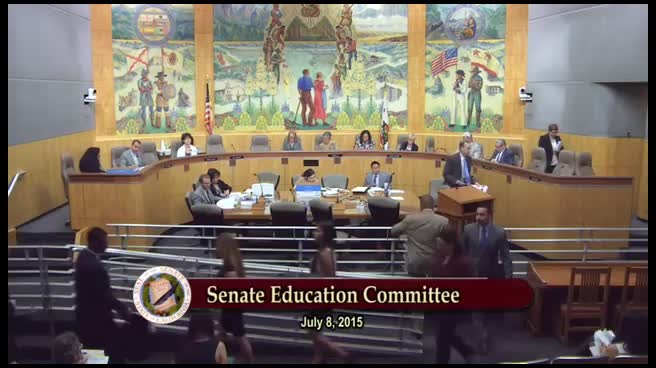 8MIN
Senate Standing Committee on Education
 8MIN
Assembly Floor
 10MIN
Assembly Standing Committee on Appropriations
 15MIN
Assembly Standing Committee on Education
Bill Author




