AB 470: Public health: pools: drownings.
- Session Year: 2015-2016
- House: Assembly
- Latest Version Date: 2016-08-31
Existing law, the Swimming Pool Safety Act, provides that it does not apply to any pool within the jurisdiction of any political subdivision that adopts an ordinance for swimming pools, as specified. The act further requires, when a building permit is issued for construction of a new swimming pool or spa, or the remodeling of an existing pool or spa, at a private, single-family home, that the pool or spa be equipped with at least 1 of 7 drowning prevention safety features. The act requires the local building code official to inspect and approve the drowning safety prevention devices before the issuance of a final approval for the completion of permitted construction or remodeling work.
This bill would instead require, when a building permit is issued, that the pool or spa be equipped with at least 2 of the 7 drowning prevention safety features. By imposing additional duties on local officials, this bill would impose a state-mandated local program. The bill would remove the exemption for the above-described political subdivisions.
Existing law defines terms related to paid home inspections, establishes a standard of care for home inspectors, and prohibits certain inspections in which the inspector or the inspectors employer, as specified, has a financial interest.
This bill would require a home inspection for real property with a swimming pool or spa to include a noninvasive physical examination of the pool or spa and dwelling for the purpose of identifying which, if any, of the specified 7 drowning prevention safety features the pool or spa is equipped with.
The California Constitution requires the state to reimburse local agencies and school districts for certain costs mandated by the state. Statutory provisions establish procedures for making that reimbursement.
This bill would provide that, if the Commission on State Mandates determines that the bill contains costs mandated by the state, reimbursement for those costs shall be made pursuant to these statutory provisions.
The
Existing law, the Swimming Pool Safety Act requires Act, provides that it does not apply to any pool within the jurisdiction of any political subdivision that adopts an ordinance for swimming pools, as specified. The act further requires, when a building permit is issued for construction of a new swimming pool or spa, or the remodeling of an existing pool or spa, at a private, single-family home, that the pool or spa be equipped with at least 1 of 7 drowning prevention safety features. The act requires the local building code official to inspect and approve the drowning safety prevention devices before the issuance of a final approval for the completion of permitted construction or remodeling work.
This bill would instead require, when a building permit is issued or the home is sold, issued, that the pool or spa be equipped with at least 2 of the 7 drowning prevention safety features. By imposing additional duties on local officials, this bill would impose a state-mandated local program. The bill would remove the exemption for the above-described political subdivisions.
Existing law defines terms related to paid home inspections, establishes a standard of care for home inspectors, and prohibits certain inspections in which the inspector or the inspectors employer, as specified, has a financial interest.
This bill would require a home inspection for real property with a swimming pool or spa to include a noninvasive physical examination of the pool or spa and dwelling for the purpose of identifying which, if any, of the specified 7 drowning prevention safety features the pool or spa is equipped with.
The California Constitution requires the state to reimburse local agencies and school districts for certain costs mandated by the state. Statutory provisions establish procedures for making that reimbursement.
This bill would provide that, if the Commission on State Mandates determines that the bill contains costs mandated by the state, reimbursement for those costs shall be made pursuant to these statutory provisions.
The Swimming Pool Safety Act requires when a building permit is issued for construction of a new swimming pool or spa, or the remodeling of an existing pool or spa, at a private, single-family home, that the pool or spa be equipped with at least 1 of 7 drowning prevention safety features. The act requires the local building code official to inspect and approve the drowning safety prevention devices before the issuance of a final approval for the completion of permitted construction or remodeling work.
This bill would instead require, when a building permit is issued or the home is sold, that the pool or spa be equipped with at least 2 of the 7 drowning prevention safety features. By imposing additional duties on local officials, this bill would impose a state-mandated local program.
The California Constitution requires the state to reimburse local agencies and school districts for certain costs mandated by the state. Statutory provisions establish procedures for making that reimbursement.
This bill would provide that, if the Commission on State Mandates determines that the bill contains costs mandated by the state, reimbursement for those costs shall be made pursuant to these statutory provisions.
Existing law establishes the In-Home Supportive Services (IHSS) program, administered by the State Department of Social Services and counties, under which qualified aged, blind, and disabled persons are provided with services in order to permit them to remain in their own homes and avoid institutionalization. Existing law requires the Department of Justice to conduct background checks, as requested, by employers of in-home supportive services and other providers.
This bill would require the Department of Justice, by October 1, 2016, and in collaboration with the department, to develop protocols to expedite the processing of provider criminal record checks for the In-Home Supportive Services program, as specified.
Existing law establishes the In-Home Supportive Services (IHSS) program, administered by the State Department of Social Services and counties, under which qualified aged, blind, and disabled persons are provided with services in order to permit them to remain in their own homes and avoid institutionalization. Existing law requires the Department of Justice to conduct background checks, as requested, by employers of in-home supportive services and other providers. Existing law requires the department to charge a fee to the employer to cover the costs of administering the background check program.
This bill would require the above fees to be placed in the IHSS Fingerprint Account, which would be established by the bill. The bill would continuously appropriate those funds to the Department of Justice for use to offset costs incurred in administering the background checks and for maintenance and improvement to the systems from which the information is obtained.
This bill would require the Department of Justice, by October 1, 2016, and in collaboration with the department, to develop protocols to expedite the processing of provider criminal record checks for the In-Home Supportive Services program, as specified.
Existing law requires the Department of Justice to conduct background checks, as requested, by employers of in-home supportive services providers. Existing law requires the department to charge a fee to the employer to cover the costs of administering the background check program.
This bill would require the above fees to be placed in the IHSS Fingerprint Account, which would be established by the bill. The bill would continuously appropriate those funds to the Department of Justice for use to offset costs incurred in administering the background checks and for maintenance and improvement to the systems from which the information is obtained.
This act shall be known, and may be cited, as the Pool Safety Act.
SEC. 2.The Legislature finds and declares all of the following:
(a)Swimming pools provide children and their families with a wonderful opportunity for recreation, exercise, and fun. Keeping children safe during this activity is supported by parents and guardians, safety advocates, health providers, insurance companies, and the swimming pool industry.
(b)According to both the federal Centers for Disease Control and Preventions National Center for Injury Prevention and Control and the State Department of Public Healths EpiCenter data, drowning is the leading cause of death for California children one to four years of age, inclusive.
(c)Additional children suffer near-drowning incidents and survive, but many of those children suffer irreversible brain injuries, which can lead to lifelong learning deficiencies that impact not only the affected child and his or her family, but also the resources and moneys available to Californias health care system, regional centers, and special education school programs.
(d)Close parental supervision of children with access to swimming pools is essential to providing pool safety for children. Barriers, such as those required pursuant to Section 115922 of the Health and Safety Code, can help to deter young children from gaining unsupervised access to pools. Swimming lessons are encouraged and can help children understand the importance of water safety.
(e)All water sports activities come with risk. Knowing the risks and having drowning prevention strategies in place before and during water sports activities reduce drowning incidents, and the installation of a residential pool barrier is a leading strategy to further Californias goal of dramatically reducing unintentional injury.
SEC. 3.Section 7195 of the Business and Professions Code is amended to read:7195.For purposes of this chapter, the following definitions apply:
(a)(1)Home inspection is a noninvasive, physical examination, performed for a fee in connection with a transfer, as defined in subdivision (e), of real property, of the mechanical, electrical, or plumbing systems or the structural and essential components of a residential dwelling of one to four units designed to identify material defects in those systems, structures, and components. Home inspection includes any consultation regarding the property that is represented to be a home inspection or any confusingly similar term.
(2)In connection with a transfer, as defined in subdivision (e), of real property with a swimming pool or spa, a home inspection shall include a noninvasive physical examination of the pool or spa and dwelling for the purpose of identifying which, if any, of the seven drowning prevention safety features listed in subdivision (a) of Section 115922 of the Health and Safety Code the pool or spa is equipped with.
(3)Home inspection, if requested by the client, may include an inspection of energy efficiency. Energy efficiency items to be inspected may include the following:
(A)A noninvasive inspection of insulation R-values in attics, roofs, walls, floors, and ducts.
(B)The number of window glass panes and frame types.
(C)The heating and cooling equipment and water heating systems.
(D)The age and fuel type of major appliances.
(E)The exhaust and cooling fans.
(F)The type of thermostat and other systems.
(G)The general integrity and potential leakage areas of walls, window areas, doors, and duct systems.
(H)The solar control efficiency of existing windows.
(b)A material defect is a condition that significantly affects the value, desirability, habitability, or safety of the dwelling. Style or aesthetics shall not be considered in determining whether a system, structure, or component is defective.
(c)A home inspection report is a written report prepared for a fee and issued after a home inspection. The report clearly describes and identifies the inspected systems, structures, or components of the dwelling, any material defects identified, and any recommendations regarding the conditions observed or recommendations for evaluation by appropriate persons. In a dwelling with a pool or spa, the home inspection report shall identify which, if any, of the seven drowning prevention safety features listed in subdivision (a) of Section 115922 of the Health and Safety Code the pool or spa is equipped with and shall specifically state if the pool or spa has fewer than two of the listed drowning prevention safety features.
(d)A home inspector is any individual who performs a home inspection.
(e)Transfer is a transfer by sale, exchange, installment land sales contract, as defined in Section 2985 of the Civil Code, lease with an option to purchase, any other option to purchase, or ground lease coupled with improvements, of real property or residential stock cooperative, improved with or consisting of not less than one nor more than four dwelling units.
SEC. 4.Section 115922 of the Health and Safety Code is amended to read:115922.(a)Except as provided in Section 115925, when a building permit is issued for the construction of a new swimming pool or spa or the remodeling of an existing swimming pool or spa at a private single-family home, the swimming pool or spa shall be equipped with at least two of the following seven drowning prevention safety features:
(1)An enclosure that meets the requirements of Section 115923 and isolates the swimming pool or spa from the private single-family home.
(2)Removable mesh fencing that meets American Society for Testing and Materials (ASTM) Specifications F 2286 standards in conjunction with a gate that is self-closing and self-latching and can accommodate a key lockable device.
(3)An approved safety pool cover, as defined in subdivision (d) of Section 115921.
(4)Exit alarms on the private single-family homes doors that provide direct access to the swimming pool or spa. The exit alarm may cause either an alarm noise or a verbal warning, such as a repeating notification that the door to the pool is open.
(5)A self-closing, self-latching device with a release mechanism placed no lower than 54 inches above the floor on the private single-family homes doors providing direct access to the swimming pool or spa.
(6)An alarm that, when placed in a swimming pool or spa, will sound upon detection of accidental or unauthorized entrance into the water. The alarm shall meet and be independently certified to the ASTM Standard F 2208 Standards Specification for Pool Alarms, which includes surface motion, pressure, sonar, laser, and infrared type alarms. A swimming protection alarm feature designed for individual use, including an alarm attached to a child that sounds when the child exceeds a certain distance or becomes submerged in water, is not a qualifying drowning prevention safety feature.
(7)Other means of protection, if the degree of protection afforded is equal to or greater than that afforded by any of the features set forth above and has been independently verified by an approved testing laboratory as meeting standards for those features established by the ASTM or the American Society of Mechanical Engineers (ASME).
(b)Before the issuance of a final approval for the completion of permitted construction or remodeling work, the local building code official shall inspect the drowning safety prevention features required by this act and, if no violations are found, shall give final approval.
SEC. 5.Section 115925 of the Health and Safety Code is amended to read:115925.The requirements of this article shall not apply to any of the following:
(a)Public swimming pools.
(b)Hot tubs or spas with locking safety covers that comply with the American Society for Testing Materials (ASTM F1346).
(c)An apartment complex, or any residential setting other than a single-family home.
SEC. 6.If the Commission on State Mandates determines that this act contains costs mandated by the state, reimbursement to local agencies and school districts for those costs shall be made pursuant to Part 7 (commencing with Section 17500) of Division 4 of Title 2 of the Government Code.
This act shall be known, and may be cited, as the Pool Safety Act.
SEC. 2.The Legislature finds and declares all of the following:
(a)Swimming pools provide children and their families with a wonderful opportunity for recreation, exercise, and fun. Keeping children safe during this activity is supported by parents and guardians, safety advocates, health providers, insurance companies, and the swimming pool industry.
(b)According to both the federal Centers for Disease Control and Preventions National Center for Injury Prevention and Control and the State Department of Public Healths EpiCenter data, drowning is the leading cause of death for California children between one to four years of age, inclusive.
(c)Additional children suffer near-drowning incidents and survive, but many of those children suffer irreversible brain injuries, which can lead to lifelong learning deficiencies that impact not only the affected child and his or her family, but also the resources and moneys available to Californias healthcare health care system, regional centers, and special education school programs.
(d)Close parental supervision of children with access to swimming pools is essential to providing pool safety for children. Barriers, such as those required pursuant to Section 115922 of the Health and Safety Code, can help to deter young children from gaining unsupervised access to pools. Swimming lessons are encouraged and can help children understand the importance of water safety.
(e)All water sports activities come with risk. Knowing the risks and having drowning prevention strategies in place before and during water sports activities reduce drowning incidents, and the installation of a residential pool barrier is a leading strategy to further Californias goal of dramatically reducing unintentional injury.
SEC. 3.Section 7195 of the Business and Professions Code is amended to read:7195.For purposes of this chapter, the following definitions apply:
(a)(1)Home inspection is a noninvasive, physical examination, performed for a fee in connection with a transfer, as defined in subdivision (e), of real property, of the mechanical, electrical, or plumbing systems or the structural and essential components of a residential dwelling of one to four units designed to identify material defects in those systems, structures structures, and components. Home inspection includes any consultation regarding the property that is represented to be a home inspection or any confusingly similar term.
(2)In connection with a transfer, as defined in subdivision (e), of real property with a swimming pool or spa, a home inspection shall include a noninvasive physical examination of the pool or spa and dwelling for the purpose of identifying which, if any, of the seven drowning prevention safety features listed in subdivision (a) of Section 115922 of the Health and Safety Code the pool or spa is equipped with.
(3)Home inspection, if requested by the client, may include an inspection of energy efficiency . Energy efficiency items to be inspected may include the following:
(A)A noninvasive inspection of insulation R-values in attics, roofs, walls, floors, and ducts.
(B)The number of window glass panes and frame types.
(C)The heating and cooling equipment and water heating systems.
(D)The age and fuel type of major appliances.
(E)The exhaust and cooling fans.
(F)The type of thermostat and other systems.
(G)The general integrity and potential leakage areas of walls, window areas, doors, and duct systems.
(H)The solar control efficiency of existing windows.
(b)A material defect is a condition that significantly affects the value, desirability, habitability, or safety of the dwelling. Style or aesthetics shall not be considered in determining whether a system, structure, or component is defective.
(c)A home inspection report is a written report prepared for a fee and issued after a home inspection. The report clearly describes and identifies the inspected systems, structures, or components of the dwelling, any material defects identified, and any recommendations regarding the conditions observed or recommendations for evaluation by appropriate persons. In a dwelling with a pool or spa, the home inspection report shall identify which, if any, of the seven drowning prevention safety features listed in subdivision (a) of Section 115922 of the Health and Safety Code the pool or spa is equipped with and shall specifically state if the pool or spa has fewer than two of the listed drowning prevention safety features.
(d)A home inspector is any individual who performs a home inspection.
(e)Transfer is a transfer by sale, exchange, installment land sales contract, as defined in Section 2985 of the Civil Code, lease with an option to purchase, any other option to purchase, or ground lease coupled with improvements, of real property or residential stock cooperative, improved with or consisting of not less than one nor more than four dwelling units.
SEC. 4.Section 115922 of the Health and Safety Code is amended to read:115922.(a)Except as provided in Section 115925, when a building permit is issued for the construction of a new swimming pool or spa or the remodeling of an existing swimming pool or spa at a private single-family home, the swimming pool or spa shall be equipped with at least two of the following seven drowning prevention safety features:
(1)An enclosure that meets the requirements of Section 115923 and isolates the swimming pool or spa from the private single-family home.
(2)Removable mesh fencing that meets American Society for Testing and Materials (ASTM) Specifications F 2286 standards in conjunction with a gate that is self-closing and self-latching and can accommodate a key lockable device.
(3)An approved safety pool cover, as defined in subdivision (d) of Section 115921.
(4)Exit alarms on the private single-family homes doors that provide direct access to the swimming pool or spa. The exit alarm may cause either an alarm noise or a verbal warning, such as a repeating notification that the door to the pool is open.
(5)A self-closing, self-latching device with a release mechanism placed no lower than 54 inches above the floor on the private single-family homes doors providing direct access to the swimming pool or spa.
(6)An alarm that, when placed in a swimming pool or spa, will sound upon detection of accidental or unauthorized entrance into the water. The alarm shall meet and be independently certified to the ASTM Standard F 2208 Standards Specification for Pool Alarms, which includes surface motion, pressure, sonar, laser, and infrared type alarms. A swimming protection alarm feature designed for individual use, including an alarm attached to a child that sounds when the child exceeds a certain distance or becomes submerged in water, is not a qualifying drowning prevention safety feature.
(7)Other means of protection, if the degree of protection afforded is equal to or greater than that afforded by any of the features set forth above and has been independently verified by an approved testing laboratory as meeting standards for those features established by the ASTM or the American Society of Mechanical Engineers (ASME).
(b)Before the issuance of a final approval for the completion of permitted construction or remodeling work, the local building code official shall inspect the drowning safety prevention features required by this act and, if no violations are found, shall give final approval.
SEC. 5.Section 115925 of the Health and Safety Code is amended to read:115925.The requirements of this article shall not apply to any of the following:
(a) Public swimming pools.
(b) Hot tubs or spas with locking safety covers that comply with the American Society for Testing Materials-Emergency Performance Specification (ASTM-ES 13-89). Materials (ASTM F1346).
(c)An apartment complex, or any residential setting other than a single-family home.
SEC. 6.If the Commission on State Mandates determines that this act contains costs mandated by the state, reimbursement to local agencies and school districts for those costs shall be made pursuant to Part 7 (commencing with Section 17500) of Division 4 of Title 2 of the Government Code.
This act shall be known, and may be cited, as the Pool Safety Act.
SEC. 2.The Legislature finds and declares all of the following:
(a)Swimming pools provide children and their families with a wonderful opportunity for recreation, exercise, and fun. Keeping children safe during this activity is supported by parents and guardians, safety advocates, health providers, insurance companies, and the swimming pool industry.
(a)
(b)According to both the federal Centers for Disease Control and Preventions National Center for Injury Prevention and Control and the State Department of Public Healths EPICenter EpiCenter data, residential pool drowning is the leading cause of death for California children between 1 to 4 one to four years of age, inclusive.
(b)
(c)Additional children suffer near-drowning incidents and survive, but many of those children suffer irreversible brain injuries, which can lead to lifelong learning deficiencies that impact not only the affected child and his or her family, but also the resources and moneys available to Californias healthcare system, regional centers, and special education school programs.
(c)Barriers, such as those required pursuant to Section 115922 of the Health and Safety Code, prevent young children from gaining unsupervised access to pools and are proven to save lives, and those barriers that utilize isolation fencing are among the most effective.
(d)Close parental supervision of children with access to swimming pools is essential to providing pool safety for children. Barriers, such as those required pursuant to Section 115922 of the Health and Safety Code, can help to deter young children from gaining unsupervised access to pools. Swimming lessons are encouraged and can help children understand the importance of water safety.
(d)
(e)All water sports activities come with risk. Knowing the risks and having drowning prevention strategies in place before and during water sports activities reduce drowning incidents, and the installation of a residential pool barrier is a critical, necessary, and leading strategy to further Californias goal of dramatically reducing unintentional injury and ensuring that drowning is no longer the leading cause of death and hospitalizations for children. injury.
SEC. 3.Section 7195 of the Business and Professions Code is amended to read:7195.For purposes of this chapter, the following definitions apply:
(a)(1)Home inspection is a noninvasive, physical examination, performed for a fee in connection with a transfer, as defined in subdivision (e), of real property, of the mechanical, electrical, or plumbing systems or the structural and essential components of a residential dwelling of one to four units designed to identify material defects in those systems, structures and components. Home inspection includes any consultation regarding the property that is represented to be a home inspection or any confusingly similar term.
(2)In connection with a transfer, as defined in subdivision (e), of real property with a swimming pool or spa, a home inspection shall include a noninvasive physical examination of the pool or spa and dwelling for the purpose of identifying which, if any, of the seven drowning prevention safety features listed in subdivision (a) of Section 115922 of the Health and Safety Code the pool or spa is equipped with.
(2)
(3)Home inspection, if requested by the client, may include an inspection of energy efficiency . Energy efficiency items to be inspected may include the following:
(A)A noninvasive inspection of insulation R-values in attics, roofs, walls, floors, and ducts.
(B)The number of window glass panes and frame types.
(C)The heating and cooling equipment and water heating systems.
(D)The age and fuel type of major appliances.
(E)The exhaust and cooling fans.
(F)The type of thermostat and other systems.
(G)The general integrity and potential leakage areas of walls, window areas, doors, and duct systems.
(H)The solar control efficiency of existing windows.
(b)A material defect is a condition that significantly affects the value, desirability, habitability, or safety of the dwelling. Style or aesthetics shall not be considered in determining whether a system, structure, or component is defective.
(c)A home inspection report is a written report prepared for a fee and issued after a home inspection. The report clearly describes and identifies the inspected systems, structures, or components of the dwelling, any material defects identified, and any recommendations regarding the conditions observed or recommendations for evaluation by appropriate persons. In a dwelling with a pool or spa, the home inspection report shall identify which, if any, of the seven drowning prevention safety features listed in subdivision (a) of Section 115922 of the Health and Safety Code the pool or spa is equipped with and shall specifically state if the pool or spa has fewer than two of the listed drowning prevention safety features.
(d)A home inspector is any individual who performs a home inspection.
(e)Transfer is a transfer by sale, exchange, installment land sales contract, as defined in Section 2985 of the Civil Code, lease with an option to purchase, any other option to purchase, or ground lease coupled with improvements, of real property or residential stock cooperative, improved with or consisting of not less than one nor more than four dwelling units.
SEC. 3.SEC. 4.Section 115922 of the Health and Safety Code is amended to read:115922.(a)Except as provided in Section 115925, when a building permit is issued for the construction of a new swimming pool or spa or the remodeling of an existing swimming pool or spa, spa at a private single-family home, or when a private single-family home with an existing swimming pool or spa is sold, the swimming pool or spa shall be equipped with at least two of the following seven drowning prevention safety features:
(1)An enclosure that meets the requirements of Section 115923 and isolates the swimming pool or spa from the private single-family home.
(2)Removable mesh fencing that meets American Society for Testing and Materials (ASTM) Specifications F 2286 standards in conjunction with a gate that is self-closing and self-latching and can accommodate a key lockable device.
(3)An approved safety pool cover, as defined in subdivision (d) of Section 115921.
(4)Exit alarms on the private single-family homes doors that provide direct access to the swimming pool or spa. The exit alarm may cause either an alarm noise or a verbal warning, such as a repeating notification that the door to the pool is open.
(5)A self-closing, self-latching device with a release mechanism placed no lower than 54 inches above the floor on the private single-family homes doors providing direct access to the swimming pool or spa.
(6)An alarm that, when placed in a swimming pool or spa, will sound upon detection of accidental or unauthorized entrance into the water. The alarm shall meet and be independently certified to the ASTM Standard F 2208 Standards Specification for Pool Alarms, which includes surface motion, pressure, sonar, laser, and infrared type alarms. A swimming protection alarm feature designed for individual use, including an alarm attached to a child that sounds when the child exceeds a certain distance or becomes submerged in water, is not a qualifying drowning prevention safety feature.
(7)Other means of protection, if the degree of protection afforded is equal to or greater than that afforded by any of the features set forth above and has been independently verified by an approved testing laboratory as meeting standards for those features established by the ASTM or the American Society of Mechanical Engineers (ASME).
(b)Before the issuance of a final approval for the completion of permitted construction or remodeling work, the local building code official shall inspect the drowning safety prevention features required by this act and, if no violations are found, shall give final approval.
(c)(1)Before an individual may sell a private single-family home with an existing swimming pool or spa, the local building code official shall inspect the drowning prevention features required by this act and, if no violations are found, shall certify that the private single-family home is in compliance with this section.
(2)No transfer of title shall be invalidated on the basis of a failure to comply with this section, and the exclusive remedy for the failure to comply with this section is an award of actual damages not to exceed five hundred dollars ($500), exclusive of any court costs and attorneys fees. This subdivision is not intended to affect any duties, rights, or remedies otherwise available at law.
SEC. 5.Section 115925 of the Health and Safety Code is amended to read:115925.The requirements of this article shall not apply to any of the following:
(a) Public swimming pools.
(b) Hot tubs or spas with locking safety covers that comply with the American Society for Testing Materials-Emergency Performance Specification (ASTM-ES 13-89).
(c) Any pool within the jurisdiction of any political subdivision that adopts an ordinance for swimming pool safety that includes requirements that are at least as stringent as this article.
(d)
(c)An apartment complex, or any residential setting other than a single-family home.
SEC. 4.SEC. 6.If the Commission on State Mandates determines that this act contains costs mandated by the state, reimbursement to local agencies and school districts for those costs shall be made pursuant to Part 7 (commencing with Section 17500) of Division 4 of Title 2 of the Government Code.
This act shall be known, and may be cited, as the Pool Safety Act.
SEC. 2.The Legislature finds and declares all of the following:
(a)According to both the federal Centers for Disease Control and Preventions National Center for Injury Prevention and Control and the State Department of Public Healths EPICenter data, residential pool drowning is the leading cause of death for California children between 1 to 4 years of age, inclusive.
(b)Additional children suffer near-drowning incidents and survive, but many of those children suffer irreversible brain injuries, which can lead to lifelong learning deficiencies that impact not only the affected child and his or her family, but also the resources and moneys available to Californias healthcare system, regional centers, and special education school programs.
(c)Barriers, such as those required pursuant to Section 115922 of the Health and Safety Code, prevent young children from gaining unsupervised access to pools and are proven to save lives, and those barriers that utilize isolation fencing are among the most effective.
(d)All water sports activities come with risk. Knowing the risks and having drowning prevention strategies in place before and during water sports activities reduce drowning incidents, and the installation of a residential pool barrier is a critical, necessary, and leading strategy to further Californias goal of dramatically reducing unintentional injury and ensuring that drowning is no longer the leading cause of death and hospitalizations for children.
SEC. 3.Section 115922 of the Health and Safety Code is amended to read:115922.(a)Commencing January 1, 2007, except Except as provided in Section 115925, whenever when a building permit is issued for the construction of a new swimming pool or spa, spa or any building permit is issued for the remodeling of an existing swimming pool or spa, at a private, private single-family home, or when a private single-family home with an existing swimming pool or spa is sold, it shall be equipped with at least one the swimming pool or spa shall be equipped with at least two of the following seven drowning prevention safety features:
(1)The pool shall be isolated from access to a home by an An enclosure that meets the requirements of Section 115923. 115923 and isolates the swimming pool or spa from the private single-family home.
(2)The pool shall incorporate removable Removable mesh pool fencing that meets American Society for Testing and Materials (ASTM) Specifications F 2286 standards in conjunction with a gate that is self-closing and self-latching and can accommodate a key lockable device.
(3)The pool shall be equipped with an An approved safety pool cover that meets all requirements of the ASTM Specifications F 1346 . cover, as defined in subdivision (d) of Section 115921.
(4)The residence shall be equipped with exit Exit alarms on those the private single-family homes doors providing that provide direct access to the pool. swimming pool or spa. The exit alarm may cause either an alarm noise or a verbal warning, such as a repeating notification that the door to the pool is open.
(5)All doors providing direct access from the home to the swimming pool shall be equipped with a A self-closing, self-latching device with a release mechanism placed no lower than 54 inches above the floor. floor on the private single-family homes doors providing direct access to the swimming pool or spa.
(6)Swimming pool alarms An alarm that, when placed in pools, a swimming pool or spa, will sound upon detection of accidental or unauthorized entrance into the water. These pool alarms The alarm shall meet and be independently certified to the ASTM Standard F 2208 Standards Specification for Pool Alarms Alarms, which includes surface motion, pressure, sonar, laser, and infrared type alarms. For purposes of this article, swimming pool alarms shall not include A swimming protection alarm devices feature designed for individual use, such as including an alarm attached to a child that sounds when the child exceeds a certain distance or becomes submerged in water. water, is not a qualifying drowning prevention safety feature.
(7)Other means of protection, if the degree of protection afforded is equal to or greater than that afforded by any of the devices features set forth above, above and have has been independently verified by an approved testing laboratory as meeting standards for those devices features established by the ASTM or the American Society of Mechanical Engineers (ASME).
(b)Prior to Before the issuance of any a final approval for the completion of permitted construction or remodeling work, the local building code official shall inspect the drowning safety prevention devices features required by this act and and, if no violations are found, shall give final approval.
(c)(1)Before an individual may sell a private single-family home with an existing swimming pool or spa, the local building code official shall inspect the drowning prevention features required by this act and, if no violations are found, shall certify that the private single-family home is in compliance with this section.
(2)No transfer of title shall be invalidated on the basis of a failure to comply with this section, and the exclusive remedy for the failure to comply with this section is an award of actual damages not to exceed five hundred dollars ($500), exclusive of any court costs and attorneys fees. This subdivision is not intended to affect any duties, rights, or remedies otherwise available at law.
SEC. 4.If the Commission on State Mandates determines that this act contains costs mandated by the state, reimbursement to local agencies and school districts for those costs shall be made pursuant to Part 7 (commencing with Section 17500) of Division 4 of Title 2 of the Government Code.
SECTION 1.Section 15661 is added to the Welfare and Institutions Code, to read:15661.By October 1, 2016, the Department of Justice, in collaboration with the department, shall develop protocols to expedite the processing of provider criminal record checks for the In-Home Supportive Services program. This activity may be funded through moneys appropriated by the Legislature to the Department of Justice for the purpose of conducting criminal record check activities pursuant to Section 15660.
By October 1, 2016, the Department of Justice, in collaboration with the department, shall develop protocols to expedite the processing of provider criminal record checks for the In-Home Supportive Services program. This activity may be funded through moneys appropriated by the Legislature to the Department of Justice for the purpose of conducting criminal record check activities pursuant to Section 15660.
SECTION 1.Section 15660 of the Welfare and Institutions Code is amended to read:15660.(a)The Department of Justice shall secure the criminal record of a person to determine whether the person has ever been convicted of a violation or attempted violation of Section 243.4 of the Penal Code, a sex offense against a minor, or of a felony that requires registration pursuant to Section 290 of the Penal Code, or whether the person has been convicted or incarcerated within the last 10 years as the result of committing a violation or attempted violation of Section 273a or 273d, or subdivision (a) or (b) of Section 368, of the Penal Code, or as the result of committing a theft, robbery, burglary, or a felony, and shall provide a subsequent arrest notification pursuant to Section 11105.2 of the Penal Code, if both of the following conditions are met:
(1)The persons employer requests the determination and submits the persons fingerprints to the Department of Justice. For purposes of this paragraph, employer includes, but is not limited to, an in-home supportive services recipient, as defined by Section 12302.2, an aged or disabled adult who is ineligible for benefits under Chapter 3 (commencing with Section 12000), who receives care by a person as described in paragraph (2), a recipient of personal care services under the Medi-Cal program pursuant to Sections 14132.95 to 14132.97, inclusive, and a public authority or nonprofit consortium, as described in subdivision (a) of Section 12301.6.
(2)The person is unlicensed and provides nonmedical domestic or personal care to an aged or disabled adult in the adults own home.
(b)(1)If it is found that the person has ever been convicted of a violation or attempted violation of Section 243.4 of the Penal Code, a sex offense against a minor, or of a felony that requires registration pursuant to Section 290 of the Penal Code, or that the person has been convicted or incarcerated within the last 10 years as the result of committing a violation or attempted violation of Section 273a or 273d, or subdivision (a) or (b) of Section 368, of the Penal Code, or as the result of committing a theft, robbery, burglary, or a felony, the Department of Justice shall notify the employer of that fact. If no criminal record information has been recorded, the Department of Justice shall provide the employer with a statement of that fact.
(2)An employer may deny employment to a person who is the subject of a report under paragraph (1) when the report indicates that the person has committed any of the crimes identified in paragraph (1).
(3)Nothing in this section shall be construed to require an employer to hire a person who is the subject of a report under paragraph (1) when the report indicates that the person has not committed any of the crimes indicated in paragraph (1).
(c)(1)Fingerprints shall be on a card provided by the Department of Justice for the purpose of obtaining a set of fingerprints. The employer shall submit the fingerprints to the Department of Justice. Within 30 calendar days of the receipt of the fingerprints, the Department of Justice shall notify the employer of the criminal record information, as provided in this subdivision. If no criminal record information has been recorded, the Department of Justice shall provide the employer with a statement of that fact as soon as possible, but not later than 30 calendar days from the date of receipt of the fingerprints. If new fingerprints are required for processing, the Department of Justice shall, as soon as possible, but not later than 30 calendar days from the date of receipt of the fingerprints, notify the employer that the fingerprints were illegible.
(2)Fingerprints may be taken by any local law enforcement officer or agency for purposes of paragraph (1).
(3)Counties shall notify any recipient of, or applicant for, in-home supportive services or personal care services under the Medi-Cal program, upon his or her application for in-home supportive services or personal care services, during his or her annual redetermination, or upon the recipients changing providers, that a criminal record check is available, and that the check can be performed by the Department of Justice.
(d)(1)The Department of Justice shall charge a fee to the employer to cover the costs of administering this section. All moneys assessed pursuant to this subdivision shall be deposited into the IHSS Fingerprint Account, which is hereby created in the State Treasury. Notwithstanding Section 13340 of the Government Code, funds in the IHSS Fingerprint Account shall be continuously appropriated to the Department of Justice for use to offset costs incurred pursuant to this section, subdivision (e) of Section 12301.6, subdivision (a) of Section 12305.86, and for maintenance and improvement to the systems from which the information is obtained.
(2)(A)If the employer is a recipient of in-home supportive services, a recipient of personal care services under the Medi-Cal program pursuant to Sections 14132.95 to 14132.97, inclusive, or a public authority or nonprofit consortium as described in subdivision (a) of Section 12301.6, payment of the fee shall be shared by the county and the state in the same ratio as described in Section 12306.
(B)(i)Notwithstanding any other law, and except as provided in clause (ii), the department shall, no later than January 1, 2009, implement subparagraph (A) through an all-county letter from the director.
(ii)No later than July 1, 2009, the department shall adopt regulations to implement the provisions listed in subparagraph (A).
(e)It is the intent of the Legislature that the Department of Justice charge a fee to cover its cost in providing services in accordance with this section to comply with the 30-calendar-day requirement for provision to the department of the criminal record information, as contained in subdivision (c).
(a)The Department of Justice shall secure any the criminal record of a person to determine whether the person has ever been convicted of a violation or attempted violation of Section 243.4 of the Penal Code, a sex offense against a minor, or of any a felony that requires registration pursuant to Section 290 of the Penal Code, or whether the person has been convicted or incarcerated within the last 10 years as the result of committing a violation or attempted violation of Section 273a or 273d, or subdivision (a) or (b) of Section 368, of the Penal Code, or as the result of committing a theft, robbery, burglary, or any a felony, and shall provide a subsequent arrest notification pursuant to Section 11105.2 of the Penal Code, if both of the following conditions are met:
(1)An employer of the person The persons employer requests the determination and submits the persons fingerprints of the person to the Department of Justice. For purposes of this paragraph, employer includes, but is not limited to, an in-home supportive services recipient, as defined by Section 12302.2, an aged or disabled adult who is ineligible for benefits under Chapter 3 (commencing with Section 12000), who receives care by a person as described in paragraph (2), any a recipient of personal care services under the Medi-Cal program pursuant to Sections 14132.95 to 14132.97, inclusive, and any a public authority or nonprofit consortium, as described in subdivision (a) of Section 12301.6.
(2)The person is unlicensed and provides nonmedical domestic or personal care to an aged or disabled adult in the adults own home.
(b)(1)If it is found that the person has ever been convicted of a violation or attempted violation of Section 243.4 of the Penal Code, a sex offense against a minor, or of any a felony which that requires registration pursuant to Section 290 of the Penal Code, or that the person has been convicted or incarcerated within the last 10 years as the result of committing a violation or attempted violation of Section 273a or 273d, or subdivision (a) or (b) of Section 368, of the Penal Code, or as the result of committing a theft, robbery, burglary, or any a felony, the Department of Justice shall notify the employer of that fact. If no criminal record information has been recorded, the Department of Justice shall provide the employer with a statement of that fact.
(2)Any An employer may deny employment to any a person who is the subject of a report under paragraph (1) when the report indicates that the person has committed any of the crimes identified in paragraph (1).
(3)Nothing in this section shall be construed to require any an employer to hire any a person who is the subject of a report under paragraph (1) when the report indicates that the person has not committed any of the crimes indicated in paragraph (1).
(c)(1)Fingerprints shall be on a card provided by the Department of Justice for the purpose of obtaining a set of fingerprints. The employer shall submit the fingerprints to the Department of Justice. Within 30 calendar days of the receipt of the fingerprints, the Department of Justice shall notify the employer of the criminal record information, as provided in this subdivision. If no criminal record information has been recorded, the Department of Justice shall provide the employer with a statement of that fact as soon as possible, but not later than 30 calendar days from the date of receipt of the fingerprints. If new fingerprints are required for processing, the Department of Justice shall, as soon as possible, but not later than 30 calendar days from the date of receipt of the fingerprints, notify the employer that the fingerprints were illegible.
(2)Fingerprints may be taken by any local law enforcement officer or agency for purposes of paragraph (1).
(3)Counties shall notify any recipient of, or applicant for, in-home supportive services or personal care services under the Medi-Cal program, upon his or her application for in-home supportive services or personal care services or services, during his or her annual redetermination, or upon the recipients changing providers, that a criminal record check is available, and that the check can be performed by the Department of Justice.
(d)(1)The Department of Justice shall charge a fee to the employer to cover the costs of administering this section. All moneys assessed pursuant to this subdivision shall be deposited into the IHSS Fingerprint Account, which is hereby created in the State Treasury. Notwithstanding Section 13340 of the Government Code, funds in the IHSS Fingerprint Account shall be continuously appropriated to the Department of Justice for use to offset costs incurred pursuant to this section, subdivision (e) of Section 12301.6, subdivision (a) of Section 12305.86, and for maintenance and improvement to the systems from which the information is obtained.
(2)(A)If the employer is an a recipient of in-home supportive services recipient, as defined in Section 123202.2, services, a recipient of personal care services under the Medi-Cal program pursuant to Sections 14132.95 to 14132.97, inclusive, or any a public authority or nonprofit consortium as described in subdivision (a) of Section 12301.6, payment of the fee shall be shared by the county and the state in the same ratio as described in Section 12306.
(B)(i)Notwithstanding any other provision of law, and except as provided in clause (ii), the department shall, no later than January 1, 2009, implement subparagraph (A) through an all-county letter from the director.
(ii)No later than July 1, 2009, the department shall adopt regulations to implement the provisions listed in subparagraph (A).
(e)It is the intent of the Legislature that the Department of Justice charge a fee to cover its cost in providing services in accordance with this section to comply with the 30-calendar-day requirement for provision to the department of the criminal record information, as contained in subdivision (c).
|
Date
|
Status
|
|---|---|
| Sep 8, 2016 | Enrolled and presented to the Governor at 4 p.m. |
| Aug 30, 2016 | Senate amendments concurred in. To Engrossing and Enrolling. (Ayes 62. Noes 17. Page 6423.). |
| Aug 30, 2016 | Senate amendments concurred in. To Engrossing and Enrolling. |
| Aug 25, 2016 | From committee: That the Senate amendments be concurred in. (Ayes 6. Noes 1.) . |
| Aug 24, 2016 | Joint Rule 62(a), file notice suspended. (Page 6225.) |
| Aug 24, 2016 | Joint Rule 62(a), file notice suspended. |
| Aug 18, 2016 | Re-referred to Com. on H. & C.D. pursuant to Assembly Rule 77.2. |
| Aug 16, 2016 | In Assembly. Concurrence in Senate amendments pending. May be considered on or after August 18 pursuant to Assembly Rule 77. |
| Aug 15, 2016 | Read third time. Passed. Ordered to the Assembly. (Ayes 38. Noes 0. Page 4969.). |
| Aug 15, 2016 | Read third time. Passed. Ordered to the Assembly. (Ayes 38. Noes 0.). |
| Aug 15, 2016 | Read third time. Passed. Ordered to the Assembly. |
| Aug 3, 2016 | Read second time. Ordered to third reading. |
| Aug 2, 2016 | Read third time and amended. Ordered to second reading. |
| Jun 28, 2016 | Read second time. Ordered to third reading. |
| Jun 27, 2016 | From committee: Be placed on second reading file pursuant to Senate Rule 28.8. |
| Jun 15, 2016 | From committee: Do pass and re-refer to Com. on APPR. (Ayes 11. Noes 0.) (June 14). Re-referred to Com. on APPR. |
| Jun 8, 2016 | From committee chair, with author's amendments: Amend, and re-refer to committee. Read second time, amended, and re-referred to Com. on T. & H. |
| May 19, 2016 | Re-referred to Com. on T. & H. |
| May 12, 2016 | Re-referred to Com. on RLS. |
| May 12, 2016 | Withdrawn from committee. |
| May 9, 2016 | From committee chair, with author's amendments: Amend, and re-refer to committee. Read second time, amended, and re-referred to Com. on HUMAN S. |
| Jul 2, 2015 | In committee: Hearing postponed by committee. |
| Jun 18, 2015 | Referred to Coms. on HUMAN S. and PUB. S. |
| Jun 3, 2015 | In Senate. Read first time. To Com. on RLS. for assignment. |
| Jun 3, 2015 | Read third time. Passed. Ordered to the Senate. (Ayes 74. Noes 3. Page 1867.) |
| Jun 3, 2015 | Read third time. Passed. Ordered to the Senate. |
| Jun 2, 2015 | Read second time. Ordered to third reading. |
| Jun 1, 2015 | Read second time and amended. Ordered returned to second reading. |
| May 28, 2015 | From committee: Amend, and do pass as amended. (Ayes 12. Noes 0.) (May 28). |
| May 6, 2015 | In committee: Set, first hearing. Referred to APPR. suspense file. |
| Apr 15, 2015 | From committee: Do pass and re-refer to Com. on APPR. (Ayes 7. Noes 0.) (April 14). Re-referred to Com. on APPR. |
| Mar 5, 2015 | Referred to Com. on HUM. S. |
| Feb 24, 2015 | From printer. May be heard in committee March 26. |
| Feb 23, 2015 | Read first time. To print. |
|
Date
|
Description
|
Location
|
Votes
|
|
|---|---|---|---|---|
| Aug 30, 2016 | AB 470 CHU Concurrence in Senate Amendments | Assembly Floor |
Passed |
|
| Aug 25, 2016 | With recommendation: That Senate amendments be concurred in. | Assembly Standing Committee on Housing and Community Development |
Passed |
|
| Aug 15, 2016 | Assembly 3rd Reading AB470 Chu By Beall | Senate Floor |
Passed |
|
| Jun 14, 2016 | Do pass, but first be re-referred to the Committee on [Appropriations] | Senate Standing Committee on Transportation and Housing |
Passed |
|
| Jun 3, 2015 | AB 470 CHU Assembly Third Reading | Assembly Floor |
Passed |
|
| May 28, 2015 | Do pass as amended. | Assembly Standing Committee on Appropriations |
Passed |
|
| Apr 14, 2015 | Do pass and be re-referred to the Committee on [Appropriations] | Assembly Standing Committee on Human Services |
Passed |
This list shows positions taken on this bill by organizations on the date displayed, which is linked to the original source.
Positions by individuals are not included.
GOVERNOR'S VETO
GV Bill Id:AB 470
Author:(Chu)
As Enrolled Ver:September 8, 2016
Majority vote
ASSEMBLY: |
| (June 3, 2015) | SENATE: | 38-0 | (August 15, 2016) |
(vote not relevant)
COMMITTEE VOTE: | 6-1 | (August 25, 2016) | RECOMMENDATION: | concur |
(H. & C.D.)
ASSEMBLY: | 62-17 | (August 30, 2016) |
Original Committee Reference: H. & C.D.
SUMMARY: Requires newly constructed or remodeled swimming pools or spas at private single-family residences to incorporate at least two of seven specified drowning prevention safety features. It also requires home inspections conducted as part of the transfer of a property with a pool or spa to include an assessment of whether the pool is equipped with adequate drowning prevention features.
The Senate amendments delete the Assembly version of this bill, and instead.
- Make findings regarding the prevalence of drowning as a cause of death among young children in California, the potential for lasting brain injuries as a result of near-drowning incidents, the effectiveness of pool barriers as a means of preventing drowning, and the importance of informing the public of the risks posed by swimming pools and of reducing those risks by promoting the installation of drowning-prevention features.
- Require that when a pool or spa at a private, single-family residence is constructed or remodeled, at least two of the drowning prevention features described in existing law must be installed.
- Specify that a pool alarm includes devices that use a verbal warning (e.g., a repeating notification that "the door to the pool is open") as well as devices that use an alarm noise.
- Require that when a property with a pool or spa is transferred:
- The home inspection must include a physical examination of the pool or spa to determine which, if any, of the seven drowning prevention features described in existing law it is equipped with.
- The home inspection report must identify which of these drowning prevention features the pool or spa is equipped with and specifically state if fewer than two are installed.
- Repeal the exemption in existing law for pools in jurisdictions that adopt more stringent swimming pool safety standards.
- Authorize the state to reimburse local agencies and school districts if the Commission on State Mandates finds that this bill imposes mandatory costs on local government entities.
FISCAL EFFECT: Unknown
COMMENTS:
Background: California's original Swimming Pool Safety Act (AB 3305 (Speier), Chapter 925, Statutes of 1996), went into effect on January 1, 1997 and applies to structures intended for swimming or recreational bathing containing water over 18 inches deep, including spas and wading pools. The Act required all new swimming pools constructed at private, single-family homes be equipped with either a permanent fence; a pool cover meeting certain safety standards; exit alarms or self-closing, self-latching devices on all doors providing access to the pool; or another safety feature providing as least as much protection as the specified four. The Act was amended in 2006 (AB 2977 (Mullin), Chapter 478, Statutes of 2006) to reflect the availability of two additional drowning prevention features: Removable mesh fencing and pool alarms that sound when a person enters the water. The 2006 amendment also expanded the scope of the law to include pools that undergo a remodel requiring a building permit.
Neither the existing Act nor this bill applies to public swimming pools, swimming pools at apartment complexes, or hot tubs with locking safety covers meeting specified standards. They also do not apply to facilities regulated by the California Department of Social Services (CDSS) that are also the private residence of the operator. Pool safety in those facilities is regulated by the CDSS.
Need for this bill: According to the author:
Unintentional injuries are the leading cause of death and hospitalizations for California's children and youth ages one to 19, and the leading cause of death for babies and infants under the age of one. Of the eight leading causes of childhood unintentional injury, drowning continues to be the leading cause of death for children ages one to four, according to data released from the Centers for Disease Control and Prevention and the California Department of Health EPIcenter. In California, for every drowning death of a one to four year-old, it is estimated that there are as many as five other nonfatal submersion injuries, which lead to emergency room visits. Fifty percent of these incidents lead to hospitalization due to brain injury and many children suffer severe brain damage that may result in long-term disabilities. Residential pool drowning incidents are preventable but many existing pools are still not covered by the state's Pool Safety Act because the pool was built before the Act was passed, has not been retrofitted since the passage of the Act, or because compliance with the Act was not part of the home inspection when a home with a pool was sold.
This bill addresses deficiencies in California's existing Swimming Pool Safety Act. Specifically, it makes the following changes to existing law:
- Increases the number of drowning prevention features required under the Act from one to two;
- Requires home inspectors, when a property is transferred, to inspect pools and spas and include in the inspection report whether the pool or spa is equipped with at least two drowning prevention features;
- Expands the types of pool door alarms that qualify as a drowning prevention feature under the Act;
- Repeals the exemption in existing law for pools in jurisdictions that adopt more stringent swimming pool safety standards.
The International Building Code and most states require residential pools to have only one drowning prevention feature. The author notes that unintentional injury prevention and public health advocates support the use of two drowning prevention features. The primary rationale for this position is that a single safety feature may malfunction or become disabled. For instance, pool entry alarms can be put into "sleep" mode when the pool is in use, and removable fencing is, as the name suggests, removable. Similarly, door alarms may run out of batteries, and latches may break. A second safety feature would provide "backup" to busy families that forget to replace an alarm or a removable fence, or who cannot immediately fix a malfunctioning latch or alarm.
Staff comment:
This bill seeks to increase the number of required drowning prevention features for pools and spas at private single-family homes from one to two, and makes changes to the building permit process, as well as the home buying process, to accomplish this. The safety measures referenced in this bill encompass both low- and high-cost features, and it is worth noting that the costs are triggered by elective expenditures involved with building or remodeling an existing pool or spa.
An earlier version of this bill attempted to extend the Act's protections by requiring pools to be brought into compliance at the time of a property sale. In response to concerns cited by the California Association of Realtors, the author took amendments to remove this requirement. Rather than making pre-1997 pools comply with the Act when they are sold, the current version of this bill imposes minor changes to the existing home inspection process intended to inform prospective home buyers whether a property's pool is equipped with drowning prevention features that meet the standards in current law. These amendments make use of the point-of-sale as an educational opportunity without imposing additional requirements on pool owners.
Existing law provides an exemption from the Act for local governments that adopt more stringent pool safety requirements. This bill removes that long-standing exemption. Local governments would still be free to adopt their own pool safety ordinances, but any requirements they impose would be additional to the requirements in state law rather than a substitute for them. Local governments would not be constrained from adopting more stringent pool safety policies, but they would face a disincentive to developing policies that differ strongly from the state's approach.
As passed by the Assembly, this bill would have required the development of protocols to expedite the criminal background check process for In-Home Supportive Services providers. This bill was substantially amended in the Senate and the Assembly-approved version of this bill was deleted.
Related legislation:
AB 2425 (Brown) of 2016: Would have required the State Department of Public Health to develop standards for collecting data from unintentional injury incidents involving children, including drownings.
AB 299 (Brown) of 2015: Would have required the State Department of Public Health to create a submersion incident report form including information on key attributes of drowning events, including barrier types in use. The bill was held on suspense in Assembly Appropriations.
I am returning Assembly Bill 470 without my signature.
This bill requires newly constructed or remodeled swimming pools at single-family homes to use at least two of seven drowning-prevention safety features, instead of one, as currently mandated.
Nothing prevents a homeowner from adding as many additional safety features as they desire to their own pool. The choice on how to protect children is best left to the parents.
Analysis Prepared by: Rebecca Rabovsky / H. & C.D. / (916) 319-2085 FN: 0005106
CONCURRENCE IN SENATE AMENDMENTS
CSA2 Bill Id:AB 470
Author:(Chu)
As Amended Ver:August 2, 2016
Majority vote
ASSEMBLY: |
| (June 3, 2015) | SENATE: | 38-0 | (August 15, 2016) |
(vote not relevant)
COMMITTEE VOTE: | 6-1 | (August 25, 2016) | RECOMMENDATION: | concur |
(H. & C.D.)
Original Committee Reference: H. & C.D.
SUMMARY: Requires newly constructed or remodeled swimming pools or spas at private single-family residences to incorporate at least two of seven specified drowning prevention safety features. It also requires home inspections conducted as part of the transfer of a property with a pool or spa to include an assessment of whether the pool is equipped with adequate drowning prevention features.
The Senate amendments delete the Assembly version of this bill, and instead.
- Make findings regarding the prevalence of drowning as a cause of death among young children in California, the potential for lasting brain injuries as a result of near-drowning incidents, the effectiveness of pool barriers as a means of preventing drowning, and the importance of informing the public of the risks posed by swimming pools and of reducing those risks by promoting the installation of drowning-prevention features.
- Require that when a pool or spa at a private, single-family residence is constructed or remodeled, at least two of the drowning prevention features described in existing law must be installed.
- Specify that a pool alarm includes devices that use a verbal warning (e.g., a repeating notification that "the door to the pool is open") as well as devices that use an alarm noise.
- Require that when a property with a pool or spa is transferred:
- The home inspection must include a physical examination of the pool or spa to determine which, if any, of the seven drowning prevention features described in existing law it is equipped with.
- The home inspection report must identify which of these drowning prevention features the pool or spa is equipped with and specifically state if fewer than two are installed.
- Repeal the exemption in existing law for pools in jurisdictions that adopt more stringent swimming pool safety standards.
- Authorize the state to reimburse local agencies and school districts if the Commission on State Mandates finds that this bill imposes mandatory costs on local government entities.
FISCAL EFFECT: Unknown
COMMENTS:
Background: California's original Swimming Pool Safety Act (AB 3305 (Speier), Chapter 925, Statutes of 1996), went into effect on January 1, 1997 and applies to structures intended for swimming or recreational bathing containing water over 18 inches deep, including spas and wading pools. The Act required all new swimming pools constructed at private, single-family homes be equipped with either a permanent fence; a pool cover meeting certain safety standards; exit alarms or self-closing, self-latching devices on all doors providing access to the pool; or another safety feature providing as least as much protection as the specified four. The Act was amended in 2006 (AB 2977 (Mullin), Chapter 478, Statutes of 2006) to reflect the availability of two additional drowning prevention features: Removable mesh fencing and pool alarms that sound when a person enters the water. The 2006 amendment also expanded the scope of the law to include pools that undergo a remodel requiring a building permit.
Neither the existing Act nor this bill applies to public swimming pools, swimming pools at apartment complexes, or hot tubs with locking safety covers meeting specified standards. They also do not apply to facilities regulated by the California Department of Social Services (CDSS) that are also the private residence of the operator. Pool safety in those facilities is regulated by the CDSS.
Need for this bill: According to the author:
Unintentional injuries are the leading cause of death and hospitalizations for California's children and youth ages one to 19, and the leading cause of death for babies and infants under the age of one. Of the eight leading causes of childhood unintentional injury, drowning continues to be the leading cause of death for children ages one to four, according to data released from the Centers for Disease Control and Prevention and the California Department of Health EPIcenter. In California, for every drowning death of a one to four year-old, it is estimated that there are as many as five other nonfatal submersion injuries, which lead to emergency room visits. Fifty percent of these incidents lead to hospitalization due to brain injury and many children suffer severe brain damage that may result in long-term disabilities. Residential pool drowning incidents are preventable but many existing pools are still not covered by the state's Pool Safety Act because the pool was built before the Act was passed, has not been retrofitted since the passage of the Act, or because compliance with the Act was not part of the home inspection when a home with a pool was sold.
This bill addresses deficiencies in California's existing Swimming Pool Safety Act. Specifically, it makes the following changes to existing law:
- Increases the number of drowning prevention features required under the Act from one to two;
- Requires home inspectors, when a property is transferred, to inspect pools and spas and include in the inspection report whether the pool or spa is equipped with at least two drowning prevention features;
- Expands the types of pool door alarms that qualify as a drowning prevention feature under the Act.
- Repeals the exemption in existing law for pools in jurisdictions that adopt more stringent swimming pool safety standards.
The International Building Code and most states require residential pools to have only one drowning prevention feature. The author notes that unintentional injury prevention and public health advocates support the use of two drowning prevention features. The primary rationale for this position is that a single safety feature may malfunction or become disabled. For instance, pool entry alarms can be put into "sleep" mode when the pool is in use, and removable fencing is, as the name suggests, removable. Similarly, door alarms may run out of batteries, and latches may break. A second safety feature would provide "backup" to busy families that forget to replace an alarm or a removable fence, or who cannot immediately fix a malfunctioning latch or alarm.
Staff comment:
This bill seeks to increase the number of required drowning prevention features for pools and spas at private single-family homes from one to two, and makes changes to the building permit process, as well as the home buying process, to accomplish this. The safety measures referenced in this bill encompass both low- and high-cost features, and it is worth noting that the costs are triggered by elective expenditures involved with building or remodeling an existing pool or spa.
An earlier version of this bill attempted to extend the Act's protections by requiring pools to be brought into compliance at the time of a property sale. In response to concerns cited by the California Association of Realtors, the author took amendments to remove this requirement. Rather than making pre-1997 pools comply with the Act when they are sold, the current version of this bill imposes minor changes to the existing home inspection process intended to inform prospective home buyers whether a property's pool is equipped with drowning prevention features that meet the standards in current law. These amendments make use of the point-of-sale as an educational opportunity without imposing additional requirements on pool owners.
Existing law provides an exemption from the Act for local governments that adopt more stringent pool safety requirements. This bill removes that long-standing exemption. Local governments would still be free to adopt their own pool safety ordinances, but any requirements they impose would be additional to the requirements in state law rather than a substitute for them. Local governments would not be constrained from adopting more stringent pool safety policies, but they would face a disincentive to developing policies that differ strongly from the state's approach.
As passed by the Assembly, this bill would have required the development of protocols to expedite the criminal background check process for In-Home Supportive Services providers. This bill was substantially amended in the Senate and the Assembly-approved version of this bill was deleted.
Related legislation:
AB 2425 (Brown) of the current legislative session: Requires the State Department of Public Health to develop standards for collecting data from unintentional injury incidents involving children, including drownings. The bill is pending hearing in the Senate Health Committee.
AB 299 (Brown) of 2015: Would have required the State Department of Public Health to create a submersion incident report form including information on key attributes of drowning events, including barrier types in use. The bill was held on suspense in Assembly Appropriations.
Analysis Prepared by: Rebecca Rabovsky / H. & C.D. / (916) 319-2085 FN: 0004938
Date of Hearing: August 25, 2016
ASSEMBLY COMMITTEE ON HOUSING AND COMMUNITY DEVELOPMENT
David Chiu, Chair
ABPCA Bill Id:AB 470 (
Author:Chu) – As Amended Ver:August 2, 2016
SUBJECT: Public health: pools: drownings
SUMMARY: Requires newly constructed or remodeled swimming pools or spas at private single-family residences to incorporate at least two of seven specified drowning prevention safety features. It also requires home inspections conducted as part of the transfer of a property with a pool or spa to include an assessment of whether the pool is equipped with adequate drowning prevention features. Specifically, this bill:
- Makes findings regarding the prevalence of drowning as a cause of death among young children in California, the potential for lasting brain injuries as a result of near-drowning incidents, the effectiveness of pool barriers as a means of preventing drowning, and the importance of informing the public of the risks posed by swimming pools and of reducing those risks by promoting the installation of drowning-prevention features.
- Requires that when a pool or spa at a private, single-family residence is constructed or remodeled, at least two of the drowning prevention features described in existing law must be installed.
- Specifies that a pool alarm includes devices that use a verbal warning (e.g., a repeating notification that “the door to the pool is open”) as well as devices that use an alarm noise.
- Requires that when a property with a pool or spa is transferred:
- The home inspection must include a physical examination of the pool or spa to determine which, if any, of the seven drowning prevention features described in existing law it is equipped with.
- The home inspection report must identify which of these drowning prevention features the pool or spa is equipped with and specifically state if fewer than two are installed.
- Repeals the exemption in existing law for pools in jurisdictions that adopt more stringent swimming pool safety standards.
- Authorizes the state to reimburse local agencies and school districts if the Commission on State Mandates finds that this bill imposes mandatory costs on local government entities.
EXISTING LAW:
- Defines, pursuant to the Swimming Pool Safety Act, a “swimming pool” as a structure intended for swimming or recreational bathing with a water depth of over 18 inches, including in-ground and aboveground structures, hot tubs, spas, portable spas, and nonportable wading pools (Health & Safety Code Section 115921).
- Requires, when a building permit is issued for the construction or remodel of a swimming pool or spa at a private single-family home, that at least one of the following seven drowning prevention features be installed:
- An enclosure separating home access points from the pool and meeting specific requirements with respect to height, gaps, latches, and any features that could serve as handholds or footholds
- A removable mesh fence meeting specific standards set by the American Society for Testing and Materials (ASTM) and equipped with a self-closing, self-latching gate that can accommodate a lock
- A pool cover meeting specific ASTM standards
- Exit alarms on all doors that provide access from the home to the pool
- Self-closing, self-latching devices, with release mechanisms placed no lower than 54 inches above the floor, on all doors that provide access from the home to the pool
- A pool alarm designed to sound in the event of an unauthorized entrance into the water and independently certified as meeting specific ASTM standards
- Another feature providing as much or more protection than the above devices and independently verified as meeting ASTM or American Society of Mechanical Engineers standards
(Health & Safety Code Section 115922)
- Requires local building code officials to inspect drowning prevention features installed to comply with these requirements, and give final approval for the completion of construction or remodeling only if no violations are found (Health & Safety Code Section 115922).
- Requires any person who agrees to build a swimming pool or spa, or to engage in work on a pool or spa that requires a permit, to give the consumer notice of the above-described drowning prevention requirements. The Department of Health Services is also required to make pool safety information available on its Web site (Health & Safety Code Section 115924).
- Exempts the following from the Act:
- Public swimming pools
- Hot tubs and spas with locking safety covers that meet specified ASTM standards
- Pools within jurisdictions that adopt a swimming pool safety ordinance that is at least as strict as existing state law.
- Pools in residential settings other than single-family homes (e.g., apartment complexes)
(Health & Safety Code Sections 115925)
- Defines a “home inspection” as a noninvasive physical examination of a property, performed for a fee in association with a home sale, designed to identify material defects in key systems and components, and describes what must be included in home inspection reports.
(Business & Professions Code Section 7195)
FISCAL EFFECT: Unknown
COMMENTS:
Background: California’s original Swimming Pool Safety Act (Setencich, Chapter 925, Statutes of 1996), went into effect on January 1, 1997 and applies to structures intended for swimming or recreational bathing containing water over 18 inches deep, including spas and wading pools. The Act required all new swimming pools constructed at private, single-family homes be equipped with either a permanent fence; a pool cover meeting certain safety standards; exit alarms or self-closing, self-latching devices on all doors providing access to the pool; or another safety feature providing as least as much protection as the specified four. The Act was amended in 2006 (Mullin, Chapter 478, Statutes of 2006) to reflect the availability of two additional drowning prevention features: Removable mesh fencing and pool alarms that sound when a person enters the water. The 2006 amendment also expanded the scope of the law to include pools that undergo a remodel requiring a building permit.
Neither the existing Act nor this bill applies to public swimming pools, swimming pools at apartment complexes, or hot tubs with locking safety covers meeting specified standards. They also do not apply to facilities regulated by the California Department of Social Services (CDSS) that are also the private residence of the operator. Pool safety in those facilities is regulated by the CDSS.
Need for this bill: According to the author:
"Unintentional injuries are the leading cause of death and hospitalizations for California's children and youth ages one to 19, and the leading cause of death for babies and infants under the age of one. Of the eight leading causes of childhood unintentional injury, drowning continues to be the leading cause of death for children ages one to four, according to data released from the Centers for Disease Control and Prevention and the California Department of Health EPIcenter. In California, for every drowning death of a one to four year-old, it is estimated that there are as many as five other nonfatal submersion injuries, which lead to emergency room visits. Fifty percent of these incidents lead to hospitalization due to brain injury and many children suffer severe brain damage that may result in long-term disabilities. Residential pool drowning incidents are preventable but many existing pools are still not covered by the state's Pool Safety Act because the pool was built before the Act was passed, has not been retrofitted since the passage of the Act, or because compliance with the Act was not part of the home inspection when a home with a pool was sold."
This bill addresses deficiencies in California’s existing Swimming Pool Safety Act. Specifically, it makes the following changes to existing law:
- Increases the number of drowning prevention features required under the Act from one to two;
- Requires home inspectors, when a property is transferred, to inspect pools and spas and include in the inspection report whether the pool or spa is equipped with at least two drowning prevention features;
- Expands the types of pool door alarms that qualify as a drowning prevention feature under the Act.
- Repeals the exemption in existing law for pools in jurisdictions that adopt more stringent swimming pool safety standards.
The International Building Code and most states require residential pools to have only one drowning prevention feature. The author notes that unintentional injury prevention and public health advocates support the use of two drowning prevention features. The primary rationale for this position is that a single safety feature may malfunction or become disabled. For instance, pool entry alarms can be put into “sleep” mode when the pool is in use, and removable fencing is, as the name suggests, removable. Similarly, door alarms may run out of batteries, and latches may break. A second safety feature would provide “backup” to busy families that forget to replace an alarm or a removable fence, or who cannot immediately fix a malfunctioning latch or alarm.
Staff comment:
This bill seeks to increase the number of required drowning prevention features for pools and spas at private single-family homes from one to two, and makes changes to the building permit process, as well as the home buying process, to accomplish this. The safety measures referenced in this bill encompass both low- and high-cost features, and it is worth noting that the costs are triggered by elective expenditures involved with building or remodeling an existing pool or spa.
An earlier version of this bill attempted to extend the Act’s protections by requiring pools to be brought into compliance at the time of a property sale. In response to concerns cited by the California Association of Realtors, the author took amendments to remove this requirement. Rather than making pre-1997 pools comply with the Act when they are sold, the current version of the bill imposes minor changes to the existing home inspection process intended to inform prospective home buyers whether a property’s pool is equipped with drowning prevention features that meet the standards in current law. These amendments make use of the point-of-sale as an educational opportunity without imposing additional requirements on pool owners.
Existing law provides an exemption from the Act for local governments that adopt more stringent pool safety requirements. This bill removes that long-standing exemption. Local governments would still be free to adopt their own pool safety ordinances, but any requirements they impose would be additional to the requirements in state law rather than a substitute for them. Local governments would not be constrained from adopting more stringent pool safety policies, but they would face a disincentive to developing policies that differ strongly from the state’s approach.
As passed by the Assembly, this bill would have required the development of protocols to expedite the criminal background check process for In-Home Supportive Services providers. This bill was substantially amended in the Senate and the Assembly-approved version of this bill was deleted.
Related legislation:
AB 2425 (Brown): Would require the State Department of Public Health to develop standards for collecting data from unintentional injury incidents involving children, including drownings. This bill is pending hearing in the Senate Health Committee.
AB 299 (Brown, 2015): Would have required the State Department of Public Health to create a submersion incident report form including information on key attributes of drowning events, including barrier types in use. This bill was held on suspense in Assembly Appropriations.
REGISTERED SUPPORT / OPPOSITION:
Support
California Coalition for Children's Safety & Health (Sponsor)
Drowning Prevention Foundation (co-sponsor)
Advocates for Health Economics and Development
American Academy of Pediatrics
California Pool & Spa Association
Safe Kids California
Safe Kids Central Valley
Safe Kids Inland Empire
Safe Kids Los Angeles West
Safe Kids Orange County
Safe Kids San Diego
The Arc California
United Cerebral Palsy California
Opposition
None on File
Analysis Prepared by: Rebecca Rabovsky / H. & C.D. / (916) 319-2085
CONCURRENCE IN SENATE AMENDMENTS
CSA1 Bill Id:AB 470
Author:(Chu)
As Amended Ver:August 2, 2016
Majority vote
ASSEMBLY: |
| (June 3, 2015) | SENATE: | 38-0 | (August 15, 2016) |
(Vote not relevant)
Original Committee Reference: HUM. S.
SUMMARY: This bill requires newly constructed or remodeled swimming pools or spas at private single-family residences to incorporate at least two of seven specified drowning prevention safety features. It also requires home inspections conducted as part of the transfer of a property with a pool or spa to include an assessment of whether the pool is equipped with adequate drowning prevention features.
The Senate amendments delete the Assembly version of this bill, and instead:
- Make findings regarding the prevalence of drowning as a cause of death among young children in California, the potential for lasting brain injuries as a result of near-drowning incidents, the effectiveness of pool barriers as a means of preventing drowning, and the importance of informing the public of the risks posed by swimming pools and of reducing those risks by promoting the installation of drowning-prevention features.
- Require that when a pool or spa at a private, single-family residence is constructed or remodeled, at least two of the drowning prevention features described in existing law must be installed.
- Specify that a pool alarm includes devices that use a verbal warning (e.g., a repeating notification that "the door to the pool is open") as well as devices that use an alarm noise.
- Require that when a property with a pool or spa is transferred:
- The home inspection must include a physical examination of the pool or spa to determine which, if any, of the seven drowning prevention features described in existing law it is equipped with.
- The home inspection report must identify which of these drowning prevention features the pool or spa is equipped with and specifically state if fewer than two are installed.
- Repeal the exemption in existing law for pools in jurisdictions that adopt more stringent swimming pool safety standards.
- Authorize the state to reimburse local agencies and school districts if the Commission on State Mandates finds that this bill imposes mandatory costs on local government entities.
FISCAL EFFECT: Unknown
COMMENTS:
Background: California's original Pool Safety Act (AB 3305 (Speier), Chapter 925, Statutes of 1996), went into effect on January 1, 1997, and applies to structures intended for swimming or recreational bathing containing water over 18 inches deep, including spas and wading pools. The Act required all new swimming pools constructed at private, single-family homes be equipped with either a permanent fence; a pool cover meeting certain safety standards; exit alarms or self-closing, self-latching devices on all doors providing access to the pool; or another safety feature providing as least as much protection as the specified four. The Act was amended in 2006 (AB 2977 (Mullin), Chapter 478, Statutes of 2006) to reflect the availability of two additional drowning prevention features: Removable mesh fencing and pool alarms that sound when a person enters the water. The 2006 amendment also expanded the scope of the law to include pools that undergo a remodel requiring a building permit.
Neither the existing Act nor this bill applies to public swimming pools, swimming pools at apartment complexes, or hot tubs with locking safety covers meeting specified standards. They also do not apply to facilities regulated by the California Department of Social Services (CDSS) that are also the private residence of the operator. Pool safety in those facilities is regulated by the CDSS.
Need for this bill: According to the author:
"Unintentional injuries are the leading cause of death and hospitalizations for California's children and youth ages one to 19, and the leading cause of death for babies and infants under the age of one. Of the eight leading causes of childhood unintentional injury, drowning continues to be the leading cause of death for children ages one to four, according to data released from the Centers for Disease Control and Prevention and the California Department of Health EPIcenter. In California, for every drowning death of a one to four year-old, it is estimated that there are as many as five other nonfatal submersion injuries, which lead to emergency room visits. Fifty percent of these incidents lead to hospitalization due to brain injury and many children suffer severe brain damage that may result in long-term disabilities. Residential pool drowning incidents are preventable but many existing pools are still not covered by the state's Pool Safety Act because the pool was built before the Act was passed, has not been retrofitted since the passage of the Act, or because compliance with the Act was not part of the home inspection when a home with a pool was sold."
This bill addresses deficiencies in California's existing Pool Safety Act. Specifically, it makes the following changes to existing law:
- Increases the number of drowning prevention features required under the Act from one to two;
- Requires home inspectors, when a property is transferred, to inspect pools and spas and include in the inspection report whether the pool or spa is equipped with at least two drowning prevention features;
- Expands the types of pool door alarms that qualify as a drowning-prevention feature under the Act.
- Repeals the exemption in existing law for pools in jurisdictions that adopt more stringent swimming pool safety standards.
The International Building Code and most states require residential pools to have only one drowning prevention feature. The author notes that unintentional injury prevention and public health advocates support the use of two drowning prevention features. The primary rationale for this position is that a single safety feature may malfunction or become disabled. For instance, pool entry alarms can be put into "sleep" mode when the pool is in use, and removable fencing is, as the name suggests, removable. Similarly, door alarms may run out of batteries, and latches may break. A second safety feature would provide "backup" to busy families that forget to replace an alarm or a removable fence, or who cannot immediately fix a malfunctioning latch or alarm.
Staff comment:
This bill seeks to increase the number of required drowning prevention features for pools and spas at private single-family homes from one to two, and imposes changes to the building permit process, as well as the home buying process, to accomplish this. The safety measures referenced in this bill encompass both low- and high-cost features, and it is worth noting that the costs are triggered by elective expenditures involved with building or remodeling an existing pool or spa. An earlier version of this bill attempted to extend the Act's protections by requiring pools to be brought into compliance at the time of a property sale. In response to concerns cited by the California Association of Realtors, the author took amendments to remove this requirement. Rather than making pre-1997 pools comply with the Act when they are sold, the current version of the bill imposes minor changes to the existing home inspection process intended to inform prospective home buyers whether a property's pool is equipped with drowning prevention features that meet the standards in current law. These amendments make use of the point-of-sale as an educational opportunity without imposing additional requirements on pool owners.
Existing law provides an exemption from the Act for local governments that adopt more stringent pool safety requirements. This bill removes that long-standing exemption. Local governments would still be free to adopt their own pool safety ordinances, but any requirements they imposed would be additional to the requirements in state law rather than a substitute for them. Local governments would not be constrained from adopting more stringent pool safety policies, but they would face a disincentive to developing policies that differ strongly from the state's approach.
As passed by the Assembly, this bill would have required the development of protocols to expedite the criminal background check process for In-Home Supportive Services providers. This bill was substantially amended in the Senate and the Assembly-approved version of this bill was deleted. This bill, as amended in the Senate, has not been heard in an Assembly policy committee.
Related legislation:
AB 2425 (Brown) of the current legislative session: Requires the State Department of Public Health to develop standards for collecting data from unintentional injury incidents involving children, including drownings. This bill is pending hearing in the Senate Health Committee.
AB 299 (Brown) of 2015: Would have required the State Department of Public Health to create a submersion incident report form including information on key attributes of drowning events, including barrier types in use. This bill was held on suspense in Assembly Appropriations.
Analysis Prepared by: Rebecca Rabovsky / H. & C.D. / (916) 319-2085 FN: 0004397
Office of Senate Floor Analyses (916) 651-1520 Fax: (916) 327-4478 | AB |
THIRD READING
Bill No: AB 470
:
SENATE TRANS. & HOUSING COMMITTEE: 11-0, 6/14/16
AYES: Beall, Cannella, Allen, Bates, Gaines, Galgiani, Leyva, McGuire, Mendoza, Roth, Wieckowski
SENATE APPROPRIATIONS COMMITTEE: Senate Rule 28.8
ASSEMBLY FLOOR: 74-3, 6/3/15 - See last page for vote
SOURCE: California Coalition for Children’s Safety and Health
Drowning Prevention Foundation
DIGEST: This bill requires newly constructed or remodeled swimming pools at private single-family residences to incorporate at least two of seven specified drowning-prevention safety features. This bill also requires home inspections conducted as part of the transfer of a property with a pool to include an assessment of whether the pool is equipped with adequate safety features.
Senate Floor Amendments of 8/2/16 make minor, nonsubstantive stylistic and technical changes.
Existing law:
- Defines a “swimming pool” as a structure intended for swimming or recreational bathing with a water depth of over 18 inches, including in-ground and aboveground structures, hot tubs, spas, portable spas, and nonportable wading pools.
- Requires, when a building permit is issued for the construction or remodel of a swimming pool at a private single-family home, that one of the following seven drowning prevention features be installed:
- An enclosure separating home access points from the pool and meeting specific requirements with respect to height, gaps, latches, and any features that could serve as handholds or footholds
- A removable mesh fence meeting specific standards set by the American Society for Testing and Materials (ASTM) and equipped with a self-closing, self-latching gate that can accommodate a lock
- A pool cover meeting specific ASTM standards
- Exit alarms on all doors that provide access from the home to the pool
- Self-closing, self-latching devices, with release mechanisms placed no lower than 54 inches above the floor, on all doors that provide access from the home to the pool
- A pool alarm designed to sound in the event of an unauthorized entrance into the water and independently certified as meeting specific ASTM standards
- Another feature providing as much or more protection than the above devices and independently verified as meeting ASTM or American Society of Mechanical Engineers standards
- Requires local building code officials to inspect drowning-prevention features installed to comply with these requirements, and give final approval for the completion of construction or remodeling only if no violations are found. Additionally, any person who agrees to build a swimming pool or spa, or to engage in work on a pool or spa that requires a permit, must give the consumer notice of the above-described drowning-prevention requirements. The Department of Health Services is required to make pool safety information available on its Web site beginning January 1, 2007.
- Exempts public swimming pools from these requirements. Hot tubs and spas with locking safety covers that meet specified ASTM standards are also exempt, as are residential settings other than single-family homes (e.g., apartment complexes) and pools within jurisdictions that adopt a swimming pool safety ordinance that is at least as strict as existing state law.
- Defines a “home inspection” as a noninvasive physical examination of a property, performed for a fee in association with a home sale, designed to identify material defects in key systems and components, and describes what must be included in home inspection reports.
This bill:
- Makes findings regarding the prevalence of drowning as a cause of death among young children in California, the potential for lasting brain injuries as a result of near-drowning incidents, the effectiveness of pool barriers as a means of preventing drowning, and the importance of informing the public of the risks posed by swimming pools and of reducing those risks by promoting the installation of drowning-prevention features.
- Requires that when a pool at a private, single-family residence is constructed or remodeled, at least two of the drowning-prevention features described in existing law must be installed.
- Specifies that a pool alarm includes devices that use a verbal warning (e.g., a repeating notification that “the door to the pool is open”) as well as devices that use an alarm noise.
- Requires that when a property with a pool is transferred:
- The home inspection must include a physical examination of the pool to determine which, if any, of the seven drowning-prevention features described in existing law it is equipped with.
- The home inspection report must identify which of these drowning-prevention features the pool is equipped with and specifically state if fewer than two are installed.
- Repeals the exemption in existing law for pools in jurisdictions that adopt more stringent swimming pool safety standards.
- Authorizes the state to reimburse local agencies and school districts if the Commission on State Mandates finds that this bill imposes mandatory costs on local government entities.
Background
California’s original Pool Safety Act (Setencich, Chapter 925, Statutes of 1996), which went into effect on January 1, 1997, required all new swimming pools constructed at private, single-family homes be equipped with either a permanent fence; a pool cover meeting certain safety standards; exit alarms or self-closing, self-latching devices on all doors providing access to the pool; or another safety feature providing as least as much protection as the specified four. The Act was amended in 2006 (Mullin, Chapter 478, Statutes of 2006) to reflect the availability of two additional drowning-prevention features: Removable mesh fencing and pool alarms that sound when a person enters the water. The 2006 Act also expanded the scope of the law to include pools that undergo a remodel requiring a building permit.
Comments
- Purpose. According to the author, residential pool drowning has been the leading cause of death for California children ages 1-4 for more than two decades. The author notes that water safety, drowning prevention, public health, and other children’s safety advocates, as well as the pool and spa industry, agree that one of the most effective ways to prevent pool drowning incidents involving very young children is to prevent children from accessing pools when there are no adults present to supervise them. This bill is intended to support this objective by addressing deficiencies in California’s existing Pool Safety Act. Specifically, it increases the number of drowning-prevention features required under the Act from one to two; adds requirements to the home inspection process that inform new homeowners of whether their pools are equipped with adequate safety features; and expands the types of pool-door alarms that qualify as a drowning-prevention feature under the Act.
- What’s covered? Both the existing Pool Safety Act and this bill cover swimming pools, hot tubs, spas, and nonportable wading pools, provided they contain over 18 inches of water and are associated with private, single-family homes. Neither the existing Act nor this bill applies to public swimming pools, swimming pools at apartment complexes, or hot tubs with locking safety covers meeting specified standards. They also do not apply to facilities regulated by the California Department of Social Services (CDSS) that are also the private residence of the operator. Pool safety in those facilities is regulated by the CDSS.
- A big intervention for a big problem. Requiring owners of private homes to purchase and install drowning-prevention devices for the protection of a population that may not be represented among that home’s residents or regular guests is likely to strike some as a classic government overreach. From a public health and safety standpoint, however, drowning deaths among very young children are a persistent and serious problem that justifies major state intervention. Unintentional injuries are the leading cause of death for children between the ages of 1 and 4, and drowning is the most common cause of these accidental deaths. While the rate of drownings among these children has declined slightly over the past two decades, the relative prevalence of drowning as a cause of death has not changed. And for every child in this age cohort who dies from drowning, five or more suffer “near-drowning” injuries, 20% to 50% of which cause permanent brain injury and lifelong disability. In addition to the emotional and financial impact these deaths and injuries have on individual families, the disabilities associated with near-drownings impose major, long-term costs on the state. As of June 2015, 717 individuals were receiving care from the California Department of Developmental Services for permanent disabilities incurred in near-drowning incidents. For very young children, the majority of drowning deaths and near-drownings occur in residential pools.
- At what price? The safety measures referenced by this bill encompass both low- and high-cost features. Door alarms are inexpensive enough ($20-$70 each) that multiple access points can be secured for less than $100. The costs of self-closing, self-latching doors vary from $15 (for use on gates; self-installation) to over $200. ASTM-approved pool alarms can be purchased for between $55 and $500. Removable mesh fencing and manual pool covers generally run between $1,200 and $3,000, depending on the size of the pool. The most expensive drowning prevention devices (permanent fencing and automatic pool covers) may exceed $5,000. It is also important to bear in mind that under this bill, drowning prevention safety features would only be required on a newly constructed swimming pool ($25,000-$50,000) or as part of a substantial remodel ($5,000-$20,000). While the bill does impose a burden on homeowners, the costs are triggered by elective expenditures of a much greater magnitude.
- The case for redundancy. The International Building Code and most U.S. states require only one barrier restricting access to residential pools; however, the author notes that unintentional injury prevention and public health advocates support the use of two drowning-prevention safety features. The primary rationale for this position is that a single safety feature may malfunction or become disabled. This contention makes sense when one considers that at least two of the allowable safety features are designed to be disabled: Pool entry alarms can be put into “sleep” mode when the pool is in use, and removable fencing is, as the name suggests, removable. Similarly, door alarms may run out of batteries, and latches may break. A second safety feature would provide “backup” to busy families that forget to replace an alarm or a removable fence, or who cannot immediately fix a malfunctioning latch or alarm.
- Do more safety features mean fewer drownings? The state does not currently track the number and type of drowning-prevention features that were installed on a pool where a drowning or near-drowning event occurred. In the absence of this data, it is impossible to know whether the single barrier required under existing law is providing adequate protection. A bill that would have provided this information, AB 299, died in the Assembly last year. Another measure currently before the Senate, AB 2425, directs the State Department of Public Health to develop standards for collecting data from unintentional injury incidents involving children. One goal of this legislation is to ensure that the most relevant data are collected for each unintentional injury type. AB 470 uses a different approach, placing the burden of pool safety on pool owners by requiring them to control access to their pools. This may be a more direct and cost-efficient response to residential pool drownings than imposing extensive data collection requirements on state and local governments in order to inform future policy interventions. Ultimately, however, better protecting children’s health and safety will require more and better information about drowning accidents as well as additional safety requirements for residential pools.
- Point-of-sale as a point of intervention. The requirements of the Pool Safety Act have always been applied prospectively, leaving many pools out of reach of the law. Pools built before 1997 that have not undergone a significant remodel since 2007 are currently not required to install any drowning-prevention safety features, and the findings of the 2006 Pool Safety Act suggest that as many as one million pools were constructed in California before the first drowning-prevention requirements went into effect in 1997. An earlier version of this bill attempted to extend the Act’s protections by requiring pools to be brought into compliance at the time of a property sale. In response to concerns cited by the California Association of Realtors, the author took amendments to remove this requirement. Rather than making pre-1997 pools comply with the Pool Safety Act when they are sold, the current version of the bill imposes minor changes to the existing home inspection process intended to inform prospective home buyers whether a property’s pool is equipped with safety features that meet the standards in current law. These amendments make use of the point-of-sale as an educational opportunity without imposing additional requirements on pool owners.
- Repealing the exemption for jurisdictions with more stringent regulations. Existing law provides an exemption from the Pool Safety Act for local governments that adopt more stringent pool safety requirements. This bill, as amended by the author, removes that long-standing exemption. Local jurisdictions would still be free to adopt their own pool safety ordinances. However, any requirements they imposed would be additional to the requirements in state law rather than a substitute for them. Local governments would therefore not be constrained from adopting more stringent pool safety policies, but they would face a disincentive to developing policies that differ strongly from the state’s approach.
Related/Prior Legislation
AB 2425 (Brown, 2016) requires the State Department of Public Health to develop standards for collecting data from unintentional injury incidents involving children, including drownings.
AB 299 (Brown, 2015) would have required the State Department of Public Health to create a submersion incident report form including information on key attributes of drowning events, including barrier types in use.
FISCAL EFFECT: Appropriation: Fiscal Com.: Local:
California Coalition for Children’s Safety and Health (co-source)
Drowning Prevention Foundation (co-source)
Advocates for Health, Economics and Development
California Pool and Spa Association
Consumer Attorneys of California
Health Officers Association of California
The Arc
United Cerebral Palsy California Collaboration
None received
ASSEMBLY FLOOR: 74-3, 6/3/15
AYES: Achadjian, Alejo, Travis Allen, Baker, Bigelow, Bloom, Bonilla, Bonta, Brough, Brown, Burke, Calderon, Campos, Chang, Chau, Chávez, Chiu, Chu, Cooley, Cooper, Dababneh, Dahle, Daly, Dodd, Eggman, Frazier, Gallagher, Cristina Garcia, Eduardo Garcia, Gatto, Gipson, Gomez, Gonzalez, Gordon, Gray, Grove, Hadley, Harper, Roger Hernández, Holden, Irwin, Jones, Jones-Sawyer, Lackey, Levine, Linder, Lopez, Low, Maienschein, Mayes, McCarty, Medina, Mullin, Nazarian, Obernolte, O'Donnell, Olsen, Perea, Quirk, Rendon, Ridley-Thomas, Rodriguez, Salas, Santiago, Steinorth, Mark Stone, Ting, Wagner, Waldron, Weber, Wilk, Williams, Wood, Atkins
NOES: Beth Gaines, Kim, Mathis
NO VOTE RECORDED: Melendez, Patterson, Thurmond
8/3/16 19:17:52
**** END ****
Office of Senate Floor Analyses (916) 651-1520 Fax: (916) 327-4478 | AB |
THIRD READING
Bill No: AB 470
:
SENATE TRANS. & HOUSING COMMITTEE: 11-0, 6/14/16
AYES: Beall, Cannella, Allen, Bates, Gaines, Galgiani, Leyva, McGuire, Mendoza, Roth, Wieckowski
SENATE APPROPRIATIONS COMMITTEE: Senate Rule 28.8
ASSEMBLY FLOOR: 74-3, 6/3/15 - See last page for vote
SOURCE: California Coalition for Children’s Safety and Health
Drowning Prevention Foundation
DIGEST: This bill requires newly constructed or remodeled swimming pools at private single-family residences to incorporate at least two of seven specified drowning-prevention safety features. This bill also requires home inspections conducted as part of the transfer of a property with a pool to include an assessment of whether the pool is equipped with adequate safety features.
Existing law:
- Defines a “swimming pool” as a structure intended for swimming or recreational bathing with a water depth of over 18 inches, including in-ground and aboveground structures, hot tubs, spas, portable spas, and nonportable wading pools.
- Requires, when a building permit is issued for the construction or remodel of a swimming pool at a private single-family home, that one of the following seven drowning prevention features be installed:
- An enclosure separating home access points from the pool and meeting specific requirements with respect to height, gaps, latches, and any features that could serve as handholds or footholds
- A removable mesh fence meeting specific standards set by the American Society for Testing and Materials (ASTM) and equipped with a self-closing, self-latching gate that can accommodate a lock
- A pool cover meeting specific ASTM standards
- Exit alarms on all doors that provide access from the home to the pool
- Self-closing, self-latching devices, with release mechanisms placed no lower than 54 inches above the floor, on all doors that provide access from the home to the pool
- A pool alarm designed to sound in the event of an unauthorized entrance into the water and independently certified as meeting specific ASTM standards
- Another feature providing as much or more protection than the above devices and independently verified as meeting ASTM or American Society of Mechanical Engineers (ASME) standards
- Requires local building code officials to inspect drowning-prevention features installed to comply with these requirements, and give final approval for the completion of construction or remodeling only if no violations are found. Additionally, any person who agrees to build a swimming pool or spa, or to engage in work on a pool or spa that requires a permit, must give the consumer notice of the above-described drowning-prevention requirements. The Department of Health Services is required to make pool safety information available on its Web site beginning January 1, 2007.
- Exempts public swimming pools from these requirements. Hot tubs and spas with locking safety covers that meet specified ASTM standards are also exempt, as are residential settings other than single-family homes (e.g., apartment complexes) and pools within jurisdictions that adopt a swimming pool safety ordinance that is at least as strict as existing state law.
- Defines a “home inspection” as a noninvasive physical examination of a property, performed for a fee in association with a home sale, designed to identify material defects in key systems and components, and describes what must be included in home inspection reports.
This bill:
- Makes findings regarding the prevalence of drowning as a cause of death among young children in California, the potential for lasting brain injuries as a result of near-drowning incidents, the effectiveness of pool barriers as a means of preventing drowning, and the importance of informing the public of the risks posed by swimming pools and of reducing those risks by promoting the installation of drowning-prevention features.
- Requires that when a pool at a private, single-family residence is constructed or remodeled, at least two of the drowning-prevention features described in existing law must be installed.
- Specifies that a pool alarm includes devices that use a verbal warning (e.g., a repeating notification that “the door to the pool is open”) as well as devices that use an alarm noise.
- Requires that when a property with a pool is transferred:
- The home inspection must include a physical examination of the pool to determine which, if any, of the seven drowning-prevention features described in existing law it is equipped with.
- The home inspection report must identify which of these drowning-prevention features the pool is equipped with and specifically state if fewer than two are installed.
- Repeals the exemption in existing law for pools in jurisdictions that adopt more stringent swimming pool safety standards.
- Authorizes the state to reimburse local agencies and school districts if the Commission on State Mandates finds that this bill imposes mandatory costs on local government entities.
Background
California’s original Pool Safety Act (Setencich, Chapter 925, Statutes of 1996), which went into effect on January 1, 1997, required all new swimming pools constructed at private, single-family homes be equipped with either a permanent fence; a pool cover meeting certain safety standards; exit alarms or self-closing, self-latching devices on all doors providing access to the pool; or another safety feature providing as least as much protection as the specified four. The Act was amended in 2006 (Mullin, Chapter 478, Statutes of 2006) to reflect the availability of two additional drowning-prevention features: Removable mesh fencing and pool alarms that sound when a person enters the water. The 2006 Act also expanded the scope of the law to include pools that undergo a remodel requiring a building permit.
Comments
- Purpose. According to the author, residential pool drowning has been the leading cause of death for California children ages 1-4 for more than two decades. The author notes that water safety, drowning prevention, public health, and other children’s safety advocates, as well as the pool and spa industry, agree that one of the most effective ways to prevent pool drowning incidents involving very young children is to prevent children from accessing pools when there are no adults present to supervise them. This bill is intended to support this objective by addressing deficiencies in California’s existing Pool Safety Act. Specifically, it increases the number of drowning-prevention features required under the Act from one to two; adds requirements to the home inspection process that inform new homeowners of whether their pools are equipped with adequate safety features; and expands the types of pool-door alarms that qualify as a drowning-prevention feature under the Act.
- What’s covered? Both the existing Pool Safety Act and this bill cover swimming pools, hot tubs, spas, and nonportable wading pools, provided they contain over 18 inches of water and are associated with private, single-family homes. Neither the existing Act nor this bill applies to public swimming pools, swimming pools at apartment complexes, or hot tubs with locking safety covers meeting specified standards. They also do not apply to facilities regulated by the California Department of Social Services (CDSS) that are also the private residence of the operator. Pool safety in those facilities is regulated by the CDSS.
- A big intervention for a big problem. Requiring owners of private homes to purchase and install drowning-prevention devices for the protection of a population that may not be represented among that home’s residents or regular guests is likely to strike some as a classic government overreach. From a public health and safety standpoint, however, drowning deaths among very young children are a persistent and serious problem that justifies major state intervention. Unintentional injuries are the leading cause of death for children between the ages of 1 and 4, and drowning is the most common cause of these accidental deaths. While the rate of drownings among these children has declined slightly over the past two decades, the relative prevalence of drowning as a cause of death has not changed. And for every child in this age cohort who dies from drowning, five or more suffer “near-drowning” injuries, 20% to 50% of which cause permanent brain injury and lifelong disability. In addition to the emotional and financial impact these deaths and injuries have on individual families, the disabilities associated with near-drownings impose major, long-term costs on the state. As of June 2015, 717 individuals were receiving care from the California Department of Developmental Services for permanent disabilities incurred in near-drowning incidents. For very young children, the majority of drowning deaths and near-drownings occur in residential pools.
- At what price? The safety measures referenced by this bill encompass both low- and high-cost features. Door alarms are inexpensive enough ($20-$70 each) that multiple access points can be secured for less than $100. The costs of self-closing, self-latching doors vary from $15 (for use on gates; self-installation) to over $200. ASTM-approved pool alarms can be purchased for between $55 and $500. Removable mesh fencing and manual pool covers generally run between $1,200 and $3,000, depending on the size of the pool. The most expensive drowning prevention devices (permanent fencing and automatic pool covers) may exceed $5,000. It is also important to bear in mind that under this bill, drowning prevention safety features would only be required on a newly constructed swimming pool ($25,000-$50,000) or as part of a substantial remodel ($5,000-$20,000). While the bill does impose a burden on homeowners, the costs are triggered by elective expenditures of a much greater magnitude.
- The case for redundancy. The International Building Code and most U.S. states require only one barrier restricting access to residential pools; however, the author notes that unintentional injury prevention and public health advocates support the use of two drowning-prevention safety features. The primary rationale for this position is that a single safety feature may malfunction or become disabled. This contention makes sense when one considers that at least two of the allowable safety features are designed to be disabled: Pool entry alarms can be put into “sleep” mode when the pool is in use, and removable fencing is, as the name suggests, removable. Similarly, door alarms may run out of batteries, and latches may break. A second safety feature would provide “backup” to busy families that forget to replace an alarm or a removable fence, or who cannot immediately fix a malfunctioning latch or alarm.
- Do more safety features mean fewer drownings? The state does not currently track the number and type of drowning-prevention features that were installed on a pool where a drowning or near-drowning event occurred. In the absence of this data, it is impossible to know whether the single barrier required under existing law is providing adequate protection. A bill that would have provided this information, AB 299, died in the Assembly last year. Another measure currently before the Senate, AB 2425, directs the State Department of Public Health to develop standards for collecting data from unintentional injury incidents involving children. One goal of this legislation is to ensure that the most relevant data are collected for each unintentional injury type. AB 470 uses a different approach, placing the burden of pool safety on pool owners by requiring them to control access to their pools. This may be a more direct and cost-efficient response to residential pool drownings than imposing extensive data collection requirements on state and local governments in order to inform future policy interventions. Ultimately, however, better protecting children’s health and safety will require more and better information about drowning accidents as well as additional safety requirements for residential pools.
- Point-of-sale as a point of intervention. The requirements of the Pool Safety Act have always been applied prospectively, leaving many pools out of reach of the law. Pools built before 1997 that have not undergone a significant remodel since 2007 are currently not required to install any drowning-prevention safety features, and the findings of the 2006 Pool Safety Act suggest that as many as one million pools were constructed in California before the first drowning-prevention requirements went into effect in 1997. An earlier version of this bill attempted to extend the Act’s protections by requiring pools to be brought into compliance at the time of a property sale. In response to concerns cited by the California Association of Realtors, the author took amendments to remove this requirement. Rather than making pre-1997 pools comply with the Pool Safety Act when they are sold, the current version of the bill imposes minor changes to the existing home inspection process intended to inform prospective home buyers whether a property’s pool is equipped with safety features that meet the standards in current law. These amendments make use of the point-of-sale as an educational opportunity without imposing additional requirements on pool owners.
- Repealing the exemption for jurisdictions with more stringent regulations. Existing law provides an exemption from the Pool Safety Act for local governments that adopt more stringent pool safety requirements. This bill, as amended by the author, removes that long-standing exemption. Local jurisdictions would still be free to adopt their own pool safety ordinances. However, any requirements they imposed would be additional to the requirements in state law rather than a substitute for them. Local governments would therefore not be constrained from adopting more stringent pool safety policies, but they would face a disincentive to developing policies that differ strongly from the state’s approach.
Related/Prior Legislation
AB 2425 (Brown, 2016) requires the State Department of Public Health to develop standards for collecting data from unintentional injury incidents involving children, including drownings. The bill is pending hearing in the Senate Health Committee.
AB 299 (Brown, 2015) would have required the State Department of Public Health to create a submersion incident report form including information on key attributes of drowning events, including barrier types in use. The bill was held on suspense in the Assembly Appropriations Committee.
FISCAL EFFECT: Appropriation: Fiscal Com.: Local:
California Coalition for Children’s Safety and Health (co-source)
Drowning Prevention Foundation (co-source)
Advocates for Health, Economics and Development
California Pool and Spa Association
Consumer Attorneys of California
Health Officers Association of California
The Arc
United Cerebral Palsy California Collaboration
OPPOSITION: (Verified 6/28/16)
None received
ASSEMBLY FLOOR: 74-3, 6/3/15
AYES: Achadjian, Alejo, Travis Allen, Baker, Bigelow, Bloom, Bonilla, Bonta, Brough, Brown, Burke, Calderon, Campos, Chang, Chau, Chávez, Chiu, Chu, Cooley, Cooper, Dababneh, Dahle, Daly, Dodd, Eggman, Frazier, Gallagher, Cristina Garcia, Eduardo Garcia, Gatto, Gipson, Gomez, Gonzalez, Gordon, Gray, Grove, Hadley, Harper, Roger Hernández, Holden, Irwin, Jones, Jones-Sawyer, Lackey, Levine, Linder, Lopez, Low, Maienschein, Mayes, McCarty, Medina, Mullin, Nazarian, Obernolte, O'Donnell, Olsen, Perea, Quirk, Rendon, Ridley-Thomas, Rodriguez, Salas, Santiago, Steinorth, Mark Stone, Ting, Wagner, Waldron, Weber, Wilk, Williams, Wood, Atkins
NOES: Beth Gaines, Kim, Mathis
NO VOTE RECORDED: Melendez, Patterson, Thurmond
6/29/16 15:45:52
**** END ****
SENATE COMMITTEE ON TRANSPORTATION AND HOUSING
Senator Jim Beall, Chair
2015 - 2016 Regular
Bill No: AB 470 Hearing Date: 6/14/2016
Author: | Chu | ||
Version: | 6/8/2016 | ||
Urgency: | No | Fiscal: | Yes |
Consultant: | Sarah Carvill | ||
SUBJECT: Public health: drownings
DIGEST: This bill requires newly constructed or remodeled swimming pools at private single-family residences to incorporate at least two of seven specified drowning-prevention safety features. It also requires home inspections conducted as part of the transfer of a property with a pool to include an assessment of whether the pool is equipped with adequate safety features.
ANALYSIS:
- Existing law defines a “swimming pool” as a structure intended for swimming or recreational bathing with a water depth of over 18 inches, including in-ground and aboveground structures, hot tubs, spas, portable spas, and nonportable wading pools.
- When a building permit is issued for the construction or remodel of a swimming pool at a private single-family home, existing law requires that one of the following seven drowning prevention features be installed:
- An enclosure separating home access points from the pool and meeting specific requirements with respect to height, gaps, latches, and any features that could serve as handholds or footholds
- A removable mesh fence meeting specific standards set by the American Society for Testing and Materials (ASTM), and equipped with a self-closing, self-latching gate that can accommodate a lock
- A pool cover meeting specific ASTM standards
- Exit alarms on all doors that provide access from the home to the pool
- Self-closing, self-latching devices, with release mechanisms placed no lower than 54 inches above the floor, on all doors that provide access from the home to the pool
- A pool alarm designed to sound in the event of an unauthorized entrance into the water and independently certified as meeting specific ASTM standards
- Another feature providing as much or more protection than the above devices and independently verified as meeting ASTM or American Society of Mechanical Engineers (ASME) standards
- Existing law requires local building code officials to inspect drowning-prevention features installed to comply with these requirements, and give final approval for the completion of construction or remodeling only if no violations are found. Any person who agrees to build a swimming pool or spa, or to engage in work on a pool or spa that requires a permit, must give the consumer notice of the above described drowning-prevention requirements. The Department of Health Services is required to make pool safety information available on its website beginning January 1, 2007.
- Existing law exempts public swimming pools from these requirements. Hot tubs and spas with locking safety covers that meet specified ASTM standards are also exempt, as are residential settings other than single-family homes (e.g., apartment complexes) and pools within jurisdictions that adopt a swimming pool safety ordinance that is at least as strict as existing state law.
- Existing law also defines a “home inspection” as a noninvasive physical examination of a property, performed for a fee in association with a home sale, designed to identify material defects in key systems and components, and describes what must be included in home inspection reports.
This bill:
- Makes findings regarding the prevalence of drowning as a cause of death among young children in California, the potential for lasting brain injuries as a result of near-drowning incidents, the effectiveness of pool barriers as a means of preventing drowning, and the importance of informing the public of the risks posed by swimming pools and of reducing those risks by promoting the installation of drowning-prevention features.
- Requires that when a pool at a private, single-family residence is constructed or remodeled, at least two of the drowning prevention features described in existing law must be installed.
- Specifies that a pool alarm includes devices that use a verbal warning (e.g., a repeating notification that “the door to the pool is open”) as well as devices that use an alarm noise.
- Requires that when a property with a pool is transferred:
- The home inspection must include a physical examination of the pool to determine which, if any, of the seven drowning prevention features described in existing law it is equipped with.
- The home inspection report must identify which of these drowning prevention features the pool is equipped with and specifically state if fewer than two are installed.
- Repeals the exemption in existing law for pools in jurisdictions that adopt more stringent swimming pool safety standards.
- Authorizes the state to reimburse local agencies and school districts if the Commission on State Mandates finds that this bill imposes mandatory costs on local government entities.
COMMENTS:
- Purpose. According to the author, residential pool drowning has been the leading cause of death for California children ages 1-4 for more than two decades. The author notes that water safety, drowning prevention, public health, and other children’s safety advocates, as well as the pool and spa industry, agree that one of the most effective ways to prevent pool drowning incidents involving very young children is to prevent children from accessing pools when there are no adults present to supervise them. This bill is intended to support this objective by addressing deficiencies in California’s existing Pool Safety Act. Specifically, it increases the number of drowning prevention features required under the act from one to two; adds requirements to the home inspection process that inform new homeowners of whether their pools are equipped with adequate safety features; and expands the types of pool door alarms that qualify as a drowning-prevention feature under the act.
- What’s covered? Both the existing Pool Safety Act and this bill cover swimming pools, hot tubs, spas, and nonportable wading pools, provided they contain over 18 inches of water and are associated with private, single-family homes. Neither the existing act nor this bill applies to public swimming pools, swimming pools at apartment complexes, or hot tubs with locking safety covers meeting specified standards. They also do not apply to facilities regulated by the California Department of Social Services (CDSS) that are also the private residence of the operator. Pool safety in those facilities is regulated by the CDSS.
- Background. California’s original Pool Safety Act (Setencich, Chapter 925, Statutes of 1996), which went into effect on January 1, 1997, required all new swimming pools constructed at private, single-family homes be equipped with either a permanent fence; a pool cover meeting certain safety standards; exit alarms or self-closing, self-latching devices on all doors providing access to the pool; or another safety feature providing as least as much protection as the specified four. The act was amended in 2006 (Mullin, Chapter 478, Statutes of 2006) to reflect the availability of two additional drowning-prevention features: Removable mesh fencing and pool alarms that sound when a person enters the water. The 2006 act also expanded the scope of the law to include pools that undergo a remodel requiring a building permit.
- A big intervention for a big problem. Requiring owners of private homes to purchase and install drowning-prevention devices for the protection of a population that may not be represented among that home’s residents or regular guests is likely to strike some as a classic government overreach. From a public health and safety standpoint, however, drowning deaths among very young children are a persistent and serious problem that justifies major state intervention. Unintentional injuries are the leading cause of death for children between the ages of 1 and 4, and drowning is the most common cause of these accidental deaths. While the rate of drownings among these children has declined slightly over the past two decades, the relative prevalence of drowning as a cause of death has not changed. And for every child in this age cohort who dies from drowning, five or more suffer “near-drowning” injuries, 20% to 50% of which cause permanent brain injury and lifelong disability. In addition to the emotional and financial impact these deaths and injuries have on individual families, the disabilities associated with near-drownings impose major, long-term costs on the state. As of June 2015, 717 individuals were receiving care from the California Department of Developmental Services for permanent disabilities incurred in near-drowning incidents. For very young children, the majority of drowning deaths and near-drownings occur in residential pools.
- At what price? The safety measures referenced by this bill encompass both low- and high-cost features. Door alarms are inexpensive enough ($20-$70 each) that multiple access points can be secured for less than $100. The costs of self-closing, self-latching doors vary from $15 (for use on gates; self-installation) to over $200. ASTM-approved pool alarms can be purchased for between $55 and $500. Removable mesh fencing and manual pool covers generally run between $1,200 and $3,000, depending on the size of the pool. The most expensive drowning prevention devices (permanent fencing and automatic pool covers) may exceed $5,000. It is also important to bear in mind that under this bill, drowning prevention safety features would only be required on a newly constructed swimming pool ($25,000-$50,000) or as part of a substantial remodel ($5,000-$20,000). While the bill does impose a burden on homeowners, the costs are triggered by elective expenditures of a much greater magnitude.
- The case for redundancy. The International Building Code and most U.S. states require only one barrier restricting access to residential pools; however, the author notes that unintentional injury prevention and public health advocates support the use of two drowning prevention safety features. The primary rationale for this position is that a single safety feature may malfunction or become disabled. This contention makes sense when one considers that at least two of the allowable safety features are designed to be disabled: Pool entry alarms can be put into “sleep” mode when the pool is in use, and removable fencing is, as the name suggests, removable. Similarly, door alarms may run out of batteries, and latches may break. A second safety feature would provide “backup” to busy families that forget to replace an alarm or a removable fence, or who cannot immediately fix a malfunctioning latch or alarm.
- Do more safety features mean fewer drownings? The state does not currently track the number and type of drowning prevention features that were installed on a pool where a drowning or near-drowning event occurred. In the absence of this data, it is impossible to know whether the single barrier required under existing law is providing adequate protection. A bill that would have provided this information, AB 299, died in the Assembly last year. Another measure currently before the Senate, AB 2425, would direct the State Department of Public Health to develop standards for collecting data from unintentional injury incidents involving children. One goal of this legislation is to ensure that the most relevant data are collected for each unintentional injury type. AB 470 uses a different approach, placing the burden of pool safety on pool owners by requiring them to control access to their pools. This may be a more direct and cost-efficient response to residential pool drownings than imposing extensive data collection requirements on state and local governments in order to inform future policy interventions. Ultimately, however, better protecting children’s health and safety will require more and better information about drowning accidents as well as additional safety requirements for residential pools.
- Point-of-sale as a point of intervention. The requirements of the Pool Safety Act have always been applied prospectively, leaving many pools out of reach of the law. Pools built before 1997 that have not undergone a significant remodel since 2007 are currently not required to install any drowning prevention safety features, and the findings of the 2006 Pool Safety Act suggest that as many as one million pools were constructed in California before the first drowning prevention requirements went into effect in 1997. An earlier version of this bill attempted to extend the act’s protections by requiring pools to be brought into compliance at the time of a property sale. In response to concerns cited by the California Association of Realtors, the author took amendments to remove this requirement. Rather than making pre-1997 pools comply with the Pool Safety Act when they are sold, the current version of the bill imposes minor changes to the existing home inspection process intended to inform prospective home buyers whether a property’s pool is equipped with safety features that meet the standards in current law. These amendments make use of the point-of-sale as an educational opportunity without imposing additional requirements on pool owners.
- Repealing the exemption for jurisdictions with more stringent regulations. Existing law provides an exemption from the Pool Safety Act for local governments that adopt more stringent pool safety requirements. This bill, as amended by the author, removes that long-standing exemption. Local jurisdictions would still be free to adopt their own pool safety ordinances. However, any requirements they imposed would be additional to the requirements in state law rather than a substitute for them. Local governments would therefore not be constrained from adopting more stringent pool safety policies, but they would face a disincentive to developing policies that differ strongly from the state’s approach.
Related Legislation:
AB 2425 (Brown, 2016) — would require the State Department of Public Health to develop standards for collecting data from unintentional injury incidents involving children, including drownings. This bill is pending in the Senate Rules Committee.
AB 299 (Brown, 2015) — would have required the State Department of Public Health to create a submersion incident report form including information on key attributes of drowning events, including barrier types in use. This bill was held on suspense in Assembly Appropriations.
FISCAL EFFECT: Appropriation: Fiscal Com.: Local:
Assembly Votes:
Floor: 74-3
Appr.: 12-0
Hum. S.: 7-0
POSITIONS: (Communicated to the committee before noon on Wednesday,
June 8, 2016.)
SUPPORT:
California Coalition for Children’s Safety and Health (co-sponsor)
Drowning Prevention Foundation (co-sponsor)
Advocates for Health, Economics and Development
The Arc
Health Officers Association of California
United Cerebral Palsy California Collaboration
OPPOSITION:
None received
-- END --
AB 470
Page 4
ASSEMBLY THIRD READING
AB 470
(Chu)
As Amended June 1, 2015
Majority vote
Committee |
Votes |
Ayes |
Noes |
Human Services |
7-0 |
Chu, Mayes, Calderon, Lopez, Maienschein, Mark Stone, Thurmond |
|
Appropriations |
12-0 |
Gomez, Bonta, Calderon, Daly, Eggman, Eduardo Garcia, Gordon, Holden, Quirk, Rendon, Weber, Wood |
|
SUMMARY:
Requires the development of protocols to expedite the criminal background check process for In-Home Supportive Services (IHSS) providers. Specifically, this bill:
Requires the Department of Justice (DOJ), in collaboration with the Department of Social Services (DSS), to develop protocols to expedite the processing of provider criminal background checks for IHSS by October 1, 2016.
Authorizes the development of these protocols to be funded through moneys appropriated by the Legislature to the DOJ for the purpose of conducting IHSS prospective provider criminal record check activities, as specified.
EXISTING LAW:
Establishes the IHSS program as a benefit available to The California Medical Assistance Program (Medi-Cal) beneficiaries that provides in-home care and supportive services to low-income aged, blind, or disabled persons who are unable to provide or care for themselves and who cannot live safely in their homes without assistance. Defines supportive services within the program to include domestic services, personal care services, protective supervision, paramedical services, and other services, as specified. (Welfare and Institutions Code (WIC) Section 12300 et seq.)
Authorizes counties to establish a public authority or contract with a nonprofit consortium for the purpose of carrying out the delivery of in-home supportive services, which includes requesting criminal background checks for prospective IHSS providers from the DOJ. (WIC Section 12301.6)
Maintains an IHSS recipient's right to hire, fire, and supervise the work of any in-home supportive services personnel providing services for him or her, despite the employer responsibilities of a public authority or nonprofit consortium, as specified. (WIC Section 12301.6 (c))
Requires a criminal background check to be conducted for any prospective IHSS providers, as specified. (WIC Sections 12301.6(e) and 12305.86(a))
Establishes the following related to the role of the DOJ in conducting IHSS provider criminal background checks when requested by an employer:
Requires the DOJ to secure a criminal record of an IHSS provider to determine whether he or she has been convicted of committing or attempting to commit certain exclusionary crimes, as specified;
Establishes a process and a 30-day timeline for the DOJ to report the criminal record information obtained to the employer;
Authorizes an employer to deny employment to any person who is the subject of a criminal record report from the DOJ and the report indicates that the person has committed an exclusionary crime, as specified. Maintains an employer's ability to not hire any person who is the subject of a DOJ report if the report reveals that the individual has not committed any of the specified crimes;
Requires the DOJ to charge a fee to cover the costs of conducting background checks; and
States the intent of the Legislature that the DOJ charge a fee to cover its cost in obtaining and providing criminal record information, as specified, within the 30 calendar day requirement. (WIC Section 15660)
Requires criminal background checks to be conducted at the expense of a prospective IHSS provider. (WIC Section 12301.6 (e)(2)(A)(i))
Authorizes the DOJ to charge a fee to a person or entity making a request for criminal history information related to an application for employment, licensing, or certification that the DOJ determines to be sufficient to cover the cost of furnishing the information. Additionally allows the DOJ to add a surcharge to the fee to fund maintenance and improvements to the systems from which the information is obtained. Provides that all moneys received by the DOJ through the collection of certain fees, as specified, shall be deposited in a special account in the General Fund to be available for expenditure by the DOJ to offset costs and for system maintenance and improvements, upon appropriation by the Legislature. (Penal Code Section 11105(e))
FISCAL EFFECT:
According to the Assembly Appropriations Committee, this bill will result in minor costs to DOJ.
COMMENTS:
In-Home Supportive Services (IHSS): The IHSS program provides personal care and domestic services to nearly 460,000 qualified, low-income individuals who are aged, blind, or disabled. Through the IHSS program, recipients are cared for and assisted with activities of daily living, allowing them to remain safely in their own homes and avoid institutionalization. IHSS services include: paramedical services, such as giving medications and changing a colostomy bag; non-medical personal care services, such as toileting, dressing, and transportation; domestic services, such as housework, shopping for groceries and meal preparation; and, protective supervision for those who, due to cognitive impairment or dementia, cannot be left alone for extended periods.
County social workers determine eligibility for IHSS and the authorized hours of care after conducting a standardized in-home assessment, and periodic reassessments, of an individual’s ability to perform specified activities of daily living. Once eligible, recipients are responsible for hiring, firing, directing and supervising their own IHSS provider or providers. Prior to receiving payment for services, providers must complete a provider enrollment process, which includes submitting fingerprint images for a criminal background check and participating in the provider orientation.
Background check requests: Since the implementation of the IHSS provider criminal background check requirement, which was included in 2009 budget trailer bill language, most counties have relied on their public authorities to conduct those background checks. In 2014, public authorities submitted 115,984 "applicant transactions" (requests for criminal background information) to the DOJ for predominantly IHSS, and some other in-home care, provider applicants. Of those transactions, 73.58% were dispensed with immediately and the other 26.42% required technical review by the DOJ. The department processed and dispensed with 95% of the requests within 30 days, meaning 5,773 of the 115,984 requests required further technical review beyond the 30-day timeframe. While technical reviews are sometimes triggered due to the DOJ system rejecting illegible fingerprint images, they are most frequently triggered when criminal history information is missing, including arrest information that is not accompanied by disposition information. Incomplete records can result in an extensive manual process to, at minimum, contact the booking agency, get in touch with the arresting agency, and obtain the necessary disposition information, all of which delays the completion of a criminal background check report for a requesting agency or employer.
Pending regulations impacting providers: Additionally, DSS, which is the department that oversees the IHSS program, is in the process of finalizing changes to current IHSS regulations that would, among other things, establish a firm timeline for provider applicants to complete the enrollment process, including providing fingerprints and undergoing criminal background checks. Asserting that the current enrollment process is too open-ended because it lacks firm deadlines for prospective providers to meet enrollment requirements, the proposed regulations would require that all IHSS provider enrollment requirements be met within 90 calendar days of a provider completing any one of the requirements or when a recipient designates the individual as his or her prospective provider. While this timeline is intended to help counties operate more efficiently with respect to processing IHSS provider applications, it may put prospective IHSS providers at a disadvantage if for some reason their criminal background check reports are not able to be furnished by the DOJ within that 90-day period.
Need for this bill: The DOJ processes approximately two million state level background checks annually. Under current law, the DOJ charges fees to process background checks for a number of different categories of applicants for licenses and paid and volunteer employment. Some of these categories include people applying for positions involving the care and supervision of children, the elderly and people with disabilities; individuals seeking to volunteer to transport individuals impaired by drugs or alcohol, and; people applying to adopt a child or to be foster parents. The fees collected by the DOJ for processing background checks for all of these individuals are deposited into a special account in the General Fund and can be appropriated by the Legislature back to the DOJ to offset the costs of administering background check requirements and maintaining the systems that assist in obtaining the information necessary to meet those requirements. While current law requires the DOJ to collect fees to offset the administration of criminal background checks of providers in the IHSS program, sponsors of this bill note that there is no mechanism to similarly appropriate the moneys collected through the IHSS provider background check fees back to the DOJ.
Although insufficient disposition information doesn’t necessarily mean that an arrest resulted in a conviction, let alone an exclusionary crime, the DOJ is required by statute to make a "genuine effort" to determine the disposition of any arrest that is not accompanied by a corresponding disposition. While the DOJ is fulfilling its statutory requirement by seeking information from local authorities to fill gaps in a prospective IHSS provider’s background, the author contends that care for consumers is frequently delayed. According to the author, "With over 450,000 consumers in California relying on IHSS providers for their care and well-being, it is imperative that a sufficient number of providers be available for such care. While background checks are a necessary requirement to ensure the safety of consumers, neither consumers nor providers are served by unnecessary delays in the employment process. "
Analysis Prepared by: Myesha Jackson / HUM. S. / (916) 319-2089 FN: 0000749
AB 470
Page 2
Date of Hearing: May 6, 2015
ASSEMBLY COMMITTEE ON APPROPRIATIONS
Jimmy Gomez, Chair
AB 470
(Chu) – As Introduced February 23, 2015
Policy Committee: |
Human Services |
Vote: |
7 - 0 |
|
|
|
|
|
|
|
|
Urgency: No State Mandated Local Program: No Reimbursable: No
SUMMARY:
This bill establishes the In-Home Supportive Services (IHSS) Fingerprint Account in the State Treasury. Specifically, this bill:
Establishes the IHSS Fingerprint Account and requires all moneys assessed for IHSS criminal background checks to be deposited in the account.
Requires the funds in the IHSS Fingerprint Account to be continuously appropriated to the Department of Justice (DOJ) to offset the fingerprinting and background check costs incurred by the department and for maintenance and improvement to the systems from which criminal background information is obtained.
FISCAL EFFECT:
Ongoing costs likely over $4 million annually (IHSS Fingerprint Account – special fund created in this bill) for IHSS fingerprint processing and Applicant Processor System enhancements, based on the 2014 fingerprint processing workload. This would be offset by fees collected from employers of IHSS providers and deposited into the IHSS Fingerprint Account and continuously appropriated to DOJ.
DOJ currently does not allocate staff within its California Justice Information Services (CJIS) Division based on the category of the applicant. Under this bill, CJIS would be required to dedicate staff solely to IHSS requests to be paid exclusively from the new IHSS Fingerprint Account, essentially creating a new unit within the Division. This new unit would likely require a Supervising Program Technician (SPT) II, 3.0 Criminal Identification Specialist (CIS) IIs, and 15.0 Program Technician (PT) IIs for IHSS fingerprint submission processing based on the workload generated in 2014 (115,984 eldercare fingerprint submissions).
In addition, new staff positions would be needed to perform analysis, development, testing, and implementation of enhancements to the Applicant Processor. This would likely include 1.0 Senior Information Systems Analyst, 1.0 Staff Information Systems Analyst, and 1.0 Staff Programmer Analyst.
COMMENTS:
Purpose. According to the author, “With over 450,000 consumers in California relying on IHSS providers for their care and well-being, it is imperative that a sufficient number of providers be available for such care. While background checks are a necessary requirement to ensure the safety of consumers, neither consumers nor providers are served by unnecessary delays in the employment process. This bill will better ensure that qualified providers are able to get to work expeditiously so that IHSS consumers in California have appropriate and adequate care.”
Background. The DOJ processes approximately two million state level background checks annually. The DOJ charges fees to process background checks for a number of different categories of applicants for licenses and paid and volunteer employment. These categories include positions involving the care and supervision of children, the elderly, and people with disabilities; applicants volunteering to transport individuals impaired by drugs or alcohol, and; applicants wishing to adopt a child or to be foster parents.
The fees collected by the DOJ for processing background checks are deposited into the Fingerprint Fees Account in the General Fund and can be appropriated by the Legislature back to the DOJ to offset the costs of administering background checks and maintaining the necessary systems. This bill establishes a separate fund exclusively for IHSS background check fees and requires the fund to be continuously appropriated to the DOJ.
IHSS background check requests. In 2014, public authorities submitted 115,984 requests for criminal background information to the DOJ for predominantly IHSS, and some other in-home care, provider applicants. Of those transactions, 74% were dispensed with immediately and 26% required technical review by the DOJ. Overall, the department processed and dispensed with 95% of the requests within the required 30-day time period. The remaining 5% of cases required further technical review beyond the 30-day timeframe.
Technical reviews are frequently triggered when criminal history information is missing, including arrest information that is not accompanied by disposition information. DOJ is required by statute to make a “genuine effort” to determine the disposition of any arrest that is not accompanied by a corresponding disposition. DOJ does this by seeking information from local authorities. This usually requires, at a minimum, contacting the booking agency and the arresting agency in an attempt to obtain the necessary disposition information. Depending on the circumstances, this can sometimes cause delays in the completion of a criminal background check report.
Suggested Amendment. Staff notes that under existing law, fees collected for deposit into the Fingerprint Fees Account in the General Fund for background checks are available to the DOJ upon appropriation by the Legislature. This bill contains a continuous appropriation. Continuous appropriations have been contrary to the general policy of this committee. Staff recommends an amendment to instead require appropriation by the Legislature in order to retain legislative oversight of the program.
Analysis Prepared by: Jennifer Swenson / APPR. / (916) 319-2081
AB 470
Page 4
Date of Hearing: April 14, 2015
ASSEMBLY COMMITTEE ON HUMAN SERVICES
Kansen Chu, Chair
AB 470
(Chu) – As Introduced February 23, 2015
SUBJECT:
In-Home Supportive Services: fingerprinting
SUMMARY:
Establishes the In-Home Supportive Services (IHSS) Fingerprint Account in the State Treasury.
Specifically, this bill:
Establishes the IHSS Fingerprint Account and requires all moneys assessed for IHSS criminal background checks to be deposited in the account.
Requires the funds in the IHSS Fingerprint Account to be continuously appropriated to the Department of Justice (DOJ) to offset the fingerprinting and background check costs incurred by the department, as specified, and for maintenance and improvement to the systems from which criminal background information is obtained.
Makes other technical, non-substantive changes.
EXISTING LAW:
Establishes the IHSS program as a benefit available to Medi-Cal beneficiaries that provides in-home care and supportive services to low-income aged, blind, or disabled persons who are unable to provide or care for themselves and who cannot live safely in their homes without assistance. Defines supportive services within the program to include domestic services, personal care services, protective supervision, paramedical services, and other services, as specified. (WIC 12300 et seq.)
Authorizes counties to establish a public authority or contract with a nonprofit consortium for the purpose of carrying out the delivery of in-home supportive services, which includes requesting criminal background checks for prospective IHSS providers from the DOJ. (WIC 12301.6)
Maintains an IHSS recipient's right to hire, fire, and supervise the work of any in-home supportive services personnel providing services for him or her, despite the employer responsibilities of a public authority or nonprofit consortium, as specified. (WIC 12301.6 (c))
Requires a criminal background check to be conducted for any prospective IHSS providers, as specified. (WIC 12301.6(e), 12305.86(a))
Establishes the following related to the role of the DOJ in conducting IHSS provider criminal background checks when requested by an employer:
Requires the DOJ to secure a criminal record of an IHSS provider to determine whether he or she has been convicted of committing or attempting to commit certain exclusionary crimes, as specified;
Establishes a process and a 30-day timeline for the DOJ to report the criminal record information obtained to the employer;
Authorizes an employer to deny employment to any person who is the subject of a criminal record report from the DOJ and the report indicates that the person has committed an exclusionary crime, as specified. Maintains an employer’s ability to not hire any person who is the subject of a DOJ report if the report reveals that the individual has not committed any of the specified crimes;
Requires the DOJ to charge a fee to cover the costs of conducting background checks; and
States the intent of the Legislature that the DOJ charge a fee to cover its cost in obtaining and providing criminal record information, as specified, within the 30 calendar day requirement. (WIC 15660)
Requires criminal background checks to be conducted at the expense of a prospective IHSS provider. (WIC 12301.6 (e)(2)(A)(i))
Authorizes the DOJ to charge a fee to a person or entity making a request for criminal history information related to an application for employment, licensing, or certification that the DOJ determines to be sufficient to cover the cost of furnishing the information. Additionally allows the DOJ to add a surcharge to the fee to fund maintenance and improvements to the systems from which the information is obtained. Provides that all moneys received by the DOJ through the collection of certain fees, as specified, shall be deposited in a special account in the General Fund to be available for expenditure by the DOJ to offset costs and for system maintenance and improvements, upon appropriation by the Legislature. (PC 11105(e))
FISCAL EFFECT:
Unknown
COMMENTS:
In-Home Supportive Services (IHSS): The IHSS program provides personal care and domestic services to nearly 460,000 qualified, low-income individuals who are aged, blind, or disabled. Through the IHSS program, recipients are cared for and assisted with activities of daily living, allowing them to remain safely in their own homes and avoid institutionalization. IHSS services include: paramedical services, such as giving medications and changing a colostomy bag; non-medical personal care services, such as toileting, dressing, and transportation; domestic services, such as housework, shopping for groceries and meal preparation; and, protective supervision for those who, due to cognitive impairment or dementia, cannot be left alone for extended periods.
County social workers determine eligibility for IHSS and the authorized hours of care after conducting a standardized in-home assessment, and periodic reassessments, of an individual's ability to perform specified activities of daily living. Once eligible, recipients are responsible for hiring, firing, directing and supervising their own IHSS provider or providers. Prior to receiving payment for services, providers must complete a provider enrollment process, which includes submitting fingerprint images for a criminal background check and participating in the provider orientation.
Background check requests: Since the implementation of the IHSS provider criminal background check requirement, which was included in 2009 budget trailer bill language, most counties have relied on their public authorities to conduct those background checks. In 2014, public authorities submitted 115,984 "applicant transactions" (requests for criminal background information) to the DOJ for predominantly IHSS, and some other in-home care, provider applicants. Of those transactions, 73.58% were dispensed with immediately and the other 26.42 % required technical review by the DOJ. The department processed and dispensed with 95% of the requests within 30 days, meaning 5,773 of the 115,984 requests required further technical review beyond the 30-day timeframe. While technical reviews are sometimes triggered due to the DOJ system rejecting illegible fingerprint images, they are most frequently triggered when criminal history information is missing, including arrest information that is not accompanied by disposition information. Incomplete records can result in an extensive manual process to, at minimum, contact the booking agency, get in touch with the arresting agency, and obtain the necessary disposition information, all of which delays the completion of a criminal background check report for a requesting agency or employer.
Pending regulations impacting providers: Additionally, the Department of Social Services, which oversees the IHSS program, is in the process of finalizing changes to current IHSS regulations that would, among other things, establish a firm timeline for IHSS provider applicants to complete the enrollment process, including providing fingerprints and undergoing criminal background checks. Asserting that the current enrollment process is too open-ended because it lacks firm deadlines for prospective providers to meet enrollment requirements, the proposed regulations would require that all IHSS provider enrollment requirements be met within 90 calendar days of a provider completing any one of the requirements or when a recipient designates the individual as his or her prospective provider. While this timeline is intended to help counties operate more efficiently with respect to processing IHSS provider applications, it may put prospective IHSS providers at a disadvantage if for some reason their criminal background check reports are not able to be furnished by the DOJ within that 90-day period.
Need for this bill: The DOJ processes approximately two million state level background checks annually. Under current law, the DOJ charges fees to process background checks for a number of different categories of applicants for licenses and paid and volunteer employment. Some of these categories include people applying for positions involving the care and supervision of children, the elderly and people with disabilities; individuals seeking to volunteer to transport individuals impaired by drugs or alcohol, and; people applying to adopt a child or to be foster parents. The fees collected by the DOJ for processing background checks for all of these individuals are deposited into a special account in the General Fund and can be appropriated by the Legislature back to the DOJ to offset the costs of administering background check requirements and maintaining the systems that assist in obtaining the information necessary to meet those requirements. While current law requires the DOJ to collect fees to offset the administration of criminal background checks of providers in the IHSS program, sponsors of this bill note that there is no mechanism to similarly appropriate the moneys collected through the IHSS provider background check fees back to the DOJ.
While insufficient disposition information doesn’t necessarily mean that an arrest resulted in a conviction, let alone an exclusionary crime, the DOJ is required by statute to make a “genuine effort” to determine the disposition of any arrest that is not accompanied by a corresponding disposition. While the DOJ is fulfilling its statutory requirement by seeking information from local authorities to fill gaps in a prospective IHSS provider’s background, the author contends that care for consumers is delayed. According to the author, “With over 450,000 consumers in California relying on IHSS providers for their care and well-being, it is imperative that a sufficient number of providers be available for such care. While background checks are a necessary requirement to ensure the safety of consumers, neither consumers nor providers are served by unnecessary delays in the employment process. This bill will better ensure that qualified providers are able to get to work expeditiously so that IHSS consumers in California have appropriate and adequate care.”
REGISTERED SUPPORT / OPPOSITION:
Support
California Association of Public Authorities (CAPA)—sponsor
American Federation of State, County and Municipal Employees (AFSCME) AFL-CIO
California State Association of Counties (CSAC)
Congress of California Seniors
SEIU California
UDW/AFSCME Local 3930
Opposition
None on file.
Analysis Prepared by:
Myesha Jackson / HUM. S. / (916) 319-2089
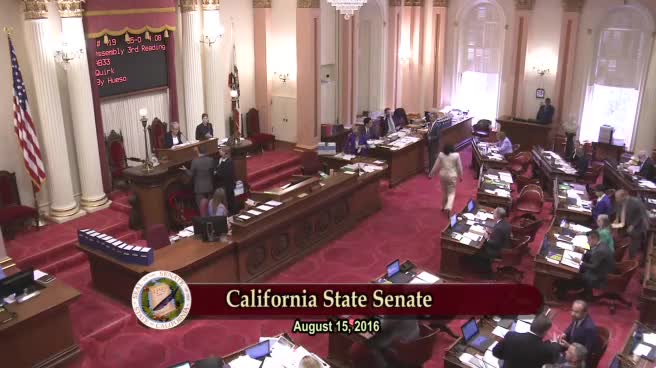
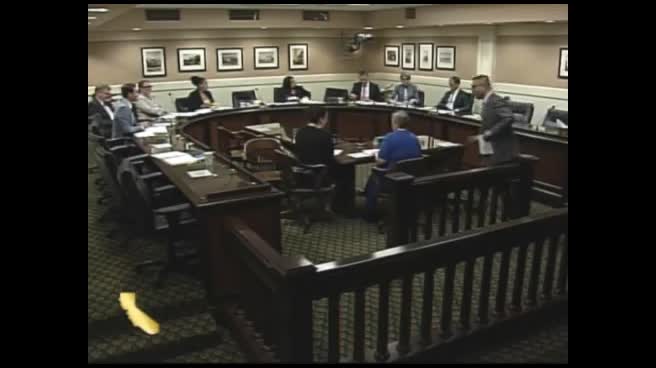
Bill Author

Bill Co-Author(s):
