AB 1576: Personal Income Tax Law: Corporation Tax Law: disregarded entities: credit limitation.
- Session Year: 2023-2024
- House: Assembly
- Latest Version Date: 2023-04-26
Current Status:
Failed
(2024-02-01: From committee: Filed with the Chief Clerk pursuant to Joint Rule 56.)
Introduced
In Committee
First Chamber
In Committee
Second Chamber
Enacted
The Personal Income Tax Law and the Corporation Tax Law allow various credits against the taxes imposed by those laws, and specify certain limitations and requirements with respect to the application of credits, including limitations on credits allowed with respect to disregarded entities in excess of the tax imposed on income related to those disregarded entities.
This bill would make remove the above-described limitation on credits allowed with respect to disregarded entities applicable only to taxable years beginning before January 1, 2023, thereby removing that limitation for taxable years beginning on or after January 1, 2023. for credits generated in taxable years beginning on or after January 1, 2023, if the credit can be assigned, as provided.
This bill would take effect immediately as a tax levy.
The Personal Income Tax Law and the Corporation Tax Law allow various credits against the taxes imposed by those laws, and specify certain limitations and requirements with respect to the application of credits, including limitations on credits allowed with respect to disregarded entities in excess of the tax imposed on income related to those disregarded entities.
This bill would make the above-described limitation on credits allowed with respect to disregarded entities applicable only to taxable years beginning before January 1, 2023, thereby removing that limitation for taxable years beginning on or after January 1, 2023.
This bill would take effect immediately as a tax levy.
(a)Notwithstanding any provision in this part to the contrary, for the purposes of computing tax credits, the term net tax means the tax imposed under either Section 17041 or 17048 plus the tax imposed under Section 17504 (relating to lump-sum distributions) less the credits allowed by Section 17054 (relating to personal exemption credits) and any amount imposed under paragraph (1) of subdivision (d) and paragraph (1) of subdivision (e) of Section 17560. Notwithstanding the preceding sentence, the net tax shall not be less than the tax imposed under Section 17504 (relating to the separate tax on lump-sum distributions), if any. Credits shall be allowed against net tax in the following order:
(1)Credits that do not contain carryover or refundable provisions, except those described in paragraphs (4) and (5).
(2)Credits that contain carryover provisions but do not contain refundable provisions, except for those that are allowed to reduce net tax below the tentative minimum tax, as defined by Section 17062.
(3)Credits that contain both carryover and refundable provisions.
(4)The minimum tax credit allowed by Section 17063 (relating to the alternative minimum tax).
(5)(A) For taxable years beginning on or after January 1, 2002, and before January 1, 2022, credits that are allowed to reduce net tax below the tentative minimum tax, as defined by Section 17062.
(B)For taxable years beginning on or after January 1, 2022, credits that are allowed to reduce net tax below the tentative minimum tax, as defined by Section 17062, except the credit described in paragraph (7).
(6)Credits for taxes paid to other states allowed by Chapter 12 (commencing with Section 18001).
(7)For taxable years beginning on or after January 1, 2022, the credit allowed by Section 17052.10 (relating to the elective tax under the Small Business Relief Act).
(8)Credits that contain refundable provisions but do not contain carryover provisions.
The order within each paragraph shall be determined by the Franchise Tax Board.
(b)Notwithstanding the provisions of Sections 17061 (relating to refunds pursuant to the Unemployment Insurance Code) and 19002 (relating to tax withholding), the credits provided in those sections shall be allowed in the order provided in paragraph (6) of subdivision (a).
(c)(1)Notwithstanding any other provision of this part, no tax credit shall reduce the tax imposed under Section 17041 or 17048 plus the tax imposed under Section 17504 (relating to the separate tax on lump-sum distributions) below the tentative minimum tax, as defined by Section 17062, except the following credits:
(A)The credit allowed by former Section 17052.2 (relating to teacher retention tax credit, repealed on August 24, 2007).
(B)The credit allowed by former Section 17052.4 (relating to solar energy, repealed on December 1, 1989).
(C)The credit allowed by former Section 17052.5 (relating to solar energy, repealed on January 1, 1987).
(D)The credit allowed by former Section 17052.5 (relating to solar energy, repealed on December 1, 1994).
(E)The credit allowed by Section 17052.12 (relating to research expenses).
(F)The credit allowed by former Section 17052.13 (relating to sales and use tax credit, repealed on January 1, 1997).
(G)The credit allowed by former Section 17052.15 (relating to Los Angeles Revitalization Zone sales tax credit, repealed on December 1, 1998).
(H)The credit allowed by Section 17052.25 (relating to the adoption costs credit).
(I)The credit allowed by Section 17053.5 (relating to the renters credit).
(J)The credit allowed by former Section 17053.8 (relating to enterprise zone hiring credit, repealed on October 3, 1997).
(K)The credit allowed by former Section 17053.10 (relating to Los Angeles Revitalization Zone hiring credit, repealed on December 1, 1998).
(L)The credit allowed by former Section 17053.11 (relating to program area hiring credit, repealed on January 1, 1997).
(M)For each taxable year beginning on or after January 1, 1994, the credit allowed by former Section 17053.17 (relating to Los Angeles Revitalization Zone hiring credit, repealed on December 1, 1998).
(N)The credit allowed by former Section 17053.33 (relating to targeted tax area sales or use tax credit, repealed on December 1, 2015).
(O)The credit allowed by former Section 17053.34 (relating to targeted tax area hiring credit, repealed on December 1, 2019).
(P)The credit allowed by former Section 17053.49 (relating to qualified property, repealed on January 1, 2004).
(Q)The credit allowed by former Section 17053.70 (relating to enterprise zone sales or use tax credit, repealed on December 1, 2015).
(R)The credit allowed by former Section 17053.74 (relating to enterprise zone hiring credit, repealed on December 1, 2019).
(S)The credit allowed by Section 17054 (relating to credits for personal exemption).
(T)The credit allowed by Section 17054.5 (relating to the credits for a qualified joint custody head of household and a qualified taxpayer with a dependent parent).
(U)The credit allowed by Section 17054.7 (relating to the credit for a senior head of household).
(V)The credit allowed by former Section 17057 (relating to clinical testing expenses, repealed on December 1, 1993).
(W)The credit allowed by Section 17058 (relating to low-income housing).
(X)For taxable years beginning on or after January 1, 2014, the credit allowed by Section 17059.2 (relating to GO-Biz California Competes Credit).
(Y)The credit allowed by Section 17061 (relating to refunds pursuant to the Unemployment Insurance Code).
(Z)Credits for taxes paid to other states allowed by Chapter 12 (commencing with Section 18001).
(AA)The credit allowed by Section 19002 (relating to tax withholding).
(AB)For taxable years beginning on or after January 1, 2014, the credit allowed by former Section 17053.86 (relating to the College Access Tax Credit Fund, repealed on December 1, 2017).
(AC)For taxable years beginning on or after January 1, 2017, the credit allowed by Section 17053.87 (relating to the College Access Tax Credit Fund).
(AD)For taxable years beginning on or after January 1, 2021, the credit allowed by Section 17052.10 (relating to the elective tax under the Small Business Relief Act).
(2)Any credit that is partially or totally denied under paragraph (1) shall be allowed to be carried over and applied to the net tax in succeeding taxable years, if the provisions relating to that credit include a provision to allow a carryover when that credit exceeds the net tax.
(d)Unless otherwise provided, any remaining carryover of a credit allowed by a section that has been repealed or made inoperative shall continue to be allowed to be carried over under the provisions of that section as it read immediately before being repealed or becoming inoperative.
(e)(1)Unless otherwise provided, if two or more taxpayers (other than spouses) share in costs that would be eligible for a tax credit allowed under this part, each taxpayer shall be eligible to receive the tax credit in proportion to the taxpayers respective share of the costs paid or incurred.
(2)In the case of a partnership, the credit shall be allocated among the partners pursuant to a written partnership agreement in accordance with Section 704 of the Internal Revenue Code, relating to partners distributive share.
(3)In the case of spouses who file separate returns, the credit may be taken by either or equally divided between them.
(f)Unless otherwise provided, in the case of a partnership, any credit allowed by this part shall be computed at the partnership level, and any limitation on the expenses qualifying for the credit or limitation upon the amount of the credit shall be applied to the partnership and to each partner.
(g)(1)Subject to paragraph (4), with respect to any taxpayer that directly or indirectly owns an interest in a business entity that is disregarded for tax purposes pursuant to Section 23038 and any regulations thereunder, the amount of any credit or credit carryforward allowable for any taxable year attributable to the disregarded business entity shall be limited in accordance with paragraphs (2) and (3).
(2)The amount of any credit otherwise allowed under this part, including any credit carryover from prior years, that may be applied to reduce the taxpayers net tax, as defined in subdivision (a), for the taxable year shall be limited to an amount equal to the excess of the taxpayers regular tax (as defined in Section 17062), determined by including income attributable to the disregarded business entity that generated the credit or credit carryover, over the taxpayers regular tax (as defined in Section 17062), determined by excluding the income attributable to that disregarded business entity. A credit shall not be allowed if the taxpayers regular tax (as defined in Section 17062), determined by including the income attributable to the disregarded business entity, is less than the taxpayers regular tax (as defined in Section 17062), determined by excluding the income attributable to the disregarded business entity.
(3)If the amount of a credit allowed pursuant to the section establishing the credit exceeds the amount allowable under this subdivision in any taxable year, the excess amount may be carried over to subsequent taxable years pursuant to subdivisions (c) and (d).
(4)This subdivision shall only apply for taxable years beginning before January 1, 2023. For credits generated in taxable years beginning on or after January 1, 2023, paragraphs (1) to (3), inclusive, of this subdivision shall not apply to a credit that may be assigned pursuant to Section 23663 in the taxable year the credit is generated.
(h)(1)Unless otherwise specifically provided, in the case of a taxpayer that is a partner or shareholder of an eligible pass-thru entity described in paragraph (2), any credit passed through to the taxpayer in the taxpayers first taxable year beginning on or after the date the credit is no longer operative may be claimed by the taxpayer in that taxable year, notwithstanding the repeal of the statute authorizing the credit before the close of that taxable year.
(2)For purposes of this subdivision, eligible pass-thru entity means any partnership or S corporation that files its return on a fiscal year basis pursuant to Section 18566, and that is entitled to a credit pursuant to this part for the taxable year that begins during the last year the credit is operative.
(3)This subdivision applies to credits that become inoperative on or after January 1, 2002.
(i)The amendments made to this section by Section 6 of Chapter 3 of the Statutes of 2022 shall apply as follows:
(1)The amendments to subdivisions (a), (e), and (h) shall be operative for taxable years beginning on or after January 1, 2022.
(2)The amendments to subdivision (c) shall be operative for taxable years beginning on or after January 1, 2021.
SEC. 2.Section 23036 of the Revenue and Taxation Code is amended to read:23036.(a)(1)The term tax includes any of the following:
(A)The tax imposed under Chapter 2 (commencing with Section 23101).
(B)The tax imposed under Chapter 3 (commencing with Section 23501).
(C)The tax on unrelated business taxable income, imposed under Section 23731.
(D)The tax on S corporations imposed under Section 23802.
(2)The term tax does not include any amount imposed under paragraph (1) of subdivision (e) of Section 24667 or paragraph (2) of subdivision (f) of Section 24667.
(b)For purposes of Article 5 (commencing with Section 18661) of Chapter 2, Article 3 (commencing with Section 19031) of Chapter 4, Article 6 (commencing with Section 19101) of Chapter 4, and Chapter 7 (commencing with Section 19501) of Part 10.2, and for purposes of Sections 18601, 19001, and 19005, the term tax also includes all of the following:
(1)The tax on limited partnerships, imposed under Section 17935, the tax on limited liability companies, imposed under Section 17941, and the tax on registered limited liability partnerships and foreign limited liability partnerships imposed under Section 17948.
(2)The alternative minimum tax imposed under Chapter 2.5 (commencing with Section 23400).
(3)The tax on built-in gains of S corporations, imposed under Section 23809.
(4)The tax on excess passive investment income of S corporations, imposed under Section 23811.
(c)Notwithstanding any other provision of this part, credits are allowed against the tax in the following order:
(1)Credits that do not contain carryover provisions.
(2)Credits that, when the credit exceeds the tax, allow the excess to be carried over to offset the tax in succeeding taxable years, except for those credits that are allowed to reduce the tax below the tentative minimum tax, as defined by Section 23455. The order of credits within this paragraph shall be determined by the Franchise Tax Board.
(3)The minimum tax credit allowed by Section 23453.
(4)Credits that are allowed to reduce the tax below the tentative minimum tax, as defined by Section 23455.
(5)Credits for taxes withheld under Section 18662.
(d)Notwithstanding any other provision of this part, each of the following applies:
(1)A credit may not reduce the tax below the tentative minimum tax (as defined by paragraph (1) of subdivision (a) of Section 23455), except the following credits:
(A)The credit allowed by former Section 23601 (relating to solar energy).
(B)The credit allowed by former Section 23601.4 (relating to solar energy).
(C)The credit allowed by former Section 23601.5 (relating to solar energy).
(D)The credit allowed by Section 23609 (relating to research expenditures).
(E)The credit allowed by former Section 23609.5 (relating to clinical testing expenses).
(F)The credit allowed by Section 23610.5 (relating to low-income housing).
(G)The credit allowed by former Section 23612 (relating to sales and use tax credit).
(H)The credit allowed by Section 23612.2 (relating to enterprise zone sales or use tax credit).
(I)The credit allowed by former Section 23612.6 (relating to Los Angeles Revitalization Zone sales tax credit).
(J)The credit allowed by former Section 23622 (relating to enterprise zone hiring credit).
(K)The credit allowed by Section 23622.7 (relating to enterprise zone hiring credit).
(L)The credit allowed by former Section 23623 (relating to program area hiring credit).
(M)The credit allowed by former Section 23623.5 (relating to Los Angeles Revitalization Zone hiring credit).
(N)The credit allowed by former Section 23625 (relating to Los Angeles Revitalization Zone hiring credit).
(O)The credit allowed by Section 23633 (relating to targeted tax area sales or use tax credit).
(P)The credit allowed by Section 23634 (relating to targeted tax area hiring credit).
(Q)The credit allowed by former Section 23649 (relating to qualified property).
(R)For taxable years beginning on or after January 1, 2011, the credit allowed by Section 23685 (relating to qualified motion pictures).
(S)For taxable years beginning on or after January 1, 2014, the credit allowed by Section 23689 (relating to GO-Biz California Competes Credit).
(T)For taxable years beginning on or after January 1, 2016, the credit allowed by Section 23695 (relating to qualified motion pictures).
(U)For taxable years beginning on or after January 1, 2014, the credit allowed by Section 23686 (relating to the College Access Tax Credit Fund).
(V)For taxable years beginning on or after January 1, 2017, the credit allowed by Section 23687 (relating to the College Access Tax Credit Fund).
(W)For taxable years beginning on or after January 1, 2020, and before January 1, 2026, the credit allowed by Section 23636 (relating to the new advanced strategic aircraft credit).
(2)A credit against the tax may not reduce the minimum franchise tax imposed under Chapter 2 (commencing with Section 23101).
(e)Any credit which is partially or totally denied under subdivision (d) is allowed to be carried over to reduce the tax in the following year, and succeeding years if necessary, if the provisions relating to that credit include a provision to allow a carryover of the unused portion of that credit.
(f)Unless otherwise provided, any remaining carryover from a credit that has been repealed or made inoperative is allowed to be carried over under the provisions of that section as it read immediately prior to being repealed or becoming inoperative.
(g)Unless otherwise provided, if two or more taxpayers share in costs that would be eligible for a tax credit allowed under this part, each taxpayer is eligible to receive the tax credit in proportion to their respective share of the costs paid or incurred.
(h)Unless otherwise provided, in the case of an S corporation, any credit allowed by this part is computed at the S corporation level, and any limitation on the expenses qualifying for the credit or limitation upon the amount of the credit applies to the S corporation and to each shareholder.
(i)(1)Subject to paragraph (4), with respect to any taxpayer that directly or indirectly owns an interest in a business entity that is disregarded for tax purposes pursuant to Section 23038 and any regulations thereunder, the amount of any credit or credit carryforward allowable for any taxable year attributable to the disregarded business entity is limited in accordance with paragraphs (2) and (3).
(2)The amount of any credit otherwise allowed under this part, including any credit carryover from prior years, that may be applied to reduce the taxpayers tax, as defined in subdivision (a), for the taxable year is limited to an amount equal to the excess of the taxpayers regular tax (as defined in Section 23455), determined by including income attributable to the disregarded business entity that generated the credit or credit carryover, over the taxpayers regular tax (as defined in Section 23455), determined by excluding the income attributable to that disregarded business entity. A credit is not allowed if the taxpayers regular tax (as defined in Section 23455), determined by including the income attributable to the disregarded business entity is less than the taxpayers regular tax (as defined in Section 23455), determined by excluding the income attributable to the disregarded business entity.
(3)If the amount of a credit allowed pursuant to the section establishing the credit exceeds the amount allowable under this subdivision in any taxable year, the excess amount may be carried over to subsequent taxable years pursuant to subdivisions (d), (e), and (f).
(4)This subdivision shall only apply for taxable years beginning before January 1, 2023. For credits generated in taxable years beginning on or after January 1, 2023, paragraphs (1) to (3), inclusive, of this subdivision shall not apply to a credit that may be assigned pursuant to Section 23663 in the taxable year the credit is generated.
(j)(1)Unless otherwise specifically provided, in the case of a taxpayer that is a partner or shareholder of an eligible pass-thru entity described in paragraph (2), any credit passed through to the taxpayer in the taxpayers first taxable year beginning on or after the date the credit is no longer operative may be claimed by the taxpayer in that taxable year, notwithstanding the repeal of the statute authorizing the credit prior to the close of that taxable year.
(2)For purposes of this subdivision, eligible pass-thru entity means any partnership or S corporation that files its return on a fiscal year basis pursuant to Section 18566, and that is entitled to a credit pursuant to this part for the taxable year that begins during the last year a credit is operative.
(3)This subdivision applies to credits that become inoperative on or after the operative date of the act adding this subdivision.
SEC. 3.This act provides for a tax levy within the meaning of Article IV of the California Constitution and shall go into immediate effect.
(a)Notwithstanding any provision in this part to the contrary, for the purposes of computing tax credits, the term net tax means the tax imposed under either Section 17041 or 17048 plus the tax imposed under Section 17504 (relating to lump-sum distributions) less the credits allowed by Section 17054 (relating to personal exemption credits) and any amount imposed under paragraph (1) of subdivision (d) and paragraph (1) of subdivision (e) of Section 17560. Notwithstanding the preceding sentence, the net tax shall not be less than the tax imposed under Section 17504 (relating to the separate tax on lump-sum distributions), if any. Credits shall be allowed against net tax in the following order:
(1)Credits that do not contain carryover or refundable provisions, except those described in paragraphs (4) and (5).
(2)Credits that contain carryover provisions but do not contain refundable provisions, except for those that are allowed to reduce net tax below the tentative minimum tax, as defined by Section 17062.
(3)Credits that contain both carryover and refundable provisions.
(4)The minimum tax credit allowed by Section 17063 (relating to the alternative minimum tax).
(5)(A) For taxable years beginning on or after January 1, 2002, and before January 1, 2022, credits that are allowed to reduce net tax below the tentative minimum tax, as defined by Section 17062.
(B)For taxable years beginning on or after January 1, 2022, credits that are allowed to reduce net tax below the tentative minimum tax, as defined by Section 17062, except the credit described in paragraph (7).
(6)Credits for taxes paid to other states allowed by Chapter 12 (commencing with Section 18001).
(7)For taxable years beginning on or after January 1, 2022, the credit allowed by Section 17052.10 (relating to the elective tax under the Small Business Relief Act).
(8)Credits that contain refundable provisions but do not contain carryover provisions.
The order within each paragraph shall be determined by the Franchise Tax Board.
(b)Notwithstanding the provisions of Sections 17061 (relating to refunds pursuant to the Unemployment Insurance Code) and 19002 (relating to tax withholding), the credits provided in those sections shall be allowed in the order provided in paragraph (6) of subdivision (a).
(c)(1)Notwithstanding any other provision of this part, no tax credit shall reduce the tax imposed under Section 17041 or 17048 plus the tax imposed under Section 17504 (relating to the separate tax on lump-sum distributions) below the tentative minimum tax, as defined by Section 17062, except the following credits:
(A)The credit allowed by former Section 17052.2 (relating to teacher retention tax credit, repealed on August 24, 2007).
(B)The credit allowed by former Section 17052.4 (relating to solar energy, repealed on December 1, 1989).
(C)The credit allowed by former Section 17052.5 (relating to solar energy, repealed on January 1, 1987).
(D)The credit allowed by former Section 17052.5 (relating to solar energy, repealed on December 1, 1994).
(E)The credit allowed by Section 17052.12 (relating to research expenses).
(F)The credit allowed by former Section 17052.13 (relating to sales and use tax credit, repealed on January 1, 1997).
(G)The credit allowed by former Section 17052.15 (relating to Los Angeles Revitalization Zone sales tax credit, repealed on December 1, 1998).
(H)The credit allowed by Section 17052.25 (relating to the adoption costs credit).
(I)The credit allowed by Section 17053.5 (relating to the renters credit).
(J)The credit allowed by former Section 17053.8 (relating to enterprise zone hiring credit, repealed on October 3, 1997).
(K)The credit allowed by former Section 17053.10 (relating to Los Angeles Revitalization Zone hiring credit, repealed on December 1, 1998).
(L)The credit allowed by former Section 17053.11 (relating to program area hiring credit, repealed on January 1, 1997).
(M)For each taxable year beginning on or after January 1, 1994, the credit allowed by former Section 17053.17 (relating to Los Angeles Revitalization Zone hiring credit, repealed on December 1, 1998).
(N)The credit allowed by former Section 17053.33 (relating to targeted tax area sales or use tax credit, repealed on December 1, 2015).
(O)The credit allowed by former Section 17053.34 (relating to targeted tax area hiring credit, repealed on December 1, 2019).
(P)The credit allowed by former Section 17053.49 (relating to qualified property, repealed on January 1, 2004).
(Q)The credit allowed by former Section 17053.70 (relating to enterprise zone sales or use tax credit, repealed on December 1, 2015).
(R)The credit allowed by former Section 17053.74 (relating to enterprise zone hiring credit, repealed on December 1, 2019).
(S)The credit allowed by Section 17054 (relating to credits for personal exemption).
(T)The credit allowed by Section 17054.5 (relating to the credits for a qualified joint custody head of household and a qualified taxpayer with a dependent parent).
(U)The credit allowed by Section 17054.7 (relating to the credit for a senior head of household).
(V)The credit allowed by former Section 17057 (relating to clinical testing expenses, repealed on December 1, 1993).
(W)The credit allowed by Section 17058 (relating to low-income housing).
(X)For taxable years beginning on or after January 1, 2014, the credit allowed by Section 17059.2 (relating to GO-Biz California Competes Credit).
(Y)The credit allowed by Section 17061 (relating to refunds pursuant to the Unemployment Insurance Code).
(Z)Credits for taxes paid to other states allowed by Chapter 12 (commencing with Section 18001).
(AA)The credit allowed by Section 19002 (relating to tax withholding).
(AB)For taxable years beginning on or after January 1, 2014, the credit allowed by former Section 17053.86 (relating to the College Access Tax Credit Fund, repealed on December 1, 2017).
(AC)For taxable years beginning on or after January 1, 2017, the credit allowed by Section 17053.87 (relating to the College Access Tax Credit Fund).
(AD)For taxable years beginning on or after January 1, 2021, the credit allowed by Section 17052.10 (relating to the elective tax under the Small Business Relief Act).
(2)Any credit that is partially or totally denied under paragraph (1) shall be allowed to be carried over and applied to the net tax in succeeding taxable years, if the provisions relating to that credit include a provision to allow a carryover when that credit exceeds the net tax.
(d)Unless otherwise provided, any remaining carryover of a credit allowed by a section that has been repealed or made inoperative shall continue to be allowed to be carried over under the provisions of that section as it read immediately before being repealed or becoming inoperative.
(e)(1)Unless otherwise provided, if two or more taxpayers (other than spouses) share in costs that would be eligible for a tax credit allowed under this part, each taxpayer shall be eligible to receive the tax credit in proportion to the taxpayers respective share of the costs paid or incurred.
(2)In the case of a partnership, the credit shall be allocated among the partners pursuant to a written partnership agreement in accordance with Section 704 of the Internal Revenue Code, relating to partners distributive share.
(3)In the case of spouses who file separate returns, the credit may be taken by either or equally divided between them.
(f)Unless otherwise provided, in the case of a partnership, any credit allowed by this part shall be computed at the partnership level, and any limitation on the expenses qualifying for the credit or limitation upon the amount of the credit shall be applied to the partnership and to each partner.
(g)(1)With Subject to paragraph (4), with respect to any taxpayer that directly or indirectly owns an interest in a business entity that is disregarded for tax purposes pursuant to Section 23038 and any regulations thereunder, the amount of any credit or credit carryforward allowable for any taxable year attributable to the disregarded business entity shall be limited in accordance with paragraphs (2) and (3).
(2)The amount of any credit otherwise allowed under this part, including any credit carryover from prior years, that may be applied to reduce the taxpayers net tax, as defined in subdivision (a), for the taxable year shall be limited to an amount equal to the excess of the taxpayers regular tax (as defined in Section 17062), determined by including income attributable to the disregarded business entity that generated the credit or credit carryover, over the taxpayers regular tax (as defined in Section 17062), determined by excluding the income attributable to that disregarded business entity. A credit shall not be allowed if the taxpayers regular tax (as defined in Section 17062), determined by including the income attributable to the disregarded business entity, is less than the taxpayers regular tax (as defined in Section 17062), determined by excluding the income attributable to the disregarded business entity.
(3)If the amount of a credit allowed pursuant to the section establishing the credit exceeds the amount allowable under this subdivision in any taxable year, the excess amount may be carried over to subsequent taxable years pursuant to subdivisions (c) and (d).
(4)This subdivision shall only apply for taxable years beginning before January 1, 2023.
(h)(1)Unless otherwise specifically provided, in the case of a taxpayer that is a partner or shareholder of an eligible pass-thru entity described in paragraph (2), any credit passed through to the taxpayer in the taxpayers first taxable year beginning on or after the date the credit is no longer operative may be claimed by the taxpayer in that taxable year, notwithstanding the repeal of the statute authorizing the credit before the close of that taxable year.
(2)For purposes of this subdivision, eligible pass-thru entity means any partnership or S corporation that files its return on a fiscal year basis pursuant to Section 18566, and that is entitled to a credit pursuant to this part for the taxable year that begins during the last year the credit is operative.
(3)This subdivision applies to credits that become inoperative on or after January 1, 2002.
(i)The amendments made to this section by the act adding this subdivision Section 6 of Chapter 3 of the Statutes of 2022 shall apply as follows:
(1)The amendments to subdivisions (a), (e), and (h) shall be operative for taxable years beginning on or after January 1, 2022.
(2)The amendments to subdivision (c) shall be operative for taxable years beginning on or after January 1, 2021.
SEC. 2.Section 23036 of the Revenue and Taxation Code is amended to read:23036.(a)(1)The term tax includes any of the following:
(A)The tax imposed under Chapter 2 (commencing with Section 23101).
(B)The tax imposed under Chapter 3 (commencing with Section 23501).
(C)The tax on unrelated business taxable income, imposed under Section 23731.
(D)The tax on S corporations imposed under Section 23802.
(2)The term tax does not include any amount imposed under paragraph (1) of subdivision (e) of Section 24667 or paragraph (2) of subdivision (f) of Section 24667.
(b)For purposes of Article 5 (commencing with Section 18661) of Chapter 2, Article 3 (commencing with Section 19031) of Chapter 4, Article 6 (commencing with Section 19101) of Chapter 4, and Chapter 7 (commencing with Section 19501) of Part 10.2, and for purposes of Sections 18601, 19001, and 19005, the term tax also includes all of the following:
(1)The tax on limited partnerships, imposed under Section 17935, the tax on limited liability companies, imposed under Section 17941, and the tax on registered limited liability partnerships and foreign limited liability partnerships imposed under Section 17948.
(2)The alternative minimum tax imposed under Chapter 2.5 (commencing with Section 23400).
(3)The tax on built-in gains of S corporations, imposed under Section 23809.
(4)The tax on excess passive investment income of S corporations, imposed under Section 23811.
(c)Notwithstanding any other provision of this part, credits are allowed against the tax in the following order:
(1)Credits that do not contain carryover provisions.
(2)Credits that, when the credit exceeds the tax, allow the excess to be carried over to offset the tax in succeeding taxable years, except for those credits that are allowed to reduce the tax below the tentative minimum tax, as defined by Section 23455. The order of credits within this paragraph shall be determined by the Franchise Tax Board.
(3)The minimum tax credit allowed by Section 23453.
(4)Credits that are allowed to reduce the tax below the tentative minimum tax, as defined by Section 23455.
(5)Credits for taxes withheld under Section 18662.
(d)Notwithstanding any other provision of this part, each of the following applies:
(1)A credit may not reduce the tax below the tentative minimum tax (as defined by paragraph (1) of subdivision (a) of Section 23455), except the following credits:
(A)The credit allowed by former Section 23601 (relating to solar energy).
(B)The credit allowed by former Section 23601.4 (relating to solar energy).
(C)The credit allowed by former Section 23601.5 (relating to solar energy).
(D)The credit allowed by Section 23609 (relating to research expenditures).
(E)The credit allowed by former Section 23609.5 (relating to clinical testing expenses).
(F)The credit allowed by Section 23610.5 (relating to low-income housing).
(G)The credit allowed by former Section 23612 (relating to sales and use tax credit).
(H)The credit allowed by Section 23612.2 (relating to enterprise zone sales or use tax credit).
(I)The credit allowed by former Section 23612.6 (relating to Los Angeles Revitalization Zone sales tax credit).
(J)The credit allowed by former Section 23622 (relating to enterprise zone hiring credit).
(K)The credit allowed by Section 23622.7 (relating to enterprise zone hiring credit).
(L)The credit allowed by former Section 23623 (relating to program area hiring credit).
(M)The credit allowed by former Section 23623.5 (relating to Los Angeles Revitalization Zone hiring credit).
(N)The credit allowed by former Section 23625 (relating to Los Angeles Revitalization Zone hiring credit).
(O)The credit allowed by Section 23633 (relating to targeted tax area sales or use tax credit).
(P)The credit allowed by Section 23634 (relating to targeted tax area hiring credit).
(Q)The credit allowed by former Section 23649 (relating to qualified property).
(R)For taxable years beginning on or after January 1, 2011, the credit allowed by Section 23685 (relating to qualified motion pictures).
(S)For taxable years beginning on or after January 1, 2014, the credit allowed by Section 23689 (relating to GO-Biz California Competes Credit).
(T)For taxable years beginning on or after January 1, 2016, the credit allowed by Section 23695 (relating to qualified motion pictures).
(U)For taxable years beginning on or after January 1, 2014, the credit allowed by Section 23686 (relating to the College Access Tax Credit Fund).
(V)For taxable years beginning on or after January 1, 2017, the credit allowed by Section 23687 (relating to the College Access Tax Credit Fund).
(W)For taxable years beginning on or after January 1, 2020, and before January 1, 2026, the credit allowed by Section 23636 (relating to the new advanced strategic aircraft credit).
(2)A credit against the tax may not reduce the minimum franchise tax imposed under Chapter 2 (commencing with Section 23101).
(e)Any credit which is partially or totally denied under subdivision (d) is allowed to be carried over to reduce the tax in the following year, and succeeding years if necessary, if the provisions relating to that credit include a provision to allow a carryover of the unused portion of that credit.
(f)Unless otherwise provided, any remaining carryover from a credit that has been repealed or made inoperative is allowed to be carried over under the provisions of that section as it read immediately prior to being repealed or becoming inoperative.
(g)Unless otherwise provided, if two or more taxpayers share in costs that would be eligible for a tax credit allowed under this part, each taxpayer is eligible to receive the tax credit in proportion to their respective share of the costs paid or incurred.
(h)Unless otherwise provided, in the case of an S corporation, any credit allowed by this part is computed at the S corporation level, and any limitation on the expenses qualifying for the credit or limitation upon the amount of the credit applies to the S corporation and to each shareholder.
(i)(1)With Subject to paragraph (4), with respect to any taxpayer that directly or indirectly owns an interest in a business entity that is disregarded for tax purposes pursuant to Section 23038 and any regulations thereunder, the amount of any credit or credit carryforward allowable for any taxable year attributable to the disregarded business entity is limited in accordance with paragraphs (2) and (3).
(2)The amount of any credit otherwise allowed under this part, including any credit carryover from prior years, that may be applied to reduce the taxpayers tax, as defined in subdivision (a), for the taxable year is limited to an amount equal to the excess of the taxpayers regular tax (as defined in Section 23455), determined by including income attributable to the disregarded business entity that generated the credit or credit carryover, over the taxpayers regular tax (as defined in Section 23455), determined by excluding the income attributable to that disregarded business entity. A credit is not allowed if the taxpayers regular tax (as defined in Section 23455), determined by including the income attributable to the disregarded business entity is less than the taxpayers regular tax (as defined in Section 23455), determined by excluding the income attributable to the disregarded business entity.
(3)If the amount of a credit allowed pursuant to the section establishing the credit exceeds the amount allowable under this subdivision in any taxable year, the excess amount may be carried over to subsequent taxable years pursuant to subdivisions (d), (e), and (f).
(4)This subdivision shall only apply for taxable years beginning before January 1, 2023.
(j)(1)Unless otherwise specifically provided, in the case of a taxpayer that is a partner or shareholder of an eligible pass-thru entity described in paragraph (2), any credit passed through to the taxpayer in the taxpayers first taxable year beginning on or after the date the credit is no longer operative may be claimed by the taxpayer in that taxable year, notwithstanding the repeal of the statute authorizing the credit prior to the close of that taxable year.
(2)For purposes of this subdivision, eligible pass-thru entity means any partnership or S corporation that files its return on a fiscal year basis pursuant to Section 18566, and that is entitled to a credit pursuant to this part for the taxable year that begins during the last year a credit is operative.
(3)This subdivision applies to credits that become inoperative on or after the operative date of the act adding this subdivision.
SEC. 3.This act provides for a tax levy within the meaning of Article IV of the California Constitution and shall go into immediate effect.
|
Date
|
Status
|
|---|---|
| Feb 1, 2024 | From committee: Filed with the Chief Clerk pursuant to Joint Rule 56. |
| Jan 31, 2024 | Died pursuant to Art. IV, Sec. 10(c) of the Constitution. |
| May 18, 2023 | In committee: Held under submission. |
| May 18, 2023 | Joint Rule 62(a), file notice suspended. (Page 1580.) |
| May 17, 2023 | In committee: Set, first hearing. Referred to APPR. suspense file. |
| May 2, 2023 | From committee: Do pass and re-refer to Com. on APPR. (Ayes 11. Noes 0.) (May 1). Re-referred to Com. on APPR. |
| Apr 27, 2023 | Re-referred to Com. on REV. & TAX. |
| Apr 26, 2023 | From committee chair, with author's amendments: Amend, and re-refer to Com. on REV. & TAX. Read second time and amended. |
| Apr 24, 2023 | In committee: Set, first hearing. Referred to REV. & TAX. suspense file. |
| Apr 18, 2023 | In committee: Hearing postponed by committee. |
| Mar 9, 2023 | Referred to Com. on REV. & TAX. |
| Feb 18, 2023 | From printer. May be heard in committee March 20. |
| Feb 17, 2023 | Read first time. To print. |
|
Date
|
Description
|
Location
|
Votes
|
|
|---|---|---|---|---|
| May 1, 2023 | Do pass and be re-referred to the Committee on [Appropriations] | Assembly Standing Committee on Revenue and Taxation |
Passed |
This list shows positions taken on this bill by organizations on the date displayed, which is linked to the original source.
Positions by individuals are not included.
|
Organization
|
Position
|
Date
|
|---|---|---|
| California Lawyers Association – Taxation Section | ** Support | |
| California Society Of Enrolled Agents | ** Support | |
| California Taxpayers Association | ** Support | |
| Ryan, LLC | ** Support |
Date of Hearing: May 17, 2023
ASSEMBLY COMMITTEE ON APPROPRIATIONS
Chris Holden, Chair
ABPCA Bill Id:AB 1576
Author:(Wallis) – As Amended Ver:April 26, 2023
Policy Committee: | Revenue and Taxation | Vote: | 11 - 0 |
|
| ||
|
|
Urgency: No State Mandated Local Program: No Reimbursable: No
SUMMARY:
This bill removes the limitation on tax credits under the Personal Income Tax Law and Corporation Tax Law that can be claimed by a disregarded entity.
Specifically, this bill allows a disregarded entity to utilize a credit generated in taxable years beginning on or after January 1, 2023, if the credit can be assigned as part of a combined reporting group.
FISCAL EFFECT:
- General Fund (GF) revenue loss of approximately $30,000 in fiscal year (FY) 2023-24, $70,000 in FY 2024-25, and $100,000 in FY 2025-26 by removing the credit limitation for a disregarded limited liability company (LLC). The Franchise Tax Board (FTB) estimates approximately $170,000 in credits would be annually generated by taxpayers with sufficient tax liability to offset, with credits utilized over a period of years.
However, the amount of additional GF revenue loss by removing the credit limitation for a disregarded limited partnership (LP) is unknown. FTB notes disregarded LPs are not required to file a state income tax return, so FTB does not have any applicable data regarding the amount of credits generated by the LP or the entity type of the owner to accurately determine the revenue impact. Thus, it is likely annual GF revenue loss could exceed $150,000 in some years.
- GF costs of an unknown amount to FTB to update administrative procedures.
COMMENTS:
- Purpose. According to the author:
When a disregarded entity performs activities that generate tax credits, the tax credits are allowed to the owner of the disregarded entity. However, [existing law] imposes certain limits on the amount of tax credits that can be used by the owner. These measures were originally adopted in 1997 to ensure that [single member LLCs (SMLLCs)] did not have an unfair advantage over their corporate counterparts and to reduce disparity among various corporate structures. In reality, the limitation has the opposite effect and results in disparity for the SMLLC.
This bill is supported by groups representing taxpayers and tax preparers.
- Disregarded Entities. A disregarded entity is a business entity indistinguishable from the owner and disregarded for the purposes of taxation. Thus, any tax attributes related to the disregarded entity may generally be applied to the business owner. To ensure a disregarded entity is not disproportionately advantaged over other business entities, California requires certain disregarded entities to file a tax return and pay the annual minimum franchise tax, despite their disregarded status, and limits the sharing of credits between the disregarded entity and its owner. In 2008, California began allowing members of a combined reporting group to freely assign credits generated by members of the group. However, if a disregarded entity is part of the combined reporting group, due to the existing limitation on credit sharing between a disregarded entity and its owner, credits generated by the disregarded entity cannot be assigned within the combined reporting group. This bill allows the owner of a disregarded entity that is part of a combined reporting group to claim credits generated in that taxable year.
Analysis Prepared by: Irene Ho / APPR. / (916) 319-2081
Date of Hearing: May 1, 2023
ASSEMBLY COMMITTEE ON REVENUE AND TAXATION
Jacqui Irwin, Chair
ABPCA Bill Id:AB 1576 (
Author:Wallis) – As Amended Ver:April 26, 2023
SUSPENSE
Majority vote. Tax levy. Fiscal committee.
SUBJECT: Personal Income Tax Law: Corporation Tax Law: disregarded entities: credit limitation
SUMMARY: Removes the existing limitation on the utilization of credits by the owner of a disregarded entity. Specifically, this bill:
- Removes, under the Personal Income Tax (PIT) Law and the Corporation Tax (CT) Law, the existing limitation on the amount of credits that may be used by the owner of a disregarded entity for credits generated in taxable years beginning on or after January 1, 2023, if the credit can be assigned as part of a combined reporting group in the taxable year the credit is generated.
- Takes immediate effect as a tax levy.
EXISTING LAW:
- Provides that all income, from whatever source derived, is taxable, unless specifically excluded.
- Authorizes, under the PIT Law and the CT Law, various credits against those taxes that are generally designed to incentivize certain behavior or to provide relief to taxpayers.
- Permits certain corporations to file taxes under the CT Law as a combined reporting group if one of those corporations is an entity that owns at least 50% of voting stock in each of the corporations comprising the combined reporting group, among other requirements. (Revenue and Taxation Code (R&TC) Section 25105.)
- Permits certain corporations filing as a combined reporting group to freely assign eligible credits within that reporting group, as specified. (R&TC Section 23663.)
- Limits, under the PIT Law and the CT Law, the amount of credits generated by a disregarded entity that an owner may claim to the amount of regular tax attributable to the income of the disregarded entity. (R&TC Sections 17039(g) and 23036(i).)
FISCAL EFFECT: Unknown
COMMENTS:
- The author has provided the following statement in support of this bill:
Under the R&TC, various tax credits are available to businesses in order to provide incentives for the achievement of certain economic objectives. Special rules apply when the credits flow through a "disregarded entity", a tax term used to refer to an entity that will be disregarded, or ignored, for income tax purposes. A single member limited liability company (SMLLC) is a common form of disregarded entity. When a disregarded entity performs activities that generate tax credits, the tax credits are allowed to the owner of the disregarded entity. However, the R&TC imposes certain limits on the amount of tax credits that can be used by the owner. These measures were originally adopted in 1997 to ensure that SMLLCs did not have an unfair advantage over their corporate counterparts and to reduce disparity among various corporate structures. In reality, the limitation has the opposite effect and results in disparity for the SMLLC. With the implementation of new credit rules, the original intent of the limitation is no longer applicable and the limitation is no longer necessary. In fact, it has become a trap for the unwary, hindering taxpayers' ability to conduct small business operations in an effective manner. AB 1576 modernizes the statutes and treats SMLLCs like other business entities in the application of tax credits.
- Committee Staff Comments:
- Disregarded entities: In tax law, certain business entities are indistinguishable from the owner. In these cases, the business entity is disregarded for the purposes of taxation, and any tax attributes related to that disregarded entity may generally be applied to the owner. In 1997, California conformed to the federal entity classification regulations that permitted eligible business owners to choose that their business be disregarded. To ensure that disregarded entities were not disproportionately advantaged over other business entities, California required disregarded entities to file a tax return and pay an annual minimum tax of $800, despite their disregarded status, and limited the sharing of credits between the disregarded entity and its owner. In 2008, California subsequently enacted provisions that allowed for members of a combined reporting group to freely assign credits generated by members of the group. Thus, a disregarded entity that is part of a combined reporting group, but that is not earning taxable income, is prohibited from freely assigning credits within a combined reporting group when the disregarded entity would otherwise be able to do so.
- This bill: As currently drafted, this bill allows the owner of any disregarded entity that is part of a combined reporting group to claim credits generated in that taxable year, for credits generated in taxable years beginning on or after January 1, 2023.
- Previous legislation: AB 1452 (Committee on Budget), Chapter 763, Statutes of 2008, allowed the assignment of certain credits to taxpayers under the CT Law that are members of the same combined reporting group, among other provisions.
REGISTERED SUPPORT / OPPOSITION:
Support
None on file
Opposition
None on file
Analysis Prepared by: Harrison Bowlby / REV. & TAX. / (916) 319-2098
Date of Hearing: April 24, 2023
ASSEMBLY COMMITTEE ON REVENUE AND TAXATION
Jacqui Irwin, Chair
ABPCA Bill Id:AB 1576 (
Author:Wallis) – As Introduced Ver:February 17, 2023
Majority vote. Tax levy. Fiscal committee.
SUBJECT: Personal Income Tax Law: Corporation Tax Law: disregarded entities: credit limitation
SUMMARY: Removes the existing limitation on the utilization of credits by the owner of a disregarded entity. Specifically, this bill:
- Removes, under the Personal Income Tax (PIT) Law and the Corporation Tax (CT) Law, the existing limitation on the amount of credits that may be used by the owner of a disregarded entity beginning on January 1, 2023.
- Takes immediate effect as a tax levy.
EXISTING LAW:
- Provides that all income, from whatever source derived, is taxable, unless specifically excluded.
- Authorizes, under the PIT Law and the CT Law, various credits against those taxes that are generally designed to incentivize certain behavior or to provide relief to taxpayers.
- Permits certain corporations to file taxes under the CT Law as a combined reporting group if one of those corporations is an entity that owns at least 50% of voting stock in each of the corporations comprising the combined reporting group, among other requirements. (Revenue and Taxation Code (R&TC) Section 25105.)
- Limits, under the PIT Law and the CT Law, the amount of credits generated by a disregarded entity that an owner may claim to the amount of regular tax attributable to the income of the disregarded entity. (R&TC Sections 17039(g) and 23036(i).)
FISCAL EFFECT: The Franchise Tax Board (FTB) estimates a revenue loss of $32 million in fiscal year (FY) 2023-24, $21 million in FY 2024-25, and $19 million in FY 2025-26.
COMMENTS:
- The author has provided the following statement in support of this bill:
Under the R&TC, various tax credits are available to businesses in order to provide incentives for the achievement of certain economic objectives. Special rules apply when the credits flow through a "disregarded entity", a tax term used to refer to an entity that will be disregarded, or ignored, for income tax purposes. A single member limited liability company (SMLLC) is a common form of disregarded entity. When a disregarded entity performs activities that generate tax credits, the tax credits are allowed to the owner of the disregarded entity. However, the R&TC imposes certain limits on the amount of tax credits that can be used by the owner. These measures were originally adopted in 1997 to ensure that SMLLCs did not have an unfair advantage over their corporate counterparts and to reduce disparity among various corporate structures. In reality, the limitation has the opposite effect and results in disparity for the SMLLC. With the implementation of new credit rules, the original intent of the limitation is no longer applicable and the limitation is no longer necessary. In fact, it has become a trap for the unwary, hindering taxpayers' ability to conduct small business operations in an effective manner. AB 1576 modernizes the statutes and treats SMLLCs like other business entities in the application of tax credits.
- The California Lawyers Association, writing in support of this bill, states, in part:
Under existing law, when a disregarded entity performs activities that generate credits, the credits are allowed to the owner of the disregarded entity. However, R&TC Sections 17039(g) and 23036(i) impose a limitation on the amount of credits attributable to a disregarded entity that can be allowed against a taxpayer's tax (i.e., the tax of the regarded owner of the disregarded entity). The amount of credit allowable against a regarded entity's tax is limited to the amount of its regular tax attributable to the income of the disregarded entity. The practical result of the Section 23036(i) calculation is that the disregarded entity must be in an income position, rather than reporting a loss for the regarded entity to utilize the limited credit. This limitation attaches at the time the credit is generated by the disregarded entity.
- Committee Staff Comments:
- Disregarded entities: In tax law, certain business entities are indistinguishable from the owner. In these cases, the business entity is disregarded for the purposes of taxation, and any tax attributes related to that disregarded entity may generally be applied to the owner. In 1997, California conformed to the federal entity classification regulations that permitted eligible business owners to choose that their business be disregarded. To ensure that disregarded entities were not disproportionately advantaged over other business entities, California required disregarded entities to file a tax return and pay an annual minimum tax of $800, despite their disregarded status, and limited the sharing of credits between the disregarded entity and its owner. In 2008, California subsequently enacted provisions that allowed for members of a combined reporting group to freely assign credits generated by members of the group. Thus, a disregarded entity that is part of a combined reporting group, but that is not earning taxable income, is prohibited from freely assigning credits within a combined reporting group when the disregarded entity would otherwise be able to do so.
- This bill: As currently drafted, this bill allows the owner of any disregarded entity to claim any amount of credit for taxable years beginning on or after January 1, 2023. This bill is unclear as to whether a credit generated before January 1, 2023 that may be carried forward would still be subject to the limitation. The author and Committee may wish to consider amending the bill to provide that the limitation shall only apply to credits generated in taxable years beginning before January 1, 2023.
This bill also removes the existing limitation for all disregarded entities, rather than disregarded entities within a combined reporting group. The FTB, in its analysis of this bill, indicates that this broader authorization could potentially create a disparity between disregarded entities and other business entities that are not a part of a combined reporting group. Supporters of this bill note that, after the 2008 authorization for members of a combined reporting group, some enacted credits expressly exempt application of the credit limitation on disregarded entities, such as the California Motion Picture Production Credit. While this is the case, Committee staff notes that the exemption from the disregarded entity credit limitation is applied to a minority of credits that have been enacted since 2008. The author and Committee may wish to consider amending this bill to remove the limitation only in the context of a disregarded entity that is part of a combined reporting group.
- Previous legislation: AB 1452 (Committee on Budget), Chapter 763, Statutes of 2008, allowed the assignment of certain credits to taxpayers under the CT Law that are members of the same combined reporting group, among other provisions.
REGISTERED SUPPORT / OPPOSITION:
Support
California Lawyers Association – Taxation Section
California Society of Enrolled Agents
California Taxpayers Association
Ryan, LLC
Opposition
None on file
Analysis Prepared by: Harrison Bowlby / REV. & TAX. / (916) 319-2098
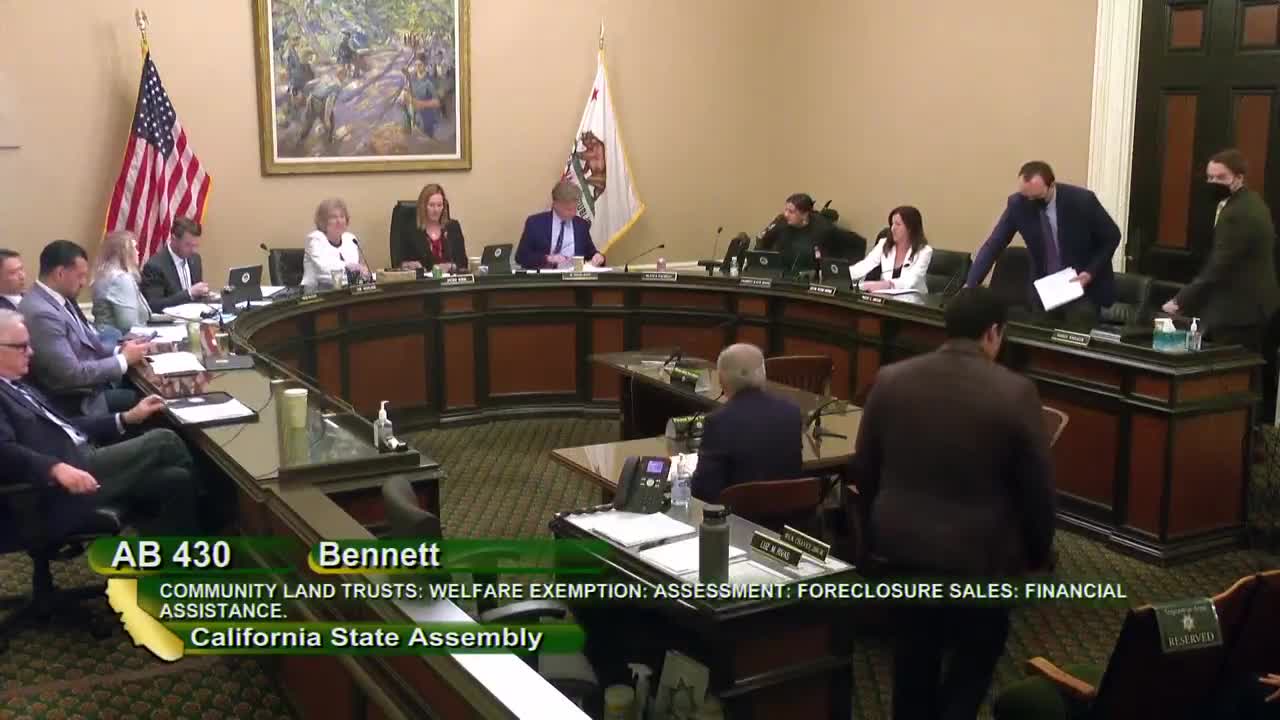
Discussed in Hearing
 7MIN
Assembly Standing Committee on Revenue and Taxation
Bill Author

Bill Co-Author(s):