AB 1597: Water quality: California-Mexico cross-border watersheds.
- Session Year: 2023-2024
- House: Assembly
- Latest Version Date: 2024-07-03
Current Status:
Failed
(2024-08-15: In committee: Held under submission.)
Introduced
In Committee
First Chamber
In Committee
Second Chamber
Enacted
Existing law establishes the California Border Environmental and Public Health Protection Fund in the State Treasury to receive funds appropriated in the annual Budget Act, including, but not limited to, proceeds of bonds sold as specified, and other sources, such as from the North American Development Bank (NADBank), and makes money in the fund available, upon appropriation, to the California-Mexico Border Relations Council, a state entity. Money in the fund is used to assist local governments in implementation of projects to identify and resolve environmental and public health problems that directly threaten the health or environmental quality of California residents or sensitive natural resources of the California border region, among other purposes.
This bill would authorize, upon appropriation by the Legislature in the annual Budget Act or another statute, funds to be made available to the California Environmental Protection Agency (CalEPA) for NADBank for loans, grants, and direct expenditures to address water quality problems arising in the California-Mexico cross-border watersheds. The bill would require the funding to be available for specified purposes, as provided, including water quality projects for the Tijuana River, and would make 10% of the funding available for the administrative costs of implementing these provisions. The bill would authorize funding provided for activities or projects in the State of Baja California to be provided through direct expenditures and for grants to an eligible funding recipient authorized to work in Mexico under a specified circumstance. The bill would require grant funding to be conditioned upon the enforceability and accountability requirements mutually agreed upon by CalEPA and NADBank, and would authorize CalEPA to withhold funding if the requirements of the applicable funding agreement are not met. The bill would also authorize grant funding to be conditioned on enforceability and accountability mechanisms agreed upon by CalEPA, NADBank, and the recipient. The bill would require CalEPA to notify the leadership office in each house of the Legislature on cross-border collaboration and the expenditure of the funding, as provided.
This bill would make legislative findings and declarations as to the necessity of a special statute for the North American Development Bank.
Existing law establishes the California Border Environmental and Public Health Protection Fund in the State Treasury to receive funds appropriated in the annual Budget Act, including, but not limited to, proceeds of bonds sold as specified, and other sources, such as from the North American Development Bank (NADBank), and makes money in the fund available, upon appropriation, to the California-Mexico Border Relations Council, a state entity. Money in the fund is used to assist local governments in implementation of projects to identify and resolve environmental and public health problems that directly threaten the health or environmental quality of California residents or sensitive natural resources of the California border region, among other purposes.
This bill would authorize, upon appropriation by the Legislature in the annual Budget Act or another statute, funds to be made available to the California Environmental Protection Agency (CalEPA) for NADBank for loans, grants, and direct expenditures to address water quality problems arising in the California-Mexico cross-border rivers. watersheds. The bill would require the funding to be available for specified purposes, as provided, including water quality projects for the Tijuana River, and would make 10% of the funding available for the administrative costs of implementing these provisions. The bill would authorize funding provided for activities or projects in the State of Baja California to be provided through direct expenditures and for grants to an eligible funding recipient authorized to work in Mexico under a specified circumstance. The bill would require grant funding to be conditioned upon the enforceability and accountability requirements mutually agreed upon by CalEPA and NADBank, and would authorize CalEPA to withhold funding if the requirements of the applicable funding agreement are not met. The bill would also authorize grant funding to be conditioned on enforceability and accountability mechanisms agreed upon by the North American Development Bank CalEPA, NADBank, and the recipient, with the concurrence of the State Water Resources Control Board. recipient. The bill would require the California Environmental Protection Agency CalEPA to notify the leadership office in each house of the Legislature on cross-border collaboration and the expenditure of the funding, as provided.
This bill would make legislative findings and declarations as to the necessity of a special statute for the North American Development Bank.
Existing law establishes the California Border Environmental and Public Health Protection Fund in the State Treasury to receive funds appropriated in the annual Budget Act, including, but not limited to, proceeds of bonds sold as specified, and other sources, such as from the North American Development Bank (NADBank), and makes money in the fund available, upon appropriation, to the California-Mexico Border Relations Council, a state entity. Money in the fund is used to assist local governments in implementation of projects to identify and resolve environmental and public health problems that directly threaten the health or environmental quality of California residents or sensitive natural resources of the California border region, among other purposes.
This bill would authorize, upon appropriation by the Legislature in the annual Budget Act or another statute, funds to be made available to the NADBank for loans, grants, and direct expenditures to address water quality problems arising in the California-Mexico cross-border rivers. The bill would require the funding to be available for specified purposes, as provided, including water quality projects for the Tijuana River, and would make 10% of the funding available for the administrative costs of implementing these provisions. The bill would authorize funding provided for activities or projects in the State of Baja California to be provided through direct expenditures and for grants to an eligible funding recipient authorized to work in Mexico under a specified circumstance. The bill would authorize grant funding to be conditioned on enforceability and accountability mechanisms agreed upon by the State Water Resources Control Board North American Development Bank and the recipient. recipient, with the concurrence of the State Water Resources Control Board. The bill would require the California Environmental Protection Agency to notify the leadership office in each house of the Legislature on cross-border collaboration and the expenditure of the funding, as provided.
This bill would make legislative findings and declarations as to the necessity of a special statute for the North American Development Bank.
Existing law establishes the California Border Environmental and Public Health Protection Fund in the State Treasury to receive funds appropriated in the annual Budget Act, including, but not limited to, proceeds of bonds sold as specified, and other sources, such as from the North American Development Bank (NADBank), and makes money in the fund available, upon appropriation, to the California-Mexico Border Relations Council, a state entity. Money in the fund is used to assist local governments in implementation of projects to identify and resolve environmental and public health problems that directly threaten the health or environmental quality of California residents or sensitive natural resources of the California border region, among other purposes.
This bill would make $50,000,000 available from the General Fund, authorize, upon appropriation by the Legislature in the annual Budget Act or another statute, funds to be made available to the NADBank for loans, grants, and direct expenditures to address water quality problems arising in the California-Mexico cross-border rivers. The bill would require the funding to be available for specified purposes, as provided, including water quality projects for the Tijuana River, and would make 10% of the funding available for the administrative costs of implementing these provisions. The bill would authorize funding provided for activities or projects in the State of Baja California to be provided through direct expenditures and for grants to an eligible funding recipient authorized to work in Mexico under a specified circumstance. The bill would authorize grant funding to be conditioned on enforceability and accountability mechanisms agreed upon by the State Water Resources Control Board and the recipient. The bill would require the California Environmental Protection Agency to notify the leadership office in each house of the Legislature on cross-border collaboration and the expenditure of the funding, as provided.
This bill would make legislative findings and declarations as to the necessity of a special statute for the North American Development Bank.
Existing law establishes the California Border Environmental and Public Health Protection Fund in the State Treasury to receive funds appropriated in the annual Budget Act, including, but not limited to, proceeds of bonds sold as specified, and other sources, such as from the North American Development Bank (NADBank), and makes money in the fund available, upon appropriation, to the California-Mexico Border Relations Council, a state entity. Money in the fund is used to assist local governments in implementation of projects to identify and resolve environmental and public health problems that directly threaten the health or environmental quality of California residents or sensitive natural resources of the California border region, among other purposes.
This bill would make $50,000,000 available from the General Fund, upon appropriation by the Legislature in the annual Budget Act or another statute, to the NADBank for loans, grants, and direct expenditures to address water quality problems arising in the California-Mexico cross-border rivers. The bill would require the funding to be available for specified purposes, as provided, including water quality projects for the Tijuana River, and would make 10% of the funding available for the administrative costs of implementing these provisions. The bill would authorize funding provided for activities or projects in the State of Baja California to be provided through direct expenditures and for grants to an eligible funding recipient authorized to work in Mexico under a specified circumstance. The bill would authorize grant funding to be conditioned on enforceability and accountability mechanisms agreed upon by the State Water Resources Control Board and the recipient. The bill would require the California Environmental Protection Agency to notify the leadership office in each house of the Legislature on cross-border collaboration and the expenditure of the funding, as provided.
This bill would make legislative findings and declarations as to the necessity of a special statute for the North American Development Bank.
The Legislature finds and declares the following:
(a)California shares water and air basins with Baja California, Mexico, that require cooperative projects to preserve and maintain a healthy ecosystem.
(b)The health and safety of border area residents in California is dependent on the support and implementation of cost-effective environmental solutions that are located on both sides of the international border within the binational water and air basins.
(c)The North American Development Bank is an environmental infrastructure financing entity established in 1994 by the United States federal government and the Federal Government of Mexico to improve the quality of life for residents of the border region which includes up to 62 miles north of the international border in California, and up to 186 miles south of the international border in Mexico.
(d)For more than 30 years, the North American Development Bank has worked with border communities to improve access to drinking water, wastewater treatment, air quality, and renewable energy projects.
71109.(a)(1)Upon appropriation by the Legislature in the annual Budget Act or another statute, funds may be made available to the California Environmental Protection Agency (CalEPA) for the North American Development Bank (NADBank) for loans, grants, and direct expenditures to address water quality problems arising in the California-Mexico cross-border watersheds.
(2)Funding available pursuant to paragraph (1) shall be available for purposes consistent with the New River Water Quality, Public Health, and River Parkway Development Program, as described in Section 71103.6, and water quality projects for the Tijuana River.
(3)Of the funding available pursuant to paragraph (1), 5 percent shall be available for the administrative costs to NADBank, and 5 percent shall be available for the administrative costs to CalEPA in implementing this section.
(4)CalEPA, the Department of Resources Recycling and Recovery, or the State Water Resources Control Board, with approval of the Secretary for Environmental Protection, shall determine with NADBank, the terms of the funding agreement, including enforceability, transparency, and other requirements under which NADBank, in consultation with the San Diego Regional Water Quality Control Board, the Colorado River Basin Regional Water Quality Control Board, and the International Boundary and Water Commission Minute 320 Work Groups, shall administer the funding pursuant to paragraph (1), including developing grant guidelines to implement this section that establish a timeline for funding disbursement, project prioritization, and monitoring requirements. Those guidelines are not subject to Chapter 3.5 (commencing with Section 11340) of Part 1 of Division 3 of Title 2 of the Government Code.
(b)Expenditures of the funding available pursuant to subdivision (a) shall be consistent with the work of the California Environmental Protection Agency Border Affairs Program. Priority for the funding available pursuant to subdivision (a) shall be given to projects that have funding committed by the United States, the Republic of Mexico, the State of Baja California, or the City of Tijuana or Mexicali.
(c)(1)Any funding provided under this section for activities or projects in the State of Baja California may be provided through direct expenditures and for grants to an eligible funding recipient authorized to work in Mexico. Projects eligible for funding shall comply with and be subject to enforcement under local, state, and federal laws, as applicable.
(2)For purposes of this subdivision, eligible funding recipients, including NADBank, are entities that are, or that consent to be, subject to the jurisdiction of the federal courts in California courts for the purpose of enforcement of the funding agreement.
(3)To the extent that a funding recipient, including NADBank, that is, or consents to be, subject to the jurisdiction of federal courts in California courts is eligible to undertake a project, expenditures of the funding available pursuant to subdivision (a) may be available for actions in California or in the State of Baja California provided the actions provide water quality benefits to the portions of the watersheds and coastal waters in California.
(4)Funds provided to NADBank pursuant to this part shall be conditioned on NADBank agreeing to do the following:
(A)Consent to be subject to the jurisdiction of federal courts in California courts for the purposes of the funding agreement with CalEPA.
(B)Consent to a designated agent for service of process.
(C)Waive any immunity it enjoys under international law or treaty, or the International Organizations Immunity Act with regard to the State of California or its designees for the purposes of implementing and enforcing the funding agreement.
(D)Require that subrecipients of funds accept their obligation, as applicable, to ensure that all workers employed on public works projects are paid the prevailing wage determined by the Director of Industrial Relations, according to the type of work and location of the project, as applicable.
(d)Grant funding shall be conditioned upon the enforceability and accountability requirements mutually agreed upon by CalEPA and NADBank, and CalEPA may withhold funding if the requirements of the applicable funding agreement are not met.
(e)Grant funding may also be conditioned on enforceability and accountability mechanisms agreed upon by CalEPA, NADBank, and the recipient, including, but not limited to, both of the following:
(1)Progress reports accompanying each disbursement request.
(2)An enforceable commitment to operate and maintain the funded project for the projects useful life or 30 years, whichever is less.
(f)The authority to enforce the terms of funding agreements entered into pursuant to this section is hereby expressly reserved to NADBank, who, NADBank shall enforce the terms of funding agreements with subrecipients entered into pursuant to this section and shall, in accordance with the funding agreements agreed upon with CalEPA, shall inform the Office of the Attorney General should the need for legal action arise. The Attorney General may bring a civil action to enforce the terms of funding agreements, at the Attorney Generals discretion.
(g)Any cause of action that arises from implementation of this law shall be vested in favor of the State of California and no private right of action may be asserted by any party.
(h)CalEPA shall notify the leadership office in each house of the Legislature on cross-border collaboration and the expenditure of the funding available pursuant to subdivision (a).
(i)Direct expenditures under this section may be provided in a lump sum in advance of costs incurred.
SEC. 2.The Legislature finds and declares that a special statute is necessary and that a general statute cannot be made applicable within the meaning of Section 16 of Article IV of the California Constitution because of the unique expertise of the North American Development Bank in funding international projects that address cross-border issues.
The Legislature finds and declares the following:
(a)California shares water and air basins with Baja California, Mexico, that require cooperative projects to preserve and maintain a healthy ecosystem.
(b)The health and safety of border area residents in California is dependent on the support and implementation of cost-effective environmental solutions that are located on both sides of the international border within the binational water and air basins.
(c)The North American Development Bank is an environmental infrastructure financing entity established in 1994 by the United States federal government and the Federal Government of Mexico to improve the quality of life for residents of the border region which includes up to 62 miles north of the international border in California, and up to 186 miles south of the international border in Mexico.
(d)For more than 30 years, the North American Development Bank has worked with border communities to improve access to drinking water, wastewater treatment, air quality, and renewable energy projects.
71108.71109.(a)(1)Upon appropriation by the Legislature in the annual Budget Act or another statute, funds may be made available to the California Environmental Protection Agency (CalEPA) for the North American Development Bank (NADBank) for loans, grants, and direct expenditures to address water quality problems arising in the California-Mexico cross-border rivers. watersheds.
(2)Funding available pursuant to paragraph (1) shall be available for purposes consistent with the New River Water Quality, Public Health, and River Parkway Development Program, as described in Section 71103.6, and water quality projects for the Tijuana River.
(3)Of the funding available pursuant to paragraph (1), 5 percent shall be available for the administrative costs to NADBank, and 5 percent shall be available for the administrative costs to the State Water Resources Control Board CalEPA in implementing this section.
(4)NADBank, in consultation with the California Environmental Protection Agency, the State Water Resources Control Board, CalEPA, the Department of Resources Recycling and Recovery, or the State Water Resources Control Board, with approval of the Secretary for Environmental Protection, shall determine with NADBank, the terms of the funding agreement, including enforceability, transparency, and other requirements under which NADBank, in consultation with the San Diego Regional Water Quality Control Board, the Colorado River Basin Regional Water Quality Control Board, and the International Boundary and Water Commission Minute 320 Work Groups, shall administer the funding pursuant to paragraph (1), including developing grant guidelines to implement this section that establish a timeline for funding disbursement, project prioritization, and monitoring requirements. Those guidelines are not subject to Chapter 3.5 (commencing with Section 11340) of Part 1 of Division 3 of Title 2 of the Government Code.
(b)Expenditures of the funding available pursuant to subdivision (a) shall be consistent with the work of the California Environmental Protection Agency Border Affairs Program. Priority for the funding available pursuant to subdivision (a) shall be given to projects that have funding committed by the United States, the Republic of Mexico, the State of Baja California, or the City of Tijuana or Mexicali.
(c)(1)Any funding provided under this section for activities or projects in the State of Baja California may be provided through direct expenditures and for grants to an eligible funding recipient authorized to work in Mexico. Projects eligible for funding shall comply with and be subject to enforcement under local, state, and federal laws, as applicable.
(2)For purposes of this subdivision, eligible funding recipients recipients, including NADBank, are entities that are, or that consent to be, subject to the jurisdiction of the California courts federal courts in California for the purpose of enforcement of the funding agreement.
(3)To the extent that a funding recipient recipient, including NADBank, that is, or consents to be, subject to the jurisdiction of the California courts federal courts in California is eligible to undertake a project, expenditures of the funding available pursuant to subdivision (a) may be available for actions in California or in the State of Baja California provided the actions provide water quality benefits to the portions of the rivers watersheds and coastal waters in California.
(4)Funds provided to NADBank pursuant to this part shall be conditioned on NADBank agreeing to do the following:
(A)Consent to be subject to the jurisdiction of federal courts in California for the purposes of the funding agreement with CalEPA.
(B)Consent to a designated agent for service of process.
(C)Waive any immunity it enjoys under international law or treaty, or the International Organizations Immunity Act with regard to the State of California or its designees for the purposes of implementing and enforcing the funding agreement.
(D)Require that subrecipients of funds accept their obligation, as applicable, to ensure that all workers employed on public works projects are paid the prevailing wage determined by the Director of Industrial Relations, according to the type of work and location of the project, as applicable.
(d)Grant funding shall be conditioned upon the enforceability and accountability requirements mutually agreed upon by CalEPA and NADBank, and CalEPA may withhold funding if the requirements of the applicable funding agreement are not met.
(d)(e)Grant funding may also be conditioned on enforceability and accountability mechanisms agreed upon by the NADBank and the recipient, with the concurrence of the State Water Resources Control Board, CalEPA, NADBank, and the recipient, including, but not limited to, both of the following:
(1)Progress reports accompanying each disbursement request.
(2)An enforceable commitment to operate and maintain the funded project for the projects useful life or 30 years, whichever is less.
(e)(f)The authority to enforce the terms of funding agreements entered into pursuant to this section is hereby expressly reserved to the NADBank, which who, in accordance with the funding agreements agreed upon with CalEPA, shall inform the Office of the Attorney General should the need for legal action arise.
(g)Any cause of action that arises from implementation of this law shall be vested in favor of the State of California and no private right of action may be asserted by any party.
(f)The California Environmental Protection Agency(h)CalEPA shall notify the leadership office in each house of the Legislature on cross-border collaboration and the expenditure of the funding available pursuant to subdivision (a).
(g)(i)Direct expenditures under this section may be provided in a lump sum in advance of costs incurred.
SEC. 2.The Legislature finds and declares that a special statute is necessary and that a general statute cannot be made applicable within the meaning of Section 16 of Article IV of the California Constitution because of the unique expertise of the North American Development Bank in funding international projects that address cross-border issues.
(a)(1)Upon appropriation by the Legislature in the annual Budget Act or another statute, funds may be made available to the North American Development Bank (NADBank) for loans, grants, and direct expenditures to address water quality problems arising in the California-Mexico cross-border rivers.
(2)Funding available pursuant to paragraph (1) shall be available for purposes consistent with the New River Water Quality, Public Health, and River Parkway Development Program, as described in Section 71103.6, and water quality projects for the Tijuana River.
(3)Of the funding available pursuant to paragraph (1), 5 percent shall be available for the administrative costs to NADBank, and 5 percent shall be available for the administrative costs to the State Water Resources Control Board in implementing this section.
(4)NADBank, in consultation with the California Environmental Protection Agency, the State Water Resources Control Board, the San Diego Regional Water Quality Control Board, the Colorado River Basin Regional Water Quality Control Board, and the International Boundary and Water Commission Minute 320 Work Groups, shall administer the funding pursuant to paragraph (1), including developing grant guidelines to implement this section that establish a timeline for funding disbursement, project prioritization, and monitoring requirements. Those guidelines are not subject to Chapter 3.5 (commencing with Section 11340) of Part 1 of Division 3 of Title 2 of the Government Code.
(b)Expenditures of the funding available pursuant to subdivision (a) shall be consistent with the work of the California Environmental Protection Agency Border Affairs Program. Priority for the funding available pursuant to subdivision (a) shall be given to projects that have funding committed by the United States, the Republic of Mexico, the State of Baja California, or the City of Tijuana or Mexicali.
(c)(1)Any funding provided under this section for activities or projects in the State of Baja California may be provided through direct expenditures and for grants to an eligible funding recipient authorized to work in Mexico.
(2)For purposes of this subdivision, eligible funding recipients are entities that are, or that consent to be, subject to the jurisdiction of the California courts for the purpose of enforcement of the funding agreement.
(3)To the extent that a funding recipient that is, or consents to be, subject to the jurisdiction of the California courts is eligible to undertake a project, expenditures of the funding available pursuant to subdivision (a) may be available for actions in California or in the State of Baja California provided the actions provide water quality benefits to the portions of the rivers and coastal waters in California.
(d)Grant funding may be conditioned on enforceability and accountability mechanisms agreed upon by the State Water Resources Control Board NADBank and the recipient, with the concurrence of the State Water Resources Control Board, including, but not limited to, both of the following:
(1)Progress reports accompanying each disbursement request.
(2)An enforceable commitment to operate and maintain the funded project for the projects useful life or 30 years, whichever is less.
(e)The authority to enforce the terms of funding agreements entered into pursuant to this section is hereby expressly reserved to the NADBank, which shall inform the Office of the Attorney General. General should the need for legal action arise.
(f)The California Environmental Protection Agency shall notify the leadership office in each house of the Legislature on cross-border collaboration and the expenditure of the funding available pursuant to subdivision (a).
(g)Direct expenditures under this section may be provided in a lump sum in advance of costs incurred.
SEC. 2.The Legislature finds and declares that a special statute is necessary and that a general statute cannot be made applicable within the meaning of Section 16 of Article IV of the California Constitution because of the unique expertise of the North American Development Bank in funding international projects that address cross-border issues.
(a)(1)Fifty million dollars ($50,000,000) shall be available from the General Fund, upon Upon appropriation by the Legislature in the annual Budget Act or another statute, funds may be made available to the North American Development Bank (NADBank) for loans, grants, and direct expenditures to address water quality problems arising in the California-Mexico cross-border rivers.
(2)Funding available pursuant to paragraph (1) shall be available for purposes consistent with the New River Water Quality, Public Health, and River Parkway Development Program, as described in Section 71103.6, and water quality projects for the Tijuana River.
(3)Of the funding available pursuant to paragraph (1), 5 percent shall be available for the administrative costs to NADBank, and 5 percent shall be available for the administrative costs to the State Water Resources Control Board in implementing this section.
(4)NADBank, in consultation with the California Environmental Protection Agency, the State Water Resources Control Board, the San Diego Regional Water Quality Control Board, the Colorado River Basin Regional Water Quality Control Board, and the International Boundary and Water Commission Minute 320 Work Groups, shall administer the funding pursuant to paragraph (1), including developing grant guidelines to implement this section that establish a timeline for funding disbursement, project prioritization, and monitoring requirements. Those guidelines are not subject to Chapter 3.5 (commencing with Section 11340) of Part 1 of Division 3 of Title 2 of the Government Code.
(b)Expenditures of the funding available pursuant to subdivision (a) shall be consistent with the work of the California Environmental Protection Agency Border Affairs Program. Priority for the funding available pursuant to subdivision (a) shall be given to projects that have funding committed by the United States, the Republic of Mexico, the State of Baja California, or the City of Tijuana or Mexicali.
(c)(1)Any funding provided under this section for activities or projects in the State of Baja California may be provided through direct expenditures and for grants to an eligible funding recipient authorized to work in Mexico.
(2)For purposes of this subdivision, eligible funding recipients are entities that are, or that consent to be, subject to the jurisdiction of the California courts for the purpose of enforcement of the funding agreement.
(3)To the extent that a funding recipient that is, or consents to be, subject to the jurisdiction of the California courts is eligible to undertake a project, expenditures of the funding available pursuant to subdivision (a) may be available for actions in California or in the State of Baja California provided the actions provide water quality benefits to the portions of the rivers and coastal waters in California.
(d)Grant funding may be conditioned on enforceability and accountability mechanisms agreed upon by the State Water Resources Control Board and the recipient, including, but not limited to, both of the following:
(1)Progress reports accompanying each disbursement request.
(2)An enforceable commitment to operate and maintain the funded project for the projects useful life or 30 years, whichever is less.
(e)The authority to enforce the terms of funding agreements entered into pursuant to this section is hereby expressly reserved to the Office of the Attorney General.
(f)The California Environmental Protection Agency shall notify the leadership office in each house of the Legislature on cross-border collaboration and the expenditure of the funding available pursuant to subdivision (a).
(g)Direct expenditures under this section may be provided in a lump sum in advance of costs incurred.
SEC. 2.The Legislature finds and declares that a special statute is necessary and that a general statute cannot be made applicable within the meaning of Section 16 of Article IV of the California Constitution because of the unique expertise of the North American Development Bank in funding international projects that address cross-border issues.
CORRECTIONS: HeadingLines 2 and 4.(a)(1)Fifty million dollars ($50,000,000) shall be available from the General Fund, upon appropriation by the Legislature in the annual Budget Act or another statute, to the North American Development Bank (NADBank) for loans, grants, and direct expenditures to address water quality problems arising in the California-Mexico cross-border rivers.
(2)Funding available pursuant to paragraph (1) shall be available for purposes consistent with the New River Water Quality, Public Health, and River Parkway Development Program, as described in Section 71103.6, and water quality projects for the Tijuana River.
(3)Of the funding available pursuant to paragraph (1), 5 percent shall be available for the administrative costs to NADBank, and 5 percent shall be available for the administrative costs to the State Water Resources Control Board in implementing this section.
(4)NADBank, in consultation with the California Environmental Protection Agency, the State Water Resources Control Board, the San Diego Regional Water Quality Control Board, the Colorado River Basin Regional Water Quality Control Board, and the International Boundary and Water Commission Minute 320 Work Groups, shall administer the funding pursuant to paragraph (1), including developing grant guidelines to implement this section that establish a timeline for funding disbursement, project prioritization, and monitoring requirements. Those guidelines are not subject to Chapter 3.5 (commencing with Section 11340) of Part 1 of Division 3 of Title 2 of the Government Code.
(b)Expenditures of the funding available pursuant to subdivision (a) shall be consistent with the work of the California Environmental Protection Agency Border Affairs Program. Priority for the funding available pursuant to subdivision (a) shall be given to projects that have funding committed by the United States, the Republic of Mexico, the State of Baja California, or the City of Tijuana or Mexicali.
(c)(1)Any funding provided under this section for activities or projects in the State of Baja California may be provided through direct expenditures and for grants to an eligible funding recipient authorized to work in Mexico.
(2)For purposes of this subdivision, eligible funding recipients are entities that are, or that consent to be, subject to the jurisdiction of the California courts for the purpose of enforcement of the funding agreement.
(3)To the extent that a funding recipient that is, or consents to be, subject to the jurisdiction of the California courts is eligible to undertake a project, expenditures of the funding available pursuant to subdivision (a) may be available for actions in California or in the State of Baja California provided the actions provide water quality benefits to the portions of the rivers and coastal waters in California.
(d)Grant funding may be conditioned on enforceability and accountability mechanisms agreed upon by the State Water Resources Control Board and the recipient, including, but not limited to, both of the following:
(1)Progress reports accompanying each disbursement request.
(2)An enforceable commitment to operate and maintain the funded project for the projects useful life or 30 years, whichever is less.
(e)The authority to enforce the terms of funding agreements entered into pursuant to this section is hereby expressly reserved to the Office of the Attorney General.
(f)The California Environmental Protection Agency shall notify the leadership office in each house of the Legislature on cross-border collaboration and the expenditure of the funding available pursuant to subdivision (a).
(g)Direct expenditures under this section may be provided in a lump sum in advance of costs incurred.
SEC. 2.The Legislature finds and declares that a special statute is necessary and that a general statute cannot be made applicable within the meaning of Section 16 of Article IV of the California Constitution because of the unique expertise of the North American Development Bank in funding international projects that address cross-border issues.
REVISIONS: HeadingLine 2.|
Date
|
Status
|
|---|---|
| Aug 15, 2024 | In committee: Held under submission. |
| Aug 5, 2024 | In committee: Referred to APPR suspense file. |
| Jul 3, 2024 | Read second time and amended. Re-referred to Com. on APPR. |
| Jul 3, 2024 | From committee: Amend, and do pass as amended and re-refer to Com. on APPR. (Ayes 11. Noes 0.) (July 2). |
| Jun 19, 2024 | From committee: Do pass and re-refer to Com. on JUD. with recommendation: To Consent Calendar. (Ayes 7. Noes 0.) (June 19). Re-referred to Com. on JUD. |
| Jun 5, 2024 | From committee chair, with author's amendments: Amend, and re-refer to committee. Read second time, amended, and re-referred to Com. on E.Q. |
| Jun 29, 2023 | In committee: Set, first hearing. Hearing canceled at the request of author. |
| Jun 22, 2023 | From committee chair, with author's amendments: Amend, and re-refer to committee. Read second time, amended, and re-referred to Com. on E.Q. |
| Jun 14, 2023 | Referred to Coms. on E.Q. and JUD. |
| Jun 1, 2023 | In Senate. Read first time. To Com. on RLS. for assignment. |
| May 31, 2023 | Read third time. Passed. Ordered to the Senate. (Ayes 79. Noes 0. Page 2017.) |
| May 22, 2023 | Read second time. Ordered to third reading. |
| May 19, 2023 | Measure version as amended on May 18 corrected. |
| May 18, 2023 | Read second time and amended. Ordered returned to second reading. |
| May 18, 2023 | From committee: Amend, and do pass as amended. (Ayes 11. Noes 0.) (May 18). |
| May 10, 2023 | In committee: Set, first hearing. Referred to APPR. suspense file. |
| Apr 25, 2023 | From committee: Do pass and re-refer to Com. on APPR. with recommendation: To Consent Calendar. (Ayes 11. Noes 0.) (April 25). Re-referred to Com. on APPR. |
| Apr 19, 2023 | From committee: Do pass and re-refer to Com. on JUD. with recommendation: To Consent Calendar. (Ayes 9. Noes 0.) (April 18). Re-referred to Com. on JUD. |
| Apr 19, 2023 | Coauthors revised. |
| Mar 9, 2023 | Referred to Coms. on E.S. & T.M. and JUD. |
| Feb 18, 2023 | From printer. May be heard in committee March 20. |
| Feb 17, 2023 | Read first time. To print. |
|
Date
|
Description
|
Location
|
Votes
|
|
|---|---|---|---|---|
| Aug 5, 2024 | Placed on suspense file | Senate Standing Committee on Appropriations |
Passed |
|
| Jul 2, 2024 | Do pass as amended, but first amend, and re-refer to the Committee on [Appropriations] | Senate Standing Committee on Judiciary |
Passed |
|
| Jun 19, 2024 | Do pass, but first be re-referred to the Committee on [Judiciary] with the recommendation: To Consent Calendar | Senate Standing Committee on Environmental Quality |
Passed |
|
| May 31, 2023 | AB 1597 Alvarez Assembly Third Reading | Assembly Floor |
Passed |
|
| May 18, 2023 | Do pass as amended. | Assembly Standing Committee on Appropriations |
Passed |
|
| Apr 25, 2023 | Do pass and be re-referred to the Committee on [Appropriations] with recommendation: To Consent Calendar | Assembly Standing Committee on Judiciary |
Passed |
|
| Apr 18, 2023 | Do pass and be re-referred to the Committee on [Judiciary] with recommendation: To Consent Calendar | Assembly Standing Committee on Environmental Safety and Toxic Materials |
Passed |
This list shows positions taken on this bill by organizations on the date displayed, which is linked to the original source.
Positions by individuals are not included.
|
Organization
|
Position
|
Date
|
|---|---|---|
| CalChamber | ** Support | |
| California State Association Of Counties | ** Support | |
| City of Coronado | ** Support | |
| City Of Imperial Beach | ** Support | |
| City Of San Diego | ** Support | |
| League Of California Cities | ** Support | |
| North American Development Bank | ** Support | |
| Otay Mesa Chamber of Commerce | ** Support | |
| Rural County Representatives of California | ** Support | |
| San Diego Regional Chamber Of Commerce | ** Support | |
| San Diego Unified Port District | ** Support | |
| Surfrider Foundation | ** Support | |
| Wildcoast | ** Support |
SENATE COMMITTEE ON
Senator Anna Caballero, Chair
2023 - 2024 Regular Session
AB 1597 (Alvarez) - Water quality: California-Mexico cross-border watersheds
Version: | Policy Vote: |
Urgency: | Mandate: |
Hearing Date: | Consultant: |
Bill Summary:
This bill would, upon appropriation, allow funds to be made available to the California Environmental Protection Agency (CalEPA) for the North American Development Bank (NADBank) for the purposes of providing loans, grants, and direct expenditures on projects addressing water quality issues in California-Mexico cross-border watersheds, as provided.
Fiscal Impact:
- Cost pressure likely in the tens or hundreds of millions of dollars (bond funds or General Fund) to provide funding for purposes that would be authorized by this bill.
- Of this amount, up to 5 percent could be used by CalEPA or its delegate for its administrative costs—and another 5 percent by NADBank, meaning administrative costs could be 10 percent of total funding. If $100 million were to be appropriated and made available pursuant to provisions in this bill, authorized administrative costs could be as much as $10 million.
- Should CalEPA delegate authority to the State Water Resources Control Board (Water Board), it estimates limited-term costs of about $675,000 annually (bond funds, General Fund, Waste Discharge Permit Fund, and/or Clean Water State Revolving Fund) to do the work that this bill would authorize.
- Of that amount, the Colorado Regional Water Board anticipates $225,000 for up to four years (Waste Discharge Permit Fund) for implementation work; the San Diego Regional Water Board anticipates $225,000 ongoing (Waste Discharge Permit Fund) for work associated with project development and solicitation; and the State Water Board anticipates $225,000 for two years (Clean Water State Revolving Fund) to develop the funding agreement —including enforceability, transparency, and other requirements—with NADBank.
- Absent a General Fund appropriation or the ability to recoup administrative costs through CalEPA, Water Board costs would be incurred by the state special supporting it (listed in the above parenthesis).
- The Department of Justice (DOJ) estimates ongoiong costs of an unknown but potentially significant amount to enforce the terms of funding agreements. DOJ notes the additional number of deputy attorneys general needed, along with their legal complement, would depend on several factors, including, but not limited to, the number and complexity of the funding agreements DOJ would need to enforce, the nature of the legal disputes, and the parties involved (General Fund).
Background:
For decades, water quality problems have plagued the Tijuana and New Rivers and the watersheds in which they reside. Wastewater and untreated sewage in both rivers have created significant pollution and public health hazards for the communities living near these watersheds. Because both watersheds cover territory of Mexico and California, comprehensive approaches that address the issue from both sides of the border are necessary. In recent years, the federal government has attempted to address the issue through expenditures and short- and long-term projects. However, water quality problems persist.
The North American Development Bank (NADBank). NADBank is a binational financial institution established by the governments of the U.S. and Mexico in 1994, to fund the development of environmental infrastructure within 100 kilometers (about 62 miles) north of the international boundary in the four U.S. states of Texas, New Mexico, Arizona, and California, and within 300 kilometers (about 186 miles) south of the border in the six Mexican states of Tamaulipas, Nuevo Leon, Coahuila, Chihuahua, Sonora, and Baja California. NADBank is capitalized in equal parts by each government and provides both financing and technical assistance to support the development and implementation of environmental infrastructure projects.
In addition to an initial capital investment of $202.5 million each from the U.S. and Mexican governments, NADBank receives an annual federal appropriation through the US EPA's Border Environment Infrastructure Fund (BEIF), totaling $711 million since 1997. According to NADBank, the amount of requested funds outstrips available funding; for the 53 projects NADBank currently has in its pipeline for BEIF, $352.3 million have been requested, but only $52 million are available.
To date, NADBank had been able to invest a total of $11.5 billion, through loans and grants, in 308 projects—149 in the U.S., and 159 in Mexico—by combining funding from the United States Environmental Protection Agency (U.S. EPA), grants from other entities, and additional funds garnered through financial leveraging. Of these projects, 202 were focused on water and resulted in the following infrastructure gains: 26 water treatment plants, 413 miles of water distribution pipes, 69 wastewater treatment plants, and 1,694 miles of sewer lines.
Proposed Law:
This bill would authorize, upon appropriation, funds to be made available for loans, grants, and direct expenditures on projects to address water quality issues in California-Mexico cross-border watersheds. Specifically, it would:
- Authorize, upon appropriation by the Legislature, funds to be made available to CalEPA for the North American Development Bank (NAD Bank) for loans, grants, and direct expenditures to address water quality problems arising in California-Mexico cross-border watersheds.
- Require these funds be available for purposes consistent with the New River Water Quality, Public Health, and River Parkway Development Program, and water quality projects for the Tijuana River, and requires expenditures of these funds to be consistent with the work of the CalEPA Border Affairs Program and for priority to be given to projects that have funding committed by the United States (U.S.), Republic of Mexico, State of Baja California, or the Cities of Tijuana or Mexicali.
- Require that 5 percent of funds be made available for the administrative costs of NAD Bank, and 5 percent for the administrative costs of CalEPA in implementing the bill.
- Require CalEPA, the Department of Resources Recycling and Recovery (CalRecycle), or the State Water Resources Control Board, with approval of the Secretary of Environmental Protection, to determine with NAD Bank the terms of the funding agreement, including enforceability, transparency, and other requirements under which NAD Bank shall administer the funding, including developing grant guidelines establishing a timeline for funding disbursement, project prioritization, and monitoring requirements.
- Specify that any funding for activities or projects in the State of Baja California may be provided through direct expenditures and grants to an eligible recipient authorized to work in Mexico. Require projects eligible for funding to comply with, and be subject to, enforcement under local, state, and federal laws, as applicable.
- Authorize expenditures to be made available for actions in California or the State of Baja California, provided the actions provide water quality benefits to the portions of the watersheds and coastal waters that are in California.
- Specify that eligible funding recipients, including NAD Bank, are entities that are, or consent to be, subject to the jurisdiction of California courts for the purpose of enforcement of the funding agreement.
- Require that funds provided to NAD Bank be conditioned on NAD Bank agreeing to do the following:
- consent to be subject to the jurisdiction of California courts for the purposes of the funding agreement with CalEPA;
- consent to a designated agent for service of process;
- waive any immunity it enjoys under international law or treaty, or the International Organizations Immunity Act with regard to the state of California or its designees for the purposes of implementing and enforcing the bill’s provisions;
- require that sub-recipients of funds accept their obligation, as applicable, to ensure that all workers employed on public works projects are paid the prevailing wage determined by the Director of the Department of Industrial Relations, according to the type of work and location of the project, as applicable.
- Require that grant funding be conditioned upon the enforceability and accountability requirements mutually agreed upon by CalEPA and NAD Bank, and authorizes funding be withheld by CalEPA if any requirements of the applicable funding agreement are not met.
- Specify that grant funding may also be conditioned on accountability mechanisms agreed upon by CalEPA, NAD Bank, and the recipient, including, but not limited to, both of the following:
- progress reports accompanying each disbursement request; and,
- an enforceable commitment to operate and maintain the funded project for the project's useful life or 30 years, whichever is less.
- Provide that NAD Bank shall enforce terms of funding agreements, and require NAD Bank to inform the Office of the Attorney General, should the need for legal action arise.
- Provide that the Attorney General may bring a civil action to enforce the terms of funding agreements, at the Attorney General’s discretion.
- Specify that any cause of action that arises from implementation of the bill’s provisions shall be vested in favor of the state of California and no private right of action may be asserted by any party.
- Require CalEPA to notify the leadership office in each house of the Legislature about cross-border collaboration and the expenditure of funding made available pursuant to this bill.
- Authorize direct expenditures to be provided in a lump sum in advance of costs incurred.
Related Legislation:
AB 1567 (Garcia, 2023) would enact the Safe Drinking Water, Wildfire Prevention, Drought Preparation, Flood Protection, Extreme Heat Mitigation, and Workforce Development Bond Act of 2024, to, upon approval by California voters, authorize the issuance of $15.1 billion in bonds to finance safe drinking water, wildfire prevention, drought preparation, flood protection, extreme heat mitigation, and workforce development program projects. It would include at least $50 million each for the Tijuana River Border Pollution Control Project and the New River Water Quality, Public Health, and River Parkway Development Program.
AB 2248 (E. Garcia, 2022) provided $100 million to the State Water Resources Control Board from the General Fund, upon appropriation by the Legislature, for grants and direct expenditures to address water quality issues in California-Mexico cross-border rivers. AB 2248 was vetoed by the Governor because it was not considered or accounted for in the annual budget process.
AB 180 (Ting, Ch. 44, Stats. 2022) provided $20 million as part of the annual budget act, to the State Water Resources Control Board to address water quality problems arising in the cross-border rivers between California and Mexico.
SB 154 (Skinner, Ch. 43, Stats. 2022) provided $15 million as part of the Budget Act of 2022 to the State Water Resources Control Board to address water quality problems arising in the cross-border rivers between California and Mexico.
SB 507 (Hueso, Ch. 542, Stats. 2017) authorized funds granted to the County of San Diego in the 2014 Budget Act to be available for development, improvement, rehabilitation, protection, restoration, and studies of natural and park lands in the Tijuana River Valley.
Staff Comments:
The Legislature has grappled with water quality issues in the Tijuana River and New River for the last 20 years via legislation, informational hearings, and funding. The state has provided funding for border river water quality in varying amounts since 2017, as has the federal government. Most recently, the Budget Act of 2021 included $20 million to improve water quality in the border rivers, and the Budget Act of 2022 included $15 million for the same purpose.
AB 1597 is similar to a prior year bill, AB 2248 (E. Garcia, Ward, 2022), although a key difference is that AB 1597 would provide funding, upon an appropriation by the Legislature, to NADBank to support projects that address water quality problems arising in California-Mexico cross-border rivers; AB 2248 would have provided $100 million to the State Water Board from the state's General Fund for similar purposes.
-- END --
Senator Thomas Umberg, Chair
2023-2024 Regular Session
Bill No: AB 1597 (Author:Alvarez)
Version: June 5, 2024
Hearing Date: July 2, 2024
Fiscal: Yes
Urgency: No
Consultant: ID
SUBJECT
Water quality: California-Mexico cross-border rivers
DIGEST
Authorizes, upon appropriation by the Legislature, funds to be made available to the California Environmental Protection Agency for the North American Development Bank, as specified, for the purposes of loans, grants, and direct expenditures on projects to address water quality issues in California-Mexico cross-border watersheds.
EXECUTIVE SUMMARY
For decades, water quality problems have plagued the Tijuana and New Rivers and the watersheds in which they reside. Wastewater and untreated sewage in both rivers have created significant pollution and public health hazards for the communities living near these watersheds. Because both watersheds cover territory of Mexico and California, comprehensive approaches that address the issue from both sides of the border are necessary. In recent years, the federal government has attempted to address the issue through expenditures and short- and long-term projects. However, water quality problems persist. This bill proposes to provide funds for water quality projects both in California and in the Mexican state of Baja California through the North American Development Bank (NAD Bank), a binational organization created by the United States and Mexican governments through the North American Free Trade Agreement. This bill provides for a funding agreement to be determined between the California Environmental Protection Agency (CalEPA), other state agencies, and NAD Bank through which NAD Bank will administer the funding and grant funding to sub-recipients for projects. AB 1597 includes various provisions aimed at attempting to ensure accountability between the state, NAD Bank, and sub-recipients. AB 1597 is sponsored by NAD Bank, and is supported by a variety of local governments near the California-Mexico border and associations for local and rural governments. The Committee has received no timely opposition. The bill passed out of the Senate Environmental Quality Committee by a vote of 7 to 0.
PROPOSED CHANGES TO THE LAW
Existing federal law:
- Authorizes the President to accept membership for the United States in the North American Development Bank (NAD Bank) provided for in the Border Environment Cooperation Agreement between the United States and Mexico, and provides for the capitalization and various rules of NAD Bank. Specifies that, for any civil action brought within the United States by or against NAD Bank in accordance with the Cooperation Agreement, NAD Bank must be considered an inhabitant of the Federal judicial district in which its principal office in the United States or agency appointed to accept service is located, and provides federal courts original jurisdiction in any such action. Provides that, whenever NAD Bank is a defendant in any action in a state court, it may remove the action to federal court at any time under the federal rules of civil procedure. (22 U.S.C. § 290m.)
Existing state law:
- Establishes the Porter-Cologne Water Quality Control Act, which prohibits the discharge of pollutants to surface waters unless the discharger obtains a permit from the State Water Board. (Wat. Code § 1300 et seq.)
- Requires the California-Mexico Border Relations Council to establish the New River Water Quality, Public Health, and River Parkway Development Program to coordinate funding for, and the implementation of, the strategic plan developed by the Council. (Pub. Resources Code § 71103.6)
- Requires—upon an appropriation of funds from the Legislature—CalEPA and the California Natural Resources Agency, including their subsidiary agencies, to collaborate to create a Tijuana River Valley Watershed Action Plan, known as the Tijuana River Plan, as specified. (Pub. Resources Code § 71107.)
This bill:
- Makes various Legislative findings and declarations regarding the importance of cross-border environmental solutions for cross-border water and air basins, and regarding NAD Bank.
- Authorizes, upon appropriation by the Legislature, funds to be made available to CalEPA for NAD Bank for loans, grants, and direct expenditures to address water quality problems arising in California-Mexico cross-border watersheds.
- Requires that funds be made available under (1), above, for purposes consistent with the New River Water Quality, Public Health, and River Parkway Development Program, and water quality projects for the Tijuana River, and requires expenditures of these funds to be consistent with the work of the CalEPA Border Affairs Program and for priority to be given to projects that have funding committed by the United States (U.S.), Republic of Mexico, State of Baja California, or the Cities of Tijuana or Mexicali.
- Requires that 5 percent of funds be made available for the administrative costs of NAD Bank, and 5 percent for the administrative costs of CalEPA in implementing the bill.
- Requires CalEPA, the Department of Resources Recycling and Recovery (CalRecycle), or the State Water Resources Control Board, with approval of the Secretary of Environmental Protection, to determine with NAD Bank the terms of the funding agreement, including enforceability, transparency, and other requirements under which NAD Bank shall administer the funding, including developing grant guidelines establishing a timeline for funding disbursement, project prioritization, and monitoring requirements.
- Specifies that any funding for activities or projects in the State of Baja California may be provided through direct expenditures and grants to an eligible recipient authorized to work in Mexico. Requires projects eligible for funding to comply with, and be subject to, enforcement under local, state, and federal laws, as applicable.
- Authorizes expenditures to be made available for actions in California or the State of Baja California, provided the actions provide water quality benefits to the portions of the watersheds and coastal waters that are in California.
- Specifies that eligible funding recipients, including NAD Bank, are entities that are, or consent to be, subject to the jurisdiction of federal courts in California for the purpose of enforcement of the funding agreement.
- Requires that funds provided to NAD Bank be conditioned on NAD Bank agreeing to do the following:
- consent to be subject to the jurisdiction of federal courts in California for the purposes of the funding agreement with CalEPA;
- consent to a designated agent for service of process;
- waive any immunity it enjoys under international law or treaty, or the International Organizations Immunity Act with regard to the state of California or its designees for the purposes of implementing and enforcing the bill’s provisions;
- require that sub-recipients of funds accept their obligation, as applicable, to ensure that all workers employed on public works projects are paid the prevailing wage determined by the Director of the Department of Industrial Relations, according to the type of work and location of the project, as applicable.
- Requires grant funding be conditioned upon the enforceability and accountability requirements mutually agreed upon by CalEPA and NAD Bank, and authorizes funding be withheld by CalEPA if any requirements of the applicable funding agreement are not met.
- Specifies that grant funding may also be conditioned on accountability mechanisms agreed upon by CalEPA, NAD Bank, and the recipient, including, but not limited to, both of the following:
- progress reports accompanying each disbursement request; and,
- an enforceable commitment to operate and maintain the funded project for the project's useful life or 30 years, whichever is less.
- Provides that the authority to enforce the terms of funding agreements is expressly reserved to the NAD Bank, and requires NAD Bank to inform the Office of the Attorney General, should the need for legal action arise.
- Specifies that any cause of action that arises from implementation of the bill’s provisions shall be vested in favor of the state of California and no private right of action may be asserted by any party.
- Requires CalEPA to notify the leadership office in each house of the Legislature about cross-border collaboration and the expenditure of funding made available pursuant to this bill.
- Authorizes direct expenditures under this section to be provided in a lump sum in advance of costs incurred.
COMMENTS
- Author’s statement
According to the author:
The border region and surrounding communities have been suffering from this environmental disaster for decades and the problem continues to worsen. Since 2018, over 100 billion gallons of toxic untreated wastewater flowed across the California-Mexico border impacting public health, sensitive habitat and the region’s economy. In March 2023, Scripps Institution of Oceanography released a study that found a significant amount of potentially infectious bacteria in the City of Imperial Beach has been linked to cross-border pollution. This is a regional problem that requires a regional solution and California needs to be a partner in this effort.
California’s shoreline is routinely impacted by this pollution with Imperial Beach having been closed for 550 consecutive days (since December 2021) and more than 200 days each year in the past 3 years. In 2023, more than 12 miles of coastline has been impacted by cross-border pollution.
NAD Bank can leverage the proposed public dollars with existing Bank funding to maximize the investment and have a trusted partner oversee sustainable infrastructure development to mitigate this environmental disaster.
- An ongoing environmental crisis in California-Mexico cross-border watersheds
The Tijuana River watershed is a massive water drainage basin that spans land in both Mexico and California. It covers more than 1,750 square miles, covering both mountainous regions and the mega-city of Tijuana.[1] Its waters drain into the Tijuana river, which passes through the city of Tijuana before crossing the border into California and emptying into the Pacific ocean through the Tijuana River estuary near Imperial Beach, California. For years, pollution and wastewater has flowed through the Tijuana River estuary and into the ocean, creating significant pollution. This pollution has resulted in closed beaches, significant odor, concerns about contamination and exposure for local residents to toxic chemicals and dangerous bacteria or pathogens both through the water and aerosolized particles.[2] Some local beaches have been closed for over 700 consecutive days. This pollution originates from industrial waste and untreated sewer and wastewater, and is often exasperated by storms that further cause transboundary flows and flood the Tijuana River Valley.[3] The International Boundary and Water Commission has estimated that over 100 billion gallons of untreated sewage, industrial waste, and urban runoff have flowed into the Tijuana Estuary and the Pacific Ocean.[4]
The Salton Sea watershed, like the Tijuana River watershed, is also a transboundary watershed. It includes the Coachella and Imperial Valleys, and the Salton Sea. The New River originates near Mexicali, Mexico, and flows into California near Calexico before being discharged into the Salton Sea. The New River also presents significant pollution problems from agricultural runoff and high concentrations of fecal coliform bacteria and raw sewage.[5]
- Previous attempts to address the issue of transboundary water pollution
The United States, Mexico, and various regional stakeholders have tried for decades to address the issue of wastewater pollution in the Transboundary Tijuana and Salton Sea watersheds. The International Boundary and Water Commission (IBWC), an international body created by the United States and Mexico for applying the water and boundary treaties between the two counties, began addressing the issue as early as 1985. In 1989, Congress authorized construction of the International Wastewater Treatment Plant by IBWC as part of IBWC’s efforts to reduce pollution from untreated wastewater in the Tijuana River.[6] Since then, the IBWC has continued to attempt to address the issue of pollution in the Tijuana River watershed, carrying out various projects for wastewater treatment and pumping. In 2015, it established an accord for a general framework for binational cooperation on transboundary issues in the Tijuana River basin, which created the Binational Core Group. In recent years, a Mexico-based wastewater treatment has begun to fail, pushing more wastewater to the International Wastewater Treatment Plant beyond its capacity and resulting in millions of more untreated wastewater being spilled into the Tijuana River.[7] In 2022, the IBWC established two more binational agreements between the United States and Mexico to plan and fund a suite of infrastructure projects on both sides of the border, including repairing the aging treatment plant in Mexico and expanding the International Wastewater Treatment Plant.[8] The agreement identified short- and long-term wastewater infrastructure projects, and outlined the funding needs and sources for them. In 2020, Congress appropriated $300 million to renovate the International Wastewater Treatment Plant, and after requests were made in 2023 for an additional $310 million, appropriated another $156 million in the 2024 budget.[9]
The state has also been involved in efforts to address the issue. In 2009, the San Diego Water Board created the Tijuana River Valley Recovery Team (Recovery Team) to engage in multi-agency collaboration to address the Tijuana River Valley issues.[10] This Recovery Team developed a Five-Year Action Plan that included the projects identified in IBWC’s 2015 accords. The state has also provided funding to address border river water quality, most recently in the amount of $20 million in the Budget Act of 2021 (AB 180 (Ting, Ch. 44, Stats. 2022) and $15 million in the Budget Act of 2022 (SB 154 (Skinner), Ch. 43, Stats. 2022.). However, significant transboundary wastewater flows and pollution of the Tijuana River continues.
- NAD Bank
The North American Development Bank (known as NAD Bank) is a binational organization that was established in 1989 by the United States and Mexico as part of the North American Free Trade Agreement (NAFTA). The purpose of NAD Bank is to provide financing to support the development and implementation of infrastructure projects and to provide other assistance for projects protecting and enhancing the environment of the border region of the United States and Mexico. It provides grants, loans and related financial services, and technical assistance. NAD Bank has geographic jurisdiction over projects within 100 kilometers north of the United States-Mexico border and 300 kilometers south of the border. It received initial contributions of $202.5 million each from the United States and Mexico, and both countries committed to an additional $450 million in capital to the bank.[11] In addition to these capital investments, NAD Bank receives funding from the United States Environmental Protection Agency (U.S. EPA) to administer the Border Environmental Infrastructure Fund to provide grants for municipal drinking water and wastewater infrastructure projects within 100 kilometers of the United States-Mexico border.[12]
To date, NAD Bank has leveraged a total $11.5 billion in investments in infrastructure projects through $3.9 billion in loans and grants to 308 projects, with 159 in Mexico and 149 in the United States.[13] Of these projects, 178 were for water and wastewater projects that resulted in 157 million gallons a day (mgd) of new or improved water treatment capacity and 491 mgd of new or improved wastewater treatment capacity.
As NAD Bank is an international organization, it enjoys unique privileges and immunities. The United States’ membership in NAD Bank and NAD Bank’s basic structure was established through the passage of Public Law 103-182 in 1993. (P.L. 103-182 (1993).) That law established in statute the federal government’s commitment of initial pay-in funding, compensation for NAD Bank’s board members, and the process for additional contributions to NAD Bank. (22 U.S.C. § 290m.) It also specifies that, for any civil action brought by or against NAD Bank in the United States, NAD Bank is deemed an inhabitant of the Federal judicial district in which its principal United States office is located, and that federal district courts have original jurisdiction in any such action. (22 U.S.C. § 290m(g).) In 1993, NAD Bank was designated a public international organization under the International Organizations Immunities Act (IOIA) by President Clinton. (E.O. 12904 (1993).) Under current Supreme Court precedent, that means that NAD Bank enjoys immunity from suit, unless it engages in commercial activity and the suit is based upon that commercial activity. (Jam v. International Finance Corporation (2019) 139 S. Ct. 759, 772.) NAD Bank’s charter also makes the bank’s assets and property immune from seizure, search, confiscation or appropriation, or any other taking or foreclosure, and state that the bank’s archives are inviolable.
- AB 1597 proposes to provide funding to NAD Bank to fund cross-border water quality projects
AB 1597 authorizes funds, upon appropriation by the Legislature, to be made available to NAD Bank through CalEPA for the provision of loans, grants, and direct expenditures to address water quality projects for the Tijuana River. Projects funded under the bill must be consistent with similar water quality projects in the New River and Tijuana River areas, and also must be consistent with the work of CalEPA’s Agency Border Affairs Program. Sub-recipients of funds from NAD Bank and funded projects may be located either in California or Mexico, as long as any projects outside of California provide water quality benefits to portions of watershed and coastal waters in California. Priority for projects must be given to those projects with funding already committed by the United States, Mexico, the State of Baja California, or the City of Tijuana or Mexicali.
AB 1597 requires that CalEPA, the Department of Resources Recycling and Recovery, or the State Water Resources Control Board, to determine with NAD Bank the terms of the funding agreement between CalEPA and NAD Bank, and determine the terms under which NAD Bank must administer the funding. These terms include the development of grant guidelines with a timeline for funding disbursement, project prioritization, and monitoring requirements.
- Enforceability mechanisms to ensure funds are appropriately spent
AB 1597 includes a number of provisions meant to ensure that the state of California can ensure that its funds are appropriately utilized for the purposes in AB 1597. These enforcement mechanisms are meant to address the fundamental awkwardness of this legislation in that it provides state funds to a foreign entity not otherwise accountable to the state of California to disburse to potentially out-of-state sub-recipients. The specific terms of funding agreements and enforcement and transparency mechanisms are to be determined by CalEPA and NAD Bank in consultation with other stakeholders in the area. In addition, CalEPA is authorized to withhold funding from NAD Bank if the agreements in the funding agreement with NAD Bank are not met. To ensure that the state could enforce the funding agreement upon NAD Bank or resolve an issue with the use or disbursement of funds, AB 1597 requires NAD Bank to consent to the jurisdiction of California federal courts, an agreed-upon agent for service of process, and to waive any immunity it enjoys for the purposes of implementing and enforcing the funding agreement. Sub-recipients awarded funds must also consent to the jurisdiction of California federal courts. However, AB 1597 reserves to NAD Bank the express authority to enforce the terms of funding agreements with sub-recipients, and if NAD Bank must initiate legal action for enforcement, it must inform the California Attorney General.
- Amendments
The author has agreed to accept amendments to clarify a number of enforcement provisions of this bill. Specifically, the amendments will remove the reference to federal courts in the provisions that require sub-recipients and NAD Bank to consent to the jurisdiction of California federal courts. The amendments will also specify that NAD Bank shall enforce funding agreements with sub-recipients, but that the Attorney General may also initiate a civil action to enforce those funding agreements, at the Attorney General’s discretion. A full mock-up of the amendments are attached at the end of this analysis.
SUPPORT
North American Development Bank (sponsor)
California State Association of Counties (CSAC)
City of Coronado
League of California Cities
Otay Mesa Chamber of Commerce
Rural County Representatives of California (RCRC)
San Diego Unified Port District
Wildcoast
OPPOSITION
None received
RELATED LEGISLATION
Pending Legislation:
AB 1567 (Garcia, 2023) enacts the Safe Drinking Water, Wildfire Prevention, Drought Preparation, Flood Protection, Extreme Heat Mitigation, and Workforce Development Bond Act of 2024, to, upon approval by California voters, authorize the issuance of $15.1 billion in bonds to finance safe drinking water, wildfire prevention, drought preparation, flood protection, extreme heat mitigation, and workforce development program projects. Includes at least $50 million each for the Tijuana River Border Pollution Control Project and the New River Water Quality, Public Health, and River Parkway Development Program. AB 1567 is currently in the Senate Natural Resources and Water Committee.
Prior Legislation:
AB 2248 (E. Garcia, 2022) provided $100 million to the State Water Resources Control Board from the General Fund, upon appropriation by the Legislature, for grants and direct expenditures to address water quality issues in California-Mexico cross-border rivers. AB 2248 was vetoed by the Governor because it was not considered or accounted for in the annual budget process.
AB 180 (Ting, Ch. 44, Stats. 2022) provided $20 million as part of the annual budget act, to the State Water Resources Control Board to address water quality problems arising in the cross-border rivers between California and Mexico.
SB 154 (Skinner, Ch. 43, Stats. 2022) provided $15 million as part of the Budget Act of 2022 to the State Water Resources Control Board to address water quality problems arising in the cross-border rivers between California and Mexico.
SB 507 (Hueso, Ch. 542, Stats. 2017) authorized funds granted to the County of San Diego in the 2014 Budget Act to be available for development, improvement, rehabilitation, protection, restoration, and studies of natural and park lands in the Tijuana River Valley.
PRIOR VOTES:
Senate Environmental Quality (Ayes 7, Noes 0)
Assembly Floor (Ayes 79, Noes 0)
Assembly Appropriations Committee (Ayes 11, Noes 0)
Assembly Judiciary Committee (Ayes 11, Noes 0)
Assembly Environmental Safety and Toxic Materials Committee (Ayes 9, Noes 0)
**************
Mock-up of proposed amendments to AB 1597 (Alvarez)
(Amendments may be subject to technical or corrective changes by Legislative Counsel)
Mock-up based on Version Number 96 - Amended Senate 6/5/24
The people of the State of California do enact as follows:
SECTION 1. Part 2.7 (commencing with Section 71108) is added to Division 34 of the Public Resources Code, to read:
PART 2.7. WATER QUALITY IN CALIFORNIA-MEXICO CROSS-BORDER WATERSHEDS
71108. The Legislature finds and declares the following:
(a) California shares water and air basins with Baja California, Mexico, that require cooperative projects to preserve and maintain a healthy ecosystem.
(b) The health and safety of border area residents in California is dependent on the support and implementation of cost-effective environmental solutions that are located on both sides of the international border within the binational water and air basins.
(c) The North American Development Bank is an environmental infrastructure financing entity established in 1994 by the United States federal government and the Federal Government of Mexico to improve the quality of life for residents of the border region which includes up to 62 miles north of the international border in California, and up to 186 miles south of the international border in Mexico.
(d) For more than 30 years, the North American Development Bank has worked with border communities to improve access to drinking water, wastewater treatment, air quality, and renewable energy projects.
71109. (a) (1) Upon appropriation by the Legislature in the annual Budget Act or another statute, funds may be made available to the California Environmental Protection Agency (CalEPA) for the North American Development Bank (NADBank) for loans, grants, and direct expenditures to address water quality problems arising in the California-Mexico cross-border watersheds.
(2) Funding available pursuant to paragraph (1) shall be available for purposes consistent with the New River Water Quality, Public Health, and River Parkway Development Program, as described in Section 71103.6, and water quality projects for the Tijuana River.
(3) Of the funding available pursuant to paragraph (1), 5 percent shall be available for the administrative costs to NADBank, and 5 percent shall be available for the administrative costs to CalEPA in implementing this section.
(4) CalEPA, the Department of Resources Recycling and Recovery, or the State Water Resources Control Board, with approval of the Secretary for Environmental Protection, shall determine with NADBank, the terms of the funding agreement, including enforceability, transparency, and other requirements under which NADBank, in consultation with the San Diego Regional Water Quality Control Board, the Colorado River Basin Regional Water Quality Control Board, and the International Boundary and Water Commission Minute 320 Work Groups, shall administer the funding pursuant to paragraph (1), including developing grant guidelines to implement this section that establish a timeline for funding disbursement, project prioritization, and monitoring requirements. Those guidelines are not subject to Chapter 3.5 (commencing with Section 11340) of Part 1 of Division 3 of Title 2 of the Government Code.
(b) Expenditures of the funding available pursuant to subdivision (a) shall be consistent with the work of the California Environmental Protection Agency Border Affairs Program. Priority for the funding available pursuant to subdivision (a) shall be given to projects that have funding committed by the United States, the Republic of Mexico, the State of Baja California, or the City of Tijuana or Mexicali.
(c) (1) Any funding provided under this section for activities or projects in the State of Baja California may be provided through direct expenditures and for grants to an eligible funding recipient authorized to work in Mexico. Projects eligible for funding shall comply with and be subject to enforcement under local, state, and federal laws, as applicable.
(2) For purposes of this subdivision, eligible funding recipients, including NADBank, are entities that are, or that consent to be, subject to the jurisdiction of the federal courts in California courts for the purpose of enforcement of the funding agreement.
(3) To the extent that a funding recipient, including NADBank, that is, or consents to be, subject to the jurisdiction of California federal courts in California is eligible to undertake a project, expenditures of the funding available pursuant to subdivision (a) may be available for actions in California or in the State of Baja California provided the actions provide water quality benefits to the portions of the watersheds and coastal waters in California.
(4) Funds provided to NADBank pursuant to this part shall be conditioned on NADBank agreeing to do the following:
(A) Consent to be subject to the jurisdiction of California federal courts in California for the purposes of the funding agreement with CalEPA.
(B) Consent to a designated agent for service of process.
(C) Waive any immunity it enjoys under international law or treaty, or the International Organizations Immunity Act with regard to the State of California or its designees for the purposes of implementing and enforcing the funding agreement.
(D) Require that subrecipients of funds accept their obligation, as applicable, to ensure that all workers employed on public works projects are paid the prevailing wage determined by the Director of Industrial Relations, according to the type of work and location of the project, as applicable.
(d) Grant funding shall be conditioned upon the enforceability and accountability requirements mutually agreed upon by CalEPA and NADBank, and CalEPA may withhold funding if the requirements of the applicable funding agreement are not met.
(e) Grant funding may also be conditioned on enforceability and accountability mechanisms agreed upon by CalEPA, NADBank, and the recipient, including, but not limited to, both of the following:
(1) Progress reports accompanying each disbursement request.
(2) An enforceable commitment to operate and maintain the funded project for the project’s useful life or 30 years, whichever is less.
(f) The authority to enforce the terms of funding agreements entered into pursuant to this section is hereby expressly reserved to NADBank shall enforce the terms of funding agreements with subrecipients entered into pursuant to this section, who and shall, in accordance with the funding agreements agreed upon with CalEPA, shall inform the Office of the Attorney General should the need for legal action arise. The Attorney General may bring a civil action to enforce the terms of funding agreements, at the Attorney General’s discretion.
(g) Any cause of action that arises from implementation of this law shall be vested in favor of the State of California and no private right of action may be asserted by any party.
(h) CalEPA shall notify the leadership office in each house of the Legislature on cross-border collaboration and the expenditure of the funding available pursuant to subdivision (a).
(i) Direct expenditures under this section may be provided in a lump sum in advance of costs incurred.
SEC. 2. The Legislature finds and declares that a special statute is necessary and that a general statute cannot be made applicable within the meaning of Section 16 of Article IV of the California Constitution because of the unique expertise of the North American Development Bank in funding international projects that address cross-border issues.
Tijuana River National Estuarine Research Reserve, “Tijuana River Watershed,” (accessed Jun. 21, 2024) https://trnerr.org/about/tijuana-river-watershed/. ↑
Pedro Rios, “San Diegans hold their breath as Newsom defers to Washington D.C. on Tijuana River sewage crisis,” Cal Matters (Nov. 20, 2023), available at https://calmatters.org/commentary/2023/11/san-diego-tijuana-river-sewage/?utm_medium=email&utm_source=ActiveCampaign&utm_content=California%20Democrats%20don%20t%20endorse%20in%20U%20S%20%20Senate%20race&utm_campaign=WhatMatters. ↑
Rocio De La Fe, “14.5 billion gallons of raw sewage, trash flood Tijuana River Valley,” CBS 8 (Jan. 25, 2024), available at https://www.cbs8.com/article/news/local/145-billion-gallons-raw-sewage-trash-flood-tijuana-river-valley/509-11c12428-a557-4e20-a240-ab3f669649f8. ↑
Rios, supra note 2. ↑
State Water Resources Control Board, “Introduction to the New River/Mexicali Sanitation Program,” (accessed Jun. 21, 2024), available at https://www.waterboards.ca.gov/rwqcb7/water_issues/programs/new_river/nr_intro.html#:~:text=New%20River%20at%20International%20Boundary,odor%20at%20the%20International%20Boundary. ↑
International Boundary and Water Commission (IBWC), “Wastewater Treatment Plants,” (accessed Jun. 21, 2024), available at https://www.ibwc.gov/wastewater-treatment-plants/. ↑
MacKenzie Elmer, “Lots of Tijuana’s sewage is crossing the border right now. Here’s why,” Voice of San Diego (Aug. 2, 2022), available at https://voiceofsandiego.org/2022/08/02/lots-of-tijuanas-sewage-is-crossing-the-border-right-now-heres-why/. ↑
International Boundary and Water Commission, Minute No. 328, Sanitation Infrastructure Projects in San Diego, California – Tijuana, Baja California For Immediate Implementation and For Future Development, (Jul. 18, 2022), available at https://www.ibwc.gov/minutes/; U.S. Environmental Protection Agency, Statement of Intent and Minute 328, (2022), available at https://www.epa.gov/system/files/documents/2022-10/Summary%20of%20Agreements.pdf. ↑
Sharon Udasin, “Federal spending package triples funds aimed at fixing US-Mexico sewage crisis,” The Hill (Mar. 25, 2024), available at https://thehill.com/policy/energy-environment/4553826-federal-spending-package-us-mexico-sewage-crisis-california-funds-tripled/. ↑
State Water Resources Control Board, “Tijuana River Valley Recovery,” (accessed Jun. 21, 2024), https://www.waterboards.ca.gov/sandiego/water_issues/programs/tijuana_river_valley_strategy/. ↑
North American Development Bank, “Capitalization,” (accessed Jun. 21, 2024) https://www.nadb.org/about/capitalization. ↑
North American Development Bank, “Border Environment Infrastructure Fund (BEIF/PDAP)” (accessed Jun. 21, 2024) https://www.nadb.org/infrastructure-financing/grants/border-environment-infrastructure-fund-beif-pdap#overview. ↑
North American Development Bank, “Our Impact” (accessed Jun. 21, 2024) https://www.nadb.org/our-impact. ↑
Senator Thomas Umberg, Chair
2023-2024 Regular Session
Bill No: AB 1597 (Author:Alvarez)
Version: June 5, 2024
Hearing Date: July 2, 2024
Fiscal: Yes
Urgency: No
Consultant: ID
SUBJECT
Water quality: California-Mexico cross-border rivers
DIGEST
Authorizes, upon appropriation by the Legislature, funds to be made available to the California Environmental Protection Agency for the North American Development Bank, as specified, for the purposes of loans, grants, and direct expenditures on projects to address water quality issues in California-Mexico cross-border watersheds.
EXECUTIVE SUMMARY
For decades, water quality problems have plagued the Tijuana and New Rivers and the watersheds in which they reside. Wastewater and untreated sewage in both rivers have created significant pollution and public health hazards for the communities living near these watersheds. Because both watersheds cover territory of Mexico and California, comprehensive approaches that address the issue from both sides of the border are necessary. In recent years, the federal government has attempted to address the issue through expenditures and short- and long-term projects. However, water quality problems persist. This bill proposes to provide funds for water quality projects both in California and in the Mexican state of Baja California through the North American Development Bank (NAD Bank), a binational organization created by the United States and Mexican governments through the North American Free Trade Agreement. This bill provides for a funding agreement to be determined between the California Environmental Protection Agency (CalEPA), other state agencies, and NAD Bank through which NAD Bank will administer the funding and grant funding to sub-recipients for projects. AB 1597 includes various provisions aimed at attempting to ensure accountability between the state, NAD Bank, and sub-recipients. AB 1597 is author sponsored, and is supported by a variety of local governments near the California-Mexico border and associations for local and rural governments. The Committee has received no timely opposition. The bill passed out of the Senate Environmental Quality Committee by a vote of 7 to 0.
PROPOSED CHANGES TO THE LAW
Existing federal law:
- Authorizes the President to accept membership for the United States in the North American Development Bank (NAD Bank) provided for in the Border Environment Cooperation Agreement between the United States and Mexico, and provides for the capitalization and various rules of NAD Bank. Specifies that, for any civil action brought within the United States by or against NAD Bank in accordance with the Cooperation Agreement, NAD Bank must be considered an inhabitant of the Federal judicial district in which its principal office in the United States or agency appointed to accept service is located, and provides federal courts original jurisdiction in any such action. Provides that, whenever NAD Bank is a defendant in any action in a state court, it may remove the action to federal court at any time under the federal rules of civil procedure. (22 U.S.C. § 290m.)
Existing state law:
- Establishes the Porter-Cologne Water Quality Control Act, which prohibits the discharge of pollutants to surface waters unless the discharger obtains a permit from the State Water Board. (Wat. Code § 1300 et seq.)
- Requires the California-Mexico Border Relations Council to establish the New River Water Quality, Public Health, and River Parkway Development Program to coordinate funding for, and the implementation of, the strategic plan developed by the Council. (Pub. Resources Code § 71103.6)
- Requires—upon an appropriation of funds from the Legislature—CalEPA and the California Natural Resources Agency, including their subsidiary agencies, to collaborate to create a Tijuana River Valley Watershed Action Plan, known as the Tijuana River Plan, as specified. (Pub. Resources Code § 71107.)
This bill:
- Makes various Legislative findings and declarations regarding the importance of cross-border environmental solutions for cross-border water and air basins, and regarding NAD Bank.
- Authorizes, upon appropriation by the Legislature, funds to be made available to CalEPA for NAD Bank for loans, grants, and direct expenditures to address water quality problems arising in California-Mexico cross-border watersheds.
- Requires that funds be made available under (1), above, for purposes consistent with the New River Water Quality, Public Health, and River Parkway Development Program, and water quality projects for the Tijuana River, and requires expenditures of these funds to be consistent with the work of the CalEPA Border Affairs Program and for priority to be given to projects that have funding committed by the United States (U.S.), Republic of Mexico, State of Baja California, or the Cities of Tijuana or Mexicali.
- Requires that 5 percent of funds be made available for the administrative costs of NAD Bank, and 5 percent for the administrative costs of CalEPA in implementing the bill.
- Requires CalEPA, the Department of Resources Recycling and Recovery (CalRecycle), or the State Water Resources Control Board, with approval of the Secretary of Environmental Protection, to determine with NAD Bank the terms of the funding agreement, including enforceability, transparency, and other requirements under which NAD Bank shall administer the funding, including developing grant guidelines establishing a timeline for funding disbursement, project prioritization, and monitoring requirements.
- Specifies that any funding for activities or projects in the State of Baja California may be provided through direct expenditures and grants to an eligible recipient authorized to work in Mexico. Requires projects eligible for funding to comply with, and be subject to, enforcement under local, state, and federal laws, as applicable.
- Authorizes expenditures to be made available for actions in California or the State of Baja California, provided the actions provide water quality benefits to the portions of the watersheds and coastal waters that are in California.
- Specifies that eligible funding recipients, including NAD Bank, are entities that are, or consent to be, subject to the jurisdiction of federal courts in California for the purpose of enforcement of the funding agreement.
- Requires that funds provided to NAD Bank be conditioned on NAD Bank agreeing to do the following:
- consent to be subject to the jurisdiction of federal courts in California for the purposes of the funding agreement with CalEPA;
- consent to a designated agent for service of process;
- waive any immunity it enjoys under international law or treaty, or the International Organizations Immunity Act with regard to the state of California or its designees for the purposes of implementing and enforcing the bill’s provisions;
- require that sub-recipients of funds accept their obligation, as applicable, to ensure that all workers employed on public works projects are paid the prevailing wage determined by the Director of the Department of Industrial Relations, according to the type of work and location of the project, as applicable.
- Requires grant funding be conditioned upon the enforceability and accountability requirements mutually agreed upon by CalEPA and NAD Bank, and authorizes funding be withheld by CalEPA if any requirements of the applicable funding agreement are not met.
- Specifies that grant funding may also be conditioned on accountability mechanisms agreed upon by CalEPA, NAD Bank, and the recipient, including, but not limited to, both of the following:
- progress reports accompanying each disbursement request; and,
- an enforceable commitment to operate and maintain the funded project for the project's useful life or 30 years, whichever is less.
- Provides that the authority to enforce the terms of funding agreements is expressly reserved to the NAD Bank, and requires NAD Bank to inform the Office of the Attorney General, should the need for legal action arise.
- Specifies that any cause of action that arises from implementation of the bill’s provisions shall be vested in favor of the state of California and no private right of action may be asserted by any party.
- Requires CalEPA to notify the leadership office in each house of the Legislature about cross-border collaboration and the expenditure of funding made available pursuant to this bill.
- Authorizes direct expenditures under this section to be provided in a lump sum in advance of costs incurred.
COMMENTS
- Author’s statement
According to the author:
The border region and surrounding communities have been suffering from this environmental disaster for decades and the problem continues to worsen. Since 2018, over 100 billion gallons of toxic untreated wastewater flowed across the California-Mexico border impacting public health, sensitive habitat and the region’s economy. In March 2023, Scripps Institution of Oceanography released a study that found a significant amount of potentially infectious bacteria in the City of Imperial Beach has been linked to cross-border pollution. This is a regional problem that requires a regional solution and California needs to be a partner in this effort.
California’s shoreline is routinely impacted by this pollution with Imperial Beach having been closed for 550 consecutive days (since December 2021) and more than 200 days each year in the past 3 years. In 2023, more than 12 miles of coastline has been impacted by cross-border pollution.
NAD Bank can leverage the proposed public dollars with existing Bank funding to maximize the investment and have a trusted partner oversee sustainable infrastructure development to mitigate this environmental disaster.
- An ongoing environmental crisis in California-Mexico cross-border watersheds
The Tijuana River watershed is a massive water drainage basin that spans land in both Mexico and California. It covers more than 1,750 square miles, covering both mountainous regions and the mega-city of Tijuana.[1] Its waters drain into the Tijuana river, which passes through the city of Tijuana before crossing the border into California and emptying into the Pacific ocean through the Tijuana River estuary near Imperial Beach, California. For years, pollution and wastewater has flowed through the Tijuana River estuary and into the ocean, creating significant pollution. This pollution has resulted in closed beaches, significant odor, concerns about contamination and exposure for local residents to toxic chemicals and dangerous bacteria or pathogens both through the water and aerosolized particles.[2] Some local beaches have been closed for over 700 consecutive days. This pollution originates from industrial waste and untreated sewer and wastewater, and is often exasperated by storms that further cause transboundary flows and flood the Tijuana River Valley.[3] The International Boundary and Water Commission has estimated that over 100 billion gallons of untreated sewage, industrial waste, and urban runoff have flowed into the Tijuana Estuary and the Pacific Ocean.[4]
The Salton Sea watershed, like the Tijuana River watershed, is also a transboundary watershed. It includes the Coachella and Imperial Valleys, and the Salton Sea. The New River originates near Mexicali, Mexico, and flows into California near Calexico before being discharged into the Salton Sea. The New River also presents significant pollution problems from agricultural runoff and high concentrations of fecal coliform bacteria and raw sewage.[5]
- Previous attempts to address the issue of transboundary water pollution
The United States, Mexico, and various regional stakeholders have tried for decades to address the issue of wastewater pollution in the Transboundary Tijuana and Salton Sea watersheds. The International Boundary and Water Commission (IBWC), an international body created by the United States and Mexico for applying the water and boundary treaties between the two counties, began addressing the issue as early as 1985. In 1989, Congress authorized construction of the International Wastewater Treatment Plant by IBWC as part of IBWC’s efforts to reduce pollution from untreated wastewater in the Tijuana River.[6] Since then, the IBWC has continued to attempt to address the issue of pollution in the Tijuana River watershed, carrying out various projects for wastewater treatment and pumping. In 2015, it established an accord for a general framework for binational cooperation on transboundary issues in the Tijuana River basin, which created the Binational Core Group. In recent years, a Mexico-based wastewater treatment has begun to fail, pushing more wastewater to the International Wastewater Treatment Plant beyond its capacity and resulting in millions of more untreated wastewater being spilled into the Tijuana River.[7] In 2022, the IBWC established two more binational agreements between the United States and Mexico to plan and fund a suite of infrastructure projects on both sides of the border, including repairing the aging treatment plant in Mexico and expanding the International Wastewater Treatment Plant.[8] The agreement identified short- and long-term wastewater infrastructure projects, and outlined the funding needs and sources for them. In 2020, Congress appropriated $300 million to renovate the International Wastewater Treatment Plant, and after requests were made in 2023 for an additional $310 million, appropriated another $156 million in the 2024 budget.[9]
The state has also been involved in efforts to address the issue. In 2009, the San Diego Water Board created the Tijuana River Valley Recovery Team (Recovery Team) to engage in multi-agency collaboration to address the Tijuana River Valley issues.[10] This Recovery Team developed a Five-Year Action Plan that included the projects identified in IBWC’s 2015 accords. The state has also provided funding to address border river water quality, most recently in the amount of $20 million in the Budget Act of 2021 (AB 180 (Ting, Ch. 44, Stats. 2022) and $15 million in the Budget Act of 2022 (SB 154 (Skinner), Ch. 43, Stats. 2022.). However, significant transboundary wastewater flows and pollution of the Tijuana River continues.
- NAD Bank
The North American Development Bank (known as NAD Bank) is a binational organization that was established in 1989 by the United States and Mexico as part of the North American Free Trade Agreement (NAFTA). The purpose of NAD Bank is to provide financing to support the development and implementation of infrastructure projects and to provide other assistance for projects protecting and enhancing the environment of the border region of the United States and Mexico. It provides grants, loans and related financial services, and technical assistance. NAD Bank has geographic jurisdiction over projects within 100 kilometers north of the United States-Mexico border and 300 kilometers south of the border. It received initial contributions of $202.5 million each from the United States and Mexico, and both countries committed to an additional $450 million in capital to the bank.[11] In addition to these capital investments, NAD Bank receives funding from the United States Environmental Protection Agency (U.S. EPA) to administer the Border Environmental Infrastructure Fund to provide grants for municipal drinking water and wastewater infrastructure projects within 100 kilometers of the United States-Mexico border.[12]
To date, NAD Bank has leveraged a total $11.5 billion in investments in infrastructure projects through $3.9 billion in loans and grants to 308 projects, with 159 in Mexico and 149 in the United States.[13] Of these projects, 178 were for water and wastewater projects that resulted in 157 million gallons a day (mgd) of new or improved water treatment capacity and 491 mgd of new or improved wastewater treatment capacity.
As NAD Bank is an international organization, it enjoys unique privileges and immunities. The United States’ membership in NAD Bank and NAD Bank’s basic structure was established through the passage of Public Law 103-182 in 1993. (P.L. 103-182 (1993).) That law established in statute the federal government’s commitment of initial pay-in funding, compensation for NAD Bank’s board members, and the process for additional contributions to NAD Bank. (22 U.S.C. § 290m.) It also specifies that, for any civil action brought by or against NAD Bank in the United States, NAD Bank is deemed an inhabitant of the Federal judicial district in which its principal United States office is located, and that federal district courts have original jurisdiction in any such action. (22 U.S.C. § 290m(g).) In 1993, NAD Bank was designated a public international organization under the International Organizations Immunities Act (IOIA) by President Clinton. (E.O. 12904 (1993).) Under current Supreme Court precedent, that means that NAD Bank enjoys immunity from suit, unless it engages in commercial activity and the suit is based upon that commercial activity. (Jam v. International Finance Corporation (2019) 139 S. Ct. 759, 772.) NAD Bank’s charter also makes the bank’s assets and property immune from seizure, search, confiscation or appropriation, or any other taking or foreclosure, and state that the bank’s archives are inviolable.
- AB 1597 proposes to provide funding to NAD Bank to fund cross-border water quality projects
AB 1597 authorizes funds, upon appropriation by the Legislature, to be made available to NAD Bank through CalEPA for the provision of loans, grants, and direct expenditures to address water quality projects for the Tijuana River. Projects funded under the bill must be consistent with similar water quality projects in the New River and Tijuana River areas, and also must be consistent with the work of CalEPA’s Agency Border Affairs Program. Sub-recipients of funds from NAD Bank and funded projects may be located either in California or Mexico, as long as any projects outside of California provide water quality benefits to portions of watershed and coastal waters in California. Priority for projects must be given to those projects with funding already committed by the United States, Mexico, the State of Baja California, or the City of Tijuana or Mexicali.
AB 1597 requires that CalEPA, the Department of Resources Recycling and Recovery, or the State Water Resources Control Board, to determine with NAD Bank the terms of the funding agreement between CalEPA and NAD Bank, and determine the terms under which NAD Bank must administer the funding. These terms include the development of grant guidelines with a timeline for funding disbursement, project prioritization, and monitoring requirements.
- Enforceability mechanisms to ensure funds are appropriately spent
AB 1597 includes a number of provisions meant to ensure that the state of California can ensure that its funds are appropriately utilized for the purposes in AB 1597. These enforcement mechanisms are meant to address the fundamental awkwardness of this legislation in that it provides state funds to a foreign entity not otherwise accountable to the state of California to disburse to potentially out-of-state sub-recipients. The specific terms of funding agreements and enforcement and transparency mechanisms are to be determined by CalEPA and NAD Bank in consultation with other stakeholders in the area. In addition, CalEPA is authorized to withhold funding from NAD Bank if the agreements in the funding agreement with NAD Bank are not met. To ensure that the state could enforce the funding agreement upon NAD Bank or resolve an issue with the use or disbursement of funds, AB 1597 requires NAD Bank to consent to the jurisdiction of California federal courts, an agreed-upon agent for service of process, and to waive any immunity it enjoys for the purposes of implementing and enforcing the funding agreement. Sub-recipients awarded funds must also consent to the jurisdiction of California federal courts. However, AB 1597 reserves to NAD Bank the express authority to enforce the terms of funding agreements with sub-recipients, and if NAD Bank must initiate legal action for enforcement, it must inform the California Attorney General.
- Amendments
The author has agreed to accept amendments to clarify a number of enforcement provisions of this bill. Specifically, the amendments will remove the reference to federal courts in the provisions that require sub-recipients and NAD Bank to consent to the jurisdiction of California federal courts. The amendments will also specify that NAD Bank shall enforce funding agreements with sub-recipients, but that the Attorney General may also initiate a civil action to enforce those funding agreements, at the Attorney General’s discretion. A full mock-up of the amendments are attached at the end of this analysis.
SUPPORT
California State Association of Counties (CSAC)
City of Coronado
League of California Cities
Otay Mesa Chamber of Commerce
Rural County Representatives of California (RCRC)
San Diego Unified Port District
Wildcoast
OPPOSITION
None received
RELATED LEGISLATION
Pending Legislation: AB 1567 (Garcia, 2023) enacts the Safe Drinking Water, Wildfire Prevention, Drought Preparation, Flood Protection, Extreme Heat Mitigation, and Workforce Development Bond Act of 2024, to, upon approval by California voters, authorize the issuance of $15.1 billion in bonds to finance safe drinking water, wildfire prevention, drought preparation, flood protection, extreme heat mitigation, and workforce development program projects. Includes at least $50 million each for the Tijuana River Border Pollution Control Project and the New River Water Quality, Public Health, and River Parkway Development Program. AB 1567 is currently in the Senate Natural Resources and Water Committee.
Prior Legislation:
AB 2248 (E. Garcia, 2022) provided $100 million to the State Water Resources Control Board from the General Fund, upon appropriation by the Legislature, for grants and direct expenditures to address water quality issues in California-Mexico cross-border rivers. AB 2248 was vetoed by the Governor because it was not considered or accounted for in the annual budget process.
AB 180 (Ting, Ch. 44, Stats. 2022) provided $20 million as part of the annual budget act, to the State Water Resources Control Board to address water quality problems arising in the cross-border rivers between California and Mexico.
SB 154 (Skinner, Ch. 43, Stats. 2022) provided $15 million as part of the Budget Act of 2022 to the State Water Resources Control Board to address water quality problems arising in the cross-border rivers between California and Mexico.
SB 507 (Hueso, Ch. 542, Stats. 2017) authorized funds granted to the County of San Diego in the 2014 Budget Act to be available for development, improvement, rehabilitation, protection, restoration, and studies of natural and park lands in the Tijuana River Valley.
PRIOR VOTES:
Senate Environmental Quality (Ayes 7, Noes 0)
Assembly Floor (Ayes 79, Noes 0)
Assembly Appropriations Committee (Ayes 11, Noes 0)
Assembly Judiciary Committee (Ayes 11, Noes 0)
Assembly Environmental Safety and Toxic Materials Committee (Ayes 9, Noes 0)
**************
Mock-up of proposed amendments to AB 1597 (Alvarez)
(Amendments may be subject to technical or corrective changes by Legislative Counsel)
Mock-up based on Version Number 96 - Amended Senate 6/5/24
The people of the State of California do enact as follows:
SECTION 1. Part 2.7 (commencing with Section 71108) is added to Division 34 of the Public Resources Code, to read:
PART 2.7. WATER QUALITY IN CALIFORNIA-MEXICO CROSS-BORDER WATERSHEDS
71108. The Legislature finds and declares the following:
(a) California shares water and air basins with Baja California, Mexico, that require cooperative projects to preserve and maintain a healthy ecosystem.
(b) The health and safety of border area residents in California is dependent on the support and implementation of cost-effective environmental solutions that are located on both sides of the international border within the binational water and air basins.
(c) The North American Development Bank is an environmental infrastructure financing entity established in 1994 by the United States federal government and the Federal Government of Mexico to improve the quality of life for residents of the border region which includes up to 62 miles north of the international border in California, and up to 186 miles south of the international border in Mexico.
(d) For more than 30 years, the North American Development Bank has worked with border communities to improve access to drinking water, wastewater treatment, air quality, and renewable energy projects.
71109. (a) (1) Upon appropriation by the Legislature in the annual Budget Act or another statute, funds may be made available to the California Environmental Protection Agency (CalEPA) for the North American Development Bank (NADBank) for loans, grants, and direct expenditures to address water quality problems arising in the California-Mexico cross-border watersheds.
(2) Funding available pursuant to paragraph (1) shall be available for purposes consistent with the New River Water Quality, Public Health, and River Parkway Development Program, as described in Section 71103.6, and water quality projects for the Tijuana River.
(3) Of the funding available pursuant to paragraph (1), 5 percent shall be available for the administrative costs to NADBank, and 5 percent shall be available for the administrative costs to CalEPA in implementing this section.
(4) CalEPA, the Department of Resources Recycling and Recovery, or the State Water Resources Control Board, with approval of the Secretary for Environmental Protection, shall determine with NADBank, the terms of the funding agreement, including enforceability, transparency, and other requirements under which NADBank, in consultation with the San Diego Regional Water Quality Control Board, the Colorado River Basin Regional Water Quality Control Board, and the International Boundary and Water Commission Minute 320 Work Groups, shall administer the funding pursuant to paragraph (1), including developing grant guidelines to implement this section that establish a timeline for funding disbursement, project prioritization, and monitoring requirements. Those guidelines are not subject to Chapter 3.5 (commencing with Section 11340) of Part 1 of Division 3 of Title 2 of the Government Code.
(b) Expenditures of the funding available pursuant to subdivision (a) shall be consistent with the work of the California Environmental Protection Agency Border Affairs Program. Priority for the funding available pursuant to subdivision (a) shall be given to projects that have funding committed by the United States, the Republic of Mexico, the State of Baja California, or the City of Tijuana or Mexicali.
(c) (1) Any funding provided under this section for activities or projects in the State of Baja California may be provided through direct expenditures and for grants to an eligible funding recipient authorized to work in Mexico. Projects eligible for funding shall comply with and be subject to enforcement under local, state, and federal laws, as applicable.
(2) For purposes of this subdivision, eligible funding recipients, including NADBank, are entities that are, or that consent to be, subject to the jurisdiction of the federal courts in California courts for the purpose of enforcement of the funding agreement.
(3) To the extent that a funding recipient, including NADBank, that is, or consents to be, subject to the jurisdiction of California federal courts in California is eligible to undertake a project, expenditures of the funding available pursuant to subdivision (a) may be available for actions in California or in the State of Baja California provided the actions provide water quality benefits to the portions of the watersheds and coastal waters in California.
(4) Funds provided to NADBank pursuant to this part shall be conditioned on NADBank agreeing to do the following:
(A) Consent to be subject to the jurisdiction of California federal courts in California for the purposes of the funding agreement with CalEPA.
(B) Consent to a designated agent for service of process.
(C) Waive any immunity it enjoys under international law or treaty, or the International Organizations Immunity Act with regard to the State of California or its designees for the purposes of implementing and enforcing the funding agreement.
(D) Require that subrecipients of funds accept their obligation, as applicable, to ensure that all workers employed on public works projects are paid the prevailing wage determined by the Director of Industrial Relations, according to the type of work and location of the project, as applicable.
(d) Grant funding shall be conditioned upon the enforceability and accountability requirements mutually agreed upon by CalEPA and NADBank, and CalEPA may withhold funding if the requirements of the applicable funding agreement are not met.
(e) Grant funding may also be conditioned on enforceability and accountability mechanisms agreed upon by CalEPA, NADBank, and the recipient, including, but not limited to, both of the following:
(1) Progress reports accompanying each disbursement request.
(2) An enforceable commitment to operate and maintain the funded project for the project’s useful life or 30 years, whichever is less.
(f) The authority to enforce the terms of funding agreements entered into pursuant to this section is hereby expressly reserved to NADBank shall enforce the terms of funding agreements with subrecipients entered into pursuant to this section, who and shall, in accordance with the funding agreements agreed upon with CalEPA, shall inform the Office of the Attorney General should the need for legal action arise. The Attorney General may bring a civil action to enforce the terms of funding agreements, at the Attorney General’s discretion.
(g) Any cause of action that arises from implementation of this law shall be vested in favor of the State of California and no private right of action may be asserted by any party.
(h) CalEPA shall notify the leadership office in each house of the Legislature on cross-border collaboration and the expenditure of the funding available pursuant to subdivision (a).
(i) Direct expenditures under this section may be provided in a lump sum in advance of costs incurred.
SEC. 2. The Legislature finds and declares that a special statute is necessary and that a general statute cannot be made applicable within the meaning of Section 16 of Article IV of the California Constitution because of the unique expertise of the North American Development Bank in funding international projects that address cross-border issues.
Tijuana River National Estuarine Research Reserve, “Tijuana River Watershed,” (accessed Jun. 21, 2024) https://trnerr.org/about/tijuana-river-watershed/. ↑
Pedro Rios, “San Diegans hold their breath as Newsom defers to Washington D.C. on Tijuana River sewage crisis,” Cal Matters (Nov. 20, 2023), available at https://calmatters.org/commentary/2023/11/san-diego-tijuana-river-sewage/?utm_medium=email&utm_source=ActiveCampaign&utm_content=California%20Democrats%20don%20t%20endorse%20in%20U%20S%20%20Senate%20race&utm_campaign=WhatMatters. ↑
Rocio De La Fe, “14.5 billion gallons of raw sewage, trash flood Tijuana River Valley,” CBS 8 (Jan. 25, 2024), available at https://www.cbs8.com/article/news/local/145-billion-gallons-raw-sewage-trash-flood-tijuana-river-valley/509-11c12428-a557-4e20-a240-ab3f669649f8. ↑
Rios, supra note 2. ↑
State Water Resources Control Board, “Introduction to the New River/Mexicali Sanitation Program,” (accessed Jun. 21, 2024), available at https://www.waterboards.ca.gov/rwqcb7/water_issues/programs/new_river/nr_intro.html#:~:text=New%20River%20at%20International%20Boundary,odor%20at%20the%20International%20Boundary. ↑
International Boundary and Water Commission (IBWC), “Wastewater Treatment Plants,” (accessed Jun. 21, 2024), available at https://www.ibwc.gov/wastewater-treatment-plants/. ↑
MacKenzie Elmer, “Lots of Tijuana’s sewage is crossing the border right now. Here’s why,” Voice of San Diego (Aug. 2, 2022), available at https://voiceofsandiego.org/2022/08/02/lots-of-tijuanas-sewage-is-crossing-the-border-right-now-heres-why/. ↑
International Boundary and Water Commission, Minute No. 328, Sanitation Infrastructure Projects in San Diego, California – Tijuana, Baja California For Immediate Implementation and For Future Development, (Jul. 18, 2022), available at https://www.ibwc.gov/minutes/; U.S. Environmental Protection Agency, Statement of Intent and Minute 328, (2022), available at https://www.epa.gov/system/files/documents/2022-10/Summary%20of%20Agreements.pdf. ↑
Sharon Udasin, “Federal spending package triples funds aimed at fixing US-Mexico sewage crisis,” The Hill (Mar. 25, 2024), available at https://thehill.com/policy/energy-environment/4553826-federal-spending-package-us-mexico-sewage-crisis-california-funds-tripled/. ↑
State Water Resources Control Board, “Tijuana River Valley Recovery,” (accessed Jun. 21, 2024), https://www.waterboards.ca.gov/sandiego/water_issues/programs/tijuana_river_valley_strategy/. ↑
North American Development Bank, “Capitalization,” (accessed Jun. 21, 2024) https://www.nadb.org/about/capitalization. ↑
North American Development Bank, “Border Environment Infrastructure Fund (BEIF/PDAP)” (accessed Jun. 21, 2024) https://www.nadb.org/infrastructure-financing/grants/border-environment-infrastructure-fund-beif-pdap#overview. ↑
North American Development Bank, “Our Impact” (accessed Jun. 21, 2024) https://www.nadb.org/our-impact. ↑
SENATE COMMITTEE ON ENVIRONMENTAL QUALITY
Senator Allen, Chair
2023 - 2024 Regular
Bill No. | AB 1597 | Hearing Date: | 6/19/2024 |
Author: | Alvarez | ||
Version: | 6/05/2024 | ||
Urgency: | No | Fiscal: | Yes |
Consultant: | Gabrielle Meindl | ||
SUBJECT: Water quality: California-Mexico cross-border watersheds
DIGEST: Authorizes, upon appropriation by the Legislature, funds to be made available to the California Environmental Protection Agency (CalEPA) for North American Development Bank (NADBank), as specified, for loans, grants, and direct expenditures to address water quality problems arising in the California-Mexico cross-border watersheds.
ANALYSIS:
Existing law:
- Establishes the Porter-Cologne Water Quality Control Act, which prohibits the discharge of pollutants to surface waters unless the discharger obtains a permit from the State Water Board. (Water Code § 1300 et seq.)
- Requires the California-Mexico Border Relations Council (Council) to establish the New River Water Quality, Public Health, and River Parkway Development Program to coordinate funding for, and the implementation of, the strategic plan developed by the Council. (Public Resources Code (PRC) § 71103.6)
- Requires—upon an appropriation of funds from the Legislature—CalEPA and the California Natural Resources Agency, including their subsidiary agencies, to collaborate to create a Tijuana River Valley Watershed Action Plan, known as the Tijuana River Plan, as specified. (PRC § 71107)
This bill:
- Authorizes, upon appropriation by the Legislature, funds to be made available to CalEPA for NADBank for loans, grants, and direct expenditures to address water quality problems arising in California-Mexico cross-border watersheds.
- Requires that funds be made available for purposes consistent with the New River Water Quality, Public Health, and River Parkway Development Program, and water quality projects for the Tijuana River.
- Requires that 5 percent of funds be made available for the administrative costs of NADBank, and 5 percent for the administrative costs of CalEPA to support implementation.
- Requires CalEPA, the Department of Resources Recycling and Recovery (CalRecycle), or the State Water Resources Control Board (State Water Board), with approval of the Secretary of Environmental Protection, to determine, with NADBank, the terms of the funding agreement, including enforceability, transparency, and other requirements under which NADBank shall administer the funding, including developing grant guidelines. Specifies that the guidelines establish a timeline for funding disbursement, project prioritization, and monitoring requirements.
- Requires expenditures to be consistent with the work of the CalEPA Border Affairs Program and for priority to be given to projects that have funding committed by the United States (U.S.), Republic of Mexico, State of Baja California, or the Cities of Tijuana or Mexicali.
- Specifies that any funding for activities or projects in the State of Baja California may be provided through direct expenditures and grants to an eligible recipient authorized to work in Mexico. Requires projects eligible for funding to comply with and be subject to enforcement under local, state, and federal laws, as applicable.
- Specifies that eligible funding recipients, including NADBank, are entities that are, or consent to be, subject to the jurisdiction of federal courts in California for the purpose of enforcement of the funding agreement.
- Authorizes expenditures to be made available for actions in California or the State of Baja California, provided the actions provide water quality benefits to the portions of the watersheds and coastal waters that are in California.
- Requires that funds provided to NADBank be conditioned on NADBank agreeing to do the following:
- Consent to be subject to the jurisdiction of federal courts in California for the purposes of the funding agreement with CalEPA.
- Waive any immunity it enjoys under international law or treaty, or the International Organizations Immunity Act with regard to the state of California or its designees for the purposes of implementing and enforcing these provisions.
- Require that sub-recipients of funds accept their obligation, as applicable, to ensure that all workers employed on public works projects are paid the prevailing wage determined by the Director of the Department of Industrial Relations, according to the type of work and location of the project, as applicable.
- Requires grant funding be conditioned upon the enforceability and accountability requirements mutually agreed upon by CalEPA and NADBank. Authorizes funding be withheld by CalEPA if any requirements of the applicable funding agreement are not met.
- Specifies that grant funding may be conditioned on accountability mechanisms agreed upon by CalEPA, NADBank, and the recipient, including, but not limited to, both of the following:
- Progress reports accompanying each disbursement request; and,
- An enforceable commitment to operate and maintain the funded project for the project's useful life or 30 years, whichever is less.
- Provides that the authority to enforce the terms of funding agreements is expressly reserved to the NADBank and requires NADBank to inform the Office of the Attorney General should the need for legal action arise.
- Specifies that any cause of action that arises from implementation of these provisions shall be vested in favor of the state of California and no private right of action may be asserted by any party.
- Requires CalEPA to notify the leadership office in each house of the Legislature about cross-border collaboration and the expenditure of funding made available pursuant to this bill.
- Authorizes direct expenditures under this section to be provided in a lump sum in advance of costs incurred.
Background
- Cross-border water pollution. In Southern California, cross-border water pollution has plagued communities along the U.S.-Mexico border for decades. Every year, contamination from various sources, such as hundreds of millions of gallons of raw sewage and chemical waste from commercial and industrial facilities, flows through the Tijuana River and the New River, across the border, into California communities. The pollution endangers public health, hurts local economies, and pollutes critical watersheds and ecosystems.
Efforts to address water quality issues in border rivers have been ongoing for decades, with numerous federal, state, and local agencies involved in monitoring and regulating pollution sources. Similarly, the Legislature has grappled with water quality issues in the Tijuana River and New River for the last 20 years via legislation, informational hearings, and funding. The state has provided funding for border river water quality in varying amounts since 2017, as has the federal government. Most recently, the Budget Act of 2021 included $20 million to improve water quality in border rivers, and the Budget Act of 2022 included $15 million for the same purpose.
- Tijuana River Watershed. The Tijuana River Watershed is an approximately 1,700-square-mile area that straddles the U.S./Mexico border. While nearly three-quarters of the watershed is located in Mexico, it drains to the Pacific Ocean through the 8-square-mile Tijuana River Valley (Valley) north of the border. Land uses in the watershed are diverse, from largely undeveloped open space in the upper watershed to highly-urbanized, residential, commercial, military, and industrial areas in the lower watershed. Rapid urbanization has occurred over the past several decades, most dramatically in the city of Tijuana where more than 2.7 million people currently reside.
While significant improvements in wastewater treatment have, in recent years, improved water quality on both sides of the border, stormwater flows continue to bring substantial amounts of sediment, trash, and other contaminants into the Valley. The sediment and trash pollutants cause water quality impairments, threaten life and property from flooding, degrade valuable habitats, and impact recreational opportunities for residents and visitors. As the San Diego Union-Tribune reported in 2021, Tijuana River pollution required the closing of beaches north of the border on 295 days in 2020. Deteriorating water quality has led to both conflict and increased efforts to address water quality in the Tijuana River.
- New River. The New River is a transboundary river that flows from Mexicali, Mexico into the City of Calexico and drains into the Salton Sea. The New River’s pollution problem dates back to the late 1940s. By the 1970s, the New River had acquired the reputation for being one of the most polluted rivers in the U.S., with many of the pollutants posing serious human health hazards. Pollution sources have included untreated municipal sewage, trash, treated and untreated industrial discharges, treated effluent from municipal wastewater treatment plants, urban storm drainage, and a variety of agricultural irrigation runoff on both sides of the border. This results in a serious threat to public health and ecosystems and hinders economic development in the Imperial Valley.
- The North American Development Bank (NADBank). AB 1597 is similar to a prior year bill, AB 2248 (E. Garcia, Ward, 2022), although a key difference is that AB 1597 would provide funding, upon an appropriation by the Legislature, to NADBank to support projects that address water quality problems arising in California-Mexico cross-border rivers; AB 2248 would have provided $100 million to the State Water Board from the state's General Fund for similar purposes. NADBank is a binational financial institution established by the governments of the U.S. and Mexico in 1994, to fund the development of environmental infrastructure within 100 kilometers (about 62 miles) north of the international boundary in the four U.S. states of Texas, New Mexico, Arizona, and California, and within 300 kilometers (about 186 miles) south of the border in the six Mexican states of Tamaulipas, Nuevo Leon, Coahuila, Chihuahua, Sonora, and Baja California. NADBank is capitalized in equal parts by each government and provides both financing and technical assistance to support the development and implementation of environmental infrastructure projects.
As a binational financial institution, NADBank is subject to U.S. laws and a charter developed jointly by the U.S. and Mexico. NADBank is authorized to make investments in environmental infrastructure on both sides of the border, with the aim of preserving, protecting, and enhancing the environment to advance the well-being of people in both countries. Infrastructure projects funded through NADBank address issues relating to potable water, wastewater treatment, and solid waste management; they also include projects aimed at improving air quality, conserving water, reducing energy consumption, and developing renewable energy sources.
In addition to an initial capital investment of $202.5 million each from the U.S. and Mexican governments, NADBank receives an annual federal appropriation through the US EPA's Border Environment Infrastructure Fund (BEIF), totaling $711 million since 1997. According to NADBank, the amount of requested funds outstrips available funding; for the 53 projects NADBank currently has in its pipeline for BEIF, $352.3 million have been requested, but only $52 million are available.
To date, NADBank had been able to invest a total of $11.5 billion, through loans and grants, in 308 projects—149 in the U.S., and 159 in Mexico—by combining funding from the United States Environmental Protection Agency (U.S. EPA), grants from other entities, and additional funds garnered through financial leveraging. Of these projects, 202 were focused on water and resulted in the following infrastructure gains: 26 water treatment plants, 413 miles of water distribution pipes, 69 wastewater treatment plants, and 1,694 miles of sewer lines.
As of April 2024, NADBank has several active projects involving the Tijuana and New Rivers, including the following:
- A project focused on the rehabilitation of a sewer main in Tijuana, Mexico, to reduce the risk of line breaks and leaks, and help prevent the discharge of untreated wastewater that could affect the Tijuana River.
- Two projects focused on the rehabilitation of wastewater infrastructure, including the replacement of 7.3 miles of pipeline in a wastewater collection system, in Mexicali, Mexico, to ensure the provision of adequate infrastructure that can safely convey wastewater to existing treatment plants, and to reduce the risk of pipeline failures that can cause sewage overflows into the New River.
Comments
- Purpose of Bill. According to the author, “The border region and surrounding communities have been suffering from this environmental disaster for decades and the problem continues to worsen. In December 2022, billions of gallons of urban runoff and untreated wastewater flowed across the California-Mexico border impacting sensitive habitats and putting public health at risk. In March 2023, Scripps Institution of Oceanography released a study that found a significant amount of potentially infectious bacteria in the City of Imperial Beach has been linked to cross-border pollution. This is a regional problem that requires a regional solution and California needs to be a partner in this effort.
“California’s shoreline is routinely impacted by this pollution with Imperial Beach having been closed for 550 consecutive days (since December 2021) and more than 200 days each year in the past 3 years. In 2023, more than 12 miles of coastline have been impacted by cross-border pollution.
“NADBank can leverage the proposed public dollars with existing Bank funding to maximize the investment and have a trusted partner oversee sustainable infrastructure development to mitigate this environmental disaster.”
- All hands on deck. Cross-border water pollution has plagued communities along the U.S.-Mexico border for decades. Efforts to address water quality issues in border rivers have been ongoing, with numerous federal, state, and local agencies involved in monitoring and regulating pollution sources. This contamination is a persistent environmental and public health threat with major economic, legal, social, and health implications for the nearby communities.
AB 1597 aims to address water quality and public health issues arising from the migration of pollution through rivers that flow from Mexico into California. The bill authorizes, contingent on a future appropriation by the Legislature, funds to be made available to CalEPA for NADBank for loans, grants, and direct expenditures to address water quality problems arising in California-Mexico cross-border watersheds. As noted above, NADBank has been able to leverage a total of $11.5 billion, through loans and grants, in 308 environmental infrastructure projects in the U.S. and Mexico by combining funding from the U.S. EPA, grants from other entities, and additional funds garnered through financial leveraging.
Recent amendments add important enforcement, accountability, and transparency provisions to ensure funds are expended as intended, with oversight and approval of CalEPA and in accordance with state law.
Related/Prior Legislation
AB 1567 (E. Garcia) of this Session would enact the Safe Drinking Water, Wildfire Prevention, Drought Preparation, Flood Protection, Extreme Heat Mitigation, and Workforce Development Bond Act of 2024, which, if approved by the voters, would authorize the issuance of $15.1 billion in bonds to finance safe drinking water, wildfire prevention, drought preparation, flood protection, extreme heat mitigation, and workforce development program projects. At least $50 million each would be made available for the Tijuana River Border Pollution Control Project and the New River Water Quality, Public Health, and River Parkway Development Program. This bill is currently pending action before the Senate Natural Resources and Water Committee.
AB 2248 (E. Garcia, Ward, 2022) would have provided $100 million to the State Water Board from the state's General Fund, upon appropriation by the Legislature, for grants and direct expenditures to address water quality problems arising in California-Mexico cross-border rivers. This bill was vetoed by Governor Newsom.
SB 507 (Hueso, Chapter 542, Statutes of 2017). Authorizes funds granted to the County of San Diego in the 2014 Budget Act to be available for development, improvement, rehabilitation, protection, restoration, and studies of natural and park lands in the Tijuana River Valley.
DOUBLE REFERRAL:
If this measure is approved by the Senate Environmental Quality Committee, the do pass motion must include the action to re-refer the bill to the Senate Judiciary Committee.
SOURCE:
Author
SUPPORT:
Calchamber
California State Association of Counties (CSAC)
Coronado; City of
Imperial Irrigation District
League of California Cities
Rural County Representatives of California (RCRC)
San Diego Regional Chamber of Commerce
OPPOSITION:
None received
ARGUMENTS IN SUPPORT:
According to a coalition of support organizations comprised of the League of California Cities, California State Association of Counties, and the Rural County Representatives of California:
"The New River is the most polluted river in the United States and poses significant acute and long-term health risks for nearby populations, including the City of Calexico. The New River is contaminated by raw sewage, pathogens, trash, and numerous other pollutants that result from industrial activities across the border in Mexicali, Baja California. Similarly, the Tijuana River is often contaminated by raw sewage resulting from the failure or overflow of sewage systems in Mexico. These problems present chronic and persistent health risks for Californians and the environment. While both the United States and Mexico have historically provided funding for cross-border pollution prevention projects, funding is always in short supply. As such, even a modest investment in state resources in cross-border pollution prevention projects could result in substantial state savings in avoided health impacts, mitigation measures, and emergency response. Even more importantly, this bill will help protect the health and safety of hundreds of thousands of Californians who live, work, and recreate in the border region."
ARGUMENTS IN OPPOSITION:
None received
-- END --
ASSEMBLY THIRD READING
ATR Bill Id:AB 1597
Author:(Alvarez)
As Amended Ver:May 18, 2023
Majority vote
SUMMARY
Authorizes, upon appropriation by the Legislature, funds to be made available to the North American Development Bank (NADBank) for loans, grants, and direct expenditures that address water quality problems of the California-Mexico cross-border rivers, including the New and Tijuana Rivers; authorizes appropriation of funds to recipients that are authorized to work in Mexico, if recipients are, or consent to be, subject to the jurisdiction of the California courts for enforcement purposes, and if the project will provide water quality benefits to California.
Major Provisions
- Authorizes, upon appropriation by the Legislature in the annual budget Act or another statute, funds to be made available to NADBank for loans, grants, and direct expenditures to address water quality problems arising in California-Mexico cross-border rivers. Establishes several requirements for the expenditure of these funds, including that they be made available for purposes consistent with the New River Water Quality, Public Health, and River Parkway Development Program, and water quality projects for the Tijuana River.
- Requires priority to be given to projects that have funding committed by the United States (U.S.), Republic of Mexico, State of Baja California, or the Cities of Tijuana or Mexicali.
- Authorizes, for activities or projects in the State of Baja California, the provision of funding through direct expenditures and grants to an eligible recipient authorized to work in Mexico. Provides that eligible funding recipients are entities that are, or consent to be, subject to the jurisdiction of California courts for the purpose of funding agreement enforcement.
- Authorizes grant funding to be conditioned on enforceability and accountability mechanisms agreed upon by the State Water Resources Control Board (State Water Board) and the recipient.
- Provides that the authority to enforce the terms of funding agreements pursuant to this bill is expressly reserved for the Office of the Attorney General.
COMMENTS
Cross-border water pollution: In Southern California, cross-border water pollution has plagued communities along the U.S.-Mexico border for decades. Every year, contamination from various sources, such as hundreds of millions of gallons of raw sewage and chemical waste from commercial and industrial facilities, flows through the Tijuana River and the New River, across the border, into California communities. The pollution endangers public health, hurts local economies, and pollutes critical watersheds and ecosystems.
Efforts to address water quality issues in border rivers have been ongoing for decades, with numerous federal, state, and local agencies involved in monitoring and regulating pollution sources. Similarly, the Legislature has grappled with water quality issues in the Tijuana River and New River for the last 20 years via legislation, informational hearings, and funding. The state has provided funding for border river water quality in varying amounts since 2017, as has the federal government. Most recently, the Budget Act of 2021 included $20 million to improve water quality in border rivers, and the Budget Act of 2022 included $15 million for the same purpose.
NADBank: NADBank is a binational financial institution established by the governments of the U.S. and Mexico in 1994 and subject to U.S. laws and a charter developed jointly by both countries. NADBank is authorized to make investments in environmental infrastructure on both sides of the border, with the aim of preserving, protecting, and enhancing the environment to advance the well-being of people in both countries. Infrastructure projects funded through NADBank address issues relating to potable water, wastewater treatment, and solid waste management, among other things. In addition to an initial capital investment of $202.5 million each from the U.S. and Mexican governments, NADBank receives an annual federal appropriation through the U.S. Environmental Protection Agency's Border Environment Infrastructure Fund, totaling $711 million since 1997. According to NADBank, the amount of requested funds far outstrips available funding. As of December 2022, NADBank had several active projects involving the Tijuana and New Rivers.
This bill: AB 1597 aims to address water quality and public health issues arising from the migration of pollution through rivers that flow from Mexico into California. The bill authorizes, upon appropriation by the Legislature, funds to be made available to NADBank, a bi-national institution that is authorized to fund environmental infrastructure projects in both the U.S. and Mexico.
According to the Author
"The border region and surrounding communities have been suffering from an environmental disaster for decades and the problem continues to worsen. In December 2022, billions of gallons of urban runoff and untreated wastewater flowed across the California-Mexico border impacting sensitive habitat and putting public health at risk. In March 2023, the Scripps Institution of Oceanography released a study that found a significant amount of potentially infectious bacteria in the City of Imperial Beach that has been linked to cross-border pollution. This is a regional problem that requires a regional solution and California needs to be a partner in this effort.
California's shoreline is routinely impacted by this pollution, with Imperial Beach being closed for 365 days in 2022 and more than 200 days on average the past 3 years. In 2023, beaches more than 50 miles north of the border (Oceanside) have been closed due to cross-border pollution.
NADBank can leverage the proposed public dollars with existing Bank funding to maximize the investment and have a trusted partner oversee sustainable infrastructure development to mitigate this environmental disaster."
Arguments in Support
According to a coalition of support organizations comprised of the League of California Cities, California State Association of Counties, and the Rural County Representatives of California:
"The New River is the most polluted river in the United States and poses significant acute and long-term health risks for nearby populations, including the City of Calexico. The New River is contaminated by raw sewage, pathogens, trash, and numerous other pollutants that result from industrial activities across the border in Mexicali, Baja California. Similarly, the Tijuana River is often contaminated by raw sewage resulting from the failure or overflow of sewage systems in Mexico. These problems present chronic and persistent health risks for Californians and the environment. While both the United States and Mexico have historically provided funding for cross-border pollution prevention projects, funding is always in short supply. As such, even a modest investment in state resources in cross-border pollution prevention projects could result in substantial state savings in avoided health impacts, mitigation measures, and emergency response. Even more importantly, this bill will help protect the health and safety of hundreds of thousands of Californians who live, work, and recreate in the border region."
Arguments in Opposition
None on file.
FISCAL COMMENTS
The Assembly Appropriations Committee estimates cost pressure of an unknown, but potentially significant amount to make funds available to NADBank to address water quality issues in the California-Mexico cross-border rivers, and for the State Water Board to conduct consultation-related activities for the development and administration of a funding agreement with NADBank and to coordinate with other agencies and stakeholders. The Department of Justice also anticipates costs of an unknown but potentially significant amount to enforce the terms of funding agreements.
VOTES
ASM ENVIRONMENTAL SAFETY AND TOXIC MATERIALS: 9-0-0
YES: Lee, Hoover, Arambula, Bauer-Kahan, Connolly, McKinnor, Pacheco, Ta, Zbur
ASM JUDICIARY: 11-0-0
YES: Maienschein, Essayli, Connolly, Dixon, Haney, Kalra, Pacheco, Papan, Reyes, Robert Rivas, Sanchez
ASM APPROPRIATIONS: 11-0-5
YES: Holden, Bryan, Calderon, Wendy Carrillo, Mike Fong, Hart, Lowenthal, Papan, Pellerin, Weber, Ortega
ABS, ABST OR NV: Megan Dahle, Dixon, Mathis, Robert Rivas, Sanchez
UPDATED
VERSION: May 18, 2023
CONSULTANT: Naomi Ondrasek / E.S. & T.M. / (916) 319-3965 FN: 0000602
Date of Hearing: May 10, 2023
ASSEMBLY COMMITTEE ON APPROPRIATIONS
Chris Holden, Chair
ABPCA Bill Id:AB 1597
Author:(Alvarez) – As Introduced Ver:February 17, 2023
Policy Committee: | Environmental Safety and Toxic Materials | Vote: | 9 - 0 |
Judiciary | 11 - 0 | ||
|
|
Urgency: No State Mandated Local Program: No Reimbursable: No
SUMMARY:
This bill allocates $50 million from the General Fund, subject to appropriation, for loans, grants, and direct expenditures to address water quality in the California-Mexico cross-border rivers.
Specifically, this bill, among other things:
- Makes available $50 million from the General Fund, upon appropriation by the Legislature, to the North American Development Bank (NADBank) for loans, grants, and direct expenditures to address water quality problems arising in cross-border rivers and establishes various requirements for the expenditure of these funds, including:
- Funds be made available for purposes consistent with the New River Water Quality, Public Health, and River Parkway Development Program, and water quality projects for the Tijuana River.
- 5% of funds be made available for NADBank’s administrative costs and 5% for the State Water Resources Control Board’s (State Water Board) administrative costs.
- NADBank, in consultation with specified entities, administer the funds and engage in specified activities that include developing grant guidelines that establish a timeline for funding disbursement, project prioritization, and monitoring.
- Requires expenditures be consistent with the work of the California Environmental Protection Agency (CalEPA) Border Affairs Program and for priority to be given to projects that have funding committed by the U.S., Republic of Mexico, State of Baja California, or the cities of Tijuana or Mexicali.
- Authorizes grant funding be conditioned on enforceability and accountability mechanisms agreed upon by the State Water Board and the recipient, and provides that the authority to enforce the terms of funding agreements is expressly reserved for the Attorney General.
- Requires CalEPA to notify the Legislature about cross-border collaboration and the expenditure of funding made available by this bill.
FISCAL EFFECT:
1) $50 million General Fund cost pressure, subject to appropriation by the Legislature.
2) The State Water Board estimates annual costs of at least $675,000 over four years (General Fund) for consultation-related activities for the development and administration of the funding agreement with NADBank and to coordinate with other agencies and stakeholders. This bill allocates 5% of the appropriated funds (approximately $625,000 per year for four years) for the State Water Board’s administrative costs.
3) The Department of Justice (DOJ) anticipates costs of an unknown but potentially significant amount to enforce the terms of funding agreements. DOJ notes the additional number of deputy attorneys general needed, along with their legal complement, would depend on several factors, including, but not limited to, the number and complexity of the funding agreements DOJ would need to enforce, the nature of the legal disputes, and the parties involved (General Fund).
COMMENTS:
1) Purpose. According to the author:
The border region and surrounding communities have been suffering from this environmental disaster for decades and the problem continues to worsen. In December 2022, billions of gallons of urban runoff and untreated wastewater flowed across the California-Mexico border impacting sensitive habitat and putting public health at risk. In March 2023, Scripps Institution of Oceanography released a study that found a significant amount of potentially infectious bacteria in the City of Imperial Beach has been linked to cross-border pollution. This is a regional problem that requires a regional solution and California needs to be a partner in this effort…NADBank can leverage the proposed public dollars with existing Bank funding together with their annual appropriation from both the Mexican and United States Congress to maximize the investment.
2) Background.
Cross-Border Water Pollution. In Southern California, cross-border water pollution has been plaguing communities along the U.S.-Mexico border for decades. Every year, contamination from various sources, such as hundreds of millions of gallons of raw sewage and chemical waste from commercial and industrial facilities, flows through the Tijuana River and the New River, across the U.S.-Mexico border, into California communities. The pollution endangers public health, hurts local economies, and pollutes what are already some of the nation’s most threatened rivers, watersheds, and ecosystems.
Efforts to address water quality issues in the border rivers have been ongoing for decades, with numerous federal, state, and local agencies involved in monitoring and regulating pollution sources. Similarly, the Legislature has been grappling with water quality issues in the Tijuana River and New River for the last 20 years via legislation, informational hearings, and funding. The state has provided funding for border river water quality in varying amounts since 2017, as has the federal government. Most recently, the Budget Act of 2021 included $20 million to improve water quality in the border rivers, and the Budget Act of 2022 included $15 million for the same purpose.
NADBank. NADBank is a binational financial institution established by the governments of the U.S. and Mexico in 1994 and subject to U.S. laws and a charter developed jointly by both countries. NADBank is authorized to make investments in environmental infrastructure on both sides of the border, with the aim of preserving, protecting, and enhancing the environment to advance the well-being of people in both countries. Infrastructure projects funded through NADBank address issues relating to potable water, wastewater treatment, and solid waste management, among other things. In addition to an initial capital investment of $202.5 million each from the U.S. and Mexican governments, NADBank receives an annual federal appropriation through U.S. EPA’s Border Environment Infrastructure Fund, totaling $711 million since 1997. According to NADBank, the amount of requested funds far outstrips available funding. As of December 2022, NADBank has several active projects involving the Tijuana and New Rivers.
3) Prior Legislation. AB 2248 (E. Garcia), of the 2021-2022 Legislative Session, would have provided $100 million from the General Fund to the State Water Board, upon appropriation, for grants and direct expenditures to address water quality problems arising in cross-border rivers. AB 2248 was vetoed by Governor Newsom.
Analysis Prepared by: Nikita Koraddi / APPR. / (916) 319-2081
Date of Hearing: April 25, 2023
ASSEMBLY COMMITTEE ON JUDICIARY
Brian Maienschein, Chair
ABPCA Bill Id:AB 1597
Author:(Alvarez) – As Introduced Ver:February 17, 2023
PROPOSED CONSENT
SUBJECT: Water quality: California-Mexico cross-border rivers
KEY ISSUES:
- SHOULD $50 MILLION BE ALLOCATED FROM THE GENERAL FUND TO MAKE LOANS, GRANTS, AND DIRECT EXPENDITURES TO ADDRESS WATER QUALITY PROBLEMS IN THE CALIFORNIA-MEXICO CROSS-BORDER RIVERS?
- Should the attorney general be authorized to enforce the terms of any funding agreement authorized by this bill?
SYNOPSIS
In Southern California, cross-boundary water pollution has been plaguing communities along the U.S.-Mexico border for decades, resulting in a significant a threat to human health and to some of the most important ecosystems in the country. Every year, hundreds of millions of gallons of raw sewage and chemical waste from commercial and industrial facilities flows down through the Tijuana River and the New River, across the U.S.-Mexico border, into California communities. The pollution endangers public health, hurts local economies, and poisons what are already some of the nations most threatened rivers and watersheds. This measure would fundamentally help address these environmental and public health challenges by allocating $50 million from the General Fund to the North American Development Bank (NADBank) for loans, grants, and direct expenditures to address water quality problems arising in the California-Mexico cross-border rivers.
The California Legislature has been considering and addressing water quality for the border region for the last 20 years, as water quality issues have evolved. The Legislature has passed bills to require state agency projects to improve water quality and held informational hearings on efforts to improve border river water quality. Despite these efforts, challenges remain, including the complex nature of cross-border pollution and the need for additional funding and resources to implement effective pollution control measures. Supporters of the measure—ranging from border cities, such as San Diego, Imperial City and Coronado, to water quality organizations to state and regional chambers of commerce—argue that NADBank is uniquely situated to leverage these requested funds with federal funding, private capital, and other funds to tackle the issue of water pollution effectively. There is no known opposition. This bill passed the Environmental Safety and Toxic Materials Committee on consent by a vote of 9-0.
SUMMARY: Makes $50 million available from the General Fund for loans, grants, and direct expenditures to address water quality problems arising in the California-Mexico cross-border rivers. Specifically, this bill:
- Requires $50 million to be made available from the General Fund, upon appropriation by the Legislature, to NADBank for loans, grants, and direct expenditures to address water quality problems arising in California-Mexico cross-border rivers, and establishes the following requirements for the expenditure of these funds:
- Requires that funds be made available for purposes consistent with the New River Water Quality, Public Health, and River Parkway Development Program, and water quality projects for the Tijuana River;
- Requires that five percent of funds be made available for the administrative costs of NADBank, and five percent for the administrative costs of the State Water Resources Control Board (State Water Board) to support implementation; and
- Requires NADBank—in consultation with the California Environmental Protection Agency (CalEPA), State Water Board, San Diego Regional Water Quality Control Board, Colorado River Basin Regional Water Quality Control Board, and International Boundary and Water Commission (IBWC) Minute 320 Work Groups—to administer the funds and engage in specified activities that include developing grant guidelines that establish a timeline for funding disbursement, project prioritization, and monitoring requirements.
- Requires expenditures to be consistent with the work of the CalEPA Border Affairs Program and for priority to be given to projects that have funding committed by the United States (U.S.), Republic of Mexico, State of Baja California, or the Cities of Tijuana or Mexicali.
- Authorizes, for activities or projects in the State of Baja California, the provision of funding through direct expenditures and grants to an eligible recipient authorized to work in Mexico, and establishes the following provisions for the purposes of this authorization:
- Specifies that eligible funding recipients are entities that are, or consent to be, subject to the jurisdiction of California courts for the purpose of funding agreement enforcement; and
- Authorizes, to the extent that a funding recipient is eligible to undertake a project, expenditures to be made available for actions in California or the State of Baja California, provided the actions provide water quality benefits to the portions of rivers and coastal waters that are in California.
- Authorizes grant funding to be conditioned on enforceability and accountability mechanisms agreed upon by the State Water Board and the recipient, including, but not limited to, both of the following:
- Progress reports accompanying each disbursement request; and
- An enforceable commitment to operate and maintain the funded project for the project’s useful life or 30 years, whichever is less.
- Provides that the authority to enforce the terms of funding agreements pursuant to this bill is expressly reserved for the Office of the Attorney General.
- Requires CalEPA to notify the leadership office in each house of the Legislature about cross-border collaboration and the expenditure of funding made available pursuant to this bill.
- Authorizes direct expenditures under this section to be provided in a lump sum in advance of costs incurred.
EXISTING LAW:
- Establishes the Porter-Cologne Water Quality Control Act, which prohibits the discharge of pollutants to surface waters unless the discharger obtains a permit from the State Water Board. (Water Code Section 1300 et seq.)
- Requires the California-Mexico Border Relations Council (Council) to establish the New River Water Quality, Public Health, and River Parkway Development Program to coordinate funding for, and the implementation of, the strategic plan developed by the Council. (Public Resources Code Section 71103.6.)
- Requires—upon an appropriation of funds from the Legislature—CalEPA and the California Natural Resources Agency, including their subsidiary agencies, to collaborate to create a Tijuana River Valley Watershed Action Plan, known as the Tijuana River Plan, as specified. (Public Resources Code Section 71107.)
FISCAL EFFECT: As currently in print this bill is keyed fiscal.
COMMENTS: In Southern California, cross-border water pollution has been plaguing communities along the United States- Mexico border for decades. This pollution is a threat to human health and to some of the most important ecosystems in the country. Every year hundreds of millions of gallons of raw sewage and chemical waste from commercial and industrial facilities flows down through the Tijuana River and the New River, across the U.S.-Mexico border, into California communities. The pollution endangers public health, hurts local economies, and poisons what are already some of the nations most threatened rivers and watersheds. This measure would fundamentally help address these environmental and public health challenges by allocating $50 million from the General Fund to North American Development Bank (NADBank) for loans, grants, and direct expenditures to address water quality problems arising in the California-Mexico cross-border rivers. According to the author:
The border region and surrounding communities have been suffering from this environmental disaster for decades and the problem continues to worsen. In December 2022, billions of gallons of urban runoff and untreated wastewater flowed across the California-Mexico border impacting sensitive habitat and putting public health at risk. In March 2023, Scripps Institution of Oceanography released a study that found a significant amount of potentially infectious bacteria in the City of Imperial Beach has been linked to cross-border pollution. This is a regional problem that requires a regional solution and California needs to be a partner in this effort. California’s shoreline is routinely impacted by this pollution with Imperial Beach being closed for 365 days in 2022 and more than 200 days on average the past 3 years. In 2023, beaches up to 50 miles north of the border have been impacted by cross-border pollution. NADBank can leverage the proposed public dollars with existing Bank funding together with their annual appropriation from both the Mexican and United States Congress to maximize the investment. Since NADBank’s inception in 1994, they have successfully implemented 193 projects with a 1:23 public contribution investment ratio.
The Tijuana River watershed and New River. The Tijuana River watershed is a transboundary watershed that runs across the border between the United States and Mexico, covering approximately 1,735 square miles in total. The watershed encompasses the Tijuana River and its tributaries, which originate in the mountains of eastern San Diego County and flow through Southern California and northern Baja California before emptying into the Pacific Ocean. The Tijuana River is one of the largest rivers in the San Diego region, and its watershed supports a diverse array of ecosystems, including wetlands, riparian habitats, and coastal sage brush.
Water quality in the Tijuana River watershed has been a persistent issue for many years, with contamination from various sources posing significant risks to human health and the environment. One of the main sources of pollution in the watershed is the discharge of untreated or inadequately treated sewage. The Tijuana River itself has been described as one of the most polluted rivers in North America, with high levels of bacteria, pathogens, and other contaminants. In addition to sewage, agricultural runoff, industrial discharges, and urban storm water runoff also contribute to the degradation of water quality in the watershed.
Efforts to address water quality issues in the Tijuana River watershed have been ongoing for decades with numerous federal, state, and local agencies involved in monitoring and regulating pollution sources. The U.S. Environmental Protection Agency (EPA) has designated the Tijuana River as an impaired water body under the Clean Water Act, and various cross-border agreements have been established to promote cooperation between the United States and Mexico in addressing water quality issues.
The New River is a transboundary river that flows from Mexicali, Mexico to the City of Calexico and drains into the Salton Sea. According to the Colorado River Basin Regional Water Quality Control Board, although discharges from U.S. sources are treated and disinfected to meet state and federal standards, the water entering the U.S. contains raw sewage; industrial, domestic, and agricultural wastes; trash; and, other solid pollutants, owing mostly to Mexicali’s overburdened and deteriorating infrastructure. Bacteria from fecal matter, present in raw sewage flowing from Mexicali, accounts for the highest concentration of waste. This results in a serious threat to public health and ecosystems, and hinders economic development in the Imperial Valley. The U.S. and Mexico acknowledged the water’s poor quality as far back as the 1940s, but took little action until 1980, and then did so only after the situation had worsened due to a population boom and industrial development in Mexicali.
The California Legislature has been considering and addressing water quality in its border rivers for the last 20 years, as water quality issues have evolved. It has passed bills to require state agency projects to improve water quality and held informational hearings on efforts to improve border river water quality. Examples of legislation in the Legislature dealing with this issue include:
- SJR 22 (Hueso, Chapter 241, Statutes of 2018). Urges the federal government and the U.S. Section of the IBWC to take immediate action to adequately address cross-border pollution in the Tijuana River Valley.
- SB 507 (Hueso, Chapter 542, Statutes of 2017). Authorizes funds granted to the County of San Diego in the 2014 Budget Act to be available for development, improvement, rehabilitation, protection, restoration, and studies of natural and park lands in the Tijuana River Valley.
- AB 1059 (E. Garcia, Chapter 584, Statutes of 2015). Requires the Office of Environmental Health Hazard Assessment to update its CalEnviroScreen 2.0 tool by using any relevant environmental data relating to known impacts of air pollution, water pollution, and toxic sites on the environmental quality of the communities in the California-Mexico border region.
- AB 965 (E. Garcia, Chapter 668, Statutes of 2015). Requires the California-Mexico Border Relations Council to establish the New River Water Quality, Public Health, and River Parkway Development Program to coordinate funding for, and the implementation of, recommendations from the New River Strategic Plan. Provides the Border Relations Council with a consultative and coordinating role on the development, implementation, and funding of specified border-related projects.
- SCR 90 (Hueso, Chapter 80, Statutes of 2014). Declared the Legislature’s intent to work with the Tijuana River Valley Recovery Team to take various actions to protect and preserve the Tijuana River Valley; to encourage collaboration with the team to protect and enhance natural resources through improved management of sediment and trash, flood control, ecosystem management, and recreation and education; and, to promote bilateral ties with Mexico.
- AB 1079 (V. M. Pérez, Chapter 382, Statutes of 2009). Required the Border Relations Council to create a strategic plan to study, monitor, remediate, and enhance the New River’s water quality to protect human health and develop a river parkway suitable for public use and enjoyment.
- AB 3021 (Núñez, Chapter 621, Statutes of 2006). Established the Border Relations Council to serve as the central organizing body for overseeing and collaborating on California- Mexico border issues.
- SB 690 (Hueso, Chapter 381, Statutes of 2019). Relates to funding prioritization for purposes of addressing transboundary flows and pollution in the Tijuana River Valley.
- SR 57 (Hueso, 2019). Unanimous declaration that makes findings regarding the public health and environmental impacts of the discharge of raw sewage and other waste through the Tijuana River Valley and requested that Governor Newsom explore all available state resources, where feasible, to address the sewage crisis affecting the Tijuana River Valley, the Tijuana River Estuary, and surrounding residents.
- AB 74 (Ting, Chapter 23, Statutes of 2019). Appropriated $15 million from Proposition 68 to the State Coastal Conservancy for the Tijuana River Border Pollution Control Project.
- SB 1367 (Atkins, Chapter 738, Statutes of 2018). Directed the San Diego River Conservancy to establish the Tijuana River Watershed Advisory Panel and prepare a strategic plan with specified information relating to the Tijuana River watershed.
- SB 1301 (Hueso, Chapter 368, Statutes of 2020). Required the San Diego River Conservancy to work with the State Water Resources Control Board, State Coastal Conservancy, and the California Environmental Protection Agency to create, as prescribed, a binational watershed management plan for the Tijuana River Valley.
Despite these efforts, challenges remain, including the complex nature of cross-border pollution and the need for additional funding and resources to implement effective pollution control measures. Supporters of the measure—ranging from border cities to water quality organizations to state and regional chambers of commerce—argue that NADBank is uniquely situated to leverage these requested funds with federal funding, private capital, and other funds to tackle the issue of water pollution effectively.
This bill is substantially similar to a prior year bill, AB 2248 (E. Garcia, Ward, 2022), although a key difference is that AB 1597 provides funding to NADBank to support projects that address water quality problems arising in California-Mexico cross-border rivers. AB 2248 would have provided funding through the State Water Board for similar purposes. NADBank is a binational financial institution established by the governments of the U.S. and Mexico in 1994, to fund the development of environmental infrastructure within 100 kilometers (about 62 miles) north of the international boundary in the four U.S. states of Texas, New Mexico, Arizona and California, and within 300 kilometers (about 186 miles) south of the border in the six Mexican states of Tamaulipas, Nuevo Leon, Coahuila, Chihuahua, Sonora, and Baja California. NADBank is capitalized in equal parts by each government and provides both financing and technical assistance to support the development and implementation of environmental infrastructure projects.
As a binational financial institution, NADBank is subject to U.S. laws and a charter developed jointly by the U.S. and Mexico. NADBank is authorized to make investments in environmental infrastructure on both sides of the border, with the aim of preserving, protecting, and enhancing the environment to advance the well-being of people in both countries. Infrastructure projects funded through NADBank address issues relating to potable water, wastewater treatment, and solid waste management; they also include projects aimed at improving air quality, conserving water, reducing energy consumption, and developing renewable energy sources. In addition to an initial capital investment of $202.5 million each from the U.S. and Mexican governments, NADBank receives an annual federal appropriation through the U.S. EPA’s Border Environment Infrastructure Fund (BEIF), totaling $711 million since 1997. According to NADBank, the amount of requested funds outstrips available funding; for the 53 projects NADBank currently has in its pipeline for BEIF, $352.3 million have been requested, but only $52 million are available.
This bill requires priority to be given to projects that have funding committed by the U.S., Republic of Mexico, State of Baja California, or the Cities of Tijuana or Mexicali. Complementing the bill’s investment with NADBank’s other funding streams could strengthen efforts to address the issues plaguing the Tijuana and New Rivers, by increasing the number or scale of projects receiving funding.
Enforcement of the terms of the funding agreement is assigned to the Attorney General. Giving exclusive authority to the Attorney General is prudent here, given the potential legal complexities that might arise. Centralizing enforcement of the terms with the Attorney General may streamline the enforcement process and ensure that all parties are held accountable for their obligations.
ARGUMENTS IN SUPPORT: Cities affected by trans-border water pollution support this bill’s effort the secure essential infrastructure funding and tackle this ongoing pollution crisis. The mayor of the City of Imperial Beach states:
The City of Imperial Beach has been struggling with transboundary water pollution for decades, and Mexico’s inadequate and poorly maintained pollution control infrastructure has only continued to degrade. This has led to a constant influx of sewage, industrial waste, heavy metals, trash, and sediment that has adversely affected public health, local economies, and the environment.
The good news is that stakeholders in the Tijuana River have agreed on a comprehensive solution endorsed by the U.S. Environmental Protection Agency, and significant federal funds have already been allocated through the USMCA to support initial implementation. However, more funding is needed to completely address the pollution crisis, and the proposed funding in AB1597 would play a vital role in achieving this goal. It would also demonstrate California’s commitment to finding a comprehensive solution to the pollution crisis along the U.S.-Mexico border. As a member of the Good Neighbor or Environmental Board, I wish to emphasize California’s vital efforts to support infrastructure solutions to control cross-border pollution. AB1597 exemplifies the solution-driven leadership we expect from every agency in the watershed and provides additional pressure to federal agencies to find solutions for the remaining funding gap. Additional NADBank funding would be critical in addressing cross-boundary water pollution and other environmental and public health challenges across our U.S.-Mexico border. It also helps accelerate the implementation of known infrastructure projects to protect public health and improve the water quality in the New River, the Tijuana River, and the Pacific Ocean.
The mayor of the City of Coronado is likewise in support:
The City of Coronado is pleased to support Assembly Bill 1597 (Alvarez, D). AB 1597 provides $50 million, upon appropriation by the Legislature, to fund projects that address cross-border water pollution in the New River and Tijuana River. Funds are to be made available to the North American Development Bank for projects that are consistent with the New River Water Quality, Public Health, and River Parkway Development Program or that provide water quality improvements for the Tijuana River. Considering that some of the most effective projects will be located in Mexico, AB 1597 appropriately provides that funds can only be used by entities that have consented, or are already subject, to jurisdiction of California’s courts.
The largest city in the region, San Diego, also strongly supports this bill:
Pollution associated with cross boundary sewage flows from the Tijuana River have created a major water quality crisis at San Diego’s southern communities for decades, with rain events leading to hundreds of millions of gallons of untreated sewage from the Tijuana River to pollute our beaches, the valley, and surrounding estuary. The San Diego region’s governmental agencies, business community, and community organizations have been united in seeking a common comprehensive solution in partnership with the State of California and federal government. These efforts have culminated in the North American Development Bank and US Environmental Protection Agency’s (US EPA) Tijuana Valley Diversion Study, the County of San Diego’s Tijuana Valley Needs and Opportunity Assessment funded by California State Senate Bill 507 (Hueso), a $300 million appropriation from the federal government through implementation of the United States-Mexico-Canada Agreement (USMCA), and finally US EPA led comprehensive approach of priority projects totaling $627 million being issued in 2021. The State of California has been a leader and valued partner in addressing the environmental justice crisis caused by sewage flows in the Tijuana River Valley, contributing more than $30 million over multiple budget years since 2019. The City of San Diego respectfully requests an additional allocation of $50 million to deal specifically with the California-Mexico cross-border rivers. This funding is critical to advancing projects outlined in the Tijuana River diversion studies including trash booms, infrastructure in our canyon collectors, and other supporting infrastructure projects.
The California Chamber of Commerce supports this bill:
In California, cross-boundary water pollution has been plaguing border communities for decades, creating threats to human health and to some of the most important ecosystems in the country. Every year hundreds of millions of gallons of raw sewage—human and chemical waste from commercial and industrial facilities—flows down through the Tijuana River and the New River, across the U.S.-Mexico border, and into California communities. This pollution endangers public health and hurts local economies. The funding proposed in AB 1597 would play a fundamental role in helping address cross-boundary water pollution in California and other environmental and public health challenges across our U.S.-Mexico border. It also complements federal actions on cross-border river pollution that CalChamber has supported, alongside the U.S. Chamber of Commerce. As part of this legislation, investments in wastewater projects would protect public health from waterborne diseases and would significantly improve the water quality in the New River, the Tijuana River, and Pacific Ocean.
NADBank has worked in the San Diego region since it was established in 1994 and is uniquely qualified by its founding charter to address health, environmental, and water quality issues along a specified zone along the border. The institution would be able to leverage federal funding, private capital, and other funds to help address the issue of water pollution in cross-border areas. It only makes sense that California coordinates its environmental restoration efforts with NADBank as much as possible to achieve greater results with limited resources.
The Rural County Representatives of California (RCRC), California State Association of Counties (CSAC), and the League of California Cities (Cal Cities) also support this bill:
Assembly Bill 1597 provides $50 million, upon appropriation by the Legislature, to fund projects that address cross-border water pollution in the New River and Tijuana River. Funds are to be made available to the North American Development Bank for projects that are consistent with the New River Water Quality, Public Health, and River Parkway Development Program or that provide water quality improvements for the Tijuana River. Considering that some of the most effective projects will be located in Mexico, AB 1597 appropriately provides that funds can only be used by entities that have consented, or are already subject, to jurisdiction of California’s courts. The New River is the most polluted river in the United States and poses significant acute and long-term health risks for nearby populations, including the City of Calexico. The New River is contaminated by raw sewage, pathogens, trash, and numerous other pollutants that result from industrial activities across the border in Mexicali, Baja California. Similarly, the Tijuana River is often contaminated by raw sewage resulting from the failure or overflow of sewage systems in Mexico. These problems present chronic and persistent health risks for Californians and the environment. While both the United States and Mexico have historically provided funding for cross-border pollution prevention projects, funding is always in short supply. As such, even a modest investment in state resources in cross-border pollution prevention projects could result in substantial state savings in avoided health impacts, mitigation measures, and emergency response. Even more importantly, this bill will help protect the health and safety of hundreds of thousands of Californians who live, work, and recreate in the border region.
REGISTERED SUPPORT / OPPOSITION:
Support
Calchamber
California State Association of Counties (CSAC)
City of Coronado
City of Imperial Beach
City of San Diego
League of California Cities
Otay Mesa Chamber of Commerce
Rural County Representatives of California (RCRC)
San Diego Regional Chamber of Commerce
Surfrider Foundation
Wildcoast
Opposition
None on file
Analysis Prepared by: Shiran Zohar / JUD. / (916) 319-2334
Date of Hearing: April 18, 2023
ASSEMBLY COMMITTEE ON ENVIRONMENTAL SAFETY AND TOXIC MATERIALS
Alex Lee, Chair
ABPCA Bill Id:AB 1597 (
Author:Alvarez) – As Introduced Ver:February 17, 2023
SUBJECT: Water quality: California-Mexico cross-border rivers
SUMMARY: Appropriates $50 million to the North American Development Bank (NADBank) for loans, grants, and direct expenditures that address water quality problems of the California-Mexico cross-border rivers, including the New and Tijuana Rivers; authorizes appropriation of funds to recipients that are authorized to work in Mexico, if recipients are, or consent to be, subject to the jurisdiction of the California courts for enforcement purposes, and if the project will provide water quality benefits to California. Specifically, this bill:
- Requires $50 million to be made available from the General Fund, upon appropriation by the Legislature, to NADBank for loans, grants, and direct expenditures to address water quality problems arising in California-Mexico cross-border rivers. Establishes the following requirements for the expenditure of these funds:
- Requires that funds be made available for purposes consistent with the New River Water Quality, Public Health, and River Parkway Development Program, and water quality projects for the Tijuana River.
- Requires that 5 percent of funds be made available for the administrative costs of NADBank, and 5 percent for the administrative costs of the State Water Resources Control Board (State Water Board) to support implementation.
- Requires NADBank—in consultation with the California Environmental Protection Agency (CalEPA), State Water Board, San Diego Regional Water Quality Control Board, Colorado River Basin Regional Water Quality Control Board, and International Boundary and Water Commission (IBWC) Minute 320 Work Groups—to administer the funds and engage in specified activities that include developing grant guidelines that establish a timeline for funding disbursement, project prioritization, and monitoring requirements.
- Requires expenditures to be consistent with the work of the CalEPA Border Affairs Program and for priority to be given to projects that have funding committed by the United States (U.S.), Republic of Mexico, State of Baja California, or the Cities of Tijuana or Mexicali.
- Authorizes, for activities or projects in the State of Baja California, the provision of funding through direct expenditures and grants to an eligible recipient authorized to work in Mexico. Establishes the following provisions for the purposes of this authorization:
- Specifies that eligible funding recipients are entities that are, or consent to be, subject to the jurisdiction of California courts for the purpose of funding agreement enforcement.
- Authorizes, to the extent that a funding recipient is eligible to undertake a project, expenditures to be made available for actions in California or the State of Baja California, provided the actions provide water quality benefits to the portions of rivers and coastal waters that are in California.
- Authorizes grant funding to be conditioned on enforceability and accountability mechanisms agreed upon by the State Water Board and the recipient, including, but not limited to, both of the following:
- Progress reports accompanying each disbursement request; and,
- An enforceable commitment to operate and maintain the funded project for the project's useful life or 30 years, whichever is less.
- Provides that the authority to enforce the terms of funding agreements pursuant to this bill is expressly reserved for the Office of the Attorney General.
- Requires CalEPA to notify the leadership office in each house of the Legislature about cross-border collaboration and the expenditure of funding made available pursuant to this bill.
- Authorizes direct expenditures under this section to be provided in a lump sum in advance of costs incurred.
EXISTING LAW:
- Establishes the Porter-Cologne Water Quality Control Act, which prohibits the discharge of pollutants to surface waters unless the discharger obtains a permit from the State Water Board. (Water Code § 1300 et seq.)
- Requires the California-Mexico Border Relations Council (Council) to establish the New River Water Quality, Public Health, and River Parkway Development Program to coordinate funding for, and the implementation of, the strategic plan developed by the Council. (Public Resources Code (PRC) § 71103.6)
- Requires—upon an appropriation of funds from the Legislature—CalEPA and the California Natural Resources Agency, including their subsidiary agencies, to collaborate to create a Tijuana River Valley Watershed Action Plan, known as the Tijuana River Plan, as specified. (PRC § 71107)
FISCAL EFFECT: Unknown.
COMMENTS:
Need for the bill: According to the author:
"The border region and surrounding communities have been suffering from an environmental disaster for decades and the problem continues to worsen. In December 2022, billions of gallons of urban runoff and untreated wastewater flowed across the California-Mexico border impacting sensitive habitat and putting public health at risk. In March 2023, the Scripps Institution of Oceanography released a study that found a significant amount of potentially infectious bacteria in the City of Imperial Beach that has been linked to cross-border pollution. This is a regional problem that requires a regional solution and California needs to be a partner in this effort.
California’s shoreline is routinely impacted by this pollution, with Imperial Beach being closed for 365 days in 2022 and more than 200 days on average the past 3 years. In 2023, beaches more than 50 miles north of the border (Oceanside) have been closed due to cross-border pollution.
NADBank can leverage the proposed public dollars with existing Bank funding to maximize the investment and have a trusted partner oversee sustainable infrastructure development to mitigate this environmental disaster."
Cross-border rivers: According to the United States Environmental Protection Agency (US EPA), several waterbodies in the border region—including the Tijuana and New rivers—either originate in or run through Mexico and flow northward into the United States. Transboundary water migration and lack of clean drinking water affect both the environment and the health of people on each side of the border. Since the 1990s, actions at both the federal and state levels have been taken, out of recognition that human health along the border suffers from a lack of access to proper water and wastewater service and that investments are needed to address inadequate wastewater infrastructure. Below is a description of challenges, as well as actions taken, for both the Tijuana and New Rivers.
The Tijuana River:
- Tijuana River watershed: According to the San Diego Regional Water Quality Control Board, the Tijuana River watershed is a large binational watershed of approximately 1,750 square miles that lies across the California-Mexico border. A large portion of the watershed (approximately 75%) is within Mexico and encompasses the densely urbanized city of Tijuana, Mexico. The watershed drains into the Tijuana River Estuary in the U.S. and ultimately to the Pacific Ocean in the city of Imperial Beach.

Land uses in the watershed are diverse, from largely undeveloped open space in the upper watershed to highly-urbanized, residential, commercial, military, and industrial areas in the lower watershed. Over the past 30 years, Tijuana, Mexico has experienced tremendous population and industrial growth, along with rapid urbanization, which has strained the aging Mexican sewage infrastructure. Emerging sewage infrastructure inadequacies have created recurring pollution problems on both sides of the California-Mexico border. At times, sewage generated on the Mexico side of the watershed travels north into California through the Tijuana River or other cross-border canyon tributaries in the Tijuana River Valley. The sewage flows degrade water quality in the Tijuana River Estuary and adjacent beach coastal waters and also pose a significant public health risk to residents and visitors along both sides of the border. While significant improvements in wastewater treatment have, in recent years, improved water quality on both sides of the border, stormwater flows continue to bring substantial amounts of sediment, trash, and other contaminants into the valley, which impairs water quality, jeopardizes public health, threatens life and property from flooding, degrades valuable habitats, and impacts recreational opportunities for residents and visitors. As the San Diego Union-Tribune reported in 2021, Tijuana River pollution required the closing of beaches north of the border on 295 days in 2020. Deteriorating water quality has led to both conflict and increased efforts to address water quality in the Tijuana River. The above graphic, from the US EPA, summarizes key challenges and community impacts associated with pollution in the Tijuana River.
- International Boundary and Water Commission (IBWC): Bi-national concerns about Tijuana River water quality date back to 1934, when the U.S. and Mexican governments instructed the International Boundary Commission (predecessor to IBWC) to prepare a report on the Tijuana sewage problem. When the U.S. and Mexico signed the Water Treaty of 1944, Article III made the use of cross-border waters subject to "sanitary measures or works." The two governments also agreed to give preferential attention to the solution of all border sanitation problems.
In light of continued cross-border sanitation issues, the U.S. and Mexico created a binational interagency "Clean Water Partnership." In 1990, the IBWC authorized construction of a treatment plant on the Tijuana River, north of the border, called the South Bay International Water Treatment Plant. This treatment plant is capable of treating 25 million gallons per day (MGD), but has an expansion capability of up to 100 MGD. Once treated, water from the plant flows through a 4.5-mile, 11-foot pipe leading to the South Bay Ocean Outfall.
- Tijuana River Valley Recovery Team: In 2009, responding to public complaints and concerns regarding trash, sediment, water pollution, and flooding in the Tijuana River, the San Diego Regional Water Quality Control Board convened the organizations that eventually formed the Tijuana River Valley Recovery Team (Recovery Team). The Recovery Team is a collaboration of more than 30 federal, state, and local agencies and other interested parties from both sides of the U.S./Mexico border, and is focused on addressing sediment, trash, and associated environmental issues. In 2014, the San Diego Regional Water Quality Control Board convened a binational summit to identify specific projects to advance through a strategy developed by the Recovery Team, as well as the IBWC Minute 320, then in development. The IBWC Minute 320 was signed in October 2015 and acknowledged that in the Tijuana River Basin, there are various transboundary issues that require binational coordination, including water quality and the control of wastewater discharges. To address these issues, the IBWC formed three work groups focused on water quality, sediment, and solid waste. Each work group is made up of stakeholders from both countries who have relevant interest and expertise.
The San Diego Regional Water Quality Control Board states that although the Recovery Team has made progress on several projects, the flows of waste across the border continue largely undiminished, and local and state agency members of the Recovery Team continue to spend millions of dollars annually removing transboundary wastes. Private property owners, residents, visiting members of the public, U.S. Customs and Border Protection agents, and U.S. Navy facilities in Imperial Beach and Coronado continue to be impacted by unabated transboundary flows of waste.
- U.S.-Mexico-Canada Agreement: When Congress approved the U.S.-Mexico-Canada Agreement in 2019, California Congressional representatives succeeded in adding $300 million to identify infrastructure solutions to address the significant negative impacts of water pollution in cross-border rivers on water quality, public health, and the environment. In 2020, the U.S. government committed funding to the US EPA to be used to address Tijuana River water quality problems. In November 2021, U.S. Ambassador Ken Salazar and US EPA Administrator Michael S. Regan met with Mexican officials and stakeholders at the Tijuana border to discuss the results of the US EPA’s alternatives analysis for solutions to Tijuana River water quality issues. The results outlined a plan to address water quality on both sides of the border, throughout the watershed. The plan identifies an estimated capital cost of approximately $627 million and approximately $25 million for operations and maintenance.
The New River:
- The New River Waterway: The New River is a transboundary river that flows from Mexicali, Mexico into the City of Calexico and drains into the Salton Sea. According to the Colorado River Basin Regional Water Quality Control Board, although discharges from U.S. sources are treated and disinfected to meet state and federal standards, the water entering the U.S. contains raw sewage; industrial, domestic, and agricultural wastes; trash; and, other solid pollutants, owing mostly to Mexicali’s overburdened and deteriorating infrastructure. Bacteria from fecal matter, present in raw sewage flowing from Mexicali, accounts for the highest concentration of waste. This results in a serious threat to public health and ecosystems, and hinders economic development in the Imperial Valley. The graphic below, from the United States Geological Survey, shows the New River watershed and the broad expanse of land on either side of the border that feeds water into the New River.

The U.S. and Mexico acknowledged the water’s poor quality as far back as the 1940s, but took little action until 1980, and only after the situation had worsened due to a population boom and industrial development in Mexicali.
- Binational Technical Committee: As part of the U.S./Mexico Water Treaty of 1944, the Binational Technical Committee (BTC) was established in 1994. The IBWC established teams of technical personnel and technical advisers from agencies of each country with expertise in wastewater infrastructure. The BTC serves to help identify pollution problems, oversees the development and implementation of the binational sanitation projects agreed upon by Mexico and the U.S., and makes project and policy recommendations to address New River pollution from Mexico.
A series of quick fix sanitation projects were implemented in various locations in Mexicali in 1992 and 2007 as part of the U.S./Mexico Water Treaty. These projects focused on improvements to the collection system and rehabilitation of pumping plants in 1992, and the construction of a new wastewater treatment plant in 2007. Pollution worsened due to rapid population growth and industrial development in Mexicali. These projects were not designed with this population boom in mind, resulting in treatment capacity issues. In 2013, new problems began to emerge in Mexicali due to aging infrastructure, inadequate oversight of operations and maintenance, and continued sewage spills. The failing sanitation system in Mexicali continues to discharge raw sewage and other waste into the New River, which in turn threatens the health of Calexico residents, harms wildlife and the ecosystem, and undermines Salton Sea management and restoration efforts.
- New River Improvement Project: Other efforts to help address New River pollution at the border include the New River Improvement Project Strategic Plan. AB 1079 (Perez, 2009) required the California-Mexico Border Relations Council to create a strategic plan to study, monitor, remediate, and enhance the New River's water quality to protect human health. The project plan, originally published in 2011, was amended in 2016 and features a pipe that will encase dirty water as it bypasses Calexico, minimizing the community's exposure to the polluted river, as well as an automated trash screen at the border to remove solid waste. The estimated cost of the project is $28 million. Unlike the "fixes" to Mexicali’s sanitation system that were completed by 2007 and funded by both countries, the New River Improvement Project is a California undertaking.
California Legislature’s work on border river water quality: The California Legislature has been considering and addressing water quality in its border rivers for the last 20 years, as water quality issues have evolved. It has passed bills to require state agency projects to improve water quality and held informational hearings on efforts to improve border river water quality. State budgets since 2017 have included appropriations for border river water quality, as follows:
- 2017: Reappropriated $2.1 million from a 2014 California Wildlife, Coastal, and Park Land Conservation Fund of 1988 for acquisition of lands in the Tijuana River Valley;
- 2019: Appropriated $15 million for Tijuana River pollution control;
- 2020: Appropriated $18 million from the General Fund and $10 million from Proposition 68 water bond funds for the New River Project;
- 2021: Appropriated $20 million to improve water quality in border rivers; and,
- 2022: Appropriated $15 million for border rivers cleanup.
The North American Development Bank (NADBank): AB 1597 is substantially similar to a prior year bill, AB 2248 (E. Garcia, Ward, 2022), although a key difference is that AB 1597 provides funding to NADBank to support projects that address water quality problems arising in California-Mexico cross-border rivers; AB 2248 would have provided funding through the State Water Board for similar purposes. NADBank is a binational financial institution established by the governments of the U.S. and Mexico in 1994, to fund the development of environmental infrastructure within 100 kilometers (about 62 miles) north of the international boundary in the four U.S. states of Texas, New Mexico, Arizona and California, and within 300 kilometers (about 186 miles) south of the border in the six Mexican states of Tamaulipas, Nuevo Leon, Coahuila, Chihuahua, Sonora, and Baja California. NADBank is capitalized in equal parts by each government and provides both financing and technical assistance to support the development and implementation of environmental infrastructure projects.
As a binational financial institution, NADBank is subject to U.S. laws and a charter developed jointly by the U.S. and Mexico. NADBank is authorized to make investments in environmental infrastructure on both sides of the border, with the aim of preserving, protecting, and enhancing the environment to advance the well-being of people in both countries. Infrastructure projects funded through NADBank address issues relating to potable water, wastewater treatment, and solid waste management; they also include projects aimed at improving air quality, conserving water, reducing energy consumption, and developing renewable energy sources.
In addition to an initial capital investment of $202.5 million each from the U.S. and Mexican governments, NADBank receives an annual federal appropriation through the US EPA's Border Environment Infrastructure Fund (BEIF), totaling $711 million since 1997. According to NADBank, the amount of requested funds outstrips available funding; for the 53 projects NADBank currently has in its pipeline for BEIF, $352.3 million have been requested, but only $52 million are available.
Despite the funding shortfall through BEIF, as of December 31, 2022, NADBank had been able to invest a total of $10.8 billion, through loans and grants, in 295 projects—142 in the U.S., and 153 in Mexico—by combining funding from the US EPA, grants from other entities, and additional funds garnered through financial leveraging. Of these projects, 199 were focused on water and resulted in the following infrastructure gains: 26 water treatment plants, 350 miles of water distribution pipes, 66 wastewater treatment plants, and 1,638 miles of sewer lines.
As of December 2022, NADBank had several active projects involving the Tijuana and New Rivers, including the following:
- A project focused on the rehabilitation of a sewer main in Tijuana, Mexico, to reduce the risk of line breaks and leaks, and help prevent the discharge of untreated wastewater that could affect the Tijuana River.
- Two projects focused on the rehabilitation of wastewater infrastructure, including the replacement of 7.3 miles of pipeline in a wastewater collection system, in Mexicali, Mexico, to ensure the provision of adequate infrastructure that can safely convey wastewater to existing treatment plants, and to reduce the risk of pipeline failures that can cause sewage overflows into the New River.
In addition to appropriating funds through NADBank, AB 1597 requires priority to be given to projects that have funding committed by the U.S., Republic of Mexico, State of Baja California, or the Cities of Tijuana or Mexicali. Complementing the bill's investment with NADBank's other funding streams could strengthen efforts to address the issues plaguing the Tijuana and New Rivers, by increasing the number or scale of projects receiving funding.
This bill: AB 1597 aims to address water quality and public health issues arising from the migration of pollution through rivers that flow from Mexico into California. The bill appropriates $50 million to NADBank, a bi-national institution that is authorized to fund environmental infrastructure projects in both the U.S. and Mexico.
Arguments in support: According to a coalition of support organizations, comprised of the League of California Cities, California State Association of Counties, and the Rural County Representatives of California:
"The New River is the most polluted river in the United States and poses significant acute and long-term health risks for nearby populations, including the City of Calexico. The New River is contaminated by raw sewage, pathogens, trash, and numerous other pollutants that result from industrial activities across the border in Mexicali, Baja California. Similarly, the Tijuana River is often contaminated by raw sewage resulting from the failure or overflow of sewage systems in Mexico. These problems present chronic and persistent health risks for Californians and the environment. While both the United States and Mexico have historically provided funding for cross-border pollution prevention projects, funding is always in short supply. As such, even a modest investment in state resources in cross-border pollution prevention projects could result in substantial state savings in avoided health impacts, mitigation measures, and emergency response. Even more importantly, this bill will help protect the health and safety of hundreds of thousands of Californians who live, work, and recreate in the border region."
Arguments in opposition: None on file.
Double-referral: Should AB 1597 be approved by the Assembly Environmental Safety and Toxic Materials Committee, it will be re-referred to the Assembly Judiciary Committee.
Related legislation:
- AB 1567 (E. Garcia) of this Session would enact the Safe Drinking Water, Wildfire Prevention, Drought Preparation, Flood Protection, Extreme Heat Mitigation, and Workforce Development Bond Act of 2024, which, if approved by the voters, would authorize the issuance of $15.1 billion in bonds to finance safe drinking water, wildfire prevention, drought preparation, flood protection, extreme heat mitigation, and workforce development program projects. At least $50 million each would be made available for the Tijuana River Border Pollution Control Project and the New River Water Quality, Public Health, and River Parkway Development Program. This bill is currently pending action before the Assembly Water, Parks, and Wildlife Committee.
- AB 2248 (E. Garcia, Ward, 2022). Would have provided $100 million to the State Water Board from the state's General Fund, upon appropriation by the Legislature, for grants and direct expenditures to address water quality problems arising in California-Mexico cross-border rivers. This bill was vetoed by Governor Newsom.
- SJR 22 (Hueso, Chapter 241, Statutes of 2018). Urges the federal government and the U.S. Section of the IBWC to take immediate action to adequately address cross-border pollution in the Tijuana River Valley.
- SB 507 (Hueso, Chapter 542, Statutes of 2017). Authorizes funds granted to the County of San Diego in the 2014 Budget Act to be available for development, improvement, rehabilitation, protection, restoration, and studies of natural and park lands in the Tijuana River Valley.
- AB 1059 (E. Garcia, Chapter 584, Statutes of 2015). Requires the Office of Environmental Health Hazard Assessment to update its CalEnviroScreen 2.0 tool by using any relevant environmental data relating to known impacts of air pollution, water pollution, and toxic sites on the environmental quality of the communities in the California-Mexico border region.
- AB 965 (E. Garcia, Chapter 668, Statutes of 2015). Requires the California-Mexico Border Relations Council to establish the New River Water Quality, Public Health, and River Parkway Development Program to coordinate funding for, and the implementation of, recommendations from the New River Strategic Plan. Provides the Border Relations Council with a consultative and coordinating role on the development, implementation, and funding of specified border-related projects.
- SCR 90 (Hueso, Chapter 80, Statutes of 2014). Declared the Legislature’s intent to work with the Tijuana River Valley Recovery Team to take various actions to protect and preserve the Tijuana River Valley; to encourage collaboration with the team to protect and enhance natural resources through improved management of sediment and trash, flood control, ecosystem management, and recreation and education; and, to promote bilateral ties with Mexico.
- AB 1079 (V. M. Pérez, Chapter 382, Statutes of 2009). Required the Border Relations Council to create a strategic plan to study, monitor, remediate, and enhance the New River’s water quality to protect human health and develop a river parkway suitable for public use and enjoyment.
- AB 3021 (Núñez, Chapter 621, Statutes of 2006). Establishes the Border Relations Council to serve as the central organizing body for overseeing and collaborating on California- Mexico border issues.
REGISTERED SUPPORT / OPPOSITION:
Support
Calchamber
California State Association of Counties (CSAC)
City of Coronado
City of Imperial Beach
League of California Cities
Rural County Representatives of California (RCRC)
San Diego Regional Chamber of Commerce
Wildcoast
Opposition
None on file.
Analysis Prepared by: Naomi Ondrasek / E.S. & T.M. /
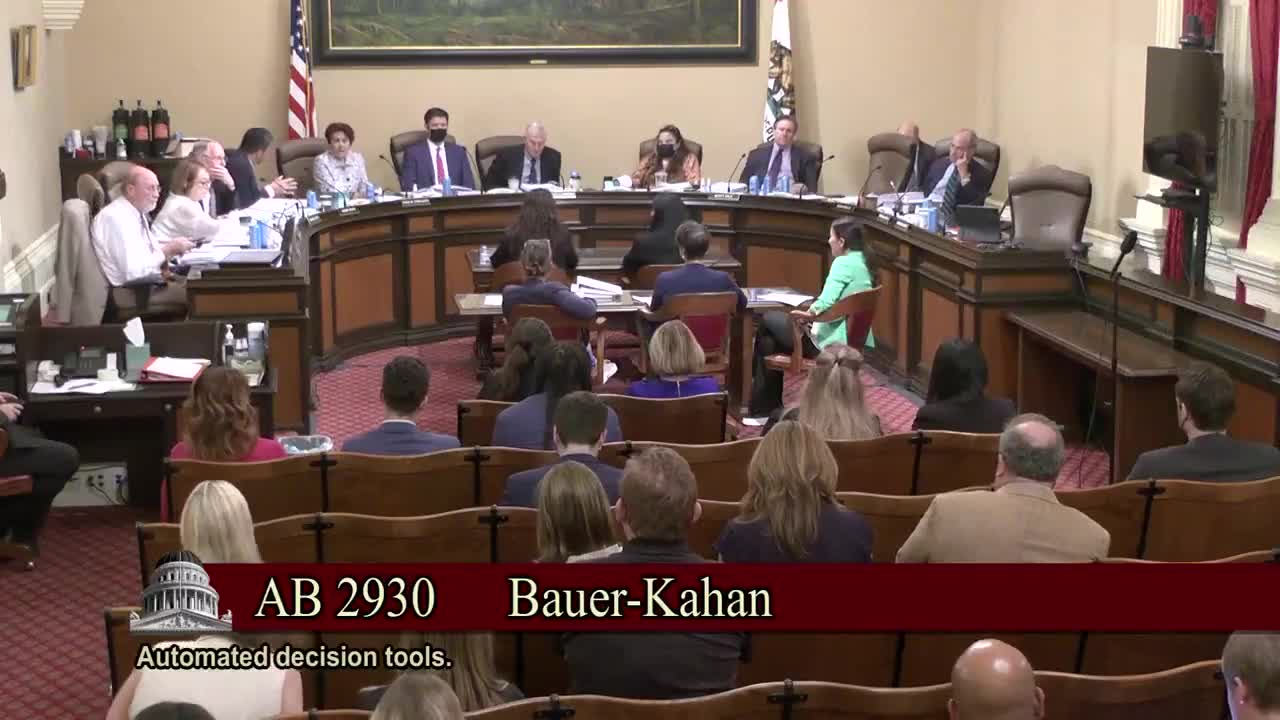
Bill Author
Bill Co-Author(s):