AB 1607: Los Angeles County Affordable Housing Solutions Agency.
- Session Year: 2023-2024
- House: Assembly
- Latest Version Date: 2023-10-10
Current Status:
Passed
(2023-10-10: Chaptered by Secretary of State - Chapter 730, Statutes of 2023.)
Introduced
In Committee
First Chamber
In Committee
Second Chamber
Enacted
Existing law, the Los Angeles County Regional Housing Finance Act (act), establishes the Los Angeles County Affordable Housing Solutions Agency (agency) to increase the supply of affordable housing in the County of Los Angeles. The act authorizes the agency to place funding measures on the ballot in the County of Los Angeles to raise and allocate funds to the County of Los Angeles, the cities in the county, and other public agencies and affordable housing projects within its jurisdiction for purposes of preserving and enhancing existing housing, funding renter protection programs, and financing new construction of affordable housing developments, as specified. The act limits the agencys jurisdiction to acting in a supplemental capacity when a municipality has, as of January 1, 2022, an existing program that provides similar supports and services, and prohibits any functions of existing programs from being transferred to or undertaken by the agency. The act also prohibits the agency from performing or undertaking any functions related to supports and services provided to people experiencing homelessness, except as specified.
The act requires the governing board of the agency to adopt an annual expenditure plan for the use of housing revenue that sets forth the share of revenue and estimated funding amount to be spent on certain categories within the annual programmatic budget, as specified.
This bill would authorize the agency to transfer a portion of the revenue raised by a tax measure adopted pursuant to the act to the County of Los Angeles for programs that provide supports and services to prevent and combat homelessness. The bill would exclude those transferred revenues from the annual expenditure plan and the annual programmatic budget and make other conforming changes.
This bill would make legislative findings and declarations as to the necessity of a special statute for the County of Los Angeles.
Existing law prescribes requirements for the disposal of surplus land, as defined, by a local agency. Existing law requires land to be declared surplus land or exempt surplus land, as supported by written findings, before a local agency takes any action to dispose of it consistent with the agencys policies or procedures.Existing law, the Los Angeles County Regional Housing Finance Act (act), establishes the Los Angeles County Affordable Housing Solutions Agency (agency) to increase the supply of affordable housing in the County of Los Angeles.This bill would exempt, from the above-described requirements applicable to surplus land, land owned by the agency that is disposed of for the production of qualified housing, as defined. The bill would require the agency to submit an annual report containing specified information to the Department of Housing and Community Development. The bill provides that if the agency disposes of land in violation of these provisions, the agency is liable for a civil penalty, as described, and requires the penalty to be deposited in specified funds for the sole purpose of financing newly constructed housing units located in the same jurisdiction as the surplus land and that are affordable, as specified. The bill would provide that the expenditure of these penalty moneys is subject to appropriation by the Legislature.The act requires a board composed of 21 voting members and one nonvoting member from the County of Los Angeles to govern the agency, including, among others, an at-large member from an eligible small city who is appointed by all members of the Los Angeles County City Selection Committee. Existing law requires the board to compile a list of eligible small cities.This bill would instead require the Los Angeles County City Selection Committee to compile a list of eligible small cities.This bill would make legislative findings and declarations as to the necessity of a special statute for the County of Los Angeles.Existing law prescribes requirements for the disposal of surplus land, as defined, by a local agency. Existing law requires land to be declared surplus land or exempt surplus land, as supported by written findings, before a local agency takes any action to dispose of it consistent with the agencys policies or procedures.
Existing law, the Los Angeles County Regional Housing Finance Act (act), establishes the Los Angeles County Affordable Housing Solutions Agency (agency) to increase the supply of affordable housing in the County of Los Angeles.
This bill would exempt exempt, from the above-described requirements applicable to surplus land, land transferred within the County of Los Angeles to owned by the agency for use consistent with the act from the above-described requirements applicable to surplus land. that is disposed of for the production of qualified housing, as defined. The bill would require the agency to submit an annual report containing specified information to the Department of Housing and Community Development. The bill provides that if the agency disposes of land in violation of these provisions, the agency is liable for a civil penalty, as described, and requires the penalty to be deposited in specified funds for the sole purpose of financing newly constructed housing units located in the same jurisdiction as the surplus land and that are affordable, as specified. The bill would provide that the expenditure of these penalty moneys is subject to appropriation by the Legislature.
The act requires a board composed of 21 voting members and one nonvoting member from the County of Los Angeles to govern the agency, including, among others, an at-large member from an eligible small city who is appointed by all members of the Los Angeles County City Selection Committee. Existing law requires the board to compile a list of eligible small cities.
This bill would instead require the Los Angeles County City Selection Committee to compile a list of eligible small cities.
This bill would make legislative findings and declarations as to the necessity of a special statute for the County of Los Angeles.
Existing law prescribes requirements for the disposal of surplus land, as defined, by a local agency. Existing law requires land to be declared surplus land or exempt surplus land, as supported by written findings, before a local agency takes any action to dispose of it consistent with the agencys policies or procedures.
Existing law, the Los Angeles County Regional Housing Finance Act (act), establishes the Los Angeles County Affordable Housing Solutions Agency (agency) to increase the supply of affordable housing in the County of Los Angeles.
This bill would exempt land transferred within the County of Los Angeles to the agency for use consistent with the act from the above-described requirements applicable to surplus land.
The act requires a board composed of 21 voting members and one nonvoting member from the County of Los Angeles to govern the agency, including, among others, an at-large member from an eligible small city who is appointed by all members of the Los Angeles County City Selection Committee. Existing law requires the board to compile a list of eligible small cities.
This bill would instead require the Los Angeles County City Selection Committee to compile a list of eligible small cities.
This bill would make legislative findings and declarations as to the necessity of a special statute for the County of Los Angeles.
Existing law prescribes requirements for the disposal of surplus land, as defined, by a local agency. Existing law requires land to be declared surplus land or exempt surplus land, as supported by written findings, before a local agency takes any action to dispose of it consistent with the agencys policies or procedures.
Existing law, the Los Angeles County Regional Housing Finance Act (act), establishes the Los Angeles County Affordable Housing Solutions Agency (agency) to increase the supply of affordable housing in the County of Los Angeles.
This bill would exempt land transferred within the County of Los Angeles to the agency from the above-described requirements applicable to surplus land.
The act requires a board composed of 21 voting members and one nonvoting member from the County of Los Angeles to govern the agency, including, among others, an at-large member from an eligible small city who is appointed by all members of the Los Angeles County City Selection Committee. Existing law requires the board to compile a list of eligible small cities.
This bill would instead require the Los Angeles County City Selection Committee to compile a list of eligible small cities.
This bill would make legislative findings and declarations as to the necessity of a special statute for the County of Los Angeles.
The Mello-Roos Community Facilities Act of 1982 authorizes a community facilities district to finance the purchase, construction, expansion, improvement, or rehabilitation of certain facilities, including, among others, child care facilities.This bill would make a nonsubstantive change to that provision.The Mello-Roos Community Facilities Act of 1982 authorizes a community facilities district to finance the purchase, construction, expansion, improvement, or rehabilitation of certain facilities, including, among others, child care facilities.
This bill would make a nonsubstantive change to that provision.
(a)(1)The Los Angeles County Affordable Housing Solutions Agency is hereby established with jurisdiction extending throughout Los Angeles County, except that the agency shall only have jurisdiction to act in a supplemental capacity when a municipality has, as of January 1, 2022, an existing program that provides similar supports and services, and in no circumstances shall any functions of existing programs be transferred to or undertaken by the agency, nor shall the agency perform or undertake any functions related to supports and services provided to people experiencing homelessness, unless such supports and services are explicitly authorized by this chapter or are directly related to the provision of other supports and services authorized explicitly by this chapter.
(2)Notwithstanding paragraph (1), the agency may transfer a portion of the revenue raised by a tax measure adopted pursuant to this title to the County of Los Angeles for programs that provide supports and services to prevent and combat homelessness.
(b)The formation and jurisdictional boundaries of the agency are not subject to the Cortese-Knox-Hertzberg Local Government Reorganization Act of 2000 (Division 3 (commencing with Section 56000) of Title 5).
(c)The agencys purpose is to increase the supply of affordable housing in Los Angeles County by providing for significantly enhanced funding and technical assistance at a regional level for renter protections, affordable housing preservation, and new affordable housing production of 100 percent affordable housing for households earning 80 percent of the appropriate area median income or below, with financing priority on the lowest levels of affordability.
(d)The agency shall complement and supplement existing efforts by cities, counties, districts, and other local, regional, and state entities, related to addressing the goals described in this title.
SEC. 2.Section 64717 of the Government Code is amended to read:64717.(a)Five years after the voters approve an initial ballot measure proposed pursuant to Section 64721, the board shall review the implementation of the measure. The review shall include the following:
(1)An analysis of the expenditures to date.
(2)The number of affordable housing units produced and preserved at different household income levels.
(3)The tenant protection services provided, and the role of the agency.
(b)No earlier than five years after approval of a funding measure under Chapter 2 (commencing with Section 64810) and subject to consultation with the agreement of the citizens oversight committee by a two-thirds vote, the board may change any of the minimum requirements in subdivision (d) of Section 64830 if the board adopts a finding that both allocated funding has been unspent in a given category across multiple years and the regions needs in a given category differ from those requirements. The board is required to approve the finding by a two-thirds vote. Approval of the finding shall be subject to the public participation requirements provided in subdivision (f) of Section 64711.
(c)(1)The board shall, after the citizens oversight committee approves the annual expenditure plan, adopt the annual expenditure plan for the use of housing revenue by July 1 of each year, except the board shall select the deadline to adopt the first annual expenditure plan. To support long-term planning, the annual expenditure plan may cover multiple years, as determined by the board. In the event any of the planned annual expenditures do not correspond to actual expenditures that meet the minimum annual expenditure requirements set forth in this chapter, the board shall ensure subsequent expenditure plans account for previous underspending so that the average spending over at least a three-year budget period achieves the minimum annual expenditure set forth in this chapter.
(2)The annual expenditure plan shall set forth the share of revenue and estimated funding amount to be spent on each of the categories established in subdivision (d) of Section 64830, indicate the household income levels to be served within each category of expenditures, and estimate the number of affordable housing units to be built or preserved and the number of tenants to be protected. To the extent feasible, the annual expenditure plan shall include a description of any specific project or program proposed to receive funding, including the location, amount of funding, and anticipated outcomes. If a tax measure is adopted pursuant to subdivision (a) of Section 64720 and the agency transfers a portion of the revenue raised by such measure to the County of Los Angeles for programs that provide supports and services to prevent and combat homelessness, the portion of revenue transferred shall be excluded from the annual expenditure plan.
SEC. 3.Section 64830 of the Government Code is amended to read:64830.(a)(1)Revenue generated pursuant to this part shall be used for the construction of new affordable housing, affordable housing preservation, tenant protection programs, planning and technical assistance related to affordable housing, and for other purposes, as provided for in this section.
(2)Notwithstanding paragraph (1), the agency may transfer a portion of the revenue raised by a tax measure adopted pursuant to this title to the County of Los Angeles for programs that provide supports and services to prevent and combat homelessness.
(b)(1)For purposes of this section, regional housing revenues are those revenues generated pursuant to Chapter 2 (commencing with Section 64810) except as provided in paragraph (2).
(2)If a tax measure is adopted pursuant to this title and the agency transfers a portion of the revenue raised by the measure to the County of Los Angeles for programs that provide supports and services to prevent and combat homelessness, the portion of revenue transferred shall not be included in regional housing revenues or the annual programmatic budget and shall not be subject to this chapter.
(c)The allocation of regional housing revenues to projects and programs shall be approved by the board.
(d)Subject to funding eligibility and adjustment pursuant to subdivision (b) of Section 64717, the agency shall distribute regional housing revenue in the form of a grant, loan, or other financing tool pursuant to subdivision (q) of Section 64720 in a manner that achieves the following shares in the annual expenditure plan:
(1)A minimum of 40 percent of the annual programmatic budget, excluding any bond indebtedness, shall be spent on affordable housing creation, preservation, and ownership as follows:
(A)The following conditions shall apply with regard to affordable housing creation:
(i)Funding pursuant to this subparagraph may be used for the following purposes, including, but not limited to, land acquisition, housing acquisition, financing, and ownership programs, including the agency serving as a single source of financing as appropriate, income assistance for extremely low income households, and project-based rental assistance contracts with no time limit that are restricted to the support of extremely low income households.
(ii)Financing for any development costs associated with a project or funding grant that is for housing that is 100 percent affordable, which means restricted to any household that earns less than 80 percent of the area median income (AMI), including permanent supportive housing that includes onsite supportive services. An eligible project may also include a subset of at least 50 units, or 50 percent of the total units, whichever is greater, in a larger development that includes units targeted up to 120 percent of AMI, in which case the agency may only fund units that are designated for extremely low and very low income households, and agency funds shall not be used in connection with any unit that is income restricted due to development incentives, density bonuses, or similar programs.
(I)For each of the eligible jurisdictions, as defined in paragraph (1) of subdivision (a) of Section 64830.5, 25 percent of all funded units shall be reserved for extremely low income households, as defined in Section 50106 of the Health and Safety Code, and 25 percent shall be reserved for very low income households, as defined in Section 50105 of the Health and Safety Code, over any two-year period, with regular monitoring by the citizens oversight committee and board of units funded and constructed during that two-year period.
(II)For each project, 10 percent of the units in the project shall be reserved for extremely low income households and 10 percent of the units shall be reserved for very low income households.
(B)Funding pursuant to this paragraph for affordable housing preservation programs may be used to acquire, rehabilitate, place affordability restrictions on, and preserve existing housing units, housing from the private market, and units in residential hotels as defined in paragraph (1) of subdivision (b) of Section 50519 of the Health and Safety Code for affordability, in order to prevent the loss of affordability and expand permanent affordability. Funding provided pursuant to this subparagraph shall be subject to both of the following conditions:
(i)Existing residents of buildings acquired for the purpose of affordable housing preservation shall not be permanently displaced, even if the residents household income exceeds the moderate-income limits in Section 50093 of the Health and Safety Code.
(ii)Buildings acquired for the purpose of affordable housing preservation shall achieve 100 percent occupancy by extremely low or very low income households over time through unit turnover.
Grants, loans or other financing provided to Community land trusts and other similarly structured nonprofit entities to acquire, rehabilitate, and preserve existing housing units are an eligible use pursuant to this subparagraph.
Programs to enable low- or moderate-income households to become or remain homeowners, including, but not limited to, below market rate ownership programs, down payment assistance programs, residential rehabilitation loan programs, and grants or loans to assist in the rehabilitation or replacement of existing mobilehomes located in a mobilehome or manufactured home are eligible uses pursuant to this subparagraph.
(C)Funding provided pursuant to this paragraph shall be subject to the following conditions in the event that demolition or rehabilitation of housing units is required:
(i)(I)Any funded development or affordable housing grant on any property that includes a parcel or parcels that currently have residential uses, or within the five years preceding the grant have had residential uses that have been vacated or demolished, that are or were subject to a recorded covenant, ordinance, or law that restricts rents to levels affordable to persons and families of low- or very low income, subject to any other form of rent or price control through a public entitys valid exercise of its police power, or occupied by low- or very low income households, shall be subject to a policy requiring the replacement of all those units to be made available at affordable rent or affordable housing cost to, and occupied by, persons and families in the same or lower income category as those households in occupancy.
(II)Replacement requirements shall be consistent with those set forth in paragraph (3) of subdivision (c) of Section 65915, provided that any dwelling unit that is or was, within the five-year period preceding the grant, subject to a form of rent or price control through a local governments valid exercise of its police power and that is or was occupied by persons or families above lower income shall be replaced with units made available at affordable rent or affordable housing cost to, and occupied by, low-income persons or families.
(ii)If existing residents are required to be relocated due to demolition or rehabilitation needs, the developer is required to provide relocation benefits to the occupants of those housing rental units subject to Chapter 16 (commencing with Section 7260) of Division 7 of Title 1. The developer shall comply with either the local government requirements for relocation assistance to displaced households or the policy set by the agency for relocation assistance to displaced households, whichever provides a greater benefit to the relocated or displaced households.
(iii)If existing occupants who are lower income households are required to vacate their units due to demolition or rehabilitation needs, the developer shall provide a right of first refusal for a comparable unit available in the new or rehabilitated housing development that is affordable to the household at an affordable rent, as defined in Section 50053 of the Health and Safety Code, or an affordable housing cost, as defined in Section 50052.5 of the Health and Safety Code.
(2)(A)At least 30 percent of the total annual programmatic budget, excluding any bond indebtedness, shall be spent on countywide renter protection and support programs.
(B)These programs include any effort that helps renters of lower income households, as defined in Section 50079.5 of the Health and Safety Code.
(C)Eligible uses of the funds include, but are not limited to, all of the following:
(i)Preeviction and eviction legal services, counseling, advice and consultation, training, renter education and representation, and services to improve habitability that protect against displacement of tenants.
(ii)Providing rental assistance for lower income households. Rental assistance shall be provided to a specific household for a reasonable amount of time not to exceed six months, and shall be paired with supportive services, such as eviction prevention and defense, to the greatest extent possible.
(iii)Providing relocation assistance for lower income households beyond what is legally required of landlords according to local or state law.
(3)Fifteen percent of the total annual programmatic budget shall be allocated as annual priorities, and these funds may be used for any eligible activity outlined in this chapter as part of the annual expenditure plan.
(4)At least 5 percent of the total annual programmatic budget, excluding any bond indebtedness, shall be used for technical assistance, research, and policy development. Eligible uses for these funds include, but are not limited to, all of the following:
(A)Collecting and tracking information related to displacement and displacement risk, rents, and evictions in the region.
(B)Drafting model affordable housing land use ordinances that may be adopted by any jurisdiction in Los Angeles County.
(5)Not more than 10 percent of the total annual programmatic budget, excluding any bond indebtedness, shall be used for the agencies administrative and operations expenses.
SEC. 4.The Legislature finds and declares that a special statute is necessary and that a general statute cannot be made applicable within the meaning of Section 16 of Article IV of the California Constitution because of the uniquely severe shortage of available funding and resources for the development and preservation of affordable housing and the particularly acute nature of the housing crisis within the County of Los Angeles. To address the housing crisis, the Legislature has established the Los Angeles County Affordable Housing Solutions Agency, which has limited staff and administrative capacity. The act would allow the Los Angeles County Affordable Housing Solutions Agency to address the housing crisis by expediting the construction of housing and meeting the housing needs of the County of Los Angeles.
(a)(1)The Los Angeles County Affordable Housing Solutions Agency is hereby established with jurisdiction extending throughout Los Angeles County, except that the agency shall only have jurisdiction to act in a supplemental capacity when a municipality has, as of January 1, 2022, an existing program that provides similar supports and services, and in no circumstances shall any functions of existing programs be transferred to or undertaken by the agency, nor shall the agency perform or undertake any functions related to supports and services provided to people experiencing homelessness, unless such supports and services are explicitly authorized by this chapter or are directly related to the provision of other supports and services authorized explicitly by this chapter.
(2)Notwithstanding paragraph (1), the agency may transfer a portion of the revenue raised by a tax measure adopted pursuant to this title to the County of Los Angeles for programs that provide supports and services to prevent and combat homelessness.
(b)The formation and jurisdictional boundaries of the agency are not subject to the Cortese-Knox-Hertzberg Local Government Reorganization Act of 2000 (Division 3 (commencing with Section 56000) of Title 5).
(c)The agencys purpose is to increase the supply of affordable housing in Los Angeles County by providing for significantly enhanced funding and technical assistance at a regional level for renter protections, affordable housing preservation, and new affordable housing production of 100 percent affordable housing for households earning 80 percent of the appropriate area median income or below, with financing priority on the lowest levels of affordability.
(d)The agency shall complement and supplement existing efforts by cities, counties, districts, and other local, regional, and state entities, related to addressing the goals described in this title.
SEC. 2.Section 64717 of the Government Code is amended to read:64717.(a)Five years after the voters approve an initial ballot measure proposed pursuant to Section 64721, the board shall review the implementation of the measure. The review shall include the following:
(1)An analysis of the expenditures to date.
(2)The number of affordable housing units produced and preserved at different household income levels.
(3)The tenant protection services provided, and the role of the agency.
(b)No earlier than five years after approval of a funding measure under Chapter 2 (commencing with Section 64810) and subject to consultation with the agreement of the citizens oversight committee by a two-thirds vote, the board may change any of the minimum requirements in subdivision (d) of Section 64830 if the board adopts a finding that both allocated funding has been unspent in a given category across multiple years and the regions needs in a given category differ from those requirements. The board is required to approve the finding by a two-thirds vote. Approval of the finding shall be subject to the public participation requirements provided in subdivision (f) of Section 64711.
(c)(1)The board shall, after the citizens oversight committee approves the annual expenditure plan, adopt the annual expenditure plan for the use of housing revenue by July 1 of each year, except the board shall select the deadline to adopt the first annual expenditure plan. To support long-term planning, the annual expenditure plan may cover multiple years, as determined by the board. In the event any of the planned annual expenditures do not correspond to actual expenditures that meet the minimum annual expenditure requirements set forth in this chapter, the board shall ensure subsequent expenditure plans account for previous underspending so that the average spending over at least a three-year budget period achieves the minimum annual expenditure set forth in this chapter.
(2)The annual expenditure plan shall set forth the share of revenue and estimated funding amount to be spent on each of the categories established in subdivision (d) of Section 64830, indicate the household income levels to be served within each category of expenditures, and estimate the number of affordable housing units to be built or preserved and the number of tenants to be protected. To the extent feasible, the annual expenditure plan shall include a description of any specific project or program proposed to receive funding, including the location, amount of funding, and anticipated outcomes. If a tax measure is adopted pursuant to subdivision (a) of Section 64720 and the agency transfers a portion of the revenue raised by such measure to the County of Los Angeles for programs that provide supports and services to prevent and combat homelessness, the portion of revenue transferred shall be excluded from the annual expenditure plan.
SEC. 3.Section 64830 of the Government Code is amended to read:64830.(a)(1)Revenue generated pursuant to this part shall be used for the construction of new affordable housing, affordable housing preservation, tenant protection programs, planning and technical assistance related to affordable housing, and for other purposes, as provided for in this section.
(2)Notwithstanding paragraph (1), the agency may transfer a portion of the revenue raised by a tax measure adopted pursuant to this title to the County of Los Angeles for programs that provide supports and services to prevent and combat homelessness.
(b)(1)For purposes of this section, regional housing revenues are those revenues generated pursuant to Chapter 2 (commencing with Section 64810). 64810) except as provided in paragraph (2).
(2)If a tax measure is adopted pursuant to this title and the agency transfers a portion of the revenue raised by the measure to the County of Los Angeles for programs that provide supports and services to prevent and combat homelessness, the portion of revenue transferred shall not be included in regional housing revenues or the annual programmatic budget and shall not be subject to this chapter.
(c)The allocation of regional housing revenues to projects and programs shall be approved by the board.
(d)Subject to funding eligibility and adjustment pursuant to subdivision (b) of Section 64717, the agency shall distribute regional housing revenue in the form of a grant, loan, or other financing tool pursuant to subdivision (q) of Section 64720 in a manner that achieves the following shares in the annual expenditure plan:
(1)A minimum of 40 percent of the annual programmatic budget, excluding any bond indebtedness, shall be spent on affordable housing creation, preservation, and ownership as follows:
(A)The following conditions shall apply with regard to affordable housing creation:
(i)Funding pursuant to this subparagraph may be used for the following purposes, including, but not limited to, land acquisition, housing acquisition, financing, and ownership programs, including the agency serving as a single source of financing as appropriate, income assistance for extremely low income households, and project-based rental assistance contracts with no time limit that are restricted to the support of extremely low income households.
(ii)Financing for any development costs associated with a project or funding grant that is for housing that is 100 percent affordable, which means restricted to any household that earns less than 80 percent of the area median income (AMI), including permanent supportive housing that includes onsite supportive services. An eligible project may also include a subset of at least 50 units, or 50 percent of the total units, whichever is greater, in a larger development that includes units targeted up to 120 percent of AMI, in which case the agency may only fund units that are designated for extremely low and very low income households, and agency funds shall not be used in connection with any unit that is income restricted due to development incentives, density bonuses, or similar programs.
(I)For each of the eligible jurisdictions, as defined in paragraph (1) of subdivision (a) of Section 64830.5, 25 percent of all funded units shall be reserved for extremely low income households, as defined in Section 50106 of the Health and Safety Code, and 25 percent shall be reserved for very low income households, as defined in Section 50105 of the Health and Safety Code, over any two-year period, with regular monitoring by the citizens oversight committee and board of units funded and constructed during that two-year period.
(II)For each project, 10 percent of the units in the project shall be reserved for extremely low income households and 10 percent of the units shall be reserved for very low income households.
(B)Funding pursuant to this paragraph for affordable housing preservation programs may be used to acquire, rehabilitate, place affordability restrictions on, and preserve existing housing units, housing from the private market, and units in residential hotels as defined in paragraph (1) of subdivision (b) of Section 50519 of the Health and Safety Code for affordability, in order to prevent the loss of affordability and expand permanent affordability. Funding provided pursuant to this subparagraph shall be subject to both of the following conditions:
(i)Existing residents of buildings acquired for the purpose of affordable housing preservation shall not be permanently displaced, even if the residents household income exceeds the moderate-income limits in Section 50093 of the Health and Safety Code.
(ii)Buildings acquired for the purpose of affordable housing preservation shall achieve 100 percent occupancy by extremely low or very low income households over time through unit turnover.
Grants, loans or other financing provided to Community land trusts and other similarly structured nonprofit entities to acquire, rehabilitate, and preserve existing housing units are an eligible use pursuant to this subparagraph.
Programs to enable low- or moderate-income households to become or remain homeowners, including, but not limited to, below market rate ownership programs, down payment assistance programs, residential rehabilitation loan programs, and grants or loans to assist in the rehabilitation or replacement of existing mobilehomes located in a mobilehome or manufactured home are eligible uses pursuant to this subparagraph.
(C)Funding provided pursuant to this paragraph shall be subject to the following conditions in the event that demolition or rehabilitation of housing units is required:
(i)(I)Any funded development or affordable housing grant on any property that includes a parcel or parcels that currently have residential uses, or within the five years preceding the grant have had residential uses that have been vacated or demolished, that are or were subject to a recorded covenant, ordinance, or law that restricts rents to levels affordable to persons and families of low- or very low income, subject to any other form of rent or price control through a public entitys valid exercise of its police power, or occupied by low- or very low income households, shall be subject to a policy requiring the replacement of all those units to be made available at affordable rent or affordable housing cost to, and occupied by, persons and families in the same or lower income category as those households in occupancy.
(II)Replacement requirements shall be consistent with those set forth in paragraph (3) of subdivision (c) of Section 65915, provided that any dwelling unit that is or was, within the five-year period preceding the grant, subject to a form of rent or price control through a local governments valid exercise of its police power and that is or was occupied by persons or families above lower income shall be replaced with units made available at affordable rent or affordable housing cost to, and occupied by, low-income persons or families.
(ii)If existing residents are required to be relocated due to demolition or rehabilitation needs, the developer is required to provide relocation benefits to the occupants of those housing rental units subject to Chapter 16 (commencing with Section 7260) of Division 7 of Title 1. The developer shall comply with either the local government requirements for relocation assistance to displaced households or the policy set by the agency for relocation assistance to displaced households, whichever provides a greater benefit to the relocated or displaced households.
(iii)If existing occupants who are lower income households are required to vacate their units due to demolition or rehabilitation needs, the developer shall provide a right of first refusal for a comparable unit available in the new or rehabilitated housing development that is affordable to the household at an affordable rent, as defined in Section 50053 of the Health and Safety Code, or an affordable housing cost, as defined in Section 50052.5 of the Health and Safety Code.
(2)(A)At least 30 percent of the total annual programmatic budget, excluding any bond indebtedness, shall be spent on countywide renter protection and support programs.
(B)These programs include any effort that helps renters of lower income households, as defined in Section 50079.5 of the Health and Safety Code.
(C)Eligible uses of the funds include, but are not limited to, all of the following:
(i)Preeviction and eviction legal services, counseling, advice and consultation, training, renter education and representation, and services to improve habitability that protect against displacement of tenants.
(ii)Providing rental assistance for lower income households. Rental assistance shall be provided to a specific household for a reasonable amount of time not to exceed six months, and shall be paired with supportive services, such as eviction prevention and defense, to the greatest extent possible.
(iii)Providing relocation assistance for lower income households beyond what is legally required of landlords according to local or state law.
(3)Fifteen percent of the total annual programmatic budget shall be allocated as annual priorities, and these funds may be used for any eligible activity outlined in this chapter as part of the annual expenditure plan.
(4)At least 5 percent of the total annual programmatic budget, excluding any bond indebtedness, shall be used for technical assistance, research, and policy development. Eligible uses for these funds include, but are not limited to, all of the following:
(A)Collecting and tracking information related to displacement and displacement risk, rents, and evictions in the region.
(B)Drafting model affordable housing land use ordinances that may be adopted by any jurisdiction in Los Angeles County.
(5)Not more than 10 percent of the total annual programmatic budget, excluding any bond indebtedness, shall be used for the agencies administrative and operations expenses.
SEC. 4.The Legislature finds and declares that a special statute is necessary and that a general statute cannot be made applicable within the meaning of Section 16 of Article IV of the California Constitution because of the uniquely severe shortage of available funding and resources for the development and preservation of affordable housing and the particularly acute nature of the housing crisis within the County of Los Angeles. To address the housing crisis, the Legislature has established the Los Angeles County Affordable Housing Solutions Agency, which has limited staff and administrative capacity. The act would allow the Los Angeles County Affordable Housing Solutions Agency to address the housing crisis by expediting the construction of housing and meeting the housing needs of the County of Los Angeles.
All matter omitted in this version of the bill appears in the bill as amended in the Assembly, April 20, 2023. (JR11)(a)This Subject to subdivisions (b) and (c), this article shall not apply to land transferred within the County of Los Angeles to owned by the Los Angeles County Affordable Housing Solutions Agency for use consistent with Title 6.9 (commencing with Section 64700). that is disposed of for the production of qualified housing.
(b)(1)The agency shall submit an annual report to the department that includes, for any land disposed of pursuant to subdivision (a), the location of the disposed land, the number of units approved to be developed on the land, and the number of units produced on the land.
(2)The department may request additional information from the agency regarding land disposed of pursuant to subdivision (a).
(3)This subdivision does not authorize the department to require the submission of data related to land disposed of pursuant to subdivision (a), or its review thereof, as a precondition of disposition.
(c)(1)If the agency disposes of land in violation of this section, the agency shall be liable for a civil penalty calculated as follows:
(A)For a first violation, 30 percent of the greater of the final sale price or the fair market value of the land at the time of disposition.
(B)For a second or subsequent violation, 50 percent of the greater of the final sale price or the fair market value of the land at the time of disposition.
(2)For purposes of paragraph (1), fair market value shall be determined by an independent appraisal of the land.
(3)An action to enforce paragraph (1) may be brought by any of the following:
(A)An entity identified in subdivisions (a) to (e), inclusive, of Section 54222.
(B)A person who would have been eligible to apply for residency in affordable housing had the agency not violated this section.
(C)A housing organization, as that term is defined in Section 65589.5.
(D)A beneficially interested person or entity.
(E)The department.
(4)A penalty assessed pursuant to this subdivision shall be deposited in the Building Homes and Jobs Trust Fund or the Housing Rehabilitation Loan Fund for the sole purpose of financing newly constructed housing units located in the same jurisdiction as the disposed land and that are affordable to extremely low, very low, or low-income households. Notwithstanding any law, expenditure of any penalty moneys deposited into the Building Homes and Jobs Trust Fund or the Housing Rehabilitation Loan Fund pursuant to this subdivision shall be subject to appropriation by the Legislature.
(b)(d)For the purposes of this section, Los the following definitions apply:
(1)Agency or Los Angeles County Affordable Housing Solutions Agency means the Los Angeles County Affordable Housing Solutions Agency established pursuant to Section 64710.
(2)Department means the Department of Housing and Community Development.
(3)Qualified housing means housing where 100 percent of the units are restricted to households earning 80 percent of the area median income or below and that will be used in a manner that is consistent with Title 6.9 (commencing with Section 64700).
SEC. 2.Section 64711 of the Government Code is amended to read:64711.(a)The agency shall be governed by a board of directors composed of 21 voting members and one nonvoting member, as follows:
(1)Five members of the Los Angeles County Board of Supervisors. If the number of members of the Los Angeles County Board of Supervisors is increased, the agency shall, within 60 days of the increase, submit a plan to the Legislature for revising the composition of the agency.
(2)(A)The mayor of the City of Los Angeles.
(B)Three members appointed by the mayor of the City of Los Angeles, each of whom shall be either a member of the Los Angeles City Council or a housing expert or advocate.
(C)One member who is a city council member or a housing expert or advocate appointed by the President of the Los Angeles City Council.
(3)The mayor of the City of Long Beach or the vice mayor of the City of Long Beach, as determined by the mayor of the City of Long Beach.
(4)(A)Five members, each of whom shall be a mayor or a member of a city council, appointed by the Los Angeles County City Selection Committee.
(B)For purposes of the selection of four of the members appointed pursuant to subparagraph (A), Los Angeles County, excluding the City of Long Beach and the City of Los Angeles, shall be divided into the following four sectors:
(i)The North County and San Fernando Valley sector.
(ii)The Southwest Corridor sector.
(iii)The San Gabriel Valley sector.
(iv)The Southeast sector.
(C)For purposes of the selection of one of the members appointed pursuant to subparagraph (A), one of the members shall be an at-large member who will be selected each term from one of the four sectors described in subparagraph (B), in the following order: the Southeast sector; the San Gabriel Valley sector; the Southwest Corridor sector; and the North County and San Fernando Valley sector.
(D)The League of California Cities, Los Angeles County Division, shall define the sectors. Every city within a sector shall be entitled to vote to select a candidate from that sector for consideration for appointment by the Los Angeles County City Selection Committee. A citys vote shall be weighted in the same proportion that its population bears to the total population of all cities within the sector.
(E)The members appointed pursuant to subparagraph (A) shall be appointed by the Los Angeles County City Selection Committee upon an affirmative vote of its members that represent a majority of the population of all cities within the county, excluding the City of Los Angeles and the City of Long Beach.
(5)(A)One at-large member from an eligible small city who is appointed by all members of the Los Angeles County City Selection Committee that are eligible for the seat, as determined by the board.
(B)For purposes of this paragraph, eligible small city means a city in the County of Los Angeles that meets all of the following requirements:
(i)The city has a population of less than 100,000, according to the most recent census, as of the date that the at-large member is selected.
(ii)The city is in the top 50 percent of the most impacted cities in the County of Los Angeles, as determined by the proportion of households that are low-income and severely cost-burdened according to data from the United States Department of Housing and Urban Developments Comprehensive Housing Affordability Strategy database, as used in the CalEnviroScreen Housing Burden tool.
(iii)As of January 1, 2024, the city is in substantial compliance with housing element law.
(iv)As of January 1, 2027, the city has adopted programs and policies to support low-income renters at risk of eviction.
(v)The city has adopted at least one model land use standard created by the agency, or a substantially similar land use policy, by January 2027, or within two years after those land use standards are created, whichever date is later. If the agency has updated a particular model land use standard less than two years prior to the appointment, a city that has adopted the current or immediately preceding version of the model standard shall be considered a small city.
(C)The Los Angeles County City Selection Committee shall compile a list of cities that satisfy the definition of eligible small city.
(6)(A)(i)The interim chair of the citizens oversight committee created by Section 64718.
(ii)The interim chair shall be selected by the three members described in subparagraph (A) of paragraph (7) and then submitted to the full board for approval.
(iii)The interim chair shall have lived or experienced homelessness or housing instability.
(B)The chair of the citizens oversight committee created by Section 64718 after the chair is elected pursuant to Section 64718.1, at which time the chair shall replace the interim chair described in subparagraph (A).
(7)(A)Until permanent expert members are selected, three members as follows:
(i)One member with expertise in affordable housing production, who shall be a designee from the Southern California Association of Non Profit Housing.
(ii)One member with expertise in affordable housing preservation, who shall be a designee from the Los Angeles Community Land Trust Coalition.
(iii)One member with expertise in renter protection and support, who shall be a designee from the steering committee for Stay Housed L.A. County.
(B)(i)The chief executive officer of the agency shall facilitate a selection process that results in three members as follows:
(I)One member with clear and demonstrated expertise in affordable housing production, including, but not limited to, affordable housing project finance and development.
(II)One member with clear and demonstrated expertise in affordable housing preservation, including, but not limited to, naturally occurring affordable housing, expiring affordability covenants, community land trusts, or related affordable housing preservation strategies.
(III)One member with clear and demonstrated expertise in renter protection and support, including, but not limited to, experience in advocating for or enforcing tenants rights.
(ii)(I)The chief executive officer of the agency shall create three lists, one for each subclause in clause (i), each with at least five candidates who satisfy the criteria of that subclause.
(II)Members of the public shall be entitled to submit their names for consideration or to nominate other persons for consideration by the chief executive officer of the agency for inclusion in the candidates list required by subclause (I).
(III)The candidates required by subclause (I) shall be subject to the agencys conflict-of-interest policies.
(iii)The members described in clause (i) shall be selected by a vote of the 15 elected members of the board described in paragraphs (1) to (4), inclusive, from the lists created pursuant to this clause.
(8)The Executive Director of the Southern California Association of Governments shall be a nonvoting member.
(b)The board members specified in paragraphs (1) to (4), inclusive, of subdivision (a) may each appoint an alternate member to the agency to represent, at a meeting of the agency, a regular member it has appointed, but only if the regular member cannot attend the meeting.
(c)For purposes of this section, an alternate member shall be:
(1)In the case of the member of the City Council of the City of Los Angeles appointed by the mayor of the City of Los Angeles, any person appointed by the mayor with the consent of the city council. If the alternate member is a member of the city council, then consent of that city council is not necessary.
(2)In the case of any public members, any persons designated by the appointing member so long as that person is a resident of Los Angeles County.
(d)The board shall designate a chair, vice chair, and second vice chair, as well as establish guidelines for the designation process and the term of each office.
(e)(1)A member of the board may receive a per diem for each board meeting that the member attends. The board shall set the amount of that per diem for a members attendance, but that amount shall not exceed one hundred dollars ($100) per meeting. A member shall not receive a payment for more than two meetings in a calendar month.
(2)A board member may waive a payment of per diem authorized by this subdivision.
(3)Out-of-state travel and conference travel shall be compensated by the board members home city or county.
(f)In addition to the requirements imposed pursuant to subdivision (g), the agency shall engage in public participation processes, which shall include the following:
(1)Outreach efforts to encourage the active participation of a broad range of stakeholder groups in the planning process, including, but not limited to, affordable housing and homelessness advocates, nonprofit developers, neighborhood and community groups, environmental advocates, equity organizations, home builder representatives, and business organizations.
(2)The agency shall require proactive community engagement related to any project or development funded by the agency, in advance of any public meeting or notice of impending action, with a focus on residents of an impacted building and immediately adjacent residents. The agency shall give public notice, through posting on the internet, of any plans or projects funded directly by the agency or by any eligible jurisdiction, at least 30 days in advance of that action. The agency staff may hold a public meeting where deemed appropriate, at a time and a location convenient for members of the public for any project that receives funding from the agency either through the agency itself or a local jurisdiction. The board may choose to hold a public meeting to discuss a project or development when appropriate.
(3)A process for enabling members of the public to provide an annual written request to receive agency notices, information, and updates.
(g)(1)Members of the board are subject to Article 2.4 (commencing with Section 53234) of Chapter 2 of Part 1 of Division 2 of Title 5.
(2)The agency shall be subject to the Ralph M. Brown Act (Chapter 9 (commencing with Section 54950) of Part 1 of Division 2 of Title 5), the California Public Records Act (Division 10 (commencing with Section 7920.000) of Title 1), and the Political Reform Act of 1974 (Title 9 (commencing with Section 81000)).
SEC. 3.Section 64723 is added to the Government Code, immediately following Section 64722, to read:64723.Land that is transferred within the jurisdiction of the agency to the agency for use consistent with this title shall be exempt from the requirements of Article 8 (commencing with Section 54220) of Chapter 5 of Part 1 of Division 2 of Title 5.SEC. 4.SEC. 3.The Legislature finds and declares that a special statute is necessary and that a general statute cannot be made applicable within the meaning of Section 16 of Article IV of the California Constitution because of the uniquely severe shortage of available funding and resources for the development and preservation of affordable housing and the particularly acute nature of the housing crisis within the County of Los Angeles. To address the housing crisis, the Legislature has established the Los Angeles County Affordable Housing Solutions Agency, which has limited staff and administrative capacity. The act would allow the Los Angeles County Affordable Housing Solutions Agency to address the housing crisis by expediting the construction of housing and meeting the housing needs of the County of Los Angeles.
(a)This article shall not apply to land transferred within the County of Los Angeles to the Los Angeles County Affordable Housing Solutions Agency for use consistent with Title 6.9 (commencing with Section 64700).
(b)For the purposes of this section, Los Angeles County Affordable Housing Solutions Agency means the Los Angeles County Affordable Housing Solutions Agency established pursuant to Section 64710.
SEC. 2.Section 64711 of the Government Code is amended to read:64711.(a)The agency shall be governed by a board of directors composed of 21 voting members and one nonvoting member, as follows:
(1)Five members of the Los Angeles County Board of Supervisors. If the number of members of the Los Angeles County Board of Supervisors is increased, the agency shall, within 60 days of the increase, submit a plan to the Legislature for revising the composition of the agency.
(2)(A)The mayor of the City of Los Angeles.
(B)Three members appointed by the mayor of the City of Los Angeles, each of whom shall be either a member of the Los Angeles City Council or a housing expert or advocate.
(C)One member who is a city council member or a housing expert or advocate appointed by the President of the Los Angeles City Council.
(3)The mayor of the City of Long Beach or the vice mayor of the City of Long Beach, as determined by the mayor of the City of Long Beach.
(4)(A)Five members, each of whom shall be a mayor or a member of a city council, appointed by the Los Angeles County City Selection Committee.
(B)For purposes of the selection of four of the members appointed pursuant to subparagraph (A), Los Angeles County, excluding the City of Long Beach and the City of Los Angeles, shall be divided into the following four sectors:
(i)The North County and San Fernando Valley sector.
(ii)The Southwest Corridor sector.
(iii)The San Gabriel Valley sector.
(iv)The Southeast sector.
(C)For purposes of the selection of one of the members appointed pursuant to subparagraph (A), one of the members shall be an at-large member who will be selected each term from one of the four sectors described in subparagraph (B), in the following order: the Southeast sector; the San Gabriel Valley sector; the Southwest Corridor sector; and the North County and San Fernando Valley sector.
(D)The League of California Cities, Los Angeles County Division, shall define the sectors. Every city within a sector shall be entitled to vote to select a candidate from that sector for consideration for appointment by the Los Angeles County City Selection Committee. A citys vote shall be weighted in the same proportion that its population bears to the total population of all cities within the sector.
(E)The members appointed pursuant to subparagraph (A) shall be appointed by the Los Angeles County City Selection Committee upon an affirmative vote of its members that represent a majority of the population of all cities within the county, excluding the City of Los Angeles and the City of Long Beach.
(5)(A)One at-large member from an eligible small city who is appointed by all members of the Los Angeles County City Selection Committee that are eligible for the seat, as determined by the board.
(B)For purposes of this paragraph, eligible small city means a city in the County of Los Angeles that meets all of the following requirements:
(i)The city has a population of less than 100,000, according to the most recent census, as of the date that the at-large member is selected.
(ii)The city is in the top 50 percent of the most impacted cities in the County of Los Angeles, as determined by the proportion of households that are low-income and severely cost-burdened according to data from the United States Department of Housing and Urban Developments Comprehensive Housing Affordability Strategy database, as used in the CalEnviroScreen Housing Burden tool.
(iii)As of January 1, 2024, the city is in substantial compliance with housing element law.
(iv)As of January 1, 2027, the city has adopted programs and policies to support low-income renters at risk of eviction.
(v)The city has adopted at least one model land use standard created by the agency, or a substantially similar land use policy, by January 2027, or within two years after those land use standards are created, whichever date is later. If the agency has updated a particular model land use standard less than two years prior to the appointment, a city that has adopted the current or immediately preceding version of the model standard shall be considered a small city.
(C)The Los Angeles County City Selection Committee shall compile a list of cities that satisfy the definition of eligible small city.
(6)(A)(i)The interim chair of the citizens oversight committee created by Section 64718.
(ii)The interim chair shall be selected by the three members described in subparagraph (A) of paragraph (7) and then submitted to the full board for approval.
(iii)The interim chair shall have lived or experienced homelessness or housing instability.
(B)The chair of the citizens oversight committee created by Section 64718 after the chair is elected pursuant to Section 64718.1, at which time the chair shall replace the interim chair described in subparagraph (A).
(7)(A)Until permanent expert members are selected, three members as follows:
(i)One member with expertise in affordable housing production, who shall be a designee from the Southern California Association of Non Profit Housing.
(ii)One member with expertise in affordable housing preservation, who shall be a designee from the Los Angeles Community Land Trust Coalition.
(iii)One member with expertise in renter protection and support, who shall be a designee from the steering committee for Stay Housed L.A. County.
(B)(i)The chief executive officer of the agency shall facilitate a selection process that results in three members as follows:
(I)One member with clear and demonstrated expertise in affordable housing production, including, but not limited to, affordable housing project finance and development.
(II)One member with clear and demonstrated expertise in affordable housing preservation, including, but not limited to, naturally occurring affordable housing, expiring affordability covenants, community land trusts, or related affordable housing preservation strategies.
(III)One member with clear and demonstrated expertise in renter protection and support, including, but not limited to, experience in advocating for or enforcing tenants rights.
(ii)(I)The chief executive officer of the agency shall create three lists, one for each subclause in clause (i), each with at least five candidates who satisfy the criteria of that subclause.
(II)Members of the public shall be entitled to submit their names for consideration or to nominate other persons for consideration by the chief executive officer of the agency for inclusion in the candidates list required by subclause (I).
(III)The candidates required by subclause (I) shall be subject to the agencys conflict-of-interest policies.
(iii)The members described in clause (i) shall be selected by a vote of the 15 elected members of the board described in paragraphs (1) to (4), inclusive, from the lists created pursuant to this clause.
(8)The Executive Director of the Southern California Association of Governments shall be a nonvoting member.
(b)The board members specified in paragraphs (1) to (4), inclusive, of subdivision (a) may each appoint an alternate member to the agency to represent, at a meeting of the agency, a regular member it has appointed, but only if the regular member cannot attend the meeting.
(c)For purposes of this section, an alternate member shall be:
(1)In the case of the member of the City Council of the City of Los Angeles appointed by the mayor of the City of Los Angeles, any person appointed by the mayor with the consent of the city council. If the alternate member is a member of the city council, then consent of that city council is not necessary.
(2)In the case of any public members, any persons designated by the appointing member so long as that person is a resident of Los Angeles County.
(d)The board shall designate a chair, vice chair, and second vice chair, as well as establish guidelines for designation process and the term of each office.
(e)(1)A member of the board may receive a per diem for each board meeting that the member attends. The board shall set the amount of that per diem for a members attendance, but that amount shall not exceed one hundred dollars ($100) per meeting. A member shall not receive a payment for more than two meetings in a calendar month.
(2)A board member may waive a payment of per diem authorized by this subdivision.
(3)Out-of-state travel and conference travel shall be compensated by the board members home city or county.
(f)In addition to the requirements imposed pursuant to subdivision (g), the agency shall engage in public participation processes, which shall include the following:
(1)Outreach efforts to encourage the active participation of a broad range of stakeholder groups in the planning process, including, but not limited to, affordable housing and homelessness advocates, nonprofit developers, neighborhood and community groups, environmental advocates, equity organizations, home builder representatives, and business organizations.
(2)The agency shall require proactive community engagement related to any project or development funded by the agency, in advance of any public meeting or notice of impending action, with a focus on residents of an impacted building and immediately adjacent residents. The agency shall give public notice, through posting on the internet, of any plans or projects funded directly by the agency or by any eligible jurisdiction, at least 30 days in advance of that action. The agency staff may hold a public meeting where deemed appropriate, at a time and a location convenient for members of the public for any project that receives funding from the agency either through the agency itself or a local jurisdiction. The board may choose to hold a public meeting to discuss a project or development when appropriate.
(3)A process for enabling members of the public to provide an annual written request to receive agency notices, information, and updates.
(g)(1)Members of the board are subject to Article 2.4 (commencing with Section 53234) of Chapter 2 of Part 1 of Division 2 of Title 5.
(2)The agency shall be subject to the Ralph M. Brown Act (Chapter 9 (commencing with Section 54950) of Part 1 of Division 2 of Title 5), the California Public Records Act (Division 10 (commencing with Section 7920.000) of Title 1), and the Political Reform Act of 1974 (Title 9 (commencing with Section 81000)).
SEC. 3.Section 64723 is added to the Government Code, immediately following Section 64722, to read:64723.Land that is transferred within the jurisdiction of the agency to the agency for use consistent with this title shall be exempt from the requirements of Article 8 (commencing with Section 54220) of Chapter 5 of Part 1 of Division 2 of Title 5.
SEC. 3.SEC. 4.The Legislature finds and declares that a special statute is necessary and that a general statute cannot be made applicable within the meaning of Section 16 of Article IV of the California Constitution because of the uniquely severe shortage of available funding and resources for the development and preservation of affordable housing and the particularly acute nature of the housing crisis within the County of Los Angeles. To address the housing crisis, the Legislature has established the Los Angeles County Affordable Housing Solutions Agency, which has limited staff and administrative capacity. The act would allow the Los Angeles County Affordable Housing Solutions Agency to address the housing crisis by expediting the construction of housing and meeting the housing needs of the County of Los Angeles.
(a)This article shall not apply to land transferred within the County of Los Angeles to the Los Angeles County Affordable Housing Solutions Agency.
(b)For the purposes of this section, Los Angeles County Affordable Housing Solutions Agency means the Los Angeles County Affordable Housing Solutions Agency established pursuant to Section 64710.
SEC. 2.Section 64711 of the Government Code is amended to read:64711.(a)The agency shall be governed by a board of directors composed of 21 voting members and one nonvoting member, as follows:
(1)Five members of the Los Angeles County Board of Supervisors. If the number of members of the Los Angeles County Board of Supervisors is increased, the agency shall, within 60 days of the increase, submit a plan to the Legislature for revising the composition of the agency.
(2)(A)The mayor of the City of Los Angeles.
(B)Three members appointed by the mayor of the City of Los Angeles, each of whom shall be either a member of the Los Angeles City Council or a housing expert or advocate.
(C)One member who is a city council member or a housing expert or advocate appointed by the President of the Los Angeles City Council.
(3)The mayor of the City of Long Beach or the vice mayor of the City of Long Beach, as determined by the mayor of the City of Long Beach.
(4)(A)Five members, each of whom shall be a mayor or a member of a city council, appointed by the Los Angeles County City Selection Committee.
(B)For purposes of the selection of four of the members appointed pursuant to subparagraph (A), Los Angeles County, excluding the City of Long Beach and the City of Los Angeles, shall be divided into the following four sectors:
(i)The North County and San Fernando Valley sector.
(ii)The Southwest Corridor sector.
(iii)The San Gabriel Valley sector.
(iv)The Southeast sector.
(C)For purposes of the selection of one of the members appointed pursuant to subparagraph (A), one of the members shall be an at-large member who will be selected each term from one of the four sectors described in subparagraph (B), in the following order: the Southeast sector; the San Gabriel Valley sector; the Southwest Corridor sector; and the North County and San Fernando Valley sector.
(D)The League of California Cities, Los Angeles County Division, shall define the sectors. Every city within a sector shall be entitled to vote to select a candidate from that sector for consideration for appointment by the Los Angeles County City Selection Committee. A citys vote shall be weighted in the same proportion that its population bears to the total population of all cities within the sector.
(E)The members appointed pursuant to subparagraph (A) shall be appointed by the Los Angeles County City Selection Committee upon an affirmative vote of its members that represent a majority of the population of all cities within the county, excluding the City of Los Angeles and the City of Long Beach.
(5)(A)One at-large member from an eligible small city who is appointed by all members of the Los Angeles County City Selection Committee that are eligible for the seat, as determined by the board.
(B)For purposes of this paragraph, eligible small city means a city in the County of Los Angeles that meets all of the following requirements:
(i)The city has a population of less than 100,000, according to the most recent census, as of the date that the at-large member is selected.
(ii)The city is in the top 50 percent of the most impacted cities in the County of Los Angeles, as determined by the proportion of households that are low-income and severely cost-burdened according to data from the United States Department of Housing and Urban Developments Comprehensive Housing Affordability Strategy database, as used in the CalEnviroScreen Housing Burden tool.
(iii)As of January 1, 2024, the city is in substantial compliance with housing element law.
(iv)As of January 1, 2027, the city has adopted programs and policies to support low-income renters at risk of eviction.
(v)The city has adopted at least one model land use standard created by the agency, or a substantially similar land use policy, by January 2027, or within two years after those land use standards are created, whichever date is later. If the agency has updated a particular model land use standard less than two years prior to the appointment, a city that has adopted the current or immediately preceding version of the model standard shall be considered a small city.
(C)The board Los Angeles County City Selection Committee shall compile a list of cities that satisfy the definition of eligible small city.
(6)(A)(i)The interim chair of the citizens oversight committee created by Section 64718.
(ii)The interim chair shall be selected by the three members described in subparagraph (A) of paragraph (7) and then submitted to the full board for approval.
(iii)The interim chair shall have lived or experienced homelessness or housing instability.
(B)The chair of the citizens oversight committee created by Section 64718 after the chair is elected pursuant to Section 64718.1, at which time the chair shall replace the interim chair described in subparagraph (A).
(7)(A)Until permanent expert members are selected, three members as follows:
(i)One member with expertise in affordable housing production, who shall be a designee from the Southern California Association of Non Profit Housing.
(ii)One member with expertise in affordable housing preservation, who shall be a designee from the Los Angeles Community Land Trust Coalition.
(iii)One member with expertise in renter protection and support, who shall be a designee from the steering committee for Stay Housed L.A. County.
(B)(i)The chief executive officer of the agency shall facilitate a selection process that results in three members as follows:
(I)One member with clear and demonstrated expertise in affordable housing production, including, but not limited to, affordable housing project finance and development.
(II)One member with clear and demonstrated expertise in affordable housing preservation, including, but not limited to, naturally occurring affordable housing, expiring affordability covenants, community land trusts, or related affordable housing preservation strategies.
(III)One member with clear and demonstrated expertise in renter protection and support, including, but not limited to, experience in advocating for or enforcing tenants rights.
(ii)(I)The chief executive officer of the agency shall create three lists, one for each subclause in clause (i), each with at least five candidates who satisfy the criteria of that subclause.
(II)Members of the public shall be entitled to submit their names for consideration or to nominate other persons for consideration by the chief executive officer of the agency for inclusion in the candidates list required by subclause (I).
(III)The candidates required by subclause (I) shall be subject to the agencys conflict-of-interest policies.
(iii)The members described in clause (i) shall be selected by a vote of the 15 elected members of the board described in paragraphs (1) to (4), inclusive, from the lists created pursuant to this clause.
(8)The Executive Director of the Southern California Association of Governments shall be a nonvoting member.
(b)The board members specified in paragraphs (1) to (4), inclusive, of subdivision (a) may each appoint an alternate member to the agency to represent, at a meeting of the agency, a regular member it has appointed, but only if the regular member cannot attend the meeting.
(c)For purposes of this section, an alternate member shall be:
(1)In the case of the member of the City Council of the City of Los Angeles appointed by the mayor of the City of Los Angeles, any person appointed by the mayor with the consent of the city council. If the alternate member is a member of the city council, then consent of that city council is not necessary.
(2)In the case of any public members, any persons designated by the appointing member so long as that person is a resident of Los Angeles County.
(d)The board shall designate a chair, vice chair, and second vice chair, as well as establish guidelines for designation process and the term of each office.
(e)(1)A member of the board may receive a per diem for each board meeting that the member attends. The board shall set the amount of that per diem for a members attendance, but that amount shall not exceed one hundred dollars ($100) per meeting. A member shall not receive a payment for more than two meetings in a calendar month.
(2)A board member may waive a payment of per diem authorized by this subdivision.
(3)Out-of-state travel and conference travel shall be compensated by the board members home city or county.
(f)In addition to the requirements imposed pursuant to subdivision (g), the agency shall engage in public participation processes, which shall include the following:
(1)Outreach efforts to encourage the active participation of a broad range of stakeholder groups in the planning process, including, but not limited to, affordable housing and homelessness advocates, nonprofit developers, neighborhood and community groups, environmental advocates, equity organizations, home builder representatives, and business organizations.
(2)The agency shall require proactive community engagement related to any project or development funded by the agency, in advance of any public meeting or notice of impending action, with a focus on residents of an impacted building and immediately adjacent residents. The agency shall give public notice, through posting on the internet, of any plans or projects funded directly by the agency or by any eligible jurisdiction, at least 30 days in advance of that action. The agency staff may hold a public meeting where deemed appropriate, at a time and a location convenient for members of the public for any project that receives funding from the agency either through the agency itself or a local jurisdiction. The board may choose to hold a public meeting to discuss a project or development when appropriate.
(3)A process for enabling members of the public to provide an annual written request to receive agency notices, information, and updates.
(g)(1)Members of the board are subject to Article 2.4 (commencing with Section 53234) of Chapter 2 of Part 1 of Division 2 of Title 5.
(2)The agency shall be subject to the Ralph M. Brown Act (Chapter 9 (commencing with Section 54950) of Part 1 of Division 2 of Title 5), the California Public Records Act (Chapter 3.5 (Division 10 (commencing with Section 6250) 7920.000) of Division 7 of Title 1), and the Political Reform Act of 1974 (Title 9 (commencing with Section 81000)).
SEC. 3.The Legislature finds and declares that a special statute is necessary and that a general statute cannot be made applicable within the meaning of Section 16 of Article IV of the California Constitution because of the uniquely severe shortage of available funding and resources for the development and preservation of affordable housing and the particularly acute nature of the housing crisis within the County of Los Angeles. To address the housing crisis, the Legislature has established the Los Angeles County Affordable Housing Solutions Agency, which has limited staff and administrative capacity. The act would allow the Los Angeles County Affordable Housing Solutions Agency to address the housing crisis by expediting the construction of housing and meeting the housing needs of the County of Los Angeles.
SECTION 1.Section 53313.5 of the Government Code, as amended by Section 4 of Chapter 837 of the Statutes of 2018, is amended to read:53313.5.A community facilities district may also finance the purchase, construction, expansion, improvement, or rehabilitation of any real or other tangible property with an estimated useful life of five years or longer or may finance planning and design work that is directly related to the purchase, construction, expansion, or rehabilitation of any real or tangible property. The facilities need not be physically located within the district. A district may not lease out facilities that it has financed except pursuant to a lease agreement or annexation agreement entered into prior to January 1, 1988. A district may only finance the purchase of facilities whose construction has been completed, as determined by the legislative body, before the resolution of formation to establish the district is adopted pursuant to Section 53325.1, except that a district may finance the purchase of facilities completed after the adoption of the resolution of formation if the facility was constructed as if it had been constructed under the direction and supervision, or under the authority of, the local agency that will own or operate the facility. A community facilities district may finance facilities, including, but not limited to, the following:(a)Local park, recreation, parkway, and open-space facilities.(b)Elementary and secondary schoolsites and structures provided that the facilities meet the building area and cost standards established by the State Allocation Board.(c)Libraries.(d)Child care facilities, including costs of insuring the facilities against loss, liability insurance in connection with the operation of the facility, and other insurance costs relating to the operation of the facilities, but excluding all other operational costs. However, the proceeds of bonds issued pursuant to this chapter shall not be used to pay these insurance costs.(e)The district may also finance the construction or undergrounding of water transmission and distribution facilities, natural gas pipeline facilities, telephone lines, facilities for the transmission or distribution of electrical energy, and cable television lines to provide access to those services to customers who do not have access to those services or to mitigate existing visual blight. The district may enter into an agreement with a public utility to utilize those facilities to provide a particular service and for the conveyance of those facilities to the public utility. Public utility shall include all utilities, whether public and regulated by the Public Utilities Commission, or municipal. If the facilities are conveyed to the public utility, the agreement shall provide that the cost or a portion of the cost of the facilities that are the responsibility of the utility shall be refunded by the public utility to the district or improvement area thereof, to the extent that refunds are applicable pursuant to (1) the Public Utilities Code or rules of the Public Utilities Commission, as to utilities regulated by the commission, or (2) other laws regulating public utilities. Any reimbursement made to the district shall be utilized to reduce or minimize the special tax levied within the district or improvement area, or to construct or acquire additional facilities within the district or improvement area, as specified in the resolution of formation.(f)The district may also finance the acquisition, improvement, rehabilitation, or maintenance of any real or other tangible property, whether privately or publicly owned, for flood and storm protection services, including, but not limited to, storm drainage and treatment systems and sandstorm protection systems.(g)The district may also pay in full all amounts necessary to eliminate any fixed special assessment liens or to pay, repay, or defease any obligation to pay or any indebtedness secured by any tax, fee, charge, or assessment levied within the area of a community facilities district or may pay debt service on that indebtedness. When the amount financed by the district is to pay a tax, fee, charge, or assessment imposed by a public agency other than the one conducting the proceedings, and if the amount provided to the other public agency will not be entirely used to pay off or prepay an assessment lien or special tax obligation pursuant to the property owners legal right to do so, the written consent of the other public agency is required. In addition, tax revenues of a district may be used to make lease or debt service payments on any lease, lease-purchase contract, or certificate of participation used to finance facilities authorized to be financed by the district.(h)Any other governmental facilities that the legislative body creating the community facilities district is authorized by law to contribute revenue to, or construct, own, or operate. However, the district shall not operate or maintain or, except as otherwise provided in subdivisions (e) and (k), have any ownership interest in any facilities for the transmission or distribution of natural gas, telephone service, or electrical energy.(i)(1)A district may also pay for the following:(A)Work deemed necessary to bring buildings or real property, including privately owned buildings or real property, into compliance with seismic safety standards or regulations. Only work certified as necessary to comply with seismic safety standards or regulations by local building officials may be financed. No project involving the dismantling of an existing building and its replacement by a new building, nor the construction of a new or substantially new building may be financed pursuant to this subparagraph. Work on qualified historical buildings or structures shall be done in accordance with the State Historical Building Code (Part 2.7 (commencing with Section 18950) of Division 13 of the Health and Safety Code).(B)In addition, within any county or area designated by the President of the United States or by the Governor as a disaster area or for which the Governor has proclaimed the existence of a state of emergency because of earthquake damage, a district may also pay for any work deemed necessary to repair any damage to real property directly or indirectly caused by the occurrence of an earthquake cited in the Presidents or the Governors designation or proclamation, or by aftershocks associated with that earthquake, including work to reconstruct, repair, shore up, or replace any building damaged or destroyed by the earthquake, and specifically including, but not limited to, work on any building damaged or destroyed in the Loma Prieta earthquake that occurred on October 17, 1989, or by its aftershocks. Work may be financed pursuant to this subparagraph only on property or buildings identified in a resolution of intention to establish a community facilities district adopted within seven years of the date on which the county or area is designated as a disaster area by the President or by the Governor or on which the Governor proclaims for the area the existence of a state of emergency.(2)Work on privately owned property, including reconstruction or replacement of privately owned buildings pursuant to subparagraph (B) of paragraph (1), may only be financed by a tax levy if all of the votes cast on the question of levying the tax, vote in favor of levying the tax, or with the prior written consent to the tax of the owners of all property that may be subject to the tax, in that case the prior written consent shall be deemed to constitute a vote in favor of the tax and any associated bond issue. Any district created to finance seismic safety work on privately owned buildings, including repair, reconstruction, or replacement of privately owned buildings pursuant to this subdivision, shall consist only of lots or parcels that the legislative body finds have buildings that were damaged or destroyed by the earthquake cited pursuant to subparagraph (B) of paragraph (1) or by the aftershocks of that earthquake.(j)A district may also pay for the following:(1)Work deemed necessary to repair and abate damage caused to privately owned buildings and structures by soil deterioration. Soil deterioration means a chemical reaction by soils that causes structural damage or defects in construction materials including concrete, steel, and ductile or cast iron. Only work certified as necessary by local building officials may be financed. No project involving the dismantling of an existing building or structure and its replacement by a new building or structure, nor the construction of a new or substantially new building or structure may be financed pursuant to this paragraph.(2)Work on privately owned buildings and structures pursuant to this subdivision, including reconstruction, repair, and abatement of damage caused by soil deterioration, may only be financed by a tax levy if all of the votes cast on the question of levying the tax vote in favor of levying the tax. Any district created to finance the work on privately owned buildings or structures, including reconstruction, repair, and abatement of damage caused by soil deterioration, shall consist only of lots or parcels on which the legislative body finds that the buildings or structures to be worked on pursuant to this subdivision suffer from soil deterioration.(k)A district may also finance the acquisition, improvement, rehabilitation, or maintenance of any real or other tangible property, whether privately or publicly owned, for the purposes of removal or remedial action for the cleanup of any hazardous substance released or threatened to be released into the environment. As used in this subdivision, remedial action and removal shall have the meaning set forth in Sections 25322 and 25323, respectively, of the Health and Safety Code, and hazardous substance shall have the meaning set forth in Section 25281 of the Health and Safety Code.(l)A district may also finance and refinance the acquisition, installation, and improvement of energy efficiency, water conservation, wildfire safety improvements as defined in Section 5899.4 of the Streets and Highways Code, and renewable energy improvements that are affixed, as specified in Section 660 of the Civil Code, to or on real property and in buildings, whether the real property or buildings are privately or publicly owned. Energy efficiency, water conservation, wildfire safety improvements as defined in Section 5899.4 of the Streets and Highways Code, and renewable energy improvements financed by a district may only be installed on a privately owned building and on privately owned real property with the prior written consent of the owner or owners of the building or real property. This chapter shall not be used to finance installation of energy efficiency, water conservation, wildfire safety improvements as defined in Section 5899.4 of the Streets and Highways Code, and renewable energy improvements on a privately owned building or on privately owned real property in connection with the initial construction of a residential building unless the initial construction is undertaken by the intended owner or occupant.(m)Any improvement on private property authorized to be financed by this section shall constitute a public facility for purposes of this chapter and a public improvement for purposes of Part 1 (commencing with Section 3100) and Part 2 (commencing with Section 3110) of Division 4.5 of the Streets and Highways Code, whether the improvement is owned by a private entity, if the legislative body has determined that the improvement provides a public benefit, or the improvement is owned by a public agency.(n)This section shall remain in effect only until January 1, 2029, and as of that date is repealed.A community facilities district may also finance the purchase, construction, expansion, improvement, or rehabilitation of any real or other tangible property with an estimated useful life of five years or longer or may finance planning and design work that is directly related to the purchase, construction, expansion, or rehabilitation of any real or tangible property. The facilities need not be physically located within the district. A district may not lease out facilities that it has financed except pursuant to a lease agreement or annexation agreement entered into prior to January 1, 1988. A district may only finance the purchase of facilities whose construction has been completed, as determined by the legislative body, before the resolution of formation to establish the district is adopted pursuant to Section 53325.1, except that a district may finance the purchase of facilities completed after the adoption of the resolution of formation if the facility was constructed as if it had been constructed under the direction and supervision, or under the authority of, the local agency that will own or operate the facility. For example, a A community facilities district may finance facilities, including, but not limited to, the following:
(a)Local park, recreation, parkway, and open-space facilities.
(b)Elementary and secondary schoolsites and structures provided that the facilities meet the building area and cost standards established by the State Allocation Board.
(c)Libraries.
(d)Child care facilities, including costs of insuring the facilities against loss, liability insurance in connection with the operation of the facility, and other insurance costs relating to the operation of the facilities, but excluding all other operational costs. However, the proceeds of bonds issued pursuant to this chapter shall not be used to pay these insurance costs.
(e)The district may also finance the construction or undergrounding of water transmission and distribution facilities, natural gas pipeline facilities, telephone lines, facilities for the transmission or distribution of electrical energy, and cable television lines to provide access to those services to customers who do not have access to those services or to mitigate existing visual blight. The district may enter into an agreement with a public utility to utilize those facilities to provide a particular service and for the conveyance of those facilities to the public utility. Public utility shall include all utilities, whether public and regulated by the Public Utilities Commission, or municipal. If the facilities are conveyed to the public utility, the agreement shall provide that the cost or a portion of the cost of the facilities that are the responsibility of the utility shall be refunded by the public utility to the district or improvement area thereof, to the extent that refunds are applicable pursuant to (1) the Public Utilities Code or rules of the Public Utilities Commission, as to utilities regulated by the commission, or (2) other laws regulating public utilities. Any reimbursement made to the district shall be utilized to reduce or minimize the special tax levied within the district or improvement area, or to construct or acquire additional facilities within the district or improvement area, as specified in the resolution of formation.
(f)The district may also finance the acquisition, improvement, rehabilitation, or maintenance of any real or other tangible property, whether privately or publicly owned, for flood and storm protection services, including, but not limited to, storm drainage and treatment systems and sandstorm protection systems.
(g)The district may also pay in full all amounts necessary to eliminate any fixed special assessment liens or to pay, repay, or defease any obligation to pay or any indebtedness secured by any tax, fee, charge, or assessment levied within the area of a community facilities district or may pay debt service on that indebtedness. When the amount financed by the district is to pay a tax, fee, charge, or assessment imposed by a public agency other than the one conducting the proceedings, and if the amount provided to the other public agency will not be entirely used to pay off or prepay an assessment lien or special tax obligation pursuant to the property owners legal right to do so, the written consent of the other public agency is required. In addition, tax revenues of a district may be used to make lease or debt service payments on any lease, lease-purchase contract, or certificate of participation used to finance facilities authorized to be financed by the district.
(h)Any other governmental facilities that the legislative body creating the community facilities district is authorized by law to contribute revenue to, or construct, own, or operate. However, the district shall not operate or maintain or, except as otherwise provided in subdivisions (e) and (k), have any ownership interest in any facilities for the transmission or distribution of natural gas, telephone service, or electrical energy.
(i)(1)A district may also pay for the following:
(A)Work deemed necessary to bring buildings or real property, including privately owned buildings or real property, into compliance with seismic safety standards or regulations. Only work certified as necessary to comply with seismic safety standards or regulations by local building officials may be financed. No project involving the dismantling of an existing building and its replacement by a new building, nor the construction of a new or substantially new building may be financed pursuant to this subparagraph. Work on qualified historical buildings or structures shall be done in accordance with the State Historical Building Code (Part 2.7 (commencing with Section 18950) of Division 13 of the Health and Safety Code).
(B)In addition, within any county or area designated by the President of the United States or by the Governor as a disaster area or for which the Governor has proclaimed the existence of a state of emergency because of earthquake damage, a district may also pay for any work deemed necessary to repair any damage to real property directly or indirectly caused by the occurrence of an earthquake cited in the Presidents or the Governors designation or proclamation, or by aftershocks associated with that earthquake, including work to reconstruct, repair, shore up, or replace any building damaged or destroyed by the earthquake, and specifically including, but not limited to, work on any building damaged or destroyed in the Loma Prieta earthquake that occurred on October 17, 1989, or by its aftershocks. Work may be financed pursuant to this subparagraph only on property or buildings identified in a resolution of intention to establish a community facilities district adopted within seven years of the date on which the county or area is designated as a disaster area by the President or by the Governor or on which the Governor proclaims for the area the existence of a state of emergency.
(2)Work on privately owned property, including reconstruction or replacement of privately owned buildings pursuant to subparagraph (B) of paragraph (1), may only be financed by a tax levy if all of the votes cast on the question of levying the tax, vote in favor of levying the tax, or with the prior written consent to the tax of the owners of all property that may be subject to the tax, in that case the prior written consent shall be deemed to constitute a vote in favor of the tax and any associated bond issue. Any district created to finance seismic safety work on privately owned buildings, including repair, reconstruction, or replacement of privately owned buildings pursuant to this subdivision, shall consist only of lots or parcels that the legislative body finds have buildings that were damaged or destroyed by the earthquake cited pursuant to subparagraph (B) of paragraph (1) or by the aftershocks of that earthquake.
(j)A district may also pay for the following:
(1)Work deemed necessary to repair and abate damage caused to privately owned buildings and structures by soil deterioration. Soil deterioration means a chemical reaction by soils that causes structural damage or defects in construction materials including concrete, steel, and ductile or cast iron. Only work certified as necessary by local building officials may be financed. No project involving the dismantling of an existing building or structure and its replacement by a new building or structure, nor the construction of a new or substantially new building or structure may be financed pursuant to this paragraph.
(2)Work on privately owned buildings and structures pursuant to this subdivision, including reconstruction, repair, and abatement of damage caused by soil deterioration, may only be financed by a tax levy if all of the votes cast on the question of levying the tax vote in favor of levying the tax. Any district created to finance the work on privately owned buildings or structures, including reconstruction, repair, and abatement of damage caused by soil deterioration, shall consist only of lots or parcels on which the legislative body finds that the buildings or structures to be worked on pursuant to this subdivision suffer from soil deterioration.
(k)A district may also finance the acquisition, improvement, rehabilitation, or maintenance of any real or other tangible property, whether privately or publicly owned, for the purposes of removal or remedial action for the cleanup of any hazardous substance released or threatened to be released into the environment. As used in this subdivision, remedial action and removal shall have the meaning set forth in Sections 25322 and 25323, respectively, of the Health and Safety Code, and hazardous substance shall have the meaning set forth in Section 25281 of the Health and Safety Code.
(l)A district may also finance and refinance the acquisition, installation, and improvement of energy efficiency, water conservation, wildfire safety improvements as defined in Section 5899.4 of the Streets and Highways Code, and renewable energy improvements that are affixed, as specified in Section 660 of the Civil Code, to or on real property and in buildings, whether the real property or buildings are privately or publicly owned. Energy efficiency, water conservation, wildfire safety improvements as defined in Section 5899.4 of the Streets and Highways Code, and renewable energy improvements financed by a district may only be installed on a privately owned building and on privately owned real property with the prior written consent of the owner or owners of the building or real property. This chapter shall not be used to finance installation of energy efficiency, water conservation, wildfire safety improvements as defined in Section 5899.4 of the Streets and Highways Code, and renewable energy improvements on a privately owned building or on privately owned real property in connection with the initial construction of a residential building unless the initial construction is undertaken by the intended owner or occupant.
(m)Any improvement on private property authorized to be financed by this section shall constitute a public facility for purposes of this chapter and a public improvement for purposes of Part 1 (commencing with Section 3100) and Part 2 (commencing with Section 3110) of Division 4.5 of the Streets and Highways Code, whether the improvement is owned by a private entity, if the legislative body has determined that the improvement provides a public benefit, or the improvement is owned by a public agency.
(n)This section shall remain in effect only until January 1, 2029, and as of that date is repealed.
|
Date
|
Status
|
|---|---|
| Oct 10, 2023 | Chaptered by Secretary of State - Chapter 730, Statutes of 2023. |
| Oct 10, 2023 | Approved by the Governor. |
| Sep 13, 2023 | Enrolled and presented to the Governor at 3 p.m. |
| Sep 7, 2023 | Senate amendments concurred in. To Engrossing and Enrolling. (Ayes 71. Noes 5. Page 3045.). |
| Sep 7, 2023 | Assembly Rule 77 suspended. (Page 3011.) |
| Sep 6, 2023 | In Assembly. Concurrence in Senate amendments pending. May be considered on or after September 8 pursuant to Assembly Rule 77. |
| Sep 6, 2023 | Read third time. Passed. Ordered to the Assembly. (Ayes 31. Noes 9. Page 2141.). |
| Aug 14, 2023 | Read second time. Ordered to third reading. |
| Jul 13, 2023 | From committee: Do pass. (Ayes 6. Noes 0.) (July 12). |
| Jul 5, 2023 | From committee chair, with author's amendments: Amend, and re-refer to committee. Read second time, amended, and re-referred to Com. on GOV. & F. |
| Jun 21, 2023 | From committee: Do pass and re-refer to Com. on GOV. & F. (Ayes 9. Noes 0.) (June 20). Re-referred to Com. on GOV. & F. |
| Jun 14, 2023 | Referred to Coms. on HOUSING and GOV. & F. |
| Jun 1, 2023 | In Senate. Read first time. To Com. on RLS. for assignment. |
| May 31, 2023 | Read third time. Passed. Ordered to the Senate. (Ayes 80. Noes 0. Page 2035.) |
| May 18, 2023 | Read second time. Ordered to third reading. |
| May 18, 2023 | From committee: Do pass. (Ayes 15. Noes 0.) (May 18). |
| May 10, 2023 | In committee: Set, first hearing. Referred to APPR. suspense file. |
| Apr 27, 2023 | From committee: Do pass and re-refer to Com. on APPR. (Ayes 8. Noes 0.) (April 26). Re-referred to Com. on APPR. |
| Apr 24, 2023 | Re-referred to Com. on L. GOV. |
| Apr 20, 2023 | Read second time and amended. |
| Apr 19, 2023 | From committee: Amend, and do pass as amended and re-refer to Com. on L. GOV. (Ayes 8. Noes 0.) (April 19). |
| Apr 12, 2023 | Re-referred to Com. on H. & C.D. |
| Apr 11, 2023 | From committee chair, with author's amendments: Amend, and re-refer to Com. on H. & C.D. Read second time and amended. |
| Mar 27, 2023 | Re-referred to Com. on H. & C.D. |
| Mar 23, 2023 | From committee chair, with author's amendments: Amend, and re-refer to Com. on H. & C.D. Read second time and amended. |
| Mar 23, 2023 | Referred to Coms. on H. & C.D. and L. GOV. |
| Feb 18, 2023 | From printer. May be heard in committee March 20. |
| Feb 17, 2023 | Read first time. To print. |
|
Date
|
Description
|
Location
|
Votes
|
|
|---|---|---|---|---|
| Sep 7, 2023 | AB 1607 Wendy Carrillo Concurrence in Senate Amendments | Assembly Floor |
Passed |
|
| Sep 6, 2023 | Assembly 3rd Reading AB1607 Wendy Carrillo By Gonzalez | Senate Floor |
Passed |
|
| Jul 12, 2023 | Do pass | Senate Standing Committee on Governance and Finance |
Passed |
|
| Jun 20, 2023 | Do pass, but first be re-referred to the Committee on [Governance and Finance] | Senate Standing Committee on Housing |
Passed |
|
| May 31, 2023 | AB 1607 Wendy Carrillo Assembly Third Reading | Assembly Floor |
Passed |
|
| May 18, 2023 | Do pass. | Assembly Standing Committee on Appropriations |
Passed |
|
| Apr 26, 2023 | Do pass and be re-referred to the Committee on [Appropriations] | Assembly Standing Committee on Local Government |
Passed |
|
| Apr 19, 2023 | Do pass as amended and be re-referred to the Committee on [Local Government] | Assembly Standing Committee on Housing and Community Development |
Passed |
This list shows positions taken on this bill by organizations on the date displayed, which is linked to the original source.
Positions by individuals are not included.
|
Organization
|
Position
|
Date
|
|---|---|---|
| Abundant Housing LA | ** Support | |
| Active San Gabriel Valley | ** Support | |
| Alliance for Community Transit - Los Angeles | ** Support | |
| Baldwin Leimert Crenshaw Local, LA Tenants Union | ** Support | |
| black women for wellness | ** Support | |
| California Native Vote Project | ** Support | |
| Imagine LA | ** Support | |
| Inclusive Action for the City | ** Support | |
| Inner City Law Center | ** Support | |
| kiwa | ** Support | |
| LA Family Housing | ** Support | |
| la forward | ** Support | |
| LA Voice | ** Support | |
| Noho Home Alliance | ** Support | |
| Path | ** Support | |
| Public Counsel | ** Support | |
| Safe Place For Youth | ** Support | |
| Social Justice Learning Institute | ** Support | |
| Southern California Association of Non-Profit Housing | ** Support | |
| Tenemos Que Reclamar Y Unidos Salvar LA Tierra - South LA | ** Support | |
| The People Concern | ** Support | |
| United Way of Greater Los Angeles | ** Support | |
| Venice Community Housing Corporation | ** Support |
CONCURRENCE IN SENATE AMENDMENTS
CSA1 Bill Id:AB 1607
Author:(Wendy Carrillo)
As Amended Ver:July 5, 2023
Majority vote
SUMMARY
Allows the Los Angeles County Affordable Housing Solutions Agency (LACAHSA) to transfer a portion of revenue raised by a tax measure to the County of Los Angeles for programs that provide supports and services to prevent and combat homelessness.
Senate Amendments
- Strike the provisions of the bill that were passed by the Assembly, which would have allowed LACAHSA to be exempt from the Surplus Lands Act.
- Allow LACAHSA to transfer a portion revenue raised by a tax measure to the County of Los Angeles for programs that provide supports and services to prevent and combat homelessness.
- Specify that any revenue transferred to the County of Los Angeles do not need to be accounted for in LACAHSA's annual budget or expenditure plan.
COMMENTS
LACAHSA: Like most of California, Los Angeles County has an acute housing crisis. In the County, over half of renters – more than 1 million households – are rent-burdened, meaning they pay over 30% of their income towards rent. At last count, there were over 66,000 homeless persons in the County.
To help address this crisis, in 2022 the Legislature passed SB 679 (Kamlager), Chapter 661, Statutes of 2022 which created LACAHSA. The stated purpose of LACAHSA is "to increase the supply of affordable housing in Los Angeles County by providing for significantly enhanced funding and technical assistance at a regional level for renter protections, affordable housing preservation, and new affordable housing production of 100 percent affordable housing for households earning 80 percent of the appropriate area median income or below, with financing priority on the lowest levels of affordability." LACAHSA is governed by a 21-member board, composed of specified elected officials.
To help fulfill its purpose, LACAHSA is empowered to raise revenue through a parcel tax, a gross receipts business license tax, a document transfer tax, and the issuance of bonds. LACAHSA must expend this revenue in specified ways, including dedicating a minimum of 40 percent to the production and preservation of affordable housing, 30 percent to renter protections and support, and five percent to technical assistance for local governments.
When SB 679 created LACAHSA, it prohibited the agency from performing or undertaking any functions related to services for individuals experiencing homelessness. This addressed concerns that this new agency would take over the services county employees already provide in the county. AB 1607 does not remove this prohibition. Instead, it allows LACAHSA to transfer revenue from a revenue measure it approves to the County so that the County can provide these services directly.
According to the Author
"AB 1607 is follow-up legislation to SB 679 (Kamlager) from last year, which established the Los Angeles County Affordable Housing Solutions Agency also known as LACAHSA. LACAHSA was created for the purpose of funding affordable housing production, preservation, and renter protection through numerous financial tools including issuing various types of bonds including governmental purpose bonds and mortgage revenue bonds as well as raising revenue, subject to voter approval. his bill preserves flexibility for funding crucial services in the County and streamlines coordination in the homelessness response by clarifying that the agency may transfer a portion of revenue raised by a tax measure for programs that prevent and combat homelessness. This bill does not change the core mission of LACAHSA, which is to build and preserve affordable housing and still prohibits the agency from providing services to people experiencing homelessness."
Arguments in Support
Supporters of this bill argue that it would help address homelessness in Los Angeles County. According to the United Way of Greater Los Angeles, "AB 1607 does not change the purpose of the LACAHSA and does not authorize the agency to provide homeless services. Rather, AB 1607 will allow for greater coordination, collaboration, and connection between LACAHSA and other government bodies with which it interfaces."
Arguments in Opposition
None on file.
FISCAL COMMENTS
No fiscal effect.
VOTES:
ASM HOUSING AND COMMUNITY DEVELOPMENT: 8-0-0
YES: Wicks, Joe Patterson, Wendy Carrillo, Zbur, Kalra, Quirk-Silva, Sanchez, Ward
ASM LOCAL GOVERNMENT: 8-0-0
YES: Aguiar-Curry, Dixon, Boerner, Pacheco, Ramos, Robert Rivas, Waldron, Wilson
ASM APPROPRIATIONS: 15-0-1
YES: Holden, Megan Dahle, Bryan, Calderon, Wendy Carrillo, Dixon, Mike Fong, Hart, Lowenthal, Mathis, Papan, Pellerin, Sanchez, Weber, Ortega
ABS, ABST OR NV: Robert Rivas
ASSEMBLY FLOOR: 80-0-0
YES: Addis, Aguiar-Curry, Alanis, Alvarez, Arambula, Bains, Bauer-Kahan, Bennett, Berman, Boerner, Bonta, Bryan, Calderon, Juan Carrillo, Wendy Carrillo, Cervantes, Chen, Connolly, Megan Dahle, Davies, Dixon, Essayli, Flora, Mike Fong, Vince Fong, Friedman, Gabriel, Gallagher, Garcia, Gipson, Grayson, Haney, Hart, Holden, Hoover, Irwin, Jackson, Jones- Sawyer, Kalra, Lackey, Lee, Low, Lowenthal, Maienschein, Mathis, McCarty, McKinnor, Muratsuchi, Stephanie Nguyen, Ortega, Pacheco, Papan, Jim Patterson, Joe Patterson, Pellerin, Petrie-Norris, Quirk-Silva, Ramos, Reyes, Luz Rivas, Robert Rivas, Rodriguez, Blanca Rubio, Sanchez, Santiago, Schiavo, Soria, Ta, Ting, Valencia, Villapudua, Waldron, Wallis, Ward, Weber, Wicks, Wilson, Wood, Zbur, Rendon
SENATE FLOOR: 31-9-0
YES: Allen, Archuleta, Ashby, Atkins, Becker, Blakespear, Bradford, Caballero, Cortese, Dodd, Durazo, Eggman, Glazer, Gonzalez, Hurtado, Laird, Limón, McGuire, Menjivar, Min, Newman, Padilla, Portantino, Roth, Rubio, Skinner, Smallwood-Cuevas, Stern, Umberg, Wahab, Wiener
NO: Alvarado-Gil, Dahle, Grove, Jones, Nguyen, Niello, Ochoa Bogh, Seyarto, Wilk
UPDATED
VERSION: July 5, 2023
CONSULTANT: Steve Wertheim / H. & C.D. / (916) 319-2085 FN: 0001918
SENATE RULES COMMITTEE Office of Senate Floor Analyses (916) 651-1520 Fax: (916) 327-4478 | AB 1607 |
THIRD READING
Bill No: AB 1607
Author: Wendy Carrillo (D)
Amended: 7/5/23 in Senate
Vote: 21
SENATE HOUSING COMMITTEE: 9-0, 6/20/23
AYES: Wiener, Ochoa Bogh, Blakespear, Cortese, McGuire, Padilla, Seyarto, Skinner, Wahab
NO VOTE RECORDED: Caballero, Umberg
SENATE GOVERNANCE & FIN. COMMITTEE: 6-0, 7/12/23
AYES: Caballero, Blakespear, Durazo, Glazer, Skinner, Wiener
NO VOTE RECORDED: Seyarto, Dahle
ASSEMBLY FLOOR: 80-0, 5/31/23 - See last page for vote
SUBJECT: Los Angeles County Affordable Housing Solutions Agency
SOURCE: United Way of Greater Los Angeles
DIGEST:
This bill allows the Los Angeles County Affordable Housing Solutions Agency (LACAHSA) to pass a tax measure and transfer revenue to Los Angeles County for homelessness services.
ANALYSIS:
Existing law:
- Requires each city and county to prepare, adopt, and administer a general plan for their jurisdiction, which must include a housing element, to shape the future growth of its community.
- Establishes the Los Angeles County Regional Housing Finance Act which creates LACAHSA and establishes governance requirements of the agency including:
- Its jurisdiction extends throughout Los Angeles County.
- LACAHSA’s purpose is to increase the supply of affordable housing in Los Angeles County by providing for significantly enhanced funding and technical assistance at a regional level for renter protections, affordable housing preservation, and new affordable housing production of 100% affordable housing for households earning 80% of the appropriate area median income or below, with financing priority on the lowest levels of affordability.
- LACAHSA is to be governed by a board of directors composed of 21 voting members, including:
- All five members of the Los Angeles Board of Supervisors.
- The mayor of Los Angeles.
- Three appointees of the mayor of Los Angeles, as specified.
- An appointee of the President of the Los Angeles City Council.
- The mayor or vice mayor of Long Beach.
- Five members each of whom must be a mayor or a member of a city council, appointed by the Los Angeles County City Selection Committee, as specified.
- One at-large member from an eligible small city, as specified and determined by the board of directors of LACAHSA, who is appointed by all members of the Los Angeles County City Selection Committee that are eligible for the seat.
- The chair of the citizens’ oversight committee.
- Three community members with specified expertise.
- LACAHSA has the ability to raise revenue through a parcel tax, a gross receipts business license tax, a document transfer tax, and the issuance of bonds, as specified.
- Requires LACAHSA expend revenues through a specified formula, including a minimum of 40% on the production and preservation of affordable housing, 30% on renter protections and support, and 5% on technical assistance to local governments.
This bill allows LACAHSA, despite its existing prohibition on funding homelessness programs, to transfer a portion of the revenue raised by LACAHSA to the County of Los Angeles for programs that provide supports and services to prevent and combat homelessness. Additionally, if LACAHSA transfers this revenue to the County, it does not have to be included in LACAHSA’s annual expenditure plan, its programmatic budget, or otherwise be subject to the LACAHSA’s enabling legislation.
Background
Like most of California, Los Angeles County has an acute housing crisis. In the County, over half of renters – more than 1 million households – are rent-burdened, meaning they pay over 30% of their income towards rent. At last count, there were over 66,000 homeless persons in the County.
A major cause of the housing crisis is the mismatch between the supply and demand of affordable housing. Through the Regional Housing Needs Assessment process (RHNA), the Southern California Association of Governments (SCAG) has determined that the governments within Los Angeles County need to plan for 341,000 homes by 2029 that are affordable to lower income households. However, if current production rates continue, Los Angeles County would create just 25,000 of these units in the next eight years.
To help address this crisis, in 2022 the Legislature passed SB 679 (Kamlager, Chapter 661), which created LACAHSA. The stated purpose of LACAHSA is “to increase the supply of affordable housing in Los Angeles County by providing for significantly enhanced funding and technical assistance at a regional level for renter protections, affordable housing preservation, and new affordable housing production of 100% affordable housing for households earning 80% of the appropriate area median income or below, with financing priority on the lowest levels of affordability.”
To help fulfill its purpose, LACAHSA is empowered to raise revenue through a parcel tax, a gross receipts business license tax, a document transfer tax, and the issuance of bonds. LACAHSA must expend this revenue in specified ways, including dedicating a minimum of 40% to the production and preservation of affordable housing, 30% to renter protections and support, and 5% to technical assistance for local governments. LACAHSA is governed by a 21-member board, composed of specified elected officials and housing experts.
Comments
- Author’s Statement. According to the author, “AB 1607 is follow-up legislation to SB 679 (Kamlager) from last year, which established the Los Angeles County Affordable Housing Solutions Agency also known as LACAHSA. LACAHSA was created for the purpose of funding affordable housing production, preservation, and renter protection through numerous financial tools including issuing various types of bonds including governmental purpose bonds and mortgage revenue bonds as well as raising revenue, subject to voter approval. This bill preserves flexibility for funding crucial services in the County and streamlines coordination in the homelessness response by clarifying that the agency may transfer a portion of revenue raised by a tax measure for programs that prevent and combat homelessness. This bill does not change the core mission of LACAHSA, which is to build and preserve affordable housing and still prohibits the agency from providing services to people experiencing homelessness.”
- Purpose of the bill. When SB 679 created LACAHSA, it prohibited the agency from performing or undertaking any functions related to services for individuals experiencing homelessness. This addressed concerns that this new agency would take over the services county employees already provide in the county. AB 1607 does not remove this prohibition. Instead, it allows LACAHSA to transfer revenue from a revenue measure it approves to the County so that the County can provide these services. According to LACAHSA, it hopes to place a measure on the Los Angeles County ballot in 2024. While the exact form of the ballot measure is still under development, it is considering partnering with County to collect revenue for various purposes, including homelessness, but transferring homelessness revenue to the County so that it can provide these services. Without this legislation, LACAHSA’s prohibition on using funds it collects for homelessness could interfere with such a ballot measure. Does AB 1607 provide necessary clarity on the type of ballot measures LACAHSA could propose to voters without going back on SB 679’s promise that LACAHSA would not interfere with existing county homelessness programs?
Related/Prior Legislation
SB 679 (Kamlager, Chapter 661, Statutes of 2022) established the Los Angeles County Affordable Housing Solutions Agency (LACAHSA). Also, authorized LACAHSA to utilize specified local financing tools for the purpose of funding renter protections and the preservation and production of housing units affordable to households earning up to 80% AMI.
SB 1373 (Kamlager, Chapter 724, Statutes of 2022) extended the authority for the City of Los Angeles to complete disposition of certain surplus property in accordance with the SLA as it read on December 31, 2019.
FISCAL EFFECT: Appropriation: No Fiscal Com.: No Local: No
SUPPORT: (Verified 8/15/23)
United Way of Greater Los Angeles (source)
OPPOSITION: (Verified 8/15/23)
None received
ASSEMBLY FLOOR: 80-0, 5/31/23
AYES: Addis, Aguiar-Curry, Alanis, Alvarez, Arambula, Bains, Bauer-Kahan, Bennett, Berman, Boerner, Bonta, Bryan, Calderon, Juan Carrillo, Wendy Carrillo, Cervantes, Chen, Connolly, Megan Dahle, Davies, Dixon, Essayli, Flora, Mike Fong, Vince Fong, Friedman, Gabriel, Gallagher, Garcia, Gipson, Grayson, Haney, Hart, Holden, Hoover, Irwin, Jackson, Jones-Sawyer, Kalra, Lackey, Lee, Low, Lowenthal, Maienschein, Mathis, McCarty, McKinnor, Muratsuchi, Stephanie Nguyen, Ortega, Pacheco, Papan, Jim Patterson, Joe Patterson, Pellerin, Petrie-Norris, Quirk-Silva, Ramos, Reyes, Luz Rivas, Robert Rivas, Rodriguez, Blanca Rubio, Sanchez, Santiago, Schiavo, Soria, Ta, Ting, Valencia, Villapudua, Waldron, Wallis, Ward, Weber, Wicks, Wilson, Wood, Zbur, Rendon
Prepared by: Mehgie Tabar / HOUSING / (916) 651-4124
8/16/23 10:14:45
**** END ****
SENATE COMMITTEE ON GOVERNANCE AND FINANCE
Senator Anna M. Caballero, Chair
2023 - 2024 Regular
Bill No: | AB 1607 | Hearing Date: | 7/12/23 |
Author: | Wendy Carrillo | Tax Levy: | No |
Version: | 7/5/23 | Fiscal: | No |
Consultant: | Peterson | ||
Los Angeles County Affordable Housing Solutions Agency
Allows the Los Angeles County Affordable Housing Solutions Agency to pass a tax measure and transfer revenue to Los Angeles County for homelessness services.
Background
Local agencies use various tools to finance affordable housing production and preservation, as well as to protect tenants living in those affordable housing units. These include special taxes, impact fees, and bonds.
Special taxes. The California Constitution states taxes local governments levy are either general taxes, subject to majority voter approval, or special taxes, subject to 2/3 vote (Article XIII C), which local agencies use for specified purposes. Proposition 13 (1978) required a 2/3 vote of each house of the Legislature for state tax increases, and 2/3 vote of local voters for local special taxes. One of the most common forms of a special tax is a parcel tax. Parcel taxes are not ad valorem or assessed based on the value of a property; instead they are generally a flat rate assessed per parcel regardless of its size, or on a per square foot rate. Agencies can use revenues in almost any way that serves local needs, such as ongoing expenses, programs, or buildings. Counties collect parcel taxes with property taxes, and then remit funds to the agency imposing the tax. Property tax law generally guides parcel tax collection.
Bonds. When public agencies issue bonds, they borrow money from investors, who provide cash in exchange for the agencies’ commitment to repay the principal amount of the bond plus interest. Bonds are usually either revenue bonds, which repay investors out of revenue generated from the project the agency buys with bond proceeds, or general obligation bonds, which the public agency pays out of general revenues and the agency guarantees with its full faith and credit. Since bonds produce interest costs, they are generally used for financing projects with useful lives that correspond to the bond’s term, such as an affordable housing project. Public agencies generally do not use bonds to fund services, such as procuring legal services. Generally, issuing bonds requires a 2/3 voter approval. However, some types of revenue bonds do not require a 2/3 vote, or any vote at all. For example, the Revenue Bond Law of 1941 only requires majority voter approval.
Private activity bonds (PABs) are a third type of bonds. PABs are tax-exempt bonds public agencies issue on behalf of private businesses allowing for lower borrowing costs than those private entities pay when financing projects at market rates. Local agencies can issue PABs for a variety of purposes, including low-income and multi-family housing, industrial development, or facilities that treat water, sewage, or hazardous material. Unlike other bonds, the obligation to pay principal and interest on PABs is not the local agency’s responsibility, but the responsibility of the private entity receiving bond proceeds. Since these bonds are federally tax-exempt, the federal government limits the number of PABs each state can issue in a given year. The California Debt Limit Allocation Committee (CDLAC) monitors the cap. Local agencies need an allocation from this amount approved by CDLAC to issue PABs.
To provide financing for decent, safe, and sanitary housing that people in the lower income ranges can afford to purchase, existing law allows a city or county to issue mortgage revenue bonds, a type of PABs to defray the costs of acquiring home mortgages, to sell or otherwise dispose of any home mortgages, or make loans to lending institutions to enable them to make home mortgages. The local agency must adopt regulations establishing criteria for families to qualify for a home financing program based on:
- Income available for housing needs;
- Size of household;
- Costs and condition of available housing, and
- Eligibility for federal housing assistance.
Mortgagors must certify that the individuals remain in the home for at least two years, unless they have a hardship, and the program must comply with the land use and housing elements of the local agency’s general plan. Bonds issued to help finance these mortgages must not have maturity dates beyond 45 years.
Bay Area Housing Finance Authority. In 2019, the Legislature enacted AB 1487 (Chiu), which established the Bay Area Housing Finance Authority (BAHFA) to raise, administer, and allocate funding and provide technical assistance in the nine-county Bay Area region for tenant protection, affordable housing preservation, and new affordable housing production. Two governmental entities provide region-wide housing planning: the Metropolitan Transportation Commission (MTC) and the Association of Bay Area Governments (ABAG). These entities govern the authority. Among its powers, AB 1487 allows its board to place various types of revenue-generating measures on the ballot in all nine Bay Area counties. Specifically, the bill allows the authority to approve:
- Various types of special taxes, including parcel taxes;
- A regional commercial linkage fee; and
- General obligation and revenue bonds.
If approved, the authority retains 20% of revenue raised for the authority to spend, and distributes remaining funds directly to counties and specified cities for specified housing projects, programs, and related infrastructure. If BAHFA approves a regional commercial linkage fee, it must spend funds according to the regional nexus study, and can only impose the commercial linkage fee if voters first approve a tax. BAHFA planned to put a regional financing measure on the November 2020 ballot, but the COVID-19 pandemic forced the agency to delay its plans. The Budget Act of 2021 (SB 129, Skinner) allocated $20 million to BAHFA to fund five BAHFA pilot programs.
Los Angeles County Affordable Housing Solutions Agency. Building off the Bay Area model, SB 679 (Kamlager, 2021) created the Los Angeles County Affordable Housing Solutions Agency (LACAHSA). LACAHSA’s purpose is to increase the supply of affordable housing in Los Angeles County by providing for significantly enhanced funding and technical assistance at a regional level for renter protections, affordable housing preservation, and new affordable housing production of 100% affordable housing for households earning 80% of the appropriate area median income or below, with financing priority on the lowest levels of affordability. SB 679 limited LACAHSA’s jurisdiction to only act in a supplemental capacity when a municipality has, as of January 1, 2022, an existing program that provides similar supports and services. In no circumstances can functions of existing programs be transferred to, or undertaken by, LACAHSA.
Similar to BAHFA, LACAHSA can also approve special taxes and bonds, but it does not have the authority to approve a regional commercial linkage fee. LACAHSA retains 30% of the revenue it raises for regional priorities. LACAHSA must spend revenues through a specified formula, including a minimum of 40% on the production and preservation of affordable housing, 30% on renter protections and support, and 5% on technical assistance to local governments. LACAHSA must adopt an annual expenditure plan to set forth how it will spend funds according to these requirements, and to the extent feasible, identify a description of any specific project or program proposed to receive funding.
A 21-member board governs LACAHSA, including:
- All five members of the Los Angeles Board of Supervisors;
- The mayor of Los Angeles;
- Three appointees of the mayor of Los Angeles, as specified;
- An appointee of the President of the Los Angeles City Council;
- The mayor or vice mayor of Long Beach;
- Five members each of whom must be a mayor or a member of a city council, appointed by the Los Angeles County City Selection Committee, as specified;
- One at-large member from an eligible small city, as specified and determined by the board of directors of LACAHSA, who is appointed by all members of the Los Angeles County City Selection Committee that are eligible for the seat;
- The chair of LACAHSA’s citizens’ oversight committee; and
- Three community members with specified expertise.
LACAHSA cannot perform or undertake any functions related to services for individuals experiencing homelessness, unless explicitly authorized or directly related to other supports and services its enabling legislation explicitly authorizes.
LACAHSA wants to clarify the procedures for it to submit ballot measures that fund homelessness.
Proposed Law
Assembly Bill 1607 allows LACAHSA, despite its existing prohibition on funding homelessness programs, to transfer a portion of the revenue raised by LACAHSA to the County of Los Angeles for programs that provide supports and services to prevent and combat homelessness. Additionally, if LACAHSA transfers this revenue to the County, it does not have to be included in LACAHSA’s annual expenditure plan, its programmatic budget, or otherwise be subject to the LACAHSA’s enabling legislation.
The bill makes technical changes.
State Revenue Impact
No estimate.
Comments
1. Purpose of the bill. According to the author, “AB 1607 is follow-up legislation to SB 679 (Kamlager) from last year, which established the Los Angeles County Affordable Housing Solutions Agency also known as LACAHSA. LACAHSA was created for the purpose of funding affordable housing production, preservation, and renter protection through numerous financial tools including issuing various types of bonds including governmental purpose bonds and mortgage revenue bonds as well as raising revenue, subject to voter approval. This bill preserves flexibility for funding crucial services in the County and streamlines coordination in the homelessness response by clarifying that the agency may transfer a portion of revenue raised by a tax measure for programs that prevent and combat homelessness. This bill does not change the core mission of LACAHSA, which is to build and preserve affordable housing and still prohibits the agency from providing services to people experiencing homelessness.”
2. Sure, but will it work? When SB 679 created LACAHSA, it prohibited the agency from performing or undertaking any functions related to services for individuals experiencing homelessness. This addressed concerns that this new agency would take over the services county employees already provide in the county. AB 1607 does not remove this prohibition. Instead, it allows LACAHSA to transfer revenue from a revenue measure it approves to the County so that the County can provide these services. According to LACAHSA, it hopes to place a measure on the Los Angeles County ballot in 2024. While the exact form of the ballot measure is still under development, it is considering partnering with County to collect revenue for various purposes, including homelessness, but transferring homelessness revenue to the County so that it can provide these services. Without this legislation, LACAHSA’s prohibition on using funds it collects for homelessness could interfere with such a ballot measure. Does AB 1607 provide necessary clarity on the type of ballot measures LACAHSA could propose to voters without going back on SB 679’s promise that LACAHSA would not interfere with existing county homelessness programs?
3. Special legislation. Section 16 of Article IV of the California Constitution prohibits special legislation when a general law can apply. AB 1607 contains findings and declarations explaining the need for legislation that applies only to LACAHSA.
4. Incoming! The Senate Housing Committee approved AB 1607 at its June 20th hearing on a vote of 9-0. The Senate Governance and Finance Committee is hearing AB 1607 as the committee of second reference.
Assembly Actions
Assembly Housing and Community Development Committee: 8-0
Assembly Local Government Committee: 8-0
Assembly Appropriations Committee: 15-0
Assembly Floor: 80-0
Support and Opposition
(7/7/23)
Support: Abundant Housing LA
Active San Gabriel Valley
Alliance for Community Transit - Los Angeles
Baldwin Leimert Crenshaw Local, LA Tenants Union
Black Women for Wellness
California Native Vote Project
Imagine LA
Inclusive Action for The City
Inner City Law Center
Kiwa (Koreatown Immigrant Workers Alliance)
LA Family Housing
LA Forward
LA Voice
Noho Home Alliance
PATH
Public Counsel
Safe Place for Youth
Social Justice Learning Institute
Southern California Association of Non-profit Housing (SCANPH)
Tenemos Que Reclamar Y Unidos Salvar LA Tierra - South LA (trust South La)
The People Concern
The United Way of Greater Los Angeles
Venice Community Housing Corporation
One Individual
Opposition: None submitted.
-- END --
SENATE COMMITTEE ON HOUSING
Senator Scott Wiener, Chair
2023 - 2024 Regular
Bill No: AB 1607 Hearing Date: 6/20/2023
Author: | Wendy Carrillo | ||
Version: | 4/20/2023 | ||
Urgency: | No | Fiscal: | Yes |
Consultant: | Mehgie Tabar | ||
SUBJECT: Los Angeles County Affordable Housing Solutions Agency
DIGEST: This bill excludes land owned by the Los Angeles County Affordable Housing Solutions Agency (LACAHSA) from the Surplus Land Act (SLA) provided that it is disposed for the production of housing.
ANALYSIS:
Existing law:
- Requires each city and county to prepare, adopt, and administer a general plan for their jurisdiction, which must include a housing element, to shape the future growth of its community.
- Establishes the SLA which, among other provisions, provides the following:
- Requires each local agency, on or before December 31 of each year, to make an inventory of all lands held, owned or controlled by it or any of its departments, agencies, or authorities, to determine what land, if any, is in excess of its foreseeable needs. Requires a description of each parcel found to be in excess of needs to be made a matter of public record and requires the agency to report this information to HCD no later than April 1.
- Defines “surplus land” as land owned by any local agency that is determined to be no longer necessary for the agency’s use.
- Exempts certain types of surplus land owned by local agencies from the requirements of the SLA.
- Requires a local agency that is disposing of surplus land to notify certain public entities and housing sponsors that surplus land is available for one of the following purposes:
- Low- and moderate-income housing.
- Park and recreation, and open space.
- School facilities.
- Infill opportunity zones or transit village plans.
- Requires that if another agency or housing sponsor wants to buy or lease the surplus land for one of these purposes, it must inform the disposing agency of its interest within 60 days, and if multiple entities want to purchase the land, the housing sponsor that proposes to provide the greatest level of affordable housing gets priority. The disposing agency and the entity have an additional 90 days to negotiate a mutually satisfactory price and terms in good faith. If they can’t agree, the agency that owns the surplus land can dispose of the land on the private market.
- Requires a local agency, prior to agreeing to the terms for the disposition of surplus land, to provide specified information about its disposition process to HCD. Requires HCD to submit to the local agency, within 30 days, written findings of any process violations that have occurred. The law provides a local agency at least 30 days to either correct the violations or adopt a resolution with findings explaining why the process is not in violation.
- Provides that a local agency that disposes of land in violation of the SLA following a notification from HCD is liable for a penalty of 30% of the final sale price for a first violation and 50% for subsequent violations. Requires that penalty assessments shall be deposited into a local housing trust fund, the state Building Homes and Jobs Fund, or the Housing Rehabilitation Loan Fund, as specified.
- Establishes the Los Angeles County Regional Housing Finance Act which creates LACAHSA and establishes governance requirements of the agency including:
- Its jurisdiction extends throughout Los Angeles County.
- LACAHSA’s purpose is to increase the supply of affordable housing in Los Angeles County by providing for significantly enhanced funding and technical assistance at a regional level for renter protections, affordable housing preservation, and new affordable housing production of 100% affordable housing for households earning 80% of the appropriate area median income or below, with financing priority on the lowest levels of affordability.
- LACAHSA is to be governed by a board of directors composed of 21 voting members, including:
- All five members of the Los Angeles Board of Supervisors.
- The mayor of Los Angeles.
- Three appointees of the mayor of Los Angeles, as specified.
- An appointee of the President of the Los Angeles City Council.
- The mayor or vice mayor of Long Beach.
- Five members each of whom must be a mayor or a member of a city council, appointed by the Los Angeles County City Selection Committee, as specified.
- One at-large member from an eligible small city, as specified and determined by the board of directors of LACAHSA, who is appointed by all members of the Los Angeles County City Selection Committee that are eligible for the seat.
- The chair of the citizens’ oversight committee.
- Three community members with specified expertise.
- LACAHSA has the ability to raise revenue through a parcel tax, a gross receipts business license tax, a document transfer tax, and the issuance of bonds, as specified.
- LACAHSA must expend revenues through a specified formula, including a minimum of 40% on the production and preservation of affordable housing, 30% on renter protections and support, and 5% on technical assistance to local governments.
This bill:
- Except as explicitly provided in the bill, excludes land that is owned by LACAHSA from the SLA if it is disposed for the production of qualified housing.
- Requires LACAHSA to submit an annual report to HCD that includes, with respect to land disposed of pursuant to the authority created by this bill, the location of disposed land, the number of units approved to be developed on the land, and the number of units produced on the land.
- Authorizes HCD to request additional information from a local agency regarding land disposed of pursuant to this bill's provisions.
- Specifies that this bill does not authorize HCD to require the submission of data related to land dispositions authorized under this bill as a precondition of the disposition.
- Provides that if a local agency disposes of land in violation of this bill the agency will be liable for a civil penalty calculated as follows:
- For a first violation, 30% of the greater of the final sale price or the fair market value of the land at the time of disposition.
- For a second or subsequent violation, 50% of the greater of the final sale price or the fair market value of the land at the time of disposition.
- Authorizes HCD, entities identified in the SLA, as well as person who would have been eligible to apply for residency in affordable housing had the agency not violated this bill to bring an action to enforce the penalty provisions of the bill.
- Makes technical changes to the Los Angeles County Regional Housing Finance Act relative to the board structure of LACAHSA.
COMMENTS:
- Author’s statement. “By its very nature, the Los Angeles County Affordable Housing Solutions Agency (LACAHSA) will further the goals of the Surplus Land Act (SLA) to produce affordable housing. As such, it should be able to avoid the SLA’s time-consuming competitive bid process and get right to leasing land for the construction of affordable housing. At the same time, guaranteeing that the SLA’s oversight requirements are applicable to LACAHSA will help ensure now and in perpetuity that the land is used towards the SLA and LACAHSA’s shared goal of affordable housing.”
- LACAHSA. Like most of California, Los Angeles County has an acute housing crisis. In the County, over half of renters – more than 1 million households – are rent-burdened, meaning they pay over 30% of their income towards rent. At last count, there were over 66,000 homeless persons in the County.
A major cause of the housing crisis is the mismatch between the supply and demand of affordable housing. Through the Regional Housing Needs Assessment process (RHNA), the Southern California Association of Governments (SCAG) has determined that the governments within Los Angeles County need to plan for 341,000 homes by 2029 that are affordable to lower income households. However, if current production rates continue, Los Angeles County would create just 25,000 of these units in the next eight years.
To help address this crisis, in 2022 the Legislature passed SB 679 (Kamlager), Chapter 661, which created LACAHSA. The stated purpose of LACAHSA is “to increase the supply of affordable housing in Los Angeles County by providing for significantly enhanced funding and technical assistance at a regional level for renter protections, affordable housing preservation, and new affordable housing production of 100% affordable housing for households earning 80% of the appropriate area median income or below, with financing priority on the lowest levels of affordability.”
To help fulfill its purpose, LACAHSA is empowered to raise revenue through a parcel tax, a gross receipts business license tax, a document transfer tax, and the issuance of bonds. LACAHSA must expend this revenue in specified ways, including dedicating a minimum of 40% to the production and preservation of affordable housing, 30% to renter protections and support, and 5% to technical assistance for local governments. LACAHSA is governed by a 21-member board, composed of specified elected officials and housing experts.
- Local Surplus Lands. The SLA spells out the steps local agencies must follow when they dispose of land they no longer need. Before local officials can dispose of property, they must declare that the land is no longer necessary for the agency’s use in a public meeting and declare the land either “surplus land” or “exempt surplus land.” The SLA designates certain types of land as “exempt surplus land,” which is not subject to the requirements of the SLA. All other surplus land must follow the procedures laid out in the SLA.
After a local agency declares that a piece of land is surplus to its needs (and is not exempt), the agency must send a written notice of availability to various public agencies and nonprofit groups, referred to as “housing sponsors,” notifying them that land is available for any of the following purposes:
- Low- and moderate-income housing.
- Park and recreation, and open space.
- School facilities.
- Infill opportunity zones or transit village plans.
If another agency or housing sponsor wants to purchase or lease the surplus land for one of these purposes, it must tell the disposing agency within 60 days. Except where the surplus land is currently used for park or recreational purposes, the local agency must give priority to the housing sponsor that proposes to provide the greatest level of affordable housing on the land. If the surplus land is currently used for park or recreational purposes, the disposing agency must give first priority to an entity that agrees to continue to use the site for park or recreational purposes.
If the local agency and any of the prioritized entities are not able to negotiate a mutually satisfactory price after 90 days of good faith negotiations, the local agency may proceed to sell the land on the open market.
- Exemptions from the SLA. The SLA exempts a series of potential land dispositions from its requirements. Exempt dispositions are not required to go through the solicitation and negotiation process outlined in the SLA. This reflects the reality that certain dispositions provide intrinsic value to residents, will provide one of the desired outcomes (provision of affordable housing, or preservation of parklands) envisioned in the SLA, or that the land that is being disposed of is incompatible with housing. For example, surplus land that will be developed with a large mixed-use development that dedicates at least 25% of the units to lower income households is considered “exempt surplus land,” as the affordability levels provided are equivalent to the minimum requirements of the SLA. This exemption allows local agencies to more expeditiously dispose of land while achieving one of the desired outcomes of the SLA.
- Local Noticing Requirements. Prior to disposing of surplus land, the SLA requires local agencies to declare that the land is surplus land or “exempt surplus land” at a public meeting. This action increases the transparency related to the disposal of surplus land, making stakeholders aware of the potential to acquire surplus land, or to protest a designation of surplus land as exempt.
The SLA provides for a series of categories and several subcategories of surplus land that is deemed “exempt surplus land.” Certain categories of “exempt surplus land” are subjective and could be widely interpreted; in this case, declaring land exempt at a public hearing adds a useful layer of disclosure. However, certain categories of “exempt surplus land” are patently objective and not subject to interpretation. Requiring local agencies to declare these parcels are exempt at a public meeting adds an unnecessary layer of procedure to the disposition of objectively “exempt surplus land.” Disposition of these categories of “exempt surplus land” should still require public notice; however, the appropriate level of notice can be achieved through a notice that is made public prior to the disposal.
- Land Dispositions under the SLA. HCD provided data to the Committee on local land dispositions that occurred since the updates to the SLA took effect in January of 2021. HCD reviewed 237 standard land dispositions (i.e., land that is subject to the provisions of the SLA and does not fall under a category of “exempt surplus land”). According to HCD, these standard dispositions led to 21 projects that are currently in the development pipeline and are expected to generate 2,994 housing units, of which 1,832 will be affordable units.
HCD reported that it reviewed another 525 dispositions that were either determined to be necessary for the agency’s use or categorized as “exempt surplus land” (i.e., non-standard dispositions). Local agencies are not required to identify land that continues to be necessary for an agency use to HCD as surplus or exempt surplus land. That land is not surplus and is excluded from the disposition requirements of the SLA, constituting a de facto exemption. However, local agencies often consult with HCD to verify that an intended disposition meets the statutory definition of “agency use.” HCD provided expanded data on 290 of the most recent non-standard dispositions. Of the non-standard definitions, 253 were categorized as “exempt surplus land” and 37 dispositions were determined to be necessary for the local agency’s use.
Exemption Category | Exempt Dispositions | Percent of Exempt Dispositions |
Affordable housing (f)(1)(A) | 36 | 12 % |
Small lot (f)(1)(B) | 38 | 13% |
Property exchange for agency use (f)(1)(C) | 24 | 8% |
Agency to agency transfer (f)(1)(D) | 63 | 22% |
Former street, right-of-way, easement (f)(1)(E) | 22 | 8% |
Mixed-use affordable housing (f)(1)(F)(i) and (ii) | 8 | 3% |
Valid Legal Restriction (f)(1)(G) | 18 | 6% |
Trust land (f)(1)(H) | 9 | 3% |
Education Code (f)(1)(I) | 30 | 10% |
Former military base (f)(1)(J) | 5 | 2% |
This bill would exclude land that is owned by LACAHSA from the provisions of the SLA provided that the land is used for purposes consistent with the Los Angeles County Regional Housing Finance Act. Despite this exclusion, LACAHSA would be subject to similar provisions in the SLA, such as a requirement to submit annual reports to HCD regarding the dispositions and penalties if LACAHSA is found to dispose of land in violation of the provisions in the bill.
Related Legislation:
SB 1373 (Kamlager, Chapter 724, Statutes of 2022) — extended the authority for the City of Los Angeles to complete disposition of certain surplus property in accordance with the SLA as it read on December 31, 2019.
AB 1784 (Seyarto, 2022) — would have created an SLA exemption for low density parcels located in jurisdictions that meet or exceed their 6th cycle Regional Housing Needs Allocation (RHNA) production targets for VLI and LI housing on an annual basis. This bill was held in the Senate Governance and Finance Committee.
AB 2319 (Bonta, Chapter 963, Statutes of 2022) — created an exemption from the SLA for the Alameda Naval Air Station (Alameda Point).
AB 1486 (Ting, Chapter 664, Statutes of 2019) — expanded the scope of local agencies subject to the SLA, revised the definitions of “surplus land” and “exempt surplus land,” revised the noticing requirements relative to local agencies, housing sponsors and HCD, and added penalties for local agencies that sell land in violation of the SLA.
AB 2135 (Ting, Chapter 644, Statues of 2014) — amended the procedure for the disposal of surplus land by local agencies and expanded the provisions relating to the prioritization of affordable housing development if the surplus land will be used for residential development.
FISCAL EFFECT: Appropriation: Fiscal Com.: Local:
POSITIONS: (Communicated to the committee before noon on Wednesday,
June 14, 2023.)
SUPPORT:
United Way of Greater Los Angeles (Sponsor)
OPPOSITION:
None received.
-- END --
ASSEMBLY THIRD READING
ATR Bill Id:AB 1607
Author:(Wendy Carrillo)
As Amended Ver:April 20, 2023
Majority vote
SUMMARY
Excludes land owned by the Los Angeles County Affordable Housing Solutions Agency (LACAHSA) from the Surplus Land Act (SLA) provided that it is disposed of for the production of housing.
Major Provisions
- Except as explicitly provided in the bill, excludes land that is owned by LACAHSA from the SLA if it is disposed of for the production of qualified housing.
- Requires LACAHSA to submit an annual report to the Department of Housing and Community Development (HCD) that includes, with respect to land disposed of pursuant to the authority created by this bill, the location of disposed land, the number of units approved to be developed on the land, and the number of units produced on the land.
- Authorizes HCD to request additional information from a local agency regarding land disposed of pursuant to this bill's provisions.
- Specifies that this bill does not authorize HCD to require the submission of data related to land dispositions authorized under this bill as a precondition of the disposition.
- Provides that if a local agency disposes of land in violation of this bill the agency will be liable for a civil penalty calculated as follows:
- For a first violation, 30% of the greater of the final sale price or the fair market value of the land at the time of disposition.
- For a second or subsequent violation, 50% of the greater of the final sale price or the fair market value of the land at the time of disposition.
- Authorizes HCD, entities identified in the SLA, as well as person who would have been eligible to apply for residency in affordable housing had the agency not violated this bill to bring an action to enforce the penalty provisions of the bill.
- Makes technical changes to the Los Angeles County Regional Housing Finance Act relative to the board structure of LACAHSA.
COMMENTS
LACAHSA: Like most of California, Los Angeles County has an acute housing crisis. In the County, over half of renters – more than 1 million households – are rent-burdened, meaning they pay over 30% of their income towards rent. At last count, there were over 66,000 homeless persons in the County.
A major cause of the housing crisis is the mismatch between the supply and demand of affordable housing. Through the Regional Housing Needs Assessment process (RHNA), the Southern California Association of Governments (SCAG) has determined that the governments within Los Angeles County need to plan for 341,000 homes by 2029 that are affordable to lower income households. However, if current production rates continue, Los Angeles County would create just 25,000 of these units in the next eight years.
To help address this crisis, in 2022 the Legislature passed SB 679 (Kamlager), Chapter 661, Statutes of 2022 which created LACAHSA. The stated purpose of LACAHSA is "to increase the supply of affordable housing in Los Angeles County by providing for significantly enhanced funding and technical assistance at a regional level for renter protections, affordable housing preservation, and new affordable housing production of 100 percent affordable housing for households earning 80 percent of the appropriate area median income or below, with financing priority on the lowest levels of affordability."
To help fulfill its purpose, LACAHSA is empowered to raise revenue through a parcel tax, a gross receipts business license tax, a document transfer tax, and the issuance of bonds. LACAHSA must expend this revenue in specified ways, including dedicating a minimum of 40 percent to the production and preservation of affordable housing, 30 percent to renter protections and support, and five percent to technical assistance for local governments. LACAHSA is governed by a 21-member board, composed of specified elected officials and housing experts.
Local Surplus Lands: The SLA prioritizes the use of a local agency's surplus land for the development of affordable housing. It spells out the steps local agencies must follow when they dispose of land they no longer need. It gives first priority to housing projects that provide the greatest number of affordable units and the deepest levels of affordability. The exception to this is if the surplus land meets specified criteria that enables it to be considered "exempt surplus land." These exemptions include:
- Land that is transferred for the construction of affordable housing, as specified;
- Land that is transferred to or exchanged with another government agency that will be utilized by that agency;
- Land that is difficult or impossible to build upon, such as small sites and sites subject to valid legal restrictions that prohibit housing; and
- Land whose future use meets specified criteria, such as land put to open bid for use as 100 percent affordable housing or larger mixed-use projects with at least 25 percent affordable housing.
The SLA includes internally conflicting direction on the requirements for local agencies seeking to dispose of exempt surplus land. According to Government Code (GC) Section 54222.3, the provisions of the SLA do not apply to the disposal of exempt surplus land – meaning that the rest of the Act would not apply once a site met the criteria for exemption. However, according to GC 54221(b)(1), local governments seeking to dispose of exempt surplus land must declare land to be "exempt surplus land," supported by written findings, before the local agency may take any action to dispose of it. HCD, which implements and enforces the SLA, has interpreted via its SLA Guidelines that "a local agency that determines that property is exempt from the SLA shall support such a determination with written findings and shall provide a copy of the written determination to HCD at least 30 days prior to disposition."[1]
Pursuant to the SLA, both cities and counties may directly dispose of exempt surplus land for 100-percent affordable housing.[2] However, since LACAHSA is neither a city nor a county, disposing of land for 100-percent affordable housing would require LACAHSA to put the exempt surplus land out for competitive bid. This process requires noticing the availability of the land to local public entities and any housing developers that have conveyed to HCD their interest in being noticed. The noticed entities have 60 days to respond to the notice, after which LACAHSA could enter into negotiations with an entity that proposed to meet LACAHSA's affordability specifications. This negotiation process can also take several months.
This bill excludes land that is owned by LACAHSA from the provisions of the SLA provided that the land is used for purposes consistent with the Los Angeles County Regional Housing Finance Act. This bill provides that LACAHSA must submit annual reports to HCD regarding the dispositions that occur under the authority created by this bill. This bill also subjects LACAHSA to penalties if it is found to dispose of land in violation of the provisions in the bill. Finally, this bill makes technical and clarifying provisions to the structure of the governing board of LACAHSA.
According to the Author
"By its very nature, the Los Angeles County Affordable Housing Solutions Agency (LACAHSA) will further the goals of the Surplus Land Act (SLA) to produce affordable housing. As such, it should be able to avoid the SLA's time-consuming competitive bid process and get right to leasing land for the construction of affordable housing. At the same time, guaranteeing that the SLA's oversight requirements are applicable to LACAHSA will help ensure now and in perpetuity that the land is used towards the SLA and LACAHSA's shared goal of affordable housing."
Arguments in Support
The supporter of the bill, the United Way of Greater Los Angeles, argues that it would enable LACAHSA to more easily facilitate the development of affordable housing. They state that, "Since LACAHSA's mission is to preserve and build affordable housing, in line with the goals of the SLA, this bill would further the development of affordable housing and preserve these units in perpetuity."
Arguments in Opposition
None on file.
FISCAL COMMENTS
According to the Assembly Appropriations Committee:
- Costs pressures (Trial Court Trust Fund) in the low-hundreds of thousands of dollars annually for trial courts to hear and adjudicate additional civil actions for alleged violations of the exemptions to the state SLA provided pursuant to this bill. This bill allows HCD, various local entities, housing organizations, as well as beneficially interested and potentially harmed individuals to sue local agencies for violations. If three cases are filed in civil court annually requiring seven to ten days (56 to 80 hours) of court time, at an average cost per hour of $1,000 in workload costs, the cost to the trial courts would be between $168,000 and $240,000 annually. Actual costs would vary depending on the number of cases filed and the amount of court time required in each case. Although courts are not funded on the basis of workload, increased pressure on the courts and staff may create a need for increased funding for courts to perform existing duties.
- Minor and absorbable costs to HCD. However, HCD notes there are multiple bills moving through the legislature impacting the SLA. While many of these bills in isolation would have a minor and absorbable fiscal impact, were multiple of these bills to be chaptered, the Department anticipates an increased workload comprising additional monitoring and enforcement efforts, training for existing staff, updating guidelines and technical assistance materials, and providing technical assistance to local agencies directly impacted by these bills. Additional staffing would be required to absorb this cumulative workload.
VOTES
ASM HOUSING AND COMMUNITY DEVELOPMENT: 8-0-0
YES: Wicks, Joe Patterson, Wendy Carrillo, Zbur, Kalra, Quirk-Silva, Sanchez, Ward
ASM LOCAL GOVERNMENT: 8-0-0
YES: Aguiar-Curry, Dixon, Boerner, Pacheco, Ramos, Robert Rivas, Waldron, Wilson
ASM APPROPRIATIONS: 15-0-1
YES: Holden, Megan Dahle, Bryan, Calderon, Wendy Carrillo, Dixon, Mike Fong, Hart, Lowenthal, Mathis, Papan, Pellerin, Sanchez, Weber, Ortega
ABS, ABST OR NV: Robert Rivas
UPDATED
VERSION: April 20, 2023
CONSULTANT: Steve Wertheim / H. & C.D. / (916) 319-2085 FN: 0000425
HCD's SLA Guidelines, April 2021, Section 400(e): https://www.hcd.ca.gov/community-development/docs/sla_guidelines_final.pdf ↑
Pursuant to GC 54221(f)(1)(A), which specifies this path for counties (via GC 25539.4) and cities (via GC 37364). ↑
Date of Hearing: May 10, 2023
ASSEMBLY COMMITTEE ON APPROPRIATIONS
Chris Holden, Chair
ABPCA Bill Id:AB 1607
Author:(Wendy Carrillo) – As Amended Ver:April 20, 2023
Policy Committee: | Housing and Community Development | Vote: | 8 - 0 |
Local Government | 8 - 0 | ||
|
|
Urgency: No State Mandated Local Program: No Reimbursable: No
SUMMARY:
This bill excludes land disposed of by the Los Angeles County Affordable Housing Solutions Agency (LACAHSA) for the production of qualified housing from the requirements of the Surplus Land Act (SLA), and creates a civil penalty for violations of these provisions by LACAHSA.
Specifically, this bill:
- States the SLA does not apply to land owned by LACAHSA disposed of for the production of qualified housing.
- Requires LACAHSA to submit an annual report to the Department of Housing and Community Development (HCD) that includes specified data. Authorizes HCD to request additional data, but does not authorize HCD to require the submission of data as a precondition of disposition.
- Provides if LACAHSA disposes of land in violation of the bill’s provisions, the agency is liable for a civil penalty calculated, for the first violation, as 30% of the greater of the final sale price or the fair market value of the land at the time of disposition and, for the second and subsequent violations, as 50% of the greater of the final sale price or the fair market value of the land at the time of disposition.
- Authorizes HCD, entities identified in the SLA, as well as any person who would have been eligible to apply for residency in affordable housing had the agency not violated the provisions of this bill to bring an action to enforce the penalty provisions of the bill.
- Requires a penalty to be deposited into a local housing trust fund, the Building Homes and Jobs Trust Fund, or the Housing Rehabilitation Loan Fund. Specifies the expenditure of any penalty money deposited into the Building Homes and Jobs Trust Fund or the Housing Rehabilitation Loan Fund pursuant to this bill is subject to appropriation by the Legislature.
- Defines “qualified housing” to mean housing where 100% of the units are restricted to households earning 80% of the area median income or below and that will be used in a manner consistent with purposes of LACAHSA as outlined in statute.
FISCAL EFFECT:
- Costs pressures (Trial Court Trust Fund) in the low-hundreds of thousands of dollars annually for trial courts to hear and adjudicate additional civil actions for alleged violations of the exemptions to the state SLA provided pursuant to this bill. This bill allows HCD, various local entities, housing organizations, as well as beneficially interested and potentially harmed individuals to sue local agencies for violations. If three cases are filed in civil court annually requiring seven to ten days (56 to 80 hours) of court time, at an average cost per hour of $1,000 in workload costs, the cost to the trial courts would be between $168,000 and $240,000 annually. Actual costs would vary depending on the number of cases filed and the amount of court time required in each case. Although courts are not funded on the basis of workload, increased pressure on the courts and staff may create a need for increased funding for courts to perform existing duties.
- Minor and absorbable costs to HCD. However, HCD notes there are multiple bills moving through the legislature impacting the SLA. While many of these bills in isolation would have a minor and absorbable fiscal impact, were multiple of these bills to be chaptered, the Department anticipates an increased workload comprising additional monitoring and enforcement efforts, training for existing staff, updating guidelines and technical assistance materials, and providing technical assistance to local agencies directly impacted by these bills. Additional staffing would be required to absorb this cumulative workload.
COMMENTS:
- Purpose. According to the author:
By its very nature, [LACAHSA] will further the goals of the [SLA] to produce affordable housing. As such, it should be able to avoid the SLA’s time-consuming competitive bid process and get right to leasing land for the construction of affordable housing. At the same time, guaranteeing that the SLA’s oversight requirements are applicable to LACAHSA will help ensure now and in perpetuity that the land is used towards the SLA and LACAHSA’s shared goal of affordable housing.
- Background. The SLA spells out the steps local agencies must follow when they dispose of land they no longer need. Before local officials can dispose of property, they must declare the land is no longer necessary for the agency’s use in a public meeting and declare the land either “surplus land” or “exempt surplus land.” The SLA prioritizes the use of a local agency’s surplus land for the development of affordable housing, and gives first priority to housing projects that provide the greatest number of affordable units and the deepest levels of affordability.
The SLA exempts a series of potential land dispositions from its requirements, usually because certain dispositions provide intrinsic value to residents, provide one of the desired outcomes (provision of affordable housing or preservation of parklands) envisioned in the SLA, or that the land being disposed of is incompatible with housing. These exemptions allow local agencies to more expeditiously dispose of land while achieving one of the desired outcomes of the SLA.
In Los Angeles County, over half of renters – more than one million households – are rent-burdened, meaning they pay over 30% of their income towards rent. At last count, there were over 66,000 homeless persons in the County. Last year, the Legislature passed SB 679 (Kamlager), Chapter 661, Statutes of 2022, which created LACAHSA to increase the supply of affordable housing in Los Angeles County by providing for significantly enhanced funding and technical assistance at a regional level.
LACAHSA is empowered to raise revenue through a parcel tax, a gross receipts business license tax, a document transfer tax, and the issuance of bonds. LACAHSA must expend this revenue in specified ways, including dedicating a minimum of 40% to the production and preservation of affordable housing, 30% to renter protections and support, and 5% to technical assistance for local governments. LACAHSA is governed by a 21-member board, composed of specified elected officials and housing experts.
This bill excludes land that is owned by LACAHSA from the provisions of the SLA provided that the land is used for affordable housing purposes consistent with the Los Angeles County Regional Housing Finance Act.
- Related Legislation. There are four additional Assembly bills introduced this session that create various exemptions under the SLA. These include AB 457 (Joe Patterson), pending in the Senate; AB 837 (Alvarez), pending in this committee; AB 983 (Cervantes), pending in the Assembly Local Government Committee; and AB 1734 (Jones-Sawyer), pending in this committee.
AB 480 (Ting) changes the penalty provisions of the SLA, similar to the penalties in this bill, and makes procedural changes to noticing provisions that apply to surplus land and exempt surplus land disposed of by local agencies subject to the SLA. AB 480 is pending in this committee.
Analysis Prepared by: Jennifer Swenson / APPR. / (916) 319-2081
Date of Hearing: April 26, 2023
ASSEMBLY COMMITTEE ON LOCAL GOVERNMENT
Cecilia Aguiar-Curry, Chair
ABPCA Bill Id:AB 1607 (
Author:Wendy Carrillo) – As Amended Ver:April 20, 2023
SUBJECT: Los Angeles County Affordable Housing Solutions Agency.
SUMMARY: Excludes land owned by the Los Angeles County Affordable Housing Solutions Agency (LACAHSA) from the Surplus Land Act (SLA) provided that it is disposed of for the production of housing. Specifically, this bill:
- Except as explicitly provided in the bill, excludes land that is owned by LACAHSA from the SLA if it is disposed of for the production of qualified housing.
- Requires LACAHSA to submit an annual report to the Department of Housing and Community Development (HCD) that includes, with respect to land disposed of pursuant to the authority created by this bill:
- The location of disposed land.
- The number of units approved to be developed on the land.
- The number of units produced on the land.
- Authorizes HCD to request additional information from a local agency regarding land disposed of pursuant to this bill’s provisions.
- Specifies that this bill does not authorize HCD to require the submission of data related to land dispositions authorized under this bill as a precondition of the disposition.
- Provides that if a local agency disposes of land in violation of this bill the agency shall be liable for a civil penalty calculated as follows:
- For a first violation, 30 percent of the greater of the final sale price or the fair market value of the land at the time of disposition.
- For a second or subsequent violation, 50 percent of the greater of the final sale price or the fair market value of the land at the time of disposition.
Provides that the fair market value of the land shall be determined by an independent appraisal of the land.
- Authorizes HCD, entities identified in the SLA, as well as person who would have been eligible to apply for residency in affordable housing had the agency not violated this bill to bring an action to enforce the penalty provisions of the bill.
- Provides that a penalty assessed pursuant to this bill shall be deposited in the Building Homes and Jobs Trust Fund or the Housing Rehabilitation Loan Fund for the sole purpose of financing newly constructed housing units located in the same jurisdiction as the disposed land and that are affordable to extremely low, very low, or low-income households. Notwithstanding any law, expenditure of any penalty moneys deposited into the Building Homes and Jobs Trust Fund or the Housing Rehabilitation Loan Fund shall be subject to appropriation by the Legislature.
- Defines “qualified housing” to mean housing where 100 percent of the units are restricted to households earning 80 percent of the area median income or below and that will be used in a manner consistent with purposes of LACAHSA as outlined in statute.
- Makes technical changes to the Los Angeles County Regional Housing Finance Act relative to the board structure of LACAHSA.
- Finds and declares that a special statute is necessary and that a general statute cannot be made applicable within the meaning of Section 16 of Article IV of the California Constitution because of the uniquely severe shortage of available funding and resources for the development and preservation of affordable housing and the particularly acute nature of the housing crisis within the County of Los Angeles.
EXISTING LAW:
- Requires each city and county to prepare, adopt, and administer a general plan for their jurisdiction, which must include a housing element, to shape the future growth of its community (Government Code § 65300 – 65404).
- Establishes the SLA which, among other provisions, provides the following:
- Requires each local agency, on or before December 31 of each year, to make an inventory of all lands held, owned or controlled by it or any of its departments, agencies, or authorities, to determine what land, if any, is in excess of its foreseeable needs. Requires a description of each parcel found to be in excess of needs to be made a matter of public record and requires the agency to report this information to HCD no later than April 1.
- Defines “surplus land” as land owned by any local agency that is determined to be no longer necessary for the agency’s use.
- Exempts certain types of surplus land owned by local agencies from the requirements of the SLA.
- Requires a local agency that is disposing of surplus land to notify certain public entities and housing sponsors that surplus land is available for one of the following purposes:
- Low- and moderate-income housing.
- Park and recreation, and open space.
- School facilities.
- Infill opportunity zones or transit village plans.
- Requires that if another agency or housing sponsor wants to buy or lease the surplus land for one of these purposes, it must inform the disposing agency of its interest within 60 days, and if multiple entities want to purchase the land, the housing sponsor that proposes to provide the greatest level of affordable housing gets priority. The disposing agency and the entity have an additional 90 days to negotiate a mutually satisfactory price and terms in good faith. If they can’t agree, the agency that owns the surplus land can dispose of the land on the private market.
- Requires a local agency, prior to agreeing to the terms for the disposition of surplus land, to provide specified information about its disposition process to HCD. Requires HCD to submit to the local agency, within 30 days, written findings of any process violations that have occurred. The law provides a local agency at least 30 days to either correct the violations or adopt a resolution with findings explaining why the process is not in violation.
- Provides that a local agency that disposes of land in violation of the SLA following a notification from HCD is liable for a penalty of 30 percent of the final sale price for a first violation and 50 percent for subsequent violations. Requires that penalty assessments shall be deposited into a local housing trust fund, the state Building Homes and Jobs Fund, or the Housing Rehabilitation Loan Fund, as specified (Government Code § 54220-54234).
- Establishes the Los Angeles County Regional Housing Finance Act which creates LACAHSA and establishes governance requirements of the agency including:
- Its jurisdiction extends throughout Los Angeles County.
- LACAHSA’s purpose is to increase the supply of affordable housing in Los Angeles County by providing for significantly enhanced funding and technical assistance at a regional level for renter protections, affordable housing preservation, and new affordable housing production of 100 percent affordable housing for households earning 80 percent of the appropriate area median income or below, with financing priority on the lowest levels of affordability.
- LACAHSA is to be governed by a board of directors composed of 21 voting members, including:
- All five members of the Los Angeles Board of Supervisors.
- The mayor of Los Angeles.
- Three appointees of the mayor of Los Angeles, as specified.
- An appointee of the President of the Los Angeles City Council.
- The mayor or vice mayor of Long Beach.
- Five members each of whom must be a mayor or a member of a city council, appointed by the Los Angeles County City Selection Committee, as specified.
- One at-large member from an eligible small city, as specified and determined by the board of directors of LACAHSA, who is appointed by all members of the Los Angeles County City Selection Committee that are eligible for the seat.
- The chair of the citizens’ oversight committee.
- Three community members with specified expertise.
- LACAHSA has the ability to raise revenue through a parcel tax, a gross receipts business license tax, a document transfer tax, and the issuance of bonds, as specified.
- LACAHSA must expend revenues through a specified formula, including a minimum of 40 percent on the production and preservation of affordable housing, 30 percent on renter protections and support, and five percent on technical assistance to local governments (Government Code § 64700-64832).
FISCAL EFFECT: This bill is keyed fiscal.
COMMENTS:
- Bill Summary and Author’s Statement. This bill excludes land that is owned by LACAHSA from the provisions of the SLA provided that the land is used for purposes consistent with the Los Angeles County Regional Housing Finance Act. This bill provides that LACAHSA must submit annual reports to HCD regarding the dispositions that occur under the authority created by this bill. This bill also subjects LACAHSA to penalties if it is found to dispose of land in violation of the provisions in the bill. Finally, this bill makes technical and clarifying provisions to the structure of the governing board of LACAHSA.
According to the author, “By its very nature, [LACAHSA] will further the goals of the [SLA] to produce affordable housing. As such, it should be able to avoid the SLA’s time-consuming competitive bid process and get right to leasing land for the construction of affordable housing. At the same time, guaranteeing that the SLA’s oversight requirements are applicable to LACAHSA will help ensure now and in perpetuity that the land is used towards the SLA and LACAHSA’s shared goal of affordable housing.”
This bill is sponsored by the United Way of Greater Los Angeles.
- LACAHSA. Like most of California, Los Angeles County has an acute housing crisis. In the County, over half of renters – more than 1 million households – are rent-burdened, meaning they pay over 30 percent of their income towards rent. At last count, there were over 66,000 homeless persons in the County.
A major cause of the housing crisis is the mismatch between the supply and demand of affordable housing. Through the Regional Housing Needs Assessment process (RHNA), the Southern California Association of Governments (SCAG) has determined that the governments within Los Angeles County need to plan for 341,000 homes by 2029 that are affordable to lower income households. However, if current production rates continue, Los Angeles County would create just 25,000 of these units in the next eight years.
To help address this crisis, in 2022 the Legislature passed SB 679 (Kamlager), Chapter 661, which created LACAHSA. The stated purpose of LACAHSA is “to increase the supply of affordable housing in Los Angeles County by providing for significantly enhanced funding and technical assistance at a regional level for renter protections, affordable housing preservation, and new affordable housing production of 100 percent affordable housing for households earning 80 percent of the appropriate area median income or below, with financing priority on the lowest levels of affordability.”
To help fulfill its purpose, LACAHSA is empowered to raise revenue through a parcel tax, a gross receipts business license tax, a document transfer tax, and the issuance of bonds. LACAHSA must expend this revenue in specified ways, including dedicating a minimum of 40 percent to the production and preservation of affordable housing, 30 percent to renter protections and support, and five percent to technical assistance for local governments. LACAHSA is governed by a 21-member board, composed of specified elected officials and housing experts.
- Local Surplus Lands. The SLA spells out the steps local agencies must follow when they dispose of land they no longer need. Before local officials can dispose of property, they must declare that the land is no longer necessary for the agency’s use in a public meeting and declare the land either “surplus land” or “exempt surplus land.” The SLA designates certain types of land as “exempt surplus land,” which is not subject to the requirements of the SLA. All other surplus land must follow the procedures laid out in the SLA.
After a local agency declares that a piece of land is surplus to its needs (and is not exempt), the agency must send a written notice of availability to various public agencies and nonprofit groups, referred to as “housing sponsors,” notifying them that land is available for any of the following purposes:
- Low- and moderate-income housing.
- Park and recreation, and open space.
- School facilities.
- Infill opportunity zones or transit village plans.
If another agency or housing sponsor wants to purchase or lease the surplus land for one of these purposes, it must tell the disposing agency within 60 days. Except where the surplus land is currently used for park or recreational purposes, the local agency must give priority to the housing sponsor that proposes to provide the greatest level of affordable housing on the land. If the surplus land is currently used for park or recreational purposes, the disposing agency must give first priority to an entity that agrees to continue to use the site for park or recreational purposes.
If the local agency and any of the prioritized entities are not able to negotiate a mutually satisfactory price after 90 days of good faith negotiations, the local agency may proceed to sell the land on the open market.
- Exemptions from the SLA. The SLA exempts a series of potential land dispositions from its requirements. Exempt dispositions are not required to go through the solicitation and negotiation process outlined in the SLA. This reflects the reality that certain dispositions provide intrinsic value to residents, will provide one of the desired outcomes (provision of affordable housing, or preservation of parklands) envisioned in the SLA, or that the land that is being disposed of is incompatible with housing. For example, surplus land that will be developed with a large mixed-use development that dedicates at least 25 percent of the units to lower income households is considered “exempt surplus land,” as the affordability levels provided are equivalent to the minimum requirements of the SLA. This exemption allows local agencies to more expeditiously dispose of land while achieving one of the desired outcomes of the SLA.
- Local Noticing Requirements. Prior to disposing of surplus land, the SLA requires local agencies to declare that the land is surplus land or “exempt surplus land” at a public meeting. This action increases the transparency related to the disposal of surplus land, making stakeholders aware of the potential to acquire surplus land, or to protest a designation of surplus land as exempt.
The SLA provides for a series of categories and several subcategories of surplus land that is deemed “exempt surplus land.” Certain categories of “exempt surplus land” are subjective and could be widely interpreted; in this case, declaring land exempt at a public hearing adds a useful layer of disclosure. However, certain categories of “exempt surplus land” are patently objective and not subject to interpretation. Requiring local agencies to declare these parcels are exempt at a public meeting adds an unnecessary layer of procedure to the disposition of objectively “exempt surplus land.” Disposition of these categories of “exempt surplus land” should still require public notice; however, the appropriate level of notice can be achieved through a notice that is made public prior to the disposal.
- Land Dispositions under the SLA. HCD provided data to the Committee on local land dispositions that occurred since the updates to the SLA took effect in January of 2021. HCD reviewed 237 standard land dispositions i.e. land that is subject to the provisions of the SLA and does not fall under a category of “exempt surplus land.” According to HCD, these standard dispositions led to 21 projects that are currently in the development pipeline and are expected to generate 2,994 housing units, of which 1,832 will be affordable units.
HCD reported that it reviewed another 525 dispositions that were either determined to be necessary for the agency’s use or categorized as “exempt surplus land” i.e. non-standard dispositions. Local agencies are not required to identify land that continues to be necessary for an agency use to HCD as surplus or exempt surplus land. That land is not surplus and is excluded from the disposition requirements of the SLA, constituting a de facto exemption. However, local agencies often consult with HCD to verify that an intended disposition meets the statutory definition of “agency use.” HCD provided expanded data on 290 of the most recent non-standard dispositions. Of the non-standard definitions, 253 were categorized as “exempt surplus land” and 37 dispositions were determined to be necessary for the local agency’s use.
Exemption Category | Exempt Dispositions | Percent of Exempt Dispositions |
Affordable housing (f)(1)(A) | 36 | 12 % |
Small lot (f)(1)(B) | 38 | 13% |
Property exchange for agency use (f)(1)(C) | 24 | 8% |
Agency to agency transfer (f)(1)(D) | 63 | 22% |
Former street, right-of-way, easement (f)(1)(E) | 22 | 8% |
Mixed-use affordable housing (f)(1)(F)(i) and (ii) | 8 | 3% |
Valid Legal Restriction (f)(1)(G) | 18 | 6% |
Trust land (f)(1)(H) | 9 | 3% |
Education Code (f)(1)(I) | 30 | 10% |
Former military base (f)(1)(J) | 5 | 2% |
- Related Legislation. AB 457 (Joe Patterson) creates an SLA exemption for parcels that abut state highway right of way that a local agency identified in its circulation element or capital improvement plan for future roadway development. AB 457 is pending on the Assembly Floor.
AB 480 (Ting) changes the penalty provisions of the SLA and makes procedural changes to noticing provisions that apply to “surplus land” and “exempt surplus land” disposed of by local agencies subject to the SLA. AB 480 is pending in the Housing and Community Development Committee.
AB 837 (Alvarez) creates an SLA exemption for land acquired by a local agency for the development of a university and innovation district. AB 837 is pending in the Housing and Community Development Committee.
AB 983 (Cervantes) categorizes as exempt surplus land, properties that are designated in an adopted downtown revitalization plan, as specified. AB 983 is pending in this Committee.
AB 1734 (Jones-Sawyer) states that the SLA does not apply to the disposition of land for emergency shelter and affordable housing in jurisdictions that meet specified criteria. AB 1734 is pending in this Committee.
- Previous Legislation. AB 1784 (Seyarto) of 2022 would have created an SLA exemption for low density parcels located in jurisdictions that meet or exceed their 6th cycle Regional Housing Needs Allocation (RHNA) production targets for Very Low Income (VLI) and Low Income (LI) housing on an annual basis. AB 1784 was held in the Housing and Community Development Committee.
AB 2319 (Bonta), Chapter 963, Statutes of 2022, created an exemption from the SLA for the Alameda Naval Air Station (Alameda Point).
AB 2357 (Ting) of 2022 was substantially similar to this bill. AB 2357 was held in the Governance and Finance Committee.
SB 361 (Umberg) of 2022 would have required the City of Anaheim to comply with additional transparency requirements prior to disposing of surplus land. SB 361 was ordered to the inactive file on the Assembly Floor.
SB 679 (Kamlager), Chapter 661, Statutes of 2022, created LACAHSA and authorizes it to access financing tools in order to fund tenant protection efforts and affordable housing production and preservation initiatives.
SB 1373 (Kamlager), Chapter 724, Statutes of 2022, extended the authority for the City of Los Angeles to complete disposition of certain surplus property in accordance with the SLA as it read on December 31, 2019.
AB 1271 (Ting) of 2021 would have expanded the types of land exempt from the SLA, imposed new procedural requirements on local agencies disposing of surplus land, and made various technical changes to the SLA. AB 1271 was held in the Housing and Community Development Committee.
SB 719 (Min) of 2021 would have provided that land comprising the former Tustin Marine Corps Air Station is exempt surplus land for the purposes of the SLA if certain affordability standards for residential developments and other conditions are met. SB 719 was held in this Committee.
AB 1486 (Ting), Chapter 664, Statutes of 2019, expanded the scope of local agencies subject to the SLA, revised the definitions of “surplus land” and “exempt surplus land,” revised the noticing requirements relative to local agencies, housing sponsors and HCD, and added penalties for local agencies that sell land in violation of the SLA.
AB 2135 (Ting), Chapter 644, Statues of 2014, amended the procedure for the disposal of surplus land by local agencies and expanded the provisions relating to the prioritization of affordable housing development if the surplus land will be used for residential development.
- Double-Referral. This bill was double-referred to the Housing and Community Development Committee, where it passed on a 8-0 vote on April 19, 2023.
- Arguments in Support. The United Way of Greater Los Angeles writes in support, “Since LACAHSA’s mission is to preserve and build affordable housing, in line with the goals of the SLA, this bill would further the development of affordable housing and preserve these units in perpetuity.”
- Arguments in Opposition. None on file.
REGISTERED SUPPORT / OPPOSITION:
Support
United Way of Greater Los Angeles [SPONSOR]
Opposition
None on file
Analysis Prepared by: Hank Brady / L. GOV. / (916) 319-3958
Date of Hearing: April 19, 2023
ASSEMBLY COMMITTEE ON HOUSING AND COMMUNITY DEVELOPMENT
Buffy Wicks, Chair
ABPCA Bill Id:AB 1607 (
Author:Wendy Carrillo) – As Amended Ver:April 11, 2023
SUBJECT: Los Angeles County Affordable Housing Solutions Agency
SUMMARY: Specifies that the Surplus Land Act (SLA) does not apply to land transferred within the County of Los Angeles to the Los Angeles County Affordable Housing Solutions Agency (LACAHSA). Specifically, this bill:
- Specifies that the SLA does not apply to land transferred within the County of Los Angeles to LACAHSA for use consistent with the requirements for how LACAHSA can utilize land.
- Specifies that Los Angeles County City Selection Committee, and not the board of directors of LACAHSA, must compile a list of cities that satisfy the definition of “eligible small city” for purposes of determining an at-large member of the board of directors.
- Provides that the Legislature finds and declares that a special statute is necessary and that a general statute cannot be made applicable because of the uniquely severe shortage of available funding and resources for the development and preservation of affordable housing and the particularly acute nature of the housing crisis within the County of Los Angeles.
EXISTING LAW:
- Establishes the SLA which, among other provisions, provides the following:
- Provides that the Legislature declares that a shortage of sites available for housing for persons and families of low- and moderate-income is a barrier to addressing urgent statewide housing needs and that surplus government land should be made available for that purpose;
- Defines “surplus land” as land owned by any local agency that is determined to be no longer necessary for the agency’s use;
- Defines certain types of surplus land as “exempt surplus land,” including:
- Land that is transferred for the construction of affordable housing, as specified;
- Land that is transferred to or exchanged with another government agency that will be utilized by that agency;
- Land that is difficult or impossible to build upon, as specified, such as small sites and sites subject to valid legal restrictions that prohibit housing; and
- Land whose future use meets specified criteria, such as land put to open bid for use as 100 percent affordable housing or larger mixed-use projects with at least 25 percent affordable housing.
- Requires each local agency, on or before December 31 of each year, to make an inventory of all of its surplus land;
- Requires a local agency to declare the surplus land to be either “surplus land” or “exempt surplus land,” as supported by written findings, before a local agency may take any action to dispose of it consistent with an agency’s policies or procedures;
- Specifies that the SLA does not apply to the disposal of exempt surplus land;
- Requires a local government to declare land to be “exempt surplus land,” supported by written findings, before the local agency may take any action to dispose of it;
- Requires a local agency, prior to agreeing to the terms for the disposition of surplus land, to provide specified information about its disposition process to Department of Housing and Community Development (HCD). Requires HCD to submit to the local agency, within 30 days, written findings of any process violations that have occurred. The law provides a local agency at least 30 days to either correct the violations or adopt a resolution with findings explaining why the process is not in violation; and
- Provides that a local agency that disposes of land in violation of the SLA following a notification from HCD is liable for a penalty of 30 percent of the final sale price for a first violation and 50 percent for subsequent violations. (Government Code (GC) Sections 54220-54234)
- Establishes LACAHSA, including:
- Its jurisdiction extends throughout Los Angeles County;
- LACAHSA’s purpose is to increase the supply of affordable housing in Los Angeles County by providing for significantly enhanced funding and technical assistance at a regional level for renter protections, affordable housing preservation, and new affordable housing production of 100 percent affordable housing for households earning 80 percent of the appropriate area median income or below, with financing priority on the lowest levels of affordability;
- LACAHSA is to be governed by a board of directors composed of 21 voting members, including:
- All five members of the Los Angeles Board of Supervisors;
- The mayor of Los Angeles;
- Three appointees of the mayor of Los Angeles, as specified;
- An appointee of the President of the Los Angeles City Council;
- The mayor or vice mayor of Long Beach;
- Five members each of whom must be a mayor or a member of a city council, appointed by the Los Angeles County City Selection Committee, as specified;
- One at-large member from an eligible small city, as specified and determined by the board of directors of LACAHSA, who is appointed by all members of the Los Angeles County City Selection Committee that are eligible for the seat.
- The chair of the citizens’ oversight committee; and
- Three community members with specified expertise.
- LACAHSA has the ability to raise revenue through a parcel tax, a gross receipts business license tax, a document transfer tax, and the issuance of bonds, as specified; and
- LACAHSA must expend revenues through a specified formula, including a minimum of 40 percent on the production and preservation of affordable housing, 30 percent on renter protections and support, and five percent on technical assistance to local governments. (GC 64700-64832)
FISCAL EFFECT: None.
COMMENTS:
Author’s Statement: According to the author, “By its very nature, the Los Angeles County Affordable Housing Solutions Agency (LACAHSA) will further the goals of the Surplus Land Act (SLA) to produce affordable housing. As such, it should be able to avoid the SLA’s time-consuming competitive bid process and get right to leasing land for the construction of affordable housing. At the same time, guaranteeing that the SLA’s oversight requirements are applicable to LACAHSA will help ensure now and in perpetuity that the land is used towards the SLA and LACAHSA’s shared goal of affordable housing.”
LACAHSA: Like most of California, Los Angeles County has an acute housing crisis. In the County, over half of renters – more than 1 million households – are rent-burdened, meaning they pay over 30 percent of their income towards rent. At last count, there were over 66,000 homeless persons in the County.
A major cause of the housing crisis is the mismatch between the supply and demand of affordable housing. Through the Regional Housing Needs Assessment process (RHNA), the Southern California Association of Governments (SCAG) has determined that the governments within Los Angeles County need to plan for 341,000 homes by 2029 that are affordable to lower income households. However, if current production rates continue, Los Angeles County would create just 25,000 of these units in the next eight years.
To help address this crisis, in 2022 the Legislature passed SB 679 (Kamlager), Chapter 661, which created LACAHSA. The stated purpose of LACAHSA is “to increase the supply of affordable housing in Los Angeles County by providing for significantly enhanced funding and technical assistance at a regional level for renter protections, affordable housing preservation, and new affordable housing production of 100 percent affordable housing for households earning 80 percent of the appropriate area median income or below, with financing priority on the lowest levels of affordability.”
To help fulfill its purpose, LACAHSA is empowered to raise revenue through a parcel tax, a gross receipts business license tax, a document transfer tax, and the issuance of bonds. LACAHSA must expend this revenue in specified ways, including dedicating a minimum of 40 percent to the production and preservation of affordable housing, 30 percent to renter protections and support, and five percent to technical assistance for local governments. LACAHSA is governed by a 21-member board, composed of specified elected officials and housing experts.
Local Surplus Lands: The SLA prioritizes the use of a local agency’s surplus land for the development of affordable housing. It spells out the steps local agencies must follow when they dispose of land they no longer need. It gives first priority to housing projects that provide the greatest number of affordable units and the deepest levels of affordability. The exception to this is if the surplus land meets specified criteria that enables it to be considered “exempt surplus land.” These exemptions include:
- Land that is transferred for the construction of affordable housing, as specified;
- Land that is transferred to or exchanged with another government agency that will be utilized by that agency;
- Land that is difficult or impossible to build upon, such as small sites and sites subject to valid legal restrictions that prohibit housing; and
- Land whose future use meets specified criteria, such as land put to open bid for use as 100 percent affordable housing or larger mixed-use projects with at least 25 percent affordable housing.
The SLA includes internally conflicting direction on the requirements for local agencies seeking to dispose of exempt surplus land. According to Government Code (GC) Section 54222.3, the provisions of the SLA do not apply to the disposal of exempt surplus land – meaning that the rest of the Act would not apply once a site met the criteria for exemption. However, according to GC 54221(b)(1), local governments seeking to dispose of exempt surplus land must declare land to be “exempt surplus land,” supported by written findings, before the local agency may take any action to dispose of it. HCD, which implements and enforces the SLA, has interpreted via its SLA Guidelines that “a local agency that determines that property is exempt from the SLA shall support such a determination with written findings and shall provide a copy of the written determination to HCD at least 30 days prior to disposition.”[1]
Pursuant to the SLA, both cities and counties may directly dispose of exempt surplus land for 100-percent affordable housing.[2] However, since LACAHSA is neither a city nor a county, disposing of land for 100-percent affordable housing would require LACAHSA to put the exempt surplus land out for competitive bid. This process requires noticing the availability of the land to local public entities and any housing developers that have conveyed to HCD their interest in being noticed. The noticed entities have 60 days to respond to the notice, after which LACAHSA could enter into negotiations with an entity that proposed to meet LACAHSA’s affordability specifications. This negotiation process can also take several months.
This bill removes the applicability of the SLA for any land transferred to LACAHSA that is used in a manner that is consistent with LACAHSA’s enabling legislation. To be consistent, the land would need to be used to develop or preserve affordable housing or sold and used for tenant protections. By removing the applicability of the SLA, LACAHSA would not be subject to the requirements to make written findings, notice HCD, and conduct a competitive bidding process before it could facilitate the construction of affordable housing.
Arguments in Support: The supporter of the bill, the United Way of Greater Los Angeles, argues that it would enable LACAHSA to more easily facilitate the development of affordable housing. They state that, “Since LACAHSA’s mission is to preserve and build affordable housing, in line with the goals of the SLA, this bill would further the development of affordable housing and preserve these units in perpetuity.”
Arguments in Opposition: None on file.
Committee Amendments: This bill would remove the applicability of the SLA specifically to land transferred within the County of Los Angeles to LACAHSA. However, in addition to a transfer of land from a local jurisdiction to LACAHSA, LACAHSA may also acquire land through purchase or through donation from private property owners. All such holding would be subject to the requirements for LACAHSA to facilitate housing affordability, which is in keeping with the SLA. As such, the committee may wish to amend the bill to expand its provisions to all land owned by LACAHSA.
This bill applies to LACAHSA’s land that is used in a manner that is consistent with its enabling legislation. Currently, the expenditure of LACAHSA’s revenues is limited to housing that is 100-percent affordable to households making less than 80 percent of the area median income, to preservation of affordable housing, to rental assistance and other measures to support tenants, and to provision of technical assistance. However, this legislation may be amended over time to expand the powers of LACAHSA. To ensure that the special dispensation made by this bill is in keeping with the SLA’s emphasis on affordable housing, the committee may wish to amend the bill to specify that it only applies to the disposal of surplus land that is used for the production of housing that is 100-percent affordable to households making less than 80 percent of the area median income.
This bill would enable LACASHA to avoid the oversight from HCD that is inherent to the SLA. This oversight is important for ensuring that local agencies uphold the letter and the spirit of the law to facilitate the production of affordable housing. To ensure that there is still proper oversight from HCD, the committee may wish to amend the bill to do the following:
- Require LACASHA to submit an annual report to HCD that includes, for any land disposed for the production of affordable housing, the location of the disposed land, the number of units approved, and the number of units produced;
- Enable HCD to seek additional information about these disposals, while clarifying that HCD may not require that information as a precondition of disposal;
- Enable HCD to enforce these provisions in a manner that is akin to their enforcement provisions in the SLA, except that:
- The potential fines for non-compliance would be based on the greater of the final sales price or fair market value. This would serve as a greater deterrent than the current language in the SLA, which only factors in sales price, in instances where the local agency disposes of the property at below market value.
- The fines would go directly to state housing programs rather than a local housing trust fund, since if the fine was just returned to LACAHSA it would not serve as a deterrent.
Related Legislation:
AB 480 (Ting) of the current legislative session amends the noticing provisions that apply to “surplus land” and “exempt surplus land” disposed of by local agencies subject to the SLA, among other provisions. AB 480 is pending in this Committee.
AB 837 (Alvarez) of the current legislative session states that the SLA does not apply to a particular project in Chula Vista that was acquired by the local agency before January 1, 2019 and is subject to an irrevocable offer of dedication of fee interest requiring that the land be developed for educational purposes. AB 837 was passed by the Assembly Committee on Local Government by a vote of 8-0, and is pending in this Committee.
AB 1734 (Jones-Sawyer) of the current legislative session states that the SLA does not apply to the disposition of land for emergency shelter and affordable housing in cities that meet specified criteria, including having a declared homelessness emergency and having HCD’s designation as a pro-housing jurisdiction. AB 1734 is pending in this Committee.
SB 747 (Caballero) of the current legislative session amends the SLA to increase the ability for local agencies to dispose of the land for with economic development opportunities. SB 747 is pending hearing in the Senate Committee on Housing.
SB 679 (Kamlager), Chapter 661, Statutes of 2022: Creates LACAHSA and authorizes it to access financing tools in order to fund tenant protection efforts and affordable housing production and preservation initiatives.
AB 1486 (Ting), Chapter 664, Statutes of 2019: Expanded the scope of local agencies subject to the SLA, revised the definitions of “surplus land” and “exempt surplus land,” revised the noticing requirements relative to local agencies, housing sponsors and HCD, and added penalties for local agencies that sell land in violation of the SLA.
Double Referred: This bill was also referred to the Assembly Committee on Local Government, where it will be heard should it pass out of this committee.
REGISTERED SUPPORT / OPPOSITION:
Support
United Way of Greater Los Angeles (Sponsor)
Opposition
None on file.
Analysis Prepared by: Steve Wertheim / H. & C.D. / (916) 319-2085
HCD’s SLA Guidelines, April 2021, Section 400(e): https://www.hcd.ca.gov/community-development/docs/sla_guidelines_final.pdf ↑
Pursuant to GC 54221(f)(1)(A), which specifies this path for counties (via GC 25539.4) and cities (via GC 37364). ↑
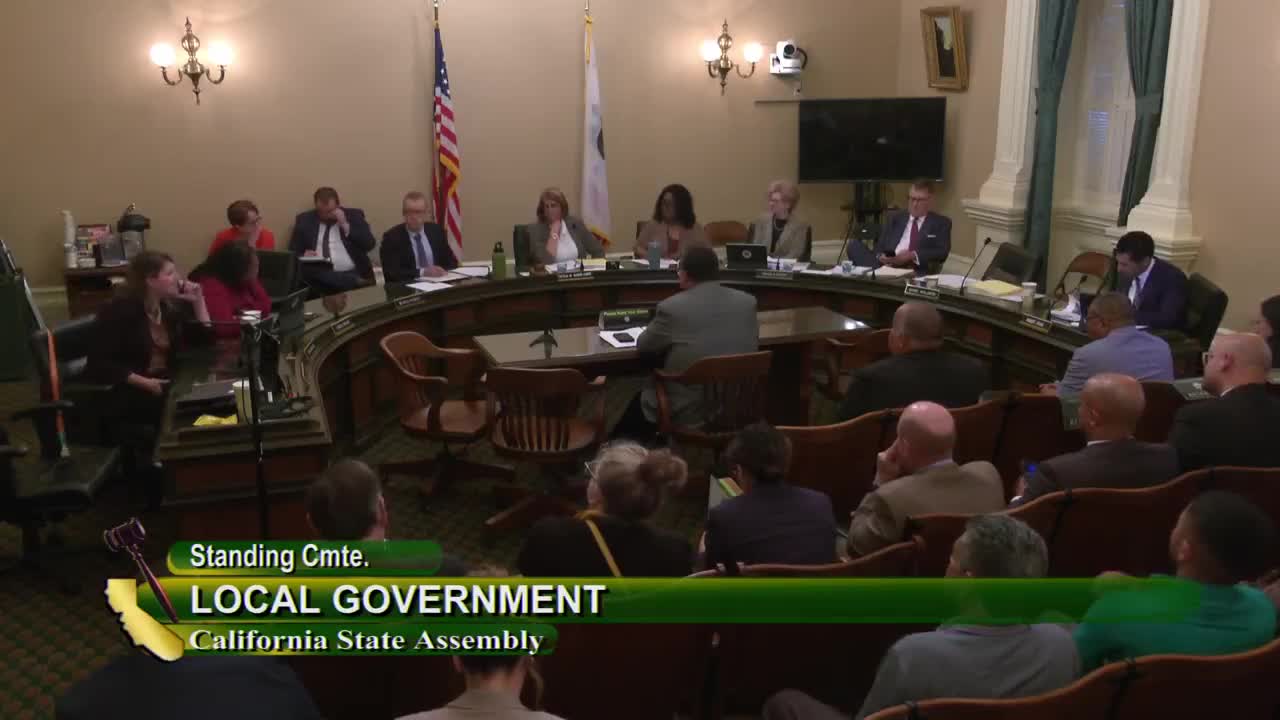
Bill Author

Bill Co-Author(s):