AB 486: Centralized hospital packaging pharmacies: medication labels.
- Session Year: 2015-2016
- House: Assembly
- Latest Version Date: 2015-09-02
The Pharmacy Law provides for the licensure and regulation of pharmacies, including hospital pharmacies, by the California State Board of Pharmacy, and makes a knowing violation of that law a crime. Existing law authorizes a centralized hospital packaging pharmacy to prepare medications for administration to inpatients within its own general acute care hospital or certain other commonly owned hospitals.
Existing law requires that these medications be barcoded to be readable at the inpatients bedside in order to retrieve certain information, including, but not limited to, the date that the medication was prepared and the components used in the drug product.
This bill would require that this information be displayed on a human-readable unit-dose label, and that the information be retrievable by the pharmacist using the medication lot number or control number.
This bill would require that the medications barcode be machine readable, using medication administration software, and that the software compare the information contained in the barcode to the electronic medical record of the inpatient in order to verify that the medication to be given is the correct medication, dosage, and route of administration for that patient.
Because a knowing violation of these provisions would be a crime, the bill would impose a state-mandated local program.
The California Constitution requires the state to reimburse local agencies and school districts for certain costs mandated by the state. Statutory provisions establish procedures for making that reimbursement.
This bill would provide that no reimbursement is required by this act for a specified reason.
This bill would declare that it is to take effect immediately as an urgency statute.
(a)Notwithstanding Section 4029, a centralized hospital packaging pharmacy may prepare medications, by performing the following specialized functions, for administration only to inpatients within its own general acute care hospital and one or more general acute care hospitals if the hospitals are under common ownership and located within a 75-mile radius of each other:
(1)Preparing unit dose packages for single administration to inpatients from bulk containers, if each unit dose package is barcoded pursuant to Section 4128.4.
(2)Preparing sterile compounded unit dose drugs for administration to inpatients, if each compounded unit dose drug is barcoded pursuant to Section 4128.4.
(3)Preparing compounded unit dose drugs for administration to inpatients, if each unit dose package is barcoded pursuant to Section 4128.4.
(b)For purposes of this article, common ownership means that the ownership information on file with the board pursuant to Section 4201 for the licensed pharmacy is consistent with the ownership information on file with the board for the other licensed pharmacy or pharmacies for purposes of preparing medications pursuant to this section.
SEC. 2.Section 4128.4 of the Business and Professions Code is amended to read:4128.4.(a) Any unit dose medication produced by a centralized hospital packaging pharmacy shall be barcoded to be machine readable at the inpatients bedside using barcode medication administration software.
(b)The barcode medication administration software shall permit health care practitioners to ensure that, before a medication is administered to an inpatient, it is the right medication, for the right inpatient, in the right dose, and via the right route of administration. The software shall verify that the medication satisfies these criteria by reading the barcode on the medication and comparing the information retrieved to the electronic medical record of the inpatient.
(c) For purposes of this section, barcode medication administration software means a computerized system designed to prevent medication errors in health care settings.
SEC. 3.Section 4128.5 of the Business and Professions Code is amended to read:4128.5.(a)Any label for each unit dose medication produced by a centralized hospital packaging pharmacy shall display a human-readable label that contains all of the following:
(1)The date that the medication was prepared.
(2)The beyond-use date.
(3)The established name of the drug.
(4)The quantity of each active ingredient.
(5)Special storage or handling requirements.
(6)The lot number or control number assigned by the centralized hospital packaging pharmacy.
(7)The name of the centralized hospital packaging pharmacy.
(b)For quality control and investigative purposes, a pharmacist shall be able to retrieve all of the following information using the lot number or control number described in subdivision (a):
(1)The components used in the drug product.
(2)The expiration date of each of the drugs components.
(3)The National Drug Code Directory number.
SEC. 4.No reimbursement is required by this act pursuant to Section 6 of Article XIIIB of the California Constitution because the only costs that may be incurred by a local agency or school district will be incurred because this act creates a new crime or infraction, eliminates a crime or infraction, or changes the penalty for a crime or infraction, within the meaning of Section 17556 of the Government Code, or changes the definition of a crime within the meaning of Section 6 of Article XIIIB of the California Constitution.
SEC. 5.This act is an urgency statute necessary for the immediate preservation of the public peace, health, or safety within the meaning of Article IV of the Constitution and shall go into immediate effect. The facts constituting the necessity are:
To eliminate, at the earliest possible time, requirements that exceed the current technological capabilities of hospitals and that create overly burdensome administrative costs for the California State Board of Pharmacy, it is necessary this act take effect immediately.
(a)Notwithstanding Section 4029, a centralized hospital packaging pharmacy may prepare medications, by performing the following specialized functions, for administration only to inpatients within its own general acute care hospital and one or more general acute care hospitals if the hospitals are under common ownership and located within a 75-mile radius of each other:
(1)Preparing unit dose packages for single administration to inpatients from bulk containers, if each unit dose package is barcoded pursuant to contain at least the information required by Section 4128.4.
(2)Preparing sterile compounded unit dose drugs for parenteral therapy for administration to inpatients, if each compounded unit dose drug is barcoded pursuant to contain at least the information required by Section 4128.4.
(3)Preparing compounded unit dose drugs for administration to inpatients, if each unit dose package is barcoded pursuant to contain at least the information required by Section 4128.4.
(b)For purposes of this article, common ownership means that the ownership information on file with the board pursuant to Section 4201 for the licensed pharmacy is consistent with the ownership information on file with the board for the other licensed pharmacy or pharmacies for purposes of preparing medications pursuant to this section.
SEC. 2.Section 4128.4 of the Business and Professions Code is amended to read:4128.4.(a) Any unit dose medication produced by a centralized hospital packaging pharmacy shall be barcoded to be machine readable at the inpatients bedside. Upon reading the barcode, the following information shall be retrievable: bedside using barcode medication administration software.
(a)The date the medication was prepared.
(b)The components used barcode medication administration software shall permit health care practitioners to ensure that, before a medication is administered to an inpatient, it is the right medication, for the right inpatient, in the drug product. right dose, and via the right route of administration. The software shall verify that the medication satisfies these criteria by reading the barcode on the medication and comparing the information retrieved to the electronic medical record of the inpatient.
(c) The lot number or control number. For purposes of this section, barcode medication administration software means a computerized system designed to prevent medication errors in health care settings.
(d)The expiration date.
(e)The National Drug Code Directory number.
(f)The name of the centralized hospital packaging pharmacy.
SEC. 3.Section 4128.5 of the Business and Professions Code is amended to read:4128.5.The (a)Any label for each unit dose medication produced by a centralized hospital packaging pharmacy shall contain display a human-readable label that contains all of the following:
(a)
(1)The expiration date. date that the medication was prepared.
(2)The beyond-use date.
(b)
(3)The established name of the drug.
(c)
(4)The quantity of the each active ingredient.
(d)
(5)Special storage or handling requirements.
(6)The lot number or control number assigned by the centralized hospital packaging pharmacy.
(7)The name of the centralized hospital packaging pharmacy.
(b)For quality control and investigative purposes, a pharmacist shall be able to retrieve all of the following information using the lot number or control number described in subdivision (a):
(1)The components used in the drug product.
(2)The expiration date of each of the drugs components.
(3)The National Drug Code Directory number.
SEC. 4.No reimbursement is required by this act pursuant to Section 6 of Article XIIIB of the California Constitution because the only costs that may be incurred by a local agency or school district will be incurred because this act creates a new crime or infraction, eliminates a crime or infraction, or changes the penalty for a crime or infraction, within the meaning of Section 17556 of the Government Code, or changes the definition of a crime within the meaning of Section 6 of Article XIIIB of the California Constitution.
SEC. 5.This act is an urgency statute necessary for the immediate preservation of the public peace, health, or safety within the meaning of Article IV of the Constitution and shall go into immediate effect. The facts constituting the necessity are:
To eliminate, at the earliest possible time, requirements that exceed the current technological capabilities of hospitals and that create overly burdensome administrative costs for the California State Board of Pharmacy, it is necessary this act take effect immediately.
|
Date
|
Status
|
|---|---|
| Sep 2, 2015 | Chaptered by Secretary of State - Chapter 241, Statutes of 2015. |
| Sep 2, 2015 | Approved by the Governor. |
| Aug 24, 2015 | Enrolled and presented to the Governor at 3:30 p.m. |
| Aug 18, 2015 | In Assembly. Ordered to Engrossing and Enrolling. |
| Aug 17, 2015 | Read third time. Urgency clause adopted. Passed. Ordered to the Assembly. (Ayes 38. Noes 0. Page 2049.). |
| Aug 17, 2015 | Read third time. Urgency clause adopted. Passed. Ordered to the Assembly. |
| Jun 23, 2015 | Read second time. Ordered to third reading. |
| Jun 22, 2015 | From committee: Be placed on second reading file pursuant to Senate Rule 28.8. |
| Jun 8, 2015 | From committee: Do pass and re-refer to Com. on APPR. (Ayes 9. Noes 0.) (June 8). Re-referred to Com. on APPR. |
| May 28, 2015 | Referred to Com. on B., P. & E.D. |
| May 14, 2015 | Read third time. Urgency clause adopted. Passed. Ordered to the Senate. (Ayes 78. Noes 0. Page 1447.). |
| May 14, 2015 | In Senate. Read first time. To Com. on RLS. for assignment. |
| May 7, 2015 | Read second time. Ordered to Consent Calendar. |
| May 6, 2015 | From committee: Do pass. To Consent Calendar. (Ayes 17. Noes 0.) (May 6). |
| Apr 29, 2015 | From committee: Do pass and re-refer to Com. on APPR. with recommendation: To Consent Calendar. (Ayes 14. Noes 0.) (April 28). Re-referred to Com. on APPR. |
| Apr 22, 2015 | From committee: Do pass and re-refer to Com. on B. & P. (Ayes 19. Noes 0.) (April 21). Re-referred to Com. on B. & P. |
| Apr 14, 2015 | In committee: Set, first hearing. Hearing canceled at the request of author. |
| Mar 5, 2015 | Referred to Coms. on HEALTH and B. & P. |
| Feb 24, 2015 | From printer. May be heard in committee March 26. |
| Feb 23, 2015 | Read first time. To print. |
|
Date
|
Description
|
Location
|
Votes
|
|
|---|---|---|---|---|
| Aug 17, 2015 | Assembly 3rd Reading AB486 Bonilla By Block Urgency Clause | Senate Floor |
Passed |
|
| Jun 8, 2015 | Do pass, but first be re-referred to the Committee on [Appropriations] | Senate Standing Committee on Business, Professions and Economic Development |
Passed |
|
| May 14, 2015 | AB 486 BONILLA Consent Calendar Second Day Regular Session | Assembly Floor |
Passed |
|
| May 6, 2015 | Do pass. To Consent Calendar. | Assembly Standing Committee on Appropriations |
Passed |
|
| Apr 28, 2015 | Do pass and be re-referred to the Committee on [Appropriations] with recommendation: To Consent Calendar | Assembly Standing Committee on Business and Professions |
Passed |
|
| Apr 21, 2015 | Do pass and be re-referred to the Committee on [Business and Professions] | Assembly Standing Committee on Health |
Passed |
This list shows positions taken on this bill by organizations on the date displayed, which is linked to the original source.
Positions by individuals are not included.
AB 486
Page 6
|
Office of Senate Floor Analyses (916) 651-1520 Fax: (916) 327-4478 |
THIRD READING
Bill No: AB 486
Introduced: 2/23/15
SENATE BUS, PROF. & ECON. DEV. COMMITTEE: 9-0, 6/8/15
AYES: Hill, Bates, Berryhill, Block, Galgiani, Hernandez, Jackson, Mendoza, Wieckowski
SENATE APPROPRIATIONS COMMITTEE: Senate Rule 28.8
ASSEMBLY FLOOR: 78-0, 5/14/15 (Consent) - See last page for vote
SUBJECT: Centralized hospital packaging pharmacies: medication labels
SOURCE: California Society of Health-System Pharmacists
DIGEST: This bill provides that certain information located on a medication’s barcode now be displayed on a human readable label or be retrievable using a lot number or control number. Requires a medication’s barcode be machine readable using a medication administration software (software) and that the software cross reference the information contained in the barcode to the electronic medical record of the patient in order to verify the correct medication, dosage, and route of administration for the patient. This is an urgency measure.
Existing law:
Provides for the practice of pharmacy and licensing and regulation of pharmacies and pharmacists by the Board of Pharmacy (Board) and within the Department of Consumer Affairs (DCA).
Provides that a centralized hospital packaging pharmacy may prepare medications, by performing specialized functions, for administration only to inpatients within its own general acute care hospital and one or more general acute care hospitals if the hospitals are under common ownership and located within a 75-mile radius of each other. (Business and Professions Code (BPC) § 4128)
Defines “hospital pharmacy” as a pharmacy licensed by the Board, located within any licensed hospital, institution, or establishment that maintains and operates organized facilities for the diagnosis, care, and treatment of human illnesses to which persons may be admitted for overnight stay. (BPC § 4029)
Provides that “hospital pharmacy” also includes a pharmacy that may be located outside of the hospital, in another physical plant that is regulated under a hospital’s consolidated license issued by the California Department of Corrections and Rehabilitation or California Department of Youth Authority. Specifies that the pharmacy in another physical plant shall provide pharmaceutical services only to registered hospital patients who are on the premises of the same physical plant in which the hospital is located. Specifies that the pharmacy services provided shall be directly related to the services or treatment plan administered in the physical plant. (Id.)
Requires any unit dose medication produced by a central hospital packaging pharmacy to display a readable barcode at the inpatients bedside that displays the date the medication was prepared, the components used in the drug product, the lot or control number, the expiration date, the National Drug Code Directory number, the name of the centralized hospital packaging pharmacy. (BPC § 4128.4)
Requires the label for each unit dose medication produced by a centralized hospital packaging pharmacy to contain the expiration date, established name of the drug, quantity of the active ingredient and special storage or handling requirements (BPC § 4128.5)
This
bill:
Defines “barcode medication administration software” as a computerized system designed to prevent medication errors in health care settings.
Permits a barcode medication administration software to cross reference a health care practitioner to ensure that, before a medication is administered to an inpatient, it is the right medication, for the right patient, in the right dose, and via the right route of administration.
Permits the software to verify that the medication satisfies these criteria by reading the barcode on the medication and comparing the information retrieved to the electronic medical record of the patient.
Requires any unit dose medication produced by a central hospital packaging pharmacy to display a human-readable label.
Specifies that the human readable label include:
The date that the medication was prepared.
The beyond-use date.
The established name of the drug.
The quantity of the active ingredient.
Special storage or handling requirements.
The lot number or control number assigned by the centralized hospital packaging pharmacy.
The name of the centralized hospital packaging pharmacy.
Provides that for quality control and investigative purposes, a pharmacist shall be able to retrieve all of the following information using the lot number or control number as described above:
The components used in the drug product.
The expiration date of each of the drugs components.
The National Drug Code Directory number by the lot number or control number.
Makes other technical and conforming changes.
Specifies that this is an urgency measure for the purpose of eliminating, at the earliest possible time, requirements that exceed the current technological capabilities of hospitals and that create overly burdensome administrative costs for the Board.
Background
This bill is intended to make clarifying changes to provisions in the Pharmacy Law established by AB 377 (Solorio, Chapter 687, Statutes of 2012). That measure authorized a centralized hospital pharmacy to perform certain services for patients of a hospital pharmacy and required that specific data be contained within barcodes on centrally packaged medication labels. According to bill proponents, hospital technology development and procurement has not moved as quickly as anticipated and the software used by some health systems does not meet the Board’s interpretation of the law.
The Board was a strong proponent of AB 377, as the centralized hospital recognition makes it easier for hospitals to set up and invest in high-tech central pharmacies, utilizing the latest in technological innovations (such as robotics), effectively lowering rates of medication errors and reducing unnecessary costs. Language contained in Section 4128.4 of the Business and Professions Code, specifically the word “retrievable,” has caused confusion and different interpretations between the Board and hospital chains. The intent of the word “retrievable” by the bill’s Author, was not that the elements be immediately readable on the label, but instead AB 377 was to link the data elements on the barcode to a database where the elements would be present and retrievable.
Recently, hospitals such as Loma Linda University Medical Center, Scripps Health San Diego, and Sharp Health Care have come to the Board and highlighted limitations in their software that would prohibit full compliance with the barcode requirements specified in Section 4128.4. According to the hospitals, hospital IT vendors will have to reconfigure their systems to make all the elements listed in Section 4128.4 immediately readable upon scan. These medical groups requested that the Board interpret the meaning of the provisions more broadly to allow for ample time following licensure to fully comply with the requirements.
The
Board ultimately approved five-year waivers to organizations which
have fallen out of compliance, allowing the requisite information
elements to be physically listed on the label rather than having them
in electronic, barcode format. This bill would clarify the
requirements on labels to allow health systems to use barcode
technology, eliminating the need for Board waivers.
FISCAL EFFECT: Appropriation: No Fiscal Com.: Yes Local: Yes
California Society of Health System Pharmacists (source)
California Association of Joint Powers Authorities
California Council for the Advancement of Pharmacy
California Hospital Association
California Pharmacists Association
California State Board of Pharmacy
Providence Health & Services
OPPOSITION: (Verified 6/22/15)
None
received
ARGUMENTS
IN SUPPORT: Supporters state that this bill clarifies existing
law in a way that ensures centralized hospital packaging pharmacies
have the ability to work with existing technology and add that it
creates an effective system for barcoding medication while clarifying
that this technology can be used for multiple purposes in order to
reduce the rates of medication errors and improve patient safety.
AYES: Achadjian, Alejo, Travis Allen, Baker, Bigelow, Bloom, Bonilla, Bonta, Brough, Brown, Burke, Calderon, Campos, Chang, Chau, Chávez, Chiu, Chu, Cooley, Cooper, Dababneh, Dahle, Daly, Dodd, Eggman, Frazier, Beth Gaines, Gallagher, Cristina Garcia, Eduardo Garcia, Gatto, Gipson, Gomez, Gonzalez, Gordon, Gray, Grove, Hadley, Harper, Roger Hernández, Holden, Irwin, Jones, Jones-Sawyer, Kim, Lackey, Levine, Lopez, Low, Maienschein, Mathis, Mayes, McCarty, Melendez, Mullin, Nazarian, Obernolte, O'Donnell, Olsen, Patterson, Perea, Quirk, Rendon, Ridley-Thomas, Rodriguez, Salas, Santiago, Steinorth, Mark Stone, Thurmond, Ting, Wagner, Waldron, Weber, Wilk, Williams, Wood, Atkins
NO VOTE RECORDED: Linder, Medina
Prepared by: Sarah Mason / B., P. & E.D. / (916) 651-4104
6/23/15 10:23:18
**** END ****
AB 486 (Bonilla) Page 5 of 5
SENATE COMMITTEE ON
BUSINESS, PROFESSIONS AND ECONOMIC DEVELOPMENT
Senator Jerry Hill, Chair
2015 - 2016 Regular
Bill No: AB 486 Hearing Date: June 8, 2015
Author: |
Bonilla |
||
Version: |
February 23, 2015 |
||
Urgency: |
Yes |
Fiscal: |
Yes |
Consultant: |
Sarah Mason |
||
Subject: Centralized hospital packaging pharmacies: medication labels.
SUMMARY:
Provides that certain information located on a medication’s barcode now be displayed on a human readable label or be retrievable using a lot number or control number. Requires a medication’s barcode be machine readable using a medication administration software (software) and that the software cross reference the information contained in the barcode to the electronic medical record of the patient in order to verify the correct medication, dosage, and route of administration for the patient. This is an urgency measure.
Existing law:
Provides for the practice of pharmacy and licensing and regulation of pharmacies and pharmacists by the Board of Pharmacy (Board) and within the Department of Consumer Affairs (DCA).
Provides that a centralized hospital packaging pharmacy may prepare medications, by performing specialized functions, for administration only to inpatients within its own general acute care hospital and one or more general acute care hospitals if the hospitals are under common ownership and located within a 75-mile radius of each other. (Business and Professions Code (BPC) § 4128)
Defines “hospital pharmacy” as a pharmacy licensed by the Board, located within any licensed hospital, institution, or establishment that maintains and operates organized facilities for the diagnosis, care, and treatment of human illnesses to which persons may be admitted for overnight stay. (BPC § 4029)
Provides that “hospital pharmacy” also includes a pharmacy that may be located outside of the hospital, in another physical plant that is regulated under a hospital’s consolidated license issued by the California Department of Corrections or California Department of Youth Authority. Specifies that the pharmacy in another physical plant shall provide pharmaceutical services only to registered hospital patients who are on the premises of the same physical plant in which the hospital is located. Specifies that the pharmacy services provided shall be directly related to the services or treatment plan administered in the physical plant. (Id.)
Requires any unit dose medication produced by a central hospital packaging pharmacy to display a readable barcode at the inpatients bedside. The readable barcode will display the following information: (BPC § 4128.4)
The date the medication was prepared.
The components used in the drug product.
The lot number or control number.
The expiration date.
The National Drug Code Directory number.
The name of the centralized hospital packaging pharmacy.
Requires the label for each unit dose medication produced by a centralized hospital packaging pharmacy contain the following information: (BPC § 4128.5)
The expiration date.
The established name of the drug.
The quantity of the active ingredient.
Special storage of handling requirements.
This
bill:
Defines “barcode medication administration software” as a computerized system designed to prevent medication errors in health care settings.
Permits a barcode medication administration software to cross reference a health care practitioner to ensure that, before a medication is administered to an inpatient, it is the right medication, for the right patient, in the right dose, and via the right route of administration.
Permits the software to verify that the medication satisfies these criteria by reading the barcode on the medication and comparing the information retrieved to the electronic medical record of the patient.
Requires any unit dose medication produced by a central hospital packaging pharmacy to display a human-readable label.
Specifies that the human readable label include:
The date that the medication was prepared.
The beyond-use date.
The established name of the drug.
The quantity of the active ingredient.
Special storage or handling requirements.
The lot number or control number assigned by the centralized hospital packaging pharmacy.
The name of the centralized hospital packaging pharmacy.
Provides that for quality control and investigative purposes, a pharmacist shall be able to retrieve all of the following information using the lot number or control number as described above:
The components used in the drug product.
The expiration date of each of the drugs components.
The National Drug Code Directory number by the lot number or control number.
Makes other technical and conforming changes.
Specifies that this is an urgency measure for the purpose of eliminating, at the earliest possible time, requirements that exceed the current technological capabilities of hospitals and that create overly burdensome administrative costs for the California State Board of Pharmacy.
FISCAL EFFECT:
This measure has been keyed “fiscal” by Legislative Counsel. According to the Assembly Appropriations Committee analysis, dated May 6, 2015, this bill will result in a negligible state fiscal effect.
COMMENTS:
Purpose. The California Society of Health-System Pharmacists is the Sponsor of this measure. According to the Author, this bill is intended to make clarifying changes to provisions in the Pharmacy Law established by AB 377 (Solorio, Chapter 687, Statutes of 2012). That measure authorized a centralized hospital pharmacy to perform certain services for patients of a hospital pharmacy and required that specific data be contained within barcodes on centrally packaged medication labels. According to the Author, hospital technology development and procurement has not moved as quickly as anticipated and the software used by some health systems does not meet the Board’s interpretation of the law. The Author states that AB 486 makes necessary changes by allowing data to be both contained within the barcode and also be available in human readable form, while also including much needed definitions that will allow the Board to continue to provide oversight and regulation in this area.
Background. The Board of Pharmacy was a strong proponent of AB 377, as the centralized hospital recognition makes it easier for hospitals to set up and invest in high-tech central pharmacies, utilizing the latest in technological innovations (such as robotics), effectively lowering rates of medication errors and reducing unnecessary costs.
Language contained in Section 4128.4 of the Business and Professions Code, specifically the word “retrievable,” has caused confusion and different interpretations between the Board and hospital chains. The intent of the word “retrievable” by the bill’s Author, was not that the elements be immediately readable on the label, but instead AB 377 was to link the data elements on the barcode to a database where the elements would be present and retrievable.
Recently, hospitals such as Loma Linda University Medical Center, Scripps Health San Diego, and Sharp Health Care have come to the Board of Pharmacy and highlighted limitations in their software that would prohibit full compliance with the barcode requirements specified in Section 4128.4. According to the hospitals, hospital IT vendors will have to reconfigure their systems to make all the elements listed in Section 4128.4 immediately readable upon scan. These medical groups requested that the Board interpret the meaning of the provisions more broadly to allow for ample time following licensure to fully comply with the requirements.
The Board ultimately approved five-year waivers to organizations which have fallen out of compliance, allowing the requisite information elements to be physically listed on the label rather than having them in electronic, barcode format.
Prior Related Legislation. AB 2757 (Bocanegra of 2014) was identical to this bill. (Status: The bill was never heard in a policy Committee of the Senate prior to the close of the 2013-14 Legislative Session.)
AB 377 (Solario, Chapter 687, Statutes
of 2012) authorized a centralized hospital packaging pharmacy
to prepare medications, by performing specified functions for
administration only to inpatients within its own general acute care
hospital, or one or more general acute care hospitals under the same
ownership and located within
75 miles of each other.
AB 2077 (Solario) of 2010, in its final version, was virtually identical to AB 377 (Solario). The bill was vetoed by the Governor. In his veto message, the Governor expressed concern that the bill could result in “a greater likelihood of product mix-up, loss of product identity, contamination and cross-contamination, and lack of adequate control systems.”
AB 1370 (Solario) of 2009 was similar to AB 377 bill but created a separate licensing category for centralized hospital pharmacies. (Status: The bill was held in the Assembly Committee on Business and Professions.)
SCR 49 (Speier, Chapter 123, Statutes of 2005) created a panel to study the causes of medication errors and recommend changes in the health care system that reduces errors associated with the delivery of prescription and over the counter medication to consumers.
SB 1875 (Speier, Chapter 816, Statutes of 2000) required hospitals to adopt a formal plan to eliminate or substantially reduce medication-related errors.
Arguments in Support. The California Hospital Association (CHA) writes in support of the bill, stating that it ensures centralized hospital packaging pharmacies can continue to operate and serve their member hospitals efficiently, providing a long-term solution while maintain the original intent of the law.
SUPPORT AND OPPOSITION:
Support:
California Association of Joint Powers Authorities (CAJPA)
California Hospital Association (CHA)
Opposition:
None on file as of June 2, 2015.
-- END --
AB 486
Page 1
Date of Hearing: May 6, 2015
ASSEMBLY COMMITTEE ON APPROPRIATIONS
Jimmy Gomez, Chair
AB 486
(Bonilla) – As Introduced February 23, 2015
Policy Committee: |
Health |
Vote: |
19 - 0 |
|
Business and Professions |
|
14 - 0 |
|
|
|
|
Urgency: Yes State Mandated Local Program: Yes Reimbursable: No
SUMMARY:
This bill modifies requirements as to what must be human-readable, versus machine-readable using barcode medication administration software, for medication labels produced by centralized hospital packaging pharmacies (CHPP).
FISCAL EFFECT:
Negligible state fiscal effect.
COMMENTS:
Purpose. According to the author, this is a cleanup measure to AB 377 (Solorio), Chapter 687, Statutes of 2012. That bill authorized CHPPs, central pharmacies that can provide greater efficiency, lower costs, and a higher degree of automation by serving a number of hospitals in a hospital system. Due to variation in technology, not all CHPPs are able to comply with the various specific requirements in current law, which has forced the Board of Pharmacy to issue waivers. This bill attempts to remedy this problem by ensuring the information necessary to protect patient safety is still included on the label, but structuring requirements such that current systems can comply.
Prior Legislation.
AB 2757 (Bocanegra) of 2014, was substantially similar to this bill. The bill passed the Senate Committee on Business, Professions and Economic Development but was not heard in the Assembly.
AB 377 (Solorio), Chapter 687, Statutes of 2012, authorized a centralized hospital packaging pharmacy to prepare medications, by performing specified functions for administration only to inpatients within its own general acute care hospital, or one or more general acute care hospitals under the same ownership and located within 75 miles of each other.
Analysis Prepared by: Lisa Murawski / APPR. / (916) 319-2081
AB 486
Page 6
Date of Hearing: April 28, 2015
ASSEMBLY COMMITTEE ON BUSINESS AND PROFESSIONS
Susan Bonilla, Chair
AB 486
(Bonilla) – As Introduced February 23, 2015
NOTE: This bill is double-referred, having been previously heard by the Assembly Committee on Health on April 21, 2015 and approved on a 19-0 vote.
NOTE: This bill adds an urgency clause.
SUBJECT: Centralized hospital packaging pharmacies: medication labels.
SUMMARY: Requires labels on medications produced by centralized hospital packaging pharmacies (CHPP) to also include specific information on the label in human readable form.
EXISTING LAW:
Provides for the practice of pharmacy and licensing and regulation of pharmacies and pharmacists by the Board of Pharmacy (Board) within the Department of Consumer Affairs (DCA). (Business and Professions Code (BPC) § 4001 et seq.)
Provides that a CHPP may prepare medications, by performing specialized functions, for administration only to inpatients within its own general acute care hospital and one or more general acute care hospitals if the hospitals are under common ownership and located within a 75-mile radius of each other. (Business and Professions Code (BPC) § 4128)
Defines “hospital pharmacy” as a pharmacy licensed by the Board, located within any licensed hospital, institution, or establishment that maintains and operates organized facilities for the diagnosis, care, and treatment of human illnesses to which persons may be admitted for overnight stay. (BPC § 4029)
Provides that “hospital pharmacy” also includes a pharmacy that may be located outside of the hospital, in another physical plant that is regulated under a hospital’s consolidated license issued by the California Department of Corrections or California Department of Youth Authority. (BPC § 4029)
Specifies that the pharmacy in another physical plant shall provide pharmaceutical services only to registered hospital patients who are on the premises of the same physical plant in which the hospital is located. (BPC § 4029)
Specifies that the pharmacy services provided shall be directly related to the services or treatment plan administered in the physical plant. (BPC § 4029)
Requires any unit dose medication produced by a CHPP to display a readable barcode at the inpatients bedside. The readable barcode will display the following information: (BPC § 4128.4)
The date the medication was prepared;
The components used in the drug product;
The lot number or control number;
The expiration date;
The National Drug Code Directory number; and,
The name of the centralized hospital packaging pharmacy.
Requires the label for each unit dose medication produced by a centralized hospital packaging pharmacy contain the following information: (BPC § 4128.5)
The expiration date;
The established name of the drug;
The quantity of the active ingredient; and,
Special storage or handling requirements.
Permits a centralized hospital pharmacy to perform the following specialized functions:
Preparing unit dose packages for single administration to inpatients from bulk containers;
Preparing compounded unit dose drugs for parenteral therapy administration (e.g. by subcutaneous, intramuscular, intrasternal or intravenous injection) to inpatients; and,
Preparing compounded unit dose drugs for administration to inpatients.
Requires all specialized compounding and packaging functions to be performed only in the licensed CHPP, and for the pharmacy to comply with all applicable federal and state statutes and regulations. (BPC § 4128.6)
Specifies that the pharmacy and the pharmacists working in the pharmacy are responsible for the integrity, potency, quality, and labeled strength of any unit dose drug product prepared by the pharmacy. (BPC § 4128.7)
THIS BILL:
Clarifies that any unit dose medication produced by a centralized hospital packaging pharmacy be barcoded to be machine readable at the patient's bedside using barcode medication administration software.
Specifies that barcode medication administration software permits health care practitioners to ensure, before medication is administered to an inpatient, that it is the right medications, for the right patient, in the right dose, and via the right route of administration.
Defines "barcode medication administration software" to mean a computerized system designed to prevent medication errors in health care settings.
Requires any label for each unit dose medication produced by a CHPP to display a human-readable label that contains all of the following:
The date that the medication was prepared;
The beyond-use date;
The established name of the drug;
The quantity of each active ingredient;
Special storage or handling requirements;
The lot number or control number assigned by the centralized hospital packaging pharmacy; and,
The name of the centralized hospital packaging pharmacy.
Requires, for quality control and investigative purposes, a pharmacist be able to retrieve all of the following information using the lot number or control number:
The components used in the drug product;
The expiration date of each of the drug's components; and,
The National Drug Code Directory number.
Clarifies that CHPPs are preparing sterile compounded unit dose drugs.
FISCAL EFFECT: Unknown. This bill is keyed fiscal by the Legislative Counsel.
COMMENTS:
Purpose. This bill is sponsored by the California Society of Health System Pharmacists. According to the author, “In 2012, AB 377 was signed into law. This bill required that medications produced in [CHPPs] have a barcode which retrieves specific information, such as medication expiration date and lot number, which can be read when the barcode is scanned at the patient’s bedside. There is also a requirement that patient information be scanned by barcode as well. In an effort to assist hospitals that do not have the technology infrastructure to provide certain patient information via barcode, the Board of Pharmacy has created a waiver that allows information to be listed in text form on the label. These waivers are only for a five year term. AB 486 creates a long-term solution while maintaining the intent of current law.”
Background. Business and Professions Code § 4128.4 allows hospitals to set up and invest in high-tech central pharmacies utilizing the latest in technological innovations, such as robotics, effectively lowering rates of medication errors and reducing unnecessary costs.
The term “retrievable” within BPC § 4128.4 has caused confusion and different interpretations between the Board of Pharmacy and hospital chains. The intent of the word “retrievable” was not that the elements be immediately readable on the label, but instead that the data elements on the barcode be able to be linked to a database where the elements would be retrievable.
Several hospitals approached the Board of Pharmacy and highlighted limitations in their software that would prohibit full compliance with the barcode requirements. According to the hospitals, hospital information technology vendors will have to reconfigure their systems to make all the elements listed in BPC § 4128.4 immediately readable upon scan. These medical groups requested that the Board of Pharmacy interpret the meaning of the provisions more broadly to allow for ample time following licensure to fully comply with the requirements.
The Board of Pharmacy ultimately approved five-year waivers to organizations who have fallen out of compliance – allowing the requisite information elements to be physically listed on the label rather than having them in electronic barcode format.
Prior Related Legislation. AB 2757 (Bocanegra) of 2014, was substantially similar to this bill. NOTE: The bill passed the Senate Committee on Business, Professions and Economic Development but was not heard in any policy or fiscal committee in the Assembly.
AB 377 (Solario), Chapter 687, Statutes of 2012, authorized a centralized hospital packaging pharmacy to prepare medications, by performing specified functions for administration only to inpatients within its own general acute care hospital, or one or more general acute care hospitals under the same ownership and located within 75 miles of each other.
AB 2077 (Solario) of 2010, in its final version, was virtually identical to AB 377 (Solario). NOTE: This bill was vetoed by Governor Schwarzenegger due to concern that the bill would result in, “a greater likelihood of product mix-up, loss of product identity, contamination and cross-contamination, and lack of adequate control systems.”
AB 1370 (Solario) of 2009, was similar to AB 377, but created a separate licensing category for centralized hospital pharmacies. NOTE: The bill was held in the Assembly Committee on Business and Professions and Consumer Protection.
SCR 49 (Speier), Chapter 123, Statutes of 2005, created a panel to study the causes of medication errors and recommend changes in the health care system that reduces errors associated with the delivery of prescription and over the counter medication to consumers.
SB 1875 (Speier), Chapter 816, Statutes of 2000, required hospitals to adopt a formal plan to eliminate or substantially reduce medication-related errors.
ARGUMENTS IN SUPPORT:
The California Association of Health-System Pharmacists (sponsor) support the bill and write in their letter, “AB 486 amends [BPC] section 4128 to be less proscriptive than the original law – replacing the word “retrievable” with more clarifying language about barcode medication administration software capabilities and giving centralized hospital packaging pharmacies the flexibility to work with existing technology and adapt to new technology as it becomes available. AB 486 also clarifies that this technology can be used for multiple purposed and at multiple locations within the hospital, improving patient safety.”
The California Hospital Association echoes the expressed support for the bill and they write in their letter, “AB 486 provides a long-term solution while maintaining the original intent of the law.”
The California Pharmacists Association writes, “AB 486 creates and effective system for bar-coding medications while clarifying that this technology can be used for multiple purposes within a hospital in order to reduce the rates of medication errors and improve patient safety.”
Providence Health & Services of Southern California writes in their letter, “Providence appreciates this reasonable solution to assure that centralized hospital packaging pharmacies can continue to operate as intended and have essential elements for patient safety readily available.”
The California Association of Joint Powers Authorities supports the bill and writes, “Many public acute care hospitals in California participate in public entity risk pools. CAJPA believes that AB 486 provides clarity to existing law and provides centralized hospital packaging pharmacies the flexibility to work with existing technology and adapt to new technology as it becomes available.”
The California Council for the Advancement of Pharmacy supports the bill, “…because its long-term care pharmacy members have experienced similar challenges with the California State Board of Pharmacy’s regulations regarding patient-centered labeling, where by exemptions from the regulation must be sought on an individual basis...AB [486] would remedy the onerous task of requesting waivers while still maintaining the security of a hospital patient’s information and providing more efficient, safe and effective patient care.”
ARGUMENTS IN OPPOSITION:
None on file.
REGISTERED SUPPORT:
California Society of Health-System Pharmacists (sponsor)
California Association of Joint Powers Authorities
California Association of Physician Groups
California Council for the Advancement of Pharmacy
California Hospital Association
California Pharmacists Association
Providence Health & Services Southern California
REGISTERED OPPOSITION:
None on file.
Analysis Prepared by: Le Ondra Clark Harvey, Ph.D. / B. & P. / (916) 319-3301
AB 486
Page 4
Date of Hearing: April 21, 2015
ASSEMBLY COMMITTEE ON HEALTH
Rob Bonta, Chair
AB 486
(Bonilla) – As Introduced February 23, 2015
SUBJECT: Centralized hospital packaging pharmacies: medication labels.
SUMMARY: Clarifies existing law regarding medication labeling requirements for centralized hospital packaging pharmacies by requiring any label for each unit dose medication produced by a centralized hospital packaging pharmacy to include certain information on a human-readable label. Contains an urgency clause to ensure that the provisions of this bill go into immediate effect upon enactment. Specifically, this bill:
Clarifies that any unit dose medication produced by a centralized hospital packaging pharmacy be barcoded to be machine readable at the patient's bedside using barcode medication administration software.
Specifies that barcode medications administration software permits health care practitioners to ensure, before medication is administered to a patient, that it is the right medications, for the right patient, in the right dose, and via the right route of administration.
Requires any label for each unit dose medication produced by a centralized hospital packaging pharmacy to display a human-readable label that contains all of the following:
The date that the medication was prepared;
The beyond-use date;
The quantity of each active ingredient;
Special storage or handling requirements;
The lot number or control number assigned by the centralized hospital packaging pharmacy; and,
The name of the centralized hospital packaging pharmacy.
Requires, for quality control and investigative purposes, a pharmacist be able to retrieve all of the following information using the lot number or control number:
The components used in the drug product;
The expiration date of each of the drug's components; and,
The National Drug Code Directory number.
Clarifies that centralized hospital packaging pharmacies are preparing sterile compounded unit dose drugs.
EXISTING LAW:
Provides for the practice of pharmacy and the licensing and regulation of pharmacies and pharmacists by the Board of Pharmacy (Board) within the Department of Consumer Affairs.
Allows that a hospital pharmacy license to include a centralized hospital pharmacy physically located outside of the hospital or at a separate facility that is located within a 75-mile radius and is under common ownership.
Permits a centralized hospital pharmacy to perform the following specialized functions:
Preparing unit dose packages for single administration to inpatients from bulk containers;
Preparing compounded unit dose drugs for parenteral therapy administration (e.g. by subcutaneous, intramuscular, intrasternal or intravenous injection) to inpatients; and,
Preparing compounded unit dose drugs for administration to inpatients.
Specifies that a centralized hospital pharmacy may perform the functions in 3) above only if the following information is barcoded to be readable at the patient's bedside and the following information is retrievable: the date the medication was prepared, the components used in the drug product, the lot number or control number; the expiration date; the National Drug Code Directory number; and, the name of the centralized hospital packaging pharmacy.
Requires the label for each unit dose medication produced by a centralized hospital packaging pharmacy to contain the expiration date, the established name of the drug, the quantity of the active ingredient, and any special storage or handling requirements.
Requires all specialized compounding and packaging functions to be performed only in the licensed centralized hospital packaging pharmacy, and for the pharmacy to comply with all applicable federal and state statutes and regulations.
Specifies that the pharmacy and the pharmacists working in the pharmacy are responsible for the integrity, potency, quality, and labeled strength of any unit dose drug product prepared by the pharmacy.
FISCAL EFFECT: This bill has not been analyzed by a fiscal committee.
COMMENTS:
PURPOSE OF THIS BILL. According to the author, this bill is a clean-up measure to AB 377 (Solorio), Chapter 687, Statutes of 2012, which requires specific data to be contained within barcodes on medicine labels for use within centralized hospital packaging pharmacies. The author states that the goal of AB 377 was to make it easier for hospitals to set up, and invest in, high-tech central pharmacies in order to reduce medication errors. Unfortunately, hospital technology development and procurement has not moved as quickly as anticipated. The author notes that, additionally, the Board has opined that wording in current law requires that only barcodes now be used on medication and this has resulted in the Board spending staff time and money issuing waivers to hospitals to allow them to operate while technology catches up. The author concludes that this bill clarifies that data are allowed to be contained both within the barcode and in human readable form, and includes much needed definitions that will allow the Board to continue to provide oversight and regulation in this area.
BACKGROUND. In 2012 the Governor signed AB 377 into law, which allowed hospitals to create centralized hospital packaging pharmacies (CHPPs) that can serve multiple institutions under common ownership. AB 377 also requires that medications produced in a CHPP be barcoded and that the barcode retrieve specific information, such as the expiration date and lot number, which can be read when the barcode is scanned at the patient's bedside. However, as noted by the author, the Board's new legal interpretation has suggested that certain specific information required on the barcode, also be immediately viewable on a screen. This is problematic because current technology does not allow for this, making it difficult for hospitals to establish CHPPs.
The Board has subsequently created a waiver for which hospitals can apply that allows the required information to be physically listed on the label rather than being accessible in electronic, barcode format. These waivers are only for a five year term.
SUPPORT. The California Society of Health-System Pharmacists (CSHP), the sponsor of this bill, states it will address the gap between current healthcare technologies and the new law afforded by AB 377, improving patient safety and ensuring the optimal use of medication. CSHP notes that AB 377 was a positive policy change in that it allowed hospitals to establish these special pharmacies offsite of the main hospital campus, allowing for the purchasing and placement of large robotic packing and filling tools, which often are not useable in hospitals simply due to space restrictions, and that these tools dramatically decrease medication errors and save lives.
The California Hospital Association (CHA) states in support that this bill ensures that centralized hospital packaging pharmacies can continue to operate and serve their member hospitals efficiently. CHA notes that a new legal interpretation has suggested that the specific retrievable information from the barcode be immediately viewable on a screen upon scanning the barcode is problematic because current technology does not allow for this function. By requiring the information to be displayed on a human-readable label, CHA concludes that this bill provides a long-term solution while maintaining the original intent of the law.
PREVIOUS LEGISLATION.
AB 2757 (Bocanegra) of 2014, was substantially similar to this bill. AB 2757 passed the Senate Business, Professions and Economic Development Committee, but was not heard in any other policy or fiscal committee.
AB 377 authorizes a centralized hospital packaging pharmacy to prepare medications, performing specified functions for administration only to inpatients within its own general acute care hospital, or one or more general acute care hospitals under the same ownership and located within 75 miles of each other.
AB 2077 (Solorio) of 2010, in its final version, was virtually identical to AB 377. AB 2077 was vetoed by Governor Arnold Schwarzenegger. In his veto message, the Governor expressed concern that the bill could result in “a greater likelihood of product mix-up, loss of product identity, contamination and cross-contamination, and lack of adequate control systems.”
AB 1370 (Solorio) of 2009 was similar to AB 377 but would have created a separate licensing category for centralized hospital pharmacies. AB 1370 was held in the Assembly Committee on Business, Professions and Consumer Protection.
SCR 49 (Speier), Chapter 123, Statutes of 2005, creates a panel to study the causes of medication errors and recommend changes in the health care system that reduces errors associated with the delivery of prescription and over the counter medication to consumers.
SB 1875 (Speier), Chapter 816, Statutes of 2000, requires hospitals to adopt a formal plan to eliminate or substantially reduce medication-related errors.
DOUBLE REFERRAL. This bill is double referred; upon passage in this Committee, this bill will be referred to the Assembly Business & Professions Committee.
REGISTERED SUPPORT / OPPOSITION:
Support
California
Society of Health-System Pharmacists (sponsor)
California
Association of Physician Groups
California Hospital
Association
California Pharmacists Association
Providence
Health & Services, Southern California Region
Opposition
None on file.
Analysis Prepared by: Lara Flynn / HEALTH / (916) 319-2097
AB 486
Page 4
Date of Hearing: April 14, 2015
ASSEMBLY COMMITTEE ON HEALTH
Rob Bonta, Chair
AB 486
(Bonilla) – As Introduced February 23, 2015
SUBJECT: Centralized hospital packaging pharmacies: medication labels
SUMMARY: Clarifies existing law regarding medication labeling requirements for centralized hospital packaging pharmacies by requiring any label for each unit dose medication produced by a centralized hospital packaging pharmacy to include certain information on a human-readable label. Contains an urgency clause to ensure that the provisions of this bill go into immediate effect upon enactment. Specifically, this bill:
Clarifies that any unit dose medication produced by a centralized hospital packaging pharmacy be barcoded to be machine readable at the patient's bedside using barcode medication administration software.
Specifies that barcode medications administration software permits health care practitioners to ensure, before medication is administered to a patient, that it is the right medications, for the right patient, in the right dose, and via the right route of administration.
Requires any label for each unit dose medication produced by a centralized hospital packaging pharmacy to display a human-readable label that contains all of the following:
The date that the medication was prepared;
The beyond-use date;
The quantity of each active ingredient;
Special storage or handling requirements;
The lot number or control number assigned by the centralized hospital packaging pharmacy; and,
The name of the centralized hospital packaging pharmacy.
Requires, for quality control and investigative purposes, a pharmacist be able to retrieve all of the following information using the lot number or control number:
The components used in the drug product;
The expiration date of each of the drug's components; and,
The National Drug Code Directory number.
Clarifies that centralized hospital packaging pharmacies are preparing sterile compounded unit dose drugs.
EXISTING LAW:
Provides for the practice of pharmacy and the licensing and regulation of pharmacies and pharmacists by the Board of Pharmacy (Board) within the Department of Consumer Affairs.
Allows that a hospital pharmacy license to include a centralized hospital pharmacy physically located outside of the hospital or at a separate facility that is located within a 75-mile radius and is under common ownership.
Permits a centralized hospital pharmacy to perform the following specialized functions:
Preparing unit dose packages for single administration to inpatients from bulk containers;
Preparing compounded unit dose drugs for parenteral therapy administration (e.g. by subcutaneous, intramuscular, intrasternal or intravenous injection) to inpatients; and,
Preparing compounded unit dose drugs for administration to inpatients.
Specifies that a centralized hospital pharmacy may perform the functions in 3) above only if the following information is barcoded to be readable at the patient's bedside and the following information is retrievable: the date the medication was prepared, the components used in the drug product, the lot number or control number; the expiration date; the National Drug Code Directory number; and, the name of the centralized hospital packaging pharmacy.
Requires the label for each unit dose medication produced by a centralized hospital packaging pharmacy to contain the expiration date, the established name of the drug, the quantity of the active ingredient, and any special storage or handling requirements.
Requires all specialized compounding and packaging functions to be performed only in the licensed centralized hospital packaging pharmacy, and for the pharmacy to comply with all applicable federal and state statutes and regulations.
Specifies that the pharmacy and the pharmacists working in the pharmacy are responsible for the integrity, potency, quality, and labeled strength of any unit dose drug product prepared by the pharmacy.
FISCAL EFFECT:
This bill has not been analyzed by a fiscal committee.
COMMENTS:
PURPOSE OF THIS BILL.
According to the author, this bill is a clean-up measure to AB 377 (Solorio), Chapter 687, Statutes of 2012, which requires specific data to be contained within barcodes on medicine labels for use within centralized hospital packaging pharmacies. The author states that the goal of AB 377 was to make it easier for hospitals to set up, and invest in, high-tech central pharmacies in order to reduce medication errors. Unfortunately, hospital technology development and procurement has not moved as quickly as anticipated. The author notes that, additionally, the Board has opined that wording in current law requires that only barcodes now be used on medication and this has resulted in the Board spending staff time and money issuing waivers to hospitals to allow them to operate while technology catches up. The author concludes that this bill clarifies that data are allowed to be contained both within the barcode and in human readable form, and includes much needed definitions that will allow the Board to continue to provide oversight and regulation in this area.
BACKGROUND.
In 2012 the Governor signed AB 377 into law, which allowed hospitals to create centralized hospital packaging pharmacies (CHPPs) that can serve multiple institutions under common ownership. AB 377 also requires that medications produced in a CHPP be barcoded and that the barcode retrieve specific information, such as the expiration date and lot number, which can be read when the barcode is scanned at the patient's bedside. However, as noted by the author, the Board's new legal interpretation has suggested that certain specific information required on the barcode, also be immediately viewable on a screen. This is problematic because current technology does not allow for this, making it difficult for hospitals to establish CHPPs.
The Board has subsequently created a waiver for which hospitals can apply that allows the required information to be physically listed on the label rather than being accessible in electronic, barcode format. These waivers are only for a five year term.
SUPPORT.
The California Society of Health-System Pharmacists (CSHP), the sponsor of this bill, states it will address the gap between current healthcare technologies and the new law afforded by AB 377, improving patient safety and ensuring the optimal use of medication. CSHP notes that AB 377 was a positive policy change in that it allowed hospitals to establish these special pharmacies offsite of the main hospital campus, allowing for the purchasing and placement of large robotic packing and filling tools, which often are not useable in hospitals simply due to space restrictions, and that these tools dramatically decrease medication errors and save lives.
The California Hospital Association (CHA) states in support that this bill ensures that centralized hospital packaging pharmacies can continue to operate and serve their member hospitals efficiently. CHA notes that a new legal interpretation has suggested that the specific retrievable information from the barcode be immediately viewable on a screen upon scanning the barcode is problematic because current technology does not allow for this function. By requiring the information to be displayed on a human-readable label, CHA concludes that this bill provides a long-term solution while maintaining the original intent of the law.
PREVIOUS LEGISLATION.
AB 2757 (Bocanegra) of 2014, was substantially similar to this bill. AB 2757 passed the Senate Business, Professions and Economic Development Committee, but was not heard in any other policy or fiscal committee.
AB 377 authorizes a centralized hospital packaging pharmacy to prepare medications, performing specified functions for administration only to inpatients within its own general acute care hospital, or one or more general acute care hospitals under the same ownership and located within 75 miles of each other.
AB 2077 (Solorio) of 2010, in its final version, was virtually identical to AB 377. AB 2077 was vetoed by Governor Arnold Schwarzenegger. In his veto message, the Governor expressed concern that the bill could result in “a greater likelihood of product mix-up, loss of product identity, contamination and cross-contamination, and lack of adequate control systems.”
AB 1370 (Solorio) of 2009 was similar to AB 377 but would have created a separate licensing category for centralized hospital pharmacies. AB 1370 was held in the Assembly Committee on Business, Professions and Consumer Protection.
SCR 49 (Speier), Chapter 123, Statutes of 2005, creates a panel to study the causes of medication errors and recommend changes in the health care system that reduces errors associated with the delivery of prescription and over the counter medication to consumers.
SB 1875 (Speier), Chapter 816, Statutes of 2000, requires hospitals to adopt a formal plan to eliminate or substantially reduce medication-related errors.
DOUBLE REFERRAL. This bill is double referred; upon passage in this Committee, this bill will be referred to the Assembly Business & Professions Committee.
REGISTERED SUPPORT / OPPOSITION:
Support
California Society of Health-System Pharmacists
(sponsor)
California Association of Physician Groups
California
Hospital Association
California Pharmacists
Association
Providence Health & Services, Southern
California Region
Opposition
None on file.
Analysis Prepared by: Lara Flynn / HEALTH / (916) 319-2097
Discussed in Hearing
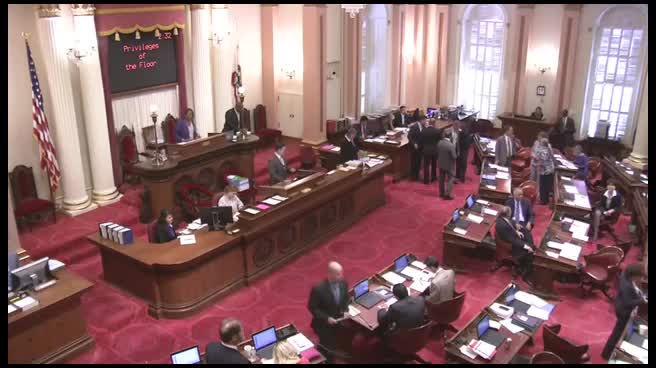 2MIN
Senate Floor
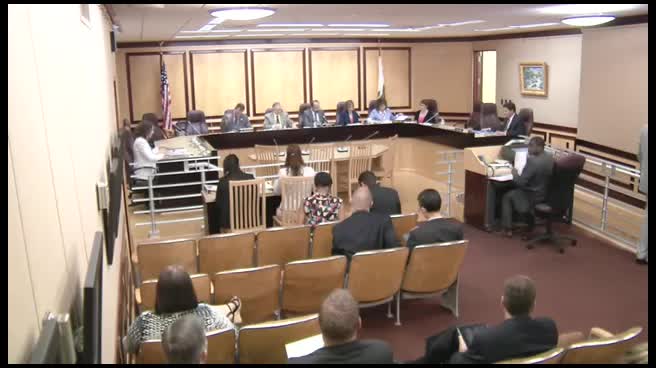 3MIN
Senate Standing Committee on Business, Professions and Economic Development
 3MIN
Senate Standing Committee on Business, Professions and Economic Development
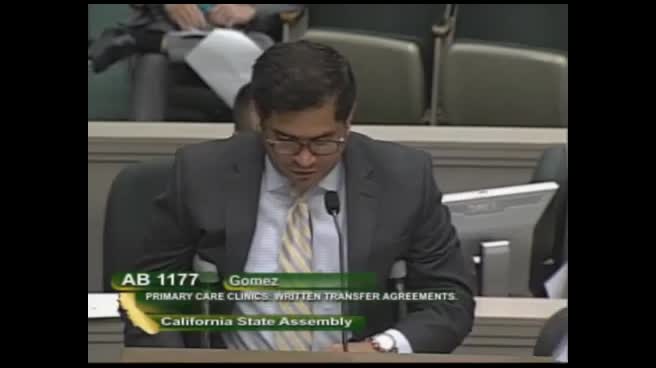 2MIN
Assembly Standing Committee on Health
Bill Author

Bill Co-Author(s):