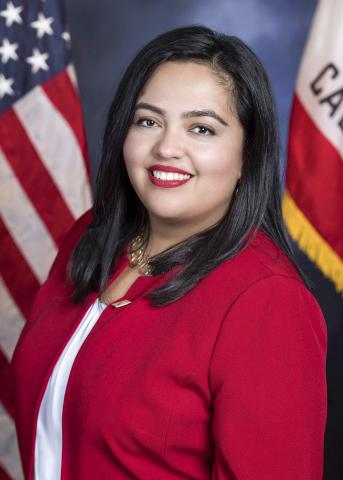
AB 1738: Mobile Homeless Connect Pilot Program.
- Session Year: 2023-2024
- House: Assembly
- Latest Version Date: 2024-09-03
Current Status:
Failed
(2024-09-22: Vetoed by Governor.)
Introduced
In Committee
First Chamber
In Committee
Second Chamber
Enacted
Existing law requires a fee of $26 to be paid to the Department of Motor Vehicles upon an application for an identification card. Existing law waives that fee for an original or replacement identification card issued to any person who can verify their status as a homeless person or homeless child or youth, and authorizes a homeless services provider with knowledge of the persons housing status to verify the persons status for this purpose. Existing law requires a fee of $30 to be paid to the department upon application for an original class C or M drivers license.
This bill, until January 1, 2031, would require the department to establish the Mobile Homeless Connect Pilot Program in specified areas to assist persons experiencing homelessness with obtaining an identification card. The bill would require the department, in collaboration with the Business, Consumer Services, and Housing Agency, to develop guidelines for each pilot project, as specified. The bill would require the department to submit an annual report about the program to the Legislature beginning the 3rd year of the pilot program, and on or before each January 1 thereafter.
Existing law requires a fee of $26 to be paid to the Department of Motor Vehicles upon an application for an identification card. Existing law waives that fee for an original or replacement identification card issued to any person who can verify their status as a homeless person or homeless child or youth, and authorizes a homeless services provider with knowledge of the persons housing status to verify the persons status for this purpose. Existing law requires a fee of $30 to be paid to the department upon application for an original class C or M drivers license.
This bill, until January 1, 2029, 2031, would require the department to establish the Mobile Homeless Connect Pilot Program in specified areas to assist persons experiencing homelessness with obtaining an identification card. The bill would require the department, in collaboration with the Business, Consumer Services, and Housing Agency, to develop guidelines for each pilot project, as specified. The bill would require the department to submit an annual report about the program to the Legislature on or before January 1, 2026, beginning the 3rd year of the pilot program, and on or before each January 1 thereafter.
Existing law requires a fee of $26 to be paid to the Department of Motor Vehicles upon an application for an identification card. Existing law waives that fee for an original or replacement identification card issued to any person who can verify their status as a homeless person or homeless child or youth, and authorizes a homeless services provider with knowledge of the persons housing status to verify the persons status for this purpose. Existing law requires a fee of $30 to be paid to the department upon application for an original class C or M drivers license.
This bill, until January 1, 2029, would require the department to establish the Mobile Homeless Connect Pilot Program in specified areas to assist persons experiencing homelessness with obtaining an identification card. The bill would require the department, in collaboration with the Business, Consumer Services, and Housing Agency, to develop guidelines for each pilot project, as specified. The bill would require the department to submit an annual report about the program to the Legislature on or before January 1, 2026, and on or before each January 1 thereafter.
Existing law requires a fee of $26 to be paid to the Department of Motor Vehicles upon an application for an identification card. Existing law waives that fee for an original or replacement identification card issued to any person who can verify their status as a homeless person or homeless child or youth, and authorizes a homeless services provider with knowledge of the persons housing status to verify the persons status for this purpose. Existing law requires a fee of $30 to be paid to the department upon application for an original class C or M drivers license.
This bill, until January 1, 2029, would require the department to establish the Mobile Homeless Connect Pilot Program in specified areas to assist persons experiencing homelessness with obtaining a drivers license or other needed an identification card. The bill would require the department to submit an annual report about the program to the Legislature on or before January 1, 2026, and on or before each January 1 thereafter.
Existing law requires a fee of $26 to be paid to the Department of Motor Vehicles upon an application for an identification card. Existing law waives that fee for an original or replacement identification card issued to any person who can verify their status as a homeless person or homeless child or youth, and authorizes a homeless services provider with knowledge of the persons housing status to verify the persons status for this purpose. Existing law requires a fee of $30 to be paid to the department upon application for an original class C or M drivers license.
This bill, until January 1, 2029, would require the department to establish the Mobile Homeless Connect Pilot Program in specified areas to assist persons experiencing homelessness with obtaining a drivers license or other needed identification card. The bill would require the department to submit an annual report about the program to the Legislature on or before January 1, 2026, and on or before each January 1 thereafter.
Existing law requires a bicycle that is operated on a roadway or the shoulder of a highway to be operated in the same direction as vehicles are required to be driven.This bill would make a technical, nonsubstantive change to that provision.Existing law requires a bicycle that is operated on a roadway or the shoulder of a highway to be operated in the same direction as vehicles are required to be driven.
This bill would make a technical, nonsubstantive change to that provision.
This article shall be known, and may be cited, as the Mobile Homeless Connect Pilot Program.
13041.The Legislature finds and declares the following:
(a)California has the largest number of residents experiencing homelessness, with over 171,000 people experiencing homelessness on a given night, almost 30 percent of the nations number, according to the United States Department of Housing and Urban Developments 2022 Annual Homelessness Assessment Report.
(b)The vast majority of people experiencing homelessness in California are from California or lived in California for years before becoming homeless.
(c)Homelessness is solvable with sustained investments in proven solutions and accountability in solving homelessness to the people of the State of California.
(d)Persons experiencing homelessness must have a state-issued identification card, among other documents, in order to access a range of key services, including permanent supportive housing, affordable housing, and rental subsidy programs.
(e)Assisting persons experiencing homelessness with obtaining identification cards will enable homeless service providers to move people into permanent housing more expeditiously.
13042.For purposes of this article:
(a)Continuum of care has the same meaning as defined in Section 578.3 of Title 24 of the Code of Federal Regulations.
(b)Department means the Department of Motor Vehicles.
(c)Full-time employee means an individual who meets both of the following requirements:
(1)Performs at least 70 percent of the employees services for the Mobile Homeless Connect Pilot Program.
(2)Is paid qualified wages and works not less than an average of 35 hours per week.
(d)Homeless services provider includes:
(1)A governmental or nonprofit agency receiving federal, state, or county or municipal funding to provide services to persons experiencing homelessness or that is otherwise sanctioned to provide those services by a local homeless continuum of care organization.
(2)A human services provider or public social services provider funded by the state to provide homeless children or youth services, health services, mental or behavioral health services, substance use disorder services, or public assistance or employment services.
(e)Persons experiencing homelessness has the same meaning as homeless as defined in Section 578.3 of Title 24 of the Code of Federal Regulations, as that section read on January 10, 2019.
(f)Pilot program means the Mobile Homeless Connect Pilot Program.
13043.(a)Upon appropriation, the department shall establish a pilot program in the Counties of Los Angeles, Orange, San Diego, and Sacramento and the City and County of San Francisco to assist persons experiencing homelessness with obtaining an identification card, subject to all of the following requirements:
(1)The department shall develop guidelines for the pilot program in each county and city and county in collaboration with the Business, Consumer Services, and Housing Agency. The guidelines for each pilot program shall include, but are not limited to, the following:
(A)(i)The number of full-time employees.
(ii)The hiring of full-time employees shall begin no later than April 1 of the fiscal year for which an appropriation is made for purposes of this article.
(B)Targets for the number of encampments, interim housing sites, and people experiencing homelessness to be engaged per quarter.
(C)A target for the total number of Mobile Homeless Connect Pilot Program services per quarter.
(D)Recommended trainings for Mobile Homeless Connect Pilot Program employees prior to engaging in field work, including, but not limited to, training in trauma-informed care.
(2)The department shall provide direct outreach in collaboration with local homeless services providers that contract with the local continuum of care.
(3)The department shall collaborate with the local continuum of care to identify and prioritize locations, including, but not limited to, interim housing and homeless encampment sites.
(b)On or before January 1 of the third year of the pilot program, and on or before each January 1 thereafter, the department shall submit an annual report to the Legislature that includes information on the number of persons experiencing homelessness engaged, the number of identification cards issued, and any other metrics determined by the department and the Business, Consumer Services, and Housing Agency. The reports required by this subdivision shall be in compliance with Section 9795 of the Government Code.
(c)This article shall remain in effect only until January 1, 2031, and as of that date is repealed.
This article shall be known, and may be cited, as the Mobile Homeless Connect Pilot Program.
13041.The Legislature finds and declares the following:
(a)California has the largest number of residents experiencing homelessness, with over 171,000 people experiencing homelessness on a given night, almost 30 percent of the nations number, according to the United States Department of Housing and Urban Developments 2022 Annual Homelessness Assessment Report.
(b)The vast majority of people experiencing homelessness in California are from California or lived in California for years before becoming homeless.
(c)Homelessness is solvable with sustained investments in proven solutions and accountability in solving homelessness to the people of the State of California.
(d)Persons experiencing homelessness must have a state-issued identification card, among other documents, in order to access a range of key services, including permanent supportive housing, affordable housing, and rental subsidy programs.
(e)Assisting persons experiencing homelessness with obtaining identification cards will enable homeless service providers to move people into permanent housing more expeditiously.
13042.For purposes of this article:
(a)Continuum of care has the same meaning as defined in Section 578.3 of Title 24 of the Code of Federal Regulations.
(b)Department means the Department of Motor Vehicles.
(c)Full-time employee means an individual who meets both of the following requirements:
(1)Performs at least 70 percent of the employees services for the Mobile Homeless Connect Pilot Program.
(2)Is paid qualified wages and works not less than an average of 35 hours per week.
(d)Homeless services provider includes:
(1)A governmental or nonprofit agency receiving federal, state, or county or municipal funding to provide services to persons experiencing homelessness or that is otherwise sanctioned to provide those services by a local homeless continuum of care organization.
(2)A human services provider or public social services provider funded by the state to provide homeless children or youth services, health services, mental or behavioral health services, substance use disorder services, or public assistance or employment services.
(e)Persons experiencing homelessness has the same meaning as homeless as defined in Section 578.3 of Title 24 of the Code of Federal Regulations, as that section read on January 10, 2019.
(f)Pilot program means the Mobile Homeless Connect Pilot Program.
13043.(a)Upon appropriation, the department shall establish a pilot program in the Counties of Los Angeles, Orange, San Diego, and Sacramento and the City and County of San Francisco to assist persons experiencing homelessness with obtaining an identification card, subject to all of the following requirements:
(1)The department shall develop guidelines for the pilot program in each county and city and county in collaboration with the Business, Consumer Services, and Housing Agency. The guidelines for each pilot program shall include, but are not limited to, the following:
(A)(i)The number of full-time employees.
(ii)The hiring of full-time employees shall begin no later than April 1, 2024. 1 of the fiscal year for which an appropriation is made for purposes of this article.
(B)Targets for the number of encampments, interim housing sites, and people experiencing homelessness to be engaged per quarter.
(C)A target for the total number of Mobile Homeless Connect Pilot Program services per quarter.
(D)Recommended trainings for Mobile Homeless Connect Pilot Program employees prior to engaging in field work, including, but not limited to, training in trauma-informed care.
(2)The department shall provide direct outreach in collaboration with local homeless services providers that contract with the local continuum of care.
(3)The department shall collaborate with the local continuum of care to identify and prioritize locations, including including, but not limited to, interim housing and homeless encampment sites.
(b)On or before January 1, 2026, 1 of the third year of the pilot program, and on or before each January 1 thereafter, the department shall submit an annual report to the Legislature that includes information on the number of persons experiencing homelessness engaged, the number of identification cards issued, and any other metrics determined by the department and the Business, Consumer Services, and Housing Agency. The reports required by this subdivision shall be in compliance with Section 9795 of the Government Code.
(c)This article shall remain in effect only until January 1, 2029, 2031, and as of that date is repealed.
This article shall be known, and may be cited, as the Mobile Homeless Connect Pilot Program.
13041.The Legislature finds and declares the following:
(a)California has the largest number of residents experiencing homelessness, with over 171,000 people experiencing homelessness on a given night, almost 30 percent of the nations number, according to the United States Department of Housing and Urban Developments 2022 Annual Homelessness Assessment Report.
(b)The vast majority of people experiencing homelessness in California are from California or lived in California for years before becoming homeless.
(c)Homelessness is solvable with sustained investments in proven solutions and accountability in solving homelessness to the people of the State of California.
(d)Persons experiencing homelessness must have a state-issued identification card, among other documents, in order to access a range of key services, including permanent supportive housing, affordable housing, and rental subsidy programs.
(e)Assisting persons experiencing homelessness with obtaining identification cards will enable homeless service providers to move people into permanent housing more expeditiously.
13042.For purposes of this article:
(a)Continuum of care has the same meaning as defined in Section 578.3 of Title 24 of the Code of Federal Regulations.
(b)Department means the Department of Motor Vehicles.
(c)Full-time employee means an individual who meets both of the following requirements:
(1)Performs at least 70 percent of the employees services for the Mobile Homeless Connect Pilot Program.
(2)Is paid qualified wages and works not less than an average of 35 hours per week.
(c)(d)Homeless services provider includes:
(1)A governmental or nonprofit agency receiving federal, state, or county or municipal funding to provide services to persons experiencing homelessness or that is otherwise sanctioned to provide those services by a local homeless continuum of care organization.
(2)A human services provider or public social services provider funded by the state to provide homeless children or youth services, health services, mental or behavioral health services, substance use disorder services, or public assistance or employment services.
(d)(e)Persons experiencing homelessness has the same meaning as homeless as defined in Section 578.3 of Title 24 of the Code of Federal Regulations, as that section read on January 10, 2019.
(e)(f)Pilot program means the Mobile Homeless Connect Pilot Program.
13043.(a)Upon appropriation, the department shall establish a pilot program in the Counties of Los Angeles, Orange, San Diego, and Sacramento and the City and County of San Francisco to assist persons experiencing homelessness with obtaining an identification card, subject to all of the following requirements:
(1)The department shall develop guidelines for the pilot program in each county and city and county in collaboration with the Business, Consumer Services, and Housing Agency. The guidelines for each pilot program shall include, but are not limited to, the following:
(A)(i)The number of full-time employees.
(ii)The hiring of full-time employees shall begin no later than April 1, 2024.
(B)Targets for the number of encampments, interim housing sites, and people experiencing homelessness to be engaged per quarter.
(C)A target for the total number of Mobile Homeless Connect Pilot Program services per quarter.
(D)Recommended trainings for Mobile Homeless Connect Pilot Program employees prior to engaging in field work, including, but not limited to, training in trauma-informed care.
(2)The department shall provide direct outreach in collaboration with local homeless services providers that contract with the local continuum of care.
(3)The department shall identify and prioritize locations identified by the local continuum of care. collaborate with the local continuum of care to identify and prioritize locations, including but not limited to, interim housing and homeless encampment sites.
(b)On or before January 1, 2026, and on or before each January 1 thereafter, the department shall submit an annual report to the Legislature that includes information on the number of persons experiencing homelessness engaged, the number of identification cards issued, and any other metrics determined by the department and the Business, Consumer Services, and Housing Agency.
(c)This article shall remain in effect only until January 1, 2029, and as of that date is repealed.
This article shall be known, and may be cited, as the Mobile Homeless Connect Pilot Program.
13041.The Legislature finds and declares the following:
(a)California has the largest number of residents experiencing homelessness, with over 171,000 people experiencing homelessness on a given night, almost 30 percent of the nations number, according to the United States Department of Housing and Urban Developments 2022 Annual Homelessness Assessment Report.
(b)The vast majority of people experiencing homelessness in California are from California or lived in California for years before becoming homeless.
(c)Homelessness is solvable with sustained investments in proven solutions and accountability in solving homelessness to the people of the State of California.
(d)Persons experiencing homelessness must have a state-issued identification card, among other documents, in order to access a range of key services, including permanent supportive housing, affordable housing, and rental subsidy programs.
(e)Assisting persons experiencing homelessness with obtaining identification cards will enable homeless service providers to move people into permanent housing more expeditiously.
13042.For purposes of this article:
(a)Continuum of care has the same meaning as defined in Section 578.3 of Title 24 of the Code of Federal Regulations.
(b)Department means the Department of Motor Vehicles.
(c)Homeless services provider includes:
(1)A governmental or nonprofit agency receiving federal, state, or county or municipal funding to provide services to persons experiencing homelessness or that is otherwise sanctioned to provide those services by a local homeless continuum of care organization.
(2)A human services provider or public social services provider funded by the state to provide homeless children or youth services, health services, mental or behavioral health services, substance use disorder services, or public assistance or employment services.
(d)Persons experiencing homelessness has the same meaning as homeless as defined in Section 578.3 of Title 24 of the Code of Federal Regulations, as that section read on January 10, 2019.
(e)Pilot program means the Mobile Homeless Connect Pilot Program.
13043.(a)Upon appropriation, the department shall establish a pilot program in the Counties of Los Angeles, Orange, San Diego, and Sacramento and the City and County of San Francisco to assist persons experiencing homelessness with obtaining a drivers license or other needed an identification card, subject to all of the following requirements:
(1)The department shall develop guidelines for the pilot program in collaboration with the Business, Consumer Services, and Housing Agency.
(2)The department shall provide direct outreach in collaboration with local homeless services providers that contract with the local continuum of care.
(3)The department shall identify and prioritize locations identified by the local continuum of care.
(b)On or before January 1, 2026, and on or before each January 1 thereafter, the department shall submit an annual report to the Legislature that includes information on the number of persons experiencing homelessness engaged, the number of identification cards issued, and any other metrics determined by the department and the Business, Consumer Services, and Housing Agency.
(c)This article shall remain in effect only until January 1, 2029, and as of that date is repealed.
REVISIONS: HeadingLine 2.This article shall be known, and may be cited, as the Mobile Homeless Connect Pilot Program.
13041.The Legislature finds and declares the following:
(a)California has the largest number of residents experiencing homelessness, with over 171,000 people experiencing homelessness on a given night, almost 30 percent of the nations number, according to the United States Department of Housing and Urban Developments 2022 Annual Homelessness Assessment Report.
(b)The vast majority of people experiencing homelessness in California are from California or lived in California for years before becoming homeless.
(c)Homelessness is solvable with sustained investments in proven solutions and accountability in solving homelessness to the people of the State of California.
(d)Persons experiencing homelessness must have a state-issued identification card, among other documents, in order to access a range of key services, including permanent supportive housing, affordable housing, and rental subsidy programs.
(e)Assisting persons experiencing homelessness with obtaining identification cards will enable homeless service providers to move people into permanent housing more expeditiously.
13042.For purposes of this article:
(a)Continuum of care has the same meaning as defined in Section 578.3 of Title 24 of the Code of Federal Regulations.
(b)Department means the Department of Motor Vehicles.
(c)Homeless services provider includes:
(1)A governmental or nonprofit agency receiving federal, state, or county or municipal funding to provide services to persons experiencing homelessness or that is otherwise sanctioned to provide those services by a local homeless continuum of care organization.
(2)A human services provider or public social services provider funded by the state to provide homeless children or youth services, health services, mental or behavioral health services, substance use disorder services, or public assistance or employment services.
(d)Persons experiencing homelessness has the same meaning as homeless as defined in Section 578.3 of Title 24 of the Code of Federal Regulations, as that section read on January 10, 2019.
(e)Pilot program means the Mobile Homeless Connect Pilot Program.
13043.(a)Upon appropriation, the department shall establish a pilot program in the Counties of Los Angeles, Orange, San Diego, and Sacramento and the City and County of San Francisco to assist persons experiencing homelessness with obtaining a drivers license or other needed identification card, subject to all of the following requirements:
(1)The department shall develop guidelines for the pilot program in collaboration with the Business, Consumer Services, and Housing Agency.
(2)The department shall provide direct outreach in collaboration with local homeless services providers that contract with the local continuum of care.
(3)The department shall identify and prioritize locations identified by the local continuum of care.
(b)On or before January 1, 2026, and on or before each January 1 thereafter, the department shall submit an annual report to the Legislature that includes information on the number of persons experiencing homelessness engaged, the number of identification cards issued, and any other metrics determined by the department and the Business, Consumer Services, and Housing Agency.
(c)This article shall remain in effect only until January 1, 2029, and as of that date is repealed.
SECTION 1.Section 21650.1 of the Vehicle Code is amended to read:21650.1.A bicycle operated on a roadway, or on the shoulder of a highway, shall be operated in the same direction as vehicles are required to be driven upon the roadway.A bicycle operated on a roadway, or on the shoulder of a highway, shall be operated in the same direction as vehicles are required to be driven upon the roadway.
|
Date
|
Status
|
|---|---|
| Sep 22, 2024 | Vetoed by Governor. |
| Sep 11, 2024 | Enrolled and presented to the Governor at 4 p.m. |
| Aug 29, 2024 | Senate amendments concurred in. To Engrossing and Enrolling. (Ayes 76. Noes 0.). |
| Aug 29, 2024 | Assembly Rule 77 suspended. |
| Aug 28, 2024 | In Assembly. Concurrence in Senate amendments pending. May be considered on or after August 30 pursuant to Assembly Rule 77. |
| Aug 28, 2024 | Read third time. Passed. Ordered to the Assembly. (Ayes 39. Noes 0.). |
| Aug 22, 2024 | Read second time. Ordered to third reading. |
| Aug 21, 2024 | Read second time and amended. Ordered returned to second reading. |
| Aug 21, 2024 | Ordered to second reading. |
| Aug 21, 2024 | From inactive file. |
| Sep 12, 2023 | Ordered to inactive file at the request of Senator Cortese. |
| Sep 12, 2023 | From special consent calendar |
| Sep 8, 2023 | Ordered to special consent calendar. |
| Sep 5, 2023 | Read second time. Ordered to third reading. |
| Sep 1, 2023 | From committee: Do pass. (Ayes 7. Noes 0.) (September 1). |
| Aug 21, 2023 | In committee: Referred to APPR suspense file. |
| Jul 12, 2023 | From committee: Do pass and re-refer to Com. on APPR with recommendation: To Consent Calendar. (Ayes 16. Noes 0.) (July 11). Re-referred to Com. on APPR. |
| Jun 15, 2023 | From committee chair, with author's amendments: Amend, and re-refer to committee. Read second time, amended, and re-referred to Com. on TRANS. |
| Jun 14, 2023 | Referred to Com. on TRANS. |
| Jun 1, 2023 | In Senate. Read first time. To Com. on RLS. for assignment. |
| May 31, 2023 | Read third time. Passed. Ordered to the Senate. (Ayes 79. Noes 0. Page 2045.) |
| May 18, 2023 | Read second time. Ordered to third reading. |
| May 18, 2023 | From committee: Do pass. (Ayes 15. Noes 0.) (May 18). |
| May 18, 2023 | Coauthors revised. |
| May 18, 2023 | Joint Rule 62(a), file notice suspended. (Page 1580.) |
| May 17, 2023 | In committee: Set, first hearing. Referred to APPR. suspense file. |
| May 10, 2023 | In committee: Hearing postponed by committee. |
| Apr 27, 2023 | From committee: Do pass and re-refer to Com. on APPR. with recommendation: To Consent Calendar. (Ayes 8. Noes 0.) (April 26). Re-referred to Com. on APPR. |
| Apr 27, 2023 | Coauthors revised. |
| Apr 18, 2023 | From committee: Do pass and re-refer to Com. on H. & C.D. with recommendation: To Consent Calendar. (Ayes 15. Noes 0.) (April 17). Re-referred to Com. on H. & C.D. |
| Apr 18, 2023 | Coauthors revised. |
| Apr 6, 2023 | Re-referred to Com. on TRANS. |
| Apr 5, 2023 | From committee chair, with author's amendments: Amend, and re-refer to Com. on TRANS. Read second time and amended. |
| Mar 20, 2023 | Re-referred to Com. on TRANS. |
| Mar 16, 2023 | From committee chair, with author's amendments: Amend, and re-refer to Com. on TRANS. Read second time and amended. |
| Mar 16, 2023 | Referred to Coms. on TRANS. and H. & C.D. |
| Feb 18, 2023 | From printer. May be heard in committee March 20. |
| Feb 17, 2023 | Read first time. To print. |
|
Date
|
Description
|
Location
|
Votes
|
|
|---|---|---|---|---|
| Aug 29, 2024 | AB 1738 Wendy Carrillo Concurrence in Senate Amendments | Assembly Floor |
Passed |
|
| Aug 28, 2024 | Assembly 3rd Reading AB1738 Wendy Carrillo et al By Min | Senate Floor |
Passed |
|
| Sep 1, 2023 | Do pass | Senate Standing Committee on Appropriations |
Passed |
|
| Aug 21, 2023 | Placed on suspense file | Senate Standing Committee on Appropriations |
Passed |
|
| Jul 11, 2023 | Do pass, but first be re-referred to the Committee on [Appropriations] with the recommendation: To Consent Calendar | Senate Standing Committee on Transportation |
Passed |
|
| May 31, 2023 | AB 1738 Wendy Carrillo Assembly Third Reading | Assembly Floor |
Passed |
|
| May 18, 2023 | Do pass. | Assembly Standing Committee on Appropriations |
Passed |
|
| Apr 26, 2023 | Do pass and be re-referred to the Committee on [Appropriations] with recommendation: To Consent Calendar | Assembly Standing Committee on Housing and Community Development |
Passed |
|
| Apr 17, 2023 | Do pass and be re-referred to the Committee on [Housing and Community Development] with recommendation: To Consent Calendar | Assembly Standing Committee on Transportation |
Passed |
This list shows positions taken on this bill by organizations on the date displayed, which is linked to the original source.
Positions by individuals are not included.
|
Organization
|
Position
|
Date
|
|---|---|---|
| City of Long Beach | ** Support | |
| City Of Los Angeles | ** Support | |
| City Of Sacramento, Mayor Darrell Steinberg | ** Support | |
| City Of San Diego | ** Support | |
| Corporation For Supportive Housing | ** Support | |
| County of Los Angeles Board of Supervisors | ** Support | |
| Downtown Women's Center | ** Support | |
| East Bay YIMBY | ** Support | |
| Grow the Richmond | ** Support | |
| How to ADU | ** Support | |
| LA Family Housing | ** Support | |
| los angeles homeless services authority | ** Support | |
| Mountain View YIMBY | ** Support | |
| Napa-Solano for Everyone | ** Support | |
| National Alliance to End Homelessness | ** Support | |
| Northern Neighbors | ** Support | |
| Office of Los Angeles Mayor Karen Bass | ** Support | |
| Path | ** Support | |
| Peninsula for Everyone | ** Support | |
| People For Housing Orange County | ** Support | |
| Progress Noe Valley | ** Support | |
| Safe Place For Youth | ** Support | |
| San Francisco Yimby | ** Support | |
| Santa Cruz Yimby | ** Support | |
| Santa Rosa Yimby | ** Support | |
| SLO County YIMBY | ** Support | |
| South Bay Yimby | ** Support | |
| Southside Forward | ** Support | |
| st. joseph center | ** Support | |
| The People Concern | ** Support | |
| Union Station Homeless Services | ** Support | |
| Ventura County YIMBY | ** Support | |
| Yimby Action | ** Support |
GOVERNOR'S VETO
GV Bill Id:AB 1738
Author:(Wendy Carrillo)
As Enrolled Ver:September 3, 2024
2/3 vote
SUMMARY
Requires the Department of Motor Vehicles (DMV) to establish the Mobile Homeless Connect Pilot Program in the counties of Los Angeles, Orange, San Diego, and Sacramento and the City and County of San Francisco to assist persons experiencing homelessness with obtaining an identification card (ID).
Senate Amendments
- Require DMV employees used for the pilot to be full-time employees working no less than 35 hours a week and spend 70% of their time working on the pilot.
- Requires the guidelines for each pilot program include that DMV begins hiring workers for the pilot program by the first fiscal year of which an appropriation is made for the purpose of funding the program established by this bill; targets for the number of encampments, interim housing sites, and people experiencing homelessness to be engaged per quarter; a target for the number of pilot services; and recommended trainings for employees prior to engaging in field work.
- Extends the pilot programs length from January 1, 2029 to January 1, 2031.
- Extends the deadline for the report to the legislature from January 1, 2026 to the beginning of the third year of the pilot program.
Governor's Veto Message
This bill would require the Department of Motor Vehicles (DMV) to establish a new pilot program in collaboration with the Business, Consumer Services, and Housing Agency to assist persons experiencing homelessness with obtaining an identification card. The pilot program would operate in Los Angeles, Orange, San Diego, and Sacramento Counties, as well as the City and County of San Francisco.
This bill builds on the Mobile Homeless Connect events my Administration launched in 2022. These events, which involved state agencies, local governments, and community organizations, successfully connected hundreds of unsheltered individuals to essential services, including ID cards and birth certificates. Additionally, pursuant to existing law, the DMV has been issuing nofee identification cards to people experiencing homelessness since 2014, facilitating the issuance of around 120,000 ID cards each year.
While I am proud of the impact this initiative has had, along with our ongoing efforts to connect unsheltered Californians to needed resources, any expansion must be properly funded and considered within the State Budget. Given the lack of funding for this proposed program, this bill would place additional and unsustainable stress on the Motor Vehicle Account.
COMMENTS
DMV has held multiple mobile pop-up events to help unhoused persons and others get ID cards. For example, a three day event from Governor Newsom's Mobile Homeless Connect program in August of 2022 resulted in 84 applications for ID cards for unhoused persons. DMV has participated in a variety of outreach events statewide, including events with ACT Mental Health Systems, Delancy Street Outreach, Fresno County Sheriff's Department, Project Homeless Connect, and Project Room Key amongst others.
In 2019 DMV, issued 137,888 ID cars for unhoused persons. In 2020, it issued 75,314 IDs, and in 2021, it issued 100,721. While unhoused persons can get ID cards for free, they cannot get the same fee waivers for driver's licenses.
In recent years, the California Legislature has made numerous attempts to reduce barriers for homeless and incarcerated individuals to get an ID card. AB 1733 (Quirk Silva) Chapter 764, Statutes of 2014 created a process for DMV to waive the fee for an ID card for homeless individuals. The rationale given at the time for the fee waiver was because "many people experiencing homelessness lack the necessary forms of personal identification needed to establish their eligibility for various public assistance and social programs. The most common forms of ID that people need in order to access these programs are birth records and a valid, government-issued photo ID." The Legislature also passed SB 629 (Roth) Chapter 645, Statutes of 2021, which streamlined the process for individuals that are incarcerated to get an ID card while in custody of the Department of Corrections and Rehabilitation.
Lack of access to an ID can impact on an individual's ability to access other services. In particular, ID cards are often required for housing applications, access to health benefits, and opening bank accounts. ID cards are required for individuals to access the public benefits that would qualify them for the reduced ID fee this bill provides for.
In the midst of the COVID-19 pandemic, lack of access to an ID created a particularly treacherous reality. Many health care providers require patients to provide qualifying identification, namely a government-issued ID, in order to receive a vaccine. Without an ID card, people are less likely to be able to be vaccinated and therefore more susceptible to infection, creating health consequences for themselves and the public at large.
According to the Author
"Persons experiencing homelessness must have a state-issued identification card, among other documents, in order to access a range of key services, including permanent supportive housing, affordable housing, and rental subsidy programs. AB 1738 would build on a one-time pilot program brought forward by the Governor's office, the Mobile Homeless Connect program. This bill would expand the program to a year-round, full-time effort, partnering mobile Department of Motor Vehicles teams with Continuums of Care (CoCs) across the Counties of Los Angeles, Orange, San Diego, Sacramento, and the City and County of San Francisco.
Homelessness is solvable with sustained investments in proven solutions and accountability. The Mobile Homeless Connect Pilot Program will speed up the process of rehousing individuals experiencing homelessness by processing document and identification requests at interim housing sites and targeted encampments."
Arguments in Support
According to the Mayor of Los Angeles, the sponsor of this bill, "The last few years have seen an increase in many housing and homeless service programs in Los Angeles, including expanded outreach, interim housing, housing navigation, time limited subsidies, and permanent supportive housing (PSH). With thousands of new PSH units coming online in the City of Los Angeles over the next several years, it is vital that we do everything possible to expedite the housing placement process for those experiencing homelessness in Los Angeles and ensure quick utilization of all housing resources as quickly as possible. In order to access a range of key services, including permanent supportive housing, affordable housing, and rental subsidy programs, people experiencing homelessness must have a State-issued identification card, among other documents. Government paperwork is hard enough for those of us who have ready access to computers and cars, but people living in encampments often struggle to stitch together the services they need to get their lives back on track. The DMV Mobile Homeless Connect Pilot Program recognizes this reality and offers a new State-local partnership to address it."
Arguments in Opposition
None on file.
FISCAL COMMENTS
According to Senate Appropriations Committee:
DMV estimates costs of approximately $1.6 million annually for five years (the equivalent of 13.5 PY of staff time) to establish dedicated teams in the five specified counties to conduct expanded outreach to homeless populations, to the extent that funding is appropriated for the program. DMV would incur minor costs to develop and adopt guidelines for each pilot program. (General Fund [GF])
Minor and absorbable costs for staff at the Business, Consumer Services, and Housing Agency (BCSH Agency) to consult with DMV to develop pilot program guidelines. (GF)
VOTES
ASM TRANSPORTATION: 15-0-0
YES: Friedman, Vince Fong, Berman, Juan Carrillo, Davies, Gipson, Hart, Jackson, Kalra, Lowenthal, Stephanie Nguyen, Sanchez, Wallis, Ward, Wicks
ASM HOUSING AND COMMUNITY DEVELOPMENT: 8-0-0
YES: Wicks, Joe Patterson, Wendy Carrillo, Gabriel, Kalra, Quirk-Silva, Sanchez, Ward
ASM APPROPRIATIONS: 15-0-1
YES: Holden, Megan Dahle, Bryan, Calderon, Wendy Carrillo, Dixon, Mike Fong, Hart, Lowenthal, Mathis, Papan, Pellerin, Sanchez, Weber, Ortega
ABS, ABST OR NV: Robert Rivas
ASSEMBLY FLOOR: 79-0-1
YES: Addis, Aguiar-Curry, Alanis, Alvarez, Arambula, Bains, Bauer-Kahan, Bennett, Berman, Boerner, Bonta, Bryan, Calderon, Juan Carrillo, Wendy Carrillo, Cervantes, Chen, Connolly, Megan Dahle, Davies, Dixon, Flora, Mike Fong, Vince Fong, Friedman, Gabriel, Gallagher, Garcia, Gipson, Grayson, Haney, Hart, Holden, Hoover, Irwin, Jackson, Jones-Sawyer, Kalra, Lackey, Lee, Low, Lowenthal, Maienschein, Mathis, McCarty, McKinnor, Muratsuchi, Stephanie Nguyen, Ortega, Pacheco, Papan, Jim Patterson, Joe Patterson, Pellerin, Petrie-Norris, Quirk-Silva, Ramos, Reyes, Luz Rivas, Robert Rivas, Rodriguez, Blanca Rubio, Sanchez, Santiago, Schiavo, Soria, Ta, Ting, Valencia, Villapudua, Waldron, Wallis, Ward, Weber, Wicks, Wilson, Wood, Zbur, Rendon
ABS, ABST OR NV: Essayli
SENATE FLOOR: 39-0-1
YES: Allen, Archuleta, Ashby, Atkins, Becker, Blakespear, Bradford, Caballero, Cortese, Dahle, Dodd, Durazo, Eggman, Glazer, Gonzalez, Grove, Hurtado, Jones, Laird, Limón, McGuire, Menjivar, Min, Newman, Nguyen, Niello, Ochoa Bogh, Padilla, Portantino, Roth, Rubio, Seyarto, Skinner, Smallwood-Cuevas, Stern, Umberg, Wahab, Wiener, Wilk
ABS, ABST OR NV: Alvarado-Gil
ASSEMBLY FLOOR: 76-0-3
YES: Addis, Aguiar-Curry, Alanis, Alvarez, Arambula, Bains, Bauer-Kahan, Bennett, Berman, Boerner, Bonta, Bryan, Calderon, Juan Carrillo, Wendy Carrillo, Chen, Connolly, Megan Dahle, Davies, Dixon, Essayli, Flora, Mike Fong, Friedman, Gabriel, Gallagher, Garcia, Gipson, Grayson, Haney, Hart, Holden, Hoover, Irwin, Jackson, Jones-Sawyer, Kalra, Lackey, Lee, Low, Lowenthal, Maienschein, Mathis, McCarty, McKinnor, Muratsuchi, Stephanie Nguyen, Pacheco, Papan, Jim Patterson, Joe Patterson, Pellerin, Petrie-Norris, Quirk-Silva, Ramos, Rendon, Reyes, Luz Rivas, Rodriguez, Blanca Rubio, Sanchez, Santiago, Schiavo, Soria, Ta, Ting, Valencia, Villapudua, Waldron, Wallis, Ward, Weber, Wicks, Wilson, Wood, Robert Rivas
ABS, ABST OR NV: Cervantes, Ortega, Zbur
UPDATED
VERSION: September 3, 2024
CONSULTANT: David Sforza / TRANS. / (916) 319-2093 FN: 0005083
CONCURRENCE IN SENATE AMENDMENTS
CSA1 Bill Id:AB 1738
Author:(Wendy Carrillo)
As Amended Ver:August 21, 2024
Majority vote
SUMMARY
Requires the Department of Motor Vehicles (DMV) to establish the Mobile Homeless Connect Pilot Program in the counties of Los Angeles, Orange, San Diego, and Sacramento and the City and County of San Francisco to assist persons experiencing homelessness with obtaining an identification card (ID).
Senate Amendments
- Require DMV employees used for the pilot to be full-time employees working no less than 35 hours a week and spend 70% of their time working on the pilot.
- Requires the guidelines for each pilot program include that DMV begins hiring workers for the pilot program by the first fiscal year of which an appropriation is made for the purpose of funding the program established by this bill; targets for the number of encampments, interim housing sites, and people experiencing homelessness to be engaged per quarter; a target for the number of pilot services; and recommended trainings for employees prior to engaging in field work.
- Extends the pilot programs length from January 1, 2029 to January 1, 2031.
- Extends the deadline for the report to the legislature from January 1, 2026 to the beginning of the third year of the pilot program.
COMMENTS
DMV has held multiple mobile popup events to help unhoused persons and others get ID cards. For example, a three day event from Governor Newsom's Mobile Homeless Connect program in August of 2022 resulted in 84 applications for ID cards for unhoused persons. DMV has participated in a variety of outreach events statewide, including events with ACT Mental Health Systems, Delancy Street Outreach, Fresno County Sheriff's Department, Project Homeless Connect, and Project Room Key amongst others.
In 2019 DMV, issued 137,888 ID cars for unhoused persons. In 2020, it issued 75,314 IDs, and in 2021, it issued 100,721. While unhoused persons can get ID cards for free, they cannot get the same fee waivers for driver's licenses.
In recent years, the California Legislature has made numerous attempts to reduce barriers for homeless and incarcerated individuals to get an ID card. AB 1733 (Quirk Silva) Chapter 764, Statutes of 2014 created a process for DMV to waive the fee for an ID card for homeless individuals. The rationale given at the time for the fee waiver was because "many people experiencing homelessness lack the necessary forms of personal identification needed to establish their eligibility for various public assistance and social programs. The most common forms of ID that people need in order to access these programs are birth records and a valid, government-issued photo ID." The Legislature also passed SB 629 (Roth) Chapter 645, Statutes of 2021, which streamlined the process for individuals that are incarcerated to get an ID card while in custody of the Department of Corrections and Rehabilitation.
Lack of access to an ID can impact on an individual's ability to access other services. In particular, ID cards are often required for housing applications, access to health benefits, and opening bank accounts. ID cards are required for individuals to access the public benefits that would qualify them for the reduced ID fee this bill provides for.
In the midst of the COVID-19 pandemic, lack of access to an ID created a particularly treacherous reality. Many health care providers require patients to provide qualifying identification, namely a government-issued ID, in order to receive a vaccine. Without an ID card, people are less likely to be able to be vaccinated and therefore more susceptible to infection, creating health consequences for themselves and the public at large.
According to the Author
"Persons experiencing homelessness must have a state-issued identification card, among other documents, in order to access a range of key services, including permanent supportive housing, affordable housing, and rental subsidy programs. AB 1738 would build on a one-time pilot program brought forward by the Governor's office, the Mobile Homeless Connect program. This bill would expand the program to a year-round, full-time effort, partnering mobile Department of Motor Vehicles teams with Continuums of Care (CoCs) across the Counties of Los Angeles, Orange, San Diego, Sacramento, and the City and County of San Francisco.
Homelessness is solvable with sustained investments in proven solutions and accountability. The Mobile Homeless Connect Pilot Program will speed up the process of rehousing individuals experiencing homelessness by processing document and identification requests at interim housing sites and targeted encampments.
Arguments in Support
According to the Mayor of Los Angeles, the sponsor of this bill, "The last few years have seen an increase in many housing and homeless service programs in Los Angeles, including expanded outreach, interim housing, housing navigation, time limited subsidies, and permanent supportive housing (PSH). With thousands of new PSH units coming online in the City of Los Angeles over the next several years, it is vital that we do everything possible to expedite the housing placement process for those experiencing homelessness in Los Angeles and ensure quick utilization of all housing resources as quickly as possible. In order to access a range of key services, including permanent supportive housing, affordable housing, and rental subsidy programs, people experiencing homelessness must have a State-issued identification card, among other documents. Government paperwork is hard enough for those of us who have ready access to computers and cars, but people living in encampments often struggle to stitch together the services they need to get their lives back on track. The DMV Mobile Homeless Connect Pilot Program recognizes this reality and offers a new State-local partnership to address it."
Arguments in Opposition
None on file.
FISCAL COMMENTS
According to Senate Appropriations Committee:
DMV estimates costs of approximately $1.6 million annually for five years (the equivalent of 13.5 PY of staff time) to establish dedicated teams in the five specified counties to conduct expanded outreach to homeless populations, to the extent that funding is appropriated for the program. DMV would incur minor costs to develop and adopt guidelines for each pilot program. (General Fund [GF])
Minor and absorbable costs for staff at the Business, Consumer Services, and Housing Agency (BCSH Agency) to consult with DMV to develop pilot program guidelines. (GF)
VOTES:
ASM TRANSPORTATION: 15-0-0
YES: Friedman, Vince Fong, Berman, Juan Carrillo, Davies, Gipson, Hart, Jackson, Kalra, Lowenthal, Stephanie Nguyen, Sanchez, Wallis, Ward, Wicks
ASM HOUSING AND COMMUNITY DEVELOPMENT: 8-0-0
YES: Wicks, Joe Patterson, Wendy Carrillo, Gabriel, Kalra, Quirk-Silva, Sanchez, Ward
ASM APPROPRIATIONS: 15-0-1
YES: Holden, Megan Dahle, Bryan, Calderon, Wendy Carrillo, Dixon, Mike Fong, Hart, Lowenthal, Mathis, Papan, Pellerin, Sanchez, Weber, Ortega
ABS, ABST OR NV: Robert Rivas
ASSEMBLY FLOOR: 79-0-1
YES: Addis, Aguiar-Curry, Alanis, Alvarez, Arambula, Bains, Bauer-Kahan, Bennett, Berman, Boerner, Bonta, Bryan, Calderon, Juan Carrillo, Wendy Carrillo, Cervantes, Chen, Connolly, Megan Dahle, Davies, Dixon, Flora, Mike Fong, Vince Fong, Friedman, Gabriel, Gallagher, Garcia, Gipson, Grayson, Haney, Hart, Holden, Hoover, Irwin, Jackson, Jones-Sawyer, Kalra, Lackey, Lee, Low, Lowenthal, Maienschein, Mathis, McCarty, McKinnor, Muratsuchi, Stephanie Nguyen, Ortega, Pacheco, Papan, Jim Patterson, Joe Patterson, Pellerin, Petrie-Norris, Quirk-Silva, Ramos, Reyes, Luz Rivas, Robert Rivas, Rodriguez, Blanca Rubio, Sanchez, Santiago, Schiavo, Soria, Ta, Ting, Valencia, Villapudua, Waldron, Wallis, Ward, Weber, Wicks, Wilson, Wood, Zbur, Rendon
ABS, ABST OR NV: Essayli
SENATE FLOOR: 39-0-1
YES: Allen, Archuleta, Ashby, Atkins, Becker, Blakespear, Bradford, Caballero, Cortese, Dahle, Dodd, Durazo, Eggman, Glazer, Gonzalez, Grove, Hurtado, Jones, Laird, Limón, McGuire, Menjivar, Min, Newman, Nguyen, Niello, Ochoa Bogh, Padilla, Portantino, Roth, Rubio, Seyarto, Skinner, Smallwood-Cuevas, Stern, Umberg, Wahab, Wiener, Wilk
ABS, ABST OR NV: Alvarado-Gil
UPDATED
VERSION: August 21, 2024
CONSULTANT: David Sforza / TRANS. / (916) 319-2093 FN: 0004754
SENATE RULES COMMITTEE Office of Senate Floor Analyses (916) 651-1520 Fax: (916) 327-4478 | AB 1738 |
THIRD READING
Bill No: AB 1738
Author: Wendy Carrillo (D), et al.
Amended: 8/21/24 in Senate
Vote: 21
SENATE TRANSPORTATION COMMITTEE: 16-0, 7/11/23
AYES: Gonzalez, Niello, Allen, Archuleta, Becker, Blakespear, Cortese, Dahle, Durazo, Laird, Limón, McGuire, Newman, Nguyen, Seyarto, Umberg
SENATE APPROPRIATIONS COMMITTEE: 7-0, 9/1/23
AYES: Portantino, Jones, Ashby, Bradford, Seyarto, Wahab, Wiener
ASSEMBLY FLOOR: 79-0, 5/31/23 - See last page for vote
SUBJECT: Mobile Homeless Connect Pilot Program
SOURCE: Los Angeles Homeless Services Authority
Office of Los Angeles Mayor Karen Bass
DIGEST:
This bill requires the Department of Motor Vehicles to, upon appropriations, establish a Mobile Homeless Connect Pilot Program in specified areas to assist persons experiencing homelessness obtain an identification card.
Senate Floor Amendments of 8/21/24 make hiring of the staff for the pilot program contingent upon an appropriation and delayed the sunset to 2031.
ANALYSIS:
Existing law:
- Authorizes the Department of Motor Vehicles (DMV) to issue an identification card to any person attesting to specified identifying data and providing department-required bona fide documentary evidence of that data. (Vehicle Code (VEH) §13000)
- Requires payment of fee of $26 to the DMV upon application for an identification card. (VEH §14902)
- Reduces the fee to $8 for:
- Replacement identification cards issued to an eligible inmate upon release from a federal correctional facility or county jail;
- Original or replacement identification cards issued to an eligible inmate upon release from a state correctional facility; and
- Replacement identification cards issued to an eligible patient treated in a facility of the State Department of State Hospitals.
- Reduces the fee for an original or replacement identification card issued to a person determined to have an income level to meet eligibility for specified financial assistance programs to $6.
- Prohibits charging of fees for:
- Senior citizen identification cards, which require the applicant to be 62 years or older;
- Original, renewal, or replacement driver’s license or identification cards issued to any person who was exonerated and released from the state prison within the previous six months; and
- Identification cards issued to any person who can verify their status as a person experiencing homelessness or as a child or youth experiencing homelessness (VEH §14903)
This bill:
- Makes findings and declarations regarding the size of the homelessness crisis in California, the importance of investments in solving homelessness, and the role of obtaining a state-issued identification card in helping people experiencing homelessness receive key services.
- Defines, for the purposes of this legislation, “Homeless services provider” as:
- A governmental or nonprofit agency receiving federal, state, or county or municipal funding to provide services to persons experiencing homelessness or that is otherwise sanctioned to provide those services by a local homeless continuum of care organization; or
- A human services provider or public social services provider funded by the state to provide homeless children or youth services, health services, mental or behavioral health services, substance use disorder services, or public assistance or employment services.
- Directs the Department of Motor Vehicles (DMV), upon appropriation, to establish a pilot program in the Counties of Los Angeles, Orange, San Diego, and Sacramento and the City and County of San Francisco to assist persons experiencing homelessness with obtaining an identification card. In order to implement this pilot program the DMV shall:
- Develop guidelines for the program in collaboration with the Business, Consumer Services, and Housing Agency;
- Provide direct outreach in collaboration with local homeless services providers that contract with the local continuum of care; and
- Collaborate with the local continuum of care to identify and prioritize locations including interim housing and homeless encampment sites.
- Requires that the guidelines for the pilot programs shall include at least:
- The number of full time employees, who perform at least 70 percent of their services for the Mobile Homeless Connect Pilot Program and works an average of at least 35 hours per week;
- That hiring of full-time employees shall begin by April 1 of the fiscal year for which an appropriation is made for purposes of this article;
- Targets for the number of encampments, interim housing sites, and people experiencing homelessness to be engaged per quarter;
- A target for the total number of Mobile Homeless Connect Pilot Program services per quarter; and
- Recommended trainings for Mobile Homeless Connect Pilot Program employees prior to engaging in field work including, but not limited to, training in trauma-informed care.
- Requires, as of the third year of the pilot program, the DMV to submit an annual report to the Legislature that includes information on the number of people experiencing homelessness engaged, the number of identification cards issues, and any other metrics determined by the DMV and the BCSH.
- Sunsets the provisions of the bill on January 1, 2031.
Comments
- Purpose of bill. According to the author, “Persons experiencing homelessness must have a state-issued identification card, among other documents, in order to access a range of key services, including permanent supportive housing, affordable housing, and rental subsidy programs. AB 1738 would build on a one-time pilot program brought forward by the Governor’s office, the Mobile Homeless Connect program. This bill would expand the program to a year-round, full-time effort, partnering mobile Department of Motor Vehicles teams with Continuums of Care (CoCs) across the Counties of Los Angeles, Orange, San Diego, Sacramento, and the City and County of San Francisco. Homelessness is solvable with sustained investments in proven solutions and accountability. The Mobile Homeless Connect Pilot Program will speed up the process of rehousing individuals experiencing homelessness by processing document and identification requests at interim housing sites and targeted encampments.”
- Continuum of care. Continuums of care (CoCs) are regional or local planning body that coordinate housing and services funding for homeless families and individuals. There are currently 44 CoCs in California’s 58 counties. CoCs are often led by a county or non-profit organization, though in some cases, they are led by a city, and are comprised of a number of representative organizations that serve individuals facing homelessness. These can include nonprofit homeless providers, governments, victim service providers, hospitals, mental health agencies, affordable housing developers, law enforcement, among others.
- Homelessness and identification cards. Lack of access to an ID can impact on an individual’s ability to access other services. In particular, ID cards are often required for housing applications, access to health benefits, and opening bank accounts. In the midst of the COVID-19 pandemic, lack of access to an ID created a particularly treacherous reality. Many health care providers require patients to provide qualifying identification, namely a government-issued ID, in order to receive a vaccine. Without an ID card, people are less likely to be able to be vaccinated and therefore more susceptible to infection, creating health consequences for themselves and the public at large.
Usually to obtain an ID card requires a payment of a fee, in addition to documents proving one’s identity. Individuals experiencing homelessness usually cannot afford these fees and may not be able to produce documents demonstrating identity without assistance.
In recent years, the California Legislature has made numerous attempts to reduce barriers for vulnerable individuals to get an ID card. AB 1733 (Quirk Silva, Chapter 764, Statutes of 2014) created a process for DMV to waive the fee for an ID card for homeless individuals. The rationale given at the time for the fee waiver was because “many people experiencing homelessness lack the necessary forms of personal identification needed to establish their eligibility for various public assistance and social programs. The most common forms of ID that people need in order to access these programs are birth records and a valid, government-issued photo ID.”
- DMV outreach. DMV has held multiple mobile popup events to help unhoused persons and others get ID cards. For example, a three day event from Governor Newsom’s Mobile Homeless Connect program in August of 2022 resulted in 84 applications for ID cards for unhoused persons. DMV has participated in a variety of outreach events statewide, including events with ACT Mental Health Systems, Delancy Street Outreach, Fresno County Sheriff’s Department, Project Homeless Connect, and Project Room Key amongst others.
In 2019, DMV issued 137,888 ID cards for unhoused persons. In 2020, it issued 75,314 IDs, and in 2021, it issued 100,721. While unhoused persons can get ID cards for free, they cannot get the same fee waivers for driver’s licenses.
- Drawing on a nearly insolvent fund? The goals of this legislation are noble and in line with policy choices made by the Legislature in the past. However the state’s fiscal environment has worsened severely in recent years. Earlier this year the Legislative Analyst’s Office released a report evaluating the fiscal outlook of the MVA, which is the primary funding source for the CHP and DMV. According to this report the MVA is “rapidly heading for insolvency” as expenditures continue to outpace revenues. The report predicts that the fund will become insolvent in fiscal year 2025-2026. As such the report recommends the Legislature set a high bar for considering approval of any proposals that create additional MVA cost pressures and accelerate the risk of insolvency.
This pilot program only becomes operative upon an appropriation of funding by the Legislature, and only if this appropriation is made within the next six years.
FISCAL EFFECT: Appropriation: No Fiscal Com.: Yes Local: No
According to the Senate Appropriations Committee, DMV estimates costs of approximately $1.6 million annually for five years (the equivalent of 13.5 PY of staff time) to establish dedicated teams in the five specified counties to conduct expanded outreach to homeless populations, to the extent that funding is appropriated for the program. DMV would incur minor costs to develop and adopt guidelines for each pilot program. Minor and absorbable costs for staff at the Business, Consumer Services, and Housing Agency to consult with DMV to develop pilot program guidelines.
SUPPORT: (Verified 8/21/24)
Los Angeles Homeless Services Authority (co-source)
Office of Los Angeles Mayor Karen Bass (co-source)
City of Long Beach
City of Los Angeles
City of San Diego
Corporation for Supportive Housing
County of Los Angeles Board of Supervisors
Downtown Women's Center
East Bay Yimby
Grow the Richmond
How to Adu
LA Family Housing
Mayor of City & County of San Francisco London Breed
Mountain View Yimby
Napa-Solano for Everyone
National Alliance to End Homelessness
Northern Neighbors
Path (People Assisting the Homeless)
Peninsula for Everyone
People for Housing Orange County
Progress Noe Valley
Safe Place for Youth
San Francisco Yimby
Santa Cruz Yimby
Santa Rosa Yimby
SLO County Yimby
South Bay Yimby
Southside Forward
St. Joseph Center
The People Concern
Union Station Homeless Services
Ventura County Yimby
Yimby Action
OPPOSITION: (Verified 8/21/24)
None received
ASSEMBLY FLOOR: 79-0, 5/31/23
AYES: Addis, Aguiar-Curry, Alanis, Alvarez, Arambula, Bains, Bauer-Kahan, Bennett, Berman, Boerner, Bonta, Bryan, Calderon, Juan Carrillo, Wendy Carrillo, Cervantes, Chen, Connolly, Megan Dahle, Davies, Dixon, Flora, Mike Fong, Vince Fong, Friedman, Gabriel, Gallagher, Garcia, Gipson, Grayson, Haney, Hart, Holden, Hoover, Irwin, Jackson, Jones-Sawyer, Kalra, Lackey, Lee, Low, Lowenthal, Maienschein, Mathis, McCarty, McKinnor, Muratsuchi, Stephanie Nguyen, Ortega, Pacheco, Papan, Jim Patterson, Joe Patterson, Pellerin, Petrie-Norris, Quirk-Silva, Ramos, Reyes, Luz Rivas, Robert Rivas, Rodriguez, Blanca Rubio, Sanchez, Santiago, Schiavo, Soria, Ta, Ting, Valencia, Villapudua, Waldron, Wallis, Ward, Weber, Wicks, Wilson, Wood, Zbur, Rendon
NO VOTE RECORDED: Essayli
Prepared by: Jacob O'Connor / TRANS. / (916) 651-4121
8/22/24 16:10:20
**** END ****
SENATE RULES COMMITTEE Office of Senate Floor Analyses (916) 651-1520 Fax: (916) 327-4478 | AB 1738 |
THIRD READING
Bill No: AB 1738
Author: Wendy Carrillo (D), et al.
Amended: 6/15/23 in Senate
Vote: 21
SENATE TRANSPORTATION COMMITTEE: 16-0, 7/11/23
AYES: Gonzalez, Niello, Allen, Archuleta, Becker, Blakespear, Cortese, Dahle, Durazo, Laird, Limón, McGuire, Newman, Nguyen, Seyarto, Umberg
SENATE APPROPRIATIONS COMMITTEE: 7-0, 9/1/23
AYES: Portantino, Jones, Ashby, Bradford, Seyarto, Wahab, Wiener
ASSEMBLY FLOOR: 79-0, 5/31/23 - See last page for vote
SUBJECT: Mobile Homeless Connect Pilot Program
SOURCE: Author
DIGEST:
This bill requires the Department of Motor Vehicles to establish a Mobile Homeless Connect Pilot Program in specified areas to assist persons experiencing homelessness obtain an identification card. This pilot shall be in effect until January 1, 2029.
ANALYSIS:
Existing law:
- Authorizes the Department of Motor Vehicles (DMV) to issue an identification card to any person attesting to specified identifying data and providing department-required bona fide documentary evidence of that data. (Vehicle Code (VEH) §13000)
- Requires payment of fee of $26 to the DMV upon application for an identification card. (VEH §14902)
- Reduces the fee to $8 for:
- Replacement identification cards issued to an eligible inmate upon release from a federal correctional facility or county jail;
- Original or replacement identification cards issued to an eligible inmate upon release from a state correctional facility; and
- Replacement identification cards issued to an eligible patient treated in a facility of the State Department of State Hospitals.
- Reduces the fee for an original or replacement identification card issued to a person determined to have an income level to meet eligibility for specified financial assistance programs to $6.
- Prohibits charging of fees for:
- Senior citizen identification cards, which require the applicant to be 62 years or older;
- Original, renewal, or replacement driver’s license or identification cards issued to any person who was exonerated and released from the state prison within the previous six months; and
- Identification cards issued to any person who can verify their status as a person experiencing homelessness or as a child or youth experiencing homelessness (VEH §14903)
This bill:
- Makes findings and declarations regarding the size of the homelessness crisis in California, the importance of investments in solving homelessness, and the role of obtaining a state-issued identification card in helping people experiencing homelessness receive key services.
- Defines, for the purposes of this legislation, “Homeless services provider” as:
- A governmental or nonprofit agency receiving federal, state, or county or municipal funding to provide services to persons experiencing homelessness or that is otherwise sanctioned to provide those services by a local homeless continuum of care organization; or
- A human services provider or public social services provider funded by the state to provide homeless children or youth services, health services, mental or behavioral health services, substance use disorder services, or public assistance or employment services.
- Directs the Department of Motor Vehicles (DMV), upon appropriation, to establish a pilot program in the Counties of Los Angeles, Orange, San Diego, and Sacramento and the City and County of San Francisco to assist persons experiencing homelessness with obtaining an identification card. In order to implement this pilot program the DMV shall:
- Develop guidelines for the program in collaboration with the Business, Consumer Services, and Housing Agency;
- Provide direct outreach in collaboration with local homeless services providers that contract with the local continuum of care; and
- Collaborate with the local continuum of care to identify and prioritize locations including interim housing and homeless encampment sites.
- Requires that the guidelines for the pilot programs shall include at least:
- The number of full time employees, who perform at least 70 percent of their services for the Mobile Homeless Connect Pilot Program and works an average of at least 35 hours per week;
- That hiring of full-time employees shall begin by April 1, 2024;
- Targets for the number of encampments, interim housing sites, and people experiencing homelessness to be engaged per quarter;
- A target for the total number of Mobile Homeless Connect Pilot Program services per quarter; and
- Recommended trainings for Mobile Homeless Connect Pilot Program employees prior to engaging in field work including, but not limited to, training in trauma-informed care.
- Requires, as of January 1, 2026, the DMV to submit an annual report to the Legislature that includes information on the number of people experiencing homelessness engaged, the number of identification cards issues, and any other metrics determined by the DMV and the BCSH.
Comments
- Purpose of bill. According to the author “Persons experiencing homelessness must have a state-issued identification card, among other documents, in order to access a range of key services, including permanent supportive housing, affordable housing, and rental subsidy programs. AB 1738 would build on a one-time pilot program brought forward by the Governor’s office, the Mobile Homeless Connect program. This bill would expand the program to a year-round, full-time effort, partnering mobile Department of Motor Vehicles teams with Continuums of Care (CoCs) across the Counties of Los Angeles, Orange, San Diego, Sacramento, and the City and County of San Francisco. Homelessness is solvable with sustained investments in proven solutions and accountability. The Mobile Homeless Connect Pilot Program will speed up the process of rehousing individuals experiencing homelessness by processing document and identification requests at interim housing sites and targeted encampments.”
- Continuum of care. Continuums of care (CoCs) are regional or local planning body that coordinate housing and services funding for homeless families and individuals. There are currently 44 CoCs in California’s 58 counties. CoCs are often led by a county or non-profit organization, though in some cases, they are led by a city, and are comprised of a number of representative organizations that serve individuals facing homelessness. These can include nonprofit homeless providers, governments, victim service providers, hospitals, mental health agencies, affordable housing developers, law enforcement, among others.
- Homelessness and identification cards. Lack of access to an ID can impact on an individual’s ability to access other services. In particular, ID cards are often required for housing applications, access to health benefits, and opening bank accounts. In the midst of the COVID-19 pandemic, lack of access to an ID created a particularly treacherous reality. Many health care providers require patients to provide qualifying identification, namely a government-issued ID, in order to receive a vaccine. Without an ID card, people are less likely to be able to be vaccinated and therefore more susceptible to infection, creating health consequences for themselves and the public at large.
Usually to obtain an ID card requires a payment of a fee, in addition to documents proving one’s identity. Individuals experiencing homelessness usually cannot afford these fees and may not be able to produce documents demonstrating identity without assistance.
In recent years, the California Legislature has made numerous attempts to reduce barriers for vulnerable individuals to get an ID card. AB 1733 (Quirk Silva) Chapter 764, Statutes of 2014 created a process for DMV to waive the fee for an ID card for homeless individuals. The rationale given at the time for the fee waiver was because “many people experiencing homelessness lack the necessary forms of personal identification needed to establish their eligibility for various public assistance and social programs. The most common forms of ID that people need in order to access these programs are birth records and a valid, government-issued photo ID.”
- DMV outreach. DMV has held multiple mobile popup events to help unhoused persons and others get ID cards. For example, a three day event from Governor Newsom’s Mobile Homeless Connect program in August of 2022 resulted in 84 applications for ID cards for unhoused persons. DMV has participated in a variety of outreach events statewide, including events with ACT Mental Health Systems, Delancy Street Outreach, Fresno County Sheriff’s Department, Project Homeless Connect, and Project Room Key amongst others.
In 2019, DMV issued 137,888 ID cards for unhoused persons. In 2020, it issued 75,314 IDs, and in 2021, it issued 100,721. While unhoused persons can get ID cards for free, they cannot get the same fee waivers for driver’s licenses.
- Drawing on a nearly insolvent fund? The goals of this legislation are noble and in line with policy choices made by the Legislature in the past. However the state’s fiscal environment has worsened severely in recent years. The Governor’s May budget revise predicted that the Motor Vehicle Account, the primary funding source for the DMV and California Highway Patrol, will become insolvent by the end of the 2024-2025 fiscal year. The MVA has been structurally imbalanced for years even though all future DMV and California Highway Patrol capital outlay costs are being shifted away from the MVA to the General Fund in an attempt to keep the fund solvent.
This pilot program only becomes operative upon an appropriation of funding by the Legislature. As this bill moves forward, the Legislature may want to consider if DMV can sustain new programs that are duplicative of actions they are already taking in light of the impending insolvency of the MVA.
FISCAL EFFECT: Appropriation: No Fiscal Com.: Yes Local: No
According to the Senate Appropriations Committee, DMV estimates costs of approximately $1.6 million annually for five years (the equivalent of 13.5 PY of staff time) to establish dedicated teams in the five specified counties to conduct expanded outreach to homeless populations, to the extent that funding is appropriated for the program. DMV would incur minor costs to develop and adopt guidelines for each pilot program. Minor and absorbable costs for staff at the Business, Consumer Services, and Housing Agency to consult with DMV to develop pilot program guidelines.
SUPPORT: (Verified 9/1/23)
City of Long Beach
City of Los Angeles
City of San Diego
Corporation for Supportive Housing
County of Los Angeles Board of Supervisors
Downtown Women's Center
East Bay YIMBY
Grow the Richmond
How to Adu
LA Family Housing
Los Angeles Homeless Services Authority
Mayor of City & County of San Francisco London Breed
Mountain View YIMBY
Napa-solano for Everyone
National Alliance to End Homelessness
Northern Neighbors
Office of Los Angeles Mayor Karen Bass
Path
Peninsula for Everyone
People for Housing Orange County
Progress Noe Valley
Safe Place for Youth
San Francisco YIMBY
Santa Cruz YIMBY
Santa Rosa YIMBY
SLO County YIMBY
South Bay YIMBY
Southside Forward
St. Joseph Center
The People Concern
Union Station Homeless Services
Ventura County YIMBY
YIMBY Action
OPPOSITION: (Verified 9/1/23)
None received
ASSEMBLY FLOOR: 79-0, 5/31/23
AYES: Addis, Aguiar-Curry, Alanis, Alvarez, Arambula, Bains, Bauer-Kahan, Bennett, Berman, Boerner, Bonta, Bryan, Calderon, Juan Carrillo, Wendy Carrillo, Cervantes, Chen, Connolly, Megan Dahle, Davies, Dixon, Flora, Mike Fong, Vince Fong, Friedman, Gabriel, Gallagher, Garcia, Gipson, Grayson, Haney, Hart, Holden, Hoover, Irwin, Jackson, Jones-Sawyer, Kalra, Lackey, Lee, Low, Lowenthal, Maienschein, Mathis, McCarty, McKinnor, Muratsuchi, Stephanie Nguyen, Ortega, Pacheco, Papan, Jim Patterson, Joe Patterson, Pellerin, Petrie-Norris, Quirk-Silva, Ramos, Reyes, Luz Rivas, Robert Rivas, Rodriguez, Blanca Rubio, Sanchez, Santiago, Schiavo, Soria, Ta, Ting, Valencia, Villapudua, Waldron, Wallis, Ward, Weber, Wicks, Wilson, Wood, Zbur, Rendon
NO VOTE RECORDED: Essayli
Prepared by: Jacob O'Connor / TRANS. / (916) 651-4121
9/2/23 14:07:47
**** END ****
SENATE COMMITTEE ON APPROPRIATIONS
Senator Anthony Portantino, Chair
2023 - 2024 Regular Session
AB 1738 (Wendy Carrillo) - Mobile Homeless Connect Pilot Program
Version: June 15, 2023 | Policy Vote: TRANS. 16 - 0 |
Urgency: No | Mandate: No |
Hearing Date: August 21, 2023 | Consultant: Mark McKenzie |
Bill Summary:
AB 1738 would require the Department of Motor Vehicles (DMV) to establish a five-year Mobile Homeless Connect Pilot Program in five specified counties, upon appropriation of funds by the Legislature, to assist persons experiencing homelessness with obtaining a no-fee identification card (ID).
Fiscal Impact:
- DMV estimates costs of approximately $1.6 million annually for five years (the equivalent of 13.5 PY of staff time) to establish dedicated teams in the five specified counties to conduct expanded outreach to homeless populations, to the extent that funding is appropriated for the program. DMV would incur minor costs to develop and adopt guidelines for each pilot program. (General Fund)
- Minor and absorbable costs for staff at the Business, Consumer Services, and Housing Agency (BCSH Agency) to consult with DMV to develop pilot program guidelines. (General Fund)
Background:
Existing law Authorizes DMV to issue an identification card to any person attesting to the true full name, correct age, and other identifying data as certified by an applicant upon payment of a fee. The fee rate is $26, plus an adjustment to reflect inflation, resulting in a current fee of $35. IDs are valid for six birthdates after the application date, as specified.
Existing law provides for the issuance of an original or replacement identification card for a reduced base fee for a person who has been determined to have a current income level that meets the eligibility requirements for specified assistance programs. In addition, DMV is required to charge a reduced base fee for a replacement ID card for a patient treated at a Department of State Hospitals facility and for inmates released from a state or federal correctional facility, or a county jail, that meet specified criteria. This amount that eligible applicants pay for a reduced fee ID card is currently $10, which is adjusted annually by an inflationary factor.
Existing law prohibits DMV from charging a fee for an original or replacement ID card issued to any person who can verify their status as a homeless person or homeless child or youth. A homeless services provider that has knowledge of the person’s housing status may verify an applicant’s status for these purposes. Existing law also requires DMV to issue a senior citizen ID card without charging a fee, and requires the issuance of an original, renewal, or replacement driver’s license or ID card, without a fee, to any person who was exonerated and released from state prison within the previous six months.
The federal Department of Housing and Urban Development (HUD) administers the Continuum of Care Program as part of the McKinney-Vento Homeless Assistance Act. This competitive grant program is designed to encourage cities and counties to address the problems of housing and homelessness in a coordinated and strategic fashion. The fundamental components of a continuum of care include prevention, outreach, emergency shelter, transitional housing, permanent housing, permanent supportive housing, and supportive services. Among other requirements, the state’s 44 continuums of care (CoCs) must track, coordinate services for, and collect anonymous data on the homeless clients served within the continuum and maintain the data in a homeless management information system. Additionally, CoCs must conduct the Housing Inventory Count, which is a point-in-time inventory of programs that provide beds and units dedicated to serving individuals experiencing homelessness.
Proposed Law:
AB 1738 would require DMV to establish the Mobile Homeless Connect Pilot Program in the Counties of Los Angeles, Orange, San Diego, and Sacramento, and the City and County of San Francisco, to assist persons experiencing homelessness with obtaining an ID card, and require DMV to do all of the following:
- Develop guidelines for the pilot program in each county in collaboration with the BCSH Agency that include the following:
- The number of full-time employees, as specified. The hiring of full-time employees must begin by April 1, 2024.
- Targets for the number of encampments, interim housing sites, and people experiencing homelessness to be engaged per quarter.
- A target for the total number of program services per quarter.
- Recommended trainings for pilot program employees prior to engaging in field work, including training in trauma-informed care.
- Provide direct outreach in collaboration with local homeless services providers that contract with the local CoCs.
- Collaborate with the local CoCs to identify and prioritize locations, including interim housing and homeless encampment sites.
- Submit an annual report to the Legislature, by January 1, 2026 and annually thereafter, that includes information on the number of homeless persons engaged, the number of ID cards issued, and any other metrics determined by HCD and the BCSH Agency.
The bill would sunset its provisions on January 1, 2029.
Related Legislation:
AB 962, which is currently pending in this Committee, would reduce the fee by $2 for the issuance of an original or replacement ID card issued to persons who are eligible for a reduced fee ID card, as specified, beginning on January 1, 2027.
AB 790 (Stone), Chap. 348/2017, provided for a reduced fee of $8, adjusted annually for inflation, for a replacement ID card issued to an eligible inmate upon release from a state or federal correctional facility or a county jail facility, or an eligible patient treated in a California Department of State Hospitals facility.
AB 1733 (Quirk-Silva), Chap. 764/2014, included provisions that required DMV to issue an original or replacement ID card, without a fee, to a person who can verify their status as a homeless person or homeless child or youth, as defined
Staff Comments:
DMV has held multiple mobile popup events to help unhoused persons and others get ID cards. For example, a three day event from Governor Newsom’s Mobile Homeless Connect program in August of 2022 resulted in 84 applications for ID cards for unhoused persons. DMV has participated in a variety of outreach events statewide using existing resources and based on availability, including events with ACT Mental Health Systems, Delancy Street Outreach, Fresno County Sheriff’s Department, Project Homeless Connect, and Project Room Key, among others. DMV indicates that it issues an average of approximately 120,000 no-fee ID cards annually to homeless applicants (137,888 in 2019, 75,314 in 2020, and 100,721 in 2021). DMV anticipates that this bill would significantly expand its homeless outreach presence, and result in the issuance of substantially more no-fee IDs to homeless persons.
The Governor’s May budget revision predicted that the Motor Vehicle Account (MVA), the primary funding source for the DMV and California Highway Patrol, will become insolvent by the end of the 2024-2025 fiscal year. The MVA has been structurally imbalanced for years, even though all future DMV and California Highway Patrol capital outlay costs are being shifted away from the MVA to the General Fund in an attempt to keep the fund solvent. Considering the structural imbalance in the MVA and its projected insolvency, the cost pressures created by this bill to establish and administer the Mobile Homeless Connect Pilot Program are likely to be borne by the General Fund, rather than the MVA.
Staff notes that cost pressures to expand the pilot program statewide to require DMV to partner with the remaining 39 CoCs throughout the state could exceed $10 million.
-- END --
SENATE COMMITTEE ON TRANSPORTATION
Senator Lena Gonzalez, Chair
2023 - 2024 Regular
Bill No: AB 1738 Hearing Date: 7/11/2023
Author: | Wendy Carrillo | ||
Version: | 6/15/2023 Amended | ||
Urgency: | No | Fiscal: | Yes |
Consultant: | Jacob O'Connor | ||
SUBJECT: Mobile Homeless Connect Pilot Program
DIGEST: This bill requires the Department of Motor Vehicles to establish a Mobile Homeless Connect Pilot Program in specified areas to assist persons experiencing homelessness obtain an identification card. This pilot shall be in effect until January 1, 2029.
ANALYSIS:
Existing law:
- Authorizes the Department of Motor Vehicles (DMV) to issue an identification card to any person attesting to specified identifying data and providing department-required bona fide documentary evidence of that data. (Vehicle Code (VEH) §13000)
- Requires payment of fee of $26 to the DMV upon application for an identification card. (VEH §14902)
- Reduces the fee to $8 for:
- Replacement identification cards issued to an eligible inmate upon release from a federal correctional facility or county jail;
- Original or replacement identification cards issued to an eligible inmate upon release from a state correctional facility; and
- Replacement identification cards issued to an eligible patient treated in a facility of the State Department of State Hospitals.
- Reduces the fee for an original or replacement identification card issued to a person determined to have an income level to meet eligibility for specified financial assistance programs to $6.
- Prohibits charging of fees for:
- Senior citizen identification cards, which require the applicant to be 62 years or older;
- Original, renewal, or replacement driver’s license or identification cards issued to any person who was exonerated and released from the state prison within the previous six months; and
- Identification cards issued to any person who can verify their status as a person experiencing homelessness or as a child or youth experiencing homelessness (VEH §14903)
This bill:
- Makes findings and declarations regarding the size of the homelessness crisis in California, the importance of investments in solving homelessness, and the role of obtaining a state-issued identification card in helping people experiencing homelessness receive key services.
- Defines, for the purposes of this legislation, “Homeless services provider” as:
- A governmental or nonprofit agency receiving federal, state, or county or municipal funding to provide services to persons experiencing homelessness or that is otherwise sanctioned to provide those services by a local homeless continuum of care organization; or
- A human services provider or public social services provider funded by the state to provide homeless children or youth services, health services, mental or behavioral health services, substance use disorder services, or public assistance or employment services.
- Directs the Department of Motor Vehicles (DMV), upon appropriation, to establish a pilot program in the Counties of Los Angeles, Orange, San Diego, and Sacramento and the City and County of San Francisco to assist persons experiencing homelessness with obtaining an identification card. In order to implement this pilot program the DMV shall:
- Develop guidelines for the program in collaboration with the Business, Consumer Services, and Housing Agency;
- Provide direct outreach in collaboration with local homeless services providers that contract with the local continuum of care; and
- Collaborate with the local continuum of care to identify and prioritize locations including interim housing and homeless encampment sites.
- Requires that the guidelines for the pilot programs shall include at least:
- The number of full time employees, who perform at least 70 percent of their services for the Mobile Homeless Connect Pilot Program and works an average of at least 35 hours per week;
- That hiring of full-time employees shall begin by April 1, 2024;
- Targets for the number of encampments, interim housing sites, and people experiencing homelessness to be engaged per quarter;
- A target for the total number of Mobile Homeless Connect Pilot Program services per quarter; and
- Recommended trainings for Mobile Homeless Connect Pilot Program employees prior to engaging in field work including, but not limited to, training in trauma-informed care.
- Requires, as of January 1, 2026, the DMV to submit an annual report to the Legislature that includes information on the number of people experiencing homelessness engaged, the number of identification cards issues, and any other metrics determined by the DMV and the BCSH.
COMMENTS:
- Purpose of bill. According to the author “Persons experiencing homelessness must have a state-issued identification card, among other documents, in order to access a range of key services, including permanent supportive housing, affordable housing, and rental subsidy programs. AB 1738 would build on a one-time pilot program brought forward by the Governor’s office, the Mobile Homeless Connect program. This bill would expand the program to a year-round, full-time effort, partnering mobile Department of Motor Vehicles teams with Continuums of Care (CoCs) across the Counties of Los Angeles, Orange, San Diego, Sacramento, and the City and County of San Francisco. Homelessness is solvable with sustained investments in proven solutions and accountability. The Mobile Homeless Connect Pilot Program will speed up the process of rehousing individuals experiencing homelessness by processing document and identification requests at interim housing sites and targeted encampments.”
- Continuum of care. Continuums of care (CoCs) are regional or local planning body that coordinate housing and services funding for homeless families and individuals. There are currently 44 CoCs in California’s 58 counties. CoCs are often led by a county or non-profit organization, though in some cases, they are led by a city, and are comprised of a number of representative organizations that serve individuals facing homelessness. These can include nonprofit homeless providers, governments, victim service providers, hospitals, mental health agencies, affordable housing developers, law enforcement, among others.
- Homelessness and identification cards. Lack of access to an ID can impact on an individual’s ability to access other services. In particular, ID cards are often required for housing applications, access to health benefits, and opening bank accounts. In the midst of the COVID-19 pandemic, lack of access to an ID created a particularly treacherous reality. Many health care providers require patients to provide qualifying identification, namely a government-issued ID, in order to receive a vaccine. Without an ID card, people are less likely to be able to be vaccinated and therefore more susceptible to infection, creating health consequences for themselves and the public at large.
Usually to obtain an ID card requires a payment of a fee, in addition to documents proving one’s identity. Individuals experiencing homelessness usually cannot afford these fees and may not be able to produce documents demonstrating identity without assistance.
In recent years, the California Legislature has made numerous attempts to reduce barriers for vulnerable individuals to get an ID card. AB 1733 (Quirk Silva) Chapter 764, Statutes of 2014 created a process for DMV to waive the fee for an ID card for homeless individuals. The rationale given at the time for the fee waiver was because “many people experiencing homelessness lack the necessary forms of personal identification needed to establish their eligibility for various public assistance and social programs. The most common forms of ID that people need in order to access these programs are birth records and a valid, government-issued photo ID.”
- DMV outreach. DMV has held multiple mobile popup events to help unhoused persons and others get ID cards. For example, a three day event from Governor Newsom’s Mobile Homeless Connect program in August of 2022 resulted in 84 applications for ID cards for unhoused persons. DMV has participated in a variety of outreach events statewide, including events with ACT Mental Health Systems, Delancy Street Outreach, Fresno County Sheriff’s Department, Project Homeless Connect, and Project Room Key amongst others.
In 2019, DMV issued 137,888 ID cards for unhoused persons. In 2020, it issued 75,314 IDs, and in 2021, it issued 100,721. While unhoused persons can get ID cards for free, they cannot get the same fee waivers for driver’s licenses.
- Drawing on a nearly insolvent fund? The goals of this legislation are noble and in line with policy choices made by the Legislature in the past. However the state’s fiscal environment has worsened severely in recent years. The Governor’s May budget revise predicted that the Motor Vehicle Account, the primary funding source for the DMV and California Highway Patrol, will become insolvent by the end of the 2024-2025 fiscal year. The MVA has been structurally imbalanced for years even though all future DMV and California Highway Patrol capital outlay costs are being shifted away from the MVA to the General Fund in an attempt to keep the fund solvent.
This pilot program only becomes operative upon an appropriation of funding by the Legislature. As this bill moves forward, the Legislature may want to consider if DMV can sustain new programs that are duplicative of actions they are already taking in light of the impending insolvency of the MVA.
Related Legislation:
AB 464 (Schiavo) would, amongst other things, waive the driver’s license fees for persons who are verified to be homeless persons. That bill passed out of the Senate Health Committee and is pending before this Committee.
AB 962 (Fong) exempts the fee for an identification card (ID) for low income applicants issued by the Department of Motor Vehicles (DMV) from being adjusted for inflation. That bill passed the Assembly and is pending before this Committee.
AB 1733 (Quirk Silva, Chapter 764, Statutes of 2014) created a process for DMV to waive the fee for an ID for homeless individuals.
SB 1098 (Budget, Chapter 212, Statutes of 2004) established a $6 ID fee for low income individuals.
AB 2510 (Wilson of 2022) would have provided for free driver’s license cards for unhoused persons. That bill was vetoed by the Governor.
AB 771 (Bennett of 2021) was substantially similar AB 2510. That bill was held on suspense in Assembly Appropriations Committee.
FISCAL EFFECT: Appropriation: Fiscal Com.: Local:
According to the Assembly Appropriations Committee, this bill will result in costs to DMV of an unknown, but significant amount, likely in the hundreds of thousands of dollars to low millions of dollars, to establish the pilot program
POSITIONS: (Communicated to the committee before noon on Wednesday,
July 5th.)
SUPPORT:
City of Long Beach
City of San Diego
Corporation for Supportive Housing
County of Los Angeles Board of Supervisors
Downtown Women's Center
East Bay Yimby
Grow the Richmond
How to Adu
LA Family Housing
Los Angeles Homeless Services Authority (co-sponsor)
Mayor of City & County of San Francisco London Breed
Mountain View Yimby
Napa-solano for Everyone
National Alliance to End Homelessness
Northern Neighbors
Office of Los Angeles Mayor Karen Bass (co-sponsor)
Path (people Assisting the Homeless)
Peninsula for Everyone
People for Housing Orange County
Progress Noe Valley
Safe Place for Youth
San Francisco Yimby
Santa Cruz Yimby
Santa Rosa Yimby
Slo County Yimby
South Bay Yimby
Southside Forward
St. Joseph Center
The People Concern
Union Station Homeless Services
Ventura County Yimby
Yimby Action
OPPOSITION:
None received
-- END --
ASSEMBLY THIRD READING
ATR Bill Id:AB 1738
Author:(Wendy Carrillo)
As Amended Ver:April 5, 2023
Majority vote
SUMMARY
Requires the Department of Motor Vehicles (DMV) to establish a pilot program in the counties of Los Angeles, Orange, San Diego, and Sacramento and the City and County of San Francisco to assist persons experiencing homelessness with obtaining an identification card (ID).
Major Provisions
- Requires the guidelines for the development of the pilot program to be done in collaboration with the Business, Consumer Services, and Housing Agency (BCSH).
- Requires DMV to provide direct outreach in collaboration with local homeless service providers that contract with the local continuum of care.
- Requires DMV to identify and prioritize locations identified by the local continuum of care.
- Requires DMV, starting January 1, 2026, to submit an annual report to the Legislature that includes information on the number of persons experiencing homelessness engaged, the number of ID cards issued, and any other metrics determined by DMV and BCSH.
- Defines a homeless services provider to include a governmental or nonprofit agency receiving federal, state, or county or municipal funding to provide services to persons experiencing homelessness or that is otherwise sanctions to provide those services by a local homeless continuum of care organization, or a human services provider or public social services provider funded by the state to provide homeless children or youth services, health services, mental or behavioral health services, substance use, disorder services, or public assistance or employment services.
- Repeals the provisions of this bill on January 1, 2029.
COMMENTS
DMV has held multiple mobile popup events to help unhoused persons and others get ID cards. For example, a three day event from Governor Newsom's Mobile Homeless Connect program in August of 2022 resulted in 84 applications for ID cards for unhoused persons. DMV has participated in a variety of outreach events statewide, including events with ACT Mental Health Systems, Delancy Street Outreach, Fresno County Sheriff's Department, Project Homeless Connect, and Project Room Key amongst others.
In 2019 DMV, issued 137,888 ID cars for unhoused persons. In 2020, it issued 75,314 IDs, and in 2021, it issued 100,721. While unhoused persons can get ID cards for free, they cannot get the same fee waivers for driver's licenses.
In recent years, the California Legislature has made numerous attempts to reduce barriers for homeless and incarcerated individuals to get an ID card. AB 1733 (Quirk Silva) Chapter 764, Statutes of 2014 created a process for DMV to waive the fee for an ID card for homeless individuals. The rationale given at the time for the fee waiver was because "many people experiencing homelessness lack the necessary forms of personal identification needed to establish their eligibility for various public assistance and social programs. The most common forms of ID that people need in order to access these programs are birth records and a valid, government-issued photo ID." The Legislature also passed SB 629 (Roth) Chapter 645, Statutes of 2021, which streamlined the process for individuals that are incarcerated to get an ID card while in custody of the Department of Corrections and Rehabilitation.
Lack of access to an ID can impact on an individual's ability to access other services. In particular, ID cards are often required for housing applications, access to health benefits, and opening bank accounts. ID cards are required for individuals to access the public benefits that would qualify them for the reduced ID fee this bill provides for.
In the midst of the COVID-19 pandemic, lack of access to an ID created a particularly treacherous reality. Many health care providers require patients to provide qualifying identification, namely a government-issued ID, in order to receive a vaccine. Without an ID card, people are less likely to be able to be vaccinated and therefore more susceptible to infection, creating health consequences for themselves and the public at large.
According to the Author
"Persons experiencing homelessness must have a state-issued identification card, among other documents, in order to access a range of key services, including permanent supportive housing, affordable housing, and rental subsidy programs. AB 1738 would build on a one-time pilot program brought forward by the Governor's office, the Mobile Homeless Connect program. This bill would expand the program to a year-round, full-time effort, partnering mobile Department of Motor Vehicles teams with Continuums of Care (CoCs) across the Counties of Los Angeles, Orange, San Diego, Sacramento, and the City and County of San Francisco.
Homelessness is solvable with sustained investments in proven solutions and accountability. The Mobile Homeless Connect Pilot Program will speed up the process of rehousing individuals experiencing homelessness by processing document and identification requests at interim housing sites and targeted encampments."
Arguments in Support
According to the Mayor of Los Angeles, the sponsor of this bill, "The last few years have seen an increase in many housing and homeless service programs in Los Angeles, including expanded outreach, interim housing, housing navigation, time limited subsidies, and permanent supportive housing (PSH). With thousands of new PSH units coming online in the City of Los Angeles over the next several years, it is vital that we do everything possible to expedite the housing placement process for those experiencing homelessness in Los Angeles and ensure quick utilization of all housing resources as quickly as possible. In order to access a range of key services, including permanent supportive housing, affordable housing, and rental subsidy programs, people experiencing homelessness must have a State-issued identification card, among other documents. Government paperwork is hard enough for those of us who have ready access to computers and cars, but people living in encampments often struggle to stitch together the services they need to get their lives back on track. The DMV Mobile Homeless Connect Pilot Program recognizes this reality and offers a new State-local partnership to address it."
Arguments in Opposition
None on file
FISCAL COMMENTS
According to Assembly Appropriations Committee, "Cost to DMV of an unknown, but significant amount, likely in the hundreds of thousands of dollars to low millions of dollars, to establish the pilot program (special fund)."
VOTES
ASM TRANSPORTATION: 15-0-0
YES: Friedman, Vince Fong, Berman, Juan Carrillo, Davies, Gipson, Hart, Jackson, Kalra, Lowenthal, Stephanie Nguyen, Sanchez, Wallis, Ward, Wicks
ASM HOUSING AND COMMUNITY DEVELOPMENT: 8-0-0
YES: Wicks, Joe Patterson, Wendy Carrillo, Gabriel, Kalra, Quirk-Silva, Sanchez, Ward
ASM APPROPRIATIONS: 15-0-1
YES: Holden, Megan Dahle, Bryan, Calderon, Wendy Carrillo, Dixon, Mike Fong, Hart, Lowenthal, Mathis, Papan, Pellerin, Sanchez, Weber, Ortega
ABS, ABST OR NV: Robert Rivas
UPDATED
VERSION: April 5, 2023
CONSULTANT: David Sforza / TRANS. / (916) 319-2093 FN: 0000635
Date of Hearing: May 17, 2023
ASSEMBLY COMMITTEE ON APPROPRIATIONS
Chris Holden, Chair
ABPCA Bill Id:AB 1738
Author:(Wendy Carrillo) – As Amended Ver:April 5, 2023
Policy Committee: | Transportation | Vote: | 15 - 0 |
Housing and Community Development | 8 - 0 | ||
|
|
Urgency: No State Mandated Local Program: No Reimbursable: No
SUMMARY:
This bill tasks the Department of Motor Vehicles (DMV), subject to appropriation, with establishing a pilot program in the counties of Los Angeles, Orange, San Diego and Sacramento and the City and County of San Francisco to assist persons experiencing homelessness with obtaining an identification card.
The bill requires the DMV to (1) develop guidelines for the pilot program in collaboration with the Business, Consumer Services, and Housing Agency, (2) provide direct outreach in collaboration with local homeless services providers that contract with the local continuum of care and (3) identify and prioritize locations identified by the local continuum of care.
The authority for the pilot program lasts through the end of 2028.
FISCAL EFFECT:
Cost to DMV of an unknown, but significant amount, likely in the hundreds of thousands of dollars to low millions of dollars, to establish the pilot program (special fund).
COMMENTS:
- Background and Purpose. California has had, and continues to have, a substantial population of unhoused persons. According to the U.S. Department of Housing and Urban Development’s annual point-in-time homelessness count, California has more people experiencing homelessness than any other American state. As of January 2019, California had more than 161,000 individuals experiencing homelessness, which represented about 27% of the total homeless population in the nation.
The DMV charges a standard fee of $33 for issuance or renewal of an identification card, with discounts available to those 62 years and older and to those whose income falls below a certain level. In 2014, the Legislature passed AB 1733 (Quirk Silva), Chapter 764, Statutes of 2014, prohibited the DMV from charging a fee for a new or renewed identification card (ID) to a person who demonstrates they are experiencing homelessness. AB 1733 was a recognition that possession of a government-issued ID is oftentimes required for a person to receive vital services, including government services.
Recently, the state has experimented with nontraditional methods of getting IDs to people experiencing homelessness. For example, in August 2022, the DMV received applications from 84 unhoused persons as part of Governor Newsom’s Mobile Homeless Connect program.
Presumably, the pilot programs envisioned by this bill would use similarly innovative outreach methods. According to the author, “The Mobile Homeless Connect Pilot Program will speed up the process of rehousing individuals experiencing homelessness by processing document and identification requests at interim housing sites and targeted encampments.”
- Related Legislation. AB 464 (Schiavo) of the current legislative session waives driver’s license fees for persons who are verified to be homeless persons. AB 464 is pending before this committee.
AB 962 (Vince Fong) of the current legislative session would exempt the fee for an ID card for low-income applicants issued by the DMV from being adjusted for inflation. AB 962 is pending before this committee.
Analysis Prepared by: Jay Dickenson / APPR. / (916) 319-2081
Date of Hearing: April 26, 2023
ASSEMBLY COMMITTEE ON HOUSING AND COMMUNITY DEVELOPMENT
Buffy Wicks, Chair
ABPCA Bill Id:AB 1738 (
Author:Wendy Carrillo) – As Amended Ver:April 5, 2023
SUBJECT: Mobile Homeless Connect Pilot Program
SUMMARY: Establishes the Mobile Homeless Connect Pilot Program, which, upon appropriation, requires the Department of Motor Vehicles (DMV) to establish a pilot program in specified counties to assist persons experiencing homelessness with obtaining an identification card (ID). Specifically, this bill:
- Requires, upon appropriation, DMV to establish a pilot program in the Counties of Los Angeles, Orange, San Diego, and Sacramento and the City and County of San Francisco to assist persons experiencing homelessness with obtaining an ID, subject to all of the following requirements:
- The guidelines for the development of the pilot program must be created in collaboration with the Business, Consumer Services, and Housing Agency (BCSH); and
- DMV must provide direct outreach in collaboration with local homeless service providers that contract with the local continuum of care (CoC).
- Requires DMV, starting January 1, 2026, to submit an annual report to the Legislature that includes information on the number of persons experiencing homelessness engaged, the number of ID cards issued, and any other metrics determined by DMV and BCSH.
- Repeals the provisions of this bill on January 1, 2029.
EXISTING LAW:
- Authorizes the DMV to issue an ID card to any person who provides their true full name, correct age, and any other identifying data as required by DMV. (Vehicle Code (VEH) Section 13000)
- Establishes a $26 fee to be paid to DMV for the issuance of an ID card, adjusted annually for inflation. (VEH 14902)
- Waives the ID fee for unhoused persons. (VEH 14902)
FISCAL EFFECT: Unknown.
COMMENTS:
Author’s Statement: According to the author, “Persons experiencing homelessness must have a state-issued identification card, among other documents, in order to access a range of key services, including permanent supportive housing, affordable housing, and rental subsidy programs. AB 1738 would build on a one-time pilot program brought forward by the Governor’s office, the Mobile Homeless Connect program. This bill would expand the program to a year-round, full-time effort, partnering mobile Department of Motor Vehicles teams with Continuums of Care (CoCs) across the Counties of Los Angeles, Orange, San Diego, Sacramento, and the City and County of San Francisco.
“Homelessness is solvable with sustained investments in proven solutions and accountability. The Mobile Homeless Connect Pilot Program will speed up the process of rehousing individuals experiencing homelessness by processing document and identification requests at interim housing sites and targeted encampments.”
Homelessness in California: Based on the 2022 point in time count, California has the largest homeless population in the nation with over 170,000 people experiencing homelessness on any given night. Over two-thirds of those people, are unsheltered, meaning they are living outdoors and not in temporary shelters. A recent report from California 100 notes that increases in housing costs contribute to the state’s homelessness crisis and notes “the rate of homelessness in California, at 40.9 per 10,000 residents, is fourth highest in the nation after Washington DC, New York, and Hawaii. Indeed, more than one-quarter of people who are experiencing homelessness in the United States live in California, though the state is home to only 12 percent of the nation’s overall population.”[1] The report also notes that the population of people experiencing homelessness has risen during the last five years while the national trend has been to see steady or decreased rates of homelessness.
ID Cards and Homelessness: An ID card is essential for both housed and unhoused individuals to access services. In particular, ID cards are often required for housing applications, access to health benefits, and opening bank accounts. In the midst of the COVID-19 pandemic, lack of access to an ID created a particularly treacherous reality. Many health care providers require patients to provide qualifying identification, namely a government-issued ID, in order to receive a vaccine. Without an ID card, people were less likely to be able to be vaccinated and therefore more susceptible to infection, creating health consequences for themselves and the public.
Unhoused Californians are able to go to a DMV office and receive an ID card. From 2019 to 2021, DMV issued an average approximately 105,000 ID cards annually to unhoused persons. These IDs are free of charge, pursuant to AB 1733 (Quirk-Silva), Chapter 764, Statutes of 2014.
In recognition of the value of an ID card, DMV has also held multiple mobile popup events to help unhoused persons and others get ID cards. For example, DMV participated in the Newsom Administration’s three-day Mobile Homeless Connect program in August of 2022, along with 17 other state, local, and non-profit service providers. The process resulted in 85 applications for ID cards for unhoused persons.[2]
This bill would require DMV, upon appropriation, to establish a Mobile Homeless Connect Pilot Program in the Counties of Los Angeles, Orange, San Diego, and Sacramento and the City and County of San Francisco. As noted by the author, this pilot is intended to build on the Administration’s Mobile Homeless Connect effort from 2022. Akin to the 2022 program, DMV’s efforts would be coordinated with BCSH and they would provide direct outreach in collaboration with local homeless service providers that contract with the local CoC.
Arguments in Support: Supporters of the bill argue that it would facilitate better outcomes for homeless individuals, who need ID cards to access services. According to the National Alliance to End Homelessness, “AB 1738 will bring State and local services directly to individuals experiencing homelessness where they are, instead of requiring people to travel to a patchwork of government offices where services are usually available. Assisting people experiencing homelessness with obtaining identification cards will better enable homeless service providers and local governments to move people into permanent housing.”
Arguments in Opposition: None on file.
Related Legislation:
AB 464 (Schiavo) of the current legislative session would, amongst other things, waive the driver’s license fees for persons who are verified to be homeless persons. That bill passed out of both the Assembly Health Committee and the Assembly Committee on Transportation and is pending before Assembly Committee on Appropriations Committee.
AB 962 (Fong) of the current legislative session would exempt the fee for an ID card for low-income applicants issued by the Department of Motor Vehicles (DMV) from being adjusted for inflation. That bill passed out of the Assembly Committee on Transportation on consent and is pending before Assembly Committee on Appropriations.
AB 1733 (Quirk-Silva), Chapter 764, Statutes of 2014: Created a process for DMV to waive the fee for an ID for homeless individuals.
Double Referred: This bill was also referred to the Assembly Committee on Transportation, where it passed on consent.
REGISTERED SUPPORT / OPPOSITION:
Support
Office of Los Angeles Mayor Karen Bass (Sponsor)
Los Angeles Homeless Services Authority (Co-Sponsor)
City of Long Beach
City of San Diego
Corporation for Supportive Housing
Downtown Women's Center
LA Family Housing
Mayor Darrell Steinberg, City of Sacramento
Mayor of City & County of San Francisco London Breed
National Alliance to End Homelessness
PATH
Safe Place for Youth
St. Joseph Center
The People Concern
Opposition
None on file.
Analysis Prepared by: Steve Wertheim / H. & C.D. / (916) 319-2085
Date of Hearing: April 17, 2023
ASSEMBLY COMMITTEE ON TRANSPORTATION
Laura Friedman, Chair
ABPCA Bill Id:AB 1738 (
Author:Wendy Carrillo) – As Amended Ver:April 5, 2023
SUBJECT: Mobile Homeless Connect Pilot Program
SUMMARY: Requires the Department of Motor Vehicles (DMV) to establish a pilot program in the counties of Los Angeles, Orange, San Diego, and Sacramento and the City and County of San Francisco to assist persons experiencing homelessness with obtaining an identification card (ID). Specifically, this bill:
- Requires the guidelines for the development of the pilot program to be done in collaboration with the Business, Consumer Services, and Housing Agency (BCSH).
- Requires DMV to provide direct outreach in collaboration with local homeless service providers that contract with the local continuum of care.
- Requires DMV to identify and prioritize locations identified by the local continuum of care.
- Requires DMV, starting January 1, 2026, to submit an annual report to the Legislature that includes information on the number of persons experiencing homelessness engaged, the number of ID cards issued, and any other metrics determined by DMV and BCSH.
- Defines a homeless services provider to include a governmental or nonprofit agency receiving federal, state, or county or municipal funding to provide services to persons experiencing homelessness or that is otherwise sanctions to provide those services by a local homeless continuum of care organization, or a human services provider or public social services provider funded by the state to provide homeless children or youth services, health services, mental or behavioral health services, substance use, disorder services, or public assistance or employment services.
- Repeals the provisions of this bill on January 1, 2029.
EXISTING LAW:
- Authorizes the DMV to issue an ID card to any person who provides their true full name, correct age, and any other identifying data as required by DMV. (Vehicle Code Section (VEH) 13000)
- Establishes a $26 fee to be paid to DMV for the issuance of an ID card, adjusted annually for inflation. (VEH 14902)
- Establishes a $6 fee, adjusted annually for inflation, for ID cards issued to individuals that qualify for public benefits. (VEH 14902)
- Establishes an $8 fee, adjusted annually for inflation, for ID cards issued to individuals in a correctional facility. (VEH 14902)
- Authorizes DMV to adjust certain fees annually by the California Consumer Price Index, rounded to the nearest dollar. (VEH 1678)
- Waives the ID fee for unhoused persons. (VEH 14902)
- Specifies that the issuance of an original or replacement ID card for a senior citizen shall be issued free of charge. (VEH 14902)
FISCAL EFFECT: Unknown
COMMENTS: DMV has held multiple mobile popup events to help unhoused persons and others get ID cards. For example, a three day event from Governor Newsom’s Mobile Homeless Connect program in August of 2022 resulted in 84 applications for ID cards for unhoused persons. DMV has participated in a variety of outreach events statewide, including events with ACT Mental Health Systems, Delancy Street Outreach, Fresno County Sheriff’s Department, Project Homeless Connect, and Project Room Key amongst others.
In 2019 DMV, issued 137,888 ID cars for unhoused persons. In 2020, it issued 75,314 IDs, and in 2021, it issued 100,721. While unhoused persons can get ID cards for free, they cannot get the same fee waivers for driver’s licenses.
According to the author, “Persons experiencing homelessness must have a state-issued identification card, among other documents, in order to access a range of key services, including permanent supportive housing, affordable housing, and rental subsidy programs. AB 1738 would build on a one-time pilot program brought forward by the Governor’s office, the Mobile Homeless Connect program. This bill would expand the program to a year-round, full-time effort, partnering mobile Department of Motor Vehicles teams with Continuums of Care (CoCs) across the Counties of Los Angeles, Orange, San Diego, Sacramento, and the City and County of San Francisco.
Homelessness is solvable with sustained investments in proven solutions and accountability. The Mobile Homeless Connect Pilot Program will speed up the process of rehousing individuals experiencing homelessness by processing document and identification requests at interim housing sites and targeted encampments.”
In recent years, the California Legislature has made numerous attempts to reduce barriers for homeless and incarcerated individuals to get an ID card. AB 1733 (Quirk Silva) Chapter 764, Statutes of 2014 created a process for DMV to waive the fee for an ID card for homeless individuals. The rationale given at the time for the fee waiver was because “many people experiencing homelessness lack the necessary forms of personal identification needed to establish their eligibility for various public assistance and social programs. The most common forms of ID that people need in order to access these programs are birth records and a valid, government-issued photo ID.” The Legislature also passed SB 629 (Roth) Chapter 645, Statutes of 2021, which streamlined the process for individuals that are incarcerated to get an ID card while in custody of the Department of Corrections and Rehabilitation.
Lack of access to an ID can impact on an individual’s ability to access other services. In particular, ID cards are often required for housing applications, access to health benefits, and opening bank accounts. ID cards are required for individuals to access the public benefits that would qualify them for the reduced ID fee this bill provides for.
In the midst of the COVID-19 pandemic, lack of access to an ID created a particularly treacherous reality. Many health care providers require patients to provide qualifying identification, namely a government-issued ID, in order to receive a vaccine. Without an ID card, people are less likely to be able to be vaccinated and therefore more susceptible to infection, creating health consequences for themselves and the public at large.
Committee concerns: DMV currently conducts a variety of outreach events, upon request, to provide IDs for unhoused individuals.
The Motor Vehicle Account (MVA), the primary funding source for DMV, remains structurally imbalanced. Although the MVA is projected to have a positive fund balance through the next three fiscal years, in 2023-24, 2024-25, 2025-26, expenditures are anticipated to outpace revenues, reducing the fund balance from $515 million in 2021-22 to $10 million in 2025-26. The structural imbalance remains even though all future DMV and California Highway Patrol capital outlay costs are being shifted away from the MVA to the General Fund in an attempt to keep the fund solvent. By 2026-2027, the MVA is projected to run a $314 million deficit.
This pilot program only becomes operative upon an appropriation of funding by the Legislature. As this bill moves forward, the Legislature may want to consider if DMV can sustain new programs that are duplicative of actions they are already taking in light of the impending insolvency of the MVA.
Double Referral: Should this bill pass this committee it will be referred to the Housing and Community Development Committee.
Related Legislation:
AB 464 (Schiavo) would, amongst other things, waives the driver’s license fees for persons who are verified to be homeless persons. That bill passed out of Assembly Health Committee and is pending before this Committee.
AB 962 (Fong) exempts the fee for an identification card (ID) for low income applicants issued by the Department of Motor Vehicles (DMV) from being adjusted for inflation. That bill passed out of this committee and is pending before Assembly Appropriations Committee.
Previous Legislation:
AB 1733 (Quirk Silva) Chapter 764, Statutes of 2014, created a process for DMV to waive the fee for an ID for homeless individuals.
SB 1098 (Budget) Chapter 212, Statutes of 2004 established a $6 ID fee for low income individuals.
AB 2510 (Wilson of 2022) would have provided for free driver’s license cards for unhoused persons. That bill was vetoed by the Governor.
AB 771 (Bennett of 2021) was substantially similar AB 2510. That bill was held on suspense in Assembly Appropriations Committee.
REGISTERED SUPPORT / OPPOSITION:
Support
City of Long Beach
City of Sacramento, Mayor Darrell Steinberg
Corporation for Supportive Housing
Downtown Women's Center
LA Family Housing
Los Angeles Homeless Services Authority
Mayor of City & County of San Francisco, London Breed
National Alliance to End Homelessness
Safe Place for Youth
Office of Los Angeles Mayor, Karen Bass
The People Concern
Opposition
None on file
Analysis Prepared by: David Sforza / TRANS. / (916) 319-2093
Discussed in Hearing
 1MIN
Assembly Floor
 50SEC
Senate Floor
 2MIN
Senate Standing Committee on Appropriations
Bill Author