AB 1789: Department of Housing and Community Development.
- Session Year: 2023-2024
- House: Assembly
- Latest Version Date: 2024-01-04
Current Status:
Failed
(2024-08-15: In committee: Held under submission.)
Introduced
In Committee
First Chamber
In Committee
Second Chamber
Enacted
Existing law authorizes the Department of Housing and Community Development, upon appropriation, to make loans or grants, or both loans and grants, to rehabilitate, capitalize operating subsidy reserves for, and extend the long-term affordability of department-funded housing projects that have an affordability restriction that has expired, that have an affordability restriction with a remaining term of less than 10 years, or are otherwise at risk of conversion to market-rate housing.
This bill would also authorize the department to make those loans and grants to rehabilitate, capitalize operating subsidy reserves for, and extend the long-term affordability of housing projects that qualify as a challenged development. The bill would define challenged development for these purposes to mean a development that meets a specified criteria including that the development is at least 15 years old, serves households of very low income or extremely low income, and has insufficient access to private or other public resources to complete substantial rehabilitation, as determined by the department. This bill would require the department to grant priority for these loans and grants to housing projects that are department funded and have an affordability restriction that has expired or have a remaining term of less than 10 years, or are otherwise at risk for conversion.
(a)(1)Upon appropriation by the Legislature for purposes of this chapter, the department may make loans or grants, or both loans and grants, to rehabilitate, capitalize operating subsidy or replacement reserves for, and extend the long-term affordability of department-funded housing projects that have meet either of the following criteria:
(A)The housing project is department-funded and has an affordability restriction that has expired, that have an affordability restriction with expired or has a remaining term of less than 10 years, or are is otherwise at risk for conversion.
(B)The housing project is a challenged development.
(2)The department shall grant priority to developments that meet the requirements described in subparagraph (A) of paragraph (1).
(3)The department shall allow developments financed pursuant to this chapter to layer program funds with other federal, state, and local resources.
(4)For purposes of this chapter, challenged development means a development that meets all of the following criteria:
(A)The development is at least 15 years old.
(B)The development either:
(i)Serves households of very low income or extremely low income, such that the average maximum household income as restricted, pursuant to an existing regulatory agreement with a federal, state, county, local, or other governmental agency, is not more than 45 percent of the area median gross income, as determined under Section 42 of the Internal Revenue Code, relating to low-income housing credit, adjusted by household size.
(ii)Is financed under Section 514 or 521 of the National Housing Act of 1949 (42 U.S.C. Sec. 1485).
(C)The development has insufficient access to private or other public resources to complete substantial rehabilitation, as determined by the department.
(b)Notwithstanding any other law, if the department makes a loan or grant pursuant to this chapter to a project that has an existing loan issued by the department for a multifamily housing project, the department may additionally approve an extension of the existing loan, the reinstatement of a qualifying unpaid matured loan, the subordination of a loan made by the department to new indebtedness, or an investment of tax credit equity for purposes of funding necessary rehabilitation and extending the affordability of the project without complying with the requirements of Chapter 3.9 (commencing with Section 50560). The department may also forgive some or all of the accrued interest on the existing department loan if necessary to facilitate the departments new rehabilitation loan.
(c)The department may establish loan processing or transaction fees for loans or grants authorized by this chapter, as necessary, in an amount not to exceed the amount necessary to generate sufficient revenue to cover the cost of processing loan transactions under this chapter. However, the department may waive fees to the extent necessary for project feasibility.
(d)The department may charge a monitoring fee in lieu of the required 0.42 percent per annum loan payments required by subdivision (a) of Section 50608. The department may capitalize fees authorized by this subdivision, at its discretion, as necessary to ensure the financial feasibility and long-term affordability of the project. All moneys set aside by the department to capitalize a monitoring fee pursuant to this subdivision shall be deposited in the Housing Rehabilitation Loan Fund and, notwithstanding Section 13340 of the Government Code, are continuously appropriated to the department for the purposes of the default reserve set forth in Section 50609.
(e)The department may adopt guidelines to implement this chapter. Any guidelines adopted pursuant to this section are hereby exempted from the rulemaking provisions of the Administrative Procedure Act (Chapter 3.5 (commencing with Section 11340) of Part 1 of Division 3 of Title 2 of the Government Code).
|
Date
|
Status
|
|---|---|
| Aug 15, 2024 | In committee: Held under submission. |
| Jul 1, 2024 | In committee: Referred to suspense file. |
| Jun 19, 2024 | From committee: Do pass and re-refer to Com. on APPR. (Ayes 10. Noes 0.) (June 18). Re-referred to Com. on APPR. |
| May 29, 2024 | Referred to Com. on HOUSING. |
| May 22, 2024 | In Senate. Read first time. To Com. on RLS. for assignment. |
| May 21, 2024 | Read third time. Passed. Ordered to the Senate. (Ayes 73. Noes 0. Page 5390.) |
| May 20, 2024 | Read second time. Ordered to third reading. |
| May 16, 2024 | From committee: Do pass. (Ayes 15. Noes 0.) (May 16). |
| Apr 24, 2024 | In committee: Set, first hearing. Referred to APPR. suspense file. |
| Apr 11, 2024 | From committee: Do pass and re-refer to Com. on APPR. (Ayes 8. Noes 0.) (April 10). Re-referred to Com. on APPR. |
| Jan 16, 2024 | Referred to Com. on H. & C.D. |
| Jan 5, 2024 | From printer. May be heard in committee February 4. |
| Jan 4, 2024 | Read first time. To print. |
|
Date
|
Description
|
Location
|
Votes
|
|
|---|---|---|---|---|
| Jul 1, 2024 | Placed on suspense file | Senate Standing Committee on Appropriations |
Passed |
|
| Jun 18, 2024 | Do pass, but first be re-referred to the Committee on [Appropriations] | Senate Standing Committee on Housing |
Passed |
|
| May 21, 2024 | AB 1789 Quirk-Silva Assembly Third Reading | Assembly Floor |
Passed |
|
| May 16, 2024 | Do pass. | Assembly Standing Committee on Appropriations |
Passed |
|
| Apr 10, 2024 | Do pass and be re-referred to the Committee on [Appropriations] | Assembly Standing Committee on Housing and Community Development |
Passed |
This list shows positions taken on this bill by organizations on the date displayed, which is linked to the original source.
Positions by individuals are not included.
|
Organization
|
Position
|
Date
|
|---|---|---|
| Abode Communities | ** Support | |
| California Apartment Association | ** Support | |
| California Housing Consortium | ** Support | |
| California Housing Partnership Corporation | ** Support | |
| EAH Housing | ** Support | |
| East Bay Housing Organizations | ** Support | |
| Housing Authority of the City of San Buenaventura | ** Support | |
| Housing California | ** Support | |
| Many Mansions | ** Support | |
| Mutual Housing California | ** Support | |
| Nonprofit Housing Association of Northern California | ** Support | |
| Resources for Community Development | ** Support | |
| Southern California Association of Non-Profit Housing | ** Support | |
| Tenderloin Neighborhood Development Corporation | ** Support |
SENATE COMMITTEE ON
Senator Anna Caballero, Chair
2023 - 2024 Regular Session
AB 1789 (Quirk-Silva) - Department of Housing and Community Development
Version: | Policy Vote: |
Urgency: | Mandate: |
Hearing Date: | Consultant: |
Bill Summary:
AB 1789 would expand the types of housing projects that may be funded under the Department of Housing and Community Development’s (HCD’s) Portfolio Reinvestment Program (PRP) to include a “challenged development,” as specified.
Fiscal Impact:
- HCD indicates that expanding the PRP to allow funding for challenged developments would increase the scope of application processing and the overall complexity of the program, requiring the addition of 2-3 new PYs of staff. Costs would likely be in the mid-hundreds of thousands annually, to the extent additional funds are appropriated for the PRP in the future. (General Fund)
- Unknown future cost pressures, likely in the millions to tens of millions annually, to provide additional funding to the PRP to accommodate the demand for challenged developments that would be eligible for funding under the program. (General Fund)
Background:
Existing law, as enacted by AB 140 (Budget Committee), Chap. 111/2021, established the PRP to allow HCD, to the extent funds are appropriated by the Legislature, to make loans and/or grants to rehabilitate, capitalize operating subsidy or replacement reserves for, and extend the long-term affordability of HCD-funded housing projects that have an affordability restriction that has a remaining term of less than 10 years or has expired, or are otherwise at risk for conversion to market rate. Under the program, HCD is also authorized to approve an extension of a project’s existing department loan, reinstatement of a qualifying unpaid mature loan, subordination of a department loan to new indebtedness, or an investment of tax credit equity in order to fund necessary rehabilitation and extending the affordability of the project. HCD is also authorized to forgive some or all of an existing department loan to facilitate a PRP rehabilitation loan, establish loan processing or transaction fees to cover its processing costs, charge a monitoring fee in lieu of the required 0.42% loan payments, and capitalize fees as necessary to ensure a project’s financial feasibility and long-term affordability, as specified.
The 2021 Budget Act included a one-time appropriation of $150 million from the General Fund to cover two rounds of funding, including $50 million in the 2022-23 fiscal year, and $100 million in the 2023-24 fiscal year. The deadline for applications for funding from the December 2023 Notice of Funding Availability has passed, and HCD anticipates finalizing awards by the end of 2024. The 2024-25 Budget does not include additional funding for the PRP.
Proposed Law:
AB 1789 would expand the PRP by allowing HCD to make loans and grants to housing projects that are “challenged developments” that meet all of the following criteria:
- The development is at least 15 years old.
- The development is either financed under the federal Rural Rental Assistance Program, or serves households of very-low income or extremely low-income, with an average maximum household income as restricted by a regulatory agreement with a federal, state, county, local or other governmental entity that limits household income to no more than 45% of the area median gross income, as specified.
- The development has insufficient access to private or other public resources to complete substantial rehabilitation, as determined by HCD.
The bill would also require HCD to grant priority to projects that meet the current eligibility criteria, and to explicitly allow developments financed under the PRP to layer program funds with other federal, state, and local resources.
Related Legislation:
AB 140 (Committee on Budget), Chap. 111/2021, established the PRP to authorize HCD, upon appropriation of funds, to make loans and/or grants to rehabilitate, capitalize operating subsidies, or extend the long-term affordability of department-funded housing projects that have an affordability restriction that has expired, will expire within 10 years, or is otherwise at risk of conversion.
Staff Comments:
Affordable housing developments are typically funded using multiple federal, state, and local public subsidies in exchange for recorded covenants that require assisted units to remain affordable to lower-income households for a period of 30-55 years, depending on the programs used to finance the development. Once affordability obligations expire, owners may preserve the affordability of the units by renewing assistance or by refinancing with new public subsidies, or they may convert the development to market rate. Under some federal programs, owners can also terminate affordability restrictions early by prepaying the underlying mortgage early or opting out of the rental assistance contract.
This bill is intended to further the key strategy of preserving affordable housing that may be at risk of conversion to market rate, and preventing displacement of lower income tenants. Staff notes that no funding is currently available under the PRP, but AB 1657 (Wicks), which is currently pending on this Committee’s Suspense File, would authorize the sale of $10 billion in general obligation bonds, upon approval by the voters, with $1.5 billion dedicated for specified programs, including the PRP, to preserve or rehabilitate existing subsidized or unsubsidized rental housing.
-- END --
SENATE COMMITTEE ON HOUSING
Senator Nancy Skinner, Chair
2023 - 2024 Regular
Bill No: AB 1789 Hearing Date: 6/18/2024
Author: | Quirk-Silva | ||
Version: | 1/4/2024 Introduced | ||
Urgency: | No | Fiscal: | Yes |
Consultant: | Erin Riches | ||
SUBJECT: Department of Housing and Community Development
DIGEST: This bill expands eligibility for the Portfolio Reinvestment Program (PRP) under the state Department of Housing and Community Development (HCD).
ANALYSIS:
Existing law:
- Establishes the PRP to provide loans or grants to rehabilitate, capitalize operating subsidy or replacement reserves for, and extend the long-term affordability of, HCD-funded housing projects that:
- Have an affordability restriction that has expired;
- Have an affordability restriction with a remaining term of less than 10 years; or
- Are otherwise at-risk for conversion to market-rate housing.
- Authorizes HCD, if it makes a loan or grant under PRP to a multifamily housing project that already has an existing HCD loan, to approve an extension of the existing loan, the reinstatement of a qualifying unpaid mature loan, the subordination of a loan made by HCD to new indebtedness, or an investment of tax credit equity for purposes of funding necessary rehabilitation and extending the affordability of the project.
- Authorizes HCD to forgive some or all of the accrued interest on the existing HCD loan if necessary to facilitate the new PRP loan.
- Authorizes HCD to establish loan processing or transaction fees for loans or grants under PRP in an amount not to exceed the amount necessary to generate sufficient revenue to cover the cost of processing loan transactions. However, HCD may waive fees to the extent necessary for project feasibility.
- Authorizes HCD to charge a monitoring fee in lieu of the 0.42% annual loan payments required under existing law.
- Authorizes HCD to capitalize fees at its discretion as necessary to ensure the financial feasibility and long-term affordability of the project.
This bill:
- Provides that the following housing development projects are eligible for PRP funding:
- An HCD-funded project that has an affordability restriction that has expired or has a remaining term of less than 10 years, or is otherwise at-risk for conversion to market rate.
- A “challenged development,” defined as a housing development project that is at least 15 years old, has insufficient access to private or other public resources to complete substantial rehabilitation, as determined by HCD, and either:
- Serves households of very low-income or extremely low-income, with an average maximum household income as restricted by an existing regulatory agreement of up to 45% of area median income (AMI); or
- Is financed under the federal US Department of Agriculture (USDA) Rural Rental Assistance Program.
- Requires HCD to prioritize projects outlined in (1)(a).
- Requires HCD to allow PRP-financed developments to layer program funds with other federal, state, and local resources.
COMMENTS:
- Author statement. “The source of California’s housing crisis lies in the scarcity of affordable housing, disproportionately affecting low-income families and households. To address this issue, California has developed 500,000 rental homes affordable to low-income families. However, after 15 years or more of occupancy, a considerable number of these developments are in need of significant rehabilitation. Developments with the lowest rents, designed to provide affordable units, are not in a position to leverage debt or tax credits and therefore lack financing options. Without rehabilitation, such challenged developments fall into disrepair, creating health and safety concerns for residents and, ultimately, jeopardizing the loss of precious affordable homes.”
- Preservation of housing affordability. Since the 1960s, developers have constructed at least 425,000 units of affordable rental housing in California with the assistance of federal, state, and local subsidies that require owners to maintain rents at affordable levels for specified periods of time. Examples of such subsidy programs include project-based Section 8, Federal Housing (FHA) mortgages, low-income housing tax credits, state housing programs under HCD, and city and county redevelopment funds. The affordability restrictions on assisted units typically last 30 to 55 years, depending on the program. Once affordability obligations expire, owners may preserve the affordability of the units by renewing assistance or by refinancing with new public subsidies, or they may convert the development to market rate. Under some federal programs, owners can also terminate affordability restrictions early by prepaying the underlying mortgage early or opting out of the rental assistance contract.
The California Housing Partnership annually assesses the loss, and the risk of loss, of affordable rental properties that receive public financing. As of April 2024, between 1997 and 2023, California lost 19,249 affordable homes with project-based rental assistance contracts and/or loans from HUD, CalHFA, and HCD, or LIHTC, due to owner decisions to opt out, sell, or allow their developments to convert to market rate. Another 33,910 affordable rental homes – or 6% of the total current supply – are at risk of conversion in the next 10 years, and 7,350 homes may no longer be affordable as soon as next year. Nearly 60% of these at-risk homes serve seniors and people with disabilities, and Los Angeles, San Francisco, San Diego, and Orange Counties account for more than half more than half of all at-risk units (20,351 units).
Preserving affordable housing is a key strategy for protecting the state’s limited affordable housing stock and preventing displacement of lower income tenants. Such preservation typically occurs when these units are purchased by a government entity or nonprofit that then extends the affordability covenants. CHP estimates the average cost to purchase an affordable housing unit and maintain the affordability is $270,000, about half of the cost to build a new affordable housing unit.
- Portfolio Reinvestment Program (PRP). The PRP was established in the 2021-22 budget to provide loans and grants to HCD-funded developments that have expired affordability covenants or have a remaining term of 10 years. The program has received a total of $150 million in one-time funding, including $50 million in FY 2022-23 and $100 million in FY 2023-24; no funds currently remain and the Governor’s 2024-25 budget does not propose additional funds. However, AB 1657 (Wicks), The Affordable Housing Bond Act of 2024, includes $1.5 billion for programs to preserve or rehabilitate existing subsidized or unsubsidized rental housing, split among several programs including the PRP. AB 1657 is currently on the suspense file in the Senate Appropriations Committee.
- Expanding a non-funded program. This bill would expand PRP eligibility to include certain “challenged” developments that are at least 15 years old, serve either extremely low-income or low-income residents or have a USDA loan, and for which HCD determines that the development is unable to access private funds. As noted above, the PRP is currently not funded and it is unclear when future funds will be allocated to the program. In addition, this bill requires HCD to prioritize non-challenged projects (e.g., the programs eligible under existing law), meaning that if only limited funding becomes available, challenged projects made eligible under this bill would likely not make the cut. The California Housing Partnership Corporation and the California Housing Consortium, co-sponsors of this bill, state that thousands of units of affordable housing without old HCD loans that also need rehabilitation remain unassisted; although the PRP is not currently funded, this bill would ensure that all challenged projects would be eligible whenever funding becomes available.
Related Legislation:
AB 140 (Committee on Budget, Chapter 111, Statutes of 2021) — established the statutory framework for the PRP.
FISCAL EFFECT: Appropriation: No Fiscal Com.: Yes Local: No
POSITIONS: (Communicated to the committee before noon on Wednesday,
June 12, 2024.)
SUPPORT
California Housing Consortium (Co-Sponsor)
California Housing Partnership Corporation (Co-Sponsor)
California Apartment Association
East Bay Housing Organizations
Enterprise Community Partners, INC.
Housing California
LeadingAge California
Resources for Community Development
OPPOSITION:
None received
-- END --
ASSEMBLY THIRD READING
ATR Bill Id:AB 1789
Author:(Quirk-Silva)
As Introduced Ver:January 4, 2024
Majority vote
SUMMARY
Expands the types of affordable housing developments that can receive funding from the Portfolio Reinvestment Program (PRP), administered by the Department of Housing and Community Development (HCD).
Major Provisions
- Defines "challenged development" to mean a development that meets all of the following criteria:
- The development is at least 15 years old;
- The development either:
- Serves very low income or extremely low income households, with an average maximum household income as restricted by existing regulatory agreement of not more than 45% of the gross area median income (AMI), as determined under Federal Internal Revenue Code Section 42;
- Is financed with federal USDA Rural Rental Assistance Program (Section 514 or 521 of the National Housing Act of 1949); and
- The development has insufficient access to private or other public resources to complete substantial rehabilitation, as determined by HCD.
- Expands the types of developments that HCD may make loans or grants to rehabilitate, capitalize operating subsidy or replacement reserves, and extend the long-term affordability of housing projects, to include:
- A housing project that is a challenged development; and
- A development that has insufficient access to private or other public resources to complete substantial rehabilitation, as determined by HCD.
- Requires HCD to give priority to projects that are funded using HCD funds and have an affordability restriction that has expired or has a remaining term of less than 10 years, or is otherwise at risk for conversion.
COMMENTS
Portfolio Reinvestment Program: The California Housing Partnership estimates that over 32,700 of the existing government-subsidized affordable apartments in California are at risk of conversion to market rate in the next 10 years. Many older HCD-funded affordable multi-family rental housing developments are aging and need additional investments. The affordability restrictions on some properties have expired or are close to expiring, placing these units at risk of converting to market-rate. The Portfolio Reinvestment Program was established through the budget beginning in 2021-22 to provide loans and grants to HCD-funded developments that have expired affordability covenants or have remaining term of 10 years. This program received $150 million in one-time funding through the state budget, including $50 million in FY 2022-23, and $100 million in FY 2023-24.
This bill would expand the types of developments that can qualify for loans or grants to include developments that do not have HCD loans but are defined as "challenged developments." A challenged development is defined as a development that is at least 15 years old, serves either extremely low income or very low income residents or has a USDA loan, and HCD determines that development cannot access private funds. HCD would be required to prioritize HCD-funded loans with affordability restrictions that have expired or that are at risk of expiring within 10 years. Because these developments have less rental income they are less able to compete for Low Income Housing Tax Credits or other debt.
According to the Author
"The source of California's housing crisis lies in the scarcity of affordable housing, disproportionately affecting low-income families and households. To address this issue, California has developed 500,000 rental homes affordable to low-income families. However, after 15 years or more of occupancy, a considerable number of these developments are in need of significant rehabilitation. Developments with the lowest rents, designed to provide affordable units, are not in a position to leverage debt or tax credits and therefore lack financing options. Without rehabilitation, such challenged developments fall into disrepair, creating health and safety concerns for residents and, ultimately, jeopardizing the loss of precious affordable homes."
Arguments in Support
According to the sponsors, California Housing Consortium and California Housing Partnership, "The proposed bill opens up PRP to all challenged developments while maintaining a priority for those that have HCD loans and expiring regulatory agreements. Consistent with tax credit law, the bill defines a challenged development as one with an average affordability of 45% of the area median income or less and insufficient access to private or other public resources to complete substantial rehabilitation."
Arguments in Opposition
None on file.
FISCAL COMMENTS
According to the Assembly Committee on Appropriations:
- According to HCD, by expanding the definition of eligible projects under the PRP, this bill increases the scope of PRP application processing and the overall complexity of the program. Currently, the PRP has no funding and the Governor's 2024-25 budget does not propose funding for the program. However, if the PRP were to receive funding, HCD indicates, as a result of this bill, it would require several additional staff positions. These costs likely are in the low- to mid-hundreds of thousands of dollars General Fund (GF) annually.
- By increasing the demand for PRP, this bill creates future GF cost pressures on program funding. Of note, AB 1657 (Wicks), the Affordable Housing Bond Act of 2024, authorizes the sale of $10 billion in general obligation bonds, upon approval of the voters. Included in AB 1657 is funding for several housing preservation programs, including the PRP.
According to the Legislative Analyst's Office, the General Fund faces a structural deficit in the tens of billions of dollars over the next several fiscal years.
VOTES
ASM HOUSING AND COMMUNITY DEVELOPMENT: 8-0-1
YES: Ward, Joe Patterson, Grayson, Kalra, Lee, Quirk-Silva, Reyes, Sanchez
ABS, ABST OR NV: Wilson
ASM APPROPRIATIONS: 15-0-0
YES: Wicks, Sanchez, Arambula, Bryan, Calderon, Wendy Carrillo, Dixon, Mike Fong, Grayson, Haney, Hart, Jim Patterson, Pellerin, Ta, Villapudua
UPDATED
VERSION: January 4, 2024
CONSULTANT: Lisa Engel / H. & C.D. / (916) 319-2085 FN: 0003068
Date of Hearing: April 24, 2024
ASSEMBLY COMMITTEE ON APPROPRIATIONS
Buffy Wicks, Chair
ABPCA Bill Id:AB 1789
Author:(Quirk-Silva) – As Introduced Ver:January 4, 2024
Policy Committee: | Housing and Community Development | Vote: | 8 - 0 |
|
| ||
|
|
Urgency: No State Mandated Local Program: No Reimbursable: No
SUMMARY:
This bill authorizes the Department of Housing and Community Development (HCD) to fund from its Portfolio Reinvestment Program (PRP) a “challenged development” housing project, as defined.
Specifically, this bill:
- Expands HCD’s authority to make loans or grants to rehabilitate, capitalize operating subsidy or replacement reserves for, and extend the long-term affordability of housing projects, to include funding a housing project that is a challenged development.
- Requires HCD to give priority to housing projects that are HCD-funded and have an affordability restriction that has expired or has a remaining term of less than 10 years, or is otherwise at risk for conversion.
- Defines “challenged development” as a development that meets all of the following criteria:
- The development is at least 15 years old.
- The development either:
- Serves very low-income or extremely low income households, with an average maximum household income as restricted by existing regulatory agreement of not more than 45% of the gross area median income (AMI), as determined under Federal Internal Revenue Code Section 42.
- Is financed with federal USDA Rural Rental Assistance Program (Section 514 or 521 of the National Housing Act of 1949).
- The development has insufficient access to private or other public resources to complete substantial rehabilitation, as determined by HCD.
FISCAL EFFECT:
- According to HCD, by expanding the definition of eligible projects under the PRP, this bill increases the scope of PRP application processing and the overall complexity of the program. Currently, the PRP has no funding and the Governor’s 2024-25 budget does not propose funding for the program. However, if the PRP were to receive funding, HCD indicates, as a result of this bill, it would require several additional staff positions. These costs likely are in the low- to mid-hundreds of thousands of dollars General Fund (GF) annually.
- By increasing the demand for PRP, this bill creates future GF cost pressures on program funding. Of note, AB 1657 (Wicks), the Affordable Housing Bond Act of 2024, authorizes the sale of $10 billion in general obligation bonds, upon approval of the voters. Included in AB 1657 is funding for several housing preservation programs, including the PRP.
According to the Legislative Analyst’s Office, the General Fund faces a structural deficit in the tens of billions of dollars over the next several fiscal years.
COMMENTS:
- Purpose. The author seeks to provide additional resources for existing affordable rental housing in need of rehabilitation and repair. According to the author:
The source of California’s housing crisis lies in the scarcity of affordable housing, disproportionately affecting low-income families and households. To address this issue, California has developed 500,000 rental homes affordable to low-income families. However, after 15 years or more of occupancy, a considerable number of these developments are in need of significant rehabilitation. Developments with the lowest rents, designed to provide affordable units, are not in a position to leverage debt or tax credits and therefore lack financing options. Without rehabilitation, such challenged developments fall into disrepair, creating health and safety concerns for residents and, ultimately, jeopardizing the loss of precious affordable homes.
- Background. The California Housing Partnership estimates over 32,700 existing government-subsidized affordable apartments in California are at risk of conversion to market-rate units in the next 10 years. Many older HCD-funded affordable multi-family rental housing developments are aging and need additional investments. Some properties have affordability restrictions that have expired or are close to expiring, placing these units at risk of converting to market-rate units.
The Portfolio Reinvestment Program was established through the 2021 budget act (AB 140 (Committee on Budget), Chapter 111, Statutes of 2021) to provide loans and grants to rehabilitate, capitalize reserves for, and extend the long-term affordability of HCD-funded housing projects with expired or near-expiring affordability covenants or are otherwise at risk for conversion to market rate. This program received $150 million in one-time funding through the state budget, including $50 million in FY 2022-23, and $100 million in FY 2023-24.
This bill expands eligibility for the program to include developments that have not received HCD funding but meet the definition of a “challenged development,” while maintaining priority for HCD projects currently eligible for the program.
Analysis Prepared by: Jennifer Swenson / APPR. / (916) 319-2081
Date of Hearing: April 10, 2024
ASSEMBLY COMMITTEE ON HOUSING AND COMMUNITY DEVELOPMENT
Christopher M. Ward, Chair
ABPCA Bill Id:AB 1789 (
Author:Quirk-Silva) – As Introduced Ver:January 4, 2024
SUBJECT: Department of Housing and Community Development
SUMMARY: Expands the types of affordable housing developments that can receive funding from the Portfolio Reinvestment Program, administered by the Department of Housing and Community Development (HCD). Specifically, this bill:
- Defines “challenged development” to mean a development that meets all of the following criteria:
- The development is at least 15 years old;
- The development either:
- Serves very low income or extremely low income households, with an average maximum household income as restricted by existing regulatory agreement of not more than 45% of the gross area median income (AMI), as determined under Federal Internal Revenue Code Section 42;
- Is financed with federal USDA Rural Rental Assistance Program (Section 514 or 521 of the National Housing Act of 1949); and
- The development has insufficient access to private or other public resources to complete substantial rehabilitation, as determined by HCD.
- Expands the types of developments that HCD may make loans or grants to rehabilitate, capitalize operating subsidy or replacement reserves, and extend the long-term affordability of housing projects, to include:
- A housing project that is a challenged development; and
- A development that has insufficient access to private or other public resources to complete substantial rehabilitation, as determined by HCD.
- Requires HCD to give priority to projects that are funded using HCD funds and have an affordability restriction that has expired or has a remaining term of less than 10 years, or is otherwise at risk for conversion.
EXISTING LAW:
- Authorizes HCD to make loans or grants, or both loans and grants, to rehabilitate, capitalize operating subsidy or replacement reserves for, and extend the long-term affordability of department-funded housing projects that have an affordability restriction that has expired, that have an affordability restriction with a remaining term of less than 10 years, or are otherwise at risk for conversion.
- Provides that if HCD makes a loan or grant to a project that has an existing HCD loan for a multifamily housing project, HCD may approve an extension of the existing loan, the reinstatement of a qualifying unpaid matured loan, the subordination of a loan made the department to new indebtedness, or an investment of tax credit equity for purposes of funding necessary rehabilitation and extending the affordability of the project without complying with the requirements of Chapter 3.9 (commencing with Section 50560).
- Allows HCD to forgive some or all of the accrued interest on the existing department loan if necessary to facilitate the department’s new rehabilitation loan.
- Allows HCD to establish loan processing or transaction fees for loans or grants, as necessary, in an amount not to exceed the amount necessary to generate sufficient revenue to cover the cost of processing loan transactions. However, the department may waive fees to the extent necessary for project feasibility.
- Allows HCD to charge a monitoring fee in lieu of the required 0.42% per annum loan payments.
- Allows HCD to capitalize fees, at its discretion, as necessary to ensure the financial feasibility and long-term affordability of the project. (Health and Safety Code Section 50607)
FISCAL EFFECT: Unknown.
COMMENTS:
Author’s Statement: According to the author, “The source of California’s housing crisis lies in the scarcity of affordable housing, disproportionately affecting low-income families and households. To address this issue, California has developed 500,000 rental homes affordable to low-income families. However, after 15 years or more of occupancy, a considerable number of these developments are in need of significant rehabilitation. Developments with the lowest rents, designed to provide affordable units, are not in a position to leverage debt or tax credits and therefore lack financing options. Without rehabilitation, such challenged developments fall into disrepair, creating health and safety concerns for residents and, ultimately, jeopardizing the loss of precious affordable homes.”
Portfolio Reinvestment Program: The California Housing Partnership estimates that over 32,700 of the existing government-subsidized affordable apartments in California are at risk of conversion to market rate in the next 10 years. Many older HCD-funded affordable multi-family rental housing developments are aging and need additional investments. The affordability restrictions on some properties have expired or are close to expiring, placing these units at risk of converting to market-rate. The Portfolio Reinvestment Program was established through the budget beginning in 2021-22 to provide loans and grants to HCD-funded developments that have expired affordability covenants or have remaining term of 10 years. This program has received $250 million in funding (2021-22 included $300 million, the 2022-23 included $50 million, and the 2023-24 budgeted included $100 million).
This bill would expand the types of developments that can qualify for loans or grants to include developments that do not have HCD loans but are defined as “challenged developments.” A challenged development is defined as a development that is at least 15 years old, serves either extremely low income or very low income residents or has a USDA loan, and HCD determines that development cannot access private funds. HCD would be required to prioritize HCD-funded loans with affordability restrictions that have expired or that are at risk of expiring within 10 years. Because these developments have less rental income they are less able to compete for Low Income Housing Tax Credits or other debt.
Arguments in Support: According to the sponsors, California Housing Consortium and California Housing Partnership, “The proposed bill opens up PRP to all challenged developments while maintaining a priority for those that have HCD loans and expiring regulatory agreements. Consistent with tax credit law, the bill defines a challenged development as one with an average affordability of 45% of the area median income or less and insufficient access to private or other public resources to complete substantial rehabilitation.”
Arguments in Opposition: None on file.
Related Legislation:
AB 140 (Committee on Budget), Chapter 111, Statutes of 2021: Created the statutory basis for the Portfolio Reinvestment Program.
REGISTERED SUPPORT / OPPOSITION:
Support
California Housing Consortium (Sponsor)
California Housing Partnership Corporation (Sponsor)
Abode Communities
California Apartment Association
EAH Housing
East Bay Housing Organizations
Housing Authority of the City of San Buenaventura
Housing California
Many Mansions
Mutual Housing California
Nonprofit Housing Association of Northern California
Resources for Community Development
Southern California Association of Non-profit Housing
Tenderloin Neighborhood Development Corporation
Opposition
None on file.
Analysis Prepared by: Lisa Engel / H. & C.D. / (916) 319-2085
Discussed in Hearing
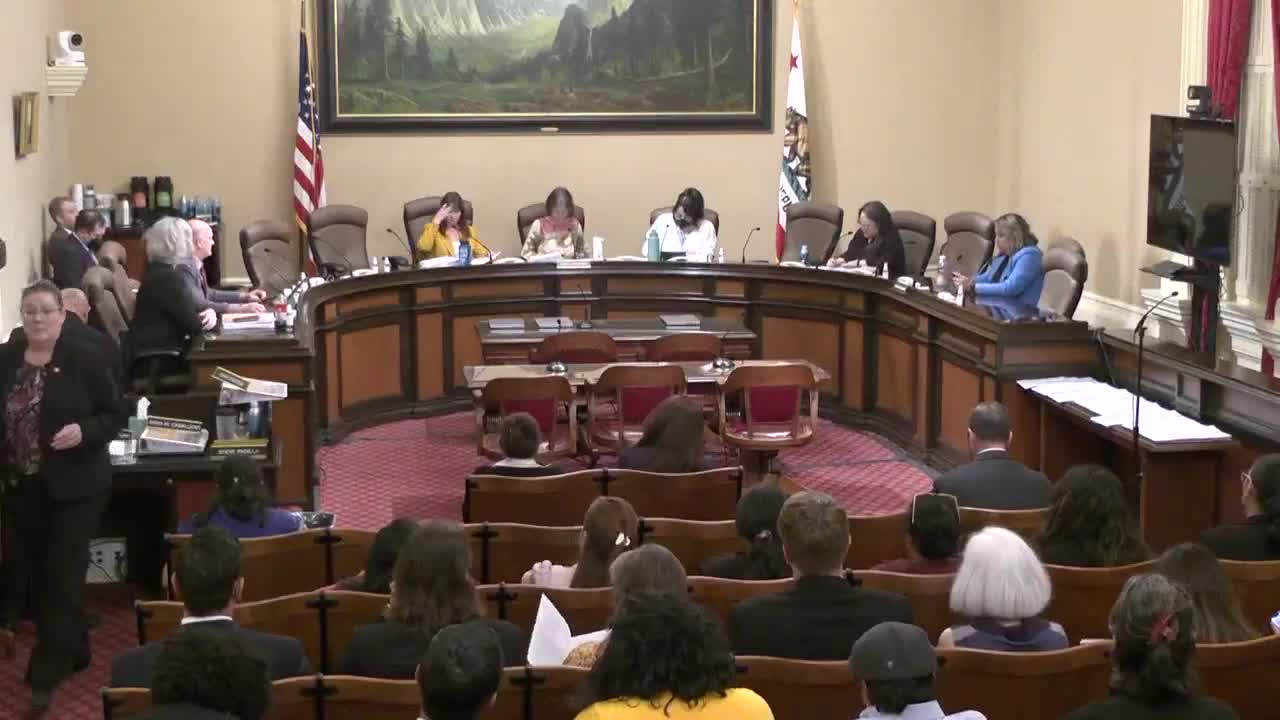 3MIN
Senate Standing Committee on Housing
 1MIN
Assembly Floor
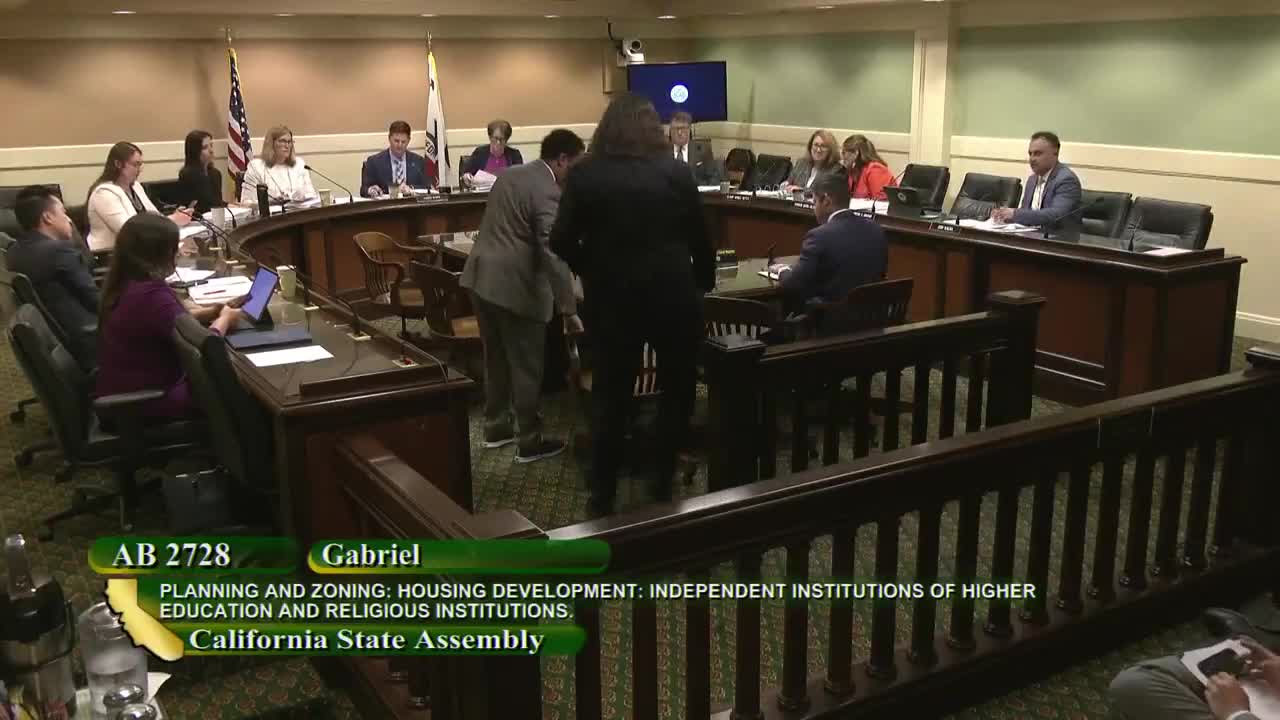 5MIN
Assembly Standing Committee on Housing and Community Development
Bill Author

Bill Co-Author(s):