AB 1799: Child abuse: reporting.
- Session Year: 2023-2024
- House: Assembly
- Latest Version Date: 2024-08-20
Current Status:
Failed
(2024-08-29: Joint Rule 62(a) suspended.)
Introduced
In Committee
First Chamber
In Committee
Second Chamber
Enacted
Existing law, the Child Abuse and Neglect Reporting Act (the Act), Act, establishes procedures for the reporting and investigation of suspected child abuse or neglect. The act requires certain professionals, including specified health practitioners and social workers, known as mandated reporters, to report known or reasonably suspected child abuse or neglect to a local law enforcement agency or a county welfare or probation department, as specified. Failure by a mandated reporter to report an incident of known or reasonably suspected child abuse or neglect is a misdemeanor. Existing law defines neglect for these purposes as the negligent treatment or the maltreatment of a child by a person responsible for the childs welfare under circumstances indicating harm or threatened harm to the childs welfare. Existing law defines general neglect as the negligent failure of a person having the care or custody of a child to provide adequate food, clothing, shelter, medical care, or supervision where no physical injury to the child has occurred.
The bill would specify that a mandated reporter is not required, but is permitted, to report a case of general neglect under the Act.This bill, with specified exceptions, would authorize a mandated reporter who knows or reasonably suspects that a child has been the victim of general neglect to make a report to one or more community-based agencies or service providers that will provide the parent, guardian, or Indian custodian of the child with services and supports the reporter reasonably believes will ameliorate the conditions impacting that individuals ability to provide adequate food, shelter, medical care, or supervision to the child. The bill would authorize the mandated reporter to make this report in addition to, or in lieu of, reporting to one of the entities specified under existing law. A mandated reporter would not be subject to a misdemeanor for making a report authorized by the bill.
Existing law, the Child Abuse and Neglect Reporting Act (the Act), establishes procedures for the reporting and investigation of suspected child abuse or neglect. The act requires certain professionals, including specified health practitioners and social workers, known as mandated reporters, to report known or reasonably suspected child abuse or neglect to a local law enforcement agency or a county welfare or probation department, as specified. Failure by a mandated reporter to report an incident of known or reasonably suspected child abuse or neglect is a misdemeanor. Existing law defines neglect for these purposes as the negligent treatment or the maltreatment of a child by a person responsible for the childs welfare under circumstances indicating harm or threatened harm to the childs welfare. Existing law defines general neglect as the negligent failure of a person having the care or custody of a child to provide adequate food, clothing, shelter, medical care, or supervision where no physical injury to the child has occurred.
The bill would specify that a mandated reporter is not required, but is permitted, to report a case of general neglect under the Act.
Existing law requires the State Public Health Officer, on or before February 1 of every other year, to submit a report to the Governor and Legislature on the state of public health in California. Existing law requires the report to include, among other things, information on health disparities, as specified, and data on the prevalence of morbidity and mortality related to mental illness and substance abuse.This bill would require the State Public Health Officer to include the impact of racism, if any, on the information and data submitted in the written report.Existing law requires the State Public Health Officer, on or before February 1 of every other year, to submit a report to the Governor and Legislature on the state of public health in California. Existing law requires the report to include, among other things, information on health disparities, as specified, and data on the prevalence of morbidity and mortality related to mental illness and substance abuse.
This bill would require the State Public Health Officer to include the impact of racism, if any, on the information and data submitted in the written report.
(a)Except as provided in subdivision (d), subdivisions (d) and (l), and in Section 11166.05, a mandated reporter shall make a report to an agency specified in Section 11165.9 whenever the mandated reporter, in the mandated reporters professional capacity or within the scope of the mandated reporters employment, has knowledge of or observes a child whom the mandated reporter knows or reasonably suspects has been the victim of child abuse or neglect. The mandated reporter shall make an initial report by telephone to the agency immediately or as soon as is practicably possible, and shall prepare and send, fax, or electronically transmit a written followup report within 36 hours of receiving the information concerning the incident. The mandated reporter may include with the report any nonprivileged documentary evidence the mandated reporter possesses relating to the incident.
(1)For purposes of this article, reasonable suspicion means that it is objectively reasonable for a person to entertain a suspicion, based upon facts that could cause a reasonable person in a like position, drawing, when appropriate, on the persons training and experience, to suspect child abuse or neglect. Reasonable suspicion does not require certainty that child abuse or neglect has occurred nor does it require a specific medical indication of child abuse or neglect; any reasonable suspicion is sufficient. For purposes of this article, the pregnancy of a minor does not, in and of itself, constitute a basis for a reasonable suspicion of sexual abuse.
(2)The agency shall be notified, and a report shall be prepared and sent by fax or electronic transmission, even if the child has expired, regardless of whether or not the possible abuse was a factor contributing to the death, and even if suspected child abuse was discovered during an autopsy.
(3)A report made by a mandated reporter pursuant to this section shall be known as a mandated report.
(b)If, after reasonable efforts, a mandated reporter is unable to submit an initial report by telephone, the mandated reporter shall immediately or as soon as is practicably possible, by fax or electronic transmission, make a one-time automated written report on the form prescribed by the Department of Justice, and shall also be available to respond to a telephone followup call by the agency with which the mandated reporter filed the report. A mandated reporter who files a one-time automated written report because the mandated reporter was unable to submit an initial report by telephone is not required to submit a written followup report.
(1)The one-time automated written report form prescribed by the Department of Justice shall be clearly identifiable so that it is not mistaken for a standard written followup report. In addition, the automated one-time report shall contain a section that allows the mandated reporter to state the reason the initial telephone call was not able to be completed. The reason for the submission of the one-time automated written report in lieu of the procedure prescribed in subdivision (a) shall be captured in the statewide child welfare information system. The department shall work with stakeholders to modify reporting forms and the statewide child welfare information system as is necessary to accommodate the changes enacted by these provisions.
(2)This subdivision shall not become operative until the statewide child welfare information system is updated to capture the information prescribed in this subdivision.
(3)This subdivision shall become inoperative three years after this subdivision becomes operative or on January 1, 2009, whichever occurs first.
(4)This section does not supersede the requirement that a mandated reporter first attempt to make a report via telephone, or that agencies specified in Section 11165.9 accept reports from mandated reporters and other persons as required.
(c)A mandated reporter who fails to report an incident of known or reasonably suspected child abuse or neglect as required by this section is guilty of a misdemeanor punishable by up to six months confinement in a county jail or by a fine of one thousand dollars ($1,000) or by both that imprisonment and fine. If a mandated reporter intentionally conceals the mandated reporters failure to report an incident known by the mandated reporter to be abuse or severe neglect under this section, the failure to report is a continuing offense until an agency specified in Section 11165.9 discovers the offense.
(d)(1)A clergy member who acquires knowledge or a reasonable suspicion of child abuse or neglect during a penitential communication is not subject to subdivision (a). For the purposes of this subdivision, penitential communication means a communication, intended to be in confidence, including, but not limited to, a sacramental confession, made to a clergy member who, in the course of the discipline or practice of the clergy members church, denomination, or organization, is authorized or accustomed to hear those communications, and under the discipline, tenets, customs, or practices of the clergy members church, denomination, or organization, has a duty to keep those communications secret.
(2)This subdivision does not modify or limit a clergy members duty to report known or suspected child abuse or neglect when the clergy member is acting in some other capacity that would otherwise make the clergy member a mandated reporter.
(3)(A)On or before January 1, 2004, a clergy member or any custodian of records for the clergy member may report to an agency specified in Section 11165.9 that the clergy member or any custodian of records for the clergy member, prior to January 1, 1997, in the clergy members professional capacity or within the scope of the clergy members employment, other than during a penitential communication, acquired knowledge or had a reasonable suspicion that a child had been the victim of sexual abuse and that the clergy member or any custodian of records for the clergy member did not previously report the abuse to an agency specified in Section 11165.9. The provisions of Section 11172 shall apply to all reports made pursuant to this paragraph.
(B)This paragraph shall apply even if the victim of the known or suspected abuse has reached the age of majority by the time the required report is made.
(C)The local law enforcement agency shall have jurisdiction to investigate any report of child abuse made pursuant to this paragraph even if the report is made after the victim has reached the age of majority.
(e)(1)A commercial film, photographic print, or image processor who has knowledge of or observes, within the scope of that persons professional capacity or employment, any film, photograph, videotape, negative, slide, or any representation of information, data, or an image, including, but not limited to, any film, filmstrip, photograph, negative, slide, photocopy, videotape, video laser disc, computer hardware, computer software, computer floppy disk, data storage medium, CD-ROM, computer-generated equipment, or computer-generated image depicting a child under 16 years of age engaged in an act of sexual conduct, shall, immediately or as soon as practicably possible, telephonically report the instance of reasonably suspected abuse to the law enforcement agency located in the county in which the images are seen. Within 36 hours of receiving the information concerning the incident, the reporter shall prepare and send, fax, or electronically transmit a written followup report of the incident with a copy of the image or material attached.
(2)A commercial computer technician who has knowledge of or observes, within the scope of the technicians professional capacity or employment, any representation of information, data, or an image, including, but not limited to, any computer hardware, computer software, computer file, computer floppy disk, data storage medium, CD-ROM, computer-generated equipment, or computer-generated image that is retrievable in perceivable form and that is intentionally saved, transmitted, or organized on an electronic medium, depicting a child under 16 years of age engaged in an act of sexual conduct, shall immediately, or as soon as practicably possible, telephonically report the instance of reasonably suspected abuse to the law enforcement agency located in the county in which the images or materials are seen. As soon as practicably possible after receiving the information concerning the incident, the reporter shall prepare and send, fax, or electronically transmit a written followup report of the incident with a brief description of the images or materials.
(3)For purposes of this article, commercial computer technician includes an employee designated by an employer to receive reports pursuant to an established reporting process authorized by subparagraph (B) of paragraph (43) of subdivision (a) of Section 11165.7.
(4)As used in this subdivision, electronic medium includes, but is not limited to, a recording, CD-ROM, magnetic disk memory, magnetic tape memory, CD, DVD, thumbdrive, or any other computer hardware or media.
(5)As used in this subdivision, sexual conduct means any of the following:
(A)Sexual intercourse, including genital-genital, oral-genital, anal-genital, or oral-anal, whether between persons of the same or opposite sex or between humans and animals.
(B)Penetration of the vagina or rectum by any object.
(C)Masturbation for the purpose of sexual stimulation of the viewer.
(D)Sadomasochistic abuse for the purpose of sexual stimulation of the viewer.
(E)Exhibition of the genitals, pubic, or rectal areas of a person for the purpose of sexual stimulation of the viewer.
(f)Any mandated reporter who knows or reasonably suspects that the home or institution in which a child resides is unsuitable for the child because of abuse or neglect of the child shall bring the condition to the attention of the agency to which, and at the same time as, the mandated reporter makes a report of the abuse or neglect pursuant to subdivision (a).
(g)Any other person who has knowledge of or observes a child whom the person knows or reasonably suspects has been a victim of child abuse or neglect may report the known or suspected instance of child abuse or neglect to an agency specified in Section 11165.9. For purposes of this section, any other person includes a mandated reporter who acts in the persons private capacity and not in the persons professional capacity or within the scope of the persons employment.
(h)When two or more persons, who are required to report, jointly have knowledge of a known or reasonably suspected instance of child abuse or neglect, and when there is agreement among them, the telephone report may be made by a member of the team selected by mutual agreement and a single report may be made and signed by the selected member of the reporting team. Any member who has knowledge that the member designated to report has failed to do so shall thereafter make the report.
(i)(1)The reporting duties under this section are individual, and no supervisor or administrator may impede or inhibit the reporting duties, and no person making a report shall be subject to any sanction for making the report. However, internal procedures to facilitate reporting and apprise supervisors and administrators of reports may be established provided that they are not inconsistent with this article. An internal policy shall not direct an employee to allow the employees supervisor to file or process a mandated report under any circumstances.
(2)The internal procedures shall not require any employee required to make reports pursuant to this article to disclose the employees identity to the employer.
(3)Reporting the information regarding knowledge of or reasonably suspected child abuse or neglect to an employer, supervisor, school principal, school counselor, coworker, or other person shall not be a substitute for making a mandated report to an agency specified in Section 11165.9.
(j)(1)A county probation or welfare department shall immediately, or as soon as practicably possible, report by telephone, fax, or electronic transmission to the law enforcement agency having jurisdiction over the case, to the agency given the responsibility for investigation of cases under Section 300 of the Welfare and Institutions Code, and to the district attorneys office every known or reasonably suspected instance of child abuse or neglect, as defined in Section 11165.6, except acts or omissions coming within subdivision (b) of Section 11165.2, or reports made pursuant to Section 11165.13 based on risk to a child that relates solely to the inability of the parent to provide the child with regular care due to the parents substance abuse, which shall be reported only to the county welfare or probation department. A county probation or welfare department also shall send by fax or electronic transmission a written report thereof within 36 hours of receiving the information concerning the incident to any agency to which it makes a telephone report under this subdivision.
(2)A county probation or welfare department shall immediately, and in no case in more than 24 hours, report to the law enforcement agency having jurisdiction over the case after receiving information that a child or youth who is receiving child welfare services has been identified as the victim of commercial sexual exploitation, as defined in subdivision (d) of Section 11165.1.
(3)(A)When a child or youth who is receiving child welfare services and who is reasonably believed to be the victim of, or is at risk of being the victim of, commercial sexual exploitation, as defined in Section 11165.1, is missing or has been abducted, the county probation or welfare department shall immediately, or in no case later than 24 hours from receipt of the information, report the incident to the appropriate law enforcement authority for entry into the National Crime Information Center database of the Federal Bureau of Investigation and to the National Center for Missing and Exploited Children (NCMEC).
(B)The report submitted by the county probation or welfare department to law enforcement agencies and NCMEC shall include, where reasonably possible, all of the following:
(i)A photo of the missing or abducted child or youth.
(ii)A description of the childs or youths physical features, such as height, weight, sex, ethnicity, race, hair color, and eye color.
(iii)Endangerment information, such as the childs or youths pregnancy status, prescription medications, suicidal tendencies, vulnerability to being sex trafficked, and other health or risk factors, to the extent such information is released in compliance with other applicable laws.
(iv)Information about whether the child or youth is or may be an Indian child, as defined in Section 224.1 of the Welfare and Institutions Code, including the name of the childs tribe.
(C)For each child or youth described in this paragraph, the county probation or welfare department shall maintain regular communication with law enforcement agencies, including tribal law enforcement agencies in the case of an Indian child, and NCMEC in efforts to provide a safe recovery of the missing or abducted child or youth, including by sharing information pertaining to the childs or youths recovery and circumstances related to the recovery.
(k)A law enforcement agency shall immediately, or as soon as practicably possible, report by telephone, fax, or electronic transmission to the agency given responsibility for investigation of cases under Section 300 of the Welfare and Institutions Code and to the district attorneys office every known or reasonably suspected instance of child abuse or neglect reported to it, except acts or omissions coming within subdivision (b) of Section 11165.2, which shall be reported only to the county welfare or probation department. A law enforcement agency shall report to the county welfare or probation department every known or reasonably suspected instance of child abuse or neglect reported to it that is alleged to have occurred as a result of the action of a person responsible for the childs welfare, or as the result of the failure of a person responsible for the childs welfare to adequately protect the minor from abuse when the person responsible for the childs welfare knew or reasonably should have known that the minor was in danger of abuse. A law enforcement agency also shall send by fax or electronic transmission a written report thereof within 36 hours of receiving the information concerning the incident to any agency to which it makes a telephone report under this subdivision.
(l)(1)When a mandated reporter knows or reasonably suspects that a child has been the victim of general neglect, as defined in Section 11165.2, the mandated reporter may make a report to one or more community-based agencies or service providers that will provide the parent, guardian, or Indian custodian of the child with services and supports the reporter reasonably believes will ameliorate the conditions impacting the parents, guardians, or Indian custodians ability to provide adequate food, shelter, medical care, or supervision to the child. A mandated reporter may make a report to a community-based agency or service provider in addition to, or in lieu of, an agency specified in Section 11165.9. A mandated reporter who makes a report to a community-based agency or service provider under this subdivision is not subject to subdivision (c).
(2)This subdivision does not apply to any of the following:
(A)Reports when a mandated reporter knows or reasonably suspects a child has also been the victim of abuse or severe neglect.
(B)Reports of abuse or neglect in out-of-home care, as defined in Section 11165.5.
(C)Reports made pursuant to Section 11165.13.
(D)Reports involving the fatality or near fatality of a child, as described Sections 10850.4 and 10850.45 of the Welfare and Institutions Code.
All matter omitted in this version of the bill appears in the bill as amended in the Senate, June 3, 2024. (JR11)(a)Except as provided in subdivision (d), subdivisions (d) and (l), and in Section 11166.05, a mandated reporter shall make a report to an agency specified in Section 11165.9 whenever the mandated reporter, in the mandated reporters professional capacity or within the scope of the mandated reporters employment, has knowledge of or observes a child whom the mandated reporter knows or reasonably suspects has been the victim of child abuse or neglect. The mandated reporter shall make an initial report by telephone to the agency immediately or as soon as is practicably possible, and shall prepare and send, fax, or electronically transmit a written followup report within 36 hours of receiving the information concerning the incident. The mandated reporter may include with the report any nonprivileged documentary evidence the mandated reporter possesses relating to the incident.
(1)For purposes of this article, reasonable suspicion means that it is objectively reasonable for a person to entertain a suspicion, based upon facts that could cause a reasonable person in a like position, drawing, when appropriate, on the persons training and experience, to suspect child abuse or neglect. Reasonable suspicion does not require certainty that child abuse or neglect has occurred nor does it require a specific medical indication of child abuse or neglect; any reasonable suspicion is sufficient. For purposes of this article, the pregnancy of a minor does not, in and of itself, constitute a basis for a reasonable suspicion of sexual abuse.
(2)The agency shall be notified, and a report shall be prepared and sent by fax or electronic transmission, even if the child has expired, regardless of whether or not the possible abuse was a factor contributing to the death, and even if suspected child abuse was discovered during an autopsy.
(3)A report made by a mandated reporter pursuant to this section shall be known as a mandated report.
(b)If, after reasonable efforts, a mandated reporter is unable to submit an initial report by telephone, the mandated reporter shall immediately or as soon as is practicably possible, by fax or electronic transmission, make a one-time automated written report on the form prescribed by the Department of Justice, and shall also be available to respond to a telephone followup call by the agency with which the mandated reporter filed the report. A mandated reporter who files a one-time automated written report because the mandated reporter was unable to submit an initial report by telephone is not required to submit a written followup report.
(1)The one-time automated written report form prescribed by the Department of Justice shall be clearly identifiable so that it is not mistaken for a standard written followup report. In addition, the automated one-time report shall contain a section that allows the mandated reporter to state the reason the initial telephone call was not able to be completed. The reason for the submission of the one-time automated written report in lieu of the procedure prescribed in subdivision (a) shall be captured in the statewide child welfare information system. The department shall work with stakeholders to modify reporting forms and the statewide child welfare information system as is necessary to accommodate the changes enacted by these provisions.
(2)This subdivision shall not become operative until the statewide child welfare information system is updated to capture the information prescribed in this subdivision.
(3)This subdivision shall become inoperative three years after this subdivision becomes operative or on January 1, 2009, whichever occurs first.
(4)This section does not supersede the requirement that a mandated reporter first attempt to make a report via telephone, or that agencies specified in Section 11165.9 accept reports from mandated reporters and other persons as required.
(c)A mandated reporter who fails to report an incident of known or reasonably suspected child abuse or neglect as required by this section is guilty of a misdemeanor punishable by up to six months confinement in a county jail or by a fine of one thousand dollars ($1,000) or by both that imprisonment and fine. If a mandated reporter intentionally conceals the mandated reporters failure to report an incident known by the mandated reporter to be abuse or severe neglect under this section, the failure to report is a continuing offense until an agency specified in Section 11165.9 discovers the offense.
(d)(1)A clergy member who acquires knowledge or a reasonable suspicion of child abuse or neglect during a penitential communication is not subject to subdivision (a). For the purposes of this subdivision, penitential communication means a communication, intended to be in confidence, including, but not limited to, a sacramental confession, made to a clergy member who, in the course of the discipline or practice of the clergy members church, denomination, or organization, is authorized or accustomed to hear those communications, and under the discipline, tenets, customs, or practices of the clergy members church, denomination, or organization, has a duty to keep those communications secret.
(2)This subdivision does not modify or limit a clergy members duty to report known or suspected child abuse or neglect when the clergy member is acting in some other capacity that would otherwise make the clergy member a mandated reporter.
(3)(A)On or before January 1, 2004, a clergy member or any custodian of records for the clergy member may report to an agency specified in Section 11165.9 that the clergy member or any custodian of records for the clergy member, prior to January 1, 1997, in the clergy members professional capacity or within the scope of the clergy members employment, other than during a penitential communication, acquired knowledge or had a reasonable suspicion that a child had been the victim of sexual abuse and that the clergy member or any custodian of records for the clergy member did not previously report the abuse to an agency specified in Section 11165.9. The provisions of Section 11172 shall apply to all reports made pursuant to this paragraph.
(B)This paragraph shall apply even if the victim of the known or suspected abuse has reached the age of majority by the time the required report is made.
(C)The local law enforcement agency shall have jurisdiction to investigate any report of child abuse made pursuant to this paragraph even if the report is made after the victim has reached the age of majority.
(e)(1)A commercial film, photographic print, or image processor who has knowledge of or observes, within the scope of that persons professional capacity or employment, any film, photograph, videotape, negative, slide, or any representation of information, data, or an image, including, but not limited to, any film, filmstrip, photograph, negative, slide, photocopy, videotape, video laser disc, computer hardware, computer software, computer floppy disk, data storage medium, CD-ROM, computer-generated equipment, or computer-generated image depicting a child under 16 years of age engaged in an act of sexual conduct, shall, immediately or as soon as practicably possible, telephonically report the instance of reasonably suspected abuse to the law enforcement agency located in the county in which the images are seen. Within 36 hours of receiving the information concerning the incident, the reporter shall prepare and send, fax, or electronically transmit a written followup report of the incident with a copy of the image or material attached.
(2)A commercial computer technician who has knowledge of or observes, within the scope of the technicians professional capacity or employment, any representation of information, data, or an image, including, but not limited to, any computer hardware, computer software, computer file, computer floppy disk, data storage medium, CD-ROM, computer-generated equipment, or computer-generated image that is retrievable in perceivable form and that is intentionally saved, transmitted, or organized on an electronic medium, depicting a child under 16 years of age engaged in an act of sexual conduct, shall immediately, or as soon as practicably possible, telephonically report the instance of reasonably suspected abuse to the law enforcement agency located in the county in which the images or materials are seen. As soon as practicably possible after receiving the information concerning the incident, the reporter shall prepare and send, fax, or electronically transmit a written followup report of the incident with a brief description of the images or materials.
(3)For purposes of this article, commercial computer technician includes an employee designated by an employer to receive reports pursuant to an established reporting process authorized by subparagraph (B) of paragraph (43) of subdivision (a) of Section 11165.7.
(4)As used in this subdivision, electronic medium includes, but is not limited to, a recording, CD-ROM, magnetic disk memory, magnetic tape memory, CD, DVD, thumbdrive, or any other computer hardware or media.
(5)As used in this subdivision, sexual conduct means any of the following:
(A)Sexual intercourse, including genital-genital, oral-genital, anal-genital, or oral-anal, whether between persons of the same or opposite sex or between humans and animals.
(B)Penetration of the vagina or rectum by any object.
(C)Masturbation for the purpose of sexual stimulation of the viewer.
(D)Sadomasochistic abuse for the purpose of sexual stimulation of the viewer.
(E)Exhibition of the genitals, pubic, or rectal areas of a person for the purpose of sexual stimulation of the viewer.
(f)Any mandated reporter who knows or reasonably suspects that the home or institution in which a child resides is unsuitable for the child because of abuse or neglect of the child shall bring the condition to the attention of the agency to which, and at the same time as, the mandated reporter makes a report of the abuse or neglect pursuant to subdivision (a).
(g)Any other person who has knowledge of or observes a child whom the person knows or reasonably suspects has been a victim of child abuse or neglect may report the known or suspected instance of child abuse or neglect to an agency specified in Section 11165.9. For purposes of this section, any other person includes a mandated reporter who acts in the persons private capacity and not in the persons professional capacity or within the scope of the persons employment.
(h)When two or more persons, who are required to report, jointly have knowledge of a known or reasonably suspected instance of child abuse or neglect, and when there is agreement among them, the telephone report may be made by a member of the team selected by mutual agreement and a single report may be made and signed by the selected member of the reporting team. Any member who has knowledge that the member designated to report has failed to do so shall thereafter make the report.
(i)(1)The reporting duties under this section are individual, and no supervisor or administrator may impede or inhibit the reporting duties, and no person making a report shall be subject to any sanction for making the report. However, internal procedures to facilitate reporting and apprise supervisors and administrators of reports may be established provided that they are not inconsistent with this article. An internal policy shall not direct an employee to allow the employees supervisor to file or process a mandated report under any circumstances.
(2)The internal procedures shall not require any employee required to make reports pursuant to this article to disclose the employees identity to the employer.
(3)Reporting the information regarding knowledge of or reasonably suspected child abuse or neglect to an employer, supervisor, school principal, school counselor, coworker, or other person shall not be a substitute for making a mandated report to an agency specified in Section 11165.9.
(j)(1)A county probation or welfare department shall immediately, or as soon as practicably possible, report by telephone, fax, or electronic transmission to the law enforcement agency having jurisdiction over the case, to the agency given the responsibility for investigation of cases under Section 300 of the Welfare and Institutions Code, and to the district attorneys office every known or reasonably suspected instance of child abuse or neglect, as defined in Section 11165.6, except acts or omissions coming within subdivision (b) of Section 11165.2, or reports made pursuant to Section 11165.13 based on risk to a child that relates solely to the inability of the parent to provide the child with regular care due to the parents substance abuse, which shall be reported only to the county welfare or probation department. A county probation or welfare department also shall send by fax or electronic transmission a written report thereof within 36 hours of receiving the information concerning the incident to any agency to which it makes a telephone report under this subdivision.
(2)A county probation or welfare department shall immediately, and in no case in more than 24 hours, report to the law enforcement agency having jurisdiction over the case after receiving information that a child or youth who is receiving child welfare services has been identified as the victim of commercial sexual exploitation, as defined in subdivision (d) of Section 11165.1.
(3)When a child or youth who is receiving child welfare services and who is reasonably believed to be the victim of, or is at risk of being the victim of, commercial sexual exploitation, as defined in Section 11165.1, is missing or has been abducted, the county probation or welfare department shall immediately, or in no case later than 24 hours from receipt of the information, report the incident to the appropriate law enforcement authority for entry into the National Crime Information Center database of the Federal Bureau of Investigation and to the National Center for Missing and Exploited Children.
(k)A law enforcement agency shall immediately, or as soon as practicably possible, report by telephone, fax, or electronic transmission to the agency given responsibility for investigation of cases under Section 300 of the Welfare and Institutions Code and to the district attorneys office every known or reasonably suspected instance of child abuse or neglect reported to it, except acts or omissions coming within subdivision (b) of Section 11165.2, which shall be reported only to the county welfare or probation department. A law enforcement agency shall report to the county welfare or probation department every known or reasonably suspected instance of child abuse or neglect reported to it that is alleged to have occurred as a result of the action of a person responsible for the childs welfare, or as the result of the failure of a person responsible for the childs welfare to adequately protect the minor from abuse when the person responsible for the childs welfare knew or reasonably should have known that the minor was in danger of abuse. A law enforcement agency also shall send by fax or electronic transmission a written report thereof within 36 hours of receiving the information concerning the incident to any agency to which it makes a telephone report under this subdivision.
(l)A mandated reporter may, but is not required to, report a case of general neglect, as defined in Section 11165.2, pursuant to Section 11165.9.
SECTION 1.Section 101320.3 of the Health and Safety Code is amended to read:101320.3.(a)On or before February 1 of every other year, beginning in calendar year 2024, the State Public Health Officer shall submit a written report to the Governor and the Legislature on the state of public health in California. The State Public Health Officer shall present an update annually to the Assembly Committee on Budget and Senate Committee on Budget and Fiscal Review, or relevant subcommittees, during legislative budget hearings.(b)The written report shall include all of the following:(1)Information on key public health indicators that California is experiencing, as determined to be relevant by the State Public Health Officer.(2)Information on health disparities identified as part of the indicators and trends, if any.(3)The leading causes of morbidity and mortality in California and evidence of increasing or decreasing rates of morbidity and mortality over the prior three to five years, inclusive.(4)Data on the incidence and prevalence of communicable and noncommunicable chronic diseases and conditions.(5)Data on the incidence and prevalence of intentional and unintentional injuries, including data specific to suicides and gun violence.(6)Data on the prevalence of morbidity and mortality related to mental illness and substance abuse.(7)The impact that racism has, if any, on the data or information in paragraphs (1) to (6), inclusive.(c)The department shall annually seek input from stakeholders, including legislative staff, on which public health issues to address in a written report.(a)On or before February 1 of every other year, beginning in calendar year 2024, the State Public Health Officer shall submit a written report to the Governor and the Legislature on the state of public health in California. The State Public Health Officer shall present an update annually to the Assembly Committee on Budget and Senate Committee on Budget and Fiscal Review, or relevant subcommittees, during legislative budget hearings.
(b)The written report shall include all of the following:
(1)Information on key public health indicators that California is experiencing, as determined to be relevant by the State Public Health Officer.
(2)Information on health disparities identified as part of the indicators and trends, if any.
(3)The leading causes of morbidity and mortality in California and evidence of increasing or decreasing rates of morbidity and mortality over the prior three to five years, inclusive.
(4)Data on the incidence and prevalence of communicable and noncommunicable chronic diseases and conditions.
(5)Data on the incidence and prevalence of intentional and unintentional injuries, including data specific to suicides and gun violence.
(6)Data on the prevalence of morbidity and mortality related to mental illness and substance abuse.
(7)The impact that racism has, if any, on the data or information in paragraphs (1) to (6), inclusive.
(c)The department shall annually seek input from stakeholders, including legislative staff, on which public health issues to address in a written report.
|
Date
|
Status
|
|---|---|
| Aug 29, 2024 | Joint Rule 62(a) suspended. |
| Aug 29, 2024 | Re-referred to Coms. on PUB. S. and HUM. S. pursuant to Assembly Rule 77.2. |
| Aug 28, 2024 | In Assembly. Concurrence in Senate amendments pending. May be considered on or after August 30 pursuant to Assembly Rule 77. |
| Aug 28, 2024 | Read third time. Passed. Ordered to the Assembly. (Ayes 22. Noes 11.). |
| Aug 21, 2024 | Read second time. Ordered to third reading. |
| Aug 20, 2024 | Read third time and amended. Ordered to second reading. |
| Aug 6, 2024 | Read second time. Ordered to third reading. |
| Aug 5, 2024 | From committee: Be ordered to second reading pursuant to Senate Rule 28.8. |
| Jul 2, 2024 | From committee: Do pass and re-refer to Com. on APPR. (Ayes 4. Noes 0.) (July 2). Re-referred to Com. on APPR. |
| Jun 12, 2024 | Re-referred to Com. on PUB S. |
| Jun 4, 2024 | Re-referred to Com. on RLS. |
| Jun 4, 2024 | Withdrawn from committee. |
| Jun 4, 2024 | In committee: Set, first hearing. Hearing canceled at the request of author. |
| Jun 3, 2024 | From committee chair, with author's amendments: Amend, and re-refer to committee. Read second time, amended, and re-referred to Com. on HEALTH. |
| May 22, 2024 | Referred to Com. on HEALTH. |
| May 13, 2024 | In Senate. Read first time. To Com. on RLS. for assignment. |
| May 13, 2024 | Read third time. Passed. Ordered to the Senate. (Ayes 59. Noes 4. Page 5190.) |
| May 2, 2024 | Read second time. Ordered to third reading. |
| May 1, 2024 | From committee: Do pass. (Ayes 11. Noes 2.) (May 1). |
| Apr 17, 2024 | From committee: Do pass and re-refer to Com. on APPR. (Ayes 12. Noes 3.) (April 16). Re-referred to Com. on APPR. |
| Jan 22, 2024 | Referred to Com. on HEALTH. |
| Jan 9, 2024 | From printer. May be heard in committee February 8. |
| Jan 8, 2024 | Read first time. To print. |
|
Date
|
Description
|
Location
|
Votes
|
|
|---|---|---|---|---|
| Aug 28, 2024 | Assembly 3rd Reading AB1799 Jackson By Wiener | Senate Floor |
Passed |
|
| Jul 2, 2024 | Do pass, but first be re-referred to the Committee on [Appropriations] | Senate Standing Committee on Public Safety |
Passed |
|
| May 13, 2024 | AB 1799 Jackson Assembly Third Reading | Assembly Floor |
Passed |
|
| May 1, 2024 | Do pass. | Assembly Standing Committee on Appropriations |
Passed |
|
| Apr 16, 2024 | Do pass and be re-referred to the Committee on [Appropriations] | Assembly Standing Committee on Health |
Passed |
This list shows positions taken on this bill by organizations on the date displayed, which is linked to the original source.
Positions by individuals are not included.
|
Organization
|
Position
|
Date
|
|---|---|---|
| California Academy of Child and Adolescent Psychiatry | ** Support | |
| California Family Resource Association | ** Support | |
| CASA of Los Angeles | ** Support | |
| Child Abuse Prevention Center | ** Support | |
| Child Abuse Prevention Council of Contra Costa County | ** Support | |
| Children Now | ** Support | |
| ChildrenS Institute | ** Support | |
| Children'S Law Center Of California | ** Support | |
| Community Action Partnership of San Luis Obispo County, INC. | ** Support | |
| County Welfare Directors Association of California | ** Against | |
| Dependency Advocacy Center | ** Support | |
| Fighting Back Partnership | ** Support | |
| Helpline Youth Counseling, INC. | ** Support | |
| National Association of Social Workers California | ** Support | |
| Prevent Child Abuse California | ** Support | |
| Reimagine Child Safety Coalition | ** Support | |
| Safe Kids California | ** Support | |
| Safe & Sound | ** Support | |
| Sheedy Consulting, LLC | ** Support | |
| SHIELDS for Families | ** Support | |
| The Child Abuse Prevention Center And Its Affiliates Safe Kids California Prevent Child Abuse California And The California Family Resource Association | ** Support | |
| YMCA of San Diego County | ** Support |
CONCURRENCE IN SENATE AMENDMENTS
CSA1 Bill Id:AB 1799
Author:(Jackson)
As Amended Ver:August 20, 2024
Majority vote
SUMMARY
Authorizes a mandated reporter to report general neglect of a child to one or more community-based agencies or service providers in addition to, or in lieu of, a specified law enforcement agency or county welfare department.
Senate Amendments
- Delete the Assembly version of the bill, and instead:
- Authorize a mandated reporter, when they know or reasonably suspect that a child has been the victim of general neglect, as defined, to make a report to one or more community-based agencies or service providers that will provide the parent, guardian, or Indian custodian of the child with services and supports the reporter reasonably believes will ameliorate the conditions impacting the parent's, guardian's, or Indian custodian's ability to provide adequate food, shelter, medical care, or supervision to the child.
- Authorize a mandated reporter to make a report to a community-based agency or service provider in addition to, or in lieu of, a police department, sheriff's department, county probation department (if designated to receive mandated reports), or county welfare department.
- Provide that a mandated reporter who makes a report to a community-based agency or service provider has not committed a crime punishable as misdemeanor for failing to report an incident of known or reasonably suspected child abuse or neglect, as specified.
- Provide that the above exception to the requirement that mandated reporters report general neglect of a child to law enforcement or the county welfare department does not apply in the following circumstances:
- Reports when a mandated reporter knows or reasonably suspects a child has also been the victim of abuse or severe neglect;
- Reports of abuse or neglect in out-of-home care, as defined;
- Reports made upon an indication of maternal substance abuse and other factors that indicate risk to a child; or,
- Reports involving the fatality or near fatality of a child, as specified.
COMMENTS
As passed by the Assembly, this bill requires the State Public Health Officer to include the impact of racism, if any, on the information and data submitted in their written report to the Governor and the Legislature on the State of Public Health in California.
According to the Author
"AB 1799 would address major issues with over reporting, false reports, racial and economic biases in referrals, privacy issues, and the burden on mandatory reporters. Removing the requirement to report suspected neglect from the Child Abuse and Neglect Reporting Act (CANRA) can help focus resources on severe cases, reduce burden on mandatory reporters, promote family support, prevent unnecessary investigations, and better target high-risk cases. Furthermore, removing this requirement from CANRA can help ensure that resources are used efficiently and that professionals can better support families in need."
Arguments in Support
According to Children's Law Center of California, "[c]hildren of color are significantly more likely to be reported for allegations of abuse and neglect, despite the vast majority of those allegations being unfounded or unsubstantiated. A recent study showed that half of Black children, as well as half of Native American children, experienced an investigation at some point during their childhood, compared to nearly a quarter of white children. California is no exception, a recent report by the Legislative Analyst's Office explains that of children born in 1999 in California, approximately 50% of Black and Indigenous children will have some level of child welfare involvement by the age of 18, and children on Medi-Cal are more than twice as likely to experience child welfare involvement than children with private health insurance. The racial disparities occur at all levels of the family regulation system, starting with allegations.
"The majority of the calls that come into the Child Protection Hotline are for the catch all category of neglect, including cases of poverty, lack of resources and domestic violence. 80% of the neglect calls are not substantiated. Consequently, this issue results in undo trauma to parents and children, often leading to negative health outcomes. These health outcomes are significantly worse for mothers and babies who are separated by the Child Welfare System for issues largely related to economic insecurity.
"In an effort to reduce trauma to families of color and the burden of an already overwhelmed system, AB 1799 (Jackson) removes general neglect reporting requirements that, as defined, would be more appropriately addressed outside of the Child Welfare System, while continuing to require that mandatory reporters report instances of child abuse and severe neglect."
Arguments in Opposition
According to County Welfare Directors Association of California (CWDA), "The MRCS Task Force has spent the last year developing a set of recommended strategies to meet the broader vision. These MRCS Task Force recommendations were formally published on June 5th and presented to the CWC but have not yet been adopted; the CWC will formally take action on those recommendations at its September meeting. The recommendations include a number of strategies that are intended to work together to support the overall goals of the CWC's efforts and include changes to liability for mandated reporters, successful implementation of recent statutory changes to the definition of severe neglect, standardized mandated reporter training, and changes to the reporting requirement for allegations of general neglect. CWDA participated in the MRCS Task Force to inform its recommendations and supports the recommendations.
"CWDA however cannot support AB 1799 as proposed at this time. The legislation pre-empts the CWC's consideration of the recommendations in totality, proposing to implement only one aspect absent consideration of the twelve other recommendations put forth in the Task Force report. Critically, the Task Force has not decided or put forth a plan on how those recommendations should be implemented. This is the crux of CWDA's concerns on two points: training and liability.
CWDA strongly believes that the law on reporting general neglect should not be changed unless mandated reporters are provided updated and standardized training to explain the new policy. If the goal of changing the requirement for mandated reporters to call when there is suspected general neglect is to reduce those calls to child welfare and divert them instead to
community-based organizations or other social safety net programs, then we need to make certain mandated reporters understand that change and what their responsibilities are under all instances of suspected general neglect due to fear of liability or prosecution for failure to do so. Without changing the liability standard, the fear of prosecution or civil liability looms over them, and leads to fear-based decision making that will continue to drive calls to our hotlines for general neglect, instead of to our community partners.
"Even with changes to mandated reporting liability law and increased training, we note that meaningful change will not occur until a robust community pathway is implemented to provide culturally-derived and appropriate services for families, accessed through community-based providers and from child welfare systems through diversion programs. California's prevention services continue to be stood up under the State Family First Prevention Services Program, although funding for this program is one time and other challenges remain in implementation, including access to federal matching funding.
"As child welfare experts we want to see these recommendations succeed and to focus our efforts on children who truly need intervention from abuse and severe neglect, but we do not think this is best accomplished in a piece-meal fashion.
"CWDA requests AB 1799 be amended to adopt two other critical changes as recommended by the MRCS Task Force: test pilot the elimination of liability to mandated reporters (reference Recommendation #7) and require the Department of Social Services to develop standardized mandated reporter training inclusive of the change to general neglect reporting requirements (reference Recommendation #8). We further recommend delaying implementation of the general neglect reporting requirement to July 1, 2026. These changes would keep momentum moving forward, demonstrating the State's strong commitment to mandated reporting reform and will give the CWC and MRCS Task Force additional time to work with the Legislature to stage implementation of the various other recommendations designed to build capacity of community-based supports and services."
FISCAL COMMENTS
VOTES: Prior Vote Not Relevant
ASM HEALTH: 12-3-1
YES: Bonta, Aguiar-Curry, Arambula, Wendy Carrillo, Haney, Jones-Sawyer, Maienschein, McCarty, Rodriguez, Santiago, Schiavo, Weber
NO: Flora, Joe Patterson, Sanchez
ABS, ABST OR NV: Waldron
ASM APPROPRIATIONS: 11-2-2
YES: Wicks, Arambula, Bryan, Calderon, Wendy Carrillo, Mike Fong, Grayson, Haney, Hart, Pellerin, Villapudua
NO: Sanchez, Dixon
ABS, ABST OR NV: Jim Patterson, Ta
ASSEMBLY FLOOR: 59-4-17
YES: Addis, Aguiar-Curry, Alanis, Alvarez, Arambula, Bains, Bennett, Berman, Boerner, Bonta, Bryan, Calderon, Juan Carrillo, Wendy Carrillo, Cervantes, Connolly, Mike Fong, Friedman, Gabriel, Garcia, Gipson, Haney, Hart, Holden, Irwin, Jackson, Jones-Sawyer, Kalra, Lee, Low, Lowenthal, Maienschein, McKinnor, Muratsuchi, Stephanie Nguyen, Ortega, Pacheco, Papan, Pellerin, Petrie-Norris, Ramos, Rendon, Reyes, Luz Rivas, Rodriguez, Blanca Rubio, Santiago, Schiavo, Soria, Ting, Valencia, Villapudua, Ward, Weber, Wicks, Wilson, Wood, Zbur, Robert Rivas
NO: Davies, Gallagher, Joe Patterson, Sanchez
ABS, ABST OR NV: Bauer-Kahan, Chen, Megan Dahle, Dixon, Essayli, Flora, Vince Fong, Grayson, Hoover, Lackey, Mathis, McCarty, Jim Patterson, Quirk-Silva, Ta, Waldron, Wallis
SENATE FLOOR: 22-11-7
YES: Archuleta, Atkins, Becker, Blakespear, Bradford, Cortese, Dodd, Durazo, Gonzalez, Laird, McGuire, Menjivar, Min, Newman, Portantino, Roth, Skinner, Smallwood-Cuevas, Stern, Umberg, Wahab, Wiener
NO: Caballero, Dahle, Eggman, Grove, Hurtado, Jones, Nguyen, Niello, Rubio, Seyarto, Wilk
ABS, ABST OR NV: Allen, Alvarado-Gil, Ashby, Glazer, Limón, Ochoa Bogh, Padilla
UPDATED
VERSION: August 20, 2024
CONSULTANT: Ilan Zur / PUB. S. / (916) 319-3744 FN: 0004940
SENATE RULES COMMITTEE Office of Senate Floor Analyses (916) 651-1520 Fax: (916) 327-4478 | AB 1799 |
THIRD READING
Bill No: AB 1799
Author: Jackson (D)
Amended: 8/20/24 in Senate
Vote: 21
SENATE PUBLIC SAFETY COMMITTEE: 4-0, 7/2/24
AYES: Wahab, Bradford, Skinner, Wiener
NO VOTE RECORDED: Seyarto
SENATE APPROPRIATIONS COMMITTEE: Senate Rule 28.8
ASSEMBLY FLOOR: 59-4, 5/13/24 - See last page for vote
SUBJECT: Child abuse: reporting
SOURCE: Author
DIGEST:
This bill specifies that mandated reporters may report a case of general neglect for purposes of the Child Abuse and Neglect Reporting Act (CANRA) to one or more community-based agencies or service providers that provide specified services and support, which may be in addition to, or in lieu of, the agencies authorized to receive such reports under existing law, except as specified.
Senate Floor Amendments of 8/20/24 clarify the reporting requirement of suspected general neglect by mandated reporters.
ANALYSIS:
Existing law:
- Establishes CANRA, which generally is intended to protect children from abuse and neglect. (Pen. Code, § 11164.)
- Defines “neglect” under CANRA as the negligent treatment or the maltreatment of a child by a person responsible for the child’s welfare under circumstances indicating harm or threatened harm to the child’s health or welfare. The term includes both acts and omissions on the part of the responsible person. (Pen. Code, § 11165.2)
- Defines “severe neglect” under CANRA as the negligent failure of a person having the care or custody of a child to protect the child from severe malnutrition or medically diagnosed nonorganic failure to thrive. “Severe neglect” also means those situations of neglect where any person having the care or custody of a child willfully causes or permits the person or health of the child to be placed in a situation such that his or her person or health is endangered, as specified, including the intentional failure to provide adequate food, clothing, shelter, or medical care. (Pen. Code, § 11165.2, subd. (a).)
- Specifies that “the willful harming or injuring of a child or the endangering of the person or health of a child” means a situation in which any person willfully causes or permits any child to suffer, or inflicts thereon, unjustifiable physical pain or mental suffering, or having the care or custody of any child, willfully causes or permits the person or health of the child to be placed in a situation in which his or her person or health is endangered. (Pen. Code, § 11165.3.)
- Defines “general neglect” under CANRA to mean the negligent failure of a person having the care or custody of a child to provide adequate food, clothing, shelter, medical care, or supervision where no physical injury to the child has occurred but the child is at substantial risk of suffering serious physical harm or illness. “General neglect” does not include a parent’s economic disadvantage. (Pen. Code, § 11165.2, subd. (b).)
- Defines “child abuse or neglect” under CANRA to include physical injury or death inflicted by other than accidental means upon a child by another person, sexual abuse as defined, neglect as defined, the willful harming or injuring of a child or the endangering of the person or health of a child as defined, and unlawful corporal punishment or injury. "Child abuse or neglect" does not include a mutual affray between minors. "Child abuse or neglect" does not include an injury caused by reasonable and necessary force used by a peace officer acting within the course and scope of his or her employment as a peace officer. (Pen. Code, § 11165.6.)
- Defines “mandated reporter” under CANRA as specific child-care custodians, health practitioners, law enforcement officers, and other medical and professional persons. (Pen. Code, § 11165.7.)
- States that employers are strongly encouraged to provide their employees who are mandated reporters with training in the duties. This training shall include training in child abuse and neglect identification and training in child abuse and neglect reporting. Whether or not employers provide their employees with training in child abuse and neglect identification and reporting, the employers shall provide their employees who are mandated reporters with a statement on a form to the effect that the employee has knowledge of their duties under CANRA and will comply with those provisions. (Pen. Code, §§ 11165.7, subd. (c)(1) and 11166.5, subd. (a).)
- Requires any mandated reporter who has knowledge of or observes a child, their professional capacity or within the scope of their employment whom they know or reasonably suspect has been the victim of child abuse or neglect, to report it as specified, to any police or sheriff's department, a county probation department if designated by the county to receive mandated reports, or the county welfare department. (Pen. Code, §§ 11166, subd. (a) & 11165.9.)
- Defines “reasonable suspicion” under CANRA as meaning that it is objectively reasonable for a person to entertain a suspicion, based upon facts that could cause a reasonable person in a like position, drawing, when appropriate, on the person’s training and experience, to suspect child abuse or neglect. “Reasonable suspicion” does not require certainty that child abuse or neglect has occurred nor does it require a specific medical indication of child abuse or neglect; any “reasonable suspicion” is sufficient. For purposes of this article, the pregnancy of a minor does not, in and of itself, constitute a basis for a reasonable suspicion of sexual abuse. (Pen. Code, § 11166, subd. (a)(1).)
- Mandates reports of suspected child abuse or neglect to include the name, business address, and telephone number of the mandated reporter; the capacity that makes the person a mandated reporter; and the information that gave rise to the reasonable suspicion of child abuse or neglect and the source or sources of that information. If a report is made, the following information, if known, shall also be included in the report: the child's name, the child's address, present location, and, if applicable, school, grade, and class; the names, addresses, and telephone numbers of the child's parents or guardians; and the name, address, telephone number, and other relevant personal information about the person or persons who might have abused or neglected the child. The mandated reporter shall make a report even if some of this information is not known or is uncertain to them. (Pen. Code, § 11167, subd. (a).)
- States that information relevant to the incident of child abuse or neglect may be given to an investigator from an agency that is investigating the known or suspected case of child abuse or neglect. (Pen. Code, § 11167, subd. (b).)
- Allows information relevant to the incident of child abuse or neglect, including the investigation report and other pertinent materials, to be given to the licensing agency when it is investigating a known or suspected case of child abuse or neglect. (Pen. Code, § 11167, subd. (c).)
- Keeps the identity of all persons who report confidential and disclosed only among agencies receiving or investigating mandated reports. No agency or person shall disclose the identity of any person who reports under this article to that person's employer except with the employee's consent or by court order. (Pen. Code, § 11167, subd. (d).)
- Provides that notwithstanding the confidentiality requirements of these provisions, a representative of a child protective services agency performing an investigation that results from a report of suspected child abuse or neglect, as specified, at the time of the initial contact with the individual who is subject to the investigation, shall advise the individual of the complaints or allegations against them, in a manner that is consistent with laws protecting the identity of the reporter. (Pen. Code, § 11167, subd. (e).)
- Requires specified government agencies to forward to the DOJ a report of every case of suspected child abuse or neglect that it investigates and determines to be substantiated; and if a previously filed report proves to be not substantiated, the DOJ shall be notified in writing, and shall not retain that report. (Pen. Code, § 11169, subd. (a).)
- Defines “substantiated report” as a report that is determined by the investigator to constitute child abuse or neglect based on some evidence that makes it more likely than not that child abuse or neglect occurred. (Pen. Code, § 11165.12, subd. (b).)
- Provides that any mandated reporter who fails to report an incident of known or reasonably suspected child abuse or neglect as required is guilty of a misdemeanor punishable by up to six months confinement in a county jail or by a fine of $1,000 or by both. If a mandated reporter intentionally conceals his or her failure to report an incident known by the mandated reporter to be abuse or severe neglect, the failure to report is a continuing offense until a specified agency discovers the offense. (Pen. Code, § 11166, subd. (c).)
This bill:
- Provides when a mandated reporter knows or reasonably suspects that a child has been the victim of general neglect, the mandated reporter may make a report to one or more community-based agencies or service providers that provide specified services and support, which may be in addition to, or in lieu of, the agencies authorized to receive such reports under existing law.
- States that a mandated reporter who makes a report to community-based agency or service provider is not subject to criminal liability for failure to report abuse.
- Specifies that the bill’s provisions do not apply to any of the following:
- Reports when a mandated reporter knows or reasonably suspects a child has also been the victim of abuse or severe neglect;
- Reports of abuse or neglect in out-of-home care;
- Reports of willful harming or injuring of a child or the endangering of the person or health of a child; or,
- Reports involving the fatality or near fatality of a child.
Comments
According to the author’s office:
AB 1799 would address major issues with over reporting, false reports, racial and economic biases in referrals, privacy issues, and the burden on mandatory reporters. Removing the requirement to report suspected neglect from the Child Abuse and Neglect Reporting Act (CANRA) can help focus resources on severe cases, reduce burden on mandatory reporters, promote family support, prevent unnecessary investigations, and better target high-risk cases. Furthermore, removing this requirement from CANRA can help ensure that resources are used efficiently and that professionals can better support families in need.
Background
CANRA (Penal Code §§ 11164 et seq.) provides “a comprehensive reporting scheme aimed toward increasing the likelihood that child abuse victims [will] be identified.” (Ferraro v. Chadwick (1990) 221 Cal.App.3d 86, 90.) “The Act requires persons in positions where abuse is likely to be detected to report promptly all suspected and known instances of child abuse to authorities for follow-up investigation.” (Ibid.; accord, James W. v. Superior Court (1993) 17 Cal.App.4th 246, 253-254.)
The Act identifies 49 separate categories of mandated reporters which includes teachers, school employees, doctors, athletic coaches, police officers, firefighters, social workers, and persons whose duties require direct contact with and supervision of minors, among many others. (Pen. Code § 11165.7, (a)(1)-(49).) A mandated reporter must report known or reasonably suspected child abuse or neglect to a designated agency under section 11165.9, specifically “any police or sheriff's department, not including a school district police or security department, county probation department, if designated by the county to receive such reports, or county welfare department.” (Pen. Code, § 11166, subd. (a).) Failure to make the required report is a misdemeanor. (Pen. Code, § 11166, subd. (c).)
FISCAL EFFECT: Appropriation: No Fiscal Com.: Yes Local: No
SUPPORT: (Verified 8/20/24)
California Academy of Child and Adolescent Psychiatry
California Family Resource Association
Casa of Los Angeles
Child Abuse Prevention Center and Its Affiliates Safe Kids California, Prevent Child Abuse California and the California Family Resource Association; the
Child Abuse Prevention Council of Contra Costa County
Children Now
Children's Institute
Children's Law Center of California
Community Action Partnership of San Luis Obispo County, INC.
Dependency Advocacy Center
Fighting Back Partnership
Helpline Youth Counseling, INC.
Reimagine Child Safety Coalition
Safe & Sound
Sheedy Consulting, LLC
Shields for Families
YMCA of San Diego County
OPPOSITION: (Verified 8/20/24)
None received
ARGUMENTS IN SUPPORT: According to Children’s Law Center:
Children of color are significantly more likely to be reported for allegations of abuse and neglect, despite the vast majority of those allegations being unfounded or unsubstantiated. A recent study showed that half of Black children, as well as half of Native American children, experienced an investigation at some point during their childhood, compared to nearly a quarter of white children. California is no exception, a recent report by the Legislative Analyst’s Office explains that of children born in 1999 in California, approximately 50% of Black and Indigenous children will have some level of child welfare involvement by the age of 18, and children on Medi-Cal are more than twice as likely to experience child welfare involvement than children with private health insurance. The racial disparities occur at all levels of the family regulation system, starting with allegations.
The majority of the calls that come into the Child Protection Hotline are for the catch all category of neglect, including cases of poverty, lack of resources and domestic violence. 80% of the neglect calls are not substantiated. Consequently, this issue results in undo trauma to parents and children, often leading to negative health outcomes. These health outcomes are significantly worse for mothers and babies who are separated by the Child Welfare System for issues largely related to economic insecurity.
In an effort to reduce trauma to families of color and the burden of an already overwhelmed system, AB 1799 (Jackson) removes general neglect reporting requirements that, as defined, would be more appropriately addressed outside of the Child Welfare System, while continuing to require that mandatory reporters report instances of child abuse and severe neglect.
ARGUMENTS IN OPPOSITION: According to County Welfare Directors Association of California (CWDA) who are opposed unless amended:
The MRCS [Mandated Reporting to Community Supporting] Task Force has spent the last year developing a set of recommended strategies to meet the broader vision. These MRCS Task Force recommendations were formally published on June 5th and presented to the CWC but have not yet been adopted; the CWC will formally take action on those recommendations at its September meeting. The recommendations include a number of strategies that are intended to work together to support the overall goals of the CWC’s efforts and include changes to liability for mandated reporters, successful implementation of recent statutory changes to the definition of severe neglect, standardized mandated reporter training, and changes to the reporting requirement for allegations of general neglect. CWDA participated in the MRCS Task Force to inform its recommendations and supports the recommendations.
CWDA however cannot support AB 1799 as proposed at this time. The legislation pre-empts the CWC’s consideration of the recommendations in totality, proposing to implement only one aspect absent consideration of the twelve other recommendations put forth in the Task Force report. Critically, the Task Force has not decided or put forth a plan on how those recommendations should be implemented. This is the crux of CWDA’s concerns on two points: training and liability.
CWDA strongly believes that the law on reporting general neglect should not be changed unless mandated reporters are provided updated and standardized training to explain the new policy. If the goal of changing the requirement for mandated reporters to call when there is suspected general neglect is to reduce those calls to child welfare and divert them instead to community-based organizations or other social safety net programs, then we need to make certain mandated reporters understand that change and what their responsibilities are under the new law. Additionally, a recurring theme from mandated reporters is that they over-report all instances of suspected general neglect due to fear of liability or prosecution for failure to do so. Without changing the liability standard, the fear of prosecution or civil liability looms over them, and leads to fear-based decision making that will continue to drive calls to our hotlines for general neglect, instead of to our community partners.
Even with changes to mandated reporting liability law and increased training, we note that meaningful change will not occur until a robust community pathway is implemented to provide culturally-derived and appropriate services for families, accessed through community-based providers and from child welfare systems through diversion programs. California’s prevention services continue to be stood up under the State Family First Prevention Services Program, although funding for this program is one time and other challenges remain in implementation, including access to federal matching funding.
As child welfare experts we want to see these recommendations succeed and to focus our efforts on children who truly need intervention from abuse and severe neglect, but we do not think this is best accomplished in a piece-meal fashion.
CWDA requests AB 1799 be amended to adopt two other critical changes as recommended by the MRCS Task Force: test pilot the elimination of liability to mandated reporters (reference Recommendation #7) and require the Department of Social Services to develop standardized mandated reporter training inclusive of the change to general neglect reporting requirements (reference Recommendation #8). We further recommend delaying implementation of the general neglect reporting requirement to July 1, 2026. These changes would keep momentum moving forward, demonstrating the State’s strong commitment to mandated reporting reform and will give the CWC and MRCS Task Force additional time to work with the Legislature to stage implementation of the various other recommendations designed to build capacity of community-based supports and services.
ASSEMBLY FLOOR: 59-4, 5/13/24
AYES: Addis, Aguiar-Curry, Alanis, Alvarez, Arambula, Bains, Bennett, Berman, Boerner, Bonta, Bryan, Calderon, Juan Carrillo, Wendy Carrillo, Cervantes, Connolly, Mike Fong, Friedman, Gabriel, Garcia, Gipson, Haney, Hart, Holden, Irwin, Jackson, Jones-Sawyer, Kalra, Lee, Low, Lowenthal, Maienschein, McKinnor, Muratsuchi, Stephanie Nguyen, Ortega, Pacheco, Papan, Pellerin, Petrie-Norris, Ramos, Rendon, Reyes, Luz Rivas, Rodriguez, Blanca Rubio, Santiago, Schiavo, Soria, Ting, Valencia, Villapudua, Ward, Weber, Wicks, Wilson, Wood, Zbur, Robert Rivas
NOES: Davies, Gallagher, Joe Patterson, Sanchez
NO VOTE RECORDED: Bauer-Kahan, Chen, Megan Dahle, Dixon, Essayli, Flora, Vince Fong, Grayson, Hoover, Lackey, Mathis, McCarty, Jim Patterson, Quirk-Silva, Ta, Waldron, Wallis
Prepared by: Stella Choe / PUB. S. /
8/21/24 16:12:23
**** END ****
SENATE RULES COMMITTEE Office of Senate Floor Analyses (916) 651-1520 Fax: (916) 327-4478 | AB 1799 |
THIRD READING
Bill No: AB 1799
Author: Jackson (D)
Amended: 6/3/24 in Senate
Vote: 21
SENATE PUBLIC SAFETY COMMITTEE: 4-0, 7/2/24
AYES: Wahab, Bradford, Skinner, Wiener
NO VOTE RECORDED: Seyarto
SENATE APPROPRIATIONS COMMITTEE: Senate Rule 28.8
ASSEMBLY FLOOR: Not relevant
SUBJECT: Child abuse: reporting
SOURCE: Author
DIGEST:
This bill specifies that mandated reporters may, but are not required, to report a case of general neglect for purposes of the Child Abuse and Neglect Reporting Act (CANRA).
ANALYSIS:
- Establishes CANRA, which generally is intended to protect children from abuse and neglect. (Pen. Code, § 11164.)
- Defines “neglect” under CANRA as the negligent treatment or the maltreatment of a child by a person responsible for the child’s welfare under circumstances indicating harm or threatened harm to the child’s health or welfare. The term includes both acts and omissions on the part of the responsible person. (Pen. Code, § 11165.2)
- Defines “severe neglect” under CANRA as the negligent failure of a person having the care or custody of a child to protect the child from severe malnutrition or medically diagnosed nonorganic failure to thrive. “Severe neglect” also means those situations of neglect where any person having the care or custody of a child willfully causes or permits the person or health of the child to be placed in a situation such that his or her person or health is endangered, as specified, including the intentional failure to provide adequate food, clothing, shelter, or medical care. (Pen. Code, § 11165.2, subd. (a).)
- Specifies that “the willful harming or injuring of a child or the endangering of the person or health of a child” means a situation in which any person willfully causes or permits any child to suffer, or inflicts thereon, unjustifiable physical pain or mental suffering, or having the care or custody of any child, willfully causes or permits the person or health of the child to be placed in a situation in which his or her person or health is endangered. (Pen. Code, § 11165.3.)
- Defines “general neglect” under CANRA to mean the negligent failure of a person having the care or custody of a child to provide adequate food, clothing, shelter, medical care, or supervision where no physical injury to the child has occurred but the child is at substantial risk of suffering serious physical harm or illness. “General neglect” does not include a parent’s economic disadvantage. (Pen. Code, § 11165.2, subd. (b).)
- Defines “child abuse or neglect” under CANRA to include physical injury or death inflicted by other than accidental means upon a child by another person, sexual abuse as defined, neglect as defined, the willful harming or injuring of a child or the endangering of the person or health of a child as defined, and unlawful corporal punishment or injury. "Child abuse or neglect" does not include a mutual affray between minors. "Child abuse or neglect" does not include an injury caused by reasonable and necessary force used by a peace officer acting within the course and scope of his or her employment as a peace officer. (Pen. Code, § 11165.6.)
- Defines “mandated reporter” under CANRA as specific child-care custodians, health practitioners, law enforcement officers, and other medical and professional persons. (Pen. Code, § 11165.7.)
- States that employers are strongly encouraged to provide their employees who are mandated reporters with training in the duties. This training shall include training in child abuse and neglect identification and training in child abuse and neglect reporting. Whether or not employers provide their employees with training in child abuse and neglect identification and reporting, the employers shall provide their employees who are mandated reporters with a statement on a form to the effect that the employee has knowledge of their duties under CANRA and will comply with those provisions. (Pen. Code, §§ 11165.7, subd. (c)(1) and 11166.5, subd. (a).)
- Requires any mandated reporter who has knowledge of or observes a child, their professional capacity or within the scope of their employment whom they know or reasonably suspect has been the victim of child abuse or neglect, to report it as specified, to any police or sheriff's department, a county probation department if designated by the county to receive mandated reports, or the county welfare department. (Pen. Code, §§ 11166, subd. (a) & 11165.9.)
- Defines “reasonable suspicion” under CANRA as meaning that it is objectively reasonable for a person to entertain a suspicion, based upon facts that could cause a reasonable person in a like position, drawing, when appropriate, on the person’s training and experience, to suspect child abuse or neglect. “Reasonable suspicion” does not require certainty that child abuse or neglect has occurred nor does it require a specific medical indication of child abuse or neglect; any “reasonable suspicion” is sufficient. For purposes of this article, the pregnancy of a minor does not, in and of itself, constitute a basis for a reasonable suspicion of sexual abuse. (Pen. Code, § 11166, subd. (a)(1).)
- Mandates reports of suspected child abuse or neglect to include the name, business address, and telephone number of the mandated reporter; the capacity that makes the person a mandated reporter; and the information that gave rise to the reasonable suspicion of child abuse or neglect and the source or sources of that information. If a report is made, the following information, if known, shall also be included in the report: the child's name, the child's address, present location, and, if applicable, school, grade, and class; the names, addresses, and telephone numbers of the child's parents or guardians; and the name, address, telephone number, and other relevant personal information about the person or persons who might have abused or neglected the child. The mandated reporter shall make a report even if some of this information is not known or is uncertain to them. (Pen. Code, § 11167, subd. (a).)
- States that information relevant to the incident of child abuse or neglect may be given to an investigator from an agency that is investigating the known or suspected case of child abuse or neglect. (Pen. Code, § 11167, subd. (b).)
- Allows information relevant to the incident of child abuse or neglect, including the investigation report and other pertinent materials, to be given to the licensing agency when it is investigating a known or suspected case of child abuse or neglect. (Pen. Code, § 11167, subd. (c).)
- Keeps the identity of all persons who report confidential and disclosed only among agencies receiving or investigating mandated reports. No agency or person shall disclose the identity of any person who reports under this article to that person's employer except with the employee's consent or by court order. (Pen. Code, § 11167, subd. (d).)
- Provides that notwithstanding the confidentiality requirements of these provisions, a representative of a child protective services agency performing an investigation that results from a report of suspected child abuse or neglect, as specified, at the time of the initial contact with the individual who is subject to the investigation, shall advise the individual of the complaints or allegations against them, in a manner that is consistent with laws protecting the identity of the reporter. (Pen. Code, § 11167, subd. (e).)
- Requires specified government agencies to forward to the DOJ a report of every case of suspected child abuse or neglect that it investigates and determines to be substantiated; and if a previously filed report proves to be not substantiated, the DOJ shall be notified in writing, and shall not retain that report. (Pen. Code, § 11169, subd. (a).)
- Defines “substantiated report” as a report that is determined by the investigator to constitute child abuse or neglect based on some evidence that makes it more likely than not that child abuse or neglect occurred. (Pen. Code, § 11165.12, subd. (b).)
- Provides that any mandated reporter who fails to report an incident of known or reasonably suspected child abuse or neglect as required is guilty of a misdemeanor punishable by up to six months confinement in a county jail or by a fine of $1,000 or by both. If a mandated reporter intentionally conceals his or her failure to report an incident known by the mandated reporter to be abuse or severe neglect, the failure to report is a continuing offense until a specified agency discovers the offense. (Pen. Code, § 11166, subd. (c).)
This bill provides that a mandated reporter may, but is not required to, report a case of general neglect.
Comments
According to the author’s office:
AB 1799 would address major issues with over reporting, false reports, racial and economic biases in referrals, privacy issues, and the burden on mandatory reporters. Removing the requirement to report suspected neglect from the Child Abuse and Neglect Reporting Act (CANRA) can help focus resources on severe cases, reduce burden on mandatory reporters, promote family support, prevent unnecessary investigations, and better target high-risk cases. Furthermore, removing this requirement from CANRA can help ensure that resources are used efficiently and that professionals can better support families in need.
FISCAL EFFECT: Appropriation: No Fiscal Com.: Yes Local: No
SUPPORT: (Verified 8/15/24)
California Academy of Child and Adolescent Psychiatry
California Family Resource Association
Casa of Los Angeles
Child Abuse Prevention Center
Child Abuse Prevention Council of Contra Costa County
Children Now
Children's Institute
Children's Law Center of California
Community Action Partnership of San Luis Obispo County, INC.
Dependency Advocacy Center
Fighting Back Partnership
Helpline Youth Counseling, INC.
Prevent Child Abuse California
Reimagine Child Safety Coalition
Safe & Sound
Safe Kids California
Sheedy Consulting, LLC
Shields for Families
YMCA of San Diego County
OPPOSITION: (Verified 8/15/24)
County Welfare Directors Association of California
ARGUMENTS IN SUPPORT: According to Children’s Law Center of California:
Children of color are significantly more likely to be reported for allegations of abuse and neglect, despite the vast majority of those allegations being unfounded or unsubstantiated. A recent study showed that half of Black children, as well as half of Native American children, experienced an investigation at some point during their childhood, compared to nearly a quarter of white children. California is no exception, a recent report by the Legislative Analyst’s Office explains that of children born in 1999 in California, approximately 50% of Black and Indigenous children will have some level of child welfare involvement by the age of 18, and children on Medi-Cal are more than twice as likely to experience child welfare involvement than children with private health insurance. The racial disparities occur at all levels of the family regulation system, starting with allegations.
The majority of the calls that come into the Child Protection Hotline are for the catch all category of neglect, including cases of poverty, lack of resources and domestic violence. 80% of the neglect calls are not substantiated. Consequently, this issue results in undo trauma to parents and children, often leading to negative health outcomes. These health outcomes are significantly worse for mothers and babies who are separated by the Child Welfare System for issues largely related to economic insecurity.
In an effort to reduce trauma to families of color and the burden of an already overwhelmed system, AB 1799 (Jackson) removes general neglect reporting requirements that, as defined, would be more appropriately addressed outside of the Child Welfare System, while continuing to require that mandatory reporters report instances of child abuse and severe neglect.
ARGUMENTS IN OPPOSITION: According to County Welfare Directors Association of California (CWDA):
The MRCS [Mandated Reporting to Community Supporting] Task Force has spent the last year developing a set of recommended strategies to meet the broader vision. These MRCS Task Force recommendations were formally published on June 5th and presented to the CWC but have not yet been adopted; the CWC will formally take action on those recommendations at its September meeting. The recommendations include a number of strategies that are intended to work together to support the overall goals of the CWC’s efforts and include changes to liability for mandated reporters, successful implementation of recent statutory changes to the definition of severe neglect, standardized mandated reporter training, and changes to the reporting requirement for allegations of general neglect. CWDA participated in the MRCS Task Force to inform its recommendations and supports the recommendations.
CWDA however cannot support AB 1799 as proposed at this time. The legislation pre-empts the CWC’s consideration of the recommendations in totality, proposing to implement only one aspect absent consideration of the twelve other recommendations put forth in the Task Force report. Critically, the Task Force has not decided or put forth a plan on how those recommendations should be implemented. This is the crux of CWDA’s concerns on two points: training and liability.
CWDA strongly believes that the law on reporting general neglect should not be changed unless mandated reporters are provided updated and standardized training to explain the new policy. If the goal of changing the requirement for mandated reporters to call when there is suspected general neglect is to reduce those calls to child welfare and divert them instead to community-based organizations or other social safety net programs, then we need to make certain mandated reporters understand that change and what their responsibilities are under the new law. Additionally, a recurring theme from mandated reporters is that they over-report all instances of suspected general neglect due to fear of liability or prosecution for failure to do so. Without changing the liability standard, the fear of prosecution or civil liability looms over them, and leads to fear-based decision making that will continue to drive calls to our hotlines for general neglect, instead of to our community partners.
Even with changes to mandated reporting liability law and increased training, we note that meaningful change will not occur until a robust community pathway is implemented to provide culturally-derived and appropriate services for families, accessed through community-based providers and from child welfare systems through diversion programs. California’s prevention services continue to be stood up under the State Family First Prevention Services Program, although funding for this program is one time and other challenges remain in implementation, including access to federal matching funding.
As child welfare experts we want to see these recommendations succeed and to focus our efforts on children who truly need intervention from abuse and severe neglect, but we do not think this is best accomplished in a piece-meal fashion.
CWDA requests AB 1799 be amended to adopt two other critical changes as recommended by the MRCS Task Force: test pilot the elimination of liability to mandated reporters (reference Recommendation #7) and require the Department of Social Services to develop standardized mandated reporter training inclusive of the change to general neglect reporting requirements (reference Recommendation #8). We further recommend delaying implementation of the general neglect reporting requirement to July 1, 2026. These changes would keep momentum moving forward, demonstrating the State’s strong commitment to mandated reporting reform and will give the CWC and MRCS Task Force additional time to work with the Legislature to stage implementation of the various other recommendations designed to build capacity of community-based supports and services.
Prepared by: Stella Choe / PUB. S. /
8/6/24 16:10:37
**** END ****
SENATE COMMITTEE ON PUBLIC SAFETY
Senator Aisha Wahab, Chair
2023 - 2024 Regular
Bill No: AB 1799 Hearing Date: July 2, 2024
Author: | Jackson | ||
Version: | June 3, 2024 | ||
Urgency: | No | Fiscal: | Yes |
Consultant: | SC | ||
Subject: Child abuse: reporting
HISTORY
Source: Author
Prior Legislation: AB 2085 (Holden), Ch. 770, Stats. 2022
AB 1085 (Kamlager), Ch. 832, Stats. 2022
Support: California Academy of Child and Adolescent Psychiatry; California Family Resource Association; Casa of Los Angeles; Child Abuse Prevention Center and Its Affiliates Safe Kids California, Prevent Child Abuse California and The California Family Resource Association; Child Abuse Prevention Council of Contra Costa County; Children Now; Children's Institute; Children's Law Center of California; Community Action Partnership of San Luis Obispo County, INC.; Dependency Advocacy Center; Fighting Back Partnership; Helpline Youth Counseling, INC.; Reimagine Child Safety Coalition; Safe & Sound; Sheedy Consulting, LLC; Shields for Families; YMCA of San Diego County
Opposition: County Welfare Directors Association of California (unless amended)
Assembly Floor Vote: Not relevant
PURPOSE
The purpose of this bill is to specify that mandated reporters may, but are not required, to report a case of general neglect for purposes of the Child Abuse and Neglect Reporting Act (CANRA).
Existing law establishes CANRA, which generally is intended to protect children from abuse and neglect. (Pen. Code, § 11164.)
Existing law defines “neglect” under CANRA as the negligent treatment or the maltreatment of a child by a person responsible for the child’s welfare under circumstances indicating harm or threatened harm to the child’s health or welfare. The term includes both acts and omissions on the part of the responsible person. (Pen. Code, § 11165.2)
Existing law defines “severe neglect” under CANRA as the negligent failure of a person having the care or custody of a child to protect the child from severe malnutrition or medically diagnosed nonorganic failure to thrive. “Severe neglect” also means those situations of neglect where any person having the care or custody of a child willfully causes or permits the person or health of the child to be placed in a situation such that his or her person or health is endangered, as specified, including the intentional failure to provide adequate food, clothing, shelter, or medical care. (Pen. Code, § 11165.2, subd. (a).)
Existing law specifies that “the willful harming or injuring of a child or the endangering of the person or health of a child” means a situation in which any person willfully causes or permits any child to suffer, or inflicts thereon, unjustifiable physical pain or mental suffering, or having the care or custody of any child, willfully causes or permits the person or health of the child to be placed in a situation in which his or her person or health is endangered. (Pen. Code, § 11165.3.)
Existing law defines “general neglect” under CANRA to mean the negligent failure of a person having the care or custody of a child to provide adequate food, clothing, shelter, medical care, or supervision where no physical injury to the child has occurred but the child is at substantial risk of suffering serious physical harm or illness. “General neglect” does not include a parent’s economic disadvantage. (Pen. Code, § 11165.2, subd. (b).)
Existing law defines “child abuse or neglect” under CANRA to include physical injury or death inflicted by other than accidental means upon a child by another person, sexual abuse as defined, neglect as defined, the willful harming or injuring of a child or the endangering of the person or health of a child as defined, and unlawful corporal punishment or injury. "Child abuse or neglect" does not include a mutual affray between minors. "Child abuse or neglect" does not include an injury caused by reasonable and necessary force used by a peace officer acting within the course and scope of his or her employment as a peace officer. (Pen. Code, § 11165.6.)
Existing law defines “mandated reporter” under CANRA as specific child-care custodians, health practitioners, law enforcement officers, and other medical and professional persons. (Pen. Code, § 11165.7.)
Existing law states that employers are strongly encouraged to provide their employees who are mandated reporters with training in the duties. This training shall include training in child abuse and neglect identification and training in child abuse and neglect reporting. Whether or not employers provide their employees with training in child abuse and neglect identification and reporting, the employers shall provide their employees who are mandated reporters with a statement on a form to the effect that the employee has knowledge of their duties under CANRA and will comply with those provisions. (Pen. Code, §§ 11165.7, subd. (c)(1) and 11166.5, subd. (a).)
Existing law requires any mandated reporter who has knowledge of or observes a child, their professional capacity or within the scope of their employment whom they know or reasonably suspect has been the victim of child abuse or neglect, to report it as specified, to any police or sheriff's department, a county probation department if designated by the county to receive mandated reports, or the county welfare department. (Pen. Code, §§ 11166, subd. (a) & 11165.9.)
Existing law defines “reasonable suspicion” under CANRA as meaning that it is objectively reasonable for a person to entertain a suspicion, based upon facts that could cause a reasonable person in a like position, drawing, when appropriate, on the person’s training and experience, to suspect child abuse or neglect. “Reasonable suspicion” does not require certainty that child abuse or neglect has occurred nor does it require a specific medical indication of child abuse or neglect; any “reasonable suspicion” is sufficient. For purposes of this article, the pregnancy of a minor does not, in and of itself, constitute a basis for a reasonable suspicion of sexual abuse. (Pen. Code, § 11166, subd. (a)(1).)
Existing law mandates reports of suspected child abuse or neglect to include the name, business address, and telephone number of the mandated reporter; the capacity that makes the person a mandated reporter; and the information that gave rise to the reasonable suspicion of child abuse or neglect and the source or sources of that information. If a report is made, the following information, if known, shall also be included in the report: the child's name, the child's address, present location, and, if applicable, school, grade, and class; the names, addresses, and telephone numbers of the child's parents or guardians; and the name, address, telephone number, and other relevant personal information about the person or persons who might have abused or neglected the child. The mandated reporter shall make a report even if some of this information is not known or is uncertain to them. (Pen. Code, § 11167, subd. (a).)
Existing law states that information relevant to the incident of child abuse or neglect may be given to an investigator from an agency that is investigating the known or suspected case of child abuse or neglect. (Pen. Code, § 11167, subd. (b).)
Existing law allows information relevant to the incident of child abuse or neglect, including the investigation report and other pertinent materials, to be given to the licensing agency when it is investigating a known or suspected case of child abuse or neglect. (Pen. Code, § 11167, subd. (c).)
Existing law keeps the identity of all persons who report confidential and disclosed only among agencies receiving or investigating mandated reports. No agency or person shall disclose the identity of any person who reports under this article to that person's employer except with the employee's consent or by court order. (Pen. Code, § 11167, subd. (d).)
Existing law provides that notwithstanding the confidentiality requirements of these provisions, a representative of a child protective services agency performing an investigation that results from a report of suspected child abuse or neglect, as specified, at the time of the initial contact with the individual who is subject to the investigation, shall advise the individual of the complaints or allegations against them, in a manner that is consistent with laws protecting the identity of the reporter. (Pen. Code, § 11167, subd. (e).)
Existing law requires specified government agencies to forward to the DOJ a report of every case of suspected child abuse or neglect that it investigates and determines to be substantiated; and if a previously filed report proves to be not substantiated, the DOJ shall be notified in writing, and shall not retain that report. (Pen. Code, § 11169, subd. (a).)
Existing law defines “substantiated report” as a report that is determined by the investigator to constitute child abuse or neglect based on some evidence that makes it more likely than not that child abuse or neglect occurred. (Pen. Code, § 11165.12, subd. (b).)
Existing law provides that any mandated reporter who fails to report an incident of known or reasonably suspected child abuse or neglect as required is guilty of a misdemeanor punishable by up to six months confinement in a county jail or by a fine of $1,000 or by both. If a mandated reporter intentionally conceals his or her failure to report an incident known by the mandated reporter to be abuse or severe neglect, the failure to report is a continuing offense until a specified agency discovers the offense. (Pen. Code, § 11166, subd. (c).)
This bill provides that a mandated reporter may, but is not required to, report a case of general neglect.
COMMENTS
- Need for This Bill
According to the author’s office:
AB 1799 would address major issues with over reporting, false reports, racial and economic biases in referrals, privacy issues, and the burden on mandatory reporters. Removing the requirement to report suspected neglect from the Child Abuse and Neglect Reporting Act (CANRA) can help focus resources on severe cases, reduce burden on mandatory reporters, promote family support, prevent unnecessary investigations, and better target high-risk cases. Furthermore, removing this requirement from CANRA can help ensure that resources are used efficiently and that professionals can better support families in need.
- Child Welfare System
The state provides protections to children who experience abuse or neglect in their homes through a variety of services aimed at protecting children and strengthening families. The state provides prevention services—such as substance use disorder treatment and in home parenting support—to families at risk of child removal to help families remain together, if possible. When children cannot remain safely in their homes, the state provides temporary out of home placements through the foster care system, often while providing services to parents with the aim of safely reunifying children with their families. If children are unable to safely return to their parents, the state provides assistance to establish a permanent placement for children, for example, through adoption or guardianship.
In 2023-2024, the estimated average monthly caseloads for various child welfare system service components include:
- 32,000 in‑person investigations, in response to maltreatment allegations.
- 13,000 children with families receiving family maintenance services to help keep children safely at home.
- 17,000 children in foster care whose families are receiving reunification services.
- 33,000 children in foster care for whom the child welfare system is working toward permanent placement.
(See https://lao.ca.gov/Publications/Report/4897 (Apr. 2024).) These statistics do not include voluntary family strengthening programs through the child welfare system or community‑based organizations. The child welfare system also provides monthly maintenance payments to children in adoptive and guardianship placements, which are not included in the statistics. (Ibid.)
- The Child Abuse and Neglect Reporting Act (CANRA)
CANRA (Penal Code §§ 11164 et seq.) provides “a comprehensive reporting scheme aimed toward increasing the likelihood that child abuse victims [will] be identified.” (Ferraro v. Chadwick (1990) 221 Cal.App.3d 86, 90.) “The Act requires persons in positions where abuse is likely to be detected to report promptly all suspected and known instances of child abuse to authorities for follow-up investigation.” (Ibid.; accord, James W. v. Superior Court (1993) 17 Cal.App.4th 246, 253-254.)
The Act identifies 49 separate categories of mandated reporters which includes teachers, school employees, doctors, athletic coaches, police officers, firefighters, social workers, and persons whose duties require direct contact with and supervision of minors, among many others. (Pen. Code § 11165.7, (a)(1)-(49).) A mandated reporter must report known or reasonably suspected child abuse or neglect to a designated agency under section 11165.9, specifically “any police or sheriff's department, not including a school district police or security department, county probation department, if designated by the county to receive such reports, or county welfare department.” (Pen. Code, § 11166, subd. (a).) Failure to make the required report is a misdemeanor. (Pen. Code, § 11166, subd. (c).)
- Disparities in Reports of Child Abuse and Neglect
Under current law, a mandated reporter must report known or reasonably suspected child abuse and neglect. “Child abuse or neglect” is defined to include physical injury or death inflicted by other than accidental means upon a child by another person, sexual abuse as defined, neglect as defined, the willful harming or injuring of a child or the endangering of the person or health of a child, as defined, and unlawful corporal punishment or injury as defined. (Pen. Code, § 11165.6.) The law defines “neglect” to mean means the negligent treatment or the maltreatment of a child by a person responsible for the child’s welfare under circumstances indicating harm or threatened harm to the child’s health or welfare. The term includes both acts and omissions on the part of the responsible person. (Pen. Code, § 11165.2.) Neglect includes both “severe neglect” and “general neglect.” Prior to 2023, “general neglect” was defined as the “negligent failure of a person having the care or custody of a child to provide adequate food, clothing, shelter, medical care, or supervision where no physical injury to the child has occurred.” (Penal Code, § 11165.2, subd. (b).)
Unfortunately, this broad definition resulted in reporting for general neglect often just because a family was poor, even when there is no substation risk of physical harm to the child.
Reporting a family for not having what a child needs to thrive essentially amounts to reporting a family for being poor. Reporting parents, for example, for not pursuing dental care for their child makes little sense because child welfare services are now tied up with chasing up that report, instead of providing the needed services and dealing with the real problem. We know that most reports of neglect are about manifestations of poverty. Often children are removed and placed in foster homes where foster parents get funding from the government. Had that funding instead been given to the original family, they would have been able to provide what their child needs at home. So instead of addressing the underlying poverty, we remove children for other people to raise them.
(See https://www.rochester.edu/newscenter/american-child-welfare-system-has-lost-its-way-says-rochester-historian-464292/ [as of June 24, 2024].)
In 2022, the Legislature limited the definition of general neglect to only include circumstances where the child is at substantial risk of suffering serious physical harm or illness, and would provide that general neglect does not include a parent’s economic disadvantage. (AB 2085 (Holden), Ch. 770, Stats. 2022.)
In addition to poverty, race and ethnicity of families result in disproportionalities and disparities in the child welfare system. According to a recent Legislative Analyst’s Office (LAO) report, the proportions of Black and Native American youth in foster care are around four times larger than the proportions of Black and Native American youth in California overall. Black and Native American children are more than twice as likely as white children to have experienced some level of child welfare system involvement by the time they turn 18. Disparities between racial and ethnic groups are present beginning with allegations and are maintained through all stages of child welfare system involvement, becoming most pronounced for children who are removed from their home and are in foster care. Even after accounting for poverty, disparities remain for Black and Native American youth who are still more likely than all other racial/ethnic groups to have substantiated allegations, enter into, and be in care. (LAO, California’s Child Welfare System: Addressing Disproportionalities and Disparities (Apr. 2024) [as of June 24, 2024].)
The LAO report made several recommendations to begin to address disproportionalities including improved data collection by Department of Social Services on quantifiable information around the type of neglect and factors leading to substantial risk of harm to the child, training on racial equity and implicit bias for child welfare social workers as well as standardized training for the most frequent mandated reporters to help distinguish between reportable general neglect—wherein children are at substantial risk of harm—and the conditions of economic hardship. The report also recognized that the Legislature may need to implement additional policy and practice changes around neglect to reduce disproportionalities and disparities based on poverty and race or ethnicity in the child welfare system.
This bill specifies that mandated reporters may, but are not required, to report a case of general neglect. This change provides discretion to mandated reporters so they can make a determination whether the circumstances indicates abuse rather than feeling compelled to report all suspected general neglect for fear of liability under CANRA.
- Mandated Reporting to Community Supporting Task Force Recommendations
The Mandated Reporting to Community Supporting Task Force was created to develop recommendations for reforming California’s policies mandating the reporting of suspected child abuse or neglect. Research shows that only a small percentage of these reports are confirmed as maltreatment, and that Black, Latino and Indigenous children and families in California are much more likely to be reported and become involved in the child welfare system.
The task force released its recommendations in May of this year. Those recommendations are as follows:
- The California Child Welfare Council (CWC), through its Prevention and Early Intervention (PEI) Committee, shall establish a Mandated Reporting Advisory Committee (MRAC) to ensure the transformation of Mandated Reporting to Community Supporting continues and disparities in the child welfare system are eliminated
- Request the California Department of Social Services (CDSS), in collaboration with the Mandated Reporting Advisory Committee (MRAC), to continuously monitor disparities in the child welfare system by gathering and analyzing research, data, and the impact of all reports of abuse and neglect, disaggregated by race/ethnicity, socioeconomic status, rural/urban, ZIP code/geographic region, domestic violence, substance use, mental health, disabilities, mandated reporter category and other factors to be published publicly and submitted to the California State Legislature on a minimum of an annual basis.
- The California Department of Social Services (CDSS) shall ensure the implementation of AB 2085 in all California Counties and Tribes until such time that Recommendation #5 is implemented and General Neglect is removed as a mandated reporting requirement.
- In alignment with the Legislative Analyst Office (LAO) report, California’s Child Welfare System: Addressing Disproportionality and Disparities, 1 encourage the LAO to continue analyzing disparities in the Mandated Reporting system to determine if narrowing mandated reporter categories in the Child Abuse and Neglect Reporting Act (CANRA) negatively impacts child safety.
- Support the amendment of the Child Abuse and Neglect Reporting Act (CANRA) to remove the reporting requirement of General Neglect for Mandated Reporters, while continuing to require mandated reporting on instances of Severe Neglect and child abuse (inclusive of physical and sexual abuse).
- Support the amendment of the Child Abuse and Neglect Reporting Act (CANRA) to revise and clarify the definition of Severe Neglect3 to be aligned with the definition of Severe Neglect utilized in the California Structured Decision Making (SDM) Tool.
- Encourage the California Department of Social Services (CDSS), in collaboration with the Mandated Reporting Advisory Committee (MRAC) and Counties, to implement a two-year pilot that provides Mandated Reporters with immunity from liability as identified in Penal Code Section 1116 (C) when there is a demonstrated use of a child abuse and neglect decision-making process that indicates a child’s safety is not at risk and a report is not required.
- Support the amendment of Child Abuse and Neglect Reporting Act (CANRA) to require all Mandated Reporters in California receive standardized training on child abuse and neglect to increase consistency of appropriate referrals to Child Protective Services and decrease disproportionate referrals due to race, ethnicity, or income status.
- Require the CDSS Office of Child Abuse Prevention (OCAP) to develop, with participation of individuals with lived expertise, a standardized curriculum for Mandated Reporters. This standardized curriculum will include core content that must be included in all subsequently developed curriculum.
- Encourage the California Department of Social Services (CDSS), in collaboration with the Mandated Reporting Advisory Committee (MRAC), to develop a Mandated Reporter web page specific to Child Abuse and Neglect Reporting to ensure the information is current, comprehensive, and provides alternatives for Mandated Reporters to promote child safety and family well-being.
- Require the California Department of Social Services (CDSS) to incorporate an assessment of the capacity of community supports and services that are available and accessible to Mandated Reporters to meet local needs of families in all 58 counties as a priority in the Family First Prevention Services Continuous Quality Improvement process.
- Consistent with the PEI Community Pathway Recommendations, the California Department of Social Services (CDSS) shall be required to ensure Counties’ Comprehensive Prevention Plans (CPP) incorporate information and education specific to Mandated Reporters regarding the implementation of and access to Community Pathways and/or community resources available to support families in their communities.
- Require the California Department of Social Services’ (CDSS) to ensure recommendations from the Mandated Reporting to Community Supporting (MRCS) Task Force and any subsequent policy reforms related to Mandated Reporting are enacted and efforts necessary to ensure continued transformation of the Mandated Reporting system are advanced.
- Ensure the creation and implementation of a statewide narrative change initiative that acknowledges the harm committed by mandated reporting and the child welfare system, especially to Black/African American and Native American/Indigenous families, and shifts beliefs and behaviors toward families and communities safely caring for their children.
(Mandated Reporting to Community Supporting Task Force Final Recommendations (May 14, 2024) see https://www.caltrin.org/wp-content/uploads/2024/05/Final_MRCS-Task-Force-Recommendations_May-14-2024.pdf> [as of June 21, 2024].)
This bill codifies recommendation 5, amending CANRA to remove the requirement to report general neglect. Proponents of this bill argue that this is a powerful first step to reducing the harm and trauma caused by mandated reporting laws that disproportionately impacts families of color. The bill does not prevent reporting of general neglect, it just makes reporting permissive rather than mandatory. Opponents of the bill argue that the bill takes a piece-meal approach which, without implementation of the other recommendations, will end up being ineffective. Specifically, the need for standardized training, changes to liability and more robust culturally-derived and appropriate services are highlighted as necessary reforms to effectively implement the change sought by this bill.
- Argument in Support
According to Children’s Law Center:
Children of color are significantly more likely to be reported for allegations of abuse and neglect, despite the vast majority of those allegations being unfounded or unsubstantiated. A recent study showed that half of Black children, as well as half of Native American children, experienced an investigation at some point during their childhood, compared to nearly a quarter of white children. California is no exception, a recent report by the Legislative Analyst’s Office explains that of children born in 1999 in California, approximately 50% of Black and Indigenous children will have some level of child welfare involvement by the age of 18, and children on Medi-Cal are more than twice as likely to experience child welfare involvement than children with private health insurance. The racial disparities occur at all levels of the family regulation system, starting with allegations.
The majority of the calls that come into the Child Protection Hotline are for the catch all category of neglect, including cases of poverty, lack of resources and domestic violence. 80% of the neglect calls are not substantiated. Consequently, this issue results in undo trauma to parents and children, often leading to negative health outcomes. These health outcomes are significantly worse for mothers and babies who are separated by the Child Welfare System for issues largely related to economic insecurity.
In an effort to reduce trauma to families of color and the burden of an already overwhelmed system, AB 1799 (Jackson) removes general neglect reporting requirements that, as defined, would be more appropriately addressed outside of the Child Welfare System, while continuing to require that mandatory reporters report instances of child abuse and severe neglect.
- Argument in Opposition
According to County Welfare Directors Association of California (CWDA) who are opposed unless amended:
The MRCS Task Force has spent the last year developing a set of recommended strategies to meet the broader vision. These MRCS Task Force recommendations were formally published on June 5th and presented to the CWC but have not yet been adopted; the CWC will formally take action on those recommendations at its September meeting. The recommendations include a number of strategies that are intended to work together to support the overall goals of the CWC’s efforts and include changes to liability for mandated reporters, successful implementation of recent statutory changes to the definition of severe neglect, standardized mandated reporter training, and changes to the reporting requirement for allegations of general neglect. CWDA participated in the MRCS Task Force to inform its recommendations and supports the recommendations.
CWDA however cannot support AB 1799 as proposed at this time. The legislation pre-empts the CWC’s consideration of the recommendations in totality, proposing to implement only one aspect absent consideration of the twelve other recommendations put forth in the Task Force report. Critically, the Task Force has not decided or put forth a plan on how those recommendations should be implemented. This is the crux of CWDA’s concerns on two points: training and liability.
CWDA strongly believes that the law on reporting general neglect should not be changed unless mandated reporters are provided updated and standardized training to explain the new policy. If the goal of changing the requirement for mandated reporters to call when there is suspected general neglect is to reduce those calls to child welfare and divert them instead to community-based organizations or other social safety net programs, then we need to make certain mandated reporters understand that change and what their responsibilities are under the new law. Additionally, a recurring theme from mandated reporters is that they over-report all instances of suspected general neglect due to fear of liability or prosecution for failure to do so. Without changing the liability standard, the fear of prosecution or civil liability looms over them, and leads to fear-based decision making that will continue to drive calls to our hotlines for general neglect, instead of to our community partners.
Even with changes to mandated reporting liability law and increased training, we note that meaningful change will not occur until a robust community pathway is implemented to provide culturally-derived and appropriate services for families, accessed through community-based providers and from child welfare systems through diversion programs. California’s prevention services continue to be stood up under the State Family First Prevention Services Program, although funding for this program is one time and other challenges remain in implementation, including access to federal matching funding.
As child welfare experts we want to see these recommendations succeed and to focus our efforts on children who truly need intervention from abuse and severe neglect, but we do not think this is best accomplished in a piece-meal fashion.
CWDA requests AB 1799 be amended to adopt two other critical changes as recommended by the MRCS Task Force: test pilot the elimination of liability to mandated reporters (reference Recommendation #7) and require the Department of Social Services to develop standardized mandated reporter training inclusive of the change to general neglect reporting requirements (reference Recommendation #8). We further recommend delaying implementation of the general neglect reporting requirement to July 1, 2026. These changes would keep momentum moving forward, demonstrating the State’s strong commitment to mandated reporting reform and will give the CWC and MRCS Task Force additional time to work with the Legislature to stage implementation of the various other recommendations designed to build capacity of community-based supports and services.
-- END –
ASSEMBLY THIRD READING
ATR Bill Id:AB 1799
Author:(Jackson)
As Introduced Ver:January 8, 2024
Majority vote
SUMMARY
Requires the State Public Health Officer (PHO) to include the impact of racism, if any, on the information and data submitted in their written report to the Governor and the Legislature on the State of Public Health in California.
Major Provisions
COMMENTS
- The State of Public Health Report. SB 184 (Committee on Budget), Chapter 47, Statutes of 2023 requires the PHO, on or before February 1 of every other year, to submit a written report to the Governor and both houses of the Legislature on the state of public health in California, and requires the PHO to present an update annually to the Assembly and Senate Budget Committees, or relevant subcommittees, during legislative budget hearings. SB 184 requires this annual report to include specified data, including: information on public health indicators, health disparities, leading causes of morbidity and mortality, and incidence and prevalence of communicable and non-communicable chronic diseases and conditions, intentional and unintentional injuries, suicide, gun violence, mental illness and substance use disorders. SB 184 requires the Department of Public Health (DPH) to annually seek input from stakeholders, including legislative staff, on the contents of the required report.
According to the Department of Public Health (DPH), the California State of Public Health Report is supported by the Future of Public Health investment. The report uses multiple health measures and data sources to highlight the major trends and disparities in health outcomes across California while presenting opportunities, partnership, and collaboration to improve population health. This report is part of the broader State Health Assessment and Improvement Plan processes, and joins a host of DPH reports and resources, including the Office of Health Equity's Demographic Report on Health and Mental Health Equity, that contribute to governmental public health's foundational function of surveillance, monitoring, and response, while also providing perspectives on health outcomes and core determinants of health to inform public health action, accountability, and impact.
- The Inaugural State of Public Health Report. This year, 2024, marks the inaugural State of Public Health Report. The report finds that there have been major improvements in health and well-being over the past 20 years; however, there are significant opportunities to reduce health inequities and address emerging public health concerns, including behavioral health, and the structural and social determinants of health.
- Some of the key findings include:
- Racial and ethnic disparities are observed in specific health outcomes and exposures early in life, such as infant and pregnancy-related mortality and Adverse Childhood Experiences (ACEs). Structural racism, living in a high poverty neighborhood, housing insecurity, lack of access to culturally responsive and quality health care, nutrition insecurity, mental health challenges, and substance use are key drivers of poor health outcomes during pregnancy, birth, and childhood.
- Infant and pregnancy-related mortality are important indicators of overall community health. Although California has some of the lowest infant and pregnancy-related mortality rates in the nation, Black infants and families experience significant disparities in perinatal outcomes. Infant mortality rates are also significantly higher in neighborhoods with higher rates of poverty.
- ACEs are associated with immediate and long-term negative health outcomes, such as behavioral health challenges and chronic disease. American Indian and Alaska Native, Pacific Islander, and Black Californians reported higher rates than other groups.
- Congenital syphilis cases reached their highest levels in 30 years in 2022, consistent with national trends. Cases were more common among parents receiving late or no prenatal care, using methamphetamine and injection drugs, experiencing homelessness or unstable housing, and/or having been incarcerated within the prior 12 months.
- Social determinants, such as community conditions, contribute to disparities in cardiovascular disease risk and mortality, including prevalence of risk factors such as obesity and diabetes among households with lower incomes, and Black, Latino, and Pacific Islander individuals.
- The State of Public Health Report also highlights that there are over 200 DPH and local programs and initiatives underway to address the health conditions and disparities described throughout the report. The throughline to a successful statewide support for community health and safety is the intentional application of equity‑focused prevention and intervention approaches positioned upstream. Some examples include:
- Healthy pregnancy and child development such as the California Home Visiting and Women, Infants, and Children programs that link families to social supports, wraparound services, as well as education (e.g., nutrition and breastfeeding) and coping services.
- Culturally responsive health promotion and education that raises awareness, reduces stigma, and catalyzes social norm and behavior change, such as the Children and Youth Behavioral Health Initiative and Opioid Use and Overdose Prevention Initiative.
- Community-developed solutions to advance mental health equity, as demonstrated by the California Reducing Disparities Project.
- Policy, systems, and environmental change strategies to improve community conditions and increase access to healthy foods, walkable neighborhoods, and limit exposure to tobacco smoke and products (e.g., the California Tobacco Prevention Program and Safe Streets and Roads for All).
- Data and surveillance to identify high burden health conditions and effectively allocate resources, as well as, to identify, implement, and evaluate policies and strategies.
- Some of the key findings include:
- Health effects of structural racism. A Presidential Advisory published in Circulation, the American Heart Association's journal, notes that structural racism inequitably limits opportunities for social, economic, and financial advancement, which in turn results in a complex interplay among race, social determinants, and health that has negative consequences.
The Advisory stated that the experience of racism results in chronic discrimination, stress, and depression that adversely impact persons from historically marginalized populations. Adverse childhood, and adult experiences, as well, attributable to racism and community violence can result in the phenomenon called toxic stress. Furthermore, excessive activation of the stress response system can lead to long-lasting and cumulative damage to the body and brain.
The COVID-19 pandemic has also highlighted the disproportionate consequences of structural racism among persons who are Black, Hispanic/Latino, and American Indian/Alaska Native. They not only make up a higher proportion of essential workers, who are preferentially exposed to this easily transmitted virus, but they also have a higher prevalence of underlying medical conditions that raise the risk for severe reactions, hospitalization, and death attributable to COVID-19.
According to the Author
Racism is a public health crisis and any real conversation on public heath must include the impact of racism on the causes of health inequities, health disparities, and disease. The author continues that countless studies show the clear inequality and the negative impacts racism has on health outcomes in the Black community and other communities of color. This bill ensures the Administration and the Legislature are educated on how systemic racism is a root cause of racial and ethnic health inequities that harm the Black community and communities of color. The author concludes that this bill is intended to promote future legislation that is data-driven and will support the elimination of racial disparities in health outcomes.
Arguments in Support
According to the California Academy of Child & Adolescent Psychiatry, the inclusion of racism as a factor in the state's public health reporting is crucial for developing a comprehensive understanding of the health disparities affecting our communities and for guiding equitable public health strategies and interventions. This bill would ensure that the PHO's report reflects the multifaceted nature of public health challenges in California. By acknowledging the impact of racism, the report can better address the root causes of health disparities, including those related to mental illness and substance abuse, which are of particular concern to our members and the populations they serve.
Arguments in Opposition
None of file.
FISCAL COMMENTS
According to the Assembly Appropriations Committee, negligible state costs.
VOTES
ASM HEALTH: 12-3-1
YES: Bonta, Aguiar-Curry, Arambula, Wendy Carrillo, Haney, Jones-Sawyer, Maienschein, McCarty, Rodriguez, Santiago, Schiavo, Weber
NO: Flora, Joe Patterson, Sanchez
ABS, ABST OR NV: Waldron
ASM APPROPRIATIONS: 11-2-2
YES: Wicks, Arambula, Bryan, Calderon, Wendy Carrillo, Mike Fong, Grayson, Haney, Hart, Pellerin, Villapudua
NO: Sanchez, Dixon
ABS, ABST OR NV: Jim Patterson, Ta
UPDATED
VERSION: January 8, 2024
CONSULTANT: Eliza Brooks / HEALTH / (916) 319-2097 FN: 0002833
Date of Hearing: May 1, 2024
ASSEMBLY COMMITTEE ON APPROPRIATIONS
Buffy Wicks, Chair
ABPCA Bill Id:AB 1799
Author:(Jackson) – As Introduced Ver:January 8, 2024
Policy Committee: | Health | Vote: | 12 - 3 |
|
| ||
|
|
Urgency: No State Mandated Local Program: No Reimbursable: No
SUMMARY:
This bill requires the state of public health report to include the impact of racism on the health indicators required in the report.
FISCAL EFFECT:
Negligible state costs.
COMMENTS:
- Purpose. According to the author:
Racism is a public health crisis and any real conversation on public heath must include the impact of racism on the causes of health inequities, health disparities, and disease. This bill ensures the Administration and the Legislature are educated on how systemic racism is a root cause of racial and ethnic health inequities that harm the Black community and communities of color…This bill is intended to promote future legislation that is data-driven and will support the elimination of racial disparities in health outcomes.
- Background. SB 184 (Committee on Budget), Chapter 47, Statutes of 2023, requires the state public health officer (PHO) to provide the Legislature and Governor, every two years, a state of public health report that includes information on specified public health indicators. The law also requires the PHO to present an update annually to the Assembly and Senate budget committees, or relevant subcommittees, during legislative budget hearings. SB 184 requires this annual report to include specified data, including information on public health indicators; health disparities; leading causes of morbidity and mortality; and incidence and prevalence of communicable and non-communicable chronic diseases and conditions, intentional and unintentional injuries, suicide, gun violence, mental illness, and substance use disorders. The Department of Public Health must annually seek input from stakeholders, including legislative staff, on the contents of the required report.
Analysis Prepared by: Allegra Kim / APPR. / (916) 319-2081
Date of Hearing: April 16, 2024
ASSEMBLY COMMITTEE ON HEALTH
Mia Bonta, Chair
ABPCA Bill Id:AB 1799
Author:((Jackson) – As Introduced Ver:January 8, 2024
SUBJECT: Public health: annual state of public health in California.
SUMMARY: Requires the State Public Health Officer (PHO) to include the impact of racism, if any, on the information and data submitted in their written report to the Governor and the Legislature on the State of Public Health in California.
EXISTING LAW requires the PHO, on or before February 1 of every other year, to submit a report to the Governor and Legislature on the state of public health in California and requires the report to include, among other things, information on health disparities, as specified, and data on the prevalence of morbidity and mortality related to mental illness and substance abuse [Health and Safety Code § 101320.3]
FISCAL EFFECT: Unknown. This bill has not yet been analyzed by a fiscal committee.
COMMENTS:
- PURPOSE OF THIS BILL. According to the author, racism is a public health crisis and any real conversation on public heath must include the impact of racism on the causes of health inequities, health disparities, and disease. The author continues that countless studies show the clear inequality and the negative impacts racism has on health outcomes in the Black community and other communities of color. This bill ensures the Administration and the Legislature are educated on how systemic racism is a root cause of racial and ethnic health inequities that harm the Black community and communities of color. The author concludes that this bill is intended to promote future legislation that is data-driven and will support the elimination of racial disparities in health outcomes.
- BACKGROUND.
- The State of Public Health Report. SB 184 (Committee on Budget), Chapter 47, Statutes of 2023 requires the PHO, on or before February 1 of every other year, to submit a written report to the Governor and both houses of the Legislature on the state of public health in California, and requires the PHO to present an update annually to the Assembly and Senate Budget Committees, or relevant subcommittees, during legislative budget hearings. SB 184 requires this annual report to include specified data, including: information on public health indicators, health disparities, leading causes of morbidity and mortality, and incidence and prevalence of communicable and non-communicable chronic diseases and conditions, intentional and unintentional injuries, suicide, gun violence, mental illness and substance use disorders. SB 184 requires the Department of Public Health (DPH) to annually seek input from stakeholders, including legislative staff, on the contents of the required report.
According to DPH, the California State of Public Health Report supported by the Future of Public Health investment. The report uses multiple health measures and data sources to highlight the major trends and disparities in health outcomes across California while presenting opportunities, partnership, and collaboration to improve population health. This report is part of the broader State Health Assessment and Improvement Plan processes, and joins a host of DPH reports and resources, including the Office of Health Equity’s Demographic Report on Health and Mental Health Equity, that contribute to governmental public health’s foundational function of surveillance, monitoring, and response, while also providing perspectives on health outcomes and core determinants of health to inform public health action, accountability, and impact.
- The Inaugural State of Public Health Report. This year, 2024, marks the inaugural State of Public Health Report. The report finds that there have been major improvements in health and well-being over the past 20 years; however, there are significant opportunities to reduce health inequities and address emerging public health concerns, including behavioral health, and the structural and social determinants of health. Some of the key findings include:
- Racial and ethnic disparities are observed in specific health outcomes and exposures early in life, such as infant and pregnancy-related mortality and Adverse Childhood Experiences (ACEs). Structural racism, living in a high poverty neighborhood, housing insecurity, lack of access to culturally responsive and quality health care, nutrition insecurity, mental health challenges, and substance use are key drivers of poor health outcomes during pregnancy, birth, and childhood.
- Infant and pregnancy-related mortality are important indicators of overall community health. Although California has some of the lowest infant and pregnancy-related mortality rates in the nation, Black infants and families experience significant disparities in perinatal outcomes. Infant mortality rates are also significantly higher in neighborhoods with higher rates of poverty.
- ACEs are associated with immediate and long-term negative health outcomes, such as behavioral health challenges and chronic disease. American Indian and Alaska Native, Pacific Islander, and Black Californians reported higher rates than other groups.
- Congenital syphilis cases reached their highest levels in 30 years in 2022, consistent with national trends. Cases were more common among parents receiving late or no prenatal care, using methamphetamine and injection drugs, experiencing homelessness or unstable housing, and/or having been incarcerated within the prior 12 months.
- Black males experienced a homicide rate more than eight times greater than the overall rate, and nearly 18 times greater than the overall rate among younger age groups. The homicide death rate for Black young adult males was higher than any cause of death for children, youth, and young adults of all race and ethnic groups. There was also a high homicide burden among Latino individuals (about half of all homicide deaths.
- The total number of suicides was highest among white individuals, accounting for 58% of all suicide deaths in California in 2022.
- There are a range of factors that can increase risk of suicide death including easy access to lethal means, stigma associated with seeking help, health conditions linked to chronic pain, lack of access to health care and services, job loss or financial problems, bullying, loss of relationships, and social isolation.
- Exposure to ACEs is associated with an increased risk for suicide, increasing risk up to 30 times higher for adults who experienced four or more ACEs compared to those who had not experienced ACEs.
- Social determinants, such as community conditions, contribute to disparities in cardiovascular disease risk and mortality, including prevalence of risk factors such as obesity and diabetes among households with lower incomes, and Black, Latino, and Pacific Islander individuals.
- The Inaugural State of Public Health Report. This year, 2024, marks the inaugural State of Public Health Report. The report finds that there have been major improvements in health and well-being over the past 20 years; however, there are significant opportunities to reduce health inequities and address emerging public health concerns, including behavioral health, and the structural and social determinants of health. Some of the key findings include:
The State of Public Health Report also highlights that there are over 200 DPH and local programs and initiatives underway to address the health conditions and disparities described throughout the report. The throughline to a successful statewide support for community health and safety is the intentional application of equity‑focused prevention and intervention approaches positioned upstream. Some examples include:
- Healthy pregnancy and child development such as the California Home Visiting and Women, Infants, and Children programs that link families to social supports, wraparound services, as well as, education (e.g., nutrition and breastfeeding) and coping services.
- Culturally responsive health promotion and education that raises awareness, reduces stigma, and catalyzes social norm and behavior change, such as the Children and Youth Behavioral Health Initiative and Opioid Use and Overdose Prevention Initiative.
- Community-developed solutions to advance mental health equity, as demonstrated by the California Reducing Disparities Project.
- Policy, systems, and environmental change strategies to improve community conditions and increase access to healthy foods, walkable neighborhoods, and limit exposure to tobacco smoke and products (e.g., the California Tobacco Prevention Program and Safe Streets and Roads for All).
- Data and surveillance to identify high burden health conditions and effectively allocate resources, as well as, to identify, implement, and evaluate policies and strategies.
- Licensing and certifying health care facilities, agencies, and qualified providers to ensure provision of high‑quality care.
- Trauma-informed and accessible screening, testing, and linkages to care for HIV, sexually transmitted infections, and the hepatitis C virus.
- Multisector partnerships and a whole-of-government approach to address complex public health problems and achieve health equity.
- Health effects of structural racism. A Presidential Advisory published in Circulation, the American Heart Association’s journal, notes that structural racism inequitably limits opportunities for social, economic, and financial advancement, which in turn results in a complex interplay among race, social determinants, and health that has negative consequences. Structural racism concentrates power among privileged groups and devalues populations whose health needs to be equitably improved, in particular, Black Americans who are also subjected to the ills of anti-Black racism. For example, regardless of socioeconomic position, Black people continue to experience striking disparities in cardiovascular disease (CVD) morbidity and mortality. Higher socioeconomic status does not protect Black people from the impact of structural racism and its health effects. For example, in comparison with college-educated White people, college-educated Black people are more likely to experience unemployment and have lower wealth at every level of income.
The experience of racism results in chronic discrimination, stress, and depression that adversely impact persons from historically marginalized populations. Adverse childhood, and adult experiences, as well, attributable to racism and community violence can result in the phenomenon called toxic stress. Furthermore, excessive activation of the stress response system can lead to long-lasting and cumulative damage to the body and brain. This response is described in the weathering hypothesis, which can be captured using measures of allostatic load, and which has been used to explain the effect of socioeconomic disadvantage on deteriorating health in early adulthood among Black populations. For example, stress and stress-related hormones can cause maladaptive changes in gene expression and structural and functional remodeling of brain regions involved in memory and self-regulation, including the hippocampus, amygdala, and prefrontal cortex.
The COVID-19 pandemic has highlighted the disproportionate consequences of structural racism among persons who are Black, Hispanic/Latino, and American Indian/Alaska Native. They not only make up a higher proportion of essential workers, who are preferentially exposed to this easily transmitted virus, but they also have a higher prevalence of underlying medical conditions that raise the risk for severe reactions, hospitalization, and death attributable to COVID-19.
The intersection between the social determinants of health and disparities by race/ethnicity is rooted in structural racism that results in uneven access to quality schools, good-paying jobs, higher incomes, wealth accumulation, better neighborhoods, health insurance, and quality medical care.
There is a clear and direct association between socioeconomic position and health outcomes. Educational attainment, household income, residential environment, and access to health care help to explain more of the disparities in CVD mortality than traditional cardiovascular risk factors.
On average, individuals from historically marginalized groups, Black, Hispanic/Latino, and American Indian/Alaska Native people, in particular, are more likely to have lower high school graduation rates, individual and household incomes below the federal poverty level, and lack insurance and regular access to quality primary care, because of structural racism. However, the literature examining structural racism and its effects on health is not sufficient.
- SUPPORT. According to the California Academy of Child & Adolescent Psychiatry, the inclusion of racism as a factor in the state’s public health reporting is crucial for developing a comprehensive understanding of the health disparities affecting our communities and for guiding equitable public health strategies and interventions. This bill would ensure that the PHO’s report reflects the multifaceted nature of public health challenges in California. By acknowledging the impact of racism, the report can better address the root causes of health disparities, including those related to mental illness and substance abuse, which are of particular concern to our members and the populations they serve.
- PREVIOUS LEGISLATION. SB 184 requires on or before February 1 of every other year, beginning in calendar year 2024, the PHO to submit a written report to the Governor and the Legislature on the state of public health in California.
REGISTERED SUPPORT / OPPOSITION:
Support
California Academy of Child and Adolescent Psychiatry
National Association of Social Workers California
Opposition
None on file.
Analysis Prepared by: Eliza Brooks / HEALTH / (916) 319-2097
Discussed in Hearing
 51MIN
Assembly Standing Committee on Public Safety
 12MIN
Senate Floor
 6MIN
Senate Standing Committee on Public Safety
 54SEC
Assembly Floor
 57SEC
Assembly Standing Committee on Appropriations
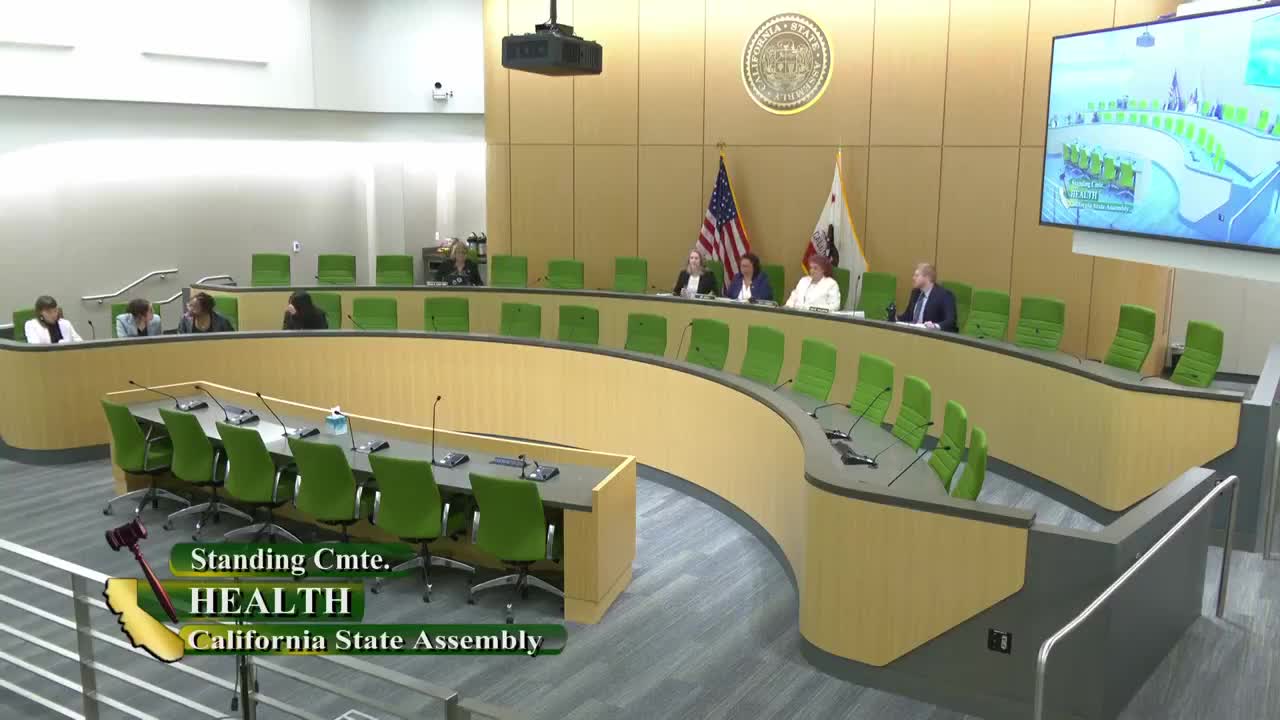 4MIN
Assembly Standing Committee on Health
Bill Author

Bill Co-Author(s):