AB 1805: Instructional materials: history-social science: Mendez v. Westminster School District of Orange County.
- Session Year: 2023-2024
- House: Assembly
- Latest Version Date: 2024-09-20
Current Status:
Passed
(2024-09-20: Chaptered by Secretary of State - Chapter 302, Statutes of 2024.)
Introduced
In Committee
First Chamber
In Committee
Second Chamber
Enacted
Existing law requires the State Board of Education to adopt at least 5 basic instructional materials in specified subject areas, including, among others, social science, for use in kindergarten and grades 1 to 8, inclusive, as specified. Existing law establishes the Instructional Quality Commission, as specified, and requires the commission to, among other things, develop criteria for evaluating instructional materials.
This bill would require the commission, when the state board adopts new instructional materials for history-social science on or after January 1, 2025, to consider providing for inclusion, in its evaluation criteria, content on the case of Mendez v. Westminster School District of Orange County.
This bill would incorporate additional changes to Section 51226.3 of the Education Code proposed by AB 1821 to be operative only if this bill and AB 1821 are enacted and this bill is enacted last.
Existing law requires the State Board of Education to adopt at least 5 basic instructional materials in specified subject areas, including, among others, social science, for use in kindergarten and grades 1 to 8, inclusive, as specified. Existing law establishes the Instructional Quality Commission, as specified, and requires the commission to, among other things, develop criteria for evaluating instructional materials.
This bill would require the commission, when the state board adopts new instructional materials for history-social science on or after January 1, 2025, to consider providing for inclusion, in its evaluation criteria, content on the case of Mendez v. Westminster School District of Orange County.
Existing law requires the State Board of Education to adopt statewide academically rigorous content standards and performance standards in the core curriculum areas of reading, writing, mathematics, history/social science, and science, at least 5 basic instructional materials in specified subject areas, including, among others, social science, for use in kindergarten and grades 1 to 8, inclusive, as specified. Existing law establishes the Instructional Quality Commission, as specified, and requires the commission to, among other things, recommend curriculum frameworks to the state board and develop criteria for evaluating instructional materials.
This bill would require the state board and the Superintendent of Public Instruction, on or before December 31, 2028, to revise a specific academic content standard from the HistorySocial Science Content Standards for California Public Schools, Kindergarten Through Grade Twelve, as adopted by the state board on October 9, 1998, to incorporate commission, when the state board adopts new instructional materials for history-social science on or after January 1, 2025, to consider providing for inclusion, in its evaluation criteria, content on the case of Mendez v. Westminster School District of Orange County. The bill would specify that any revisions to the history-social science curriculum framework or to the evaluation criteria for the adoption of instructional materials shall occur only within the timeframes and procedures set forth in the existing schedule for the adoption of curriculum frameworks and instructional materials.
Existing law requires the State Board of Education to adopt statewide academically rigorous content standards and performance standards in the core curriculum areas of reading, writing, mathematics, history/social science, and science, as specified. Existing law establishes the Instructional Quality Commission, as specified, and requires the commission to, among other things, recommend curriculum frameworks to the state board and develop criteria for evaluating instructional materials.
This bill would require the state board and the Superintendent of Public Instruction, on or before December 31, 2028, to revise a specific academic content standard from the HistorySocial Science Content Standards for California Public Schools, Kindergarten Through Grade Twelve, as adopted by the state board on October 9, 1998, to incorporate the case of Mendez v. Westminster School District of Orange County. The bill would specify that any revisions to the history-social science curriculum framework or to the evaluation criteria for the adoption of instructional materials shall occur only within the timeframes and procedures set forth in the existing schedule for the adoption of curriculum frameworks and instructional materials.
The Legislature finds and declares all of the following:
(a)In 1943, the children of Gonzalo and Felicitas Mendez were denied entry into the Seventeenth Street School in the City of Westminster, California, because they were Mexican American. As a result, the Mendez family in March 1945 joined four other Latino families and sued four school districts in the County of Orange on behalf of their children and 5,000 other children. The Mendez family earned a living as tenant farmers and was able to bring the lawsuit forward with the help of civil rights attorney David Marcus.
(b)The lawsuit, Mendez v. Westminster School District of Orange County (64 F. Supp. 544 (S.D. Cal. 1946)), affd, Westminster School District of Orange County v. Mendez (161 F. 2d 774 (9th Cir. 1947)), argued that the school districts denied the children equal protection under the law and due process of law under the Fourteenth Amendment to the United States Constitution. Eventually, amicus curiae briefs were filed by the American Jewish Congress, the American Civil Liberties Union, the National Lawyers Guild, the Japanese American Citizens League, and the National Association for the Advancement of Colored People. The success of the lawsuit led to legislation in California that repealed laws mandating segregation and set legal and strategic precedent for other cases striving to end educational segregation, including the national landmark case of Brown v. Board of Education.
(c)As a result of the Mendez case, the Legislature and Governor Earl Warren in 1947 repealed the last school segregation statutes in California, making California the first state to end school segregation. The case is an integral part of the history and culture of the County of Orange and the City of Westminster, and is honored by the city at the Mendez Historic Freedom Trail and Monument. The Mendez case represents the beginning of the end of legal school segregation and signifies the important role of California in the civil rights movement, a role that should be both preserved and remembered.
SEC. 2.Section 51226.3 of the Education Code is amended to read:51226.3.(a)(1)The department shall incorporate into publications that provide examples of curriculum resources for teacher use those materials developed by publishers of nonfiction, trade books, and primary sources, or other public or private organizations, that are age appropriate and consistent with the subject frameworks on history and social science that deal with civil rights, human rights violations, genocide, slavery, and the Holocaust.
(2)The Legislature encourages the department to incorporate into publications that provide examples of curriculum resources for teacher use those materials developed by publishers of nonfiction, trade books, and primary sources, or other public or private organizations, that are age appropriate and consistent with the subject frameworks on history and social science that deal with the Armenian, Cambodian, Darfur, and Rwandan genocides.
(b)(1)The Legislature encourages the incorporation of survivor, rescuer, liberator, and witness oral testimony into the teaching of human rights, the Holocaust, and genocide, including, but not limited to, the Armenian, Cambodian, Darfur, and Rwandan genocides.
(2)As used in this subdivision, oral testimony means the firsthand accounts of significant historical events presented in a format that includes, but is not limited to, in-person testimony, video, or a multimedia option, such as a DVD or an online video.
(c)The Legislature encourages all state and local professional development activities to provide teachers with content background and resources to assist them in teaching about civil rights, human rights violations, genocide, slavery, the Armenian Genocide, and the Holocaust.
(d)The Legislature encourages all state and local professional development activities to provide teachers with content background and resources to assist them in teaching about the Great Irish Famine of 184550.
(e)The Great Irish Famine of 184550 shall be considered in the next cycle in which the history-social science curriculum framework and its accompanying instructional materials are adopted.
(f)(1)The Legislature encourages all state and local professional development activities to provide teachers with content background and resources to assist them in teaching about the Chinese Exclusion Act of 1882 and the contributions of Chinese Americans to the establishment of the transcontinental railroad.
(2)When the state board revises and adopts the curriculum framework for history-social science on or after January 1, 2017, the state board shall consider providing for the inclusion, in that curriculum framework, evaluation criteria, and accompanying instructional materials, of instruction on the Chinese Exclusion Act of 1882 and the contributions of Chinese Americans to the establishment of the transcontinental railroad.
(g)When the history-social science curriculum framework is revised as required by law, the Instructional Quality Commission shall consider including the Armenian, Cambodian, Darfur, and Rwandan genocides in the recommended history-social science curriculum framework.
(h)The Model Curriculum for Human Rights and Genocide adopted by the state board, pursuant to Section 51226, shall be made available to schools in grades 7 to 12, inclusive, as soon as funding is available for this purpose. In addition, the department shall make the curriculum available on its internet website.
(i)For purposes of this article, Armenian Genocide means the torture, starvation, and murder of 1,500,000 Armenians, which included death marches into the Syrian Desert, by the rulers of the Ottoman Turkish Empire and the exile of more than 500,000 innocent people during the period from 1915 to 1923, inclusive.
(j)When the state board revises and adopts the curriculum framework for history-social science on or after January 1, 2016, the state board shall consider providing for the inclusion, in that curriculum framework, evaluation criteria, and accompanying instructional materials, of instruction on the unconstitutional deportation to Mexico during the Great Depression of citizens and lawful permanent residents of the United States.
(k)As used in subdivisions (b) and (c), human rights and human rights violations include the unconstitutional deportation to Mexico during the Great Depression of citizens and lawful permanent residents of the United States.
(l)When the history-social science curriculum framework is next revised on or after January 1, 2024, the Instructional Quality Commission shall consider providing for inclusion, in that curriculum framework, related evaluation criteria, and accompanying instructional materials, of instruction on both of the following:
(1)The historical, social, economic, and political contributions of Asian Americans, Native Hawaiians, and Pacific Islanders in the United States.
(2)Examples of racism, discrimination, and violence perpetrated against Asian Americans, Native Hawaiians, and Pacific Islanders in the United States, including, but not limited to, hate crimes committed during the COVID-19 pandemic.
(m)When the state board adopts new instructional materials for history-social science on or after January 1, 2025, the Instructional Quality Commission shall consider providing for inclusion, in its evaluation criteria, content on the case of Mendez v. Westminster School District of Orange County (64 F. Supp. 544 (S.D. Cal. 1946)), affd, Westminster School District of Orange County v. Mendez (161 F. 2d 774 (9th Cir. 1947)).
SEC. 2.5.Section 51226.3 of the Education Code is amended to read:51226.3.(a)(1)The department shall incorporate into publications that provide examples of curriculum resources for teacher use those materials developed by publishers of nonfiction, trade books, and primary sources, or other public or private organizations, that are age appropriate and consistent with the subject frameworks on history and social science that deal with civil rights, human rights violations, genocide, slavery, and the Holocaust.
(2)The Legislature encourages the department to incorporate into publications that provide examples of curriculum resources for teacher use those materials developed by publishers of nonfiction, trade books, and primary sources, or other public or private organizations, that are age appropriate and consistent with the subject frameworks on history and social science that deal with the Armenian, Cambodian, Darfur, and Rwandan genocides.
(b)(1)The Legislature encourages the incorporation of survivor, rescuer, liberator, and witness oral testimony into the teaching of human rights, the Holocaust, and genocide, including, but not limited to, the Armenian, Cambodian, Darfur, and Rwandan genocides.
(2)As used in this subdivision, oral testimony means the firsthand accounts of significant historical events presented in a format that includes, but is not limited to, in-person testimony, video, or a multimedia option, such as a DVD or an online video.
(c)The Legislature encourages all state and local professional development activities to provide teachers with content background and resources to assist them in teaching about civil rights, human rights violations, genocide, slavery, the Armenian Genocide, and the Holocaust.
(d)The Legislature encourages all state and local professional development activities to provide teachers with content background and resources to assist them in teaching about the Great Irish Famine of 184550.
(e)The Great Irish Famine of 184550 shall be considered in the next cycle in which the history-social science curriculum framework and its accompanying instructional materials are adopted.
(f)(1)The Legislature encourages all state and local professional development activities to provide teachers with content background and resources to assist them in teaching about the Chinese Exclusion Act of 1882 and the contributions of Chinese Americans to the establishment of the transcontinental railroad.
(2)When the state board revises and adopts the curriculum framework for history-social science on or after January 1, 2017, the state board shall consider providing for the inclusion, in that curriculum framework, evaluation criteria, and accompanying instructional materials, of instruction on the Chinese Exclusion Act of 1882 and the contributions of Chinese Americans to the establishment of the transcontinental railroad.
(g)When the history-social science curriculum framework is revised as required by law, the Instructional Quality Commission shall consider including the Armenian, Cambodian, Darfur, and Rwandan genocides in the recommended history-social science curriculum framework.
(h)The Model Curriculum for Human Rights and Genocide adopted by the state board, pursuant to Section 51226, shall be made available to schools in grades 7 to 12, inclusive, as soon as funding is available for this purpose. In addition, the department shall make the curriculum available on its internet website.
(i)For purposes of this article, Armenian Genocide means the torture, starvation, and murder of 1,500,000 Armenians, which included death marches into the Syrian Desert, by the rulers of the Ottoman Turkish Empire and the exile of more than 500,000 innocent people during the period from 1915 to 1923, inclusive.
(j)When the state board revises and adopts the curriculum framework for history-social science on or after January 1, 2016, the state board shall consider providing for the inclusion, in that curriculum framework, evaluation criteria, and accompanying instructional materials, of instruction on the unconstitutional deportation to Mexico during the Great Depression of citizens and lawful permanent residents of the United States.
(k)As used in subdivisions (b) and (c), human rights and human rights violations include the unconstitutional deportation to Mexico during the Great Depression of citizens and lawful permanent residents of the United States.
(l)When the history-social science curriculum framework is next revised on or after January 1, 2024, the Instructional Quality Commission shall consider providing for inclusion, in that curriculum framework, related evaluation criteria, and accompanying instructional materials, of instruction on both of the following:
(1)The historical, social, economic, and political contributions of Asian Americans, Native Hawaiians, and Pacific Islanders in the United States.
(2)Examples of racism, discrimination, and violence perpetrated against Asian Americans, Native Hawaiians, and Pacific Islanders in the United States, including, but not limited to, hate crimes committed during the COVID-19 pandemic.
(m)When the state board adopts new instructional materials for history-social science on or after January 1, 2025, the Instructional Quality Commission shall consider providing for inclusion, in its evaluation criteria, content on the case of Mendez v. Westminster School District of Orange County (64 F. Supp. 544 (S.D. Cal. 1946)), affd, Westminster School District of Orange County v. Mendez (161 F. 2d 774 (9th Cir. 1947)).
(n)When the state board next revises the history-social science curriculum framework or adopts new instructional materials, after January 1, 2025, the Instructional Quality Commission shall consider, in consultation with California tribes, including in that curriculum framework or including in its evaluation criteria for instructional materials, content on the treatment and perspectives of Native Americans during the periods of the Spanish colonization of California and the Gold Rush Era.
SEC. 3.Section 2.5 of this bill incorporates amendments to Section 51226.3 of the Education Code proposed by both this bill and Assembly Bill 1821. That section of this bill shall only become operative if (1) both bills are enacted and become effective on or before January 1, 2025, (2) each bill amends Section 51226.3 of the Education Code, and (3) this bill is enacted after Assembly Bill 1821, in which case Section 2 of this bill shall not become operative.
The Legislature finds and declares all of the following:
(a)In 1943, the children of Gonzalo and Felicitas Mendez were denied entry into the Seventeenth Street School in the City of Westminster, California, because they were Mexican American. As a result, the Mendez family in March 1945 joined four other Latino families and sued four school districts in the County of Orange on behalf of their children and 5,000 other children. The Mendez family earned a living as tenant farmers and was able to bring the lawsuit forward with the help of civil rights attorney David Marcus.
(b)The lawsuit, Mendez v. Westminster School District of Orange County (64 F. Supp. 544 (S.D. Cal. 1946)), affd, Westminster School District of Orange County v. Mendez (161 F. 2d 774 (9th Cir. 1947)), argued that the school districts denied the children equal protection under the law and due process of law under the Fourteenth Amendment to the United States Constitution. Eventually, amicus curiae briefs were filed by the American Jewish Congress, the American Civil Liberties Union, the National Lawyers Guild, the Japanese American Citizens League, and the National Association for the Advancement of Colored People. The success of the lawsuit led to legislation in California that repealed laws mandating segregation and set legal and strategic precedent for other cases striving to end educational segregation, including the national landmark case of Brown v. Board of Education.
(c)As a result of the Mendez case, the Legislature and Governor Earl Warren in 1947 repealed the last school segregation statutes in California, making California the first state to end school segregation. The case is an integral part of the history and culture of the County of Orange and the City of Westminster, and is honored by the city at the Mendez Historic Freedom Trail and Monument. The Mendez case represents the beginning of the end of legal school segregation and signifies the important role of California in the civil rights movement, a role that should be both preserved and remembered.
SEC. 2.Section 51226.3 of the Education Code is amended to read:51226.3.(a)(1)The department shall incorporate into publications that provide examples of curriculum resources for teacher use those materials developed by publishers of nonfiction, trade books, and primary sources, or other public or private organizations, that are age appropriate and consistent with the subject frameworks on history and social science that deal with civil rights, human rights violations, genocide, slavery, and the Holocaust.
(2)The Legislature encourages the department to incorporate into publications that provide examples of curriculum resources for teacher use those materials developed by publishers of nonfiction, trade books, and primary sources, or other public or private organizations, that are age appropriate and consistent with the subject frameworks on history and social science that deal with the Armenian, Cambodian, Darfur, and Rwandan genocides.
(b)(1)The Legislature encourages the incorporation of survivor, rescuer, liberator, and witness oral testimony into the teaching of human rights, the Holocaust, and genocide, including, but not limited to, the Armenian, Cambodian, Darfur, and Rwandan genocides.
(2)As used in this subdivision, oral testimony means the firsthand accounts of significant historical events presented in a format that includes, but is not limited to, in-person testimony, video, or a multimedia option, such as a DVD or an online video.
(c)The Legislature encourages all state and local professional development activities to provide teachers with content background and resources to assist them in teaching about civil rights, human rights violations, genocide, slavery, the Armenian Genocide, and the Holocaust.
(d)The Legislature encourages all state and local professional development activities to provide teachers with content background and resources to assist them in teaching about the Great Irish Famine of 184550.
(e)The Great Irish Famine of 184550 shall be considered in the next cycle in which the history-social science curriculum framework and its accompanying instructional materials are adopted.
(f)(1)The Legislature encourages all state and local professional development activities to provide teachers with content background and resources to assist them in teaching about the Chinese Exclusion Act of 1882 and the contributions of Chinese Americans to the establishment of the transcontinental railroad.
(2)When the state board revises and adopts the curriculum framework for history-social science on or after January 1, 2017, the state board shall consider providing for the inclusion, in that curriculum framework, evaluation criteria, and accompanying instructional materials, of instruction on the Chinese Exclusion Act of 1882 and the contributions of Chinese Americans to the establishment of the transcontinental railroad.
(g)When the history-social science curriculum framework is revised as required by law, the Instructional Quality Commission shall consider including the Armenian, Cambodian, Darfur, and Rwandan genocides in the recommended history-social science curriculum framework.
(h)The Model Curriculum for Human Rights and Genocide adopted by the state board, pursuant to Section 51226, shall be made available to schools in grades 7 to 12, inclusive, as soon as funding is available for this purpose. In addition, the department shall make the curriculum available on its internet website.
(i)For purposes of this article, Armenian Genocide means the torture, starvation, and murder of 1,500,000 Armenians, which included death marches into the Syrian Desert, by the rulers of the Ottoman Turkish Empire and the exile of more than 500,000 innocent people during the period from 1915 to 1923, inclusive.
(j)When the state board revises and adopts the curriculum framework for history-social science on or after January 1, 2016, the state board shall consider providing for the inclusion, in that curriculum framework, evaluation criteria, and accompanying instructional materials, of instruction on the unconstitutional deportation to Mexico during the Great Depression of citizens and lawful permanent residents of the United States.
(k)As used in subdivisions (b) and (c), human rights and human rights violations include the unconstitutional deportation to Mexico during the Great Depression of citizens and lawful permanent residents of the United States.
(l)When the history-social science curriculum framework is next revised on or after January 1, 2024, the Instructional Quality Commission shall consider providing for inclusion, in that curriculum framework, related evaluation criteria, and accompanying instructional materials, of instruction on both of the following:
(1)The historical, social, economic, and political contributions of Asian Americans, Native Hawaiians, and Pacific Islanders in the United States.
(2)Examples of racism, discrimination, and violence perpetrated against Asian Americans, Native Hawaiians, and Pacific Islanders in the United States, including, but not limited to, hate crimes committed during the COVID-19 pandemic.
(m)When the state board adopts new instructional materials for history-social science on or after January 1, 2025, the Instructional Quality Commission shall consider providing for inclusion, in its evaluation criteria, content on the case of Mendez v. Westminster School District of Orange County (64 F. Supp. 544 (S.D. Cal. 1946)), affd, Westminster School District of Orange County v. Mendez (161 F. 2d 774 (9th Cir. 1947)).
SEC. 2.5.Section 51226.3 of the Education Code is amended to read:51226.3.(a)(1)The department shall incorporate into publications that provide examples of curriculum resources for teacher use those materials developed by publishers of nonfiction, trade books, and primary sources, or other public or private organizations, that are age appropriate and consistent with the subject frameworks on history and social science that deal with civil rights, human rights violations, genocide, slavery, and the Holocaust.
(2)The Legislature encourages the department to incorporate into publications that provide examples of curriculum resources for teacher use those materials developed by publishers of nonfiction, trade books, and primary sources, or other public or private organizations, that are age appropriate and consistent with the subject frameworks on history and social science that deal with the Armenian, Cambodian, Darfur, and Rwandan genocides.
(b)(1)The Legislature encourages the incorporation of survivor, rescuer, liberator, and witness oral testimony into the teaching of human rights, the Holocaust, and genocide, including, but not limited to, the Armenian, Cambodian, Darfur, and Rwandan genocides.
(2)As used in this subdivision, oral testimony means the firsthand accounts of significant historical events presented in a format that includes, but is not limited to, in-person testimony, video, or a multimedia option, such as a DVD or an online video.
(c)The Legislature encourages all state and local professional development activities to provide teachers with content background and resources to assist them in teaching about civil rights, human rights violations, genocide, slavery, the Armenian Genocide, and the Holocaust.
(d)The Legislature encourages all state and local professional development activities to provide teachers with content background and resources to assist them in teaching about the Great Irish Famine of 184550.
(e)The Great Irish Famine of 184550 shall be considered in the next cycle in which the history-social science curriculum framework and its accompanying instructional materials are adopted.
(f)(1)The Legislature encourages all state and local professional development activities to provide teachers with content background and resources to assist them in teaching about the Chinese Exclusion Act of 1882 and the contributions of Chinese Americans to the establishment of the transcontinental railroad.
(2)When the state board revises and adopts the curriculum framework for history-social science on or after January 1, 2017, the state board shall consider providing for the inclusion, in that curriculum framework, evaluation criteria, and accompanying instructional materials, of instruction on the Chinese Exclusion Act of 1882 and the contributions of Chinese Americans to the establishment of the transcontinental railroad.
(g)When the history-social science curriculum framework is revised as required by law, the Instructional Quality Commission shall consider including the Armenian, Cambodian, Darfur, and Rwandan genocides in the recommended history-social science curriculum framework.
(h)The Model Curriculum for Human Rights and Genocide adopted by the state board, pursuant to Section 51226, shall be made available to schools in grades 7 to 12, inclusive, as soon as funding is available for this purpose. In addition, the department shall make the curriculum available on its internet website.
(i)For purposes of this article, Armenian Genocide means the torture, starvation, and murder of 1,500,000 Armenians, which included death marches into the Syrian Desert, by the rulers of the Ottoman Turkish Empire and the exile of more than 500,000 innocent people during the period from 1915 to 1923, inclusive.
(j)When the state board revises and adopts the curriculum framework for history-social science on or after January 1, 2016, the state board shall consider providing for the inclusion, in that curriculum framework, evaluation criteria, and accompanying instructional materials, of instruction on the unconstitutional deportation to Mexico during the Great Depression of citizens and lawful permanent residents of the United States.
(k)As used in subdivisions (b) and (c), human rights and human rights violations include the unconstitutional deportation to Mexico during the Great Depression of citizens and lawful permanent residents of the United States.
(l)(l)When the history-social science curriculum framework is next revised, revised on or after January 1, 2024, the Instructional Quality Commission shall consider providing for inclusion, in that curriculum framework, related evaluation criteria, and accompanying instructional materials, of instruction on both of the following:
(1)The historical, social, economic, and political contributions of Asian Americans, Native Hawaiians, and Pacific Islanders in the United States.
(2)Examples of racism, discrimination, and violence perpetrated against Asian Americans, Native Hawaiians, and Pacific Islanders in the United States, including, but not limited to, hate crimes committed during the COVID-19 pandemic.
(m)When the state board adopts new instructional materials for history-social science on or after January 1, 2025, the Instructional Quality Commission shall consider providing for inclusion, in its evaluation criteria, content on the case of Mendez v. Westminster School District of Orange County (64 F. Supp. 544 (S.D. Cal. 1946)), affd, Westminster School District of Orange County v. Mendez (161 F. 2d 774 (9th Cir. 1947)).
(n)When the state board next revises the history-social science curriculum framework or adopts new instructional materials, after January 1, 2025, the Instructional Quality Commission shall consider, in consultation with California tribes, including in that curriculum framework or including in its evaluation criteria for instructional materials, content on the treatment and perspectives of Native Americans during the periods of the Spanish colonization of California and the Gold Rush Era.
SEC. 3.Section 2.5 of this bill incorporates amendments to Section 51226.3 of the Education Code proposed by both this bill and Assembly Bill 1821. That section of this bill shall only become operative if (1) both bills are enacted and become effective on or before January 1, 2025, (2) each bill amends Section 51226.3 of the Education Code, and (3) this bill is enacted after Assembly Bill 1821, in which case Section 2 of this bill shall not become operative.
The Legislature finds and declares all of the following:
(a)In 1943, the children of Gonzalo and Felicitas Mendez were denied entry into the Seventeenth Street School in the City of Westminster, California, because they were Mexican American. As a result, the Mendez family in March 1945 joined four other Latino families and sued four school districts in the County of Orange on behalf of their children and 5,000 other children. The Mendez family earned a living as tenant farmers and was able to bring the lawsuit forward with the help of civil rights attorney David Marcus.
(b)The lawsuit, Mendez v. Westminster School District of Orange County (64 F. Supp. 544 (S.D. Cal. 1946)), affd, Westminster School District of Orange County v. Mendez (161 F. 2d 774 (9th Cir. 1947)), argued that the school districts denied the children equal protection under the law and due process of law under the Fourteenth Amendment to the United States Constitution. Eventually, amicus curiae briefs were filed by the American Jewish Congress, the American Civil Liberties Union, the National Lawyers Guild, the Japanese American Citizens League, and the National Association for the Advancement of Colored People. The success of the lawsuit led to legislation in California that repealed laws mandating segregation and set legal and strategic precedent for other cases striving to end educational segregation, including the national landmark case of Brown v. Board of Education.
(c)As a result of the Mendez case, the Legislature and Governor Earl Warren in 1947 repealed the last school segregation statutes in California, making California the first state to end school segregation. The case is an integral part of the history and culture of the County of Orange and the City of Westminster, and is honored by the city at the Mendez Historic Freedom Trail and Monument. The Mendez case represents the beginning of the end of legal school segregation and signifies the important role of California in the civil rights movement, a role that should be both preserved and remembered.
SEC. 2.Section 51226.3 of the Education Code is amended to read:51226.3.(a)(1)The department shall incorporate into publications that provide examples of curriculum resources for teacher use those materials developed by publishers of nonfiction, trade books, and primary sources, or other public or private organizations, that are age appropriate and consistent with the subject frameworks on history and social science that deal with civil rights, human rights violations, genocide, slavery, and the Holocaust.
(2)The Legislature encourages the department to incorporate into publications that provide examples of curriculum resources for teacher use those materials developed by publishers of nonfiction, trade books, and primary sources, or other public or private organizations, that are age appropriate and consistent with the subject frameworks on history and social science that deal with the Armenian, Cambodian, Darfur, and Rwandan genocides.
(b)(1)The Legislature encourages the incorporation of survivor, rescuer, liberator, and witness oral testimony into the teaching of human rights, the Holocaust, and genocide, including, but not limited to, the Armenian, Cambodian, Darfur, and Rwandan genocides.
(2)As used in this subdivision, oral testimony means the firsthand accounts of significant historical events presented in a format that includes, but is not limited to, in-person testimony, video, or a multimedia option, such as a DVD or an online video.
(c)The Legislature encourages all state and local professional development activities to provide teachers with content background and resources to assist them in teaching about civil rights, human rights violations, genocide, slavery, the Armenian Genocide, and the Holocaust.
(d)The Legislature encourages all state and local professional development activities to provide teachers with content background and resources to assist them in teaching about the Great Irish Famine of 184550.
(e)The Great Irish Famine of 184550 shall be considered in the next cycle in which the history-social science curriculum framework and its accompanying instructional materials are adopted.
(f)(1)The Legislature encourages all state and local professional development activities to provide teachers with content background and resources to assist them in teaching about the Chinese Exclusion Act of 1882 and the contributions of Chinese Americans to the establishment of the transcontinental railroad.
(2)When the state board revises and adopts the curriculum framework for history-social science on or after January 1, 2017, the state board shall consider providing for the inclusion, in that curriculum framework, evaluation criteria, and accompanying instructional materials, of instruction on the Chinese Exclusion Act of 1882 and the contributions of Chinese Americans to the establishment of the transcontinental railroad.
(g)When the history-social science curriculum framework is revised as required by law, the Instructional Quality Commission shall consider including the Armenian, Cambodian, Darfur, and Rwandan genocides in the recommended history-social science curriculum framework.
(h)The Model Curriculum for Human Rights and Genocide adopted by the state board, pursuant to Section 51226, shall be made available to schools in grades 7 to 12, inclusive, as soon as funding is available for this purpose. In addition, the department shall make the curriculum available on its internet website.
(i)For purposes of this article, Armenian Genocide means the torture, starvation, and murder of 1,500,000 Armenians, which included death marches into the Syrian Desert, by the rulers of the Ottoman Turkish Empire and the exile of more than 500,000 innocent people during the period from 1915 to 1923, inclusive.
(j)When the state board revises and adopts the curriculum framework for history-social science on or after January 1, 2016, the state board shall consider providing for the inclusion, in that curriculum framework, evaluation criteria, and accompanying instructional materials, of instruction on the unconstitutional deportation to Mexico during the Great Depression of citizens and lawful permanent residents of the United States.
(k)As used in subdivisions (b) and (c), human rights and human rights violations include the unconstitutional deportation to Mexico during the Great Depression of citizens and lawful permanent residents of the United States.
(l)When the history-social science curriculum framework is next revised, revised on or after January 1, 2024, the Instructional Quality Commission shall consider providing for inclusion, in that curriculum framework, related evaluation criteria, and accompanying instructional materials, of instruction on both of the following:
(1)The historical, social, economic, and political contributions of Asian Americans, Native Hawaiians, and Pacific Islanders in the United States.
(2)Examples of racism, discrimination, and violence perpetrated against Asian Americans, Native Hawaiians, and Pacific Islanders in the United States, including, but not limited to, hate crimes committed during the COVID-19 pandemic.
(m)When the state board adopts new instructional materials for history-social science on or after January 1, 2025, the Instructional Quality Commission shall consider providing for inclusion, in its evaluation criteria, content on the case of Mendez v. Westminster School District of Orange County (64 F. Supp. 544 (S.D. Cal. 1946)), affd, Westminster School District of Orange County v. Mendez (161 F. 2d 774 (9th Cir. 1947)).
The Legislature finds and declares all of the following:
(a)In 1943, the children of Gonzalo and Felicitas Mendez were denied entry into the Seventeenth Street School in the City of Westminster, California, because they were Mexican American. As a result, the Mendez family in March 1945 joined four other Latino families and sued four school districts in the County of Orange on behalf of their children and 5,000 other children. The Mendez family earned a living as tenant farmers and was able to bring the lawsuit forward with the help of civil rights attorney David Marcus.
(b)The lawsuit, Mendez v. Westminster School District of Orange County (64 F. Supp. 544 (C.D. (S.D. Cal. 1946)), affd, Westminster School District of Orange County v. Mendez (161 F. 2d 774 (9th Cir. 1947)), argued that the school districts denied the children equal protection under the law and due process of law under the Fourteenth Amendment to the United States Constitution. Eventually, amicus curiae briefs were filed by the American Jewish Congress, the American Civil Liberties Union, the National Lawyers Guild, the Japanese American Citizens League, and the National Association for the Advancement of Colored People. The success of the lawsuit led to legislation in California that repealed laws mandating segregation and set legal and strategic precedent for other cases striving to end educational segregation, including the national landmark case of Brown v. Board of Education.
(c)As a result of the Mendez case, the Legislature and Governor Earl Warren in 1947 repealed the last school segregation statutes in California, making California the first state to end school segregation. The case is an integral part of the history and culture of the County of Orange and the City of Westminster, and is honored by the city at the Mendez Historic Freedom Trail and Monument. The Mendez case represents the beginning of the end of legal school segregation and signifies the important role of California in the civil rights movement, a role that should be both preserved and remembered.
SEC. 2.Section 60605.12 is added to the Education Code, to read:60605.12.The state board and the Superintendent shall, on or before December 31, 2028, revise the academic content standard HSS-11.10.2 from the HistorySocial Science Content Standards for California Public Schools, Kindergarten Through Grade Twelve, as adopted by the state board on October 9, 1998, to incorporate the case of Mendez v. Westminster School District of Orange County (64 F. Supp. 544 (C.D. Cal. 1946)), affd, Westminster School District of Orange County v. Mendez (161 F. 2d 774 (9th Cir. 1947)). Any revisions to the history-social science curriculum framework or to the evaluation criteria for the adoption of instructional materials shall occur only within the timeframes and procedures set forth in the existing schedule for the adoption of curriculum frameworks and instructional materials.SEC. 2.Section 51226.3 of the Education Code is amended to read:51226.3.(a)(1)The department shall incorporate into publications that provide examples of curriculum resources for teacher use those materials developed by publishers of nonfiction, trade books, and primary sources, or other public or private organizations, that are age appropriate and consistent with the subject frameworks on history and social science that deal with civil rights, human rights violations, genocide, slavery, and the Holocaust.
(2)The Legislature encourages the department to incorporate into publications that provide examples of curriculum resources for teacher use those materials developed by publishers of nonfiction, trade books, and primary sources, or other public or private organizations, that are age appropriate and consistent with the subject frameworks on history and social science that deal with the Armenian, Cambodian, Darfur, and Rwandan genocides.
(b)(1)The Legislature encourages the incorporation of survivor, rescuer, liberator, and witness oral testimony into the teaching of human rights, the Holocaust, and genocide, including, but not limited to, the Armenian, Cambodian, Darfur, and Rwandan genocides.
(2)As used in this subdivision, oral testimony means the firsthand accounts of significant historical events presented in a format that includes, but is not limited to, in-person testimony, video, or a multimedia option, such as a DVD or an online video.
(c)The Legislature encourages all state and local professional development activities to provide teachers with content background and resources to assist them in teaching about civil rights, human rights violations, genocide, slavery, the Armenian Genocide, and the Holocaust.
(d)The Legislature encourages all state and local professional development activities to provide teachers with content background and resources to assist them in teaching about the Great Irish Famine of 184550.
(e)The Great Irish Famine of 184550 shall be considered in the next cycle in which the history-social science curriculum framework and its accompanying instructional materials are adopted.
(f)(1)The Legislature encourages all state and local professional development activities to provide teachers with content background and resources to assist them in teaching about the Chinese Exclusion Act of 1882 and the contributions of Chinese Americans to the establishment of the transcontinental railroad.
(2)When the state board revises and adopts the curriculum framework for history-social science on or after January 1, 2017, the state board shall consider providing for the inclusion, in that curriculum framework, evaluation criteria, and accompanying instructional materials, of instruction on the Chinese Exclusion Act of 1882 and the contributions of Chinese Americans to the establishment of the transcontinental railroad.
(g)When the history-social science curriculum framework is revised as required by law, the Instructional Quality Commission shall consider including the Armenian, Cambodian, Darfur, and Rwandan genocides in the recommended history-social science curriculum framework.
(h)The Model Curriculum for Human Rights and Genocide adopted by the state board, pursuant to Section 51226, shall be made available to schools in grades 7 to 12, inclusive, as soon as funding is available for this purpose. In addition, the department shall make the curriculum available on its internet website.
(i)For purposes of this article, Armenian Genocide means the torture, starvation, and murder of 1,500,000 Armenians, which included death marches into the Syrian Desert, by the rulers of the Ottoman Turkish Empire and the exile of more than 500,000 innocent people during the period from 1915 to 1923, inclusive.
(j)When the state board revises and adopts the curriculum framework for history-social science on or after January 1, 2016, the state board shall consider providing for the inclusion, in that curriculum framework, evaluation criteria, and accompanying instructional materials, of instruction on the unconstitutional deportation to Mexico during the Great Depression of citizens and lawful permanent residents of the United States.
(k)As used in subdivisions (b) and (c), human rights and human rights violations include the unconstitutional deportation to Mexico during the Great Depression of citizens and lawful permanent residents of the United States.
(l)When the history-social science curriculum framework is next revised, on or after January 1, 2024, the Instructional Quality Commission shall consider providing for inclusion, in that curriculum framework, related evaluation criteria, and accompanying instructional materials, of instruction on both of the following:
(1)The historical, social, economic, and political contributions of Asian Americans, Native Hawaiians, and Pacific Islanders in the United States.
(2)Examples of racism, discrimination, and violence perpetrated against Asian Americans, Native Hawaiians, and Pacific Islanders in the United States, including, but not limited to, hate crimes committed during the COVID-19 pandemic.
(m)When the state board adopts new instructional materials for history-social science on or after January 1, 2025, the Instructional Quality Commission shall consider providing for inclusion, in its evaluation criteria, content on the case of Mendez v. Westminster School District of Orange County (64 F. Supp. 544 (S.D. Cal. 1946)), affd, Westminster School District of Orange County v. Mendez (161 F. 2d 774 (9th Cir. 1947)).
The Legislature finds and declares all of the following:
(a)In 1943, the children of Gonzalo and Felicitas Mendez were denied entry into the Seventeenth Street School in the City of Westminster, California, because they were Mexican American. As a result, the Mendez family in March 1945 joined four other Latino families and sued four school districts in the County of Orange on behalf of their children and 5,000 other children. The Mendez family earned a living as tenant farmers and was able to bring the lawsuit forward with the help of civil rights attorney David Marcus.
(b)The lawsuit, Mendez v. Westminster School District of Orange County (64 F. Supp. 544 (C.D. Cal. 1946)), affd, Westminster School District of Orange County v. Mendez (161 F. 2d 774 (9th Cir. 1947)), argued that the school districts denied the children equal protection under the law and due process of law under the Fourteenth Amendment to the United States Constitution. Eventually, amicus curiae briefs were filed by the American Jewish Congress, the American Civil Liberties Union, the National Lawyers Guild, the Japanese American Citizens League, and the National Association for the Advancement of Colored People. The success of the lawsuit led to legislation in California that repealed laws mandating segregation and set legal and strategic precedent for other cases striving to end educational segregation, including the national landmark case of Brown v. Board of Education.
(c)As a result of the Mendez case, the Legislature and Governor Earl Warren in 1947 repealed the last school segregation statutes in California, making California the first state to end school segregation. The case is an integral part of the history and culture of the County of Orange and the City of Westminster, and is honored by the city at the Mendez Historic Freedom Trail and Monument. The Mendez case represents the beginning of the end of legal school segregation and signifies the important role of California in the civil rights movement, a role that should be both preserved and remembered.
SEC. 2.Section 60605.12 is added to the Education Code, to read:60605.12.The state board and the Superintendent shall, on or before December 31, 2028, revise the academic content standard HSS-11.10.2 from the HistorySocial Science Content Standards for California Public Schools, Kindergarten Through Grade Twelve, as adopted by the state board on October 9, 1998, to incorporate the case of Mendez v. Westminster School District of Orange County (64 F. Supp. 544 (C.D. Cal. 1946)), affd, Westminster School District of Orange County v. Mendez (161 F. 2d 774 (9th Cir. 1947)). Any revisions to the history-social science curriculum framework or to the evaluation criteria for the adoption of instructional materials shall occur only within the timeframes and procedures set forth in the existing schedule for the adoption of curriculum frameworks and instructional materials.
|
Date
|
Status
|
|---|---|
| Sep 20, 2024 | Chaptered by Secretary of State - Chapter 302, Statutes of 2024. |
| Sep 20, 2024 | Approved by the Governor. |
| Sep 3, 2024 | Enrolled and presented to the Governor at 3:30 p.m. |
| Aug 26, 2024 | Senate amendments concurred in. To Engrossing and Enrolling. (Ayes 77. Noes 0. Page 6496.). |
| Aug 20, 2024 | In Assembly. Concurrence in Senate amendments pending. May be considered on or after August 22 pursuant to Assembly Rule 77. |
| Aug 19, 2024 | Read third time. Passed. Ordered to the Assembly. (Ayes 40. Noes 0. Page 5206.). |
| Aug 7, 2024 | Read second time. Ordered to third reading. |
| Aug 6, 2024 | Read third time and amended. Ordered to second reading. |
| Aug 6, 2024 | Ordered to third reading. |
| Aug 6, 2024 | Action rescinded whereby the bill was read third time, passed, and to Assembly. |
| Jun 17, 2024 | In Senate. Held at Desk. |
| Jun 17, 2024 | Ordered to the Senate. |
| Jun 13, 2024 | In Assembly. Concurrence in Senate amendments pending. May be considered on or after June 15 pursuant to Assembly Rule 77. |
| Jun 13, 2024 | Read third time. Passed. Ordered to the Assembly. (Ayes 37. Noes 0. Page 4490.). |
| Jun 11, 2024 | Read second time. Ordered to Consent Calendar. |
| Jun 10, 2024 | From committee: Be ordered to second reading file pursuant to Senate Rule 28.8 and ordered to Consent Calendar. |
| Jun 5, 2024 | From committee chair, with author's amendments: Amend, and re-refer to committee. Read second time, amended, and re-referred to Com. on APPR. |
| May 29, 2024 | From committee: Do pass and re-refer to Com. on APPR with recommendation: To Consent Calendar. (Ayes 7. Noes 0.) (May 29). Re-referred to Com. on APPR. |
| May 8, 2024 | Referred to Com. on ED. |
| Apr 29, 2024 | In Senate. Read first time. To Com. on RLS. for assignment. |
| Apr 29, 2024 | Read third time. Passed. Ordered to the Senate. (Ayes 73. Noes 0. Page 5032.) |
| Apr 22, 2024 | Ordered to third reading. |
| Apr 22, 2024 | From Consent Calendar. |
| Apr 18, 2024 | Read second time. Ordered to Consent Calendar. |
| Apr 17, 2024 | From committee: Do pass. To Consent Calendar. (Ayes 15. Noes 0.) (April 17). |
| Apr 2, 2024 | Re-referred to Com. on APPR. |
| Apr 1, 2024 | Read second time and amended. |
| Mar 21, 2024 | From committee: Amend, and do pass as amended and re-refer to Com. on APPR. (Ayes 7. Noes 0.) (March 20). |
| Jan 22, 2024 | Referred to Com. on ED. |
| Jan 9, 2024 | From printer. May be heard in committee February 8. |
| Jan 8, 2024 | Read first time. To print. |
|
Date
|
Description
|
Location
|
Votes
|
|
|---|---|---|---|---|
| Aug 26, 2024 | AB 1805 Ta Concurrence in Senate Amendments | Assembly Floor |
Passed |
|
| Aug 19, 2024 | Assembly 3rd Reading AB1805 Ta et al. By Umberg | Senate Floor |
Passed |
|
| Jun 13, 2024 | Consent Calendar 2nd AB1805 Ta et al. By Umberg | Senate Floor |
Passed |
|
| May 29, 2024 | Do pass, but first be re-referred to the Committee on [Appropriations] with the recommendation: To Consent Calendar | Senate Standing Committee on Education |
Passed |
|
| Apr 29, 2024 | AB 1805 Ta Assembly Third Reading | Assembly Floor |
Passed |
|
| Apr 17, 2024 | Do pass. To Consent Calendar. | Assembly Standing Committee on Appropriations |
Passed |
|
| Mar 20, 2024 | Do pass as amended and be re-referred to the Committee on [Appropriations] | Assembly Standing Committee on Education |
Passed |
This list shows positions taken on this bill by organizations on the date displayed, which is linked to the original source.
Positions by individuals are not included.
|
Organization
|
Position
|
Date
|
|---|---|---|
| California Association For Bilingual Education | ** Support | |
| California Charter Schools Association | ** Support | |
| California Federation Of Teachers | ** Support | |
| California Hispanic Chamber Of Commerce | ** Support | |
| California Teachers Association | ** Support | |
| Campbell Union High School District | ** Support | |
| City of Fountain Valley | ** Support | |
| City Of Westminster | ** Support | |
| Coast Community College District | ** Support | |
| Delta Kappa Gamma International - Chi State | ** Support | |
| Hispanic Association of Colleges & Universities | ** Support | |
| Los Angeles County Office Of Education | ** Support | |
| Midway City Sanitary District | ** Support | |
| Orange County Hispanic Chamber of Commerce | ** Support | |
| Rancho Santiago Community College District | ** Support | |
| Westminster Council Parent Teacher Association | ** Support | |
| Westminster School District | ** Support | |
| Women for American Values and Ethics | ** Support |
CONCURRENCE IN SENATE AMENDMENTS
CSA1 Bill Id:AB 1805
Author:(Ta)
As Amended Ver:August 6, 2024
Majority vote
SUMMARY
Requires that when the State Board of Education (SBE) adopts new instructional materials for history-social science, the Instructional Quality Commission (IQC) consider providing for inclusion, in its evaluation criteria, content on the case of Mendez v. Westminster School District of Orange County.
Senate Amendments
- Add language to avoid conflicts with AB 1821; and
- Add co-authors.
COMMENTS
The case of Mendez v. Westminster challenged racial segregation in Orange County schools. In March of 1945, Gonzalo Mendez, William Guzmán, Frank Palomino, Thomas Estrada, and Lorenzo Ramírez, all Latino parents in Orange County, filed a lawsuit against four local school districts for segregating their children into separate schools.
In February of 1946, the United States (U.S.) District Court in Los Angeles ruled in favor of Mendez and his co-plaintiffs, finding segregated schools to be an unconstitutional denial of equal protection. On April 14, 1947, the U.S. Court of Appeals for the Ninth Circuit affirmed the district court's ruling. As a result of this case, the Legislature passed and then Governor Earl Warren signed legislation that repealed segregation laws. This case helped set a precedent for Brown v. Board of Education seven years later.
The Mendez v. Westminster case is included in the California curriculum. The History-Social Science Framework adopted by the SBE in 2016 contains content in at least two grades about the Mendez v. Westminster case:
Fourth grade: "Students can also study the famous court case Mendez v. Westminster (1947), predecessor to Brown v. Board of Education (1954), which banned the segregation of Mexican students; student activism at San Francisco State University and UC Berkeley in the 1960s that forced the recognition of Asian American identity and history; the occupation of Alcatraz by California Indians in 1969–1971; and the emergence of the nation's first gay rights organizations in the 1950s."
Eleventh grade, U.S. History and Geography: "Some of the most successful state and federal court cases challenged racial segregation and inequality in education, including cases in state and federal district courts, such as Mendez v. Westminster (1947), which addressed segregation of Mexican and Mexican-American schoolchildren and involved then-Governor Earl Warren, who would later, as Chief Justice of the U.S. Supreme Court, write the Brown decision."
The Mendez v. Westminster case is also addressed in several places in the Ethnic Studies Model Curriculum adopted by the SBE in 2021, including in model course outlines for an Ethnic Studies course and a Chicano/a Studies course, and as an example of interethnic bridge building:
When the Mendez v. Westminster case challenged school segregation in California, amicus curiae briefs in support of Mendez were submitted by the American Civil Liberties Union, the National Lawyers Guild, the Japanese American Citizens League, the American Jewish Congress, and the National Association for the Advancement of Colored People.
According to the Author
"As the former Mayor of Westminster, I know the power of the Mendez v. Westminster case. It's important for California students to learn of the civil rights challenges faced by Mexican-Americans in this state. Furthermore, I am confident California students will benefit from learning of the historical link between Mendez v. Westminster and Brown v. Board of Education, and of how California led the way as the first state to outlaw all public school segregation. Similar legislation to place Mendez v. Westminster into the school curriculum has been approved by the Legislature before, and this session should waste no time placing Mendez v. Westminster into the education standards to ensure this trailblazing case receives its proper place in history."
Arguments in Support
The Westminster School District writes, "As a supporter of this bill, the Westminster School District believes strongly that California students will benefit from learning the trailblazing story of the Mendez family and the historic legacy of this pivotal court case. Mendez v. Westminster led to California becoming the first state to outlaw all public-school segregation, the end of segregated schools for Mexican-American children across the American Southwest, and paved the way for nationwide school desegregation by setting the legal and strategic precedent for Brown v. Board of Education. AB 1805 would ensure this landmark lawsuit is properly recognized and rightfully incorporated into the state's education curriculum."
Arguments in Opposition
None on file
FISCAL COMMENTS
According to the Senate Appropriations Committee, pursuant to Senate Rule 28.8, negligible state costs.
VOTES:
ASM EDUCATION: 7-0-0
YES: Muratsuchi, Addis, Alvarez, Bonta, Flora, Hoover, McCarty
ASM APPROPRIATIONS: 15-0-0
YES: Wicks, Sanchez, Arambula, Bryan, Calderon, Wendy Carrillo, Dixon, Mike Fong, Grayson, Haney, Hart, Jim Patterson, Pellerin, Ta, Villapudua
ASSEMBLY FLOOR: 73-0-7
YES: Addis, Aguiar-Curry, Alanis, Arambula, Bains, Bauer-Kahan, Bennett, Berman, Boerner, Bonta, Bryan, Calderon, Juan Carrillo, Wendy Carrillo, Cervantes, Chen, Connolly, Davies, Dixon, Essayli, Flora, Mike Fong, Vince Fong, Friedman, Gabriel, Garcia, Gipson, Grayson, Haney, Hart, Holden, Hoover, Irwin, Jackson, Jones-Sawyer, Kalra, Lackey, Lee, Low, Lowenthal, Maienschein, McCarty, McKinnor, Muratsuchi, Stephanie Nguyen, Ortega, Pacheco, Papan, Jim Patterson, Joe Patterson, Pellerin, Petrie-Norris, Quirk-Silva, Ramos, Reyes, Luz Rivas, Rodriguez, Santiago, Schiavo, Soria, Ta, Ting, Valencia, Villapudua, Waldron, Wallis, Ward, Weber, Wicks, Wilson, Wood, Zbur, Robert Rivas
ABS, ABST OR NV: Alvarez, Megan Dahle, Gallagher, Mathis, Rendon, Blanca Rubio, Sanchez
SENATE FLOOR: 40-0-0
YES: Allen, Alvarado-Gil, Archuleta, Ashby, Atkins, Becker, Blakespear, Bradford, Caballero, Cortese, Dahle, Dodd, Durazo, Eggman, Glazer, Gonzalez, Grove, Hurtado, Jones, Laird, Limón, McGuire, Menjivar, Min, Newman, Nguyen, Niello, Ochoa Bogh, Padilla, Portantino, Roth, Rubio, Seyarto, Skinner, Smallwood-Cuevas, Stern, Umberg, Wahab, Wiener, Wilk
SENATE FLOOR: 37-0-3
YES: Allen, Archuleta, Ashby, Atkins, Becker, Blakespear, Bradford, Caballero, Cortese, Dahle, Dodd, Durazo, Eggman, Glazer, Gonzalez, Grove, Hurtado, Jones, Laird, McGuire, Menjivar, Min, Newman, Nguyen, Niello, Ochoa Bogh, Padilla, Portantino, Roth, Rubio, Seyarto, Skinner, Smallwood-Cuevas, Umberg, Wahab, Wiener, Wilk
ABS, ABST OR NV: Alvarado-Gil, Limón, Stern
UPDATED
VERSION: August 6, 2024
CONSULTANT: Tanya Lieberman / ED. / (916) 319-2087 FN: 0004211
SENATE RULES COMMITTEE Office of Senate Floor Analyses (916) 651-1520 Fax: (916) 327-4478 | AB 1805 |
CONSENT
Bill No: AB 1805
Author: Ta (R), et al.
Amended: 8/6/24 in Senate
Vote: 21
SENATE EDUCATION COMMITTEE: 7-0, 5/29/24
AYES: Newman, Ochoa Bogh, Cortese, Glazer, Gonzalez, Smallwood-Cuevas, Wilk
SENATE APPROPRIATIONS COMMITTEE: Senate Rule 28.8
SENATE FLOOR: 37-0, 6/13/24 (Consent)
AYES: Allen, Archuleta, Ashby, Atkins, Becker, Blakespear, Bradford, Caballero, Cortese, Dahle, Dodd, Durazo, Eggman, Glazer, Gonzalez, Grove, Hurtado, Jones, Laird, McGuire, Menjivar, Min, Newman, Nguyen, Niello, Ochoa Bogh, Padilla, Portantino, Roth, Rubio, Seyarto, Skinner, Smallwood-Cuevas, Umberg, Wahab, Wiener, Wilk
NO VOTE RECORDED: Alvarado-Gil, Limón, Stern
ASSEMBLY FLOOR: 73-0, 4/29/24 - See last page for vote
SUBJECT: Instructional materials: history-social science: Mendez v. Westminster School District of Orange County
SOURCE: Author
DIGEST:
This bill requires the Instruction Quality Commission (IQC), when the state board of education (SBE) adopts new instructional materials for history-social science (H-SS) on or after January 1, 2025, to consider providing for inclusion, in its evaluation criteria, content on the case of Mendez v. Westminster School District of Orange County.
Senate Floor Amendments of 8/6/24 resolve a conflict with AB 1821 (Ramos, 2024) by including double-jointing language.
ANALYSIS:
Existing law:
- Requires the IQC, when the H-SS Framework is next revised, on or after January 1, 2024, to consider including the H-SS Framework is next revised, on or after January 1, 2024 and examples of racism, discrimination, and violence perpetrated against Asian Americans, Native Hawaiians, and Pacific Islanders in the United States, including, but not limited to, hate crimes committed during the COVID-19 pandemic. (EC § 51226.3(l))
- Requires the State Board of Education (SBE), when the curriculum framework for H-SS on or after January 1, 2016, to consider providing for the inclusion, in that curriculum framework, evaluation criteria, and accompanying instructional materials, of instruction on the unconstitutional deportation to Mexico during the Great Depression of citizens and lawful permanent residents of the United States. (EC § 51226.3 (j))
- Requires the IQC, when the H-SS Framework is revised, to consider including the Armenian, Cambodian, Darfur, and Rwandan genocides in the recommended H-SS Framework. (EC § 51226.3 (g))
- Encourages, but does not require, all state and local professional development activities to provide teachers with content background and resources to assist them in teaching about the Great Irish Famine of 1845–50; civil rights, human rights violations, genocide, slavery, the Armenian Genocide, and the Holocaust; and the Chinese Exclusion Act of 1882 and the contributions of Chinese Americans to the establishment of the transcontinental railroad. (EC § 51226.3 (f))
This bill:
- Requires the IQC, when the state board adopts new instructional materials for H-SS on or after January 1, 2025, to consider providing for inclusion, in its evaluation criteria, content on the case of Mendez v. Westminster School District of Orange County.
- Makes findings and declarations related to the significance of Mendez v. Westminster School District of Orange County.
Comments
- Need for the bill. According to the author, “As the former Mayor of Westminster, I know the power of the Mendez v. Westminster case. It’s important for California students to learn of the civil rights challenges faced by Mexican-Americans in this state. Furthermore, I am confident California students will benefit from learning of the historical link between Mendez v. Westminster and Brown v. Board of Education, and of how California led the way as the first state to outlaw all public school segregation. This legislative session should waste no time in directing the Instructional Quality Commission to consider including Mendez v. Westminster in the state’s instructional materials to ensure this trailblazing case receives its proper place in history.”
- How Curriculum, Standards, Frameworks, and Model Curricula Are Created and Adopted. The Legislature has vested the IQC and SBE with the authority to develop and adopt state curriculum and instructional materials. The IQC develops curriculum frameworks in each subject by convening expert panels, developing drafts, and holding public hearings to solicit input. Changes are frequently made in response to public comment. The SBE then adopts the frameworks in a public meeting. The SBE also adopts, in a public process, instructional materials aligned to those frameworks for grades K-8. School district governing boards and charter schools then adopt instructional materials aligned to these standards and frameworks. Local adoption of new curricula involves significant local cost and investment of resources and professional development.
These existing processes involve practitioners and experts who have an in-depth understanding of curriculum and instruction, including the full scope and sequence of the curriculum in each subject and at each grade level, constraints on instructional time and resources, and the relationship of curriculum to state assessments and other measures of student progress.
- Mendez v. Westminster School District of Orange County. Mendez et al. v. Westminster School District of Orange County et al. (1946) is a historic court case on racial segregation in the California public school system. The Ninth Circuit Court of Appeals ruled that it was unconstitutional and unlawful to forcibly segregate Mexican-American students by focusing on Mexican ancestry, skin color, and the Spanish language. This case forged a foundation upholding the Equal Protection Clause of the 14th Amendment, thereby strengthening the landmark Supreme Court ruling in Brown v. Board of Education in 1954, which found racial segregation in public schools unconstitutional.
In 1945, the all-white Westminster Elementary School District rejected nine-year-old Sylvia Mendez and her brothers because of their Mexican appearance and ancestry. Legally, the census classified Mexican-Americans as racially “white” based on a designation in the Treaty of Guadalupe Hidalgo (1848). However, schools in California had begun to create separate Mexican schools at the behest of white parents in the 1930s. At the time, Mexican-American migrants had established themselves as a large minority population following the Mexican Revolution (1910-1920). James Kent, the superintendent of one of the defending districts, stated that “people of Mexican descent were intellectually, culturally, and morally inferior to European Americans.” Judge Paul McCormick found these arguments did not justify the segregation of schools. His ruling established that “the clear purpose of the segregation by the school districts was to discriminate against pupils of Mexican descent,” affecting roughly 5000 Mexican-American students across four school districts.
Related/Prior Legislation
AB 1354 (M. Fong, Chapter 140, Statutes 2023) required, in the next revision of the H-SS Framework, the IQC to consider the historical, social, economic, and political contributions of, and examples of, racism, discrimination, and violence perpetrated against, Asian Americans, Native Hawaiians, and Pacific Islanders in the United States.
AB 2864 (Chau, Chapter 648, Statutes of 2016) required the SBE, during the next revision of the history-social science framework, to consider including instruction on the Chinese Exclusion Act of 1882 and the contributions of Chinese Americans to the establishment of the transcontinental railroad.
SB 1380 (Wyland, Chapter 441, Statutes of 2014) required the IQC to consider including the Armenian Genocide in the H-SS Framework, and encourages instruction to include specific components.
AB 1915 (Nazarian, Chapter 414, Statutes of 2014) enacted the Armenian Genocide Education Act and provides that the instruction in human rights issues may also include particular attention to the study of the inhumanity of the Armenian genocide.
FISCAL EFFECT: Appropriation: No Fiscal Com.: Yes Local: No
SUPPORT: (Verified 8/7/24)
California Association for Bilingual Education
California Charter Schools Association
California Federation of Teachers
California Hispanic Chamber of Commerce
California Teachers Association
Campbell Union High School District
City of Fountain Valley
City of Westminster
Coast Community College District
Delta Kappa Gamma International - Chi State
Hispanic Association of Colleges & Universities
Los Angeles County Office of Education
Midway City Sanitary District
Orange County Hispanic Chamber of Commerce
Rancho Santiago Community College District
Westminster Council Parent Teacher Association
Westminster School District
Women for American Values and Ethics
OPPOSITION: (Verified 8/7/24)
None received
ASSEMBLY FLOOR: 73-0, 4/29/24
AYES: Addis, Aguiar-Curry, Alanis, Arambula, Bains, Bauer-Kahan, Bennett, Berman, Boerner, Bonta, Bryan, Calderon, Juan Carrillo, Wendy Carrillo, Cervantes, Chen, Connolly, Davies, Dixon, Essayli, Flora, Mike Fong, Vince Fong, Friedman, Gabriel, Garcia, Gipson, Grayson, Haney, Hart, Holden, Hoover, Irwin, Jackson, Jones-Sawyer, Kalra, Lackey, Lee, Low, Lowenthal, Maienschein, McCarty, McKinnor, Muratsuchi, Stephanie Nguyen, Ortega, Pacheco, Papan, Jim Patterson, Joe Patterson, Pellerin, Petrie-Norris, Quirk-Silva, Ramos, Reyes, Luz Rivas, Rodriguez, Santiago, Schiavo, Soria, Ta, Ting, Valencia, Villapudua, Waldron, Wallis, Ward, Weber, Wicks, Wilson, Wood, Zbur, Robert Rivas
NO VOTE RECORDED: Alvarez, Megan Dahle, Gallagher, Mathis, Rendon, Blanca Rubio, Sanchez
Prepared by: Kordell Hampton / ED. / (916) 651-4105
8/7/24 15:18:36
CONCURRENCE IN SENATE AMENDMENTS
CSA1 Bill Id:AB 1805
Author:(Ta)
As Amended Ver:June 5, 2024
Majority vote
SUMMARY
Requires that when the State Board of Education (SBE) adopts new instructional materials for history-social science, the Instructional Quality Commission (IQC) consider providing for inclusion, in its evaluation criteria, content on the case of Mendez v. Westminster School District of Orange County.
Senate Amendments
Added co-authors.
COMMENTS
The case of Mendez v. Westminster challenged racial segregation in Orange County schools. In March of 1945, Gonzalo Mendez, William Guzmán, Frank Palomino, Thomas Estrada, and Lorenzo Ramírez, all Latino parents in Orange County, filed a lawsuit against four local school districts for segregating their children into separate schools.
In February of 1946, the United States (U.S.) District Court in Los Angeles ruled in favor of Mendez and his co-plaintiffs, finding segregated schools to be an unconstitutional denial of equal protection. On April 14, 1947, the U.S. Court of Appeals for the Ninth Circuit affirmed the district court's ruling. As a result of this case, the Legislature passed and then Governor Earl Warren signed legislation that repealed segregation laws. This case helped set a precedent for Brown v. Board of Education seven years later.
The Mendez v. Westminster case is included in the California curriculum. The History-Social Science Framework adopted by the SBE in 2016 contains content in at least two grades about the Mendez v. Westminster case:
Fourth grade: "Students can also study the famous court case Mendez v. Westminster (1947), predecessor to Brown v. Board of Education (1954), which banned the segregation of Mexican students; student activism at San Francisco State University and UC Berkeley in the 1960s that forced the recognition of Asian American identity and history; the occupation of Alcatraz by California Indians in 1969–1971; and the emergence of the nation’s first gay rights organizations in the 1950s."
Eleventh grade, U.S. History and Geography: "Some of the most successful state and federal court cases challenged racial segregation and inequality in education, including cases in state and federal district courts, such as Mendez v. Westminster (1947), which addressed segregation of Mexican and Mexican-American schoolchildren and involved then-Governor Earl Warren, who would later, as Chief Justice of the U.S. Supreme Court, write the Brown decision."
The Mendez v. Westminster case is also addressed in several places in the Ethnic Studies Model Curriculum adopted by the SBE in 2021, including in model course outlines for an Ethnic Studies course and a Chicano/a Studies course, and as an example of interethnic bridge building:
When the Mendez v. Westminster case challenged school segregation in California, amicus curiae briefs in support of Mendez were submitted by the American Civil Liberties Union, the National Lawyers Guild, the Japanese American Citizens League, the American Jewish Congress, and the National Association for the Advancement of Colored People.
According to the Author
"As the former Mayor of Westminster, I know the power of the Mendez v. Westminster case. It's important for California students to learn of the civil rights challenges faced by Mexican-Americans in this state. Furthermore, I am confident California students will benefit from learning of the historical link between Mendez v. Westminster and Brown v. Board of Education, and of how California led the way as the first state to outlaw all public school segregation. Similar legislation to place Mendez v. Westminster into the school curriculum has been approved by the Legislature before, and this session should waste no time placing Mendez v. Westminster into the education standards to ensure this trailblazing case receives its proper place in history."
Arguments in Support
The Westminster School District writes, "As a supporter of this bill, the Westminster School District believes strongly that California students will benefit from learning the trailblazing story of the Mendez family and the historic legacy of this pivotal court case. Mendez v. Westminster led to California becoming the first state to outlaw all public-school segregation, the end of segregated schools for Mexican-American children across the American Southwest, and paved the way for nationwide school desegregation by setting the legal and strategic precedent for Brown v. Board of Education. AB 1805 would ensure this landmark lawsuit is properly recognized and rightfully incorporated into the state's education curriculum."
Arguments in Opposition
None on file.
FISCAL COMMENTS
According to the Senate Appropriations Committee, pursuant to Senate Rule 28.8, negligible state costs.
VOTES:
ASM EDUCATION: 7-0-0
YES: Muratsuchi, Addis, Alvarez, Bonta, Flora, Hoover, McCarty
ASM APPROPRIATIONS: 15-0-0
YES: Wicks, Sanchez, Arambula, Bryan, Calderon, Wendy Carrillo, Dixon, Mike Fong, Grayson, Haney, Hart, Jim Patterson, Pellerin, Ta, Villapudua
ASSEMBLY FLOOR: 73-0-7
YES: Addis, Aguiar-Curry, Alanis, Arambula, Bains, Bauer-Kahan, Bennett, Berman, Boerner, Bonta, Bryan, Calderon, Juan Carrillo, Wendy Carrillo, Cervantes, Chen, Connolly, Davies, Dixon, Essayli, Flora, Mike Fong, Vince Fong, Friedman, Gabriel, Garcia, Gipson, Grayson, Haney, Hart, Holden, Hoover, Irwin, Jackson, Jones-Sawyer, Kalra, Lackey, Lee, Low, Lowenthal, Maienschein, McCarty, McKinnor, Muratsuchi, Stephanie Nguyen, Ortega, Pacheco, Papan, Jim Patterson, Joe Patterson, Pellerin, Petrie-Norris, Quirk-Silva, Ramos, Reyes, Luz Rivas, Rodriguez, Santiago, Schiavo, Soria, Ta, Ting, Valencia, Villapudua, Waldron, Wallis, Ward, Weber, Wicks, Wilson, Wood, Zbur, Robert Rivas
ABS, ABST OR NV: Alvarez, Megan Dahle, Gallagher, Mathis, Rendon, Blanca Rubio, Sanchez
SENATE FLOOR: 37-0-3
YES: Allen, Archuleta, Ashby, Atkins, Becker, Blakespear, Bradford, Caballero, Cortese, Dahle, Dodd, Durazo, Eggman, Glazer, Gonzalez, Grove, Hurtado, Jones, Laird, McGuire, Menjivar, Min, Newman, Nguyen, Niello, Ochoa Bogh, Padilla, Portantino, Roth, Rubio, Seyarto, Skinner, Smallwood-Cuevas, Umberg, Wahab, Wiener, Wilk
ABS, ABST OR NV: Alvarado-Gil, Limón, Stern
UPDATED
VERSION: June 5, 2024
CONSULTANT: Tanya Lieberman / ED. / (916) 319-2087 FN: 0003535
SENATE RULES COMMITTEE Office of Senate Floor Analyses (916) 651-1520 Fax: (916) 327-4478 | AB 1805 |
CONSENT
Bill No: AB 1805
Author: Ta (R), et al.
Amended: 6/5/24 in Senate
Vote: 21
SENATE EDUCATION COMMITTEE: 7-0, 5/29/24
AYES: Newman, Ochoa Bogh, Cortese, Glazer, Gonzalez, Smallwood-Cuevas, Wilk
SENATE APPROPRIATIONS COMMITTEE: Senate Rule 28.8
ASSEMBLY FLOOR: 73-0, 4/29/24 - See last page for vote
SUBJECT: Instructional materials: history-social science: Mendez v. Westminster School District of Orange County
SOURCE: Author
DIGEST:
This bill requires the Instruction Quality Commission (IQC), when the state board of education (SBE) adopts new instructional materials for history-social science (H-SS) on or after January 1, 2025, to consider providing for inclusion, in its evaluation criteria, content on the case of Mendez v. Westminster School District of Orange County.
ANALYSIS:
Existing law:
- Requires the IQC, when the H-SS Framework is next revised, on or after January 1, 2024, to consider including the H-SS Framework is next revised, on or after January 1, 2024 and examples of racism, discrimination, and violence perpetrated against Asian Americans, Native Hawaiians, and Pacific Islanders in the United States, including, but not limited to, hate crimes committed during the COVID-19 pandemic. (EC § 51226.3(l))
- Requires the State Board of Education (SBE), when the curriculum framework for H-SS on or after January 1, 2016, to consider providing for the inclusion, in that curriculum framework, evaluation criteria, and accompanying instructional materials, of instruction on the unconstitutional deportation to Mexico during the Great Depression of citizens and lawful permanent residents of the United States. (EC § 51226.3 (j))
- Requires the IQC, when the H-SS Framework is revised, to consider including the Armenian, Cambodian, Darfur, and Rwandan genocides in the recommended H-SS Framework. (EC § 51226.3 (g))
- Encourages, but does not require, all state and local professional development activities to provide teachers with content background and resources to assist them in teaching about the Great Irish Famine of 1845–50; civil rights, human rights violations, genocide, slavery, the Armenian Genocide, and the Holocaust; and the Chinese Exclusion Act of 1882 and the contributions of Chinese Americans to the establishment of the transcontinental railroad. (EC § 51226.3 (f))
This bill:
- Requires the IQC, when the state board adopts new instructional materials for H-SS on or after January 1, 2025, to consider providing for inclusion, in its evaluation criteria, content on the case of Mendez v. Westminster School District of Orange County.
- Makes findings and declarations related to the significance of Mendez v. Westminster School District of Orange County.
Comments
- Need for the bill. According to the author, “As the former Mayor of Westminster, I know the power of the Mendez v. Westminster case. It’s important for California students to learn of the civil rights challenges faced by Mexican-Americans in this state. Furthermore, I am confident California students will benefit from learning of the historical link between Mendez v. Westminster and Brown v. Board of Education, and of how California led the way as the first state to outlaw all public school segregation. This legislative session should waste no time in directing the Instructional Quality Commission to consider including Mendez v. Westminster in the state’s instructional materials to ensure this trailblazing case receives its proper place in history.”
- How Curriculum, Standards, Frameworks, and Model Curricula Are Created and Adopted. The Legislature has vested the IQC and SBE with the authority to develop and adopt state curriculum and instructional materials. The IQC develops curriculum frameworks in each subject by convening expert panels, developing drafts, and holding public hearings to solicit input. Changes are frequently made in response to public comment. The SBE then adopts the frameworks in a public meeting. The SBE also adopts, in a public process, instructional materials aligned to those frameworks for grades K-8. School district governing boards and charter schools then adopt instructional materials aligned to these standards and frameworks. Local adoption of new curricula involves significant local cost and investment of resources and professional development.
These existing processes involve practitioners and experts who have an in-depth understanding of curriculum and instruction, including the full scope and sequence of the curriculum in each subject and at each grade level, constraints on instructional time and resources, and the relationship of curriculum to state assessments and other measures of student progress.
- Mendez v. Westminster School District of Orange County. Mendez et al. v. Westminster School District of Orange County et al. (1946) is a historic court case on racial segregation in the California public school system. The Ninth Circuit Court of Appeals ruled that it was unconstitutional and unlawful to forcibly segregate Mexican-American students by focusing on Mexican ancestry, skin color, and the Spanish language. This case forged a foundation upholding the Equal Protection Clause of the 14th Amendment, thereby strengthening the landmark Supreme Court ruling in Brown v. Board of Education in 1954, which found racial segregation in public schools unconstitutional.
In 1945, the all-white Westminster Elementary School District rejected nine-year-old Sylvia Mendez and her brothers because of their Mexican appearance and ancestry. Legally, the census classified Mexican-Americans as racially “white” based on a designation in the Treaty of Guadalupe Hidalgo (1848). However, schools in California had begun to create separate Mexican schools at the behest of white parents in the 1930s. At the time, Mexican-American migrants had established themselves as a large minority population following the Mexican Revolution (1910-1920). James Kent, the superintendent of one of the defending districts, stated that “people of Mexican descent were intellectually, culturally, and morally inferior to European Americans.” Judge Paul McCormick found these arguments did not justify the segregation of schools. His ruling established that “the clear purpose of the segregation by the school districts was to discriminate against pupils of Mexican descent,” affecting roughly 5000 Mexican-American students across four school districts.
Related/Prior Legislation
AB 1354 (M. Fong, Chapter 140, Statutes 2023) required, in the next revision of the H-SS Framework, the IQC to consider the historical, social, economic, and political contributions of, and examples of, racism, discrimination, and violence perpetrated against, Asian Americans, Native Hawaiians, and Pacific Islanders in the United States.
AB 2864 (Chau, Chapter 648, Statutes of 2016) required the SBE, during the next revision of the history-social science framework, to consider including instruction on the Chinese Exclusion Act of 1882 and the contributions of Chinese Americans to the establishment of the transcontinental railroad.
SB 1380 (Wyland, Chapter 441, Statutes of 2014) required the IQC to consider including the Armenian Genocide in the H-SS Framework, and encourages instruction to include specific components.
AB 1915 (Nazarian, Chapter 414, Statutes of 2014) enacted the Armenian Genocide Education Act and provides that the instruction in human rights issues may also include particular attention to the study of the inhumanity of the Armenian genocide.
FISCAL EFFECT: Appropriation: No Fiscal Com.: Yes Local: No
SUPPORT: (Verified 6/10/24)
California Association for Bilingual Education
California Charter Schools Association
California Federation of Teachers
California Hispanic Chamber of Commerce
California Teachers Association
Campbell Union High School District
City of Fountain Valley
City of Westminster
Coast Community College District
Delta Kappa Gamma International - Chi State
Los Angeles County Office of Education
Midway City Sanitary District
Orange County Hispanic Chamber of Commerce
Rancho Santiago Community College District
Women for American Values
Westminster Council Parent Teacher Association
Westminster School District
OPPOSITION: (Verified 6/10/24)
None received
ARGUMENTS IN SUPPORT: According to the California Teachers Association, “ The California Teachers Association is pleased to support AB 1805 (Ta), which requires the Instructional Quality Commission to consider including the case of Mendez v. Westminster School District of Orange County when the State Board of Education adopts new instructional materials for history-social science on or after January 1, 2025. CTA recognizes the importance of raising awareness and increasing the sensitivity of staff, students, parents, and the community to our culturally diverse society. The Mendez case led to California becoming the first state to outlaw public-school segregation, which paved the way for nationwide school desegregation by setting the legal and strategic precedent for Brown v. Board of Education. This bill highlights the unique civil rights struggles experienced by Mexican-Americans in California. The positive benefits from this proposal include widening cultural awareness and strengthening knowledge of the foundational ideals of equality upon which democracy is built. For these reasons, we respectfully request your AYE vote on AB 1805 (Ta).”
ASSEMBLY FLOOR: 73-0, 4/29/24
AYES: Addis, Aguiar-Curry, Alanis, Arambula, Bains, Bauer-Kahan, Bennett, Berman, Boerner, Bonta, Bryan, Calderon, Juan Carrillo, Wendy Carrillo, Cervantes, Chen, Connolly, Davies, Dixon, Essayli, Flora, Mike Fong, Vince Fong, Friedman, Gabriel, Garcia, Gipson, Grayson, Haney, Hart, Holden, Hoover, Irwin, Jackson, Jones-Sawyer, Kalra, Lackey, Lee, Low, Lowenthal, Maienschein, McCarty, McKinnor, Muratsuchi, Stephanie Nguyen, Ortega, Pacheco, Papan, Jim Patterson, Joe Patterson, Pellerin, Petrie-Norris, Quirk-Silva, Ramos, Reyes, Luz Rivas, Rodriguez, Santiago, Schiavo, Soria, Ta, Ting, Valencia, Villapudua, Waldron, Wallis, Ward, Weber, Wicks, Wilson, Wood, Zbur, Robert Rivas
NO VOTE RECORDED: Alvarez, Megan Dahle, Gallagher, Mathis, Rendon, Blanca Rubio, Sanchez
Prepared by: Kordell Hampton / ED. / (916) 651-4105
6/11/24 13:14:09
**** END ****
SENATE COMMITTEE ON EDUCATION
Senator Josh Newman, Chair
2023 - 2024 Regular
Bill No: Hearing Date: May 29, 2024
Author: | Ta | ||
Version: |
| ||
Urgency: | Fiscal: | ||
Consultant: | |||
Subject: .
SUMMARY
This bill requires the Instruction Quality Commission (IQC), when the state board of education (SBE) adopts new instructional materials for history-social science (H-SS) on or after January 1, 2025, to consider providing for inclusion, in its evaluation criteria, content on the case of Mendez v. Westminster School District of Orange County.
BACKGROUND
Existing law:
Education Code (EC)
- Requires the IQC, when the H-SS Framework is next revised, on or after January 1, 2024, to consider including the H-SS Framework is next revised, on or after January 1, 2024 and examples of racism, discrimination, and violence perpetrated against Asian Americans, Native Hawaiians, and Pacific Islanders in the United States, including, but not limited to, hate crimes committed during the COVID-19 pandemic. (EC § 51226.3(l))
- Requires the State Board of Education (SBE), when the curriculum framework for H-SS on or after January 1, 2016, to consider providing for the inclusion, in that curriculum framework, evaluation criteria, and accompanying instructional materials, of instruction on the unconstitutional deportation to Mexico during the Great Depression of citizens and lawful permanent residents of the United States. (EC § 51226.3 (j)).
- Requires the IQC, when the H-SS Framework is revised, to consider including the Armenian, Cambodian, Darfur, and Rwandan genocides in the recommended H-SS Framework. (EC § 51226.3 (g))
- Encourages, but does not require, all state and local professional development activities to provide teachers with content background and resources to assist them in teaching about the Great Irish Famine of 1845–50; civil rights, human rights violations, genocide, slavery, the Armenian Genocide, and the Holocaust; and the Chinese Exclusion Act of 1882 and the contributions of Chinese Americans to the establishment of the transcontinental railroad. (EC § 51226.3 (f))
ANALYSIS
This bill:
- Requires the IQC, when the state board adopts new instructional materials for H-SS on or after January 1, 2025, to consider providing for inclusion, in its evaluation criteria, content on the case of Mendez v. Westminster School District of Orange County.
- Makes findings and declarations\ related to the significance of Mendez v. Westminster School District of Orange County.
STAFF COMMENTS
- Need for the bill. According to the author, “As the former Mayor of Westminster, I know the power of the Mendez v. Westminster case. It’s important for California students to learn of the civil rights challenges faced by Mexican-Americans in this state. Furthermore, I am confident California students will benefit from learning of the historical link between Mendez v. Westminster and Brown v. Board of Education, and of how California led the way as the first state to outlaw all public school segregation. This legislative session should waste no time in directing the Instructional Quality Commission to consider including Mendez v. Westminster in the state’s instructional materials to ensure this trailblazing case receives its proper place in history.”
- How Curriculum, Standards, Frameworks, and Model Curricula Are Created and Adopted. The Legislature has vested the IQC and SBE with the authority to develop and adopt state curriculum and instructional materials. The IQC develops curriculum frameworks in each subject by convening expert panels, developing drafts, and holding public hearings to solicit input. Changes are frequently made in response to public comment. The SBE then adopts the frameworks in a public meeting. The SBE also adopts, in a public process, instructional materials aligned to those frameworks for grades K-8. School district governing boards and charter schools then adopt instructional materials aligned to these standards and frameworks. Local adoption of new curricula involves significant local cost and investment of resources and professional development.
These existing processes involve practitioners and experts who have an in-depth understanding of curriculum and instruction, including the full scope and sequence of the curriculum in each subject and at each grade level, constraints on instructional time and resources, and the relationship of curriculum to state assessments and other measures of student progress.
- Mendez v. Westminster School District of Orange County. Mendez et al v. Westminster School District of Orange County et al. (1946) is a historic court case on racial segregation in the California public school system. The Ninth Circuit Court of Appeals ruled that it was unconstitutional and unlawful to forcibly segregate Mexican-American students by focusing on Mexican ancestry, skin color, and the Spanish language. This case forged a foundation upholding the Equal Protection Clause of the 14th Amendment, thereby strengthening the landmark Supreme Court ruling in Brown v. Board of Education in 1954, which found racial segregation in public schools unconstitutional.
In 1945, the all-white Westminster Elementary School District rejected nine-year-old Sylvia Mendez and her brothers because of their Mexican appearance and ancestry. Legally, the census classified Mexican-Americans as racially “white” based on a designation in the Treaty of Guadalupe Hidalgo (1848). However, schools in California had begun to create separate Mexican schools at the behest of white parents in the 1930s. At the time, Mexican-American migrants had established themselves as a large minority population following the Mexican Revolution (1910-1920). James Kent, the superintendent of one of the defending districts, stated that “people of Mexican descent were intellectually, culturally, and morally inferior to European Americans.” Judge Paul McCormick found these arguments did not justify the segregation of schools. His ruling established that “the clear purpose of the segregation by the school districts was to discriminate against pupils of Mexican descent,” affecting roughly 5000 Mexican-American students across four school districts.
- Related Legislation.
AB 1354 (M. Fong, Chapter 140, Statutes 2023) requires, in the next revision of the H-SS Framework, the IQC to consider the historical, social, economic, and political contributions of, and examples of, racism, discrimination, and violence perpetrated against, Asian Americans, Native Hawaiians, and Pacific Islanders in the United States.
AB 2864 (Chau, Chapter 648, Statutes of 2016) requires the SBE, during the next revision of the history-social science framework, to consider including instruction on the Chinese Exclusion Act of 1882 and the contributions of Chinese Americans to the establishment of the transcontinental railroad.
SB 1380 (Wyland, Chapter 441, Statutes of 2014) requires the IQC to consider including the Armenian Genocide in the H-SS Framework, and encourages instruction to include specific components.
AB 1915 (Nazarian, Chapter 414, Statutes of 2014) enacts the Armenian Genocide Education Act and provides that the instruction in human rights issues may also include particular attention to the study of the inhumanity of the Armenian genocide.
SUPPORT
California Association for Bilingual Education
California Charter Schools Association
California Federation of Teachers
Campbell Union High School District
Coast Community College District
Delta Kappa Gamma International - Chi State
Los Angeles County Office of Education
Rancho Santiago Community College District
OPPOSITION
None received
-- END --
ASSEMBLY THIRD READING
ATR Bill Id:AB 1805
Author:(Ta)
As Amended Ver:April 1, 2024
Majority vote
SUMMARY
Requires that when the State Board of Education (SBE) adopts new instructional materials for history-social science, the Instructional Quality Commission (IQC) consider providing for inclusion, in its evaluation criteria, content on the case of Mendez v. Westminster School District of Orange County.
Major Provisions
Requires that when the SBE adopts new instructional materials for history-social science on or after January 1, 2025, the IQC consider providing for inclusion, in its evaluation criteria, content on the case of Mendez v. Westminster School District of Orange County.
COMMENTS
The case of Mendez v. Westminster challenged racial segregation in Orange County schools. In March of 1945, Gonzalo Mendez, William Guzmán, Frank Palomino, Thomas Estrada, and Lorenzo Ramírez, all Latino parents in Orange County, filed a lawsuit against four local school districts for segregating their children into separate schools.
In February of 1946, the United States (U.S). District Court in Los Angeles ruled in favor of Mendez and his co-plaintiffs, finding segregated schools to be an unconstitutional denial of equal protection. On April 14, 1947, the U.S. Court of Appeals for the Ninth Circuit affirmed the district court's ruling. As a result of this case, the Legislature passed and then Governor Earl Warren signed legislation that repealed segregation laws. This case helped set a precedent for Brown v. Board of Education seven years later.
The Mendez v. Westminster case is included in the California curriculum. The History-Social Science Framework adopted by the SBE in 2016 contains content in at least two grades about the Mendez v. Westminster case:
Fourth grade: "Students can also study the famous court case Mendez v. Westminster (1947), predecessor to Brown v. Board of Education (1954), which banned the segregation of Mexican students; student activism at San Francisco State University and UC Berkeley in the 1960s that forced the recognition of Asian American identity and history; the occupation of Alcatraz by California Indians in 1969–1971; and the emergence of the nation's first gay rights organizations in the 1950s."
Eleventh grade, U.S. History and Geography: "Some of the most successful state and federal court cases challenged racial segregation and inequality in education, including cases in state and federal district courts, such as Mendez v. Westminster (1947), which addressed segregation of Mexican and Mexican-American schoolchildren and involved then-Governor Earl Warren, who would later, as Chief Justice of the U.S. Supreme Court, write the Brown decision."
The Mendez v. Westminster case is also addressed in several places in the Ethnic Studies Model Curriculum adopted by the SBE in 2021, including in model course outlines for an Ethnic Studies course and a Chicano/a Studies course, and as an example of interethnic bridge building:
- When the Mendez v. Westminster case challenged school segregation in California, amicus curiae briefs in support of Mendez were submitted by the American Civil Liberties Union, the National Lawyers Guild, the Japanese American Citizens League, the American Jewish Congress, and the National Association for the Advancement of Colored People.
According to the Author
"As the former Mayor of Westminster, I know the power of the Mendez v. Westminster case. It's important for California students to learn of the civil rights challenges faced by Mexican-Americans in this state. Furthermore, I am confident California students will benefit from learning of the historical link between Mendez v. Westminster and Brown v. Board of Education, and of how California led the way as the first state to outlaw all public school segregation. Similar legislation to place Mendez v. Westminster into the school curriculum has been approved by the Legislature before, and this session should waste no time placing Mendez v. Westminster into the education standards to ensure this trailblazing case receives its proper place in history."
Arguments in Support
The Westminster School District writes, "As a supporter of this bill, the Westminster School District believes strongly that California students will benefit from learning the trailblazing story of the Mendez family and the historic legacy of this pivotal court case. Mendez v. Westminster led to California becoming the first state to outlaw all public-school segregation, the end of segregated schools for Mexican-American children across the American Southwest, and paved the way for nationwide school desegregation by setting the legal and strategic precedent for Brown v. Board of Education. AB 1805 would ensure this landmark lawsuit is properly recognized and rightfully incorporated into the state's education curriculum."
Arguments in Opposition
None on file.
FISCAL COMMENTS
According to the Assembly Appropriations Committee, minor and absorbable General Fund costs to the California Department of Education (CDE) to provide staff to support the IQC when it considers including this information the next time SBE adopts instructional materials in history-social science for kindergarten through grade eight.
VOTES
ASM EDUCATION: 7-0-0
YES: Muratsuchi, Addis, Alvarez, Bonta, Flora, Hoover, McCarty
ASM APPROPRIATIONS: 15-0-0
YES: Wicks, Sanchez, Arambula, Bryan, Calderon, Wendy Carrillo, Dixon, Mike Fong, Grayson, Haney, Hart, Jim Patterson, Pellerin, Ta, Villapudua
UPDATED
VERSION: April 1, 2024
CONSULTANT: Tanya Lieberman / ED. / (916) 319-2087 FN: 0002762
Date of Hearing: April 17, 2024
ASSEMBLY COMMITTEE ON APPROPRIATIONS
Buffy Wicks, Chair
ABPCA Bill Id:AB 1805
Author:(Ta) – As Amended Ver:April 1, 2024
Policy Committee: | Education | Vote: | 7 - 0 |
|
| ||
|
|
Urgency: No State Mandated Local Program: No Reimbursable: No
SUMMARY:
This bill requires the Instructional Quality Commission (IQC) to consider requiring that the evaluation criteria for the adoption of instructional materials include content related to the Mendez versus Westminster School District of Orange County case the next time the State Board of Education (SBE) adopts instructional materials in history-social science for grades kindergarten through grade eight.
FISCAL EFFECT:
Minor and absorbable General Fund costs to the California Department of Education (CDE) to provide staff to support the IQC when it considers including this information the next time SBE adopts instructional materials in history-social science for kindergarten through grade eight.
COMMENTS:
- Purpose. According to the Westminster School District, a supporter of this bill:
California students will benefit from learning the trailblazing story of the Mendez family and the historic legacy of this pivotal court case. Mendez v. Westminster led to California becoming the first state to outlaw all public-school segregation, the end of segregated schools for Mexican-American children across the American Southwest, and paved the way for nationwide school desegregation by setting the legal and strategic precedent for Brown v. Board of Education.
- Background. The IQC is a state advisory body responsible for advising the State Board of Education on matters related to curriculum and instruction. One duty of the IQC is to develop “curriculum frameworks” for approval by the SBE. Curriculum frameworks provide guidance to schools for implementing the state’s instructional content standards. The curriculum frameworks are also used by the IQC to establish criteria for its evaluation of instructional materials schools may use to teach the content standards for kindergarten through grade eight and to guide school district selection of instructional materials for grades nine through 12.
This bill requires the IQC to consider including content on the case of Mendez versus Westminster School District of Orange County when it next adopts new instructional materials for history-social science.
While the IQC typically has revised curriculum frameworks every decade or so, state law does not require adoption on any specific timeline. Currently, there is no timeline for when the IQC will next revise the history-social science framework or related instructional materials.
- Related Legislation. AB 1821 (Ramos) requires the IQC to consider including content on the treatment and perspectives of Native Americans during the Spanish colonization and Gold Rush periods when the history-social science curriculum framework or related materials are next revised. The bill is pending this committee.
Analysis Prepared by: Natasha Collins / APPR. / (916) 319-2081
Date of Hearing: March 20, 2024
ASSEMBLY COMMITTEE ON EDUCATION
Al Muratsuchi, Chair
ABPCA Bill Id:AB 1805 (
Author:Ta) – As Introduced Ver:January 8, 2024
SUBJECT: Academic content standards: History-Social Science: Mendez v. Westminster School District of Orange County
SUMMARY: Requires the State Board of Education (SBE) and the Superintendent of Public Instruction (SPI), on or before December 31, 2028, to revise one academic content standard in the History–Social Science Content Standards to incorporate the case of Mendez v. Westminster School District of Orange County, and requires that any revisions to the History-Social Science curriculum framework or to the evaluation criteria for the adoption of instructional materials occur only within the timeframes and procedures set forth in the existing schedule for the adoption of curriculum frameworks and instructional materials. Specifically, this bill:
- Requires that the SBE and the SPI, on or before December 31, 2028, revise the academic content standard HSS-11.10.2 from the History–Social Science Content Standards for California Public Schools, Kindergarten Through Grade Twelve, as adopted by the SBE on October 9, 1998, to incorporate the case of Mendez v. Westminster School District of Orange County (64 F. Supp. 544 (C.D. Cal. 1946).
- Requires that any revisions to the History-Social Science curriculum framework or to the evaluation criteria for the adoption of instructional materials occur only within the timeframes and procedures set forth in the existing schedule for the adoption of curriculum frameworks and instructional materials.
EXISTING LAW:
- Requires the SBE to adopt basic instructional materials for use in kindergarten and grades 1 to 8, inclusive, for governing boards, as specified. (Education Code (EC) 60200)
- Requires that, when the SBE revises and adopts the curriculum framework for History-Social Science on or after January 1, 2017, it consider providing for the inclusion, in that curriculum framework, evaluation criteria, and accompanying instructional materials, of instruction on the Chinese Exclusion Act of 1882 and the contributions of Chinese Americans to the establishment of the transcontinental railroad. (EC 51226.3)
- Requires in the next revision of the History-Social Science curriculum framework, the Instructional Quality Commission (IQC) to consider the historical, social, economic, and political contributions of, and examples of racism, discrimination, and violence perpetrated against, Asian Americans, Native Hawaiians, and Pacific Islanders in the United States.
- States the intent of the Legislature to provide accurate instructional materials to schools on the internment in the United States of persons of Japanese origin and its impact on Japanese American citizens, the Armenian genocide, and the World War II internment, relocation, and restriction in the United States of persons of Italian origin and its impact on the Italian American community. (EC 52740)
- Establishes the California Civil Liberties Public Education Act, for the purpose of sponsoring public educational activities and the development of educational materials to ensure that the events surrounding the exclusion, forced removal, and internment of citizens and permanent residents of Japanese ancestry will be remembered, and so that the causes and circumstances of this and similar events may be illuminated and understood. (EC 13000)
- Requires students, commencing with students graduating in the 2029–30 school year, to complete a one-semester course in ethnic studies, as specified. (EC 51225.3)
- Requires local educational agencies (LEAs) and charter schools with pupils in grades 9 to 12, commencing with the 2025–26 school year, to offer at least a one-semester course in ethnic studies. (EC 51225.3)
- Requires the CDE, in collaboration with the SBE, enter into contracts with a county office of education (COE) or a consortium of COEs for the purposes of developing separate model curricula related to the Native American studies, the Vietnamese American refugee experience, the Cambodian Genocide, and Hmong history and cultural studies. Requires that the designated COE or consortia of COEs to work with the California History-Social Science Project and Teaching California to ensure that the curriculum is accessible and compatible with its platform. (EC 33540.2, 33540.4, 33540.6)
FISCAL EFFECT: Unknown
COMMENTS:
Need for the bill. The author states, “As the former Mayor of Westminster, I know the power of the Mendez v. Westminster case. It’s important for California students to learn of the civil rights challenges faced by Mexican-Americans in this state. Furthermore, I am confident California students will benefit from learning of the historical link between Mendez v. Westminster and Brown v. Board of Education, and of how California led the way as the first state to outlaw all public school segregation. Similar legislation to place Mendez v. Westminster into the school curriculum has been approved by the Legislature before, and this session should waste no time placing Mendez v. Westminster into the education standards to ensure this trailblazing case receives its proper place in history.”
Curriculum, standards, frameworks, and model curricula. California’s public school curriculum is based on content standards in various subjects, including English-Language Arts, Mathematics, Science, History-Social Science, Physical Education, English Language Development, Career Technical Education, Health Education, World Languages, and Visual and Performing Arts. These standards are developed by the IQC through a public process, and are adopted by the SBE.
These standards form the basis of California’s curriculum frameworks - documents that guide the implementation of these standards. The frameworks also establish criteria used to evaluate instructional materials. These criteria are used to select, through the state adoption process, instructional materials for kindergarten through grade eight. Frameworks also guide district selection of instructional materials for grades nine through twelve.
The case of Mendez v. Westminster challenged racial segregation in Orange County schools. In March of 1945, Gonzalo Mendez, William Guzmán, Frank Palomino, Thomas Estrada, and Lorenzo Ramírez, all Latino parents in Orange County, filed a lawsuit against four local school districts for segregating their children into separate schools.
In February of 1946, the United States (U.S). District Court in Los Angeles ruled in favor of Mendez and his co-plaintiffs, finding segregated schools to be an unconstitutional denial of equal protection. On April 14, 1947, the U.S. Court of Appeals for the Ninth Circuit affirmed the district court's ruling. As a result of this case, the Legislature passed and then Governor Earl Warren signed legislation that repealed segregation laws. This case helped set a precedent for Brown v. Board of Education seven years later.
History-Social Science standards are out-of-date but curriculum framework was revised in 2016. This bill proposes to require that one of the History-Social Science standards be updated. The current History-Social Science standards were adopted by the SBE in 1998, and so do not reflect many years of history and social developments.
However, the curriculum framework for this subject was revised and adopted in 2016. This reflected a departure from the practice of revising content standards before curriculum frameworks. It occurred as the state emerged from a period in which all work on curriculum standards and frameworks was suspended due to budget constraints resulting from the Great Recession.
The Mendez v. Westminster case is included in the California curriculum. The History-Social Science Framework adopted by the SBE in 2016 contains content in at least two grades about the Mendez v. Westminster case:
Fourth grade: California: A Changing State. To extend students’ learning and involve them in service connected to Chavez’s values, teachers may have students plan a celebration for or participate in a local Cesar Chavez Day (March 31) observance or activities. Students can also study the famous court case Mendez v. Westminster (1947), predecessor to Brown v. Board of Education (1954), which banned the segregation of Mexican students; student activism at San Francisco State University and UC Berkeley in the 1960s that forced the recognition of Asian American identity and history; the occupation of Alcatraz by California Indians in 1969–1971; and the emergence of the nation’s first gay rights organizations in the 1950s. In the 1970s, California gay rights groups fought for the right of gay men and women to teach, and, in the 2000s, for their right to get married, culminating in the 2013 and 2015 U.S. Supreme Court decisions Hollingsworth v. Perry and Obergefell v. Hodges.
Eleventh grade: U.S. History and Geography: Continuity and Change in Modern U.S. History: Some of the most successful state and federal court cases challenged racial segregation and inequality in education, including cases in state and federal district courts, such as Mendez v. Westminster (1947), which addressed segregation of Mexican and Mexican-American schoolchildren and involved then-Governor Earl Warren, who would later, as Chief Justice of the U.S. Supreme Court, write the Brown decision.
The Mendez v. Westminster case is also addressed in several places in the Ethnic Studies Model Curriculum adopted by the SBE in 2021, including in model course outlines for an Ethnic Studies course and a Chicano/a Studies course, and as an example of interethnic bridge building:
- When the Mendez v. Westminster case challenged school segregation in California, amicus curiae briefs in support of Mendez were submitted by the American Civil Liberties Union, the National Lawyers Guild, the Japanese American Citizens League, the American Jewish Congress, and the National Association for the Advancement of Colored People.
Content standards are not revised piece by piece. This bill proposes to require that a single History-Social Science standard be updated. When content standards are developed or revised, and adopted, by the SBE, they are adopted as a set of standards for the entire subject. For this reason, staff recommends that this bill be amended to remove this provision.
No schedule for revision of curriculum frameworks and adoption of instructional materials. This bill requires that any revisions to the History-Social Science curriculum framework or to the evaluation criteria for the adoption of instructional materials occur only within the timeframes and procedures set forth in the existing schedule for the adoption of curriculum frameworks and instructional materials. There is no current schedule for the adoption of curriculum frameworks and instructional materials, and there is no statutory requirement for the CDE, IQC, or SBE to publish one. Accordingly, staff recommends that the bill be amended to delete this provision.
However, this provision highlights a deficiency in the state’s system of curriculum revision. During the standards movement in the 1990s, when the state began adopting content standards in a number of subject areas, no process was established in state law to allow for regular revisions to these standards. In contrast, curriculum frameworks – which are built on those standards - are updated on an eight-year cycle.
But as curriculum and instruction have continued to evolve, it has become clear that the regular updating of standards is a necessary part of the state’s curriculum-setting function. As the list of bills below (under the comment “Related legislation”) illustrates, many legislative attempts at revising content standards in different areas have failed, resulting in an unpredictable system of curriculum revision for teachers and students.
Recommended Committee amendments. Staff recommends that this bill be amended, in addition to the amendments shown above, to require that, the next time the SBE adopts instructional materials in history social science for grades K-8, the IQC consider requiring that the evaluation criteria for the adoption of those materials include content related to the Mendez v. Westminster School District of Orange County case.
Arguments in support. The Westminster School District writes, “As a supporter of this bill, the Westminster School District believes strongly that California students will benefit from learning the trailblazing story of the Mendez family and the historic legacy of this pivotal court case. Mendez v. Westminster led to California becoming the first state to outlaw all public-school segregation, the end of segregated schools for Mexican-American children across the American Southwest, and paved the way for nationwide school desegregation by setting the legal and strategic precedent for Brown v. Board of Education. AB 1805 would ensure this landmark lawsuit is properly recognized and rightfully incorporated into the state’s education curriculum.”
Related legislation. AB 531 (Salas) of the 2007-08 Session would have required the SBE and the Curriculum Development and Supplemental Materials Commission to ensure that the case of Mendez v. Westminster School District and the role of this case in the civil rights movement and the desegregation of public schools in California and the nation be included in the next revision and adoption of the History-Social Science framework, criteria and instructional materials for grade four and either grade 11 or 12. This bill was vetoed by the Governor, who stated:
While I respect the author's intent to recognize the role that the Mendez v. Westminster School District case played in the civil rights movement, I have consistently vetoed legislation that has attempted to mandate specific details or events into areas of instruction. The State Board of Education adopted content standards are developed by a diverse group of experts and are intentionally broad in order to allow coverage of various events, developments, and issues. I continue to believe that the State should establish rigorous academic standards and frameworks, but refrain from being overly prescriptive in specific school curriculum.
AB 852 (Burke and Weber) of the 2019-20 Session would have established a process for the regular revision of academic content standards prior to the revision of curriculum frameworks. This bill was vetoed by the Governor, who stated:
This bill creates a new process to routinely evaluate and revise academic content standards. AB 852 shifts the responsibility from the State Board of Education to the State Superintendent of Public Instruction to review and recommend updates to academic content standards.
I do not support shifting this responsibility away from the State Board of Education or further complicating the current process.
AB 740 (Weber) of the 2015-16 Session would have required the SPI, by January 1, 2017, to recommend to the SBE a schedule for the regular update of academic content standards and would have granted the SBE the authority to convene academic content standards advisory committees to update the standards. This bill was held in the Senate Appropriations Committee.
AB 1354 (Fong and Ting), Chapter 140, Statutes of 2023 requires, in the next revision of the History-Social Science curriculum framework, the IQC to consider the historical, social, economic, and political contributions of, and examples of racism, discrimination, and violence perpetrated against, Asian Americans, Native Hawaiians, and Pacific Islanders in the United States.
SB 1363 (Nielsen) of the 2021-22 Session would have encouraged schools to adopt a course of study related to Asian American and Pacific Islander history for grades 1 to 6 and 7 to 12, within the social sciences area. This bill was held in the Assembly Education Committee.
AB 2684 (Chau), Chapter 648, Statutes of 2016, requires that, when the SBE revises and adopts the curriculum framework for History-Social Science on or after January 1, 2017, the SBE consider providing for the inclusion, in that curriculum framework, evaluation criteria, and accompanying instructional materials, of instruction on the Chinese Exclusion Act of 1882 and the contributions of Chinese Americans to the establishment of the transcontinental railroad.
SB 895 (Nguyen), Chapter 686, Statutes of 2018, requires the IQC to develop a model curriculum on the Vietnamese American refugee experience, a model curriculum on the Cambodian genocide, and a model curriculum on Hmong history and culture.
AB 167 (Committee on Budget), Chapter 252, Statutes of 2021, requires the CDE to, no later than March 1, 2022, enter into contracts with a COE or a consortium thereof for the purposes of developing model curricula related to the Vietnamese American refugee experience, the Cambodian genocide, and Hmong history and culture by September 1, 2024.
AB 146 (C. Garcia), Chapter 392, Statutes of 2015, requires the SBE to consider including content on the deportation of citizens and lawful permanent residents of the United States to Mexico during the Great Depression in the next revision of the History-Social Science framework and related materials.
REGISTERED SUPPORT / OPPOSITION:
Support
California Charter School Association
California Hispanic Chamber of Commerce
California State PTA
City of Fountain Valley
City of Westminster
Coast Community College District
Orange County Hispanic Chamber of Commerce
Women for American Values and Ethics
Westminster School District
Opposition
None on file
Analysis Prepared by: Tanya Lieberman / ED. / (916) 319-2087
Discussed in Hearing
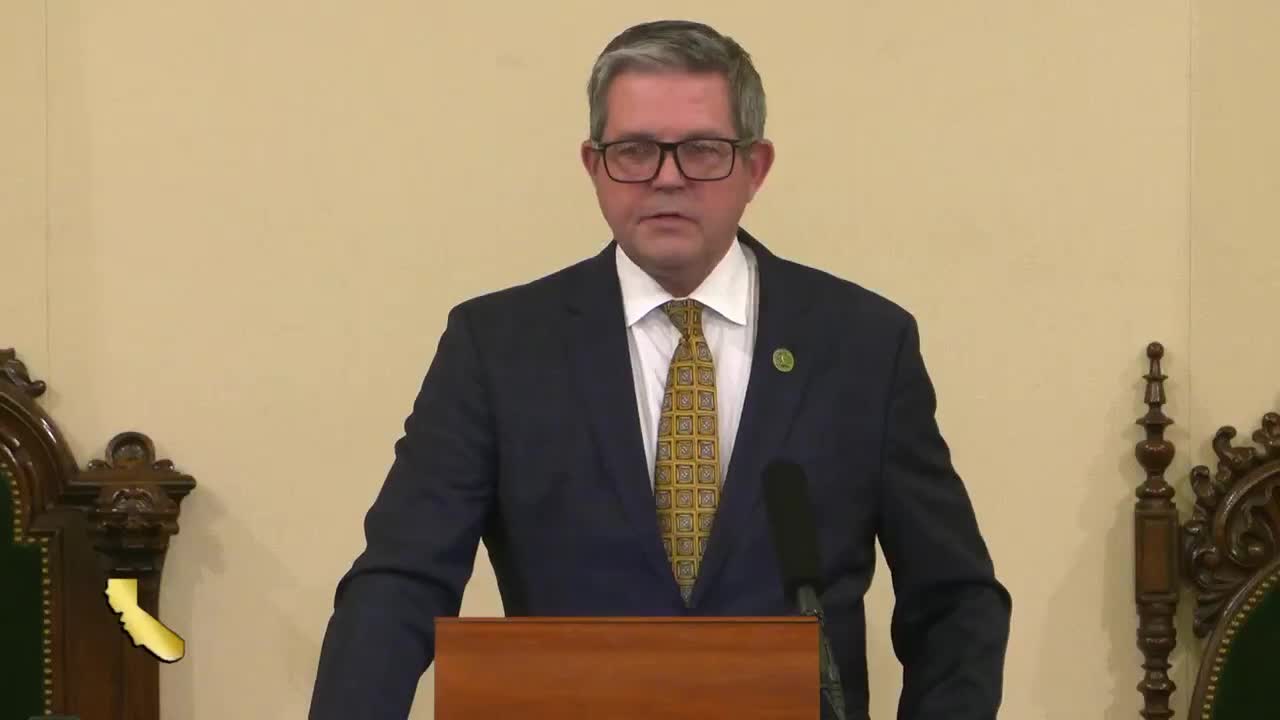 48SEC
Assembly Floor
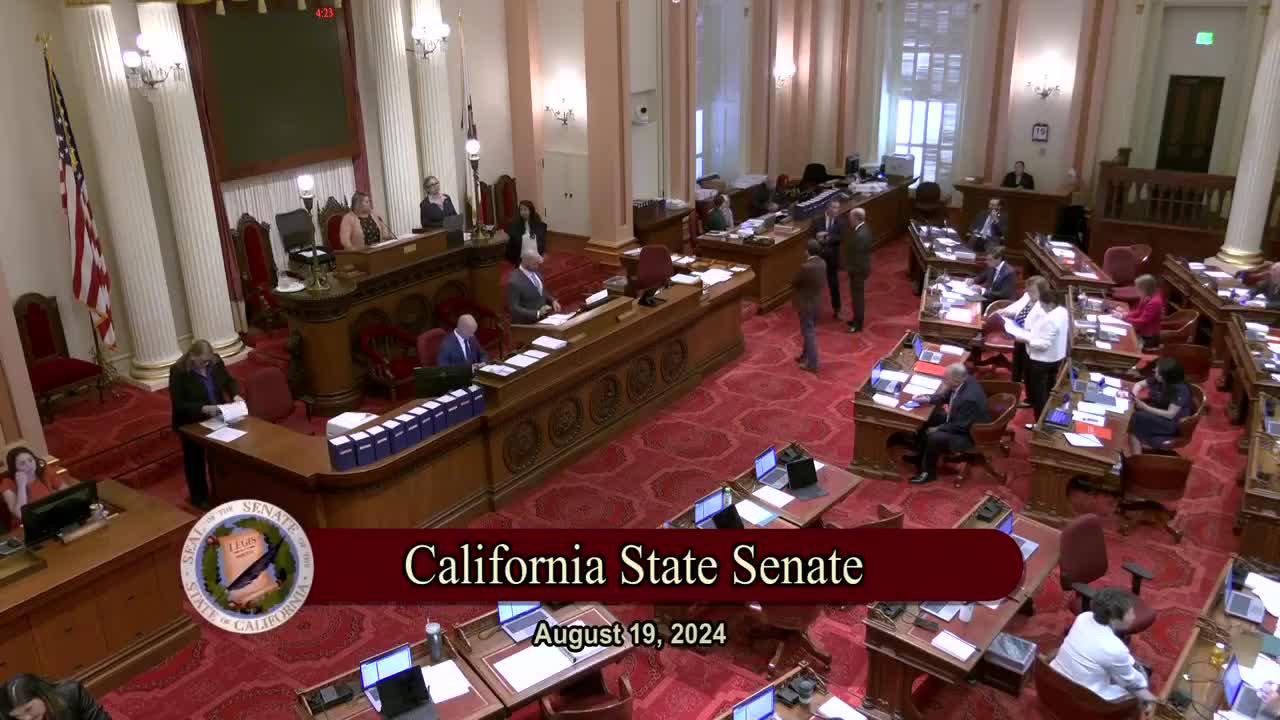 1MIN
Senate Floor
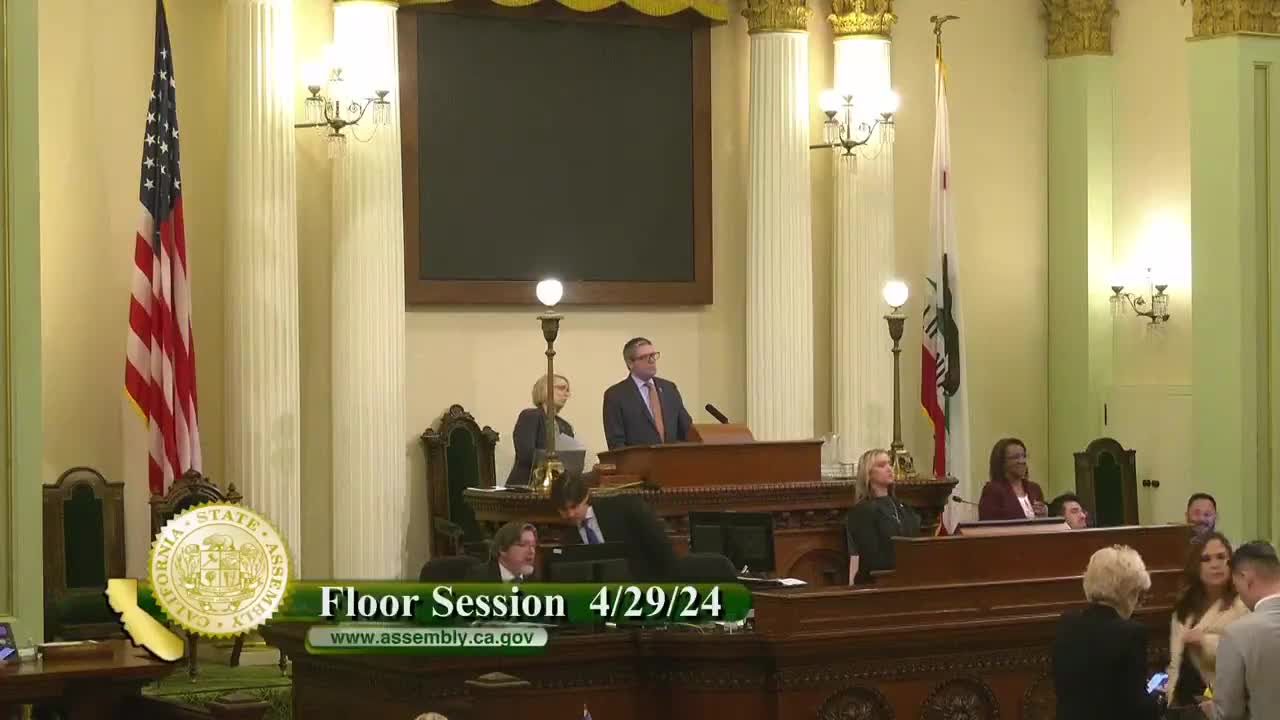 11MIN
Assembly Floor
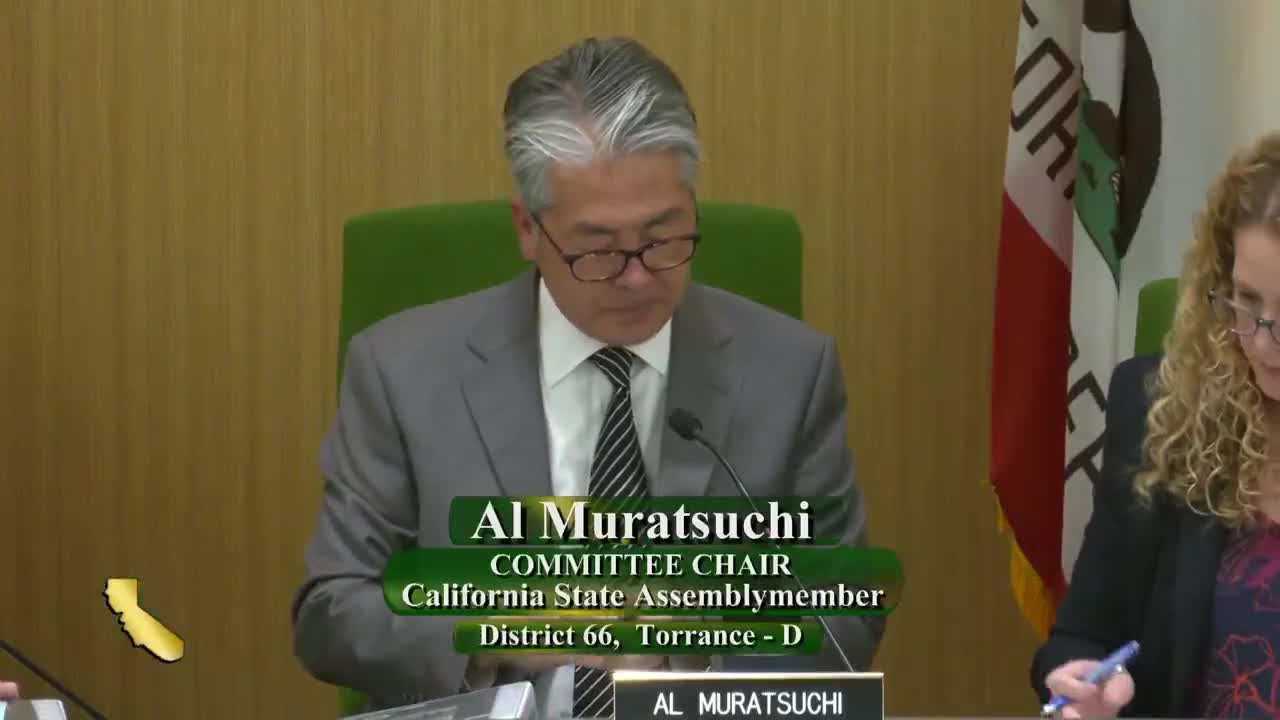 19MIN
Assembly Standing Committee on Education
Bill Author
Bill Co-Author(s):