AB 1828: Personal income taxes: voluntary contributions: Endangered and Rare Fish, Wildlife, and Plant Species Conservation and Enhancement Account: Native California Wildlife Rehabilitation Voluntary Tax Contribution Fund: covered grants.
- Session Year: 2023-2024
- House: Assembly
- Latest Version Date: 2024-09-22
Current Status:
Passed
(2024-09-22: Chaptered by Secretary of State - Chapter 360, Statutes of 2024.)
Introduced
In Committee
First Chamber
In Committee
Second Chamber
Enacted
Existing law, until January 1, 2025, allows an individual taxpayer to contribute amounts in excess of the taxpayers personal income tax liability for the support of specified funds and accounts, including, among others, to the Endangered and Rare Fish, Wildlife, and Plant Species Conservation and Enhancement Account, a continuously appropriated account established in the Fish and Game Preservation Fund, or until December 1 of a calendar year that the Franchise Tax Board determines the amount of contributions estimated to be received will not at least equal the minimum contribution amount of $250,000.
This bill would extend the operability of the taxpayer contribution described above until the sooner of January 1, 2032, or until December 1 of a calendar year that the Franchise Tax Board determines the amount of contributions estimated to be received will not at least equal the minimum contribution amount of $250,000, as provided. By extending the operation of a continuously appropriated account, the bill would make an appropriation.
Existing law requires the Department of Fish and Wildlife to maintain the Native California Wildlife Rehabilitation Voluntary Tax Contribution Fund for the support of a competitive grant program established by the department for the purposes of the recovery and rehabilitation of injured, sick, or orphaned wildlife and of conservation education, and creates a voluntary checkoff on the tax return for an individual to designate a contribution in excess of the tax liability, if any, to be made to the fund, as provided.
This bill would instead require the grant funds to be used for the purposes of the rehabilitation of injured, sick, or orphaned wildlife and of wildlife conservation education. The bill would require an applicant to be in compliance with all conditions of its wildlife rehabilitation permit and all applicable local, state, and federal laws and to actively use an electronic database to maintain wildlife rehabilitation animal records.
This bill would authorize the department to distribute up to 100% of the grant award of a covered grant, as the bill would define the term, upon its execution. The bill also would require the department to require a report from a covered grant recipient after the completion of a covered grant award that addresses what objectives were met and the means used to meet them, and what objectives were unmet and the reasons why they were unmet. The bill would disqualify a recipient nonprofit that fails to submit the report from covered grant award eligibility for one year.
Existing law allows an individual to designate on the individuals tax return that a specified amount in excess of the individuals tax liability be contributed to the Native California Wildlife Rehabilitation Voluntary Tax Contribution Fund, a continuously appropriated fund. Existing law requires that these provisions remain operative only until January 1 of the 7th taxable year following its first appearance on the tax return, and is repealed as of December 1 of that year.
This bill would extend the operability of the designation and fund to the sooner of January 1, 2031, or until on and after January 1 of a calendar year that the Franchise Tax Board determines the amount of contributions estimated to be received will not at least equal the minimum contribution amount of $250,000, as provided. By extending the operation of a continuously appropriated fund, the bill would make an appropriation.
Existing law, until January 1, 2025, allows an individual taxpayer to contribute amounts in excess of the taxpayers personal income tax liability for the support of specified funds and accounts, including, among others, to the Endangered and Rare Fish, Wildlife, and Plant Species Conservation and Enhancement Account, a continuously appropriated account established in the Fish and Game Preservation Fund, or until December 1 of a calendar year that the Franchise Tax Board determines the amount of contributions estimated to be received will not at least equal the minimum contribution amount of $250,000.
This bill would extend the operability of the taxpayer contribution described above until the sooner of January 1, 2032, or until December 1 of a calendar year that the Franchise Tax Board determines the amount of contributions estimated to be received will not at least equal the minimum contribution amount of $250,000, as provided. By extending the operation of a continuously appropriated account, the bill would make an appropriation.
Existing law requires the Department of Fish and Wildlife to maintain the Native California Wildlife Rehabilitation Voluntary Tax Contribution Fund for the support of a competitive grant program established by the department for the purposes of the recovery and rehabilitation of injured, sick, or orphaned wildlife and of conservation education, and creates a voluntary checkoff on the tax return for an individual to designate a contribution in excess of the tax liability, if any, to be made to the fund, as provided.
This bill would instead require the grant funds to be used for the purposes of the rehabilitation of injured, sick, or orphaned wildlife and of wildlife conservation education. The bill would require an applicant to be in compliance with all conditions of its wildlife rehabilitation permit and all applicable local, state, and federal laws and to actively use an electronic database to maintain wildlife rehabilitation animal records.
This bill would authorize the department to distribute up to 100% of the grant award of a covered grant, as the bill would define the term, upon its execution. The bill also would require the department to require a report from a covered grant recipient after the completion of a covered grant award that addresses what objectives were met and the means used to meet them, and what objectives were unmet and the reasons why they were unmet. The bill would disqualify a recipient nonprofit that fails to submit the report from covered grant award eligibility for one year.
Existing law allows an individual to designate on the individuals tax return that a specified amount in excess of the individuals tax liability be contributed to the Native California Wildlife Rehabilitation Voluntary Tax Contribution Fund, a continuously appropriated fund. Existing law requires that these provisions remain operative only until January 1 of the 7th taxable year following its first appearance on the tax return, and is repealed as of December 1 of that year.
This bill would extend the operability of the designation and fund to the sooner of January 1, 2031, or until on and after January 1 of a calendar year that the Franchise Tax Board determines the amount of contributions estimated to be received will not at least equal the minimum contribution amount of $250,000, as provided. By extending the operation of a continuously appropriated fund, the bill would make an appropriation.
Existing law, until January 1, 2025, allows an individual taxpayer to contribute amounts in excess of the taxpayers personal income tax liability for the support of specified funds and accounts, including, among others, to the Endangered and Rare Fish, Wildlife, and Plant Species Conservation and Enhancement Account, a continuously appropriated account established in the Fish and Game Preservation Fund, or until December 1 of a calendar year that the Franchise Tax Board determines the amount of contributions estimated to be received will not at least equal the minimum contribution amount of $250,000.
This bill would extend the operability of the taxpayer contribution described above until the sooner of January 1, 2032, or until December 1 of a calendar year that the Franchise Tax Board determines the amount of contributions estimated to be received will not at least equal the minimum contribution amount of $250,000, as provided. By extending the operation of a continuously appropriated account, the bill would make an appropriation.
Existing law requires the Department of Fish and Wildlife to maintain the Native California Wildlife Rehabilitation Voluntary Tax Contribution Fund for the support of a competitive grant program established by the department for the purposes of the recovery and rehabilitation of injured, sick, or orphaned wildlife and of conservation education, and creates a voluntary checkoff on the tax return for an individual to designate a contribution in excess of the tax liability, if any, to be made to the fund, as provided.
This bill would instead require the grant funds to be used for the purposes of the rehabilitation of injured, sick, or orphaned wildlife and of wildlife conservation education. The bill would require an applicant to be in compliance with all conditions of its wildlife rehabilitation permit and all applicable local, state, and federal laws. laws and to actively use an electronic database to maintain wildlife rehabilitation animal records.
This bill would authorize the department to distribute up to 100% of the grant award of a covered grant, as the bill would define the term, upon its execution. The bill also would require the department to require a report from a covered grant recipient after the completion of a covered grant award that addresses what objectives were met and the means used to meet them, and what objectives were unmet and the reasons why they were unmet. The bill would disqualify a recipient nonprofit that fails to submit the report from covered grant award eligibility for one year.
Existing law allows an individual to designate on the individuals tax return that a specified amount in excess of the individuals tax liability be contributed to the Native California Wildlife Rehabilitation Voluntary Tax Contribution Fund, a continuously appropriated fund. Existing law requires that these provisions remain operative only until January 1 of the 7th taxable year following its first appearance on the tax return, and is repealed as of December 1 of that year.
This bill would extend the operability of the designation and fund to the sooner of January 1, 2031, or until on and after January 1 of a calendar year that the Franchise Tax Board determines the amount of contributions estimated to be received will not at least equal the minimum contribution amount of $250,000, as provided. By extending the operation of a continuously appropriated fund, the bill would make an appropriation.
Existing law, until January 1, 2025, allows an individual taxpayer to contribute amounts in excess of the taxpayers personal income tax liability for the support of specified funds and accounts, including, among others, to the Endangered and Rare Fish, Wildlife, and Plant Species Conservation and Enhancement Account, a continuously appropriated account established in the Fish and Game Preservation Fund, or until December 1 of a calendar year that the Franchise Tax Board determines the amount of contributions estimated to be received will not at least equal the minimum contribution amount of $250,000.
This bill would extend the operability of the taxpayer contribution described above until the sooner of January 1, 2032, or until December 1 of a calendar year that the Franchise Tax Board determines the amount of contributions estimated to be received will not at least equal the minimum contribution amount of $250,000, as provided. By extending the operation of a continuously appropriated account, the bill would make an appropriation.
Existing law requires the Department of Fish and Wildlife to maintain the Native California Wildlife Rehabilitation Voluntary Tax Contribution Fund for the support of a competitive grant program established by the department for the purposes of the recovery and rehabilitation of injured, sick, or orphaned wildlife, and wildlife and of conservation education. education, and creates a voluntary checkoff on the tax return for an individual to designate a contribution in excess of the tax liability, if any, to be made to the fund, as provided.
This bill would instead require the grant funds to be used for the purposes of the rehabilitation of injured, sick, or orphaned wildlife, and wildlife and of wildlife conservation efforts. education. The bill would require an applicant to be in compliance with all conditions of its wildlife rehabilitation permit and all applicable local, state, and federal laws.
This bill would authorize the department to distribute up to 100% of the grant award of a covered grant, as the bill would define the term, upon its execution. The bill would prohibit the use of covered grant funds to pay certain expenses, unless the covered grant recipient provides the department with a quote, invoice, written agreement, or contract for the nonpayroll expense or purchase, or another form of proof of purchase acceptable to the department, prior to receiving the covered grant award. The bill also would require the department to require a report from a covered grant recipient after the completion of a covered grant award that addresses what objectives were met and the means used to meet them, and what objectives were unmet and the reasons why they were unmet. The bill would disqualify a recipient nonprofit that fails to submit the report from covered grant award eligibility for one year.
Existing law allows an individual to designate on the individuals tax return that a specified amount in excess of the individuals tax liability be contributed to the Native California Wildlife Rehabilitation Voluntary Tax Contribution Fund, a continuously appropriated fund. Existing law requires that these provisions remain operative only until January 1 of the 7th taxable year following its first appearance on the tax return, and is repealed as of December 1 of that year.
This bill would extend the operability of the designation and fund to the sooner of January 1, 2031, or until December on and after January 1 of a calendar year that the Franchise Tax Board determines the amount of contributions estimated to be received will not at least equal the minimum contribution amount of $250,000, as provided. By extending the operation of a continuously appropriated fund, the bill would make an appropriation.
Existing law, until January 1, 2025, allows an individual taxpayer to contribute amounts in excess of the taxpayers personal income tax liability for the support of specified funds and accounts, including, among others, to the Endangered and Rare Fish, Wildlife, and Plant Species Conservation and Enhancement Account, a continuously appropriated account established in the Fish and Game Preservation Fund, or until December 1 of a calendar year that the Franchise Tax Board determines the amount of contributions estimated to be received will not at least equal the minimum contribution amount of $250,000.
This bill would extend the operability of the taxpayer contribution described above until the sooner of January 1, 2032, or until December 1 of a calendar year that the Franchise Tax Board determines the amount of contributions estimated to be received will not at least equal the minimum contribution amount of $250,000, as provided. By extending the operation of a continuously appropriated account, the bill would make an appropriation.
Existing law requires the Department of Fish and Wildlife to maintain the Native California Wildlife Rehabilitation Voluntary Tax Contribution Fund for the support of a competitive grant program established by the department for the purposes of the recovery and rehabilitation of injured, sick, or orphaned wildlife, and conservation education.
This bill would instead require the grant funds to be used for the purposes of the rehabilitation of injured, sick, or orphaned wildlife, and wildlife conservation efforts. The bill would require an applicant to be in compliance with all conditions of its wildlife rehabilitation permit and all applicable local, state, and federal laws.
This bill would authorize the department to distribute up to 100% of the grant award of a covered grant, as the bill would define the term, upon its execution. The bill would prohibit the use of covered grant funds to pay certain expenses, unless the covered grant recipient provides the department with a quote, invoice, written agreement, or contract for the nonpayroll expense or purchase, or another form of proof of purchase acceptable to the department, prior to receiving the covered grant award. The bill also would require the department to require a report from a covered grant recipient after the completion of a covered grant award that addresses what objectives were met and the means used to meet them, and what objectives were unmet and the reasons why they were unmet. The bill would disqualify a recipient nonprofit that fails to submit the report from covered grant award eligibility for one year.
Existing law allows an individual to designate on the individuals tax return that a specified amount in excess of the individuals tax liability be contributed to the Native California Wildlife Rehabilitation Voluntary Tax Contribution Fund, a continuously appropriated fund. Existing law requires that these provisions remain operative only until January 1 of the 7th taxable year following its first appearance on the tax return, and is repealed as of December 1 of that year.
This bill would extend the operability of the designation and fund to the sooner of January 1, 2031, or until December 1 of a calendar year that the Franchise Tax Board determines the amount of contributions estimated to be received will not at least equal the minimum contribution amount of $250,000, as provided. By extending the operation of a continuously appropriated fund, the bill would make an appropriation.
(a)The funds deposited in the Native California Wildlife Rehabilitation Voluntary Tax Contribution Fund pursuant to Article 5.2 (commencing with Section 18749) of Chapter 3 of Part 10.2 of Division 2 of the Revenue and Taxation Code are to be used for the support of a competitive grant program to be established by the department for the purposes of the rehabilitation of injured, sick, or orphaned wildlife, and wildlife conservation education.
(b)A maximum of 5 percent of the funds allocated to the department may be used to defray the administrative expenses associated with administering the Native California Wildlife Rehabilitation Voluntary Tax Contribution Fund.
SEC. 2.Section 1773.2 of the Fish and Game Code is amended to read:1773.2.To be eligible for grant funding from the competitive grant program established pursuant to Section 1773.1, an applicant shall meet all of the following criteria:
(a)The applicant shall provide proof that it is a nonprofit organization that operates a wildlife rehabilitation facility permitted pursuant to Section 679 of Title 14 of the California Code of Regulations.
(b)The applicant shall be in compliance with all conditions of its wildlife rehabilitation permit issued by the department and all applicable local, state, and federal laws.
(c)The applicant shall actively use an electronic database to maintain wildlife rehabilitation animal records.
SEC. 3.Section 1773.3 is added to the Fish and Game Code, to read:1773.3.(a) For purposes of this section, covered grant means a grant in an amount no greater than twenty thousand dollars ($20,000) with a grant period duration of no more than one year.
(b)In administering the competitive grant program established pursuant to Section 1773.1, the department may distribute up to 100 percent of the grant award of a covered grant upon its execution.
(c)(1)The department shall require a report from a covered grant recipient after the completion of a covered grant award that addresses both of the following:
(A)What objectives were met and the means used to meet them.
(B)What objectives were unmet and the reasons why they were unmet.
(2)A recipient nonprofit that fails to submit the report to the department shall be ineligible to receive a covered grant award for one year.
SEC. 4.Section 18744 of the Revenue and Taxation Code is amended to read:18744.(a)Except as otherwise provided in subdivision (b), this article shall remain operative only until January 1, 2032, and as of December 1 of that year is repealed.
(b)(1)By September 1, 2006, and by September 1 of each subsequent calendar year that the Rare and Endangered Species Preservation Voluntary Tax Contribution Program appears on a tax return, the Franchise Tax Board shall determine whether the amount of contributions estimated to be received during the calendar year will equal or exceed the minimum contribution amount for the calendar year. The Franchise Tax Board shall estimate the amount of contributions to be received by using the actual amounts received and an estimate of the contributions that will be received by the end of that calendar year.
(2)If the Franchise Tax Board determines that the amount of contributions estimated to be received during a calendar year will not at least equal the minimum contribution amount for the calendar year, this article is inoperative with respect to taxable years beginning on or after January 1 of that calendar year, and shall be repealed on December 1 of that calendar year.
(3)For purposes of this section, the minimum contribution amount for a calendar year means two hundred fifty thousand dollars ($250,000).
SEC. 5.Section 18749 of the Revenue and Taxation Code is amended to read:18749.(a)An individual may designate on the tax return that a contribution in excess of the tax liability, if any, be made to the Native California Wildlife Rehabilitation Voluntary Tax Contribution Fund, established by Section 18749.1. That designation is to be used as a voluntary checkoff on the tax return.
(b)The contributions shall be in full dollar amounts and may be made individually by each signatory on a joint return.
(c)A designation shall be made for any taxable year on the original return for that taxable year, and once made is irrevocable. If payments and credits reported on the return, together with any other credits associated with the taxpayers account, do not exceed the taxpayers liability, the return shall be treated as though no designation has been made. If no designee is specified, the contribution shall be transferred to the General Fund, after reimbursement of the direct actual costs of the Franchise Tax Board for the collection and administration of funds under this article.
(d)If an individual designates a contribution to more than one account or fund listed on the tax return, and the amount available for designation is insufficient to satisfy the total amount designated, the contribution shall be allocated among the designees on a pro rata basis.
(e)When another voluntary contribution designation is removed from the tax return, or as soon as space is available, whichever occurs first, the Franchise Tax Board shall revise the form of the tax return to include a space labeled the Native California Wildlife Rehabilitation Voluntary Tax Contribution Fund to allow for the designation provided. The form shall include in the instruction information that the contribution may be in the amount of one dollar ($1) or more and that the contribution shall be used to support the rehabilitation of injured, sick, or orphaned native wildlife and for wildlife conservation education.
(f)A deduction shall be allowed under Article 6 (commencing with Section 17201) of Chapter 3 of Part 10 for any contribution made pursuant to subdivision (a).
SEC. 6.Section 18749.3 of the Revenue and Taxation Code is amended to read:18749.3.(a)Except as otherwise provided in subdivision (b), this article shall remain operative only until January 1, 2031, and is repealed as of December 1 of that year.
(b)(1)By September 1 of the second calendar year and by September 1 of each subsequent calendar year that the Native California Wildlife Rehabilitation Voluntary Tax Contribution Fund appears on the tax return, the Franchise Tax Board shall determine whether the amount of contributions estimated to be received during the calendar year will equal or exceed the minimum contribution amount for the calendar year. The Franchise Tax Board shall estimate the amount of contributions to be received by using the actual amounts received and an estimate of the contributions that will be received by the end of that calendar year.
(2)If the Franchise Tax Board determines that the amount of the contributions estimated to be received during a calendar year will not at least equal the minimum contribution amount for the calendar year, this article shall be inoperative with respect to taxable years beginning on or after January 1 of that calendar year and shall be repealed on December 1 of that year.
(3)For purposes of this section, the minimum contribution amount for a calendar year means two hundred fifty thousand dollars ($250,000).
(a)The funds deposited in the Native California Wildlife Rehabilitation Voluntary Tax Contribution Fund pursuant to Article 5.2 (commencing with Section 18749) of Chapter 3 of Part 10.2 of Division 2 of the Revenue and Taxation Code are to be used for the support of a competitive grant program to be established by the department for the purposes of the rehabilitation of injured, sick, or orphaned wildlife, and wildlife conservation education.
(b)A maximum of 5 percent of the funds allocated to the department may be used to defray the administrative expenses associated with administering the Native California Wildlife Rehabilitation Voluntary Tax Contribution Fund.
SEC. 2.Section 1773.2 of the Fish and Game Code is amended to read:1773.2.To be eligible for grant funding from the competitive grant program established pursuant to Section 1773.1, an applicant shall meet all of the following criteria:
(a)The applicant shall provide proof that it is a nonprofit organization that operates a wildlife rehabilitation facility permitted pursuant to Section 679 of Title 14 of the California Code of Regulations.
(b)The applicant shall be in compliance with all conditions of its wildlife rehabilitation permit issued by the department and all applicable local, state, and federal laws.
(c)The applicant shall actively use an electronic database to maintain wildlife rehabilitation animal records.
SEC. 3.Section 1773.3 is added to the Fish and Game Code, to read:1773.3.(a) For purposes of this section, covered grant means a grant in an amount no greater than twenty thousand dollars ($20,000) with a grant period duration of no more than one year.
(b)In administering the competitive grant program established pursuant to Section 1773.1, the department may distribute up to 100 percent of the grant award of a covered grant upon its execution.
(c)(1)The department shall require a report from a covered grant recipient after the completion of a covered grant award that addresses both of the following:
(A)What objectives were met and the means used to meet them.
(B)What objectives were unmet and the reasons why they were unmet.
(2)A recipient nonprofit that fails to submit the report to the department shall be ineligible to receive a covered grant award for one year.
SEC. 4.Section 18744 of the Revenue and Taxation Code is amended to read:18744.(a)Except as otherwise provided in subdivision (b), this article shall remain operative only until January 1, 2032, and as of December 1 of that year is repealed.
(b)(1)By September 1, 2006, and by September 1 of each subsequent calendar year that the Rare and Endangered Species Preservation Voluntary Tax Contribution Program appears on a tax return, the Franchise Tax Board shall determine whether the amount of contributions estimated to be received during the calendar year will equal or exceed the minimum contribution amount for the calendar year. The Franchise Tax Board shall estimate the amount of contributions to be received by using the actual amounts received and an estimate of the contributions that will be received by the end of that calendar year.
(2)If the Franchise Tax Board determines that the amount of contributions estimated to be received during a calendar year will not at least equal the minimum contribution amount for the calendar year, this article is inoperative with respect to taxable years beginning on or after January 1 of that calendar year, and shall be repealed on December 1 of that calendar year.
(3)For purposes of this section, the minimum contribution amount for a calendar year means two hundred fifty thousand dollars ($250,000).
SEC. 5.Section 18749 of the Revenue and Taxation Code is amended to read:18749.(a)An individual may designate on the tax return that a contribution in excess of the tax liability, if any, be made to the Native California Wildlife Rehabilitation Voluntary Tax Contribution Fund, established by Section 18749.1. That designation is to be used as a voluntary checkoff on the tax return.
(b)The contributions shall be in full dollar amounts and may be made individually by each signatory on a joint return.
(c)A designation shall be made for any taxable year on the original return for that taxable year, and once made is irrevocable. If payments and credits reported on the return, together with any other credits associated with the taxpayers account, do not exceed the taxpayers liability, the return shall be treated as though no designation has been made. If no designee is specified, the contribution shall be transferred to the General Fund, after reimbursement of the direct actual costs of the Franchise Tax Board for the collection and administration of funds under this article.
(d)If an individual designates a contribution to more than one account or fund listed on the tax return, and the amount available for designation is insufficient to satisfy the total amount designated, the contribution shall be allocated among the designees on a pro rata basis.
(e)When another voluntary contribution designation is removed from the tax return, or as soon as space is available, whichever occurs first, the Franchise Tax Board shall revise the form of the tax return to include a space labeled the Native California Wildlife Rehabilitation Voluntary Tax Contribution Fund to allow for the designation provided. The form shall include in the instruction information that the contribution may be in the amount of one dollar ($1) or more and that the contribution shall be used to support the rehabilitation of injured, sick, or orphaned native wildlife and for wildlife conservation education.
(f)A deduction shall be allowed under Article 6 (commencing with Section 17201) of Chapter 3 of Part 10 for any contribution made pursuant to subdivision (a).
SEC. 6.Section 18749.3 of the Revenue and Taxation Code is amended to read:18749.3.(a)Except as otherwise provided in subdivision (b), this article shall remain operative only until January 1, 2031, and is repealed as of December 1 of that year.
(b)(1)By September 1 of the second calendar year and by September 1 of each subsequent calendar year that the Native California Wildlife Rehabilitation Voluntary Tax Contribution Fund appears on the tax return, the Franchise Tax Board shall determine whether the amount of contributions estimated to be received during the calendar year will equal or exceed the minimum contribution amount for the calendar year. The Franchise Tax Board shall estimate the amount of contributions to be received by using the actual amounts received and an estimate of the contributions that will be received by the end of that calendar year.
(2)If the Franchise Tax Board determines that the amount of the contributions estimated to be received during a calendar year will not at least equal the minimum contribution amount for the calendar year, this article shall be inoperative with respect to taxable years beginning on or after January 1 of that calendar year and shall be repealed on December 1 of that year.
(3)For purposes of this section, the minimum contribution amount for a calendar year means two hundred fifty thousand dollars ($250,000).
(a)The funds deposited in the Native California Wildlife Rehabilitation Voluntary Tax Contribution Fund pursuant to Article 5.2 (commencing with Section 18749) of Chapter 3 of Part 10.2 of Division 2 of the Revenue and Taxation Code are to be used for the support of a competitive grant program to be established by the department for the purposes of the rehabilitation of injured, sick, or orphaned wildlife, and wildlife conservation education.
(b)A maximum of 5 percent of the funds allocated to the department may be used to defray the administrative expenses associated with administering the Native California Wildlife Rehabilitation Voluntary Tax Contribution Fund.
SEC. 2.Section 1773.2 of the Fish and Game Code is amended to read:1773.2.To be eligible for grant funding from the competitive grant program established pursuant to Section 1773.1, an applicant shall meet all of the following criteria:
(a)The applicant shall provide proof that it is a nonprofit organization that operates a wildlife rehabilitation facility permitted pursuant to Section 679 of Title 14 of the California Code of Regulations.
(b)The applicant shall be in compliance with all conditions of its wildlife rehabilitation permit issued by the department and all applicable local, state, and federal laws.
(c)The applicant shall maintain active participation in the wildlife rehabilitation medical database. actively use an electronic database to maintain wildlife rehabilitation animal records.
SEC. 3.Section 1773.3 is added to the Fish and Game Code, to read:1773.3.(a) For purposes of this section, covered grant means a grant in an amount no greater than twenty thousand dollars ($20,000) with a grant period duration of no more than one year.
(b)In administering the competitive grant program established pursuant to Section 1773.1, the department may distribute up to 100 percent of the grant award of a covered grant upon its execution.
(c)(1)The department shall require a report from a covered grant recipient after the completion of a covered grant award that addresses both of the following:
(A)What objectives were met and the means used to meet them.
(B)What objectives were unmet and the reasons why they were unmet.
(2)A recipient nonprofit that fails to submit the report to the department shall be ineligible to receive a covered grant award for one year.
SEC. 4.Section 18744 of the Revenue and Taxation Code is amended to read:18744.(a)Except as otherwise provided in subdivision (b), this article shall remain operative only until January 1, 2032, and as of December 1 of that year is repealed.
(b)(1)By September 1, 2006, and by September 1 of each subsequent calendar year that the Rare and Endangered Species Preservation Voluntary Tax Contribution Program appears on a tax return, the Franchise Tax Board shall determine whether the amount of contributions estimated to be received during the calendar year will equal or exceed the minimum contribution amount for the calendar year. The Franchise Tax Board shall estimate the amount of contributions to be received by using the actual amounts received and an estimate of the contributions that will be received by the end of that calendar year.
(2)If the Franchise Tax Board determines that the amount of contributions estimated to be received during a calendar year will not at least equal the minimum contribution amount for the calendar year, this article is inoperative with respect to taxable years beginning on or after January 1 of that calendar year, and shall be repealed on December 1 of that calendar year.
(3)For purposes of this section, the minimum contribution amount for a calendar year means two hundred fifty thousand dollars ($250,000).
SEC. 5.Section 18749 of the Revenue and Taxation Code is amended to read:18749.(a)An individual may designate on the tax return that a contribution in excess of the tax liability, if any, be made to the Native California Wildlife Rehabilitation Voluntary Tax Contribution Fund, established by Section 18749.1. That designation is to be used as a voluntary checkoff on the tax return.
(b)The contributions shall be in full dollar amounts and may be made individually by each signatory on a joint return.
(c)A designation shall be made for any taxable year on the original return for that taxable year, and once made is irrevocable. If payments and credits reported on the return, together with any other credits associated with the taxpayers account, do not exceed the taxpayers liability, the return shall be treated as though no designation has been made. If no designee is specified, the contribution shall be transferred to the General Fund, after reimbursement of the direct actual costs of the Franchise Tax Board for the collection and administration of funds under this article.
(d)If an individual designates a contribution to more than one account or fund listed on the tax return, and the amount available for designation is insufficient to satisfy the total amount designated, the contribution shall be allocated among the designees on a pro rata basis.
(e)When another voluntary contribution designation is removed from the tax return, or as soon as space is available, whichever occurs first, the Franchise Tax Board shall revise the form of the tax return to include a space labeled the Native California Wildlife Rehabilitation Voluntary Tax Contribution Fund to allow for the designation provided. The form shall include in the instruction information that the contribution may be in the amount of one dollar ($1) or more and that the contribution shall be used to support the rehabilitation of injured, sick, or orphaned native wildlife and for wildlife conservation education.
(f)A deduction shall be allowed under Article 6 (commencing with Section 17201) of Chapter 3 of Part 10 for any contribution made pursuant to subdivision (a).
SEC. 6.Section 18749.3 of the Revenue and Taxation Code is amended to read:18749.3.(a)Except as otherwise provided in subdivision (b), this article shall remain operative only until January 1, 2031, and is repealed as of December 1 of that year.
(b)(1)By September 1 of the second calendar year and by September 1 of each subsequent calendar year that the Native California Wildlife Rehabilitation Voluntary Tax Contribution Fund appears on the tax return, the Franchise Tax Board shall determine whether the amount of contributions estimated to be received during the calendar year will equal or exceed the minimum contribution amount for the calendar year. The Franchise Tax Board shall estimate the amount of contributions to be received by using the actual amounts received and an estimate of the contributions that will be received by the end of that calendar year.
(2)If the Franchise Tax Board determines that the amount of the contributions estimated to be received during a calendar year will not at least equal the minimum contribution amount for the calendar year, this article shall be inoperative with respect to taxable years beginning on or after January 1 of that calendar year and shall be repealed on December 1 of that year.
(3)For purposes of this section, the minimum contribution amount for a calendar year means two hundred fifty thousand dollars ($250,000).
(a)The funds deposited in the Native California Wildlife Rehabilitation Voluntary Tax Contribution Fund pursuant to Article 5.2 (commencing with Section 18749) of Chapter 3 of Part 10.2 of Division 2 of the Revenue and Taxation Code are to be used for the support of a competitive grant program to be established by the department for the purposes of the rehabilitation of injured, sick, or orphaned wildlife, and wildlife conservation education.
(b)A maximum of 5 percent of the funds allocated to the department may be used to defray the administrative expenses associated with administering the Native California Wildlife Rehabilitation Voluntary Tax Contribution Fund.
SEC. 2.Section 1773.2 of the Fish and Game Code is amended to read:1773.2.To be eligible for grant funding from the competitive grant program established pursuant to Section 1773.1, an applicant shall meet all of the following criteria:
(a)The applicant shall provide proof that it is a nonprofit organization that operates a wildlife rehabilitation facility permitted pursuant to Section 679 of Title 14 of the California Code of Regulations.
(b)The applicant shall be in compliance with all conditions of its wildlife rehabilitation permit issued by the department and all applicable local, state, and federal laws.
(c)The applicant shall maintain active participation in the wildlife rehabilitation medical database.
SEC. 3.Section 1773.3 is added to the Fish and Game Code, to read:1773.3.(a) For purposes of this section, covered grant means a grant in an amount no greater than twenty thousand dollars ($20,000) with a grant period duration of no more than one year.
(b)In administering the competitive grant program established pursuant to Section 1773.1, the department may distribute up to 100 percent of the grant award of a covered grant upon its execution.
(c)A covered grant recipient shall not use covered grant funds on a nonpayroll expense if the funds are to be paid to a single vendor and are for an amount that is 50 percent or more of the total covered grant award, or to purchase equipment in excess of the amount of five thousand dollars ($5,000), unless the covered grant recipient provides the department with a quote, invoice, written agreement, or contract for the nonpayroll expense or purchase, or another form of proof of purchase acceptable to the department, prior to receiving the covered grant award.(d)(c)(1)The department shall require a report from a covered grant recipient after the completion of a covered grant award that addresses both of the following:
(A)What objectives were met and the means used to meet them.
(B)What objectives were unmet and the reasons they why why they were unmet.
(2)A recipient nonprofit that fails to submit the report to the department shall be ineligible to receive a covered grant award for one year.
SEC. 4.Section 18744 of the Revenue and Taxation Code is amended to read:18744.(a)Except as otherwise provided in subdivision (b), this article shall remain operative only until January 1, 2032, and as of December 1 of that year is repealed.
(b)(1)By September 1, 2006, and by September 1 of each subsequent calendar year that the Rare and Endangered Species Preservation Voluntary Tax Contribution Program appears on a tax return, the Franchise Tax Board shall determine whether the amount of contributions estimated to be received during the calendar year will equal or exceed the minimum contribution amount for the calendar year. The Franchise Tax Board shall estimate the amount of contributions to be received by using the actual amounts received and an estimate of the contributions that will be received by the end of that calendar year.
(2)If the Franchise Tax Board determines that the amount of contributions estimated to be received during a calendar year will not at least equal the minimum contribution amount for the calendar year, this article is inoperative with respect to taxable years beginning on or after January 1 of that calendar year, and shall be repealed on December 1 of that calendar year.
(3)For purposes of this section, the minimum contribution amount for a calendar year means two hundred fifty thousand dollars ($250,000).
SEC. 5.Section 18749 of the Revenue and Taxation Code is amended to read:18749.(a)An individual may designate on the tax return that a contribution in excess of the tax liability, if any, be made to the Native California Wildlife Rehabilitation Voluntary Tax Contribution Fund, established by Section 18749.1. That designation is to be used as a voluntary checkoff on the tax return.
(b)The contributions shall be in full dollar amounts and may be made individually by each signatory on a joint return.
(c)A designation shall be made for any taxable year on the original return for that taxable year, and once made is irrevocable. If payments and credits reported on the return, together with any other credits associated with the taxpayers account, do not exceed the taxpayers liability, the return shall be treated as though no designation has been made. If no designee is specified, the contribution shall be transferred to the General Fund, after reimbursement of the direct actual costs of the Franchise Tax Board for the collection and administration of funds under this article.
(d)If an individual designates a contribution to more than one account or fund listed on the tax return, and the amount available for designation is insufficient to satisfy the total amount designated, the contribution shall be allocated among the designees on a pro rata basis.
(e)When another voluntary contribution designation is removed from the tax return, or as soon as space is available, whichever occurs first, the Franchise Tax Board shall revise the form of the tax return to include a space labeled the Native California Wildlife Rehabilitation Voluntary Tax Contribution Fund to allow for the designation provided. The form shall include in the instruction information that the contribution may be in the amount of one dollar ($1) or more and that the contribution shall be used to support the recovery and rehabilitation of injured, sick, or orphaned native wildlife, and wildlife and for wildlife conservation education.
(f)A deduction shall be allowed under Article 6 (commencing with Section 17201) of Chapter 3 of Part 10 for any contribution made pursuant to subdivision (a).
SEC. 5.SEC. 6.Section 18749.3 of the Revenue and Taxation Code is amended to read:18749.3.(a)Except as otherwise provided in subdivision (b), this article shall remain operative only until January 1, 2031, and is repealed as of December 1 of that year.
(b)(1)By September 1 of the second calendar year and by September 1 of each subsequent calendar year that the Native California Wildlife Rehabilitation Voluntary Tax Contribution Fund appears on the tax return, the Franchise Tax Board shall determine whether the amount of contributions estimated to be received during the calendar year will equal or exceed the minimum contribution amount for the calendar year. The Franchise Tax Board shall estimate the amount of contributions to be received by using the actual amounts received and an estimate of the contributions that will be received by the end of that calendar year.
(2)If the Franchise Tax Board determines that the amount of the contributions estimated to be received during a calendar year will not at least equal the minimum contribution amount for the calendar year, this article shall be inoperative with respect to taxable years beginning on or after January 1 of that calendar year and shall be repealed on December 1 of that year.
(3)For purposes of this section, the minimum contribution amount for a calendar year means two hundred fifty thousand dollars ($250,000).
(a)The funds deposited in the Native California Wildlife Rehabilitation Voluntary Tax Contribution Fund pursuant to Article 5.2 (commencing with Section 18749) of Chapter 3 of Part 10.2 of Division 2 of the Revenue and Taxation Code are to be used for the support of a competitive grant program to be established by the department for the purposes of the recovery and rehabilitation of injured, sick, or orphaned wildlife, and wildlife conservation education.
(b)A maximum of 5 percent of the funds allocated to the department may be used to defray the administrative expenses associated with administering the Native California Wildlife Rehabilitation Voluntary Tax Contribution Fund.
SEC. 2.Section 1773.2 of the Fish and Game Code is amended to read:1773.2.To be eligible for grant funding from the competitive grant program established pursuant to Section 1773.1, an applicant shall meet all of the following criteria:
(a)The applicant shall provide proof that it is a nonprofit organization that operates a wildlife rehabilitation facility permitted pursuant to Section 679 of Title 14 of the California Code of Regulations.
(b)The applicant shall be in compliance with all conditions of its Wildlife Rehabilitation Memorandum of Understanding. wildlife rehabilitation permit issued by the department and all applicable local, state, and federal laws.
(c)The applicant shall maintain active participation in the wildlife rehabilitation medical database.
SEC. 3.Section 1773.3 is added to the Fish and Game Code, to read:1773.3.(a) For purposes of this section, covered grant means a grant in an amount no greater than twenty thousand dollars ($20,000) with a grant period duration of no more than one year.
(b)In administering the competitive grant program established pursuant to Section 1773.1, the department may distribute up to 100 percent of the grant award of a covered grant upon its execution.
(c)A covered grant recipient shall not use covered grant funds on a nonpayroll expense if the funds are to be paid to a single vendor and are for an amount that is 50 percent or more of the total covered grant award, or to purchase equipment in excess of the amount of five thousand dollars ($5,000), unless the covered grant recipient provides the department with a quote, invoice, written agreement, or contract for the nonpayroll expense or purchase, or another form of proof of purchase acceptable to the department, prior to receiving the covered grant award.
(d)(1)The department shall require a report from a covered grant recipient after the completion of a covered grant award that addresses both of the following:
(A)What objectives were met and the means used to meet them.
(B)What objectives were unmet and the reasons they why were unmet.
(2)A recipient nonprofit that fails to submit the report to the department shall be ineligible to receive a covered grant award for one year.
SEC. 4.Section 18744 of the Revenue and Taxation Code is amended to read:18744.(a)Except as otherwise provided in subdivision (b), this article shall remain operative only until January 1, 2025, 2032, and as of December 1 of that year is repealed.
(b)(1)By September 1, 2006, and by September 1 of each subsequent calendar year that the Rare and Endangered Species Preservation Voluntary Tax Contribution Program appears on a tax return, the Franchise Tax Board shall determine whether the amount of contributions estimated to be received during the calendar year will equal or exceed the minimum contribution amount for the calendar year. The Franchise Tax Board shall estimate the amount of contributions to be received by using the actual amounts received and an estimate of the contributions that will be received by the end of that calendar year.
(2)If the Franchise Tax Board determines that the amount of contributions estimated to be received during a calendar year will not at least equal the minimum contribution amount for the calendar year, this article is inoperative with respect to taxable years beginning on or after January 1 of that calendar year, and shall be repealed on December 1 of that calendar year.
(3)For purposes of this section, the minimum contribution amount for a calendar year means two hundred fifty thousand dollars ($250,000).
SEC. 5.Section 18749.3 of the Revenue and Taxation Code is amended to read:18749.3.(a)Except as otherwise provided in subdivision (b), this article shall remain operative only until January 1 of the seventh taxable year following the first appearance of the Native California Wildlife Rehabilitation Voluntary Tax Contribution Fund on the tax return, January 1, 2031, and is repealed as of December 1 of that year.
(b)(1)By September 1 of the second calendar year and by September 1 of each subsequent calendar year that the Native California Wildlife Rehabilitation Voluntary Tax Contribution Fund appears on the tax return, the Franchise Tax Board shall determine whether the amount of contributions estimated to be received during the calendar year will equal or exceed the minimum contribution amount for the calendar year. The Franchise Tax Board shall estimate the amount of contributions to be received by using the actual amounts received and an estimate of the contributions that will be received by the end of that calendar year.
(2)If the Franchise Tax Board determines that the amount of the contributions estimated to be received during a calendar year will not at least equal the minimum contribution amount for the calendar year, this article shall be inoperative with respect to taxable years beginning on or after January 1 of that calendar year and shall be repealed on December 1 of that year.
(3)For purposes of this section, the minimum contribution amount for a calendar year means two hundred fifty thousand dollars ($250,000).
|
Date
|
Status
|
|---|---|
| Sep 22, 2024 | Chaptered by Secretary of State - Chapter 360, Statutes of 2024. |
| Sep 22, 2024 | Approved by the Governor. |
| Sep 12, 2024 | Enrolled and presented to the Governor at 4 p.m. |
| Aug 31, 2024 | Senate amendments concurred in. To Engrossing and Enrolling. (Ayes 77. Noes 0.). |
| Aug 31, 2024 | In Assembly. Concurrence in Senate amendments pending. |
| Aug 30, 2024 | Read third time. Passed. Ordered to the Assembly. (Ayes 39. Noes 0.). |
| Aug 20, 2024 | Read second time. Ordered to third reading. |
| Aug 19, 2024 | Read third time and amended. Ordered to second reading. |
| Aug 19, 2024 | Ordered to third reading. |
| Aug 19, 2024 | Action rescinded whereby the bill was read third time, passed, and to Assembly. |
| Aug 15, 2024 | In Senate. Held at Desk. |
| Aug 15, 2024 | Ordered to the Senate. |
| Aug 15, 2024 | Withdrawn from Engrossing and Enrolling. |
| Aug 12, 2024 | In Assembly. Ordered to Engrossing and Enrolling. |
| Aug 12, 2024 | Read third time. Passed. Ordered to the Assembly. (Ayes 38. Noes 0. Page 5042.). |
| Aug 6, 2024 | Read second time. Ordered to Consent Calendar. |
| Aug 5, 2024 | From committee: Be ordered to second reading file pursuant to Senate Rule 28.8 and ordered to Consent Calendar. |
| Jun 26, 2024 | From committee: Do pass and re-refer to Com. on APPR with recommendation: To Consent Calendar. (Ayes 11. Noes 0.) (June 25). Re-referred to Com. on APPR. |
| Jun 12, 2024 | From committee: Do pass and re-refer to Com. on N.R. & W. with recommendation: To Consent Calendar. (Ayes 6. Noes 0.) (June 12). Re-referred to Com. on N.R. & W. |
| May 1, 2024 | Referred to Coms. on REV. & TAX. and N.R. & W. |
| Apr 4, 2024 | In Senate. Read first time. To Com. on RLS. for assignment. |
| Apr 4, 2024 | Read third time. Passed. Ordered to the Senate. (Ayes 70. Noes 0. Page 4629.) |
| Mar 21, 2024 | Read second time. Ordered to Consent Calendar. |
| Mar 20, 2024 | From committee: Do pass. To Consent Calendar. (Ayes 12. Noes 0.) (March 20). |
| Mar 11, 2024 | Re-referred to Com. on APPR. |
| Mar 7, 2024 | Read second time and amended. |
| Mar 6, 2024 | From committee: Amend, and do pass as amended and re-refer to Com. on APPR. (Ayes 6. Noes 0.) (March 4). |
| Jan 29, 2024 | Referred to Com. on REV. & TAX. |
| Jan 13, 2024 | From printer. May be heard in committee February 12. |
| Jan 12, 2024 | Read first time. To print. |
|
Date
|
Description
|
Location
|
Votes
|
|
|---|---|---|---|---|
| Aug 31, 2024 | AB 1828 Waldron Concurrence in Senate Amendments | Assembly Floor |
Passed |
|
| Aug 30, 2024 | Assembly 3rd Reading AB1828 Waldron et al. By Laird | Senate Floor |
Passed |
|
| Aug 12, 2024 | Consent Calendar 2nd AB1828 Waldron et al. | Senate Floor |
Passed |
|
| Jun 25, 2024 | Do pass, but first be re-referred to the Committee on [Appropriations] with the recommendation: To Consent Calendar | Senate Standing Committee on Natural Resources and Water |
Passed |
|
| Jun 12, 2024 | Do pass, but first be re-referred to the Committee on [Natural Resources and Water] with the recommendation: To Consent Calendar | Senate Standing Committee on Revenue and Taxation |
Passed |
|
| Apr 4, 2024 | AB 1828 Waldron Consent Calendar Second Day | Assembly Floor |
Passed |
|
| Mar 20, 2024 | Do pass. To Consent Calendar. | Assembly Standing Committee on Appropriations |
Passed |
|
| Mar 4, 2024 | Do pass as amended and be re-referred to the Committee on [Appropriations] | Assembly Standing Committee on Revenue and Taxation |
Passed |
This list shows positions taken on this bill by organizations on the date displayed, which is linked to the original source.
Positions by individuals are not included.
|
Organization
|
Position
|
Date
|
|---|---|---|
| Bird Ally X | ** Support | |
| California Council for Wildlife Rehabilitators | ** Support | |
| California Native Plant Society | ** Support | |
| California Raptor Center | ** Support | |
| California Wildlife Center | ** Support | |
| Defenders Of Wildlife | ** Support | |
| Humane Society Of The United States The | ** Support | |
| Humboldt Wildlife Care Center/Bird Ally X | ** Support | |
| Lake Tahoe Wildlife Care | ** Support | |
| Lindsay Wildlife Experience | ** Support | |
| Mother Lode Wildlife Care | ** Support | |
| Napa Wildlife Rescue | ** Support | |
| Native Animal Rescue | ** Support | |
| Native Songbird Care & Conservation | ** Support | |
| Norcal Bats | ** Support | |
| Ohlone Humane Society Wildlife Rehabilitation Center | ** Support | |
| Opossum Society of California | ** Support | |
| Opossum Society of California Dba Opossum Society of The United States | ** Support | |
| Pacific Wildlife Care | ** Support | |
| Pasadena Humane Society | ** Support | |
| Project Coyote | ** Support | |
| San Diego Humane Society And Spca | ** Support | |
| San Diego Humane Society - Project Wildlife | ** Support | |
| Sierra Wildlife Rescue | ** Support | |
| Sonoma County Wildlife Rescue | ** Support | |
| SPCA Monterey County | ** Support | |
| Sunshine Haven Wildlife Rehabilitation | ** Support | |
| The Bird Rescue Center | ** Support | |
| Wetlands and Wildlife Care Center | ** Support | |
| Wildlife Care Association | ** Support | |
| Wildlife Care Association of Sacramento | ** Support | |
| Wildlife Rehabilitation & Release | ** Support | |
| Yggdrasil Urban Wildlife Rescue | ** Support |
CONCURRENCE IN SENATE AMENDMENTS
CSA1 Bill Id:AB 1828
Author:(Waldron)
As Amended Ver:August 19, 2024
Majority vote
SUMMARY
Extends the sunset date of two voluntary contribution funds (VCFs) on the personal income tax (PIT) return that support wildlife.
Senate Amendments
- Provide that, to be eligible for the wildlife rehabilitation grant program established pursuant to Fish and Game Code Section 1773.1, an applicant shall actively use an electronic database to maintain wildlife rehabilitation animal records.
COMMENTS
- Rare and Endangered Species Preservation Voluntary Tax Contribution Program: According to the (Franchise Tax Board) FTB, the Rare and Endangered Species Preservation Voluntary Tax Contribution Program first appeared on the 1983 PIT return. Moneys raised via this VCF are used to support programs for endangered and rare animals and native plant species, along with related conservation and enhancement programs. This VCF has received significant taxpayer support in recent years. Specifically, the FTB reports that the VCF received $579,719 in 2021; $479,150 in 2022; and $441,935 in 2023. Nevertheless, the VCF's statutory provisions are currently set to expire January 1, 2025. This bill, in turn, simply extends the VCF's sunset date to January 1, 2032.
- The Native California Wildlife Rehabilitation Voluntary Tax Contribution Fund: This VCF first appeared on the 2017 PIT return and has received the following contribution amounts over the past three years: $465,685 in 2021, $349,586 in 2022, and $318,078 in 2023.
VTC Fund moneys are used to support a competitive grant program established by the California Department of Fish and Wildlife (CDFW) for the rehabilitation of injured, sick, or orphaned wildlife. In addition to extending the VTC Fund's statutory provisions until January 1, 2031, this bill would streamline the CDFW's grant process by granting the department discretion to distribute grant awards up front, instead of reimbursing each recipient upon the recipient incurring certain costs.
According to the Author
The author has provided the following statement in support of this bill:
Nonprofit rehabilitation organizations play a significant role in addressing the needs of California's native wildlife. These organizations tirelessly rescue and attend to injured, sick, or orphaned wildlife. They offer essential medical treatment, care, protection, and nourishment, to release rehabilitated animals back into their natural habitat. Donations are crucial as they provide essential resources for the care, recovery, and conservation efforts necessary to protect and sustain our natural ecosystems. Since its inception in 2018, the Native California Wildlife Rehabilitation Voluntary Tax Contribution Fund has received nearly $2,000,000 in donations and the Rare and Endangered Species fund received over $3,000,000 from 2018-2023. Taxpayers should continue to have the option to donate to this critical fund.
Arguments in Support
This bill is supported by a wide coalition of nonprofit organizations, which notes:
Dozens of nonprofit native wildlife rehabilitation organizations have received grant funds from the California Department of Fish and Wildlife made possible through the generosity of taxpayers through the Native California Wildlife Rehabilitation Voluntary Tax Contribution Fund since it was created in 2018. As the sole government source of funding for our work, we strongly support extension of the Fund for another seven years, as AB 1828 would authorize.
The Native California Wildlife Rehabilitation Voluntary Tax Contribution Fund has been an unquestionable success since its launch in 2018, raising over a quarter million dollars in its first year and exceeding that threshold each year since. The grants funded by the contributions to support native wildlife rehabilitation have made it possible for the Department of Fish and Wildlife to award more than $2 million dollars to fifty-five (55) licensed, nonprofit rehabilitation organizations to date.
We also appreciate AB 1828's inclusion of language authorizing advance payments as an option for ensuring grant funds can get out expeditiously, and to limit administrative burden for both the state and these nonprofits. Given the small size of these grants (e.g., the range is from $3,000 to $19,000), this authorization is justified and will help ensure equitable and timely distributions.
Arguments in Opposition
None on file
FISCAL COMMENTS
This bill was ordered to the Senate Floor pursuant to Senate Rule 28.8.
VOTES:
ASM REVENUE AND TAXATION: 6-0-1
YES: Irwin, Ta, Bains, Gipson, Grayson, Jim Patterson
ABS, ABST OR NV: Luz Rivas
ASM APPROPRIATIONS: 12-0-3
YES: Wicks, Sanchez, Arambula, Bryan, Dixon, Mike Fong, Grayson, Haney, Jim Patterson, Pellerin, Ta, Villapudua
ABS, ABST OR NV: Calderon, Wendy Carrillo, Hart
ASSEMBLY FLOOR: 70-0-10
YES: Addis, Aguiar-Curry, Alanis, Alvarez, Arambula, Bains, Bauer-Kahan, Bennett, Berman, Boerner, Bonta, Bryan, Calderon, Juan Carrillo, Wendy Carrillo, Connolly, Davies, Essayli, Flora, Mike Fong, Friedman, Gabriel, Gallagher, Garcia, Gipson, Grayson, Haney, Hart, Holden, Irwin, Jackson, Jones-Sawyer, Kalra, Lackey, Low, Lowenthal, Maienschein, McKinnor, Muratsuchi, Ortega, Pacheco, Papan, Jim Patterson, Joe Patterson, Pellerin, Petrie-Norris, Quirk-Silva, Ramos, Rendon, Reyes, Luz Rivas, Rodriguez, Blanca Rubio, Sanchez, Santiago, Schiavo, Soria, Ta, Ting, Valencia, Villapudua, Waldron, Wallis, Ward, Weber, Wicks, Wilson, Wood, Zbur, Robert Rivas
ABS, ABST OR NV: Cervantes, Chen, Megan Dahle, Dixon, Vince Fong, Hoover, Lee, Mathis, McCarty, Stephanie Nguyen
SENATE FLOOR: 40-0-0
YES: Allen, Alvarado-Gil, Archuleta, Ashby, Atkins, Becker, Blakespear, Bradford, Caballero, Cortese, Dahle, Dodd, Durazo, Eggman, Glazer, Gonzalez, Grove, Hurtado, Jones, Laird, Limón, McGuire, Menjivar, Min, Newman, Nguyen, Niello, Ochoa Bogh, Padilla, Portantino, Roth, Rubio, Seyarto, Skinner, Smallwood-Cuevas, Stern, Umberg, Wahab, Wiener, Wilk
SENATE FLOOR: 38-0-2
YES: Alvarado-Gil, Archuleta, Ashby, Atkins, Becker, Blakespear, Bradford, Caballero, Cortese, Dahle, Dodd, Durazo, Eggman, Glazer, Gonzalez, Grove, Hurtado, Jones, Laird, Limón, McGuire, Menjivar, Min, Newman, Nguyen, Niello, Ochoa Bogh, Padilla, Portantino, Roth, Rubio, Seyarto, Skinner, Smallwood-Cuevas, Stern, Wahab, Wiener, Wilk
ABS, ABST OR NV: Allen, Umberg
UPDATED
VERSION: August 19, 2024
CONSULTANT: M. David Ruff / REV. & TAX. / (916) 319-2098 FN: 0004240
SENATE RULES COMMITTEE Office of Senate Floor Analyses (916) 651-1520 Fax: (916) 327-4478 | AB 1828 |
THIRD READING
Bill No: AB 1828
Author: Waldron (R), et al.
Amended: 8/19/24 in Senate
Vote: 21
SENATE REVENUE AND TAXATION COMMITTEE: 6-0, 6/12/24
AYES: Glazer, Dahle, Bradford, Dodd, Padilla, Skinner
NO VOTE RECORDED: Ashby
SENATE NATURAL RES. & WATER COMMITTEE: 11-0, 6/25/24
AYES: Min, Seyarto, Allen, Dahle, Eggman, Grove, Hurtado, Laird, Limón, Padilla, Stern
SENATE APPROPRIATIONS COMMITTEE: Senate Rule 28.8
ASSEMBLY FLOOR: 70-0, 4/4/24 (Consent) - See last page for vote
SUBJECT: Personal income taxes: voluntary contributions: Endangered and Rare Fish, Wildlife, and Plant Species Conservation and Enhancement Account: Native California Wildlife Rehabilitation Voluntary Tax Contribution Fund: covered grants
SOURCE: Author
DIGEST:
This bill extends the sunset date for the Rare and Endangered Species Preservation Voluntary Tax Contribution Program to January 1, 2032; extends the sunset date for the Native California Wildlife Rehabilitation Voluntary Tax Contribution Fund to January 1, 2031, and makes various changes to the administration of the California Wildlife Rehabilitation Fund.
Senate Floor Amendments of 8/19/24 allow wildlife rehabilitation grantees to use alternate electronic databases to maintain their animal records rather than requiring grantees to participate solely in the wildlife rehabilitation medical database.
ANALYSIS:
Existing law:
- Allows taxpayers to contribute money from their own resources in excess of the amount they owe in taxes to Voluntary Contribution Funds (VCF), by checking a box on their state Personal Income Tax (PIT) return.
- Establishes 18 VCFs on the PIT Return.
- Generally requires the Franchise Tax Board (FTB) to remove a VCF due to a sunset provision or if the VCF fails to meet the statutory minimum contribution amount.
- Generally requires the FTB to annually determine whether estimated contributions to each VCF will exceed $250,000 to remain on the PIT form.
- Provides that after a taxpayer contributes to a VCF, the FTB deposits all contributions, minus its administration costs, into a fund named for the VCF.
- Requires that VCFs meet certain best practices, such as to:
- Include “voluntary tax contribution” in the fund name;
- Require the administering agency’s internet website to report specific data related to the usage of the amounts received from a VCF;
- Sunset the VCF following the seventh calendar year after its first appearance on the tax return.
- Authorizes the Rare and Endangered Species Preservation Voluntary Tax Contribution Program as a VCF on the PIT form.
- Authorizes the Native California Wildlife Rehabilitation Voluntary Tax Contribution Fund as a VCF on the PIT form.
This bill:
- Extends the sunset date for the Rare and Endangered Species Preservation Voluntary Tax Contribution Program until January 1, 2032, if the Fund meets the minimum contribution amount of $250,000 annually.
- Extends the Native California Wildlife Rehabilitation Voluntary Tax Contribution Fund until January 1, 2031, if the Fund meets the minimum contribution amount of $250,000 annually.
- Makes the following changes to the California Wildlife Rehabilitation VCF:
- Eliminates wildlife "recovery" from the list of purposes eligible for support under the competitive grant program.
- Requires an applicant to comply with all conditions of its wildlife rehabilitation permit issued by the California Department of Fish and Wildlife (CDFW), applicable local, state, and federal laws instead of grantees complying with the conditions of a Wildlife Rehabilitation Memorandum of Understanding to be eligible for grant funding.
- Provides CDFW may distribute up to 100% of a covered grant award upon its execution.
- Provides that wildlife rehabilitation grantees must use an electronic database to maintain their wildlife rehabilitation animal records.
- Provides CDFW must require a report from a covered grant recipient addressing what objectives were met, the means used to meet the objectives, and what objectives were unmet, along with the reasons why.
- Provides a recipient nonprofit that fails to submit the report shall be ineligible to receive a covered grant award for one year.
- Makes technical changes.
Background
The Rare and Endangered Species Preservation Voluntary Tax Contribution Program. CDFW administers this Fund. CDFW uses VCF contributions to directly fund its staff. Between 2014 and 2023, the fund received $4,782,203, an average of $478,220 annually. Rare and Endangered Species Preservation Fund staff support important research and management projects, prepare scientific recommendations to help prevent species extinctions, participate in collaborative recovery teams, and provide information to the public on California’s rare and endangered species.
The Native California Wildlife Rehabilitation Voluntary Tax Contribution Fund. CDFW administers this Fund. CDFW uses VCF contributions to provide funds directly to wildlife rehabilitators statewide through a competitive grant program. Between 2018 and 2023, the fund received $1,961,632, an average of $326,939 annually. Contributions support the recovery and rehabilitation of injured, sick, or orphaned native wildlife and conservation education. Grant awards support innovation in animal care during rehabilitation, veterinarian treatment, dietary enrichment, behavioral enrichment, facility operations, post-release monitoring, and conservation education for the public.
FISCAL EFFECT: Appropriation: Yes Fiscal Com.: Yes Local: No
SUPPORT: (Verified 8/20/24)
Bird Ally X
California Council for Wildlife Rehabilitators
California Native Plant Society
California Raptor Center
California Wildlife Center
Defenders of Wildlife
Humane Society of The United States; the
Humboldt Wildlife Care Center/bird Ally X
Lake Tahoe Wildlife Care
Lindsay Wildlife Experience
Mother Lode Wildlife Care
Napa Wildlife Rescue
Native Animal Rescue
Native Songbird Care & Conservation
Norcal Bats
Ohlone Humane Society Wildlife Rehabilitation Center
Opossum Society of California
Pacific Wildlife Care
Pasadena Humane Society
Project Coyote
San Diego Humane Society - Project Wildlife
San Diego Humane Society and SPCA
Sierra Wildlife Rescue
Sonoma County Wildlife Rescue
SPCA Monterey County
Sunshine Haven Wildlife Rehabilitation
The Bird Rescue Center
Wetlands and Wildlife Care Center
Wildlife Care Association
Wildlife Care Association of Sacramento
Wildlife Rehabilitation & Release
Yggdrasil Urban Wildlife Rescue
OPPOSITION: (Verified 8/20/204)
None received
ARGUMENTS IN SUPPORT: According to the author, “Nonprofit rehabilitation organizations play a significant role in addressing the needs of California's native wildlife. These organizations tirelessly rescue and attend to injured, sick, or orphaned wildlife. They offer essential medical treatment, care, protection, and nourishment to release rehabilitated animals into their natural habitat. Donations are crucial as they provide essential resources for the care, recovery, and conservation efforts necessary to protect and sustain our natural ecosystems. Since its inception in 2018, the Native California Wildlife Rehabilitation Voluntary Tax Contribution Fund has received nearly $2,000,000 in donations, and the Rare and Endangered Species Fund received over $3,000,000 from 2018-2023. Taxpayers should continue to have the option to donate to this critical fund.”
ASSEMBLY FLOOR: 70-0, 4/4/24
AYES: Addis, Aguiar-Curry, Alanis, Alvarez, Arambula, Bains, Bauer-Kahan, Bennett, Berman, Boerner, Bonta, Bryan, Calderon, Juan Carrillo, Wendy Carrillo, Connolly, Davies, Essayli, Flora, Mike Fong, Friedman, Gabriel, Gallagher, Garcia, Gipson, Grayson, Haney, Hart, Holden, Irwin, Jackson, Jones-Sawyer, Kalra, Lackey, Low, Lowenthal, Maienschein, McKinnor, Muratsuchi, Ortega, Pacheco, Papan, Jim Patterson, Joe Patterson, Pellerin, Petrie-Norris, Quirk-Silva, Ramos, Rendon, Reyes, Luz Rivas, Rodriguez, Blanca Rubio, Sanchez, Santiago, Schiavo, Soria, Ta, Ting, Valencia, Villapudua, Waldron, Wallis, Ward, Weber, Wicks, Wilson, Wood, Zbur, Robert Rivas
NO VOTE RECORDED: Cervantes, Chen, Megan Dahle, Dixon, Vince Fong, Hoover, Lee, Mathis, McCarty, Stephanie Nguyen
Prepared by: Haley Summers / REV. & TAX. / (916) 651-4117
8/20/24 16:01:41
**** END ****
SENATE RULES COMMITTEE Office of Senate Floor Analyses (916) 651-1520 Fax: (916) 327-4478 | AB 1828 |
CONSENT
Bill No: AB 1828
Author: Waldron (R), et al.
Amended: 3/7/24 in Assembly
Vote: 21
SENATE REVENUE AND TAXATION COMMITTEE: 6-0, 6/12/24
AYES: Glazer, Dahle, Bradford, Dodd, Padilla, Skinner
NO VOTE RECORDED: Ashby
SENATE NATURAL RES. & WATER COMMITTEE: 11-0, 6/25/24
AYES: Min, Seyarto, Allen, Dahle, Eggman, Grove, Hurtado, Laird, Limón, Padilla, Stern
SENATE APPROPRIATIONS COMMITTEE: Senate Rule 28.8
ASSEMBLY FLOOR: 70-0, 4/4/24 (Consent) - See last page for vote
SUBJECT: Personal income taxes: voluntary contributions: Endangered and Rare Fish, Wildlife, and Plant Species Conservation and Enhancement Account: Native California Wildlife Rehabilitation Voluntary Tax Contribution Fund: covered grants
SOURCE: Author
DIGEST:
This bill extends the sunset date for the Rare and Endangered Species Preservation Voluntary Tax Contribution Program to January 1, 2032, extends the sunset date for the Native California Wildlife Rehabilitation Voluntary Tax Contribution Fund to January 1, 2031, and makes various changes to the administration of the California Wildlife Rehabilitation Fund.
ANALYSIS:
Existing law:
- Allows taxpayers to contribute money from their own resources in excess of the amount they owe in taxes to Voluntary Contribution Funds (VCF), by checking a box on their state Personal Income Tax (PIT) return.
- Establishes 18 VCFs on the PIT Return.
- Generally requires the Franchise Tax Board (FTB) to remove a VCF due to a sunset provision or if the VCF fails to meet the statutory minimum contribution amount.
- Generally requires the FTB to annually determine whether estimated contributions to each VCF will exceed $250,000 to remain on the PIT form.
- Provides that after a taxpayer contributes to a VCF, the FTB deposits all contributions, minus its administration costs, into a fund named for the VCF.
- Requires that VCFs meet certain best practices, such as to:
- Include “voluntary tax contribution” in the fund name;
- Require the administering agency’s internet website to report specific data related to the usage of the amounts received from a VCF;
- Sunset the VCF following the seventh calendar year after its first appearance on the tax return.
- Authorizes the Rare and Endangered Species Preservation Voluntary Tax Contribution Program as a VCF on the PIT form.
- Authorizes the Native California Wildlife Rehabilitation Voluntary Tax Contribution Fund as a VCF on the PIT form.
This bill:
- Extends the sunset date for the Rare and Endangered Species Preservation Voluntary Tax Contribution Program until January 1, 2032, if the Fund meets the minimum contribution amount of $250,000 annually.
- Extends the Native California Wildlife Rehabilitation Voluntary Tax Contribution Fund until January 1, 2031, if the Fund meets the minimum contribution amount of $250,000 annually.
- Makes the following changes to the California Wildlife Rehabilitation VCF:
- Eliminates wildlife "recovery" from the list of purposes eligible for support under the competitive grant program.
- Requires an applicant to comply with all conditions of its wildlife rehabilitation permit issued by the California Department of Fish and Wildlife (CDFW), applicable local, state, and federal laws instead of grantees complying with the conditions of a Wildlife Rehabilitation Memorandum of Understanding to be eligible for grant funding.
- Provides CDFW may distribute up to 100% of a covered grant award upon its execution.
- Provides CDFW must require a report from a covered grant recipient addressing what objectives were met, the means used to meet the objectives, and what objectives were unmet, along with the reasons why.
- Provides a recipient nonprofit that fails to submit the report shall be ineligible to receive a covered grant award for one year.
- Makes technical changes.
Background
The Rare and Endangered Species Preservation Voluntary Tax Contribution Program. CDFW administers this Fund. CDFW uses VCF contributions to directly fund its staff. Between 2014 and 2023, the fund received $4,782,203, an average of $478,220 annually. Rare and Endangered Species Preservation Fund staff support important research and management projects, prepare scientific recommendations to help prevent species extinctions, participate in collaborative recovery teams, and provide information to the public on California’s rare and endangered species.
The Native California Wildlife Rehabilitation Voluntary Tax Contribution Fund. CDFW administers this Fund. CDFW uses VCF contributions to provide funds directly to wildlife rehabilitators statewide through a competitive grant program. Between 2018 and 2023, the fund received $1,961,632, an average of $326,939 annually. Contributions support the recovery and rehabilitation of injured, sick, or orphaned native wildlife and conservation education. Grant awards support innovation in animal care during rehabilitation, veterinarian treatment, dietary enrichment, behavioral enrichment, facility operations, post-release monitoring, and conservation education for the public.
FISCAL EFFECT: Appropriation: Yes Fiscal Com.: Yes Local: No
SUPPORT: (Verified 8/5/24)
Bird Ally X
California Council for Wildlife Rehabilitators
California Native Plant Society
California Raptor Center
California Wildlife Center
Defenders of Wildlife
Humane Society of The United States; the
Humboldt Wildlife Care Center/Bird Ally X
Lake Tahoe Wildlife Care
Lindsay Wildlife Experience
Mother Lode Wildlife Care
Napa Wildlife Rescue
Native Animal Rescue
Native Songbird Care & Conservation
Norcal Bats
Ohlone Humane Society Wildlife Rehabilitation Center
Opossum Society of California Dba Opossum Society of The United States
Pacific Wildlife Care
Pasadena Humane Society
Project Coyote
San Diego Humane Society
San Diego Humane Society - Project Wildlife
Sierra Wildlife Rescue
Sonoma County Wildlife Rescue
SPCA Monterey County
Sunshine Haven Wildlife Rehabilitation
The Bird Rescue Center
Wetlands and Wildlife Care Center
Wildlife Care Association
Wildlife Rehabilitation & Release
Yggdrasil Urban Wildlife Rescue
OPPOSITION: (Verified 8/5/24)
None received
ARGUMENTS IN SUPPORT: According to the author, “Nonprofit rehabilitation organizations play a significant role in addressing the needs of California's native wildlife. These organizations tirelessly rescue and attend to injured, sick, or orphaned wildlife. They offer essential medical treatment, care, protection, and nourishment to release rehabilitated animals into their natural habitat. Donations are crucial as they provide essential resources for the care, recovery, and conservation efforts necessary to protect and sustain our natural ecosystems. Since its inception in 2018, the Native California Wildlife Rehabilitation Voluntary Tax Contribution Fund has received nearly $2,000,000 in donations, and the Rare and Endangered Species Fund received over $3,000,000 from 2018-2023. Taxpayers should continue to have the option to donate to this critical fund.”
ASSEMBLY FLOOR: 70-0, 4/4/24
AYES: Addis, Aguiar-Curry, Alanis, Alvarez, Arambula, Bains, Bauer-Kahan, Bennett, Berman, Boerner, Bonta, Bryan, Calderon, Juan Carrillo, Wendy Carrillo, Connolly, Davies, Essayli, Flora, Mike Fong, Friedman, Gabriel, Gallagher, Garcia, Gipson, Grayson, Haney, Hart, Holden, Irwin, Jackson, Jones-Sawyer, Kalra, Lackey, Low, Lowenthal, Maienschein, McKinnor, Muratsuchi, Ortega, Pacheco, Papan, Jim Patterson, Joe Patterson, Pellerin, Petrie-Norris, Quirk-Silva, Ramos, Rendon, Reyes, Luz Rivas, Rodriguez, Blanca Rubio, Sanchez, Santiago, Schiavo, Soria, Ta, Ting, Valencia, Villapudua, Waldron, Wallis, Ward, Weber, Wicks, Wilson, Wood, Zbur, Robert Rivas
NO VOTE RECORDED: Cervantes, Chen, Megan Dahle, Dixon, Vince Fong, Hoover, Lee, Mathis, McCarty, Stephanie Nguyen
Prepared by: Haley Summers / REV. & TAX. / (916) 651-4117
8/7/24 13:38:01
**** END ****
SENATE COMMITTEE ON NATURAL RESOURCES AND WATER
Senator Dave Min, Chair
2023 - 2024 Regular
Bill No: AB 1828 Hearing Date: June 25, 2024
Author: | |||
Version: | Amended | ||
Urgency: | Fiscal: | ||
Consultant: | |||
Subject: Personal income taxes: voluntary contributions: Endangered and Rare Fish, Wildlife, and Plant Species Conservation and Enhancement Account: Native California Wildlife Rehabilitation Voluntary Tax Contribution Fund: covered grants
SUMMARY
This bill would extend the sunset date for the Rare and Endangered Species Preservation Voluntary Tax Contribution Program from January 1, 2025, to January 1, 2032; extend the sunset date for the Native California Wildlife Rehabilitation Voluntary Tax Contribution Fund to January 1, 2031, and make changes to the administration of covered grants, as defined.
BACKGROUND AND EXISTING LAW
Background:
Voluntary Tax Contribution Funds. California allows taxpayers to contribute money towards voluntary contribution funds (VCFs), commonly called “check-offs,” on their Personal Income Tax (PIT) return. Taxpayers may contribute money to one or more of these VCFs from the excess of the amount they owe in taxes and can claim a deduction for the year the contribution is made. Their contribution to a VCF is only made if their tax payments and credits exceed the taxes they owe to the state. Taxpayers can voluntarily contribute to one or several of the 18 organizations on their PIT return. These organizations include nonprofits that work on disease, natural resource conservation, and more.
The Legislature adds each VCF individually to PIT return forms through legislation. With a few exceptions, VCFs remain on the return until the Franchise Tax Board (FTB) removes the VCF due to a sunset provision or the VCF fails to meet the statutory minimum contribution amount. By September 1 of each calendar year, the FTB must determine whether estimated contributions to specified funds will be less than the minimum contribution amount for that calendar year. If FTB estimates a fund will fail to meet the minimum contribution amount for a calendar year, the fund is repealed on January 1 of the following calendar year. However, some funds do not have a repeal date. In general, the minimum contribution amount is $250,000, beginning in the fund’s second year, with some adjusted for inflation. After a taxpayer contributes to a VCF, the FTB deposits all contributions, minus its administration costs, into a fund named for the VCF. State agencies administer most VCF funds to fund the purpose outlined in the legislation that placed the VCF on the PIT form.
The Rare and Endangered Species Preservation Voluntary Tax Contribution Program. This Program first appeared on the state PIT return in 1983. Between 2014 and 2023, the fund received $4,782,203, an average of $478,220 annually. Since 2020, the fund has received average annual contributions of $511,678. The agency that administers the Fund, the California Department of Fish and Wildlife (CDFW), previously used VCF contributions to conduct conservation and research via contracts. However, CDFW ceased using external research contracts and now uses VCF contributions to directly fund its staff. Rare and Endangered Species Preservation Fund staff support important research and management projects, prepare scientific recommendations to help prevent species extinctions, participate in collaborative recovery teams, and provide information to the public on California’s rare and endangered species. For example, funds from this VCF have helped staff reintroduce rare plants in California to prevent their extinction, such as the large-flowered fiddleneck. The Legislature last extended the fund in 2017, but it is set to expire on January 1, 2025.
The Native California Wildlife Rehabilitation Voluntary Tax Contribution Fund. This Fund first appeared on the state PIT return in 2017. Between 2018 and 2023, the fund received $1,961,632, an average of $326,939 annually. Since 2020, the fund has received average contributions of $362,925. CDFW uses donations to provide funds directly to wildlife rehabilitators statewide through a competitive grant program. Contributions support the recovery and rehabilitation of injured, sick, or orphaned native wildlife and conservation education. Grant awards support innovation in animal care during rehabilitation, veterinarian treatment, dietary enrichment, behavioral enrichment, facility operations, post-release monitoring, and conservation education for the public. CDFW is allowed to use up to 5% of allocated funds for public outreach activities that encourage taxpayers to make contributions and up to 5% of allocated funds to defray administrative expenses associated with administering the fund. This fund expired on January 1, 2024.
Existing law:
- Requires CDFW to maintain the Endangered and Rare Fish, Wildlife, and Plant Species Conservation and Enhancement Account (Account) within the Fish and Game Preservation Fund. Fish and Game Code (FGC) §1770.
- Allows any individual to designate on the PIT return, under the space labeled "Rare and Endangered Species Preservation Voluntary Tax Contribution Program" that a contribution in excess of tax liability, if any, be made to the Account. Revenue and Taxation Code (RTC) §18741.
- Provides that moneys contributed via the Rare and Endangered Species Preservation Voluntary Tax Contribution Program are to be used for:
- The support of programs for endangered and rare animals and native plant species, as provided;
- Related conservation and enhancement programs; and
- Programs for those species that may be candidates for determination as endangered or rare, as provided. FGC §1771(a).
- Requires CDFW to maintain the Native California Wildlife Rehabilitation Voluntary Tax Contribution Fund (Fund). FGC §1773.
- Allows any individual to designate on the PIT return that a contribution in excess of tax liability, if any, be made to the Fund. RTC §18749.
- Provides that Fund moneys shall support a competitive grant program established by CDFW for the recovery and rehabilitation of injured, sick, or orphaned wildlife, and conservation education. FGC §1773.1(a).
PROPOSED LAW
This bill would:
- Extend the sunset date for the Rare and Endangered Species Preservation Voluntary Tax Contribution Program until January 1, 2032, or until December 1 of a calendar year that the FTB determines the amount of contributions estimated to be received will not at least equal the minimum contribution amount of $250,000.
- Extend the Native California Wildlife Rehabilitation Voluntary Tax Contribution Fund until January 1, 2031, or until December 1 of a calendar year that FTB determines the amount of contributions estimated to be received will not at least equal the minimum contribution amount of $250,000.
- Make changes to the Native California Wildlife Rehabilitation Voluntary Tax Contribution Fund as follows:
- Eliminate wildlife "recovery" from the list of purposes eligible for support under the competitive grant program;
- Clarify that to be eligible for grant funding, an applicant must comply with all conditions of its wildlife rehabilitation permit issued by the CDFW and applicable local, state, and federal laws instead of complying with the conditions of a Wildlife Rehabilitation Memorandum of Understanding;
- Provide CDFW may distribute up to 100% of the grant award of a covered grant upon its execution;
- Provide CDFW must require a report from a covered grant recipient after the completion of a covered grant award that addresses both of the following:
- What objectives were met and the means used to meet them; and
- What objectives were unmet and the reasons why.
- Provide a recipient nonprofit that fails to submit the report shall be ineligible to receive a covered grant award for one year; and
- Make other technical changes.
ARGUMENTS IN SUPPORT
According to the author, “Nonprofit rehabilitation organizations play a significant role in addressing the needs of California's native wildlife. These organizations tirelessly rescue and attend to injured, sick, or orphaned wildlife. They offer essential medical treatment, care, protection, and nourishment, to release rehabilitated animals back into their natural habitat. Donations are crucial as they provide essential resources for the care, recovery, and conservation efforts necessary to protect and sustain our natural ecosystems. Since its inception in 2018, the Native California Wildlife Rehabilitation Voluntary Tax Contribution Fund has received nearly $2,000,000 in donations and the Rare and Endangered Species fund received over $3,000,000 from 2018-2023. Taxpayers should continue to have the option to donate to this critical fund.”
ARGUMENTS IN OPPOSITION
None received.
COMMENTS
Dual referral. This bill was referred to the Senate Revenue and Taxation Committee and this Committee. The former committee passed the bill 6-0 on June 12, 2024, without amendments on the consent calendar.
Successful VCFs. As described in the background, The Rare and Endangered Species Preservation Voluntary Tax Contribution Program and the Native California Wildlife Rehabilitation Voluntary Tax Contribution Fund have consistently met their minimum contribution requirement since their appearance on the PIT return.
CDFW’s important preservation and rehabilitation activities. California is home to more than 5,000 native plant species and more than 1,000 native animal species. At least one-third of plants and two-thirds of animals are endemic species that occur nowhere else in the world. Loss of habitat, water management conflicts, invasive species, and climate change threaten their long-term survival. Additionally, CDFW grants programs distribute much-needed funds to wildlife rehabilitators to support activities such as veterinarian treatment, animal care, facility maintenance, and conservation education.
Grant execution. This bill would allow CDFW to provide 100% of a grant award up front to a grantee rather than requiring the grantee to spend money and then be reimbursed. Grantees are often organizations with small operating budgets and can find it burdensome to front dollars before receiving reimbursement. CDFW would still retain the discretion to determine whether it is appropriate to provide 100% of the money upon execution of the grant based on the “may” language contained in the bill.
Prior legislation.
AB 1983 (Maienschein, 2024) would recreate the previously repealed Prevention of Animal Homelessness and Cruelty VCF on the PIT return. AB 1983 is pending before the Senate Appropriations Committee.
AB 2197 (Addis, 2024) would extend, by seven years, the sunset date of the Protect Our Coast and Oceans VCF on the PIT return. AB 2197 is pending before the Senate Appropriations Committee.
AB 1031 (Waldron, Chapter 504, Statutes of 2017) created the Native California Wildlife Rehabilitation Voluntary Tax Contribution Fund and also extended for seven years the Rare and Endangered Species Preservation Voluntary Tax Contribution Program.
SUPPORT
San Diego Humane Society (co-sponsor)
Project Wildlife (co-sponsor)
Bird Ally X
California Council for Wildlife Rehabilitators
California Native Plant Society
California Raptor Center
California Wildlife Center
Defenders of Wildlife
Humane Society of the United States
Lake Tahoe Wildlife Care
Lindsay Wildlife Experience
Mother Lode Wildlife Care
Napa Wildlife Rescue
Native Animal Rescue
Native Songbird Care & Conservation
NorCal Bats
Ohlone Humane Society Wildlife Rehabilitation Center
Opossum Society of California
Pacific Wildlife Care
Pasadena Humane
Project Coyote
Sierra Wildlife Rescue
Sonoma County Wildlife Rescue
SPCA
SPCA Monterey County
Sunshine Haven Wildlife Rehabilitation
The Bird Rescue Center
Wetlands and Wildlife Care Center
Wildlife Care Association
Wildlife Rehabilitation & Release
Yggdrasil Urban Wildlife Rescue
OPPOSITION
None Received
-- END --
SENATE COMMITTEE ON REVENUE AND TAXATION
Senator Steven Glazer, Chair
2023 - 2024 Regular
Bill No: | AB 1828 | Hearing Date: | 6/12/24 |
Author: | Waldron | Tax Levy: | No |
Version: | 3/7/24 | Fiscal: | Yes |
Consultant: | Summers | ||
Personal income taxes: voluntary contributions: Endangered and Rare Fish, Wildlife, and Plant Species Conservation and Enhancement Account: Native California Wildlife Rehabilitation Voluntary Tax Contribution Fund: covered grants
Extends the sunset date for the Rare and Endangered Species Preservation Voluntary Tax Contribution Program from January 1, 2025, to January 1, 2032; extends the sunset date for the Native California Wildlife Rehabilitation Voluntary Tax Contribution Fund to January 1, 2031, and makes changes to the administration of covered grants, as defined.
Background
Voluntary Tax Contribution Funds. California allows taxpayers to contribute money towards voluntary contribution funds (VCFs), commonly called “check-offs,” on their Personal Income Tax (PIT) return. Taxpayers may contribute money to one or more of these VCFs the excess of the amount they owe in taxes and can claim a deduction for the year the contribution is made. Their contribution to a VCF is only made if their tax payments and credits exceed the taxes they owe to the state. Taxpayers can voluntarily contribute to one or several of the 18 organizations on their PIT return. These organizations include nonprofits that work on disease, natural resource conservation, and more.
The Legislature adds each VCF individually to PIT return forms through legislation. With a few exceptions, VCFs remain on the return until the Franchise Tax Board (FTB) removes the VCF due to a sunset provision or the VCF fails to meet the statutory minimum contribution amount. By September 1 of each calendar year, the FTB must determine whether estimated contributions to specified funds will be less than the minimum contribution amount for that calendar year. If FTB estimates a fund will fail to meet the minimum contribution amount for a calendar year, the fund is repealed on January 1 of the following calendar year. However, some funds do not have a repeal date. In general, the minimum contribution amount is $250,000, beginning in the fund’s second year, with some adjusted for inflation. The VCFs listed below currently do not have a minimum contribution requirement:
- California Firefighters’ Memorial Foundation Fund;
- California Peace Officer Memorial Foundation Fund;
- California Senior Citizen Advocacy Voluntary Tax Contribution Fund; and
- California Seniors Special Fund.
Contributions to voluntary funds in 2023 were as follows:
School Supplies for Homeless Children Voluntary Tax Contribution Fund | $619,450 |
Emergency Food for Families Voluntary Tax Contribution Fund | $579,131 |
State Parks Protection Fund/Parks Pass Purchase | $565,097 |
Alzheimer's Disease and Related Dementia Voluntary Tax Contribution Fund | $540,392 |
Rare and Endangered Species Preservation Voluntary Tax Contribution Program | $441,935 |
California Cancer Research Voluntary Tax Contribution Fund | $427,091 |
California Breast Cancer Research Voluntary Tax Contribution Fund | $413,725 |
Rape Kit Backlog Voluntary Tax Contribution Fund | $412,935 |
Mental Health Crisis Prevention Voluntary Tax Contribution Fund | $356,972 |
Prevention of Animal Homelessness and Cruelty Voluntary Tax Contribution Fund | $303,304 |
Native California Wildlife Rehabilitation Voluntary Tax Contribution Fund | $318,078 |
Protect Our Coast and Oceans Voluntary Tax Contribution Fund | $313,778 |
California Sea Otter Voluntary Tax Contribution Fund | $301,979 |
Keep Arts in Schools Voluntary Tax Contribution Fund | $277,673 |
Suicide Prevention Voluntary Tax Contribution Fund | $262,403 |
California Firefighters' Memorial Voluntary Tax Contribution Fund | $182,187 |
California Seniors Special Fund | $132,332 |
California Peace Officer Memorial Foundation Voluntary Tax Contribution Fund | $114,797 |
California Senior Citizen Advocacy Voluntary Tax Contribution Fund | $111,492 |
Total | $6,674,751 |
After a taxpayer contributes to a VCF, the FTB deposits all contributions, minus its administration costs, into a fund named for the VCF. State agencies administer most VCF funds to fund the purpose outlined in the legislation that placed the VCF on the PIT form. For example, the University of California system uses taxpayer contributions from the California Breast Cancer Research VCF to fund the California Breast Cancer Program, which awards funds for breast cancer research and education. For other VCFs, the State Controller’s office allocates taxpayer contributions directly to the private organization without going through an administrative agency. For example, the State Controller’s office directly passes taxpayer contributions to the California Fire Foundation.
Senate Bill 1476. In December 2015, the Senate Committee on Governance and Finance held an oversight hearing on VCFs. The Committee identified best practices and reforms needed to ensure the state allocates taxpayer contributions toward charitable purposes transparently and timely. In 2016, the Legislature enacted SB 1476 (Committee on Governance and Finance), which used those best practices to establish general provisions for all VCFs enacted on or extended after January 2, 2017. Specifically, the bill required of VCFs:
- The words “voluntary tax contribution” must be included in the fund's name;
- The administering agency’s internet website shall report specific data related to the usage of the amounts received via voluntary contribution;
- A voluntary contribution fund must receive a minimum contribution of $250,000 for the second calendar year after it first appears on the tax return and each year after that to remain on the tax return; and
- A voluntary tax contribution would remain in effect only until January 1 of the seventh calendar year following the first appearance of the contribution on the tax return and be repealed as of December 1 of that year.
The Rare and Endangered Species Preservation Voluntary Tax Contribution Program. The Rare and Endangered Species Preservation Voluntary Tax Contribution Program first appeared on the state PIT return in 1983. Between 2014 and 2023, the fund received $4,782,203, an average of $478,220 annually. Since 2020, the fund has received average annual contributions of $511,678. The agency that administers the Fund, the California Department of Fish and Wildlife (CDFW), previously used VCF contributions to conduct conservation and research via contracts. However, CDFW ceased using external research contracts and now uses VCF contributions to directly fund its staff. Rare and Endangered Species Preservation Fund staff support important research and management projects, prepare scientific recommendations to help prevent species extinctions, participate in collaborative recovery teams, and provide information to the public on California’s rare and endangered species. For example, funds from this VCF have helped staff reintroduce rare plants in California to prevent their extinction, such as the Large-flowered fiddleneck. The Legislature last extended the fund in 2017 (AB 1031, Waldron), but it is set to expire on January 1, 2025.
The Native California Wildlife Rehabilitation Voluntary Tax Contribution Fund. The Native California Wildlife Rehabilitation Voluntary Tax Contribution Fund first appeared on the state PIT return in 2017 (AB 1031, Waldron). Between 2018 and 2023, the fund received $1,961,632, an average of $326,939 annually. Since 2020, the fund has received average contributions of $362,925. CDFW uses donations to provide funds directly to wildlife rehabilitators statewide through a competitive grant program. Contributions support the recovery and rehabilitation of injured, sick, or orphaned native wildlife and conservation education. Grant awards support innovation in animal care during rehabilitation, veterinarian treatment, dietary enrichment, behavioral enrichment, facility operations, post-release monitoring, and conservation education for the public. AB 1031 also allowed CDFW to use up to 5% of allocated funds for public outreach activities that encourage taxpayers to make contributions and up to 5% of allocated funds to defray administrative expenses associated with administering the fund. This fund expired on January 1, 2024.
The author wants to extend the appearance of these two VCFs on the PIT return and make administrative changes to administer covered grants for the Native California Wildlife Rehabilitation Voluntary Tax Contribution Fund.
Proposed Law
Assembly Bill 1828 extends the sunset date for the Rare and Endangered Species Preservation Voluntary Tax Contribution Program until January 1, 2032, or until December 1 of a calendar year that the Franchise Tax Board (FTB) determines the amount of contributions estimated to be received will not at least equal the minimum contribution amount of $250,000.
This measure also extends the Native California Wildlife Rehabilitation Voluntary Tax Contribution Fund until January 1, 2031, or until December 1 of a calendar year that FTB determines the amount of contributions estimated to be received will not at least equal the minimum contribution amount of $250,000. As it pertains to this fund, the measure also:
- Eliminates wildlife "recovery" from the list of purposes eligible for support under the competitive grant program;
- Clarifies that to be eligible for grant funding, an applicant must comply with all conditions of its wildlife rehabilitation permit issued by the CDFW and applicable local, state, and federal laws instead of complying with the conditions of a Wildlife Rehabilitation Memorandum of Understanding;
- Provides CDFW may distribute up to 100% of the grant award of a covered grant upon its execution;
- Provides CDFW must require a report from a covered grant recipient after the completion of a covered grant award that addresses both of the following:
- What objectives were met and the means used to meet them; and
- What objectives were unmet and the reasons why.
- Provides a recipient nonprofit that fails to submit the report shall be ineligible to receive a covered grant award for one year; and
- Makes other technical changes.
State Revenue Impact
FTB estimates that AB 1828 will result in a state revenue loss of $5,000 in 2026-27 for the Rare and Endangered Species Preservation Voluntary Tax Contribution Program. Further, FTB estimates that AB 1828 will result in a state revenue loss of $5,000 in 2025-2026 and $5,000 in 2026-27 for the Native California Wildlife Rehabilitation Voluntary Tax Contribution Fund.
Comments
- Purpose of the bill. According to the author, “Nonprofit rehabilitation organizations play a significant role in addressing the needs of California's native wildlife. These organizations tirelessly rescue and attend to injured, sick, or orphaned wildlife. They offer essential medical treatment, care, protection, and nourishment to release rehabilitated animals into their natural habitat. Donations are crucial as they provide essential resources for the care, recovery, and conservation efforts necessary to protect and sustain our natural ecosystems. Since its inception in 2018, the Native California Wildlife Rehabilitation Voluntary Tax Contribution Fund has received nearly $2,000,000 in donations, and the Rare and Endangered Species Fund received over $3,000,000 from 2018-2023. Taxpayers should continue to have the option to donate to this critical fund.”
- Many worthy causes. Today, the PIT return contains 18 VCFs. Even though the Legislature has added many VCFs on the return, the total contribution to this fund has remained fairly consistent. The Rare and Endangered Species Preservation Voluntary Tax Contribution Program and the Native California Wildlife Rehabilitation Voluntary Tax Contribution Fund have consistently met their minimum contribution requirement since their appearance on the PIT return, unlike some other funds.
- SB 1476 requirements. These two funds meet the best practices outlined in SB 1476, codified in Section 18873.
- CDFW’s important preservation and rehabilitation activities. California is home to more than 5,000 native plant species and more than 1,000 native animal species. At least one-third of plants and two-thirds of animals are endemic species that occur nowhere else in the world. Loss of habitat, water management conflicts, invasive species, and climate change threaten their long-term survival. Additionally, CDFW grants programs distribute much-needed funds to wildlife rehabilitators to support activities such as veterinarian treatment, animal care, facility maintenance, and conservation education.
- Grant execution. The measure allows CDFW to provide 100% of a grant award up front to a grantee rather than requiring the grantee to spend money and then be reimbursed by the Department. Grantees are often organizations with small operating budgets and can find it burdensome to front dollars before receiving reimbursement. CDFW retains the discretion to determine whether it is appropriate to provide 100% of the money upon execution of the grant based on the “may” language contained in the measure.
- Related legislation. In addition to this bill, the following bills have been introduced this year:
- SB 1172 (Grove) extends the sunset dates for the California Breast Cancer Voluntary Contribution Fund and California Cancer Research Voluntary Contribution Fund from January 1, 2025 to January 1, 2032.
- AB 2689 (Bains) extends the repeal date of the California Alzheimer’s Disease and Related Dementia Research Voluntary Tax Contribution Fund to January 1, 2032.
- AB 2197 (Addis) extends the repeal date for the Protect Our Coast and Oceans Voluntary Tax Contribution Fund from January 1, 2025, to January 1, 2032.
- AB 1983 (Mainschein) reestablishes the Prevention of Animal Homelessness and Cruelty Voluntary Tax Contribution Fund, operative until January 1 of the seventh taxable year following the first year the fund appears on the tax return, and is repealed as of December 1 of that year.
Assembly Actions
Assembly Revenue & Taxation Committee: 6-0
Assembly Appropriations Committee: 12-0
Assembly Floor: 70-0
Support and Opposition
(6/7/24)
Support: Bird Ally X
California Council for Wildlife Rehabilitators
California Native Plant Society
California Raptor Center
California Wildlife Center
Defenders of Wildlife
Humane Society of The United States; the
Lake Tahoe Wildlife Care
Lindsay Wildlife Experience
Mother Lode Wildlife Care
Napa Wildlife Rescue
Native Animal Rescue
Native Songbird Care & Conservation
Norcal Bats
Ohlone Humane Society Wildlife Rehabilitation Center
Opossum Society of California
Pacific Wildlife Care
Pasadena Humane
Project Coyote
San Diego Humane Society - Project Wildlife
San Diego Humane Society and Spca
Sierra Wildlife Rescue
Sonoma County Wildlife Rescue
Spca Monterey County
Sunshine Haven Wildlife Rehabilitation
The Bird Rescue Center
Wetlands and Wildlife Care Center
Wildlife Care Association
Wildlife Rehabilitation & Release
Yggdrasil Urban Wildlife Rescue
Opposition: None submitted.
-- END --
Date of Hearing: March 20, 2024
ASSEMBLY COMMITTEE ON APPROPRIATIONS
Buffy Wicks, Chair
ABPCA Bill Id:AB 1828
Author:(Waldron) – As Amended Ver:March 7, 2024
Policy Committee: | Revenue and Taxation | Vote: | 6 - 0 |
|
| ||
|
|
Urgency: No State Mandated Local Program: No Reimbursable: No
SUMMARY:
This bill extends, by seven years, the sunset date of two voluntary tax contribution funds (VCFs) on the personal income tax (PIT) return, which were established to support wildlife.
Specifically, this bill:
- Extends the VCF supporting the Endangered and Rare Fish, Wildlife, and Plant Species Conservation and Enhancement Account (“Endangered Species VCF”) to January 1, 2032, or until the Franchise Tax Board (FTB) determines the minimum contribution threshold will not be met.
- Extends the VCF supporting a competitive grant program for the rehabilitation of injured, sick, or orphaned wildlife (“Wildlife Rehabilitation VCF”) to January 1, 2031, or until FTB determines the minimum contribution threshold will not be met.
- Authorizes the Department of Fish and Wildlife (DFW) to distribute advance payments of a “covered grant,” defined as a grant of $20,000 or less with a grant period duration of one year or less funded by the Wildlife Rehabilitation VCF, and requires a covered grant recipient to submit a report to DFW after completion of a covered grant award.
FISCAL EFFECT:
- General Fund (GF) revenue loss of approximately $6,000 in fiscal year (FY) 2025-26 by extending the Wildlife Rehabilitation VCF. Beginning FY 2026-27, annual GF revenue loss of approximately $12,000 by additionally extending the Endangered Species VCF. FTB generally assumes $6,000 in GF revenue loss for every $300,000 in VCF contributions, as a taxpayer may deduct such charitable contributions in the next taxable year. In the prior three years, both VCFs have generated more than $300,000 annually.
- No significant costs to FTB to continue administration of both VCF programs.
- No significant costs to DFW to continue distribution of VCF funds. DFW notes discretion to provide advance payments under the grant program funded by the Wildlife Rehabilitation VCF will likely reduce grant administration workload.
COMMENTS:
- Purpose. The author notes the Endangered Species VCF has received over $3 million in donations from 2018 through 2023 and the Wildlife Rehabilitation VCF has received nearly $2 million in donations since its inception in 2018. According to the author, “Taxpayers should continue to have the option to donate to this critical fund.” This bill is supported by a large coalition of animal and wildlife organizations.
- VCFs. Existing law allows a taxpayer to donate an amount in excess of their PIT liability to one or more VCFs listed on the PIT return (18 VCFs listed on the 2023 return). Generally, a VCF remains on the PIT return until a statutory sunset date, but may drop off the return if FTB determines the fund fails to meet a $250,000 minimum contribution amount.
The Endangered Species VCF is set to sunset after the 2024 return and raised $441,935 in 2023, $479,150 in 2022, and $579,719 in 2021. The Wildlife Rehabilitation VCF is set to sunset after the 2023 return and raised $318,078 in 2023, $349,586 in 2022, and $465,685 in 2021. This bill extends the sunset date for both VCFs another seven years. Additionally, this bill modifies administration of the grant program funded by the Wildlife Rehabilitation VCF, including authorizing DFW to distribute advance payments of small short-term grants.
Related Legislation. AB 1983 (Maienschein) recreates the previously repealed Prevention of Animal Homelessness and Cruelty VCF on the PIT return. AB 1983 is pending hearing in this committee.
AB 2197 (Addis) extends, by seven years, the sunset date of the Protect Our Coast and Oceans VCF on the PIT return. AB 2197 is pending hearing in this committee.
AB 2689 (Bains) extends, by five years, the sunset date of the California Alzheimer’s Disease and Related Dementia Research VCF on the PIT return. AB 2689 is pending hearing in the Committee on Revenue and Taxation.
AB 3051 (Muratsuchi) states the intent of the Legislature to create a VCF to support the Climate Education and Mitigation-Adaptation Grant Program. AB 3051 is pending referral by the Committee on Rules.
Analysis Prepared by: Irene Ho / APPR. / (916) 319-2081
Date of Hearing: March 4, 2024
ASSEMBLY COMMITTEE ON REVENUE AND TAXATION
Jacqui Irwin, Chair
ABPCA Bill Id:AB 1828 (
Author:Waldron) – As Introduced Ver:January 12, 2024
Majority vote. Fiscal committee.
SUBJECT: Personal income taxes: voluntary contributions: Endangered and Rare Fish, Wildlife, and Plant Species Conservation and Enhancement Account: Native California Wildlife Rehabilitation Voluntary Tax Contribution Fund: covered grants
SUMMARY: Extends the sunset date of two voluntary contribution funds (VCFs) on the personal income tax (PIT) return that support wildlife. Specifically, this bill:
- Extends the operability of the VCF supporting the Endangered and Rare Fish, Wildlife, and Plant Species Conservation and Enhancement Account (Account) until January 1, 2032, or until December 1 of a calendar year that the Franchise Tax Board (FTB) determines the amount of contributions estimated to be received will not at least equal the minimum contribution amount of $250,000.
- Makes the following modifications to the operation of the Native California Wildlife Rehabilitation Voluntary Tax Contribution Fund (VTC Fund):
- Extends the operability of the VTC Fund until January 1, 2031, or until December 1 of a calendar year that the FTB determines the amount of contributions estimated to be received will not at least equal the minimum contribution amount of $250,000;
- Eliminates wildlife "recovery" from the list of purposes eligible for support under the competitive grant program;
- Clarifies that, to be eligible for grant funding, an applicant must comply with all conditions of its wildlife rehabilitation permit issued by the California Department of Fish and Wildlife (CDFW) and applicable local, state, and federal laws, in lieu of complying with the conditions of a Wildlife Rehabilitation Memorandum of Understanding;
- Defines a "covered grant" as a grant in an amount no greater than $20,000 with a grant period duration of no more than one year;
- Provides that, in administering the competitive grant program, the CDFW may distribute up to 100% of the grant award of a covered grant upon its execution;
- Provides that a covered grant recipient shall not use covered grant funds on a nonpayroll expense if the funds are to be paid to a single vendor and are for an amount that is 50% or more of the total covered grant award, or to purchase equipment in excess of the amount of $5,000, unless the covered grant recipient provides the CDFW with a quote, invoice, written agreement, or contract for the nonpayroll expense or purchase, or another form of proof of purchase acceptable to the CDFW, prior to receiving the covered grant award;
- Provides that the CDFW shall require a report from a covered grant recipient after the completion of a covered grant award that addresses both of the following:
- What objectives were met and the means used to meet them; and,
- What objectives were unmet and the reasons why; and,
- Provides that a recipient nonprofit that fails to submit the report shall be ineligible to receive a covered grant award for one year.
EXISTING LAW:
- Requires the CDFW to maintain the Account within the Fish and Game Preservation Fund. (Fish and Game Code Section 1770.)
- Allows any individual to designate on the PIT return, under the space labeled "Rare and Endangered Species Preservation Voluntary Tax Contribution Program" that a contribution in excess of tax liability, if any, be made to the Account. (Revenue and Taxation Code (R&TC) Section 18741.)
- Provides that moneys contributed via the Rare and Endangered Species Preservation Voluntary Tax Contribution Program are to be used for:
- The support of programs for endangered and rare animals and native plant species, as provided;
- Related conservation and enhancement programs; and,
- Programs for those species that may be candidates for determination as endangered or rare, as provided. (Fish and Game Code Section 1771(a).)
- Requires the CDFW to maintain the VTC Fund. (Fish and Game Code Section 1773.)
- Allows any individual to designate on the PIT return that a contribution in excess of tax liability, if any, be made to the VTC Fund. (R&TC Section 18749.)
- Provides that VTC Fund moneys shall support a competitive grant program established by the CDFW for the recovery and rehabilitation of injured, sick, or orphaned wildlife, and conservation education. (Fish and Game Code Section 1773.1(a).)
FISCAL EFFECT: The FTB estimates that this bill would reduce General Fund revenues by $5,000 in fiscal year (FY) 2025-26, and by $10,000 in FY 2026-27.
COMMENTS:
- The author has provided the following statement in support of this bill:
Nonprofit rehabilitation organizations play a significant role in addressing the needs of California's native wildlife. These organizations tirelessly rescue and attend to injured, sick, or orphaned wildlife. They offer essential medical treatment, care, protection, and nourishment, to release rehabilitated animals back into their natural habitat. Donations are crucial as they provide essential resources for the care, recovery, and conservation efforts necessary to protect and sustain our natural ecosystems. Since its inception in 2018, the Native California Wildlife Rehabilitation Voluntary Tax Contribution Fund has received nearly $2,000,000 in donations and the Rare and Endangered Species fund received over $3,000,000 from 2018-2023. Taxpayers should continue to have the option to donate to this critical fund.
- This bill is supported by a wide coalition of nonprofit organizations, which notes:
Dozens of nonprofit native wildlife rehabilitation organizations have received grant funds from the California Department of Fish and Wildlife made possible through the generosity of taxpayers through the Native California Wildlife Rehabilitation Voluntary Tax Contribution Fund since it was created in 2018. As the sole government source of funding for our work, we strongly support extension of the Fund for another seven years, as AB 1828 would authorize.
The Native California Wildlife Rehabilitation Voluntary Tax Contribution Fund has been an unquestionable success since its launch in 2018, raising over a quarter million dollars in its first year and exceeding that threshold each year since. The grants funded by the contributions to support native wildlife rehabilitation have made it possible for the Department of Fish and Wildlife to award more than $2 million dollars to fifty-five (55) licensed, nonprofit rehabilitation organizations to date.
[. . .]
We also appreciate AB 1828's inclusion of language authorizing advance payments as an option for ensuring grant funds can get out expeditiously, and to limit administrative burden for both the state and these nonprofits. Given the small size of these grants (e.g., the range is from $3,000 to $19,000), this authorization is justified and will help ensure equitable and timely distributions.
- Committee Staff Comments:
- Rare and Endangered Species Preservation Voluntary Tax Contribution Program: According to the FTB, the Rare and Endangered Species Preservation Voluntary Tax Contribution Program first appeared on the 1983 PIT return. Moneys raised via this VCF are used to support programs for endangered and rare animals and native plant species, along with related conservation and enhancement programs. This VCF has received significant taxpayer support in recent years. Specifically, the FTB reports that the VCF received $579,719 in 2021; $479,150 in 2022; and $441,935 in 2023. Nevertheless, the VCF's statutory provisions are currently set to expire January 1, 2025. This bill, in turn, simply extends the VCF's sunset date to January 1, 2032.
- The Native California Wildlife Rehabilitation Voluntary Tax Contribution Fund: The VTC Fund first appeared on the 2017 PIT and has received the following contribution amounts over the past three years: $465,685 in 2021, $349,586 in 2022, and $318,078 in 2023.
VTC Fund moneys are used to support a competitive grant program established by the CDFW for the rehabilitation of injured, sick, or orphaned wildlife. In addition to extending the VTC Fund's statutory provisions until January 1, 2031, this bill would streamline the CDFW's grant process by granting the department discretion to distribute grant awards up front, instead of reimbursing each recipient upon the recipient incurring certain costs.
- FTB technical considerations: The FTB has noted the following technical consideration in its staff analysis of this bill:
The FTB would continue to be required to include in the instructions of the tax return that the contribution to the Native California Wildlife Rehabilitation Voluntary Contribution Fund is used to support the "recovery and rehabilitation" of injured, sick, or orphaned native wildlife, despite "recovery" being removed from the purpose of the competitive grant program for which the voluntary contribution fund is used to support.
For consistency, in Revenue and Taxation Code section 18749(e), it is recommended to remove "recovery and."
- Suggested amendments:
- On page 4, strike lines 5 through 13;
- On page 4, in line 18, strike "they why" and insert "why they"; and,
- Amend R&TC Section 18749 to delete "recovery and" from subdivision (e) and to insert "wildlife" before "conservation education".
- Prior legislation:
- AB 559 (Boerner), Chapter 89, Statutes of 2023, extended the California Senior Citizen Advocacy Voluntary Tax Contribution Fund through taxable year 2030.
- AB 742 (Calderon), Chapter 96, Statutes of 2021, extended the provisions of the School Supplies for Homeless Children Fund to January 1, 2029.
- AB 1031 (Waldron), Chapter 504, Statutes of 2017, extended the sunset date of the Account's VCF from January 1, 2018, to January 1, 2025, and established the VTC Fund.
- Suggested amendments:
REGISTERED SUPPORT / OPPOSITION:
Support
Bird Ally X
California Council for Wildlife Rehabilitators
California Raptor Center
California Wildlife Center
Lake Tahoe Wildlife Care
Lindsay Wildlife Experience
Mother Lode Wildlife Care
Napa Wildlife Rescue
Native Animal Rescue
Native Songbird Care & Conservation
NorCal Bats
Ohlone Humane Society Wildlife Rehabilitation Center
Opossum Society of California
Pasadena Humane Society
Project Coyote
San Diego Humane Society
Sierra Wildlife Rescue
Sonoma County Wildlife Rescue
SPCA Monterey County
Sunshine Haven Wildlife Rehabilitation
The Bird Rescue Center
Wetlands and Wildlife Care Center
Wildlife Care Association
Wildlife Rehabilitation & Release
Yggdrasil Urban Wildlife Rescue
Opposition
None on file
Analysis Prepared by: M. David Ruff / REV. & TAX. / (916) 319-2098
Discussed in Hearing
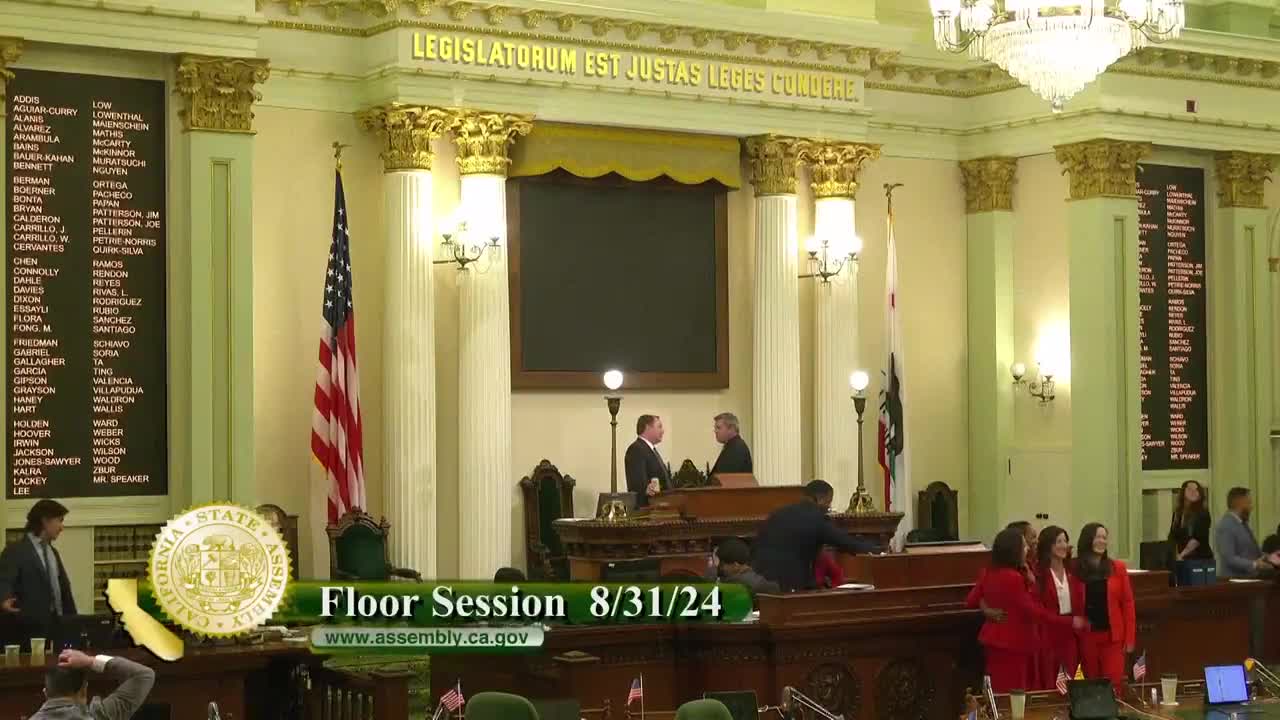 2MIN
Assembly Floor
 54SEC
Senate Floor
 7MIN
Assembly Standing Committee on Revenue and Taxation
Bill Author

Bill Co-Author(s):
