AB 1834: Resource adequacy: Electricity Supply Strategic Reliability Reserve Program.
- Session Year: 2023-2024
- House: Assembly
- Latest Version Date: 2024-08-31
Current Status:
Failed
(2024-09-22: Vetoed by Governor.)
Introduced
In Committee
First Chamber
In Committee
Second Chamber
Enacted
Existing law establishes the Electricity Supply Strategic Reliability Reserve Program and requires the Department of Water Resources to implement projects, purchases, and contracts related to the procurement of electrical resources, as provided. If the department determines, on or before June 30, 2027, that resources procured through the program were used in a given month to meet a load-serving entitys or a local publicly owned electric utilitys identified reliability need, existing law requires the Public Utilities Commission (PUC) or the Executive Director of the State Energy Resources Conservation and Development Commission (Energy Commission) to annually assess a capacity payment on each load-serving entity or each local publicly owned electric utility, respectively, that during that same month failed to meet its system resource adequacy requirements or minimum planning reserve margin, as applicable. Existing law requires the PUC or the Energy Commission to determine a capacity payment unit cost in kilowatt per month for load-serving entities or local publicly owned electric utilities, respectively, that is based on the monthly cost of the resources procured using the moneys from the program, as provided.
This bill would require the PUC and the Energy Commission, in determining the capacity payment unit cost, to consider mitigating factors.
Existing law authorizes the department to establish a schedule and mechanism for a local publicly owned electric utility to voluntarily obtain from the department eligible energy resources to be acquired by the department through its central procurement function. Existing law requires the local publicly owned electric utility, if it voluntarily participates, to commit to the imposition of a nonbypassable charge on its ratepayers sufficient to fund its participation, as specified.
This bill would additionally authorize the local publicly owned electric utility to commit to an alternative mechanism to fund its voluntary participation. If the local publicly owned electric utility commits to the imposition of a nonbypassable charge, the bill would prohibit the department from adding any cost in excess of the cost of the local publicly owned electric utilitys participation to the nonbypassable charge.
Existing law requires each local publicly owned electric utility serving end-use customers to prudently plan for and procure resources that are adequate to meet its planning reserve margin and peak demand and operating reserves sufficient to provide reliable electric service to its customers. Existing law requires a local publicly owned electric utility, upon request, to provide the Energy Commission with any information the Energy Commission determines necessary to evaluate the progress made by the local publicly owned electric utility in meeting that requirement.
This bill would require the Energy Commission to coordinate its request with other entities seeking related information to reduce the overall response burden to the local publicly owned electric utilities.
Existing law establishes the Electricity Supply Strategic Reliability Reserve Program and requires the Department of Water Resources to implement projects, purchases, and contracts related to the procurement of electrical resources, as provided. If the department determines, on or before June 30, 2027, that resources procured through the program were used in a given month to meet a load-serving entitys or a local publicly owned electric utilitys identified reliability need, existing law requires the Public Utilities Commission (PUC) or the Executive Director of the State Energy Resources Conservation and Development Commission (Energy Commission) to annually assess a capacity payment on each load-serving entity or each local publicly owned electric utility, respectively, that during that same month failed to meet its system resource adequacy requirements. Existing law requires the PUC or the Energy Commission to determine a capacity payment unit cost in kilowatt per month for load-serving entities or local publicly owned electric utilities, respectively, that is based on the monthly cost of the resources procured using the moneys from the program, as provided.
This bill would expressly provide that the identified reliability need is the identified reliability need of the local publicly owned electric utility. require the PUC and the Energy Commission, in determining the capacity payment unit cost, to consider mitigating factors.
Existing law authorizes the department to establish a schedule and mechanism for a local publicly owned electric utility to voluntarily obtain from the department eligible energy resources to be acquired by the department through its central procurement function. Existing law requires the local publicly owned electric utility, if it voluntarily participates, to commit to the imposition of a nonbypassable charge on its ratepayers sufficient to fund its participation, as specified.
This bill would additionally allow the local publicly owned electric utility to commit to an alternative mechanism to fund its voluntary participation. If the local publicly owned electric utility commits to the imposition of a nonbypassable charge, the bill would prohibit the department from adding any cost in excess of the cost of participation to the nonbypassable charge.
Existing law requires each local publicly owned electric utility serving end-use customers to prudently plan for and procure resources that are adequate to meet its planning reserve margin and peak demand and operating reserves sufficient to provide reliable electric service to its customers. Existing law requires the local publicly owned electric utility, upon request, to provide the Energy Commission with any information the Energy Commission determines necessary to evaluate the progress made by the local publicly owned electric utility in meeting that requirement.
This bill would require the Energy Commission to coordinate its request with other entities seeking related information to reduce the overall response burden to the local publicly owned electric utilities.
Existing law establishes the Department of Water Resources Electricity Supply Reliability Reserve Fund and continuously appropriates moneys in the fund to the Department of Water Resources for purposes of (1) implementing projects, purchases, and contracts to carry out specified purposes, (2) constructing, owning, and operating, or contracting for the construction and operation of, contracting for the purchase of electricity from, or financing through loans, reimbursement agreements, or other contracts actions to secure resources for summer reliability or to preserve the option to extend the life of specified facilities, and (3) reimbursing electrical corporations for the value of imported energy or import capacity products that were delivered or capable of being delivered between July 1, 2022, and on or before October 31, 2023, and were procured at above-market costs or in excess of procurement authorizations set by the Public Utilities Commission (PUC) and above the requirements needed to serve the electrical corporations bundled customers in support of summer electric service reliability.
Existing law requires the State Energy Resources Conservation and Development Commission (Energy Commission), on or before January 31, 2024, in consultation with the PUC, to submit a report to the appropriate policy and budget committees of the Legislature that includes an assessment of whether each local publicly owned electric utility exceeded, met, or failed to meet its minimum planning reserve margin and specified system resource adequacy requirements, as specified. Upon the submission of that report, if the department determines that resources it procured through the Electricity Supply Strategic Reliability Reserve Program were used in a given month to meet an identified reliability need, existing law requires the executive director of the Energy Commission, on and before June 30, 2027, to annually assess a capacity payment on each local publicly owned electric utility in the Independent System Operator balancing area that during that same month fails to meet its minimum planning reserve margin, as specified.
This bill would expressly provide that the identified reliability need is the identified reliability need of the local publicly owned electric utility.
Existing law establishes the State Department of Public Health to implement various programs throughout the state relating to public health. Existing law authorizes the department to implement the required programs through, or with the assistance of, local health departments.This bill would state the intent of the Legislature to enact legislation to authorize the public health agencies of the Counties of Imperial and Riverside to conduct an assessment to identify the specific communities or neighborhoods of the Salton Sea region that are most likely to be negatively affected by degrading air quality and increasing heat stress.Existing law establishes the State Department of Public Health to implement various programs throughout the state relating to public health. Existing law authorizes the department to implement the required programs through, or with the assistance of, local health departments.
This bill would state the intent of the Legislature to enact legislation to authorize the public health agencies of the Counties of Imperial and Riverside to conduct an assessment to identify the specific communities or neighborhoods of the Salton Sea region that are most likely to be negatively affected by degrading air quality and increasing heat stress.
(a)Each local publicly owned electric utility serving end-use customers shall prudently plan for and procure resources that are adequate to meet its planning reserve margin and peak demand and operating reserves, sufficient to provide reliable electric service to its customers. Customer generation located on the customers site or providing electric service through arrangements authorized by Section 218, shall not be subject to these requirements if the customer generation, or the load it serves, meets one of the following criteria:
(1)It takes standby service from the local publicly owned electric utility on a rate schedule that provides for adequate backup planning and operating reserves for the standby customer class.
(2)It is not physically interconnected to the electric transmission or distribution grid, so that, if the customer generation fails, backup power is not supplied from the electricity grid.
(3)There is physical assurance that the load served by the customer generation will be curtailed concurrently and commensurately with an outage of the customer generation.
(b)Each local publicly owned electric utility serving end-use customers shall, at a minimum, meet the most recent minimum planning reserve and reliability criteria approved by the Board of Trustees of the Western Systems Coordinating Council or the Western Electricity Coordinating Council.
(c)Each local publicly owned electric utility shall prudently plan for and procure energy storage systems that are adequate to meet the requirements of Section 2836.
(d)A local publicly owned electric utility serving end-use customers shall, upon request, provide the Energy Commission with any information the Energy Commission determines is necessary to evaluate the progress made by the local publicly owned electric utility in meeting the requirements of this section, consistent with the annual targets established pursuant to subdivision (c) of Section 25310 of the Public Resources Code. The Energy Commission shall coordinate its request with other entities seeking related information to reduce the overall response burden to local publicly owned electric utilities to meet the requirements of this subdivision.
(e)The Energy Commission shall report to the Legislature, to be included in each integrated energy policy report prepared pursuant to Section 25302 of the Public Resources Code, regarding the progress made by each local publicly owned electric utility serving end-use customers in meeting the requirements of this section.
(f)A local publicly owned electric utility may meet its minimum planning reserve margin through individual contractual procurement or through an aggregated or pooled portfolio of resources if that aggregation or pooling is defined in a contractual arrangement and each participating local publicly owned electric utility meets its individual minimum planning reserve margin based on its share of the resource portfolio pool.
SEC. 2.Section 80713 of the Water Code is amended to read:80713.(a)(1)On and before June 30, 2027, if the Department of Water Resources determines that resources it procured through the Electricity Supply Strategic Reliability Reserve Program were used in a given month to meet a load-serving entitys identified reliability need, the Public Utilities Commission shall annually assess a capacity payment on each load-serving entity that during that same month fails to meet its system resource adequacy requirements pursuant to Section 380 of the Public Utilities Code. The capacity payment is not a penalty and does not prohibit the Public Utilities Commission from assessing a penalty on a load-serving entity for a failure to comply with any resource adequacy requirement.
(2)If a load-serving entity fails to comply with its system resource adequacy requirements pursuant to Section 380 in a month when resources procured by the Department of Water Resources through the Electricity Supply Strategic Reliability Reserve Program are used to meet the load-serving entitys identified reliability need and a penalty is assessed by the commission on the load-serving entity for that failure, then, on and before June 30, 2027, both of the following requirements shall apply:
(A)If the penalty is less than the capacity payment, the capacity payment shall be reduced by the amount of the penalty and the penalty shall be deposited into the Load-Serving Entity Capacity Payment Account.
(B)If the penalty is more than the capacity payment, then an amount of the penalty equal to the otherwise applicable capacity payment shall be deposited into the Load-Serving Entity Capacity Payment Account.
(3)The annual capacity payment shall be remitted to the Load-Serving Entity Capacity Payment Account by a load-serving entity that was assessed a capacity payment pursuant to paragraph (1) within 30 days of the commission notifying the load-serving entity.
(b)The Public Utilities Commission, in consultation with the commission, shall determine a capacity payment unit cost in kilowatt per month for load-serving entities that is based on the monthly cost of the resources procured using moneys from the Department of Water Resources Electricity Supply Reliability Reserve Fund, including the Load-Serving Entity Capacity Payment Account, with the total costs weighted two-thirds for June through September and one-third for the remaining eight months, and this unit cost shall be multiplied by the amount of kilowatts that the load-serving entity was deficient in its system resource adequacy requirements during the same month the Electricity Supply Strategic Reliability Reserve Program resources were used, based on the resource adequacy program rules, requirements, and resource counting conventions in place at the time of the deficiency, after crediting the deficient load-serving entity with its share of any reliability resources procured by other entities on its behalf. The Public Utilities Commission may make any further adjustments to the capacity values of any nonperforming resources included in a load-serving entitys portfolio when determining the amount of this deficiency. In determining the capacity payment unit cost, the Public Utilities Commission shall consider mitigating factors, including, but not limited to, the extent of scarcity-driven or otherwise above-market costs of those resources procured using moneys from the Department of Water Resources Electricity Supply Reliability Reserve Fund. Any adjustments made by the Public Utilities Commission shall align with any adjustments made by the commission as authorized by subdivision (b) of Section 80714.
(c)This section shall become operative on January 31, 2024.
SEC. 3.Section 80714 of the Water Code is amended to read:80714.(a)(1)Upon the submission of the report pursuant to subdivision (d) and on and before June 30, 2027, if the Department of Water Resources determines that resources it procured through the Electricity Supply Strategic Reliability Reserve Program were used in a given month to meet a local publicly owned electric utilitys identified reliability need, the executive director of the commission shall annually assess a capacity payment on each local publicly owned electric utility in the Independent System Operator balancing area that during that same month fails to meet its minimum planning reserve margin.
(2)The annual capacity payment shall be remitted to the Local Publicly Owned Electric Utility Capacity Payment Account by a local publicly owned electric utility that was assessed a capacity payment pursuant to paragraph (1) within 30 days of the executive director notifying the local publicly owned electric utility.
(b)Upon the submission of the report pursuant to subdivision (d), the commission, in consultation with the Public Utilities Commission, shall determine a capacity payment unit cost in kilowatt per month for local publicly owned electric utilities that is based on the monthly cost of the resources procured using moneys from the Department of Water Resources Electricity Supply Reliability Reserve Fund, including the Local Publicly Owned Electric Utility Capacity Payment Account, with the total costs weighted two-thirds for June through September and one-third for the remaining eight months, and this unit cost shall be multiplied by the amount of kilowatts that the local publicly owned electric utility was deficient in its minimum planning reserve margin during the same month the Electricity Supply Strategic Reliability Reserve Program resources were used using the same resource counting conventions applied by the Public Utilities Commission pursuant to subdivision (b) of Section 80713, after crediting the deficient local publicly owned electric utilities with their share of any reliability resources procured by other entities on their behalf. The commission may make any further adjustments to the capacity values of any nonperforming resources included in a local publicly owned electric utilitys portfolio when determining the amount of this deficiency. In determining the capacity payment unit cost, the commission shall consider mitigating factors, including, but not limited to, the extent of scarcity-driven or otherwise above-market costs of those resources procured using moneys from the Department of Water Resources Electricity Supply Reliability Reserve Fund. Any adjustments made by the commission shall align with any adjustments made by the Public Utilities Commission as authorized by subdivision (b) of Section 80713.
(c)Upon the submission of the report pursuant to subdivision (d), the commission may adopt regulations to implement this section.
(d)On or before January 31, 2024, the commission, in consultation with the Public Utilities Commission, shall submit a report to the appropriate policy and budget committees of the Legislature that includes an assessment of whether each local publicly owned electric utility exceeded, met, or failed to meet its minimum planning reserve margin for 2023 and the system resource adequacy requirements from June 1, 2023, to September 30, 2023, inclusive, that the Public Utilities Commission established for load-serving entities pursuant to Section 380 of the Public Utilities Code and adopted in Public Utilities Commission Decision 22-06-050 (June 23, 2022) Decision Adopting Local Capacity Obligations for 20232025, Flexible Capacity Obligations for 2023, and Reform Track Framework.
(e)For purposes of this section, minimum planning reserve margin means a local publicly owned electric utilitys planning reserve margin, as described in Section 9620 of the Public Utilities Code, unless the local publicly owned electric utility revises that planning reserve margin based on recommendations from the commission pursuant to subdivision (b) of Section 25704.5 of the Public Resources Code, in which case minimum planning reserve margin means the local publicly owned electric utilitys revised minimum planning reserve margin.
SEC. 4.Section 80822 of the Water Code is amended to read:80822.(a)Pursuant to Section 80820, the department may establish a schedule and mechanism for a local publicly owned electric utility to voluntarily obtain from the department eligible energy resources to be acquired by the department through its central procurement function on a contract-by-contract basis.
(b)In order to voluntarily participate, a local publicly owned electric utility shall commit to the imposition of a nonbypassable charge on its ratepayers or an alternative mechanism sufficient at all times to fund its participation and on terms and conditions as set forth in Section 80826. If the local publicly owned electric utility commits to the imposition of a nonbypassable charge, the department shall not add any cost in excess of the cost of the local publicly owned electric utilitys participation pursuant to this section to the nonbypassable charge.
(a)Each local publicly owned electric utility serving end-use customers shall prudently plan for and procure resources that are adequate to meet its planning reserve margin and peak demand and operating reserves, sufficient to provide reliable electric service to its customers. Customer generation located on the customers site or providing electric service through arrangements authorized by Section 218, shall not be subject to these requirements if the customer generation, or the load it serves, meets one of the following criteria:
(1)It takes standby service from the local publicly owned electric utility on a rate schedule that provides for adequate backup planning and operating reserves for the standby customer class.
(2)It is not physically interconnected to the electric transmission or distribution grid, so that, if the customer generation fails, backup power is not supplied from the electricity grid.
(3)There is physical assurance that the load served by the customer generation will be curtailed concurrently and commensurately with an outage of the customer generation.
(b)Each local publicly owned electric utility serving end-use customers shall, at a minimum, meet the most recent minimum planning reserve and reliability criteria approved by the Board of Trustees of the Western Systems Coordinating Council or the Western Electricity Coordinating Council.
(c)Each local publicly owned electric utility shall prudently plan for and procure energy storage systems that are adequate to meet the requirements of Section 2836.
(d)A local publicly owned electric utility serving end-use customers shall, upon request, provide the Energy Commission with any information the Energy Commission determines is necessary to evaluate the progress made by the local publicly owned electric utility in meeting the requirements of this section, consistent with the annual targets established pursuant to subdivision (c) of Section 25310 of the Public Resources Code. The Energy Commission shall coordinate its request with other entities seeking related information to reduce the overall response burden to local publicly owned electric utilities to meet the requirements of this subdivision.
(e)The Energy Commission shall report to the Legislature, to be included in each integrated energy policy report prepared pursuant to Section 25302 of the Public Resources Code, regarding the progress made by each local publicly owned electric utility serving end-use customers in meeting the requirements of this section.
(f)A local publicly owned electric utility may meet its minimum planning reserve margin through individual contractual procurement or through an aggregated or pooled portfolio of resources if that aggregation or pooling is defined in a contractual arrangement and each participating local publicly owned electric utility meets its individual minimum planning reserve margin based on its share of the resource portfolio pool.
SEC. 2.Section 80713 of the Water Code is amended to read:80713.(a)(1)On and before June 30, 2027, if the Department of Water Resources determines that resources it procured through the Electricity Supply Strategic Reliability Reserve Program were used in a given month to meet a load-serving entitys identified reliability need, the Public Utilities Commission shall annually assess a capacity payment on each load-serving entity that during that same month fails to meet its system resource adequacy requirements pursuant to Section 380 of the Public Utilities Code. The capacity payment is not a penalty and does not prohibit the Public Utilities Commission from assessing a penalty on a load-serving entity for a failure to comply with any resource adequacy requirement.
(2)If a load-serving entity fails to comply with its system resource adequacy requirements pursuant to Section 380 in a month when resources procured by the Department of Water Resources through the Electricity Supply Strategic Reliability Reserve Program are used to meet the load-serving entitys identified reliability need and a penalty is assessed by the commission on the load-serving entity for that failure, then, on and before June 30, 2027, both of the following requirements shall apply:
(A)If the penalty is less than the capacity payment, the capacity payment shall be reduced by the amount of the penalty and the penalty shall be deposited into the Load-Serving Entity Capacity Payment Account.
(B)If the penalty is more than the capacity payment, then an amount of the penalty equal to the otherwise applicable capacity payment shall be deposited into the Load-Serving Entity Capacity Payment Account.
(3)The annual capacity payment shall be remitted to the Load-Serving Entity Capacity Payment Account by a load-serving entity that was assessed a capacity payment pursuant to paragraph (1) within 30 days of the commission notifying the load-serving entity.
(b)The Public Utilities Commission, in consultation with the commission, shall determine a capacity payment unit cost in kilowatt per month for load-serving entities that is based on the monthly cost of the resources procured using moneys from the Department of Water Resources Electricity Supply Reliability Reserve Fund, including the Load-Serving Entity Capacity Payment Account, with the total costs weighted two-thirds for June through September and one-third for the remaining eight months, and this unit cost shall be multiplied by the amount of kilowatts that the load-serving entity was deficient in its system resource adequacy requirements during the same month the Electricity Supply Strategic Reliability Reserve Program resources were used, based on the resource adequacy program rules, requirements, and resource counting conventions in place at the time of the deficiency, after crediting the deficient load-serving entity with its share of any reliability resources procured by other entities on its behalf. The Public Utilities Commission may make any further adjustments to the capacity values of any nonperforming resources included in a load-serving entitys portfolio when determining the amount of this deficiency. In determining the capacity payment unit cost, the Public Utilities Commission shall consider mitigating factors, including, but not limited to, the extent of scarcity-driven or otherwise above-market costs of those resources procured using moneys from the Department of Water Resources Electricity Supply Reliability Reserve Fund. Any adjustments made by the Public Utilities Commission shall align with any adjustments made by the commission as authorized by subdivision (b) of Section 80714.
(c)This section shall become operative on January 31, 2024.
SECTION 1.SEC. 3.Section 80714 of the Water Code is amended to read:80714.(a)(1)Upon the submission of the report pursuant to subdivision (d) and on and before June 30, 2027, if the Department of Water Resources determines that resources it procured through the Electricity Supply Strategic Reliability Reserve Program were used in a given month to meet a local publicly owned electric utilitys identified reliability need, the executive director of the commission shall annually assess a capacity payment on each local publicly owned electric utility in the Independent System Operator balancing area that during that same month fails to meet its minimum planning reserve margin.
(2)The annual capacity payment shall be remitted to the Local Publicly Owned Electric Utility Capacity Payment Account by a local publicly owned electric utility that was assessed a capacity payment pursuant to paragraph (1) within 30 days of the executive director notifying the local publicly owned electric utility.
(b)Upon the submission of the report pursuant to subdivision (d), the commission, in consultation with the Public Utilities Commission, shall determine a capacity payment unit cost in kilowatt per month for local publicly owned electric utilities that is based on the monthly cost of the resources procured using moneys from the Department of Water Resources Electricity Supply Reliability Reserve Fund, including the Local Publicly Owned Electric Utility Capacity Payment Account, with the total costs weighted two-thirds for June through September and one-third for the remaining eight months, and this unit cost shall be multiplied by the amount of kilowatts that the local publicly owned electric utility was deficient in its minimum planning reserve margin during the same month the Electricity Supply Strategic Reliability Reserve Program resources were used using the same resource counting conventions applied by the Public Utilities Commission pursuant to subdivision (b) of Section 80713, after crediting the deficient local publicly owned electric utilities with their share of any reliability resources procured by other entities on their behalf. The commission may make any further adjustments to the capacity values of any nonperforming resources included in a local publicly owned electric utilitys portfolio when determining the amount of this deficiency. In determining the capacity payment unit cost, the commission shall consider mitigating factors, including, but not limited to, the extent of scarcity-driven or otherwise above-market costs of those resources procured using moneys from the Department of Water Resources Electricity Supply Reliability Reserve Fund. Any adjustments made by the commission shall align with any adjustments made by the Public Utilities Commission as authorized by subdivision (b) of Section 80713.
(c)Upon the submission of the report pursuant to subdivision (d), the commission may adopt regulations to implement this section.
(d)On or before January 31, 2024, the commission, in consultation with the Public Utilities Commission, shall submit a report to the appropriate policy and budget committees of the Legislature that includes an assessment of whether each local publicly owned electric utility exceeded, met, or failed to meet its minimum planning reserve margin for 2023 and the system resource adequacy requirements from June 1, 2023, to September 30, 2023, inclusive, that the Public Utilities Commission established for load-serving entities pursuant to Section 380 of the Public Utilities Code and adopted in Public Utilities Commission Decision 22-06-050 (June 23, 2022) Decision Adopting Local Capacity Obligations for 20232025, Flexible Capacity Obligations for 2023, and Reform Track Framework.
(e)For purposes of this section, minimum planning reserve margin means a local publicly owned electric utilitys planning reserve margin, as described in Section 9620 of the Public Utilities Code, unless the local publicly owned electric utility revises that planning reserve margin based on recommendations from the commission pursuant to subdivision (b) of Section 25704.5 of the Public Resources Code, in which case minimum planning reserve margin means the local publicly owned electric utilitys revised minimum planning reserve margin.
SEC. 4.Section 80822 of the Water Code is amended to read:80822.(a)Pursuant to Section 80820, the department may establish a schedule and mechanism for a local publicly owned electric utility to voluntarily obtain from the department eligible energy resources to be acquired by the department through its central procurement function on a contract-by-contract basis.
(b)In order to voluntarily participate, a local publicly owned electric utility shall commit to the imposition of a nonbypassable charge on its ratepayers or an alternative mechanism sufficient at all times to fund its participation and on terms and conditions as set forth in Section 80826. If the local publicly owned electric utility commits to the imposition of a nonbypassable charge, the department shall not add any cost in excess of the cost of the local publicly owned electric utilitys participation pursuant to this section to the nonbypassable charge.
(a)(1)Upon the submission of the report pursuant to subdivision (d) and on and before June 30, 2027, if the Department of Water Resources determines that resources it procured through the Electricity Supply Strategic Reliability Reserve Program were used in a given month to meet an a local publicly owned electric utilitys identified reliability need, the executive director of the commission shall annually assess a capacity payment on each local publicly owned electric utility in the Independent System Operator balancing area that during that same month fails to meet its minimum planning reserve margin.
(2)The annual capacity payment shall be remitted to the Local Publicly Owned Electric Utility Capacity Payment Account by a local publicly owned electric utility that was assessed a capacity payment pursuant to paragraph (1) within 30 days of the executive director notifying the local publicly owned electric utility.
(b)Upon the submission of the report pursuant to subdivision (d), the commission, in consultation with the Public Utilities Commission, shall determine a capacity payment unit cost in kilowatt per month for local publicly owned electric utilities that is based on the monthly cost of the resources procured using moneys from the Department of Water Resources Electricity Supply Reliability Reserve Fund, including the Local Publicly Owned Electric Utility Capacity Payment Account, with the total costs weighted two-thirds for June through September and one-third for the remaining eight months, and this unit cost shall be multiplied by the amount of kilowatts that the local publicly owned electric utility was deficient in its minimum planning reserve margin during the same month the Electricity Supply Strategic Reliability Reserve Program resources were used using the same resource counting conventions applied by the Public Utilities Commission pursuant to subdivision (b) of Section 80713, after crediting the deficient local publicly owned electric utilities with their share of any reliability resources procured by other entities on their behalf. The commission may make any further adjustments to the capacity values of any nonperforming resources included in a local publicly owned electric utilitys portfolio when determining the amount of this deficiency. Any adjustments made by the commission shall align with any adjustments made by the Public Utilities Commission as authorized by subdivision (b) of Section 80713.
(c)Upon the submission of the report pursuant to subdivision (d), the commission may adopt regulations to implement this section.
(d)On or before January 31, 2024, the commission, in consultation with the Public Utilities Commission, shall submit a report to the appropriate policy and budget committees of the Legislature that includes an assessment of whether each local publicly owned electric utility exceeded, met, or failed to meet its minimum planning reserve margin for 2023 and the system resource adequacy requirements from June 1, 2023, to September 30, 2023, inclusive, that the Public Utilities Commission established for load-serving entities pursuant to Section 380 of the Public Utilities Code and adopted in Public Utilities Commission Decision 22-06-050 (June 23, 2022) Decision Adopting Local Capacity Obligations for 20232025, Flexible Capacity Obligations for 2023, and Reform Track Framework.
(e)For purposes of this section, minimum planning reserve margin means a local publicly owned electric utilitys planning reserve margin, as described in Section 9620 of the Public Utilities Code, unless the local publicly owned electric utility revises that planning reserve margin based on recommendations from the commission pursuant to subdivision (b) of Section 25704.5 of the Public Resources Code, in which case minimum planning reserve margin means the local publicly owned electric utilitys revised minimum planning reserve margin.
SECTION 1.It is the intent of the Legislature to enact legislation to authorize the public health agencies of the Counties of Imperial and Riverside to conduct an assessment to identify the specific communities or neighborhoods of the Salton Sea region that are most likely to be negatively affected by degrading air quality and increasing heat stress.It is the intent of the Legislature to enact legislation to authorize the public health agencies of the Counties of Imperial and Riverside to conduct an assessment to identify the specific communities or neighborhoods of the Salton Sea region that are most likely to be negatively affected by degrading air quality and increasing heat stress.
|
Date
|
Status
|
|---|---|
| Sep 22, 2024 | Vetoed by Governor. |
| Sep 10, 2024 | Enrolled and presented to the Governor at 4:30 p.m. |
| Aug 28, 2024 | In Assembly. Ordered to Engrossing and Enrolling. |
| Aug 27, 2024 | Read third time. Passed. Ordered to the Assembly. (Ayes 39. Noes 0.). |
| Aug 19, 2024 | Read second time. Ordered to third reading. |
| Aug 15, 2024 | From committee: Do pass. (Ayes 7. Noes 0.) (August 15). |
| Aug 5, 2024 | In committee: Referred to APPR suspense file. |
| Jun 25, 2024 | From committee: Do pass and re-refer to Com. on APPR. (Ayes 17. Noes 0.) (June 24). Re-referred to Com. on APPR. |
| Jun 5, 2024 | Referred to Com. on E., U. & C. |
| May 24, 2024 | In Senate. Read first time. To Com. on RLS. for assignment. |
| May 23, 2024 | Read third time. Passed. Ordered to the Senate. (Ayes 72. Noes 0. Page 5619.) |
| May 20, 2024 | Read second time. Ordered to third reading. |
| May 16, 2024 | From committee: Do pass. (Ayes 15. Noes 0.) (May 16). |
| May 8, 2024 | In committee: Set, first hearing. Referred to APPR. suspense file. |
| Apr 25, 2024 | From committee: Do pass and re-refer to Com. on APPR. with recommendation: To Consent Calendar. (Ayes 16. Noes 0.) (April 24). Re-referred to Com. on APPR. |
| Apr 17, 2024 | In committee: Hearing postponed by committee. |
| Apr 16, 2024 | Re-referred to Com. on U. & E. |
| Apr 15, 2024 | From committee chair, with author's amendments: Amend, and re-refer to Com. on U. & E. Read second time and amended. |
| Apr 1, 2024 | Re-referred to Com. on U. & E. |
| Mar 21, 2024 | From committee chair, with author's amendments: Amend, and re-refer to Com. on U. & E. Read second time and amended. |
| Mar 21, 2024 | Referred to Com. on U. & E. |
| Jan 17, 2024 | From printer. May be heard in committee February 16. |
| Jan 16, 2024 | Read first time. To print. |
|
Date
|
Description
|
Location
|
Votes
|
|
|---|---|---|---|---|
| Aug 27, 2024 | Assembly 3rd Reading AB1834 Garcia By Bradford | Senate Floor |
Passed |
|
| Aug 15, 2024 | Do pass | Senate Standing Committee on Appropriations |
Passed |
|
| Aug 5, 2024 | Placed on suspense file | Senate Standing Committee on Appropriations |
Passed |
|
| Jun 24, 2024 | Do pass, but first be re-referred to the Committee on [Appropriations] | Senate Standing Committee on Energy, Utilities and Communications |
Passed |
|
| May 23, 2024 | AB 1834 Garcia Assembly Third Reading | Assembly Floor |
Passed |
|
| May 16, 2024 | Do pass. | Assembly Standing Committee on Appropriations |
Passed |
|
| Apr 24, 2024 | Do pass and be re-referred to the Committee on [Appropriations] with recommendation: To Consent Calendar | Assembly Standing Committee on Utilities and Energy |
Passed |
This list shows positions taken on this bill by organizations on the date displayed, which is linked to the original source.
Positions by individuals are not included.
|
Organization
|
Position
|
Date
|
|---|---|---|
| Anaheim Public Utilities | ** Support | |
| California Community Choice Association | ** Support | |
| California Municipal Utilities Association | ** Support | |
| City of Corona | ** Support | |
| City of Glendale Water & Power | ** Support | |
| City Of Lompoc | ** Support | |
| City of Palo Alto Utilities Department | ** Support | |
| Imperial Irrigation District | ** Support | |
| Northern California Power Agency | ** Support | |
| Pasadena Water and Power Department | ** Support | |
| San Diego Community Power | ** Support | |
| Southern California Public Power Authority | ** Support |
GOVERNOR'S VETO
GV Bill Id:AB 1834
Author:(Garcia)
As Enrolled Ver:August 31, 2024
2/3 vote
SUMMARY
Adjusts requirements on local publicly owned utilities (POUs) and load-serving entities (LSEs) in meeting their capacity payments to the Electricity Supply Strategic Reliability Reserve Program (ESSRRP), among other changes.
Major Provisions
- Obligates the California Energy Commission (CEC) and the California Public Utilities Commission (CPUC) to consider mitigating factors, including resource scarcity or above-market costs, when determining the capacity payment unit cost to be charged to a POU, in the case of the CEC, and to LSEs, in the case of the CPUC.
- Authorizes a POU to use alternative financing, rather than a nonbypassable charge, to pay its share of voluntary procurement from the Department of Water Resources (DWR) central procurement entity (CPE).
- Prohibits DWR from adding any costs to a nonbypassable charge in excess of the cost to the POU to participate in the CPE.
- Requires the CEC to coordinate with other entities in its request for RA information, so as to reduce the overall burden to POUs.
Governor's Veto Message
This bill would modify the capacity payment mechanism used to reimburse the Electricity Supply Strategic Reliability Reserve Program (Strategic Reserve) by local electric publicly owned utilities (POUs) and load-serving entities (LSEs) if they fall short in meeting their capacity procurement obligations. In addition, this bill would change POU payments for voluntary participation in the Department of Water Resources Central Procurement Function.
Last year, my Administration sponsored Assembly Bill 1373 (Garcia, 2023), which, among other things, created the capacity payment mechanism for the Strategic Reserve and Central Procurement Function. This mechanism is intended to prevent POU and LSE dependence on the Strategic Reserve when they fall short of meeting their capacity obligations. In addition, the Central Procurement Function was purposefully and precisely designed to provide a back-stop option for needed, long-lead time, diverse clean energy resources to achieve California's 100 percent clean electricity goal.
While I appreciate the author's intent to adjust the requirements to address additional feedback from POUs, I am concerned that the changes proposed in this bill are not only premature, but are counter to the objective of the capacity payment mechanism and its use in maintaining electric supply reliability. I am also cautious to make any changes to the Central Procurement Function, considering that the California Public Utilities Commission only recently initiated the use of this function. Any changes to its governing statute should be carefully considered and evaluated before they advance.
COMMENTS
This bill seeks changes to policies only recently chaptered related to reliability procurement activities. The ESSRRP was established through various budget measures in 2022, which provided new responsibilities for the Department of Water Resources to procure – or even outright own and operate – energy resources to provide backstop reliability for the California Independent System Operator (CAISO) balancing area. The backstop provided by the ESSRRP is meant to ensure California's lights stay on; however, it is a backstop of the backstop. The state's resource adequacy (RA) program – and the various procurement the LSEs and POUs undertake to meet their RA capacity obligations – is the initial backstop. The RA market dynamics over the last few years, combined with western weather over the last few summers, has made that initial RA backstop less solid. As such, the ESSRRP was created to provide further reliability assurance. Moreover, the ESSRRP was established as an off-market entity in the hopes that its procurement activities would not exacerbate the constrained RA market further.
Per AB 1373 (E. Garcia, Chapter 367, Statutes of 2023), the CPUC and CEC are authorized to collect capacity payments from LSEs and POUs, respectively, who are deficient in their reliability procurement during the same month as the ESSRRP is utilized. These capacity payments are meant to act as an incentive to utilities to be current on their reliability procurement, but also provide a financial boost to the ESSRRP, as the current budget outlook makes any future disbursement of state dollars unlikely. However, many POUs and LSEs have raised concern about levying capacity payments. They note most utilities are striving to meet their RA obligations, but capacity is either outright unavailable or so costly as to be in-effect unavailable. The POUs note most utilities are not deficient in their RA obligations by choice, and view the capacity payments as punishment for events outside their control.
While such behavior is likely characteristic of most LSEs and POUs buying RA capacity, it is not a universal truth. It is possible for an LSE or POU to choose to be deficient in their RA capacity, as a cost-saving measure, knowing the ESSRRP, CAISO backstop, or other utility RA over-procurement will cover their shortfall. In such circumstances, RA penalties may be assessed by the CPUC or CAISO. However, that is not always the case. The state is still assessing where past deficiencies have occurred.
These two extremes raise questions around fairness and accountability; and ultimately, what will drive the desired outcome of utilities meeting their RA obligations and the ESSRRP not being needed. This bill seeks to provide some modest considerations in favor of the utilities acting in good faith. Whether the changes proposed in this measure strike the appropriate balance may be better understood once the CPUC concludes its updates to RA policies, or California makes it through more summers without shortfalls or needing to call upon the ESSRRP.
According to the Author
"Last year, the Legislature passed AB 1373, which provided a tool to allow the state to benefit from renewable development that individual utilities are unable to procure. The bill also focused on reliability and resource adequacy by establishing a program to pay for emergency resources used on behalf of an under-resourced utility. This bill adds important clarifications to encourage efficiency and equity in the implementation of AB 1373."
Arguments in Support
A coalition of POUs write in support of this bill, noting it makes clarifications in order for the "optimal implementation" of the ESSRRP and other energy policies.
Arguments in Opposition
None on file.
FISCAL COMMENTS
According to the Assembly Committee on Appropriations, this bill results in minor or no costs to the CEC and DWR to implement. The CPUC contends costs of approximately $250,000 annually for a dedicated attorney to fulfill the bill's requirements; however, the Committee notes, "it seems unlikely that the bill's requirements require a dedicated attorney."
VOTES
ASM UTILITIES AND ENERGY: 16-0-0
YES: Petrie-Norris, Jim Patterson, Bauer-Kahan, Calderon, Chen, Connolly, Friedman, Holden, Joe Patterson, Reyes, Santiago, Schiavo, Ting, Wallis, Wood, Zbur
ASM APPROPRIATIONS: 15-0-0
YES: Wicks, Sanchez, Arambula, Bryan, Calderon, Wendy Carrillo, Dixon, Mike Fong, Grayson, Haney, Hart, Jim Patterson, Pellerin, Ta, Villapudua
ASSEMBLY FLOOR: 72-0-8
YES: Addis, Aguiar-Curry, Alanis, Alvarez, Arambula, Bains, Bauer-Kahan, Bennett, Berman, Boerner, Bonta, Bryan, Calderon, Juan Carrillo, Wendy Carrillo, Chen, Connolly, Davies, Dixon, Flora, Mike Fong, Vince Fong, Friedman, Gabriel, Gallagher, Garcia, Gipson, Grayson, Haney, Hart, Hoover, Irwin, Jackson, Jones-Sawyer, Kalra, Lackey, Lee, Low, Lowenthal, Maienschein, McCarty, McKinnor, Muratsuchi, Stephanie Nguyen, Ortega, Pacheco, Papan, Jim Patterson, Joe Patterson, Pellerin, Petrie-Norris, Quirk-Silva, Ramos, Rendon, Reyes, Rodriguez, Sanchez, Santiago, Schiavo, Soria, Ta, Ting, Valencia, Villapudua, Waldron, Wallis, Ward, Weber, Wilson, Wood, Zbur, Robert Rivas
ABS, ABST OR NV: Cervantes, Megan Dahle, Essayli, Holden, Mathis, Luz Rivas, Blanca Rubio, Wicks
SENATE FLOOR: 40-0-0
YES: Allen, Alvarado-Gil, Archuleta, Ashby, Atkins, Becker, Blakespear, Bradford, Caballero, Cortese, Dahle, Dodd, Durazo, Eggman, Glazer, Gonzalez, Grove, Hurtado, Jones, Laird, Limón, McGuire, Menjivar, Min, Newman, Nguyen, Niello, Ochoa Bogh, Padilla, Portantino, Roth, Rubio, Seyarto, Skinner, Smallwood-Cuevas, Stern, Umberg, Wahab, Wiener, Wilk
UPDATED
VERSION: August 31, 2024
CONSULTANT: Laura Shybut / U. & E. / (916) 319-2083 FN: 0005087
SENATE RULES COMMITTEE Office of Senate Floor Analyses (916) 651-1520 Fax: (916) 327-4478 | AB 1834 |
THIRD READING
Bill No: AB 1834
Author: Garcia (D)
Amended: 4/15/24 in Assembly
Vote: 21
SENATE ENERGY, U. & C. COMMITTEE: 17-0, 6/24/24
AYES: Bradford, Dahle, Ashby, Becker, Caballero, Dodd, Durazo, Eggman, Gonzalez, Grove, Limón, Newman, Rubio, Seyarto, Skinner, Stern, Wilk
NO VOTE RECORDED: Min
SENATE APPROPRIATIONS COMMITTEE: 7-0, 8/15/24
AYES: Caballero, Jones, Ashby, Becker, Bradford, Seyarto, Wahab
ASSEMBLY FLOOR: 72-0, 5/23/24 - See last page for vote
SUBJECT: Resource adequacy: Electricity Supply Strategic Reliability Reserve Program
SOURCE: Northern California Power Agency
Southern California Public Power Authority
DIGEST:
This bill adjusts the requirements on local electric publicly owned utilities (POUs) and load-serving entities (LSEs) in meeting their capacity payments to the Electricity Supply Strategic Reliability Reserve Program (ESSRRP) and makes other changes to AB 1373 (E. Garcia, Chapter 367, Statutes of 2023).
ANALYSIS:
Existing law:
- Requires the California Public Utilities Commission (CPUC), in consultation with the California Independent System Operator (CAISO), to establish resource adequacy (RA) requirements for all LSEs, including community choice aggregators (CCAs), electrical corporations, and electric service providers (ESPs). Requires each LSE to maintain physical generating capacity adequate to meet its load requirements, including peak demand and planning and operating reserves, deliverable to locations and at times as may be necessary to provide reliable electric service. (Public Utilities Code §380)
- Establishes the ESSRRP and Electricity Supply Reliability Reserve Fund (ESRRF) at the Department of Water Resources (DWR) and continuously appropriates moneys in the fund to DWR for purposes of implementing projects, purchases, and contracts to carry out specified purposes, constructing, owning, and operating, or contracting for the construction and operation of, contracting for the purchase of electricity from, or financing through loans, reimbursement agreements, or other contracts actions to secure resources for summer reliability or to preserve the option to extend the life of specified facilities, and reimbursing electrical corporations for the value of imported energy or import capacity products that were delivered or capable of being delivered between July 1, 2022, and on or before October 31, 2023, and were procured at above-market costs or in excess of procurement authorizations set by the CPUC and above the requirements needed to serve the electrical corporation’s bundled customers in support of summer electric service reliability. (Water Code §80700 et seq.)
- Requires the CPUC or the Executive Director of the California Energy Commission (CEC), to annually assess a capacity payment on each LSE or each electric POU, respectively, that during that same month failed to meet its system RA requirements if, on or before June 30, 2027, the DWR determines that resources procured through the program were used in a given month to meet a LSE’s or a local electric POU’s identified reliability need. Requires the CPUC or the CEC to determine a capacity payment unit cost in kilowatt per month for LSEs or electric POUs, respectively that is based on the monthly cost of the resources procured using the moneys from the program, as specified. (Water Code §§80713 and 80714)
- Authorizes the DWR to establish a schedule and mechanism for an electric POU to voluntarily obtain from the DWR eligible energy resources to be acquired by the DWR through its central procurement function. Requires the electric POU, if it voluntarily participates, to commit to the imposition of a nonbypassable charge on its ratepayers sufficient to fund its participation, as specified. (Water Code §80822)
- Requires each electric POU serving end-use customers to prudently plan for and procure resources that are adequate to meet its planning reserve margin and peak demand and operating reserves sufficient to provide reliable electric service to its customers. Requires the electric POU, upon request, to provide the CEC with any information the CEC determines necessary to evaluate the progress made by the electric POU in meeting that requirement. (Public Utilities Code §9620)
This bill:
- Requires the CPUC and the CEC to consider mitigating factors in determining the capacity payment unit cost on LSEs and electric POUs for failing to meet their respective system RA requirements in a given month where resources from the ESSRRP were used. Provides that the mitigating factors include the extent of the scarcity-driven or otherwise above-market costs of those resources procured using moneys from the ESRRF.
- Allows electric POUs to commit to an alternative mechanism, rather than a nonbypassable charge, to fund their voluntary participation for obtaining eligible energy resources via the DWR central procurement function.
- Prohibits the DWR, if the electric POU commits to the imposition of a nonbypassable charge, from adding any cost in excess of the cost of participation.
- Requires the CEC to coordinate its request with other entities seeking related information to reduce the overall response burden to the electric POUs.
Background
- AB 1373 (E. Garcia, Chapter 367, Statutes of 2023). AB 1373, originally introduced as a budget trailer proposal from the Newsom administration in early 2023, makes numerous changes to electricity policy, most notably, authorizing DWR to serve as a central procurement entity to procure long lead time energy resources in order to help the state meet its renewable and zero-carbon energy goals. The bill also contains provisions allowing the CPUC and CEC to levy capacity payments on LSEs and electric POUs, respectively, when those utilities are deficient in their RA system requirements in the same month the ESSRRP is utilized.
- ESSRRP at the DWR (funded at $2.4 billion). In June 2022, Budget Trailer Bills, AB 205 (Committee on Budget, Chapter 61, Statutes of 2022), AB 178 (Ting, Chapter 45, Statutes of 2022), and AB 180 (Ting, Chapter 44, Statutes of 2022), were signed into law. These three pieces of legislation collectively established the ESSRRP and set forth new responsibilities and activities by DWR, funded by the newly established ESRRF, and separate from the State Water Project. DWR established temporary energy resources and created a new deputy director-level division with 25 staff – the Division of Statewide Water and Energy – which oversees the ESSRRP along with the State Power Augmentation Program which was developed in July 2021 in response to executive order direction to quickly deploy 120 megawatts (MW) of new generation.
- ESSRRP procurement. Under the ESSRRP, DWR acts as contingency insurance to help maintain electricity reliability within the CAISO balancing authority area by procuring and providing incremental power during extreme events. As part of the program, DWR contracts directly with power facilities and also enters into agreements with the state’s large electric investor-owned utilities (IOUs) to reimburse for the value of imported firm energy resources to support summer reliability. These resources are meant to operate “outside” of CAISO’s market, meaning they do not regularly schedule into the market, and only operate during grid emergency events. Based on the May 2024 ESSRRP Report, DWR has committed over $2.1 billion in emergency and temporary power generators, along with imported energy, various service contracts, and extended operations of retiring facilities, with total disbursed through February 2024 of over $615 million. DWR has procured approximately three gigawatts (GW) of capacity from four retiring facilities, nearly four GW of imported energy during 2023, and additional 143 MW from temporary and emergency generators. As noted above, the procurement of resources in the ESSRRP are paid by budget appropriation.
- Resource adequacy (RA). Following the California energy crisis of 2000-01, the California Legislature enacted legislation to prevent future incidents of widespread blackouts and rolling brownouts due to lack of electric generating capacity. Among the reforms adopted in response to the crisis was the adoption of Public Utilities Code §380 as an effort to better ensure reliability of electric supply. The statute directs the CPUC, in consultation with the CAISO, to establish RA requirements for all LSEs, including electric IOUs, ESPs, and now includes CCAs, which did not exist at the time of the crisis. The current RA program consists of system, local, and flexible requirements for each month of a compliance year. In October of each year, LSEs must demonstrate that they have procured 90 percent of their system RA obligations for the five summer months (May-September) of the following year, as well as 100 percent of their local requirements, and 90 percent of their flexible requirements for each month of the coming compliance year. The CPUC has recently adopted changes to RA program, including increasing the planning reserve margin from 15 percent to 17 percent by 2024 for all LSEs and in the case of electric IOUs upwards of 20-22 percent effective planning reserve margin. In the case of electric POUs, they typically establish their own planning reserve margins to ensure they serve their customers’ load. The CPUC also assesses penalties on the LSEs who fail to satisfy their RA obligations.
- Capacity payments. Under AB 1373, the CPUC and CEC are authorized to collect capacity payments from LSEs and electric POUs who are deficient in their reliability procurement during the same month as the ESSRRP is utilized. Electric POUs are found deficient in their reliability procurement if they failed to meet the self-established minimum planning reserve margin. The capacity payments are intended to act as an incentive to LSEs and electric POUs to sustain their reliability procurement and also provide a financial injection to the ESSRRP to support its continued operation. The current state budget deficit makes it unlikely additional funding will be appropriated from the state’s budget to the ESSRRP.
- CEC tasked with reviewing electric POUs’ planning reserve margins. AB 209, (Committee on Budget, Chapter 251, Statutes of 2022) a budget trailer bill, directed the CEC to make recommendations to electric POUs on the minimum planning reserve margin. The CEC has opened a rulemaking to establish regulations for assessing and collecting capacity payments for electric POUs in the CAISO balancing area that are deficient at the same time the ESSRRP is triggered for an identified reliability need. The CEC has noted that next steps include hosting a pre-rulemaking workshop, drafting a staff report to include proposed regulations, and seeking public feedback. Once those actions are complete, the CEC intends to initiate the formal rulemaking process and submit the proposed regulations for adoption at a Business Meeting.
In April, the CEC issued the Staff Report Assessment of Publicly Owned Utilities’ Resource Adequacy Assembly Bill 1373 Report. The report provides helpful insight into the significance of the electric POU load within the CAISO balancing area, a snapshot of electric POUs’ reliability planning reserve, and other information. Specifically, the report notes that the electric POUs within the CAISO make up less than 10 percent of the total CAISO peak demand in September 2023. The remaining 90 percent consists of CPUC-jurisdictional LSEs. The analysis shows that in 2023, seven electric POUs were identified as resource deficient; in 2024, the number increased to nine. However, the report notes that some POUs projecting deficiencies may have contracted additional resources, imports, or spot market purchases after submittal of the supply forms used for the analysis and which may not be reflected in the report’s analysis. The aggregated RA showings data from July to September 2023 indicate that at least 14 POUs were resource deficient, while 12 reported sufficient RA resources. POUs with deficiencies had peak demands less than 100 MW, with the majority under 30 MW. As such, the deficiencies totaled 0.64 percent, 0.66 percent and 0.75 percent of total CAISO need for July, August and September, respectively.
Comments
- Need for this bill. The sponsors of this bill contend that additional modest flexibility is warranted in the requirements to impose capacity payments established by AB 1373 (2023). The electric POUs and LSEs have repeatedly expressed concerns about the constrained RA market which is experiencing limited supply and increased costs. They note the challenges of contracting for resources within the constrained market, even as they may make several good faith attempts to contract for resources. In this regard, they seek changes to the language adopted in AB 1373 to provide the CEC and CPUC authority to consider mitigating factors, including scarcity and above-market prices, when imposing capacity payments on electric POUs and LSEs.
- A balancing act. This bill’s proponents’ concerns about a constrained RA market seem valid, as we’ve heard from many of the LSEs and electric POUs about the increased costs of resources and the challenges with securing resources, including those that were on the cusp of being contracted by an LSE or electric POU only to be outbid by a competing buyer. In this regard, the ability for the CPUC and CEC to consider mitigating factors seems reasonable. However, the need to ensure reliability for the electric system as a whole continues to be paramount concern. This bill requires the agencies to consider mitigating factors, but appropriately does not prescribe to what extent these factors should impact the amount of the capacity payments assessed, and instead defers to the discretion of the agency. In this regard, the LSEs and electric POUs should continue to make good faith efforts towards securing their respective resource adequacy obligations.
Additional, proposed changes in this bill seem reasonable, including those providing electric POUs some flexibility in the mechanisms for paying their share of any voluntary procurement of resources contracted by DWR via the central procurement authority.
Related/Prior Legislation
AB 1373 (Garcia, Chapter 367, Statutes of 2023) made numerous changes to electricity policy, including adopting the capacity payments for the ESSRRP.
SB 123 (Committee on Budget, Chapter 52, Statutes of 2023), among its many provisions, extended the date, from September 2022 to October 2023, by when electric IOUs may be reimbursed for above-market costs for imported energy and capacity products delivered or capable of being delivered to the state within the ESSRRP.
SB 124 (Committee on Budget, Chapter 53, Statutes of 2023), among its many provisions, extended the date, from September 2022 to October 2023, by when electric IOUs may be reimbursed for above-market costs for imported energy and capacity products delivered or capable of being delivered to the state, clarified that DWR must present an investment plan to the CEC, rather than the contracts, and makes additional clarifying changes of the ESSRRP.
AB 205 (Committee on Budget, Chapter 61, Statutes of 2022) among its many provisions, established the ESSRRP.
AB 209 (Committee on Budget, Chapter 251, Statutes of 2022) among its many energy-related provisions, makes additional changes to the ESSRRP.
FISCAL EFFECT: Appropriation: No Fiscal Com.: Yes Local: No
According to the Senate Committee on Appropriations:
- The California Public Utilities Commission (CPUC) estimates ongoing costs of $250,000 annually (ratepayer funds) to annually assess a capacity payment on each LSE or POU that failed to meet its identified reliability need in a given month resulting in the procurement of resources through the Electricity Supply Strategic Reliability Reserve Program, as provided.
- The California Energy Commission (CEC) anticipates its costs would be minor and absorbable.
SUPPORT: (Verified 8/15/24)
Northern California Power Agency (co-source)
Southern California Public Power Authority (co-source)
Anaheim Public Utilities
California Community Choice Association
California Municipal Utilities Association
City of Corona
City of Glendale Water & Power
City of Lompoc
City of Palo Alto Utilities Department
Imperial Irrigation District
Pasadena Water and Power Department
San Diego Community Power
OPPOSITION: (Verified 8/15/24)
None received
ARGUMENTS IN SUPPORT: According to the Southern California Public Power Association and the California Municipal Utility Association:
The bill clarifies that a local publicly owned electric utility (POU) will not be assessed a capacity payment for the reliability needs of others and provides the state agencies with tools to account for mitigating factors when calculating a utility’s fair share of reliability costs. These provisions provide certainty that capacity payments will be enforced only when needed and in an equitable manner that accurately reflects the status of the energy market. The bill also seeks to reduce administrative burden for POU staff which will help public agencies optimize deployment of resources. Additionally, we are strongly supportive of AB 1834’s inclusion of POU financing mechanisms when paying for voluntary participation in central procurements. This provision creates flexibility that allows a POU to utilize the financing mechanisms that best serve its customers in a manner that also ensures that the Department of Water Resources is compensated for a POU’s share of a procurement.
ASSEMBLY FLOOR: 72-0, 5/23/24
AYES: Addis, Aguiar-Curry, Alanis, Alvarez, Arambula, Bains, Bauer-Kahan, Bennett, Berman, Boerner, Bonta, Bryan, Calderon, Juan Carrillo, Wendy Carrillo, Chen, Connolly, Davies, Dixon, Flora, Mike Fong, Vince Fong, Friedman, Gabriel, Gallagher, Garcia, Gipson, Grayson, Haney, Hart, Hoover, Irwin, Jackson, Jones-Sawyer, Kalra, Lackey, Lee, Low, Lowenthal, Maienschein, McCarty, McKinnor, Muratsuchi, Stephanie Nguyen, Ortega, Pacheco, Papan, Jim Patterson, Joe Patterson, Pellerin, Petrie-Norris, Quirk-Silva, Ramos, Rendon, Reyes, Rodriguez, Sanchez, Santiago, Schiavo, Soria, Ta, Ting, Valencia, Villapudua, Waldron, Wallis, Ward, Weber, Wilson, Wood, Zbur, Robert Rivas
NO VOTE RECORDED: Cervantes, Megan Dahle, Essayli, Holden, Mathis, Luz Rivas, Blanca Rubio, Wicks
Prepared by: Nidia Bautista / E., U. & C. / (916) 651-4107
8/18/24 8:50:58
**** END ****
SENATE COMMITTEE ON
Senator Anna Caballero, Chair
2023 - 2024 Regular Session
AB 1834 (Garcia) - Resource adequacy: Electricity Supply Strategic Reliability Reserve Program
Version: | Policy Vote: |
Urgency: | Mandate: |
Hearing Date: | Consultant: |
Bill Summary:
This bill would make changes to AB 1373 (E. Garcia, Chapter 367, Statutes of 2023) that include adjusting the requirements on local electric publicly owned utilities (POUs) and load-serving entities (LSEs) in meeting their capacity payments to the Electricity Supply Strategic Reliability Reserve Program (ESSRRP).
Fiscal Impact:
- The California Public Utilities Commission (CPUC) estimates ongoing costs of $250,000 annually (ratepayer funds) to annually assess a capacity payment on each LSE or POU that failed to meet its identified reliability need in a given month resulting in the procurement of resources through the Electricity Supply Strategic Reliability Reserve Program, as provided.
- The California Energy Commission (CEC) anticipates its costs would be minor and absorbable.
Background:
AB 1373 (E. Garcia, Chapter 367, Statutes of 2023). AB 1373, originally introduced as a budget trailer proposal from the Newsom administration in early 2023, makes numerous changes to electricity policy, most notably, authorizing DWR to serve as a central procurement entity to procure long lead time energy resources in order to help the state meet its renewable and zero-carbon energy goals. The bill also contains provisions allowing the CPUC and CEC to levy capacity payments on LSEs and electric POUs, respectively, when those utilities are deficient in their RA system requirements in the same month the ESSRRP is utilized.
ESSRRP at the DWR (funded at $2.4 billion). In June 2022, Budget Trailer Bills, AB 205 (Committee on Budget, Chapter 61, Statutes of 2022), AB 178 (Ting, Chapter 45, Statutes of 2022), and AB 180 (Ting, Chapter 44, Statutes of 2022), were signed into law. These three pieces of legislation collectively established the ESSRRP and set forth new responsibilities and activities by DWR, funded by the newly established ESRRF, and separate from the State Water Project. DWR established temporary energy resources and created a new deputy director-level division with 25 staff – the Division of Statewide Water and Energy – which oversees the ESSRRP along with the State Power Augmentation Program which was developed in July 2021 in response to executive order direction to quickly deploy 120 megawatts (MW) of new generation.
ESSRRP procurement. Under the ESSRRP, DWR acts as contingency insurance to help maintain electricity reliability within the CAISO balancing authority area by procuring and providing incremental power during extreme events. As part of the program, DWR contracts directly with power facilities and also enters into agreements with the state’s large electric investor-owned utilities (IOUs) to reimburse for the value of imported firm energy resources to support summer reliability. These resources are meant to operate “outside” of CAISO’s market, meaning they do not regularly schedule into the market, and only operate during grid emergency events. Based on the May 2024 Electricity Supply Strategic Reliability Reserve Program Report, DWR has committed over $2.1 billion in emergency and temporary power generators, along with imported energy, various service contracts, and extended operations of retiring facilities, with total disbursed through February 2024 of over $615 million. DWR has procured approximately 3 gigawatts (GW) of capacity from 4 retiring facilities, nearly 4 GW of imported energy during 2023, and additional 143 MW from temporary and emergency generators. As noted above, the procurement of resources in the ESSRRP are paid by budget appropriation.
Resource adequacy (RA). Following the California energy crisis of 2000-01, the California Legislature enacted legislation to prevent future incidents of widespread blackouts and rolling brownouts due to lack of electric generating capacity. Among the reforms adopted in response to the crisis was the adoption of Public Utilities Code §380 as an effort to better ensure reliability of electric supply. The statute directs the CPUC, in consultation with the CAISO, to establish RA requirements for all LSEs, including electric IOUs, ESPs, and now includes CCAs, which did not exist at the time of the crisis. The current RA program consists of system, local, and flexible requirements for each month of a compliance year. In October of each year, LSEs must demonstrate that they have procured 90 percent of their system RA obligations for the five summer months (May-September) of the following year, as well as 100 percent of their local requirements, and 90 percent of their flexible requirements for each month of the coming compliance year. The CPUC has recently adopted changes to RA program, including increasing the planning reserve margin from 15 percent to 17 percent by 2024 for all LSEs and in the case of electric IOUs upwards of 20-22 percent effective planning reserve margin. In the case of electric POUs, they typically establish their own planning reserve margins to ensure they serve their customers’ load. The CPUC also assesses penalties on the LSEs who fail to satisfy their RA obligations.
Capacity payments. Under AB 1373, the CPUC and CEC are authorized to collect capacity payments from LSEs and electric POUs who are deficient in their reliability procurement during the same month as the ESSRRP is utilized. Electric POUs are found deficient in their reliability procurement if they failed to meet the self-established minimum planning reserve margin. The capacity payments are intended to act as an incentive to LSEs and electric POUs to sustain their reliability procurement and also provide a financial injection to the ESSRRP to support its continued operation. The current state budget deficit makes it unlikely additional funding will be appropriated from the general fund to the ESSRRP.
CEC tasked with reviewing electric POUs’ planning reserve margins. AB 209, a 2022 budget trailer bill, directed the CEC to make recommendations to electric POUs on the minimum planning reserve margin. The CEC has opened a rulemaking to establish regulations for assessing and collecting capacity payments for electric POUs in the CAISO balancing area that are deficient at the same time the ESSRRP is triggered for an identified reliability need. The CEC has noted that next steps include hosting a pre-rulemaking workshop, drafting a staff report to include proposed regulations, and seeking public feedback. Once those actions are complete, the CEC intends to initiate the formal rulemaking process and submit the proposed regulations for adoption at a Business Meeting.
In April, the CEC issued the Staff Report Assessment of Publicly Owned Utilities’ Resource Adequacy Assembly Bill 1373 Report. The report provided helpful insight into the significance of the electric POU load within the CAISO balancing area, a snapshot of electric POUs’ reliability, and other information. Specifically, the report notes that the electric POUs within the CAISO make up less than 10 percent of the total CAISO peak demand in September 2023. The remaining 90 percent consists of CPUC-jurisdictional Load Serving Entities. The analysis shows that in 2023, seven electric POUs were identified as resource deficient; in 2024, the number increased to nine. However, the report notes that some POUs projecting deficiencies may have contracted additional resources, imports, or spot market purchases after submittal of the supply forms used for the analysis and which may not be reflected in the report’s analysis. The aggregated RA showings data from July to September 2023 indicate that at least 14 POUs were resource deficient, while 12 reported sufficient RA resources. POUs with deficiencies had peak demands less than 100 MW, with the majority under 30 MW. As such, the deficiencies totaled 0.64 percent, 0.66 percent and 0.75 percent of total CAISO need for July, August and September, respectively.
Proposed Law:
This bill would make changes to AB 1373 (2023). Specifically, it would::
- Require the CPUC and the CEC to consider mitigating factors in determining the capacity payment unit cost on LSEs and electric POUs for failing to meet their respective system RA requirements in a given month where resources from the ESSRRP were used. Provide that the mitigating factors include the extent of the scarcity-driven or otherwise above-market costs of those resources procured using moneys from the ESRRF.
- Allow electric POUs to commit to an alternative mechanism, rather than a nonbypassable charge, to fund their voluntary participation for obtaining eligible energy resources via the DWR central procurement function.
- Prohibit DWR, if the electric POU commits to the imposition of a nonbypassable charge, from adding any cost in excess of the cost of participation.
- Require the CEC to coordinate its request with other entities seeking related information to reduce the overall response burden to the electric POUs.
Related Legislation:
AB 1373 (E. Garcia, Chapter Statutes of 2023) made numerous changes to electricity policy, most notably, authorized the DWR to serve as a central procurement entity to procure energy resources in order to help the state meet its renewable and zero-carbon energy resources and reliability goals. The bill also includes numerous related and additional provisions.
AB 205 (Committee on Budget, Chapter 61, Statutes of 2022) among its many provisions, established the ESSRRP.
AB 209 (Committee on Budget, Chapter 251, Statutes of 2022) among its many energy-related provisions, makes additional changes to the ESSRRP.
SB 123 (Committee on Budget, Chapter 52, Statutes of 2023), among its many provisions, extended the date, from September 2022 to October 2023, by when electric IOUs may be reimbursed for above-market costs for imported energy and capacity products delivered or capable of being delivered to the state within the ESSRRP.
SB 124 (Committee on Budget, Chapter 53, Statutes of 2023), among its many provisions, extended the date, from September 2022 to October 2023, by when electric IOUs may be reimbursed for above-market costs for imported energy and capacity products delivered or capable of being delivered to the state, clarified that DWR must present an investment plan to the CEC, rather than the contracts, and makes additional clarifying changes of the ESSRRP.
-- END --
SENATE COMMITTEE ON ENERGY, UTILITIES AND COMMUNICATIONS
Senator Steven Bradford, Chair
2023 - 2024 Regular
Bill No: Hearing Date: 6/24/2024
Author: | |||
Version: | Amended | ||
Urgency: | Fiscal: | ||
Consultant: | |||
SUBJECT:
DIGEST: This bill makes changes to AB 1373 (E. Garcia, Chapter 367, Statutes of 2023) including adjusting the requirements on local electric publicly owned utilities (POUs) and load-serving entities (LSEs) in meeting their capacity payments to the Electricity Supply Strategic Reliability Reserve Program (ESSRRP).
ANALYSIS:
Existing law:
- Establishes the California Public Utilities Commission (CPUC) with jurisdiction over all public utilities, including electrical corporations. Grants the CPUC certain general powers over all public utilities, subject to control by the Legislature. (Article XII of the California Constitution)
- Establishes the Department of Water Resources (DWR) to manage the state’s water supply. (Water Code §100 et seq.)
- Establishes the State Energy Resources Conservation and Development Commission, also known as the California Energy Commission (CEC) and requires the CEC to assess trends in energy consumption and analyze the social, economic, and environmental consequences of these trends. (Public Resources Code §25200 et seq.)
- Establishes the California Independent System Operator (CAISO) as a nonprofit public benefit corporation, and requires the CAISO to ensure the efficient use and reliable operation of the electrical transmission grid consistent with the achievement of planning and operating reserve criteria, as specified. (Public Utilities Code §345 et seq.)
- Requires the CPUC, in consultation with the CAISO, to establish resource adequacy (RA) requirements for all LSEs, including community choice aggregators (CCAs), electrical corporations, and electric service providers (ESPs). Requires each LSE to maintain physical generating capacity adequate to meet its load requirements, including peak demand and planning and operating reserves, deliverable to locations and at times as may be necessary to provide reliable electric service. Requires the CPUC to determine and authorize the most efficient and equitable means for LSEs to achieve specified purposes when meeting their RA requirements. Requires the CPUC, in consultation with the CAISO, to establish RA requirements for all LSEs. (Public Utilities Code §380)
- Establishes the ESSRRP and Electricity Supply Reliability Reserve Fund (ESRRF) at the DWR and continuously appropriates moneys in the fund to DWR for purposes of implementing projects, purchases, and contracts to carry out specified purposes, constructing, owning, and operating, or contracting for the construction and operation of, contracting for the purchase of electricity from, or financing through loans, reimbursement agreements, or other contracts actions to secure resources for summer reliability or to preserve the option to extend the life of specified facilities, and reimbursing electrical corporations for the value of imported energy or import capacity products that were delivered or capable of being delivered between July 1, 2022, and on or before October 31, 2023, and were procured at above-market costs or in excess of procurement authorizations set by the CPUC and above the requirements needed to serve the electrical corporation’s bundled customers in support of summer electric service reliability. (Water Code §80700 et seq.)
- Requires the CPUC or the Executive Director of the CEC, to annually assess a capacity payment on each LSE or each electric POU, respectively, that during that same month failed to meet its system RA requirements if, on or before June 30, 2027, the DWR determines that resources procured through the program were used in a given month to meet a LSE’s or a local electric POU’s identified reliability need. Requires the CPUC or the CEC to determine a capacity payment unit cost in kilowatt per month for LSEs or electric POUs, respectively that is based on the monthly cost of the resources procured using the moneys from the program, as specified. (Water Code §§80713 and 80714)
- Authorizes the DWR to establish a schedule and mechanism for an electric POU to voluntarily obtain from the DWR eligible energy resources to be acquired by the DWR through its central procurement function. Requires the electric POU, if it voluntarily participates, to commit to the imposition of a nonbypassable charge on its ratepayers sufficient to fund its participation, as specified. (Water Code §80822)
- Requires each electric POU serving end-use customers to prudently plan for and procure resources that are adequate to meet its planning reserve margin and peak demand and operating reserves sufficient to provide reliable electric service to its customers. Requires the electric POU, upon request, to provide the CEC with any information the CEC determines necessary to evaluate the progress made by the electric POU in meeting that requirement. (Public Utilities Code §9620)
This bill:
- Requires the CPUC and the CEC to consider mitigating factors in determining the capacity payment unit cost on LSEs and electric POUs for failing to meet their respective system RA requirements in a given month where resources from the ESSRRP were used. Provides that the mitigating factors include the extent of the scarcity-driven or otherwise above-market costs of those resources procured using moneys from the ESRRF.
- Allows electric POUs to commit to an alternative mechanism, rather than a nonbypassable charge, to fund their voluntary participation for obtaining eligible energy resources via the DWR central procurement function.
- Prohibits the DWR, if the electric POU commits to the imposition of a nonbypassable charge, from adding any cost in excess of the cost of participation.
- Requires the CEC to coordinate its request with other entities seeking related information to reduce the overall response burden to the electric POUs.
Background
AB 1373 (E. Garcia, Chapter 367, Statutes of 2023). AB 1373, originally introduced as a budget trailer proposal from the Newsom administration in early 2023, makes numerous changes to electricity policy, most notably, authorizing DWR to serve as a central procurement entity to procure long lead time energy resources in order to help the state meet its renewable and zero-carbon energy goals. The bill also contains provisions allowing the CPUC and CEC to levy capacity payments on LSEs and electric POUs, respectively, when those utilities are deficient in their RA system requirements in the same month the ESSRRP is utilized.
ESSRRP at the DWR (funded at $2.4 billion). In June 2022, Budget Trailer Bills, AB 205 (Committee on Budget, Chapter 61, Statutes of 2022), AB 178 (Ting, Chapter 45, Statutes of 2022), and AB 180 (Ting, Chapter 44, Statutes of 2022), were signed into law. These three pieces of legislation collectively established the ESSRRP and set forth new responsibilities and activities by DWR, funded by the newly established ESRRF, and separate from the State Water Project. DWR established temporary energy resources and created a new deputy director-level division with 25 staff – the Division of Statewide Water and Energy – which oversees the ESSRRP along with the State Power Augmentation Program which was developed in July 2021 in response to executive order direction to quickly deploy 120 megawatts (MW) of new generation.
ESSRRP procurement. Under the ESSRRP, DWR acts as contingency insurance to help maintain electricity reliability within the CAISO balancing authority area by procuring and providing incremental power during extreme events. As part of the program, DWR contracts directly with power facilities and also enters into agreements with the state’s large electric investor-owned utilities (IOUs) to reimburse for the value of imported firm energy resources to support summer reliability. These resources are meant to operate “outside” of CAISO’s market, meaning they do not regularly schedule into the market, and only operate during grid emergency events. Based on the May 2024 Electricity Supply Strategic Reliability Reserve Program Report, DWR has committed over $2.1 billion in emergency and temporary power generators, along with imported energy, various service contracts, and extended operations of retiring facilities, with total disbursed through February 2024 of over $615 million. DWR has procured approximately 3 gigawatts (GW) of capacity from 4 retiring facilities, nearly 4 GW of imported energy during 2023, and additional 143 MW from temporary and emergency generators. As noted above, the procurement of resources in the ESSRRP are paid by budget appropriation.
Resource adequacy (RA). Following the California energy crisis of 2000-01, the California Legislature enacted legislation to prevent future incidents of widespread blackouts and rolling brownouts due to lack of electric generating capacity. Among the reforms adopted in response to the crisis was the adoption of Public Utilities Code §380 as an effort to better ensure reliability of electric supply. The statute directs the CPUC, in consultation with the CAISO, to establish RA requirements for all LSEs, including electric IOUs, ESPs, and now includes CCAs, which did not exist at the time of the crisis. The current RA program consists of system, local, and flexible requirements for each month of a compliance year. In October of each year, LSEs must demonstrate that they have procured 90 percent of their system RA obligations for the five summer months (May-September) of the following year, as well as 100 percent of their local requirements, and 90 percent of their flexible requirements for each month of the coming compliance year. The CPUC has recently adopted changes to RA program, including increasing the planning reserve margin from 15 percent to 17 percent by 2024 for all LSEs and in the case of electric IOUs upwards of 20-22 percent effective planning reserve margin. In the case of electric POUs, they typically establish their own planning reserve margins to ensure they serve their customers’ load. The CPUC also assesses penalties on the LSEs who fail to satisfy their RA obligations.
Capacity payments. Under AB 1373, the CPUC and CEC are authorized to collect capacity payments from LSEs and electric POUs who are deficient in their reliability procurement during the same month as the ESSRRP is utilized. Electric POUs are found deficient in their reliability procurement if they failed to meet the self-established minimum planning reserve margin. The capacity payments are intended to act as an incentive to LSEs and electric POUs to sustain their reliability procurement and also provide a financial injection to the ESSRRP to support its continued operation. The current state budget deficit makes it unlikely additional funding will be appropriated from the general fund to the ESSRRP.
CEC tasked with reviewing electric POUs’ planning reserve margins. AB 209, a 2022 budget trailer bill, directed the CEC to make recommendations to electric POUs on the minimum planning reserve margin. The CEC has opened a rulemaking to establish regulations for assessing and collecting capacity payments for electric POUs in the CAISO balancing area that are deficient at the same time the ESSRRP is triggered for an identified reliability need. The CEC has noted that next steps include hosting a pre-rulemaking workshop, drafting a staff report to include proposed regulations, and seeking public feedback. Once those actions are complete, the CEC intends to initiate the formal rulemaking process and submit the proposed regulations for adoption at a Business Meeting.
In April, the CEC issued the Staff Report Assessment of Publicly Owned Utilities’ Resource Adequacy Assembly Bill 1373 Report. The report provided helpful insight into the significance of the electric POU load within the CAISO balancing area, a snapshot of electric POUs’ reliability, and other information. Specifically, the report notes that the electric POUs within the CAISO make up less than 10 percent of the total CAISO peak demand in September 2023. The remaining 90 percent consists of CPUC-jurisdictional Load Serving Entities. The analysis shows that in 2023, seven electric POUs were identified as resource deficient; in 2024, the number increased to nine. However, the report notes that some POUs projecting deficiencies may have contracted additional resources, imports, or spot market purchases after submittal of the supply forms used for the analysis and which may not be reflected in the report’s analysis. The aggregated RA showings data from July to September 2023 indicate that at least 14 POUs were resource deficient, while 12 reported sufficient RA resources. POUs with deficiencies had peak demands less than 100 MW, with the majority under 30 MW. As such, the deficiencies totaled 0.64 percent, 0.66 percent and 0.75 percent of total CAISO need for July, August and September, respectively.
Comments
Need for this bill. The sponsors of this bill contend that additional modest flexibility is warranted in the requirements to impose capacity payments established by AB 1373 (2023). The electric POUs and LSEs have repeatedly expressed concerns about the constrained RA market which is experiencing limited supply and increased costs. They note the challenges of contracting for resources within the constrained market, even as they may make several good faith attempts to contract for resources. In this regard, they seek changes to the language adopted in AB 1373 to provide the CEC and CPUC authority to consider mitigating factors, including scarcity and above-market prices, when imposing capacity payments on electric POUs and LSEs.
A balancing act. This bill’s proponents’ concerns about a constrained RA market seem valid, as we’ve heard from many of the LSEs and electric POUs about the increased costs of resources and the challenges with securing resources, including those that were on the cusp of being contracted by an LSE or electric POU only to be outbid by a competing buyer. In this regard, the ability for the CPUC and CEC to consider mitigating factors seems reasonable. However, the need to ensure reliability for the electric system as a whole continues to be paramount concern. This bill requires the agencies to consider mitigating factors, but appropriately does not prescribe to what extent these factors should impact the amount of the capacity payments assessed, and instead defers to the discretion of the agency. In this regard, the LSEs and electric POUs should continue to make good faith efforts towards securing their respective resource adequacy obligations.
Additional, proposed changes in this bill seems reasonable, including those providing electric POUs some flexibility in the mechanisms for paying their share of any voluntary procurement of resources contracted by DWR via the central procurement authority.
Prior/Related Legislation
AB 1373 (E. Garcia, Chapter Statutes of 2023) made numerous changes to electricity policy, most notably, authorized the DWR to serve as a central procurement entity to procure energy resources in order to help the state meet its renewable and zero-carbon energy resources and reliability goals. The bill also includes numerous related and additional provisions.
AB 205 (Committee on Budget, Chapter 61, Statutes of 2022) among its many provisions, established the ESSRRP.
AB 209 (Committee on Budget, Chapter 251, Statutes of 2022) among its many energy-related provisions, makes additional changes to the ESSRRP.
SB 123 (Committee on Budget, Chapter 52, Statutes of 2023), among its many provisions, extended the date, from September 2022 to October 2023, by when electric IOUs may be reimbursed for above-market costs for imported energy and capacity products delivered or capable of being delivered to the state within the ESSRRP.
SB 124 (Committee on Budget, Chapter 53, Statutes of 2023), among its many provisions, extended the date, from September 2022 to October 2023, by when electric IOUs may be reimbursed for above-market costs for imported energy and capacity products delivered or capable of being delivered to the state, clarified that DWR must present an investment plan to the CEC, rather than the contracts, and makes additional clarifying changes of the ESSRRP.
FISCAL EFFECT: Appropriation: Fiscal Com.: Local:
SUPPORT:
Northern California Power Agency, Co-sponsor
Southern California Public Power Authority, Co-sponsor
Anaheim Public Utilities
California Community Choice Association
California Municipal Utilities Association
City of Corona
City of Glendale Water & Power
City of Lompoc
City of Palo Alto Utilities Department
Imperial Irrigation District
Pasadena Water and Power Department
San Diego Community Power
OPPOSITION:
None received
ARGUMENTS IN SUPPORT: According to the Southern California Public Power Association and the California Municipal Utility Association:
The bill clarifies that a local publicly owned electric utility (POU) will not be assessed a capacity payment for the reliability needs of others and provides the state agencies with tools to account for mitigating factors when calculating a utility’s fair share of reliability costs. These provisions provide certainty that capacity payments will be enforced only when needed and in an equitable manner that accurately reflects the status of the energy market. The bill also seeks to reduce administrative burden for POU staff which will help public agencies optimize deployment of resources. Additionally, we are strongly supportive of AB 1834’s inclusion of POU financing mechanisms when paying for voluntary participation in central procurements. This provision creates flexibility that allows a POU to utilize the financing mechanisms that best serve its customers in a manner that also ensures that the Department of Water Resources is compensated for a POU’s share of a procurement.
-- END --
ASSEMBLY THIRD READING
ATR Bill Id:AB 1834
Author:(Garcia)
As Amended Ver:April 15, 2024
Majority vote
SUMMARY
Adjusts requirements on local publicly owned utilities (POUs) and load-serving entities (LSEs) in meeting their capacity payments to the Electricity Supply Strategic Reliability Reserve Program (ESSRRP), among other changes.
Major Provisions
- Obligates the California Energy Commission (CEC) and the California Public Utilities Commission (CPUC) to consider mitigating factors, including resource scarcity or above-market costs, when determining the capacity payment unit cost to be charged to a POU, in the case of the CEC, and to LSEs, in the case of the CPUC.
- Authorizes a POU to use alternative financing, rather than a nonbypassable charge, to pay its share of voluntary procurement from the Department of Water Resources (DWR) central procurement entity (CPE).
- Prohibits DWR from adding any costs to a nonbypassable charge in excess of the cost to the POU to participate in the CPE.
- Requires the CEC to coordinate with other entities in its request for RA information, so as to reduce the overall burden to POUs.
COMMENTS
This bill seeks changes to policies only recently chaptered related to reliability procurement activities. The ESSRRP was established through various budget measures in 2022, which provided new responsibilities for the Department of Water Resources to procure – or even outright own and operate – energy resources to provide backstop reliability for the California Independent System Operator (CAISO) balancing area. The backstop provided by the ESSRRP is meant to ensure California's lights stay on; however, it is a backstop of the backstop. The state's resource adequacy (RA) program – and the various procurement the LSEs and POUs undertake to meet their RA capacity obligations – is the initial backstop. The RA market dynamics over the last few years, combined with western weather over the last few summers, has made that initial RA backstop less solid. As such, the ESSRRP was created to provide further reliability assurance. Moreover, the ESSRRP was established as an off-market entity in the hopes that its procurement activities would not exacerbate the constrained RA market further.
Per AB 1373 (Garcia) Chapter 367, Statutes of 2023, the CPUC and CEC are authorized to collect capacity payments from LSEs and POUs, respectively, who are deficient in their reliability procurement during the same month as the ESSRRP is utilized. These capacity payments are meant to act as an incentive to utilities to be current on their reliability procurement, but also provide a financial boost to the ESSRRP, as the current budget outlook makes any future disbursement of state dollars unlikely. However, many POUs and LSEs have raised concern about levying capacity payments. They note most utilities are striving to meet their RA obligations, but capacity is either outright unavailable or so costly as to be in-effect unavailable. The POUs note most utilities are not deficient in their RA obligations by choice, and view the capacity payments as punishment for events outside their control.
While such behavior is likely characteristic of most LSEs and POUs buying RA capacity, it is not a universal truth. It is possible for an LSE or POU to choose to be deficient in their RA capacity, as a cost-saving measure, knowing the ESSRRP, CAISO backstop, or other utility RA over-procurement will cover their shortfall. In such circumstances, RA penalties may be assessed by the CPUC or CAISO. However, that is not always the case. The state is still assessing where past deficiencies have occurred.
These two extremes raise questions around fairness and accountability; and ultimately, what will drive the desired outcome of utilities meeting their RA obligations and the ESSRRP not being needed. This bill seeks to provide some modest considerations in favor of the utilities acting in good faith. Whether the changes proposed in this measure strike the appropriate balance may be better understood once the CPUC concludes its updates to RA policies, or California makes it through more summers without shortfalls or needing to call upon the ESSRRP.
According to the Author
"Last year, the Legislature passed AB 1373, which provided a tool to allow the state to benefit from renewable development that individual utilities are unable to procure. The bill also focused on reliability and resource adequacy by establishing a program to pay for emergency resources used on behalf of an under-resourced utility. This bill adds important clarifications to encourage efficiency and equity in the implementation of AB 1373."
Arguments in Support
A coalition of POUs write in support of this bill, noting it makes clarifications in order for the "optimal implementation" of the ESSRRP and other energy policies.
Arguments in Opposition
None on file.
FISCAL COMMENTS
According to the Assembly Committee on Appropriations, this bill results in minor or no costs to the CEC and DWR to implement. The CPUC contends costs of approximately $250,000 annually for a dedicated attorney to fulfill the bill's requirements; however, the Committee notes, "it seems unlikely that the bill's requirements require a dedicated attorney."
VOTES
ASM UTILITIES AND ENERGY: 16-0-0
YES: Petrie-Norris, Jim Patterson, Bauer-Kahan, Calderon, Chen, Connolly, Friedman, Holden, Joe Patterson, Reyes, Santiago, Schiavo, Ting, Wallis, Wood, Zbur
ASM APPROPRIATIONS: 15-0-0
YES: Wicks, Sanchez, Arambula, Bryan, Calderon, Wendy Carrillo, Dixon, Mike Fong, Grayson, Haney, Hart, Jim Patterson, Pellerin, Ta, Villapudua
UPDATED
VERSION: April 15, 2024
CONSULTANT: Laura Shybut / U. & E. / (916) 319-2083 FN: 0003085
Date of Hearing: May 8, 2024
ASSEMBLY COMMITTEE ON APPROPRIATIONS
Buffy Wicks, Chair
ABPCA Bill Id:AB 1834
Author:(Garcia) – As Amended Ver:April 15, 2024
Policy Committee: | Utilities and Energy | Vote: | 16 - 0 |
|
| ||
|
|
Urgency: No State Mandated Local Program: No Reimbursable: No
SUMMARY:
This bill makes several specific changes regarding electric utility resource adequacy (RA) and the Electricity Supply Strategic Reliability Reserve Program (ESSRRP).
Specifically, this bill:
- Obligates the California Energy Commission (CEC) and the California Public Utilities Commission (CPUC) to consider mitigating factors, including resource scarcity or above-market costs, when determining the capacity payment unit cost to be charged to a publicly owned utility (POU), in the case of the CEC, and to an investor-owned utility (IOU), in the case of the CPUC.
- Authorizes a POU to use alternative financing, rather than a nonbypassable charge, to pay its share of voluntary procurement from the Department of Water Resources (DWR) central procurement entity (CPE).
- Prohibits DWR from adding any costs to a nonbypassable charge in excess of the cost to the POU to participate in the CPE.
- Requires the CEC to coordinate with other entities in its request for RA information, so as to reduce the overall burden to POUs.
FISCAL EFFECT:
The CPUC contends the consideration required by this bill will necessitate the CPUC conducting proceedings to determine what factors count as mitigating factors and that such work would require legal representation to counsel CPUC Commissioners and staff and to represent the CPUC in challenges of capacity payment unit cost determinations. For this reason, CPUC projects costs of $250,000, in perpetuity, to pay the annual salary and associated costs of an attorney dedicated to fulfillment of these duties (Public Utilities Commission Utilities Reimbursement Account).
In contrast, the CEC projects minor and absorbable costs to consider mitigating factors when determining the capacity payment unit cost.
It is reasonable to expect the requirements of this bill—in particular, considering mitigating factors when determining the capacity payment unit cost to be charged to a utility—to result in new costs to the CPUC and the CEC, and those costs might, collectively, exceed $150,000 in a year. However, it seems unlikely that the bill’s requirements require a dedicated attorney.
DWR anticipates no costs as a result of this bill.
COMMENTS:
- Purpose. The author describes this bill as clarification of recently enacted law in order to “encourage efficiency and equity in the implementation.”
- Background. Statute requires the CPUC, in coordination with the California Independent System Operator (CAISO), to adopt RA requirements. In simple terms, RA is a standard meant to ensure electricity providers subject to the CPUC’s jurisdiction—known as load-serving entities, or LSEs, which, in the context of CPUC jurisdiction means the IOUs, community choice aggregators (CCAs) and electric service providers (ESPs)—have sufficient supplies of electricity available, if needed, to meet customer demand. Similarly, statute requires each POU serving end-use customers prudently plan for and procure resources sufficient to provide reliable electric service to its customers. Despite these statutory requirements, in 2020, the electric system, under stress from extreme and prolonged region-wide heat storms, did not have the electric supply to meet all customer demand at all times. In response, the operator of the state’s electric grid—CAISO—instituted rolling power outages to prevent a larger failure of the system. In 2021, the electric grid was similarly stressed, and, in that instance, CAISO did not institute power outages.
To avoid future electricity shortages—even in the context of longer, hotter heat storms; extended droughts and increased demand for electricity—the CPUC increased the RA requirement the LSEs under its jurisdiction must meet. In addition, the Legislature made several significant changes to state law. In 2022, the Legislature passed legislation to create the ESSRRP, by which DWR was authorized to construct, own and operate, or contract for the construction and operation of, electricity resources to ensure summer reliability. Subsequent legislation, in 2023, established a mechanism by which the CPUC and the CEC may assess capacity payments on LSEs and POUs, respectively, that do not procure sufficient RA resources so that DWR must use ESSRRP resources.
Recently, the cost of electric resources has increased considerably. This is for a variety of reasons, including, presumably, the greater RA requirements the CPUC has placed on LSEs and DWR’s ESSRRP efforts. Electricity retailers—especially the POUs—have objected, contending they have made their best efforts to secure electric capacity, but the market is scarce. According to a letter jointly authored by the California Municipal Utilities Association and the Southern California Public Power Authority:
The bill clarifies that a local publicly owned electric utility (POU) will not be assessed a capacity payment for the reliability needs of others and provides the state agencies with tools to account for mitigating factors when calculating a utility’s fair share of reliability costs. These provisions provide certainty that capacity payments will be enforced only when needed and in an equitable manner that accurately reflects the status of the energy market…Additionally, we are strongly supportive of AB 1834’s inclusion of POU financing mechanisms when paying for voluntary participation in central procurements. This provision creates flexibility that allows a POU to utilize the financing mechanisms that best serve its customers in a manner that also ensures that the Department of Water Resources is compensated for a POU’s share of a procurement.
Analysis Prepared by: Jay Dickenson / APPR. / (916) 319-2081
Date of Hearing: April 24, 2024
ASSEMBLY COMMITTEE ON UTILITIES AND ENERGY
Cottie Petrie-Norris, Chair
ABPCA Bill Id:AB 1834 (
Author:Garcia) – As Amended Ver:April 15, 2024
SUBJECT: Resource adequacy: Electricity Supply Strategic Reliability Reserve Program
SUMMARY: Adjusts requirements on local publicly owned utilities (POUs) and load-serving entities (LSEs) in meeting their capacity payments to the Electricity Supply Strategic Reliability Reserve Program (ESSRRP), among other changes. Specifically, this bill:
- Permits the California Energy Commission (CEC) or California Public Utilities Commission (CPUC) to consider mitigating factors, including resource scarcity or above-market costs, when determining the capacity payment unit cost.
- Permits POUs to use alternative financing, rather than a nonbypassable charge, to pay its share of voluntary procurement from the Department of Water Resources (DWR) central procurement entity (CPE). Specifies that DWR may not add any costs to a nonbypassable charge in excess of the cost to the POU to participate in the CPE.
- Requires the CEC to coordinate with other entities in its request for information on resource adequacy (RA), so as to reduce the overall burden to POUs.
- Makes other, minor clarifications.
EXISTING LAW:
- Requires the CPUC, in consultation with the California Independent System Operator (CAISO), to establish RA requirements for all LSEs, as defined, in accordance with specified objectives. Further requires each LSE to maintain physical generating capacity adequate to meet its load requirements, including peak demand and planning and operating reserves, deliverable to locations and at times as may be necessary to provide reliable electric service. Requires the CPUC to determine and authorize the most efficient and equitable means for LSEs to achieve specified purposes when meeting their RA requirements. Requires the CPUC, in consultation with the CAISO, to establish RA requirements for all LSEs. (Public Utilities Code § 380)
- Defines “load-serving entities” as IOUs, electric service providers (ESPs), and community choice aggregators (CCAs). (Public Utilities Code § 380 (k))
- Requires the CPUC to work with CAISO to establish RA requirements for LSEs. Existing law specifies the criteria the CPUC must consider when establishing RA requirements and specifies that an electrical corporation’s reasonable costs for meeting RA are recoverable from customers through non-bypassable charges. (Public Utilities Code § 380)
- Establishes the ESSRRP to implement projects, purchases, and contracts for electricity resources for summer reliability or to meet any reliability need outside of traditional LSE procurement and the CAISO market. (Water Code §§ 80700-80730)
- Establishes a CPE at DWR that may purchase specified energy resources upon a finding of the CPUC of need. (Public Utilities Code § 454.52 and Water Code §§ 80800-80806)
- Establishes a mechanism to assess capacity payments on LSEs and POUs that do not procure sufficient resource adequacy resources. (Water Code §§ 80713-80714)
FISCAL EFFECT: Unknown. This bill is keyed fiscal and will be referred to the Committee on Appropriations for its review.
BACKGROUND:
AB 1373 (E. Garcia, Chapter 367, Statutes of 2023) – AB 1373, originally introduced as a proposal from the Newsom administration in early 2023, makes numerous changes to electricity policy, most notably, authorizing DWR to serve as a CPE to procure long lead time energy resources in order to help the state meet its renewable and zero-carbon energy goals. The bill also contains provisions allowing the CPUC and CEC to levy capacity payments on LSEs and POUs, respectively, when those utilities are deficient in their RA system requirements in the same month the ESSRRP is utilized.
The ESSRP was established through AB 205 (Committee on Budget, Chapter 61, Statutes of 2022), AB 178 (Ting, Budget Act of 2022, Chapter 45, Statutes of 2022), and AB 180 (Ting, Budget Act of 2021, Chapter 44, Statutes of 2022). These bills set forth new responsibilities and activities for DWR, separate from the State Water Project, to procure – or even outright own and operate – energy resources to provide backstop reliability for the CAISO balancing area. These resources are meant to operate “outside” of CAISO’s market, meaning they do not regularly schedule into the market, and only operate during grid emergency events, as specified. By August 2023, DWR procured approximately 3.3 gigawatts (GW) of imported energy and 263.5 megawatts (MW) of emergency and temporary power generators,[1] having disbursed over $85 million for summer 2022 and $332 million for 2023 activities.[2] In 2023 DWR entered into negotiations to include retiring once-through cooling natural gas powerplants into the ESSRRP portfolio. The inclusion of those 4 retiring facilities would add approximately 2.9 GW to the ESSRRP, at roughly $1.3 billion.[3] Interestingly, some resources previously designated as CAISO backstop authority are also now part of the ESSRRP.[4] Procurement of resources in the ESSRRP is currently paid by budget appropriation, and has run into the billions.[5] However, the longevity of such appropriation, and the longevity of the ESSRRP itself, remains a topic of ongoing discussion.
Upon the passage of AB 1373, the CPUC and CEC were authorized to collect capacity payments from LSEs and POUs, respectively, who are deficient in their reliability procurement during the same month as the ESSRRP is utilized. These additional payments are meant to act as an incentive to utilities to be current on their reliability procurement, but also provide a financial boost to the ESSRRP, as the current budget outlook makes any future disbursement of state dollars unlikely.
Per AB 1373, POUs would be found deficient in their reliability procurement if they failed to meet their self-established minimum planning reserve margin (PRM). AB 209 (Committee on Budget, Chapter 251, Statutes of 2022) directed the CEC to make recommendations to POUs on their minimum PRM. The CEC hosted a workshop in November 2023 to discuss RA, POU approaches to RA, and proposed options for setting PRM. No recommendations have been formalized to date, despite statute directing the recommendations be developed by December 31, 2023.
AB 1373 also required the CEC to issue a report by January 31, 2024 assessing whether each POU met its minimum PRM for 2023, and how that minimum PRM compared to the system RA requirements for LSEs. This report is delayed, and targeted to be shared with the Legislature in May 2024. In March 2024, the CEC opened a rulemaking related to the POU PRMs to establish the regulations for assessing and collecting capacity payments. However, statute requires the CEC to submit the report prior to adopting regulations to implement the capacity payment collection.
CAISO also has a Resource Adequacy Modeling and Program Design Working Group to produce a “Resource Adequacy Action Plan” with recommendations for policy changes needed at the CAISO. The group began meeting in October of 2023 and most recently met on March 14, 2024. The working group is still in the pre-development phase of CAISO’s stakeholder process.
COMMENTS:
- Author’s Statement. According to the author, “Last year, the Legislature passed AB 1373, which provided a tool to allow the state to benefit from renewable development that individual utilities are unable to procure. The bill also focused on reliability and resource adequacy by establishing a program to pay for emergency resources used on behalf of an under-resourced utility. This bill adds important clarifications to encourage efficiency and equity in the implementation of AB 1373.”
- Need. This bill seeks changes to policies only recently chaptered related to reliability procurement activities of POUs. As noted by this committee in multiple forums, the RA market has experienced significant constraint recently, largely driven by resource retirements across the western U.S. as well as extreme weather events causing California energy agencies to increase RA obligations for LSEs, such as the PRM adjusting from 15% to an “effective” 20-22.5% for the three large IOUs for summers 2022 and 2023.[6] These changes have led to a market rush, practically at any cost, to buy resources needed to meet RA obligations for the next few summers. Energy sellers have seemingly taken note, and increased RA resource costs to staggering levels in some months.
The backstop provided by the ESSRRP is meant to ensure California’s lights stay on. However the ESSRRP is a backstop of the backstop. The state’s RA program – and the various procurement the LSEs and POUs undertake to meet their RA capacity obligations – is the initial backstop. The RA market dynamics over the last few years, combined with western weather over the last few summers, has made that initial backstop less solid. As such, the ESSRRP was created to provide further reliability assurance. Moreover, the ESSRRP was established as an off-market entity in the hopes that its procurement activities would not exacerbate the constrained RA market further.
Per AB 1373, the CPUC and CEC are authorized to collect capacity payments from LSEs and POUs, respectively, who are deficient in their reliability procurement during the same month as the ESSRRP is utilized. These capacity payments are meant to act as an incentive to utilities to be current on their reliability procurement, but also provide a financial boost to the ESSRRP, as the current budget outlook makes any future disbursement of state dollars unlikely. However, many POUs and LSEs have raised concern about levying capacity payments. They note most utilities are striving to meet their RA obligations, but capacity is either outright unavailable or so costly as to be in-effect unavailable. The POUs note most utilities are not deficient in their RA obligations by choice, and view the capacity payments as punishment for events outside their control.
While such behavior is likely characteristic of most LSEs and POUs buying RA capacity, it is not a universal truth. It is possible for an LSE or POU to choose to be deficient in their RA capacity, as a cost-saving measure, knowing the ESSRRP, CAISO backstop, or other utility RA over-procurement will cover their shortfall. In such circumstances, RA penalties may be assessed by the CPUC or CAISO. However, that is not always the case.[7] The state is still assessing where past deficiencies have occurred. Under these circumstances, it may be appropriate to have the capacity payments flow back to the ESSRRP to offset the procurement costs to the state and to retain a financial obligation for LSEs or POUs that are deficient.
These two extremes raise questions around fairness and accountability; and ultimately, what will drive the desired outcome of utilities meeting their RA obligations and the ESSRRP not being needed. This bill seeks to provide some modest considerations in favor of the utilities acting in good faith. Whether the changes proposed in this measure strike the appropriate balance may be better understood once the CEC’s PRM report is issued, the CPUC concludes its updates to RA policies,[8] or California makes it through more summers without shortfalls or needing to call upon the ESSRRP.
- Prior Legislation.
AB 1373 (E. Garcia) provides DWR authority to act as a CPE until January 1, 2035. Requires the CPUC and the CEC, as applicable, to assess capacity payments for LSEs and POUs that are deficient in their reliability obligations until June 30, 2027. Finally, authorizes the CPUC additional enforcement and subsequent penalty authority over the LSEs' integrated resource plans. Status: Chapter 367, Statutes of 2023.
AB 209 (Committee on Budget), among its many provisions, directed the CEC to make recommendations to POUs on their minimum PRMs by December 31, 2023. Status: Chapter 251, Statute of 2022.
REGISTERED SUPPORT / OPPOSITION:
Support
Northern California Power Agency
Southern California Public Power Authority (SCPPA)
Opposition
None on file.
Analysis Prepared by: Laura Shybut / U. & E. / (916) 319-2083
263.5 MW represents total from both the 143.5MW from the “>5 MW” generator bucket and the 120MW from the State Power Augmentation Program. ↑
DWR, Progress Report: Electricity Supply Reliability Reserve Fund, August, 2023. ↑
Pg. 14, ESRRF August 2023, Ibid. ↑
The 27.5 MW Channel Islands power was released in December 2022 from the RMR obligations, and now is listed as a 2023 resource in the SRR. ↑
Cornett, Sarah; LAO, The 2023-24 Budget: Proposed Energy Policy Changes, March 2023; https://lao.ca.gov/reports/2023/4735/Proposed-Energy-Policy-Changes-031023.pdf ↑
D. 21-12-015, CPUC, Phase 2 Decision Directing PG&E, SCE, and SDG&E to Take Actions to Prepare for Potential Extreme Weather in the Summers of 2022 and 2023, R. 20-11-003, December 2, 2021. ↑
If the utility is not in the CPUC’s jurisdiction, for instance. ↑
Such as its implementation of a slice-of-day framework; see D. 23-04-010 ↑
Discussed in Hearing
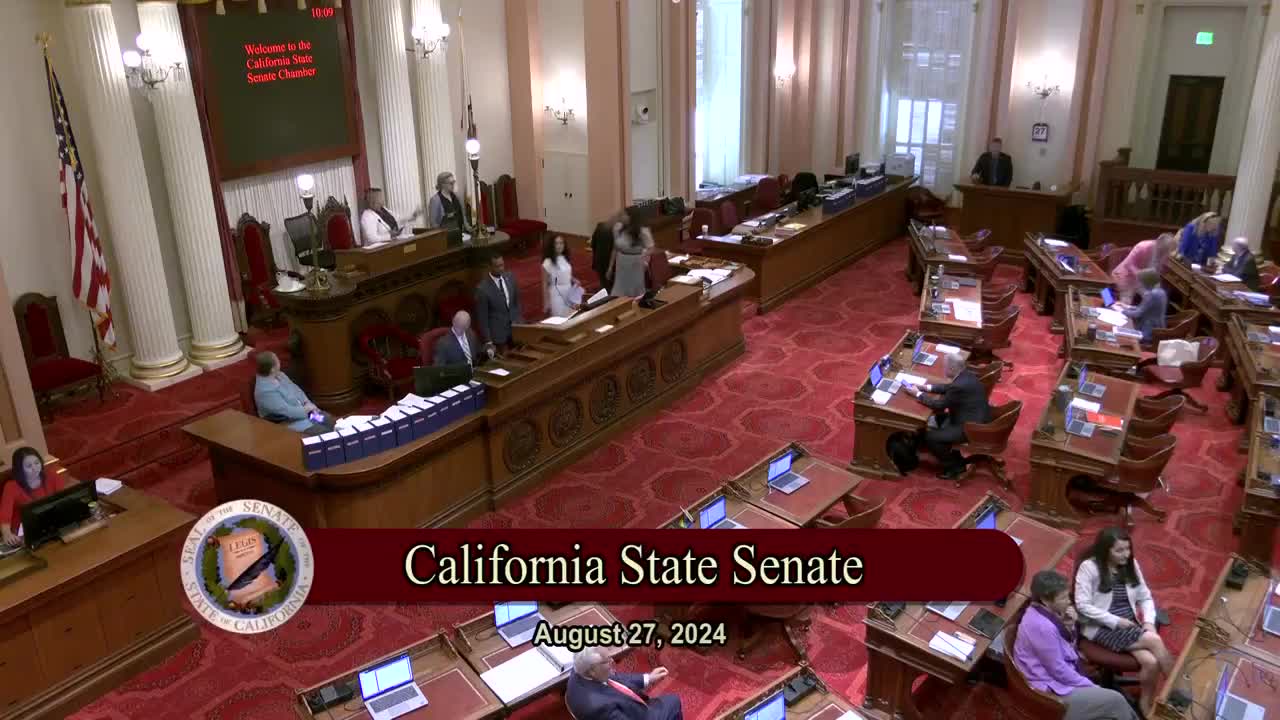 2MIN
Senate Floor
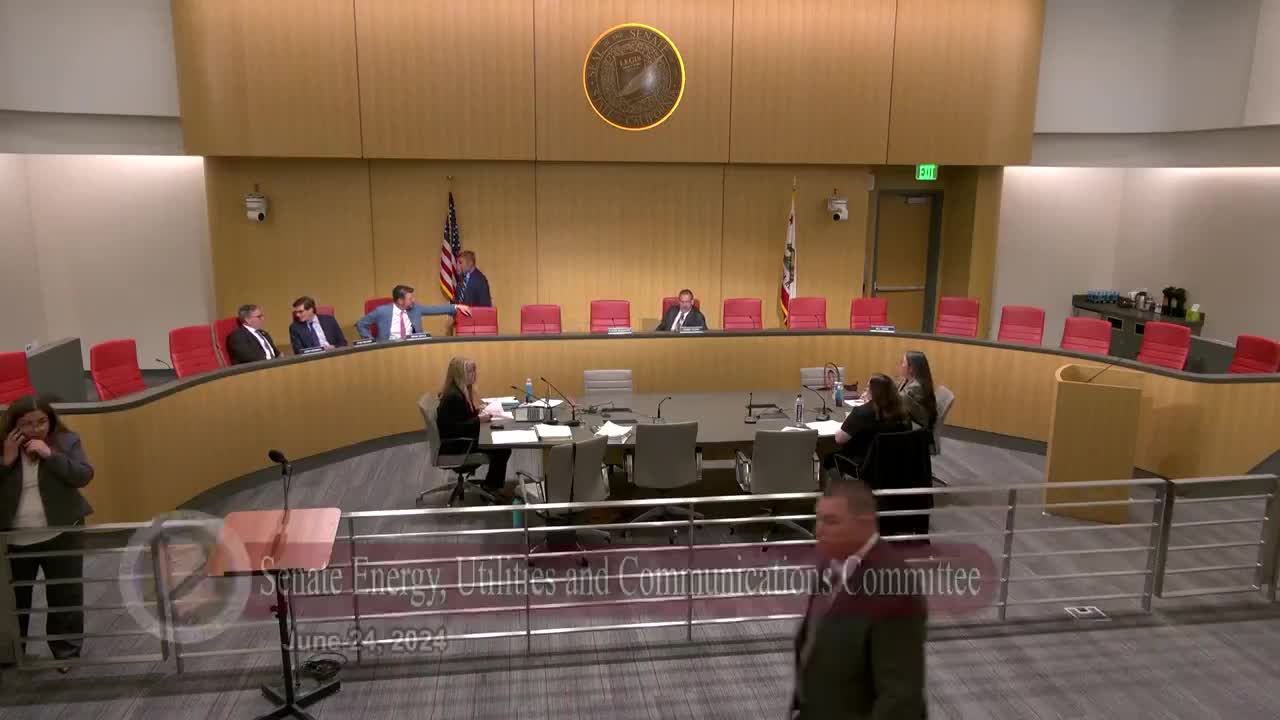 8MIN
Senate Standing Committee on Energy, Utilities and Communications
 51SEC
Assembly Floor
Bill Author

Bill Co-Author(s):