AB 1842: Health care coverage: Medication-assisted treatment.
- Session Year: 2023-2024
- House: Assembly
- Latest Version Date: 2024-09-27
Current Status:
Passed
(2024-09-27: Chaptered by Secretary of State - Chapter 633, Statutes of 2024.)
Introduced
In Committee
First Chamber
In Committee
Second Chamber
Enacted
Existing law, the KnoxKeene Health Care Service Plan Act of 1975, provides for the licensure and regulation of health care service plans by the Department of Managed Health Care and makes a willful violation of the act a crime. Existing law also provides for the regulation of health insurers by the Department of Insurance. Existing law authorizes health care service plans and health insurers that cover prescription drugs to utilize reasonable medical management practices, including prior authorization and step therapy, consistent with applicable law.
This bill would require a group or individual health care service plan or health insurer offering an outpatient prescription drug benefit to provide coverage without prior authorization, step therapy, or utilization review for at least one medication approved by the United States Food and Drug Administration in each of 4 designated categories, including medication for the reversal of opioid overdose, including a naloxone product or another opioid antagonist. Because a willful violation of these provisions by a health care service plan would be a crime, this bill would impose a state-mandated local program.
The California Constitution requires the state to reimburse local agencies and school districts for certain costs mandated by the state. Statutory provisions establish procedures for making that reimbursement.
This bill would provide that no reimbursement is required by this act for a specified reason.
Existing law, the KnoxKeene Health Care Service Plan Act of 1975, provides for the licensure and regulation of health care service plans by the Department of Managed Health Care and makes a willful violation of the act a crime. Existing law also provides for the regulation of health insurers by the Department of Insurance. Existing law authorizes health care service plans and health insurers that cover prescription drugs to utilize reasonable medical management practices, including prior authorization and step therapy, consistent with applicable law.
This bill would require a group or individual health care service plan or health insurer offering an outpatient prescription drug benefit to provide coverage without prior authorization, step therapy, or utilization review for at least one medication approved by the United States Food and Drug Administration in each of 4 designated categories, including medication for the reversal of opioid overdose, including a naloxone product or another opioid antagonist. Because a willful violation of these provisions by a health care service plan would be a crime, this bill would impose a state-mandated local program.
The California Constitution requires the state to reimburse local agencies and school districts for certain costs mandated by the state. Statutory provisions establish procedures for making that reimbursement.
This bill would provide that no reimbursement is required by this act for a specified reason.
Existing law, the KnoxKeene Health Care Service Plan Act of 1975, provides for the licensure and regulation of health care service plans by the Department of Managed Health Care and makes a willful violation of the act a crime. Existing law also provides for the regulation of health insurers by the Department of Insurance. Existing law authorizes health care service plans and health insurers that cover prescription drugs to utilize reasonable medical management practices, including prior authorization and step therapy, consistent with applicable law.
This bill would prohibit a medical service plan and a health insurer from subjecting a naloxone product or another opioid antagonist approved by the United States Food and Drug Administration, or a buprenorphine product or long-acting injectable naltrexone for detoxification or maintenance treatment of a substance use disorder, to prior authorization or step therapy. require a group or individual health care service plan or health insurer offering an outpatient prescription drug benefit to provide coverage without prior authorization, step therapy, or utilization review for at least one medication approved by the United States Food and Drug Administration in each of 4 designated categories, including medication for the reversal of opioid overdose, including a naloxone product or another opioid antagonist. Because a willful violation of these provisions by a health care service plan would be a crime, this bill would impose a state-mandated local program.
The California Constitution requires the state to reimburse local agencies and school districts for certain costs mandated by the state. Statutory provisions establish procedures for making that reimbursement.
This bill would provide that no reimbursement is required by this act for a specified reason.
Existing law, the KnoxKeene Health Care Service Plan Act of 1975, provides for the licensure and regulation of health care service plans by the Department of Managed Health Care and makes a willful violation of the act a crime. Existing law also provides for the regulation of health insurers by the Department of Insurance. Existing law authorizes health care service plans and health insurers that cover prescription drugs to utilize reasonable medical management practices, including prior authorization and step therapy, consistent with applicable law.
This bill would prohibit a medical service plan and a health insurer from subjecting a naloxone product or another opioid antagonist approved by the United States Food and Drug Administration, or a buprenorphine product or long-acting injectable naltrexone for detoxification or maintenance treatment of a substance use disorder, to prior authorization or step therapy. Because a willful violation of these provisions by a health care service plan would be a crime, this bill would impose a state-mandated local program.
The California Constitution requires the state to reimburse local agencies and school districts for certain costs mandated by the state. Statutory provisions establish procedures for making that reimbursement.
This bill would provide that no reimbursement is required by this act for a specified reason.
Existing law, the KnoxKeene Health Care Service Plan Act of 1975, provides for the licensure and regulation of health care service plans by the Department of Managed Health Care and makes a willful violation of the act a crime. Existing law also provides for the regulation of health insurers by the Department of Insurance. Existing law authorizes health care service plans and health insurers that cover prescription drugs to utilize reasonable medical management practices, including prior authorization and step therapy, consistent with applicable law.
This bill would prohibit a medical service plan and a health insurer from subjecting a naloxone product or another opioid antagonist approved by the United States Food and Drug Administration, or a buprenorphine product or long-acting injectable naltrexone for detoxification or maintenance treatment of a substance use disorder, to prior authorization or step therapy. Because a willful violation of these provisions by a health care service plan would be a crime, this bill would impose a state-mandated local program.
The California Constitution requires the state to reimburse local agencies and school districts for certain costs mandated by the state. Statutory provisions establish procedures for making that reimbursement.
This bill would provide that no reimbursement is required by this act for a specified reason.
(a)Notwithstanding any other law, a group or individual health care service plan offering an outpatient prescription drug benefit shall provide coverage for at least one medication approved by the United States Food and Drug Administration in each of the following categories without prior authorization, step therapy, or utilization review:
(1)Medication for the reversal of opioid overdose, including a naloxone product or another opioid antagonist.
(2)Medication for the detoxification or maintenance treatment of a substance use disorder, including a daily oral buprenorphine product.
(3)A long-acting buprenorphine product.
(4)A long-acting injectable naltrexone product.
(b)This section does not prohibit a health care service plan from selecting an AB-rated generic equivalent, biosimilar, as defined in Section 262(i)(2) of Title 42 of the United States Code, or interchangeable biological product, as defined in Section 262(i)(3) of Title 42 of the United States Code, to meet the requirements of subdivision (a).
SEC. 2.Section 10123.1935 is added to the Insurance Code, to read:10123.1935.(a)Notwithstanding any other law, a group or individual health insurer offering an outpatient prescription drug benefit shall provide coverage for at least one medication approved by the United States Food and Drug Administration in each of the following categories without prior authorization, step therapy, or utilization review:
(1)Medication for the reversal of opioid overdose, including a naloxone product or another opioid antagonist.
(2)Medication for the detoxification or maintenance treatment of a substance use disorder, including a daily oral buprenorphine product.
(3)A long-acting buprenorphine product.
(4)A long-acting injectable naltrexone product.
(b)This section does not prohibit a health insurer from selecting an AB-rated generic equivalent, biosimilar, as defined in Section 262(i)(2) of Title 42 of the United States Code, or interchangeable biological product, as defined in Section 262(i)(3) of Title 42 of the United States Code, to meet the requirements of subdivision (a).
SEC. 3.No reimbursement is required by this act pursuant to Section 6 of Article XIIIB of the California Constitution because the only costs that may be incurred by a local agency or school district will be incurred because this act creates a new crime or infraction, eliminates a crime or infraction, or changes the penalty for a crime or infraction, within the meaning of Section 17556 of the Government Code, or changes the definition of a crime within the meaning of Section 6 of Article XIIIB of the California Constitution.
(a)Notwithstanding any other law, a group or individual health care service plan offering an outpatient prescription drug benefit shall provide coverage for at least one medication approved by the United States Food and Drug Administration in each of the following categories without prior authorization, step therapy, or utilization review:
(1)Medication for the reversal of opioid overdose, including a naloxone product or another opioid antagonist.
(2)Medication for the detoxification or maintenance treatment of a substance use disorder, including a daily oral buprenorphine product.
(3)A long-acting buprenorphine product.
(4)A long-acting injectable naltrexone product.
(b)This section does not prohibit a health care service plan from selecting an AB-rated generic equivalent, biosimilar, as defined in Section 262(i)(2) of Title 42 of the United States Code, or interchangeable biological product, as defined in Section 262(i)(3) of Title 42 of the United States Code, to meet the requirements of subdivision (a).
SEC. 2.Section 10123.1935 is added to the Insurance Code, to read:10123.1935.(a)Notwithstanding any other law, a group or individual health insurer offering an outpatient prescription drug benefit shall provide coverage for at least one medication approved by the United States Food and Drug Administration in each of the following categories without prior authorization, step therapy, or utilization review:
(1)Medication for the reversal of opioid overdose, including a naloxone product or another opioid antagonist.
(2)Medication for the detoxification or maintenance treatment of a substance use disorder, including a daily oral buprenorphine product.
(3)A long-acting buprenorphine product.
(4)A long-acting injectable naltrexone product.
(b)This section does not prohibit a health insurer from selecting an AB-rated generic equivalent, biosimilar, as defined in Section 262(i)(2) of Title 42 of the United States Code, or interchangeable biological product, as defined in Section 262(i)(3) of Title 42 of the United States Code, to meet the requirements of subdivision (a).
SEC. 3.No reimbursement is required by this act pursuant to Section 6 of Article XIIIB of the California Constitution because the only costs that may be incurred by a local agency or school district will be incurred because this act creates a new crime or infraction, eliminates a crime or infraction, or changes the penalty for a crime or infraction, within the meaning of Section 17556 of the Government Code, or changes the definition of a crime within the meaning of Section 6 of Article XIIIB of the California Constitution.
(a)Notwithstanding any other law, a group or individual health care service plan offering an outpatient prescription drug benefit shall provide coverage for at least one medication approved by the United States Food and Drug Administration in each of the following categories without prior authorization, step therapy, or utilization review:
(1)Medication for the reversal of opioid overdose, including a naloxone product or another opioid antagonist.
(2)Medication for the detoxification or maintenance treatment of a substance use disorder, including a daily oral buprenorphine product.
(3)A long-acting buprenorphine product.
(4)A long-acting injectable naltrexone product.
(b)This section does not prohibit a health care service plan from selecting an AB-rated generic equivalent, biosimilar, as defined in Section 262(i)(2) of Title 42 of the United States Code, or interchangeable biological product, as defined in Section 262(i)(3) of Title 42 of the United States Code, to meet the requirements of subdivision (a).
SEC. 2.Section 10123.1935 is added to the Insurance Code, to read:10123.1935.(a)Notwithstanding any other law, a group or individual health insurer offering an outpatient prescription drug benefit shall provide coverage for at least one medication approved by the United States Food and Drug Administration in each of the following categories without prior authorization, step therapy, or utilization review:
(1)Medication for the reversal of opioid overdose, including a naloxone product or another opioid antagonist.
(2)Medication for the detoxification or maintenance treatment of a substance use disorder, including a daily oral buprenorphine product.
(3)A long-acting buprenorphine product.
(4)A long-acting injectable naltrexone product.
(b)This section does not prohibit a health insurer from selecting an AB-rated generic equivalent, biosimilar, as defined in Section 262(i)(2) of Title 42 of the United States Code, or interchangeable biological product, as defined in Section 262(i)(3) of Title 42 of the United States Code, to meet the requirements of subdivision (a).
SECTION 1.Section 1342.75 is added to the Health and Safety Code, to read:1342.75.Notwithstanding any other law, a health care service plan shall not subject either of the following to prior authorization or step therapy:(a)A naloxone product or another opioid antagonist approved by the United States Food and Drug Administration.(b)A buprenorphine product or long-acting injectable naltrexone for detoxification or maintenance treatment of a substance use disorder.SEC. 2.Section 10123.1935 is added to the Insurance Code, to read:10123.1935.Notwithstanding any other law, a health insurer shall not subject either of the following to prior authorization or step therapy:(a)A naloxone product or another opioid antagonist approved by the United States Food and Drug Administration.(b)A buprenorphine product or long-acting injectable naltrexone for detoxification or maintenance treatment of a substance use disorder.SEC. 3.No reimbursement is required by this act pursuant to Section 6 of Article XIIIB of the California Constitution because the only costs that may be incurred by a local agency or school district will be incurred because this act creates a new crime or infraction, eliminates a crime or infraction, or changes the penalty for a crime or infraction, within the meaning of Section 17556 of the Government Code, or changes the definition of a crime within the meaning of Section 6 of Article XIIIB of the California Constitution.
Notwithstanding any other law, a health care service plan shall not subject any either of the following to prior authorization or step therapy:
(a)A naloxone product or another opioid antagonist approved by the United States Food and Drug Administration.
(b)A buprenorphine product or long-acting injectable naltrexone for detoxification or maintenance treatment of a substance use disorder.
SEC. 2.Section 10123.1935 is added to the Insurance Code, to read:10123.1935.Notwithstanding any other law, a health insurer shall not subject any either of the following to prior authorization or step therapy:
(a)A naloxone product or another opioid antagonist approved by the United States Food and Drug Administration.
(b)A buprenorphine product or long-acting injectable naltrexone for detoxification or maintenance treatment of a substance use disorder.
SEC. 3.No reimbursement is required by this act pursuant to Section 6 of Article XIIIB of the California Constitution because the only costs that may be incurred by a local agency or school district will be incurred because this act creates a new crime or infraction, eliminates a crime or infraction, or changes the penalty for a crime or infraction, within the meaning of Section 17556 of the Government Code, or changes the definition of a crime within the meaning of Section 6 of Article XIIIB of the California Constitution.
Notwithstanding any other law, a health care service plan shall not subject any of the following to prior authorization or step therapy:
(a)A naloxone product or another opioid antagonist approved by the United States Food and Drug Administration.
(b)A buprenorphine product or long-acting injectable naltrexone for detoxification or maintenance treatment of a substance use disorder.
SEC. 2.Section 10123.1935 is added to the Insurance Code, to read:10123.1935.Notwithstanding any other law, a health insurer shall not subject any of the following to prior authorization or step therapy:
(a)A naloxone product or another opioid antagonist approved by the United States Food and Drug Administration.
(b)A buprenorphine product or long-acting injectable naltrexone for detoxification or maintenance treatment of a substance use disorder.
SEC. 3.No reimbursement is required by this act pursuant to Section 6 of Article XIIIB of the California Constitution because the only costs that may be incurred by a local agency or school district will be incurred because this act creates a new crime or infraction, eliminates a crime or infraction, or changes the penalty for a crime or infraction, within the meaning of Section 17556 of the Government Code, or changes the definition of a crime within the meaning of Section 6 of Article XIIIB of the California Constitution.
|
Date
|
Status
|
|---|---|
| Sep 27, 2024 | Chaptered by Secretary of State - Chapter 633, Statutes of 2024. |
| Sep 27, 2024 | Approved by the Governor. |
| Sep 11, 2024 | Enrolled and presented to the Governor at 4 p.m. |
| Aug 29, 2024 | Senate amendments concurred in. To Engrossing and Enrolling. (Ayes 75. Noes 0.). |
| Aug 29, 2024 | Assembly Rule 77 suspended. |
| Aug 28, 2024 | In Assembly. Concurrence in Senate amendments pending. May be considered on or after August 30 pursuant to Assembly Rule 77. |
| Aug 28, 2024 | Read third time. Passed. Ordered to the Assembly. (Ayes 38. Noes 0.). |
| Aug 26, 2024 | Read second time. Ordered to third reading. |
| Aug 22, 2024 | Read third time and amended. Ordered to second reading. |
| Jun 11, 2024 | Read second time. Ordered to third reading. |
| Jun 10, 2024 | From committee: Do pass. (Ayes 7. Noes 0.) (June 10). |
| May 29, 2024 | From committee: Do pass and re-refer to Com. on APPR. (Ayes 11. Noes 0.) (May 29). Re-referred to Com. on APPR. |
| May 20, 2024 | From committee chair, with author's amendments: Amend, and re-refer to committee. Read second time, amended, and re-referred to Com. on HEALTH. |
| May 8, 2024 | Referred to Com. on HEALTH. |
| Apr 29, 2024 | In Senate. Read first time. To Com. on RLS. for assignment. |
| Apr 29, 2024 | Read third time. Passed. Ordered to the Senate. (Ayes 73. Noes 0. Page 5031.) |
| Apr 11, 2024 | Read second time. Ordered to third reading. |
| Apr 10, 2024 | From committee: Do pass. (Ayes 14. Noes 0.) (April 10). |
| Mar 19, 2024 | From committee: Do pass and re-refer to Com. on APPR. (Ayes 13. Noes 0.) (March 19). Re-referred to Com. on APPR. |
| Jan 29, 2024 | Referred to Com. on HEALTH. |
| Jan 17, 2024 | From printer. May be heard in committee February 16. |
| Jan 16, 2024 | Read first time. To print. |
|
Date
|
Description
|
Location
|
Votes
|
|
|---|---|---|---|---|
| Aug 29, 2024 | AB 1842 Reyes Concurrence in Senate Amendments | Assembly Floor |
Passed |
|
| Aug 28, 2024 | Assembly 3rd Reading AB1842 Reyes et al. By Limón | Senate Floor |
Passed |
|
| Jun 10, 2024 | Do pass | Senate Standing Committee on Appropriations |
Passed |
|
| May 29, 2024 | Do pass, but first be re-referred to the Committee on [Appropriations] | Senate Standing Committee on Health |
Passed |
|
| Apr 29, 2024 | AB 1842 Reyes Assembly Third Reading | Assembly Floor |
Passed |
|
| Apr 10, 2024 | Do pass. | Assembly Standing Committee on Appropriations |
Passed |
|
| Mar 19, 2024 | Do pass and be re-referred to the Committee on [Appropriations] | Assembly Standing Committee on Health |
Passed |
This list shows positions taken on this bill by organizations on the date displayed, which is linked to the original source.
Positions by individuals are not included.
|
Organization
|
Position
|
Date
|
|---|---|---|
| AmericaS Health Insurance Plans | ** Against | |
| Association Of California Life And Health Insurance Companies | ** Against | |
| California Academy of Child and Adolescent Psychiatry | ** Support | |
| California Academy Of Family Physicians | ** Support | |
| California Association Of Health Plans | ** Against | |
| California Black Health Network | ** Support | |
| California Chapter of the American College of Emergency Physicians | ** Support | |
| California Chronic Care Coalition | ** Support | |
| California Federation Of Teachers | ** Support | |
| California Hospital Association | ** Support | |
| California Life Sciences | ** Support | |
| California Nurses Association | ** Support | |
| California Society of Health System Pharmacists | ** Support | |
| California State Association of Psychiatrists | ** Support | |
| City and County of San Francisco | ** Support | |
| County Behavioral Health Directors Association of California | ** Support | |
| County of Santa Clara | ** Support | |
| Drug Policy Alliance | ** Support | |
| Ella Baker Center For Human Rights | ** Support | |
| Health Access California | ** Support | |
| Mental Health America of California | ** Support | |
| Steinberg Institute | ** Support |
CONCURRENCE IN SENATE AMENDMENTS
CSA1 Bill Id:AB 1842
Author:(Reyes)
As Amended Ver:August 22, 2024
Majority vote
SUMMARY
Requires a group or individual health plan or health insurer to provide coverage without prior authorization or step therapy, or utilization review for at least one medication approved by the United States Food and Drug Administration (FDA) in each of four specified categories.
Senate Amendments
- Revise and recast provisions of this bill to require a group or individual health plan or health insurer to provide coverage without prior authorization or step therapy, or utilization review for at least one medication approved by the FDA in each of the following categories without prior authorization, step therapy, or utilization review:
- Medication for the reversal of opioid overdose, including a naloxone product or another opioid antagonist;
- Medication for the detoxification or maintenance treatment of a substance use disorder (SUD), including a daily oral buprenorphine product;
- A long-acting buprenorphine product; and,
- A long-acting injectable naltrexone product.
- Specify that this bill does not prohibit a health plan or insurer from selecting an AB-rated generic equivalent, biosimilar, as defined in the United States Code, or interchangeable biological product, as defined in the United States Code, to meet the requirements of 1) above.
COMMENTS
According to the California Health Benefits Review Program (CHBRP), the Diagnostic and Statistical Manual of Mental Disorders (DSM-5) defines opioid use disorder (OUD) as "a problematic pattern of opioid use leading to clinically significant impairment or distress" and persons must meet defined criteria within a 12-month period to receive a diagnosis. OUD applies to the class of medications or drugs that includes illegal drugs such as heroin, synthetic opioids such as fentanyl, and prescription pain medications such as oxycodone, hydrocodone, codeine, and morphine that are misused for indications other than prescribed. Prescription opioids are used to treat moderate to severe pain, and persons who take prescription opioids can develop opioid use disorder. The DSM-5 characterizes alcohol use disorder as a pattern of alcohol use (e.g., wine, beer, and spirits) that results in significant impairment or distress. People meeting at least two of 11 specified criteria within a 12-month period are diagnosed with mild, moderate, or severe alcohol use disorder depending on the number of criteria met.
- Opioid Related Overdose Deaths in California. The Department of Public Health reports on its Opioid Overdose Death Dashboard that in 2022, there were 7,385 opioid related deaths in California. The annual crude mortality rate for 2022 was 18.39 per 100k residents, an increase of 33% from 2020. Of those over 83% involved fentanyl, a potent synthetic opioid drug that is approximately 50 times stronger than heroin and 100 times stronger than morphine. The number of deaths each year involving fentanyl increased dramatically between 2012 and 2021. During this time period fentanyl related overdose deaths increased by more than 7,250% -- from 82 deaths to 5,961 deaths in 2021.
- Medication-assisted treatment (MAT). Treatments for SUD include prescription medication (medications for OUD or medications for alcohol use disorder), also called, MAT, as well as counseling, residential facilities, and mutual help groups (e.g., Alcoholics Anonymous, Narcotics Anonymous).
The Substance Abuse and Mental Health Services Administration (SAMHSA) describes maintenance treatment as "providing medications to achieve and sustain clinical remission of signs and symptoms of OUD and support the individual process of recovery without a specific endpoint." Some persons with OUD may require long-term medication treatment to ensure sustained recovery. There is evidence that relapse of OUD occurs less often for patients on medications (buprenorphine-naloxone and long-acting injectable naltrexone) for treatment (16%) compared to patients with no medication for treatment (40%). Some persons with alcohol use disorder experience a chronic condition with recurring treatment, abstinence, and relapse. Data from a nationally representative sample from 2012 to 2013 found that one third of adults with alcohol use disorder prior to the past year still had persistent alcohol use disorder, over half had remission from alcohol use disorder as classified by the DSM-5, and of the respondents that met criteria for remission, one third were indicative of recovery.
The American Society of Addiction Medicine (ASAM) provides the National Practice Guidelines for the Use of Medications in the Treatment of Addiction Involving Opioid Use and SAMHSA provides the Treatment Improvement Protocol that reviews the clinical standards of care for patients with OUD including buprenorphine, methadone, and long-acting injectable naltrexone. In 2020, the ASAM updated requirements to include that all FDA approved medication prescribed for the treatment of OUD should be available to all persons seeking treatment.
- State programs. In 2017, California received more than $476 million in discretionary grants from SAMHSA to aid in the opioid crisis. The California Department of Health Care Services (DHCS) initiated the California MAT Expansion Program in response to the opioid epidemic in the state and to help stop overdose deaths. The goals of the program are to increase access to MAT, reduce unmet treatment need, and reduce opioid-related overdose deaths.
CalRx Naloxone Access Initiative. In 2023, Governor Newsom announced through the CalRx Naloxone Access Initiative, that California will work with a pharmaceutical partner or partners who can develop, make, and distribute naloxone nasal spray at a much lower cost. Additionally, California is providing $30 million to support this project, which will help with research, manufacturing, and getting FDA approval. The goal is to offer naloxone at a single, affordable price that everyone can afford. A more affordable version of this life-saving medication will enable state programs to purchase more supply and to reduce financial barriers for other purchasers, particularly community-based organizations and individuals and families.
- CHBRP analysis. CHBRP states the following in its analysis of AB 1288 (Rendon) of 2023 which is similar to this bill:
- Enrollees covered. The medications addressed by this bill are most commonly covered through a pharmacy benefit. For Medi-Cal beneficiaries in Department of Managed Health Care (DMHC)-regulated managed care plans, the pharmacy benefit is separate and is administered by DHCS. Therefore, these beneficiaries have a pharmacy benefit that is not subject to DMHC regulation. Approximately 95.6% of commercial/California Public Employees' Retirement System (CalPERS) enrollees in plans and policies regulated by DMHC or California Department of Insurance (CDI) have a pharmacy benefit regulated by DMHC or CDI that would be subject to this bill. CHBRP estimates that 1% to 5% of these enrollees (the figure varies by medication) have a prior authorization requirement that would be prohibited by this bill. Postmandate, none of these enrollees would have a prior authorization requirement applicable to these medications when they are on formulary.
- Medical effectiveness. There is limited evidence that removal of prior authorization requirements for buprenorphine products is associated with increased use and higher treatment retention for OUD. There is insufficient evidence on the impact of prior authorization on methadone use for OUD. It should be noted that this bill does not include methadone. There is insufficient evidence on the impact of prior authorization on long-acting injectable naltrexone use for either OUD or alcohol use disorder. For treatment of OUD, there is clear and convincing evidence that buprenorphine products and methadone are more effective with regard to treatment retention, reduction in use of illicit opioids, relapse, and improved health outcomes, compared to a placebo or no treatment. There is a preponderance of evidence that long-acting injectable naltrexone is effective with regard to treatment retention and abstinence, but not for overdose prevention, compared to a placebo or oral naltrexone. For treatment of alcohol use disorder, there is a preponderance of evidence that long-acting injectable naltrexone is more effective with regard to reducing return to drinking compared to a placebo or oral naltrexone.
According to the Author
There is an urgent need to expand access to rapid initiation of medications to treat addiction. This bill expands on the recent work of the federal government to mainstream addiction treatment by eliminating unnecessary barriers to treatment. As a policy, commercially insured Californians are the only group where prior authorization delays are still allowed. The author concludes that removing this last barrier will expand low barrier treatment options for at risk patients, prevent overdose, and save lives.
Arguments in Support
The Ella Baker Center for Human Rights writes that this bill is urgently needed to address the overdose crisis in our state. Drug overdose has been the number-one cause of accidental death in California for over a decade and cannot continue to allow this catastrophe to continue unabated. Almost 11,000 Californians died in 2021 as a result of a preventable drug overdose. In addition, another 19,000 Californians died that same year due to excessive alcohol use. Medications such as buprenorphine or long-acting naltrexone can dramatically improve health outcomes for substance use disorders by treating withdrawal and preventing use of dangerous controlled substances, including fentanyl. There is currently no prior authorization needed for accessing MAT for Medi-Cal beneficiaries, and seventeen states have already adopted policies to remove prior authorization requirements for commercial health insurers. But many commercial insurers in California are not allowing these medically-appropriate treatments to be given to patients that pay for coverage. The Ella Baker Center for Human Rights concludes that prior authorization requirements create unnecessary barriers that delay or interrupt access to effective treatment.
Arguments in Support if Amended
The California Association of Alcohol and Drug Program Executives request amendments to a previous version of this bill to expand this bill to include all MAT options and formulas approved by the FDA. The Union of American Physicians and Dentists (UAPD/AFSCME Local 206) requests the following amendment to a previous version of this bill to ensure professional ethical standards of treatment: No physician shall prescribe any naloxone product or another opioid antagonist approved by FDA or a buprenorphine product or long-acting injectable naltrexone for detoxification or maintenance treatment of a SUD without doing due diligence in keeping with professional ethical standards of treatment.
Arguments in Opposition
The California Association of Health Plans (CAHP), the Association of California Life and Health Insurance Companies (ACLHIC), and America's Health Insurance Plans (AHIP) oppose mandates for health plans and insurers to cover specific services, as well as bills that eliminate cost sharing and limit utilization management, which have similar cost impacts as coverage mandates. Moreover, they will increase costs, reduce choice and competition, and further incent some employers and individuals to avoid state regulation by seeking alternative coverage options. These bills will lead to higher premiums, harming affordability and access for small businesses and individual market consumers. CAHP, ACLHIC, and ACLHIC write that state mandates increase costs of coverage, especially for families who buy coverage without subsidies, small business owners who cannot or do not wish to self-insure, and California taxpayers who foot the bill for the state's share of those mandates.
FISCAL COMMENTS
According to the Senate Appropriations Committee, DMHC estimates costs of approximately $64,000 in 2025-26 and $133,000 in 2026-27 and annually thereafter for state administration (Managed Care Fund). Unknown, likely minor, one-time costs for the CDI for state administration (Insurance Fund). CalPERS anticipates no measurable change in utilization or expenditures at the state level.
VOTES:
ASM HEALTH: 13-0-3
YES: Bonta, Waldron, Aguiar-Curry, Arambula, Wendy Carrillo, Vince Fong, Haney, Jones-Sawyer, Maienschein, Joe Patterson, Rodriguez, Schiavo, Weber
ABS, ABST OR NV: Flora, McCarty, Santiago
ASM APPROPRIATIONS: 14-0-1
YES: Wicks, Sanchez, Arambula, Bryan, Calderon, Dixon, Mike Fong, Grayson, Haney, Hart, Jim Patterson, Pellerin, Ta, Villapudua
ABS, ABST OR NV: Wendy Carrillo
ASSEMBLY FLOOR: 73-0-7
YES: Addis, Aguiar-Curry, Alanis, Arambula, Bains, Bauer-Kahan, Bennett, Berman, Boerner, Bonta, Bryan, Calderon, Juan Carrillo, Wendy Carrillo, Cervantes, Chen, Connolly, Davies, Dixon, Flora, Mike Fong, Vince Fong, Friedman, Gabriel, Gallagher, Garcia, Gipson, Grayson, Haney, Hart, Holden, Hoover, Irwin, Jackson, Jones-Sawyer, Kalra, Lackey, Lee, Low, Lowenthal, Maienschein, McCarty, McKinnor, Muratsuchi, Stephanie Nguyen, Ortega, Pacheco, Papan, Jim Patterson, Joe Patterson, Pellerin, Petrie-Norris, Quirk-Silva, Ramos, Reyes, Luz Rivas, Rodriguez, Santiago, Schiavo, Soria, Ta, Ting, Valencia, Villapudua, Waldron, Wallis, Ward, Weber, Wicks, Wilson, Wood, Zbur, Robert Rivas
ABS, ABST OR NV: Alvarez, Megan Dahle, Essayli, Mathis, Rendon, Blanca Rubio, Sanchez
SENATE FLOOR: 39-0-1
YES: Allen, Archuleta, Ashby, Atkins, Becker, Blakespear, Bradford, Caballero, Cortese, Dahle, Dodd, Durazo, Eggman, Glazer, Gonzalez, Grove, Hurtado, Jones, Laird, Limón, McGuire, Menjivar, Min, Newman, Nguyen, Niello, Ochoa Bogh, Padilla, Portantino, Roth, Rubio, Seyarto, Skinner, Smallwood-Cuevas, Stern, Umberg, Wahab, Wiener, Wilk
ABS, ABST OR NV: Alvarado-Gil
UPDATED
VERSION: August 22, 2024
CONSULTANT: Kristene Mapile / HEALTH / (916) 319-2097 FN: 0004569
SENATE RULES COMMITTEE Office of Senate Floor Analyses (916) 651-1520 Fax: (916) 327-4478 | AB 1842 |
THIRD READING
Bill No: AB 1842
Author: Reyes (D), et al.
Amended: 8/22/24 in Senate
Vote: 21
SENATE HEALTH COMMITTEE: 11-0, 5/29/24
AYES: Roth, Nguyen, Glazer, Gonzalez, Grove, Hurtado, Limón, Menjivar, Rubio, Smallwood-Cuevas, Wiener
SENATE APPROPRIATIONS COMMITTEE: 7-0, 6/10/24
AYES: Caballero, Jones, Ashby, Becker, Bradford, Seyarto, Wahab
ASSEMBLY FLOOR: 73-0, 4/29/24 - See last page for vote
SUBJECT: Health care coverage: Medication-assisted treatment
SOURCE: Author
DIGEST:
This bill requires a group and individual health plan or health insurer to cover without prior authorization, step therapy, or utilization review, at least one specified medications approved by the Federal Food and Drug Administration (FDA) for the treatment of a substance use disorder.
Senate Floor Amendments of 8/22/24 limit the bill to individual and group health plans and insurers offering an outpatient prescription drug benefit, and require coverage for at least one medication approved by the FDA in each of the following categories without prior authorization, step therapy, or utilization review:
- Medication for the reversal of opioid overdose, including a naloxone product or another opioid antagonist.
- Medication for the detoxification or maintenance treatment of a substance use disorder, including a daily oral buprenorphine product.
- A long-acting buprenorphine product.
- A long-acting injectable naltrexone product.
The amendments indicate that this bill does not prohibit a health plan or insurer from selecting an AB-rated generic equivalent, biosimilar, or interchangeable biologic, as specified.
ANALYSIS:
Existing law:
- Establishes the Department of Managed Health Care (DMHC) to regulate health plans under the Knox-Keene Health Care Services Plan Act of 1975; the California Department of Insurance (CDI) to regulate health and other insurers; the Department of Health Care Services (DHCS) to administer the Medi-Cal program. [Health and Safety Code (HSC) §1340, et seq., Insurance Code (INS) §106, et seq., and Welfare and Institutions Code (WIC) §14000, et seq.]
- Requires every health plan contract and insurance policy that provides hospital, medical, or surgical coverage to provide coverage for medically necessary treatment of mental health and substance use disorders under the same terms and conditions applied to other medical conditions, as specified. [HSC §1374.72 and INS §10144.5]
- Authorizes a health plan or insurer that provides coverage for prescription drugs to require step therapy if there is more than one drug that is clinically appropriate for the treatment of a medical condition. [HSC §1367.206 and INS §10123.201]
- Requires, if a health plan or insurer that provides coverage for prescription drugs or a contracted physicians group fails to respond to a prior authorization, or step therapy exception request, as specified, within 72 hours for nonurgent requests, and within 24 hours if exigent circumstances exist, upon the receipt of a completed request form, the request to be deemed granted. [HSC §1367.241 and INS §10123.191]
This bill:
- Requires individual and group health plans and insurers offering an outpatient prescription drug benefit to provide coverage for at least one medication approved by the FDA in each of the following categories without prior authorization, step therapy, or utilization review:
- Medication for the reversal of opioid overdose, including a naloxone product or another opioid antagonist;
- Medication for the detoxification or maintenance treatment of a substance use disorder, including a daily oral buprenorphine product;
- A long-acting buprenorphine product; and,
- A long-acting injectable naltrexone product.
- Indicates this bill does not prohibit a health plan or insurer from selecting an AB-rated generic equivalent, biosimilar, or interchangeable biologic, as specified.
Comments
Author’s statement. According to the author, there is an urgent need to expand access to rapid initiation of medications to treat addiction. This bill expands on the recent work of the federal government to mainstream addiction treatment by eliminating unnecessary barriers to treatment. As a policy, commercially insured Californians are the only group where prior authorization delays are still allowed. Removing this last barrier will expand low barrier treatment options for at risk patients, prevent overdose, and save lives.
Related/Prior Legislation
AB 1288 (Rendon, 2023) was substantially similar to this bill. The bill was vetoed by the Governor.
FISCAL EFFECT: Appropriation: No Fiscal Com.: Yes Local: Yes
According to the Senate Appropriations Committee, DMHC estimates costs of approximately $64,000 in 2025-26 and $133,000 in 2026-27 and annually thereafter for state administration (Managed Care Fund). Unknown, likely minor, one-time costs for the CDI for state administration (Insurance Fund). The California Public Employees' Retirement System (CalPERS) anticipates no measurable change in utilization or expenditures at the state level.
SUPPORT: (Verified 8/23/24)
California Academy of Child and Adolescent Psychiatry
California Academy of Family Physicians
California Black Health Network
California Chapter of the American College of Emergency Physicians
California Chronic Care Coalition
California Federation of Teachers
California Hospital Association
California Life Sciences
California Nurses Association
California Society of Health System Pharmacists
California State Association of Psychiatrists
City and County of San Francisco
County Behavioral Health Directors Association of California
County of Santa Clara
Drug Policy Alliance
Ella Baker Center for Human Rights
Health Access California
Mental Health America of California
Steinberg Institute
OPPOSITION: (Verified 8/23/24)
None received
ARGUMENTS IN SUPPORT: The California Academy of Child and Adolescent Psychiatry writes that medication-assisted treatment has been recognized as an effective approach to combat addiction, reduce overdose risk, and support recovery, but barriers such as prior authorization and step therapy can delay critical treatment, leading to adverse outcomes for those in need.
The California Black Health Network writes that prior authorization or step therapy can delay access to Naloxone. Illicitly manufactured fentanyl is one of the drug-related overdose deaths in California affecting Black/African Americans with rates of 29.1 per 100,000. This bill will remove the barriers to ensure time-sensitive interventions and prevent unnecessary deaths.
The California Hospital Association writes physicians who treat patients with substance use disorders must be able to select and implement the most effective treatment regimen, including medication-assisted treatment, without the unnecessary barriers and delays that occur with a requirement for prior authorization.
The City and County of San Francisco indicates the overdose crisis remains one of the most significant public health challenges facing San Francisco with 810 deaths in 2023. Black/African Americans experience an overdose death rate that is greater than five times the citywide rate. Expanding access to medication for addiction treatment is an essential component to addressing the overdose crisis.
ASSEMBLY FLOOR: 73-0, 4/29/24
AYES: Addis, Aguiar-Curry, Alanis, Arambula, Bains, Bauer-Kahan, Bennett, Berman, Boerner, Bonta, Bryan, Calderon, Juan Carrillo, Wendy Carrillo, Cervantes, Chen, Connolly, Davies, Dixon, Flora, Mike Fong, Vince Fong, Friedman, Gabriel, Gallagher, Garcia, Gipson, Grayson, Haney, Hart, Holden, Hoover, Irwin, Jackson, Jones-Sawyer, Kalra, Lackey, Lee, Low, Lowenthal, Maienschein, McCarty, McKinnor, Muratsuchi, Stephanie Nguyen, Ortega, Pacheco, Papan, Jim Patterson, Joe Patterson, Pellerin, Petrie-Norris, Quirk-Silva, Ramos, Reyes, Luz Rivas, Rodriguez, Santiago, Schiavo, Soria, Ta, Ting, Valencia, Villapudua, Waldron, Wallis, Ward, Weber, Wicks, Wilson, Wood, Zbur, Robert Rivas
NO VOTE RECORDED: Alvarez, Megan Dahle, Essayli, Mathis, Rendon, Blanca Rubio, Sanchez
Prepared by: Teri Boughton / HEALTH / (916) 651-4111
8/23/24 21:36:15
**** END ****
SENATE RULES COMMITTEE Office of Senate Floor Analyses (916) 651-1520 Fax: (916) 327-4478 | AB 1842 |
THIRD READING
Bill No: AB 1842
Author: Reyes (D), et al.
Amended: 5/20/24 in Senate
Vote: 21
SENATE HEALTH COMMITTEE: 11-0, 5/29/24
AYES: Roth, Nguyen, Glazer, Gonzalez, Grove, Hurtado, Limón, Menjivar, Rubio, Smallwood-Cuevas, Wiener
SENATE APPROPRIATIONS COMMITTEE: 7-0, 6/10/24
AYES: Caballero, Jones, Ashby, Becker, Bradford, Seyarto, Wahab
ASSEMBLY FLOOR: 73-0, 4/29/24 - See last page for vote
SUBJECT: Health care coverage: Medication-assisted treatment
SOURCE: Author
DIGEST: This bill prohibits a health plan or health insurer from subjecting to prior authorization or step therapy a naloxone product or another opioid antagonist approved by the federal Food and Drug Administration, or a buprenorphine product or long-acting injectable naltrexone for detoxification or maintenance treatment of a substance use disorder.
ANALYSIS:
Existing law:
- Establishes the Department of Managed Health Care (DMHC) to regulate health plans under the Knox-Keene Health Care Services Plan Act of 1975; the California Department of Insurance (CDI) to regulate health and other insurers; the Department of Health Care Services (DHCS) to administer the Medi-Cal program. [HSC §1340, et seq., INS §106, et seq., and WIC §14000, et seq.]
- Requires every health plan contract and insurance policy that provides hospital, medical, or surgical coverage to provide coverage for medically necessary treatment of mental health and substance use disorders under the same terms and conditions applied to other medical conditions, as specified. [HSC §1374.72 and Insurance Code (INS) §10144.5]
- Authorizes a health plan or insurer that provides coverage for prescription drugs to require step therapy if there is more than one drug that is clinically appropriate for the treatment of a medical condition. [HSC §1367.206 and INS §10123.201]
- Requires, if a health plan or insurer that provides coverage for prescription drugs or a contracted physicians group fails to respond to a prior authorization, or step therapy exception request, as specified, within 72 hours for nonurgent requests, and within 24 hours if exigent circumstances exist, upon the receipt of a completed request form, the request to be deemed granted. [HSC §1367.241 and INS §10123.191]
This bill prohibits a health plan or health insurer from subjecting to prior authorization or step therapy a naloxone product or another opioid antagonist approved by the federal Food and Drug Administration (FDA), or a buprenorphine product or long-acting injectable naltrexone for detoxification or maintenance treatment of a substance use disorder.
Comments
- Author’s statement. According to the author, there is an urgent need to expand access to rapid initiation of medications to treat addiction. This bill expands on the recent work of the federal government to mainstream addiction treatment by eliminating unnecessary barriers to treatment. As a policy, commercially insured Californians are the only group where prior authorization delays are still allowed. Removing this last barrier will expand low barrier treatment options for at risk patients, prevent overdose, and save lives.
- California Health Benefits Review Program (CHBRP) analysis. AB 1996 (Thomson, Chapter 795, Statutes of 2002) required the University of California to assess legislation proposing a mandated benefit or service and prepare a written analysis with relevant data on the medical, economic, and public health impacts of proposed health plan and health insurance benefit mandate legislation. CHBRP was created in response to AB 1996, and reviewed SB 1288 (Rendon of 2023) which is substantially similar to this bill that also included methadone. Key findings include:
- Background. The prevalence of opioid use disorder in California was 1.58% among people aged 12 years and older in 2021, and alcohol use disorder was 11% among people aged 12 or older in 2021. In addition to a greater risk of mortality and premature mortality, people with opioid use disorder are at a higher risk for developing cardiac dysrhythmias; respiratory depression; impairment in daily function (Blanco et al., 2013); and contraction of infections including HIV, hepatitis (A, B, and C), tuberculosis, and endocarditis, which lead to increased use of health care services to treat those conditions. In California in 2021, 7,175 Californians died from an opioid-related overdose, up 119% from 2019. Treatments include prescription medication (medications for opioid use disorder or medications for alcohol use disorder), also called medication-assisted treatment, as well as counseling, residential facilities, and mutual help groups (e.g., Alcoholics Anonymous, Narcotics Anonymous). AB 1288 lists three FDA-approved medication options for opioid use disorder and alcohol use disorder: buprenorphine products, methadone, or long-acting injectable naltrexone.
- Coverage impacts and enrollees covered.
- Medi-Cal. For Medi-Cal beneficiaries in DMHC-regulated managed care plans, the pharmacy benefit is separate and is administered by DHCS. Therefore, these beneficiaries have a pharmacy benefit that is not subject to this bill.
- CalPERS. Among commercial/CalPERS enrollees, 1.2% do not have a pharmacy benefit and 3.2% have a pharmacy benefit that is not regulated by DMHC or CDI. Because this bill does not require coverage of the medications it addresses, baseline benefit coverage for enrollees without a pharmacy benefit or whose pharmacy benefit is not regulated by DMHC or CDI is compliant and would not change. Approximately 95.6% of commercial/CalPERS enrollees in plans and policies regulated by DMHC or CDI have a pharmacy benefit regulated by DMHC or CDI that would be subject to this bill. CHBRP estimates that 1% to 5% of these enrollees (the figure varies by medication) have a prior authorization requirement that would be prohibited by this bill. Postmandate, none of these enrollees would have a prior authorization requirement applicable to these medications when they are on formulary.
- Medical effectiveness.
- There is limited evidence that removal of prior authorization requirements for buprenorphine products is associated with increased use and higher treatment retention for opioid use disorder.
- There is insufficient evidence on the impact of prior authorization on methadone use for opioid use disorder.
- There is insufficient evidence on the impact of prior authorization on long-acting injectable naltrexone use for either opioid use disorder or alcohol use disorder.
- For treatment of opioid use disorder, there is clear and convincing evidence that buprenorphine products and methadone are more effective with regard to treatment
retention, reduction in use of illicit opioids, relapse, and improved health outcomes, compared to a placebo or no treatment. - There is a preponderance of evidence that long-acting injectable naltrexone is effective with regard to treatment retention and abstinence, but not for
overdose prevention, compared to a placebo or oral naltrexone. - For treatment of alcohol use disorder, there is a preponderance of evidence that long-acting injectable naltrexone is more effective with regard to reducing return to drinking compared to a placebo or oral naltrexone.
- Utilization. No measurable change in utilization or expenditures at the state level is expected because benefit coverage would change for very few commercial/CalPERS enrollees (1% to 5% depending on the medication) and few in that group would both have one of the disorders and be a likely user of one of the medications. However, it is possible that a few enrollees might increase utilization of the medications addressed by this bill, postmandate.
- Impact on expenditures. No measurable change in utilization or expenditures at the state level is expected because benefit coverage would change for very few commercial/CalPERS enrollees (1% to 5% depending on the medication) and few in that group would both have one of the disorders and be a likely user of one of the medications. However, it is possible that a few enrollees might increase utilization of the medications addressed by this bill postmandate.
- Naloxone Distribution Project (NDP). DHCS created NDP to provide free naloxone to reduce opioid overdose deaths. NDP is currently distributing generic 4mg naloxone nasal spray and free and all-in-one fentanyl test strip kits. The Governor announced a Master Plan for Tackling the Fentanyl and Opioid Crisis in March of 2023. This includes grant funds for education, testing, recovery, and support services, and increased enforcement activities related to fentanyl. The May Revision to the Governor’s 2024-25 Budget Proposal proposes to reduce this program by $61 million General Fund. This was approved as budgeted in the Senate Budget Subcommittee #3 on Health and Human Services on May 30, 2024.
Related/Prior Legislation
AB 1288 (Rendon, 2023) was substantially similar to this bill. AB 1288 was vetoed by the Governor, who wrote:
“I appreciate the author's intent to increase access to medication for opioid use disorder. My Administration takes the opioid crisis seriously, as evidenced by the over $1 billion invested to combat overdoses, support those with opioid use disorder, raise awareness, and crack down on trafficking. However, utilization review is an important tool to contain health care costs, protect patients from unanticipated billing, and ensure medically necessary care. While immediacy of treatment is important, prior authorization also helps avoid fraudulent requests or abuse of the drugs addressed in this bill, such as methadone. For these reasons, I cannot sign this bill.”
FISCAL EFFECT: Appropriation: No Fiscal Com.: Yes Local: Yes
According to the Senate Appropriations Committee, DMHC estimates costs of approximately $64,000 in 2025-26 and $133,000 in 2026-27 and annually thereafter for state administration (Managed Care Fund).
Unknown, likely minor, one-time costs for the CDI for state administration (Insurance Fund).
The California Public Employees' Retirement System (CalPERS) anticipates no measurable change in utilization or expenditures at the state level.
SUPPORT: (Verified 6/11/24)
California Academy of Child and Adolescent Psychiatry
California Academy of Family Physicians
California Black Health Network
California Chapter of the American College of Emergency Physicians
California Chronic Care Coalition
California Federation of Teachers
California Hospital Association
California Life Sciences
California Nurses Association
California Society of Health System Pharmacists
California State Association of Psychiatrists
City and County of San Francisco
County Behavioral Health Directors Association of California
County of Santa Clara
Drug Policy Alliance
Ella Baker Center for Human Rights
Health Access California
Mental Health America of California
Steinberg Institute
OPPOSITION: (Verified 6/11/24)
America’s Health Insurance Plans
Association of California Life and Health Insurance Plans
California Association of Health Plans
ARGUMENTS IN SUPPORT: The California Academy of Child and Adolescent Psychiatry writes that medication-assisted treatment has been recognized as an effective approach to combat addiction, reduce overdose risk, and support recovery, but barriers such as prior authorization and step therapy can delay critical treatment, leading to adverse outcomes for those in need.
The California Black Health Network writes that prior authorization or step therapy can delay access to Naloxone. Illicitly manufactured fentanyl is one of the drug-related overdose deaths in California affecting Black/African Americans with rates of 29.1 per 100,000. This bill will remove the barriers to ensure time-sensitive interventions and prevent unnecessary deaths.
The California Hospital Association writes physicians who treat patients with substance use disorders must be able to select and implement the most effective treatment regimen, including medication-assisted treatment, without the unnecessary barriers and delays that occur with a requirement for prior authorization.
The City and County of San Francisco indicates the overdose crisis remains one of the most significant public health challenges facing San Francisco with 810 deaths in 2023. Black/African Americans experience an overdose death rate that is greater than five times the citywide rate. Expanding access to medication for addiction treatment is an essential component to addressing the overdose crisis.
ARGUMENTS IN OPPOSITION: The California Association of Health Plans, Association of California Life and Health Insurance Companies, and America’s Health Insurance Plans write to oppose this bill because it is one of 14 health insurance mandate bills that will increase costs, reduce choice and competition, and further incent some employers and individuals to avoid state regulation by seeking alternative coverage options. Benefit mandates impose a one-size-fits-all approach to medical care and benefit design driven by the legislature rather than consumer choice. These bills will lead to higher premiums, harming affordability and access for small businesses and individual market consumers. These opponents urge legislators to also consider the cumulative impacts of these mandates on premiums and access to coverage. All of these bills will increase costs and limit employer flexibility. The Legislature created the Office of Health Care Affordability to contain cost drivers. With this office in place and the state budget deficit, the Legislature should take a wait-and-see approach when considering costly mandates.
ASSEMBLY FLOOR: 73-0, 4/29/24
AYES: Addis, Aguiar-Curry, Alanis, Arambula, Bains, Bauer-Kahan, Bennett, Berman, Boerner, Bonta, Bryan, Calderon, Juan Carrillo, Wendy Carrillo, Cervantes, Chen, Connolly, Davies, Dixon, Flora, Mike Fong, Vince Fong, Friedman, Gabriel, Gallagher, Garcia, Gipson, Grayson, Haney, Hart, Holden, Hoover, Irwin, Jackson, Jones-Sawyer, Kalra, Lackey, Lee, Low, Lowenthal, Maienschein, McCarty, McKinnor, Muratsuchi, Stephanie Nguyen, Ortega, Pacheco, Papan, Jim Patterson, Joe Patterson, Pellerin, Petrie-Norris, Quirk-Silva, Ramos, Reyes, Luz Rivas, Rodriguez, Santiago, Schiavo, Soria, Ta, Ting, Valencia, Villapudua, Waldron, Wallis, Ward, Weber, Wicks, Wilson, Wood, Zbur, Robert Rivas
NO VOTE RECORDED: Alvarez, Megan Dahle, Essayli, Mathis, Rendon, Blanca Rubio, Sanchez
Prepared by: Teri Boughton / HEALTH / (916) 651-4111
6/12/24 10:39:18
**** END ****
SENATE COMMITTEE ON APPROPRIATIONS
Senator Anna Caballero, Chair
2023 - 2024 Regular Session
AB 1842 (Reyes) - Health care coverage: Medication-assisted treatment
Version: May 20, 2024 | Policy Vote: HEALTH 11 - 0 |
Urgency: No | Mandate: Yes |
Hearing Date: June 10, 2024 | Consultant: Agnes Lee |
Bill Summary:
AB 1842 would prohibit a health plan or insurer from subjecting certain products used to treat substance use disorders, to prior authorization or step therapy.
Fiscal Impact:
- The Department of Managed Health Care (DMHC) estimates costs of approximately $64,000 in 2025-26 and $133,000 in 2026-27 and annually thereafter for state administration (Managed Care Fund).
- Unknown, likely minor, one-time costs for the California Department of Insurance (CDI) for state administration (Insurance Fund).
- The California Public Employees' Retirement System (CalPERS) anticipates no measurable change in utilization or expenditures at the state level.
Background:
Existing law establishes the DMHC to regulate health plans under the Knox-Keene Act and the CDI to regulate health insurance. Current law requires every health plan and insurance policy that provides hospital, medical, or surgical coverage to provide coverage for medically necessary treatment of mental health and substance use disorders, under the same terms and conditions applied to other medical conditions. Current law defines “medically necessary treatment of mental health or substance use disorder” to include that the service or product is in accordance with generally accepted standards of mental health or substance use disorder care, and clinically appropriate in terms of type, frequency, extent, site, and duration.
Prior authorization refers to when the health plan/insurer or pharmacy benefit manager must authorize a particular prescription before it can be filled. Step therapy is a type of prior authorization for drugs that begins medication (usually considered the more cost-effective medication) for a medical condition and progresses to other therapies only if necessary. Prior authorization may be used in conjunction with a step therapy system, so that a patient might be required to try a less expensive drug before receiving authorization to receive the drug originally requested. State law permits, if there is more than one drug that is clinically appropriate for the treatment of a medical condition, a health plan or insurer that provides coverage for prescription drugs to require step therapy.
If a health plan or insurer that provides coverage for prescription drugs fails to respond to a prior authorization or step therapy exception request within 72 hours for non-urgent requests, and within 24 hours if exigent circumstances exist, upon the receipt of a completed form, the request is deemed granted.
Proposed Law:
AB 1842 would prohibit a health plan or health insurer from subjecting either of the following to prior authorization or step therapy:
- A naloxone product or another opioid antagonist approved by the United States Food and Drug Administration.
- A buprenorphine product or long-acting injectable naltrexone for detoxification or maintenance treatment of a substance use disorder.
Related Legislation:
AB 1288 (Rendon, 2023) was similar to this bill. AB 1288 was vetoed by the Governor.
Staff Comments:
The California Health Benefits Review Program (CHBRP) analysis of AB 1288, as introduced, estimated that while it is possible that a few health plan/insurer enrollees might increase utilization of the medications (as specified in the introduced version of AB 1288, which includes some differences from the medications specified in AB 1842) there would be no measurable change in utilization or expenditures. Because the prescription drug benefit for Medi-Cal beneficiaries is not subject to DMHC regulation, the bill would not impact the Medi-Cal program.
-- END --
SENATE COMMITTEE ON HEALTH
Senator Richard Roth, Chair
BILL NO: AB 1842
AUTHOR: | Reyes | ||
VERSION: | May 20, 2024 | ||
HEARING DATE: | May 29, 2024 | ||
CONSULTANT: | Teri Boughton | ||
SUBJECT: Health care coverage: Medication-assisted treatment
SUMMARY:
Prohibits a health plan or health insurer from subjecting to prior authorization or step therapy a naloxone product or another opioid antagonist approved by the federal Food and Drug Administration, or a buprenorphine product or long-acting injectable naltrexone for detoxification or maintenance treatment of a substance use disorder.
Existing law:
- Establishes: the Department of Managed Health Care (DMHC) to regulate health plans under the Knox-Keene Health Care Services Plan Act of 1975; the California Department of Insurance (CDI) to regulate health and other insurers; the Department of Health Care Services (DHCS) to administer the Medi-Cal program. [HSC §1340, et seq., INS §106, et seq., and WIC §14000, et seq.]
- Requires every health plan contract and insurance policy that provides hospital, medical, or surgical coverage to provide coverage for medically necessary treatment of mental health and substance use disorders under the same terms and conditions applied to other medical conditions, as specified. [HSC §1374.72 and INS §10144.5]
- Authorizes a health plan or insurer that provides coverage for prescription drugs to require step therapy if there is more than one drug that is clinically appropriate for the treatment of a medical condition. [HSC §1367.206 and INS §10123.201]
- Requires, if a health plan or insurer that provides coverage for prescription drugs or a contracted physicians group fails to respond to a prior authorization, or step therapy exception request, as specified, within 72 hours for nonurgent requests, and within 24 hours if exigent circumstances exist, upon the receipt of a completed request form, the request to be deemed granted. [HSC §1367.241 and INS §10123.191]
This bill: Prohibits a health plan or health insurer from subjecting to prior authorization or step therapy a naloxone product or another opioid antagonist approved by the federal Food and Drug Administration (FDA), or a buprenorphine product or long-acting injectable naltrexone for detoxification or maintenance treatment of a substance use disorder.
FISCAL EFFECT:
According to the Assembly Appropriations Committee, costs to DMHC of approximately $64,000 in fiscal year (FY) 2025-26 to develop a methodology and assess compliance with the requirements of this bill during health plan surveys, and $133,000 in FY 2026-27 and annually thereafter to conduct assessments (Managed Care Fund). One-time cost to CDI of $14,000 for additional workload to assess compliance (Insurance Fund). CalPERS expects no measurable change in utilization or expenditures at the state level because benefit coverage would change for very few CalPERS enrollees.
PRIOR VOTES:
Assembly Floor: | 73 - 0 |
Assembly Appropriations Committee: | 14 - 0 |
Assembly Health Committee: | 13 - 0 |
COMMENTS:
- Author’s statement. According to the author, there is an urgent need to expand access to rapid initiation of medications to treat addiction. This bill expands on the recent work of the federal government to mainstream addiction treatment by eliminating unnecessary barriers to treatment. As a policy, commercially insured Californians are the only group where prior authorization delays are still allowed. Removing this last barrier will expand low barrier treatment options for at risk patients, prevent overdose, and save lives.
- California Health Benefits Review Program (CHBRP) analysis. AB 1996 (Thomson, Chapter 795, Statutes of 2002) requests the University of California to assess legislation proposing a mandated benefit or service and prepare a written analysis with relevant data on the medical, economic, and public health impacts of proposed health plan and health insurance benefit mandate legislation. CHBRP was created in response to AB 1996, and reviewed SB 1288 (Rendon of 2023) which is substantially similar to this bill that also included methadone. Key findings include:
- Background. The prevalence of opioid use disorder in California was 1.58% among people aged 12 years and older in 2021, and alcohol use disorder was 11% among people aged 12 or older in 2021. In addition to a greater risk of mortality and premature mortality, people with opioid use disorder are at a higher risk for developing cardiac dysrhythmias; respiratory depression; impairment in daily function (Blanco et al., 2013); and contraction of infections including HIV, hepatitis (A, B, and C), tuberculosis, and endocarditis, which lead to increased use of health care services to treat those conditions. In California in 2021, 7,175 Californians died from an opioid-related overdose, up 119% from 2019. Treatments include prescription medication (medications for opioid use disorder or medications for alcohol use disorder), also called medication-assisted treatment, as well as counseling, residential facilities, and mutual help groups (e.g., Alcoholics Anonymous, Narcotics Anonymous). AB 1288 lists three FDA-approved medication options for opioid use disorder and alcohol use disorder: buprenorphine products, methadone, or long-acting injectable naltrexone.
- Coverage impacts and enrollees covered.
- Medi-Cal. For Medi-Cal beneficiaries in DMHC-regulated managed care plans, the pharmacy benefit is separate and is administered by DHCS. Therefore, these beneficiaries have a pharmacy benefit that is not subject to this bill.
- CalPERS. Among commercial/CalPERS enrollees, 1.2% do not have a pharmacy benefit and 3.2% have a pharmacy benefit that is not regulated by DMHC or CDI. Because this bill does not require coverage of the medications it addresses, baseline benefit coverage for enrollees without a pharmacy benefit or whose pharmacy benefit is not regulated by DMHC or CDI is compliant and would not change. Approximately 95.6% of commercial/CalPERS enrollees in plans and policies regulated by DMHC or CDI have a pharmacy benefit regulated by DMHC or CDI that would be subject to this bill. CHBRP estimates that 1% to 5% of these enrollees (the figure varies by medication) have a prior authorization requirement that would be prohibited by this bill. Postmandate, none of these enrollees would have a prior authorization requirement applicable to these medications when they are on formulary.
- Medical effectiveness.
- There is limited evidence that removal of prior authorization requirements for buprenorphine products is associated with increased use and higher treatment retention for opioid use disorder.
- There is insufficient evidence on the impact of prior authorization on methadone use for opioid use disorder.
- There is insufficient evidence on the impact of prior authorization on long-acting injectable naltrexone use for either opioid use disorder or alcohol use disorder.
- For treatment of opioid use disorder, there is clear and convincing evidence that buprenorphine products and methadone are more effective with regard to treatment
retention, reduction in use of illicit opioids, relapse, and improved health outcomes, compared to a placebo or no treatment. - There is a preponderance of evidence that long-acting injectable naltrexone is effective with regard to treatment retention and abstinence, but not for
overdose prevention, compared to a placebo or oral naltrexone. - For treatment of alcohol use disorder, there is a preponderance of evidence that long-acting injectable naltrexone is more effective with regard to reducing return to drinking compared to a placebo or oral naltrexone.
- Utilization. No measurable change in utilization or expenditures at the state level is expected because benefit coverage would change for very few commercial/CalPERS enrollees (1% to 5% depending on the medication) and few in that group would both have one of the disorders and be a likely user of one of the medications. However, it is possible that a few enrollees might increase utilization of the medications addressed by this bill, postmandate.
- Impact on expenditures. No measurable change in utilization or expenditures at the state level is expected because benefit coverage would change for very few commercial/CalPERS enrollees (1% to 5% depending on the medication) and few in that group would both have one of the disorders and be a likely user of one of the medications. However, it is possible that a few enrollees might increase utilization of the medications addressed by this bill postmandate.
- Background. The prevalence of opioid use disorder in California was 1.58% among people aged 12 years and older in 2021, and alcohol use disorder was 11% among people aged 12 or older in 2021. In addition to a greater risk of mortality and premature mortality, people with opioid use disorder are at a higher risk for developing cardiac dysrhythmias; respiratory depression; impairment in daily function (Blanco et al., 2013); and contraction of infections including HIV, hepatitis (A, B, and C), tuberculosis, and endocarditis, which lead to increased use of health care services to treat those conditions. In California in 2021, 7,175 Californians died from an opioid-related overdose, up 119% from 2019. Treatments include prescription medication (medications for opioid use disorder or medications for alcohol use disorder), also called medication-assisted treatment, as well as counseling, residential facilities, and mutual help groups (e.g., Alcoholics Anonymous, Narcotics Anonymous). AB 1288 lists three FDA-approved medication options for opioid use disorder and alcohol use disorder: buprenorphine products, methadone, or long-acting injectable naltrexone.
- Naloxone Distribution Project (NDP). DHCS created NDP to provide free naloxone to reduce opioid overdose deaths. NDP is currently distributing generic 4mg naloxone nasal spray and free and all-in-one fentanyl test strip kits. The Governor announced a Master Plan for Tackling the Fentanyl and Opioid Crisis in March of 2023. This includes grant funds for education, testing, recovery, and support services, and increased enforcement activities related to fentanyl. The May Revision to the Governor’s 2024-25 Budget Proposal proposes to reduce this program by $61 million General Fund.
- Prior legislation. AB 1288 (Rendon of 2023) was substantially similar to this bill. AB 1288 was vetoed by the Governor, who wrote:
“I appreciate the author's intent to increase access to medication for opioid use disorder. My Administration takes the opioid crisis seriously, as evidenced by the over $1 billion invested to combat overdoses, support those with opioid use disorder, raise awareness, and crack down on trafficking. However, utilization review is an important tool to contain health care costs, protect patients from unanticipated billing, and ensure medically necessary care. While immediacy of treatment is important, prior authorization also helps avoid fraudulent requests or abuse of the drugs addressed in this bill, such as methadone. For these reasons, I cannot sign this bill.”
- Support. The California Academy of Child and Adolescent Psychiatry writes that medication-assisted treatment has been recognized as an effective approach to combat addiction, reduce overdose risk, and support recovery, but barriers such as prior authorization and step therapy can delay critical treatment, leading to adverse outcomes for those in need. The California Black Health Network writes that prior authorization or step therapy can delay access to Naloxone. Illicitly manufactured fentanyl is one of the drug-related overdose deaths in California affecting Black/African Americans with rates of 29.1 per 100,000. This bill will remove the barriers to ensure time-sensitive interventions and prevent unnecessary deaths. The California Hospital Association writes physicians who treat patients with substance use disorders must be able to select and implement the most effective treatment regimen, including medication-assisted treatment, without the unnecessary barriers and delays that occur with a requirement for prior authorization. The City and County of San Francisco indicates the overdose crisis remains one of the most significant public health challenges facing San Francisco with 810 deaths in 2023. Black/African Americans experience an overdose death rate that is greater than five times the citywide rate. Expanding access to medication for addiction treatment is an essential component to addressing the overdose crisis.
- Support if amended. The California Association of Alcohol and Drug Program Executives requests an amendment include all medication assisted treatment options and formulas approved by the FDA. The Union of American Physicians and Dentists/AFSCME Local 206 requests the following amendment: “No physician shall prescribe any naloxone product or another opioid antagonist approved by the United States Food and Drug Administration or a buprenorphine product or long-acting injectable naltrexone for detoxification or maintenance treatment of a substance use disorder without doing due diligence in keeping with professional ethical standards of treatment.”
- Opposition. The California Association of Health Plans, Association of California Life and Health Insurance Companies, and America’s Health Insurance Plans write to oppose this bill because it is one of 14 health insurance mandate bills that will increase costs, reduce choice and competition, and further incent some employers and individuals to avoid state regulation by seeking alternative coverage options. Benefit mandates impose a one-size-fits-all approach to medical care and benefit design driven by the legislature rather than consumer choice. These bills will lead to higher premiums, harming affordability and access for small businesses and individual market consumers. These opponents urge legislators to also consider the cumulative impacts of these mandates on premiums and access to coverage. All of these bills will increase costs and limit employer flexibility. The Legislature created the Office of Health Care Affordability to contain cost drivers. With this office in place and the state budget deficit, the Legislature should take a wait-and-see approach when considering costly mandates.
SUPPORT AND OPPOSITION:
Support: California Academy of Child and Adolescent Psychiatry
California Black Health Network
California Chapter of the American College of Emergency Physicians
California Hospital Association
California Life Sciences
California Nurses Association
California State Association of Psychiatrists
California Federation of Teachers
City and County of San Francisco
County Behavioral Health Directors Association of California
County of Santa Clara
Ella Baker Center for Human Rights
Health Access California
Steinberg Institute
Oppose: America’s Health Insurance Plans
Association of California Life and Health Insurance Plans
California Association of Health Plans
-- END --
ASSEMBLY THIRD READING
ATR Bill Id:AB 1842
Author:(Reyes)
As Introduced Ver:January 16, 2024
Majority vote
SUMMARY
Prohibits a health plan or health insurer from subjecting any of the following to prior authorization or step therapy: 1) A naloxone product or another opioid antagonist approved by the United States Food and Drug Administration (FDA); or, 2) a buprenorphine product or long-acting injectable naltrexone for detoxification or maintenance treatment of a substance use disorder (SUD).
Major Provisions
COMMENTS
This bill prohibits health plans and insurance policies from requiring prior authorization for a naloxone product or another opioid antagonist approved by the FDA or a buprenorphine product or long-acting injectable naltrexone for detoxification (medically supervised withdrawal) or maintenance treatment of a SUD. According to the California Health Benefits Review Program (CHBRP), the Diagnostic and Statistical Manual of Mental Disorders (DSM-5) defines opioid use disorder (OUD) as "a problematic pattern of opioid use leading to clinically significant impairment or distress" and persons must meet defined criteria within a 12-month period to receive a diagnosis. OUD applies to the class of medications or drugs that includes illegal drugs such as heroin, synthetic opioids such as fentanyl, and prescription pain medications such as oxycodone, hydrocodone, codeine, and morphine that are misused for indications other than prescribed. Prescription opioids are used to treat moderate to severe pain, and persons who take prescription opioids can develop opioid use disorder. The DSM-5 characterizes alcohol use disorder as a pattern of alcohol use (e.g., wine, beer, and spirits) that results in significant impairment or distress. People meeting at least two of 11 specified criteria within a 12-month period are diagnosed with mild, moderate, or severe alcohol use disorder depending on the number of criteria met.
- Opioid Related Overdose Deaths in California. The Department of Public Health reports on its Opioid Overdose Death Dashboard that in 2022, there were 7,385 opioid related deaths in California. The annual crude mortality rate for 2022 was 18.39 per 100k residents, an increase of 33% from 2020. Of those over 83% involved fentanyl, a potent synthetic opioid drug that is approximately 50 times stronger than heroin and 100 times stronger than morphine. The number of deaths each year involving fentanyl increased dramatically between 2012 and 2021. During this time period fentanyl related overdose deaths increased by more than 7,250% -- from 82 deaths to 5,961 deaths in 2021. Racial disparities in overdoses have emerged with greater increases among Black and Latino persons. In California, the opioid-related overdose death rate was highest among American Indian/Alaskan Native and Black persons compared to white persons and healthcare utilization for opioid-related overdoses in the emergency department and hospitalization was highest among Black persons during 2021.
- Medication-assisted treatment (MAT). Treatments for SUD include prescription medication (medications for OUD or medications for alcohol use disorder), also called, MAT, as well as counseling, residential facilities, and mutual help groups (e.g., Alcoholics Anonymous, Narcotics Anonymous). This bill identifies two FDA-approved MAT options for OUD and alcohol use disorder: buprenorphine products or long-acting injectable naltrexone.
The Substance Abuse and Mental Health Services Administration (SAMHSA) describes maintenance treatment as "providing medications to achieve and sustain clinical remission of signs and symptoms of OUD and support the individual process of recovery without a specific endpoint." Some persons with OUD may require long-term medication treatment to ensure sustained recovery. There is evidence that relapse of OUD occurs less often for patients on medications (buprenorphine-naloxone and long-acting injectable naltrexone) for treatment (16%) compared to patients with no medication for treatment (40%). Some persons with alcohol use disorder experience a chronic condition with recurring treatment, abstinence, and relapse. Data from a nationally representative sample from 2012 to 2013 found that one third of adults with alcohol use disorder prior to the past year still had persistent alcohol use disorder, over half had remission from alcohol use disorder as classified by the DSM-5, and of the respondents that met criteria for remission, one third were indicative of recovery.
The American Society of Addiction Medicine (ASAM) provides the National Practice Guidelines for the Use of Medications in the Treatment of Addiction Involving Opioid Use and SAMHSA provides the Treatment Improvement Protocol that reviews the clinical standards of care for patients with OUD including buprenorphine, methadone, and long-acting injectable naltrexone. In 2020, the ASAM updated requirements to include that all FDA approved medication prescribed for the treatment of OUD should be available to all persons seeking treatment (this bill does not include methadone).
- State programs. In 2017, California received more than $476 million in discretionary grants from SAMHSA to aid in the opioid crisis. The California Department of Health Care Services (DHCS) initiated the California MAT Expansion Program in response to the opioid epidemic in the state and to help stop overdose deaths. The goals of the program are to increase access to MAT, reduce unmet treatment need, and reduce opioid-related overdose deaths. The program targets populations who do not have access to medication including youth, people in rural areas, and American Indians and Alaska Native tribal communities. The program supports more than 30 projects in the state with 650 access points for treatment including more than 140,000 new Californians with opioid disorder who received medication through this program.
CalRx Naloxone Access Initiative. In 2023, Governor Newsom announced through the CalRx Naloxone Access Initiative, that California will work with a pharmaceutical partner or partners who can develop, make, and distribute naloxone nasal spray at a much lower cost. Additionally, California is providing $30 million to support this project, which will help with research, manufacturing, and getting FDA approval. The goal is to offer naloxone at a single, affordable price that everyone can afford. A more affordable version of this life-saving medication will enable state programs to purchase more supply and to reduce financial barriers for other purchasers, particularly community-based organizations and individuals and families.
- CHBRP analysis. CHBRP states the following in its analysis of AB 1288 (Rendon) of 2023 which is substantially similar to this bill:
- Enrollees covered. The medications addressed by this bill are most commonly covered through a pharmacy benefit. For Medi-Cal beneficiaries in Department of Managed Health Care (DMHC)-regulated managed care plans, the pharmacy benefit is separate and is administered by DHCS. Therefore, these beneficiaries have a pharmacy benefit that is not subject to DMHC regulation. Approximately 95.6% of commercial/California Public Employees' Retirement System (CalPERS) enrollees in plans and policies regulated by DMHC or California Department of Insurance (CDI) have a pharmacy benefit regulated by DMHC or CDI that would be subject to this bill. CHBRP estimates that 1% to 5% of these enrollees (the figure varies by medication) have a prior authorization requirement that would be prohibited by this bill. Postmandate, none of these enrollees would have a prior authorization requirement applicable to these medications when they are on formulary.
- Impact on utilization and expenditures. According to CHBRP, no measurable change in utilization or expenditures at the state level is expected because benefit coverage would change for very few commercial/CalPERS enrollees (1% to 5% of depending on the medication) and few in that group would both have one of the disorders and be a likely user of one of the medications. However, it is possible that a few enrollees might increase utilization of the medications addressed by this bill, postmandate.
- Essential health benefits (EHBs). This bill would not require coverage for a new state benefit mandate and would not appear to exceed the definition of EHBs in California.
- Medical effectiveness. There is limited evidence that removal of prior authorization requirements for buprenorphine products is associated with increased use and higher treatment retention for OUD. There is insufficient evidence on the impact of prior authorization on methadone use for OUD. It should be noted that this bill does not include methadone. There is insufficient evidence on the impact of prior authorization on long-acting injectable naltrexone use for either OUD or alcohol use disorder. For treatment of OUD, there is clear and convincing evidence that buprenorphine products and methadone are more effective with regard to treatment retention, reduction in use of illicit opioids, relapse, and improved health outcomes, compared to a placebo or no treatment. There is a preponderance of evidence that long-acting injectable naltrexone is effective with regard to treatment retention and abstinence, but not for overdose prevention, compared to a placebo or oral naltrexone. For treatment of alcohol use disorder, there is a preponderance of evidence that long-acting injectable naltrexone is more effective with regard to reducing return to drinking compared to a placebo or oral naltrexone.
According to the Author
There is an urgent need to expand access to rapid initiation of medications to treat addiction. This bill expands on the recent work of the federal government to mainstream addiction treatment by eliminating unnecessary barriers to treatment. As a policy, commercially insured Californians are the only group where prior authorization delays are still allowed. The author concludes that removing this last barrier will expand low barrier treatment options for at risk patients, prevent overdose, and save lives.
Arguments in Support
The Ella Baker Center for Human Rights writes that this bill is urgently needed to address the overdose crisis in our state. Drug overdose has been the number-one cause of accidental death in California for over a decade and cannot continue to allow this catastrophe to continue unabated. Almost 11,000 Californians died in 2021 as a result of a preventable drug overdose. In addition, another 19,000 Californians died that same year due to excessive alcohol use. Medications such as buprenorphine or long-acting naltrexone can dramatically improve health outcomes for substance use disorders by treating withdrawal and preventing use of dangerous controlled substances, including fentanyl. There is currently no prior authorization needed for accessing MAT for Medi-Cal beneficiaries, and seventeen states have already adopted policies to remove prior authorization requirements for commercial health insurers. But many commercial insurers in California are not allowing these medically-appropriate treatments to be given to patients that pay for coverage. The Ella Baker Center for Human Rights concludes that prior authorization requirements create unnecessary barriers that delay or interrupt access to effective treatment.
Arguments in Support if Amended
The California Association of Alcohol and Drug Program Executives request amendments to expand this bill to include all MAT options and formulas approved by the FDA. The Union of American Physicians and Dentists (UAPD/AFSCME Local 206) requests the following amendment to ensure professional ethical standards of treatment:
No physician shall prescribe any naloxone product or another opioid antagonist approved by FDA or a buprenorphine product or long-acting injectable naltrexone for detoxification or maintenance treatment of a SUD without doing due diligence in keeping with professional ethical standards of treatment.
Arguments in Opposition
The California Association of Health Plans (CAHP), the Association of California Life and Health Insurance Companies (ACLHIC), and America's Health Insurance Plans (AHIP) oppose mandates for health plans and insurers to cover specific services, as well as bills that eliminate cost sharing and limit utilization management, which have similar cost impacts as coverage mandates. Moreover, they will increase costs, reduce choice and competition, and further incent some employers and individuals to avoid state regulation by seeking alternative coverage options. These bills will lead to higher premiums, harming affordability and access for small businesses and individual market consumers. CAHP, ACLHIC, and ACLHIC write that state mandates increase costs of coverage, especially for families who buy coverage without subsidies, small business owners who cannot or do not wish to self-insure, and California taxpayers who foot the bill for the state's share of those mandates.
FISCAL COMMENTS
According to the Assembly Appropriations Committee, costs to DMHC of approximately $64,000 in fiscal year (FY) 2025-26 to develop a methodology and assess compliance with the requirements of this bill during health plan surveys, and $133,000 in FY 2026-27 and annually thereafter to conduct assessments (Managed Care Fund). One-time cost to CDI of $14,000 for additional workload to assess compliance (Insurance Fund). CalPERS expects no measurable change in utilization or expenditures at the state level because benefit coverage would change for very few CalPERS enrollees.
VOTES
ASM HEALTH: 13-0-3
YES: Bonta, Waldron, Aguiar-Curry, Arambula, Wendy Carrillo, Vince Fong, Haney, Jones- Sawyer, Maienschein, Joe Patterson, Rodriguez, Schiavo, Weber
ABS, ABST OR NV: Flora, McCarty, Santiago
ASM APPROPRIATIONS: 14-0-1
YES: Wicks, Sanchez, Arambula, Bryan, Calderon, Dixon, Mike Fong, Grayson, Haney, Hart, Jim Patterson, Pellerin, Ta, Villapudua
ABS, ABST OR NV: Wendy Carrillo
UPDATED
VERSION: January 16, 2024
CONSULTANT: Kristene Mapile / HEALTH / (916) 319-2097 FN: 0002710
Date of Hearing: April 10, 2024
ASSEMBLY COMMITTEE ON APPROPRIATIONS
Buffy Wicks, Chair
ABPCA Bill Id:AB 1842
Author:(Reyes) – As Introduced Ver:January 16, 2024
Policy Committee: | Health | Vote: | 13 - 0 |
|
| ||
|
|
Urgency: No State Mandated Local Program: Yes Reimbursable: No
SUMMARY:
This bill prohibits a health care service plan (health plan) or insurance policy from requiring prior authorization or step therapy for: (1) a naloxone product or other opioid antagonist approved by the U.S. Food and Drug Administration (FDA), or (2) a buprenorphine product or long-acting injectable naltrexone for detoxification or maintenance treatment of a substance use disorder (SUD).
FISCAL EFFECT:
Costs to the Department of Managed Health Care of approximately $64,000 in fiscal year (FY) 2025-26 to develop a methodology and assess compliance with the requirements of this bill during health plan surveys, and $133,000 in FY 2026-27 and annually thereafter to conduct assessments (Managed Care Fund).
One-time cost to the California Department of Insurance (CDI) of $14,000 for additional workload to assess compliance (Insurance Fund).
The California Public Employees' Retirement System (CalPERS) expects no measurable change in utilization or expenditures at the state level because benefit coverage would change for very few CalPERS enrollees.
COMMENTS:
- Purpose. According to the author:
There is an urgent need to expand access to rapid initiation of medications to treat addiction. This bill expands on the recent work of the federal government to mainstream addiction treatment by eliminating unnecessary barriers to treatment. As a policy, commercially insured Californians are the only group where prior authorization delays are still allowed. Removing this last barrier will expand low barrier treatment options for at risk patients, prevent overdose and save lives.
- Background.
Medication-assisted treatment (MAT). MAT is prescription medication for the treatment of opioid use disorder (OUD) or alcohol use disorder. Other treatments for SUD include counseling, residential facilities, and mutual help groups, such as Alcoholics Anonymous. The American Society of Addiction Medicine (ASAM) provides the National Practice Guidelines for the Use of Medications in the Treatment of Addiction Involving Opioid Use. According to the 2020 ASAM guidelines, all FDA-approved medication prescribed for the treatment of OUD should be available to all persons seeking treatment.
Maintenance Treatment. The federal Substance Abuse and Mental Health Services Administration (SAMHSA) describes maintenance treatment as “providing medications to achieve and sustain clinical remission of signs and symptoms of OUD and support the individual process of recovery without a specific endpoint.” Some persons with OUD may require long-term medication treatment to ensure sustained recovery. OUD relapse appears to occur less often for patients on medications such as buprenorphine-naloxone and long-acting injectable naltrexone for treatment (16%) compared to patients with no medication for treatment (40%).
CalRx Naloxone Access Initiative. In 2023, Governor Newsom announced the CalRx Naloxone Access Initiative, whereby the state will work with a pharmaceutical partner or partners to make and distribute naloxone nasal spray at a reduced cost. CalRx is intended to enable state programs to purchase more naloxone and to reduce financial barriers for other purchasers, particularly community-based organizations and individuals and families.
- California Health Benefits Review Program (CHBRP) Report. According to a CHBRP analysis for a similar bill, AB 1288 (Rendon), of the current legislative session, approximately 1.6% of Californians over the age of 12 years have OUD. There are disparities in the prevalence of the disorders, treatment, and outcomes by race/ethnicity, sex or gender, and sexual orientation. CHBRP states 95.6% of commercial or CalPERS enrollees in plans and policies regulated by DMHC or CDI have a DMHC- or CDI-regulated pharmacy benefit that is subject to this bill, and 1% to 5% of these enrollees (the figure varies by medication) have a prior authorization requirement that this bill prohibits. CHBRP expects no measurable change in utilization or expenditures at the state level as a result of this bill.
- Related Legislation. AB 1288 (Rendon) was similar to this bill. Governor Newsom vetoed AB 1288, stating: “utilization review is an important tool to contain health care costs, protect patients from unanticipated billing, and ensure medically necessary care…prior authorization also helps avoid fraudulent requests or abuse of the drugs addressed in this bill…”
AB 2271 (Ortega), of the current legislative session, requires Medi-Cal and other health plans and insurance policies to cover prescription or nonprescription naloxone hydrochloride or another FDA-approved drug for the reversal of an opioid overdose, without cost-sharing exceeding $10 per package of medication. AB 2271 specifies implementation is contingent on funding from the Naloxone Distribution Project. AB 2271 is pending in the Assembly Health Committee.
- Prior Legislation. SB 854 (Beall), of the 2019-20 Legislative Session, would have required health plans and insurance policies that provide outpatient prescription drug benefits to cover all medically necessary, FDA-approved prescription drugs for treating SUDs. SB 854 was referred to, but not heard by, the Senate Health Committee.
Analysis Prepared by: Allegra Kim / APPR. / (916) 319-2081
Date of Hearing: March 19, 2024
ASSEMBLY COMMITTEE ON HEALTH
Mia Bonta, Chair
ABPCA Bill Id:AB 1842
Author:((Reyes) – As Introduced Ver:January 16, 2024
SUBJECT: Health care coverage: Medication-assisted treatment.
SUMMARY: Prohibits a health plan or health insurer from subjecting any of the following to prior authorization or step therapy: 1) A naloxone product or another opioid antagonist approved by the United States Food and Drug Administration (FDA); or, 2) a buprenorphine product or long-acting injectable naltrexone for detoxification or maintenance treatment of a substance use disorder (SUD).
EXISTING LAW:
- Establishes the Department of Managed Health Care (DMHC) to regulate health plans and the California Department of Insurance (CDI) to regulate health insurance. [Health and Safety Code (HSC) §1340, et seq., Insurance Code (INS) §106, et seq.]
- Requires the criteria or guidelines used by health plans and insurers, or any entities with which plans or insurers contract for utilization review or utilization management functions, to determine whether to authorize, modify, or deny health care services to:
- Be developed with involvement from actively practicing health care providers;
- Be consistent with sound clinical principles and processes;
- Be evaluated, and updated if necessary, at least annually;
- If used as the basis of a decision to modify, delay, or deny services in a specified case under review, be disclosed to the provider and the enrollee or insured in that specified case; and,
- Be available to the public upon request. [HSC §1363.5 and INS §10123.135]
- Establishes as California's essential health benefits (EHBs) benchmark under the Patient protection and Affordable Care Act (ACA), the Kaiser Small Group Health Maintenance Organization, existing California health insurance mandates, and the 10 ACA mandated benefits, including prescription drug coverage. [HSC §1367.005 and INS §10112.27]
- Requires every health plan contract and insurance policy that provides hospital, medical, or surgical coverage to provide coverage for medically necessary treatment of mental health and SUDs under the same terms and conditions applied to other medical conditions, as specified. [HSC §1374.72 and INS §10144.5]
FISCAL EFFECT: Unknown. This bill has not yet been analyzed by a fiscal committee.
COMMENTS:
- PURPOSE OF THIS BILL. According to the author, there is an urgent need to expand access to rapid initiation of medications to treat addiction. This bill expands on the recent work of the federal government to mainstream addiction treatment by eliminating unnecessary barriers to treatment. As a policy, commercially insured Californians are the only group where prior authorization delays are still allowed. The author concludes that removing this last barrier will expand low barrier treatment options for at risk patients, prevent overdose, and save lives.
- BACKGROUND. This bill prohibits health plans and insurance policies from requiring prior authorization for a naloxone product or another opioid antagonist approved by the FDA or a buprenorphine product or long-acting injectable naltrexone for detoxification (medically supervised withdrawal) or maintenance treatment of a SUD. According to the California Health Benefits Review Program (CHBRP), the Diagnostic and Statistical Manual of Mental Disorders (DSM-5) defines opioid use disorder (OUD) as “a problematic pattern of opioid use leading to clinically significant impairment or distress” and persons must meet defined criteria within a 12-month period to receive a diagnosis. OUD applies to the class of medications or drugs that includes illegal drugs such as heroin, synthetic opioids such as fentanyl, and prescription pain medications such as oxycodone, hydrocodone, codeine, and morphine that are misused for indications other than prescribed. Prescription opioids are used to treat moderate to severe pain, and persons who take prescription opioids can develop opioid use disorder. The DSM-5 characterizes alcohol use disorder as a pattern of alcohol use (e.g., wine, beer, and spirits) that results in significant impairment or distress. People meeting at least two of 11 specified criteria within a 12-month period are diagnosed with mild, moderate, or severe alcohol use disorder depending on the number of criteria met.
- Opioid Related Overdose Deaths in California. The Department of Public Health reports on its Opioid Overdose Death Dashboard that in 2022, there were 7,385 opioid related deaths in California. The annual crude mortality rate for 2022 was 18.39 per 100k residents, an increase of 33% from 2020. Of those over 83% involved fentanyl, a potent synthetic opioid drug that is approximately 50 times stronger than heroin and 100 times stronger than morphine. The number of deaths each year involving fentanyl increased dramatically between 2012 and 2021. During this time period fentanyl related overdose deaths increased by more than 7,250% -- from 82 deaths to 5,961 deaths in 2021.
In 2019, almost one third of white persons with OUD received medications for treatment compared to 20% of Black or other non-Latino multiracial groups and 15% of Latino persons. Prescribing practices changed significantly for medications prescribed for OUD (buprenorphine and long-acting injectable naltrexone) after the beginning of the COVID-19 pandemic, with 30.5% decrease for buprenorphine and 10.5% decrease of long-acting injectable naltrexone across all races/ethnicities. However, Black, Latino, and Asian persons experienced greater decreases in buprenorphine prescription fills compared to white persons. Racial disparities in overdoses have emerged with greater increases among Black and Latino persons. In California, the opioid-related overdose death rate was highest among American Indian/Alaskan Native and Black persons compared to white persons and healthcare utilization for opioid-related overdoses in the emergency department and hospitalization was highest among Black persons during 2021.
- Medication-assisted treatment (MAT). Treatments for SUD include prescription medication (medications for OUD or medications for alcohol use disorder), also called, MAT, as well as counseling, residential facilities, and mutual help groups (e.g., Alcoholics Anonymous, Narcotics Anonymous). This bill identifies two FDA-approved MAT options for OUD and alcohol use disorder: buprenorphine products or long-acting injectable naltrexone.
The Substance Abuse and Mental Health Services Administration (SAMHSA) describes maintenance treatment as “providing medications to achieve and sustain clinical remission of signs and symptoms of OUD and support the individual process of recovery without a specific endpoint.” Some persons with OUD may require long-term medication treatment to ensure sustained recovery. There is evidence that relapse of OUD occurs less often for patients on medications (buprenorphine-naloxone and long-acting injectable naltrexone) for treatment (16%) compared to patients with no medication for treatment (40%). Some persons with alcohol use disorder experience a chronic condition with recurring treatment, abstinence, and relapse. Data from a nationally representative sample from 2012 to 2013 found that one third of adults with alcohol use disorder prior to the past year still had persistent alcohol use disorder, over half had remission from alcohol use disorder as classified by the DSM-5, and of the respondents that met criteria for remission, one third were indicative of recovery.
The American Society of Addiction Medicine (ASAM) provides the National Practice Guidelines for the Use of Medications in the Treatment of Addiction Involving Opioid Use and SAMHSA provides the Treatment Improvement Protocol that reviews the clinical standards of care for patients with OUD including buprenorphine, methadone, and long-acting injectable naltrexone. In 2020, the ASAM updated requirements to include that all FDA approved medication prescribed for the treatment of OUD should be available to all persons seeking treatment (this bill does not include methadone).
- State programs. In 2017, California received more than $476 million in discretionary grants from SAMHSA to aid in the opioid crisis. The California Department of Health Care Services (DHCS) initiated the California MAT Expansion Program in response to the opioid epidemic in the state and to help stop overdose deaths. The goals of the program are to increase access to MAT, reduce unmet treatment need, and reduce opioid-related overdose deaths. The program targets populations who do not have access to medication including youth, people in rural areas, and American Indians and Alaska Native tribal communities. The program supports more than 30 projects in the state with 650 access points for treatment including more than 140,000 new Californians with opioid disorder who received medication through this program.
CalRx Naloxone Access Initiative. In 2023, Governor Newsom announced through the CalRx Naloxone Access Initiative, that California will work with a pharmaceutical partner or partners who can develop, make, and distribute naloxone nasal spray at a much lower cost. Additionally, California is providing $30 million to support this project, which will help with research, manufacturing, and getting FDA approval. The goal is to offer naloxone at a single, affordable price that everyone can afford. A more affordable version of this life-saving medication will enable state programs to purchase more supply and to reduce financial barriers for other purchasers, particularly community-based organizations and individuals and families.
At least 18 states have laws that limit prior authorization on medications used to treat SUDs, as does the District of Columbia. The federal Consolidated Appropriations Act of 2023 removed the federal requirement that providers submit a Notice of Intent (waiver) to prescribe buprenorphine for OUD treatment. This legislation also removed the limits on the number of patients a practitioner may treat. This allows providers with a current Drug Enforcement Administration registration with Schedule III authority to prescribe buprenorphine for OUD treatment as allowed by scope of practice in each state. With the removal of this waiver requirement, more providers are now able to prescribe buprenorphine.
- CHBRP analysis. AB 1996 (Thomson), Chapter 795, Statutes of 2002, requests the University of California to assess legislation proposing a mandated benefit or service and prepare a written analysis with relevant data on the medical, economic, and public health impacts of proposed health plan and health insurance benefit mandate legislation. CHBRP was created in response to AB 1996. SB 125 (Hernandez), Chapter 9, Statutes of 2015, added an impact assessment on EHBs, and legislation that impacts health insurance benefit designs, cost sharing, premiums, and other health insurance topics. CHBRP states the following in its analysis of AB 1288 (Rendon) of 2023 which is substantially similar to this bill:
- Enrollees covered. The medications addressed by this bill are most commonly covered through a pharmacy benefit. For Medi-Cal beneficiaries in DMHC-regulated managed care plans, the pharmacy benefit is separate and is administered by DHCS. Therefore, these beneficiaries have a pharmacy benefit that is not subject to DMHC regulation. Approximately 95.6% of commercial/CalPERS enrollees in plans and policies regulated by DMHC or CDI have a pharmacy benefit regulated by DMHC or CDI that would be subject to this bill. CHBRP estimates that 1% to 5% of these enrollees (the figure varies by medication) have a prior authorization requirement that would be prohibited by this bill. Postmandate, none of these enrollees would have a prior authorization requirement applicable to these medications when they are on formulary.
- Impact on utilization and expenditures. According to CHBRP, no measurable change in utilization or expenditures at the state level is expected because benefit coverage would change for very few commercial/CalPERS enrollees (1% to 5% of depending on the medication) and few in that group would both have one of the disorders and be a likely user of one of the medications. However, it is possible that a few enrollees might increase utilization of the medications addressed by this bill, postmandate.
- EHBs. This bill would not require coverage for a new state benefit mandate and would not appear to exceed the definition of EHBs in California.
- Medical effectiveness. There is limited evidence that removal of prior authorization requirements for buprenorphine products is associated with increased use and higher treatment retention for OUD. There is insufficient evidence on the impact of prior authorization on methadone use for OUD. It should be noted that this bill does not include methadone. There is insufficient evidence on the impact of prior authorization on long-acting injectable naltrexone use for either OUD or alcohol use disorder. For treatment of OUD, there is clear and convincing evidence that buprenorphine products and methadone are more effective with regard to treatment retention, reduction in use of illicit opioids, relapse, and improved health outcomes, compared to a placebo or no treatment. There is a preponderance of evidence that long-acting injectable naltrexone is effective with regard to treatment retention and abstinence, but not for overdose prevention, compared to a placebo or oral naltrexone. For treatment of alcohol use disorder, there is a preponderance of evidence that long-acting injectable naltrexone is more effective with regard to reducing return to drinking compared to a placebo or oral naltrexone.
- Public Health. CHBRP projects no measurable public health impact at the population level because this bill is not expected to create measurable changes in benefit coverage for or utilization at the state level. However, it is possible that this bill could yield some person-level health improvements if some enrollees increase utilization of the medications this bill addresses.
- Long-Term Impacts. Since the change in benefit coverage is so limited, no state-level long-term impacts of this bill on health outcomes, including premature death associated with OUD and alcohol use disorder, can be projected. However, if some enrollees increase utilization of the medications addressed by this bill, it is possible that there could be some reduction in premature deaths at the person level.
- CHBRP analysis. AB 1996 (Thomson), Chapter 795, Statutes of 2002, requests the University of California to assess legislation proposing a mandated benefit or service and prepare a written analysis with relevant data on the medical, economic, and public health impacts of proposed health plan and health insurance benefit mandate legislation. CHBRP was created in response to AB 1996. SB 125 (Hernandez), Chapter 9, Statutes of 2015, added an impact assessment on EHBs, and legislation that impacts health insurance benefit designs, cost sharing, premiums, and other health insurance topics. CHBRP states the following in its analysis of AB 1288 (Rendon) of 2023 which is substantially similar to this bill:
- SUPPORT. The Ella Baker Center for Human Rights writes that this bill is urgently needed to address the overdose crisis in our state. Drug overdose has been the number-one cause of accidental death in California for over a decade and cannot continue to allow this catastrophe to continue unabated. Almost 11,000 Californians died in 2021 as a result of a preventable drug overdose. In addition, another 19,000 Californians died that same year due to excessive alcohol use. Medications such as buprenorphine or long-acting naltrexone can dramatically improve health outcomes for substance use disorders by treating withdrawal and preventing use of dangerous controlled substances, including fentanyl. There is currently no prior authorization needed for accessing MAT for Medi-Cal beneficiaries, and seventeen states have already adopted policies to remove prior authorization requirements for commercial health insurers. But many commercial insurers in California are not allowing these medically-appropriate treatments to be given to patients that pay for coverage. The Ella Baker Center for Human Rights concludes that prior authorization requirements create unnecessary barriers that delay or interrupt access to effective treatment.
- SUPPORT IF AMENDED. The California Association of Alcohol and Drug Program Executives request amendments to expand this bill to include all MAT options and formulas approved by the FDA. The Union of American Physicians and Dentists (UAPD/AFSCME Local 206) requests the following amendment to ensure professional ethical standards of treatment:
No physician shall prescribe any naloxone product or another opioid antagonist approved by FDA or a buprenorphine product or long-acting injectable naltrexone for detoxification or maintenance treatment of a SUD without doing due diligence in keeping with professional ethical standards of treatment.
- OPPOSITION. The California Association of Health Plans (CAHP), the Association of California Life and Health Insurance Companies (ACLHIC), and America’s Health Insurance Plans (AHIP) oppose mandates for health plans and insurers to cover specific services, as well as bills that eliminate cost sharing and limit utilization management, which have similar cost impacts as coverage mandates. Moreover, they will increase costs, reduce choice and competition, and further incent some employers and individuals to avoid state regulation by seeking alternative coverage options. These bills will lead to higher premiums, harming affordability and access for small businesses and individual market consumers. CAHP, ACLHIC, and ACLHIC write that state mandates increase costs of coverage, especially for families who buy coverage without subsidies, small business owners who cannot or do not wish to self-insure, and California taxpayers who foot the bill for the state’s share of those mandates.
- RELATED LEGISLATION. AB 2271 (Ortega) requires Medi-Cal coverage of prescription or nonprescription naloxone hydrochloride or another drug approved by the FDA for the complete or partial reversal of an opioid overdose. Requires a health plan contract or health insurance policy, as specified, to include coverage for the same medications under the same conditions. Prohibits a health plan contract or health insurance policy from imposing any cost-sharing requirements for that coverage exceeding $10 per package of medication, and prohibits a high deductible health plan from imposing cost sharing, as specified. Makes implementation contingent on funding from the Naloxone Distribution Project and inoperative when the state records 500 or fewer opioid deaths in a calendar year, and repeals these provisions on the following January 1. AB 2271 is pending in Assembly Health Committee.
- PREVIOUS LEGISLATION.
- AB 1288 (Rendon) of 2023 was similar to this bill and would have prohibited health plans and insurers from requiring prior authorization for methadone. AB 1288 was vetoed by Governor Newsom:
“This bill would prohibit health plans from requiring prior authorization or step therapy for a naloxone product or other opioid antagonist approved by the FDA, buprenorphine product, methadone, or long-acting injectable naltrexone for detoxification or treatment of a SUD.
I appreciate the author's intent to increase access to medication for opioid use disorder (OUD). My Administration takes the opioid crisis seriously, as evidenced by the over $1 billion invested to combat overdoses, support those with opioid use disorder, raise awareness, and crack down on trafficking. However, utilization review is an important tool to contain health care costs, protect patients from unanticipated billing, and ensure medically necessary care. While immediacy of treatment is important, prior authorization also helps avoid fraudulent requests or abuse of the drugs addressed in this bill, such as methadone.”
- SB 854 (Jim Beall) of 2020 would have required health plan contracts and health insurance policies issued, amended, or renewed on or after January 1, 2021, that provide outpatient prescription drug benefits to cover all medically necessary prescription drugs approved by the FDA for treating SUDs that are appropriate for the specific needs of an enrollee or insured. Would have required those drugs to be placed on the lowest cost-sharing tier of the plan or insurer’s prescription drug formulary, unless specified criteria are met. Would have prohibited prior authorization or step therapy requirements on a prescription drug approved by the FDA for treating SUDs, unless specified criteria are met. SB 854 was never heard in Senate Health Committee.
- AB 2384 (Arambula) of 2018 would have required a health insurer or a health plan, not including a Medi-Cal managed care plan, to cover, at a minimum, at least one version of each specified MAT, relapse prevention, and overdose reversal prescription drug approved by the FDA for OUD. Would have provided that at least one version of each MAT, relapse prevention, and overdose reversal prescription drug is not subject to specified requirements of a health plan or policy of health insurance, including prior authorization and an annual or lifetime dollar limit, as specified. Would have specified that its provisions would apply to an FDA-approved drug for use in MAT for OUD, relapse prevention, or overdose reversal that an enrollee or insured is being prescribed as of January 1, 2019, or, for a new enrollee or insured, that he or she is being prescribed at the time of enrollment. Governor Brown vetoed this bill:
“This bill requires health plans to cover at least one version of each drug used in medication-assisted treatment for opioid disorders and restricts health plans' ability to manage the utilization of these drugs.
While the drugs specified in this bill are useful to treat opioid addiction, I'm not willing to eliminate requirements that may be in the best interest of patients.”
- COMMENT. As this bill moves forward, the Committee may wish to recommend to the author to engage the Administration as soon as possible to address the veto of AB 1288 from last year.
REGISTERED SUPPORT / OPPOSITION:
Support
California Academy of Child and Adolescent Psychiatry
California Black Health Network
California Hospital Association
California State Association of Psychiatrists (CSAP)
County Behavioral Health Directors Association of California
Ella Baker Center for Human Rights
Health Access California
Steinberg Institute
Opposition
America’s Health Insurance Plans
Association of California Life and Health Insurance Companies
California Association of Health Plans
Analysis Prepared by: Kristene Mapile / HEALTH / (916) 319-2097
Discussed in Hearing
 44SEC
Assembly Floor
 54SEC
Senate Floor
 3MIN
Senate Standing Committee on Appropriations
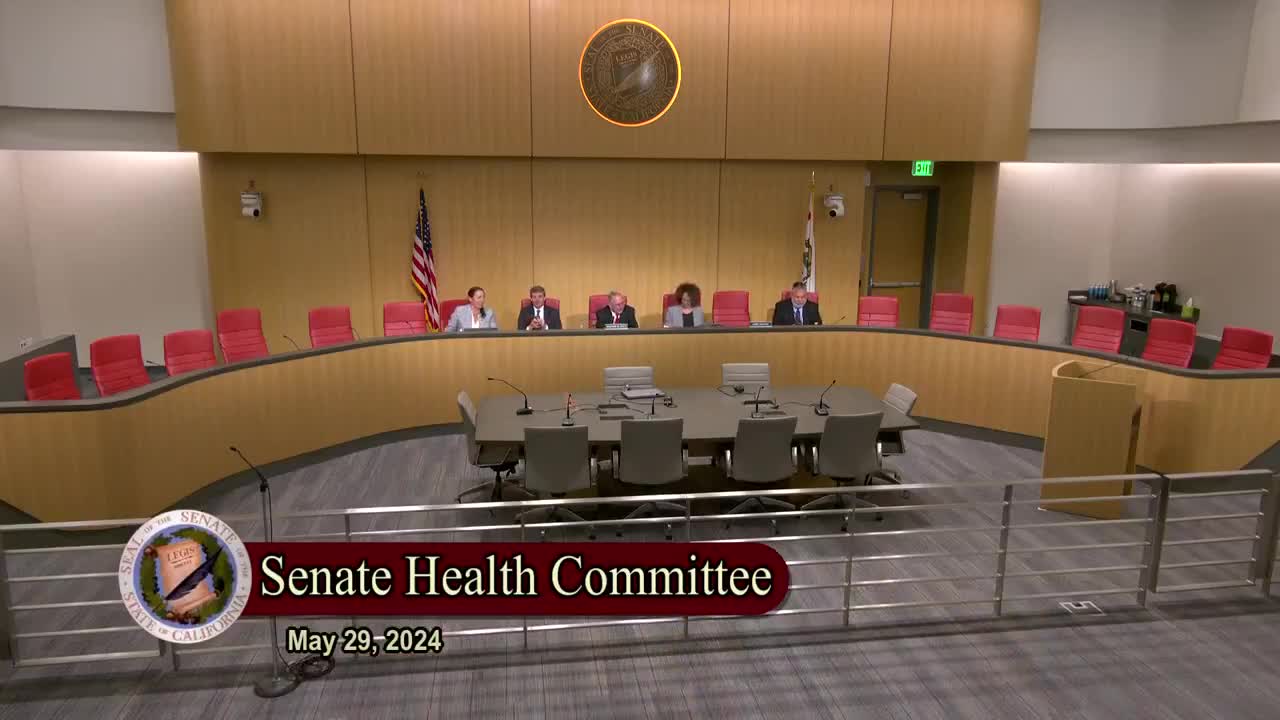 7MIN
Senate Standing Committee on Health
 3MIN
Assembly Floor
 4MIN
Assembly Standing Committee on Appropriations
 19MIN
Assembly Standing Committee on Health
Bill Author
Bill Co-Author(s):
