AB 1856: Disorderly conduct: distribution of intimate images.
- Session Year: 2023-2024
- House: Assembly
- Latest Version Date: 2024-06-26
Current Status:
Failed
(2024-08-15: In committee: Held under submission.)
Introduced
In Committee
First Chamber
In Committee
Second Chamber
Enacted
Existing law defines certain acts as disorderly conduct, punishable as a misdemeanor. Under existing law, it is disorderly conduct to intentionally distribute or cause to be distributed the image of the intimate body part or parts of another identifiable person, or an image of the person depicted engaged in an act of sexual intercourse, sodomy, oral copulation, sexual penetration, or an image of masturbation by the person depicted or in which the person depicted participates, under circumstances in which the persons agree or understand that the image shall remain private, the person distributing the image knows or should know that distribution of the image will cause serious emotional distress, and the person depicted suffers that distress.
This bill would make it a crime for a person who is 18 years of age or older to intentionally create and distribute a deepfake of an intimate body part or parts of another identifiable person, or a deepfake of the person depicted engaged in an act of sexual intercourse, sodomy, oral copulation, sexual penetration, or a deepfake of masturbation by the person depicted or in which the person depicted participates, if the person creating and distributing the deepfake knows or should know that the person depicted did not consent to the distribution and that the distribution of the deepfake will cause serious emotional distress, and the person depicted suffers that distress. The bill would define a deepfake as any audio or visual media, including, but not limited to, any image, motion picture film, or video recording, that is created or altered in a manner that it would falsely appear to a reasonable observer to be an authentic record of the actual speech or conduct of the individual depicted in the recording. By expanding the scope of a crime, this bill would impose a state-mandated local program.
The California Constitution requires the state to reimburse local agencies and school districts for certain costs mandated by the state. Statutory provisions establish procedures for making that reimbursement.
This bill would provide that no reimbursement is required by this act for a specified reason.
Existing law defines certain acts as disorderly conduct, punishable as a misdemeanor. Under existing law, it is disorderly conduct to intentionally distribute or cause to be distributed the image of the intimate body part or parts of another identifiable person, or an image of the person depicted engaged in an act of sexual intercourse, sodomy, oral copulation, sexual penetration, or an image of masturbation by the person depicted or in which the person depicted participates, under circumstances in which the persons agree or understand that the image shall remain private, the person distributing the image knows or should know that distribution of the image will cause serious emotional distress, and the person depicted suffers that distress.
This bill would make it a crime for a person who is 18 years of age or older to intentionally distribute a deepfake of an intimate body part or parts of another identifiable person, or a deepfake of the person depicted engaged in an act of sexual intercourse, sodomy, oral copulation, sexual penetration, or a deepfake of masturbation by the person depicted or in which the person depicted participates, if the person distributing the deepfake knows or should know that the person depicted did not consent to the distribution and that the distribution of the deepfake will cause serious emotional distress, and the person depicted suffers that distress. The bill would define a deepfake as any audio or visual media, including, but not limited to, any image, motion picture film, or video recording, that is created or altered in a manner that it would falsely appear to a reasonable observer to be an authentic record of the actual speech or conduct of the individual depicted in the recording. By expanding the scope of a crime, this bill would impose a state-mandated local program.
The California Constitution requires the state to reimburse local agencies and school districts for certain costs mandated by the state. Statutory provisions establish procedures for making that reimbursement.
This bill would provide that no reimbursement is required by this act for a specified reason.
Existing law defines certain acts as disorderly conduct, punishable as a misdemeanor. Under existing law, it is disorderly conduct to intentionally distribute or cause to be distributed the image of the intimate body part or parts of another identifiable person, or an image of the person depicted engaged in an act of sexual intercourse, sodomy, oral copulation, sexual penetration, or an image of masturbation by the person depicted or in which the person depicted participates, under circumstances in which the persons agree or understand that the image shall remain private, the person distributing the image knows or should know that distribution of the image will cause serious emotional distress, and the person depicted suffers that distress.
This bill would make it a crime for a person to intentionally distribute a deepfake of an intimate body part or parts of another identifiable person, or a deepfake of the person depicted engaged in an act of sexual intercourse, sodomy, oral copulation, sexual penetration, or a deepfake of masturbation by the person depicted or in which the person depicted participates, if the person distributing the deepfake knows or should know that the person depicted did not consent to the distribution and that the distribution of the deepfake will cause serious emotional distress, and the person depicted suffers that distress. The bill would define a deepfake as any audio or visual media in an electronic format, media, including, but not limited to, any image, motion picture film, or video recording, that is created or altered in a manner that it would falsely appear to a reasonable observer to be an authentic record of the actual speech or conduct of the individual depicted in the recording. By expanding the scope of a crime, this bill would impose a state-mandated local program.
The California Constitution requires the state to reimburse local agencies and school districts for certain costs mandated by the state. Statutory provisions establish procedures for making that reimbursement.
This bill would provide that no reimbursement is required by this act for a specified reason.
Existing law defines certain acts as disorderly conduct, punishable as a misdemeanor. Under existing law, it is disorderly conduct to intentionally distribute or cause to be distributed the image of the intimate body part or parts of another identifiable person, or an image of the person depicted engaged in an act of sexual intercourse, sodomy, oral copulation, sexual penetration, or an image of masturbation by the person depicted or in which the person depicted participates, under circumstances in which the persons agree or understand that the image shall remain private, the person distributing the image knows or should know that distribution of the image will cause serious emotional distress, and the person depicted suffers that distress.
This bill would make it a crime for a person to intentionally distribute a deepfake of an intimate body part or parts of another identifiable person, or a deepfake of the person depicted engaged in an act of sexual intercourse, sodomy, oral copulation, sexual penetration, or a deepfake of masturbation by the person depicted or in which the person depicted participates, if the person distributing the deepfake knows or should know that the person depicted did not consent to the distribution and that the distribution of the deepfake will cause serious emotional distress, and the person depicted suffers that distress. The bill would define a deepfake as any audio or visual media in an electronic format, including, but not limited to, any image, motion picture film, or video recording, that is created or altered in a manner that it would falsely appear to a reasonable observer to be an authentic record of the actual speech or conduct of the individual depicted in the recording. By expanding the scope of a crime, this bill would impose a state-mandated local program.
The California Constitution requires the state to reimburse local agencies and school districts for certain costs mandated by the state. Statutory provisions establish procedures for making that reimbursement.
This bill would provide that no reimbursement is required by this act for a specified reason.
Except as provided in paragraph (5) of subdivision (b) and subdivision (k), every person who commits any of the following acts is guilty of disorderly conduct, a misdemeanor:
(a)An individual who solicits anyone to engage in or who engages in lewd or dissolute conduct in any public place or in any place open to the public or exposed to public view.
(b)(1)An individual who solicits, or who agrees to engage in, or who engages in, any act of prostitution with the intent to receive compensation, money, or anything of value from another person. An individual agrees to engage in an act of prostitution when, with specific intent to so engage, the individual manifests an acceptance of an offer or solicitation by another person to so engage, regardless of whether the offer or solicitation was made by a person who also possessed the specific intent to engage in an act of prostitution.
(2)An individual who solicits, or who agrees to engage in, or who engages in, any act of prostitution with another person who is 18 years of age or older in exchange for the individual providing compensation, money, or anything of value to the other person. An individual agrees to engage in an act of prostitution when, with specific intent to so engage, the individual manifests an acceptance of an offer or solicitation by another person who is 18 years of age or older to so engage, regardless of whether the offer or solicitation was made by a person who also possessed the specific intent to engage in an act of prostitution.
(3)An individual who solicits, or who agrees to engage in, or who engages in, any act of prostitution with another person who is a minor in exchange for the individual providing compensation, money, or anything of value to the minor. An individual agrees to engage in an act of prostitution when, with specific intent to so engage, the individual manifests an acceptance of an offer or solicitation by someone who is a minor to so engage, regardless of whether the offer or solicitation was made by a minor who also possessed the specific intent to engage in an act of prostitution.
(4)A manifestation of acceptance of an offer or solicitation to engage in an act of prostitution does not constitute a violation of this subdivision unless some act, in addition to the manifestation of acceptance, is done within this state in furtherance of the commission of the act of prostitution by the person manifesting an acceptance of an offer or solicitation to engage in that act. As used in this subdivision, prostitution includes any lewd act between persons for money or other consideration.
(5)Notwithstanding paragraphs (1) to (3), inclusive, this subdivision does not apply to a child under 18 years of age who is alleged to have engaged in conduct to receive money or other consideration that would, if committed by an adult, violate this subdivision. A commercially exploited child under this paragraph may be adjudged a dependent child of the court pursuant to paragraph (2) of subdivision (b) of Section 300 of the Welfare and Institutions Code and may be taken into temporary custody pursuant to subdivision (a) of Section 305 of the Welfare and Institutions Code, if the conditions allowing temporary custody without warrant are met.
(c)Who accosts other persons in any public place or in any place open to the public for the purpose of begging or soliciting alms.
(d)Who loiters in or about any toilet open to the public for the purpose of engaging in or soliciting any lewd or lascivious or any unlawful act.
(e)Who lodges in any building, structure, vehicle, or place, whether public or private, without the permission of the owner or person entitled to the possession or in control of it.
(f)Who is found in any public place under the influence of intoxicating liquor, any drug, controlled substance, toluene, or any combination of any intoxicating liquor, drug, controlled substance, or toluene, in a condition that they are unable to exercise care for their own safety or the safety of others, or by reason of being under the influence of intoxicating liquor, any drug, controlled substance, toluene, or any combination of any intoxicating liquor, drug, or toluene, interferes with or obstructs or prevents the free use of any street, sidewalk, or other public way.
(g)If a person has violated subdivision (f), a peace officer, if reasonably able to do so, shall place the person, or cause the person to be placed, in civil protective custody. The person shall be taken to a facility, designated pursuant to Section 5170 of the Welfare and Institutions Code, for the 72-hour treatment and evaluation of inebriates. A peace officer may place a person in civil protective custody with that kind and degree of force authorized to effect an arrest for a misdemeanor without a warrant. A person who has been placed in civil protective custody shall not thereafter be subject to any criminal prosecution or juvenile court proceeding based on the facts giving rise to this placement. This subdivision does not apply to the following persons:
(1)A person who is under the influence of any drug, or under the combined influence of intoxicating liquor and any drug.
(2)A person who a peace officer has probable cause to believe has committed any felony, or who has committed any misdemeanor in addition to subdivision (f).
(3)A person who a peace officer in good faith believes will attempt escape or will be unreasonably difficult for medical personnel to control.
(h)Who loiters, prowls, or wanders upon the private property of another, at any time, without visible or lawful business with the owner or occupant. As used in this subdivision, loiter means to delay or linger without a lawful purpose for being on the property and for the purpose of committing a crime as opportunity may be discovered.
(i)Who, while loitering, prowling, or wandering upon the private property of another, at any time, peeks in the door or window of any inhabited building or structure, without visible or lawful business with the owner or occupant.
(j)(1)A person who looks through a hole or opening, into, or otherwise views, by means of any instrumentality, including, but not limited to, a periscope, telescope, binoculars, camera, motion picture camera, camcorder, mobile phone, electronic device, or unmanned aircraft system, the interior of a bedroom, bathroom, changing room, fitting room, dressing room, or tanning booth, or the interior of any other area in which the occupant has a reasonable expectation of privacy, with the intent to invade the privacy of a person or persons inside. This subdivision does not apply to those areas of a private business used to count currency or other negotiable instruments.
(2)A person who uses a concealed camcorder, motion picture camera, or photographic camera of any type, to secretly videotape, film, photograph, or record by electronic means, another identifiable person under or through the clothing being worn by that other person, for the purpose of viewing the body of, or the undergarments worn by, that other person, without the consent or knowledge of that other person, with the intent to arouse, appeal to, or gratify the lust, passions, or sexual desires of that person and invade the privacy of that other person, under circumstances in which the other person has a reasonable expectation of privacy. For the purposes of this paragraph, identifiable means capable of identification, or capable of being recognized, meaning that someone, including the victim, could identify or recognize the victim. It does not require the victims identity to actually be established.
(3)(A)A person who uses a concealed camcorder, motion picture camera, or photographic camera of any type, to secretly videotape, film, photograph, or record by electronic means, another identifiable person who may be in a state of full or partial undress, for the purpose of viewing the body of, or the undergarments worn by, that other person, without the consent or knowledge of that other person, in the interior of a bedroom, bathroom, changing room, fitting room, dressing room, or tanning booth, or the interior of any other area in which that other person has a reasonable expectation of privacy, with the intent to invade the privacy of that other person. For the purposes of this paragraph, identifiable means capable of identification, or capable of being recognized, meaning that someone, including the victim, could identify or recognize the victim. It does not require the victims identity to actually be established.
(B)Neither of the following is a defense to the crime specified in this paragraph:
(i)The defendant was a cohabitant, landlord, tenant, cotenant, employer, employee, or business partner or associate of the victim, or an agent of any of these.
(ii)The victim was not in a state of full or partial undress.
(4)(A)(i)A person who intentionally distributes or causes to be distributed the image of the intimate body part or parts of another identifiable person, or an image of the person depicted engaged in an act of sexual intercourse, sodomy, oral copulation, sexual penetration, or an image of masturbation by the person depicted or in which the person depicted participates, under circumstances in which the persons agree or understand that the image shall remain private, the person distributing the image knows or should know that distribution of the image will cause serious emotional distress, and the person depicted suffers that distress.
(ii)A person who intentionally creates and distributes or creates and causes to be distributed a deepfake of an intimate body part or parts of another identifiable person, or a deepfake of the person depicted engaged in an act of sexual intercourse, sodomy, oral copulation, sexual penetration, or a deepfake of masturbation by the person depicted or in which the person depicted participates, under circumstances in which the person creating and distributing the deepfake knows or should know that the person depicted did not consent to the distribution and that the distribution of the deepfake will cause serious emotional distress, and the person depicted suffers that distress. This clause shall not apply to a person who was under 18 years of age at the time the person committed the offense.
(B)(i)A person intentionally distributes an image described in subparagraph (A) when that person personally distributes the image.
(ii)A person intentionally causes an image described in subparagraph (A) to be distributed when that person arranges, specifically requests, or intentionally causes another person to distribute the image.
(C)As used in this paragraph, the following terms have the following meanings:
(i)Distribute means making content available to another person through any medium, including, but not limited to, exhibiting it in public, giving possession of the content, or through the use of internet, email, or text messaging.
(ii)Deepfake means any audio or visual media, including, without limitation, any image, motion picture film, or video recording, that is created or altered in a manner that it would falsely appear to a reasonable observer to be an authentic record of the actual speech or conduct of the individual depicted in the media.
(iii)Identifiable has the same meaning as in paragraphs (2) and (3).
(iv)Intimate body part means any portion of the genitals, the anus and, in the case of a female, also includes any portion of the breasts below the top of the areola, that is either uncovered or clearly visible through clothing.
(D)It shall not be a violation of this paragraph to distribute an image described in subparagraph (A) if any of the following applies:
(i)The distribution is made in the course of reporting an unlawful activity.
(ii)The distribution is made in compliance with a subpoena or other court order for use in a legal proceeding.
(iii)The distribution is made in the course of a lawful public proceeding.
(iv)The distribution is related to a matter of public concern or public interest. Distribution is not a matter of public concern or public interest solely because the depicted individual is a public figure.
(5)This subdivision does not preclude punishment under any section of law providing for greater punishment.
(k)(1)A second or subsequent violation of subdivision (j) is punishable by imprisonment in a county jail not exceeding one year, or by a fine not exceeding two thousand dollars ($2,000), or by both that fine and imprisonment.
(2)If the victim of a violation of subdivision (j) was a minor at the time of the offense, the violation is punishable by imprisonment in a county jail not exceeding one year, or by a fine not exceeding two thousand dollars ($2,000), or by both that fine and imprisonment.
(l)(1)If a crime is committed in violation of subdivision (b) and the person who was solicited was a minor at the time of the offense, and if the defendant knew or should have known that the person who was solicited was a minor at the time of the offense, the violation is punishable by imprisonment in a county jail for not less than two days and not more than one year, or by a fine not exceeding ten thousand dollars ($10,000), or by both that fine and imprisonment.
(2)The court may, in unusual cases, when the interests of justice are best served, reduce or eliminate the mandatory two days of imprisonment in a county jail required by this subdivision. If the court reduces or eliminates the mandatory two days imprisonment, the court shall specify the reason on the record.
SEC. 2.No reimbursement is required by this act pursuant to Section 6 of Article XIIIB of the California Constitution because the only costs that may be incurred by a local agency or school district will be incurred because this act creates a new crime or infraction, eliminates a crime or infraction, or changes the penalty for a crime or infraction, within the meaning of Section 17556 of the Government Code, or changes the definition of a crime within the meaning of Section 6 of Article XIIIB of the California Constitution.
Except as provided in paragraph (5) of subdivision (b) and subdivision (k), every person who commits any of the following acts is guilty of disorderly conduct, a misdemeanor:
(a)An individual who solicits anyone to engage in or who engages in lewd or dissolute conduct in any public place or in any place open to the public or exposed to public view.
(b)(1)An individual who solicits, or who agrees to engage in, or who engages in, any act of prostitution with the intent to receive compensation, money, or anything of value from another person. An individual agrees to engage in an act of prostitution when, with specific intent to so engage, the individual manifests an acceptance of an offer or solicitation by another person to so engage, regardless of whether the offer or solicitation was made by a person who also possessed the specific intent to engage in an act of prostitution.
(2)An individual who solicits, or who agrees to engage in, or who engages in, any act of prostitution with another person who is 18 years of age or older in exchange for the individual providing compensation, money, or anything of value to the other person. An individual agrees to engage in an act of prostitution when, with specific intent to so engage, the individual manifests an acceptance of an offer or solicitation by another person who is 18 years of age or older to so engage, regardless of whether the offer or solicitation was made by a person who also possessed the specific intent to engage in an act of prostitution.
(3)An individual who solicits, or who agrees to engage in, or who engages in, any act of prostitution with another person who is a minor in exchange for the individual providing compensation, money, or anything of value to the minor. An individual agrees to engage in an act of prostitution when, with specific intent to so engage, the individual manifests an acceptance of an offer or solicitation by someone who is a minor to so engage, regardless of whether the offer or solicitation was made by a minor who also possessed the specific intent to engage in an act of prostitution.
(4)A manifestation of acceptance of an offer or solicitation to engage in an act of prostitution does not constitute a violation of this subdivision unless some act, in addition to the manifestation of acceptance, is done within this state in furtherance of the commission of the act of prostitution by the person manifesting an acceptance of an offer or solicitation to engage in that act. As used in this subdivision, prostitution includes any lewd act between persons for money or other consideration.
(5)Notwithstanding paragraphs (1) to (3), inclusive, this subdivision does not apply to a child under 18 years of age who is alleged to have engaged in conduct to receive money or other consideration that would, if committed by an adult, violate this subdivision. A commercially exploited child under this paragraph may be adjudged a dependent child of the court pursuant to paragraph (2) of subdivision (b) of Section 300 of the Welfare and Institutions Code and may be taken into temporary custody pursuant to subdivision (a) of Section 305 of the Welfare and Institutions Code, if the conditions allowing temporary custody without warrant are met.
(c)Who accosts other persons in any public place or in any place open to the public for the purpose of begging or soliciting alms.
(d)Who loiters in or about any toilet open to the public for the purpose of engaging in or soliciting any lewd or lascivious or any unlawful act.
(e)Who lodges in any building, structure, vehicle, or place, whether public or private, without the permission of the owner or person entitled to the possession or in control of it.
(f)Who is found in any public place under the influence of intoxicating liquor, any drug, controlled substance, toluene, or any combination of any intoxicating liquor, drug, controlled substance, or toluene, in a condition that they are unable to exercise care for their own safety or the safety of others, or by reason of being under the influence of intoxicating liquor, any drug, controlled substance, toluene, or any combination of any intoxicating liquor, drug, or toluene, interferes with or obstructs or prevents the free use of any street, sidewalk, or other public way.
(g)If a person has violated subdivision (f), a peace officer, if reasonably able to do so, shall place the person, or cause the person to be placed, in civil protective custody. The person shall be taken to a facility, designated pursuant to Section 5170 of the Welfare and Institutions Code, for the 72-hour treatment and evaluation of inebriates. A peace officer may place a person in civil protective custody with that kind and degree of force authorized to effect an arrest for a misdemeanor without a warrant. A person who has been placed in civil protective custody shall not thereafter be subject to any criminal prosecution or juvenile court proceeding based on the facts giving rise to this placement. This subdivision does not apply to the following persons:
(1)A person who is under the influence of any drug, or under the combined influence of intoxicating liquor and any drug.
(2)A person who a peace officer has probable cause to believe has committed any felony, or who has committed any misdemeanor in addition to subdivision (f).
(3)A person who a peace officer in good faith believes will attempt escape or will be unreasonably difficult for medical personnel to control.
(h)Who loiters, prowls, or wanders upon the private property of another, at any time, without visible or lawful business with the owner or occupant. As used in this subdivision, loiter means to delay or linger without a lawful purpose for being on the property and for the purpose of committing a crime as opportunity may be discovered.
(i)Who, while loitering, prowling, or wandering upon the private property of another, at any time, peeks in the door or window of any inhabited building or structure, without visible or lawful business with the owner or occupant.
(j)(1)A person who looks through a hole or opening, into, or otherwise views, by means of any instrumentality, including, but not limited to, a periscope, telescope, binoculars, camera, motion picture camera, camcorder, mobile phone, electronic device, or unmanned aircraft system, the interior of a bedroom, bathroom, changing room, fitting room, dressing room, or tanning booth, or the interior of any other area in which the occupant has a reasonable expectation of privacy, with the intent to invade the privacy of a person or persons inside. This subdivision does not apply to those areas of a private business used to count currency or other negotiable instruments.
(2)A person who uses a concealed camcorder, motion picture camera, or photographic camera of any type, to secretly videotape, film, photograph, or record by electronic means, another identifiable person under or through the clothing being worn by that other person, for the purpose of viewing the body of, or the undergarments worn by, that other person, without the consent or knowledge of that other person, with the intent to arouse, appeal to, or gratify the lust, passions, or sexual desires of that person and invade the privacy of that other person, under circumstances in which the other person has a reasonable expectation of privacy. For the purposes of this paragraph, identifiable means capable of identification, or capable of being recognized, meaning that someone, including the victim, could identify or recognize the victim. It does not require the victims identity to actually be established.
(3)(A)A person who uses a concealed camcorder, motion picture camera, or photographic camera of any type, to secretly videotape, film, photograph, or record by electronic means, another identifiable person who may be in a state of full or partial undress, for the purpose of viewing the body of, or the undergarments worn by, that other person, without the consent or knowledge of that other person, in the interior of a bedroom, bathroom, changing room, fitting room, dressing room, or tanning booth, or the interior of any other area in which that other person has a reasonable expectation of privacy, with the intent to invade the privacy of that other person. For the purposes of this paragraph, identifiable means capable of identification, or capable of being recognized, meaning that someone, including the victim, could identify or recognize the victim. It does not require the victims identity to actually be established.
(B)Neither of the following is a defense to the crime specified in this paragraph:
(i)The defendant was a cohabitant, landlord, tenant, cotenant, employer, employee, or business partner or associate of the victim, or an agent of any of these.
(ii)The victim was not in a state of full or partial undress.
(4)(A)(i)A person who intentionally distributes or causes to be distributed the image of the intimate body part or parts of another identifiable person, or an image of the person depicted engaged in an act of sexual intercourse, sodomy, oral copulation, sexual penetration, or an image of masturbation by the person depicted or in which the person depicted participates, under circumstances in which the persons agree or understand that the image shall remain private, the person distributing the image knows or should know that distribution of the image will cause serious emotional distress, and the person depicted suffers that distress.
(ii)A person who intentionally distributes or causes to be distributed a deepfake of an intimate body part or parts of another identifiable person, or a deepfake of the person depicted engaged in an act of sexual intercourse, sodomy, oral copulation, sexual penetration, or a deepfake of masturbation by the person depicted or in which the person depicted participates, under circumstances in which the person distributing the deepfake knows or should know that the person depicted did not consent to the distribution and that the distribution of the deepfake will cause serious emotional distress, and the person depicted suffers that distress. This clause shall not apply to a person who was under 18 years of age at the time the person committed the offense.
(B)(i)A person intentionally distributes an image described in subparagraph (A) when that person personally distributes the image.
(ii)A person intentionally causes an image described in subparagraph (A) to be distributed when that person arranges, specifically requests, or intentionally causes another person to distribute the image.
(C)As used in this paragraph, the following terms have the following meanings:
(i)Distribute means making content available to another person through any medium, including, but not limited to, exhibiting it in public, giving possession of the content, or through the use of internet, email, or text messaging.
(ii)Deepfake means any audio or visual media, including, without limitation, any image, motion picture film, or video recording, that is created or altered in a manner that it would falsely appear to a reasonable observer to be an authentic record of the actual speech or conduct of the individual depicted in the media.
(iii)Identifiable has the same meaning as in paragraphs (2) and (3).
(iv)Intimate body part means any portion of the genitals, the anus and, in the case of a female, also includes any portion of the breasts below the top of the areola, that is either uncovered or clearly visible through clothing.
(D)It shall not be a violation of this paragraph to distribute an image described in subparagraph (A) if any of the following applies:
(i)The distribution is made in the course of reporting an unlawful activity.
(ii)The distribution is made in compliance with a subpoena or other court order for use in a legal proceeding.
(iii)The distribution is made in the course of a lawful public proceeding.
(iv)The distribution is related to a matter of public concern or public interest. Distribution is not a matter of public concern or public interest solely because the depicted individual is a public figure.
(5)This subdivision does not preclude punishment under any section of law providing for greater punishment.
(k)(1)A second or subsequent violation of subdivision (j) is punishable by imprisonment in a county jail not exceeding one year, or by a fine not exceeding two thousand dollars ($2,000), or by both that fine and imprisonment.
(2)If the victim of a violation of subdivision (j) was a minor at the time of the offense, the violation is punishable by imprisonment in a county jail not exceeding one year, or by a fine not exceeding two thousand dollars ($2,000), or by both that fine and imprisonment.
(l)(1)If a crime is committed in violation of subdivision (b) and the person who was solicited was a minor at the time of the offense, and if the defendant knew or should have known that the person who was solicited was a minor at the time of the offense, the violation is punishable by imprisonment in a county jail for not less than two days and not more than one year, or by a fine not exceeding ten thousand dollars ($10,000), or by both that fine and imprisonment.
(2)The court may, in unusual cases, when the interests of justice are best served, reduce or eliminate the mandatory two days of imprisonment in a county jail required by this subdivision. If the court reduces or eliminates the mandatory two days imprisonment, the court shall specify the reason on the record.
SEC. 2.No reimbursement is required by this act pursuant to Section 6 of Article XIIIB of the California Constitution because the only costs that may be incurred by a local agency or school district will be incurred because this act creates a new crime or infraction, eliminates a crime or infraction, or changes the penalty for a crime or infraction, within the meaning of Section 17556 of the Government Code, or changes the definition of a crime within the meaning of Section 6 of Article XIIIB of the California Constitution.
Except as provided in paragraph (5) of subdivision (b) and subdivision (k), every person who commits any of the following acts is guilty of disorderly conduct, a misdemeanor:
(a)An individual who solicits anyone to engage in or who engages in lewd or dissolute conduct in any public place or in any place open to the public or exposed to public view.
(b)(1)An individual who solicits, or who agrees to engage in, or who engages in, any act of prostitution with the intent to receive compensation, money, or anything of value from another person. An individual agrees to engage in an act of prostitution when, with specific intent to so engage, the individual manifests an acceptance of an offer or solicitation by another person to so engage, regardless of whether the offer or solicitation was made by a person who also possessed the specific intent to engage in an act of prostitution.
(2)An individual who solicits, or who agrees to engage in, or who engages in, any act of prostitution with another person who is 18 years of age or older in exchange for the individual providing compensation, money, or anything of value to the other person. An individual agrees to engage in an act of prostitution when, with specific intent to so engage, the individual manifests an acceptance of an offer or solicitation by another person who is 18 years of age or older to so engage, regardless of whether the offer or solicitation was made by a person who also possessed the specific intent to engage in an act of prostitution.
(3)An individual who solicits, or who agrees to engage in, or who engages in, any act of prostitution with another person who is a minor in exchange for the individual providing compensation, money, or anything of value to the minor. An individual agrees to engage in an act of prostitution when, with specific intent to so engage, the individual manifests an acceptance of an offer or solicitation by someone who is a minor to so engage, regardless of whether the offer or solicitation was made by a minor who also possessed the specific intent to engage in an act of prostitution.
(4)A manifestation of acceptance of an offer or solicitation to engage in an act of prostitution does not constitute a violation of this subdivision unless some act, in addition to the manifestation of acceptance, is done within this state in furtherance of the commission of the act of prostitution by the person manifesting an acceptance of an offer or solicitation to engage in that act. As used in this subdivision, prostitution includes any lewd act between persons for money or other consideration.
(5)Notwithstanding paragraphs (1) to (3), inclusive, this subdivision does not apply to a child under 18 years of age who is alleged to have engaged in conduct to receive money or other consideration that would, if committed by an adult, violate this subdivision. A commercially exploited child under this paragraph may be adjudged a dependent child of the court pursuant to paragraph (2) of subdivision (b) of Section 300 of the Welfare and Institutions Code and may be taken into temporary custody pursuant to subdivision (a) of Section 305 of the Welfare and Institutions Code, if the conditions allowing temporary custody without warrant are met.
(c)Who accosts other persons in any public place or in any place open to the public for the purpose of begging or soliciting alms.
(d)Who loiters in or about any toilet open to the public for the purpose of engaging in or soliciting any lewd or lascivious or any unlawful act.
(e)Who lodges in any building, structure, vehicle, or place, whether public or private, without the permission of the owner or person entitled to the possession or in control of it.
(f)Who is found in any public place under the influence of intoxicating liquor, any drug, controlled substance, toluene, or any combination of any intoxicating liquor, drug, controlled substance, or toluene, in a condition that they are unable to exercise care for their own safety or the safety of others, or by reason of being under the influence of intoxicating liquor, any drug, controlled substance, toluene, or any combination of any intoxicating liquor, drug, or toluene, interferes with or obstructs or prevents the free use of any street, sidewalk, or other public way.
(g)If a person has violated subdivision (f), a peace officer, if reasonably able to do so, shall place the person, or cause the person to be placed, in civil protective custody. The person shall be taken to a facility, designated pursuant to Section 5170 of the Welfare and Institutions Code, for the 72-hour treatment and evaluation of inebriates. A peace officer may place a person in civil protective custody with that kind and degree of force authorized to effect an arrest for a misdemeanor without a warrant. A person who has been placed in civil protective custody shall not thereafter be subject to any criminal prosecution or juvenile court proceeding based on the facts giving rise to this placement. This subdivision does not apply to the following persons:
(1)A person who is under the influence of any drug, or under the combined influence of intoxicating liquor and any drug.
(2)A person who a peace officer has probable cause to believe has committed any felony, or who has committed any misdemeanor in addition to subdivision (f).
(3)A person who a peace officer in good faith believes will attempt escape or will be unreasonably difficult for medical personnel to control.
(h)Who loiters, prowls, or wanders upon the private property of another, at any time, without visible or lawful business with the owner or occupant. As used in this subdivision, loiter means to delay or linger without a lawful purpose for being on the property and for the purpose of committing a crime as opportunity may be discovered.
(i)Who, while loitering, prowling, or wandering upon the private property of another, at any time, peeks in the door or window of any inhabited building or structure, without visible or lawful business with the owner or occupant.
(j)(1)A person who looks through a hole or opening, into, or otherwise views, by means of any instrumentality, including, but not limited to, a periscope, telescope, binoculars, camera, motion picture camera, camcorder, mobile phone, electronic device, or unmanned aircraft system, the interior of a bedroom, bathroom, changing room, fitting room, dressing room, or tanning booth, or the interior of any other area in which the occupant has a reasonable expectation of privacy, with the intent to invade the privacy of a person or persons inside. This subdivision does not apply to those areas of a private business used to count currency or other negotiable instruments.
(2)A person who uses a concealed camcorder, motion picture camera, or photographic camera of any type, to secretly videotape, film, photograph, or record by electronic means, another identifiable person under or through the clothing being worn by that other person, for the purpose of viewing the body of, or the undergarments worn by, that other person, without the consent or knowledge of that other person, with the intent to arouse, appeal to, or gratify the lust, passions, or sexual desires of that person and invade the privacy of that other person, under circumstances in which the other person has a reasonable expectation of privacy. For the purposes of this paragraph, identifiable means capable of identification, or capable of being recognized, meaning that someone, including the victim, could identify or recognize the victim. It does not require the victims identity to actually be established.
(3)(A)A person who uses a concealed camcorder, motion picture camera, or photographic camera of any type, to secretly videotape, film, photograph, or record by electronic means, another identifiable person who may be in a state of full or partial undress, for the purpose of viewing the body of, or the undergarments worn by, that other person, without the consent or knowledge of that other person, in the interior of a bedroom, bathroom, changing room, fitting room, dressing room, or tanning booth, or the interior of any other area in which that other person has a reasonable expectation of privacy, with the intent to invade the privacy of that other person. For the purposes of this paragraph, identifiable means capable of identification, or capable of being recognized, meaning that someone, including the victim, could identify or recognize the victim. It does not require the victims identity to actually be established.
(B)Neither of the following is a defense to the crime specified in this paragraph:
(i)The defendant was a cohabitant, landlord, tenant, cotenant, employer, employee, or business partner or associate of the victim, or an agent of any of these.
(ii)The victim was not in a state of full or partial undress.
(4)(A)(i)A person who intentionally distributes or causes to be distributed the image of the intimate body part or parts of another identifiable person, or an image of the person depicted engaged in an act of sexual intercourse, sodomy, oral copulation, sexual penetration, or an image of masturbation by the person depicted or in which the person depicted participates, under circumstances in which the persons agree or understand that the image shall remain private, the person distributing the image knows or should know that distribution of the image will cause serious emotional distress, and the person depicted suffers that distress.
(ii)A person who intentionally distributes or causes to be distributed a deepfake of an intimate body part or parts of another identifiable person, or a deepfake of the person depicted engaged in an act of sexual intercourse, sodomy, oral copulation, sexual penetration, or a deepfake of masturbation by the person depicted or in which the person depicted participates, under circumstances in which the person distributing the deepfake knows or should know that the person depicted did not consent to the distribution and that the distribution of the deepfake will cause serious emotional distress, and the person depicted suffers that distress.
(B)(i)A person intentionally distributes an image described in subparagraph (A) when that person personally distributes the image.
(ii)A person intentionally causes an image described in subparagraph (A) to be distributed when that person arranges, specifically requests, or intentionally causes another person to distribute the image.
(C)As used in this paragraph, the following terms have the following meanings:
(i)Distribute means making the image content available to another person through any medium, including, but not limited to, exhibiting it in public, giving possession of the image, content, or through the use of internet, email, or text messaging.
(ii)Deepfake means any audio or visual media in an electronic format, media, including, without limitation, any image, motion picture film, or video recording, that is created or altered in a manner that it would falsely appear to a reasonable observer to be an authentic record of the actual speech or conduct of the individual depicted in the recording. media.
(iii)Identifiable has the same meaning as in paragraphs (2) and (3).
(iv)Intimate body part means any portion of the genitals, the anus and, in the case of a female, also includes any portion of the breasts below the top of the areola, that is either uncovered or clearly visible through clothing.
(D)It shall not be a violation of this paragraph to distribute an image described in subparagraph (A) if any of the following applies:
(i)The distribution is made in the course of reporting an unlawful activity.
(ii)The distribution is made in compliance with a subpoena or other court order for use in a legal proceeding.
(iii)The distribution is made in the course of a lawful public proceeding.
(iv)The distribution is related to a matter of public concern or public interest. Distribution is not a matter of public concern or public interest solely because the depicted individual is a public figure.
(5)This subdivision does not preclude punishment under any section of law providing for greater punishment.
(k)(1)A second or subsequent violation of subdivision (j) is punishable by imprisonment in a county jail not exceeding one year, or by a fine not exceeding two thousand dollars ($2,000), or by both that fine and imprisonment.
(2)If the victim of a violation of subdivision (j) was a minor at the time of the offense, the violation is punishable by imprisonment in a county jail not exceeding one year, or by a fine not exceeding two thousand dollars ($2,000), or by both that fine and imprisonment.
(l)(1)If a crime is committed in violation of subdivision (b) and the person who was solicited was a minor at the time of the offense, and if the defendant knew or should have known that the person who was solicited was a minor at the time of the offense, the violation is punishable by imprisonment in a county jail for not less than two days and not more than one year, or by a fine not exceeding ten thousand dollars ($10,000), or by both that fine and imprisonment.
(2)The court may, in unusual cases, when the interests of justice are best served, reduce or eliminate the mandatory two days of imprisonment in a county jail required by this subdivision. If the court reduces or eliminates the mandatory two days imprisonment, the court shall specify the reason on the record.
SEC. 2.No reimbursement is required by this act pursuant to Section 6 of Article XIIIB of the California Constitution because the only costs that may be incurred by a local agency or school district will be incurred because this act creates a new crime or infraction, eliminates a crime or infraction, or changes the penalty for a crime or infraction, within the meaning of Section 17556 of the Government Code, or changes the definition of a crime within the meaning of Section 6 of Article XIIIB of the California Constitution.
Except as provided in paragraph (5) of subdivision (b) and subdivision (k), every person who commits any of the following acts is guilty of disorderly conduct, a misdemeanor:
(a)An individual who solicits anyone to engage in or who engages in lewd or dissolute conduct in any public place or in any place open to the public or exposed to public view.
(b)(1)An individual who solicits, or who agrees to engage in, or who engages in, any act of prostitution with the intent to receive compensation, money, or anything of value from another person. An individual agrees to engage in an act of prostitution when, with specific intent to so engage, the individual manifests an acceptance of an offer or solicitation by another person to so engage, regardless of whether the offer or solicitation was made by a person who also possessed the specific intent to engage in an act of prostitution.
(2)An individual who solicits, or who agrees to engage in, or who engages in, any act of prostitution with another person who is 18 years of age or older in exchange for the individual providing compensation, money, or anything of value to the other person. An individual agrees to engage in an act of prostitution when, with specific intent to so engage, the individual manifests an acceptance of an offer or solicitation by another person who is 18 years of age or older to so engage, regardless of whether the offer or solicitation was made by a person who also possessed the specific intent to engage in an act of prostitution.
(3)An individual who solicits, or who agrees to engage in, or who engages in, any act of prostitution with another person who is a minor in exchange for the individual providing compensation, money, or anything of value to the minor. An individual agrees to engage in an act of prostitution when, with specific intent to so engage, the individual manifests an acceptance of an offer or solicitation by someone who is a minor to so engage, regardless of whether the offer or solicitation was made by a minor who also possessed the specific intent to engage in an act of prostitution.
(4)A manifestation of acceptance of an offer or solicitation to engage in an act of prostitution does not constitute a violation of this subdivision unless some act, in addition to the manifestation of acceptance, is done within this state in furtherance of the commission of the act of prostitution by the person manifesting an acceptance of an offer or solicitation to engage in that act. As used in this subdivision, prostitution includes any lewd act between persons for money or other consideration.
(5)Notwithstanding paragraphs (1) to (3), inclusive, this subdivision does not apply to a child under 18 years of age who is alleged to have engaged in conduct to receive money or other consideration that would, if committed by an adult, violate this subdivision. A commercially exploited child under this paragraph may be adjudged a dependent child of the court pursuant to paragraph (2) of subdivision (b) of Section 300 of the Welfare and Institutions Code and may be taken into temporary custody pursuant to subdivision (a) of Section 305 of the Welfare and Institutions Code, if the conditions allowing temporary custody without warrant are met.
(c)Who accosts other persons in any public place or in any place open to the public for the purpose of begging or soliciting alms.
(d)Who loiters in or about any toilet open to the public for the purpose of engaging in or soliciting any lewd or lascivious or any unlawful act.
(e)Who lodges in any building, structure, vehicle, or place, whether public or private, without the permission of the owner or person entitled to the possession or in control of it.
(f)Who is found in any public place under the influence of intoxicating liquor, any drug, controlled substance, toluene, or any combination of any intoxicating liquor, drug, controlled substance, or toluene, in a condition that they are unable to exercise care for their own safety or the safety of others, or by reason of being under the influence of intoxicating liquor, any drug, controlled substance, toluene, or any combination of any intoxicating liquor, drug, or toluene, interferes with or obstructs or prevents the free use of any street, sidewalk, or other public way.
(g)If a person has violated subdivision (f), a peace officer, if reasonably able to do so, shall place the person, or cause the person to be placed, in civil protective custody. The person shall be taken to a facility, designated pursuant to Section 5170 of the Welfare and Institutions Code, for the 72-hour treatment and evaluation of inebriates. A peace officer may place a person in civil protective custody with that kind and degree of force authorized to effect an arrest for a misdemeanor without a warrant. A person who has been placed in civil protective custody shall not thereafter be subject to any criminal prosecution or juvenile court proceeding based on the facts giving rise to this placement. This subdivision does not apply to the following persons:
(1)A person who is under the influence of any drug, or under the combined influence of intoxicating liquor and any drug.
(2)A person who a peace officer has probable cause to believe has committed any felony, or who has committed any misdemeanor in addition to subdivision (f).
(3)A person who a peace officer in good faith believes will attempt escape or will be unreasonably difficult for medical personnel to control.
(h)Who loiters, prowls, or wanders upon the private property of another, at any time, without visible or lawful business with the owner or occupant. As used in this subdivision, loiter means to delay or linger without a lawful purpose for being on the property and for the purpose of committing a crime as opportunity may be discovered.
(i)Who, while loitering, prowling, or wandering upon the private property of another, at any time, peeks in the door or window of any inhabited building or structure, without visible or lawful business with the owner or occupant.
(j)(1)A person who looks through a hole or opening, into, or otherwise views, by means of any instrumentality, including, but not limited to, a periscope, telescope, binoculars, camera, motion picture camera, camcorder, mobile phone, electronic device, or unmanned aircraft system, the interior of a bedroom, bathroom, changing room, fitting room, dressing room, or tanning booth, or the interior of any other area in which the occupant has a reasonable expectation of privacy, with the intent to invade the privacy of a person or persons inside. This subdivision does not apply to those areas of a private business used to count currency or other negotiable instruments.
(2)A person who uses a concealed camcorder, motion picture camera, or photographic camera of any type, to secretly videotape, film, photograph, or record by electronic means, another identifiable person under or through the clothing being worn by that other person, for the purpose of viewing the body of, or the undergarments worn by, that other person, without the consent or knowledge of that other person, with the intent to arouse, appeal to, or gratify the lust, passions, or sexual desires of that person and invade the privacy of that other person, under circumstances in which the other person has a reasonable expectation of privacy. For the purposes of this paragraph, identifiable means capable of identification, or capable of being recognized, meaning that someone, including the victim, could identify or recognize the victim. It does not require the victims identity to actually be established.
(3)(A)A person who uses a concealed camcorder, motion picture camera, or photographic camera of any type, to secretly videotape, film, photograph, or record by electronic means, another identifiable person who may be in a state of full or partial undress, for the purpose of viewing the body of, or the undergarments worn by, that other person, without the consent or knowledge of that other person, in the interior of a bedroom, bathroom, changing room, fitting room, dressing room, or tanning booth, or the interior of any other area in which that other person has a reasonable expectation of privacy, with the intent to invade the privacy of that other person. For the purposes of this paragraph, identifiable means capable of identification, or capable of being recognized, meaning that someone, including the victim, could identify or recognize the victim. It does not require the victims identity to actually be established.
(B)Neither of the following is a defense to the crime specified in this paragraph:
(i)The defendant was a cohabitant, landlord, tenant, cotenant, employer, employee, or business partner or associate of the victim, or an agent of any of these.
(ii)The victim was not in a state of full or partial undress.
(4)(A)(i)A person who intentionally distributes or causes to be distributed the image of the intimate body part or parts of another identifiable person, or an image of the person depicted engaged in an act of sexual intercourse, sodomy, oral copulation, sexual penetration, or an image of masturbation by the person depicted or in which the person depicted participates, under circumstances in which the persons agree or understand that the image shall remain private, the person distributing the image knows or should know that distribution of the image will cause serious emotional distress, and the person depicted suffers that distress.
(ii)A person who intentionally distributes or causes to be distributed a deepfake of an intimate body part or parts of another identifiable person, or a deepfake of the person depicted engaged in an act of sexual intercourse, sodomy, oral copulation, sexual penetration, or a deepfake of masturbation by the person depicted or in which the person depicted participates, the person distributing the deepfake knows or should know that the person depicted did not consent to the distribution and that the distribution of the deepfake will cause serious emotional distress, and the person depicted suffers that distress.
(B)(i)A person intentionally distributes an image described in subparagraph (A) when that person personally distributes the image.
(ii)A person intentionally causes an image described in subparagraph (A) to be distributed when that person arranges, specifically requests, or intentionally causes another person to distribute the image.
(C)As used in this paragraph, the following terms have the following meanings:
(i)Distribute means making the image available to another person through any medium, including, but not limited to, exhibiting it in public, giving possession of the image, or through the use of internet, email, or text messaging.
(ii)Deepfake means any audio or visual media in an electronic format, including, but not limited to, without limitation, any image, motion picture film, or video recording, that is created or altered in a manner that it would falsely appear to a reasonable observer to be an authentic record of the actual speech or conduct of the individual depicted in the recording.
(iii)Identifiable has the same meaning as in paragraphs (2) and (3).
(iv)Intimate body part means any portion of the genitals, the anus and, in the case of a female, also includes any portion of the breasts below the top of the areola, that is either uncovered or clearly visible through clothing.
(D)It shall not be a violation of this paragraph to distribute an image described in subparagraph (A) if any of the following applies:
(i)The distribution is made in the course of reporting an unlawful activity.
(ii)The distribution is made in compliance with a subpoena or other court order for use in a legal proceeding.
(iii)The distribution is made in the course of a lawful public proceeding.
(iv)The distribution is related to a matter of public concern or public interest. Distribution is not a matter of public concern or public interest solely because the depicted individual is a public figure.
(5)This subdivision does not preclude punishment under any section of law providing for greater punishment.
(k)(1)A second or subsequent violation of subdivision (j) is punishable by imprisonment in a county jail not exceeding one year, or by a fine not exceeding two thousand dollars ($2,000), or by both that fine and imprisonment.
(2)If the victim of a violation of subdivision (j) was a minor at the time of the offense, the violation is punishable by imprisonment in a county jail not exceeding one year, or by a fine not exceeding two thousand dollars ($2,000), or by both that fine and imprisonment.
(l)(1)If a crime is committed in violation of subdivision (b) and the person who was solicited was a minor at the time of the offense, and if the defendant knew or should have known that the person who was solicited was a minor at the time of the offense, the violation is punishable by imprisonment in a county jail for not less than two days and not more than one year, or by a fine not exceeding ten thousand dollars ($10,000), or by both that fine and imprisonment.
(2)The court may, in unusual cases, when the interests of justice are best served, reduce or eliminate the mandatory two days of imprisonment in a county jail required by this subdivision. If the court reduces or eliminates the mandatory two days imprisonment, the court shall specify the reason on the record.
SEC. 2.No reimbursement is required by this act pursuant to Section 6 of Article XIIIB of the California Constitution because the only costs that may be incurred by a local agency or school district will be incurred because this act creates a new crime or infraction, eliminates a crime or infraction, or changes the penalty for a crime or infraction, within the meaning of Section 17556 of the Government Code, or changes the definition of a crime within the meaning of Section 6 of Article XIIIB of the California Constitution.
Except as provided in paragraph (5) of subdivision (b) and subdivision (k), every person who commits any of the following acts is guilty of disorderly conduct, a misdemeanor:
(a)An individual who solicits anyone to engage in or who engages in lewd or dissolute conduct in any public place or in any place open to the public or exposed to public view.
(b)(1)An individual who solicits, or who agrees to engage in, or who engages in, any act of prostitution with the intent to receive compensation, money, or anything of value from another person. An individual agrees to engage in an act of prostitution when, with specific intent to so engage, the individual manifests an acceptance of an offer or solicitation by another person to so engage, regardless of whether the offer or solicitation was made by a person who also possessed the specific intent to engage in an act of prostitution.
(2)An individual who solicits, or who agrees to engage in, or who engages in, any act of prostitution with another person who is 18 years of age or older in exchange for the individual providing compensation, money, or anything of value to the other person. An individual agrees to engage in an act of prostitution when, with specific intent to so engage, the individual manifests an acceptance of an offer or solicitation by another person who is 18 years of age or older to so engage, regardless of whether the offer or solicitation was made by a person who also possessed the specific intent to engage in an act of prostitution.
(3)An individual who solicits, or who agrees to engage in, or who engages in, any act of prostitution with another person who is a minor in exchange for the individual providing compensation, money, or anything of value to the minor. An individual agrees to engage in an act of prostitution when, with specific intent to so engage, the individual manifests an acceptance of an offer or solicitation by someone who is a minor to so engage, regardless of whether the offer or solicitation was made by a minor who also possessed the specific intent to engage in an act of prostitution.
(4)A manifestation of acceptance of an offer or solicitation to engage in an act of prostitution does not constitute a violation of this subdivision unless some act, in addition to the manifestation of acceptance, is done within this state in furtherance of the commission of the act of prostitution by the person manifesting an acceptance of an offer or solicitation to engage in that act. As used in this subdivision, prostitution includes any lewd act between persons for money or other consideration.
(5)Notwithstanding paragraphs (1) to (3), inclusive, this subdivision does not apply to a child under 18 years of age who is alleged to have engaged in conduct to receive money or other consideration that would, if committed by an adult, violate this subdivision. A commercially exploited child under this paragraph may be adjudged a dependent child of the court pursuant to paragraph (2) of subdivision (b) of Section 300 of the Welfare and Institutions Code and may be taken into temporary custody pursuant to subdivision (a) of Section 305 of the Welfare and Institutions Code, if the conditions allowing temporary custody without warrant are met.
(c)Who accosts other persons in any public place or in any place open to the public for the purpose of begging or soliciting alms.
(d)Who loiters in or about any toilet open to the public for the purpose of engaging in or soliciting any lewd or lascivious or any unlawful act.
(e)Who lodges in any building, structure, vehicle, or place, whether public or private, without the permission of the owner or person entitled to the possession or in control of it.
(f)Who is found in any public place under the influence of intoxicating liquor, any drug, controlled substance, toluene, or any combination of any intoxicating liquor, drug, controlled substance, or toluene, in a condition that they are unable to exercise care for their own safety or the safety of others, or by reason of being under the influence of intoxicating liquor, any drug, controlled substance, toluene, or any combination of any intoxicating liquor, drug, or toluene, interferes with or obstructs or prevents the free use of any street, sidewalk, or other public way.
(g)If a person has violated subdivision (f), a peace officer, if reasonably able to do so, shall place the person, or cause the person to be placed, in civil protective custody. The person shall be taken to a facility, designated pursuant to Section 5170 of the Welfare and Institutions Code, for the 72-hour treatment and evaluation of inebriates. A peace officer may place a person in civil protective custody with that kind and degree of force authorized to effect an arrest for a misdemeanor without a warrant. A person who has been placed in civil protective custody shall not thereafter be subject to any criminal prosecution or juvenile court proceeding based on the facts giving rise to this placement. This subdivision does not apply to the following persons:
(1)A person who is under the influence of any drug, or under the combined influence of intoxicating liquor and any drug.
(2)A person who a peace officer has probable cause to believe has committed any felony, or who has committed any misdemeanor in addition to subdivision (f).
(3)A person who a peace officer in good faith believes will attempt escape or will be unreasonably difficult for medical personnel to control.
(h)Who loiters, prowls, or wanders upon the private property of another, at any time, without visible or lawful business with the owner or occupant. As used in this subdivision, loiter means to delay or linger without a lawful purpose for being on the property and for the purpose of committing a crime as opportunity may be discovered.
(i)Who, while loitering, prowling, or wandering upon the private property of another, at any time, peeks in the door or window of any inhabited building or structure, without visible or lawful business with the owner or occupant.
(j)(1)A person who looks through a hole or opening, into, or otherwise views, by means of any instrumentality, including, but not limited to, a periscope, telescope, binoculars, camera, motion picture camera, camcorder, mobile phone, electronic device, or unmanned aircraft system, the interior of a bedroom, bathroom, changing room, fitting room, dressing room, or tanning booth, or the interior of any other area in which the occupant has a reasonable expectation of privacy, with the intent to invade the privacy of a person or persons inside. This subdivision does not apply to those areas of a private business used to count currency or other negotiable instruments.
(2)A person who uses a concealed camcorder, motion picture camera, or photographic camera of any type, to secretly videotape, film, photograph, or record by electronic means, another identifiable person under or through the clothing being worn by that other person, for the purpose of viewing the body of, or the undergarments worn by, that other person, without the consent or knowledge of that other person, with the intent to arouse, appeal to, or gratify the lust, passions, or sexual desires of that person and invade the privacy of that other person, under circumstances in which the other person has a reasonable expectation of privacy. For the purposes of this paragraph, identifiable means capable of identification, or capable of being recognized, meaning that someone, including the victim, could identify or recognize the victim. It does not require the victims identity to actually be established.
(3)(A)A person who uses a concealed camcorder, motion picture camera, or photographic camera of any type, to secretly videotape, film, photograph, or record by electronic means, another identifiable person who may be in a state of full or partial undress, for the purpose of viewing the body of, or the undergarments worn by, that other person, without the consent or knowledge of that other person, in the interior of a bedroom, bathroom, changing room, fitting room, dressing room, or tanning booth, or the interior of any other area in which that other person has a reasonable expectation of privacy, with the intent to invade the privacy of that other person. For the purposes of this paragraph, identifiable means capable of identification, or capable of being recognized, meaning that someone, including the victim, could identify or recognize the victim. It does not require the victims identity to actually be established.
(B)Neither of the following is a defense to the crime specified in this paragraph:
(i)The defendant was a cohabitant, landlord, tenant, cotenant, employer, employee, or business partner or associate of the victim, or an agent of any of these.
(ii)The victim was not in a state of full or partial undress.
(4)(A)(i)A person who intentionally distributes or causes to be distributed the image of the intimate body part or parts of another identifiable person, or an image of the person depicted engaged in an act of sexual intercourse, sodomy, oral copulation, sexual penetration, or an image of masturbation by the person depicted or in which the person depicted participates, under circumstances in which the persons agree or understand that the image shall remain private, the person distributing the image knows or should know that distribution of the image will cause serious emotional distress, and the person depicted suffers that distress.
(ii)A person who intentionally distributes or causes to be distributed a deepfake of an intimate body part or parts of another identifiable person, or a deepfake of the person depicted engaged in an act of sexual intercourse, sodomy, oral copulation, sexual penetration, or a deepfake of masturbation by the person depicted or in which the person depicted participates, the person distributing the deepfake knows or should know that the person depicted did not consent to the distribution and that the distribution of the deepfake will cause serious emotional distress, and the person depicted suffers that distress.
(B)(i)A person intentionally distributes an image described in subparagraph (A) when that person personally distributes the image.
(ii)A person intentionally causes an image described in subparagraph (A) to be distributed when that person arranges, specifically requests, or intentionally causes another person to distribute the image.
(C)As used in this paragraph, the following terms have the following meanings:
(i)Distribute includes exhibiting in public or giving possession. means making the image available to another person through any medium, including, but not limited to, exhibiting it in public, giving possession of the image, or through the use of internet, email, or text messaging.
(ii)Deepfake means any audio or visual media in an electronic format, including, but not limited to, any image, motion picture film, or video recording, that is created or altered in a manner that it would falsely appear to a reasonable observer to be an authentic record of the actual speech or conduct of the individual depicted in the recording.
(ii)(iii)Identifiable has the same meaning as in paragraphs (2) and (3).
(iii)(iv)Intimate body part means any portion of the genitals, the anus and, in the case of a female, also includes any portion of the breasts below the top of the areola, that is either uncovered or clearly visible through clothing.
(D)It shall not be a violation of this paragraph to distribute an image described in subparagraph (A) if any of the following applies:
(i)The distribution is made in the course of reporting an unlawful activity.
(ii)The distribution is made in compliance with a subpoena or other court order for use in a legal proceeding.
(iii)The distribution is made in the course of a lawful public proceeding.
(iv)The distribution is related to a matter of public concern or public interest. Distribution is not a matter of public concern or public interest solely because the depicted individual is a public figure.
(5)This subdivision does not preclude punishment under any section of law providing for greater punishment.
(k)(1)A second or subsequent violation of subdivision (j) is punishable by imprisonment in a county jail not exceeding one year, or by a fine not exceeding two thousand dollars ($2,000), or by both that fine and imprisonment.
(2)If the victim of a violation of subdivision (j) was a minor at the time of the offense, the violation is punishable by imprisonment in a county jail not exceeding one year, or by a fine not exceeding two thousand dollars ($2,000), or by both that fine and imprisonment.
(l)(1)If a crime is committed in violation of subdivision (b) and the person who was solicited was a minor at the time of the offense, and if the defendant knew or should have known that the person who was solicited was a minor at the time of the offense, the violation is punishable by imprisonment in a county jail for not less than two days and not more than one year, or by a fine not exceeding ten thousand dollars ($10,000), or by both that fine and imprisonment.
(2)The court may, in unusual cases, when the interests of justice are best served, reduce or eliminate the mandatory two days of imprisonment in a county jail required by this subdivision. If the court reduces or eliminates the mandatory two days imprisonment, the court shall specify the reason on the record.
SEC. 2.No reimbursement is required by this act pursuant to Section 6 of Article XIIIB of the California Constitution because the only costs that may be incurred by a local agency or school district will be incurred because this act creates a new crime or infraction, eliminates a crime or infraction, or changes the penalty for a crime or infraction, within the meaning of Section 17556 of the Government Code, or changes the definition of a crime within the meaning of Section 6 of Article XIIIB of the California Constitution.
|
Date
|
Status
|
|---|---|
| Aug 15, 2024 | In committee: Held under submission. |
| Aug 5, 2024 | In committee: Referred to APPR suspense file. |
| Jun 26, 2024 | Read second time and amended. Re-referred to Com. on APPR. |
| Jun 25, 2024 | From committee: Amend, and do pass as amended and re-refer to Com. on APPR. (Ayes 4. Noes 0.) (June 25). |
| Jun 5, 2024 | Referred to Com. on PUB S. |
| May 23, 2024 | In Senate. Read first time. To Com. on RLS. for assignment. |
| May 22, 2024 | Read third time. Passed. Ordered to the Senate. (Ayes 62. Noes 0. Page 5559.) |
| May 20, 2024 | Read second time. Ordered to third reading. |
| May 16, 2024 | Read second time and amended. Ordered returned to second reading. |
| May 16, 2024 | From committee: Amend, and do pass as amended. (Ayes 10. Noes 0.) (May 16). |
| May 16, 2024 | Assembly Rule 63 suspended. |
| May 8, 2024 | In committee: Set, first hearing. Referred to APPR. suspense file. |
| Apr 29, 2024 | Re-referred to Com. on APPR. |
| Apr 25, 2024 | Read second time and amended. |
| Apr 24, 2024 | From committee: Amend, and do pass as amended and re-refer to Com. on APPR. (Ayes 9. Noes 0.) (April 23). |
| Apr 18, 2024 | Re-referred to Com. on P. & C.P. pursuant to Assembly Rule 96. |
| Apr 17, 2024 | From committee: Do pass and re-refer to Com. on APPR. (Ayes 8. Noes 0.) (April 16). Re-referred to Com. on APPR. |
| Apr 4, 2024 | In committee: Set, first hearing. Hearing canceled at the request of author. |
| Mar 14, 2024 | Re-referred to Com. on PUB. S. |
| Mar 13, 2024 | From committee chair, with author's amendments: Amend, and re-refer to Com. on PUB. S. Read second time and amended. |
| Jan 29, 2024 | Referred to Com. on PUB. S. |
| Jan 19, 2024 | From printer. May be heard in committee February 18. |
| Jan 18, 2024 | Read first time. To print. |
|
Date
|
Description
|
Location
|
Votes
|
|
|---|---|---|---|---|
| Aug 5, 2024 | Placed on suspense file | Senate Standing Committee on Appropriations |
Passed |
|
| Jun 25, 2024 | Do pass as amended, but first amend, and re-refer to the Committee on [Appropriations] | Senate Standing Committee on Public Safety |
Passed |
|
| May 22, 2024 | AB 1856 Ta Assembly Third Reading | Assembly Floor |
Passed |
|
| May 16, 2024 | Do pass as amended. | Assembly Standing Committee on Appropriations |
Passed |
|
| Apr 23, 2024 | Do pass as amended and be re-referred to the Committee on [Appropriations] | Assembly Standing Committee on Privacy and Consumer Protection |
Passed |
|
| Apr 16, 2024 | Do pass and be re-referred to the Committee on [Appropriations] | Assembly Standing Committee on Public Safety |
Passed |
This list shows positions taken on this bill by organizations on the date displayed, which is linked to the original source.
Positions by individuals are not included.
|
Organization
|
Position
|
Date
|
|---|---|---|
| Aclu California Action | ** Against | |
| California District Attorneys Association | ** Support | |
| California Public Defenders Association | ** Against | |
| California State Sheriffs' Association | ** Support | |
| Peace Officers Research Association Of California | ** Support | |
| SAG-AFTRA | ** Support |
SENATE COMMITTEE ON APPROPRIATIONS
Senator Anna Caballero, Chair
2023 - 2024 Regular Session
AB 1856 (Ta) - Disorderly conduct: distribution of intimate images
Version: June 26, 2024 | Policy Vote: PUB. S. 4 - 0 |
Urgency: No | Mandate: Yes |
Hearing Date: August 5, 2024 | Consultant: Liah Burnley |
Bill Summary:
AB 1856 would create a new crime of intentionally distributing or causing to be distributed a deepfake of an intimate body part of an identifiable person.
Fiscal Impact:
- Unknown, potentially significant cost pressure to the state funded trial court system (Trial Court Trust Fund, General Fund) to adjudicate the new crime created by this bill. Certain rights to the defendants are attached to criminal proceedings, including the right to a jury trial and the right to counsel (at public expense if the defendants are unable to afford the costs of representation) and creating new felonies, with increased penalties, could lead to lengthier and more complex court proceedings with attendant workload and resource costs to the court. The fiscal impact of this bill to the courts will depend on many unknown factors, including the numbers of violations alleged to have occurred and the factors unique to each case. An eight-hour court day costs approximately $8,000 in staff in workload. If the bill results in only 12 or more days spent in court, trial court costs could be in the hundreds of thousands of dollars. While the courts are not funded on a workload basis, an increase in workload could result in delayed court services and would put pressure on the General Fund to fund additional staff and resources and to increase the amount appropriated to backfill for trial court operations. The Budget Act of 2024, for the fiscal year beginning July 1, 2024, includes a $97 million reduction to the trial courts, a commensurate reduction of up to 7.95 percent to the budget for the state-level judiciary, and a reduction of the trial court state-level emergency reserve in the Trial Court Trust Fund from $10 million to $5 million. The Budget Act also includes a $37.3 million General Fund backfill for the Trial Court Trust Fund to address the continued decline in civil fee and criminal fine and penalty revenues expected in fiscal year 2024‒25.
- Costs (local funds, General Fund) to the counties and the California Department of Corrections and Rehabilitation (CDCR) to incarcerate people convicted of this new offense. Actual incarceration costs will depend on the number of convictions, the length of each sentence, and whether each sentence must be served in county jail or state prison. The average annual cost to incarcerate one person in county jail is approximately $29,000. The Legislative Analyst’s Office (LAO) estimates the average annual cost to incarcerate one person in state prison is $133,000. Although county incarceration costs are generally not considered reimbursable state mandates pursuant to Proposition 30 (2012), overcrowding in county jails creates cost pressure on the General Fund because the state has historically granted new funding to counties to offset overcrowding resulting from 2011 public safety realignment. (See staff comments)
Background:
As explained in further detail in the Senate Public Safety Committee analysis, this bill is modeled after the existing “revenge porn” statute however, unlike revenge porn where the parties are known to each other, the crime created by this bill may often be committed by someone unknown to the victim since it is not an image that the victim had purposely shared with the perpetrator. The purpose of the revenge porn law is to protect the privacy of an individual whose trust has been broken by a person who received a personal image with the understanding the image would not be shared with others. The images shared are real and in most instances would cause a person to suffer emotional distress and that is the intended result of the person unlawfully sharing the photo. The conduct this bill intends to cover, on the other hand, would involve an image of a real person that may be publicly accessible through social media or other means that has been altered in a way that makes the depicted person appear to engage in conduct they did not engage in, and by distributing such an image, an individual knowingly causes that person to suffer emotional distress. The emotional harm to the victim in both instances may be the same however the intent may be different for persons who share deepfake pornography. In particular when the deepfake images are of public figures, it is more likely that someone may have intent other than to humiliate or cause other emotional or reputational harm of the individual depicted, such as making a political commentary or parody.
Another notable difference from the revenge porn law is that the crime created by this bill does not apply to a minor. This distinction is likely meant to address concerns from opposition that young people will be overly criminalized for the conduct this bill targets.
Proposed Law:
This bill creates a new misdemeanor of intentionally distributing or causing to be distributed a deepfake of an intimate body part of an identifiable person, or a deepfake of the person engaged in an act of sexual intercourse, sodomy, oral copulation, sexual penetration, and the person distributing the deepfake knows or should know that the person depicted did not consent to the distribution and that distribution will cause serious emotional distress, and the person depicted suffers that distress. This provision does not apply to a person who was under 18 years of age at the time the person committed the offense.
This bill defines “Deepfake” as any audio or visual media, including, without limitation, any image, motion picture film, or video recording, that is created or altered in a manner that it would falsely appear to a reasonable observer to be an authentic record of the actual speech or conduct of the individual depicted in the media.
Related Legislation:
A number of bills have been introduced this legislative session relating to sexually obscene images:
AB 1831 (Berman) would create a new felony for any person that possesses or controls any matter generated through the use of artificial intelligence (AI), which depicts any person under the 18 engaging in or simulating sexual conduct. AB 1831 is pending in this Committee.
AB 1872 (Sanchez) would expand the definition of “fear” in the extortion statute to include any threat to post, distribute, or create AI-generated images or videos of another. AB 1872 was held under submission on the Assembly Appropriations Committee Suspense File.
AB 1962 (Berman) would expand the crime of revenge porn, as specified. AB 1962 is pending in this Committee,
SB 933 (Wahab) would specify that computer-generated images, for purposes of statutes that criminalize child pornography, include images generated through the use of AI. SB 933 is pending in Assembly Appropriations Committee.
SB 926 (Wahab) would expand California’s “revenge porn” laws to include nonconsensual deepfake pornography. SB 926 is pending in Assembly Appropriations Committee.
SB 981 (Wahab) would require social media platforms to provide a mechanism for reporting “digital identity theft,” essentially the posting of nonconsensual, sexual deepfakes; and requires platforms to timely respond and investigate and to block instances of this material, as provided. SB 981 is pending in Assembly Appropriations Committee.
Staff Comments:
Lengthy criminal sentences do not effectively deter crime. A “major analysis of more than 100 studies concluded that it was a ‘criminological fact’ that incarceration is no better at reducing reoffending than noncustodial sanctions such as probation.” (Committee on Revision of the Penal Code, Annual Report and Recommendations, 2021.) In light of the growing cost of incarceration and its limited utility in deterring crime, both the Little Hoover Commission and the Committee on Revision of the Penal Code have encouraged sentencing reform in California. Increasing penalties, as proposed in this bill, will result in increased incarceration costs to the counties and the state, and will unlikely deter crime. Depending on the number of convictions affected by this bill, those costs may be in the millions of dollars annually.
-- END --
SENATE COMMITTEE ON PUBLIC SAFETY
Senator Aisha Wahab, Chair
2023 - 2024 Regular
Bill No: AB 1856 Hearing Date: June 25, 2024
Author: | Ta | ||
Version: | May 16, 2024 | ||
Urgency: | No | Fiscal: | Yes |
Consultant: | SC | ||
Subject: Disorderly conduct: distribution of intimate images
HISTORY
Source: Author
Prior Legislation: AB 1781 (Ta), held in Assem. Public Safety, 2023
SB 1216 (Gonzalez), Ch. 885, Stats. 2022
SB 602 (Berman), Ch. 491, Stats. 2019
SB 564 (Leyva), held in Sen. Approps. Comm., 2019
AB 1260 (Grayson), failed Assem. Public Safety Comm., 2019
SB 1255 (Cannella), Ch. 863, Stats. 2014
SB 255 (Cannella), Ch. 466, Stats. 2013
Support: California District Attorneys Association; California State Sheriffs’ Association;
Peace Officers Research Association of California (PORAC)
Opposition: California Public Defenders Association
Assembly Floor Vote: 62 - 0
PURPOSE
The purpose of this bill is to create a new crime for any adult to intentionally distribute or cause to be distributed a deepfake, as defined, of an intimate body part of an identifiable person, or a deepfake of the person engaged in sexual conduct, or a deepfake of a person engaging in conduct which the person depicted participates, and the person distributing the deepfake knows or should know that the person depicted did not consent to the distribution and that distribution will cause serious emotional distress, and the person depicted suffers that distress.
Existing law states that a depicted individual has a private cause of action against a person who does either of the following:
- Creates and intentionally discloses sexually explicit material and the person knows or reasonably should have known the depicted individual in that material did not consent to its creation or disclosure; or,
- Intentionally discloses sexually explicit material that the person did not create and the person knows the depicted individual in that material did not consent to the creation of the sexually explicit material. (Civ. Code, § 1708.86, subd. (b).)
Existing law states for purposes of the above provision “sexually explicit material” means any portion of an audiovisual work that shows the depicted individual performing in the nude or appearing to engage in, or being subjected to, sexual conduct. (Civ. Code, § 1708.86, subd. (a)(14).)
Existing law states that a person is not liable under the above provision in either of the following circumstances:
- The person discloses the sexually explicit material in the course of any of the following: reporting unlawful activity, exercising the person’s law enforcement duties, during hearings, trials or other legal proceedings.
- The material is any of the following: a matter of legitimate public concern; a work of political or newsworthy value; commentary, criticism, or disclosure that is otherwise protected by the California Constitution or the United States Constitution. (Civ. Code, § 1708.86, subd. (c).)
Existing law establishes a right to seek damages against a person who knowingly uses another’s name, voice, signature, photograph, or likeness, in any manner, on or in products, merchandise, or goods, or for purposes of advertising or selling, or soliciting purchases of, products, merchandise, goods or services, without such person’s prior consent, or, in the case of a minor, the prior consent of his parent or legal guardian. (Civ. Code, § 3344 subd. (a).)
Existing law makes it a crime for a person who intentionally distributes or causes to be distributed the image of the intimate body part or parts of another identifiable person, or an image of the person depicted engaged in an act of sexual intercourse, sodomy, oral copulation, sexual penetration, or an image of masturbation by the person depicted or in which the person depicted participates, under circumstances in which the persons agree or understand that the image shall remain private, the person distributing the image knows or should know that distribution of the image will cause serious emotional distress, and the person depicted suffers that distress. (Pen. Code, § 647, subd. (j)(4)(A).)
Existing law defines “intimate body part” to mean “any portion of the genitals, the anus and, in the case of a female, also includes any portion of the breasts below the top of the areola that is either uncovered or clearly visible through clothing.” (Pen. Code, § 647, subd. (j)(4)(C).)
Existing law states that a person intentionally distributes an image when that person personally distributes the image, or arranges, specifically requests, or intentionally causes another person to distribute that image. (Pen. Code, § 647, subd. (j)(4)(B).)
Existing law states that the above crime does not apply when:
- The distribution is made in the course of reporting an unlawful activity;
- The distribution is made in compliance with a subpoena or other court order for use in a legal proceeding;
- The distribution is made in the course of a lawful public proceeding;
- The distribution is related to a matter of public concern or public interest. Distribution is not a matter of public concern or public interest solely because the depicted individual is a public figure. (Pen. Code, § 647, subd. (j)(4)(D).)
This bill creates a new crime punishable as a misdemeanor for any person, 18 years of age of older, who:
- Intentionally distributes or causes to be distributed a deepfake of an intimate body part or parts of another identifiable person, or a deepfake of the person depicted engaged in an act of sexual intercourse, sodomy, oral copulation, sexual penetration, or a deepfake of masturbation by the person depicted or in which the person depicted participates;
- Under circumstances in which the person distributing the deepfake knows or should know that the person depicted did not consent to the distribution and that the distribution of the deepfake will cause serious emotional distress; and,
- The person depicted suffers that distress.
This bill defines “deepfake” to mean any audio or visual media, including, without limitation, any image, motion picture film, or video recording, that is created or altered in a manner that it would falsely appear to a reasonable observer to be an authentic record of the actual speech or conduct of the individual depicted in the media.
Existing law defines “distribute” to include exhibiting in public or giving possession.
This bill revises the definition of “distribute” to means making content available to another person through any medium, including, but not limited to, exhibiting it in public, giving possession of the content, or through the use of internet, email, or text messaging.
This bill applies the existing exceptions in Penal Code section 647(j)(4)(D) to the provisions of this bill.
COMMENTS
- Need for This Bill
According to the author of this bill:
As with any new technology, artificial intelligence can improve peoples’ lives. However, AI can also be used to inflict harm through dangerous and unregulated “deepfakes.” The weaponization of deepfakes to create and distribute nonconsensual pornography can have a massive impact on the economy, national security, and seriously harms the reputation, mental health, and security of innocent victims who are depicted without their consent. The Legislature must take action to protect victims from extortion, humiliation, and harassment that can come from artificially generated pornography that appears real.
AB 1856 would provide a criminal penalty to individuals who break the law by distributing artificially generated pornography of an individual without their consent.
- “Deepfakes”
“Deepfakes” refer to manipulated videos, or other digital representations produced by sophisticated artificial intelligence, that yield fabricated images and sounds that appear to be real.” (Shao, What ‘Deepfakes’ Are and How They May Be Dangerous, CNBC (1/17/2020) https://www.cnbc.com/2019/10/14/what-is-deepfake-and-how-it-might-be-dangerous.html [as of June 17, 2024].) “Deepfake technology enables users to create fake videos, images, or recordings of people that appear authentic. Some of the earliest and most prolific deepfake examples involve pornography—everything from face-swapping a celebrity into a pornographic video to an AI algorithm that creates a realistic nude from a person in an image.” (https://www.asisonline.org/security-management-magazine/latest-news/today-in-security/2021/january/U-S-Laws-Address-Deepfakes/) [as of June 17, 2024].)
Highly publicized instances of celebrities who have had their faces overlaid on others’ bodies in a way that are meant to make viewers think they are real have raised awareness around the issue of deepfake pornography. According to a study from cybersecurity company Deeptrace, some 96% of deepfakes posted online are sexually explicit, and 99% of those are of women who work in entertainment. (Mapping the Deepfake Landscape, Deeptrace (2019).) However, it is not uncommon for a private individual to have their real images manipulated to create deepfake pornography. Recently, a group of students from a Beverly Hills middle school who allegedly shared photos of classmates that had been doctored with an AI-powered app were investigated and expelled. The images used real faces of students atop AI-generated nude bodies. These types of images may be produced using an app on cell phones. (Healy, Scandal over AI-generated nudes at Beverly Hills middle school exposes gaps in law, Los Angeles Times (Mar. 3, 2024) https://www.latimes.com/california/story/2024-03-03/scandal-over-ai-generated-nudes-at-beverly-hills-middle-school-highlights-gaps-in-law [as of June 17, 2024].)
The new crime created by this bill is similar to Penal Code section 647, subdivision (j)(4)(A) which criminalizes “revenge porn” in that it requires distribution and intent to cause serious emotional distress. However, the applicable images under the bill would be a deepfake intimate body part of an identifiable person, or a deepfake of the person engaged in sexual conduct, or a deepfake of a person engaging in conduct which the person depicted participates, whereas revenge porn applies to real images.
Additionally, this bill broadens the definition of “distribute” to include “making the image available to another person through any medium, including, but not limited to, exhibiting it in public, giving possession of the image, or through the use of internet, email, or text messaging.”
This bill defines “deepfake” to mean any audio or visual media, including, without limitation, any image, motion picture film, or video recording, that is created or altered in a manner that it would falsely appear to a reasonable observer to be an authentic record of the actual speech or conduct of the individual depicted in the media. As with any definition that is placed in statute regarding technology, there is a good possibility that the Legislature will be playing “catch up” as technology continues to evolve.
- First Amendment Considerations
The First Amendment to the United States Constitution states: “Congress shall make no law . . . abridging the freedom of speech . . . .” This fundamental right is applicable to the states through the due process clause of the Fourteenth Amendment. (Aguilar v. Avis Rent A Car System, Inc. (1999) 21 Cal. 4th 121, 133-134, citing Gitlow v. People of New York (1925) 268 U.S. 652, 666.) Article I, section 2, subdivision (a) of the California Constitution provides that: "Every person may freely speak, write and publish his or her sentiments on all subjects, being responsible for the abuse of this right. A law may not restrain or abridge liberty of speech or press." It is a fundamental tenant of First Amendment law that speech cannot be prohibited merely because someone justifiably finds it offensive and objectionable. (See e.g. Cohen v. California, (1971) 403 U.S. 15, 22; Virginia v Black (2003) 538 U.S. 343, 358.)
In Reno v. ACLU (1997) 521 U.S. 844, the Supreme Court stated that "The Internet is an international network of interconnected computers . . . enab[ling] tens of millions of people to communicate with one another and to access vast amounts of information from around the world. The Internet is a unique and wholly new medium of worldwide human communication." (Id. at 850.) Following its expansive discussion of the many benefits of the Internet, the Court turned its attention to First Amendment issues, finding that the "CDA [Communications Decency Act] is a content-based regulation of speech. The vagueness of such a regulation raises special First Amendment concerns because of its obvious chilling effect on free speech," citing Gentile v. State Bar of Nevada (1991) 501 U.S. 1030, 1048-1051. The Court further stated that the CDA, as a criminal statute, "may well cause speakers to remain silent rather than communicate even arguably unlawful words, ideas, and images. As a practical matter, this increased deterrent effect, coupled with the risk of discriminatory enforcement of vague regulations, poses greater First Amendment concerns than those implicated by the civil regulations (internal citation omitted). Given the vague contours of the statute, it unquestionably silences some speakers whose messages would be entitled to constitutional protection. The CDA's burden on protected speech cannot be justified if it could be avoided by a more carefully drafted statute." (Id. at 874.)
A chilling effect on free speech may occur where a speaker is unclear if he or she is acting unlawfully and, as such, simply refrains from speaking. Statutes must precisely define the proscribed speech so as to give clear guidance as to what is permissible and what is not. “As a matter of constitutional tradition, in the absence of evidence to the contrary, we presume that governmental regulation of the content of speech is more likely to interfere with the free exchange of ideas than to encourage it. The interest in encouraging freedom of expression in a democratic society outweighs any theoretical but unproven benefit of censorship.” (Id. at 885.)
Generally, laws that are content neutral face intermediate scrutiny, while laws that are content based are presumptively invalid and face strict scrutiny, a higher standard. (Turner Broadcasting System v. Federal Communication Commission (1994) 512 U.S. 622.) A content-based restriction means that the regulation restricts a specific subject matter, in this case sexually explicit speech. The standard by which the court would allow such a regulation to be upheld is strict scrutiny which requires a showing that the restriction is necessary to serve a compelling state interest. (Sable Communications of California, supra, at p. 126.) Thus, regardless of how important the state interest, the regulation of indecent speech must still be precise enough to achieve the purpose the regulation is intended to serve. (Reno, supra, 521 U.S. at p. 874.)
This bill, which is modeled after the existing revenge porn law, creates a new crime for the nonconsensual distribution of a deepfake of an intimate body part of an identifiable person, or a deepfake of the person engaged in sexual conduct, or a deepfake of a person engaging in conduct which the person depicted participates, that the person distributing the image knows or should know that the person depicted did not consent to the distribution and that the distribution of the image will cause serious emotional distress, and the person suffers that distress. The following circumstances would be exemptions which currently apply to the revenge porn law would also be exempted from criminal liability under the new crime: 1) the distribution is made in the course of reporting an unlawful activity; 2) the distribution is made in compliance with a subpoena or other court order for use in a legal proceeding; 3) The distribution is made in the course of a lawful public proceeding; and 4) the distribution is related to a matter of public concern or public interest. Distribution is not a matter of public concern or public interest solely because the depicted individual is a public figure.
As noted above, this bill is modeled after the existing revenge porn statute. As to that particular statute, the California Appellate Court, without deciding whether a person has a free speech right to distribute such images, found that the law was not overbroad or vague because it only:
[B]arred a person who photographed or recorded the image from distributing it, when such a person had the intent to cause serious emotional distress. The requirement that a person intend to cause distress served to narrow the law (see Stark v. Superior Court (2011) 52 Cal.4th 368, 391 [128 Cal. Rptr. 3d 611, 257 P.3d 41]), rendering it inapplicable, for example, if the person acted under a mistake of fact or by accident (see § 26 classes Three & Five).
Furthermore, it is not just any images that are subject to the statute, but only those which were taken under circumstances where the parties agreed or understood the images were to remain private. “The government has an important interest in protecting the substantial privacy interests of individuals from being invaded in an intolerable manner. [Citation.]” (People v. Astalis (2014) 226 Cal.App.4th Supp. 1, 8 [172 Cal. Rptr. 3d 568].) It is evident that barring persons from intentionally causing others serious emotional distress through the distribution of photos of their intimate body parts is a compelling need of society.
(People v. Iniguez (2016) 247 Cal.App.4th Supp.1, 7-8.) Additionally, in Iniguez at. pp. 10-11, the defendant argued insufficient evidence supported his conviction because he had failed to “distribute” the photo by posting it on Facebook. The court concluded, however, “there is no indication in section 647, subdivision (j)(4), that the term “distribute[s]” was intended to have a technical legal meaning, or to mean anything other than its commonly used and known definition of “to give or deliver (something) to people.” (Id. at p. 10; See also, Merriam Webster online definition of “distribute.”) The court further noted, “Legislative analyses of the Senate bill that enacted section 647, subdivision (j)(4), are replete with indications that posting images on public Web sites was precisely one of the evils the statute sought to remedy.” (Ibid.) This bill broadens the definition of “distribute” to include “making the image available to another person through any medium, including, but not limited to, exhibiting it in public, giving possession of the image, or through the use of internet, email, or text messaging.
As will be discussed in note 4, the critical difference with the revenge porn statute and the conduct criminalized by this bill is that it criminalizes private images shared for the purposes of inflicting emotional distress.
The conduct punishable by this bill can also be compared to defamation which is a false, published statement that causes injury and was generally thought to be outside the scope of First Amendment protections. (Civil Code Section 46; Beauharnais vs. Illinois (1952) 343 U.S. 250.) However, in the landmark case of New York Times vs. Sullivan (1964) 376 U.S. 254, the Court shifted course, finding some First Amendment protection in speech otherwise considered unprotected. “Libel can claim no talismanic immunity from constitutional limitations. It must be measured by standards that satisfy the First Amendment.” The Court went on to state that a public official may not recover damages for defamation concerning his or her official conduct unless the statement was made with “actual malice,” meaning knowledge that it was false or with reckless disregard of the truth or falsity of the statement. In the case of Hustler Magazine vs. Falwell (1988) 485 U.S. 46, Hustler Magazine parodied the Reverend Jerry Falwell by impersonating his likeness and insinuating he engaged in sexual activity with his mother. Falwell sued for defamation but lost because the Supreme Court ruled the obvious parody was not defamation. (Hustler Magazine vs. Falwell (1988) 485 U.S. 46, 79.)
This bill would criminalize the distribution of deepfakes depicting intimate body parts or sexual conduct. This bill does not require the person who distributed the image be the same person who created the image. Thus, a person who is merely sharing a deepfake image that they did not have reason to know is a deepfake may share the image believing it to be authentic but nonetheless could be criminalized under this bill. Because of the way the bill can be broadly applied, this bill may be challenged on First amendment grounds for overbreadth.
Additionally, as discussed in note 2, the majority of deepfake pornography is of women in the entertainment industry most of which are public figures. If a reviewing court views the law as applied to public figures similar to defamation, any criminalization of false statements regarding those individuals may have to comply with the actual malice standard in Sullivan, supra, meaning that the person has knowledge that the statement was false or the statement was made with reckless disregard of the truth or falsity of the image.
This issue will likely become more complex for the courts with the introduction of deep fake and, and more generally, AI content. Courts may determine that images generated through machine learning may have artistic, political, scientific, or literary merit making them worthy of First Amendment protection.
- History of Revenge Porn Law
In 2013, California enacted a law to criminalize “revenge porn.” The law makes it a misdemeanor for a person to intentionally distribute an image that was intended to remain private of the intimate body parts of another or of the person depicted engaged in a sex act and the person distributing the image knows or should know that distribution of the image will cause serious emotional distress and the person depicted suffers that distress. (Pen. Code, § 647, subd. (j)(4).) When the law was originally enacted, the law did not include “selfies” however the following year the law was changed to include these types of images. (See SB 255 (Cannella), chapter 466, statutes of 2013 and SB 1255 (Cannella), chapter 863, statutes of 2014.) California and New Jersey were among the first to make revenge pornography a crime. Currently, 48 sttes and the District of Columbia have enacted laws to address this issue.
Following the passage of these laws, major leaders in technology changed their policies to better address nonconsensual images on their platforms:
Reddit, which was a major platform used by NCDII [nonconsensual distribution of intimate images] perpetrators, was the first to ban nonconsensual nude images in early 2015. Twitter and Facebook soon followed suit. Later that year, Google announced it would honor requests to remove intimate images that were posted without permission, marking a change from their previous commitment to wholly unregulated search results. The same year, the Federal Trade Commission took steps to remove major “revenge porn” sites such as IsAnybodyDown, IsAnyoneUp and UGotPosted by charging their owners with extortion, theft, hacking, and identity theft. This effectively upended the business model of “revenge porn” websites.
(Said and McNealey, Nonconsensual Distribution of Intimate Images: Exploring the Role of Legal Attitudes in Victimization and Perpetration, Journal of Interpersonal Violence Vol. 38, Iss. 7-8 (Sept. 9, 2022) https://journals.sagepub.com/doi/full/10.1177/08862605221122834#body-ref-bibr8-08862605221122834 [as of June 18, 2024].)
This bill is modeled after the existing “revenge porn” statute however, unlike revenge porn where the parties are known to each other, the crime created by this bill may often be committed by someone unknown to the victim since it is not an image that the victim had purposely shared with the perpetrator. The purpose of the revenge porn law is to protect the privacy of an individual whose trust has been broken by a person who received a personal image with the understanding the image would not be shared with others. The images shared are real and in most instances would cause a person to suffer emotional distress and that is the intended result of the person unlawfully sharing the photo. The conduct this bill intends to cover, on the other hand, would involve an image of a real person that may be publicly accessible through social media or other means that has been altered in a way that makes the depicted person appear to engage in conduct they did not engage in, and by distributing such an image, an individual knowingly causes that person to suffer emotional distress. The emotional harm to the victim in both instances may be the same however the intent may be different for persons who share deepfake pornography. In particular when the deepfake images are of public figures, it is more likely that someone may have intent other than to humiliate or cause other emotional or reputational harm of the individual depicted, such as making a political commentary or parody.
Another notable difference from the revenge porn law is that the crime created by this bill does not apply to a minor. This distinction is likely meant to address concerns from opposition that young people will be overly criminalized for the conduct this bill targets.
- Argument in Support
According to California District Attorneys Association:
AB 1856 . . . would make it a crime for a person to intentionally distribute a deepfake of an intimate body part or parts of another identifiable person, or a deepfake of the person depicted engaged in a sexual act, by the person depicted or in which the person depicted participates, if the person distributing the deepfake knows or should know that the person depicted did not consent to the distribution and that the distribution of the deepfake will cause serious emotional distress, and the person depicted suffers that distress.
Distribution of deepfake images is increasing across the state in high schools and middle schools and often involves the online posting of deepfake images to shame, embarrass, harass, and intimidate victims. These type of incidents can cause lasting emotional trauma and distress.
- Argument in Opposition
According to California Public Defenders Association:
The bill would make it a misdemeanor punishable by one year in county jail to distribute, exhibit, exchange or offer to do any deepfake depicting an individual engaging in sexual conduct.
AB 1856 would likely run afoul of the First Amendment. As noted in the Assembly Public Safety Committee analysis of AB 1280 (Grayson) 2019 which also sought to criminalize deepfake recordings of adult sexual activity, while courts have found that laws criminalizing deepfakes involving child pornography serve a compelling governmental interest, prohibitions of depictions of adult sexual activity are not afforded the same protection.
Though prohibitions on altering photos and video to make it appear that a minor is engaging in sexual conduct have passed constitutional muster in at least some circumstances, it’s not clear that the same result would follow for a prohibition on deepfakes that depict adults engaging in sexual conduct.
“Because AB 1280 “expressly aims to curb a particular category of expression... by singling out the type of expression based on its content and then banning it,” it is considered a content-based regulation of speech, and is thus presumptively unconstitutional. Free Speech Coalition v. Reno (9th Cir. 1999) 198 F.3d 1083, 1090-91, aff'd sub nom. Ashcroft v. Free Speech Coalition (2002) 535 U.S. 234.
“To overcome this presumption, a content-based regulation of speech, such as the one found in AB 1280, must serve a compelling state interest that it is narrowly drawn to achieve that end. Id. It is not clear that AB 1280’s prohibition on deepfakes depicting adult sexual conduct would clear this hurdle. “Cases, such as U.S. v. Anderson (8th Cir. 2014) 759 F.3d 891, which have upheld prohibitions on child pornography have relied on the government's interest in safeguarding the physical and psychological well-being of minors as the compelling interest that supports the restriction on expression. Because depictions of adult sexual conduct do not implicate the same interest in protecting the well-being of minors, it’s not clear that a compelling government purpose would support the prohibition.”
AB 1856 is not needed. Civil Code section 1708.86 already allows for a civil action for people defamed by deepfakes. This is a far better solution than creating a category of criminal speech, a category that will surely be endlessly litigated given the constitutional tension that will ensue. While such litigation will surely occur in the civil realm, it does not proceed while a litigant spends months or years in a jail cell.
-- END –
ASSEMBLY THIRD READING
ATR Bill Id:AB 1856
Author:(Ta and Low)
As Amended Ver:May 16, 2024
Majority vote
SUMMARY
Creates a new crime for any person, who is 18 years of age or older, to intentionally distribute or cause to be distributed a deepfake of an intimate body part of an identifiable person, or a deepfake of the person engaged in an act of sexual intercourse, sodomy, oral copulation, sexual penetration, or a deepfake of a person engaging in conduct which the person depicted participates, and the person distributing the deepfake knows or should know that the person depicted did not consent to the distribution and that distribution will cause serious emotional distress, and the person depicted suffers that distress.
Major Provisions
- Defines "distribute" as making content available to another person through any medium, including, but not limited to, exhibiting it in public, giving possession of the content, or through the use of internet, email, or text messaging.
- Defines "deepfake" as any audio or visual content, including, without limitation, any image, motion picture film, or video recording, that is created or altered in a manner that it would falsely appear to a reasonable observer to be an authentic record of the actual speech or conduct of the individual depicted in the media.
COMMENTS
According to the Author
"As with any new technology, artificial intelligence can improve people's lives. However, AI can also be used to inflict harm through dangerous and unregulated "deepfakes". The weaponization of deepfakes to create and distribute revenge pornography can have a massive impact on the economy, national security, and individual harm. The Legislature must take action to protect victims from extortion, humiliation, and harassment that can come from artificially generated pornography. AB 1856 would provide a criminal penalty for individuals who break the law by distributing artificially generated pornography on an individual without their consent."
Arguments in Support
According to the California State Sheriffs Association: The advancement of AI technology has exacerbated the prevalence and severity of revenge porn – with the line of what is real and what is generated blurring together, putting unsuspecting victims at risk of their image being exploited. Current revenge porn statutes and remedies have flaws and are insufficient. While these are not easy problems to solve, the Legislature can and should criminalize AI-generated revenge porn.
Arguments in Opposition
According to the California Public Defenders Association: "AB 1856 would create a new criminal offense related to "deepfakes" which are defined as "any audio or visual media in an electronic format, including any motion picture film or video recording that is created or altered in a manner that it would falsely appear to a reasonable observer to be an authentic record of the actual speech or conduct of the individual depicted in the recording."
The bill would make it a misdemeanor punishable by one year in county jail to distribute, exhibit, exchange or offer to do any deepfake depicting an individual engaging in sexual conduct. AB 1856 would likely run afoul of the First Amendment. As noted in the Assembly Public Safety Committee analysis of AB 1280 (Grayson) of 2019 which also sought to criminalize deepfake recordings of adult sexual activity, while courts have found that laws criminalizing deepfakes involving child pornography serve a compelling governmental interest, prohibitions of depictions of adult sexual activity are not afforded the same protection.
"Though prohibitions on altering photos and video to make it appear that a minor is engaging in sexual conduct have passed constitutional muster in at least some circumstances, it's not clear that the same result would follow for a prohibition on deepfakes that depict adults engaging in sexual conduct.
"Because AB 1280 "expressly aims to curb a particular category of expression... by singling out the type of expression based on its content and then banning it," it is considered a content-based regulation of speech, and is thus presumptively unconstitutional. Free Speech Coalition v. Reno (9th Cir. 1999) 198 F.3d 1083, 1090-91, aff'd sub nom. Ashcroft v. Free Speech Coalition (2002) 535 U.S. 234.)
FISCAL COMMENTS
According to the Assembly Appropriations Committee:
- Cost pressures (Trial Court Trust Fund, General Fund) to the courts to adjudicate deepfake revenge porn cases, possibly in the low hundreds of thousands of dollars annually. A defendant charged with a misdemeanor or felony is entitled to no-cost legal representation and a jury trial. Actual court costs will depend on the number of cases and the amount of court time needed to adjudicate each case. It generally costs approximately $1,000 to operate a courtroom for one hour. Although courts are not funded on the basis of workload, increased pressure on the Trial Court Trust Fund may create a need for increased funding for courts from the General Fund. The Governor's 2024-25 budget proposes $83.1 million ongoing from the General Fund to backfill declining revenue to the Trial Court Trust Fund.
- Costs (local funds, General Fund) to the counties to incarcerate people convicted of the misdemeanor expanded by this bill. Actual incarceration costs will depend on the number of convictions and the length of each sentence. The average annual cost to incarcerate one person in county jail is approximately $29,000. Although county incarceration costs are generally not considered reimbursable state mandates pursuant to Proposition 30 (2012), overcrowding in county jails creates cost pressure on the General Fund because the state has historically granted new funding to counties to offset overcrowding resulting from 2011 public safety realignment.
According to the Legislative Analyst's Office, the General Fund faces a structural deficit in the tens of billions of dollars over the next several fiscal years.
VOTES
ASM PUBLIC SAFETY: 8-0-0
YES: McCarty, Alanis, Lackey, Stephanie Nguyen, Reyes, Ting, Wilson, Zbur
ASM PRIVACY AND CONSUMER PROTECTION: 9-0-2
YES: Joe Patterson, Dixon, Hoover, Irwin, Lowenthal, Ortega, Ward, Wicks, Wilson
ABS, ABST OR NV: Bauer-Kahan, Bryan
ASM APPROPRIATIONS: 10-0-5
YES: Wicks, Arambula, Calderon, Wendy Carrillo, Mike Fong, Grayson, Haney, Hart, Pellerin, Villapudua
ABS, ABST OR NV: Sanchez, Bryan, Dixon, Jim Patterson, Ta
UPDATED
VERSION: May 16, 2024
CONSULTANT: Kimberly Horiuchi / PUB. S. / (916) 319-3744 FN: 0003196
Date of Hearing: May 8, 2024
ASSEMBLY COMMITTEE ON APPROPRIATIONS
Buffy Wicks, Chair
ABPCA Bill Id:AB 1856
Author:(Ta) – As Amended Ver:April 25, 2024
Policy Committee: | Public Safety | Vote: | 8 - 0 |
Privacy and Consumer Protection | 9 - 0 | ||
|
|
Urgency: No State Mandated Local Program: Yes Reimbursable: No
SUMMARY:
This bill expands the crime of “revenge porn” to include intentional distribution of a deepfake of the intimate body parts of an identifiable person or a deepfake of the person engaged in sexual acts, as specified.
FISCAL EFFECT:
- Cost pressures (Trial Court Trust Fund, General Fund) to the courts to adjudicate deepfake revenge porn cases, possibly in the low hundreds of thousands of dollars annually. A defendant charged with a misdemeanor or felony is entitled to no-cost legal representation and a jury trial. Actual court costs will depend on the number of cases and the amount of court time needed to adjudicate each case. It generally costs approximately $1,000 to operate a courtroom for one hour. Although courts are not funded on the basis of workload, increased pressure on the Trial Court Trust Fund may create a need for increased funding for courts from the General Fund. The Governor’s 2024-25 budget proposes $83.1 million ongoing from the General Fund to backfill declining revenue to the Trial Court Trust Fund.
- Costs (local funds, General Fund) to the counties to incarcerate people convicted of the misdemeanor expanded by this bill. Actual incarceration costs will depend on the number of convictions and the length of each sentence. The average annual cost to incarcerate one person in county jail is approximately $29,000. Although county incarceration costs are generally not considered reimbursable state mandates pursuant to Proposition 30 (2012), overcrowding in county jails creates cost pressure on the General Fund because the state has historically granted new funding to counties to offset overcrowding resulting from 2011 public safety realignment.
According to the Legislative Analyst’s Office, the General Fund faces a structural deficit in the tens of billions of dollars over the next several fiscal years.
COMMENTS:
- Purpose. According to the author:
As with any new technology, artificial intelligence can improve people’s lives. However, AI can also be used to inflict harm through dangerous and unregulated “deepfakes”. The weaponization of deepfakes to create and distribute revenge pornography can have a massive impact on the economy, national security, and individual harm. The Legislature must take action to protect victims from extortion, humiliation, and harassment that can come from artificially generated pornography.
- Background. Under existing law, it is a crime for a person to intentionally distribute or cause to be distributed sexually explicit images or videos of another person, where the other person believed the images would remain private, the person who distributed the images knows that distribution will cause serious emotional distress, and the person depicted in the images does suffer distress. This is commonly known as revenge porn because it often occurs after two romantic partners break up and one partner publishes or distributes intimate pictures of their former partner that were taken with the former partner’s permission, but distributed publicly without the former partner’s consent.
This bill expands the existing misdemeanor of revenge porn to include deepfakes. As defined in the bill, deepfake means audio or visual media, including, without limitation, any image, motion picture film, or video recording, that is created or altered in a manner that it would falsely appear to a reasonable observer to be an authentic record of the actual speech or conduct of the individual depicted in the media. The bill intends to criminalize the nonconsensual distribution of manufactured images of a real person’s intimate body parts or a real person engaged in sexual act.
- Related Legislation. AB 1831 (Berman) expands the existing child pornography statutes to include images generated by artificial intelligence. AB 1831 is pending hearing in this committee.
AB 1962 (Berman) expands the crime of revenge porn to include the distribution of specified images obtained without the authorization of the person depicted. AB 1962 is pending on this committee’s suspense file.
Analysis Prepared by: Annika Carlson / APPR. / (916) 319-2081
Date of Hearing: April 23, 2024
ASSEMBLY COMMITTEE ON PRIVACY AND CONSUMER PROTECTION
Rebecca Bauer-Kahan, Chair
ABPCA Bill Id:AB 1856 (
Author:Ta) – As Amended Ver:March 13, 2024
AS PROPOSED TO BE AMENDED
SUBJECT: Disorderly conduct: distribution of intimate images
SYNOPSIS
As generative artificial intelligence (GenAI) has become more accessible, it has been adopted for a number of nefarious purposes, including scamming, the propagation of political disinformation, and the generation of nonconsensual deepfake pornography. Nonconsensual deepfake pornography is incredibly damaging to individuals and to society. Teenage males in California’s middle and high schools can now use cheap, phone-based “nudification” applications to digitally undress their underage female classmates, and the likenesses of female celebrities and public figures are being regularly adapted into high-resolution (but fake) pornographic scenarios.
Existing law makes it a misdemeanor to intentionally distribute intimate imagery of another identifiable person without that person’s consent. This crime is also commonly known as “revenge porn.” This bill would expand California’s revenge porn laws to include deepfake imagery.
This bill is author-sponsored and supported by a number of public safety associations, as well as SAG-AFTRA. It is opposed by ACLU California Action and the California Public Defenders Association. This bill was previously passed unanimously out of Assembly Public Safety Committee.
SUMMARY: Provides that an individual who intentionally distributes nonconsensual deepfake pornography is subject to a misdemeanor. Specifically, this bill:
- Requires that a person who intentionally distributes a deepfake containing various listed content, and who has knowledge or should have knowledge of certain things, is guilty of disorderly conduct if the deepfake causes the person depicted to suffer distress.
- Listed content includes any of the following:
- An intimate body part or parts of an identifiable person.
- The person depicted engaged in an act of sexual intercourse, sodomy, oral copulation, sexual penetration.
- Masturbation by the person depicted.
- Required knowledge includes both of the following:
- That the person depicted did not consent to the distribution of the deepfake.
- That the distribution will cause serious emotional distress.
- Defines “distribute” to mean making an image available to another person through any medium, including, but not limited to, exhibiting it in public, giving possession of the image, or through the use of the internet, email, or text messaging.
- Defines “deepfake” to mean any audio or visual media in an electronic format, including, but not limited to, an image, motion picture film, or video recording, that it created or altered such that it would falsely appear to a reasonable observer to be an authentic record of the actual speech or conduct of the individual depicted in the recording.
EXISTING LAW:
- Makes it a misdemeanor for a person to intentionally distribute an image of the intimate body parts of another identifiable person, or of the person depicted engaged in a sex act, under circumstances in which the persons agreed or understood that the image would remain private, and the person distributing the image knows or should know that the distribution of the image will cause serious emotional distress, and the person depicted suffers that distress. This crime is also commonly known as “revenge porn.” (Pen. Code, § 647.)
- States that a person intentionally distributes an image when that person personally distributes the image, or arranges, specifically requests, or intentionally causes another person to distribute that image.
- Provides that distribution of the image is not a violation of the law if:
- The distribution is made in the course of reporting an unlawful activity;
- The distribution is made in compliance with a subpoena or other court order for use in a legal proceeding; or,
- The distribution is made in the course of a lawful public proceeding.
- Defines “intimate body part” to mean “any portion of the genitals, the anus and, in the case of a female, also includes any portion of the breasts below the top of the areola that is either uncovered or clearly visible through clothing.”
- Defines “deepfake” as any audio or visual content that has been generated or manipulated by artificial intelligence which would falsely appear to be authentic or truthful and which features depictions of people appearing to say or do things they did not say or do without their consent. (Gov. Code, § 11547.5.)
FISCAL EFFECT: As currently in print, this bill is keyed fiscal.
COMMENTS:
1) Artificial Intelligence and Generative Artificial Intelligence. Artificial intelligence (AI) refers to the mimicking of human intelligence by artificial systems, such as computers. AI uses algorithms – sets of rules – to transform inputs into outputs. Inputs and outputs can be anything a computer can process: numbers, text, audio, video, or movement. AI that are trained on small, specific datasets in order to make recommendations and predictions are sometimes referred to as “predictive AI.” This differentiates them from GenAI, which are trained on massive datasets in order to produce detailed text and images. When Netflix suggests a TV show to a viewer, the recommendation is produced by predictive AI that has been trained on the viewing habits of Netflix users. When DALL-E generates high-resolution, lifelike images, it uses GenAI that has been trained on ~250 million text-image pairs.
- Deepfake pornography. The creation of text, imagery, video, and audio by GenAI has the potential to change the world by automating repetitive tasks and fostering creativity. When employed by bad actors, however, these capabilities have the potential to invade privacy and disrupt the lives of Californians. Since its inception, GenAI has been used to create nonconsensual pornography, more accurately referred to by sexual assault experts as image-based sexual abuse. According to a recent New York Times article, phone-based apps allowing teenage boys to digitally “nudify” their classmates have become increasingly accessible and affordable:
Boys in several states have used widely available “nudification” apps to pervert real, identifiable photos of their clothed female classmates, shown attending events like school proms, into graphic, convincing-looking images of the girls with exposed A.I.-generated breasts and genitalia. In some cases, boys shared the faked images in the school lunchroom, on the school bus or through group chats on platforms like Snapchat and Instagram, according to school and police reports.[1]
The harms of AI-powered image-based sexual abuse are already being felt in California:
A third school in Southern California has been hit with allegations of digitally manipulated images of students circulating around campus . . . “Sixteen eighth-grade students were identified as being victimized, as well as five egregiously involved eighth-grade students,” Superintendent Michael Bregy wrote. While Bregy acknowledged that children “are still learning and growing, and mistakes are part of the process,” he affirmed disciplinary measures had been taken and noted that the incident was swiftly contained. The district vowed to hold accountable any other students “found to be creating, disseminating, or in possession of AI-generated images of this nature.”[2]
Women are the primary targets of these efforts, and no one appears to be immune: in the run-up to the 2024 Super Bowl, a series of images involving Taylor Swift began to appear on the social media platform X (formerly Twitter). These images were removed over the following days, but the damage had been done:
“We are too little, too late at this point, but we can still try to mitigate the disaster that’s emerging,” says Mary Anne Franks, a professor at George Washington University Law School and president of the Cyber Civil Rights Initiative. Women are “canaries in the coal mine” when it comes to the abuse of artificial intelligence, she adds. “It’s not just going to be the 14-year-old girl or Taylor Swift. It’s going to be politicians. It’s going to be world leaders. It’s going to be elections.”[3]
The harm inflicted on women and girls by this technology cannot be understated. In a recent Guardian article by gender equity expert and journalist, Luba Kassova, she argues that “nonconsensual deepfake pornography has become a growing human rights crisis.” In her article she asks readers to:
Imagine finding that someone has taken a picture of you from the internet and superimposed it on a sexually explicit image available online. Or that a video appears showing you having sex with someone you have never met.
Imagine worrying that your children, partner, parents or colleagues might see this and believe it is really you. And that your frantic attempts to take it off social media keep failing, and the fake “you” keeps reappearing and multiplying. Imagine realising that these images could remain online for ever and discovering that no laws exist to prosecute the people who created it.[4]
The problem has become so pervasive that the United States Department of Justice recently launched the first the first national 24/7 helpline for survivors of image-based sexual abuse.[5] According to RAINN, a non-profit anti-sexual assault organization, more than 100,000 deepfake images and videos are posted on the internet every day.[6] The 2023 State of Deepfakes report found in its survey of American men that 74 percent of deepfake pornography users did not feel guilty about their consumption. According to the report’s authors, this finding suggests that deepfake pornographic content is becoming normalized and accepted. Further, of those surveyed almost one-third of those surveyed stated that they did not think that deepfake pornography hurt anyone as long as it was only used for their personal interest.[7]
3) What this bill would do. This bill would provide that an individual who intentionally distributes nonconsensual deepfake pornography is subject to a misdemeanor. The language of the bill mirrors the section immediately above it in code, which relates to the nonconsensual distribution of intimate imagery – also known as “revenge porn.”
4) Author’s statement. According to the author:
As with any new technology, artificial intelligence can improve people’s lives. However, AI can also be used to inflict harm through dangerous and unregulated “deepfakes”. The weaponization of deepfakes to create and distribute revenge pornography can have a massive impact on the economy, national security, and individual harm. The Legislature must take action to protect victims from extortion, humiliation, and harassment that can come from artificially generated pornography.
5) Analysis. Nonconsensual deepfake pornography is incredibly damaging to individuals and to society. This bill represents a meaningful attempt to combat these issues by expanding California’s “revenge porn” laws to include deepfake materials.
Defining “deepfake.” This bill does not adopt either of the definitions for “deepfake” being used in California. The authors are justified in this decision – and it is worth briefly commenting on why this is so.
The California Privacy Protection Agency provides the following definition:
“Deepfake” means manipulated or synthetic audio, image, or video content that depicts a consumer saying or doing things they did not say or do and that are presented as truthful or authentic without the consumer’s knowledge and permission.
Section 11547.6 of Government Code provides the following definition:
“Deepfake” means audio or visual content that has been generated or manipulated by artificial intelligence which would falsely appear to be authentic or truthful and which features depictions of people appearing to say or do things they did not say or do without their consent.
These definitions share two issues. First, whether a given piece of content is labeled a “deepfake” should not depend on the truth of its content. During the 2023 Republican Primary, presidential candidate Ron Desantis released an advertisement containing an AI-generated speech by former president Donald Trump.[8] The deepfake’s content was “true,” in the sense that it was a word-for-word recreation of a post Trump had made on social media. Trump may not have spoken the words out loud, but they were still his speech. Was the audio that Desantis generated not, then, a deepfake? According to both of these definitions, it was not. The AI-generated audio depicted a person – Trump – saying something that he truthfully did say.
The second issue relates to the technical role of consent in defining whether a given piece of content may be considered a “deepfake.” Consent is, of course, an essential component of determining when synthetically-generated content should be subject to punishment. But, strictly speaking, the content’s fundamentally synthetic nature – as distinguished from the potentially emotionally devastating impact the content may inflict on the real person whose likeness is used therein – serves as a better basis for a technical definition of “deepfake.”
This bill’s definition of “deepfake” falls into neither of these traps:
“Deepfake” means any audio or visual media in an electronic format . . . that is created or altered in a manner that it would falsely appear to a reasonable observer to be an authentic record of the actual speech or conduct of the individual depicted in the recording media.
According to this definition, consent plays no role in whether a given piece of content is a “deepfake.” In other words, deepfake content will forever be considered deepfake content, and real content cannot become fake. Furthermore, Desantis’s AI-generated audio is clearly a “deepfake” under this definition, as the audio is not “an authentic record of actual speech.” The phrase “authentic record” is key: the speech may have actually occurred, but the record of it is manufactured.
Finally, it is worth noting that this definition does not contain the words “artificial intelligence.” This aligns it with the Privacy Agency’s definition, but places it at odds with the definition that appears in Government Code. It is the opinion of this Committee that definitions should be made technology-neutral whenever possible; this bill manages to define “deepfake” without tying it to a definition of “artificial intelligence,” and the bill is better for it.
First Amendment considerations. The Assembly Public Safety Committee’s analysis of this bill thoroughly discusses it in the context of the First Amendment. According to the Assembly Public Safety Committee:
[. . . ] A former version of California’s “revenge porn” law (Pen. Code, § 647, subd. (j)(4)(iii)) survived First Amendment scrutiny in People v. Iniguez (2016) 247 Cal.App.4th Supp. 1 (Iniguez).
There, the defendant argued the statute was overbroad, violating free speech. Under the overbreadth doctrine, a defendant “may challenge a statute not because their own rights of free expression are violated, but because the very existence of an overbroad statute may cause others not before the court to refrain from constitutionally protected expression. [Citations.]” (In re M.S. (1995) 10 Cal.4th 698, 709.) To avoid being overbroad, “statutes attempting to restrict or burden the exercise of First Amendment rights must be narrowly drawn and represent a considered legislative judgment that a particular mode of expression has to give way to other compelling needs of society.” (Broadrick v. Oklahoma (1973) 413 U.S. 601, 611–612 [citations omitted].)
Assuming, without deciding a person has a free speech right to distribute such images, the Iniguez court concluded former subdivision (j)(4)(iii) of Penal Code section 647.6 was not constitutionally overbroad because its requirement that a person intend to cause distress served to narrow the law. (People v. Iniguez, supra, 247 Cal.App.4th Supp. at pp. 7-8.) The court noted this rendered the law inapplicable should a person act under a mistake of fact or by accident. (Id. at pp. 7-8.)
The Iniguez court also explained that “it is not just any images that are subject to the statute, but only those which were taken under circumstances where the parties agreed or understood the images were to remain private. The government has an important interest in protecting the substantial privacy interests of individuals from being invaded in an intolerable manner.” (People v. Iniguez, supra, 247 Cal.App.4th Supp. at p. 8 [citation omitted].) The court stated, “It is evident that barring persons from intentionally causing others serious emotional distress through the distribution of photos of their intimate body parts is a compelling need of society.” (Emphasis added.) (Ibid.)
Additionally, in Iniguez at. pp. 10-11, the defendant also argued insufficient evidence supported his conviction because he had failed to “distribute” the photo by posting it on Facebook. The court concluded, however, “there is no indication in section 647, subdivision (j)(4), that the term “distribute[s]” was intended to have a technical legal meaning, or to mean anything other than its commonly used and known definition of “to give or deliver (something) to people.” (Id. at p. 10; See also, Merriam Webster online definition of “distribute.”) The court further noted, “Legislative analyses of the Senate bill that enacted section 647, subdivision (j)(4), are replete with indications that posting images on public Web sites was precisely one of the evils the statute sought to remedy.” (Ibid.)
This bill is mostly identical to the revenge porn provision that the California Supreme Court considered in Iniguez,[9] including the requirement that the “person distributing the deepfake knows or should know that the person depicted did not consent to the distribution and that the distribution of the deepfake will cause serious emotional distress, and the person depicted suffers that distress.” The bill differs in two respects. First, it expands the definition of “distribute” – defined under existing law as “exhibiting in public or giving possession” – for purposes of revenge porn and deepfakes to include “making the image available to another person through any medium, including, but not limited to, exhibiting it in public, giving possession of the image, or through the use of internet, email, or text messaging.” This appears to be an elaboration on modern variations of “giving possession.” Second, the bill – and the process by which deepfakes are created, more generally – does not apply to circumstances in which the parties understood the image to be private. But the life-like depiction of a person’s intimate parts still constitutes a major invasion of privacy.
Notwithstanding Iniguez, ACLU California Action, in opposition, asserts that the bill is unconstitutional because it doesn’t meet the constitutional standard for defamation of public figures:
… [T]he First Amendment protects nearly all speech, with only a handful of notable exceptions. One of those exceptions is “defamation.” But there are numerous constitutional requirements that the Supreme Court has imposed before speech can be prohibited – even speech that is false and may harm someone’s reputation and/or may cause emotional distress. (See generally Hustler Magazine, Inc. v. Falwell, 485 U.S. 46 (1988) and New York Times Co. v. Sullivan, 376 U.S. 254 (1964).) The constitutional requirements that are most relevant here are that even false speech against a public figure, such as a politician, cannot be prohibited unless the plaintiff can show by clear and convincing evidence that the speaker acted with actual malice, i.e., that the speaker knew that the speech was false or acted with “reckless disregard” of its falsity. (New York Times v. Sullivan, 376 U.S. at 279-86.)
Assembly Bill 1856 does not take into account these constitutional safeguards. Under the bill, someone who distributed a deepfake depiction of a politician who had staked their reputation on support for family values having sex with a sex worker even if the person who distributed the deepfake believed it was authentic, would be subject to criminal penalties. Indeed, this constitutional problem is exacerbated by the bill’s depiction of “deepfake” to be “any image, motion picture film, or video recording, that is created or altered in a manner that it would falsely appear to a reasonable observer to be an authentic record of the actual speech or conduct of the individual depicted in the recording.” In other words, someone who distributed the deep fake but did not create it may very well not know that it is fake.
Nor does the bill’s requirement that the speaker know that distribution will “cause serious emotional distress, and that the person depicted suffers that distress” obviate the constitutional requirement for “actual malice.” In Hustler, 485 U.S. 46 (1988), the United States Supreme Court held that the First Amendment protected speech directed at public figures even if it caused severe emotional distress unless “the publication contains a false statement of fact which was made with ‘actual malice,’ i.e., with knowledge that the statement was false or with reckless disregard as to whether or not it was true.” (Id. at 56.)
6) Committee amendments. Three minor amendments have been introduced in collaboration with the authors. The first fixes an unintentional language omission:
(ii) A person who intentionally distributes or causes to be distributed a deepfake of an intimate body part or parts of another identifiable person, or a deepfake of the person depicted engaged in an act of sexual intercourse, sodomy, oral copulation, sexual penetration, or a deepfake of masturbation by the person depicted or in which the person depicted participates, under circumstances in which the person distributing the deepfake knows or should know that the person depicted did not consent to the distribution and that the distribution of the deepfake will cause serious emotional distress, and the person depicted suffers that distress.
The second modifies the definition of “distribute” to include all content, not just images:
(i) “Distribute” means making the image content available to another person through any medium, including, but not limited to, exhibiting it in public, giving possession of the image content, or through the use of internet, email, or text messaging.
The third modifies the definition of “deepfake” to include physical media.
(ii) “Deepfake” means any audio or visual media in an electronic format, including, without limitation, any but not limited to, an image, motion picture film, or video recording, that is created or altered in a manner such that it would falsely appear to a reasonable observer to be an authentic record of the actual speech or conduct of the individual depicted in the recording media.
7) Related legislation. AB 1721 (Ta, 2023) would have made it a crime for a person to knowingly distribute nonconsensual deepfake pornography. This bill was held in Assembly Public Safety Committee.
AB 1831 (Berman and Sanchez, 2024) would expand existing prohibitions on the creation and distribution of child pornography to include artificial intelligence-generated child pornography. This bill is currently pending in this Committee.
AB 3050 (Low, 2024) would make an AI-generating entity that creates a nonconsensual deepfake using a person’s name, voice, signature, photograph, or likeness, in any manner, liable for damages sustained as a result. This bill is currently pending in this Committee.
SB 1235 (Gonzalez, 2024) would convene a working group to study the impact of deepfakes on state and local government, businesses and the workforce, education, and residents of the state. This bill is currently pending in Senate Education Committee.
ARGUMENTS IN SUPPORT:
California State Sheriffs’ Association writes:
The advancement of AI technology has exacerbated the prevalence and severity of revenge porn – with the line of what is real and what is generated blurring together, putting unsuspecting victims at risk of their image being exploited. Current revenge porn statutes and remedies have flaws and are insufficient. While these are not easy problems to solve, the Legislature can and should criminalize AI-generated revenge porn. AB 1856 would provide a stronger disincentive to create pornographic deepfakes.
California District Attorneys Association writes:
Distribution of deepfake images is increasing across the state in high schools and middle schools and often involves the online posting of deepfake images to shame, embarrass, harass, and intimidate victims. These type of incidents can cause lasting emotional trauma and distress.
SAG-AFTRA writes:
Our members have been targets of this despicable conduct since the inception of deepfake technology. This abuse of this technology has negatively impacted careers, relationships, and the emotional wellbeing of its victims. We have sponsored legislation creating civil penalties, but it has not been enough. Our hope is that real criminal penalties and accountability will help.
ARGUMENTS IN OPPOSITION:
California Public Defenders Association writes:
AB 1856 would likely run afoul of the First Amendment. As noted in the Assembly Public Safety Committee analysis of AB 1280 (Grayson) 2019 which also sought to criminalize deepfake recordings of adult sexual activity, while courts have found that laws criminalizing deepfakes involving child pornography serve a compelling governmental interest, prohibitions of depictions of adult sexual activity are not afforded the same protection.
ACLU California Action writes:
[We] fear that AB 1856 will result in further criminalization of youth, particularly youth of color, who engage in the proscribed behavior. A recent study found that 73% of teenagers 17 years old or younger had been exposed to online pornography. Young people access pornography in a variety of ways, including by sharing it with one another and through social media. Under AB 1856, a young person could be convicted of a crime and sentenced to jail if they share deepfake pornography with a peer under the circumstances outlined in the bill. While this conduct may very well be inappropriate and sometimes harmful, sending young people to jail appears overly punitive and counterproductive.
REGISTERED SUPPORT / OPPOSITION:
Support
California District Attorneys Association
California State Sheriffs' Association
Peace Officers Research Association of California (PORAC)
SAG-AFTRA
Opposition
ACLU California Action
California Public Defenders Association
Analysis Prepared by: Slater Sharp and Josh Tosney / P. & C.P. / (916) 319-2200
Natasha Singer, “Teen Girls Confront an Epidemic of Deepfake Nudes in Schools,” New York Times, Apr. 8, 2024, https://www.nytimes.com/2024/04/08/technology/deepfake-ai-nudes-westfield-high-school.html ↑
Mackenzie Tatananni, “'Inappropriate images' circulate at yet another California high school, as officials grapple with how to protect teens from AI porn created by classmates,” Daily Mail, Apr. 11, 2024, https://www.dailymail.co.uk/news/article-13295475/Inappropriate-images-California-Fairfax-High-School-AI-deepfake.html ↑
Brian Contreras, “Tougher AI Policies Could Protect Taylor Swift—And Everyone Else—From Deepfakes,” Feb. 8. 2024, www.scientificamerican.com/article/tougher-ai-policies-could-protect-taylor-swift-and-everyone-else-from-deepfakes/. ↑
Kassova, Luba. “Tech bros need to realise deepfake porn ruins lives – and the law has to catch up,” The Guardian (Mar. 1, 2024) https://www.theguardian.com/global-development/2024/mar/01/tech-bros-nonconsensual-sexual-deepfakes-videos-porn-law-taylor-swift. ↑
Travers, Karen and Emmanuelle Saliba. “Fake explicit Taylor Swift images: White House is ‘alarmed’,” ABC News (Jan. 26, 2024) https://abcnews.go.com/US/white-house-calls-legislation-regulate-ai-amid-explicit/story?id=106718520. ↑
Ibid. ↑
2023 State of Deepfakes: Realities, Threats, and Impact. Home Security Heroes. https://www.homesecurityheroes.com/state-of-deepfakes/#deepfake-porn-survey. ↑
Alex Isenstadt, “DeSantis PAC uses AI-generated Trump voice in ad attacking ex-president,” Politico, Jul. 17, 2023, www.politico.com/news/2023/07/17/desantis-pac-ai-generated-trump-in-ad-00106695. ↑
The predecessor revenge porn statute considered by the court was substantially similar to the current one. It read “(A) Any person who photographs or records by any means the image of the intimate body part or parts of another identifiable person, under circumstances where the parties agree or understand that the image shall remain private, and the person subsequently distributes the image taken, with the intent to cause serious emotional distress, and the depicted person suffers serious emotional distress. [¶] (B) As used in this paragraph, intimate body part means any portion of the genitals, and in the case of a female, also includes any portion of the breasts below the top of the areola, that is either uncovered or visible through less than fully opaque clothing.” (§ 647, former (j)(4).) (Id. at p. 6.) ↑
Date of Hearing: April 16, 2024
Counsel: Kimberly Horiuchi
ASSEMBLY COMMITTEE ON
Kevin McCarty, Chair
ABPCA Bill Id:
Author:() – As Ver:
SUMMARY:
Creates a new crime for intentionally distributing or causing to be distributed a deepfake of an intimate body part of an identifiable person, or a deepfake of the person engaged in an act of sexual intercourse, sodomy, oral copulation, sexual penetration, or a deepfake of a person engaging in conduct which the person depicted participates, and the person distributing the deepfake knows or should know that the person depicted did not consent to the distribution and that distribution will cause serious emotional distress, and the person depicted suffers that distress. Specifically, this bill:
- Defines “distribute” as making the image available to another person through any medium, including, but not limited to, exhibiting it in public, giving possession of the image, or through the use of internet, email, or text messaging.
- Defines “deepfake” as any audio or visual media in an electronic format, including, without limitation, any image, motion picture film, or video recording, that is created or altered in a manner that it would falsely appear to a reasonable observer to be an authentic record of the actual speech or conduct of the individual depicted in the recording.
EXISTING LAW:
- Makes it a misdemeanor for a person to intentionally distribute an image of the intimate body parts of another identifiable person, or of the person depicted engaged in a sex act, under circumstances in which the persons agreed or understood that the image would remain private, and the person distributing the image knows or should know that the distribution of the image will cause serious emotional distress, and the person depicted suffers that distress. This crime is also commonly known as “revenge porn.” (Pen. Code, § 647, subd. (j)(4)(A).)
- Defines “deepfake” as any audio or visual content that has been generated or manipulated by artificial intelligence which would falsely appear to be authentic or truthful and which features depictions of people appearing to say or do things they did not say or do without their consent. (Gov. Code, § 11547.5, subd. (a).)
- Provides that distribution of the image is not a violation of the law if:
- The distribution is made in the course of reporting an unlawful activity;
- The distribution is made in compliance with a subpoena or other court order for use in a legal proceeding; or,
- The distribution is made in the course of a lawful public proceeding. (Pen. Code, § 647, subd. (j)(4)(D).)
- Defines “intimate body part” to mean “any portion of the genitals, the anus and, in the case of a female, also includes any portion of the breasts below the top of the areola that is either uncovered or clearly visible through clothing.” (Pen. Code, § 647, subd. (j)(4)(C).)
- States that a person intentionally distributes an image when that person personally distributes the image, or arranges, specifically requests, or intentionally causes another person to distribute that image. (Pen. Code, § 647, subd. (j)(4)(B).)
- Provides that every person who knowingly sends or causes to be sent, or brings or causes to be brought, into this state for sale or distribution, or in this state possesses, prepares, publishes, produces, develops, duplicates, or prints any representation of information, data, or image, with intent to distribute or to exhibit to, or to exchange with, others, or who offers to distribute, distributes, or exhibits to, or exchanges with, others, any obscene matter, knowing that the matter depicts a person under the age of 18 years personally engaging in or personally simulating sexual conduct is guilty of child pornography and shall be punished by either by imprisonment in the county jail for up to one year, by a fine not exceeding $1,000, or by both the fine and imprisonment, or by imprisonment in the state prison, by a fine not exceeding $10,000, or by both the fine and imprisonment. (Pen. Code, § 311.1.)
- Provides that every person who knowingly possesses or controls any matter, representation of information, data, or image, the production of which involves the use of a person under 18 years of age, knowing that the matter depicts a person under 18 years of age personally engaging in or simulating sexual conduct, shall be punished by imprisonment in the state prison, or a county jail for up to one year, or by a fine not exceeding $2,500, or by both the fine and imprisonment. (Pen. Code, § 311.11.)
FISCAL EFFECT:
Unknown
COMMENTS:
- Author’s Statement: According to the author: As with any new technology, artificial intelligence can improve people’s lives. However, AI can also be used to inflict harm through dangerous and unregulated “deepfakes”. The weaponization of deepfakes to create and distribute revenge pornography can have a massive impact on the economy, national security, and individual harm. The Legislature must take action to protect victims from extortion, humiliation, and harassment that can come from artificially generated pornography. AB 1856 would provide a criminal penalty for individuals who break the law by distributing artificially generated pornography on an individual without their consent.”
- First Amendment: The First Amendment provides that “Congress shall make no law . . . abridging the freedom of speech.” (U.S. Const, Amend. I, Section 1.) The California Constitution also protects free speech. “Every person may freely speak, write and publish his or her sentiments on all subjects, being responsible for the abuse of this right. A law may not restrain or abridge liberty of speech or press.” (Cal. Const. Art. I, § 2.) “[A]s a general matter, the First Amendment means that government has no power to restrict expression because of its message, its ideas, its subject matter, or its content.” (Ashcroft v. American Civil Liberties Union (2002) 535 U.S. 564, 573.)
Legislation that regulates the content of protected speech is subject to strict scrutiny, sometimes referred to by the courts as “exacting scrutiny” in this context. (Reed v. Town of Gilbert, Ariz. (2015) 135 S.Ct. 2218, 2226.) To survive strict scrutiny, state action must be narrowly tailored to address a compelling government interest. (Ibid.)
Nevertheless, the protections of the First Amendment are not absolute. Restrictions on the content of speech have been long been permitted in a few limited areas including obscenity, defamation, fraud, incitement, and speech integral to criminal conduct. (United States v. Stevens (2010) 559 U.S. 460, 130 S.Ct. 1577, 1584 [citations omitted].) The First Amendment permits “restrictions upon the content of speech in a few limited areas which are ‘of such slight social value as a step to truth that any benefit that may be derived from them is clearly outweighed by the societal interest in order and morality.’” (R.A.V. v. City of St. Paul (1992) 505 U.S. 377, 382-383.)
While some lower courts have grappled with First Amendment challenges to state “revenge porn” laws generally, the California Supreme Court has yet to weigh in. (Paul, Is Revenge Porn Protected Speech? Lawyers Weigh in, and Hope for a Supreme Court Ruling, The Washington Post (Dec. 26, 2019).[1] This issue will likely become more complex with the introduction of deep fake and, and more generally, AI content. Images generated through machine learning may have artistic, political, scientific, or literary merit making them worthy of First Amendment protection.
- People v. Iniguez
However, the critical difference with the revenge porn statute is that it criminalizes private content shared for the purposes of inflicting emotional distress. A former version of California’s “revenge porn” law (Pen. Code, § 647, subd. (j)(4)(iii)) survived First Amendment scrutiny in People v. Iniguez (2016) 247 Cal.App.4th Supp. 1 (Iniguez).
There, the defendant argued the statute was overbroad, violating free speech. Under the overbreadth doctrine, a defendant “may challenge a statute not because their own rights of free expression are violated, but because the very existence of an overbroad statute may cause others not before the court to refrain from constitutionally protected expression. [Citations.]” (In re M.S. (1995) 10 Cal.4th 698, 709.) To avoid being overbroad, “statutes attempting to restrict or burden the exercise of First Amendment rights must be narrowly drawn and represent a considered legislative judgment that a particular mode of expression has to give way to other compelling needs of society.” (Broadrick v. Oklahoma (1973) 413 U.S. 601, 611–612 [citations omitted].)
Assuming, without deciding a person has a free speech right to distribute such images, the Iniguez court concluded former subdivision (j)(4)(iii) of Penal Code section 647.6 was not constitutionally overbroad because its requirement that a person intend to cause distress served to narrow the law. (People v. Iniguez, supra, 247 Cal.App.4th Supp. at pp. 7-8.) The court noted this rendered the law inapplicable should a person act under a mistake of fact or by accident. (Id. at pp. 7-8.)
The Iniguez court also explained that “it is not just any images that are subject to the statute, but only those which were taken under circumstances where the parties agreed or understood the images were to remain private. The government has an important interest in protecting the substantial privacy interests of individuals from being invaded in an intolerable manner.” (People v. Iniguez, supra, 247 Cal.App.4th Supp. at p. 8 [citation omitted].) The court stated, “It is evident that barring persons from intentionally causing others serious emotional distress through the distribution of photos of their intimate body parts is a compelling need of society.” (Emphasis added.) (Ibid.)
Additionally, in Iniguez at. pp. 10-11, the defendant also argued insufficient evidence supported his conviction because he had failed to “distribute” the photo by posting it on Facebook. The court concluded, however, “there is no indication in section 647, subdivision (j)(4), that the term “distribute[s]” was intended to have a technical legal meaning, or to mean anything other than its commonly used and known definition of “to give or deliver (something) to people.” (Id. at p. 10; See also, Merriam Webster online definition of “distribute.”)[2] The court further noted, “Legislative analyses of the Senate bill that enacted section 647, subdivision (j)(4), are replete with indications that posting images on public Web sites was precisely one of the evils the statute sought to remedy.” (Ibid.)
The term distribute as commonly understood would not necessarily include other activities like exhibiting the images in a public place. As explained, this bill broadens the definition of distributes in a manner not contemplated by Iniguez.
- Deepfakes
But, the devil’s details will reside in the definitions of terms like “artificial intelligence” and “deep fake” and the Legislature should take care to ensure the definitions used in legislation are consistent and will survive a constitutional challenge.
“Deepfakes” refer to manipulated videos, or other digital representations produced by sophisticated artificial intelligence, that yield fabricated images and sounds that appear to be real.” (Shao, What ‘Deepfakes’ Are and How They May Be Dangerous, CNBC (1/17/2020).)[3] “Deepfake technology enables users to create fake videos, images, or recordings of people that appear authentic. Some of the earliest and most prolific deepfake examples involve pornography—everything from face-swapping a celebrity into a pornographic video to an AI algorithm that creates a realistic nude from a person in an image.”[4]
This bill is mostly identical to Penal Code section 647, subdivision (j)(4)(A) in that it requires distribution and intent to cause serious emotional distress. However, this bill broadens the definition of “distribute” to include “making the image available to another person through any medium, including, but not limited to, exhibiting it in public, giving possession of the image, or through the use of internet, email, or text messaging.”
This bill also defines “deepfake” as any audio or visual media in an electronic format, including, but not limited to, any image, motion picture film, or video recording, that is created or altered in a manner that it would falsely appear to a reasonable observer to be an authentic record of the actual speech or conduct of the individual depicted.”
Other provisions of law, including portions of the Government Code use a different definition: “Deepfake” means any audio or visual content that has been generated or manipulated by artificial intelligence which would falsely appear to be authentic or truthful and which features depictions of people appearing to say or do things they did not say or do without their consent. (See Gov. Code, § 11547.5, subd. (a).)
The California Government Operations Agency (Cal Gov. Ops.) was specifically tasked with determining how to define and regulate deepfakes in 2022 through SB 1216 (Gonzalez), Chapter 885, Statutes of 2022. SB 1216 requires Ca Gov. Ops., to submit a report to the Legislature on or before October 2024. At a minimum, this and other proposed statutes, were they to be enacted, should contain a universally accepted definition of “deepfake.”
California’s prohibition provides for injunctive relief, as well as a civil cause of action. (See Elec. Code, § 20010.) The California Legislature enacted AB 602 (Berman), Chapter 491, Statutes of 2019, permitting a person to sue anyone who uses “deepfake” technology to place them in sexually explicit material without their consent. (Civ. Code, § 1708.86.)
California has other laws directed at sexually explicit material, deepfake or otherwise.
For example, it is a crime under Penal Code section 311.2 to produce, distribute, or exhibit (show someone) obscene matter. There are also laws addressing online harassment. For example, it is a crime to use an electronic communication device to make repeated contact with another person with the intent to harass or annoy, or to make a single intentionally harassing contact if it includes any obscene or threatening language. (Pen. Code, § 653m.)
Another law makes it a crime to use an electronic communication device to distribute the personal information of another person without their consent, and with the intent to harass them or cause them fear. (Pen. Code, § 653.2) Revenge porn is also a crime -- distributing sexually explicit images or videos of someone without their consent when the person doing so knows or should know it will cause serious emotional distress, and the person suffers that distress. (Pen. Code, § 647, subd. (j)(4).)
Opponents of “deepfake” legislation note there are already laws that regulate the impact of pornographic “deepfakes,” including specific measures for “revenge porn” and digital harassment. (Fischer, California’s Governor Signed New Deepfake Laws for Politics and Porn, but Experts Say they Threaten Free Speech, Business Insider (Oct. 10, 2019).[5] They note such legislation can also have “really worrying consequences on free speech.” (Ibid.)
Finally, the definition deepfake used by this bill may, however, be unconstitutionally overbroad. As noted above, overbreadth in the context of a First Amendment analysis means the definition may chill or punish speech that is otherwise constitutionally protected. According to the ACLU California Action:
… [T]he First Amendment protects nearly all speech, with only a handful of notable exceptions. One of those exceptions is “defamation.” But there are numerous constitutional requirements that the Supreme Court has imposed before speech can be prohibited – even speech that is false and may harm someone’s reputation and/or may cause emotional distress. (See generally Hustler Magazine, Inc. v. Falwell, 485 U.S. 46 (1988) and New York Times Co. v. Sullivan, 376 U.S. 254 (1964).) The constitutional requirements that are most relevant here are that even false speech against a public figure, such as a politician, cannot be prohibited unless the plaintiff can show by clear and convincing evidence that the speaker acted with actual malice, i.e., that the speaker knew that the speech was false or acted with “reckless disregard” of its falsity. (New York Times v. Sullivan, 376 U.S. at 279-86.)
Assembly Bill 1856 does not take into account these constitutional safeguards. Under the bill, someone who distributed a deepfake depiction of a politician who had staked their reputation on support for family values having sex with a sex worker even if the person who distributed the deepfake believed it was authentic, would be subject to criminal penalties. Indeed, this constitutional problem is exacerbated by the bill’s depiction of “deepfake” to be “any image, motion picture film, or video recording that is created or altered in a manner that it would falsely appear to a reasonable observer to be an authentic record of the actual speech or conduct of the individual depicted in the recording.”
In other words, someone who distributed the deep fake but did not create it may very well not know that it is fake. Nor does the bill’s requirement that the speaker know that distribution will “cause serious emotional distress, and that the person depicted suffers that distress” obviate the constitutional requirement for “actual malice.” In Hustler, 485 U.S. 46 (1988), the United States Supreme Court held that the First Amendment protected speech directed at public figures even if it caused severe emotional distress unless “the publication contains a false statement of fact which was made with ‘actual malice,’ i.e., with knowledge that the statement was false or with reckless disregard as to whether or not it was true.” (Id. at 56.)
The primary issue when considering overbreadth is whether the prohibited conduct includes otherwise lawful speech. In order to avoid overbreadth, the statute must be narrowly drawn and represent a considered legislative judgment that a particular mode of expression has to give way to other compelling needs of society. (Broadrick v. Oklahoma (1973) 413 U.S. 601, 611–612.) This bill may be unconstitutional given the definitions of “distributes” and “deepfake” depending on whether a court agrees it punishes protected speech.
- Arguments in Support: According to the California State Sheriffs Association: The advancement of AI technology has exacerbated the prevalence and severity of revenge porn – with the line of what is real and what is generated blurring together, putting unsuspecting victims at risk of their image being exploited. Current revenge porn statutes and remedies have flaws and are insufficient. While these are not easy problems to solve, the Legislature can and should criminalize AI-generated revenge porn.
- Arguments in Opposition: According to the California Public Defenders Association: “AB 1856 would create a new criminal offense related to “deepfakes” which are defined as “any audio or visual media in an electronic format, including any motion picture film or video recording that is created or altered in a manner that it would falsely appear to a reasonable observer to be an authentic record of the actual speech or conduct of the individual depicted in the recording.”
The bill would make it a misdemeanor punishable by one year in county jail to distribute, exhibit, exchange or offer to do any deepfake depicting an individual engaging in sexual conduct. AB 1856 would likely run afoul of the First Amendment. As noted in the Assembly Public Safety Committee analysis of AB 1280 (Grayson) 2019 which also sought to criminalize deepfake recordings of adult sexual activity, while courts have found that laws criminalizing deepfakes involving child pornography serve a compelling governmental interest, prohibitions of depictions of adult sexual activity are not afforded the same protection.
“Though prohibitions on altering photos and video to make it appear that a minor is engaging in sexual conduct have passed constitutional muster in at least some circumstances, it’s not clear that the same result would follow for a prohibition on deepfakes that depict adults engaging in sexual conduct.
“Because AB 1280 “expressly aims to curb a particular category of expression... by singling out the type of expression based on its content and then banning it,” it is considered a content-based regulation of speech, and is thus presumptively unconstitutional. Free Speech Coalition v. Reno (9th Cir. 1999) 198 F.3d 1083, 1090-91, aff'd sub nom. Ashcroft v. Free Speech Coalition (2002) 535 U.S. 234.)
- Related Legislation:
- AB 1831 (Berman) creates a new felony for any person that possesses or controls any matter generated through the use of artificial intelligence (AI), which depicts any person under the 18 engaging in or simulating sexual conduct
- AB 1872 (Sanchez) Expands the definition of “fear” in the extortion statute to include any threat to post, distribute, or create AI-generated images or videos of another. AB 1872 is pending hearing in this committee today.
- AB 1962 (Berman) expands the definition of revenge porn to the distribution of images recorded, captured, or otherwise obtained without the authorization of the person depicted or by exceeding authorized access from the property, accounts, messages, files, or resources of the person depicted. AB 1962 is pending hearing in this committee today.
- AB 1831 (Berman) creates a new felony for any person that possesses or controls any matter generated through the use of artificial intelligence (AI), which depicts any person under the 18 engaging in or simulating sexual conduct
- Prior Legislation
- AB 307 (Lackey), of the 2021-2022 Legislative Session, would have expanded the scope of the misdemeanor offense which prohibits the unlawful distribution of a consensually-taken image of an identifiable person's intimate body parts and makes it a registerable sex offense. Hearing on AB 307 was canceled in this committee at the request of the author.
- AB 2065 (Lackey), of the 2019-2020 Legislative Session, would have made the distribution of an intimate image of another person a felony offense punishable in state prison and requiring registration as a sex offender, and would have created new and separate misdemeanor crimes prohibiting the distribution and threatened distribution of such images. AB 2065 was not heard in this committee.
- AB 602 (Berman), Chapter 491, Statutes of 2019, created a private right of action for a “depicted individual” against a person who either creates or intentionally discloses sexually explicit material without the consent of the depicted person.
- AB 730 (Berman), Chapter 493, Statutes of 2019, prohibited the distribution of materially deceptive audio or visual media with actual malice with the intent to injure a candidate’s reputation or to deceive a voter into voting for or against a candidate, unless the materially deceptive audio or visual media includes a disclosure that it has been manipulated.
- AB 2643 (Wieckowski), Chapter 859, Statutes of 2014, created a private right of action against a person who intentionally or recklessly distributes a sexually explicit photograph or other image or recording of another person, without the consent of that person.
- SB 1255 (Cannella), Chapter 863, Statutes of 2014, expands the elements of the misdemeanor offense which prohibits the unlawful distribution of a consensually-taken image of an identifiable person's intimate body parts.
- SB 255 (Cannella), Chapter 466, Statutes of 2013, created a new misdemeanor for the distribution of an image of an identifiable person's intimate body parts which had been taken with an understanding that the image would remain private.
- AB 321 (Hernández), of the 2011-2012 Legislative Session, would have required additional penalties be imposed on a minor adjudicated of "sexting." AB 321 was held on the Assembly Appropriations Committee's Suspense File.
- AB 307 (Lackey), of the 2021-2022 Legislative Session, would have expanded the scope of the misdemeanor offense which prohibits the unlawful distribution of a consensually-taken image of an identifiable person's intimate body parts and makes it a registerable sex offense. Hearing on AB 307 was canceled in this committee at the request of the author.
REGISTERED SUPPORT / OPPOSITION:
Support
California District Attorneys Association
California State Sheriffs' Association
Peace Officers Research Association of California (PORAC)
Sag-Aftra
Oppose
ACLU California Action
California Public Defenders Association
Analysis Prepared by:
Located at https://www.washingtonpost.com/nation/2019/12/26/is-revenge-porn-protected-speech-supreme-court-may-soon-weigh/ [last visited April 3, 2024]. ↑
Located at https://www.merriam-webster.com/dictionary/distribute [last visited April 3, 2024]. ↑
Located at https://www.cnbc.com/2019/10/14/what-is-deepfake-and-how-it-might-be-dangerous.html [last visited April 10, 2024.] ↑
Located at (https://www.asisonline.org/security-management-magazine/latest-news/today-in-security/2021/january/U-S-Laws-Address-Deepfakes/) [last visited April 10, 2024.] ↑
Located at https://www.businessinsider.com/california-deepfake-laws-politics-porn-free-speech-privacy-experts-2019-10 [last visited April 10, 2024]. ↑
Discussed in Hearing
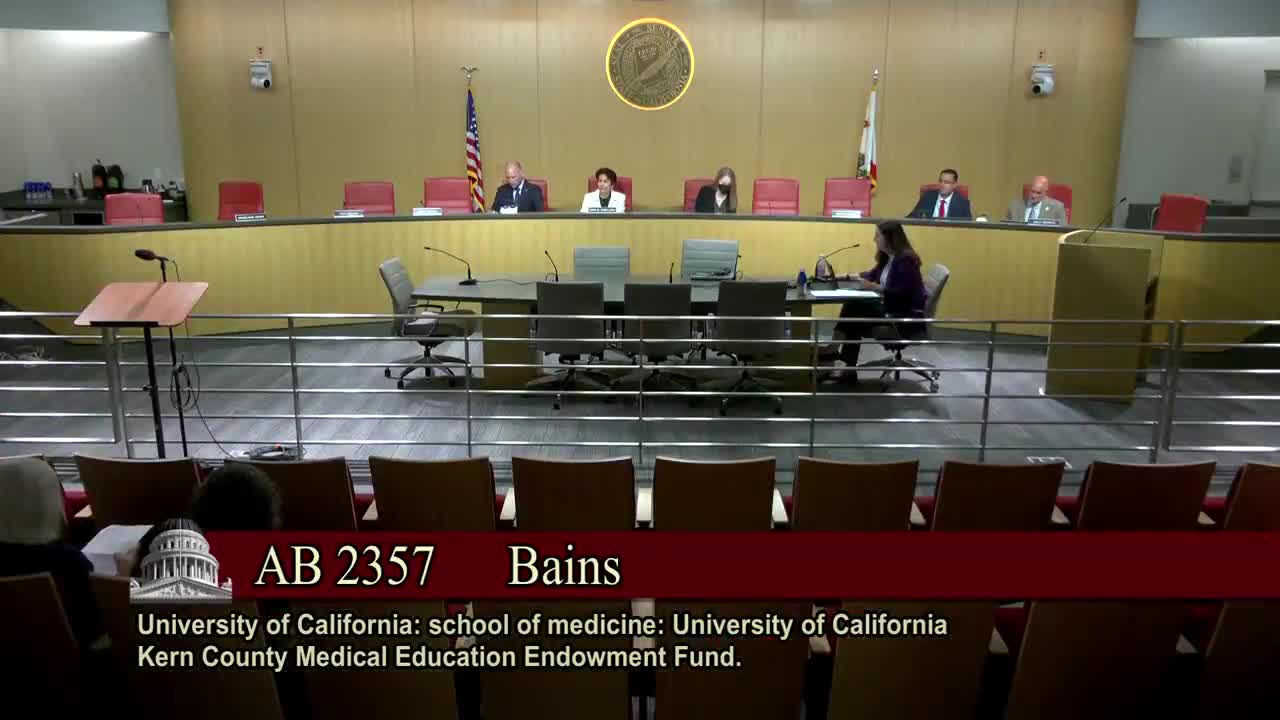 46SEC
Senate Standing Committee on Appropriations
 10MIN
Senate Standing Committee on Public Safety
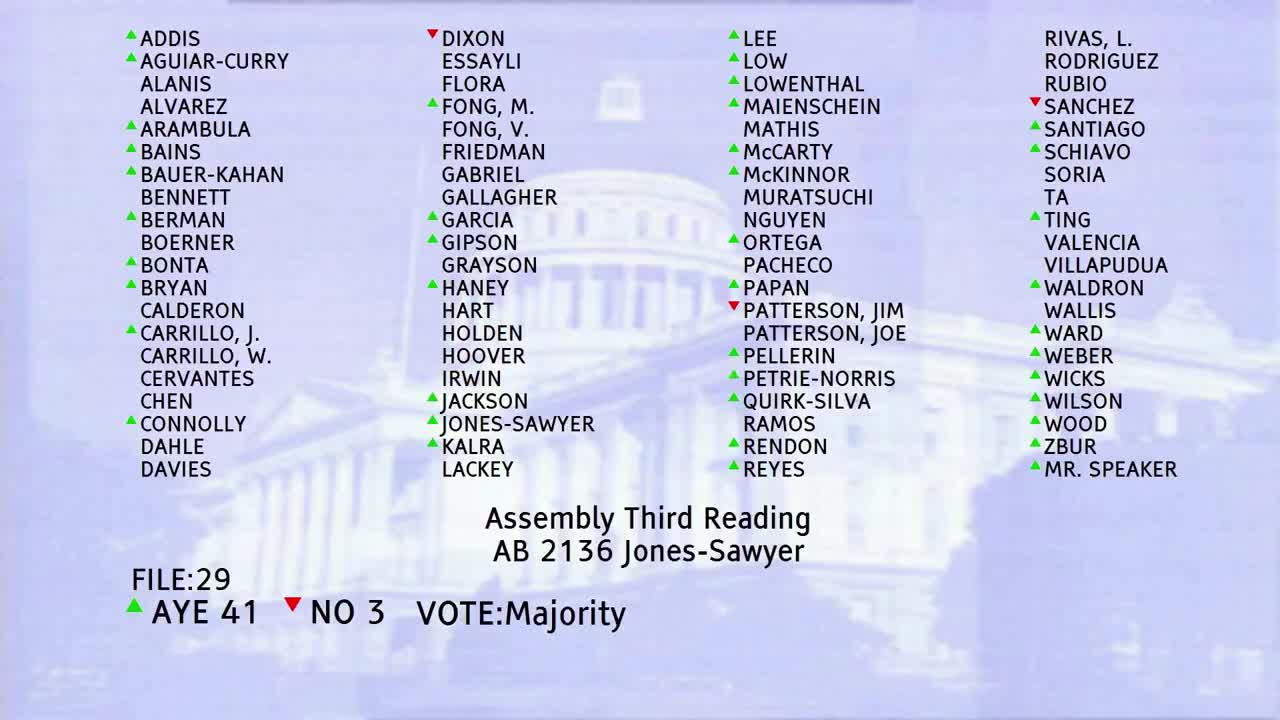 1MIN
Assembly Floor
 32MIN
Assembly Standing Committee on Privacy and Consumer Protection
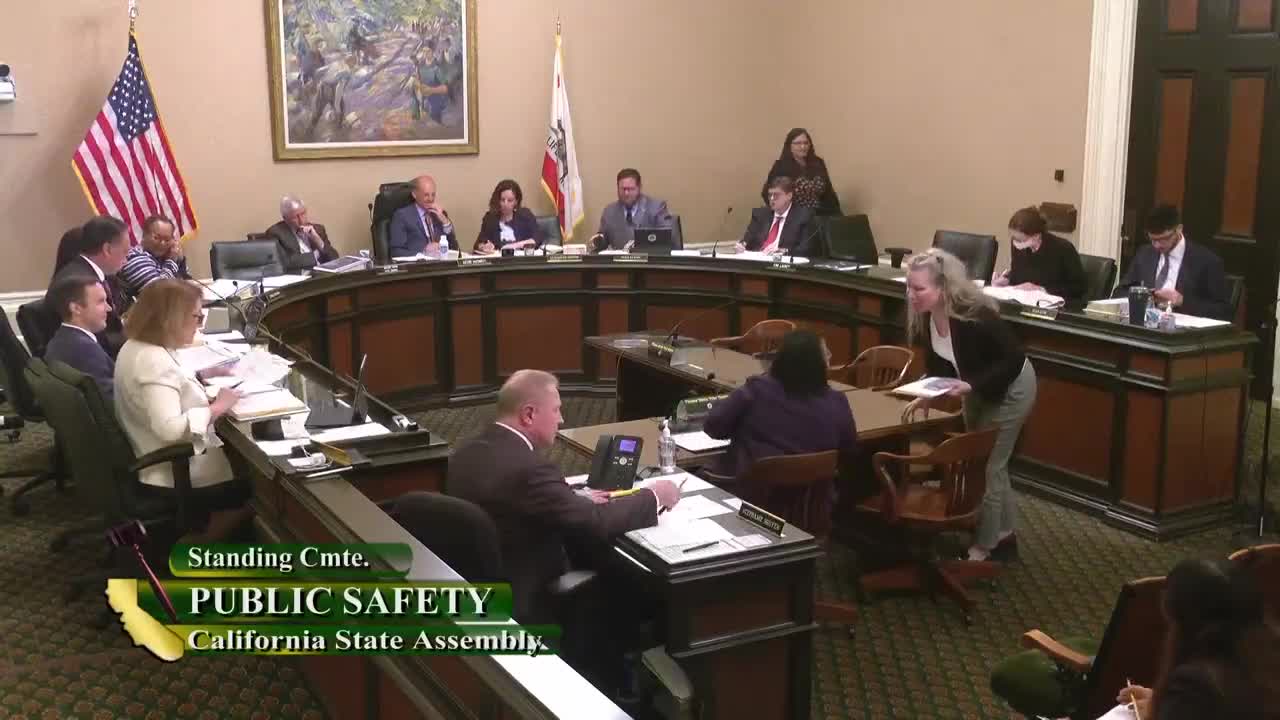 16MIN