AB 1885: Student Success Completion Grant program.
- Session Year: 2023-2024
- House: Assembly
- Latest Version Date: 2024-09-27
Current Status:
Passed
(2024-09-27: Chaptered by Secretary of State - Chapter 685, Statutes of 2024.)
Introduced
In Committee
First Chamber
In Committee
Second Chamber
Enacted
Existing law requires each participating community college to provide a Student Success Completion Grant award to a student attending a community college if the student receives a Cal Grant B or C award, makes satisfactory academic progress, and is a California resident or is exempt from paying nonresident tuition. Existing law awards $1,298 per semester, or the quarterly equivalent, for eligible students who enroll in 12, 13, or 14 units per semester, or the quarterly equivalent number of units, awards $4,000 per semester, or the quarterly equivalent, for eligible students who enroll in 15 units per semester, or the quarterly equivalent number of units, and, commencing with the 202324 academic year, awards $5,250 per semester, or the quarterly equivalent, to eligible students who are current or former foster youth who enroll in 12 or more units per semester, or the quarterly equivalent number of units.
This bill would require each participating community college to also award $1,298 per semester, or the quarterly equivalent, to eligible students who enroll in 9 or more units per semester, or the quarterly equivalent number of units, who are considered full-time as part of a disabled student programs and services Academic Accommodation Plan, as described.
(a)Commencing with the 201819 academic year, each participating community college shall provide a grant award to a student pursuant to subdivision (b). The purpose of the grant award is to provide the student with additional financial aid to help offset the students total cost of community college attendance.
(b)A student attending a community college may receive a grant award pursuant to this section if the student meets all of the following requirements:
(1)The student receives a Cal Grant B or C award pursuant to Chapter 1.7 (commencing with Section 69430) of Part 42 of Division 5.
(2)The student is making satisfactory academic progress at the community college under criteria required by the applicable federal standards published in Title 34 of the Code of Federal Regulations. The criteria applied by the community college for determining satisfactory academic progress shall, to the extent consistent with applicable federal standards, provide that homelessness, as defined as a homeless individual within the meaning of the federal McKinney-Vento Homeless Assistance Act (42 U.S.C. Sec. 11302(a)), or as defined as a homeless child or youth, as defined in subsection (2) of Section 725 of the federal McKinney-Vento Homeless Assistance Act (42 U.S.C. Sec. 11434a(2)), is an extenuating circumstance for students who are otherwise unable to meet the requirements deemed to constitute satisfactory academic progress at that community college. The community college may consider this extenuating circumstance, in its discretion, to the extent consistent with federal standards, to alter or excuse compliance with those progress requirements.
(3)The student is a California resident or is exempt from paying nonresident tuition under Section 68130.5 or 76140.
(c)(1)The students who meet the applicant criteria pursuant to subdivision (b) shall be eligible for the following grant amounts:
(A)One thousand two hundred ninety-eight dollars ($1,298) per semester, or quarterly equivalent, for eligible students who enroll in 12, 13, or 14 units per semester, or the quarterly equivalent number of units.
(B)Four thousand dollars ($4,000) per semester, or quarterly equivalent, for eligible students who enroll in 15 units per semester, or the quarterly equivalent number of units.
(2)Notwithstanding paragraph (1), commencing with the 202324 academic year, the students meeting the applicant criteria pursuant to subdivision (b) who are current or former foster youth, as defined in paragraph (2) of subdivision (e) of Section 69433.6, shall be eligible for a grant amount of five thousand two hundred fifty dollars ($5,250) per semester, or quarterly equivalent, if they enroll in 12 or more units per semester, or the quarterly equivalent number of units.
(3)Notwithstanding paragraph (1), commencing with the 202526 academic year, the students meeting the applicant criteria pursuant to subdivision (b) who enroll in nine or more units per semester, or the quarterly equivalent number of units, and are considered full time as part of a disabled student programs and services Academic Accommodation Plan, as described in Section 56022 of Title 5 of the California Code of Regulations, shall be eligible for a grant amount of one thousand two hundred ninety-eight dollars ($1,298) per semester, or the quarterly equivalent.
(4)(A)If funding is available after making awards to students in the primary terms, a community college may grant additional awards to students who take a sufficient number of units during the summer term to bring their total number of academic units to 24 units or more for the academic year. The chancellors office shall work with colleges to determine the summer grant amounts based on available funds.
(B)It is the intent of the Legislature that the available grants would be prorated to allocate a larger amount to students who take a sufficient number of units for a total of 30 units or more for the academic year.
(d)(1)To the extent practicable, a grant award shall be awarded at the same time as a recipients overall financial aid package.
(2)The grant award shall be considered a supplemental grant, and shall not supplant any other grant, fee waiver, or scholarship aid received by the student, including, but not necessarily limited to, federal grants, Cal Grant awards, institutional grants, merit-based scholarships, and athletic scholarships.
(3)The grant award shall be based upon the financial need of the applicant, and shall not exceed the calculated financial need for any individual applicant. The minimum level of financial need of applicants shall be determined by the commission pursuant to Section 69432.9.
(4)The grant award identified in subdivision (c) shall be proportionally reduced if the amount of funding appropriated in the annual Budget Act for this purpose is insufficient to fully fund the total number of students awarded a grant.
(e)(1)Each participating community college shall administer the grant award pursuant to the requirements of this section.
(2)It is the intent of the Legislature that a student is enrolled in a program of study and has completed an education plan identifying courses, a sequence of courses, key progress of milestones, and other requirements the student must complete to earn an associate degree, career technical education certificate, other community college certificate, or meet transfer requirements.
(3)Each participating community college shall encourage students to enroll in a sufficient number of units per semester, quarter, or summer term to be considered on track to obtain a certificate, associate degree for transfer, or associate degree or transfer to a four-year university within two academic years or within three academic years if a student is required to take basic skill courses by the community college.
(f)This section shall not be operative in a fiscal year unless funding has been provided for this section for that fiscal year in the annual Budget Act or another statute.
(a)Commencing with the 201819 academic year, each participating community college shall provide a grant award to a student pursuant to subdivision (b). The purpose of the grant award is to provide the student with additional financial aid to help offset the students total cost of community college attendance.
(b)A student attending a community college may receive a grant award pursuant to this section if the student meets all of the following requirements:
(1)The student receives a Cal Grant B or C award pursuant to Chapter 1.7 (commencing with Section 69430) of Part 42 of Division 5.
(2)The student is making satisfactory academic progress at the community college under criteria required by the applicable federal standards published in Title 34 of the Code of Federal Regulations. The criteria applied by the community college for determining satisfactory academic progress shall, to the extent consistent with applicable federal standards, provide that homelessness, as defined as a homeless individual within the meaning of the federal McKinney-Vento Homeless Assistance Act (42 U.S.C. Sec. 11302(a)), or as defined as a homeless child or youth, as defined in subsection (2) of Section 725 of the federal McKinney-Vento Homeless Assistance Act (42 U.S.C. Sec. 11434a(2)), is an extenuating circumstance for students who are otherwise unable to meet the requirements deemed to constitute satisfactory academic progress at that community college. The community college may consider this extenuating circumstance, in its discretion, to the extent consistent with federal standards, to alter or excuse compliance with those progress requirements.
(3)The student is a California resident or is exempt from paying nonresident tuition under Section 68130.5 or 76140.
(c)(1)The students who meet the applicant criteria pursuant to subdivision (b) shall be eligible for the following grant amounts:
(A)One thousand two hundred ninety-eight dollars ($1,298) per semester, or quarterly equivalent, for eligible students who enroll in 12, 13, or 14 units per semester, or the quarterly equivalent number of units.
(B)Four thousand dollars ($4,000) per semester, or quarterly equivalent, for eligible students who enroll in 15 units per semester, or the quarterly equivalent number of units.
(2)Notwithstanding paragraph (1), commencing with the 202324 academic year, the students meeting the applicant criteria pursuant to subdivision (b) who are current or former foster youth, as defined in paragraph (2) of subdivision (e) of Section 69433.6, shall be eligible for a grant amount of five thousand two hundred fifty dollars ($5,250) per semester, or quarterly equivalent, if they enroll in 12 or more units per semester, or the quarterly equivalent number of units.
(3)Notwithstanding paragraph (1), commencing with the 202526 academic year, the students meeting the applicant criteria pursuant to subdivision (b) who enroll in nine or more units per semester, or the quarterly equivalent number of units, and are considered full time as part of a disabled student programs and services Academic Accommodation Plan, as described in Section 56022 of Title 5 of the California Code of Regulations, shall be eligible for a grant amount of one thousand two hundred ninety-eight dollars ($1,298) per semester, or the quarterly equivalent.
(3)(4)(A)If funding is available after making awards to students in the primary terms, a community college may grant additional awards to students who take a sufficient number of units during the summer term to bring their total number of academic units to 24 units or more for the academic year. The chancellors office shall work with colleges to determine the summer grant amounts based on available funds.
(B)It is the intent of the Legislature that the available grants would be prorated to allocate a larger amount to students who take a sufficient number of units for a total of 30 units or more for the academic year.
(d)(1)To the extent practicable, a grant award shall be awarded at the same time as a recipients overall financial aid package.
(2)The grant award shall be considered a supplemental grant, and shall not supplant any other grant, fee waiver, or scholarship aid received by the student, including, but not necessarily limited to, federal grants, Cal Grant awards, institutional grants, merit-based scholarships, and athletic scholarships.
(3)The grant award shall be based upon the financial need of the applicant, and shall not exceed the calculated financial need for any individual applicant. The minimum level of financial need of applicants shall be determined by the commission pursuant to Section 69432.9.
(4)The grant award identified in subdivision (c) shall be proportionally reduced if the amount of funding appropriated in the annual Budget Act for this purpose is insufficient to fully fund the total number of students awarded a grant.
(e)(1)Each participating community college shall administer the grant award pursuant to the requirements of this section.
(2)It is the intent of the Legislature that a student is enrolled in a program of study and has completed an education plan identifying courses, a sequence of courses, key progress of milestones, and other requirements the student must complete to earn an associate degree, career technical education certificate, other community college certificate, or meet transfer requirements.
(3)Each participating community college shall encourage students to enroll in a sufficient number of units per semester, quarter, or summer term to be considered on track to obtain a certificate, associate degree for transfer, or associate degree or transfer to a four-year university within two academic years or within three academic years if a student is required to take basic skill courses by the community college.
(f)This section shall not be operative in a fiscal year unless funding has been provided for this section for that fiscal year in the annual Budget Act or another statute.
REVISIONS: HeadingLines 2 and 3.|
Date
|
Status
|
|---|---|
| Sep 27, 2024 | Chaptered by Secretary of State - Chapter 685, Statutes of 2024. |
| Sep 27, 2024 | Approved by the Governor. |
| Sep 10, 2024 | Enrolled and presented to the Governor at 4:30 p.m. |
| Aug 28, 2024 | In Assembly. Ordered to Engrossing and Enrolling. |
| Aug 28, 2024 | Read third time. Passed. Ordered to the Assembly. (Ayes 39. Noes 0.). |
| Aug 23, 2024 | Ordered to special consent calendar. |
| Aug 19, 2024 | Read second time. Ordered to third reading. |
| Aug 15, 2024 | From committee: Do pass. (Ayes 7. Noes 0.) (August 15). |
| Aug 5, 2024 | In committee: Referred to APPR suspense file. |
| Jun 26, 2024 | From committee: Do pass and re-refer to Com. on APPR with recommendation: To Consent Calendar. (Ayes 7. Noes 0.) (June 26). Re-referred to Com. on APPR. |
| May 29, 2024 | Referred to Coms. on ED. and APPR. |
| May 22, 2024 | In Senate. Read first time. To Com. on RLS. for assignment. |
| May 21, 2024 | Read third time. Passed. Ordered to the Senate. (Ayes 73. Noes 0. Page 5399.) |
| May 20, 2024 | Read second time. Ordered to third reading. |
| May 16, 2024 | From committee: Do pass. (Ayes 15. Noes 0.) (May 16). |
| May 16, 2024 | Coauthors revised. |
| Apr 10, 2024 | In committee: Set, first hearing. Referred to APPR. suspense file. |
| Mar 13, 2024 | From committee: Do pass and re-refer to Com. on APPR. (Ayes 10. Noes 0.) (March 12). Re-referred to Com. on APPR. |
| Mar 13, 2024 | Coauthors revised. |
| Feb 5, 2024 | Referred to Com. on HIGHER ED. |
| Jan 23, 2024 | From printer. May be heard in committee February 22. |
| Jan 22, 2024 | Read first time. To print. |
|
Date
|
Description
|
Location
|
Votes
|
|
|---|---|---|---|---|
| Aug 28, 2024 | Special Consent AB1885 Addis et al. By Ochoa Bogh | Senate Floor |
Passed |
|
| Aug 15, 2024 | Do pass | Senate Standing Committee on Appropriations |
Passed |
|
| Aug 5, 2024 | Placed on suspense file | Senate Standing Committee on Appropriations |
Passed |
|
| Jun 26, 2024 | Do pass, but first be re-referred to the Committee on [Appropriations] with the recommendation: To Consent Calendar | Senate Standing Committee on Education |
Passed |
|
| May 21, 2024 | AB 1885 Addis Assembly Third Reading | Assembly Floor |
Passed |
|
| May 16, 2024 | Do pass. | Assembly Standing Committee on Appropriations |
Passed |
|
| Mar 12, 2024 | Do pass and be re-referred to the Committee on [Appropriations] | Assembly Standing Committee on Higher Education |
Passed |
This list shows positions taken on this bill by organizations on the date displayed, which is linked to the original source.
Positions by individuals are not included.
|
Organization
|
Position
|
Date
|
|---|---|---|
| Cabrillo Community College District | ** Support | |
| California Association for Postsecondary Education and Disability | ** Support | |
| California Community Colleges, Chancellor's Office | ** Support | |
| California Federation Of Teachers | ** Support | |
| California Student Aid Commission | ** Support | |
| Cerritos College | ** Support | |
| Citrus College | ** Support | |
| Coast Community College District | ** Support | |
| College of the Redwoods | ** Support | |
| Contra Costa Community College District | ** Support | |
| Delta Kappa Gamma International - Chi State | ** Support | |
| El Camino Community College District | ** Support | |
| Faculty Association Of California Community Colleges | ** Support | |
| faculty association of california's community colleges | ** Support | |
| Foothill-De Anza Community College District | ** Support | |
| Institute for College Access & Success | ** Support | |
| John Burton Advocates for Youth | ** Support | |
| Long Beach Community College District | ** Support | |
| Monterey Peninsula College | ** Support | |
| Mt. San Antonio College | ** Support | |
| NextGen California | ** Support | |
| North Orange Community College District | ** Support | |
| Palo Verde Community College District | ** Support | |
| Rio Hondo College | ** Support | |
| Riverside Community College District | ** Support | |
| San Bernardino Community College District | ** Support | |
| San Diego Community College District | ** Support | |
| San Jose-Evergreen Community College District | ** Support | |
| Santa Clarita Community College District - College of the Canyons | ** Support | |
| Solano Community College | ** Support | |
| South Orange County Community College District | ** Support | |
| Southwestern Community College District | ** Support | |
| State Council on Developmental Disabilities | ** Support | |
| Television Academy Foundation | ** Support | |
| Ventura County Community College District | ** Support | |
| Victor Valley College | ** Support | |
| West Hills Community College District | ** Support | |
| Yuba Community College District | ** Support |
SENATE RULES COMMITTEE Office of Senate Floor Analyses (916) 651-1520 Fax: (916) 327-4478 | AB 1885 |
THIRD READING
Bill No: AB 1885
Author: Addis (D), et al.
Introduced: 1/22/24
Vote: 21
SENATE EDUCATION COMMITTEE: 7-0, 6/26/24
AYES: Newman, Ochoa Bogh, Cortese, Glazer, Gonzalez, Smallwood-Cuevas, Wilk
SENATE APPROPRIATIONS COMMITTEE: 7-0, 8/15/24
AYES: Caballero, Jones, Ashby, Becker, Bradford, Seyarto, Wahab
ASSEMBLY FLOOR: 73-0, 5/21/24 - See last page for vote
SUBJECT: Student Success Completion Grant program
SOURCE: California Community Colleges Office of the Chancellor
DIGEST:
This bill extends eligibility, commencing with the 2025-26 academic year, for the California Community College (CCC) Student Success Completion Grant program (Completion Grant) to students who enroll in 9 or more units per semester, or the equivalent, and are considered full-time as part of the Disabled Student Programs and Services (DSPS) Academic Accommodation Plan.
ANALYSIS:
Existing law:
1) Establishes the mission and function of the CCC, which, in part, is to: (1) offer academic and vocational instruction at the lower division level for both younger and older students, including those persons returning to school; (2) grant the associate in arts and the associate in science degrees; (3) offer English as a Second Language instruction, adult noncredit instruction, and support services which help students succeed at the postsecondary level; and, (4) advance California’s economic growth and global competitiveness through education, training, and services that contribute to continuous workforce improvement. (Education Code (EC) § 66010.4)
2) Establishes the Student Success Completion Grant (SSCG), under the administration of the CCC. Stipulates that SSCGP is operative only in fiscal years that funding has been provided for SSCGP in the annual Budget Act or another statute. Expresses that SSCGP awards are intended to cover non-tuition costs of college. Specifies a student attending a CCC may receive a SSCG award if the student meets all of the following requirements:
a) Receives a Cal Grant B or C award;
b) Is making satisfactory academic progress at the college under criteria required by the applicable federal standards, as specified;
c) Is a California resident or is exempt from paying nonresident tuition, as specified; and,
d) Students who meet the applicant criteria shall be eligible for the following grant amounts:
i) $1,298 per semester, or quarterly equivalent, for eligible students who enroll in 12, 13, or 14 units per semester, or the quarterly equivalent number of units;
ii) $4,000 per semester, or quarterly equivalent, for eligible students who enroll in 15 units per semester, or the quarterly equivalent number of units; and,
iii) Commencing with the 2023-24 academic year, students who meet the criteria (as enumerated above in (2) (a – c) inclusive, who are current or former foster youth, as defined, will be eligible for a SSCGP in the amount of $5,250 per semester, or quarterly equivalent, if they enroll in 12 units or more per semester or the quarterly equivalent number of units. (EC § 88931)
This bill expands eligibility, commencing with the 2025-26 academic year, to the Completion Grant by requiring that a student who meets the applicant criteria for the Completion Grant at the CCC, who enrolls in 9 or more units per semester (instead of 12 units), or the equivalent, and is considered full-time as part of the DSPS Academic Accommodation Plan, be eligible for a grant amount of $1,298 per semester, or the equivalent.
Comments
- Need for the bill. According to the author, “California community college students who have received a Cal Grant and are taking at least 12 units are eligible for an additional grant called the Student Success Completion grant. This grant is designed to help alleviate the cost of tuition while attending a California Community College for Cal grant recipients so that they can focus on achieving their academic goals. The twelve-unit minimum is codified in Education Code section 88931 (c)(1)(A). Twelve units was chosen as the threshold because that is the traditional minimum amount of units required to be considered a “full-time” student for many educational programs.
“Unfortunately, this leaves many students in Disabled Students Programs and Services (DSPS) ineligible to receive this financial aid since many of them do not take 12 units. That being said, DSPS students are considered full-time when they are taking nine units as a part of their academic accommodation plan but due to the 12-unit minimum, they are not eligible for the grant. As a result, they cannot earn the SSCG and therefore receive less financial aid on average than students without disabilities. This is an issue because it is excluding one of our most vulnerable populations by not giving them access to a grant that would help them pursue their academic endeavors.”
- The Student Success Completion Grant (SSCG). The SSCG is a financial aid program for Cal Grant B and C recipients attending a CCC full-time (12 units or more). The purpose of the SSCG grant award is to provide the student with additional financial aid to help offset the total cost of community college attendance, and to encourage full time attendance and successful on-time completion. SSCG pays a maximum of $1,298 annually at $649 per semester for eligible students who enroll and attend 12 through 14.99 units per term and a maximum of $4,000 annually at $2,000 per semester for eligible students who enroll and attend 15 units or more per term. The Legislature, in conjunction with the Governor and the Department of Finance, created the SSCG, and, as stipulated, commencing with the 2018-19 academic year, each participating CCC must provide a SSCG award to eligible students in order to assist in offsetting students’ total cost of CCC attendance. Further, the 2023-24 Budget Act adjusted the SSCG, stipulating that beginning with the 2023-24 academic year, students who meet eligibility criteria and who are current or former foster youth, are eligible for a SSCG in the amount of $5,250 per semester, or quarterly equivalent, if they enroll in 12 units or more per semester or the quarterly equivalent number of units.
- Disabled Student Programs and Services. DSPS was created when Assembly Bill 77 (Lanterman) was enacted in 1976 and codified in Education Code, Section 84850, and Title 5, California Code of Regulations (5 CCR), Sections 56000-56076. It funds support services and instructional programs for students with disabilities at the California Community Colleges. DSPS assists colleges to provide services and accommodations for qualified students to support their student success and to meet the requirements of federal and state non-discrimination and civil rights laws, including Sections 504 and 508 of the federal Rehabilitation Act, the Americans with Disabilities Act (ADA); and California Government Code Sections 11135-11139.5.
The DSPS program provides support services and educational accommodations to students with disabilities so that they can have full and equitable access to the community college experience. In addition, many colleges provide specialized instruction as part of their DSPS program. An Academic Accommodation Plan is developed for each student served by DSPS. The Academic Accommodation Plan defines the student’s educational goals and outlines the support services and academic accommodations to be provided to address the student’s specific disability-related educational needs.
Examples of services that may be provided by DSPS that are over and above those regularly offered by the college would be test-proctoring, assessment for learning disabilities, specialized counseling, interpreter or captioning services for hearing-impaired or deaf students, mobility assistance, note-taker services, reader services, transcription services, specialized tutoring, access to adaptive equipment, job development and placement, registration assistance, special parking, and specialized instruction.
This bill aims to extend eligibility for the completion grant to students who are considered full-time as part of the DSPS Academic Accommodation Plan but may not meet the minimum unit requirement for full-time non-disabled students. By taking into account the full-time equivalent accommodation for students with disability-related education needs, the proposed changes appear to strike an appropriate balance between meeting the needs of students with Academic Accommodation Plans and upholding the full-time attendance objectives of the completion grant.
- Who is eligible? According to the CCC Office of the Chancellor, in the 2022-23 academic year, there were 107,385 CCC students in DSPS. Of that number, it is not clear how many students would be eligible for this program.
FISCAL EFFECT: Appropriation: No Fiscal Com.: No Local: No
According to the Senate Appropriations Committee,
- By expanding eligibility for the Student Success Completion Grant program, this bill could potentially result in additional, unknown Proposition 98 General Fund cost pressures to increase funding for the program. However, the Chancellor’s Office estimates that the bill would not result in additional costs since the additional number of students that would be eligible is likely less than 5,000 statewide and the program has been underused since its inception. Additionally, the Student Success Completion Grant program is not an entitlement program and not every eligible student is guaranteed a grant. According to the Chancellor’s Office, the grants would be distributed on a first-come first-served basis if there was not enough funding in the program to cover all eligible applicants.
SUPPORT: (Verified 8/15/24)
California Community Colleges, Chancellor's Office (source)
Cabrillo Community College District
California Federation of Teachers
California Student Aid Commission
Cerritos College
Citrus College
Coast Community College District
College of the Redwoods
Delta Kappa Gamma International - Chi State
Faculty Association of California Community Colleges
Faculty Association of California's Community Colleges
Foothill-De Anza Community College District
Institute for College Access & Success
Long Beach Community College District
Monterey Peninsula College
Mt. San Antonio College
Nextgen California
North Orange Community College District
Riverside Community College District
San Bernardino Community College District
San Jose-Evergreen Community College District
Santa Clarita Community College District - College of the Canyons
Solano Community College
State Council on Developmental Disabilities
Television Academy Foundation
West Hills Community College District
Yuba Community College District
OPPOSITION: (Verified 8/15/24)
None received
ASSEMBLY FLOOR: 73-0, 5/21/24
AYES: Addis, Aguiar-Curry, Alanis, Alvarez, Arambula, Bains, Bauer-Kahan, Bennett, Berman, Boerner, Bonta, Bryan, Calderon, Juan Carrillo, Wendy Carrillo, Chen, Connolly, Davies, Dixon, Essayli, Flora, Mike Fong, Vince Fong, Gallagher, Garcia, Gipson, Grayson, Haney, Hart, Hoover, Irwin, Jackson, Jones-Sawyer, Kalra, Lackey, Lee, Low, Lowenthal, Maienschein, McCarty, McKinnor, Muratsuchi, Stephanie Nguyen, Ortega, Pacheco, Papan, Jim Patterson, Joe Patterson, Pellerin, Petrie-Norris, Quirk-Silva, Ramos, Rendon, Reyes, Rodriguez, Blanca Rubio, Sanchez, Santiago, Schiavo, Soria, Ta, Ting, Valencia, Villapudua, Waldron, Wallis, Ward, Weber, Wicks, Wilson, Wood, Zbur, Robert Rivas
NO VOTE RECORDED: Cervantes, Megan Dahle, Friedman, Gabriel, Holden, Mathis, Luz Rivas
Prepared by: Olgalilia Ramirez / ED. / (916) 651-4105
8/18/24 8:51:07
**** END ****
SENATE COMMITTEE ON APPROPRIATIONS
Senator Anna Caballero, Chair
2023 - 2024 Regular Session
AB 1885 (Addis) - Student Success Completion Grant program
Version: January 22, 2024 | Policy Vote: ED. 7 - 0 |
Urgency: No | Mandate: No |
Hearing Date: August 5, 2024 | Consultant: Lenin Del Castillo |
Bill Summary:
This bill extends eligibility for the California Community College (CCC) Student Success Completion Grant program to students who enroll in 9 or more units per semester, or the equivalent, and are considered full-time as part of the Disabled Student Programs and Services Academic Accommodation Plan.
Fiscal Impact:
By expanding eligibility for the Student Success Completion Grant program, this bill could potentially result in additional, unknown Proposition 98 General Fund cost pressures to increase funding for the program. However, the Chancellor’s Office estimates that the bill would not result in additional costs since the additional number of students that would be eligible is likely less than 5,000 statewide and the program has been underused since its inception. Additionally, the Student Success Completion Grant program is not an entitlement program and not every eligible student is guaranteed a grant. According to the Chancellor’s Office, the grants would be distributed on a first-come first-served basis if there was not enough funding in the program to cover all eligible applicants.
Background:
Existing law establishes the Student Success Completion Grant, under the administration of the CCC, and stipulates that the SSCGP is operative only in fiscal years that funding has been provided for SSCGP in the annual Budget Act or another statute. The law provides that SSCGP awards are intended to cover non-tuition costs of college. Existing law specifies that a student attending a CCC may receive a SSCG award if the student meets all of the following requirements:
a) Receives a Cal Grant B or C award;
b) Is making satisfactory academic progress at the college under criteria required by the applicable federal standards, as specified;
c) Is a California resident or is exempt from paying nonresident tuition, as specified; and,
d) Students who meet the applicant criteria shall be eligible for the following grant amounts:
i) $1,298 per semester, or quarterly equivalent, for eligible students who enroll in 12, 13, or 14 units per semester, or the quarterly equivalent number of units;
ii) $4,000 per semester, or quarterly equivalent, for eligible students who enroll in 15 units per semester, or the quarterly equivalent number of units; and,
iii) Commencing with the 2023-24 academic year, students who meet the criteria (as enumerated above in (2) (a – c) inclusive, who are current or former foster youth, as defined, will be eligible for a SSCGP in the amount of $5,250 per semester, or quarterly equivalent, if they enroll in 12 units or more per semester or the quarterly equivalent number of units.
Proposed Law:
This bill expands eligibility, commencing with the 2025-26 academic year, to the Completion Grant by requiring that a student who meets the applicant criteria for the Completion Grant at the CCC, who enrolls in 9 or more units per semester (instead of 12 units), or the equivalent, and is considered full-time as part of the DSPS Academic Accommodation Plan, be eligible for a grant amount of $1,298 per semester, or the equivalent.
Staff Comments:
The DSPS program provides support services and educational accommodations to students with disabilities so that they can have full and equitable access to the community college experience. In addition, many colleges provide specialized instruction as part of their DSPS program. An Academic Accommodation Plan is developed for each student served by DSPS. The Academic Accommodation Plan defines the student’s educational goals and outlines the support services and academic accommodations to be provided to address the student’s specific disability-related educational needs. Examples of services that may be provided by DSPS that are over and above those regularly offered by the college would be test-proctoring, assessment for learning disabilities, specialized counseling, interpreter or captioning services for hearing-impaired or deaf students, mobility assistance, note-taker services, reader services, transcription services, specialized tutoring, access to adaptive equipment, job development and placement, registration assistance, special parking, and specialized instruction.
This bill would extend eligibility for the completion grant to students who are considered full-time as part of the DSPS Academic Accommodation Plan but may not meet the minimum unit requirement for full-time non-disabled students. According to the Chancellor’s Office, in the 2022-23 academic year, there were 107,385 CCC students in the DSPS program. However, it is unclear how many of these students would be eligible for the Completion Grant.
-- END --
SENATE COMMITTEE ON EDUCATION
Senator Josh Newman, Chair
2023 - 2024 Regular
Bill No: Hearing Date: June 26, 2024
Author: | Addis | ||
Version: |
| ||
Urgency: | Fiscal: | ||
Consultant: | |||
Subject: .
NOTE: This bill has been referred to the Committees on Education and Appropriations. A "do pass" motion should include referral to the Committee on Appropriations.
SUMMARY
This bill extends eligibility, commencing with the 2025-26 academic year, for the California Community College (CCC) Student Success Completion Grant program (Completion Grant) to students who enroll in 9 or more units per semester, or the equivalent, and are considered full-time as part of the Disabled Student Programs and Services (DSPS) Academic Accommodation Plan.
BACKGROUND
Existing law:
1) Establishes the mission and function of the CCC, which, in part, is to: 1) offer academic and vocational instruction at the lower division level for both younger and older students, including those persons returning to school; 2) grant the associate in arts and the associate in science degrees; 3) offer English as a Second Language instruction, adult noncredit instruction, and support services which help students succeed at the postsecondary level; and, 4) advance California’s economic growth and global competitiveness through education, training, and services that contribute to continuous workforce improvement. (Education Code (EC) § 66010.4)
2) Establishes the Student Success Completion Grant (SSCG), under the administration of the CCC. Stipulates that SSCGP is operative only in fiscal years that funding has been provided for SSCGP in the annual Budget Act or another statute. Expresses that SSCGP awards are intended to cover non-tuition costs of college. Specifies a student attending a CCC may receive a SSCG award if the student meets all of the following requirements:
a) Receives a Cal Grant B or C award;
b) Is making satisfactory academic progress at the college under criteria required by the applicable federal standards, as specified;
c) Is a California resident or is exempt from paying nonresident tuition, as specified; and,
d) Students who meet the applicant criteria shall be eligible for the following grant amounts:
i) $1,298 per semester, or quarterly equivalent, for eligible students who enroll in 12, 13, or 14 units per semester, or the quarterly equivalent number of units;
ii) $4,000 per semester, or quarterly equivalent, for eligible students who enroll in 15 units per semester, or the quarterly equivalent number of units; and,
iii) Commencing with the 2023-24 academic year, students who meet the criteria (as enumerated above in (2) (a – c) inclusive, who are current or former foster youth, as defined, will be eligible for a SSCGP in the amount of $5,250 per semester, or quarterly equivalent, if they enroll in 12 units or more per semester or the quarterly equivalent number of units. (EC § 88931)
ANALYSIS
- This bill expands eligibility, commencing with the 2025-26 academic year, to the Completion Grant by requiring that a student who meets the applicant criteria for the Completion Grant at the CCC, who enrolls in 9 or more units per semester (instead of 12 units), or the equivalent, and is considered full-time as part of the DSPS Academic Accommodation Plan, be eligible for a grant amount of $1,298 per semester, or the equivalent.
STAFF COMMENTS
- Need for the bill. According to the author, “California community college students who have received a Cal Grant and are taking at least 12 units are eligible for an additional grant called the Student Success Completion grant. This grant is designed to help alleviate the cost of tuition while attending a California Community College for Cal grant recipients so that they can focus on achieving their academic goals. The twelve-unit minimum is codified in Education Code section 88931 (c)(1)(A). Twelve units was chosen as the threshold because that is the traditional minimum amount of units required to be considered a “full-time” student for many educational programs.
“Unfortunately, this leaves many students in Disabled Students Programs and Services (DSPS) ineligible to receive this financial aid since many of them do not take 12 units. That being said, DSPS students are considered full-time when they are taking nine units as a part of their academic accommodation plan but due to the 12-unit minimum, they are not eligible for the grant. As a result, they cannot earn the SSCG and therefore receive less financial aid on average than students without disabilities. This is an issue because it is excluding one of our most vulnerable populations by not giving them access to a grant that would help them pursue their academic endeavors.”
- The Student Success Completion Grant (SSCG). The SSCG is a financial aid program for Cal Grant B and C recipients attending a CCC full-time (12 units or more). The purpose of the SSCG grant award is to provide the student with additional financial aid to help offset the total cost of community college attendance, and to encourage full time attendance and successful on-time completion. SSCG pays a maximum of $1,298 annually at $649 per semester for eligible students who enroll and attend 12 through 14.99 units per term and a maximum of $4,000 annually at $2,000 per semester for eligible students who enroll and attend 15 units or more per term. The Legislature, in conjunction with the Governor and the Department of Finance, created the SSCG, and, as stipulated, commencing with the 2018-19 academic year, each participating CCC must provide a SSCG award to eligible students in order to assist in offsetting students’ total cost of CCC attendance. Further, the 2023-24 Budget Act adjusted the SSCG, stipulating that beginning with the 2023-24 academic year, students who meet eligibility criteria and who are current or former foster youth, are eligible for a SSCG in the amount of $5,250 per semester, or quarterly equivalent, if they enroll in 12 units or more per semester or the quarterly equivalent number of units.
- Disabled Student Programs and Services. DSPS was created when Assembly Bill 77 (Lanterman) was enacted in 1976 and codified in Education Code, Section 84850, and Title 5, California Code of Regulations (5 CCR), Sections 56000-56076. It funds support services and instructional programs for students with disabilities at the California Community Colleges. DSPS assists colleges to provide services and accommodations for qualified students to support their student success and to meet the requirements of federal and state non-discrimination and civil rights laws, including Sections 504 and 508 of the federal Rehabilitation Act, the Americans with Disabilities Act (ADA); and California Government Code Sections 11135-11139.5.
The DSPS program provides support services and educational accommodations to students with disabilities so that they can have full and equitable access to the community college experience. In addition, many colleges provide specialized instruction as part of their DSPS program. An Academic Accommodation Plan is developed for each student served by DSPS. The Academic Accommodation Plan defines the student’s educational goals and outlines the support services and academic accommodations to be provided to address the student’s specific disability-related educational needs.
Examples of services that may be provided by DSPS that are over and above those regularly offered by the college would be test-proctoring, assessment for learning disabilities, specialized counseling, interpreter or captioning services for hearing-impaired or deaf students, mobility assistance, note-taker services, reader services, transcription services, specialized tutoring, access to adaptive equipment, job development and placement, registration assistance, special parking, and specialized instruction.
This bill aims to extend eligibility for the completion grant to students who are considered full-time as part of the DSPS Academic Accommodation Plan but may not meet the minimum unit requirement for full-time non-disabled students. By taking into account the full-time equivalent accommodation for students with disability-related education needs, the proposed changes appear to strike an appropriate balance between meeting the needs of students with Academic Accommodation Plans and upholding the full-time attendance objectives of the completion grant.
- Who is eligible? According to the CCC Office of the Chancellor, in the 2022-23 academic year, there were 107,385 CCC students in DSPS. Of that number, it is not clear how many students would be eligible for this program.
SUPPORT
California Community Colleges, Chancellor's Office (Co-Sponsor)
Cabrillo Community College District
California Federation of Teachers
California Student Aid Commission
Cerritos College
Coast Community College District
College of the Redwoods
Delta Kappa Gamma International - Chi State
Faculty Association of California Community Colleges
Foothill-De Anza Community College District
Institute for College Access & Success
Long Beach Community College District
Monterey Peninsula College
Riverside Community College District
San Bernardino Community College District
San Jose-Evergreen Community College District
Santa Clarita Community College District - College of the Canyons
Solano Community College
State Council on Developmental Disabilities
Television Academy Foundation
West Hills Community College District
Yuba Community College District
OPPOSITION
None received
-- END --
ASSEMBLY THIRD READING
ATR Bill Id:AB 1885
Author:(Addis)
As Introduced Ver:January 22, 2024
Majority vote
SUMMARY
Requires, commencing with the 2025-26 academic year (AY), students meeting the applicant criteria for the Student Success Completion Grant Program (SSCGP) at the California Community Colleges (CCC), who enroll in nine or more units per semester, or the quarterly equivalent number of units, and are considered full-time as part of the Disabled Student Programs and Services (DSPS) Academic Accommodation Plan (AAP), to be eligible for a grant amount of $1,298 per semester, or the quarterly equivalent.
Major Provisions
See summary above.
COMMENTS
The SSCGP. The Legislature, in conjunction with the Governor and the Department of Finance, created the SSCGP; and, stipulated, commencing with the 2018-19 academic year, each participating CCC must provide a SSCGP award to eligible students in order to assist in offsetting students' total cost of CCC attendance.
The 2022-23 Budget Act adjusted the SSCGP whereby $200 million was allocated in addition to funding from previous budget years. Additionally, the 2022-23 Budget Act increased the award amount for all eligible CCC students: $1,298 per semester, or quarterly equivalent, for eligible students who enroll in 12, 13, or 14 units per semester, or the quarterly equivalent number of units; and, $4,000 per semester, or quarterly equivalent, for eligible students who enroll in 15 units per semester, or the quarterly equivalent number of units.
Further, the 2023-24 Budget Act adjusted the SSCGP, stipulating that beginning with the 2023-24 AY, students who meet the aforementioned criteria and who are current or former foster youth, as defined, will be eligible for a SSCGP in the amount of $5,250 per semester, or quarterly equivalent, if they enroll in 12 units or more per semester or the quarterly equivalent number of units.
Currently, the Governor's proposed 2024-25 Budget allocates $412 million to fund the SSCGP.
Due to limited funding, SSCGP funds are typically awarded on a first come, first serve basis to eligible students.
Disabled Student Programs and Services (DSPS). The DSPS was created when AB 77 (Lanterman), Chapter 275, Statutes of 1976, was enacted and codified in Education Code, Section 84850 and Title 5, California Code of Regulations (5 CCR) Sections 56000-56076. It funds support services and instructional programs for students with verified disabilities in the CCC. The DSPS assists colleges to provide services and accommodations for qualified students to support student success and to meet the requirements of federal and State non-discrimination and civil rights laws, including Sections 504 and 508 of the federal Rehabilitation Act, the Americans with Disabilities Act; and California Government Code Sections 11135-11139.5.
The DSPS provide support services and educational accommodations to students with disabilities so they can have full and equitable access to the community college experience. Additionally, many colleges provide specialized instruction as part of their DSPS program. An AAP is developed for each student served by DSPS. The AAP defines the student's educational goals and outlines the support services and academic accommodations necessary for the student's specific disability-related educational needs.
Examples of services that may be provided by DSPS that are over and above those regularly offered by the college would be test-proctoring, assessment for learning disabilities, specialized counseling, interpreter or captioning services for hearing-impaired or deaf students, mobility assistance, note-taker services, reader services, transcription services, specialized tutoring, access to adaptive equipment, job development/placement, registration assistance, special parking and specialized instruction.
Students in DSPS are considered full-time when taking nine units per semester, or the quarterly equivalent number of units; however, for non-DSPS students, full-time is considered 12 units, or the quarterly equivalent number of units. Twelve units is the traditional number that various programs use when determining whether a student has full-time status.
How many students? According to the CCC Chancellor's Office (CCCCO), in the 2022-23 AY (the most recent data available), 107,385 CCC students were a part of the DSPS. Additionally, of the 107,385 students, there were 5,400 students in DSPS who received a Cal Grant, but were not eligible to receive a SSCG. The CCCCO notes that, of the 5,400 students, not all of them were enrolled in nine units. Therefore, the exact number of students who will become eligible to receive the SSCG is presently unknown.
According to the Author
"Students taking nine units as part of their disabled student programs and services academic accommodation plan are unable to earn the Student Success Completion Grant because the grant can only be awarded to eligible full-time students who are taking at least 12 units; however, under the academic accommodation plan, students with disabilities taking nine units qualify as full-time."
The author states that, "I'm authoring the College Access for Students with Disabilities Act because this bill will level the playing field and support community college students with disabilities to achieve their academic goals. Assembly Bill 1885 will make sure that eligible students with disabilities have equitable opportunities to qualify for the Student Success Completion Grant. Doing so will increase the opportunity for needed financial support for thousands of community college students."
Arguments in Support
According to the San Diego, Southwestern, Palo Verde, and San Bernardino Community College Districts, "according to survey data from National Center for Education Statistics, students with disabilities receive 15% less financial aid than non-disabled students. Under AB 1885, students with disabilities are eligible to receive up to $1,298 per semester through the SSCG. This is a win for our students with disabilities and it will go a long way in covering the cost of college attendance."
Arguments in Opposition
None on file.
FISCAL COMMENTS
According to the Assembly Committee on Appropriations:
- Ongoing Proposition 98 General Fund cost pressures or cost shifts, potentially in the millions of dollars annually, to provide the Student Success Completion Grant to additional students.
- If 25% of potentially eligible students received the grant, additional cost pressures or cost shifts would be about $3.5 million annually.
- The Student Success Completion Grant is not an entitlement program, meaning not every eligible student is guaranteed a grant. According to the CCC Chancellor's Office, if there was not enough funding in the program to cover all eligible applicants, grants would be distributed on a first-come-first-served basis.
VOTES
ASM HIGHER EDUCATION: 10-0-1
YES: Mike Fong, Ta, Arambula, Boerner, Chen, Addis, Jackson, Low, Muratsuchi, Quirk-Silva
ABS, ABST OR NV: Essayli
ASM APPROPRIATIONS: 15-0-0
YES: Wicks, Sanchez, Arambula, Bryan, Calderon, Wendy Carrillo, Dixon, Mike Fong, Grayson, Haney, Hart, Jim Patterson, Pellerin, Ta, Villapudua
UPDATED
VERSION: January 22, 2024
CONSULTANT: Jeanice Warden / HIGHER ED. / (916) 319-3960 FN: 0003176
Date of Hearing: April 10, 2024
ASSEMBLY COMMITTEE ON APPROPRIATIONS
Buffy Wicks, Chair
ABPCA Bill Id:AB 1885
Author:(Addis) – As Introduced Ver:January 22, 2024
Policy Committee: | Higher Education | Vote: | 10 - 0 |
|
| ||
|
|
Urgency: No State Mandated Local Program: No Reimbursable: No
SUMMARY:
This bill requires, commencing with the 2025-26 academic year, individuals who the California Community Colleges (CCC) considers full-time students for purposes of the Disabled Student Programs and Services program to be eligible for a Student Success Completion Grant.
Specifically, this bill provides an amount of $1,298 per semester, or the quarterly equivalent, to these students.
FISCAL EFFECT:
Ongoing Proposition 98 General Fund cost pressures or cost shifts, potentially in the millions of dollars annually, to provide the Student Success Completion Grant to additional students.
According to CCC, 5,400 students with disabilities enrolled at CCC receive a Cal Grant but do not receive a Student Success Completion Grant. An unknown portion of these students are enrolled in nine units. If all of these students enrolled in nine units and received a Student Success Completion Grant, additional cost pressures or cost shifts would be about $14 million annually, if 25% of these students enrolled in nine units and received the grant, additional cost pressures or cost shifts would be about $3.5 million annually.
The Student Success Completion Grant is not an entitlement program, meaning not every eligible student is guaranteed a grant. According to the CCC Chancellor’s Office, if there was not enough funding in the program to cover all eligible applicants, grants would be distributed on a first-come-first-served basis.
According to the Legislative Analyst’s Office, the General Fund faces a structural deficit in the tens of billions of dollars over the next several fiscal years.
COMMENTS:
- Purpose. According to the author:
Assembly Bill 1885 will make sure that eligible students with disabilities have equitable opportunities to qualify for the Student Success Completion Grant. Doing so will increase the opportunity for needed financial support for thousands of community college students.
This bill is sponsored by the CCC Chancellor’s Office.
- Background. The Student Success Completion Grant provides grants to students enrolled full-time in CCC courses. The grants are to be used for non-tuition expenses of colleges, such as books and transportation. To be eligible to receive a grant, a student must receive state financial aid through Cal Grant B or C, make satisfactory academic progress toward a degree or certificate, and be enrolled in at least 12 units per semester, or the quarterly equivalent. An eligible student enrolled in 12, 13, or 14 units per semester, or the quarterly equivalent, may receive up to $1,298 per semester, or the quarterly equivalent. An eligible student enrolled in 15 units per semester, or the quarterly equivalent, may receive up to $4,000 per semester, or the quarterly equivalent. Trailer bill legislation accompanying the 2023 budget act provides eligible students who are current or former foster youth with up to $5,250 per semester, or the quarterly equivalent, if they enroll in 12 units or more per semester, or the quarterly equivalent.
The 2023 budget act provided $362 million Proposition 98 General Fund for the Student Success Completion Grant program. The Governor proposed to provide $412 million Proposition 98 General Fund to the program through the budget for the 2024-25 academic year. The increase is to account for the additional aid provided to current and former foster youth as part of the 2023 budget act.
Disabled Student Programs and Services programs at CCCs provide support services to students with disabilities, such as priority registration, specialized counseling, mobility assistance, and more. Under this program, students with disabilities are considered full-time students if they take nine units, or the quarterly equivalent. For students without disabilities, 12 units is considered full-time.
This bill makes full-time students with disabilities eligible for a Student Success Completion Grant.
Analysis Prepared by: Natasha Collins / APPR. / (916) 319-2081
Date of Hearing: March 12, 2024
ASSEMBLY COMMITTEE ON HIGHER EDUCATION
Mike Fong, Chair
ABPCA Bill Id:AB 1885 (
Author:Addis) – As Introduced Ver:January 22, 2024
SUBJECT: Student Success Completion Grant program.
SUMMARY: Requires, commencing with the 2025-26 academic year (AY), students meeting the applicant criteria for the Student Success Completion Grant Program (SSCGP) at the California Community Colleges (CCC), who enroll in nine or more units per semester, or the quarterly equivalent number of units, and are considered full-time as part of the Disabled Student Programs and Services (DSPS) Academic Accommodation Plan (AAP), shall be eligible for a grant amount of $1,298 per semester, or the quarterly equivalent.
EXISTING LAW:
- Establishes the mission and function of the CCC, which, in part, is to: 1) offer academic and vocational instruction at the lower division level for both younger and older students, including those persons returning to school; 2) grant the associate in arts and the associate in science degrees; 3) offer English as a Second Language instruction, adult noncredit instruction, and support services which help students succeed at the postsecondary level; and, 4) advance California’s economic growth and global competitiveness through education, training, and services that contribute to continuous work force improvement (Education Code (EC) Section 66010.4)
- Establishes the SSCGP, under the administration of the CCC. Stipulates that SSCGP is operative only in fiscal years funding has been provided for SSCGP in the annual Budget Act or another statute. Expresses that SSCGP awards are intended to cover non-tuition costs of college. Specifies a student attending a CCC may receive a SSCGP award if the student meets all of the following requirements:
- Receives a Cal Grant B or C award;
- Is making satisfactory academic progress at the college under criteria required by the applicable federal standards, as specified;
- Is a California resident or is exempt from paying nonresident tuition, as specified; and,
- Students who meet the applicant criteria shall be eligible for the following grant amounts:
- $1,298 per semester, or quarterly equivalent, for eligible students who enroll in 12, 13, or 14 units per semester, or the quarterly equivalent number of units;
- $4,000 per semester, or quarterly equivalent, for eligible students who enroll in 15 units per semester, or the quarterly equivalent number of units; and,
- Commencing with the 2023-24 AY, students who meet the criteria (as enumerated above in (2) (a – c) inclusive, who are current or former foster youth, as defined, will be eligible for a SSCGP in the amount of $5,250 per semester, or quarterly equivalent, if they enroll in 12 units or more per semester or the quarterly equivalent number of units (EC Section 88931).
FISCAL EFFECT: Unknown. This measure has been keyed non-fiscal by the Legislative Counsel.
COMMENTS: Need for the measure. According to the author, “students taking nine units as part of their disabled student programs and services academic accommodation plan are unable to earn the Student Success Completion Grant because the grant can only be awarded to eligible full-time students who are taking at least 12 units; however, under the academic accommodation plan, students with disabilities taking nine units qualify as full-time.”
The author states that, “I’m authoring the College Access for Students with Disabilities Act because this bill will level the playing field and support community college students with disabilities to achieve their academic goals. Assembly Bill 1885 will make sure that eligible students with disabilities have equitable opportunities to qualify for the Student Success Completion Grant. Doing so will increase the opportunity for needed financial support for thousands of community college students.”
The SSCGP. The Legislature, in conjunction with the Governor and the Department of Finance, created the SSCGP; and, stipulated, commencing with the 2018-19 academic year, each participating CCC must provide a SSCGP award to eligible students in order to assist in offsetting students’ total cost of CCC attendance.
The 2022-23 Budget Act adjusted the SSCGP whereby $200 million was allocated in addition to funding from previous budget years. Additionally, the 2022-23 Budget Act increased the award amount for all eligible CCC students: $1,298 per semester, or quarterly equivalent, for eligible students who enroll in 12, 13, or 14 units per semester, or the quarterly equivalent number of units; and, $4,000 per semester, or quarterly equivalent, for eligible students who enroll in 15 units per semester, or the quarterly equivalent number of units.
Further, the 2023-24 Budget Act adjusted the SSCGP, stipulating that beginning with the 2023-24 AY, students who meet the aforementioned criteria and who are current or former foster youth, as defined, will be eligible for a SSCGP in the amount of $5,250 per semester, or quarterly equivalent, if they enroll in 12 units or more per semester or the quarterly equivalent number of units.
Currently, the Governor’s proposed 2024-25 Budget allocates $412 million to fund the SSCGP.
Committee Staff understands that, due to limited funding, SSCGP funds are typically awarded on a first come, first serve basis to eligible students.
Disabled Student Programs and Services (DSPS). The DSPS was created when AB 77 (Lanterman), Chapter 275, Statutes of 1976, was enacted and codified in Education Code, Section 84850 and Title 5, California Code of Regulations (5 CCR) Sections 56000-56076. It funds support services and instructional programs for students with verified disabilities in the CCC. The DSPS assists colleges to provide services and accommodations for qualified students to support student success and to meet the requirements of federal and State non-discrimination and civil rights laws, including Sections 504 and 508 of the federal Rehabilitation Act, the Americans with Disabilities Act; and California Government Code Sections 11135-11139.5.
The DSPS provide support services and educational accommodations to students with disabilities so they can have full and equitable access to the community college experience. Additionally, many colleges provide specialized instruction as part of their DSPS program. An AAP is developed for each student served by DSPS. The AAP defines the student’s educational goals and outlines the support services and academic accommodations necessary for the student’s specific disability-related educational needs.
Examples of services that may be provided by DSPS that are over and above those regularly offered by the college would be test-proctoring, assessment for learning disabilities, specialized counseling, interpreter or captioning services for hearing-impaired or deaf students, mobility assistance, note-taker services, reader services, transcription services, specialized tutoring, access to adaptive equipment, job development/placement, registration assistance, special parking and specialized instruction.
Students in DSPS are considered full-time when taking nine units per semester, or the quarterly equivalent number of units; however, for non-DSPS students, full-time is considered 12 units, or the quarterly equivalent number of units. Twelve units is the traditional number that various programs use when determining whether a student has full-time status.
How many students? According to the CCC Chancellor’s Office (CCCCO), in the 2022-23 AY (the most recent data available), 107,385 CCC students were a part of the DSPS. Additionally, of the 107,385 students, there were 5,400 students in DSPS who received a Cal Grant, but were not eligible to receive a SSCG. The CCCCO notes that, of the 5,400 students, not all of them were enrolled in nine units. Therefore, the exact number of students who will become eligible to receive the SSCG is presently unknown.
Committee comments. While this measure has been keyed “non-fiscal” by the Legislative Counsel, as currently drafted, this measure changes the threshold of full-time enrollment for students with disabilities, in order for this demographic of student to be eligible to receive funds from the SSCGP. Additionally, this measure is predicated on CCCs being required to provide the funds to said student group. Lastly, this measure does not augment the existing SSCGP funds. It appears that this measure indeed has fiscal implications; however, it remains unclear how this measure will be funded.
Moving forward, the author may wish to work with the appropriate fiscal committees in order to address potential funding concerns.
Related legislation. AB 1542 (Mike Fong), of the 2023-24 Legislative Session, which is currently awaiting action by the Senate Committee on Education, stipulates funds from the CCC SSCGP be awarded to student members of the CCC Board of Governors.
Arguments in support. According to the San Diego, Southwestern, Palo Verde, and San Bernardino Community College Districts, “according to survey data from National Center for Education Statistics, students with disabilities receive 15% less financial aid than non-disabled students. Under AB 1885, students with disabilities are eligible to receive up to $1,298 per semester through the SSCG. This is a win for our students with disabilities and it will go a long way in covering the cost of college attendance.”
REGISTERED SUPPORT / OPPOSITION:
Support
California Association for Postsecondary Education and Disabilities
California Community Colleges, Chancellor's Office (Sponsor)
Cerritos College
Citrus College
College of the Redwoods
Contra Costa Community College District
El Camino Community College District
Foothill-De Anza Community College District
John Burton Advocates for Youth
Mt. San Antonio College
Palo Verde Community College District
Rio Hondo College
Riverside Community College District
San Bernardino Community College District
San Diego Community College District
South Orange County Community College District
Southwestern Community College District
Ventura County Community College District
Victor Valley College
Opposition
None on file.
Analysis Prepared by: Jeanice Warden / HIGHER ED. / (916) 319-3960
Discussed in Hearing
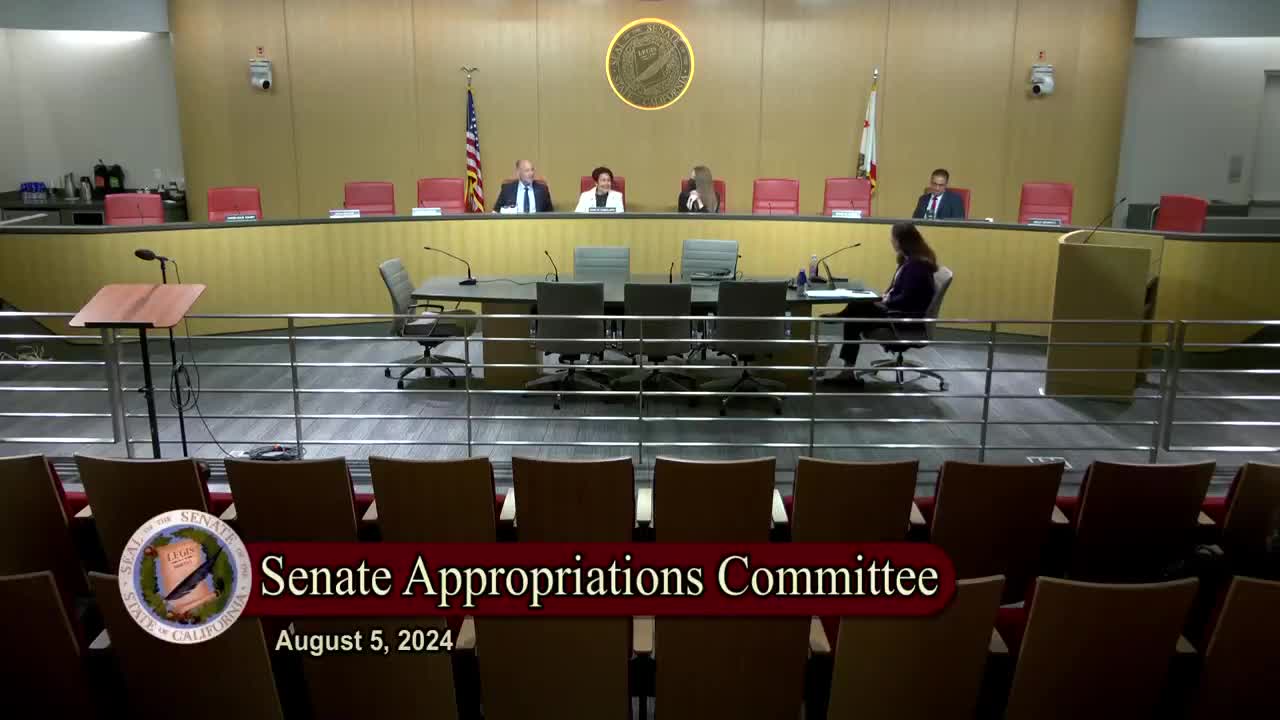 53SEC
Senate Standing Committee on Appropriations
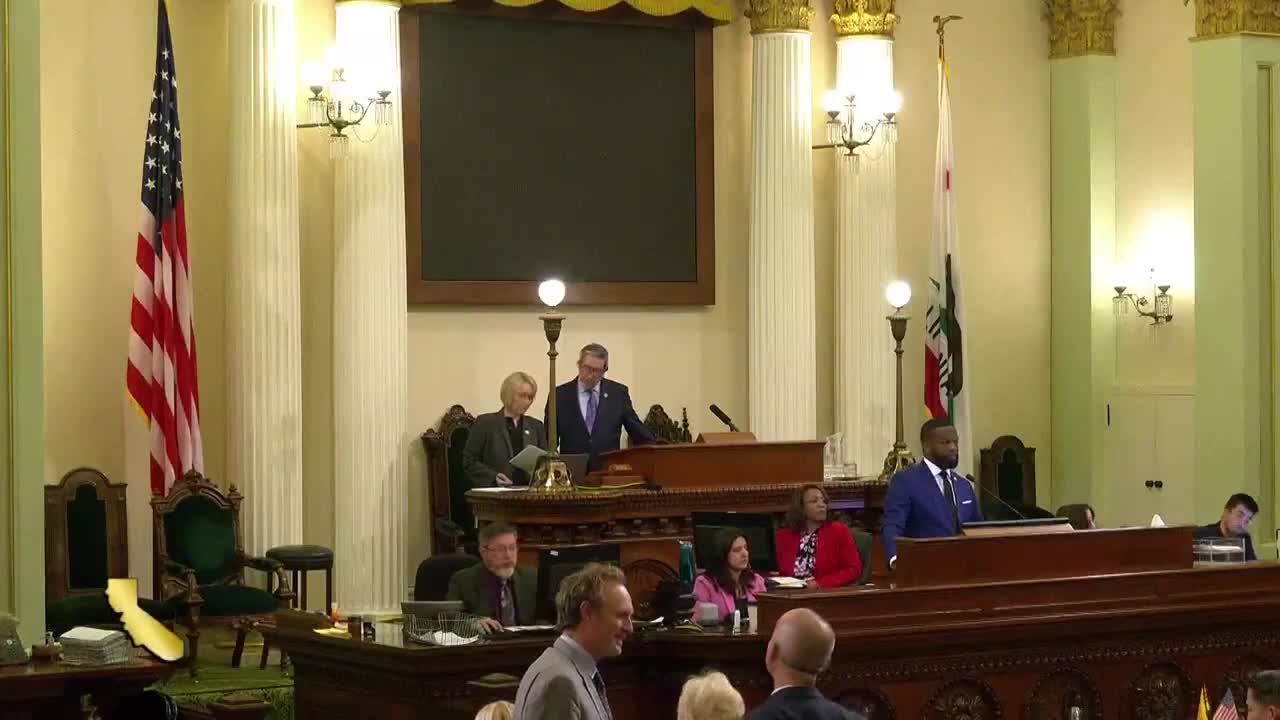 47SEC
Assembly Floor
 8MIN
Assembly Standing Committee on Higher Education
Bill Author

Bill Co-Author(s):