AB 1899: Courts.
- Session Year: 2023-2024
- House: Assembly
- Latest Version Date: 2024-09-28
Current Status:
Passed
(2024-09-28: Chaptered by Secretary of State - Chapter 812, Statutes of 2024.)
Introduced
In Committee
First Chamber
In Committee
Second Chamber
Enacted
(1)Existing law includes maxims of jurisprudence in civil law.
This bill would make nonsubstantive changes to some of these provisions.
(2)Existing law requires that, if a jury commissioner requires a person to complete a questionnaire, the questionnaire must ask only questions related to juror identification, qualification, and ability to serve as a prospective juror. Existing law authorizes a court or trial judge to require a prospective juror to complete such additional questionnaires as may be deemed relevant and necessary for assisting in the voir dire process or to ascertain whether a fair cross section of the population is represented as required by law, or as proposed by counsel in a particular care to assist the voir dire process.
This bill would require, after January 1, 2026, the Judicial Council to adopt a standard of judicial administration to ensure that juror identification and any juror questionnaire is inclusive, as specified.
(1)Existing law includes maxims of jurisprudence in civil law.
This bill would make nonsubstantive changes to some of these provisions.
(2)Existing law requires that, if a jury commissioner requires a person to complete a questionnaire, the questionnaire must ask only questions related to juror identification, qualification, and ability to serve as a prospective juror. Existing law authorizes a court or trial judge to require a prospective juror to complete such additional questionnaires as may be deemed relevant and necessary for assisting in the voir dire process or to ascertain whether a fair cross section of the population is represented as required by law, or as proposed by counsel in a particular care to assist the voir dire process.
This bill would require, after January 1, 2026, that, if a jury commissioner requires a person to complete a questionnaire, the questionnaire must ask certain questions regarding their identity, including their pronouns. The bill would prohibit the questionnaire from requiring a prospective juror from providing pronouns, and would require the questionnaire to leave the answer field bank so the prospective juror may provide the information they choose about their pronouns if they choose to answer. The bill would prohibit the questionnaire from providing prospective jurors with the option to select gendered salutations or titles. The bill would require the Judicial Council to create a template questionnaire to be published on its internet website for use in qualifying prospective jurors and management of the jury system that is inclusive of these requirements. The bill would require that, if the court or trial judge requires a prospective juror to complete additional questionnaires for purposes of the voir dire process, the questionnaire must comply with the above provisions and, if questions regarding family or personal relationships, as specified, are asked, require all questions to be phrased in a gender-neutral manner.This bill would require, after January 1, 2026, the Judicial Council to adopt a standard of judicial administration to ensure that juror identification and any juror questionnaire is inclusive, as specified.
(1)Existing law includes maxims of jurisprudence in civil law.
This bill would make nonsubstantive changes to some of these provisions.
(2)Existing law requires that, if a jury commissioner requires a person to complete a questionnaire, the questionnaire must ask only questions related to juror identification, qualification, and ability to serve as a prospective juror. Existing law authorizes a court or trial judge to require a prospective juror to complete such additional questionnaires as may be deemed relevant and necessary for assisting in the voir dire process or to ascertain whether a fair cross section of the population is represented as required by law, or as proposed by counsel in a particular care to assist the voir dire process.
This bill would require require, after January 1, 2026, that, if a jury commissioner requires a person to complete a questionnaire, the questionnaire must ask certain questions regarding their identity, including their pronouns. The bill would prohibit the questionnaire from requiring a prospective juror from providing pronouns, and would require the questionnaire to leave the answer field bank so the prospective juror may provide the information they choose about their pronouns if they choose to answer. The bill would prohibit the questionnaire from providing prospective jurors with the option to select gendered salutations or titles. The bill would require the Judicial Council to create a template questionnaire to be published on its internet website for use in qualifying prospective jurors and management of the jury system that is inclusive of these requirements. The bill would require that, if the court or trial judge requires a prospective juror to complete additional questionnaires for purposes of the voir dire process, the questionnaire must comply with the above provisions and, if questions regarding family or personal relationships, as specified, are asked, require all questions to be phrased in a gender-neutral manner.
(1)Existing law includes maxims of jurisprudence in civil law.
This bill would make nonsubstantive changes to some of these provisions.
(2)Existing law requires that, if a jury commissioner requires a person to complete a questionnaire, the questionnaire must ask only questions related to juror identification, qualification, and ability to serve as a prospective juror. Existing law authorizes a court or trial judge to require a prospective juror to complete such additional questionnaires as may be deemed relevant and necessary for assisting in the voir dire process or to ascertain whether a fair cross section of the population is represented as required by law, or as proposed by counsel in a particular care to assist the voir dire process.
This bill would require that, if a jury commissioner requires a person to complete a questionnaire, the questionnaire must ask for preferred pronouns and, if gender is asked, the response in the questionnaire must be open-ended. certain questions regarding their identity, including their pronouns. The bill would prohibit the questionnaire from asking for providing prospective jurors with the option to select gendered salutations or titles. The bill would require the Judicial Council to create a template questionnaire to be published on its internet website for use in qualifying prospective jurors and management of the jury system that is inclusive of these requirements. The bill would require that, if the court or trial judge requires a prospective juror to complete additional questionnaires for purposes of the voir dire process, the questionnaire must be inclusive of gender identity and gender expression in the phrasing of the questions asked and options provided for answers. comply with the above provisions and, if questions regarding family or personal relationships, as specified, are asked, require all questions to be phrased in a gender-neutral manner.
(1)Existing law includes maxims of jurisprudence in civil law.
This bill would make nonsubstantive changes to some of these provisions.
(2)Existing law requires that, if a jury commissioner requires a person to complete a questionnaire, the questionnaire must ask only questions related to juror identification, qualification, and ability to serve as a prospective juror. Existing law authorizes a court or trial judge to require a prospective juror to complete such additional questionnaires as may be deemed relevant and necessary for assisting in the voir dire process or to ascertain whether a fair cross section of the population is represented as required by law, or as proposed by counsel in a particular care to assist the voir dire process.
This bill would require that, if a jury commissioner requires a person to complete a questionnaire, the questionnaire must ask for preferred pronouns and, if gender is asked, the response in the questionnaire must be open-ended. The bill would prohibit the questionnaire from asking for gendered salutations or titles. The bill would require the Judicial Council to create a template questionnaire to be published on its internet website for use in qualifying prospective jurors and management of the jury system that is inclusive of these requirements. The bill would require that, if the court or trial judge requires a prospective juror to complete additional questionnaires for purposes of the voir dire process, the questionnaire must be inclusive of gender identity and gender expression in the phrasing of the questions asked and options provided for answers.
The Consumers Legal Remedies Act makes unlawful certain unfair methods of competition and certain unfair or deceptive acts or practices undertaken by a person in a transaction intended to result or that results in the sale or lease of goods or services to a consumer, including charging or receiving an unreasonable fee, as defined, to prepare, aid, or advise a prospective applicant, applicant, or recipient in the procurement, maintenance, or securing of public social services, as defined to include, among other things, veterans pension benefits.This bill would make the charging or receiving of an unreasonable fee to prepare, aid, or advise a prospective applicant, applicant, or recipient in the procurement, maintenance, or securing of aid or services, or both, to veterans a misdemeanor. The bill would also make the advertising or promoting of an event, presentation, seminar, workshop, or other public gathering regarding veterans benefits, as specified, a misdemeanor. The bill would make these misdemeanors punishable by imprisonment in the county jail for a period not to exceed one year, a fine not to exceed $1,000, or both that fine and imprisonment. The bill would specify that a misdemeanor violation of these provisions does not prohibit a person from bringing a civil action against an individual or business. By creating new crimes, this bill would impose a state-mandated local program.The California Constitution requires the state to reimburse local agencies and school districts for certain costs mandated by the state. Statutory provisions establish procedures for making that reimbursement.This bill would provide that no reimbursement is required by this act for a specified reason.The Consumers Legal Remedies Act makes unlawful certain unfair methods of competition and certain unfair or deceptive acts or practices undertaken by a person in a transaction intended to result or that results in the sale or lease of goods or services to a consumer, including charging or receiving an unreasonable fee, as defined, to prepare, aid, or advise a prospective applicant, applicant, or recipient in the procurement, maintenance, or securing of public social services, as defined to include, among other things, veterans pension benefits.
This bill would make the charging or receiving of an unreasonable fee to prepare, aid, or advise a prospective applicant, applicant, or recipient in the procurement, maintenance, or securing of aid or services, or both, to veterans a misdemeanor. The bill would also make the advertising or promoting of an event, presentation, seminar, workshop, or other public gathering regarding veterans benefits, as specified, a misdemeanor. The bill would make these misdemeanors punishable by imprisonment in the county jail for a period not to exceed one year, a fine not to exceed $1,000, or both that fine and imprisonment. The bill would specify that a misdemeanor violation of these provisions does not prohibit a person from bringing a civil action against an individual or business. By creating new crimes, this bill would impose a state-mandated local program.
The California Constitution requires the state to reimburse local agencies and school districts for certain costs mandated by the state. Statutory provisions establish procedures for making that reimbursement.
This bill would provide that no reimbursement is required by this act for a specified reason.
One shall not change their purpose to the injury of another.
SEC. 2.Section 3513 of the Civil Code is amended to read:3513.Any one may waive the advantage of a law intended solely for their benefit. But a law established for a public reason cannot be contravened by a private agreement.
SEC. 3.Section 3515 of the Civil Code is amended to read:3515.A person who consents to an act is not wronged by it.
SEC. 4.Section 3517 of the Civil Code is amended to read:3517.No one can take advantage of their own wrong.
SEC. 5.Section 3518 of the Civil Code is amended to read:3518.A person who has fraudulently dispossessed themselves of a thing may be treated as if they still had possession.
SEC. 6.Section 3519 of the Civil Code is amended to read:3519.A person who can and does not forbid that which is done on their behalf, is deemed to have bidden it.
SEC. 7.Section 3521 of the Civil Code is amended to read:3521.A person who takes the benefit must bear the burden.
SEC. 8.Section 3526 of the Civil Code is amended to read:3526.No person is responsible for that which no person can control.
SEC. 9.Section 3529 of the Civil Code is amended to read:3529.That which ought to have been done is to be regarded as done, in favor of a person to whom, and against a person from whom, performance is due.
SEC. 10.Section 3543 of the Civil Code is amended to read:3543.Where one of two innocent persons must suffer by the act of a third, the person, by whose negligence it happened, must be the sufferer.
SEC. 11.Section 205 of the Code of Civil Procedure is amended to read:205.(a)If a jury commissioner requires a person to complete a questionnaire, the questionnaire shall ask only questions related to juror identification, qualification, and ability to serve as a prospective juror.
(b)Except as ordered by the court, the questionnaire referred to in subdivision (a) shall be used solely for qualifying prospective jurors, and for management of the jury system, and not for assisting in the courtroom voir dire process of selecting trial jurors for specific cases.
(c)The court may require a prospective juror to complete such additional questionnaires as may be deemed relevant and necessary for assisting in the voir dire process or to ascertain whether a fair cross section of the population is represented as required by law, if such procedures are established by local court rule.
(d)The trial judge may direct a prospective juror to complete additional questionnaires as proposed by counsel in a particular case to assist the voir dire process.
(e)This section shall remain in effect only until January 1, 2026, and as of that date is repealed.
SEC. 12.Section 205 is added to the Code of Civil Procedure, to read:205.(a)If a jury commissioner requires a person to complete a questionnaire, the questionnaire shall ask only questions related to juror identification, qualification, and ability to serve as a prospective juror.
(b)Except as ordered by the court, the questionnaire referred to in subdivision (a) shall be used solely for qualifying prospective jurors, and for management of the jury system, and not for assisting in the courtroom voir dire process of selecting trial jurors for specific cases.
(c)The court may require a prospective juror to complete such additional questionnaires as may be deemed relevant and necessary for assisting in the voir dire process or to ascertain whether a fair cross section of the population is represented as required by law, if such procedures are established by local court rule.
(d)The trial judge may direct a prospective juror to complete additional questionnaires as proposed by counsel in a particular case to assist the voir dire process.
(e)The Judicial Council shall adopt a standard of judicial administration to ensure that juror identification and any juror questionnaire is inclusive, including allowing a juror the ability to express their gender identity or gender expression, if applicable.
(f)This section shall become operative on January 1, 2026.
One shall not change their purpose to the injury of another.
SEC. 2.Section 3513 of the Civil Code is amended to read:3513.Any one may waive the advantage of a law intended solely for their benefit. But a law established for a public reason cannot be contravened by a private agreement.
SEC. 3.Section 3515 of the Civil Code is amended to read:3515.A person who consents to an act is not wronged by it.
SEC. 4.Section 3517 of the Civil Code is amended to read:3517.No one can take advantage of their own wrong.
SEC. 5.Section 3518 of the Civil Code is amended to read:3518.A person who has fraudulently dispossessed themselves of a thing may be treated as if they still had possession.
SEC. 6.Section 3519 of the Civil Code is amended to read:3519.A person who can and does not forbid that which is done on their behalf, is deemed to have bidden it.
SEC. 7.Section 3521 of the Civil Code is amended to read:3521.A person who takes the benefit must bear the burden.
SEC. 8.Section 3526 of the Civil Code is amended to read:3526.No person is responsible for that which no person can control.
SEC. 9.Section 3529 of the Civil Code is amended to read:3529.That which ought to have been done is to be regarded as done, in favor of a person to whom, and against a person from whom, performance is due.
SEC. 10.Section 3543 of the Civil Code is amended to read:3543.Where one of two innocent persons must suffer by the act of a third, the person, by whose negligence it happened, must be the sufferer.
SEC. 11.Section 205 of the Code of Civil Procedure is amended to read:205.(a)If a jury commissioner requires a person to complete a questionnaire, the questionnaire shall ask only questions related to juror identification, qualification, and ability to serve as a prospective juror.
(b)Except as ordered by the court, the questionnaire referred to in subdivision (a) shall be used solely for qualifying prospective jurors, and for management of the jury system, and not for assisting in the courtroom voir dire process of selecting trial jurors for specific cases.
(c)The court may require a prospective juror to complete such additional questionnaires as may be deemed relevant and necessary for assisting in the voir dire process or to ascertain whether a fair cross section of the population is represented as required by law, if such procedures are established by local court rule.
(d)The trial judge may direct a prospective juror to complete additional questionnaires as proposed by counsel in a particular case to assist the voir dire process.
(e)This section shall remain in effect only until January 1, 2026, and as of that date is repealed.
SEC. 12.Section 205 is added to the Code of Civil Procedure, to read:205.(a)(1)If a jury commissioner requires a person to complete a questionnaire, the questionnaire shall ask only questions related to juror identification, qualification, and ability to serve as a prospective juror. Related to a jurors identification, the questionnaire shall ask the prospective juror for the following:(A)Their pronouns. It shall not be mandatory for any prospective juror to provide an answer to this question. The answer field shall be left blank so that the prospective juror may provide the information they choose about their pronouns if they choose to answer the question.(B)The manner in which the prospective juror would prefer that court personnel address them. The questionnaire shall provide prospective jurors with only the following options to choose how they would like to be addressed during court proceedings:(i)Juror number only.(ii)Last name only.(iii)Preferred first name, followed by last name, with a blank answer field so the prospective juror may provide the information they choose about their preferred first name, followed by last name.(2)The questionnaire shall not provide prospective jurors with the option to select from a list of gendered salutations or titles.(3)The questionnaire is not required to inquire about a prospective jurors gender. If the questionnaire inquires about a prospective jurors gender, the question shall be optional and the answer field left blank so that the prospective juror may provide the information they choose about their gender if they choose to answer the question.(4)All inquiries on the questionnaire about the family or personal relationships of the prospective juror, including, but not limited to, a spouse, domestic partner, parent, or child, shall be phrased in a gender-neutral manner.(5)The Judicial Council shall create a template questionnaire to be published on its internet website for use in qualifying prospective jurors and management of the jury system that is inclusive of the requirements of this subdivision.(b)Except as ordered by the court, the questionnaire referred to in subdivision (a) shall be used solely for qualifying prospective jurors, and for management of the jury system, and not for assisting in the courtroom voir dire process of selecting trial jurors for specific cases.(c)The court may require a prospective juror to complete such additional questionnaires as may be deemed relevant and necessary for assisting in the voir dire process or to ascertain whether a fair cross section of the population is represented as required by law, if such procedures are established by local court rule. If the court utilizes a questionnaire to assist in the voir dire process that asks for any identifying information about the prospective juror other than their full name, all inquiries on the questionnaire that ask for identifying information about the prospective juror shall comply with the requirements of subdivision (a).(d)The trial judge may direct a prospective juror to complete additional questionnaires as proposed by counsel in a particular case to assist the voir dire process. All inquiries on additional questionnaires that ask for identifying information about the prospective juror other than their full name shall comply with the requirements of subdivision (c).(e)This section shall become operative on January 1, 2026.SEC. 12.Section 205 is added to the Code of Civil Procedure, to read:205.(a)If a jury commissioner requires a person to complete a questionnaire, the questionnaire shall ask only questions related to juror identification, qualification, and ability to serve as a prospective juror.
(b)Except as ordered by the court, the questionnaire referred to in subdivision (a) shall be used solely for qualifying prospective jurors, and for management of the jury system, and not for assisting in the courtroom voir dire process of selecting trial jurors for specific cases.
(c)The court may require a prospective juror to complete such additional questionnaires as may be deemed relevant and necessary for assisting in the voir dire process or to ascertain whether a fair cross section of the population is represented as required by law, if such procedures are established by local court rule.
(d)The trial judge may direct a prospective juror to complete additional questionnaires as proposed by counsel in a particular case to assist the voir dire process.
(e)The Judicial Council shall adopt a standard of judicial administration to ensure that juror identification and any juror questionnaire is inclusive, including allowing a juror the ability to express their gender identity or gender expression, if applicable.
(f)This section shall become operative on January 1, 2026.
One shall not change their purpose to the injury of another.
SEC. 2.Section 3513 of the Civil Code is amended to read:3513.Any one may waive the advantage of a law intended solely for their benefit. But a law established for a public reason cannot be contravened by a private agreement.
SEC. 3.Section 3515 of the Civil Code is amended to read:3515.A person who consents to an act is not wronged by it.
SEC. 4.Section 3517 of the Civil Code is amended to read:3517.No one can take advantage of their own wrong.
SEC. 5.Section 3518 of the Civil Code is amended to read:3518.A person who has fraudulently dispossessed themselves of a thing may be treated as if they still had possession.
SEC. 6.Section 3519 of the Civil Code is amended to read:3519.A person who can and does not forbid that which is done on their behalf, is deemed to have bidden it.
SEC. 7.Section 3521 of the Civil Code is amended to read:3521.A person who takes the benefit must bear the burden.
SEC. 8.Section 3526 of the Civil Code is amended to read:3526.No person is responsible for that which no person can control.
SEC. 9.Section 3529 of the Civil Code is amended to read:3529.That which ought to have been done is to be regarded as done, in favor of a person to whom, and against a person from whom, performance is due.
SEC. 10.Section 3543 of the Civil Code is amended to read:3543.Where one of two innocent persons must suffer by the act of a third, the person, by whose negligence it happened, must be the sufferer.
SEC. 11.Section 205 of the Code of Civil Procedure is amended to read:205.(a)(1)If a jury commissioner requires a person to complete a questionnaire, the questionnaire shall ask only questions related to juror identification, qualification, and ability to serve as a prospective juror. Related to a jurors identification, the questionnaire shall ask the prospective juror for the following:(A)Their pronouns.(B)The manner in which the prospective juror would prefer that court personnel address them. The questionnaire shall provide prospective jurors with only the following options to choose how they would like to be addressed during court proceedings:(i)Juror number only.(ii)Last name only.(iii)Preferred first name, followed by last name, with a blank answer field so the prospective juror may provide the information they choose about their preferred first name, followed by last name.(2)The questionnaire shall not provide prospective jurors with the option to select from a list of gendered salutations or titles.(3)The questionnaire is not required to inquire about a prospective jurors gender. If the questionnaire inquires about a prospective jurors gender, the question shall be optional and the answer field left blank so that the prospective juror may provide the information they choose about their gender if they choose to answer the question.(4)All inquiries on the questionnaire about the family or personal relationships of the prospective juror, including, but not limited to, a spouse, domestic partner, parent, or child, shall be phrased in a gender-neutral manner.(5)The Judicial Council shall create a template questionnaire to be published on its internet website for use in qualifying prospective jurors and management of the jury system that is inclusive of the requirements of this subdivision.(b)Except as ordered by the court, the questionnaire referred to in subdivision (a) shall be used solely for qualifying prospective jurors, and for management of the jury system, and not for assisting in the courtroom voir dire process of selecting trial jurors for specific cases.(c)The court may require a prospective juror to complete such additional questionnaires as may be deemed relevant and necessary for assisting in the voir dire process or to ascertain whether a fair cross section of the population is represented as required by law, if such procedures are established by local court rule. If the court utilizes a questionnaire to assist in the voir dire process that asks for any identifying information about the prospective juror other than their full name, all inquiries on the questionnaire that ask for identifying information about the prospective juror shall comply with the requirements of subdivision (a).(d)The trial judge may direct a prospective juror to complete additional questionnaires as proposed by counsel in a particular case to assist the voir dire process. All inquiries on additional questionnaires that ask for identifying information about the prospective juror other than their full name shall comply with the requirements of subdivision (c).SEC. 11.Section 205 of the Code of Civil Procedure is amended to read:205.(a)If a jury commissioner requires a person to complete a questionnaire, the questionnaire shall ask only questions related to juror identification, qualification, and ability to serve as a prospective juror.
(b)Except as ordered by the court, the questionnaire referred to in subdivision (a) shall be used solely for qualifying prospective jurors, and for management of the jury system, and not for assisting in the courtroom voir dire process of selecting trial jurors for specific cases.
(c)The court may require a prospective juror to complete such additional questionnaires as may be deemed relevant and necessary for assisting in the voir dire process or to ascertain whether a fair cross section of the population is represented as required by law, if such procedures are established by local court rule.
(d)The trial judge may direct a prospective juror to complete additional questionnaires as proposed by counsel in a particular case to assist the voir dire process.
(e)This section shall remain in effect only until January 1, 2026, and as of that date is repealed.
SEC. 12.Section 205 is added to the Code of Civil Procedure, to read:205.(a)(1)If a jury commissioner requires a person to complete a questionnaire, the questionnaire shall ask only questions related to juror identification, qualification, and ability to serve as a prospective juror. Related to a jurors identification, the questionnaire shall ask the prospective juror for the following:
(A)Their pronouns. It shall not be mandatory for any prospective juror to provide an answer to this question. The answer field shall be left blank so that the prospective juror may provide the information they choose about their pronouns if they choose to answer the question.
(B)The manner in which the prospective juror would prefer that court personnel address them. The questionnaire shall provide prospective jurors with only the following options to choose how they would like to be addressed during court proceedings:
(i)Juror number only.
(ii)Last name only.
(iii)Preferred first name, followed by last name, with a blank answer field so the prospective juror may provide the information they choose about their preferred first name, followed by last name.
(2)The questionnaire shall not provide prospective jurors with the option to select from a list of gendered salutations or titles.
(3)The questionnaire is not required to inquire about a prospective jurors gender. If the questionnaire inquires about a prospective jurors gender, the question shall be optional and the answer field left blank so that the prospective juror may provide the information they choose about their gender if they choose to answer the question.
(4)All inquiries on the questionnaire about the family or personal relationships of the prospective juror, including, but not limited to, a spouse, domestic partner, parent, or child, shall be phrased in a gender-neutral manner.
(5)The Judicial Council shall create a template questionnaire to be published on its internet website for use in qualifying prospective jurors and management of the jury system that is inclusive of the requirements of this subdivision.
(b)Except as ordered by the court, the questionnaire referred to in subdivision (a) shall be used solely for qualifying prospective jurors, and for management of the jury system, and not for assisting in the courtroom voir dire process of selecting trial jurors for specific cases.
(c)The court may require a prospective juror to complete such additional questionnaires as may be deemed relevant and necessary for assisting in the voir dire process or to ascertain whether a fair cross section of the population is represented as required by law, if such procedures are established by local court rule. If the court utilizes a questionnaire to assist in the voir dire process that asks for any identifying information about the prospective juror other than their full name, all inquiries on the questionnaire that ask for identifying information about the prospective juror shall comply with the requirements of subdivision (a).
(d)The trial judge may direct a prospective juror to complete additional questionnaires as proposed by counsel in a particular case to assist the voir dire process. All inquiries on additional questionnaires that ask for identifying information about the prospective juror other than their full name shall comply with the requirements of subdivision (c).
(e)This section shall become operative on January 1, 2026.
One shall not change their purpose to the injury of another.
SEC. 2.Section 3513 of the Civil Code is amended to read:3513.Any one may waive the advantage of a law intended solely for their benefit. But a law established for a public reason cannot be contravened by a private agreement.
SEC. 3.Section 3515 of the Civil Code is amended to read:3515.A person who consents to an act is not wronged by it.
SEC. 4.Section 3517 of the Civil Code is amended to read:3517.No one can take advantage of their own wrong.
SEC. 5.Section 3518 of the Civil Code is amended to read:3518.A person who has fraudulently dispossessed themselves of a thing may be treated as if they still had possession.
SEC. 6.Section 3519 of the Civil Code is amended to read:3519.A person who can and does not forbid that which is done on their behalf, is deemed to have bidden it.
SEC. 7.Section 3521 of the Civil Code is amended to read:3521.A person who takes the benefit must bear the burden.
SEC. 8.Section 3526 of the Civil Code is amended to read:3526.No person is responsible for that which no person can control.
SEC. 9.Section 3529 of the Civil Code is amended to read:3529.That which ought to have been done is to be regarded as done, in favor of a person to whom, and against a person from whom, performance is due.
SEC. 10.Section 3543 of the Civil Code is amended to read:3543.Where one of two innocent persons must suffer by the act of a third, the person, by whose negligence it happened, must be the sufferer.
SEC. 11.Section 205 of the Code of Civil Procedure is amended to read:205.(a)(1)If a jury commissioner requires a person to complete a questionnaire, the questionnaire shall ask only questions related to juror identification, qualification, and ability to serve as a prospective juror. The questionnaire shall also ask for preferred pronouns and, if gender is asked, then the response field in the questionnaire shall be open-ended and available for the juror to fill in. The questionnaire shall not ask for gendered salutations or titles. Related to a jurors identification, the questionnaire shall ask the prospective juror for the following:
(A)Their pronouns.
(B)The manner in which the prospective juror would prefer that court personnel address them. The questionnaire shall provide prospective jurors with only the following options to choose how they would like to be addressed during court proceedings:
(i)Juror number only.
(ii)Last name only.
(iii)Preferred first name, followed by last name, with a blank answer field so the prospective juror may provide the information they choose about their preferred first name, followed by last name.
(2)The questionnaire shall not provide prospective jurors with the option to select from a list of gendered salutations or titles.
(3)The questionnaire is not required to inquire about a prospective jurors gender. If the questionnaire inquires about a prospective jurors gender, the question shall be optional and the answer field left blank so that the prospective juror may provide the information they choose about their gender if they choose to answer the question.
(4)All inquiries on the questionnaire about the family or personal relationships of the prospective juror, including, but not limited to, a spouse, domestic partner, parent, or child, shall be phrased in a gender-neutral manner.
(2)(5)The Judicial Council shall create a template questionnaire to be published on its internet website for use in qualifying prospective jurors and management of the jury system that is inclusive of the requirements of this subdivision.
(b)Except as ordered by the court, the questionnaire referred to in subdivision (a) shall be used solely for qualifying prospective jurors, and for management of the jury system, and not for assisting in the courtroom voir dire process of selecting trial jurors for specific cases.
(c)The court may require a prospective juror to complete such additional questionnaires as may be deemed relevant and necessary for assisting in the voir dire process or to ascertain whether a fair cross section of the population is represented as required by law, if such procedures are established by local court rule. If the court utilizes a questionnaire to assist in the voir dire process, process that asks for any identifying information about the prospective juror other than their full name, all inquiries on the questionnaire shall be inclusive of gender identity and gender expression in the phrasing of the questions asked and options provided for answers. that ask for identifying information about the prospective juror shall comply with the requirements of subdivision (a).
(d)The trial judge may direct a prospective juror to complete additional questionnaires as proposed by counsel in a particular case to assist the voir dire process. If the trial judge utilizes a questionnaire to assist in the voir dire process, the questionnaire shall be inclusive of gender identity and gender expression in the phrasing of the questions asked and options provided for answers. All inquiries on additional questionnaires that ask for identifying information about the prospective juror other than their full name shall comply with the requirements of subdivision (c).
One must shall not change his their purpose to the injury of another.
SEC. 2.Section 3513 of the Civil Code is amended to read:3513.Any one may waive the advantage of a law intended solely for his their benefit. But a law established for a public reason cannot be contravened by a private agreement.
SEC. 3.Section 3515 of the Civil Code is amended to read:3515.He A person who consents to an act is not wronged by it.
SEC. 4.Section 3517 of the Civil Code is amended to read:3517.No one can take advantage of his their own wrong.
SEC. 5.Section 3518 of the Civil Code is amended to read:3518.He A person who has fraudulently dispossessed himself themselves of a thing may be treated as if he they still had possession.
SEC. 6.Section 3519 of the Civil Code is amended to read:3519.He A person who can and does not forbid that which is done on his their behalf, is deemed to have bidden it.
SEC. 7.Section 3521 of the Civil Code is amended to read:3521.He A person who takes the benefit must bear the burden.
SEC. 8.Section 3526 of the Civil Code is amended to read:3526.No man person is responsible for that which no man person can control.
SEC. 9.Section 3529 of the Civil Code is amended to read:3529.That which ought to have been done is to be regarded as done, in favor of him a person to whom, and against him a person from whom, performance is due.
SEC. 10.Section 3543 of the Civil Code is amended to read:3543.Where one of two innocent persons must suffer by the act of a third, he, the person, by whose negligence it happened, must be the sufferer.
SEC. 11.Section 205 of the Code of Civil Procedure is amended to read:205.(a)(1)If a jury commissioner requires a person to complete a questionnaire, the questionnaire shall ask only questions related to juror identification, qualification, and ability to serve as a prospective juror. The questionnaire shall also ask for preferred pronouns and, if gender is asked, then the response field in the questionnaire shall be open-ended and available for the juror to fill in. The questionnaire shall not ask for gendered salutations or titles.
(2)The Judicial Council shall create a template questionnaire to be published on its internet website for use in qualifying prospective jurors and management of the jury system that is inclusive of the requirements of this subdivision.
(b)Except as ordered by the court, the questionnaire referred to in subdivision (a) shall be used solely for qualifying prospective jurors, and for management of the jury system, and not for assisting in the courtroom voir dire process of selecting trial jurors for specific cases.
(c)The court may require a prospective juror to complete such additional questionnaires as may be deemed relevant and necessary for assisting in the voir dire process or to ascertain whether a fair cross section of the population is represented as required by law, if such procedures are established by local court rule. If the court utilizes a questionnaire to assist in the voir dire process, the questionnaire shall be inclusive of gender identity and gender expression in the phrasing of the questions asked and options provided for answers.
(d)The trial judge may direct a prospective juror to complete additional questionnaires as proposed by counsel in a particular case to assist the voir dire process. If the trial judge utilizes a questionnaire to assist in the voir dire process, the questionnaire shall be inclusive of gender identity and gender expression in the phrasing of the questions asked and options provided for answers.
All matter omitted in this version of the bill appears in the bill as introduced in the Assembly, January 23, 2024. (JR11)(a)The unfair methods of competition and unfair or deceptive acts or practices listed in this subdivision undertaken by any a person in a transaction intended to result or that results in the sale or lease of goods or services to any a consumer are unlawful:
(1)Passing off goods or services as those of another.
(2)Misrepresenting the source, sponsorship, approval, or certification of goods or services.
(3)Misrepresenting the affiliation, connection, or association with, or certification by, another.
(4)Using deceptive representations or designations of geographic origin in connection with goods or services.
(5)Representing that goods or services have sponsorship, approval, characteristics, ingredients, uses, benefits, or quantities that they do not have or that a person has a sponsorship, approval, status, affiliation, or connection that the person does not have.
(6)Representing that goods are original or new if they have deteriorated unreasonably or are altered, reconditioned, reclaimed, used, or secondhand.
(7)Representing that goods or services are of a particular standard, quality, or grade, or that goods are of a particular style or model, if they are of another.
(8)Disparaging the goods, services, or business of another by false or misleading representation of fact.
(9)Advertising goods or services with intent not to sell them as advertised.
(10)Advertising goods or services with intent not to supply reasonably expectable demand, unless the advertisement discloses a limitation of quantity.
(11)Advertising furniture without clearly indicating that it is unassembled if that is the case.
(12)Advertising the price of unassembled furniture without clearly indicating the assembled price of that furniture if the same furniture is available assembled from the seller.
(13)Making false or misleading statements of fact concerning reasons for, existence of, or amounts of, price reductions.
(14)Representing that a transaction confers or involves rights, remedies, or obligations that it does not have or involve, or that are prohibited by law.
(15)Representing that a part, replacement, or repair service is needed when it is not.
(16)Representing that the subject of a transaction has been supplied in accordance with a previous representation when it has not.
(17)Representing that the consumer will receive a rebate, discount, or other economic benefit, if the earning of the benefit is contingent on an event to occur subsequent to the consummation of the transaction.
(18)Misrepresenting the authority of a salesperson, representative, or agent to negotiate the final terms of a transaction with a consumer.
(19)Inserting an unconscionable provision in the contract.
(20)Advertising that a product is being offered at a specific price plus a specific percentage of that price unless (A) the total price is set forth in the advertisement, which may include, but is not limited to, shelf tags, displays, and media advertising, in a size larger than any other price in that advertisement, and (B) the specific price plus a specific percentage of that price represents a markup from the sellers costs or from the wholesale price of the product. This subdivision shall not apply to in-store advertising by businesses that are open only to members or cooperative organizations organized pursuant to Division 3 (commencing with Section 12000) of Title 1 of the Corporations Code if more than 50 percent of purchases are made at the specific price set forth in the advertisement.
(21)Selling or leasing goods in violation of Chapter 4 (commencing with Section 1797.8) of Title 1.7.
(22)(A)Disseminating an unsolicited prerecorded message by telephone without an unrecorded, natural voice first informing the person answering the telephone of the name of the caller or the organization being represented, and either the address or the telephone number of the caller, and without obtaining the consent of that person to listen to the prerecorded message.
(B)This subdivision does not apply to a message disseminated to a business associate, customer, or other person having an established relationship with the person or organization making the call, to a call for the purpose of collecting an existing obligation, or to any call generated at the request of the recipient.
(23)(A)The home solicitation, as defined in subdivision (h) of Section 1761, of a consumer who is a senior citizen where a loan or assessment is made encumbering the primary residence of that consumer for purposes of paying for home improvements and where the transaction is part of a pattern or practice in violation any of the following:
(i)Subsection (h) or (i) of Section 1639 of Title 15 of the United States Code.
(ii)Paragraph (1), (2), or (4) of subdivision (a) of Section 226.34 of Title 12 of the Code of Federal Regulations.
(iii)Section 22684, 22685, 22686, or 22687 of the Financial Code.
(iv)Section 5898.16, 5898.17, 5913, 5922, 5923, 5924, 5925, 5926, or 5940 of the Streets and Highways Code.
(B)A third party shall not be liable under this subdivision unless (i) there was an agency relationship between the party who engaged in home solicitation and the third party, or (ii) the third party had actual knowledge of, or participated in, the unfair or deceptive transaction. A third party who is a holder in due course under a home solicitation transaction shall not be liable under this subdivision.
(24)(A)Charging or receiving an unreasonable fee to prepare, aid, or advise any a prospective applicant, applicant, or recipient in the procurement, maintenance, or securing of public social services.
(B)For purposes of this paragraph:
(i)Public social services means those activities and functions of state and local government administered or supervised by the State Department of Health Care Services, the State Department of Public Health, or the State Department of Social Services, and involved in providing aid or services, or both, including health care services, and medical assistance, to those persons who, because of their economic circumstances or social condition, are in need of that aid or those services and may benefit from them.
(ii)Public social services also includes activities and functions administered or supervised by the United States Department of Veterans Affairs or the California Department of Veterans Affairs involved in providing aid or services, or both, to veterans, including pension benefits.
(iii)Unreasonable fee means a fee that is exorbitant and disproportionate to the services performed. Factors to be considered, if appropriate, in determining the reasonableness of a fee, are based on the circumstances existing at the time of the service and shall include, but not be limited to, all of the following:
(I)The time and effort required.
(II)The novelty and difficulty of the services.
(III)The skill required to perform the services.
(IV)The nature and length of the professional relationship.
(V)The experience, reputation, and ability of the person providing the services.
(C)This paragraph shall does not apply to attorneys licensed to practice law in California, who are subject to the California Rules of Professional Conduct and to the mandatory fee arbitration provisions of Article 13 (commencing with Section 6200) of Chapter 4 of Division 3 of the Business and Professions Code, when the fees charged or received are for providing representation in administrative agency appeal proceedings or court proceedings for purposes of procuring, maintaining, or securing public social services on behalf of a person or group of persons.
(25)(A)Advertising or promoting any an event, presentation, seminar, workshop, or other public gathering regarding veterans benefits or entitlements that does not include the following statement in the same type size and font as the term veteran or any variation of that term:
(i)I am not authorized to file an initial application for Veterans Aid and Attendance benefits on your behalf, or to represent you before the Board of Veterans Appeals within the United States Department of Veterans Affairs in any proceeding on any matter, including an application for those benefits. It would be illegal for me to accept a fee for preparing that application on your behalf. The requirements of this clause do not apply to a person licensed to act as an agent or attorney in proceedings before the Agency of Original Jurisdiction and the Board of Veterans Appeals within the United States Department of Veterans Affairs when that person is offering those services at the advertised event.
(ii)The statement in clause (i) shall also be disseminated, both orally and in writing, at the beginning of any event, presentation, seminar, workshop, or public gathering regarding veterans benefits or entitlements.
(B)Advertising or promoting any event, presentation, seminar, workshop, or other public gathering regarding veterans benefits or entitlements that is not sponsored by, or affiliated with, the United States Department of Veterans Affairs, the California Department of Veterans Affairs, or any other congressionally chartered or recognized organization of honorably discharged members of the Armed Forces of the United States, or any of their auxiliaries that does not include the following statement, in the same type size and font as the term veteran or the variation of that term:
This event is not sponsored by, or affiliated with, the United States Department of Veterans Affairs, the California Department of Veterans Affairs, or any other congressionally chartered or recognized organization of honorably discharged members of the Armed Forces of the United States, or any of their auxiliaries. None of the insurance products promoted at this sales event are endorsed by those organizations, all of which offer free advice to veterans about how to qualify and apply for benefits.
(i)The statement in this subparagraph shall be disseminated, both orally and in writing, at the beginning of any event, presentation, seminar, workshop, or public gathering regarding veterans benefits or entitlements.
(ii)The requirements of this subparagraph shall not apply in a case where the United States Department of Veterans Affairs, the California Department of Veterans Affairs, or other congressionally chartered or recognized organization of honorably discharged members of the Armed Forces of the United States, or any of their auxiliaries have granted written permission to the advertiser or promoter for the use of its name, symbol, or insignia to advertise or promote the event, presentation, seminar, workshop, or other public gathering.
(26)Advertising, offering for sale, or selling a financial product that is illegal under state or federal law, including any cash payment for the assignment to a third party of the consumers right to receive future pension or veterans benefits.
(27)Representing that a product is made in California by using a Made in California label created pursuant to Section 12098.10 of the Government Code, unless the product complies with Section 12098.10 of the Government Code.
(28)(A)Failing to include either of the following in a solicitation by a covered person, or an entity acting on behalf of a covered person, to a consumer for a consumer financial product or service:
(i)The name of the covered person, and, if applicable, the entity acting on behalf of the covered person, and relevant contact information, including a mailing address and telephone number.
(ii)The following disclosure statement in at least 18-point bold type and in the language in which the solicitation is drafted: THIS IS AN ADVERTISEMENT. YOU ARE NOT REQUIRED TO MAKE ANY PAYMENT OR TAKE ANY OTHER ACTION IN RESPONSE TO THIS OFFER.
(B)For purposes of this paragraph:
(i)Consumer financial product or service has the same meaning as defined in Section 90005 of the Financial Code.
(ii)(I)Covered person has the same meaning as defined in Section 90005 of the Financial Code.
(II)Covered person does not mean an entity exempt from Division 24 (commencing with Section 90000) of the Financial Code pursuant to Section 90002 of the Financial Code.
(iii)Solicitation means an advertisement or marketing communication through writing or graphics that is directed to, or likely to give the impression of being directed to, an individually identified person, residence, or business location. Solicitation does not include any of the following:
(I)Communication through a mass advertisement, including in a catalog, on a radio or television broadcast, or on a publicly accessible internet website, if that communication is not directed to, or is not likely to give the impression of being directed to, an individually identified person, residence, or business location.
(II)Communication via a telephone, mail, or electronic communication that was initiated by a consumer.
(III)A written credit or insurance solicitation that is subject to the disclosure requirements of subsection (d) of Section 1681m of Title 15 of the United States Code.
(29)(A)Advertising, displaying, or offering a price for a good or service that does not include all mandatory fees or charges other than either of the following:
(i)Taxes or fees imposed by a government on the transaction.
(ii)Postage or carriage charges that will be reasonably and actually incurred to ship the physical good to the consumer.
(B)Compliance by a person providing broadband internet access service on its own or as part of a bundle, as defined in Section 8.1(b) subsection (b) of Section 8.1 of Title 47 of the Code of Federal Regulations, with the broadband consumer label requirements adopted by the Federal Communications Commission in FCC 22-86 on November 14, 2022, codified in Section 8.1(a) subsection (a) of Section 8.1 of Title 47 of the Code of Federal Regulations, shall be deemed compliance with this paragraph.
(C)(i)For purposes of this subparagraph, financial entity means an entity that is exempt from Division 24 (commencing with Section 90000) of the Financial Code pursuant to Section 90002 of the Financial Code.
(ii)A financial entity that is required to provide disclosures in compliance with any of the following federal or state acts or regulations with respect to a financial transaction is exempt from this paragraph for purposes of that financial transaction:
(I)The federal Truth in Savings Act, as amended (12 U.S.C. Sec. 4301 et seq.).
(II)The federal Electronic Fund Transfer Act, as amended (15 U.S.C. Sec. 1693 et seq.).
(III)Section 19 of the Federal Reserve Act, as amended (12 U.S.C. Sec. 461 et seq.).
(IV)The federal Truth in Lending Act, as amended (15 U.S.C. Sec. 1601 et seq.).
(V)The federal Real Estate Settlement Procedures Act, as amended (12 U.S.C. Sec. 2601 et seq.).
(VI)The federal Home Ownership and Equity Protection Act (15 U.S.C. Sec. 1639).
(VII)Any regulation adopted pursuant to any of the federal acts in subclauses (I) to (VI), inclusive.
(VIII)The California Financing Law (Division 9 (commencing with Section 22000) of the Financial Code).
(IX)The California Residential Mortgage Lending Act (Division 20 (commencing with Section 50000) of the Financial Code).
(X)The Real Estate Law (Part 1 (commencing with Section 10000) of Division 4 of the Business and Professions Code).
(XI)Any regulation adopted pursuant to any of the state acts in subclauses (VIII) to (X), inclusive.
(b)(1)It is an unfair or deceptive act or practice for a mortgage broker or lender, directly or indirectly, to use a home improvement contractor to negotiate the terms of any loan that is secured, whether in whole or in part, by the residence of the borrower and that is used to finance a home improvement contract or any portion of a home improvement contract. For purposes of this subdivision, mortgage broker or lender includes a finance lender licensed pursuant to the California Financing Law (Division 9 (commencing with Section 22000) of the Financial Code), a residential mortgage lender licensed pursuant to the California Residential Mortgage Lending Act (Division 20 (commencing with Section 50000) of the Financial Code), or a real estate broker licensed under the Real Estate Law (Division 4 (commencing with Section 10000) of the Business and Professions Code).
(2)This section shall not be construed to either authorize or prohibit a home improvement contractor from referring a consumer to a mortgage broker or lender by this subdivision. However, a home improvement contractor may refer a consumer to a mortgage lender or broker if that referral does not violate Section 7157 of the Business and Professions Code or any other law. A mortgage lender or broker may purchase an executed home improvement contract if that purchase does not violate Section 7157 of the Business and Professions Code or any other law. Nothing in this This paragraph shall does not have any effect on the application of Chapter 1 (commencing with Section 1801) of Title 2 to a home improvement transaction or the financing of a home improvement transaction.
(c)This section shall become operative on July 1, 2024.(c)(1)A violation of paragraph (24) of subdivision (a), regarding public social services for veterans as defined in clause (ii) of subparagraph (B) of that paagraph, is a misdemeanor.
(2)A violation of paragraph (25) of subdivision (a) is a misdemeanor.
(3)A misdemeanor violation under this subdivision is punishable by imprisonment in the county jail for not more than one year, a fine of not more than one thousand dollars ($1,000), or both that fine and imprisonment.
(4)This subdivision does not prohibit a person from bringing a civil action against an individual or business who violates this section.
SEC. 2.No reimbursement is required by this act pursuant to Section 6 of Article XIIIB of the California Constitution because the only costs that may be incurred by a local agency or school district will be incurred because this act creates a new crime or infraction, eliminates a crime or infraction, or changes the penalty for a crime or infraction, within the meaning of Section 17556 of the Government Code, or changes the definition of a crime within the meaning of Section 6 of Article XIIIB of the California Constitution.
|
Date
|
Status
|
|---|---|
| Sep 28, 2024 | Chaptered by Secretary of State - Chapter 812, Statutes of 2024. |
| Sep 28, 2024 | Approved by the Governor. |
| Sep 11, 2024 | Enrolled and presented to the Governor at 4 p.m. |
| Aug 30, 2024 | Senate amendments concurred in. To Engrossing and Enrolling. (Ayes 63. Noes 3.). |
| Aug 29, 2024 | Assembly Rule 77 suspended. |
| Aug 28, 2024 | In Assembly. Concurrence in Senate amendments pending. May be considered on or after August 30 pursuant to Assembly Rule 77. |
| Aug 28, 2024 | Read third time. Passed. Ordered to the Assembly. (Ayes 34. Noes 0.). |
| Aug 19, 2024 | Read second time. Ordered to third reading. |
| Aug 15, 2024 | Read second time and amended. Ordered returned to second reading. |
| Aug 15, 2024 | From committee: Amend, and do pass as amended. (Ayes 5. Noes 0.) (August 15). |
| Jun 24, 2024 | In committee: Referred to suspense file. |
| Jun 18, 2024 | From committee chair, with author's amendments: Amend, and re-refer to committee. Read second time, amended, and re-referred to Com. on APPR. |
| Jun 12, 2024 | From committee: Do pass and re-refer to Com. on APPR. (Ayes 9. Noes 2.) (June 11). Re-referred to Com. on APPR. |
| May 29, 2024 | Referred to Com. on JUD. |
| May 21, 2024 | In Senate. Read first time. To Com. on RLS. for assignment. |
| May 20, 2024 | Read third time. Passed. Ordered to the Senate. (Ayes 68. Noes 8. Page 5298.) |
| Apr 25, 2024 | Read second time. Ordered to third reading. |
| Apr 24, 2024 | From committee: Do pass. (Ayes 11. Noes 3.) (April 24). |
| Apr 4, 2024 | Re-referred to Com. on APPR. pursuant to Assembly Rule 96. |
| Apr 2, 2024 | Re-referred to Com. on PUB. S. |
| Apr 1, 2024 | Read second time and amended. |
| Mar 21, 2024 | From committee: Amend, and do pass as amended and re-refer to Com. on PUB. S. (Ayes 10. Noes 2.) (March 19). |
| Feb 27, 2024 | Re-referred to Com. on JUD. |
| Feb 26, 2024 | From committee chair, with author's amendments: Amend, and re-refer to Com. on JUD. Read second time and amended. |
| Feb 5, 2024 | Referred to Coms. on JUD. and PUB. S. |
| Jan 24, 2024 | From printer. May be heard in committee February 23. |
| Jan 23, 2024 | Read first time. To print. |
|
Date
|
Description
|
Location
|
Votes
|
|
|---|---|---|---|---|
| Aug 30, 2024 | AB 1899 Cervantes Concurrence in Senate Amendments By WARD | Assembly Floor |
Passed |
|
| Aug 28, 2024 | Assembly 3rd Reading AB1899 Cervantes et al. By Eggman | Senate Floor |
Passed |
|
| Aug 15, 2024 | Do pass as amended | Senate Standing Committee on Appropriations |
Passed |
|
| Jun 24, 2024 | Placed on suspense file | Senate Standing Committee on Appropriations |
Passed |
|
| Jun 11, 2024 | Do pass, but first be re-referred to the Committee on [Appropriations] | Senate Standing Committee on Judiciary |
Passed |
|
| May 20, 2024 | AB 1899 Cervantes Assembly Third Reading By WARD | Assembly Floor |
Passed |
|
| Apr 24, 2024 | Do pass. | Assembly Standing Committee on Appropriations |
Passed |
|
| Mar 19, 2024 | Do pass as amended and be re-referred to the Committee on [Public Safety] | Assembly Standing Committee on Judiciary |
Passed |
This list shows positions taken on this bill by organizations on the date displayed, which is linked to the original source.
Positions by individuals are not included.
|
Organization
|
Position
|
Date
|
|---|---|---|
| California Legislative LGBTQ Caucus | ** Support | |
| Equality California | ** Support |
CONCURRENCE IN SENATE AMENDMENTS
CSA1 Bill Id:AB 1899
Author:(Cervantes)
As Amended Ver:August 15, 2024
Majority vote
SUMMARY
Revises the requirements for optional questionnaires for prospective jurors used by trial courts to both identify jurors and expedite the selection of jurors in the voir dire process.
Major Provisions
- Requires the Judicial Council to adopt a standard of judicial administration to ensure that juror identification and any juror questionnaire is inclusive, including allowing a juror the ability to express their gender identity or gender expression, if applicable.
- Makes the above requirement operative on January 1, 2026.
Senate Amendments
Remove and recast the original language of the bill to instead include the provisions above.
COMMENTS
In order to make the jury selection and service process more welcoming and inclusive of all prospective jurors, including those in the LGBTQ community, this bill seeks to ensure that questionnaires used to obtain identifying information from prospective jurors in a manner that ensures juror identification and any juror questionnaire is inclusive, including by allowing a juror the ability to express their gender identity or gender expression, if applicable.
Blue Ribbon Commission on Jury System Improvement. In response to the widespread calls for change in the early 1990s, former California Supreme Court Chief Justice Ron George and the Judicial Council of California (JCC) created the Blue Ribbon Commission on Jury System Improvement in 1995. The JCC directed the Commission to "undertake a thorough and comprehensive review of all aspects of the jury system." (Judicial Council of California, Task Force on Jury System Improvements- Final Report, Apr. 15, 2003, p. 1.) The Commission recommended, in order to save prospective jurors from repeatedly appearing at the courthouse and not getting called into a courtroom, that California implement a one-day or one-trial term of jury service that is now Rule 861. (Id., at p. 3.) Regarding concerns about juror identification and privacy, the report recommended that, "The Legislature should enact legislation providing that jurors will be identified throughout the jury selection process only by number and not by name and that personal juror identifying information shall not be elicited during voir dire except on a showing of a compelling need." (Id., at p. 30.) The California Supreme Court has considered whether trial courts have the discretion to address jurors by a number throughout a jury trial, rather than their full names. In People v. Thomas (2012) 53 Cal.4th 771, the California Supreme Court held that a procedure to address jurors by a number does not violate a defendant's right to a public trial because "the trial was open and the jurors' faces were visible to anyone present." (Ibid.)
While use of the questionnaires (as written and in a courtroom) is strongly recommended, it is not mandated by either statute or rule of court. It appears that some courts alter or modify the JCC's model questionnaires and use them for purposes that are not recommended. For example, Sacramento County appears to have altered the JCC's JURY-001 questionnaire to collect identifying information about prospective jurors (with gendered salutation options added). Also, the Sacramento County court's website advises prospective jurors that they will be asked to fill out the voir dire questionnaire (Sac County's variation of JURY-001) when they arrive at the courthouse (prior to being called as part of a jury panel to a courtroom to begin the voir dire process). (See https://saccourt.ca.gov/jury/reporting-to-courthouse.aspx.)
This bill. Sponsored by the California Legislative LGBTQ Caucus, this bill seeks to ensure that questionnaires used to obtain identifying information from prospective jurors will do so in a manner that is inclusive. The bill requires the Judicial Council to adopt a standard of judicial administration to ensure that juror identification and any juror questionnaire is inclusive, including allowing a juror the ability to express their gender identity or gender expression, if applicable. It makes the above requirement operative on January 1, 2026.
According to the Author
A summons for jury duty is one of the main ways that most individuals in California interact with our state courts. Unfortunately, there is no existing requirement that the written juror questionnaires used by superior courts during the voir dire process use terms that are inclusive of our LGBTQ+ community, especially non-binary or transgender individuals. Indeed, there are examples of juror questionnaires used by courts that ask prospective jurors about their gender in a non-inclusive manner or use gendered salutations. This sadly serves to potentially alienate members of our LGBTQ+ community even as they fulfill one of their obligations as citizens of the United States.
[This bill] will help make our courts more inclusive of our LGBTQ+ community by requiring superior courts to use juror questionnaires that ask prospective jurors about their preferred pronouns in an open-ended manner. The bill also prohibits the use of gendered salutations and requires that if juror questionnaires ask about gender, they do so in an inclusive manner. These requirements apply both to general juror questionnaires as well as any additional juror questionnaires that the court may require for a particular case at its own behest or at the request of counsel. [This bill] will also help facilitate this goal by requiring the Judicial Council to publish a template juror questionnaire that is inclusive of our LGBTQ+ community.
Arguments in Support
The California Legislative LGBTQ Caucus writes the following in support of the bill:
Existing law does not require that juror questionnaires use language that is inclusive of the LGBTQ+ community . . .[.] According to the Williams Institute, there are approximately 200,000 Transgender, Gender Nonconforming, Nonconforming or Nonbinary, or Intersex (TGNCI) individuals in California. By failing to recognize individuals with diverse gender identities and/or expressions, TGNCI people are alienated and prevented from participating in the jury selection process and fulfilling their civic duty as a United States citizen.
[This bill] will require that juror questionnaires used by superior courts during the jury selection process ask prospective jurors about their pronouns. If a questionnaire asks about gender, it must do so in an open-ended manner that allows the prospective juror to fill their own answer in. The bill would also prohibit juror questionnaires from using gendered salutations such as "Mr." or "Ms." These requirements apply both to general juror questionnaires as well as any additional juror questionnaires that the Court may require for a particular case at its own behest or at the request of counsel. [This bill] would also require the Judicial Council to publish a template juror questionnaire that uses language that is inclusive of gender nonconforming and non-binary individuals.
Arguments in Opposition
No opposition on file.
FISCAL COMMENTS
According to the Senate Appropriations analysis, unknown, potential costs to the (Trial Court Trust Fund, General Fund) to the judicial branch to implement the requirements of this bill.
VOTES:
ASM JUDICIARY: 10-2-0
YES: Kalra, Bauer-Kahan, Bryan, Connolly, Haney, Maienschein, McKinnor, Pacheco, Reyes, Waldron
NO: Dixon, Sanchez
ASM APPROPRIATIONS: 11-3-1
YES: Wicks, Arambula, Bryan, Calderon, Wendy Carrillo, Mike Fong, Grayson, Haney, Hart, Pellerin, Villapudua
NO: Sanchez, Dixon, Jim Patterson
ABS, ABST OR NV: Ta
ASSEMBLY FLOOR: 60-8-12
YES: Addis, Aguiar-Curry, Alanis, Alvarez, Bains, Bauer-Kahan, Bennett, Berman, Boerner, Bonta, Bryan, Calderon, Juan Carrillo, Wendy Carrillo, Connolly, Mike Fong, Friedman, Garcia, Gipson, Grayson, Haney, Hart, Holden, Irwin, Jackson, Jones-Sawyer, Kalra, Lee, Low, Lowenthal, Maienschein, McCarty, McKinnor, Muratsuchi, Ortega, Pacheco, Papan, Pellerin, Petrie-Norris, Quirk-Silva, Ramos, Rendon, Reyes, Rodriguez, Blanca Rubio, Santiago, Schiavo, Soria, Ting, Valencia, Villapudua, Waldron, Wallis, Ward, Weber, Wicks, Wilson, Wood, Zbur, Robert Rivas
NO: Dixon, Essayli, Flora, Vince Fong, Gallagher, Jim Patterson, Joe Patterson, Sanchez
ABS, ABST OR NV: Arambula, Cervantes, Chen, Megan Dahle, Davies, Gabriel, Hoover, Lackey, Mathis, Stephanie Nguyen, Luz Rivas, Ta
SENATE FLOOR: 34-0-6
YES: Allen, Alvarado-Gil, Archuleta, Ashby, Atkins, Becker, Blakespear, Bradford, Caballero, Cortese, Dodd, Durazo, Eggman, Glazer, Gonzalez, Hurtado, Laird, Limón, McGuire, Menjivar, Min, Newman, Niello, Padilla, Portantino, Roth, Rubio, Skinner, Smallwood-Cuevas, Stern, Umberg, Wahab, Wiener, Wilk
ABS, ABST OR NV: Dahle, Grove, Jones, Nguyen, Ochoa Bogh, Seyarto
UPDATED
VERSION: August 15, 2024
CONSULTANT: Alison Merrilees / JUD. / (916) 319-2334 FN: 0004504
SENATE RULES COMMITTEE Office of Senate Floor Analyses (916) 651-1520 Fax: (916) 327-4478 | AB 1899 |
THIRD READING
Bill No: AB 1899
Author: Cervantes (D), et al.
Amended: 8/15/24 in Senate
Vote: 21
SENATE APPROPRIATIONS COMMITTEE: 5-0, 8/15/24
AYES: Caballero, Ashby, Becker, Bradford, Wahab
NOES: None
SENATE JUDICIARY COMMITTEE: 9-2, 6/11/24
AYES: Umberg, Allen, Ashby, Caballero, Durazo, Laird, Roth, Stern, Wahab
NOES: Wilk, Niello
SENATE APPROPRIATIONS COMMITTEE: 5-0, 8/15/24
AYES: Caballero, Ashby, Becker, Bradford, Wahab
NO VOTE RECORDED: Jones, Seyarto
ASSEMBLY FLOOR: 60-8, 5/20/24 - See last page for vote
SUBJECT: Courts
SOURCE: California Legislative LGBTQ Caucus
DIGEST:
This bill requires that, for questionnaires that courts and individual judges may use for the jury selection process starting January 1, 2026, Judicial Council adopt a standard of judicial administration that ensures juror identification and any questionnaire is inclusive, including of prospective jurors’ gender identity and expression, and makes changes to select provisions of the Civil Code to make the code’s text gender neutral.
ANALYSIS:
Existing law:
- Establishes the Trial Jury Selection and Management Act to regulate the process by which California courts maintain a jury selection system and select jurors. (Code of Civ. Proc. § 190 et seq.)
- States that trial by jury is a cherished constitutional right, and that jury service is an obligation of citizenship. (Code of Civ. Proc. § 191.)
- States that it is the policy of the state that all persons selected for jury service must be selected at random from the population of the area served by the court; that all qualified persons have an equal opportunity to be considered for jury service in the state, as specified, and that it is an obligation of all Californians to serve as jurors when summoned for that purpose. (Code of Civ. Proc. § 191.)
- Provides that each county must have a jury commissioner appointed by the majority of judges of the superior court to be responsible for managing the jury system under the general supervision of the court. (Code of Civ. Proc. § 195.)
- Provides that the jury commissioner shall inquire to the qualifications of persons on prospective juror lists who may be summoned for service, and that the commissioner or the court may require any person to answer, under oath, all questions regarding the person’s qualifications and ability to serve as a prospective juror. (Code of Civ. Proc. § 196.)
- Provides that all persons selected for jury service are to be selected at random, from a source or sources inclusive of a representative cross section of the population of the area served by the court, including, but not limited to: Department of Motor Vehicle records, voting rolls, tax filer lists, customer mailing lists, telephone directories, and utility company lists. (Code of Civ. Proc. § 197.)
- Specifies that those qualified to be prospective jurors are all those except: persons who are not United States citizens; persons less than 18 years old; persons who are not domiciled in California and are not residents of the jurisdiction in which they were summoned; persons who have been convicted of malfeasance in office and have not had their civil rights restored; persons who do not have sufficient knowledge of English; persons who are serving as jurors on grand or trial juries; persons who are incarcerated; persons who have been convicted of a felony and are currently on parole, supervision, felony probation for a felony; and persons who are required to register as a sex offender pursuant to a felony conviction under Penal Code Section 290. (Code of Civ. Proc. § 203.)
- Specifies that, if a jury commissioner requires that a person complete a questionnaire, the questionnaire only ask questions related to juror identification, qualification, and ability to serve as a prospective juror. Specifies that, except as ordered by the court, such a questionnaire shall only be used for qualifying prospective jurors and for management of the jury system, not for assisting in the voir dire process of selecting jurors for specific cases.
- Specifies that a court may require prospective jurors to complete additional questionnaires as may be deemed relevant and necessary for assisting the voir dire process, or to ascertain whether a fair cross section of the population is represented.
- Specifies that a trial judge may direct a prospective juror to complete additional questionnaires as proposed by counsel in a particular case to assist the voir dire process. (Code of Civ. Proc. § 205.)
- Provides that, unless a juror is employed by a public entity that pays a regular salary when an employee is serving on a jury, the fee for jurors in the superior court, in civil and criminal cases, is fifteen dollars ($15) a day for each day’s attendance as a juror after the first day. (Code of Civ. Proc. § 215 (a).)
- Prohibits a party in a case from challenging and removing a prospective juror on the basis of the juror’s actual or perceived race, ethnicity, gender, gender identity, sexual orientation, national origin, or religious affiliation, and makes challenges presumptively invalid on one of those bases if the challenge is based on a specified set of related characteristics. (Code of Civ. Proc. § 231.7.)
- Contains outdated terminology and gendered terms in the Maxims of Jurisprudence. (Civ. Code § 3509 et seq.)
This bill:
- Makes various changes to the Maxims of Jurisprudence, in Civil Code Section 3509 to 3548, to make the code gender neutral.
- Requires that, starting January 1, 2026, the Judicial Council adopt a standard of judicial administration to ensure that juror identification and any juror questionnaire be inclusive, including by allowing a juror the ability to express their gender identity or gender expression, if applicable.
Note on Amendments
A prior version of this bill included specific requirements for juror questionnaires, including that they ask prospective jurors for their pronouns. Amendments taken in the Senate Appropriations Committee struck those provisions, required Judicial Council to adopt a standard of judicial administration to ensure that juror identification and any juror questionnaire is inclusive, including by allowing a juror to express their gender identity or expression, if applicable, and also delayed implementation of the bill’s provisions to January 1, 2026. Arguments received in support reference some of the bill’s previous provisions that have since been removed.
FISCAL EFFECT: Appropriation: No Fiscal Com.: Yes Local: No
According to the Senate Appropriations Committee, Unknown, potential costs to the (Trial Court Trust Fund, General Fund) to the judicial branch to implement the requirements of this bill.
SUPPORT: (Verified 8/14/24)
California Legislative LGBTQ Caucus (source)
Equality California
OPPOSITION: (Verified 8/14/24)
None received
ARGUMENTS IN SUPPORT:
According to the California Legislative LGBTQ Caucus, which is the sponsor of AB 1899:
As part of the voir dire – or jury selection – process, a superior court may require prospective jurors to complete a juror questionnaire. This questionnaire makes inquiries of the prospective juror regarding matters of identification, qualifications, ability to serve, and potential conflicts of interests.
Existing law does not require that juror questionnaires use language that is inclusive of the LGBTQ+ community, especially for Two-Spirit and gender diverse individuals to be identified properly in accordance with their gender identity and/or gender expression. According to the Williams Institute, there are approximately 200,000 Transgender, Gender Nonconforming, Nonconforming or Non-binary, or Intersex (TGNCI) individuals in California. By failing to recognize individuals with diverse gender identities and/or expressions, TGNCI people are alienated and prevented from participating in the jury selection process and fulfilling their civic duty as a United States citizen.
Assembly Bill 1899 will require that juror questionnaires used by superior courts during the jury selection process ask prospective jurors about their pronouns. If a questionnaire asks about gender, it must do so in an open-ended manner that allows the prospective juror to fill their own answer in. The bill would also prohibit juror questionnaires from using gendered salutations such as “Mr.” or "Ms.” These requirements apply both to general juror questionnaires as well as any additional juror questionnaires that the Court may require for a particular case at its own behest or at the request of counsel. AB 1899 would also require the Judicial Council to publish a template juror questionnaire that uses language that is inclusive of gender nonconforming and non-binary individuals.
ARGUMENTS IN OPPOSITION:
ASSEMBLY FLOOR: 60-8, 5/20/24
AYES: Addis, Aguiar-Curry, Alanis, Alvarez, Bains, Bauer-Kahan, Bennett, Berman, Boerner, Bonta, Bryan, Calderon, Juan Carrillo, Wendy Carrillo, Connolly, Mike Fong, Friedman, Garcia, Gipson, Grayson, Haney, Hart, Holden, Irwin, Jackson, Jones-Sawyer, Kalra, Lee, Low, Lowenthal, Maienschein, McCarty, McKinnor, Muratsuchi, Ortega, Pacheco, Papan, Pellerin, Petrie-Norris, Quirk-Silva, Ramos, Rendon, Reyes, Rodriguez, Blanca Rubio, Santiago, Schiavo, Soria, Ting, Valencia, Villapudua, Waldron, Wallis, Ward, Weber, Wicks, Wilson, Wood, Zbur, Robert Rivas
NOES: Dixon, Essayli, Flora, Vince Fong, Gallagher, Jim Patterson, Joe Patterson, Sanchez
NO VOTE RECORDED: Arambula, Cervantes, Chen, Megan Dahle, Davies, Gabriel, Hoover, Lackey, Mathis, Stephanie Nguyen, Luz Rivas, Ta
Prepared by: Ian Dougherty / JUD. / (916) 651-4113
8/18/24 11:47:25
**** END ****
SENATE COMMITTEE ON
Senator Anna Caballero, Chair
2023 - 2024 Regular Session
AB 1899 (Cervantes) - Courts
Version: | Policy Vote: |
Urgency: | Mandate: |
Hearing Date: | Consultant: |
Bill Summary:
AB 1899 requires that questionnaires for the jury selection process be gender neutral, as specified.
*********** ANALYSIS ADDENDUM – SUSPENSE FILE ***********
The following information is revised to reflect amendments
adopted by the committee on August 15, 2024
Fiscal Impact:
Unknown, potential costs to the (Trial Court Trust Fund, General Fund) to the judicial branch to implement the requirements of this bill.
Committee Amendments:
The amendments strike provisions of this bill pertaining to jury questionnaires. The amendments require the Judicial Council to adopt a standard of judicial administration to ensure that juror identification and any juror questionnaire is inclusive, including allowing a juror the ability to express their gender identity or gender expression, if applicable. The amendments also delay implementation to January 1, 2026.
-- END --
SENATE COMMITTEE ON APPROPRIATIONS
Senator Anna Caballero, Chair
2023 - 2024 Regular Session
AB 1899 (Cervantes) - Courts
Version: June 18, 2024 | Policy Vote: JUD. 9 - 2 |
Urgency: No | Mandate: No |
Hearing Date: June 24, 2024 | Consultant: Liah Burnley |
Bill Summary:
AB 1899 requires that questionnaires for the jury selection process be gender neutral, as specified.
Fiscal Impact:
The Judicial Council indicates $380,000 in one-time costs (Trial Court Trust Fund, General Fund) to the judicial branch to implement the requirements of this bill. This includes costs to update jury management systems with the specified questions, create and distribute new physical materials for use in the courtrooms during the voir dire process, and for Judicial Council staff time to create and publish the template questionnaire. Although courts are not funded on the basis of workload, increased pressure on the Trial Court Trust Fund may create a need for increased funding for courts from the General Fund. The Governor’s 2024-25 budget proposes $83.1 million ongoing from the General Fund to backfill declining revenue to the Trial Court Trust Fund. (See Staff Comments)
Background:
Jurors must be selected at random from a representative cross section of the population served by the court. (Code of Civ. Proc. §§ 191, 197.) If an eligible juror receives a jury summons, they must appear at the court on the date indicated in case they are called for jury duty. If they are called, they first go through voir dire, in which the judge and both sides of the dispute narrow the jury pool by dismissing or disqualifying jurors from those selected, until the case has twelve jurors, plus alternate jurors. Those remaining jurors will hear the case, and ultimately make the decision whether one party in the case is liable or guilty of the alleged crime or unlawful act.
The Trial Jury Selection and Management Act regulates the jury selection process for both criminal and civil cases in the state. That Act specifies how the jury selection process shall be managed, how jurors are to be selected, who qualifies to be a juror, and the use of jury questionnaires by courts. Qualified prospective jurors are those who: are United States citizens; are over the age of 18; are residents of the jurisdiction in which they are summoned to serve; are not under a conservatorship; are not currently incarcerated or under parole or supervision related to a felony conviction; possess sufficient knowledge of English; and who do not have certain criminal convictions. Each county must have a jury commissioner to manage the county’s jury service system and maintain and screen lists of potential eligible jurors. The Act specifies that, if the jury commissioner requires a person to complete a questionnaire related to prospective jury service, the questionnaire may only ask questions related to juror identification, qualification, and ability to serve as a prospective juror. The Act also allows courts to require additional questionnaires of prospective jurors for assisting in the voir dire process, or to ascertain whether a fair cross section of the population is represented. In addition, additional questionnaires proposed by the attorneys of a particular case for the purposes of voir dire may also be required by the judge to be completed by a prospective juror.
In addition to the rules for jury selection in the Code of Civil Procedure, Judicial Council, the policymaking body for California’s courts, assists courts with the jury selection and voir dire processes, including through the creation of court forms and questionnaires and the promulgation of the California Rules of Court. Local courts also may create their own questionnaires for juror identification and eligibility.
Proposed Law:
- Requires that, if a jury commissioner requires a person to complete a questionnaire related to juror identification, qualification, and ability to serve, the questionnaire must ask the prospective juror the following related to the juror’s identification:
- Their pronouns; and,
- The manner in which the prospective juror would prefer the court personnel to address them, out of the following options: juror number only; last name only; or preferred first name and last name, as filled in by the juror.
- Specifies that any questionnaire must not provide the prospective juror with an option to select from a list of gendered salutations or titles.
- Specifies that the questionnaire is not required to inquire about the prospective juror’s gender; but if it does, it must be optional and provide a blank field for the juror to provide the information they choose regarding their gender.
- Specifies that all inquiries on the questionnaire about the family or personal relationships of the prospective juror, including about a spouse, domestic partner, parent, or child, be phrased in a gender-neutral manner.
- Requires that the Judicial Council create a template questionnaire that complies with the bill’s requirements to be published on its website for use in qualifying prospective jurors and the management of the jury system.
- Specifies that, if a court utilizes a questionnaire to assist in the voir dire process that asks for any identifying information other than the prospective juror’s full name, all inquiries on the questionnaire, the questionnaire must comply with the requirements of this bill.
- Specifies that, if a trial judge directs prospective jurors to complete additional questionnaires as proposed by counsel to assist with voir dire, all inquiries on this additional questionnaire that ask for identifying information about the prospective juror other than their full name comply with this bill’s requirements.
Staff Comments:
A prior version of this bill would have required changes to court questionnaires so a prospective juror may provide their identifying information in a manner that is open-ended and gender neutral. These provisions could potentially be more cost effective to implement while meeting the intent and spirit of the bill, as the significant costs pressures of this bill are a result of the amendments to the bill that require updates to the jury management system. The Assembly Appropriations Committee analysis of the prior version of this bill indicates likely minor and absorbable cost to Judicial Council to create and update template forms. In addition, Judicial Council estimates that it would only cost approximately $29,000 for printing the questionnaires for the voir dire process and staff time to create the templates.
-- END --
Senator Thomas Umberg, Chair
2023-2024 Regular Session
Bill No: AB 1899 (Author:Cervantes)
Version: April 1, 2024
Hearing Date: June 11, 2024
Fiscal: Yes
Urgency: No
Consultant: ID
SUBJECT
Courts
DIGEST
This bill requires that questionnaires that courts and individual judges may use for the jury selection process be respectful and inclusive of all prospective jurors’ gender identities, as specified, and makes changes to select provisions of the Civil Code to make the code’s text gender neutral.
EXECUTIVE SUMMARY
Gender-neutral language is important for reducing discrimination of and bias toward women and Lesbian, Gay, Bisexual, Transgender, and Queer (LGBTQ) individuals. Gender-neutral language and the use of an individuals’ proper pronouns helps LGBTQ people who identify as a gender other than male or female or the gender they were assigned at birth feel seen and included, and reduces psychological distress from misgendering. One context in which an individual’s proper pronouns and gender-neutral language is important is the context of jury selection for jury trials. For jury selection, courts often ask jurors for personally-identifying information, and refer to prospective jurors in a variety of ways in conducting the process. While courts and judges are not required to utilize questionnaires for this process, they may do so. This bill requires questionnaires used for juror qualification and identification, or to assist with voir dire, if such a questionnaire is used by a court, to be gender neutral and ask for a prospective juror’s preferred pronouns and the manner by which they would like to be addressed. It also requires Judicial Council to create a template questionnaire that complies with the bill’s gender neutral requirements. Lastly, AB 1899 makes a variety of changes to different provisions of the Civil Code to make those provisions gender neutral. AB 1899 is sponsored by the California Legislative LGBTQ Caucus and supported by Equality California. The Committee has received no timely opposition.
PROPOSED CHANGES TO THE LAW
Existing law:
- Establishes the Trial Jury Selection and Management Act to regulate the process by which California courts maintain a jury selection system and select jurors. (Code of Civ. Proc. § 190 et seq.)
- States that trial by jury is a cherished constitutional right, and that jury service is an obligation of citizenship. (Code of Civ. Proc. § 191.)
- States that it is the policy of the state that all persons selected for jury service must be selected at random from the population of the area served by the court; that all qualified persons have an equal opportunity to be considered for jury service in the state, as specified, and that it is an obligation of all Californians to serve as jurors when summoned for that purpose. (Code of Civ. Proc. § 191.)
- Provides that each county must have a jury commissioner appointed by the majority of judges of the superior court to be responsible for managing the jury system under the general supervision of the court. (Code of Civ. Proc. § 195.)
- Provides that the jury commissioner shall inquire to the qualifications of persons on prospective juror lists who may be summoned for service, and that the commissioner or the court may require any person to answer, under oath, all questions regarding the person’s qualifications and ability to serve as a prospective juror. (Code of Civ. Proc. § 196.)
- Provides that all persons selected for jury service are to be selected at random, from a source or sources inclusive of a representative cross section of the population of the area served by the court, including, but not limited to: Department of Motor Vehicle records, voting rolls, tax filer lists, customer mailing lists, telephone directories, and utility company lists. (Code of Civ. Proc. § 197.)
- Specifies that those qualified to be prospective jurors are all those except: persons who are not United States citizens; persons less than 18 years old; persons who are not domiciled in California and are not residents of the jurisdiction in which they were summoned; persons who have been convicted of malfeasance in office and have not had their civil rights restored; persons who do not have sufficient knowledge of English; persons who are serving as jurors on grand or trial juries; persons who are incarcerated; persons who have been convicted of a felony and are currently on parole, supervision, felony probation for a felony; and persons who are required to register as a sex offender pursuant to a felony conviction under Penal Code Section 290. (Code of Civ. Proc. § 203.)
- Specifies that, if a jury commissioner requires that a person complete a questionnaire, the questionnaire only ask questions related to juror identification, qualification, and ability to serve as a prospective juror. Specifies that such a questionnaire shall only be used for qualifying prospective jurors and for management of the jury system, not for assisting in the voir dire process of selecting jurors for specific cases.
- Specifies that a court may require prospective jurors to complete additional questionnaires as may be deemed relevant and necessary for assisting the voir dire process, or to ascertain whether a fair cross section of the population is represented.
- Specifies that a trial judge may direct a prospective juror to complete additional questionnaires as proposed by counsel in a particular case to assist the voir dire process. (Code of Civ. Proc. § 205.)
- Provides that, unless a juror is employed by a public entity that pays a regular salary when an employee is serving on a jury, the fee for jurors in the superior court, in civil and criminal cases, is fifteen dollars ($15) a day for each day’s attendance as a juror after the first day. (Code of Civ. Proc. § 215 (a).)
- Prohibits a party in a case from challenging and removing a prospective juror on the basis of the juror’s actual or perceived race, ethnicity, gender, gender identity, sexual orientation, national origin, or religious affiliation, and makes challenges presumptively invalid on one of those bases if the challenge is based on a specified set of related characteristics. (Code of Civ. Proc. § 231.7.)
- Contains outdated terminology and gendered terms in the Maxims of Jurisprudence. (Civ. Code § 3509 et seq.)
This bill:
- Makes various changes to the Maxims of Jurisprudence, in Civil Code Section 3509 to 3548, to make the code gender neutral.
- Requires that, if a jury commissioner requires a person to complete a questionnaire related to juror identification, qualification, and ability to serve, the questionnaire must ask the prospective juror the following related to the juror’s identification:
- Their pronouns;
- The manner in which the prospective juror would prefer the court personnel to address them, out of the following options: juror number only; last name only; or preferred first name and last name, as filled in by the juror.
- Specifies that any questionnaire as allowed in (2), above, must not provide the prospective juror with an option to select from a list of gendered salutations or titles.
- Specifies that the questionnaire as allowed in (2), above, is not required to inquire about the prospective juror’s gender; but if it does, it must be optional and provide a blank field for the juror to provide the information they choose regarding their gender.
- Specifies that all inquiries on the questionnaire about the family or personal relationships of the prospective juror, including about a spouse, domestic partner, parent, or child, be phrased in a gender-neutral manner.
- Requires that the Judicial Council create a template questionnaire that complies with the bill’s requirements to be published on its website for use in qualifying prospective jurors and the management of the jury system.
- Specifies that, if a court utilizes a questionnaire to assist in the voir dire process that asks for any identifying information other than the prospective juror’s full name, all inquiries on the questionnaire, the questionnaire must comply with the requirements of this bill.
- Specifies that, if a trial judge directs prospective jurors to complete additional questionnaires as proposed by counsel to assist with voir dire, all inquiries on this additional questionnaire that ask for identifying information about the prospective juror other than their full name comply with this bill’s requirements.
COMMENTS
- Author’s statement
According to the author:
A summons for jury duty is one of the main ways that most individuals in California interact with our state courts. Unfortunately, there is no existing requirement that the written juror questionnaires used by superior courts during the voir dire process use terms that are inclusive of our LGBTQ+ community, especially non-binary or transgender individuals. Indeed, there are examples of juror questionnaires used by courts that ask prospective jurors about their gender in a non-inclusive manner or use gendered salutations. This sadly serves to potentially alienate members of our LGBTQ+ community even as they fulfill one of their obligations as citizens of the United States.
Assembly Bill 1899 will help make our courts more inclusive of our LGBTQ+ community by requiring superior courts to use juror questionnaires that ask prospective jurors about their preferred pronouns in an open-ended manner. The bill also prohibits the use of gendered salutations and requires that if juror questionnaires ask about gender, they do so in an inclusive manner. These requirements apply both to general juror questionnaires as well as any additional juror questionnaires that the court may require for a particular case at its own behest or at the request of counsel. AB 1899 will also help facilitate this goal by requiring the Judicial Council to publish a template juror questionnaire that is inclusive of our LGBTQ+ community.
- Gender Identity and the importance of language
Gender is a social construct based on a set of societal expectations and cultural and historical norms about people based on their sex. Gender identity, which is an individual’s innermost concept of self as their gender, encompasses many different identities beyond male and female.[1] For most people, their gender identity aligns with the sex they were assigned at birth and fits within the male or female categories. Such individuals are considered cis-gender. However, others’ gender identities do not fit within this category. An individual may identify as non-binary, or they may identify as genderqueer, agender, gender fluid, or another term. Non-binary individuals’ gender identity does not fit within the male-female traditional gender binary. Genderqueer is an umbrella term that includes those whose gender is outside of the gender binary or who have a non-normative experience of their gender.[2] An individual who identifies as agender may not identify as any gender.[3] A gender-fluid person does not identify with a single fixed gender or has a fluid gender identity.[4]
People who identify with one of these identities that are beyond male or female may not use, or may prefer, using pronouns and salutations that are gender-neutral to refer to themselves in a way that better reflects their gender identity. While there are not concrete estimates of the numbers of individuals in California or the United States for every gender identity, United States Census Bureau data estimate that there are 2.7 million LGBT people in California, and one survey has estimated that there are 1.2 million LGBTQ people who identify as non-binary.[5] A recent survey of pronoun use among 40,000 Lesbian, Gay, Bisexual, Transgender, and Queer (LGBTQ) youths by the Trevor Project, a nonprofit dedicated to preventing suicide among LGBTQ youth, found that 25 percent used non-binary pronouns.[6]
Utilizing and recognizing gender-neutral language is important to recognize the diversity of gender identity, as well as to increase inclusion and societal acceptance of LGBTQ individuals. Research has found that gender-neutral language reduces gender stereotypes, and bias and discrimination against women and LGBTQ individuals.[7] Additionally, when transgender, non-binary, or other gender diverse individuals experience misgendering, where they are referred to or called by the incorrect pronoun for their gender, they experience psychological distress and depression.[8]
- Gender-neutral language in the law
As recognition of diverse gender identities has increased in California, the state has implemented a variety of changes to the law to acknowledge the diversity of gender identity and support those who do not identify as male or female. In 2017, the Legislature enacted SB 179 (Atkins, Ch. 853, Stats. 2017), a landmark piece of legislation to recognize “non-binary” as a third gender marker in California’s codes, allowing people in the state to obtain a new birth certificate, driver’s license or identification card reflecting their gender as non-binary without having to obtain a court order. (Atkins, Ch. 853, Stats. 2017) In addition, in 2018 the Legislature passed ACR 260 (Low, Res. Ch. 190, Stats. 2018), calling for a coordinated effort among state agencies to draft laws, policies, regulations, and other state agency guidance in a manner that is inclusive of transgender people and people who do not identify within the gender binary. Various writing style guides, including the Chicago Manual of Style and the Associated Press Stylebook, recently have adopted the use of “they” or “them” as a singular pronoun in certain cases. The Office of Legislative Counsel has issued similar drafting guidelines to direct the drafting of bill language with gender-neutral terms. Moreover, this Committee’s Rules have been drafted to use “their” in lieu of “his or her,” recognizing the diversity of gender identity and that language should reflect that diversity. To be clear, gender-neutral language does not diminish those who use gendered terms and pronouns to refer to themselves, nor does it prohibit them from using such pronouns themselves.
- The jury service system
The jury system is one of the fundamental aspects of the California legal system and the rights and obligations of citizenship. It attempts to ensure that defendants are tried by a jury of their peers, and protects the rule of law. Participating on a jury is an important civic obligation that members of communities throughout California have toward their community and society. Under the jury service system, qualified adults in each county are part of the pool of potential jurors for any legal case within the county’s courts that requires a jury trial to hear and decide the case. Jurors must be selected at random from a representative cross section of the population served by the court. (Code of Civ. Proc. §§ 191, 197.) If an eligible juror receives a jury summons, they must appear at the court on the date indicated in case they are called for jury duty. If they are called, they first go through voir dire, in which the judge and both sides of the dispute narrow the jury pool by dismissing or disqualifying jurors from those selected, until the case has twelve jurors, plus alternate jurors. Those remaining jurors will hear the case, and ultimately make the decision whether one party in the case is liable or guilty of the alleged crime or unlawful act.
The Trial Jury Selection and Management Act regulates the jury selection process for both criminal and civil cases in the state. (Code of Civ. Proc. § 190 et seq.) That Act specifies how the jury selection process shall be managed, how jurors are to be selected, who qualifies to be a juror, and the use of jury questionnaires by courts. Qualified prospective jurors are those who: are United States citizens; are over the age of 18; are residents of the jurisdiction in which they are summoned to serve; are not under a conservatorship; are not currently incarcerated or under parole or supervision related to a felony conviction; possess sufficient knowledge of English; and who do not have certain criminal convictions. (Code of Civ. Proc. § 203.) Each county must have a jury commissioner to manage the county’s jury service system and maintain and screen lists of potential eligible jurors. (Code of Civ. Proc. §§ 195, 196, 207.) The Act does not require questionnaires be completed by potential jurors, or require the use of any particular questionnaire for the jury selection process. However, it does specify that, if the jury commissioner requires a person to complete a questionnaire related to prospective jury service, the questionnaire may only ask questions related to juror identification, qualification, and ability to serve as a prospective juror. (Cod of Civ. Proc. § 205.) The Act also allows courts to require additional questionnaires of prospective jurors for assisting in the voir dire process, or to ascertain whether a fair cross section of the population is represented. (Code of Civ. Proc. § 205(c).) In addition, additional questionnaires proposed by the attorneys of a particular case for the purposes of voir dire may also be required by the judge to be completed by a prospective juror. (Code of Civ. Proc. § 205(d).)
In addition to the rules for jury selection in the Code of Civil Procedure, Judicial Council, the policymaking body for California’s courts, assists courts with the jury selection and voir dire processes, including through the creation of court forms and questionnaires and the promulgation of the California Rules of Court. The Judicial Council has not required that courts use a specific questionnaire for juror identification, qualification, or eligibility, nor has it developed a model form for this purpose. Judicial Council also does not require the use of a specific questionnaire for voir dire; however, it has created model questionnaires for civil and criminal trials that it encourages judges to use for the voir dire process. (Cal. Rules of Court 3.25, 4.30, 4.200, 4.201.) Local courts also may create their own questionnaires for juror identification and eligibility.
During this selection process, the personally-identifying information of jurors is often elicited or requested through the juror questionnaires. The practice of identifying jurors by numbers has been proposed by a number of bills in the interest of protecting jurors’ privacy, but such bills have not been signed into law. (AB 310 (Leah), 1999; AB 1766 (Stone), 2016.) Thus, currently, jurors may be referred to by their names, by gendered salutations, by a number assigned to them, or by another means at the discretion of each court.
- AB 1899 proposes requirements for the jury system to ensure that jurors’ gender identity, preferred pronouns and names, and other information is respected
AB 1899 proposes to ensure that various provisions of the Civil Code are gender neutral, and to ensure that the questionnaires used in the juror selection process respects jurors’ gender identities. It does so to ensure that jury service and the juror selection process is inclusive, welcoming, and respectful to LGBTQ+ individuals, particularly those who are transgender or are not cis-gender. AB 1899 requires that, if a jury commissioner requires a juror questionnaire, the questionnaire asks the prospective juror their pronouns, and whether they would prefer that court personnel address them by their juror number, their last name, or their preferred first name and last name. AB 1899 prohibits such questionnaires from providing prospective jurors a list of gendered salutations or titles to select from, and specifies that such questionnaires are not required to inquire about the prospective juror’s gender, but if it does, the question must be optional and provide a blank space for the juror to write the gender with which they identify. AB 1899 also specifies that any questions on this questionnaire about familial or personal relationships must be phrased in a gender-neutral way, such as by stating “spouse” instead of “husband” or “wife.” To assist with implementing these requirements, AB 1899 requires the Judicial Council to create a template questionnaire for use in qualifying prospective jurors and the management of the jury system that incorporates the bill’s requirements.
In addition, AB 1899 extends its gender-neutral requirements for juror questionnaires to any questionnaires that a court or trial judge requires a prospective juror complete for assisting with the voir dire process, if those questionnaires ask for identifying information other than the juror’s full name.
- Arguments in support
According to the California Legislative LGBTQ Caucus, which is the sponsor of AB 1899:
As part of the voir dire – or jury selection – process, a superior court may require prospective jurors to complete a juror questionnaire. This questionnaire makes inquiries of the prospective juror regarding matters of identification, qualifications, ability to serve, and potential conflicts of interests.
Existing law does not require that juror questionnaires use language that is inclusive of the LGBTQ+ community, especially for Two-Spirit and gender diverse individuals to be identified properly in accordance with their gender identity and/or gender expression. According to the Williams Institute, there are approximately 200,000 Transgender, Gender Nonconforming, Nonconforming or Non-binary, or Intersex (TGNCI) individuals in California. By failing to recognize individuals with diverse gender identities and/or expressions, TGNCI people are alienated and prevented from participating in the jury selection process and fulfilling their civic duty as a United States citizen.
Assembly Bill 1899 will require that juror questionnaires used by superior courts during the jury selection process ask prospective jurors about their pronouns. If a questionnaire asks about gender, it must do so in an open-ended manner that allows the prospective juror to fill their own answer in. The bill would also prohibit juror questionnaires from using gendered salutations such as “Mr.” or "Ms.” These requirements apply both to general juror questionnaires as well as any additional juror questionnaires that the Court may require for a particular case at its own behest or at the request of counsel. AB 1899 would also require the Judicial Council to publish a template juror questionnaire that uses language that is inclusive of gender nonconforming and non-binary individuals.
SUPPORT
California Legislative LGBTQ Caucus (sponsor)
Equality California
OPPOSITION
None received
RELATED LEGISLATION
Pending Legislation:
SB 1097 (Laird, 2024) would make changes to various provisions throughout the Military and Veterans Affairs Code to make the provisions gender neutral, expand provisions relating to veterans’ spouses to domestic partners, and would close a loophole relating to when militia members in active military service can be exempt from jury service. SB 1097 is currently held at the desk in the Assembly.
AB 1811 ( 2023) would allow lawful permanent residents to serve as jurors, and would require Judicial Council to develop a program to allow lawful permanent residents to participate in jury duty, as specified. AB 1811 died in the Assembly Appropriations Committee.
Prior Legislation:
AB 378 (Bauer-Kahan, Ch. 50, Stats. 2021) eliminates gendered terms from various provisions of the California Codes that relate to elected officials and the Fair Political Practices Act.
AB 1817 (Judiciary, Ch. 115, Stats. 2019) removes gendered terms throughout the Family Code.
ACR 260 (Low, Res. Ch. 190, Stats. 2018) calls for a coordinated effort among state agencies to draft laws, policies, regulations, and other state agency guidance in a manner that is inclusive of transgender people and people who do not identify with the gender binary.
PRIOR VOTES:
Assembly Floor (Ayes 60, Noes 8)
Assembly Appropriations Committee (Ayes 11, Noes 3)
Assembly Judiciary Committee (Ayes 10, Noes 2)
**************
Laurel Wamsley, A Guide to Gender Identity Terms, National Public Radio (Jun. 2, 2021), available at https://www.npr.org/2021/06/02/996319297/gender-identity-pronouns-expression-guide-lgbtq#agender. ↑
Human Rights Campaign, Glossary of Terms (May 31, 2023), available at https://www.hrc.org/resources/glossary-of-terms. ↑
Wamsley, supra note 1. ↑
Human Rights Campaign, supra note 2. ↑
Hans Johnson, California’s LGBT Population, Public Policy Institute of California (Jun. 28, 2022), available at https://www.ppic.org/blog/californias-lgbt-population/; Bianca D.M. Wilson & Ilan H. Meyer, Nonbinary LGBTQ Adults in the United States, UCLA School of Law Williams Institute (June 2021), available at https://williamsinstitute.law.ucla.edu/publications/nonbinary-lgbtq-adults-us/. ↑
Research Brief: Pronouns Usage Among LGBTQ Youth (Jul. 29, 2020) https://www.thetrevorproject.org/2020/07/29/research-brief-pronouns-usage-among-lgbtq-youth/ (as of Apr. 10, 2021). ↑
See, Sabine Sczesny et al, Can Gender-Fair Language Reduce Gender Stereotyping and Discrimination?, Frontiers in Psychology, Vol. 7 (2016), available at https://www.frontiersin.org/journals/psychology/articles/10.3389/fpsyg.2016.00025/full; Margit Tavits & Efren O. Perez, Language influences mass opinion toward gender and LGBT equality, PNAS Vol. 116, No. 34, 16781 (Aug. 5, 2019), available at https://www.pnas.org/doi/full/10.1073/pnas.1908156116; DeFranza, D. et al, How language shapes prejudice against women: An examination across 45 world languages, Journal of Personality and Social Psychology Vol. 119 No. 1, (2020), available at https://psycnet.apa.org/doiLanding?doi=10.1037%2Fpspa0000188. ↑
Sabra L. Katz-Wise, Misgendering: What it is and why it matters, Harvard Health Publishing (Jul. 23, 2021), available at https://www.health.harvard.edu/blog/misgendering-what-it-is-and-why-it-matters-202107232553. ↑
ASSEMBLY THIRD READING
ATR Bill Id:AB 1899
Author:(Cervantes)
As Amended Ver:April 1, 2024
Majority vote
SUMMARY
Revises the requirements for optional questionnaires for prospective jurors used by trial courts to both identify jurors and expedite the selection of jurors in the voir dire process.
Major Provisions
- Clarifies that if a jury commissioner requires a prospective juror to complete a questionnaire to obtain identifying information about the juror, the questionnaire must ask the prospective juror for the following:
- Their pronouns.
- The manner in which the prospective juror would prefer that court personnel address them. The questionnaire shall provide prospective jurors with only the following options to choose how they would like to be addressed during court proceedings:
- Juror number only.
- Last name only.
- Preferred first name, followed by last name, with a blank answer field so the prospective juror may provide the information they choose about their preferred first name, followed by last name.
- Provides that the questionnaire shall not provide prospective jurors with the option to select from a list of gendered salutations or titles.
- Clarifies that the questionnaire is not required to inquire about a prospective juror's gender. If the questionnaire inquires about a prospective juror's gender, the question shall be optional and the answer field left blank so that the prospective juror may provide the information they choose about their gender if they choose to answer the question.
- Requires that all inquiries on the questionnaire about the family or personal relationships of the prospective juror, including but not limited to a spouse, domestic partner, parent, or child shall be phrased in a gender neutral manner.
- Requires the Judicial Council to create a template questionnaire to be published on its internet website for use in qualifying prospective jurors and management of the jury system that is inclusive of the requirements of 1) – 4).
- Provides that if the court utilizes a questionnaire to assist in the voir dire process that asks for any identifying information about the prospective juror other than their full name, all inquiries on the questionnaire that ask for identifying information about the prospective juror shall comply with the requirements of 1) – 4).
- Requires that all inquiries on additional questionnaires that ask for identifying information about the prospective juror, other than their full name, shall comply with the requirements of 1) – 4).
COMMENTS
In order to make the jury selection and service process more welcoming and inclusive of all prospective jurors, including those in the LGBTQ community, this bill seeks to ensure that questionnaires used to obtain identifying information from prospective jurors ask for the information in an open-ended and gender neutral manner that allows prospective jurors to select how they would like court personnel to address them in court proceedings.
Blue Ribbon Commission on Jury System Improvement. In response to the widespread calls for change in the early 1990s, former California Supreme Court Chief Justice Ron George and the Judicial Council of California (JCC) created the Blue Ribbon Commission on Jury System Improvement in 1995. The JCC directed the Commission to "undertake a thorough and comprehensive review of all aspects of the jury system." (Judicial Council of California, Task Force on Jury System Improvements- Final Report, Apr. 15, 2003, p. 1.) The Commission recommended, in order to save prospective jurors from repeatedly appearing at the courthouse and not getting called into a courtroom, that California implement a one-day or one-trial term of jury service that is now Rule 861. (Id., at p. 3.) Regarding concerns about juror identification and privacy, the report recommended that, "The Legislature should enact legislation providing that jurors will be identified throughout the jury selection process only by number and not by name and that personal juror identifying information shall not be elicited during voir dire except on a showing of a compelling need." (Id., at p. 30.) The California Supreme Court has considered whether trial courts have the discretion to address jurors by a number throughout a jury trial, rather than their full names. In People v. Thomas (2012) 53 Cal.4th 771, the California Supreme Court held that a procedure to address jurors by a number does not violate a defendant's right to a public trial because "the trial was open and the jurors' faces were visible to anyone present." (Ibid.)
While use of the questionnaires (as written and in a courtroom) is strongly recommended, it is not mandated by either statute or rule of court. It appears that some courts alter or modify the JCC's model questionnaires and use them for purposes that are not recommended. For example, Sacramento County appears to have altered the JCC's JURY-001 questionnaire to collect identifying information about prospective jurors (with gendered salutation options added). Also, the Sacramento County court's website advises prospective jurors that they will be asked to fill out the voir dire questionnaire (Sac County's variation of JURY-001) when they arrive at the courthouse (prior to being called as part of a jury panel to a courtroom to begin the voir dire process). (See https://saccourt.ca.gov/jury/reporting-to-courthouse.aspx.)
This bill. Sponsored by the California Legislative LGBTQ Caucus, this bill seeks to specify which types of identifying information a prospective juror is asked and not asked in a questionnaire used by a court for juror identification; it also clarifies that other questionnaires designed to be used in the voir dire process that request identifying information do so in the same manner as required by the bill.
According to the Author
A summons for jury duty is one of the main ways that most individuals in California interact with our state courts. Unfortunately, there is no existing requirement that the written juror questionnaires used by superior courts during the voir dire process use terms that are inclusive of our LGBTQ+ community, especially non-binary or transgender individuals. Indeed, there are examples of juror questionnaires used by courts that ask prospective jurors about their gender in a non-inclusive manner or use gendered salutations. This sadly serves to potentially alienate members of our LGBTQ+ community even as they fulfill one of their obligations as citizens of the United States.
[This bill] will help make our courts more inclusive of our LGBTQ+ community by requiring superior courts to use juror questionnaires that ask prospective jurors about their preferred pronouns in an open-ended manner. The bill also prohibits the use of gendered salutations and requires that if juror questionnaires ask about gender, they do so in an inclusive manner. These requirements apply both to general juror questionnaires as well as any additional juror questionnaires that the court may require for a particular case at its own behest or at the request of counsel. [This bill] will also help facilitate this goal by requiring the Judicial Council to publish a template juror questionnaire that is inclusive of our LGBTQ+ community.
Arguments in Support
The California Legislative LGBTQ Caucus writes the following in support of the bill:
Existing law does not require that juror questionnaires use language that is inclusive of the LGBTQ+ community . . .[.] According to the Williams Institute, there are approximately 200,000 Transgender, Gender Nonconforming, Nonconforming or Nonbinary, or Intersex (TGNCI) individuals in California. By failing to recognize individuals with diverse gender identities and/or expressions, TGNCI people are alienated and prevented from participating in the jury selection process and fulfilling their civic duty as a United States citizen.
[This bill] will require that juror questionnaires used by superior courts during the jury selection process ask prospective jurors about their pronouns. If a questionnaire asks about gender, it must do so in an open-ended manner that allows the prospective juror to fill their own answer in. The bill would also prohibit juror questionnaires from using gendered salutations such as "Mr." or "Ms." These requirements apply both to general juror questionnaires as well as any additional juror questionnaires that the Court may require for a particular case at its own behest or at the request of counsel. [This bill] would also require the Judicial Council to publish a template juror questionnaire that uses language that is inclusive of gender nonconforming and non-binary individuals.
Arguments in Opposition
No opposition on file.
FISCAL COMMENTS
According to the Assembly Appropriations analysis, likely minor and absorbable costs to Judicial Council to create and update template forms.
VOTES
ASM JUDICIARY: 10-2-0
YES: Kalra, Bauer-Kahan, Bryan, Connolly, Haney, Maienschein, McKinnor, Pacheco, Reyes, Waldron
NO: Dixon, Sanchez
ASM APPROPRIATIONS: 11-3-1
YES: Wicks, Arambula, Bryan, Calderon, Wendy Carrillo, Mike Fong, Grayson, Haney, Hart, Pellerin, Villapudua
NO: Sanchez, Dixon, Jim Patterson
ABS, ABST OR NV: Ta
UPDATED
VERSION: April 1, 2024
CONSULTANT: Alison Merrilees / JUD. / (916) 319-2334 FN: 0002773
Date of Hearing: April 24, 2024
ASSEMBLY COMMITTEE ON APPROPRIATIONS
Buffy Wicks, Chair
ABPCA Bill Id:AB 1899
Author:(Cervantes) – As Amended Ver:April 1, 2024
Policy Committee: | Judiciary | Vote: | 10 - 2 |
|
| ||
|
|
Urgency: No State Mandated Local Program: No Reimbursable: No
SUMMARY:
This bill requires changes to court questionnaires so a prospective juror may provide their identifying information in a manner that is open-ended and gender neutral.
FISCAL EFFECT:
Likely minor and absorbable costs to Judicial Council to create and update template forms.
COMMENTS:
- Purpose. According to the author:
Assembly Bill 1899 will help make our courts more inclusive of our LGBTQ+ community by requiring superior courts to use juror questionnaires that ask prospective jurors about their preferred pronouns in an open-ended manner. The bill also prohibits the use of gendered salutations and requires that if juror questionnaires ask about gender, they do so in an inclusive manner. These requirements apply both to general juror questionnaires as well as any additional juror questionnaires that the court may require for a particular case at its own behest or at the request of counsel. AB 1899 will also help facilitate this goal by requiring the Judicial Council to publish a template juror questionnaire that is inclusive of our LGBTQ+ community.
- Background. Courts typically use questionnaires to obtain information about a prospective juror’s identification, qualification, and ability to serve as a juror, and to collect information that facilitates voir dire. Voir dire is the process through which attorneys question a prospective juror to assess their objectivity and appropriateness to serve on the jury in a specific civil or criminal case. Some courts use a standardized form created by Judicial Council to obtain voir dire information from prospective jurors; other courts use their own form or a modified version of the Judicial Council form. There is currently no standardized form for collecting identifying information about a prospective juror. This bill requires courts and Judicial Council to update existing forms and create new forms to obtain information from jurors in an open-ended and gender neutral way. For example, forms must ask a prospective juror to provide their pronouns and the matter in which they would prefer court personnel to refer to them.
Analysis Prepared by: Annika Carlson / APPR. / (916) 319-2081
Date of Hearing: March 19, 2024
ASSEMBLY COMMITTEE ON JUDICIARY
Ash Kalra, Chair
ABPCA Bill Id:AB 1899
Author:(Cervantes) – As Amended Ver:February 26, 2024
As Proposed to be Amended
SUBJECT: Courts
KEY ISSUE: In order to make the jury selection and service process more welcoming and inclusive, including to prospective jurors in the LGBTQ community, should juror questionnaires be required to ask prospective jurors for indentifying information in an open-ended and gender neutral way that allows prospective jurors to select how they would like court personnel to address them in court proceedings?
SYNOPSIS
Existing law (Code of Civil Procedure (CCP) Section 205) anticipates that courts will use two types of jury questionnaire forms: (1) a questionnaire to obtain information about a juror’s “identification, qualification, and ability to serve as a prospective juror” as described by CCP Section 205 (a); and (2) a questionnaire “for assisting in the voir dire process or to ascertain whether a fair cross section of the population is represented as required by law, if such procedures are established by local court rule” as described in CCP Section 205 (c) and (d). The Judicial Council of California (JCC) has not developed a standard form or questionnaire to obtain information about a juror’s “identification, qualification, and ability to serve as a prospective juror” as described by CCP Section 205 (a). The JCC has developed standardized questionnaires for use in the voir dire process: JURY-001 for civil cases and JURY-002 for criminal cases. While use of the questionnaires (as written and in a courtroom) is strongly recommended, their use is not mandated by either statute or rule of court. It appears that some courts alter or modify the JCC’s model questionnaires and use them for purposes that are not recommended. Some of these alterations can be alienating to some jurors who do not feel included in some of the stereotypical assumptions made (and limited options offered) by the modified questionnaires.
In order to make the jury selection and service process more welcoming and inclusive to all prospective jurors, including those in the LGBTQ community, this bill seeks to ensure that questionnaires used to obtain identifying and qualifying information about jurors ask for the information in an open-ended and gender neutral manner that allows prospective jurors to select how they would like court personnel to address them in a court proceeding. The bill in print is not as clear as it could be about what identifying information should and should not be asked on the questionnaire. Furthermore, the bill in print does not clarify that other questionnaires that ask a prospective juror for identifying information should also comply with the bill’s requirements, whether used for identification and qualification, or another purpose. To address these issues, the author proposes a number of clarifying amendments that are included in the SUMMARY, below, and explained in the analysis. The bill is sponsored by the California Legislative LGBTQ Caucus and supported by Equality California and has no opposition on file. Should this bill be approved by this Committee, it would be referred to the Assembly Committee on Public Safety.
SUMMARY: Revises the requirements for optional questionnaires for prospective jurors that are used by trial courts to both identify jurors and expedite the selection of jurors in the voir dire process. Specifically, this bill:
- Clarifies that if a jury commissioner requires a prospective juror to complete a questionnaire to obtain identifying information about the juror, the questionnaire must ask the prospective juror for the following:
- Their pronouns.
- The manner in which the prospective juror would prefer that court personnel address them. The questionnaire shall provide prospective jurors with only the following options to choose how they would like to be addressed during court proceedings:
- Juror number only.
- Last name only.
- Preferred first name, followed by last name, with a blank answer field so the prospective juror may provide the information they choose about their preferred first name, followed by last name.
- Provides that the questionnaire shall not provide prospective jurors with the option to select from a list of gendered salutations or titles.
- Clarifies that the questionnaire is not required to inquire about a prospective juror’s gender. If the questionnaire inquires about a prospective juror’s gender, the question shall be optional and the answer field left blank so that the prospective juror may provide the information they choose about their gender if they choose to answer the question.
- Requires that all inquiries on the questionnaire about the family or personal relationships of the prospective juror, including but not limited to a spouse, domestic partner, parent, or child shall be phrased in a gender neutral manner.
- Requires the Judicial Council to create a template questionnaire to be published on its internet website for use in qualifying prospective jurors and management of the jury system that is inclusive of the requirements of 1) – 5).
- Provides that if the court utilizes a questionnaire to assist in the voir dire process that asks for any identifying information about the prospective juror other than their full name, all inquiries on the questionnaire that ask for identifying information about the prospective juror shall comply with the requirements of 1) – 5).
- Requires that all inquiries on additional questionnaires that ask for identifying information about the prospective juror, other than their full name, shall comply with the requirements of 1) – 5).
- Makes a number of other non-substantive changes to other codes.
EXISTING LAW:
- Establishes the Trial Jury Selection and Management Act. (Code of Civil Procedure Section 190 et seq. All further statutory references are to this code, unless otherwise indicated.)
- States the policy of the State of California is that all persons selected for jury service must be selected at random from the population of the area served by the court; that all qualified persons have an equal opportunity to be considered for jury service in the state, as specified, and it is an obligation of all Californians to serve as jurors when summoned for that purpose; and that it is the responsibility of jury commissioners to manage all jury systems in an efficient, equitable, and cost-effective manner. (Section 191.)
- Provides that all persons selected for jury service are to be selected at random, from a source or sources inclusive of a representative cross section of the population of the area served by the court, including but not limited to Department of Motor Vehicle records, voting rolls, tax filer lists, customer mailing lists, telephone directories, and utility company lists. (Section 197.)
- Provides that, unless a juror is employed by a public entity that pays a regular salary when an employee is serving on a jury, the fee for jurors in the superior court, in civil and criminal cases, is fifteen dollars ($15) a day for each day’s attendance as a juror after the first day. (Section 215 (a).)
FISCAL EFFECT: As currently in print this bill is keyed fiscal.
COMMENTS: In order to make the jury selection and service process more welcoming and inclusive of all prospective jurors, including those in the LGBTQ community, this bill seeks to ensure that questionnaires used to obtain identifying information from prospective jurors ask for the information in an open-ended and gender neutral manner that allows prospective jurors to select how they would like court personnel to address them in court proceedings.
Blue Ribbon Commission on Jury System Improvement. In response to the widespread calls for change in the early 1990s, former California Supreme Court Chief Justice Ron George and the Judicial Council of California (JCC) created the Blue Ribbon Commission on Jury System Improvement in 1995. The council directed the commission to “undertake a thorough and comprehensive review of all aspects of the jury system.” (Judicial Council of California, Task Force on Jury System Improvements- Final Report, Apr. 15, 2003, p. 1.) The Commission studied jury practices, held hearings to gather testimony, and reported its findings and recommendations for action. (Ibid.) The Commission made numerous recommendations about how to improve the rate and experience of participation in jury service, many of which have been implemented in rules of court. For example, the report recommended, in order to save prospective jurors from repeatedly appearing at the courthouse and not getting called into a courtroom, that California implement a one-day or one-trial term of jury service that is now Rule 861. (Id., at p. 3.)
The report also recommended a number of changes to court operations “to serve as many persons as possible in a respectful, dignified manner.” (Judicial Council of California, Task Force on Jury System Improvements- Final Report, supra, at p. 22.) These changes included “mandatory judicial, court administrator, and jury staff team training on juror treatment.” (Ibid.) Regarding concerns about juror identification and privacy, the report recommended that, “The Legislature should enact legislation providing that jurors will be identified throughout the jury selection process only by number and not by name and that personal juror identifying information shall not be elicited during voir dire except on a showing of a compelling need.” (Id., at p. 30.) At least two bills have been introduced to encourage the use of numbers, rather than names, in the voir dire process. In 1999, AB 310 (Leach), which would have allowed jurors to be identified only by number in the voir dire process, failed in this Committee. In 2016, this Committee authored AB 1766, which would have allowed jurors in criminal cases to be identified by several means, including number, but not full name, in the criminal voir dire process. Governor Brown vetoed AB 1766, writing in his veto message the following:
The open nature of criminal trials preserves both the defendant's right to a fair and open trial, as well as the public's faith in the court's impartial application of the law. Under existing law, there are adequate remedies available if the court finds good cause to deny public access to the voir dire process or to specific juror information. These situations are best addressed on a case by case basis, and I do not believe there is a demonstrated need for a wholesale change at this time.
The California Supreme Court has considered whether trial courts have the discretion to address jurors by a number throughout a jury trial, rather than their full names. In People v. Thomas (2012) 53 Cal.4th 771, the California Supreme Court held that a procedure to address jurors by a number does not violate a defendant's right to a public trial because “the trial was open and the jurors' faces were visible to anyone present.” (Ibid.) In addition, the Court held that, “any risk that the jury would speculate that the use of numbers related to the defendant's dangerousness was diminished because the trial court indicated it would admonish the jury that the procedure was required in all criminal cases and had nothing to do with the defendant.” (Ibid.) Therefore, trial courts have the discretion to continue doing so, notwithstanding the lack of a statutory requirement.
As the Blue Ribbon Commission task force report recognized, the experience that a prospective juror has when they report to the courthouse for jury service is important and could affect not only their attitude about the justice system in general and their opinion of jury service in particular, but also whether they appear for jury service in the future. A key component of a juror’s experience is whether they feel respected when they are questioned both on written questionnaires and by court personnel.
Model Juror Questionnaires for Criminal and Civil Cases. Existing law (Section 205) anticipates that courts will use two types of jury questionnaire forms: (1) a questionnaire to obtain information about a juror’s “identification, qualification, and ability to serve as a prospective juror” as described by Section 205 (a); and (2) a questionnaire “for assisting in the voir dire process or to ascertain whether a fair cross section of the population is represented as required by law, if such procedures are established by local court rule” as described in Section 205 (c) and (d).
Questionnaires to obtain a juror’s “identification, qualification, and ability to serve as a prospective juror” as described by Section 205 (a). The JCC has not developed a standard form or questionnaire to obtain information about a juror’s “identification, qualification, and ability to serve as a prospective juror” as described by Section 205 (a). Individual courts appear to have done so, however. For example, San Bernardino County has developed a form for this purpose. (See https://www.courts.ca.gov/documents/Jury-Service-Prescreening-Questionnaire-Template.pdf.) The only identifying information requested on the San Bernardino County form is the full name of the prospective juror.
Questionnaires “for assisting in the voir dire process” as described in Section 205 (c) and (d). The Blue Ribbon Commission recommended that the JCC develop model statewide juror questionnaires for use in both civil and criminal trials to gather additional juror information (other than identification, qualification, and ability to serve information) in the jury selection (voir dire) process. Voir dire is the process of questioning jurors to assess their objectivity and appropriateness to serve on the jury in a specific civil or criminal case. It occurs once a prospective juror is placed on a jury panel that is directed to report to a courtroom for a trial. (Judicial Council of California, Task Force on Jury System Improvements- Final Report, supra, at p. 46.) The JCC has developed standardized questionnaires for use in the voir dire process: JURY-001 for civil cases and JURY-002 for criminal cases. Rules of Court now recommends the use of these standard questionnaires in both civil (Rule 228) and criminal (Rules 4.200, 4.201) jury trials.
The JCC’s instructions for JURY-001 recommend that it should be distributed and filled out by prospective jurors only after they are called as part of a jury panel to a trial courtroom. The instructions on the form state the following:
Code of Civil Procedure Section 205(c)-(d)
This Juror Questionnaire has been drafted under the authority of Code of Civil Procedure section 205(c)-(d) and is intended to expedite jury selection. It is not intended to alter statutes or rules governing the authority of the court or the role of counsel during voir dire.
Sec. 2. Use Notes for Courts
A. General
This Juror Questionnaire is intended for use in the court's discretion in appropriate civil cases. Its use in cases of brief duration may not be appropriate. Particular kinds of cases may require that this questionnaire be altered or augmented. The Personal Injury Supplement is intended to be used along with the General Questions in personal injury actions. Judges, in their own discretion, must determine what additional kinds of inquiry are appropriate in any given case.
B. Pre–Voir Dire Conference
It is suggested that the Juror Questionnaire be used after the court has given its customary introductory remarks and any additional instructions that the court deems appropriate. The court also may wish to tell the panel members that a questionnaire will be used, to encourage complete answers, and to remind them that their answers will be given under penalty of perjury. In introducing the questionnaire, the court should instruct prospective jurors how to proceed if they have difficulty reading or filling out the form.
The court could direct that the Juror Questionnaire be given to prospective jurors by the jury commissioner in the jury assembly room. However, this procedure ordinarily will mean that jurors are not given complete instructions about the type of case they will hear or the identity of participants and witnesses. In addition, jurors who fill out the form before appearing in the trial court may not clearly understand that their answers are given under penalty of perjury.
For these reasons, and to avoid the need to have jurors fill out supplemental questionnaires once they have been sent to the trial court, it is strongly recommended that the Juror Questionnaire be used in the trial court setting. (Emphasis added.)
While use of the questionnaires (as written and in a courtroom) is strongly recommended, it is not mandated by either statute or rule of court.
It appears that some courts alter or modify the JCC’s model questionnaires and use them for purposes that are not recommended. For example, Sacramento County appears to have altered the JCC’s JURY-001 questionnaire to collect identifying information about prospective jurors (with gendered salutation options added). Also, the Sacramento County court’s website advises prospective jurors that they will be asked to fill out the voir dire questionnaire (Sac County’s variation of JURY-001) when they arrive at the courthouse (prior to being called as part of a jury panel to a courtroom to begin the voir dire process). (See https://saccourt.ca.gov/jury/reporting-to-courthouse.aspx.)
This bill. Sponsored by the California Legislative LGBTQ Caucus, this bill seeks to specify which types of identifying information a prospective juror is asked and not asked in a questionnaire used by a court for juror identification (as described in Section 205 (a)); it also clarifies that other questionnaires designed to be used in the voir dire process that request identifying information do so in the same manner as required by Section 205 (a).
The bill in print also makes a number of other non-substantive changes to other codes. Specifically, it removes gendered terminology from the maxims of jurisprudence (Civil Code Sections 3512 – 3543) to reflect current drafting standards.
According to the author:
A summons for jury duty is one of the main ways that most individuals in California interact with our state courts. Unfortunately, there is no existing requirement that the written juror questionnaires used by superior courts during the voir dire process use terms that are inclusive of our LGBTQ+ community, especially non-binary or transgender individuals. Indeed, there are examples of juror questionnaires used by courts that ask prospective jurors about their gender in a non-inclusive manner or use gendered salutations. This sadly serves to potentially alienate members of our LGBTQ+ community even as they fulfill one of their obligations as citizens of the United States.
Assembly Bill 1899 will help make our courts more inclusive of our LGBTQ+ community by requiring superior courts to use juror questionnaires that ask prospective jurors about their preferred pronouns in an open-ended manner. The bill also prohibits the use of gendered salutations and requires that if juror questionnaires ask about gender, they do so in an inclusive manner. These requirements apply both to general juror questionnaires as well as any additional juror questionnaires that the court may require for a particular case at its own behest or at the request of counsel. AB 1899 will also help facilitate this goal by requiring the Judicial Council to publish a template juror questionnaire that is inclusive of our LGBTQ+ community.
The bill in print would also require the JCC to develop and post on its internet website for the first time a standard questionnaire to obtain identifying information about a prospective juror as described in Section 205 (a). The new standardized questionnaire would be required to include (and not include) the information specified in the bill.
Author’s amendments. The bill in print is not as clear and explicit as it could be about what identifying information should be asked and not asked of a prospective juror on an identifying questionnaire. Furthermore, the bill in print does not clarify that other questionnaires that may be designed for the purpose of voir dire, but ask a prospective juror for identifying information, should comply with the bill’s requirements. To address these issues the author agrees to amend Section 11 of the bill to read as follows:
205. (a) (1) If a jury commissioner requires a person to complete a questionnaire, the questionnaire shall ask only questions related to juror identification, qualification, and ability to serve as a prospective juror. The Related to a juror’s identification, the questionnaire shall also ask for ask the prospective juror for the following:
(A) Their preferred pronouns and, if gender is asked, then the response field in the questionnaire shall be open-ended and available for the juror to fill in.
(B) The manner in which the prospective juror would prefer that court personnel address them. The questionnaire shall provide prospective jurors with only the following options to choose how they would like to be addressed during court proceedings:
(1) Juror number only.
(2) Last name only.
(3) Preferred first name, followed by last name, with a blank answer field so the prospective juror may provide the information they choose about their preferred first name, followed by last name.
(2) The questionnaire shall not ask for provide prospective jurors with the option to select from a list of gendered salutations or titles.
(2)(3) The questionnaire is not required to inquire about a prospective juror’s gender. If the questionnaire inquires about a prospective juror’s gender, the question shall be optional and the answer field left blank so that the prospective juror may provide the information they choose about their gender if they choose to answer the question.
(4) All inquiries on the questionnaire about the family or personal relationships of the prospective juror, including but not limited to a spouse, domestic partner, parent, or child shall be phrased in a gender neutral manner.
(5) The Judicial Council shall create a template questionnaire to be published on its internet website for use in qualifying prospective jurors and management of the jury system that is inclusive of the requirements of this subdivision.
(b) Except as ordered by the court, the questionnaire referred to in subdivision (a) shall be used solely for qualifying prospective jurors, and for management of the jury system, and not for assisting in the courtroom voir dire process of selecting trial jurors for specific cases.
(c) The court may require a prospective juror to complete such additional questionnaires as may be deemed relevant and necessary for assisting in the voir dire process or to ascertain whether a fair cross section of the population is represented as required by law, if such procedures are established by local court rule. If the court utilizes a questionnaire to assist in the voir dire process that asks for any identifying information about the prospective juror other than their full name, all inquiries on the questionnaire shall be inclusive of gender identity and gender expression in the phrasing of the questions asked and options provided for answers shall comply with the requirements of subdivision (a),
(d) The trial judge may direct a prospective juror to complete additional questionnaires as proposed by counsel in a particular case to assist the voir dire process. If the trial judge utilizes a questionnaire to assist in the voir dire process, the questionnaire shall be inclusive of gender identity and gender expression in the phrasing of the questions asked and options provided for answers. Any additional questionnaires to assist in the voir dire process shall comply with the requirements of subdivision (c).
As proposed to be amended, the bill provides that if a jury commissioner requires a prospective juror to complete a questionnaire to obtain identifying information about the juror, the questionnaire must ask the prospective juror for the following: (1) their pronouns; and (2) the manner in which the prospective juror would prefer that court personnel address them. The bill specifies that the questionnaire shall provide prospective jurors with only the following options to choose how they would like to be addressed during court proceedings: (1) juror number only; (2) last name only; (3) preferred first name, followed by last name. The “preferred first name acknowledges that some jurors prefer to use nicknames or other first names. The bill, as proposed to be amended, accommodates this by specifying that the questionnaire shall provide a blank answer field so the prospective juror may provide the information they choose about their preferred first name, followed by last name. The bill clarifies that the questionnaire shall not provide prospective jurors with the option to select from a list of gendered salutations or titles.
The bill, as proposed to be amended, clarifies that the questionnaire is not required to inquire about a prospective juror’s gender; but if the questionnaire does so, the question shall be optional and the answer field left blank so that the prospective juror may provide the information they choose about their gender if they choose to answer the question. The bill, as proposed to be amended, specifies that all inquiries on the questionnaire about the family or personal relationships of the prospective juror, including but not limited to a spouse, domestic partner, parent, or child, shall be phrased in a gender neutral manner. Finally, the bill requires the Judicial Council to create a template questionnaire to be published on its internet website that is inclusive of the above requirements.
Regarding any questionnaire designed to be used in voir dire process (Section 205 (c) and (d)), the bill, as proposed to be amended, provides that if the court utilizes such a questionnaire to assist in the voir dire process and the questionnaire asks for identifying information about the prospective juror (other than their full name), all such inquiries shall comply with the requirements for the identifying questionnaire described above. Finally, the bill, as proposed to be amended, would have the same requirement for all inquiries on additional questionnaires prepared by the court that ask for identifying information about the prospective juror, other than their full name.
ARGUMENTS IN SUPPORT: The California Legislative LGBTQ Caucus writes the following in support of the bill:
Existing law does not require that juror questionnaires use language that is inclusive of the LGBTQ+ community . . .[.] According to the Williams Institute, there are approximately 200,000 Transgender, Gender Nonconforming, Nonconforming or Nonbinary, or Intersex (TGNCI) individuals in California. By failing to recognize individuals with diverse gender identities and/or expressions, TGNCI people are alienated and prevented from participating in the jury selection process and fulfilling their civic duty as a United States citizen.
Assembly Bill 1899 will require that juror questionnaires used by superior courts during the jury selection process ask prospective jurors about their pronouns. If a questionnaire asks about gender, it must do so in an open-ended manner that allows the prospective juror to fill their own answer in. The bill would also prohibit juror questionnaires from using gendered salutations such as “Mr.” or "Ms.” These requirements apply both to general juror questionnaires as well as any additional juror questionnaires that the Court may require for a particular case at its own behest or at the request of counsel. AB 1899 would also require the Judicial Council to publish a template juror questionnaire that uses language that is inclusive of gender nonconforming and non-binary individuals.
REGISTERED SUPPORT / OPPOSITION:
Support
California Legislative LGBTQ Caucus
Equality California
Opposition
None on file
Analysis Prepared by: Alison Merrilees / JUD. / (916) 319-2334
Discussed in Hearing
 3MIN
Assembly Floor
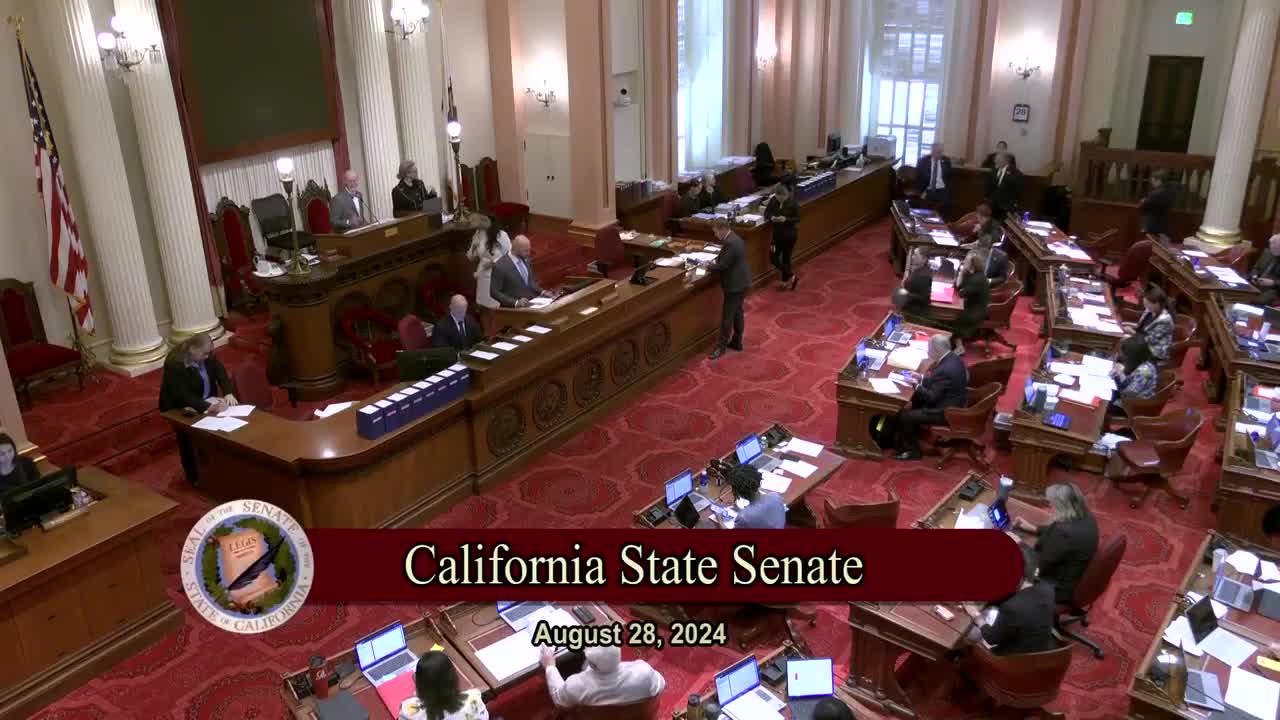 1MIN
Senate Floor
 9MIN
Senate Standing Committee on Judiciary
 1MIN
Assembly Floor
 1MIN
Assembly Standing Committee on Appropriations
 4MIN
Assembly Standing Committee on Judiciary
Bill Author

Bill Co-Author(s):