AB 1904: Transit buses: yield right-of-way sign.
- Session Year: 2023-2024
- House: Assembly
- Latest Version Date: 2024-09-25
Current Status:
Passed
(2024-09-25: Chaptered by Secretary of State - Chapter 555, Statutes of 2024.)
Introduced
In Committee
First Chamber
In Committee
Second Chamber
Enacted
Existing law authorizes a transit bus in the Santa Cruz Metropolitan Transit District and the Santa Clara Valley Transportation Authority to be equipped with a yield right-of-way sign on the left rear of the bus if the applicable entity approves a resolution requesting that this section be made applicable to it. Existing law requires the sign to be designed to warn a person operating a motor vehicle approaching the rear of the bus that the bus is entering traffic and be illuminated by a red flashing light when the bus is signaling in preparation for entering a traffic lane after having stopped to receive or discharge passengers.
This bill would expand the authorization to equip transit buses, as described above, to apply to any transit agency if the transit agency approves a resolution that this authorization be made applicable to it. The bill would also authorize the yield right-of-way sign to be a static decal, and would only impose the above-described design and illumination requirements on a sign that is a flashing light-emitting diode (LED) sign.
(a)A transit bus may be authorized to be equipped with a yield right-of-way sign on the left rear of the bus. The yield right-of-way sign may flash simultaneously with the rear turn signal lamps, but is not required to do so. The sign may also be a static decal that is affixed to the left rear of the bus. If the sign is a flashing light-emitting diode (LED) sign, it shall be both of the following:
(1)Designed to warn a person operating a motor vehicle approaching the rear of the bus that the bus is entering traffic.
(2)Illuminated by a red flashing light when the bus is signaling in preparation for entering a traffic lane after having stopped to receive or discharge passengers.
(b)This section does not require a transit agency to install the yield right-of-way sign described in subdivision (a).
(c)This section does not relieve the driver of a transit bus from the duty to drive the bus with due regard for the safety of all persons and property. This section does not exempt the driver of a transit bus from Section 21804.
(d)This section applies only if the governing board of the transit agency approves a resolution, after a public hearing on the issue, requesting that this section be made applicable to it.
(e)A participating transit agency shall undertake a public education program to encourage motorists to yield to a transit bus when the sign specified in subdivision (a) is activated.
(a)A transit bus may be authorized to be equipped with a yield right-of-way sign on the left rear of the bus. The yield right-of-way sign may flash simultaneously with the rear turn signal lamps, but is not required to do so. The sign may also be a static decal that is affixed to the left rear of the bus. If the sign is a flashing light-emitting diode (LED) sign, it shall be both of the following:
(1)Designed to warn a person operating a motor vehicle approaching the rear of the bus that the bus is entering traffic.
(2)Illuminated by a red flashing light when the bus is signaling in preparation for entering a traffic lane after having stopped to receive or discharge passengers.
(b)This section does not require a transit agency to install the yield right-of-way sign described in subdivision (a).
(c)This section does not relieve the driver of a transit bus from the duty to drive the bus with due regard for the safety of all persons and property. This section does not exempt the driver of a transit bus from Section 21804.
(d)This section applies only to the Santa Cruz Metropolitan Transit District and the Santa Clara Valley Transportation Authority, if the governing board of the applicable entity transit agency approves a resolution, after a public hearing on the issue, requesting that this section be made applicable to it.
(e)A participating transit agency shall undertake a public education program to encourage motorists to yield to a transit bus when the sign specified in subdivision (a) is activated.
|
Date
|
Status
|
|---|---|
| Sep 25, 2024 | Chaptered by Secretary of State - Chapter 555, Statutes of 2024. |
| Sep 25, 2024 | Approved by the Governor. |
| Aug 27, 2024 | Enrolled and presented to the Governor at 12 p.m. |
| Aug 20, 2024 | In Assembly. Ordered to Engrossing and Enrolling. |
| Aug 20, 2024 | Read third time. Passed. Ordered to the Assembly. (Ayes 31. Noes 8. Page 5223.). |
| May 30, 2024 | Read second time. Ordered to third reading. |
| May 29, 2024 | From committee: Do pass. (Ayes 9. Noes 3.) (May 28). |
| May 1, 2024 | Referred to Com. on TRANS. |
| Apr 1, 2024 | In Senate. Read first time. To Com. on RLS. for assignment. |
| Apr 1, 2024 | Read third time. Passed. Ordered to the Senate. (Ayes 72. Noes 0. Page 4534.) |
| Mar 20, 2024 | Read second time. Ordered to Consent Calendar. |
| Mar 19, 2024 | From committee: Do pass. To Consent Calendar. (Ayes 13. Noes 0.) (March 19). |
| Feb 5, 2024 | Referred to Com. on TRANS. |
| Jan 24, 2024 | From printer. May be heard in committee February 23. |
| Jan 23, 2024 | Read first time. To print. |
|
Date
|
Description
|
Location
|
Votes
|
|
|---|---|---|---|---|
| Aug 20, 2024 | Assembly 3rd Reading AB1904 Ward By Cortese | Senate Floor |
Passed |
|
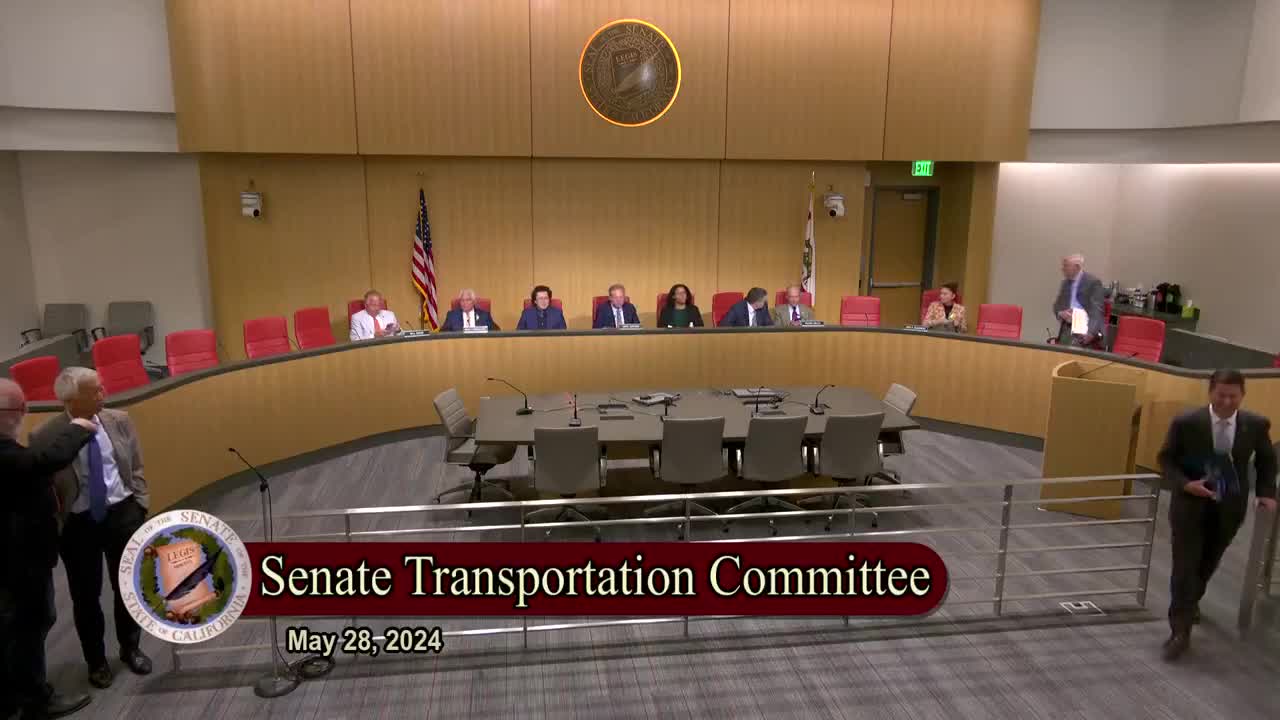
| May 28, 2024 | Do pass | Senate Standing Committee on Transportation |
Passed |
|
| Apr 1, 2024 | AB 1904 Ward Consent Calendar Second Day | Assembly Floor |
Passed |
|
| Mar 19, 2024 | Do pass. To Consent Calendar. | Assembly Standing Committee on Transportation |
Passed |
This list shows positions taken on this bill by organizations on the date displayed, which is linked to the original source.
Positions by individuals are not included.
|
Organization
|
Position
|
Date
|
|---|---|---|
| California Transit Association | ** Support | |
| Ventura County Transportation Commission | ** Support |
SENATE RULES COMMITTEE Office of Senate Floor Analyses (916) 651-1520 Fax: (916) 327-4478 | AB 1904 |
THIRD READING
Bill No: AB 1904
Author: Ward (D)
Introduced: 1/23/24
Vote: 21
SENATE TRANSPORTATION COMMITTEE: 9-3, 5/28/24
AYES: Cortese, Archuleta, Becker, Dodd, Gonzalez, Limón, Newman, Portantino, Umberg
NOES: Niello, Nguyen, Seyarto
NO VOTE RECORDED: Allen, Blakespear, Dahle
ASSEMBLY FLOOR: 72-0, 4/1/24 (Consent) - See last page for vote
SUBJECT: Transit buses: yield right-of-way sign
SOURCE: California Transit Association
San Diego Metropolitan Transit System
DIGEST:
This bill authorizes, but does not require, all transit buses to be equipped with a yield-right-of-way sign on the left rear of the bus.
ANALYSIS:
Existing law:
- Authorizes, but does not require, the Santa Cruz Metropolitan Transit District (SCMTD) and the Santa Clara Valley Transportation Authority (VTA) buses to be equipped with a yield-right-of-way sign on the left rear of the bus.
- Authorizes, but does not require, the yield right-of-way sign to flash simultaneously with the rear turn signal lamps.
- Requires a yield-right-of-way sign to be designed to warn a person operating a motor vehicle approaching the rear of the bus that the bus is entering traffic. Also requires the light be illuminated by a red flashing light when the bus is signaling in preparation for entering a traffic lane after having stopped to receive or discharge passengers.
- Requires a participating transit agency to undertake a public education program to encourage motorists to yield to a transit bus when the sign is activated.
This bill:
- Authorizes, but does not require, all transit agencies to equip their buses with a yield right-of-way sign on the left rear of the bus that may flash simultaneously with the rear turn signal lamps.
- Authorizes the sign to be a static decal that is affixed to the left rear of the bus.
- Requires a yield-right-of-way sign with flashing light-emitting diodes (LEDs), to be designed to warn a person operating a motor vehicle approaching the rear of the bus that the bus is entering traffic and be illuminated by a red flashing light when the bus is signaling in preparation for entering a traffic lane after having stopped to receive or discharge passengers.
- Requires a participating transit agency to undertake a public education program to encourage motorists to yield to a transit bus when the sign is activated.
Comments
- Author’s Statement. According to the author, “AB 1904 would allow all transit agencies to exercise the authority to affix flashing LED yield right-of-way signs to the left rear of their buses, reducing dwell times and facilitating reentry into traffic, provided the transit agency’s governing board approves a resolution on the matter. This authority would reduce traffic delays experienced by transit buses when attempting to reenter traffic and facilitate safer reentry, allowing operators to provide more timely services.”
- Yield-right-of-way state pilot. Transit vehicles often are slowed down in traffic because of the time it takes for them to re-enter traffic lanes. This reentry can also be a safety concern if other drivers are not being attentive. AB 1218 (Keeley, Chapter 482, Statutes of 1999), created a three-year pilot project in which all non-emergency vehicles had to, by law, yield to transit buses re-entering the active traffic lane from a designated bus stop when the transit bus displayed a lighted yield right-of-way sign located on the left rear of the transit bus. While other agencies were permitted, ultimately, only VTA and SCMTD participated in the pilot program, with all of their transit buses outfitted with a yield sign by April 2001.
The California Highway Patrol (CHP) issued a report in 2003 assessing the effectiveness of the pilot. They found that 60% of VTA transit bus operators indicated they felt the yield-to-bus law was at least “somewhat effective” in promoting safe driving conditions. The majority of transit bus operators considered the yield-to-bus law to be effective in promoting safe driving conditions if promoted to the public and enforced by local law enforcement. Meanwhile, SCMTD reported to CHP that the yield-to bus program allowed their transit bus operators greater safety in re-entering traffic, especially at night. VTA and SCMTD received no complaints regarding the program.
CHP concluded that “there is no compelling evidence to lead us to endorse [this law] becoming permanent and statewide. No efficiency study was provided to reflect any increase in “on time” service to the public due to implementation of [the law] and only one citation, in Santa Clara County, was issued for a violation of [the law]. No public opinion survey was provided to substantiate customer satisfaction with the new law. Although there is no evidence to endorse, there is also no evidence to reject this section.”
In a separate, federally sponsored report on the pilot by the Transit Cooperative Research Program (TCRP) bus operators reported significantly lower levels of difficulty re-entering traffic with flashing yield-right-of-way signs. Specifically bus operators for VTA, indicated a 6% success rate most of the time when attempting to re-enter traffic without yield-right-of-way signs. This number jumped to about 26% following the installation and use of flashing LED signs.
Following the pilot and these reports, AB 1492 (Laird, Chapter 451, Statutes of 2007), authorized SCMTD and VTA to continue using the yield-right-of-way signs. However, the provision of the bill that would have authorized law enforcement to site a motorist who failed to yield to a bus was removed. Similarly, this bill does not authorize law enforcement to site a motorist who fails to yield, rather authorizes all transit agencies in the state to outfit there buses with yield-right-of-way signs if they so choose.
- Signage and enforcement. It should be noted that failing to yield to a bus is not a crime in the state of California. Under current law, the only time a motorist when in a traffic lane must yield is to emergency vehicles. Despite it not being a crime, VTA and SCMTD already operate transit buses with yield-right-of-way signs as a result of the extension of the pilot. This nuance of what is required of drivers versus what is requested may lead to some confusion amongst drivers regarding the rules of the road and a driver’s obligation to yield to a bus. Especially given that failing to yield at a typical yield sign on a roadway is a crime. To address some of these concerns the bill does require participating agencies to engage in a public education program regarding yield-right-of-way signs on buses. Also VTA and SCMTD who operate buses with these signs already have not reported increases in fatal accidents or traffic congestion.
- LED or decal yield-right-of-way signs. According to Moving the Bus Safely Back into Traffic Phase II, a report authored by the Center for Urban Transportation Research at the University of South Florida, yield-right-of-way signs with LED lights placed on the back of a bus resulted in significantly increased instances of motorist yielding to buses trying to get back in the travel lane. Cars yielded to buses 41% of the time when there was only a yield sign, while they yielded 78% of the time when the yield-right-of-way sign had LED lights. In Daytona Beach, buses with LED yield-right-of-way signs saw a 50% increase in yielding behavior from motorists. Further, the report found that yield-right-of-way LED signs helped reduce the re-entry time of buses in bus bays on minor urban arterials by as much as 23%.
Other research by the UCLA Institute of Transportation Studies (ITS), suggests that reducing the total amount of time it takes a transit rider to go door-to-door by 5-15% can increase peak urban ridership by 2-9%. These findings together with data cited above build a case that LED yield-right-of-way signs reduce bus re-entry times in turn decreasing door-to-door travel times increasing urban ridership.
This bill allows transit agencies flexibility to use either a decal, LED, or no sign at all based on agency determination. On the one hand this is good as it allows for flexibility based on each agencies unique situation and avoids being too prescriptive. On the other hand, there is a lot less data to demonstrate the benefits of yield-right-of-way decal signs only without LEDs. Many studies simply compare LED versus decal signs finding that LED signs lead to significantly better outcomes. The TCRP study cited above notes, “the nine transit agencies, with one exception, that used only a yield decal were less satisfied and rated their yield-to-bus programs as either fair or poor.” It is also murkier to what degree decal only signs have on door-to-door transit times and ridership.
Related/Prior Legislation
AB 1492 (Laird, Chapter 451, Statutes of 2007) - Authorized SCMTD and VTA to use yield-right-of-way signs on the back of their buses.
AB 557 (Lowenthal, 2003) - Would have repealed the sunset date that any transit operator may adopt the provisions above and established an "opt out" clause.
AB 557 died in the Senate Transportation Committee.
AB 626 (Oropeza, Chapter 437, Statutes of 2002) - Extended the sunset date of AB 1218 by an additional year, until January 1, 2004, the requirement that drivers in certain counties yield the right-of-way to transit buses merging with traffic.
AB 1218 (Keeley, Chapter 482, Statutes of 1999) - Required all non-emergency vehicles to yield to a transit bus re-entering the active traffic lane from a designated bus stop location when the transit bus displays the lighted yield right-of-way located on the left rear of the transit bus until January 1, 2003.
FISCAL EFFECT: Appropriation: No Fiscal Com.: No Local: No
SUPPORT: (Verified 5/29/24)
California Transit Association (co-source)
San Diego Metropolitan Transit System (co-source)
Ventura County Transportation Commission
OPPOSITION: (Verified 5/29/24)
None received
ASSEMBLY FLOOR: 72-0, 4/1/24
AYES: Addis, Aguiar-Curry, Alanis, Arambula, Bains, Bauer-Kahan, Bennett, Berman, Boerner, Bonta, Calderon, Juan Carrillo, Wendy Carrillo, Chen, Connolly, Davies, Dixon, Essayli, Flora, Mike Fong, Vince Fong, Friedman, Gabriel, Gallagher, Garcia, Gipson, Grayson, Hart, Holden, Hoover, Irwin, Jackson, Jones-Sawyer, Kalra, Lackey, Lee, Lowenthal, Maienschein, McCarty, McKinnor, Muratsuchi, Stephanie Nguyen, Ortega, Pacheco, Papan, Joe Patterson, Pellerin, Petrie-Norris, Quirk-Silva, Ramos, Rendon, Reyes, Luz Rivas, Rodriguez, Blanca Rubio, Sanchez, Santiago, Schiavo, Soria, Ta, Ting, Valencia, Villapudua, Waldron, Wallis, Ward, Weber, Wicks, Wilson, Wood, Zbur, Robert Rivas
NO VOTE RECORDED: Alvarez, Bryan, Cervantes, Megan Dahle, Haney, Low, Mathis, Jim Patterson
Prepared by: Randy Chinn / TRANS. / (916) 651-4121, Benjamin O'Brien-Hokanson / TRANS. / (916) 651-4121
5/29/24 14:37:14
**** END ****
SENATE COMMITTEE ON TRANSPORTATION
Senator Dave Cortese, Chair
2023 - 2024 Regular
Bill No: AB 1904 Hearing Date: 5/28/2024
Author: | Ward | ||
Version: | 1/23/2024 Introduced | ||
Urgency: | No | Fiscal: | No |
Consultant: | Benjamin O'Brien-Hokanson, Randy Chinn | ||
SUBJECT: Transit buses: yield right-of-way sign
DIGEST: This bill would authorize, but not require, all transit buses to be equipped with a yield-right-of-way sign on the left rear of the bus.
ANALYSIS:
Existing law:
- Authorizes, but does not require, the Santa Cruz Metropolitan Transit District (SCMTD) and the Santa Clara Valley Transportation Authority (VTA) buses to be equipped with a yield-right-of-way sign on the left rear of the bus.
- Authorizes, but does not require, the yield right-of-way sign to flash simultaneously with the rear turn signal lamps.
- Requires a yield-right-of-way sign to be designed to warn a person operating a motor vehicle approaching the rear of the bus that the bus is entering traffic. Also requires the light be illuminated by a red flashing light when the bus is signaling in preparation for entering a traffic lane after having stopped to receive or discharge passengers.
- Requires a participating transit agency to undertake a public education program to encourage motorists to yield to a transit bus when the sign is activated.
This bill:
- Authorizes, but does not require, all transit agencies to equip their buses with a yield right-of-way sign on the left rear of the bus that may flash simultaneously with the rear turn signal lamps.
- Authorizes the sign to be a static decal that is affixed to the left rear of the bus.
- Requires a yield-right-of-way sign with flashing light-emitting diodes (LEDs), to be designed to warn a person operating a motor vehicle approaching the rear of the bus that the bus is entering traffic and be illuminated by a red flashing light when the bus is signaling in preparation for entering a traffic lane after having stopped to receive or discharge passengers.
- Requires a participating transit agency to undertake a public education program to encourage motorists to yield to a transit bus when the sign is activated.
COMMENTS:
- Author’s Statement. According to the author, “AB 1904 would allow all transit agencies to exercise the authority to affix flashing LED yield right-of-way signs to the left rear of their buses, reducing dwell times and facilitating reentry into traffic, provided the transit agency’s governing board approves a resolution on the matter. This authority would reduce traffic delays experienced by transit buses when attempting to reenter traffic and facilitate safer reentry, allowing operators to provide more timely services.”
- Yield-right-of-way state pilot. Transit vehicles often are slowed down in traffic because of the time it takes for them to re-enter traffic lanes. This reentry can also be a safety concern if other drivers are not being attentive. AB 1218 (Keeley, 1999), created a three-year pilot project in which all non-emergency vehicles had to, by law, yield to transit buses re-entering the active traffic lane from a designated bus stop when the transit bus displayed a lighted yield right-of-way sign located on the left rear of the transit bus. While other agencies were permitted, ultimately, only VTA and SCMTD participated in the pilot program, with all of their transit buses outfitted with a yield sign by April 2001.
The California Highway Patrol (CHP) issued a report in 2003 assessing the effectiveness of the pilot. They found that 60% of VTA transit bus operators indicated they felt the yield-to-bus law was at least “somewhat effective” in promoting safe driving conditions. The majority of transit bus operators considered the yield-to-bus law to be effective in promoting safe driving conditions if promoted to the public and enforced by local law enforcement. Meanwhile, SCMTD reported to CHP that the yield-to bus program allowed their transit bus operators greater safety in re-entering traffic, especially at night. VTA and SCMTD received no complaints regarding the program.
CHP concluded that “there is no compelling evidence to lead us to endorse [this law] becoming permanent and statewide. No efficiency study was provided to reflect any increase in “on time” service to the public due to implementation of [the law] and only one citation, in Santa Clara County, was issued for a violation of [the law]. No public opinion survey was provided to substantiate customer satisfaction with the new law. Although there is no evidence to endorse, there is also no evidence to reject this section.”
In a separate, federally sponsored report on the pilot by the Transit Cooperative Research Program (TCRP) bus operators reported significantly lower levels of difficulty re-entering traffic with flashing yield-right-of-way signs. Specifically bus operators for VTA, indicated a 6% success rate most of the time when attempting to re-enter traffic without yield-right-of-way signs. This number jumped to about 26% following the installation and use of flashing LED signs.
Following the pilot and these reports, AB 1492 (Laird, 2007), authorized SCMTD and VTA to continue using the yield-right-of-way signs. However, the provision of the bill that would have authorized law enforcement to site a motorist who failed to yield to a bus was removed. Similarly, AB 1904 does not authorize law enforcement to site a motorist who fails to yield, rather authorizes all transit agencies in the state to outfit there buses with yield-right-of-way signs if they so choose.
- Signage and enforcement. It should be noted that failing to yield to a bus is not a crime in the state of California. Under current law, the only time a motorist when in a traffic lane must yield is to emergency vehicles. Despite it not being a crime, VTA and SCMTD already operate transit buses with yield-right-of-way signs as a result of the extension of the pilot. This nuance of what is required of drivers versus what is requested may lead to some confusion amongst drivers regarding the rules of the road and a driver’s obligation to yield to a bus. Especially given that failing to yield at a typical yield sign on a roadway is a crime. To address some of these concerns the bill does require participating agencies to engage in a public education program regarding yield-right-of-way signs on buses. Also VTA and SCMTD who operate buses with these signs already have not reported increases in fatal accidents or traffic congestion.
- LED or decal yield-right-of-way signs. According to Moving the Bus Safely Back into Traffic Phase II, a report authored by the Center for Urban Transportation Research at the University of South Florida, yield-right-of-way signs with LED lights placed on the back of a bus resulted in significantly increased instances of motorist yielding to buses trying to get back in the travel lane. Cars yielded to buses 41% of the time when there was only a yield sign, while they yielded 78% of the time when the yield-right-of-way sign had LED lights. In Daytona Beach, buses with LED yield-right-of-way signs saw a 50% increase in yielding behavior from motorists. Further, the report found that yield-right-of-way LED signs helped reduce the re-entry time of buses in bus bays on minor urban arterials by as much as 23%.
Other research by the UCLA Institute of Transportation Studies (ITS), suggests that reducing the total amount of time it takes a transit rider to go door-to-door by 5-15% can increase peak urban ridership by 2-9%. These findings together with data cited above build a case that LED yield-right-of-way signs reduce bus re-entry times in turn decreasing door-to-door travel times increasing urban ridership.
AB 1904 allows transit agencies flexibility to use either a decal, LED, or no sign at all based on agency determination. On the one hand this is good as it allows for flexibility based on each agencies unique situation and avoids being too prescriptive. On the other hand, there is a lot less data to demonstrate the benefits of yield-right-of-way decal signs only without LEDs. Many studies simply compare LED versus decal signs finding that LED signs lead to significantly better outcomes. The TRCP study cited above notes, “the nine transit agencies, with one exception, that used only a yield decal were less satisfied and rated their yield-to-bus programs as either fair or poor.” It is also murkier to what degree decal only signs have on door-to-door transit times and ridership.
Related Legislation:
AB 1492 (Laird), Chapter 451, Statutes of 2007 - Authorized SCMTD and VTA to use yield-right-of-way signs on the back of their buses.
AB 557 (Lowenthal), 2003 - Would have repealed the sunset date that any transit operator may adopt the provisions above and established an "opt out" clause. AB 557 died in the Senate Transportation Committee.
AB 626 (Oropeza), Chapter 437, Statutes of 2002 - Extended the sunset date of AB 1218 by an additional year, until January 1, 2004, the requirement that drivers in certain counties yield the right-of-way to transit buses merging with traffic.
AB 1218 (Keeley), Chapter 482, Statutes of 1999 - Required all non-emergency vehicles to yield to a transit bus re-entering the active traffic lane from a designated bus stop location when the transit bus displays the lighted yield right-of-way located on the left rear of the transit bus until January 1, 2003.
FISCAL EFFECT: Appropriation: Fiscal Com.: Local:
POSITIONS: (Communicated to the committee before noon on Wednesday, May 22, 2024.)
SUPPORT:
California Transit Association (co-sponsor)
San Diego Metropolitan Transit System (co-sponsor)
Ventura County Transportation Commission
OPPOSITION:
None received
-- END --
Date of Hearing: March 19, 2024
ASSEMBLY COMMITTEE ON TRANSPORTATION
Lori D. Wilson, Chair
ABPCA Bill Id:AB 1904 (
Author:Ward) – As Introduced Ver:January 23, 2024
SUBJECT: Transit buses: yield right-of-way sign
SUMMARY: Authorizes all transit buses to be equipped with a yield-right-of-way sign on the left rear of the bus. Specifically, this bill:
- Authorizes, but does not require, the yield right-of-way sign to flash simultaneously with the rear turn signal lamps.
- Authorizes the sign to be a static decal that is affixed to the left rear of the bus.
- Requires a yield-right-of-way sign with flashing light-emitting diode (LED) sign, to be designed to warn a person operating a motor vehicle approaching the rear of the bus that the bus is entering traffic and be illuminated by a red flashing light when the bus is signaling in preparation for entering a traffic lane after having stopped to receive or discharge passengers.
- Requires a participating transit agency to undertake a public education program to encourage motorists to yield to a transit bus when the sign is activated.
EXISTING LAW:
- Authorizes, but does not require, the Santa Cruz Metropolitan Transit District (SCMTD) and the Santa Clara Valley Transportation Authority (VTA) buses to be equipped with a yield-right-of-way sign on the left rear of the bus. (Vehicle Code Section (VEH) 24617)
- Authorizes, but does not require, the yield right-of-way sign to flash simultaneously with the rear turn signal lamps. (VEH 24617)
- Requires a yield-right-of-way sign to be designed to warn a person operating a motor vehicle approaching the rear of the bus that the bus is entering traffic and be illuminated by a red flashing light when the bus is signaling in preparation for entering a traffic lane after having stopped or receive or discharge passengers. (VEH 24617)
- Requires a participating transit agency to undertake a public education program to encourage motorists to yield to a transit bus when the sign is activated. (VEH 24617)
FISCAL EFFECT: Unknown
COMMENTS: According to Moving the Bus Safely Back into Traffic Phase II, a report authored by the Center for Urban Transportation Research at the University of South Florida, yield-to-bus signs with LED lights on the back of a bus resulted in significantly increased instances of motorist yielding to buses trying to get back in the travel lane. Cars only yielded to buses 41% of the time when there was only a yield sign, while they yielded 78% of the time when yield-to-bus LED signs existed. In Daytona Beach, buses with LED yield-to-bus signs saw a 50% increase in yielding behavior from motorists. Yield-to-bus LED signs helped reduce the re-entry time of buses in bus bays on minor urban arterials from 10% to 23%.
According to Best Practices in Implementing Tactical Transit Lanes, a guide produced by UCLA Institute of Transportation Studies (ITS), research suggests that reducing the total amount of time it takes a transit rider to go door-to-door by 5-15% can increase urban peak ridership by 2-9%.
According to the author, “AB 1904 would allow all transit agencies to exercise the authority to affix flashing LED yield right-of-way signs to the left rear of their buses, reducing dwell times and facilitating reentry into traffic, provided the transit agency’s governing board approves a resolution on the matter. This authority would reduce traffic delays experienced by transit buses when attempting to reenter traffic and facilitate safer reentry, allowing operators to provide more timely services.”
Transit vehicles often are slowed down in traffic because of the time it takes for them to re-enter traffic lanes. AB 1218 (Keeley), Chapter 482, Statutes of 1999 created a three-year pilot project in which all non-emergency vehicles had to yield to transit buses re-entering the active traffic lane from a designated bus stop when the transit bus displayed a lighted yield right-of-way signal located on the left rear of the transit bus. AB 1218 permitted VTA, SCMTD, Alameda-Contra-Costa Transit District, and the Orange County Transportation Authority to participate in the pilot project.
Only VTA and SCMTD ultimately participated in the pilot program. All VTA and SCMTD transit buses were outfitted with the yield signal by April 2001. Under the pilot project, the California Highway Patrol (CHP) issued a report in 2003 assessing the effectiveness of the pilot. The CHP found that, 60% of VTA transit bus operators indicated they felt the yield-To-Bus law was at least “somewhat effective” in promoting safe driving conditions. The majority of transit bus operators considered the yield-to-bus law to be effective in promoting safe driving conditions if promoted to the public and enforced by local law enforcement. VTA reported three collisions that could be attributed to a violation of failing to yield to a bus, none of which were fatal, and reported that no significant traffic congestion issues were directly attributable to the new law.
SCMTD reported to CHP that the yield-to bus program allowed their transit bus operators greater safety in re-entering traffic, especially at night. SCMTD received no complaints regarding the program, and law enforcement in Santa Cruz County supported the legislation, yet no citations for a violation of failing to yield to a bus were issued. No collisions were reported that were directly attributable to the use, or non-use, of the yield signal.
CHP concluded that “there is no compelling evidence to lead us to endorse [this law] becoming permanent and statewide. No efficiency study was provided to reflect any increase in “on time” service to the public due to implementation of [the law] and only one citation, in Santa Clara County, was issued for a violation of [the law]. No public opinion survey was provided to substantiate customer satisfaction with the new law. Although there is no evidence to endorse, there is also no evidence to reject this section.”
In 2003, AB 557 (Lowenthal) would have removed the sunset provision in AB 1218 and made the pilot statewide. That bill ultimately failed to pass the Senate Transportation Committee. In 2007, AB 1492 (Laird), Chapter 451 authorized SCMTD and VTA to continue using the yield signs. The initial bill allowed law enforcement to enforce failure to yield to the bus. The CHP, the Department of Motor Vehicles (DMV), and the Department of Transportation (Caltrans) opposed that bill, arguing that that the local standard for the service areas of VTA and SCMTD, the counties of Santa Clara and Santa Cruz, will create unsafe conditions when motorists from outside the counties drive through them, as they will be unfamiliar with the unique, localized rules of the road. Under current law, the only time a motorist when in a traffic lane must yield is to emergency vehicles. Ultimately AB 1492 was signed into law, but removed the provision of the bill that would have authorized law enforcement to site a motorist who failed to yield to a bus.
Previous Legislation:
AB 1492 (Laird), Chapter 451, Statutes of 2007, authorized SCMTD and VTA to use yield signs on the back of their buses.
AB 626 (Oropeza), Chapter 437, Statutes of 2002, extended the sunset date of AB 1218 by an additional year, until January 1, 2004, the requirement that drivers in certain counties yield the right-of-way to transit buses merging with traffic.
AB 1218 (Keeley), Chapter 482, Statutes of 1999, required all non-emergency vehicles to yield to a transit bus re-entering the active traffic lane from a designated bus stop location when the transit bus displays the lighted yield right-of-way located on the left rear of the transit bus until January 1, 2003.
In 2003, AB 557 (Lowenthal) would have repealed the sunset date that any transit operator may adopt the provisions above and established an "opt out" clause. AB 557 died in the Senate Transportation Committee.
REGISTERED SUPPORT / OPPOSITION:
Support
California Transit Association
Ventura County Transportation Commission
Opposition
None on file
Analysis Prepared by: David Sforza / TRANS. / (916) 319-2093
Discussed in Hearing
View Older Hearings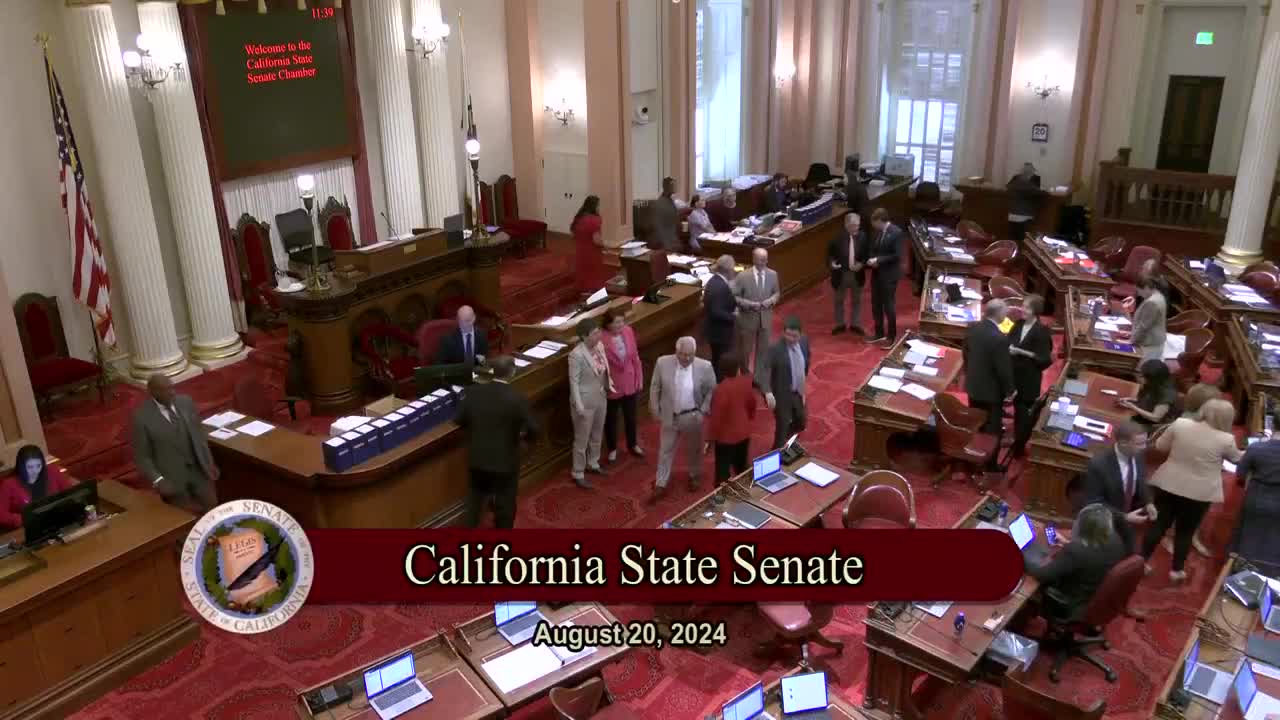
Bill Author

Bill Co-Author(s):