AB 1921: Energy: renewable electrical generation facilities: definition.
- Session Year: 2023-2024
- House: Assembly
- Latest Version Date: 2024-09-25
Current Status:
Passed
(2024-09-25: Chaptered by Secretary of State - Chapter 556, Statutes of 2024.)
Introduced
In Committee
First Chamber
In Committee
Second Chamber
Enacted
Existing law defines a renewable electrical generation facility as a facility that uses biomass, solar thermal, photovoltaic, wind, geothermal, fuel cells using renewable fuels, small hydroelectric generation of 30 megawatts or less, digester gas, municipal solid waste conversion, landfill gas, ocean wave, ocean thermal, or tidal current, and that meets other specified requirements. Existing law incorporates that definition into various programs, including the California Renewables Portfolio Standard Program, which requires the Public Utilities Commission to establish a renewables portfolio standard requiring all retail sellers, as defined, to procure a minimum quantity of electricity products from electrical generating facilities that meet the definition of renewable electrical generation facility, and the net energy metering program, in which residential customers, small commercial customers, and commercial, industrial, or agricultural customers of an electrical utility, who use a renewable electrical generation facility, are eligible to participate, as specified.
This bill would revise the definition of renewable electrical generation facility to include a facility that uses fuel cells or linear generators that use specified fuels.
Under existing law, a violation of any order, decision, rule, direction, demand, or requirement of the commission is a crime.
Because a violation of a commission action implementing this bills requirements would be a crime, the bill would impose a state-mandated local program.
The California Constitution requires the state to reimburse local agencies and school districts for certain costs mandated by the state. Statutory provisions establish procedures for making that reimbursement.
This bill would provide that no reimbursement is required by this act for a specified reason.
Existing law defines renewable a renewable electrical generation facility facility as a facility that uses biomass, solar thermal, photovoltaic, wind, geothermal, fuel cells using renewable fuels, small hydroelectric generation of 30 megawatts or less, digester gas, municipal solid waste conversion, landfill gas, ocean wave, ocean thermal, or tidal current, and that meets other specified requirements. Existing law incorporates that definition into various programs, including the California Renewables Portfolio Standard Program, which requires the Public Utilities Commission to establish a renewables portfolio standard requiring all retail sellers, as defined, to procure a minimum quantity of electricity products from electrical generating facilities that meet the definition of renewable electrical generation facility, and the net energy metering program, in which residential customers, small commercial customers, and commercial, industrial, or agricultural customers of an electrical utility, who use a renewable electrical generation facility, are eligible to participate, as specified.
This bill would expand revise the definition of renewable electrical generation facility to include a facility that uses fuel cells or linear generators that use specified fuels.
Under existing law, a violation of any order, decision, rule, direction, demand, or requirement of the commission is a crime.
Because a violation of a commission action implementing this bills requirements would be a crime, the bill would impose a state-mandated local program.
The California Constitution requires the state to reimburse local agencies and school districts for certain costs mandated by the state. Statutory provisions establish procedures for making that reimbursement.
This bill would provide that no reimbursement is required by this act for a specified reason.
Existing law defines renewable electrical generation facility as a facility that uses biomass, solar thermal, photovoltaic, wind, geothermal, fuel cells using renewable fuels, small hydroelectric generation of 30 megawatts or less, digester gas, municipal solid waste conversion, landfill gas, ocean wave, ocean thermal, or tidal current, and that meets other specified requirements. Existing law incorporates that definition into various programs, including the California Renewables Portfolio Standard Program, which requires the Public Utilities Commission to establish a renewables portfolio standard requiring all retail sellers, as defined, to procure a minimum quantity of electricity products from electrical generating facilities that meet the definition of renewable electrical generation facility, and the net energy metering program, for in which residential customers, small commercial customers, and commercial, industrial, or agricultural customers of an electric electrical utility, who use a renewable electrical generation facility facility, are eligible to participate, as specified.
This bill would expand the definition of renewable electrical generation facility to include a facility that uses linear generators, as defined, using renewable fuels and meets those other specified requirements. generators that use specified fuels.
Under existing law, a violation of any order, decision, rule, direction, demand, or requirement of the commission is a crime.
Because a violation of a commission action implementing this bills requirements would be a crime, the bill would impose a state-mandated local program.
The California Constitution requires the state to reimburse local agencies and school districts for certain costs mandated by the state. Statutory provisions establish procedures for making that reimbursement.
This bill would provide that no reimbursement is required by this act for a specified reason.
Existing law defines renewable electrical generation facility as a facility that uses biomass, solar thermal, photovoltaic, wind, geothermal, fuel cells using renewable fuels, small hydroelectric generation of 30 megawatts or less, digester gas, municipal solid waste conversion, landfill gas, ocean wave, ocean thermal, or tidal current, and that meets other specified requirements. Existing law incorporates that definition into various programs, including the California Renewables Portfolio Standard Program, which requires the Public Utilities Commission to establish a renewables portfolio standard requiring all retail sellers, as defined, to procure a minimum quantity of electricity products from electrical generating facilities that meet the definition of renewable electrical generation facility, and the net energy metering program, for which residential customers, small commercial customers, and commercial, industrial, or agricultural customers of an electric utility, who use a renewable electrical generation facility are eligible to participate, as specified.
This bill would expand the definition of renewable electrical generation facility to include a facility that uses linear generators, as defined, using renewable fuels and meets those other specified requirements.
Under existing law, a violation of any order, decision, rule, direction, demand, or requirement of the commission is a crime.
Because a violation of a commission action implementing this bills requirements would be a crime, the bill would impose a state-mandated local program.
The California Constitution requires the state to reimburse local agencies and school districts for certain costs mandated by the state. Statutory provisions establish procedures for making that reimbursement.
This bill would provide that no reimbursement is required by this act for a specified reason.
As used in this chapter, the following definitions apply:
(a)Renewable electrical generation facility means a facility that meets all of the following criteria:
(1)The facility uses biomass, solar thermal, photovoltaic, wind, geothermal, fuel cells or linear generators using fuels described in this paragraph that otherwise meet the requirements of this subdivision, small hydroelectric generation of 30 megawatts or less, digester gas, municipal solid waste conversion, landfill gas, ocean wave, ocean thermal, or tidal current, and any additions or enhancements to the facility using that technology.
(2)The facility satisfies one of the following requirements:
(A)The facility is located in the state or near the border of the state with the first point of connection to the transmission network of a balancing authority area primarily located within the state. For purposes of this subparagraph, balancing authority area has the same meaning as defined in Section 399.12 of the Public Utilities Code.
(B)The facility has its first point of interconnection to the transmission network outside the state, within the Western Electricity Coordinating Council (WECC) service area, and satisfies all of the following requirements:
(i)It commences initial commercial operation after January 1, 2005.
(ii)It will not cause or contribute to any violation of a California environmental quality standard or requirement.
(iii)It participates in the accounting system to verify compliance with the renewables portfolio standard established by the commission pursuant to subdivision (b) of Section 399.25 of the Public Utilities Code.
(C)The facility meets the requirements of clauses (ii) and (iii) of subparagraph (B), but does not meet the requirements of clause (i) of subparagraph (B) because it commenced initial operation before January 1, 2005, if the facility satisfies either of the following requirements:
(i)The electricity is from incremental generation resulting from expansion or repowering of the facility.
(ii)Electricity generated by the facility was procured by a retail seller or local publicly owned electric utility as of January 1, 2010.
(3)If the facility is outside the United States, it is developed and operated in a manner that is as protective of the environment as a similar facility located in the state.
(4)If eligibility of the facility is based on the use of landfill gas, digester gas, or another renewable fuel delivered to the facility through a common carrier pipeline, the transaction for the procurement of that fuel, including the source of the fuel and delivery method, satisfies the requirements of Section 399.12.6 of the Public Utilities Code and is verified pursuant to the accounting system established by the commission pursuant to Section 399.25 of the Public Utilities Code, or a comparable system, as determined by the commission.
(b)Municipal solid waste conversion means a technology that uses a noncombustion thermal process to convert solid waste to a clean-burning fuel for the purpose of generating electricity, and that meets all of the following criteria:
(1)The technology does not use air or oxygen in the conversion process, except ambient air to maintain temperature control.
(2)The technology produces no discharges of air contaminants or emissions, including greenhouse gases as defined in Section 38505 of the Health and Safety Code.
(3)The technology produces no discharges to surface or groundwaters of the state.
(4)The technology produces no hazardous wastes.
(5)To the maximum extent feasible, the technology removes all recyclable materials and marketable green waste compostable materials from the solid waste stream before the conversion process and the owner or operator of the facility certifies that those materials will be recycled or composted.
(6)The facility at which the technology is used is in compliance with all applicable laws, regulations, and ordinances.
(7)The technology meets any other conditions established by the commission.
(8)The facility certifies that any local agency sending solid waste to the facility diverted at least 30 percent of all solid waste it collects through solid waste reduction, recycling, and composting. For purposes of this paragraph, local agency means any city, county, or special district, or subdivision thereof, that is authorized to provide solid waste handling services.
(c)Renewable energy public goods charge means that portion of the nonbypassable system benefits charge required to be collected to fund renewable energy pursuant to the Reliable Electric Service Investments Act (Article 15 (commencing with Section 399) of Chapter 2.3 of Part 1 of Division 1 of the Public Utilities Code).
(d)Report means the report entitled Investing in Renewable Electricity Generation in California (June 2001, Publication Number P500-00-022) submitted to the Governor and the Legislature by the commission.
(e)Retail seller means a retail seller as defined in Section 399.12 of the Public Utilities Code.
SEC. 2.No reimbursement is required by this act pursuant to Section 6 of Article XIIIB of the California Constitution because the only costs that may be incurred by a local agency or school district will be incurred because this act creates a new crime or infraction, eliminates a crime or infraction, or changes the penalty for a crime or infraction, within the meaning of Section 17556 of the Government Code, or changes the definition of a crime within the meaning of Section 6 of Article XIIIB of the California Constitution.
As used in this chapter, the following definitions apply:
(a)Renewable electrical generation facility means a facility that meets all of the following criteria:
(1)The facility uses biomass, solar thermal, photovoltaic, wind, geothermal, fuel cells using renewable fuels, cells or linear generators using fuels described in this paragraph that otherwise meet the requirements of this subdivision, small hydroelectric generation of 30 megawatts or less, digester gas, municipal solid waste conversion, landfill gas, ocean wave, ocean thermal, or tidal current, and any additions or enhancements to the facility using that technology.
(2)The facility satisfies one of the following requirements:
(A)The facility is located in the state or near the border of the state with the first point of connection to the transmission network of a balancing authority area primarily located within the state. For purposes of this subparagraph, balancing authority area has the same meaning as defined in Section 399.12 of the Public Utilities Code.
(B)The facility has its first point of interconnection to the transmission network outside the state, within the Western Electricity Coordinating Council (WECC) service area, and satisfies all of the following requirements:
(i)It commences initial commercial operation after January 1, 2005.
(ii)It will not cause or contribute to any violation of a California environmental quality standard or requirement.
(iii)It participates in the accounting system to verify compliance with the renewables portfolio standard established by the commission pursuant to subdivision (b) of Section 399.25 of the Public Utilities Code.
(C)The facility meets the requirements of clauses (ii) and (iii) of subparagraph (B), but does not meet the requirements of clause (i) of subparagraph (B) because it commenced initial operation before January 1, 2005, if the facility satisfies either of the following requirements:
(i)The electricity is from incremental generation resulting from expansion or repowering of the facility.
(ii)Electricity generated by the facility was procured by a retail seller or local publicly owned electric utility as of January 1, 2010.
(3)If the facility is outside the United States, it is developed and operated in a manner that is as protective of the environment as a similar facility located in the state.
(4)If eligibility of the facility is based on the use of landfill gas, digester gas, or another renewable fuel delivered to the facility through a common carrier pipeline, the transaction for the procurement of that fuel, including the source of the fuel and delivery method, satisfies the requirements of Section 399.12.6 of the Public Utilities Code and is verified pursuant to the accounting system established by the commission pursuant to Section 399.25 of the Public Utilities Code, or a comparable system, as determined by the commission.
(b)Municipal solid waste conversion means a technology that uses a noncombustion thermal process to convert solid waste to a clean-burning fuel for the purpose of generating electricity, and that meets all of the following criteria:
(1)The technology does not use air or oxygen in the conversion process, except ambient air to maintain temperature control.
(2)The technology produces no discharges of air contaminants or emissions, including greenhouse gases as defined in Section 38505 of the Health and Safety Code.
(3)The technology produces no discharges to surface or groundwaters of the state.
(4)The technology produces no hazardous wastes.
(5)To the maximum extent feasible, the technology removes all recyclable materials and marketable green waste compostable materials from the solid waste stream before the conversion process and the owner or operator of the facility certifies that those materials will be recycled or composted.
(6)The facility at which the technology is used is in compliance with all applicable laws, regulations, and ordinances.
(7)The technology meets any other conditions established by the commission.
(8)The facility certifies that any local agency sending solid waste to the facility diverted at least 30 percent of all solid waste it collects through solid waste reduction, recycling, and composting. For purposes of this paragraph, local agency means any city, county, or special district, or subdivision thereof, that is authorized to provide solid waste handling services.
(c)Renewable energy public goods charge means that portion of the nonbypassable system benefits charge required to be collected to fund renewable energy pursuant to the Reliable Electric Service Investments Act (Article 15 (commencing with Section 399) of Chapter 2.3 of Part 1 of Division 1 of the Public Utilities Code).
(d)Report means the report entitled Investing in Renewable Electricity Generation in California (June 2001, Publication Number P500-00-022) submitted to the Governor and the Legislature by the commission.
(e)Retail seller means a retail seller as defined in Section 399.12 of the Public Utilities Code.
SEC. 2.No reimbursement is required by this act pursuant to Section 6 of Article XIIIB of the California Constitution because the only costs that may be incurred by a local agency or school district will be incurred because this act creates a new crime or infraction, eliminates a crime or infraction, or changes the penalty for a crime or infraction, within the meaning of Section 17556 of the Government Code, or changes the definition of a crime within the meaning of Section 6 of Article XIIIB of the California Constitution.
As used in this chapter, the following definitions apply:
(a)Renewable electrical generation facility means a facility that meets all of the following criteria:
(1)The facility uses biomass, solar thermal, photovoltaic, wind, geothermal, fuel cells using renewable fuels, linear generators using renewable fuels, fuels described in this paragraph that otherwise meet the requirements of this subdivision, small hydroelectric generation of 30 megawatts or less, digester gas, municipal solid waste conversion, landfill gas, ocean wave, ocean thermal, or tidal current, and any additions or enhancements to the facility using that technology.
(2)The facility satisfies one of the following requirements:
(A)The facility is located in the state or near the border of the state with the first point of connection to the transmission network of a balancing authority area primarily located within the state. For purposes of this subparagraph, balancing authority area has the same meaning as defined in Section 399.12 of the Public Utilities Code.
(B)The facility has its first point of interconnection to the transmission network outside the state, within the Western Electricity Coordinating Council (WECC) service area, and satisfies all of the following requirements:
(i)It commences initial commercial operation after January 1, 2005.
(ii)It will not cause or contribute to any violation of a California environmental quality standard or requirement.
(iii)It participates in the accounting system to verify compliance with the renewables portfolio standard established by the commission pursuant to subdivision (b) of Section 399.25 of the Public Utilities Code.
(C)The facility meets the requirements of clauses (ii) and (iii) of subparagraph (B), but does not meet the requirements of clause (i) of subparagraph (B) because it commenced initial operation before January 1, 2005, if the facility satisfies either of the following requirements:
(i)The electricity is from incremental generation resulting from expansion or repowering of the facility.
(ii)Electricity generated by the facility was procured by a retail seller or local publicly owned electric utility as of January 1, 2010.
(3)If the facility is outside the United States, it is developed and operated in a manner that is as protective of the environment as a similar facility located in the state.
(4)If eligibility of the facility is based on the use of landfill gas, digester gas, or another renewable fuel delivered to the facility through a common carrier pipeline, the transaction for the procurement of that fuel, including the source of the fuel and delivery method, satisfies the requirements of Section 399.12.6 of the Public Utilities Code and is verified pursuant to the accounting system established by the commission pursuant to Section 399.25 of the Public Utilities Code, or a comparable system, as determined by the commission.
(b)Linear generator means an integrated system that consists of oscillators, cylinders, electricity conversion equipment, and an associated balance of plant components, and meets all of the following criteria:(1)The system converts the linear motion of oscillators directly into electricity.(2)The electricity output is dispatchable and the electricity output is able to be varied across all loads.(3)The system is fuel flexible and capable of operating using multiple fuel types, including renewable fuels, which includes, but is not limited to, hydrogen, ammonia, and biogas.(c)(b)Municipal solid waste conversion means a technology that uses a noncombustion thermal process to convert solid waste to a clean-burning fuel for the purpose of generating electricity, and that meets all of the following criteria:
(1)The technology does not use air or oxygen in the conversion process, except ambient air to maintain temperature control.
(2)The technology produces no discharges of air contaminants or emissions, including greenhouse gases as defined in Section 38505 of the Health and Safety Code.
(3)The technology produces no discharges to surface or groundwaters of the state.
(4)The technology produces no hazardous wastes.
(5)To the maximum extent feasible, the technology removes all recyclable materials and marketable green waste compostable materials from the solid waste stream before the conversion process and the owner or operator of the facility certifies that those materials will be recycled or composted.
(6)The facility at which the technology is used is in compliance with all applicable laws, regulations, and ordinances.
(7)The technology meets any other conditions established by the commission.
(8)The facility certifies that any local agency sending solid waste to the facility diverted at least 30 percent of all solid waste it collects through solid waste reduction, recycling, and composting. For purposes of this paragraph, local agency means any city, county, or special district, or subdivision thereof, that is authorized to provide solid waste handling services.
(d)(c)Renewable energy public goods charge means that portion of the nonbypassable system benefits charge required to be collected to fund renewable energy pursuant to the Reliable Electric Service Investments Act (Article 15 (commencing with Section 399) of Chapter 2.3 of Part 1 of Division 1 of the Public Utilities Code).
(e)(d)Report means the report entitled Investing in Renewable Electricity Generation in California (June 2001, Publication Number P500-00-022) submitted to the Governor and the Legislature by the commission.
(f)(e)Retail seller means a retail seller as defined in Section 399.12 of the Public Utilities Code.
SEC. 2.No reimbursement is required by this act pursuant to Section 6 of Article XIIIB of the California Constitution because the only costs that may be incurred by a local agency or school district will be incurred because this act creates a new crime or infraction, eliminates a crime or infraction, or changes the penalty for a crime or infraction, within the meaning of Section 17556 of the Government Code, or changes the definition of a crime within the meaning of Section 6 of Article XIIIB of the California Constitution.
As used in this chapter, the following terms have the following meaning: definitions apply:
(a)Renewable electrical generation facility means a facility that meets all of the following criteria:
(1)The facility uses biomass, solar thermal, photovoltaic, wind, geothermal, fuel cells using renewable fuels, linear generators using renewable fuels, small hydroelectric generation of 30 megawatts or less, digester gas, municipal solid waste conversion, landfill gas, ocean wave, ocean thermal, or tidal current, and any additions or enhancements to the facility using that technology.
(2)The facility satisfies one of the following requirements:
(A)The facility is located in the state or near the border of the state with the first point of connection to the transmission network of a balancing authority area primarily located within the state. For purposes of this subparagraph, balancing authority area has the same meaning as defined in Section 399.12 of the Public Utilities Code.
(B)The facility has its first point of interconnection to the transmission network outside the state, within the Western Electricity Coordinating Council (WECC) service area, and satisfies all of the following requirements:
(i)It commences initial commercial operation after January 1, 2005.
(ii)It will not cause or contribute to any violation of a California environmental quality standard or requirement.
(iii)It participates in the accounting system to verify compliance with the renewables portfolio standard once established by the commission pursuant to subdivision (b) of Section 399.25 of the Public Utilities Code.
(C)The facility meets the requirements of clauses (ii) and (iii) in of subparagraph (B), but does not meet the requirements of clause (i) of subparagraph (B) because it commenced initial operation prior to before January 1, 2005, if the facility satisfies either of the following requirements:
(i)The electricity is from incremental generation resulting from expansion or repowering of the facility.
(ii)Electricity generated by the facility was procured by a retail seller or local publicly owned electric utility as of January 1, 2010.
(3)If the facility is outside the United States, it is developed and operated in a manner that is as protective of the environment as a similar facility located in the state.
(4)If eligibility of the facility is based on the use of landfill gas, digester gas, or another renewable fuel delivered to the facility through a common carrier pipeline, the transaction for the procurement of that fuel, including the source of the fuel and delivery method, satisfies the requirements of Section 399.12.6 of the Public Utilities Code and is verified pursuant to the accounting system established by the commission pursuant to Section 399.25 of the Public Utilities Code, or a comparable system, as determined by the commission.
(b)Linear generator means an integrated system that consists of oscillators, cylinders, electricity conversion equipment, and an associated balance of plant components, and meets all of the following criteria:
(1)The system converts the linear motion of oscillators directly into electricity.
(2)The electricity output is dispatchable and the electricity output is able to be varied across all loads.
(3)The system is fuel flexible and capable of operating using multiple fuel types, including renewable fuels, which includes, but is not limited to, hydrogen, ammonia, and biogas.
(b)(c)Municipal solid waste conversion, as used in subdivision (a), conversion means a technology that uses a noncombustion thermal process to convert solid waste to a clean-burning fuel for the purpose of generating electricity, and that meets all of the following criteria:
(1)The technology does not use air or oxygen in the conversion process, except ambient air to maintain temperature control.
(2)The technology produces no discharges of air contaminants or emissions, including greenhouse gases as defined in Section 38505 of the Health and Safety Code.
(3)The technology produces no discharges to surface or groundwaters of the state.
(4)The technology produces no hazardous wastes.
(5)To the maximum extent feasible, the technology removes all recyclable materials and marketable green waste compostable materials from the solid waste stream prior to before the conversion process and the owner or operator of the facility certifies that those materials will be recycled or composted.
(6)The facility at which the technology is used is in compliance with all applicable laws, regulations, and ordinances.
(7)The technology meets any other conditions established by the commission.
(8)The facility certifies that any local agency sending solid waste to the facility diverted at least 30 percent of all solid waste it collects through solid waste reduction, recycling, and composting. For purposes of this paragraph, local agency means any city, county, or special district, or subdivision thereof, which that is authorized to provide solid waste handling services.
(c)(d)Renewable energy public goods charge means that portion of the nonbypassable system benefits charge required to be collected to fund renewable energy pursuant to the Reliable Electric Service Investments Act (Article 15 (commencing with Section 399) of Chapter 2.3 of Part 1 of Division 1 of the Public Utilities Code).
(d)(e)Report means the report entitled Investing in Renewable Electricity Generation in California (June 2001, Publication Number P500-00-022) submitted to the Governor and the Legislature by the commission.
(e)(f)Retail seller means a retail seller as defined in Section 399.12 of the Public Utilities Code.
SEC. 2.No reimbursement is required by this act pursuant to Section 6 of Article XIIIB of the California Constitution because the only costs that may be incurred by a local agency or school district will be incurred because this act creates a new crime or infraction, eliminates a crime or infraction, or changes the penalty for a crime or infraction, within the meaning of Section 17556 of the Government Code, or changes the definition of a crime within the meaning of Section 6 of Article XIIIB of the California Constitution.
|
Date
|
Status
|
|---|---|
| Sep 25, 2024 | Chaptered by Secretary of State - Chapter 556, Statutes of 2024. |
| Sep 25, 2024 | Approved by the Governor. |
| Aug 27, 2024 | Enrolled and presented to the Governor at 12 p.m. |
| Aug 20, 2024 | In Assembly. Ordered to Engrossing and Enrolling. |
| Aug 20, 2024 | Read third time. Passed. Ordered to the Assembly. (Ayes 38. Noes 0. Page 5231.). |
| Aug 6, 2024 | Read second time. Ordered to third reading. |
| Aug 5, 2024 | From committee: Be ordered to second reading pursuant to Senate Rule 28.8. |
| Jul 3, 2024 | From committee: Do pass and re-refer to Com. on APPR. (Ayes 6. Noes 0.) (July 3). Re-referred to Com. on APPR. |
| Jun 18, 2024 | From committee: Do pass and re-refer to Com. on E.Q. (Ayes 17. Noes 0.) (June 18). Re-referred to Com. on E.Q. |
| May 29, 2024 | Referred to Coms. on E., U. & C. and E.Q. |
| May 22, 2024 | In Senate. Read first time. To Com. on RLS. for assignment. |
| May 21, 2024 | Read third time. Passed. Ordered to the Senate. (Ayes 74. Noes 0. Page 5356.) |
| May 20, 2024 | Read second time. Ordered to third reading. |
| May 16, 2024 | Read second time and amended. Ordered returned to second reading. |
| May 16, 2024 | From committee: Amend, and do pass as amended. (Ayes 11. Noes 0.) (May 16). |
| May 16, 2024 | Assembly Rule 63 suspended. |
| May 8, 2024 | In committee: Set, first hearing. Referred to APPR. suspense file. |
| Apr 16, 2024 | From committee: Do pass and re-refer to Com. on APPR. with recommendation: To Consent Calendar. (Ayes 10. Noes 0.) (April 15). Re-referred to Com. on APPR. |
| Apr 9, 2024 | Re-referred to Com. on NAT. RES. |
| Apr 8, 2024 | Read second time and amended. |
| Apr 4, 2024 | From committee: Amend, and do pass as amended and re-refer to Com. on NAT. RES. with recommendation: To Consent Calendar. (Ayes 16. Noes 0.) (April 3). |
| Feb 5, 2024 | Referred to Coms. on U. & E. and NAT. RES. |
| Jan 26, 2024 | From printer. May be heard in committee February 25. |
| Jan 25, 2024 | Read first time. To print. |
|
Date
|
Description
|
Location
|
Votes
|
|
|---|---|---|---|---|
| Aug 20, 2024 | Assembly 3rd Reading AB1921 Papan By Caballero | Senate Floor |
Passed |
|
| Jul 3, 2024 | Do pass, but first be re-referred to the Committee on [Appropriations] | Senate Standing Committee on Environmental Quality |
Passed |
|
| Jun 18, 2024 | Do pass, but first be re-referred to the Committee on [Environmental Quality] | Senate Standing Committee on Energy, Utilities and Communications |
Passed |
|
| May 21, 2024 | AB 1921 Papan Assembly Third Reading | Assembly Floor |
Passed |
|
| May 16, 2024 | Do pass as amended. | Assembly Standing Committee on Appropriations |
Passed |
|
| Apr 15, 2024 | Do pass and be re-referred to the Committee on [Appropriations] with recommendation: To Consent Calendar | Assembly Standing Committee on Natural Resources |
Passed |
|
| Apr 3, 2024 | Do pass as amended, and be re-referred to the Committee on [Natural Resources] with recommendation: To Consent Calendar | Assembly Standing Committee on Utilities and Energy |
Passed |
This list shows positions taken on this bill by organizations on the date displayed, which is linked to the original source.
Positions by individuals are not included.
|
Organization
|
Position
|
Date
|
|---|---|---|
| Bioenergy Association of California | ** Support | |
| Electrochaea Corporation | ** Support | |
| Green Hydrogen Coalition | ** Support | |
| Microgrid Resources Coalition | ** Support | |
| Prologis Management | ** Support | |
| Prologis Management, LLC | ** Support | |
| Silicon Valley Leadership Group | ** Support | |
| Southern California Gas Company | ** Support | |
| TSS Consultants | ** Support |
SENATE RULES COMMITTEE Office of Senate Floor Analyses (916) 651-1520 Fax: (916) 327-4478 | AB 1921 |
THIRD READING
Bill No: AB 1921
Author: Papan (D)
Amended: 5/16/24 in Assembly
Vote: 21
SENATE ENERGY, U. & C. COMMITTEE: 17-0, 6/18/24
AYES: Bradford, Dahle, Ashby, Becker, Caballero, Dodd, Durazo, Eggman, Gonzalez, Grove, Limón, Min, Newman, Rubio, Skinner, Stern, Wilk
NO VOTE RECORDED: Seyarto
SENATE ENVIRONMENTAL QUALITY COMMITTEE: 6-0, 7/3/24
AYES: Allen, Dahle, Gonzalez, Hurtado, Menjivar, Skinner
NO VOTE RECORDED: Nguyen
SENATE APPROPRIATIONS COMMITTEE: Senate Rule 28.8
ASSEMBLY FLOOR: 74-0, 5/21/24 - See last page for vote
SUBJECT: Energy: renewable electrical generation facilities: definition
SOURCE: Author
DIGEST:
This bill adds linear generators using renewable fuels to the definition of “renewable electrical generation facility.”
ANALYSIS:
Existing law:
- Defines “renewable electrical generation facility” as a facility that uses biomass, solar thermal, photovoltaic, wind, geothermal, fuel cells using renewable fuels, small hydroelectric generation of 30 megawatts (MW) or less, digester gas, municipal solid waste conversion, landfill gas, ocean wave, ocean thermal, or tidal current. To meet the definition of a renewable electrical generation facility, the facility must be in state, have its first point of connection to the transmission network of a balancing authority area primarily located within the state, or has its first point of interconnection to the transmission network outside the state, within the Western Electricity Coordinating Council and meets certain specified requirements. (Public Resources Code §25741)
- Incorporates the definition of “renewable electrical generation facility” into various programs, including:
- The California Renewables Portfolio Standard Program, which requires the California Public Utilities Commission (CPUC) to establish a renewables portfolio standard (RPS) requiring all retail sellers to procure a minimum quantity of electricity products from electrical generating facilities that meet the definition of “renewable electrical generation facility.” (Public Utilities Code §399.12, §399.30)
- The net energy metering (NEM) program, in which residential customers, small commercial customers, and commercial, industrial, or agricultural customers of an electrical utility, who use a renewable electrical generation facility, are eligible to participate, as specified. (Public Utilities Code §§2827, 2827.1)
- As public works project for any facility, after December 31, 2023, that receives service pursuant to the NEM tariff with requirements to pay the construction workers prevailing rates, except for projects on single-family homes or those on residential buildings that are under 15 kilowatts, and other exemptions. (Public Utilities Code §769.2)
- The California Alternative Energy and Advanced Transportation Financing Authority (CAEATFA) financing assistance programs for “alternative sources” which include renewable electrical generation facility. (Public Resources Code §26000 et seq.)
This bill revises the definition of “renewable electrical generation facility” to include a facility that uses linear generators that use fuels that meet the existing requirements of the RPS, including fuel source and delivery method requirements.
Background
- Linear generators. Traditional energy production relies on rotational motion, usually the spinning of a turbine. The spinning energy generates electricity with use of conductor wires and magnets. For example, a hydraulic turbine converts the flow of water into mechanical energy that spins a rotor that is attached to coiled wires and magnets to create a magnetic field that generates electricity. However, linear generators use back-and-forth motion to create electricity.
For example, a particular design includes a center reaction cylinder with two opposed oscillators (circuits to create continuous, alternating waveform) and outer air springs. The reaction section has ports for fuel exchange, and each oscillator has magnets attached to them for electricity production via the surrounding copper coils. The arrangement forms a linear generator core that is long and skinny. In this example, a machine rated at 115 kilowatts (kW) is about 5.5 meters long and about one meter high and wide. (Svrcek, Matt, “This new breed of generator can run on almost any fuel.” IEEE Spectrum: February 18, 2023. Svrcek is one of the co-founders of the linear generator company.) Though in development for over a decade, linear generators have in recent years become commercially available. According to the same article, linear generators were installed at tens of sites, producing 230 to 460 kW of electricity at each.
- Renewable Portfolio Standard (RPS). Since the original RPS bill was adopted, SB 1078 (Sher, Chapter 516, Statutes of 2002), the electricity retail landscape and market for renewable energy has changed dramatically, while the urgency to address climate change has grown. The Legislature has modified the goals and details of the RPS program several times since the original enactment. The most recent major changes were made by SB 100 (De León, Chapter 312, Statutes of 2018), which set a new obligation of 60 percent of retail sales from RPS-eligible generation by 2030. SB 100 also added a new obligation that the remaining 40 percent of retail sales be from zero-carbon resources.
The RPS program is statutorily prescriptive regarding which technologies and fuel types are eligible. Currently facilities that use biomass, solar thermal, photovoltaic, wind, geothermal, fuel cells using renewable fuels, small hydroelectric generation of 30 MW or less, digester gas, municipal solid waste conversion, landfill gas, ocean wave, ocean thermal, or tidal current are eligible. The new category of “zero-carbon” adopted under SB 100, however, is statutorily undefined.
- Renewable fuel. Recent linear generator designs claim to be fuel flexible, whereby they are able to switch between different types or blends of fuel, from biogas, natural gas, hydrogen, and ammonia (mentioned in the IEEE Spectrum article noted above). Amendments taken in the Assembly narrow the eligible linear generators to only those that satisfy the fuel requirements in the existing RPS statutes, including requirements for fuel sources and delivery methods.
- Need for this bill. According to the author, “California continues to lead the way on ambitious climate goals. If we are to meet our 2030 and 2045 targets, it’s imperative that we use every technology at our disposal. AB 1921 gives us another tool in the toolbox. This bill would include linear generators using renewable fuels in the list of “renewable electrical generation facilities.” Linear generators play a vital role in providing clean, renewable back-up power generation and they need to be a part of our portfolio in order to meet our climate goals and ensure technology parity.”
- Verifying RPS eligibility. According to the CEC, as of April, they have not received any applications for RPS eligibility verification by a linear generating facility. However, the CEC does not foresee issues with verifying eligibility for RPS compliance by linear generators as proposed by this bill. However, the CEC would need to update the RPS Eligibility Guidebook.
Related/Prior Legislation
SB 1420 (Caballero, 2024) adds, among its provisions, renewable hydrogen, as specified, to the types of renewable energy a facility may use to qualify as a renewable electrical generation facility. The bill is pending in the Assembly Appropriations Committee.
SB 663 (Archuleta, 2023) defined renewable hydrogen and adds renewable hydrogen as a renewable energy resource under the RPS. The bill died on the Senate Floor.
AB 1550 (Bennett, 2023) required, by January 1, 2045, all hydrogen produced and used in California for either the generation of electricity or the fueling of vehicles to be “renewable hydrogen of biological origin” or “renewable hydrogen of nonbiological origin: and makes a facility that generates electricity using two specified categories of hydrogen an eligible renewable energy resource. The bill died on the Assembly Floor.
FISCAL EFFECT: Appropriation: No Fiscal Com.: Yes Local: Yes
SUPPORT: (Verified 8/6/24)
Bioenergy Association of California
Electrochaea Corporation
Microgrid Resources Coalition
Prologis Management, LLC
Silicon Valley Leadership Group
Southern California Gas Company
TSS Consultants
OPPOSITION: (Verified 8/6/24)
None received
ARGUMENTS IN SUPPORT: The Bioenergy Association of California, Electrochaea, and TSS Consultants state:
Linear generators are an important generating technology because they provide clean, firm power with virtually no emissions. By clarifying that linear generators using renewable fuels are RPS eligible, AB 1921 will help California meet the requirements of SB 100 while ensuring energy reliability and helping to meet California’s climate and clean air policies. …Linear generators did not exist when the RPS was adopted and so were not included in the list of eligible technologies codified in Public Resources Code section 25741. Adding linear generators that use renewable fuels to that code section will clarify that they are RPS eligible and will facilitate their use in California.
ASSEMBLY FLOOR: 74-0, 5/21/24
AYES: Addis, Aguiar-Curry, Alanis, Alvarez, Arambula, Bains, Bauer-Kahan, Bennett, Berman, Boerner, Bonta, Bryan, Calderon, Juan Carrillo, Wendy Carrillo, Chen, Connolly, Davies, Dixon, Essayli, Flora, Mike Fong, Vince Fong, Gallagher, Garcia, Gipson, Grayson, Haney, Hart, Hoover, Irwin, Jackson, Jones-Sawyer, Kalra, Lackey, Lee, Low, Lowenthal, Maienschein, McCarty, McKinnor, Muratsuchi, Stephanie Nguyen, Ortega, Pacheco, Papan, Jim Patterson, Joe Patterson, Pellerin, Petrie-Norris, Quirk-Silva, Ramos, Rendon, Reyes, Luz Rivas, Rodriguez, Blanca Rubio, Sanchez, Santiago, Schiavo, Soria, Ta, Ting, Valencia, Villapudua, Waldron, Wallis, Ward, Weber, Wicks, Wilson, Wood, Zbur, Robert Rivas
NO VOTE RECORDED: Cervantes, Megan Dahle, Friedman, Gabriel, Holden, Mathis
Prepared by: Nidia Bautista / E., U. & C. / (916) 651-4107
8/7/24 17:51:13
**** END ****
SENATE COMMITTEE ON ENVIRONMENTAL QUALITY
Senator Allen, Chair
2023 - 2024 Regular
Bill No. | AB 1921 | Hearing Date: | 7/3/2024 |
Author: | Papan | ||
Version: | 5/16/2024 | ||
Urgency: | No | Fiscal: | Yes |
Consultant: | Eric Walters | ||
SUBJECT: Energy: renewable electrical generation facilities: definition
DIGEST: This bill adds linear generators using renewable fuels to the definition of “renewable electrical generation facility.”
ANALYSIS:
Existing law:
- Establishes a Renewables Portfolio Standard (RPS) Program requiring certain percentages of electricity retail sales to be served by renewable resources, most recently increased by SB 100 (de León, 2018) to 60% by 2030 (PUC § 399.11 et seq.)
- States that is the goal of the state to procure 100% of electricity from eligible renewable energy resources and zero-carbon resources by December 31, 2045. (PUC § 454.53)
- Establishes a Renewable Energy Resources Program administered by the California Energy Commission (CEC) and defines a “renewable electrical generation facility” as a facility that uses biomass, solar thermal, photovoltaic, wind, geothermal, fuel cells using renewable fuels, small hydroelectric generation of 30 megawatts or less, digester gas, municipal solid waste conversion, landfill gas, ocean wave, ocean thermal, or tidal current and sets certain requirements for these facilities. (PRC § 25741)
This bill revises the definition of “renewable electrical generation facility” to include a facility that uses linear generators that use fuels that meet the existing requirements of the RPS, including fuel source and delivery method requirements.
Background
- The Renewables Portfolio Standard Program. The Renewables Portfolio Standard (RPS) requires all load-serving entities in California to procure a portion of their electricity sales from eligible renewable resources. The procurement goal was most recently updated by SB 100 (de León, Chapter 312, Statutes of 2018) to 60% of energy procured by electric load serving entities be from eligible renewable energy resources by 2030. The California Public Utilities Commission (CPUC) and the CEC jointly implement the RPS program. The CEC certifies facilities that generate renewable energy as eligible for the RPS. The CEC’s RPS certification of a facility means the facility can generate electricity that may be used by a retail seller or publicly owned utility (POU) to satisfy its RPS procurement requirements.
Some of the myriad categories of RPS-eligible electricity sources (i.e. biomass, solar thermal, photovoltaic, wind, geothermal, fuel cells using renewable fuels, small hydroelectric generation of 30 megawatts or less, digester gas, municipal solid waste conversion, landfill gas, ocean wave, ocean thermal, or tidal current) have resource-specific requirements such as feedstock or interconnection to the state’s grid.
- Linear generators. Traditional energy production relies on rotational motion, usually the spinning of a turbine. The spinning energy generates electricity with the use of conductor wires and magnets. For example, a hydraulic turbine converts the flow of water into mechanical energy that spins a rotor that is attached to coiled wires and magnets to create a magnetic field that generates electricity. However, linear generators use a back-and-forth motion to create electricity.
Though in development for over a decade, linear generators have in recent years become commercially available and promoted as being able to utilize a range of fuels. According to a 2023 article in IEEE Spectrum, linear generators have been installed at tens of sites, producing 230 to 460 kW of electricity at each. According to the CEC, as of April 2024, they have not received any applications for RPS eligibility verification by a linear generating facility.
Comments
- Purpose of Bill. According to the author, “California continues to lead the way on ambitious climate goals. If we are to meet our 2030 and 2045 targets, it’s imperative that we use every technology at our disposal. AB 1921 gives us another tool in the toolbox. This bill would include linear generators using renewable fuels in the list of “renewable electrical generation facilities.” Linear generators play a vital role in providing clean, renewable back-up power generation and they need to be a part of our portfolio in order to meet our climate goals and ensure technology parity.”
- Like they always say: “It’s what’s on the inside that counts.” This bill explicitly adds linear generators using RPS-eligible fuels to the list of RPS-eligible renewable electrical generation facilities. However, it is not as though the amended code section specified turbine generators for the other eligible fuel types; it specifies the fuel being used, not necessarily the method by which it is used to generate electricity.
Nevertheless, there is no apparent harm in adding extra clarity that linear generators using RPS-eligible resources would themselves be RPS-eligible. Doing so should settle any potential question that could arise in the future as linear generators potentially become more widespread.
DOUBLE REFERRAL:
This measure was heard in Senate Energy, Utilities, and Communications Committee on June 18, 2024, and passed out of committee with a vote of 17-0.
Related/Prior Legislation
SB 663 (Archuleta, 2023) primarily focused on defining renewable hydrogen but also proposed including renewable hydrogen used in a linear generator or turbine among RPS-eligible resources. SB 663 died on the Senate Floor.
SB 1420 (Caballero, 2024) adjusts the standards for statewide fuel standards for hydrogen used in vehicle fueling and provides expedited permitting and judicial review for any hydrogen production facilities that received state or federal money. As heard in this committee, it originally included linear generators using renewable hydrogen in the list of RPS-eligible resources. SB 1420 is currently before the Assembly Natural Resources Committee.
SOURCE:
Author
SUPPORT:
Bioenergy Association of California
Microgrid Resources Coalition
OPPOSITION:
None received
Positions reflect letters received by noon one week prior to the hearing.
-- END --
SENATE COMMITTEE ON ENERGY, UTILITIES AND COMMUNICATIONS
Senator Steven Bradford, Chair
2023 - 2024 Regular
Bill No: AB 1921 Hearing Date: 6/18/2024
Author: | Papan | ||
Version: | 5/16/2024 Amended | ||
Urgency: | No | Fiscal: | Yes |
Consultant: | Nidia Bautista | ||
SUBJECT: Energy: renewable electrical generation facilities: definition
DIGEST: This bill adds linear generators using renewable fuels to the definition of “renewable electrical generation facility.”
ANALYSIS:
Existing law:
- Defines “renewable electrical generation facility” as a facility that uses biomass, solar thermal, photovoltaic, wind, geothermal, fuel cells using renewable fuels, small hydroelectric generation of 30 megawatts (MW) or less, digester gas, municipal solid waste conversion, landfill gas, ocean wave, ocean thermal, or tidal current. To meet the definition of a renewable electrical generation facility, the facility must be in state, have its first point of connection to the transmission network of a balancing authority area primarily located within the state, or has its first point of interconnection to the transmission network outside the state, within the Western Electricity Coordinating Council and meets certain specified requirements. (Public Resources Code §25741)
- Incorporates the definition of “renewable electrical generation facility” into various programs, including:
- The California Renewables Portfolio Standard Program, which requires the California Public Utilities Commission (CPUC) to establish a renewables portfolio standard (RPS) requiring all retail sellers to procure a minimum quantity of electricity products from electrical generating facilities that meet the definition of “renewable electrical generation facility.” (Public Utilities Code §399.12, §399.30)
- The net energy metering (NEM) program, in which residential customers, small commercial customers, and commercial, industrial, or agricultural customers of an electrical utility, who use a renewable electrical generation facility, are eligible to participate, as specified. (Public Utilities Code §§2827, 2827.1)
- As public works project for any facility, after December 31, 2023, that receives service pursuant to the NEM tariff with requirements to pay the construction workers prevailing rates, except for projects on single-family homes or those on residential buildings that are under 15 kilowatts, and other exemptions. (Public Utilities Code §769.2)
- The California Alternative Energy and Advanced Transportation Financing Authority (CAEATFA) financing assistance programs for “alternative sources” which include renewable electrical generation facility. (Public Resources Code §26000 et seq.)
This bill revises the definition of “renewable electrical generation facility” to include a facility that uses linear generators that use fuels that meet the existing requirements of the RPS, including fuel source and delivery method requirements.
Background
Linear generators. Traditional energy production relies on rotational motion, usually the spinning of a turbine. The spinning energy generates electricity with use of conductor wires and magnets. For example, a hydraulic turbine converts the flow of water into mechanical energy that spins a rotor that is attached to coiled wires and magnets to create a magnetic field that generates electricity. However, linear generators use back-and-forth motion to create electricity.
For example, a particular design includes a center reaction cylinder with two opposed oscillators (circuits to create continuous, alternating waveform) and outer air springs. The reaction section has ports for fuel exchange, and each oscillator has magnets attached to them for electricity production via the surrounding copper coils. The arrangement forms a linear generator core that is long and skinny. In this example, a machine rated at 115 kilowatts (kW) is about 5.5 meters long and about one meter high and wide. (Svrcek, Matt, “This new breed of generator can run on almost any fuel.” IEEE Spectrum: February 18, 2023. Svrcek is one of the co-founders of the linear generator company.) Though in development for over a decade, linear generators have in recent years become commercially available. According to the same article, linear generators were installed at tens of sites, producing 230 to 460 kW of electricity at each.
Renewable Portfolio Standard (RPS). Since the original RPS bill was adopted, SB 1078 (Sher, Chapter 516, Statutes of 2002), the electricity retail landscape and market for renewable energy has changed dramatically, while the urgency to address climate change has grown. The Legislature has modified the goals and details of the RPS program several times since the original enactment. The most recent major changes were made by SB 100 (De León, Chapter 312, Statutes of 2018), which set a new obligation of 60 percent of retail sales from RPS-eligible generation by 2030. SB 100 also added a new obligation that the remaining 40 percent of retail sales be from zero-carbon resources.
The RPS program is statutorily prescriptive regarding which technologies and fuel types are eligible. Currently facilities that use biomass, solar thermal, photovoltaic, wind, geothermal, fuel cells using renewable fuels, small hydroelectric generation of 30 MW or less, digester gas, municipal solid waste conversion, landfill gas, ocean wave, ocean thermal, or tidal current are eligible. The new category of “zero-carbon” adopted under SB 100, however, is statutorily undefined.
Renewable fuel. Recent linear generator designs claim to be fuel flexible, whereby they are able to switch between different types or blends of fuel, from biogas, natural gas, hydrogen, and ammonia (mentioned in the IEEE Spectrum article noted above). Amendments taken in the Assembly narrow the eligible linear generators to only those that satisfy the fuel requirements in the existing RPS statutes, including requirements for fuel sources and delivery methods.
Need for this bill. According to the author:
California continues to lead the way on ambitious climate goals. If we are to meet our 2030 and 2045 targets, it’s imperative that we use every technology at our disposal. AB 1921 gives us another tool in the toolbox. This bill would include linear generators using renewable fuels in the list of “renewable electrical generation facilities.” Linear generators play a vital role in providing clean, renewable back-up power generation and they need to be a part of our portfolio in order to meet our climate goals and ensure technology parity.
Verifying RPS eligibility. According to the California Energy Commission (CEC), as of April, they have not received any applications for RPS eligibility verification by a linear generating facility. However, the CEC does not foresee issues with verifying eligibility for RPS compliance by linear generators as proposed by this bill. However, the CEC would need to update the RPS Eligibility Guidebook.
Dual Referral. Should this bill be approved by this committee, it will be re-referred to the Senate Committee on Environmental Quality.
Prior/Related Legislation
SB 1420 (Caballero), among its provisions, adds renewable hydrogen, as specified, to the types of renewable energy a facility may use to qualify as a renewable electrical generation facility. The bill is pending in the Assembly Committee on Utilities & Energy.
SB 663 (Archuleta, 2023) defines renewable hydrogen and adds renewable hydrogen as a renewable energy resource under the RPS. The bill died on the Senate Floor.
AB 1550 (Bennett, 2023) requires, by January 1, 2045, all hydrogen produced and used in California for either the generation of electricity or the fueling of vehicles to be “renewable hydrogen of biological origin” or “renewable hydrogen of nonbiological orign: and makes a facility that generates electricity using two specified categories of hydrogen an eligible renewable energy resource.
FISCAL EFFECT: Appropriation: No Fiscal Com.: Yes Local: Yes
SUPPORT:
Bioenergy Association of California
Electrochaea Corporation
Microgrid Resources Coalition
Prologis Management, LLC
Silicon Valley Leadership Group
Southern California Gas Company
TSS Consultants
OPPOSITION:
None received
ARGUMENTS IN SUPPORT: The Bioenergy Association of California, Electrochaea, and TSS Consultants state:
Linear generators are an important generating technology because they provide clean, firm power with virtually no emissions. By clarifying that linear generators using renewable fuels are RPS eligible, AB 1921 will help California meet the requirements of SB 100 while ensuring energy reliability and helping to meet California’s climate and clean air policies. …Linear generators did not exist when the RPS was adopted and so were not included in the list of eligible technologies codified in Public Resources Code section 25741. Adding linear generators that use renewable fuels to that code section will clarify that they are RPS eligible and will facilitate their use in California.
-- END --
ASSEMBLY THIRD READING
ATR Bill Id:AB 1921
Author:(Papan)
As Amended Ver:May 16, 2024
Majority vote
SUMMARY
Adds linear generators as an eligible facility under the California Renewables Portfolio Standard (RPS).
Major Provisions
COMMENTS
The state has ambitious clean energy goals. Statute requires 60% of the state's electricity come from renewable energy resources and that, by 2045, 100% of electricity sold in the state to retail customers come from renewable and zero-carbon energy resources.
The RPS is the program that specifies the proportions of the electricity sold by the state's electric utilities that must come from renewable energy resources. Statute charges the Energy Commission with certifying that an electricity generating facility is eligible to produce electricity that qualifies for credit under the RPS, according to the following, and other, criteria: the facility uses biomass, solar thermal, photovoltaic, wind, geothermal, fuel cells using renewable fuels, small hydroelectric generation of 30 megawatts or less, digester gas, municipal solid waste conversion, landfill gas, ocean wave, ocean thermal, or tidal current, and any additions or enhancements to the facility using that technology. Missing from this list is linear generators using renewable fuel.
Traditional energy production often relies on rotational motion; namely, the spinning of a turbine. Linear generators behave more like a car piston, using back-and-forth motion to create electricity. And like car pistons, that motion is initiated by a fuel-air mixture; sometimes with an ignition source (flame or spark), or sometimes by compressing the reaction chamber at high pressures. Recent linear generator designs claim to be fuel flexible; i.e. able to switch between different types or blends of fuel, from biogas, traditional fossil sources, hydrogen, and ammonia. A number of linear generators are deployed throughout the state, including some recipients of Energy Commission grants.
A technology does not need be specifically listed in the RPS statute for it to be eligible for RPS. For example, the RPS statute does not list a use of a combustion engine eligible for the RPS. Yet, RPS-eligible facilities generate electricity by using fuel sources listed in the RPS statue, such as digester gas and landfill gas. The RPS statute does not list a linear generator that uses renewable fuel as an RPS-eligible energy resource. Nonetheless, presumably, a facility that produces electricity via a linear generator that uses renewable fuel would be eligible for the RPS. This bill seeks to clarify that it is.
According to the Author
"California continues to lead the way on ambitious climate goals. If we are to meet our 2030 and 2045 targets, it's imperative that we use every technology at our disposal. AB 1921 gives us another tool in the toolbox. This bill would include linear generators using renewable fuels in the list of "renewable electrical generation facilities." Linear generators play a vital role in providing clean, renewable back-up power generation and they need to be a part of our portfolio in order to meet our climate goals and ensure technology parity."
Arguments in Support
Writing in "strong support" of the bill, the Silicon Valley Leadership Group contends this bill "remedies the current lack of clarity and confusion for the implementing state agency and establishes technology parity for renewable electrical generation technologies." Other supporters include the Bioenergy Association of California, Green Hydrogen Coalition, Microgrid Resources Coalition, SoCalGas, and linear generator companies who all note that these generators are an important technology capable of providing clean power; and therefore should be RPS eligible.
Arguments in Opposition
None on file.
FISCAL COMMENTS
According to the Assembly Committee on Appropriations, this bill will result in costs to the Energy Commission in excess of $450,000, some ongoing. The Appropriations Committee notes the Commission's main funding account is in a structural deficit, with its ongoing revenues failing to keep pace with its increasing expenditures.
VOTES
ASM UTILITIES AND ENERGY: 16-0-0
YES: Petrie-Norris, Jim Patterson, Bauer-Kahan, Calderon, Chen, Connolly, Friedman, Holden, Joe Patterson, Reyes, Santiago, Schiavo, Ting, Wallis, Wood, Zbur
ASM NATURAL RESOURCES: 10-0-1
YES: Bryan, Flora, Bauer-Kahan, Friedman, Hoover, Kalra, Muratsuchi, Pellerin, Wicks, Wood
ABS, ABST OR NV: Mathis
ASM APPROPRIATIONS: 11-0-4
YES: Wicks, Arambula, Bryan, Calderon, Wendy Carrillo, Mike Fong, Grayson, Haney, Hart, Pellerin, Villapudua
ABS, ABST OR NV: Sanchez, Dixon, Jim Patterson, Ta
UPDATED
VERSION: May 16, 2024
CONSULTANT: Laura Shybut / U. & E. / (916) 319-2083 FN: 0003392
Date of Hearing: May 8, 2024
ASSEMBLY COMMITTEE ON APPROPRIATIONS
Buffy Wicks, Chair
ABPCA Bill Id:AB 1921
Author:(Papan) – As Amended Ver:April 8, 2024
Policy Committee: | Utilities and Energy | Vote: | 16 - 0 |
Natural Resources | 10 - 0 | ||
|
|
Urgency: No State Mandated Local Program: Yes Reimbursable: No
SUMMARY:
This bill adds the following to the list of facilities that qualify as a renewable electric generation facilities: linear generators using renewable fuel.
FISCAL EFFECT:
This bill will result in workload, and associated costs likely in excess of $150,000, for the Energy Commission to update guidelines governing certification of electricity generating facilities as eligible to produce electricity that qualifies for credit under the renewable portfolio standard (RPS) and, ongoing, to determine the eligibility of specific linear generator facilities and collect and organize data from such facilities.
The Energy Commission anticipates needing two additional staff members in the classification of Energy Commission Specialist I, at an annual cost of $317,338, ongoing, to complete the work described above (Energy Resources Programs Account (ERPA)).
According to the Legislative Analyst’s Office, ERPA is in a structural deficit, with its ongoing revenues failing to keep pace with its increasing expenditures, and the Governor’s administration estimates these ERPA balances will be exhausted by fiscal year 2027‑28
COMMENTS:
The state has ambitious clean energy goals. Statute requires 60% of the state’s electricity come from renewable energy resources and that, by 2045, 100% of electricity sold in the state to retail customers come from renewable and zero-carbon energy resources.
The Renewable Portfolio Standard (RPS) is the program that specifies the proportions of the electricity sold by the state’s electric utilities that must come renewable energy resources. Statute charges the Energy Commission with certifying that an electricity generating facility is eligible to produce electricity that qualifies for credit under the RPS, according to the following, and other, criteria: the facility uses biomass, solar thermal, photovoltaic, wind, geothermal, fuel cells using renewable fuels, small hydroelectric generation of 30 megawatts or less, digester gas, municipal solid waste conversion, landfill gas, ocean wave, ocean thermal, or tidal current, and any additions or enhancements to the facility using that technology. Missing from this list is linear generators using renewable fuel.
The Utilities and Energy Committee analysis of this bill, referencing a recent article in Popular Mechanics, described a linear generator as “like a car piston, using back-and-forth motion to create electricity…that motion is initiated by a fuel-air mixture; sometimes with an ignition source (flame or spark), or sometimes by compressing the reaction chamber at high pressures.” The same article in Popular Mechanics quoted Matt Svrcek, cofounder of Mainspring Energy, who describes linear generator as “fuel-agnostic,” meaning “It can run a wide range of fuels including natural gas, biogas, hydrogen, ammonia, syngas, and even alcohols without compromising performance.”
A technology does not need be specifically listed in the RPS statute for it to be eligible for RPS. For example, the RPS statute does not list a use of a combustion engine eligible for the RPS. Yet, RPS-eligible facilities generate electricity by using fuel sources listed in the RPS statue, such as digester gas and landfill gas. The RPS statute does not list a linear generator that uses renewable fuel as an RPS-eligible energy resource. Nonetheless, presumably, a facility that produces electricity via a linear generator that uses renewable fuel would be eligible for the RPS.
Writing in “strong support” of the bill, the Silicon Valley Leadership Group contends this bill “remedies the current lack of clarity and confusion for the implementing state agency and establishes technology parity for renewable electrical generation technologies.”
The Energy Commission contends a linear generator using renewable fuel seems already to qualify as an RPS-eligible electricity generating facility. It is, therefore, not clear why the RPS statute needs to be updated to include specific technologies an RPS-eligible facility may use. What’s more, adding specific technologies to the statute implies that technologies not explicitly listed in the RPS statute are not RPS-eligible technologies. Nonetheless, the Energy Commission asserts that statutory affirmation that a facility that uses such technology may, indeed, qualify for RPS eligibility may help the commission avoid unnecessary, resource-consuming legal challenge.
Analysis Prepared by: Jay Dickenson / APPR. / (916) 319-2081
Date of Hearing: April 15, 2024
ASSEMBLY COMMITTEE ON NATURAL RESOURCES
Isaac G. Bryan, Chair
ABPCA Bill Id:AB 1921 (
Author:Papan) – As Amended Ver:April 8, 2024
SUBJECT: Energy: renewable electrical generation facilities: linear generators
SUMMARY: Clarifies that a linear generator is a renewable electrical generation facility for purposes of the Renewables Portfolio Standard (RPS), provided the linear generator uses specified RPS-eligible fuels.
EXISTING LAW:
- Requires utilities and other retail sellers of electricity to procure 60% of their retail electricity sales from eligible renewable energy resources by 2030 and thereafter, including interim targets of 33% by 2020, 44% by 2024, and 52% by 2027. (Public Utilities Code 399.11 et seq.)
- Defines “eligible renewable energy resource” as an electrical generating facility that uses biomass, solar thermal, photovoltaic, wind, geothermal, fuel cells using renewable fuels, small hydroelectric generation of 30 megawatts or less, digester gas, municipal solid waste conversion, landfill gas, ocean wave, ocean thermal, or tidal current, subject to multiple conditions. (Public Resources Code 25741)
FISCAL EFFECT: Unknown
COMMENTS:
- Background. The California RPS program began with a mandate to all retail sellers to provide 20% RPS-eligible generation by the end of 2017. The initial RPS statute sought to establish a market for renewables, by financially incentivizing long term contracting between electricity providers and above-market renewable generators. This mandate sought market stimulation, creation of a local economy, and a modicum of environmental benefits. Policies to directly address the impacts of climate change came after the first RPS bills. It was not until 2011 that the RPS program incorporated greenhouse gas (GHG) reduction into its purpose. In the past 15 years since the original RPS mandate was adopted, not only has the retail landscape of renewable energy changed dramatically, but so has the conversation to urge action to address climate change. The Legislature has modified the goals and details of the RPS program several times since the original enactment. The most recent major changes were made by SB 100 (De León), Chapter 312, Statutes of 2018, which set a new obligation of 60% of retail sales from RPS-eligible generation by 2030. SB 100 also added a new obligation that the remaining 40% of retail sales be from zero-carbon resources.
The RPS program is statutorily prescriptive regarding which technologies and fuel types are eligible. Currently facilities that use biomass, solar thermal, photovoltaic, wind, geothermal, fuel cells using renewable fuels, small hydroelectric generation of 30 megawatts or less, digester gas, municipal solid waste conversion, landfill gas, ocean wave, ocean thermal, or tidal current are eligible. The new category of “zero-carbon” adopted under SB 100, however, is statutorily undefined.
Traditional energy production often relies on rotational motion; namely, the spinning of a turbine. Linear generators behave more like a car piston, using back-and-forth motion to create electricity. And like car pistons, that motion is initiated by a fuel-air mixture; sometimes with an ignition source (flame or spark), or sometimes by compressing the reaction chamber at high pressures.
According to the author, “distinct from an engine, microturbine, or fuel cell, a linear generator directly converts motion along a straight line into electricity. A linear generator is an integrated system that consists of oscillators, cylinders, electricity conversion equipment, and an associated balance of plant components…Linear generators are commercially available renewable technology that have more than 14 years of proven operational experience powering grocery stores, retailers, utility customers, companies, and other end users with renewable, on-site electricity.”
Unlike solar panels and wind turbines, but similar to a combustion turbine or fuel cell, a linear generator is not inherently “renewable.” Its classification as renewable (or zero-carbon) depends entirely on the fuel used to power the generator. A linear generator can switch between different types of renewable, fossil or other fuels, including biogas, ammonia, and hydrogen.
- Author’s statement:
California continues to lead the way on ambitious climate goals. If we are to meet our 2030 and 2045 targets, it’s imperative that we use every technology at our disposal. AB 1921 gives us another tool in the toolbox. This bill would include linear generators using renewable fuels in the list of “renewable electrical generation facilities.” Linear generators play a vital role in providing clean, renewable back-up power generation and they need to be a part of our portfolio in order to meet our climate goals and ensure technology parity.
- Does it go without saying? As noted above, the RPS recognizes multiple renewable fuels – including biomass, digester gas, and landfill gas – without specifying what method may be used to convert these fuels into electricity. It has been demonstrated over and over that combustion technologies using renewable fuels are eligible, without the RPS statute saying so. It’s not clear why any non-combustion generation technology, including a linear generator, could not achieve RPS eligibility under current law, provided the facility demonstrates use of an RPS-eligible fuel to generate electricity.
- Double referral. This bill was approved by the Utilities and Energy Committee on April 3 by a vote of 16-0.
REGISTERED SUPPORT / OPPOSITION:
Support
Bioenergy Association of California
Electrochaea Corporation
Green Hydrogen Coalition
Microgrid Resources Coalition
Prologis Management
Silicon Valley Leadership Group
TSS Consultants
Opposition
None on file
Analysis Prepared by: Lawrence Lingbloom / NAT. RES. /
Date of Hearing: April 3, 2024
ASSEMBLY COMMITTEE ON UTILITIES AND ENERGY
Cottie Petrie-Norris, Chair
ABPCA Bill Id:AB 1921 (
Author:Papan) – As Introduced Ver:January 25, 2024
SUBJECT: Energy: renewable electrical generation facilities: linear generators
SUMMARY: Adds “linear generators using renewable fuels” as an eligible facility under the California Renewables Portfolio Standard (RPS), and provides a definition of linear generator that includes designating new categories of fuel “renewable,” including hydrogen and ammonia.
EXISTING LAW:
- Defines a “ renewable electrical generation facility” as a facility that uses biomass, solar thermal, photovoltaic, wind, geothermal, fuel cells using renewable fuels, small hydroelectric generation of 30 megawatts (MW) or less, digester gas, municipal solid waste conversion, landfill gas, ocean wave, ocean thermal, or tidal current. To meet the definition of a renewable electrical generation facility, the facility must be in state, have its first point of connection to the transmission network of a balancing authority area primarily located within the state, or has its first point of interconnection to the transmission network outside the state, within the Western Electricity Coordinating Council and meets certain specified requirements. (Public Resources Code § 25741)
- Defines an “eligible renewable energy resource” as a facility that meets the definition of a “renewable electrical generation facility” in the Public Resources Code, subject to specified conditions. (Public Resources Code § 399.12)
- Establishes the RPS program and establishes a goal of procuring at least 60% of total retail sales of electricity from renewable energy resources by December 31, 2030, with specified benchmarks up to that date. Existing law requires the California Public Utilities Commission (CPUC) to oversee electrical corporations’ compliance with renewable energy procurement mandates and requires the California Energy Commission (CEC) to oversee publicly owned electric utility renewable energy procurement compliance. (Public Utilities Code § 399.11 et. seq.)
- Defines “green electrolytic hydrogen” as hydrogen gas produced through electrolysis and does not include hydrogen gas manufactured using steam reforming or any other conversion technology that produces hydrogen from a fossil fuel feedstock. Requires the CPUC, CEC and California Air Resources Board (CARB) to consider green electrolytic hydrogen an eligible form of energy storage and consider its potential uses. (Public Utilities Code §§ 400.2-400.3)
FISCAL EFFECT: Unknown. This bill is keyed fiscal and will be referred to the Committee on Appropriations for its review.
BACKGROUND:
RPS – The California RPS program began with a mandate to all retail sellers to provide 20% RPS-eligible generation by the end of 2017.[1] The initial RPS statute sought to establish a market for renewables, by financially incentivizing long term contracting between electricity providers and above-market renewable generators. This mandate sought market stimulation, creation of a local economy, and a modicum of environmental benefits. Policies to directly address the impacts of climate change came after the first RPS bills. It was not until 2011 that the RPS program incorporated greenhouse gas (GHG) reduction into its purpose.[2] In the past 15 years since the original RPS mandate was adopted, not only has the retail landscape of renewable energy changed dramatically, but so has the conversation to urge action to address climate change. The Legislature has modified the goals and details of the RPS program several times since the original enactment. The most recent major changes were made by SB 100 (De León, Chapter 312, Statutes of 2018), which set a new obligation of 60% of retail sales from RPS-eligible generation by 2030. That measure likewise added a new obligation that the remaining 40% of retail sales be from zero-carbon resources.
The RPS program is statutorily prescriptive regarding which technologies and fuel types are eligible. Currently facilities that use biomass, solar thermal, photovoltaic, wind, geothermal, fuel cells using renewable fuels, small hydroelectric generation of 30 megawatts (MW) or less, digester gas, municipal solid waste conversion, landfill gas, ocean wave, ocean thermal, or tidal current are eligible. The new category of “zero-carbon” adopted under SB 100, however, is statutorily undefined. The prescriptive nature of the RPS program, and its associated statutory procurement obligations on the utilities, have led most new technologies or fuels to seek RPS status. How agencies interpret, or a future Legislature defines, “zero-carbon” will determine whether a similar jockeying will emerge for that procurement category.
Linear Generators – Traditional energy production often relies on rotational motion; namely, the spinning of a turbine.[3] Linear generators behave more like a car piston, using back-and-forth motion to create electricity. And like car pistons, that motion is initiated by a fuel-air mixture; sometimes with an ignition source (flame or spark), or sometimes by compressing the reaction chamber at high pressures.[4] Recent linear generator designs claim to be fuel flexible; i.e. able to switch between different types or blends of fuel, from biogas, traditional fossil sources, hydrogen, and ammonia.[5] A number of linear generators are deployed throughout the state, including some recipients of CEC grants.[6]
COMMENTS:
- Author’s Statement. According to the author, “California continues to lead the way on ambitious climate goals. If we are to meet our 2030 and 2045 targets, it’s imperative that we use every technology at our disposal. AB 1921 gives us another tool in the toolbox. This bill would include linear generators using renewable fuels in the list of “renewable electrical generation facilities.” Linear generators play a vital role in providing clean, renewable back-up power generation and they need to be a part of our portfolio in order to meet our climate goals and ensure technology parity.”
- Are you in or are you out? Currently, “linear generators” are not among the listed resource types directly prescribed in Public Resources Code § 25741 as RPS-eligible facilities. However, that is true for any resource that is dependent upon fuel to generate electricity, as RPS statute includes eligibility for both specific electrical facilities and specific types of fuel. The consequence is that many fuel-to-power facilities are not explicitly named in statute, but nevertheless are still RPS-eligible; such as a combustion power plant running solely on digester gas. Given this, “linear generators using renewable fuels,” which this measure seeks to add to RPS statute, should already be RPS-eligible.
The author and supporters of this measure have cited examples where linear generators using RPS-eligible fuels were denied funding due to the uncertainty of their RPS status. However, the examples cited were non-RPS programs such as the National Electric Vehicle Infrastructure program, for which the CEC established statewide rules that specifically excluded distributed resources that use biogas.[7] As such, it is unclear how this measure would solve the identified problem. Nevertheless, providing clarity in the RPS-statute to ensure all eligible technologies are being appropriately valued may be worthwhile, especially as our ambitious statewide goals increase.
- New Fuels Welcome? This bill seeks to include linear generators into the RPS, and provides a definition for the linear generator that would be eligible under the measure. However, that definition of “linear generator” likewise includes a definition of “renewable fuels” as inclusive of, but not limited to, “hydrogen, ammonia, and biogas.” While specified biogas is currently an RPS-eligible fuel source, hydrogen and ammonia are not.[8] Moreover, the inclusion of these fuel types is added without clarification, seemingly permitting fuels derived from fossil resources into the RPS.[9],[10]
There has been multi-year legislative efforts to include hydrogen – either a specific definition or undefined – as an eligible fuel for the RPS. While hydrogen can be made using feedstocks that are already eligible under the RPS (and actually receive LCFS credit under such a scenario), it is not clear what types of hydrogen could be eligible for the RPS when used to repower electric power plants. This bill, in seeking to add linear generators to the RPS goes a step further and invites a number of fuels alongside. The author has stated this is not the intent of the measure. Given this, the committee may wish to preserve the author’s intention of clarifying existing RPS-eligibility but remove the addition of new fuel types into the RPS, by deleting the definition of “linear generator” in subdivision 25741 (b) and adding additional clarity.
- Related Legislation.
SB 1420 (Caballero), among its provisions, adds renewable hydrogen, as specified, to the types of renewable energy a facility may use to qualify as a renewable electrical generation facility. The introduced version of the measure included “linear generators using renewable fuels” in the category of eligible renewable electrical generation facilities; this provision has since been removed. Status: set for hearing on April 3rd in the Senate Committee on Environmental Quality.
- Prior Legislation.
AB 1550 (Bennett, 2023) required, on and after January 1, 2045, all hydrogen produced and used in California for either the generation of electricity or the fueling of vehicles be "renewable hydrogen of biological origin" or "renewable hydrogen of nonbiological origin.” Also made a facility that generates electricity using these two specified categories of hydrogen an eligible renewable energy resource under the RPS, and specifically included linear generators using these fuels as eligible under the RPS. Status: Died – Assembly Third Reading.
SB 663 (Archuleta, 2023) defined renewable hydrogen and added renewable hydrogen as a renewable energy resource under RPS. This bill also establishes criteria for renewable hydrogen acquired from a dedicated or on-site pipeline to meet RPS standards. Status: Died – Senate Inactive File.
- Double referral. This bill is double-referred; upon passage in this Committee, this bill will be referred to the Assembly Committee on Natural Resources.
REGISTERED SUPPORT / OPPOSITION:
Support
Bioenergy Association of California
Electrochaea Corporation
Green Hydrogen Coalition
Microgrid Resources Coalition
Prologis Management, LLC
Silicon Valley Leadership Group
Southern California Gas Company
Tss Consultants
Opposition
None on file.
Analysis Prepared by: Laura Shybut / U. & E. / (916) 319-2083
SB 1078 (Sher, Chapter 516, Statutes of 2002) ↑
SB X1-2 (Simitian, Chapter 1, Statutes of 2011) ↑
Solar power being an obvious exception to this observation. ↑
Tim Newcomb, “Scientists Built a Linear Generator That Switches Between All Types of Fuel,” Popular Mechanics, April 13, 2023. ↑
Ibid. ↑
CEC-500-2021-017, “Linear Generation for combined Heat and Power Final Project Report,” March 2021; https://www.energy.ca.gov/sites/default/files/2021-05/CEC-500-2021-017.pdf ↑
CEC, GFO-23-601, “California’s National Electric Vehicle Infrastructure Formula Program Questions and Answers,” December 21, 2023. ↑
With the exception of hydrogen used in fuel cells, which the CEC defined and permitted without explicit statutory inclusion. ↑
Office of Energy Efficiency and Renewable Energy; “Hydrogen Resources”; https://www.energy.gov/eere/fuelcells/hydrogen-resources ↑
International Energy Agency; “Ammonia Technology Roadmap”; https://www.iea.org/reports/ammonia-technology-roadmap/executive-summary. ↑
Discussed in Hearing
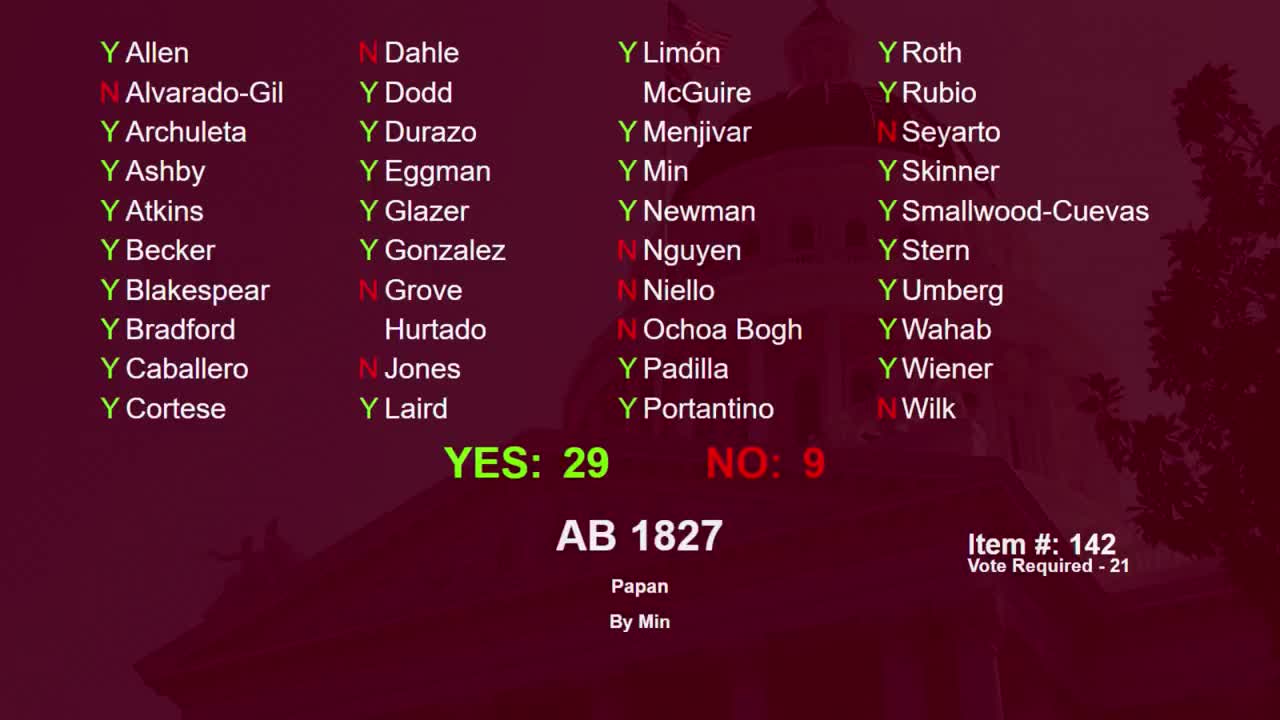 2MIN
Senate Floor
 1MIN
Senate Standing Committee on Environmental Quality
 8MIN
Senate Standing Committee on Energy, Utilities and Communications
 1MIN
Assembly Floor
Bill Author

Bill Co-Author(s):