AB 1956: Victim services.
- Session Year: 2023-2024
- House: Assembly
- Latest Version Date: 2024-03-04
Current Status:
Failed
(2024-05-16: In committee: Held under submission.)
Introduced
In Committee
First Chamber
In Committee
Second Chamber
Enacted
Existing federal law, the Victims of Crime Act of 1984, creates the Crime Victims Fund and authorizes federal financial assistance to states for the purpose of supporting eligible crime victim assistance programs. Existing law creates various programs under the Office of Emergency Services related to crime prevention and education, including, among other things, programs concerning family violence prevention and domestic violence prevention.
This bill would require the office to allocate funds, upon appropriation by the Legislature, to fill the gap in the federal Victims of Crime Act funding and to prioritize continuity and stability of crime victim services if the federal grant funding that is awarded to the office is 10% or more lower than the amount awarded in the prior year. The bill would require the office to regularly consult, collaborate with, and consider the recommendations regarding allocation of funding from the Victims of Crime Act Steering Committee.
The Legislature finds and declares all of the following:
(a)The Victims of Crime Act (VOCA), through the Crime Victims Fund, is the largest federal funding source for victim service providers. VOCA funds essential services that crime victims need access to, such as rape crisis centers, domestic violence shelters, child abuse programs, court appointed special advocates, legal assistance, human trafficking services, and more. more services.
(b)In California, the Office of Emergency Services currently administers these federal funds to nonprofits, tribal, and governmental entities across California.
(c)In the 202122 fiscal year, these funds supported all of the following:
(1)A range of housing options for domestic violence survivors and their children, including 354,227 emergency shelter nights, transitional housing for 180,628 individuals, and support for another 6,882 individuals with housing services through a Housing First approach that connects individuals and families experiencing homelessness quickly and successfully to permanent housing.
(2)Services for 46,461 individuals experiencing sexual violence through Californias rape crisis centers.
(3)Culturally appropriate victim services for 42,184 unserved and underserved survivors of crime and 4,333 child and youth survivors of crime from unserved and underserved communities, and 866 culturally rooted therapy sessions provided to Native American children victimized by abuse or neglect.
(4)Comprehensive services to 15,156 elder abuse victims.
(5)Services for child abuse and neglect survivors, including 1,133 individual counseling sessions provided to children who are victims of sexual abuse or sexual exploitation, advocacy or accompaniment for 8,649 foster youth through the Court Appointed Special Advocate program, comprehensive psychotherapy services for 14,732 children victimized by abuse or neglect and their family members and caregivers, support for 16,636 child abuse survivors and their families through victim-centered, trauma-informed forensic interviews, advocacy, direct or referral to therapy or counseling, and referrals for medical exams.
(6)Comprehensive services for 1,138 human trafficking survivors.
(7)Distribution of information about the criminal justice process to 275,270 people.
(d)Due to shifting prosecution styles, the Crime Victims Fund has slowly depleted over the past decade, jeopardizing funding for local direct service providers.
SEC. 2.Section 13823.18 is added to the Penal Code, to read:13823.18.(a)The purpose of this section is to provide for the development, support, and continuity of victim services programs, provide trauma-informed, high-quality services for victims of crime, and to stabilize funding and support for victim services programs by supplementing federal funding for victim services programs when the federal Victims of Crime Act funding fluctuates.
(b)(1)If the grant funding from the federal Victims of Crime Act that is awarded to the Office of Emergency Services is 10 percent or more lower than the amount awarded the prior year, the office shall allocate funds, upon appropriation by the Legislature, to fill the gap in the federal Victims of Crime Act funding and to prioritize continuity and stability of crime victim services in the state.
(2)Funds for the victim services programs provided in accordance with this section shall be used to supplement, not supplant, funds that the programs receive from other sources.
(3)The office shall ensure that the funds awarded under this section are administered in a unified process with the federal Victims of Crime Act funds.
(4)The programs that receive funding from the office shall provide services to victims of crime as authorized by the federal Victims of Crime Act and related regulations.
(c)The office shall regularly consult, collaborate with, and consider the recommendations regarding the allocation of funding from the Victims of Crime Act Steering Committee.
REVISIONS: HeadingLines 2, 3, and 4.The Legislature finds and declares all of the following:
(a)The Victims of Crime Act (VOCA), through the Crime Victims Fund, is the largest federal funding source for victim service providers. VOCA funds essential services that crime victims need access to, such as rape crisis centers, domestic violence shelters, child abuse programs, court appointed special advocates, legal assistance, human trafficking services, and more.
(b)In California, the Office of Emergency Services currently administers these federal funds to nonprofits, tribal, and governmental entities across California.
(c)In the 202122 fiscal year, these funds supported all of the following:
(1)A range of housing options for domestic violence survivors and their children, including 354,227 emergency shelter nights, transitional housing for 180,628 individuals, and support for another 6,882 individuals with housing services through a Housing First approach that connects individuals and families experiencing homelessness quickly and successfully to permanent housing.
(2)Services for 46,461 individuals experiencing sexual violence through Californias rape crisis centers.
(3)Culturally appropriate victim services for 42,184 unserved and underserved survivors of crime and 4,333 child and youth survivors of crime from unserved and underserved communities, and 866 culturally rooted therapy sessions provided to Native American children victimized by abuse or neglect.
(4)Comprehensive services to 15,156 elder abuse victims.
(5)Services for child abuse and neglect survivors, including 1,133 individual counseling sessions provided to children who are victims of sexual abuse or sexual exploitation, advocacy or accompaniment for 8,649 foster youth through the Court Appointed Special Advocate program, comprehensive psychotherapy services for 14,732 children victimized by abuse or neglect and their family members and caregivers, support for 16,636 child abuse survivors and their families through victim-centered, trauma-informed forensic interviews, advocacy, direct or referral to therapy or counseling, and referrals for medical exams.
(6)Comprehensive services for 1,138 human trafficking survivors.
(7)Distribution of information about the criminal justice process to 275,270 people.
(d)Due to shifting prosecution styles, the Crime Victims Fund has slowly depleted over the past decade, jeopardizing funding for local direct service providers.
SEC. 2.Section 13823.18 is added to the Penal Code, to read:13823.18.(a)The purpose of this section is to provide for the development, support, and continuity of victim services programs, provide trauma-informed, high-quality services for victims of crime, and to stabilize funding and support for victim services programs by supplementing federal funding for victim services programs when the federal Victims of Crime Act funding fluctuates.
(b)(1)If the grant funding from the federal Victims of Crime Act that is awarded to the Office of Emergency Services is 10 percent or more lower than the amount awarded the prior year, the office shall allocate funds, upon appropriation by the Legislature, to fill the gap in the federal Victims of Crime Act funding and to prioritize continuity and stability of crime victim services in the state.
(2)Funds for the victim services programs provided in accordance with this section shall be used to supplement, not supplant, funds that the programs receive from other sources.
(3)The office shall ensure that the funds awarded under this section are administered in a unified process with the federal Victims of Crime Act funds.
(4)The programs that receive funding from the office shall provide services to victims of crime as authorized by the federal Victims of Crime Act and related regulations.
(c)The office shall regularly consult, collaborate with, and consider the recommendations regarding the allocation of funding from the Victims of Crime Act Steering Committee.
|
Date
|
Status
|
|---|---|
| May 16, 2024 | In committee: Held under submission. |
| May 16, 2024 | Coauthors revised. |
| Apr 10, 2024 | In committee: Set, first hearing. Referred to APPR. suspense file. |
| Mar 12, 2024 | From committee: Do pass and re-refer to Com. on APPR. (Ayes 8. Noes 0.) (March 12). Re-referred to Com. on APPR. |
| Mar 6, 2024 | Re-referred to Com. on PUB. S. |
| Mar 4, 2024 | From committee chair, with author's amendments: Amend, and re-refer to Com. on PUB. S. Read second time and amended. |
| Feb 12, 2024 | Referred to Com. on PUB. S. |
| Jan 30, 2024 | From printer. May be heard in committee February 29. |
| Jan 29, 2024 | Read first time. To print. |
|
Date
|
Description
|
Location
|
Votes
|
|
|---|---|---|---|---|
| Mar 12, 2024 | Do pass and be re-referred to the Committee on [Appropriations] | Assembly Standing Committee on Public Safety |
Passed |
This list shows positions taken on this bill by organizations on the date displayed, which is linked to the original source.
Positions by individuals are not included.
|
Organization
|
Position
|
Date
|
|---|---|---|
| 3strands global foundation | ** Support | |
| Asian Americans Advancing Justice Southern California | ** Support | |
| Asian Women's Shelter | ** Support | |
| Beloved Survivors Trauma Recovery Center | ** Support | |
| Bet Tzedek Legal Services | ** Support | |
| Bill Wilson Center | ** Support | |
| Calico Center | ** Support | |
| California Advocates for Nursing Home Reform | ** Support | |
| California Coalition For Youth | ** Support | |
| California District Attorneys Association | ** Support | |
| California Elder Justice Coalition | ** Support | |
| Californians for Safety and Justice | ** Support | |
| Californians United for a Responsible Budget | ** Support | |
| California Partnership To End Domestic Violence | ** Support | |
| California State Association Of Counties | ** Support | |
| California State Sheriffs' Association | ** Support | |
| Catalyst Domestic Violence Services | ** Support | |
| Center for Community Solutions | ** Support | |
| Center for Domestic Peace | ** Support | |
| Central California Family Crisis Center, Inc. | ** Support | |
| Child Guidance Center, INC. | ** Support | |
| Children's Advocacy Centers of California | ** Support | |
| Children's Assessment Center | ** Support | |
| Children's Legacy Center | ** Support | |
| City of Kerman, CA | ** Support | |
| Coalition to Abolish Slavery & Trafficking | ** Support | |
| Community Resource Center | ** Support | |
| Community Solutions | ** Support | |
| Contra Costa Senior Legal Services | ** Support | |
| County of Fresno | ** Support | |
| County Of Kern | ** Support | |
| County Of Kings | ** Support | |
| County of Santa Clara | ** Support | |
| Crime Victims Alliance | ** Support | |
| Culturally Responsive Domestic Violence Network | ** Support | |
| Debt Free Justice California | ** Support | |
| Downtown Women's Center | ** Support | |
| Empower Yolo | ** Support | |
| Family Assistance Program | ** Support | |
| Family Healing Center | ** Support | |
| Family Violence Appellate Project | ** Support | |
| Family Violence Law Center | ** Support | |
| Free to Thrive | ** Support | |
| Friends Committee On Legislation Of California | ** Support | |
| Futures Without Violence | ** Support | |
| Glendale Ywca | ** Support | |
| Haven Hills, INC. | ** Support | |
| Healthy Alternatives to Violent Environments | ** Support | |
| House of Ruth, INC. | ** Support | |
| Human Options, Inc. | ** Support | |
| Humboldt Domestic Violence Services | ** Support | |
| Initiate Justice | ** Support | |
| Interface Children & Family Services | ** Support | |
| Jenesse Center, Inc. | ** Support | |
| Jewish Family Service of Los Angeles | ** Support | |
| Korean American Family Services, INC. | ** Support | |
| LA Defensa | ** Support | |
| Lassen Family Services, Inc. | ** Support | |
| Laura's House | ** Support | |
| Law Foundation of Silicon Valley | ** Support | |
| Legal Aid Association Of California | ** Support | |
| Legal Aid of Marin | ** Support | |
| Live Violence Free | ** Support | |
| Los Angeles Center for Law and Justice | ** Support | |
| Los Angeles County District Attorney'S Office | ** Support | |
| Los Angeles LGBT Center | ** Support | |
| Lumina Alliance | ** Support | |
| Madera County | ** Support | |
| marjaree mason center | ** Support | |
| Modoc County Victim Services | ** Support | |
| Modoc Crisis Center | ** Support | |
| Napa County District Attorney's Office | ** Support | |
| Neighborhood Legal Services of Los Angeles County | ** Support | |
| Next Door Solutions to Domestic Violence | ** Support | |
| Partners Against Violence | ** Support | |
| Partners Against Violence, INC. | ** Support | |
| Prevail | ** Support | |
| Prosecutors Alliance of California, a Project of Tides Advocacy | ** Support | |
| Public Law Center | ** Support | |
| Rady Children's Hospital | ** Support | |
| Rainbow Services, Ltd. | ** Support | |
| Rape Trauma Services: a Center for Healing and Violence Prevention | ** Support | |
| Rural County Representatives of California | ** Support | |
| Sacramento LGBT Community Center | ** Support | |
| Safe Alternatives to Violent Environments | ** Support | |
| San Francisco Domestic Violence Consortium | ** Support | |
| San Francisco Public Defender | ** Support | |
| San Luis Obispo County Child Abuse Prevention Council Dba: Center for Family Strenghtening | ** Support | |
| Senior Advocacy Network-senior Law Project | ** Support | |
| Sheedy Consulting, LLC | ** Support | |
| Siskiyou Domestic Violence & Crisis Center | ** Support | |
| Smart Justice California, a project of Tides Advocacy | ** Support | |
| Standing Together to End Sexual Assault | ** Support | |
| Stand Up Placer INC. | ** Support | |
| Stanislaus Family Justice Center | ** Support | |
| strong hearted native women's coalition, inc. | ** Support | |
| The Children's Advocacy Center for Child Abuse Assessment and Treatment | ** Support | |
| The Lgbt Center Long Beach | ** Support | |
| The People Concern | ** Support | |
| The University Corporation Dba Strength United | ** Support | |
| Urban Counties of California | ** Support | |
| Valorcalifornia / Valorus | ** Support | |
| Valorus | ** Support | |
| Ventura County Office of the District Attorney | ** Support | |
| Victims Empowerment Support Team | ** Support | |
| Waymakers | ** Support | |
| WEAVE | ** Support | |
| Wild Iris Family Counseling & Crisis Center | ** Support | |
| Woman INC | ** Support | |
| Women’s & Children’s Crisis Shelter INC. | ** Support | |
| Women's Transitional Living Center, INC. | ** Support | |
| Yolo County District Attorney | ** Support | |
| Yolo County Mdic | ** Support | |
| Ywca Golden Gate Silicon Valley | ** Support | |
| Ywca Monterey County | ** Support |
Date of Hearing: April 10, 2024
ASSEMBLY COMMITTEE ON APPROPRIATIONS
Buffy Wicks, Chair
ABPCA Bill Id:AB 1956
Author:(Reyes) – As Amended Ver:March 4, 2024
Policy Committee: | Public Safety | Vote: | 8 - 0 |
|
| ||
|
|
Urgency: No State Mandated Local Program: No Reimbursable: No
SUMMARY:
If grant funding provided to the state under the federal Victims of Crime Act (VOCA) is 10% or more lower than the amount awarded the prior year, this bill requires the California Office of Emergency Services (CalOES) to, upon appropriation, allocate funds to fill in the funding gap.
FISCAL EFFECT:
Unknown, significant costs (General Fund) to backfill decreases in federal grant distributions. Actual General Fund costs will depend on the amount of VOCA funding provided to the state each year. CalOES reports the state received approximately $154 million in VOCA funding in fiscal year (FY) 2023-24, and anticipates $87.5 million in VOCA funding in FY 2024-25. If this bill is chaptered and the Legislature appropriates funding to make up this 43% decrease in VOCA funding projected by CalOES, the cost to the General Fund would be $66.5 million. Future VOCA funding cannot be predicted with certainty, but if it continues to decline and the Legislature authorizes appropriations to fill the gap, this bill may result in ongoing General Fund costs in the tens of millions of dollars annually.
According to the Legislative Analyst’s Office, the General Fund faces a structural deficit in the tens of billions of dollars over the next several fiscal years.
COMMENTS:
- Purpose. According to the author:
Especially given our budgetary constraints, how we prioritize spending in California is a reflection of our values. The current short fall in federal funding through the Victims of Crime Act and the associated Crime Victims Fund, puts critical programing and services that impact survivors of domestic violence, sexual assault, human trafficking and child abuse at risk…States like Maryland have adopted similar legislation to ensure the safety and well-being of these survivors.
- Background. Federal criminal fines and penalties are collected in the United States Crime Victim Fund (the Fund). Under VOCA, the federal government provides formula-based and discretionary grants from the Fund for qualifying state victim compensation and victim assistance programs. To maintain the Fund’s stability, Congress places annual caps on the amount of money in the Fund that is available for distribution. From 2000 to 2018, the annual cap has varied from $500 million to $4 billion. The cap was set at $2.015 billion in 2021, $2.6 billion in 2022, and $1.9 billion in 2023. In 2021, Congress authorized redirection of recoveries from federal deferred prosecutions and non-prosecutions agreements into the Fund. However, due to declining deposits and uncertainty about the long-term stability of the Fund, VOCA funding provided to the states is expected to significantly decline in coming years, with some projections estimating a 40% reduction in grant funds. CalOES notes that VOCA funding has historically fluctuated frequently, which makes it challenging to provide consistent funding for state victims services. In California, VOCA funds are distributed by CalOES to provide financial assistance and reimbursement to victims, and to support a variety of county agencies and community-based organizations that provide crisis counseling, shelters, sexual assault response teams, victim legal services, and many other programs.
Analysis Prepared by: Annika Carlson / APPR. / (916) 319-2081
Date of Hearing: March 12, 2024
Counsel: Liah Burnley
ASSEMBLY COMMITTEE ON
Kevin McCarty, Chair
ABPCA Bill Id:
Author:() – As Ver:
SUMMARY:
Requires, if the grant funding from the federal Victims of Crime Act (VOCA) awarded to the Office of Emergency Services (CalOES) is 10% lower than the amount awarded the prior year, CalOES to allocate funds, upon appropriation by the Legislature, to fill the gap. Specifically, this bill:
- Requires CalOES to allocate funds to victim services, upon appropriation by the Legislature, if VOCA funding falls below 10% of the amount awarded in the previous year.
- States that the funds must be used to supplement, not supplant, funds that the victim assistance programs receive from other sources.
- Requires CalOES to ensure that the funds are administered in a unified process with VOCA funds.
- Provides that programs that receive funding from CalOES shall provide services to victims of crime as authorized by VOCA and related regulations.
- Requires CalOES to regularly consult, collaborate with, and consider the recommendations regarding the allocation of funding from the VOCA Steering Committee.
- States that the purpose of these provisions is to provide for the development, support, and continuity of victim services programs, provide trauma-informed, high-quality services for victims of crime, and to stabilize funding and support for victim services programs by supplementing federal funding for victim services programs when VOCA funding fluctuates.
- Makes Legislative findings and declarations.
EXISTING FEDERAL LAW:
- Establishes the Office for Victims of Crime (OVC) in the United States Department of Justice. (34 U.S.C. § 20111.)
- Enacts the Victims of Crime Act of 1984 (VOCA) which established the Crime Victims Fund from fines and fees collected from persons convicted of federal crimes. (34 U.S.C. § 20101.)
- Requires the OVC to administer the Crime Victims Fund. (34 U.S.C. § 20111.)
- Requires specified amounts in the Crime Victims Fund to be allocated each fiscal year for grants to states for eligible victim compensation and victim assistance programs. (34 U.S.C., §§ 20102, 20103, 20107 & 20108.)
- Requires states to certify that grants will not be used to supplant state funds otherwise available to provide crime victim compensation. (34 U.S.C. § 20103.)
EXISTING STATE LAW:
- Establishes CalOES within the office of the Governor. (Gov. Code, § 8585.)
- Transfers the responsibilities of the now-defunct Office of Criminal Justice Planning to CalOES. (Pen. Code, § 13820.)
- Establishes a Victim-Witness Assistance Fund in the State Treasury and provides that the funds appropriated thereto shall be dispensed to CalOES exclusively for services that supports victims and witness of crime. (Pen. Code, § 1385.7.)
- Establishes the Spousal Abuser Prosecution Program in the Department of Justice (DOJ) to administer financial and technical assistance to prosecutor’s offices and encourages the DOJ to utilize VOCA funds to implement the program. (Pen. Code, §§ 273.81 & 273.87.)
FISCAL EFFECT:
Unknown
COMMENTS:
- Author's Statement: According to the author, “Especially given our budgetary constraints, how we prioritize spending in California is a reflection of our values. The current short fall in federal funding through the Victims of Crime Act and the associated Crime Victims Fund, puts critical programing and services that impact survivors of domestic violence, sexual assault, human trafficking and child abuse at risk. AB 1956 requires the Legislature, upon appropriation, to fill the gap in federal funding when a reduction is 10% or more lower than the amount awarded the previous year. States like Maryland have adopted similar legislation to ensure the safety and well-being of these survivors.”
- The Crime Victims Fund: The federal VOCA established the Crime Victims Fund, which has become a major funding source for crime victim services throughout the nation. (34 U.S.C. § 20101.) Federal criminal fines, forfeitures, and special assessments on federal convictions primarily fund the Crime Victims Fund. The federal OVC administers the fund and disburses monies to the states through formula-based and discretionary grants. (CalOES, Victim Services in California: A Recommendation for Combining the State’s Victims’ Programs, (2018). Available at: <https://www.caloes.ca.gov/wp-content/uploads/Grants/Documents/Consolidation-Report-2018.pdf> [as of Feb. 28, 2024].)
Congress places annual caps on funds available for distribution. These annual caps are intended to maintain the Crime Victims Fund as a stable source of support for future victim services. From 2000 to 2018, the amount of the annual cap varied from $500 million to $4 billion. The cap was set at $2.015 billion in 2021, $2.6 billion in 2022, and $1.9 billion in 2023. Allocations from the Crime Victim Fund vary by state and are determined by several factors, starting with the obligation cap set by Congress. The annual cap set by Congress has a direct impact on the allocation process. For example, trend data indicates state victim assistance grant allocations fluctuate correspondingly to the cap. (OVC, FY 2007 – FY 2023 State Victim Assistance Formula Allocations, (April 2023). Available at: <https://ovc.ojp.gov/about/crime-victims-fund/state-victim-assistance-allocations.pdf> [as of Feb. 28, 2024].)
Federal statute sets forth the allocation process of VOCA funds as follows:
- Congress establishes the annual funding cap.
- First, 5% percent of the fund is allocated to tribal victim services.
- Next, a maximum of $20 million is distributed from the fund pursuant to the federal Children’s Justice Act.
- Then, federal prosecutors and the FBI receive funding to support victim-witness coordination.
- Finally, OVC awards grants to states, which are comprised of the 5% remaining in funds: From this amount, OVC awards 47.5 percent of the remaining balance to states for reimbursement for victim compensation programs; and OVC then awards victim assistance grants to states, which consist of the remaining 45.7% of the balance plus any funds not needed to reimburse states for victim compensation programs.
(34 U.S.C. § 20102; see also OVC, Crime Victims Fund, (Feb. 2024). Available at: <https://ovc.ojp.gov/about/crime-victims-fund#allocation-process> [as of Feb. 28, 2024].) OVC administers two different victim grant programs to the states from the Crime Victims Fund: victim compensation and victim assistance. While the federal government allocates grant funds evenly between victim compensation (47.5%) and victim assistance (47.5%), each half is distributed differently. (CalOES, supra, Victim Services in California: A Recommendation for Combining the State’s Victims’ Programs, (2018).)
Victim compensation grants provide funding to supplement state victim compensation programs that provide financial assistance and reimbursement to victims for crime-related out-of-pocket expenses, including medical and dental care, counseling, funeral and burial expenses, and lost wages and income. OVC makes annual grants from the Crime Victims Fund to eligible crime victim compensation programs totaling 75% of the amount the state paid out in eligible victim compensation claims during the preceding fiscal year. For example, in 2021, California reported a payout of $34,327,958 for crime victim compensation, accordingly, the California Victim Compensation Board received $25,746,000 from the Crime Victim Fund in 2023 for victim compensation grant award. (OVC, Formula Grants (May 2023). Available at: <https://ovc.ojp.gov/funding/types-of-funding/formula-grants> [as of Feb. 28, 2024]; see also. OVC, OVC Formula Chart: FY 2023 Crime Victims Fund Compensation Allocation. Available at: <https://ovc.ojp.gov/funding/fy-2023-voca-compensation-allocation.pdf> [as of Feb. 28, 2024].)
Victim assistance grants support victim assistance programs. States provide subgrants to local community-based organizations and public agencies that provide services directly to victims, such as crisis counseling, shelter, therapy, and training of victim service advocates. Federal victim assistance funds cannot be used to supplant state and local public funds that would otherwise be available for crime victim assistance or for administering the state victim assistance program. (34 U.S.C. §§ 20103, subd. (a)(2) & 20110, subd. (h).) Each state grantee receives a base amount of $500,000. Any remaining funds are distributed to each state, based on the state’s population in relation to all other states, as determined by current census data. Applications for grants must be by the state agency designated by the Governor to administer the victim compensation and assistance program. (OVC, Formula Grants (May 2023). Available at: <https://ovc.ojp.gov/funding/types-of-funding/formula-grants> [as of Feb. 28, 2024].)
Programs that receive victim assistance grants are required to submit an annual state performance report to OVC which includes information on all grants active during the fiscal year. (OVC, supra, FY 2007 – FY 2023 State Victim Assistance Formula Allocations, (April 2023)].) A number of local and statewide victim service programs in California receive victim assistance grants. Victim assistance funds are typically competitively awarded by the State of California to local community-based organizations that provide direct services to crime victims. In 2023, California received $153,789,867 for victim assistance. (OVC, OVC FY 2023 VOCA Victim Assistance Formula Grant, (Aug. 2023). Available at: <https://ovc.ojp.gov/funding/awards/15povc-23-gg-00432-assi> [as of Feb. 28, 2024]; see also, OVC, OVC Formula Chart: FY 2023 Crime Victims Fund Assistance Allocation. Available at: <https://ovc.ojp.gov/funding/fy-2023-voca-assistance-allocation.pdf> [as of Feb. 28, 2024].)
Among many other responsibilities, CalOES administers the VOCA victim assistance grant program. CalOES must apply for this program annually. (OVC, Crime Victims Fund, (Feb. 2023). Available at: <https://ovc.ojp.gov/about/crime-victims-fund> [as of Feb. 28, 2024]; see also, CalOES, Joint Legislative Budget Committee Report, Grants Management Victim Services Programs, (2023). Available at: <https://www.caloes.ca.gov/wp-content/uploads/Grants/Documents/2023_JLBC.pdf> [as of Feb. 28, 2024].)
This bill would require CalOES to allocate additional state funds, upon appropriation by the Legislature, to victim assistance services, if funding from the federal government awarded to CalOES is 10% or lower than the prior year.
- Anticipated Reductions in Federal VOCA Funds: This bill states that its purpose is to provide for the development, support, and continuity of victim services programs, provide trauma-informed, high-quality services for victims of crime, and to stabilize funding and support for victim services programs by supplementing federal funding for victim services programs when the federal VOCA funding fluctuates.
According to background materials from the author, “current law does not indicate any state responsibility to step in should federal funds dip below sustainable levels. […] Currently, programs are only able to sustain about a 10% cut in funding.” Although the State provides some level of funding for victims’ services, federal funds authorized by VOCA is a major source of funding. (CalOES, supra, Victim Services in California: A Recommendation for Combining the State’s Victims’ Programs, (2018).)
California is dependent on federal funding to provide its broad array of services to crime victims and survivors throughout the state. CalOES balances a number of unpredictable, sometimes volatile, sources of federal and state funding in order to provide steady support to local victim service providers. However, VOCA funding is subject to change and it can, and has, changed substantially from year to year. (CalOES, supra, Victim Services in California: A Recommendation for Combining the State’s Victims’ Programs, (2018).)
For example, the VOCA distribution cap increased more than six-fold from $705 million from 2011 to $4.4 billion in 2018. The significant increase in the cap resulted in unprecedented growth in victim assistance programs around the country. However, recent proposals regarding cuts to the fund would lead to considerable shortfalls. (CalOES, supra, Victim Services in California: A Recommendation for Combining the State’s Victims’ Programs, (2018).)
In 2021, Congress passed the VOCA Fix Act, which allows monetary recoveries from federal deferred prosecutions and non-prosecution agreements to replenish the balance of the Crime Victims Fund. However, the VOCA Fix Act has proven to be insufficient. (National Association of Attorneys General (NAAG), Letter to Congress, Re: Support Bridge Funding for VOCA Fund, (Feb. 6, 2024). Available at: <https://www.naag.org/wp-content/uploads/2024/02/VOCA-Funding-_-Finale.pdf> [as of Feb. 28, 2024]; see also, NAAG, 56 Attorneys General Urge Congress to Adopt Key Changes to VOCA, (Aug. 4, 2020). Available at: <https://www.naag.org/press-releases/56-attorneys-general-urge-congress-to-adopt-key-changes-to-the-victims-ofcrime-act-voca/> [as of Feb. 28, 2024].)
Based on the current balance of the Crime Victim Fund and the appropriations bills under consideration in Congress, the United States Department of Justice’s Office for Victims of Crime estimates that, as compared to 2023 funding, the 2024 funding for victim services grants will be 41 percent lower. Nationwide, the anticipated below-average deposits into the VOCA Fund place the projected fiscal year 2024 awards at $700 million below fiscal year 2023 amounts. (United States Department of Justice, Summary of Requirements for Office of Justice Programs, Available at: <https://www.justice.gov/d9/2023- 03/3._ojp_fy_24_pb_technical_exhibits_mandatory_accounts_final_to_jmd_cleared_3.17.23.pdf> [as of Feb. 28, 2024]; see also, OVC, FY 2004 – FY 2024 Crime Victims Fund End of Year Balance ($ millions) Available at: <https://ovc.ojp.gov/about/crime-victims-fund/fy-2007-2024-cvf-balance.pdf> [as of Feb. 28, 2024].)
Additionally, California is anticipating a reduction in VOCA funding to the state of around $170 million, or approximately 40% due to projected cuts in federal funding. However, the most recent state budget proposal does not include support for crime victim services that are facing gaps in essential federal funding. (California Budget and Policy Center, First Look: Understanding the Governor’s 2024-25 State Budget Proposal, (Jan. 2024). Available at: <https://calbudgetcenter. org/resources/first-look-understanding-the-governors-2024-25-state-budget-proposal/> [as of Feb. 28, 2024]; see also, Governors 2024-25 Budget, Office of Emergency Services Program 0385 – Victim Services, Local Assistance. Available at: <https://ebudget.ca.gov/2024-25/pdf/GovernorsBudget/0010/0690_fig2f.pdf> [as of Feb. 28, 2024].)
This bill would provide that if grant funding from VOCA awarded to CalOES is 10% lower than the amount awarded the prior year, the office shall allocate funds to fill the gap. This obligation would be contingent upon an appropriation by the Legislature. Consistent with federal law, this bill would prohibit funds for the victim services provided by the state to fill the gap from being used to supplant funds received from VOCA and other sources. The funds must be administered in accordance with the VOCA requirements and the corresponding federal regulations.
- VOCA Steering Committee: This bill would require CalOES to regularly consult, collaborate with, and consider recommendations regarding the allocation of funding with the VOCA Steering Committee. The VOCA Steering Committee was established by CalOES to identify additional victim service needs, including training needs for those who work with crime victims, and to assist CalOES in developing a strategic plan for victim assistance in California. The VOCA Steering Committee also has the responsibility of receiving comments and testimony from the public and to provide advice on the distribution of grants. (CalOES, Task Forces, Committee & Councils Available at: <https://www.caloes.ca.gov/office-of-the-director/policy-administration/finance-administration/grants-management/victim-services/task-forces-committee-councils/> [as of Feb. 28, 2024]; see also, Assembly Public Safety Analysis for AB 2177 (Maienschein), of the 2015-2016 Legislative Session.)
- Argument in Support: According to VALORUS, a sponsor of this bill, “VOCA, through the Crime Victims Fund, is the largest federal funding source for victim service providers. VOCA funds essential services for crime victims, such as rape crisis centers, domestic violence shelters, child abuse programs, court appointed special advocates, legal assistance, human trafficking services, and more. VOCA is at the center of California’s response to supporting victims of crime, supporting nearly 400 organizations that provide counseling, housing services, crisis response, and direct legal services, along with a range of other responses to address trauma and support their healing. Due to shifting prosecution styles, the Crime Victims Fund has slowly depleted over the past decade, jeopardizing funding for local direct service providers.
“VALOR is a California-based, national anti-sexual violence organization and California’s sexual assault coalition. We represent the 84 rape crisis center programs across the state who serve survivors of sexual violence and support them through their unique healing and recovery journeys. In FY21-22, California rape crisis centers served 46,461 survivors of sexual violence.
“California rape crisis centers heavily rely on federal crime victim services funding and with these steep anticipated cuts, survivors of sexual violence, especially those in rural and low-income communities, will feel the disproportionate impacts of this gap in funding. Should the State not pass AB 1956, rape crisis centers will have to look at turning survivors away when they are showing up in the midst of trauma to receive services, increase wait times to access counseling, or sever ties with community-based partners who support survivors of sexual assault.
“Cuts to service providers across California have already begun and will continue until action is taken. Should the State not step in to support these services, thousands of survivors needs will go unmet, they will face increased wait times and fewer available services, many service providers will be forced to lay off staff and some will be forced to close their doors entirely. The reductions put survivor’s safety and well-being at risk who deserve consistent, reliable access to healing services.”
- Prior Legislation:
- AB 502 (Waldron), of the 2017-2018 Legislative Session, would have created and allocated VOCA funds to the San Diego County Elder or Dependent Adult Financial Abuse Crime Victim Compensation Pilot Program. AB 502 was held under submission in Assembly Appropriations Committee.
- AB 1754 (Waldron), of the 2015-2016 Legislative Session, was substantially similar to AB 502. AB 1754 was held under submission in Senate Appropriations Committee.
- AB 2177 (Maienschein), of the 2015-2016 Legislative Session, would have established a Victims of Crime Act Funding Advisory Committee within OES to make recommendations regarding the distribution of VOCA funds. AB 2177 was vetoed.
- AB 502 (Waldron), of the 2017-2018 Legislative Session, would have created and allocated VOCA funds to the San Diego County Elder or Dependent Adult Financial Abuse Crime Victim Compensation Pilot Program. AB 502 was held under submission in Assembly Appropriations Committee.
REGISTERED SUPPORT / OPPOSITION:
Support
3strands Global Foundation
Asian Americans Advancing Justice Southern California
Asian Women's Shelter
Beloved Survivors Trauma Recovery Center
Bet Tzedek Legal Services
Bill Wilson Center
Calico Center
California Advocates for Nursing Home Reform
California Coalition for Youth
California District Attorneys Association
California Elder Justice Coalition (CEJC)
California Partnership to End Domestic Violence
California State Association of Counties (CSAC)
California State Sheriffs' Association
Californians for Safety and Justice
Californians United for A Responsible Budget
Catalyst Domestic Violence Services
Center for Community Solutions
Center for Domestic Peace
Central California Family Crisis Center, INC.
Child Guidance Center, INC.
Children's Advocacy Centers of California
Children's Assessment Center
Children's Legacy Center
City of Kerman, CA
Coalition to Abolish Slavery & Trafficking (CAST)
Community Resource Center
Community Solutions
Contra Costa Senior Legal Services
County of Fresno
County of Kern
County of Kings
County of Santa Clara
Crime Victims Alliance
Culturally Responsive Domestic Violence Network (CRDVN)
Debt Free Justice California
Downtown Women's Center
Empower Yolo
Family Assistance Program
Family Healing Center
Family Violence Appellate Project
Family Violence Law Center
Free to Thrive
Friends Committee on Legislation of California
Futures Without Violence (UNREG)
Glendale Ywca
Haven Hills, INC.
Healthy Alternatives to Violent Environments
House of Ruth, INC.
Human Options, INC.
Humboldt Domestic Violence Services
Initiate Justice
Interface Children & Family Services
Jenesse Center, INC.
Jewish Family Service of Los Angeles (UNREG)
Korean American Family Services, INC (KFAM)
LA Defensa
Lassen Family Services, INC.
Laura's House
Law Foundation of Silicon Valley
Legal Aid Association of California
Legal Aid of Marin
Live Violence Free
Los Angeles Center for Law and Justice
Los Angeles County District Attorney's Office
Los Angeles Lgbt Center
Lumina Alliance
Madera County
Marjaree Mason Center
Modoc County Victim Services
Modoc Crisis Center
Napa County District Attorney's Office
Neighborhood Legal Services of Los Angeles County
News
Next Door Solutions to Domestic Violence
Partners Against Violence
Partners Against Violence, INC.
Prevail (formerly Women's Center - Youth & Family Services)
Prosecutors Alliance of California, a Project of Tides Advocacy
Public Law Center
Rady Children's Hospital
Rainbow Services, Ltd.
Rape Trauma Services: a Center for Healing and Violence Prevention
Rural County Representatives of California
Sacramento Lgbt Community Center
Safe Alternatives to Violent Environments
San Francisco Domestic Violence Consortium
San Francisco Public Defender
San Luis Obispo County Child Abuse Prevention Council Dba: Center for Family Strenghtening
Senior Advocacy Network-senior Law Project
Sheedy Consulting, LLC
Siskiyou Domestic Violence & Crisis Center
Smart Justice California, a Project of Tides Advocacy
Stand Up Placer INC.
Standing Together to End Sexual Assault
Stanislaus Family Justice Center
Strong Hearted Native Women's Coalition, INC.
The Children's Advocacy Center for Child Abuse Assessment and Treatment
The Lgbtq Center Long Beach
The People Concern
The University Corporation Dba Strength United
Urban Counties of California (UCC)
Valorcalifornia / Valorus
Valorus
Ventura County Office of The District Attorney
Victims Empowerment Support Team
Waymakers
Weave
Wild Iris Family Counseling & Crisis Center
Woman INC
Women's Transitional Living Center, INC.
Women’s & Children’s Crisis Shelter INC.
Yolo County District Attorney
Yolo County Mdic
Ywca Golden Gate Silicon Valley
Ywca Monterey County
15 Private Individuals
Opposition
None submitted.
Analysis Prepared by:
Discussed in Hearing
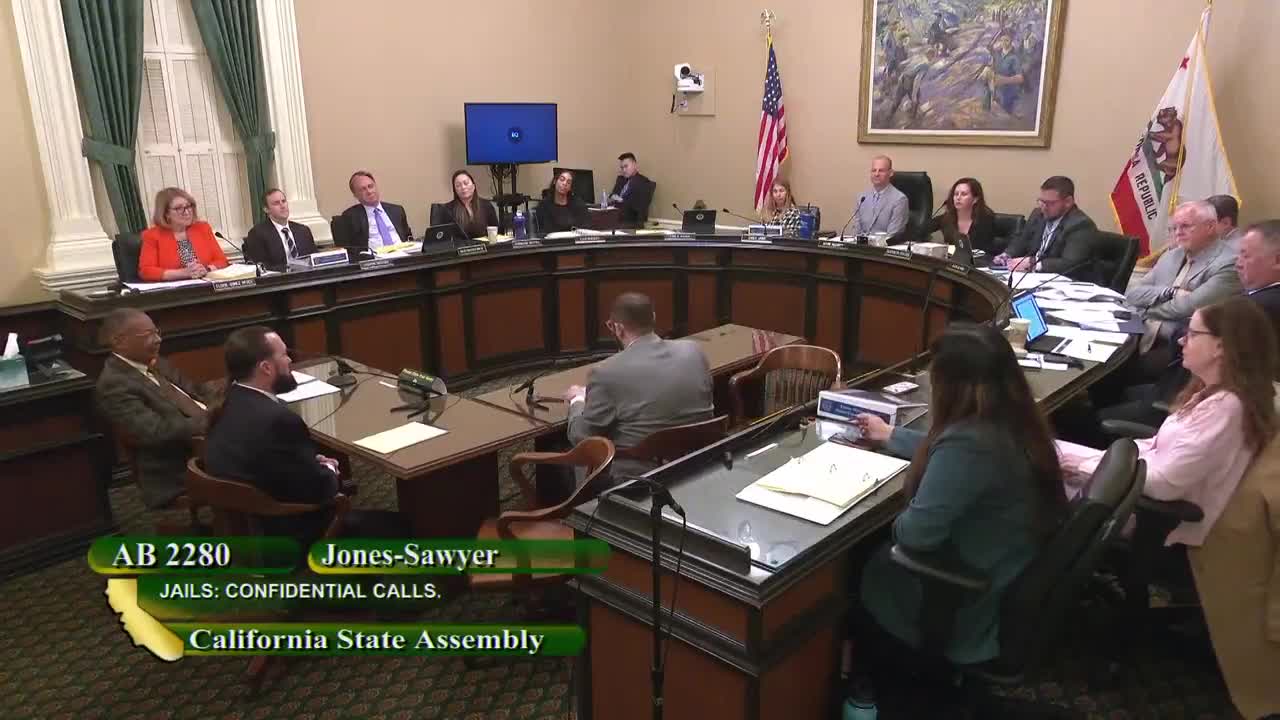 10MIN
Assembly Standing Committee on Public Safety
Bill Author

Bill Co-Author(s):