AB 1975: Medi-Cal: medically supportive food and nutrition interventions.
- Session Year: 2023-2024
- House: Assembly
- Latest Version Date: 2024-09-03
Current Status:
Failed
(2024-09-25: Vetoed by Governor.)
Introduced
In Committee
First Chamber
In Committee
Second Chamber
Enacted
Existing law establishes the Medi-Cal program, which is administered by the State Department of Health Care Services and under which qualified low-income individuals receive health care services. The Medi-Cal program is, in part, governed and funded by federal Medicaid program provisions.
Existing law requires the department to establish the Medically Tailored Meals Pilot Program and the Short-Term Medically Tailored Meals Intervention Services Program, to operate in specified counties and during limited periods for the purpose of providing medically tailored meal intervention services to eligible Medi-Cal beneficiaries with certain health conditions, including congestive heart failure, cancer, diabetes, chronic obstructive pulmonary disease, or renal disease.
Existing law, subject to implementation of the California Advancing and Innovating Medi-Cal (CalAIM) initiative, authorizes a Medi-Cal managed care plan to elect to cover community supports approved by the department as cost effective and medically appropriate in a comprehensive risk contract that are in lieu of applicable Medi-Cal state plan services. Under existing law, community supports that the department is authorized to approve include, among other things, medically supportive food and nutrition services, including medically tailored meals.
This bill would make medically supportive food and nutrition interventions a covered benefit under the Medi-Cal program, through both the fee-for-service and managed care delivery systems, no sooner than July 1, 2026, upon appropriation and subject to federal approval and the issuance of final guidance by the department. The bill would require those interventions to be covered if determined to be medically necessary by a health care provider or health care plan, as specified. The bill would require the provision of interventions for 12 weeks, or longer if deemed medically necessary.
The bill would require the department to define the qualifying medical conditions for covered interventions and delineate the services included in the definition of a medically supportive food and nutrition intervention. The bill would require a health care provider, to the extent possible, to match the acuity of a patients condition to the intensity and duration of the covered intervention and to include culturally appropriate foods.
The bill would require the department, upon appropriation, to establish a medically supportive food and nutrition benefit stakeholder group, with a specified composition, to advise the department on certain related items, such as the scope of the benefit, among others.
Existing law establishes the Medi-Cal program, which is administered by the State Department of Health Care Services and under which qualified low-income individuals receive health care services. The Medi-Cal program is, in part, governed and funded by federal Medicaid program provisions.
Existing law requires the department to establish the Medically Tailored Meals Pilot Program and the Short-Term Medically Tailored Meals Intervention Services Program, to operate in specified counties and during limited periods for the purpose of providing medically tailored meal intervention services to eligible Medi-Cal beneficiaries with certain health conditions, including congestive heart failure, cancer, diabetes, chronic obstructive pulmonary disease, or renal disease.
Existing law, subject to implementation of the California Advancing and Innovating Medi-Cal (CalAIM) initiative, authorizes a Medi-Cal managed care plan to elect to cover community supports approved by the department as cost effective and medically appropriate in a comprehensive risk contract that are in lieu of applicable Medi-Cal state plan services. Under existing law, community supports that the department is authorized to approve include, among other things, medically supportive food and nutrition services, including medically tailored meals.
This bill would make medically supportive food and nutrition interventions, as defined, interventions a covered benefit under the Medi-Cal program, through both the fee-for-service and managed care delivery systems, no sooner than July 1, 2026, upon appropriation and subject to federal approval and the issuance of final guidance by the department. The bill would require those interventions to be covered if determined to be medically necessary by a health care provider or health care plan, as specified. The bill would require the provision of interventions for 12 weeks, or longer if deemed medically necessary. The bill would require a Medi-Cal managed care plan to offer at least 3 of 6 listed interventions, with certain conditions for a 7th intervention.
The bill would require the department to define the qualifying medical conditions for purposes of the covered interventions. conditions for covered interventions and delineate the services included in the definition of a medically supportive food and nutrition intervention. The bill would require a health care provider, to the extent possible, to match the acuity of a patients condition to the intensity and duration of the covered intervention and to include culturally appropriate foods.
The bill would require the department, upon appropriation, to establish a medically supportive food and nutrition benefit stakeholder group, with a specified composition, to advise the department on certain related items. items, such as the scope of the benefit, among others.
Existing law establishes the Medi-Cal program, which is administered by the State Department of Health Care Services and under which qualified low-income individuals receive health care services. The Medi-Cal program is, in part, governed and funded by federal Medicaid program provisions.
Existing law requires the department to establish the Medically Tailored Meals Pilot Program and the Short-Term Medically Tailored Meals Intervention Services Program, to operate in specified counties and during limited periods for the purpose of providing medically tailored meal intervention services to eligible Medi-Cal beneficiaries with certain health conditions, including congestive heart failure, cancer, diabetes, chronic obstructive pulmonary disease, or renal disease.
Existing law, subject to implementation of the California Advancing and Innovating Medi-Cal (CalAIM) initiative, authorizes a Medi-Cal managed care plan to elect to cover community supports approved by the department as cost effective and medically appropriate in a comprehensive risk contract that are in lieu of applicable Medi-Cal state plan services. Under existing law, community supports that the department is authorized to approve include, among other things, medically supportive food and nutrition services, including medically tailored meals.
This bill would make medically supportive food and nutrition interventions, as defined, a covered benefit under the Medi-Cal program, through both the fee-for-service and managed care delivery systems, effective no sooner than July 1, 2026, upon appropriation and subject to federal approval and the issuance of final guidance by the department. The bill would require those interventions to be covered if determined to be medically necessary by a health care provider or health care plan, as specified. The bill would require the provision of interventions for 12 weeks, or longer if deemed medically necessary. The bill would require a Medi-Cal managed care plan to offer at least 3 of 6 listed interventions, with certain conditions for a 7th intervention.
The bill would require the department to define the qualifying medical conditions for purposes of the covered interventions. The bill would require a health care provider, to the extent possible, to match the acuity of a patients condition to the intensity and duration of the covered intervention and to include culturally appropriate foods.
The bill would require the department department, upon appropriation, to establish a medically supportive food and nutrition benefit stakeholder group, with a specified composition, to advise the department on certain related items. The bill would require the workgroup to issue final guidance on or before July 1, 2026.
Existing law establishes the Medi-Cal program, which is administered by the State Department of Health Care Services and under which qualified low-income individuals receive health care services. The Medi-Cal program is, in part, governed and funded by federal Medicaid program provisions.
Existing law requires the department to establish the Medically Tailored Meals Pilot Program and the Short-Term Medically Tailored Meals Intervention Services Program, to operate in specified counties and during limited periods for the purpose of providing medically tailored meal intervention services to eligible Medi-Cal beneficiaries with certain health conditions, including congestive heart failure, cancer, diabetes, chronic obstructive pulmonary disease, or renal disease.
Existing law, subject to implementation of the California Advancing and Innovating Medi-Cal (CalAIM) initiative, authorizes a Medi-Cal managed care plan to elect to cover community supports approved by the department as cost effective and medically appropriate in a comprehensive risk contract that are in lieu of applicable Medi-Cal state plan services. Under existing law, community supports that the department is authorized to approve include, among other things, medically supportive food and nutrition services, including medically tailored meals.
This bill would make medically supportive food and nutrition interventions, as defined, a covered benefit under the Medi-Cal program, through both the fee-for-service and managed care delivery systems, effective July 1, 2026, subject to federal approval and the issuance of final guidance by the department. The bill would require those interventions to be covered if determined to be medically necessary by a health care provider or health care plan, as specified. The bill would require the provision of interventions for 12 weeks, or longer if deemed medically necessary. The bill would require a Medi-Cal managed care plan to offer at least 3 of 6 listed interventions, with certain conditions for a 7th intervention.
The bill would require the department to define the qualifying medical conditions for purposes of the covered interventions. The bill would require a health care provider, to the extent possible, to match the acuity of a patients condition to the intensity and duration of the covered intervention and to include culturally appropriate foods.
The bill would require the department to establish a medically supportive food and nutrition benefit stakeholder group, with a specified composition, to advise the department on certain related items. The bill would require the workgroup to issue final guidance on or before July 1, 2026.
The Legislature finds and declares all of the following:
(a)Too many Californians, particularly Californians of color, are living with largely preventable chronic conditions. Adequate food and nutrition are a fundamental part of preventing and treating many health conditions, and can significantly improve a persons quality of life and health status while also reducing health care costs.
(b)California has recognized the critical role of nutrition and its influence on health outcomes and health equity through its inclusion of medically supportive food and nutrition interventions in the California Advancing and Innovating Medi-Cal (CalAIM) initiative. However, these services are optional, with individual managed care plans voluntarily opting in to provide them, leaving many Medi-Cal beneficiaries without access to these critical interventions.
(c)Medically supportive food and nutrition interventions have the potential to transform our disease care system to a true health care delivery system. By fully embracing food and nutritional support as a critical and strategic investment in health outcomes and health equity, California can lead the nation in tackling root causes of health disparities and become the healthiest state in the nation.
SEC. 2.Section 14134.1 is added to the Welfare and Institutions Code, to read:14134.1.(a)No sooner than July 1, 2026, and upon an appropriation made by the Legislature for this purpose in the annual Budget Act, medically supportive food and nutrition interventions are covered if those interventions are determined to be medically necessary in treating a patients medical condition by a health care provider or health care plan, subject to Section 14134.11 and utilization controls.
(b)(1)Medi-Cal beneficiaries in the fee-for-service or managed care delivery system shall be eligible for medically supportive food and nutrition interventions, subject to this section and Section 14134.11.
(2)In order to be covered under the Medi-Cal program, nutrition supports shall be paired with the provision of food.
(3)Interventions shall be provided for 12 weeks, or longer if deemed medically necessary.
(c)This section shall not be implemented until official guidance is finalized by the department in consultation with the medically supportive food and nutrition benefit stakeholder advisory workgroup established pursuant to Section 14134.12.
(d)Notwithstanding Chapter 3.5 (commencing with Section 11340) of Part 1 of Division 3 of Title 2 of the Government Code, the department, without taking any further regulatory action, may implement, interpret, or make specific this section by means of all-county letters, plan letters, plan or provider bulletins, or similar instructions until the time regulations are adopted.
(e)This section shall be implemented only to the extent that any necessary federal approvals are obtained, and federal financial participation is available and not otherwise jeopardized.
SEC. 3.Section 14134.11 is added to the Welfare and Institutions Code, immediately following Section 14134.1, to read:14134.11.(a)For purposes of coverage of medically supportive food and nutrition interventions as described in Section 14134.1, the department shall define the qualifying medical conditions for those interventions, including chronic and other conditions that evidence shows are sensitive to changes in diet. The department shall also delineate the services included in the definition of medically supportive food and nutrition interventions, consistent with federal dietary guidelines, general health recommendations, and established nutrition guidelines for specific health conditions. The department shall consult with the medically supportive food and nutrition benefit stakeholder advisory workgroup established pursuant to Section 14134.12 in the development of these qualifying medical conditions, the scope of the benefit, definitions, and included services.
(b)A health care provider shall, to the extent possible, match the acuity of a patients condition to the intensity and duration of the covered medically supportive food and nutrition intervention, subject to the timeline restrictions under subdivision (b) of Section 14134.1. The health care provider shall, to the extent possible, include culturally appropriate foods.
SEC. 4.Section 14134.12 is added to the Welfare and Institutions Code, immediately following Section 14134.11, to read:14134.12.(a)For purposes of coverage of medically supportive food and nutrition interventions as described in Section 14134.1, the department shall establish a medically supportive food and nutrition benefit stakeholder advisory workgroup to advise the department in the development of official guidance related to eligible populations, the duration and dosage of those interventions, ratesetting, the determination of permitted and preferred medically supportive food and nutrition providers, value-based procurement and equitable sourcing of food, and continuing education for health care providers and other medically supportive food and nutrition providers.
(b)The workgroup shall represent both rural and urban geographic regions and shall, at a minimum, consist of stakeholders collectively representing all of the following:
(1)Medically supportive food and nutrition interventions.
(2)Small- to medium-sized farms, beginning farmers, or farms owned or operated by socially disadvantaged producers.
(3)Health care providers or associations that primarily serve Medi-Cal beneficiaries.
(4)Medi-Cal consumer advocacy organizations.
(5)Researchers of medically supportive food.
(c)The workgroup shall meet quarterly, or more often as necessary.
(d)(1)The department shall provide 30 calendar days for the workgroup convened pursuant to subdivision (a) to comment on guidance on the benefit design of the medically supportive food and nutrition interventions before finalizing draft guidance for public comment.
(2)The department shall provide an additional 60 calendar days for public comment on draft guidance before finalizing its official guidance.
(e)This section shall be implemented upon an appropriation made by the Legislature for this purpose in the annual Budget Act or another statute, whether using public or private funding sources.
The Legislature finds and declares all of the following:
(a)Too many Californians, particularly Californians of color, are living with largely preventable chronic conditions. Adequate food and nutrition are a fundamental part of preventing and treating many health conditions, and can significantly improve a persons quality of life and health status while also reducing health care costs.
(b)California has recognized the critical role of nutrition and its influence on health outcomes and health equity through its inclusion of medically supportive food and nutrition interventions in the California Advancing and Innovating Medi-Cal (CalAIM) initiative. However, these services are optional, with individual managed care plans voluntarily opting in to provide them, leaving many Medi-Cal beneficiaries without access to these critical interventions.
(c)Medically supportive food and nutrition interventions have the potential to transform our disease care system to a true health care delivery system. By fully embracing food and nutritional support as a critical and strategic investment in health outcomes and health equity, California can lead the nation in tackling root causes of health disparities and become the healthiest state in the nation.
SEC. 2.Section 14134 is added to the Welfare and Institutions Code, to read:14134.For purposes of this section through Section 14134.12, the following definitions apply:(a)Medically supportive food and nutrition intervention means any of the seven interventions listed in paragraphs (1) through (7) of subdivision (b) that provide nutrient-rich whole food, including any fruit, vegetable, legume, nut, seed, whole grain, low-mercury and high-omega-3 fatty acid seafood, or lean animal protein, used for the prevention, reversal, or treatment of certain health conditions. Medically supportive food and nutrition interventions are encouraged, but not required, to utilize, to the extent possible, foods from small- to medium-sized farms, beginning farmers, or farms owned or operated by socially disadvantaged producers, that produce food using regenerative, organic, or other climate-smart practices. Medically supportive food and nutrition interventions are, to the extent possible, provided by community-based organizations.(b)(1)Medically tailored meals or MTM means meals that adhere to standards informed by established nutrition guidelines for specific health conditions, as available, and are tailored to a recipients health conditions by a registered dietitian nutritionist (RDN). For purposes of this paragraph, a provider of MTM offers a qualified individual at least two medically tailored home-delivered meals, or a portioned equivalent, each day that meet at least two-thirds of the daily nutrient and energy needs of a person from the primary population served, and offers the qualified individual medical nutrition therapy that is provided by an RDN.(2)Medically supportive meals means meals that follow the federal Dietary Guidelines for Americans and meet general health recommendations.(3)Food pharmacy means medically supportive food paired with additional nutrition supports, typically in a health care setting.(4)Medically tailored groceries or MTG means preselected medically supportive food that adheres to standards informed by established nutrition guidelines for specific health conditions, as available, and is tailored to a recipients health conditions by an RDN. For purposes of this paragraph, a provider of MTG offers a qualified individual medically supportive food in sufficient quantity to make at least two meals, or a portioned equivalent, each day that meet at least two-thirds of the daily nutrient and energy needs of a person from the primary population served, and offers the qualified individual medical nutrition therapy that is provided by an RDN.(5)Medically supportive groceries means preselected medically supportive food that follows the federal Dietary Guidelines for Americans and meets general health recommendations.(6)Produce prescription means fruits and vegetables, procured in retail settings, such as grocery stores or farmers markets, via a financial mechanism.(7)Nutrition supports includes nutrition education, cooking education and tools, including equipment and materials, and health coaching and behavioral supports based on a recipients medical conditions, when paired with the interventions described in paragraphs (1) through (6). Nutrition supports are provided in either an individual or group setting.SEC. 3.SEC. 2.Section 14134.1 is added to the Welfare and Institutions Code, to read:14134.1.(a)No sooner than July 1, 2026, and upon an appropriation made by the Legislature for this purpose in the annual Budget Act, medically supportive food and nutrition interventions, as defined in Section 14134, interventions are covered if those interventions are determined to be medically necessary in treating a patients medical condition by a health care provider or health care plan, subject to Section 14134.11 and utilization controls.
(b)(1)Medi-Cal beneficiaries in the fee-for-service or managed care delivery system shall be eligible for medically supportive food and nutrition interventions, subject to this section and Section 14134.11. A Medi-Cal managed care plan shall offer at least three of the interventions listed in paragraphs (1) through (6) of subdivision (b) of Section 14134.
(2)In order to be covered under the Medi-Cal program, nutrition supports, as defined in paragraph (7) of subdivision (b) of Section 14134, supports shall be paired with the provision of food through one of the other offered interventions under paragraphs (1) through (6) of subdivision (b) of Section 14134. food.
(3)Interventions shall be provided for 12 weeks, or longer if deemed medically necessary.
(c)This section shall not be implemented until official guidance is finalized by the department in consultation with the medically supportive food and nutrition benefit stakeholder advisory workgroup established pursuant to Section 14134.12.
(d)Notwithstanding Chapter 3.5 (commencing with Section 11340) of Part 1 of Division 3 of Title 2 of the Government Code, the department, without taking any further regulatory action, may implement, interpret, or make specific this section by means of all-county letters, plan letters, plan or provider bulletins, or similar instructions until the time regulations are adopted.
(e)This section shall be implemented only to the extent that any necessary federal approvals are obtained, and federal financial participation is available and not otherwise jeopardized.
SEC. 4.SEC. 3.Section 14134.11 is added to the Welfare and Institutions Code, immediately following Section 14134.1, to read:14134.11.(a)For purposes of coverage of medically supportive food and nutrition interventions as described in Section 14134.1, the department shall define the qualifying medical conditions for those interventions, including chronic and other conditions that evidence shows are sensitive to changes in diet. The department shall also delineate the services included in the definition of medically supportive food and nutrition interventions, consistent with federal dietary guidelines, general health recommendations, and established nutrition guidelines for specific health conditions. The department shall consult with the medically supportive food and nutrition benefit stakeholder advisory workgroup established pursuant to Section 14134.12 in the development of these qualifying medical conditions. conditions, the scope of the benefit, definitions, and included services.
(b)A health care provider shall, to the extent possible, match the acuity of a patients condition to the intensity and duration of the covered medically supportive food and nutrition intervention, subject to the timeline restrictions under subdivision (b) of Section 14134.1. The health care provider shall, to the extent possible, include culturally appropriate foods.
(c)Nutrition supports as described in paragraph (7) of subdivision (b) of Section 14134 are encouraged to be included with the interventions offered to the patient under subdivision (b), but shall not count toward the minimum intervention requirements, as described in subdivision (b) of Section 14134.1.SEC. 5.SEC. 4.Section 14134.12 is added to the Welfare and Institutions Code, immediately following Section 14134.11, to read:14134.12.(a)For purposes of coverage of medically supportive food and nutrition interventions as described in Section 14134.1, the department shall establish a medically supportive food and nutrition benefit stakeholder advisory workgroup to advise the department in the development of official guidance related to eligible populations, the duration and dosage of those interventions, ratesetting, the determination of permitted and preferred medically supportive food and nutrition providers, value-based procurement and equitable sourcing of food, and continuing education for health care providers and other medically supportive food and nutrition providers.
(b)The workgroup shall represent both rural and urban geographic regions and shall, at a minimum, consist of stakeholders collectively representing all of the following:
(1)Each of the seven medically supportive food and nutrition interventions described in Section 14134, with a different stakeholder per intervention. Medically supportive food and nutrition interventions.
(2)Small- to medium-sized farms, beginning farmers, or farms owned or operated by socially disadvantaged producers.
(3)Health care providers or associations that primarily serve Medi-Cal beneficiaries.
(4)Medi-Cal consumer advocacy organizations.
(5)Researchers of medically supportive food.
(c)The workgroup shall meet quarterly, or more often as necessary.
(d)(1)The department shall provide 30 calendar days for the workgroup convened pursuant to subdivision (a) to comment on guidance on the benefit design of the medically supportive food and nutrition interventions before finalizing draft guidance for public comment.
(2)The department shall provide an additional 60 calendar days for public comment on draft guidance before finalizing its official guidance.
(e)This section shall be implemented upon an appropriation made by the Legislature for this purpose in the annual Budget Act or another statute, whether using public or private funding sources.
The Legislature finds and declares all of the following:
(a)Too many Californians, particularly Californians of color, are living with largely preventable chronic conditions. Adequate food and nutrition are a fundamental part of preventing and treating many health conditions, and can significantly improve a persons quality of life and health status while also reducing health care costs.
(b)California has recognized the critical role of nutrition and its influence on health outcomes and health equity through its inclusion of medically supportive food and nutrition interventions in the California Advancing and Innovating Medi-Cal (CalAIM) initiative. However, these services are optional, with individual managed care plans voluntarily opting in to provide them, leaving many Medi-Cal beneficiaries without access to these critical interventions.
(c)Medically supportive food and nutrition interventions have the potential to transform our disease care system to a true health care delivery system. By fully embracing food and nutritional support as a critical and strategic investment in health outcomes and health equity, California can lead the nation in tackling root causes of health disparities and become the healthiest state in the nation.
SEC. 2.Section 14134 is added to the Welfare and Institutions Code, to read:14134.For purposes of this section through Section 14134.12, the following definitions apply:
(a)Medically supportive food and nutrition intervention means any of the seven interventions listed in paragraphs (1) through (7) of subdivision (b) that provide nutrient-rich whole food, including any fruit, vegetable, legume, nut, seed, whole grain, low-mercury and high-omega-3 fatty acid seafood, or lean animal protein, used for the prevention, reversal, or treatment of certain health conditions. Medically supportive food and nutrition interventions are encouraged, but not required, to utilize, to the extent possible, foods from small- to medium-sized farms, beginning farmers, or farms owned or operated by socially disadvantaged producers, that produce food using regenerative, organic, or other climate-smart practices. Medically supportive food and nutrition interventions are, to the extent possible, provided by community-based organizations.
(b)(1)Medically tailored meals or MTM means meals that adhere to standards informed by established nutrition guidelines for specific health conditions, as available, and are tailored to a recipients health conditions by a registered dietitian nutritionist (RDN). For purposes of this paragraph, a provider of MTM offers a qualified individual at least two medically tailored home-delivered meals, or a portioned equivalent, each day that meet at least two-thirds of the daily nutrient and energy needs of a person from the primary population served, and offers the qualified individual medical nutrition therapy that is provided by an RDN.
(2)Medically supportive meals means meals that follow the federal Dietary Guidelines for Americans and meet general health recommendations.
(3)Food pharmacy means medically supportive food paired with additional nutrition supports, typically in a health care setting.
(4)Medically tailored groceries or MTG means preselected medically supportive food that adheres to standards informed by established nutrition guidelines for specific health conditions, as available, and is tailored to a recipients health conditions by an RDN. For purposes of this paragraph, a provider of MTG offers a qualified individual medically supportive food in sufficient quantity to make at least two meals, or a portioned equivalent, each day that meet at least two-thirds of the daily nutrient and energy needs of a person from the primary population served, and offers the qualified individual medical nutrition therapy that is provided by an RDN.
(5)Medically supportive groceries means preselected medically supportive food that follows the federal Dietary Guidelines for Americans and meets general health recommendations.
(6)Produce prescription means fruits and vegetables, procured in retail settings, such as grocery stores or farmers markets, via a financial mechanism.
(7)Nutrition supports includes nutrition education, cooking education and tools, including equipment and materials, and health coaching and behavioral supports based on a recipients medical conditions, when paired with the interventions described in paragraphs (1) through (6). Nutrition supports are provided in either an individual or group setting.
SEC. 3.Section 14134.1 is added to the Welfare and Institutions Code, to read:14134.1.(a)Effective July 1, 2026, No sooner than July 1, 2026, and upon an appropriation made by the Legislature for this purpose in the annual Budget Act, medically supportive food and nutrition interventions, as defined in Section 14134, are covered if those interventions are determined to be medically necessary in treating a patients medical condition by a health care provider or health care plan, subject to Section 14134.11 and utilization controls.
(b)(1)Medi-Cal beneficiaries in the fee-for-service or managed care delivery system shall be eligible for medically supportive food and nutrition interventions, subject to this section and Section 14134.11. A Medi-Cal managed care plan shall offer at least three of the interventions listed in paragraphs (1) through (6) of subdivision (b) of Section 14134.
(2)In order to be covered under the Medi-Cal program, nutrition supports, as defined in paragraph (7) of subdivision (b) of Section 14134, shall be paired with the provision of food through one of the other offered interventions under paragraphs (1) through (6) of subdivision (b) of Section 14134.
(3)Interventions shall be provided for 12 weeks, or longer if deemed medically necessary.
(c)This section shall not be implemented until official guidance is finalized by the department in consultation with the medically supportive food and nutrition benefit stakeholder advisory workgroup established pursuant to Section 14134.12.
(d)Notwithstanding Chapter 3.5 (commencing with Section 11340) of Part 1 of Division 3 of Title 2 of the Government Code, the department, without taking any further regulatory action, may implement, interpret, or make specific this section by means of all-county letters, plan letters, plan or provider bulletins, or similar instructions until the time regulations are adopted.
(e)This section shall be implemented only to the extent that any necessary federal approvals are obtained, and federal financial participation is available and not otherwise jeopardized.
SEC. 4.Section 14134.11 is added to the Welfare and Institutions Code, immediately following Section 14134.1, to read:14134.11.(a)For purposes of coverage of medically supportive food and nutrition interventions as described in Section 14134.1, the department shall define the qualifying medical conditions for those interventions, including chronic and other conditions that evidence shows are sensitive to changes in diet. The department shall consult with the medically supportive food and nutrition benefit stakeholder advisory workgroup established pursuant to Section 14134.12 in the development of these qualifying medical conditions.
(b)A health care provider shall, to the extent possible, match the acuity of a patients condition to the intensity and duration of the covered medically supportive food and nutrition intervention, subject to the timeline restrictions under subdivision (b) of Section 14134.1. The health care provider shall, to the extent possible, include culturally appropriate foods.
(c)Nutrition supports as described in paragraph (7) of subdivision (b) of Section 14134 are encouraged to be included with the interventions offered to the patient under subdivision (b), but shall not count toward the minimum intervention requirements, as described in subdivision (b) of Section 14134.1.
SEC. 5.Section 14134.12 is added to the Welfare and Institutions Code, immediately following Section 14134.11, to read:14134.12.(a)For purposes of coverage of medically supportive food and nutrition interventions as described in Section 14134.1, the department shall, on or before July 1, 2025, shall establish a medically supportive food and nutrition benefit stakeholder advisory workgroup to advise the department in the development of official guidance related to eligible populations, the duration and dosage of those interventions, ratesetting, the determination of permitted and preferred medically supportive food and nutrition providers, value-based procurement and equitable sourcing of food, and continuing education for health care providers and other medically supportive food and nutrition providers.
(b)The workgroup shall represent both rural and urban geographic regions and shall, at a minimum, consist of stakeholders collectively representing all of the following:
(1)Each of the seven medically supportive food and nutrition interventions described in Section 14134, with a different stakeholder per intervention.
(2)Small- to medium-sized farms, beginning farmers, or farms owned or operated by socially disadvantaged producers.
(3)Health care providers or associations that primarily serve Medi-Cal beneficiaries.
(4)Medi-Cal consumer advocacy organizations.
(5)Researchers of medically supportive food.
(c)The workgroup shall meet quarterly, or more often as necessary.
(d)(1)The department shall provide 30 calendar days for the workgroup convened pursuant to subdivision (a) to comment on guidance on the benefit design of the medically supportive food and nutrition interventions before finalizing draft guidance for public comment.
(2)The department shall provide an additional 60 calendar days for public comment on draft guidance before finalizing its official guidance.
(3)The department shall issue final guidance on or before July 1, 2026.(e)This section shall be implemented upon an appropriation made by the Legislature for this purpose in the annual Budget Act or another statute, whether using public or private funding sources.
The Legislature finds and declares all of the following:
(a)Too many Californians, particularly Californians of color, are living with largely preventable chronic conditions. Adequate food and nutrition are a fundamental part of preventing and treating many health conditions, and can significantly improve a persons quality of life and health status while also reducing health care costs.
(b)California has recognized the critical role of nutrition and its influence on health outcomes and health equity through its inclusion of medically supportive food and nutrition interventions in the California Advancing and Innovating Medi-Cal (CalAIM) initiative. However, these services are optional, with individual managed care plans voluntarily opting in to provide them, leaving many Medi-Cal beneficiaries without access to these critical interventions.
(c)Medically supportive food and nutrition interventions have the potential to transform our disease care system to a true health care delivery system. By fully embracing food and nutritional support as a critical and strategic investment in health outcomes and health equity, California can lead the nation in tackling root causes of health disparities and become the healthiest state in the nation.
SEC. 2.Section 14134 is added to the Welfare and Institutions Code, to read:14134.For purposes of this section through Section 14134.12, the following definitions apply:
(a)Medically supportive food and nutrition intervention means any of the seven interventions listed in paragraphs (1) through (7) of subdivision (b) that provide nutrient-rich whole food, including any fruit, vegetable, legume, nut, seed, whole grain, low-mercury and high-omega-3 fatty acid seafood, or lean animal protein, used for the prevention, reversal, or treatment of certain health conditions. Medically supportive food and nutrition interventions are encouraged, but not required, to utilize, to the extent possible, foods from small- to medium-sized farms, beginning farmers, or farms owned or operated by socially disadvantaged producers, that produce food using regenerative, organic, or other climate-smart practices. Medically supportive food and nutrition interventions are, to the extent possible, provided by community-based organizations.
(b)(1)Medically tailored meals or MTM means meals that adhere to standards informed by established nutrition guidelines for specific health conditions, as available, and are tailored to a recipients health conditions by a registered dietitian nutritionist (RDN). For purposes of this paragraph, a provider of MTM offers a qualified individual at least two medically tailored home-delivered meals, or a portioned equivalent, each day that meet at least two-thirds of the daily nutrient and energy needs of a person from the primary population served, and offers the qualified individual medical nutrition therapy that is provided by an RDN.
(2)Medically supportive meals means meals that follow the federal Dietary Guidelines for Americans and meet general health recommendations.
(3)Food pharmacy means medically supportive food paired with additional nutrition supports, typically in a health care setting.
(4)Medically tailored groceries or MTG means preselected medically supportive food that adheres to standards informed by established nutrition guidelines for specific health conditions, as available, and is tailored to a recipients health conditions by an RDN. For purposes of this paragraph, a provider of MTG offers a qualified individual medically supportive food in sufficient quantity to make at least two meals, or a portioned equivalent, each day that meet at least two-thirds of the daily nutrient and energy needs of a person from the primary population served, and offers the qualified individual medical nutrition therapy that is provided by an RDN.
(5)Medically supportive groceries means preselected medically supportive food that follows the federal Dietary Guidelines for Americans and meets general health recommendations.
(6)Produce prescription means fruits and vegetables, procured in retail settings, such as grocery stores or farmers markets, via a financial mechanism.
(7)Nutrition supports includes nutrition education, cooking education and tools, including equipment and materials, and health coaching and behavioral supports based on a recipients medical conditions, when paired with the interventions described in paragraphs (1) through (6). Nutrition supports are provided in either an individual or group setting.
SEC. 3.Section 14134.1 is added to the Welfare and Institutions Code, to read:14134.1.(a)Effective July 1, 2026, medically supportive food and nutrition interventions, as defined in Section 14134, are covered if those interventions are determined to be medically necessary in treating a patients medical condition by a health care provider or health care plan, subject to Section 14134.11 and utilization controls.
(b)(1)Medi-Cal beneficiaries in the fee-for-service or managed care delivery system shall be eligible for medically supportive food and nutrition interventions, subject to this section and Section 14134.11. A Medi-Cal managed care plan shall offer at least three of the interventions listed in paragraphs (1) through (6) of subdivision (b) of Section 14134.
(2)In order to be covered under the Medi-Cal program, nutrition supports, as defined in paragraph (7) of subdivision (b) of Section 14134, shall be paired with the provision of food through one of the other offered interventions under paragraphs (1) through (6) of subdivision (b) of Section 14134.
(3)Interventions shall be provided for 12 weeks, or longer if deemed medically necessary.
(c)This section shall not be implemented until official guidance is finalized by the department in consultation with the medically supportive food and nutrition benefit stakeholder advisory workgroup established pursuant to Section 14134.12.
(d)Notwithstanding Chapter 3.5 (commencing with Section 11340) of Part 1 of Division 3 of Title 2 of the Government Code, the department, without taking any further regulatory action, may implement, interpret, or make specific this section by means of all-county letters, plan letters, plan or provider bulletins, or similar instructions until the time regulations are adopted.
(e)This section shall be implemented only to the extent that any necessary federal approvals are obtained, and federal financial participation is available and not otherwise jeopardized.
SEC. 4.Section 14134.11 is added to the Welfare and Institutions Code, immediately following Section 14134.1, to read:14134.11.(a)For purposes of coverage of medically supportive food and nutrition interventions as described in Section 14134.1, the department shall define the qualifying medical conditions for those interventions, including chronic and other conditions that evidence shows are sensitive to changes in diet. The department shall consult with the medically supportive food and nutrition benefit stakeholder advisory workgroup established pursuant to Section 14134.12 in the development of these qualifying medical conditions.
(b)A health care provider shall, to the extent possible, match the acuity of a patients condition to the intensity and duration of the covered medically supportive food and nutrition intervention, subject to the timeline restrictions under subdivision (b) of Section 14134.1. The health care provider shall, to the extent possible, include culturally appropriate foods.
(c)Nutrition supports as described in paragraph (7) of subdivision (b) of Section 14134 are encouraged to be included with the interventions offered to the patient under subdivision (b), but shall not count toward the minimum intervention requirements, as described in subdivision (b) of Section 14134.1.
SEC. 5.Section 14134.12 is added to the Welfare and Institutions Code, immediately following Section 14134.11, to read:14134.12.(a)For purposes of coverage of medically supportive food and nutrition interventions as described in Section 14134.1, the department shall, on or before July 1, 2025, establish a medically supportive food and nutrition benefit stakeholder advisory workgroup to advise the department in the development of official guidance related to eligible populations, the duration and dosage of those interventions, ratesetting, the determination of permitted and preferred medically supportive food and nutrition providers, value-based procurement and equitable sourcing of food, and continuing education for health care providers and other medically supportive food and nutrition providers.
(b)The workgroup shall represent both rural and urban geographic regions and shall, at a minimum, consist of stakeholders collectively representing all of the following:
(1)Each of the seven medically supportive food and nutrition interventions described in Section 14134, with a different stakeholder per intervention.
(2)Small- to medium-sized farms, beginning farmers, or farms owned or operated by socially disadvantaged producers.
(3)Health care providers or associations that primarily serve Medi-Cal beneficiaries.
(4)Medi-Cal consumer advocacy organizations.
(5)Researchers of medically supportive food.
(c)The workgroup shall meet quarterly, or more often as necessary.
(d)(1)The department shall provide 30 calendar days for the workgroup convened pursuant to subdivision (a) to comment on guidance on the benefit design of the medically supportive food and nutrition interventions before finalizing draft guidance for public comment.
(2)The department shall provide an additional 60 calendar days for public comment on draft guidance before finalizing its official guidance.
(3)The department shall issue final guidance on or before July 1, 2026.
REVISIONS: HeadingLine 2 and 3.|
Date
|
Status
|
|---|---|
| Sep 25, 2024 | Vetoed by Governor. |
| Sep 11, 2024 | Enrolled and presented to the Governor at 4 p.m. |
| Aug 29, 2024 | Senate amendments concurred in. To Engrossing and Enrolling. (Ayes 73. Noes 0.). |
| Aug 29, 2024 | Assembly Rule 77 suspended. |
| Aug 28, 2024 | In Assembly. Concurrence in Senate amendments pending. May be considered on or after August 30 pursuant to Assembly Rule 77. |
| Aug 28, 2024 | Read third time. Passed. Ordered to the Assembly. (Ayes 37. Noes 0.). |
| Aug 19, 2024 | Read second time. Ordered to third reading. |
| Aug 15, 2024 | Read second time and amended. Ordered returned to second reading. |
| Aug 15, 2024 | From committee: Amend, and do pass as amended. (Ayes 5. Noes 0.) (August 15). |
| Jun 24, 2024 | In committee: Referred to suspense file. |
| Jun 13, 2024 | From committee: Do pass and re-refer to Com. on APPR. (Ayes 9. Noes 0.) (June 12). Re-referred to Com. on APPR. |
| Jun 5, 2024 | From committee chair, with author's amendments: Amend, and re-refer to committee. Read second time, amended, and re-referred to Com. on HEALTH. |
| May 29, 2024 | Referred to Com. on HEALTH. |
| May 22, 2024 | In Senate. Read first time. To Com. on RLS. for assignment. |
| May 21, 2024 | Read third time. Passed. Ordered to the Senate. (Ayes 64. Noes 0. Page 5409.) |
| May 20, 2024 | Read second time. Ordered to third reading. |
| May 16, 2024 | From committee: Do pass. (Ayes 12. Noes 2.) (May 16). |
| May 1, 2024 | In committee: Set, first hearing. Referred to APPR. suspense file. |
| Apr 17, 2024 | From committee: Do pass and re-refer to Com. on APPR. (Ayes 14. Noes 1.) (April 16). Re-referred to Com. on APPR. |
| Apr 17, 2024 | Coauthors revised. |
| Mar 15, 2024 | In committee: Set, first hearing. Hearing canceled at the request of author. |
| Feb 12, 2024 | Referred to Com. on HEALTH. |
| Jan 31, 2024 | From printer. May be heard in committee March 1. |
| Jan 30, 2024 | Read first time. To print. |
|
Date
|
Description
|
Location
|
Votes
|
|
|---|---|---|---|---|
| Aug 29, 2024 | AB 1975 Bonta Concurrence in Senate Amendments | Assembly Floor |
Passed |
|
| Aug 28, 2024 | Assembly 3rd Reading AB1975 Bonta et al. By Smallwood-Cuevas | Senate Floor |
Passed |
|
| Aug 15, 2024 | Do pass as amended | Senate Standing Committee on Appropriations |
Passed |
|
| Jun 24, 2024 | Placed on suspense file | Senate Standing Committee on Appropriations |
Passed |
|
| Jun 12, 2024 | Do pass, but first be re-referred to the Committee on [Appropriations] | Senate Standing Committee on Health |
Passed |
|
| May 21, 2024 | AB 1975 Bonta Assembly Third Reading | Assembly Floor |
Passed |
|
| May 16, 2024 | Do pass. | Assembly Standing Committee on Appropriations |
Passed |
|
| Apr 16, 2024 | Do pass and be re-referred to the Committee on [Appropriations] | Assembly Standing Committee on Health |
Passed |
This list shows positions taken on this bill by organizations on the date displayed, which is linked to the original source.
Positions by individuals are not included.
|
Organization
|
Position
|
Date
|
|---|---|---|
| AARP | ** Support | |
| Agriculture Institute of Marin | ** Support | |
| Aids Healthcare Foundation | ** Support | |
| Alameda Alliance For Health | ** Support | |
| Alameda-Contra Costa Medical Association | ** Support | |
| Alameda County Board of Supervisors | ** Support | |
| Alameda County Community Food Bank | ** Support | |
| Almond Alliance | ** Support | |
| American College Of Obstetricians And Gynecologists, District Ix | ** Support | |
| American Diabetes Association | ** Support | |
| American Pistachio Growers | ** Support | |
| asian pacific islander forward movement | ** Support | |
| Association Of Regional Center Agencies | ** Support | |
| Black Equity Collective | ** Support | |
| CA4Health | ** Support | |
| California Black Health Network | ** Support | |
| California Black Power Network | ** Support | |
| California Chronic Care Coalition | ** Support | |
| California Food and Farming Network | ** Support | |
| California Food Is Medicine Coalition | ** Support | |
| California Food Is Medicine Collaborative | ** Support | |
| California-Hawaii State Conference Of The Naacp | ** Support | |
| California Health Coalition Advocacy | ** Support | |
| California Immigrant Policy Center | ** Support | |
| California Kidney Care Alliance | ** Support | |
| California Medical Association | ** Support | |
| California Nurses Association | ** Support | |
| CALIFORNIA PRIMARY CARE ASSOCIATION ADVOCATES | ** Support | |
| California Reparations Task Force Member Don Tamaki | ** Support | |
| California Reparations Task Force Member Dr. Cheryl Grills | ** Support | |
| California Reparations Task Force Member Lisa Holder | ** Support | |
| California Retired Teachers Association | ** Support | |
| California State Association Of Counties | ** Support | |
| California Wic Association | ** Support | |
| Catalyst California | ** Support | |
| Ceres Community Project | ** Support | |
| City and County of San Francisco | ** Support | |
| City and County of San Francisco, Department of Public Health and Human | ** Support | |
| City of Long Beach | ** Support | |
| City of Long Beach Mayor Rex Richardson | ** Support | |
| cleanearth4kids.org | ** Support | |
| Contra Costa Health Services | ** Support | |
| County Health Executives Association Of California | ** Support | |
| Culver City Democratic Club | ** Support | |
| East Bay Leadership Council | ** Support | |
| Educate. Advocate. | ** Support | |
| Equal Justice Society | ** Support | |
| Farm Discovery At Live Earth | ** Support | |
| Food for People, the Food Bank for Humboldt County | ** Support | |
| Foodwise | ** Support | |
| Fresenius Medical Care North America | ** Support | |
| Fresh Approach | ** Support | |
| Fullwell | ** Support | |
| Glide | ** Support | |
| Greater Sacramento Urban League | ** Support | |
| Harbor Christian Church | ** Support | |
| Health Access California | ** Support | |
| Health Net | ** Support | |
| ikar | ** Support | |
| Indivisible Ca: Statestrong | ** Support | |
| LeadingAge California | ** Support | |
| Livefree California | ** Support | |
| Local Health Plans Of California | ** Support | |
| Loma Linda University Health | ** Support | |
| Mama’s Kitchen | ** Support | |
| Marin Food Policy Council | ** Support | |
| Meals On Wheels California | ** Support | |
| Meals on Wheels San Francisco | ** Support | |
| Mom’s Meals | ** Support | |
| Napa Solano Medical Society | ** Support | |
| Native American Health Center | ** Support | |
| North Coast Growers Association | ** Support | |
| Pesticide Action Network North America | ** Support | |
| Purfoods, LLC A/k/a Mom's Meals | ** Support | |
| Rising Communities | ** Support | |
| Roots of Change | ** Support | |
| Rural County Representatives of California | ** Support | |
| Sacramento Food Policy Council | ** Support | |
| San Diego Hunger Coalition | ** Support | |
| San Francisco-Marin Food Bank | ** Support | |
| Santa Monica Democratic Club | ** Support | |
| Second Harvest Food Bank of Orange County | ** Support | |
| Second Harvest of Silicon Valley | ** Support | |
| SPUR | ** Support | |
| Sunterra Produce Traders, Inc. | ** Support | |
| The Praxis Project | ** Support | |
| Urban Counties of California | ** Support | |
| Veggielution | ** Support | |
| western center on law & poverty | ** Support |
GOVERNOR'S VETO
GV Bill Id:AB 1975
Author:(Bonta)
As Enrolled Ver:September 3, 2024
2/3 vote
SUMMARY
Maintains Medi-Cal coverage for medically supportive food and nutrition interventions by adding these interventions as covered Medi-Cal benefits, no sooner than July 2026 (these benefits are currently covered through a time-limited waiver program called California Advancing and Innovating Medi-Cal (CalAIM)).
Senate Amendments
- Make the benefit available no sooner than July 1, 2026.
- Make several changes that reduce the specificity of the language and require the Department of Health Care Services (DHCS) to further define the medically supportive food and nutrition interventions benefit. These changes include:
- Deleting definitions and make conforming changes.
- Removing a requirement that a Medi-Cal managed care plan offer at least three interventions and a provision encouraging the offer of nutrition supports along with specified interventions.
- Requiring DHCS to delineate the services included in the definition of medically supportive food and nutrition interventions, consistent with federal dietary guidelines, general health recommendations, and established nutrition guidelines for specific health conditions.
- Requiring DHCS to consult with the medically supportive food and nutrition benefit stakeholder advisory workgroup in the development of qualifying medical conditions, the scope of the benefit, definitions, and included services.
- Making the benefit and the advisory workgroup contingent on an appropriation for such purpose. Specifying the workgroup is contingent on an appropriation whether using public or private funding sources.
- Deleting a requirement that the advisory workgroup be formed prior to July 1, 2025.
Governor's Veto Message
This bill would require the Department of Health Care Services (DHCS) to make medically supportive food and nutrition interventions a permanent covered benefit under the Medi-Cal program, and to establish a medically supportive food and nutrition benefit stakeholder advisory workgroup.
I appreciate the author's goal to provide low-income Californians on Medi-Cal with nutritious meals. Increasing access to nutritious foods and encouraging healthy eating habits contributes to the prevention and treatment of chronic conditions. However, this bill would result in significant and ongoing General Fund costs for the Medi-Cal program that are not included in the budget. I encourage the Legislature to explore this policy next year as a part of the annual budget process.
In partnership with the Legislature this year, my Administration has enacted a balanced budget that avoids deep program cuts to vital services and protected investments in education, health care, climate, public safety, housing, and social service programs thot millions of Californians rely on. It is important to remain disciplined when considering bills with significant fiscal implications that are not included in the budget, such as this measure.
COMMENTS
- CalAIM. CalAIM is a collection of major initiatives spearheaded by the DHCS to improve and transform care in the Medi-Cal program. The majority of CalAIM proposals were put forward in 2021 through waiver and demonstration applications to the federal government. DHCS received federal approval on December 29, 2021, for both the demonstration and waiver, effective through December 31, 2026.
- Community Supports. One component of CalAIM that addresses social drivers of health is called Community Supports. Community Supports are services that can be provided by Medi-Cal managed care plans as cost-effective alternatives to traditional medical services or settings. DHCS has a pre-approved list of 14 Community Supports, based on experience in prior demonstration programs to address health-related social needs. Medically supportive food and nutrition interventions are one type of Community Support.
- "Food as Medicine" concept. Behaviors related to diet, exercise and smoking are major factors in determining health status and the likelihood of chronic disease. Food as medicine programs aim to leverage targeted interventions to prevent, manage, treat and, in some instances, reverse disease by improving nutrition to help children and adults get well and stay healthy.
- Food and Nutrition Interventions. According to the bill sponsors, Food as Medicine Collaborative and SPUR, a nonprofit public policy organization in the San Francisco Bay area, there is a spectrum of medically supportive food and nutrition interventions. These include medically tailored meals (MTMs), medically supportive meals, food pharmacies, medically tailored groceries, medically supportive groceries, produce prescriptions, and nutrition supports when paired with food provision. The sponsors indicate providing the full spectrum of food-based services allows a medical provider to match the acuity of a patient's condition to the intensity of the intervention.
The proposed benefit is structured to be flexible by providing a choice of interventions to Medi-Cal managed care plans. MTMs and groceries are more targeted at a particular health condition, while medically supportive meals and groceries are more generically "healthy foods," including any fruit, vegetable, legume, nut, seed, whole grain, low-mercury and high-omega-3 fatty acid seafood, and lean animal protein. In addition to these two broad categories, nutrition support can be paired with the food benefit. For instance, a cooking class could be offered to demonstrate how to prepare seasonal vegetables that are offered in a "food pharmacy," set in a community clinic.
- Cost Considerations for adding Food Interventions as a Medi-Cal Benefit. One provider of MTMs through the current Medi-Cal Community Support indicates the price range is $7 to $12 a meal. This bill allows DHCS to establish criteria for eligible medical conditions, which would influence how many people are eligible for the benefit. The rollout would likely have a ramp-up period as providers expand capacity.
- Evidence of Effectiveness. DHCS has presented findings that MTMs are effective in improving health. According to DHCS, one study found a 17% reduction in patients with poorly controlled diabetes when patients were provided diabetes-appropriate MTMs. Other research on MTM delivery among older adults found that 79% of individuals who had fallen in the past and received MTM did not fall again during the study period, compared to 46% in the control group, a 33-point increase in fall prevention. Finally, a 2014 study on MTM recipients with diabetes, HIV, and comorbid conditions found a 50% increase in medication adherence among recipients. Studies have also found double-digit percentage point decreases in emergency department visits, inpatient admissions, and 30-day hospital readmissions among MTM recipients.
A 2022 article in JAMA (Journal of the American Medical Association) Network Open titled, "Association of National Expansion of Insurance Coverage of Medically Tailored Meals With Estimated Hospitalizations and Health Care Expenditures in the US," used a microsimulation model to study the impact of national implementation of MTM access for patients with diet-related diseases and limited instrumental activities of daily living who have Medicaid, Medicare, or private insurance. This economic evaluation among 6.3 million eligible U.S. adults found that national implementation of MTMs for patients with diet-sensitive conditions and activity limitations could potentially be associated with 1.6 million averted hospitalizations and net cost savings of $13.6 billion annually from a public and private insurer perspective.
According to the Author
Unhealthy options like sugary drinks, processed foods, and fast food are too easily available and cleverly marketed towards low-income communities and communities of color. The author argues historical legacies of redlining and other forms of discrimination are a central cause of food injustice. Furthermore, access to adequate and nutritious food is critical to preventing and treating chronic conditions. The author indicates this bill will make medically supportive food and nutrition services under Medi-Cal a permanent benefit for all recipients. The author intends this bill to replicate successes seen locally: improvements to a patient's quality of life and health status and significant savings in healthcare costs.
Arguments in Support
The Food As Medicine Collaborative, a cosponsor of the bill, asserts along with a large coalition of supporters that transitioning medically supportive food and nutrition interventions from optional services under a time-limited waiver in healthcare to covered Medi-Cal benefits will improve health outcomes, advance health equity across California, reduce avoidable healthcare costs and support the prevention, not just the treatment, of chronic conditions.
Arguments in Opposition
There is no known opposition.
FISCAL COMMENTS
According to the Assembly Appropriations Committee:
DHCS estimates costs potentially in the billions of dollars annually (50% General Fund (GF), 50% federal funds (FF)). However, the actual cost would likely be lower, as costs depend on the number of Medi-Cal members eligible to receive Medically Supportive Food and Nutrition (MSF&N), the amount of supports they receive, and the costs of those foods and supports. For example, if an individual receives two meals a day for the minimum 12 weeks and each meal has an average cost of $10, the benefit would cost $1,680 per person for 12 weeks. If 200,000 Medi-Cal members were eligible, then the cost would be approximately $336 million ($168 million GF/$168 million FF) annually. DHCS also notes expenses for nonmedical transportation to access MSF&N or for meals to be delivered to members would be an additional, potentially significant, cost. Costs might be limited as providers learn about the benefit and as the capacity of organizations available to provide the nutrition interventions increases, among other things.
DHCS estimates additional costs of $1.4 million in fiscal year (FY) 2025-26 and 1.3 million in FY 2026-27 and ongoing, due to the need for an increase in staffing to do the following: work with the workgroup on policy recommendations; identify qualifications of potential providers of MSF&N for enrollment; seek federal approval through different federal authorities; draft, revise, and publish final policy guidance; implement and oversee the bill's requirements; develop policy; work with and monitor managed care plans on implementation and monitoring; and develop fee-for-service rates.
VOTES
ASM HEALTH: 14-1-1
YES: Bonta, Waldron, Aguiar-Curry, Arambula, Wendy Carrillo, Haney, Jones-Sawyer, Maienschein, McCarty, Joe Patterson, Rodriguez, Santiago, Schiavo, Weber
NO: Flora
ABS, ABST OR NV: Sanchez
ASM APPROPRIATIONS: 12-2-1
YES: Wicks, Sanchez, Arambula, Bryan, Calderon, Wendy Carrillo, Mike Fong, Grayson, Haney, Hart, Pellerin, Villapudua
NO: Dixon, Jim Patterson
ABS, ABST OR NV: Ta
ASSEMBLY FLOOR: 64-0-16
YES: Addis, Aguiar-Curry, Alanis, Alvarez, Arambula, Bains, Bauer-Kahan, Bennett, Berman, Boerner, Bonta, Bryan, Calderon, Juan Carrillo, Wendy Carrillo, Connolly, Davies, Mike Fong, Garcia, Gipson, Grayson, Haney, Hart, Hoover, Irwin, Jackson, Jones-Sawyer, Kalra, Lee, Low, Lowenthal, Maienschein, McCarty, McKinnor, Muratsuchi, Stephanie Nguyen, Ortega, Pacheco, Papan, Joe Patterson, Pellerin, Petrie-Norris, Quirk-Silva, Ramos, Rendon, Reyes, Rodriguez, Blanca Rubio, Sanchez, Santiago, Schiavo, Soria, Ting, Valencia, Villapudua, Waldron, Wallis, Ward, Weber, Wicks, Wilson, Wood, Zbur, Robert Rivas
ABS, ABST OR NV: Cervantes, Chen, Megan Dahle, Dixon, Essayli, Flora, Vince Fong, Friedman, Gabriel, Gallagher, Holden, Lackey, Mathis, Jim Patterson, Luz Rivas, Ta
SENATE FLOOR: 37-0-3
YES: Allen, Archuleta, Ashby, Atkins, Becker, Blakespear, Bradford, Caballero, Cortese, Dahle, Dodd, Durazo, Eggman, Glazer, Gonzalez, Grove, Hurtado, Laird, Limón, McGuire, Menjivar, Min, Newman, Nguyen, Niello, Ochoa Bogh, Padilla, Portantino, Roth, Rubio, Skinner, Smallwood-Cuevas, Stern, Umberg, Wahab, Wiener, Wilk
ABS, ABST OR NV: Alvarado-Gil, Jones, Seyarto
ASSEMBLY FLOOR: 73-0-6
YES: Addis, Aguiar-Curry, Alanis, Alvarez, Arambula, Bains, Bauer-Kahan, Bennett, Berman, Boerner, Bonta, Bryan, Calderon, Juan Carrillo, Wendy Carrillo, Chen, Connolly, Megan Dahle, Davies, Flora, Mike Fong, Friedman, Gabriel, Gallagher, Garcia, Gipson, Grayson, Haney, Hart, Holden, Hoover, Irwin, Jackson, Jones-Sawyer, Kalra, Lee, Low, Lowenthal, Maienschein, Mathis, McCarty, McKinnor, Muratsuchi, Stephanie Nguyen, Pacheco, Papan, Jim Patterson, Joe Patterson, Pellerin, Petrie-Norris, Quirk-Silva, Ramos, Rendon, Reyes, Luz Rivas, Rodriguez, Blanca Rubio, Sanchez, Santiago, Schiavo, Soria, Ta, Ting, Valencia, Villapudua, Waldron, Wallis, Ward, Weber, Wicks, Wilson, Wood, Robert Rivas
ABS, ABST OR NV: Cervantes, Dixon, Essayli, Lackey, Ortega, Zbur
UPDATED
VERSION: September 3, 2024
CONSULTANT: Lisa Murawski / HEALTH / (916) 319-2097 FN: 0005136
CONCURRENCE IN SENATE AMENDMENTS
CSA1 Bill Id:AB 1975
Author:(Bonta)
As Amended Ver:August 15, 2024
Majority vote
SUMMARY
Maintains Medi-Cal coverage for medically supportive food and nutrition interventions by adding these interventions as covered Medi-Cal benefits, no sooner than July 2026 (these benefit are currently covered through a time-limited waiver program called California Advancing and Innovating Medi-Cal (CalAIM)).
Senate Amendments
- Make the benefit available no sooner than July 1, 2026.
- Make several changes that reduce the specificity of the language and require the Department of Health Care Services (DHCS) to further define the medically supportive food and nutrition interventions benefit. These changes include:
- Deleting definitions and make conforming changes.
- Removing a requirement that a Medi-Cal managed care plan offer at least three interventions and a provision encouraging the offer of nutrition supports along with specified interventions.
- Requiring DHCS to delineate the services included in the definition of medically supportive food and nutrition interventions, consistent with federal dietary guidelines, general health recommendations, and established nutrition guidelines for specific health conditions.
- Requiring DHCS to consult with the medically supportive food and nutrition benefit stakeholder advisory workgroup in the development of qualifying medical conditions, the scope of the benefit, definitions, and included services.
- Making the benefit and the advisory workgroup contingent on an appropriation for such purpose. Specifying the workgroup is contingent on an appropriation whether using public or private funding sources.
- Deleting a requirement that the advisory workgroup be formed prior to July 1, 2025.
COMMENTS
- CalAIM. CalAIM is a collection of major initiatives spearheaded by the DHCS to improve and transform care in the Medi-Cal program. The majority of CalAIM proposals were put forward in 2021 through waiver and demonstration applications to the federal government. DHCS received federal approval on December 29, 2021, for both the demonstration and waiver, effective through December 31, 2026.
- Community Supports. One component of CalAIM that addresses social drivers of health is called Community Supports. Community Supports are services that can be provided by Medi-Cal managed care plans as cost-effective alternatives to traditional medical services or settings. DHCS has a pre-approved list of 14 Community Supports, based on experience in prior demonstration programs to address health-related social needs. Medically supportive food and nutrition interventions are one type of Community Support.
- "Food as Medicine" concept. Behaviors related to diet, exercise and smoking are major factors in determining health status and the likelihood of chronic disease. Food as medicine programs aim to leverage targeted interventions to prevent, manage, treat and, in some instances, reverse disease by improving nutrition to help children and adults get well and stay healthy.
- Food and Nutrition Interventions. According to the bill sponsors, Food as Medicine Collaborative and SPUR, a nonprofit public policy organization in the San Francisco Bay area, there is a spectrum of medically supportive food and nutrition interventions. These include medically tailored meals (MTMs), medically supportive meals, food pharmacies, medically tailored groceries, medically supportive groceries, produce prescriptions, and nutrition supports when paired with food provision. The sponsors indicate providing the full spectrum of food-based services allows a medical provider to match the acuity of a patient's condition to the intensity of the intervention.
The proposed benefit is structured to be flexible by providing a choice of interventions to Medi-Cal managed care plans. MTMs and groceries are more targeted at a particular health condition, while medically supportive meals and groceries are more generically "healthy foods," including any fruit, vegetable, legume, nut, seed, whole grain, low-mercury and high-omega-3 fatty acid seafood, and lean animal protein. In addition to these two broad categories, nutrition support can be paired with the food benefit. For instance, a cooking class could be offered to demonstrate how to prepare seasonal vegetables that are offered in a "food pharmacy," set in a community clinic.
- Cost Considerations for adding Food Interventions as a Medi-Cal Benefit. One provider of MTMs through the current Medi-Cal Community Support indicates the price range is $7 to $12 a meal. This bill allows DHCS to establish criteria for eligible medical conditions, which would influence how many people are eligible for the benefit. The rollout would likely have a ramp-up period as providers expand capacity.
- Evidence of Effectiveness. DHCS has presented findings that MTMs are effective in improving health. According to DHCS, one study found a 17% reduction in patients with poorly controlled diabetes when patients were providing diabetes appropriate MTMs. Other research on MTM delivery among older adults found that 79% of individuals who had fallen in the past did not fall again during the study period compared to 46% in the control group, a 33-point increase in fall prevention. Finally, a 2014 study on MTMs recipients with diabetes, HIV, and comorbid conditions found a 50% increase in medication adherence among recipients. Studies have also found double-digit percentage point decreases in emergency department visits, inpatient admissions, and 30-day hospital readmissions among MTM recipients.
A 2022 article in JAMA (Journal of the American Medical Association) Network Open titled, "Association of National Expansion of Insurance Coverage of Medically Tailored Meals With Estimated Hospitalizations and Health Care Expenditures in the US," used a microsimulation model to study the impact of national implementation of MTM access for patients with diet-related diseases and limited instrumental activities of daily living who have Medicaid, Medicare, or private insurance. This economic evaluation among 6.3 million eligible U.S. adults found that national implementation of MTMs for patients with diet-sensitive conditions and activity limitations could potentially be associated with 1.6 million averted hospitalizations and net cost savings of $13.6 billion annually from an insurer perspective.
According to the Author
Unhealthy options like sugary drinks, processed foods, and fast food are too easily available and cleverly marketed towards low-income communities and communities of color. The author argues historical legacies of redlining and other forms of discrimination are a central cause of food injustice. Furthermore, access to adequate and nutritious food is critical to preventing and treating chronic conditions. The author indicates this bill will make medically supportive food and nutrition services under Medi-Cal a permanent benefit for all recipients. The author intends this bill to replicate successes seen locally: improvements to a patient's quality of life and health status and significant savings in healthcare costs.
Arguments in Support
Numerous community-based organizations, including food and chronic disease advocacy organizations, consumer advocates, and food banks, support this bill. Food for People, the Food Bank for Humboldt County, cites cost savings, improved health, and food justice in supporting this bill. The Food As Medicine Collaborative, a cosponsor of the bill, asserts along with a large coalition of supporters that transitioning medically supportive food and nutrition interventions from optional services under a time-limited waiver to covered Medi-Cal benefits will improve health outcomes, advance health equity across California, reduce avoidable healthcare costs and support the prevention, not just the treatment, of chronic conditions.
Arguments in Opposition
There is no known opposition.
FISCAL COMMENTS
According to the Assembly Appropriations Committee:
DHCS estimates costs potentially in the billions of dollars annually (50% General Fund (GF), 50% federal funds (FF)). However, the actual cost would likely be lower, as costs depend on the number of Medi-Cal members eligible to receive Medically Supportive Food and Nutrition (MSF&N), the amount of supports they receive, and the costs of those foods and supports. For example, if an individual receives two meals a day for the minimum 12 weeks and each meal has an average cost of $10, the benefit would cost $1,680 per person for 12 weeks. If 200,000 Medi-Cal members were eligible, then the cost would be approximately $336 million ($168 million GF/$168 million FF) annually. DHCS also notes expenses for nonmedical transportation to access MSF&N or for meals to be delivered to members would be an additional, potentially significant, cost. Costs might be limited as providers learn about the benefit and as the capacity of organizations available to provide the nutrition interventions increases, among other things.
DHCS estimates additional costs of $1.4 million in fiscal year (FY) 2025-26 and 1.3 million in FY 2026-27 and ongoing, due to the need for an increase in staffing to do the following: work with the workgroup on policy recommendations; identify qualifications of potential providers of MSF&N for enrollment; seek federal approval through different federal authorities; draft, revise, and publish final policy guidance; implement and oversee the bill's requirements; develop policy; work with and monitor managed care plans on implementation and monitoring; and develop fee-for-service rates.
VOTES:
ASM HEALTH: 14-1-1
YES: Bonta, Waldron, Aguiar-Curry, Arambula, Wendy Carrillo, Haney, Jones-Sawyer, Maienschein, McCarty, Joe Patterson, Rodriguez, Santiago, Schiavo, Weber
NO: Flora
ABS, ABST OR NV: Sanchez
ASM APPROPRIATIONS: 12-2-1
YES: Wicks, Sanchez, Arambula, Bryan, Calderon, Wendy Carrillo, Mike Fong, Grayson, Haney, Hart, Pellerin, Villapudua
NO: Dixon, Jim Patterson
ABS, ABST OR NV: Ta
ASSEMBLY FLOOR: 64-0-16
YES: Addis, Aguiar-Curry, Alanis, Alvarez, Arambula, Bains, Bauer-Kahan, Bennett, Berman, Boerner, Bonta, Bryan, Calderon, Juan Carrillo, Wendy Carrillo, Connolly, Davies, Mike Fong, Garcia, Gipson, Grayson, Haney, Hart, Hoover, Irwin, Jackson, Jones-Sawyer, Kalra, Lee, Low, Lowenthal, Maienschein, McCarty, McKinnor, Muratsuchi, Stephanie Nguyen, Ortega, Pacheco, Papan, Joe Patterson, Pellerin, Petrie-Norris, Quirk-Silva, Ramos, Rendon, Reyes, Rodriguez, Blanca Rubio, Sanchez, Santiago, Schiavo, Soria, Ting, Valencia, Villapudua, Waldron, Wallis, Ward, Weber, Wicks, Wilson, Wood, Zbur, Robert Rivas
ABS, ABST OR NV: Cervantes, Chen, Megan Dahle, Dixon, Essayli, Flora, Vince Fong, Friedman, Gabriel, Gallagher, Holden, Lackey, Mathis, Jim Patterson, Luz Rivas, Ta
SENATE FLOOR: 37-0-3
YES: Allen, Archuleta, Ashby, Atkins, Becker, Blakespear, Bradford, Caballero, Cortese, Dahle, Dodd, Durazo, Eggman, Glazer, Gonzalez, Grove, Hurtado, Laird, Limón, McGuire, Menjivar, Min, Newman, Nguyen, Niello, Ochoa Bogh, Padilla, Portantino, Roth, Rubio, Skinner, Smallwood-Cuevas, Stern, Umberg, Wahab, Wiener, Wilk
ABS, ABST OR NV: Alvarado-Gil, Jones, Seyarto
UPDATED
VERSION: August 15, 2024
CONSULTANT: Lisa Murawski / HEALTH / (916) 319-2097 FN: 0004309
SENATE RULES COMMITTEE Office of Senate Floor Analyses (916) 651-1520 Fax: (916) 327-4478 | AB 1975 |
THIRD READING
Bill No: AB 1975
Author: Bonta (D), et al.
Amended: 8/15/24 in Senate
Vote: 21
SENATE HEALTH COMMITTEE: 9-0, 6/12/24
AYES: Roth, Glazer, Gonzalez, Grove, Hurtado, Limón, Menjivar, Rubio, Wiener
NO VOTE RECORDED: Nguyen, Smallwood-Cuevas
SENATE APPROPRIATIONS COMMITTEE: 5-0, 8/15/24
AYES: Caballero, Ashby, Becker, Bradford, Wahab
NO VOTE RECORDED: Jones, Seyarto
ASSEMBLY FLOOR: 64-0, 5/21/24 - See last page for vote
SUBJECT: Medi-Cal: medically supportive food and nutrition interventions
SOURCE: California Food Is Medicine Collaborative
FullWell
DIGEST:
This bill establishes medically supportive food and nutrition interventions as a Medi-Cal covered benefit when medically necessary in treating a patient’s medical condition, subject to specifications and utilization controls, starting no sooner than July 1, 2026.
ANALYSIS:
Existing law:
- Establishes the Medi-Cal program, administered by DHCS, and under which qualified low-income individuals receive health care services. [WIC §14000 et seq.]
- Establishes a schedule of benefits under the Medi-Cal program, which includes benefits required under federal law and benefits provided at the state’s option, both of which are funded with federal and state dollars. [WIC §14132]
- Establishes California Advancing and Innovating Medi-Cal (CalAIM) initiative effective from January 1, 2022 until December 31, 2026. The goals of CalAIM are to identify and manage the risk and needs of Medi-Cal beneficiaries through whole-person-care approaches and addressing social determinants of health; transition and transform the Medi-Cal program to a more consistent and seamless system by reducing complexity and increasing flexibility; and improve quality outcomes, reduce health disparities, and drive delivery system transformation and innovation through value-based initiatives, modernization of systems, and payment reform. [WIC §14184.100]
- Includes in the CalAIM initiative the authority for a Medi-Cal managed care plan (Medi-Cal plan) to elect to cover those community supports approved by DHCS as cost effective and medically appropriate, including medically supportive food and nutrition services such as medically tailored meals. [WIC §14184.206, 42 CFR §438.3]
This bill:
- Establishes “medically supportive food and nutrition interventions” as a Medi-Cal covered benefit when medically necessary in treating a patient’s medical condition by a health care provider or health plan, subject to specifications and utilization controls, starting no sooner than July 1, 2026.
- Requires the interventions to be provided for 12 weeks or longer when deemed medically necessary.
- Requires a health care provider, to the extent possible, to match the acuity of a patient’s condition to the intensity and duration of the covered, medically supportive food and nutrition intervention subject to the 12 week restriction and to include culturally appropriate foods.
- Requires DHCS to establish a stakeholder advisory workgroup to advise DHCS in the development of official guidance related to eligible populations, the duration and dosage of those interventions, rate setting, the determination of permitted and preferred medically supportive food and nutrition providers, value-based procurement and equitable sourcing of food, and continuing education for health care providers and other medically supportive food and nutrition providers.
- Requires the workgroup to include urban and rural representatives and the following stakeholders: representatives of medically supportive food and nutrition interventions, farmers, providers, Medi-Cal consumer advocacy organizations, and researchers of medically supportive food. Requires the workgroup to meet quarterly or more often, as necessary.
- Requires DHCS to define the qualifying medical conditions for the interventions, including chronic and other conditions that evidence shows are sensitive to changes in diet. Requires DHCS to delineate the services included in the definition of medically supportive food and nutrition interventions, consistent with federal dietary guidelines, general health recommendations, and established nutrition guidelines for specific health benefits. Requires DHCS to consult with the workgroup in the development of these qualifying medical conditions, the scope of the benefit, and included services.
- Requires DHCS, prior to releasing final guidance, to give the workgroup and the public opportunity to comment on the draft guidance. Allows DHCS to implement via guidance until regulations are adopted.
- Conditions implementation of this bill upon the release of the guidance, receipt of federal approvals, available federal financial participation, and an appropriation in the annual Budget Act, whether using public or private funding sources.
- Makes legislative findings that too many Californians, particularly Californians of color are living with preventable chronic conditions that can be prevented and treated with adequate food and nutrition; California has included medically supportive food and nutrition interventions in the CalAIM initiative but not all Medi-Cal recipients have access; and, medically supportive food and nutrition interventions can transform our health care system and improve health outcomes and health equity.
Comments
- Author’s statement. According to the author, “unhealthy options like sugary drinks, processed foods, and fast food are too easily available and cleverly marketed towards low-income communities and communities of color. The historical legacies of redlining and other forms of discrimination are a central cause of food injustice. Access to adequate and nutritious food is critical to preventing and treating chronic conditions. This bill will make medically supportive food and nutrition services under Medi-Cal a permanent benefit for all recipients. These services include medically tailored meals, food pharmacies, and produce prescriptions for managing or reversing diet-sensitive health conditions. This bill looks to replicate the successes seen locally: improvements to a patient’s quality of life and health status and significant savings in healthcare costs.”
- CalAIM. CalAIM is a collection of Medi-Cal initiatives aimed at addressing social drivers of health, reducing program complexity and increasing flexibility, and modernizing payment structures to promote better outcomes. The CalAIM proposals were originally intended to start in 2021, but given the COVID-19 public health emergency and considerable stakeholder input, CalAIM did not start until January 1, 2022, after passage of AB 133 (Committee on Budget, Chapter 143, Statutes of 2021), which incorporated two policy bills, and the approval of a federal Section 1115 demonstration waiver and a Section 1915(b) waiver. These waivers, named for the section of the Social Security Act authorizing each, allow DHCS to waive certain federal Medicaid and Children’s Health Insurance Program requirements to test innovating program improvements or change how services are delivered. DHCS received approval on December 29, 2021 for both waivers, effective through December 31, 2026.
- CalAIM Community Supports. Community Supports are optional Medi-Cal plan services as cost-effective alternatives to traditional medical services or settings. DHCS has a pre-approved list of 14 Community Supports, building off previous pilot programs such as Whole Person Care, Health Homes, and a medically tailored meals pilot program to address health-related social needs of recipients such as support to secure and maintain housing, access to medically tailored meals, and various transitional services when moving out of specific facilities. While DHCS encourages Medi-Cal plans to offer all of the Community Supports services, these services are not entitlements, but are offered at the option of the plan to any eligible recipient.
The Community Supports benefit launched in January 2022. One of the Community Supports benefits is Medically Tailored Meals/Medically-Supportive Food. The benefit allows for meals delivered home immediately following a hospital or nursing home discharge; meals provided to a recipient that meet the unique dietary needs of those with chronic disease; meals tailored to the medical needs of a recipient by an RDN or other certified professional to address medical diagnoses, symptoms, allergies, medication management or side effects; medically-supportive food and nutrition services such as medically tailored groceries, healthy food vouchers, and food pharmacies; and behavioral, cooking, or nutritional education when paired with direct food assistance. Medi-Cal plans have the discretion to define criteria for the level of services determined to be both medically appropriate and cost-effective for recipients. Medi-Cal recipients are eligible if they have chronic conditions such as diabetes, cardiovascular disorders, chronic lung disorders, HIV, cancer, high risk perinatal conditions, and chronic or disabling behavioral health disorders; or are being discharged from or at high risk of being placed in a hospital or nursing facility; or have extensive care coordination needs. The benefit includes up to two meals per day for up to 12 weeks or longer, if medically necessary.
As part of the approval process for the Community Support benefit, DHCS was required to demonstrate the cost-effectiveness of each benefit. With regards to the Medically Tailored Meals/Medically Supportive Food benefit, in one of the CalAIM planning documents, Cost-Effectiveness and Medical Appropriateness of In Lieu of Services[1], DHCS presented findings that the average annualized health care expenditure was $1,863 greater for individuals assessed as food insecure relative to those not found to be food insecure, after adjusting for age, gender, race/ethnicity, education, income, insurance, and residence area. These higher health care costs can be linked to more time spent in the hospital. For persons who have been recently discharged from hospitals or with chronic conditions, the report cited literature of specific patient populations showing significant reductions in emergency department visits, inpatient hospitalizations, reductions in readmissions, and improvements in health outcomes and well-being such as improved control of diabetes or fewer falls when provided meal delivery services.
FISCAL EFFECT: Appropriation: No Fiscal Com.: Yes Local: No
According to the Senate Appropriations Committee, the fiscal impact of this bill would be unknown ongoing costs depending on the number of Medi-Cal members eligible to receive medically supportive food and nutrition interventions benefits, and unknown ongoing costs for state administration (General Fund and federal funds).
SUPPORT: (Verified 8/7/24)
California Food Is Medicine Collaborative (co-source)
FullWell (co-source)
AARP
Agriculture Institute of Marin
AIDS Healthcare Foundation
Alameda Alliance for Health
Alameda County Board of Supervisors
Alameda County Community Food Bank
Alameda-Contra Costa Medical Association
Almond Alliance
American College of Obstetricians and Gynecologists, District IX
American Diabetes Association
Asian Pacific Islander Forward Movement
Association of Regional Center Agencies
CA4Health
California Black Health Network
California Black Power Network
California Chronic Care Coalition
California Food and Farming Network
California Health Coalition Advocacy
California Immigrant Policy Center
California Kidney Care Alliance
California Medical Association
California Nurses Association
California Primary Care Association Advocates
California Retired Teachers Association
California State Association of Counties
California WIC Association
California-Hawaii State Conference of the NAACP
Catalyst California
Ceres Community Project
City and County of San Francisco, Department of Public Health and Human
Services Agency
City of Long Beach, Mayor Rex Richardson
CleanEarth4Kids.org
Contra Costa Health Services
County Health Executives Association of California
Culver City Democratic Club
East Bay Leadership Council
Educate. Advocate.
Equal Justice Society
Farm Discovery at Live Earth
Food for People, the Food Bank for Humboldt County
Foodwise
Fresenius Medical Care North America
Fresh Approach
Glide
Greater Sacramento Urban League
Health Access California
Health Net
Ikar
Indivisible CA: Statestrong
LeadingAge California
LiveFree California
Local Health Plans of California
Loma Linda University Health
Mama’s Kitchen
Marin Food Policy Council
Meals on Wheels California
Meals on Wheels San Francisco
Mom’s Meals
Napa Solano Medical Society
Native American Health Center
North Coast Growers Association
Pesticide Action Network North America
Rising Communities
Roots of Change
Rural County Representatives of California
Sacramento Food Policy Council
San Diego Hunger Coalition
San Francisco-Marin Food Bank
Santa Monica Democratic Club
Second Harvest Food Bank of Orange County
Second Harvest of Silicon Valley
SPUR
Sunterra Produce Traders, Inc.
The Praxis Project
Urban Counties of California
Veggielution
Western Center on Law & Poverty
Four individuals
OPPOSITION: (Verified 8/7/24)
None received
ARGUMENTS IN SUPPORT: This bill is supported by a number of entities providing medically supportive food and nutrition; health care providers; food, health, consumer, and civil rights advocates; government entities; farmers associations; and sponsored by the California Food is Medicine Coalition and FullWell. In a joint letter, supporters write that too many Californians, particularly Californians of color, are living with largely preventable chronic conditions that can be treated with food-based interventions. Transitioning medically supportive food and nutrition interventions from optional services under a time limited waiver to covered Medi-Cal benefits will improve health outcomes and advance health equity across California. It will also reduce avoidable healthcare costs and support the prevention, not just the treatment, of chronic conditions.
The Local Health Plans of California write that many local plans provided medically tailored meals even before the CalAIM initiative, particularly for those living with chronic diseases directly impacted by nutrition, such as diabetes and high blood pressure. In the first 18 months of CalAIM, more than 26,000 low-income patients have accessed food-based services, making it the second most utilized of 14 community supports. Building upon this experience, making medically supportive food and nutrition interventions a permanent Medi-Cal benefit would help to expand access to these services across the state, and thereby help to improve health outcomes for the most medically vulnerable and reduce health care spending.
ASSEMBLY FLOOR: 64-0, 5/21/24
AYES: Addis, Aguiar-Curry, Alanis, Alvarez, Arambula, Bains, Bauer-Kahan, Bennett, Berman, Boerner, Bonta, Bryan, Calderon, Juan Carrillo, Wendy Carrillo, Connolly, Davies, Mike Fong, Garcia, Gipson, Grayson, Haney, Hart, Hoover, Irwin, Jackson, Jones-Sawyer, Kalra, Lee, Low, Lowenthal, Maienschein, McCarty, McKinnor, Muratsuchi, Stephanie Nguyen, Ortega, Pacheco, Papan, Joe Patterson, Pellerin, Petrie-Norris, Quirk-Silva, Ramos, Rendon, Reyes, Rodriguez, Blanca Rubio, Sanchez, Santiago, Schiavo, Soria, Ting, Valencia, Villapudua, Waldron, Wallis, Ward, Weber, Wicks, Wilson, Wood, Zbur, Robert Rivas
NO VOTE RECORDED: Cervantes, Chen, Megan Dahle, Dixon, Essayli, Flora, Vince Fong, Friedman, Gabriel, Gallagher, Holden, Lackey, Mathis, Jim Patterson, Luz Rivas, Ta
Prepared by: Jen Flory / HEALTH / (916) 651-4111
8/18/24 17:49:55
**** END ****
“In Lieu of Services” was the original name of the Community Support benefit and is how the benefit is referred to in federal guidance. ↑
SENATE COMMITTEE ON APPROPRIATIONS
Senator Anna Caballero, Chair
2023 - 2024 Regular Session
AB 1975 (Bonta) - Medi-Cal: medically supportive food and nutrition interventions
Version: June 5, 2024 | Policy Vote: HEALTH 9 - 0 |
Urgency: No | Mandate: No |
Hearing Date: August 15, 2024 | Consultant: Agnes Lee |
Bill Summary:
AB 1975 would establish medically supportive food and nutrition (MSF&N) interventions as a Medi-Cal covered benefit when medically necessary in treating a patient’s medical condition, as specified.
*********** ANALYSIS ADDENDUM – SUSPENSE FILE ***********
The following information is revised to reflect amendments
adopted by the committee on August 15, 2024
Fiscal Impact:
Unknown ongoing costs depending on the number of Medi-Cal members eligible to receive MSF&N benefits, and unknown ongoing costs for state administration (General Fund and federal funds).
Committee Amendments:
Remove definitions and instead require the Department of Health Care Services to delineate the services included in the definition of medically supportive food and nutrition interventions, consistent with federal dietary guidelines, general health recommendations and established nutrition guidelines for specific health conditions.
-- END --
SENATE COMMITTEE ON APPROPRIATIONS
Senator Anna Caballero, Chair
2023 - 2024 Regular Session
AB 1975 (Bonta) - Medi-Cal: medically supportive food and nutrition interventions
Version: June 5, 2024 | Policy Vote: HEALTH 9 - 0 |
Urgency: No | Mandate: No |
Hearing Date: June 24, 2024 | Consultant: Agnes Lee |
Bill Summary:
AB 1975 would establish medically supportive food and nutrition (MSF&N) interventions as a Medi-Cal covered benefit when medically necessary in treating a patient’s medical condition, as specified.
Fiscal Impact:
The Department of Health Care Services (DHCS) estimates the following costs:
- Depending upon the number of Medi-Cal members eligible to receive MSF&N and the amount of supports they receive, the costs could reach billions annually. For example, if DHCS assumes that an individual receives three meals a day for the minimum 12 weeks and estimates that each meal has an average cost of $10, then the MSF&N benefit would cost $2,520 per person for 12 weeks. If 7 million Medi-Cal members were eligible to receive the benefit, it would cost more than $17.6 billion annually ($8.8 billion General Fund and $8.8 billion federal funds). If 3 million Medi-Cal members were eligible, then it would cost approximately $7.56 billion annually ($3.78 billion General Fund and $3.78 billion federal funds). Expenses for nonmedical transportation to access MSF&N or for meals to be mailed to members would be an additional and potentially significant cost.
- Ongoing annual costs for staffing resources for state administration would be $1,349,000 ($552,000 General Fund and $797,000 federal funds).
Background:
The California Advancing and Innovating Medi-Cal (CalAIM) initiative is a collection of Medi-Cal initiatives aimed at addressing social drivers of health, reducing program complexity and increasing flexibility, and modernizing payment structures to promote better outcomes. CalAIM Community Supports are optional Medi-Cal plan services designed as cost-effective alternatives to traditional medical services or settings. The Community Supports benefit launched in January 2022.
One of the Community Supports benefits is Medically Tailored Meals/Medically-Supportive Food. The benefit allows for meals delivered home immediately following a hospital or nursing home discharge; meals provided to a recipient that meet the unique dietary needs of those with chronic disease; meals tailored to the medical needs of a recipient by an registered dietitian nutritionist (RDN) or other certified professional to address medical diagnoses, symptoms, allergies, medication management or side effects; medically-supportive food and nutrition services such as medically tailored groceries, healthy food vouchers, and food pharmacies; and behavioral, cooking, or nutritional education when paired with direct food assistance. Medi-Cal plans have the discretion to define criteria for the level of services determined to be both medically appropriate and cost-effective for recipients. Medi-Cal recipients are eligible if they have chronic conditions such as diabetes, cardiovascular disorders, chronic lung disorders, HIV, cancer, high risk perinatal conditions, and chronic or disabling behavioral health disorders; or are being discharged from or at high risk of being placed in a hospital or nursing facility; or have extensive care coordination needs. The benefit includes up to two meals per day for up to 12 weeks or longer, if medically necessary.
Proposed Law:
Specific provisions of the bill would:
- Establish “medically supportive food and nutrition interventions” as a Medi-Cal covered benefit when medically necessary in treating a patient’s medical condition by a health care provider or health plan, subject to specifications and utilization controls, starting no sooner than July 1, 2026.
- Require DHCS to define the qualifying medical conditions for the interventions.
- Require DHCS, upon an appropriation, to establish a stakeholder advisory workgroup to advise DHCS in the development of official guidance related to eligible populations, the duration and dosage of those interventions, rate setting, the determination of permitted and preferred medically supportive food and nutrition providers, value-based procurement and equitable sourcing of food, and continuing education for health care providers and other medically supportive food and nutrition providers.
- Condition implementation of the new benefit upon finalized DHCS guidance, receipt of federal approvals, available federal financial participation, and an appropriation in the annual Budget Act.
Related Legislation:
AB 1644 (Bonta, 2023) was similar to this bill. The bill was held on the suspense file in the Assembly Appropriations Committee.
-- END --
SENATE COMMITTEE ON HEALTH
Senator Richard Roth, Chair
BILL NO: AB 1975
AUTHOR: | Bonta | ||
VERSION: | June 5, 2024 | ||
HEARING DATE: | June 12, 2024 | ||
CONSULTANT: | Jen Flory | ||
SUBJECT: Medi-Cal: medically supportive food and nutrition interventions.
SUMMARY:
- Establishes medically supportive food and nutrition interventions as a Medi-Cal covered benefit when medically necessary in treating a patient’s medical condition, subject to specifications and utilization controls, starting no sooner than July 1, 2026.
Existing law:
- Establishes the Medi-Cal program, administered by DHCS, and under which qualified low-income individuals receive health care services. [WIC §14000 et seq.]
- Establishes a schedule of benefits under the Medi-Cal program, which includes benefits required under federal law and benefits provided at the state’s option, both of which are funded with federal and state dollars. [WIC §14132]
- Establishes California Advancing and Innovating Medi-Cal (CalAIM) initiative effective from January 1, 2022 until December 31, 2026. The goals of CalAIM are to identify and manage the risk and needs of Medi-Cal beneficiaries through whole-person-care approaches and addressing social determinants of health; transition and transform the Medi-Cal program to a more consistent and seamless system by reducing complexity and increasing flexibility; and improve quality outcomes, reduce health disparities, and drive delivery system transformation and innovation through value-based initiatives, modernization of systems, and payment reform. [WIC §14184.100]
- Includes in the CalAIM initiative the authority for a Medi-Cal managed care plan (Medi-Cal plan) to elect to cover those community supports approved by DHCS as cost effective and medically appropriate, including medically supportive food and nutrition services such as medically tailored meals. [WIC §14184.206, 42 CFR §438.3]
This bill:
- Establishes “medically supportive food and nutrition interventions” as a Medi-Cal covered benefit when medically necessary in treating a patient’s medical condition by a health care provider or health plan, subject to specifications and utilization controls, starting no sooner than July 1, 2026.
- Defines “medically supportive food and nutrition intervention” as any of the following seven interventions that provide nutrient-rich whole food, including any fruit, vegetable, legume, nut, seed, whole grain, low-mercury and high-omega-3 fatty acid seafood, or lean animal protein used for the prevention, reversal, or treatment of certain health conditions:
- “Medically tailored meals” - meals that adhere to standards informed by established nutrition guidelines for specific health conditions, as available, and are tailored to a recipient’s health conditions by a registered dietitian nutritionist (RDN);
- “Medically supportive meals” - meals that follow the federal Dietary Guidelines for Americans and meet general health recommendations;
- “Food pharmacy” - medically supportive food paired with additional nutrition supports, typically in a health care setting;
- “Medically tailored groceries” - preselected medically supportive food that adheres to standards informed by established nutrition guidelines for specific health conditions, as available, and is tailored to a recipient’s health conditions by an RDN;
- “Medically supportive groceries” - preselected medically supportive food that follows the federal Dietary Guidelines for Americans and meets general health recommendations;
- “Produce prescription” - fruits and vegetables, procured in retail settings, such as grocery stores or farmers’ markets, via a financial mechanism; and,
- “Nutrition supports” - nutrition education, cooking education and tools, including equipment and materials, and health coaching and behavioral supports based on a recipient’s medical conditions, when paired with the other listed interventions above.
- Requires Medi-Cal plans to offer at least three of these interventions above and encourages the inclusion of nutrition supports with those interventions. Requires the interventions to be provided for 12 weeks or longer when deemed medically necessary.
- Requires a health care provider, to the extent possible, to match the acuity of a patient’s condition to the intensity and duration of the covered, medically supportive food and nutrition intervention subject to the 12 week restriction and to include culturally appropriate foods.
- Requires DHCS to establish a stakeholder advisory workgroup to advise DHCS in the development of official guidance related to eligible populations, the duration and dosage of those interventions, rate setting, the determination of permitted and preferred medically supportive food and nutrition providers, value-based procurement and equitable sourcing of food, and continuing education for health care providers and other medically supportive food and nutrition providers. Requires the workgroup to include urban and rural representatives and the following stakeholders: a representative of each of the seven medically supportive food and nutrition interventions described in 2) above, farmers, providers, Medi-Cal consumer advocacy organizations, and researchers of medically supportive food. Requires the workgroup to meet quarterly or more often, as necessary.
- Requires DHCS to define the qualifying medical conditions for the interventions, including chronic and other conditions that evidence shows are sensitive to changes in diet. Requires DHCS to consult with the workgroup in the development of these qualifying medical conditions.
- Requires DHCS, prior to releasing final guidance, to give the workgroup and the public opportunity to comment on the draft guidance. Allows DHCS to implement via guidance until regulations are adopted.
- Conditions implementation of this bill upon the release of the guidance, receipt of federal approvals, available federal financial participation, and an appropriation in the annual Budget Act, whether using public or private funding sources.
- Makes legislative findings that too many Californians, particularly Californians of color are living with preventable chronic conditions that can be prevented and treated with adequate food and nutrition; California has included medically supportive food and nutrition interventions in the CalAIM initiative but not all Medi-Cal recipients have access; and, medically supportive food and nutrition interventions can transform our health care system and improve health outcomes and health equity.
FISCAL EFFECT:
According to the Assembly Appropriations Committee, DHCS estimates costs potentially in the billions of dollars annually (50% General Fund (GF), 50% federal funds (FF)). However, the actual cost would likely be lower, as costs depend on the number of Medi-Cal members eligible to receive medically supportive food and nutrition, the amount of supports they receive, and the costs of those foods and supports. For example, if an individual receives two meals a day for the minimum 12 weeks and each meal has an average cost of $10, the benefit would cost $1,680 per person for 12 weeks. If 200,000 Medi-Cal members were eligible, then the cost would be approximately $336 million ($168 million GF/$168 million FF) annually. DHCS also notes expenses for nonmedical transportation to access medically supportive food and nutrition or for meals to be delivered to members would be an additional, potentially significant, cost. Costs might be limited as providers learn about the benefit and as the capacity of organizations available to provide the nutrition interventions increases, among other things.
DHCS estimates additional costs of $1.4 million in fiscal year (FY) 2025-26 and $1.3 million in FY 2026-27 and ongoing, due to the need for an increase in staffing to do the following: work with the workgroup on policy recommendations; identify qualifications of potential providers of Medically Supportive Food & Nutrition for enrollment; seek federal approval through different federal authorities; draft, revise, and publish final policy guidance; implement and oversee the bill’s requirements; develop policy; work with and monitor Medi-Cal plans on implementation and monitoring; and develop fee-for-service rates.
PRIOR VOTES:
Assembly Floor: | 64 - 0 |
Assembly Appropriations Committee: | 12 - 2 |
Assembly Health Committee: | 14 - 1 |
COMMENTS:
- Author’s statement. According to the author, unhealthy options like sugary drinks, processed foods, and fast food are too easily available and cleverly marketed towards low-income communities and communities of color. The historical legacies of redlining and other forms of discrimination are a central cause of food injustice. Access to adequate and nutritious food is critical to preventing and treating chronic conditions. This bill will make medically supportive food and nutrition services under Medi-Cal a permanent benefit for all recipients. These services include medically tailored meals, food pharmacies, and produce prescriptions for managing or reversing diet-sensitive health conditions. This bill looks to replicate the successes seen locally: improvements to a patient’s quality of life and health status and significant savings in healthcare costs.
- CalAIM. CalAIM is a collection of Medi-Cal initiatives aimed at addressing social drivers of health, reducing program complexity and increasing flexibility, and modernizing payment structures to promote better outcomes. The CalAIM proposals were originally intended to start in 2021, but given the COVID-19 public health emergency and considerable stakeholder input, CalAIM did not start until January 1, 2022, after passage of AB 133 (Committee on Budget, Chapter 143, Statutes of 2021), which incorporated two policy bills, and the approval of a federal Section 1115 demonstration waiver and a Section 1915(b) waiver. These waivers, named for the section of the Social Security Act authorizing each, allow DHCS to waive certain federal Medicaid and Children’s Health Insurance Program requirements to test innovating program improvements or change how services are delivered. DHCS received approval on December 29, 2021 for both waivers, effective through December 31, 2026.
- CalAIM Community Supports. Community Supports are optional Medi-Cal plan services as cost-effective alternatives to traditional medical services or settings. DHCS has a pre-approved list of 14 Community Supports, building off previous pilot programs such as Whole Person Care, Health Homes, and a medically tailored meals pilot program to address health-related social needs of recipients such as support to secure and maintain housing, access to medically tailored meals, and various transitional services when moving out of specific facilities. While DHCS encourages Medi-Cal plans to offer all of the Community Supports services, these services are not entitlements, but are offered at the option of the plan to any eligible recipient.
The Community Supports benefit launched in January 2022. One of the Community Supports benefits is Medically Tailored Meals/Medically-Supportive Food. The benefit allows for meals delivered home immediately following a hospital or nursing home discharge; meals provided to a recipient that meet the unique dietary needs of those with chronic disease; meals tailored to the medical needs of a recipient by an RDN or other certified professional to address medical diagnoses, symptoms, allergies, medication management or side effects; medically-supportive food and nutrition services such as medically tailored groceries, healthy food vouchers, and food pharmacies; and behavioral, cooking, or nutritional education when paired with direct food assistance. Medi-Cal plans have the discretion to define criteria for the level of services determined to be both medically appropriate and cost-effective for recipients. Medi-Cal recipients are eligible if they have chronic conditions such as diabetes, cardiovascular disorders, chronic lung disorders, HIV, cancer, high risk perinatal conditions, and chronic or disabling behavioral health disorders; or are being discharged from or at high risk of being placed in a hospital or nursing facility; or have extensive care coordination needs. The benefit includes up to two meals per day for up to 12 weeks or longer, if medically necessary.
As part of the approval process for the Community Support benefit, DHCS was required to demonstrate the cost-effectiveness of each benefit. With regards to the Medically Tailored Meals/Medically Supportive Food benefit, in one of the CalAIM planning documents, Cost-Effectiveness and Medical Appropriateness of In Lieu of Services[1], DHCS presented findings that the average annualized health care expenditure was $1,863 greater for individuals assessed as food insecure relative to those not found to be food insecure, after adjusting for age, gender, race/ethnicity, education, income, insurance, and residence area. These higher health care costs can be linked to more time spent in the hospital. For persons who have been recently discharged from hospitals or with chronic conditions, the report cited literature of specific patient populations showing significant reductions in emergency department visits, inpatient hospitalizations, reductions in readmissions, and improvements in health outcomes and well-being such as improved control of diabetes or fewer falls when provided meal delivery services.
- Related legislation. A number of bills this session add additional Medi-Cal benefits:
SB 980 (Wahab) would make dental implants a Medi-Cal benefit under specified conditions and amend state statute regarding lab-processed crowns. SB 980 is set for hearing on June 18, 2024 in the Assembly Health Committee.
SB 953 (Menjivar) would have added menstrual products as a covered Medi-Cal benefit, subject to federal approval and financial participation. SB 953 was held on the Senate Appropriations suspense file.
AB 2446 (Ortega) would establish diapers as a Medi-Cal covered benefit under specified conditions subject to federal approval. AB 2446 will be heard in this committee on June 26, 2024.
- Prior legislation. AB 1085 (Maienschein of 2023) would have made the CalAIM housing supports Community Supports benefits Medi-Cal covered services, subject to an appropriation. AB 1085 was vetoed by Governor Newsom, who stated: “My Administration has made significant investments to combat homelessness and provide housing supports. While I appreciate and share the author's goal to support those who are experiencing homelessness, new Medi-Cal benefits must be considered as part of the annual budget process. . . . With our state facing continuing economic risk and revenue uncertainty, it is important to remain disciplined when considering bills with significant fiscal implications, such as this measure.
AB 1644 (Bonta of 2023) was substantively similar to this bill. AB 1644 was held on the Assembly Appropriations suspense file.
AB 133 (Committee on Budget, Chapter 143, Statutes of 2021) establishes the CalAIM initiative and the CalAIM Community Supports benefit, among other things.
AB 3118 (Bonta of 2020) would have created a Medi-Cal three year pilot program in Alameda County to provide a “medically supportive food assistance” benefit for a Medi-Cal beneficiary who has a chronic health condition, and required DHCS to evaluate the pilot and make recommendations for its expansion or continuation. AB 3118 was held on the Assembly Appropriations suspense file.
SB 97 (Committee on Budget and Fiscal Review, Chapter 52, Statutes of 2017) authorized the Medically Tailored Meals Pilot Program.
- Support. This bill is supported by a number of entities providing medically supportive food and nutrition; health care providers; food, health, consumer, and civil rights advocates; government entities; farmers associations; and sponsored by the California Food is Medicine Coalition and FullWell. In a joint letter, supporters write that too many Californians, particularly Californians of color, are living with largely preventable chronic conditions that can be treated with food-based interventions. Transitioning medically supportive food and nutrition interventions from optional services under a time limited waiver to covered Medi-Cal benefits will improve health outcomes and advance health equity across California. It will also reduce avoidable healthcare costs and support the prevention, not just the treatment, of chronic conditions.
The Local Health Plans of California write that many local plans provided medically tailored meals even before the CalAIM initiative, particularly for those living with chronic diseases directly impacted by nutrition, such as diabetes and high blood pressure. In the first 18 months of CalAIM, more than 26,000 low-income patients have accessed food-based services, making it the second most utilized of 14 community supports. Building upon this experience, making medically supportive food and nutrition interventions a permanent Medi-Cal benefit would help to expand access to these services across the state, and thereby help to improve health outcomes for the most medically vulnerable and reduce health care spending.
SUPPORT AND OPPOSITION:
Support: California Food Is Medicine Coalition (cosponsor)
FullWell (cosponsor)
AARP
Agriculture Institute of Marin
AIDS Healthcare Foundation
Alameda Alliance for Health
Alameda County Board of Supervisors
Alameda County Community Food Bank
Alameda-Contra Costa Medical Association
Almond Alliance
American College of Obstetricians and Gynecologists, District IX
American Diabetes Association
Asian Pacific Islander Forward Movement
Association of Regional Center Agencies
CA4Health
California Black Health Network
California Black Power Network
California Chronic Care Coalition
California Food and Farming Network
California Health Coalition Advocacy
California Immigrant Policy Center
California Kidney Care Alliance
California Medical Association
California Nurses Association
California Primary Care Association Advocates
California Retired Teachers Association
California State Association of Counties
California WIC Association
California-Hawaii State Conference of the NAACP
Catalyst California
Ceres Community Project
City and County of San Francisco, Department of Public Health and Human
Services Agency
City of Long Beach, Mayor Rex Richardson
CleanEarth4Kids.org
Contra Costa Health Services
County Health Executives Association of California
Culver City Democratic Club
Educate. Advocate.
Equal Justice Society
Farm Discovery at Live Earth
Food for People, the Food Bank for Humboldt County
Foodwise
Fresenius Medical Care North America
Fresh Approach
Glide
Greater Sacramento Urban League
Health Access California
Health Net
Ikar
Indivisible CA: Statestrong
LeadingAge California
LiveFree California
Local Health Plans of California
Loma Linda University Health
Mama’s Kitchen
Marin Food Policy Council
Meals on Wheels California
Meals on Wheels San Francisco
Mom’s Meals
Napa Solano Medical Society
Native American Health Center
North Coast Growers Association
Pesticide Action Network North America
Rising Communities
Roots of Change
Rural County Representatives of California
Sacramento Food Policy Council
San Diego Hunger Coalition
San Francisco-Marin Food Bank
Santa Monica Democratic Club
Second Harvest Food Bank of Orange County
Second Harvest of Silicon Valley
SPUR
Sunterra Produce Traders, Inc.
The Praxis Project
Urban Counties of California
Veggielution
Western Center on Law & Poverty
Four individuals
Oppose: None received.
-- END --
“In Lieu of Services” was the original name of the Community Support benefit and is how the benefit is referred to in federal guidance. ↑
ASSEMBLY THIRD READING
ATR Bill Id:AB 1975
Author:(Bonta)
As Introduced Ver:January 30, 2024
Majority vote
SUMMARY
Maintains Medi-Cal coverage for medically supportive food and nutrition interventions by adding these interventions as covered Medi-Cal benefits, effective July 2026 (these benefit are currently covered through a time-limited waiver program called California Advancing and Innovating Medi-Cal (CalAIM)).
Major Provisions
COMMENTS
- CalAIM. CalAIM is a collection of major initiatives spearheaded by the Department of Health Care Services (DHCS) to improve and transform care in the Medi-Cal program. The majority of CalAIM proposals were put forward in 2021 through waiver and demonstration applications to the federal government. DHCS received federal approval on December 29, 2021, for both the demonstration and waiver, effective through December 31, 2026.
- Community Supports. One component of CalAIM that addresses social drivers of health is called Community Supports. Community Supports are services that can be provided by Medi-Cal managed care plans as cost-effective alternatives to traditional medical services or settings. DHCS has a pre-approved list of 14 Community Supports, based on experience in prior demonstration programs to address health-related social needs. Medically supportive food and nutrition interventions are one type of Community Support.
- "Food as Medicine" concept. Behaviors related to diet, exercise and smoking are major factors in determining health status and the likelihood of chronic disease. Food as medicine programs aim to leverage targeted interventions to prevent, manage, treat and, in some instances, reverse disease by improving nutrition to help children and adults get well and stay healthy.
- Food and Nutrition Interventions. According to the bill sponsors, Food as Medicine Collaborative and SPUR, a nonprofit public policy organization in the San Francisco Bay area, there is a spectrum of medically supportive food and nutrition interventions. These include medically tailored meals (MTMs), medically supportive meals, food pharmacies, medically tailored groceries, medically supportive groceries, produce prescriptions, and nutrition supports when paired with food provision. The sponsors indicate providing the full spectrum of food-based services allows a medical provider to match the acuity of a patient's condition to the intensity of the intervention.
The proposed benefit is structured to be flexible by providing a choice of interventions to Medi-Cal managed care plans. MTMs and groceries are more targeted at a particular health condition, while medically supportive meals and groceries are more generically "healthy foods," including any fruit, vegetable, legume, nut, seed, whole grain, low-mercury and high-omega-3 fatty acid seafood, and lean animal protein. In addition to these two broad categories, nutrition support can be paired with the food benefit. For instance, a cooking class could be offered to demonstrate how to prepare seasonal vegetables that are offered in a "food pharmacy," set in a community clinic.
- Cost Considerations for adding Food Interventions as a Medi-Cal Benefit. One provider of MTMs through the current Medi-Cal Community Support indicates the price range is $7 to $12 a meal. This bill allows DHCS to establish criteria for eligible medical conditions, which would influence how many people are eligible for the benefit. The rollout would likely have a ramp-up period as providers expand capacity.
- Evidence of Effectiveness. DHCS has presented findings that MTMs are effective in improving health. According to DHCS, one study found a 17% reduction in patients with poorly controlled diabetes when patients were providing diabetes appropriate MTMs. Other research on MTM delivery among older adults found that 79% of individuals who had fallen in the past did not fall again during the study period compared to 46% in the control group, a 33-point increase in fall prevention. Finally, a 2014 study on MTMs recipients with diabetes, HIV, and comorbid conditions found a 50% increase in medication adherence among recipients. Studies have also found double-digit percentage point decreases in emergency department visits, inpatient admissions, and 30-day hospital readmissions among MTM recipients.
A 2022 article in JAMA (Journal of the American Medical Association) Network Open titled, "Association of National Expansion of Insurance Coverage of Medically Tailored Meals With Estimated Hospitalizations and Health Care Expenditures in the US," used a microsimulation model to study the impact of national implementation of MTM access for patients with diet-related diseases and limited instrumental activities of daily living who have Medicaid, Medicare, or private insurance. This economic evaluation among 6.3 million eligible US adults found that national implementation of MTMs for patients with diet-sensitive conditions and activity limitations could potentially be associated with 1.6 million averted hospitalizations and net cost savings of $13.6 billion annually from an insurer perspective.
According to the Author
Unhealthy options like sugary drinks, processed foods, and fast food are too easily available and cleverly marketed towards low-income communities and communities of color. The author argues historical legacies of redlining and other forms of discrimination are a central cause of food injustice. Furthermore, access to adequate and nutritious food is critical to preventing and treating chronic conditions. The author indicates this bill will make medically supportive food and nutrition services under Medi-Cal a permanent benefit for all recipients. The author intends this bill to replicate successes seen locally: improvements to a patient's quality of life and health status and significant savings in healthcare costs.
Arguments in Support
Numerous community-based organizations, including food and chronic disease advocacy organizations, consumer advocates, and food banks, support this bill. Food for People, the Food Bank for Humboldt County, cites cost savings, improved health, and food justice in supporting this bill. The Food As Medicine Collaborative, a cosponsor of the bill, asserts along with a large coalition of supporters that transitioning medically supportive food and nutrition interventions from optional services under a time-limited waiver to covered Medi-Cal benefits will improve health outcomes, advance health equity across California, reduce avoidable healthcare costs and support the prevention, not just the treatment, of chronic conditions.
Arguments in Opposition
There is no known opposition.
FISCAL COMMENTS
According to the Assembly Appropriations Committee:
DHCS estimates costs potentially in the billions of dollars annually (50% General Fund (GF), 50% federal funds (FF)). However, the actual cost would likely be lower, as costs depend on the number of Medi-Cal members eligible to receive Medically Supportive Food and Nutrition (MSF&N), the amount of supports they receive, and the costs of those foods and supports. For example, if an individual receives two meals a day for the minimum 12 weeks and each meal has an average cost of $10, the benefit would cost $1,680 per person for 12 weeks. If 200,000 Medi-Cal members were eligible, then the cost would be approximately $336 million ($168 million GF/$168 million FF) annually. DHCS also notes expenses for nonmedical transportation to access MSF&N or for meals to be delivered to members would be an additional, potentially significant, cost. Costs might be limited as providers learn about the benefit and as the capacity of organizations available to provide the nutrition interventions increases, among other things.
DHCS estimates additional costs of $1.4 million in fiscal year (FY) 2025-26 and 1.3 million in FY 2026-27 and ongoing, due to the need for an increase in staffing to do the following: work with the workgroup on policy recommendations; identify qualifications of potential providers of MSF&N for enrollment; seek federal approval through different federal authorities; draft, revise, and publish final policy guidance; implement and oversee the bill's requirements; develop policy; work with and monitor managed care plans on implementation and monitoring; and develop fee-for-service rates.
VOTES
ASM HEALTH: 14-1-1
YES: Bonta, Waldron, Aguiar-Curry, Arambula, Wendy Carrillo, Haney, Jones-Sawyer, Maienschein, McCarty, Joe Patterson, Rodriguez, Santiago, Schiavo, Weber
NO: Flora
ABS, ABST OR NV: Sanchez
ASM APPROPRIATIONS: 12-2-1
YES: Wicks, Sanchez, Arambula, Bryan, Calderon, Wendy Carrillo, Mike Fong, Grayson, Haney, Hart, Pellerin, Villapudua
NO: Dixon, Jim Patterson
ABS, ABST OR NV: Ta
UPDATED
VERSION: January 30, 2024
CONSULTANT: Lisa Murawski / HEALTH / (916) 319-2097 FN: 0003213
Date of Hearing: May 1, 2024
ASSEMBLY COMMITTEE ON APPROPRIATIONS
Buffy Wicks, Chair
ABPCA Bill Id:AB 1975
Author:(Bonta) – As Introduced Ver:January 30, 2024
Policy Committee: | Health | Vote: | 14 - 1 |
|
| ||
|
|
Urgency: No State Mandated Local Program: No Reimbursable: No
SUMMARY:
This bill makes medically supportive food and nutrition interventions, if determined to be medically necessary by a health care provider or health plan, a covered benefit under the Medi-Cal fee-for-service and managed care delivery systems, subject to federal approval.
This bill also:
- Defines “medically supportive food and nutrition intervention” to mean any of the following seven interventions, as defined: medically tailored meals, medically supportive meals, food pharmacy, medically tailored groceries, medically supportive groceries, produce prescription, and nutrition supports.
- Requires food and nutrition interventions to last 12 weeks, or longer if deemed medically necessary.
- Requires a Medi-Cal managed care plan to offer at least three of the six defined food interventions, and allows nutrition supports to be provided only if paired with one of the other interventions.
- Requires the Department of Health Care Services (DHCS) to define the qualifying medical conditions for purposes of the covered interventions.
- Requires a health care provider, to the extent possible, to match the acuity of a patient’s condition to the intensity and duration of the covered intervention and to include culturally appropriate foods.
- Requires DHCS to establish a medically supportive food and nutrition benefit stakeholder group, with a specified composition, to advise the department on certain related items, and issue final guidance on or before July 1, 2026.
FISCAL EFFECT:
DHCS estimates costs potentially in the billions of dollars annually (50% General Fund (GF), 50% federal funds (FF)). However, the actual cost would likely be lower, as costs depend on the number of Medi-Cal members eligible to receive Medically Supportive Food and Nutrition (MSF&N), the amount of supports they receive, and the costs of those foods and supports. For example, if an individual receives two meals a day for the minimum 12 weeks and each meal has an average cost of $10, the benefit would cost $1,680 per person for 12 weeks. If 200,000 Medi-Cal members were eligible, then the cost would be approximately $336 million ($168 million GF/$168 million FF) annually. DHCS also notes expenses for nonmedical transportation to access MSF&N or for meals to be delivered to members would be an additional, potentially significant, cost. Costs might be limited as providers learn about the benefit and as the capacity of organizations available to provide the nutrition interventions increases, among other things.
DHCS estimates additional costs of $1.4 million in fiscal year (FY) 2025-26 and 1.3 million in FY 2026-27 and ongoing, due to the need for an increase in staffing to do the following: work with the workgroup on policy recommendations; identify qualifications of potential providers of MSF&N for enrollment; seek federal approval through different federal authorities; draft, revise, and publish final policy guidance; implement and oversee the bill’s requirements; develop policy; work with and monitor managed care plans on implementation and monitoring; and develop fee-for-service rates.
COMMENTS:
- Purpose. This bill is sponsored by the Food as Medicine Collaborative and SPUR, a nonprofit public policy organization in the San Francisco Bay area, to expand access to medically supportive food and nutrition interventions. According to the author:
Too many Californians, particularly Californians of color, are living with largely preventable chronic conditions. Adequate food and nutrition are a fundamental part of preventing and treating chronic conditions, and can significantly improve a patient's quality of life and health status while also reducing healthcare costs. Across California, numerous organizations have piloted these interventions, also commonly known as “food as medicine” programs. Evaluations from those programs, and others nationally, show that they improve health and reduce avoidable healthcare spending. [This bill] expands medically supportive food and nutrition interventions as a covered benefit under Medi-Cal to all Medi-Cal recipients and will improve the lives of the beneficiaries.
- Background.
CalAIM. CalAIM is a collection of major initiatives spearheaded by DHCS that align with the Newsom Administration’s program improvement goals, including addressing social drivers of health, reducing program complexity and increasing flexibility, and modernizing payment structures to promote better outcomes. The majority of CalAIM proposals were put forward in 2021 through a Section 1115 demonstration application and Section 1915(b) waiver application to the federal government to authorize flexibility with Medicaid program rules to implement specific initiatives. DHCS received federal approval on December 29, 2021, for both the demonstration and waiver, effective through December 31, 2026, subject to special terms and conditions.
One component of CalAIM that addresses social drivers of health is called Community Supports. Community Supports are services that can be provided by Medi-Cal managed care plans as cost-effective alternatives to traditional medical services or settings. DHCS has a pre-approved list of 14 Community Supports, based on experience in prior demonstration programs to address health-related social needs. Medically supportive food or tailored meals can potentially provide similar health improvements and avoidance of expensive, high-intensity health care services.
Cost Considerations for Food Interventions as a Medi-Cal Benefit. Making services a benefit, versus a Community Support offered through a temporary demonstration project, will result in broader eligibility for services. This could add to program costs significantly for the provision of the benefit and could result in offsetting health care cost savings or health improvements as a result of broader coverage. Managed care plans have the discretion to define criteria for the level of services determined to be both medically appropriate and cost-effective for members. One provider of medically tailored meals (MTMs) through the current Medi-Cal Community Supports indicates the price range is $7 to $12 a meal. According to the sponsors, over a third of Medi-Cal beneficiaries is expected to have one or more of the medical diagnoses included in the bill.
MTM Pilot Program. SB 97 (Committee on Budget and Fiscal Review), Chapter 52, Statutes of 2017, authorizes the MTM Pilot Program, which launched on April 1, 2018, in eight counties. DHCS oversees the program and contracted with Project Open Hand for the provision of services. The pilot was planned to run for four years with a total budget of $6 million, and an evaluation is being conducted to determine the impact of the MTM program on hospital, emergency department, and skilled nursing facility admissions. The program has served three MTMs per day for 12 weeks to 1,413 eligible beneficiaries with congestive heart failure during the four-year period. The evaluation has not been published. - Related Legislation. AB 1644 (Bonta) is similar to this bill and was held in this committee.
- Prior Legislation.
- AB 133 (Committee on Budget), Chapter 143, Statutes of 2021, established statutory authority for various aspects of the CalAIM initiative, including authority to provide “ILOS,” which was later renamed as “Community Supports.”
- SB 97 (Committee on Budget and Fiscal Review), Chapter 52, Statutes of 2017, authorized the MTM Pilot Program.
- AB 3118 (Rob Bonta), of the 2019-20 Legislative Session, would have created a Medi-Cal pilot program in Alameda County to provide a “medically supportive food assistance” benefit for a Medi-Cal beneficiary who has a chronic health condition, as specified, for a three-year period, and required DHCS to evaluate the pilot and make recommendations for its expansion or continuation. AB 3118 was held in this committee.
Analysis Prepared by: Allegra Kim / APPR. / (916) 319-2081
Date of Hearing: April 16, 2024
ASSEMBLY COMMITTEE ON HEALTH
Mia Bonta, Chair
ABPCA Bill Id:AB 1975
Author:((Bonta) – As Introduced Ver:January 30, 2024
SUBJECT: Medi-Cal: medically supportive food and nutrition interventions.
SUMMARY: Adds medically supportive food and nutrition interventions as a covered Medi-Cal benefit. Specifically, this bill:
- Effective July 1, 2026, adds medically supportive food and nutrition interventions as a covered Medi-Cal benefit when medically necessary in treating a patient’s medical condition by a health care provider or health care plan, subject to specifications and utilization controls.
- Requires a Medi-Cal managed care plan to offer at least three of six medically supportive food and nutrition interventions. Requires interventions to be provided for 12 weeks, or longer if deemed medically necessary.
- Conditions implementation on the issuance of final guidance by the Department of Health Care Services (DHCS) in conjunction with a medically supportive food and nutrition benefit stakeholder advisory workgroup (workgroup), as specified.
- Defines the following terms:
- “Medically supportive food and nutrition intervention” means the seven interventions specified in 4) b) through h) below, that provide nutrient-rich whole food, including any fruit, vegetable, legume, nut, seed, whole grain, low-mercury and high-omega-3 fatty acid seafood, or lean animal protein, used for the prevention, reversal, or treatment of certain health conditions.
- “Medically tailored meals (MTM)” means meals that adhere to standards informed by established nutrition guidelines for specific health conditions, as available, and are tailored to a recipient’s health conditions by a registered dietitian nutritionist (RDN).
- “Medically supportive meals” means meals that follow the federal Dietary Guidelines for Americans and meet general health recommendations.
- “Food pharmacy” means medically supportive food paired with additional nutrition supports, typically in a health care setting.
- “Medically tailored groceries” means preselected medically supportive food that adheres to standards informed by established nutrition guidelines for specific health conditions, as available, and is tailored to a recipient’s health conditions by an RDN.
- “Medically supportive groceries” means preselected medically supportive food that follows the federal Dietary Guidelines for Americans and meets general health recommendations.
- “Produce prescription” means fruits and vegetables, procured in retail settings, such as grocery stores or farmers’ markets, via a financial mechanism.
- “Nutrition supports” includes nutrition education, cooking education and tools, including equipment and materials, and health coaching and behavioral supports based on a recipient’s medical conditions, when paired with the interventions described in 4) b) through g) above.
- For purposes of coverage of medically supportive food and nutrition interventions, requires DHCS to define the qualifying medical conditions for those interventions, including chronic and other conditions that evidence shows are sensitive to changes in diet. Requires DHCS to consult with the workgroup in the development of these qualifying medical conditions.
- Requires a health care provider, to the extent possible, to match the acuity of a patient’s condition to the intensity and duration of the medically supportive food and nutrition intervention and include culturally appropriate foods to the extent possible.
- Specifies nutrition supports, as defined in 4) h) above, are encouraged to be included with the interventions offered to the patient, but do not count toward the minimum coverage requirements.
- Requires, on or before July 1, 2025, DHCS to establish a workgroup to assist in developing official guidance related to eligible populations, the duration and dosage of those interventions, rate-setting, the determination of permitted and preferred medically supportive food and nutrition providers, value-based procurement and equitable sourcing of food, and continuing education for health care providers and other medically supportive food and nutrition providers. Requires the workgroup to include providers, farmers, researchers, Medi-Cal consumer advocacy organizations, and at least one knowledgeable stakeholder to represent each of the seven medically supportive food and nutrition interventions described in 4) b) through h) above. Requires the workgroup to meet quarterly or more often as necessary.
- Requires DHCS to provide 30 calendar days for the workgroup to comment on guidance on the benefit design of the medically supportive food and nutrition interventions before finalizing draft guidance for public comment, and an additional 60 calendar days for public comment on draft guidance before finalizing official guidance.
- Requires DHCS to issue final guidance on or before July 1, 2026.
EXISTING LAW:
- Establishes the Medi-Cal Program, administered by DHCS, to provide comprehensive health benefits to low-income individuals who meet specified eligibility criteria. [Welfare and Institutions Code (WIC) § 14000 et seq.]
- Establishes a schedule of benefits under the Medi-Cal program, which includes federally required and optional Medicaid benefits, subject to utilization controls. [WIC §14132]
- Establishes the California Advancing and Innovating Medi-Cal (CalAIM) Act, and requires the implementation of the time-limited CalAIM initiative to support the following goals:
- Identify and manage the risk and needs of Medi-Cal beneficiaries through whole-person-care approaches and addressing social determinants of health;
- Transition and transform the Medi-Cal program to a more consistent and seamless system by reducing complexity and increasing flexibility; and,
- Improve quality outcomes, reduce health disparities, and drive delivery system transformation and innovation through value-based initiatives, modernization of systems, and payment reform. [WIC §14184.100]
- Establishes a CalAIM term of January 1, 2022, to December 31, 2026, inclusive, and any extensions, meaning the CalAIM initiative and its component parts are active, pursuant to federal approval, only during this time frame. [WIC §14184.101]
- Authorizes medically supportive food and nutrition services, including MTMs, under CalAIM as “Community Supports” that a Medi-Cal managed care plan may elect to cover. Specifies Community Supports are provided “in lieu of” typical Medi-Cal covered services, in accordance with the federally approved CalAIM Terms and Conditions. [WIC §14184.206]
FISCAL EFFECT: Unknown. This bill has not yet been analyzed by a fiscal committee.
COMMENTS:
- PURPOSE OF THIS BILL. This bill is sponsored by the Food as Medicine Collaborative and SPUR, a nonprofit public policy organization in the San Francisco Bay area, to expand access to medically supportive food and nutrition interventions. According to the author, unhealthy options like sugary drinks, processed foods, and fast food are too easily available and cleverly marketed towards low-income communities and communities of color. The author argues historical legacies of redlining and other forms of discrimination are a central cause of food injustice. Furthermore, the author notes, access to adequate and nutritious food is critical to preventing and treating chronic conditions. The author indicates this bill will make medically supportive food and nutrition services under Medi-Cal a permanent benefit for all recipients. These services include medically tailored meals, food pharmacies, and produce prescriptions for managing or reversing diet-sensitive health conditions. The author intends this bill to replicate successes seen locally: improvements to a patient’s quality of life and health status and significant savings in healthcare costs.
- BACKGROUND.
- CalAIM. CalAIM is a collection of major initiatives spearheaded by the DHCS that align with the Administration’s program improvement goals, including addressing social drivers of health, reducing program complexity and increasing flexibility, and modernizing payment structures to promote better outcomes. The majority of CalAIM proposals were put forward in 2021 through two comprehensive applications to the federal government for a “Section 1115 demonstration” and “Section 1915(b) waiver”—both named for the sections of the Social Security Act that authorize state and federal flexibility with Medicaid program rules to implement specific initiatives. DHCS received federal approval on December 29, 2021, for both the demonstration and waiver, effective through December 31, 2026, subject to Special Terms and Conditions (STC) that govern the state’s implementation of the initiatives.
- Community Supports. One component of CalAIM that addresses social drivers of health is called Community Supports. Community Supports are services that can be provided by Medi-Cal managed care plans as cost-effective alternatives to traditional medical services or settings. DHCS has a pre-approved list of 14 Community Supports, based on experience in prior demonstration programs to address health-related social needs. These supports are designed to provide flexibility to address specific needs of complex populations. For instance, home modifications, adaptations, and remediation can support individuals in maintaining or improving their health and reduce emergency department visits and inpatient stays. Similarly, medically supportive food or tailored meals can potentially provide similar health improvements and avoidance of expensive, high-intensity health care services.
Every Medicaid program has a Medicaid State Plan that specifies the benefits and services covered by that program. Community Supports, as defined through CalAIM, are alternative services to those covered under the Medi-Cal State Plan, but are delivered by a different provider or in a different setting than is described in the State Plan. Community Supports can only be covered if the state determines they are medically appropriate and cost-effective substitutes or settings for a State Plan service. Cost-effectiveness is measured on an overall population basis; services do not have to be deemed cost-effective for each individual patient. - “Food as Medicine” concept. Behaviors related to diet, exercise and smoking are major factors in determining health status and the likelihood of chronic disease. Food as medicine programs aim to leverage targeted interventions to prevent, manage, treat and, in some instances, reverse disease by improving nutrition to help children and adults get well and stay healthy. These programs exist in the context of other food assistance programs, such as the CalFresh Program and the Women, Infants and Children program; other efforts such as the MTMs pilot program (further discussed below); and other state efforts to improve the provision of preventive and outpatient care, as well as non-medical interventions, to maintain health and prevent inpatient admissions and institutionalization.
- Food and Nutrition Interventions. According to the bill sponsors, the spectrum of medically supportive food and nutrition interventions includes: MTMs, medically supportive meals, food pharmacies, medically tailored groceries, medically supportive groceries, produce prescriptions, and nutrition supports when paired with food provision. The sponsors indicate providing the full spectrum of food-based services allows a medical provider to match the acuity of a patient’s condition to the intensity of the intervention.
The proposed benefit is structured to be flexible by providing a choice of interventions to Medi-Cal managed care plans. Medically tailored meals and groceries are more targeted at a particular health condition, while medically supportive meals and groceries are more generically “healthy foods,” including any fruit, vegetable, legume, nut, seed, whole grain, low-mercury and high-omega-3 fatty acid seafood, and lean animal protein. In addition to these two broad categories, nutrition support can be paired with the food benefit. For instance, a cooking class could be offered to demonstrate how to prepare seasonal vegetables that are offered in a “food pharmacy” set in a community clinic.
- MTMs Pilot Program, SB 97 (Committee on Budget and Fiscal Review), Chapter 52, Statutes of 2017, authorized the MTM Pilot Program, which launched on April 1, 2018, in eight counties. DHCS oversees the program and contracted with Project Open Hand for the provision of services. The pilot was planned to run for four years with a total budget of $6 million, and an evaluation is being conducted to determine the impact of the MTM program on hospital, emergency department, and skilled nursing facility admissions. The program has served three MTMs per day for 12 weeks to 1,413 eligible beneficiaries with congestive heart failure during the four-year period.
- Cost Considerations for adding Food Interventions as a Medi-Cal Benefit. As noted above, Community Supports are currently authorized through a demonstration program and the offer of Community Supports is subject to specific rules. Specifically, because Community Supports must overall be medically appropriate and cost-effective substitutes or settings for the State Plan service, this imposes a cost-benefit calculation on the provision of Community Supports. Making services a benefit, versus a Community Support offered through a temporary demonstration project, will result in broader eligibility for services. This could add to program costs significantly for the provision of the benefit and could result in significant offsetting health care cost savings or health improvements as a result of broader coverage. Currently, managed care plans have the discretion to define criteria for the level of services determined to be both medically appropriate and cost-effective for members. One provider of MTMs through the current Medi-Cal Community Supports indicates the price range is $7 to $12 a meal. According to the sponsors, over a third of Medi-Cal beneficiaries is expected to have one or more of the medical diagnoses currently included in the bill, as discussed in the section below under “Eligibility.” However, a medical condition would not automatically translate into meeting the medical necessity criteria for the intervention. DHCS could also establish additional criteria. The rollout would likely have a ramp-up period as providers expand capacity.
- Current MTMs/Medically-Supportive Food Community Support. DHCS’s January 2023 “Medi-Cal Community Supports, or In Lieu of Services (ILOS), Policy Guide” includes the following description of the Community Support:
- Description/Overview: Malnutrition and poor nutrition can lead to devastating health outcomes, higher utilization, and increased costs, particularly among members with chronic conditions. Meals help individuals achieve their nutrition goals at critical times to help them regain and maintain their health. Results include improved member health outcomes, lower hospital readmission rates, a well-maintained nutritional health status, and increased member satisfaction.
- Meals delivered to the home immediately following discharge from a hospital or nursing home when members are most vulnerable to readmission.
- MTMs: meals provided to the member at home that meet the unique dietary needs of those with chronic diseases.
- MTMs are tailored to the medical needs of the member by a Registered Dietitian or other certified nutrition professional, reflecting appropriate dietary therapies based on evidence-based nutritional practice guidelines to address medical diagnoses, symptoms, allergies, medication management, and/or side effects to ensure the best possible nutrition-related health outcomes.
- Medically-supportive food and nutrition services, including medically tailored groceries, healthy food vouchers, and food pharmacies.
- Behavioral, cooking, and/or nutrition education is included when paired with direct food assistance as enumerated above.
- Description/Overview: Malnutrition and poor nutrition can lead to devastating health outcomes, higher utilization, and increased costs, particularly among members with chronic conditions. Meals help individuals achieve their nutrition goals at critical times to help them regain and maintain their health. Results include improved member health outcomes, lower hospital readmission rates, a well-maintained nutritional health status, and increased member satisfaction.
- Current MTMs/Medically-Supportive Food Community Support. DHCS’s January 2023 “Medi-Cal Community Supports, or In Lieu of Services (ILOS), Policy Guide” includes the following description of the Community Support:
Managed care plans have the discretion to define criteria for the level of services determined to be both medically appropriate and cost-effective for members (e.g., MTMs, groceries, food vouchers, etc.).
- Eligibility:
- Individuals with chronic conditions, such as but not limited to diabetes, cardiovascular disorders, congestive heart failure, stroke, chronic lung disorders, HIV, cancer, gestational diabetes, or other high risk perinatal conditions, and chronic or disabling mental/behavioral health disorders;
- Individuals being discharged from the hospital or a skilled nursing facility or at high risk of hospitalization or nursing facility placement; or,
- Individuals with extensive care coordination needs.
- Restrictions/Limitations
- Up to two (2) meals per day and/or medically-supportive food and nutrition services for up to 12 weeks, or longer if medically necessary;
- Meals that are eligible for or reimbursed by alternate programs are not eligible; and,
- Meals are not covered to respond solely to food insecurities.
- Eligibility:
Community supports are to supplement and not supplant services received by the Medi-Cal beneficiary through other state, local, or federally funded programs, in accordance with the CalAIM STCs and federal and DHCS guidance.
- Licensing/Allowable Providers. Providers must have experience and expertise with providing these unique services. This list is provided as an example of the types of providers Medi-Cal managed care plans may choose to contract with, but it is not an exhaustive list of providers who may offer the services:
- Home delivered meal Providers;
- Area Agencies on Aging;
- Nutritional Education Services to help sustain healthy cooking and eating habits;
- Meals on Wheels Providers; and,
- Medically-Supportive Food & Nutrition Providers.
- Licensing/Allowable Providers. Providers must have experience and expertise with providing these unique services. This list is provided as an example of the types of providers Medi-Cal managed care plans may choose to contract with, but it is not an exhaustive list of providers who may offer the services:
- Evidence of Effectiveness. DHCS has presented findings that MTMs are effective in improving health. According to DHCS, one study found a 17% reduction in patients with poorly controlled diabetes when patients were providing diabetes appropriate MTMs. Other research on MTM delivery among older adults found that 79% of individuals who had fallen in the past did not fall again during the study period compared to 46% in the control group, a 33-point increase in fall prevention. Finally, a 2014 study on MTMs recipients with diabetes, HIV, and comorbid conditions found a 50% increase in medication adherence among recipients. Studies have also found double-digit percentage point decreases in emergency department visits, inpatient admissions, and 30-day hospital readmissions among MTM recipients.
On November 8, 2023, the Public Health Institute (PHI) announced the results of a study of the “Healthy Food Rx” program in Stockton, California, which delivered free recipe-based food boxes to approximately 450 participants’ homes and provided hands-on education about managing their diabetes through nutrition, over a 12-month period. PHI found that Healthy Food Rx participants had clinically significant decreases in A1C levels (a common measure of blood sugar used to manage diabetes), improved diabetes self-management, and improved overall diet quality and food security.
A 2022 article in JAMA (Journal of the American Medical Association) Network Open titled, “Association of National Expansion of Insurance Coverage of Medically Tailored Meals With Estimated Hospitalizations and Health Care Expenditures in the US,” used a microsimulation model to study the impact of national implementation of MTM access for patients with diet-related diseases and limited instrumental activities of daily living who have Medicaid, Medicare, or private insurance. This economic evaluation among 6.3 million eligible US adults found that national implementation of MTMs for patients with diet-sensitive conditions and activity limitations could potentially be associated with 1.6 million averted hospitalizations and net cost savings of $13.6 billion annually from an insurer perspective.
- SUPPORT. Numerous community-based organizations, including food and chronic disease advocacy organizations, consumer advocates, and food banks, support this bill. Food for People, the Food Bank for Humboldt County, cites cost savings, improved health, and food justice in supporting this bill. The Food As Medicine Collaborative, a cosponsor of the bill, asserts along with a large coalition of supporters that transitioning medically supportive food and nutrition interventions from optional services under a time-limited waiver in healthcare to covered Medi-Cal benefits will improve health outcomes, advance health equity across California, reduce avoidable healthcare costs and support the prevention, not just the treatment, of chronic conditions.
- PREVIOUS LEGISLATION.
- AB 1644 (Bonta) of 2023 was similar to this bill and was held on the suspense file of the Assembly Appropriations Committee.
- AB 1085 (Maienschein) would have required DHCS to seek federal approval to add housing support services, which are currently Community Supports, as a Medi-Cal benefit. AB 1085 was vetoed by Governor Newsom based on cost concerns.
- AB 133 (Committee on Budget), Chapter 143, Statutes of 2021, established statutory authority for various aspects of the CalAIM initiative, including authority to provide “ILOS”, which was later renamed as “Community Supports.”
- SB 97 authorized the MTM Pilot Program.
- AB 3118 (Bonta) of 2020 would have created a Medi-Cal pilot program in Alameda County to provide a “medically supportive food assistance” benefit for a Medi-Cal beneficiary who has a chronic health condition, as specified, for a three-year period, and requires DHCS to evaluate the pilot and make recommendations for its expansion or continuation. AB 3118 was held on the Suspense File of the Assembly Appropriations Committee.
REGISTERED SUPPORT / OPPOSITION:
Support
California Food Is Medicine Coalition (cosponsor)
SPUR (cosponsor)
AARP
AIDS Healthcare Foundation
Alameda County Board of Supervisors
Alameda County Community Food Bank
Alameda-Contra Costa Medical Association
Almond Alliance
American College of Obstetricians and Gynecologists, District IX
American Diabetes Association
American Pistachio Growers
Asian Pacific Islander Forward Movement
Association of Regional Center Agencies
Black Equity Collective
CA4Health
California Black Health Network
California Black Power Network
California Chronic Care Coalition
California Food and Farming Network
California Health Coalition Advocacy
California Immigrant Policy Center
California Kidney Care Alliance
California Medical Association
California Reparations Task Force Members Dr. Cheryl Grills, Lisa Holder, and Don Tamaki
California Retired Teachers Association
California WIC Association
California-Hawaii State Conference of the NAACP
Catalyst California
Ceres Community Project
City and County of San Francisco
City of Long Beach
Contra Costa Health Services
County Health Executives Association of California (CHEAC)
Culver City Democratic Club
Educate. Advocate.
Equal Justice Society
Food for People, the Food Bank for Humboldt County
Fresenius Medical Care North America
Fresh Approach
Glide
Greater Sacramento Urban League
Harbor Christian Church
Health Access California
Indivisible Ca: StateStrong
LeadingAge California
Livefree California
Marin Food Policy Council
Meals on Wheels California (UNREG)
Meals on Wheels San Francisco
Pesticide Action Network North America
Purfoods, LLC A/k/a Mom's Meals
Rising Communities
Roots of Change
Sacramento Food Policy Council
San Diego Hunger Coalition
San Francisco-Marin Food Bank
Second Harvest Food Bank of Orange County
Second Harvest of Silicon Valley
The Praxis Project
Veggielution
Western Center on Law & Poverty, INC.
Opposition
None on file.
Analysis Prepared by: Lisa Murawski / HEALTH / (916) 319-2097
Discussed in Hearing
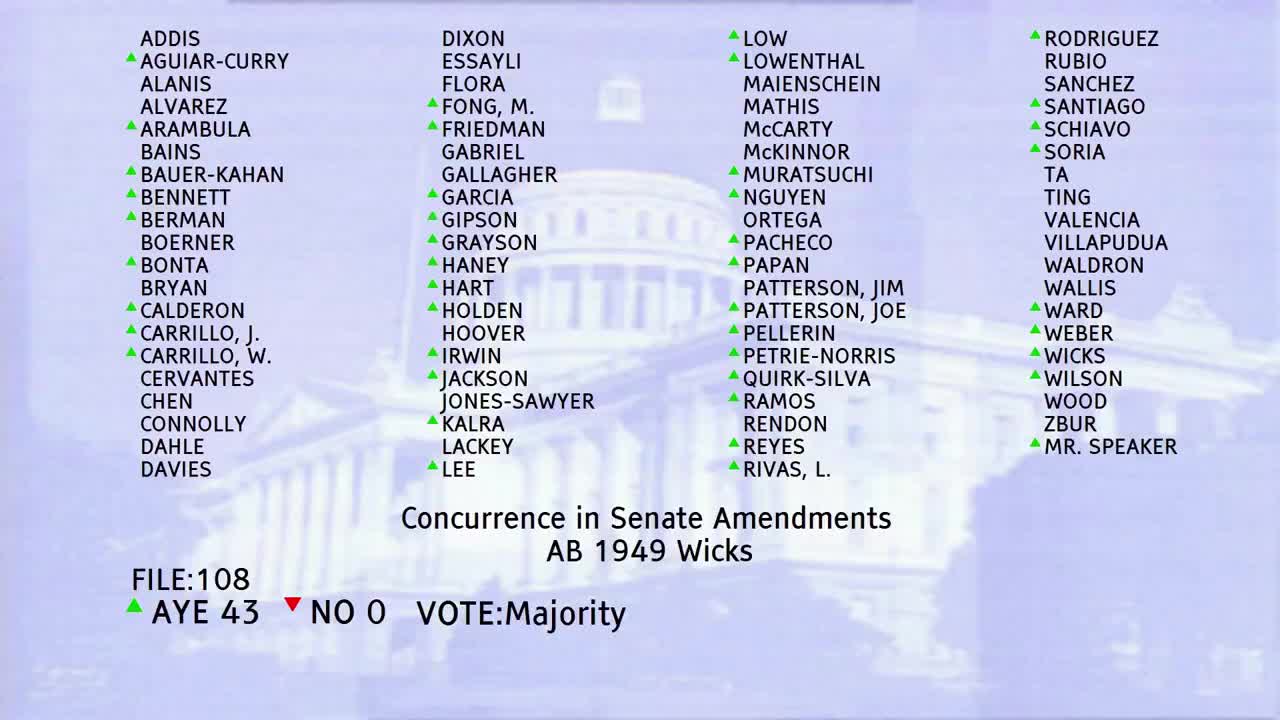 1MIN
Assembly Floor
 2MIN
Senate Floor
 45SEC
Senate Standing Committee on Appropriations
 10MIN
Senate Standing Committee on Health
 1MIN
Assembly Floor
 11MIN