AB 1977: Health care coverage: behavioral diagnoses.
- Session Year: 2023-2024
- House: Assembly
- Latest Version Date: 2024-08-31
Current Status:
Failed
(2024-09-22: Vetoed by Governor.)
Introduced
In Committee
First Chamber
In Committee
Second Chamber
Enacted
Existing law, the Knox-Keene Health Care Service Plan Act of 1975, provides for the licensure and regulation of health care service plans by the Department of Managed Health Care, and makes a willful violation of the act a crime. Existing law provides for the regulation of health insurers by the Department of Insurance. Existing law requires a health care service plan contract or health insurance policy to provide coverage for behavioral health treatment for pervasive developmental disorder or autism.
This bill would prohibit a health care service plan contract or health insurance policy issued, amended, or renewed on or after January 1, 2025, from requiring an enrollee or insured previously diagnosed with pervasive developmental disorder or autism to be reevaluated or receive a new behavioral diagnosis to maintain coverage for behavioral health treatment for their condition. The bill would require a treatment plan to be made available to the plan or insurer upon request. Because a willful violation of this provision by a health care service plan would be a crime, the bill would impose a state-mandated local program.
The California Constitution requires the state to reimburse local agencies and school districts for certain costs mandated by the state. Statutory provisions establish procedures for making that reimbursement.
This bill would provide that no reimbursement is required by this act for a specified reason.
Existing law, the Knox-Keene Health Care Service Plan Act of 1975, provides for the licensure and regulation of health care service plans by the Department of Managed Health Care, and makes a willful violation of the act a crime. Existing law provides for the regulation of health insurers by the Department of Insurance. Existing law requires a health care service plan contract or health insurance policy to provide coverage for behavioral health treatment for pervasive developmental disorder or autism.
This bill would prohibit a health care service plan contract or health insurance policy issued, amended, or renewed on or after January 1, 2025, from requiring an enrollee or insured previously diagnosed with pervasive developmental disorder or autism to be reevaluated or receive a new behavioral diagnosis to maintain coverage for behavioral health treatment for their condition. The bill would require a treatment plan to be made available to the plan or insurer upon request. Because a willful violation of this provision by a health care service plan would be a crime, the bill would impose a state-mandated local program.
The California Constitution requires the state to reimburse local agencies and school districts for certain costs mandated by the state. Statutory provisions establish procedures for making that reimbursement.
This bill would provide that no reimbursement is required by this act for a specified reason.
Existing law, the Knox-Keene Health Care Service Plan Act of 1975, provides for the licensure and regulation of health care service plans by the Department of Managed Health Care, and makes a willful violation of the act a crime. Existing law provides for the regulation of health insurers by the Department of Insurance. Existing law requires a health care service plan contract or health insurance policy to provide coverage for behavioral health treatment for pervasive developmental disorder or autism.
This bill would prohibit a health care service plan contract or health insurance policy issued, amended, or renewed on or after January 1, 2025, from requiring an enrollee or insured previously diagnosed with pervasive developmental disorder or autism to be reevaluated or receive a new behavioral diagnosis to maintain coverage for behavioral health treatment for their condition. The bill would require a treatment plan to be made available to the plan or insurer upon request. Because a willful violation of this provision by a health care service plan would be a crime, the bill would impose a state-mandated local program.
The California Constitution requires the state to reimburse local agencies and school districts for certain costs mandated by the state. Statutory provisions establish procedures for making that reimbursement.
This bill would provide that no reimbursement is required by this act for a specified reason.
Existing law, the Knox-Keene Health Care Service Plan Act of 1975, provides for the licensure and regulation of health care service plans by the Department of Managed Health Care, and makes a willful violation of the act a crime. Existing law provides for the regulation of health insurers by the Department of Insurance. Existing law requires a health care service plan contract or health insurance policy to provide coverage for behavioral health treatment for pervasive developmental disorder or autism.
This bill would prohibit a health care service plan contract or health insurance policy issued, amended, or renewed on or after January 1, 2025, from requiring an enrollee or insured previously diagnosed with pervasive developmental disorder or autism to be reevaluated or receive a new behavioral diagnosis to maintain coverage for behavioral health treatment for their condition. Because a willful violation of this provision by a health care service plan would be a crime, the bill would impose a state-mandated local program.
The California Constitution requires the state to reimburse local agencies and school districts for certain costs mandated by the state. Statutory provisions establish procedures for making that reimbursement.
This bill would provide that no reimbursement is required by this act for a specified reason.
Existing law, the Knox-Keene Health Care Service Plan Act of 1975, provides for the licensure and regulation of health care service plans by the Department of Managed Health Care, and makes a willful violation of the act a crime. Existing law provides for the regulation of health insurers by the Department of Insurance. Existing law requires a health care service plan contract or health insurance policy to provide coverage for behavioral health treatment for pervasive developmental disorder or autism.
This bill would prohibit a health care service plan contract or health insurance policy issued, amended, or renewed on or after January 1, 2025, from requiring an enrollee or insured previously diagnosed with pervasive developmental disorder or autism to be reevaluated or receive a new behavioral diagnosis to maintain coverage for behavioral health treatment for their condition. Because a willful violation of this provision by a health care service plan would be a crime, the bill would impose a state-mandated local program.
The California Constitution requires the state to reimburse local agencies and school districts for certain costs mandated by the state. Statutory provisions establish procedures for making that reimbursement.
This bill would provide that no reimbursement is required by this act for a specified reason.
(a)(1)Every health care service plan contract that provides hospital, medical, or surgical coverage shall also provide coverage for behavioral health treatment for pervasive developmental disorder or autism no later than July 1, 2012. The coverage shall be provided in the same manner and shall be subject to the same requirements as provided in Section 1374.72.
(2)Notwithstanding paragraph (1), as of the date that the proposed final rulemaking for essential health benefits is issued, this section does not require any benefits to be provided that exceed the essential health benefits that all health plans will be required by federal regulations to provide under Section 1302(b) of the federal Patient Protection and Affordable Care Act (Public Law 111-148), as amended by the federal Health Care and Education Reconciliation Act of 2010 (Public Law 111-152).
(3)This section shall not affect services for which an individual is eligible pursuant to Division 4.5 (commencing with Section 4500) of the Welfare and Institutions Code or Title 14 (commencing with Section 95000) of the Government Code.
(4)This section shall not affect or reduce any obligation to provide services under an individualized education program, as defined in Section 56032 of the Education Code, or an individual service plan, as described in Section 5600.4 of the Welfare and Institutions Code, or under the federal Individuals with Disabilities Education Act (20 U.S.C. Sec. 1400 et seq.) and its implementing regulations.
(b)Every health care service plan subject to this section shall maintain an adequate network that includes qualified autism service providers who supervise or employ qualified autism service professionals or paraprofessionals who provide and administer behavioral health treatment. A health care service plan is not prevented from selectively contracting with providers within these requirements.
(c)(1)A health care service plan contract issued, amended, or renewed on or after January 1, 2025, shall not require an enrollee previously diagnosed with pervasive developmental disorder or autism to be reevaluated or receive a new behavioral diagnosis to maintain coverage for behavioral health treatment for pervasive developmental disorder or autism.
(2)This subdivision does not prohibit or restrict a treating provider from reevaluating an enrollee for purposes of determining the appropriate treatment. The treatment plan shall be made available to the health care service plan upon request.
(d)For the purposes of this section, the following definitions shall apply:
(1)Behavioral health treatment means professional services and treatment programs, including applied behavior analysis and evidence-based behavior intervention programs, that develop or restore, to the maximum extent practicable, the functioning of an individual with pervasive developmental disorder or autism and that meet all of the following criteria:
(A)The treatment is prescribed by a physician and surgeon licensed pursuant to Chapter 5 (commencing with Section 2000) of, or is developed by a psychologist licensed pursuant to Chapter 6.6 (commencing with Section 2900) of, Division 2 of the Business and Professions Code.
(B)The treatment is provided under a treatment plan prescribed by a qualified autism service provider and is administered by one of the following:
(i)A qualified autism service provider.
(ii)A qualified autism service professional supervised by the qualified autism service provider.
(iii)A qualified autism service paraprofessional supervised by a qualified autism service provider or qualified autism service professional.
(C)The treatment plan has measurable goals over a specific timeline that is developed and approved by the qualified autism service provider for the specific patient being treated. The treatment plan shall be reviewed no less than once every six months by the qualified autism service provider and modified whenever appropriate, and shall be consistent with Section 4686.2 of the Welfare and Institutions Code pursuant to which the qualified autism service provider does all of the following:
(i)Describes the patients behavioral health impairments or developmental challenges that are to be treated.
(ii)Designs an intervention plan that includes the service type, number of hours, and parent participation needed to achieve the plans goal and objectives, and the frequency at which the patients progress is evaluated and reported.
(iii)Provides intervention plans that utilize evidence-based practices, with demonstrated clinical efficacy in treating pervasive developmental disorder or autism.
(iv)Discontinues intensive behavioral intervention services when the treatment goals and objectives are achieved or no longer appropriate.
(D)The treatment plan is not used for purposes of providing or for the reimbursement of respite, daycare, or educational services and is not used to reimburse a parent for participating in the treatment program. The treatment plan shall be made available to the health care service plan upon request.
(2)Pervasive developmental disorder or autism shall have the same meaning and interpretation as used in Section 1374.72.
(3)Qualified autism service provider means either of the following:
(A)A person who is certified by a national entity, such as the Behavior Analyst Certification Board, with a certification that is accredited by the National Commission for Certifying Agencies, and who designs, supervises, or provides treatment for pervasive developmental disorder or autism, provided the services are within the experience and competence of the person who is nationally certified.
(B)A person licensed as a physician and surgeon, physical therapist, occupational therapist, psychologist, marriage and family therapist, educational psychologist, clinical social worker, professional clinical counselor, speech-language pathologist, or audiologist pursuant to Division 2 (commencing with Section 500) of the Business and Professions Code, who designs, supervises, or provides treatment for pervasive developmental disorder or autism, provided the services are within the experience and competence of the licensee.
(4)Qualified autism service professional means an individual who meets all of the following criteria:
(A)Provides behavioral health treatment, which may include clinical case management and case supervision under the direction and supervision of a qualified autism service provider.
(B)Is supervised by a qualified autism service provider.
(C)Provides treatment pursuant to a treatment plan developed and approved by the qualified autism service provider.
(D)Is either of the following:
(i)A behavioral service provider who meets the education and experience qualifications described in Section 54342 of Title 17 of the California Code of Regulations for an Associate Behavior Analyst, Behavior Analyst, Behavior Management Assistant, Behavior Management Consultant, or Behavior Management Program.
(ii)A psychological associate, an associate marriage and family therapist, an associate clinical social worker, or an associate professional clinical counselor, as defined and regulated by the Board of Behavioral Sciences or the Board of Psychology.
(E)(i)Has training and experience in providing services for pervasive developmental disorder or autism pursuant to Division 4.5 (commencing with Section 4500) of the Welfare and Institutions Code or Title 14 (commencing with Section 95000) of the Government Code.
(ii)If an individual meets the requirement described in clause (ii) of subparagraph (D), the individual shall also meet the criteria set forth in the regulations adopted pursuant to Section 4686.4 of the Welfare and Institutions Code for a Behavioral Health Professional.
(F)Is employed by the qualified autism service provider or an entity or group that employs qualified autism service providers responsible for the autism treatment plan.
(5)Qualified autism service paraprofessional means an unlicensed and uncertified individual who meets all of the following criteria:
(A)Is supervised by a qualified autism service provider or qualified autism service professional at a level of clinical supervision that meets professionally recognized standards of practice.
(B)Provides treatment and implements services pursuant to a treatment plan developed and approved by the qualified autism service provider.
(C)Meets the education and training qualifications described in Section 54342 of Title 17 of the California Code of Regulations.
(D)Has adequate education, training, and experience, as certified by a qualified autism service provider or an entity or group that employs qualified autism service providers.
(E)Is employed by the qualified autism service provider or an entity or group that employs qualified autism service providers responsible for the autism treatment plan.
(e)This section shall not apply to the following:
(1)A specialized health care service plan that does not deliver mental health or behavioral health services to enrollees.
(2)A health care service plan contract in the Medi-Cal program (Chapter 7 (commencing with Section 14000) of Part 3 of Division 9 of the Welfare and Institutions Code).
(f)This section does not limit the obligation to provide services under Section 1374.72.
(g)As provided in Section 1374.72 and in paragraph (1) of subdivision (a), in the provision of benefits required by this section, a health care service plan may utilize case management, network providers, utilization review techniques, prior authorization, copayments, or other cost sharing.
SEC. 2.Section 10144.51 of the Insurance Code is amended to read:10144.51.(a)(1)Every health insurance policy shall also provide coverage for behavioral health treatment for pervasive developmental disorder or autism no later than July 1, 2012. The coverage shall be provided in the same manner and shall be subject to the same requirements as provided in Section 10144.5.
(2)Notwithstanding paragraph (1), as of the date that the proposed final rulemaking for essential health benefits is issued, this section does not require any benefits to be provided that exceed the essential health benefits that all health insurers will be required by federal regulations to provide under Section 1302(b) of the federal Patient Protection and Affordable Care Act (Public Law 111-148), as amended by the federal Health Care and Education Reconciliation Act of 2010 (Public Law 111-152).
(3)This section shall not affect services for which an individual is eligible pursuant to Division 4.5 (commencing with Section 4500) of the Welfare and Institutions Code or Title 14 (commencing with Section 95000) of the Government Code.
(4)This section shall not affect or reduce any obligation to provide services under an individualized education program, as defined in Section 56032 of the Education Code, or an individual service plan, as described in Section 5600.4 of the Welfare and Institutions Code, or under the federal Individuals with Disabilities Education Act (20 U.S.C. Sec. 1400 et seq.) and its implementing regulations.
(b)Pursuant to Article 6 (commencing with Section 2240) of Subchapter 2 of Chapter 5 of Title 10 of the California Code of Regulations, every health insurer subject to this section shall maintain an adequate network that includes qualified autism service providers who supervise or employ qualified autism service professionals or paraprofessionals who provide and administer behavioral health treatment. A health insurer is not prevented from selectively contracting with providers within these requirements.
(c)(1)A health insurance policy issued, amended, or renewed on or after January 1, 2025, shall not require an insured previously diagnosed with pervasive developmental disorder or autism to be reevaluated or receive a new behavioral diagnosis to maintain coverage for behavioral health treatment for pervasive developmental disorder or autism.
(2)This subdivision does not prohibit or restrict a treating provider from reevaluating an insured for purposes of determining the appropriate treatment. The treatment plan shall be made available to the insurer upon request.
(d)For the purposes of this section, the following definitions shall apply:
(1)Behavioral health treatment means professional services and treatment programs, including applied behavior analysis and evidence-based behavior intervention programs, that develop or restore, to the maximum extent practicable, the functioning of an individual with pervasive developmental disorder or autism, and that meet all of the following criteria:
(A)The treatment is prescribed by a physician and surgeon licensed pursuant to Chapter 5 (commencing with Section 2000) of, or is developed by a psychologist licensed pursuant to Chapter 6.6 (commencing with Section 2900) of, Division 2 of the Business and Professions Code.
(B)The treatment is provided under a treatment plan prescribed by a qualified autism service provider and is administered by one of the following:
(i)A qualified autism service provider.
(ii)A qualified autism service professional supervised by the qualified autism service provider.
(iii)A qualified autism service paraprofessional supervised by a qualified autism service provider or qualified autism service professional.
(C)The treatment plan has measurable goals over a specific timeline that is developed and approved by the qualified autism service provider for the specific patient being treated. The treatment plan shall be reviewed no less than once every six months by the qualified autism service provider and modified whenever appropriate, and shall be consistent with Section 4686.2 of the Welfare and Institutions Code pursuant to which the qualified autism service provider does all of the following:
(i)Describes the patients behavioral health impairments or developmental challenges that are to be treated.
(ii)Designs an intervention plan that includes the service type, number of hours, and parent participation needed to achieve the plans goal and objectives, and the frequency at which the patients progress is evaluated and reported.
(iii)Provides intervention plans that utilize evidence-based practices, with demonstrated clinical efficacy in treating pervasive developmental disorder or autism.
(iv)Discontinues intensive behavioral intervention services when the treatment goals and objectives are achieved or no longer appropriate.
(D)The treatment plan is not used for purposes of providing or for the reimbursement of respite, daycare, or educational services and is not used to reimburse a parent for participating in the treatment program. The treatment plan shall be made available to the insurer upon request.
(2)Pervasive developmental disorder or autism shall have the same meaning and interpretation as used in Section 10144.5.
(3)Qualified autism service provider means either of the following:
(A)A person who is certified by a national entity, such as the Behavior Analyst Certification Board, with a certification that is accredited by the National Commission for Certifying Agencies, and who designs, supervises, or provides treatment for pervasive developmental disorder or autism, provided the services are within the experience and competence of the person who is nationally certified.
(B)A person licensed as a physician and surgeon, physical therapist, occupational therapist, psychologist, marriage and family therapist, educational psychologist, clinical social worker, professional clinical counselor, speech-language pathologist, or audiologist pursuant to Division 2 (commencing with Section 500) of the Business and Professions Code, who designs, supervises, or provides treatment for pervasive developmental disorder or autism, provided the services are within the experience and competence of the licensee.
(4)Qualified autism service professional means an individual who meets all of the following criteria:
(A)Provides behavioral health treatment, which may include clinical case management and case supervision under the direction and supervision of a qualified autism service provider.
(B)Is supervised by a qualified autism service provider.
(C)Provides treatment pursuant to a treatment plan developed and approved by the qualified autism service provider.
(D)Is either of the following:
(i)A behavioral service provider who meets the education and experience qualifications described in Section 54342 of Title 17 of the California Code of Regulations for an Associate Behavior Analyst, Behavior Analyst, Behavior Management Assistant, Behavior Management Consultant, or Behavior Management Program.
(ii)A psychological associate, an associate marriage and family therapist, an associate clinical social worker, or an associate professional clinical counselor, as defined and regulated by the Board of Behavioral Sciences or the Board of Psychology.
(E)(i)Has training and experience in providing services for pervasive developmental disorder or autism pursuant to Division 4.5 (commencing with Section 4500) of the Welfare and Institutions Code or Title 14 (commencing with Section 95000) of the Government Code.
(ii)If an individual meets the requirement described in clause (ii) of subparagraph (D), the individual shall also meet the criteria set forth in the regulations adopted pursuant to Section 4686.4 of the Welfare and Institutions Code for a Behavioral Health Professional.
(F)Is employed by the qualified autism service provider or an entity or group that employs qualified autism service providers responsible for the autism treatment plan.
(5)Qualified autism service paraprofessional means an unlicensed and uncertified individual who meets all of the following criteria:
(A)Is supervised by a qualified autism service provider or qualified autism service professional at a level of clinical supervision that meets professionally recognized standards of practice.
(B)Provides treatment and implements services pursuant to a treatment plan developed and approved by the qualified autism service provider.
(C)Meets the education and training qualifications described in Section 54342 of Title 17 of the California Code of Regulations.
(D)Has adequate education, training, and experience, as certified by a qualified autism service provider or an entity or group that employs qualified autism service providers.
(E)Is employed by the qualified autism service provider or an entity or group that employs qualified autism service providers responsible for the autism treatment plan.
(e)This section shall not apply to the following:
(1)A specialized health insurance policy that does not cover mental health or behavioral health services or an accident-only, specified disease, hospital indemnity, or Medicare supplement policy.
(2)A health insurance policy in the Medi-Cal program (Chapter 7 (commencing with Section 14000) of Part 3 of Division 9 of the Welfare and Institutions Code).
(f)This section does not limit the obligation to provide services under Section 10144.5.
(g)As provided in Section 10144.5 and in paragraph (1) of subdivision (a), in the provision of benefits required by this section, a health insurer may utilize case management, network providers, utilization review techniques, prior authorization, copayments, or other cost sharing.
SEC. 3.No reimbursement is required by this act pursuant to Section 6 of Article XIIIB of the California Constitution because the only costs that may be incurred by a local agency or school district will be incurred because this act creates a new crime or infraction, eliminates a crime or infraction, or changes the penalty for a crime or infraction, within the meaning of Section 17556 of the Government Code, or changes the definition of a crime within the meaning of Section 6 of Article XIIIB of the California Constitution.
(a)(1)Every health care service plan contract that provides hospital, medical, or surgical coverage shall also provide coverage for behavioral health treatment for pervasive developmental disorder or autism no later than July 1, 2012. The coverage shall be provided in the same manner and shall be subject to the same requirements as provided in Section 1374.72.
(2)Notwithstanding paragraph (1), as of the date that the proposed final rulemaking for essential health benefits is issued, this section does not require any benefits to be provided that exceed the essential health benefits that all health plans will be required by federal regulations to provide under Section 1302(b) of the federal Patient Protection and Affordable Care Act (Public Law 111-148), as amended by the federal Health Care and Education Reconciliation Act of 2010 (Public Law 111-152).
(3)This section shall not affect services for which an individual is eligible pursuant to Division 4.5 (commencing with Section 4500) of the Welfare and Institutions Code or Title 14 (commencing with Section 95000) of the Government Code.
(4)This section shall not affect or reduce any obligation to provide services under an individualized education program, as defined in Section 56032 of the Education Code, or an individual service plan, as described in Section 5600.4 of the Welfare and Institutions Code, or under the federal Individuals with Disabilities Education Act (20 U.S.C. Sec. 1400 et seq.) and its implementing regulations.
(b)Every health care service plan subject to this section shall maintain an adequate network that includes qualified autism service providers who supervise or employ qualified autism service professionals or paraprofessionals who provide and administer behavioral health treatment. A health care service plan is not prevented from selectively contracting with providers within these requirements.
(c)(1)A health care service plan contract issued, amended, or renewed on or after January 1, 2025, shall not require an enrollee previously diagnosed with pervasive developmental disorder or autism to be reevaluated or receive a new behavioral diagnosis to maintain coverage for behavioral health treatment for pervasive developmental disorder or autism.
(2)This subdivision does not prohibit or restrict a treating provider from reevaluating an enrollee for purposes of determining the appropriate treatment. The treatment plan shall be made available to the health care service plan upon request.
(d)For the purposes of this section, the following definitions shall apply:
(1)Behavioral health treatment means professional services and treatment programs, including applied behavior analysis and evidence-based behavior intervention programs, that develop or restore, to the maximum extent practicable, the functioning of an individual with pervasive developmental disorder or autism and that meet all of the following criteria:
(A)The treatment is prescribed by a physician and surgeon licensed pursuant to Chapter 5 (commencing with Section 2000) of, or is developed by a psychologist licensed pursuant to Chapter 6.6 (commencing with Section 2900) of, Division 2 of the Business and Professions Code.
(B)The treatment is provided under a treatment plan prescribed by a qualified autism service provider and is administered by one of the following:
(i)A qualified autism service provider.
(ii)A qualified autism service professional supervised by the qualified autism service provider.
(iii)A qualified autism service paraprofessional supervised by a qualified autism service provider or qualified autism service professional.
(C)The treatment plan has measurable goals over a specific timeline that is developed and approved by the qualified autism service provider for the specific patient being treated. The treatment plan shall be reviewed no less than once every six months by the qualified autism service provider and modified whenever appropriate, and shall be consistent with Section 4686.2 of the Welfare and Institutions Code pursuant to which the qualified autism service provider does all of the following:
(i)Describes the patients behavioral health impairments or developmental challenges that are to be treated.
(ii)Designs an intervention plan that includes the service type, number of hours, and parent participation needed to achieve the plans goal and objectives, and the frequency at which the patients progress is evaluated and reported.
(iii)Provides intervention plans that utilize evidence-based practices, with demonstrated clinical efficacy in treating pervasive developmental disorder or autism.
(iv)Discontinues intensive behavioral intervention services when the treatment goals and objectives are achieved or no longer appropriate.
(D)The treatment plan is not used for purposes of providing or for the reimbursement of respite, daycare, or educational services and is not used to reimburse a parent for participating in the treatment program. The treatment plan shall be made available to the health care service plan upon request.
(2)Pervasive developmental disorder or autism shall have the same meaning and interpretation as used in Section 1374.72.
(3)Qualified autism service provider means either of the following:
(A)A person who is certified by a national entity, such as the Behavior Analyst Certification Board, with a certification that is accredited by the National Commission for Certifying Agencies, and who designs, supervises, or provides treatment for pervasive developmental disorder or autism, provided the services are within the experience and competence of the person who is nationally certified.
(B)A person licensed as a physician and surgeon, physical therapist, occupational therapist, psychologist, marriage and family therapist, educational psychologist, clinical social worker, professional clinical counselor, speech-language pathologist, or audiologist pursuant to Division 2 (commencing with Section 500) of the Business and Professions Code, who designs, supervises, or provides treatment for pervasive developmental disorder or autism, provided the services are within the experience and competence of the licensee.
(4)Qualified autism service professional means an individual who meets all of the following criteria:
(A)Provides behavioral health treatment, which may include clinical case management and case supervision under the direction and supervision of a qualified autism service provider.
(B)Is supervised by a qualified autism service provider.
(C)Provides treatment pursuant to a treatment plan developed and approved by the qualified autism service provider.
(D)Is either of the following:
(i)A behavioral service provider who meets the education and experience qualifications described in Section 54342 of Title 17 of the California Code of Regulations for an Associate Behavior Analyst, Behavior Analyst, Behavior Management Assistant, Behavior Management Consultant, or Behavior Management Program.
(ii)A psychological associate, an associate marriage and family therapist, an associate clinical social worker, or an associate professional clinical counselor, as defined and regulated by the Board of Behavioral Sciences or the Board of Psychology.
(E)(i)Has training and experience in providing services for pervasive developmental disorder or autism pursuant to Division 4.5 (commencing with Section 4500) of the Welfare and Institutions Code or Title 14 (commencing with Section 95000) of the Government Code.
(ii)If an individual meets the requirement described in clause (ii) of subparagraph (D), the individual shall also meet the criteria set forth in the regulations adopted pursuant to Section 4686.4 of the Welfare and Institutions Code for a Behavioral Health Professional.
(F)Is employed by the qualified autism service provider or an entity or group that employs qualified autism service providers responsible for the autism treatment plan.
(5)Qualified autism service paraprofessional means an unlicensed and uncertified individual who meets all of the following criteria:
(A)Is supervised by a qualified autism service provider or qualified autism service professional at a level of clinical supervision that meets professionally recognized standards of practice.
(B)Provides treatment and implements services pursuant to a treatment plan developed and approved by the qualified autism service provider.
(C)Meets the education and training qualifications described in Section 54342 of Title 17 of the California Code of Regulations.
(D)Has adequate education, training, and experience, as certified by a qualified autism service provider or an entity or group that employs qualified autism service providers.
(E)Is employed by the qualified autism service provider or an entity or group that employs qualified autism service providers responsible for the autism treatment plan.
(e)This section shall not apply to the following:
(1)A specialized health care service plan that does not deliver mental health or behavioral health services to enrollees.
(2)A health care service plan contract in the Medi-Cal program (Chapter 7 (commencing with Section 14000) of Part 3 of Division 9 of the Welfare and Institutions Code).
(f)This section does not limit the obligation to provide services under Section 1374.72.
(g)As provided in Section 1374.72 and in paragraph (1) of subdivision (a), in the provision of benefits required by this section, a health care service plan may utilize case management, network providers, utilization review techniques, prior authorization, copayments, or other cost sharing.
SEC. 2.Section 10144.51 of the Insurance Code is amended to read:10144.51.(a)(1)Every health insurance policy shall also provide coverage for behavioral health treatment for pervasive developmental disorder or autism no later than July 1, 2012. The coverage shall be provided in the same manner and shall be subject to the same requirements as provided in Section 10144.5.
(2)Notwithstanding paragraph (1), as of the date that the proposed final rulemaking for essential health benefits is issued, this section does not require any benefits to be provided that exceed the essential health benefits that all health insurers will be required by federal regulations to provide under Section 1302(b) of the federal Patient Protection and Affordable Care Act (Public Law 111-148), as amended by the federal Health Care and Education Reconciliation Act of 2010 (Public Law 111-152).
(3)This section shall not affect services for which an individual is eligible pursuant to Division 4.5 (commencing with Section 4500) of the Welfare and Institutions Code or Title 14 (commencing with Section 95000) of the Government Code.
(4)This section shall not affect or reduce any obligation to provide services under an individualized education program, as defined in Section 56032 of the Education Code, or an individual service plan, as described in Section 5600.4 of the Welfare and Institutions Code, or under the federal Individuals with Disabilities Education Act (20 U.S.C. Sec. 1400 et seq.) and its implementing regulations.
(b)Pursuant to Article 6 (commencing with Section 2240) of Subchapter 2 of Chapter 5 of Title 10 of the California Code of Regulations, every health insurer subject to this section shall maintain an adequate network that includes qualified autism service providers who supervise or employ qualified autism service professionals or paraprofessionals who provide and administer behavioral health treatment. A health insurer is not prevented from selectively contracting with providers within these requirements.
(c)(1)A health insurance policy issued, amended, or renewed on or after January 1, 2025, shall not require an insured previously diagnosed with pervasive developmental disorder or autism to be reevaluated or receive a new behavioral diagnosis to maintain coverage for behavioral health treatment for pervasive developmental disorder or autism.
(2)This subdivision does not prohibit or restrict a treating provider from reevaluating an insured for purposes of determining the appropriate treatment. The treatment plan shall be made available to the insurer upon request.
(d)For the purposes of this section, the following definitions shall apply:
(1)Behavioral health treatment means professional services and treatment programs, including applied behavior analysis and evidence-based behavior intervention programs, that develop or restore, to the maximum extent practicable, the functioning of an individual with pervasive developmental disorder or autism, and that meet all of the following criteria:
(A)The treatment is prescribed by a physician and surgeon licensed pursuant to Chapter 5 (commencing with Section 2000) of, or is developed by a psychologist licensed pursuant to Chapter 6.6 (commencing with Section 2900) of, Division 2 of the Business and Professions Code.
(B)The treatment is provided under a treatment plan prescribed by a qualified autism service provider and is administered by one of the following:
(i)A qualified autism service provider.
(ii)A qualified autism service professional supervised by the qualified autism service provider.
(iii)A qualified autism service paraprofessional supervised by a qualified autism service provider or qualified autism service professional.
(C)The treatment plan has measurable goals over a specific timeline that is developed and approved by the qualified autism service provider for the specific patient being treated. The treatment plan shall be reviewed no less than once every six months by the qualified autism service provider and modified whenever appropriate, and shall be consistent with Section 4686.2 of the Welfare and Institutions Code pursuant to which the qualified autism service provider does all of the following:
(i)Describes the patients behavioral health impairments or developmental challenges that are to be treated.
(ii)Designs an intervention plan that includes the service type, number of hours, and parent participation needed to achieve the plans goal and objectives, and the frequency at which the patients progress is evaluated and reported.
(iii)Provides intervention plans that utilize evidence-based practices, with demonstrated clinical efficacy in treating pervasive developmental disorder or autism.
(iv)Discontinues intensive behavioral intervention services when the treatment goals and objectives are achieved or no longer appropriate.
(D)The treatment plan is not used for purposes of providing or for the reimbursement of respite, daycare, or educational services and is not used to reimburse a parent for participating in the treatment program. The treatment plan shall be made available to the insurer upon request.
(2)Pervasive developmental disorder or autism shall have the same meaning and interpretation as used in Section 10144.5.
(3)Qualified autism service provider means either of the following:
(A)A person who is certified by a national entity, such as the Behavior Analyst Certification Board, with a certification that is accredited by the National Commission for Certifying Agencies, and who designs, supervises, or provides treatment for pervasive developmental disorder or autism, provided the services are within the experience and competence of the person who is nationally certified.
(B)A person licensed as a physician and surgeon, physical therapist, occupational therapist, psychologist, marriage and family therapist, educational psychologist, clinical social worker, professional clinical counselor, speech-language pathologist, or audiologist pursuant to Division 2 (commencing with Section 500) of the Business and Professions Code, who designs, supervises, or provides treatment for pervasive developmental disorder or autism, provided the services are within the experience and competence of the licensee.
(4)Qualified autism service professional means an individual who meets all of the following criteria:
(A)Provides behavioral health treatment, which may include clinical case management and case supervision under the direction and supervision of a qualified autism service provider.
(B)Is supervised by a qualified autism service provider.
(C)Provides treatment pursuant to a treatment plan developed and approved by the qualified autism service provider.
(D)Is either of the following:
(i)A behavioral service provider who meets the education and experience qualifications described in Section 54342 of Title 17 of the California Code of Regulations for an Associate Behavior Analyst, Behavior Analyst, Behavior Management Assistant, Behavior Management Consultant, or Behavior Management Program.
(ii)A psychological associate, an associate marriage and family therapist, an associate clinical social worker, or an associate professional clinical counselor, as defined and regulated by the Board of Behavioral Sciences or the Board of Psychology.
(E)(i)Has training and experience in providing services for pervasive developmental disorder or autism pursuant to Division 4.5 (commencing with Section 4500) of the Welfare and Institutions Code or Title 14 (commencing with Section 95000) of the Government Code.
(ii)If an individual meets the requirement described in clause (ii) of subparagraph (D), the individual shall also meet the criteria set forth in the regulations adopted pursuant to Section 4686.4 of the Welfare and Institutions Code for a Behavioral Health Professional.
(F)Is employed by the qualified autism service provider or an entity or group that employs qualified autism service providers responsible for the autism treatment plan.
(5)Qualified autism service paraprofessional means an unlicensed and uncertified individual who meets all of the following criteria:
(A)Is supervised by a qualified autism service provider or qualified autism service professional at a level of clinical supervision that meets professionally recognized standards of practice.
(B)Provides treatment and implements services pursuant to a treatment plan developed and approved by the qualified autism service provider.
(C)Meets the education and training qualifications described in Section 54342 of Title 17 of the California Code of Regulations.
(D)Has adequate education, training, and experience, as certified by a qualified autism service provider or an entity or group that employs qualified autism service providers.
(E)Is employed by the qualified autism service provider or an entity or group that employs qualified autism service providers responsible for the autism treatment plan.
(e)This section shall not apply to the following:
(1)A specialized health insurance policy that does not cover mental health or behavioral health services or an accident-only, specified disease, hospital indemnity, or Medicare supplement policy.
(2)A health insurance policy in the Medi-Cal program (Chapter 7 (commencing with Section 14000) of Part 3 of Division 9 of the Welfare and Institutions Code).
(f)This section does not limit the obligation to provide services under Section 10144.5.
(g)As provided in Section 10144.5 and in paragraph (1) of subdivision (a), in the provision of benefits required by this section, a health insurer may utilize case management, network providers, utilization review techniques, prior authorization, copayments, or other cost sharing.
SEC. 3.No reimbursement is required by this act pursuant to Section 6 of Article XIIIB of the California Constitution because the only costs that may be incurred by a local agency or school district will be incurred because this act creates a new crime or infraction, eliminates a crime or infraction, or changes the penalty for a crime or infraction, within the meaning of Section 17556 of the Government Code, or changes the definition of a crime within the meaning of Section 6 of Article XIIIB of the California Constitution.
(a)(1)Every health care service plan contract that provides hospital, medical, or surgical coverage shall also provide coverage for behavioral health treatment for pervasive developmental disorder or autism no later than July 1, 2012. The coverage shall be provided in the same manner and shall be subject to the same requirements as provided in Section 1374.72.
(2)Notwithstanding paragraph (1), as of the date that proposed final rulemaking for essential health benefits is issued, this section does not require any benefits to be provided that exceed the essential health benefits that all health plans will be required by federal regulations to provide under Section 1302(b) of the federal Patient Protection and Affordable Care Act (Public Law 111-148), as amended by the federal Health Care and Education Reconciliation Act of 2010 (Public Law 111-152).
(3)This section shall not affect services for which an individual is eligible pursuant to Division 4.5 (commencing with Section 4500) of the Welfare and Institutions Code or Title 14 (commencing with Section 95000) of the Government Code.
(4)This section shall not affect or reduce any obligation to provide services under an individualized education program, as defined in Section 56032 of the Education Code, or an individual service plan, as described in Section 5600.4 of the Welfare and Institutions Code, or under the federal Individuals with Disabilities Education Act (20 U.S.C. Sec. 1400 et seq.) and its implementing regulations.
(b)Every health care service plan subject to this section shall maintain an adequate network that includes qualified autism service providers who supervise or employ qualified autism service professionals or paraprofessionals who provide and administer behavioral health treatment. A health care service plan is not prevented from selectively contracting with providers within these requirements.
(c)(1)A health care service plan contract issued, amended, or renewed on or after January 1, 2025, shall not require an enrollee previously diagnosed with pervasive developmental disorder or autism to be reevaluated or receive a new behavioral diagnosis to maintain coverage for behavioral health treatment for pervasive developmental disorder or autism.
(2)This subdivision does not prohibit or restrict a treating provider from reevaluating an enrollee for purposes of determining the appropriate treatment. The treatment plan shall be made available to the health care service plan upon request.
(d)For the purposes of this section, the following definitions shall apply:
(1)Behavioral health treatment means professional services and treatment programs, including applied behavior analysis and evidence-based behavior intervention programs, that develop or restore, to the maximum extent practicable, the functioning of an individual with pervasive developmental disorder or autism and that meet all of the following criteria:
(A)The treatment is prescribed by a physician and surgeon licensed pursuant to Chapter 5 (commencing with Section 2000) of, or is developed by a psychologist licensed pursuant to Chapter 6.6 (commencing with Section 2900) of, Division 2 of the Business and Professions Code.
(B)The treatment is provided under a treatment plan prescribed by a qualified autism service provider and is administered by one of the following:
(i)A qualified autism service provider.
(ii)A qualified autism service professional supervised by the qualified autism service provider.
(iii)A qualified autism service paraprofessional supervised by a qualified autism service provider or qualified autism service professional.
(C)The treatment plan has measurable goals over a specific timeline that is developed and approved by the qualified autism service provider for the specific patient being treated. The treatment plan shall be reviewed no less than once every six months by the qualified autism service provider and modified whenever appropriate, and shall be consistent with Section 4686.2 of the Welfare and Institutions Code pursuant to which the qualified autism service provider does all of the following:
(i)Describes the patients behavioral health impairments or developmental challenges that are to be treated.
(ii)Designs an intervention plan that includes the service type, number of hours, and parent participation needed to achieve the plans goal and objectives, and the frequency at which the patients progress is evaluated and reported.
(iii)Provides intervention plans that utilize evidence-based practices, with demonstrated clinical efficacy in treating pervasive developmental disorder or autism.
(iv)Discontinues intensive behavioral intervention services when the treatment goals and objectives are achieved or no longer appropriate.
(D)The treatment plan is not used for purposes of providing or for the reimbursement of respite, daycare, or educational services and is not used to reimburse a parent for participating in the treatment program. The treatment plan shall be made available to the health care service plan upon request.
(2)Pervasive developmental disorder or autism shall have the same meaning and interpretation as used in Section 1374.72.
(3)Qualified autism service provider means either of the following:
(A)A person who is certified by a national entity, such as the Behavior Analyst Certification Board, with a certification that is accredited by the National Commission for Certifying Agencies, and who designs, supervises, or provides treatment for pervasive developmental disorder or autism, provided the services are within the experience and competence of the person who is nationally certified.
(B)A person licensed as a physician and surgeon, physical therapist, occupational therapist, psychologist, marriage and family therapist, educational psychologist, clinical social worker, professional clinical counselor, speech-language pathologist, or audiologist pursuant to Division 2 (commencing with Section 500) of the Business and Professions Code, who designs, supervises, or provides treatment for pervasive developmental disorder or autism, provided the services are within the experience and competence of the licensee.
(4)Qualified autism service professional means an individual who meets all of the following criteria:
(A)Provides behavioral health treatment, which may include clinical case management and case supervision under the direction and supervision of a qualified autism service provider.
(B)Is supervised by a qualified autism service provider.
(C)Provides treatment pursuant to a treatment plan developed and approved by the qualified autism service provider.
(D)Is either of the following:
(i)A behavioral service provider who meets the education and experience qualifications described in Section 54342 of Title 17 of the California Code of Regulations for an Associate Behavior Analyst, Behavior Analyst, Behavior Management Assistant, Behavior Management Consultant, or Behavior Management Program.
(ii)A psychological associate, an associate marriage and family therapist, an associate clinical social worker, or an associate professional clinical counselor, as defined and regulated by the Board of Behavioral Sciences or the Board of Psychology.
(E)(i)Has training and experience in providing services for pervasive developmental disorder or autism pursuant to Division 4.5 (commencing with Section 4500) of the Welfare and Institutions Code or Title 14 (commencing with Section 95000) of the Government Code.
(ii)If an individual meets the requirement described in clause (ii) of subparagraph (D), the individual shall also meet the criteria set forth in the regulations adopted pursuant to Section 4686.4 of the Welfare and Institutions Code for a Behavioral Health Professional.
(F)Is employed by the qualified autism service provider or an entity or group that employs qualified autism service providers responsible for the autism treatment plan.
(5)Qualified autism service paraprofessional means an unlicensed and uncertified individual who meets all of the following criteria:
(A)Is supervised by a qualified autism service provider or qualified autism service professional at a level of clinical supervision that meets professionally recognized standards of practice.
(B)Provides treatment and implements services pursuant to a treatment plan developed and approved by the qualified autism service provider.
(C)Meets the education and training qualifications described in Section 54342 of Title 17 of the California Code of Regulations.
(D)Has adequate education, training, and experience, as certified by a qualified autism service provider or an entity or group that employs qualified autism service providers.
(E)Is employed by the qualified autism service provider or an entity or group that employs qualified autism service providers responsible for the autism treatment plan.
(e)This section shall not apply to the following:
(1)A specialized health care service plan that does not deliver mental health or behavioral health services to enrollees.
(2)A health care service plan contract in the Medi-Cal program (Chapter 7 (commencing with Section 14000) of Part 3 of Division 9 of the Welfare and Institutions Code).
(f)This section does not limit the obligation to provide services under Section 1374.72.
(g)As provided in Section 1374.72 and in paragraph (1) of subdivision (a), in the provision of benefits required by this section, a health care service plan may utilize case management, network providers, utilization review techniques, prior authorization, copayments, or other cost sharing.
SEC. 2.Section 10144.51 of the Insurance Code is amended to read:10144.51.(a)(1)Every health insurance policy shall also provide coverage for behavioral health treatment for pervasive developmental disorder or autism no later than July 1, 2012. The coverage shall be provided in the same manner and shall be subject to the same requirements as provided in Section 10144.5.
(2)Notwithstanding paragraph (1), as of the date that proposed final rulemaking for essential health benefits is issued, this section does not require any benefits to be provided that exceed the essential health benefits that all health insurers will be required by federal regulations to provide under Section 1302(b) of the federal Patient Protection and Affordable Care Act (Public Law 111-148), as amended by the federal Health Care and Education Reconciliation Act of 2010 (Public Law 111-152).
(3)This section shall not affect services for which an individual is eligible pursuant to Division 4.5 (commencing with Section 4500) of the Welfare and Institutions Code or Title 14 (commencing with Section 95000) of the Government Code.
(4)This section shall not affect or reduce any obligation to provide services under an individualized education program, as defined in Section 56032 of the Education Code, or an individual service plan, as described in Section 5600.4 of the Welfare and Institutions Code, or under the federal Individuals with Disabilities Education Act (20 U.S.C. Sec. 1400 et seq.) and its implementing regulations.
(b)Pursuant to Article 6 (commencing with Section 2240) of Subchapter 2 of Chapter 5 of Title 10 of the California Code of Regulations, every health insurer subject to this section shall maintain an adequate network that includes qualified autism service providers who supervise or employ qualified autism service professionals or paraprofessionals who provide and administer behavioral health treatment. A health insurer is not prevented from selectively contracting with providers within these requirements.
(c)(1)A health insurance policy issued, amended, or renewed on or after January 1, 2025, shall not require an insured previously diagnosed with pervasive developmental disorder or autism to be reevaluated or receive a new behavioral diagnosis to maintain coverage for behavioral health treatment for pervasive developmental disorder or autism.
(2)This subdivision does not prohibit or restrict a treating provider from reevaluating an insured for purposes of determining the appropriate treatment. The treatment plan shall be made available to the insurer upon request.
(d)For the purposes of this section, the following definitions shall apply:
(1)Behavioral health treatment means professional services and treatment programs, including applied behavior analysis and evidence-based behavior intervention programs, that develop or restore, to the maximum extent practicable, the functioning of an individual with pervasive developmental disorder or autism, and that meet all of the following criteria:
(A)The treatment is prescribed by a physician and surgeon licensed pursuant to Chapter 5 (commencing with Section 2000) of, or is developed by a psychologist licensed pursuant to Chapter 6.6 (commencing with Section 2900) of, Division 2 of the Business and Professions Code.
(B)The treatment is provided under a treatment plan prescribed by a qualified autism service provider and is administered by one of the following:
(i)A qualified autism service provider.
(ii)A qualified autism service professional supervised by the qualified autism service provider.
(iii)A qualified autism service paraprofessional supervised by a qualified autism service provider or qualified autism service professional.
(C)The treatment plan has measurable goals over a specific timeline that is developed and approved by the qualified autism service provider for the specific patient being treated. The treatment plan shall be reviewed no less than once every six months by the qualified autism service provider and modified whenever appropriate, and shall be consistent with Section 4686.2 of the Welfare and Institutions Code pursuant to which the qualified autism service provider does all of the following:
(i)Describes the patients behavioral health impairments or developmental challenges that are to be treated.
(ii)Designs an intervention plan that includes the service type, number of hours, and parent participation needed to achieve the plans goal and objectives, and the frequency at which the patients progress is evaluated and reported.
(iii)Provides intervention plans that utilize evidence-based practices, with demonstrated clinical efficacy in treating pervasive developmental disorder or autism.
(iv)Discontinues intensive behavioral intervention services when the treatment goals and objectives are achieved or no longer appropriate.
(D)The treatment plan is not used for purposes of providing or for the reimbursement of respite, daycare, or educational services and is not used to reimburse a parent for participating in the treatment program. The treatment plan shall be made available to the insurer upon request.
(2)Pervasive developmental disorder or autism shall have the same meaning and interpretation as used in Section 10144.5.
(3)Qualified autism service provider means either of the following:
(A)A person who is certified by a national entity, such as the Behavior Analyst Certification Board, with a certification that is accredited by the National Commission for Certifying Agencies, and who designs, supervises, or provides treatment for pervasive developmental disorder or autism, provided the services are within the experience and competence of the person who is nationally certified.
(B)A person licensed as a physician and surgeon, physical therapist, occupational therapist, psychologist, marriage and family therapist, educational psychologist, clinical social worker, professional clinical counselor, speech-language pathologist, or audiologist pursuant to Division 2 (commencing with Section 500) of the Business and Professions Code, who designs, supervises, or provides treatment for pervasive developmental disorder or autism, provided the services are within the experience and competence of the licensee.
(4)Qualified autism service professional means an individual who meets all of the following criteria:
(A)Provides behavioral health treatment, which may include clinical case management and case supervision under the direction and supervision of a qualified autism service provider.
(B)Is supervised by a qualified autism service provider.
(C)Provides treatment pursuant to a treatment plan developed and approved by the qualified autism service provider.
(D)Is either of the following:
(i)A behavioral service provider who meets the education and experience qualifications described in Section 54342 of Title 17 of the California Code of Regulations for an Associate Behavior Analyst, Behavior Analyst, Behavior Management Assistant, Behavior Management Consultant, or Behavior Management Program.
(ii)A psychological associate, an associate marriage and family therapist, an associate clinical social worker, or an associate professional clinical counselor, as defined and regulated by the Board of Behavioral Sciences or the Board of Psychology.
(E)(i)Has training and experience in providing services for pervasive developmental disorder or autism pursuant to Division 4.5 (commencing with Section 4500) of the Welfare and Institutions Code or Title 14 (commencing with Section 95000) of the Government Code.
(ii)If an individual meets the requirement described in clause (ii) of subparagraph (D), the individual shall also meet the criteria set forth in the regulations adopted pursuant to Section 4686.4 of the Welfare and Institutions Code for a Behavioral Health Professional.
(F)Is employed by the qualified autism service provider or an entity or group that employs qualified autism service providers responsible for the autism treatment plan.
(5)Qualified autism service paraprofessional means an unlicensed and uncertified individual who meets all of the following criteria:
(A)Is supervised by a qualified autism service provider or qualified autism service professional at a level of clinical supervision that meets professionally recognized standards of practice.
(B)Provides treatment and implements services pursuant to a treatment plan developed and approved by the qualified autism service provider.
(C)Meets the education and training qualifications described in Section 54342 of Title 17 of the California Code of Regulations.
(D)Has adequate education, training, and experience, as certified by a qualified autism service provider or an entity or group that employs qualified autism service providers.
(E)Is employed by the qualified autism service provider or an entity or group that employs qualified autism service providers responsible for the autism treatment plan.
(e)This section shall not apply to the following:
(1)A specialized health insurance policy that does not cover mental health or behavioral health services or an accident-only accident-only, specified disease, hospital indemnity, or Medicare supplement policy.
(2)A health insurance policy in the Medi-Cal program (Chapter 7 (commencing with Section 14000) of Part 3 of Division 9 of the Welfare and Institutions Code).
(f)This section does not limit the obligation to provide services under Section 10144.5.
(g)As provided in Section 10144.5 and in paragraph (1) of subdivision (a), in the provision of benefits required by this section, a health insurer may utilize case management, network providers, utilization review techniques, prior authorization, copayments, or other cost sharing.
SEC. 3.No reimbursement is required by this act pursuant to Section 6 of Article XIIIB of the California Constitution because the only costs that may be incurred by a local agency or school district will be incurred because this act creates a new crime or infraction, eliminates a crime or infraction, or changes the penalty for a crime or infraction, within the meaning of Section 17556 of the Government Code, or changes the definition of a crime within the meaning of Section 6 of Article XIIIB of the California Constitution.
(a)(1)Every health care service plan contract that provides hospital, medical, or surgical coverage shall also provide coverage for behavioral health treatment for pervasive developmental disorder or autism no later than July 1, 2012. The coverage shall be provided in the same manner and shall be subject to the same requirements as provided in Section 1374.72.
(2)Notwithstanding paragraph (1), as of the date that proposed final rulemaking for essential health benefits is issued, this section does not require any benefits to be provided that exceed the essential health benefits that all health plans will be required by federal regulations to provide under Section 1302(b) of the federal Patient Protection and Affordable Care Act (Public Law 111-148), as amended by the federal Health Care and Education Reconciliation Act of 2010 (Public Law 111-152).
(3)This section shall not affect services for which an individual is eligible pursuant to Division 4.5 (commencing with Section 4500) of the Welfare and Institutions Code or Title 14 (commencing with Section 95000) of the Government Code.
(4)This section shall not affect or reduce any obligation to provide services under an individualized education program, as defined in Section 56032 of the Education Code, or an individual service plan, as described in Section 5600.4 of the Welfare and Institutions Code, or under the federal Individuals with Disabilities Education Act (20 U.S.C. Sec. 1400 et seq.) and its implementing regulations.
(b)Every health care service plan subject to this section shall maintain an adequate network that includes qualified autism service providers who supervise or employ qualified autism service professionals or paraprofessionals who provide and administer behavioral health treatment. A health care service plan is not prevented from selectively contracting with providers within these requirements.
(c)(1)A health care service plan contract issued, amended, or renewed on or after January 1, 2025, shall not require an enrollee previously diagnosed with pervasive developmental disorder or autism to be reevaluated or receive a new behavioral diagnosis to maintain coverage for behavioral health treatment for pervasive developmental disorder or autism.
(2)This subdivision does not prohibit or restrict a treating provider from reevaluating an enrollee for purposes of determining the appropriate treatment.
(d)For the purposes of this section, the following definitions shall apply:
(1)Behavioral health treatment means professional services and treatment programs, including applied behavior analysis and evidence-based behavior intervention programs, that develop or restore, to the maximum extent practicable, the functioning of an individual with pervasive developmental disorder or autism and that meet all of the following criteria:
(A)The treatment is prescribed by a physician and surgeon licensed pursuant to Chapter 5 (commencing with Section 2000) of, or is developed by a psychologist licensed pursuant to Chapter 6.6 (commencing with Section 2900) of, Division 2 of the Business and Professions Code.
(B)The treatment is provided under a treatment plan prescribed by a qualified autism service provider and is administered by one of the following:
(i)A qualified autism service provider.
(ii)A qualified autism service professional supervised by the qualified autism service provider.
(iii)A qualified autism service paraprofessional supervised by a qualified autism service provider or qualified autism service professional.
(C)The treatment plan has measurable goals over a specific timeline that is developed and approved by the qualified autism service provider for the specific patient being treated. The treatment plan shall be reviewed no less than once every six months by the qualified autism service provider and modified whenever appropriate, and shall be consistent with Section 4686.2 of the Welfare and Institutions Code pursuant to which the qualified autism service provider does all of the following:
(i)Describes the patients behavioral health impairments or developmental challenges that are to be treated.
(ii)Designs an intervention plan that includes the service type, number of hours, and parent participation needed to achieve the plans goal and objectives, and the frequency at which the patients progress is evaluated and reported.
(iii)Provides intervention plans that utilize evidence-based practices, with demonstrated clinical efficacy in treating pervasive developmental disorder or autism.
(iv)Discontinues intensive behavioral intervention services when the treatment goals and objectives are achieved or no longer appropriate.
(D)The treatment plan is not used for purposes of providing or for the reimbursement of respite, day care, daycare, or educational services and is not used to reimburse a parent for participating in the treatment program. The treatment plan shall be made available to the health care service plan upon request.
(2)Pervasive developmental disorder or autism shall have the same meaning and interpretation as used in Section 1374.72.
(3)Qualified autism service provider means either of the following:
(A)A person who is certified by a national entity, such as the Behavior Analyst Certification Board, with a certification that is accredited by the National Commission for Certifying Agencies, and who designs, supervises, or provides treatment for pervasive developmental disorder or autism, provided the services are within the experience and competence of the person who is nationally certified.
(B)A person licensed as a physician and surgeon, physical therapist, occupational therapist, psychologist, marriage and family therapist, educational psychologist, clinical social worker, professional clinical counselor, speech-language pathologist, or audiologist pursuant to Division 2 (commencing with Section 500) of the Business and Professions Code, who designs, supervises, or provides treatment for pervasive developmental disorder or autism, provided the services are within the experience and competence of the licensee.
(4)Qualified autism service professional means an individual who meets all of the following criteria:
(A)Provides behavioral health treatment, which may include clinical case management and case supervision under the direction and supervision of a qualified autism service provider.
(B)Is supervised by a qualified autism service provider.
(C)Provides treatment pursuant to a treatment plan developed and approved by the qualified autism service provider.
(D)Is either of the following:
(i)A behavioral service provider who meets the education and experience qualifications described in Section 54342 of Title 17 of the California Code of Regulations for an Associate Behavior Analyst, Behavior Analyst, Behavior Management Assistant, Behavior Management Consultant, or Behavior Management Program.
(ii)A psychological associate, an associate marriage and family therapist, an associate clinical social worker, or an associate professional clinical counselor, as defined and regulated by the Board of Behavioral Sciences or the Board of Psychology.
(E)(i)Has training and experience in providing services for pervasive developmental disorder or autism pursuant to Division 4.5 (commencing with Section 4500) of the Welfare and Institutions Code or Title 14 (commencing with Section 95000) of the Government Code.
(ii)If an individual meets the requirement described in clause (ii) of subparagraph (D), the individual shall also meet the criteria set forth in the regulations adopted pursuant to Section 4686.4 of the Welfare and Institutions Code for a Behavioral Health Professional.
(F)Is employed by the qualified autism service provider or an entity or group that employs qualified autism service providers responsible for the autism treatment plan.
(5)Qualified autism service paraprofessional means an unlicensed and uncertified individual who meets all of the following criteria:
(A)Is supervised by a qualified autism service provider or qualified autism service professional at a level of clinical supervision that meets professionally recognized standards of practice.
(B)Provides treatment and implements services pursuant to a treatment plan developed and approved by the qualified autism service provider.
(C)Meets the education and training qualifications described in Section 54342 of Title 17 of the California Code of Regulations.
(D)Has adequate education, training, and experience, as certified by a qualified autism service provider or an entity or group that employs qualified autism service providers.
(E)Is employed by the qualified autism service provider or an entity or group that employs qualified autism service providers responsible for the autism treatment plan.
(e)This section shall not apply to the following:
(1)A specialized health care service plan that does not deliver mental health or behavioral health services to enrollees.
(2)A health care service plan contract in the Medi-Cal program (Chapter 7 (commencing with Section 14000) of Part 3 of Division 9 of the Welfare and Institutions Code).
(f)This section does not limit the obligation to provide services under Section 1374.72.
(g)As provided in Section 1374.72 and in paragraph (1) of subdivision (a), in the provision of benefits required by this section, a health care service plan may utilize case management, network providers, utilization review techniques, prior authorization, copayments, or other cost sharing.
SEC. 2.Section 10144.51 of the Insurance Code is amended to read:10144.51.(a)(1)Every health insurance policy shall also provide coverage for behavioral health treatment for pervasive developmental disorder or autism no later than July 1, 2012. The coverage shall be provided in the same manner and shall be subject to the same requirements as provided in Section 10144.5.
(2)Notwithstanding paragraph (1), as of the date that proposed final rulemaking for essential health benefits is issued, this section does not require any benefits to be provided that exceed the essential health benefits that all health insurers will be required by federal regulations to provide under Section 1302(b) of the federal Patient Protection and Affordable Care Act (Public Law 111-148), as amended by the federal Health Care and Education Reconciliation Act of 2010 (Public Law 111-152).
(3)This section shall not affect services for which an individual is eligible pursuant to Division 4.5 (commencing with Section 4500) of the Welfare and Institutions Code or Title 14 (commencing with Section 95000) of the Government Code.
(4)This section shall not affect or reduce any obligation to provide services under an individualized education program, as defined in Section 56032 of the Education Code, or an individual service plan, as described in Section 5600.4 of the Welfare and Institutions Code, or under the federal Individuals with Disabilities Education Act (20 U.S.C. Sec. 1400 et seq.) and its implementing regulations.
(b)Pursuant to Article 6 (commencing with Section 2240) of Subchapter 2 of Chapter 5 of Title 10 of the California Code of Regulations, every health insurer subject to this section shall maintain an adequate network that includes qualified autism service providers who supervise or employ qualified autism service professionals or paraprofessionals who provide and administer behavioral health treatment. A health insurer is not prevented from selectively contracting with providers within these requirements.
(c)(1)A health insurance policy issued, amended, or renewed on or after January 1, 2025, shall not require an insured previously diagnosed with pervasive developmental disorder or autism to be reevaluated or receive a new behavioral diagnosis to maintain coverage for behavioral health treatment for pervasive developmental disorder or autism.
(2)This subdivision does not prohibit or restrict a treating provider from reevaluating an insured for purposes of determining the appropriate treatment.
(d)For the purposes of this section, the following definitions shall apply:
(1)Behavioral health treatment means professional services and treatment programs, including applied behavior analysis and evidence-based behavior intervention programs, that develop or restore, to the maximum extent practicable, the functioning of an individual with pervasive developmental disorder or autism, and that meet all of the following criteria:
(A)The treatment is prescribed by a physician and surgeon licensed pursuant to Chapter 5 (commencing with Section 2000) of, or is developed by a psychologist licensed pursuant to Chapter 6.6 (commencing with Section 2900) of, Division 2 of the Business and Professions Code.
(B)The treatment is provided under a treatment plan prescribed by a qualified autism service provider and is administered by one of the following:
(i)A qualified autism service provider.
(ii)A qualified autism service professional supervised by the qualified autism service provider.
(iii)A qualified autism service paraprofessional supervised by a qualified autism service provider or qualified autism service professional.
(C)The treatment plan has measurable goals over a specific timeline that is developed and approved by the qualified autism service provider for the specific patient being treated. The treatment plan shall be reviewed no less than once every six months by the qualified autism service provider and modified whenever appropriate, and shall be consistent with Section 4686.2 of the Welfare and Institutions Code pursuant to which the qualified autism service provider does all of the following:
(i)Describes the patients behavioral health impairments or developmental challenges that are to be treated.
(ii)Designs an intervention plan that includes the service type, number of hours, and parent participation needed to achieve the plans goal and objectives, and the frequency at which the patients progress is evaluated and reported.
(iii)Provides intervention plans that utilize evidence-based practices, with demonstrated clinical efficacy in treating pervasive developmental disorder or autism.
(iv)Discontinues intensive behavioral intervention services when the treatment goals and objectives are achieved or no longer appropriate.
(D)The treatment plan is not used for purposes of providing or for the reimbursement of respite, day care, daycare, or educational services and is not used to reimburse a parent for participating in the treatment program. The treatment plan shall be made available to the insurer upon request.
(2)Pervasive developmental disorder or autism shall have the same meaning and interpretation as used in Section 10144.5.
(3)Qualified autism service provider means either of the following:
(A)A person who is certified by a national entity, such as the Behavior Analyst Certification Board, with a certification that is accredited by the National Commission for Certifying Agencies, and who designs, supervises, or provides treatment for pervasive developmental disorder or autism, provided the services are within the experience and competence of the person who is nationally certified.
(B)A person licensed as a physician and surgeon, physical therapist, occupational therapist, psychologist, marriage and family therapist, educational psychologist, clinical social worker, professional clinical counselor, speech-language pathologist, or audiologist pursuant to Division 2 (commencing with Section 500) of the Business and Professions Code, who designs, supervises, or provides treatment for pervasive developmental disorder or autism, provided the services are within the experience and competence of the licensee.
(4)Qualified autism service professional means an individual who meets all of the following criteria:
(A)Provides behavioral health treatment, which may include clinical case management and case supervision under the direction and supervision of a qualified autism service provider.
(B)Is supervised by a qualified autism service provider.
(C)Provides treatment pursuant to a treatment plan developed and approved by the qualified autism service provider.
(D)Is either of the following:
(i)A behavioral service provider who meets the education and experience qualifications described in Section 54342 of Title 17 of the California Code of Regulations for an Associate Behavior Analyst, Behavior Analyst, Behavior Management Assistant, Behavior Management Consultant, or Behavior Management Program.
(ii)A psychological associate, an associate marriage and family therapist, an associate clinical social worker, or an associate professional clinical counselor, as defined and regulated by the Board of Behavioral Sciences or the Board of Psychology.
(E)(i)Has training and experience in providing services for pervasive developmental disorder or autism pursuant to Division 4.5 (commencing with Section 4500) of the Welfare and Institutions Code or Title 14 (commencing with Section 95000) of the Government Code.
(ii)If an individual meets the requirement described in clause (ii) of subparagraph (D), the individual shall also meet the criteria set forth in the regulations adopted pursuant to Section 4686.4 of the Welfare and Institutions Code for a Behavioral Health Professional.
(F)Is employed by the qualified autism service provider or an entity or group that employs qualified autism service providers responsible for the autism treatment plan.
(5)Qualified autism service paraprofessional means an unlicensed and uncertified individual who meets all of the following criteria:
(A)Is supervised by a qualified autism service provider or qualified autism service professional at a level of clinical supervision that meets professionally recognized standards of practice.
(B)Provides treatment and implements services pursuant to a treatment plan developed and approved by the qualified autism service provider.
(C)Meets the education and training qualifications described in Section 54342 of Title 17 of the California Code of Regulations.
(D)Has adequate education, training, and experience, as certified by a qualified autism service provider or an entity or group that employs qualified autism service providers.
(E)Is employed by the qualified autism service provider or an entity or group that employs qualified autism service providers responsible for the autism treatment plan.
(e)This section shall not apply to the following:
(1)A specialized health insurance policy that does not cover mental health or behavioral health services or an accident only, accident-only specified disease, hospital indemnity, or Medicare supplement policy.
(2)A health insurance policy in the Medi-Cal program (Chapter 7 (commencing with Section 14000) of Part 3 of Division 9 of the Welfare and Institutions Code).
(f)This section does not limit the obligation to provide services under Section 10144.5.
(g)As provided in Section 10144.5 and in paragraph (1) of subdivision (a), in the provision of benefits required by this section, a health insurer may utilize case management, network providers, utilization review techniques, prior authorization, copayments, or other cost sharing.
SEC. 3.No reimbursement is required by this act pursuant to Section 6 of Article XIIIB of the California Constitution because the only costs that may be incurred by a local agency or school district will be incurred because this act creates a new crime or infraction, eliminates a crime or infraction, or changes the penalty for a crime or infraction, within the meaning of Section 17556 of the Government Code, or changes the definition of a crime within the meaning of Section 6 of Article XIIIB of the California Constitution.
(a)(1)Every health care service plan contract that provides hospital, medical, or surgical coverage shall also provide coverage for behavioral health treatment for pervasive developmental disorder or autism no later than July 1, 2012. The coverage shall be provided in the same manner and shall be subject to the same requirements as provided in Section 1374.72.
(2)Notwithstanding paragraph (1), as of the date that proposed final rulemaking for essential health benefits is issued, this section does not require any benefits to be provided that exceed the essential health benefits that all health plans will be required by federal regulations to provide under Section 1302(b) of the federal Patient Protection and Affordable Care Act (Public Law 111-148), as amended by the federal Health Care and Education Reconciliation Act of 2010 (Public Law 111-152).
(3)This section shall not affect services for which an individual is eligible pursuant to Division 4.5 (commencing with Section 4500) of the Welfare and Institutions Code or Title 14 (commencing with Section 95000) of the Government Code.
(4)This section shall not affect or reduce any obligation to provide services under an individualized education program, as defined in Section 56032 of the Education Code, or an individual service plan, as described in Section 5600.4 of the Welfare and Institutions Code, or under the federal Individuals with Disabilities Education Act (20 U.S.C. Sec. 1400 et seq.) and its implementing regulations.
(b)Every health care service plan subject to this section shall maintain an adequate network that includes qualified autism service providers who supervise or employ qualified autism service professionals or paraprofessionals who provide and administer behavioral health treatment. A health care service plan is not prevented from selectively contracting with providers within these requirements.
(c)A health care service plan contract issued, amended, or renewed on or after January 1, 2025, shall not require an enrollee previously diagnosed with pervasive developmental disorder or autism to be reevaluated or receive a new behavioral diagnosis to maintain coverage for behavioral health treatment for pervasive developmental disorder or autism.
(c)(d)For the purposes of this section, the following definitions shall apply:
(1)Behavioral health treatment means professional services and treatment programs, including applied behavior analysis and evidence-based behavior intervention programs, that develop or restore, to the maximum extent practicable, the functioning of an individual with pervasive developmental disorder or autism and that meet all of the following criteria:
(A)The treatment is prescribed by a physician and surgeon licensed pursuant to Chapter 5 (commencing with Section 2000) of, or is developed by a psychologist licensed pursuant to Chapter 6.6 (commencing with Section 2900) of, Division 2 of the Business and Professions Code.
(B)The treatment is provided under a treatment plan prescribed by a qualified autism service provider and is administered by one of the following:
(i)A qualified autism service provider.
(ii)A qualified autism service professional supervised by the qualified autism service provider.
(iii)A qualified autism service paraprofessional supervised by a qualified autism service provider or qualified autism service professional.
(C)The treatment plan has measurable goals over a specific timeline that is developed and approved by the qualified autism service provider for the specific patient being treated. The treatment plan shall be reviewed no less than once every six months by the qualified autism service provider and modified whenever appropriate, and shall be consistent with Section 4686.2 of the Welfare and Institutions Code pursuant to which the qualified autism service provider does all of the following:
(i)Describes the patients behavioral health impairments or developmental challenges that are to be treated.
(ii)Designs an intervention plan that includes the service type, number of hours, and parent participation needed to achieve the plans goal and objectives, and the frequency at which the patients progress is evaluated and reported.
(iii)Provides intervention plans that utilize evidence-based practices, with demonstrated clinical efficacy in treating pervasive developmental disorder or autism.
(iv)Discontinues intensive behavioral intervention services when the treatment goals and objectives are achieved or no longer appropriate.
(D)The treatment plan is not used for purposes of providing or for the reimbursement of respite, day care, or educational services and is not used to reimburse a parent for participating in the treatment program. The treatment plan shall be made available to the health care service plan upon request.
(2)Pervasive developmental disorder or autism shall have the same meaning and interpretation as used in Section 1374.72.
(3)Qualified autism service provider means either of the following:
(A)A person who is certified by a national entity, such as the Behavior Analyst Certification Board, with a certification that is accredited by the National Commission for Certifying Agencies, and who designs, supervises, or provides treatment for pervasive developmental disorder or autism, provided the services are within the experience and competence of the person who is nationally certified.
(B)A person licensed as a physician and surgeon, physical therapist, occupational therapist, psychologist, marriage and family therapist, educational psychologist, clinical social worker, professional clinical counselor, speech-language pathologist, or audiologist pursuant to Division 2 (commencing with Section 500) of the Business and Professions Code, who designs, supervises, or provides treatment for pervasive developmental disorder or autism, provided the services are within the experience and competence of the licensee.
(4)Qualified autism service professional means an individual who meets all of the following criteria:
(A)Provides behavioral health treatment, which may include clinical case management and case supervision under the direction and supervision of a qualified autism service provider.
(B)Is supervised by a qualified autism service provider.
(C)Provides treatment pursuant to a treatment plan developed and approved by the qualified autism service provider.
(D)Is either of the following:
(i)A behavioral service provider who meets the education and experience qualifications described in Section 54342 of Title 17 of the California Code of Regulations for an Associate Behavior Analyst, Behavior Analyst, Behavior Management Assistant, Behavior Management Consultant, or Behavior Management Program.
(ii)A psychological associate, an associate marriage and family therapist, an associate clinical social worker, or an associate professional clinical counselor, as defined and regulated by the Board of Behavioral Sciences or the Board of Psychology.
(E)(i)Has training and experience in providing services for pervasive developmental disorder or autism pursuant to Division 4.5 (commencing with Section 4500) of the Welfare and Institutions Code or Title 14 (commencing with Section 95000) of the Government Code.
(ii)If an individual meets the requirement described in clause (ii) of subparagraph (D), the individual shall also meet the criteria set forth in the regulations adopted pursuant to Section 4686.4 of the Welfare and Institutions Code for a Behavioral Health Professional.
(F)Is employed by the qualified autism service provider or an entity or group that employs qualified autism service providers responsible for the autism treatment plan.
(5)Qualified autism service paraprofessional means an unlicensed and uncertified individual who meets all of the following criteria:
(A)Is supervised by a qualified autism service provider or qualified autism service professional at a level of clinical supervision that meets professionally recognized standards of practice.
(B)Provides treatment and implements services pursuant to a treatment plan developed and approved by the qualified autism service provider.
(C)Meets the education and training qualifications described in Section 54342 of Title 17 of the California Code of Regulations.
(D)Has adequate education, training, and experience, as certified by a qualified autism service provider or an entity or group that employs qualified autism service providers.
(E)Is employed by the qualified autism service provider or an entity or group that employs qualified autism service providers responsible for the autism treatment plan.
(d)(e)This section shall not apply to the following:
(1)A specialized health care service plan that does not deliver mental health or behavioral health services to enrollees.
(2)A health care service plan contract in the Medi-Cal program (Chapter 7 (commencing with Section 14000) of Part 3 of Division 9 of the Welfare and Institutions Code).
(e)(f)This section does not limit the obligation to provide services under Section 1374.72.
(f)(g)As provided in Section 1374.72 and in paragraph (1) of subdivision (a), in the provision of benefits required by this section, a health care service plan may utilize case management, network providers, utilization review techniques, prior authorization, copayments, or other cost sharing.
SEC. 2.Section 10144.51 of the Insurance Code is amended to read:10144.51.(a)(1)Every health insurance policy shall also provide coverage for behavioral health treatment for pervasive developmental disorder or autism no later than July 1, 2012. The coverage shall be provided in the same manner and shall be subject to the same requirements as provided in Section 10144.5.
(2)Notwithstanding paragraph (1), as of the date that proposed final rulemaking for essential health benefits is issued, this section does not require any benefits to be provided that exceed the essential health benefits that all health insurers will be required by federal regulations to provide under Section 1302(b) of the federal Patient Protection and Affordable Care Act (Public Law 111-148), as amended by the federal Health Care and Education Reconciliation Act of 2010 (Public Law 111-152).
(3)This section shall not affect services for which an individual is eligible pursuant to Division 4.5 (commencing with Section 4500) of the Welfare and Institutions Code or Title 14 (commencing with Section 95000) of the Government Code.
(4)This section shall not affect or reduce any obligation to provide services under an individualized education program, as defined in Section 56032 of the Education Code, or an individual service plan, as described in Section 5600.4 of the Welfare and Institutions Code, or under the federal Individuals with Disabilities Education Act (20 U.S.C. Sec. 1400 et seq.) and its implementing regulations.
(b)Pursuant to Article 6 (commencing with Section 2240) of Subchapter 2 of Chapter 5 of Title 10 of the California Code of Regulations, every health insurer subject to this section shall maintain an adequate network that includes qualified autism service providers who supervise or employ qualified autism service professionals or paraprofessionals who provide and administer behavioral health treatment. A health insurer is not prevented from selectively contracting with providers within these requirements.
(c)A health insurance policy issued, amended, or renewed on or after January 1, 2025, shall not require an insured previously diagnosed with pervasive developmental disorder or autism to be reevaluated or receive a new behavioral diagnosis to maintain coverage for behavioral health treatment for pervasive developmental disorder or autism.
(c)(d)For the purposes of this section, the following definitions shall apply:
(1)Behavioral health treatment means professional services and treatment programs, including applied behavior analysis and evidence-based behavior intervention programs, that develop or restore, to the maximum extent practicable, the functioning of an individual with pervasive developmental disorder or autism, and that meet all of the following criteria:
(A)The treatment is prescribed by a physician and surgeon licensed pursuant to Chapter 5 (commencing with Section 2000) of, or is developed by a psychologist licensed pursuant to Chapter 6.6 (commencing with Section 2900) of, Division 2 of the Business and Professions Code.
(B)The treatment is provided under a treatment plan prescribed by a qualified autism service provider and is administered by one of the following:
(i)A qualified autism service provider.
(ii)A qualified autism service professional supervised by the qualified autism service provider.
(iii)A qualified autism service paraprofessional supervised by a qualified autism service provider or qualified autism service professional.
(C)The treatment plan has measurable goals over a specific timeline that is developed and approved by the qualified autism service provider for the specific patient being treated. The treatment plan shall be reviewed no less than once every six months by the qualified autism service provider and modified whenever appropriate, and shall be consistent with Section 4686.2 of the Welfare and Institutions Code pursuant to which the qualified autism service provider does all of the following:
(i)Describes the patients behavioral health impairments or developmental challenges that are to be treated.
(ii)Designs an intervention plan that includes the service type, number of hours, and parent participation needed to achieve the plans goal and objectives, and the frequency at which the patients progress is evaluated and reported.
(iii)Provides intervention plans that utilize evidence-based practices, with demonstrated clinical efficacy in treating pervasive developmental disorder or autism.
(iv)Discontinues intensive behavioral intervention services when the treatment goals and objectives are achieved or no longer appropriate.
(D)The treatment plan is not used for purposes of providing or for the reimbursement of respite, day care, or educational services and is not used to reimburse a parent for participating in the treatment program. The treatment plan shall be made available to the insurer upon request.
(2)Pervasive developmental disorder or autism shall have the same meaning and interpretation as used in Section 10144.5.
(3)Qualified autism service provider means either of the following:
(A)A person who is certified by a national entity, such as the Behavior Analyst Certification Board, with a certification that is accredited by the National Commission for Certifying Agencies, and who designs, supervises, or provides treatment for pervasive developmental disorder or autism, provided the services are within the experience and competence of the person who is nationally certified.
(B)A person licensed as a physician and surgeon, physical therapist, occupational therapist, psychologist, marriage and family therapist, educational psychologist, clinical social worker, professional clinical counselor, speech-language pathologist, or audiologist pursuant to Division 2 (commencing with Section 500) of the Business and Professions Code, who designs, supervises, or provides treatment for pervasive developmental disorder or autism, provided the services are within the experience and competence of the licensee.
(4)Qualified autism service professional means an individual who meets all of the following criteria:
(A)Provides behavioral health treatment, which may include clinical case management and case supervision under the direction and supervision of a qualified autism service provider.
(B)Is supervised by a qualified autism service provider.
(C)Provides treatment pursuant to a treatment plan developed and approved by the qualified autism service provider.
(D)Is either of the following:
(i)A behavioral service provider who meets the education and experience qualifications described in Section 54342 of Title 17 of the California Code of Regulations for an Associate Behavior Analyst, Behavior Analyst, Behavior Management Assistant, Behavior Management Consultant, or Behavior Management Program.
(ii)A psychological associate, an associate marriage and family therapist, an associate clinical social worker, or an associate professional clinical counselor, as defined and regulated by the Board of Behavioral Sciences or the Board of Psychology.
(E)(i)Has training and experience in providing services for pervasive developmental disorder or autism pursuant to Division 4.5 (commencing with Section 4500) of the Welfare and Institutions Code or Title 14 (commencing with Section 95000) of the Government Code.
(ii)If an individual meets the requirement described in clause (ii) of subparagraph (D), the individual shall also meet the criteria set forth in the regulations adopted pursuant to Section 4686.4 of the Welfare and Institutions Code for a Behavioral Health Professional.
(F)Is employed by the qualified autism service provider or an entity or group that employs qualified autism service providers responsible for the autism treatment plan.
(5)Qualified autism service paraprofessional means an unlicensed and uncertified individual who meets all of the following criteria:
(A)Is supervised by a qualified autism service provider or qualified autism service professional at a level of clinical supervision that meets professionally recognized standards of practice.
(B)Provides treatment and implements services pursuant to a treatment plan developed and approved by the qualified autism service provider.
(C)Meets the education and training qualifications described in Section 54342 of Title 17 of the California Code of Regulations.
(D)Has adequate education, training, and experience, as certified by a qualified autism service provider or an entity or group that employs qualified autism service providers.
(E)Is employed by the qualified autism service provider or an entity or group that employs qualified autism service providers responsible for the autism treatment plan.
(d)(e)This section shall not apply to the following:
(1)A specialized health insurance policy that does not cover mental health or behavioral health services or an accident only, specified disease, hospital indemnity, or Medicare supplement policy.
(2)A health insurance policy in the Medi-Cal program (Chapter 7 (commencing with Section 14000) of Part 3 of Division 9 of the Welfare and Institutions Code).
(e)(f)This section does not limit the obligation to provide services under Section 10144.5.
(f)(g)As provided in Section 10144.5 and in paragraph (1) of subdivision (a), in the provision of benefits required by this section, a health insurer may utilize case management, network providers, utilization review techniques, prior authorization, copayments, or other cost sharing.
SEC. 3.No reimbursement is required by this act pursuant to Section 6 of Article XIIIB of the California Constitution because the only costs that may be incurred by a local agency or school district will be incurred because this act creates a new crime or infraction, eliminates a crime or infraction, or changes the penalty for a crime or infraction, within the meaning of Section 17556 of the Government Code, or changes the definition of a crime within the meaning of Section 6 of Article XIIIB of the California Constitution.
|
Date
|
Status
|
|---|---|
| Sep 22, 2024 | Vetoed by Governor. |
| Sep 10, 2024 | Enrolled and presented to the Governor at 4:30 p.m. |
| Aug 28, 2024 | Senate amendments concurred in. To Engrossing and Enrolling. (Ayes 77. Noes 0.). |
| Aug 28, 2024 | Assembly Rule 77 suspended. |
| Aug 28, 2024 | In Assembly. Concurrence in Senate amendments pending. May be considered on or after August 30 pursuant to Assembly Rule 77. |
| Aug 27, 2024 | Read third time. Passed. Ordered to the Assembly. (Ayes 38. Noes 0.). |
| Jun 25, 2024 | Read second time. Ordered to third reading. |
| Jun 24, 2024 | Read third time and amended. Ordered to second reading. |
| Jun 11, 2024 | Read second time. Ordered to third reading. |
| Jun 10, 2024 | From committee: Be ordered to second reading pursuant to Senate Rule 28.8. |
| May 30, 2024 | Read second time and amended. Re-referred to Com. on APPR. |
| May 29, 2024 | From committee: Amend, and do pass as amended and re-refer to Com. on APPR. (Ayes 11. Noes 0.) (May 29). |
| May 15, 2024 | Referred to Com. on HEALTH. |
| May 2, 2024 | In Senate. Read first time. To Com. on RLS. for assignment. |
| May 2, 2024 | Read third time. Passed. Ordered to the Senate. (Ayes 73. Noes 0. Page 5087.) |
| Apr 25, 2024 | Read second time. Ordered to Consent Calendar. |
| Apr 24, 2024 | From committee: Do pass. To Consent Calendar. (Ayes 14. Noes 0.) (April 24). |
| Apr 10, 2024 | From committee: Do pass and re-refer to Com. on APPR. (Ayes 16. Noes 0.) (April 9). Re-referred to Com. on APPR. |
| Apr 2, 2024 | Re-referred to Com. on HEALTH. |
| Apr 1, 2024 | From committee chair, with author's amendments: Amend, and re-refer to Com. on HEALTH. Read second time and amended. |
| Feb 12, 2024 | Referred to Com. on HEALTH. |
| Jan 31, 2024 | From printer. May be heard in committee March 1. |
| Jan 30, 2024 | Read first time. To print. |
|
Date
|
Description
|
Location
|
Votes
|
|
|---|---|---|---|---|
| Aug 28, 2024 | AB 1977 Ta Concurrence in Senate Amendments | Assembly Floor |
Passed |
|
| Aug 27, 2024 | Assembly 3rd Reading AB1977 Ta et al. By Menjivar | Senate Floor |
Passed |
|
| May 29, 2024 | Do pass as amended, but first amend, and re-refer to the Committee on [Appropriations] | Senate Standing Committee on Health |
Passed |
|
| May 2, 2024 | AB 1977 Ta Consent Calendar Second Day Regular Session | Assembly Floor |
Passed |
|
| Apr 24, 2024 | Do pass. To Consent Calendar. | Assembly Standing Committee on Appropriations |
Passed |
|
| Apr 9, 2024 | Do pass and be re-referred to the Committee on [Appropriations] | Assembly Standing Committee on Health |
Passed |
This list shows positions taken on this bill by organizations on the date displayed, which is linked to the original source.
Positions by individuals are not included.
|
Organization
|
Position
|
Date
|
|---|---|---|
| American Academy Of Pediatrics, California | ** Support | |
| America'S Health Insurance Plans | ** Against | |
| Association Of California Life & Health Insurance Companies | ** Against | |
| Association Of Regional Center Agencies | ** Support | |
| California Association Of Health Plans | ** Against | |
| California Health Coalition Advocacy | ** Support | |
| Educate. Advocate. | ** Support | |
| Scdd | ** Support | |
| The ARC & United Cerebral Palsy California Collaboration | ** Support | |
| The Council of Autism Service Providers | ** Support |
GOVERNOR'S VETO
GV Bill Id:AB 1977
Author:(Ta)
As Enrolled Ver:August 31, 2024
2/3 vote
SUMMARY
Prohibits a health plan contract or health insurance policy issued, amended, or renewed on or after January 1, 2025 from requiring an enrollee or insured previously diagnosed with pervasive developmental disorder (PDD) or autism to be reevaluated or review a new behavioral diagnosis to maintain coverage for behavioral health treatment (BHT) for PDD or autism. Clarifies that this bill does not prohibit a treating provider from reevaluating an enrollee or insured for purposes of determining the appropriate treatment.
Senate Amendments
Require the treatment plan to be available to the health plan or insurer upon request.
Governor’s Veto Message
This bill would prohibit a health plan from requiring an enrollee who was previously diagnosed with PDD or autism to be reevaluated or receive a new behavioral diagnosis to maintain coverage.
Under existing law, health plans may require utilization review (UR) to ensure enrollees receive the right care at the right time and to control costs for unnecessary services. Plans are prohibited from conducting UR more frequently than prescribed or recommended by the nonprofit professional association for the relevant clinical specialty, such as the Council of Autism Service Providers (CASP). While plans should make every effort to streamline UR processes and reduce unnecessary burdens for families, prohibiting reasonable UR entirely does not strike an appropriate balance.
COMMENTS
According to the California Health Benefits Review Program, autism spectrum disorder (ASD) is a developmental disability characterized by deficits in social interactions and communication, sensory processing, stereotypic (repetitive) behaviors or interests, and sometimes cognitive function. The symptoms of ASD fall along a continuum, ranging from mild impairment to profound disability. ASD diagnoses are often made early in life, as individuals often demonstrate symptoms in early childhood. ASD can sometimes be detected by the age of 18 months, with reliable diagnoses by age two. The cause (or causes) of ASD remain unknown, and research into genetic etiology, as well as environmental factors, continues to be explored. There is no cure for ASD; however, there is evidence that treatment, including BHT, may improve some symptoms. California law requires BHT coverage and requires a qualified autism service (QAS) provider to review a treatment plan no less than once every six months by the QAS provider and modified whenever appropriate.
- ASD screening and diagnosis. According to the Centers for Disease Control and Prevention, ASD can be difficult to identify because there is no medical test, like a blood test, to diagnose the disorder. Doctors look at the child's developmental history and behavior to make a diagnosis. ASD can sometimes be detected at 18 months of age or younger. By age two, a diagnosis by an experienced professional can be considered reliable. However, many children do not receive a final diagnosis until much older. Some people are not diagnosed until they are adolescents or adults. This delay means that people with ASD might not get the early help they need. Diagnosing children with ASD as early as possible is important to make sure children receive the services and supports they need to reach their full potential.
- Developmental Monitoring. Developmental monitoring is an active, ongoing process of watching a child grow and encouraging conversations between parents and providers about a child's skills and abilities. Developmental monitoring involves observing how a child grows and whether a child meets the typical developmental milestones, or skills that most children reach by a certain age, in playing, learning, speaking, behaving, and moving.
- Developmental Screening. Developmental screening takes a closer look at how a child is developing. Developmental screening is more formal than developmental monitoring. It is a regular part of some well-child visits even if there is not a known concern. The American Academy of Pediatrics (AAP) recommends developmental and behavioral screening for all children during regular well-child visits at nine months, 18 months, and 30 months. In addition, AAP recommends that all children be screened specifically for ASD during regular well-child visits at 18 months and 24 months.
- Developmental Diagnosis. A brief test using a screening tool does not provide a diagnosis, but it can indicate whether a child is on the right development track or if a specialist should take a closer look. If the screening tool identifies an area of concern, a formal developmental evaluation may be needed. This formal evaluation is a more in-depth look at a child's development and is usually done by a trained specialist such as a developmental pediatrician, child psychologist, speech-language pathologist, occupational therapist, or other specialist. The specialist may observe the child give the child a structured test, ask the parents or caregivers questions, or ask them to fill out questionnaires. The results of this formal evaluation highlight a child's strengths and challenges and can inform whether they meet criteria for a developmental diagnosis. A diagnosis of ASD now includes several conditions that used to be diagnosed separately; autistic disorder, PDD not otherwise specified, and Asperger syndrome. The results of a formal developmental evaluation can also inform whether a child needs early intervention services. In some cases, the specialist might recommend genetic counseling and testing for a child.
- SB 946. SB 946 (Steinberg and Evans), Chapter 650, Statutes of 2011, imposes a set of rules regarding BHT that health plans and health insurers in California must cover for individuals with autism and PDD. SB 946 also identifies the required qualifications of individuals who provide BHT, and permits individuals who are not licensed by the state to provide BHT, as long as the detailed criteria set forth in SB 946 are met. Additionally, SB 946 specifies requirements of treatment plans, including measurable goals for a specific patient and review no less than once every six months and modified whenever appropriate. This bill prohibits a health plan from requiring an enrollee to be reevaluated or receive a new behavioral health diagnosis to maintain BHT coverage. Recent amends clarify that a treating provider may reevaluate an enrollee to determine the appropriate treatment.
- SB 855. SB 855 (Wiener), Chapter 151, Statutes of 2020, requires commercial health plans and insurers to provide full coverage for the treatment of all mental conditions and substance use disorders. SB 855 also establishes specific standards for what constitutes medically necessary treatment and criteria for the use of clinical guidelines. SB 855 applies to all state-regulated health plans and insurers that provide hospital, medical, or surgical coverage, and to any entity acting on the plan or insurer's behalf. A health plan cannot limit benefits or coverage for mental health or substance use disorder treatments or services when medically necessary. California law requires health care coverage of behavioral health and wellness screenings.
According to the Author
This bill would end the unnecessary practice of requiring families to undergo burdensome autism reevaluations every two to three years. These reevaluations, for a lifelong condition, pose a constant hurdle for families of children with autism or PDD, placing the child's access to critical BHT at risk and imposing additional costs on behavioral health providers. The author concludes that the Legislature should end this outdated practice and allow parents to decide the best time for their children to be reevaluated, instead of fixing them to an arbitrary, stressful, and difficult reevaluation process.
Arguments in Support
CASP writes that ASD is a complex, lifelong disorder. Once diagnosed with autism, treatment should begin as soon as possible. Ample evidence has established that early intervention can improve social and communication skills, and this has the potential to significantly help improve the child's later development and independence while reducing the need for costly supports in school and across the lifespan. CASP concludes that delays and disruptions to treatment can adversely affect the overall outcome.
Arguments in Opposition
The California Association of Health Plans, the Association of California Life and Health Insurance Companies, and America's Health Insurance Plans, have removed their opposition to this bill based on the amendments taken on May 30, 2024.
FISCAL COMMENTS
According to the Senate Appropriations Committee, pursuant to Senate Rule 28.8, negligible state costs.
VOTES
ASM HEALTH: 16-0-0
YES: Bonta, Waldron, Aguiar-Curry, Arambula, Wendy Carrillo, Flora, Haney, Jones-Sawyer, Maienschein, McCarty, Joe Patterson, Rodriguez, Sanchez, Santiago, Schiavo, Weber
ASM APPROPRIATIONS: 14-0-1
YES: Wicks, Sanchez, Arambula, Bryan, Calderon, Wendy Carrillo, Dixon, Mike Fong, Grayson, Haney, Hart, Jim Patterson, Pellerin, Ta
ABS, ABST OR NV: Villapudua
ASSEMBLY FLOOR: 73-0-7
YES: Addis, Aguiar-Curry, Alanis, Alvarez, Arambula, Bains, Bauer-Kahan, Bennett, Berman, Boerner, Bonta, Bryan, Juan Carrillo, Wendy Carrillo, Cervantes, Chen, Connolly, Davies, Dixon, Essayli, Mike Fong, Vince Fong, Friedman, Gabriel, Gallagher, Garcia, Gipson, Grayson, Haney, Hart, Holden, Hoover, Irwin, Jackson, Jones-Sawyer, Kalra, Lackey, Lee, Lowenthal, Maienschein, McCarty, McKinnor, Muratsuchi, Stephanie Nguyen, Ortega, Pacheco, Papan, Jim Patterson, Joe Patterson, Pellerin, Petrie-Norris, Quirk-Silva, Ramos, Rendon, Reyes, Luz Rivas, Rodriguez, Blanca Rubio, Sanchez, Santiago, Schiavo, Soria, Ta, Ting, Valencia, Villapudua, Waldron, Wallis, Ward, Wicks, Wilson, Wood, Zbur
ABS, ABST OR NV: Calderon, Megan Dahle, Flora, Low, Mathis, Weber, Robert Rivas
SENATE FLOOR: 40-0-0
YES: Allen, Alvarado-Gil, Archuleta, Ashby, Atkins, Becker, Blakespear, Bradford, Caballero, Cortese, Dahle, Dodd, Durazo, Eggman, Glazer, Gonzalez, Grove, Hurtado, Jones, Laird, Limón, McGuire, Menjivar, Min, Newman, Nguyen, Niello, Ochoa Bogh, Padilla, Portantino, Roth, Rubio, Seyarto, Skinner, Smallwood-Cuevas, Stern, Umberg, Wahab, Wiener, Wilk
ASSEMBLY FLOOR: 77-0-2
YES: Addis, Aguiar-Curry, Alanis, Alvarez, Arambula, Bains, Bauer-Kahan, Bennett, Berman, Boerner, Bonta, Bryan, Calderon, Juan Carrillo, Wendy Carrillo, Chen, Connolly, Megan Dahle, Davies, Dixon, Essayli, Flora, Mike Fong, Friedman, Gabriel, Gallagher, Garcia, Gipson, Grayson, Haney, Hart, Holden, Hoover, Irwin, Jackson, Jones-Sawyer, Kalra, Lackey, Lee, Low, Lowenthal, Maienschein, Mathis, McCarty, McKinnor, Muratsuchi, Stephanie Nguyen, Pacheco, Papan, Jim Patterson, Joe Patterson, Pellerin, Petrie-Norris, Quirk-Silva, Ramos, Rendon, Reyes, Luz Rivas, Rodriguez, Blanca Rubio, Sanchez, Santiago, Schiavo, Soria, Ta, Ting, Valencia, Villapudua, Waldron, Wallis, Ward, Weber, Wicks, Wilson, Wood, Zbur, Robert Rivas
ABS, ABST OR NV: Cervantes, Ortega
UPDATED
VERSION: August 31, 2024
CONSULTANT: Kristene Mapile / HEALTH / (916) 319-2097 FN: 0005089
CONCURRENCE IN SENATE AMENDMENTS
CSA1 Bill Id:AB 1977
Author:(Ta)
As Amended Ver:June 24, 2024
Majority vote
SUMMARY
Prohibits a health plan contract or health insurance policy issued, amended, or renewed on or after January 1, 2025 from requiring an enrollee or insured previously diagnosed with pervasive developmental disorder (PDD) or autism to be reevaluated or review a new behavioral diagnosis to maintain coverage for behavioral health treatment (BHT) for PDD or autism. Clarifies that this bill does not prohibit a treating provider from reevaluating an enrollee or insured for purposes of determining the appropriate treatment.
Senate Amendments
Require the treatment plan to be available to the health plan or insurer upon request.
COMMENTS
According to the California Health Benefits Review Program, autism spectrum disorder (ASD) is a developmental disability characterized by deficits in social interactions and communication, sensory processing, stereotypic (repetitive) behaviors or interests, and sometimes cognitive function. The symptoms of ASD fall along a continuum, ranging from mild impairment to profound disability. ASD diagnoses are often made early in life, as individuals often demonstrate symptoms in early childhood. ASD can sometimes be detected by the age of 18 months, with reliable diagnoses by age two. The cause (or causes) of ASD remain unknown, and research into genetic etiology, as well as environmental factors, continues to be explored. There is no cure for ASD; however, there is evidence that treatment, including BHT, may improve some symptoms. California law requires BHT coverage and requires a qualified autism service (QAS) provider to review a treatment plan no less than once every six months by the QAS provider and modified whenever appropriate.
- ASD screening and diagnosis. According to the Centers for Disease Control and Prevention, ASD can be difficult to identify because there is no medical test, like a blood test, to diagnose the disorder. Doctors look at the child's developmental history and behavior to make a diagnosis. ASD can sometimes be detected at 18 months of age or younger. By age two, a diagnosis by an experienced professional can be considered reliable. However, many children do not receive a final diagnosis until much older. Some people are not diagnosed until they are adolescents or adults. This delay means that people with ASD might not get the early help they need. Diagnosing children with ASD as early as possible is important to make sure children receive the services and supports they need to reach their full potential.
- Developmental Monitoring. Developmental monitoring is an active, ongoing process of watching a child grow and encouraging conversations between parents and providers about a child's skills and abilities. Developmental monitoring involves observing how a child grows and whether a child meets the typical developmental milestones, or skills that most children reach by a certain age, in playing, learning, speaking, behaving, and moving.
- Developmental Screening. Developmental screening takes a closer look at how a child is developing. Developmental screening is more formal than developmental monitoring. It is a regular part of some well-child visits even if there is not a known concern. The American Academy of Pediatrics (AAP) recommends developmental and behavioral screening for all children during regular well-child visits at nine months, 18 months, and 30 months. In addition, AAP recommends that all children be screened specifically for ASD during regular well-child visits at 18 months and 24 months.
- Developmental Diagnosis. A brief test using a screening tool does not provide a diagnosis, but it can indicate whether a child is on the right development track or if a specialist should take a closer look. If the screening tool identifies an area of concern, a formal developmental evaluation may be needed. This formal evaluation is a more in-depth look at a child's development and is usually done by a trained specialist such as a developmental pediatrician, child psychologist, speech-language pathologist, occupational therapist, or other specialist. The specialist may observe the child give the child a structured test, ask the parents or caregivers questions, or ask them to fill out questionnaires. The results of this formal evaluation highlight a child's strengths and challenges and can inform whether they meet criteria for a developmental diagnosis. A diagnosis of ASD now includes several conditions that used to be diagnosed separately; autistic disorder, PDD not otherwise specified, and Asperger syndrome. The results of a formal developmental evaluation can also inform whether a child needs early intervention services. In some cases, the specialist might recommend genetic counseling and testing for a child.
- SB 946. SB 946 (Steinberg and Evans), Chapter 650, Statutes of 2011, imposes a set of rules regarding BHT that health plans and health insurers in California must cover for individuals with autism and PDD. SB 946 also identifies the required qualifications of individuals who provide BHT, and permits individuals who are not licensed by the state to provide BHT, as long as the detailed criteria set forth in SB 946 are met. Additionally, SB 946 specifies requirements of treatment plans, including measurable goals for a specific patient and review no less than once every six months and modified whenever appropriate. This bill prohibits a health plan from requiring an enrollee to be reevaluated or receive a new behavioral health diagnosis to maintain BHT coverage. Recent amends clarify that a treating provider may reevaluate an enrollee to determine the appropriate treatment.
- SB 855. SB 855 (Wiener), Chapter 151, Statutes of 2020, requires commercial health plans and insurers to provide full coverage for the treatment of all mental conditions and substance use disorders. SB 855 also establishes specific standards for what constitutes medically necessary treatment and criteria for the use of clinical guidelines. SB 855 applies to all state-regulated health plans and insurers that provide hospital, medical, or surgical coverage, and to any entity acting on the plan or insurer's behalf. A health plan cannot limit benefits or coverage for mental health or substance use disorder treatments or services when medically necessary. California law requires health care coverage of behavioral health and wellness screenings.
According to the Author
This bill would end the unnecessary practice of requiring families to undergo burdensome autism reevaluations every two to three years. These reevaluations, for a lifelong condition, pose a constant hurdle for families of children with autism or PDD, placing the child's access to critical BHT at risk and imposing additional costs on behavioral health providers. The author concludes that the Legislature should end this outdated practice and allow parents to decide the best time for their children to be reevaluated, instead of fixing them to an arbitrary, stressful, and difficult reevaluation process.
Arguments in Support
The Council of Autism Service Providers (CASP) writes that ASD is a complex, lifelong disorder. Once diagnosed with autism, treatment should begin as soon as possible. Ample evidence has established that early intervention can improve social and communication skills, and this has the potential to significantly help improve the child's later development and independence while reducing the need for costly supports in school and across the lifespan. CASP concludes that delays and disruptions to treatment can adversely affect the overall outcome.
Arguments in Opposition
The California Association of Health Plans, the Association of California Life and Health Insurance Companies, and America's Health Insurance Plans, have removed their opposition to this bill based on the amendments taken on May 30, 2024.
FISCAL COMMENTS
According to the Senate Appropriations Committee, pursuant to Senate Rule 28.8, negligible state costs.
VOTES:
ASM HEALTH: 16-0-0
YES: Bonta, Waldron, Aguiar-Curry, Arambula, Wendy Carrillo, Flora, Haney, Jones-Sawyer, Maienschein, McCarty, Joe Patterson, Rodriguez, Sanchez, Santiago, Schiavo, Weber
ASM APPROPRIATIONS: 14-0-1
YES: Wicks, Sanchez, Arambula, Bryan, Calderon, Wendy Carrillo, Dixon, Mike Fong, Grayson, Haney, Hart, Jim Patterson, Pellerin, Ta
ABS, ABST OR NV: Villapudua
ASSEMBLY FLOOR: 73-0-7
YES: Addis, Aguiar-Curry, Alanis, Alvarez, Arambula, Bains, Bauer-Kahan, Bennett, Berman, Boerner, Bonta, Bryan, Juan Carrillo, Wendy Carrillo, Cervantes, Chen, Connolly, Davies, Dixon, Essayli, Mike Fong, Vince Fong, Friedman, Gabriel, Gallagher, Garcia, Gipson, Grayson, Haney, Hart, Holden, Hoover, Irwin, Jackson, Jones-Sawyer, Kalra, Lackey, Lee, Lowenthal, Maienschein, McCarty, McKinnor, Muratsuchi, Stephanie Nguyen, Ortega, Pacheco, Papan, Jim Patterson, Joe Patterson, Pellerin, Petrie-Norris, Quirk-Silva, Ramos, Rendon, Reyes, Luz Rivas, Rodriguez, Blanca Rubio, Sanchez, Santiago, Schiavo, Soria, Ta, Ting, Valencia, Villapudua, Waldron, Wallis, Ward, Wicks, Wilson, Wood, Zbur
ABS, ABST OR NV: Calderon, Megan Dahle, Flora, Low, Mathis, Weber, Robert Rivas
SENATE FLOOR: 40-0-0
YES: Allen, Alvarado-Gil, Archuleta, Ashby, Atkins, Becker, Blakespear, Bradford, Caballero, Cortese, Dahle, Dodd, Durazo, Eggman, Glazer, Gonzalez, Grove, Hurtado, Jones, Laird, Limón, McGuire, Menjivar, Min, Newman, Nguyen, Niello, Ochoa Bogh, Padilla, Portantino, Roth, Rubio, Seyarto, Skinner, Smallwood-Cuevas, Stern, Umberg, Wahab, Wiener, Wilk
UPDATED
VERSION: June 24, 2024
CONSULTANT: Kristene Mapile / HEALTH / (916) 319-2097 FN: 0003791
SENATE RULES COMMITTEE Office of Senate Floor Analyses (916) 651-1520 Fax: (916) 327-4478 | AB 1977 |
THIRD READING
Bill No: AB 1977
Author: Ta (R), et al.
Amended: 6/24/24 in Senate
Vote: 21
SENATE HEALTH COMMITTEE: 11-0, 5/29/24
AYES: Roth, Nguyen, Glazer, Gonzalez, Grove, Hurtado, Limón, Menjivar, Rubio, Smallwood-Cuevas, Wiener
SENATE APPROPRIATIONS COMMITTEE: Senate Rule 28.8
ASSEMBLY FLOOR: 73-0, 5/2/24 (Consent) - See last page for vote
SUBJECT: Health care coverage: behavioral diagnoses
SOURCE: Author
DIGEST:
This bill prohibits a health plan contract or health insurance policy from requiring an enrollee or insured previously diagnosed with pervasive developmental disorder or autism to be reevaluated or receive a new behavioral diagnosis to maintain coverage for behavioral health treatment for pervasive developmental disorder or autism.
Senate Floor Amendments of 6/24/24 add Senator Menjivar as a co-author.
ANALYSIS:
Existing law:
- Establishes the Department of Managed Health Care (DMHC) to regulate health plans under the Knox-Keene Health Care Services Plan Act of 1975; the California Department of Insurance (CDI) to regulate health and other insurers; the Department of Health Care Services (DHCS) to administer the Medi-Cal program; and the Department of Developmental Disabilities (DDS) to administer services to people with developmental disabilities. [HSC §1340, et seq., INS §106, et seq., WIC §14000, et seq., and WIC §4400, et seq.]
- Requires every health plan contract and health insurance policy that provides hospital, medical, or surgical coverage to cover Behavioral Health Treatment (BHT) for pervasive developmental disorder or autism. Requires the coverage to be provided in the same manner and to be subject to the same requirements as provided in California’s mental health parity law. [HSC §1374.73 and INS §10144.51]
- Requires a BHT treatment plan to have measureable goals over a specific timeline that is developed and approved by a Qualified Autism Service (QAS) provider for the specific patient being treated, reviewed no less than once every six months by the QAS provider and modified whenever appropriate, and to be consistent with existing law, as specified. [HSC §1374.73 and INS §10144.51]
This bill:
- Prohibits a health plan contract or health insurance policy issued, amended, or renewed on or after January 1, 2025, from requiring an enrollee or insured previously diagnosed with pervasive developmental disorder or autism to be reevaluated or receive a new behavioral diagnosis to maintain coverage for BHT for pervasive developmental disorder or autism.
- Specifies that this bill does not prohibit or restrict a treating provider from reevaluating an enrollee or insured for purposes of determining the appropriate treatment, and, requires the treatment plan to be made available to the health plan or insurer upon request.
Comments
- Author’s statement. According to the author, “this bill would end the unnecessary practice of requiring families to undergo burdensome autism reevaluations every two to three years in order to maintain health care coverage for BHT. These required reevaluations for a lifelong condition pose a constant hurdle for families of children with autism or pervasive developmental disorder, placing the child’s access to critical BHT at risk and imposing additional costs on behavioral health providers. The Legislature should end this outdated practice and allow parents to decide the best time for their children to be reevaluated, instead of fixing them to an arbitrary, stressful, and difficult reevaluation process.”
- Background on Autism. According to the California Health Benefits Review Program (CHBRP) analysis of SB 562 (Portantino, 2022), autism spectrum disorder is a developmental disability characterized by deficits in social interactions and communication, sensory processing, stereotypic (repetitive) behaviors or interests, and sometimes cognitive function. Symptoms fall along a continuum, ranging from mild impairment to profound disability. Diagnoses are usually made early (up to age two), however some individuals may be diagnosed later and do not receive early interventions. According to a 2016 study, the median age of diagnosis was 51 months, with Black children having an older median age diagnosis compared to White children. CHBRP estimates that in California in 2016, the prevalence among children up to nine years old with autism spectrum disorder was about 160 in 10,000. Treatments are based on a variety of theoretical models. Studies show that children from low-income, less educated, and more rural families are less likely to receive behavioral health therapy. QAS provider shortages can create unique barriers for low-income families and some stakeholders report that low insurance reimbursement rates discourage QAS providers from taking private insurance.
- Diagnostic screenings. According to the National Autism Center, National Standards Project Phase 2, there are six components to a comprehensive diagnostic evaluation: (a) Parent or caregiver interview; (b) Review of relevant medical, psychological, and/or school records; (c) Cognitive/developmental assessment; (d) Direct play observation; (e) Measurement of adaptive functioning; and, (f) Comprehensive medical examination. Diagnostic criteria are described by the American Psychiatric Association in its Diagnostic & Statistical Manual of Mental Disorders (DSM-5). Qualified professionals provide these diagnoses when symptoms of autism spectrum disorder (deficits in social interaction and social communication and repetitive behaviors) are present in ranges that are inappropriate for the child’s age and developmental level. Autism spectrum disorder is diagnosed when all these symptoms are present to some degree. A diagnosis also includes a specification of severity. Qualified professionals use information gathered during the diagnostic assessment to indicate the level of support an individual with autism spectrum disorder requires: Level 1, Requiring Support; Level 2, Requiring Substantial Support; and, Level 3, Requiring Very Substantial Support.
There are different instruments which can be used to measure skills, cognition and functionality. One that has been referenced by proponents of this bill is the Vineland Adaptive Behavior Scales, which are described as individually administered measure of adaptive functioning for individuals from birth to age 90. Primarily used in clinical, psychoeducational, and research settings, the Vineland-3 evaluates development of functional skills whose impairment is commonly identified as core to a diagnosis of intellectual disability.
FISCAL EFFECT: Appropriation: No Fiscal Com.: Yes Local: Yes
SUPPORT: (Verified 6/10/24)
American Academy of Pediatrics, California
American Foundation for Suicide Prevention
Association of Regional Center Agencies
Autism Business Association
Autism Speaks
California Academy of Family Physicians
California Association for Behavior Analysis
California Health Coalition Advocacy
California Psychological Association
California State Council on Developmental Disabilities
DIRFloortime Coalition of California
Educate. Advocate.
Orange County Autism Foundation
The Arc and United Cerebral Palsy California Collaboration
The Council of Autism Service Providers
Special Needs Network, Inc.
OPPOSITION: (Verified 6/10/24)
America’s Health Insurance Plans
Association of California Life and Health Insurance Companies
California Association of Health Plans
ARGUMENTS IN SUPPORT: California Association for Behavior Analysis (CalABA) writes that autism spectrum disorder is a lifelong condition, requiring a person previously diagnosed to be reevaluated in order to continue treatment places an undue burden on the individual and family. Further, these evaluations can often be difficult to obtain with long waiting lists. Health plans requiring this reevaluation to maintain treatment, can result in a lapse of medically necessary treatment that is often critical for the individual and family. This lapse in treatment can lead to regression in skills and an increase in behaviors posing a risk to the individual and their family. For these reasons, CalABA supports removing this barrier for individuals with autism or pervasive developmental disorder allowing them to maintain access to behavioral health treatment for their condition without the need for reevaluations. The Association of Regional Center Agencies writes that it is unreasonable to require someone to be reevaluated for an existing condition. It is merely a bureaucratic barrier and can delay or even wrongly deny treatments, to the detriment of these individuals. The California State Council on Developmental Disabilities write that obtaining a reevaluation can be a difficult task, placing the children’s access to behavioral health treatment at risk. The evaluation itself can be especially challenging, placing children with autism spectrum disorder in pressuring evaluative situations once at least every two years and more frequently with some diagnostic tests.
ARGUMENTS IN OPPOSITION: The California Association of Health Plans, the Association of California Life and Health Insurance Companies, and America’s Health Insurance Plans write that health plans and insurers remain steadfast in their effort to provide safe, evidence-based behavioral health care in accordance with existing state and federal requirements. While the opponents are sensitive to the intent of this bill, they are concerned because providers are statutorily required to review the treatment plan no less than once every six months, as such they request amendments to strike “be reevaluated or” so that the prohibition on plans and insurers would be on requiring a new behavioral diagnosis.
ASSEMBLY FLOOR: 73-0, 5/2/24
AYES: Addis, Aguiar-Curry, Alanis, Alvarez, Arambula, Bains, Bauer-Kahan, Bennett, Berman, Boerner, Bonta, Bryan, Juan Carrillo, Wendy Carrillo, Cervantes, Chen, Connolly, Davies, Dixon, Essayli, Mike Fong, Vince Fong, Friedman, Gabriel, Gallagher, Garcia, Gipson, Grayson, Haney, Hart, Holden, Hoover, Irwin, Jackson, Jones-Sawyer, Kalra, Lackey, Lee, Lowenthal, Maienschein, McCarty, McKinnor, Muratsuchi, Stephanie Nguyen, Ortega, Pacheco, Papan, Jim Patterson, Joe Patterson, Pellerin, Petrie-Norris, Quirk-Silva, Ramos, Rendon, Reyes, Luz Rivas, Rodriguez, Blanca Rubio, Sanchez, Santiago, Schiavo, Soria, Ta, Ting, Valencia, Villapudua, Waldron, Wallis, Ward, Wicks, Wilson, Wood, Zbur
NO VOTE RECORDED: Calderon, Megan Dahle, Flora, Low, Mathis, Weber, Robert Rivas
Prepared by: Teri Boughton / HEALTH / (916) 651-4111
6/25/24 16:03:45
**** END ****
SENATE RULES COMMITTEE Office of Senate Floor Analyses (916) 651-1520 Fax: (916) 327-4478 | AB 1977 |
THIRD READING
Bill No: AB 1977
Author: Ta (R)
Amended: 5/30/24 in Senate
Vote: 21
SENATE HEALTH COMMITTEE: 11-0, 5/29/24
AYES: Roth, Nguyen, Glazer, Gonzalez, Grove, Hurtado, Limón, Menjivar, Rubio, Smallwood-Cuevas, Wiener
SENATE APPROPRIATIONS COMMITTEE: Senate Rule 28.8
ASSEMBLY FLOOR: 73-0, 5/2/24 (Consent) - See last page for vote
SUBJECT: Health care coverage: behavioral diagnoses
SOURCE: Author
DIGEST: This bill prohibits a health plan contract or health insurance policy from requiring an enrollee or insured previously diagnosed with pervasive developmental disorder or autism to be reevaluated or receive a new behavioral diagnosis to maintain coverage for behavioral health treatment for pervasive developmental disorder or autism.
ANALYSIS:
Existing law:
- Establishes the Department of Managed Health Care (DMHC) to regulate health plans under the Knox-Keene Health Care Services Plan Act of 1975; the California Department of Insurance (CDI) to regulate health and other insurers; the Department of Health Care Services (DHCS) to administer the Medi-Cal program; and the Department of Developmental Disabilities (DDS) to administer services to people with developmental disabilities. [HSC §1340, et seq., INS §106, et seq., WIC §14000, et seq., and WIC §4400, et seq.]
- Requires every health plan contract and health insurance policy that provides hospital, medical, or surgical coverage to cover Behavioral Health Treatment (BHT) for pervasive developmental disorder or autism. Requires the coverage to be provided in the same manner and to be subject to the same requirements as provided in California’s mental health parity law. [HSC §1374.73 and INS §10144.51]
- Requires a BHT treatment plan to have measureable goals over a specific timeline that is developed and approved by a Qualified Autism Service (QAS) provider for the specific patient being treated, reviewed no less than once every six months by the QAS provider and modified whenever appropriate, and to be consistent with existing law, as specified. [HSC §1374.73 and INS §10144.51]
This bill:
- Prohibits a health plan contract or health insurance policy issued, amended, or renewed on or after January 1, 2025 from requiring an enrollee or insured previously diagnosed with pervasive developmental disorder or autism to be reevaluated or receive a new behavioral diagnosis to maintain coverage for BHT for pervasive developmental disorder or autism.
- Specifies that this bill does not prohibit or restrict a treating provider from reevaluating an enrollee or insured for purposes of determining the appropriate treatment, and, requires the treatment plan to be made available to the health plan or insurer upon request.
Comments
- Author’s statement. According to the author, “this bill would end the unnecessary practice of requiring families to undergo burdensome autism reevaluations every two to three years in order to maintain health care coverage for BHT. These required reevaluations for a lifelong condition pose a constant hurdle for families of children with autism or pervasive developmental disorder, placing the child’s access to critical BHT at risk and imposing additional costs on behavioral health providers. The Legislature should end this outdated practice and allow parents to decide the best time for their children to be reevaluated, instead of fixing them to an arbitrary, stressful, and difficult reevaluation process.”
- Background on Autism. According to the California Health Benefits Review Program (CHBRP) analysis of SB 562 (Portantino, 2022), autism spectrum disorder is a developmental disability characterized by deficits in social interactions and communication, sensory processing, stereotypic (repetitive) behaviors or interests, and sometimes cognitive function. Symptoms fall along a continuum, ranging from mild impairment to profound disability. Diagnoses are usually made early (up to age two), however some individuals may be diagnosed later and do not receive early interventions. According to a 2016 study, the median age of diagnosis was 51 months, with Black children having an older median age diagnosis compared to White children. CHBRP estimates that in California in 2016, the prevalence among children up to nine years old with autism spectrum disorder was about 160 in 10,000. Treatments are based on a variety of theoretical models. Studies show that children from low-income, less educated, and more rural families are less likely to receive behavioral health therapy. QAS provider shortages can create unique barriers for low-income families and some stakeholders report that low insurance reimbursement rates discourage QAS providers from taking private insurance.
- Diagnostic screenings. According to the National Autism Center, National Standards Project Phase 2, there are six components to a comprehensive diagnostic evaluation: (a) Parent or caregiver interview; (b) Review of relevant medical, psychological, and/or school records; (c) Cognitive/developmental assessment; (d) Direct play observation; (e) Measurement of adaptive functioning; and, (f) Comprehensive medical examination. Diagnostic criteria are described by the American Psychiatric Association in its Diagnostic & Statistical Manual of Mental Disorders (DSM-5). Qualified professionals provide these diagnoses when symptoms of autism spectrum disorder (deficits in social interaction and social communication and repetitive behaviors) are present in ranges that are inappropriate for the child’s age and developmental level. Autism spectrum disorder is diagnosed when all these symptoms are present to some degree. A diagnosis also includes a specification of severity. Qualified professionals use information gathered during the diagnostic assessment to indicate the level of support an individual with autism spectrum disorder requires: Level 1, Requiring Support; Level 2, Requiring Substantial Support; and, Level 3, Requiring Very Substantial Support.
There are different instruments which can be used to measure skills, cognition and functionality. One that has been referenced by proponents of this bill is the Vineland Adaptive Behavior Scales, which are described as individually administered measure of adaptive functioning for individuals from birth to age 90. Primarily used in clinical, psychoeducational, and research settings, the Vineland-3 evaluates development of functional skills whose impairment is commonly identified as core to a diagnosis of intellectual disability.
FISCAL EFFECT: Appropriation: No Fiscal Com.: Yes Local: Yes
SUPPORT: (Verified 6/10/24)
American Academy of Pediatrics, California
American Foundation for Suicide Prevention
Association of Regional Center Agencies
Autism Business Association
Autism Speaks
California Academy of Family Physicians
California Association for Behavior Analysis
California Health Coalition Advocacy
California Psychological Association
California State Council on Developmental Disabilities
DIRFloortime Coalition of California
Educate. Advocate.
Orange County Autism Foundation
The Arc and United Cerebral Palsy California Collaboration
The Council of Autism Service Providers
Special Needs Network, Inc.
OPPOSITION: (Verified 6/10/24)
America’s Health Insurance Plans (unless amended)
Association of California Life and Health Insurance Companies (unless amended)
California Association of Health Plans (unless amended)
ARGUMENTS IN SUPPORT: California Association for Behavior Analysis (CalABA) writes that autism spectrum disorder is a lifelong condition, requiring a person previously diagnosed to be reevaluated in order to continue treatment places an undue burden on the individual and family. Further, these evaluations can often be difficult to obtain with long waiting lists. Health plans requiring this reevaluation to maintain treatment, can result in a lapse of medically necessary treatment that is often critical for the individual and family. This lapse in treatment can lead to regression in skills and an increase in behaviors posing a risk to the individual and their family. For these reasons, CalABA supports removing this barrier for individuals with autism or pervasive developmental disorder allowing them to maintain access to behavioral health treatment for their condition without the need for reevaluations. The Association of Regional Center Agencies writes that it is unreasonable to require someone to be reevaluated for an existing condition. It is merely a bureaucratic barrier and can delay or even wrongly deny treatments, to the detriment of these individuals. The California State Council on Developmental Disabilities write that obtaining a reevaluation can be a difficult task, placing the children’s access to behavioral health treatment at risk. The evaluation itself can be especially challenging, placing children with autism spectrum disorder in pressuring evaluative situations once at least every two years and more frequently with some diagnostic tests.
ARGUMENTS IN OPPOSITION: The California Association of Health Plans, the Association of California Life and Health Insurance Companies, and America’s Health Insurance Plans write that health plans and insurers remain steadfast in their effort to provide safe, evidence-based behavioral health care in accordance with existing state and federal requirements. While the opponents are sensitive to the intent of this bill, they are concerned because providers are statutorily required to review the treatment plan no less than once every six months, as such they request amendments to strike “be reevaluated or” so that the prohibition on plans and insurers would be on requiring a new behavioral diagnosis.
ASSEMBLY FLOOR: 73-0, 5/2/24
AYES: Addis, Aguiar-Curry, Alanis, Alvarez, Arambula, Bains, Bauer-Kahan, Bennett, Berman, Boerner, Bonta, Bryan, Juan Carrillo, Wendy Carrillo, Cervantes, Chen, Connolly, Davies, Dixon, Essayli, Mike Fong, Vince Fong, Friedman, Gabriel, Gallagher, Garcia, Gipson, Grayson, Haney, Hart, Holden, Hoover, Irwin, Jackson, Jones-Sawyer, Kalra, Lackey, Lee, Lowenthal, Maienschein, McCarty, McKinnor, Muratsuchi, Stephanie Nguyen, Ortega, Pacheco, Papan, Jim Patterson, Joe Patterson, Pellerin, Petrie-Norris, Quirk-Silva, Ramos, Rendon, Reyes, Luz Rivas, Rodriguez, Blanca Rubio, Sanchez, Santiago, Schiavo, Soria, Ta, Ting, Valencia, Villapudua, Waldron, Wallis, Ward, Wicks, Wilson, Wood, Zbur
NO VOTE RECORDED: Calderon, Megan Dahle, Flora, Low, Mathis, Weber, Robert Rivas
Prepared by: Teri Boughton / HEALTH / (916) 651-4111
6/11/24 13:14:13
**** END ****
SENATE COMMITTEE ON HEALTH
Senator Richard Roth, Chair
BILL NO: AB 1977
AUTHOR: | Ta | ||
VERSION: | April 1, 2024 | ||
HEARING DATE: | May 29, 2024 | ||
CONSULTANT: | Teri Boughton | ||
SUBJECT: Health care coverage: behavioral diagnoses.
SUMMARY:
- Prohibits a health plan contract or health insurance policy from requiring an enrollee or insured previously diagnosed with pervasive developmental disorder or autism to be reevaluated or receive a new behavioral diagnosis to maintain coverage for behavioral health treatment for pervasive developmental disorder or autism.
Existing law:
- Establishes the Department of Managed Health Care (DMHC) to regulate health plans under the Knox-Keene Health Care Services Plan Act of 1975; the California Department of Insurance (CDI) to regulate health and other insurers; the Department of Health Care Services (DHCS) to administer the Medi-Cal program; and the Department of Developmental Disabilities (DDS) to administer services to people with developmental disabilities. [HSC §1340, et seq., INS §106, et seq., WIC §14000, et seq., and WIC §4400, et seq.]
- Requires every health plan contract and health insurance policy that provides hospital, medical, or surgical coverage to cover Behavioral Health Treatment (BHT) for pervasive developmental disorder or autism. Requires the coverage to be provided in the same manner and to be subject to the same requirements as provided in California’s mental health parity law. [HSC §1374.73 and INS §10144.51]
- Requires a BHT treatment plan to have measureable goals over a specific timeline that is developed and approved by a Qualified Autism Service (QAS) provider for the specific patient being treated, reviewed no less than once every six months by the QAS provider and modified whenever appropriate, and to be consistent with existing law, as specified. [HSC §1374.73 and INS §10144.51]
This bill:
- Prohibits a health plan contract or health insurance policy issued, amended, or renewed on or after January 1, 2025 from requiring an enrollee or insured previously diagnosed with pervasive developmental disorder or autism to be reevaluated or receive a new behavioral diagnosis to maintain coverage for BHT for pervasive developmental disorder or autism.
- Specifies that this bill does not prohibit or restrict a treating provider from reevaluating an enrollee or insured for purposes of determining the appropriate treatment.
FISCAL EFFECT:
According to the Assembly Appropriations Committee, CDI estimates costs of $6,000 in FY 2024-25 and $18,000 in FY 2025-26 (Insurance Fund), and DMHC indicates minor and absorbable costs.
COMMENTS:
- Author’s statement. According to the author, this bill would end the unnecessary practice of requiring families to undergo burdensome autism reevaluations every two to three years in order to maintain health care coverage for BHT. These required reevaluations for a lifelong condition pose a constant hurdle for families of children with autism or pervasive developmental disorder, placing the child’s access to critical BHT at risk and imposing additional costs on behavioral health providers. The Legislature should end this outdated practice and allow parents to decide the best time for their children to be reevaluated, instead of fixing them to an arbitrary, stressful, and difficult reevaluation process.
- Background on Autism. According to the California Health Benefits Review Program (CHBRP) analysis of SB 562 (Portantino of 2022), autism spectrum disorder is a developmental disability characterized by deficits in social interactions and communication, sensory processing, stereotypic (repetitive) behaviors or interests, and sometimes cognitive function. Symptoms fall along a continuum, ranging from mild impairment to profound disability. Diagnoses are usually made early (up to age two), however some individuals may be diagnosed later and do not receive early interventions. According to a 2016 study, the median age of diagnosis was 51 months, with Black children having an older median age diagnosis compared to White children. CHBRP estimates that in California in 2016, the prevalence among children up to nine years old with autism spectrum disorder was about 160 in 10,000. Treatments are based on a variety of theoretical models. Studies show that children from low-income, less educated, and more rural families are less likely to receive behavioral health therapy. QAS provider shortages can create unique barriers for low-income families and some stakeholders report that low insurance reimbursement rates discourage QAS providers from taking private insurance.
- Diagnostic screenings. According to the National Autism Center, National Standards Project Phase 2, there are six components to a comprehensive diagnostic evaluation: a) Parent or caregiver interview; b) Review of relevant medical, psychological, and/or school records; c) Cognitive/developmental assessment; d) Direct play observation; e) Measurement of adaptive functioning; and, f) Comprehensive medical examination. Diagnostic criteria are described by the American Psychiatric Association in its Diagnostic & Statistical Manual of Mental Disorders (DSM-5). Qualified professionals provide these diagnoses when symptoms of autism spectrum disorder (deficits in social interaction and social communication and repetitive behaviors) are present in ranges that are inappropriate for the child’s age and developmental level. Autism spectrum disorder is diagnosed when all these symptoms are present to some degree. A diagnosis also includes a specification of severity. Qualified professionals use information gathered during the diagnostic assessment to indicate the level of support an individual with autism spectrum disorder requires: Level 1, Requiring Support; Level 2, Requiring Substantial Support; and, Level 3, Requiring Very Substantial Support.
There are different instruments which can be used to measure skills, cognition and functionality. One that has been referenced by proponents of this bill is the Vineland Adaptive Behavior Scales, which are described as individually administered measure of adaptive functioning for individuals from birth to age 90. Primarily used in clinical, psychoeducational, and research settings, the Vineland-3 evaluates development of functional skills whose impairment is commonly identified as core to a diagnosis of intellectual disability. - Related legislation. AB 2449 (Ta) adds to the definition of a QAS provider, a person who is certified by the Qualified Applied Behavior Analysis Credentialing Board and that a national certified entity has a certification that is accredited by the American National Standards Institute. AB 2449 is set for hearing in this Committee on May 29, 2024.
- Prior legislation. SB 805 (Portantino, Chapter 635, Statutes of 2024) expands the qualifications for QAS professionals as found in California’s mandate on health plans and insurers to cover BHT for pervasive developmental disorders or autism. SB 805 requires QAS professionals to also meet educational or experiential qualifications and supervision requirements for these providers adopted by DDS on or before July 1, 2026 through regulations that also develop a payment rate.
SB 562 (Portantino of 2022) would have revised and expanded the definition of BHT for pervasive developmental disorder or autism for purposes of health plan and insurer mandated coverage, including expanding the definitions of QAS providers, professionals, and paraprofessionals. SB 562 would have prohibited the setting, location, or time of treatment recommended by the QAS provider from being used as a reason to deny or reduce coverage for medically necessary services. SB 562 was vetoed by Governor Newsom, who stated:
“This bill would require health plans and insurers to cover relationship-based and developmental behavioral therapies for the treatment of autism spectrum disorder (ASD). The bill would also authorize additional types of providers and professionals that can provide behavioral health therapy to individuals with ASD.
Early diagnosis of ASD and subsequent participation in evidence-based intervention and therapies, provided by licensed and certified individuals, make all the difference in an individual's long-term health outcomes. Research finds that Black and Latino children are often misdiagnosed and diagnosed later with ASD than their White peers. It is incumbent upon us to ensure that any intervention is medically-necessary, evidence-based and grounded in research that is conducted to reduce disparities.
Under existing law, health plans and insurers must cover evidence-based and medically-necessary behavioral therapies. This bill proposes to change the existing evidence-based standard by requiring coverage of therapies where there is insufficient, or only emerging, evidence to assess the impact of the interventions. Furthermore, the bill proposes changes to professional standards by expanding the types of individuals who can serve as qualified autism service professionals, which could result in long-term ramifications for individuals with ASD who receive the services.
I appreciate the author's dedication to supporting children diagnosed with ASD and their families. While the bill's intent is laudable, expanding access to certain therapies and interventions must be grounded in evidence-based practices and be provided by qualified professionals. I encourage the author to continue discussions related to the expansion of provider types and changes to professional standards through a formal licensing scheme that includes clinical expertise and administrative oversight to address qualification standards for practitioners, to ensure equity and quality of care, and provide effective consumer protection, as I expressed when I vetoed a similar bill in 2019.”
AB 796 (Nazarian, Chapter 493, Statutes of 2016) eliminates the sunset date on the health insurance mandate to cover BHT for pervasive developmental disorder or autism.
SB 126 (Steinberg, Chapter 680, Statutes of 2013) extends, until January 1, 2017, the sunset date of an existing state health benefit mandate that requires health plans and health insurance policies to cover BHT for pervasive developmental disorder or autism and requires plans and insurers to maintain adequate networks of these service providers.
SB 946 (Steinberg, Chapter 650, Statutes of 2011) requires health plans and insurance policies to cover BHT for pervasive developmental disorder or autism, requires health plans and insurers to maintain adequate networks of autism service providers, and establishes a task force in DMHC.
- Support. California Association for Behavior Analysis (CalABA) writes that autism spectrum disorder is a lifelong condition, requiring a person previously diagnosed to be reevaluated in order to continue treatment places an undue burden on the individual and family. Further, these evaluations can often be difficult to obtain with long waiting lists. Health plans requiring this reevaluation to maintain treatment, can result in a lapse of medically necessary treatment that is often critical for the individual and family. This lapse in treatment can lead to regression in skills and an increase in behaviors posing a risk to the individual and their family. For these reasons, CalABA supports removing this barrier for individuals with autism or pervasive developmental disorder allowing them to maintain access to behavioral health treatment for their condition without the need for reevaluations. The Association of Regional Center Agencies writes that it is unreasonable to require someone to be reevaluated for an existing condition. It is merely a bureaucratic barrier and can delay or even wrongly deny treatments, to the detriment of these individuals. The California State Council on Developmental Disabilities write that obtaining a reevaluation can be a difficult task, placing the children’s access to behavioral health treatment at risk. The evaluation itself can be especially challenging, placing children with autism spectrum disorder in pressuring evaluative situations once at least every two years and more frequently with some diagnostic tests.
- Opposition unless amended. The California Association of Health Plans, the Association of California Life and Health Insurance Companies, and America’s Health Insurance Plans write that health plans and insurers remain steadfast in their effort to provide safe, evidence-based behavioral health care in accordance with existing state and federal requirements. While the opponents are sensitive to the intent of this bill, they are concerned because providers are statutorily required to review the treatment plan no less than once every six months, as such they request amendments to strike “be reevaluated or” so that the prohibition on plans and insurers would be on requiring a new behavioral diagnosis.
SUPPORT AND OPPOSITION:
Support: American Academy of Pediatrics, California
American Foundation for Suicide Prevention
Association of Regional Center Agencies
Autism Business Association
Autism Speaks
California Association for Behavior Analysis
California Health Coalition Advocacy
California Psychological Association
California State Council on Developmental Disabilities
DIRFloortime Coalition of California
Educate. Advocate.
Orange County Autism Foundation
The Arc and United Cerebral Palsy California Collaboration
The Council of Autism Service Providers
Oppose: America’s Health Insurance Plans (unless amended)
Association of California Life and Health Insurance Companies (unless amended)
California Association of Health Plans (unless amended)
-- END --
Date of Hearing: April 24, 2024
ASSEMBLY COMMITTEE ON APPROPRIATIONS
Buffy Wicks, Chair
ABPCA Bill Id:AB 1977
Author:(Ta) – As Amended Ver:April 1, 2024
Policy Committee: | Health | Vote: | 16 - 0 |
|
| ||
|
|
Urgency: No State Mandated Local Program: Yes Reimbursable: No
SUMMARY:
This bill prohibits a health plan contract or health insurance policy from requiring an enrollee or insured previously diagnosed with pervasive developmental disorder (PDD) or autism to be reevaluated or receive a new diagnosis to maintain coverage for behavioral health treatment (BHT) for their condition.
FISCAL EFFECT:
The Department of Insurance estimates costs of $6,000 in FY 2024-25 and $18,000 in FY 2025-26 (Insurance Fund).
Minor and absorbable costs to the Department of Managed Health Care.
COMMENTS:
- Purpose. According to the author:
AB 1977 would end the unnecessary practice of requiring families to undergo burdensome autism reevaluations every two to three years. These reevaluations, for a lifelong condition, pose a constant hurdle for families of children with autism or pervasive developmental disorder, placing the child’s access to critical behavioral health treatment at risk and imposing additional costs on behavioral health providers. The Legislature should end this outdated practice and allow parents to decide the best time for their children to be reevaluated, instead of fixing them to an arbitrary, stressful, and difficult reevaluation process.
- Background.
PDD or Autism Spectrum Disorder (ASD). According to the National Institute for Neurological Disorders and Stroke, PDD is now known as ASD. Parents may note symptoms as early as infancy, although the typical age of onset is three years. The California Health Benefits Review Program describes ASD as a developmental disability characterized by deficits in social interactions and communication, sensory processing, repetitive behaviors or interests, and sometimes cognitive function. The symptoms of ASD range from mild impairment to profound disability.
ASD Diagnosis. According to the Centers for Disease Control and Prevention, ASD can be difficult to identify because there is no medical test, like a blood test, to diagnose the disorder. Doctors look at the child’s developmental history and behavior to make a diagnosis. ASD can sometimes be detected at 18 months of age or younger. By age two, a diagnosis by an experienced professional can be considered reliable. However, many children do not receive a final diagnosis until much older. Some people are not diagnosed until they are adolescents or adults. This delay means that people with ASD might not get the early help they need. Diagnosing children with ASD as early as possible is important to make sure children receive the services and supports they need to reach their full potential.
BHT. BHT is defined as professional services and treatment programs, including applied behavior analysis and evidence-based intervention programs, that develop or restore, to the extent practicable, the functioning of an individual with ASD and that meet specified criteria regarding the treatment plan, the professionals who can prescribe (physicians and psychologists) and supervise treatment, and administer a treatment plan. BHT may be provided by, among others, a qualified autism service professional (QASP) or qualified autism service paraprofessional (QASPP) supervised and employed by a qualified autism services (QAS) provider. Under state law, every health plan contract and insurance policy that provides hospital, medical, or surgical coverage must cover BHT for ASD, and the coverage is subject to the requirements in California’s mental health parity law. - Related Legislation.
- AB 2449 (Ta) clarifies that the Qualified Applied Behavior Analysis Credentialing Board is an entity that may certify a QAS provider. AB 2449 is pending on the Assembly Floor.
- SB 805 (Portantino), Chapter 635, Statutes of 2023, expands the criteria for a QASP to include several additional types of providers, if they meet the criteria for a Behavioral Health Professional, as specified. SB 805 also includes provisions establishing requirements for Behavioral Health Professionals and Paraprofessionals in BHT group practice.
Analysis Prepared by: Allegra Kim / APPR. / (916) 319-2081
Date of Hearing: April 9, 2024
ASSEMBLY COMMITTEE ON HEALTH
Mia Bonta, Chair
ABPCA Bill Id:AB 1977
Author:((Ta) – As Amended Ver:April 1, 2024
SUBJECT: Health care coverage: behavioral diagnoses.
SUMMARY: Prohibits a health plan contract or health insurance policy issued, amended, or renewed on or after January 1, 2025 from requiring an enrollee or insured previously diagnosed with pervasive developmental disorder (PDD) or autism to be reevaluated or review a new behavioral diagnosis to maintain coverage for behavioral health treatment (BHT) for PDD or autism. Clarifies that this bill does not prohibit a treating provider from reevaluating an enrollee or insured for purposes of determining the appropriate treatment.
EXISTING LAW:
- Establishes the Department of Managed Health Care to regulate health plans under the Knox-Keene Health Care Services Plan Act of 1975 and the California Department of Insurance to regulate health and other insurers. [Health and Safety Code (HSC) §1340, et seq., Insurance Code (INS) §106, et seq.]
- Requires every health plan contract and health insurance policy that provides hospital, medical, or surgical coverage to cover BHT for PDD or autism. Requires the coverage to be provided in the same manner and to be subject to the same requirements as provided in California’s mental health parity law. [HSC §1374.73 and INS §10144.51]
- Defines BHT for purposes of 2) above as professional services and treatment programs, including applied behavior analysis and evidence-based intervention programs, that develop or restore, to the maximum extent practicable, the functioning of an individual with PDD or autism and that meet specified criteria regarding the treatment plan, the professionals who can prescribe (physicians and psychologists) and supervise treatment, and administer a treatment plan. Defines BHT to mean specified services provided by, among others, a qualified autism service professional (QASP) or qualified autism service paraprofessional (QASPP) supervised and employed by a qualified autism services (QAS) provider. [HSC §1374.73 (d)(1) and INS §10144.51(d)(1)]
- Defines the following BHT providers:
- QASP to mean an individual that meets specified criteria, including is supervised by a QAS provider; provides treatment pursuant to a treatment plan developed and approved by a QAS provider; is either a behavioral service provider as specified in regulations or a clinical provider as defined and regulated by the Board of Behavioral Sciences or the Board of Psychology; has training and experience in providing services for PDD or autism; and, is employed by the QAS provider responsible for the autism treatment plan;
- Defines a QASPP an unlicensed and uncertified individual who meets specified criteria, including supervision by a QAS provider or QASP at a level of clinical supervision that meets professionally recognized standards of practice, provides treatment and implements services pursuant to a treatment plan developed and approved by the QAS provider; and meets the education and training qualifications described in regulations; and,
- Defines a QAS provider to mean either of the following:
- A person who is certified by a national entity, such as the Behavior Analyst Certification Board, with a certification that is accredited by the National Commission for Certifying Agencies, and who designs, supervises, or provides treatment for PDD or autism, provided the services are within the experience and competence of the person who is nationally certified; or,
- A person licensed as a physician and surgeon, physical therapist, occupational therapist, psychologist, marriage and family therapist, educational psychologist, clinical social worker, professional clinical counselor, speech-language pathologist, or audiologist under the Business and Professions Code, who designs, supervises, or provides treatment for PDD or autism, provided the services are within the experience and competence of the licensee. [HSC §1374.73(c) and INS §10144.51(c)]
- Requires the treatment plan to have measurable goals over a specific timeline that is developed and approved by the QAS provider for the specific patient being treated. Requires the treatment plan to be reviewed no less than once every six months by the QAS provider and modified whenever appropriate, and requires the QAS provider to do all of the following:
- Describes the patient’s behavioral health impairments or developmental challenges that are to be treated;
- Designs an intervention plan that includes the service type, number of hours, and parent participation needed to achieve the plan or insurer’s goal and objectives, and the frequency at which the patient’s progress is evaluated and reported;
- Provides intervention plans that utilize evidence-based practices, with demonstrated clinical efficacy in treating PDD or autism; and,
- Discontinues intensive behavioral intervention services when the treatment goals and objectives are achieved or no longer appropriate. [HSC §1374.73(c)(1)(C) and INS §10144.51(c)(1)(C)]
FISCAL EFFECT: Unknown. This bill has not yet been analyzed by a fiscal committee.
COMMENTS:
- PURPOSE OF THIS BILL. According to the author, this bill would end the unnecessary practice of requiring families to undergo burdensome autism reevaluations every two to three years. These reevaluations, for a lifelong condition, pose a constant hurdle for families of children with autism or PDD, placing the child’s access to critical BHT at risk and imposing additional costs on behavioral health providers. The author concludes that the Legislature should end this outdated practice and allow parents to decide the best time for their children to be reevaluated, instead of fixing them to an arbitrary, stressful, and difficult reevaluation process.
- BACKGROUND. According to the California Health Benefits Review Program, autism spectrum disorder (ASD) is a developmental disability characterized by deficits in social interactions and communication, sensory processing, stereotypic (repetitive) behaviors or interests, and sometimes cognitive function. The symptoms of ASD fall along a continuum, ranging from mild impairment to profound disability. ASD diagnoses are often made early in life, as individuals often demonstrate symptoms in early childhood. ASD can sometimes be detected by the age of 18 months, with reliable diagnoses by age two. The cause (or causes) of ASD remain unknown, and research into genetic etiology, as well as environmental factors, continues to be explored. There is no cure for ASD; however, there is evidence that treatment, including BHT, may improve some symptoms. California law requires BHT coverage and requires a QAS provider to review a treatment plan no less than once every six months by the QAS provider and modified whenever appropriate.
- ASD screening and diagnosis. According to the Centers for Disease Control and Prevention, ASD can be difficult to identify because there is no medical test, like a blood test, to diagnose the disorder. Doctors look at the child’s developmental history and behavior to make a diagnosis. ASD can sometimes be detected at 18 months of age or younger. By age two, a diagnosis by an experienced professional can be considered reliable. However, many children do not receive a final diagnosis until much older. Some people are not diagnosed until they are adolescents or adults. This delay means that people with ASD might not get the early help they need. Diagnosing children with ASD as early as possible is important to make sure children receive the services and supports they need to reach their full potential.
- Developmental Monitoring. Developmental monitoring is an active, ongoing process of watching a child grow and encouraging conversations between parents and providers about a child’s skills and abilities. Developmental monitoring involves observing how a child grows and whether a child meets the typical developmental milestones, or skills that most children reach by a certain age, in playing, learning, speaking, behaving, and moving.
- Developmental Screening. Developmental screening takes a closer look at how a child is developing. Developmental screening is more formal than developmental monitoring. It is a regular part of some well-child visits even if there is not a known concern. The American Academy of Pediatrics (AAP) recommends developmental and behavioral screening for all children during regular well-child visits at nine months, 18 months, and 30 months. In addition, AAP recommends that all children be screened specifically for ASD during regular well-child visits at 18 months and 24 months.
- Developmental Diagnosis. A brief test using a screening tool does not provide a diagnosis, but it can indicate whether a child is on the right development track or if a specialist should take a closer look. If the screening tool identifies an area of concern, a formal developmental evaluation may be needed. This formal evaluation is a more in-depth look at a child’s development and is usually done by a trained specialist such as a developmental pediatrician, child psychologist, speech-language pathologist, occupational therapist, or other specialist. The specialist may observe the child give the child a structured test, ask the parents or caregivers questions, or ask them to fill out questionnaires. The results of this formal evaluation highlight a child’s strengths and challenges and can inform whether they meet criteria for a developmental diagnosis. A diagnosis of ASD now includes several conditions that used to be diagnosed separately; autistic disorder, PDD not otherwise specified, and Asperger syndrome. The results of a formal developmental evaluation can also inform whether a child needs early intervention services. In some cases, the specialist might recommend genetic counseling and testing for a child.
- SB 946. SB 946 (Steinberg and Evans), Chapter 650, Statutes of 2011, imposes a set of rules regarding BHT that health plans and health insurers in California must cover for individuals with autism and PDD. SB 946 also identifies the required qualifications of individuals who provide BHT, and permits individuals who are not licensed by the state to provide BHT, as long as the detailed criteria set forth in SB 946 are met. Additionally, SB 946 specifies requirements of treatment plans, including measurable goals for a specific patient and review no less than once every six months and modified whenever appropriate. This bill prohibits a health plan from requiring an enrollee to be reevaluated or receive a new behavioral health diagnosis to maintain BHT coverage. Recent amends clarify that a treating provider may reevaluate an enrollee to determine the appropriate treatment.
- SB 855. SB 855 (Wiener), Chapter 151, Statutes of 2020, requires commercial health plans and insurers to provide full coverage for the treatment of all mental conditions and substance use disorders. SB 855 also establishes specific standards for what constitutes medically necessary treatment and criteria for the use of clinical guidelines. SB 855 applies to all state-regulated health plans and insurers that provide hospital, medical, or surgical coverage, and to any entity acting on the plan or insurer's behalf. A health plan cannot limit benefits or coverage for mental health or substance use disorder treatments or services when medically necessary. California law requires health care coverage of behavioral health and wellness screenings.
- ASD screening and diagnosis. According to the Centers for Disease Control and Prevention, ASD can be difficult to identify because there is no medical test, like a blood test, to diagnose the disorder. Doctors look at the child’s developmental history and behavior to make a diagnosis. ASD can sometimes be detected at 18 months of age or younger. By age two, a diagnosis by an experienced professional can be considered reliable. However, many children do not receive a final diagnosis until much older. Some people are not diagnosed until they are adolescents or adults. This delay means that people with ASD might not get the early help they need. Diagnosing children with ASD as early as possible is important to make sure children receive the services and supports they need to reach their full potential.
- SUPPORT. The Council of Autism Service Providers (CASP) writes that ASD is a complex, lifelong disorder. Once diagnosed with autism, treatment should begin as soon as possible. Ample evidence has established that early intervention can improve social and communication skills, and this has the potential to significantly help improve the child’s later development and independence while reducing the need for costly supports in school and across the lifespan. CASP concludes that delays and disruptions to treatment can adversely affect the overall outcome.
- OPPOSITION. The California Association of Health Plans (CAHP), the Association of California Life and Health Insurance Companies (ACLHIC), and America’s Health Insurance Plans (AHIP), are concerned this bill, as it is currently drafted, is too broad. Specifically, this bill could potentially negatively impact patients’ quality of care by prohibiting plans/insurers from reevaluating an enrollee/insureds’ treatment plan. The opposition states that this bill may have unintended consequences that could be detrimental to the quality of care they receive.
- RELATED LEGISLATION. AB 2449 (Ta) clarifies that the Qualified Applied Behavior Analysis Credentialing Board is also a national entity that may certify a QAS provider, and authorizes the certification to be accredited by the American National Standards Institute. AB 2499 is pending in Assembly Health Committee.
- PREVIOUS LEGISLATION.
- SB 805 (Portantino), Chapter 635, Statutes of 2023, expands the criteria for a QASP to include a psychological associate, an associate marriage and family therapist, an associate clinical social worker, or an associate professional clinical counselor, as specified. Requires those positions to meet the criteria for a Behavioral Health Professional, as provided. Requires the Department of Developmental Services (DDS) to adopt regulations, on or before July 1, 2026, to address the use of Behavioral Health Professionals and Behavioral Health Paraprofessionals in BHT group practice. Requires DDS to establish rates and the educational or experiential qualifications and professional supervision requirements necessary for these positions to provide behavioral intervention services, as specified.
- SB 562 (Portantino) of 2021 would have revised the definition of BHT to require the services and treatment programs provided to be based on behavioral, developmental, relationship-based, or other evidence-based models. Would have revised the definition of a QASP to include a registered, certified, or licensed associate or assistant regulated by one of a list of specified professional boards, and supervised by a QAS provider practicing in the associate’s or assistant’s field of medicine. Would have revised the training requirements for a QASPP by authorizing training to be provided by a QAS provider practicing the evidence-based treatment modality that the QASPP will administer. Would have required the QAS provider to design an intervention plan that includes parent or caregiver participation, when clinically appropriate, that is individualized to the patient, or to develop an alternative plan if a parent or caregiver cannot participate, as specified. Would have prohibited using the lack of parent or caregiver participation, implementation of an alternative plan, or the setting, location, or time of treatment as a reason to deny or reduce coverage for medically necessary services. SB 562 was vetoed by Governor Newsom, who stated in part:
“Early diagnosis of ASD and subsequent participation in evidence-based intervention and therapies, provided by licensed and certified individuals, make all the difference in an individual's long-term health outcomes. Research finds that Black and Latino children are often misdiagnosed and diagnosed later with ASD than their white peers. It is incumbent upon us to ensure that any intervention is medically-necessary, evidence-based and grounded in research that is conducted to reduce disparities.”
REGISTERED SUPPORT / OPPOSITION:
Support
American Academy of Pediatrics, California
Association of Regional Center Agencies
California Health Coalition Advocacy
Educate. Advocate.
SCDD
The Arc & United Cerebral Palsy California Collaboration
The Council of Autism Service Providers
Opposition
America's Health Insurance Plans (AHIP)
Association of California Life & Health Insurance Companies
California Association of Health Plans
Analysis Prepared by: Kristene Mapile / HEALTH / (916) 319-2097
Discussed in Hearing
 1MIN
Assembly Floor
 1MIN
Senate Floor
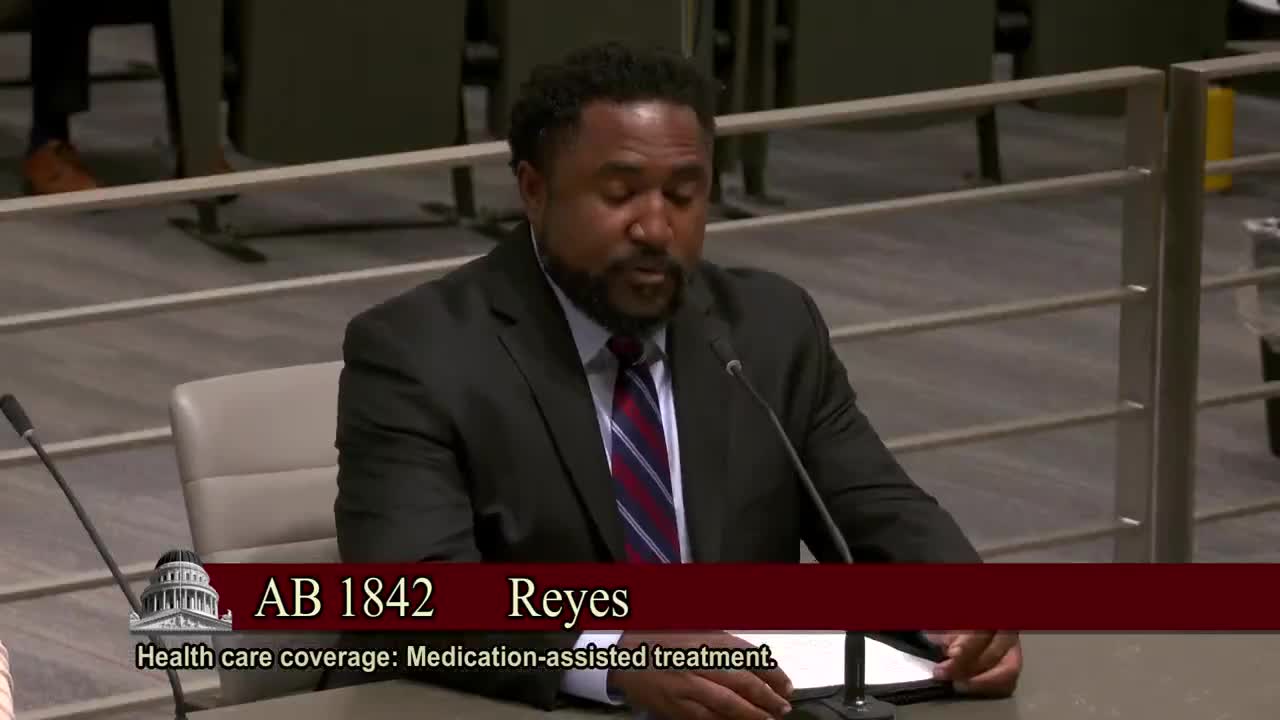 12MIN
Senate Standing Committee on Health
 11MIN
Assembly Standing Committee on Health
Bill Author
Bill Co-Author(s):