AB 1979: Doxing Victims Recourse Act.
- Session Year: 2023-2024
- House: Assembly
- Latest Version Date: 2024-09-25
Current Status:
Passed
(2024-09-25: Chaptered by Secretary of State - Chapter 557, Statutes of 2024.)
Introduced
In Committee
First Chamber
In Committee
Second Chamber
Enacted
Existing law makes it a crime for a person who, with the intent to place another person in reasonable fear for that other persons safety, or the safety of the other persons immediate family, by means of an electronic communication device, and without consent of the other person, and for the purpose of imminently causing that other person unwanted contact, injury, or harassment by a third party, distributes personal identifying information that would be likely to incite or produce that unlawful action. Existing law makes this a misdemeanor punishable by up to one year in a county jail or by a fine of not more than $1,000.
This bill would create a private cause of action against a person who doxes, as defined, another person. The bill would entitle a prevailing plaintiff who suffers harm as a result of being doxed to specified damages, and would authorize the court to order equitable relief, as specified, and injunctive relief maintaining the confidentiality of a plaintiff using a pseudonym instead of their true name. The bill would authorize a plaintiff to proceed using a pseudonym and would require the plaintiff to file a confidential information form, as prescribed. The bill would require the court to keep the plaintiffs name and excluded or redacted characteristics confidential, as specified, and, upon request of the plaintiff, limit access to court records filed under these provisions to specified individuals. The bill would require the Judicial Council, on or before January 1, 2026, to adopt or revise as appropriate rules and forms to implement specified provisions.
Existing law requires a court or judge, on granting an injunction, to require an undertaking on the part of the applicant sufficient to cover certain damages the party enjoined may sustain by reason of the injunction, if the court finally decides that the applicant was not entitled to the injunction. Existing law exempts from the undertaking requirement certain persons seeking an injunction, as specified.
This bill would additionally exempt from the undertaking requirement an applicant seeking an injunction ordering the defendant to cease doxing activities.
Existing constitutional provisions require that a statute that limits the right of access to the meetings of public bodies or the writings of public officials and agencies be adopted with findings demonstrating the interest protected by the limitation and the need for protecting that interest.
This bill would make legislative findings to that effect.
Existing law makes it a crime for a person who, with the intent to place another person in reasonable fear for that other persons safety, or the safety of the other persons immediate family, by means of an electronic communication device, and without consent of the other person, and for the purpose of imminently causing that other person unwanted contact, injury, or harassment by a third party, distributes personal identifying information that would be likely to incite or produce that unlawful action. Existing law makes this a misdemeanor punishable by up to one year in a county jail or by a fine of not more than $1,000.
This bill would create a private cause of action against a person who doxes, as defined, another person. The bill would entitle a prevailing plaintiff who suffers harm as a result of being doxed to specified damages, and would authorize the court to order equitable relief, as specified, and injunctive relief maintaining the confidentiality of a plaintiff using a pseudonym instead of their true name. The bill would authorize a plaintiff to proceed using a pseudonym and would require the plaintiff to file a confidential information form, as prescribed. The bill would require the court to keep the plaintiffs name and excluded or redacted characteristics confidential, as specified, and, upon request of the plaintiff, limit access to court records filed under these provisions to specified individuals. The bill would require the Judicial Council Council, on or before January 1, 2026, to adopt or revise as appropriate rules and forms to implement specified provisions.
Existing law requires a court or judge, on granting an injunction, to require an undertaking on the part of the applicant sufficient to cover certain damages the party enjoined may sustain by reason of the injunction, if the court finally decides that the applicant was not entitled to the injunction. Existing law exempts from the undertaking requirement certain persons seeking an injunction, as specified.
This bill would additionally exempt from the undertaking requirement an applicant seeking an injunction ordering the defendant to cease doxing activities.
Existing constitutional provisions require that a statute that limits the right of access to the meetings of public bodies or the writings of public officials and agencies be adopted with findings demonstrating the interest protected by the limitation and the need for protecting that interest.
This bill would make legislative findings to that effect.
Existing law makes it a crime for a person who, with the intent to place another person in reasonable fear for that other persons safety, or the safety of the other persons immediate family, by means of an electronic communication device, and without consent of the other person, and for the purpose of imminently causing that other person unwanted contact, injury, or harassment by a third party, distributes personal identifying information that would be likely to incite or produce that unlawful action. Existing law makes this a misdemeanor punishable by up to one year in a county jail or by a fine of not more than $1,000.
This bill would create a private cause of action against a person who doxes, as defined, another person. The bill would entitle a prevailing plaintiff who suffers harm as a result of being doxed to specified damages, and would authorize the court to order equitable relief, as specified, and injunctive relief maintaining the confidentiality of a plaintiff using a pseudonym instead of their true name. The bill would authorize a plaintiff to proceed using a pseudonym and would require the plaintiff to file a confidential information form, as prescribed. The bill would require the court to keep the plaintiffs name and excluded or redacted characteristics confidential, as specified, and, upon request of the plaintiff, limit access to court records filed under these provisions to specified individuals. The bill would require the Judicial Council to adopt or revise as appropriate rules and forms to implement specified provisions.
Existing law requires a court or judge, on granting an injunction, to require an undertaking on the part of the applicant sufficient to cover certain damages the party enjoined may sustain by reason of the injunction, if the court finally decides that the applicant was not entitled to the injunction. Existing law exempts from the undertaking requirement certain persons seeking an injunction, as specified.
This bill would additionally exempt from the undertaking requirement an applicant seeking an injunction ordering the defendant to cease doxing activities.
Existing constitutional provisions require that a statute that limits the right of access to the meetings of public bodies or the writings of public officials and agencies be adopted with findings demonstrating the interest protected by the limitation and the need for protecting that interest.
This bill would make legislative findings to that effect.
Existing law makes any person who willfully deceives another with the intent to induce the other person to alter their position to their injury or risk, liable for any damage that the other person suffers as a result.This bill would make nonsubstantive changes to that provision.Existing law makes any person who willfully deceives another with the intent to induce the other person to alter their position to their injury or risk, liable for any damage that the other person suffers as a result.
This bill would make nonsubstantive changes to that provision.
This act shall be known, and may be cited, as the Doxing Victims Recourse Act.
SEC. 2.Section 1708.89 is added to the Civil Code, to read:1708.89.(a)For purposes of this section, the following terms apply:
(1)Doxes means an act when a person, with intent to place another person in reasonable fear for their safety, or the safety of the other persons immediate family, by means of an electronic communication device, and without consent of the other person, and for the purpose of imminently causing that other person unwanted physical contact, injury, or harassment, by a third party, electronically distributes, publishes, emails, hyperlinks, or makes available for downloading, personal identifying information, including, but not limited to, a digital image of another person, or an electronic message of a harassing nature about another person, which would be likely to incite or produce that unlawful action.
(2)Electronic communication has the same meaning as the term is defined in paragraph (12) of Section 2510 of Title 18 of the United States Code.
(3)Electronic communication device includes, but is not limited to, telephones, cell phones, computers, internet web pages or websites, internet phones, hybrid cellular/wireless devices, personal digital assistants, video recorders, fax machines, or pagers.
(4)Harassment means a knowing and willful course of conduct directed at a specific person that a reasonable person would consider as seriously alarming, seriously annoying, seriously tormenting, or seriously terrorizing the person and that serves no legitimate purpose.
(5)Identifying characteristics means name or any part thereof, address or any part thereof, city or unincorporated area of residence, age, marital status, relationship to defendant, and race or ethnic background, telephone number, email address, social media profiles, online identifiers, contact information, or any other information, including images of the plaintiff, from which the plaintiffs identity can be discerned.
(6)Of a harassing nature means of a nature that a reasonable person would consider as seriously alarming, seriously annoying, seriously tormenting, or seriously terrorizing of the person and that serves no legitimate purpose.
(7)Online identifiers means any personally identifying information or signifiers that would tie an individual to a particular electronic service, device, or internet application, website, or platform account, including, but not limited to, access names, access codes, account names, aliases, avatars, credentials, gamer tags, display names, handles, login names, member names, online identities, pseudonyms, screen names, user accounts, user identifications, usernames, Uniform Resource Locators (URLs), domain names, Internet Protocol (IP) addresses, and media access control (MAC) addresses.
(b)A private cause of action lies against a person who doxes another person.
(c)A prevailing plaintiff who suffers harm as a result of being doxed in violation of subdivision (b) may recover any of the following:
(1)Economic and noneconomic damages proximately caused by being doxed, including, but not limited to, damages for physical harm, emotional distress, or property damage.
(2)Statutory damages of a sum of not less than one thousand five hundred dollars ($1,500) but not more than thirty thousand dollars ($30,000).
(3)Punitive damages.
(4)Upon the court holding a properly noticed hearing, reasonable attorneys fees and costs to the prevailing plaintiff.
(d)In addition to any other relief available at law, the court may order equitable relief against the person violating subdivision (b), including a temporary restraining order, or a preliminary injunction or a permanent injunction ordering the defendant to cease doxing activities. The court may grant injunctive relief maintaining the confidentiality of a plaintiff using a pseudonym as provided in subdivision (e).
(e)(1)A plaintiff in a civil proceeding pursuant to subdivision (b) may proceed using a pseudonym, either John Doe, Jane Doe, or Doe, for the true name of the plaintiff and may exclude or redact from all pleadings and documents filed in the action other identifying characteristics of the plaintiff. A plaintiff who proceeds using a pseudonym and excluding or redacting identifying characteristics as provided in this section shall file with the court and serve upon the defendant a confidential information form for this purpose that includes the plaintiffs name and other identifying characteristics excluded or redacted. The court shall keep the plaintiffs name and excluded or redacted characteristics confidential.
(2)In cases where a plaintiff proceeds using a pseudonym under this section, the following applies:
(A)All other parties and their agents and attorneys shall use this pseudonym in all pleadings, discovery documents, and other documents filed or served in the action, and at hearings, trial, and other court proceedings that are open to the public.
(B)(i)Any party filing a pleading, discovery document, or other document in the action shall exclude or redact any identifying characteristics of the plaintiff from the pleading, discovery document, or other document, except for a confidential information form filed pursuant to this subdivision.
(ii)A party excluding or redacting identifying characteristics as provided in this section shall file with the court and serve upon all other parties a confidential information form that includes the plaintiffs name and other identifying characteristics excluded or redacted. The court shall keep the plaintiffs name and excluded or redacted characteristics confidential.
(C)All court decisions, orders, petitions, discovery documents, and other documents shall be worded so as to protect the name or other identifying characteristics of the plaintiff from public revelation.
(3)The responsibility for excluding or redacting the name or identifying characteristics of the plaintiff from all documents filed with the court shall be the responsibility of the parties and their attorneys. This section does not require the court to review pleadings or other papers for compliance with this subdivision.
(4)Upon request of the plaintiff, the court shall limit access to the court records in an action filed under this section to the following individuals:
(A)A party to the action, including a partys attorney.
(B)A person by order of the court on a showing of good cause for access.
(C)A person 60 days after judgment is entered unless the court grants a plaintiffs motion to seal records pursuant to Chapter 3 of Division 4 of Title 2 of the California Rules of Court.
(f)In an action pursuant to this section, the plaintiff shall state in the caption of the complaint ACTION BASED ON CIVIL CODE SECTION 1708.89.
(g)This section does not alter or negate any rights, obligations, or immunities of an interactive service provider under Section 230 of Title 47 of the United States Code. This section does not limit or preclude a plaintiff from securing or recovering any other available remedy.
(h)On or before January 1, 2026, the Judicial Council shall adopt or revise as appropriate rules and forms to implement subdivision (e).
(i)This section shall not apply against a person who solely does either of the following:
(1)Provide a persons personal identifying information or sensitive personal information in connection with the reporting of criminal activity to an employee of a law enforcement agency or with any lawfully authorized investigative, protective, or intelligence activity of any law enforcement agency or of an intelligence agency of the United States and the person making the report reasonably believes it is true.
(2)Disseminate the personally identifiable information for the purpose of, or in connection with, the reporting of conduct reasonably believed to be unlawful.
(j)The provisions of this section are severable. If any provision of this section or its application is held invalid, that invalidity shall not affect other provisions or applications that can be given effect without the invalid provision or application.
SEC. 3.Section 529 of the Code of Civil Procedure is amended to read:529.(a)On granting an injunction, the court or judge must require an undertaking on the part of the applicant to the effect that the applicant will pay to the party enjoined any damages, not exceeding an amount to be specified, the party may sustain by reason of the injunction, if the court finally decides that the applicant was not entitled to the injunction. Within five days after the service of the injunction, the person enjoined may object to the undertaking. If the court determines that the applicants undertaking is insufficient and a sufficient undertaking is not filed within the time required by statute, the order granting the injunction must be dissolved.
(b)This section does not apply to any of the following persons:
(1)Either spouse against the other in a proceeding for legal separation or dissolution of marriage.
(2)The applicant for an order described in Division 10 (commencing with Section 6200) of the Family Code.
(3)A public entity or officer described in Section 995.220.
(4)An applicant requesting an injunction under subdivision (d) of Section 1708.85 of the Civil Code.
(5)An applicant requesting an injunction under subdivision (d) of Section 1708.89 of the Civil Code.
SEC. 4.The Legislature finds and declares that Section 2 of this act, which adds Section 1708.89 to the Civil Code, imposes a limitation on the publics right of access to the meetings of public bodies or the writings of public officials and agencies within the meaning of Section 3 of Article I of the California Constitution. Pursuant to that constitutional provision, the Legislature makes the following findings to demonstrate the interest protected by this limitation and the need for protecting that interest:
It is in the best interest for the public to keep these records confidential in order to protect the identity of any victim, or their immediate family, whose privacy was violated by doxing activities, which involved the distribution of personal identifying information, without the consent of the victim, that placed the victim, or their immediate family, in reasonable fear for their safety.
This act shall be known, and may be cited, as the Doxing Victims Recourse Act.
SEC. 2.Section 1708.89 is added to the Civil Code, to read:1708.89.(a)For purposes of this section, the following terms apply:
(1)Doxes means an act when a person, with intent to place another person in reasonable fear for their safety, or the safety of the other persons immediate family, by means of an electronic communication device, and without consent of the other person, and for the purpose of imminently causing that other person unwanted physical contact, injury, or harassment, by a third party, electronically distributes, publishes, emails, hyperlinks, or makes available for downloading, personal identifying information, including, but not limited to, a digital image of another person, or an electronic message of a harassing nature about another person, which would be likely to incite or produce that unlawful action.
(2)Electronic communication has the same meaning as the term is defined in paragraph (12) of Section 2510 of Title 18 of the United States Code.
(3)Electronic communication device includes, but is not limited to, telephones, cell phones, computers, internet web pages or websites, internet phones, hybrid cellular/wireless devices, personal digital assistants, video recorders, fax machines, or pagers.
(4)Harassment means a knowing and willful course of conduct directed at a specific person that a reasonable person would consider as seriously alarming, seriously annoying, seriously tormenting, or seriously terrorizing the person and that serves no legitimate purpose.
(5)Identifying characteristics means name or any part thereof, address or any part thereof, city or unincorporated area of residence, age, marital status, relationship to defendant, and race or ethnic background, telephone number, email address, social media profiles, online identifiers, contact information, or any other information, including images of the plaintiff, from which the plaintiffs identity can be discerned.
(6)Of a harassing nature means of a nature that a reasonable person would consider as seriously alarming, seriously annoying, seriously tormenting, or seriously terrorizing of the person and that serves no legitimate purpose.
(7)Online identifiers means any personally identifying information or signifiers that would tie an individual to a particular electronic service, device, or internet application, website, or platform account, including, but not limited to, access names, access codes, account names, aliases, avatars, credentials, gamer tags, display names, handles, login names, member names, online identities, pseudonyms, screen names, user accounts, user identifications, usernames, Uniform Resource Locators (URLs), domain names, Internet Protocol (IP) addresses, and media access control (MAC) addresses.
(b)A private cause of action lies against a person who doxes another person.
(c)A prevailing plaintiff who suffers harm as a result of being doxed in violation of subdivision (b) may recover any of the following:
(1)Economic and noneconomic damages proximately caused by being doxed, including, but not limited to, damages for physical harm, emotional distress, or property damage.
(2)Statutory damages of a sum of not less than one thousand five hundred dollars ($1,500) but not more than thirty thousand dollars ($30,000).
(3)Punitive damages.
(4)Upon the court holding a properly noticed hearing, reasonable attorneys fees and costs to the prevailing plaintiff.
(d)In addition to any other relief available at law, the court may order equitable relief against the person violating subdivision (b), including a temporary restraining order, or a preliminary injunction or a permanent injunction ordering the defendant to cease doxing activities. The court may grant injunctive relief maintaining the confidentiality of a plaintiff using a pseudonym as provided in subdivision (e).
(e)(1)A plaintiff in a civil proceeding pursuant to subdivision (b) may proceed using a pseudonym, either John Doe, Jane Doe, or Doe, for the true name of the plaintiff and may exclude or redact from all pleadings and documents filed in the action other identifying characteristics of the plaintiff. A plaintiff who proceeds using a pseudonym and excluding or redacting identifying characteristics as provided in this section shall file with the court and serve upon the defendant a confidential information form for this purpose that includes the plaintiffs name and other identifying characteristics excluded or redacted. The court shall keep the plaintiffs name and excluded or redacted characteristics confidential.
(2)In cases where a plaintiff proceeds using a pseudonym under this section, the following applies:
(A)All other parties and their agents and attorneys shall use this pseudonym in all pleadings, discovery documents, and other documents filed or served in the action, and at hearings, trial, and other court proceedings that are open to the public.
(B)(i)Any party filing a pleading, discovery document, or other document in the action shall exclude or redact any identifying characteristics of the plaintiff from the pleading, discovery document, or other document, except for a confidential information form filed pursuant to this subdivision.
(ii)A party excluding or redacting identifying characteristics as provided in this section shall file with the court and serve upon all other parties a confidential information form that includes the plaintiffs name and other identifying characteristics excluded or redacted. The court shall keep the plaintiffs name and excluded or redacted characteristics confidential.
(C)All court decisions, orders, petitions, discovery documents, and other documents shall be worded so as to protect the name or other identifying characteristics of the plaintiff from public revelation.
(3)The responsibility for excluding or redacting the name or identifying characteristics of the plaintiff from all documents filed with the court shall be the responsibility of the parties and their attorneys. This section does not require the court to review pleadings or other papers for compliance with this subdivision.
(4)Upon request of the plaintiff, the court shall limit access to the court records in an action filed under this section to the following individuals:
(A)A party to the action, including a partys attorney.
(B)A person by order of the court on a showing of good cause for access.
(C)A person 60 days after judgment is entered unless the court grants a plaintiffs motion to seal records pursuant to Chapter 3 of Division 4 of Title 2 of the California Rules of Court.
(f)In an action pursuant to this section, the plaintiff shall state in the caption of the complaint ACTION BASED ON CIVIL CODE SECTION 1708.89.
(g)This section does not alter or negate any rights, obligations, or immunities of an interactive service provider under Section 230 of Title 47 of the United States Code. This section does not limit or preclude a plaintiff from securing or recovering any other available remedy.
(h)The On or before January 1, 2026, the Judicial Council shall adopt or revise as appropriate rules and forms to implement subdivision (e).
(i)This section shall not apply against a person who solely does either of the following:
(1)Provide a persons personal identifying information or sensitive personal information in connection with the reporting of criminal activity to an employee of a law enforcement agency or with any lawfully authorized investigative, protective, or intelligence activity of any law enforcement agency or of an intelligence agency of the United States and the person making the report reasonably believes it is true.
(2)Disseminate the personally identifiable information for the purpose of, or in connection with, the reporting of conduct reasonably believed to be unlawful.
(j)The provisions of this section are severable. If any provision of this section or its application is held invalid, that invalidity shall not affect other provisions or applications that can be given effect without the invalid provision or application.
SEC. 3.Section 529 of the Code of Civil Procedure is amended to read:529.(a)On granting an injunction, the court or judge must require an undertaking on the part of the applicant to the effect that the applicant will pay to the party enjoined any damages, not exceeding an amount to be specified, the party may sustain by reason of the injunction, if the court finally decides that the applicant was not entitled to the injunction. Within five days after the service of the injunction, the person enjoined may object to the undertaking. If the court determines that the applicants undertaking is insufficient and a sufficient undertaking is not filed within the time required by statute, the order granting the injunction must be dissolved.
(b)This section does not apply to any of the following persons:
(1)Either spouse against the other in a proceeding for legal separation or dissolution of marriage.
(2)The applicant for an order described in Division 10 (commencing with Section 6200) of the Family Code.
(3)A public entity or officer described in Section 995.220.
(4)An applicant requesting an injunction under subdivision (d) of Section 1708.85 of the Civil Code.
(5)An applicant requesting an injunction under subdivision (d) of Section 1708.89 of the Civil Code.
SEC. 4.The Legislature finds and declares that Section 2 of this act, which adds Section 1708.89 to the Civil Code, imposes a limitation on the publics right of access to the meetings of public bodies or the writings of public officials and agencies within the meaning of Section 3 of Article I of the California Constitution. Pursuant to that constitutional provision, the Legislature makes the following findings to demonstrate the interest protected by this limitation and the need for protecting that interest:
It is in the best interest for the public to keep these records confidential in order to protect the identity of any victim, or their immediate family, whose privacy was violated by doxing activities, which involved the distribution of personal identifying information, without the consent of the victim, that placed the victim, or their immediate family, in reasonable fear for their safety.
This act shall be known, and may be cited, as the Doxing Victims Recourse Act.
SEC. 2.Section 1708.89 is added to the Civil Code, to read:1708.89.(a)For purposes of this section, the following terms apply:
(1)Doxes means an act when a person, with intent to place another person in reasonable fear for their safety, or the safety of the other persons immediate family, by means of an electronic communication device, and without consent of the other person, and for the purpose of imminently causing that other person unwanted physical contact, injury, or harassment, by a third party, electronically distributes, publishes, emails, hyperlinks, or makes available for downloading, personal identifying information, including, but not limited to, a digital image of another person, or an electronic message of a harassing nature about another person, which would be likely to incite or produce that unlawful action.
(2)Electronic communication has the same meaning as the term is defined in paragraph (12) of Section 2510 of Title 18 of the United States Code.
(3)Electronic communication device includes, but is not limited to, telephones, cell phones, computers, internet web pages or websites, internet phones, hybrid cellular/wireless devices, personal digital assistants, video recorders, fax machines, or pagers.
(4)Harassment means a knowing and willful course of conduct directed at a specific person that a reasonable person would consider as seriously alarming, seriously annoying, seriously tormenting, or seriously terrorizing the person and that serves no legitimate purpose.
(5)Identifying characteristics means name or any part thereof, address or any part thereof, city or unincorporated area of residence, age, marital status, relationship to defendant, and race or ethnic background, telephone number, email address, social media profiles, online identifiers, contact information, or any other information, including images of the plaintiff, from which the plaintiffs identity can be discerned.
(6)Of a harassing nature means of a nature that a reasonable person would consider as seriously alarming, seriously annoying, seriously tormenting, or seriously terrorizing of the person and that serves no legitimate purpose.
(7)Online identifiers means any personally identifying information or signifiers that would tie an individual to a particular electronic service, device, or internet application, website, or platform account, including, but not limited to, access names, access codes, account names, aliases, avatars, credentials, gamer tags, display names, handles, login names, member names, online identities, pseudonyms, screen names, user accounts, user identifications, usernames, Uniform Resource Locators (URLs), domain names, Internet Protocol (IP) addresses, and media access control (MAC) addresses.
(b)A private cause of action lies against a person who doxes another person.
(c)A prevailing plaintiff who suffers harm as a result of being doxed in violation of subdivision (b) may recover any of the following:
(1)Economic and noneconomic damages proximately caused by being doxed, including, but not limited to, damages for physical harm, emotional distress, or property damage.
(2)Upon request of the plaintiff at any time before the final judgment is rendered, the plaintiff may, in lieu of those damages specified in paragraph (1), recover an award of statutory Statutory damages of a sum of not less than one thousand five hundred dollars ($1,500) but not more than thirty thousand dollars ($30,000).
(3)Punitive damages.
(4)Upon the court holding a properly noticed hearing, reasonable attorneys fees and costs to the prevailing plaintiff.
(d)In addition to any other relief available at law, the court may order equitable relief against the person violating subdivision (b), including a temporary restraining order, or a preliminary injunction or a permanent injunction ordering the defendant to cease doxing activities. The court may grant injunctive relief maintaining the confidentiality of a plaintiff using a pseudonym as provided in subdivision (e).
(e)(1)A plaintiff in a civil proceeding pursuant to subdivision (b) may proceed using a pseudonym, either John Doe, Jane Doe, or Doe, for the true name of the plaintiff and may exclude or redact from all pleadings and documents filed in the action other identifying characteristics of the plaintiff. A plaintiff who proceeds using a pseudonym and excluding or redacting identifying characteristics as provided in this section shall file with the court and serve upon the defendant a confidential information form for this purpose that includes the plaintiffs name and other identifying characteristics excluded or redacted. The court shall keep the plaintiffs name and excluded or redacted characteristics confidential.
(2)In cases where a plaintiff proceeds using a pseudonym under this section, the following applies:
(A)All other parties and their agents and attorneys shall use this pseudonym in all pleadings, discovery documents, and other documents filed or served in the action, and at hearings, trial, and other court proceedings that are open to the public.
(B)(i)Any party filing a pleading, discovery document, or other document in the action shall exclude or redact any identifying characteristics of the plaintiff from the pleading, discovery document, or other document, except for a confidential information form filed pursuant to this subdivision.
(ii)A party excluding or redacting identifying characteristics as provided in this section shall file with the court and serve upon all other parties a confidential information form that includes the plaintiffs name and other identifying characteristics excluded or redacted. The court shall keep the plaintiffs name and excluded or redacted characteristics confidential.
(C)All court decisions, orders, petitions, discovery documents, and other documents shall be worded so as to protect the name or other identifying characteristics of the plaintiff from public revelation.
(3)The responsibility for excluding or redacting the name or identifying characteristics of the plaintiff from all documents filed with the court shall be the responsibility of the parties and their attorneys. This section does not require the court to review pleadings or other papers for compliance with this subdivision.
(4)Upon request of the plaintiff, the court shall limit access to the court records in an action filed under this section to the following individuals:
(A)A party to the action, including a partys attorney.
(B)A person by order of the court on a showing of good cause for access.
(C)A person 60 days after judgment is entered unless the court grants a plaintiffs motion to seal records pursuant to Chapter 3 of Division 4 of Title 2 of the California Rules of Court.
(f)In an action pursuant to this section, the plaintiff shall state in the caption of the complaint ACTION BASED ON CIVIL CODE SECTION 1708.89.
(g)This section does not alter or negate any rights, obligations, or immunities of an interactive service provider under Section 230 of Title 47 of the United States Code. This section does not limit or preclude a plaintiff from securing or recovering any other available remedy.
(h)The Judicial Council shall adopt or revise as appropriate rules and forms to implement subdivision (e).
(i)This section shall not apply against a person who solely does either of the following:
(1)Provide a persons personal identifying information or sensitive personal information in connection with the reporting of criminal activity to an employee of a law enforcement agency or with any lawfully authorized investigative, protective, or intelligence activity of any law enforcement agency or of an intelligence agency of the United States and the person making the report reasonably believes it is true.
(2)Disseminate the personally identifiable information for the purpose of, or in connection with, the reporting of conduct reasonably believed to be unlawful.
(j)The provisions of this section are severable. If any provision of this section or its application is held invalid, that invalidity shall not affect other provisions or applications that can be given effect without the invalid provision or application.
SEC. 3.Section 529 of the Code of Civil Procedure is amended to read:529.(a)On granting an injunction, the court or judge must require an undertaking on the part of the applicant to the effect that the applicant will pay to the party enjoined any damages, not exceeding an amount to be specified, the party may sustain by reason of the injunction, if the court finally decides that the applicant was not entitled to the injunction. Within five days after the service of the injunction, the person enjoined may object to the undertaking. If the court determines that the applicants undertaking is insufficient and a sufficient undertaking is not filed within the time required by statute, the order granting the injunction must be dissolved.
(b)This section does not apply to any of the following persons:
(1)Either spouse against the other in a proceeding for legal separation or dissolution of marriage.
(2)The applicant for an order described in Division 10 (commencing with Section 6200) of the Family Code.
(3)A public entity or officer described in Section 995.220.
(4)An applicant requesting an injunction under subdivision (d) of Section 1708.85 of the Civil Code.
(5)An applicant requesting an injunction under subdivision (d) of Section 1708.89 of the Civil Code.
SEC. 4.The Legislature finds and declares that Section 2 of this act, which adds Section 1708.89 to the Civil Code, imposes a limitation on the publics right of access to the meetings of public bodies or the writings of public officials and agencies within the meaning of Section 3 of Article I of the California Constitution. Pursuant to that constitutional provision, the Legislature makes the following findings to demonstrate the interest protected by this limitation and the need for protecting that interest:
It is in the best interest for the public to keep these records confidential in order to protect the identity of any victim, or their immediate family, whose privacy was violated by doxing activities, which involved the distribution of personal identifying information, without the consent of the victim, that placed the victim, or their immediate family, in reasonable fear for their safety.
This act shall be known, and may be cited, as the Doxing Victims Recourse Act.
SEC. 2.Section 1708.89 is added to the Civil Code, to read:1708.89.(a)For purposes of this section, the following terms apply:
(1)Doxes means an act when a person, with intent to place another person in reasonable fear for their safety, or the safety of the other persons immediate family, by means of an electronic communication device, and without consent of the other person, and for the purpose of imminently causing that other person unwanted physical contact, injury, or harassment, by a third party, electronically distributes, publishes, emails, hyperlinks, or makes available for downloading, personal identifying information, including, but not limited to, a digital image of another person, or an electronic message of a harassing nature about another person, which would be likely to incite or produce that unlawful action.
(2)Electronic communication has the same meaning as the term is defined in paragraph (12) of Section 2510 of Title 18 of the United States Code.
(3)Electronic communication device includes, but is not limited to, telephones, cell phones, computers, internet web pages or websites, internet phones, hybrid cellular/wireless devices, personal digital assistants, video recorders, fax machines, or pagers.
(4)Harassment means a knowing and willful course of conduct directed at a specific person that a reasonable person would consider as seriously alarming, seriously annoying, seriously tormenting, or seriously terrorizing the person and that serves no legitimate purpose.
(5)Identifying characteristics means name or any part thereof, address or any part thereof, city or unincorporated area of residence, age, marital status, relationship to defendant, and race or ethnic background, telephone number, email address, social media profiles, online identifiers, contact information, or any other information, including images of the plaintiff, from which the plaintiffs identity can be discerned.
(6)Of a harassing nature means of a nature that a reasonable person would consider as seriously alarming, seriously annoying, seriously tormenting, or seriously terrorizing of the person and that serves no legitimate purpose.
(7)Online identifiers means any personally identifying information or signifiers that would tie an individual to a particular electronic service, device, or internet application, website, or platform account, including, but not limited to, access names, access codes, account names, aliases, avatars, credentials, gamer tags, display names, handles, login names, member names, online identities, pseudonyms, screen names, user accounts, user identifications, usernames, Uniform Resource Locators (URLs), domain names, Internet Protocol (IP) addresses, and media access control (MAC) addresses.
(b)A private cause of action lies against a person who doxes another person.
(c)A prevailing plaintiff who suffers harm as a result of being doxed in violation of subdivision (b) may recover any of the following:
(1)Economic and noneconomic damages proximately caused by being doxed, including, but not limited to, damages for physical harm, emotional distress, or property damage.
(2)Upon request of the plaintiff at any time before the final judgment is rendered, the plaintiff may, in lieu of those damages specified in paragraph (1), recover an award of statutory damages of a sum of not less than one thousand five hundred dollars ($1,500) but not more than thirty thousand dollars ($30,000).
(3)Punitive damages.
(4)Upon the court holding a properly noticed hearing, reasonable attorneys fees and costs to the prevailing plaintiff.
(d)In addition to any other relief available at law, the court may order equitable relief against the person violating subdivision (b), including a temporary restraining order, or a preliminary injunction or a permanent injunction ordering the defendant to cease doxing activities. The court may grant injunctive relief maintaining the confidentiality of a plaintiff using a pseudonym as provided in subdivision (e).
(e)(1)A plaintiff in a civil proceeding pursuant to subdivision (b) may proceed using a pseudonym, either John Doe, Jane Doe, or Doe, for the true name of the plaintiff and may exclude or redact from all pleadings and documents filed in the action other identifying characteristics of the plaintiff. A plaintiff who proceeds using a pseudonym and excluding or redacting identifying characteristics as provided in this section shall file with the court and serve upon the defendant a confidential information form for this purpose that includes the plaintiffs name and other identifying characteristics excluded or redacted. The court shall keep the plaintiffs name and excluded or redacted characteristics confidential.
(2)In cases where a plaintiff proceeds using a pseudonym under this section, the following applies:
(A)All other parties and their agents and attorneys shall use this pseudonym in all pleadings, discovery documents, and other documents filed or served in the action, and at hearings, trial, and other court proceedings that are open to the public.
(B)(i)Any party filing a pleading, discovery document, or other document in the action shall exclude or redact any identifying characteristics of the plaintiff from the pleading, discovery document, or other document, except for a confidential information form filed pursuant to this subdivision.
(ii)A party excluding or redacting identifying characteristics as provided in this section shall file with the court and serve upon all other parties a confidential information form that includes the plaintiffs name and other identifying characteristics excluded or redacted. The court shall keep the plaintiffs name and excluded or redacted characteristics confidential.
(C)All court decisions, orders, petitions, discovery documents, and other documents shall be worded so as to protect the name or other identifying characteristics of the plaintiff from public revelation.
(3)The responsibility for excluding or redacting the name or identifying characteristics of the plaintiff from all documents filed with the court shall be the responsibility of the parties and their attorneys. This section does not require the court to review pleadings or other papers for compliance with this subdivision.
(4)Upon request of the plaintiff, the court shall limit access to the court records in an action filed under this section to the following individuals:
(A)A party to the action, including a partys attorney.
(B)A person by order of the court on a showing of good cause for access.
(C)A person 60 days after judgment is entered unless the court grants a plaintiffs motion to seal records pursuant to Chapter 3 of Division 4 of Title 2 of the California Rules of Court.
(f)In an action pursuant to this section, the plaintiff shall state in the caption of the complaint ACTION BASED ON CIVIL CODE SECTION 1708.89.
(g)This section does not alter or negate any rights, obligations, or immunities of an interactive service provider under Section 230 of Title 47 of the United States Code. This section does not limit or preclude a plaintiff from securing or recovering any other available remedy.
(h)The Judicial Council shall adopt or revise as appropriate rules and forms to implement subdivision (e).
(i)This section shall not apply against a person who solely does either of the following:
(1)Provide a persons personal identifying information or sensitive personal information in connection with the reporting of criminal activity to an employee of a law enforcement agency or with any lawfully authorized investigative, protective, or intelligence activity of any law enforcement agency or of an intelligence agency of the United States and the person making the report reasonably believes it is true.
(2)Disseminate the personally identifiable information for the purpose of, or in connection with, the reporting of conduct reasonably believed to be unlawful.
(j)The provisions of this section are severable. If any provision of this section or its application is held invalid, that invalidity shall not affect other provisions or applications that can be given effect without the invalid provision or application.
SEC. 3.Section 529 of the Code of Civil Procedure is amended to read:529.(a)On granting an injunction, the court or judge must require an undertaking on the part of the applicant to the effect that the applicant will pay to the party enjoined any damages, not exceeding an amount to be specified, the party may sustain by reason of the injunction, if the court finally decides that the applicant was not entitled to the injunction. Within five days after the service of the injunction, the person enjoined may object to the undertaking. If the court determines that the applicants undertaking is insufficient and a sufficient undertaking is not filed within the time required by statute, the order granting the injunction must be dissolved.
(b)This section does not apply to any of the following persons:
(1)Either spouse against the other in a proceeding for legal separation or dissolution of marriage.
(2)The applicant for an order described in Division 10 (commencing with Section 6200) of the Family Code.
(3)A public entity or officer described in Section 995.220.
(4)An applicant requesting an injunction under subdivision (d) of Section 1708.85 of the Civil Code.
(5)An applicant requesting an injunction under subdivision (d) of Section 1708.89 of the Civil Code.
SEC. 4.The Legislature finds and declares that Section 2 of this act, which adds Section 1708.89 to the Civil Code, imposes a limitation on the publics right of access to the meetings of public bodies or the writings of public officials and agencies within the meaning of Section 3 of Article I of the California Constitution. Pursuant to that constitutional provision, the Legislature makes the following findings to demonstrate the interest protected by this limitation and the need for protecting that interest:
It is in the best interest for the public to keep these records confidential in order to protect the identity of any victim, or their immediate family, whose privacy was violated by doxing activities, which involved the distribution of personal identifying information, without the consent of the victim, that placed the victim, or their immediate family, in reasonable fear for their safety.
SECTION 1.Section 1709 of the Civil Code is amended to read:1709.A person who willfully deceives another with the intent to induce the other person to alter their position to their injury or risk, is liable for any damage that the other person suffers as a result.One A person who willfully deceives another with the intent to induce him the other person to alter his their position to his their injury or risk, is liable for any damage which he thereby suffers. that the other person suffers as a result.
|
Date
|
Status
|
|---|---|
| Sep 25, 2024 | Chaptered by Secretary of State - Chapter 557, Statutes of 2024. |
| Sep 25, 2024 | Approved by the Governor. |
| Sep 3, 2024 | Enrolled and presented to the Governor at 3:30 p.m. |
| Aug 26, 2024 | In Assembly. Ordered to Engrossing and Enrolling. |
| Aug 26, 2024 | Read third time. Passed. Ordered to the Assembly. (Ayes 31. Noes 5.). |
| Aug 19, 2024 | Read second time. Ordered to third reading. |
| Aug 15, 2024 | From committee: Do pass. (Ayes 4. Noes 2.) (August 15). |
| Jul 1, 2024 | In committee: Referred to suspense file. |
| Jun 19, 2024 | From committee: Do pass and re-refer to Com. on APPR. (Ayes 9. Noes 0.) (June 18). Re-referred to Com. on APPR. |
| Jun 5, 2024 | Referred to Com. on JUD. |
| May 23, 2024 | In Senate. Read first time. To Com. on RLS. for assignment. |
| May 22, 2024 | Read third time. Passed. Ordered to the Senate. (Ayes 61. Noes 1. Page 5560.) |
| May 20, 2024 | Read second time. Ordered to third reading. |
| May 16, 2024 | Read second time and amended. Ordered returned to second reading. |
| May 16, 2024 | From committee: Amend, and do pass as amended. (Ayes 11. Noes 1.) (May 16). |
| May 16, 2024 | Assembly Rule 63 suspended. |
| Apr 17, 2024 | In committee: Set, first hearing. Referred to APPR. suspense file. |
| Apr 4, 2024 | Re-referred to Com. on APPR. |
| Apr 3, 2024 | Read second time and amended. |
| Apr 2, 2024 | From committee: Amend, and do pass as amended and re-refer to Com. on APPR. (Ayes 10. Noes 1.) (April 2). |
| Mar 19, 2024 | Re-referred to Com. on JUD. |
| Mar 18, 2024 | From committee chair, with author's amendments: Amend, and re-refer to Com. on JUD. Read second time and amended. |
| Mar 18, 2024 | Referred to Com. on JUD. |
| Jan 31, 2024 | From printer. May be heard in committee March 1. |
| Jan 30, 2024 | Read first time. To print. |
|
Date
|
Description
|
Location
|
Votes
|
|
|---|---|---|---|---|
| Aug 26, 2024 | Assembly 3rd Reading AB1979 Ward et al. By Wiener | Senate Floor |
Passed |
|
| Aug 15, 2024 | Do pass | Senate Standing Committee on Appropriations |
Passed |
|
| Jul 1, 2024 | Placed on suspense file | Senate Standing Committee on Appropriations |
Passed |
|
| Jun 18, 2024 | Do pass, but first be re-referred to the Committee on [Appropriations] | Senate Standing Committee on Judiciary |
Passed |
|
| May 22, 2024 | AB 1979 Ward Assembly Third Reading | Assembly Floor |
Passed |
|
| May 16, 2024 | Do pass as amended. | Assembly Standing Committee on Appropriations |
Passed |
|
| Apr 2, 2024 | Do pass as amended and be re-referred to the Committee on [Appropriations] | Assembly Standing Committee on Judiciary |
Passed |
This list shows positions taken on this bill by organizations on the date displayed, which is linked to the original source.
Positions by individuals are not included.
|
Organization
|
Position
|
Date
|
|---|---|---|
| Anti-Defamation League | ** Support | |
| Attorney General Rob Bonta | ** Support | |
| California Democratic Party | ** Support | |
| California Legislative LGBTQ Caucus | ** Support | |
| Darrell Steinberg, Mayor Of Sacramento | ** Support | |
| Democrats for Israel – California | ** Support | |
| Democrats for Israel Los Angeles | ** Support | |
| Equality California | ** Support | |
| ETTA | ** Support | |
| Hadassah | ** Support | |
| Holocaust Museum LA | ** Support | |
| Jewish Center for Justice | ** Support | |
| Jewish Community Federation & Endowment Fund | ** Support | |
| Jewish Community Relations Council of the Bay Area | ** Support | |
| Jewish Democratic Club of Marin | ** Support | |
| Jewish Democratic Club of Solano County | ** Support | |
| Jewish Democratic Coalition of the Bay Area | ** Support | |
| Jewish Family & Children’s Services of San Francisco, the Peninsula, Marin & Sonoma Counties | ** Support | |
| Jewish Family Service of Los Angeles | ** Support | |
| Jewish Family Service of San Diego | ** Support | |
| Jewish Family Services of Silicon Valley | ** Support | |
| Jewish Federation of Greater Los Angeles | ** Support | |
| Jewish Federation of The Greater San Gabriel and Pomona Valleys | ** Support | |
| Jewish Long Beach | ** Support | |
| Jewish Public Affairs Committee Of California | ** Support | |
| Jewish Silicon Valley | ** Support | |
| JFCS Long Beach and Orange County | ** Support | |
| Progressive Zionists of California | ** Support | |
| Transfamily Support Services | ** Support | |
| TransYouth Liberation | ** Support |
SENATE RULES COMMITTEE Office of Senate Floor Analyses (916) 651-1520 Fax: (916) 327-4478 | AB 1979 |
THIRD READING
Bill No: AB 1979
Author: Ward (D) and Aguiar-Curry (D), et al.
Amended: 5/16/24 in Assembly
Vote: 21
SENATE JUDICIARY COMMITTEE: 9-0, 6/18/24
AYES: Umberg, Wilk, Allen, Ashby, Caballero, Durazo, Roth, Stern, Wahab
NO VOTE RECORDED: Laird, Niello
SENATE APPROPRIATIONS COMMITTEE: 4-2, 8/15/24
AYES: Caballero, Ashby, Becker, Wahab
NOES: Jones, Seyarto
NO VOTE RECORDED: Bradford
ASSEMBLY FLOOR: 61-1, 5/22/24 - See last page for vote
SUBJECT: Doxing Victims Recourse Act
SOURCE: Anti-Defamation League
California Legislative LGBTQ Caucus
TransFamily Support Services
TransYouth Liberation
DIGEST:
This bill provides an individual with a specific cause of action and robust civil remedies against any person who doxes, as defined, another person with the intent to place another person in reasonable fear for their or their immediate family’s safety and for the purpose of imminently causing that other person unwanted contact, injury, or harassment by a third party. This bill provides for economic and noneconomic damages, a statutory penalty anywhere from $1,500 to $30,000, punitive damages, reasonable attorney fees and costs to the prevailing plaintiff, and equitable relief. This bill authorizes a plaintiff to proceed under a pseudonym, and requires the court to keep the plaintiff’s name and excluded or redacted characteristics confidential. This bill provides that a plaintiff is exempted from the requirement to provide an undertaking when being granted an injunction.
ANALYSIS:
Existing law:
- Makes it a misdemeanor for a person to, with intent to place another person in reasonable fear for their safety, or the safety of the other person’s immediate family, by means of an electronic communication device, and without consent of the other person, and for the purpose of imminently causing that other person unwanted physical contact, injury, or harassment, by a third party, electronically distribute, publish, email, hyperlink, or make available for downloading, personal identifying information, including, but not limited to, a digital image of another person, or an electronic message of a harassing nature about another person, which would be likely to incite or produce that unlawful action. (Pen. Code § 653.2.)
- Creates a private right of action against a person who intentionally distributes a photograph or recorded image of another that exposes that person’s intimate body parts, as defined, or shows the other person engaged in specified sexual acts, without that person’s consent, knowing that the other person had a reasonable expectation that the material would remain private, if specified conditions are met. (Civ. Code § 1708.85(a)-(c).)
- Creates a private right of action against a person who intentionally distributes by any means a photograph, film, videotape, recording, or any other reproduction of another, without the other’s consent if (a) the person knew, or reasonably should have known, that the other person had a reasonable expectation that the material would remain private, (b) the distributed material exposes an intimate body part of the other person, or shows the other person engaging in an act of intercourse, oral copulation, sodomy, or other act of sexual penetration, and (c) the other person suffers general or special damages as described. (Civ. Code § 1708.85(a).)
- Allows a party to file an action anonymously or to keep names out of public records and court proceedings under certain circumstances. (Civ. Code § 3427.3 (health care patients and staff); Health & Saf. Code § 120291 (victim of intentional HIV infection); Penal Code § 293 and 293.5 (victims of sexual offenses).)
- Requires an applicant for an injunction or restraining order to make an “undertaking” (post a bond) that is sufficient to cover damages the party enjoined may sustain by reason of the injunction, if the court finally decides that the applicant was not entitled to the injunction. Exempts from the undertaking requirement certain persons seeking an injunction, as specified. (Code of Civ. Proc. § 529.)
This bill:
- Establishes a private cause of action against a person who doxes another person, and authorizes a prevailing plaintiff who suffers harm as a result of being doxed to recover any of the following:
- economic and noneconomic damages proximately caused by being doxed, including, but not limited to, damages for physical harm, emotional distress, or property damages;
- statutory damages of a sum of not less than $1,500 but not more than $30,000;
- punitive damages; and
- reasonable attorney’s fees and costs to the prevailing plaintiff, upon the court holding a properly noticed hearing.
- Authorizes a court to order equitable relief against the person who doxes another person, including a temporary restraining order, or a preliminary injunction or a permanent injunction ordering the defendant to cease doxing activities. Authorizes the court to grant injunctive relief maintaining the confidentiality of a plaintiff using a pseudonym as provided in 5) through 8), below.
- Authorizes a plaintiff in a civil proceeding described in 2), above, to proceed using a pseudonym, either John Doe, Jane Doe, or Doe, for the true name of the plaintiff and to exclude or redact from all pleadings and documents filed in the action other identifying characteristics of the plaintiff, as specified.
- Makes the above provisions severable.
- Exempts a plaintiff bringing a claim pursuant to 2) from a requirement that an applicant for an injunction or restraining order make an “undertaking” (post a bond) that is sufficient to cover damages the party enjoined may sustain by reason of the injunction, if the court finally decides that the applicant was not entitled to the injunction.
Comments
This bill seeks to address the growing and troubling trend of doxing. Doxing is generally understood to be the act of providing or publishing personally identifiable information about a person on the internet with malicious intent. Victims of doxing suffer physical injury, harassment, stalking, threats of violence and death, which causes severe emotional and psychological distress. This bill’s provisions will provide some recourse for victims to attempt to rebuild their lives and hopefully serve as a deterrent.
Doxing is understood to be the act of providing or publishing personally identifiable information, such as the home address, phone number, and name or alias, about a person on the internet generally with malicious intent. As our society becomes ever more dependent on technology and the internet, this issue will continue to exist. The person who doxes another generally does not commit the ensuing harassment—their goal in publically identifying the other person is to get others to harass the person. One example of doxing that illustrates the problem is found in the situation that happened to Tanya Gersh, a Jewish real estate agent from Montana. Ms. Gersh was doxed by Andrew Anglin, a publisher of website Daily Stormer, which experts consider to be a neo-Nazi website.[1] Ms. Gersh’s name and photos of herself and her children were posted on the website, resulting in her receiving hundreds of threatening calls, emails, and text messages, many of which were antisemitic.[2] The reason for why Ms. Gersh was targeted seems to center around a real estate deal that did not pan out with the mother of Richard Spencer, a white nationalist.[3] Ms. Gersh said that the stress of this experience “took an unfortunate toll on [her] professionally, physically and emotionally” and that the “bulk of the harassment didn’t stop until [she] filed the lawsuit,” but noted she still receives terrifying messages.[4] This fact emphasizes the utility of this bill.
This bill seeks to enact a civil cause of action for doxing. The term under the statute is defined identically to the conduct that is made illegal under Penal Code Section 653.2. This bill implicates the First Amendment and it is not inconceivable that a defendant in such a cause of action would attempt to argue that it violates the First Amendment. However, the bill is drafted to fit within the confines of prior case law around true threats, incitement to lawlessness, and “fighting words.”[5] The definition of “doxes” under the bill is the same as conduct that is already made a misdemeanor under the Penal Code.[6] The bill requires there be intent to place another in fear for their safety with the purpose of imminently causing unwanted physical contact, injury, or harassment, by a third party, when they publish personally identifying information via an electronic communication and this must be likely to incite or produce the unlawful action. The terms “harassment,” “of a harassing nature,” and “electronic communication device” also have the same definitions as under the Section 653.2 of the Penal Code.
This current measure mirrors the provisions in SB 157 (Wieckowski, Chapter 233, Statutes of 2017) regarding a plaintiff’s ability to file under a pseudonym. If a plaintiff could not have the court order the defendant to not release information about them during the case, a plaintiff would run the risk of further doxing, which could increase the harassment they are already experiencing. It is reasonable to excuse the plaintiff from further disclosing personally identifying information and requiring the court to protect this information during the pendency of the case. Existing law provides exemptions to an undertaking requirement when an injunction is granted, including for victims of revenge porn (Code of Civ. Proc. § 529). This bill seeks to grant a similar exemption to a plaintiff bringing a cause of action for doxing. This bill specifically provides that it does not alter or negate any rights, obligations, or immunities of an interactive service provider under Section 230.
FISCAL EFFECT: Appropriation: No Fiscal Com.: Yes Local: No
The Senate Appropriations Committee writes, costs (Trial Court Trust Fund, General Fund) to the courts to adjudicate cases filed under this new private cause of action. It generally costs approximately $1,000 to operate a courtroom for one hour. If 15 cases are filed statewide and each requires 10 hours of court time to adjudicate, the resulting workload cost would be $150,000. Actual costs will depend on the number of lawsuits filed and the amount of court time needed to adjudicate each suit. Although courts are not funded on the basis of workload, increased pressure on the Trial Court Trust Fund may create a need for increased funding for courts from the General Fund. The Governor’s 2024-25 budget proposes $83.1 million ongoing from the General Fund to backfill declining revenue to the Trial Court Trust Fund.
SUPPORT: (Verified 8/15/24)
Anti-Defamation League (co-source)
California Legislative LGBTQ Caucus (co-source)
TransFamily Support Services (co-source)
TransYouth Liberation (co-source)
Attorney General, Rob Bonta
Mayor Darrell Steinberg
Democrats for Israel – California
Democrats for Israel – Los Angeles
ETTA
Equality California
Hadassah
Holocaust Museum LA
California Democratic Party
Jewish Center for Justice
Jewish Democratic Coalition of the Bay Area
Jewish Community Federation & Endowment Fund
Jewish Community Relations Council of the Bay Area
Jewish Democratic Club of Marin
Jewish Democratic Club of Solano County
Jewish Family & Children's Services of San Francisco, the Peninsula, Marin & Sonoma Counties
Jewish Family Service of Los Angeles
Jewish Family Service of San Diego
Jewish Family Services of Silicon Valley
Jewish Federation of Greater Los Angeles
Jewish Federation of the Greater San Gabriel and Pomona Valleys
Jewish Long Beach
Jewish Public Affairs Committee of California
Jewish Silicon Valley
JFCS Long Beach and Orange County
Progressive Zionists of California
OPPOSITION: (Verified 8/15/24)
None received
ARGUMENTS IN SUPPORT: The author writes, “As hate and extremism continue to permeate our nation, community members face an increased risk of being a target of doxing, which can result in harms such as, physical injury, harassment, stalking, emotional and psychological distress, identity theft, property damage, and death. AB 1979, Doxing Victims Recourse Act, provides a mode of recourse for victims who have been harmed as a result of being doxed. By providing doxing victims a mode of civil recourse, not only will the offenders be held accountable, but the victims will be afforded the opportunity to get their lives back on track.”
The Anti-Defamation League writes, “California has the opportunity to take strong concrete action in addressing the rising threat of doxing by passing AB 1979. This bill is a good first step in addressing online hate and protecting marginalized communities – bringing forward language that ensures that the bill would not only address the threat of doxing, but also protects first amendment rights. It is no secret that the growth of online hate and harassment targeting marginalized groups is a growing trend that deserves action by policymakers. According to a 2023 ADL study, 52% of Americans experienced some sort of hate and harassment online. Unfortunately, the disparities are stark in terms of which communities are particularly impacted by hate. California must take action to counter this rise in hate and bigotry. AB 1979 is the first of many steps toward that aim.”
ASSEMBLY FLOOR: 61-1, 5/22/24
AYES: Addis, Aguiar-Curry, Alanis, Alvarez, Arambula, Bains, Bauer-Kahan, Bennett, Berman, Boerner, Bonta, Bryan, Juan Carrillo, Wendy Carrillo, Connolly, Mike Fong, Gabriel, Garcia, Gipson, Grayson, Haney, Hart, Hoover, Irwin, Jackson, Jones-Sawyer, Kalra, Lee, Low, Lowenthal, Maienschein, McCarty, McKinnor, Muratsuchi, Stephanie Nguyen, Ortega, Pacheco, Papan, Pellerin, Petrie-Norris, Quirk-Silva, Ramos, Rendon, Reyes, Rodriguez, Blanca Rubio, Santiago, Schiavo, Soria, Ting, Valencia, Villapudua, Waldron, Wallis, Ward, Weber, Wicks, Wilson, Wood, Zbur, Robert Rivas
NOES: Dixon
NO VOTE RECORDED: Calderon, Cervantes, Chen, Megan Dahle, Davies, Essayli, Flora, Vince Fong, Friedman, Gallagher, Holden, Lackey, Mathis, Jim Patterson, Joe Patterson, Luz Rivas, Sanchez, Ta
Prepared by: Amanda Mattson / JUD. / (916) 651-4113
8/18/24 8:51:11
**** END ****
Neo-Nazi website founder accused of ignoring $14M judgment, AP (Dec. 11, 2023), available at https://apnews.com/article/technology-race-and-ethnicity-montana-courts-1554c9a9254449b75018cee56317c557. ↑
Doxing should be illegal. Reporting Extremists Should Not, ADL (Jan. 15, 2021), available at https://www.adl.org/resources/blog/doxing-should-be-illegal-reporting-extremists-should-not. ↑
Fn. 1, supra. ↑
Fn. 2, supra. ↑
See the Senate Judiciary Committee analysis of this bill for a more in-depth analysis of the first amendment implications of the bill. ↑
Committee staff could not find any published cases where this Penal Code section has been challenged as in violation of the First Amendment. ↑
SENATE COMMITTEE ON APPROPRIATIONS
Senator Anna Caballero, Chair
2023 - 2024 Regular Session
AB 1979 (Ward) - Doxing Victims Recourse Act
Version: May 16, 2024 | Policy Vote: JUD. 9 - 0 |
Urgency: No | Mandate: No |
Hearing Date: July 1, 2024 | Consultant: Liah Burnley |
Bill Summary:
AB 1979 would enact a civil cause of action for doxing.
Fiscal Impact:
Costs (Trial Court Trust Fund, General Fund) to the courts to adjudicate cases filed under this new private cause of action. It generally costs approximately $1,000 to operate a courtroom for one hour. If 15 cases are filed statewide and each requires 10 hours of court time to adjudicate, the resulting workload cost would be $150,000. Actual costs will depend on the number of lawsuits filed and the amount of court time needed to adjudicate each suit. Although courts are not funded on the basis of workload, increased pressure on the Trial Court Trust Fund may create a need for increased funding for courts from the General Fund. The Governor’s 2024-25 budget proposes $83.1 million ongoing from the General Fund to backfill declining revenue to the Trial Court Trust Fund.
Background:
Doxing is generally understood to be the act of providing or publishing personally identifiable information about a person on the internet with malicious intent. A 2022 Anti-Defamation League report entitled “Online Hate and Harassment: The American Experience 2022” states that 44 percent of Americans reported experiencing some form of online harassment, with 27 percent of Americans experiencing severe online harassment, which includes physical threats, sustained harassment, stalking, sexual harassment, doxing, and swatting.
Proposed Law:
This bill provides an individual with a specific cause of action and civil remedies against any person who doxes, as defined, another person with the intent to place another person in reasonable fear for their or their immediate family’s safety and for the purpose of imminently causing that other person unwanted contact, injury, or harassment by a third party. The bill provides for economic and noneconomic damages, a statutory penalty anywhere from $1,500 to $30,000, punitive damages, reasonable attorney fees and costs to the prevailing plaintiff, and equitable relief. The bill authorizes a plaintiff to proceed under a pseudonym, and requires the court to keep the plaintiff’s name and excluded or redacted characteristics confidential. The bill provides that a plaintiff is exempted from the requirement to provide an undertaking when being granted an injunction.
-- END --
Senator Thomas Umberg, Chair
2023-2024 Regular Session
Bill No: AB 1979 (Author:Ward)
Version: May 16, 2024
Hearing Date: June 18, 2024
Fiscal: Yes
Urgency: No
Consultant: AM
SUBJECT
Doxing Victims Recourse Act
DIGEST
This bill provides an individual with a specific cause of action and robust civil remedies against any person who doxes, as defined, another person with the intent to place another person in reasonable fear for their or their immediate family’s safety and for the purpose of imminently causing that other person unwanted contact, injury, or harassment by a third party. The bill provides for economic and noneconomic damages, a statutory penalty anywhere from $1,500 to $30,000, punitive damages, reasonable attorney fees and costs to the prevailing plaintiff, and equitable relief. The bill authorizes a plaintiff to proceed under a pseudonym, and requires the court to keep the plaintiff’s name and excluded or redacted characteristics confidential. The bill provides that a plaintiff is exempted from the requirement to provide an undertaking when being granted an injunction.
EXECUTIVE SUMMARY
This bill seeks to address the growing and troubling trend of doxing. Doxing is generally understood to be the act of providing or publishing personally identifiable information about a person on the internet with malicious intent. Victims of doxing suffer physical injury, harassment, stalking, threats of violence and death, which causes severe emotional and psychological distress. This bill’s provisions will provide some recourse for victims to attempt to rebuild their lives and hopefully serve as a deterrent. The bill is sponsored by the Anti-Defamation League, the California Legislative LGBTQ Caucus, Equality California, TransFamily Support Services, and TransYouth Liberation. The bill is supported by numerous organizations, including the Jewish Center for Justice and the Jewish Public Affairs Committee.
PROPOSED CHANGES TO THE LAW
Existing federal law;
- Provides that Congress shall make no law abridging the freedom of speech, or the right of the people to peaceably assemble, and to petition the government for redress of grievances. (U.S. Const., 1st amend. (the First Amendment) & 14th amend.; see Gitlow v. People of State of New York (1925) 268 U.S. 652, 666 (First Amendment guarantees apply to the states through the due process clause of the Fourteenth Amendment).)
- Provides that no provider or user of an interactive computer service shall be treated as the publisher or speaker of any information provided by another information content provider. (47 U.S.C. § 230(c)(1).)
- Provides that no provider or user of an interactive computer service shall be held liable on account of:
- Any action voluntarily taken in good faith to restrict access to or availability of material that users consider to be obscene, lewd, lascivious, filthy, excessively violent, harassing, or otherwise objectionable, whether or not such material is constitutionally protected.
- Any action taken to enable or make available to content providers or others the technical means to restrict access to material described above. (47 U.S.C. § 230(c)(2).)
- Provides that no cause of action may be brought and no liability may be imposed under any state or local law that is inconsistent with items 1) and 2). (47 U.S.C. § 230(e)(3).)
Existing state law:
- Makes it a misdemeanor for a person to, with intent to place another person in reasonable fear for their safety, or the safety of the other person’s immediate family, by means of an electronic communication device, and without consent of the other person, and for the purpose of imminently causing that other person unwanted physical contact, injury, or harassment, by a third party, electronically distribute, publish, email, hyperlink, or make available for downloading, personal identifying information, including, but not limited to, a digital image of another person, or an electronic message of a harassing nature about another person, which would be likely to incite or produce that unlawful action. (Pen. Code § 653.2.)
- Defines, for the purposes of 1), the following terms:
- “Electronic communication device” includes, but is not limited to, telephones, cell phones, computers, Internet Web pages or sites, Internet phones, hybrid cellular/Internet/wireless devices, personal digital assistants (PDAs), video recorders, fax machines, or pagers.
- “Electronic communication” has the same meaning as the term is defined in Title 18 of the United States Code.
- “Harassment” means knowing and willful course of conduct directed at a specific person that a reasonable person would consider as seriously alarming, seriously annoying, seriously tormenting, or seriously terrorizing the person and that serves no legitimate purpose.
- “Of a harassing nature” means of a nature that a reasonable person would consider as seriously alarming, seriously annoying, seriously tormenting, or seriously terrorizing of the person and that serves no legitimate purpose. (Ibid.)
- Creates a private right of action against a person who intentionally distributes a photograph or recorded image of another that exposes that person’s intimate body parts, as defined, or shows the other person engaged in specified sexual acts, without that person’s consent, knowing that the other person had a reasonable expectation that the material would remain private, if specified conditions are met. (Civ. Code § 1708.85(a)-(c).)
- Creates a cause of action against a person that knowingly sends obscene material, as defined, that the person knows, or reasonably should know, is unsolicited, and provides for specified civil penalties. (Civ. Code § 1708.88.)
- Makes a person liable for physical invasion of privacy if that person (defendant) knowingly enters onto the land of another person (plaintiff) without permission or otherwise commits a trespass in order to physically invade the privacy of the plaintiff with the intent to capture any type of visual image, sound recording, or other physical impression of the plaintiff engaging in a personal or familial activity and the physical invasion occurs in a manner that is offensive to a reasonable person. (Civ. Code § 1708.8(a).)
- Creates a private right of action against a person who intentionally distributes by any means a photograph, film, videotape, recording, or any other reproduction of another, without the other’s consent if (1) the person knew, or reasonably should have known, that the other person had a reasonable expectation that the material would remain private, (2) the distributed material exposes an intimate body part of the other person, or shows the other person engaging in an act of intercourse, oral copulation, sodomy, or other act of sexual penetration, and (3) the other person suffers general or special damages as described. (Civ. Code § 1708.85(a).)
- Allows a party to file an action anonymously or to keep names out of public records and court proceedings under certain circumstances. (Civ. Code § 3427.3 (health care patients and staff); Health & Saf. Code § 120291 (victim of intentional HIV infection); Penal Code § 293 and 293.5 (victims of sexual offenses).)
- Requires an applicant for an injunction or restraining order to make an “undertaking” (post a bond) that is sufficient to cover damages the party enjoined may sustain by reason of the injunction, if the court finally decides that the applicant was not entitled to the injunction. Exempts from the undertaking requirement certain persons seeking an injunction, as specified. (Code of Civ. Proc. § 529.)
This bill:
- Establishes a private cause of action against a person who doxes another person.
- Authorizes a prevailing plaintiff who suffers harm as a result of being doxed to recover any of the following:
- economic and noneconomic damages proximately caused by being doxed, including, but not limited to, damages for physical harm, emotional distress, or property damages;
- statutory damages of a sum of not less than $1,500 but not more than $30,000;
- punitive damages; and
- reasonable attorney’s fees and costs to the prevailing plaintiff, upon the court holding a properly noticed hearing.
- Authorizes a court to order equitable relief against the person who doxes another person, including a temporary restraining order, or a preliminary injunction or a permanent injunction ordering the defendant to cease doxing activities. Authorizes the court to grant injunctive relief maintaining the confidentiality of a plaintiff using a pseudonym as provided in 5) through 8), below.
- Authorizes a plaintiff in a civil proceeding described in 2), above, to proceed using a pseudonym, either John Doe, Jane Doe, or Doe, for the true name of the plaintiff and to exclude or redact from all pleadings and documents filed in the action other identifying characteristics of the plaintiff.
- Requires a plaintiff who proceeds using a pseudonym and excluding or redacting identifying characteristics as provided to file with the court and serve upon the defendant a confidential information form for this purpose that includes the plaintiff’s name and other identifying characteristics excluded or redacted.
- Requires the court to keep the plaintiff’s name and excluded or redacted characteristics confidential.
- Specifies the following apply in cases where a plaintiff proceeds using a pseudonym:
- Requires all other parties and their agents and attorneys to use the pseudonym in all pleadings, discovery documents, and other documents filed or served in the action, and at hearings, trial, and other court proceedings that are open to the public.
- Requires any party filing a pleading, discovery document, or other document in the action to exclude or redact any identifying characteristics of the plaintiff from the pleading, discovery document, or other document, except for a confidential information form.
- Requires a party excluding or redacting identifying characteristics to file with the court and serve upon all other parties a confidential information form that includes the plaintiff’s name and other identifying characteristics excluded or redacted. Requires the court to keep the plaintiff’s name and excluded or redacted characteristics confidential.
- Requires all court decisions, orders, petitions, discovery documents, and other documents to be worded so as to protect the name or other identifying characteristics of the plaintiff from public revelation.
- Requires the parties and their attorneys to bear the responsibility for excluding or redacting the name or identifying characteristics of the plaintiff from all documents filed with the court. Clarifies that this does not require the court to review pleadings or other papers for compliance.
- Requires, upon request of the plaintiff, the court to limit access to the court records in an individual action to the following individuals:
- A party to the action, including a party’s attorney;
- A person by order of the court on a showing of good cause for access;
- A person 60 days after judgment is entered unless the court grants a plaintiff’s motion to seal records pursuant to specified section of the California Rules of Court.
- Requires, in an action brought pursuant to 2) the plaintiff to state in the caption of the complaint “ACTION BASED ON CIVIL CODE SECTION 1708.89.”
- States that the section does not alter or negate any rights, obligations, or immunities of an interactive service provider under Section 230 of Title 47 of the United States Code, and that the section does not limit or preclude a plaintiff from securing or recovering any other available remedy.
- Requires the Judicial Council to adopt or revise as appropriate rules and forms to implement 5) through 8).
- Specifies that none of the above apply against a person who does solely either of the following:
- Provide a person’s personal identifying information or sensitive personal information in connection with the reporting of criminal activity to an employee of a law enforcement agency or with any lawfully authorized investigative, protective, or intelligence activity of any law enforcement agency or of an intelligence agency of the United States and the person making the report reasonably believes it is true;
- Disseminate the personally identifiable information for the purpose of, or in connection with, the reporting of conduct reasonably believed to be unlawful.
- Makes the above provisions severable.
- Defines the following terms for the purposes described above:
- “Doxes” means an act when a person, with intent to place another person in reasonable fear for their safety, or the safety of the other person’s immediate family, by means of an electronic communication device, and without consent of the other person, and for the purpose of imminently causing that other person unwanted physical contact, injury, or harassment, by a third party, electronically distributes, publishes, emails, hyperlinks, or makes available for downloading, personal identifying information, including, but not limited to, a digital image of another person, or an electronic message of a harassing nature about another person, which would be likely to incite or produce that unlawful action.
- “Electronic communication” has the same meaning as the term is defined in specified sections of the United States Code.
- “Electronic communication device” includes, but is not limited to, telephones, cell phones, computers, internet web pages or websites, internet phones, hybrid cellular/wireless devices, personal digital assistants, video recorders, fax machines, or pagers.
- “Harassment” means a knowing and willful course of conduct directed at a specific person that a reasonable person would consider as seriously alarming, seriously annoying, seriously tormenting, or seriously terrorizing the person and that serves no legitimate purpose.
- “Identifying characteristics” means name or any part thereof, address or any part thereof, city or unincorporated area of residence, age, marital status, relationship to defendant, and race or ethnic background, telephone number, email address, social media profiles, online identifiers, contact information, or any other information, including images of the plaintiff, from which the plaintiff’s identity can be discerned.
- “Of a harassing nature” means of a nature that a reasonable person would consider as seriously alarming, seriously annoying, seriously tormenting, or seriously terrorizing of the person and that serves no legitimate purpose.
- “Online identifiers” means any personally identifying information or signifiers that would tie an individual to a particular electronic service, device, or internet application, website, or platform account, including, but not limited to, access names, access codes, account names, aliases, avatars, credentials, gamer tags, display names, handles, login names, member names, online identities, pseudonyms, screen names, user accounts, user identifications, usernames, Uniform Resource Locators (URLs), domain names, Internet Protocol (IP) addresses, and media access control (MAC) addresses.
- Exempts a plaintiff bringing a claim pursuant to 2) from a requirement that an applicant for an injunction or restraining order make an “undertaking” (post a bond) that is sufficient to cover damages the party enjoined may sustain by reason of the injunction, if the court finally decides that the applicant was not entitled to the injunction.
COMMENTS
- Stated need for the bill
The author writes:
As hate and extremism continue to permeate our nation, community members face an increased risk of being a target of doxing, which can result in harms such as, physical injury, harassment, stalking, emotional and psychological distress, identity theft, property damage, and death. AB 1979, Doxing Victims Recourse Act, provides a mode of recourse for victims who have been harmed as a result of being doxed. By providing doxing victims a mode of civil recourse, not only will the offenders be held accountable, but the victims will be afforded the opportunity to get their lives back on track.
- This bill seeks to enact a civil cause of action for doxing, which is defined as conduct that is already made illegal under Penal Code Section 653.2
Doxing
Doxing is understood to be the act of providing or publishing personally identifiable information, such as the home address, phone number, and name or alias, about a person on the internet generally with malicious intent. As our society becomes ever more dependent on technology and the internet, this issue will continue to exist. The person who doxes another generally does not commit the ensuing harassment—their goal in publically identifying the other person is to get others to harass the person. One example of doxing that illustrates the problem is found in the situation that happened to Tanya Gersh, a Jewish real estate agent from Montana. Ms. Gersh was doxed by Andrew Anglin, a publisher of website Daily Stormer, which experts consider to be a neo-Nazi website.[1] Ms. Gersh’s name and photos of herself and her children were posted on the website, resulting in her receiving hundreds of threatening calls, emails, and text messages, many of which were antisemitic.[2] The reason for why Ms. Gersh was targeted seems to center around a real estate deal that did not pan out with the mother of Richard Spencer, a white nationalist.[3] Ms. Gersh said that the stress of this experience “took an unfortunate toll on [her] professionally, physically and emotionally” and that the “bulk of the harassment didn’t stop until [she] filed the lawsuit,” but noted she still receives terrifying messages.[4] This fact emphasizes the utility of this bill.
The author points to a 2022 Anti-Defamation League report entitled “Online Hate and Harassment: The American Experience 2022” as evidence for why this bill is needed.[5] The report states that 44 percent of Americans reported experiencing some form of online harassment, with 27 percent of Americans experiencing severe online harassment, which includes physical threats, sustained harassment, stalking, sexual harassment, doxing, and swatting. Of those who reported experiencing severe online harassment, 54 percent identified as LGBTQ+, 23 percent identified as Jewish; 26 percent identified as Muslim; 27 percent identified as African American; 24 percent identified as Hispanic; 31 percent identified as Asian American; and, 26 percent identified as women.[6]
Private cause of action
This bill seeks to enact a civil cause of action for doxing. The term under the statute is defined identically to the conduct that is made illegal under Penal Code Section 653.2. A person bringing a cause of action will have to make the following showing in order to bring a claim under the bill:
- the defendant electronically distributes, publishes, emails, hyperlinks, or makes available for downloading, personal identifying information, including, but not limited to, a digital image of another person, or an electronic message of a harassing nature about another person;
- by means of an electronic communication device, and without consent of the other person;
- with the intent to place the plaintiff in reasonable fear for their safety, or the safety of their family;
- for the purpose of imminently causing that other person unwanted physical contact, injury, or harassment, by a third party; and
- that would be likely to incite or produce that unlawful action.
If a plaintiff is successful in a suit, they would be able to recover: economic and noneconomic damages proximately caused by being doxed, including, but not limited to, damages for physical harm, emotional distress, or property damages; statutory damages of a sum of not less than $1,500, but not more than $30,000; punitive damages; and reasonable attorney’s fees and costs to the prevailing plaintiff, upon the court holding a properly noticed hearing. These remedies are similar to the ones that are granted under the revenge porn statute enacted by AB 2643 (Wieckowski, Ch. 859, Stats. 2014), which passed this Committee on a vote of 6 to 0.
First Amendment concerns
The federal and state Constitutions prohibit the government from abridging the freedom of speech and the right to peaceably assemble.[7] Although the First Amendment’s speech guarantee is written as an absolute, there are certain narrow categories of speech that fall outside of the First Amendment’s protections.[8] Relevant to this analysis, these categories include:
- “True threats” of violence: “[w]hen a reasonable person would foresee that the context and import of the words will cause the listener to believe he or she will be subjected to physical violence, the threat falls outside First Amendment protection.”[9] While the rationale behind the true threats doctrine is based on the harm to the listener—“[t]rue threats subject individuals to ‘fear of violence’ and to the many kinds of ‘disruption that fear engenders’ ”—the Court recently held that “the First Amendment precludes punishment, whether civil or criminal, unless the speaker’s words were ‘intended’ (not just likely) to produce imminent disorder.”[10]
- Inciting imminent lawless action: a state may “forbid advocacy of the use of force or of law violation” “where such advocacy is directed to inciting or producing imminent lawless action and is likely to incite or produce such action.”[11] The “mere abstract teaching of the moral propriety or even moral necessity for a resort to force and violence, is not the same as preparing a group for violent action and steeling it to such action.”[12]
- “Fighting words”: in 1942, the Supreme Court held that “the insulting or ‘fighting words’—those which by their very utterance inflict injury or tend to incite an immediate breach of the peace” are not protected by the First Amendment.[13] The Court has since clarified that fighting words must be “personally abusive epithets”[14] or “an invitation to exchange fisticuffs”[15] directed to a specific person, not generally provocative statements.[16] The Court has also arguably, though not officially, done away with the “inflict injury” prong of the fighting words doctrine.[17]
These doctrines have been used to uphold state laws criminalizing false bomb threats;[18] hate speech, where the speech itself threatened violence and the speaker had the apparent ability to carry out the threat;[19] and other threats that cause the listener to believe they will be subjected to physical violence.[20] But the First Amendment also protects speech that many people would rather do without. For example, a state cannot prohibit all cross-burning, but it can ban cross-burning “with intent to intimidate.”[21] A person can send hundreds of Facebook messages to a stranger, with details indicating they are surveilling the stranger’s movements and vitriolic profanity, and still be protected from government interference.[22] Students can publish pretty appalling opinions about immigrants in the school newspaper without censorship.[23] And, famously, the Court has held that the First Amendment protected a Ku Klux Klan rally, at which members wore full Klan regalia, some carried guns, and speakers made general statements about the need for violence if the government “continues to suppress the white, Caucasian race.”[24] The Court reiterated that “the mere abstract teaching of the moral propriety or even moral necessity for a resort to force and violence[…] is not the same as preparing a group for violent action and steeling it to such action.”[25]
This bill implicates the First Amendment and it is not inconceivable that a defendant in such a cause of action would attempt to argue that it violates the First Amendment. However, the bill is drafted to fit within the confines of prior case law around true threats, incitement to lawlessness, and “fighting words.” The definition of “doxes” under the bill is the same as conduct that is already made a misdemeanor under the Penal Code.[26] The bill requires there be intent to place another in fear for their safety with the purpose of imminently causing unwanted physical contact, injury, or harassment, by a third party, when they publish personally identifying information via an electronic communication and this must be likely to incite or produce the unlawful action. The terms “harassment,” “of a harassing nature,” and “electronic communication device” also have the same definitions as under the Section 653.2 of the Penal Code.
Subsequently, the bill appears, on its face, to not violate the First Amendment. It is too speculative for this Committee to determine if there would ever be a situation where an as applied challenge, i.e. as applied to that specific defendant, could be made due to the requirements of inciting unlawful activity and purpose of imminently causing unwanted injury or harassment. However, even if there ever was such a situation it would not invalidate the entire statute, just hold that the statute does not apply to the defendant based on the specific facts of that case. Additionally, there may be instances where, depending on who the plaintiff is, the First Amendment concerns may be heightened, such as if the plaintiff is a public official. For instance, in Publius v. Boyer-Vine a court held that a California statute prohibiting anyone from posting the home address and telephone number of a public official on the internet without their consent violated the First Amendment. ((E.D. Cal. 2017) 237 F.Supp.3d 997, 1020.) However, that statute can be distinguished in that it did not contain any of the true threat and intent to incite language that this bill does.
Authorizes plaintiff to file case under a pseudonym and provides other confidentiality protections
California courts have long permitted the use of pseudonyms in legal filings, and California’s statutes formally recognize the use of pseudonyms in legal filings in certain cases. In addition to statutorily required anonymity, California courts have broadly permitted the use of pseudonyms in legal filings.[27] In all of these cases, the court recognized the potential physical or mental harm to a party or the potentially significant detrimental impact to the parties of being identified in public by name.
SB 157 (Wieckowski, Ch. 233, Stats. 2017) authorized a plaintiff to proceed under a pseudonym under the revenge porn statute. This current measure mirrors the provisions in SB 157 regarding a plaintiff’s ability to file under a pseudonym. Doxing presents a similar situation. Additionally, if a plaintiff could not have the court order the defendant to not release information about them during the case a plaintiff would run the risk of further doxing, which could increase the harassment they are already experiencing. It is reasonable to excuse the plaintiff from further disclosing personally identifying information and requiring the court to protect this information during the pendency of the case.
Exemption form undertaking requirement under Code of Civil Procedure 529
Under the bill, a court is authorized to issue any equitable remedies, including a temporary restraining order, a preliminary injunction, or a permanent injunction ordering the defendant to cease doxing the plaintiff. Section 529 of the Code of Civil Procedure requires a court or judge to mandate an undertaking on the part of a successful applicant for an injunction. Essentially, when an injunction is granted, a plaintiff must post an undertaking sufficient to reimburse the enjoined defendant any damages the defendant sustains as a result of the injunction, in case the court ultimately decides that the plaintiff was not entitled to the injunction. Section 529 also allows the enjoined to object to the undertaking, and, if the court determines that the undertaking is insufficient, the injunction must be dissolved. Existing law provides exemptions to this undertaking requirement, including for victims of revenge porn. This bill seeks to grant a similar exemption to a plaintiff bringing a cause of action for doxing. Equality California, one of the sponsors of the measure, notes that “[w]ithout such protection, courts would be forced to make a victim pay for a bond when seeking a preliminary injunction, even where an offender admits to doxing the victim who was harmed.”
Does not modify existing rights, immunities, or remedies
This bill expressly states that none of its provisions are to be construed to affect existing rights and remedies. In addition, this bill will not diminish any other remedies that a plaintiff may have under existing law. Under appropriate circumstances, a victim of doxing can potentially bring a cause of action based on various theories of tort (such as public disclosure of private facts or intentional infliction of emotional distress). This bill is intended to supplement, not displace, those other civil remedies.
The federal law governing social media platforms was enacted years before social platforms existed. Section 230 of the Communications Decency Act,[28] also known as Section 230, was enacted in 1996.[29] Designed to prevent burgeoning internet sites from being liable for material posted by users. The crux of Section 230 is laid out in two parts. The first provides that “[n]o provider or user of an interactive computer service shall be treated as the publisher or speaker of any information provided by another information content provider.”[30] The second provides a safe harbor for content moderation, by stating that no provider or user shall be held liable because of good-faith efforts to restrict access to material that is “obscene, lewd, lascivious, filthy, excessively violent, harassing, or otherwise objectionable, whether or not such material is constitutionally protected.”[31] Together, these two provisions give platforms immunity from any civil or criminal liability that could be incurred by user statements, while explicitly authorizing platforms to engage in their own content moderation without risking that immunity. Section 230 specifies that “[n]o cause of action may be brought and no liability may be imposed under any State law that is inconsistent with this section.”[32] Courts have applied Section 230 in a vast range of cases to immunize internet platforms from “virtually all suits arising from third-party content.”[33] In light of federal preemption in this area, the bill specifically provides that it does not alter or negate any rights, obligations, or immunities of an interactive service provider under Section 230.
- Statements in support
The Anti-Defamation League, one of the sponsors of the bill, writes:
California has the opportunity to take strong concrete action in addressing the rising threat of doxing by passing AB 1979. This bill is a good first step in addressing online hate and protecting marginalized communities – bringing forward language that ensures that the bill would not only address the threat of doxing, but also protects first amendment rights.
It is no secret that the growth of online hate and harassment targeting marginalized groups is a growing trend that deserves action by policymakers. According to a 2023 ADL study, 52% of Americans experienced some sort of hate and harassment online. Unfortunately, the disparities are stark in terms of which communities are particularly impacted by hate. California must take action to counter this rise in hate and bigotry. AB 1979 is the first of many steps toward that aim.
The California Legislative LGBTQ Caucus, another sponsor of the bill, writes:
Existing means to hold offenders accountable are limited as it first requires an arrest to be made and then a prosecutor to pursue the charges. All the while, a victim of doxing is left to work through the trauma of experiencing emotional, physical, and other damages without being made whole for the harms they have endured. By providing doxing victims a mode of civil recourse, not only will the offenders be held accountable, but the victims will be afforded the opportunity to get their lives back on track. This includes being able to receive the critical physical and mental health support they need, increase security for them and their loved ones, and make the necessary changes to secure their privacy as a result of being harmed by doxing.
AB 1979, the Doxing Victims Recourse Act, provides a mode of recourse for victims who have been harmed as a result of being doxed. Specifically, this bill allows for a doxing victim to pursue civil action to receive restitution for the harms they endured as a result of being doxed at no fault of their own. Additionally, this bill addresses the issue of a doxing victim being forced to post a bond and an offender of doxing potentially evading liability by eliminating the requirement that a court require an undertaking on the part of a victim when seeking a preliminary injunction, an essential component to protect victims. Without such protection, courts would be forced to make a victim pay for a bond when seeking a preliminary injunction, even where an offender admits to doxing the victim who was harmed.
SUPPORT
Anti-Defamation League (sponsor)
California Legislative LGBTQ Caucus (sponsor)
Democrats for Israel – California
Democrats for Israel – Los Angeles
Equality California (sponsor)
ETTA
Hadassah
Holocaust Museum LA
TransFamily Support Services (sponsor)
TransYouth Liberation (sponsor)
California Democratic Party
Jewish Center for Justice
Jewish Democratic Coalition of the Bay Area
Jewish Community Federation & Endowment Fund
Jewish Community Relations Council of the Bay Area
Jewish Democratic Club of Marin
Jewish Democratic Club of Solano County
Jewish Family & Children's Services of San Francisco, the Peninsula, Marin & Sonoma
Counties
Jewish Family Service of Los Angeles
Jewish Family Service of San Diego
Jewish Family Services of Silicon Valley
Jewish Federation of Greater Los Angeles
Jewish Federation of the Greater San Gabriel and Pomona Valleys
Jewish Long Beach
Jewish Public Affairs Committee of California
Jewish Silicon Valley
JFCS Long Beach and Orange County
Mayor Darrell Steinberg
Progressive Zionists of California
OPPOSITION
None received
RELATED LEGISLATION
Pending Legislation: None known.
Prior Legislation:
AB 514 (Ward, Ch. 518, Stats. 2021) among other things, exempted from the undertaking requirement for an applicant seeking an injunction ordering the defendant to cease distribution of material applicable to the cause of action enacted by AB 2643.
AB 602 (Berman, Ch. 491, Stats. 2019) provided a cause of action for the nonconsensual disclosure of sexually explicit material depicting individuals in realistic digitized performances.
SB 157 (Wieckowski, Ch. 233, Stats. 2017) authorized a plaintiff to bring a suit under AB 2643 under pseudonym and requires the court to keep the plaintiff’s name and excluded or redacted characteristics confidential.
AB 2643 (Wieckowski, Ch. 859, Stats. 2014) created a cause action against a person for acts considered “revenge porn”, as defined, if specified conditions are met.
PRIOR VOTES
Assembly Floor (Ayes 61, Noes 1)
Assembly Appropriations Committee (Ayes 11, Noes 1)
Assembly Judiciary Committee (Ayes 10, Noes 1)
**************
Neo-Nazi website founder accused of ignoring $14M judgment, AP (Dec. 11, 2023), available at https://apnews.com/article/technology-race-and-ethnicity-montana-courts-1554c9a9254449b75018cee56317c557. ↑
Doxing should be illegal. Reporting Extremists Should Not, ADL (Jan. 15, 2021), available at https://www.adl.org/resources/blog/doxing-should-be-illegal-reporting-extremists-should-not. ↑
Fn. 1, supra. ↑
Fn. 2, supra. ↑
Online Hate and Harassment: The American Experience 2022, ADL (June 2, 2022), available at https://www.adl.org/resources/report/online-hate-and-harassment-american-experience-2022. ↑
Ibid. ↑
U.S. Const., 1st & 14th Amend.; Cal. Const., art. I, §§ 2, 3. ↑
Counterman v. Colorado (2023) 600 U.S. 66, 73. ↑
In re M.S. (1995) 10 Cal.4th 698, 711. ↑
Counterman, supra, 600 U.S. at pp. 74, 76. ↑
Brandenburg v. Ohio (1969) 395 U.S. 444, 447 (Brandenburg). ↑
Id. at p. 448 (cleaned up). ↑
Chaplinsky v. State of New Hampshire (1942) 315 U.S. 568, 572 (Chaplinsky). ↑
Cohen v. California (1971) 403 U.S. 15, 20 (Cohen). ↑
Johnson, supra, 491 U.S. at p. 409. ↑
Cohen, supra, 403 U.S. at p. 20. ↑
See, e.g., Terminiello, supra, 337 U.S. at p. 4 (freedom of speech “is protected against censorship or punishment, unless shown likely to produce a clear and present danger of serious substantive evil that rises far above public inconvenience, annoyance, or unrest”). Some have questioned whether the fighting words exception is still viable, given that the Court has not upheld a “fighting words” restriction since Chaplinsky. (E.g., Chemerinsky, Constitutional Law Principles and Policies (5th ed. 2015) pp. 1053-1054.) ↑
In re J.M. (36 Cal.App.5th 668, 677-679 (speech was a true threat that fell outside First Amendment protections). ↑
In re M.S., supra, 10 Cal.4th at pp. 714-715. ↑
People v. Toledo (2001) 26 Cal.4th 221, 223. ↑
Virginia v. Black (2003) 538 U.S. 343, 362-363. ↑
Counterman, supra, 600 U.S. at pp. 70-72. ↑
Smith v. Novato Unified School Dist. (2007) 150 Cal.App.4th 1439, 1446, 1458-1459. ↑
Brandenburg, supra, 395 U.S. at pp. 445-448. ↑
Id. at pp. 447-448. ↑
Committee staff could not find any published cases where this Penal Code section has been challenged as in violation of the First Amendment. ↑
Starbucks Corp. v. Superior Court, (2011) 194 Cal. App. 4th 820, 123 permitted the use of pseudonyms by former drug users who were seeking to invalidate an employment application about former drug use; John B. v. Superior Court, (2006) 137 P.3d 153 permitted use of pseudonyms for HIV positive litigants whose status was critical to the case; and M.P. v. City of Sacramento, (2009) 98 Cal.Rptr.3d 812 permitted use of pseudonyms for victims of sexual assault. ↑
47 U.S.C. § 230. ↑
Pub. L. 104-104, 110 Stat. 56 (1996). ↑
Id., § 230(c)(1). ↑
Id., § 230(c)(1) & (2). ↑
Id., § 230(e)(1) & (3). ↑
Kosseff, supra, fn. 13, at pp. 94-95; see, e.g., Doe v. MySpace Inc. (5th Cir. 2008) 528 F.3d 413, 421-422; Carfano v. Metrospalsh.com, Inc. (9th Cir. 2003) 339 F.3d 1119, 1125; Zeran v. America Online, Inc. (4th Cir. 1997) 129 F.3d 327, 333-334. ↑
Senator Thomas Umberg, Chair
2023-2024 Regular Session
Bill No: AB 1979 (Author:Ward)
Version: May 16, 2024
Hearing Date: June 18, 2024
Fiscal: Yes
Urgency: No
Consultant: AM
SUBJECT
Doxing Victims Recourse Act
DIGEST
This bill provides an individual with a specific cause of action and robust civil remedies against any person who doxes, as defined, another person with the intent to place another person in reasonable fear for their or their immediate family’s safety and for the purpose of imminently causing that other person unwanted contact, injury, or harassment by a third party. The bill provides for economic and noneconomic damages, a statutory penalty anywhere from $1,500 to $30,000, punitive damages, reasonable attorney fees and costs to the prevailing plaintiff, and equitable relief. The bill authorizes a plaintiff to proceed under a pseudonym, and requires the court to keep the plaintiff’s name and excluded or redacted characteristics confidential. The bill provides that a plaintiff is exempted from the requirement to provide an undertaking when being granted an injunction.
EXECUTIVE SUMMARY
This bill seeks to address the growing and troubling trend of doxing. Doxing is generally understood to be the act of providing or publishing personally identifiable information about a person on the internet with malicious intent. Victims of doxing suffer physical injury, harassment, stalking, threats of violence and death, which causes severe emotional and psychological distress. This bill’s provisions will provide some recourse for victims to attempt to rebuild their lives and hopefully serve as a deterrent. The bill is sponsored by the Anti-Defamation League, the California Legislative LGBTQ Caucus, TransFamily Support Services, and TransYouth Liberation. The bill is supported by numerous organizations, including Equality California, the Jewish Center for Justice, and the Jewish Public Affairs Committee.
PROPOSED CHANGES TO THE LAW
Existing federal law;
- Provides that Congress shall make no law abridging the freedom of speech, or the right of the people to peaceably assemble, and to petition the government for redress of grievances. (U.S. Const., 1st amend. (the First Amendment) & 14th amend.; see Gitlow v. People of State of New York (1925) 268 U.S. 652, 666 (First Amendment guarantees apply to the states through the due process clause of the Fourteenth Amendment).)
- Provides that no provider or user of an interactive computer service shall be treated as the publisher or speaker of any information provided by another information content provider. (47 U.S.C. § 230(c)(1).)
- Provides that no provider or user of an interactive computer service shall be held liable on account of:
- Any action voluntarily taken in good faith to restrict access to or availability of material that users consider to be obscene, lewd, lascivious, filthy, excessively violent, harassing, or otherwise objectionable, whether or not such material is constitutionally protected.
- Any action taken to enable or make available to content providers or others the technical means to restrict access to material described above. (47 U.S.C. § 230(c)(2).)
- Provides that no cause of action may be brought and no liability may be imposed under any state or local law that is inconsistent with items 1) and 2). (47 U.S.C. § 230(e)(3).)
Existing state law:
- Makes it a misdemeanor for a person to, with intent to place another person in reasonable fear for their safety, or the safety of the other person’s immediate family, by means of an electronic communication device, and without consent of the other person, and for the purpose of imminently causing that other person unwanted physical contact, injury, or harassment, by a third party, electronically distribute, publish, email, hyperlink, or make available for downloading, personal identifying information, including, but not limited to, a digital image of another person, or an electronic message of a harassing nature about another person, which would be likely to incite or produce that unlawful action. (Pen. Code § 653.2.)
- Defines, for the purposes of 1), the following terms:
- “Electronic communication device” includes, but is not limited to, telephones, cell phones, computers, Internet Web pages or sites, Internet phones, hybrid cellular/Internet/wireless devices, personal digital assistants (PDAs), video recorders, fax machines, or pagers.
- “Electronic communication” has the same meaning as the term is defined in Title 18 of the United States Code.
- “Harassment” means knowing and willful course of conduct directed at a specific person that a reasonable person would consider as seriously alarming, seriously annoying, seriously tormenting, or seriously terrorizing the person and that serves no legitimate purpose.
- “Of a harassing nature” means of a nature that a reasonable person would consider as seriously alarming, seriously annoying, seriously tormenting, or seriously terrorizing of the person and that serves no legitimate purpose. (Ibid.)
- Creates a private right of action against a person who intentionally distributes a photograph or recorded image of another that exposes that person’s intimate body parts, as defined, or shows the other person engaged in specified sexual acts, without that person’s consent, knowing that the other person had a reasonable expectation that the material would remain private, if specified conditions are met. (Civ. Code § 1708.85(a)-(c).)
- Creates a cause of action against a person that knowingly sends obscene material, as defined, that the person knows, or reasonably should know, is unsolicited, and provides for specified civil penalties. (Civ. Code § 1708.88.)
- Makes a person liable for physical invasion of privacy if that person (defendant) knowingly enters onto the land of another person (plaintiff) without permission or otherwise commits a trespass in order to physically invade the privacy of the plaintiff with the intent to capture any type of visual image, sound recording, or other physical impression of the plaintiff engaging in a personal or familial activity and the physical invasion occurs in a manner that is offensive to a reasonable person. (Civ. Code § 1708.8(a).)
- Creates a private right of action against a person who intentionally distributes by any means a photograph, film, videotape, recording, or any other reproduction of another, without the other’s consent if (1) the person knew, or reasonably should have known, that the other person had a reasonable expectation that the material would remain private, (2) the distributed material exposes an intimate body part of the other person, or shows the other person engaging in an act of intercourse, oral copulation, sodomy, or other act of sexual penetration, and (3) the other person suffers general or special damages as described. (Civ. Code § 1708.85(a).)
- Allows a party to file an action anonymously or to keep names out of public records and court proceedings under certain circumstances. (Civ. Code § 3427.3 (health care patients and staff); Health & Saf. Code § 120291 (victim of intentional HIV infection); Penal Code § 293 and 293.5 (victims of sexual offenses).)
- Requires an applicant for an injunction or restraining order to make an “undertaking” (post a bond) that is sufficient to cover damages the party enjoined may sustain by reason of the injunction, if the court finally decides that the applicant was not entitled to the injunction. Exempts from the undertaking requirement certain persons seeking an injunction, as specified. (Code of Civ. Proc. § 529.)
This bill:
- Establishes a private cause of action against a person who doxes another person.
- Authorizes a prevailing plaintiff who suffers harm as a result of being doxed to recover any of the following:
- economic and noneconomic damages proximately caused by being doxed, including, but not limited to, damages for physical harm, emotional distress, or property damages;
- statutory damages of a sum of not less than $1,500 but not more than $30,000;
- punitive damages; and
- reasonable attorney’s fees and costs to the prevailing plaintiff, upon the court holding a properly noticed hearing.
- Authorizes a court to order equitable relief against the person who doxes another person, including a temporary restraining order, or a preliminary injunction or a permanent injunction ordering the defendant to cease doxing activities. Authorizes the court to grant injunctive relief maintaining the confidentiality of a plaintiff using a pseudonym as provided in 5) through 8), below.
- Authorizes a plaintiff in a civil proceeding described in 2), above, to proceed using a pseudonym, either John Doe, Jane Doe, or Doe, for the true name of the plaintiff and to exclude or redact from all pleadings and documents filed in the action other identifying characteristics of the plaintiff.
- Requires a plaintiff who proceeds using a pseudonym and excluding or redacting identifying characteristics as provided to file with the court and serve upon the defendant a confidential information form for this purpose that includes the plaintiff’s name and other identifying characteristics excluded or redacted.
- Requires the court to keep the plaintiff’s name and excluded or redacted characteristics confidential.
- Specifies the following apply in cases where a plaintiff proceeds using a pseudonym:
- Requires all other parties and their agents and attorneys to use the pseudonym in all pleadings, discovery documents, and other documents filed or served in the action, and at hearings, trial, and other court proceedings that are open to the public.
- Requires any party filing a pleading, discovery document, or other document in the action to exclude or redact any identifying characteristics of the plaintiff from the pleading, discovery document, or other document, except for a confidential information form.
- Requires a party excluding or redacting identifying characteristics to file with the court and serve upon all other parties a confidential information form that includes the plaintiff’s name and other identifying characteristics excluded or redacted. Requires the court to keep the plaintiff’s name and excluded or redacted characteristics confidential.
- Requires all court decisions, orders, petitions, discovery documents, and other documents to be worded so as to protect the name or other identifying characteristics of the plaintiff from public revelation.
- Requires the parties and their attorneys to bear the responsibility for excluding or redacting the name or identifying characteristics of the plaintiff from all documents filed with the court. Clarifies that this does not require the court to review pleadings or other papers for compliance.
- Requires, upon request of the plaintiff, the court to limit access to the court records in an individual action to the following individuals:
- A party to the action, including a party’s attorney;
- A person by order of the court on a showing of good cause for access;
- A person 60 days after judgment is entered unless the court grants a plaintiff’s motion to seal records pursuant to specified section of the California Rules of Court.
- Requires, in an action brought pursuant to 2) the plaintiff to state in the caption of the complaint “ACTION BASED ON CIVIL CODE SECTION 1708.89.”
- States that the section does not alter or negate any rights, obligations, or immunities of an interactive service provider under Section 230 of Title 47 of the United States Code, and that the section does not limit or preclude a plaintiff from securing or recovering any other available remedy.
- Requires the Judicial Council to adopt or revise as appropriate rules and forms to implement 5) through 8).
- Specifies that none of the above apply against a person who does solely either of the following:
- Provide a person’s personal identifying information or sensitive personal information in connection with the reporting of criminal activity to an employee of a law enforcement agency or with any lawfully authorized investigative, protective, or intelligence activity of any law enforcement agency or of an intelligence agency of the United States and the person making the report reasonably believes it is true;
- Disseminate the personally identifiable information for the purpose of, or in connection with, the reporting of conduct reasonably believed to be unlawful.
- Makes the above provisions severable.
- Defines the following terms for the purposes described above:
- “Doxes” means an act when a person, with intent to place another person in reasonable fear for their safety, or the safety of the other person’s immediate family, by means of an electronic communication device, and without consent of the other person, and for the purpose of imminently causing that other person unwanted physical contact, injury, or harassment, by a third party, electronically distributes, publishes, emails, hyperlinks, or makes available for downloading, personal identifying information, including, but not limited to, a digital image of another person, or an electronic message of a harassing nature about another person, which would be likely to incite or produce that unlawful action.
- “Electronic communication” has the same meaning as the term is defined in specified sections of the United States Code.
- “Electronic communication device” includes, but is not limited to, telephones, cell phones, computers, internet web pages or websites, internet phones, hybrid cellular/wireless devices, personal digital assistants, video recorders, fax machines, or pagers.
- “Harassment” means a knowing and willful course of conduct directed at a specific person that a reasonable person would consider as seriously alarming, seriously annoying, seriously tormenting, or seriously terrorizing the person and that serves no legitimate purpose.
- “Identifying characteristics” means name or any part thereof, address or any part thereof, city or unincorporated area of residence, age, marital status, relationship to defendant, and race or ethnic background, telephone number, email address, social media profiles, online identifiers, contact information, or any other information, including images of the plaintiff, from which the plaintiff’s identity can be discerned.
- “Of a harassing nature” means of a nature that a reasonable person would consider as seriously alarming, seriously annoying, seriously tormenting, or seriously terrorizing of the person and that serves no legitimate purpose.
- “Online identifiers” means any personally identifying information or signifiers that would tie an individual to a particular electronic service, device, or internet application, website, or platform account, including, but not limited to, access names, access codes, account names, aliases, avatars, credentials, gamer tags, display names, handles, login names, member names, online identities, pseudonyms, screen names, user accounts, user identifications, usernames, Uniform Resource Locators (URLs), domain names, Internet Protocol (IP) addresses, and media access control (MAC) addresses.
- Exempts a plaintiff bringing a claim pursuant to 2) from a requirement that an applicant for an injunction or restraining order make an “undertaking” (post a bond) that is sufficient to cover damages the party enjoined may sustain by reason of the injunction, if the court finally decides that the applicant was not entitled to the injunction.
COMMENTS
- Stated need for the bill
The author writes:
As hate and extremism continue to permeate our nation, community members face an increased risk of being a target of doxing, which can result in harms such as, physical injury, harassment, stalking, emotional and psychological distress, identity theft, property damage, and death. AB 1979, Doxing Victims Recourse Act, provides a mode of recourse for victims who have been harmed as a result of being doxed. By providing doxing victims a mode of civil recourse, not only will the offenders be held accountable, but the victims will be afforded the opportunity to get their lives back on track.
- This bill seeks to enact a civil cause of action for doxing, which is defined as conduct that is already made illegal under Penal Code Section 653.2
Doxing
Doxing is understood to be the act of providing or publishing personally identifiable information, such as the home address, phone number, and name or alias, about a person on the internet generally with malicious intent. As our society becomes ever more dependent on technology and the internet, this issue will continue to exist. The person who doxes another generally does not commit the ensuing harassment—their goal in publically identifying the other person is to get others to harass the person. One example of doxing that illustrates the problem is found in the situation that happened to Tanya Gersh, a Jewish real estate agent from Montana. Ms. Gersh was doxed by Andrew Anglin, a publisher of website Daily Stormer, which experts consider to be a neo-Nazi website.[1] Ms. Gersh’s name and photos of herself and her children were posted on the website, resulting in her receiving hundreds of threatening calls, emails, and text messages, many of which were antisemitic.[2] The reason for why Ms. Gersh was targeted seems to center around a real estate deal that did not pan out with the mother of Richard Spencer, a white nationalist.[3] Ms. Gersh said that the stress of this experience “took an unfortunate toll on [her] professionally, physically and emotionally” and that the “bulk of the harassment didn’t stop until [she] filed the lawsuit,” but noted she still receives terrifying messages.[4] This fact emphasizes the utility of this bill.
The author points to a 2022 Anti-Defamation League report entitled “Online Hate and Harassment: The American Experience 2022” as evidence for why this bill is needed.[5] The report states that 44 percent of Americans reported experiencing some form of online harassment, with 27 percent of Americans experiencing severe online harassment, which includes physical threats, sustained harassment, stalking, sexual harassment, doxing, and swatting. Of those who reported experiencing severe online harassment, 54 percent identified as LGBTQ+, 23 percent identified as Jewish; 26 percent identified as Muslim; 27 percent identified as African American; 24 percent identified as Hispanic; 31 percent identified as Asian American; and, 26 percent identified as women.[6]
Private cause of action
This bill seeks to enact a civil cause of action for doxing. The term under the statute is defined identically to the conduct that is made illegal under Penal Code Section 653.2. A person bringing a cause of action will have to make the following showing in order to bring a claim under the bill:
- the defendant electronically distributes, publishes, emails, hyperlinks, or makes available for downloading, personal identifying information, including, but not limited to, a digital image of another person, or an electronic message of a harassing nature about another person;
- by means of an electronic communication device, and without consent of the other person;
- with the intent to place the plaintiff in reasonable fear for their safety, or the safety of their family;
- for the purpose of imminently causing that other person unwanted physical contact, injury, or harassment, by a third party; and
- that would be likely to incite or produce that unlawful action.
If a plaintiff is successful in a suit, they would be able to recover: economic and noneconomic damages proximately caused by being doxed, including, but not limited to, damages for physical harm, emotional distress, or property damages; statutory damages of a sum of not less than $1,500, but not more than $30,000; punitive damages; and reasonable attorney’s fees and costs to the prevailing plaintiff, upon the court holding a properly noticed hearing. These remedies are similar to the ones that are granted under the revenge porn statute enacted by AB 2643 (Wieckowski, Ch. 859, Stats. 2014), which passed this Committee on a vote of 6 to 0.
First Amendment concerns
The federal and state Constitutions prohibit the government from abridging the freedom of speech and the right to peaceably assemble.[7] Although the First Amendment’s speech guarantee is written as an absolute, there are certain narrow categories of speech that fall outside of the First Amendment’s protections.[8] Relevant to this analysis, these categories include:
- “True threats” of violence: “[w]hen a reasonable person would foresee that the context and import of the words will cause the listener to believe he or she will be subjected to physical violence, the threat falls outside First Amendment protection.”[9] While the rationale behind the true threats doctrine is based on the harm to the listener—“[t]rue threats subject individuals to ‘fear of violence’ and to the many kinds of ‘disruption that fear engenders’ ”—the Court recently held that “the First Amendment precludes punishment, whether civil or criminal, unless the speaker’s words were ‘intended’ (not just likely) to produce imminent disorder.”[10]
- Inciting imminent lawless action: a state may “forbid advocacy of the use of force or of law violation” “where such advocacy is directed to inciting or producing imminent lawless action and is likely to incite or produce such action.”[11] The “mere abstract teaching of the moral propriety or even moral necessity for a resort to force and violence, is not the same as preparing a group for violent action and steeling it to such action.”[12]
- “Fighting words”: in 1942, the Supreme Court held that “the insulting or ‘fighting words’—those which by their very utterance inflict injury or tend to incite an immediate breach of the peace” are not protected by the First Amendment.[13] The Court has since clarified that fighting words must be “personally abusive epithets”[14] or “an invitation to exchange fisticuffs”[15] directed to a specific person, not generally provocative statements.[16] The Court has also arguably, though not officially, done away with the “inflict injury” prong of the fighting words doctrine.[17]
These doctrines have been used to uphold state laws criminalizing false bomb threats;[18] hate speech, where the speech itself threatened violence and the speaker had the apparent ability to carry out the threat;[19] and other threats that cause the listener to believe they will be subjected to physical violence.[20] But the First Amendment also protects speech that many people would rather do without. For example, a state cannot prohibit all cross-burning, but it can ban cross-burning “with intent to intimidate.”[21] A person can send hundreds of Facebook messages to a stranger, with details indicating they are surveilling the stranger’s movements and vitriolic profanity, and still be protected from government interference.[22] Students can publish pretty appalling opinions about immigrants in the school newspaper without censorship.[23] And, famously, the Court has held that the First Amendment protected a Ku Klux Klan rally, at which members wore full Klan regalia, some carried guns, and speakers made general statements about the need for violence if the government “continues to suppress the white, Caucasian race.”[24] The Court reiterated that “the mere abstract teaching of the moral propriety or even moral necessity for a resort to force and violence[…] is not the same as preparing a group for violent action and steeling it to such action.”[25]
This bill implicates the First Amendment and it is not inconceivable that a defendant in such a cause of action would attempt to argue that it violates the First Amendment. However, the bill is drafted to fit within the confines of prior case law around true threats, incitement to lawlessness, and “fighting words.” The definition of “doxes” under the bill is the same as conduct that is already made a misdemeanor under the Penal Code.[26] The bill requires there be intent to place another in fear for their safety with the purpose of imminently causing unwanted physical contact, injury, or harassment, by a third party, when they publish personally identifying information via an electronic communication and this must be likely to incite or produce the unlawful action. The terms “harassment,” “of a harassing nature,” and “electronic communication device” also have the same definitions as under the Section 653.2 of the Penal Code.
Subsequently, the bill appears, on its face, to not violate the First Amendment. It is too speculative for this Committee to determine if there would ever be a situation where an as applied challenge, i.e. as applied to that specific defendant, could be made due to the requirements of inciting unlawful activity and purpose of imminently causing unwanted injury or harassment. However, even if there ever was such a situation it would not invalidate the entire statute, just hold that the statute does not apply to the defendant based on the specific facts of that case. Additionally, there may be instances where, depending on who the plaintiff is, the First Amendment concerns may be heightened, such as if the plaintiff is a public official. For instance, in Publius v. Boyer-Vine a court held that a California statute prohibiting anyone from posting the home address and telephone number of a public official on the internet without their consent violated the First Amendment. ((E.D. Cal. 2017) 237 F.Supp.3d 997, 1020.) However, that statute can be distinguished in that it did not contain any of the true threat and intent to incite language that this bill does.
Authorizes plaintiff to file case under a pseudonym and provides other confidentiality protections
California courts have long permitted the use of pseudonyms in legal filings, and California’s statutes formally recognize the use of pseudonyms in legal filings in certain cases. In addition to statutorily required anonymity, California courts have broadly permitted the use of pseudonyms in legal filings.[27] In all of these cases, the court recognized the potential physical or mental harm to a party or the potentially significant detrimental impact to the parties of being identified in public by name.
SB 157 (Wieckowski, Ch. 233, Stats. 2017) authorized a plaintiff to proceed under a pseudonym under the revenge porn statute. This current measure mirrors the provisions in SB 157 regarding a plaintiff’s ability to file under a pseudonym. Doxing presents a similar situation. Additionally, if a plaintiff could not have the court order the defendant to not release information about them during the case a plaintiff would run the risk of further doxing, which could increase the harassment they are already experiencing. It is reasonable to excuse the plaintiff from further disclosing personally identifying information and requiring the court to protect this information during the pendency of the case.
Exemption form undertaking requirement under Code of Civil Procedure 529
Under the bill, a court is authorized to issue any equitable remedies, including a temporary restraining order, a preliminary injunction, or a permanent injunction ordering the defendant to cease doxing the plaintiff. Section 529 of the Code of Civil Procedure requires a court or judge to mandate an undertaking on the part of a successful applicant for an injunction. Essentially, when an injunction is granted, a plaintiff must post an undertaking sufficient to reimburse the enjoined defendant any damages the defendant sustains as a result of the injunction, in case the court ultimately decides that the plaintiff was not entitled to the injunction. Section 529 also allows the enjoined to object to the undertaking, and, if the court determines that the undertaking is insufficient, the injunction must be dissolved. Existing law provides exemptions to this undertaking requirement, including for victims of revenge porn. This bill seeks to grant a similar exemption to a plaintiff bringing a cause of action for doxing. Equality California, a supporter of the bill, notes that “[w]ithout such protection, courts would be forced to make a victim pay for a bond when seeking a preliminary injunction, even where an offender admits to doxing the victim who was harmed.”
Does not modify existing rights, immunities, or remedies
This bill expressly states that none of its provisions are to be construed to affect existing rights and remedies. In addition, this bill will not diminish any other remedies that a plaintiff may have under existing law. Under appropriate circumstances, a victim of doxing can potentially bring a cause of action based on various theories of tort (such as public disclosure of private facts or intentional infliction of emotional distress). This bill is intended to supplement, not displace, those other civil remedies.
The federal law governing social media platforms was enacted years before social platforms existed. Section 230 of the Communications Decency Act,[28] also known as Section 230, was enacted in 1996.[29] Designed to prevent burgeoning internet sites from being liable for material posted by users. The crux of Section 230 is laid out in two parts. The first provides that “[n]o provider or user of an interactive computer service shall be treated as the publisher or speaker of any information provided by another information content provider.”[30] The second provides a safe harbor for content moderation, by stating that no provider or user shall be held liable because of good-faith efforts to restrict access to material that is “obscene, lewd, lascivious, filthy, excessively violent, harassing, or otherwise objectionable, whether or not such material is constitutionally protected.”[31] Together, these two provisions give platforms immunity from any civil or criminal liability that could be incurred by user statements, while explicitly authorizing platforms to engage in their own content moderation without risking that immunity. Section 230 specifies that “[n]o cause of action may be brought and no liability may be imposed under any State law that is inconsistent with this section.”[32] Courts have applied Section 230 in a vast range of cases to immunize internet platforms from “virtually all suits arising from third-party content.”[33] In light of federal preemption in this area, the bill specifically provides that it does not alter or negate any rights, obligations, or immunities of an interactive service provider under Section 230.
- Statements in support
The Anti-Defamation League, one of the sponsors of the bill, writes:
California has the opportunity to take strong concrete action in addressing the rising threat of doxing by passing AB 1979. This bill is a good first step in addressing online hate and protecting marginalized communities – bringing forward language that ensures that the bill would not only address the threat of doxing, but also protects first amendment rights.
It is no secret that the growth of online hate and harassment targeting marginalized groups is a growing trend that deserves action by policymakers. According to a 2023 ADL study, 52% of Americans experienced some sort of hate and harassment online. Unfortunately, the disparities are stark in terms of which communities are particularly impacted by hate. California must take action to counter this rise in hate and bigotry. AB 1979 is the first of many steps toward that aim.
The California Legislative LGBTQ Caucus, another sponsor of the bill, writes:
Existing means to hold offenders accountable are limited as it first requires an arrest to be made and then a prosecutor to pursue the charges. All the while, a victim of doxing is left to work through the trauma of experiencing emotional, physical, and other damages without being made whole for the harms they have endured. By providing doxing victims a mode of civil recourse, not only will the offenders be held accountable, but the victims will be afforded the opportunity to get their lives back on track. This includes being able to receive the critical physical and mental health support they need, increase security for them and their loved ones, and make the necessary changes to secure their privacy as a result of being harmed by doxing.
AB 1979, the Doxing Victims Recourse Act, provides a mode of recourse for victims who have been harmed as a result of being doxed. Specifically, this bill allows for a doxing victim to pursue civil action to receive restitution for the harms they endured as a result of being doxed at no fault of their own. Additionally, this bill addresses the issue of a doxing victim being forced to post a bond and an offender of doxing potentially evading liability by eliminating the requirement that a court require an undertaking on the part of a victim when seeking a preliminary injunction, an essential component to protect victims. Without such protection, courts would be forced to make a victim pay for a bond when seeking a preliminary injunction, even where an offender admits to doxing the victim who was harmed.
SUPPORT
Anti-Defamation League (sponsor)
California Legislative LGBTQ Caucus (sponsor)
Democrats for Israel – California
Democrats for Israel – Los Angeles
ETTA
Equality California
Hadassah
Holocaust Museum LA
TransFamily Support Services (sponsor)
TransYouth Liberation (sponsor)
California Democratic Party
Jewish Center for Justice
Jewish Democratic Coalition of the Bay Area
Jewish Community Federation & Endowment Fund
Jewish Community Relations Council of the Bay Area
Jewish Democratic Club of Marin
Jewish Democratic Club of Solano County
Jewish Family & Children's Services of San Francisco, the Peninsula, Marin & Sonoma
Counties
Jewish Family Service of Los Angeles
Jewish Family Service of San Diego
Jewish Family Services of Silicon Valley
Jewish Federation of Greater Los Angeles
Jewish Federation of the Greater San Gabriel and Pomona Valleys
Jewish Long Beach
Jewish Public Affairs Committee of California
Jewish Silicon Valley
JFCS Long Beach and Orange County
Mayor Darrell Steinberg
Progressive Zionists of California
OPPOSITION
None received
RELATED LEGISLATION
Pending Legislation: None known.
Prior Legislation:
AB 514 (Ward, Ch. 518, Stats. 2021) among other things, exempted from the undertaking requirement for an applicant seeking an injunction ordering the defendant to cease distribution of material applicable to the cause of action enacted by AB 2643.
AB 602 (Berman, Ch. 491, Stats. 2019) provided a cause of action for the nonconsensual disclosure of sexually explicit material depicting individuals in realistic digitized performances.
SB 157 (Wieckowski, Ch. 233, Stats. 2017) authorized a plaintiff to bring a suit under AB 2643 under pseudonym and requires the court to keep the plaintiff’s name and excluded or redacted characteristics confidential.
AB 2643 (Wieckowski, Ch. 859, Stats. 2014) created a cause action against a person for acts considered “revenge porn”, as defined, if specified conditions are met.
PRIOR VOTES
Assembly Floor (Ayes 61, Noes 1)
Assembly Appropriations Committee (Ayes 11, Noes 1)
Assembly Judiciary Committee (Ayes 10, Noes 1)
**************
Neo-Nazi website founder accused of ignoring $14M judgment, AP (Dec. 11, 2023), available at https://apnews.com/article/technology-race-and-ethnicity-montana-courts-1554c9a9254449b75018cee56317c557. ↑
Doxing should be illegal. Reporting Extremists Should Not, ADL (Jan. 15, 2021), available at https://www.adl.org/resources/blog/doxing-should-be-illegal-reporting-extremists-should-not. ↑
Fn. 1, supra. ↑
Fn. 2, supra. ↑
Online Hate and Harassment: The American Experience 2022, ADL (June 2, 2022), available at https://www.adl.org/resources/report/online-hate-and-harassment-american-experience-2022. ↑
Ibid. ↑
U.S. Const., 1st & 14th Amend.; Cal. Const., art. I, §§ 2, 3. ↑
Counterman v. Colorado (2023) 600 U.S. 66, 73. ↑
In re M.S. (1995) 10 Cal.4th 698, 711. ↑
Counterman, supra, 600 U.S. at pp. 74, 76. ↑
Brandenburg v. Ohio (1969) 395 U.S. 444, 447 (Brandenburg). ↑
Id. at p. 448 (cleaned up). ↑
Chaplinsky v. State of New Hampshire (1942) 315 U.S. 568, 572 (Chaplinsky). ↑
Cohen v. California (1971) 403 U.S. 15, 20 (Cohen). ↑
Johnson, supra, 491 U.S. at p. 409. ↑
Cohen, supra, 403 U.S. at p. 20. ↑
See, e.g., Terminiello, supra, 337 U.S. at p. 4 (freedom of speech “is protected against censorship or punishment, unless shown likely to produce a clear and present danger of serious substantive evil that rises far above public inconvenience, annoyance, or unrest”). Some have questioned whether the fighting words exception is still viable, given that the Court has not upheld a “fighting words” restriction since Chaplinsky. (E.g., Chemerinsky, Constitutional Law Principles and Policies (5th ed. 2015) pp. 1053-1054.) ↑
In re J.M. (36 Cal.App.5th 668, 677-679 (speech was a true threat that fell outside First Amendment protections). ↑
In re M.S., supra, 10 Cal.4th at pp. 714-715. ↑
People v. Toledo (2001) 26 Cal.4th 221, 223. ↑
Virginia v. Black (2003) 538 U.S. 343, 362-363. ↑
Counterman, supra, 600 U.S. at pp. 70-72. ↑
Smith v. Novato Unified School Dist. (2007) 150 Cal.App.4th 1439, 1446, 1458-1459. ↑
Brandenburg, supra, 395 U.S. at pp. 445-448. ↑
Id. at pp. 447-448. ↑
Committee staff could not find any published cases where this Penal Code section has been challenged as in violation of the First Amendment. ↑
Starbucks Corp. v. Superior Court, (2011) 194 Cal. App. 4th 820, 123 permitted the use of pseudonyms by former drug users who were seeking to invalidate an employment application about former drug use; John B. v. Superior Court, (2006) 137 P.3d 153 permitted use of pseudonyms for HIV positive litigants whose status was critical to the case; and M.P. v. City of Sacramento, (2009) 98 Cal.Rptr.3d 812 permitted use of pseudonyms for victims of sexual assault. ↑
47 U.S.C. § 230. ↑
Pub. L. 104-104, 110 Stat. 56 (1996). ↑
Id., § 230(c)(1). ↑
Id., § 230(c)(1) & (2). ↑
Id., § 230(e)(1) & (3). ↑
Kosseff, supra, fn. 13, at pp. 94-95; see, e.g., Doe v. MySpace Inc. (5th Cir. 2008) 528 F.3d 413, 421-422; Carfano v. Metrospalsh.com, Inc. (9th Cir. 2003) 339 F.3d 1119, 1125; Zeran v. America Online, Inc. (4th Cir. 1997) 129 F.3d 327, 333-334. ↑
ASSEMBLY THIRD READING
ATR Bill Id:AB 1979
Author:(Ward and Aguiar-Curry)
As Amended Ver:May 16, 2024
Majority vote
SUMMARY
Creates a private right of action against a person who doxes another person.
Major Provisions
- Defines numerous terms for the purpose of this bill.
- Establishes a private cause of action against a person who doxes another person.
- Authorizes a prevailing plaintiff who suffers harm as a result of being doxed to recover any of the following:
- Economic and noneconomic damages proximately caused by being doxed, including, but not limited to, damages for physical harm, emotional distress, or property damages.
- Statutory damages of a sum of not less than one thousand five hundred dollars ($1,500) but not more than thirty thousand dollars ($30,000).
- Punitive damages.
- Upon the court holding a properly noticed hearing, reasonable attorney's fees and costs to the prevailing plaintiff.
- Authorizes a court to order equitable relief against the person who doxes another person, including a temporary restraining order, or a preliminary injunction or a permanent injunction ordering the defendant to cease doxing activities. Authorizes the court to grant injunctive relief maintaining the confidentiality of a plaintiff using a pseudonym as provided in 5) – 8).
- Authorizes a plaintiff in a civil proceeding pursuant to 2) to proceed using a pseudonym, either John Doe, Jane Doe, or Doe, for the true name of the plaintiff and to exclude or redact from all pleadings and documents filed in the action other identifying characteristics of the plaintiff.
- Requires a plaintiff who proceeds using a pseudonym and excluding or redacting identifying characteristics as provided to file with the court and serve upon the defendant a confidential information form for this purpose that includes the plaintiff's name and other identifying characteristics excluded or redacted.
- Requires the Judicial Council, on or before January 1, 2026, to adopt or revise rules and forms as necessary to implement 6).
- Requires the court to keep the plaintiff's name and excluded or redacted characteristics confidential.
- Specifies the cases in which a plaintiff may proceeds using pseudonym, and outlines the procedures the court must utilize in such a circumstance.
- Makes the above provisions severable.
- Exempts a plaintiff bringing a claim pursuant to 2) from a requirement that an applicant for an injunction or restraining order make an "undertaking" (post a bond) that is sufficient to cover damages the party enjoined may sustain by reason of the injunction, if the court finally decides that the applicant was not entitled to the injunction.
COMMENTS
Doxing, which involves the publication and wide dissemination of private or identifying information about an individual on the internet usually with malicious intent, has developed alongside the growth of, and individuals' reliance on, the internet. In a study completed by the Anti-Defamation League, a sponsor of this bill, 52% of adults in the U.S. reported experiencing some level of hate or harassment at some point in their lives, with higher rates for Black and Muslim respondents. (Online Hate and Harassment: The American Experience 2023, Anti-Defamation League, (June 27, 2023) available at: https://www.adl.org/resources/report/online-hate-and-harassment-american-experience-2023?gad_source=1&gclid=EAIaIQobChMI1_zEjYaVhQMVeczCBB0R2wjBEAAYASAAEgJHofD_BwE&gclsrc=aw.ds) In 2022, 31% of Jewish respondents to the study reported having some experience with "severe" harassment, defined in the study as encompassing "physical threats, sustained harassment, stalking, sexual harassment, doxing, and swatting." (Ibid.) While the study does not identify specific rates amongst the identified behaviors, the point is nonetheless made – as more interactions occur virtually, online harassment, including doxing, is on the rise.
This bill establishes a private right of action for a person who is doxed by another person. In order to bring a successful claim, a plaintiff would need to establish the following: 1) the person they are bringing the claim against had an intent to place them in reasonable fear for their safety, or the safety of their immediate family; 2) by utilizing an electronic communication device; 3) to distribute, publish, email, hyperlink, or make available for downloading; 4) the plaintiff's personal identifying information; 5) without their consent; 6) for the purpose of imminently causing that other person unwanted physical contact, injury, or harassment by a third party; 7) that would be likely to incite or produce that harm. Put more succinctly, a successful plaintiff would have to demonstrate that the defendant purposefully shared the plaintiff's personal identifying information online without their consent, seeking to make them fear for their safety.
By seeking to impose liability for content shared online, this bill wades into the murky world of First Amendment protections. However, the definition of "doxing," borrowed directly from existing Penal Code Section 653.2, specifies that the conduct must be of a form "likely to incite or produce harm." Supreme Court precedent has established that speech constituting incitement to imminent lawless action, or "fighting words," is "of such slight social value as a step to truth that any benefit that may be derived from them is clearly outweighed by the social interest in order and morality," and thus falls outside the protections of the First Amendment. (R.A.V. v. St. Paul (1992) 505 U.S. 377, 383.) Therefore, while the definition of doxing is undeniably verbose, it appropriately threads a narrow needle. Moreover, the language proposed in this bill has existed in California law for nearly fifteen years in a statute that imposes criminal penalties, rather than civil. To date, the statute has not been struck down as unconstitutional. Presumably, a prohibition in a criminal statute that does not appear to violate the First Amendment poses even less of a risk of doing so when the penalties are civil, and therefore inherently less severe, in nature.
This bill makes it clear that none of its provisions shall be construed to affect existing rights and remedies. For example, to the extent (and only to the extent) that a website or social networking service has immunity from liability for the postings of third parties under federal law, the website or service will continue to have that immunity. In addition, this bill will not diminish any other remedies that a plaintiff may have under existing law. Under appropriate circumstances, a victim of doxing can potentially bring a cause of action based on various theories of tort (such as public disclosure of private facts or intentional infliction of emotional distress). This bill is intended to supplement, not displace, those other civil remedies.
In sum, this bill attempts to provide financial recourse for individuals harmed by doxing, a behavior which is already considered severe enough to constitute a misdemeanor. Although someone who has doxed another may be held criminally liable, and despite the fact that doxing may result in significant emotional and economic costs to the victim, there is no currently-existing civil recourse specifically available to victims of doxing to allow them to recover financially. Establishing a private cause of action for victims of doxing against the perpetrator would seem an appropriate approach, in line with efforts in years past to create civil causes of action for crimes involving invasions of privacy.
According to the Author
As hate and extremism continue to permeate our nation, community members face an increased risk of being a target of doxing, which can result in harms such as, physical injury, harassment, stalking, emotional and psychological distress, identity theft, property damage, and death. AB 1979, Doxing Victims Recourse Act, provides a mode of recourse for victims who have been harmed as a result of being doxed. By providing doxing victims a mode of civil recourse, not only will the offenders be held accountable, but the victims will be afforded the opportunity to get their lives back on track.
Arguments in Support
This bill is co-sponsored by the Anti-Defamation League, the California Legislative LGBTQ Caucus, Equality California, Transfamily Support Services, and Transyouth Liberation. It is further supported by the office of Darrell Steinberg, Mayor of Sacramento. In support Equality California writes:
The harms that result from being doxed may include physical injury, harassment, stalking, emotional and psychological distress, identity theft, and even death. When someone is doxed, they not only face the effects of these harms but are left feeling there are little to no resources to hold the offender accountable. Existing means to hold offenders accountable are limited as it first requires an arrest to be made and then a prosecutor to pursue the charges. All the while, a victim of doxing is left to work through the trauma of experiencing emotional, physical, and other damages without being made whole for the harms they have endured.
By providing doxing victims a mode of civil recourse, not only will the offenders be held accountable, but the victims will be afforded the opportunity to get their lives back on track. This includes being able to receive the critical physical and mental health support they need, increase security for them and their loved ones, and make the necessary changes to secure their privacy as a result of being harmed by doxing.
AB 1979 will allow a victim of doxing to pursue civil action to receive restitution for the harms they endured as a result of being doxed at no fault of their own. Additionally, the bill addresses the issue of a doxing victim being forced to post a bond and an offender of doxing potentially evading liability by eliminating the requirement that a court require an undertaking on the part of a victim when seeking a preliminary injunction, an essential component to protect victims. Without such protection, courts would be forced to make a victim pay for a bond when seeking a preliminary injunction, even where an offender admits to doxing the victim who was harmed.
Arguments in Opposition
No opposition on file.
FISCAL COMMENTS
According to the Assembly Appropriations analysis, costs (Trial Court Trust Fund, General Fund) to the courts to adjudicate cases filed under this new private cause of action. It generally costs approximately $1,000 to operate a courtroom for one hour. If 15 cases are filed statewide and each requires 10 hours of court time to adjudicate, the resulting workload cost would be $150,000. Actual costs will depend on the number of lawsuits filed and the amount of court time needed to adjudicate each suit. Although courts are not funded on the basis of workload, increased pressure on the Trial Court Trust Fund may create a need for increased funding for courts from the General Fund.
The Governor's 2024-25 budget proposes $83.1 million ongoing from the General Fund to backfill declining revenue to the Trial Court Trust Fund. According to the Legislative Analyst's Office, the General Fund faces a structural deficit in the tens of billions of dollars over the next several fiscal years.
VOTES
ASM JUDICIARY: 10-1-1
YES: Kalra, Bauer-Kahan, Bryan, Connolly, Haney, Maienschein, McKinnor, Pacheco, Reyes, Waldron
NO: Dixon
ABS, ABST OR NV: Sanchez
ASM APPROPRIATIONS: 11-1-3
YES: Wicks, Arambula, Bryan, Calderon, Wendy Carrillo, Mike Fong, Grayson, Haney, Hart, Pellerin, Villapudua
NO: Dixon
ABS, ABST OR NV: Sanchez, Jim Patterson, Ta
UPDATED
VERSION: May 16, 2024
CONSULTANT: Manuela Boucher / JUD. / (916) 319-2334 FN: 0003183
Date of Hearing: April 17, 2024
ASSEMBLY COMMITTEE ON APPROPRIATIONS
Buffy Wicks, Chair
ABPCA Bill Id:AB 1979
Author:(Ward) – As Amended Ver:April 3, 2024
Policy Committee: | Judiciary | Vote: | 10 - 1 |
|
| ||
|
|
Urgency: No State Mandated Local Program: No Reimbursable: No
SUMMARY:
This bill allows someone who has been doxed to file a civil lawsuit against the person who doxed them, provides confidentiality measures to protect the identity of someone who files such a lawsuit, and allows a court to order payment of damages, equitable relief, and payment of reasonable attorney’s fees and costs to the person who was doxed.
FISCAL EFFECT:
Costs (Trial Court Trust Fund, General Fund) to the courts to adjudicate cases filed under this new private cause of action. It generally costs approximately $1,000 to operate a courtroom for one hour. If 15 cases are filed statewide and each requires 10 hours of court time to adjudicate, the resulting workload cost would be $150,000. Actual costs will depend on the number of lawsuits filed and the amount of court time needed to adjudicate each suit. Although courts are not funded on the basis of workload, increased pressure on the Trial Court Trust Fund may create a need for increased funding for courts from the General Fund.
The Governor’s 2024-25 budget proposes $83.1 million ongoing from the General Fund to backfill declining revenue to the Trial Court Trust Fund. According to the Legislative Analyst’s Office, the General Fund faces a structural deficit in the tens of billions of dollars over the next several fiscal years.
COMMENTS:
- Purpose. According to the author:
As hate and extremism continue to permeate our nation, community members face an increased risk of being a target of doxing, which can result in harms such as, physical injury, harassment, stalking, emotional and psychological distress, identity theft, property damage, and death. AB 1979, Doxing Victims Recourse Act, provides a mode of recourse for victims who have been harmed as a result of being doxed. By providing doxing victims a mode of civil recourse, not only will the offenders be held accountable, but the victims will be afforded the opportunity to get their lives back on track.
- Background. Doxing is the publication and dissemination of private or personally identifying information about someone on the internet, usually without their consent and with malicious intent. This could include posting someone’s phone number, home address, place of employment, picture, or other personal information. Doxing often results in online or in-person harassment of the person whose information is exposed, especially if that information is amplified and widely distributed online. Under existing law, doxing is a misdemeanor punishable by up to one year in county jail, a fine of up to $1,000, or both.
This bill allows someone who has been doxed (the plaintiff) to file a civil lawsuit against the person who doxed them (the defendant). This bill uses the same definition of doxing contained in the Penal Code for the existing misdemeanor. To bring a successful civil claim as authorized by this bill, the plaintiff must show the defendant (a) had an intent to place the plaintiff in reasonable fear for their safety or the safety of their immediate family (b) by using an electronic communication device (c) to distribute, publish, email, hyperlink, or make available for downloading (d) the plaintiff’s personal identifying information (e) without their consent (f) for the purpose of imminently causing the plaintiff unwanted physical contact, injury, or harassment by a third party (g) that would be likely to incite or produce that harm.
Under the bill, if the plaintiff successfully demonstrates each of these elements, the court may order the defendant to pay compensatory damages for economic and noneconomic harm suffered by the plaintiff, statutory damages, punitive damages, and reasonable attorney’s fees and costs to the prevailing plaintiff. The bill also authorizes the court to order equitable relief to stop the defendant’s doxing conduct, including a restraining order or injunction.
Analysis Prepared by: Annika Carlson / APPR. / (916) 319-2081
Date of Hearing: April 2, 2024
ASSEMBLY COMMITTEE ON JUDICIARY
Ash Kalra, Chair
ABPCA Bill Id:AB 1979
Author:(Ward) – As Amended Ver:March 18, 2024
As Proposed to be Amended
SUBJECT: Doxing Victims Recourse Act
KEY ISSUE: SHOULD SOMEONE WHO SUFFERS HARM AS A RESULT OF BEING DOXED HAVE the ability to bring A PRIVATE CAUSE OF ACTION AGAINST THE PERSON WHO DOXED THEM?
SYNOPSIS
Doxing, which involves the publication and wide dissemination of private or identifying information about an individual on the internet, usually with malicious intent, can result in a myriad of traumatic harms. This bill establishes a private right of action for a person who is doxed by another person and authorizes a successful plaintiff to recover a number of distinct forms of damages.
As currently in print, the bill specifies various forms of relief that are available to successful plaintiffs, including the ability to request specified statutory penalties prior to receiving the final judgment. The author proposes to amend the bill to clarify that the specified statutory penalties would be available to a successful plaintiff as part of the regular schedule of available remedies, rather than prior to a final judgment. This amendment is reflected in the SUMMARY and COMMENTS, below. The bill is sponsored by the Anti-Defamation League, the California Legislative LGBTQ Caucus, Trans Family Support Services, Trans Youth Liberation, and Equality California. It is further supported by the office of Sacramento Mayor Darrell Steinberg. There is no opposition on file.
SUMMARY: Creates a private right of action against a person who doxes another person. Specifically, this bill:
- Defines the following for the purpose of this bill:
- “Doxes” means an act when a person, with intent to place another person in reasonable fear for their safety, or the safety of the other person’s immediate family, by means of an electronic communication device, and without consent of the other person, and for the purpose of imminently causing that other person unwanted physical contact, injury, or harassment, by a third party, electronically distributes, publishes, emails, hyperlinks, or makes available for downloading, personal identifying information, including, but not limited to, a digital image of another person, or an electronic message of a harassing nature about another person, which would be likely to incite or produce that unlawful action.
- “Electronic communication” has the same meaning as the term is defined in specified sections of the United States Code.
- “Electronic communication device” includes, but is not limited to, telephones, cell phones, computers, internet web pages or websites, internet phones, hybrid cellular/wireless devices, personal digital assistants, video recorders, fax machines, or pagers.
- “Harassment” means a knowing and willful course of conduct directed at a specific person that a reasonable person would consider as seriously alarming, seriously annoying, seriously tormenting, or seriously terrorizing the person and that serves no legitimate purpose.
- “Identifying characteristics” means name or any part thereof, address or any part thereof, city or unincorporated area of residence, age, marital status, relationship to defendant, and race or ethnic background, telephone number, email address, social media profiles, online identifiers, contact information, or any other information, including images of the plaintiff, from which the plaintiff’s identity can be discerned.
- “Of a harassing nature” means of a nature that a reasonable person would consider as seriously alarming, seriously annoying, seriously tormenting, or seriously terrorizing of the person and that serves no legitimate purpose.
- “Online identifiers” means any personally identifying information or signifiers that would tie an individual to a particular electronic service, device, or internet application, website, or platform account, including, but not limited to, access names, access codes, account names, aliases, avatars, credentials, gamer tags, display names, handles, login names, member names, online identities, pseudonyms, screen names, user accounts, user identifications, usernames, Uniform Resource Locators (URLs), domain names, Internet Protocol (IP) addresses, and media access control (MAC) addresses.
- Establishes a private cause of action against a person who doxes another person.
- Authorizes a prevailing plaintiff who suffers harm as a result of being doxed to recover any of the following:
- Economic and noneconomic damages proximately caused by being doxed, including, but not limited to, damages for physical harm, emotional distress, or property damages.
- Statutory damages of a sum of not less than one thousand five hundred dollars ($1,500) but not more than thirty thousand dollars ($30,000).
- Punitive damages.
- Upon the court holding a properly noticed hearing, reasonable attorney’s fees and costs to the prevailing plaintiff.
- Authorizes a court to order equitable relief against the person who doxes another person, including a temporary restraining order, or a preliminary injunction or a permanent injunction ordering the defendant to cease doxing activities. Authorizes the court to grant injunctive relief maintaining the confidentiality of a plaintiff using a pseudonym as provided in 5) – 8).
- Authorizes a plaintiff in a civil proceeding pursuant to 2) to proceed using a pseudonym, either John Doe, Jane Doe, or Doe, for the true name of the plaintiff and to exclude or redact from all pleadings and documents filed in the action other identifying characteristics of the plaintiff.
- Requires a plaintiff who proceeds using a pseudonym and excluding or redacting identifying characteristics as provided to file with the court and serve upon the defendant a confidential information form for this purpose that includes the plaintiff’s name and other identifying characteristics excluded or redacted.
- Requires the court to keep the plaintiff’s name and excluded or redacted characteristics confidential.
- Specifies the following in cases where a plaintiff proceeds using a pseudonym:
- Requires all other parties and their agents and attorneys to use the pseudonym in all pleadings, discovery documents, and other documents filed or served in the action, and at hearings, trial, and other court proceedings that are open to the public.
- Requires any party filing a pleading, discovery document, or other document in the action to exclude or redact any identifying characteristics of the plaintiff from the pleading, discovery document, or other document, except for a confidential information form.
- Requires a party excluding or redacting identifying characteristics to file with the court and serve upon all other parties a confidential information form that includes the plaintiff’s name and other identifying characteristics excluded or redacted. Requires the court to keep the plaintiff’s name and excluded or redacted characteristics confidential.
- Requires all court decisions, orders, petitions, discovery documents, and other documents to be worded so as to protect the name or other identifying characteristics of the plaintiff from public revelation.
- Requires the parties and their attorneys to bear the responsibility for excluding or redacting the name or identifying characteristics of the plaintiff from all documents filed with the court. Clarifies that the section does not require the court to review pleadings or other papers for compliance.
- Requires, upon request of the plaintiff, the court to limit access to the court records in an individual action to the following individuals:
- A party to the action, including a party’s attorney;
- A person by order of the court on a showing of good cause for access;
- A person 60 days after judgment is entered unless the court grants a plaintiff’s motion to seal records pursuant to specified section of the California Rules of Court.
- Requires, in an action brought pursuant to 2) the plaintiff to state in the caption of the complaint “ACTIONBASED ON CIVIL CODE SECTION 1708.89.”
- States that the section does not alter or negate any rights, obligations, or immunities of an interactive service provider under Section 230 of Title 47 of the United States Code, and that the section does not limit or preclude a plaintiff from securing or recovering any other available remedy.
- Requires the Judicial Council to adopt or revise as appropriate rules and forms to implement 5) – 8).
- Specifies that none of the above apply against a person who does solely either of the following:
- Provide a person’s personal identifying information or sensitive personal information in connection with the reporting of criminal activity to an employee of a law enforcement agency or with any lawfully authorized investigative, protective, or intelligence activity of any law enforcement agency or of an intelligence agency of the United States and the person making the report reasonably believes it is true;
- Disseminate the personally identifiable information for the purpose of, or in connection with, the reporting of conduct reasonably believed to be unlawful.
- Makes the above provisions severable.
- Exempts a plaintiff bringing a claim pursuant to 2) from a requirement that an applicant for an injunction or restraining order make an “undertaking” (post a bond) that is sufficient to cover damages the party enjoined may sustain by reason of the injunction, if the court finally decides that the applicant was not entitled to the injunction.
EXISTING LAW:
- Makes it a misdemeanor for a person to, with intent to place another person in reasonable fear for his or her safety, or the safety of the other person’s immediate family, by means of an electronic communication device, and without consent of the other person, and for the person of imminently causing that other person unwanted physical contact, injury, or harassment, by a third party, electronically distribute, publish, email, hyperlink, or make available for downloading, personal identifying information, including, but not limited to, a digital image of another person, or an electronic message of a harassing nature about another person, which would be likely to incite or produce that unlawful action. (Penal Code Section 653.2.)
- Defines, for the purposes of 1), the following terms:
- “Electronic communication device” includes, but is not limited to, telephones, cell phones, computers, Internet Web pages or sites, Internet phones, hybrid cellular/Internet/wireless devices, personal digital assistants (PDAs), video recorders, fax machines, or pagers.
- “Electronic communication” has the same meaning as the term is defined in Title 18 of the United States Code.
- “Harassment” means knowing and willful course of conduct directed at a specific person that a reasonable person would consider as seriously alarming, seriously annoying, seriously tormenting, or seriously terrorizing the person and that serves no legitimate purpose.
- “Of a harassing nature” means of a nature that a reasonable person would consider as seriously alarming, seriously annoying, seriously tormenting, or seriously terrorizing of the person and that serves no legitimate purpose.
- Defines, for the purposes of 1), the following terms:
- Makes a person liable for physical invasion of privacy if that person (defendant) knowingly enters onto the land of another person (plaintiff) without permission or otherwise commits a trespass in order to physically invade the privacy of the plaintiff with the intent to capture any type of visual image, sound recording, or other physical impression of the plaintiff engaging in a personal or familial activity and the physical invasion occurs in a manner that is offensive to a reasonable person. (Civil Code Section 1708.8 (a).)
- Makes a person liable for constructive invasion of privacy when that person (defendant) attempts to capture, in a manner that is offensive to a reasonable person, any type of visual image, sound recording, or other physical impression of another person (plaintiff) engaging in a personal or familial activity under circumstances in which the plaintiff had a reasonable expectation of privacy, through the use of a visual or auditory enhancing device, regardless of whether there is a physical trespass, if this image, sound recording, or other physical impression could not have been achieved without a trespass unless the visual or auditory enhancing device was used. (Civil Code Section 1708.8 (b).)
- Creates a private right of action against a person who intentionally distributes by any means a photograph, film, videotape, recording, or any other reproduction of another, without the other’s consent if (1) the person knew,, or reasonably should have known, that the other person had a reasonable expectation that the material would remain private, (2) the distributed material exposes an intimate body part of the other person, or shows the other person engaging in an act of intercourse, oral copulation, sodomy, or other act of sexual penetration, and (3) the other person suffers general or special damages as described. (Civil Code Section 1708.85 (a).)
- Allows a party to file an action anonymously or to keep names out of public records and court proceedings under certain circumstances. (Civil Code Section 3427.3 (health care patients and staff); Health & Safety Code Section 120291 (victim of intentional HIV infection); Penal Code Sections 293 and 293.5 (victims of sexual offenses).)
- Requires an applicant for an injunction or restraining order to make an “undertaking” (post a bond) that is sufficient to cover damages the party enjoined may sustain by reason of the injunction, if the court finally decides that the applicant was not entitled to the injunction. Exempts from the undertaking requirement certain persons seeking an injunction, as specified. (Code of Civil Procedure Section 529.)
FISCAL EFFECT: As currently in print this bill is keyed fiscal.
COMMENTS: Doxing, which involves the publication and wide dissemination of private or identifying information about an individual on the internet usually with malicious intent, has developed alongside the growth of, and individuals’ reliance on, the internet. In a study completed by the Anti-Defamation League, a sponsor of this bill, 52% of adults in the U.S. reported experiencing some level of hate or harassment at some point in their lives, with higher rates for Black and Muslim respondents. (Online Hate and Harassment: The American Experience 2023, Anti-Defamation League, (June 27, 2023) available at: https://www.adl.org/resources/report/online-hate-and-harassment-american-experience-2023?gad_source=1&gclid=EAIaIQobChMI1_zEjYaVhQMVeczCBB0R2wjBEAAYASAAEgJHofD_BwE&gclsrc=aw.ds) In 2022, 31% of Jewish respondents to the study reported having some experience with “severe” harassment, defined in the study as encompassing “physical threats, sustained harassment, stalking, sexual harassment, doxing, and swatting.” (Ibid.) While the study does not identify specific rates amongst the identified behaviors, the point is nonetheless made – as more interactions occur virtually, online harassment, including doxing, is on the rise. According to the author:
As hate and extremism continue to permeate our nation, community members face an increased risk of being a target of doxing, which can result in harms such as, physical injury, harassment, stalking, emotional and psychological distress, identity theft, property damage, and death. AB 1979, Doxing Victims Recourse Act, provides a mode of recourse for victims who have been harmed as a result of being doxed. By providing doxing victims a mode of civil recourse, not only will the offenders be held accountable, but the victims will be afforded the opportunity to get their lives back on track.
This bill establishes a private right of action for a person who is doxed by another person. In order to bring a successful claim, a plaintiff would need to establish the following: 1) the person they are bringing the claim against had an intent to place them in reasonable fear for their safety, or the safety of their immediate family; 2) by utilizing an electronic communication device; 3) to distribute, publish, email, hyperlink, or make available for downloading; 4) the plaintiff’s personal identifying information; 5) without their consent; 6) for the purpose of imminently causing that other person unwanted physical contact, injury, or harassment by a third party; 7) that would be likely to incite or produce that harm. Put more succinctly, a successful plaintiff would have to demonstrate that the defendant purposefully shared the plaintiff’s personal identifying information online without their consent, seeking to make them fear for their safety.
By seeking to impose liability for content shared online, this bill wades into the murky world of First Amendment protections. However, the definition of “doxing,” borrowed directly from existing Penal Code Section 653.2, specifies that the conduct must be of a form “likely to incite or produce harm.” Supreme Court precedent has established that speech constituting incitement to imminent lawless action, or “fighting words,” is “of such slight social value as a step to truth that any benefit that may be derived from them is clearly outweighed by the social interest in order and morality,” and thus falls outside the protections of the First Amendment. (R.A.V. v. St. Paul (1992) 505 U.S. 377, 383.) Therefore, while the definition of doxing is undeniably verbose, it appropriately threads a narrow needle. Moreover, the language proposed in this bill has existed in California law for nearly fifteen years in a statute that imposes criminal penalties, rather than civil. To date, the statute has not been struck down as unconstitutional. Presumably, a prohibition in a criminal statute that does not appear to violate the First Amendment poses even less of a risk of doing so when the penalties are civil, and therefore inherently less severe, in nature.
Potential recovery and relevant amendments. The bill as currently in print authorizes a plaintiff who has suffered harm to recover various types of damages, including: economic and noneconomic damages proximately caused by being doxed, including, but not limited to, damages for physical harm, emotional distress, or property damages; punitive damages; reasonable attorney fees and costs; and a temporary restraining order or injunctive relief. Additionally, the bill in print authorizes the following: “[u]pon request of the plaintiff at any time before the final judgment is rendered, the plaintiff may, in lieu of [economic and noneconomic damages proximately caused by being doxed], recover an award of statutory damages of a sum of not less than [$1,500] but not more than [$30,000].” (Proposed Section 1708.89 (c)(2).)
It appears that the intent of the bill is to create an option for recovery of statutory damages within the range of $1,500 and $30,000. However, as currently written, the bill would authorize a plaintiff to recover those damages prior to receiving a final judgment, a result which would arguably undermine the judicial process. Moreover, it is fairly typical for plaintiffs to request specific damages in pleadings filed with the court, thus making the permissive language in the current language arguably redundant. In order to streamline the bill and address both issues at once, the author proposes the following amendment:
(c) A prevailing plaintiff who suffers harm as a result of being doxed in violation of subdivision (b) may recover any of the following:
[…]
(2) Upon request of the plaintiff at any time before the final judgment is rendered, the plaintiff may, in lieu of those damages specified in paragraph (1), recover request an award of Statutory damages of a sum of not less than one thousand five hundred dollars ($1,500) but not more than thirty thousand dollars ($30,000).
Similar efforts to establish civil penalties for existing misdemeanors involving invasion of privacy. The current measure is the latest in a succession of efforts to create civil liability for an invasion of a person’s privacy. Most recently, SB 53 (Leyva, 2022) authorized a civil cause of action against an individual who knowingly sends unsolicited sexual content via an electronic method to another person. (Civil Code Section 11708.88.) Reaching further back, and presenting an even more similar example, AB 2643 (Wieckowski, 2024), established a private right of action against a person who intentionally or recklessly distributes a sexually explicit photograph or other image or recording of another person, without the consent of that person. (Civil Code Section 1708.85.) The actionable behavior, also referred to as “revenge porn,” was previously established as a criminal misdemeanor in Penal Code Section 647 (j)(4).
Akin to AB 2643, this bill seeks to make conduct that is already a criminal offense actionable through civil litigation. As previously discussed, Penal Code Section 653.2 makes it a misdemeanor for a person to engage in the same behavior defined in this bill as “doxing”. AB 1979 mirrors the prohibited behaviors identified in Section 653.2 and specifies monetary penalties available to someone who suffers harm as a result of the behavior.
Permitting plaintiffs to file under a pseudonym seems appropriate in the context of “doxing” when the harm at issue is caused as a result of the dissemination of personal information. California courts have long permitted the use of pseudonyms in legal filings, and California’s statutes formally recognize the use of pseudonyms in legal filings in certain cases. In addition to statutorily required anonymity, California courts have broadly, albeit inconsistently, permitted the use of pseudonyms in legal filings. The court permitted the use of pseudonyms by former drug users, for example, who were seeking to invalidate an employment application about former drug use (Starbucks Corp. v. Superior Court, 194 Cal. App. 4th 820, 123 (2011)); HIV positive litigants whose status was critical to the case (John B. v. Superior Court, 137 P.3d 153 (2006)); and victims of sexual assault (M.P. v. City of Sacramento, 98 Cal.Rptr.3d 812 (2009)). In all of these cases, the court recognized the potential physical or mental harm to a party or the potentially significant detrimental impact to the parties of being identified in public by name.
Moreover, AB 2643 (Wieckowski, 2014) also permitted a plaintiff to proceed under a pseudonym, and the current measure mirrors the previous statute’s language regarding a plaintiff’s ability to file under a pseudonym. Doxing presents a similarly sensitive situation as the “revenge porn” targeted in AB 2643, and involves at least one party with a heightened interest in maintaining anonymity. The underlying cause of the litigation in the current measure stems from the defendant’s actions to expose personal details about the plaintiff “with intent to place [the plaintiff] in reasonable fear for their safety, or the safety of [the plaintiff’s] immediate family.” As such, it seems reasonable to excuse the plaintiff from further disclosing personally identifying information by allowing them to proceed with the use of a pseudonym, as has been permitted in past measures.
Additionally, the bill seeks to exempt plaintiffs from an existing law that requires individuals seeking an injunction or restraining order to make an “undertaking” (post a bond) sufficient to cover damages the party enjoined may sustain as a result of the injunction if the court ultimately decides against granting the injunction. (Civil Code Section 529.) As stated by Equality California, one of the co-sponsors of the measure, “[w]ithout such protection, courts would be forced to make a victim pay for a bond when seeking a preliminary injunction, even where an offender admits to doxing the victim who was harmed.” Such an exemption was also approved in AB 514 (Ward, 2021) as a follow-up measure to AB 2643 for victims of revenge porn.
This bill does not modify existing rights, immunities, or remedies. This bill makes it clear that none of its provisions shall be construed to affect existing rights and remedies. For example, to the extent (and only to the extent) that a website or social networking service has immunity from liability for the postings of third parties under federal law, the website or service will continue to have that immunity. In addition, this bill will not diminish any other remedies that a plaintiff may have under existing law. Under appropriate circumstances, a victim of doxing can potentially bring a cause of action based on various theories of tort (such as public disclosure of private facts or intentional infliction of emotional distress). This bill is intended to supplement, not displace, those other civil remedies.
In sum, this bill attempts to provide financial recourse for individuals harmed by doxing, a behavior which is already considered severe enough to constitute a misdemeanor. Although someone who has doxed another may be held criminally liable, and despite the fact that doxing may result in significant emotional and economic costs to the victim, there is no currently-existing civil recourse specifically available to victims of doxing to allow them to recover financially. Establishing a private cause of action for victims of doxing against the perpetrator would seem an appropriate approach, in line with efforts in years past to create civil causes of action for crimes involving invasions of privacy.
ARGUMENTS IN SUPPORT: This bill is co-sponsored by the Anti-Defamation League, the California Legislative LGBTQ Caucus, Equality California, Transfamily Support Services, and Transyouth Liberation. It is further supported by the office of Darrell Steinberg, Mayor of Sacramento. In support Equality California writes:
The harms that result from being doxed may include physical injury, harassment, stalking, emotional and psychological distress, identity theft, and even death. When someone is doxed, they not only face the effects of these harms but are left feeling there are little to no resources to hold the offender accountable. Existing means to hold offenders accountable are limited as it first requires an arrest to be made and then a prosecutor to pursue the charges. All the while, a victim of doxing is left to work through the trauma of experiencing emotional, physical, and other damages without being made whole for the harms they have endured.
By providing doxing victims a mode of civil recourse, not only will the offenders be held accountable, but the victims will be afforded the opportunity to get their lives back on track. This includes being able to receive the critical physical and mental health support they need, increase security for them and their loved ones, and make the necessary changes to secure their privacy as a result of being harmed by doxing.
AB 1979 will allow a victim of doxing to pursue civil action to receive restitution for the harms they endured as a result of being doxed at no fault of their own. Additionally, the bill addresses the issue of a doxing victim being forced to post a bond and an offender of doxing potentially evading liability by eliminating the requirement that a court require an undertaking on the part of a victim when seeking a preliminary injunction, an essential component to protect victims. Without such protection, courts would be forced to make a victim pay for a bond when seeking a preliminary injunction, even where an offender admits to doxing the victim who was harmed.
REGISTERED SUPPORT / OPPOSITION:
Support
Anti-Defamation League (UNREG) (co-sponsor)
California Legislative LGBTQ Caucus (co-sponsor)
Transfamily Support Services (co-sponsor)
Transyouth Liberation (co-sponsor)
Darrell Steinberg, Mayor of Sacramento
Equality California
Opposition
None on file
Analysis Prepared by: Manuela Boucher-de la Cadena / JUD. / (916) 319-2334
Date of Hearing: April 2, 2024
ASSEMBLY COMMITTEE ON JUDICIARY
Ash Kalra, Chair
ABPCA Bill Id:AB 1979
Author:(Ward) – As Amended Ver:March 18, 2024
As Proposed to be Amended
SUBJECT: Doxing Victims Recourse Act
KEY ISSUE: SHOULD SOMEONE WHO SUFFERS HARM AS A RESULT OF BEING DOXED HAVE the ability to bring A PRIVATE CAUSE OF ACTION AGAINST THE PERSON WHO DOXED THEM?
SYNOPSIS
Doxing, which involves the publication and wide dissemination of private or identifying information about an individual on the internet, usually with malicious intent, can result in a myriad of traumatic harms. This bill establishes a private right of action for a person who is doxed by another person and authorizes a successful plaintiff to recover a number of distinct forms of damages.
As currently in print, the bill specifies various forms of relief that are available to successful plaintiffs, including the ability to request specified statutory penalties prior to receiving the final judgment. The author proposes to amend the bill to clarify that the specified statutory penalties would be available to a successful plaintiff as part of the regular schedule of available remedies, rather than prior to a final judgment. This amendment is reflected in the SUMMARY and COMMENTS, below. The bill is sponsored by the Anti-Defamation League, the California Legislative LGBTQ Caucus, Trans Family Support Services, Trans Youth Liberation, and Equality California. It is further supported by the office of Sacramento Mayor Darrell Steinberg. There is no opposition on file.
SUMMARY: Creates a private right of action against a person who doxes another person. Specifically, this bill:
- Defines the following for the purpose of this bill:
- “Doxes” means an act when a person, with intent to place another person in reasonable fear for their safety, or the safety of the other person’s immediate family, by means of an electronic communication device, and without consent of the other person, and for the purpose of imminently causing that other person unwanted physical contact, injury, or harassment, by a third party, electronically distributes, publishes, emails, hyperlinks, or makes available for downloading, personal identifying information, including, but not limited to, a digital image of another person, or an electronic message of a harassing nature about another person, which would be likely to incite or produce that unlawful action.
- “Electronic communication” has the same meaning as the term is defined in specified sections of the United States Code.
- “Electronic communication device” includes, but is not limited to, telephones, cell phones, computers, internet web pages or websites, internet phones, hybrid cellular/wireless devices, personal digital assistants, video recorders, fax machines, or pagers.
- “Harassment” means a knowing and willful course of conduct directed at a specific person that a reasonable person would consider as seriously alarming, seriously annoying, seriously tormenting, or seriously terrorizing the person and that serves no legitimate purpose.
- “Identifying characteristics” means name or any part thereof, address or any part thereof, city or unincorporated area of residence, age, marital status, relationship to defendant, and race or ethnic background, telephone number, email address, social media profiles, online identifiers, contact information, or any other information, including images of the plaintiff, from which the plaintiff’s identity can be discerned.
- “Of a harassing nature” means of a nature that a reasonable person would consider as seriously alarming, seriously annoying, seriously tormenting, or seriously terrorizing of the person and that serves no legitimate purpose.
- “Online identifiers” means any personally identifying information or signifiers that would tie an individual to a particular electronic service, device, or internet application, website, or platform account, including, but not limited to, access names, access codes, account names, aliases, avatars, credentials, gamer tags, display names, handles, login names, member names, online identities, pseudonyms, screen names, user accounts, user identifications, usernames, Uniform Resource Locators (URLs), domain names, Internet Protocol (IP) addresses, and media access control (MAC) addresses.
- Establishes a private cause of action against a person who doxes another person.
- Authorizes a prevailing plaintiff who suffers harm as a result of being doxed to recover any of the following:
- Economic and noneconomic damages proximately caused by being doxed, including, but not limited to, damages for physical harm, emotional distress, or property damages.
- Statutory damages of a sum of not less than one thousand five hundred dollars ($1,500) but not more than thirty thousand dollars ($30,000).
- Punitive damages.
- Upon the court holding a properly noticed hearing, reasonable attorney’s fees and costs to the prevailing plaintiff.
- Authorizes a court to order equitable relief against the person who doxes another person, including a temporary restraining order, or a preliminary injunction or a permanent injunction ordering the defendant to cease doxing activities. Authorizes the court to grant injunctive relief maintaining the confidentiality of a plaintiff using a pseudonym as provided in 5) – 8).
- Authorizes a plaintiff in a civil proceeding pursuant to 2) to proceed using a pseudonym, either John Doe, Jane Doe, or Doe, for the true name of the plaintiff and to exclude or redact from all pleadings and documents filed in the action other identifying characteristics of the plaintiff.
- Requires a plaintiff who proceeds using a pseudonym and excluding or redacting identifying characteristics as provided to file with the court and serve upon the defendant a confidential information form for this purpose that includes the plaintiff’s name and other identifying characteristics excluded or redacted.
- Requires the court to keep the plaintiff’s name and excluded or redacted characteristics confidential.
- Specifies the following in cases where a plaintiff proceeds using a pseudonym:
- Requires all other parties and their agents and attorneys to use the pseudonym in all pleadings, discovery documents, and other documents filed or served in the action, and at hearings, trial, and other court proceedings that are open to the public.
- Requires any party filing a pleading, discovery document, or other document in the action to exclude or redact any identifying characteristics of the plaintiff from the pleading, discovery document, or other document, except for a confidential information form.
- Requires a party excluding or redacting identifying characteristics to file with the court and serve upon all other parties a confidential information form that includes the plaintiff’s name and other identifying characteristics excluded or redacted. Requires the court to keep the plaintiff’s name and excluded or redacted characteristics confidential.
- Requires all court decisions, orders, petitions, discovery documents, and other documents to be worded so as to protect the name or other identifying characteristics of the plaintiff from public revelation.
- Requires the parties and their attorneys to bear the responsibility for excluding or redacting the name or identifying characteristics of the plaintiff from all documents filed with the court. Clarifies that the section does not require the court to review pleadings or other papers for compliance.
- Requires, upon request of the plaintiff, the court to limit access to the court records in an individual action to the following individuals:
- A party to the action, including a party’s attorney;
- A person by order of the court on a showing of good cause for access;
- A person 60 days after judgment is entered unless the court grants a plaintiff’s motion to seal records pursuant to specified section of the California Rules of Court.
- Requires, in an action brought pursuant to 2) the plaintiff to state in the caption of the complaint “ACTIONBASED ON CIVIL CODE SECTION 1708.89.”
- States that the section does not alter or negate any rights, obligations, or immunities of an interactive service provider under Section 230 of Title 47 of the United States Code, and that the section does not limit or preclude a plaintiff from securing or recovering any other available remedy.
- Requires the Judicial Council to adopt or revise as appropriate rules and forms to implement 5) – 8).
- Specifies that none of the above apply against a person who does solely either of the following:
- Provide a person’s personal identifying information or sensitive personal information in connection with the reporting of criminal activity to an employee of a law enforcement agency or with any lawfully authorized investigative, protective, or intelligence activity of any law enforcement agency or of an intelligence agency of the United States and the person making the report reasonably believes it is true;
- Disseminate the personally identifiable information for the purpose of, or in connection with, the reporting of conduct reasonably believed to be unlawful.
- Makes the above provisions severable.
- Exempts a plaintiff bringing a claim pursuant to 2) from a requirement that an applicant for an injunction or restraining order make an “undertaking” (post a bond) that is sufficient to cover damages the party enjoined may sustain by reason of the injunction, if the court finally decides that the applicant was not entitled to the injunction.
EXISTING LAW:
- Makes it a misdemeanor for a person to, with intent to place another person in reasonable fear for his or her safety, or the safety of the other person’s immediate family, by means of an electronic communication device, and without consent of the other person, and for the person of imminently causing that other person unwanted physical contact, injury, or harassment, by a third party, electronically distribute, publish, email, hyperlink, or make available for downloading, personal identifying information, including, but not limited to, a digital image of another person, or an electronic message of a harassing nature about another person, which would be likely to incite or produce that unlawful action. (Penal Code Section 653.2.)
- Defines, for the purposes of 1), the following terms:
- “Electronic communication device” includes, but is not limited to, telephones, cell phones, computers, Internet Web pages or sites, Internet phones, hybrid cellular/Internet/wireless devices, personal digital assistants (PDAs), video recorders, fax machines, or pagers.
- “Electronic communication” has the same meaning as the term is defined in Title 18 of the United States Code.
- “Harassment” means knowing and willful course of conduct directed at a specific person that a reasonable person would consider as seriously alarming, seriously annoying, seriously tormenting, or seriously terrorizing the person and that serves no legitimate purpose.
- “Of a harassing nature” means of a nature that a reasonable person would consider as seriously alarming, seriously annoying, seriously tormenting, or seriously terrorizing of the person and that serves no legitimate purpose.
- Defines, for the purposes of 1), the following terms:
- Makes a person liable for physical invasion of privacy if that person (defendant) knowingly enters onto the land of another person (plaintiff) without permission or otherwise commits a trespass in order to physically invade the privacy of the plaintiff with the intent to capture any type of visual image, sound recording, or other physical impression of the plaintiff engaging in a personal or familial activity and the physical invasion occurs in a manner that is offensive to a reasonable person. (Civil Code Section 1708.8 (a).)
- Makes a person liable for constructive invasion of privacy when that person (defendant) attempts to capture, in a manner that is offensive to a reasonable person, any type of visual image, sound recording, or other physical impression of another person (plaintiff) engaging in a personal or familial activity under circumstances in which the plaintiff had a reasonable expectation of privacy, through the use of a visual or auditory enhancing device, regardless of whether there is a physical trespass, if this image, sound recording, or other physical impression could not have been achieved without a trespass unless the visual or auditory enhancing device was used. (Civil Code Section 1708.8 (b).)
- Creates a private right of action against a person who intentionally distributes by any means a photograph, film, videotape, recording, or any other reproduction of another, without the other’s consent if (1) the person knew,, or reasonably should have known, that the other person had a reasonable expectation that the material would remain private, (2) the distributed material exposes an intimate body part of the other person, or shows the other person engaging in an act of intercourse, oral copulation, sodomy, or other act of sexual penetration, and (3) the other person suffers general or special damages as described. (Civil Code Section 1708.85 (a).)
- Allows a party to file an action anonymously or to keep names out of public records and court proceedings under certain circumstances. (Civil Code Section 3427.3 (health care patients and staff); Health & Safety Code Section 120291 (victim of intentional HIV infection); Penal Code Sections 293 and 293.5 (victims of sexual offenses).)
- Requires an applicant for an injunction or restraining order to make an “undertaking” (post a bond) that is sufficient to cover damages the party enjoined may sustain by reason of the injunction, if the court finally decides that the applicant was not entitled to the injunction. Exempts from the undertaking requirement certain persons seeking an injunction, as specified. (Code of Civil Procedure Section 529.)
FISCAL EFFECT: As currently in print this bill is keyed fiscal.
COMMENTS: Doxing, which involves the publication and wide dissemination of private or identifying information about an individual on the internet usually with malicious intent, has developed alongside the growth of, and individuals’ reliance on, the internet. In a study completed by the Anti-Defamation League, a sponsor of this bill, 52% of adults in the U.S. reported experiencing some level of hate or harassment at some point in their lives, with higher rates for Black and Muslim respondents. (Online Hate and Harassment: The American Experience 2023, Anti-Defamation League, (June 27, 2023) available at: https://www.adl.org/resources/report/online-hate-and-harassment-american-experience-2023?gad_source=1&gclid=EAIaIQobChMI1_zEjYaVhQMVeczCBB0R2wjBEAAYASAAEgJHofD_BwE&gclsrc=aw.ds) In 2022, 31% of Jewish respondents to the study reported having some experience with “severe” harassment, defined in the study as encompassing “physical threats, sustained harassment, stalking, sexual harassment, doxing, and swatting.” (Ibid.) While the study does not identify specific rates amongst the identified behaviors, the point is nonetheless made – as more interactions occur virtually, online harassment, including doxing, is on the rise. According to the author:
As hate and extremism continue to permeate our nation, community members face an increased risk of being a target of doxing, which can result in harms such as, physical injury, harassment, stalking, emotional and psychological distress, identity theft, property damage, and death. AB 1979, Doxing Victims Recourse Act, provides a mode of recourse for victims who have been harmed as a result of being doxed. By providing doxing victims a mode of civil recourse, not only will the offenders be held accountable, but the victims will be afforded the opportunity to get their lives back on track.
This bill establishes a private right of action for a person who is doxed by another person. In order to bring a successful claim, a plaintiff would need to establish the following: 1) the person they are bringing the claim against had an intent to place them in reasonable fear for their safety, or the safety of their immediate family; 2) by utilizing an electronic communication device; 3) to distribute, publish, email, hyperlink, or make available for downloading; 4) the plaintiff’s personal identifying information; 5) without their consent; 6) for the purpose of imminently causing that other person unwanted physical contact, injury, or harassment by a third party; 7) that would be likely to incite or produce that harm. Put more succinctly, a successful plaintiff would have to demonstrate that the defendant purposefully shared the plaintiff’s personal identifying information online without their consent, seeking to make them fear for their safety.
By seeking to impose liability for content shared online, this bill wades into the murky world of First Amendment protections. However, the definition of “doxing,” borrowed directly from existing Penal Code Section 653.2, specifies that the conduct must be of a form “likely to incite or produce harm.” Supreme Court precedent has established that speech constituting incitement to imminent lawless action, or “fighting words,” is “of such slight social value as a step to truth that any benefit that may be derived from them is clearly outweighed by the social interest in order and morality,” and thus falls outside the protections of the First Amendment. (R.A.V. v. St. Paul (1992) 505 U.S. 377, 383.) Therefore, while the definition of doxing is undeniably verbose, it appropriately threads a narrow needle. Moreover, the language proposed in this bill has existed in California law for nearly fifteen years in a statute that imposes criminal penalties, rather than civil. To date, the statute has not been struck down as unconstitutional. Presumably, a prohibition in a criminal statute that does not appear to violate the First Amendment poses even less of a risk of doing so when the penalties are civil, and therefore inherently less severe, in nature.
Potential recovery and relevant amendments. The bill as currently in print authorizes a plaintiff who has suffered harm to recover various types of damages, including: economic and noneconomic damages proximately caused by being doxed, including, but not limited to, damages for physical harm, emotional distress, or property damages; punitive damages; reasonable attorney fees and costs; and a temporary restraining order or injunctive relief. Additionally, the bill in print authorizes the following: “[u]pon request of the plaintiff at any time before the final judgment is rendered, the plaintiff may, in lieu of [economic and noneconomic damages proximately caused by being doxed], recover an award of statutory damages of a sum of not less than [$1,500] but not more than [$30,000].” (Proposed Section 1708.89 (c)(2).)
It appears that the intent of the bill is to create an option for recovery of statutory damages within the range of $1,500 and $30,000. However, as currently written, the bill would authorize a plaintiff to recover those damages prior to receiving a final judgment, a result which would arguably undermine the judicial process. Moreover, it is fairly typical for plaintiffs to request specific damages in pleadings filed with the court, thus making the permissive language in the current language arguably redundant. In order to streamline the bill and address both issues at once, the author proposes the following amendment:
(c) A prevailing plaintiff who suffers harm as a result of being doxed in violation of subdivision (b) may recover any of the following:
[…]
(2) Upon request of the plaintiff at any time before the final judgment is rendered, the plaintiff may, in lieu of those damages specified in paragraph (1), recover request an award of Statutory damages of a sum of not less than one thousand five hundred dollars ($1,500) but not more than thirty thousand dollars ($30,000).
Similar efforts to establish civil penalties for existing misdemeanors involving invasion of privacy. The current measure is the latest in a succession of efforts to create civil liability for an invasion of a person’s privacy. Most recently, SB 53 (Leyva, 2022) authorized a civil cause of action against an individual who knowingly sends unsolicited sexual content via an electronic method to another person. (Civil Code Section 11708.88.) Reaching further back, and presenting an even more similar example, AB 2643 (Wieckowski, 2024), established a private right of action against a person who intentionally or recklessly distributes a sexually explicit photograph or other image or recording of another person, without the consent of that person. (Civil Code Section 1708.85.) The actionable behavior, also referred to as “revenge porn,” was previously established as a criminal misdemeanor in Penal Code Section 647 (j)(4).
Akin to AB 2643, this bill seeks to make conduct that is already a criminal offense actionable through civil litigation. As previously discussed, Penal Code Section 653.2 makes it a misdemeanor for a person to engage in the same behavior defined in this bill as “doxing”. AB 1979 mirrors the prohibited behaviors identified in Section 653.2 and specifies monetary penalties available to someone who suffers harm as a result of the behavior.
Permitting plaintiffs to file under a pseudonym seems appropriate in the context of “doxing” when the harm at issue is caused as a result of the dissemination of personal information. California courts have long permitted the use of pseudonyms in legal filings, and California’s statutes formally recognize the use of pseudonyms in legal filings in certain cases. In addition to statutorily required anonymity, California courts have broadly, albeit inconsistently, permitted the use of pseudonyms in legal filings. The court permitted the use of pseudonyms by former drug users, for example, who were seeking to invalidate an employment application about former drug use (Starbucks Corp. v. Superior Court, 194 Cal. App. 4th 820, 123 (2011)); HIV positive litigants whose status was critical to the case (John B. v. Superior Court, 137 P.3d 153 (2006)); and victims of sexual assault (M.P. v. City of Sacramento, 98 Cal.Rptr.3d 812 (2009)). In all of these cases, the court recognized the potential physical or mental harm to a party or the potentially significant detrimental impact to the parties of being identified in public by name.
Moreover, AB 2643 (Wieckowski, 2014) also permitted a plaintiff to proceed under a pseudonym, and the current measure mirrors the previous statute’s language regarding a plaintiff’s ability to file under a pseudonym. Doxing presents a similarly sensitive situation as the “revenge porn” targeted in AB 2643, and involves at least one party with a heightened interest in maintaining anonymity. The underlying cause of the litigation in the current measure stems from the defendant’s actions to expose personal details about the plaintiff “with intent to place [the plaintiff] in reasonable fear for their safety, or the safety of [the plaintiff’s] immediate family.” As such, it seems reasonable to excuse the plaintiff from further disclosing personally identifying information by allowing them to proceed with the use of a pseudonym, as has been permitted in past measures.
Additionally, the bill seeks to exempt plaintiffs from an existing law that requires individuals seeking an injunction or restraining order to make an “undertaking” (post a bond) sufficient to cover damages the party enjoined may sustain as a result of the injunction if the court ultimately decides against granting the injunction. (Civil Code Section 529.) As stated by Equality California, one of the co-sponsors of the measure, “[w]ithout such protection, courts would be forced to make a victim pay for a bond when seeking a preliminary injunction, even where an offender admits to doxing the victim who was harmed.” Such an exemption was also approved in AB 514 (Ward, 2021) as a follow-up measure to AB 2643 for victims of revenge porn.
This bill does not modify existing rights, immunities, or remedies. This bill makes it clear that none of its provisions shall be construed to affect existing rights and remedies. For example, to the extent (and only to the extent) that a website or social networking service has immunity from liability for the postings of third parties under federal law, the website or service will continue to have that immunity. In addition, this bill will not diminish any other remedies that a plaintiff may have under existing law. Under appropriate circumstances, a victim of doxing can potentially bring a cause of action based on various theories of tort (such as public disclosure of private facts or intentional infliction of emotional distress). This bill is intended to supplement, not displace, those other civil remedies.
In sum, this bill attempts to provide financial recourse for individuals harmed by doxing, a behavior which is already considered severe enough to constitute a misdemeanor. Although someone who has doxed another may be held criminally liable, and despite the fact that doxing may result in significant emotional and economic costs to the victim, there is no currently-existing civil recourse specifically available to victims of doxing to allow them to recover financially. Establishing a private cause of action for victims of doxing against the perpetrator would seem an appropriate approach, in line with efforts in years past to create civil causes of action for crimes involving invasions of privacy.
ARGUMENTS IN SUPPORT: This bill is co-sponsored by the Anti-Defamation League, the California Legislative LGBTQ Caucus, Equality California, Transfamily Support Services, and Transyouth Liberation. It is further supported by the office of Darrell Steinberg, Mayor of Sacramento. In support Equality California writes:
The harms that result from being doxed may include physical injury, harassment, stalking, emotional and psychological distress, identity theft, and even death. When someone is doxed, they not only face the effects of these harms but are left feeling there are little to no resources to hold the offender accountable. Existing means to hold offenders accountable are limited as it first requires an arrest to be made and then a prosecutor to pursue the charges. All the while, a victim of doxing is left to work through the trauma of experiencing emotional, physical, and other damages without being made whole for the harms they have endured.
By providing doxing victims a mode of civil recourse, not only will the offenders be held accountable, but the victims will be afforded the opportunity to get their lives back on track. This includes being able to receive the critical physical and mental health support they need, increase security for them and their loved ones, and make the necessary changes to secure their privacy as a result of being harmed by doxing.
AB 1979 will allow a victim of doxing to pursue civil action to receive restitution for the harms they endured as a result of being doxed at no fault of their own. Additionally, the bill addresses the issue of a doxing victim being forced to post a bond and an offender of doxing potentially evading liability by eliminating the requirement that a court require an undertaking on the part of a victim when seeking a preliminary injunction, an essential component to protect victims. Without such protection, courts would be forced to make a victim pay for a bond when seeking a preliminary injunction, even where an offender admits to doxing the victim who was harmed.
REGISTERED SUPPORT / OPPOSITION:
Support
Anti-Defamation League (UNREG) (co-sponsor)
California Legislative LGBTQ Caucus (co-sponsor)
Equality California (co-sponsor)
Transfamily Support Services (co-sponsor)
Transyouth Liberation (co-sponsor)
Darrell Steinberg, Mayor of Sacramento
Opposition
None on file
Analysis Prepared by: Manuela Boucher-de la Cadena / JUD. / (916) 319-2334
Discussed in Hearing
 2MIN
Senate Floor
 8MIN
Senate Standing Committee on Judiciary
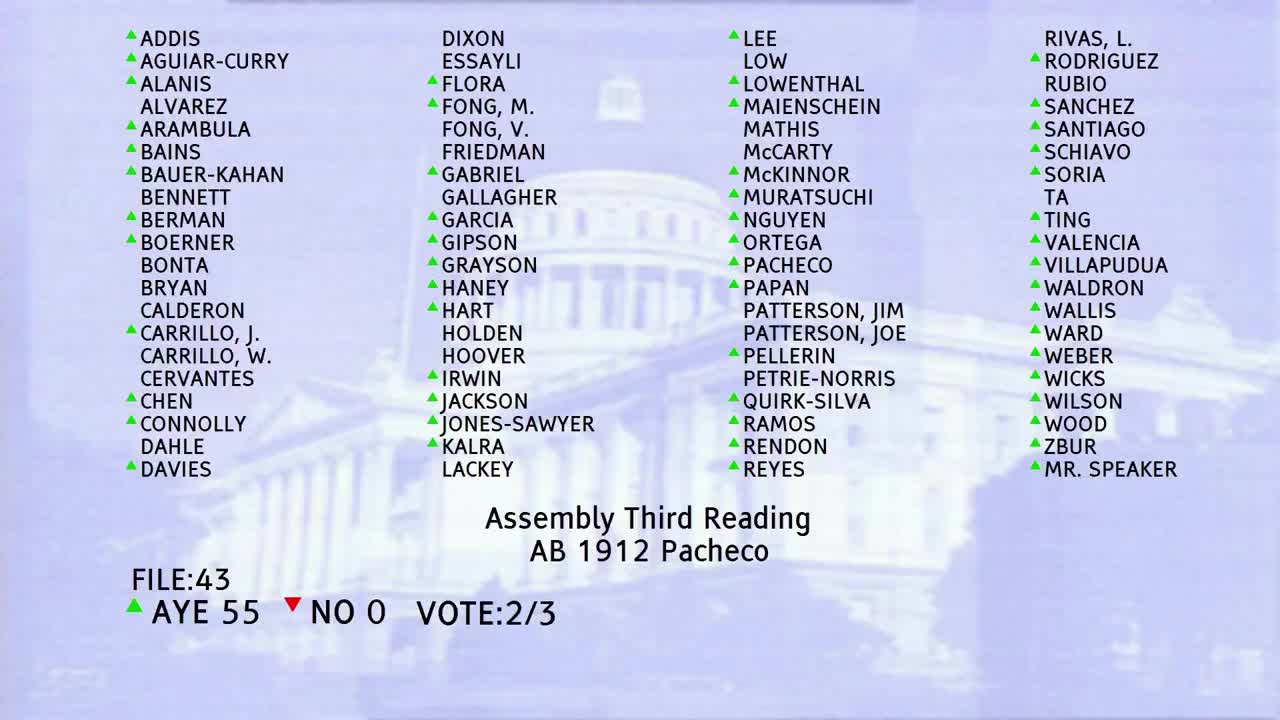 1MIN
Assembly Floor
 9MIN




