AB 2032: Tribal gaming: compact ratification.
- Session Year: 2023-2024
- House: Assembly
- Latest Version Date: 2024-09-20
Current Status:
Passed
(2024-09-20: Chaptered by Secretary of State - Chapter 304, Statutes of 2024.)
Introduced
In Committee
First Chamber
In Committee
Second Chamber
Enacted
Existing federal law, the Indian Gaming Regulatory Act of 1988, provides for the negotiation and execution of tribal-state gaming compacts for the purpose of authorizing certain types of gaming on Indian lands within a state. The California Constitution authorizes the Governor to negotiate and conclude those compacts, subject to ratification by the Legislature. Existing law expressly ratifies a number of tribal-state gaming compacts, and amendments to tribal-state gaming compacts, between the State of California and specified Indian tribes.
The California Environmental Quality Act (CEQA) requires a lead agency to prepare, or cause to be prepared, and certify the completion of, an environmental impact report on a project, as defined, that it proposes to carry out or approve that may have a significant effect on the environment, as defined, or to adopt a negative declaration if it finds that the project will not have that effect.
The bill would ratify a new tribal-state gaming compact entered into between the State of California and the Big Sandy Rancheria of Western Mono Indians of California, executed on January 16, 2024. The bill would provide that, in deference to tribal sovereignty, certain actions related to this compact are not projects for the purposes of CEQA.
This bill would declare that it is to take effect immediately as an urgency statute.
(a)The tribal-state gaming compact entered into in accordance with the federal Indian Gaming Regulatory Act of 1988 (18 U.S.C. Secs. 1166 to 1168, inclusive, and 25 U.S.C. Sec. 2701 et seq.) between the State of California and the Big Sandy Rancheria of Western Mono Indians of California, executed on January 16, 2024, is hereby ratified.
(b)(1)In deference to tribal sovereignty, none of the following shall be deemed a project for purposes of the California Environmental Quality Act (Division 13 (commencing with Section 21000) of the Public Resources Code):
(A)The execution of the tribal-state gaming compact ratified by this section.
(B)The execution of an amendment to the tribal-state gaming compact ratified by this section.
(C)The execution of an intergovernmental agreement between a tribe and a county or city government negotiated pursuant to the express authority of, or as expressly referenced in, the tribal-state gaming compact ratified by this section.
(D)The execution of an intergovernmental agreement between a tribe and the Department of Transportation, or other state agency, negotiated pursuant to the express authority of, or as expressly referenced in, the tribal-state gaming compact ratified by this section.
(E)The on-reservation impacts of compliance with the terms of the tribal-state gaming compact ratified by this section.
(F)The construction of any infrastructure project that provides ingress and egress across fee land owned by the tribe onto land held in trust by the United States for the benefit of the tribe.
(G)The development and expansion of an electrical substation undertaken to support a tribal facility located on land held in trust by the United States for the benefit of the tribe.
(2)Except as expressly provided in this section, this subdivision does not exempt a city, county, or city and county, or the Department of Transportation, or any state agency or local jurisdiction, from the requirements of the California Environmental Quality Act.
SEC. 2.This act is an urgency statute necessary for the immediate preservation of the public peace, health, or safety within the meaning of Article IV of the California Constitution and shall go into immediate effect. The facts constituting the necessity are:
In order to enhance the economic development, stability, and self-sufficiency of the Big Sandy Rancheria of Western Mono Indians of California, and to protect the interests of the tribe and its members, the surrounding communities, and the California public at the earliest possible time, it is necessary that this act take effect immediately.
|
Date
|
Status
|
|---|---|
| Sep 20, 2024 | Chaptered by Secretary of State - Chapter 304, Statutes of 2024. |
| Sep 20, 2024 | Approved by the Governor. |
| Sep 12, 2024 | Enrolled and presented to the Governor at 4 p.m. |
| Sep 10, 2024 | Enrolled measure version corrected. |
| Sep 1, 2024 | In Assembly. Ordered to Engrossing and Enrolling. |
| Aug 31, 2024 | Read third time. Urgency clause adopted. Passed. Ordered to the Assembly. (Ayes 39. Noes 0.). |
| Aug 31, 2024 | Read second time. |
| Aug 31, 2024 | Art. IV, Sec. 8(b) of the Constitution dispensed with. (Ayes 37. Noes 0.) |
| Aug 30, 2024 | Ordered to second reading. |
| Aug 30, 2024 | Withdrawn from committee. |
| Aug 30, 2024 | In Senate. Read first time. To Com. on RLS. for assignment. |
| Aug 29, 2024 | Read third time. Urgency clause adopted. Passed. Ordered to the Senate. (Ayes 76. Noes 0.). |
| Aug 20, 2024 | Read second time. Ordered to third reading. |
| Aug 19, 2024 | Ordered to second reading. |
| Aug 19, 2024 | Without reference to committee. |
| Feb 2, 2024 | From printer. May be heard in committee March 3. |
| Feb 1, 2024 | Read first time. To print. |
|
Date
|
Description
|
Location
|
Votes
|
|
|---|---|---|---|---|
| Aug 31, 2024 | Assembly 2nd Reading AB2032 Jim Patterson et al. By Grove Urgency Clause | Senate Floor |
Passed |
|
| Aug 29, 2024 | AB 2032 Jim Patterson Third Reading Urgency | Assembly Floor |
Passed |
This list shows positions taken on this bill by organizations on the date displayed, which is linked to the original source.
Positions by individuals are not included.
ENATE RULES COMMITTEE Office of Senate Floor Analyses (916) 651-1520 Fax: (916) 327-4478 | AB 2032 |
THIRD READING
Bill No: AB 2032
Author: Jim Patterson (R), et al.
Introduced: 2/1/24
Vote: 27 - Urgency
NOTE: On August 13, 2024, the Senate Governmental Organization Committee held an informational hearing on the tribal-state gaming compact between the State of California and the Big Sandy Rancheria of Western Mono Indians of California, executed on January 16, 2024.
ASSEMBLY FLOOR: 76-0, 8/29/24 - See last page for vote
SUBJECT: Tribal gaming: compact ratification
SOURCE: Author
DIGEST:
This bill ratifies the tribal-state gaming compact between the State of California and the Big Sandy Rancheria of Western Mono Indians of California, executed on January 16, 2024.
Existing law:
- Provides, under the Indian Gaming Regulatory Act (IGRA), for the negotiation and conclusion of compacts between federally recognized Indian tribes and the State for the purpose of conducting Class III gaming activities on Indian lands within a State as a means of promoting tribal economic development, self-sufficiency, and strong tribal governments.
- Authorizes expressly a number of tribal-state gaming compacts between the State of California and specified Indian tribes.
- Authorizes the conduct of Class III gaming activities to the extent such activities are permitted by state law, a gaming compact has been concluded by a federally recognized tribe and the State, and the compact has been approved by the Secretary of the Interior.
- Limits the operation of Class III gaming activities to Indian lands acquired on or before October 17, 1988. Provides, for certain exceptions to conduct gaming activities on Indian lands acquired after October 17, 1988.
- Defines “Indian lands” to mean all lands within the limits of any Indian reservation, and any lands title to which is either held in trust by the United States for the benefit of any Indian tribe, or individual, or held by any Indian tribe or individual subject to restriction by the U.S. against alienation and over which an Indian tribe exercises governmental power.
- Requires the State to negotiate to conclude a compact in good faith with an Indian tribe having jurisdiction over the Indian lands upon which the Class III gaming activity is to be conducted. Provides the U.S. district courts with jurisdiction over any cause of action initiated by a tribal government alleging that the State failed to negotiate in good faith to conclude a compact. Prescribes the remedy, mediation supervised by the courts, if it is found that the State failed to negotiate in good faith to conclude a compact.
- Authorizes the Governor, under the California Constitution, to negotiate and conclude compacts, subject to ratification by the Legislature.
This bill:
- Ratifies the tribal-state gaming compact between the State of California and the Big Sandy Rancheria of Western Mono Indians of California, executed on January 16, 2024.
- Provides that, in deference to tribal sovereignty, certain actions are not deemed projects for purposes of the California Environmental Quality Act (CEQA); and, stipulate, except as expressly provided, that none of the provisions shall be construed to exempt a city, county, or city and county, or the Department of Transportation, or any state agency or local jurisdiction, from CEQA requirements.
- Contains an urgency clause.
Background
The Tribal-State Gaming Compact (hereafter “Compact”) between the Big Sandy Rancheria of Western Mono Indians of California (hereafter “Tribe”) was executed on January 16, 2024.
The Compact authorizes the Tribe to operate a maximum of 3,000 slot machines at no more than two gaming facilities located on eligible Indian lands held in trust for the Tribe, and located within the boundaries of the Tribe’s reservation.
The Tribe has agreed to pay the State its pro rata share of costs the State incurs for the performance of its duties under the Compact. If the Tribe operates up to 1,200 slot machines, the Compact does not require the Tribe to pay into either the Revenue Sharing Trust Fund (RSTF) or the Tribal Nation Grant Fund (TNGF). If the Tribes operates 1,201 slot machines the Tribe is required to pay the following amounts:
- 2.0% of the Net Win generated from the operation of all slot machines in excess of 349 but less than 2001.
- 2.5% of the Net Win generated from the operation of all slot machines in excess of 2,000 but less than 2,501.
- 4.0% of the Net Win generated from the operation of all slot machines in excess of 2,500 and up to 3,000 slot machines.
If the Tribe operates more than 349 slot machines the Compact requires the Tribe to pay 1.0% of Net Win into the Impact Mitigation Fund, and to distribute those funds to neighboring jurisdictions to mitigate impacts upon those jurisdiction resulting from the operation of the gaming facilities, or other purposes as the Tribe and a jurisdiction may agree. The Compact provides that the State and the Tribe recognize the potential for impacts on other Indian tribes in the vicinity of the gaming facilities. Other Indian tribes in the vicinity shall be treated as neighboring jurisdictions for the purposes of this Impact Mitigation Fund. The Tribe may distribute up to 25% of funds from the fund, measured over the three prior years, to other tribes in the vicinity of the gaming facilities.
Certain terms of the Compact related to licensing, regulatory, patron protection, and public health provisions are substantially the same as recent compacts. Specifically, the Compact includes a Tribal Labor Relations Ordinance (TLRO), which provides that gaming may commence only after the Tribe has adopted a TLRO that allows for a secret ballot election and union neutrality.
The Compact’s preamble notes that the Tribe and the State entered into their 1999 compact, which enabled the Tribe, through revenues generated by its gaming operation, to improve the governance, environment, education, health, safety, and general welfare of its citizens, to promote a strong tribal government and self-sufficiency, and to provide essential government services to its citizens.
The Big Sandy Rancheria is a federally recognized tribe located in Fresno, California. The tribe owns and operates the Mono Wind Casino and Broken Arrow Restaurant in Auberry as well as operating BSR Fuel Distribution in Auberry where they sell diesel and gasoline products. According to the casino’s internet website, the facility features “the latest slot machine themes and a variety of your old-school favorites at ‘The Friendliest Casino in the Valley.”
Once effective (legislative ratification and federal approval required), this Compact will be in full force and effect for 25 years following the effective date.
KEY PROVISIONS OF THE COMPACT
Scope of Class III Gaming Authorized. The Tribe is authorized to operate up to 3,000 slot machines, banking or percentage card games, and any devices or games that are authorized under state law to the California State Lottery, provided that the Tribe will not offer such games through use of the Internet unless others in the state not affiliated with or licensed by the California State Lottery are permitted to do so under state and federal law. The Tribe can operate off-track wagering on horse races at a satellite wagering facility pursuant to the requirements outlined in the Compact. The Tribe shall not engage in Class III Gaming that is not expressly authorized in the Compact.
Payments to the RSTF or the TNGF. If the Tribe operates up to 1,200 slot machines, the Compact does not require the Tribe to pay into either the RSTF or the TNGF. If the Tribes operates 1,201 slot machines the Tribe is required to pay the following amounts:
- 2.0% of the Net Win generated from the operation of all slot machines in excess of 349 but less than 2001.
- 2.5% of the Net Win generated from the operation of all slot machines in excess of 2,000 but less than 2,501.
- 4.0% of the Net Win generated from the operation of all slot machines in excess of 2,500 and up to 3.000 slot machines.
Distribution by Tribe to Local Governments and Neighboring Tribes. If the Tribe operates more than 349 slot machines the Compact requires the Tribe to pay 1.0% of Net Win into the Impact Mitigation Fund, and to distribute those funds to neighboring jurisdictions to mitigate impacts upon those jurisdiction resulting from the operation of the gaming facilities, or other purposes as the Tribe and a jurisdiction may agree. The Compact provides that the State and the Tribe recognize the potential for impacts on other Indian tribes in the vicinity of the gaming facilities. Other Indian tribes in the vicinity shall be treated as neighboring jurisdictions for the purposes of this Impact Mitigation Fund. The Tribe may distribute up to 25% of funds from the fund, measured over the three prior years, to other tribes in the vicinity of the gaming facilities.
ADDITIONAL BACKGROUND INFORMATION
Indian Gaming Regulatory Act. In 1988, Congress enacted IGRA to provide a statutory basis for the operation and regulation of gaming on Indian lands. IGRA provides that an Indian tribe may conduct gaming activity on Indian lands if the activity “is not specifically prohibited by federal law and is conducted within a State which does not prohibit such gaming activity.”
IGRA distinguishes between three classes of gaming (Class I, Class II, and Class III) and provides for different forms of regulation for each class. Class I gaming includes “social games” for minor prizes or “traditional forms of Indian gaming.” Class II gaming is defined to include bingo and card games that are explicitly authorized by the laws of the state, or that are not explicitly prohibited by the laws of the state and are played at any location in the State, so long as the card games are played in conformity with those laws and regulations. Class III gaming includes such things as slot machines, casino games, and banked card games such as black jack and baccarat. Class III gaming may only be conducted under terms of a compact negotiated between an Indian tribe and a State.
IGRA was enacted against a legal background in which Indian tribes and individuals generally are exempt from state taxation within their own territory. IGRA provides that with the exception of assessments permitted under the statute, to defray the State’s costs of regulating gaming activity, IGRA shall not be interpreted as conferring upon a State authority to impose any tax, fee, charge, or other assessment upon an Indian tribe to engage in Class III activity. Nor may a State refuse to enter into negotiations based on the lack of authority to impose such a tax, fee, charge, or other assessment.
When a tribe requests negotiations for a Class III compact, IGRA requires the State to negotiate with the Indian tribe in good faith. IGRA provides a comprehensive process to prevent an impasse in compact negotiations, which is triggered when a tribe files suit alleging that the State has refused to negotiate or has failed to negotiate in good faith.
Before 2000, the California Constitution prohibited Class III gaming. In 2000, California voters approved Proposition 1A, which had been proposed by the Governor and passed by the Legislature. Proposition 1A amended the California Constitution to permit the State to negotiate compacts with federally recognized Indian tribes for certain Class III gaming activities. Because non-Indian parties were still forbidden from operating gaming facilities, Proposition 1A granted Indian tribes a “constitutionally protected monopoly on most types of Class III games in California.”
Revenue Sharing Trust Fund. Existing law creates in the State Treasury the RSTF for the receipt and deposit of moneys derived from gaming device license fees that are paid into the RSTF pursuant to the terms of specified tribal-state gaming compacts for the purpose of making distributions to non-compacted California tribes (e.g., federally-recognized non-gaming tribes and tribes that operate casinos with fewer than 350 slot machines).
Revenue in the RSTF is available to the California Gambling Control Commission, upon appropriation by the Legislature, for making distributions of $1.1 million annually to non-compact tribes. The RSTF was created as part of the 1999 compacts, which, in conjunction with the passage of Proposition 1A, created gaming compacts with approximately 60 California tribes. Non-compact tribes are considered third-party beneficiaries of the 1999 compacts.
Tribal Nation Grant Fund. This particular fund was created to complement the RSTF and provides for the distribution of funds to non-gaming tribes, upon application of such tribes for purposes related to effective self-governance, self-determined community, and economic development. Payments from this fund are intended to be made to non-gaming tribes on a “need” basis, upon application.
FISCAL EFFECT: Appropriation: No Fiscal Com.: Yes Local: No
SUPPORT: (Verified 8/19/24)
None received
OPPOSITION: (Verified 8/19/24)
None received
ASSEMBLY FLOOR: 76-0, 8/29/24
AYES: Addis, Aguiar-Curry, Alanis, Alvarez, Arambula, Bains, Bauer-Kahan, Bennett, Berman, Boerner, Bonta, Bryan, Calderon, Juan Carrillo, Wendy Carrillo, Chen, Connolly, Megan Dahle, Davies, Dixon, Essayli, Flora, Mike Fong, Friedman, Gabriel, Gallagher, Garcia, Gipson, Grayson, Haney, Hart, Holden, Hoover, Irwin, Jackson, Jones-Sawyer, Kalra, Lackey, Lee, Low, Lowenthal, Maienschein, Mathis, McCarty, McKinnor, Muratsuchi, Stephanie Nguyen, Pacheco, Papan, Jim Patterson, Joe Patterson, Pellerin, Petrie-Norris, Quirk-Silva, Ramos, Rendon, Reyes, Luz Rivas, Rodriguez, Blanca Rubio, Sanchez, Santiago, Schiavo, Soria, Ta, Ting, Valencia, Villapudua, Waldron, Wallis, Ward, Weber, Wicks, Wilson, Wood, Robert Rivas
NO VOTE RECORDED: Cervantes, Ortega, Zbur
Prepared by: Felipe Lopez / G.O. / (916) 651-1530
8/30/24 17:27:01
**** END ****
ASSEMBLY THIRD READING
ATR Bill Id:AB 2032
Author:(Jim Patterson)
As Introduced Ver:February 1, 2024
2/3 vote. Urgency
SUMMARY
Ratifies a tribal-state gaming compact (Compact) between the State of California and the Big Sandy Rancheria of Western Mono Indians of California, a federally recognized Indian Tribe (Tribe) that was executed on January 16, 2024 on a sovereign government-to-government basis pursuant to the Indian Gaming Regulatory Act of 1988.
Major Provisions
- Ratifies a tribal-state gaming compact between the State of California and the Big Sandy Rancheria of Western Mono Indians of California.
- Provides that, in deference to tribal sovereignty, certain actions are not deemed projects for purposes of the California Environmental Quality Act (CEQA); and, stipulate, except as expressly provided, that none of the provisions shall be construed to exempt a city, county, or city and county, or the Department of Transportation, or any state agency or local jurisdiction, from CEQA requirements.
- Once effective (legislative ratification and federal approval required), these compacts will be in full force and effect for 25 years following the effective date.
- Declare that it is to take effect immediately as an urgency statute.
EXISTING LAW:
- Provides, under the Indian Gaming Regulatory Act (IGRA), for the negotiation and conclusion of compacts between federally recognized Indian tribes and the State for the purpose of conducting Class III gaming activities on Indian lands within a State as a means of promoting tribal economic development, self-sufficiency, and strong tribal governments.
- Authorizes expressly a number of tribal-state gaming compacts between the State of California and specified Indian tribes.
- Authorizes the conduct of Class III gaming activities to the extent such activities are permitted by state law, a gaming compact has been concluded by a federally recognized tribe and the State, and the compact has been approved by the Secretary of the Interior.
- Limits the operation of Class III gaming activities to Indian lands acquired on or before October 17, 1988. Provides exceptions to conduct gaming activities on Indian lands acquired after October 17, 1988.
- Defines Indian lands to mean all lands within the limits of any Indian reservation, and any lands title to which is either held in trust by the United States (U.S.) for the benefit of any Indian tribe, or individual, or held by any Indian tribe or individual subject to restriction by the U.S. against alienation and over which an Indian tribe exercises governmental power.
- Requires the State to negotiate to conclude a compact in good faith with an Indian tribe having jurisdiction over the Indian lands upon which the Class III gaming activity is to be conducted. Provides the U.S. district courts with jurisdiction over any cause of action initiated by a tribal government alleging that the State failed to negotiate in good faith to conclude a compact. Prescribes the remedy, mediation supervised by the courts, if it is found that the State failed to negotiate in good faith to conclude a compact.
- Authorizes the Governor, under the California Constitution, to negotiate and conclude compacts, subject to ratification by the Legislature.
COMMENTS
Background.
On August 14, 2024, the Assembly Governmental Organization Committee held an informational hearing on the tribal-state gaming compact between the State of California and the Tribe.
The Compact between the State of California and the Big Sandy Rancheria of Western Mono Indians of California was executed on January 16, 2024 on a sovereign government-to-government basis pursuant to the Indian Gaming Regulatory Act of 1988.
The Big Sandy Band of Western Mono Indians of California is a federally recognized tribe of Western Mono Indians located in Fresno County, California. The Big Sandy Rancheria, located just outside the community of Auberry is 228 acres large. The reservation is very secluded, and the tribal headquarters is situated within a ring of houses. There are 578 tribal members, 370 of whom are over 18 years old.
In 1999, the State and the Tribe entered into a Class III gaming compact (1999 Compact) that authorized the Tribe to operate specified gaming activities pursuant to the IGRA. The Compact's preamble notes that the tribal-state compact has enabled the Tribe, through revenues generated by its gaming operation, to improve the governance, environment, education, health, safety, and general welfare of its citizens, to promote a strong tribal government and self-sufficiency, and to provide essential government services to its citizens.
Currently, the Tribe operates the Mono Wind Casino in Auberry, California. The casino features 350 slot machines and the Broken Arrow Restaurant. The casino is open 24 hours a day.
This new Compact authorizes the Tribe to operate a maximum of 3,000 slot machines at no more than two gaming facilities located on eligible Indian lands held in trust for the Tribe, and located within the boundaries of the Tribe's reservation.
The Tribe has agreed to pay the State its pro rata share of costs the State incurs for the performance of its duties under the Compact. If the Tribe operates up to 1,200 gaming devices, the Tribe shall have no obligation to pay any amount into the Revenue Sharing Trust Fund (RSTF) or the Tribal Nation Grant Fund (TNGF). If the Tribe operates 1,201 gaming devices or more at any time in a given calendar year, it shall thereafter, including that calendar year, pay into the RSTF or the TNGF, the following amounts: 2.0% of the Net Win generated from the operation of all gaming devices in excess of 349 gaming devices but less than 2,001 gaming devices; 2.5% of the Net Win generated from the operation of all gaming devices in excess of 2,000 gaming devices but less than 2,501 gaming devices; and 4.0% of the Net Win generated from the operation of all gaming devices in excess of 2,500 and up to 3,000 gaming devices.
If the Tribe operates 350 or more gaming devices, the Tribe agrees to establish an Impact Mitigation Fund (IMF) for purposes of providing assistance to non-tribal law enforcement, emergency services, and service agencies with demonstrated impacts from the gaming facilities, to deposit 1% of Net Win into the IMF, and to distribute those funds to neighboring jurisdictions to mitigate impacts upon those jurisdictions resulting from the operation of the gaming facilities, or other purposes as the Tribe and a jurisdiction may agree. The Tribe may distribute up to 25% of funds from the IMF, measured over the prior three years, to other Indian tribes in the vicinity of the gaming facilities.
Certain terms of the Compact related to licensing, regulatory, patron protection, and public health provisions are substantially the same as recent compacts. Specifically, the Compact includes a Tribal Labor Relations Ordinance (TLRO), which provides that gaming may commence only after the Tribe has adopted a TLRO that allows for a secret ballot election and union neutrality.
The Compact states that in the event of a force majeure beyond the Tribe's control that cause the Tribes gaming facility to be inoperable or operate at significantly less capacity, the Tribe and the State agree to meet and confer for the purposes of discussing the event and appropriate actions. In the instance that a force majeure event impacts more than 50% of tribal gaming operations located in California, the State and the Tribe agree to allow the State to elect to meet and confer with several or all tribes that have been impacted by the force majeure event for the purpose of discussing the event and appropriate actions, given the circumstances.
The terms and conditions of the Compact may be amended at any time by the mutual and written agreement of both parties, provided that each party voluntarily consents to such negotiations in writing. Any amendments to this Compact shall be deemed to supersede, supplant and extinguish all previous understandings and agreements on the subject.
Once effective (legislative ratification and federal approval required), this Compact will be in full force and effect for 25 years following the effective date.
Indian Gaming Regulatory Act. In 1988, Congress enacted the IGRA to provide a statutory basis for the operation and regulation of gaming on Indian lands. IGRA provides that an Indian tribe may conduct gaming activity on Indian lands if the activity "is not specifically prohibited by federal law and is conducted within a State which does not prohibit such gaming activity."
IGRA distinguishes between three classes of gaming (Class I, Class II, and Class III) and provides for different forms of regulation for each class. Class I gaming includes "social games" for minor prizes or "traditional forms of Indian gaming." Class II gaming is defined to include bingo and card games that are explicitly authorized by the laws of the state, or that are not explicitly prohibited by the laws of the state and are played at any location in the State, so long as the card games are played in conformity with those laws and regulations. Class III gaming includes such things as slot machines, casino games and banked card games such as black jack and baccarat. Class III gaming may only be conducted under terms of a compact negotiated between an Indian tribe and a State.
IGRA was enacted against a legal background in which Indian tribes and individuals generally are exempt from state taxation within their own territory. IGRA provides that with the exception of assessments permitted under the statute, to defray the State's costs of regulating gaming activity, IGRA shall not be interpreted as conferring upon a State authority to impose any tax, fee, charge, or other assessment upon an Indian tribe to engage in Class III activity. Nor may a State refuse to enter into negotiations based on the lack of authority to impose such a tax, fee, charge, or other assessment.
When a tribe requests negotiations for a Class III compact, IGRA requires the State to negotiate with the Indian tribe in good faith. IGRA provides a comprehensive process to prevent an impasse in compact negotiations, which is triggered when a tribe files suit alleging that the State has refused to negotiate or has failed to negotiate in good faith.
Before 2000, the California Constitution prohibited Class III gaming. In 2000, California voters approved Proposition 1A, which had been proposed by the Governor and passed by the Legislature. Proposition 1A amended the California Constitution to permit the State to negotiate compacts with federally recognized Indian tribes for certain Class III gaming activities. Because non-Indian parties were still forbidden from operating gaming facilities, Proposition 1A granted Indian tribes a "constitutionally protected monopoly on most types of Class III games in California."
According to the Author
According to the Governor's office, "the Tribe's 1999 Compact enabled the Tribe, through revenues generated by its gaming operation, to improve the governance, environment, education, health, safety, and general welfare of its citizens, to promote a strong tribal government and self-sufficiency, and to provide essential government services to its citizens. The terms of this new Compact are designed and intended to further the goodwill and cooperation of the Tribe and the State in fostering a mutually respectful government-to-government relationship that will serve the mutual interests of the parties.
Arguments in Support
None on file.
Arguments in Opposition
None on file.
FISCAL COMMENTS
Unknown.
VOTES
Votes not relevant.
UPDATED
VERSION: February 1, 2024
CONSULTANT: Eric Johnson / G.O. / (916) 319-2531 FN: 0004185
Discussed in Hearing
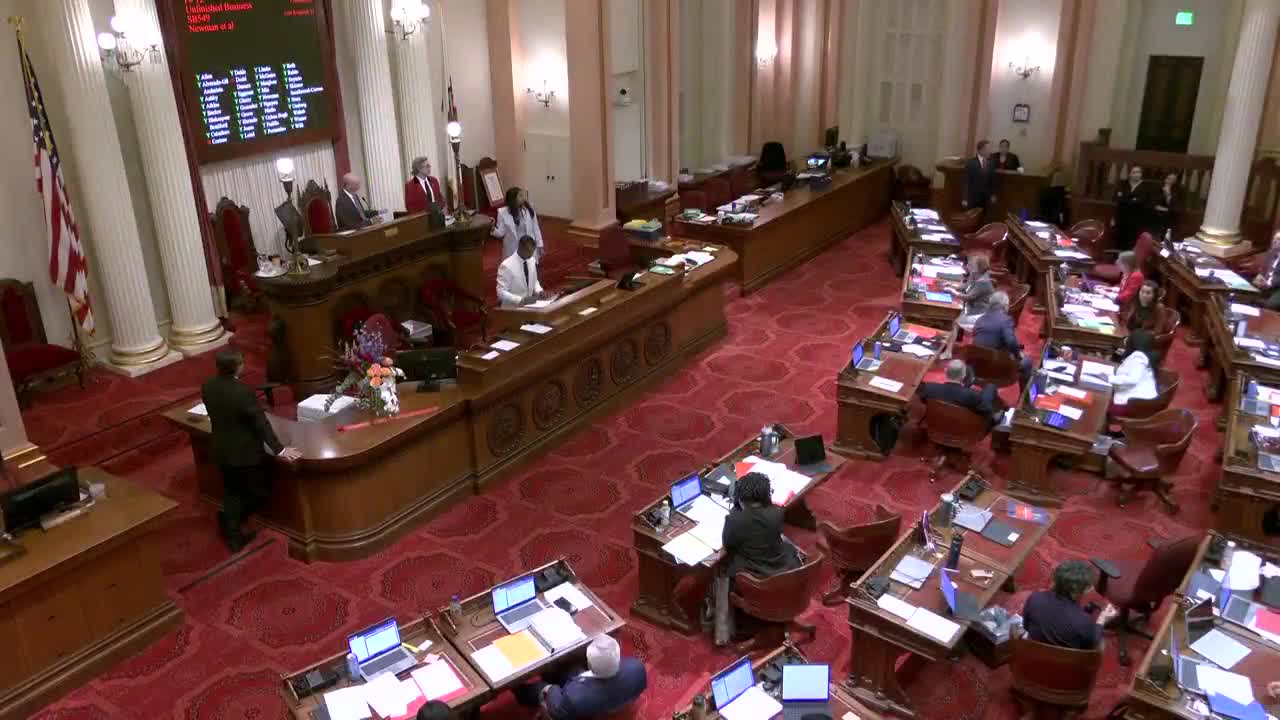 5MIN
Senate Floor
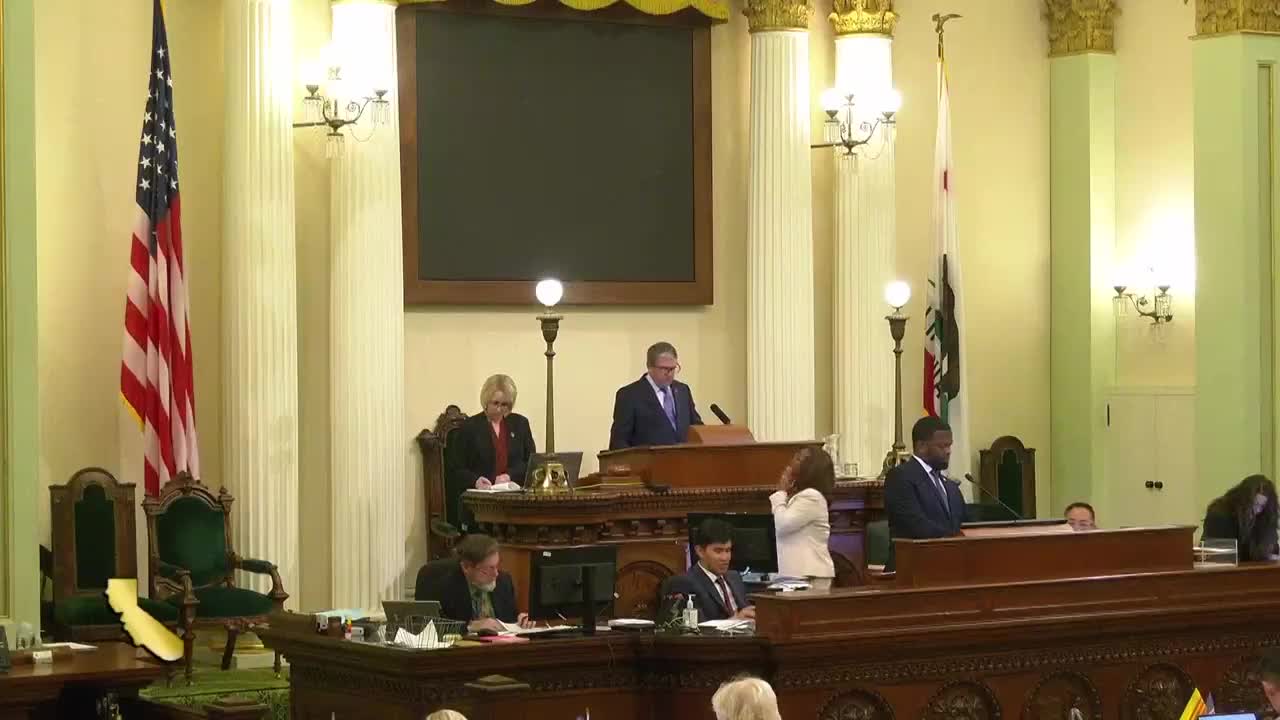 2MIN
Assembly Floor
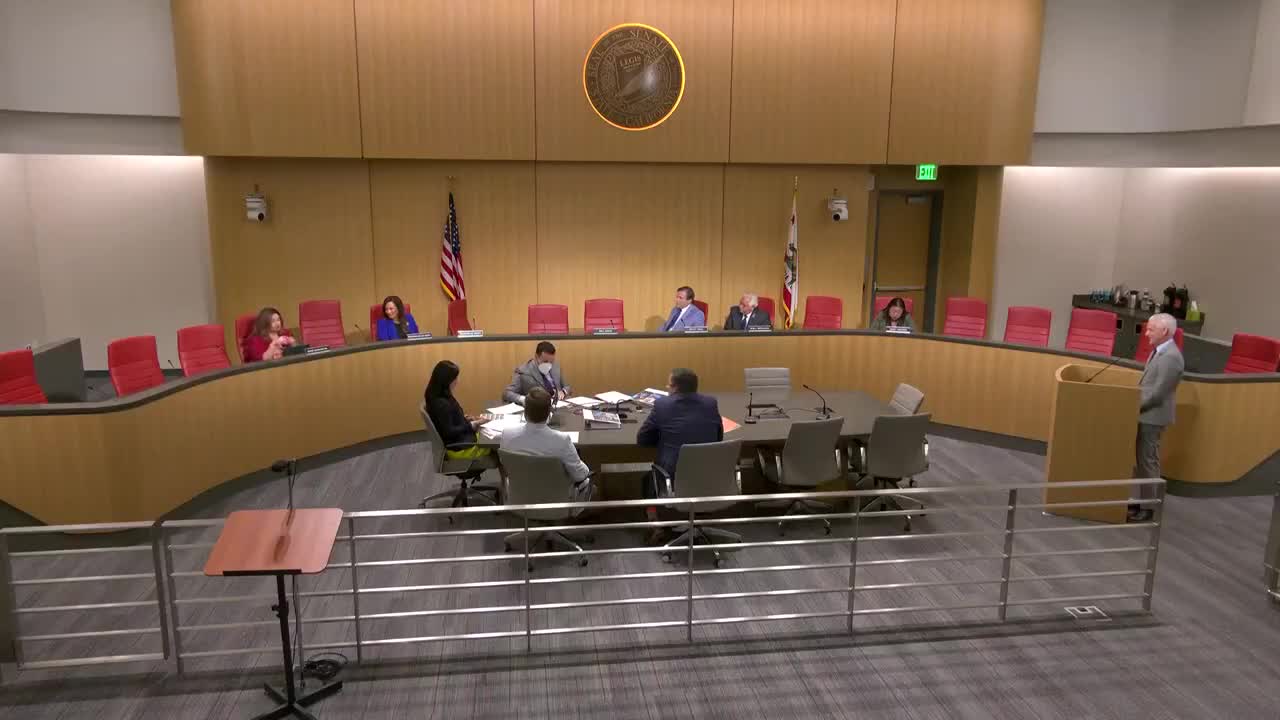 2MIN
Senate Standing Committee on Governmental Organization
Bill Author

Bill Co-Author(s):