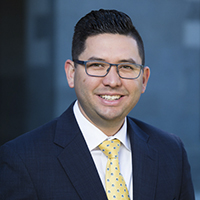
AB 2035: Sexually violent predators: conditional release.
- Session Year: 2023-2024
- House: Assembly
- Latest Version Date: 2024-02-22
Current Status:
Failed
(2024-04-23: In committee: Set, second hearing. Hearing canceled at the request of author.)
Introduced
In Committee
First Chamber
In Committee
Second Chamber
Enacted
Existing law provides for the civil commitment of criminal offenders who have been determined to be sexually violent predators for treatment in a secure state hospital facility, as specified. Existing law authorizes the conditional release of a sexually violent predator under specified circumstances, and requires the State Department of State Hospitals to make the necessary placement arrangements to place the person in a community, as specified.
This bill would prohibit the department or its designee from placing a person who has been conditionally released in a community if the person does not have housing in a qualified dwelling, and would define qualified dwelling to mean a structure intended for human habitation by one person or a single family and that is not within 10 feet of another inhabited dwelling.
(a)Notwithstanding any other law, the State Department of State Hospitals or its designee shall not place a person who has been conditionally released in a community if the person does not have housing in a qualified dwelling.
(b)For the purposes of this section, a qualified dwelling means a structure intended for human habitation by one person or a single family and that is not within 10 feet of another inhabited dwelling.
REVISIONS: HeadingLines 1, and 2.(a)Notwithstanding any other law, the State Department of State Hospitals or its designee shall not place a person who has been conditionally released in a community if the person does not have housing in a qualified dwelling.
(b)For the purposes of this section, a qualified dwelling means a structure intended for human habitation by one person or a single family and that is not within 10 feet of another inhabited dwelling.
|
Date
|
Status
|
|---|---|
| Apr 23, 2024 | In committee: Set, second hearing. Hearing canceled at the request of author. |
| Mar 12, 2024 | In committee: Set, first hearing. Failed passage. Reconsideration granted. |
| Mar 12, 2024 | Coauthors revised. |
| Feb 26, 2024 | Re-referred to Com. on PUB. S. |
| Feb 22, 2024 | From committee chair, with author's amendments: Amend, and re-refer to Com. on PUB. S. Read second time and amended. |
| Feb 12, 2024 | Referred to Com. on PUB. S. |
| Feb 2, 2024 | From printer. May be heard in committee March 3. |
| Feb 1, 2024 | Read first time. To print. |
|
Date
|
Description
|
Location
|
Votes
|
|
|---|---|---|---|---|
| Mar 12, 2024 | Do pass and be re-referred to the Committee on [Appropriations] | Assembly Standing Committee on Public Safety |
Failed |
This list shows positions taken on this bill by organizations on the date displayed, which is linked to the original source.
Positions by individuals are not included.
|
Organization
|
Position
|
Date
|
|---|---|---|
| Arcadia Police Officers' Association | ** Support | |
| Burbank Police Officers' Association | ** Support | |
| California Attorneys For Criminal Justice | ** Against | |
| California Coalition of School Safety Professionals | ** Support | |
| California District Attorneys Association | ** Support | |
| California Narcotic Officers' Association | ** Support | |
| California Public Defenders Association | ** Against | |
| California Reserve Peace Officers Association | ** Support | |
| California State Sheriffs' Association | ** Support | |
| CLAREMONT POLICE OFFICERS ASSOCIATION | ** Support | |
| Corona Police Officers Association | ** Support | |
| Culver City Police Officers' Association | ** Support | |
| Deputy Sheriffs Association of Monterey County | ** Support | |
| Ella Baker Center For Human Rights | ** Against | |
| Fullerton Police Officers' Association | ** Support | |
| Initiate Justice | ** Against | |
| Legal Services for Prisoners with Children | ** Against | |
| Los Angeles School Police Management Association | ** Support | |
| los angeles school police officers association | ** Support | |
| Murrieta Police Officers' Association | ** Support | |
| Newport Beach Police Association | ** Support | |
| Novato Police Officers Association | ** Support | |
| Palos Verdes Police Officers Association | ** Support | |
| Peace Officers Research Association Of California | ** Support | |
| Placer County Deputy Sheriffs' Assocation | ** Support | |
| Placer County District Attorney's Office | ** Support | |
| Pomona Police Officers' Association | ** Support | |
| power + Resilience Project | ** Support | |
| RIVERSIDE POLICE OFFICERS ASSOCIATION | ** Support | |
| Riverside Sheriffs' Association | ** Support | |
| Root & Rebound | ** Against | |
| Santa Ana Police Officers Association | ** Support | |
| Upland Police Officers Association | ** Support |
Date of Hearing:
Counsel: Kimberly Horiuchi
ASSEMBLY COMMITTEE ON PUBLIC SAFETY
Kevin McCarty, Chair
ABPCA Bill Id:AB 2035
Author:(Joe Patterson) – As Amended Ver:February 22, 2024
SUMMARY:
Prohibits the Department of State Hospitals (“DSH”) from placing a conditionally released sexually violent predator (“SVP”) into the community if the person does not have housing in a qualified dwelling, which is defined as a structure intended for human habitation by one person or a single family and that is not within 10 feet of another dwelling.
EXISTING LAW:
- Provides for the civil commitment for psychiatric and psychological treatment of a prison inmate found to be an SVP after the person has served their prison commitment. This is known as the Sexually Violent Predator Act (“SVPA”). (Welf. & Inst. Code, § 6600, et seq.)
- Defines a “sexually violent predator” as “a person who has been convicted of a sexually violent offense against at least one victim, and who has a diagnosed mental disorder that makes the person a danger to the health and safety of others in that it is likely that he or she will engage in sexually violent criminal behavior.” (Welf. & Inst. Code, § 6600, subd. (a)(1).)
- Permits a person committed as an SVP to be held for an indeterminate term upon commitment. (Welf. & Inst. Code, §§ 6604 & 6604.1.)
- Establishes a process whereby a person committed as an SVP can petition for conditional release or an unconditional discharge any time after one year of commitment, notwithstanding the lack of recommendation or concurrence by the Director of DSH. (Welf. & Inst. Code, § 6608, subds. (a), (f) & (m).)
- Provides that if the petition is made without the consent of the director of the treatment facility, no action may be taken on the petition without first obtaining the written recommendation of the director of the treatment facility. (Welf. & Inst. Code, § 6608, subd. (e).)
- Provides that before actually placing a person on conditional release, the community program director designated by the DSH must recommend the program most appropriate for supervising and treating the person. (Welf. & Inst. Code, § 6608, subd. (h).)
- Provides that a person who is conditionally released shall be placed in the county of domicile of the person prior to the person’s incarceration, unless both of the following conditions are satisfied:
- The court finds that extraordinary circumstances require placement outside the county of domicile; and,
- The designated county of placement was given prior notice and an opportunity to comment on the proposed placement of the committed person in the county. (Welf. & Inst. Code, 6608.5, subd. (a).)
- The court finds that extraordinary circumstances require placement outside the county of domicile; and,
- States that the county of domicile shall designate a county agency or program that will provide assistance and consultation in the process of locating and securing housing within the county for persons committed as SVPs who are about to be conditionally released. (Welf. & Inst. Code, § 6608.5, subd. (d).)
- Specifies that in recommending a specific placement for community outpatient treatment, the DSH or its designee shall consider all of the following:
- The concerns and proximity of the victim or the victim’s next of kin; and,
- The age and profile of the victim or victims in the sexually violent offenses committed by the person subject to placement. The “profile” of a victim includes, but is not limited to, gender, physical appearance, economic background, profession, and other social or personal characteristics. (Welf. & Inst. Code, § 6608.5, subd. (e)(1)-(2).)
- The concerns and proximity of the victim or the victim’s next of kin; and,
- States that if the court determines that placement of a person in the county of their domicile is not appropriate, the court shall consider the following circumstances in designating his or her placement in a county for conditional release:
- If and how long the person has previously resided or been employed in the county; and,
- If the person has next of kin in the county. (Welf. & Inst. Code, § 6608.5, subd. (g)(1)- (2).)
- If and how long the person has previously resided or been employed in the county; and,
FISCAL EFFECT:
Unknown
COMMENTS:
- Author’s Statement: According to the author: “For the past 2 years, the California Department of State Hospitals has been attempting to place a sexually violent predator, who was convicted in the 1980s for assault and intent to commit rape, was released from custody in 2014, and was subsequently re-arrested for possession of child pornography, into Placer County. Making matters worse, DSH proposed releasing the repeat offender on transient status which has a high failure rate, and involves placing the offender into a trailer or hotel.
“This is a huge concern for families and residents in my community. I believe that the state has an obligation to find a lawful and suitable placement that does not jeopardize the safety of the public. We must be very clear, those classified as SVPs must have suitable housing with constant, appropriate monitoring to ensure they don’t re-victimize and to keep our communities safe.” - SVP Law: Enacted in 1996, the SVPA authorizes an involuntary civil commitment of any person “who has been convicted of a sexually violent offense … and who has a diagnosed mental disorder that makes the person a danger to the health and safety of others in that it is likely that he or she will engage in sexually violent criminal behavior.” (Emphasis added.) (Welf. & Inst. Code, § 6601, subd. (a).) “The SVPA was designed to accomplish the dual goals of protecting the public, by confining violent sexual predators likely to reoffend, and providing treatment to those offenders. Those committed pursuant to the SVPA are to be treated not as criminals, but as sick persons. They are to receive treatment for their disorders and must be released when they no longer constitute a threat to society.” (People v. Superior Court (Karsai) (2013) 213 Cal.App.4th 774, 783, citing Welf. & Inst. Code, § 6250.)
Civil commitment is not a prison sentence. Once a person has been deemed no longer a threat to public safety, they must, as a matter of law, be released from custody. Originally, the SVP laws provided for an initial commitment of two years and then a review every two years thereafter. However, effective September 20, 2006, the law now provides for indeterminate commitments for persons found to be sexually violent predators. (Welf. & Inst. Code § 6604.)
Process of SVP designation:
When the Department of Corrections and Rehabilitation (“CDCR”) determines that an inmate “may be a sexually violent predator,” the CDCR Secretary refers the inmate to the DSH for a thorough evaluation. (Hubbart v. Superior Court (1999) 19 Cal.4th 1138, 1145; Welf. & Inst., § 6601, subd. (b).)
An evaluation “must be conducted by at least two practicing psychiatrists or psychologists in accordance with a standardized assessment protocol[.]” (Welf. & Inst. Code, § 6601, subd. (c)-(d).) If the two evaluators agree that the inmate is likely to reoffend without treatment or custody due to his or her mental disorder, then the Director of State Hospitals requests a petition for commitment under the Welfare and Institutions Code section 6602 to the county in which the inmate was last convicted. (Welf. & Inst. Code, § 6601, subd. (d).)
A court then reviews the petition and determines whether there is probable cause to believe the inmate “is likely to engage in sexually violent predatory criminal behavior upon their release. If the court or jury determines that the person is a sexually violent predator, the person [is] committed for an indeterminate term” to a state mental hospital “for appropriate treatment and confinement.” (Welf. & Inst. Code, § 6604.)
The burden then shifts to the “offender seeking his or her release from an SVPA commitment” to prove he or she is no longer a significant risk to society. (Ashley Felando (2012) California’s Sexually Violent Predator Act and the Dangerous Patient Exception, 40 W. St. U.L. Rev. 73, 76; Note (2014) Examining the Conditions of Confinement for Civil Detainees under California's Sexually Violent Predators Act, 68 Hastings L.J. 1441, 1444-1446.)
If the Director of DSH determines that the inmate’s diagnosed mental disorder has so changed that the inmate is not likely to commit acts of predatory sexual violence while under supervision and treatment in the community, the Director will forward a report and recommendation for conditional release. If the court at the hearing determines that the SVP would not be a danger to others due to his or her diagnosed mental disorder while under supervision and treatment in the community, the court will order the person placed with an appropriate forensic conditional release program operated by the state for one year, a substantial portion of which is required to include outpatient supervision and treatment. (Welf. & Inst. Code § 6608, subd. (f).)
After a judicial determination that a person would not be a danger to the health and safety of others (i.e., in that it is not likely that the person will engage in sexually violent criminal behavior due to the person’s diagnosed mental disorder while under supervision and treatment in the community), they will be placed in their pre-incarceration county of domicile, unless the court finds that extraordinary circumstances require placement outside the county domicile. (Welf. & Inst. Code § 6608.5(a); see Welf. & Inst. Code § 6608.5, subd. (b).)
Restrictions on Conditionally Released SVPs
A person released as an SVP may not be released to any residence that is within one-quarter mile of any public or private school providing instruction in kindergarten or any grades 1 through 12, inclusive, if the person has been previously convicted of child molestation or continuous sexual abuse of a child or the court finds the person has a history of improperly sexual conduct with children. (Welf. & Inst. Code, § 6608.5, subd. (f)(1-2).) Additionally, a conditionally released SVP must be monitored by a global positioning system (“GPS”) until they are unconditionally released. (Welf. & Inst. Code, § 6608.1.)
- Transient SVPs and the County of Domicile: An SVP conditionally released for outpatient supervision and treatment must be placed in the county of domicile prior to the person’s incarceration, unless the court finds that extraordinary circumstances require placement outside the county of domicile. (Welf. & Inst. Code, § 6608.5, subd. (a)(1).) The county of domicile is the county where the person has their true, fixed, and permanent home and principal residence and to which they have manifested the intention of returning whenever they are absent. (Id.)
- County of Domicile
For purposes of determining the county of domicile, the court may consider information found on a California’s driver’s license, California identification card, recent rent or utilities receipt, printed personalized checks or other recent banking documents, or any arrest record. If no information can be verified, the county of domicile shall be considered the county in which the person was arrested and convicted or last returned on parole. (Welf. & Inst. Code, § 6608.5, subd. (b)(1).)
A court may approve, modify, or reject the recommended or proposed specific address within that community or proposed specific address within that community. A court could approve a specific city but reject a specific address in that city. Therefore, simply having a verified address is not sufficient to satisfy the terms of a conditional release. The city and the address must be approved by the court. (See Welf. & Inst. Code, 6609.1, subd. (a)(5)A).) Furthermore, agencies receiving notice of an SVP’s placement in a specific county may comment on the placement or location of release, and may suggest alternative locations for placement within a community. (Welf. & Inst. Code, § 6609.1, subd. (a)(5)(A) and (b).)
Based on the all the evidence, the court determines whether approve, reject, or modify the terms of conditional release. Welfare and Institutions Code section 6609.1 requires a community be given 30 days’ notice if an SVP is pending conditional release in that community. (Welf. & Inst. Code, § 6609.1, subd. (a)(4).) Notice includes the name and proposed placement address before an SVP is released into the community.
- Transient Status
The court may order the conditional release, even if the inmate has no fixed residence available and will be a transient upon that release. (People v. Superior Court (Karsai) (2013) 213 Cal.App.4th 774, 784 (hereinafter “Karsai”).) The court will retain jurisdiction of the person through the course of the program, unless the placement is outside the county of commitment and jurisdiction has been transferred to the court of the county of placement.
In Karsai, the defendant was designated an SVP in 1998 and scheduled for conditional release in 2012 in County of Santa Barbara. However, Santa Barbara County was unable to find any suitable housing for Karsai and argued that he either could not be conditionally released or should be released to another county. The court found Santa Barbara was Karsai’s county of domicile. Santa Barbara objected and argued San Luis Obispo was Karsai’s county of domicile and he should be released there. Santa Barbara also argued because it had no place to house Mr. Karsai, the SVPA prevented the court from releasing him as a transient.
The Court held that the SVPA does not prevent release of an SVP even as a transient particularly where the court ruled Santa Barbara was the county of domicile. The court reasoned that portions of the SVPA may prevent transients from being released into a county other than the county of domicile, but not if a person is released into their own county. (Karsai, supra, 213 Cal.App.4th at 788.) Santa Barbara brought a writ of mandate arguing that the SVPA prohibited Karsai’s release as a transient. First, the court held that an SVP may only be placed on conditional release if a court determines they will pose no danger to others if ordered into an outpatient supervision program, and will no longer be an SVP with supervision and treatment.
A finding that a person is eligible for conditional release really eliminates the legal grounds for holding the person in custody. Again, civil commitment is not a prison sentence wherein a grant of parole may be determined by examining the offender and the nature of the offense. It is a mental health diagnosis wherein the goal of commitment is to treat the mental illness so the person may ultimately be released into the community. (Hubbart v. Superior Court (1999) 19 Cal.4th 1138, 1171 [“Here, for instance, the Legislature disavowed any ‘punitive purpose[],’ and declared its intent to establish ‘civil commitment’ proceedings in order to provide ‘treatment’ to mentally disordered individuals who cannot control sexually violent criminal behavior. The Legislature also made clear that, despite their criminal record, persons eligible for commitment and treatment as SVP's are to be viewed ‘not as criminals, but as sick persons.’ Consistent with these remarks, the SVPA was placed in the Welfare and Institutions Code, surrounded on each side by other schemes concerned with the care and treatment of various mentally ill and disabled groups.”].)
Also, conditional release requires weekly individual contact with the SVP, group treatment, and weekly drug screening. It may also include polygraph examinations, anti-androgen therapy, GPS tracking, increased supervision through random visits, and community notification. Furthermore, there are very few SVPs placed on conditional release. The Sex Offender Management Board (“SOMB”) reports in 2022 Year-End Report that between 1998 and 2021, a total of 900 people were committed as SVPs and 21 people are currently in the SVP conditional release program.
- Differences Proposed by this Bill: Existing law states an SVP may be placed on conditional release if a court determines the person would not present a danger to others due to their diagnosed mental disorder while under supervision and treatment in the community. Supervised community release is for an initial period of one year. Quite simply, once a person is deemed no longer a threat to public safety, constitutional due process largely demands that person be released into the community. (See Welf. & Inst. Code, § 6608, subd. (d); People v. Otto (2001) 26 Cal.4th 200, 209.) Once the court determines an SVP should be placed in a conditional release program, the community program director must make the necessary placement arrangements, and within 30 days after receiving notice of the court's finding, the person shall be placed in the community in accordance with the treatment and supervision plan unless good cause for not doing so is presented to the court.
This bill adds Welfare and Institutions Code section 6608.3 which states DSH may not conditionally release an SVP into any community if that person does not have housing in a qualified dwelling. This bill also defines “qualified dwelling” as a structure intended for human habitation by one person or a single family and not within 10 feet of another dwelling. This definition would presumably eliminate single residence occupancy hotels and rooming houses because they are not meant for one person or a single family and/or may be closer than 10 feet to another living space. Therefore, this bill seems aimed at confronting the court’s holding in Karsai and largely preventing the conditional release of transient SVPs.
The author’s background material includes several links to news articles about the release of William Stephenson into Placer County as a transient. DSH conceded to the media that transient release has a 50% failure rate – although, by failure, DSH likely does not necessarily mean violent re-offense, but violation of the rules of release resulting in return to commitment.
However, given the degree of restrictions in the law as to where an SVP or sex registrant may live when released from incarceration, it is difficult to locate suitable housing. But if a court finds a person is eligible for release, it cannot simply ignore the person’s due process rights and incarcerate them with no valid reason. The court may not want to release a transient, if for no other reason as it sets the person up for failure, but cannot hold a person with no legally valid reason. This bill may be viewed as unconstitutional by the courts because it effectively prohibits release from custody even where the person is legally entitled to release.
- Practical and Constitutional Concerns: First, as pointed out by the Karsai court, conditionally released SVPs are tightly monitored. They attend weekly individual and group treatment and drug screening. They are subject to 24-hour real-time GPS monitoring. They are often subject to curfews and other restrictions on movement. (Karsai, supra, 213 Cal.App.4th at 779-780.) Second, the Karsai court also noted that if a person is no longer a danger to public safety and may be supervised in the community with treatment, it is likely unconstitutional to hold them.
“Once a court has determined that a particular SVP would not be a danger to the health and safety of others in that it is not likely that he or she would engage in sexually violent criminal behavior due to [their] diagnosed mental disorder if under supervision and treatment in the community, that person unquestionably has a significant liberty interest in being released.”
(Karsai, supra, 213 Cal.App.4th at 788-89, citing People v. Otto, supra, 26 Cal.4th at 209.)
If a court determines that a person is entitled to release, it is unconstitutional to detain them longer than allowable by law. As explained in detail above, an SVP is detained based on a mental disorder resulting in a compulsion to engage in sexually violent conduct. It is not a criminal penalty; it is a civil commitment. Therefore, dangerousness is based on a psychiatric evaluation of the SVP’s likelihood of re-offense in the community, not necessary based on their underlying offense. Also, DSH utilizes conditional release where a person may still have a mental disorder, but may be supervised and treated in the community. However, a court may also find that a person no longer suffers from a mental disorder after a period of detention and must be unconditionally released from custody and supervision and is not subject to any supervision short of sex offender registration requirements. From a practical consideration, supervised release is better than a court eventually determining the person no longer has any mental disorder and may not be held any longer.
However, when people learn an SVP may be released into their community, they naturally object. Those residents then put pressure on local elected officials to prevent the SVP from being placed in their community often resulting in the local agency simply claiming there is nowhere in their community for the SVP to live. To make matters worse, existing law already prohibits certain SVPs from residing within one quarter of a mile of any school, park, or place where children congregate. (Welf. & Inst. Code, § 6608.5, subd. (f)(1-2).) Finally, SVPs are required to register as sex offenders, which means they may not live within 2000 feet of any public or private school, or park where children regularly gather. (Pen. Code, § 3003.5.)
Therefore, DSH and CDCR are in the unenviable position of finding housing for people who are no longer subject to involuntary detention but are not eligible to live anywhere in the state. So, we cannot hold them and we cannot safely release them. Placing more restrictions in where an SVP may reside may increase the risk of harm to the public because transients are harder to keep contact with even where everyone is very diligent. Finding housing should be the priority and creating more restrictions will negatively impact DSH and county attempts to find housing for an SVP that longer presents a risk to public safety.
- Argument in Support: According to the California District Attorneys Association: On behalf of the California District Attorneys Association (CDAA), I am writing in support of your measure, AB 2035, which would prohibit the conditional release of Sexually Violent Predators (“SVPs”) into the community as transients. Specifically, AB 2035 would require the placement of SVPs in a structure intended for human habitation by one person or a single family and not within 10 feet of another dwelling. The placement of conditionally released SVPs into the community is an issue that results in very loud outcries from the community. Many counties are experiencing an increase in the number of placements as the state hospital seeks to release more SVPs. DSH is experiencing difficulty in locating suitable locations to place SVPs in the community. AB 2035 would prohibit release as a transient when DSH cannot locate a suitable placement location. The transient release of a Sexually Violent Predator is a public safety concern.
- Argument in Opposition: According to the California Public Defenders Association: “AB 2035 is unnecessary, wastes valuable taxpayer money and limits the housing options available to people who have previously been deemed Sexually Violent Predators but have been found by a court after considering expert mental health opinion to be safe for release under supervision in the community. Limiting the housing options to a “qualified dwelling” is not designed to improve community safety or successful supervision of the SVP, but instead seems tailored to maximize the opportunity to prevent each placement.
“AB 2035 Endangers the Constitutionality of the SVPA
“Looking at the history of the SVPA demonstrates how misguided AB 2035 is. The Sexually Violent Predator Act (SVPA) is designed to ensure that the committed person does not remain confined any longer than they suffer from a mental abnormality rendering them unable to control their dangerousness. The statute recognizes that the need for custody and the need for treatment are not one and the same. People v. Superior Court (Ghilotti) 27 Cal. App. 4th 888, 926.
“A person is granted conditional release pursuant to Welfare and Institutions Code Section (WIC) 6608 when the court determines that the person would not be a danger to others while supervised in the community. Liberty Healthcare is the organization contracted with the Department of State Hospital and is responsible for providing treatment and supervision of the SVP patient in the community. The first task that Liberty Healthcare undertakes when an SVP patient is granted conditional release is finding suitable placement in the community. The community that the conditionally released SVP patient shall be placed in is determined by the county of domicile prior to the SVPs incarceration.
“When the legislature crafted the statutes related to 6608 proceedings, they documented how public outcry and the media attention negatively impacts patients’ treatment and release, thereby endangering the constitutionality of the SVPA. (Internal citation omitted.) The legislature recognized the problems when even basic information regarding a patient’s release, such as a proposed placement address becomes public record, noting, “[s]ignificant changes to the law, particularly those that would broaden its application or make it more difficult for SVP patients to obtain release, could endanger the constitutionality of the law. If it appears the treatment purpose of the law is illusory because SVP patients cannot obtain releases even where they comply with the requirements of the law, the law would not likely survive.” (Citation omitted.) (Emphasis added.)
“Finding placement in any community for a conditionally released SVP patient is challenging no matter what county of domicile the person is being returned to. In most cases, the residence must comply with Jessica’s Law residency restrictions, 2000 feet from a school, and there must be a landlord willing to rent to conditionally released patients. Many counties struggle with finding housing that is Jessica’s Law compliant based on the number of schools and parks in many of our California cities. When compliant housing is located, public pressure is placed on landlords willing to rent properties to conditionally released patients which often comes by way of public shaming and harassment. Public hearings bring negative media attention which ignite and foster collective efforts to block a patient’s release back into the community. The negative media attention coupled with the public shaming and harassment leads many landlords to back out of rental contracts. When this happens, Liberty Healthcare is required to begin the housing search again. This can go on in perpetuity, all the while the conditionally released patient must remain confined at Coalinga State Hospital even though he has been deemed safe to return to the community under treatment and supervision.
“AB 2035’s effect of limiting placement to a “qualified dwelling” is a shortsighted strategy which will actually harm the assumed goal of public safety. The entire SVP law of institutionalizing individuals after they have completed their prison sentences has only been upheld as constitutional by the United States Supreme Court as long as they have a mental defect or disease that makes them dangerous in the community. Once a court has found that they are no longer dangerous under supervision in the community they must be released.
“Public defenders represent most of the individuals who have been committed to Coalinga State Hospital under the SVPA. Given this experience, public defenders can attest to where SVPs are held at Coalinga State Hospital. Coalinga State Hospital is located next door to Pleasant Valley State Prison. From the outside, both facilities look starkly similar, encircled by high fences topped by concertina wire, guards search individuals going into both facilities. Looking at the physical plant there is not much separating a state prison sentence from an SVP commitment. The United States Supreme Court has found SVP commitments constitutional as long as they only detain individuals who are currently dangerous because of a mental disorder. AB 2035 erodes the underpinnings of the SVPA by creating the conditions which will lead to its unconstitutionality.
“SVP’s Strictly Monitored on Conditional Release
Under existing law (WIC 6608.5) recently amended in 2022, the court, the Department of State Hospitals (DSH), CONREP, the District Attorney or county counsel, defense counsel and other stakeholders are required to work together to find and carefully evaluate appropriate and safe housing options for conditionally released SVP patients. (SB 1034 (2022)). Even with the efforts of all the stakeholders, the housing search process currently can and often does take years. DSH contracts with Liberty Health to provide services to conditionally released (CONREP) SVP patients. Liberty’s housing search process is exacting and includes consideration of risk factors and safety concerns beyond those enumerated in the governing statutes. Conditionally released patients remain confined at Coalinga State Hospital during Liberty’s housing search. Although the governing statutes mandate community placement of conditionally released SVP patients within 30 days absent good cause, conditionally released SVP patients are routinely held at Coalinga for over a year while Liberty searches for housing.
Liberty attempts to place each conditionally released patient in a stand-alone single-family residence. When that ideal cannot be met and a person is released before stand-alone single-family housing has been arranged, Liberty both upholds its duty to conduct intensive monitoring and supervision and continues searching for ideal housing. Typically, Liberty’s monitoring of SVP patients released in the community is rigorous and strict including “individual supervision, specialized treatment, weekly drug screening, surveillance, polygraph examinations, and active Global Positioning System (GPS) tracking.” (Internal citation omitted.)
AB 2035 Would Waste Taxpayers Money
“AB 2035 would make the “treatment purpose of the law (is) illusory because SVP patients cannot obtain releases even where they comply with the requirements of the law,” their counsel would be forced to litigate the constitutionality of the SVPA, an endeavor that would involve prosecutors or county and trial and appellate judges. This is a needless waste of taxpayer money when the Legislative Analyst Office projects that California is facing a $73 billion budget deficit in the coming year.
AB 2035 is unnecessary, wastes precious funding that could be used for community needs and puts the entire SVPA at risk of being found unconstitutional by further limiting the housing options for conditionally released SVP patients.
- Related Legislation:
- AB 1456 (Patterson) was substantially similar was gut and amended at the end of the 2023 legislative year and is substantially similar to this bill but was never referred to this committee.
- AB 2036 (Patterson) states the intent of the Legislature to enact legislation that would require the State Department of State Hospitals to notify the victims of a person who has been committed as a sexually violent predator of that person’s release date and placement location.
- AB 1456 (Patterson) was substantially similar was gut and amended at the end of the 2023 legislative year and is substantially similar to this bill but was never referred to this committee.
- Prior Legislation:
- AB 763 (Davies, of the 2023-24 Legislative Session, prohibits placing an SCP released on conditional release within 1/4 mile of a home school. AB 763 was referred to this committee, but never heard.
- SB 841 (Jones), of the 2021-22 Legislative Session, would have enacted the Sexually Violent Predator Accountability, Fairness, and Enforcement Act, would have required the DSH to take specified actions regarding the placement of SVPs in communities, including notifying the county’s executive officer of the placement location, as specified. SB 841 failed passage in the Senate Public Safety Committee.
- AB 763 (Davies, of the 2023-24 Legislative Session, prohibits placing an SCP released on conditional release within 1/4 mile of a home school. AB 763 was referred to this committee, but never heard.
REGISTERED SUPPORT / OPPOSITION:
Support
(EM)power + Resilience Project
Arcadia Police Officers' Association
Burbank Police Officers' Association
California Coalition of School Safety Professionals
California District Attorneys Association
California Narcotic Officers' Association
California Reserve Peace Officers Association
California State Sheriffs' Association
Claremont Police Officers Association
Corona Police Officers Association
Culver City Police Officers' Association
Deputy Sheriffs' Association of Monterey County
Fullerton Police Officers' Association
Los Angeles School Police Management Association
Los Angeles School Police Officers Association
Murrieta Police Officers' Association
Newport Beach Police Association
Novato Police Officers Association
Palos Verdes Police Officers Association
Peace Officers Research Association of California (PORAC)
Placer County Deputy Sheriffs' Assocation
Placer County District Attorney's Office
Pomona Police Officers' Association
Riverside Police Officers Association
Riverside Sheriffs' Association
Santa Ana Police Officers Association
Upland Police Officers Association
Oppose
California Attorneys for Criminal Justice
California Public Defenders Association
Ella Baker Center for Human Rights
Initiate Justice
Legal Services for Prisoners With Children
Root & Rebound
Analysis Prepared by:
Kimberly Horiuchi / PUB. S. / (916) 319-3744
Discussed in Hearing
 53MIN