AB 2068: State agencies: call center work: reporting information.
- Session Year: 2023-2024
- House: Assembly
- Latest Version Date: 2024-09-27
Current Status:
Passed
(2024-09-27: Chaptered by Secretary of State - Chapter 697, Statutes of 2024.)
Introduced
In Committee
First Chamber
In Committee
Second Chamber
Enacted
Existing law establishes the Department of General Services within the Government Operations Agency and charges it with various duties regarding contracting for the acquisition of goods and services by state agencies. Existing law further requires state agencies to comply with specified procedures in awarding agency contracts. Existing law prohibits a state agency authorized to enter into contracts relating to public benefit programs from contracting for services provided by a call center that directly serves applicants for, recipients of, or enrollees in, those public benefit programs with a contractor or subcontractor unless that contractor or subcontractor certifies in its bid for the contract that the contract, and any subcontract performed under that contract, will be performed solely with workers employed in California.
This bill would require each state agency, on and after January 1, 2025, that enters into a contract with a private entity solely for call center work to provide public or customer service for that agency or another state agency to provide a report to the Department of General Services containing certain information about the number of total jobs that will be located within California and outside the state, subject to specified exceptions. The bill would further require the department to maintain a master list of contracts that are subject to these provisions and an aggregate number of jobs, and to make that list available, upon request, to any member of the public.
Existing law establishes the Department of General Services within the Government Operations Agency and charges it with various duties regarding contracting for the acquisition of goods and services by state agencies. Existing law further requires state agencies to comply with specified procedures in awarding agency contracts. Existing law prohibits a state agency authorized to enter into contracts relating to public benefit programs from contracting for services provided by a call center that directly serves applicants for, recipients of, or enrollees in, those public benefit programs with a contractor or subcontractor unless that contractor or subcontractor certifies in its bid for the contract that the contract, and any subcontract performed under that contract, will be performed solely with workers employed in California.
This bill would require each state agency, on and after January 1, 2025, that enters into a contract with a private entity specifically solely for call center work to provide public or customer service for that agency or another state agency to provide a report to the Labor Commissioner Department of General Services containing certain information about the total number of total jobs that will be located within California and outside the state. state, subject to specified exceptions. The bill would further require the Labor Commissioner department to maintain a master list of contracts that are subject to these provisions and an aggregate number of call center jobs, and to make that list available, upon request, to any member of the public.
Existing law generally regulates the wages, hours, and working conditions of people employed in any occupation. Existing law creates the Division of Labor Standards Enforcement, the head of which is the Labor Commissioner. Existing law authorizes the Labor Commissioner to enforce certain notice requirements concerning a mass layoff, relocation, or termination of employees, including call center employees.
Existing law prohibits a call center employer from ordering a relocation of its call center, or one or more of its facilities or operating units within a call center, unless notice of the relocation is provided to the affected employees and the Employment Development Department, local workforce investment board, and the chief elected official of each city and county government within which the termination, relocation, or mass layoff occurs, as specified.
This bill would require each state agency, on and after January 1, 2025, that enters into a contract with a private entity specifically for call center work to provide public or customer service for that agency or another state agency to provide a report to the Labor Commissioner containing certain information about the total number of jobs that will be located within California and outside the state. The bill would further require the Labor Commissioner to maintain a master list of contracts that are subject to these provisions and an aggregate number of call center jobs, and to make that list available, upon request, to any member of the public.
Existing law generally regulates the wages, hours, and working conditions of people employed in any occupation. Existing law creates the Division of Labor Standards Enforcement, the head of which is the Labor Commissioner. Existing law authorizes the Labor Commissioner to enforce certain notice requirements concerning a mass layoff, relocation, or termination of employees, including call center employees.
Existing law prohibits a call center employer from ordering a relocation of its call center, or one or more of its facilities or operating units within a call center, unless notice of the relocation is provided to the affected employees and the Employment Development Department, local workforce investment board, and the chief elected official of each city and county government within which the termination, relocation, or mass layoff occurs, as specified.
This bill would require each state agency, on and after January 1, 2025, that enters into a contract with a private entity specifically for call center work to provide public or customer service for that agency or another state agency to provide a report to the Labor Commissioner containing certain information about the total number of jobs that will be located within California and outside the state. The bill would additionally require a reporting state agency, for a contract for which less than 90% of the total covered jobs are located within the state, or less than 90% of the overall volume of calls are handled within the state, to provide the Labor Commissioner with a report containing a proposal to reduce the percentage of out-of-state jobs by no less than 50% of the initial projections, as specified.
Existing law establishes in the Labor and Workforce Development Agency the Department of Industrial Relations for specified purposes and provides for its administration by the Director of Industrial Relations. Existing law defines the designation head of the department to mean the Director of Industrial Relations, unless the Labor Code expressly provides that another entity has jurisdiction over a specific matter.This bill would make nonsubstantive changes to that definition.Existing law establishes in the Labor and Workforce Development Agency the Department of Industrial Relations for specified purposes and provides for its administration by the Director of Industrial Relations. Existing law defines the designation head of the department to mean the Director of Industrial Relations, unless the Labor Code expressly provides that another entity has jurisdiction over a specific matter.
This bill would make nonsubstantive changes to that definition.
(a)(1)On and after January 1, 2025, subject to limited exceptions as set forth in subdivision (d), each state agency that enters into a contract with a private entity solely for call center work to provide public or customer service for that state agency or another state agency shall provide a report to the department that contains all of the information set forth in paragraph (2).
(2)The number of total jobs and the overall percentage that shall be located within the state, as well as the number and percentage of jobs that shall be located in any other state or states as well as identifying the state and type of jobs located in those states.
(b)If the contract is solely for overflow, emergency, or other contingency, the information described in paragraph (2) of subdivision (a) shall be provided in addition to the terms of contingency.
(c)The department shall maintain a master list of contracts pursuant to this section and an aggregate number of jobs, including how many are located in another state. This list shall be made available, upon request, to any member of the public.
(d)This section shall not apply to a contract or any subcontract reached between a private entity and the State of California or other authority of the State of California where call center services are secondary and the services to be provided are related to state employee benefits.
(e)For purposes of this section, state agency means any agency, department, division, commission, board, bureau, officer, or other authority of the State of California.
(a)(1)On and after January 1, 2025, subject to limited exceptions as set forth in subdivision (d), each state agency that enters into a contract with a private entity solely for call center work to provide public or customer service for that state agency or another state agency shall provide a report to the department that contains all of the information set forth in paragraph (2).
(2)The number of total jobs and the overall percentage that shall be located within the state, as well as the number and percentage of jobs that shall be located in any other state or states as well as identifying the state and type of jobs located in those states.
(b)If the contract is solely for overflow, emergency, or other contingency, the information described in paragraph (2) of subdivision (a) shall be provided in addition to the terms of continency.
(c)The department shall maintain a master list of contracts pursuant to this section and an aggregate number of jobs, including how many are located in another state. This list shall be made available, upon request, to any member of the public.
(d)This section shall not apply to a contract or any subcontract reached between a private entity and the State of California or other authority of the State of California where call center services are secondary and the services to be provided are related to state employee benefits.
(e)For purposes of this section, state agency means any agency, department, division, commission, board, bureau, officer, or other authority of the State of California.
SECTION 1.Section 1412.1 is added to the Labor Code, to read:1412.1.(a)On and after January 1, 2025, each state agency that enters into a contract with a private entity specifically for call center work to provide public or customer service for that state agency or another state agency shall provide a report to the Labor Commissioner that contains all of the following:(1)The number of total jobs, including call center jobs, and the overall percentage that shall be located within the state, as well as the number and percentage of jobs, including call center jobs, that shall be located in any other state or states as well as identifying the state and type of jobs located in those states.(2)For call center jobs, the projected percentage of initial calls that shall be routed to workers within the state, and the percentage of initial calls that shall be routed and handled by workers located in any other state or states.(3)The information reported pursuant to paragraphs (1) and (2) includes calls and jobs that are contingent upon an overflow or other condition that is outside of typical requirements.(b)The reporting requirements of subdivision (a) shall include the initial projections as well as the projections for the end of the contract term.(c)The Labor Commissioner shall maintain a master list of contracts pursuant to this section and an aggregate number of call center jobs, including how many are located in another state and the financial cost of these out-of-state jobs. This list shall be made available, upon request, to any member of the public.(d)The Labor Commissioner may disclose aggregated data describing the information contained in subdivisions (a) and (b), upon request, to any member of the public.(e)For purposes of this section, state agency means any agency, department, division, commission, board, bureau, officer, or other authority of the State of California.(a)On and after January 1, 2025, each state agency that enters into a contract with a private entity specifically for call center work to provide public or customer service for that state agency or another state agency shall provide a report to the Labor Commissioner that contains all of the following:
(1)The number of total jobs, including call center jobs, and the overall percentage that shall be located within the state, as well as the number and percentage of jobs jobs, including call center jobs, that shall be located in any other state or states as well as identifying the state and type of jobs located in those states.
(2)The For call center jobs, the projected percentage of initial calls that shall be routed to workers within the state, and the percentage of initial calls that shall be routed and handled by workers located in any other state or states.
(3)The information reported pursuant to paragraphs (1) and (2) includes calls and jobs that are contingent upon an overflow or other condition that is outside of typical requirements.
(b)The reporting requirements of subdivision (a) shall include the initial projections as well as the projections for the end of the contract term.
(c)The Labor Commissioner shall maintain a master list of contracts pursuant to this section and an aggregate number of call center jobs, including how many are located in another state and the financial cost of these out-of-state jobs. This list shall be made available, upon request, to any member of the public.
(c)(d)The Labor Commissioner may disclose aggregated data describing the information contained in subdivisions (a) and (b) at the request of (b), upon request, to any member of the public.
(e)For purposes of this section, state agency means any agency, department, division, commission, board, bureau, officer, or other authority of the State of California.
(a)On and after January 1, 2025, each state agency that enters into a contract with a private entity specifically for call center work to provide public or customer service for that state agency or another state agency shall provide a report to the Labor Commissioner that contains all of the following:
(1)The number of total jobs, including call center jobs, and the overall percentage that shall be located within the state, as well as the number and percentage of jobs that shall be located in any other state or states as well as identifying the state and type of jobs located in those states.
(2)The projected percentage of initial calls that shall be routed to workers within the state, and the percentage of initial calls that shall be routed and handled by workers located in any other state or states.
(3)The information reported pursuant to paragraphs (1) and (2) includes calls and jobs that are contingent upon an overflow or other condition that is outside of typical requirements.
(b)The reporting requirements of subdivision (a) shall include the initial projections as well as the projections for the end of the contract term.
(c)For any contract for which less than 90 percent of the total covered jobs are located within the state, or less than 90 percent of the overall volume of calls handled within the state, the reporting state agency shall provide the Labor Commissioner with a report, no later than six months after the start date of any applicable contract as described in subdivision (a), containing a proposal to reduce the percentage of out-of-state jobs pursuant to an applicable contract, by no less than 50 percent of the initial projections. This proposal shall cover any term beyond the existing term of the described contract.(d)For any proposal submitted pursuant to subdivision (c), the proposal shall be reviewed prior to any contract renewal, amendment, or extension is entered into by a state agency, and any renewal, amendment, or extension entered into thereafter shall describe whether the number and percentage of out-of-state jobs shall increase, decrease, or remain the same, and any efforts or strategies that shall be used to increase the number of in-state jobs.(e)(c)The Labor Commissioner may disclose aggregated data describing the information contained in subdivisions (a) and (b) at the request of any member of the public.
(a)On and after January 1, 2025, each state agency that enters into a contract with a private entity specifically for call center work to provide public or customer service for that state agency or another state agency shall provide a report to the Labor Commissioner that contains all of the following:
(1)The number of total jobs, including call center jobs, and the overall percentage that shall be located within the state, as well as the number and percentage of jobs that shall be located in any other state or states as well as identifying the state and type of jobs located in those states.
(2)The projected percentage of initial calls that shall be routed to workers within the state, and the percentage of initial calls that shall be routed and handled by workers located in any other state or states.
(3)The information reported pursuant to paragraphs (1) and (2) includes calls and jobs that are contingent upon an overflow or other condition that is outside of typical requirements.
(b)The reporting requirements of subdivision (a) shall include the initial projections as well as the projections for the end of the contract term.
(c)For any contract for which less than 90 percent of the total covered jobs are located within the state, or less than 90 percent of the overall volume of calls handled within the state, the reporting state agency shall provide the Labor Commissioner with a report, no later than six months after the start date of any applicable contract as described in subdivision (a), containing a proposal to reduce the percentage of out-of-state jobs pursuant to an applicable contract, by no less than 50 percent of the initial projections. This proposal shall cover any term beyond the existing term of the described contract.
(d)For any proposal submitted pursuant to subdivision (c), the proposal shall be reviewed prior to any contract renewal, amendment, or extension is entered into by a state agency, and any renewal, amendment, or extension entered into thereafter shall describe whether the number and percentage of out-of-state jobs shall increase, decrease, or remain the same, and any efforts or strategies that shall be used to increase the number of in-state jobs.
(e)The Labor Commissioner may disclose aggregated data describing the information contained in subdivisions (a) and (b) at the request of any member of the public.
SECTION 1.Section 53 of the Labor Code is amended to read:53.Whenever in Section 1001, or in Part 1 (commencing with Section 11000) of Division 3 of Title 2, of the Government Code head of the department or similar designation occurs, the designation, for the purposes of this code, shall mean the director, except, in respect to matters which by the express provisions of this code are committed to or retained under the jurisdiction of the Division of Workers Compensation, the State Compensation Insurance Fund, the Occupational Safety and Health Standards Board, the Occupational Safety and Health Appeals Board, or the Industrial Welfare Commission, the designation shall mean the Division of Workers Compensation, the Administrative Director of the Division of Workers Compensation, the Workers Compensation Appeals Board, the State Compensation Insurance Fund, the Occupational Safety and Health Standards Board, the Occupational Safety and Health Appeals Board, or the Industrial Welfare Commission, as the case may be.Whenever in Section 1001 1001, or in Part 1 (commencing with Section 11000) of Division 3 of Title 2 2, of the Government Code head of the department or similar designation occurs, the same shall, designation, for the purposes of this code, shall mean the director, except that except, in respect to matters which by the express provisions of this code are committed to or retained under the jurisdiction of the Division of Workers Compensation, the State Compensation Insurance Fund, the Occupational Safety and Health Standards Board, the Occupational Safety and Health Appeals Board, or the Industrial Welfare Commission Commission, the designation shall mean the Division of Workers Compensation, the Administrative Director of the Division of Workers Compensation, the Workers Compensation Appeals Board, the State Compensation Insurance Fund, the Occupational Safety and Health Standards Board, the Occupational Safety and Health Appeals Board, or the Industrial Welfare Commission, as the case may be.
|
Date
|
Status
|
|---|---|
| Sep 27, 2024 | Chaptered by Secretary of State - Chapter 697, Statutes of 2024. |
| Sep 27, 2024 | Approved by the Governor. |
| Sep 11, 2024 | Enrolled and presented to the Governor at 4 p.m. |
| Aug 30, 2024 | Senate amendments concurred in. To Engrossing and Enrolling. (Ayes 74. Noes 0.). |
| Aug 30, 2024 | In Assembly. Concurrence in Senate amendments pending. |
| Aug 29, 2024 | Read third time. Passed. Ordered to the Assembly. (Ayes 32. Noes 7.). |
| Aug 26, 2024 | Read second time. Ordered to third reading. |
| Aug 23, 2024 | Read third time and amended. Ordered to second reading. |
| Aug 19, 2024 | Read second time. Ordered to third reading. |
| Aug 15, 2024 | From committee: Do pass. (Ayes 5. Noes 2.) (August 15). |
| Aug 5, 2024 | In committee: Referred to APPR suspense file. |
| Jun 26, 2024 | From committee: Do pass and re-refer to Com. on APPR. (Ayes 5. Noes 0.) (June 26). Re-referred to Com. on APPR. |
| Jun 13, 2024 | In committee: Hearing postponed by committee. |
| Jun 11, 2024 | From committee: Do pass and re-refer to Com. on L., P.E. & R. (Ayes 12. Noes 1.) (June 11). Re-referred to Com. on L., P.E. & R. |
| Jun 5, 2024 | From committee chair, with author's amendments: Amend, and re-refer to committee. Read second time, amended, and re-referred to Com. on G.O. |
| Jun 5, 2024 | Referred to Coms. on G.O. and L., P.E. & R. |
| May 23, 2024 | In Senate. Read first time. To Com. on RLS. for assignment. |
| May 22, 2024 | Read third time. Passed. Ordered to the Senate. (Ayes 66. Noes 0. Page 5540.) |
| May 21, 2024 | Read second time. Ordered to third reading. |
| May 20, 2024 | Read second time and amended. Ordered returned to second reading. |
| May 20, 2024 | From committee: Amend, and do pass as amended. (Ayes 12. Noes 2.) (May 16). |
| May 8, 2024 | In committee: Set, first hearing. Referred to APPR. suspense file. |
| Apr 18, 2024 | From committee: Do pass and re-refer to Com. on APPR. (Ayes 7. Noes 0.) (April 17). Re-referred to Com. on APPR. |
| Mar 19, 2024 | Re-referred to Com. on L. & E. |
| Mar 18, 2024 | From committee chair, with author's amendments: Amend, and re-refer to Com. on L. & E. Read second time and amended. |
| Mar 18, 2024 | Referred to Com. on L. & E. |
| Feb 6, 2024 | From printer. May be heard in committee March 7. |
| Feb 5, 2024 | Read first time. To print. |
|
Date
|
Description
|
Location
|
Votes
|
|
|---|---|---|---|---|
| Aug 30, 2024 | AB 2068 Ortega Concurrence in Senate Amendments By LEE | Assembly Floor |
Passed |
|
| Aug 29, 2024 | Assembly 3rd Reading AB2068 Ortega By Limón | Senate Floor |
Passed |
|
| Aug 15, 2024 | Do pass | Senate Standing Committee on Appropriations |
Passed |
|
| Aug 5, 2024 | Placed on suspense file | Senate Standing Committee on Appropriations |
Passed |
|
| Jun 26, 2024 | Do pass, but first be re-referred to the Committee on [Appropriations] | Senate Standing Committee on Labor, Public Employment and Retirement |
Passed |
|
| Jun 11, 2024 | Do pass, but first be re-referred to the Committee on [Labor, Public Employment and Retirement ] | Senate Standing Committee on Governmental Organization |
Passed |
|
| May 22, 2024 | AB 2068 Ortega Assembly Third Reading | Assembly Floor |
Passed |
|
| May 16, 2024 | Do pass as amended. | Assembly Standing Committee on Appropriations |
Passed |
|
| Apr 17, 2024 | Do pass and be re-referred to the Committee on [Appropriations] | Assembly Standing Committee on Labor and Employment |
Passed |
This list shows positions taken on this bill by organizations on the date displayed, which is linked to the original source.
Positions by individuals are not included.
|
Organization
|
Position
|
Date
|
|---|---|---|
| California Labor Federation | ** Support | |
| Communications Workers of America, District 9 | ** Support | |
| SEIU California | ** Support |
CONCURRENCE IN SENATE AMENDMENTS
CSA1 Bill Id:AB 2068
Author:(Ortega)
As Amended Ver:August 23, 2024
Majority vote
SUMMARY
Imposes specified reporting requirements on state agencies that contract with private entities for call center work to provide public or customer service for that state agency or another state agency.
Senate Amendments
- Remove the Labor Commissioner's role and instead make the Department of General Services (DGS) responsible for receiving the reports from state agencies.
- Apply the reporting requirements to contracts between state agencies and private entities that are solely, rather than specifically, for call center work to provide public or customer service for that state agency or another state agency.
- Remove the requirement that the report contain the projected percentage of initial calls that shall be routed to workers within the state, and the percentage of initial calls that shall be routed and handled by workers located in any other state or states.
- Revise the requirement that the information reported include calls and jobs that are contingent upon an overflow or other condition that is outside of typical requirement, to instead require that, if the contract is solely for overflow, emergency or other contingency, the report shall include the required information about in state versus out of state jobs in addition to the terms of the contingency.
- Remove the requirement that the reports include the initial projections as well as the projections for the end of the contract term.
- Require the DGS to maintain a master list of contracts and an aggregate number of jobs, including how many are located in another state, and require the DGS to make the list available, upon request, to the public.
- Provide that these provisions do not apply to a contract or any subcontract reached between a private entity and the State of California or other authority in the State of California where call center services are secondary and the services to be provided are related to state employee benefits.
- Defines, for these purposes, "state agency" to mean any agency, department, division, commission, board, bureau, officer or other authority of the State of California.
COMMENTS
According to the U.S. Bureau of Labor Statistics, there are over 200,000 customer service representatives (equivalent to call center representatives) in California. Their median hourly wage is $21.34 an hour.[1] This occupation generally requires short term on-the-job training, a high school diploma or equivalent, and no similar prior job experience. Nationally, these jobs are projected to decline over the next decade.
In recent years, the Legislature has passed several laws to discourage moving call center work outside of California. Existing law, created by AB 2508 (Bonilla) Chapter 824, Statutes of 2012, requires call centers that serve people enrolled in five specific public benefit programs to be staffed solely by workers employed in California:
- CalWORKs;
- CalFresh;
- Medi-Cal;
- Healthy Families; and
- California Healthcare Eligibility, Enrollment, and Retention System.
In 2022, the Legislature passed and the Governor signed AB 1601 (Weber) Chapter 752, which made clear that private companies operating in California that outsource a large percentage of their call center work outside the state are ineligible for state taxpayer subsidies for five years.
According to the Author
"Many state agencies and departments are currently contracting out for call center work in states such as Florida and Ohio, meaning California taxpayers are subsidizing low-paying jobs in other states. Worse still, these contracts can often add up to more than what it would cost to hire employees to do the same work in house.
AB 2068 addresses the problem of state entities contracting for services outside of California and creates transparency by requiring the State to create a list of all call center contracts for state agencies and departments and the number of workers and types of employment that are located out of state."
Arguments in Support
The Communication Workers of America, District 9 (CWA D9), sponsor of the bill, states "In recent years it has become increasingly clear that California State agencies and departments are expanding their use of call centers outside of California to serve the public. Not only is it questionable policy to route California residents who call California agencies and departments to other states, it is also an unacceptable fiscal policy. California should prioritize its taxpayers' money on creating jobs within the state. Earlier this month it was reported that California has the highest unemployment percentage in the country. Yet, California is spending millions of dollars of taxpayer funds to create jobs in other states. CWA D9 workers have witnessed their call centers -- those that support state agencies and departments -- shrink considerably in recent years, some offices being reduced from over 200 call center workers, to just over 20."
Arguments in Opposition
None on file.
FISCAL COMMENTS
According to the Senate Appropriations Committee:
- The Division of Labor Standards Enforcement within the Department of Industrial Relations reports costs of approximately $203,977 in the first year and $192,977 ongoing (General Fund).
- Unknown, potentially significant costs across all impacted state agencies to prepare the required report and projections (General Fund and various special funds).
This fiscal analysis does not reflect the current version of the bill.
VOTES:
ASM LABOR AND EMPLOYMENT: 7-0-0
YES: Ortega, Flora, Alanis, Wendy Carrillo, Lee, Ward, Zbur
ASM APPROPRIATIONS: 12-2-1
YES: Wicks, Sanchez, Arambula, Bryan, Calderon, Wendy Carrillo, Mike Fong, Grayson, Haney, Hart, Pellerin, Villapudua
NO: Dixon, Jim Patterson
ABS, ABST OR NV: Ta
ASSEMBLY FLOOR: 66-0-14
YES: Addis, Aguiar-Curry, Alanis, Alvarez, Arambula, Bains, Bauer-Kahan, Bennett, Berman, Boerner, Bonta, Bryan, Juan Carrillo, Wendy Carrillo, Chen, Connolly, Davies, Flora, Mike Fong, Vince Fong, Gabriel, Garcia, Gipson, Grayson, Haney, Hart, Hoover, Irwin, Jackson, Jones-Sawyer, Kalra, Lee, Low, Lowenthal, Maienschein, McCarty, McKinnor, Muratsuchi, Stephanie Nguyen, Ortega, Pacheco, Papan, Pellerin, Petrie-Norris, Quirk-Silva, Ramos, Rendon, Reyes, Rodriguez, Blanca Rubio, Sanchez, Santiago, Schiavo, Soria, Ting, Valencia, Villapudua, Waldron, Wallis, Ward, Weber, Wicks, Wilson, Wood, Zbur, Robert Rivas
ABS, ABST OR NV: Calderon, Cervantes, Megan Dahle, Dixon, Essayli, Friedman, Gallagher, Holden, Lackey, Mathis, Jim Patterson, Joe Patterson, Luz Rivas, Ta
SENATE FLOOR: 32-7-1
YES: Allen, Archuleta, Ashby, Atkins, Becker, Blakespear, Bradford, Caballero, Cortese, Dodd, Durazo, Eggman, Glazer, Gonzalez, Hurtado, Laird, Limón, McGuire, Menjivar, Min, Newman, Padilla, Portantino, Roth, Rubio, Skinner, Smallwood-Cuevas, Stern, Umberg, Wahab, Wiener, Wilk
NO: Alvarado-Gil, Dahle, Grove, Jones, Nguyen, Niello, Seyarto
ABS, ABST OR NV: Ochoa Bogh
UPDATED
VERSION: August 23, 2024
CONSULTANT: Erin Hickey / L. & E. / (916) 319-2733 FN: 0004642
Data taken from May 2021. ↑
SENATE RULES COMMITTEE Office of Senate Floor Analyses (916) 651-1520 Fax: (916) 327-4478 | AB 2068 |
THIRD READING
Bill No: AB 2068
Author: Ortega (D)
Amended: 8/23/24 in Senate
Vote: 21
SENATE GOVERNMENTAL ORG. COMMITTEE: 12-1, 6/11/24
AYES: Dodd, Wilk, Alvarado-Gil, Archuleta, Ashby, Bradford, Glazer, Ochoa Bogh, Padilla, Portantino, Roth, Rubio
NOES: Jones
NO VOTE RECORDED: Nguyen, Seyarto, Smallwood-Cuevas
SENATE LABOR, PUB. EMP. & RET. COMMITTEE: 5-0, 6/26/24
AYES: Smallwood-Cuevas, Wilk, Cortese, Durazo, Laird
SENATE APPROPRIATIONS COMMITTEE: 5-2, 8/15/24
AYES: Caballero, Ashby, Becker, Bradford, Wahab
NOES: Jones, Seyarto
ASSEMBLY FLOOR: 66-0, 5/22/24 - See last page for vote
SUBJECT: State agencies: call center work: reporting information
SOURCE: Communications Workers of America, District 9
DIGEST: This bill requires each state agency that enters into a contract with a private entity solely for call center work, to provide a report to the Department of General Services (DGS) that contains specified data.
Senate Floor Amendments of 8/23/24 (1) change, from the Labor commissioner to DGS, the state entity that state agencies are required to submit the report required by this bill; and (2) provide that the provisions of this bill do not apply to a contract or any subcontract reached between a private entity and the State of California where call center services are secondary and the services are related to state employee benefits.
ANALYSIS:
Existing law:
- Creates the Division of Labor Standards Enforcement, the head of which is the Commissioner. The stated mission of the Commissioner’s Office is to ensure a just day’s pay in every workplace in the State and to promote economic justice through robust enforcement of labor laws.
- Prohibits an employer from ordering a mass layoff, relocation, or termination, as defined, at a covered establishment, as defined, without giving a written notice of the order to certain parties and entities, including the employees, the Employment Development Department (EDD), and specified local officials.
- Requires a state agency authorized to enter into contracts relating to public benefit programs to only contract for services provided by a call center that directly serves applicants for, recipients of, or enrollees in, those public benefit programs with a contractor that certifies in its bid for the contract that the services provided under the contract and any subcontract will be performed solely with workers employed in California.
- Defines a “call center” to mean a facility or other operation where employees, as their primary function, receive telephone calls or other electronic communication for the purpose of providing customer service or other related functions.
- Prohibits a call center employer from ordering a relocation of its call center, or one or more of its facilities or operating units within a call center, unless notice of the relocation is provided to the affected employees, EDD, local workforce development board, and the chief elected official of each city and county government within which the termination, relocation, or mass layoff occurs.
- Prohibits a call center employer from ordering the relocation of its call center, as defined, unless 60 days before the order takes effect, the employer gives written notice of the order to affected employees.
- Requires a state agency authorized to enter into contracts relating to public benefit programs, as defined, to only contract for services provided by a call center that directly serves applicants for, recipients of, or enrollees in, those public benefit programs with a contractor that certifies in its bid for the contract that the services provided under the contract and any subcontract performed under that contract, to applicants for, recipients of, or enrollees in, those public benefit programs, will be performed solely with workers employed in California, with specified exceptions.
- Establishes DGS within the Government Operations Agency and charges DGS with various duties regarding contracting for the acquisition of goods and services by state agencies.
This bill:
- Requires, on or after January 1, 2025, each state agency that enters into a contract with a private entity solely for call center work, to provide a report to DGS that contains the number of jobs and overall percentage that shall be located within the state, the number of percentage jobs that shall be located in any other state, and identifying the state and type of jobs located in those states.
- Provides that if the contract is solely for overflow, emergency, or other contingency, that information shall also be include in the report.
- Requires DGS to maintain a master list of contract pursuant to the provisions of this bill and an aggregate number of jobs including how many are located in another state. The bill requires this list to be made available, upon request, to any member of the public.
- Exempts, from the provisions of this bill, a contract or subcontract reached between a private entity and the State of California or other authority of the State of California where call center services are secondary and the services to be provided are related to state employee benefits.
- Defines “state agency” to mean any agency, department, division, commission, board, bureau, officer, or other authority of the State of California.
Background
- Author Statement. According to the author’s office, “many state agencies and departments are currently contracting out for call center work in states such as Florida and Ohio, meaning California taxpayers are subsidizing low-paying jobs in other states. Worse still, these contracts can often add up to more than what it would cost to hire employees to do the same work in house. AB 2068 addresses the problem of state entities contracting services outside of California and creates transparency by requiring the State to create a list of all call center contracts for state agencies and departments and the number of workers and types of employment that are located out of state.”
- Declining Workforce. Customer service call centers are a significant source of employment in the United States. However, these types of jobs have been declining in the last decade. For example in 2016, Xerox announced it was expanding its call center workforce in the Philippines by 800 workers, while initiating layoffs of almost 1,000 workers at call centers in Colorado, Louisiana, Maine, North Carolina and Washington.
In addition, in 2012, T-Mobile announced its intentions to close centers in Colorado, Florida, Kansas, Pennsylvania, Oregon, and Texas resulting in the loss of 1,900 jobs. Even more workers were affected by the closings, though some were given the option of moving to different states to work in other call centers. According to the U.S. Bureau of Labor Statistics, there are over 200,000 customer service representatives in California. Their median hourly wage is $21.34 dollars. This occupation generally requires short term on-the-job training, a high school diploma or equivalent, and no similar prior job experience. Nationally, these jobs are projected to decline over the next decade.
In recent years, the Legislature has passed several laws to discourage moving call center work outside of California. Existing law, created by AB 2508 (Bonilla, Chapter 824, Statutes of 2012) of 2012, requires call centers that serve people enrolled in five specific public benefit programs to be staffed solely by workers employed in California:
- CalWORKs;
- CalFresh;
- Medi-Cal;
- Healthy Families; and
- California Healthcare Eligibility, Enrollment, and Retention System.
In 2022, the Legislature passed and the Governor signed AB 1601 (Weber, Chapter 752, Statutes of 2022), which made clear that private companies operating in California that outsource a large percentage of their call center work outside the state are ineligible for state taxpayer subsidies for five years.
Related/Prior Legislation
AB 1381 (Weber, 2023) would have required each state agency that enters into a contract with a private entity for call center work to ensure that no later than January 1, 2026, at least 90% of the call center work is conducted in California with specified exemptions. In addition, the bill would have provided that state contracts with a private entity for programs or services in which call center work is included to prioritize the work being conducted in California, as specified. (Never Heard in the Senate Governmental Organization Committee)
AB 1601 (Weber, Chapter 752, Statutes of 2022) prohibited a call center employer from ordering the relocation of its call center, as defined, unless 60 days before the order takes effect, the employer gives written notice of the order to affected employees.
AB 1677 (Weber, 2019) would have required that call center employees seeking to relocate jobs to another country give the Labor Commissioner 120 days notice and would prohibit employers appearing on the Commissioner’s compiled list from receiving any state grants, guaranteed loans, or tax credits for five years. (Vetoed by Governor Newsom)
AB 2217 (Pan, 2017) would have required call center employers to notify the state and affected employees 60 days before ordering a mass layoff, relocation, or termination and would have allowed customers to request to be transferred to a call center within the United States. (Died on the Senate Inactive File)
AB 2508 (Bonilla, Chapter 824, Statutes of 2012) prohibited a state agency authorized to contract for public benefits programs from contracting for services provided by a call center that directly serves applicants for, recipients of, or enrollees in those programs, and that the work will be performed solely by workers employed in California.
FISCAL EFFECT: Appropriation: No Fiscal Com.: Yes Local: No
According to the Senate Appropriations Committee, the Division of Labor Standards Enforcement within the Department of Industrial Relations reports costs of approximately $203,977 in the first year and $192,977 ongoing (General Fund). Additionally, unknown, potentially significant costs across all impacted state agencies to prepare the required report and projections (General Fund and various special funds).
SUPPORT: (Verified 8/14/24)
Communications Workers of America, District 9 (source)
California Labor Federation
SEIU California
OPPOSITION: (Verified 8/14/24)
None received
ARGUMENTS IN SUPPORT: According to the Communications Workers of America, District 9, “not only is it questionable policy to route California residents who call California agencies and departments to other states, it is also an unacceptable fiscal policy. California should prioritize its taxpayer’s money on creating jobs within the state. Earlier this month it was reported that California has the highest unemployment percentage in the country. Yet, California is spending millions of dollars of taxpayer funds to create jobs in other states. The provisions of [this] bill will take critical steps to ensure California taxpayers dollars are being spent on California call center jobs, and the public can have confidence when [they] contact a state agency or department that someone in California will answer the phone.”
ASSEMBLY FLOOR: 66-0, 5/22/24
AYES: Addis, Aguiar-Curry, Alanis, Alvarez, Arambula, Bains, Bauer-Kahan, Bennett, Berman, Boerner, Bonta, Bryan, Juan Carrillo, Wendy Carrillo, Chen, Connolly, Davies, Flora, Mike Fong, Vince Fong, Gabriel, Garcia, Gipson, Grayson, Haney, Hart, Hoover, Irwin, Jackson, Jones-Sawyer, Kalra, Lee, Low, Lowenthal, Maienschein, McCarty, McKinnor, Muratsuchi, Stephanie Nguyen, Ortega, Pacheco, Papan, Pellerin, Petrie-Norris, Quirk-Silva, Ramos, Rendon, Reyes, Rodriguez, Blanca Rubio, Sanchez, Santiago, Schiavo, Soria, Ting, Valencia, Villapudua, Waldron, Wallis, Ward, Weber, Wicks, Wilson, Wood, Zbur, Robert Rivas
NO VOTE RECORDED: Calderon, Cervantes, Megan Dahle, Dixon, Essayli, Friedman, Gallagher, Holden, Lackey, Mathis, Jim Patterson, Joe Patterson, Luz Rivas, Ta
Prepared by: Felipe Lopez / G.O. / (916) 651-1530
8/26/24 11:53:13
**** END ****
SENATE RULES COMMITTEE Office of Senate Floor Analyses (916) 651-1520 Fax: (916) 327-4478 | AB 2068 |
THIRD READING
Bill No: AB 2068
Author: Ortega (D)
Amended: 6/5/24 in Senate
Vote: 21
SENATE GOVERNMENTAL ORG. COMMITTEE: 12-1, 6/11/24
AYES: Dodd, Wilk, Alvarado-Gil, Archuleta, Ashby, Bradford, Glazer, Ochoa Bogh, Padilla, Portantino, Roth, Rubio
NOES: Jones
NO VOTE RECORDED: Nguyen, Seyarto, Smallwood-Cuevas
SENATE LABOR, PUB. EMP. & RET. COMMITTEE: 5-0, 6/26/24
AYES: Smallwood-Cuevas, Wilk, Cortese, Durazo, Laird
SENATE APPROPRIATIONS COMMITTEE: 5-2, 8/15/24
AYES: Caballero, Ashby, Becker, Bradford, Wahab
NOES: Jones, Seyarto
ASSEMBLY FLOOR: 66-0, 5/22/24 - See last page for vote
SUBJECT: Employment protections: call centers
SOURCE: Communications Workers of America, District 9
DIGEST: This bill requires each state agency that enters into a contract with a private entity specifically for call center work, to provide a report to the Labor Commissioner that contains specified data.
ANALYSIS:
Existing law:
- Generally regulates the wages, hours, and working conditions of people employed in any occupation.
- Creates the Division of Labor Standards Enforcement, the head of which is the Commissioner. The stated mission of the Commissioner’s Office is to ensure a just day’s pay in every workplace in the State and to promote economic justice through robust enforcement of labor laws.
- Prohibits an employer from ordering a mass layoff, relocation, or termination, as defined, at a covered establishment, as defined, without giving a written notice of the order to certain parties and entities, including the employees, the Employment Development Department (EDD), and specified local officials.
- Requires a state agency authorized to enter into contracts relating to public benefit programs to only contract for services provided by a call center that directly serves applicants for, recipients of, or enrollees in, those public benefit programs with a contractor that certifies in its bid for the contract that the services provided under the contract and any subcontract will be performed solely with workers employed in California.
- Defines a “call center” to mean a facility or other operation where employees, as their primary function, receive telephone calls or other electronic communication for the purpose of providing customer service or other related functions.
- Prohibits a call center employer from ordering a relocation of its call center, or one or more of its facilities or operating units within a call center, unless notice of the relocation is provided to the affected employees, EDD, local workforce development board, and the chief elected official of each city and county government within which the termination, relocation, or mass layoff occurs.
- Prohibits a call center employer from ordering the relocation of its call center, as defined, unless 60 days before the order takes effect, the employer gives written notice of the order to affected employees.
- Requires a state agency authorized to enter into contracts relating to public benefit programs, as defined, to only contract for services provided by a call center that directly serves applicants for, recipients of, or enrollees in, those public benefit programs with a contractor that certifies in its bid for the contract that the services provided under the contract and any subcontract performed under that contract, to applicants for, recipients of, or enrollees in, those public benefit programs, will be performed solely with workers employed in California, with specified exceptions.
This bill:
- Requires a state agency that enters into a contract with a private entity specifically for call center work to provide public or customer service for that state agency or another state agency to provide a report to the Labor Commissioner that contains all of the following:
- The number of total jobs, including call center jobs, and the overall percentage that shall be located within the state, as well as the number and percentage of jobs, including call center jobs, that shall be located in any other state or states as well as identifying the state and type of jobs located in those states.
- For call center jobs, the projected percentage of initial calls that shall be routed to workers within the state, and the percentage of initial calls that shall be routed and handled by workers located in any other states or states.
- Provides that the information reported shall include calls and jobs that are contingent upon an overflow or other condition that is outside of typical requirements.
- Requires the reporting requirements to include the initial projections as well as the projections for the end of the contract term.
- Requires the Labor Commissioner to maintain a master list of contracts pursuant to the provisions of this bill and an aggregate number of call center jobs, including how many are located in another state and the financial cost of these out-of-state jobs. The list should be made available, upon request, to any member of the public.
- Authorizes the Labor Commissioner to disclose the aggregated data required by this bill upon request of any member of the public.
- Defines “state agency” to mean any agency, department, division, commission, board, bureau, officer, or other authority of the State of California.
Background
- Author Statement. According to the author’s office, “many state agencies and departments are currently contracting out for call center work in states such as Florida and Ohio, meaning California taxpayers are subsidizing low-paying jobs in other states. Worse still, these contracts can often add up to more than what it would cost to hire employees to do the same work in house. AB 2068 addresses the problem of state entities contracting services outside of California and creates transparency by requiring the State to create a list of all call center contracts for state agencies and departments and the number of workers and types of employment that are located out of state.”
- Declining Workforce. Customer service call centers are a significant source of employment in the United States. However, these types of jobs have been declining in the last decade. For example in 2016, Xerox announced it was expanding its call center workforce in the Philippines by 800 workers, while initiating layoffs of almost 1,000 workers at call centers in Colorado, Louisiana, Maine, North Carolina and Washington.
In addition, in 2012, T-Mobile announced its intentions to close centers in Colorado, Florida, Kansas, Pennsylvania, Oregon, and Texas resulting in the loss of 1,900 jobs. Even more workers were affected by the closings, though some were given the option of moving to different states to work in other call centers. According to the U.S. Bureau of Labor Statistics, there are over 200,000 customer service representatives in California. Their median hourly wage is $21.34 dollars. This occupation generally requires short term on-the-job training, a high school diploma or equivalent, and no similar prior job experience. Nationally, these jobs are projected to decline over the next decade.
In recent years, the Legislature has passed several laws to discourage moving call center work outside of California. Existing law, created by AB 2508 (Bonilla, Chapter 824, Statutes of 2012) of 2012, requires call centers that serve people enrolled in five specific public benefit programs to be staffed solely by workers employed in California:
- CalWORKs;
- CalFresh;
- Medi-Cal;
- Healthy Families; and
- California Healthcare Eligibility, Enrollment, and Retention System.
In 2022, the Legislature passed and the Governor signed AB 1601 (Weber), which made clear that private companies operating in California that outsource a large percentage of their call center work outside the state are ineligible for state taxpayer subsidies for five years.
Related/Prior Legislation
AB 1381 (Weber, 2023) required each state agency that enters into a contract with a private entity for call center work to ensure that no later than January 1, 2026, at least 90% of the call center work is conducted in California with specified exemptions. In addition, the bill provided that state contracts with a private entity for programs or services in which call center work is included to prioritize the work being conducted in California, as specified. (Never Heard in the Senate Governmental Organization Committee)
AB 1601 (Weber, Chapter 752, Statutes of 2022) prohibited a call center employer from ordering the relocation of its call center, as defined, unless 60 days before the order takes effect, the employer gives written notice of the order to affected employees.
AB 1677 (Weber, 2019) would have required that call center employees seeking to relocate jobs to another country give the Labor Commissioner 120 days notice and would prohibit employers appearing on the Commissioner’s compiled list from receiving any state grants, guaranteed loans, or tax credits for five years. (Vetoed by Governor Newsom)
AB 2217 (Pan, 2017) would have required call center employers to notify the state and affected employees 60 days before ordering a mass layoff, relocation, or termination and would have allowed customers to request to be transferred to a call center within the United States. (Died on the Senate Inactive File)
AB 2508 (Bonilla, Chapter 824, Statutes of 2012) prohibited a state agency authorized to contract for public benefits programs from contracting for services provided by a call center that directly serves applicants for, recipients of, or enrollees in those programs, and that the work will be performed solely by workers employed in California.
FISCAL EFFECT: Appropriation: No Fiscal Com.: Yes Local: No
According to the Senate Appropriations Committee, the Division of Labor Standards Enforcement within the Department of Industrial Relations reports costs of approximately $203,977 in the first year and $192,977 ongoing (General Fund). Additionally, unknown, potentially significant costs across all impacted state agencies to prepare the required report and projections (General Fund and various special funds).
SUPPORT: (Verified 8/14/24)
Communications Workers of America, District 9 (Source)
California Labor Federation
SEIU California
OPPOSITION: (Verified 8/14/24)
None received
ARGUMENTS IN SUPPORT: According to the Communications Workers of America, District 9, “not only is it questionable policy to route California residents who call California agencies and departments to other states, it is also an unacceptable fiscal policy. California should prioritize its taxpayer’s money on creating jobs within the state. Earlier this month it was reported that California has the highest unemployment percentage in the country. Yet, California is spending millions of dollars of taxpayer funds to create jobs in other states. The provisions of [this] bill will take critical steps to ensure California taxpayers dollars are being spent on California call center jobs, and the public can have confidence when [they] contact a state agency or department that someone in California will answer the phone.”
ASSEMBLY FLOOR: 66-0, 5/22/24
AYES: Addis, Aguiar-Curry, Alanis, Alvarez, Arambula, Bains, Bauer-Kahan, Bennett, Berman, Boerner, Bonta, Bryan, Juan Carrillo, Wendy Carrillo, Chen, Connolly, Davies, Flora, Mike Fong, Vince Fong, Gabriel, Garcia, Gipson, Grayson, Haney, Hart, Hoover, Irwin, Jackson, Jones-Sawyer, Kalra, Lee, Low, Lowenthal, Maienschein, McCarty, McKinnor, Muratsuchi, Stephanie Nguyen, Ortega, Pacheco, Papan, Pellerin, Petrie-Norris, Quirk-Silva, Ramos, Rendon, Reyes, Rodriguez, Blanca Rubio, Sanchez, Santiago, Schiavo, Soria, Ting, Valencia, Villapudua, Waldron, Wallis, Ward, Weber, Wicks, Wilson, Wood, Zbur, Robert Rivas
NO VOTE RECORDED: Calderon, Cervantes, Megan Dahle, Dixon, Essayli, Friedman, Gallagher, Holden, Lackey, Mathis, Jim Patterson, Joe Patterson, Luz Rivas, Ta
Prepared by: Felipe Lopez / G.O. / (916) 651-1530
8/18/24 8:51:21
**** END ****
SENATE COMMITTEE ON APPROPRIATIONS
Senator Anna Caballero, Chair
2023 - 2024 Regular Session
AB 2068 (Ortega) - Employment protections: call centers
Version: June 5, 2024 | Policy Vote: G.O. 12 - 1, L., P.E. & R. 5 - 0 |
Urgency: No | Mandate: No |
Hearing Date: August 5, 2024 | Consultant: Janelle Miyashiro |
Bill Summary:
AB 2068 requires each state agency that enters into a contract with a private entity for call center work to provide a report to the Labor Commissioner that contains specified data and requires the Labor Commissioner to maintain a master list of state agency call center contracts.
Fiscal Impact:
- The Division of Labor Standards Enforcement within the Department of Industrial Relations reports costs of approximately $203,977 in the first year and $192,977 ongoing (General Fund).
- Unknown, potentially significant costs across all impacted state agencies to prepare the required report and projections (General Fund and various special funds).
Background:
In recent years, the Legislature has passed several laws to discourage moving call center work outside of California. Existing law, created by AB 2508 (Bonilla, Chapter 824, Statutes of 2012) of 2012, requires call centers that serve people enrolled in five specific public benefit programs to be staffed solely by workers employed in California:
1) CalWORKs
2) CalFresh
3) Medi-Cal
4) Healthy Families
5) California Healthcare Eligibility, Enrollment, and Retention System.
In 2022, the Legislature passed and the Governor signed AB 1601 (Weber), which made clear that private companies operating in California that outsource a large percentage of their call center work outside the state are ineligible for state taxpayer subsidies for five years.
Proposed Law:
- On and after January 1, 2025, requires each state agency that enters into a contract with a private entity specifically for call center work to provide public or customer service, to provide a report to the Labor Commissioner that contains the following:
- The number of total jobs, including call center jobs, and the overall percentage that shall be located within the state, as well as the number and percentage of jobs, including call center jobs, that shall be located in any other state or states as well as identifying the state and type of jobs located in those states.
- For call center jobs, the projected percentage of initial calls that shall be routed to workers within the state, and the percentage of initial calls that shall be routed and handled by workers located in any other state or states.
- Requires the information reported above to include calls and jobs that are contingent upon an overflow or other condition that is outside of typical requirements.
- Requires the above reporting requirements to include the initial projections as well as the projections for the end of the contract term.
- Requires the Labor Commissioner to maintain a master list of contracts and an aggregate number of call center jobs, including how many are located in another state and the financial cost of these out-of-state jobs.
- Requires the list to be made available to any member of the public upon request.
- Authorizes the Commissioner to disclose aggregated data to any member of the public upon request.
- Defines “state agency” as any agency, department, division, commission, board, bureau, officer, or other authority of the State of California.
Related Legislation:
SB 1220 (Limon, 2024) prohibits a state agency authorized to provide or enter into contracts related to public benefit programs, as defined, or a local agency funded in any part by state funding to provide call centers related to public benefits or services, from using Artificial Intelligence (AI), or Automated Decision Systems (ADS) that eliminate our automate the core job functions of a worker. If those state or local agencies use AI or ADS that impacts the core functions of a worker, the bill requires state and local agencies to comply with certain requirements. SB 1220 is pending in the Assembly Appropriations Committee.
-- END --
SENATE COMMITTEE ON LABOR, PUBLIC EMPLOYMENT AND RETIREMENT
Senator Lola Smallwood-Cuevas, Chair
2023 - 2024 Regular
Bill No: AB 2068 Hearing Date: June 26, 2024
Author: | Ortega | ||
Version: | June 5, 2024 | ||
Urgency: | No | Fiscal: | Yes |
Consultant: | Emma Bruce | ||
SUBJECT: Employment protections: call centers
KEY ISSUE
This bill requires on and after January 1, 2025, a state agency that enters into a contract with a private entity specifically for call center work to provide a report to the Labor Commissioner (LC), as specified, and requires the LC to maintain a master list of state agency call center contracts.
ANALYSIS
Existing law:
- Establishes within the Department of Industrial Relations (DIR) the Division of Labor Standards Enforcement (DLSE) under the direction of the Labor Commissioner (LC), and empowers the LC to ensure a just day’s pay in every work place and to promote justice through robust enforcement of labor laws. (Labor Code §79-107)
- Authorizes the LC to enforce certain notice requirements concerning a mass layoff, relocation, or termination of employees, including call center employees. (Labor Code §1406(b))
- Defines “call center” to mean a facility or other operation where employees, as their primary function, receive telephone calls or other electronic communication for the purpose of providing customer service or other related functions. (Labor Code §1409(b)(1))
- Prohibits a call center employer from ordering a relocation of its call center, or one or more of its facilities or operating units within a call center, unless notice of the relocation is provided to the affected employees and the Employment Development Department, local workforce investment board, and the chief elected official of each city and county government within which the termination, relocation, or mass layoff occurs, as specified. (Labor Code §1410(a))
- Prohibits a call center employer from ordering the relocation of its call center, as defined, unless 60 days before the order takes effect, the employer gives written notice of the order to affected employees. (Labor Code §1410(a))
- Prohibits, with specified exemptions, a state agency authorized to enter into contracts relating to public benefit programs, as defined, from contracting for services provided by a call center that directly serves applicants for, recipients for, or enrollees in, those public benefit programs with a contractor or subcontractor unless that contractor or subcontractor certifies in its bid for the contract that the contract, and any subcontract performed will be performed solely with workers employed in California. (Public Contract Code §12140)
- Defines “public benefit programs,” for the provision in 6) above to mean California Work Opportunity and Responsibility to Kids (CalWORKS), CalFresh, Medi-Cal, Healthy Families, and the California Healthcare Eligibility, Enrollment, and Retention System. (Public Contract Code §12140(b)(2))
- Provides an exception to 6) above for contracts between a state agency and a health care service plan or a specialized health care service plan regulated by the Department of Managed Health Care and for contracts between a state agency and a disability insurer or specialized health insurer regulated by the Department of Insurance. (Public Contract Code §12140(e)(3))
This bill:
- Requires, on and after January 1, 2025, a state agency that enters into a contract with a private entity specifically for call center work to provide public or customer service for that state agency or another state agency to provide a report to the Labor Commissioner (LC) that contains all of the following:
- The number of total jobs, including call center jobs, and the overall percentage that shall be located within the state, as well as the number and percentage of jobs, including call center jobs, that shall be located in any other state or states as well as identifying the state and type of jobs located in those states.
- For call center jobs, the projected percentage of initial calls that shall be routed to workers within the state, and the percentage of initial calls that shall be routed and handled by workers located in any other state or states.
- Provides that the information reported shall include calls and jobs that are contingent upon an overflow or other condition that is outside of typical requirements.
- Requires the reporting requirements to include the initial projections as well as the projections for the end of the contract term.
- Requires the LC to maintain a master list of contracts pursuant to the provisions of this bill and an aggregate number of call center jobs, including how many are located in another state and the financial cost of these out-of-state jobs.
- Requires the LC to make the list available, upon request, to any member of the public.
- Authorizes the LC to disclose the aggregated data required by this bill upon request of any member of the public.
- Defines “state agency” to mean any agency, department, division, commission, board, bureau, officer, or other authority of the State of California.
COMMENTS
1. Background:
According to the U.S. Bureau of Labor Statistics, there are over 200,000 customer service representatives (equivalent to call center representatives) in California. Their median hourly wage is $21.34 an hour.[1] This occupation generally requires short term on-the-job training, a high school diploma or equivalent, and no similar prior job experience. Nationally, these jobs are projected to decline over the next decade.
Recently, the Legislature has passed several laws to discourage moving call center work outside of California. AB 2508 (Bonilla, 2012) requires call centers that serve people enrolled in five specific public benefit programs to be staffed solely by workers employed in California:
- CalWORKs;
- CalFresh;
- Medi-Cal;
- Healthy Families; and
- California Healthcare Eligibility, Enrollment, and Retention System.
In 2022, the Legislature passed AB 1601 (Weber) which, among other things, requires call center employers to include at the top of their required written notice of relocation the phrase, “this notice is for the relocation of a call center.” The bill also prohibits private companies from receiving any state grants or loans for five years, as specified, after they outsource their call center work.
Comments
Earlier versions of the bill required state agencies to provide the LC with a report containing proposals to reduce the percentage of out-of-state jobs if less than 90 percent of the agency’s total call center jobs were located within the state or less than 90 percent of the overall volume of calls were handled within the state. Before a call center contract could be renewed, the agency’s proposals would need to be reviewed.
Now that above provisions have been amended out, this bill would only require each state agency that enters into a contract with a private entity for call centers to submit a report to the LC, as specified. While this bill does not require a contract to be changed to include more in-state jobs, the bill does add a new requirement on all state agencies that enter into contracts for customer service calls.
The Senate Governmental Organization Committee raises the following point in its analysis:
“Such a requirement will undoubtedly increase the cost to the state and put additional pressure to the General Fund. Given the current and projected budget deficit, the committee may wish to consider whether additional requirements on state agencies to report on contracts that agencies are legally allowed to enter into is the most prudent use of state resources.”
The author may wish to amend the bill to provide more detail on when and how state agencies are required to furnish their reports to the LC. For example, how soon must an agency complete the report upon entering into a contract for call center work?
2. Need for this bill?
According to the author:
“California State Agencies and Departments often contract out their public call center services via third-party venders without any guarantee that the call centers and their workers are located in California. As a result, California residents who contact a state agency and department may be routed to someone based outside of California. The author as well as stakeholder organizations have attempted to collect information about how many jobs and how much California taxpayer dollars are being spent on out-of-state call centers to no avail. The information is neither centralized nor available for review. As a result of increased out-of-state contracts, California workers have lost their jobs.”
3. Proponent Arguments:
The sponsors of the measure, the Communications Workers of America, District 9, state:
“[AB 2068] will catalogue the contracts California state agencies and departments currently have with private companies for public call center services and outline how many out-of-state jobs are being funded via California taxpayer dollars. Despite a variety of efforts over the years this information is not readily available, which hinders any potential to determine whether there are more cost effective in-state alternatives…
In recent years it has become increasingly clear that California State agencies and departments are expanding their use of call centers outside of California to serve the public.
Not only is it a questionable policy to route California residents who call California agencies and departments to other states, for many reasons including privacy concerns, it is also an unacceptable fiscal policy. California should prioritize its taxpayer’s money on creating jobs within the state. Earlier this month it was reported that California has the highest unemployment percentage in the country. Yet, California is spending millions of dollars of taxpayer funds to create jobs in other states.
CWA D9 workers have witnessed their call centers -- those that support state agencies and departments -- shrink considerably in recent years, some offices being reduced from over 200 call center workers, to just over 20.
In order to lay the groundwork to reverse this trend, AB 2068 requires the State of California to create a master list of contracts involving State agencies and departments for out of state call center services.”
4. Opponent Arguments:
None received.
5. Dual Referral:
The Senate Rules Committee referred this bill to the Senate Governmental Organization Committee, which heard and passed the bill on June 5th, 2024 and the Senate Labor, Public Employment and Retirement Committee.
6. Prior Legislation:
SB 1220 (Limon, 2024) would require any state agency authorized to provide or enter into contracts relating to public benefit programs, or any local agency, as specified, to provide services through, or contract for services provided by, a call center that directly employs workers in California. The bill would also prohibit a state agency or specified local agency from contracting with a call center that uses artificial intelligence (AI) or automated decision systems (ADS) that would eliminate or automate core job functions of a worker, as specified. The bill would require an agency that utilizes AI or ADS in ways that impact core job functions of workers to satisfy specified requirements, including developing an impact assessment report, as prescribed. This bill is pending in the Assembly Privacy and Consumer Protection Committee.
AB 1381 (Weber, 2023) would require each state agency that enters into a contract with a private entity for call center work to ensure that no later than January 1, 2026, at least 90% of the call center work is conducted in California with specified exemptions. In addition, the bill would provide that state contracts with a private entity for programs or services in which call center work is included to prioritize the work being conducted in California, as specified. This bill is pending in the Senate Governmental Organization Committee.
AB 1601 (Weber, Chapter 752, Statutes of 2022) prohibited a call center employer from ordering the relocation of its call center, as defined, unless 60 days before the order takes effect, the employer gives written notice of the order to affected employees.
AB 1677 (Weber, 2019, Vetoed) would have required that call center employees seeking to relocate jobs to another country give the Commissioner 120 days’ notice and would prohibit employers appearing on the Commissioner’s compiled list from receiving any state grants, guaranteed loans, or tax credits for five years.
AB 2508 (Bonilla, Chapter 824, Statutes of 2012) prohibited a state agency authorized to contract for public benefits programs from contracting for services provided by a call center that directly serves applicants for, recipients of, or enrollees in those programs, and that the work will be performed solely by workers employed in California.
SUPPORT
Communications Workers of America, District 9 (Sponsor)
California Labor Federation
California State Council of Service Employees International Union
OPPOSITION
-- END --
Data taken from May 2021. ↑
SENATE COMMITTEE ON GOVERNMENTAL ORGANIZATION
Senator Bill Dodd
Chair
2023 - 2024 Regular
Bill No: 2068 Hearing Date: 6/11/2024
Author: | |||
Version: | 6/5/2024 Amended | ||
Urgency: | No | Fiscal: | Yes |
Consultant: | Felipe Lopez | ||
SUBJECT: Employment protections: call centers
DIGEST: This bill requires each state agency that enters into a contract with a private entity specifically for call center work, to provide a report to the Labor Commissioner that contains specified data.
ANALYSIS:
Existing law:
- Generally regulates the wages, hours, and working conditions of people employed in any occupation.
- Creates the Division of Labor Standards Enforcement, the head of which is the Commissioner. The stated mission of the Commissioner’s Office is to ensure a just day’s pay in every workplace in the State and to promote economic justice through robust enforcement of labor laws.
- Prohibits an employer from ordering a mass layoff, relocation, or termination, as defined, at a covered establishment, as defined, without giving a written notice of the order to certain parties and entities, including the employees, the Employment Development Department (EDD), and specified local officials.
- Requires a state agency authorized to enter into contracts relating to public benefit programs to only contract for services provided by a call center that directly serves applicants for, recipients of, or enrollees in, those public benefit programs with a contractor that certifies in its bid for the contract that the services provided under the contract and any subcontract will be performed solely with workers employed in California.
- Defines a “call center” to mean a facility or other operation where employees, as their primary function, receive telephone calls or other electronic communication for the purpose of providing customer service or other related functions.
- Prohibits a call center employer from ordering a relocation of its call center, or one or more of its facilities or operating units within a call center, unless notice of the relocation is provided to the affected employees, EDD, local workforce development board, and the chief elected official of each city and county government within which the termination, relocation, or mass layoff occurs.
- Prohibits a call center employer from ordering the relocation of its call center, as defined, unless 60 days before the order takes effect, the employer gives written notice of the order to affected employees.
- Requires a state agency authorized to enter into contracts relating to public benefit programs, as defined, to only contract for services provided by a call center that directly serves applicants for, recipients of, or enrollees in, those public benefit programs with a contractor that certifies in its bid for the contract that the services provided under the contract and any subcontract performed under that contract, to applicants for, recipients of, or enrollees in, those public benefit programs, will be performed solely with workers employed in California, with specified exceptions.
This bill:
- Requires a state agency that enters into a contract with a private entity specifically for call center work to provide public or customer service for that state agency or another state agency to provide a report to the Labor Commissioner that contains all of the following:
- The number of total jobs, including call center jobs, and the overall percentage that shall be located within the state, as well as the number and percentage of jobs, including call center jobs, that shall be located in any other state or states as well as identifying the state and type of jobs located in those states.
- For call center jobs, the projected percentage of initial calls that shall be routed to workers within the state, and the percentage of initial calls that shall be routed and handled by workers located in any other states or states.
- Provides that the information reported shall include calls and jobs that are contingent upon an overflow or other condition that is outside of typical requirements.
- Requires the reporting requirements to include the initial projections as well as the projections for the end of the contract term.
- Requires the Labor Commissioner to maintain a master list of contracts pursuant to the provisions of this bill and an aggregate number of call center jobs, including how many are located in another state and the financial cost of these out-of-state jobs. The list should be made available, upon request, to any member of the public.
- Authorizes the Labor Commissioner to disclose the aggregated data required by this bill upon request of any member of the public.
- Defines “state agency” to mean any agency, department, division, commission, board, bureau, officer, or other authority of the State of California.
Background
Author Statement. According to the author’s office, “many state agencies and departments are currently contracting out for call center work in states such as Florida and Ohio, meaning California taxpayers are subsidizing low-paying jobs in other states. Worse still, these contracts can often add up to more than what it would cost to hire employees to do the same work in house. AB 2068 addresses the problem of state entities contracting services outside of California and creates transparency by requiring the State to create a list of all call center contracts for state agencies and departments and the number of workers and types of employment that are located out of state.”
Declining Workforce. Customer service call centers are a significant source of employment in the United States. However, these types of jobs have been declining in the last decade. For example in 2016, Xerox announced it was expanding its call center workforce in the Philippines by 800 workers, while initiating layoffs of almost 1,000 workers at call centers in Colorado, Louisiana, Maine, North Carolina and Washington.
In addition, in 2012, T-Mobile announced its intentions to close centers in Colorado, Florida, Kansas, Pennsylvania, Oregon, and Texas resulting in the loss of 1,900 jobs. Even more workers were affected by the closings, though some were given the option of moving to different states to work in other call centers.
According to the U.S. Bureau of Labor Statistics, there are over 200,000 customer service representatives in California. Their median hourly wage is $21.34 dollars.
This occupation generally requires short term on-the-job training, a high school diploma or equivalent, and no similar prior job experience. Nationally, these jobs are projected to decline over the next decade.
In recent years, the Legislature has passed several laws to discourage moving call center work outside of California. Existing law, created by AB 2508 (Bonilla, Chapter 824, Statutes of 2012) of 2012, requires call centers that serve people enrolled in five specific public benefit programs to be staffed solely by workers employed in California:
- CalWORKs;
- CalFresh;
- Medi-Cal;
- Healthy Families; and
- California Healthcare Eligibility, Enrollment, and Retention System.
In 2022, the Legislature passed and the Governor signed AB 1601 (Weber), which made clear that private companies operating in California that outsource a large percentage of their call center work outside the state are ineligible for state taxpayer subsidies for five years.
Reporting Requirements and Cost to the State. This bill would require each state agency that enters into a contract with a private entity to submit a report to the Labor Commissioner containing specified information on those contracts. While this bill does not require a contract to be changed to include more in-state jobs, the bill does add a new requirement to all state agencies that enter into contracts for customer service calls. Such a requirement will undoubtedly increase the cost to the state and put additional pressure to the General Fund. Given the current and projected budget deficit, the committee may wish to consider whether additional requirements on state agencies to report on contracts that agencies are legally allowed to enter into is the most prudent use of state resources and staff time.
Prior/Related Legislation
SB 1220 (Limon, 2024) prohibits a state agency authorized to provide or enter into contracts related to public benefit programs, as defined, or a local agency funded in any part by state funding to provide call centers related to public benefits or services, from using Artificial Intelligence (AI), or Automated Decision Systems (ADS) that eliminate our automate the core job functions of a worker. If those state or local agencies use AI or ADS that impacts the core functions of a worker, the bill requires state and local agencies to comply with certain requirements, including notification to employees and the development of an impact assessment report, as specified. (Pending in the Assembly Privacy and Consumer Protection Committee)
AB 1381 (Weber, 2023) requires each state agency that enters into a contract with a private entity for call center work to ensure that no later than January 1, 2026, at least 90% of the call center work is conducted in California with specified exemptions. In addition, the bill provides that state contracts with a private entity for programs or services in which call center work is included to prioritize the work being conducted in California, as specified. (Pending in the Senate Governmental Organization Committee)
AB 1601 (Weber, Chapter 752, Statutes of 2022) prohibits a call center employer from ordering the relocation of its call center, as defined, unless 60 days before the order takes effect, the employer gives written notice of the order to affected employees.
AB 1677 (Weber, 2019) would have required that call center employees seeking to relocate jobs to another country give the Labor Commissioner 120 days notice and would prohibit employers appearing on the Commissioner’s compiled list from receiving any state grants, guaranteed loans, or tax credits for five years. (Vetoed by Governor Newsom)
AB 2217 (Pan, 2017) would have required call center employers to notify the state and affected employees 60 days before ordering a mass layoff, relocation, or termination and would have allowed customers to request to be transferred to a call center within the United States. (Died on the Senate Inactive File)
AB 2508 (Bonilla, Chapter 824, Statutes of 2012) prohibits a state agency authorized to contract for public benefits programs from contracting for services provided by a call center that directly serves applicants for, recipients of, or enrollees in those programs, and that the work will be performed solely by workers employed in California.
FISCAL EFFECT: Appropriation: Fiscal Com.: Local:
SUPPORT:
Communications Workers of America, District 9 (Source)
California Labor Federation
OPPOSITION:
None received
ARGUMENTS IN SUPPORT: According to the Communications Workers of America, District 9, “not only is it questionable policy to route California residents who call California agencies and departments to other states, it is also an unacceptable fiscal policy. California should prioritize its taxpayer’s money on creating jobs within the state. Earlier this month it was reported that California has the highest unemployment percentage in the country. Yet, California is spending millions of dollars of taxpayer funds to create jobs in other states. The provisions of [this] bill will take critical steps to ensure California taxpayers dollars are being spent on California call center jobs, and the public can have confidence when [they] contact a state agency or department that someone in California will answer the phone.”
DUAL REFERRAL: Senate Governmental Organization Committee & Senate Labor, Public Employment and Retirement Committee
ASSEMBLY THIRD READING
ATR Bill Id:AB 2068
Author:(Ortega)
As Amended Ver:May 20, 2024
Majority vote
SUMMARY
Imposes specified reporting requirements on state agencies that contract with private entities for call center work to provide public or customer service for that state agency or another state agency.
Major Provisions
- Requires each state agency, on and after January 1, 2025, that enters into a contract with a private entity specifically for call center work to provide public or customer service for that agency or another state agency to provide a report to the Labor Commissioner (LC) containing the number, type and percentage of jobs, including call center jobs, that will be located in state versus out of state, as well as the projected percentage of initial calls that will be routed to workers within the state versus out of state, as specified.
- Requires the reporting requirements of 1) above to include the initial projections as well as the projections for the end of the contract term.
- Allows the LC to disclose aggregated data describing the information contained in 1) or 2), above, at the request of any member of the public.
COMMENTS
According to the U.S. Bureau of Labor Statistics, there are over 200,000 customer service representatives (equivalent to call center representatives) in California. Their median hourly wage is $21.34 an hour.[1] This occupation generally requires short term on-the-job training, a high school diploma or equivalent, and no similar prior job experience. Nationally, these jobs are projected to decline over the next decade.
In recent years, the Legislature has passed several laws to discourage moving call center work outside of California. Existing law, created by AB 2508 (Bonilla) Chapter 824, Statutes of 2012, requires call centers that serve people enrolled in five specific public benefit programs to be staffed solely by workers employed in California:
- CalWORKs;
- CalFresh;
- Medi-Cal;
- Healthy Families; and
- California Healthcare Eligibility, Enrollment, and Retention System.
In 2022, the Legislature passed and the Governor signed AB 1601 (Weber) Chapter 752, which made clear that private companies operating in California that outsource a large percentage of their call center work outside the state are ineligible for state taxpayer subsidies for five years.
According to the Author
"Many state agencies and departments are currently contracting out for call center work in states such as Florida and Ohio, meaning California taxpayers are subsidizing low-paying jobs in other states. Worse still, these contracts can often add up to more than what it would cost to hire employees to do the same work in house.
AB 2068 addresses the problem of state entities contracting for services outside of California and creates transparency by requiring the State to create a list of all call center contracts for state agencies and departments and the number of workers and types of employment that are located out of state."
Arguments in Support
The Communication Workers of America, District 9 (CWA D9), sponsor of the bill, states "In recent years it has become increasingly clear that California State agencies and departments are expanding their use of call centers outside of California to serve the public. Not only is it questionable policy to route California residents who call California agencies and departments to other states, it is also an unacceptable fiscal policy. California should prioritize its taxpayers money on creating jobs within the state. Earlier this month it was reported that California has the highest unemployment percentage in the country. Yet, California is spending millions of dollars of taxpayer funds to create jobs in other states. CWA D9 workers have witnessed their call centers -- those that support state agencies and departments -- shrink considerably in recent years, some offices being reduced from over 200 call center workers, to just over 20."
Arguments in Opposition
None on file.
FISCAL COMMENTS
According to the Assembly Appropriations Committee:
- Costs of an unknown amount, but less than approximately $204,000 in the first year and $193,000 annually thereafter to the Division of Labor Standards Enforcement (also known as the LC) to collect and review contracting reports and disclose aggregate data upon public request (Labor and Enforcement Compliance Fund).
- Costs of an unknown amount across state agencies to prepare the specified reports, (General Fund (GF) or special fund).
According to the Legislative Analyst's Office, the GF faces a structural deficit in the tens of billions of dollars over the next several fiscal years.
VOTES
ASM LABOR AND EMPLOYMENT: 7-0-0
YES: Ortega, Flora, Alanis, Wendy Carrillo, Lee, Ward, Zbur
ASM APPROPRIATIONS: 12-2-1
YES: Wicks, Sanchez, Arambula, Bryan, Calderon, Wendy Carrillo, Mike Fong, Grayson, Haney, Hart, Pellerin, Villapudua
NO: Dixon, Jim Patterson
ABS, ABST OR NV: Ta
UPDATED
VERSION: May 20, 2024
CONSULTANT: Erin Hickey / L. & E. / (916) 319-2733 FN: 0003285
Data taken from May 2021. ↑
Date of Hearing: May 8, 2024
ASSEMBLY COMMITTEE ON APPROPRIATIONS
Buffy Wicks, Chair
ABPCA Bill Id:AB 2068
Author:(Ortega) – As Amended Ver:March 18, 2024
Policy Committee: | Labor and Employment | Vote: | 7 - 0 |
|
| ||
|
|
Urgency: No State Mandated Local Program: No Reimbursable: No
SUMMARY:
This bill requires a state agency that contracts for customer service call center work to report specified information regarding the location of such jobs.
Specifically, this bill:
- Requires, beginning January 1, 2025, a state agency that enters into a contract with a private entity for customer service call center work to provide a report to the Labor Commissioner (LC) with information about the number of all the private entity’s’ jobs, not just call center jobs, located in California or outside the state.
- Requires a state agency, if less than 90% of jobs are located in-state, or less than 90% of the overall volume of calls are handled in-state, to provide the LC with an additional report, within six months of the contract start date, containing a proposal to reduce the percentage of out-of-state jobs by no less than 50% of initial projections. This proposal must be reviewed prior to any contract renewal, amendment, or extension by the state agency, and the subsequent contract must describe whether the number and percentage of out-of-state jobs will change and any efforts or strategies to increase the number of in-state jobs.
- Allows the LC to disclose aggregated data from these reports at the request of a member of the public.
FISCAL EFFECT:
- Costs of approximately $204,000 in the first year and $193,000 annually thereafter to the Division of Labor Standards Enforcement (also known as the LC) to collect and review contracting reports and disclose aggregate data upon public request (Labor and Enforcement Compliance Fund).
- Costs of an unknown, but likely significant, amount across state agencies to prepare the specified reports, review proposals to reduce out-of-state jobs prior to renewing a contract, and update contracts to include in-state job strategies (General Fund (GF) or special fund).
This bill does not require a contract to be changed to include more in-state jobs, nor does it require prioritizing or selecting a contract with more in-state jobs. However, the provision requiring a renewed, amended, or extended contract to describe the volume of out-of-state jobs and strategies to increase in-state jobs may complicate preparation of the contract. Generally, contractors are likely to attempt to recover the increased cost of preparing a more complicated bid through their bid prices. The new requirement may also deter some contractors from bidding on state contracts. In cases where a foregone contractor would have been the low bidder, the state will pay more, and remaining contractors may face less competitive pressure when bidding on contracts, thus increasing contract costs.
According to the Legislative Analyst’s Office, the GF faces a structural deficit in the tens of billions of dollars over the next several fiscal years.
COMMENTS:
- Purpose. According to the author:
Many state agencies and departments are currently contracting out for call center work in states such as Florida and Ohio, meaning California taxpayers are subsidizing low-paying jobs in other states. Worse still, these contracts can often add up to more than what it would cost to hire employees to do the same work in house.
AB 2068 addresses the problem…and creates transparency by requiring the State to create a list of all call center contracts for state agencies and departments and the number of workers and types of employment that are located out of state.
This bill is sponsored by the Communications Workers of America, District 9, and supported by the California Labor Federation.
- In-State Call Center Requirements. Existing law requires a state agency authorized to enter into contracts relating to public benefit programs to obtain certification that a contract for beneficiary call center services will be performed solely by California workers. However, this requirement applies to the CalWORKs, CalFresh, Medi-Cal, Healthy Families, and California Healthcare Eligibility, Enrollment, and Retention System programs only. This bill requires a state agency that contracts for customer service call center work to report how many of those jobs are located out-of-state, and, if more than 10% of those jobs are located out-of-state or more than 10% of such work is handled out-of-state, requires the state agency to report how it proposes to reduce out-of-state jobs by 50%. This bill requires the proposal be reviewed prior to any contract renewal, amendment, or extension by the state agency, but does not require the proposal be implemented.
- Related Legislation. AB 1381 (Weber) requires each state agency entering into a contract beginning January 1, 2025, with a private entity specifically for call center work, to ensure by January 1, 2026, at least 90% of the call center work is conducted in California. AB 1381 has not been heard by the Senate Governmental Organization Committee at the request of the author.
- Prior Legislation. AB 1601 (Weber), Chapter 752, Statutes of 2022, prohibited a call center employer from relocating the call center outside the state, unless notice of relocation is provided to affected employees and specified government entities.
Analysis Prepared by: Irene Ho / APPR. / (916) 319-2081
Date of Hearing: April 17, 2024
ASSEMBLY COMMITTEE ON LABOR AND EMPLOYMENT
Liz Ortega, Chair
ABPCA Bill Id:AB 2068 (
Author:Ortega) – As Amended Ver:March 18, 2024
SUBJECT: Employment protections: call centers
SUMMARY: Imposes specified reporting requirements on state agencies that contract with private entities for call center work to provide public or customer service for that state agency or another state agency. Specifically, this bill:
- Requires each state agency, on and after January 1, 2025, that enters into a contract with a private entity specifically for call center work to provide public or customer service for that agency or another state agency to provide a report to the Labor Commissioner (LC) containing the number, type and percentage of jobs, including call center jobs, that will be located in state versus out of state, as well as the projected percentage of initial calls that will be routed to workers within the state versus out of state, as specified.
- Requires the reporting requirements of 1) above to include the initial projections as well as the projections for the end of the contract term.
- Requires a reporting state agency, for a contract for which less than 90 percent of the total covered jobs are located within the state, or less than 90 percent of the overall volume of calls are handled within the state, to provide the LC with a report containing a proposal to reduce the percentage of out-of-state jobs by no less than 50 percent of the initial projections, as specified.
- Requires the proposal submitted pursuant to 3) above to be reviewed prior to any contract renewal, amendment, or extension is entered into by a state agency, and any renewal, amendment, or extension entered into thereafter to describe whether the number and percentage of out-of-state jobs shall increase, decrease, or remain the same, and any efforts or strategies that shall be used to increase the number of in-state jobs.
- Allows the LC to disclose aggregated data describing the information contained in 1) or 2) above at the request of any member of the public.
EXISTING LAW:
- Establishes the Division of Labor Standards Enforcement (DLSE), under the direction of the LC, within the Department of Industrial Relations (DIR), and authorizes the LC to investigate employee complaints and enforce labor laws, as specified. Labor Code § 79 et seq.
- Authorizes the LC to enforce certain notice requirements concerning a mass layoff, relocation, or termination of employees, including call center employees. Labor Code § 1406(b).
- Defines “call center” to mean a facility or other operation where employees, as their primary function, receive telephone calls or other electronic communication for the purpose of providing customer service or other related functions. Labor Code § 1409 (b)(1).
- Prohibits a call center employer from ordering a relocation of its call center, or one or more of its facilities or operating units within a call center, unless notice of the relocation is provided to the affected employees and the Employment Development Department, local workforce investment board, and the chief elected official of each city and county government within which the termination, relocation, or mass layoff occurs, as specified. Labor Code § 1410(a).
- Prohibits, with specified exemptions, a state agency authorized to enter into contracts relating to public benefit programs, as defined, from contracting for services provided by a call center that directly serves applicants for, recipients for, or enrollees in, those public benefit programs with a contractor or subcontractor unless that contractor or subcontractor certifies in its bid for the contract that the contract, and any subcontract performed will be performed solely with workers employed in California. Public Contract Code § 12140.
- Defines “public benefit programs,” for the provision in 5) above to mean California Work Opportunity and Responsibility to Kids (CalWORKS), CalFresh, Medi-Cal, Healthy Families, and the California Healthcare Eligibility, Enrollment, and Retention System. Public Contract Code § 12140(b)(2).
- Provides an exception to 5) above for contracts between a state agency and a health care service plan or a specialized health care service plan regulated by the Department of Managed Health Care and for contracts between a state agency and a disability insurer or specialized health insurer regulated by the Department of Insurance. Public Contract Code § 12140(e)(3).
FISCAL EFFECT: Unknown
COMMENTS: According to the U.S. Bureau of Labor Statistics, there are over 200,000 customer service representatives (equivalent to call center representatives) in California. Their median hourly wage is $21.34 an hour.[1] This occupation generally requires short term on-the-job training, a high school diploma or equivalent, and no similar prior job experience. Nationally, these jobs are projected to decline over the next decade.
In recent years, the Legislature has passed several laws to discourage moving call center work outside of California. Existing law, created by AB 2508 (Bonilla) of 2012, requires call centers that serve people enrolled in five specific public benefit programs to be staffed solely by workers employed in California:
- CalWORKs;
- CalFresh;
- Medi-Cal;
- Healthy Families; and
- California Healthcare Eligibility, Enrollment, and Retention System.
In 2022, the Legislature passed and the Governor signed AB 1601 (Weber), which made clear that private companies operating in California that outsource a large percentage of their call center work outside the state are ineligible for state taxpayer subsidies for five years.
According to the author, “Many state agencies and departments are currently contracting out for call center work in states such as Florida and Ohio, meaning California taxpayers are subsidizing low-paying jobs in other states. Worse still, these contracts can often add up to more than what it would cost to hire employees to do the same work in house.
AB 2068 addresses the problem of state entities contracting for services outside of California and creates transparency by requiring the State to create a list of all call center contracts for state agencies and departments and the number of workers and types of employment that are located out of state.”
The author adds that, “By requiring that all state departments and agencies develop a plan to return call enter jobs to California, the State will be providing more job opportunities for Californians, who are facing an affordability crisis that is hitting low-income communities of color the hardest. AB 2068 will encourage more job creation in the State of California, rather than subsidizing jobs for people in other states.”
Committee Comments
The author anticipates amending the bill subsequent to this Committee to clarify the following:
- The bill applies to state departments as well as state agencies;
- The proposal from the state agency detailing how it will reduce the percentage of out-of-state jobs shall provide for the reduction in no more than five years or at the end of the in effect contract, whichever is less;
- The LC shall maintain a master list of contracts pursuant to this section and an aggregate number of call center jobs, including how many are located in another state and the financial cost of these out-of-state jobs, and the list shall be made available upon request by a member of the public.
- Minor, technical clarifications.
Arguments in Support
The Communication Workers of America, District 9 (CWA D9), sponsor of the bill, states “In recent years it has become increasingly clear that California State agencies and departments are expanding their use of call centers outside of California to serve the public. Not only is it questionable policy to route California residents who call California agencies and departments to other states, it is also an unacceptable fiscal policy. California should prioritize its taxpayers money on creating jobs within the state. Earlier this month it was reported that California has the highest unemployment percentage in the country. Yet, California is spending millions of dollars of taxpayer funds to create jobs in other states. CWA D9 workers have witnessed their call centers -- those that support state agencies and departments -- shrink considerably in recent years, some offices being reduced from over 200 call center workers, to just over 20.”
Arguments in Opposition.
None on file.
Prior and Related Legislation
SB 1220 (Limón) of 2024 would prohibit a state agency authorized to provide or enter into contracts relating to public benefit programs, as defined, or a local agency funded in any part by state funding to provide call center services related to public benefits or services, from using Artificial Intelligence (AI), or Automated Decision Systems (ADS) that eliminate or automate the core job functions of a worker. If those state or local agencies use AI or ADS that impacts the core functions of a worker, the bill would require state and local agencies to comply with certain requirements, including notification to employees and the development of an impact assessment report, as specified. The measure is currently in the Senate Local Government Committee.
AB 1381 (Weber) of 2023 would require each state agency that enters into a contract with a private entity for call center work to ensure that no later than January 1, 2026, at least 90% of the call center work is conducted in California with specified exemptions. In addition, the bill would require state contracts with a private entity for programs or services in which call center work is included to prioritize the work being conducted in California, as specified. This bill is in the Senate Governmental Organization Committee.
AB 1601 (Weber) Chapter 752, Statutes of 2022 prohibited a call center employer from ordering the relocation of its call center, as defined, unless 60 days before the order takes effect, the employer gives written notice of the order to affected employees.
AB 1677 (Weber, S) of 2019 would have required that call center employers seeking to relocate jobs to another country give the Labor Commissioner 120 days’ notice and would have prohibited employers appearing on the Commissioner’s compiled list of call center job exporters from receiving any state grants, guaranteed loans, or tax credits for five years. AB 1677 required all state contracted call center work to be performed in California, with certain exceptions. The bill was vetoed by Governor Newsom.
AB 2217 (Pan) of 2012 would have required call center employers to notify the state and affected employees 60 days before ordering a mass layoff, relocation, or termination. Would have allowed customers to request to be transferred to a call center within the United States. The bill died in the Assembly Labor and Employment Committee.
AB 2508 (Bonilla) Chapter 824, Statutes of 2012 prohibited a state agency authorized to contract for public benefits programs from contracting for services provided by a call center that directly serves applicants for, recipients of, or enrollees in those programs, and provided that the work will be performed solely by workers employed in California.
REGISTERED SUPPORT / OPPOSITION:
Support
Communications Workers of America, District 9 (Sponsor)
Opposition
None on file.
Analysis Prepared by: Erin Hickey / L. & E. /
Data taken from May 2021. ↑
Discussed in Hearing
 1MIN
Assembly Floor
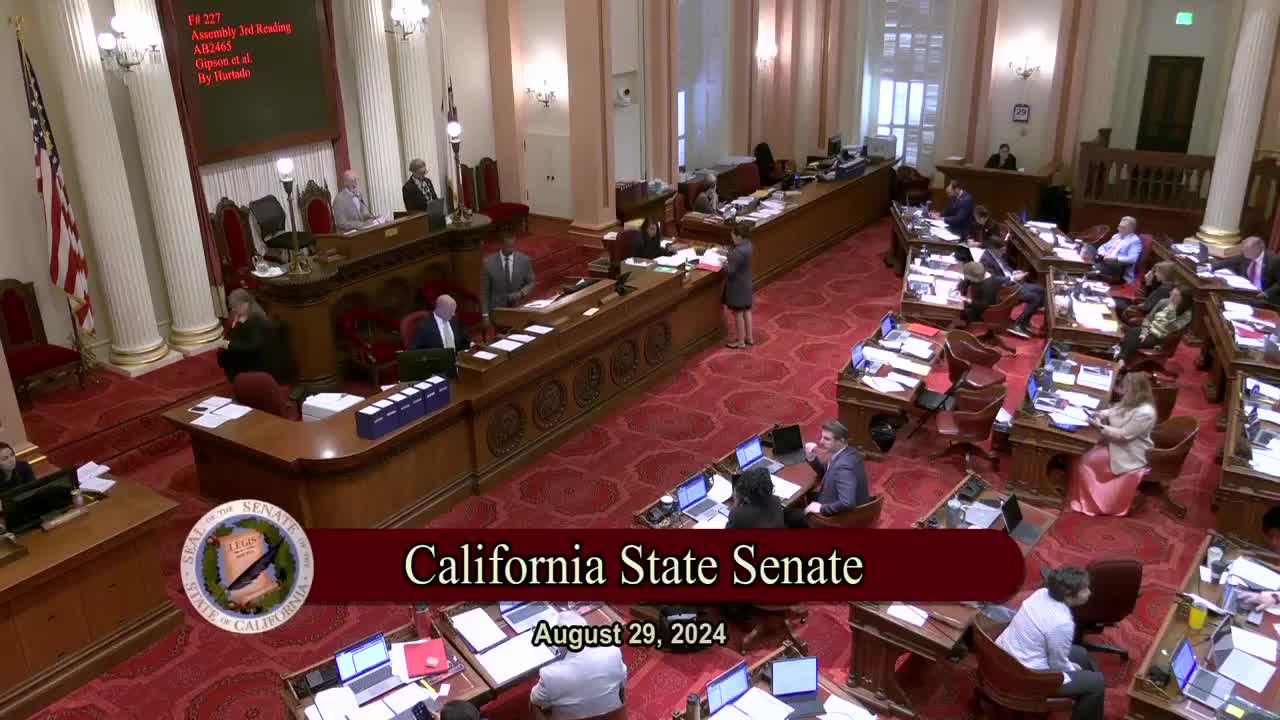 3MIN
Senate Floor
 46SEC
Senate Standing Committee on Appropriations
 4MIN
Senate Standing Committee on Labor, Public Employment and Retirement
 12MIN
Senate Standing Committee on Governmental Organization
 52SEC
Assembly Floor
 4MIN
Assembly Standing Committee on Labor and Employment
Bill Author

Bill Co-Author(s):