AB 2095: Publication: newspapers of general circulation.
- Session Year: 2023-2024
- House: Assembly
- Latest Version Date: 2024-09-05
Current Status:
Failed
(2024-09-28: Vetoed by Governor.)
Introduced
In Committee
First Chamber
In Committee
Second Chamber
Enacted
Existing law requires various types of notices to be provided in a newspaper of general circulation, as that term is defined, in accordance with certain prescribed publication periods and legal requirements. Existing law requires a newspaper of general circulation to meet certain criteria, including publication, a bona fide subscription list of paying subscribers, and printing and publishing at regular intervals in the state, county, or city where publication is to be given.
This bill would require any public notice that is legally required to be published in a newspaper of general circulation to be published in the newspapers print publication, on the newspapers internet website or electronic newspaper available on the internet, and on the statewide internet website maintained as a repository for notices by a majority of California newspapers of general circulation, as specified.
This bill would permit a newspaper that does not maintain its own internet website to satisfy these notice requirements by publishing the notice on the statewide internet website and referencing the statewide internet website in its print publication notice. The bill would provide that certain internet website operator errors or temporary outages or service interruptions resulting in an error in the legal notice published do not constitute a defect in publication, if the legal notice appears correctly in the newspapers print publication and satisfies all other legal notice requirements. The bill would prohibit a newspaper or the statewide internet website from charging any fee or surcharge specifically to access public notices on their internet website, except as specified. The bill would prohibit a newspaper from charging an additional fee or surcharge specifically for posting to the statewide internet website. The bill, until January 1, 2028, would exempt a public notice that is published in a newspaper of general circulation that has 5 or fewer employees from the requirements that the notice be published on the newspapers internet website or electronic newspaper and on the statewide internet website.
This bill would prohibit the statewide internet website from selling or sharing the personal information of consumers or using it for any purposes other than those explicitly outlined in the bill.
This bill would include related legislative findings and declarations.
Existing law requires various types of notices to be provided in a newspaper of general circulation, as that term is defined, in accordance with certain prescribed publication periods and legal requirements. Existing law requires a newspaper of general circulation to meet certain criteria, including publication, a bona fide subscription list of paying subscribers, and printing and publishing at regular intervals in the state, county, or city where publication is to be given.
This bill would require any public notice that is legally required to be published in a newspaper of general circulation to be published in the newspapers print publication, on the newspapers internet website or electronic newspaper available on the internet, and on the statewide internet website maintained as a repository for notices by a majority of California newspapers of general circulation, as specified.
TheThis bill would permit a newspaper that does not maintain its own internet website to satisfy these notice requirements by publishing the notice on the statewide internet website and referencing the statewide internet website in its print publication notice. The bill would provide that certain internet website operator errors or temporary outages or service interruptions resulting in an error in the legal notice published do not constitute a defect in publication, if the legal notice appears correctly in the newspapers print publication and satisfies all other legal notice requirements. The bill would prohibit a newspaper or the statewide internet website from charging any fee or surcharge specifically to access public notices on their internet website, except as specified. The bill would prohibit a newspaper from charging an additional fee or surcharge specifically for posting to the statewide internet website. The The bill, until January 1, 2028, would exempt a public notice that is published in a newspaper of general circulation that has 5 or fewer employees from the requirements that the notice be published on the newspapers internet website or electronic newspaper and on the statewide internet website.
This bill would also prohibit the statewide internet website from selling or sharing the personal information of consumers or using it for any purposes other than those explicitly outlined in the bill.
This bill would include related legislative findings and declarations.
Existing law requires various types of notices to be provided in a newspaper of general circulation, as that term is defined, in accordance with certain prescribed publication periods and legal requirements. Existing law requires a newspaper of general circulation to meet certain criteria, including publication, a bona fide subscription list of paying subscribers, and printing and publishing at regular intervals in the state, county, or city where publication is to be given.
This bill would require any public notice that is legally required to be published in a newspaper of general circulation to be published in the newspapers print publication, on the newspapers internet website or electronic newspaper available on the internet, and on a the statewide internet website maintained as a repository for notices by a majority of California newspapers of general circulation, as specified.
The bill would permit a newspaper that does not maintain its own internet website to satisfy these notice requirements by publishing the notice on a the statewide internet website and referencing the statewide internet website in its print publication notice. The bill would provide that certain internet website operator errors or temporary outages or service interruptions resulting in an error in the legal notice published do not constitute a defect in publication, if the legal notice appears correctly in the newspapers print publication and satisfies all other legal notice requirements. The bill would prohibit a newspaper or a the statewide repository internet website from charging any fee or surcharge specifically to access public notices on their internet website, except as specified. The bill would prohibit a newspaper or statewide repository from charging an additional fee or surcharge specifically for posting to the statewide repository site. internet website. The bill would also prohibit the statewide internet website from selling or sharing the personal information of consumers or using it for any purposes other than those explicitly outlined in the bill.
This bill would include related legislative findings and declarations.
Existing law requires various types of notices to be provided in a newspaper of general circulation, as that term is defined, in accordance with certain prescribed publication periods and legal requirements. Existing law requires a newspaper of general circulation to meet certain criteria, including publication, a bona fide subscription list of paying subscribers, and printing and publishing at regular intervals in the state, county, or city where publication is to be given.
This bill would require any public notice that is legally required to be published in a newspaper of general circulation to be published in the newspapers print publication, on the newspapers internet website or electronic newspaper available on the internet, and on a statewide internet website maintained as a repository for notices by a majority of California newspapers of general circulation, as specified.
The bill would permit a newspaper that does not maintain its own internet website to satisfy these notice requirements by publishing the notice on a statewide internet website and referencing the statewide internet website in its print publication notice. The bill would provide that certain internet website operator errors or temporary outages or service interruptions resulting in an error in the legal notice published do not constitute a defect in publication, if the legal notice appears correctly in the newspapers print publication and satisfies all other legal notice requirements. The bill would prohibit a newspaper or a statewide repository from charging any fee or surcharge specifically to access public notices on their internet website, except as specified. The bill would prohibit a newspaper or statewide repository from charging an additional fee or surcharge for posting to the statewide repository site.
This bill would include related legislative findings and declarations.
Existing law requires various types of notices to be provided in a newspaper of general circulation, as that term is defined, in accordance with certain prescribed publication periods and legal requirements. Existing law requires a newspaper of general circulation to meet certain criteria, including publication, a bonafide bona fide subscription list of paying subscribers, and printing and publishing at regular intervals in the state, county, or city where publication is to be given.
This bill would require any public notice that is legally required to be published in a newspaper of general circulation to be published in the newspapers print publication, on the newspapers internet website or electronic newspaper available on the internet, and on a statewide internet website maintained as a repository for notices by a majority of California newspapers of general circulation, as specified.
The bill would permit a newspaper that does not maintain its own internet website to satisfy these notice requirements by publishing the notice on a statewide internet website and referencing the statewide internet website in its print publication notice. The bill would provide that certain internet website operator errors or temporary outages or service interruptions resulting in an error in the legal notice published do not constitute a defect in publication, if the legal notice appears correctly in the newspapers print publication and satisfies all other legal notice requirements. The bill would prohibit a newspaper from charging any fee or surcharge specifically to access public notices on their internet website, except as specified.
The bill would also require a state or local agency that maintains an internet website and publishes a public notice to include a reasonably accessible link on its internet website to the statewide internet website, currently capublicnotice.com, where the public notice will appear. By imposing new duties on local government agencies, the bill would create a state-mandated local program.This bill would include related legislative findings and declarations.
The California Constitution requires the state to reimburse local agencies and school districts for certain costs mandated by the state. Statutory provisions establish procedures for making that reimbursement.This bill would provide that, if the Commission on State Mandates determines that the bill contains costs mandated by the state, reimbursement for those costs shall be made pursuant to the statutory provisions noted above.Existing law requires various types of notices to be provided in a newspaper of general circulation, as that term is defined, in accordance with certain prescribed publication periods and legal requirements. Existing law requires a newspaper of general circulation to meet certain criteria, including publication, a bonafide subscription list of paying subscribers, and printing and publishing at regular intervals in the state, county, or city where publication is to be given.
This bill would require a person or other specified entity any public notice that is legally required to publish a notice be published in a newspaper of general circulation or other newspaper to publish that notice in a manner that ensures it appears be published in the newspapers print publication, on the newspapers internet website or electronic newspaper available on the internet, and on a statewide internet website maintained as a repository for notices by a majority of California newspapers of general circulation, as specified.
The bill would permit a newspaper that does not maintain its own internet website to satisfy these notice requirements by publishing the notice on a statewide internet website and referencing the statewide internet website in its print publication notice. The bill would provide that certain internet website operator errors or temporary outages or service interruptions resulting in an error in the legal notice published do not constitute a defect in publication, if the legal notice appears correctly in the newspapers print publication and satisfies all other legal notice requirements. The bill would prohibit a newspaper from charging any fee or surcharge specifically to access public notices on their internet website, except as specified.
The bill would also require a state or local agency that maintains an internet website and publishes a public notice to include a reasonably accessible link on its internet website to the statewide internet website, currently capublicnotice.com, where the public notice will appear. By imposing new duties on local government agencies, the bill would create a state-mandated local program.
This bill would include related legislative findings and declarations.
The California Constitution requires the state to reimburse local agencies and school districts for certain costs mandated by the state. Statutory provisions establish procedures for making that reimbursement.
This bill would provide that, if the Commission on State Mandates determines that the bill contains costs mandated by the state, reimbursement for those costs shall be made pursuant to the statutory provisions noted above.
Existing law requires various types of notices to be provided in a newspaper of general circulation, as that term is defined, in accordance with certain prescribed publication periods and legal requirements. Existing law requires a newspaper of general circulation to meet certain criteria, including publication, a bonafide subscription list of paying subscribers, and printing and publishing at regular intervals in the state, county, or city where publication is to be given.
This bill would require a person or other specified entity that is legally required to publish a notice in a newspaper of general circulation or other newspaper to publish that notice in a manner that ensures it appears in the newspapers print publication, on the newspapers internet website or electronic newspaper available on the internet, and on a statewide internet website maintained as a repository for notices by a majority of California newspapers of general circulation, as specified.
The bill would permit a newspaper that does not maintain its own internet website to satisfy these notice requirements by publishing the notice on a statewide internet website and referencing the statewide internet website in its print publication notice. The bill would provide that certain internet website operator errors or temporary outages or service interruptions resulting in an error in the legal notice published do not constitute a defect in publication, if the legal notice appears correctly in the newspapers print publication and satisfies all other legal notice requirements. The bill would prohibit a newspaper from charging any fee or surcharge specifically to access public notices on their internet website, except as specified.
The bill would also require a state or local agency that maintains an internet website and publishes a public notice to include a reasonably accessible link on its internet website to the statewide internet website, currently capublicnotice.com, where the public notice will appear. By imposing new duties on local government agencies, the bill would create a state-mandated local program.
This bill would include related legislative findings and declarations.
The California Constitution requires the state to reimburse local agencies and school districts for certain costs mandated by the state. Statutory provisions establish procedures for making that reimbursement.
This bill would provide that, if the Commission on State Mandates determines that the bill contains costs mandated by the state, reimbursement for those costs shall be made pursuant to the statutory provisions noted above.
The Legislature finds and declares as follows:
(a)For more than 100 years, the public has relied on newspapers to publish public notices informing our communities about public agency hearings, design reviews, school board budgets, trustee sales, estate administration petitions, fictitious business names, and hundreds of other important legal events of interest to the public. Through public notices that appear in legally adjudicated newspapers, the state has reached all corners of California, from sparsely populated rural areas to large urban enclaves. Public notices placed in local and ethnic newspapers have informed many diverse communities across the state and ensured access to key information about our state and local governments, citizens, and legal systems.
(b)As part of expanding public access to public notices, members of the public shall by law gain access to public notices on newspaper internet websites and a statewide internet website, currently capublicnotice.com, that is maintained as a joint venture of the majority of California newspapers and contains a searchable repository of state and local public notices. At the same time, it is important to maintain access to public notices for the millions of individuals who rely on newspapers to learn about matters of public interest. Online delivery of public notices to newspaper internet websites will ensure that Californians who rely on the internet for information will have the opportunity to access public notices, while newspaper delivery of public notices will ensure that the many diverse, local, and elderly readers of newspapers will also have access to this critical public information.
SEC. 2.Section 6009 is added to the Government Code, immediately following Section 6008, to read:6009.(a)When any public notice is legally required by a statute, ordinance, bylaw, or judicial order to be published in a newspaper of general circulation, that notice shall be published in and on all of the following:
(1)The newspapers print publication.
(2)The newspapers internet website or electronic newspaper available on the internet.
(3)The statewide internet website maintained as a repository for notices by a majority of California newspapers of general circulation, as described in this section. The newspaper in which the notice is published shall be responsible for publishing notices on the statewide internet website.
(b)(1)In accordance with subdivision (a), a newspaper publishing a notice that has an internet website operated by that newspaper shall also place the notice on the statewide internet website and on a statewide internet website maintained by an entity with the capacity to receive and upload legal notices from the majority of newspapers in this state as a repository for the notices.
(2)Posting on an internet website shall begin on the first day of placement on the internet website and shall run continuously until the expiration of the specified time legally required for that type of notice.
(3)Each notice required to be placed on the newspapers internet website shall remain valid if it meets all of the requirements of this section, and the legality of the newspaper publication shall not be affected by the failure of the newspaper for any reason to upload legal notice publications to a statewide internet website or to another internet website or to accurately post the notice publication on any internet website.
(c)If a newspaper does not maintain its own internet website, publication on the statewide internet website and reference to the statewide internet website in the print publication notice shall satisfy the requirement of publication on the newspapers internet website.
(d)An error in the legal notice published on a newspapers internet website or the statewide internet website that is a result of either (1) an error of the internet website operator; or (2) a temporary internet website outage or service interruption that prevents the publication or display of a legal notice on the internet website shall not constitute a defect in publication of the legal notice, if the legal notice appears correctly in the newspapers print publication and satisfies all other legal notice requirements. Failure to post or maintain a public notice on the newspapers internet website or to post a public notice on the statewide public notice internet website does not affect the validity of the public notice.
(e)(1)A newspaper or the statewide internet website shall not charge a fee or surcharge specifically to access public notices on their internet website. However a newspaper may continue to charge a fee or surcharge for access to other content on their internet website, including, but not limited to, public notices published by the newspaper.
(2)A newspaper shall not charge an additional fee or surcharge specifically for posting to the statewide internet website.
(f)A public notice that is published in a newspaper of general circulation that has five or fewer employees is exempt from the requirements of paragraphs (2) and (3) of subdivision (a) until January 1, 2028.
(g)(1)The statewide internet website shall not sell or share the personal information of consumers or use it for any purposes other than those explicitly outlined in this section.
(2)For purposes of this subdivision, the following terms have the following meanings:
(A)Sell has the same definition as sell in subdivision (ad) of Section 1798.140 of the Civil Code.
(B)Share has the same definition as share in subdivision (ah) of Section 1798.140 of the Civil Code.
(C)Personal information has the same definition as personal information in subdivision (v) of Section 1798.140 of the Civil Code.
The Legislature finds and declares as follows:
(a)For more than 100 years, the public has relied on newspapers to publish public notices informing our communities about public agency hearings, design reviews, school board budgets, trustee sales, estate administration petitions, fictitious business names, and hundreds of other important legal events of interest to the public. Through public notices that appear in legally adjudicated newspapers, the state has reached all corners of California, from sparsely populated rural areas to large urban enclaves. Public notices placed in local and ethnic newspapers have informed many diverse communities across the state and ensured access to key information about our state and local governments, citizens, and legal systems.
(b)As part of expanding public access to public notices, members of the public shall by law gain access to public notices on newspaper internet websites and a statewide internet website, currently capublicnotice.com, that is maintained as a joint venture of the majority of California newspapers and contains a searchable repository of state and local public notices. At the same time, it is important to maintain access to public notices for the millions of individuals who rely on newspapers to learn about matters of public interest. Online delivery of public notices to newspaper internet websites will ensure that Californians who rely on the internet for information will have the opportunity to access public notices, while newspaper delivery of public notices will ensure that the many diverse, local, and elderly readers of newspapers will also have access to this critical public information.
SEC. 2.Section 6009 is added to the Government Code, immediately following Section 6008, to read:6009.(a)When any public notice is legally required by a statute, ordinance, bylaw, or judicial order to be published in a newspaper of general circulation, that notice shall be published in and on all of the following:
(1)The newspapers print publication.
(2)The newspapers internet website or electronic newspaper available on the internet.
(3)The statewide internet website maintained as a repository for notices by a majority of California newspapers of general circulation, as described in this section. The newspaper in which the notice is published shall be responsible for publishing notices on the statewide internet website.
(b)(1)In accordance with subdivision (a), a newspaper publishing a notice that has an internet website operated by that newspaper shall also place the notice on the statewide internet website and on a statewide internet website maintained by an entity with the capacity to receive and upload legal notices from the majority of newspapers in this state as a repository for the notices.
(2)Posting on an internet website shall begin on the first day of placement on the internet website and shall run continuously until the expiration of the specified time legally required for that type of notice.
(3)Each notice required to be placed on the newspapers internet website shall remain valid if it meets all of the requirements of this section, and the legality of the newspaper publication shall not be affected by the failure of the newspaper for any reason to upload legal notice publications to a statewide internet website or to another internet website or to accurately post the notice publication on any internet website.
(c)If a newspaper does not maintain its own internet website, publication on the statewide internet website and reference to the statewide internet website in the print publication notice shall satisfy the requirement of publication on the newspapers internet website.
(d)An error in the legal notice published on a newspapers internet website or the statewide internet website that is a result of either (1) an error of the internet website operator; or (2) a temporary internet website outage or service interruption that prevents the publication or display of a legal notice on the internet website shall not constitute a defect in publication of the legal notice, if the legal notice appears correctly in the newspapers print publication and satisfies all other legal notice requirements. Failure to post or maintain a public notice on the newspapers internet website or to post a public notice on the statewide public notice internet website does not affect the validity of the public notice.
(e)(1)A newspaper or the statewide internet website shall not charge a fee or surcharge specifically to access public notices on their internet website. However a newspaper may continue to charge a fee or surcharge for access to other content on their internet website, including, but not limited to, public notices published by the newspaper.
(2)A newspaper shall not charge an additional fee or surcharge specifically for posting to the statewide internet website.
(f)A public notice that is published in a newspaper of general circulation that has five or fewer employees is exempt from the requirements of paragraphs (2) and (3) of subdivision (a) until January 1, 2028.
(f)(g)(1)The statewide internet website shall not sell or share the personal information of consumers or use it for any purposes other than those explicitly outlined in this section.
(2)For purposes of this subdivision, the following terms have the following meanings:
(A)Sell has the same definition as sell in subdivision (ad) of Section 1798.140 of the Civil Code.
(B)Share has the same definition as share in subdivision (ah) of Section 1798.140 of the Civil Code.
(C)Personal information has the same definition as personal information in subdivision (v) of Section 1798.140 of the Civil Code.
The Legislature finds and declares as follows:
(a)For more than 100 years, the public has relied on newspapers to publish public notices informing our communities about public agency hearings, design reviews, school board budgets, trustee sales, estate administration petitions, fictitious business names, and hundreds of other important legal events of interest to the public. Through public notices that appear in legally adjudicated newspapers, the state has reached all corners of California, from sparsely populated rural areas to large urban enclaves. Public notices placed in local and ethnic newspapers have informed many diverse communities across the state and ensured access to key information about our state and local governments, citizens, and legal systems.
(b)As part of expanding public access to public notices, members of the public shall by law gain access to public notices on newspaper internet websites and a statewide internet website, currently capublicnotice.com, that is maintained as a joint venture of the majority of California newspapers and contains a searchable repository of state and local public notices. At the same time, it is important to maintain access to public notices for the millions of individuals who rely on newspapers to learn about matters of public interest. Online delivery of public notices to newspaper internet websites will ensure that Californians who rely on the internet for information will have the opportunity to access public notices, while newspaper delivery of public notices will ensure that the many diverse, local, and elderly readers of newspapers will also have access to this critical public information.
SEC. 2.Section 6009 is added to the Government Code, immediately following Section 6008, to read:6009.(a)When any public notice is legally required by a statute, ordinance, bylaw, or judicial order to be published in a newspaper of general circulation, that notice shall be published in and on all of the following:
(1)The newspapers print publication.
(2)The newspapers internet website or electronic newspaper available on the internet.
(3)A The statewide internet website maintained as a repository for notices by a majority of California newspapers of general circulation, as described in this section. The newspaper in which the notice is published shall be responsible for publishing notices on a the statewide internet website.
(b)(1)In accordance with subdivision (a), a newspaper publishing a notice that has an internet website operated by that newspaper shall also place the notice on its the statewide internet website and on a statewide internet website maintained by an entity with the capacity to receive and upload legal notices from the majority of newspapers in this state as a repository for the notices.
(2)Posting on an internet website shall begin on the first day of placement on the internet website and shall run continuously until the expiration of the specified time legally required for that type of notice.
(3)Each notice required to be placed on the newspapers internet website shall remain valid if it meets all of the requirements of this section, and the legality of the newspaper publication shall not be affected by the failure of the newspaper for any reason to upload legal notice publications to a statewide internet website or to another internet website or to accurately post the notice publication on any internet website.
(c)If a newspaper does not maintain its own internet website, publication on a the statewide internet website and reference to the statewide internet website in the print publication notice shall satisfy the requirement of publication on the newspapers internet website.
(d)An error in the legal notice published on a newspapers internet website or the statewide internet website that is a result of either (1) an error of the internet website operator; or (2) a temporary internet website outage or service interruption that prevents the publication or display of a legal notice on the internet website shall not constitute a defect in publication of the legal notice, if the legal notice appears correctly in the newspapers print publication and satisfies all other legal notice requirements. Failure to post or maintain a public notice on the newspapers internet website or to post a public notice on the statewide public notice internet website does not affect the validity of the public notice.
(e)(1)A newspaper or the statewide repository internet website shall not charge a fee or surcharge specifically to access public notices on their internet website. However a newspaper may continue to charge a fee or surcharge for access to other content on their internet website, including, but not limited to, public notices published by the newspaper, if the newspaper also includes a reasonably accessible link to the statewide internet website on the newspapers internet website. A newspaper.
(2)A newspaper or statewide repository shall not charge an additional fee or surcharge specifically for posting to the statewide repository site. internet website.
(f)(1)The statewide internet website shall not sell or share the personal information of consumers or use it for any purposes other than those explicitly outlined in this section.
(2)For purposes of this subdivision, the following terms have the following meanings:
(A)Sell has the same definition as sell in subdivision (ad) of Section 1798.140 of the Civil Code.
(B)Share has the same definition as share in subdivision (ah) of Section 1798.140 of the Civil Code.
(C)Personal information has the same definition as personal information in subdivision (v) of Section 1798.140 of the Civil Code.
The Legislature finds and declares as follows:
(a)For more than 100 years, the public has relied on newspapers to publish public notices informing our communities about public agency hearings, design reviews, school board budgets, trustee sales, estate administration petitions, fictitious business names, and hundreds of other important legal events of interest to the public. Through public notices that appear in legally adjudicated newspapers, the state has reached all corners of California, from sparsely populated rural areas to large urban enclaves. Public notices placed in local and ethnic newspapers have informed many diverse communities across the state and ensured access to key information about our state and local governments, citizens, and legal systems.
(b)As part of expanding public access to public notices, members of the public shall by law gain access to public notices on newspaper internet websites and a statewide internet website, which that is maintained as a joint venture of the majority of California newspapers and contains a searchable repository of state and local public notices. At the same time, it is important to maintain access to public notices for the millions of individuals who rely on newspapers to learn about matters of public interest. Online delivery of public notices to newspaper internet websites will ensure that Californians who rely on the internet for information will have the opportunity to access public notices, while newspaper delivery of public notices will ensure that the many diverse, local, and elderly readers of newspapers will also have access to this critical public information.
SEC. 2.Section 6009 is added to the Government Code, immediately following Section 6008, to read:6009.(a)When any public notice is legally required by a statute, ordinance, bylaw, or judicial order to be published in a newspaper of general circulation, that notice shall be published in and on all of the following:
(1)The newspapers print publication.
(2)The newspapers internet website or electronic newspaper available on the internet.
(3)A statewide internet website maintained as a repository for notices by a majority of California newspapers of general circulation, as described in this article. section. The newspaper in which the notice is published shall be responsible for publishing notices on a statewide internet website.
(b)(1)In accordance with subdivision (a), a newspaper publishing a notice that has an internet website operated by that newspaper shall also place the notice on its internet website and on a statewide internet website maintained by an entity with the capacity to receive and upload legal notices from the majority of newspapers in this state as a repository for the notices.
(2)Posting on an internet website shall begin on the first day of placement on the internet website and shall run continuously until the expiration of the specified time legally required for that type of notice.
(3)Each notice required to be placed on the newspapers internet website shall remain valid if it meets all of the requirements of this section, and the legality of the newspaper publication shall not be affected by the failure of the newspaper for any reason to upload legal notice publications to a statewide internet website or to another internet website or to accurately post the notice publication on any internet website.
(c)If a newspaper does not maintain its own internet website, publication on a statewide internet website and reference to the statewide internet website in the print publication notice shall satisfy the requirement of publication on the newspapers internet website.
(d)An error in the legal notice published on a newspapers internet website or the statewide internet website that is a result of either (1) an error of the internet website operator; or (2) a temporary internet website outage or service interruption that prevents the publication or display of a legal notice on the internet website shall not constitute a defect in publication of the legal notice, if the legal notice appears correctly in the newspapers print publication and satisfies all other legal notice requirements. Failure to post or maintain a public notice on the newspapers internet website or to post a public notice on the statewide public notice internet website does not affect the validity of the public notice.
(e)A newspaper or statewide repository shall not charge a fee or surcharge specifically to access public notices on their internet website. However a newspaper may continue to charge a fee or surcharge for access to other content on their internet website, including, but not limited to, public notices published by the newspaper, if the newspaper also includes a reasonably accessible link to the statewide internet website on the newspapers internet website. A newspaper or statewide repository shall not charge an additional fee or surcharge for posting to the statewide repository site.
The Legislature finds and declares as follows:
(a)For more than 100 years, the public has relied on newspapers to publish public notices informing our communities about public agency hearings, design reviews, school board budgets, trustee sales, estate administration petitions, fictitious business names, and hundreds of other important legal events of interest to the public. Through public notices that appear in legally adjudicated newspapers, the state has reached all corners of California, from sparsely populated rural areas to large urban enclaves. Public notices placed in local and ethnic newspapers have informed many diverse communities across the state and ensured access to key information about our state and local governments, citizens, and legal systems.
(b)As part of expanding public access to public notices, members of the public shall by law gain access to public notices on newspaper internet websites and a statewide internet website, currently capublicnotice.com, which is maintained as a joint venture of the majority of California newspapers and contains a searchable repository of state and local public notices. At the same time, it is important to maintain access to public notices for the millions of individuals who rely on newspapers to learn about matters of public interest. Online delivery of public notices to newspaper internet websites will ensure that Californians who rely on the internet for information will have the opportunity to access public notices, while newspaper delivery of public notices will ensure that the many diverse, local, and elderly readers of newspapers will also have access to this critical public information.
SEC. 2.Section 6009 is added to the Government Code, immediately following Section 6008, to read:6009.(a)When any public notice is legally required by a statute, ordinance, bylaw, or judicial order to be published in a newspaper of general circulation, that notice shall be published in and on all of the following:
(1)The newspapers print publication.
(2)The newspapers internet website or electronic newspaper available on the internet.
(3)A statewide internet website maintained as a repository for notices by a majority of California newspapers of general circulation, as described in this article. The newspaper in which the notice is published shall be responsible for publishing notices on a statewide internet website.
(b)(1)In accordance with subdivision (a), a newspaper publishing a notice that has an internet website operated by that newspaper shall also place the notice on its internet website and on a statewide internet website maintained by an entity with the capacity to receive and upload legal notices from the majority of newspapers in this state as a repository for the notices.
(2)Posting on an internet website shall begin on the first day of placement on the internet website and shall run continuously until the expiration of the specified time legally required for that type of notice.
(3)Each notice required to be placed on the newspapers internet website shall remain valid if it meets all of the requirements of this section, and the legality of the newspaper publication shall not be affected by the failure of the newspaper for any reason to upload legal notice publications to a statewide internet website or to another internet website or to accurately post the notice publication on any internet website.
(c)If a newspaper does not maintain its own internet website, publication on a statewide internet website and reference to the statewide internet website in the print publication notice shall satisfy the requirement of publication on the newspapers internet website.
(d)An error in the legal notice published on a newspapers internet website or the statewide internet website that is a result of either (1) an error of the internet website operator; or (2) a temporary internet website outage or service interruption that prevents the publication or display of a legal notice on the internet website shall not constitute a defect in publication of the legal notice, if the legal notice appears correctly in the newspapers print publication and satisfies all other legal notice requirements. Failure to post or maintain a public notice on the newspapers internet website or to post a public notice on the statewide public notice internet website does not affect the validity of the public notice.
(e)A newspaper shall not charge a fee or surcharge specifically to access public notices on their internet website. However a newspaper may continue to charge a fee or surcharge for access to other content on their internet website, including, but not limited to, public notices published by the newspaper, if the newspaper also includes a reasonably accessible link to the statewide internet website on the newspapers internet website.
(f)A state or local agency that maintains an internet website and publishes a public notice shall include a reasonably accessible link on its internet website to the statewide internet website, currently capublicnotice.com, where the public notice shall appear.SEC. 3.If the Commission on State Mandates determines that this act contains costs mandated by the state, reimbursement to local agencies and school districts for those costs shall be made pursuant to Part 7 (commencing with Section 17500) of Division 4 of Title 2 of the Government Code.The Legislature finds and declares as follows:
(a)For more than 100 years, the public has relied on newspapers to publish public notices informing our communities about public agency hearings, design reviews, school board budgets, trustee sales, estate administration petitions, fictitious business names, and hundreds of other important legal events of interest to the public. Through public notices that appear in legally adjudicated newspapers, the state has reached all corners of California, from sparsely populated rural areas to large urban enclaves. Public notices placed in local and ethnic newspapers have informed many diverse communities across the state and ensured access to key information about our state and local governments, citizens citizens, and legal systems.
(b)As part of expanding public access to public notices, members of the public shall by law gain access to public notices on newspaper internet websites and a statewide internet website, currently capublicnotice.com, which is maintained as a joint venture of the majority of California newspapers and contains a searchable repository of state and local public notices. At the same time, it is important to maintain access to public notices for the millions of individuals who rely on newspapers to learn about matters of public interest. Online delivery of public notices to newspaper internet websites will ensure that Californians who rely on the internet for information will have the opportunity to access public notices, while newspaper delivery of public notices will ensure that the many diverse, local, and elderly readers of newspapers will also have access to this critical public information.
SEC. 2.Section 6009 is added to the Government Code, immediately following Section 6008, to read:6009.(a)A person, corporation, state agency, city, county, city and county, special district, authority, or other political subdivision of the state, or other legal entity that When any public notice is legally required by a statute, ordinance, bylaw, or judicial order to publish a notice be published in a newspaper of general circulation or other newspaper shall publish that notice in a manner that ensures it appears circulation, that notice shall be published in and on all of the following:
(1)The newspapers print publication.
(2)The newspapers internet website or electronic newspaper available on the internet.
(3)A statewide internet website maintained as a repository for notices by a majority of California newspapers of general circulation, as described in this article.
(b)(1)In accordance with subdivision (a), a newspaper publishing a notice that has an internet website operated by that newspaper shall also place the notice on its internet website and on a statewide internet website maintained by an entity with the capacity to receive and upload legal notices from the majority of newspapers in this state as a repository for the notices.
(2)Posting on the an internet website shall begin on the first day of placement on the internet website and shall run continuously until the expiration of the specified time legally required for that type of notice.
(3)Each notice required to be placed on the newspapers internet website shall remain valid if it meets all of the requirements of this section, and the legality of the newspaper publication shall not be affected by the failure of the newspaper for any reason to upload legal notice publications to a statewide internet website or to another internet website or to accurately post the notice publication on any internet website.
(c)If a newspaper does not maintain its own internet website, publication on a statewide internet website and reference to the statewide internet website in the print publication notice shall satisfy the requirement of publication on the newspapers internet website.
(d)An error in the legal notice published on a newspapers internet website or the statewide internet website that is a result of either (1) an error of the internet website operator; or (2) a temporary internet website outage or service interruption that prevents the publication or display of a legal notice on the internet website shall not constitute a defect in publication of the legal notice, if the legal notice appears correctly in the newspapers print publication and satisfies all other legal notice requirements. Failure to post or maintain a public notice on the newspapers internet website or to post a public notice on the statewide public notice internet website does not affect the validity of the public notice.
(e)A newspaper shall not charge a fee or surcharge specifically to access public notices on their internet website. However a newspaper may continue to charge a fee or surcharge for access to other content on their internet website, including, but not limited to, public notices published by the newspaper, if the newspaper also includes a reasonably accessible link to the statewide internet website on the newspapers internet website.
(f)A state or local agency that maintains an internet website and publishes a public notice shall include a reasonably accessible link on its internet website to the statewide internet website, currently capublicnotice.com, where the public notice shall appear.
SEC. 3.If the Commission on State Mandates determines that this act contains costs mandated by the state, reimbursement to local agencies and school districts for those costs shall be made pursuant to Part 7 (commencing with Section 17500) of Division 4 of Title 2 of the Government Code.
The Legislature finds and declares as follows:
(a)For more than 100 years, the public has relied on newspapers to publish public notices informing our communities about public agency hearings, design reviews, school board budgets, trustee sales, estate administration petitions, fictitious business names, and hundreds of other important legal events of interest to the public. Through public notices that appear in legally adjudicated newspapers, the state has reached all corners of California, from sparsely populated rural areas to large urban enclaves. Public notices placed in local and ethnic newspapers have informed many diverse communities across the state and ensured access to key information about our state and local governments, citizens and legal systems.
(b)As part of expanding public access to public notices, members of the public shall by law gain access to public notices on newspaper internet websites and a statewide internet website, currently capublicnotice.com, which is maintained as a joint venture of the majority of California newspapers and contains a searchable repository of state and local public notices. At the same time, it is important to maintain access to public notices for the millions of individuals who rely on newspapers to learn about matters of public interest. Online delivery of public notices to newspaper internet websites will ensure that Californians who rely on the internet for information will have the opportunity to access public notices, while newspaper delivery of public notices will ensure that the many diverse, local, and elderly readers of newspapers will also have access to this critical public information.
SEC. 2.Section 6009 is added to the Government Code, immediately following Section 6008, to read:6009.(a)A person, corporation, state agency, city, county, city and county, special district, authority, or other political subdivision of the state, or other legal entity that is legally required by a statute, ordinance, bylaw, or judicial order to publish a notice in a newspaper of general circulation or other newspaper shall publish that notice in a manner that ensures it appears in and on all of the following:
(1)The newspapers print publication.
(2)The newspapers internet website or electronic newspaper available on the internet.
(3)A statewide internet website maintained as a repository for notices by a majority of California newspapers of general circulation, as described in this article.
(b)(1)In accordance with subdivision (a), a newspaper publishing a notice that has an internet website operated by that newspaper shall also place the notice on its internet website and on a statewide internet website maintained by an entity with the capacity to receive and upload legal notices from the majority of newspapers in this state as a repository for the notices.
(2)Posting on the internet website shall begin on the first day of placement on the internet website and shall run continuously until the expiration of the specified time legally required for that type of notice.
(3)Each notice required to be placed on the newspapers internet website shall remain valid if it meets all of the requirements of this section, and the legality of the newspaper publication shall not be affected by the failure of the newspaper for any reason to upload legal notice publications to a statewide internet website or to another internet website or to accurately post the notice publication on any internet website.
(c)If a newspaper does not maintain its own internet website, publication on a statewide internet website and reference to the statewide internet website in the print publication notice shall satisfy the requirement of publication on the newspapers internet website.
(d)An error in the legal notice published on a newspapers internet website or the statewide internet website that is a result of either (1) an error of the internet website operator; or (2) a temporary internet website outage or service interruption that prevents the publication or display of a legal notice on the internet website shall not constitute a defect in publication of the legal notice, if the legal notice appears correctly in the newspapers print publication and satisfies all other legal notice requirements. Failure to post or maintain a public notice on the newspapers internet website or to post a public notice on the statewide public notice internet website does not affect the validity of the public notice.
(e)A newspaper shall not charge a fee or surcharge specifically to access public notices on their internet website. However a newspaper may continue to charge a fee or surcharge for access to other content on their internet website, including, but not limited to, public notices published by the newspaper, if the newspaper also includes a reasonably accessible link to the statewide internet website on the newspapers internet website.
(f)A state or local agency that maintains an internet website and publishes a public notice shall include a reasonably accessible link on its internet website to the statewide internet website, currently capublicnotice.com, where the public notice shall appear.
SEC. 3.If the Commission on State Mandates determines that this act contains costs mandated by the state, reimbursement to local agencies and school districts for those costs shall be made pursuant to Part 7 (commencing with Section 17500) of Division 4 of Title 2 of the Government Code.
|
Date
|
Status
|
|---|---|
| Sep 28, 2024 | Vetoed by Governor. |
| Sep 12, 2024 | Enrolled and presented to the Governor at 4 p.m. |
| Aug 31, 2024 | Senate amendments concurred in. To Engrossing and Enrolling. (Ayes 73. Noes 1.). |
| Aug 31, 2024 | In Assembly. Concurrence in Senate amendments pending. |
| Aug 31, 2024 | Read third time. Passed. Ordered to the Assembly. (Ayes 39. Noes 0.). |
| Aug 29, 2024 | Read second time. Ordered to third reading. |
| Aug 28, 2024 | Read third time and amended. Ordered to second reading. |
| Aug 28, 2024 | Joint Rule 61 suspended. |
| Jun 27, 2024 | Read second time and amended. Ordered to third reading. |
| Jun 26, 2024 | From committee: Amend, and do pass as amended. (Ayes 11. Noes 0.) (June 25). |
| Jun 10, 2024 | From committee chair, with author's amendments: Amend, and re-refer to committee. Read second time, amended, and re-referred to Com. on JUD. |
| May 29, 2024 | Referred to Com. on JUD. |
| May 22, 2024 | In Senate. Read first time. To Com. on RLS. for assignment. |
| May 21, 2024 | Read third time. Passed. Ordered to the Senate. (Ayes 73. Noes 0. Page 5360.) |
| May 20, 2024 | Read second time. Ordered to third reading. |
| May 16, 2024 | Read second time and amended. Ordered returned to second reading. |
| May 16, 2024 | From committee: Amend, and do pass as amended. (Ayes 11. Noes 0.) (May 16). |
| May 16, 2024 | Assembly Rule 63 suspended. |
| Apr 10, 2024 | In committee: Set, first hearing. Referred to APPR. suspense file. |
| Mar 19, 2024 | From committee: Do pass and re-refer to Com. on APPR. (Ayes 10. Noes 0.) (March 19). Re-referred to Com. on APPR. |
| Mar 14, 2024 | Re-referred to Com. on JUD. |
| Mar 13, 2024 | From committee chair, with author's amendments: Amend, and re-refer to Com. on JUD. Read second time and amended. |
| Feb 20, 2024 | Referred to Com. on JUD. |
| Feb 6, 2024 | From printer. May be heard in committee March 7. |
| Feb 5, 2024 | Read first time. To print. |
|
Date
|
Description
|
Location
|
Votes
|
|
|---|---|---|---|---|
| Aug 31, 2024 | AB 2095 Maienschein Concurrence in Senate Amendments | Assembly Floor |
Passed |
|
| Aug 31, 2024 | Assembly 3rd Reading AB2095 Maienschein By Umberg | Senate Floor |
Passed |
|
| Jun 25, 2024 | Do pass as amended | Senate Standing Committee on Judiciary |
Passed |
|
| May 21, 2024 | AB 2095 Maienschein Assembly Third Reading | Assembly Floor |
Passed |
|
| May 16, 2024 | Do pass as amended. | Assembly Standing Committee on Appropriations |
Passed |
|
| Mar 19, 2024 | Do pass and be re-referred to the Committee on [Appropriations] | Assembly Standing Committee on Judiciary |
Passed |
This list shows positions taken on this bill by organizations on the date displayed, which is linked to the original source.
Positions by individuals are not included.
|
Organization
|
Position
|
Date
|
|---|---|---|
| California Association of Clerks and Election Officials | ** Against | |
| California Black Media | ** Against | |
| California News Publishers Association | ** Support |
GOVERNOR'S VETO
GV Bill Id:AB 2095
Author:(Maienschein)
As Enrolled Ver:September 5, 2024
Majority vote
SUMMARY
Requires public notices to be published in a newspaper of general circulation, on the newspaper's internet website, if one exists, and on a statewide internet website.
Major Provisions
- Finds and declares that the public has more than a century-long reliance on newspapers to publish public notices informing them about a wide range of important legal events of interest to the public.
- Finds and declares that public notices, through publication in newspapers, reach a geographically and ethnically diverse population across the state.
- Finds and declares that as part of expanding public access to public records, public notices are to be made available to the public on newspaper internet websites and a statewide internet website that contains a searchable repository of state and local public notices.
- Finds and declares the importance of maintaining access to public notices for the millions of individuals who rely on newspapers to learn about matters of public interest.
- Finds and declares that online delivery of public notices to newspaper internet websites will ensure that Californians who rely on the internet for information will have the opportunity to access public notices, while newspaper delivery of public notices will ensure access to the many diverse, local, and elderly readers of newspapers.
- Establishes that when any public notice is legally required to be published in a newspaper of general circulation, that notice must be published in and on all of the following:
- The newspaper's print publication.
- The newspaper's internet website or electronic newspaper available on the internet.
- A statewide internet website maintained as a repository for notices by a majority of California newspapers of general circulation.
- Establishes that the newspaper in which the notice is published is responsible for publishing notices on a statewide internet website.
- Requires a newspaper publishing a notice that has an internet website to place the notice on its internet website and on a statewide internet website maintained with the capacity to receive and upload legal notices from the majority of newspapers in this state as a repository for the notices.
- Establishes that posting on an internet website begins on the first day the notice is placed and is required to run continuously until the expiration of time required by any particular notice requirement.
- Provides that each notice required to be placed on the newspaper's internet website remains valid if it meets all of the specified requirements.
- Establishes that the legality of the newspaper publication is not affected by the failure of the newspaper for any reason to upload legal notice publications to a statewide internet website or to another internet website or to accurately post the notice publication on any internet website.
- Provides that if a newspaper does not maintain its own internet website, publication on a statewide internet website and reference to the statewide internet website in the print publication notice satisfies the requirement of publication on the newspaper's internet website.
- Clarifies that an error in the legal notice published on a newspaper's internet website or the statewide internet website does not constitute a defect in publication of the legal notice, if the legal notice appears correctly in the newspaper's print publication and satisfies all other legal notice requirements, so long as the error is the result of:
- an error of the internet website operator, or
- a temporary internet website outage or service interruption that prevents the publication or display of a legal notice on the internet website.
- Prohibits a newspaper from charging a fee or surcharge specifically to access public notices on their internet website.
- Provides that a newspaper may continue to charge a fee or surcharge for access to other content on their internet website, including, but not limited to, public notices published by the newspaper, if the newspaper also includes a reasonably accessible link to the statewide internet website on the newspaper's internet website.
- Prohibits the statewide internet website from selling, sharing or making any unpermitted use of the personal information of consumers, as provided.
- Exempts, until January 1, 2028, a newspaper of general circulation that has 5 or fewer employees from the requirements that the notice be published online
Senate Amendments
Make clarifying edits and clarify that the statewide internet website is prohibited from selling, sharing or making any unpermitted use of the personal information of consumers; adds an exemption for small newspapers.
Governor's Veto Message
This bill would require newspapers to ensure that the legal notices they publish also appear on a statewide website.
I applaud the author's attempt to provide an on line repository to inform the public of the important matters covered in these legal notices. However, I am concerned that this bill may require the state's small community newspapers to hire additional personnel to upload notices and/or to pay for software tools to manage these uploads. Neither of these are costs that these small businesses, a vital and valuable source of local journalism, can bear. I encourage the Legislature to revisit this issue in subsequent legislation that achieves this bill's objectives, while also addressing the potential financial burden on small community newspapers.
COMMENTS
Public notices are vital for a healthy democracy and provide an essential source of revenue for the struggling newspaper industry that provides crucial services to the public. According to the California News Publishers Association (CNPA), the news media is in a critical transition, with a 68% decrease in advertising revenue between 2008 and 2018, and almost two dozen daily newspapers closing in California in the last five years. This bill would standardize and require both online and print publication of public notices. It would expand public access to those who use online sources to obtain information while preserving print publication for those who rely on printed newspapers for their information. The bill will also help ensure news publishers can rely on the revenue stream from print publication as they contemplate other distribution methods. As the bill's sponsors acknowledge, maintaining public notices under the current framework while adding online publication of notices will help ensure news publishers can rely on the revenue stream from the print publication requirement.
This bill modernizes the tradition of public notice by establishing a framework for online publication and mandating its use, while preserving the print publication requirement. Public notices that are legally required to be published in a newspaper of general circulation must also be posted to the newspaper's internet site, if one is available. These notices must also be posted to an online statewide internet website that is free and searchable. The bill ensures that if a technical problem prevents the online notice from appearing, the public notice remains valid if it otherwise meets the print publication requirements. The bill further clarifies that the public notice appearing on a newspaper's website must be free to access and cannot be hidden behind a paywall, and that the statewide internet website shall not sell or share the personal information of consumers or use it for unauthorized purposes.
According to the Author
For well over a century, newspapers have been crucial in sharing important public notices. In California, these notices inform people about important legal events like hearings and petitions. This bill aims to update how these notices are shared, ensuring they're accessible both in print and online. By setting up regulations for newspapers to follow and having no extra fees for accessing these notices online, we're ensuring everyone can easily find this vital information. This bill ensures Californians stay informed about what is happening in their communities, whether they prefer reading newspapers or using the internet. Newspapers of general circulation remain the most effective way to convey public notices because they are legally deemed to reach a "substantial" number of readers in the area. This will ensure that transparency is kept within public notices within the state of California.
Arguments in Support
The sponsors of this measure, the California News Publishers Association, explain its importance as follows:
Newspapers of general circulation are adjudicated and have been defined in California law for decades. They are certified as the link to cities, counties, and public notice districts, which are geographically designated areas where certain decisions and events must be made known to residents. . . Due to newspapers' roles in their communities and adjudication standards, they have been the trusted platform of record for legally required public notices. However, the actions of some industries and states have pushed to move public notice from trusted newspapers to private or government, non-adjudicated websites with no standards or certifications. It is imperative we maintain news sources as the neutral and trusted source for Californians to be made aware of important information and events. AB 2095 establishes a modern standard for publicizing notices.
Arguments in Opposition
California Black Media opposes this measure. They "understand the intent of AB 2095 to modernize the dissemination of public notices, for small publications, like California Black Media members, the bill places an additional requirements that adds an unnecessary burden."
FISCAL COMMENTS
None.
VOTES
ASM JUDICIARY: 10-0-2
YES: Kalra, Dixon, Bauer-Kahan, Connolly, Haney, Maienschein, McKinnor, Pacheco, Reyes, Sanchez
ABS, ABST OR NV: Bryan, Waldron
ASM APPROPRIATIONS: 11-0-4
YES: Wicks, Arambula, Bryan, Calderon, Wendy Carrillo, Mike Fong, Grayson, Haney, Hart, Pellerin, Villapudua
ABS, ABST OR NV: Sanchez, Dixon, Jim Patterson, Ta
ASSEMBLY FLOOR: 73-0-7
YES: Addis, Aguiar-Curry, Alanis, Alvarez, Arambula, Bains, Bauer-Kahan, Bennett, Berman, Boerner, Bonta, Bryan, Calderon, Juan Carrillo, Wendy Carrillo, Chen, Connolly, Davies, Dixon, Essayli, Flora, Mike Fong, Vince Fong, Gallagher, Garcia, Gipson, Grayson, Haney, Hart, Hoover, Irwin, Jackson, Jones-Sawyer, Kalra, Lackey, Lee, Low, Lowenthal, Maienschein, McCarty, McKinnor, Muratsuchi, Stephanie Nguyen, Ortega, Pacheco, Papan, Jim Patterson, Joe Patterson, Petrie-Norris, Quirk-Silva, Ramos, Rendon, Reyes, Luz Rivas, Rodriguez, Blanca Rubio, Sanchez, Santiago, Schiavo, Soria, Ta, Ting, Valencia, Villapudua, Waldron, Wallis, Ward, Weber, Wicks, Wilson, Wood, Zbur, Robert Rivas
ABS, ABST OR NV: Cervantes, Megan Dahle, Friedman, Gabriel, Holden, Mathis, Pellerin
SENATE FLOOR: 40-0-0
YES: Allen, Alvarado-Gil, Archuleta, Ashby, Atkins, Becker, Blakespear, Bradford, Caballero, Cortese, Dahle, Dodd, Durazo, Eggman, Glazer, Gonzalez, Grove, Hurtado, Jones, Laird, Limón, McGuire, Menjivar, Min, Newman, Nguyen, Niello, Ochoa Bogh, Padilla, Portantino, Roth, Rubio, Seyarto, Skinner, Smallwood-Cuevas, Stern, Umberg, Wahab, Wiener, Wilk
ASSEMBLY FLOOR: 73-1-5
YES: Addis, Aguiar-Curry, Alanis, Alvarez, Arambula, Bains, Bauer-Kahan, Bennett, Berman, Boerner, Bonta, Bryan, Juan Carrillo, Wendy Carrillo, Cervantes, Chen, Connolly, Megan Dahle, Davies, Dixon, Essayli, Flora, Mike Fong, Friedman, Gabriel, Gallagher, Garcia, Gipson, Grayson, Haney, Hart, Holden, Hoover, Irwin, Jackson, Jones-Sawyer, Kalra, Lackey, Lee, Low, Lowenthal, Maienschein, Mathis, McCarty, Muratsuchi, Stephanie Nguyen, Pacheco, Papan, Jim Patterson, Joe Patterson, Petrie-Norris, Quirk-Silva, Ramos, Reyes, Luz Rivas, Rodriguez, Blanca Rubio, Sanchez, Santiago, Schiavo, Soria, Ta, Ting, Valencia, Villapudua, Waldron, Wallis, Ward, Weber, Wilson, Wood, Zbur, Robert Rivas
NO: Wicks
ABS, ABST OR NV: Calderon, McKinnor, Ortega, Pellerin, Rendon
UPDATED
VERSION: September 5, 2024
CONSULTANT: Shiran Zohar / JUD. / (916) 319-2334 FN: 0005166
CONCURRENCE IN SENATE AMENDMENTS
CSA1 Bill Id:AB 2095
Author:(Maienschein)
As Amended Ver:August 28, 2024
Majority vote
SUMMARY
Requires public notices to be published in a newspaper of general circulation, on the newspaper's internet website, if one exists, and on a statewide internet website.
Major Provisions
- Finds and declares that the public has more than a century-long reliance on newspapers to publish public notices informing them about a wide range of important legal events of interest to the public.
- Finds and declares that public notices, through publication in newspapers, reach a geographically and ethnically diverse population across the state.
- Finds and declares that as part of expanding public access to public records, public notices are to be made available to the public on newspaper internet websites and a statewide internet website that contains a searchable repository of state and local public notices.
- Finds and declares the importance of maintaining access to public notices for the millions of individuals who rely on newspapers to learn about matters of public interest.
- Finds and declares that online delivery of public notices to newspaper internet websites will ensure that Californians who rely on the internet for information will have the opportunity to access public notices, while newspaper delivery of public notices will ensure access to the many diverse, local, and elderly readers of newspapers.
- Establishes that when any public notice is legally required to be published in a newspaper of general circulation, that notice must be published in and on all of the following:
- The newspaper's print publication.
- The newspaper's internet website or electronic newspaper available on the internet.
- A statewide internet website maintained as a repository for notices by a majority of California newspapers of general circulation.
- Establishes that the newspaper in which the notice is published is responsible for publishing notices on a statewide internet website.
- Requires a newspaper publishing a notice that has an internet website to place the notice on its internet website and on a statewide internet website maintained with the capacity to receive and upload legal notices from the majority of newspapers in this state as a repository for the notices.
- Establishes that posting on an internet website begins on the first day the notice is placed and is required to run continuously until the expiration of time required by any particular notice requirement.
- Provides that each notice required to be placed on the newspaper's internet website remains valid if it meets all of the specified requirements.
- Establishes that the legality of the newspaper publication is not affected by the failure of the newspaper for any reason to upload legal notice publications to a statewide internet website or to another internet website or to accurately post the notice publication on any internet website.
- Provides that if a newspaper does not maintain its own internet website, publication on a statewide internet website and reference to the statewide internet website in the print publication notice satisfies the requirement of publication on the newspaper's internet website.
- Clarifies that an error in the legal notice published on a newspaper's internet website or the statewide internet website does not constitute a defect in publication of the legal notice, if the legal notice appears correctly in the newspaper's print publication and satisfies all other legal notice requirements, so long as the error is the result of:
- an error of the internet website operator, or
- a temporary internet website outage or service interruption that prevents the publication or display of a legal notice on the internet website.
- Prohibits a newspaper from charging a fee or surcharge specifically to access public notices on their internet website.
- Provides that a newspaper may continue to charge a fee or surcharge for access to other content on their internet website, including, but not limited to, public notices published by the newspaper, if the newspaper also includes a reasonably accessible link to the statewide internet website on the newspaper's internet website.
- Prohibits the statewide internet website from selling, sharing or making any unpermitted use of the personal information of consumers, as provided.
- Exempts, until January 1, 2028, a newspaper of general circulation that has 5 or fewer employees from the requirements that the notice be published online.
Senate Amendments
Make clarifying edits and clarify that the statewide internet website is prohibited from selling, sharing or making any unpermitted use of the personal information of consumers; adds an exemption for small newspapers.
COMMENTS
Public notices are vital for a healthy democracy and provide an essential source of revenue for the struggling newspaper industry that provides crucial services to the public. According to the California News Publishers Association (CNPA), the news media is in a critical transition, with a 68% decrease in advertising revenue between 2008 and 2018, and almost two dozen daily newspapers closing in California in the last five years. This bill would standardize and require both online and print publication of public notices. It would expand public access to those who use online sources to obtain information while preserving print publication for those who rely on printed newspapers for their information. The bill will also help ensure news publishers can rely on the revenue stream from print publication as they contemplate other distribution methods. As the bill's sponsors acknowledge, maintaining public notices under the current framework while adding online publication of notices will help ensure news publishers can rely on the revenue stream from the print publication requirement.
This bill modernizes the tradition of public notice by establishing a framework for online publication and mandating its use, while preserving the print publication requirement. Public notices that are legally required to be published in a newspaper of general circulation must also be posted to the newspaper's internet site, if one is available. These notices must also be posted to an online statewide internet website that is free and searchable. The bill ensures that if a technical problem prevents the online notice from appearing, the public notice remains valid if it otherwise meets the print publication requirements. The bill further clarifies that the public notice appearing on a newspaper's website must be free to access and cannot be hidden behind a paywall, and that the statewide internet website shall not sell or share the personal information of consumers or use it for unauthorized purposes.
According to the Author
For well over a century, newspapers have been crucial in sharing important public notices. In California, these notices inform people about important legal events like hearings and petitions. This bill aims to update how these notices are shared, ensuring they're accessible both in print and online. By setting up regulations for newspapers to follow and having no extra fees for accessing these notices online, we're ensuring everyone can easily find this vital information. This bill ensures Californians stay informed about what is happening in their communities, whether they prefer reading newspapers or using the internet. Newspapers of general circulation remain the most effective way to convey public notices because they are legally deemed to reach a "substantial" number of readers in the area. This will ensure that transparency is kept within public notices within the state of California.
Arguments in Support
The sponsors of this measure, the California News Publishers Association, explain its importance as follows:
Newspapers of general circulation are adjudicated and have been defined in California law for decades. They are certified as the link to cities, counties, and public notice districts, which are geographically designated areas where certain decisions and events must be made known to residents. . . Due to newspapers' roles in their communities and adjudication standards, they have been the trusted platform of record for legally required public notices. However, the actions of some industries and states have pushed to move public notice from trusted newspapers to private or government, non-adjudicated websites with no standards or certifications. It is imperative we maintain news sources as the neutral and trusted source for Californians to be made aware of important information and events. AB 2095 establishes a modern standard for publicizing notices.
Arguments in Opposition
California Black Media opposes this measure. They "understand the intent of AB 2095 to modernize the dissemination of public notices, for small publications, like California Black Media members, the bill places an additional requirements that adds an unnecessary burden."
FISCAL COMMENTS
None.
VOTES:
ASM JUDICIARY: 10-0-2
YES: Kalra, Dixon, Bauer-Kahan, Connolly, Haney, Maienschein, McKinnor, Pacheco, Reyes, Sanchez
ABS, ABST OR NV: Bryan, Waldron
ASM APPROPRIATIONS: 11-0-4
YES: Wicks, Arambula, Bryan, Calderon, Wendy Carrillo, Mike Fong, Grayson, Haney, Hart, Pellerin, Villapudua
ABS, ABST OR NV: Sanchez, Dixon, Jim Patterson, Ta
ASSEMBLY FLOOR: 73-0-7
YES: Addis, Aguiar-Curry, Alanis, Alvarez, Arambula, Bains, Bauer-Kahan, Bennett, Berman, Boerner, Bonta, Bryan, Calderon, Juan Carrillo, Wendy Carrillo, Chen, Connolly, Davies, Dixon, Essayli, Flora, Mike Fong, Vince Fong, Gallagher, Garcia, Gipson, Grayson, Haney, Hart, Hoover, Irwin, Jackson, Jones-Sawyer, Kalra, Lackey, Lee, Low, Lowenthal, Maienschein, McCarty, McKinnor, Muratsuchi, Stephanie Nguyen, Ortega, Pacheco, Papan, Jim Patterson, Joe Patterson, Petrie-Norris, Quirk-Silva, Ramos, Rendon, Reyes, Luz Rivas, Rodriguez, Blanca Rubio, Sanchez, Santiago, Schiavo, Soria, Ta, Ting, Valencia, Villapudua, Waldron, Wallis, Ward, Weber, Wicks, Wilson, Wood, Zbur, Robert Rivas
ABS, ABST OR NV: Cervantes, Megan Dahle, Friedman, Gabriel, Holden, Mathis, Pellerin
UPDATED
VERSION: August 28, 2024
CONSULTANT: Shiran Zohar / JUD. / (916) 319-2334 FN: 0004948
SENATE RULES COMMITTEE Office of Senate Floor Analyses (916) 651-1520 Fax: (916) 327-4478 | AB 2095 |
THIRD READING
Bill No: AB 2095
Author: Maienschein (D)
Amended: 8/28/24 in Senate
Vote: 21
SENATE JUDICIARY COMMITTEE: 11-0, 6/25/24
AYES: Umberg, Wilk, Allen, Ashby, Caballero, Durazo, Laird, Niello, Roth, Stern, Wahab
ASSEMBLY FLOOR: 73-0, 5/21/24 - See last page for vote
SUBJECT: Publication: newspapers of general circulation
SOURCE: California News Publishers Association
DIGEST:
- This bill (1) requires public notices that are legally required to be printed in a newspaper of general circulation to also be published in the newspaper’s internet website or electronic newspaper and on the statewide internet website maintained as a repository for notices by a majority of California newspapers of general circulation; (2) prohibits a newspaper from charging a fee or surcharge specifically to access public notices on their internet website, and provides that the newspaper in which the notice is published is responsible for publishing notices on the statewide internet website; and (3) prohibits the statewide internet website from selling or sharing the personal information of consumers or using it for any purposes other than those explicitly outlined.
Senate Floor Amendments of 8/28/24, exempt a newspaper of general circulation that has five or fewer employees from the requirement to post a public notice on its internet website or electronic newspaper or on the statewide website until January 1, 2028.
ANALYSIS:
Existing law:
- Provides that whenever any official advertising, notice, resolution, order, or other matter of any nature whatsoever is required by law to be published in a newspaper, such publication is to be made only in a newspaper of general circulation. (Gov. Code § 6040.)
- Provides that a newspaper qualifies as a newspaper of general circulation if it meets all of the following criteria:
- It is a newspaper published for the dissemination of local or telegraphic news and intelligence of a general character, which has a bona fide subscription list of paying subscribers and has been established and published at regular intervals of not less than weekly in the city, district, or public notice district for which it is seeking adjudication for at least three years preceding the date of adjudication;
- It has a substantial distribution to paid subscribers in the city, district, or public notice district in which it is seeking adjudication;
- It has maintained a minimum coverage of local or telegraphic news and intelligence of a general character of not less than 25 percent of its total inches during each year of the three-year period; and
- It has only one principal office of publication and that office is in the city, district, or public notice district for which it is seeking adjudication. (Gov. Code § 6008(a)(4).)
- Provides that whenever a newspaper desires to have its standing as a newspaper of general circulation ascertained and established, it may, by its publisher, manager, editor or attorney, file a verified petition in the superior court of the county in which it is established, printed and published, setting forth the facts which justify such action. (Gov. Code § 6020.)
- Provides that all publications made in a newspaper during the period it was adjudged to be a newspaper of general circulation are valid and sufficient. (Gov. Code § 6025.)
- Specifies that whenever any law provides that publication of a notice is required, that notice must be published in a newspaper of general circulation for the period prescribed, the number of times, and in the manner provided in that statute.
- Provides that notice includes official advertising, resolutions, orders, or other matter of any nature whatsoever that are required by law to be published in a newspaper of general circulation. (Gov. Code § 6060.)
- Requires public notice in a newspaper of general circulation to notify about a wide range of legal events of interest to the public, including, among others:
- public hearings related to matters such as land use, zoning changes, and environmental impact reports. (see Gov. Code § 50485.5 (airport zoning), Health and Saf. Code §33679 (community redevelopment), Health and Saf. § 25242(b)(4) (hazardous waste);
- election notices. (see Elec. Code § 9303 (initiative), § 12105 (pre-election notices), § 5200 (disqualification of political parties); § 11022 (notice of intent to recall);
- foreclosure notices (Civ. Code § 2924f(b)(2));
- lien sale of personal property in self-service storage facilities. (Bus. & Prof. Code § 21707(a)); and
- name changes (Code of Civ. Proc. § 1277(a)(2).)
This bill:
- Provides that when any public notice is legally required by a statute, ordinance, bylaw, or judicial order to be published in a newspaper of general circulation, that notice shall be published in and on all of the following:
- the newspaper’s print publication;
- the newspaper’s internet website or electronic newspaper available on the internet; and
- the statewide internet website maintained as a repository for notices by a majority of California newspapers of general circulation, as described in this article.
- The newspaper in which the notice is published is responsible for publishing notices on a statewide internet website.
- Exempts a newspaper of general circulation that has five or fewer employees from the requirement to post a public notice on its internet website or electronic newspaper or on the statewide website until January 1, 2028.
- Requires a newspaper publishing a notice that has an internet website operated by that newspaper to also place the notice on its internet website and on the statewide internet website maintained by an entity with the capacity to receive and upload legal notices from the majority of newspapers in this state as a repository for the notices.
- Requires posting on an internet website to begin on the first day of placement on the internet website and is to run continuously until the expiration of the specified time legally required for that type of notice.
- Each notice required to be placed on the newspaper’s internet website remains valid if it meets all of the requirements of these provisions, and the legality of the newspaper publication is not to be affected by the failure of the newspaper for any reason to upload legal notice publications to the statewide internet website or to another internet website or to accurately post the notice publication on any internet website.
- Provides that if a newspaper does not maintain its own internet website, publication on the statewide internet website and reference to the statewide internet website in the print publication notice satisfies the requirement of publication on the newspaper’s internet website.
- Provides that an error in the legal notice published on a newspaper’s internet website or the statewide internet website that is a result of either (i) an error of the internet website operator, or (ii) a temporary internet website outage or service interruption that prevents the publication or display of a legal notice on the internet website does not constitute a defect in publication of the legal notice, so long as the legal notice appears correctly in the newspaper’s print publication and satisfies all other legal notice requirements.
- Failure to post or maintain a public notice on the newspaper’s internet website or to post a public notice on the statewide public notice internet website does not affect the validity of the public notice.
- Prohibits a newspaper or the statewide repository from charging a fee or surcharge specifically to access public notices on their internet website.
- Prohibits a newspaper from charging an additional fee or surcharge for posting to the statewide repository site.
- Prohibits the statewide internet website from selling or sharing the personal information of consumers or using it for any purposes other than those explicitly outlined.
- Makes the following findings and declarations:
- For more than 100 years, the public has relied on newspapers to publish public notices informing our communities about public agency hearings, design reviews, school board budgets, trustee sales, estate administration petitions, fictitious business names, and hundreds of other important legal events of interest to the public.
- Through public notices that appear in legally adjudicated newspapers, the state has reached all corners of California, from sparsely populated rural areas to large urban enclaves.
- Public notices placed in local and ethnic newspapers have informed many diverse communities across the state and ensured access to key information about our state and local governments, citizens, and legal systems.
- As part of expanding public access to public notices, members of the public shall by law gain access to public notices on newspaper internet websites and a statewide internet website, currently capuyblicnotce.com, that is maintained as a joint venture of the majority of California newspapers and contains a searchable repository of state and local public notices.
- At the same time, it is important to maintain access to public notices for the millions of individuals who rely on newspapers to learn about matters of public interest.
- Online delivery of public notices to newspaper internet websites will ensure that Californians who rely on the internet for information will have the opportunity to access public notices, while newspaper delivery of public notices will ensure that the many diverse, local, and elderly readers of newspapers will also have access to this critical public information.
Comment
The Senate Judiciary Committee held an informational hearing on December 5, 2023 regarding the Importance of Journalism in the Digital Age. The background paper provides an in depth examination of the myriad issues facing journalism today amidst the rise of digital news.[1] Since 2005, the country has lost more than 25 percent of its newspapers, or over 2,500 publications.[2] Today, Americans consume their news on digital devices rather than in print by a significant margin: according to the Pew Research Center, as of 2022, 49 percent of U.S. adults often, and 33 percent sometimes, got their news from digital devices, while 8 percent of adults often, and 25 percent sometimes, got their news from print publications.[3]
California News Publishers Association, the sponsor of the bill, writes that:
The news media is in a critical transition. Our members have embraced new delivery models, while maintaining traditional revenue streams that serve our readers. Between 2008 and 2018, there was a national 68% decrease in advertising revenue, and almost two dozen daily papers closing in California in the last five years. Maintaining public notice under current framework with adding online publication of notices will help ensure news publishers can rely on this revenue stream as they contemplate other distribution methods to meet readers where they are.
The sponsor of the bill points out that over the last several years, bills have been introduced and enacted that move several historic public notice requirements to either government or private websites. For example, AB 721 (Valencia, Ch. 811; Stats., 2023) repealed, as of January 1, 2027, the requirement that the county superintendent publish notice of the date, time, and location of the scheduled public hearing on the proposed school district budget in a newspaper of general circulation and instead only requires the notice to be published on the website of the school district. The author and sponsor argue that newspapers of general circulation remain the most effective means to convey public notices because they are legally deemed to reach a “substantial” number of readers in the area. The author and sponsor believe this bill modernizes the tradition of public notice by establishing a framework for online publication and mandating its use, while at the same time preserving the traditional requirement of print publication.
Under the bill, public notices that are legally required to be published in a newspaper of general circulation would also be required to be posted to both the newspaper’s website, if they have one, and to an online statewide repository. The bill exempts newspapers that have five or fewer employees from this requirement until January 1, 2028. The requirement to post a notice online is the responsibility of the newspaper that the member of the public submits the notice for publication to, so no additional requirements or duties are placed on the public than they already have under existing law when publishing a notice. The bill contemplates that the online statewide repository will be one website that is operated and maintained by a majority of California newspapers of general circulation. The online statewide repository is to be accessible for no cost and is to be searchable by users. The bill would prohibit a newspaper from charging a fee to specifically access public notices published on their website, but allows them to charge for general access to their online website (commonly known as a paywall) including public notices.
The bill builds in guardrails to ensure any issues related to a notice being published online does not affect the sufficiency of the notice included in a print publication, by providing that the public notice remains valid if it otherwise meets the print publication requirements If a newspaper does not maintain its own internet website, publication on the online statewide repository and reference to repository’s website in the print publication notice will satisfy the requirement of publication on the newspaper’s website under the bill. In order to ensure privacy protections are extended to users of the statewide repository, the bill prohibits the statewide internet website from selling or sharing the personal information of consumers or using it for any purposes other than those explicitly outlined.
FISCAL EFFECT: Appropriation: No Fiscal Com.: No Local: No
SUPPORT: (Verified 8/28/24)
California News Publishers Association (source)
OPPOSITION: (Verified 8/28/24)
California Black Media
ARGUMENTS IN SUPPORT: The author writes:
For well over a century, newspapers have been crucial in sharing important public notices. In California, these notices inform people about important legal events like hearings and petitions. This bill aims to update how these notices are shared, ensuring they’re accessible both in print and online. By setting up regulations for newspapers to follow and having no extra fees for accessing these notices online, we're ensuring everyone can easily find this vital information. This bill ensures Californians stay informed about what is happening in their communities, whether they prefer reading newspapers or using the internet. Newspapers of general circulation remain the most effective way to convey public notices because they are legally deemed to reach a “substantial” number of readers in the area. This will ensure that transparency is kept within public notices within the state of California.
The sponsors of this measure, the California News Publishers Association, write in support stating:
Newspapers of general circulation are adjudicated and have been defined in California law for decades. They are certified as the link to cities, counties, and public notice districts, which are geographically designated areas where certain decisions and events must be made known to residents. Such notices include government meetings and budget votes, opportunities for citizen participation, court notices, contract bids, and unclaimed property, among many.
Due to newspapers’ roles in their communities and adjudication standards, they have been the trusted platform of record for legally required public notices. However, the actions of some industries and states have pushed to move public notice from trusted newspapers to private or government, non-adjudicated websites with no standards or certifications. It is imperative we maintain news sources as the neutral and trusted source for Californians to be made aware of important information and events. […]
Notices are a critical conduit of information about the government to the public and allow residents to monitor the actions of their elected officials. Newspapers, and more recently their associated news websites, have been the historically independent provider of such information. Millions of Californians still rely on home-delivered newspapers or their electronic editions for news and information. Maintaining notice in this adjudicated framework ensures no conflicts of interest in publishing important public information.
Attempts to move notices to government or private websites assume the public will have access to internet and will know which private or government entity website to search for agendas and other documents. With adjudicated newspapers as the single source for decades, the public can go to one trusted source for these notices. Notice standards that have existed for decades and we urge the Legislature to ensure that information is readily available and published with the same high standard.
ARGUMENTS IN OPPOSITION:The California Black Media writes in opposition, stating:
While we understand the intent of AB 2095 to modernize the dissemination of public notices, for small publications, like California Black Media members, the bill places an additional requirements that adds an unnecessary burden.
Ethnic media plays an important form of journalism and communication, and that it plays a crucial role in informing, involving, and championing communities that often lack coverage from mainstream media, whether for profit or nonprofit. We continue to work with the author’s office to address our concerns with AB 2095, and would like to see further amendments at the earliest next stages to allow small publications the ability to opt-out of this requirement to ensure that AB 2095 does not create an undue burden to small and ethnic media.
ASSEMBLY FLOOR: 73-0, 5/21/24
AYES: Addis, Aguiar-Curry, Alanis, Alvarez, Arambula, Bains, Bauer-Kahan, Bennett, Berman, Boerner, Bonta, Bryan, Calderon, Juan Carrillo, Wendy Carrillo, Chen, Connolly, Davies, Dixon, Essayli, Flora, Mike Fong, Vince Fong, Gallagher, Garcia, Gipson, Grayson, Haney, Hart, Hoover, Irwin, Jackson, Jones-Sawyer, Kalra, Lackey, Lee, Low, Lowenthal, Maienschein, McCarty, McKinnor, Muratsuchi, Stephanie Nguyen, Ortega, Pacheco, Papan, Jim Patterson, Joe Patterson, Petrie-Norris, Quirk-Silva, Ramos, Rendon, Reyes, Luz Rivas, Rodriguez, Blanca Rubio, Sanchez, Santiago, Schiavo, Soria, Ta, Ting, Valencia, Villapudua, Waldron, Wallis, Ward, Weber, Wicks, Wilson, Wood, Zbur, Robert Rivas
NO VOTE RECORDED: Cervantes, Megan Dahle, Friedman, Gabriel, Holden, Mathis, Pellerin
Prepared by: Amanda Mattson / JUD. / (916) 651-4113
8/29/24 16:35:27
**** END ****
Importance of Journalism in the Digital Age, Sen. Jud. Comm. Info. Hearing, Dec. 5, 2023, available at https://sjud.senate.ca.gov/sites/sjud.senate.ca.gov/files/background_paper_-_the_importance_of_journalism_in_the_digital_age_dec_5_2023_sjud_hearing.pdf. ↑
Abernathy, The State of Local News 2022, Northwestern Medill Local News Initiative (Jun. 29, 2022), https://localnewsinitiative.northwestern.edu/research/state-of-local-news/report/. ↑
Forman-Katz & Matsa, News Platform Fact Sheet, Pew Research Center (Sept. 20, 2022), https://www.pewresearch.org/journalism/fact-sheet/news-platform-fact-sheet/. ↑
SENATE RULES COMMITTEE Office of Senate Floor Analyses (916) 651-1520 Fax: (916) 327-4478 | AB 2095 |
THIRD READING
Bill No: AB 2095
Author: Maienschein (D)
Amended: 6/27/24 in Senate
Vote: 21
SENATE JUDICIARY COMMITTEE: 11-0, 6/25/24
AYES: Umberg, Wilk, Allen, Ashby, Caballero, Durazo, Laird, Niello, Roth, Stern, Wahab
ASSEMBLY FLOOR: 73-0, 5/21/24 - See last page for vote
SUBJECT: Publication: newspapers of general circulation
SOURCE: California News Publishers Association
DIGEST:
- This bill requires public notices that are legally required to be printed in a newspaper of general circulation to also be published in the newspaper’s internet website or electronic newspaper and on the statewide internet website maintained as a repository for notices by a majority of California newspapers of general circulation. This bill prohibits a newspaper from charging a fee or surcharge specifically to access public notices on their internet website, and provides that the newspaper in which the notice is published is responsible for publishing notices on the statewide internet website. This bill prohibits the statewide internet website from selling or sharing the personal information of consumers or using it for any purposes other than those explicitly outlined.
ANALYSIS:
Existing law:
- Provides that whenever any official advertising, notice, resolution, order, or other matter of any nature whatsoever is required by law to be published in a newspaper, such publication is to be made only in a newspaper of general circulation. (Government (Gov.) Code § 6040)
- Provides that a newspaper qualifies as a newspaper of general circulation if it meets all of the following criteria:
- it is a newspaper published for the dissemination of local or telegraphic news and intelligence of a general character, which has a bona fide subscription list of paying subscribers and has been established and published at regular intervals of not less than weekly in the city, district, or public notice district for which it is seeking adjudication for at least three years preceding the date of adjudication;
- it has a substantial distribution to paid subscribers in the city, district, or public notice district in which it is seeking adjudication;
- it has maintained a minimum coverage of local or telegraphic news and intelligence of a general character of not less than 25 percent of its total inches during each year of the three-year period; and
- it has only one principal office of publication and that office is in the city, district, or public notice district for which it is seeking adjudication. (Gov. Code § 6008(a)(4))
- Provides that whenever a newspaper desires to have its standing as a newspaper of general circulation ascertained and established, it may, by its publisher, manager, editor or attorney, file a verified petition in the superior court of the county in which it is established, printed and published, setting forth the facts which justify such action. (Gov. Code § 6020.)
- Provides that all publications made in a newspaper during the period it was adjudged to be a newspaper of general circulation are valid and sufficient. (Gov. Code § 6025.)
- Specifies that whenever any law provides that publication of a notice is required, that notice must be published in a newspaper of general circulation for the period prescribed, the number of times, and in the manner provided in that statute.
- Provides that notice includes official advertising, resolutions, orders, or other matter of any nature whatsoever that are required by law to be published in a newspaper of general circulation. (Gov. Code § 6060.)
- Requires public notice in a newspaper of general circulation to notify about a wide range of legal events of interest to the public, including, among others:
- public hearings related to matters such as land use, zoning changes, and environmental impact reports. (Gov. Code § 50485.5 (airport zoning), Health and Safety (Saf.) Code §33679 (community redevelopment), Health and Saf. § 25242(b)(4) (hazardous waste);
- election notices. (Elections Code § 9303 (initiative), § 12105 (pre-election notices), § 5200 (disqualification of political parties); § 11022 (notice of intent to recall);
- foreclosure notices (Civ. Code § 2924f(b)(2));
- lien sale of personal property in self-service storage facilities. (Bus. & Prof. Code § 21707(a)); and
- name changes (Code of Civ. Proc. § 1277(a)(2).)
This bill:
- Provides that when any public notice is legally required by a statute, ordinance, bylaw, or judicial order to be published in a newspaper of general circulation, that notice shall be published in and on all of the following:
- the newspaper’s print publication;
- the newspaper’s internet website or electronic newspaper available on the internet; and
- the statewide internet website maintained as a repository for notices by a majority of California newspapers of general circulation, as described in this article.
- The newspaper in which the notice is published is responsible for publishing notices on a statewide internet website.
- Requires a newspaper publishing a notice that has an internet website operated by that newspaper to also place the notice on its internet website and on the statewide internet website maintained by an entity with the capacity to receive and upload legal notices from the majority of newspapers in this state as a repository for the notices.
- Requires posting on an internet website to begin on the first day of placement on the internet website and is to run continuously until the expiration of the specified time legally required for that type of notice.
- Each notice required to be placed on the newspaper’s internet website remains valid if it meets all of the requirements of these provisions, and the legality of the newspaper publication is not to be affected by the failure of the newspaper for any reason to upload legal notice publications to the statewide internet website or to another internet website or to accurately post the notice publication on any internet website.
- Provides that if a newspaper does not maintain its own internet website, publication on the statewide internet website and reference to the statewide internet website in the print publication notice satisfies the requirement of publication on the newspaper’s internet website.
- Provides that an error in the legal notice published on a newspaper’s internet website or the statewide internet website that is a result of either (1) an error of the internet website operator, or (2) a temporary internet website outage or service interruption that prevents the publication or display of a legal notice on the internet website does not constitute a defect in publication of the legal notice, so long as the legal notice appears correctly in the newspaper’s print publication and satisfies all other legal notice requirements.
- Failure to post or maintain a public notice on the newspaper’s internet website or to post a public notice on the statewide public notice internet website does not affect the validity of the public notice.
- Prohibits a newspaper or the statewide repository from charging a fee or surcharge specifically to access public notices on their internet website.
- Prohibits a newspaper from charging an additional fee or surcharge for posting to the statewide repository site.
- Prohibits the statewide internet website from selling or sharing the personal information of consumers or using it for any purposes other than those explicitly outlined.
- Makes the following findings and declarations:
- For more than 100 years, the public has relied on newspapers to publish public notices informing our communities about public agency hearings, design reviews, school board budgets, trustee sales, estate administration petitions, fictitious business names, and hundreds of other important legal events of interest to the public.
- Through public notices that appear in legally adjudicated newspapers, the state has reached all corners of California, from sparsely populated rural areas to large urban enclaves.
- Public notices placed in local and ethnic newspapers have informed many diverse communities across the state and ensured access to key information about our state and local governments, citizens, and legal systems.
- As part of expanding public access to public notices, members of the public shall by law gain access to public notices on newspaper internet websites and a statewide internet website, currently capuyblicnotce.com, that is maintained as a joint venture of the majority of California newspapers and contains a searchable repository of state and local public notices.
- At the same time, it is important to maintain access to public notices for the millions of individuals who rely on newspapers to learn about matters of public interest.
Online delivery of public notices to newspaper internet websites will ensure that Californians who rely on the internet for information will have the opportunity to access public notices, while newspaper delivery of public notices will ensure that the many diverse, local, and elderly readers of newspapers will also have access to this critical public information.
Comment
The Senate Judiciary Committee held an informational hearing on December 5, 2023 regarding the Importance of Journalism in the Digital Age. The background paper provides an in depth examination of the myriad issues facing journalism today amidst the rise of digital news.[1] Since 2005, the country has lost more than 25 percent of its newspapers, or over 2,500 publications.[2] Today, Americans consume their news on digital devices rather than in print by a significant margin: according to the Pew Research Center, as of 2022, 49 percent of U.S. adults often, and 33 percent sometimes, got their news from digital devices, while 8 percent of adults often, and 25 percent sometimes, got their news from print publications.[3]
California News Publishers Association, the sponsor of the bill, writes that:
The news media is in a critical transition. Our members have embraced new delivery models, while maintaining traditional revenue streams that serve our readers. Between 2008 and 2018, there was a national 68% decrease in advertising revenue, and almost two dozen daily papers closing in California in the last five years. Maintaining public notice under current framework with adding online publication of notices will help ensure news publishers can rely on this revenue stream as they contemplate other distribution methods to meet readers where they are.
The sponsor of this bill points out that over the last several years, bills have been introduced and enacted that move several historic public notice requirements to either government or private websites. For example, AB 721 (Valencia, Ch. 811; Stats., 2023) repealed, as of January 1, 2027, the requirement that the county superintendent publish notice of the date, time, and location of the scheduled public hearing on the proposed school district budget in a newspaper of general circulation and instead only requires the notice to be published on the website of the school district. The author and sponsor argue that newspapers of general circulation remain the most effective means to convey public notices because they are legally deemed to reach a “substantial” number of readers in the area. The author and sponsor believe this bill modernizes the tradition of public notice by establishing a framework for online publication and mandating its use, while at the same time preserving the traditional requirement of print publication.
Under this bill, public notices that are legally required to be published in a newspaper of general circulation would also be required to be posted to both the newspaper’s website, if they have one, and to an online statewide repository. The requirement to post a notice online is the responsibility of the newspaper that the member of the public submits the notice for publication to, so no additional requirements or duties are placed on the public than they already have under existing law when publishing a notice. This bill contemplates that the online statewide repository will be one website that is operated and maintained by a majority of California newspapers of general circulation. The online statewide repository is to be accessible for no cost and is to be searchable by users. This bill would prohibit a newspaper from charging a fee to specifically access public notices published on their website, but allows them to charge for general access to their online website (commonly known as a paywall) including public notices.
This bill builds in guardrails to ensure any issues related to a notice being published online does not affect the sufficiency of the notice included in a print publication, by providing that the public notice remains valid if it otherwise meets the print publication requirements If a newspaper does not maintain its own internet website, publication on the online statewide repository and reference to repository’s website in the print publication notice will satisfy the requirement of publication on the newspaper’s website under this bill. In order to ensure privacy protections are extended to users of the statewide repository, this bill prohibits the statewide internet website from selling or sharing the personal information of consumers or using it for any purposes other than those explicitly outlined.
FISCAL EFFECT: Appropriation: No Fiscal Com.: No Local: No
SUPPORT: (Verified 6/28/24)
California News Publishers Association (source)
OPPOSITION: (Verified 6/28/24)
California Black Media
ARGUMENTS IN SUPPORT: The author writes:
For well over a century, newspapers have been crucial in sharing important public notices. In California, these notices inform people about important legal events like hearings and petitions. This bill aims to update how these notices are shared, ensuring they’re accessible both in print and online. By setting up regulations for newspapers to follow and having no extra fees for accessing these notices online, we're ensuring everyone can easily find this vital information. This bill ensures Californians stay informed about what is happening in their communities, whether they prefer reading newspapers or using the internet. Newspapers of general circulation remain the most effective way to convey public notices because they are legally deemed to reach a “substantial” number of readers in the area. This will ensure that transparency is kept within public notices within the state of California.
The sponsors of this bill, the California News Publishers Association, write in support stating:
Newspapers of general circulation are adjudicated and have been defined in California law for decades. They are certified as the link to cities, counties, and public notice districts, which are geographically designated areas where certain decisions and events must be made known to residents. Such notices include government meetings and budget votes, opportunities for citizen participation, court notices, contract bids, and unclaimed property, among many.
Due to newspapers’ roles in their communities and adjudication standards, they have been the trusted platform of record for legally required public notices. However, the actions of some industries and states have pushed to move public notice from trusted newspapers to private or government, non-adjudicated websites with no standards or certifications. It is imperative we maintain news sources as the neutral and trusted source for Californians to be made aware of important information and events. […]
Notices are a critical conduit of information about the government to the public and allow residents to monitor the actions of their elected officials. Newspapers, and more recently their associated news websites, have been the historically independent provider of such information. Millions of Californians still rely on home-delivered newspapers or their electronic editions for news and information. Maintaining notice in this adjudicated framework ensures no conflicts of interest in publishing important public information.
Attempts to move notices to government or private websites assume the public will have access to internet and will know which private or government entity website to search for agendas and other documents. With adjudicated newspapers as the single source for decades, the public can go to one trusted source for these notices. Notice standards that have existed for decades and we urge the Legislature to ensure that information is readily available and published with the same high standard.
ARGUMENTS IN OPPOSITION: The California Black Media writes in opposition, stating:
While we understand the intent of AB 2095 to modernize the dissemination of public notices, for small publications, like California Black Media members, the bill places an additional requirements that adds an unnecessary burden.
Ethnic media plays an important form of journalism and communication, and that it plays a crucial role in informing, involving, and championing communities that often lack coverage from mainstream media, whether for profit or nonprofit. We continue to work with the author’s office to address our concerns with AB 2095, and would like to see further amendments at the earliest next stages to allow small publications the ability to opt-out of this requirement to ensure that AB 2095 does not create an undue burden to small and ethnic media.
ASSEMBLY FLOOR: 73-0, 5/21/24
AYES: Addis, Aguiar-Curry, Alanis, Alvarez, Arambula, Bains, Bauer-Kahan, Bennett, Berman, Boerner, Bonta, Bryan, Calderon, Juan Carrillo, Wendy Carrillo, Chen, Connolly, Davies, Dixon, Essayli, Flora, Mike Fong, Vince Fong, Gallagher, Garcia, Gipson, Grayson, Haney, Hart, Hoover, Irwin, Jackson, Jones-Sawyer, Kalra, Lackey, Lee, Low, Lowenthal, Maienschein, McCarty, McKinnor, Muratsuchi, Stephanie Nguyen, Ortega, Pacheco, Papan, Jim Patterson, Joe Patterson, Petrie-Norris, Quirk-Silva, Ramos, Rendon, Reyes, Luz Rivas, Rodriguez, Blanca Rubio, Sanchez, Santiago, Schiavo, Soria, Ta, Ting, Valencia, Villapudua, Waldron, Wallis, Ward, Weber, Wicks, Wilson, Wood, Zbur, Robert Rivas
NO VOTE RECORDED: Cervantes, Megan Dahle, Friedman, Gabriel, Holden, Mathis, Pellerin
Prepared by: Amanda Mattson / JUD. / (916) 651-4113
6/28/24 14:56:55
**** END ****
Importance of Journalism in the Digital Age, Sen. Jud. Comm. Info. Hearing, Dec. 5, 2023, available at https://sjud.senate.ca.gov/sites/sjud.senate.ca.gov/files/background_paper_-_the_importance_of_journalism_in_the_digital_age_dec_5_2023_sjud_hearing.pdf. ↑
Abernathy, The State of Local News 2022, Northwestern Medill Local News Initiative (Jun. 29, 2022), https://localnewsinitiative.northwestern.edu/research/state-of-local-news/report/. ↑
Forman-Katz & Matsa, News Platform Fact Sheet, Pew Research Center (Sept. 20, 2022), https://www.pewresearch.org/journalism/fact-sheet/news-platform-fact-sheet/. ↑
Senator Thomas Umberg, Chair
2023-2024 Regular Session
Bill No: AB 2095 (Author:Maienschein)
Version: June 10, 2024
Hearing Date: June 25, 2024
Fiscal: No
Urgency: No
AMConsultant:
SUBJECT
Publication: newspapers of general circulation
DIGEST
This bill requires public notices that are legally required to be printed in a newspaper of general circulation to also be published in the newspaper’s internet website or electronic newspaper and on a statewide internet website maintained as a repository for notices by a majority of California newspapers of general circulation. The bill prohibits a newspaper from charging a fee or surcharge specifically to access public notices on their internet website, and provides that the newspaper in which the notice is published is responsible for publishing notices on a statewide internet website.
EXECUTIVE SUMMARY
This bill seeks to provide a framework that maintains the existing requirement of print publication, while requiring online publication of required public notices on a specified website maintained as a repository for notices by a majority of California newspapers of general circulation. The author and sponsor of the bill, the California News Publishers Association (CNPA), state that this bill is a response to efforts around the country and in California that whittle away at different public notice requirements, including changing standards for different entities statutorily required to provide public notice for their transactions. This bill seeks to address these issues by enacting a uniform standard for public notices that will continue to require print publication, but also require online publication in a newspaper’s website, if they have one, and a statewide repository created especially for this purpose. This approach will keep public notice with adjudicated papers of record while at the same time modernizing notice requirements for online publications. The author and sponsor argue this will maintain journalistic independence and preserve adjudicated publications as the standard for public trust. No timely opposition was received by this Committee.
PROPOSED CHANGES TO THE LAW
Existing law:
- Provides that whenever any official advertising, notice, resolution, order, or other matter of any nature whatsoever is required by law to be published in a newspaper, such publication is to be made only in a newspaper of general circulation. (Gov. Code § 6040.)
- Provides that a newspaper qualifies as a newspaper of general circulation if it meets all of the following criteria:
- it is a newspaper published for the dissemination of local or telegraphic news and intelligence of a general character, which has a bona fide subscription list of paying subscribers and has been established and published at regular intervals of not less than weekly in the city, district, or public notice district for which it is seeking adjudication for at least three years preceding the date of adjudication;
- it has a substantial distribution to paid subscribers in the city, district, or public notice district in which it is seeking adjudication;
- it has maintained a minimum coverage of local or telegraphic news and intelligence of a general character of not less than 25 percent of its total inches during each year of the three-year period; and
- it has only one principal office of publication and that office is in the city, district, or public notice district for which it is seeking adjudication. (Gov. Code § 6008(a)(4).)
- Provides that whenever a newspaper desires to have its standing as a newspaper of general circulation ascertained and established, it may, by its publisher, manager, editor or attorney, file a verified petition in the superior court of the county in which it is established, printed and published, setting forth the facts which justify such action. (Gov. Code § 6020.)
- Provides that all publications made in a newspaper during the period it was adjudged to be a newspaper of general circulation are valid and sufficient. (Gov. Code § 6025.)
- Specifies that whenever any law provides that publication of a notice is required, that notice must be published in a newspaper of general circulation for the period prescribed, the number of times, and in the manner provided in that statute.
- Provides that notice includes official advertising, resolutions, orders, or other matter of any nature whatsoever that are required by law to be published in a newspaper of general circulation. (Gov. Code § 6060.)
- Requires public notice in a newspaper of general circulation to notify about a wide range of legal events of interest to the public, including, among others:
- public hearings related to matters such as land use, zoning changes, and environmental impact reports. (see Gov. Code § 50485.5 (airport zoning), Health and Saf. Code §33679 (community redevelopment), Health and Saf. § 25242(b)(4) (hazardous waste);
- election notices. (see Elec. Code § 9303 (initiative), § 12105 (pre-election notices), § 5200 (disqualification of political parties); § 11022 (notice of intent to recall);
- foreclosure notices (Civ. Code § 2924f(b)(2));
- lien sale of personal property in self-service storage facilities. (Bus. & Prof. Code § 21707(a)); and
- name changes (Code of Civ. Proc. § 1277(a)(2).)
This bill:
- Provides that when any public notice is legally required by a statute, ordinance, bylaw, or judicial order to be published in a newspaper of general circulation, that notice shall be published in and on all of the following:
- the newspaper’s print publication;
- the newspaper’s internet website or electronic newspaper available on the internet; and
- a statewide internet website maintained as a repository for notices by a majority of California newspapers of general circulation, as described in this article.
- The newspaper in which the notice is published is responsible for publishing notices on a statewide internet website.
- Requires a newspaper publishing a notice that has an internet website operated by that newspaper to also place the notice on its internet website and on a statewide internet website maintained by an entity with the capacity to receive and upload legal notices from the majority of newspapers in this state as a repository for the notices.
- Requires posting on an internet website to begin on the first day of placement on the internet website and is to run continuously until the expiration of the specified time legally required for that type of notice.
- Each notice required to be placed on the newspaper’s internet website remains valid if it meets all of the requirements of these provisions, and the legality of the newspaper publication is not to be affected by the failure of the newspaper for any reason to upload legal notice publications to a statewide internet website or to another internet website or to accurately post the notice publication on any internet website.
- Provides that if a newspaper does not maintain its own internet website, publication on a statewide internet website and reference to the statewide internet website in the print publication notice satisfies the requirement of publication on the newspaper’s internet website.
- Provides that an error in the legal notice published on a newspaper’s internet website or the statewide internet website that is a result of either (1) an error of the internet website operator, or (2) a temporary internet website outage or service interruption that prevents the publication or display of a legal notice on the internet website does not constitute a defect in publication of the legal notice, so long as the legal notice appears correctly in the newspaper’s print publication and satisfies all other legal notice requirements.
- Failure to post or maintain a public notice on the newspaper’s internet website or to post a public notice on the statewide public notice internet website does not affect the validity of the public notice.
- Prohibits a newspaper or a statewide repository from charging a fee or surcharge specifically to access public notices on their internet website.
- However a newspaper may continue to charge a fee or surcharge for access to other content on their internet website, including, but not limited to, public notices published by the newspaper, if the newspaper also includes a reasonably accessible link to the statewide internet website on the newspaper’s internet website.
- Prohibits a newspaper or statewide repository from charging an additional fee or surcharge for posting to the statewide repository site.
- Makes the following findings and declarations:
- For more than 100 years, the public has relied on newspapers to publish public notices informing our communities about public agency hearings, design reviews, school board budgets, trustee sales, estate administration petitions, fictitious business names, and hundreds of other important legal events of interest to the public.
- Through public notices that appear in legally adjudicated newspapers, the state has reached all corners of California, from sparsely populated rural areas to large urban enclaves.
- Public notices placed in local and ethnic newspapers have informed many diverse communities across the state and ensured access to key information about our state and local governments, citizens, and legal systems.
- As part of expanding public access to public notices, members of the public shall by law gain access to public notices on newspaper internet websites and a statewide internet website, which is maintained as a joint venture of the majority of California newspapers and contains a searchable repository of state and local public notices.
- At the same time, it is important to maintain access to public notices for the millions of individuals who rely on newspapers to learn about matters of public interest.
- Online delivery of public notices to newspaper internet websites will ensure that Californians who rely on the internet for information will have the opportunity to access public notices, while newspaper delivery of public notices will ensure that the many diverse, local, and elderly readers of newspapers will also have access to this critical public information.
COMMENTS
- Stated need for the bill
The author writes:
For well over a century, newspapers have been crucial in sharing important public notices. In California, these notices inform people about important legal events like hearings and petitions. This bill aims to update how these notices are shared, ensuring they’re accessible both in print and online. By setting up regulations for newspapers to follow and having no extra fees for accessing these notices online, we're ensuring everyone can easily find this vital information. This bill ensures Californians stay informed about what is happening in their communities, whether they prefer reading newspapers or using the internet. Newspapers of general circulation remain the most effective way to convey public notices because they are legally deemed to reach a “substantial” number of readers in the area. This will ensure that transparency is kept within public notices within the state of California.
- Current issues facing journalism
This Committee held an informational hearing on December 5, 2023 regarding the Importance of Journalism in the Digital Age. The background paper provides an in depth examination of the myriad issues facing journalism today amidst the rise of digital news.[1] Since 2005, the country has lost more than 25 percent of its newspapers, or over 2,500 publications.[2] Today, Americans consume their news on digital devices rather than in print by a significant margin: according to the Pew Research Center, as of 2022, 49 percent of U.S. adults often, and 33 percent sometimes, got their news from digital devices, while 8 percent of adults often, and 25 percent sometimes, got their news from print publications.[3] The Assembly Judiciary Committee analysis of this bill notes that:
According to information provided by the bill’s sponsors, between 2004 and 2019, one in four California publications closed their doors. Then in 2020, the pandemic hit and California publications saw ad revenues drop anywhere from 40-78% while placing content in front of paywalls as a public service, according to a survey of CNPA members. That survey also found that 66% of CNPA members found that digital revenue is still not enough to offset the losses in print advertising.[4]
CNPA writes that:
The news media is in a critical transition. Our members have embraced new delivery models, while maintaining traditional revenue streams that serve our readers. Between 2008 and 2018, there was a national 68% decrease in advertising revenue, and almost two dozen daily papers closing in California in the last five years. Maintaining public notice under current framework with adding online publication of notices will help ensure news publishers can rely on this revenue stream as they contemplate other distribution methods to meet readers where they are.
- Public Notices
The sponsor of the bill points out that over the last several years, bills have been introduced and enacted that move several historic public notice requirements to either government or private websites. For example, AB 721 (Valencia, Ch. 811; Stats., 2023) repealed, as of January 1, 2027, the requirement that the county superintendent publish notice of the date, time, and location of the scheduled public hearing on the proposed school district budget in a newspaper of general circulation and instead only requires the notice to be published on the website of the school district. The author and sponsor argue that newspapers of general circulation remain the most effective means to convey public notices because they are legally deemed to reach a “substantial” number of readers in the area. The author and sponsor believe this bill modernizes the tradition of public notice by establishing a framework for online publication and mandating its use, while at the same time preserving the traditional requirement of print publication.
Under the bill, public notices that are legally required to be published in a newspaper of general circulation would also be required to be posted to both the newspaper’s website, if they have one, and to an online statewide repository. The requirement to post a notice online is the responsibility of the newspaper that the member of the public submits the notice for publication to, so no additional requirements or duties are placed on the public than they already have under existing law when publishing a notice. The bill contemplates that the online statewide repository will be one website that is operated and maintained by a majority of California newspapers of general circulation. The online statewide repository is to be accessible for no cost and is to be searchable by users. The bill would prohibit a newspaper from charging a fee to specifically access public notices published on their website, but allows them to charge for general access to their online website (commonly known as a paywall) including public notices.
The bill builds in guardrails to ensure any issues related to a notice being published online does not affect the sufficiency of the notice included in a print publication, by providing that the public notice remains valid if it otherwise meets the print publication requirements If a newspaper does not maintain its own internet website, publication on the online statewide repository and reference to repository’s website in the print publication notice will satisfy the requirement of publication on the newspaper’s website under the bill.
- Potential concerns
- Privacy protection
The California Consumer Privacy Act of 2018 (CCPA) grants consumers certain rights with regard to their personal information, including enhanced notice, access, and disclosure; the right to deletion; the right to restrict the sale of information; and protection from discrimination for exercising these rights. (Civ. Code § 1798.100 et seq.) It places attendant obligations on businesses to respect those rights. In the November 3, 2020, election, voters approved Proposition 24, which established the California Privacy Rights Act of 2020 (CPRA). The CPRA amends the CCPA, limits further amendment, and creates the California Privacy Protection Agency (PPA).
The bill as drafted does not specify the web address for the online statewide repository or who or what entity will establish it and maintain it. The bill merely states that it is a “statewide internet website maintained as a repository for notices by a majority of California newspapers of general circulation.” As it is unclear who or what entity will be maintaining this website, it is unclear to Committee staff if the operator of the website would meet the definition of “business” under the CCPA, and thus whether users of the website will have the protections afforded by the CCPA and CPRA.
To address this issue, the author may wish to amend the bill to specify that the online statewide repository is prohibited from collecting and selling the personal information of those who visit the website.
- Uncertainty about who or what entity will establish the online statewide repository and what fees can and cannot be charged
As noted above, the bill as drafted does not specify the web address for the online statewide repository or who or what entity will establish it and maintain it. This could lead to confusion for complying with the bill’s provisions, especially if more than one website claims to be the statewide online repository. The author may wish to consider clarifying what the website will be in the bill or providing that the bill’s provisions would not become operative until some state entity, perhaps the Secretary of State or the Attorney General, certifies a website as the statewide online repository under the provisions of the bill.
Additionally, as the bill is currently drafted it is confusing exactly when a newspaper can charge for access to its online print edition and if a fee or charge can be assessed for accessing the statewide online repository. The author may wish to clarify these provisions.
- Bill cannot bind future Legislatures
The author and sponsor of the bill state that this bill is intended to prevent future bills like AB 721 (Valencia, Ch. 811; Stats. 2023) from being enacted by establishing a comprehensive public notice framework that includes online posting. This bill may very well achieve that goal by deterring similar legislation form being enacted; however, the California Supreme Court has held that “neither house of the Legislature may bind its own hands or those of future Legislatures by adopting rules not capable of change.” (In re Collie (1952) 38 Cal. 2d 396, 398.) Though the bill would establish a comprehensive framework for online publication, it would not prevent a future Legislature from enacting similar legislation to AB 721.
- Amendments
The specific amendments to address the issues described above in Comment 4 are included in the mock-up at the end of the analysis. The mock-up also includes several technical and nonsubstantive changes.
- Statements in support
The sponsors of this measure, the California News Publishers Association, write in support stating:
Newspapers of general circulation are adjudicated and have been defined in California law for decades. They are certified as the link to cities, counties, and public notice districts, which are geographically designated areas where certain decisions and events must be made known to residents. Such notices include government meetings and budget votes, opportunities for citizen participation, court notices, contract bids, and unclaimed property, among many.
Due to newspapers’ roles in their communities and adjudication standards, they have been the trusted platform of record for legally required public notices. However, the actions of some industries and states have pushed to move public notice from trusted newspapers to private or government, non-adjudicated websites with no standards or certifications. It is imperative we maintain news sources as the neutral and trusted source for Californians to be made aware of important information and events. […]
Notices are a critical conduit of information about the government to the public and allow residents to monitor the actions of their elected officials. Newspapers, and more recently their associated news websites, have been the historically independent provider of such information. Millions of Californians still rely on home-delivered newspapers or their electronic editions for news and information. Maintaining notice in this adjudicated framework ensures no conflicts of interest in publishing important public information.
Attempts to move notices to government or private websites assume the public will have access to internet and will know which private or government entity website to search for agendas and other documents. With adjudicated newspapers as the single source for decades, the public can go to one trusted source for these notices. Notice standards that have existed for decades and we urge the Legislature to ensure that information is readily available and published with the same high standard.
SUPPORT
None received
OPPOSITION
None received
RELATED LEGISLATION
Pending Legislation: None known.
Prior Legislation:
AB 721 (Valencia, Ch. 811; Stats. 2023) see Comment 2), above.
PRIOR VOTES
Assembly Floor (Ayes 73, Noes 0)
Assembly Appropriations Committee (Ayes 11, Noes 0)
Assembly Judiciary Committee (Ayes 10, Noes 0)
**************
MOCK-UP OF AMENDMENTS TO AB 2095 (MAIENSCHEIN)[5]
SECTION 1. The Legislature finds and declares as follows:
(a) For more than 100 years, the public has relied on newspapers to publish public notices informing our communities about public agency hearings, design reviews, school board budgets, trustee sales, estate administration petitions, fictitious business names, and hundreds of other important legal events of interest to the public. Through public notices that appear in legally adjudicated newspapers, the state has reached all corners of California, from sparsely populated rural areas to large urban enclaves. Public notices placed in local and ethnic newspapers have informed many diverse communities across the state and ensured access to key information about our state and local governments, citizens, and legal systems.
(b) As part of expanding public access to public notices, members of the public shall by law gain access to public notices on newspaper internet websites and a statewide internet website, currently capublicnotice.com, that is maintained as a joint venture of the majority of California newspapers and contains a searchable repository of state and local public notices. At the same time, it is important to maintain access to public notices for the millions of individuals who rely on newspapers to learn about matters of public interest. Online delivery of public notices to newspaper internet websites will ensure that Californians who rely on the internet for information will have the opportunity to access public notices, while newspaper delivery of public notices will ensure that the many diverse, local, and elderly readers of newspapers will also have access to this critical public information.
SEC. 2. Section 6009 is added to the Government Code, immediately following Section 6008, to read:
6009. (a) When any public notice is legally required by a statute, ordinance, bylaw, or judicial order to be published in a newspaper of general circulation, that notice shall be published in and on all of the following:
(1) The newspaper’s print publication.
(2) The newspaper’s internet website or electronic newspaper available on the internet.
(3) AThe statewide internet website maintained as a repository for notices by a majority of California newspapers of general circulation, as described in this section. The newspaper in which the notice is published shall be responsible for publishing notices on a statewide internet website.
(b) (1) In accordance with subdivision (a), a newspaper publishing a notice that has an internet website operated by that newspaper shall also place the notice on its internet website and on a the statewide internet website maintained by an entity with the capacity to receive and upload legal notices from the majority of newspapers in this state as a repository for the notices.
(2) Posting on an internet website shall begin on the first day of placement on the internet website and shall run continuously until the expiration of the specified time legally required for that type of notice.
(3) Each notice required to be placed on the newspaper’s internet website shall remain valid if it meets all of the requirements of this section, and the legality of the newspaper publication shall not be affected by the failure of the newspaper for any reason to upload legal notice publications to a statewide internet website or to another internet website or to accurately post the notice publication on any internet website.
(c) If a newspaper does not maintain its own internet website, publication on a the statewide internet website and reference to the statewide internet website in the print publication notice shall satisfy the requirement of publication on the newspaper’s internet website.
(d) An error in the legal notice published on a newspaper’s internet website or the statewide internet website that is a result of either (1) an error of the internet website operator; or (2) a temporary internet website outage or service interruption that prevents the publication or display of a legal notice on the internet website shall not constitute a defect in publication of the legal notice, if the legal notice appears correctly in the newspaper’s print publication and satisfies all other legal notice requirements. Failure to post or maintain a public notice on the newspaper’s internet website or to post a public notice on the statewide public notice internet website does not affect the validity of the public notice.
(e) (1) A newspaper or the statewide repository internet website shall not charge a fee or surcharge specifically to access public notices on their internet website. However a newspaper may continue to charge a fee or surcharge for access to other content on their internet website, including, but not limited to, public notices published by the newspaper, if the newspaper also includes a reasonably accessible link to the statewide internet website on the newspaper’s internet website. newspaper.
(2) A newspaper or statewide repository shall not charge an additional fee or surcharge specifically for posting to the statewide repository site. internet website.
(f)(1) The statewide internet website shall not sell or share the personal information of consumers or use it for any purposes other than those explicitly outlined in this section.
(2) For purposes of this subdivision, the following terms have the following meanings:
- “Sell” has the same definition as “sell” in subdivision (ad) of Section 1798.140 of the Civil Code.
- “Share” has the same definition as “share” in subdivision (ah) of Section 1798.140 of the Civil Code.
- “Personal information” has the same definition as “personal information” in subdivision (v) of Section 1798.140 of the Civil Code.
Importance of Journalism in the Digital Age, Sen. Jud. Comm. Info. Hearing, Dec. 5, 2023, available at https://sjud.senate.ca.gov/sites/sjud.senate.ca.gov/files/background_paper_-_the_importance_of_journalism_in_the_digital_age_dec_5_2023_sjud_hearing.pdf. ↑
Abernathy, The State of Local News 2022, Northwestern Medill Local News Initiative (Jun. 29, 2022), https://localnewsinitiative.northwestern.edu/research/state-of-local-news/report/. ↑
Forman-Katz & Matsa, News Platform Fact Sheet, Pew Research Center (Sept. 20, 2022), https://www.pewresearch.org/journalism/fact-sheet/news-platform-fact-sheet/. ↑
Asm. Jud. Comm. analysis AB 2095 (2023-24 reg. sess.) as amended Mar. 19, 2024 at pp. 5-6. ↑
The amendments may also include technical, nonsubstantive changes recommended by the Office of Legislative Counsel. ↑
ASSEMBLY THIRD READING
ATR Bill Id:AB 2095
Author:(Maienschein)
As Amended Ver:May 16, 2024
Majority vote
SUMMARY
Requires public notices to be published in a newspaper of general circulation, on the newspaper's internet website, if one exists, and on a statewide internet website maintained as a repository for notices by a majority of California newspapers of general circulation.
Major Provisions
- Finds and declares that the public has more than a century-long reliance on newspapers to publish public notices informing them about a wide range of important legal events of interest to the public.
- Finds and declares that public notices, through publication in newspapers, reach a geographically and ethnically diverse population across the state.
- Finds and declares that as part of expanding public access to public records, public notices are to be made available to the public on newspaper internet websites and a statewide internet website that contains a searchable repository of state and local public notices.
- Finds and declares the importance of maintaining access to public notices for the millions of individuals who rely on newspapers to learn about matters of public interest.
- Finds and declares that online delivery of public notices to newspaper internet websites will ensure that Californians who rely on the internet for information will have the opportunity to access public notices, while newspaper delivery of public notices will ensure access to the many diverse, local, and elderly readers of newspapers.
- Establishes that when any public notice is legally required to be published in a newspaper of general circulation, that notice must be published in and on all of the following:
- The newspaper's print publication.
- The newspaper's internet website or electronic newspaper available on the internet.
- A statewide internet website maintained as a repository for notices by a majority of California newspapers of general circulation.
- Establishes that the newspaper in which the notice is published is responsible for publishing notices on a statewide internet website.
- Requires a newspaper publishing a notice that has an internet website to place the notice on its internet website and on a statewide internet website maintained with the capacity to receive and upload legal notices from the majority of newspapers in this state as a repository for the notices.
- Establishes that posting on an internet website begins on the first day the notice is placed and is required to run continuously until the expiration of time required by any particular notice requirement.
- Provides that each notice required to be placed on the newspaper's internet website remains valid if it meets all of the specified requirements.
- Establishes that the legality of the newspaper publication is not affected by the failure of the newspaper for any reason to upload legal notice publications to a statewide internet website or to another internet website or to accurately post the notice publication on any internet website.
- Provides that if a newspaper does not maintain its own internet website, publication on a statewide internet website and reference to the statewide internet website in the print publication notice satisfies the requirement of publication on the newspaper's internet website.
- Clarifies that an error in the legal notice published on a newspaper's internet website or the statewide internet website does not constitute a defect in publication of the legal notice, if the legal notice appears correctly in the newspaper's print publication and satisfies all other legal notice requirements, so long as the error is the result of:
- an error of the internet website operator, or
- a temporary internet website outage or service interruption that prevents the publication or display of a legal notice on the internet website.
- Prohibits a newspaper from charging a fee or surcharge specifically to access public notices on their internet website.
- Provides that a newspaper may continue to charge a fee or surcharge for access to other content on their internet website, including, but not limited to, public notices published by the newspaper, if the newspaper also includes a reasonably accessible link to the statewide internet website on the newspaper's internet website.
COMMENTS
Public notices play a crucial role in upholding transparency and ensuring the accountability of government entities and institutions. The public notice requirement underpins a bedrock principle of democracy— information about government activities must be publicized in order for the public to make well-informed decisions about whether to challenge the proposed action. By mandating the publication of legal notices in newspapers of general circulation, the law provides a mechanism for disseminating this important information to the public.
Public notices are vital for a healthy democracy and provide an essential source of revenue for the struggling newspaper industry that provides crucial services to the public. According to the California News Publishers Association (CNPA), the news media is in a critical transition, with a 68% decrease in advertising revenue between 2008 and 2018, and almost two dozen daily newspapers closing in California in the last five years. This bill would standardize and require both online and print publication of public notices. It would expand public access to those who use online sources to obtain information while preserving print publication for those who rely on printed newspapers for their information. The bill will also help ensure news publishers can rely on the revenue stream from print publication as they contemplate other distribution methods.
Public notices. The history of public notice begins long before the emergence of newspapers. The concept itself has existed since early civilizations posted notices in public squares. This crude method was eventually refined with the publication of the first English language newspaper in 1665. (https://www.pnrc.net/about-2/about-public-notice/.) In 1789, the Acts of the First Session of the Congress required all bills, orders, resolutions and congressional votes be published in at least three publicly available newspapers. (Id.) Public notices continue to play a crucial role in upholding transparency and ensuring the accountability of government entities and institutions. By mandating the publication of legal notices in newspapers of general circulation, the law provides a mechanism for disseminating important information to the public. These notices serve as a means of informing citizens about various legal proceedings, such as public hearings, elections, foreclosures, and name changes, among others.
As explained by the bill's sponsors, California's statutory scheme ensures that newspapers that reach a substantial number of subscribers are used for public notices. California law also allows the removal of newspapers adjudication if they have inadequate circulation. Historically, the rationale for the print publication requirement was that "… the statutory requirement was to require the publication of legal notices to be published in newspapers which would reach the general reading public. . . ." (In re Application of David (1929) 98 Cal.App. 69, 74.) Thus, "it would be manifestly unjust, as well as against the letter and spirit of the law, to recognize publications [not read by the general public] as proper for the advertisement of legal notices . . ." (In re Green (1913) 21 Cal.App. 138, 142.)
Print publication. According to Northwestern University's Medill School of Journalism, since 2005, the United States has lost more than 2,500 newspapers and tens of thousands of newsroom jobs, turning the communities of tens of millions of Americans into siloed "news deserts" devoid of local reporting. Most communities that lose a newspaper do not get a digital or print replacement. According to its 2022 "State of Local News" report:
This is a nation increasingly divided journalistically, between those who live and work in communities where there is an abundance of local news and those who don't. Invariably, the economically struggling, traditionally underserved communities that need local journalism the most are the very places where it is most difficult to sustain either print or digital news organizations.
By 2025, it is estimated that one-third of the newspapers that were in operation twenty years ago will be gone. (Penny Abernathy, The State of Local News 2022, Northwestern University. June 29, 2022 available at https://localnewsinitiative.northwestern.edu/research/state-of-local-news/report/.)
According to information provided by the bill's sponsors, between 2004 and 2019, one in four California publications closed their doors. Then in 2020, the pandemic hit and California publications saw ad revenues drop anywhere from 40-78% while placing content in front of paywalls as a public service, according to a survey of CNPA members. That survey also found that 66% of CNPA members found that digital revenue is still not enough to offset the losses in print advertising. However, according to a Pew research study, 68% of Americans still rely on newspapers, 71% feel they report accurately, and 66% see newspapers as a government watchdog. Nationally, internet traffic to the top 50 news websites is up by 39%.
As the bill's sponsors acknowledge, maintaining public notices under the current framework while adding online publication of notices will help ensure news publishers can rely on the revenue stream from the print publication requirement.
This bill modernizes the tradition of public notice by establishing a framework for online publication and mandating its use, while preserving the print publication requirement. Public notices that are legally required to be published in a newspaper of general circulation must also be posted to the newspaper's internet site, if one is available. These notices must also be posted to an online statewide repository that is free and searchable. The bill ensures that if a technical problem prevents the online notice from appearing, the public notice remains valid if it otherwise meets the print publication requirements. The bill further clarifies that the public notice appearing on a newspaper's website must be free to access and cannot be hidden behind a paywall.
According to the Author
For well over a century, newspapers have been crucial in sharing important public notices. In California, these notices inform people about important legal events like hearings and petitions. This bill aims to update how these notices are shared, ensuring they're accessible both in print and online. By setting up regulations for newspapers to follow and having no extra fees for accessing these notices online, we're ensuring everyone can easily find this vital information. This bill ensures Californians stay informed about what is happening in their communities, whether they prefer reading newspapers or using the internet. Newspapers of general circulation remain the most effective way to convey public notices because they are legally deemed to reach a "substantial" number of readers in the area. This will ensure that transparency is kept within public notices within the state of California.
Arguments in Support
The sponsors of this measure, the California News Publishers Association, explain its importance as follows:
Newspapers of general circulation are adjudicated and have been defined in California law for decades. They are certified as the link to cities, counties, and public notice districts, which are geographically designated areas where certain decisions and events must be made known to residents. Such notices include government meetings and budget votes, opportunities for citizen participation, court notices, contract bids, and unclaimed property, among many.
Due to newspapers' roles in their communities and adjudication standards, they have been the trusted platform of record for legally required public notices. However, the actions of some industries and states have pushed to move public notice from trusted newspapers to private or government, non-adjudicated websites with no standards or certifications. It is imperative we maintain news sources as the neutral and trusted source for Californians to be made aware of important information and events.
AB 2095 establishes a modern standard for publicizing notices. Under the bill, they will be placed in the newspaper's print publication, on that adjudicated newspaper's internet website and on a statewide website that is an independent and trusted repository for notices, free to the public, and is searchable.
Arguments in Opposition
The California Association of Clerks and Election Officials oppose unless amended:
Currently, business owners who file a Fictitious Business Name (FBN) Statement with the county clerk offices throughout California are required to publish their FBN for four (4) consecutive weeks in a newspaper and thereafter file the proof of publication notice with the county clerk's office.
After filing, some counties have begun the process of posting the FBN data (same fields required in the proof of publication notice) on the county's Website as a public resource and repository for all county businesses at no cost to their residents. AB-2095 poses an undue burden on these business owners by adding an additional requirement, which will likely increase their cost to publish, thereby creating a hardship for new business owners. Additionally, AB-2095 requires that, if a county has a website and posts information on public notices, they need to also provide a link to the newspaper industry's statewide internet website.
CACEO opposes the mandate to provide a "reasonably accessible" link to advertise for a private sector resource on a public sector website. This action sets an inappropriate precedent and raises concerns about fair business competition. It opens the door for other industries to potentially exploit county websites for their own financial gain. Counties typically maintain public websites free of advertising or for-profit content, except when such content serves a public purpose or directly benefits the county. CACEO opposes the additional mandate placed on new business owners, which will likely increase the cost of publishing the proof of publication, which can be accomplished free of charge by a county clerk.
FISCAL COMMENTS
According to the Assembly Appropriations Committee, no state costs.
VOTES
ASM JUDICIARY: 10-0-2
YES: Kalra, Dixon, Bauer-Kahan, Connolly, Haney, Maienschein, McKinnor, Pacheco, Reyes, Sanchez
ABS, ABST OR NV: Bryan, Waldron
ASM APPROPRIATIONS: 11-0-4
YES: Wicks, Arambula, Bryan, Calderon, Wendy Carrillo, Mike Fong, Grayson, Haney, Hart, Pellerin, Villapudua
ABS, ABST OR NV: Sanchez, Dixon, Jim Patterson, Ta
UPDATED
VERSION: May 16, 2024
CONSULTANT: Shiran Zohar / JUD. / (916) 319-2334 FN: 0003165
Date of Hearing: April 10, 2024
ASSEMBLY COMMITTEE ON APPROPRIATIONS
Buffy Wicks, Chair
ABPCA Bill Id:AB 2095
Author:(Maienschein) – As Amended Ver:March 13, 2024
Policy Committee: | Judiciary | Vote: | 10 - 0 |
|
| ||
|
|
Urgency: No State Mandated Local Program: Yes Reimbursable: Yes
SUMMARY:
This bill requires a public notice be published in a newspaper of general circulation, on the newspaper’s website, and on a statewide public notice website, and changes requirements for a newspaper that publishes public notices. The bill also requires a state or local agency that maintains a website and publishes a public notice to include on its website a reasonably accessible link to the statewide public notice website.
FISCAL EFFECT:
One-time costs (General Fund) of an unknown but potentially significant amount, possibly in the tens of thousands to hundreds of thousands of dollars. This bill requires a state or local agency that issues a public notice to include, on its own website, a link to the statewide public notice website. As discussed below, there are thousands of state and local agencies that would likely need to add links to their websites under this bill. If 2,000 agencies each submit a claim to the Commission on State Mandates seeking reimbursement of $75 for workload or contracting costs incurred complying with this bill’s requirements, the total requested cost would be $150,000. Actual cost to the General Fund will depend on whether the Commission on State Mandates determines that these duties constitute a reimbursable state mandate and how many requests for reimbursement are submitted.
According to the Legislative Analyst’s Office, the General Fund faces a structural deficit in the tens of billions of dollars over the next several fiscal years.
COMMENTS:
- Purpose. According to the author:
For well over a century, newspapers have been crucial in sharing important public notices. In California, these notices inform people about important legal events like hearings and petitions. This bill aims to update how these notices are shared, ensuring they’re accessible both in print and online. By setting up regulations for newspapers to follow and having no extra fees for accessing these notices online, we're ensuring everyone can easily find this vital information.
- Background. Existing law requires a public notice be published in a newspaper of general circulation for a wide range of legal events, including public hearings, election notices, foreclosure notices, name changes, and nuisance notices. In practice, this means that, for example, a county planning division must publish a written notice in a local newspaper to announce when and where an upcoming public hearing will be held.
This bill seeks to modernize the current public notice framework in response to declining newspaper circulation, closure of local newspapers, and the proliferation of online media. The bill requires that a public notice also be published on a newspaper’s website and on a centralized, statewide public notice website, and provides a framework for newspapers that publish public notices in print and online. In pertinent part for this committee, this bill also requires a state or local agency that issues a public notice to include, on the agency’s own website, a reasonably accessible link to the statewide public notice website. There are more than 200 state agencies, thousands of local educational agencies, and numerous city councils, county agencies, special districts, boards, and other local agencies in California. Because there are so many government agencies that will be affected by this requirement, the bill may result in state costs that exceed this committee’s suspense threshold, even if the cost to each individual agency to add a link to its website is minimal.
Analysis Prepared by: Annika Carlson / APPR. / (916) 319-2081
Date of Hearing: March 19, 2024
ASSEMBLY COMMITTEE ON JUDICIARY
Ash Kalra, Chair
ABPCA Bill Id:AB 2095
Author:(Maienschein) – As Amended Ver:March 13, 2024
SUBJECT: Publication: newspapers of general circulation
KEY ISSUE: SHOULD THE PUBLIC NOTICE FRAMEWORK BE modernized TO ENSURE THAT PUBLIC NOTICES ARE published BOTH ONLINE AND IN PRINT?
SYNOPSIS
Public notices play a crucial role in upholding transparency and ensuring the accountability of government entities and institutions. The public notice requirement underpins a bedrock principle of democracy: information about government activities (and private activities of public interest) must be publicized in order for the public to make well-informed decisions about whether to challenge the proposed action. By mandating the publication of legal notices in newspapers of general circulation, the law provides a mechanism for disseminating this important information to the public. Public notices are vital for a healthy democracy and provide an essential source of revenue for the struggling newspaper industry that provides crucial services to the public. According to the California News Publishers Association (CNPA), the news media is in a critical transition, with a 68% decrease in advertising revenue between 2008 and 2018, with almost two dozen daily newspapers closing in California in the last five years.
This bill would standardize publication requirements to require both online and print publication of public notices. It would expand public access to those who use online sources to obtain information while preserving print publication for those who rely on printed newspapers for their information. The bill will also help ensure news publishers can rely on the revenue stream from print publication as they contemplate other distribution methods. This measure is sponsored by the California News Publishers Association. The California Association of Clerks and Election Officials are opposed to the bill, unless amended.
SUMMARY: Requires public notices to be published in a newspaper of general circulation, on the newspaper’s internet website, if one exists, and on a statewide internet website maintained as a repository for notices by a majority of California newspapers of general circulation. Specifically, this bill:
- Finds and declares that the public has more than a century-long reliance on newspapers to publish public notices informing them about a wide range of important legal events of interest to the public.
- Finds and declares that public notices, through publication in newspapers, reach a geographically and ethnically diverse population across the state.
- Finds and declares that as part of expanding public access to public records, public notices are to be made available to the public on newspaper internet websites and a statewide internet website that contains a searchable repository of state and local public notices.
- Finds and declares the importance of maintaining access to public notices for the millions of individuals who rely on newspapers to learn about matters of public interest.
- Finds and declares that online delivery of public notices to newspaper internet websites will ensure that Californians who rely on the internet for information will have the opportunity to access public notices, while newspaper delivery of public notices will ensure access to the many diverse, local, and elderly readers of newspapers.
- Establishes that when any public notice is legally required to be published in a newspaper of general circulation, that notice must be published in and on all of the following:
- The newspaper’s print publication.
- The newspaper’s internet website or electronic newspaper available on the internet.
- A statewide internet website maintained as a repository for notices by a majority of California newspapers of general circulation.
- Requires a newspaper publishing a notice that has an internet website to place the notice on its internet website and on a statewide internet website maintained with the capacity to receive and upload legal notices from the majority of newspapers in this state as a repository for the notices.
- Establishes that posting on an internet website begins on the first day the notice is placed and is required to run continuously until the expiration of time required by any particular notice requirement.
- Provides that each notice required to be placed on the newspaper’s internet website remains valid if it meets all of the specified requirements.
- Establishes that the legality of the newspaper publication is not affected by the failure of the newspaper for any reason to upload legal notice publications to a statewide internet website or to another internet website or to accurately post the notice publication on any internet website.
- Provides that if a newspaper does not maintain its own internet website, publication on a statewide internet website and reference to the statewide internet website in the print publication notice satisfies the requirement of publication on the newspaper’s internet website.
- Clarifies that an error in the legal notice published on a newspaper’s internet website or the statewide internet website does not constitute a defect in publication of the legal notice, if the legal notice appears correctly in the newspaper’s print publication and satisfies all other legal notice requirements, so long as the error is the result of:
- an error of the internet website operator, or
- a temporary internet website outage or service interruption that prevents the publication or display of a legal notice on the internet website.
- Prohibits a newspaper from charging a fee or surcharge specifically to access public notices on their internet website.
- Provides that a newspaper may continue to charge a fee or surcharge for access to other content on their internet website, including, but not limited to, public notices published by the newspaper, if the newspaper also includes a reasonably accessible link to the statewide internet website on the newspaper’s internet website.
- Requires a state or local agency that maintains an internet website and publishes a public notice to include a reasonably accessible link on its internet website to the statewide internet website where the public notice appears.
EXISTING LAW:
- Provides that whenever any official advertising, notice, resolution, order, or other matter of any nature whatsoever is required by law to be published in a newspaper, such publication shall be made only in a newspaper of general circulation. (Government Code Section 6040.)
- Establishes that a newspaper qualifies as a “newspaper of general circulation” if it meets all of the following criteria:
- It is a newspaper published for the dissemination of local or telegraphic news and intelligence of a general character, which has a bona fide subscription list of paying subscribers and has been established and published at regular intervals of not less than weekly in the city, district, or public notice district for which it is seeking adjudication for at least three years preceding the date of adjudication.
- It has a substantial distribution to paid subscribers in the city, district, or public notice district in which it is seeking adjudication.
- It has maintained a minimum coverage of local or telegraphic news and intelligence of a general character of not less than 25% of its total inches during each year of the three-year period.
- It has only one principal office of publication and that office is in the city, district, or public notice district for which it is seeking adjudication. (Government Code Section 6008 (a)(4).)
- Provides that whenever a newspaper desires to have its standing as a newspaper of general circulation ascertained and established, it may, by its publisher, manager, editor or attorney, file a verified petition in the superior court of the county in which it is established, printed and published, setting forth the facts which justify such action. (Government Code Section 6020.)
- Establishes that all publications made in a newspaper during the period it was adjudged to be a newspaper of general circulation are valid and sufficient. (Government Code Section 6025.)
- Clarifies that whenever any law provides that publication of a notice is required, that notice must be published in a newspaper of general circulation for the period prescribed, the number of times, and in the manner provided in that section. Clarifies that “notice” includes official advertising, resolutions, orders, or other matter of any nature whatsoever that are required by law to be published in a newspaper of general circulation. (Government Code Section 6060.)
- Requires public notice in a newspaper of general circulation to notify about a wide range of legal events of interest to the public, including:
- Public hearings related to matters such as land use, zoning changes, environmental impact reports, etc. (E.g., Government Code Section 50485.5 (airport zoning), Health and Safety Code Section 33679 (community redevelopment), Health and Safety Code Section 25242 (b)(4) (hazardous waste).)
- Election notices. (E.g., Election Code Section 9303 (initiative), Election Code Section 12105 (pre-election notices), Election Code Section 5200 (disqualification of political parties).)
- Foreclosure notices. (Civil Code Section 2924f (b)(2).)
- Nuisance notices. (E.g., Government Code Section 38773.1(b).)
- Lien sale of personal property in self-service storage facilities. (Business and Professions Code Section 21707 (a).)
- Name changes. (Code of Civil Procedure Section 1277 (a)(2).)
FISCAL EFFECT: As currently in print this bill is keyed fiscal.
COMMENTS: Public notices play a crucial role in upholding transparency and ensuring the accountability of government entities and institutions. The public notice requirement underpins a bedrock principle of democracy— information about government activities must be publicized in order for the public to make well-informed decisions about whether to challenge the proposed action. By mandating the publication of legal notices in newspapers of general circulation, the law provides a mechanism for disseminating this important information to the public.
Public notices are vital for a healthy democracy and provide an essential source of revenue for the struggling newspaper industry that provides crucial services to the public. According to the California News Publishers Association (CNPA), the news media is in a critical transition, with a 68% decrease in advertising revenue between 2008 and 2018, and almost two dozen daily newspapers closing in California in the last five years. This bill would standardize and require both online and print publication of public notices. It would expand public access to those who use online sources to obtain information while preserving print publication for those who rely on printed newspapers for their information. The bill will also help ensure news publishers can rely on the revenue stream from print publication as they contemplate other distribution methods.
The author writes:
For well over a century, newspapers have been crucial in sharing important public notices. In California, these notices inform people about important legal events like hearings and petitions. This bill aims to update how these notices are shared, ensuring they’re accessible both in print and online. By setting up regulations for newspapers to follow and having no extra fees for accessing these notices online, we're ensuring everyone can easily find this vital information. This bill ensures Californians stay informed about what is happening in their communities, whether they prefer reading newspapers or using the internet. Newspapers of general circulation remain the most effective way to convey public notices because they are legally deemed to reach a “substantial” number of readers in the area. This will ensure that transparency is kept within public notices within the state of California.
Public notices. The history of public notice begins long before the emergence of newspapers. The concept itself has existed since early civilizations posted notices in public squares. This crude method was eventually refined with the publication of the first English language newspaper in 1665. (https://www.pnrc.net/about-2/about-public-notice/.) In 1789, the Acts of the First Session of the Congress required all bills, orders, resolutions and congressional votes be published in at least three publicly available newspapers. (Id.) Public notices continue to play a crucial role in upholding transparency and ensuring the accountability of government entities and institutions. By mandating the publication of legal notices in newspapers of general circulation, the law provides a mechanism for disseminating important information to the public. These notices serve as a means of informing citizens about various legal proceedings, such as public hearings, elections, foreclosures, and name changes, among others.
As explained by the bill’s sponsors, California’s statutory scheme ensures that newspapers that reach a substantial number of subscribers are used for public notices. California law also allows the removal of newspapers adjudication if they have inadequate circulation. Historically, the rationale for the print publication requirement was that “… the statutory requirement was to require the publication of legal notices to be published in newspapers which would reach the general reading public. . . .” (In re Application of David (1929) 98 Cal.App. 69, 74.) Thus, “it would be manifestly unjust, as well as against the letter and spirit of the law, to recognize publications [not read by the general public] as proper for the advertisement of legal notices . . . .” (In re Green (1913) 21 Cal.App. 138, 142.)
Print publication. According to Northwestern University’s Medill School of Journalism, since 2005, the United States has lost more than 2,500 newspapers and tens of thousands of newsroom jobs, turning the communities of tens of millions of Americans into siloed “news deserts” devoid of local reporting. Most communities that lose a newspaper do not get a digital or print replacement. According to its 2022 “State of Local News” report:
This is a nation increasingly divided journalistically, between those who live and work in communities where there is an abundance of local news and those who don’t. Invariably, the economically struggling, traditionally underserved communities that need local journalism the most are the very places where it is most difficult to sustain either print or digital news organizations.
By 2025, it is estimated that one-third of the newspapers that were in operation twenty years ago will be gone. (Penny Abernathy, The State of Local News 2022, Northwestern University. June 29, 2022 available at https://localnewsinitiative.northwestern.edu/research/state-of-local-news/report/.)
According to information provided by the bill’s sponsors, between 2004 and 2019, one in four California publications closed their doors. Then in 2020, the pandemic hit and California publications saw ad revenues drop anywhere from 40-78% while placing content in front of paywalls as a public service, according to a survey of CNPA members. That survey also found that 66% of CNPA members found that digital revenue is still not enough to offset the losses in print advertising. However, according to a Pew research study, 68% of Americans still rely on newspapers, 71% feel they report accurately, and 66% see newspapers as a government watchdog. Nationally, internet traffic to the top 50 news websites is up by 39%.
As the bill’s sponsors acknowledge, maintaining public notices under the current framework while adding online publication of notices will help ensure news publishers can rely on the revenue stream from the print publication requirement.
This bill modernizes the tradition of public notice by establishing a framework for online publication and mandating its use, while preserving the print publication requirement. Public notices that are legally required to be published in a newspaper of general circulation must also be posted to the newspaper’s internet site, if one is available. These notices must also be posted to an online statewide repository that is free and searchable. The bill ensures that if a technical problem prevents the online notice from appearing, the public notice remains valid if it otherwise meets the print publication requirements. The bill further clarifies that the public notice appearing on a newspaper’s website must be free to access and cannot be hidden behind a paywall.
The author may wish to clarify that the person required to post the public notices does not incur an additional fee for online publication.
ARGUMENTS IN SUPPORT: The sponsors of this measure, the California News Publishers Association, explain its importance as follows:
Newspapers of general circulation are adjudicated and have been defined in California law for decades. They are certified as the link to cities, counties, and public notice districts, which are geographically designated areas where certain decisions and events must be made known to residents. Such notices include government meetings and budget votes, opportunities for citizen participation, court notices, contract bids, and unclaimed property, among many.
Due to newspapers’ roles in their communities and adjudication standards, they have been the trusted platform of record for legally required public notices. However, the actions of some industries and states have pushed to move public notice from trusted newspapers to private or government, non-adjudicated websites with no standards or certifications. It is imperative we maintain news sources as the neutral and trusted source for Californians to be made aware of important information and events.
AB 2095 establishes a modern standard for publicizing notices. Under the bill, they will be placed in the newspaper’s print publication, on that adjudicated newspaper’s internet website and on a statewide website that is an independent and trusted repository for notices, free to the public, and is searchable.
ARGUMENTS IN OPPOSITION: The California Association of Clerks and Election Officials oppose unless amended:
Currently, business owners who file a Fictitious Business Name (FBN) Statement with the county clerk offices throughout California are required to publish their FBN for four (4) consecutive weeks in a newspaper and thereafter file the proof of publication notice with the county clerk’s office.
After filing, some counties have begun the process of posting the FBN data (same fields required in the proof of publication notice) on the county’s Website as a public resource and repository for all county businesses at no cost to their residents. AB-2095 poses an undue burden on these business owners by adding an additional requirement, which will likely increase their cost to publish, thereby creating a hardship for new business owners. Additionally, AB-2095 requires that, if a county has a website and posts information on public notices, they need to also provide a link to the newspaper industry’s statewide internet website.
CACEO opposes the mandate to provide a “reasonably accessible” link to advertise for a private sector resource on a public sector website. This action sets an inappropriate precedent and raises concerns about fair business competition. It opens the door for other industries to potentially exploit county websites for their own financial gain. Counties typically maintain public websites free of advertising or for-profit content, except when such content serves a public purpose or directly benefits the county. CACEO opposes the additional mandate placed on new business owners, which will likely increase the cost of publishing the proof of publication, which can be accomplished free of charge by a county clerk.
REGISTERED SUPPORT / OPPOSITION:
Support
California News Publishers Association
Opposition
California Association of Clerks and Election Officials
Analysis Prepared by: Shiran Zohar / JUD. / (916) 319-2334
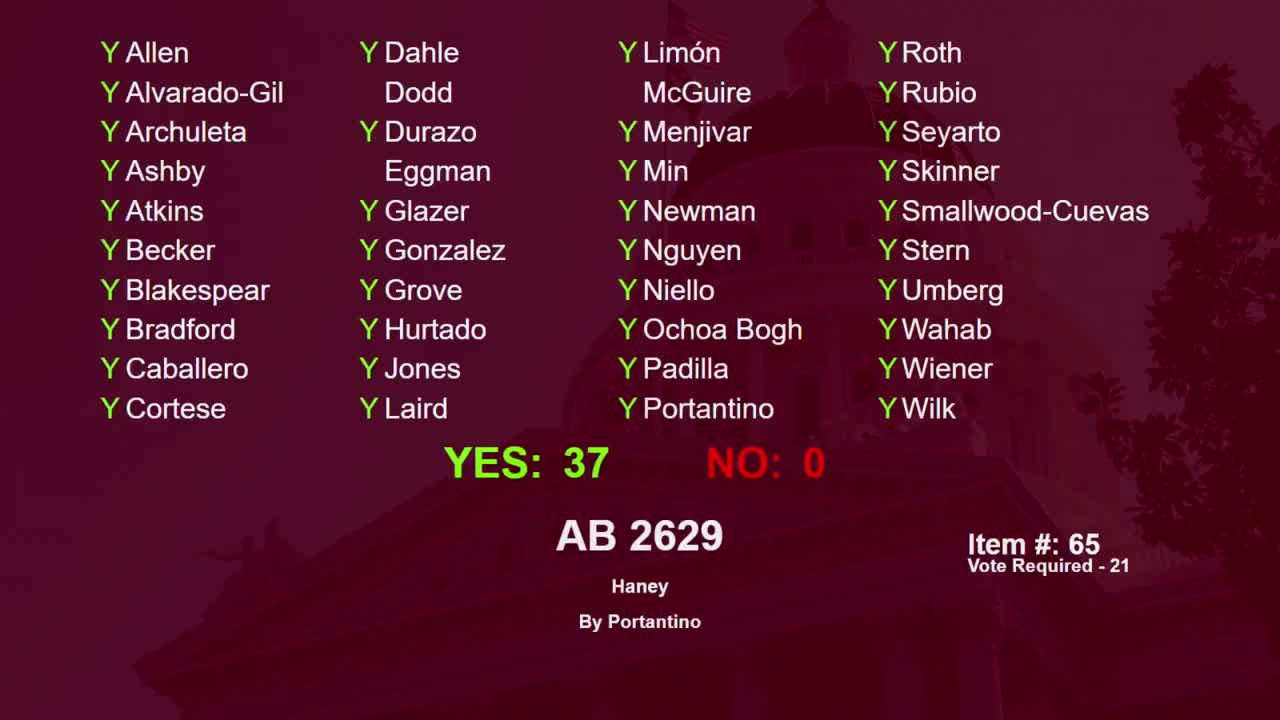
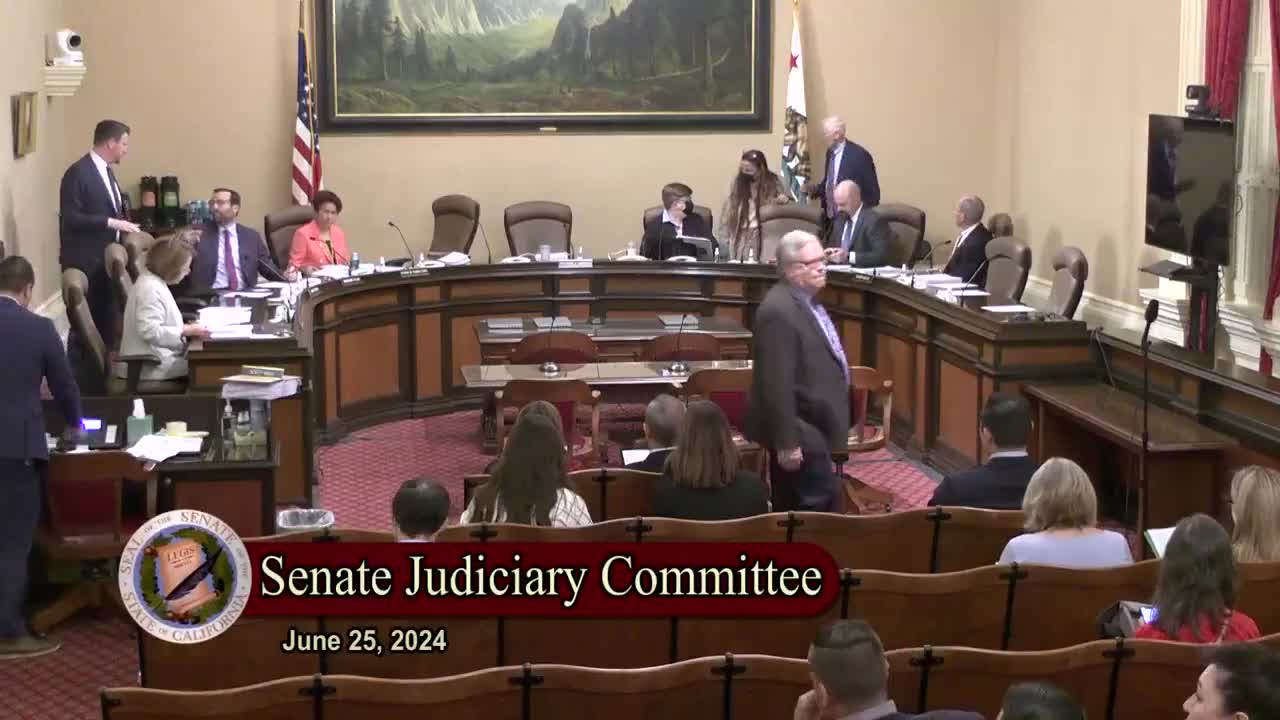
Bill Author

Bill Co-Author(s):