AB 2105: Coverage for PANDAS and PANS.
- Session Year: 2023-2024
- House: Assembly
- Latest Version Date: 2024-09-28
Current Status:
Passed
(2024-09-28: Chaptered by Secretary of State - Chapter 822, Statutes of 2024.)
Introduced
In Committee
First Chamber
In Committee
Second Chamber
Enacted
Existing law, the Knox-Keene Health Care Service Plan Act of 1975, provides for the licensure and regulation of health care service plans by the Department of Managed Health Care, and makes a willful violation of the act a crime. Existing law provides for the regulation of health insurers by the Department of Insurance. Existing law sets forth specified coverage requirements for health care service plan contracts and health insurance policies, and limits the copayment, coinsurance, deductible, and other cost sharing that may be imposed for specified health care services.
This bill would require a health care service plan contract or health insurance policy issued, amended, or renewed on or after January 1, 2025, to provide coverage for the prophylaxis, diagnosis, and treatment of Pediatric Autoimmune Neuropsychiatric Disorder Associated with Streptococcal Infections (PANDAS) and Pediatric Acute-onset Neuropsychiatric Syndrome (PANS) that is prescribed or ordered by the treating physician and surgeon and is medically necessary, as specified. The bill would prohibit coverage for PANDAS and PANS from being subject to a copayment, coinsurance, deductible, or other cost sharing that is greater than that applied to other benefits. The bill would prohibit a plan or insurer from denying or delaying coverage for PANDAS or PANS therapies because the enrollee or insured previously received treatment for PANDAS or PANS or was diagnosed with or received treatment for the condition under a different diagnostic name. Because a willful violation of these provisions by a health care service plan would be a crime, the bill would impose a state-mandated local program.
The California Constitution requires the state to reimburse local agencies and school districts for certain costs mandated by the state. Statutory provisions establish procedures for making that reimbursement.
This bill would provide that no reimbursement is required by this act for a specified reason.
Existing law, the Knox-Keene Health Care Service Plan Act of 1975, provides for the licensure and regulation of health care service plans by the Department of Managed Health Care, and makes a willful violation of the act a crime. Existing law provides for the regulation of health insurers by the Department of Insurance. Existing law sets forth specified coverage requirements for health care service plan contracts and health insurance policies, and limits the copayment, coinsurance, deductible, and other cost sharing that may be imposed for specified health care services.
This bill would require a health care service plan contract or health insurance policy issued, amended, or renewed on or after January 1, 2025, to provide coverage for the prophylaxis, diagnosis, and treatment of Pediatric Autoimmune Neuropsychiatric Disorder Associated with Streptococcal Infections (PANDAS) and Pediatric Acute-onset Neuropsychiatric Syndrome (PANS) that is prescribed or ordered by the treating physician and surgeon and is medically necessary, as specified. The bill would prohibit coverage for PANDAS and PANS from being subject to a copayment, coinsurance, deductible, or other cost sharing that is greater than that applied to other benefits. The bill would prohibit a plan or insurer from denying or delaying coverage for PANDAS or PANS therapies because the enrollee or insured previously received treatment for PANDAS or PANS or was diagnosed with or received treatment for the condition under a different diagnostic name. Because a willful violation of these provisions by a health care service plan would be a crime, the bill would impose a state-mandated local program.
The California Constitution requires the state to reimburse local agencies and school districts for certain costs mandated by the state. Statutory provisions establish procedures for making that reimbursement.
This bill would provide that no reimbursement is required by this act for a specified reason.
Existing law, the Knox-Keene Health Care Service Plan Act of 1975, provides for the licensure and regulation of health care service plans by the Department of Managed Health Care, and makes a willful violation of the act a crime. Existing law provides for the regulation of health insurers by the Department of Insurance. Existing law sets forth specified coverage requirements for health care service plan contracts and health insurance policies, and limits the copayment, coinsurance, deductible, and other cost sharing that may be imposed for specified health care services.
This bill would require a health care service plan contract or health insurance policy issued, amended, or renewed on or after January 1, 2025, to provide coverage for the prophylaxis, diagnosis, and treatment of Pediatric Autoimmune Neuropsychiatric Disorder Associated with Streptococcal Infections (PANDAS) and Pediatric Acute-onset Neuropsychiatric Syndrome (PANS) that is prescribed or ordered by the treating physician and surgeon and is medically necessary, as specified. The bill would prohibit coverage for PANDAS and PANS from being subject to a copayment, coinsurance, deductible, or other cost sharing that is greater than that applied to other benefits. The bill would prohibit a plan or insurer from denying or delaying coverage for PANDAS or PANS therapies because the enrollee or insured previously received treatment for PANDAS or PANS or was diagnosed with or received treatment for the condition under a different diagnostic name. Because a willful violation of these provisions by a health care service plan would be a crime, the bill would impose a state-mandated local program.
The California Constitution requires the state to reimburse local agencies and school districts for certain costs mandated by the state. Statutory provisions establish procedures for making that reimbursement.
This bill would provide that no reimbursement is required by this act for a specified reason.
Existing law, the Knox-Keene Health Care Service Plan Act of 1975, provides for the licensure and regulation of health care service plans by the Department of Managed Health Care, and makes a willful violation of the act a crime. Existing law provides for the regulation of health insurers by the Department of Insurance. Existing law sets forth specified coverage requirements for health care service plan contracts and health insurance policies, and limits the copayment, coinsurance, deductible, and other cost sharing that may be imposed for specified health care services.
This bill would require a health care service plan contract or health insurance policy issued, amended, or renewed on or after January 1, 2025, to provide coverage for the prophylaxis, diagnosis, and treatment of Pediatric Autoimmune Neuropsychiatric Disorder Associated with Streptococcal Infections (PANDAS) and Pediatric Acute-onset Neuropsychiatric Syndrome (PANS) that is prescribed or ordered by the treating physician and surgeon and is medically necessary, as specified. The bill would prohibit coverage for PANDAS and PANS from being subject to a copayment, coinsurance, deductible, or other cost sharing that is greater than that applied to other benefits. The bill would prohibit a plan or insurer from denying or delaying coverage for PANDAS or PANS therapies because the enrollee or insured previously received treatment for PANDAS or PANS or was diagnosed with or received treatment for the condition under a different diagnostic name. Because a willful violation of these provisions by a health care service plan would be a crime, the bill would impose a state-mandated local program.
The California Constitution requires the state to reimburse local agencies and school districts for certain costs mandated by the state. Statutory provisions establish procedures for making that reimbursement.
This bill would provide that no reimbursement is required by this act for a specified reason.
Existing law, the Knox-Keene Health Care Service Plan Act of 1975, provides for the licensure and regulation of health care service plans by the Department of Managed Health Care, and makes a willful violation of the act a crime. Existing law provides for the regulation of health insurers by the Department of Insurance. Existing law sets forth specified coverage requirements for health care service plan contracts and health insurance policies, and limits the copayment, coinsurance, deductible, and other cost sharing that may be imposed for specified health care services.
This bill would require a health care service plan contract or health insurance policy issued, amended, or renewed on or after January 1, 2025, to provide coverage for the prophylaxis, diagnosis, and treatment of Pediatric Autoimmune Neuropsychiatric Disorder Associated with Streptococcal Infections (PANDAS) and Pediatric Acute-onset Neuropsychiatric Syndrome (PANS) that is prescribed or ordered by the treating physician and surgeon. surgeon and is medically necessary, as specified. The bill would prohibit coverage for PANDAS and PANS from being subject to a copayment, coinsurance, deductible, or other cost sharing that is greater than that applied to other benefits. The bill would prohibit a plan or insurer from denying or delaying coverage for PANDAS or PANS therapies because the enrollee or insured previously received treatment for PANDAS or PANS or was diagnosed with or received treatment for the condition under a different diagnostic name. Because a willful violation of these provisions by a health care service plan would be a crime, the bill would impose a state-mandated local program.
The California Constitution requires the state to reimburse local agencies and school districts for certain costs mandated by the state. Statutory provisions establish procedures for making that reimbursement.
This bill would provide that no reimbursement is required by this act for a specified reason.
Existing law, the Knox-Keene Health Care Service Plan Act of 1975, provides for the licensure and regulation of health care service plans by the Department of Managed Health Care, and makes a willful violation of the act a crime. Existing law provides for the regulation of health insurers by the Department of Insurance. Existing law sets forth specified coverage requirements for health care service plan contracts and health insurance policies, and limits the copayment, coinsurance, deductible, and other cost sharing that may be imposed for specified health care services.
This bill would require a health care service plan contract or health insurance policy issued, amended, or renewed on or after January 1, 2025, to provide coverage for the prophylaxis, diagnosis, and treatment of Pediatric Autoimmune Neuropsychiatric Disorder Associated with Streptococcal Infections (PANDAS) and Pediatric Acute-onset Neuropsychiatric Syndrome (PANS) that is prescribed or ordered by the treating physician and surgeon. The bill would prohibit coverage for PANDAS and PANS from being subject to a copayment, coinsurance, deductible, or other cost sharing that is greater than that applied to other benefits. The bill would prohibit a plan or insurer from denying or delaying coverage for PANDAS or PANS therapies because the enrollee or insured previously received treatment for PANDAS or PANS or was diagnosed with or received treatment for the condition under a different diagnostic name. Because a willful violation of these provisions by a health care service plan would be a crime, the bill would impose a state-mandated local program.
The California Constitution requires the state to reimburse local agencies and school districts for certain costs mandated by the state. Statutory provisions establish procedures for making that reimbursement.
This bill would provide that no reimbursement is required by this act for a specified reason.
(a)A health care service plan contract issued, amended, or renewed on or after January 1, 2025, shall provide coverage for the prophylaxis, diagnosis, and treatment of Pediatric Autoimmune Neuropsychiatric Disorder Associated with Streptococcal Infections (PANDAS) and Pediatric Acute-onset Neuropsychiatric Syndrome (PANS) that is prescribed or ordered by the treating physician and surgeon and is medically necessary, as defined by current nationally recognized clinical practice guidelines by expert treating physicians published in peer-reviewed medical literature. Treatment for PANDAS and PANS that shall be covered includes antibiotics, medication and behavioral therapies to manage neuropsychiatric symptoms, immunomodulating medicines, plasma exchange, and intravenous immunoglobulin therapy.
(b)Coverage for PANDAS and PANS shall not be subject to a copayment, coinsurance, deductible, or other cost sharing that is greater than that applied to other benefits provided by the contract.
(c)(1)A required authorization for PANDAS and PANS prophylaxis, diagnosis, or treatment shall be provided in a timely manner that is appropriate for the severity of an enrollees condition pursuant to Section 1367.03.
(2)A health care service plan shall not deny or delay coverage for PANDAS or PANS therapies because the enrollee previously received treatment, including the same or similar treatment, for PANDAS or PANS, or because the enrollee was diagnosed with or received treatment for their condition under a different diagnostic name, including autoimmune encephalopathy.
(3)A health care service plan shall not limit coverage of immunomodulating therapies for PANDAS or PANS in a manner that is inconsistent with the treatment recommendations pursuant to subdivision (d), and shall not require a trial of therapies that treat only neuropsychiatric symptoms before authorizing coverage of immunomodulating therapies pursuant to this section.
(d)Coverage for PANDAS and PANS shall adhere to the treatment recommendations delineated in current clinical practice guidelines published in peer-reviewed medical literature or put forth by organizations composed of expert treating clinicians.
(e)For billing and diagnostic purposes, PANDAS and PANS shall be coded as autoimmune encephalitis until the American Medical Association and the federal Centers for Medicare and Medicaid Services create and assign a specific code or codes for PANDAS and PANS. After the creation of that code or codes, PANDAS and PANS may be coded as autoimmune encephalitis, PANDAS, or PANS. If PANDAS or PANS is known by a different common name in the future, it may be coded under that name and this section shall apply to that disorder or syndrome.
(f)This section does not apply to a specialized health care service plan contract that covers dental or vision benefits or a Medicare supplement policy.
SEC. 2.Section 10123.38 is added to the Insurance Code, to read:10123.38.(a)A health insurance policy issued, amended, or renewed on or after January 1, 2025, shall provide coverage for the prophylaxis, diagnosis, and treatment of Pediatric Autoimmune Neuropsychiatric Disorder Associated with Streptococcal Infections (PANDAS) and Pediatric Acute-onset Neuropsychiatric Syndrome (PANS) that is prescribed or ordered by the treating physician and surgeon and is medically necessary, as defined by current nationally recognized clinical practice guidelines by expert treating physicians published in peer-reviewed medical literature. Treatment for PANDAS and PANS that shall be covered includes antibiotics, medication and behavioral therapies to manage neuropsychiatric symptoms, immunomodulating medicines, plasma exchange, and intravenous immunoglobulin therapy.
(b)Coverage for PANDAS and PANS shall not be subject to a copayment, coinsurance, deductible, or other cost sharing that is greater than that applied to other benefits provided by the policy.
(c)(1)A required authorization for PANDAS and PANS prophylaxis, diagnosis, or treatment shall be provided in a timely manner that is appropriate for the severity of an insureds condition pursuant to Section 10133.54.
(2)A health insurer shall not deny or delay coverage for PANDAS or PANS therapies because the insured previously received treatment, including the same or similar treatment, for PANDAS or PANS, or because the insured was diagnosed with or received treatment for their condition under a different diagnostic name, including autoimmune encephalopathy.
(3)A health insurer shall not limit coverage of immunomodulating therapies for PANDAS or PANS in a manner that is inconsistent with the treatment recommendations pursuant to subdivision (d), and shall not require a trial of therapies that treat only neuropsychiatric symptoms before authorizing coverage of immunomodulating therapies pursuant to this section.
(d)Coverage for PANDAS and PANS shall adhere to the treatment recommendations delineated in current clinical practice guidelines published in peer-reviewed medical literature or put forth by organizations composed of expert treating clinicians.
(e)For billing and diagnostic purposes, PANDAS and PANS shall be coded as autoimmune encephalitis until the American Medical Association and the federal Centers for Medicare and Medicaid Services create and assign a specific code or codes for PANDAS and PANS. After the creation of that code or codes, PANDAS and PANS may be coded as autoimmune encephalitis, PANDAS, or PANS. If PANDAS or PANS is known by a different common name in the future, it may be coded under that name and this section shall apply to that disorder or syndrome.
(f)This section does not apply to a specialized health insurance policy that covers dental or vision benefits or a Medicare supplement policy.
SEC. 3.No reimbursement is required by this act pursuant to Section 6 of Article XIIIB of the California Constitution because the only costs that may be incurred by a local agency or school district will be incurred because this act creates a new crime or infraction, eliminates a crime or infraction, or changes the penalty for a crime or infraction, within the meaning of Section 17556 of the Government Code, or changes the definition of a crime within the meaning of Section 6 of Article XIIIB of the California Constitution.
(a)A health care service plan contract issued, amended, or renewed on or after January 1, 2025, shall provide coverage for the prophylaxis, diagnosis, and treatment of Pediatric Autoimmune Neuropsychiatric Disorder Associated with Streptococcal Infections (PANDAS) and Pediatric Acute-onset Neuropsychiatric Syndrome (PANS) that is prescribed or ordered by the treating physician and surgeon and is medically necessary, as defined by current nationally recognized clinical practice guidelines by expert treating physicians published in peer-reviewed medical literature. Treatment for PANDAS and PANS that shall be covered includes antibiotics, medication and behavioral therapies to manage neuropsychiatric symptoms, immunomodulating medicines, plasma exchange, and intravenous immunoglobulin therapy.
(b)Coverage for PANDAS and PANS shall not be subject to a copayment, coinsurance, deductible, or other cost sharing that is greater than that applied to other benefits provided by the contract.
(c)(1)A required authorization for PANDAS and PANS prophylaxis, diagnosis, or treatment shall be provided in a timely manner that is appropriate for the severity of an enrollees condition pursuant to Section 1367.03.
(2)A health care service plan shall not deny or delay coverage for PANDAS or PANS therapies because the enrollee previously received treatment, including the same or similar treatment, for PANDAS or PANS, or because the enrollee was diagnosed with or received treatment for their condition under a different diagnostic name, including autoimmune encephalopathy.
(3)A health care service plan shall not limit coverage of immunomodulating therapies for PANDAS or PANS in a manner that is inconsistent with the treatment recommendations pursuant to subdivision (d), and shall not require a trial of therapies that treat only neuropsychiatric symptoms before authorizing coverage of immunomodulating therapies pursuant to this section.
(d)Coverage for PANDAS and PANS shall adhere to the treatment recommendations delineated in current clinical practice guidelines published in peer-reviewed medical literature or put forth by organizations composed of expert treating clinicians.
(e)For billing and diagnostic purposes, PANDAS and PANS shall be coded as autoimmune encephalitis until the American Medical Association and the federal Centers for Medicare and Medicaid Services create and assign a specific code or codes for PANDAS and PANS. After the creation of that code or codes, PANDAS and PANS may be coded as autoimmune encephalitis, PANDAS, or PANS. If PANDAS or PANS is known by a different common name in the future, it may be coded under that name and this section shall apply to that disorder or syndrome.
(f)This section does not apply to a specialized health care service plan contract that covers dental or vision benefits or a Medicare supplement policy.
SEC. 2.Section 10123.38 is added to the Insurance Code, to read:10123.38.(a)A health insurance policy issued, amended, or renewed on or after January 1, 2025, shall provide coverage for the prophylaxis, diagnosis, and treatment of Pediatric Autoimmune Neuropsychiatric Disorder Associated with Streptococcal Infections (PANDAS) and Pediatric Acute-onset Neuropsychiatric Syndrome (PANS) that is prescribed or ordered by the treating physician and surgeon and is medically necessary, as defined by current nationally recognized clinical practice guidelines by expert treating physicians published in peer-reviewed medical literature. Treatment for PANDAS and PANS that shall be covered includes antibiotics, medication and behavioral therapies to manage neuropsychiatric symptoms, immunomodulating medicines, plasma exchange, and intravenous immunoglobulin therapy.
(b)Coverage for PANDAS and PANS shall not be subject to a copayment, coinsurance, deductible, or other cost sharing that is greater than that applied to other benefits provided by the policy.
(c)(1)A required authorization for PANDAS and PANS prophylaxis, diagnosis, or treatment shall be provided in a timely manner that is appropriate for the severity of an insureds condition pursuant to Section 10133.54.
(2)A health insurer shall not deny or delay coverage for PANDAS or PANS therapies because the insured previously received treatment, including the same or similar treatment, for PANDAS or PANS, or because the insured was diagnosed with or received treatment for their condition under a different diagnostic name, including autoimmune encephalopathy.
(3)A health insurer shall not limit coverage of immunomodulating therapies for PANDAS or PANS in a manner that is inconsistent with the treatment recommendations pursuant to subdivision (d), and shall not require a trial of therapies that treat only neuropsychiatric symptoms before authorizing coverage of immunomodulating therapies pursuant to this section.
(d)Coverage for PANDAS and PANS shall adhere to the treatment recommendations delineated in current clinical practice guidelines published in peer-reviewed medical literature or put forth by organizations composed of expert treating clinicians.
(e)For billing and diagnostic purposes, PANDAS and PANS shall be coded as autoimmune encephalitis until the American Medical Association and the federal Centers for Medicare and Medicaid Services create and assign a specific code or codes for PANDAS and PANS. After the creation of that code or codes, PANDAS and PANS may be coded as autoimmune encephalitis, PANDAS, or PANS. If PANDAS or PANS is known by a different common name in the future, it may be coded under that name and this section shall apply to that disorder or syndrome.
(f)This section does not apply to a specialized health insurance policy that covers dental or vision benefits or a Medicare supplement policy.
SEC. 3.No reimbursement is required by this act pursuant to Section 6 of Article XIIIB of the California Constitution because the only costs that may be incurred by a local agency or school district will be incurred because this act creates a new crime or infraction, eliminates a crime or infraction, or changes the penalty for a crime or infraction, within the meaning of Section 17556 of the Government Code, or changes the definition of a crime within the meaning of Section 6 of Article XIIIB of the California Constitution.
(a)A health care service plan contract issued, amended, or renewed on or after January 1, 2025, shall provide coverage for the prophylaxis, diagnosis, and treatment of Pediatric Autoimmune Neuropsychiatric Disorder Associated with Streptococcal Infections (PANDAS) and Pediatric Acute-onset Neuropsychiatric Syndrome (PANS) that is prescribed or ordered by the treating physician and surgeon and is medically necessary, as defined by current nationally recognized clinical practice guidelines by expert treating physicians published in peer-reviewed medical literature. Treatment for PANDAS and PANS that shall be covered includes antibiotics, medication and behavioral therapies to manage neuropsychiatric symptoms, immunomodulating medicines, plasma exchange, and intravenous immunoglobulin therapy.
(b)Coverage for PANDAS and PANS shall not be subject to a copayment, coinsurance, deductible, or other cost sharing that is greater than that applied to other benefits provided by the contract.
(c)(1)Any A required authorization for PANDAS and PANS prophylaxis, diagnosis, or treatment shall be provided in a timely manner that is appropriate for the severity of an enrollees condition pursuant to Section 1367.03.
(2)A health care service plan shall not deny or delay coverage for PANDAS or PANS therapies because the enrollee previously received treatment, including the same or similar treatment, for PANDAS or PANS, or because the enrollee was diagnosed with or received treatment for their condition under a different diagnostic name, including autoimmune encephalopathy.
(3)A health care service plan shall not limit coverage of immunomodulating therapies for PANDAS or PANS in a manner that is inconsistent with the treatment recommendations pursuant to subdivision (d), and shall not require a trial of therapies that treat only neuropsychiatric symptoms before authorizing coverage of immunomodulating therapies pursuant to this section.
(d)Coverage for PANDAS and PANS shall adhere to the treatment recommendations delineated in current clinical practice guidelines published in peer-reviewed medical literature or put forth by organizations composed of expert treating clinicians.
(e)For billing and diagnostic purposes, PANDAS and PANS shall be coded as autoimmune encephalitis until the American Medical Association and the federal Centers for Medicare and Medicaid Services create and assign a specific code or codes for PANDAS and PANS. After the creation of that code or codes, PANDAS and PANS may be coded as autoimmune encephalitis, PANDAS, or PANS. If PANDAS or PANS is known by a different common name in the future, it may be coded under that name and this section shall apply to that disorder or syndrome.
(f)This section does not apply to a specialized health care service plan contract that covers dental or vision benefits or a Medicare supplement policy.
SEC. 2.Section 10123.38 is added to the Insurance Code, to read:10123.38.(a)A health insurance policy issued, amended, or renewed on or after January 1, 2025, shall provide coverage for the prophylaxis, diagnosis, and treatment of Pediatric Autoimmune Neuropsychiatric Disorder Associated with Streptococcal Infections (PANDAS) and Pediatric Acute-onset Neuropsychiatric Syndrome (PANS) that is prescribed or ordered by the treating physician and surgeon and is medically necessary, as defined by current nationally recognized clinical practice guidelines by expert treating physicians published in peer-reviewed medical literature. Treatment for PANDAS and PANS that shall be covered includes antibiotics, medication and behavioral therapies to manage neuropsychiatric symptoms, immunomodulating medicines, plasma exchange, and intravenous immunoglobulin therapy.
(b)Coverage for PANDAS and PANS shall not be subject to a copayment, coinsurance, deductible, or other cost sharing that is greater than that applied to other benefits provided by the policy.
(c)(1)Any A required authorization for PANDAS and PANS prophylaxis, diagnosis, or treatment shall be provided in a timely manner that is appropriate for the severity of an insureds condition pursuant to Section 10133.54.
(2)A health insurer shall not deny or delay coverage for PANDAS or PANS therapies because the insured previously received treatment, including the same or similar treatment, for PANDAS or PANS, or because the insured was diagnosed with or received treatment for their condition under a different diagnostic name, including autoimmune encephalopathy.
(3)A health insurer shall not limit coverage of immunomodulating therapies for PANDAS or PANS in a manner that is inconsistent with the treatment recommendations pursuant to subdivision (d), and shall not require a trial of therapies that treat only neuropsychiatric symptoms before authorizing coverage of immunomodulating therapies pursuant to this section.
(d)Coverage for PANDAS and PANS shall adhere to the treatment recommendations delineated in current clinical practice guidelines published in peer-reviewed medical literature or put forth by organizations composed of expert treating clinicians.
(e)For billing and diagnostic purposes, PANDAS and PANS shall be coded as autoimmune encephalitis until the American Medical Association and the federal Centers for Medicare and Medicaid Services create and assign a specific code or codes for PANDAS and PANS. After the creation of that code or codes, PANDAS and PANS may be coded as autoimmune encephalitis, PANDAS, or PANS. If PANDAS or PANS is known by a different common name in the future, it may be coded under that name and this section shall apply to that disorder or syndrome.
(f)This section does not apply to a specialized health insurance policy that covers dental or vision benefits or a Medicare supplement policy.
SEC. 3.No reimbursement is required by this act pursuant to Section 6 of Article XIIIB of the California Constitution because the only costs that may be incurred by a local agency or school district will be incurred because this act creates a new crime or infraction, eliminates a crime or infraction, or changes the penalty for a crime or infraction, within the meaning of Section 17556 of the Government Code, or changes the definition of a crime within the meaning of Section 6 of Article XIIIB of the California Constitution.
(a)A health care service plan contract issued, amended, or renewed on or after January 1, 2025, shall provide coverage for the prophylaxis, diagnosis, and treatment of Pediatric Autoimmune Neuropsychiatric Disorder Associated with Streptococcal Infections (PANDAS) and Pediatric Acute-onset Neuropsychiatric Syndrome (PANS) that is prescribed or ordered by the treating physician and surgeon and is medically necessary, as defined by current clinical practice guidelines published in peer-reviewed medical literature or put forth by organizations composed of expert treating clinicians. nationally recognized clinical practice guidelines by expert treating physicians published in peer-reviewed medical literature. Treatment for PANDAS and PANS that shall be covered includes antibiotics, medication and behavioral therapies to manage neuropsychiatric symptoms, immunomodulating medicines, plasma exchange, and intravenous immunoglobulin therapy.
(b)Coverage for PANDAS and PANS shall not be subject to a copayment, coinsurance, deductible, or other cost sharing that is greater than that applied to other benefits provided by the contract.
(c)(1)Any required authorization for PANDAS and PANS prophylaxis, diagnosis, or treatment shall be provided in a timely manner that is appropriate for the severity of an enrollees condition pursuant to Section 1367.03.
(2)A health care service plan shall not deny or delay coverage for PANDAS or PANS therapies because the enrollee previously received treatment, including the same or similar treatment, for PANDAS or PANS, or because the enrollee was diagnosed with or received treatment for their condition under a different diagnostic name, including autoimmune encephalopathy.
(3)A health care service plan shall not limit coverage of immunomodulating therapies for PANDAS or PANS in a manner that is inconsistent with the treatment recommendations pursuant to subdivision (d), and shall not require a trial of therapies that treat only neuropsychiatric symptoms before authorizing coverage of immunomodulating therapies pursuant to this section.
(d)Coverage for PANDAS and PANS shall adhere to the treatment recommendations delineated in current clinical practice guidelines published in peer-reviewed medical literature or put forth by organizations composed of expert treating clinicians.
(e)For billing and diagnostic purposes, PANDAS and PANS shall be coded as autoimmune encephalitis until the American Medical Association and the federal Centers for Medicare and Medicaid Services create and assign a specific code or codes for PANDAS and PANS. After the creation of that code or codes, PANDAS and PANS may be coded as autoimmune encephalitis, PANDAS, or PANS. If PANDAS or PANS is known by a different common name in the future, it may be coded under that name and this section shall apply to that disorder or syndrome.
(f)This section does not apply to a specialized health care service plan contract that covers dental or vision benefits or a Medicare supplement policy.
SEC. 2.Section 10123.38 is added to the Insurance Code, to read:10123.38.(a)A health insurance policy issued, amended, or renewed on or after January 1, 2025, shall provide coverage for the prophylaxis, diagnosis, and treatment of Pediatric Autoimmune Neuropsychiatric Disorder Associated with Streptococcal Infections (PANDAS) and Pediatric Acute-onset Neuropsychiatric Syndrome (PANS) that is prescribed or ordered by the treating physician and surgeon and is medically necessary, as defined by current clinical practice guidelines published in peer-reviewed medical literature or put forth by organizations composed of expert treating clinicians. nationally recognized clinical practice guidelines by expert treating physicians published in peer-reviewed medical literature. Treatment for PANDAS and PANS that shall be covered includes antibiotics, medication and behavioral therapies to manage neuropsychiatric symptoms, immunomodulating medicines, plasma exchange, and intravenous immunoglobulin therapy.
(b)Coverage for PANDAS and PANS shall not be subject to a copayment, coinsurance, deductible, or other cost sharing that is greater than that applied to other benefits provided by the policy.
(c)(1)Any required authorization for PANDAS and PANS prophylaxis, diagnosis, or treatment shall be provided in a timely manner that is appropriate for the severity of an insureds condition pursuant to Section 10133.54.
(2)A health insurer shall not deny or delay coverage for PANDAS or PANS therapies because the insured previously received treatment, including the same or similar treatment, for PANDAS or PANS, or because the insured was diagnosed with or received treatment for their condition under a different diagnostic name, including autoimmune encephalopathy.
(3)A health insurer shall not limit coverage of immunomodulating therapies for PANDAS or PANS in a manner that is inconsistent with the treatment recommendations pursuant to subdivision (d), and shall not require a trial of therapies that treat only neuropsychiatric symptoms before authorizing coverage of immunomodulating therapies pursuant to this section.
(d)Coverage for PANDAS and PANS shall adhere to the treatment recommendations delineated in current clinical practice guidelines published in peer-reviewed medical literature or put forth by organizations composed of expert treating clinicians.
(e)For billing and diagnostic purposes, PANDAS and PANS shall be coded as autoimmune encephalitis until the American Medical Association and the federal Centers for Medicare and Medicaid Services create and assign a specific code or codes for PANDAS and PANS. After the creation of that code or codes, PANDAS and PANS may be coded as autoimmune encephalitis, PANDAS, or PANS. If PANDAS or PANS is known by a different common name in the future, it may be coded under that name and this section shall apply to that disorder or syndrome.
(f)This section does not apply to a specialized health insurance policy that covers dental or vision benefits or a Medicare supplement policy.
SEC. 3.No reimbursement is required by this act pursuant to Section 6 of Article XIIIB of the California Constitution because the only costs that may be incurred by a local agency or school district will be incurred because this act creates a new crime or infraction, eliminates a crime or infraction, or changes the penalty for a crime or infraction, within the meaning of Section 17556 of the Government Code, or changes the definition of a crime within the meaning of Section 6 of Article XIIIB of the California Constitution.
(a)A health care service plan contract issued, amended, or renewed on or after January 1, 2025, shall provide coverage for the prophylaxis, diagnosis, and treatment of Pediatric Autoimmune Neuropsychiatric Disorder Associated with Streptococcal Infections (PANDAS) and Pediatric Acute-onset Neuropsychiatric Syndrome (PANS) that is prescribed or ordered by the treating physician and surgeon. surgeon and is medically necessary, as defined by current clinical practice guidelines published in peer-reviewed medical literature or put forth by organizations composed of expert treating clinicians. Treatment for PANDAS and PANS that shall be covered includes antibiotics, medication and behavioral therapies to manage neuropsychiatric symptoms, immunomodulating medicines, plasma exchange, and intravenous immunoglobulin therapy.
(b)Coverage for PANDAS and PANS shall not be subject to a copayment, coinsurance, deductible, or other cost sharing that is greater than that applied to other benefits provided by the contract.
(c)(1)Any required authorization for PANDAS and PANS prophylaxis, diagnosis, or treatment shall be provided in a timely manner that is appropriate for the severity of an enrollees condition pursuant to Section 1367.03.
(2)A health care service plan shall not deny or delay coverage for PANDAS or PANS therapies because the enrollee previously received treatment, including the same or similar treatment, for PANDAS or PANS, or because the enrollee was diagnosed with or received treatment for their condition under a different diagnostic name, including autoimmune encephalopathy.
(3)A health care service plan shall not limit coverage of immunomodulating therapies for PANDAS or PANS in a manner that is inconsistent with the treatment recommendations pursuant to subdivision (d), and shall not require a trial of therapies that treat only neuropsychiatric symptoms before authorizing coverage of immunomodulating therapies pursuant to this section.
(d)Coverage for PANDAS and PANS shall adhere to the treatment recommendations developed by a consortium of medical professionals convened to research, identify, and publish clinical practice guidelines and evidence-based standards for the diagnosis and treatment of those disorders. delineated in current clinical practice guidelines published in peer-reviewed medical literature or put forth by organizations composed of expert treating clinicians.
(e)For billing and diagnostic purposes, PANDAS and PANS shall be coded as autoimmune encephalitis until the American Medical Association and the federal Centers for Medicare and Medicaid Services create and assign a specific code or codes for PANDAS and PANS. After the creation of that code or codes, PANDAS and PANS may be coded as autoimmune encephalitis, PANDAS, or PANS. If PANDAS or PANS is known by a different common name in the future, it may be coded under that name and this section shall apply to that disorder or syndrome.
(f)This section does not apply to a specialized health care service plan contract that covers dental or vision benefits or a Medicare supplement policy.
SEC. 2.Section 10123.38 is added to the Insurance Code, to read:10123.38.(a)A health insurance policy issued, amended, or renewed on or after January 1, 2025, shall provide coverage for the prophylaxis, diagnosis, and treatment of Pediatric Autoimmune Neuropsychiatric Disorder Associated with Streptococcal Infections (PANDAS) and Pediatric Acute-onset Neuropsychiatric Syndrome (PANS) that is prescribed or ordered by the treating physician and surgeon. surgeon and is medically necessary, as defined by current clinical practice guidelines published in peer-reviewed medical literature or put forth by organizations composed of expert treating clinicians. Treatment for PANDAS and PANS that shall be covered includes antibiotics, medication and behavioral therapies to manage neuropsychiatric symptoms, immunomodulating medicines, plasma exchange, and intravenous immunoglobulin therapy.
(b)Coverage for PANDAS and PANS shall not be subject to a copayment, coinsurance, deductible, or other cost sharing that is greater than that applied to other benefits provided by the policy.
(c)(1)Any required authorization for PANDAS and PANS prophylaxis, diagnosis, or treatment shall be provided in a timely manner that is appropriate for the severity of an insureds condition pursuant to Section 10133.54.
(2)A health insurer shall not deny or delay coverage for PANDAS or PANS therapies because the insured previously received treatment, including the same or similar treatment, for PANDAS or PANS, or because the insured was diagnosed with or received treatment for their condition under a different diagnostic name, including autoimmune encephalopathy.
(3)A health insurer shall not limit coverage of immunomodulating therapies for PANDAS or PANS in a manner that is inconsistent with the treatment recommendations pursuant to subdivision (d), and shall not require a trial of therapies that treat only neuropsychiatric symptoms before authorizing coverage of immunomodulating therapies pursuant to this section.
(d)Coverage for PANDAS and PANS shall adhere to the treatment recommendations developed by a consortium of medical professionals convened to research, identify, and publish clinical practice guidelines and evidence-based standards for the diagnosis and treatment of those disorders. delineated in current clinical practice guidelines published in peer-reviewed medical literature or put forth by organizations composed of expert treating clinicians.
(e)For billing and diagnostic purposes, PANDAS and PANS shall be coded as autoimmune encephalitis until the American Medical Association and the federal Centers for Medicare and Medicaid Services create and assign a specific code or codes for PANDAS and PANS. After the creation of that code or codes, PANDAS and PANS may be coded as autoimmune encephalitis, PANDAS, or PANS. If PANDAS or PANS is known by a different common name in the future, it may be coded under that name and this section shall apply to that disorder or syndrome.
(f)This section does not apply to a specialized health insurance policy that covers dental or vision benefits or a Medicare supplement policy.
SEC. 3.No reimbursement is required by this act pursuant to Section 6 of Article XIIIB of the California Constitution because the only costs that may be incurred by a local agency or school district will be incurred because this act creates a new crime or infraction, eliminates a crime or infraction, or changes the penalty for a crime or infraction, within the meaning of Section 17556 of the Government Code, or changes the definition of a crime within the meaning of Section 6 of Article XIIIB of the California Constitution.
(a)A health care service plan contract issued, amended, or renewed on or after January 1, 2025, shall provide coverage for the prophylaxis, diagnosis, and treatment of Pediatric Autoimmune Neuropsychiatric Disorder Associated with Streptococcal Infections (PANDAS) and Pediatric Acute-onset Neuropsychiatric Syndrome (PANS) that is prescribed or ordered by the treating physician and surgeon. Treatment for PANDAS and PANS that shall be covered includes antibiotics, medication and behavioral therapies to manage neuropsychiatric symptoms, immunomodulating medicines, plasma exchange, and intravenous immunoglobulin therapy.
(b)Coverage for PANDAS and PANS shall not be subject to a copayment, coinsurance, deductible, or other cost sharing that is greater than that applied to other benefits provided by the contract.
(c)(1)Any required authorization for PANDAS and PANS prophylaxis, diagnosis, or treatment shall be provided in a timely manner that is appropriate for the severity of an enrollees condition pursuant to Section 1367.03.
(2)A health care service plan shall not deny or delay coverage for PANDAS or PANS therapies because the enrollee previously received treatment, including the same or similar treatment, for PANDAS or PANS, or because the enrollee was diagnosed with or received treatment for their condition under a different diagnostic name, including autoimmune encephalopathy.
(3)A health care service plan shall not limit coverage of immunomodulating therapies for PANDAS or PANS in a manner that is inconsistent with the treatment recommendations pursuant to subdivision (d), and shall not require a trial of therapies that treat only neuropsychiatric symptoms before authorizing coverage of immunomodulating therapies pursuant to this section.
(d)Coverage for PANDAS and PANS shall adhere to the treatment recommendations developed by a consortium of medical professionals convened to research, identify, and publish clinical practice guidelines and evidence-based standards for the diagnosis and treatment of those disorders.
(e)For billing and diagnostic purposes, PANDAS and PANS shall be coded as autoimmune encephalitis until the American Medical Association and the federal Centers for Medicare and Medicaid Services create and assign a specific code or codes for PANDAS and PANS. After the creation of that code or codes, PANDAS and PANS may be coded as autoimmune encephalitis, PANDAS, or PANS. If PANDAS or PANS is known by a different common name in the future, it may be coded under that name and this section shall apply to that disorder or syndrome.
(f)This section does not apply to a specialized health care service plan contract that covers dental or vision benefits or a Medicare supplement policy.
SEC. 2.Section 10123.38 is added to the Insurance Code, to read:10123.38.(a)A health insurance policy issued, amended, or renewed on or after January 1, 2025, shall provide coverage for the prophylaxis, diagnosis, and treatment of Pediatric Autoimmune Neuropsychiatric Disorder Associated with Streptococcal Infections (PANDAS) and Pediatric Acute-onset Neuropsychiatric Syndrome (PANS) that is prescribed or ordered by the treating physician and surgeon. Treatment for PANDAS and PANS that shall be covered includes antibiotics, medication and behavioral therapies to manage neuropsychiatric symptoms, immunomodulating medicines, plasma exchange, and intravenous immunoglobulin therapy.
(b)Coverage for PANDAS and PANS shall not be subject to a copayment, coinsurance, deductible, or other cost sharing that is greater than that applied to other benefits provided by the policy.
(c)(1)Any required authorization for PANDAS and PANS prophylaxis, diagnosis, or treatment shall be provided in a timely manner that is appropriate for the severity of an insureds condition pursuant to Section 10133.54.
(2)A health insurer shall not deny or delay coverage for PANDAS or PANS therapies because the insured previously received treatment, including the same or similar treatment, for PANDAS or PANS, or because the insured was diagnosed with or received treatment for their condition under a different diagnostic name, including autoimmune encephalopathy.
(3)A health insurer shall not limit coverage of immunomodulating therapies for PANDAS or PANS in a manner that is inconsistent with the treatment recommendations pursuant to subdivision (d), and shall not require a trial of therapies that treat only neuropsychiatric symptoms before authorizing coverage of immunomodulating therapies pursuant to this section.
(d)Coverage for PANDAS and PANS shall adhere to the treatment recommendations developed by a consortium of medical professionals convened to research, identify, and publish clinical practice guidelines and evidence-based standards for the diagnosis and treatment of those disorders.
(e)For billing and diagnostic purposes, PANDAS and PANS shall be coded as autoimmune encephalitis until the American Medical Association and the federal Centers for Medicare and Medicaid Services create and assign a specific code or codes for PANDAS and PANS. After the creation of that code or codes, PANDAS and PANS may be coded as autoimmune encephalitis, PANDAS, or PANS. If PANDAS or PANS is known by a different common name in the future, it may be coded under that name and this section shall apply to that disorder or syndrome.
(f)This section does not apply to a specialized health insurance policy that covers dental or vision benefits or a Medicare supplement policy.
SEC. 3.No reimbursement is required by this act pursuant to Section 6 of Article XIIIB of the California Constitution because the only costs that may be incurred by a local agency or school district will be incurred because this act creates a new crime or infraction, eliminates a crime or infraction, or changes the penalty for a crime or infraction, within the meaning of Section 17556 of the Government Code, or changes the definition of a crime within the meaning of Section 6 of Article XIIIB of the California Constitution.
|
Date
|
Status
|
|---|---|
| Sep 28, 2024 | Chaptered by Secretary of State - Chapter 822, Statutes of 2024. |
| Sep 28, 2024 | Approved by the Governor. |
| Sep 11, 2024 | Enrolled and presented to the Governor at 4 p.m. |
| Aug 29, 2024 | Senate amendments concurred in. To Engrossing and Enrolling. (Ayes 72. Noes 0.). |
| Aug 29, 2024 | Assembly Rule 77 suspended. |
| Aug 28, 2024 | In Assembly. Concurrence in Senate amendments pending. May be considered on or after August 30 pursuant to Assembly Rule 77. |
| Aug 28, 2024 | Read third time. Passed. Ordered to the Assembly. (Ayes 39. Noes 0.). |
| Aug 22, 2024 | Read second time. Ordered to third reading. |
| Aug 21, 2024 | Read third time and amended. Ordered to second reading. |
| Jun 25, 2024 | Read second time. Ordered to third reading. |
| Jun 24, 2024 | From committee: Do pass. (Ayes 5. Noes 0.) (June 24). |
| Jun 17, 2024 | Read second time and amended. Re-referred to Com. on APPR. |
| Jun 13, 2024 | From committee: Amend, and do pass as amended and re-refer to Com. on APPR. (Ayes 9. Noes 0.) (June 12). |
| May 29, 2024 | Referred to Com. on HEALTH. |
| May 22, 2024 | In Senate. Read first time. To Com. on RLS. for assignment. |
| May 21, 2024 | Read third time. Passed. Ordered to the Senate. (Ayes 68. Noes 0. Page 5417.) |
| May 20, 2024 | Read second time. Ordered to third reading. |
| May 16, 2024 | From committee: Do pass. (Ayes 14. Noes 0.) (May 16). |
| May 1, 2024 | In committee: Set, first hearing. Referred to APPR. suspense file. |
| Apr 22, 2024 | Re-referred to Com. on APPR. |
| Apr 18, 2024 | Read second time and amended. |
| Apr 17, 2024 | From committee: Amend, and do pass as amended and re-refer to Com. on APPR. (Ayes 14. Noes 0.) (April 16). |
| Mar 25, 2024 | In committee: Set, first hearing. Hearing canceled at the request of author. |
| Feb 20, 2024 | Referred to Com. on HEALTH. |
| Feb 6, 2024 | From printer. May be heard in committee March 7. |
| Feb 5, 2024 | Read first time. To print. |
|
Date
|
Description
|
Location
|
Votes
|
|
|---|---|---|---|---|
| Aug 29, 2024 | AB 2105 Lowenthal Concurrence in Senate Amendments | Assembly Floor |
Passed |
|
| Aug 28, 2024 | Assembly 3rd Reading AB2105 Lowenthal et al. By Rubio | Senate Floor |
Passed |
|
| Jun 24, 2024 | Do pass | Senate Standing Committee on Appropriations |
Passed |
|
| Jun 12, 2024 | Do pass as amended, but first amend, and re-refer to the Committee on [Appropriations] | Senate Standing Committee on Health |
Passed |
|
| May 21, 2024 | AB 2105 Lowenthal Assembly Third Reading | Assembly Floor |
Passed |
|
| May 16, 2024 | Do pass. | Assembly Standing Committee on Appropriations |
Passed |
|
| Apr 16, 2024 | Do pass as amended and be re-referred to the Committee on [Appropriations] | Assembly Standing Committee on Health |
Passed |
This list shows positions taken on this bill by organizations on the date displayed, which is linked to the original source.
Positions by individuals are not included.
|
Organization
|
Position
|
Date
|
|---|---|---|
| Alliance to Solve PANS & Immune-Related Encephalopathies | ** Support | |
| AmericaS Health Insurance Plans | ** Against | |
| Association Of California Life And Health Insurance Companies | ** Against | |
| Autoimmune Registry | ** Support | |
| California Academy Of Family Physicians | ** Support | |
| California Association Of Health Plans | ** Against | |
| California ChildrenS Hospital Association | ** Support | |
| California Coalition for PANS/PANDAS Advocacy | ** Support | |
| California Federation of Teachers, AFL-CIO | ** Support | |
| California Health Coalition Advocacy | ** Support | |
| California Life Sciences | ** Support | |
| California Medical Association | ** Support | |
| California School Nurses Organization | ** Support | |
| California Teamsters Public Affairs Council | ** Support | |
| Children Now | ** Support | |
| Educate. Advocate. | ** Support | |
| International Longshore and Warehouse Union | ** Support | |
| Los Angeles County Medical Association | ** Support | |
| Memorial Care Health System | ** Support | |
| Moleculera Labs | ** Support | |
| Northwest PANDAS/PANS Network | ** Support | |
| PANDAS Physician Network | ** Support | |
| SAG-AFTRA | ** Support | |
| Several individuals | ** Support | |
| Stand Up Sacramento County | ** Support | |
| The Alex Manfull Fund | ** Support | |
| The European Immuno-neuropsychiatric Association | ** Support | |
| The Pace Foundation | ** Support | |
| Virginia Alliance for Pans Pandas Action | ** Support |
CONCURRENCE IN SENATE AMENDMENTS
CSA1 Bill Id:AB 2105
Author:(Lowenthal)
As Amended Ver:August 21, 2024
Majority vote
SUMMARY
Requires a health plan contract or health insurance policy to provide coverage for the prophylaxis, diagnosis, and treatment of Pediatric Autoimmune Neuropsychiatric Disorder Associated with Streptococcal Infections (PANDAS) and Pediatric Acute-onset Neuropsychiatric Syndrome (PANS) as prescribed or ordered by the treating physician and surgeon and is medically necessary, as defined by current nationally recognized clinical practice guidelines by expert treating physicians published in peer-reviewed medical literature.
Senate Amendments
Clarify nationally recognized clinical practice guidelines by expert treating physicians published in peer-reviewed medical literature.
COMMENTS
According to the California Health Benefits Review Program (CHBRP), PANDAS/PANS are terms used to describe a subset of children with symptoms that include a sudden onset of a collection of neuropsychiatric symptoms co-occurring with obsessive-compulsive disorder (OCD) and/or tic disorders usually following an infection. PANDAS, currently classified as a subset of PANS, is hypothesized by some to be triggered by an autoimmune response to Group A Streptococcal (Strep) bacteria (which cause Strep throat or soft tissue infections). More specifically, some research hypothesizes that the body's immune system may produce antibodies (known as cross-reactive antibodies) that create a dysfunctional autoimmune response following a Group A Strep infection, which may result in a range of conditions, including rheumatic fever which affects the heart valves. These cross-reactive antibodies may occur in the brain, where the autoimmune response is thought to result in sudden onset of neuropsychiatric symptoms such as OCD, tic disorders, and other psychiatric symptoms that also present in children diagnosed with PANDAS. However, according to CHBRP, findings from other studies run counter to this hypothesis. Two prospective, blinded case-control studies have shown no observable temporal relationship between Group A Strep infection and the clinical exacerbations (i.e., worsening or increase in symptoms) associated with patients who met published diagnostic criteria for PANDAS. PANS is hypothesized to be triggered by causes other than Group A Streptococcus infection. Much remains unknown about PANDAS and PANS and controversy remains regarding whether PANDAS differs enough from pediatric OCD or tic disorders and other neuropsychiatric disorders to warrant a different diagnostic category. The body of research related to PANDAS and PANS is small (number of studies and sample sizes among studies) compared with many other diseases and conditions.
Prevalence. PANDAS/PANS has been primarily described in children between the ages of three and 12 years; however, the exact prevalence and age distribution of PANDAS/PANS is unknown. Because OCD is a required symptom for the diagnosis of PANDAS and PANS, it is thought their prevalence can be estimated as a subset of the prevalence of pediatric OCD. Epidemiological research estimates that 0.5% to 5% of children in the United States are affected by OCD. PANDAS/PANS is uncommon and despite the first publication on the topic occurring in 1998, it remains unfamiliar to much of the clinical community. CHBRP notes that there are ~10 PANDAS/PANS clinics nationwide with two located in California (Stanford and UCLA).
Due to the lack of diagnostic laboratory or imaging tests specific to PANDAS/PANS, and the overlap of symptoms with multiple conditions, the diagnostic process for these syndromes is challenging. PANS has no specific diagnostic or billing codes; an International Classification of Diseases, Tenth Revision code for PANDAS exists. This bill requires the use of the codes for autoimmune encephalitis until national billing codes for PANDAS/PANS diagnostic process relies primarily on a clinical diagnosis in conjunction with laboratory testing to rule out conditions with similar symptoms such as pediatric autoimmune encephalitis, other pediatric infection-triggered autoimmune neuropsychiatric disorders (e.g., childhood acute neuropsychiatric syndromes, Sydenham chorea, neuropsychiatric lupus, etc.), Tourette syndrome, and pediatric OCD. Misdiagnosis and children's suppression of behaviors during diagnostic visits also make accurate diagnosis challenging. The clinical diagnosis focuses on a detailed medical history to define sudden onset, possible relation to recent infections, and documentation of current symptoms.
Independent Medical Review (IMR). In 2023, CHBRP reviewed the state's IMR determinations since the implementation of the federal Patient and Protection Affordable Care Act in California and found 29 related to coverage of treatment for PANDAS, PANS, and autoimmune encephalitis. All determinations were specific to coverage of Intravenous Immunoglobulin (IVIg). A total of 15 IMRs overturned the denial decision of the health plan for enrollees requesting coverage for IVIg, based on the refractory nature of the patient's condition and sufficient evidence showing lack of improvement following first-line therapies. The health plans' decisions were upheld in 14 instances where enrollees requested coverage of IVIg either due to insufficient medical evidence and/or lack of clinical evidence supporting the patient's diagnosis.
According to the Author
Despite published PANDAS/PANS treatment guidelines that established the standard of care in 2017, insurers have continued to adhere to their own policy statements forbidding authorization of immune-focused treatments like IVIg. As a result, effective treatments are denied routinely without real consideration. Reviewers working for insurers are often nurses or pharmacists, not physicians, and even when an insurer engages the service of a physician to determine authorization, the physician reviewer generally lacks experience in this complex, uncommon, and devastating disorder. A typical delay in receiving IVIg due to insurance denials is measured in months, if not years. Meanwhile, most PANS/PANDAS sufferers cannot attend school or require intensive academic accommodations such as home hospital school. They may be hospitalized medically or psychiatrically, resulting in more cost and unnecessary suffering. They may accumulate permanent neurological damage. This last sad fact has led to the establishment of the POND Brain Bank at Georgetown University, where the brains of seven deceased young PANDAS/PANS patients are now contributing to scientific knowledge. Eleven states have passed legislation similar to this bill since 2017. Without legislation, insurers have shown no willingness to grant timely and medically indicated treatment to PANS/PANDAS children. The author concludes that as a result, families continue to suffer unnecessarily and the state continues to incur costs related to special education and parental loss of employment and productivity.
Arguments in Support
The Northwest PANDAS/PANS Network writes that this bill will ensure access to medical care that is required for children with PANDAS/PANS. Oregon has approved and now provides IVIg treatment coverage for PANDAS/PANS. This decision was made after a 15-month review process for the inclusion of coverage for Medicaid recipients. The Oregon bill was passed which mandates private and commercial insurers provide the same coverage and received unanimous and bi-partisan support. Most PANDAS/PANS families cannot afford to pay privately for the care and treatments that are so often denied by insurers. Instead, they are forced to watch their child be crippled by psychiatric distress, losing parts of their childhood they will never get back. No parent should face such a tragedy that is preventable when access to treatment is available. Children Now writes that currently, insurers automatically deny treatment for severe PANS requiring IVIg, based on their own policy statements claiming it is experimental or not medically necessary. These statements contrast with recommendations published in 2017 by experts across the nation, including Stanford University. IVIg meets the definition of medical necessity as defined by California Insurance Code. If it was experimental (which it is not), it would also meet the test for experimental treatments that insurers are required to cover. Unfortunately, less than 1% of denied families will appeal these denials. By the time IVIg is needed, the child's situation is urgent, and overwhelmed families are unable to carry out the intensive, slow appeals process. Children Now states that this multi-step, multiple-month process is inappropriate when a child's brain is severely inflamed. Insurance denials prolong suffering, risk permanent neurologic and mental health disability, and shift the burden to California taxpayers who pay for special education, unemployment, disability, and lost productivity.
Arguments in Opposition
The California Association of Health Plans (CAHP), the Association of California Life and Health Insurance Companies (ACLHIC), and America's Health Insurance Plans (AHIP) oppose mandates for health plans and insurers to cover specific services, as well as bills that eliminate cost sharing and limit utilization management, which have similar cost impacts as coverage mandates. Moreover, they will increase costs, reduce choice and competition, and further incent some employers and individuals to avoid state regulation by seeking alternative coverage options. These bills will lead to higher premiums, harming affordability and access for small businesses and individual market consumers. CAHP, ACLHIC, and AHIP write that state mandates increase costs of coverage, especially for families who buy coverage without subsidies, small business owners who cannot or do not wish to self-insure, and California taxpayers who foot the bill for the state's share of those mandates.
FISCAL COMMENTS
According to the Senate Appropriations Committee, the Department of Managed Health Care estimates minor and absorbable costs for state administration (Managed Care Fund). The California Department of Insurance estimates one-time costs of $8,000 in 2024-25 for state administration (Insurance Fund). The Department of Health Care Services anticipates no fiscal impact because services proposed in the bill are currently covered and provided under the Medi-Cal program. CalPERS does not anticipate a significant fiscal impact. Unknown General Fund costs.
VOTES:
ASM HEALTH: 14-0-2
YES: Bonta, Waldron, Aguiar-Curry, Arambula, Wendy Carrillo, Haney, Jones-Sawyer, Maienschein, McCarty, Rodriguez, Sanchez, Santiago, Schiavo, Weber
ABS, ABST OR NV: Flora, Joe Patterson
ASM APPROPRIATIONS: 14-0-1
YES: Wicks, Sanchez, Arambula, Bryan, Calderon, Wendy Carrillo, Mike Fong, Grayson, Haney, Hart, Jim Patterson, Pellerin, Ta, Villapudua
ABS, ABST OR NV: Dixon
ASSEMBLY FLOOR: 68-0-12
YES: Addis, Aguiar-Curry, Alanis, Alvarez, Arambula, Bains, Bauer-Kahan, Bennett, Berman, Boerner, Bonta, Bryan, Calderon, Juan Carrillo, Wendy Carrillo, Chen, Connolly, Davies, Mike Fong, Gallagher, Garcia, Gipson, Grayson, Haney, Hart, Hoover, Irwin, Jackson, Jones-Sawyer, Kalra, Lackey, Lee, Low, Lowenthal, Maienschein, McCarty, McKinnor, Muratsuchi, Stephanie Nguyen, Ortega, Pacheco, Papan, Jim Patterson, Pellerin, Petrie-Norris, Quirk-Silva, Ramos, Rendon, Reyes, Rodriguez, Blanca Rubio, Sanchez, Santiago, Schiavo, Soria, Ta, Ting, Valencia, Villapudua, Waldron, Wallis, Ward, Weber, Wicks, Wilson, Wood, Zbur, Robert Rivas
ABS, ABST OR NV: Cervantes, Megan Dahle, Dixon, Essayli, Flora, Vince Fong, Friedman, Gabriel, Holden, Mathis, Joe Patterson, Luz Rivas
SENATE FLOOR: 39-0-1
YES: Allen, Archuleta, Ashby, Atkins, Becker, Blakespear, Bradford, Caballero, Cortese, Dahle, Dodd, Durazo, Eggman, Glazer, Gonzalez, Grove, Hurtado, Jones, Laird, Limón, McGuire, Menjivar, Min, Newman, Nguyen, Niello, Ochoa Bogh, Padilla, Portantino, Roth, Rubio, Seyarto, Skinner, Smallwood-Cuevas, Stern, Umberg, Wahab, Wiener, Wilk
ABS, ABST OR NV: Alvarado-Gil
UPDATED
VERSION: August 21, 2024
CONSULTANT: Kristene Mapile / HEALTH / (916) 319-2097 FN: 0004364
SENATE RULES COMMITTEE Office of Senate Floor Analyses (916) 651-1520 Fax: (916) 327-4478 | AB 2105 |
THIRD READING
Bill No: AB 2105
Author: Lowenthal (D), et al.
Amended: 8/21/24 in Senate
Vote: 21
SENATE HEALTH COMMITTEE: 9-0, 6/12/24
AYES: Roth, Nguyen, Glazer, Gonzalez, Hurtado, Limón, Menjivar, Rubio, Wiener
NO VOTE RECORDED: Grove, Smallwood-Cuevas
SENATE APPROPRIATIONS COMMITTEE: 5-0, 6/24/24
AYES: Caballero, Ashby, Becker, Bradford, Wahab
NO VOTE RECORDED: Jones, Seyarto
ASSEMBLY FLOOR: 68-0, 5/21/24 - See last page for vote
SUBJECT: Coverage for PANDAS and PANS
SOURCE: California Coalition for PANS/PANDAS Advocacy
DIGEST:
This bill requires a health plan contract or health insurance policy to provide coverage for the prophylaxis, diagnosis, and treatment of Pediatric Autoimmune Neuropsychiatric Disorder Associated with Streptococcal Infections and Pediatric Acute-onset Neuropsychiatric Syndrome that is prescribed or ordered by the treating physician and is medically necessary, as defined by current nationally recognized clinical practice guidelines by expert treating physicians published in peer-reviewed medical literature. Requires treatment to be provided without any cost-sharing that is greater than that applied to other covered benefits.
Senate Floor Amendments of 8/21/24 add coauthors.
ANALYSIS:
Existing law:
- Establishes the Department of Managed Health Care (DMHC) to regulate health plans under the Knox-Keene Health Care Service Plan Act of 1975 (Knox-Keene Act) and the California Department of Insurance (CDI) to regulate health and other insurers. [Health and Safety Code (HSC) §1340, et seq., and Insurance Code (INS) §106, et seq.]
- Establishes, as California's essential health benefits benchmark, the Kaiser Small Group Health Maintenance Organization, existing California mandates, and ten federal Patient Protection and Affordable Care Act mandated benefits. [HSC §1367.005 and INS §10112.27]
- Requires reviews, for purposes of Independent Medical Review (IMR), to determine whether the disputed health care service was medically necessary based on the specific medical needs of the enrollee or insured and any of the following:
- Peer-reviewed scientific and medical evidence regarding the effectiveness of the disputed service;
- Nationally recognized professional standards;
- Expert opinion;
- Generally accepted standards of medical practice; or,
- Treatments that are likely to provide a benefit to a patient for conditions for which other treatments are not clinically efficacious. [HSC §1374.33 and INS §10169.3]
- Requires a health plan or insurer that provides or arranges for the provision of hospital or physician services, including a specialized mental health plan, and a policy of health insurance to comply with specified timely access requirements. [HSC §1367.03 and INS §10133.54]
This bill:
- Requires a health plan contract or health insurance policy issued, amended, or renewed on or after January 1, 2025, to provide coverage for prophylaxis, diagnosis, and treatment for Pediatric Autoimmune Neuropsychiatric Disorder Associated with Streptococcal Infections (PANDAS) and Pediatric Acute-onset Neuropsychiatric Syndrome (PANS) that is prescribed or ordered by the treating physician and is medically necessary, as defined by current nationally recognized clinical practice guidelines by expert treating physicians published in peer-reviewed medical literature. Requires covered treatment to include antibiotics, medication and behavioral therapies to manage neuropsychiatric symptoms, immunomodulating medicines, plasma exchange, and intravenous immunoglobulin (IVIG) therapy.
- Prohibits coverage for PANDAS/PANS from being subject to a copayment, coinsurance, deductible, or other cost-sharing that is greater than that applied to other benefits provided by the contract.
- Requires any authorization for PANDAS/PANS prophylaxis, diagnosis, or treatment to be provided in a timely manner appropriate for the severity of the individual’s condition pursuant to timely access requirements, as specified.
- Prohibits a health plan or insurer from denying or delaying coverage for therapies because the individual previously received the same or similar treatment, or when the condition was treated or diagnosed under a different diagnostic name, including autoimmune encephalopathy.
- Prohibits a health plan or health insurer from limiting coverage of immunomodulating therapies for PANDAS/PANS in a manner that is inconsistent with the treatment recommendations pursuant to 6) below, or requiring a trial of therapies that treat only neuropsychiatric symptoms before authorizing coverage of immunomodulating therapies.
- Requires coverage for PANDAS/PANS to adhere to the treatment recommendations delineated in current clinical practice guidelines published in peer-reviewed medical literature or put forth by organizations composed of expert treating clinicians.
- Requires PANDAS/PANS to be coded as autoimmune encephalitis until a code or codes is created and assigned by the American Medical Association and the federal Centers for Medicare and Medicaid Services.
Comments
- Author’s statement. According to the author, despite published PANDAS/PANS treatment guidelines that established the standard of care in 2017, insurers have continued to adhere to their own policy statements forbidding authorization of immune-focused treatments like IVIG. As a result, effective treatments are denied routinely without real consideration. When a prescriber or family appeals, insurers typically uphold their denial, claiming “lack of medical necessity,” or “treatment is experimental.” A typical delay in receiving IVIG due to insurance denials is measured in months, if not years. Meanwhile, most PANS/PANDAS sufferers cannot attend school or require intensive academic accommodations such as home hospital school. They may be hospitalized medically or psychiatrically, resulting in more cost and unnecessary suffering. They may accumulate permanent neurological damage. Their parents are often unable to work and may require state unemployment or family medical leave benefits. Eleven states have passed legislation similar to this bill since 2017. Without legislation, insurers have shown no willingness to grant timely and medically indicated treatment to PANS/PANDAS children. As a result, families continue to suffer unnecessarily and the state continues to incur costs related to special education and parental loss of employment and productivity.
- California Health Benefit Review Program (CHBRP) analysis. CHBRP reviewed SB 907 (Lowenthal, 2023) which would have been substantially similar to this bill. Key findings include:
- PANDAS and PANS. PANDAS/PANS are terms used to describe a subset of children with symptoms that include a sudden onset of obsessive-compulsive disorder (OCD) and/or tic disorders co-occurring with a collection of neuropsychiatric symptoms usually following an infection. Children may also become moody or irritable, or experience anxiety attacks, separation anxiety, rage, fatigue, phobias, insomnia, joint or muscle pain, or eating disorders. PANDAS, currently classified as a subset of PANS, is hypothesized by some to be triggered by an autoimmune response to Group A Streptococcal bacteria (which cause strep throat or soft tissue infections). PANS is hypothesized to be triggered by causes other than Group A Streptococcus infection. Much remains unknown about PANDAS and PANS, and controversy remains regarding whether PANDAS differs enough from OCD/tic disorder and other neuropsychiatric disorders to warrant a different diagnostic category. PANDAS/PANS has been primarily described in children between the ages of three and 12 years; however, the exact prevalence and age distribution of PANDAS/PANS is unknown. People over the age of 17 may also present with symptoms similar to those of PANDAS and PANS or have an initial diagnosis of either syndrome at a pediatric age that continues into adulthood. Because OCD is a required symptom for the diagnosis of PANDAS and PANS, it is thought their prevalence can be estimated as a subset of the prevalence of pediatric OCD. Epidemiological research estimates that 0.5% to 5% of children in the U.S. are affected by OCD. One study estimates that 5% of children with OCD may meet the criteria for PANDAS/PANS. CHBRP identified three clinical practice guidelines that meet this bill’s criteria for diagnosing and treating patients with PANDAS/PANS, on which it based their report.
- Coverage impacts and enrollees covered. At baseline, 100% of enrollees with health insurance subject to this bill have coverage that includes diagnostic tests recommended by various guidelines related to PANDAS/PANS and would continue to have 100% coverage postmandate. At baseline, 100% of enrollees with health insurance subject to this bill would have coverage for antibiotics, oral prescription immunomodulatory medications, and behavioral therapies and medications for managing neuropsychiatric symptoms, consistent with recommendations for treatment of PANDAS/PANS under existing clinical guidelines, and 0% have coverage for intravenous immunomodulating therapies, including plasma exchange and IVIG therapy; postmandate 100% would have coverage for the aforementioned treatments.
- Medical effectiveness. Overall, the evidence is insufficient or inconclusive that any of these treatments are effective at reducing prominent symptoms, such as OCD symptoms, tics, or eating restrictions, for pediatric patients with PANDAS/PANS. The body of research on PANDAS/PANS is small (number of studies and sample sizes of available studies) compared with many other diseases and conditions. Additional studies involving controlled clinical trials, larger sample sizes, and clear eligibility criteria are necessary to determine which treatments are effective for children with PANDAS/PANS. More specifically, CHBRP found insufficient evidence on the effectiveness of cognitive behavioral therapy (CBT), psychotropics, non-steroidal anti-inflammatory drugs (NSAIDs), corticosteroids, plasma exchange, rituximab, mycophenolate mofetil, and vitamin D in reducing or eliminating the prominent symptoms associated with PANDAS/PANS. CHBRP found inconclusive evidence on the effectiveness of antibiotics and IVIG in reducing or eliminating the prominent symptoms associated with PANDAS/PANS. Each of the medications reviewed for this analysis is associated with a variety of side effects and harms.
- Impact on expenditures. This bill increases total net annual expenditures by $2,990,000. Premium expenditures would increase for employers, employees, individuals and families by $1,366,000. Cost-sharing for covered benefits would be $153,000.
- Essential health benefits. This bill not requires coverage for a new state benefit mandate that appears to exceed the definition of essential health benefits in California.
- PANDAS and PANS. PANDAS/PANS are terms used to describe a subset of children with symptoms that include a sudden onset of obsessive-compulsive disorder (OCD) and/or tic disorders co-occurring with a collection of neuropsychiatric symptoms usually following an infection. Children may also become moody or irritable, or experience anxiety attacks, separation anxiety, rage, fatigue, phobias, insomnia, joint or muscle pain, or eating disorders. PANDAS, currently classified as a subset of PANS, is hypothesized by some to be triggered by an autoimmune response to Group A Streptococcal bacteria (which cause strep throat or soft tissue infections). PANS is hypothesized to be triggered by causes other than Group A Streptococcus infection. Much remains unknown about PANDAS and PANS, and controversy remains regarding whether PANDAS differs enough from OCD/tic disorder and other neuropsychiatric disorders to warrant a different diagnostic category. PANDAS/PANS has been primarily described in children between the ages of three and 12 years; however, the exact prevalence and age distribution of PANDAS/PANS is unknown. People over the age of 17 may also present with symptoms similar to those of PANDAS and PANS or have an initial diagnosis of either syndrome at a pediatric age that continues into adulthood. Because OCD is a required symptom for the diagnosis of PANDAS and PANS, it is thought their prevalence can be estimated as a subset of the prevalence of pediatric OCD. Epidemiological research estimates that 0.5% to 5% of children in the U.S. are affected by OCD. One study estimates that 5% of children with OCD may meet the criteria for PANDAS/PANS. CHBRP identified three clinical practice guidelines that meet this bill’s criteria for diagnosing and treating patients with PANDAS/PANS, on which it based their report.
Related/Prior Legislation
AB 907 (Lowenthal, 2023) would have been substantially similar to this bill. The bill was vetoed by Governor Newsom, who stated:
While I support the author's goal of ensuring that children with PANS and PANDAS receive the treatment they need in a timely manner, this bill creates a disease-specific mandate and contains provisions that would be duplicative of existing laws for timely access standards and grievance processes through the Department of Managed Health Care and Department of Insurance. Further, this bill removes the medical necessity requirement, which is a standard condition for health plans in determining coverage of specific services.
FISCAL EFFECT: Appropriation: No Fiscal Com.: Yes Local: Yes
According to the Senate Appropriations Committee:
- DMHC estimates minor and absorbable costs for state administration (Managed Care Fund).
- CDI estimates one-time costs of $8,000 in 2024-25 for state administration (Insurance Fund).
- DHCS anticipates no fiscal impact because services proposed in the bill are currently covered and provided under the Medi-Cal program.
- CalPERS does not anticipate a significant fiscal impact. Unknown General Fund costs.
SUPPORT: (Verified 8/20/24)
California Coalition for PANS/PANDAS Advocacy (source)
Alliance to Solve Pans & Immune-related Encephalopathies
Autoimmune Registry
California Academy of Family Physicians
California Children’s Hospital Association
California Federation of Teachers, AFL-CIO
California Health Coalition Advocacy
California Life Sciences
California Medical Association
California School Nurses Organization
California Teamsters Public Affairs Council
Children Now
Educate. Advocate.
International Longshore and Warehouse Union
Los Angeles County Medical Association
Memorial Care Health System
Moleculera Labs
Northwest PANDAS/PANS Network
PANDAS Physician Network
Stand Up Sacramento County
SAG-AFTRA
The Alex Manfull Fund
The PACE Foundation
The European Immuno-neuropsychiatric Association
Virginia Alliance for Pans Pandas Action
Several individuals
OPPOSITION: (Verified 8/20/24)
America’s Health Insurance Plans
Association of California Life and Health Insurance Companies
California Association of Health Plans
ARGUMENTS IN SUPPORT: California Coalition for PANS/PANDAS Advocacy, this bill’s sponsor, writes that despite being identified as essential for the rapid treatment of severe cases, insurance companies have been resistant to cover interventions such as IVIG, often classifying them as experimental or not medically necessary. This stance is increasingly criticized for being misaligned with the latest medical guidelines and understanding of PANDAS/PANS treatments, often set by experts in the field. The repercussions of these insurance policies are profound, extending beyond the immediate health ramifications for the affected children. The economic toll on California is significant, with increased demands on special education resources and the financial strain on families. This bill represents a promising step forward in addressing challenges faced by children with PANDAS and PANS in California.
ARGUMENTS IN OPPOSITION: The California Association of Health Plans, Association of California Life and Health Insurance Companies, and America’s Health Insurance Plans write to oppose this bill because it is one of 14 health insurance mandate bills that will increase costs, reduce choice and competition, and further incent some employers and individuals to avoid state regulation by seeking alternative coverage options. Benefit mandates impose a one-size-fits-all approach to medical care and benefit design driven by the legislature rather than consumer choice. These bills will lead to higher premiums, harming affordability and access for small businesses and individual market consumers. These opponents urge legislators to also consider the cumulative impacts of these mandates on premiums and access to coverage. All of these bills will increase costs and limit employer flexibility. The Legislature created the Office of Health Care Affordability to contain cost drivers. With this office in place and the state budget deficit, the Legislature should take a wait-and-see approach when considering costly mandates. The health plans have continued to be engaged and look forward to the work ahead.
ASSEMBLY FLOOR: 68-0, 5/21/24
AYES: Addis, Aguiar-Curry, Alanis, Alvarez, Arambula, Bains, Bauer-Kahan, Bennett, Berman, Boerner, Bonta, Bryan, Calderon, Juan Carrillo, Wendy Carrillo, Chen, Connolly, Davies, Mike Fong, Gallagher, Garcia, Gipson, Grayson, Haney, Hart, Hoover, Irwin, Jackson, Jones-Sawyer, Kalra, Lackey, Lee, Low, Lowenthal, Maienschein, McCarty, McKinnor, Muratsuchi, Stephanie Nguyen, Ortega, Pacheco, Papan, Jim Patterson, Pellerin, Petrie-Norris, Quirk-Silva, Ramos, Rendon, Reyes, Rodriguez, Blanca Rubio, Sanchez, Santiago, Schiavo, Soria, Ta, Ting, Valencia, Villapudua, Waldron, Wallis, Ward, Weber, Wicks, Wilson, Wood, Zbur, Robert Rivas
NO VOTE RECORDED: Cervantes, Megan Dahle, Dixon, Essayli, Flora, Vince Fong, Friedman, Gabriel, Holden, Mathis, Joe Patterson, Luz Rivas
Prepared by: Teri Boughton / HEALTH / (916) 651-4111
8/22/24 16:10:27
**** END ****
SENATE RULES COMMITTEE Office of Senate Floor Analyses (916) 651-1520 Fax: (916) 327-4478 | AB 2105 |
THIRD READING
Bill No: AB 2105
Author: Lowenthal (D)
Amended: 6/17/24 in Senate
Vote: 21
SENATE HEALTH COMMITTEE: 9-0, 6/12/24
AYES: Roth, Nguyen, Glazer, Gonzalez, Hurtado, Limón, Menjivar, Rubio, Wiener
NO VOTE RECORDED: Grove, Smallwood-Cuevas
SENATE APPROPRIATIONS COMMITTEE: 5-0, 6/24/24
AYES: Caballero, Ashby, Becker, Bradford, Wahab
NO VOTE RECORDED: Jones, Seyarto
ASSEMBLY FLOOR: 68-0, 5/21/24 - See last page for vote
SUBJECT: Coverage for PANDAS and PANS
SOURCE: California Coalition for PANS/PANDAS Advocacy
DIGEST:
This bill requires a health plan contract or health insurance policy to provide coverage for the prophylaxis, diagnosis, and treatment of Pediatric Autoimmune Neuropsychiatric Disorder Associated with Streptococcal Infections and Pediatric Acute-onset Neuropsychiatric Syndrome that is prescribed or ordered by the treating physician and is medically necessary, as defined by current nationally recognized clinical practice guidelines by expert treating physicians published in peer-reviewed medical literature. Requires treatment to be provided without any cost-sharing that is greater than that applied to other covered benefits.
ANALYSIS:
Existing law:
- Establishes the Department of Managed Health Care (DMHC) to regulate health plans under the Knox-Keene Health Care Service Plan Act of 1975 (Knox-Keene Act) and the California Department of Insurance (CDI) to regulate health and other insurers. [HSC §1340, et seq., and INS §106, et seq.]
- Establishes, as California's essential health benefits benchmark, the Kaiser Small Group Health Maintenance Organization, existing California mandates, and ten federal Patient Protection and Affordable Care Act mandated benefits. [HSC §1367.005 and INS §10112.27]
- Requires reviews, for purposes of Independent Medical Review (IMR), to determine whether the disputed health care service was medically necessary based on the specific medical needs of the enrollee or insured and any of the following:
- Peer-reviewed scientific and medical evidence regarding the effectiveness of the disputed service;
- Nationally recognized professional standards;
- Expert opinion;
- Generally accepted standards of medical practice; or,
- Treatments that are likely to provide a benefit to a patient for conditions for which other treatments are not clinically efficacious. [HSC §1374.33 and INS §10169.3]
- Requires a health plan or insurer that provides or arranges for the provision of hospital or physician services, including a specialized mental health plan, and a policy of health insurance to comply with specified timely access requirements. [HSC §1367.03 and INS §10133.54]
This bill:
- Requires a health plan contract or health insurance policy issued, amended, or renewed on or after January 1, 2025, to provide coverage for prophylaxis, diagnosis, and treatment for Pediatric Autoimmune Neuropsychiatric Disorder Associated with Streptococcal Infections (PANDAS) and Pediatric Acute-onset Neuropsychiatric Syndrome (PANS) that is prescribed or ordered by the treating physician and is medically necessary, as defined by current nationally recognized clinical practice guidelines by expert treating physicians published in peer-reviewed medical literature. Requires covered treatment to include antibiotics, medication and behavioral therapies to manage neuropsychiatric symptoms, immunomodulating medicines, plasma exchange, and intravenous immunoglobulin (IVIG) therapy.
- Prohibits coverage for PANDAS/PANS from being subject to a copayment, coinsurance, deductible, or other cost-sharing that is greater than that applied to other benefits provided by the contract.
- Requires any authorization for PANDAS/PANS prophylaxis, diagnosis, or treatment to be provided in a timely manner appropriate for the severity of the individual’s condition pursuant to timely access requirements, as specified.
- Prohibits a health plan or insurer from denying or delaying coverage for therapies because the individual previously received the same or similar treatment, or when the condition was treated or diagnosed under a different diagnostic name, including autoimmune encephalopathy.
- Prohibits a health plan or health insurer from limiting coverage of immunomodulating therapies for PANDAS/PANS in a manner that is inconsistent with the treatment recommendations pursuant to 6) below, or requiring a trial of therapies that treat only neuropsychiatric symptoms before authorizing coverage of immunomodulating therapies.
- Requires coverage for PANDAS/PANS to adhere to the treatment recommendations delineated in current clinical practice guidelines published in peer-reviewed medical literature or put forth by organizations composed of expert treating clinicians.
- Requires PANDAS/PANS to be coded as autoimmune encephalitis until a code or codes is created and assigned by the American Medical Association and the federal Centers for Medicare and Medicaid Services.
Comments
- Author’s statement. According to the author, despite published PANDAS/PANS treatment guidelines that established the standard of care in 2017, insurers have continued to adhere to their own policy statements forbidding authorization of immune-focused treatments like IVIG. As a result, effective treatments are denied routinely without real consideration. When a prescriber or family appeals, insurers typically uphold their denial, claiming “lack of medical necessity,” or “treatment is experimental.” A typical delay in receiving IVIG due to insurance denials is measured in months, if not years. Meanwhile, most PANS/PANDAS sufferers cannot attend school or require intensive academic accommodations such as home hospital school. They may be hospitalized medically or psychiatrically, resulting in more cost and unnecessary suffering. They may accumulate permanent neurological damage. Their parents are often unable to work and may require state unemployment or family medical leave benefits. Eleven states have passed legislation similar to this bill since 2017. Without legislation, insurers have shown no willingness to grant timely and medically indicated treatment to PANS/PANDAS children. As a result, families continue to suffer unnecessarily and the state continues to incur costs related to special education and parental loss of employment and productivity.
- California Health Benefit Review Program (CHBRP) analysis. CHBRP reviewed AB 907 (Lowenthal, 2023) which is substantially similar to this bill. Key findings include:
- PANDAS and PANS. PANDAS/PANS are terms used to describe a subset of children with symptoms that include a sudden onset of obsessive-compulsive disorder (OCD) and/or tic disorders co-occurring with a collection of neuropsychiatric symptoms usually following an infection. Children may also become moody or irritable, or experience anxiety attacks, separation anxiety, rage, fatigue, phobias, insomnia, joint or muscle pain, or eating disorders. PANDAS, currently classified as a subset of PANS, is hypothesized by some to be triggered by an autoimmune response to Group A Streptococcal bacteria (which cause strep throat or soft tissue infections). PANS is hypothesized to be triggered by causes other than Group A Streptococcus infection. Much remains unknown about PANDAS and PANS, and controversy remains regarding whether PANDAS differs enough from OCD/tic disorder and other neuropsychiatric disorders to warrant a different diagnostic category. PANDAS/PANS has been primarily described in children between the ages of three and 12 years; however, the exact prevalence and age distribution of PANDAS/PANS is unknown. People over the age of 17 may also present with symptoms similar to those of PANDAS and PANS or have an initial diagnosis of either syndrome at a pediatric age that continues into adulthood. Because OCD is a required symptom for the diagnosis of PANDAS and PANS, it is thought their prevalence can be estimated as a subset of the prevalence of pediatric OCD. Epidemiological research estimates that 0.5% to 5% of children in the U.S. are affected by OCD. One study estimates that 5% of children with OCD may meet the criteria for PANDAS/PANS. CHBRP identified three clinical practice guidelines that meet this bill’s criteria for diagnosing and treating patients with PANDAS/PANS, on which it based their report.
- Coverage impacts and enrollees covered. At baseline, 100% of enrollees with health insurance subject to this bill have coverage that includes diagnostic tests recommended by various guidelines related to PANDAS/PANS and would continue to have 100% coverage postmandate. At baseline, 100% of enrollees with health insurance subject to this bill would have coverage for antibiotics, oral prescription immunomodulatory medications, and behavioral therapies and medications for managing neuropsychiatric symptoms, consistent with recommendations for treatment of PANDAS/PANS under existing clinical guidelines, and 0% have coverage for intravenous immunomodulating therapies, including plasma exchange and IVIG therapy; postmandate 100% would have coverage for the aforementioned treatments.
- Medical effectiveness. Overall, the evidence is insufficient or inconclusive that any of these treatments are effective at reducing prominent symptoms, such as OCD symptoms, tics, or eating restrictions, for pediatric patients with PANDAS/PANS. The body of research on PANDAS/PANS is small (number of studies and sample sizes of available studies) compared with many other diseases and conditions. Additional studies involving controlled clinical trials, larger sample sizes, and clear eligibility criteria are necessary to determine which treatments are effective for children with PANDAS/PANS. More specifically, CHBRP found insufficient evidence on the effectiveness of cognitive behavioral therapy (CBT), psychotropics, non-steroidal anti-inflammatory drugs (NSAIDs), corticosteroids, plasma exchange, rituximab, mycophenolate mofetil, and vitamin D in reducing or eliminating the prominent symptoms associated with PANDAS/PANS. CHBRP found inconclusive evidence on the effectiveness of antibiotics and IVIG in reducing or eliminating the prominent symptoms associated with PANDAS/PANS. Each of the medications reviewed for this analysis is associated with a variety of side effects and harms.
- Impact on expenditures. This bill increases total net annual expenditures by $2,990,000. Premium expenditures would increase for employers, employees, individuals and families by $1,366,000. Cost-sharing for covered benefits would be $153,000.
- Essential health benefits. This bill would not require coverage for a new state benefit mandate that appears to exceed the definition of essential health benefits in California.
- PANDAS and PANS. PANDAS/PANS are terms used to describe a subset of children with symptoms that include a sudden onset of obsessive-compulsive disorder (OCD) and/or tic disorders co-occurring with a collection of neuropsychiatric symptoms usually following an infection. Children may also become moody or irritable, or experience anxiety attacks, separation anxiety, rage, fatigue, phobias, insomnia, joint or muscle pain, or eating disorders. PANDAS, currently classified as a subset of PANS, is hypothesized by some to be triggered by an autoimmune response to Group A Streptococcal bacteria (which cause strep throat or soft tissue infections). PANS is hypothesized to be triggered by causes other than Group A Streptococcus infection. Much remains unknown about PANDAS and PANS, and controversy remains regarding whether PANDAS differs enough from OCD/tic disorder and other neuropsychiatric disorders to warrant a different diagnostic category. PANDAS/PANS has been primarily described in children between the ages of three and 12 years; however, the exact prevalence and age distribution of PANDAS/PANS is unknown. People over the age of 17 may also present with symptoms similar to those of PANDAS and PANS or have an initial diagnosis of either syndrome at a pediatric age that continues into adulthood. Because OCD is a required symptom for the diagnosis of PANDAS and PANS, it is thought their prevalence can be estimated as a subset of the prevalence of pediatric OCD. Epidemiological research estimates that 0.5% to 5% of children in the U.S. are affected by OCD. One study estimates that 5% of children with OCD may meet the criteria for PANDAS/PANS. CHBRP identified three clinical practice guidelines that meet this bill’s criteria for diagnosing and treating patients with PANDAS/PANS, on which it based their report.
Related/Prior Legislation AB 907 (Lowenthal, 2023) was substantially similar to this bill. SB 907 was vetoed by Governor Newsom, who stated:
While I support the author's goal of ensuring that children with PANS and PANDAS receive the treatment they need in a timely manner, this bill creates a disease-specific mandate and contains provisions that would be duplicative of existing laws for timely access standards and grievance processes through the Department of Managed Health Care and Department of Insurance. Further, this bill removes the medical necessity requirement, which is a standard condition for health plans in determining coverage of specific services.
FISCAL EFFECT: Appropriation: No Fiscal Com.: Yes Local: Yes
According to the Senate Appropriation Committee:
- DMHC estimates minor and absorbable costs for state administration (Managed Care Fund).
- CDI estimates one-time costs of $8,000 in 2024-25 for state administration (Insurance Fund).
- DHCS anticipates no fiscal impact because services proposed in the bill are currently covered and provided under the Medi-Cal program.
- CalPERS does not anticipate a significant fiscal impact. Unknown General Fund costs.
SUPPORT: (Verified 6/26/24)
California Coalition for PANS/PANDAS Advocacy (source)
Alliance to Solve Pans & Immune-related Encephalopathies
Autoimmune Registry
California Academy of Family Physicians
California Children’s Hospital Association
California Federation of Teachers, AFL-CIO
California Health Coalition Advocacy
California Life Sciences
California Medical Association
California School Nurses Organization
California Teamsters Public Affairs Council
Children Now
Educate. Advocate.
International Longshore and Warehouse Union
Los Angeles County Medical Association
Memorial Care Health System
Moleculera Labs
Northwest PANDAS/PANS Network
PANDAS Physician Network
Stand Up Sacramento County
SAG-AFTRA
The Alex Manfull Fund
The PACE Foundation
The European Immuno-neuropsychiatric Association
Virginia Alliance for Pans Pandas Action
Several individuals
OPPOSITION: (Verified 6/26/24)
America’s Health Insurance Plans
Association of California Life and Health Insurance Companies
California Association of Health Plans
ARGUMENTS IN SUPPORT: California Coalition for PANS/PANDAS Advocacy, this bill’s sponsor, writes that despite being identified as essential for the rapid treatment of severe cases, insurance companies have been resistant to cover interventions such as IVIG, often classifying them as experimental or not medically necessary. This stance is increasingly criticized for being misaligned with the latest medical guidelines and understanding of PANDAS/PANS treatments, often set by experts in the field. The repercussions of these insurance policies are profound, extending beyond the immediate health ramifications for the affected children. The economic toll on California is significant, with increased demands on special education resources and the financial strain on families. This bill represents a promising step forward in addressing challenges faced by children with PANDAS and PANS in California.
ARGUMENTS IN OPPOSITION: The California Association of Health Plans, Association of California Life and Health Insurance Companies, and America’s Health Insurance Plans write to oppose this bill because it is one of 14 health insurance mandate bills that will increase costs, reduce choice and competition, and further incent some employers and individuals to avoid state regulation by seeking alternative coverage options. Benefit mandates impose a one-size-fits-all approach to medical care and benefit design driven by the legislature rather than consumer choice. These bills will lead to higher premiums, harming affordability and access for small businesses and individual market consumers. These opponents urge legislators to also consider the cumulative impacts of these mandates on premiums and access to coverage. All of these bills will increase costs and limit employer flexibility. The Legislature created the Office of Health Care Affordability to contain cost drivers. With this office in place and the state budget deficit, the Legislature should take a wait-and-see approach when considering costly mandates. The health plans have continued to be engaged and look forward to the work ahead.
ASSEMBLY FLOOR: 68-0, 5/21/24
AYES: Addis, Aguiar-Curry, Alanis, Alvarez, Arambula, Bains, Bauer-Kahan, Bennett, Berman, Boerner, Bonta, Bryan, Calderon, Juan Carrillo, Wendy Carrillo, Chen, Connolly, Davies, Mike Fong, Gallagher, Garcia, Gipson, Grayson, Haney, Hart, Hoover, Irwin, Jackson, Jones-Sawyer, Kalra, Lackey, Lee, Low, Lowenthal, Maienschein, McCarty, McKinnor, Muratsuchi, Stephanie Nguyen, Ortega, Pacheco, Papan, Jim Patterson, Pellerin, Petrie-Norris, Quirk-Silva, Ramos, Rendon, Reyes, Rodriguez, Blanca Rubio, Sanchez, Santiago, Schiavo, Soria, Ta, Ting, Valencia, Villapudua, Waldron, Wallis, Ward, Weber, Wicks, Wilson, Wood, Zbur, Robert Rivas
NO VOTE RECORDED: Cervantes, Megan Dahle, Dixon, Essayli, Flora, Vince Fong, Friedman, Gabriel, Holden, Mathis, Joe Patterson, Luz Rivas
Prepared by: Teri Boughton / HEALTH / (916) 651-4111
6/26/24 13:53:47
**** END ****
SENATE COMMITTEE ON APPROPRIATIONS
Senator Anna Caballero, Chair
2023 - 2024 Regular Session
AB 2105 (Lowenthal) - Coverage for PANDAS and PANS
Version: June 17, 2024 | Policy Vote: HEALTH 9 - 0 |
Urgency: No | Mandate: Yes |
Hearing Date: June 24, 2024 | Consultant: Agnes Lee |
Bill Summary:
AB 2105 would require a health plan or health insurance policy to provide coverage for prophylaxis, diagnosis, and treatment for Pediatric Autoimmune Neuropsychiatric Disorder Associated with Streptococcal Infections (PANDAS) and Pediatric Acute-onset Neuropsychiatric Syndrome (PANS), as specified.
Fiscal Impact:
- The Department of Managed Health Care (DMHC) estimates minor and absorbable costs for state administration (Managed Care Fund).
- The California Department of Insurance (CDI) estimates one-time costs of $8,000 in 2024-25 for state administration (Insurance Fund).
- The Department of Health Care Services (DHCS) anticipates no fiscal impact because services proposed in the bill are currently covered and provided under the Medi-Cal program.
- CalPERS does not anticipate a significant fiscal impact. See staff comments below regarding the potential impact to CalPERS premiums, which may result in unknown General Fund costs.
Background:
PANDAS/PANS are terms used to describe a subset of children with symptoms that include a sudden onset of obsessive-compulsive disorder (OCD) and/or tic disorders co-occurring with a collection of neuropsychiatric symptoms usually following an infection. Children may also become moody or irritable, or experience anxiety attacks, separation anxiety, rage, fatigue, phobias, insomnia, joint or muscle pain, or eating disorders.
PANDAS, currently classified as a subset of PANS, is hypothesized by some to be triggered by an autoimmune response to Group A Streptococcal bacteria (which cause strep throat or soft tissue infections). PANS is hypothesized to be triggered by causes other than Group A Streptococcus infection. Much remains unknown about PANDAS and PANS, and controversy remains regarding whether PANDAS differs enough from OCD/tic disorder and other neuropsychiatric disorders to warrant a different diagnostic category.
PANDAS/PANS has been primarily described in children between the ages of 3 and 12 years; however, the exact prevalence and age distribution of PANDAS/PANS is unknown. People over the age of 17 may also present with symptoms similar to those of PANDAS/PANS or have an initial diagnosis of either syndrome at a pediatric age that continues into adulthood.
Proposed Law:
Specific provisions of the bill would:
- Require a health plan or health insurance policy to provide coverage for prophylaxis, diagnosis, and treatment for PANDAS and PANS that is prescribed or ordered by the treating physician and is medically necessary, as defined.
- Require covered treatment to include antibiotics, medication and behavioral therapies to manage neuropsychiatric symptoms, immunomodulating medicines, plasma exchange, and intravenous immunoglobulin therapy.
- Prohibit coverage for PANDAS/PANS from being subject to a copayment, coinsurance, deductible, or other cost-sharing that is greater than that applied to other benefits provided by the contract/policy.
Related Legislation:
AB 907 (Lowenthal, 2023) was similar to this bill. The bill was vetoed by the Governor.
Staff Comments:
The California Health Benefits Review Program (CHBRP) analysis of AB 907 (amended March 16, 2023) estimated an increase in total net annual expenditures of $2,990,000 for enrollees with DMHC-regulated plans and CDI-regulated policies. This included an increase of $83,000 for CalPERS health plan premium costs.
-- END --
SENATE COMMITTEE ON HEALTH
Senator Richard Roth, Chair
BILL NO: AB 2105
AUTHOR: | Lowenthal | ||
VERSION: | April 18, 2024 | ||
HEARING DATE: | June 12, 2024 | ||
CONSULTANT: | Teri Boughton | ||
SUBJECT: Coverage for PANDAS and PANS
SUMMARY:
Requires a health plan contract or health insurance policy to provide coverage for the prophylaxis, diagnosis, and treatment of Pediatric Autoimmune Neuropsychiatric Disorder Associated with Streptococcal Infections and Pediatric Acute-onset Neuropsychiatric Syndrome that is prescribed or ordered by the treating physician and is medically necessary, as defined by current clinical practice guidelines published in peer-reviewed medical literature or put forth by organizations composed of expert treating clinicians. Requires treatment to be provided without any cost-sharing that is greater than that applied to other covered benefits.
Existing law:
- Establishes the Department of Managed Health Care (DMHC) to regulate health plans under the Knox-Keene Health Care Service Plan Act of 1975 (Knox-Keene Act) and the California Department of Insurance (CDI) to regulate health and other insurers. [HSC §1340, et seq., and INS §106, et seq.]
- Establishes, as California's essential health benefits benchmark, the Kaiser Small Group Health Maintenance Organization, existing California mandates, and ten federal Patient Protection and Affordable Care Act mandated benefits. [HSC §1367.005 and INS §10112.27]
- Requires the criteria or guidelines used by health plans and insurers, or any entities with which plans or insurers contract for utilization review (UR) or utilization management (UM) functions, to determine whether to authorize, modify, or deny health care services to:
- Be developed with involvement from actively practicing health care providers;
- Be consistent with sound clinical principles and processes;
- Be evaluated, and updated if necessary, at least annually;
- If used as the basis of a decision to modify, delay, or deny services in a specified case under review, be disclosed to the provider and the enrollee or insured in that specified case; and,
- Be available to the public upon request. [HSC §1363.5 and INS §10123.135]
- Requires reviews, for purposes of Independent Medical Review (IMR), to determine whether the disputed health care service was medically necessary based on the specific medical needs of the enrollee or insured and any of the following:
- Peer-reviewed scientific and medical evidence regarding the effectiveness of the disputed service;
- Nationally recognized professional standards;
- Expert opinion;
- Generally accepted standards of medical practice; or,
- Treatments that are likely to provide a benefit to a patient for conditions for which other treatments are not clinically efficacious. [HSC §1374.33 and INS §10169.3]
- Requires a health plan or insurer that provides or arranges for the provision of hospital or physician services, including a specialized mental health plan, and a policy of health insurance to comply with specified timely access requirements. [HSC §1367.03 and INS §10133.54]
This bill:
- Requires a health plan contract or health insurance policy issued, amended, or renewed on or after January 1, 2025, to provide coverage for prophylaxis, diagnosis, and treatment for Pediatric Autoimmune Neuropsychiatric Disorder Associated with Streptococcal Infections (PANDAS) and Pediatric Acute-onset Neuropsychiatric Syndrome (PANS) that is prescribed or ordered by the treating physician and is medically necessary, as defined by current clinical practice guidelines published in peer-reviewed medical literature or put forth by organizations composed of expert treating clinicians. Requires covered treatment to include antibiotics, medication and behavioral therapies to manage neuropsychiatric symptoms, immunomodulating medicines, plasma exchange, and intravenous immunoglobulin (IVIG) therapy.
- Prohibits coverage for PANDAS/PANS from being subject to a copayment, coinsurance, deductible, or other cost-sharing that is greater than that applied to other benefits provided by the contract.
- Requires any authorization for PANDAS/PANS prophylaxis, diagnosis, or treatment to be provided in a timely manner appropriate for the severity of the individual’s condition pursuant to timely access requirements, as specified.
- Prohibits a health plan or insurer from denying or delaying coverage for therapies because the individual previously received the same or similar treatment, or when the condition was treated or diagnosed under a different diagnostic name, including autoimmune encephalopathy.
- Prohibits a health plan or health insurer from limiting coverage of immunomodulating therapies for PANDAS/PANS in a manner that is inconsistent with the treatment recommendations pursuant to 6) below, or requiring a trial of therapies that treat only neuropsychiatric symptoms before authorizing coverage of immunomodulating therapies.
- Requires coverage for PANDAS/PANS to adhere to the treatment recommendations delineated in current clinical practice guidelines published in peer-reviewed medical literature or put forth by organizations composed of expert treating clinicians.
- Requires PANDAS/PANS to be coded as autoimmune encephalitis until a code or codes is created and assigned by the American Medical Association and the federal Centers for Medicare and Medicaid Services.
- Excludes from the requirements of this bill a specialized health plan contract or insurance policy that covers dental or vision, or a Medicare supplement policy.
FISCAL EFFECT:
According to the Assembly Appropriations Committee:
- In its analysis of a similar bill, AB 907 (Lowenthal), of the current legislative session, CHBRP estimates an increase of $1.47 million in premiums for enrollees in Medi-Cal managed care and $370,000 for those in Medi-Cal county organized health systems managed care (General Fund and federal funds).
- For CalPERS enrollees with DMHC-regulated plans, CHBRP estimates premiums would increase by $83,000, a large portion of which is borne by the state (Public Employees Health Care Fund, special funds).
- Minor and absorbable costs to the DMHC and CDI.
- According to the Legislative Analyst's Office, the General Fund faces a structural deficit in the tens of billions of dollars over the next several fiscal years.
PRIOR VOTES:
Assembly Floor: | 68 - 0 |
Assembly Appropriations Committee: | 14 - 0 |
Assembly Health Committee: | 14 - 0 |
COMMENTS:
- Author’s statement. According to the author, despite published PANDAS/PANS treatment guidelines that established the standard of care in 2017, insurers have continued to adhere to their own policy statements forbidding authorization of immune-focused treatments like IVIG. As a result, effective treatments are denied routinely without real consideration. When a prescriber or family appeals, insurers typically uphold their denial, claiming “lack of medical necessity,” or “treatment is experimental.” A typical delay in receiving IVIG due to insurance denials is measured in months, if not years. Meanwhile, most PANS/PANDAS sufferers cannot attend school or require intensive academic accommodations such as home hospital school. They may be hospitalized medically or psychiatrically, resulting in more cost and unnecessary suffering. They may accumulate permanent neurological damage. Their parents are often unable to work and may require state unemployment or family medical leave benefits. Eleven states have passed legislation similar to this bill since 2017. Without legislation, insurers have shown no willingness to grant timely and medically indicated treatment to PANS/PANDAS children. As a result, families continue to suffer unnecessarily and the state continues to incur costs related to special education and parental loss of employment and productivity.
- CHBRP analysis. AB 1996 (Thomson, Chapter 795, Statutes of 2002) requests the University of California to assess legislation proposing a mandated benefit or service and prepare a written analysis with relevant data on the medical, economic, and public health impacts of proposed health plan and health insurance benefit mandate legislation. CHBRP was created in response to AB 1996, and reviewed SB 907 (Lowenthal of 2023) which is substantially similar to this bill. Key findings include:
- PANDAS and PANS. PANDAS/PANS are terms used to describe a subset of children with symptoms that include a sudden onset of obsessive-compulsive disorder (OCD) and/or tic disorders co-occurring with a collection of neuropsychiatric symptoms usually following an infection. Children may also become moody or irritable, or experience anxiety attacks, separation anxiety, rage, fatigue, phobias, insomnia, joint or muscle pain, or eating disorders. PANDAS, currently classified as a subset of PANS, is hypothesized by some to be triggered by an autoimmune response to Group A Streptococcal bacteria (which cause strep throat or soft tissue infections). PANS is hypothesized to be triggered by causes other than Group A Streptococcus infection. Much remains unknown about PANDAS and PANS, and controversy remains regarding whether PANDAS differs enough from OCD/tic disorder and other neuropsychiatric disorders to warrant a different diagnostic category. PANDAS/PANS has been primarily described in children between the ages of three and 12 years; however, the exact prevalence and age distribution of PANDAS/PANS is unknown. People over the age of 17 may also present with symptoms similar to those of PANDAS and PANS or have an initial diagnosis of either syndrome at a pediatric age that continues into adulthood. Because OCD is a required symptom for the diagnosis of PANDAS and PANS, it is thought their prevalence can be estimated as a subset of the prevalence of pediatric OCD. Epidemiological research estimates that 0.5% to 5% of children in the U.S. are affected by OCD. One study estimates that 5% of children with OCD may meet the criteria for PANDAS/PANS. CHBRP identified three clinical practice guidelines that meet this bill’s criteria for diagnosing and treating patients with PANDAS/PANS, on which it based their report.
- Coverage impacts and enrollees covered. At baseline, 100% of enrollees with health insurance subject to this bill have coverage that includes diagnostic tests recommended by various guidelines related to PANDAS/PANS and would continue to have 100% coverage postmandate. At baseline, 100% of enrollees with health insurance subject to this bill would have coverage for antibiotics, oral prescription immunomodulatory medications, and behavioral therapies and medications for managing neuropsychiatric symptoms, consistent with recommendations for treatment of PANDAS/PANS under existing clinical guidelines, and 0% have coverage for intravenous immunomodulating therapies, including plasma exchange and IVIG therapy; postmandate 100% would have coverage for the aforementioned treatments.
- Medical effectiveness. Overall, the evidence is insufficient or inconclusive that any of these treatments are effective at reducing prominent symptoms, such as OCD symptoms, tics, or eating restrictions, for pediatric patients with PANDAS/PANS. The body of research on PANDAS/PANS is small (number of studies and sample sizes of available studies) compared with many other diseases and conditions. Additional studies involving controlled clinical trials, larger sample sizes, and clear eligibility criteria are necessary to determine which treatments are effective for children with PANDAS/PANS. More specifically, CHBRP found insufficient evidence on the effectiveness of cognitive behavioral therapy (CBT), psychotropics, non-steroidal anti-inflammatory drugs (NSAIDs), corticosteroids, plasma exchange, rituximab, mycophenolate mofetil, and vitamin D in reducing or eliminating the prominent symptoms associated with PANDAS/PANS. CHBRP found inconclusive evidence on the effectiveness of antibiotics and IVIG in reducing or eliminating the prominent symptoms associated with PANDAS/PANS. Each of the medications reviewed for this analysis is associated with a variety of side effects and harms.
- Utilization. CHBRP estimates that at baseline, 15,410 enrollees use diagnostic tests for PANDAS/PANS. These include various blood tests, throat cultures, and nose swabs. CHBRP estimates that for every 23 children tested for PANDAS/PANS using these diagnostic tests, one child is diagnosed with PANDAS/PANS and 22 children are not given this diagnosis. Given that 100% of enrollees already have baseline coverage, CHBRP estimates no changes in utilization for these diagnostic tests. At baseline, CHBRP estimates that 670 enrollees have a PANDAS/PANS diagnosis. Among these enrollees, average annual utilization of oral prescription medications used for the treatment and management of neuropsychiatric symptoms (including medications such as antibiotics, steroids, NSAIDs, and psychotropics) is 17.8 prescriptions, each with a 30-day supply. At baseline, annual utilization of CBT is 20 visits per year. Given that 100% of enrollees already have baseline coverage for these medications and behavioral health therapies such as CBT, CHBRP estimated no changes in utilization of these specific medications and CBT services postmandate. CHBRP estimates that IVIG, rituximab, and plasma exchange have extremely limited use at baseline. CHBRP estimates that average annual utilization of IVIG among all enrollees with PANDAS/PANS would increase to 0.7 infusion therapy sessions per year. This results in an estimated 90 enrollees with moderate or severe PANDAS/PANS utilizing IVIG at least once per year, with greater expected utilization among those with severe PANDAS/PANS. CHBRP estimates that average annual utilization of rituximab would increase to 0.1 infusion therapy sessions. This results in an estimated 22 enrollees with severe PANDAS/PANS utilizing an estimated average of three rituximab infusions per year. CHBRP estimated no change in the use of plasma exchange services given their low availability and the lack of evidence of their effectiveness in PANDAS/PANS.
- Medi-Cal. In addition to the expected increase of $1.47 million in premiums, CHBRP is estimating for the 8.8 million Medi-Cal beneficiaries enrolled in DMHC-regulated plans (a figure that represents a 0.005% increase in premiums), it seems reasonable to assume that a population proportional increase of $370,000 would occur for the two million beneficiaries enrolled in county organized health systems managed care.
- Impact on expenditures. This bill would increase total net annual expenditures by $2,990,000. Premium expenditures would increase for employers, employees, individuals and families by $1,366,000. Cost-sharing for covered benefits would be $153,000.
- Essential health benefits. This bill would not require coverage for a new state benefit mandate that appears to exceed the definition of essential health benefits in California.
- PANDAS and PANS. PANDAS/PANS are terms used to describe a subset of children with symptoms that include a sudden onset of obsessive-compulsive disorder (OCD) and/or tic disorders co-occurring with a collection of neuropsychiatric symptoms usually following an infection. Children may also become moody or irritable, or experience anxiety attacks, separation anxiety, rage, fatigue, phobias, insomnia, joint or muscle pain, or eating disorders. PANDAS, currently classified as a subset of PANS, is hypothesized by some to be triggered by an autoimmune response to Group A Streptococcal bacteria (which cause strep throat or soft tissue infections). PANS is hypothesized to be triggered by causes other than Group A Streptococcus infection. Much remains unknown about PANDAS and PANS, and controversy remains regarding whether PANDAS differs enough from OCD/tic disorder and other neuropsychiatric disorders to warrant a different diagnostic category. PANDAS/PANS has been primarily described in children between the ages of three and 12 years; however, the exact prevalence and age distribution of PANDAS/PANS is unknown. People over the age of 17 may also present with symptoms similar to those of PANDAS and PANS or have an initial diagnosis of either syndrome at a pediatric age that continues into adulthood. Because OCD is a required symptom for the diagnosis of PANDAS and PANS, it is thought their prevalence can be estimated as a subset of the prevalence of pediatric OCD. Epidemiological research estimates that 0.5% to 5% of children in the U.S. are affected by OCD. One study estimates that 5% of children with OCD may meet the criteria for PANDAS/PANS. CHBRP identified three clinical practice guidelines that meet this bill’s criteria for diagnosing and treating patients with PANDAS/PANS, on which it based their report.
- Prior legislation. AB 907 (Lowenthal of 2023) was substantially similar to this bill. SB 907 was vetoed by Governor Newsom, who stated:
While I support the author's goal of ensuring that children with PANS and PANDAS receive the treatment they need in a timely manner, this bill creates a disease-specific mandate and contains provisions that would be duplicative of existing laws for timely access standards and grievance processes through the Department of Managed Health Care and Department of Insurance. Further, this bill removes the medical necessity requirement, which is a standard condition for health plans in determining coverage of specific services.
- Support. California Coalition for PANS/PANDAS Advocacy, this bill’s sponsor, writes that despite being identified as essential for the rapid treatment of severe cases, insurance companies have been resistant to cover interventions such as IVIG, often classifying them as experimental or not medically necessary. This stance is increasingly criticized for being misaligned with the latest medical guidelines and understanding of PANDAS/PANS treatments, often set by experts in the field. The repercussions of these insurance policies are profound, extending beyond the immediate health ramifications for the affected children. The economic toll on California is significant, with increased demands on special education resources and the financial strain on families. This bill represents a promising step forward in addressing challenges faced by children with PANDAS and PANS in California.
- Opposition. The California Association of Health Plans, Association of California Life and Health Insurance Companies, and America’s Health Insurance Plans write to oppose this bill because it is one of 14 health insurance mandate bills that will increase costs, reduce choice and competition, and further incent some employers and individuals to avoid state regulation by seeking alternative coverage options. Benefit mandates impose a one-size-fits-all approach to medical care and benefit design driven by the legislature rather than consumer choice. These bills will lead to higher premiums, harming affordability and access for small businesses and individual market consumers. These opponents urge legislators to also consider the cumulative impacts of these mandates on premiums and access to coverage. All of these bills will increase costs and limit employer flexibility. The Legislature created the Office of Health Care Affordability to contain cost drivers. With this office in place and the state budget deficit, the Legislature should take a wait-and-see approach when considering costly mandates. The health plans have continued to be engaged and look forward to the work ahead.
- Amendments. For consistent coverage standards this bill should be amended to ensure the current clinical guidelines are nationally recognized and “or put forth by organizations composed of expert treating clinicians,” should be deleted.
SUPPORT AND OPPOSITION:
Support: California Coalition for PANS/PANDAS Advocacy (sponsor)
Alliance to Solve Pans & Immune-related Encephalopathies
Autoimmune Registry
California Academy of Family Physicians
California Children’s Hospital Association
California Federation of Teachers, AFL-CIO
California Health Coalition Advocacy
California Life Sciences
California Medical Association
California School Nurses Organization
California Teamsters Public Affairs Council
Children Now
Educate.Advocate.
International Longshore and Warehouse Union
Los Angeles County Medical Association
Memorial Care Health System
Moleculera Labs
Northwest PANDAS/PANS Network
PANDAS Physician Network
Stand Up Sacramento County
SAG-AFTRA
The Alex Manfull Fund
The PACE Foundation
The European Immuno-neuropsychiatric Association
Virginia Alliance for Pans Pandas Action
Several individuals
Oppose: America’s Health Insurance Plans
Association of California Life and Health Insurance Companies
California Association of Health Plans
-- END --
ASSEMBLY THIRD READING
ATR Bill Id:AB 2105
Author:(Lowenthal)
As Amended Ver:April 18, 2024
Majority vote
SUMMARY
Requires a health plan contract or health insurance policy to provide coverage for the prophylaxis, diagnosis, and treatment of Pediatric Autoimmune Neuropsychiatric Disorder Associated with Streptococcal Infections (PANDAS) and Pediatric Acute-onset Neuropsychiatric Syndrome (PANS) as prescribed or ordered by the treating physician and surgeon and is medically necessary, as defined by current clinical practice guidelines published in peer-reviewed medical literature or put forth by organizations composed of expert treating clinicians.
Major Provisions
COMMENTS
According to the California Health Benefits Review Program (CHBRP), PANDAS/PANS are terms used to describe a subset of children with symptoms that include a sudden onset of a collection of neuropsychiatric symptoms co-occurring with obsessive-compulsive disorder (OCD) and/or tic disorders usually following an infection. PANDAS, currently classified as a subset of PANS, is hypothesized by some to be triggered by an autoimmune response to Group A Streptococcal (Strep) bacteria (which cause Strep throat or soft tissue infections). More specifically, some research hypothesizes that the body's immune system may produce antibodies (known as cross-reactive antibodies) that create a dysfunctional autoimmune response following a Group A Strep infection, which may result in a range of conditions, including rheumatic fever which affects the heart valves. These cross-reactive antibodies may occur in the brain, where the autoimmune response is thought to result in sudden onset of neuropsychiatric symptoms such as OCD, tic disorders, and other psychiatric symptoms that also present in children diagnosed with PANDAS. However, according to CHBRP, findings from other studies run counter to this hypothesis. Two prospective, blinded case-control studies have shown no observable temporal relationship between Group A Strep infection and the clinical exacerbations (i.e., worsening or increase in symptoms) associated with patients who met published diagnostic criteria for PANDAS. PANS is hypothesized to be triggered by causes other than Group A Streptococcus infection. Much remains unknown about PANDAS and PANS and controversy remains regarding whether PANDAS differs enough from pediatric OCD or tic disorders and other neuropsychiatric disorders to warrant a different diagnostic category. The body of research related to PANDAS and PANS is small (number of studies and sample sizes among studies) compared with many other diseases and conditions.
Prevalence. PANDAS/PANS has been primarily described in children between the ages of three and 12 years; however, the exact prevalence and age distribution of PANDAS/PANS is unknown. Because OCD is a required symptom for the diagnosis of PANDAS and PANS, it is thought their prevalence can be estimated as a subset of the prevalence of pediatric OCD. Epidemiological research estimates that 0.5% to 5% of children in the United States are affected by OCD. PANDAS/PANS is uncommon and despite the first publication on the topic occurring in 1998, it remains unfamiliar to much of the clinical community. CHBRP notes that there are ~10 PANDAS/PANS clinics nationwide with two located in California (Stanford and UCLA).
Due to the lack of diagnostic laboratory or imaging tests specific to PANDAS/PANS, and the overlap of symptoms with multiple conditions, the diagnostic process for these syndromes is challenging. PANS has no specific diagnostic or billing codes; an International Classification of Diseases, Tenth Revision code for PANDAS exists. This bill requires the use of the codes for autoimmune encephalitis until national billing codes for PANDAS/PANS diagnostic process relies primarily on a clinical diagnosis in conjunction with laboratory testing to rule out conditions with similar symptoms such as pediatric autoimmune encephalitis, other pediatric infection-triggered autoimmune neuropsychiatric disorders (e.g., childhood acute neuropsychiatric syndromes, Sydenham chorea, neuropsychiatric lupus, etc.), Tourette syndrome, and pediatric OCD. Misdiagnosis and children's suppression of behaviors during diagnostic visits also make accurate diagnosis challenging. The clinical diagnosis focuses on a detailed medical history to define sudden onset, possible relation to recent infections, and documentation of current symptoms.
Independent Medical Review (IMR). In 2023, CHBRP reviewed the state's IMR determinations since the implementation of the federal Patient and Protection Affordable Care Act in California and found 29 related to coverage of treatment for PANDAS, PANS, and autoimmune encephalitis. All determinations were specific to coverage of Intravenous Immunoglobulin (IVIg). A total of 15 IMRs overturned the denial decision of the health plan for enrollees requesting coverage for IVIg, based on the refractory nature of the patient's condition and sufficient evidence showing lack of improvement following first-line therapies. The health plans' decisions were upheld in 14 instances where enrollees requested coverage of IVIg either due to insufficient medical evidence and/or lack of clinical evidence supporting the patient's diagnosis.
According to the Author
Despite published PANDAS/PANS treatment guidelines that established the standard of care in 2017, insurers have continued to adhere to their own policy statements forbidding authorization of immune-focused treatments like IVIg. As a result, effective treatments are denied routinely without real consideration. Reviewers working for insurers are often nurses or pharmacists, not physicians, and even when an insurer engages the service of a physician to determine authorization, the physician reviewer generally lacks experience in this complex, uncommon, and devastating disorder. A typical delay in receiving IVIg due to insurance denials is measured in months, if not years. Meanwhile, most PANS/PANDAS sufferers cannot attend school or require intensive academic accommodations such as home hospital school. They may be hospitalized medically or psychiatrically, resulting in more cost and unnecessary suffering. They may accumulate permanent neurological damage. This last sad fact has led to the establishment of the POND Brain Bank at Georgetown University, where the brains of seven deceased young PANDAS/PANS patients are now contributing to scientific knowledge. Eleven states have passed legislation similar to this bill since 2017. Without legislation, insurers have shown no willingness to grant timely and medically indicated treatment to PANS/PANDAS children. The author concludes that as a result, families continue to suffer unnecessarily and the state continues to incur costs related to special education and parental loss of employment and productivity.
Arguments in Support
The Northwest PANDAS/PANS Network writes that this bill will ensure access to medical care that is required for children with PANDAS/PANS. Oregon has approved and now provides IVIg treatment coverage for PANDAS/PANS. This decision was made after a 15-month review process for the inclusion of coverage for Medicaid recipients. The Oregon bill was passed which mandates private and commercial insurers provide the same coverage and received unanimous and bi-partisan support. Most PANDAS/PANS families cannot afford to pay privately for the care and treatments that are so often denied by insurers. Instead, they are forced to watch their child be crippled by psychiatric distress, losing parts of their childhood they will never get back. No parent should face such a tragedy that is preventable when access to treatment is available. Children Now writes that currently, insurers automatically deny treatment for severe PANS requiring IVIg, based on their own policy statements claiming it is experimental or not medically necessary. These statements contrast with recommendations published in 2017 by experts across the nation, including Stanford University. IVIg meets the definition of medical necessity as defined by California Insurance Code. If it was experimental (which it is not), it would also meet the test for experimental treatments that insurers are required to cover. Unfortunately, less than 1% of denied families will appeal these denials. By the time IVIg is needed, the child's situation is urgent, and overwhelmed families are unable to carry out the intensive, slow appeals process. Children Now states that this multi-step, multiple-month process is inappropriate when a child's brain is severely inflamed. Insurance denials prolong suffering, risk permanent neurologic and mental health disability, and shift the burden to California taxpayers who pay for special education, unemployment, disability, and lost productivity.
Arguments in Opposition
The California Association of Health Plans (CAHP), the Association of California Life and Health Insurance Companies (ACLHIC), and America's Health Insurance Plans (AHIP) oppose mandates for health plans and insurers to cover specific services, as well as bills that eliminate cost sharing and limit utilization management, which have similar cost impacts as coverage mandates. Moreover, they will increase costs, reduce choice and competition, and further incent some employers and individuals to avoid state regulation by seeking alternative coverage options. These bills will lead to higher premiums, harming affordability and access for small businesses and individual market consumers. CAHP, ACLHIC, and AHIP write that state mandates increase costs of coverage, especially for families who buy coverage without subsidies, small business owners who cannot or do not wish to self-insure, and California taxpayers who foot the bill for the state's share of those mandates.
FISCAL COMMENTS
According to the Assembly Appropriations Committee:
- In its analysis of a similar bill, AB 907 (Lowenthal), of the current legislative session, CHBRP estimates an increase of $1.47 million in premiums for enrollees in Medi-Cal managed care and $370,000 for those in Medi-Cal county organized health systems managed care (General Fund and federal funds).
- For CalPERS enrollees with Department of Managed Health Care (DMHC)-regulated plans, CHBRP estimates premiums would increase by $83,000, a large portion of which is borne by the state (Public Employees Health Care Fund, special funds).
- Minor and absorbable costs to the DMHC and California Department of Insurance.
According to the Legislative Analyst's Office, the General Fund faces a structural deficit in the tens of billions of dollars over the next several fiscal years.
VOTES
ASM HEALTH: 14-0-2
YES: Bonta, Waldron, Aguiar-Curry, Arambula, Wendy Carrillo, Haney, Jones-Sawyer, Maienschein, McCarty, Rodriguez, Sanchez, Santiago, Schiavo, Weber
ABS, ABST OR NV: Flora, Joe Patterson
ASM APPROPRIATIONS: 14-0-1
YES: Wicks, Sanchez, Arambula, Bryan, Calderon, Wendy Carrillo, Mike Fong, Grayson, Haney, Hart, Jim Patterson, Pellerin, Ta, Villapudua
ABS, ABST OR NV: Dixon
UPDATED
VERSION: April 18, 2024
CONSULTANT: Kristene Mapile / HEALTH / (916) 319-2097 FN: 0003150
Date of Hearing: May 1, 2024
ASSEMBLY COMMITTEE ON APPROPRIATIONS
Buffy Wicks, Chair
ABPCA Bill Id:AB 2105
Author:(Lowenthal) – As Amended Ver:April 18, 2024
Policy Committee: | Health | Vote: | 14 - 0 |
|
| ||
|
|
Urgency: No State Mandated Local Program: Yes Reimbursable: No
SUMMARY:
This bill requires a health plan or health insurance policy to provide coverage for the prophylaxis, diagnosis, and treatment of Pediatric Autoimmune Neuropsychiatric Disorder Associated with Streptococcal Infections (PANDAS) and Pediatric Acute-onset Neuropsychiatric Syndrome (PANS) that is prescribed or ordered by the treating physician and is medically necessary, as defined.
FISCAL EFFECT:
- In its analysis of a similar bill, AB 907 (Lowenthal), of the current legislative session, the California Health Benefits Review Program (CHBRP) estimates an increase of $1.47 million in premiums for enrollees in Medi-Cal managed care and $370,000 for those in Medi-Cal county organized health systems managed care (General Fund and federal funds).
- For CalPERS enrollees with DMHC-regulated plans, CHBRP estimates premiums would increase by $83,000, a large portion of which is borne by the state (Public Employees Health Care Fund, special funds).
- Minor and absorbable costs to the Department of Managed Health Care and Department of Insurance.
According to the Legislative Analyst’s Office, the General Fund faces a structural deficit in the tens of billions of dollars over the next several fiscal years.
COMMENTS:
- Purpose. This bill is sponsored by the California Coalition for PANS/PANDAS Advocacy. According to the author:
Despite published PANDAS/PANS treatment guidelines that established the standard of care in 2017, insurers have continued to adhere to their own policy statements forbidding authorization of immune-focused treatments like Intravenous Immunoglobulin (IVIg). As a result, effective treatments are denied routinely without real consideration. When a prescriber or family appeals, insurers typically uphold their denial, claiming “lack of medical necessity,” or “treatment is experimental.” Reviewers working for insurers are often nurses or pharmacists, not physicians, and even when an insurer engages the service of a physician to determine authorization, the physician reviewer generally lacks experience in this complex, uncommon, and devastating disorder. A typical delay in receiving IVIg due to insurance denials is measured in months, if not years. Many families give up. Meanwhile, most PANS/PANDAS sufferers cannot attend school or require intensive academic accommodations such as home hospital school. They may be hospitalized medically or psychiatrically, resulting in more cost and unnecessary suffering. They may accumulate permanent neurological damage. Their parents are often unable to work and may require state unemployment or family medical leave benefits. Children lucky enough to have parents with financial resources to pay out of pocket, or the savvy and persistence necessary to battle the protracted appeals process, recover well with appropriate treatment. Families who lack these resources endure financial ruin, possible child abuse allegations, police “wellness checks” that go awry, and even…suicides…
Eleven states have passed legislation similar to AB 2105 since 2017. Without legislation, insurers have shown no willingness to grant timely and medically indicated treatment to PANS/PANDAS children. As a result, families continue to suffer unnecessarily and the state continues to incur costs related to special education and parental loss of employment and productivity.
- Background. According CHBRP, PANDAS/PANS include a sudden onset of a collection of neuropsychiatric symptoms co-occurring with obsessive-compulsive disorder (OCD) and/or tic disorders, usually following an infection. PANDAS, currently classified as a subset of PANS, is hypothesized by some to be triggered by an autoimmune response to Group A Streptococcal (Strep) bacteria (which cause Strep throat or soft tissue infections). Some researchers hypothesize the body’s immune system may produce a dysfunctional autoimmune response following a Group A Strep infection, which may result in a range of conditions, including rheumatic fever, which affects the heart valves. The reaction may occur in the brain, where the autoimmune response is thought to result in sudden onset of neuropsychiatric symptoms such as OCD, tic disorders, and other psychiatric symptoms that also present in children diagnosed with PANDAS. However, according to CHBRP, findings from other studies run counter to this hypothesis. PANS appears to be triggered by causes other than Group A Streptococcus infection. Controversy remains regarding whether PANDAS differs enough from pediatric OCD or tic disorders and other neuropsychiatric disorders to warrant a different diagnostic category.
PANDAS/PANS has been primarily described in children between the ages of three and 12 years; however, the prevalence and age distribution of PANDAS/PANS is unclear. Epidemiological research estimates that 0.5% to 5% of children in the United States are affected by OCD. PANDAS/PANS may be a subset of OCD prevalence.
- Prior Legislation. AB 907 (Lowenthal) was substantially similar to this bill and vetoed by Governor Newsom, who stated, in part:
[T]his bill creates a disease-specific mandate and contains provisions that would be duplicative of existing laws for timely access standards and grievance processes through the DMHC and CDI. Further, this bill removes the medical necessity requirement, which is a standard condition for health plans in determining coverage of specific services.
This bill has been amended to address the stated concern about medical necessity.
Analysis Prepared by: Allegra Kim / APPR. / (916) 319-2081
Date of Hearing: April 16, 2024
ASSEMBLY COMMITTEE ON HEALTH
Mia Bonta, Chair
ABPCA Bill Id:AB 2105
Author:((Lowenthal) – As Introduced Ver:February 5, 2024
SUBJECT: Coverage for PANDAS and PANS.
SUMMARY: Requires a health plan contract or health insurance policy to provide coverage for the prophylaxis, diagnosis, and treatment of Pediatric Autoimmune Neuropsychiatric Disorder Associated with Streptococcal Infections (PANDAS) and Pediatric Acute-onset Neuropsychiatric Syndrome (PANS) as prescribed or ordered by the treating physician and surgeon. Specifically, this bill:
- Requires a health plan contract or insurance policy issued, amended, or renewed on or after January 1, 2025, to provide coverage for the prophylaxis, diagnosis, and treatment of PANDAS and PANS prescribed or ordered by the treating physician and surgeon. Includes antibiotics, medication, and behavioral therapies to manage neuropsychiatric symptoms, immunomodulating medicines, plasma exchange, and intravenous immunoglobulin (IVIg) therapy.
- Prohibits coverage for PANDAS and PANS from being subject to a copayment, coinsurance, deductible, or other cost sharing that is greater than that applied to other benefits provided by the contract or policy.
- Specifies that any required authorization for PANDAS and PANS be provided in a timely manner that is appropriate for the severity of an enrollee or insured’s condition.
- Prohibits a health plan or insurer from denying or delaying coverage for PANDAS or PANS therapies because the enrollee or insured previously received treatment, including the same or similar treatment, for PANDAS or PANS, or because the enrollee or insured was diagnosed with or received treatment for their condition under a different diagnostic name, including autoimmune encephalopathy.
- Prohibits a health plan or insurer from limiting coverage of immunomodulating therapies for PANDAS or PANS in a manner that is inconsistent with the treatment recommendations pursuant to 6) below, and from requiring a trial of therapies that treat only neuropsychiatric symptoms before authorizing coverage of immunomodulating therapies pursuant to this bill.
- Specifies that coverage for PANDAS and PANS adhere to the treatment recommendations developed by a consortium of medical professionals convened to research, identify, and publish clinical practice guidelines and evidence-based standards for the diagnosis and treatment of those disorders.
- Requires, for billing and diagnostic purposes, PANDAS and PANS to be coded as autoimmune encephalitis until the American Medical Association and the federal Centers for Medicare and Medicaid Services (CMS) create and assign a specific code or codes for PANDAS and PANS. Authorizes, after the creation of that code or codes, PANDAS and PANS to be coded as autoimmune encephalitis, PANDAS, or PANS. Provides that if PANDAS or PANS is known by a different common name in the future, it may be coded under that name and requires this bill to apply to that disorder or syndrome.
- Exempts specialized health plan contract or insurance policy that covers dental or vision benefits or a Medicare supplement policy from the provisions of this bill.
EXISTING LAW:
- Establishes the Department of Managed Health Care (DMHC) to regulate health plans under the Knox-Keene Health Care Service Plan Act of 1975 and the California Department of Insurance (CDI) to regulate health insurers. [Health and Safety Code (HSC) §1340, et seq., and Insurance Code (INS) §106, et seq.]
- Establishes as California's essential health benefits (EHBs) benchmark under the Patient Protection and Affordable Care Act (ACA), the Kaiser Small Group Health Maintenance Organization contract, existing California health insurance mandates, and the 10 ACA mandated benefits. [HSC §1367.005 and INS §10112.27]
- Defines “basic health care services” as all of the following:
- Physician services, including consultation and referral;
- Hospital inpatient services and ambulatory care services;
- Diagnostic laboratory and therapeutic radiologic services;
- Home health services;
- Preventive health services;
- Emergency health care services; and,
- Hospice care. [HSC §1345]
- Requires the criteria or guidelines used by health plans and insurers, or any entities with which plans or insurers contract for utilization review or utilization management functions, to determine whether to authorize, modify, or deny health care services to:
- Be developed with involvement from actively practicing health care providers;
- Be consistent with sound clinical principles and processes;
- Be evaluated, and updated if necessary, at least annually;
- If used as the basis of a decision to modify, delay, or deny services in a specified case under review, be disclosed to the provider and the enrollee or insured in that specified case; and,
- Be available to the public upon request. [HSC §1363.5 and INS §10123.135]
- Requires reviews, for purposes of Independent Medical Review (IMR), to determine whether the disputed health care service was medically necessary based on the specific medical needs of the enrollee or insured and any of the following:
- Peer-reviewed scientific and medical evidence regarding the effectiveness of the disputed service;
- Nationally recognized professional standards;
- Expert opinion;
- Generally accepted standards of medical practice; or,
- Treatments that are likely to provide a benefit to a patient for conditions for which other treatments are not clinically efficacious. [HSC §1374.33 and INS §10169.3]
- Requires every health plan or insurer to provide an external, IMR to examine the plan or insurer’s coverage decisions regarding experimental or investigational therapies for an individual with a life-threatening or seriously debilitating condition, as specified. [HSC §1370.4 and INS §10145.3]
FISCAL EFFECT: Unknown. This bill has not yet been analyzed by a fiscal committee.
COMMENTS:
- PURPOSE OF THIS BILL. According to the author, despite published PANDAS/PANS treatment guidelines that established the standard of care in 2017, insurers have continued to adhere to their own policy statements forbidding authorization of immune-focused treatments like IVIg. As a result, effective treatments are denied routinely without real consideration. Reviewers working for insurers are often nurses or pharmacists, not physicians, and even when an insurer engages the service of a physician to determine authorization, the physician reviewer generally lacks experience in this complex, uncommon, and devastating disorder. A typical delay in receiving IVIg due to insurance denials is measured in months, if not years. Meanwhile, most PANS/PANDAS sufferers cannot attend school or require intensive academic accommodations such as home hospital school. They may be hospitalized medically or psychiatrically, resulting in more cost and unnecessary suffering. They may accumulate permanent neurological damage. This last sad fact has led to the establishment of the POND Brain Bank at Georgetown University, where the brains of seven deceased young PANDAS/PANS patients are now contributing to scientific knowledge. Eleven states have passed legislation similar to this bill since 2017. Without legislation, insurers have shown no willingness to grant timely and medically indicated treatment to PANS/PANDAS children. The author concludes that as a result, families continue to suffer unnecessarily and the state continues to incur costs related to special education and parental loss of employment and productivity.
- BACKGROUND. According to the California Health Benefits Review Program (CHBRP), PANDAS/PANS are terms used to describe a subset of children with symptoms that include a sudden onset of a collection of neuropsychiatric symptoms co-occurring with obsessive-compulsive disorder (OCD) and/or tic disorders usually following an infection. PANDAS, currently classified as a subset of PANS, is hypothesized by some to be triggered by an autoimmune response to Group A Streptococcal (Strep) bacteria (which cause Strep throat or soft tissue infections). More specifically, some research hypothesizes that the body’s immune system may produce antibodies (known as cross-reactive antibodies) that create a dysfunctional autoimmune response following a Group A Strep infection, which may result in a range of conditions, including rheumatic fever which affects the heart valves. These cross-reactive antibodies may occur in the brain, where the autoimmune response is thought to result in sudden onset of neuropsychiatric symptoms such as OCD, tic disorders, and other psychiatric symptoms that also present in children diagnosed with PANDAS. However, according to CHBRP, findings from other studies run counter to this hypothesis. Two prospective, blinded case-control studies have shown no observable temporal relationship between Group A Strep infection and the clinical exacerbations (i.e., worsening or increase in symptoms) associated with patients who met published diagnostic criteria for PANDAS. PANS is hypothesized to be triggered by causes other than Group A Streptococcus infection. Much remains unknown about PANDAS and PANS and controversy remains regarding whether PANDAS differs enough from pediatric OCD or tic disorders and other neuropsychiatric disorders to warrant a different diagnostic category. The body of research related to PANDAS and PANS is small (number of studies and sample sizes among studies) compared with many other diseases and conditions.
Prevalence. PANDAS/PANS has been primarily described in children between the ages of three and 12 years; however, the exact prevalence and age distribution of PANDAS/PANS is unknown. Because OCD is a required symptom for the diagnosis of PANDAS and PANS, it is thought their prevalence can be estimated as a subset of the prevalence of pediatric OCD. Epidemiological research estimates that 0.5% to 5% of children in the United States are affected by OCD. PANDAS/PANS is uncommon and despite the first publication on the topic occurring in 1998, it remains unfamiliar to much of the clinical community. Clinicians commonly involved in diagnosing PANDAS/PANS may include a family physician, pediatrician, pediatric nurse practitioner, pediatric neurologist, pediatric psychiatrist, neurodevelopmental pediatrician, pediatric rheumatologist, and pediatric allergist/immunologist. Despite the wide variety of clinicians listed, many are unfamiliar with the syndromes and how to diagnose or treat them. CHBRP notes that there are ~10 PANDAS/PANS clinics nationwide with two located in California (Stanford and UCLA).
Due to the lack of diagnostic laboratory or imaging tests specific to PANDAS/PANS, and the overlap of symptoms with multiple conditions, the diagnostic process for these syndromes is challenging. PANS has no specific diagnostic or billing codes; an International Classification of Diseases, Tenth Revision code for PANDAS exists. This bill requires the use of the codes for autoimmune encephalitis until national billing codes for PANDAS/PANS diagnostic process relies primarily on a clinical diagnosis in conjunction with laboratory testing to rule out conditions with similar symptoms such as pediatric autoimmune encephalitis, other pediatric infection-triggered autoimmune neuropsychiatric disorders (e.g., childhood acute neuropsychiatric syndromes, Sydenham chorea, neuropsychiatric lupus, etc.), Tourette syndrome, and pediatric OCD. Misdiagnosis and children’s suppression of behaviors during diagnostic visits also make accurate diagnosis challenging. The clinical diagnosis focuses on a detailed medical history to define sudden onset, possible relation to recent infections, and documentation of current symptoms.
Barriers. Barriers for the diagnosis and treatment of PANDAS/PANS include the lack of evidence on effective treatment options. The lack of clinicians familiar with PANDAS and PANS contributes to long distance travel (and associated travel expenses) for families seeking care. PANDAS/PANS symptoms overlap with symptoms of other conditions, thus the lack of a definitive test and reliance on a differential diagnosis can lead to delayed diagnosis. Misdiagnosis, and children’s suppression of behaviors during assessments are also treatment barriers in PANDAS/PANS. Treatment for moderate-to-severe PANDAS/PANS generally requires pediatric specialists, and ideally, coordinated care among treating clinicians who may be in different care settings. For patients with mild or moderate cases, weekly therapy with cognitive behavioral therapy (CBT), or outpatient daily therapy may be prescribed, but due to pediatric behavioral health workforce shortages in California, both may be difficult to access. For patients with more severe cases, space in inpatient day programs or hospitalizations, where treatment may last from one week to months, may be difficult to obtain due to California’s shortage of pediatric psychiatric care clinicians and inpatient and treatment beds.
IMR. In 2023, CHBRP reviewed the state’s IMR determinations since the implementation of the ACA in California and found 29 related to coverage of treatment for PANDAS, PANS, and autoimmune encephalitis. All determinations were specific to coverage of IVIg. A total of 15 IMRs overturned the decision of the health plan for enrollees requesting coverage for IVIg, based on the refractory nature of the patient’s condition and sufficient evidence showing lack of improvement following first-line therapies. The health plans’ decisions were upheld in 14 instances where enrollees requested coverage of IVIg either due to insufficient medical evidence and/or lack of clinical evidence supporting the patient’s diagnosis.
Clinical Guidelines. CHBRP used the guidelines developed by the PANDAS Physicians Network, the PANDAS/PANS Clinical Research Consortium, and Nordic Pediatric Immunopsychiatry Group in its analytic approach to AB 907 (Lowenthal) of 2023 which was substantially similar to this bill. CHBRP notes that this bill requires coverage of PANDAS and PANS to adhere to treatment recommendations in clinical practice guidelines and evidence-based standards; the guidelines developed by the groups mentioned above are consensus guidelines. Evidence-based guidelines make statements that are informed by a systematic review of the evidence and an assessment of the benefits and harms of alternative options. Consensus guidelines are developed by an independent panel of experts with experience in the condition(s), usually multidisciplinary, convened to review the research literature in an evidence-based manner for the purpose of advancing the understanding of an issue, procedure or method. The key difference between the development of the two types of guidelines appears to be that when the evidence is of high quality, some guideline panels rely on the evidence review to guide their recommendations and the process is evidence-based. However, when the evidence is very limited and hence of low quality or very low quality, some guideline panels rely primarily on clinical experience and the process is consensus-based. CHBRP found clinical practice guidelines from three different organizations; all recognize the syndromes’ range of severity (mild, moderate, severe) and recommend similar, but not perfectly aligned, treatments.
- CHBRP analysis. AB 1996 (Thomson), Chapter 795, Statutes of 2002, requests the University of California to assess legislation proposing a mandated benefit or service and prepare a written analysis with relevant data on the medical, economic, and public health impacts of proposed health plan and health insurance benefit mandate legislation. CHBRP was created in response to AB 1996. SB 125 (Hernandez), Chapter 9, Statutes of 2015, added an impact assessment on EHBs, and legislation that impacts health insurance benefit designs, cost sharing, premiums, and other health insurance topics. CHBRP reviewed AB 907 (Lowenthal) of 2023, which is substantially similar to this bill, and states the following in its analysis:
- Enrollees covered. At baseline, 100% of enrollees with health insurance that would be subject to this bill have coverage that includes diagnostic tests associated with PANDAS/PANS recommended by various guidelines for diagnosing PANDAS/PANS. At baseline, 100% of enrollees with health insurance that would be subject to this bill have coverage that includes some, but not all, treatments for PANDAS/PANS. Coverage by type of treatment varies substantially. For example, CHBRP found that 100% of enrollees have health insurance that includes antibiotics commonly used for PANDAS/PANS and some oral prescription immunomodulatory medications including steroids and nonsteroidal anti-inflammatory medications (NSAIDs). CHBRP finds that 0% of enrollees have coverage for intravenous immunomodulating therapies, including plasma exchange, B-cell modulators (rituximab), and IVIg therapy. Insufficient evidence indicates that there is not enough evidence available to know whether or not a treatment is effective, either because there are too few studies of the treatment or because the available studies are not of high quality. It does not indicate that a treatment is not effective. Postmandate, 100% of enrollees with health insurance subject to this bill would have coverage for all diagnostic tests and treatments included under this bill.
- Impact on expenditures. This bill increases total net annual expenditures by total net annual $2,990,000 or total net annual 0.0020% for enrollees with DMHC-regulated plans (including DMHC-regulated Medi-Cal) and CDI-regulated policies. Premiums for enrollees in individual plans purchased through Covered California would increase by a total of $69,000 in annual expenditures.
- Medi-Cal. For this analysis, CHBRP has included potential impacts on Medi-Cal beneficiaries. In addition to the expected increase of $1.47 million in premiums, CHBRP is estimating for the 8.8 million Medi-Cal beneficiaries enrolled in DMHC-regulated plans (a figure that represents a 0.005% increase in premiums), it seems reasonable to assume that a population proportional increase of $370,000 would occur for the 2.0 million beneficiaries enrolled in county organized health systems managed care.
- CalPERS. For enrollees associated with CalPERS in DMHC-regulated plans, premiums would increase by 0.001% ($0.01 per member per month, or $83,000 total increase in expenditures).
- Uninsured. Since the change in average premiums does not exceed 1% for any market segment, CHBRP would expect no measurable change in the number of uninsured persons due to the enactment of this bill.
- EHBs. This bill would not require coverage for a new state benefit mandate that appears to exceed the definition of EHBs in California.
- Medical effectiveness. CHBRP analyzed the strength of evidence for the effectiveness of antibiotics, psychotropic medications, CBT, plasma exchange, IVIg and other immunomodulating medications addressed by this bill, specifically, for children affected by PANDAS/PANS. Overall, the evidence is insufficient or inconclusive that any of these treatments are effective at reducing prominent symptoms, such as OCD symptoms, tics, or eating restrictions, for pediatric patients with PANDAS/PANS. The body of research on PANDAS and PANS is small (number of studies and sample sizes of available studies) compared with many other diseases and conditions. Additional studies involving controlled clinical trials, larger sample sizes, and clear eligibility criteria are necessary to determine which treatments are effective for children with PANDAS/PANS. More specifically, CHBRP found insufficient evidence on the effectiveness of CBT, psychotropics, NSAIDs, corticosteroids, plasma exchange, rituximab, mycophenolate mofetil, and vitamin D in reducing or eliminating the prominent symptoms associated with PANDAS/PANS. CHBRP found inconclusive evidence on the effectiveness of antibiotics and IVIg in reducing or eliminating the prominent symptoms associated with PANDAS/PANS.
- Utilization. CHBRP estimates that at baseline, 15,410 enrollees use diagnostic tests for PANDAS/PANS. Given that 100% of enrollees already have baseline coverage, CHBRP estimates no changes in utilization for these diagnostic tests. At baseline, CHBRP estimates that 670 enrollees have a PANDAS/PANS diagnosis. Given that 100% of enrollees already have baseline coverage for these medications and behavioral health therapies such as CBT, CHBRP estimated no changes in utilization of these specific medications and CBT services postmandate. CHBRP estimates that IVIg, rituximab, and plasma exchange have extremely limited use at baseline. CHBRP estimates that average annual utilization of IVIg among all enrollees with PANDAS/PANS would increase to 0.7 infusion therapy sessions per year. This results in an estimated 90 enrollees with moderate or severe PANDAS/PANS utilizing IVIg at least once per year, with greater expected utilization among those with severe PANDAS/PANS. CHBRP estimated no change in the use of plasma exchange services given their low availability and the lack of evidence of their effectiveness in PANDAS/PANS.
- Public health. In the first year postmandate, the public health impact of this bill is unknown due to insufficient and inconclusive evidence regarding the effectiveness of treatments for PANDAS/PANS.
- Long-term impacts. Utilization of diagnostic tests and treatments for PANDAS/PANS is expected to be similar in the long term as utilization in the first 12 months postmandate. However, should evidence about the effectiveness of new diagnostic tests or treatments such as IVIg become more conclusive, for example, from more evidence from larger randomized controlled clinical trials, more physicians may prescribe these treatments. Cost impacts are expected to also be similar to those projected in the first 12 months postmandate.
- Other states. There are 10 states, including Arkansas, Delaware, Illinois, Indiana, Kansas, Maryland, Massachusetts, Minnesota, New Hampshire, and Rhode Island, that mandate at least temporary coverage of treatment for PANDAS and PANS. Minnesota’s law is most similar to this bill, describing the same set of treatments that may be recommended by a health care professional for PANDAS and PANS. In 2023, 12 states in addition to California (Arkansas, Connecticut, Georgia, Illinois, Maine, Massachusetts, Missouri, New York, Oregon, Rhode Island, Texas, and West Virginia) introduced legislation related to PANDAS and PANS. According to the author, eleven more states have pending legislation this year.
- CHBRP analysis. AB 1996 (Thomson), Chapter 795, Statutes of 2002, requests the University of California to assess legislation proposing a mandated benefit or service and prepare a written analysis with relevant data on the medical, economic, and public health impacts of proposed health plan and health insurance benefit mandate legislation. CHBRP was created in response to AB 1996. SB 125 (Hernandez), Chapter 9, Statutes of 2015, added an impact assessment on EHBs, and legislation that impacts health insurance benefit designs, cost sharing, premiums, and other health insurance topics. CHBRP reviewed AB 907 (Lowenthal) of 2023, which is substantially similar to this bill, and states the following in its analysis:
- SUPPORT. The Northwest PANDAS/PANS Network writes that this bill will ensure access to medical care that is required for children with PANDAS/PANS. Oregon has approved and now provides IVIg treatment coverage for PANDAS/PANS. This decision was made after a 15-month review process for the inclusion of coverage for Medicaid recipients. The Oregon bill was passed which mandates private and commercial insurers provide the same coverage and received unanimous and bi-partisan support. Most PANDAS/PANS families cannot afford to pay privately for the care and treatments that are so often denied by insurers. Instead, they are forced to watch their child be crippled by psychiatric distress, losing parts of their childhood they will never get back. No parent should face such a tragedy that is preventable when access to treatment is available. Children Now writes that currently, insurers automatically deny treatment for severe PANS requiring IVIg, based on their own policy statements claiming it is experimental or not medically necessary. These statements contrast with recommendations published in 2017 by experts across the nation, including Stanford University. IVIg meets the definition of medical necessity as defined by California Insurance Code. If it was experimental (which it is not), it would also meet the test for experimental treatments that insurers are required to cover. Unfortunately, less than 1% of denied families will appeal these denials. By the time IVIg is needed, the child’s situation is urgent, and overwhelmed families are unable to carry out the intensive, slow appeals process. Children Now states that this multi-step, multiple-month process is inappropriate when a child’s brain is severely inflamed. Insurance denials prolong suffering, risk permanent neurologic and mental health disability, and shift the burden to California taxpayers who pay for special education, unemployment, disability, and lost productivity
- OPPOSITION. The California Association of Health Plans (CAHP), the Association of California Life and Health Insurance Companies (ACLHIC), and America’s Health Insurance Plans (AHIP) oppose mandates for health plans and insurers to cover specific services, as well as bills that eliminate cost sharing and limit utilization management, which have similar cost impacts as coverage mandates. Moreover, they will increase costs, reduce choice and competition, and further incent some employers and individuals to avoid state regulation by seeking alternative coverage options. These bills will lead to higher premiums, harming affordability and access for small businesses and individual market consumers. CAHP, ACLHIC, and ACLHIC write that state mandates increase costs of coverage, especially for families who buy coverage without subsidies, small business owners who cannot or do not wish to self-insure, and California taxpayers who foot the bill for the state’s share of those mandates.
- RELATED LEGISLATION. SB 1290 (Roth) expresses the intent of the Legislature to review California’s EHBs benchmark plan and establish a new benchmark plan for the 2027 plan year. SB 1290 is pending in Senate Health Committee.
- PREVIOUS LEGISLATION. AB 907 was substantially similar to this bill and vetoed by Governor Newsom, who stated in part:
“While I support the author's goal of ensuring that children with PANS and PANDAS receive the treatment they need in a timely manner, this bill creates a disease-specific mandate and contains provisions that would be duplicative of existing laws for timely access standards and grievance processes through the DMHC and CDI. Further, this bill removes the medical necessity requirement, which is a standard condition for health plans in determining coverage of specific services.”
- AUTHOR’S AMENDMENTS. To address one of the concerns raised by the Governor’s veto of AB 907, the author wishes to amend this bill to clarify that medically necessary is as defined by current clinical practice guidelines published in peer-reviewed medical literature, or put forth by organizations comprised of expert treating clinicians.
- COMMENT. As this bill moves forward, the Committee may wish to recommend to the author to engage the Administration as soon as possible to address the veto of AB 907 from last year.
REGISTERED SUPPORT / OPPOSITION:
Support
California Coalition for PANS/PANDAS Advocacy (sponsor)
California Children's Hospital Assn
California Federation of Teachers Afl-cio
California Life Sciences
California Medical Association
California Teamsters Public Affairs Council
Children Now
Educate. Advocate.
Los Angeles County Medical Association
Memorialcare Health System
Moleculera Labs
Northwest Pandas/pans Network (NWPPN)
Sag Aftra
Opposition
America’s Health Insurance Plans
Association of California Life and Health Insurance Companies
California Association of Health Plans
Analysis Prepared by: Kristene Mapile / HEALTH / (916) 319-2097
Discussed in Hearing
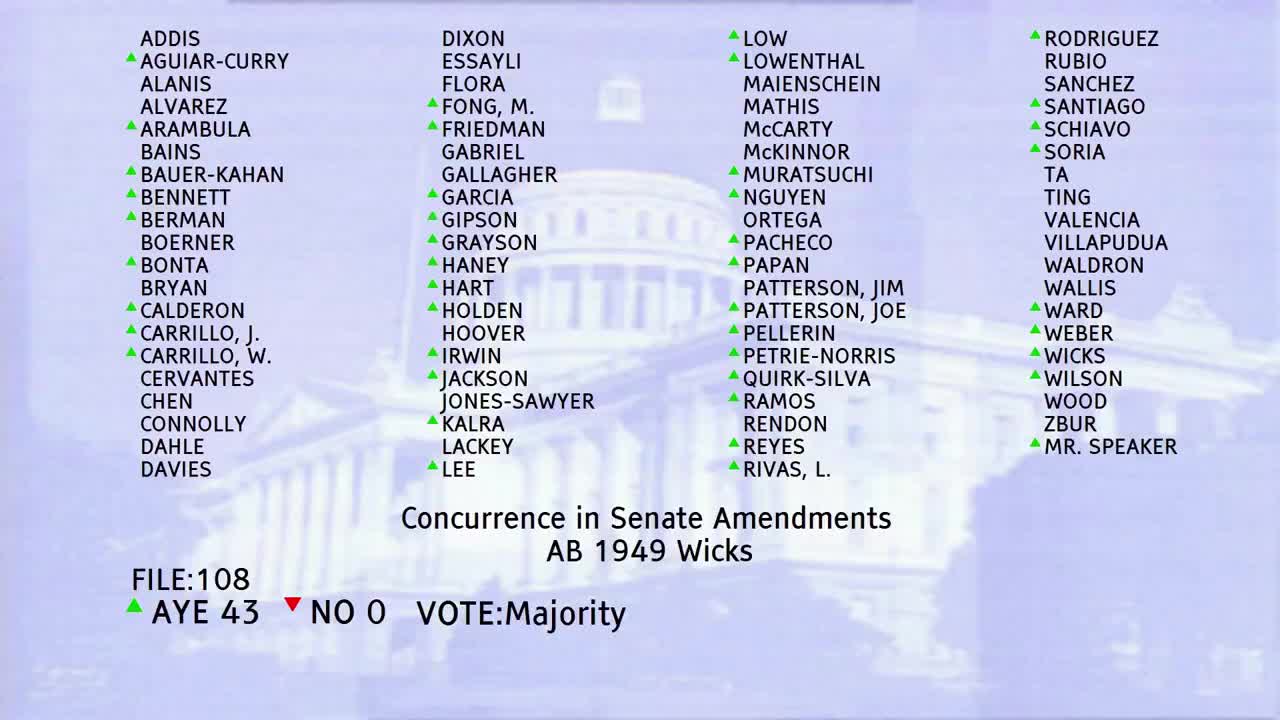 57SEC
Assembly Floor
 2MIN
Senate Floor
 2MIN
Senate Standing Committee on Appropriations
 18MIN
Senate Standing Committee on Health
 2MIN
Assembly Floor
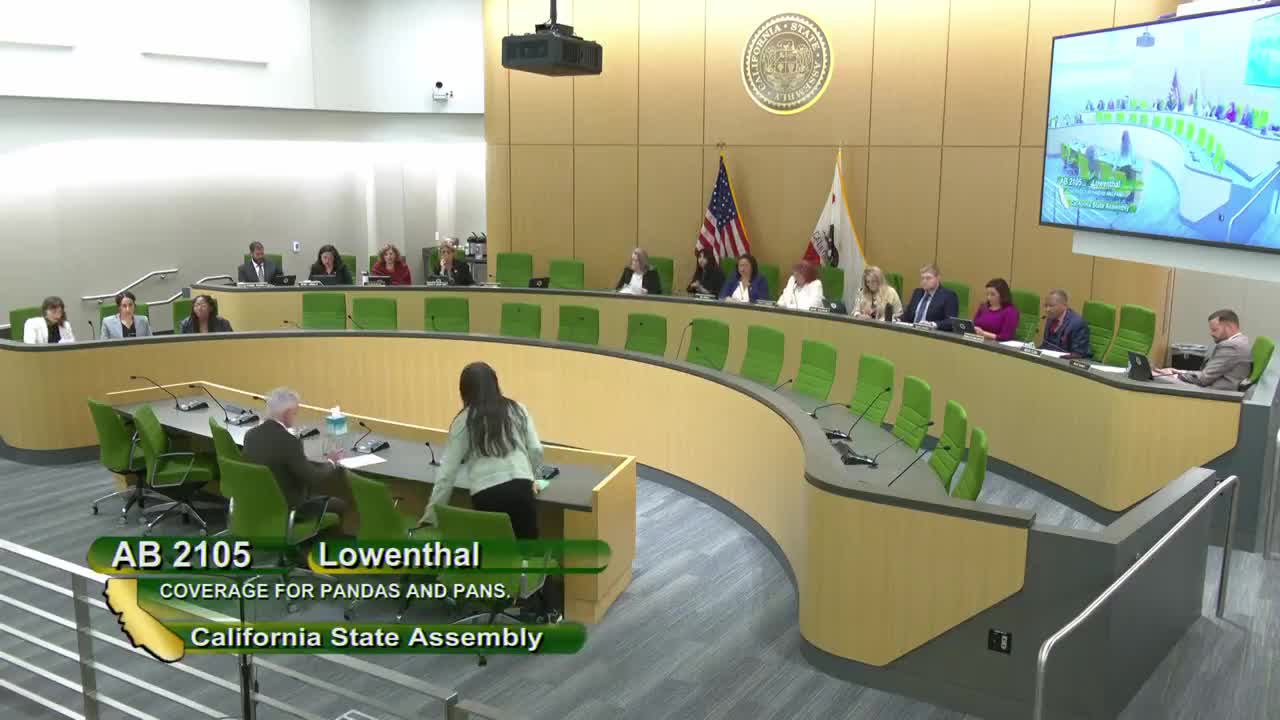 21MIN
Assembly Standing Committee on Health
Bill Author