AB 526: Pupils: attendance at community college.
- Session Year: 2015-2016
- House: Assembly
- Latest Version Date: 2016-09-21
Existing law authorizes the governing board of a school district to authorize a pupil who meets specified criteria to attend community college. Existing law limits the number of pupils a principal is authorized to recommend for community college summer session pursuant to those provisions to 5% of the total number of pupils in any grade level, as specified.
This bill, until January 1, 2020, would exempt from the 5% limitation pupils who meet specified requirements and who enroll in certain community college courses. The bill would require the Chancellor of the California Community Colleges to annually report to the Department of Finance the number of pupils who enrolled and received a passing grade in a community college summer session course.
This bill would declare that it is to take effect immediately as an urgency statute.
Existing law provides that any person who takes away another person under 18 years of age from the father, mother, guardian, or other person having legal charge of the other person, without their consent, for the purpose of prostitution, is punishable by imprisonment in the state prison and a fine not exceeding $2,000.
This bill would increase the punishment to include a fine not exceeding $5,000.
(a)The governing board of a school district may determine which pupils would benefit from advanced scholastic or vocational work. The intent of this section is to provide educational enrichment opportunities for a limited number of eligible pupils, rather than to reduce current course requirements of elementary and secondary schools, and also to help ensure a smoother transition from high school to college for pupils by providing them with greater exposure to the collegiate atmosphere. The governing board of a school district may authorize those pupils, upon recommendation of the principal of the pupils school of attendance, and with parental consent, to attend a community college during any session or term as special part-time or full-time students and to undertake one or more courses of instruction offered at the community college level.
(b)If the governing board of a school district denies a request for a special part-time or full-time enrollment at a community college for any session or term for a pupil who is identified as highly gifted, the governing board shall issue its written recommendation and the reasons for the denial within 60 days. The written recommendation and denial shall be issued at the next regularly scheduled board meeting that falls at least 30 days after the request has been submitted.
(c)A pupil shall receive credit for community college courses that he or she completes at the level determined appropriate by the governing boards of the school district and community college district.
(d)(1)The principal of a school may recommend a pupil for community college summer session only if that pupil meets all of the following criteria:
(A)Demonstrates adequate preparation in the discipline to be studied.
(B)Exhausts all opportunities to enroll in an equivalent course, if any, at his or her school of attendance.
(2)For any particular grade level, a principal shall not recommend for community college summer session attendance more than 5 percent of the total number of pupils who completed that grade immediately before the time of recommendation.
(3)A high school pupil recommended by his or her principal for enrollment in a course shall not be included in the 5-percent limitation of pupils allowed to be recommended pursuant to paragraph (2) if the course in which the pupil is enrolled is part of a College and Career Access Pathways (CCAP) program established pursuant to Section 76004 in which a majority of the pupils served are unduplicated pupils, as defined in Section 42238.02, the course meets one of the criteria listed in subparagraphs (A) to (C), inclusive, and the high school principal who recommends the pupil for enrollment provides the Chancellor of the California Community Colleges, upon the request of that office, with the data required for purposes of paragraph (4).
(A)The course is a lower division, college-level course for credit that is designated as part of the Intersegmental General Education Transfer Curriculum or applies toward the general education breadth requirements of the California State University.
(B)The course is a college-level, occupational course for credit assigned a priority code of A, B, or C, pursuant to the Student Accountability Model, as defined by the Chancellor of the California Community Colleges and reported in the management information system, and the course is part of a sequence of vocational or career technical education courses leading to a degree or certificate in the subject area covered by the sequence.
(C)The course is necessary to assist a pupil who has not passed the California High School Exit Examination (CAHSEE), does not offer college credit in English language arts or mathematics, and the pupil meets both of the following requirements:
(i)The pupil is in his or her senior year of high school.
(ii)The pupil has completed all other graduation requirements before the end of his or her senior year, or will complete all remaining graduation requirements during a community college summer session, which he or she is recommended to enroll in, following his or her senior year of high school.
(4)On or before March 1 of each year, the Chancellor of the California Community Colleges shall report to the Department of Finance the number of pupils recommended pursuant to paragraph (3) who enroll in community college summer session courses and who receive a passing grade. The information in this report may be submitted with the report required by subdivision (c) of Section 76002.
(5)The Board of Governors of the California Community Colleges shall not include enrollment growth attributable to paragraph (3) as part of its annual budget request for the California Community Colleges.
(6)Notwithstanding Article 3 (commencing with Section 33050) of Chapter 1 of Part 20 of Division 2, compliance with this subdivision shall not be waived.
(e)Paragraphs (3), (4), and (5) of subdivision (d) shall become inoperative on January 1, 2020.
SEC. 2.This act is an urgency statute necessary for the immediate preservation of the public peace, health, or safety within the meaning of Article IV of the Constitution and shall go into immediate effect. The facts constituting the necessity are:
In order to ensure rigorous scholastic and vocational work opportunities are available to pupils at the earliest possible time and that ongoing programs are not interrupted, it is necessary that this act take effect immediately.
(a)The governing board of a school district may determine which pupils would benefit from advanced scholastic or vocational work. The intent of this section is to provide educational enrichment opportunities for a limited number of eligible pupils, rather than to reduce current course requirements of elementary and secondary schools, and also to help ensure a smoother transition from high school to college for pupils by providing them with greater exposure to the collegiate atmosphere. The governing board of a school district may authorize those pupils, upon recommendation of the principal of the pupils school of attendance, and with parental consent, to attend a community college during any session or term as special part-time or full-time students and to undertake one or more courses of instruction offered at the community college level.
(b)If the governing board of a school district denies a request for a special part-time or full-time enrollment at a community college for any session or term for a pupil who is identified as highly gifted, the governing board shall issue its written recommendation and the reasons for the denial within 60 days. The written recommendation and denial shall be issued at the next regularly scheduled board meeting that falls at least 30 days after the request has been submitted.
(c)A pupil shall receive credit for community college courses that he or she completes at the level determined appropriate by the governing boards of the school district and community college district.
(d)(1)The principal of a school may recommend a pupil for community college summer session only if that pupil meets all of the following criteria:
(A)Demonstrates adequate preparation in the discipline to be studied.
(B)Exhausts all opportunities to enroll in an equivalent course, if any, at his or her school of attendance.
(2)For any particular grade level, a principal shall not recommend for community college summer session attendance more than 5 percent of the total number of pupils who completed that grade immediately prior to before the time of recommendation.
(3)A high school pupil recommended by his or her principal for enrollment in a course shall not be included in the 5-percent limitation of pupils allowed to be recommended pursuant to paragraph (2) if the course in which the pupil is enrolled is part of a College and Career Access Pathways (CCAP) program established pursuant to Section 76004 in which a majority of the pupils served are unduplicated pupils, as defined in Section 42238.02, the course meets one of the criterion criteria listed in subparagraphs (A) to (C), inclusive, and the high school principal who recommends the pupil for enrollment provides the Chancellor of the California Community Colleges, upon the request of that office, with the data required for purposes of paragraph (4).
(A)The course is a lower division, college-level course for credit that is designated as part of the Intersegmental General Education Transfer Curriculum or applies toward the general education breadth requirements of the California State University.
(B)The course is a college-level, occupational course for credit assigned a priority code of A, B, or C, pursuant to the Student Accountability Model, as defined by the Chancellor of the California Community Colleges and reported in the management information system, and the course is part of a sequence of vocational or career technical education courses leading to a degree or certificate in the subject area covered by the sequence.
(C)The course is necessary to assist a pupil who has not passed the California High School Exit Examination (CAHSEE), does not offer college credit in English language arts or mathematics, and the pupil meets both of the following requirements:
(i)The pupil is in his or her senior year of high school.
(ii)The pupil has completed all other graduation requirements prior to before the end of his or her senior year, or will complete all remaining graduation requirements during a community college summer session, which he or she is recommended to enroll in, following his or her senior year of high school.
(4)On or before March 1 of each year, the Chancellor of the California Community Colleges shall report to the Department of Finance the number of pupils recommended pursuant to paragraph (3) who enroll in community college summer session courses and who receive a passing grade. The information in this report may be submitted with the report required by subdivision (c) of Section 76002.
(5)The Board of Governors of the California Community Colleges shall not include enrollment growth attributable to paragraph (3) as part of its annual budget request for the California Community Colleges.
(6)Notwithstanding Article 3 (commencing with Section 33050) of Chapter 1 of Part 20 of Division 2 of Title 2, compliance with this subdivision shall not be waived.
(e)Paragraphs (3), (4), and (5) of subdivision (d) shall become inoperative on January 1, 2014. 2020.
SEC. 2.This act is an urgency statute necessary for the immediate preservation of the public peace, health, or safety within the meaning of Article IV of the Constitution and shall go into immediate effect. The facts constituting the necessity are:
In order to ensure rigorous scholastic and vocational work opportunities are available to pupils at the earliest possible time and that ongoing programs are not interrupted, it is necessary that this act take effect immediately.
SECTION 1.Section 267 of the Penal Code is amended to read:267.Any person who takes away any other person under 18 years of age from the father, mother, guardian, or other person having the legal charge of the other person, without their consent, for the purpose of prostitution, is punishable by imprisonment in the state prison, and a fine not exceeding five thousand dollars ($5,000).
Every Any person who takes away any other person under the age of 18 years 18 years of age from the father, mother, guardian, or other person having the legal charge of the other person, without their consent, for the purpose of prostitution, is punishable by imprisonment in the state prison, and a fine not exceeding two thousand dollars ($2,000). five thousand dollars ($5,000).
|
Date
|
Status
|
|---|---|
| Sep 9, 2016 | Enrolled and presented to the Governor at 2:30 p.m. |
| Aug 31, 2016 | Urgency clause adopted. Senate amendments concurred in. To Engrossing and Enrolling. |
| Aug 30, 2016 | Joint Rule 62(a), file notice suspended. (Page 6474.) |
| Aug 30, 2016 | From committee: That the Senate amendments be concurred in. (Ayes 6. Noes 0.) (August 30). |
| Aug 30, 2016 | Joint Rule 62(a), file notice suspended. |
| Aug 30, 2016 | Re-referred to Com. on ED. pursuant to Assembly Rule 77.2. |
| Aug 30, 2016 | In Assembly. Concurrence in Senate amendments pending. |
| Aug 25, 2016 | Read third time. Urgency clause adopted. Passed. Ordered to the Assembly. (Ayes 39. Noes 0. Page 5421.). |
| Aug 25, 2016 | Read third time. Urgency clause adopted. Passed. Ordered to the Assembly. |
| Aug 24, 2016 | Read second time. Ordered to third reading. |
| Aug 23, 2016 | From committee: Do pass. (Ayes 6. Noes 0.) (August 23). |
| Aug 23, 2016 | From committee: Do pass and re-refer to Com. on APPR. (Ayes 7. Noes 0.) (August 23). Re-referred to Com. on APPR. |
| Aug 22, 2016 | Re-referred to Com. on ED. |
| Aug 19, 2016 | Joint Rules 61 and 62(a) suspended. (Ayes 36. Noes 0. Page 5166.) |
| Aug 19, 2016 | Joint Rules 61 and 62(a) suspended. |
| Aug 18, 2016 | Re-referred to Com. on RLS. pursuant to Senate Rule 29.10(c). |
| Aug 18, 2016 | Read second time. Ordered to third reading. |
| Aug 17, 2016 | Read second time and amended. Ordered returned to second reading. |
| Aug 17, 2016 | Ordered to second reading. |
| Aug 17, 2016 | From inactive file. |
| Jul 2, 2015 | Ordered to inactive file at the request of Senator Monning. |
| Jul 1, 2015 | Ordered to special consent calendar. |
| Jun 24, 2015 | Read second time. Ordered to third reading. |
| Jun 23, 2015 | From committee: Do pass. (Ayes 7. Noes 0.) (June 23). |
| May 14, 2015 | Referred to Com. on PUB. S. |
| Apr 30, 2015 | Read third time. Passed. Ordered to the Senate. (Ayes 77. Noes 0. Page 1219.) |
| Apr 30, 2015 | In Senate. Read first time. To Com. on RLS. for assignment. |
| Apr 23, 2015 | Read second time. Ordered to third reading. |
| Apr 22, 2015 | From committee: Do pass. (Ayes 6. Noes 0.) (April 21). |
| Apr 7, 2015 | In committee: Set, first hearing. Hearing canceled at the request of author. |
| Mar 5, 2015 | Referred to Com. on PUB. S. |
| Feb 24, 2015 | From printer. May be heard in committee March 26. |
| Feb 23, 2015 | Read first time. To print. |
|
Date
|
Description
|
Location
|
Votes
|
|
|---|---|---|---|---|
| Aug 31, 2016 | AB 526 HOLDEN Concurrence - Urgency Added | Assembly Floor |
Passed |
|
| Aug 30, 2016 | With recommendation: That Senate amendments be concurred in. | Assembly Standing Committee on Education |
Passed |
|
| Aug 25, 2016 | Assembly 3rd Reading AB526 Holden By Fuller Urgency Clause | Senate Floor |
Passed |
|
| Aug 23, 2016 | Do pass | Senate Standing Committee on Appropriations |
Passed |
|
| Aug 23, 2016 | Do pass, but first be re-referred to the Committee on [Appropriations] | Senate Standing Committee on Education |
Passed |
|
| Jun 23, 2015 | Do pass | Senate Standing Committee on Public Safety |
Passed |
|
| Apr 30, 2015 | AB 526 HOLDEN Assembly Third Reading | Assembly Floor |
Passed |
|
| Apr 21, 2015 | Do pass. | Assembly Standing Committee on Public Safety |
Passed |
This list shows positions taken on this bill by organizations on the date displayed, which is linked to the original source.
Positions by individuals are not included.
CONCURRENCE IN SENATE AMENDMENTS
CSA2 Bill Id:AB 526
Author:(Holden)
As Amended Ver:August 17, 2016
2/3 vote. Urgency
ASSEMBLY: |
| (April 30, 2015) | SENATE: | 39-0 | (August 25, 2016) |
(vote not relevant)
COMMITTEE VOTE: | 6-0 | (August 30, 2016) | RECOMMENDATION: | concur |
(Ed.)
Original Committee Reference: PUB. S.
SUMMARY: Clarifies that the 5% cap on the number of high school pupils in a school district that may enroll in a community college summer session does not apply to pupils who are concurrently enrolled as part of a College and Career Access Pathways (CCAP) program in which a majority of the pupils served are either low income, English learners, or foster youths.
The Senate amendments
- Strike the prior contents of the bill and add the current provisions.
- Add an urgency clause
- Make clarifying, nonsubstantive changes to existing law.
EXISTING LAW:
- Establishes the CCAP partnership for the purpose of offering or expanding dual enrollment opportunities for students who may not already be college bound or who are underrepresented in higher education, with the goal of developing seamless pathways from high school to community college for career technical education or preparation for transfer, improving high school graduation rates, or helping high school pupils achieve college and career readiness.
- Caps the number of high school pupils who may enroll in a community college summer session at 5% of the total number of a school's pupils for any grade level.
- Provides that the number of full time equivalent CCAP students (FTES) enrolled in a community colleges statewide shall not exceed 10% of the total statewide FTES.
FISCAL EFFECT: According to the Senate Appropriations Committee:
- To the extent that this bill results in additional CCAP students enrolled in summer session community college, it could result in a potentially significant Proposition 98 cost pressure due to community college districts claiming additional FTES. The exact cost pressure attributed to this bill is unknown. Every additional 100 FTES would result in a cost pressure of about $500,000 Proposition 98 at a rate of $5,004 per-FTES for the 2016-17 fiscal year. This bill prohibits the CCC Board of Governors from including enrollment growth from these students as part of its annual budget request.
- Minor costs to the California Community Colleges Chancellor's Office (CCCCO) to reinstate the reporting requirement.
COMMENTS:
Background. The CCAP partnership was established by AB 288 ((Holden), Chapter 618, Statutes of 2015), which passed both houses of the Legislature with unanimous votes. By expanding dual enrollment opportunities, the partnerships are intended to increase the college-going rates among students who are historically underrepresented in higher education. Prior to entering into a partnership, a school and community college district must each present the partnership as an information item at a board meeting and approve the partnership at a subsequent meeting. In addition, existing law requires the partnership districts to do the following:
- Establish protocols for information sharing, in compliance with all applicable state and federal privacy laws, joint facilities use, and parental consent for high school pupils to enroll in community college courses
- Establish the terms of the CCAP partnership, including, but not necessarily limited to, the total number of high school students to be served and the total number of full-time equivalent students projected to be claimed by the community college district for those students;
- Plan the scope, nature, time, location, and listing of community college courses to be offered; and
- Develop criteria to assess the ability of pupils to benefit from those courses.
The number of FTES that may be enrolled in community colleges pursuant to the CCAP partnership may not exceed 10% of the statewide FTES.
Need for the bill. Existing law establishes several concurrent enrollment programs. One such program offers opportunities for high school pupils to enroll in community college summer sessions. Summer session attendance is limited to 5% of the high school's enrollment for any particular grade. The intent of AB 288 was to exempt CCAP students from this 5% cap and instead subject them to a statewide FTES cap of 10%. Legislative Council has opined that this intent has been achieved, stating "it is our opinion that the cap on dual enrollment in a community college summer session contained in section 48800, subdivision (d)(2) does not apply to dual enrollment in a community college summer session under a CCAP partnership."
Nevertheless, council for the community college chancellor's office has opined that the 5% cap does apply to the CCAP program and is requiring districts to comply with that interpretation. According to the author's office, this has resulted in some pupils being denied access to the program.
This bill may be more restrictive than existing law. While the purpose of this bill is to clarify existing law as interpreted by Legislative Council, the actual effect may be a little different. Specifically, Council interprets current law to exempt all CCAP enrollment from the 5% cap. This bill, however, exempts only those programs in which a majority of participants are either low income, English learners, or foster youths. By specifically providing an exemption for only these programs, the language implies that programs in which a minority of participants fall into any of those categories are subject to the 5% cap, which is not how Council interprets existing law. This is almost certainly will be the interpretation of the chancellor's office, which already interprets the cap as applying to all CCAP programs. This would make the bill more restrictive than existing law.
According to the author's office, most, if not all, CCAP programs enroll a majority of low income, English learners, and foster youth, so this issue may have little or no impact. The author's office indicates it will monitor the impact to determine if additional clarification will be needed.
Analysis Prepared by: Rick Pratt / ED. / (916) 319-2087 FN: 0005015
Office of Senate Floor Analyses (916) 651-1520 Fax: (916) 327-4478 | AB |
THIRD READING
Bill No: AB 526
:
PRIOR VOTES NOT RELEVANT
SENATE EDUCATION COMMITTEE: 7-0, 8/23/16 (pursuant to Senate Rule 29.10)
AYES: Liu, Block, Huff, Leyva, Monning, Pan, Vidak
NO VOTE RECORDED: Hancock, Mendoza
SENATE APPROPRIATIONS COMMITTEE: 6-0, 8/23/16
AYES: Lara, Bates, Beall, Hill, McGuire, Mendoza
NO VOTE RECORDED: Nielsen
DIGEST: This bill, until January 1, 2020, exempts from the 5% cap placed on community college summer session enrollment, K-12 students who meet specified requirements and who enroll in certain community college courses offered through the College and Career Access Pathways (CCAP) program.
Existing law:
- Authorizes the governing board of a school district, upon recommendation of the principal of a student's school of attendance, and with parental consent, to authorize a student who would benefit from advanced scholastic or vocational work to attend a community college as a special part-time or full-time student. Additionally, current law prohibited a principal from recommending, for community college summer session attendance, more than 5% of the total number of students in the same grade level and exempted from the 5% cap a student recommended by his or her principal for enrollment in a college-level summer session course if the course in which the pupil was enrolled met specified criteria. These exemptions were repealed on January 1, 2014:
- A course in which the high school student is enrolled meet any one or more of the following criteria:
- The course is a lower division, college-level course for credit, designated as part of the Intersegmental General Education Transfer Curriculum or applies toward the general education breadth requirements of the California State University.
- The course is a college level, occupational course for credit assigned a Priority code of "A," "B," or "C," pursuant to the Student Accountability Model, and is part of a sequence of vocational or career technical education courses leading to a degree or certificate in the subject area covered by the sequence.
- The course is necessary to assist a student who has not passed the California High School Exit Exam and does not offer college credit in English language arts or mathematics, and the student is in his or her senior year and has completed all other graduation requirements prior to the end of his or her senior year or will complete all remaining graduation requirements during the recommended community college summer session.
- A course in which the high school student is enrolled meet any one or more of the following criteria:
(EC § 48800, et seq.)
- Authorizes a community college district governing board to admit as a special part-time or full-time student any student eligible pursuant to EC Section 48800 and requires the governing board of a California Community College (CCC) district to assign these students a low enrollment priority in order to ensure that these students do not displace regularly admitted community college students. An exemption to this requirement is extended to Middle College High School (MCHS) students. (EC § 76001)
- Requires the CCC Chancellor’s Office (CCCCO) to report to the Department of Finance and Legislature annually on the amount of full-time equivalent students (FTES) claimed by each CCC district for high school pupils enrolled in non-credit, non-degree applicable, degree applicable (excluding physical education), and degree applicable physical education courses; and provides that, for purposes of receiving state apportionments, CCC districts may only include high school students within the CCC district’s report on FTES if the students are enrolled in courses that are open to the general public, as specified. Additionally, existing law requires the governing board of a CCC district to assign a low enrollment priority to special part-time or full-time students in order to ensure that these students do not displace regularly admitted community college students. (EC § 76001 and § 76002)
- Caps the amount of state apportionment that may be claimed for these students at no more than 5% of the district’s total reported full-time equivalent enrollment of special part-time and full-time students. (EC § 76002)
- Authorizes the governing board of a community college district to enter into a CCAP partnership with the governing board of a school district, in its immediate service area, with the goal of developing seamless pathways from high school to CCC in order to offer or expand dual enrollment opportunities for students who may not be college bound or who are underrepresented in higher education; and, outlines the conditions that must be met prior to the adoption of the CCAP agreement. (EC § 76004)
This bill:
- Exempts from the 5% cap on community college summer session enrollment, a high school student recommended by his or her principal if the course in which the student is part of a CCAP program and meets one of the specified criteria and if the high school principal who recommends the student provides the Chancellor of the CCC, upon request of that office, with the data it requires to report to the Department of Finance. Specifically, it provides that if the course in which the student is enrolled meet any one or more of the following criteria:
- The course is a lower division, college-level course for credit, designated as part of the Intersegmental General Education Transfer Curriculum or applies toward the general education breadth requirements of the California State University.
- The course is a college level, occupational course for credit assigned a Priority code of "A," "B," or "C," pursuant to the Student Accountability Model, and is part of a sequence of vocational or career technical education courses leading to a degree or certificate in the subject area covered by the sequence.
- The course is necessary to assist a student who has not passed the California High School Exit Exam and does not offer college credit in English language arts or mathematics, and the student is in his or her senior year and has completed all other graduation requirements prior to the end of his or her senior year or will complete all remaining graduation requirements during the recommended community college summer session.
- Requires, on or before March 1 of each year, the Chancellor of the CCC to annually report to the Department of Finance the number of pupils who enrolled and received a passing grade in a community college summer session course.
- Prohibits the Board of Governors of the CCC from including enrollment growth attributable to these students as part of its annual budget request for the CCC.
- Sunsets the provisions of the bill on January 1, 2020.
- Declares the bill an urgency measure in order to ensure rigorous scholastic and vocational work opportunities are available to K-12 students at the earliest possible time and that ongoing programs are not interrupted.
Comments
- Need for the bill. Recent legislation, AB 288 (Holden, Chapter 618, Statutes of 2015) authorized the governing board of a community college district to enter into a CCAP partnership with the governing board of a school district. According to the author, following the enactment of AB 288, a number of school districts entered into CCAP partnerships and began enrolling student with the understanding that, since AB 288 imposed its own cap on enrollment, the 5% cap on summer dual enrollment under existing law would not apply to CCAP students. However, conflicting legal opinions caused some confusion in the field regarding whether the 5% cap applies to the CCAP program. The author contends, “AB 526 is simply providing additional clarification to existing law to ensure that these students are able to take the courses required by their chosen pathway and also to ensure that the promise of college and career is fulfilled.”
- Related history. In December 2002, the Orange County Register ran the first in a series of highly critical articles regarding concurrent enrollment practices in the community colleges. The articles specifically focused on high school physical education (PE) classes and various suspected abuses.
These anecdotal allegations resulted in a Chancellor’s Office investigation which revealed that FTES generated by concurrent enrollment in both credit and noncredit courses grew from approximately 16,000 in 1992-93 to over 52,000 in 2000-01, outpacing the overall enrollment growth of the community college system. While concurrent enrollment included courses in a variety of curricular areas, there had been significant growth in concurrent enrollment in PE courses. The proportion of FTES for concurrent enrollment in PE courses was approximately 15% in 1992-93, but these courses comprised 34% of FTES for concurrent enrollment in 2000-01, the equivalent of 1.7% of all the FTES generated by the community colleges as a system. The expansion of concurrent enrollment in PE courses was more pronounced in about one-fifth (20%) of the system’s 72 districts and was especially evident with respect to PE programs. By 2001-02, six districts within the system produced 53% of the PE concurrent enrollment FTES generated by the entire system for that year. These districts included Los Angeles, Butte, North Orange, Contra Costa, Santa Clarita, and Mt. San Antonio.
As a result, SB 338 (Scott, Chapter 786, Statutes of 2003) was enacted to specify the conditions whereby concurrent enrollment of students between a high school and community college district is permitted, establish restrictions on the amount of FTES that could be claimed for PE courses, and require annual reporting by the Chancellor of the amount of FTES claimed by each district for special full-time and special part-time students overall and for PE courses specifically.
- College and Career Access Pathways partnership (CCAP). AB 288 (Holden, Chapter 618, Statutes of 2015) authorized the governing board of a community college district to enter into a CCAP partnership with the governing board of a school district within its immediate service area, as specified, to offer or expand dual enrollment opportunities for students who may not already be college bound or who are underrepresented in higher education. The goal of the program is to develop seamless pathways from high school to community college for career-technical education or preparation for transfer, improving high school graduation rates, or helping high school students achieve college and career readiness. AB 288 capped the statewide FTES which may be claimed for special admits at 10% statewide. The authority for this partnership sunsets January 1, 2022.
- Special part-time full time students. Current law authorizes a school district governing board to recommend students who would benefit from advanced scholastic or vocational work for attendance at a community college upon recommendation of the principal, and limits the number of students who can be recommended for summer session enrollments to 5% of the students in each grade level. Community colleges are authorized to claim FTES reimbursement for these students only if the course is open and advertised to the general public. The proportion of a community college PE class that may be comprised of special part-time or full-time students cannot exceed 10% and apportionment for these students cannot exceed 5% of the district’s total reported FTES for special part-time and full-time students. Students are limited to enrolling in a maximum of 11 units per semester, and must be assigned low enrollment priority by the college to avoid displacement of adults. Existing law exempted from the 5% cap a student recommended by his or her principal for enrollment in a college-level summer session course if the course in which the pupil was enrolled met specified criteria. These exemptions expired on January 1, 2014.
This bill proposes to reinstate the exemption from the 5% cap however, limits the exemption to high school students enrolled in a course offered through the CCAP program. While the bill’s provisions exempt these students from summer session dual enrollment cap, each CCAP partnership are subject to their respective partnership agreements which establish the total number of high school students to be served. Additionally, AB 288 capped FTES which may be claimed for special admits at 10% of total FTES.
FISCAL EFFECT: Appropriation: Fiscal Com.: Local:
According to the Senate Appropriations Committee:
- To the extent that this bill results in additional CCAP students enrolled in summer session community college, it could result in a potentially significant Proposition 98 cost pressure due to community college districts claiming additional FTES. The exact cost pressure attributed to this bill is unknown. Every additional 100 FTES would result in a cost pressure of about $500,000 Proposition 98 at a rate of $5,004 per-FTES for the 2016-17 fiscal year. This bill prohibits the CCC Board of Governors from including enrollment growth from these students as part of its annual budget request.
- Minor costs to the CCCCO to reinstate the reporting requirement.
Community College League of California
OPPOSITION: (Verified 8/23/16)
None received
8/24/16 18:31:49
**** END ****
SENATE COMMITTEE ON
Senator Ricardo Lara, Chair
2015 - 2016 Regular Session
AB 526 (Holden) - Pupils: attendance at community college
Version: | Policy Vote: |
Urgency: | Mandate: |
Hearing Date: | Consultant: |
This bill meets the criteria for referral to the Suspense File.
Bill Summary:
This bill, an urgency measure, exempts certain College and Career Access Pathways (CCAP) partnerships from the 5 percent cap on the number of students in the same grade level a principal can recommend for community college summer session. This bill also reinstates a requirement for the Chancellor of the California Community Colleges (CCC) to report the number of students that are exempt from this cap and receive a passing grade.
Fiscal Impact:
- To the extent that this bill results in additional CCAP students enrolled in summer session community college, it could result in a potentially significant Proposition 98 cost pressure due to community college districts claiming additional full-time equivalent students (FTES). The exact cost pressure attributed to this bill is unknown. Every additional 100 FTES would result in a cost pressure of about $500,000 Proposition 98 at a rate of $5,004 per-FTES for the 2016-17 fiscal year. This bill prohibits the CCC Board of Governors from including enrollment growth from these students as part of its annual budget request. See staff comments.
- Minor costs to the CCC Chancellor’s Office to reinstate the reporting requirement.
Background:
Existing law authorizes the governing board of a school district, upon recommendation of the principal of a student’s school and with parental consent, to allow a student that would benefit from advanced scholastic or vocational work to concurrently enroll in a community college during any session or term as a special part-time or full-time student. Existing law prohibits a principal from recommending more than 5 percent of the total number of students in the same grade level for community college summer session attendance. A community college district governing board is authorized to admit these students and assign them a low enrollment priority, with certain exceptions, in order to ensure that they do not displace regularly admitted community college students. (Education Code § 48800, et seq.; EC § 76001)
Until January 1, 2014, existing law provided for an exemption to the 5 percent cap on students being recommended by a principal for community college summer session. The exemption applied to students enrolled in courses that meet one of the following criteria:
- The course is a lower division, college-level course for credit that is designated as part of the Intersegmental General Education Transfer Curriculum or applies toward the general education breadth requirements of the California State University.
- The course is a college-level, occupational course for credit, as specified, and it is part of a sequence of vocational or career technical education courses leading to a degree or certificate in the subject area covered by the sequence.
- The course is necessary to assist a student who has not passed the California High School Exist Examination (CAHSEE), does not offer college credit in English language arts or mathematics, and the student: (a) is in his or her senior year of high school, and (b) has completed all other graduation requirements, as specified. (EC § 48800)
Chapter 618, Statutes of 2015 (AB 288, Holden) authorizes the governing board of a community college district to enter into a CCAP partnership with the governing board of a school district for the purpose of offering or expanding dual enrollment opportunities for students who may not already be college bound or who are underrepresented in higher education, with the goal of developing seamless pathways from high school to community college for career technical education or preparation for transfer, improving high school graduation rates, or helping high school pupils achieve college and career readiness. Existing law caps the number of FTES claimed as special admits at 10 percent of the total number of FTES claimed statewide. (EC § 76004)
Proposed Law:
This bill:
- Reinstates an exemption to the 5 percent cap on the number of students in the same grade level a principal can recommend for community college summer session. This exemption became inoperable January 1, 2014. This bill includes the criteria outlined in existing law to qualify for the exemption and further requires that it only apply to students who are enrolled a course that is part of a CCAP program in which a majority of the students served are either an English learner, a low income student, or a foster youth (together known as unduplicated students).
- Reinstates a requirement that the Chancellor of the CCC report to the Department of Finance the number of students that are exempt from the 5 percent cap and receive a passing grade.
- Reinstates the prohibition that the CCC Board of Governors include enrollment growth of students that are exempt from the 5 percent summer session cap as part of its annual budget request.
- Extends the above provisions until January 1, 2020.
Staff Comments:
According to the author’s office, this bill is needed to clarify that the 5 percent cap on summer dual enrollment does not apply to students enrolled in a course that is part of a CCAP partnership. A legal opinion from the CCC Chancellor’s Office regarding the CCAP partnership program asserts that the 5 percent cap does apply to CCAP students.
The actual cost of this bill is unknown as it depends on the potential increase in FTES resulting from additional CCAP students enrolling in summer session that would have otherwise been prohibited due to the 5 percent cap. Since AB 288, which authorizes the CCAP partnerships, has only recently been enacted, it is unknown how many students are enrolled in courses within such a partnership, and further which programs serve a majority of unduplicated students. In addition, it is unknown the extent to which high school principals are currently reaching the cap on the number of students they can recommend within a certain grade level for community college summer session.
However, to the extent the cap is being reached in some grades and this bill would allow more students to enroll in summer session, it could result in an increase in FTES claimed by community college districts. Any additional FTES that community colleges claim as a result of the cap exemption would result in a Proposition 98 cost pressure. This bill prohibits the CCC from including enrollment growth of these exempt students as part of its annual budget request so the CCC would likely have to absorb these costs.
For context, the CCC Chancellor’s Office reported that 33,495 high school students completed summer session courses in 2015 with a passing grade. It was also reported that there were 19,689 special admit FTES statewide in the 2014-15 academic year. Staff notes that these two figures are distinct in that FTES is not “headcount enrollment,” but is the equivalent of 525 hours of student instruction per each FTES.
This bill requires, in order to qualify for the 5 percent cap exemption, the student to be enrolled in a course that is part of a CCAP program in which a majority of the students are unduplicated; the recommending high school principal provides necessary data for reporting; and the course is either: (1) transferrable to the University of California or the California State University; (2) is an occupational course; or (3) is necessary to assist a student who has not passed the CAHSEE. Staff notes that the CAHSEE is suspended through the 2017-18 school year; therefore this last pathway to exemption is currently not an option.
To the extent that this bill results in more students earning college credits, students may move through a public postsecondary institution more quickly in the future, which may contribute to future cost savings to the state from reduced time in college. This assumes the college credits earned through a CCAP agreement will be recognized by the postsecondary institution to which the credits are transferred and students do not take excess courses at the institution.
-- END --
SENATE COMMITTEE ON EDUCATION
Senator Carol Liu, Chair
2015 - 2016 Regular
Bill No:
Author: | Holden | ||
Version: | Hearing Date: August 23, 2016 | ||
Urgency: | Fiscal: | ||
Consultant: | |||
Subject:
SUMMARY
This bill, until January 1, 2020, exempts from the 5% cap placed on community college summer session enrollment, K-12 students who meet specified requirements and who enroll in certain community college courses offered through the College and Career Access Pathways (CCAP) program.
BACKGROUND
Existing law:
- Authorizes the governing board of a school district, upon recommendation of the principal of a student's school of attendance, and with parental consent, to authorize a student who would benefit from advanced scholastic or vocational work to attend a community college as a special part-time or full-time student. Additionally, current law prohibited a principal from recommending, for community college summer session attendance, more than 5% of the total number of students in the same grade level and exempted from the 5% cap a student recommended by his or her principal for enrollment in a college-level summer session course if the course in which the pupil was enrolled met specified criteria. These exemptions were repealed on January 1, 2014:
- A course in which the high school student is enrolled meet any one or more of the following criteria:
- The course is a lower division, college-level course for credit,
designated as part of the Intersegmental General Education Transfer Curriculum or applies toward the general education breadth requirements of the California State University.
- The course is a college level, occupational course for credit assigned a Priority code of "A," "B," or "C," pursuant to the Student Accountability Model, and is part of a sequence of vocational or career technical education courses leading to a degree or certificate in the subject area covered by the sequence.
- The course is necessary to assist a student who has not passed the California High School Exit Exam and does not offer college credit in English language arts or mathematics, and the student is in his or her senior year and has completed all other graduation requirements prior to the end of his or her senior year or will complete all remaining graduation requirements during the recommended community college summer session.
(EC § 48800, et seq.)
- Authorizes a community college district governing board to admit as a special part-time or full-time student any student eligible pursuant to EC 48800 and requires the governing board of a California Community College (CCC) district to assign these students a low enrollment priority in order to ensure that these students do not displace regularly admitted community college students. An exemption to this requirement is extended to Middle College High School (MCHS) students. (EC § 76001)
- Requires the California Community College Chancellor’s Office (CCCCO) to report to the Department of Finance and Legislature annually on the amount of full-time equivalent students (FTES) claimed by each CCC district for high school pupils enrolled in non-credit, non-degree applicable, degree applicable (excluding physical education), and degree applicable physical education courses; and provides that, for purposes of receiving state apportionments, CCC districts may only include high school students within the CCC district’s report on FTES if the students are enrolled in courses that are open to the general public, as specified. Additionally, current law requires the governing board of a California Community College (CCC) district to assign a low enrollment priority to special part-time or full-time students in order to ensure that these students do not displace regularly admitted community college students. (EC § 76001 and § 76002)
- Caps the amount of state apportionment that may be claimed for these students at no more than 5% of the district’s total reported full-time equivalent enrollment of special part-time and full-time students. (EC § 76002)
- Authorizes the governing board of a community college district to enter into a College and Career Access Pathways partnership with the governing board of a school district, in its immediate service area, with the goal of developing seamless pathways from high school to CCC in order to offer or expand dual enrollment opportunities for students who may not be college bound or who are underrepresented in higher education; and, outlines the conditions that must be met prior to the adoption of the CCAP agreement. (EC § 76004)
ANALYSIS
This bill:
- Exempts from the five percent cap on community college summer session enrollment, a high school student recommended by his or her principal if the course in which the student is part of a College and Career Access Pathways program and meets one of the specified criteria and if the high school principal who recommends the student provides the Chancellor of the California Community College (CCC), upon request of that office, with the data it requires to report to the Department of Finance. Specifically, it provides that if the course in which the student is enrolled meet any one or more of the following criteria:
- The course is a lower division, college-level course for credit,
designated as part of the Intersegmental General Education Transfer
Curriculum or applies toward the general education breadth requirements of the California State University.
- The course is a college level, occupational course for credit assigned a
Priority code of "A," "B," or "C," pursuant to the Student Accountability Model, and is part of a sequence of vocational or career technical education courses leading to a degree or certificate in the subject area covered by the sequence.
- The course is necessary to assist a student who has not passed the
California High School Exit Exam and does not offer college credit in English language arts or mathematics, and the student is in his or her senior year and has completed all other graduation requirements prior to the end of his or her senior year or will complete all remaining graduation requirements during the recommended community college summer session.
- Requires, on or before March 1 of each year, the Chancellor of the CCC to annually report to the Department of Finance the number of pupils who enrolled and received a passing grade in a community college summer session course.
- Prohibits the Board of Governors of the CCC from including enrollment growth attributable to these students as part of its annual budget request for the CCC.
- Provides that the provisions of the bill shall become inoperative on January 1, 2020.
- Declares the bill an urgency measure in order to ensure rigorous scholastic and vocational work opportunities are available to K-12 students at the earliest possible time and that ongoing programs are not interrupted.
STAFF COMMENTS
- Need for the bill. Recent legislation, AB 288 (Holden, Chapter 618, Statutes of 2015) authorized the governing board of a community college district to enter into a CCAP partnership with the governing board of a school district. According to the author, following the enactment of AB 288, a number of school districts entered into CCAP partnerships and began enrolling student with the understanding that, since AB 288 imposed its own cap on enrollment, the 5% cap on summer dual enrollment under existing law would not apply to CCAP students. However, conflicting legal opinions caused some confusion in the field regarding whether the 5% cap applies to the CCAP program. The author contends, “AB 526 is simply providing additional clarification to existing law to ensure that these students are able to take the courses required by their chosen pathway and also to ensure that the promise of college and career is fulfilled.”
- Related History. In December 2002, the Orange County Register ran the first in a series of highly critical articles regarding concurrent enrollment practices in the community colleges. The articles specifically focused on high school physical education (PE) classes and various suspected abuses.
These anecdotal allegations resulted in a Chancellor’s Office investigation which revealed that full-time equivalent students (FTES) generated by concurrent enrollment in both credit and noncredit courses grew from approximately 16,000 in 1992-93 to over 52,000 in 2000-01, outpacing the overall enrollment growth of the community college system. While concurrent enrollment included courses in a variety of curricular areas, there had been significant growth in concurrent enrollment in PE courses. The proportion of FTES for concurrent enrollment in PE courses was approximately 15% in 1992-93, but these courses comprised 34% of FTES for concurrent enrollment in 2000-01, the equivalent of 1.7% of all the FTES generated by the community colleges as a system. The expansion of concurrent enrollment in PE courses was more pronounced in about one-fifth (20%) of the system’s 72 districts and was especially evident with respect to PE programs. By 2001-02, six districts within the system produced 53% of the PE concurrent enrollment FTES generated by the entire system for that year. These districts included Los Angeles, Butte, North Orange, Contra Costa, Santa Clarita, and Mt. San Antonio.
As a result, SB 338 (Scott, Chapter 786, Statutes of 2003) was enacted to specify the conditions whereby concurrent enrollment of students between a high school and community college district is permitted, establish restrictions on the amount of FTES that could be claimed for PE courses, and require annual reporting by the Chancellor of the amount of FTES claimed by each district for special full-time and special part-time students overall and for PE courses specifically.
- College and Career Access Pathways partnership (CCAP). AB 288 (Holden, Chapter 618, Statutes of 2015) authorized the governing board of a community college district to enter into a CCAP partnership with the governing board of a school district within its immediate service area, as specified, to offer or expand dual enrollment opportunities for students who may not already be college bound or who are underrepresented in higher education. The goal of the program is to develop seamless pathways from high school to community college for career-technical education or preparation for transfer, improving high school graduation rates, or helping high school students achieve college and career readiness. AB 288 capped the statewide full-time equivalent students (FTES) which may be claimed for special admits at 10% statewide. The authority for this partnership sunsets January 1, 2022.
- Special part-time full time students. Current law authorizes a school district governing board to recommend students who would benefit from advanced scholastic or vocational work for attendance at a community college upon recommendation of the principal, and limits the number of students who can be recommended for summer session enrollments to 5% of the students in each grade level. Community colleges are authorized to claim FTES reimbursement for these students only if the course is open and advertised to the general public. The proportion of a community college PE class that may be comprised of special part-time or full-time students cannot exceed 10% and apportionment for these students cannot exceed 5% of the district’s total reported FTES for special part-time and full-time students. Students are limited to enrolling in a maximum of 11 units per semester, and must be assigned low enrollment priority by the college to avoid displacement of adults. Existing law exempted from the five percent cap a student recommended by his or her principal for enrollment in a college-level summer session course if the course in which the pupil was enrolled met specified criteria. These exemptions expired on January 1, 2014.
This bill proposes to reinstate the exemption from the 5% cap but limits the exemption to high school students enrolled in a course offered through the College and Career Access Pathways program. While the bill’s provisions exempt these students from summer session dual enrollment cap, each College and Career Access Pathways partnership are subject to their respective partnership agreements which outline the total number of high school students to be served. Additionally, AB 288 capped FTES which may be claimed for special admits at 10% of total FTES.
- Special admits trends. The chart below summarizes the trends around special admits in relation to total full-time equivalent students for the community colleges for the last decade.
SUPPORT
Community College League of California
OPPOSITION
None received.
-- END --
AB 526
Page 5
|
Office of Senate Floor Analyses (916) 651-1520 Fax: (916) 327-4478 |
THIRD READING
Bill No: AB 526
Introduced: 2/23/15
SENATE PUBLIC SAFETY COMMITTEE: 7-0, 6/23/15
AYES: Hancock, Anderson, Glazer, Leno, Liu, Monning, Stone
ASSEMBLY FLOOR: 77-0, 4/30/15 - See last page for vote
DIGEST: This bill increases the fine for the crime of abducting a minor for prostitution from a maximum of $2,000 to a maximum of $5,000.
Existing law:
States that a person who, for the purpose of committing a lewd or lascivious act, persuades or entices by false promises, misrepresentations, or the like, any child under 14 years of age, to go out of the country, state, county, or into another part of the same county, is guilty of kidnapping. (Penal Code § 207(b).)
Provides that when a person is convicted of kidnapping a victim under 14 years of age, the kidnapping is punishable by imprisonment in the state prison for 5, 8, or 11 years. (Penal Code § 208.)
Provides that where a person is convicted of pimping or pandering involving a minor the court may order the defendant to pay an additional fine of up to $5,000. In setting the fine, the court shall consider the seriousness and circumstances of the offense, the illicit gain realized by the defendant and the harm suffered by the victim. The proceeds of this fine shall be deposited in the Victim-Witness Assistance Fund and made available to fund programs for prevention of child sexual abuse and treatment of victims. (Penal Code § 266k(a).)
States that upon conviction of any person for a violation of either procurement of a child under 16 for lewd or lascivious acts or abduction of a minor for purposes of prostitution, the court may impose an additional fine not to exceed $25,000. (Penal Code § 266k(b).)
Provides that any person who deprives or violates the personal liberty of another with the intent to effect or maintain a felony violation of enticement of a minor into prostitution, pimping or pandering, abduction of a minor for the purposes of prostitution, child pornography, or extortion, is guilty of human trafficking, and shall be punished by imprisonment in the state prison for eight, 14, or 20 years and a fine of not more than $500,000. (Penal Code § 236.1 (b).)
States, in Penal Code Section 236.1(c), that any person who causes, induces, or persuades, or attempts to cause, induce, or persuade, a person who is a minor at the time of commission of the offense to engage in a commercial sex act, with the intent to effect or maintain a violation of enticement of a minor into prostitution, pimping or pandering, abduction of a minor for the purposes of prostitution, child pornography, or extortion, is guilty of human trafficking, and shall be punishable by imprisonment in the state prison as follows:
Five, eight, or 12 years and a fine of not more than $500,000.
15 years to life and a fine of not more than $500,000 when the offense involves force, fear, fraud, deceit, coercion, violence, duress, menace, or threat of unlawful injury to the victim or to another person.
Provides that every person who takes away any other person under the age of 18 years from the parent, guardian, or other person having the legal charge of the other person, without their consent, for the purpose of prostitution, is punishable by imprisonment in the state prison and a fine not exceeding $2,000. (Penal Code § 267.)
This bill increases the fine for the crime of abducting a person under the age of 18 years for prostitution from a maximum of $2,000 to a maximum of $5,000.
Background
This bill raises the base fine for the crime of abduction for the purposes of prostitution from $2,000 to $5,000. Because existing law requires that a number of penalty assessments and fees be added to a base fine, if a defendant was fined the maximum $5,000, as provided in this bill, the following would be imposed pursuant to the Penal and Government Code:
Base Fine: $ 5,000
Penal Code 1464 state penalty on fines: $ 5,000 ($10 for every $10)
Penal Code 1465.7 state surcharge: $ 1,000 (20% surcharge)
Penal Code 1465.8 court operation assessment: $ 40 ($40 fee per offense)
Government Code 70372 court construction penalty: $ 2,500 ($5 for every $10)
Government Code 70373 assessment: $ 30 ($30 per felony/misdo)
Government Code 76000 penalty: $ 3,500 ($7 for every $10)
Government Code 76000.5 EMS penalty: $ 1,000 ($2 for every $10)
Government Code 76104.6 DNA fund penalty: $ 500 ($1 for every $10)
Government Code 76104.7 addt’l DNA fund penalty: $ 2,000 ($4 for every $10)
Total Fine with Assessments: $ 20,570 (This figure does not include victim restitution, or the restitution fine, and that other fines and fees, such as the jail booking fee, attorney fees, and probation department fees, may also be applicable.)
Criminal fines and penalties have climbed steadily in recent decades. Government entities tasked with collecting these fines have realized diminishing returns from collection efforts. A recent San Francisco Daily Journal article noted, “When it comes to collecting fines, superior court officials in several counties describe the process as ‘very frustrating,’ ‘crazy complicated’ and ‘inefficient.’” (State Judges Bemoan Fee Collection Process, Paul Jones and Saul Sugarman, San Francisco Daily Journal, January 15, 2015.) In fact, according to the Daily Journal article,“[f]elons convicted to prison time usually can’t pay their debts at all. The annual growth in delinquent debt partly reflects a supply of money that doesn’t exist to be collected.” (Id.) Given that a conviction for abduction for purposes of prostitution carries prison time, this bill could contribute to the growing about of delinquent, unpaid debt.
FISCAL EFFECT: Appropriation: No Fiscal Com.: No Local: No
California Police Chiefs Association
Several individuals
OPPOSITION: (Verified 6/23/15)
California Public Defenders Association
ARGUMENTS IN SUPPORT:
According to the California Police Chiefs Association:
The California Police Chiefs Association is pleased to support Assembly Bill 526, which increases the penalty for abduction for purposes of prostitution from two thousand dollars to five thousand dollars. After drug trafficking, human trafficking is the world’s second most profitable criminal enterprise, a status it shares with illegal arms trafficking. Like drug and arms trafficking, the United States is one of the top destination countries for trafficking in persons.
For more than 30 years, California Penal Code section 267 has not been altered to match the growth of this criminal practice. AB 526 would increase the penalty and serve as a deterrent for committing abduction for the purposes [of] prostitution.
ARGUMENTS IN OPPOSITION:
According to the California Public Defenders Association:
Under current law, Penal Code §267, “taking away” a minor from his or her parent or guardian, for the purposes of prostitution, is a straight felony with a maximum fine of $2,000. SB 526 would increase the fine to $5,000.
This bill would modify a seldom-invoked penal code section. After the passage of Prop 35 in 2012, Penal Code § 236.1 was amended to read, in part, “Any person who deprives or violates the personal liberty of another with the intent to obtain forces labor or services, is guilty of human trafficking and shall be punished by imprisonment in state prison for 5, 8, or 12 years and a fine of not more than five hundred thousand dollars ($500,000).”
The punishment is increased for victims who are minors, under certain circumstances, the possible punishment is a life sentence under Penal Code § 236.1(c)(1)-(2).
Prosecutors will not use Penal Code §267, because Penal Code § 236.1 is available to them. In the unlikely event that PC § 267 is charged, it will serve only to hamper low-income defendants from complying with their sentence. Wealthier defendants will be much more able to pay a $5,000 fine than more defendants. Furthermore, any money that ta defendant has ought to go to the true victim—the prostituted minor. Increasing the statutory fine will take money away from victims and give it to the State.
ASSEMBLY FLOOR: 77-0, 4/30/15
AYES: Achadjian, Alejo, Travis Allen, Baker, Bigelow, Bloom, Bonilla, Bonta, Brough, Brown, Burke, Calderon, Chang, Chau, Chiu, Chu, Cooley, Cooper, Dababneh, Dahle, Daly, Dodd, Eggman, Frazier, Beth Gaines, Gallagher, Cristina Garcia, Eduardo Garcia, Gatto, Gipson, Gomez, Gonzalez, Gordon, Gray, Grove, Hadley, Harper, Roger Hernández, Holden, Irwin, Jones, Jones-Sawyer, Kim, Lackey, Levine, Linder, Lopez, Low, Maienschein, Mathis, Mayes, McCarty, Medina, Melendez, Mullin, Nazarian, Obernolte, O’Donnell, Olsen, Patterson, Perea, Rendon, Ridley-Thomas, Rodriguez, Salas, Santiago, Steinorth, Mark Stone, Thurmond, Ting, Wagner, Waldron, Weber, Wilk, Williams, Wood, Atkins
NO VOTE RECORDED: Campos, Chávez, Quirk
Prepared by: Jessica Devencenzi / PUB. S. /
6/24/15 15:48:36
**** END ****
AB 526 (Holden ) Page 5 of 5
SENATE COMMITTEE ON PUBLIC SAFETY
Senator Loni Hancock, Chair
2015 - 2016 Regular
Bill No: AB 526 Hearing Date: June 23, 2015
Author: |
Holden |
||
Version: |
February 23, 2015 |
||
Urgency: |
No |
Fiscal: |
No |
Consultant: |
JRD |
||
Subject: Abduction
HISTORY
Source: Author
Prior
Legislation: SB 1388 (Lieu) -- Chapter 714, Statutes of 2014
AB 17 (Swanson) -- Chapter 211, Statutes of 2009
Support: California Police Chiefs; Several individuals
Opposition: California Public Defenders Assocaition
Assembly Floor Vote: 77 - 0
PURPOSE
The purpose of this legislation is to increase the fine for the crime of abducting a minor for prostitution from a maximum of $2,000 to a maximum of $5,000.
Existing law states that a person who, for the purpose of committing a lewd or lascivious act, persuades or entices by false promises, misrepresentations, or the like, any child under 14 years of age, to go out of the country, state, county, or into another part of the same county, is guilty of kidnapping. (Penal Code § 207(b).)
Existing law provides that when a person is convicted of kidnapping a victim under 14 years of age, the kidnapping is punishable by imprisonment in the state prison for 5, 8, or 11 years. (Penal Code § 208.)
Existing law provides that where a person is convicted of pimping or pandering involving a minor the court may order the defendant to pay an additional fine of up to $5,000. In setting the fine, the court shall consider the seriousness and circumstances of the offense, the illicit gain realized by the defendant and the harm suffered by the victim. The proceeds of this fine shall be deposited in the Victim-Witness Assistance Fund and made available to fund programs for prevention of child sexual abuse and treatment of victims. (Penal Code § 266k(a).)
Existing law states that upon conviction of any person for a violation of either procurement of a child under 16 for lewd or lascivious acts or abduction of a minor for purposes of prostitution, the court may impose an additional fine not to exceed $25,000. (Penal Code § 266k(b).)
Existing law provides that any person who deprives or violates the personal liberty of another with the intent to effect or maintain a felony violation of enticement of a minor into prostitution, pimping or pandering, abduction of a minor for the purposes of prostitution, child pornography, or extortion, is guilty of human trafficking, and shall be punished by imprisonment in the state prison for 8, 14, or 20 years and a fine of not more than $500,000. (Penal Code Section 236.1 (b).)
Existing law states that any person who causes, induces, or persuades, or attempts to cause, induce, or persuade, a person who is a minor at the time of commission of the offense to engage in a commercial sex act, with the intent to effect or maintain a violation of enticement of a minor into prostitution, pimping or pandering, abduction of a minor for the purposes of prostitution, child pornography, or extortion, is guilty of human trafficking, and shall be punishable by imprisonment in the state prison as follows:
Five, 8, or 12 years and a fine of not more than $500,000.
Fifteen years to life and a fine of not more than $500,000 when the offense involves force, fear, fraud, deceit, coercion, violence, duress, menace, or threat of unlawful injury to the victim or to another person.
(Penal Code Section 236.1(c).)
Existing law provides that every person who takes away any other person under the age of 18 years from the parent, guardian, or other person having the legal charge of the other person, without their consent, for the purpose of prostitution, is punishable by imprisonment in the state prison and a fine not exceeding $2,000. (Penal Code § 267.)
This bill increases the fine for the crime of abducting a person under the age of 18 years for prostitution from a maximum of $2,000 to a maximum of $5,000.
RECEIVERSHIP/OVERCROWDING CRISIS AGGRAVATION
For the past eight years, this Committee has scrutinized legislation referred to its jurisdiction for any potential impact on prison overcrowding. Mindful of the United States Supreme Court ruling and federal court orders relating to the state’s ability to provide a constitutional level of health care to its inmate population and the related issue of prison overcrowding, this Committee has applied its “ROCA” policy as a content-neutral, provisional measure necessary to ensure that the Legislature does not erode progress in reducing prison overcrowding.
On February 10, 2014, the federal court ordered California to reduce its in-state adult institution population to 137.5% of design capacity by February 28, 2016, as follows:
143% of design bed capacity by June 30, 2014;
141.5% of design bed capacity by February 28, 2015; and,
137.5% of design bed capacity by February 28, 2016.
In February of this year the administration reported that as “of February 11, 2015, 112,993 inmates were housed in the State’s 34 adult institutions, which amounts to 136.6% of design bed capacity, and 8,828 inmates were housed in out-of-state facilities. This current population is now below the court-ordered reduction to 137.5% of design bed capacity.” ( Defendants’ February 2015 Status Report In Response To February 10, 2014 Order, 2:90-cv-00520 KJM DAD PC, 3-Judge Court, Coleman v. Brown, Plata v. Brown (fn. omitted).
While significant gains have been made in reducing the prison population, the state now must stabilize these advances and demonstrate to the federal court that California has in place the “durable solution” to prison overcrowding “consistently demanded” by the court. (Opinion Re: Order Granting in Part and Denying in Part Defendants’ Request For Extension of December 31, 2013 Deadline, NO. 2:90-cv-0520 LKK DAD (PC), 3-Judge Court, Coleman v. Brown, Plata v. Brown (2-10-14). The Committee’s consideration of bills that may impact the prison population therefore will be informed by the following questions:
Whether a proposal erodes a measure which has contributed to reducing the prison population;
Whether a proposal addresses a major area of public safety or criminal activity for which there is no other reasonable, appropriate remedy;
Whether a proposal addresses a crime which is directly dangerous to the physical safety of others for which there is no other reasonably appropriate sanction;
Whether a proposal corrects a constitutional problem or legislative drafting error; and
Whether a proposal proposes penalties which are proportionate, and cannot be achieved through any other reasonably appropriate remedy.
COMMENTS
1. Need for This Legislation
According to the author:
For more than 30 years, the penalty for committing abduction for the purposes of prostitution has not been increased to match the growing criminal enterprise of human trafficking. AB 526 would increase the penalty threshold of committing abduction for the purposes of prostitution from up to a $2,000 fine to up to a $5,000 fine.
2. Effect of Legislation
This legislation would raise the base fine for the crime of abduction for the purposes of prostitution from $2,000 to $5,000. Because existing law requires that a number of penalty assessments and fees be added to a base fine, if a defendant was fined the maximum $5,000, as provided in this bill, the following would be imposed pursuant to the Penal and Government Code:
Base Fine: $ 5,000
Penal Code 1464 state penalty on fines: $ 5,000 ($10 for every $10)
Penal Code 1465.7 state surcharge: $ 1,000 (20% surcharge)
Penal Code 1465.8 court operation assessment: $ 40 ($40 fee per offense)
Government Code 70372 court construction penalty: $ 2,500 ($5 for every $10)
Government Code 70373 assessment: $ 30 ($30 per felony/misdo)
Government Code 76000 penalty: $ 3,500 ($7 for every $10)
Government Code 76000.5 EMS penalty: $ 1,000 ($2 for every $10)
Government Code 76104.6 DNA fund penalty: $ 500 ($1 for every $10)
Government Code 76104.7 addt'l DNA fund penalty: $ 2,000 ($4 for every $10)
Total Fine with Assessments: $ 20,5701
Criminal fines and penalties have climbed steadily in recent decades. Government entities tasked with collecting these fines have realized diminishing returns from collection efforts. A recent San Francisco Daily Journal article noted, “When it comes to collecting fines, superior court officials in several counties describe the process as ‘very frustrating,’ ‘crazy complicated’ and ‘inefficient.’” (State Judges Bemoan Fee Collection Process, Paul Jones and Saul Sugarman, San Francisco Daily Journal, January 15, 2015.) In fact, according to the Daily Journal article,“[f]elons convicted to prison time usually can’t pay their debts at all. The annual growth in delinquent debt partly reflects a supply of money that doesn’t exist to be collected.” (Id.) Given that a conviction for abduction for purposes of prostitution carries prison time, this legislation could contribute to the growing about of delinquent, unpaid debt.
3. Argument in Support
According to the California Police Chiefs Association:
The California Police Chiefs Association is pleased to support Assembly Bill 526, which increases the penalty for abduction for purposes of prostitution from two thousand dollars to five thousand dollars. After drug trafficking, human trafficking is the world’s second most profitable criminal enterprise, a status it shares with illegal arms trafficking. Like drug and arms trafficking, the United States is one of the top destination countries for trafficking in persons.
For more than 30 years, California Penal Code section 267 has not been altered to match the growth of this criminal practice. AB 526 would increase the penalty and serve as a deterrent for committing abduction for the purposes [of] prostitution.
4. Argument in Opposition
According to the California Public Defenders Association:
Under current law, Penal Code §267, “taking away” a minor from his or her parent or guardian, for the purposes of prostitution, is a straight felony with a maximum fine of $2,000. SB 526 would increase the fine to $5,000.
This bill would modify a seldom-invoked penal code section. After the passage of Prop 35 in 2012, Penal Code § 236.1 was amended to read, in part, “Any person who deprives or violates the personal liberty of another with the intent to obtain forces labor or services, is guilty of human trafficking and shall be punished by imprisonment in state prison for 5, 8, or 12 years and a fine of not more than five hundred thousand dollars ($500,000).”
The punishment is increased for victims who are minors, under certain circumstances, the possible punishment is a life sentence under Penal Code § 236.1(c)(1)-(2).
Prosecutors will not use Penal Code §267, because Penal Code § 236.1 is available to them. In the unlikely event that PC § 267 is charged, it will serve only to hamper low-income defendants from complying with their sentence. Wealthier defendants will be much more able to pay a $5,000 fine than more defendants. Furthermore, any money that ta defendant has ought to go to the true victim—the prostituted minor. Increasing the statutory fine will take money away from victims and give it to the State.
-- END –
1 This figure does not include victim restitution, or the restitution fine, and that other fines and fees, such as the jail booking fee, attorney fees, and probation department fees, may also be applicable.
AB 526
Page 2
ASSEMBLY THIRD READING
AB 526
(Holden)
As Introduced February 23, 2015
Majority vote
Committee |
Votes |
Ayes |
Noes |
Public Safety |
6-0 |
Melendez, Jones-Sawyer, Lackey, Low, Santiago, Thurmond |
|
SUMMARY:
Increases the fine for the crime of abducting a minor for prostitution from a maximum of $2,000 to a maximum of $5,000.
EXISTING LAW:
Provides that every person who takes away any other person under the age of 18 years from the parent, guardian, or other person having the legal charge of the other person, without their consent, for the purpose of prostitution, is punishable by imprisonment in the state prison and a fine not exceeding $2,000.
States that upon conviction of any person for a violation of either procurement of a child under 16 for lewd or lascivious acts or abduction of a minor for purposes of prostitution, the court may impose an additional fine not to exceed $25,000.
States that a person who, for the purpose of committing a lewd or lascivious act, persuades or entices by false promises, misrepresentations, or the like, any child under 14 years of age, to go out of the country, state, county, or into another part of the same county, is guilty of kidnapping.
Provides that when a person is convicted of kidnapping a victim under 14 years of age, the kidnapping is punishable by imprisonment in the state prison for five, eight, or 11 years.
Provides that where a person is convicted of pimping or pandering involving a minor the court may order the defendant to pay an additional fine of up to $5,000. In setting the fine, the court shall consider the seriousness and circumstances of the offense, the illicit gain realized by the defendant and the harm suffered by the victim. The proceeds of this fine shall be deposited in the Victim-Witness Assistance Fund and made available to fund programs for prevention of child sexual abuse and treatment of victims.
States any person who, knowing another person is a prostitute, lives or derives support or maintenance in whole or in part from the earnings or proceeds of the person's prostitution, or from money loaned or advanced to or charged against that person by any keeper or manager or inmate of a house or other place where prostitution is practiced or allowed, or who solicits or receives compensation for soliciting for the person, when the prostitute is a minor, is guilty of pimping a minor, a felony, and shall be punishable as follows:
If the person engaged in prostitution is a minor over the age of 16 years, the offense is punishable by imprisonment in the state prison for three, four, or six years.
If the person engaged in prostitution is under 16 years of age, the offense is punishable by imprisonment in the state prison for three, six, or eight years.
Provides that any person who deprives or violates the personal liberty of another with the intent to effect or maintain a felony violation of enticement of a minor into prostitution, pimping or pandering, abduction of a minor for the purposes of prostitution, child pornography, or extortion, is guilty of human trafficking, and shall be punished by imprisonment in the state prison for eight, 14, or 20 years and a fine of not more than $500,000.
States that any person who causes, induces, or persuades, or attempts to cause, induce, or persuade, a person who is a minor at the time of commission of the offense to engage in a commercial sex act, with the intent to effect or maintain a violation of enticement of a minor into prostitution, pimping or pandering, abduction of a minor for the purposes of prostitution, child pornography, or extortion, is guilty of human trafficking, and shall be punishable by imprisonment in the state prison as follows:
Five, eight, or 12 years and a fine of not more than $500,000.
Fifteen years to life and a fine of not more than $500,000 when the offense involves force, fear, fraud, deceit, coercion, violence, duress, menace, or threat of unlawful injury to the victim or to another person.
FISCAL EFFECT:
Unknown. This bill is keyed non-fiscal by the Legislative Counsel.
COMMENTS:
According to the author, "For more than 30 years, the penalty for committing abduction for the purposes of prostitution has not been increased to match the growing criminal enterprise of human trafficking. AB 526 would increase the penalty threshold of committing abduction for the purposes of prostitution from up to a $2,000 fine to up to a $5,000 fine."
Analysis Prepared by: Sandy Uribe / PUB. S. / (916) 319-3744 FN: 0000185
AB 526
Page 5
Date of Hearing: April 21, 2015
Counsel: Sandra Uribe
ASSEMBLY COMMITTEE ON PUBLIC SAFETY
Bill Quirk, Chair
AB 526
(Holden) – As Introduced February 23, 2015
SUMMARY:
Increases the fine for the crime of abducting a minor for prostitution from a maximum of $2,000 to a maximum of $5,000.
EXISTING LAW:
Provides that every person who takes away any other person under the age of 18 years from the parent, guardian, or other person having the legal charge of the other person, without their consent, for the purpose of prostitution, is punishable by imprisonment in the state prison and a fine not exceeding $2,000. (Pen. Code, § 267.)
States that upon conviction of any person for a violation of either procurement of a child under 16 for lewd or lascivious acts or abduction of a minor for purposes of prostitution, the court may impose an additional fine not to exceed $25,000. (Pen. Code, § 266k, subd. (b).)
States that a person who, for the purpose of committing a lewd or lascivious act, persuades or entices by false promises, misrepresentations, or the like, any child under 14 years of age, to go out of the country, state, county, or into another part of the same county, is guilty of kidnapping. (Pen. Code, § 207, subd. (b).)
Provides that when a person is convicted of kidnapping a victim under 14 years of age, the kidnapping is punishable by imprisonment in the state prison for 5, 8, or 11 years. (Pen. Code, § 208.)
Provides that where a person is convicted of pimping or pandering involving a minor the court may order the defendant to pay an additional fine of up to $5,000. In setting the fine, the court shall consider the seriousness and circumstances of the offense, the illicit gain realized by the defendant and the harm suffered by the victim. The proceeds of this fine shall be deposited in the Victim-Witness Assistance Fund and made available to fund programs for prevention of child sexual abuse and treatment of victims. (Pen. Code § 266k, subd. (a).)
States any person who, knowing another person is a prostitute, lives or derives support or maintenance in whole or in part from the earnings or proceeds of the person's prostitution, or from money loaned or advanced to or charged against that person by any keeper or manager or inmate of a house or other place where prostitution is practiced or allowed, or who solicits or receives compensation for soliciting for the person, when the prostitute is a minor, is guilty of pimping a minor, a felony, and shall be punishable as follows:
If the person engaged in prostitution is a minor over the age of 16 years, the offense is punishable by imprisonment in the state prison for three, four, or six years.
If the person engaged in prostitution is under 16 years of age, the offense is punishable by imprisonment in the state prison for three, six, or eight years. (Pen. Code, § 266h, subd. (b).)
Provides that any person who deprives or violates the personal liberty of another with the intent to effect or maintain a felony violation of enticement of a minor into prostitution, pimping or pandering, abduction of a minor for the purposes of prostitution, child pornography, or extortion, is guilty of human trafficking, and shall be punished by imprisonment in the state prison for 8, 14, or 20 years and a fine of not more than $500,000. (Penal Code Section 236.1, subd. (b).)
States that any person who causes, induces, or persuades, or attempts to cause, induce, or persuade, a person who is a minor at the time of commission of the offense to engage in a commercial sex act, with the intent to effect or maintain a violation of enticement of a minor into prostitution, pimping or pandering, abduction of a minor for the purposes of prostitution, child pornography, or extortion, is guilty of human trafficking, and shall be punishable by imprisonment in the state prison as follows:
Five, 8, or 12 years and a fine of not more than $500,000.
Fifteen years to life and a fine of not more than $500,000 when the offense involves force, fear, fraud, deceit, coercion, violence, duress, menace, or threat of unlawful injury to the victim or to another person. (Penal Code Section 236.1, subd. (c).)
FISCAL EFFECT:
Unknown
COMMENTS:
Author's Statement: According to the author, "For more than 30 years, the penalty for committing abduction for the purposes of prostitution has not been increased to match the growing criminal enterprise of human trafficking. AB 526 would increase the penalty threshold of committing abduction for the purposes of prostitution from up to a $2,000 fine to up to a $5,000 fine."
Existing Penalty Assessments: There are penalty assessments and fees assessed on the base fine for a crime. Assuming a defendant was fined the maximum $5,000, as provided in this bill, the following penalty assessments would be imposed pursuant to the Penal Code and the Government Code:
Base Fine: $ 5,000
Penal Code 1464 state penalty on fines:
5,000 ($10 for every $10)
Penal Code 1465.7 state surcharge:
1,000 (20% surcharge)
Penal Code 1465.8 court operation assessment: 40 ($40 fee per offense)
Government Code 70372 court construction penalty: 2,500 ($5 for every $10)
Government Code 70373 assessment: 30 ($30 per felony/misdo)
Government Code 76000 penalty: 3,500 ($7 for every $10)
Government Code 76000.5 EMS penalty: 1,000 ($2 for every $10)
Government Code 76104.6 DNA fund penalty: 500 ($1 for every $10)
Government Code 76104.7 addt'l DNA fund penalty: 2,000 ($4
for every $10)
Total Fine with Assessments:
$20,570
It should be noted that this figure does not
include victim restitution, or the restitution fine, and that other
fines and fees, such as the jail booking fee, attorney fees, and
probation department fees, may also be applicable.
Practical Considerations: Criminal fines and penalties have climbed steadily in recent decades. Government entities tasked with collecting these fines have realized diminishing returns from collection efforts. Government resources can be wasted in futile collection attempts. A recent San Francisco Daily Journal article noted, "When it comes to collecting fines, superior court officials in several counties describe the process as 'very frustrating,' 'crazy complicated' and 'inefficient.'" (See State Judges Bemoan Fee Collection Process, San Francisco Daily Journal, 1/5/2015 by Paul Jones and Saul Sugarman.)
The fines applicable to procuring and abducting minors for purposes of prostitution may provide an example of this problem. Simply put, criminal defendants can generally not produce a substantial flow of money for fines. That well will quickly run dry. In the same Daily Journal article, the Presiding Judge of San Bernardino County was quoted as saying "the whole concept is getting blood out of a turnip." (Daily Journal, supra.) The article noted in particular that "Felons convicted to prison time usually can't pay their debts at all. The annual growth in delinquent debt partly reflects a supply of money that doesn't exist to be collected." (Ibid.)
Prioritization of Court-Ordered Debt: Current law under Penal Code section 1203.1d prioritizes the order in which delinquent court-ordered debt received is to be satisfied. The priorities are 1) victim restitution, 2) state surcharge, 3) restitution fines, penalty assessments, and other fines, with payments made on a proportional basis to the total amount levied for all of these items, and 4) state/county/city reimbursements, and special revenue items.
Potential Double Punishment Issues: Penal Code section 654 states, in relevant part:
"An act or omission that is punishable in different ways by different provisions of law shall be punished under the provision that provides for the longest potential term of imprisonment, but in no case shall the act or omission be punished under more than one provision." Fines are penal in nature and therefore subject to the limitations of Penal Code section 654. (People v. Tarris (2009) 180 Cal.App.4th 612, 628.)
As the author correctly notes, the fine for the crime of abducting a minor for prostitution has not been increased in decades. The fine was doubled in 1983. (See AB 1485 (Sher), Chapter 1092, Statutes of 1983.)
Nevertheless, other fines that affect the same or similar conduct have been enacted or increased. Most notably, in 2009 the Legislature enacted a separate and additional fine of up to $20,000 specifically applicable to convictions for the crime of abduction of a minor for purposes of prostitution. (Pen. Code, § 266k, subd. (b).) That fine was increased to $25,000 last year. (SB 1388 (Lieu), Chapter 714, Statutes of 2014.) Admittedly that fine is discretionary. (Pen. Code, § 266k, subd. (b).) However, it raises the question whether if the larger fine is imposed, the fine at issue in the bill can also be imposed.
Argument in Support: According to the California Police Chiefs Association, "After drug trafficking, human trafficking is the world's second most profitable criminal enterprise, a status it shares with illegal arms trafficking. Like drug and arms trafficking, the United States is one of the top destination countries for trafficking in persons.
"For more than 30 years, California Penal Code Section 267 has not been altered to match the growth of this criminal practice. AB 526 would increase the penalty and serve as a deterrent for committing abduction for the purposes of prostitution."
Argument in Opposition: According to the California Public Defenders Association, "This bill would modify a seldom-invoked penal code section. After the passage of Prop 35 in 2012, Penal Code § 236.1 was amended to read, in part, "Any person who deprives or violates the personal liberty of another with the intent to obtain forced labor or services, is guilty of human trafficking and shall be punished by imprisonment in the state prison for 5, 8, or 12 years and a fine of not more than five hundred thousand dollars ($500,000).
"The punishment is increased for victims who are minors; under certain circumstances, the possible punishment is a life sentence under Penal Code § 236.1(c)(1)-(2).
"Prosecutors will not use Penal Code § 267, because Penal Code § 236.1 is available to them. In the unlikely event that PC § 267 is charged, it will serve only to hamper low-income defendants from complying with their sentence. Wealthier defendants will be much more able to pay a $5,000 fine than poor defendants. Furthermore, any money that a defendant has ought to go to the true victim—the prostituted minor. Increasing the statutory fine will take money away from victims and give it to the State."
Related Legislation: AB 733 (Chavez), among other things, would make the fine for a person convicted of soliciting a minor mandatory and would fix the amount of the fine at $10,000. AB 733 is pending hearing in this committee.
Prior Legislation:
SB 1388 (Lieu), Chapter 714, Statutes of 2014, in pertinent part, imposed a number of "additional" fines on top of existing criminal fines related to commercial sex acts with minors.
AB 17 (Swanson), Chapter 211, Statutes of 2009, in pertinent part, created an additional fine not to exceed $20,000 for abduction of a minor for purposes of prostitution and procurement of a minor under the age of 16 for purposes of lewd acts.
REGISTERED SUPPORT / OPPOSITION:
Support
California Police Chiefs Association
52 Private
Individuals
Opposition
California
Public Defenders Association
Analysis Prepared by:
Sandy Uribe / PUB. S. / (916) 319-3744
AB 526
Page 5
Date of Hearing: April 7, 2015
Counsel: Sandra Uribe
ASSEMBLY COMMITTEE ON PUBLIC SAFETY
Bill Quirk, Chair
AB 526
(Holden) – As Introduced February 23, 2015
SUMMARY:
Increases the fine for the crime of abducting a minor for prostitution from a maximum of $2,000 to a maximum of $5,000.
EXISTING LAW:
Provides that every person who takes away any other person under the age of 18 years from the parent, guardian, or other person having the legal charge of the other person, without their consent, for the purpose of prostitution, is punishable by imprisonment in the state prison and a fine not exceeding $2,000. (Pen. Code, § 267.)
States that upon conviction of any person for a violation of either procurement of a child under 16 for lewd or lascivious acts or abduction of a minor for purposes of prostitution, the court may impose an additional fine not to exceed $25,000. (Pen. Code, § 266k, subd. (b).)
States that a person who, for the purpose of committing a lewd or lascivious act, persuades or entices by false promises, misrepresentations, or the like, any child under 14 years of age, to go out of the country, state, county, or into another part of the same county, is guilty of kidnapping. (Pen. Code, § 207, subd. (b).)
Provides that when a person is convicted of kidnapping a victim under 14 years of age, the kidnapping is punishable by imprisonment in the state prison for 5, 8, or 11 years. (Pen. Code, § 208.)
Provides that where a person is convicted of pimping or pandering involving a minor the court may order the defendant to pay an additional fine of up to $5,000. In setting the fine, the court shall consider the seriousness and circumstances of the offense, the illicit gain realized by the defendant and the harm suffered by the victim. The proceeds of this fine shall be deposited in the Victim-Witness Assistance Fund and made available to fund programs for prevention of child sexual abuse and treatment of victims. (Pen. Code § 266k, subd. (a).)
States any person who, knowing another person is a prostitute, lives or derives support or maintenance in whole or in part from the earnings or proceeds of the person's prostitution, or from money loaned or advanced to or charged against that person by any keeper or manager or inmate of a house or other place where prostitution is practiced or allowed, or who solicits or receives compensation for soliciting for the person, when the prostitute is a minor, is guilty of pimping a minor, a felony, and shall be punishable as follows:
If the person engaged in prostitution is a minor over the age of 16 years, the offense is punishable by imprisonment in the state prison for three, four, or six years.
If the person engaged in prostitution is under 16 years of age, the offense is punishable by imprisonment in the state prison for three, six, or eight years. (Pen. Code, § 266h, subd. (b).)
Provides that any person who deprives or violates the personal liberty of another with the intent to effect or maintain a felony violation of enticement of a minor into prostitution, pimping or pandering, abduction of a minor for the purposes of prostitution, child pornography, or extortion, is guilty of human trafficking, and shall be punished by imprisonment in the state prison for 8, 14, or 20 years and a fine of not more than $500,000. (Penal Code Section 236.1, subd. (b).)
States that any person who causes, induces, or persuades, or attempts to cause, induce, or persuade, a person who is a minor at the time of commission of the offense to engage in a commercial sex act, with the intent to effect or maintain a violation of enticement of a minor into prostitution, pimping or pandering, abduction of a minor for the purposes of prostitution, child pornography, or extortion, is guilty of human trafficking, and shall be punishable by imprisonment in the state prison as follows:
Five, 8, or 12 years and a fine of not more than $500,000.
Fifteen years to life and a fine of not more than $500,000 when the offense involves force, fear, fraud, deceit, coercion, violence, duress, menace, or threat of unlawful injury to the victim or to another person. (Penal Code Section 236.1, subd. (c).)
FISCAL EFFECT:
Unknown
COMMENTS:
Author's Statement: According to the author, "For more than 30 years, the penalty for committing abduction for the purposes of prostitution has not been increased to match the growing criminal enterprise of human trafficking. AB 526 would increase the penalty threshold of committing abduction for the purposes of prostitution from up to a $2,000 fine to up to a $5,000 fine."
Existing Penalty Assessments: There are penalty assessments and fees assessed on the base fine for a crime. Assuming a defendant was fined the maximum $5,000, as provided in this bill, the following penalty assessments would be imposed pursuant to the Penal Code and the Government Code:
Base Fine: $ 5,000
Penal Code 1464 state penalty on fines:
5,000 ($10 for every $10)
Penal Code 1465.7 state surcharge:
1,000 (20% surcharge)
Penal Code 1465.8 court operation assessment: 40 ($40 fee per offense)
Government Code 70372 court construction penalty: 2,500 ($5 for every $10)
Government Code 70373 assessment: 30 ($30 per felony/misdo)
Government Code 76000 penalty: 3,500 ($7 for every $10)
Government Code 76000.5 EMS penalty: 1,000 ($2 for every $10)
Government Code 76104.6 DNA fund penalty: 500 ($1 for every $10)
Government Code 76104.7 addt'l DNA fund penalty: 2,000 ($4
for every $10)
Total Fine with Assessments:
$20,570
It should be noted that this figure does not
include victim restitution, or the restitution fine, and that other
fines and fees, such as the jail booking fee, attorney fees, and
probation department fees, may also be applicable.
Practical Considerations: Criminal fines and penalties have climbed steadily in recent decades. Government entities tasked with collecting these fines have realized diminishing returns from collection efforts. Government resources can be wasted in futile collection attempts. A recent San Francisco Daily Journal article noted, "When it comes to collecting fines, superior court officials in several counties describe the process as 'very frustrating,' 'crazy complicated' and 'inefficient.'" (See State Judges Bemoan Fee Collection Process, San Francisco Daily Journal, 1/5/2015 by Paul Jones and Saul Sugarman.)
The fines applicable to procuring and abducting minors for purposes of prostitution may provide an example of this problem. Simply put, criminal defendants can generally not produce a substantial flow of money for fines. That well will quickly run dry. In the same Daily Journal article, the Presiding Judge of San Bernardino County was quoted as saying "the whole concept is getting blood out of a turnip." (Daily Journal, supra.) The article noted in particular that "Felons convicted to prison time usually can't pay their debts at all. The annual growth in delinquent debt partly reflects a supply of money that doesn't exist to be collected." (Ibid.)
Prioritization of Court-Ordered Debt: Current law under Penal Code section 1203.1d prioritizes the order in which delinquent court-ordered debt received is to be satisfied. The priorities are 1) victim restitution, 2) state surcharge, 3) restitution fines, penalty assessments, and other fines, with payments made on a proportional basis to the total amount levied for all of these items, and 4) state/county/city reimbursements, and special revenue items.
Potential Double Punishment Issues: Penal Code section 654 states, in relevant part:
"An act or omission that is punishable in different ways by different provisions of law shall be punished under the provision that provides for the longest potential term of imprisonment, but in no case shall the act or omission be punished under more than one provision." Fines are penal in nature and therefore subject to the limitations of Penal Code section 654. (People v. Tarris (2009) 180 Cal.App.4th 612, 628.)
As the author correctly notes, the fine for the crime of abducting a minor for prostitution has not been increased in decades. The fine was doubled in 1983. (See AB 1485 (Sher), Chapter 1092, Statutes of 1983.)
Nevertheless, other fines that affect the same or similar conduct have been enacted or increased. Most notably, in 2009 the Legislature enacted a separate and additional fine of up to $20,000 specifically applicable to convictions for the crime of abduction of a minor for purposes of prostitution. (Pen. Code, § 266k, subd. (b).) That fine was increased to $25,000 last year. (SB 1388 (Lieu), Chapter 714, Statutes of 2014.) Admittedly that fine is discretionary. (Pen. Code, § 266k, subd. (b).) However, it raises the question whether if the larger fine is imposed, the fine at issue in the bill can also be imposed.
Argument in Support: According to one private individual, "Currently the penalty for kidnapping a child and forcing the child into prostitution is prison time plus a $2,000 fine. AB 526 would increase the fine to $5,000.
"Our nation has an epidemic of child prostitution. According to a report by the FBI, 100,000 children are sold for sex each year within the United States, and as many as 300,000 children are at risk of becoming victims of sexual exploitation. Usually the exploitation starts during adolescence. For boys the average age is between eleven and thirteen, and, for girls, between twelve and fourteen.
"California has emerged as a magnet for sexual exploitation of children. Three of the nation's High Intensity Child Prostitution areas, as identified by the FBI, are located in California: the San Francisco, Los Angeles, and San Diego metropolitan areas.
"I think this is disgraceful. Hopefully the higher the fine for this sexual exploitation will persuade some adults from doing this to children. I think the fine should be even higher. But, AB 526 is a step in the right direction."
Argument in Opposition: According to the California Public Defenders Association, "This bill would modify a seldom-invoked penal code section. After the passage of Prop 35 in 2012, Penal Code § 236.1 was amended to read, in part, "Any person who deprives or violates the personal liberty of another with the intent to obtain forced labor or services, is guilty of human trafficking and shall be punished by imprisonment in the state prison for 5, 8, or 12 years and a fine of not more than five hundred thousand dollars ($500,000).
"The punishment is increased for victims who are minors; under certain circumstances, the possible punishment is a life sentence under Penal Code § 236.1(c)(1)-(2).
"Prosecutors will not use Penal Code § 267, because Penal Code § 236.1 is available to them. In the unlikely event that PC § 267 is charged, it will serve only to hamper low-income defendants from complying with their sentence. Wealthier defendants will be much more able to pay a $5,000 fine than poor defendants. Furthermore, any money that a defendant has ought to go to the true victim—the prostituted minor. Increasing the statutory fine will take money away from victims and give it to the State."
Related Legislation: AB 733 (Chavez), among other things, would make the fine for a person convicted of soliciting a minor mandatory and would fix the amount of the fine at $10,000. AB 733 is pending hearing in this committee.
Prior Legislation:
SB 1388 (Lieu), Chapter 714, Statutes of 2014, in pertinent part, imposed a number of "additional" fines on top of existing criminal fines related to commercial sex acts with minors.
AB 17 (Swanson), Chapter 211, Statutes of 2009, in pertinent part, created an additional fine not to exceed $20,000 for abduction of a minor for purposes of prostitution and procurement of a minor under the age of 16 for purposes of lewd acts.
REGISTERED SUPPORT / OPPOSITION:
Support
52 Private Individuals
Opposition
California Public Defenders Association
Analysis Prepared by:
Sandy Uribe / PUB. S. / (916) 319-3744
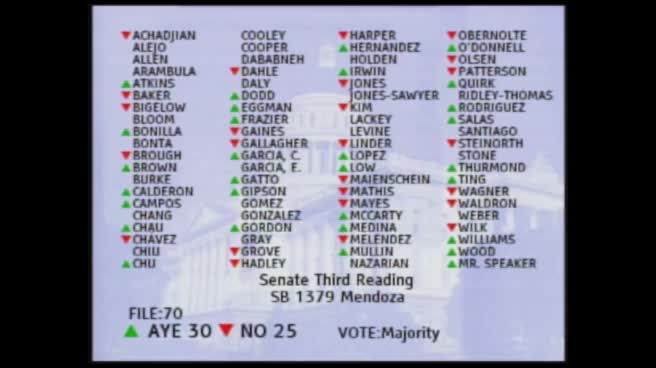
Bill Author

Bill Co-Author(s):