AB 2135: Public works contracts: wage and penalty assessment.
- Session Year: 2023-2024
- House: Assembly
- Latest Version Date: 2024-06-13
Current Status:
Failed
(2024-08-15: In committee: Held under submission.)
Introduced
In Committee
First Chamber
In Committee
Second Chamber
Enacted
Existing law requires the Labor Commissioner to issue a civil wage and penalty assessment to a contractor or subcontractor, or both, if, after an investigation, the commissioner determines there has been a violation of the laws regulating public works contracts, including the payment of prevailing wages. Existing law requires the assessment to be served not later than 18 months after the filing of a valid notice of completion in the office of the county recorder in each county in which the public work or some part thereof was performed, or not later than 18 months after acceptance of the public work, whichever occurs last.
This bill would extend the above-described time period to 24 months, and would authorize an extension of an additional 18 months for good cause, including ongoing investigation and assessment. The bill would prohibit the dismissal of an investigation solely on the basis that the Labor Commissioner or their designee did not complete their review and assessment within the prescribed time.
Existing law requires the Labor Commissioner to issue a civil wage and penalty assessment to a contractor or subcontractor, or both, if, after an investigation, the commissioner determines there has been a violation of the laws regulating public works contracts, including the payment of prevailing wages. Existing law requires the assessment to be served not later than 18 months after the filing of a valid notice of completion in the office of the county recorder in each county in which the public work or some part thereof was performed, or not later than 18 months after acceptance of the public work, whichever occurs last.
This bill would extend the above-described time period to 24 months, and would authorize an extension of an additional 18 months for good cause, including ongoing investigation and assessment by the Labor Commissioner or their designee. assessment. The bill would prohibit the dismissal of an investigation solely on the basis that the Labor Commissioner or their designee did not complete their review and assessment within the prescribed time.
Existing law requires the Labor Commissioner to issue a civil wage and penalty assessment to a contractor or subcontractor, or both, if, after an investigation, the commissioner determines there has been a violation of the laws regulating public works contracts, including the payment of prevailing wages. Existing law requires the assessment to be served not later than 18 months after the filing of a valid notice of completion in the office of the county recorder in each county in which the public work or some part thereof was performed, or not later than 18 months after acceptance of the public work, whichever occurs last.
This bill would extend the above-described time period to 24 months, and would authorize an extension for good cause, including ongoing investigation and assessment by the Labor Commissioner or their designee. The bill would prohibit the dismissal of an investigation solely on the basis that the Labor Commissioner or their designee did not complete their review and assessment within the prescribed time.
(a)If the Labor Commissioner or their designee determines after an investigation that there has been a violation of this chapter, the Labor Commissioner shall with reasonable promptness issue a civil wage and penalty assessment to the contractor or subcontractor, or both. The assessment shall be in writing, shall describe the nature of the violation and the amount of wages, penalties, and forfeitures due, and shall include the basis for the assessment. The assessment shall be served not later than 24 months after the filing of a valid notice of completion in the office of the county recorder in each county in which the public work or some part thereof was performed, or not later than 24 months after acceptance of the public work, whichever occurs last. The deadline for service of the assessment may be extended for an additional 18 months by a showing of good cause by the Labor Commissioner or their designee. A showing of good cause includes that the investigation and assessment is ongoing. An investigation shall not be dismissed solely on the basis that the Labor Commissioner or their designee did not complete their review and assessment within the prescribed time. Service of the assessment shall be completed pursuant to Section 1013 of the Code of Civil Procedure by first-class and certified mail to the contractor, subcontractor, and awarding body. The assessment shall advise the contractor and subcontractor of the procedure for obtaining review of the assessment. The Labor Commissioner shall, to the extent practicable, ascertain the identity of any bonding company issuing a bond that secures the payment of wages covered by the assessment and any surety on a bond, and shall serve a copy of the assessment by certified mail to the bonding company or surety at the same time service is made to the contractor, subcontractor, and awarding body. However, no bonding company or surety shall be relieved of its responsibilities because it failed to receive notice from the Labor Commissioner.
(b)Interest shall accrue on all due and unpaid wages at the rate described in subdivision (b) of Section 3289 of the Civil Code. The interest shall accrue from the date that the wages were due and payable, as provided in Part 7 (commencing with Section 1720) of Division 2, until the wages are paid.
(c)(1)The Labor Commissioner shall maintain a public list of the names of each contractor and subcontractor who has been found to have committed a willful violation of Section 1775 or to whom a final order, which is no longer subject to judicial review, has been issued.
(2)The list shall include the date of each assessment, the amount of wages and penalties assessed, and the amount collected.
(3)The list shall be updated at least quarterly, and the contractors or subcontractors name shall remain on that list until the assessment is satisfied, or for a period of three years beginning from the date of the issuance of the assessment, whichever is later.
(a)If the Labor Commissioner or their designee determines after an investigation that there has been a violation of this chapter, the Labor Commissioner shall with reasonable promptness issue a civil wage and penalty assessment to the contractor or subcontractor, or both. The assessment shall be in writing, shall describe the nature of the violation and the amount of wages, penalties, and forfeitures due, and shall include the basis for the assessment. The assessment shall be served not later than 24 months after the filing of a valid notice of completion in the office of the county recorder in each county in which the public work or some part thereof was performed, or not later than 24 months after acceptance of the public work, whichever occurs last. The deadline for service of the assessment may be extended for an additional 18 months by a showing of good cause, which shall include ongoing investigation and assessment by the Labor Commissioner or their designee. cause by the Labor Commissioner or their designee. A showing of good cause includes that the investigation and assessment is ongoing. An investigation shall not be dismissed solely on the basis that the Labor Commissioner or their designee did not complete their review and assessment within the prescribed time. Service of the assessment shall be completed pursuant to Section 1013 of the Code of Civil Procedure by first-class and certified mail to the contractor, subcontractor, and awarding body. The assessment shall advise the contractor and subcontractor of the procedure for obtaining review of the assessment. The Labor Commissioner shall, to the extent practicable, ascertain the identity of any bonding company issuing a bond that secures the payment of wages covered by the assessment and any surety on a bond, and shall serve a copy of the assessment by certified mail to the bonding company or surety at the same time service is made to the contractor, subcontractor, and awarding body. However, no bonding company or surety shall be relieved of its responsibilities because it failed to receive notice from the Labor Commissioner.
(b)Interest shall accrue on all due and unpaid wages at the rate described in subdivision (b) of Section 3289 of the Civil Code. The interest shall accrue from the date that the wages were due and payable, as provided in Part 7 (commencing with Section 1720) of Division 2, until the wages are paid.
(c)(1)The Labor Commissioner shall maintain a public list of the names of each contractor and subcontractor who has been found to have committed a willful violation of Section 1775 or to whom a final order, which is no longer subject to judicial review, has been issued.
(2)The list shall include the date of each assessment, the amount of wages and penalties assessed, and the amount collected.
(3)The list shall be updated at least quarterly, and the contractors or subcontractors name shall remain on that list until the assessment is satisfied, or for a period of three years beginning from the date of the issuance of the assessment, whichever is later.
(a)If the Labor Commissioner or his or her their designee determines after an investigation that there has been a violation of this chapter, the Labor Commissioner shall with reasonable promptness issue a civil wage and penalty assessment to the contractor or subcontractor, or both. The assessment shall be in writing, shall describe the nature of the violation and the amount of wages, penalties, and forfeitures due, and shall include the basis for the assessment. The assessment shall be served not later than 18 24 months after the filing of a valid notice of completion in the office of the county recorder in each county in which the public work or some part thereof was performed, or not later than 18 24 months after acceptance of the public work, whichever occurs last. The deadline for service of the assessment may be extended for good cause, which shall include ongoing investigation and assessment by the Labor Commissioner or their designee. An investigation shall not be dismissed solely on the basis that the Labor Commissioner or their designee did not complete their review and assessment within the prescribed time. Service of the assessment shall be completed pursuant to Section 1013 of the Code of Civil Procedure by first-class and certified mail to the contractor, subcontractor, and awarding body. The assessment shall advise the contractor and subcontractor of the procedure for obtaining review of the assessment. The Labor Commissioner shall, to the extent practicable, ascertain the identity of any bonding company issuing a bond that secures the payment of wages covered by the assessment and any surety on a bond, and shall serve a copy of the assessment by certified mail to the bonding company or surety at the same time service is made to the contractor, subcontractor, and awarding body. However, no bonding company or surety shall be relieved of its responsibilities because it failed to receive notice from the Labor Commissioner.
(b)Interest shall accrue on all due and unpaid wages at the rate described in subdivision (b) of Section 3289 of the Civil Code. The interest shall accrue from the date that the wages were due and payable, as provided in Part 7 (commencing with Section 1720) of Division 2, until the wages are paid.
(c)(1)The Labor Commissioner shall maintain a public list of the names of each contractor and subcontractor who has been found to have committed a willful violation of Section 1775 or to whom a final order, which is no longer subject to judicial review, has been issued.
(2)The list shall include the date of each assessment, the amount of wages and penalties assessed, and the amount collected.
(3)The list shall be updated at least quarterly, and the contractors or subcontractors name shall remain on that list until the assessment is satisfied, or for a period of three years beginning from the date of the issuance of the assessment, whichever is later.
|
Date
|
Status
|
|---|---|
| Aug 15, 2024 | In committee: Held under submission. |
| Aug 5, 2024 | In committee: Referred to APPR suspense file. |
| Jun 26, 2024 | From committee: Do pass and re-refer to Com. on APPR. (Ayes 9. Noes 1.) (June 25). Re-referred to Com. on APPR. |
| Jun 13, 2024 | Read second time and amended. Re-referred to Com. on JUD. |
| Jun 12, 2024 | From committee: Amend, and do pass as amended and re-refer to Com. on JUD. (Ayes 4. Noes 0.) (June 12). |
| Jun 5, 2024 | Referred to Coms. on L., P.E. & R. and JUD. |
| May 23, 2024 | In Senate. Read first time. To Com. on RLS. for assignment. |
| May 22, 2024 | Read third time. Passed. Ordered to the Senate. (Ayes 56. Noes 4. Page 5539.) |
| May 21, 2024 | Read second time. Ordered to third reading. |
| May 20, 2024 | Read second time and amended. Ordered returned to second reading. |
| May 20, 2024 | From committee: Amend, and do pass as amended. (Ayes 11. Noes 3.) (May 16). |
| Apr 24, 2024 | In committee: Set, first hearing. Referred to APPR. suspense file. |
| Mar 14, 2024 | From committee: Do pass and re-refer to Com. on APPR. (Ayes 5. Noes 0.) (March 13). Re-referred to Com. on APPR. |
| Feb 20, 2024 | Referred to Com. on L. & E. |
| Feb 7, 2024 | From printer. May be heard in committee March 8. |
| Feb 6, 2024 | Read first time. To print. |
|
Date
|
Description
|
Location
|
Votes
|
|
|---|---|---|---|---|
| Aug 5, 2024 | Placed on suspense file | Senate Standing Committee on Appropriations |
Passed |
|
| Jun 25, 2024 | Do pass, but first be re-referred to the Committee on [Appropriations] | Senate Standing Committee on Judiciary |
Passed |
|
| Jun 12, 2024 | Do pass as amended, but first amend, and re-refer to the Committee on [Judiciary] | Senate Standing Committee on Labor, Public Employment and Retirement |
Passed |
|
| May 22, 2024 | AB 2135 Schiavo Assembly Third Reading | Assembly Floor |
Passed |
|
| May 16, 2024 | Do pass as amended. | Assembly Standing Committee on Appropriations |
Passed |
|
| Mar 13, 2024 | Do pass and be re-referred to the Committee on [Appropriations] | Assembly Standing Committee on Labor and Employment |
Passed |
This list shows positions taken on this bill by organizations on the date displayed, which is linked to the original source.
Positions by individuals are not included.
|
Organization
|
Position
|
Date
|
|---|---|---|
| CalChamber | ** Against | |
| California Association Of Sheet Metal Air Conditioning Contractors National Association | ** Against | |
| California Chapters of the National Electrical Contractors Association | ** Against | |
| California State Association Of Electrical Workers | ** Support | |
| California State Pipe Trades Council | ** Support | |
| Construction Employers' Association | ** Against | |
| Ironworkers Local 433 | ** Support | |
| Southern California Contractors Association | ** Against | |
| Southern California Labor/management Operating Engineers Contract Compliance | ** Support | |
| SOUTHERN CALIFORNIA PIPE TRADES DISTRICT COUNCIL 16 | ** Support | |
| Sprinkler Fitters UA Local 709 | ** Support | |
| UA Local 250 Steamfitters & Refrigeration | ** Support | |
| UA Plumbers and Pipefitters Local 484 | ** Support | |
| UA Plumbers & Pipefitters Local Union 114 | ** Support | |
| United Association Local 398 | ** Support | |
| United Association of Plumbers and Pipefitters Local 447 | ** Support | |
| United Association of Plumbers Pipe and Refrigeration Fitter Local 246 | ** Support | |
| United Association of Plumbers & Pipefitters Local 761 | ** Support | |
| United Contractors | ** Against | |
| Western Area Contract Compliance | ** Support | |
| Western Electrical Contractors Association | ** Against | |
| Western States Council Sheet Metal, Air, Rail And Transportation | ** Support |
SENATE COMMITTEE ON APPROPRIATIONS
Senator Anna Caballero, Chair
2023 - 2024 Regular Session
AB 2135 (Schiavo) - Public works contracts: wage and penalty assessment
Version: June 13, 2024 | Policy Vote: L., P.E. & R. 4 - 0, JUD. 9 - 1 |
Urgency: No | Mandate: No |
Hearing Date: August 5, 2024 | Consultant: Robert Ingenito |
Bill Summary:
AB 2135 would extend the deadline from 18 months to 24 months, as specified, for the Labor Commissioner (LC) to serve a civil wage and penalty assessment against a public work contractor or subcontractor, or both. Additionally, the bill would (1) authorize the deadline for service of an assessment to be extended for an additional 18 months upon a showing of good cause by the LC, and (2) specify that a showing of good cause includes that the investigation and assessment is ongoing.
Fiscal Impact:
- The Department of Industrial Relations (DIR) indicates that its Division of Labor Standards Enforcement (DLSE) would incur first-year costs of $330,000, and $319,000 annually thereafter, to implement the provisions of the bill (Labor Enforcement and Compliance Fund).
- The bill could result in an increase in penalty revenue. The magnitude is unknown, but potentially significant.
Background:
Under current law, the LC has 18 months after the filing of a valid notice of completion in the office of the county recorder in which the public work was performed, or not later than 18 months after acceptance of the public work to issue a civil wage and penalty assessment. The contractor or subcontractor then has the ability to appeal the penalty by transmitting a written request to the LC’s Office within 60 days after the service of the assessment. Within 90 days of the appeal, the Director of DIR shall appoint an impartial hearing officer, as specified, to review evidence and issue a written decision affirming, modifying, or dismissing an assessment. Within 45 days after service of the decision, the affected contractor or subcontractor may file a petition for a writ of mandate with the appropriate superior court. Upon a final decision affirming an assessment, the following penalties may apply: restitution of wages owed, plus interest and liquidated damages, monetary penalties, and debarment of up to three years.
Wage theft is a persistent issue across California industries. Even public works projects, with their extensive wage and reporting requirements, are not immune to wage theft. A 2024 audit of the LC’s Office found that due to an inefficient wage claim process, it often takes two years or longer to resolve the wage claims it receives . Additionally, the LC’s Office is severely understaffed, reflected in a rapidly growing backlog of cases.
Proposed Law:
This bill would do the following:
- Extend the time that an assessment must be served by the LC to 24 months.
- Authorize the deadline for service of an assessment to be extended for an additional 18 months upon a showing of good cause by the LC or their designee, and specify that a showing of good cause includes that the investigation and assessment is ongoing.
Related Legislation:
- AB 2705 (Ortega, 2024) would align the statute of limitations the Labor Commissioner has to enforce the liability on a public works payment bond with the statute of limitations to issue civil wage and penalty assessments. The bill is currently pending in this Committee.
- AB 1336 (Frazier, Chapter 792, Statutes of 2013), among other things, extended the deadline from 180 days to 18 months, as specified, for the Labor Commissioner to serve a civil wage and penalty assessment against a public work contractor or subcontractor, or both.
- SB 569 (Steinberg, 2007), among other things, would have extended the statute of limitations to serve a civil wage and penalty assessment against a public work contractor or subcontractor to four years from the date of the violation. The bill was held under submission on the Suspense File of the Assembly Appropriations Committee.
Staff Comments:
By extending the time period that DLSE has to investigate a complaint and assess wages and penalties, this bill would result in new or continued staff workload that would not have otherwise occurred due to expiration of the statute of limitations. Consequently, depending on the volume and complexity of caseloads, DIR anticipates that additional resources would be required. At the same time, extending the timeline would likely result in increased penalty assessment revenue of an unknown, but potentially significant, amount to DLSE (Labor Enforcement and Compliance Fund).
For public works violations, this bill would increase the time period the LC has to issue has to issue a civil wage and penalty assessment from 18 months to 24 months, with the option to extend the deadline by another 18 months if an investigation is ongoing. This means the LC has 730 days from the completion of a public works project to take action, or nearly two years. This aligns with the current length of time it takes the LC’s Office to resolve individual wage theft claims.
-- END --
Senator Thomas Umberg, Chair
2023-2024 Regular Session
Bill No: AB 2135 (Author:Schiavo)
Version: June 13, 2024
Hearing Date: June 25, 2024
Fiscal: Yes
Urgency: No
Consultant: AM
SUBJECT
Public works contracts: wage and penalty assessment
DIGEST
This bill extends the deadline from 18 months to 24 moths, as specified, for the Labor Commissioner to serve a civil wage and penalty assessment against a public work contractor or subcontractor, or both. The bill authorizes the deadline for service of an assessment to be extended for an additional 18 months upon a showing of good cause by the Labor Commissioner or their designee, and specifies that a showing of good cause includes that the investigation and assessment is ongoing.
EXECUTIVE SUMMARY
In 2000, AB 1646 (Committee on Labor and Employment, Ch. 954, Stats. 2000) established the authority of the Labor Commissioner to assess a civil wage and penalty against a contractor or subcontractor who fails to pay the prevailing wage. This bill would extend the statute of limitations for the Labor Commissioner to serve a civil wage and penalty assessment against a public work contractor or subcontractor, or both, from 18 months to 24 months. This bill is author sponsored and supported by several labor organizations, including the California State Association of Electrical Workers and California State Pipe Trades Council. The bill is opposed by the American Subcontractors Association of California, the Construction Employers’ Association, and the Western Electrical Contractors Association Inc. This bill passed the Senate Committee on Labor, Public Employment and Retirement on a vote of 4 to 0.
PROPOSED CHANGES TO THE LAW
Existing law:
- Establishes the Division of Labor Standards Enforcement, within the Department of Industrial Relations, under the direction of the Labor Commissioner. Provides various, powers, rights, and duties to the Labor Commissioner to enforce the labor laws. (Lab. Code § 79-107.[1])
- Requires the Labor Commissioner to, with reasonable promptness, issue a civil wage and penalty assessment to the contractor or subcontractor, or both, if the Labor Commissioner or their designee determines after an investigation that there has been a violation of public works laws. (§ 1741(a).)
- Requires the assessment to be served no later than 18 months after the filing of a valid notice of completion in the office of the county recorder in each county in which the public work or some part thereof was performed, or no later than 18 months after acceptance of the public work, whichever occurs last. (§ 1741(a).)
- Requires the assessment to be in writing, and include the nature of the violation and the amount of wages, penalties, and forfeitures due, and shall include the basis for the assessment. The assessment shall also advise the contractor and subcontractor of the procedure for obtaining review. (§ 1741(a).)
- Provides that interest accrues on all due and unpaid wages, from the date the wages were due and payable until the wages are paid, as specified. (§ 1741(b).)
This bill:
- Extends the time that an assessment must be served by the Labor Commissioner to 24 months.
- Authorizes the deadline for service of an assessment to be extended for an additional 18 months upon a showing of good cause by the Labor Commissioner or their designee, and specifies that a showing of good cause includes that the investigation and assessment is ongoing.
COMMENTS
- Stated need for the bill
The author writes:
Wage theft is a historically difficult labor violation to address. Workers must overcome a lot to fight for the wages they are owed, such as fears of retaliation, difficulties finding documentation, and confidence engaging with bureaucracy, to name a few. In the case of complaints submitted to the Labor Commissioner, all of a worker’s efforts can be in vain if the Commissioner’s office cannot issue an assessment for any reason within the allotted time. This stacks the system against a worker, and for employees who have been wronged, staffing shortages or any other emergency which would delay the Labor Commissioner’s Office can be the difference of a worker receiving pay they’re owed or not. AB 2135 helps ensure that workers are paid the wages they are rightly owed by giving the Labor Commissioner’s office more time to complete their investigation.
- Wage Theft
Senate Committee on Labor, Public Employment and Retirement analysis of this bill provides background on the problem of wage theft:
Wage theft is a persistent issue across California industries. Every year, tens of thousands of workers lose millions of dollars in stolen wages. Despite having some of the strongest labor protections in the nation, California often struggles with enforcement. Even public works projects, with their extensive wage and reporting requirements, are not immune to wage theft. A 2024 audit of the LCO, found that due to an inefficient wage claim process, the LCO often takes two years or longer to resolve the wage claims it receives[2]. Additionally, the LCO is severely understaffed, contributing to a rapidly growing backlog of cases.
For public works violations, this bill would increase the time period the LC has to issue has to issue a civil wage and penalty assessment from 18 months to 24 months, with the option to extend the deadline by another 18 months if an investigation is ongoing. This means the LC has 730 days from the completion of a public works project to take action, or about two years. This aligns with the current length of time it takes the LCO to resolve individual wage theft claims.[3]
- This bill extends the statute of limitations for the Labor Commissioner to serve a civil wage and penalty assessment against a public work contractor or subcontractor, or both to 24 months.
The author states that this bill is brought due to reports from constituents that their complaints were closed due to the statute of limitations running out despite being in consistent contact with the Labor Commissioner’s Office. The author further states that a Labor Management Compliance Council did an internal review of complaints it submitted to the Labor Commissioner over the past few years and found that nearly a quarter of cases closed in each year reviewed were closed due to reaching the statute of limitations. In order to address this issue, the author seeks to extend the existing statute of limitations to 24 months, and additionally authorizes the deadline to be extended for an additional 18 months upon a showing of good cause by the Labor Commissioner or their designee. Under the bill, a showing of good cause includes that the investigation and assessment is ongoing.
- Statements in support
The California Labor Federation writes in support stating:
Wage theft is a pervasive, yet historically difficult labor violation to address, and it disproportionately impacts workers who live paycheck to paycheck. In order to address their wage theft, workers must overcome the fear of retaliation, navigate the difficulties of finding documentation, and have the time and capacity to submit a complaint. In the case of complaints submitted to the Labor Commissioner, a worker's efforts can be in vain if the Commissioner's office cannot issue an assessment for any reason within 18 months after the filing of a notice of completion with the county. This stacks the system against a worker because any obstacle including staffing shortages, or any other emergency which may cause delays, can be the difference between a worker receiving the pay they are owed or not.
AB 2135 simply extends this 18-month timeline and allows an investigation to be extended beyond for good cause, which includes ongoing investigations. This bill will provide additional time for the Commissioner to provide assessments, as well as address the negative impact of cases being closed solely because the Commissioner is unable to complete an investigation in time.
- Statements in opposition
The American Subcontractors Association of California and the Western Electrical Contractors Association Inc. write in opposition, stating that the approach the bill takes to address the problem identified will have unintended negative consequences for workers. They write:
We recognize the importance of ensuring the timely payment of workers in the construction industry and penalizing employers who violate the law. However, ASAC and WECA regrettably disagree with the approach taken in AB 2135. Instead of incentivizing the LC to complete timely investigations or provide additional resources, this bill could delay the resolution of claims. Further, while we appreciate the intent to ensure that a party’s claims are not unfairly dismissed, we remain concerned about allowing up to 42 months to investigate.
Unfortunately, we also believe the timeframe proposed in AB 2135 could have unintended negative impacts on medium and small contractors and subcontractors, including minority-owned and Disabled Veteran Business Enterprises (DVBE). Specifically, we are concerned this could drive up the cost of bonding and limit the supply of sureties willing to write such business. This will hurt contractors and subcontractors, as bonding requirements can currently be a barrier to entry for small businesses on public works projects.
SUPPORT
California Labor Federation
California Legislative Conference of Plumbing, Heating and Piping Industry
California State Association of Electrical Workers
California State Pipe Trades Council
United Association of Plumbers and Pipefitters Local 761
Western States Council Sheet Metal, Air, Rail and Transportation
OPPOSITION
American Subcontractors Association of California
Construction Employers’ Association
Western Electrical Contractors Association Inc.
RELATED LEGISLATION
Pending Legislation: AB 2705 (Ortega, 2024) aligns the statute of limitations the Labor Commissioner has to enforce the liability on a public works payment bond with the statute of limitations to issue civil wage and penalty assessments. AB 2705 is currently pending in the Senate Committee on Labor, Public Employment and Retirement.
Prior Legislation:
AB 1336 (Frazier, Ch. 792, Stats. 2013), among other things, extended the deadline from 180 days to 18 months, as specified, for the Labor Commissioner to serve a civil wage and penalty assessment against a public work contractor or subcontractor, or both.
SB 569 (Steinberg, 2007), among other things, extended the statute of limitations to serve a civil wage and penalty assessment against a public work contractor or subcontractor to four years from the date of the violation. SB 569 was held in the Assembly Appropriations Committee.
AB 581 (Klehs, 2005) would have, among other things, extended the statute of limitations to serve a civil wage and penalty assessment against a public work contractor or subcontractor to four years from the date of the violation. AB 581 was held in the Senate Appropriations Committee.
AB 1646 (Committee on Labor and Employment, Ch. 954, Stats. 2000) see Executive Summary.
PRIOR VOTES
Senate Committee on Labor, Public Employment and Retirement (Ayes 4, Noes 0)
Assembly Floor (Ayes 56, Noes 4)
Assembly Appropriations Committee (Ayes 11, Noes 3)
Assembly Labor and Employment Committee (Ayes 5, Noes 0)
**************
All further references are to the Labor Code unless specified otherwise. ↑
“The California Labor Commissioner’s Office: Inadequate Staffing and Poor Oversight Have Weakened Protections for Workers.” California State Auditor, May 2024, https://www.auditor.ca.gov/wp-content/uploads/2024/05/2023-104-Report.pdf ↑
Sen. Comm. on Lab., Pub. Empl. and Retirement analysis of AB 2135 (2023-24 reg. sess.) as amended May 20, 2024. ↑
SENATE COMMITTEE ON LABOR, PUBLIC EMPLOYMENT AND RETIREMENT
Senator Lola Smallwood-Cuevas, Chair
2023 - 2024 Regular
Bill No: AB 2135 Hearing Date: June 12, 2024
Author: | Schiavo | ||
Version: | May 20, 2024 | ||
Urgency: | No | Fiscal: | Yes |
Consultant: | Emma Bruce | ||
SUBJECT: Public works contracts: wage and penalty assessment
KEY ISSUE
This bill increases, from 18 to 24 months, the time period the Labor Commissioner (LC) or their designee has to issue a civil wage and penalty assessment, as specified, to the contractor or subcontractor, or both, on a public works project.
ANALYSIS
Existing law:
- Establishes within the Department of Industrial Relations (DIR) the Division of Labor Standards Enforcement (DLSE) under the direction of the LC, and empowers the LC to ensure a just day’s pay in every work place and to promote justice through robust enforcement of labor laws. (Labor Code §79-107)
- Creates the Bureau of Field Enforcement (BOFE) within the Labor Commissioner’s Office (LCO) to ensure minimum labor standards are adequately enforced and directs the LC to concentrate resources in priority industries, occupations, and areas in which employees are relatively low paid and in which there has been a history of violations. (Labor Code §90.4)
- Requires the LC to, with reasonable promptness, issue a civil wage and penalty assessment to the contractor or subcontractor, or both, if the LC or their designee determines after an investigation that there has been a violation of public works laws. (Labor Code §1741(a))
- States that the assessment shall be served not later than 18 months after the filing of a valid notice of completion in the office of the county recorder in each county in which the public work or some part thereof was performed, or not later than 18 months after acceptance of the public work, whichever occurs last. (Labor Code §1741(a))
- Specifies that the assessment shall be in writing, and include the nature of the violation and the amount of wages, penalties, and forfeitures due, and shall include the basis for the assessment. The assessment shall also advise the contractor and subcontractor of the procedure for obtaining review. (Labor Code §1741(a))
- Requires the LC to ascertain, to the extent practicable, the identity of any bonding company issuing a bond that secures the payment of wages covered by the assessment and any surety on a bond, and to serve a copy of the assessment to the bonding company or surety, as specified. (Labor Code §1741(a))
- Provides that interest shall accrue on all due and unpaid wages, from the date the wages were due and payable until the wages are paid, as specified. (Labor Code §1741(b))
This bill:
- Increases from 18 to 24 months the time period in which the LC or their designee may issue a civil wage and penalty assessment, as specified, to the contractor or subcontractor, or both, on a public works project for violating the law.
- Provides that the LC or their designee may extend the deadline in 1) for an additional 18 months if they demonstrate good cause.
- Specifies that “good cause” includes that an investigation and assessment is ongoing.
- States that an investigation shall not be dismissed solely on the basis that the LC or their designee did not complete their review and assessment within the prescribed time.
COMMENTS
1. Background:
The Bureau of Field Enforcement (BOFE)
BOFE contains several units, the Public Works (PW) Unit, the Compliance Monitoring Unit, the Labor Enforcement Task Force, and the Underground Economy’s Employment Task Force. Together, they enforce minimum labor standards to ensure employees do not work under substandard, unlawful conditions. Specifically, the PW Unit investigates complaints arising from violations of the state’s prevailing wage and apprenticeship laws and conducts audits on behalf of workers for back wages owed. In fiscal year (FY) 2020-21, the PWU conducted 1,964 audits with 1,400 audits closed and 516 civil wage and penalty assessments issued (approximately $11.0 million in wages and $12.6 million in penalties assessed)[1].
Under current law, the LC has 18 months after the filing of a valid notice of completion in the office of the county recorder in which the public work was performed, or not later than 18 months after acceptance of the public work to issue a civil wage and penalty assessment. The contractor or subcontractor then has the ability to appeal the penalty by transmitting a written request to the LCO within 60 days after the service of the assessment. Within 90 days of the appeal, the Director of DIR shall appoint an impartial hearing officer, as specified, to review evidence and issue a written decision affirming, modifying, or dismissing an assessment. Within 45 days after service of the decision, the affected contractor or subcontractor may file a petition for a writ of mandate with the appropriate superior court. Upon a final decision affirming an assessment, the following penalties may apply: restitution of wages owed, plus interest and liquidated damages, monetary penalties, and debarment of up to three years.
The Labor Commissioner’s Office (LCO) 2024 Audit
Wage theft is a persistent issue across California industries. Every year, tens of thousands of workers lose millions of dollars in stolen wages. Despite having some of the strongest labor protections in the nation, California often struggles with enforcement. Even public works projects, with their extensive wage and reporting requirements, are not immune to wage theft. A 2024 audit of the LCO, found that due to an inefficient wage claim process, the LCO often takes two years or longer to resolve the wage claims it receives[2]. Additionally, the LCO is severely understaffed, contributing to a rapidly growing backlog of cases.
For public works violations, this bill would increase the time period the LC has to issue has to issue a civil wage and penalty assessment from 18 months to 24 months, with the option to extend the deadline by another 18 months if an investigation is ongoing. This means the LC has 730 days from the completion of a public works project to take action, or about two years. This aligns with the current length of time it takes the LCO to resolve individual wage theft claims.
The committee notes that AB 2705 (Ortega, 2024), if signed into law, would align the statute of limitations (SOL) the LC has to enforce the liability on a public works payment bond with the SOL the LC to issue civil wage and penalty assessments. Should AB 2705 and this bill both be signed into law, the LC would have 24 months, with the option to extend the deadline, to issue a civil wage and penalty assessment and enforce the liability on a payment bond.
For more information on AB 2705, please see the Senate Labor, Public Employment, and Retirement Committee’s June 12th bill analysis.
2. Author Amendments:
The author’s office plans to amend the bill in committee to address a drafting error. The following sentence will be struck from the bill, “An investigation shall not be dismissed solely on the basis that the Labor Commissioner or their designee did not complete their review and assessment within the prescribed time.” This sentence was intended to be deleted when the author amended the bill on 5/20/24 to limit the length of time the LC can extend the deadline to issue a civil wage and penalty assessment.
1741…
- If the Labor Commissioner or their designee determines after an investigation that there has been a violation of this chapter, the Labor Commissioner shall with reasonable promptness issue a civil wage and penalty assessment to the contractor or subcontractor, or both. The assessment shall be in writing, shall describe the nature of the violation and the amount of wages, penalties, and forfeitures due, and shall include the basis for the assessment. The assessment shall be served not later than 24 months after the filing of a valid notice of completion in the office of the county recorder in each county in which the public work or some part thereof was performed, or not later than 24 months after acceptance of the public work, whichever occurs last. The deadline for service of the assessment may be extended for an additional 18 months by a showing of good cause by the Labor Commissioner or their designee. A showing of good cause includes that the investigation and assessment is ongoing.
An investigation shall not be dismissed solely on the basis that the Labor Commissioner or their designee did not complete their review and assessment within the prescribed time.Service of the assessment shall be completed pursuant to Section 1013 of the Code of Civil Procedure by first-class and certified mail to the contractor, subcontractor, and awarding body…
3. Need for this bill?
According to the author;
“For public works projects, a complaint can be submitted to the Labor Commission at any time if an employee suspects a labor violation has occurred. Once the project completes and a notice of completion has been filed with the county, it starts an 18 month clock for the Labor Commissioner to complete the investigation and serve the entity with an assessment if a violation is found. The Labor Management Compliance Council, an entity that works to ensure companies and contractors are adhering to labor code, have been submitting complaints to the Labor Commissioner for years. In 2023, they found that one third of cases closed were closed due to reaching the statute of limitations, even if the complaint was submitted prior to the notice of completion was filed … This bill would address this issue by extending the statute of limitations as well as allow the labor commissioner to extend an investigation one time.”
4. Proponent Arguments:
The California State Pipe Trades Council, California State Association of Electrical Workers, and Western States Council of Sheet Metal Workers, are in support of the measure, arguing;
“Far too often, contractors on public works projects violate the prevailing wage laws whether on purpose or by accident. One specific project in our area had many violations including failure to hire Apprentices, misclassification or workers, incorrect Apprentice to Journeyperson ratios and failure to submit DAS 140 and 142 forms. This case was presented to the DLSE but was closed due to reaching the Statute of Limitations resulting in wage theft to the workers that helped build that building.
Wage theft is a pervasive yet historically difficult labor violation to address, and those who live paycheck to paycheck are deeply impacted by it. Workers must overcome the fear of retaliation, navigate the difficulties finding documentation, and have the time and capacity to submit a complaint. In the case of complaints submitted to the Labor Commissioner, a worker's efforts can be in vain if the Commissioner's Office cannot issue an assessment for any reason within 18 months after the filing of a notice of completion with the county. This stacks the system against a worker, and for employees who have been wronged, staffing shortages or any other emergency which would delay the Labor Commissioner's Office can be the difference of a worker receiving pay they're owed or not.
AB 2135 extends this 18-month timeline and allows an investigation to be extended beyond for good cause, which includes ongoing investigations.”
5. Opponent Arguments:
The American Subcontractors Association of California and the Western Electrical Contractors Association are opposed to the measure, stating:
“We recognize the importance of ensuring the timely payment of workers in the construction industry and penalizing employers who violate the law. However, ASAC and WECA regrettably disagree with the approach taken in AB 2135. Instead of incentivizing the LC to complete timely investigations or provide additional resources, this bill could delay the resolution of claims. Further, while we appreciate the intent to ensure that a party’s claims are not unfairly dismissed, we remain concerned about allowing up to 42 months to investigate.
Unfortunately, we also believe the timeframe proposed in AB 2135 could have unintended negative impacts on medium and small contractors and subcontractors, including minority-owned and Disabled Veteran Business Enterprises (DVBE). Specifically, we are concerned this could drive up the cost of bonding and limit the supply of sureties willing to write such business. This will hurt contractors and subcontractors, as bonding requirements can currently be a barrier to entry for small businesses on public works projects.”
6. Dual Referral:
The Senate Rules Committee referred this bill to the Senate Labor, Public Employment and Retirement Committee and the Senate Judiciary Committee.
7. Prior Legislation:
AB 2182 (Haney, 2024) would, among other things, authorize the Director of DIR to dismiss a contractor or subcontractor’s request to review a civil wage and penalty assessment issued by the LC and instead issue a decision affirming the assessment if the contractor or subcontractor fails to appear for a prehearing conference or hearing, as specified. This bill is currently pending in the Senate Labor, Public Employment and Retirement Committee.
AB 2705 (Ortega, 2024) would, for violations of public works law, align the statute of limitations for the LC to enforce the liability on a payment bond with the statute of limitations the LC has to issue civil wage and penalty assessments. This bill is currently pending in the Senate Labor, Public Employment and Retirement Committee.
AB 1336 (Frazier, Chapter 792, Statutes of 2013) increased from 180 days to 18 months the
statute of limitations for the LC, if the LC or his or her designee determines after an investigation that there has been a violation of the public works provisions, to issue a civil wage and penalty assessment to the contractor or subcontractor, or both.
SUPPORT
California Labor Federation
California Plumbing & Mechanical Contractors Association (CPMCA)
California State Association of Electrical Workers
California State Pipe Trades Council
Ironworkers Local 433
Southern California Labor/management Operating Engineers Contract Compliance
Southern California Pipe Trades District Council 16
Sprinkler Fitters U.A. Local 709
State Building and Construction Trades Council
U.A. Local 250 Steamfitters & Refrigeration
U.A. Plumbers & Pipefitters Local Union 114
United Association Local 398
United Association of Plumbers & Pipefitters Local 761
United Association of Plumbers and Pipefitters Local 447
United Association of Plumbers Pipe and Refrigeration Fitter Local 246
Western Area Contract Compliance
Western States Council Sheet Metal, Air, Rail and Transportation
OPPOSITION
American Subcontractors Association-California
California Association of Sheet Metal & Air Conditioning Contractors National Association
California Chapters of the National Electrical Contractors Association
Construction Employers' Association
Southern California Contractors Association
United Contractors
Western Electrical Contractors Association
Western Electrical Contractors Association INC.
-- END --
The Bureau of Field Enforcement, Fiscal Year Report, 2020-2021, California Labor Commissioner’s Office, p. 12 ↑
“The California Labor Commissioner’s Office: Inadequate Staffing and Poor Oversight Have Weakened Protections for Workers.” California State Auditor, May 2024, https://www.auditor.ca.gov/wp-content/uploads/2024/05/2023-104-Report.pdf ↑
ASSEMBLY THIRD READING
ATR Bill Id:AB 2135
Author:(Schiavo)
As Amended Ver:May 20, 2024
Majority vote
SUMMARY
Increases from 18 to 24 months the time period by which the Labor Commissioner (LC) or their designee may issue a civil wage and penalty assessment, as specified, to the contractor or subcontractor, or both, on a public work project for violating the law. This time period may be extended, as specified, by a showing of good cause.
Major Provisions
- Increases from 18 to 24 months the time period by which the LC or their designee may issue a civil wage and penalty assessment, as specified, to the contractor or subcontractor, or both, on a public work project for violating the law.
- Provides that the deadline in 1), above, may be extended for up to 18 months by a showing of good cause by the LC or their designee which includes that the investigation and assessment is ongoing.
- States that an investigation shall not be dismissed solely on the basis that the LC or their designee did not complete their review and assessment within the prescribed time.
COMMENTS
The Public Works Unit of the LC's Bureau of Field Enforcement investigates complaints arising from violations of prevailing wage and apprenticeship laws and conducts audits on behalf of workers for back wages owed. In fiscal year 2020-2021, the unit opened 1,964 cases and closed 1,400 of them.[1] In that same year, over $10.6 million in penalties were assessed for prevailing wage violations while $8.9 million was actually collected.[2]
According to the Author
"Wage theft is a pervasive yet historically difficult labor violation to address. Workers must overcome a lot to fight for the wages they are owed such as fears of retaliation, difficulties finding documentation, and confidence engaging with bureaucracy, to name a few. In the case of complaints submitted to the Labor Commissioner, all of a worker's efforts can be in vain if the Commissioner's office cannot issue an assessment for any reason within the allotted time. This stacks the system against a worker, and for employees who have been wronged, staffing shortages or any other emergency which would delay the Labor Commissioner's Office can be the difference of a worker receiving pay they're owed or not. AB 2135 helps ensure that workers are paid the wages they are rightly owed."
The author additionally argues that the bill promotes economic equity because "those who live paycheck to paycheck are deeply impacted by labor violations, especially wage theft. Further, it is a significant investment of time and effort to undergo the complaint process, something which single parent households or those working multiple jobs may not have the capacity for. This bill ensures that the state does not fall short when one of these individuals experiences a labor violation and submits a complaint to the Labor Commissioner solely for not being able to produce an assessment within 18 months."
Arguments in Support
The California State Pipe Trades Council, California State Association of Electrical Workers, and Western States Council of Sheet Metal Workers are in support and state, "Far too often, contractors on public works projects violate the prevailing wage laws whether on purpose or by accident. One specific project in our area had many violations including failure to hire Apprentices, misclassification or workers, incorrect Apprentice to Journeyperson ratios and failure to submit DAS 140 and 142 forms. This case was presented to the DLSE but was closed due to reaching the Statute of Limitations resulting in wage theft to the workers that helped build that building.
Wage theft is a pervasive yet historically difficult labor violation to address, and those who live paycheck to paycheck are deeply impacted by it. Workers must overcome the fear of retaliation, navigate the difficulties finding documentation, and have the time and capacity to submit a complaint. In the case of complaints submitted to the Labor Commissioner, a worker's efforts can be in vain if the Commissioner's Office cannot issue an assessment for any reason within 18 months after the filing of a notice of completion with the county. This stacks the system against a worker, and for employees who have been wronged, staffing shortages or any other emergency which would delay the Labor Commissioner's Office can be the difference of a worker receiving pay they're owed or not.
AB 2135 extends this 18-month timeline and allows an investigation to be extended beyond for good cause, which includes ongoing investigations. This bill would provide additional time to the Commissioner to provide assessments as well as address the negative impact of cases being closed solely because the Labor Commissioner is unable to complete its investigation in time."
Arguments in Opposition
A coalition of construction contractor associations, including the Construction Employers' Association, are opposed unless amended and state, "pursuant to the Bureau Field Enforcement Report, of the $10,979,508.51 in wage assessments on public works projects, $9,228,127.24 was recovered, representing a collection rate of 85%, not 20%. In fact, we have seen no evidence that prevailing wage assessments are being dismissed because of the statute of limitations, nor have we seen evidence that employees are waiting until the completion of a project to file a complaint, which would make little sense given that most scopes of work are completed long before the project is complete. Finally, while proponents assert that almost a third of all complaints are dismissed because of the statute of limitations, neither the LAO report nor the DIR report makes any reference to this.
There also appears to be some confusion about the public works complaint process in general. For example, the fact sheet notes that "The total timeline afforded to both an entity submitting a complaint as well as the Labor Commission in completing its investigation is 18 months." This is functionally incorrect as the Labor Commissioner has 18 months from the time a Notice of Completion (NOC) is filed to issue an assessment, but they may have years to complete an investigation depending upon when the complaint was filed. For example, if a wage complaint were filed tomorrow for the new Capitol Annex, and the NOC isn't issued until January 1, 2027, the assessment could be made up until June, 2028, four and a half years later.
To the extent that you do not believe the current filing process is clear, we suggest this measure simply direct DIR to more clearly state that complaints may be filed at any time during the construction process, or, modify the measure to address standard wage and hour complaints which are the focus of the both the LAO and DIR reports."
FISCAL COMMENTS
According to the Assembly Appropriations Committee,
Costs of an unknown amount to the Division of Labor Standards Enforcement (DLSE, also known as the LC's Office), by extending the time period DLSE has to investigate a complaint and assess wages and penalties, resulting in new or continued staff workload that would not have otherwise occurred due to expiration of the statute of limitations. As a result, likely increased penalty assessment revenue of an unknown amount to DLSE (Labor Enforcement and Compliance Fund).
VOTES
ASM LABOR AND EMPLOYMENT: 5-0-2
YES: Ortega, Wendy Carrillo, Lee, Ward, Zbur
ABS, ABST OR NV: Flora, Alanis
ASM APPROPRIATIONS: 11-3-1
YES: Wicks, Arambula, Bryan, Calderon, Wendy Carrillo, Mike Fong, Grayson, Haney, Hart, Pellerin, Villapudua
NO: Sanchez, Dixon, Jim Patterson
ABS, ABST OR NV: Ta
UPDATED
VERSION: May 20, 2024
CONSULTANT: Megan Lane / L. & E. / (916) 319-2091 FN: 0003300
Date of Hearing: April 24, 2024
ASSEMBLY COMMITTEE ON APPROPRIATIONS
Buffy Wicks, Chair
ABPCA Bill Id:AB 2135
Author:(Schiavo) – As Introduced Ver:February 6, 2024
Policy Committee: | Labor and Employment | Vote: | 5 - 0 |
|
| ||
|
|
Urgency: No State Mandated Local Program: No Reimbursable: No
SUMMARY:
This bill extends, by six months, the time period the Labor Commissioner (LC) has to issue a civil wage and penalty assessment against a contractor or subcontractor.
Specifically, this bill:
- Provides the LC 24 months, instead of 18 months, after the filing of a valid notice of completion (NOC) or acceptance of the public work, whichever occurs last, to serve a civil wage and penalty assessment to a contractor or subcontractor.
- Allows an extension of the 24-month deadline for good cause, which includes ongoing investigation and assessment by the LC, and provides that an investigation cannot be dismissed solely on the basis that the LC has not completed a review or assessment within the prescribed time.
FISCAL EFFECT:
Costs of an unknown, but potentially significant, amount to the Division of Labor Standards Enforcement (DLSE, also known as the LC’s Office), by extending the time period DLSE has to investigate a complaint and assess wages and penalties, resulting in new or continued staff workload that would not have otherwise occurred due to expiration of the statute of limitations. As a result, likely increased penalty assessment revenue of an unknown, but potentially significant, amount to DLSE (Labor Enforcement and Compliance Fund).
COMMENTS:
- Purpose. According to the author:
In the case of [wage theft] complaints submitted to the [LC], all of a worker’s efforts can be in vain if the [LC’s] office cannot issue an assessment for any reason within the allotted time. This stacks the system against a worker, and for employees who have been wronged, staffing shortages or any other emergency which would delay the [LC’s] Office can be the difference of a worker receiving pay they’re owed or not. AB 2135 helps ensure that workers are paid the wages they are rightly owed.
- Support and Opposition. This bill is supported by the State Building and Construction Trades Council (SBCTC) and many other labor organizations, with SBCTC citing:
One specific project in our area had many violations including failure to hire Apprentices, misclassification of workers, incorrect Apprentice to Journeyperson ratios, and failure to submit DAS 140 and 142 forms. This case was presented to the DLSE but was closed due to reaching the statute of limitations resulting in wage theft to the workers who helped build that building.
This bill is opposed by the California Chamber of Commerce and a coalition of construction groups led by the Construction Employers’ Association (CEA), which argues:
[W]e have seen no evidence that prevailing wage assessments are being dismissed because of the statute of limitations…For example, if a wage complaint were filed tomorrow for the new Capitol Annex, and the NOC isn’t issued until January 1, 2027, the assessment could be made up until June, 2028, four and a half years later.
- Public Works Violations. The Public Works Unit (PWU) is a special program within the LC’s Bureau of Field Enforcement (BOFE) and investigates complaints arising from violations of the state’s prevailing wage and apprenticeship laws and conducts audits on behalf of workers for back wages owed. Unlike general BOFE enforcement across other industries, the PWU does not conduct inspections, but measures performance based on cases opened for audit. In fiscal year (FY) 2020-21, the PWU conducted 1,964 audits with 1,400 audits closed and 516 civil wage and penalty assessments issued (approximately $11.0 million in wages and $12.6 million in penalties assessed). For comparison, BOFE conduced only 492 investigations in FY 2020-21 across other industries frequently subject to labor law violations, such as agriculture, garment, and car wash, although those inspections resulted in citations for 589 violations. This bill extends, from 18 to 24 months, or even longer with good cause, the time period the LC has to issue a civil wage and penalty assessment against a public works contractor or subcontractor.
Analysis Prepared by: Irene Ho / APPR. / (916) 319-2081
Date of Hearing: March 13, 2024
ASSEMBLY COMMITTEE ON LABOR AND EMPLOYMENT
Liz Ortega, Chair
ABPCA Bill Id:AB 2135 (
Author:Schiavo) – As Introduced Ver:February 6, 2024
SUBJECT: Public works contracts: wage and penalty assessment
SUMMARY: Increases from 18 to 24 months the time period by which the Labor Commissioner (LC) or their designee may issue a civil wage and penalty assessment, as specified, to the contractor or subcontractor, or both, on a public work project for violating the law. Specifically, this bill:
- Increases from 18 to 24 months the time period by which the LC or their designee may issue a civil wage and penalty assessment, as specified, to the contractor or subcontractor, or both, on a public work project for violating the law.
- Provides that the deadline in 1) above may be extended for good cause, which shall include ongoing investigation and assessment by the LC or their designee.
- States that an investigation shall not be dismissed solely on the basis that the LC or their designee did not complete their review and assessment within the prescribed time.
EXISTING LAW:
- Establishes the LC within the Department of Indutrial Relations (DIR), to enforce, among other things, wage and hour law, anti-retaliation provisions, and employer notice requirements. Labor Code §79 et seq.
- Requires the LC to, with reasonable promptness, issue a civil wage and penalty assessment to the contractor or subcontractor, or both, if the LC or their designee determines after an investigation that there has been a violation public works laws. Labor Code §1741(a).
- Requires the assessment to be in writing, describe the nature of the violation and the amount of wages, penalties, and forfeitures due, and include the basis for the assessment. Labor Code §1741(a).
- States that the assessment shall be served not later than 18 months after the filing of a valid notice of completion in the office of the county recorder in each county in which the public work or some part thereof was performed, or not later than 18 months after acceptance of the public work, whichever occurs last. Labor Code §1741(a).
- Requires the assessment to advise the contractor and subcontractor of the procedure for obtaining review of the assessment. Labor Code §1741(a).
- Requires the LC, to ascertain, to the extent practicable, the identity of any bonding company issuing a bond that secures the payment of wages covered by the assessment and any surety on a bond, and to serve a copy of the assessment to the bonding company or surety, as specified. Labor Code §1741(a).
FISCAL EFFECT: Unknown
COMMENTS: The Public Works Unit of the LC’s Bureau of Field Enforcement investigates complaints arising from violations of prevailing wage and apprenticeship laws and conducts audits on behalf of workers for back wages owed. In fiscal year 2020-2021, the unit opened 1,964 cases and closed 1,400 of them.[1] In that same year, over $10.6 million in penalties were assessed for prevailing wage violations while $8.9 million was actually collected.[2]
According to the author, “Wage theft is a pervasive yet historically difficult labor violation to address. Workers must overcome a lot to fight for the wages they are owed such as fears of retaliation, difficulties finding documentation, and confidence engaging with bureaucracy, to name a few. In the case of complaints submitted to the Labor Commissioner, all of a worker’s efforts can be in vain if the Commissioner’s office cannot issue an assessment for any reason within the allotted time. This stacks the system against a worker, and for employees who have been wronged, staffing shortages or any other emergency which would delay the Labor Commissioner’s Office can be the difference of a worker receiving pay they’re owed or not. AB 2135 helps ensure that workers are paid the wages they are rightly owed.”
The author additionally argues that the bill promotes economic equity because “those who live paycheck to paycheck are deeply impacted by labor violations, especially wage theft. Further, it is a significant investment of time and effort to undergo the complaint process, something which single parent households or those working multiple jobs may not have the capacity for. This bill ensures that the state does not fall short when one of these individuals experiences a labor violation and submits a complaint to the Labor Commissioner solely for not being able to produce an assessment within 18 months.”
Committee Comments
Opposition to AB 2135 points out that the collection rate for penalties for violations of prevailing wage law is actually quite high. (For 2020-21, it was about 84 percent). While this may be true, this data point does not address how many complaints were filed versus how many were dismissed, nor does it help us understand the grounds for any of the dismissals. Thus, the rate of collection does not belie the need for this bill.
Arguments in Support
The California State Pipe Trades Council, California State Association of Electrical Workers, and Western States Council of Sheet Metal Workers are in support and state, “Far too often, contractors on public works projects violate the prevailing wage laws whether on purpose or by accident. One specific project in our area had many violations including failure to hire Apprentices, misclassification or workers, incorrect Apprentice to Journeyperson ratios and failure to submit DAS 140 and 142 forms. This case was presented to the DLSE but was closed due to reaching the Statute of Limitations resulting in wage theft to the workers that helped build that building.
Wage theft is a pervasive yet historically difficult labor violation to address, and those who live paycheck to paycheck are deeply impacted by it. Workers must overcome the fear of retaliation, navigate the difficulties finding documentation, and have the time and capacity to submit a complaint. In the case of complaints submitted to the Labor Commissioner, a worker's efforts can be in vain if the Commissioner's Office cannot issue an assessment for any reason within 18 months after the filing of a notice of completion with the county. This stacks the system against a worker, and for employees who have been wronged, staffing shortages or any other emergency which would delay the Labor Commissioner's Office can be the difference of a worker receiving pay they're owed or not.
AB 2135 extends this 18-month timeline and allows an investigation to be extended beyond for good cause, which includes ongoing investigations. This bill would provide additional time to the Commissioner to provide assessments as well as address the negative impact of cases being closed solely because the Labor Commissioner is unable to complete its investigation in time.”
Arguments in Opposition
A coalition of construction contractor associations, including the Construction Employers’ Association, are opposed unless amended and state, “pursuant to the Bureau Field Enforcement Report, of the $10,979,508.51 in wage assessments on public works projects, $9,228,127.24 was recovered, representing a collection rate of 85%, not 20%. In fact, we have seen no evidence that prevailing wage assessments are being dismissed because of the statute of limitations, nor have we seen evidence that employees are waiting until the completion of a project to file a complaint, which would make little sense given that most scopes of work are completed long before the project is complete. Finally, while proponents assert that almost a third of all complaints are dismissed because of the statute of limitations, neither the LAO report nor the DIR report makes any reference to this.
There also appears to be some confusion about the public works complaint process in general. For example, the fact sheet notes that “The total timeline afforded to both an entity submitting a complaint as well as the Labor Commission in completing its investigation is 18 months.” This is functionally incorrect as the Labor Commissioner has 18 months from the time a Notice of Completion (NOC) is filed to issue an assessment, but they may have years to complete an investigation depending upon when the complaint was filed. For example, if a wage complaint were filed tomorrow for the new Capitol Annex, and the NOC isn’t issued until January 1, 2027, the assessment could be made up until June, 2028, four and a half years later.
To the extent that you do not believe the current filing process is clear, we suggest this measure simply direct DIR to more clearly state that complaints may be filed at any time during the construction process, or, modify the measure to address standard wage and hour complaints which are the focus of the both the LAO and DIR reports.”
Prior Legislation
AB 1336 (Frazier) Chapter 792, Statutes of 2013 increased from 180 days to 18 months the statute of limitations for the LC, if the LC or his or her designee determines after an investigation that there has been a violation of the public works provisions, to issue a civil wage and penalty assessment to the contractor or subcontractor, or both.
REGISTERED SUPPORT / OPPOSITION:
Support
1 Individual
California State Association of Electrical Workers
California State Pipe Trades Council
Ironworkers Local 433
Southern California Labor/management Operating Engineers Contract Compliance
Southern California Pipe Trades District Council 16
Sprinkler Fitters U.a. Local 709
UA Local 250 Steamfitters & Refrigeration
UA Plumbers & Pipefitters Local Union 114
UA Plumbers and Pipefitters Local 484
United Association Local 398
United Association of Plumbers & Pipefitters Local 761
United Association of Plumbers and Pipefitters Local 447
United Association of Plumbers Pipe and Refrigeration Fitter Local 246
Western Area Contract Compliance
Western States Council Sheet Metal, Air, Rail and Transportation
Opposition
CalChamber
California Association of Sheet Metal & Air Conditioning Contractors National Association
California Chapters of The National Electrical Contractors Association
Construction Employers' Association
Southern California Contractors Association
United Contractors
Western Electrical Contractors Association
Analysis Prepared by: Megan Lane / L. & E. /
Discussed in Hearing
 55SEC
Senate Standing Committee on Appropriations
 7MIN
Senate Standing Committee on Judiciary
 14MIN
Senate Standing Committee on Labor, Public Employment and Retirement
 1MIN
Assembly Floor
 23MIN
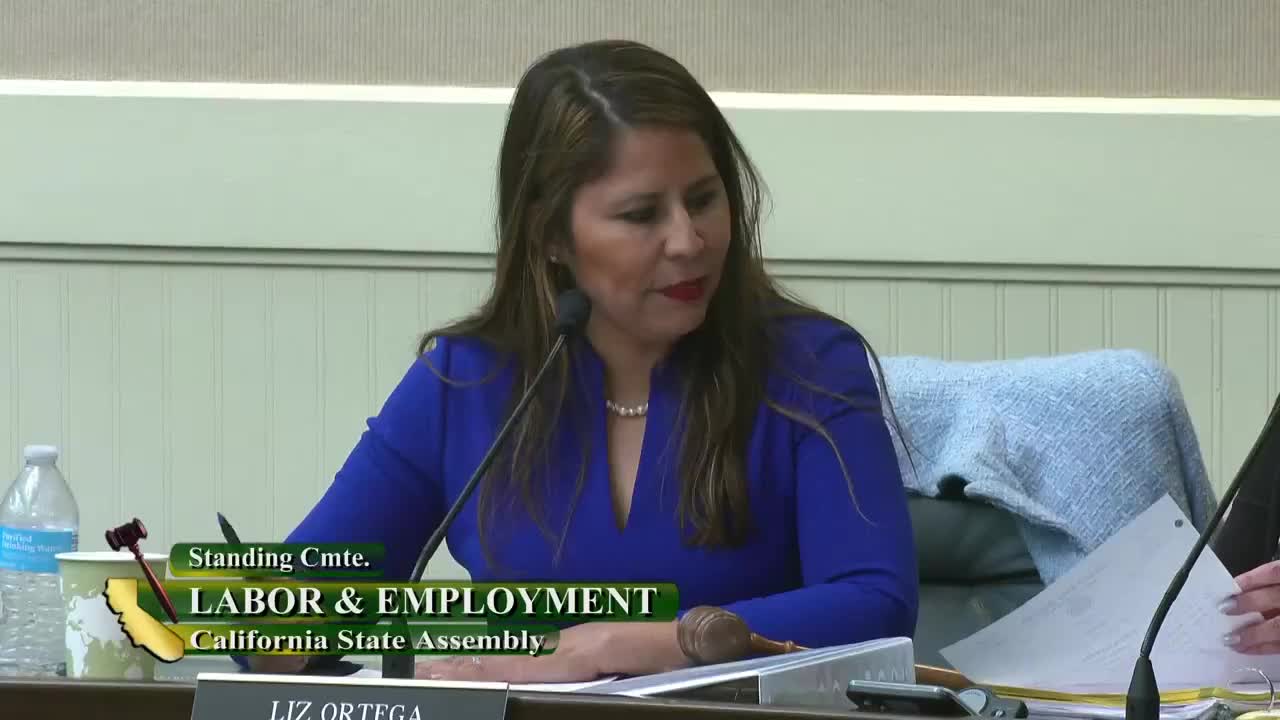
Assembly Standing Committee on Labor and Employment
Bill Author

Bill Co-Author(s):