AB 2150: Public social services: higher education.
- Session Year: 2023-2024
- House: Assembly
- Latest Version Date: 2024-04-18
Current Status:
Failed
(2024-05-16: In committee: Held under submission.)
Introduced
In Committee
First Chamber
In Committee
Second Chamber
Enacted
Existing law establishes the California Community Colleges, under the administration of the Board of Governors of the California Community Colleges, the California State University, under the administration of the Trustees of the California State University, and the University of California, under the administration of the Regents of the University of California, as segments of public postsecondary education in this state. Existing law establishes community college districts, locations of the California State University, and campuses of the University of California throughout the state.
Existing law requires each California Community College to designate a staff person as the basic needs coordinator to, among other things, act as a broker in identifying, supporting, and linking students to on- and off-campus housing, food, mental health, and other basic needs services and resources.
Existing law establishes the State Department of Social Services and requires the department and the counties to administer public social services programs. Existing law requires a county human services agency to designate at least one employee as a staff liaison to serve as a point of contact for academic counselors and other professional staff at a campus of an institution of public higher education located within the county. Existing law requires a county human services agency, with input from the public institutions of higher learning in the county, to develop protocols for engagement between the agency and a campus of an institution of public higher education located within the county and encourages those entities to consult with specified stakeholders in the development of those protocols.
This bill would require a county human services agency to additionally receive input from basic needs directors and basic needs coordinators, as specified, when developing the above-described protocols for engagement between the county human services agency and institutions of public higher education. The bill would require the department, in consultation with staff liaisons and basic needs directors or basic needs coordinators, to develop training on topics related to determining student eligibility for public social services, as specified. The bill would require the department to facilitate that training, as specified. The bill would require the department to convene a workgroup that includes all 58 county staff liaisons and representatives from the segments of postsecondary education, as specified. The bill would require the department, in collaboration with the workgroup, to (1) discuss enrollment trends in public social services programs and (2) identify barriers to enrollment and action to resolve those barriers. By imposing additional duties on counties, this bill would impose a state-mandated local program.
This bill would require the department, on or before June 30, May 1, 2026, and every 3 years thereafter, to submit a report to the Legislature with findings and recommendations relating to enrollment success trends and services offered by the department that may be available to students attending a campus of an institution of public higher education.
The California Constitution requires the state to reimburse local agencies and school districts for certain costs mandated by the state. Statutory provisions establish procedures for making that reimbursement.
This bill would provide that, if the Commission on State Mandates determines that the bill contains costs mandated by the state, reimbursement for those costs shall be made pursuant to the statutory provisions noted above.
Existing law establishes the California Community Colleges, under the administration of the Board of Governors of the California Community Colleges, the California State University, under the administration of the Trustees of the California State University, and the University of California, under the administration of the Regents of the University of California, as segments of public postsecondary education in this state. Existing law establishes community college districts, locations of the California State University, and campuses of the University of California throughout the state.
Existing law requires each California Community College to designate a staff person as the basic needs coordinator to, among other things, act as a broker in identifying, supporting, and linking students to on- and off-campus housing, food, mental health, and other basic needs services and resources.
Existing law establishes the State Department of Social Services and requires the department and the counties to administer public social services programs. Existing law requires a county human services agency to designate at least one employee as a staff liaison to serve as a point of contact for academic counselors and other professional staff at a campus of an institution of public higher education located within the county. Existing law requires a county human services agency, with input from the public institutions of higher learning in the county, to develop protocols for engagement between the agency and a campus of an institution of public higher education located within the county and encourages those entities to consult with specified stakeholders in the development of those protocols.
This bill would require a county human services agency to additionally receive input from basic needs directors and basic needs coordinators, as specified, when developing the above-described protocols for engagement between the county human services agency and institutions of public higher education. The bill would require the department, in consultation with staff liaisons and basic needs directors or basic needs coordinators, to develop training on topics related to determining student eligibility for public social services, as specified. The bill would require the department to facilitate that training, as specified. The bill would require the department to convene a workgroup that includes all 58 county staff liaisons and representatives from the segments of postsecondary education, as specified. The bill would require the department, in collaboration with the workgroup, to (1) discuss enrollment trends in public social services programs and (2) identify barriers to enrollment and action to resolve those barriers. By imposing additional duties on counties, this bill would impose a state-mandated local program.
This bill would require the department, on or before June 30, 2026, and every 3 years thereafter, to submit a report to the Legislature with findings and recommendations relating to enrollment success trends and services offered by the department that may be available to students attending a campus of an institution of public higher education.
The California Constitution requires the state to reimburse local agencies and school districts for certain costs mandated by the state. Statutory provisions establish procedures for making that reimbursement.
This bill would provide that, if the Commission on State Mandates determines that the bill contains costs mandated by the state, reimbursement for those costs shall be made pursuant to the statutory provisions noted above.
(a)The Legislature finds and declares all of the following:
(1)Californias college students face an increasing level of food and housing insecurity. Just over half of California students are housing insecure and nearly two-thirds identify as food insecure.
(2)Housing and food insecurity disproportionately impact low-income students, students of color, and adult learners.
(3)Students often have unique eligibility factors that can impact their rejection or acceptances into public social services programs, including, but not limited to, student income, financial aid, and deferred work requirements.
(4)Basic needs and student supports are key to upholding students dignity, belonging, academic achievement, and professional success.
(b)It is the intent of the Legislature to do both of the following:
(1)Eliminate inconsistency in rejections and acceptances for public social services programs based on student income and work requirements.
(2)Breakdown local silos to share best practices, examine data and trends for success, and promote statewide excellence.
SEC. 2.Section 10006 of the Welfare and Institutions Code is amended to read:10006.(a)A county human services agency shall designate at least one employee as a staff liaison, as provided in this section. The staff liaison shall serve as a point of contact for academic counselors and other relevant professional staff at a campus of an institution of public higher education located within the county and provide information on programs and services offered by the agency that may be available to students attending a campus of an institution of public higher education within the county. This requirement is not intended to supersede or otherwise alter existing relationships between counties and campuses of an institution of public higher education, including, but not limited to, coordination related to CalWORKs welfare-to-work participants who are attending a campus of an institution of public higher education.
(b)A county human services agency subject to this section, with input from the public institutions of higher education located within the county, including basic needs directors, basic needs coordinators, or designated staff from each campus of a public institution of higher education, shall develop protocols for engagement between the agency and a campus of an institution of public higher education located within the county. The agency and the public institutions of higher education located within the county are encouraged to consult stakeholders while developing the protocol, including, but not limited to, all of the following:
(1)A representative from each campus of an institution of public higher education within the county. The representative shall be a staff member tasked with addressing students basic needs on the campus.
(2)A counselor or other relevant professional staff from each campus of an institution of public higher education within the county.
(3)Relevant organizations representing the interests of students, faculty, and staff from each campus of an institution of public higher education within the county.
(4)Regionally relevant stakeholders, as determined by basic needs directors, basic needs coordinators, and designated professional staff from each campus of a public institution of higher education.
(c)Counties are encouraged to provide information to the campuses of an institution of public higher education located within their borders regarding the location and hours of county human services agency public offices, as well as information regarding online and telephone access to program applications. Each campus of an institution of public higher education is encouraged to disseminate information regarding applying for human services programs and benefits to the campus administrator associated with student services or their designee.
(d)The State Department of Social Services shall do all of the following:
(1)In consultation with staff liaisons and basic needs directors, basic needs coordinators, or other designated professional staff from institutions of public higher education within the county, develop a training to be available for basic needs directors, staff of a campus basic needs center, other designated professional staff from each campus of an institution of higher education, and eligibility workers. The training shall include, but is not limited to, all of the following topics:
(A)Student income and how sources of student income can be evaluated for eligibility.
(B)Work requirements and how certain classes may defer working requirements for CalWORKs participants.
(C)The assessment and approval process of campus-based local programs that increase employability (LPIE).
(2)Facilitate the training developed pursuant to paragraph (1) to ensure the sustained education and skills development needed for the success of county social services, colleges, universities, and students.
(3)(A)Convene a workgroup that meets quarterly, comprised of all of the following:
(i)All 58 county staff liaisons.
(ii)At least four college campus basic needs directors or other designed directors, basic needs coordinators, or other designated campus staff from multiple regions and campuses.
(iii)At least one staff member from each higher education segment, including, but not limited to:
(I)The office of the Chancellor of the California State University.
(II)The office of the Chancellor of the California Community Colleges.
(III)The office of the President of the University of California if a representative is provided. The office of the President of the University of California is requested to provide a representative for purposes of this workgroup.
(iv)The Center for Healthy Communities at California State University, Chico.
(v)Relevant stakeholders as needed to share best practices, updates, challenges, or other topics related to programs and services offered by the department that may be available to students attending the campus of an institution of public higher education.
(B)The department, in collaboration with the workgroup convened pursuant to subparagraph (A), shall do both of the following:
(i)Discuss enrollment trends in public social services programs, including, but not limited to, CalFresh, the CalWORKs program, the Medi-Cal program, and State Disability Insurance.
(ii)Identify barriers to enrollment and action to resolve those barriers.
(4)Publish technical assistance provided in response to any requests submitted by county liaisons.
(5)(A)On or before June 30, May 1, 2026, and every three years thereafter, in collaboration with stakeholders identified pursuant to this section, submit a report to the Legislature with findings and recommendations relating to enrollment success trends and services offered by the department that may be available to students attending a campus of an institution of public higher education.
(B)A report to be submitted pursuant to subparagraph (A) shall be submitted in compliance with Section 9795 of the Government Code.
(e)Any disclosure or sharing of personal information under this section shall be made in compliance with applicable state and federal confidentiality laws.
(f)For purposes of this section, basic needs coordinator means a coordinator, as defined in Section 66023.5 of the Education Code.
(g)For purposes of this section, public higher education has the same meaning as in Section 66010 of the Education Code.
(h)Notwithstanding the rulemaking provisions of the Administrative Procedure Act (Chapter 3.5 (commencing with Section 11340) of Part 1 of Division 3 of Title 2 of the Government Code), the State Department of Social Services may implement this section by all-county letters or similar instructions.
SEC. 3.If the Commission on State Mandates determines that this act contains costs mandated by the state, reimbursement to local agencies and school districts for those costs shall be made pursuant to Part 7 (commencing with Section 17500) of Division 4 of Title 2 of the Government Code.
(a)The Legislature finds and declares all of the following:
(1)Californias college students face an increasing level of food and housing insecurity. Just over half of California students are housing insecure and nearly two-thirds identify as food insecure.
(2)Housing and food insecurity disproportionately impact low-income students, students of color, and adult learners.
(3)Students often have unique eligibility factors that can impact their rejection or acceptances into public social services programs, including, but not limited to, student income, financial aid, and deferred work requirements.
(4)Basic needs and student supports are key to upholding students dignity, belonging, academic achievement, and professional success.
(b)It is the intent of the Legislature to do both of the following:
(1)Eliminate inconsistency in rejections and acceptances for public social services programs based on student income and work requirements.
(2)Breakdown local silos to share best practices, examine data and trends for success, and promote statewide excellence.
SEC. 2.Section 10006 of the Welfare and Institutions Code is amended to read:10006.(a)A county human services agency shall designate at least one employee as a staff liaison, as provided in this section. The staff liaison shall serve as a point of contact for academic counselors and other relevant professional staff at a campus of an institution of public higher education located within the county and provide information on programs and services offered by the agency that may be available to students attending a campus of an institution of public higher education within the county. This requirement is not intended to supersede or otherwise alter existing relationships between counties and campuses of an institution of public higher education, including, but not limited to, coordination related to CalWORKs welfare-to-work participants who are attending a campus of an institution of public higher education.
(b)A county human services agency subject to this section, with input from the public institutions of higher education located within the county, including basic needs directors, basic needs coordinators, or designated staff from each campus of a public institution of higher education, shall develop protocols for engagement between the agency and a campus of an institution of public higher education located within the county. The agency and the public institutions of higher education located within the county are encouraged to consult stakeholders while developing the protocol, including, but not limited to, all of the following:
(1)A representative from each campus of an institution of public higher education within the county. The representative shall be a staff member tasked with addressing students basic needs on the campus.
(2)A counselor or other relevant professional staff from each campus of an institution of public higher education within the county.
(3)Relevant organizations representing the interests of students, faculty, and staff from each campus of an institution of public higher education within the county.
(4)Regionally relevant stakeholders, as determined by basic needs directors, basic needs coordinators, and designated professional staff from each campus of a public institution of higher education.
(c)Counties are encouraged to provide information to the campuses of an institution of public higher education located within their borders regarding the location and hours of county human services agency public offices, as well as information regarding online and telephone access to program applications. Each campus of an institution of public higher education is encouraged to disseminate information regarding applying for human services programs and benefits to the campus administrator associated with student services or their designee.
(d)The State Department of Social Services shall do all of the following:
(1)In consultation with staff liaisons and basic needs directors, basic needs coordinators, or other designated professional staff from institutions of public higher education within the county, develop a training to be available for basic needs directors, staff of a campus basic needs center, other designated professional staff from each campus of an institution of higher education, and eligibility workers. The training shall include, but is not limited to, all of the following topics:
(A)Student income and how sources of student income can be evaluated for eligibility.
(B)Work requirements and how certain classes may defer working requirements for CalWORKs participants.
(C)The assessment and approval process of campus-based local programs that increase employability (LPIE).
(2)Facilitate the training developed pursuant to paragraph (1) to ensure the sustained education and skills development needed for the success of county social services, colleges, universities, and students.
(3)(A)Convene a workgroup that meets quarterly, comprised of all of the following:
(i)All 58 county staff liaisons.
(ii)At least four college campus basic needs directors or other designed campus staff from multiple regions and campuses.
(iii)At least one staff member from each higher education segment, including, but not limited to:
(I)The office of the Chancellor of the California State University.
(II)The office of the Chancellor of the California Community Colleges.
(III)The office of the President of the University of California if a representative is provided. The office of the President of the University of California is requested to provide a representative for purposes of this workgroup.
(iv)The Center for Healthy Communities at California State University, Chico.
(v)Relevant stakeholders as needed to share best practices, updates, challenges, or other topics related to programs and services offered by the department that may be available to students attending the campus of an institution of public higher education.
(B)The department, in collaboration with the workgroup convened pursuant to subparagraph (A), shall do both of the following:
(i)Discuss enrollment trends in public social services programs, including, but not limited to, CalFresh, the CalWORKs program, the Medi-Cal program, and State Disability Insurance.
(ii)Identify barriers to enrollment and action to resolve those barriers.
(4)Publish technical assistance provided in response to any requests submitted by county liaisons.
(5)(A)On or before June 30, 2026, and every three years thereafter, in collaboration with stakeholders identified pursuant to this section, submit a report to the Legislature with findings and recommendations relating to enrollment success trends and services offered by the department that may be available to students attending a campus of an institution of public higher education.
(B)A report to be submitted pursuant to subparagraph (A) shall be submitted in compliance with Section 9795 of the Government Code.
(d)(e)Any disclosure or sharing of personal information under this section shall be made in compliance with applicable state and federal confidentiality laws.
(e)(f)For purposes of this section, basic needs coordinator means a coordinator, as defined in Section 66023.5 of the Education Code.
(g)For purposes of this section, public higher education has the same meaning as in Section 66010 of the Education Code.
(f)(h)Notwithstanding the rulemaking provisions of the Administrative Procedure Act (Chapter 3.5 (commencing with Section 11340) of Part 1 of Division 3 of Title 2 of the Government Code), the State Department of Social Services may implement this section by all-county letters or similar instructions.
SEC. 3.If the Commission on State Mandates determines that this act contains costs mandated by the state, reimbursement to local agencies and school districts for those costs shall be made pursuant to Part 7 (commencing with Section 17500) of Division 4 of Title 2 of the Government Code.
|
Date
|
Status
|
|---|---|
| May 16, 2024 | In committee: Held under submission. |
| May 8, 2024 | In committee: Set, first hearing. Referred to APPR. suspense file. |
| Apr 22, 2024 | Re-referred to Com. on APPR. |
| Apr 18, 2024 | Read second time and amended. |
| Apr 17, 2024 | From committee: Amend, and do pass as amended and re-refer to Com. on APPR. (Ayes 11. Noes 0.) (April 16). |
| Apr 3, 2024 | From committee: Do pass and re-refer to Com. on HIGHER ED. (Ayes 7. Noes 0.) (April 2). Re-referred to Com. on HIGHER ED. |
| Feb 20, 2024 | Referred to Coms. on HUM. S. and HIGHER ED. |
| Feb 7, 2024 | From printer. May be heard in committee March 8. |
| Feb 6, 2024 | Read first time. To print. |
|
Date
|
Description
|
Location
|
Votes
|
|
|---|---|---|---|---|
| Apr 16, 2024 | Do pass as amended and be re-referred to the Committee on [Appropriations] | Assembly Standing Committee on Higher Education |
Passed |
|
| Apr 2, 2024 | Do pass and be re-referred to the Committee on [Higher Education] | Assembly Standing Committee on Human Services |
Passed |
This list shows positions taken on this bill by organizations on the date displayed, which is linked to the original source.
Positions by individuals are not included.
|
Organization
|
Position
|
Date
|
|---|---|---|
| California Association Of Food Banks | ** Support | |
| California Competes: Higher Education for a Strong Economy | ** Support | |
| California State University, Office Of The Chancellor | ** Support | |
| California Student Aid Commission | ** Support | |
| Center for Healthy Communities At California State University, Chico | ** Support | |
| Central California Food Bank | ** Support | |
| Community Action Partnership of Orange County | ** Support | |
| County Welfare Directors Association of California | ** Against | |
| Faculty Association Of California Community Colleges | ** Support | |
| faculty association of california's community colleges | ** Support | |
| Food for People, the Food Bank for Humboldt County | ** Support | |
| Food in Need of Distribution Food Bank | ** Support | |
| Food Share | ** Support | |
| GENup | ** Support | |
| Glide | ** Support | |
| Los Angeles Regional Food Bank | ** Support | |
| San Diego Food Bank | ** Support | |
| San Diego Hunger Coalition | ** Support | |
| San Jose-Evergreen Community College District | ** Support | |
| Second Harvest Food Bank of Orange County | ** Support | |
| second harvest food bank of santa cruz county | ** Support | |
| Second Harvest of Silicon Valley | ** Support | |
| uAspire | ** Support | |
| western center on law & poverty | ** Support | |
| Westside Food Bank | ** Support |
Date of Hearing: May 8, 2024
ASSEMBLY COMMITTEE ON APPROPRIATIONS
Buffy Wicks, Chair
ABPCA Bill Id:AB 2150
Author:(Arambula) – As Amended Ver:April 18, 2024
Policy Committee: | Human Services | Vote: | 7 - 0 |
Higher Education | 11 - 0 | ||
|
|
Urgency: No State Mandated Local Program: Yes Reimbursable: Yes
SUMMARY:
This bill requires the California Department of Social Services (CDSS) to develop and facilitate training for basic needs directors and coordinators from campuses of the California Community Colleges (CCC), the California State University (CSU), and the University of California (UC), and requires CDSS to convene a working group to identify and address barriers to student enrollment in social services offered by county human service agencies.
Among its provisions, this bill:
- Requires a county human services agency to additionally receive input from basic needs directors, basic needs coordinators, or designated staff from each campus of a public institution of higher education when developing protocols required by AB 1326 (Arambula), Chapter 570, Statutes of 2021, for engagement between the agency and each public higher education campus located within the county. Encourages consultation with relevant stakeholders, as specified, while developing protocols.
- Requires CDSS to develop and facilitate training, in consultation with stakeholders, to be available for basic needs directors, staff of a campus basic needs center, other designated professional staff from each campus of an institution of higher education, and eligibility workers. The training must include specified topics.
- Requires CDSS to convene a quarterly workgroup, comprised of all 58 county liaisons, at least four college campus basic needs directors, basic needs coordinators, or other designated campus staff from multiple regions and campuses, at least one staff member from each higher education segment, and others to discuss enrollment trends in public social services programs, as specified, to identify barriers to enrollment and action to resolve those barriers, and to publish technical assistance provided in response to county liaison requests.
- Requires CDSS, by May 1, 2026, and every three years thereafter, in collaboration with stakeholders, to submit a report to the Legislature with findings and recommendations relating to enrollment success trends and services offered by CDSS that may be available to students attending a public higher education campus.
FISCAL EFFECT:
- CDSS estimates ongoing General Fund (GF) costs of approximately $180,000 annually for one staff position to fulfill the training requirements and meet other requirements of the bill. CDSS indicates additional costs to support and co-facilitate roles of participating in the quarterly workgroup and production of the triennial report are minor and absorbable.
- Local costs to county human services agencies of an unknown, but likely significant amount, to include additional input in the existing protocol development process, participate in the workgroup, and participate the training developed by CDSS. The costs are potentially reimbursable by the state, subject to a determination by the Commission on State Mandates.
- Costs to CCCs, CSUs, and UCs, of an unknown, but likely minor amount for county liaisons and campus employees to attend and participate in the workgroup.
According to the Legislative Analyst’s Office, the General Fund faces a structural deficit in the tens of billions of dollars over the next several fiscal years.
COMMENTS:
- Purpose. The author seeks to build upon existing efforts to connect eligible college students to public benefits. According to the author:
Many college students move hundreds of miles away from home, experience limited family support, and encounter financial complications tied to their scholarship or work requirements. Because these unique circumstances make navigating the complex eligibility requirements of public assistance programs particularly challenging, I authored AB 1326 in 2021 to create a county liaison of higher education to help students navigate these challenges. Since implementing AB 1326, there has been a lack of coordination across the state. To ensure that all students receive support, regardless of where they attend university, [this bill] establishes a statewide network of basic needs coordinators and county liaisons of higher education to share best practices.
- Background. In 2023, the California Student Aid Commission published a student survey with responses from students across California on their food and housing insecurities. The survey found 53% of respondents identified as housing insecure and 66% identified as food insecure. In recent years, the Legislature has made numerous efforts to address the basic needs of college students. However, data shows gaps still exist between the number of recipients of aid and those who qualify for public services.
AB 1326 (Arambula), Chapter 570, Statues of 2021, required each county to designate at least one employee as a staff liaison to serve as a contact for academic counselors and other professional staff at a college campus within the county to provide information on available public social services that may be available to students. Counties were also required to develop protocols for engagement between the staff liaison and college campus staff. AB 1326 further required counties to determine the effectiveness of the liaisons through a survey due January 1, 2025.
This bill builds upon these efforts by requiring CDSS to develop and facilitate training for campus staff to better connect students to available services. The bill also creates a statewide working group to identify and address barriers to student enrollment in social services offered at the county level.
- Arguments in support. Generation UP, a student-led education advocacy organization, writes in support:
[This bill] will build on this success by ensuring higher education liaisons, county staff, and other stakeholders meet regularly to discuss improving the experiences and increasing public benefits enrollment among the college student population. College is hard enough without worrying about where your next meal will come from or where you will sleep, yet the pandemic has exacerbated these worries.
- Arguments in opposition. The County Welfare Directors Association of California (CWDA), writes in opposition, expressing cost concerns:
CWDA supports the goal of improving student access to social services programs. However, CWDA has workload concerns with this bill. The requirement for the development of the protocols has been in place for a few years now and counties and public universities have only recently completed their protocols. The requirement to add additional participants in the process will mean that protocols will have to be redone.
Furthermore, county eligibility staff are already trained on student eligibility for the human services programs counties administer as part of their routine training. The county eligibility workforce is already stretched to capacity and attending additional training on topics already covered will be redundant. Lastly, the requirement that the new workgroup created in this bill meet quarterly and include the liaisons of every county in the state is additional workload for those liaisons that is not funded and it would place a disproportionate workload on small rural counties, some of which have less significant student populations, at a time when the county human services workforce is already stretched.
- Related Legislation. AB 870 (Arambula), of this legislative session, was substantially similar to the working group portion of this bill. AB 870 was held on this committee’s suspense file.
AB 2033 (Reyes), of this legislative session, requires the CCC and the CSU and requests the UC to implement various programs and tools, as defined, to help students access basic needs on- and off-campus. AB 2033 is pending in this committee.
Analysis Prepared by: Jennifer Swenson / APPR. / (916) 319-2081
Date of Hearing: April 16, 2024
ASSEMBLY COMMITTEE ON HIGHER EDUCATION
Mike Fong, Chair
ABPCA Bill Id:AB 2150 (
Author:Arambula) – As Introduced Ver:February 6, 2024
SUBJECT: Public social services: higher education
SUMMARY: Requires the California Department of Social Services (CDSS) to develop and facilitate a training for basic needs directors and coordinators from campuses of the California Community Colleges (CCC), the California State University (CSU), and the University of California (UC), and requires CDSS to convene a working group to identify and address barriers to student enrollment in social services offered by county human service agencies. Specifically, this bill:
- Requires a county human services agency to receive input from basic needs directors, basic needs coordinators, or designated staff from each campus of a public institution of higher education when developing protocols for engaging with each CCC, CSU, or UC campus in the county. The county human services agency and each CCC, CSU, or UC campus in the county are encouraged to consult with stakeholders for the development of the protocols. The stakeholders to be consulted include:
- A representative from each CCC, CSU, or UC campus in the county;
- A counselor or other relevant professional staff from each campus of an CCC, CSU, or UC within the county;
- Relevant organizations representing the interests of students, faculty, and staff from each campus of each CCC, CSU, or UC campus in the county; and,
- Regionally relevant stakeholders basic needs directors, basic needs coordinators, or designated staff from each CCC, CSU, or UC campus in the county.
- Requires the State Department of Social Services to do the following:
- Develop and facilitate a training, in consultation with stakeholders, as defined, to be available for basic needs directors, staff of a campus basic needs center, other designated professional staff from each campus of an institution of higher education, and eligibility workers. The training will include the following:
- Student income and how sources of student income can be evaluated for eligibility for services;
- Work requirements and how certain classes may defer working requirements for CalWORKs participants; and,
- The assessment and approval process of campus-based local programs that increase employability (LPIE);
- Convene a workgroup that meets quarterly, comprised of all the following:
- All 58 county staff liaisons;
- At least four college campus basic needs directors or other designed campus staff from multiple regions and campuses;
- At least one staff member from each higher segment, including:
- The office of the Chancellor of the CSU;
- The office of the Chancellor of the CCC;
- The office of the President of the UC, as requested and if provided;
- The Center for Healthy Communities at California State University, Chico;
- Relevant stakeholders as needed to share best practices, updates, challenges, or other topics related to programs and service offered by the California Department of Social Services to students on CCC, CSU, and UC campuses;
- Publish technical assistance provided in response to any requests submitted by counsel liaisons;
- Submit, on or before June 30, 2026 and every three years thereafter, a report to the Legislature with findings and recommendations relating to enrollment success trends and services offered by the California Department of Social Service that may be available to students on CCC, CSU, and UC campuses. In establishing the findings of the report the CDSS will consult with stakeholders.
- Develop and facilitate a training, in consultation with stakeholders, as defined, to be available for basic needs directors, staff of a campus basic needs center, other designated professional staff from each campus of an institution of higher education, and eligibility workers. The training will include the following:
- Defines “basic needs coordinator” as a basic needs coordinator at the CCC.
- Makes the following Legislative findings and declarations as it relates to student basic needs including, but not limited to:
- California’s college students face an increasing level of food and housing insecurity. Just over half of California students are housing insecure and nearly 2/3 identify as food insecure;
- Housing and food insecurity disproportionately impact low-income students, students of color, and adult learners;
- Students often have unique eligibility factors that can impact their rejection or acceptance into public social services programs, including, student income, financial aid, and deferred work requirements; and,
- Basic needs and student supports are key to upholding students’ dignity, belonging, academic achievement, and professional success.
- States it is the intent of the Legislature to do the following:
- Eliminate inconsistency in rejections and acceptances for public social service programs based on student income and work requirements; and,
- Breakdown local silos to share best practices, examine data and trends for success, and promote statewide excellence.
EXISTING LAW: Federal law.
- Restricts any individual, who is enrolled at least half-time in an institution of higher education from qualifying for SNAP benefits, unless the individual qualifies for an exception, as specified (7 Code of Federal Regulations (CFR) 273.5(a)).
- Clarifies that a college student, enrolled at least part-time, may qualify for SNAP nutritional benefits if they are:
- Over the age of 50 or under the age of 17;
- Physically or mentally unfit;
- Receiving Temporary Assistance for Needy Families under Title IV of the Social Security Act;
- Enrolled in a Job Opportunities and Basic Skills program under Title IV of the Social Security Act or its successor program;
- Employed for a minimum of 20 hours per week and are paid to the equivalent of Federal minimum wage for 20 hours of work per week;
- Participating in a state or federally financed work study program during the regular school year;
- Participating in an on-the-job training program;
- Responsible for the care of a child under the age of six;
- Responsible for the care of a child between the ages of six and twelve when adequate child care is not available to enable the student to work 20 hours a week;
- A single parent enrolled full-time and are responsible for a child under the age of 12; or,
- Enrolled in a program associated with the Job Training Partnership Act of 1974; an employment and training program funded by Carl Perkins and Technical Education Act of 2006, as defined; a program associated with the Trade Act of 1974 as defined; or an employment and training program for low-income households operated by the State or local government. (CRF 273.5(b)).
State law.
- Establishes the Donahoe Higher Education Act and assigns the mission of the UC, the CSU and the CCC (Education Code (EDC) Section 66010, et seq.h).
- Establishes by July 1, 2022 Basic Needs Centers and the position of a Basic Needs Coordinator at CCC campuses to provide students with single point of contact for on-and off-campus basic needs services, as defined (EDC Section 66023.5).
- Requires campuses of the CCC and the CSU Board of Trustees, and requests the UC Board of Regents to provide all incoming students with educational information regarding the CalFresh, including the eligibility requirements, during campus orientation (EDC Section 66027.4).
- Requires each campus of the CSU and CCC and requests the UC to include on the internet website-based student account associated with the student’s attendance at the institution information, including the weblink, on the following public services and programs:
- The CalFresh program;
- Resources as determined by the institution for county or local housing services, as defined; and,
- Resources as determined by the institution for county or mental health services (EDC Section 66027.6).
- Establishes the California CalFresh program to administer federal SNAP monetary benefits to qualifying families and individuals, as specified (Welfare and Institutions Code (WIC) Section 18900 et seq.).
- Requires a county human services agency to designate at least one employee as a staff liaison to serve as a contact for academic counselors and other professional staff at a campus of an institution of public higher education within the county to provide information on available public social services; additionally, requires the agency to develop protocols for engagement between the staff liaison and a campus of an institution of public higher education (WIC Code 1006).
FISCAL EFFECT: Unknown
COMMENTS: Double referral. AB 2150 (Arambula) was heard in the Assembly Committee on Human Services on April 02, 2024, where it passed with a 7 – 0 vote. A review of the impact the measure would have on human services agencies is addressed in the Assembly Committee on Human Services analysis.
Purpose of the measure. As expressed by the author, “many college students move hundreds of miles away from home, experience limited family support, and encounter financial complications tied to their scholarship or work requirements. Because these unique circumstances make navigating the complex eligibility requirements of public assistance programs particularly challenging, I authored AB 1326 (Arambula), Chapter of 570, Statutes of 2021 to create a county liaison of higher education to help students navigate these challenges. Since implementing AB 1326 (Arambula), there has been a lack of coordination across the state. To ensure that all students receive support, regardless of where they attend university, AB 2150 (Arambula) establishes a statewide network of basic needs coordinators and county liaisons of higher education to share best practices.”
AB 1325 (Arambula) Chapter 570, Statues of 2021. In June 2020, CDSS published SB 77 CalFresh Student Data Report, on college student participation in CalFresh and methods for improving student participation in the social service. According to the report in the 2018-2019 academic year, 127,360 students successfully received CalFresh food benefits, but the report found more than 500,000 students were likely to be eligible for the food benefits in the same academic year. The report estimated the student participation rate in CalFresh is between 18% to 30%.
In addition to CalFresh, qualifying students can receive additional assistance from a variety of social service programs offered by the county human services agency including mental health services, health insurance coverage, housing assistance, and funding for childcare. For example, California Work Opportunity and Responsibility to Kids (CalWORKs) program partners with the CCC who provides education and vocation training that meets the CalWORKS at every community college. Addressing basic needs by increasing student participation in social service programs was a cornerstone of the Governor’s Council for Post-Secondary Education’s report “Recovery with Equity: A Roadmap for Higher Education After the Pandemic.”[1] Specifically the report called for a simplified and integrated system that enables qualified college students access to the state’s robust social services including CalFresh, housing programs, healthcare including mental health, direct aid; subsidized childcare and transportation. AB 1326 (Arambula) addressed this goal by mandating each county human services agency to have one liaison to serve as the point of contact for CCC, CSU, and UC in the county to help facilitate access to social services for students on campus. AB 1326 (Arambula) further required the county human services agencies to determine the effectiveness of the liaisons through a survey due January 1, 2025.
In June of 2022, All County Letter No. 22-48, directed all counties, regardless of whether there was a CCC, CSU, or UC to designate at least one employee to serve as a staff liaison for the purpose of helping students gain access to the social service programs offered by the county human services agencies. If the county has a CCC, CSU, or UC then the liaison would serve as the point of contact for academic counselors and other professional staff on campus; and, if the county did not have a campus, then the liaison would help students in the county gain access to services.
In January 2023, All County Information Notice I-85-22 was published to provide the a framework for the protocols for liaisons to follow when engaging with personnel on CCC, CSU, and UC campuses pursuant to the workgroup facilitated between CDSS and the public higher education segments.
AB 2150 (Arambula) builds upon the previous efforts of the author by creating a statewide working group to address the barriers preventing college students from accessing social services offered at the county level. Instead of having 52 different methods and procedures, AB 2150 (Arambula) would reduce confusion for students and staff on public postsecondary education institutions by creating a training on accessing social services, and would provide a centralize working group that would continuously meet to identity and address barriers to enrollment in social services programs for college students.
Basic need insecurity amongst college students. In 2023, the California Student Aid Commission published a student survey with responses from students across California on their food and housing insecurities. The survey recorded that 53% of respondents identified as housing insecure and 66% identified as food insecure.
In September 2023, the Community College League of California produced a report, “Affordability, Food, and Housing Access Taskforce Report: Real College California: Basic Needs among California Community College Students.” The report found more than 2/3 of CCC students surveyed in 2023 had experienced at least one basic needs insecurity. The report also concluded, 47% of students reported being food insecure, 58% reported being housing insecure, and 24% reported being homeless within the past year.[2] The report called for greater collaboration between CCC basic needs centers and state/local agencies for increased basic needs assistance for students. In May 2023, the Chancellor’s Office of the CCC published the first Basic Needs Services Center Report, which contained an update on the CCC compliance with SB 132 (Committee on Budget). Each of the 115 brick and mortar CCC have a basic needs center which provides services to students and 60 college campuses provided data on services to the Chancellor’s Office. Of the 60 colleges who reported data, the number of students served by category of resource is as follows:
- 31,361 received food security services;
- 4,156 received housing security services;
- 15,179 received support for transportation insecurities;
- 1,615 received mental health services;
- 4,466 received physical health services;
- 9,091 received technology support services; and,
- 524 received child support assistance.
The CSU Chancellor’s Office published a report in March 2024 required by the Budget Act of 2022, on “Student Mental Health and Basic Needs Initiatives Report.” Across all 23 CSU campuses, approximately 67,500 students were supported by the campus-based food pantries and approximately 22,825 students applied for CalFresh.[3] The report indicated the benefits of AB 1325 (Arambula) as the “addition of California Department of Social Services’ (CDSS) county liaisons for higher education (AB 1326), greater collaboration between individual campuses and county offices is helping to identify challenges and barriers for students in obtaining CalFresh benefits.” The report further illustrated the impact of providing basic needs support by linking it to student success rates “Impact analyses on CSU campuses have shown that the persistence rates (retention and graduation) for students who receive basic needs services are higher than the average persistence rates for all students. Of note, among California State University, East Bay’s Black student population, the overall percentage of students who dropped out was 29 percent, while only three percent of Black students who received basic needs support did so.”
Similar to the CSU, the UC Office of the President is also required to provide an annual report on “Basic Needs, Mental Health, and Repaid Rehousing,” which was published on February 1, 2024. The report found campus basic needs efforts served 78,070 students between July 1, 2022 and June 30, 2023. Between 2022 and 2023, the UC conducted two student experience surveys which found 43% of undergraduate students identified as being food insecure and 25% of UC graduate students identifying as food insecure. Finally, in appendix III of the report, each UC has been assigned a county liaison in accordance with AB 1325 (Arambula).
Arguments in support. As expressed by Generation UP, a student-led education advocacy organization, “AB 2150 will build on this success by ensuring higher education liaisons, county staff, and other stakeholders meet regularly to discuss improving the experiences and increasing public benefits enrollment among the college student population. College is hard enough without worrying about where your next meal will come from or where you will sleep, yet the pandemic has exacerbated these worries. In a survey of California students conducted by the Student Aid Commission, about half of the respondents reported increased monthly housing expenses and increased weekly food costs during the pandemic, with students across intersectional identities such as race, class, gender, and immigration status experiencing disproportionately higher levels. Individuals unable to meet their basic needs face short and long-term physical and mental health consequences. It can be devastating for college students as it negatively impacts their access, first-year retention, and academic success, leaving them more likely to drop out and undermining the investments that they and financial aid programs have made. Unfortunately, many students eligible for public benefits are not enrolled, which is a missed opportunity for students in need. This is especially troublesome given California’s status as the state that provides the most funding for these programs. For instance, an estimate from CDSS shows that only about 18-30% of students eligible for CalFresh are enrolled; we know AB 2150 will address this by improving the experiences of students in need and the community of social services.”
Arguments in opposition. As delineated by the County Welfare Directors Association of California (CWDA), “CWDA supports the goal of improving student access to social services programs. We also support the work of basic needs coordinators, who provide students struggling with housing and food insecurity with important outreach and assistance. However, CWDA has workload concerns with this bill. The requirement for the development of the protocols has been in place for a few years now and counties and public universities have only recently completed their protocols. The requirement to add additional participants in the process will mean that protocols will have to be redone.”
Furthermore, “county eligibility staff are already trained on student eligibility for the human services programs counties administer as part of their routine training. The county eligibility workforce is already stretched to capacity and attending additional training on topics already covered will be redundant. Lastly, the requirement that the new workgroup created in this bill meet quarterly and include the liaisons of every county in the state is additional workload for those liaisons that is not funded and it would place a disproportionate workload on small rural counties, some of which have less significant student populations, at a time when the county human services workforce is already stretched.”
Committee comments. Just as AB 1326 (Arambula) adopted best practices cited by the Governor’s Council for Post-Secondary Education, AB 2150 (Arambula) also would fulfill a recommendation from the second report published by the Governor’s Council for Post-Secondary Education. The council published a report, “Intersegmental Working Group on Student Basic Needs,” which included recommendations for how the public higher education institutions could increase student’s awareness and access to basic needs supports.[4] Two of the recommendations, including providing training to staff on the available basic needs supports and building regional partnerships between basic needs practitioners and county government staff, are fulfilled by AB 2150 (Arambula).
To ensure basic needs coordinators are included in the working group and to align the reporting requirements with other basic needs reporting requirements in the Education Code, Committee Staff has suggested, and the Author has accepted, the following amendments:
- Amends Section 10006 of the Welfare and Institutions Code, subdivision (d), paragraph (3), subparagraph (A), clause (ii) as follows:
(ii) At least four college campus basic needs directors or other designed directors, basic needs coordinators, or other designated campus staff from multiple regions and campuses.
- Amends Section 10006 of the Welfare and Institutions Code, subdivision (d), paragraph (5), subparagraph (A), as follows:
(5) (A) On or before June 30, May 1, 2026, and every three years thereafter, in collaboration with stakeholders identified pursuant to this section, submit a report to the Legislature with findings and recommendations relating to enrollment success trends and services offered by the department that may be available to students attending a campus of an institution of public higher education.
Related legislation.
- AB 2033 (Reyes) of 2024, requires the CCC and the CSU and requests the UC to implement various programs and tools, as defined to help students access basic needs on- and off- campus.
Committee staff note AB 2033 (Reyes) would expand the definition of basic needs coordinators to include coordinators at the CSU and UC. The Author may wish to expand the definition of basic needs coordinator to include the definitions of AB 2033 prior to the bills being signed into law.
REGISTERED SUPPORT / OPPOSITION:
Support
California Association of Food Banks
California Competes: Higher Education for A Strong Economy
California State University, Office of The Chancellor
California Student Aid Commission
Center for Healthy Communities At California State University, Chico
Central California Food Bank
Community Action Partnership of Orange County
Faculty Association of California Community Colleges
Faculty Association of California's Community Colleges
Food for People, the Food Bank for Humboldt County
Food in Need of Distribution Food Bank
Food Share
GenUp (Generation Up)
Glide
Los Angeles Regional Food Bank
San Diego Food Bank
San Diego Hunger Coalition
San Jose-evergreen Community College District
Second Harvest Food Bank of Orange County
Second Harvest Food Bank of Santa Cruz County
Second Harvest of Silicon Valley
Uaspire
Western Center on Law & Poverty
Westside Food Bank
Opposition
County Welfare Directors Association of California
Analysis Prepared by: Ellen Cesaretti-Monroy / HIGHER ED. / (916) 319-3960
https://careereducation.gov.ca.gov/RecoveryWithEquity.pdf ↑
https://ccleague.org/sites/default/files/images/basic_needs_among_california_community_college_students-final-2023.pdf ↑
https://www.calstate.edu/impact-of-the-csu/government/Advocacy-and-State-Relations/legislativereports1/Mental-Health-and-Basic-Needs-Legislative-Report-2024.pdf ↑
https://careereducation.gov.ca.gov/wp-content/uploads/sites/18/2022/03/Intersegmental-Basic-Needs-Working-Group-RecommendationsResources_FINAL.pdf ↑
Date of Hearing: April 2, 2024
ASSEMBLY COMMITTEE ON HUMAN SERVICES
Alex Lee, Chair
ABPCA Bill Id:AB 2150 (
Author:Arambula) – As Introduced Ver:February 6, 2024
SUBJECT: Public social services: higher education
SUMMARY: Requires county human services agencies to include basic needs directors or coordinators while developing engagement protocols with public higher education institutions; requires the California Department of Social Services (CDSS) to develop and facilitate a training for basic needs directors or coordinators, and convene a workgroup. Specifically, this bill:
- Specifies that a county human services agency must include basic needs directors, basic needs coordinators, or designated staff from each campus of a public institution of higher education when developing protocols for engagement between the agency and a campus of an institution of public higher education located within the county.
- Adds regionally relevant stakeholders to the list of stakeholders that a county human services agency and public institution are encouraged to consult with while developing the protocol.
- Requires CDSS to:
- In consultation with staff liaisons and basic needs directors, basic needs coordinators, or other designated professional staff from institutions of public higher education within the county, develop a training to be available for basic needs directors, staff of a campus basic needs center, other designated professional staff from each campus of an institution of higher education, and eligibility workers. The training must include at least the following topics:
- Student income and how sources of student income can be evaluated for eligibility;
- Work requirements and how certain classes may defer working requirements for CalWORKs participants; and,
- The assessment and approval process of campus-based local programs that increase employability.
- Facilitate the training developed as described above to ensure the sustained education and skills development needed for the success of county social services, colleges, universities, and students.
- Convene a workgroup that meets quarterly, comprising all of the following:
- All 58 county staff liaisons;
- At least four college campus basic needs directors or other designed campus staff from multiple regions and campuses; and,
- At least one staff member from each higher education segment, including, but not limited to:
- The office of the Chancellor of the California State University (CSU);
- The office of the Chancellor of the California Community Colleges (CCCs);
- The office of the President of the University of California (UC) if a representative is provided. The office of the President of the UC is requested to provide a representative for purposes of this workgroup;
- The Center for Healthy Communities at California State University, Chico; and,
- Relevant stakeholders as needed to share best practices, updates, challenges, or other topics related to programs and services offered by the department that may be available to students attending the campus of an institution of public higher education.
- In collaboration with the workgroup convened as described above do both of the following:
- Discuss enrollment trends in public social services programs, including, but not limited to, CalFresh, the CalWORKs program, the Medi-Cal program, and State Disability Insurance; and
- Identify barriers to enrollment and action to resolve those barriers.
- In consultation with staff liaisons and basic needs directors, basic needs coordinators, or other designated professional staff from institutions of public higher education within the county, develop a training to be available for basic needs directors, staff of a campus basic needs center, other designated professional staff from each campus of an institution of higher education, and eligibility workers. The training must include at least the following topics:
- Publish technical assistance provided in response to any requests submitted by county liaisons.
- On or before June 30, 2026, and every three years thereafter, in collaboration with stakeholders, submit a report to the Legislature with findings and recommendations relating to enrollment success trends and services offered by CDSS that may be available to students attending a campus of an institution of public higher education.
- Clarifies “basic needs coordinator” has the same meaning as defined in Education Code § 66023.5.
EXISTING LAW:
State law:
- Requires CDSS to maintain and regularly update the list of programs identified by a workgroup which includes representatives of the office of the Chancellor of the California Community Colleges, offices of the Chancellor of the California State University, University of California Chancellors’ offices, the California Workforce Investment Board, county human services agencies, and advocates for students and client as meeting specified federal standards, which provide that a student qualifies for an exemption from the CalFresh program’s eligibility rules if the student’s attendance can be described as part of a program to increase the student’s employability. (Welfare and Institutions Code [WIC] § 18901.11(b))
- Instructs CDSS to issue and maintain instructions for county human services agencies that maximize CalFresh eligibility and minimize the burden for applicants and recipients to verify exemptions to the CalFresh student eligibility rules for students. (WIC § 18901.11(c))
- Defines “basic needs services and resources” as housing, food, clothing, feminine hygiene, diapers, technology, childcare, and mental health services and resources. (Education Code [EDC] § 66023.5(a))
- Establishes a “basic needs coordinator” as a broker in identifying, supporting, and linking students to on- and off-campus housing, food, mental health, and other basic needs services and resources. (EDC § 66023.5(b))
- Establishes the Community College Student Financial Aid Outreach Program to provide financial aid training to counselors, which includes addressing the financial needs of a number of in-need populations of students, as specified. (EDC § 69514.5)
- Establishes the CalWORKs Recipients Education Program within the (CCCs) and specifies the intention of the program is to assist CalWORKs recipients prepare for employment. (EDC § 79200 et seq.)
Federal law:
- Establishes under federal law the Supplemental Nutrition Assistance Program (SNAP) to promote the general welfare and to safeguard the health and wellbeing of the nation’s population by raising the levels of nutrition among low-income households. (United States Code [USC], Title 7, § 2011 et seq.)
- Restricts students who are enrolled at least half-time in institutions of higher education from qualifying for SNAP benefits, unless the individual qualifies for an exception, as specified. (Code of Federal Regulations, Title 7 § 273.5 et seq.)
- Establishes under federal law the Temporary Assistance for Needy Families (TANF) program to provide aid and welfare-to-work services to eligible families. (42 USC § 601 et seq.)
FISCAL EFFECT: Unknown, this bill has not been analyzed by a fiscal committee.
COMMENTS:
Background: Students in Poverty Accessing Services. Students experience unique needs while enrolled in a higher education institution due to the high cost of education in addition to living expenses. In addition to unique needs, complicated program rules appear to create barriers to student access to some of the state’s largest anti-poverty programs, such as CalWORKs, CalFresh, and Medi-Cal. In recent years, the Legislature has taken proactive steps to address the prevalence of student hunger and housing insecurity.
The number of students living in poverty has progressively worsened over the last few years which might be attributed to the COVID-19 pandemic. The California Student Aid Commission (Commission) reports that the COVID-19 pandemic made it more difficult for students to find housing and meet food needs. Using the Student Expenses and Resources Survey (SEARS), the Commission reports that there is a 13% increase in students reporting food insecurity and a 17% increase in housing insecurity.
In February 2022, a CalFresh workgroup convened to understand how students the benefits system and process, as well as identify recommendations to help promote student participation in the CalFresh program by the Commission published a report of their findings. The workgroup found a lack of awareness and navigation support, the administrative burden of the application process itself, and having to repeatedly provide documentation or attend appointments at inconvenient times were all barriers to most students who are also balancing school and jobs. The workgroup also reported that, “Among California’s postsecondary students, it is estimated that between 400,000 and 750,000 are eligible for CalFresh. Yet only 127,000 students receive food benefits through CalFresh.” This bill aims to provide more support to close the gap between those who qualify and those who are receiving benefits.
County Liaisons for Higher Education. In 2022, AB 1326 (Chapter 570, Statutes of 2021) created county human services agency staff liaisons to serve as a point of contact for any institution of public higher education located within the county in order to provide information on county programs and services offered that may be available to students. County human services agencies were also required to develop protocols for engagement between the staff liaison and public higher education institutions.
Six months after AB 1326 took effect, CDSS released All County Information Notice No. I-22-48 instructing counties on their responsibility to develop protocols for engagement between the county and a campus. The notice also requested counties provide information to CDSS specifying the designated staff liaison. Furthermore, the all-counties information notice also informed counties of the survey due on or before January 1, 2025, and specified that, “the survey must address the following:
- The barriers and opportunities faced by county staff liaisons in responding to the requests of counselors or other relevant professional staff.
- The barriers and opportunities faced by counselors or other relevant professional staff in engaging with county staff liaisons.
- The barriers and opportunities for increased collaboration between student assistance programs enabling cross referrals between different programs, including CalFresh, food pantries, and homeless student assistance.
- Any changes in counselors’ or other relevant professional staffs’ knowledge or awareness of county programs as a result of the county liaison position.
- The experiences of students connected to county services through counselors or other relevant professional staff.
- An estimated number of college students at each institution of public higher education likely eligible for, but not receiving, public assistance program benefits, including CalFresh, CalWORKs, and Medi-Cal.
- An estimated number of college students at each institution of public higher education that enrolled in public assistance programs, including, but not limited to, CalFresh, CalWORKs, and Medi-Cal, as a result of the engagement with the county liaison position.”
On January 12, 2023, CDSS issued a subsequent All County Information Notice I-85-22 to provide counties with considerations for developing protocols for engagement as a result of the workgroup CDSS facilitated in compliance with AB 1326. The considerations for developing protocols for engagement include: maintaining relationships, defining roles and responsibilities, communication, and resources available to the counties. The county letter specifies that these are suggestions and requirements for developing protocols of engagement.
Basic Needs Coordinator. CCCs are required to have a basic needs center with a coordinator to assist students with housing, food, clothing, feminine hygiene, diapers, technology, childcare, and mental health services and other resources. Basic needs centers, located on college campuses, are also required to inform students about government programs such as CalFresh, the California Earned Income Tax Credit, the Young Child Tax Credit, and the California Special Supplemental Food Program for Women, Infants, and Children. As such, basic needs coordinators likely have a unique understanding of the student population and experience assisting with applications for programs. There is no current requirement for CSU or UC campuses to have the equivalent.
Author’s Statement: According to the Author, “Many college students move hundreds of miles away from home, experience limited family support, and encounter financial complications tied to their scholarship or work requirements. Because these unique circumstances make navigating the complex eligibility requirements of public assistance programs particularly challenging, I authored AB 1326 in 2021 to create a county liaison of higher education to help students navigate these challenges.
Since implementing AB 1326, there has been a lack of coordination across the state. To ensure that all students receive support, regardless of where they attend university, AB 2150 establishes a statewide network of basic needs coordinators and county liaisons of higher education to share best practices.”
Equity Implications: In 2019, SEARS identified racial disparities among students who identified as homeless, with 38% of respondents identifying as both Hispanic or Latino and homeless and 23% identifying as Black or African American and homeless.
In 2019, the Hope Center for College, Community, and Justice Survey collaborated with the CCCs to publish a survey of CCC students’ basic needs. Of those surveyed, 50% of CCC students experienced food insecurity within the past 30 days, and 60% experienced housing insecurity in the previous year, with 19%of respondents reporting they experienced homelessness in the previous year. The percentage of food insecurity rises to 60% when students identify as African American, American Indian, or Alaskan Native.
In 2018, the CSU surveyed its student population and found that 41.5% of CSU students identified as food insecure, and 10.9%of CSU students identified as having experienced homelessness one or more times in the previous year. CSU students who identify as Black and the first in their families to attend college, experience food insecurity at a higher rate than their peers, as the survey found more than 65% identified as food insecure and 18%identified as homeless.
Connecting students to services is crucial to ensuring they can continue to finish programs that lead to stable jobs. Students of color disproportionately experience difficulties meeting everyday basic needs. Programs that are tailored to making linkages to public assistance programs will likely positively impact these students.
Double referral: This bill will be referred to the Assembly Higher Education Committee should it pass out of this committee.
RELATED AND PRIOR LEGISLATION:
AB 870 (Arambula) of 2023, would have required CDSS to convene a workgroup to share best practices, updates, challenges, or other topics related to programs and services offered by CDSS that may be available to students attending a public higher education institution. AB 870 was held on the Assembly Appropriations Committee suspense file.
AB 1326 (Arambula), Chapter 570, Statutes of 2021, required a county human services agency to designate at least one employee as a staff liaison to serve as a contact for academic counselors and other professional staff at a campus of an institution of public higher education within the county to provide information on available public social services; required the agency to develop protocols for engagement between the staff liaison and a campus of an institution of public higher education
AB 775 (Berman) Chapter 942, Statutes of 2021, would have requried CCCs, no later than July 1, 2022, to establish the position of Basic Needs Coordinator to identify, support, and link students with campus housing, food, mental health, and other basic needs. AB 775 was amended to become a bill pertaining to elections.
AB 85 (Committee on Budget, Chapter 4, Statutes of 2021) appropriated $28.8 8 million for county administrators and outreach costs associated with Calfresh benefits to students enrolled in higher education institutions
SB 174 (Dodd), Chapter 173, Statutes of 2019, requires CDSS by January 1, 2021 to create a standardized form to be used by higher education institutions for the purposes of verifying a student’s participation in either a federal or state work-study program for the purpose of determining CalFresh eligibility.
AB 1278 (Gabriel), Chapter 517, Statutes of 2019, required each CCC and CSU campus and requests each UC campus to provide on a website-based account for an enrolled student notification of and a link to internet sites of CalFresh and local mental health and housing resources.
AB 2933 (Medina) of 2018, would have required county health and human service agencies to designate an agency liaison for higher education and encouraged agencies to consult with community colleges, as specified. AB 2933 was held on the Senate Appropriations Committee suspense file.
SB 85 (Committee on Budget), Chapter 23, Statutes of 2017, requires the Trustees of the CSU, authorizes the governing board of participating a CCC district, and encourages the Regents of the UC to designate, a “hunger free campus” if they meet specified criteria, as defined, for the purpose of procuring additional legislative funds.
AB 214 (Weber), Chapter 134, Statutes of 2017, required the California Student Aid Commission to notify Cal Grant recipients who qualify for participation in the CalFresh program. Provided clarity to existing policies in order to simplify CalFresh administration for college students and required CDSS to maintain a list of programs that provide a student potential eligibility for a CalFresh exemption if specific requirements are met.
REGISTERED SUPPORT / OPPOSITION:
Support
California Association of Food Banks (Sponsor)
California Competes: Higher Education for A Strong Economy
California State University, Office of The Chancellor
Community Action Partnership of Orange County
Faculty Association of California Community Colleges
Food for People, the Food Bank for Humboldt County
Food in Need of Distribution Food Bank
Food Share
Genup (generation Up)
Glide
Los Angeles Regional Food Bank
San Diego Food Bank
San Jose-evergreen Community College District
Second Harvest Food Bank of Santa Cruz County
Second Harvest of Silicon Valley
Western Center on Law & Poverty
Westside Food Bank
Opposition
County Welfare Directors Association of California
Analysis Prepared by: Alexandria Smith / HUM. S. / (916) 319-2089
Discussed in Hearing
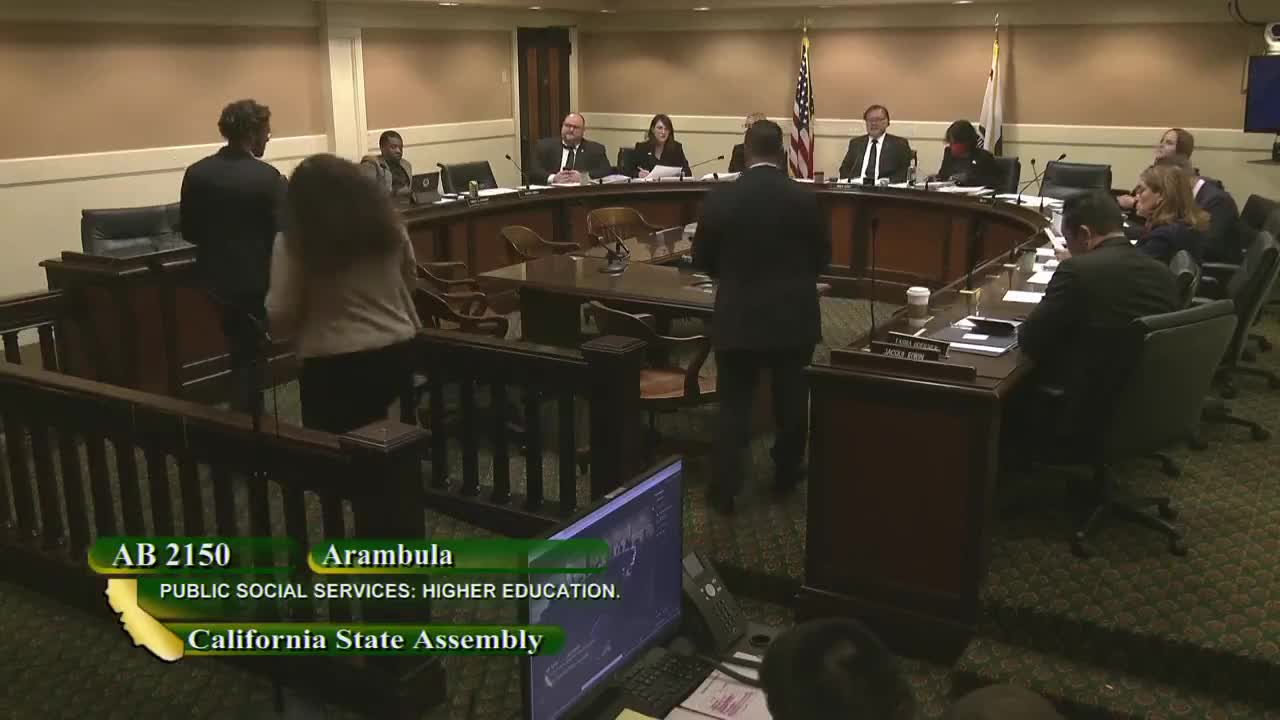 11MIN
Assembly Standing Committee on Higher Education
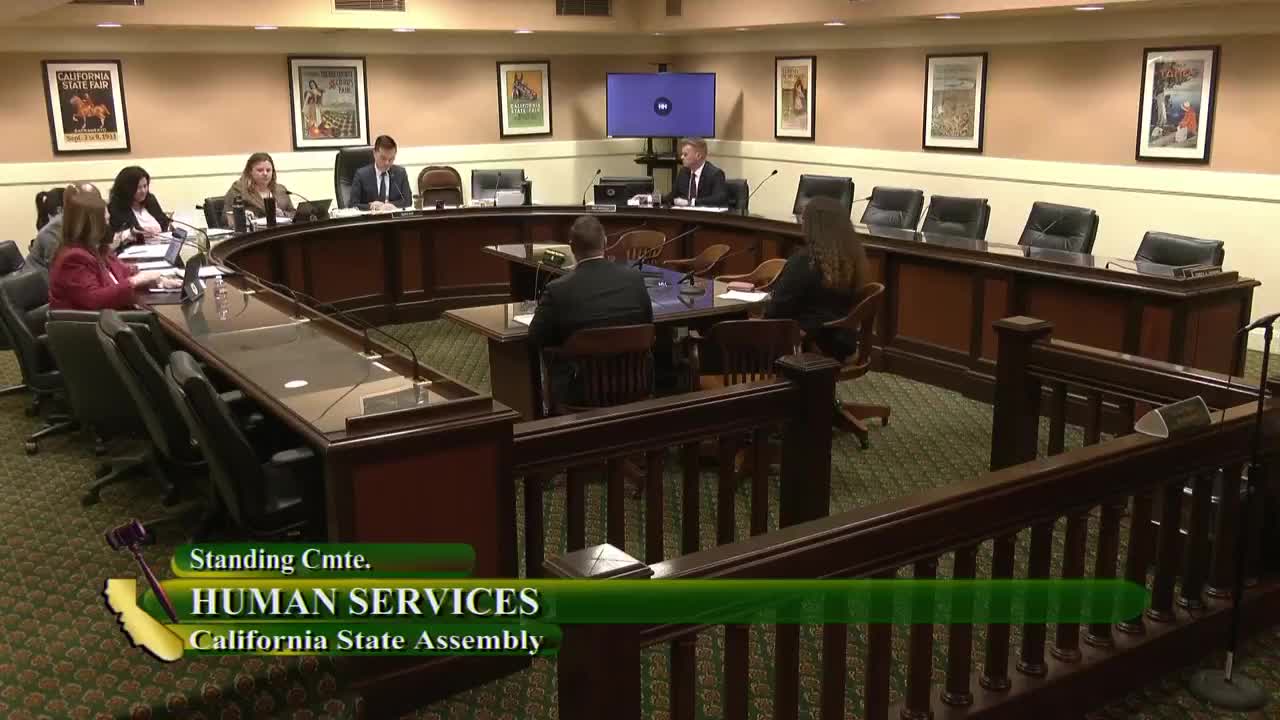 8MIN
Assembly Standing Committee on Human Services


Bill Co-Author(s):