AB 2173: Special education: emotional disability.
- Session Year: 2023-2024
- House: Assembly
- Latest Version Date: 2024-07-18
Current Status:
Passed
(2024-07-18: Chaptered by Secretary of State - Chapter 149, Statutes of 2024.)
Introduced
In Committee
First Chamber
In Committee
Second Chamber
Enacted
Existing federal law defines the term emotional disturbance for purposes of the federal Individuals with Disabilities Education Act. Existing state law uses the term emotional disturbance for certain purposes relating to the provision of special education services.
This bill would provide that the term emotional disturbance as described above may also be known as emotional disability under state law.
The term emotional disturbance, as defined in Section 300.8(c)(4) of Title 34 of the Code of Federal Regulations, and used throughout this code and the California Code of Regulations, as that term relates to the provision of special education services, may also be known as emotional disability under state law.
The term emotional disturbance, as defined in Section 300.8(c)(4) of Title 34 of the Code of Federal Regulations, and used throughout this code and the California Code of Regulations, as that term relates to the provision of special education services, may also be known as emotional disability under state law.
The term emotional disturbance, as defined in Section 300.8(c)(4) of Title 34 of the Code of Federal Regulations, and used throughout this code and the California Code of Regulations, as it that term relates to the provision of special education services, may also be known as emotional disability under state law.
The term emotional disturbance, as defined in Section 300.8(c)(4) of Title 34 of the Code of Federal Regulations, and used throughout this code and the California Code of Regulations, as it relates to the provision of special education services, may also be known as emotional disability under state law.
|
Date
|
Status
|
|---|---|
| Jul 18, 2024 | Chaptered by Secretary of State - Chapter 149, Statutes of 2024. |
| Jul 18, 2024 | Approved by the Governor. |
| Jul 18, 2024 | Enrolled and presented to the Governor at 12:30 p.m. |
| Jul 3, 2024 | Senate amendments concurred in. To Engrossing and Enrolling. (Ayes 72. Noes 0. Page 6145.). |
| Jun 13, 2024 | In Assembly. Concurrence in Senate amendments pending. May be considered on or after June 15 pursuant to Assembly Rule 77. |
| Jun 13, 2024 | Read third time. Passed. Ordered to the Assembly. (Ayes 37. Noes 0. Page 4491.). |
| Jun 11, 2024 | Read second time. Ordered to Consent Calendar. |
| Jun 10, 2024 | From committee: Be ordered to second reading file pursuant to Senate Rule 28.8 and ordered to Consent Calendar. |
| Jun 3, 2024 | From committee chair, with author's amendments: Amend, and re-refer to committee. Read second time, amended, and re-referred to Com. on APPR. |
| May 29, 2024 | From committee: Do pass and re-refer to Com. on APPR with recommendation: To Consent Calendar. (Ayes 7. Noes 0.) (May 29). Re-referred to Com. on APPR. |
| May 1, 2024 | Referred to Com. on ED. |
| Apr 18, 2024 | In Senate. Read first time. To Com. on RLS. for assignment. |
| Apr 18, 2024 | Read third time. Passed. Ordered to the Senate. (Ayes 72. Noes 0.) |
| Apr 11, 2024 | Read second time. Ordered to Consent Calendar. |
| Apr 10, 2024 | From committee: Do pass. To Consent Calendar. (Ayes 14. Noes 0.) (April 10). |
| Mar 21, 2024 | From committee: Do pass and re-refer to Com. on APPR. (Ayes 6. Noes 0.) (March 20). Re-referred to Com. on APPR. |
| Feb 20, 2024 | Referred to Com. on ED. |
| Feb 8, 2024 | From printer. May be heard in committee March 9. |
| Feb 7, 2024 | Read first time. To print. |
|
Date
|
Description
|
Location
|
Votes
|
|
|---|---|---|---|---|
| Jul 3, 2024 | AB 2173 Addis Concurrence in Senate Amendments | Assembly Floor |
Passed |
|
| Jun 13, 2024 | Consent Calendar 2nd AB2173 Addis et al. | Senate Floor |
Passed |
|
| May 29, 2024 | Do pass, but first be re-referred to the Committee on [Appropriations] with the recommendation: To Consent Calendar | Senate Standing Committee on Education |
Passed |
|
| Apr 18, 2024 | AB 2173 Addis Consent Calendar Second Day Regular Session | Assembly Floor |
Passed |
|
| Apr 10, 2024 | Do pass. To Consent Calendar. | Assembly Standing Committee on Appropriations |
Passed |
|
| Mar 20, 2024 | Do pass and be re-referred to the Committee on [Appropriations] | Assembly Standing Committee on Education |
Passed |
This list shows positions taken on this bill by organizations on the date displayed, which is linked to the original source.
Positions by individuals are not included.
CONCURRENCE IN SENATE AMENDMENTS
CSA1 Bill Id:AB 2173
Author:(Addis)
As Amended Ver:June 3, 2024
Majority vote
SUMMARY
States that the term "emotional disturbance," as defined in the federal Individuals with Disabilities Education Act (IDEA), and used throughout the Education Code and the California Code of Regulations, as it relates to the provision of special education services, may also be known as "emotional disability" under state law.
Senate Amendments
Added a co-author.
COMMENTS
Emotional Disturbance label long viewed as stigmatizing. Research confirms that the term "emotionally disturbed" is often viewed as stigmatizing by parents and educators. One study reports:
The term 'emotional disturbance' (ED) has been a source of controversy in the United States since its introduction in 1975 (as part of legislation, the Education for All Handicapped Children Act). The lack of connection to diagnostic criteria and the stigma attached to the term have been associated with its criticism from a broad and diverse range of stakeholder groups, including young people, families, researchers, educators, and mental health professionals. (Walker, 2011)
Study finds "emotional disability" a preferred term among students. A 2011 study (Walker, 2011) reported on a survey conducted of educators, clinicians, family advocates, families, and young people in Maryland to assess the preferred terminology to describe emotional disturbance. The term with the greatest frequency of endorsement (30%) was "emotional/behavioral disability, with the exception of students, who preferred 'emotional or behavioral disorder' (30%) or 'emotional disability' (30%).
Stigma associated with this label may deter parents from seeking eligibility for services. According to materials provided by the author from the San Diego Volunteer Lawyer Program, the term emotional disturbance can negatively impact the identification of students for support in a variety of ways:
Because California regulations list the category as 'emotional disturbance, there is no avoiding the term for a special education team. The evaluating school psychologist must review the legal definition with parents at an initial assessment and, if they agree to services, emotional disturbance' will appear on the front page of their child's individualized education program (IEP) for the rest of their school career.
In addition, the term hampers the participation of youth in the IEP process. Despite best practices encouraging the inclusion and active participation of students in their own IEP meetings, teachers and guardians are often hesitant to include the youth when they know 'emotional disturbance' is going to be discussed.
'Emotional Disturbance' may also cause underidentification of qualifying students.
First, school staff may be unwilling to propose emotional disturbance eligibility out of concern that it will follow a student for the rest of their education and potentially bias future teachers against them. Fears of labeling are understandable but failure to qualify a student who may need it can block future services and deny a student legal protections.
The term also can create a misleading perception regarding what is required to qualify under this category. While emotional disturbance's legal definition includes mild mental health issues like 'a general pervasive mood of unhappiness or depression' which affects a student's educational performance, the term itself evokes images of violent or psychotic behavior. However, it is well established that 'emotional disturbance' can include common anxiety and depressive disorders if they significantly impact a student's education.
Other states have changed this label. An analysis conducted by the State Education Department of the State of New York in 2020 found that:
- The term "emotional disturbance" or "serious emotional disturbance" is used by 27 states;
- "Emotional disability" or "serious emotional disability" is used by 12 states;
- A variation of "emotional/behavioral disability or disorder" is used by 8 states;
- "Emotional impairment" is used by 2 states;
- "Behavior disorder" is used by one state; and
Two of the states that did not use "emotional disturbance" as their primary terminology, used this as a secondary descriptor. The State of New York subsequently changed its label to "emotional disability," in 2022.
According to the Author
"No child should be told that they are 'emotionally disturbed.' This outdated and inappropriate term stigmatizes students from the moment they enter the special education system, decreasing access to important services. AB 2173 is a simple fix that eliminates confusion while maintaining compliance with federal standards."
Arguments in Support
The Coalition for Adequate Funding for Special Education writes, "Over the years, the term emotional disturbance has been criticized for inappropriately stigmatizing children, especially young children. In some instances, parents have opposed classification and the receipt of special education services simply to avoid the 'emotional disturbance' label.
AB 2173 would permit California to use the less offensive term 'emotional disability' instate law while at the same time ensuring compliance with the IDEA, which still uses the term "emotional disturbance' in federal statute."
Arguments in Opposition
None on file.
FISCAL COMMENTS
According to the Senate Appropriations Committee, pursuant to Senate Rule 28.8, negligible state costs.
VOTES:
ASM EDUCATION: 6-0-1
YES: Muratsuchi, Addis, Bonta, Flora, Hoover, McCarty
ABS, ABST OR NV: Alvarez
ASM APPROPRIATIONS: 14-0-1
YES: Wicks, Sanchez, Arambula, Bryan, Calderon, Dixon, Mike Fong, Grayson, Haney, Hart, Jim Patterson, Pellerin, Ta, Villapudua
ABS, ABST OR NV: Wendy Carrillo
ASSEMBLY FLOOR: 72-0-8
YES: Addis, Aguiar-Curry, Alanis, Alvarez, Bains, Bauer-Kahan, Bennett, Berman, Calderon, Juan Carrillo, Wendy Carrillo, Chen, Connolly, Davies, Dixon, Flora, Mike Fong, Vince Fong, Friedman, Gabriel, Gallagher, Garcia, Gipson, Grayson, Haney, Hart, Holden, Hoover, Irwin, Jackson, Jones-Sawyer, Kalra, Lackey, Lee, Low, Lowenthal, Maienschein, McCarty, McKinnor, Muratsuchi, Stephanie Nguyen, Ortega, Pacheco, Papan, Jim Patterson, Joe Patterson, Pellerin, Petrie-Norris, Quirk-Silva, Ramos, Rendon, Reyes, Luz Rivas, Rodriguez, Blanca Rubio, Sanchez, Santiago, Schiavo, Soria, Ta, Ting, Valencia, Villapudua, Waldron, Wallis, Ward, Weber, Wicks, Wilson, Wood, Zbur, Robert Rivas
ABS, ABST OR NV: Arambula, Boerner, Bonta, Bryan, Cervantes, Megan Dahle, Essayli, Mathis
SENATE FLOOR: 37-0-3
YES: Allen, Archuleta, Ashby, Atkins, Becker, Blakespear, Bradford, Caballero, Cortese, Dahle, Dodd, Durazo, Eggman, Glazer, Gonzalez, Grove, Hurtado, Jones, Laird, McGuire, Menjivar, Min, Newman, Nguyen, Niello, Ochoa Bogh, Padilla, Portantino, Roth, Rubio, Seyarto, Skinner, Smallwood-Cuevas, Umberg, Wahab, Wiener, Wilk
ABS, ABST OR NV: Alvarado-Gil, Limón, Stern
UPDATED
VERSION: June 3, 2024
CONSULTANT: Tanya Lieberman / ED. / (916) 319-2087 FN: 0003536
SENATE RULES COMMITTEE Office of Senate Floor Analyses (916) 651-1520 Fax: (916) 327-4478 | AB 2173 |
CONSENT
Bill No: AB 2173
Author: Addis (D), et al.
Amended: 6/3/24 in Senate
Vote: 21
SENATE EDUCATION COMMITTEE: 7-0, 5/29/24
AYES: Newman, Ochoa Bogh, Cortese, Glazer, Gonzalez, Smallwood-Cuevas, Wilk
SENATE APPROPRIATIONS COMMITTEE: Senate Rule 28.8
ASSEMBLY FLOOR: 72-0, 4/18/24 (Consent) - See last page for vote
SUBJECT: Special education: emotional disability
SOURCE: SELPA Administrators of California
DIGEST:
This bill provides that the term “emotional disturbance,” as defined in federal law and used throughout state law related to special education services, may also be known as “emotional disability.”
ANALYSIS:
Existing law:
1) Establishes the federal Individuals with Disabilities Educational Act (IDEA), which requires that eligible children receive a free, appropriate public education (FAPE) in the least restrictive environment (LRE), and that eligible children receive special education and related services.
2) Establishes, in IDEA, 13 disability categories entitling students to rights under the law, including a category of “emotional disturbance.”
3) Defines, in the federal IDEA, in state law for children birth to age 3 and in other references, and in state regulations for students age 3 through 21, “emotional disturbance” to mean a condition exhibiting one or more of the following characteristics over a long period of time and to a marked degree that adversely affects a child's educational performance:
a) An inability to learn that cannot be explained by an intellectual, sensory, or health factor;
b) An inability to build or maintain satisfactory interpersonal relationships with peers and teachers;
c) Inappropriate types of behavior or feelings under normal circumstances;
d) A general pervasive mood of unhappiness or depression;
e) A tendency to develop physical symptoms or fears associated with personal or school problems; and
f) States that emotional disturbance includes schizophrenia and does not apply to children who are socially maladjusted.
4) Defines “children with severe disabilities” to mean children with exceptional needs from birth to 21 years of age, inclusive, with profound disabilities to include those with serious emotional disturbances.
5) Identifies, in state regulations, which credentials authorize teachers to serve students with emotional disturbance.
This bill provides that the term “emotional disturbance,” as defined in federal law and used throughout state law related to special education services, may also be known as “emotional disability.”
Comments
- Need for the bill. According to the author, “No child should be told that they are ‘emotionally disturbed.’ This outdated and inappropriate term stigmatizes students from the moment they enter the special education system, decreasing access to important services. AB 2173 is a simple fix that eliminates confusion while maintaining compliance with federal standards.”
- Introducing “Emotional Disability” in State Law without Changing Eligibility Criteria. This bill aims to substitute the term "emotional disturbance" with "emotional disability" within state law while keeping the criteria for accessing services unchanged under both state and federal laws. Since the term "emotional disability" is rooted in federal legislation, a direct alteration of the category name isn't feasible. However, allowing the use of an alternative term, with an equivalent definition, within state regulations is possible.
- Emotional Disturbance Label Viewed as Stigmatizing. Research confirms that the term “emotionally disturbed” is often viewed as stigmatizing by parents and educators. One study reports:
The term ‘emotional disturbance’ (ED) has been a source of controversy in the United States since its introduction in 1975 (as part of legislation, the Education for All Handicapped Children Act). The lack of connection to diagnostic criteria and the stigma attached to the term have been associated with its criticism from a broad and diverse range of stakeholder groups, including young people, families, researchers, educators, and mental health professionals. (Walker, 2011)
- Study Finds “Emotional Disability” is a Preferred Term Among Students. A 2011 study (Walker, 2011) reported on a survey conducted of educators, clinicians, family advocates, families, and young people in Maryland to assess the preferred terminology to describe emotional disturbance. The term with the greatest frequency of endorsement (30%) was “emotional/behavioral disability, with the exception of students, who preferred ‘emotional or behavioral disorder’ (30%) or ‘emotional disability’ (30%). (Walker, 2011)
- Stigma May Deter Parents From Seeking Eligibility for Services. According to materials provided by the author from the San Diego Volunteer Lawyer Program, the term emotional disturbance can negatively impact the identification of students for support in a variety of ways:
Because California regulations list the category as ‘emotional disturbance, there is no avoiding the term for a special education team. The evaluating school psychologist must review the legal definition with parents at an initial assessment, and if they agree to services, emotional disturbance’ will appear on the front page of their child’s individualized educational plan (IEP) for the rest of their school career.
In addition, the term hampers the participation of youth in the IEP process. Despite best practices encouraging the inclusion and active participation of students in their own IEP meetings, teachers and guardians are often hesitant to include the youth when they know ‘emotional disturbance’ is going to be discussed.
‘Emotional Disturbance’ may also cause underidentification of qualifying students. First, school staff may be unwilling to propose emotional disturbance eligibility out of concern that it will follow a student for the rest of their education and potentially bias future teachers against them...Fears of labeling are understandable, but failure to qualify a student who may need it can block future services and deny a student legal protections.
The term also can create a misleading perception regarding what is required to qualify under this category. While emotional disturbance’s legal definition includes mild mental health issues like ‘a general pervasive mood of unhappiness or depression’ which affects a student’s educational performance, the term itself evokes images of violent or psychotic behavior. However, it is well established that ‘emotional disturbance’ can include common anxiety and depressive disorders if they significantly impact a student’s education.
- Other States Have Changed This Label. An analysis conducted by the State Education Department of the State of New York in 2020 found that:
- The term “emotional disturbance” or “serious emotional disturbance” is used by 27 states;
- “Emotional disability” or “serious emotional disability” is used by 12 states;
- A variation of “emotional/behavioral disability or disorder” is used by 8 states;
- “Emotional impairment” is used by 2 states;
- “Behavior disorder” is used by one state; and
- Two of the states that did not use “emotional disturbance” as their primary terminology, used this as a secondary descriptor.
The State of New York subsequently changed its label to “emotional disability” in 2022.
- History of Problems with “Emotional Disturbance (ED)” Label. One study of the “emotional disturbance” label highlights concerns from its first use in federal law in 1977:
The federal definition of ED is based upon work carried out by Eli Bower in the 1960s as part of a California state-funded initiative aimed at “identifying California students who were in need of receiving services because of their severe behavioral and emotional problems.” (Bower, 1981, pp. 115–6; Merrell & Walker, 2004).
Bower’s terminology and definition were accepted into Public Law 94–142 (IDEA, 1977), which provided overall guidance on school-based services for young people with disabilities, with few edits. Exceptions were the addition of the ‘social maladjustment clause’ (which excludes some acting-out young people from receiving the label and special education services) and the title, which was altered to ‘emotional disturbance’ instead of ‘emotional handicap.’ Merrell and Walker (2004) remark that Bower’s definition had a foundational influence in its attempt to conceptualize mental health disorders in young people and its impact on learning at the time of its introduction in the 1960s. In 1977, Hallahan and Kauffman argued that the ED term and definition were problematic along a number of dimensions, and failed to provide clear behavioral markers to assist with relevant decision making, for example on whether a ‘disability’ was actually present.
Concern was also expressed that the definition relied heavily on adult perception, and that a child or adolescent is considered disturbed ‘when an adult authority says he is.’ Gruttadaro (2004) concurred that the ED label is set apart from other special education categories by its lack of connection to psychiatric terminology and/or diagnostic criteria, and that it is, instead, assigned on the basis of adult observation of student behavior. This lack of adherence to specific, definable criteria (such as test scores and standardized observational measures) creates an opportunity for wide variation between professionals, school districts, and schools regarding how the term ED is actually applied and how students are classified for services. While the term ED is commonly used by educators, it lacks meaning for mental health professionals, as ED is not a diagnostic category within the psychiatric nomenclature, such as that used in the Diagnostic and Statistical Manual of Mental Disorders, Fourth Edition.
Even with the changes in IDEA 1997 and 2004, many of the early concerns expressed by Hallahan and Kauffman (1977) still remain. The current definition of ED as defined in IDEA 2004 continues to be associated with ambiguity and confusion.
FISCAL EFFECT: Appropriation: No Fiscal Com.: Yes Local: No
SELPA Administrators of California (source)
ABC Special Education Local Plan Area
ABC Unified School District
Antelope Valley SELPA
Association of California School Administrators
California Association of School Psychologists
California Charter Schools Association
California County Superintendents
California Federation of Teachers
California Teachers Association
Coalition for Adequate Funding for Special Education
Educate. Advocate.
Foothill SELPA
Fresno County SELPA
Los Angeles County Office of Education
Los Angeles Unified School District
Office of the Riverside County Superintendent of Schools
Santa Barbara County Special Education Local Plan Area
Seneca Family of Agencies
Solano County SELPA
Southwest Special Education Local Plan Area
Tehama County Special Education Local Plan Area
Tri-City SELPA
Yuba County SELPA
OPPOSITION: (Verified 6/10/24)
None received
ASSEMBLY FLOOR: 72-0, 4/18/24
AYES: Addis, Aguiar-Curry, Alanis, Alvarez, Bains, Bauer-Kahan, Bennett, Berman, Calderon, Juan Carrillo, Wendy Carrillo, Chen, Connolly, Davies, Dixon, Flora, Mike Fong, Vince Fong, Friedman, Gabriel, Gallagher, Garcia, Gipson, Grayson, Haney, Hart, Holden, Hoover, Irwin, Jackson, Jones-Sawyer, Kalra, Lackey, Lee, Low, Lowenthal, Maienschein, McCarty, McKinnor, Muratsuchi, Stephanie Nguyen, Ortega, Pacheco, Papan, Jim Patterson, Joe Patterson, Pellerin, Petrie-Norris, Quirk-Silva, Ramos, Rendon, Reyes, Luz Rivas, Rodriguez, Blanca Rubio, Sanchez, Santiago, Schiavo, Soria, Ta, Ting, Valencia, Villapudua, Waldron, Wallis, Ward, Weber, Wicks, Wilson, Wood, Zbur, Robert Rivas
NO VOTE RECORDED: Arambula, Boerner, Bonta, Bryan, Cervantes, Megan Dahle, Essayli, Mathis
Prepared by: Ian Johnson / ED. / (916) 651-4105
6/11/24 9:53:56
**** END ****
SENATE COMMITTEE ON EDUCATION
Senator Josh Newman, Chair
2023 - 2024 Regular
Bill No: Hearing Date: May 29, 2024
Author: | Addis | ||
Version: |
| ||
Urgency: | Fiscal: | ||
Consultant: | |||
Subject: .
SUMMARY
This bill provides that the term “emotional disturbance,” as defined in federal law and used throughout state law related to special education services, may also be known as “emotional disability”.
BACKGROUND
Existing law:
1) Establishes the federal Individuals with Disabilities Educational Act (IDEA), which requires that eligible children receive a free, appropriate public education (FAPE) in the least restrictive environment (LRE), and that eligible children receive special education and related services.
2) Establishes, in IDEA, 13 disability categories entitling students to rights under the law, including a category of “emotional disturbance.”
3) Defines, in the federal IDEA, in state law for children birth to age 3 and in other references, and in state regulations for students age 3 through 21, “emotional disturbance” to mean a condition exhibiting one or more of the following characteristics over a long period of time and to a marked degree that adversely affects a child's educational performance:
a) An inability to learn that cannot be explained by an intellectual, sensory, or health factor;
b) An inability to build or maintain satisfactory interpersonal relationships with peers and teachers;
c) Inappropriate types of behavior or feelings under normal circumstances;
d) A general pervasive mood of unhappiness or depression;
e) A tendency to develop physical symptoms or fears associated with personal or school problems; and
f) States that emotional disturbance includes schizophrenia and does not apply to children who are socially maladjusted.
4) Defines “children with severe disabilities” to mean children with exceptional needs from birth to 21 years of age, inclusive, with profound disabilities to include those with serious emotional disturbances.
5) Identifies, in state regulations, which credentials authorize teachers to serve students with emotional disturbance.
ANALYSIS
This bill provides that the term “emotional disturbance,” as defined in federal law and used throughout state law related to special education services, may also be known as “emotional disability.”
STAFF COMMENTS
- Need for the bill. According to the author, “No child should be told that they are ‘emotionally disturbed.’ This outdated and inappropriate term stigmatizes students from the moment they enter the special education system, decreasing access to important services. AB 2173 is a simple fix that eliminates confusion while maintaining compliance with federal standards.”
- Introducing “Emotional Disability” in State Law without Changing Eligibility Criteria. This bill aims to substitute the term "emotional disturbance" with "emotional disability" within state law while keeping the criteria for accessing services unchanged under both state and federal laws. Since the term "emotional disability" is rooted in federal legislation, a direct alteration of the category name isn't feasible. However, allowing the use of an alternative term, with an equivalent definition, within state regulations is possible.
- Emotional Disturbance Label Viewed as Stigmatizing. Research confirms that the term “emotionally disturbed” is often viewed as stigmatizing by parents and educators. One study reports:
The term ‘emotional disturbance’ (ED) has been a source of controversy in the United States since its introduction in 1975 (as part of legislation, the Education for All Handicapped Children Act). The lack of connection to diagnostic criteria and the stigma attached to the term have been associated with its criticism from a broad and diverse range of stakeholder groups, including young people, families, researchers, educators, and mental health professionals. (Walker, 2011)
- Study Finds “Emotional Disability” is a Preferred Term Among Students. A 2011 study (Walker, 2011) reported on a survey conducted of educators, clinicians, family advocates, families, and young people in Maryland to assess the preferred terminology to describe emotional disturbance. The term with the greatest frequency of endorsement (30%) was “emotional/behavioral disability, with the exception of students, who preferred ‘emotional or behavioral disorder’ (30%) or ‘emotional disability’ (30%). (Walker, 2011)
- Stigma May Deter Parents From Seeking Eligibility for Services. According to materials provided by the author from the San Diego Volunteer Lawyer Program, the term emotional disturbance can negatively impact the identification of students for support in a variety of ways:
Because California regulations list the category as ‘emotional disturbance, there is no avoiding the term for a special education team. The evaluating school psychologist must review the legal definition with parents at an initial assessment, and if they agree to services, emotional disturbance’ will appear on the front page of their child’s individualized educational plan (IEP) for the rest of their school career.
In addition, the term hampers the participation of youth in the IEP process. Despite best practices encouraging the inclusion and active participation of students in their own IEP meetings, teachers and guardians are often hesitant to include the youth when they know ‘emotional disturbance’ is going to be discussed.
‘Emotional Disturbance’ may also cause underidentification of qualifying students. First, school staff may be unwilling to propose emotional disturbance eligibility out of concern that it will follow a student for the rest of their education and potentially bias future teachers against them...Fears of labeling are understandable, but failure to qualify a student who may need it can block future services and deny a student legal protections.
The term also can create a misleading perception regarding what is required to qualify under this category. While emotional disturbance’s legal definition includes mild mental health issues like ‘a general pervasive mood of unhappiness or depression’ which affects a student’s educational performance, the term itself evokes images of violent or psychotic behavior. However, it is well established that ‘emotional disturbance’ can include common anxiety and depressive disorders if they significantly impact a student’s education.
- Other States Have Changed This Label. An analysis conducted by the State Education Department of the State of New York in 2020 found that:
- The term “emotional disturbance” or “serious emotional disturbance” is used by 27 states;
- “Emotional disability” or “serious emotional disability” is used by 12 states;
- A variation of “emotional/behavioral disability or disorder” is used by 8 states;
- “Emotional impairment” is used by 2 states;
- “Behavior disorder” is used by one state; and
- Two of the states that did not use “emotional disturbance” as their primary terminology, used this as a secondary descriptor.
The State of New York subsequently changed its label to “emotional disability” in 2022.
- History of Problems with “Emotional Disturbance” Label. One study of the “emotional disturbance” label highlights concerns from its first use in federal law in 1977:
The federal definition of ED is based upon work carried out by Eli Bower in the 1960s as part of a California state-funded initiative aimed at “identifying California students who were in need of receiving services because of their severe behavioral and emotional problems.” (Bower, 1981, pp. 115–6; Merrell & Walker, 2004).
Bower’s terminology and definition were accepted into Public Law 94–142 (IDEA, 1977), which provided overall guidance on school-based services for young people with disabilities, with few edits. Exceptions were the addition of the ‘social maladjustment clause’ (which excludes some acting-out young people from receiving the label and special education services) and the title, which was altered to ‘emotional disturbance’ instead of ‘emotional handicap.’ Merrell and Walker (2004) remark that Bower’s definition had a foundational influence in its attempt to conceptualize mental health disorders in young people and its impact on learning at the time of its introduction in the 1960s. In 1977, Hallahan and Kauffman argued that the ED term and definition were problematic along a number of dimensions, and failed to provide clear behavioral markers to assist with relevant decision making, for example on whether a ‘disability’ was actually present.
Concern was also expressed that the definition relied heavily on adult perception, and that a child or adolescent is considered disturbed ‘when an adult authority says he is.’ Gruttadaro (2004) concurred that the ED label is set apart from other special education categories by its lack of connection to psychiatric terminology and/or diagnostic criteria, and that it is, instead, assigned on the basis of adult observation of student behavior. This lack of adherence to specific, definable criteria (such as test scores and standardized observational measures) creates an opportunity for wide variation between professionals, school districts, and schools regarding how the term ED is actually applied and how students are classified for services. While the term ED is commonly used by educators, it lacks meaning for mental health professionals, as ED is not a diagnostic category within the psychiatric nomenclature, such as that used in the Diagnostic and Statistical Manual of Mental Disorders, Fourth Edition.
Even with the changes in IDEA 1997 and 2004, many of the early concerns expressed by Hallahan and Kauffman (1977) still remain. The current definition of ED as defined in IDEA 2004 continues to be associated with ambiguity and confusion.
- Arguments in Support. The Coalition for Adequate Funding for Special Education writes, “Over the years, the term emotional disturbance has been criticized for inappropriately stigmatizing children, especially young children. In some instances, parents have opposed classification and the receipt of special education services simply to avoid the ‘emotional disturbance’ label.
“AB 2173 would permit California to use the less offensive term ‘emotional disability’ in state law while at the same time ensuring compliance with the IDEA, which still uses the term “emotional disturbance’ in federal statute.”
SUPPORT
SELPA Administrators of California (Sponsor)
ABC Special Education Local Plan Area
ABC Unified School District
Antelope Valley SELPA
Association of California School Administrators
California Association of School Psychologists
California Charter Schools Association
California County Superintendents
California Federation of Teachers
California Teachers Association
Coalition for Adequate Funding for Special Education
Educate. Advocate.
Foothill SELPA
Fresno County SELPA
Los Angeles County Office of Education
Los Angeles Unified School District
Office of the Riverside County Superintendent of Schools
Santa Barbara County Special Education Local Plan Area
Seneca Family of Agencies
Solano County SELPA
Southwest Special Education Local Plan Area
Tehama County Special Education Local Plan Area
Tri-City SELPA
Yuba County SELPA
OPPOSITION
None received
-- END --
Date of Hearing: April 10, 2024
ASSEMBLY COMMITTEE ON APPROPRIATIONS
Buffy Wicks, Chair
ABPCA Bill Id:AB 2173
Author:(Addis) – As Introduced Ver:February 7, 2024
Policy Committee: | Education | Vote: | 6 - 0 |
|
| ||
|
|
Urgency: No State Mandated Local Program: No Reimbursable: No
SUMMARY:
This bill allows the term “emotional disability” to be used instead of “emotional disturbance” as it relates to special education services throughout the California Code of Regulations and California Education Code, and defines the term with the same meaning as “emotional disturbance” in federal law.
FISCAL EFFECT:
No cost.
COMMENTS:
- Purpose. According to the author:
No child should be told that they are ‘emotionally disturbed.’ This outdated and inappropriate term stigmatizes students from the moment they enter the special education system, decreasing access to important services. AB 2173 is a simple fix that eliminates confusion while maintaining compliance with federal standards.
- Background. The federal Individuals with Disabilities Education Act (IDEA) requires that students with disabilities receive special education and other services. IDEA establishes 13 disability categories. One category is “emotional disturbance.”
Due to the stigmatization of the term “emotional disturbance,” several other states have changed the term “emotional disturbance” to other terms in state law, while defining the term with the same meaning as “emotional disturbance” to comply with federal law.
This bill allows the use of the term “emotional disability” instead of “emotional disturbance” for purposes of California state law and defines the term with the same meaning as “emotional disturbance” to comply with federal law.
Analysis Prepared by: Natasha Collins / APPR. / (916) 319-2081
Date of Hearing: March 20, 2024
ASSEMBLY COMMITTEE ON EDUCATION
Al Muratsuchi, Chair
ABPCA Bill Id:AB 2173 (
Author:Addis) – As Introduced Ver:February 7, 2024
SUBJECT: Special education: emotional disability
SUMMARY: States that the term “emotional disturbance,” as defined in the federal Individuals with Disabilities Education Act (IDEA), and used throughout the Education Code and the California Code of Regulations, as it relates to the provision of special education services, may also be known as “emotional disability” under state law.
EXISTING LAW:
- Establishes the federal IDEA which requires that eligible children receive a free, appropriate education (FAPE) in the least restrictive environment (LRE), and that eligible children receive special education and related services. (20 U.S.C. 1400)
- Establishes, in IDEA, 13 disability categories entitling students to rights under the law, including a category of “emotional disturbance.”
- Defines, in the federal IDEA, in state law for children birth to age 3 and in other references, and in state regulations for students age 3 through 21, “emotional disturbance” to mean a condition exhibiting one or more of the following characteristics over a long period of time and to a marked degree that adversely affects a child's educational performance:
- An inability to learn that cannot be explained by an intellectual, sensory, or health factor;
- An inability to build or maintain satisfactory interpersonal relationships with peers and teachers;
- Inappropriate types of behavior or feelings under normal circumstances;
- A general pervasive mood of unhappiness or depression;
- A tendency to develop physical symptoms or fears associated with personal or school problems; and
- States that emotional disturbance includes schizophrenia and does not apply to children who are socially maladjusted. (Section 300.8(c)(4) of Title 34 of the Code of Federal Regulations, Education Code (EC) 8205, 56337, 56441.11, 60900.1, California Code of Regulations (CCR) Title V Section 3030)
- Defines “children with severe disabilities” to mean children with exceptional needs from birth to 21 years of age, inclusive, with profound disabilities to include those with serious emotional disturbances. (EC 8208)
- Identifies, in state regulations, which credentials authorize teachers to serve students with emotional disturbance. (CCR 80047.2)
FISCAL EFFECT: Unknown
COMMENTS:
Need for the bill. The author states, “No child should be told that they are ‘emotionally disturbed.’ This outdated and inappropriate term stigmatizes students from the moment they enter the special education system, decreasing access to important services. AB 2173 is a simple fix that eliminates confusion while maintaining compliance with federal standards.”
Bill would allow, not require, use of a new term and would not change the category itself. This bill would allow the term “emotional disability” to be used in lieu of “emotional disturbance” for purposes of state law, but would not change the criteria for eligibility for services under state or federal law. As this term derives from federal law, it is not possible to change the name of the category outright, but it is possible to allow a different term, defined to have the same meaning, for purposes of state law.
Emotional Disturbance label long viewed as stigmatizing. Research confirms that the term “emotionally disturbed” is often viewed as stigmatizing by parents and educators. One study reports:
The term ‘emotional disturbance’ (ED) has been a source of controversy in the United States since its introduction in 1975 (as part of legislation, the Education for All Handicapped Children Act). The lack of connection to diagnostic criteria and the stigma attached to the term have been associated with its criticism from a broad and diverse range of stakeholder groups, including young people, families, researchers, educators, and mental health professionals. (Walker, 2011)
Study finds “emotional disability” a preferred term among students. A 2011 study (Walker, 2011) reported on a survey conducted of educators, clinicians, family advocates, families, and young people in Maryland to assess the preferred terminology to describe emotional disturbance. The term with the greatest frequency of endorsement (30%) was “emotional/behavioral disability, with the exception of students, who preferred ‘emotional or behavioral disorder’ (30%) or ‘emotional disability’ (30%). (Walker, 2011)
Stigma associated with this label may deter parents from seeking eligibility for services. According to materials provided by the author from the San Diego Volunteer Lawyer Program, the term emotional disturbance can negatively impact the identification of students for support in a variety of ways:
Because California regulations list the category as ‘emotional disturbance, there is no avoiding the term for a special education team. The evaluating school psychologist must review the legal definition with parents at an initial assessment and, if they agree to services, emotional disturbance’ will appear on the front page of their child’s IEP for the rest of their school career.
In addition, the term hampers the participation of youth in the IEP process. Despite best practices encouraging the inclusion and active participation of students in their own IEP meetings, teachers and guardians are often hesitant to include the youth when they know ‘emotional disturbance’ is going to be discussed.
‘Emotional Disturbance’ may also cause underidentification of qualifying students.
First, school staff may be unwilling to propose emotional disturbance eligibility out of concern that it will follow a student for the rest of their education and potentially bias future teachers against them...Fears of labeling are understandable but failure to qualify a student who may need it can block future services and deny a student legal protections.
The term also can create a misleading perception regarding what is required to qualify under this category. While emotional disturbance’s legal definition includes mild mental health issues like ‘a general pervasive mood of unhappiness or depression’ which affects a student’s educational performance, the term itself evokes images of violent or psychotic behavior. However, it is well established that ‘emotional disturbance’ can include common anxiety and depressive disorders if they significantly impact a student’s education.
Other states have changed this label. An analysis conducted by the State Education Department of the State of New York in 2020 found that:
- The term “emotional disturbance” or “serious emotional disturbance” is used by 27 states;
- “Emotional disability” or “serious emotional disability” is used by 12 states;
- A variation of “emotional/behavioral disability or disorder” is used by 8 states;
- “Emotional impairment” is used by 2 states;
- “Behavior disorder” is used by one state; and
- Two of the states that did not use “emotional disturbance” as their primary terminology, used this as a secondary descriptor.
The State of New York subsequently changed its label to “emotional disability,” in 2022.
History of problems with the “emotional disturbance” label. One study of the “emotional disturbance” label highlights concerns from its first use in federal law in 1977:
The federal definition of ED is based upon work carried out by Eli Bower in the 1960s as part of a California state-funded initiative aimed at “identifying California students who were in need of receiving services because of their severe behavioral and emotional problems.” (Bower, 1981 pp 115–6; Merrell & Walker, 2004).
Bower’s terminology and definition were accepted into Public Law 94–142 (IDEA, 1977), which provided overall guidance on school-based services for young people with disabilities, with few edits. Exceptions were the addition of the ‘social maladjustment clause’ (which excludes some acting-out young people from receiving the label and special education services) and the title, which was altered to ‘emotional disturbance’ instead of ‘emotional handicap.’ Merrell and Walker (2004) remark that Bower’s definition had a foundational influence in its attempt to conceptualize mental health disorders in young people and its impact on learning at the time of its introduction in the 1960s. In 1977, Hallahan and Kauffman argued that the ED term and definition were problematic along a number of dimensions, and failed to provide clear behavioral markers to assist with relevant decision making, for example on whether a ‘disability’ was actually present.
Concern was also expressed that the definition relied heavily on adult perception, and that a child or adolescent is considered disturbed ‘when an adult authority says he is.’ Gruttadaro (2004) concurred that the ED label is set apart from other special education categories by its lack of connection to psychiatric terminology and/or diagnostic criteria, and that it is, instead, assigned on the basis of adult observation of student behavior. This lack of adherence to specific, definable criteria (such as test scores and standardized observational measures) creates an opportunity for wide variation between professionals, school districts, and schools regarding how the term ED is actually applied and how students are classified for services. While the term ED is commonly used by educators, it lacks meaning for mental health professionals, as ED is not a diagnostic category within the psychiatric nomenclature, such as that used in the Diagnostic and Statistical Manual of Mental Disorders, Fourth Edition.
Even with the changes in IDEA 1997 and 2004, many of the early concerns expressed by Hallahan and Kauffman (1977) still remain. The current definition of ED as defined in IDEA 2004 continues to be associated with ambiguity and confusion.
Arguments in support. The Coalition for Adequate Funding for Special Education writes, “Over the years, the term emotional disturbance has been criticized for inappropriately stigmatizing children, especially young children. In some instances, parents have opposed classification and the receipt of special education services simply to avoid the ‘emotional disturbance’ label.
AB 2173 would permit California to use the less offensive term ‘emotional disability’ in
state law while at the same time ensuring compliance with the IDEA, which still uses the
term “emotional disturbance’ in federal statute.”
Related legislation. SB 354 (Ochoa Bogh) of the 2023-24 Session would have required the Commission on Teacher Credentialing (CTC) to revise its administrative services credential standards and performance expectations with a focus on inclusive learning environments; and required the California Department of Education (CDE), in consultation with the CTC, to develop and disseminate guidance on the ways in which inclusive classrooms may be staffed. This bill was vetoed by the Governor, who stated:
Serving students with disabilities in inclusive settings is an essential strategy for improving the academic achievement of these and all students, and one that my Administration, like the author, is committed to advancing. However, this bill is substantially similar to SB 1113 of 2022, which I vetoed, and several of the same concerns remain. In particular, portions of this bill are subject to an appropriation and should be considered as part of the annual budget process.
In partnership with the Legislature, we enacted a budget that closed a shortfall of more than $30 billion through balanced solutions that avoided deep program cuts and protected education, health care, climate, public safety, and social service programs that are relied on by millions of Californians. This year, however, the Legislature sent me bills outside of this budget process that, if all enacted, would add nearly $19 billion of unaccounted costs in the budget, of which $11 billion would be ongoing.
With our state facing continuing economic risk and revenue uncertainty, it is important to remain disciplined when considering bills with significant fiscal implications, such as this measure.
SB 1113 (Ochoa Bogh) of the 2021-2022 Session was substantially similar to SB 354 (Ochoa Bogh) of the 2023-24 Session. This bill was vetoed by the Governor, who stated:
I commend the author's dedication to supporting inclusion for all students. Serving students with disabilities in inclusive settings is an essential strategy for improving the academic achievement of these and all students, and one that my administration is committed to advancing. In fact, working with legislative partners we have provided $32 million over the past few years to directly support educators in implementing inclusive practices through a number of systemic investments, including recent investments to expand the Supporting Inclusive Practices Project.
Portions of this bill are either subject to an appropriation or are duplicative of other efforts, and therefore add unnecessary cost pressures to future budgets. However, the concept related to the administrative services credential has merit. I encourage the author to work with the Commission on Teacher Credentialing to consider incorporating Universal Design for Learning during its next comprehensive update of the administrative services credential.
SB 692 (Cortese), Chapter 919, Statutes of 2022, requires that the CDE publish local educational agency (LEA) data related to federal measures of LRE students with disabilities on its website, and include it as a resource on the Dashboard.
AB 1914 (O’Donnell) of the 2019-20 Session would have established the Supporting Inclusive Practices project, to be administered by the CDE; required the CDE and the CTC to issue guidance on clarifying the ways in which inclusive classrooms and placements may be staffed under current law; required that one member of the Instructional Quality Commission (IQC) have expertise in UDL, and required the CDE to issue guidance clarifying the ways in which early education inclusive placements may be established and expanded under current law. This bill was held in the Assembly Education Committee.
REGISTERED SUPPORT / OPPOSITION:
Support
California Charter School Association
Coalition for Adequate Funding for Special Education
Educate. Advocate.
Santa Barbara County Special Education Local Plan Area
SELPA Administrators of California
Yolo County SELPA
Opposition
None on file
Analysis Prepared by: Tanya Lieberman / ED. / (916) 319-2087
Discussed in Hearing
View Older Hearings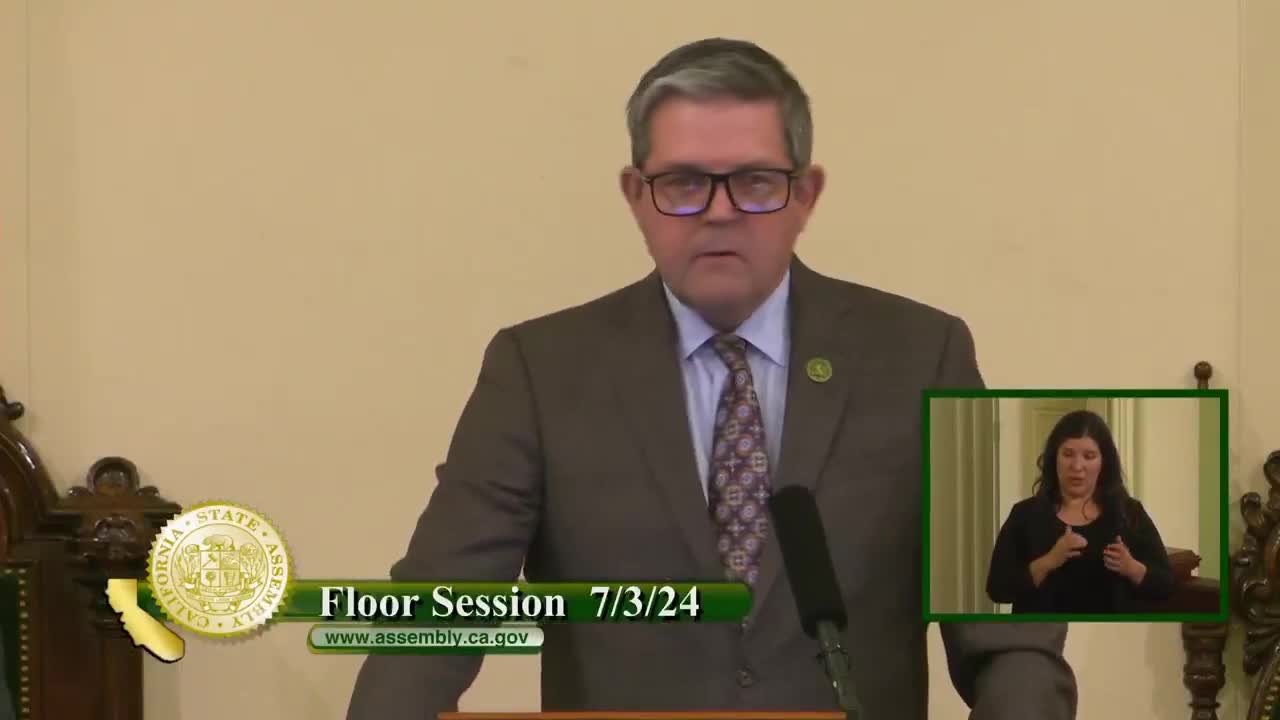
Bill Author

Bill Co-Author(s):
